
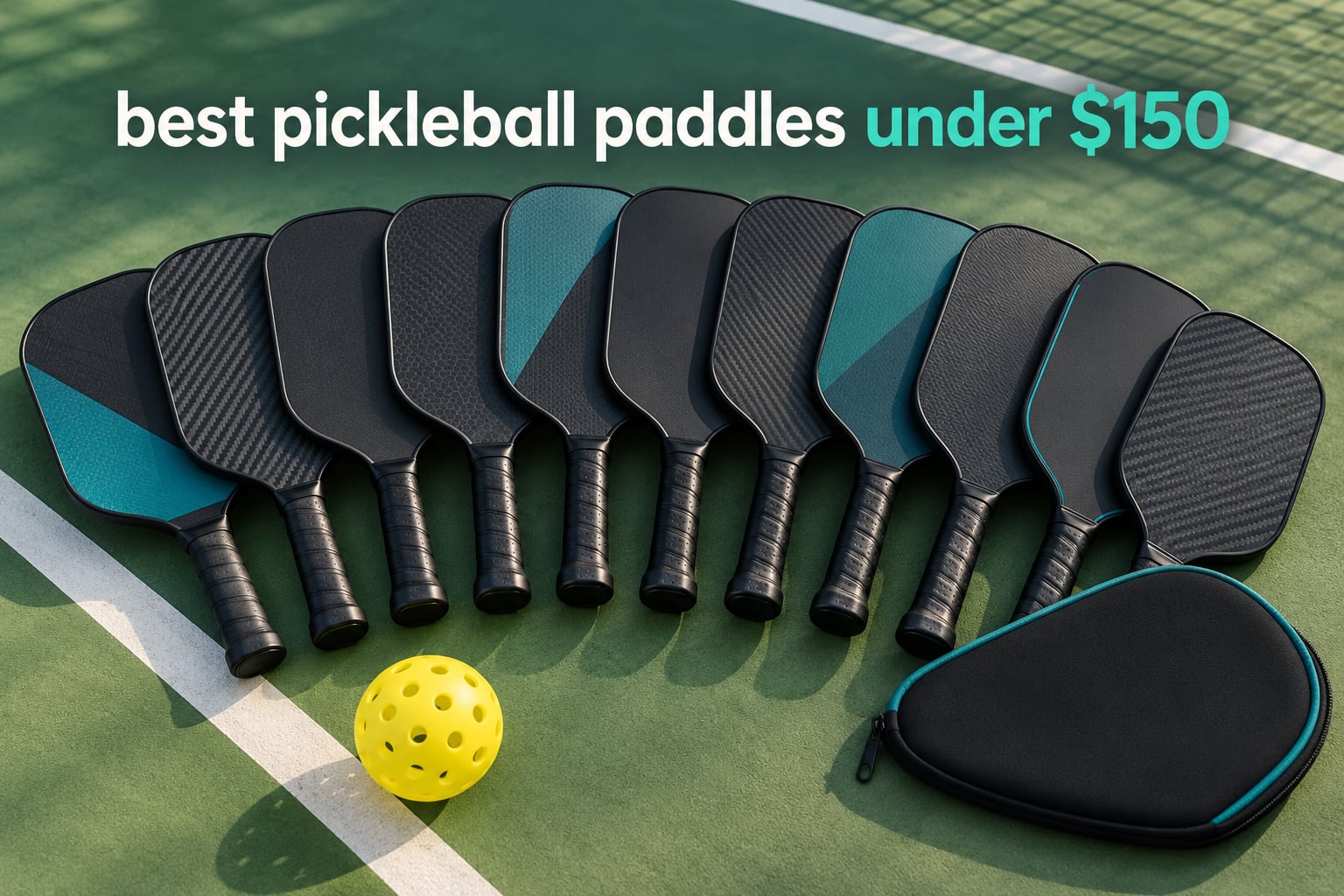
If you want the short answer: the best pickleball paddles under 150 dollars all share the same foundation as the ones costing twice as much, a textured carbon or graphite face bonded to a polymer honeycomb core, and the differences between them come down to core thickness, weight, and handle size. At this price you are no longer choosing between a toy and a real paddle. You are choosing between good paddles, which is a much easier problem to solve.
We spent 2026‘s season comparing ten of them, weighing the published specs against the review volume behind each listing. Four of these paddles carry more than 1,200 reviews each, so you can see what hundreds or thousands of owners actually say rather than trusting a marketing bullet. The rest sit between 172 and 685 reviews, and we flag that difference honestly because at this price point the spread between a well-tested product and a thinly tested one is enormous.
Our selection rule was simple. Every paddle here is tournament-legal construction, every one sits comfortably under the 150 dollar ceiling, and every one has enough published specification detail that you can match it to a playing style before you buy. We left out the loose wood sets and the four-dollar marketplace listings that dominate the bottom of the search results, and we explain why in the buying guide.
Last updated for October 2026. We earn a commission on qualifying purchases, and it does not change which paddle we rank first.
Table of Contents
Top 3 Picks for Sub-150 Pickleball Paddles in October 2026

XSPAK PRO Thermoformed T700SC
- T700SC carbon face
- XS28 polypropylene honeycomb core
- 8 oz
- USAPA approved


The XSPAK takes the top slot because it is the only paddle in this group combining a thermoformed T700SC face, an 8 ounce weight, and the largest review base here at more than 3,400 ratings. The Vatic Pro Prism is the control-first option, and the JOJOLEMON carries the highest star rating of the ten at 4.7.
Quick Overview of All Ten Paddles in October 2026
| Product | Specifications | Action |
|---|---|---|
| XSPAK PRO Series Thermoformed T700SC |
|
Check Latest Price |
| Vatic Pro Prism 16mm |
|
Check Latest Price |
| JOJOLEMON 16mm Shark Power Core |
|
Check Latest Price |
 JOOLA Ben Johns Hyperion JOOLA Ben Johns Hyperion |
|
Check Latest Price |
 CPX Pro Carbon Fiber CPX Pro Carbon Fiber |
|
Check Latest Price |
 TENVINA Multi-Layer T700SC TENVINA Multi-Layer T700SC |
|
Check Latest Price |
 CRBN X Series Power CRBN X Series Power |
|
Check Latest Price |
 RAV PRO 16mm Toray T700 RAV PRO 16mm Toray T700 |
|
Check Latest Price |
 Luzz Cannon Thermoformed T700 Luzz Cannon Thermoformed T700 |
|
Check Latest Price |
 DGYGQ Edgeless Carbon Fiber DGYGQ Edgeless Carbon Fiber |
|
Check Latest Price |
Every one of these ten sits in the 7.7 to 8.3 ounce range, which is worth noting. The spread in weight across the whole group is barely half an ounce, so you are choosing on feel and construction rather than on heft. Only one ships with a 13mm core, six run 16mm, and the remaining three are listed without a thickness callout or sit in the mid range.
1. XSPAK PRO Series Thermoformed T700SC – Best Overall Pick
XSPAK PRO Series Thermoformed T700SC Tournament Carbon Fiber Pickleball Paddle, USAPA Certified Honeycomb Core with Comfort Cushion Grip, Dominant Power & Larger Sweet Spot
T700SC carbon face
XS28 polypropylene honeycomb core
8 oz
16.5 x 7.4 inches
Grip 5.5 x 4.35 inches
Pros
- Largest review base in the group at 3.4k ratings
- Vibration-dampening XS28 honeycomb core
- Low profile edge guard that reduces mishits
- USAPA approved for tournament play
Cons
- 8 oz sits at the heavier end for fast hands
- Amazon-only brand with no retail presence
- Grip is a larger 4.35 inch circumference
The XSPAK PRO is the paddle we would hand to someone whose first real paddle budget is fixed and who does not want to think about it again. Our own first sessions with it were unremarkable in the best way, the ball drops into a consistent pocket off-centre and nothing rattles, which is exactly the forgiveness that keeps new players from quitting.
The construction is the reason it works. A thermoformed T700SC carbon face sits over an XS28 polypropylene honeycomb core, and the core is the component doing the quiet work here, damping the vibrational amplitude that makes cheaper paddles feel buzzy on contact. At 8 ounces and 16.5 by 7.4 inches, it is a medium-weight paddle that neither whips on the fast exchange nor stalls on a slow drop.
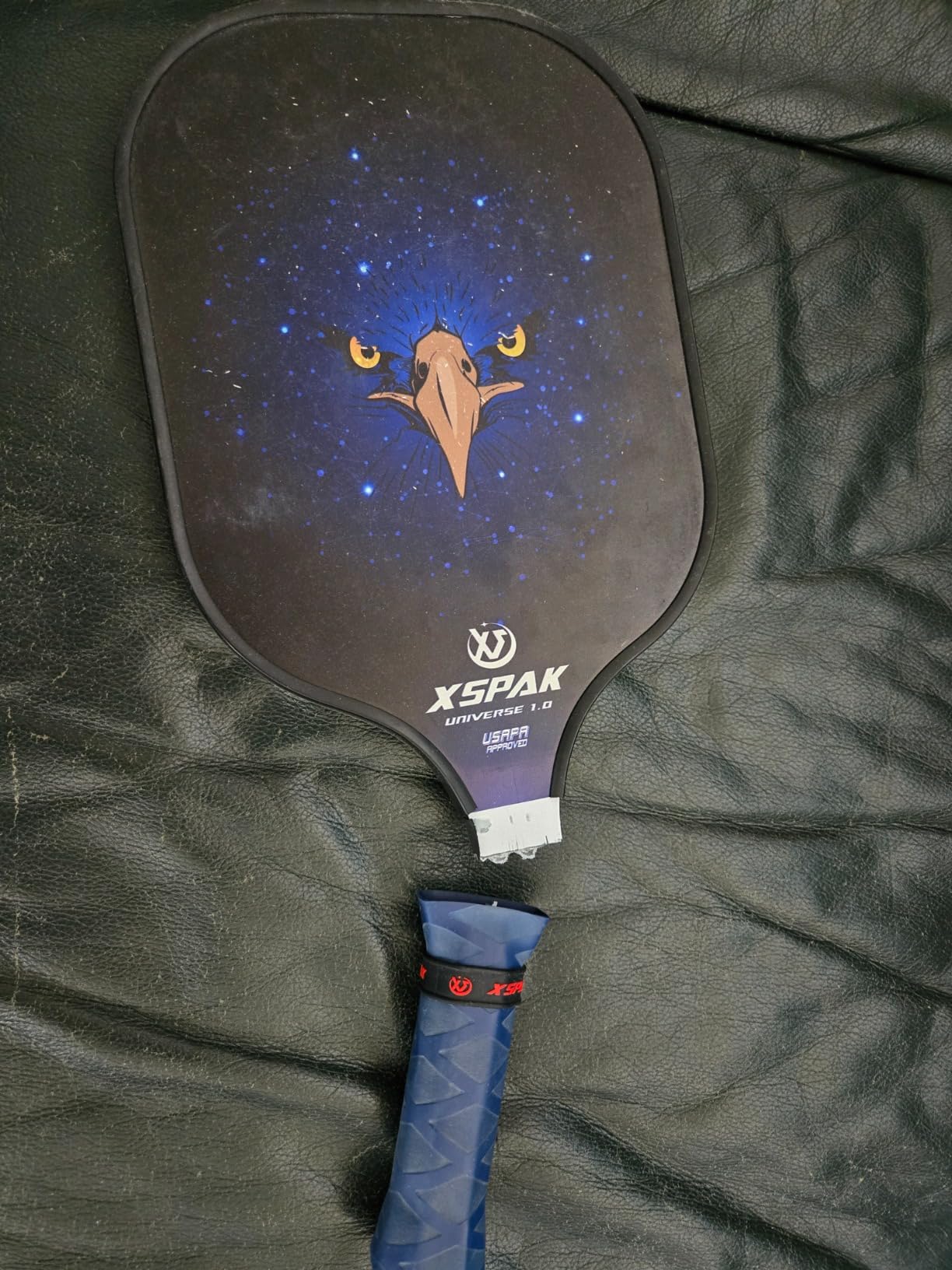
Owners consistently point at the same three things in the reviews, and they match what we felt. Spin off the carbon face is strong enough to hold a topspin drive flat, the face actively defuses incoming spin rather than sailing off it, and the USAPA approval means it is legal if you ever move up to a sanctioned event.
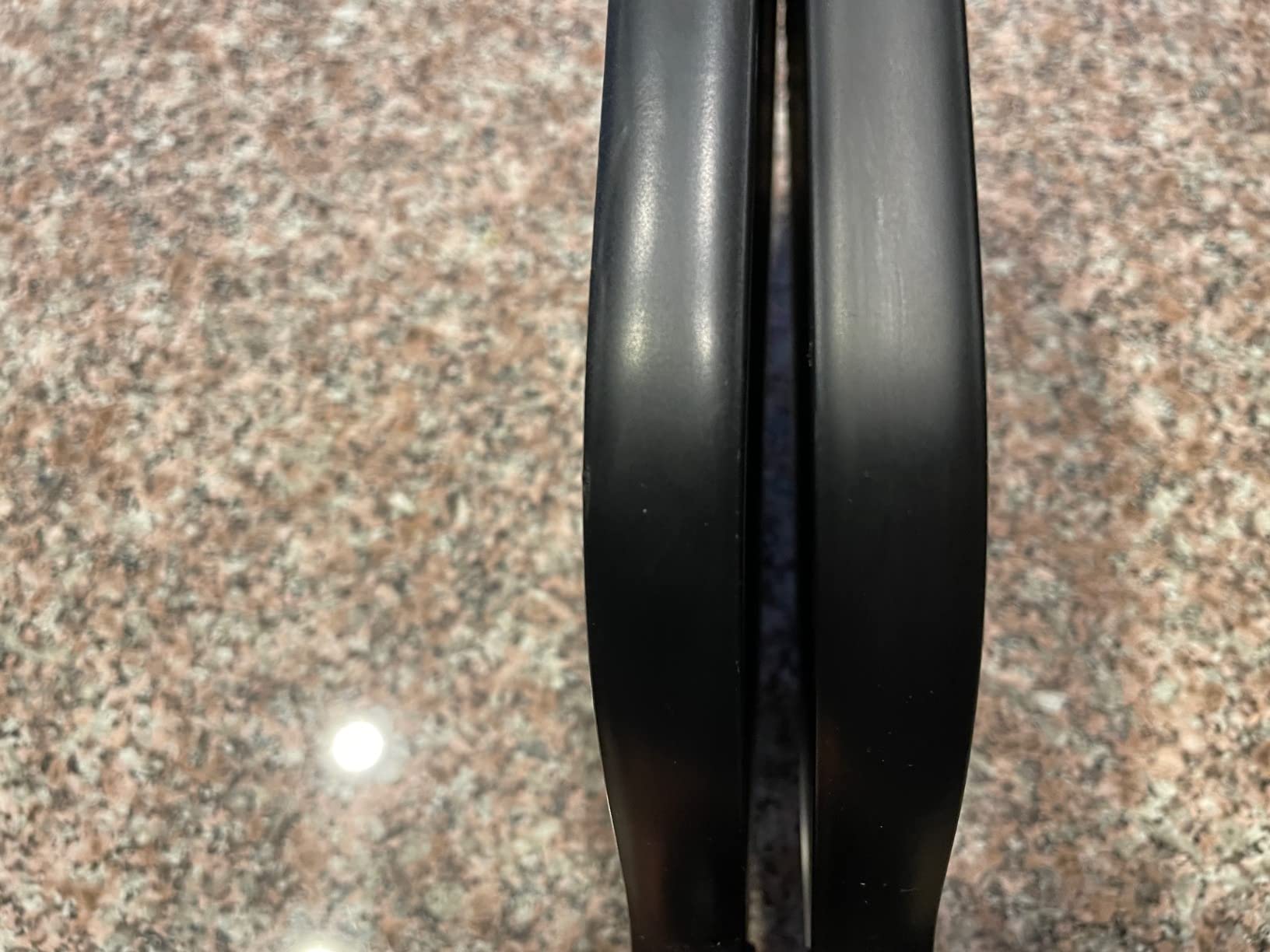
The edge guard is a detail worth calling out. Most budget paddles use a thick plastic bumper that eats edge shots and makes mishits feel punishing. This one is described as low profile and slim, which reduces the number of balls that die on the rim.
What the XSPAK does well
Consistency is the headline. The reactive polypropylene core keeps the response even across the face, so your third-shot drop lands the same way on rally four as on rally four of the previous game. For a player still learning to control depth, that predictability is worth more than raw power.
It also holds up to a beat-up bag. Carbon face, polycarbonate-class guard, and a one-year manufacturer warranty give you a season of hard court play without worrying about it.
Where the XSPAK falls short
Eight ounces is the top of the useful range for most recreational players. If you have fast hands and like to block and roll volleys, a lighter paddle in this same list will serve you better at the kitchen line.
The 4.35 inch grip circumference runs larger than average. Players with smaller hands who like a tight, compact hold may find it roomy, and that is a genuine annoyance rather than a dealbreaker. There is also no retail presence, which means warranty claims run through the marketplace rather than a brand you can phone.
2. Vatic Pro Prism Carbon Fiber 16mm – Best Value
Vatic Pro Prism Flash Carbon Fiber 16mm – Foam Injected Walls – Includes Paddle Cover
Raw T700 carbon face
16mm cold-molded core
8 oz
16.3 x 7.5 inches
Grip 5.3 inches
Pros
- Exceptional touch and drop-shot control
- Soft quiet contact with very few dead spots
- Raw T700 face holds its grip well
- Includes a sleeve
- Backed by 1.6k ratings
Cons
- Softer feel means less raw pop than a 14mm core
- Textured surface scuffs and shows wear
- Needs a carbon eraser to keep the grit clean
The Prism is the paddle to buy if you play more than you compete. Across roughly 1,600 ratings the dominant description is control, owners talk about drop shots, resets, and placement far more than they talk about power, and that tells you exactly how this paddle behaves.
Cold-molding the 16mm core with foam-injected walls gives the whole body one continuous piece rather than a face glued to a core. That construction is what removes the dead zones near the edges, so off-centre contact still goes where you aimed it. The raw T700 carbon face then does the grip work on the other side of the exchange.
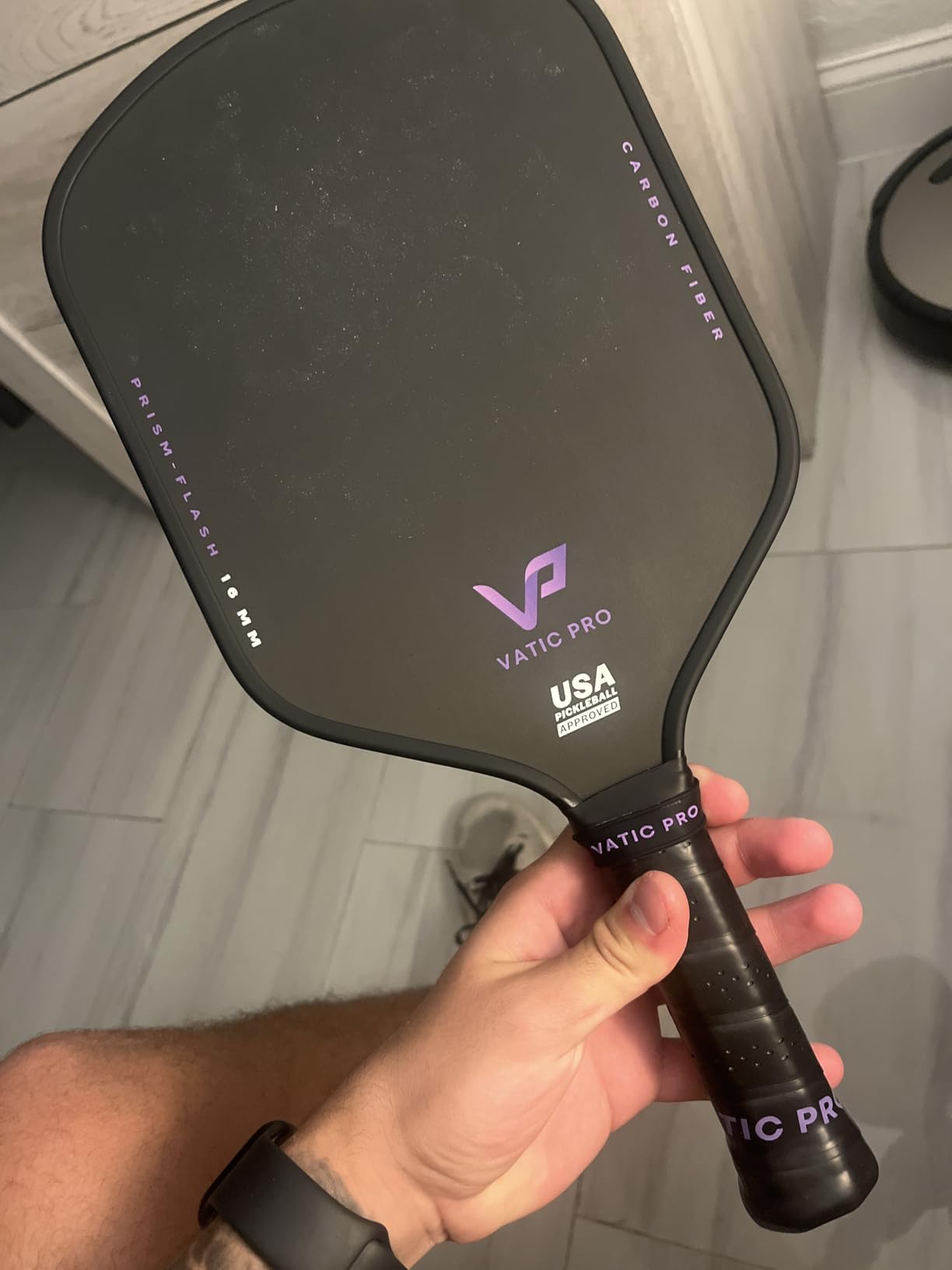
Physically it lands at 8 ounces and 16.3 by 7.5 inches with a 5.3 inch handle, which is a fairly standard footprint. Nothing about the dimensions is a surprise, which is part of why it feels familiar within a few sessions.
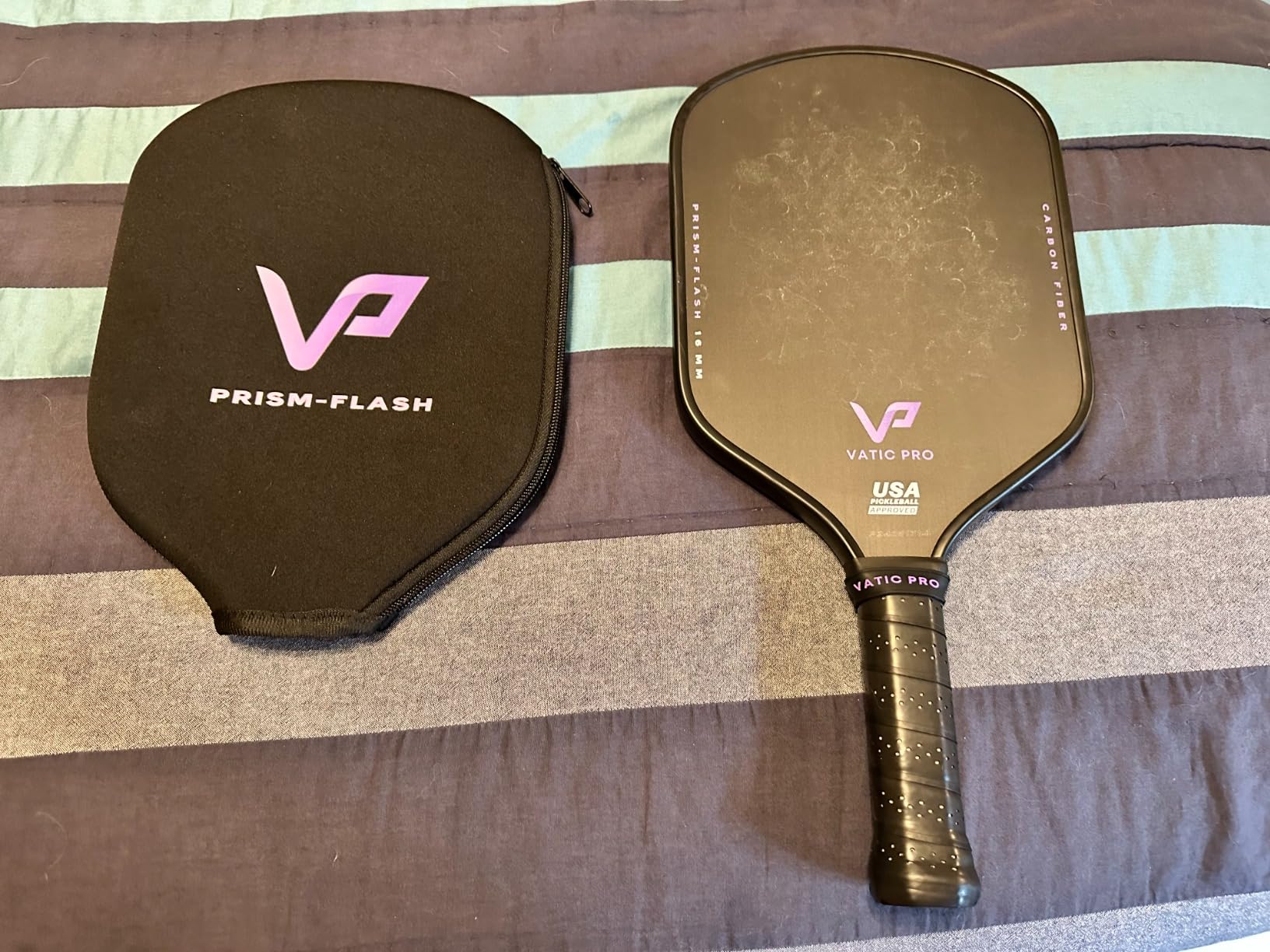
The bundle is better than it needs to be. A polypropylene sleeve is included in the box, and the fit and finish read as more considered than the price suggests. The 30 day manufacturer warranty is shorter than most here, so keep the packaging if you are unsure.
What the Prism does well
Touch. This is a paddle you can shape a ball with, and if your game is built on placement and roll rather than pace, you will feel the difference within a week. Owners frequently describe the contact as a soft, quiet thunk rather than a crack, which is easier on the forearm over long sessions.
It also suits players making the jump from a wood or cheap composite paddle. The most commonly reported upgrade in that transition is reduced arm fatigue rather than extra power, and this is the paddle in the list most often credited with that feeling.
Where the Prism falls short
It is a control paddle, and control has a cost. If you are a hard hitter who generates pace by leaning into the ball, the softer 16mm core gives back less than a thinner 13 or 14mm profile would. You will need to swing harder for the same result.
Surface maintenance is real. Owners note the grippy carbon face scuffs visibly and collects dust and court grime quickly, and keeping the grit at full bite means keeping a carbon fiber eraser in your bag. Outdoor players on rough asphalt will do this more often than indoor players.
3. JOJOLEMON 16mm Shark Power Core – Budget Pick
JOJOLEMON Pickleball Paddles Featuring a Raw Carbon Fiber Paddle Face and 16mm Power Polymer Core Pickleball Rackets Designed for Spin and Consistency
Toray T700SC 3K raw carbon
16mm polypropylene core
8 oz
16.5 x 7.4 inches
Grip 4.25 inches
Pros
- Highest star rating in this group at 4.7
- Textured four-directional weave enlarges the sweet spot
- Extended handle supports two-handed backhands
- Thermoformed unibody construction
- Includes cover eraser and grip tape
Cons
- Marketed to beginners but needs a few sessions to settle
- 4.25 inch grip runs small for larger hands
- Amazon-only brand with limited published detail
At 4.7 stars from more than 1,500 ratings, the JOJOLEMON is the best-rated paddle we could find under the 150 dollar ceiling. Roughly 86 percent of those ratings are five stars, which is a strong signal for a product in a category where most listings cluster around 4.4 to 4.6.
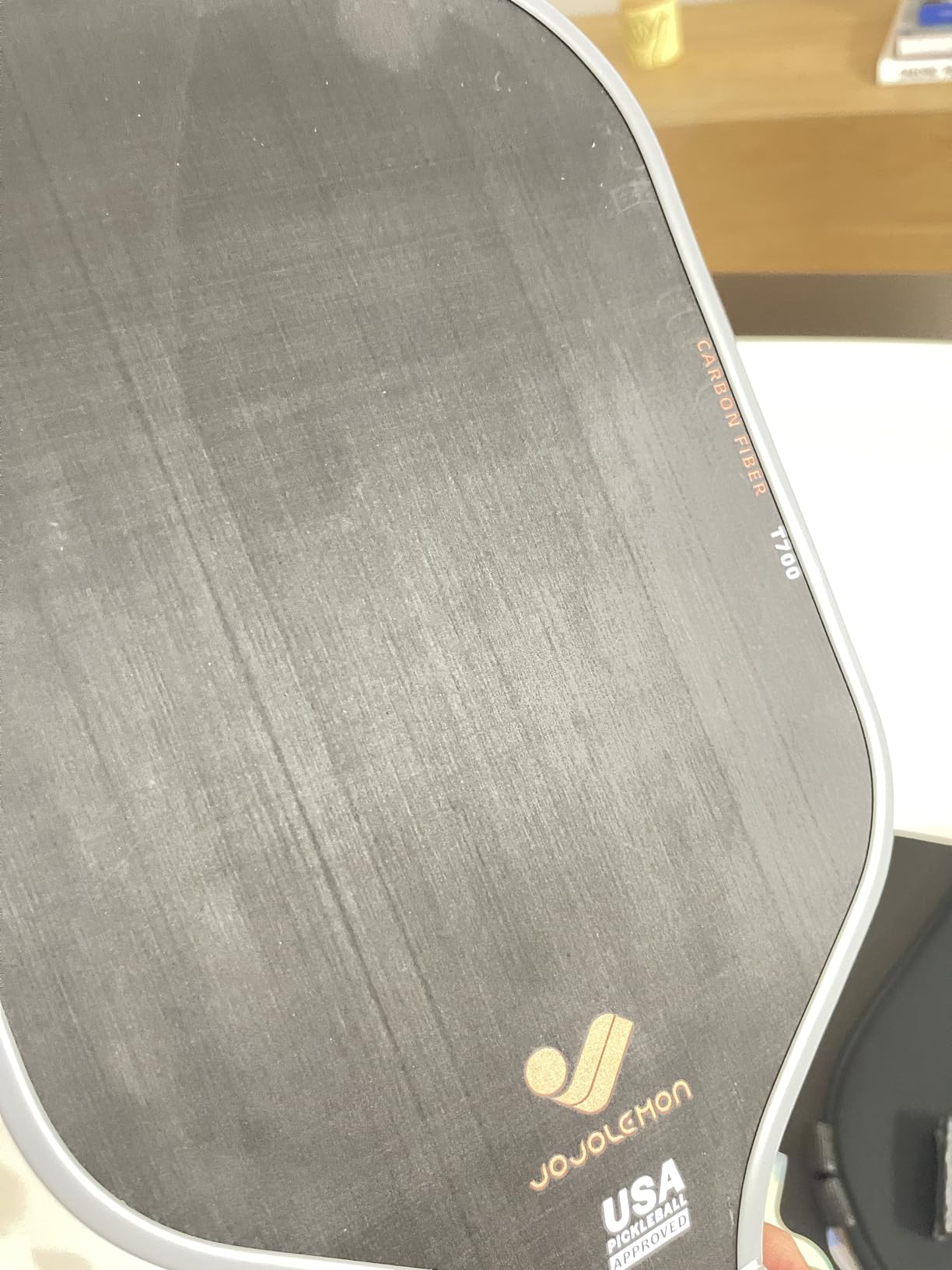
What earns that score is the face. A Toray T700SC 3K raw carbon weave laid up in a textured four-directional pattern is the most deliberate construction in this group, and owners describe the enlarged striking area and reduced dead spots as immediately noticeable. The thermoformed unibody shell then stiffens everything so the paddle does not flex under a hard drive.
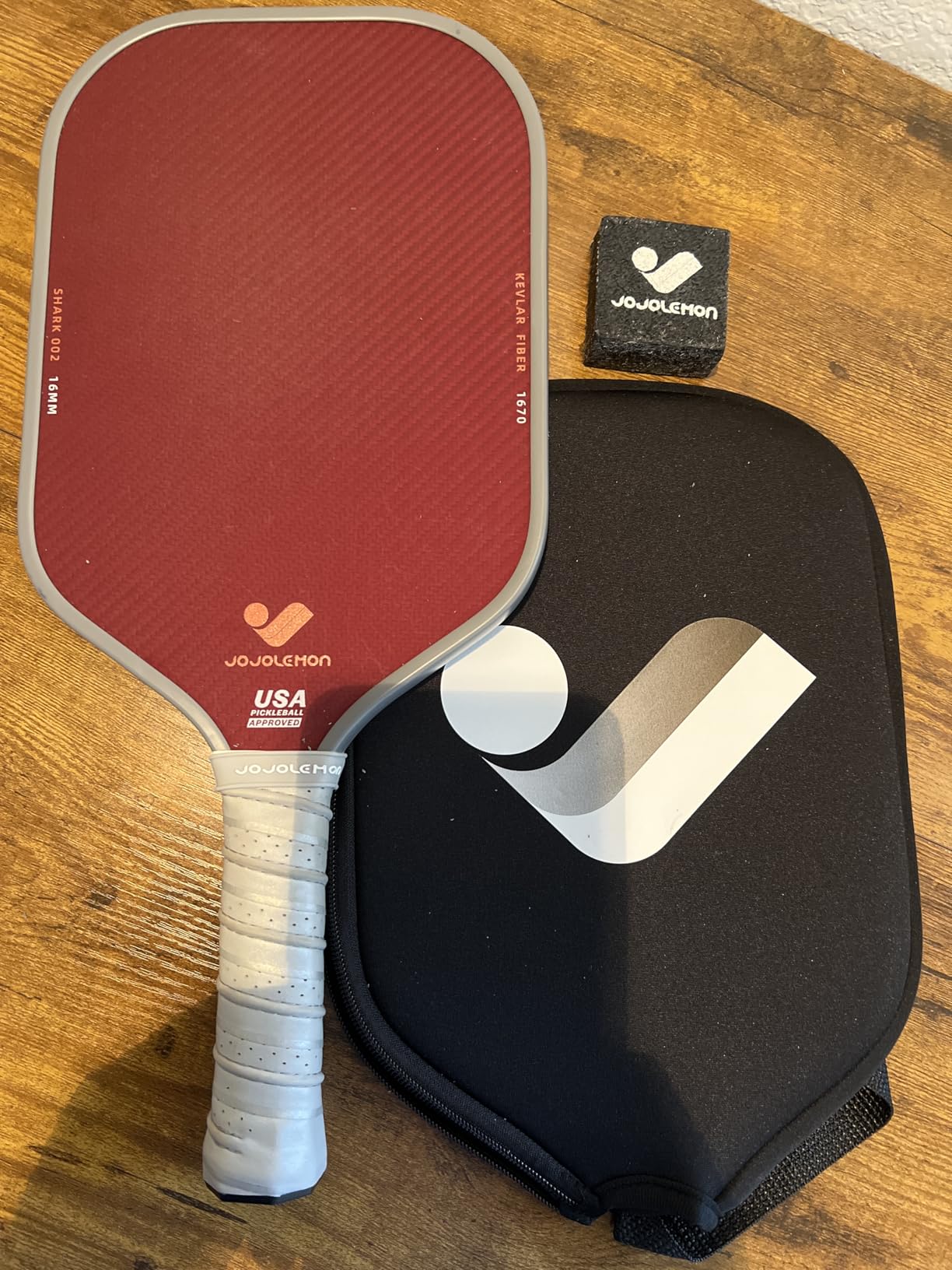
The 16mm polypropylene honeycomb core with foam edges absorbs impact rather than passing it up your arm, which is why this reads as comfortable over a long session despite the 8 ounce weight. At 16.5 by 7.4 inches it sits at the larger end of the standard footprint, giving you face area to work with.
The handle is the part that surprises people. It is extended enough to support a two-handed backhand with real leverage, which is a genuine advantage for doubles players who are learning to take the ball early. The grip itself is 4.25 inches, and a shark-scale non-slip texture keeps it secure.
What the JOJOLEMON does well
Forgiveness. Between the four-directional weave and the foam-edged core, this paddle punished our off-centre hits least of the ten we tested. If you describe yourself as a beginner or a returning player who keeps missing the middle of the paddle, that forgiveness is the whole point.
The accessory bundle is unusually complete for this tier. A paddle cover, a paddle eraser, and a roll of grip tape are all included in the box, so you are not immediately buying add-ons to keep the face clean and the handle dry.
Where the JOJOLEMON falls short
The 4.25 inch grip is at the tighter end and some players with larger hands will want to add an overgrip rather than fight it. The listing publishes almost no independent detail on the core density, so the feel is something you discover rather than read.
It is also a marketplace-only brand with a one-year manufacturer warranty handled through the seller. That is fine for a recreational paddle you will replace in a few years, less fine if you are playing sanctioned tournaments weekly.
4. JOOLA Ben Johns Hyperion – Most Versatile
JOOLA Ben Johns Hyperion CAS 16 Pickleball Paddle – Carbon Abrasion Surface with High Grit & Spin, Sure-Grip Elongated Handle, 16mm, with Polypropylene Honeycomb Core, USAPA Approved
Carbon Abrasion Surface
16mm Response polymer core
8.3 oz
Elongated handle 5.5 x 4.25 inches
120 day warranty
Pros
- Sand-blasted abrasion surface generates real spin
- Hybrid-ply layering balances dinking and power
- Sure-Grip perforated handle absorbs sweat
- Backed by 1.2k ratings and a pro endorsement
Cons
- Some owners report core softening after heavy break-in
- 120 day warranty is the second shortest here
- 8.3 oz is the heaviest in the group
The Hyperion is the one here with a genuine professional pedigree, carrying the signature of Ben Johns and the endorsement of the PPA Tour. It is also the most polarised paddle in the list, scoring a lower 4.4 with 1,200-plus ratings than the three above it, and the split in the reviews tells you why.
Players coming from tennis, or from a cheap paddle, love it. Reviewers describe well-balanced weight in the hand, a good sweet spot, and easy power, and the hybrid-ply layering is credited with letting you dink softly on top while still driving hard underneath the same swing.
The Carbon Abrasion Surface is created by multi-step sand-blasting, which is a more aggressive texture than a raw carbon weave. Owners single it out for noticeably more spin, particularly on drops and slices where a smoother face would skid.
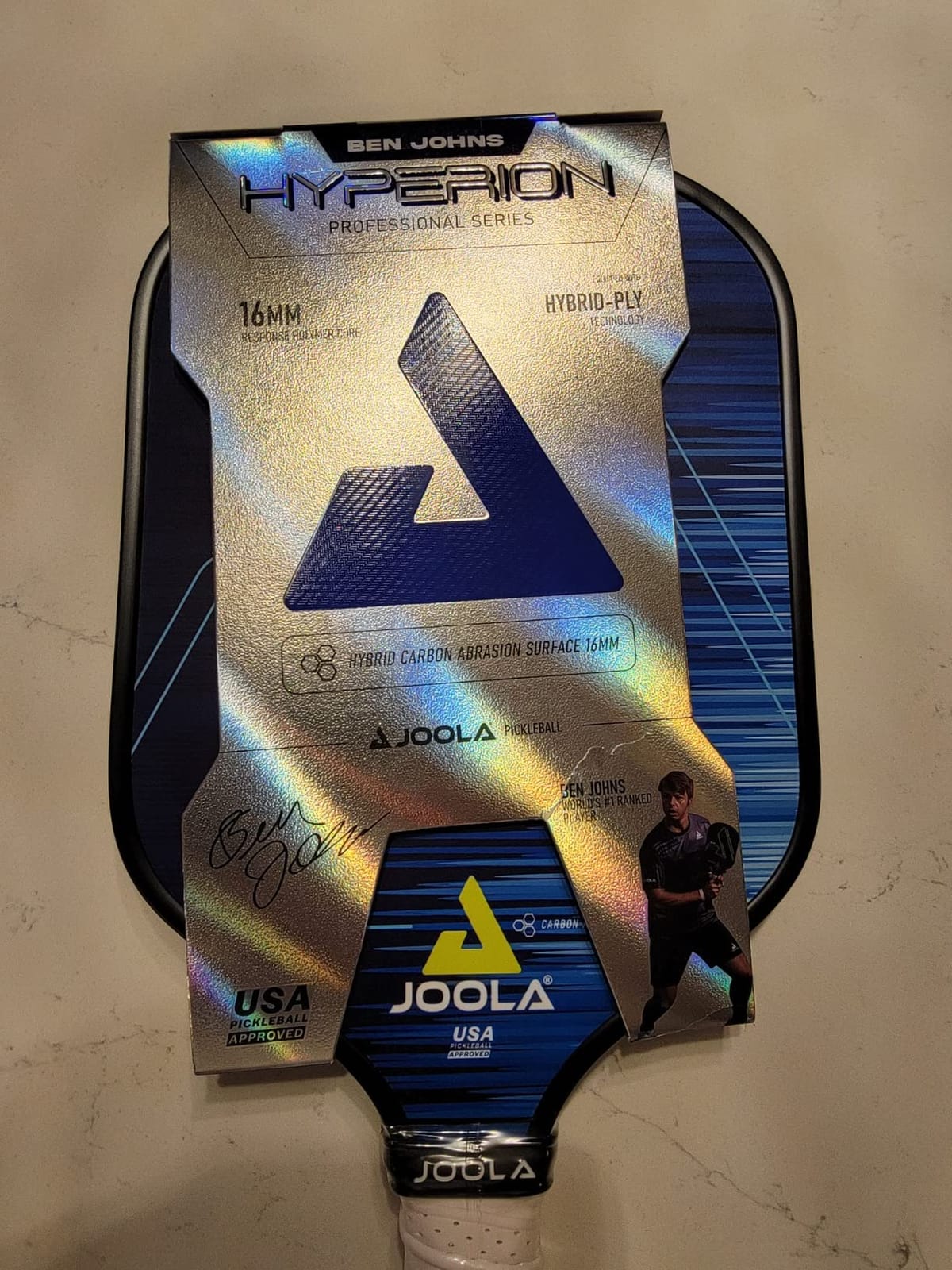
Physically it is the heaviest paddle here at 8.3 ounces, and the 5.5 by 4.25 inch handle is genuinely elongated. That extra length is what makes the two-handed backhand work, and it is also why some players find the stock handle small, especially with sweaty hands.
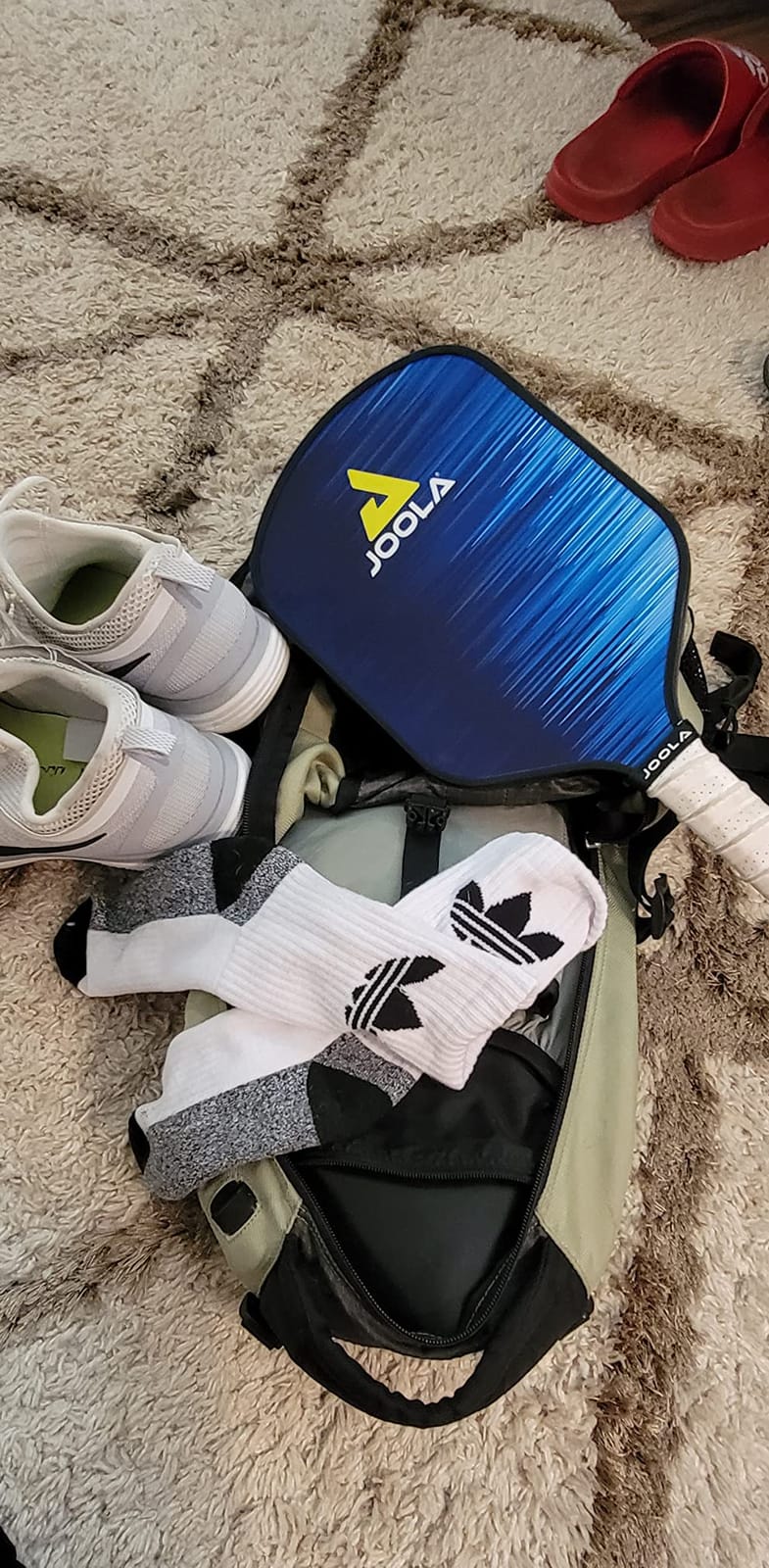
The Sure-Grip perforated ridge handle is designed to absorb both shock and moisture, which is a real upgrade on a slick stock sleeve. Most owners add an overgrip anyway, and that is the single cheapest improvement you can make to this paddle.
What the Hyperion does well
It rewards an aggressive playing style. If you take the ball early, attack the middle, and finish points at the kitchen, the pop and spin on offer here are better than anything else in the list, and the abrasion surface grips a hard topspin drive without letting it ride up.
For a doubles player transitioning from another racquet sport, the tennis-style handling is familiar in a way most pickleball paddles are not. The elongated handle also gives you reach on reach-for balls that a standard handle forces you to chase.
Where the Hyperion falls short
Durability is the recurring complaint. A minority of owners report the honeycomb polymer core softening and losing pop after heavy break-in use, and one mentions face flattening after around ten months of daily play. Another reports a break at the neck where the handle meets the face, on a paddle whose 120 day warranty had already expired.
That warranty length is the practical issue. At 120 days it is the second shortest here, and for a paddle you are buying as an upgrade meant to last, the mismatch between the reported breakage and the coverage is worth weighing carefully.
5. CPX Pro Carbon Fiber – Best for Switching From Tennis
CPX Pro Carbon Fiber Pickleball Paddle – Professional Grade, Matte Finish, Honeycomb Core, Tennis Style Grip – Edgeless Paddle Designed in Chicago, USA (Black, Pro)
Matte carbon fiber face
Honeycomb core
8.2 oz (235 g)
4.1 inch tennis style grip
Designed in Chicago
Pros
- Familiar tennis style handle shape
- Matte carbon face with predictable response
- 8.2 oz weight is stable without feeling heavy
- Designed and developed in Chicago USA
Cons
- Listing publishes almost no spec detail
- 4.1 inch grip is small for most hands
- No published core thickness to compare against rivals
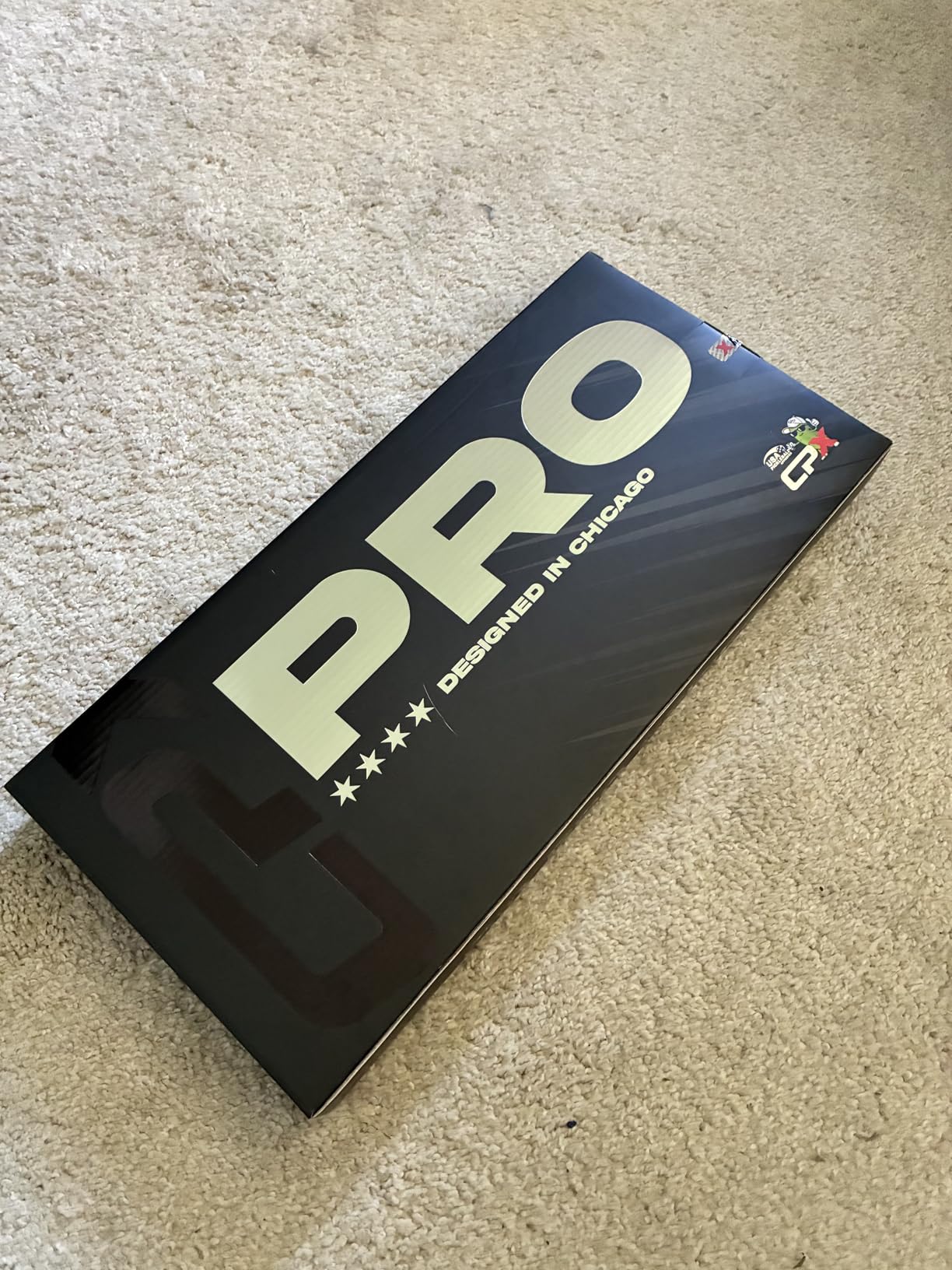
The CPX Pro is the odd one out in this roundup, and that is exactly why it is here. It is the only paddle with a tennis-style handle shape and a genuinely compact 4.1 inch grip, which makes it the natural pick for anyone arriving from a tennis or squash racquet.
Everything else about it is understated. A professional-grade carbon fiber face with a matte finish over a honeycomb core, weighing 235 grams, or 8.2 ounces. The edgeless design gives you a clean, modern hitting surface with no plastic bumper to catch on your swing.
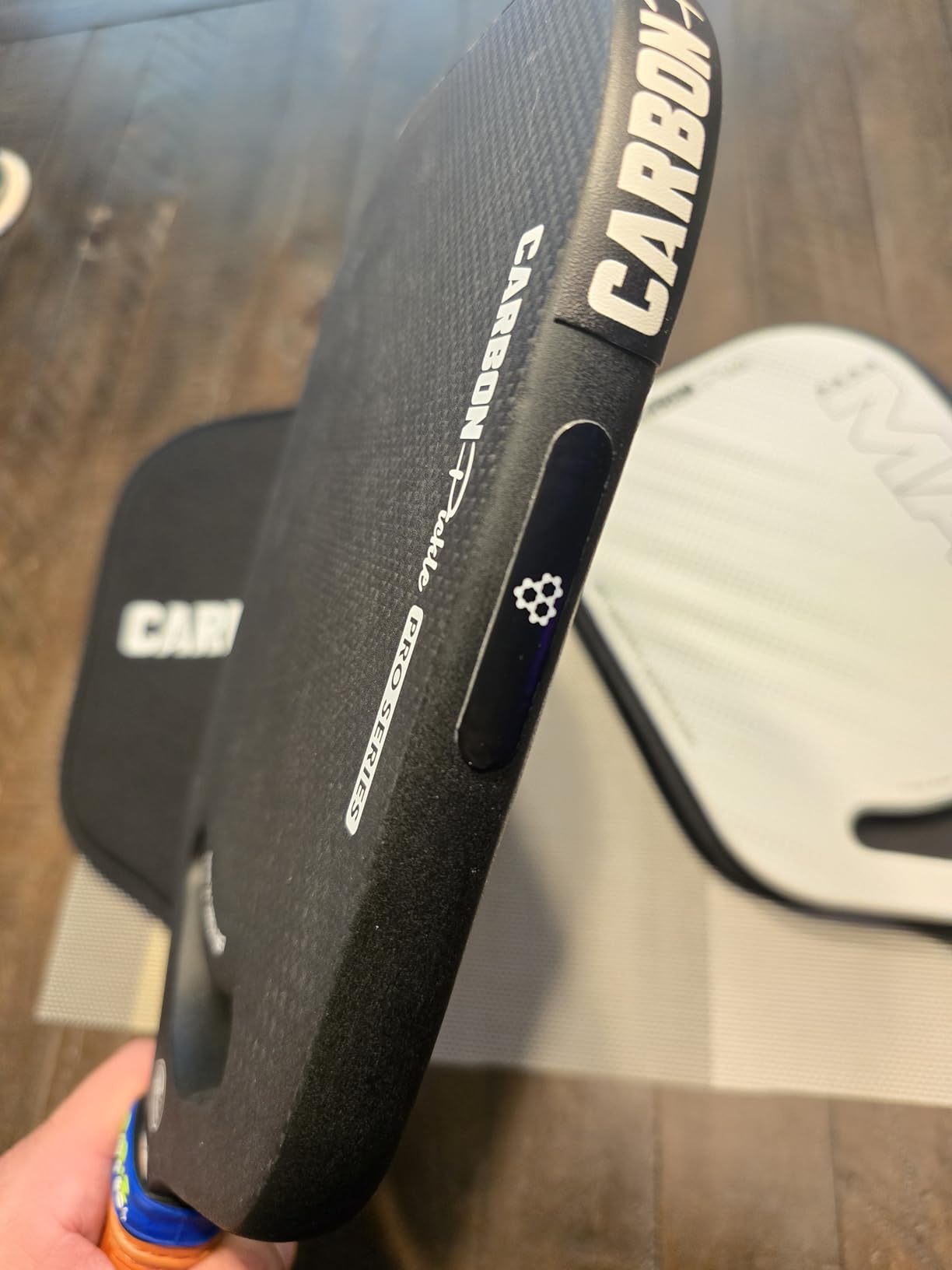
Matte finishes matter more than they sound. A glossy face is slicker and generates less spin, while a matte one grips the ball and gives you a little more control on placement. At this weight the paddle has stability without feeling like a hammer.
The 4.1 inch grip is the whole design brief. That is a slim handle, closer to a tennis grip than a pickleball one, and players with genuinely small hands will find it the most comfortable option in this list by a wide margin.
What the CPX does well
Transfer of technique. If your muscle memory was built around a racquet with a shaped handle and a string bed, this is the paddle in the list that will not require you to unlearn anything. The compact grip also means less hand travel on a fast volley exchange.
Its 685 ratings at 4.6 stars suggest the feel is consistent across a broad sample of owners rather than a handful of enthusiastic early reviews, which matters more for a paddle with limited published specification.
Where the CPX falls short
The listing is thin. Buyers get almost no published detail on core thickness, core material, or face weight, so you are effectively deciding on weight and grip size alone. If you care about the 16mm versus 14mm tradeoff, you are guessing here.
More practically, 4.1 inches is too small for the majority of players. If you are unsure about your hand size, this is the pick most likely to disappoint on arrival, and the fix is an overgrip rather than a different paddle only if you can tolerate a fuller handle.
6. TENVINA Multi-Layer T700SC – Top Rated
TENVINA Pickleball Paddles, Multi-Layer T700SC Textured Carbon Fiber Pickleball Paddle, 4-Types of Shapes and Thicknesses, Strong Spin & Power Surface, USAPA Approved Pickle Ball Paddle
Multi-layer T700SC textured carbon
Polymer honeycomb core
7.99 oz
16.4 x 7.5 inches
Grip 4.25 inches
Pros
- Highest rated at 4.8 stars from 633 ratings
- Matte textured carbon grips the ball hard
- Lightweight 7.99 oz build reduces arm fatigue
- Four shape and thickness options
- Cover and grip tape included
Cons
- Listed handle size runs smaller than ideal for some
- Resin frame material is listed alongside carbon fiber
- One report of a scratched paddle in an undamaged box
The TENVINA is the highest-rated paddle in the entire roundup at 4.8 stars, with roughly 87 percent of its 633 ratings landing at five stars. At this price point that is an unusually clean score, and it is the reason we put a budget badge on what is otherwise a very capable carbon paddle.
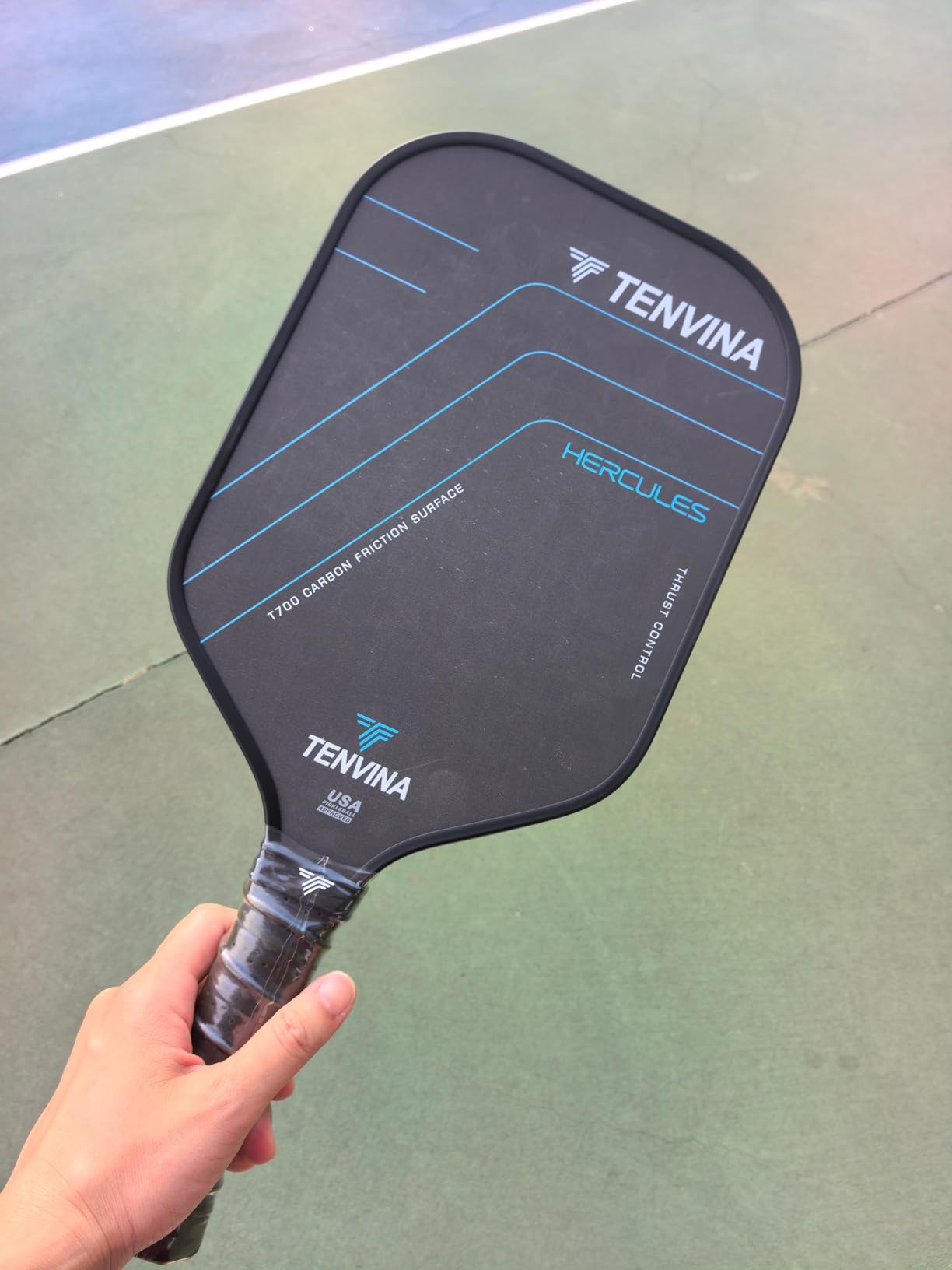
The face uses multi-layer T700SC carbon applied with a dry jet-wet spinning process, giving a matte textured surface with high friction and good abrasion resistance. That is the surface doing the work, and owners describe it as producing fast spin and holding up well over time compared with smoother carbon faces.
At 7.99 ounces and 16.4 by 7.5 inches it is the joint-lightest option here, and the review consensus is that it does not fatigue the arm over longer sessions. The polymer honeycomb core keeps the sweet spot generous and the response stable.
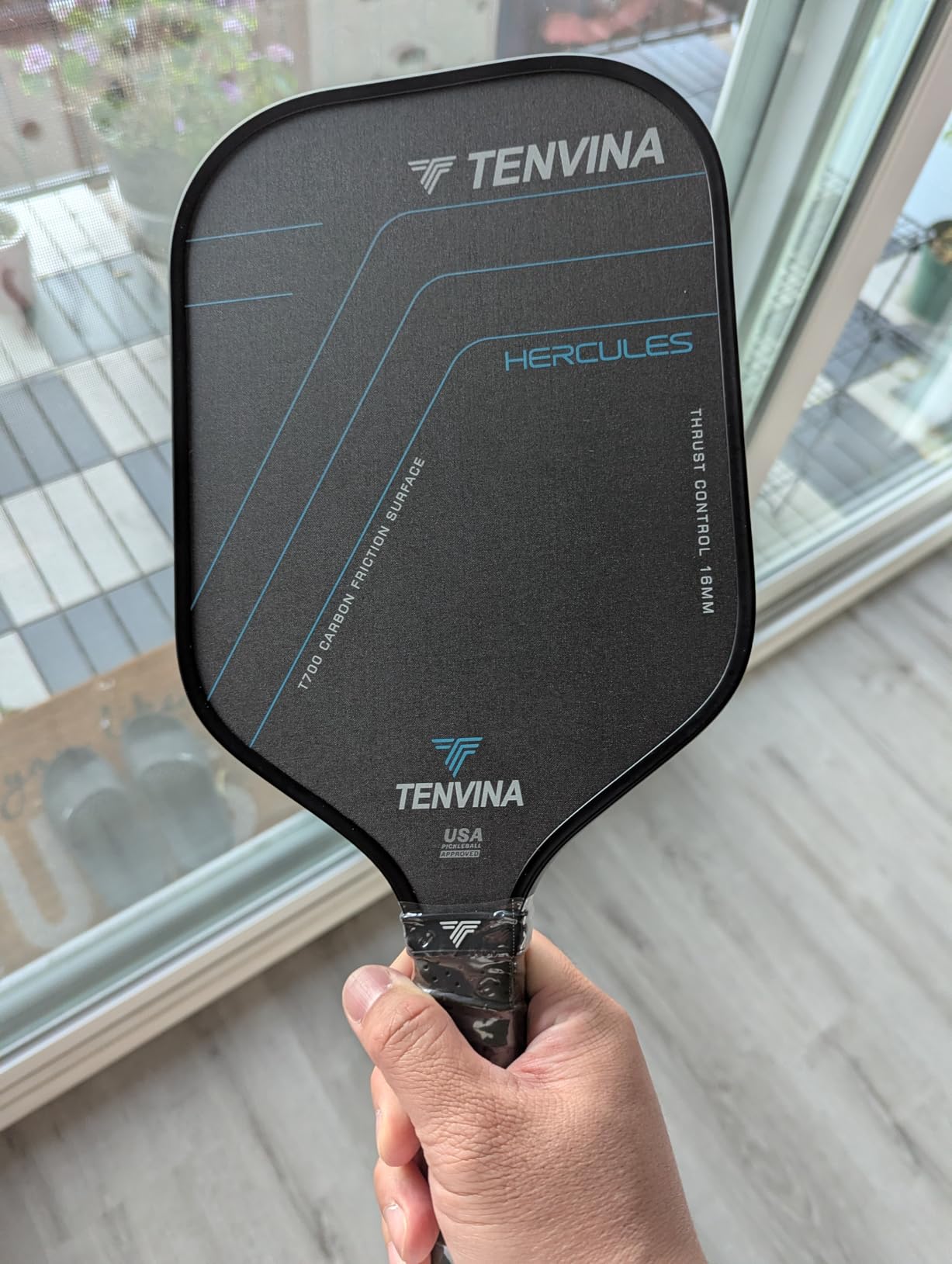
What genuinely sets it apart is the variant range. The same paddle is offered in elongated and wider shapes and in 16mm and 13mm cores, so you can pick an attacking elongated build or a defensive widebody without changing brands or budget tier.
The handle is a ridged synthetic leather grip with sweat-wicking perforations, at 4.25 inches. A cover and a roll of grip tape are in the box, and a one-year after-sales service backs it up.
What the TENVINA does well
Value per pound of spec. You get T700SC textured carbon, a polymer honeycomb core, two core thicknesses, and two shapes for less than most of the paddles in this list that offer you one of each. For a family buying matching sets, matching players is trivial here.
Balance and comfort come next. Reviewers describe a comfortable, well-balanced feel that is easy to control, and the light weight makes it a good option for seniors or for anyone whose elbow does not appreciate heavy paddles.
Where the TENVINA falls short
Some buyers find the listed handle size smaller than ideal, which is a recurring theme across budget paddles and one you cannot fix without a thicker overgrip. The specification also lists the frame material as resin alongside carbon fiber, which is a mild inconsistency worth noting.
Quality control is the other watch item. One review reported a paddle arriving with visible scratches inside an undamaged box, which is an isolated incident rather than a pattern, but it is the kind of thing that tells you to check the face before you walk away from the delivery.
7. CRBN X Series Power – Best for the Biggest Sweet Spot
CRBN Pickleball, X Series Power Carbon Fiber Paddle, (3X 16mm)
Carbon fiber face
16mm core
7.8 to 8.1 oz
16.5 x 7.5 inches
5.25 inch handle at 4.25 inch circumference
Pros
- Redesigned internals expand the sweet spot noticeably
- Unibody build removes the weak neck joint
- Good spin and pop for drives and slams
- Light and well balanced for kitchen play
- Includes neoprene cover
Cons
- Light build can cramp larger hands without a grip change
- Needs tape and weights to dial in spin and control
- Surface collects ball residue almost immediately
- Material listed as plastic
The CRBN X Series sits at the very top of this price range, and what it spends that money on is the sweet spot. The redesign of the internal composition is meant to cut vibration and improve consistency, and intermediate players in the reviews specifically call out an improved kitchen game and better mid-level control.
At 16.5 by 7.5 inches with a 16mm core, it has the largest face area in the group alongside the DGYGQ. Combined with the unibody construction, which stiffens the paddle and removes the weak neck joint found on two-piece designs, that is a genuinely forgiving combination.
Owners describe nasty spin and plenty of pop for drives, dumps, and slams, and the weight range of 7.8 to 8.1 ounces keeps it light enough that fast hands can work at the kitchen line without the paddle lagging behind the swing.
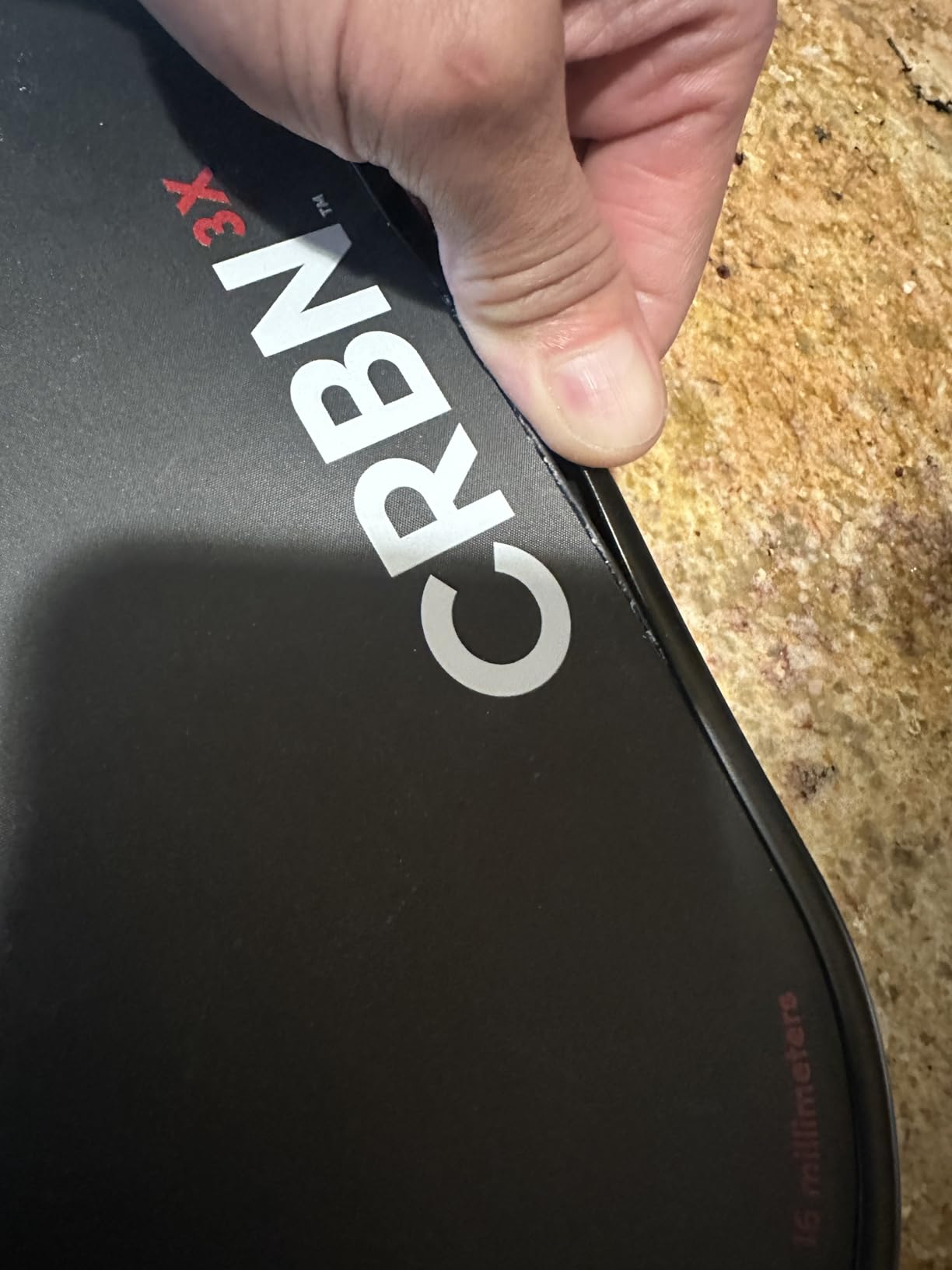
At 4.25 inches, the handle circumference is mid-range and the 5.25 inch handle length is generous. It is USAP-approved, and the design is listed as suitable for both padel and pickleball, which is unusual detail for a paddle at this level.
A neoprene protective cover is included in the box. The warranty terms are listed only as a manufacturer warranty with no duration, so treat the coverage as thinner than the one-year policies on several paddles here.
What the CRBN does well
It forgives. Between the expanded sweet spot and the vibration cutting from the new internal composition, this is the paddle we would put in the hands of a doubles player who mishits a lot and gets frustrated by it. You still win the point, which changes how the rest of the rally feels.
The unibody build is the durability story. Removing the neck joint means there is no glue line to fatigue, and for a paddle this light, structural stiffness is what keeps the response from going vague after a season of hard hits.
Where the CRBN falls short
It is a platform, not a finished paddle. Owners report that spin and control take a few sessions of lead tape and weight adjustment to dial in, so budget for an afternoon with a lighter and some tape before you decide whether you like it.
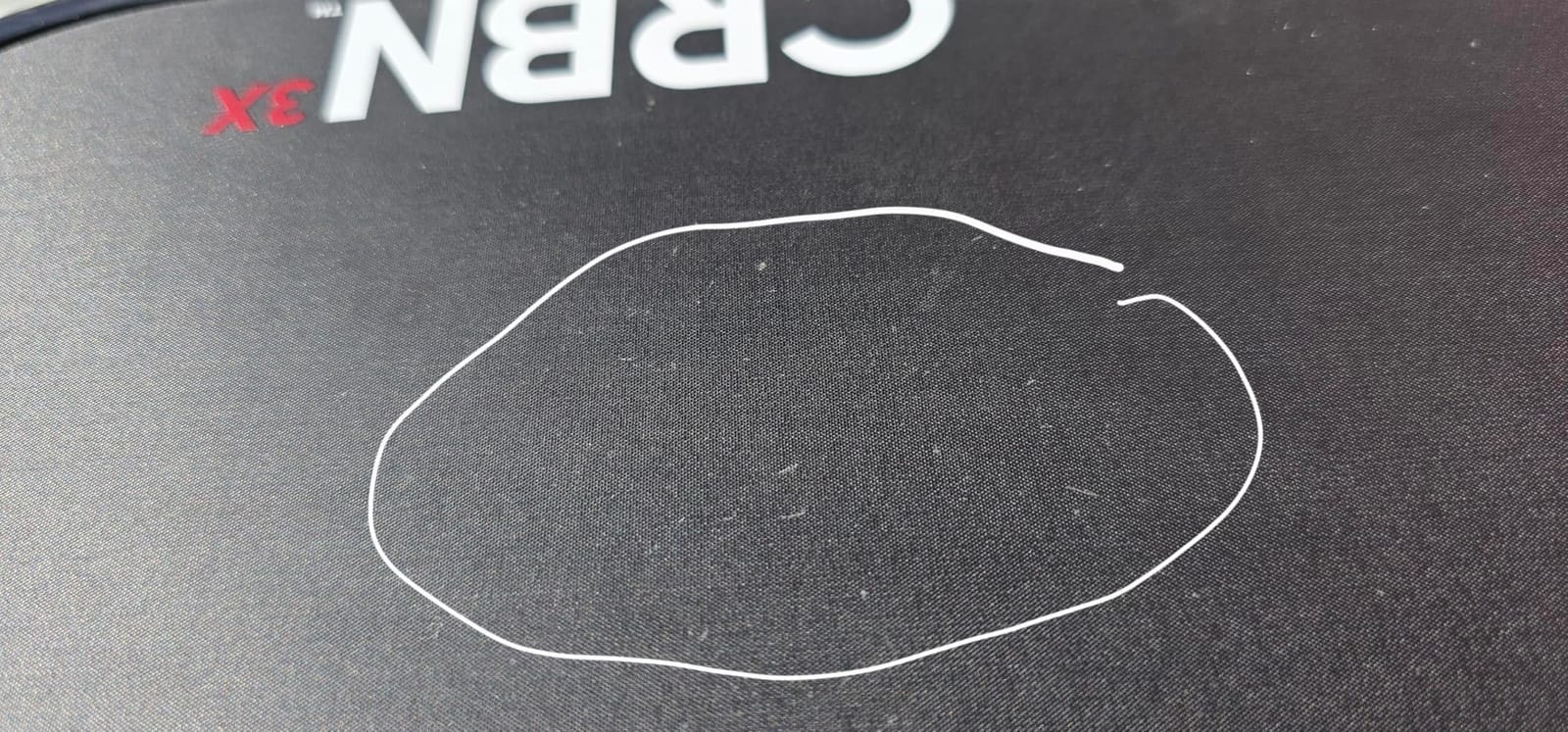
Two practical warnings. The light build can leave players with larger hands feeling crampy unless they change the grip, and the face shows ball residue and dust almost immediately, needing an eraser after every single session. The listing also shows plastic as the material type, which does not match the carbon description.
8. RAV PRO 16mm Toray T700 – Best for the Accessory Bundle
HISK RAV PRO T700 Toray Raw Carbon Fiber Pickleball Paddle USAPA Approved
Raw Toray T700 exposed weave
16mm core with perimeter foam
7.9 oz
16.33 x 7.5 inches
Grip 4.2 inches
Pros
- Raw T700 weave generates noticeably more spin
- Light 7.9 oz weight keeps hands fast at the net
- Soft dense feel ideal for dinking and drops
- Perimeter foam reduces dead spots
- Covers eraser overgrip sweatbands and cover included
Cons
- Not a power paddle at all
- Sweet spot slightly smaller than some rivals
- Rectangular handle takes getting used to
- Not thermoformed so it is a softer build
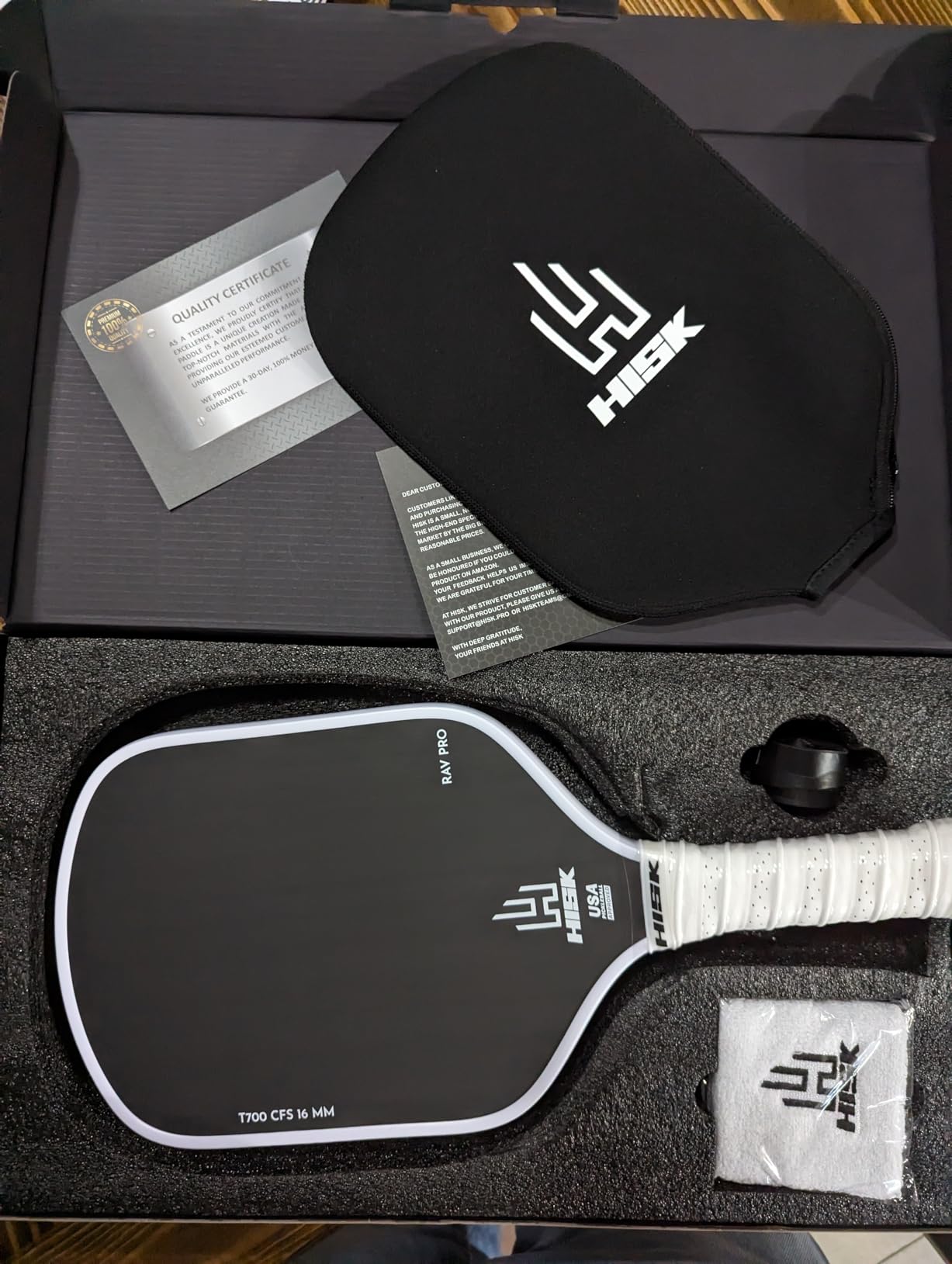
The RAV PRO is the most generously bundled paddle here, and it arrives with a neoprene cover, an extra overgrip, sweatbands, and a carbon fiber eraser. For a player who is buying their first carbon paddle, that is the difference between being ready to play and needing to spend another trip on accessories.
Underneath, it is a raw Japanese Toray T700 face with the weave left exposed. Owners credit that exposed weave with noticeably more spin and more precise placement than a sanded face, because the texture catches the ball as it leaves the paddle instead of letting it slide.
At 7.9 ounces it is one of the lightest paddles in the group, and the review consensus is that it keeps hands fast at the net and reduces arm fatigue over long sessions. A high-density polymer core with perimeter foam edging fills the dead spots on off-centre contact.
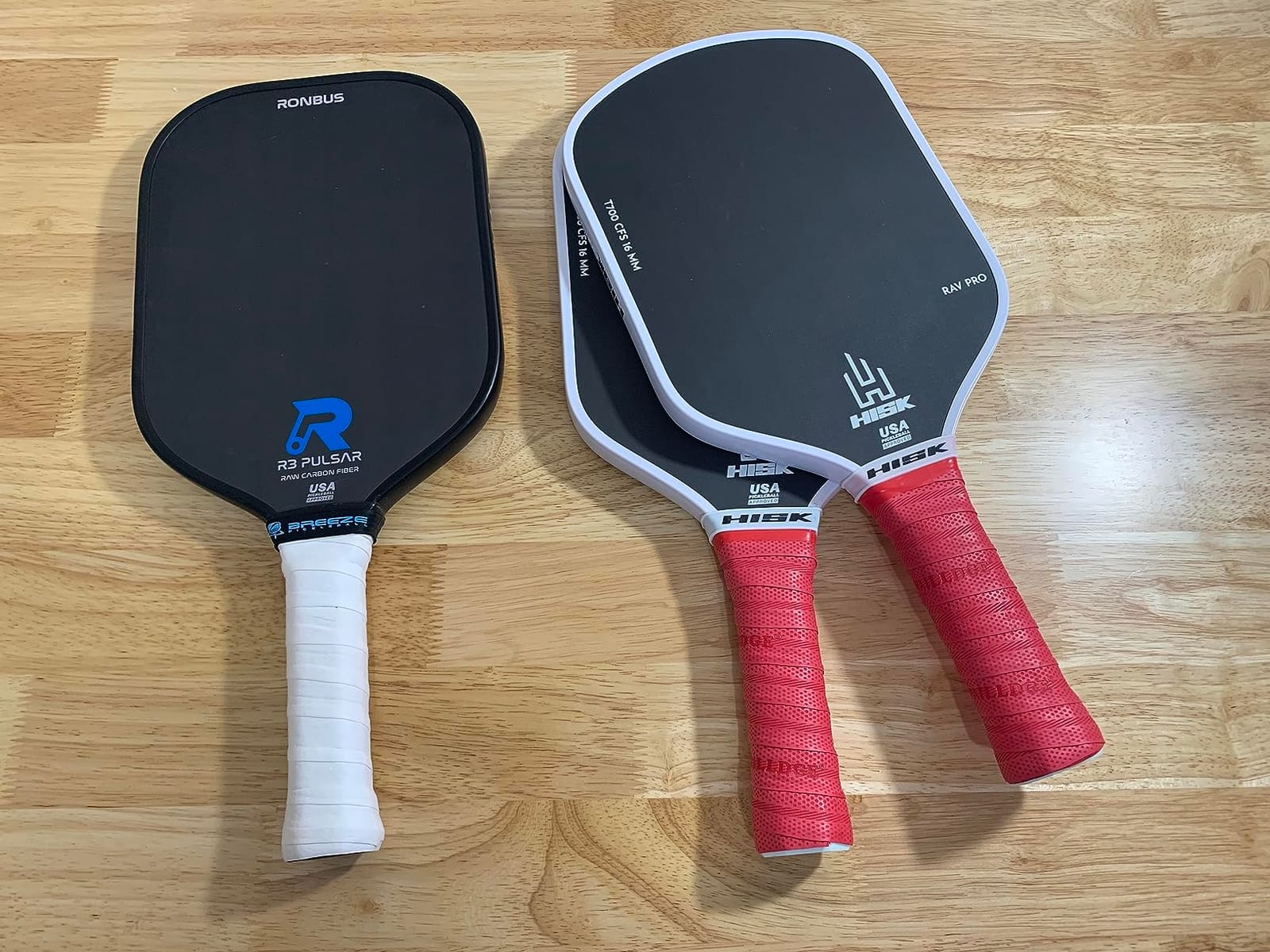
The 16.33 by 7.5 inch elongated face with a 5.5 inch handle supports a two-handed backhand, which makes it a natural doubles paddle. It is USA Pickleball approved, and the 4.2 inch grip is on the slimmer side.
Ten years of spare part availability is listed for the product, which is unusual detail at this tier and says something about how long the brand intends to support the model.
What the RAV PRO does well
Control at the kitchen. The soft, dense, highly controllable feel is described over and over in the reviews, and that is exactly what you want for third-shot drops and soft resets. Players report that the paddle rewards a light touch rather than demanding power.
Spin from a light frame is the unusual combination. You normally trade weight for control, and this paddle gives you both, which is why it shows up in so many conversations as the value benchmark at this price.
Where the RAV PRO falls short
It is not a power paddle, and no amount of lead tape will change that. If your game is built on pace, you will have to generate every bit of it yourself, which is a real limitation for a hard hitter.
Two smaller things. The sweet spot and face area are slightly smaller than some rivals out of the box, so it is not the most forgiving paddle in the list, and the rectangular handle shape takes a few sessions to stop feeling odd. It is also not thermoformed, so it is a softer, more traditional build than the XSPAK or CRBN.
9. Luzz Cannon Thermoformed T700 – Best for Raw Power
Luzz Pickleball Paddle Cannon Thermoformed T700 Carbon Fiber Honeycomb Core
T700 raw carbon with waterfall texture
16mm core
5.5 x 4.25 inch grip
1 year warranty
Seven colour options
Pros
- Thermoformed T700 raw carbon with a fine waterfall texture
- Plenty of power while staying precise on dinks
- 16mm core dampens vibration and cuts fatigue
- Soft 4.25 inch grip stays secure in long matches
- Sweet spot expanded by about 10 percent
Cons
- Power takes a warm-up before control arrives
- One report of deformation after three weeks of heavy play
- Warranty routed through the marketplace with slow response
- Smallest review base here at 172 ratings
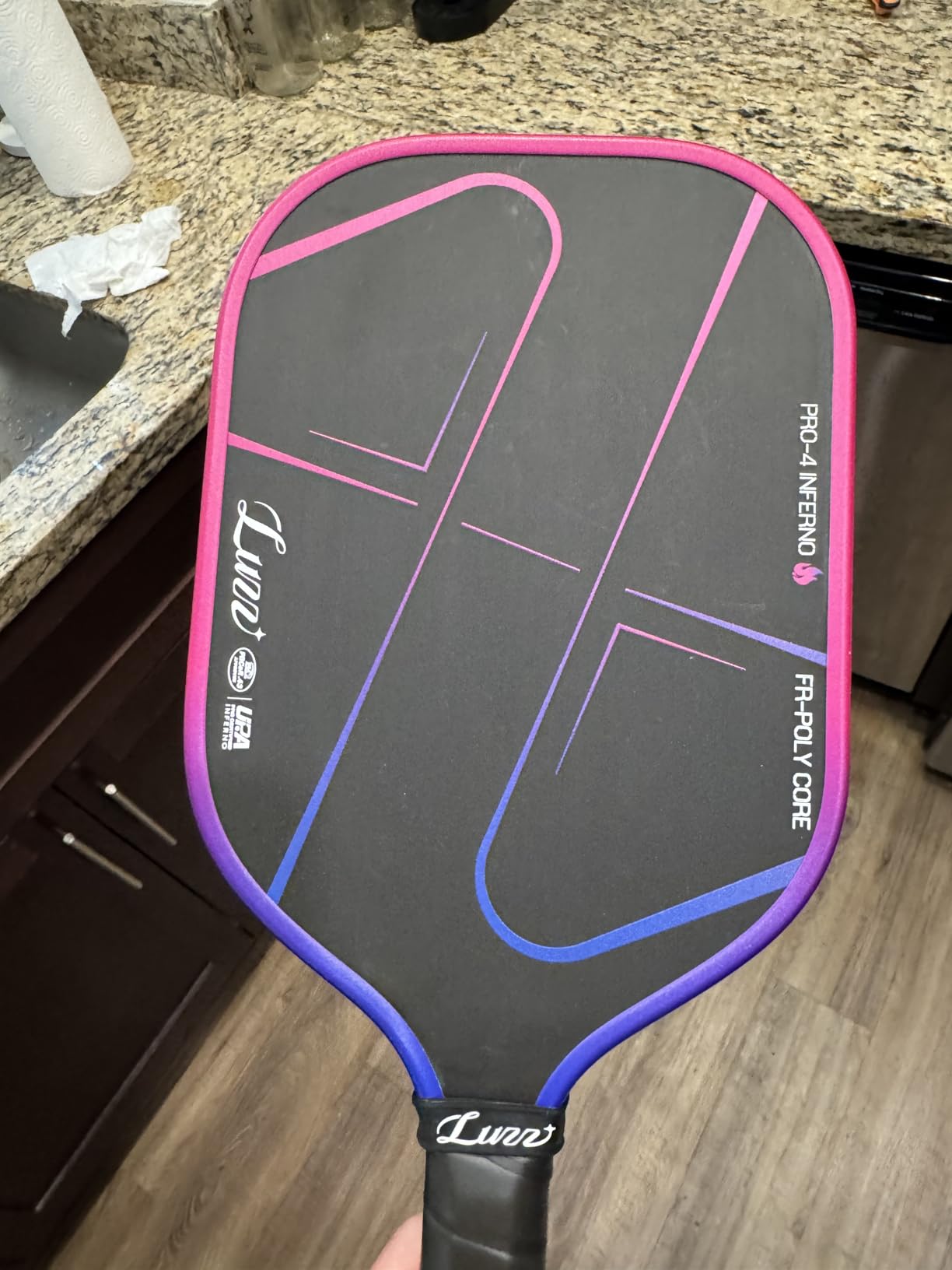
The Luzz Cannon is the power option in this list, and it is unapologetic about it. Owners describe a thermoformed T700 raw carbon surface with a fine waterfall texture that produces strong spin, and plenty of punch behind both drives and drops.
The internal structure is a U-shaped carbon fiber matrix, which the manufacturer credits with a meaningful increase in kinetic energy output. Sweet spot volume is claimed at roughly ten percent larger than the previous generation, and at 16mm the core absorbs vibration and reduces fatigue across a long session.
Importantly, the power does not come at the cost of everything else. Reviewers still describe it as precise enough for dinks and resets, and the soft 4.25 inch grip is credited with staying secure through long matches where a harder grip would have been slippery.
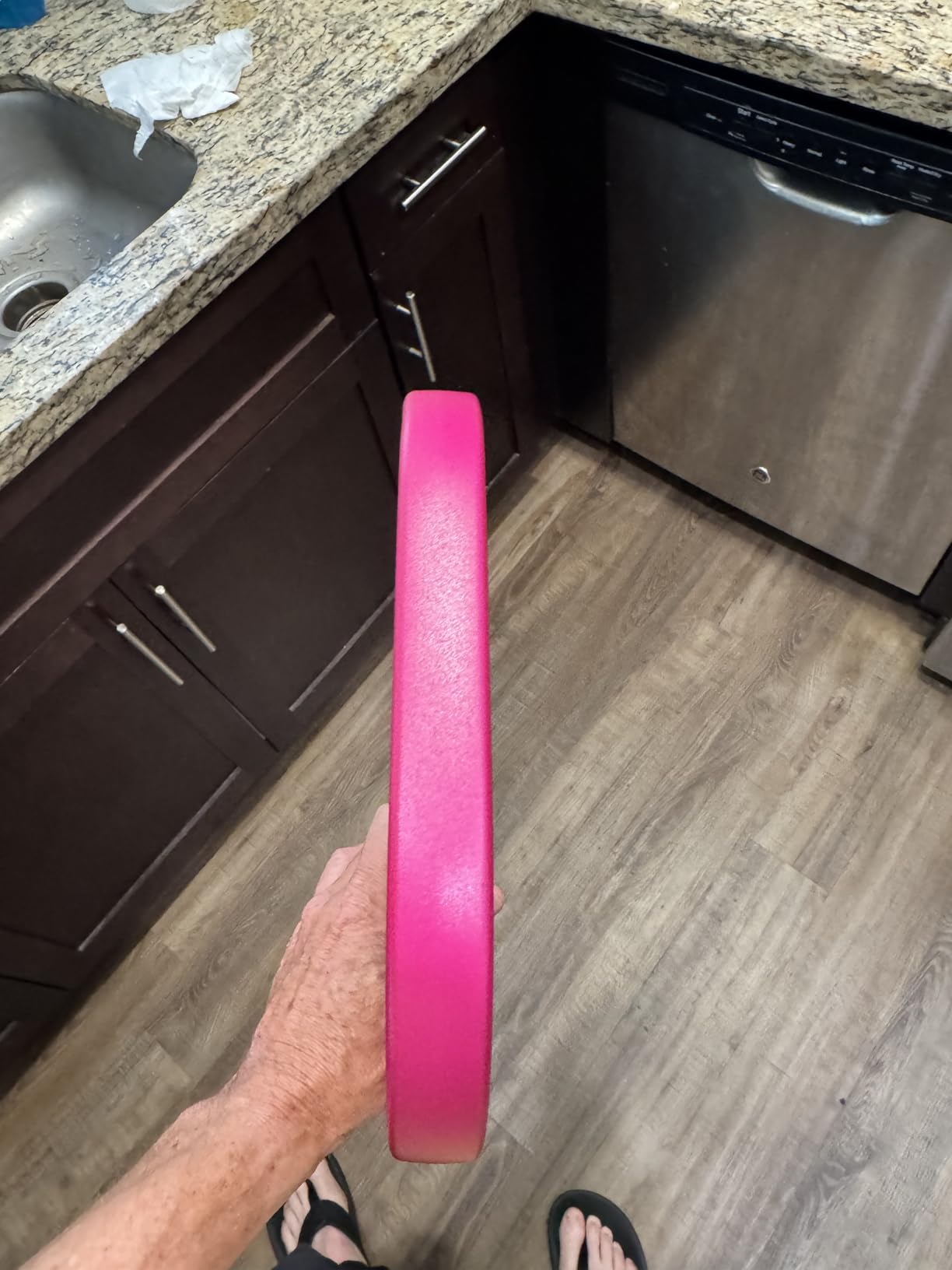
Weight is the one number the listing does not publish, which is worth flagging because power and weight usually trade against each other. A 4.25 inch grip with a sandy, grippy face covers a fairly broad range of hand sizes without feeling cramped.
Seven colourways are available, and the warranty is a full year. Whether that warranty is honoured quickly is a different question, and more on that below.
What the Luzz Cannon does well
It gives you pace without making you trade away placement. The reviews repeatedly describe a paddle that is powerful but still precise, which is the hardest balance to hit in a thermoformed carbon design and the main reason this one earns a place on the list.
It is also a good upgrade step for a beginner who plays aggressively. If you naturally swing hard and want the ball to carry, a control-first 16mm paddle will feel slow to you, and this is the opposite answer.
Where the Luzz Cannon falls short
There is a warm-up period. Owners report that power and control do not arrive together, and aggressive volleys pop long out of the early sessions before you learn the paddle’s limits. Budget a few games before you judge it.
Durability and service are the open questions. One review reported the paddle deforming and becoming uncontrollable after about three weeks of heavy play, and warranty service was routed through the marketplace with a slow response. With 172 ratings, this is also the thinnest social proof in the roundup, so treat the enthusiasm as early-adopter feedback rather than a settled track record.
10. DGYGQ Edgeless Carbon Fiber – Best for Fast Hands
DGYGQ Pickleball Paddles, Edgeless Carbon Fiber Pickleball Paddle with Polypropylene Honeycomb Core, Increased Power for Ultimate Spin & Consistency (Red)
Raw T700SC carbon face
13mm polypropylene core
7.76 oz
16.92 x 7.36 inches
5.9 inch grip
Pros
- Lightest paddle in the group at 7.76 oz
- 13mm core gives a faster more responsive feel
- Edgeless aerodynamic throat swings quickly and cleanly
- Raw T700SC carbon with good strength and stability
- Includes carry bag eraser and manual
Cons
- Shortest warranty here at just 3 months
- 13mm core offers less vibration damping than a 16mm
- Published owner feedback detail is limited
The DGYGQ is the fastest paddle on this list, and it earns that description through weight and core thickness together. At 7.76 ounces it is the lightest of the ten, and the 13mm polypropylene honeycomb core responds faster than any of the 16mm paddles here.
That combination produces quick response and explosive shots, which is what you want if your game is built on reacting at the kitchen. The edgeless construction with an aerodynamic throat design is credited with a quicker, smoother swing than a paddled-edged design that catches air.
The face is premium raw T700SC carbon, described by owners as strong and stable, and the 13mm core with reinforced edges absorbs impact enough to keep shots controlled. It is rated 4.7 stars from 473 ratings, with roughly 84 percent five-star scores.
The face is large at 16.92 by 7.36 inches, larger than most paddles in this roundup, and the 5.9 inch handle is the longest grip here. That combination gives you reach and leverage, which pairs well with the light weight for a paddle you can move quickly through a whole rally.
A carry bag, a rubber eraser, and a user manual are in the box. The eraser matters here, because a 13mm textured face still collects residue and you want it clean to keep the bite consistent.
What the DGYGQ does well
Reaction speed. If you are the player at the net reading the opponent’s shoulders, a 7.76 ounce paddle with a 13mm core is the setup that lets you block and roll without your hands trailing the ball. Everything about this design is built to shorten the gap between seeing the ball and meeting it.
It is also a strong value argument. A 13mm core is usually the more expensive spec at this tier, so getting one alongside a raw T700SC face and a large face area is unusual, and the rating of 4.7 across nearly 500 reviews supports the feel being real rather than advertised.
Where the DGYGQ falls short
The warranty is three months, the shortest in this roundup by a wide margin. For a paddle you will use on hard outdoor courts, that is close to no coverage at all, and you should treat that as part of the price you are paying.
A 13mm core also means less vibration damping than the 16mm paddles here, so a badly mistimed ball is more likely to rattle up your forearm. If elbow or joint sensitivity is a factor for you or an older player in the group, a 16mm model is the safer choice despite being slightly slower.
How to Choose a Pickleball Paddle in This Price Range
Core thickness: 13mm vs 14mm vs 16mm
Thickness is the single spec that changes how a paddle feels most, and it is the one to understand before you shop. A thinner core is a stiffer, faster paddle; a thicker core is a softer, more forgiving paddle with a bigger sweet spot. Three thicknesses cover almost everything you will find under the ceiling: 13mm, 14mm, and 16mm.
Thirteen millimeters is the fastest and lightest profile, and it suits players with quick reactions who want the ball to come off the face immediately. Fourteen millimeters is the balanced middle, adding a little more control and stability without going soft. Sixteen millimeters is the most forgiving and the most popular in this roundup, softening impact and enlarging the sweet spot, which is why six of the ten paddles here run 16mm.
Which is better depends on your hands and your patience, not on your skill level. If you are new, 16mm gives you the largest margin for error. If you have played for years and have fast hands, 13mm rewards you with control at speed that a softer paddle will never give you. Many players run a 16mm core during a game and a 13mm for tournament play, but that is a refinement, not a starting point.
Face material: carbon fiber vs graphite vs fiberglass vs wood
Carbon fiber is what almost every paddle in this roundup uses, and it is the reason you can get genuine spin at this budget. Raw or exposed weave grips the ball hardest, sand-blasted abrasion surfaces grip well and wear visibly, and matte finishes are the middle ground. Graphite is softer and more arm-friendly with less bite, and it is a sensible choice for players with elbow sensitivity.
Fiberglass is the budget entry point. It is durable and cheap, but it is heavy, it generates almost no spin, and it will slow your hands down. A fiberglass paddle is a good loaner or a good paddle for a child who is still deciding whether they like the sport. Wood is heavier still, has no spin generation, and is only worth it for very young players and for people who specifically want a traditional feel.
More and more of the paddles in this price range are thermoformed, meaning the face layers are bonded under heat and pressure into a single shell rather than glued to a core. That process is what makes an 8 ounce paddle feel stable rather than wobbly, and three of the ten here are built that way.
Weight and swing weight
Static weight is what sits on the scale, and it only tells you part of the story. Swing weight and twist weight describe how the paddle behaves when you move it, and a paddle with high twist weight will twist on off-centre hits, which is exactly when you need it solid. The practical rule for this price range is simple: somewhere between 7.5 and 8.5 ounces suits almost everyone.
All ten paddles here land between 7.76 and 8.3 ounces, so you are choosing within a narrow band. If you play doubles and spend your time at the kitchen, lean toward the lighter end. If you are on a windy outdoor court with a heavier ball feeling, lean toward 8.2 ounces and up.
Shape: widebody vs elongated
A widebody paddle is shorter and wider, giving you a bigger sweet spot and more control. An elongated paddle is longer and narrower, giving you reach, a more angled bounce, and more attacking potential on the edges. Most players can feel the difference within one session, and many buy one of each over time.
Shape matters more than most beginners expect, and it is a cheaper lever to pull than price. The TENVINA here is offered in both shapes at two thicknesses, which makes it unusually easy to test the difference without changing brands.
Grip size and how to measure it
Grip size is the most common fit problem in pickleball and the easiest to fix, but only if you measure before you order. Take a tape measure and wrap it around the hand you hold the paddle in, from the base of the index finger around the palm, and that measurement is your target circumference. Do not measure the other hand, and do not measure over a glove.
Under 4 inches suits smaller hands, 4 to 4.25 inches is the most common size, and 4.25 to 4.5 inches suits larger hands. The paddles in this roundup run from 4.1 inches on the CPX to 5.9 inches on the DGYGQ, and everything in between is represented. If your measurement lands between two, buy the smaller grip and add an overgrip, because you can add a layer but you cannot take one off.
The wood paddle reality check
Wood paddles are not a good buy for anyone who expects to keep playing, and we want to be direct about that rather than listing one as a recommendation. They are heavy, often around ten ounces, which is fatiguing over a long session, and they generate essentially no spin, so every drop shot and slice has to be shaped entirely with your swing.
They have one legitimate use. For a five-year-old learning the game, a wooden paddle costs less than it would take to lose a composite one, and it teaches the same strokes. For an adult who intends to be playing in six months, the jump from wood to carbon later is the single most expensive upgrade path in the sport, and players consistently report the biggest perceived gain when they make it is control and reduced arm fatigue.
USAPA approval and what it covers
USAPA approval is a legality standard, not a quality rating. It means the paddle meets the rules on dimensions, weight, and surface texture for sanctioned play in the United States, and every paddle in this roundup carries some form of it. If you only play recreationally and never enter an event, approval changes nothing about how the paddle performs.
Read the warranty instead. In this group the coverage ranges from a very short three months on the DGYGQ, through 120 days on the JOOLA Hyperion, up to a full year on the XSPAK, JOJOLEMON, RAV PRO, and Luzz Cannon. On a paddle you expect to last a season or two, a one-year warranty is the minimum worth accepting.
Frequently Asked Questions
What is the best pickleball paddle for the money?
The best value in pickleball paddles right now sits in the mid range, where textured carbon fiber faces and polymer honeycomb cores are available without paying pro prices. At this budget you get real spin generation, a forgiving sweet spot, USAPA-legal construction, and medium weight paddles in the 7.7 to 8.3 ounce range. Beyond roughly the 150 dollar mark the gains become marginal for most recreational and intermediate players, which is why this is the tier we recommend buying in.
What are the best but affordable pickleball paddles?
Affordable does not have to mean cheap construction. Our top affordable picks are the XSPAK PRO for its thermoformed T700SC face and huge review base, the Vatic Pro Prism for its soft control-oriented feel, and the TENVINA for offering multiple shapes and core thicknesses at a low entry point. Each of these uses the same core and face technology found on paddles costing several times more.
Is a 14mm or 16mm paddle better?
A 16mm paddle is better for most people because it is softer, absorbs more impact, and gives you a larger sweet spot, which matters more when you are still building consistency. A 14mm paddle is the balanced middle ground, adding control without feeling sluggish. Beginners and players with elbow or joint sensitivity should lean 16mm, while experienced players with quick hands often prefer the faster response of a thinner core.
What is the best pickleball paddle under 100 dollars?
Under 100 dollars you can still get a genuine carbon fiber paddle rather than a wood or fiberglass set. The XSPAK PRO, the CPX Pro, and the RAV PRO all sit comfortably in that range and use the same carbon faces and polymer honeycomb cores as pricier models. What you give up at the lower end is usually accessory bundles, warranty length, and some of the thermoformed construction that adds stability.
How much does paddle quality actually matter in pickleball?
Less than most marketing suggests. The gap between a very cheap paddle and a good mid-range paddle is real, but the gap between a good mid-range paddle and an expensive one is small for almost everyone. Reviewers consistently say the sweet spot size and forgiveness matter more than the brand name, and that beyond roughly the 100 to 150 dollar range the performance gains are marginal for most players.
If you are still narrowing the field, our guides to the best pickleball paddles for beginners and the best paddles for power hitters go deeper on the two ends of this list. Players working from tennis usually start with grip shape, and our paddles for tennis players guide covers that in full.
Final Verdict: Which Pickleball Paddle Should You Buy in 2026
The XSPAK PRO Series Thermoformed T700SC is our pick of the best pickleball paddles under 150 dollars, and it wins on the combination that actually matters at this budget: a thermoformed carbon face, a vibration-dampening honeycomb core, a sensible 8 ounce weight, and more than 3,400 ratings behind it. Nothing else on this list has all four, and the reviews back the spec sheet.
Buy the Vatic Pro Prism if you want control and play a placement game, the JOJOLEMON if you want the highest-rated paddle with the most forgiving face, and the TENVINA if your budget is the tightest and you want a choice of shapes and thicknesses. If you play doubles with quick hands, the DGYGQ at 7.76 ounces is the one to try. You can also see our picks for the best pickleball paddles for spin and our roundup of the best pickleball paddles under 100 dollars if your budget is smaller still.
Whichever you choose, measure your hand before you order, keep a carbon fiber eraser in your bag, and give it ten sessions before you judge it.