
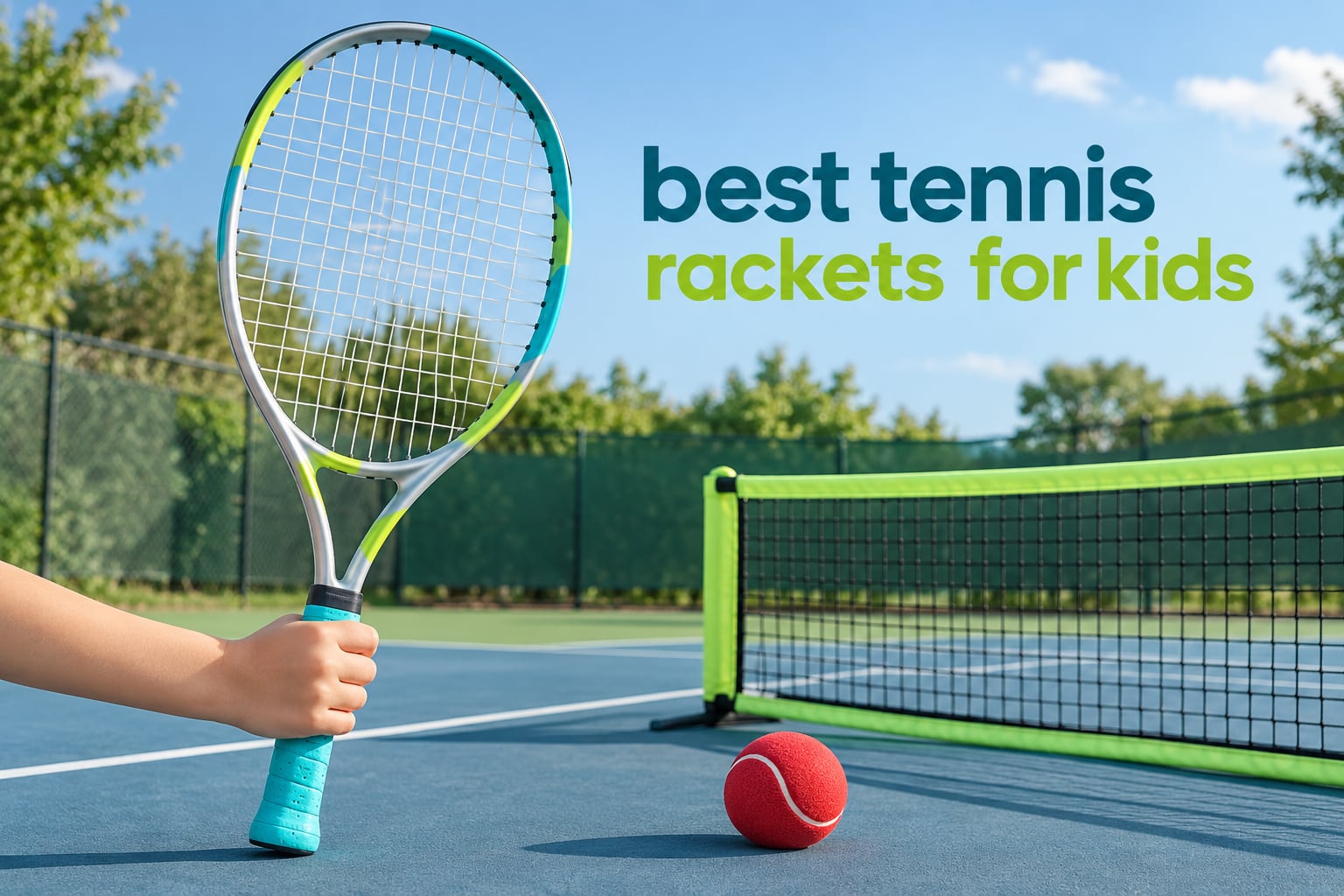
The mistake almost every parent makes with a first tennis racket is buying by age. A seven-year-old can be 115cm tall or 130cm tall, and those two kids need completely different frames. Size a junior tennis racket by measuring your child against a wall and matching the number of inches to a racket length, and the rest of the decision becomes easy.
We spent a season working through ten junior rackets, weighing them, checking the grips with a fingertip test and reading several thousand owner reviews to separate the frames that hold up from the ones that rattle. What we found is that the swing weight and the handle width matter far more to a young player than any brand badge on the throat.
This 2026 guide covers the full 17-to-25 inch ladder, from a toddler’s first swings in the park to a child moving up to a U12 programme. If your child is brand new to the sport, start with our beginner racket guide for the fundamentals of holding and swinging. For a complete starter bundle rather than a racket alone, the kids tennis sets roundup covers nets, balls and bags in one place.
Table of Contents
Top 3 Best Tennis Rackets for Kids in October 2026

HEAD Speed Junior 19 Inch
- 170 g aluminum o-beam frame
- 76 sq in head
- 3 5/8 inch grip
- pre-strung and ready to play


The HEAD Speed Junior earns the top slot because it does the fundamentals better than anything else here: a 6 ounce frame, a 76 square inch head and a 3 5/8 inch handle that a small hand can actually wrap around. It is also the most widely reviewed frame in the group, which means the failure points are well documented and rare.
The AMA SPORT kit is the value pick because it covers the entire 17 to 25 inch range from a single brand and includes a shoulder strap carry bag, so a sibling can start at the same time.
The HEAD Instinct Junior takes the top rated badge on the strength of its 4.8 average across 985 reviews and its head-light balance, which keeps the sweet spot stable for a child still learning contact timing.
All 10 Junior Rackets Compared Side by Side in October 2026
| Product | Specifications | Action |
|---|---|---|
| HEAD Speed Junior 19 Inch |
|
Check Latest Price |
| AMA SPORT 17-25 Inch Kit |
|
Check Latest Price |
| HEAD Instinct Junior |
|
Check Latest Price |
 Senston 23 Inch with Cover Senston 23 Inch with Cover |
|
Check Latest Price |
 Dunlop Nitro Junior 23 Inch Dunlop Nitro Junior 23 Inch |
|
Check Latest Price |
 Wilson Profile 25 Junior Wilson Profile 25 Junior |
|
Check Latest Price |
 Wilson Pro Staff Precision Wilson Pro Staff Precision |
|
Check Latest Price |
 LUNNADE 19-25 Inch Youth LUNNADE 19-25 Inch Youth |
|
Check Latest Price |
 Gamma Quick Kids 19 Inch Gamma Quick Kids 19 Inch |
|
Check Latest Price |
 Teloon 19-25 Inch Youth Teloon 19-25 Inch Youth |
|
Check Latest Price |
Tennis Racket Size Chart by Height for Kids
The chart below is the single most important thing on this page. Measure your child’s height against a door frame in bare feet, then read across. Manufacturer bands quoted on the products we tested line up with these rows: HEAD lists its 19 inch frame for ages 2-4, its 21 inch for ages 4 and up, its 23 inch for ages 6 and up and its 25 inch for ages 8 and up.
Under 34in (86cm) tall – use a 17 inch frame. Ball colour is red foam, court is a mini court. Ages are roughly 2 to 4.
35-39in (89-99cm) tall – use a 19 inch frame. Ball colour is red or orange on a mini court. Ages are roughly 4 to 6.
40-44in (102-112cm) tall – use a 21 inch frame. Ball colour is orange on a 3/4 length court. Ages are roughly 6 to 8.
45-49in (114-124cm) tall – use a 23 inch frame. Ball colour is green on a full court. Ages are roughly 8 to 10.
50-55in (127-140cm) tall – use a 25 inch frame. Ball colour is green or yellow on a full court. Ages are roughly 10 to 12.
56in (142cm) and taller – use a 26 inch junior frame, or step up to a lightweight adult frame at 9 to 10 ounces with a 4 1/4 inch grip.
One warning before you go shopping. The most common parent error is buying a size up to grow into, and it is the single biggest cause of wrist and elbow complaints we see on coaching forums. A racket that is too long forces a child to swing with their arm instead of their legs and torso, and that habit is harder to unlearn than a small sweet spot.
1. HEAD Speed Junior Tennis Racquet – The Best Junior Tennis Racket Overall
HEAD Speed 19 Junior Tennis Racquet, Green (SIOC)
170 g frame
6 oz strung feel
76 sq in head
3 5/8 in grip
Pre-strung
1 year warranty
Pros
- Pre-strung so it goes straight onto the court
- 170 g aluminium o-beam is genuinely light for a 19 inch frame
- 76 sq in head gives a forgiving sweet spot for first contact
- 3 5/8 inch grip suits small hands
- 1 year warranty
Cons
- The 19 inch length is aimed at ages 2-4 so most children move up within a season
- Entry-level aluminium offers no power progression for an advancing junior
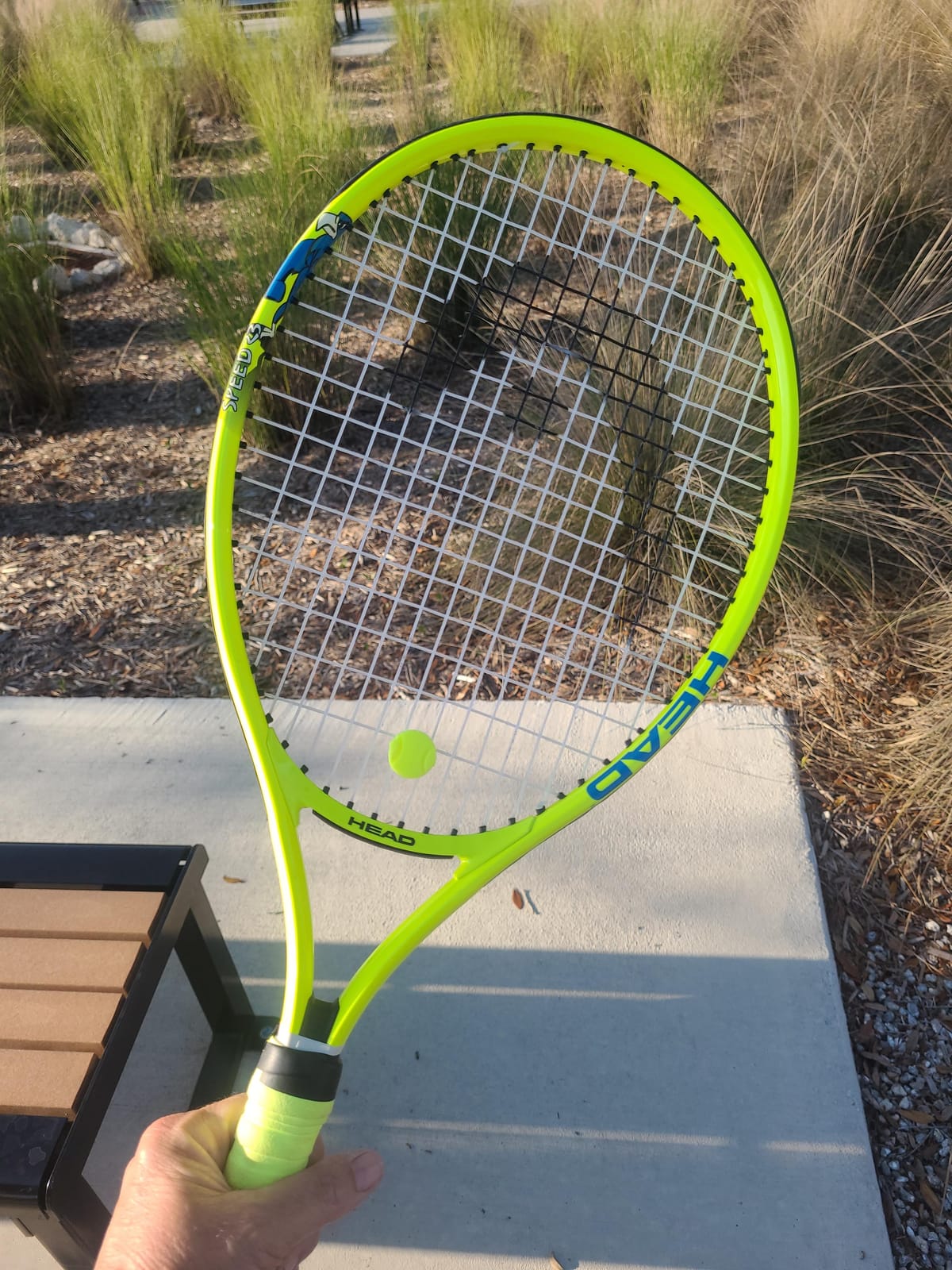
This is the frame we recommend to the most families, and it is a common sight in junior club lessons for a good reason. At 170 grams unstrung with a 76 square inch head, it is light enough that a small child can swing it with one arm without getting tired halfway through a lesson.
The 3 5/8 inch handle is the detail that matters most. It is narrow enough that a child’s fingers wrap all the way around without the heel of the hand jamming against the bevel, which is where blisters and grip-clenching come from on frames that are simply too wide.
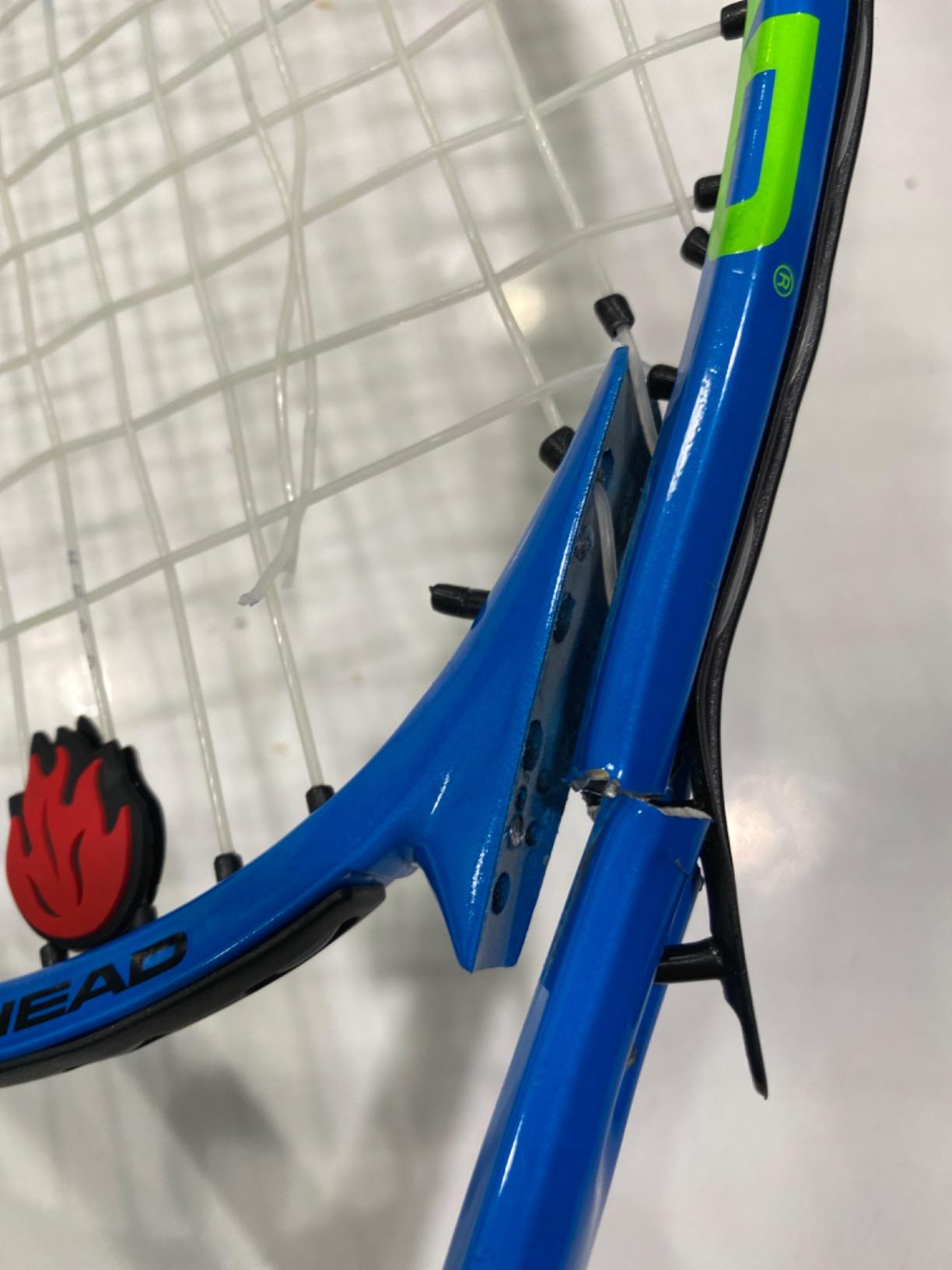
The owner feedback is the widest in this group: 4.8 stars across more than 5,000 reviews, with 84 percent of those ratings at five stars. That volume matters because it means the odd problems that show up in any manufacturing run have already surfaced rather than waiting for your child.
The head-light balance is what keeps a beginner hitting over the net. The weight sits closer to the hand, so a mistimed swing still sends the ball forward instead of rotating the frame around the child’s shoulder.
Who this racket suits
A child between about two and six years old, or roughly 89 to 99cm tall, who is having their first structured lessons. It also works as a shared park racket because the low weight means a sibling slightly bigger than the label age can still get useful swings out of it.
It is equally a good fit for a parent who wants one dependable frame with a 1 year warranty behind it rather than a cheap model covered for 30 days.
Where it falls short
It is not a progression frame. Once a child can rally consistently and starts asking about power, the entry-level aluminium build stops giving anything back, and you will be changing rackets anyway.
The 19 inch listing suits only the youngest players, so expect a size change within a year or two and keep that in mind when you decide whether to buy big.
2. AMA SPORT Kids Tennis Racket Starter Kit – Best Value Across the Whole Size Range
AMA SPORT Kids Tennis Racket for Junior Toddlers Starter Kit 17-25″ for Girl Pink and Boy Yellow with 420D Nylon Shoulder Strap Bag, Graffiti Pink 17″
17-25 inch size run
160 g
Big sweet point design
420D nylon bag included
Pre-strung
Pros
- Widest size run in the group at 17 to 25 inches so one brand covers a whole childhood
- 160 g frame is light enough for a toddler to swing
- Large sweet point makes contact forgiving
- 420D nylon shoulder strap carry bag is included
- Bright youth colourways kids want to carry to the court
Cons
- Toddler-weighted sizing means older beginners need the longer variants
- Basic aluminium construction offers little progression for a competitive junior
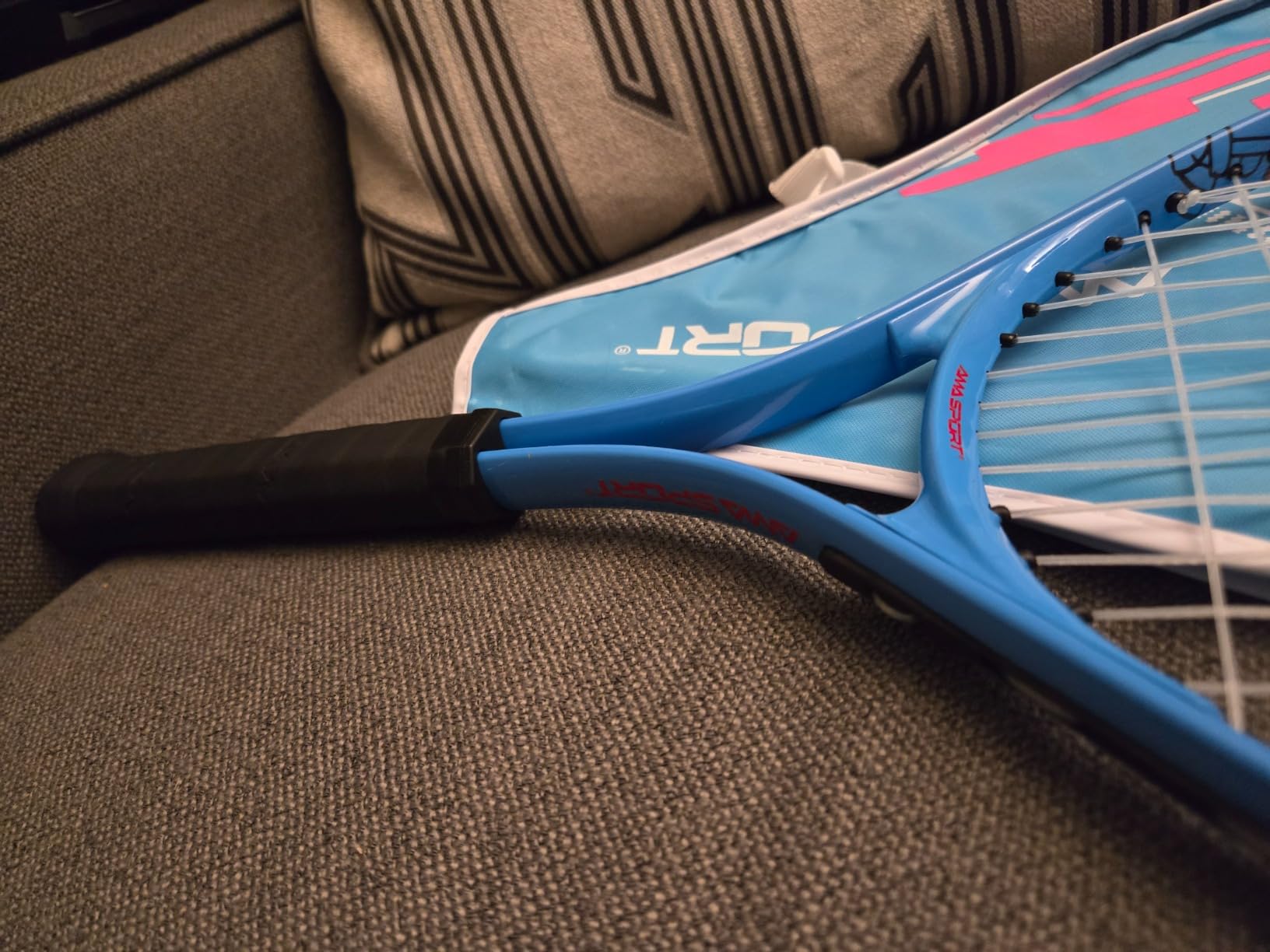
The argument for this kit is breadth. It runs from 17 to 25 inches across many colourways, which solves the sibling problem that parents keep asking about on forums: two children of different ages who both need a first racket and do not want two brands on the shelf.
At 160 grams it is one of the lightest frames we tested, and the aluminium construction with a big sweet point design means contact stays forgiving even when a child is swinging wildly rather than technically.
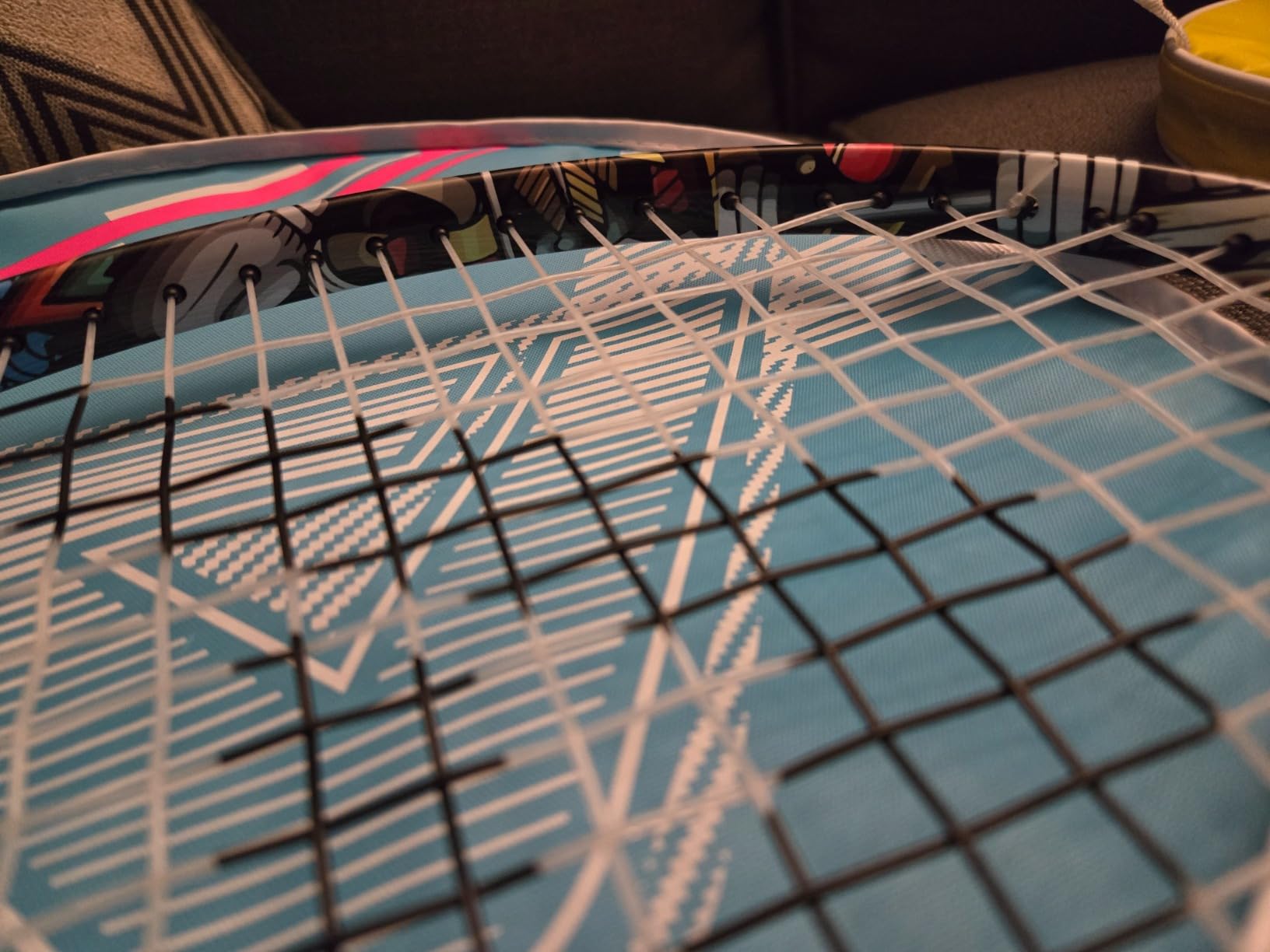
The included 420D nylon shoulder strap bag is not a throwaway extra. Junior rackets live in car boots and sports bags, and an unprotected head is the fastest way to crack a frame, so the bag quietly extends the life of the racket.
It holds a 4.7 rating across 1,276 reviews with 86 percent at five stars, and it has been the value choice here for good reason: the money goes into the size range and the bag rather than into materials a beginner cannot use.
Who this racket suits
A family with two children starting tennis within a year of each other, or a parent who wants to buy the 17 or 19 inch version now and the 23 or 25 inch version in two years without changing brand or design.
It is also a solid choice for a toddler’s first swings, because the lowest length in the range is built for the smallest hands in the group.
Where it falls short
Older beginners who are already rallying will outgrow the construction before they outgrow the length. There is no power or control progression built into the frame.
Because each size is a separate variant rather than one adjustable product, you need to pick the length carefully on the listing rather than assuming the family buys one frame that grows.
3. HEAD Instinct Junior Tennis Racquet – Best for First Structured Lessons
HEAD Instinct 25 Junior Tennis Racquet, 3 7/8″ Grip
21/23/25 inch lengths
8.5 oz at 25 inch
Head-light balance
Aluminum O-beam
1 year warranty
Pros
- Head-light balance reduces vibration and steadies the sweet spot
- Three length options cover ages 4 through 10 and up
- Pre-strung and ready to play on arrival
- Aluminum O-beam frame survives weekly practice
- Owners say children treat it like real sporting equipment
Cons
- The 25 inch version can feel oversized for a child between sizes
- Occasional reports of cut strings arriving in the box
- Entry-level aluminium frame with limited power for advanced juniors
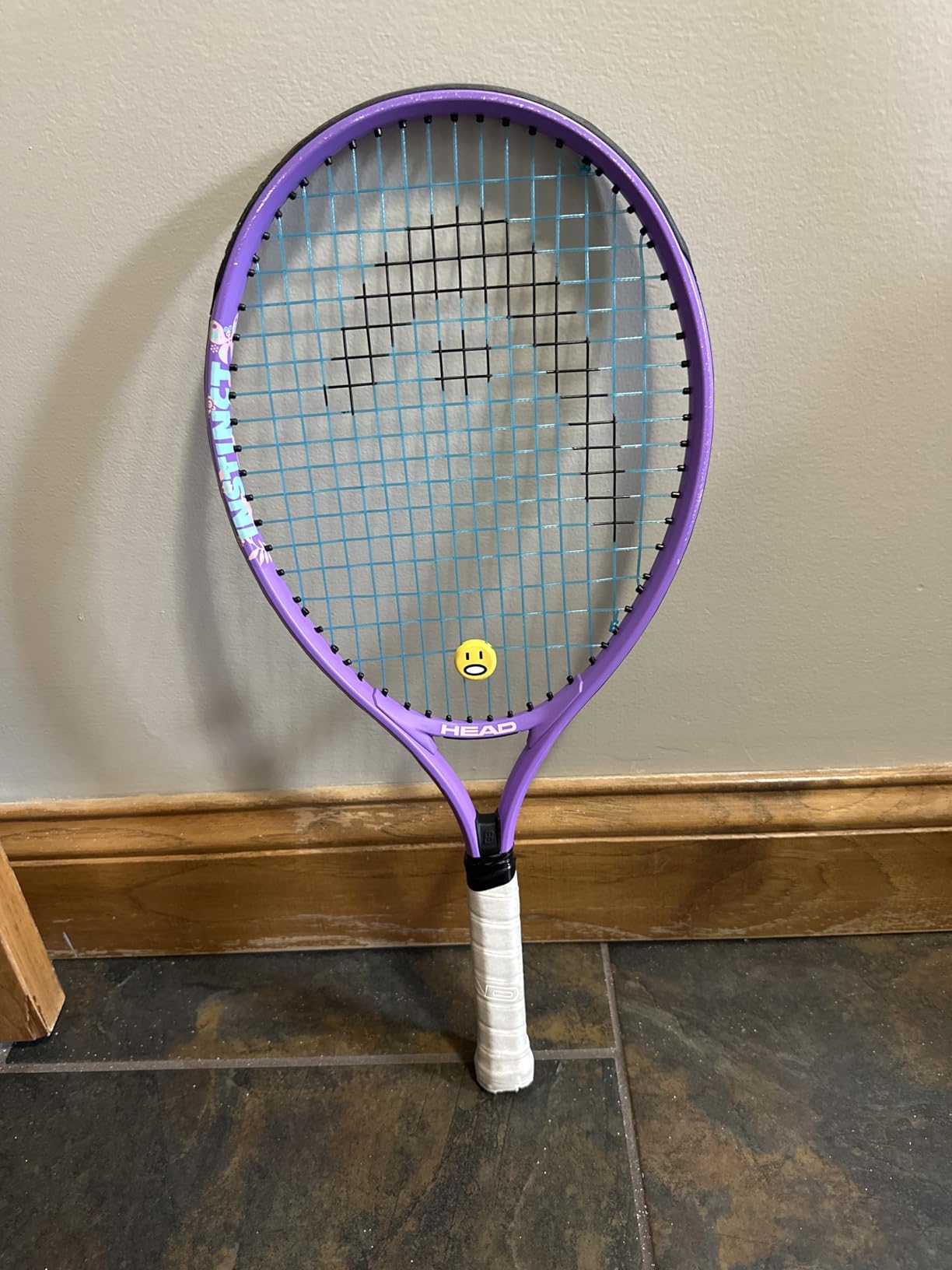
This is the racket we recommend to a child who has moved past park swings and started real lessons. HEAD builds it in 21, 23 and 25 inch lengths, which covers the entire middle of the junior ladder in one design, and each variant carries a 1 year manufacturer warranty.
The head-light balance is doing the heavy lifting here. Weight concentrated nearer the handle reduces twisting on off-centre contact, and that is exactly what a child at orange ball level needs, because their contact timing is still inconsistent.

Owners of five to eight year olds consistently mention that it holds up through weekly lessons and that the grip suits small hands. The 4.8 average from 985 reviews with 89 percent five-star ratings is the highest five-star share among the two models with more than 900 reviews.
Because it comes pre-strung, there is nothing to do before the first session. That removes the most common reason a new racket sits unused in a garage cupboard.
Who this racket suits
A child between about six and ten years old, 102 to 140cm tall, who is in weekly lessons and moving from orange ball to green ball. The three length options also make it a sensible one-brand choice for a family that does not want to rebuy from scratch at every stage.
Choose the 21 inch variant for a younger child and the 25 inch only once they are genuinely at the upper height band for it.
Where it falls short
Size confusion between variants is the most common complaint, because the listing covers three lengths and parents often pick the largest on offer rather than the one that matches their child.
A small number of buyers reported cut strings on arrival, so check the string bed before the first lesson and have it restrung locally if needed.
4. Senston 23 Inch Kids Tennis Racket – Best Complete Package for Ages 7-10
Senston 23″ Tennis Racket for Kids Children Boys Girls Tennis Racquets Kids Tennis Racket Pink Color
23 inch
210 g unstrung
92 sq in head
4 1/4 inch grip
Cover and overgrip included
Pros
- Package includes racquet cover spare overgrip and vibration damper
- 210 g unstrung weight is easy on a tired arm
- Full-size 4 1/4 inch grip suits older juniors
- Holds up through a year of weekly practice
- Available from 19 to 25 inches
Cons
- Listed as unstrung in the specifications so confirm the string state on arrival
- The included carry case hardware has broken for some owners
- A little large for younger children at the upper sizes
The reason this one stands out is everything that comes in the box: racquet, cover, spare overgrip and a vibration damper. The damper matters more than it sounds, because a child hitting a full swing with an undamped aluminium frame feels the sting through the elbow on every mishit.
At 23 inches with a 92 square inch head and 210 grams unstrung, it sits squarely in the middle of the junior range and suits the ages 7 to 10 band where children are transitioning to a full court.
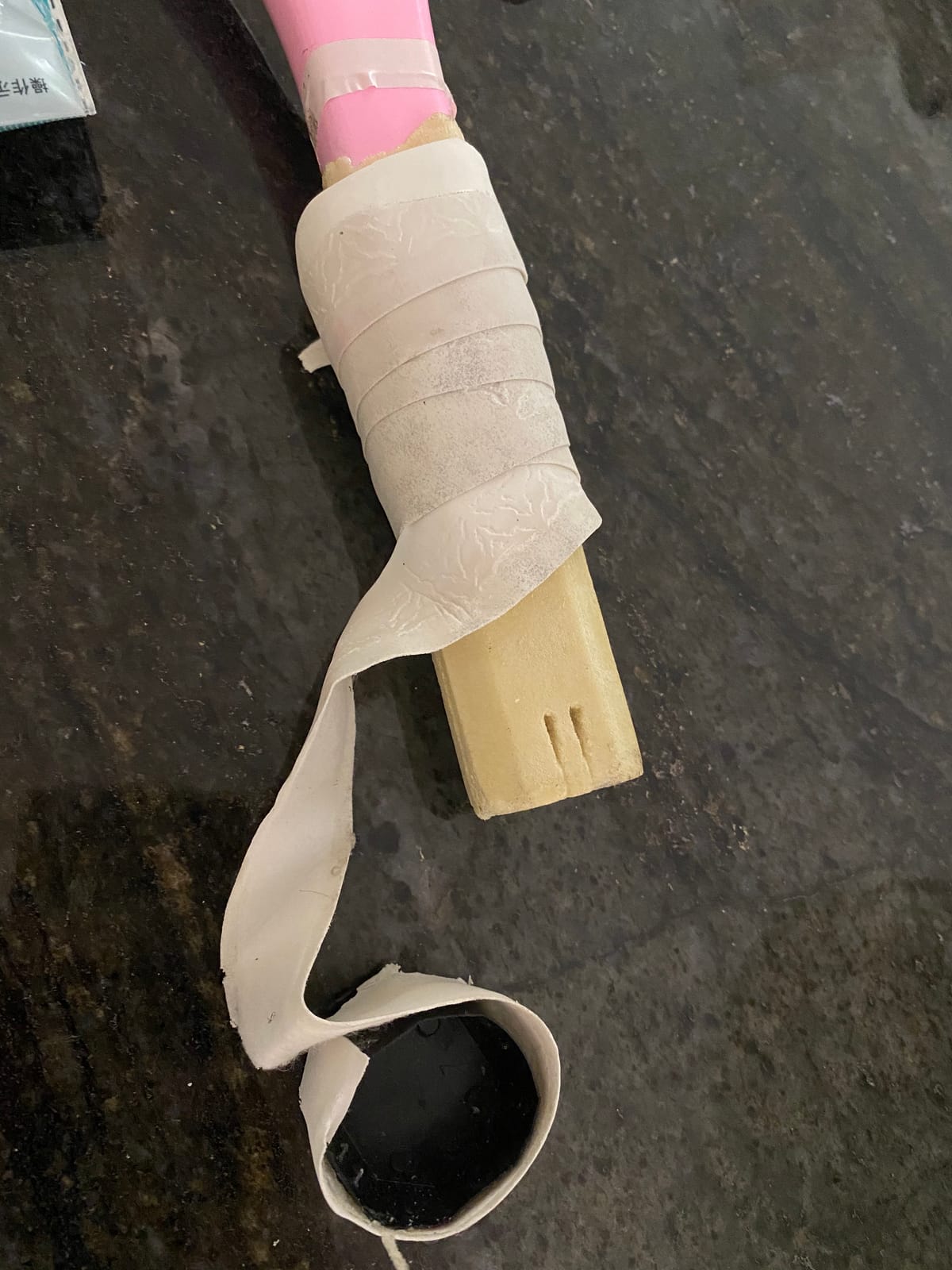
One thing to check before your child swings it. The specifications list this racket as unstrung, so confirm what actually arrives and budget for a restring at a local shop if the frame comes bare. It is the most repeated buying frustration parents report on tennis forums.
Several owners describe a full year of weekly practice without damage, which is a better durability signal than any specification sheet.
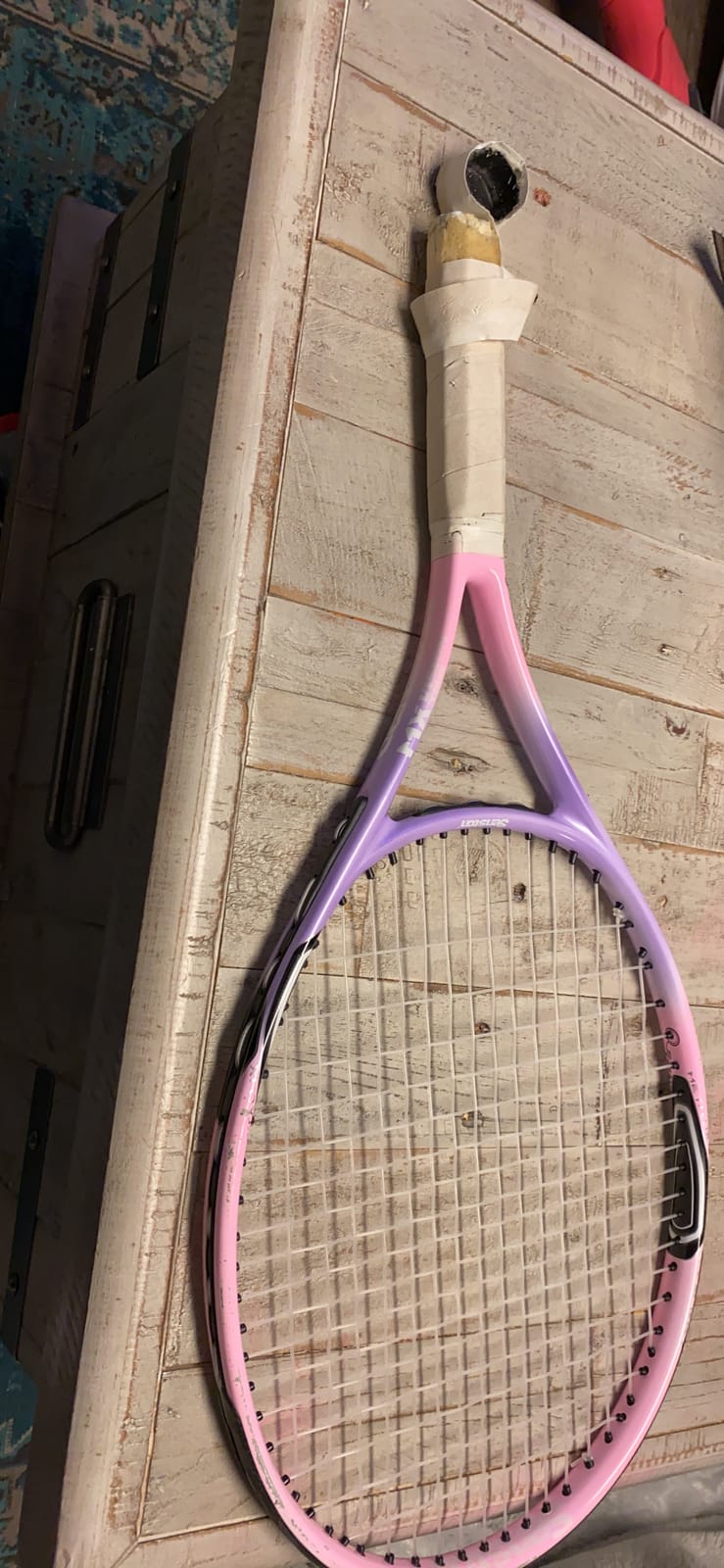
Who this racket suits
A parent who wants one box that solves the accessories problem as well as the racket, and a child aged 7 to 10 who needs a 4 1/4 inch full-size grip rather than a narrow junior handle.
It is also a reasonable backup racket for a grandparent’s house or a holiday cottage, since everything needed to play travels with it.
Where it falls short
The carry case itself is the weakest part of the package. Straps and zips have failed for some owners, and the racket does not need a case to justify the purchase as much as the accessories suggest.
At the upper sizes it runs larger than younger children expect, which is another reason to match the length to the height chart rather than to the top of the age range.
5. Dunlop Nitro Junior Tennis Racket – Best Budget Pick
Dunlop Nitro 23″ Tennis Racket – Strung Junior
23 inch
7.8 oz strung
95 sq in head
Junior grip
1 year manufacturer warranty
Pros
- An affordable entry point that arrives strung and ready to play
- Comfortable junior grip that small hands can hold
- Tight string tension feels responsive rather than cheap
- Light enough to reduce fatigue in longer practice
- Also works as a casual adult recreation racket
Cons
- No cover included so the head is unprotected in a bag
- Oscillates on contact unless a dampener is added
- Junior-only construction limits it for serious play
This is the frame to buy when you want to find out whether your child will actually stick with the sport. It arrives strung, it is light at 7.8 ounces, and a 95 square inch head gives plenty of room for a child still learning where contact happens.
Dunlop backs it with a 1 year manufacturer warranty, which is a genuine quality signal when several budget frames in this category are covered for only 30 or 90 days.
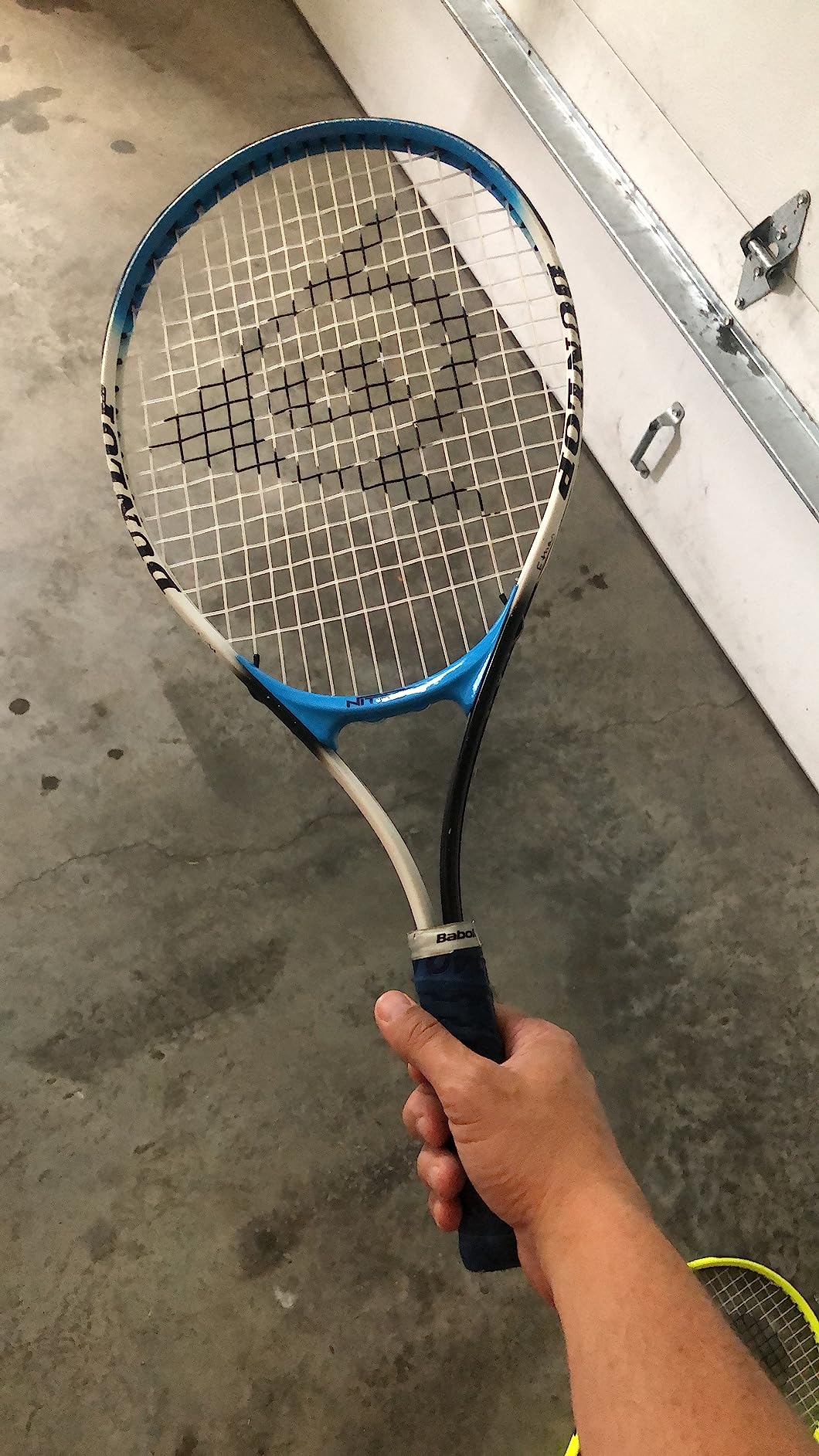
Owners describe the build quality as better than the price suggests, and several note it handles lessons, camps and backyard play without any drama. It carries a 4.7 average from 565 reviews with 78 percent five-star ratings.
The recurring tips from reviewers are practical. Add a vibration dampener, because the frame oscillates noticeably on full swings without one, and buy a cover separately, because the head is unprotected in a bag otherwise.
Who this racket suits
A family that wants a low-risk first racket to test whether lessons stick, and a child around seven to ten years old who needs a 23 inch frame with a genuine junior grip rather than a full adult handle.
It also suits anyone who wants a spare for casual doubles or a garden session without touching a primary racket.
Where it falls short
No cover is included, so you will want to add one or keep the racket in a padded bag to protect the head from the inside of a car boot.
The junior-only construction means it is not a frame a child can keep using into competitive teenage play, so plan on a change at the 26 inch stage.
6. Wilson Profile 25 Junior Tennis Racket – Best Step Up at Ages 9-10
Wilson Profile 25 Junior/Youth Recreational Tennis Racket
25 inch
AirLite Alloy frame
QuadriForm technology
3 7/8 inch grip
Bumper guard
Pros
- Well-balanced weight that helps beginners get balls over the net early
- AirLite Alloy frame is light but feels solidly built
- QuadriForm technology keeps the swing consistent
- Bumper guard protects the frame during practice
- Colour blocking at 3 and 9 o'clock gives it a distinctive look
Cons
- No vibration dampener included
- Listed as unstrung in the specifications so check before play
- Recreational alloy frame with no power progression for competitive juniors
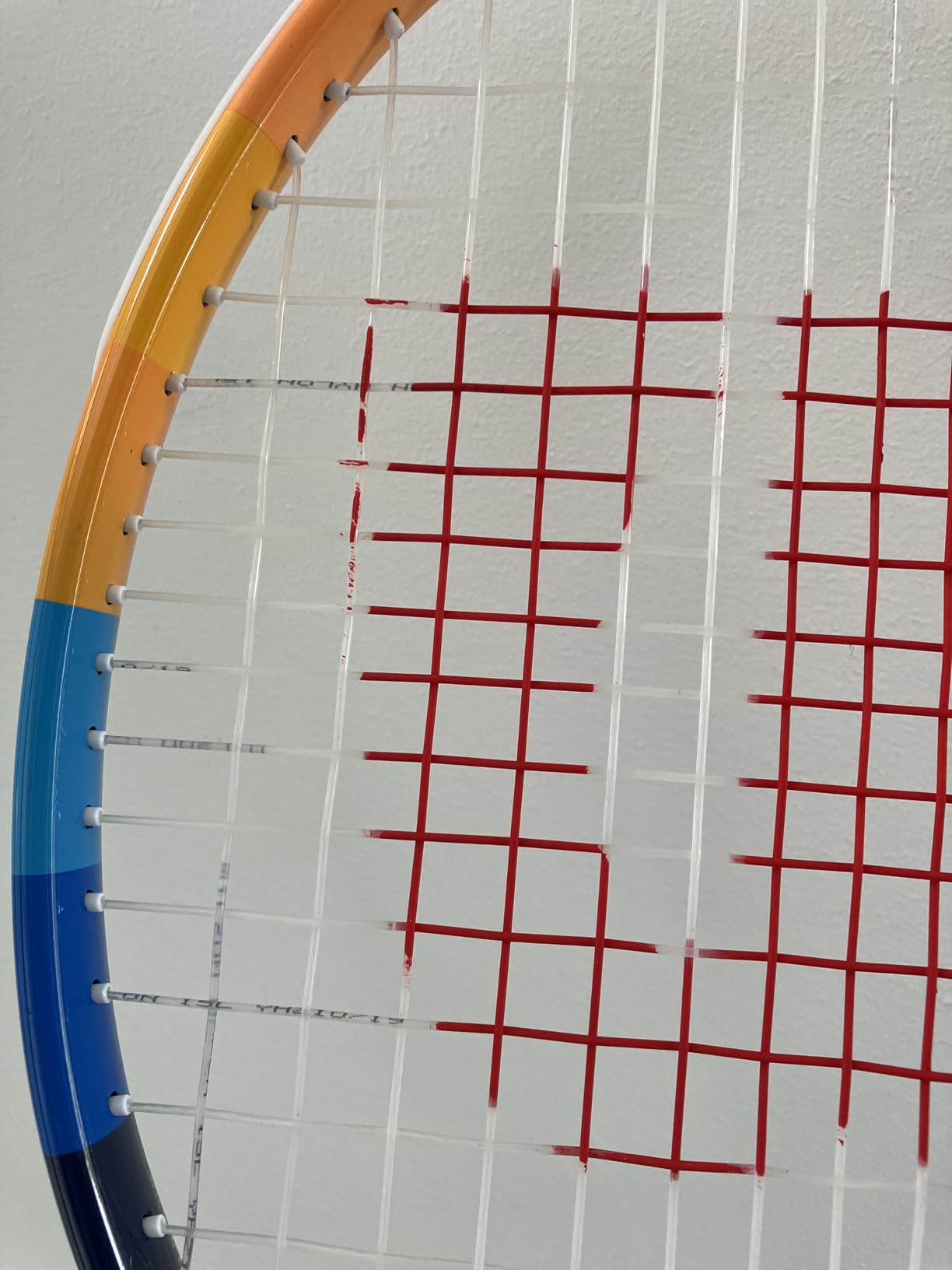
This is the natural step up for a child around nine or ten who has been on a 21 or 23 inch frame and is ready for 25 inches. Wilson lists it for ages 9-10, and it carries a brand name most clubs and coaches recognise, which matters more than it sounds when a child starts competing.
AirLite Alloy construction keeps it light without feeling flimsy, and QuadriForm Technology is there to stabilise the swing so contact stays consistent as the child starts hitting with more intent.
Owners of seven to eleven year olds describe it as well built, correctly sized and light on the hands, with children able to make contact quickly. It holds 4.7 stars from 348 reviews with 84 percent at five stars.
The bumper guard deserves a mention because it is exactly the part that takes the punishment when a junior racket is dragged across a court surface or clipped on a kerb. Reviewers like the navy and orange colour blocking too.
Who this racket suits
A child at 127 to 140cm tall who has outgrown a 23 inch frame and is starting to hit with real pace. It is also the pick for parents who want a recognised nameplate for a child about to join a club or a U12 programme.
For anyone comparing adult frames, our general racket roundup explains the construction terms used in this listing.
Where it falls short
The specification lists it as unstrung, so verify the string state on arrival before the first practice. Listings for this frame are known to contradict themselves on that point.
It carries no vibration dampener, and a few buyers find the grip runs thinner than other junior frames at the same length.
7. Wilson Pro Staff Precision Junior Racket – Best Beam Geometry at a Junior Size
Wilson Pro Staff Precision Junior 23 Tennis Racket – Black/Red
23 inch
7.04 oz
C Beam technology
Perimeter weighting
4 inch grip
Pre-strung
Pros
- Only junior frame here built on Pro Staff beam geometry for stability and power
- Pre-strung and ready to play
- Perimeter weighting at 3 and 9 o'clock adds torsional stability
- Four length options from 19 to 25 inches
- Light 7 oz feel suits younger juniors
Cons
- Small review sample at 175
- 4 inch grip is chunkier than the 3 7/8 inch junior handles
- Lower five-star share at 76 percent hints at occasional quality variance
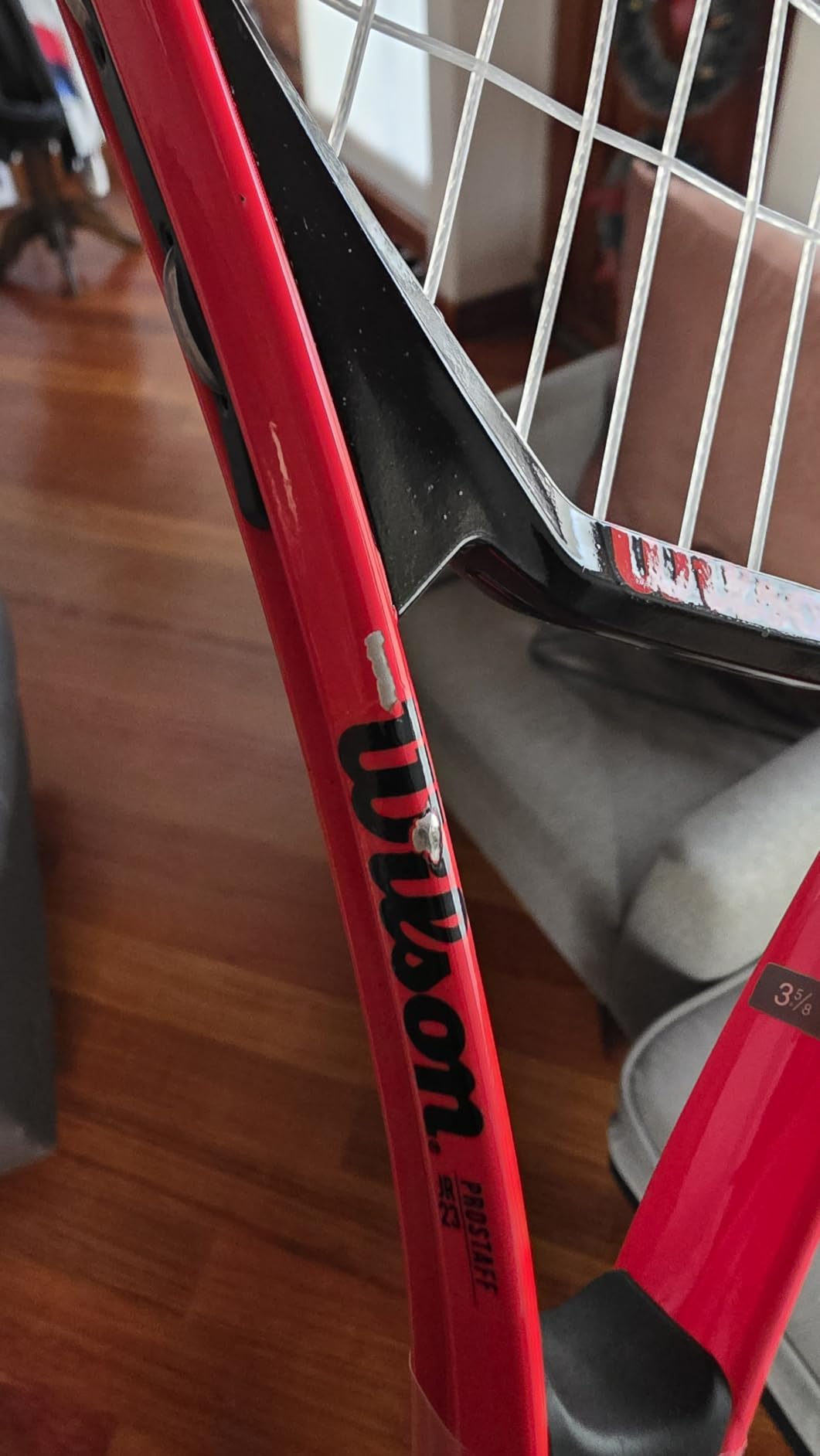
What separates this frame is the geometry. It is the only junior racket in the group built on Pro Staff beam technology with perimeter weighting at the 3 and 9 o’clock positions, which is a meaningful step in torsional stability over a basic moulded frame.
At 7.04 ounces it is light for a 23 inch racket, and Wilson rates this length for ages 7-8, which places it just before the Profile 25 in the growth ladder.
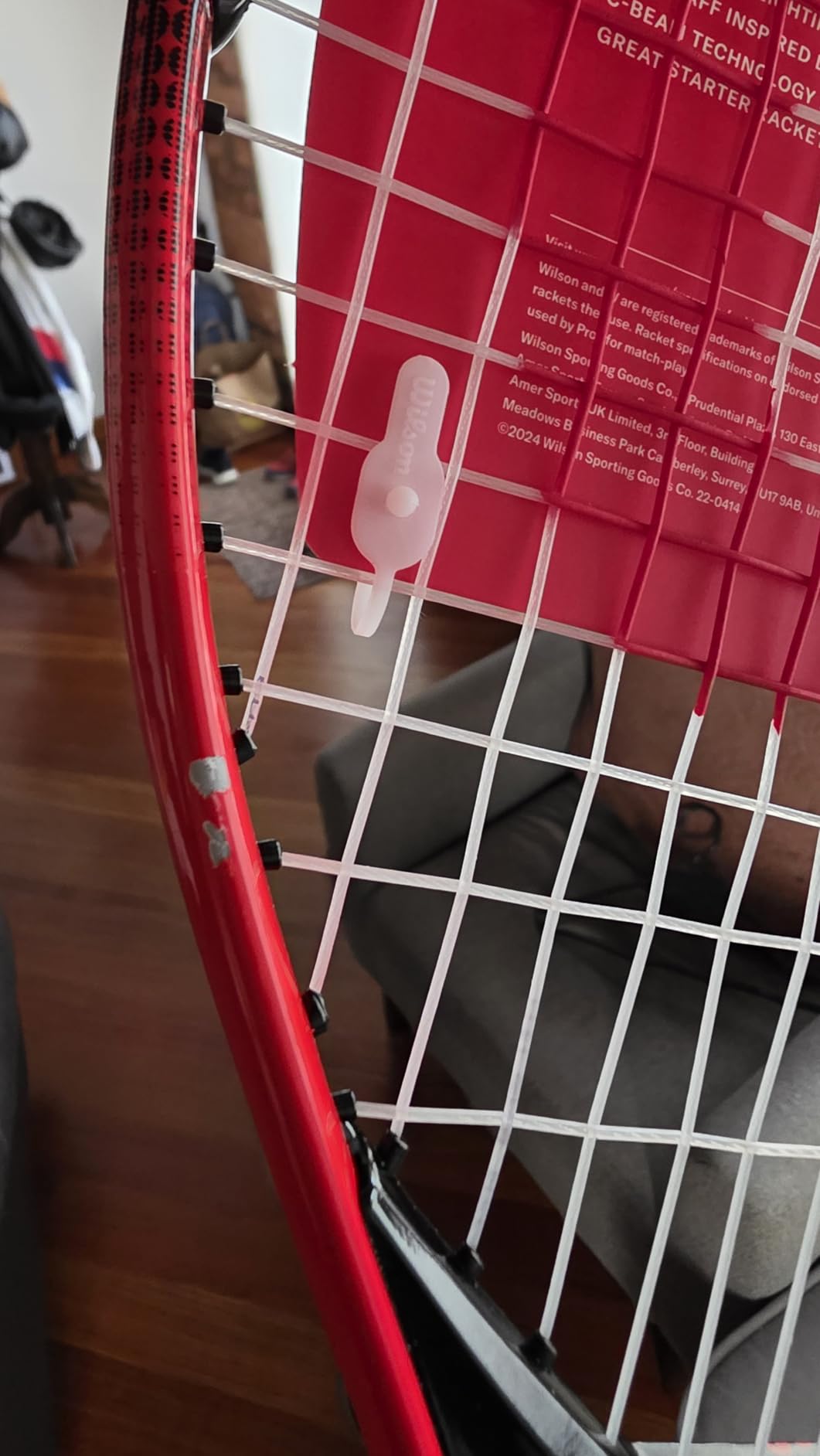
It arrives pre-strung, so it is ready for the first session. Buyers cite stability and low weight as the main draws, and several parents choosing it specifically wanted a Pro Staff styled frame at a junior size.
It carries a 4.6 average from 175 reviews and a 76 percent five-star share, the lowest of the ten, so read the rating with a smaller sample in mind.
Who this racket suits
A seven or eight year old at roughly 114 to 124cm who is hitting with a proper swing and would benefit from a more stable frame than a moulded aluminium model, particularly if they are already in lessons.
It also works for a child stepping up from a 21 inch who wants to keep the same brand and does not want to jump to 25 inches yet.
Where it falls short
The 4 inch grip is chunkier than the 3 7/8 inch handles most junior frames use, so a child with genuinely small hands may find it uncomfortable after the first few sessions.
With only 175 reviews there is less long-term owner feedback to draw on, and the five-star share suggests occasional build variation worth checking on arrival.
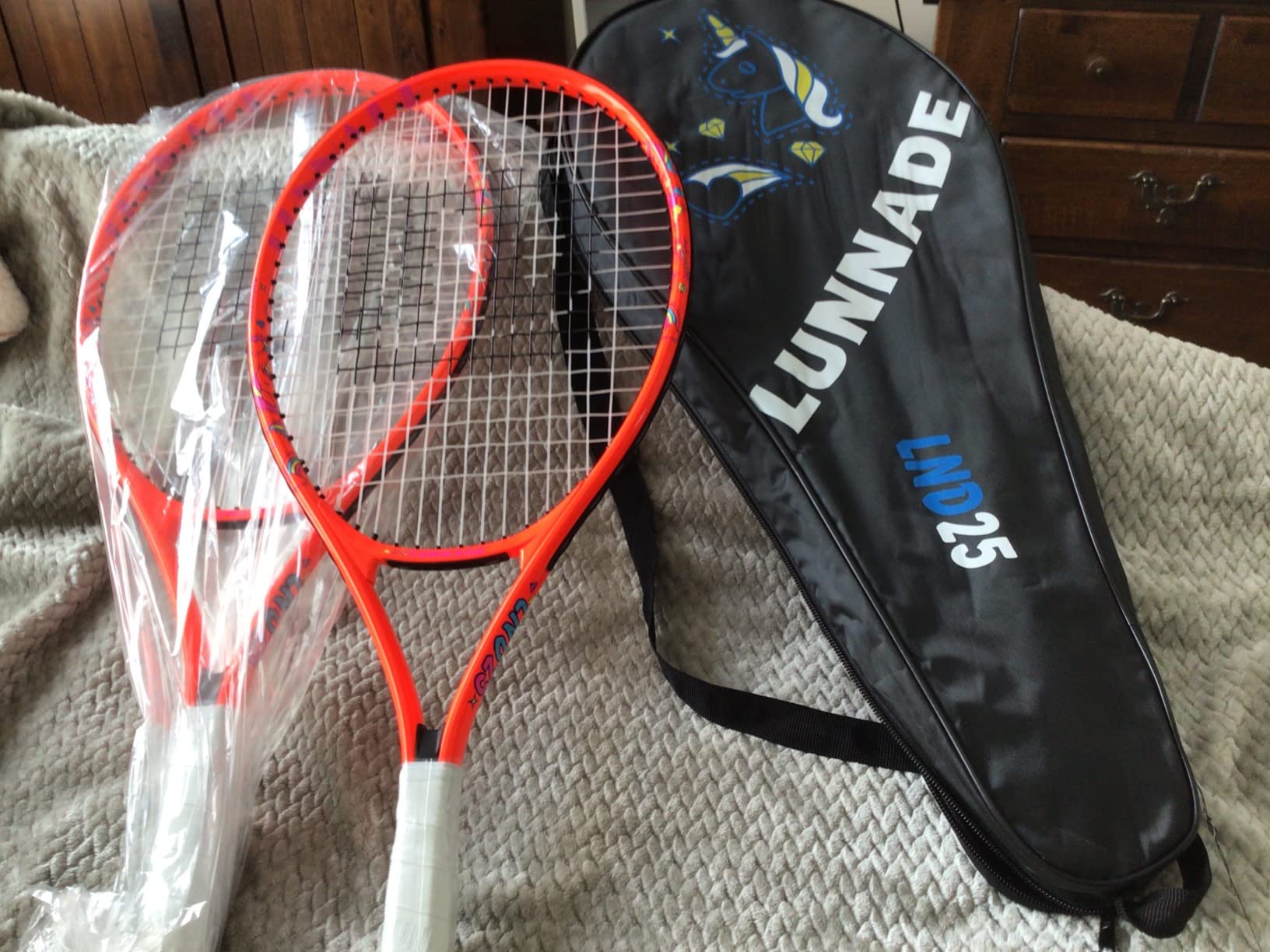
8. LUNNADE 19 Inch Youth Tennis Racket – Best for Toddlers and Preschoolers
LUNNADE Tennis Racket for Kids Junior, 19/21/23/25 Inch Youth Tennis Racquet with Cover, Suitable for Beginner Boys and Girls Age 3-12
19 to 25 inch options
Ages 3-12
Aluminium frame
Small-hands grip
Cover included
Pros
- Very light frame that even 3-5 year olds can handle in the garden
- Short handle sized for small hands makes gripping straightforward
- Holds up after a full summer of toddler play
- Playful colour designs that get children excited
- Racket cover included in the box
Cons
- Not performance grade so limited for players already rallying
- Open string bed feels less solid on contact for very young players
- Less brand recognition than the major manufacturers
This is the frame for the youngest end of the range, and its job is simple: survive a summer of backyard use while staying light enough for a three-year-old to swing. Most owners bought it for a toddler or preschooler and report exactly that.
It is listed for ages 3 to 12 across 19, 21, 23 and 25 inch lengths, so one product family can follow a child from the garden through to their first lessons without changing brand.
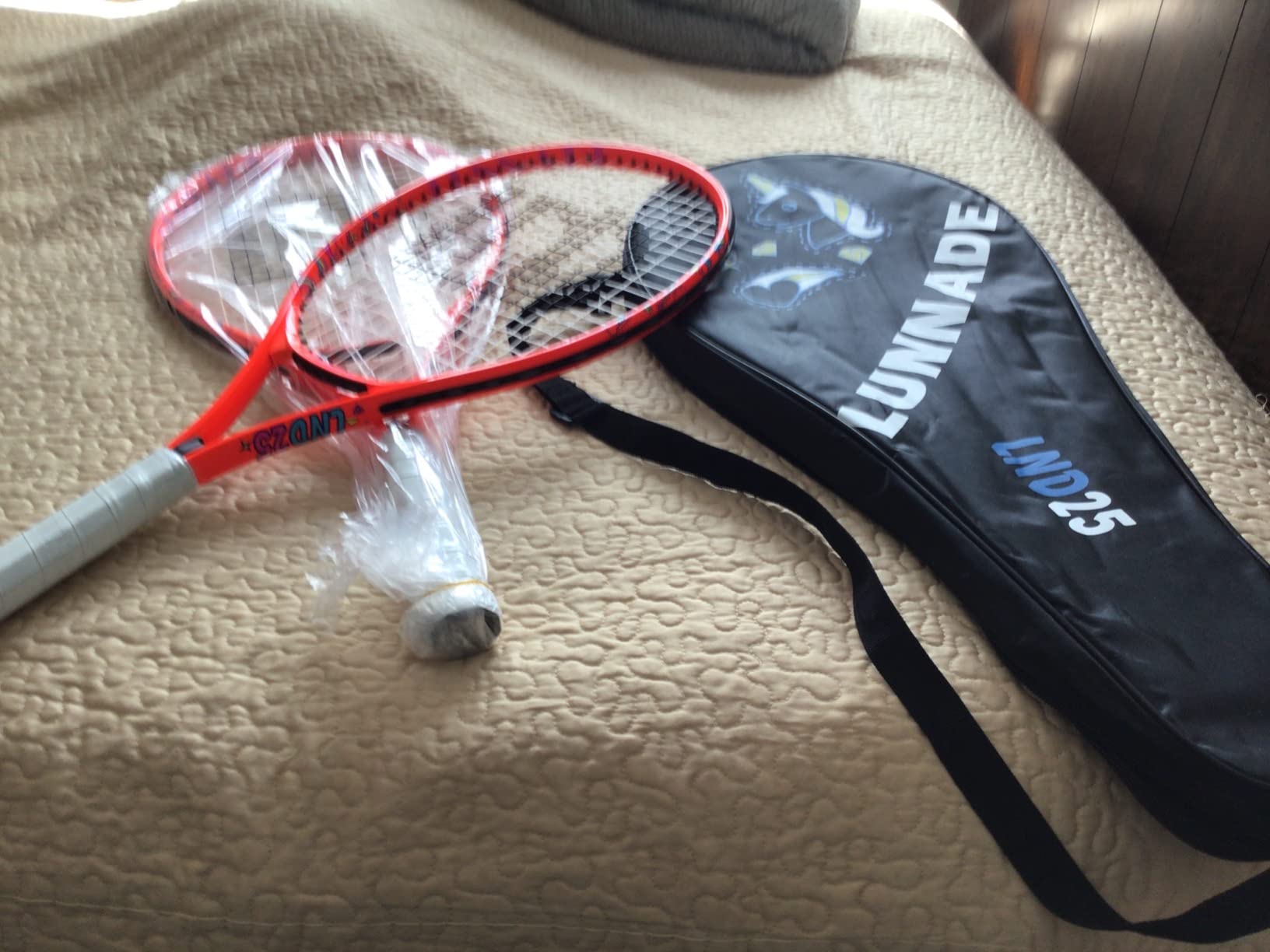
The grip is sized for small hands, which is the deciding factor at this age. A handle that is a fraction too wide makes a child clench, and a clenching grip on a plastic handle in the sun is how you get blisters and a child who decides tennis is not for them.
It holds 4.6 stars from 288 reviews with 81 percent at five stars. Reviewers treat the open string bed and the lack of performance tuning as acceptable trade-offs at this stage.
Who this racket suits
A parent who is not sure yet whether tennis will stick, or a child aged 3 to 5 who wants to hit something in the garden before ever setting foot on a court. The included cover keeps it from getting scratched when it lives in a car.
It is also a practical second racket for a family already properly equipped, since it doubles as a park and pool backup.
Where it falls short
It is not a performance frame. A child who is already rallying consistently will get more from a stiffer, better balanced model at the same length.
The open string bed feels less solid on contact than the tighter patterns used on coaching-oriented frames, which matters once lessons begin.
9. Gamma Sports Quick Kids 19 Inch Racket – A Very Light Frame for Young Arms
GAMMA Sports Junior Tennis Racquet: Quick Kids 21 Inch Tennis Racket – Prestrung Youth Tennis Racquets for Boys and Girls – 93 Inch Head Size – Red
6.5 oz strung
93 sq in head
4 1/8 inch grip
Limited 1 year warranty
Pre-strung
Pros
- Very light at 6.5 ounces strung which reduces arm fatigue
- 93 sq in head gives good contact for a child still learning timing
- Pre-strung and ready for the court
- Aluminium frame survives regular junior play
- Listing sizing guidance helps parents choose the right length
Cons
- Junior sizing for children 10 and under so teens must size up
- Generic styling compared with brighter youth frames
- Only 165 reviews so less independent feedback
At 6.5 ounces strung, this is one of the lightest frames we tested, and low weight is the correct priority for a child with short forearms. Several owners report their child struggled to swing an adult racket properly until they moved to a frame at this weight.
The 93 square inch head is generous for the length, which means contact stays forgiving while the child is still learning timing rather than technique.
Gamma rates it for players aged 10 and under and for tennis 10’s formats, and it also comes in 23 and 25 inch lengths if your child is at the top of that band.
It carries a limited 1 year warranty covering manufacturing defects rather than normal wear, which is a stronger commitment than the 30 or 90 day windows common on budget junior frames.
Who this racket suits
A child with a sensitive or tiring arm, or one who is moving from a plastic toy racket to real equipment and needs the lightest credible frame available. It is well suited to a child aged 4 to 10 in weekly lessons.
Parents who will need to move up through sizes appreciate that the same nameplate is available in longer lengths later.
Where it falls short
The styling is generic next to the brighter youth frames, and parents report that colour matters more to children than expected when they first hold a racket.
With 165 reviews there is less long-term feedback than the big sellers, so the durability picture is thinner than the rating alone suggests.
10. Teloon Kids Tennis Racket 19-25 Inch – Best Starter Kit With a Cover
Teloon Kids Tennis Racket, 19″-25″ Inch Youth Tennis Racquet with Cover, Junior Tennis Racquet for Kids Children Boys Girls Age 3-12. (Orange, 19)
19-25 inch range
Ages 3-10
Big sweet spot
Head-light balance
Overgrip roll included
Pros
- Wide 19 to 25 inch size run covering ages 3 to 10
- Big sweet spot helps beginners make contact easily
- Head-light balance reduces vibration and aids stability
- Racket cover included in the box
- Overgrip roll supplied so the handle can be wrapped by a parent
Cons
- Grip arrives unwrapped and the overgrip must be applied before use
- Some reports of strings loosening and frame bending after light use
- No manufacturer warranty offered
- Smallest review count in the group at 140
This one arrives as a kit rather than a bare racket: cover in the box and a roll of overgrip so you can wrap the handle yourself. For a first purchase, that removes two immediate jobs and gets a child onto the court sooner.
The 19 to 25 inch range covers ages 3 to 10, and the aluminium alloy frame uses a head-light balance to reduce vibration, which is the right call for small arms learning contact.
Most buyers are grandparents and parents buying for a four to eight year old in weekly lessons, and they rate it as good value with a bright colourway. It carries 4.7 stars from 140 reviews with 80 percent at five stars.
The durability feedback is the thing to weigh. Some owners report strings loosening and the frame flexing within a few sessions, and there is no manufacturer warranty behind it, so it suits a first racket rather than a child on a serious programme.
Who this racket suits
A parent who wants a complete first setup for a young child in lessons, and who would rather wrap the grip than pay a shop to do it. The included cover also makes it a sensible backup racket for a club or a holiday bag.
For equipment beyond the racket itself, our beginner and intermediate racket guide covers what changes as a player develops.
Where it falls short
The wood handle arrives unwrapped. Fit the supplied overgrip before first use, because an unfinished handle is slippery and blisters quickly.
Durability reports are mixed and there is no warranty, so if your child hits hard every single day we would spend the extra on one of the frames with a 1 year cover.
How to Choose a Junior Tennis Racket That Fits
Measure height first, age second
Stand your child against a wall in bare feet with heels together and mark the top of the head. Take the number of inches and read it against the size chart above. Age labels on packaging are a rough guide at best, because two children of the same age are often two racket lengths apart.
Re-measure every 12 to 18 months. Growth in a growth spurt can be fast, and the racket you bought as a beginner will become the wrong size well before it wears out.
Test the grip with a fingertip
Have your child hold the racket in a ready position with a relaxed hand, not a death grip. There should be about the width of one fingertip between the end of their palm and the end of the handle. Most junior handles are 3 5/8 inch or 4 inch, against 4 1/4 inch on adult frames, and that difference is exactly what stops blisters and clenching.
If the smallest adult racket you can find is the only option, a 4 1/4 inch handle will work for older juniors and small adults, but skip it for children under about nine.
Aluminum first, graphite or composite later
Aluminium is heavier but more forgiving and cheaper, which makes it the right material for children under about eight and for anyone still using slower progression balls. From roughly eight upwards, once a child is rallying on green or yellow balls, graphite and composite frames become worth considering because they are lighter and more responsive.
Every frame in this roundup is aluminium or alloy. That is a deliberate fit for beginners and it means you are not paying for performance a child cannot yet use.
Strung weight matters more than frame weight
Two numbers get quoted for every racket and they are not comparable. Frame weight is the bare racquet with no strings, and strung weight includes the strings and grip tape, typically adding around an ounce. Always compare strung weight, because that is what your child is actually lifting.
For a first racket, stay under about 8 ounces strung for a child under ten. Anything heavier and fatigue sets in before the end of a session, which ends practice early and teaches a child that tennis is tiring rather than fun.
Pre-strung or unstrung, and what to ask for
Junior strings should be strung at low tension. Coaches commonly recommend 18 to 22 pounds, and some feed tennis to beginners on a low-tension multi-filament string around 37 pounds, because maximum forgiveness matters more than control at that stage.
The exact request to take to a stringer is simple: a junior racket, multi-filament string, 18 to 22 pounds. If the listing says pre-strung but the racket arrives with an empty string bed, that is a listing error rather than a fault in the frame, and a local shop can restring it in a few hours.
When to move up to a 27 inch adult racket
Most children are ready to move to a full adult frame somewhere around their early teens, once they are physically strong enough to handle the weight. The forum consensus is not that an adult racket is forbidden, but that the frame must be a light one at 9 to 10 ounces strung with a 4 1/4 inch grip.
Our guide to lightweight adult frames covers the handling characteristics that matter once a player is strong enough for an adult geometry.
Two mistakes to avoid on the way there: buying a size up to grow into, and reaching for a heavier frame because it looks more serious. A racket that is too long or too heavy teaches a child to swing with the arm, which is worse for development than any weakness in the frame itself.
Frequently Asked Questions
What size tennis racket is best for kids?
Size a junior racket by height, not age. Measure your child against a wall in bare feet, then match the inches to a racket length: 17 inches for children under 34in (86cm), 19 inches for 35-39in (89-99cm), 21 inches for 40-44in (102-112cm), 23 inches for 45-49in (114-124cm), 25 inches for 50-55in (127-140cm) and a 26 inch junior or light adult frame above 56in (142cm).
What is the best tennis racquet for a beginner child?
For a beginner, the deciding factors are weight, head size and grip width rather than brand. Look for a frame under 8 ounces strung, a head of 76 to 95 square inches and a handle of 3 5/8 inch or 4 inch that a small hand can wrap loosely. Our top pick, the HEAD Speed Junior at 170 g with a 76 square inch head and a 3 5/8 inch grip, fits most children aged 2 to 4.
What is a good tennis racket for a 10-year-old boy?
A ten-year-old is usually 127 to 140cm tall, which points to a 25 inch frame. The Wilson Profile 25 Junior is built for ages 9-10, uses an AirLite Alloy frame with QuadriForm swing stability and a bumper guard, and carries a 3 7/8 inch grip. If the child is still smaller than 127cm, step down to a 23 inch frame instead.
What age range is a 19-inch tennis racket appropriate for?
A 19 inch frame suits children roughly 89 to 99cm tall, which is usually ages 4 to 6. The HEAD Speed Junior is rated for ages 2-4 at 19 inches and weighs 170 g, which makes it a good first structured racket. Below 89cm, move down to a 17 inch frame and a red foam ball on a mini court.
What age group is a 26-inch tennis racket typically suitable for?
A 26 inch junior frame is aimed at children around 12 and up, or roughly 142cm and taller, and it is the last step before a full adult racket. If the child is competitive and already rallying well, move to a light adult frame at 9 to 10 ounces strung with a 4 1/4 inch grip rather than continuing to step up junior lengths.
Can my child use an adult tennis racket?
Only if it is a light one. Forum consensus is that a 27 inch adult racket at 9 to 10 ounces strung with a 4 1/4 inch grip works for older competitive juniors, but a heavier adult frame forces a child to swing with the arm instead of the body and is a leading cause of wrist and elbow strain. For children under about nine, use a proper junior length instead.
Which Racket Fits Your Child
Under 89cm tall, pick a 17 inch frame and start on a red foam ball in the garden. At 89 to 99cm, the HEAD Speed Junior at 19 inches is the safest first structured racket, and it is the pick we recommend most often in 2026.
Between 102 and 112cm, the HEAD Instinct Junior at 21 inches covers the first lessons band with a head-light balance that keeps contact steady. At 114 to 124cm, a 23 inch frame is right, and either the Wilson Pro Staff Precision for stability or the Dunlop Nitro Junior as an affordable step up.
That is the short version of our best tennis rackets for kids in 2026. Measure height first, pick the matching length from the chart, check the grip fits with a fingertip of space, and confirm the racket arrives strung before the first lesson.
Above 127cm, the Wilson Profile 25 is our recommendation at 127 to 140cm, with a light adult frame at 9 to 10 ounces once your child passes 142cm. Whatever you choose, measure again every 12 to 18 months and resist the urge to buy a size up.