
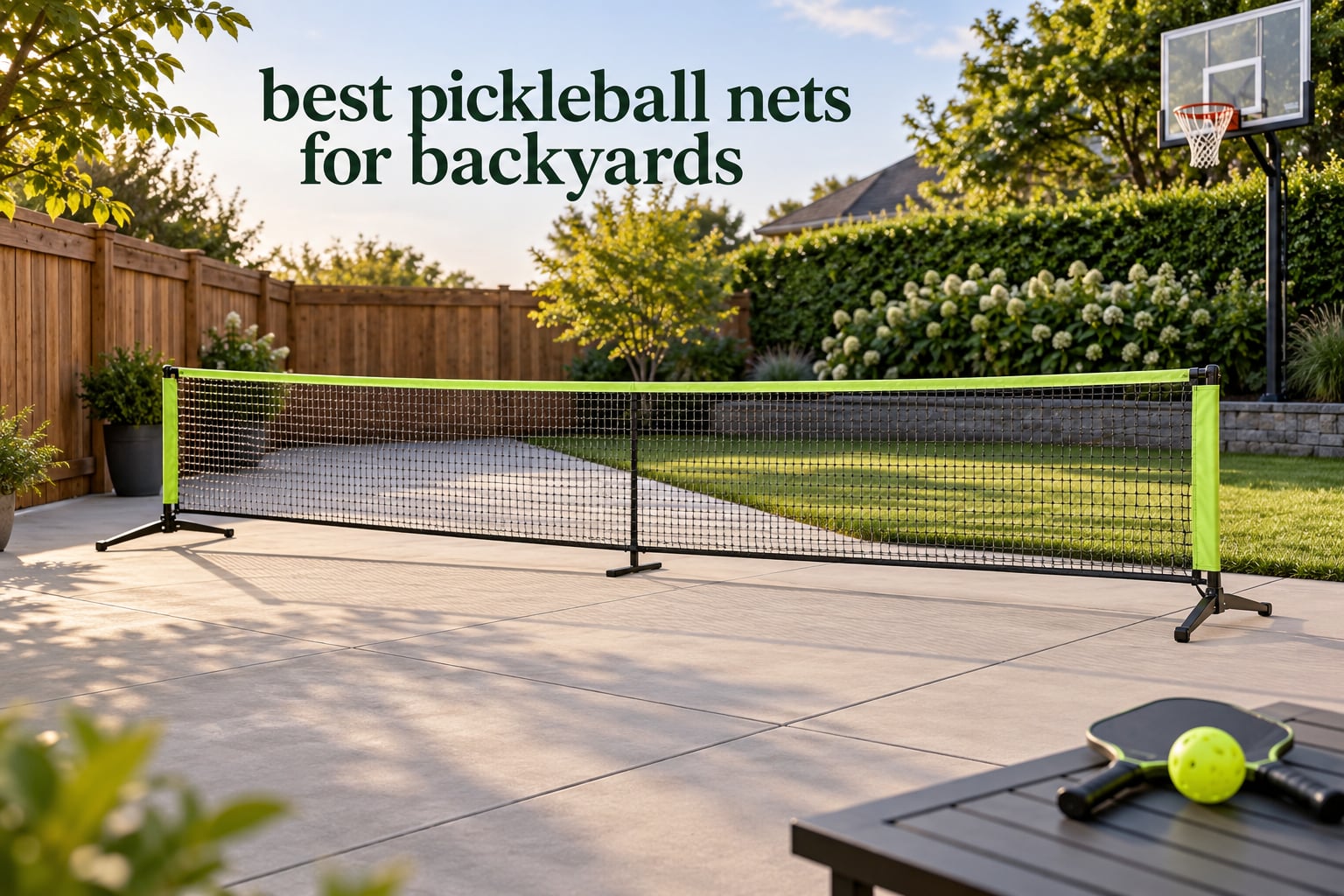
If you want one net that handles nearly any backyard, the Pickle-Ball 3.0 Tournament Net is our top pick for 2026: it holds true 22 ft by 36 inch regulation dimensions, tensions with a buckle system instead of hook-and-loop, and packs into one bag. For the best budget option, the ZENY 22 ft net set does the most for the money, and the A11N SPORTS regulation system is the pick if you want the largest review base and a frame that owners report still looks new after years of weekly outdoor play.
That is the short answer. The long answer takes a lot more care, because a pickleball net is the one piece of equipment that decides whether your backyard sessions feel like real pickleball or like a bad approximation of it. A sagging center, a drifting height, or a frame that tips over when someone reaches for a low ball will undo a good court surface in a single afternoon.
Our team worked through the specs, weights, included accessories, and long-term owner reports on every net we could find that fits a residential yard, then ranked them on how they behave outdoors. We focused on the details that actually matter in a backyard: true regulation dimensions, frame material and rust risk, real weight when one person has to move it, and whether the parts list includes the anchors or weights you will wish you had. Last updated for 2026.
One note before we start. Almost none of these nets are designed to stand outside permanently, yet leaving a net up is the thing most backyard players actually want. We cover that gap in detail further down, along with how much yard space a real court needs, which surfaces work, and how to keep a net upright in wind.
Table of Contents
Quick Picks: Best Pickleball Nets for Backyards at a Glance for October 2026
These three cover the widest range of backyards. The Pickle-Ball 3.0 is the one we would buy for a driveway or a lawn that gets hit with regular play, the ZENY set covers families who want regulation size without a big outlay, and the A11N SPORTS system is the most reviewed net of the twelve we ranked.

Pickle-Ball 3.0 Net
- True 22 ft regulation size
- Buckle tension system
- Powder-coated steel frame
- 5-minute tool-free setup
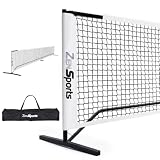
ZENY 22 ft Net Set
- 22 ft regulation size
- 32 inch stable base
- 25mm steel frame
- Carry bag included

A11N SPORTS Net
- Official regulation size
- Interlocking metal frame
- 20 lb portable build
- Locking center post
The 12 Best Pickleball Nets for Backyards (October 2026)
Every net below lists its regulation dimensions, frame material, and real weight where the manufacturer publishes it. Three of these have no stated weight, which is itself useful information, since weight is the single biggest factor in whether one person can move a net alone.
| Product | Specifications | Action |
|---|---|---|
| Pickle-Ball 3.0 Tournament Net |
|
Check Latest Price |
| ZENY 22 ft Net Set |
|
Check Latest Price |
| A11N SPORTS Regulation Net |
|
Check Latest Price |
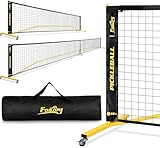 Fostoy 2-in-1 Net with Half Court Fostoy 2-in-1 Net with Half Court |
|
Check Latest Price |
 Zdgao Net with 4 Paddles Set Zdgao Net with 4 Paddles Set |
|
Check Latest Price |
 DULCE DOM 22 ft Net Set DULCE DOM 22 ft Net Set |
|
Check Latest Price |
 Zdgao Net with Pickleballs Zdgao Net with Pickleballs |
|
Check Latest Price |
 Hoverphenix 22 ft Paddle Set Hoverphenix 22 ft Paddle Set |
|
Check Latest Price |
 BAGAIL 2-in-1 Set with Wheels BAGAIL 2-in-1 Set with Wheels |
|
Check Latest Price |
 TYRSEN Wheeled Net Set TYRSEN Wheeled Net Set |
|
Check Latest Price |
 Fostoy Pro Aluminum Net Fostoy Pro Aluminum Net |
|
Check Latest Price |
 Pickle-Ball SwiftNet 2.1 Pickle-Ball SwiftNet 2.1 |
|
Check Latest Price |
1. Pickle-Ball 3.0 Tournament Net: The Best Overall Pickleball Net for Backyards
Pickle-Ball 3.0 Tournament Pickleball Net with Carry Bag, 22ft
22 ft wide
36 in sidelines, 34 in center
24 lb steel frame
Tool-free 5-min setup
Pros
- True regulation 22 ft dimensions with a fiberglass center rod
- Buckle tension system stays taut without wearing straps
- Powder-coated steel frame with wide wind-resistant legs
- Everything fits in one oversized carry bag
Cons
- Heaviest stated frame weight here at 24 pounds
- Frame sections can separate if not tracked during a move
This is the net from the company whose families are credited with inventing the game, and it shows in the details. The 3.0 is true 22 ft wide with the top of the net at 36 inches at the sidelines and 34 inches at center, held in shape by a fiberglass center rod rather than a sagging fabric seam.
What convinced us first was the tension system. Instead of hook-and-loop strips that wear out after a few months, it uses a no-velcro buckle that tightens in small increments and holds. For a net that will be tensioned, knocked, and knocked over repeatedly, that is the feature that separates a net you keep for years from one you replace every season.
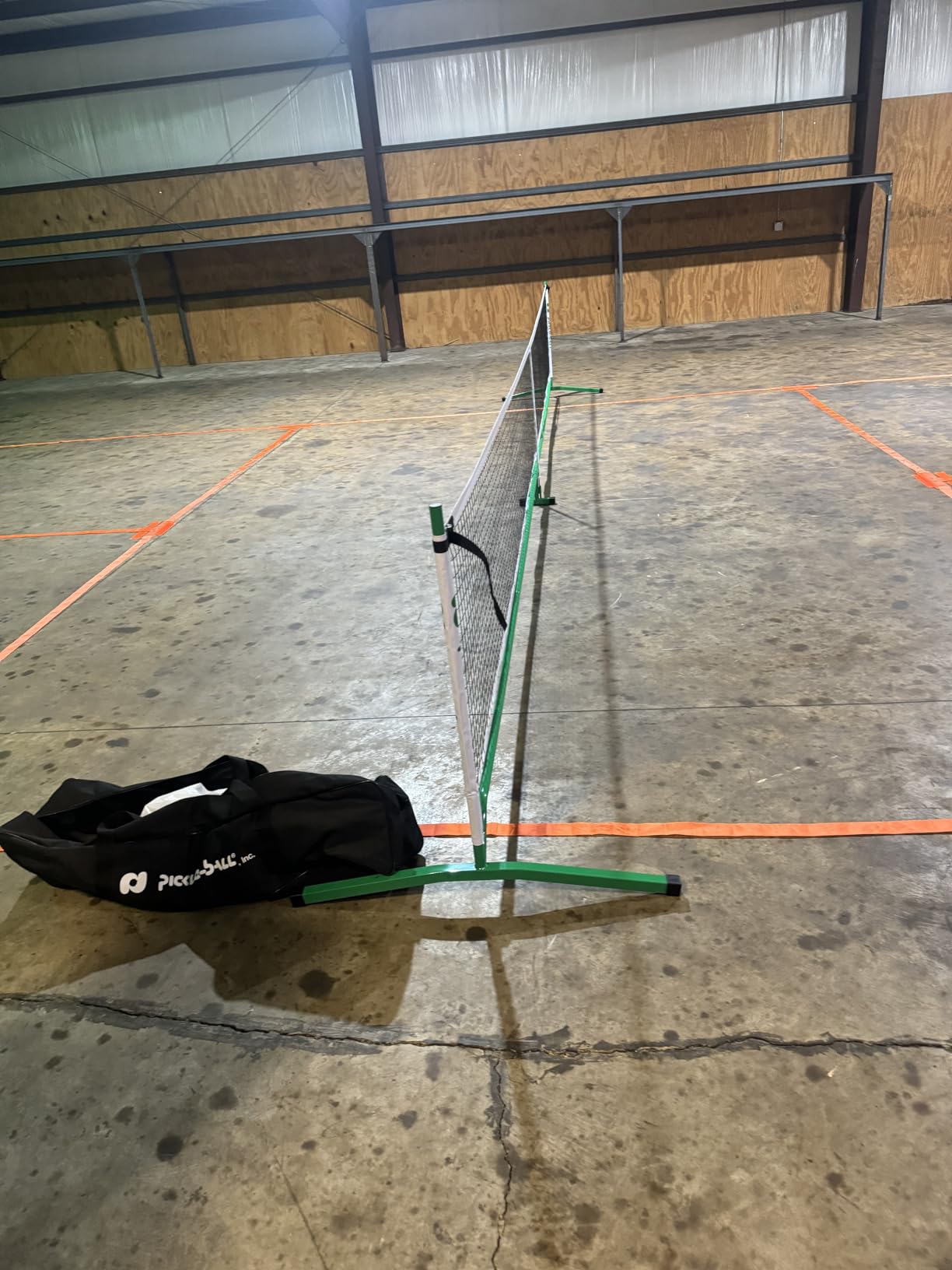
Setup is two snap-together joints and no tools, which the manufacturer puts at five minutes. The frame is powder-coated steel tubing with wide bent legs and a raised center crossbar, and the wide stance is what keeps it planted when a gust hits or a player charges the net. The tradeoff is weight: at 24 pounds this is the heaviest frame we could verify weight for, and one reviewer notes the sections can separate in transit if nobody is watching them.
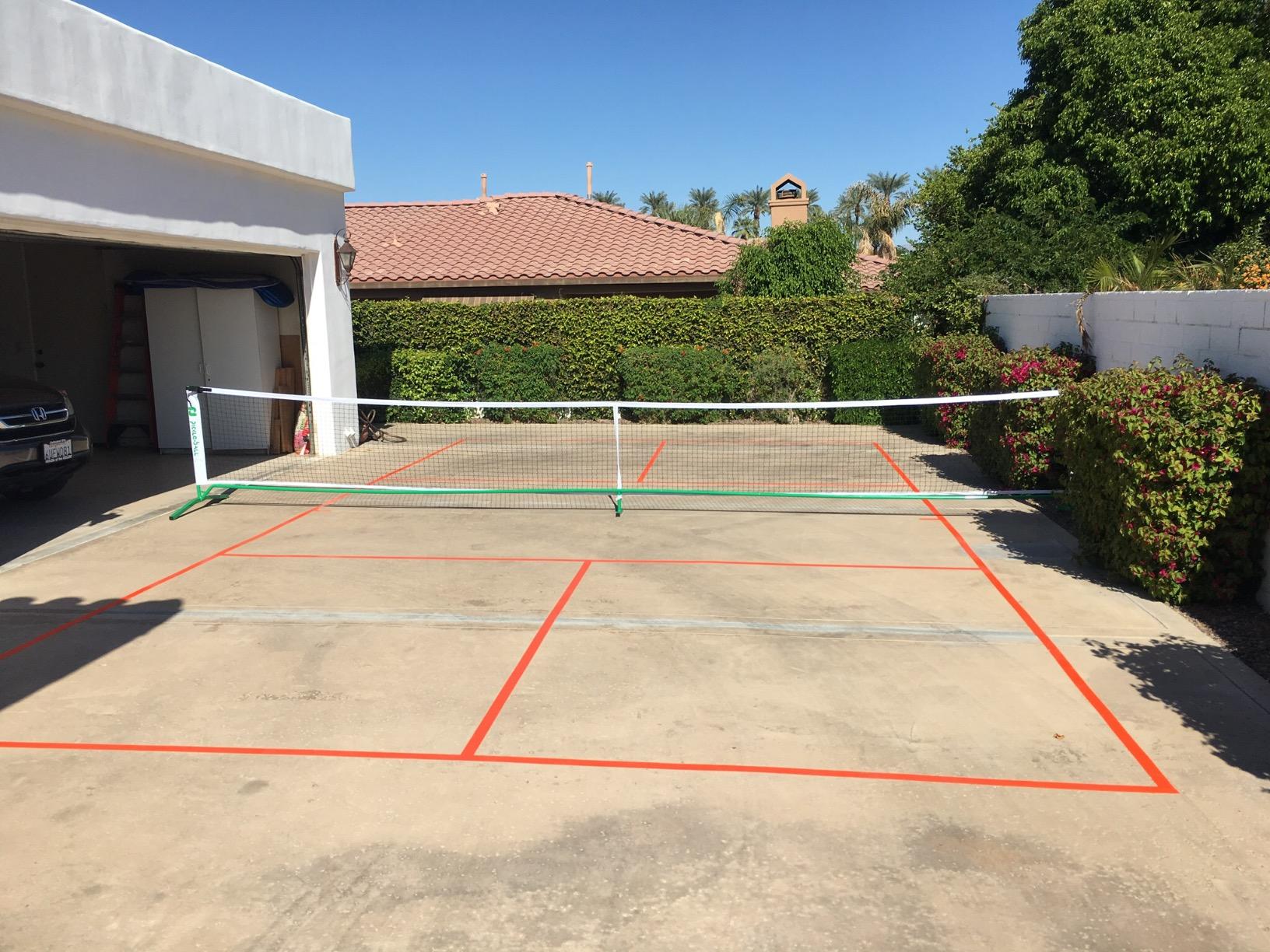
What to check before buying the Pickle-Ball 3.0
Measure your space for the 20 ft by 44 ft playing area plus run-off, and confirm the net’s 24 pounds is something you can lift into a car by yourself. If your surface is soft grass, plan on ballast from day one, because no portable kit includes enough weight to sit through a real spring afternoon.
Also read the net-height tolerance on the edges carefully. A fiberglass center rod keeps the 34 inch center measurement honest for years, but a frame that gets bumped in transit can knock the posts slightly out of square, and the buckles are what let you bring it back.
Where this net falls short
This is not the net for RV travel or for a family that wants to move the court every time it rains. At 24 pounds with three main frame sections, it is a set-it-and-play-it system rather than a pack-it-and-go one.
It is also among the heavier nets here and it has no wheels, so repositioning means carrying rather than rolling. If rolling across a driveway is the deciding factor for you, look at the wheeled options further down instead.
2. ZENY 22 ft Regulation Net Set: The Best Value Pickleball Net for Backyards
ZENY 22ft Regulation Size Pickleball Net Set System with Metal Frame
22 ft x 36.8 in sides
34 in center
18 lb steel frame
1 year warranty
Pros
- Tool-free snap-together assembly
- Large review base of 1615 ratings
- Ball-roll-under clearance speeds up serves
- 32 inch wide base helps in gusty conditions
Cons
- Light frame gets pushed around in wind
- Center post can run slightly tall and need trimming
- Loose mesh weave is harder to see at dusk
The ZENY set is the one most owners describe as the best value in the category, and its 1615 ratings make it the second most reviewed net we looked at. It comes in at 18 pounds with a 25 mm steel support frame and a fiberglass center post, and it measures 22 ft long with 36.8 inches at the sides and 34 inches through the middle.
Assembly is genuinely quick. Most sections snap into place, and the labeled parts mean you are not cross-referencing a diagram in the rain. That matters more than it sounds, because a net you can set up in a couple of minutes gets used far more often than one you have to plan an evening for.
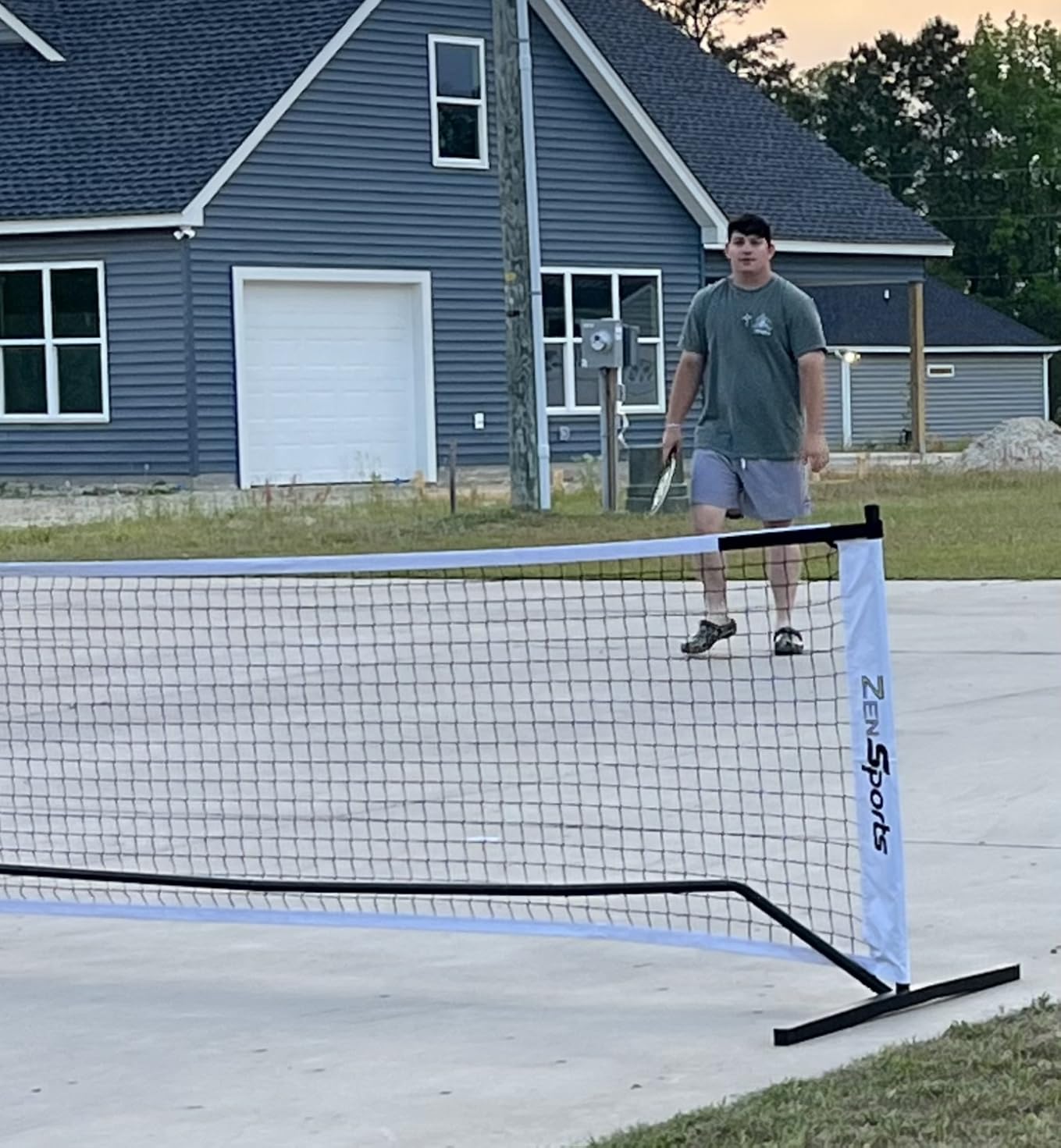
The wide 32 inch base is the detail we would call out for a backyard. It gives you a much longer footprint than the narrow portable frames competing against it, and the roll-under clearance along the bottom means fewer dead balls when the serve exchange gets fast.
It also doubles as equipment for other sports, according to the manufacturer, so if you want a badminton or volleyball net as well, the same frame does both. That versatility is not why we ranked it second, but it is a genuine bonus for a family with a mixed sports shelf.
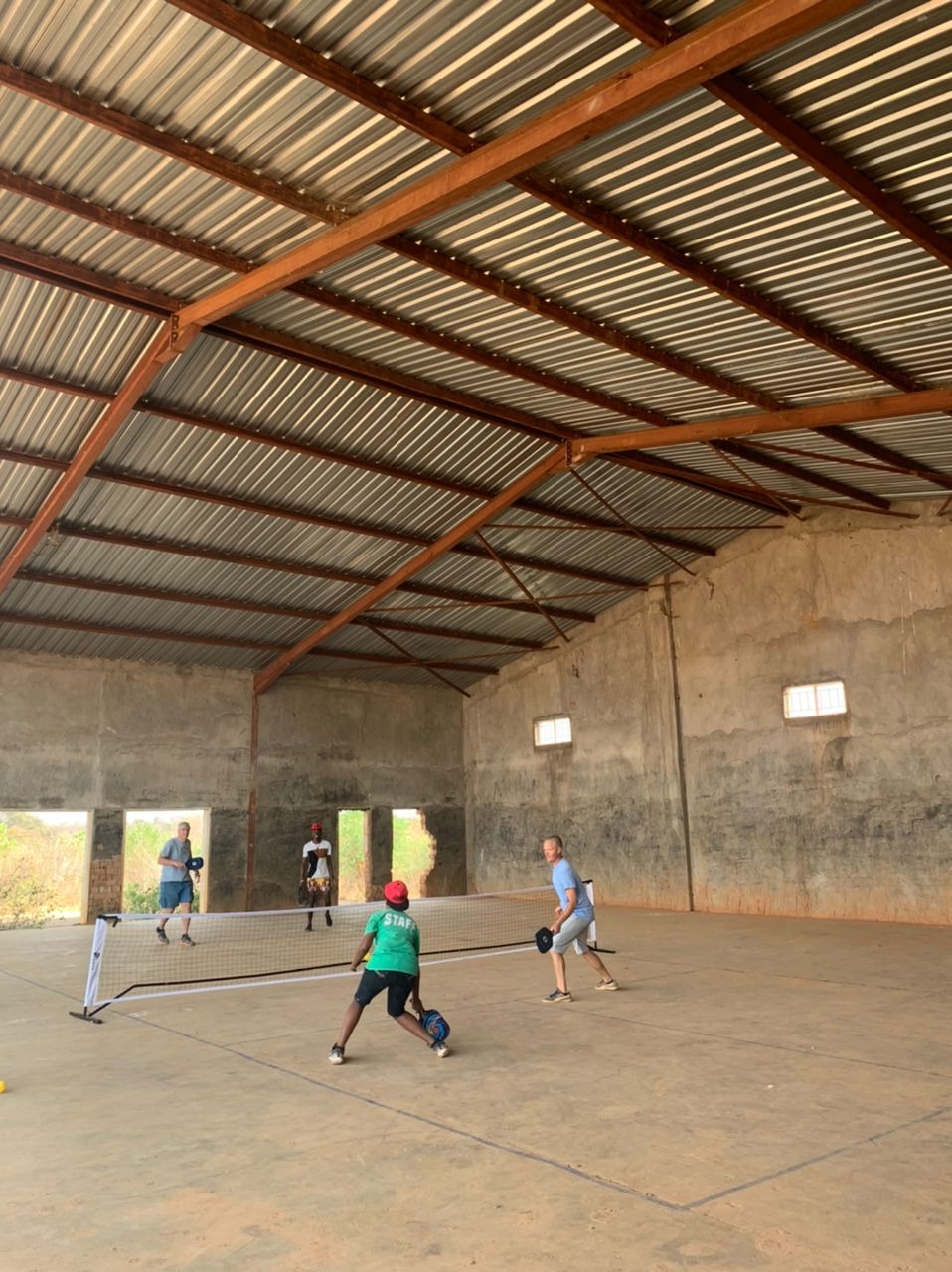
Who the ZENY net suits best
Pick this one if you are a family learning the game together and want a real 22 ft court without a heavy outlay. The price-to-performance gap between this and the premium systems is wide, and the dimension accuracy is genuinely regulation, not approximate.
It is also a strong pick for a patio or apartment common area where a heavier steel frame would be awkward to move. At 18 pounds it is manageable for most adults, and the bag keeps it out of sight when the court is not in use.
Where the compromises show
Owners report two recurring issues in outdoor conditions. The first is wind: the frame is light enough that a gust can shift it, so treat it as a net for calm days unless you add ballast. The second is the net material, where the loosely woven mesh can snag and is harder for older players to read at dusk.
There is also a long-term wear note on the coated frame. Coated steel that stays out through wet seasons can begin to show rust at the joints, and the pole buttons can stick after repeated outdoor use. If you plan to leave the net out permanently, an aluminum frame is the safer bet.
3. A11N SPORTS Regulation Net System: The Most Reviewed Budget Pickleball Net
A11N SPORTS Portable Pickleball Net System, Designed for All Weather Conditions with Steady Metal Frame and Strong PE Net, Regulation Size Net with Carrying Bag
22 ft long
36 in sides, 34 in center
20 lb metal frame
1-year warranty
Pros
- Highest review count in the group at 2061 ratings
- Locking tabs stop sections separating during setup
- Beefy capped center post resists bending
- Reported to look new after three years of weekly play
Cons
- Carrying bag zipper and seams fail early
- Net fits so tightly it needs real force at one end
- Black netting may bother players used to white
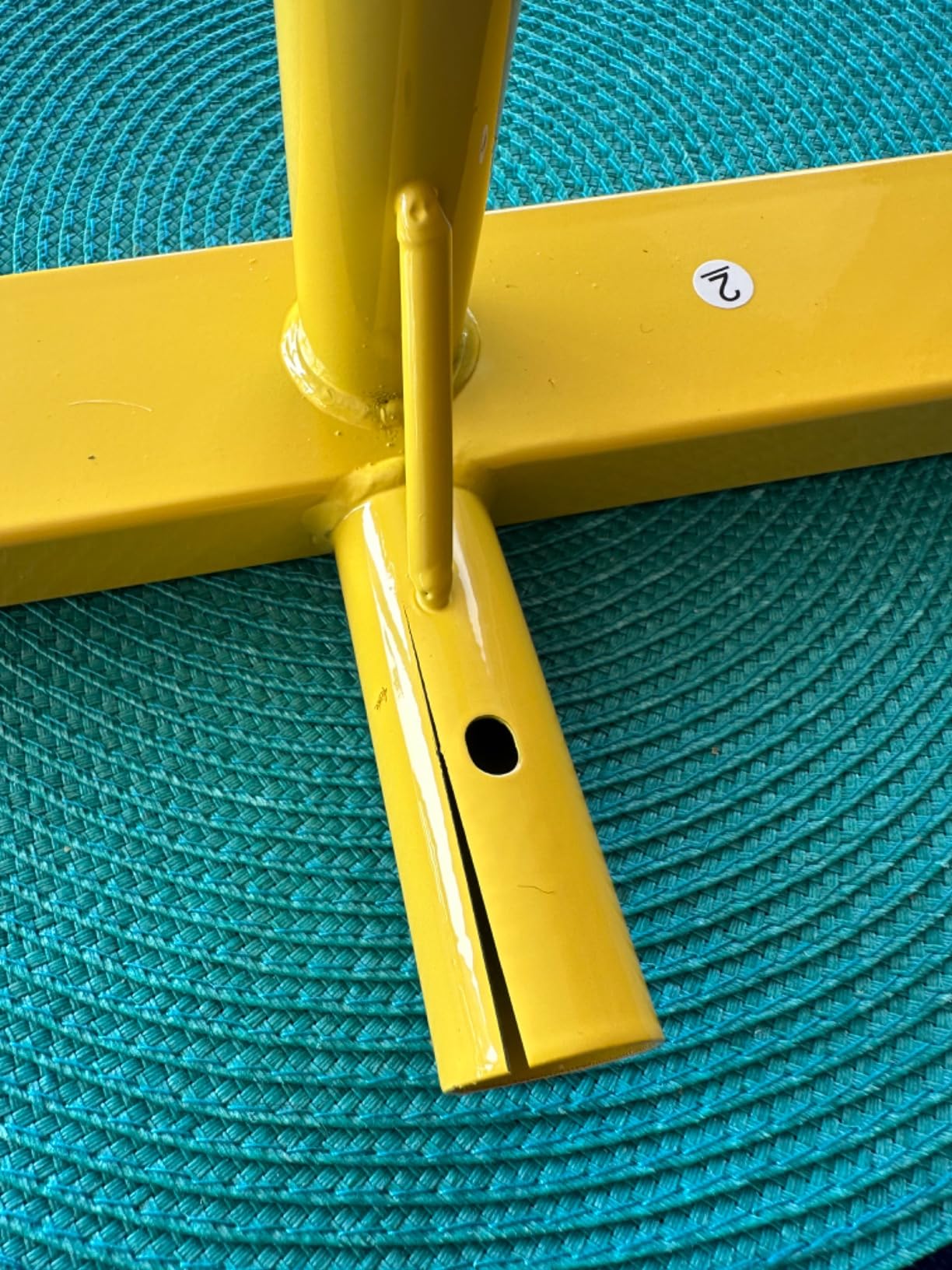
With 2061 ratings, the A11N SPORTS system has the largest review base of any net in this roundup, and long-term owners repeatedly report that the frame and net still look new after three years of weekly outdoor play. That durability signal matters more than any spec line, because most cheap nets fail at the plastic joints rather than the tubing.
The design is regulation: 22 ft long, 36 inches at the sidelines, 34 inches at the center. The frame is an interlocking metal structure with a solid knotless PE net and dual PVC fabric, and it comes in at 20 pounds, which puts it right in the middle of this group for portability.
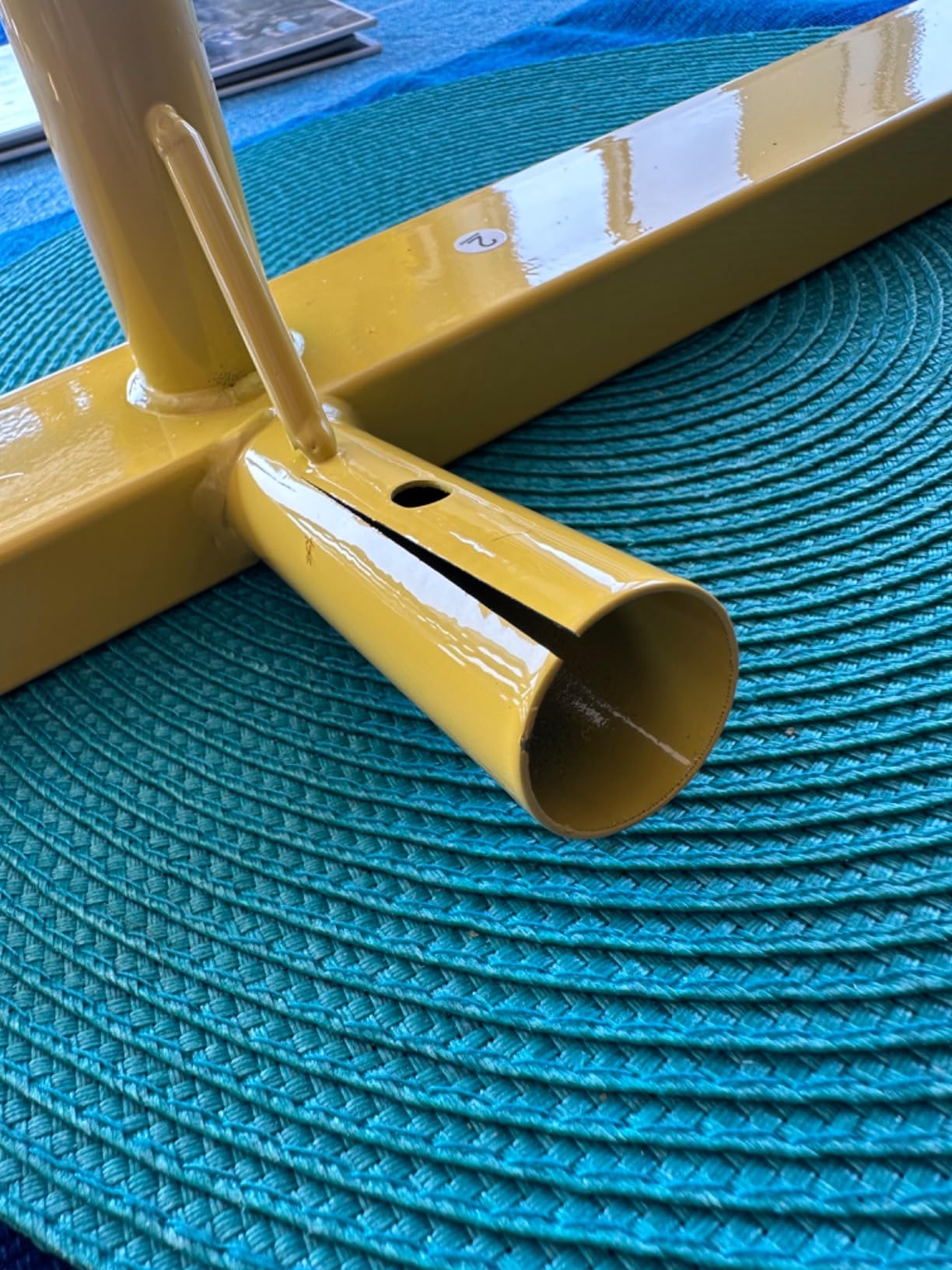
The center post is the part owners single out most. It uses metal locking tabs at each junction and a beefy capped post, both of which solve the failure mode we hear about constantly: sections pulling apart mid-setup, or a slim plastic pole snapping when a ball hits it.
The black netting gets mentioned as both a pro and a con. Players say it is less distracting during dinking than white mesh, which is a real focus advantage, though some people are simply used to seeing a white net and find the black one visually off-putting.
What we checked on the A11N system
We looked for a one-year warranty on the frame and net, which this has, and for a manufacturer that still answers support requests. Owners mention the company replaced parts quickly, which for a net that lives outdoors is worth more than a longer paper warranty.
We also weighed the bag, and it is the weak link. Multiple owners report the zipper and seams giving out after very few uses, so budget for a replacement bag or a weatherproof tote if you plan to store the net outside the house.
Where it falls short
The net is described as installing very taut, which is good news for ball response and bad news for your hands. Fitting it over the end pole at one side takes real effort, so set the frame up first and give yourself room to pull it on.
A small number of owners also report the center support hole drilled in the wrong position on arrival. That is a quality control miss rather than a design flaw, but it is the reason we placed this third instead of first despite the excellent rating and review volume.
4. Fostoy 2-in-1 Net with 11 ft Half Court Option: Best for Small Backyards
Fostoy Portable Pickleball Net Set with Wheels, 22 FT & Half Court 11 FT
22 ft and 11 ft nets
18-ply PE mesh
24 in metal end base
2 year warranty
Pros
- Two net sizes on a single frame
- 18-ply PE mesh resists tearing
- 24 inch wide end base plus iron center rod
- 2 year manufacturer warranty
Cons
- Requires reconfiguration to change court sizes
- Heavier than most portable nets at 7.7 kg
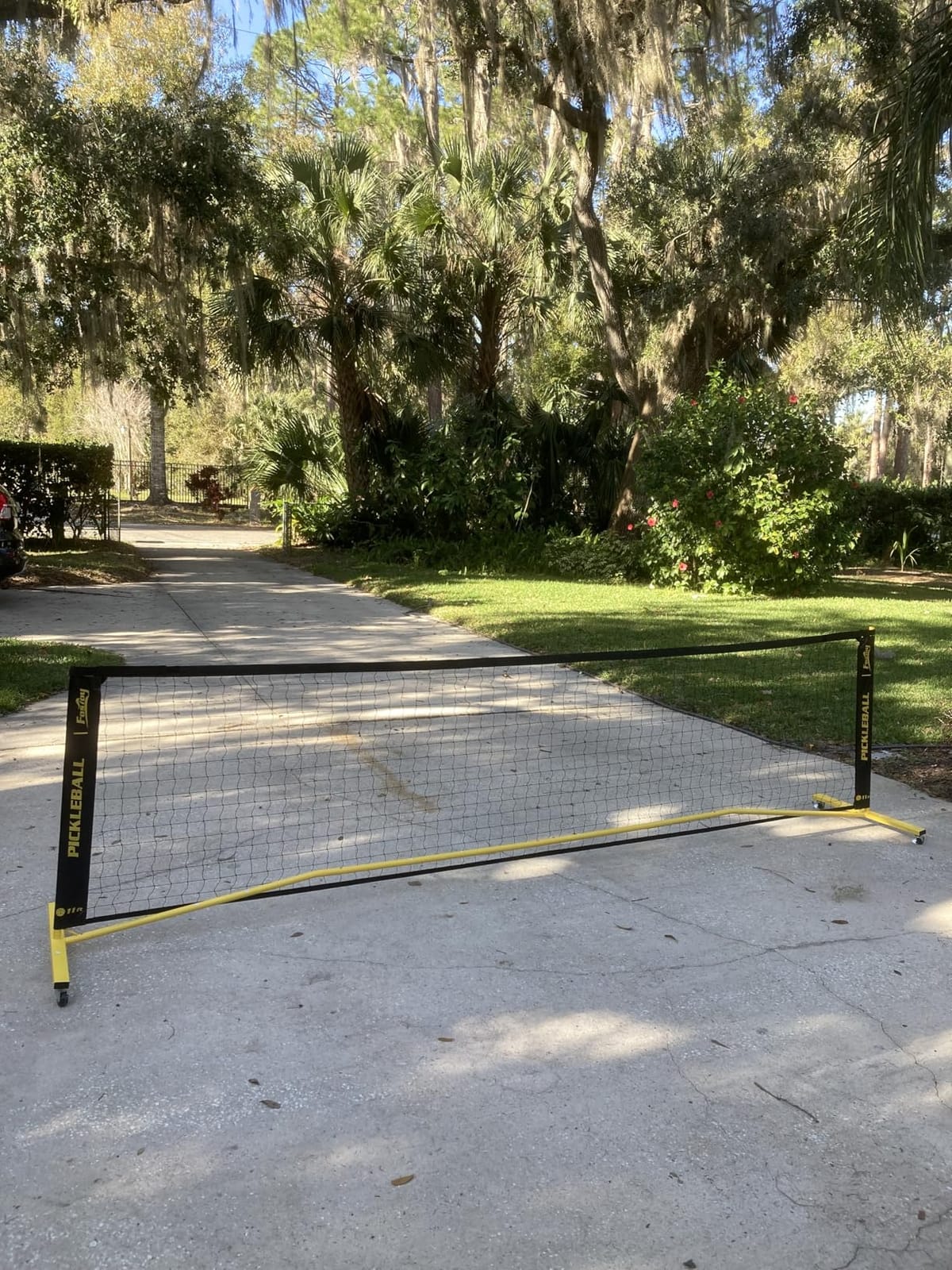
This is the answer for anyone whose yard cannot hold a full court. The Fostoy system includes both an 18-ply 22 ft net and an 11 ft half-court net that fit the same frame, so you can play regulation rallies when guests are over and run drills alone on a weeknight.
That versatility is the whole reason buyers choose it, and it is genuinely useful in a suburban yard where the full 20 ft by 44 ft playing area will not fit between the fence and the house. Half-court work is where most of the skill in this game actually gets built, anyway.
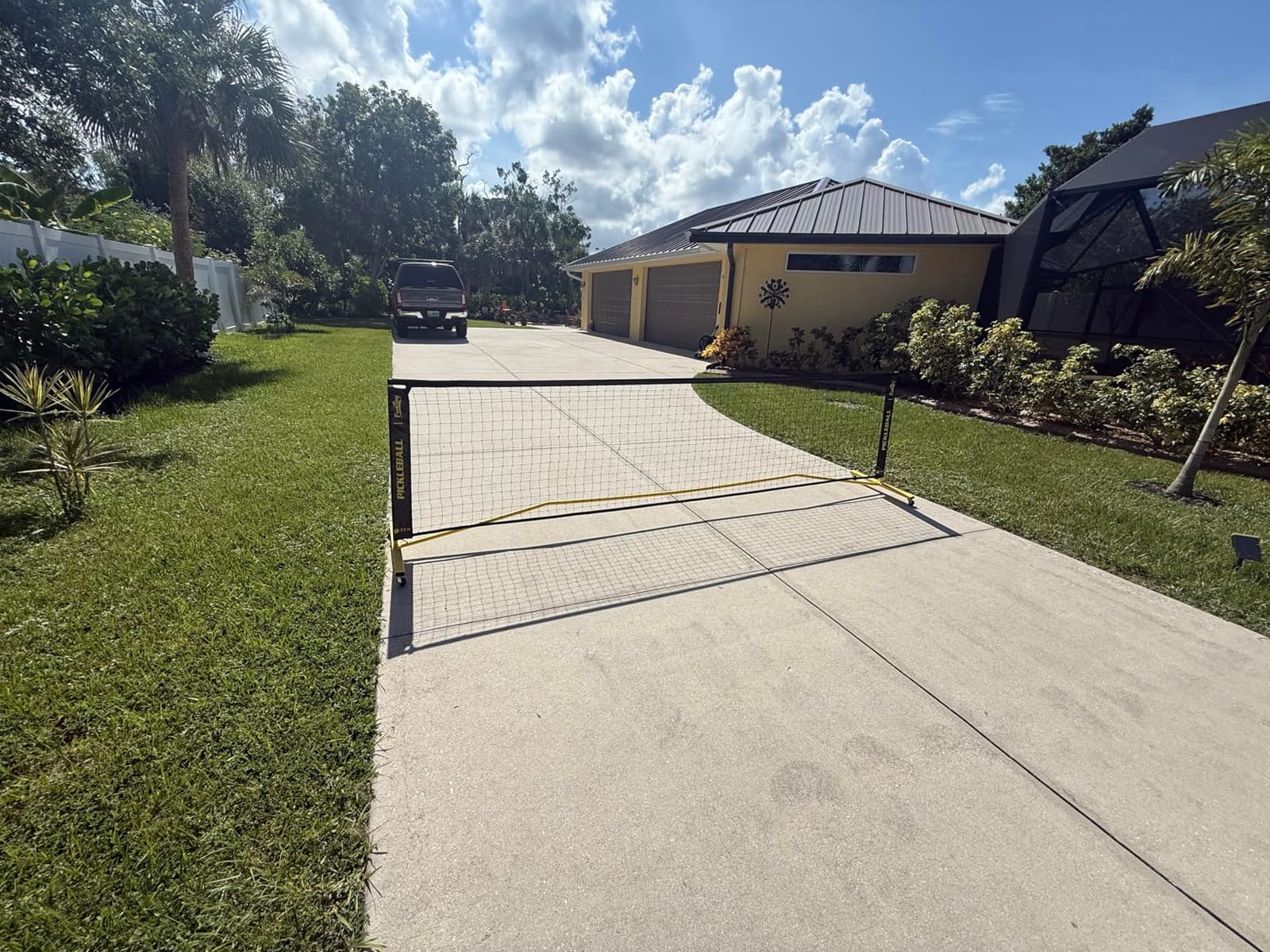
The build sits above what you normally find at this level: the PE mesh is 18-ply with double-sewn sides mounted onto PVC tarp, the end base is a 24 inch wide metal plate, and the center support is an iron rod rather than the plastic sleeves used on cheaper nets. The manufacturer also lists 20 to 50 percent greater carrying capacity on that mesh versus standard ply netting.
There is a two-year manufacturer warranty, longer than any other warranty we could verify in this roundup, and the 600D carry bag is a step up from the thin bags most competitors include. Owners who have had the net for a season report the mesh still looks tight.
When the 2-in-1 design pays off
Choose this if your yard is under about 50 feet in the long direction, or if you want a regulation net for driveway days and a compact setup for solo work. The 11 ft net still uses the same frame, so nothing extra has to be stored in the garage.
It also works for a household with players at different levels, since the 11 ft setup shortens the distance for drills and drills work for younger players. The regulation 22 ft configuration measures 36 inches at the posts and 34 inches at center.
What you give up for the flexibility
Switching between the two sizes means reconfiguring the frame, which is a few extra minutes every time. If you imagine flipping between half and full court several times a week, the constant reconfiguration will start to feel like a chore.
Weight is the other consideration. At 7.7 kg this is heavier than most portable frames here, and it has no wheels. On a driveway where the net stays put, that is a fair trade for the wide metal base. On a lawn where you want to mow around it, less so.
5. Zdgao 22 ft Net with 4 Paddles and Balls: Best Starter Set for New Players
Zdgao Portable Pickleball Net Set with 4 Paddles for Driveway
22 ft regulation net
4 paddles and 4 balls
16 lb alloy steel
30-day warranty
Pros
- Everything for a new household in one box
- Regulation 22 ft with wide steel post bases
- 16 pounds is easy to carry between courts
- Clear numbered parts and visual manual
Cons
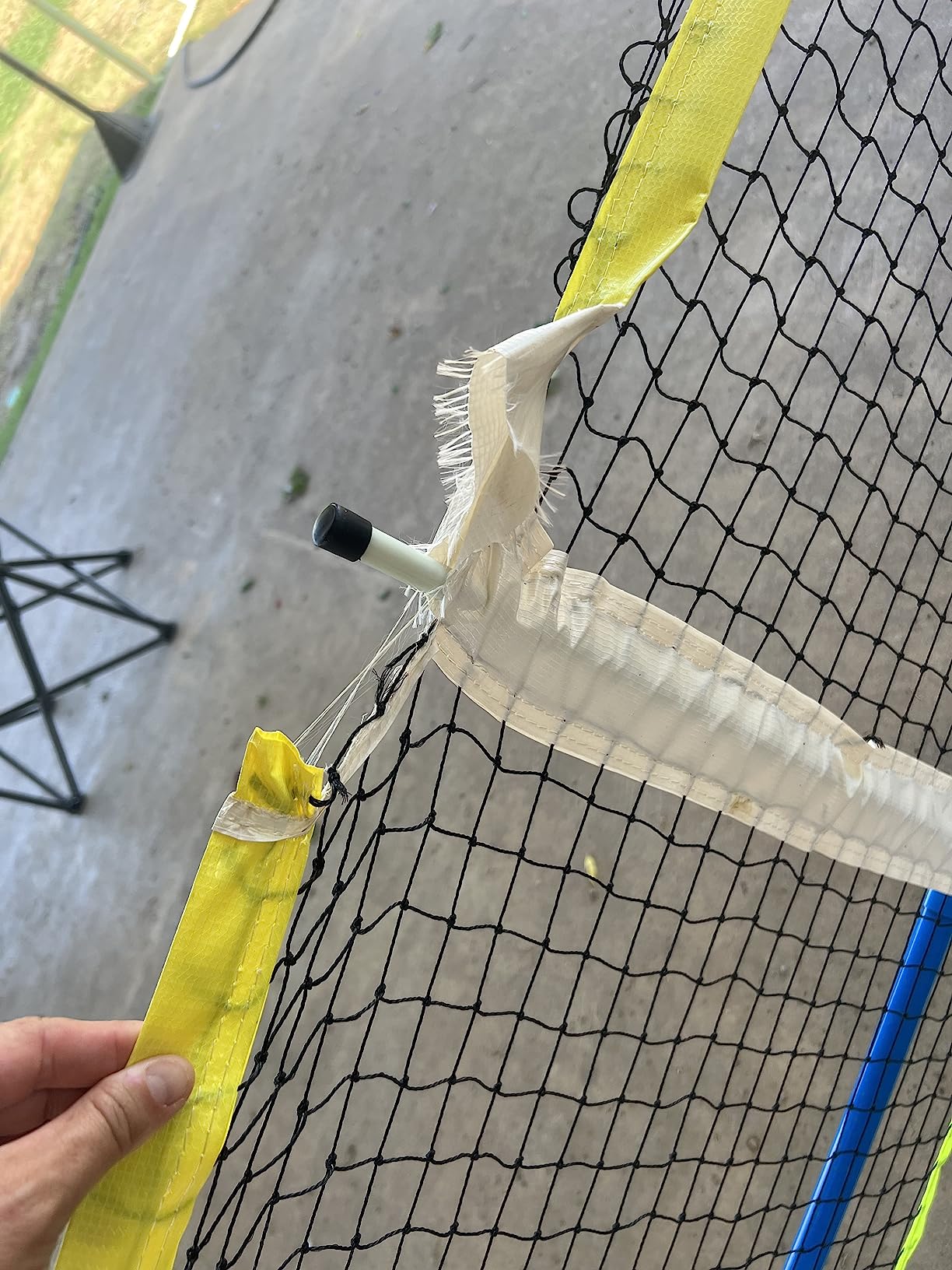
- Bundled wooden paddles crack early
- Full 22 ft length needs a large open area
- Net and accessories can fail within weeks of heavy play
If two adults have never held a paddle, the Zdgao set removes the barrier entirely. The box contains a regulation 22 ft net, four wooden paddles, four outdoor 40-hole balls, and a waterproof carry bag, so a family can start playing the same afternoon it arrives.
The net itself is regulation, measuring 22 ft wide, 36 inches at the sideline, and 34 inches at the middle, and the manufacturer states it meets USAPA portable net rules. The frame is a powder-coated alloy steel with wide post bases, a center stabilizer, and hook-and-loop top straps.
Assembly is a numbered interlocking design with a step-by-step visual manual, and packed dimensions of 35 by 9 by 5 inches mean it fits in a car trunk or a closet. At 16 pounds it is one of the lighter frames we looked at, which matters for beginners who will be carrying it to a park.
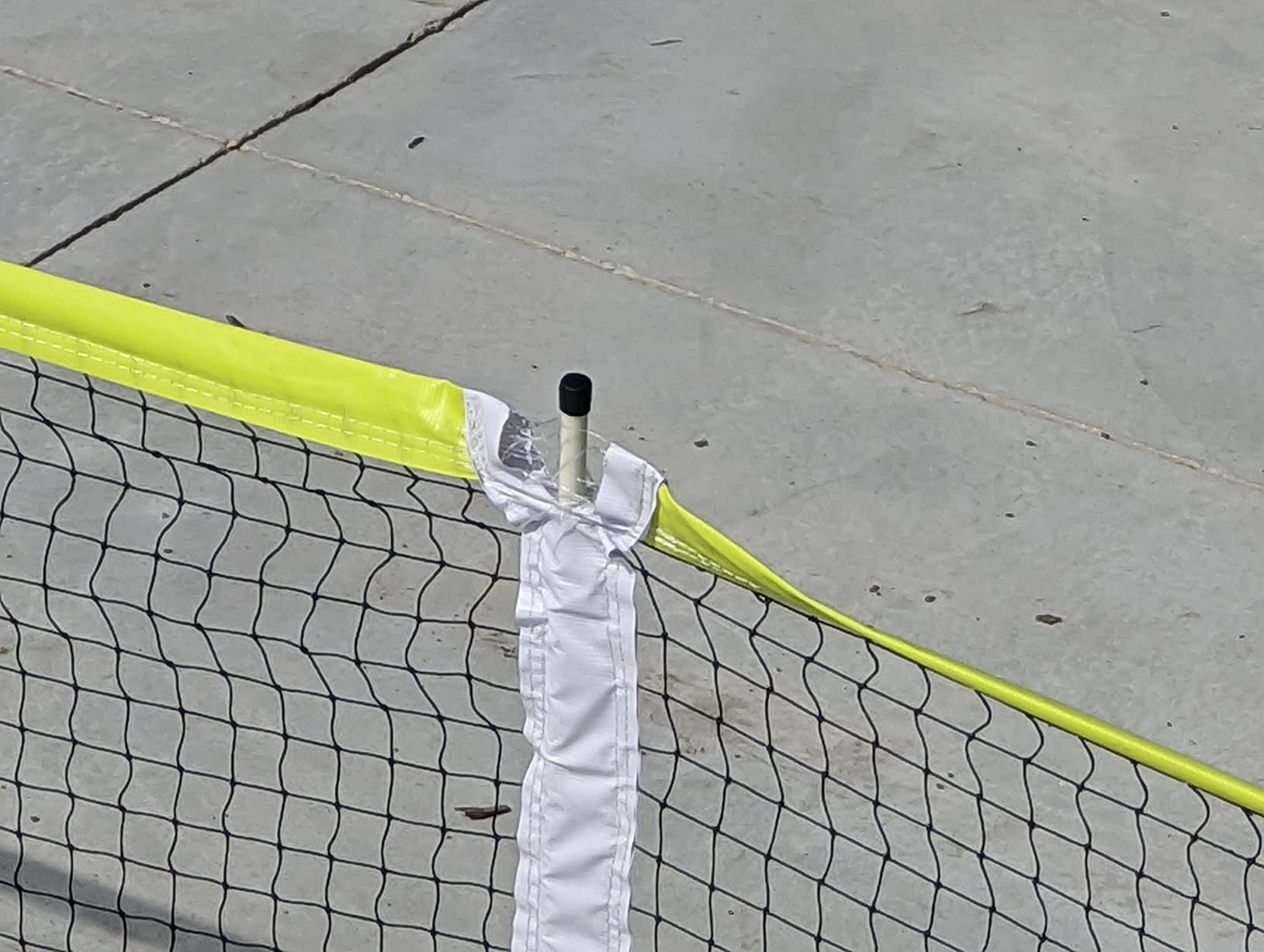
The round hollow powder-coated tubes are the manufacturer’s answer to weather, and they do keep the frame’s interior from sitting in water. That design is also what makes the frame lighter than a solid post of the same size.
Best case for the complete set
Buyers consistently praise the packaging over the equipment. For a birthday gift, a housewarming, or a couple who wants to try the sport without researching eleven separate products, a box that works out of the carton is worth real money.
The 4 count and 4 outdoor balls also make it a natural fit for a family that will rotate two-on-two. Nobody has to drop into the driveway and borrow gear before the first serve.
Where the budget shows
The wooden paddles are the weak link, and they are the most common complaint in the reviews. They can feel splintery, crack early, and are not suitable for regular play, so treat them as a placeholder and upgrade once the household knows what it likes.
A few buyers also report a paddle, ball, or the net itself cracking or tearing within the first weeks of heavy use, and the warranty is only 30 days. If you want one purchase that lasts several seasons, buy the net on its own and choose your paddles separately.
6. DULCE DOM 22 ft Net Set: Best for Casual Backyard Play
DULCE DOM 22FT Pickleball Net Set for Family Fun & Outdoor Recreation
22 ft x 36 in ends
34 in center
6-ply PE net
5-minute setup
Pros
- Regulation heights verified by owners
- Wide bases and tripod support resist wind
- Sets up in three to five minutes alone
- Removable ball collector and 4 balls included
Cons
- No top cable
- so tension is limited
- Center support feels flimsy
- Small accessory bags have weak zippers
The DULCE DOM set is a bring-your-own-net style package aimed at casual backyard play, and owners like it for the same reason: it measures true. Several reviewers confirm the regulation 36 inch ends and 34 inch middle with a tape measure, which is not something we could say about every budget net.
The build is a 0.8 mm, 19 mm diameter steel round tube combined with 25 by 25 mm square tubing, carrying a 6-ply PE knotless net and 420D oxford fabric. Wide bases and a tripod support structure keep the frame from folding over on a breezy day.
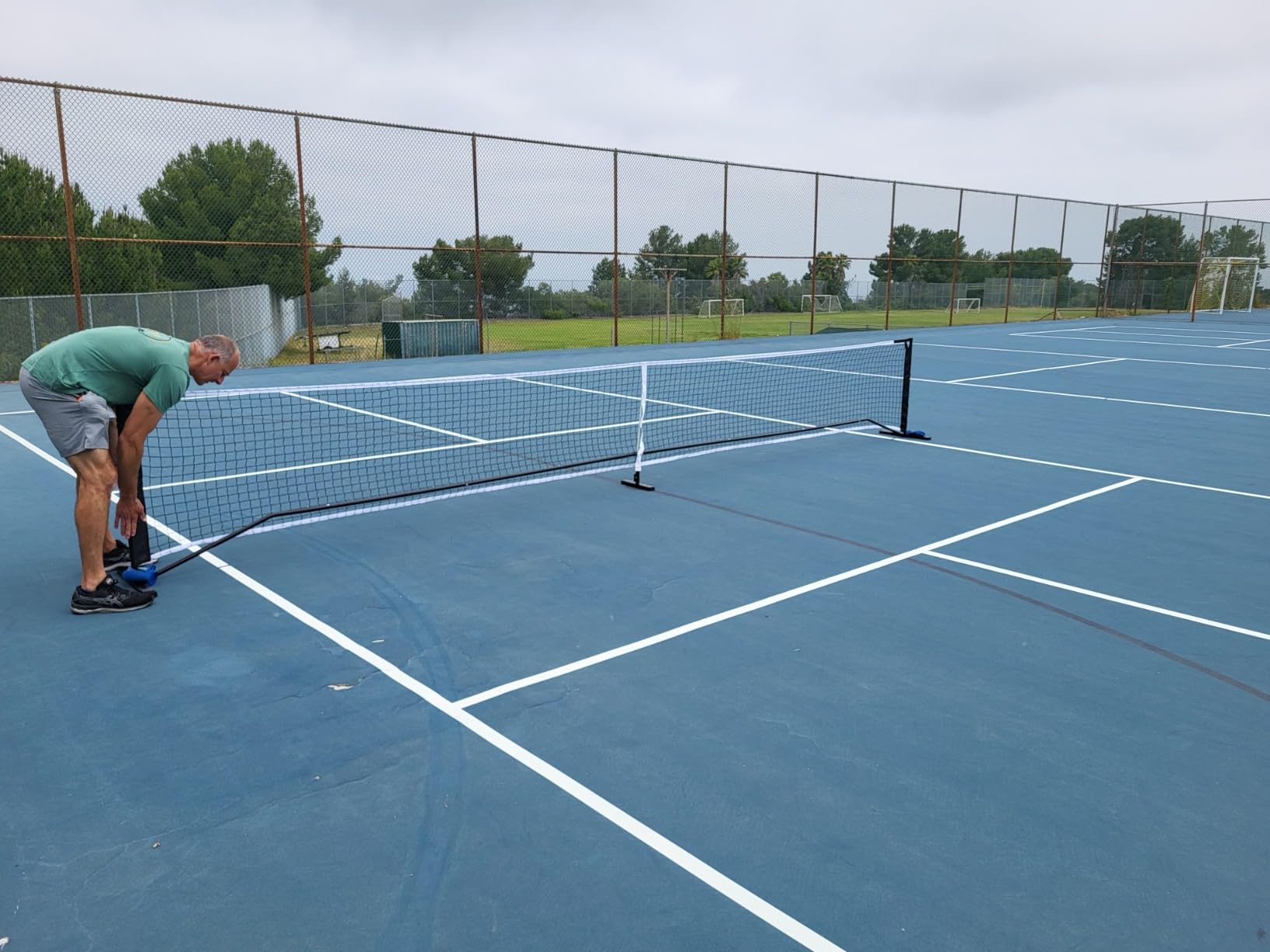
One person can install it in about five minutes, and everything, including a removable ball collector and four balls, fits in the carry bag. The bag is compact enough that owners report leaving it in the trunk permanently, which is a real advantage for driveway play.
The ball collector is a nice touch for a shared yard. Without one, a rally-ending shot usually ends in a hedge, and you spend the first two minutes of every session hunting. This one clips on and comes off.
Where casual nets make sense
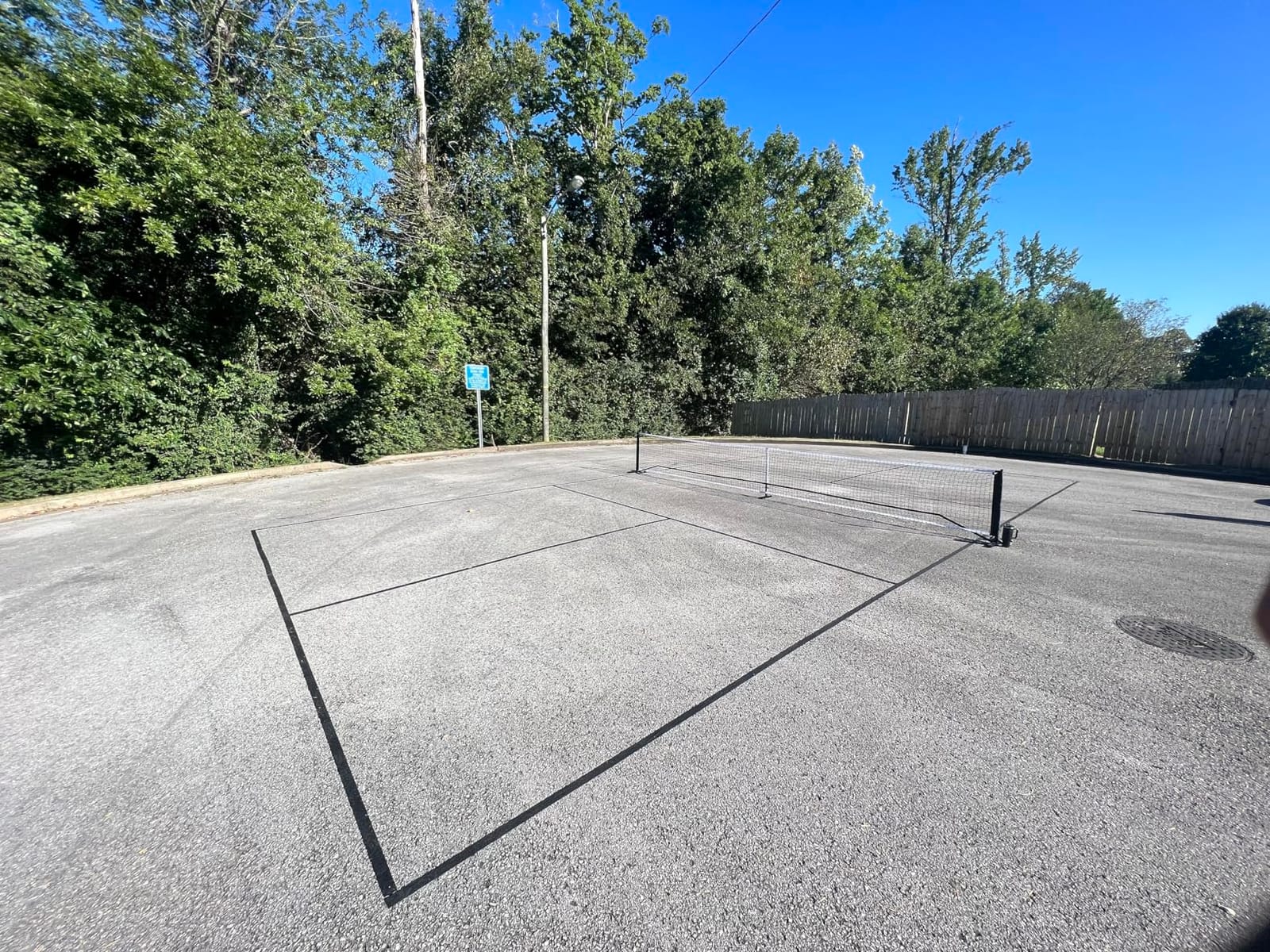
If you are serving to a friend, doing relaxed volley work, or introducing someone to the game who will not be playing matches, this is enough net. The height accuracy is the part that keeps it from feeling like a toy.
It also works as a practice net while you build a proper court later. The wide bases and tripod support mean it will not wander while you feed yourself balls from a bucket.
What experienced players notice
The main limitation is tension. There is no top cable, so the net cannot be pulled as taut as a premium model, and a slacker net changes how a ball rebounds at the kitchen line. Beginners will not notice. Players who have used a tournament-grade net will feel it immediately.
Owners also describe the frame as not fully rigid and the center support as feeling flimsy, and the small mesh accessory bags have zippers that break quickly. If your household is moving past casual rallies by 2026, plan an upgrade instead of fighting the sag.
7. Zdgao 22 ft Net with Pickleballs: Best Lightweight Net for Moving Around
22FT Pickleball Net and Weather-Resistant Steel Frame for Indoor/Outdoor
22 ft regulation net
15-ply knotless mesh
14 lb total
4 balls included
Pros
- Sets up and tears down in two to five minutes
- 14 lb portable build that one adult can carry
- Four outdoor balls and a carry bag included
- Sets up on lawns parks and beaches
Cons
- Velcro strap too short to remove post-to-post sag
- Light enough to tip in a gust without base weight
- Frame and net feel inexpensive
Fourteen pounds is the lightest build we could verify, and that single fact shapes everything about this net. If your yard is small, your court moves depending on who is visiting, or the person setting up is an older player, weight is the spec that decides whether a net gets used or stays folded in the garage.
The measurements are regulation: 22 ft of width with 36 inches at the sidelines and 34 inches at the center, adjusted with a top strap. The mesh is 15-ply knotless with double machine sewing on the side sleeve and middle connection, which is a step above the simplest kits.
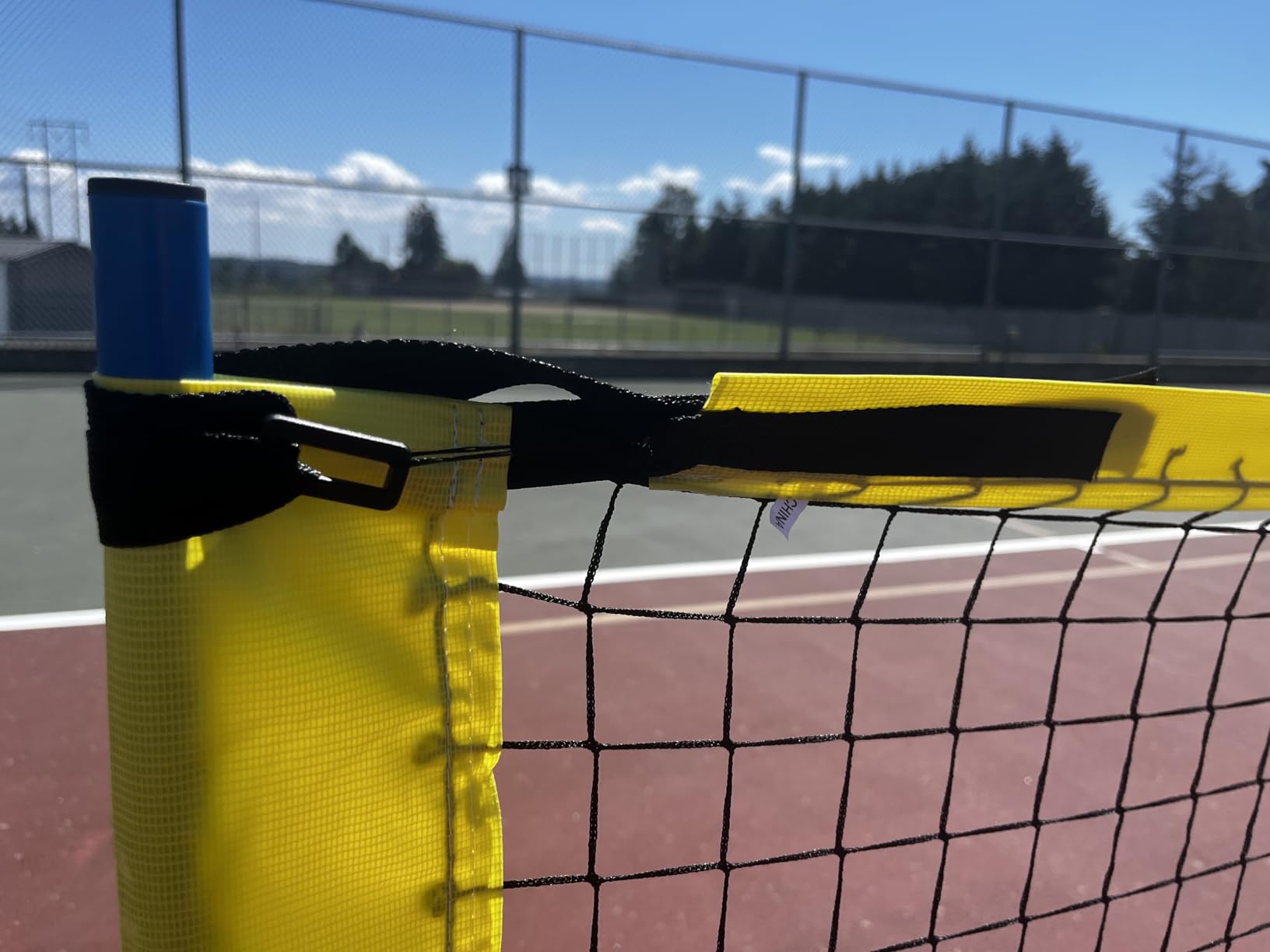
Setup and teardown are among the fastest numbers we saw, with owners putting assembly at two to five minutes. The interlocking alloy steel frame uses numbered pieces and no tools, so the whole thing collapses back into the bag between sessions.
The box includes four outdoor pickleballs and a carry bag, and the manufacturer lists driveways, lawns, parks, and beaches as intended surfaces. The only warranty offered is 30 days, which is among the shortest in this roundup.
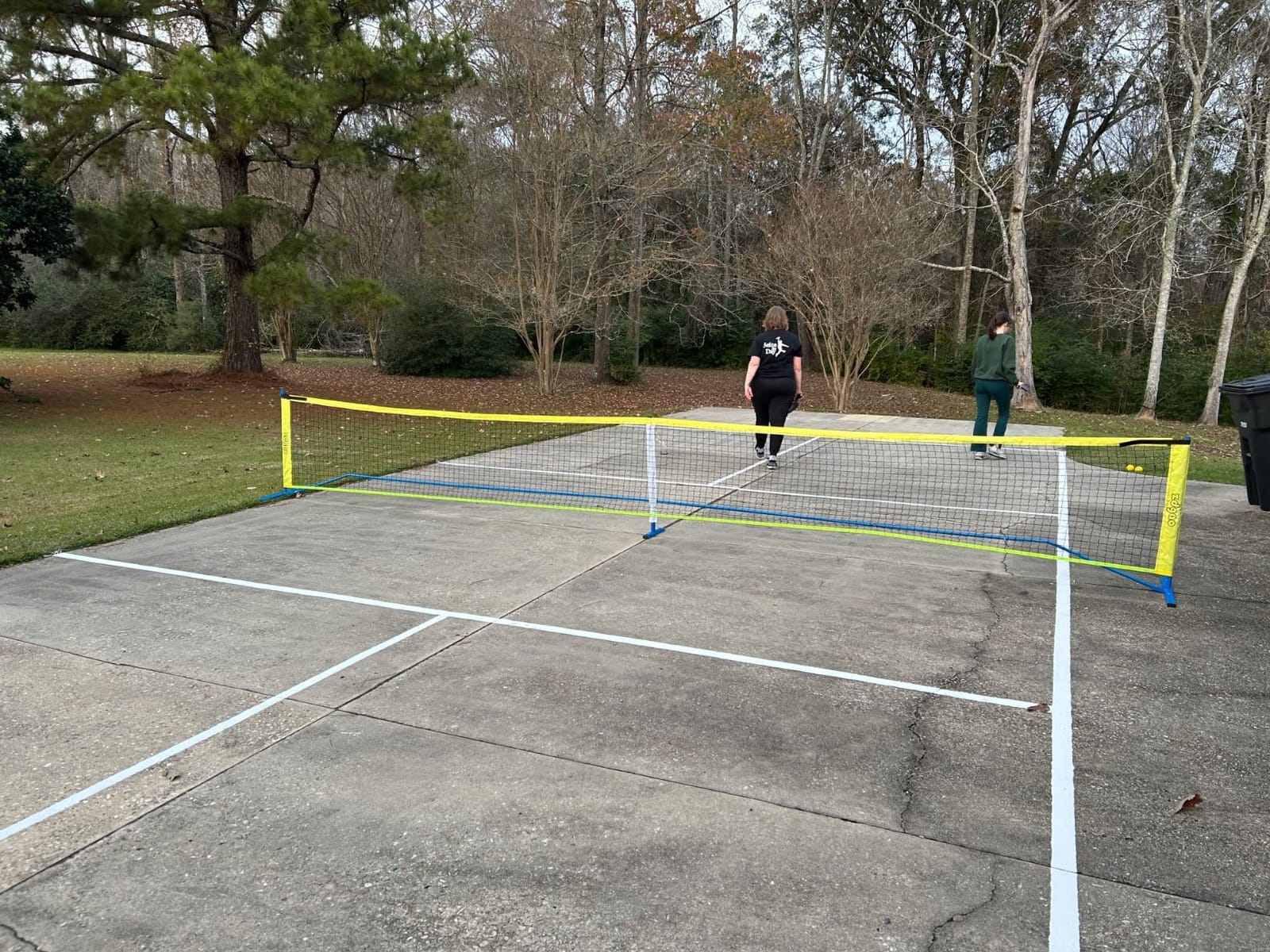
Best fit for small and shared spaces
This is the net for a condo patio, a townhouse garden, or a yard where the court has to come down so the space can do double duty. At 14 pounds, one adult can reposition it without asking for help, which is the whole point.
It also works well for a family that wants to bring the game to a park or a beach. The carry bag handles the transport, and there is nothing to unscrew or measure before you set up.
What the light build costs you
The trade is wind stability. Owners report the net is light enough to blow over in a gust unless you add base weight, and if your yard is exposed rather than fenced, that is a daily occurrence rather than an occasional one. The other recurring complaint is the velcro strap, which is not long enough to remove the sag between the two posts.
That sag is exactly what changes ball response, so if you are a progressing player, test it before you commit. Owners also describe the frame and net as feeling inexpensive, which is a fair summary of where this kit lands.
8. Hoverphenix 22 ft Net with 4-Paddle Set: Best Four-Player Kit
Pickleball Set with Net and Paddle Set of 4 for Driveway Family Games
22 ft regulation net
4 paddles and 4 balls
16 lb alloy steel
30-day warranty
Pros
- Net frame holds up through windy days
- Complete kit in one box for families
- Assembles solo in about five minutes
- Light enough to move around a yard alone
Cons
- Wooden paddles are beginner-grade only
- Paddle wrist ties too small for adult adjustment
- Frame tips in strong wind without added weights
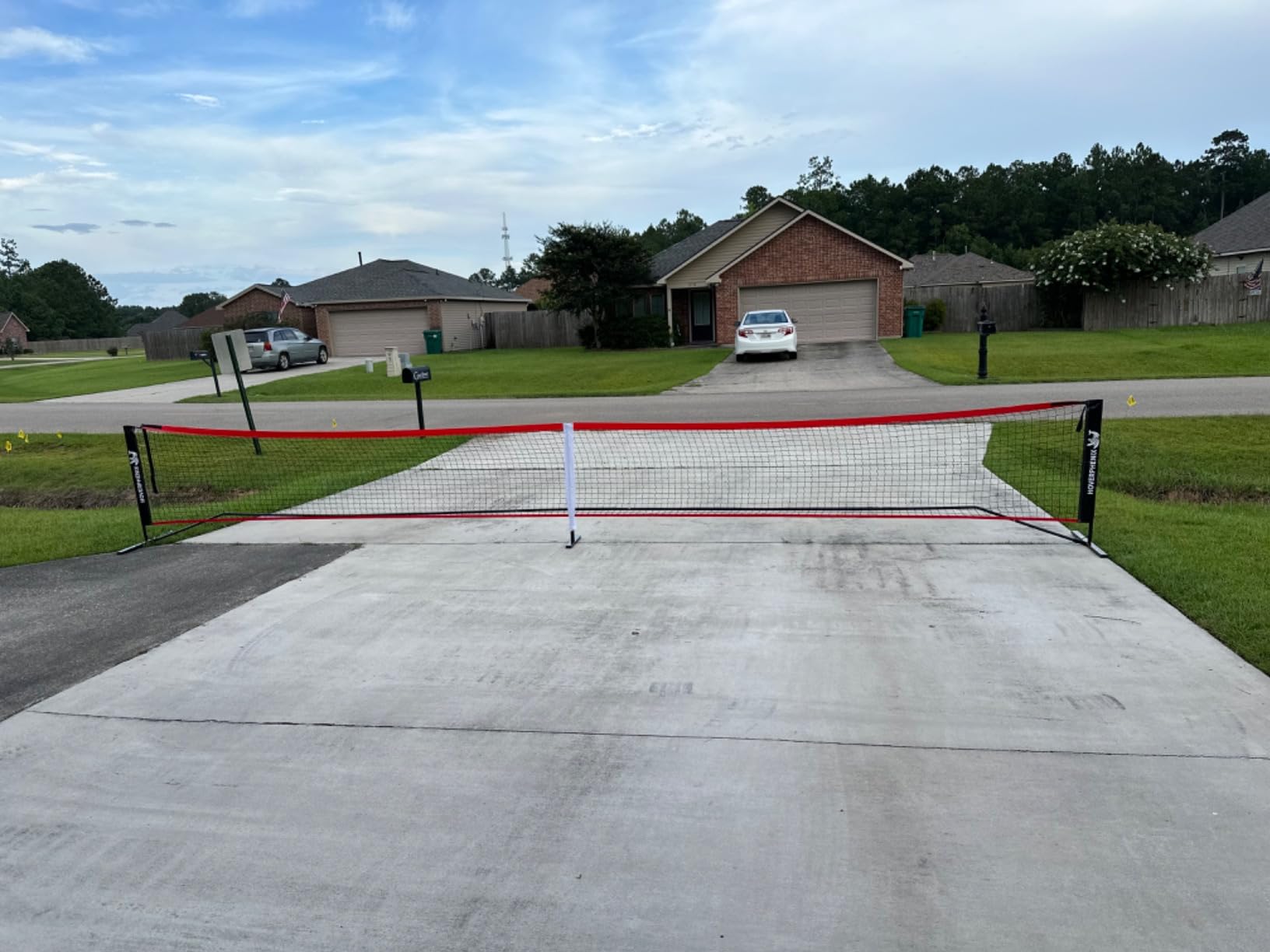
The Hoverphenix set is the other complete-kit option, and the difference from the Zdgao set is mostly in the packaging. This one includes four paddles, four outdoor balls, an instruction guide, and a carry bag around a full 22 ft regulation net with hook-and-loop top straps.
Buyers consistently rate the net itself well, which is where the two starter kits diverge. The interlocking alloy steel frame is described as sturdy, and one owner notes it has held up through windy days, which is not a given at this weight class.
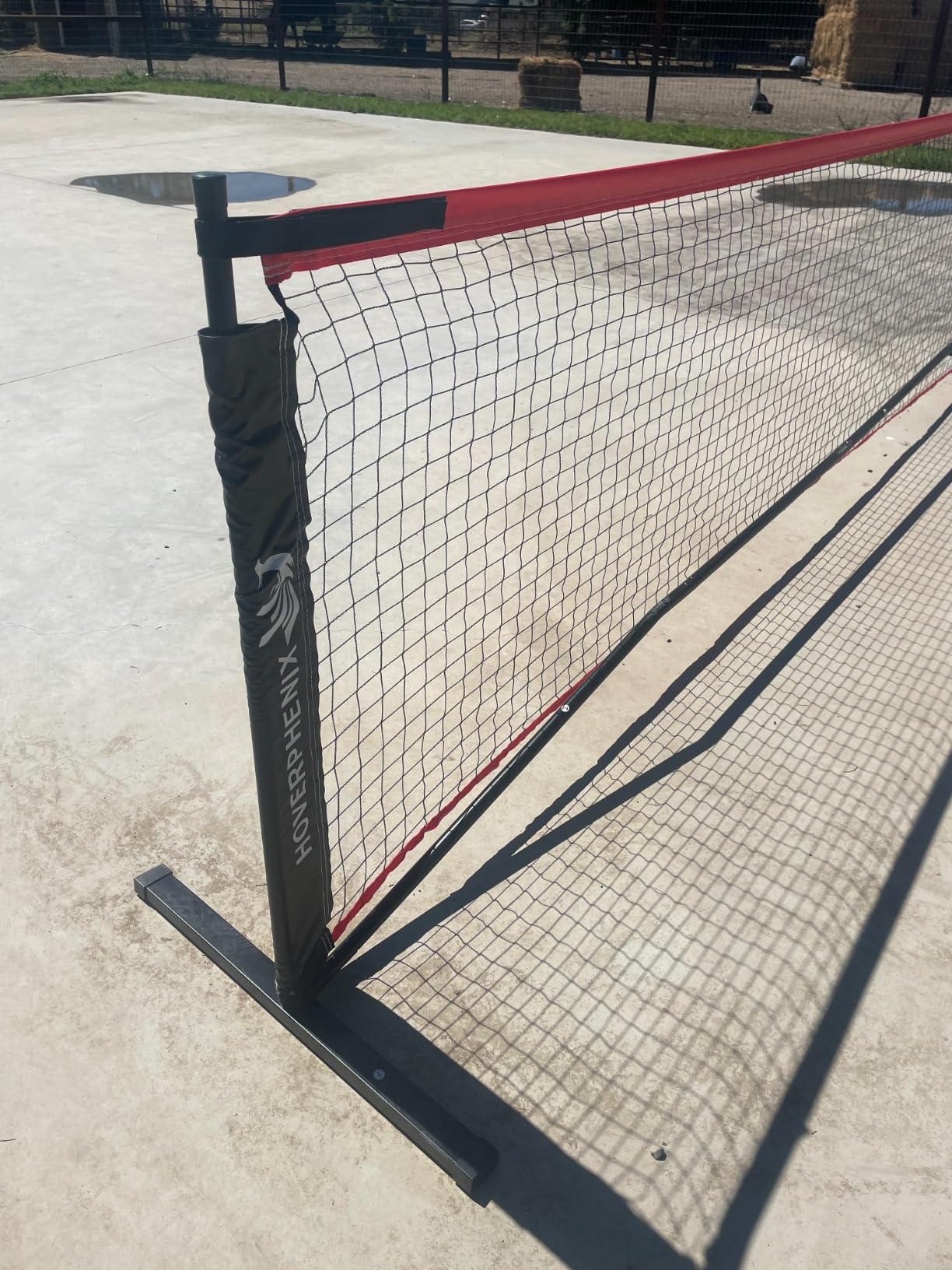
Assembly takes under five minutes for one person with numbered pieces and no tools, and the net packs into the bag for storage. At 16 pounds it sits in the middle of this group, light enough to move around a yard without assistance but not so light that it disappears in a gust.
The regulation dimensions are 22 ft wide, 36 inches at the sidelines, and 34 inches at the center. Buyers say the net is also fine on driveways, backyards, parks, and beaches, so it is not tied to a particular surface.
How the two starter kits compare
If you are buying for four adults learning together, this is the more practical box, because four paddles and four balls is exactly what a rotating doubles game needs. The Zdgao set ships the same count but includes a center stabilizer, which is a better net part.
Whichever you pick, treat the paddles as a placeholder. Both sets draw the same complaint about wooden paddles, and upgrading paddles later is a far better use of money than replacing a net you have barely used.
Known weaknesses to plan around
Three things come up repeatedly. The wooden paddles are cheap and only suitable for beginners, the wrist ties on those paddles are too small to adjust on an adult hand, and the frame tips or slides in strong wind until you put weights on the bases.
The warranty is 30 days, one of the shortest offered here. We would not treat that as a reason to skip the set, but it is a reason to inspect every part on day one, because replacement coverage disappears fast.
9. BAGAIL 2-in-1 Set with Lockable Wheels: Best for Rolling Repositioning
BAGAIL Portable Pickleball Net Set with Wheels, 22 FT Regulation Size & 11 FT Half Court Size 2-in-1 Pickle Ball Net with Ball Collector, Carry Bag, Easy Setup for Outdoor Indoor Driveway – Yellow
22 ft and 11 ft nets
360 degree lockable wheels
8-ply PE net
18-month warranty
Pros
- Two-in-one regulation and half-court nets
- Lockable rotating casters roll the net across a driveway
- Integrated ball collector keeps balls together
- 18-month warranty included
Cons
- Wheels dig into grass and soft ground
- Changing court size needs partial disassembly
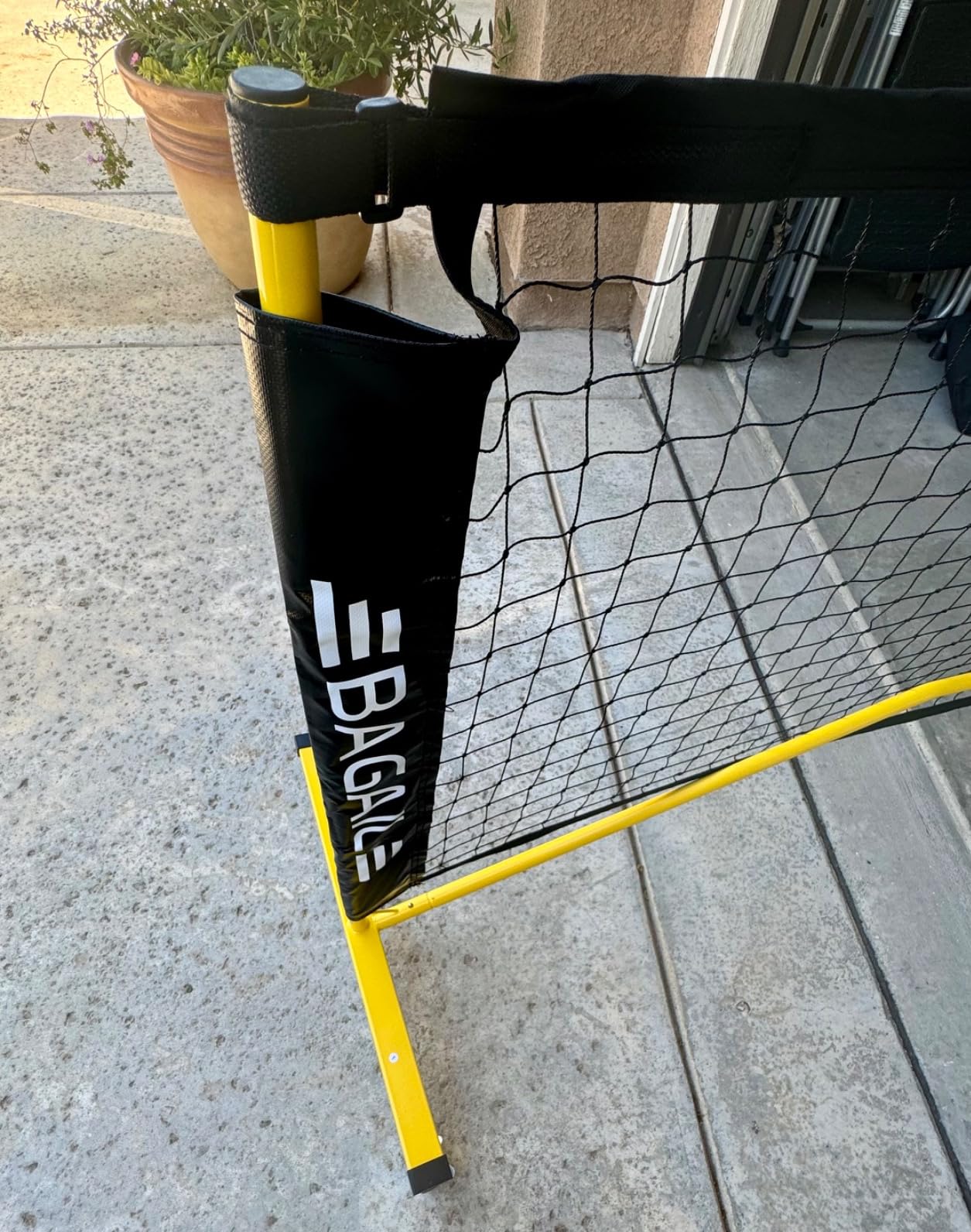
Wheels are the feature most backyard players ask for and most kits underdeliver on, and the BAGAIL set is the rare one that does not. Its frame comes with rotating lockable casters, so you roll the whole net across a driveway instead of carrying three frame sections across it.
Like the Fostoy 2-in-1, it includes both a full-size USAPA regulation net and an 11 ft half-court net on the same frame. The build uses reinforced 8-ply PE net, 0.8 mm powder-coated rust-proof poles, adjustable tension straps, and a steel center pole.
The casters are the part that changes daily life. One reviewer describes them as rolling smoothly and locking securely, so you can square the net to a new court in a couple of minutes without touching a single joint.
There is also an integrated ball collector, so a shot that goes long lands in the tray instead of in the hydrangeas. Four pickleballs, a 600D Oxford carry bag, and installation parts are all in the box, and the warranty runs 18 months.
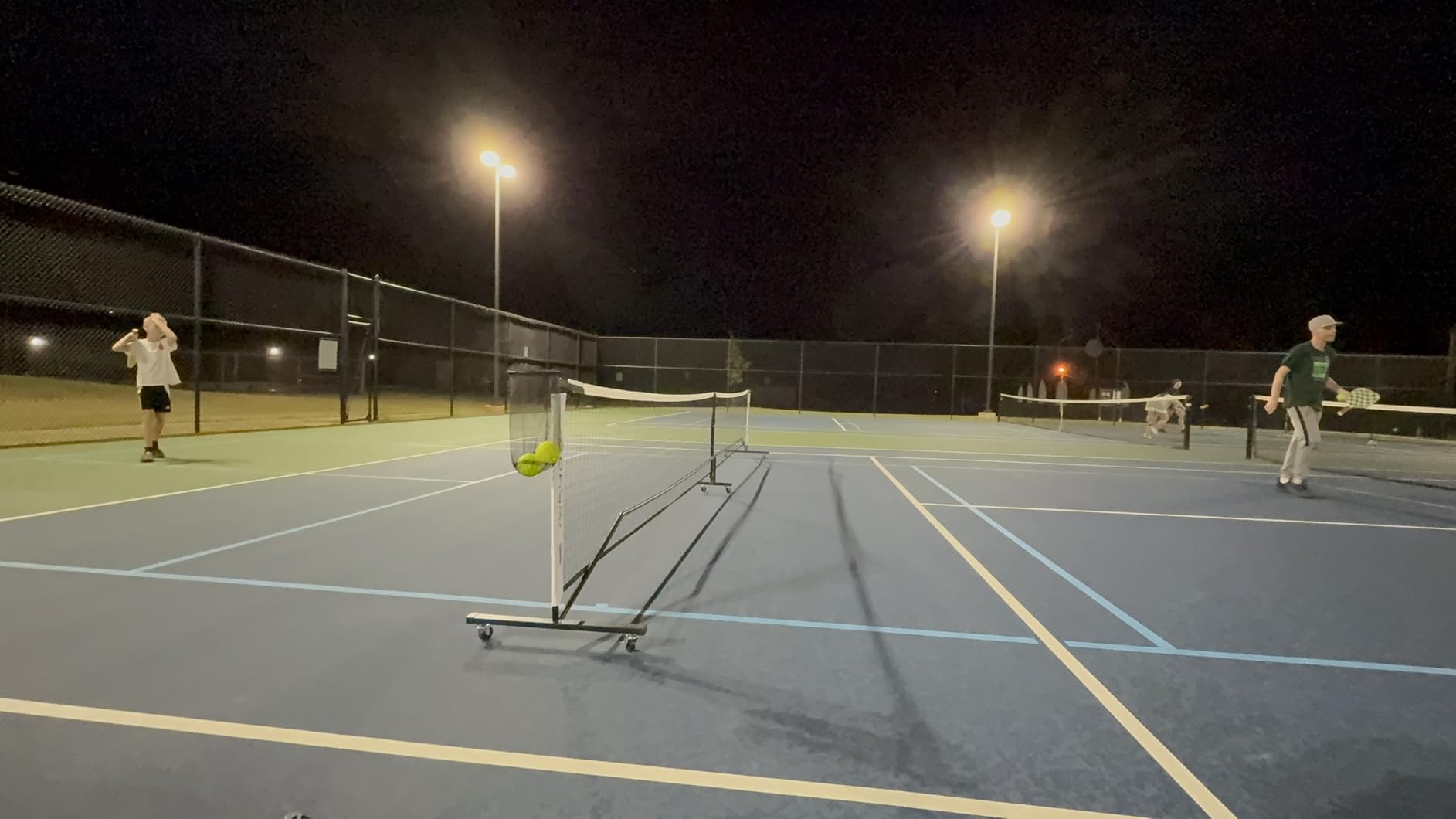
Best for hard surfaces and rotating play
This is the one to buy if your court is a driveway or a concrete slab and you want to store the net out of the way. Rolling it to the garage door takes seconds, and the lockable casters mean it will not creep mid-rally.
It also works well for households with two separate play areas, such as a driveway for guests and a side court for daily practice. The 22 ft and 11 ft options let you set up a full court for company and a short one for yourself.
Where wheels cause problems
Wheels and soft ground do not mix, and that is the main limitation. Casters dig into grass, sand, or soft soil, which makes rolling difficult and can tip the frame. On a lawn, you would be carrying it anyway.
Switching between 22 ft and 11 ft also requires partial disassembly rather than a quick reconfiguration. If your primary court is grass, read the wheeled section of this guide before you commit to any caster-equipped net.
10. TYRSEN Wheeled Net Set: Best Complete Court Package
TYRSEN Pickleball Net Set – Pickle Ball Net on Wheels for Driveway Backyard, 22FT Regular Size, 4 Pickleball Paddles & 6 Balls, 12 Court Markers, 1 Carry Bag, Pickle Ball Set for Indoor Outdoor
22 ft x 36 in net
34 in center
4 wheels per base
10-minute setup
Pros
- Rolls the net across a driveway without teardown
- Includes 12 court markers to lay out boundaries
- Snaps together in about ten minutes
- Complete package for families starting out
Cons
- Light-wall tubing can fail at center post welds
- Wooden paddles are entry-level only
- Floor markers do not hold position alone
The TYRSEN set is the most complete package we could verify for hard surfaces, and the piece that separates it from the others is the 12 court markers. Weighted markers that wipe clean let you lay out a proper court boundary on a driveway that has no lines, which solves a problem every backyard net owner faces.
It runs four wheels per base, so rolling is genuinely practical. The net is 18-ply knotless PE at 22 ft by 36 inches with 34 inches at the center and adjustable tightening straps, and the poles are hollow steel tubes with a 1 mm coated center pole.
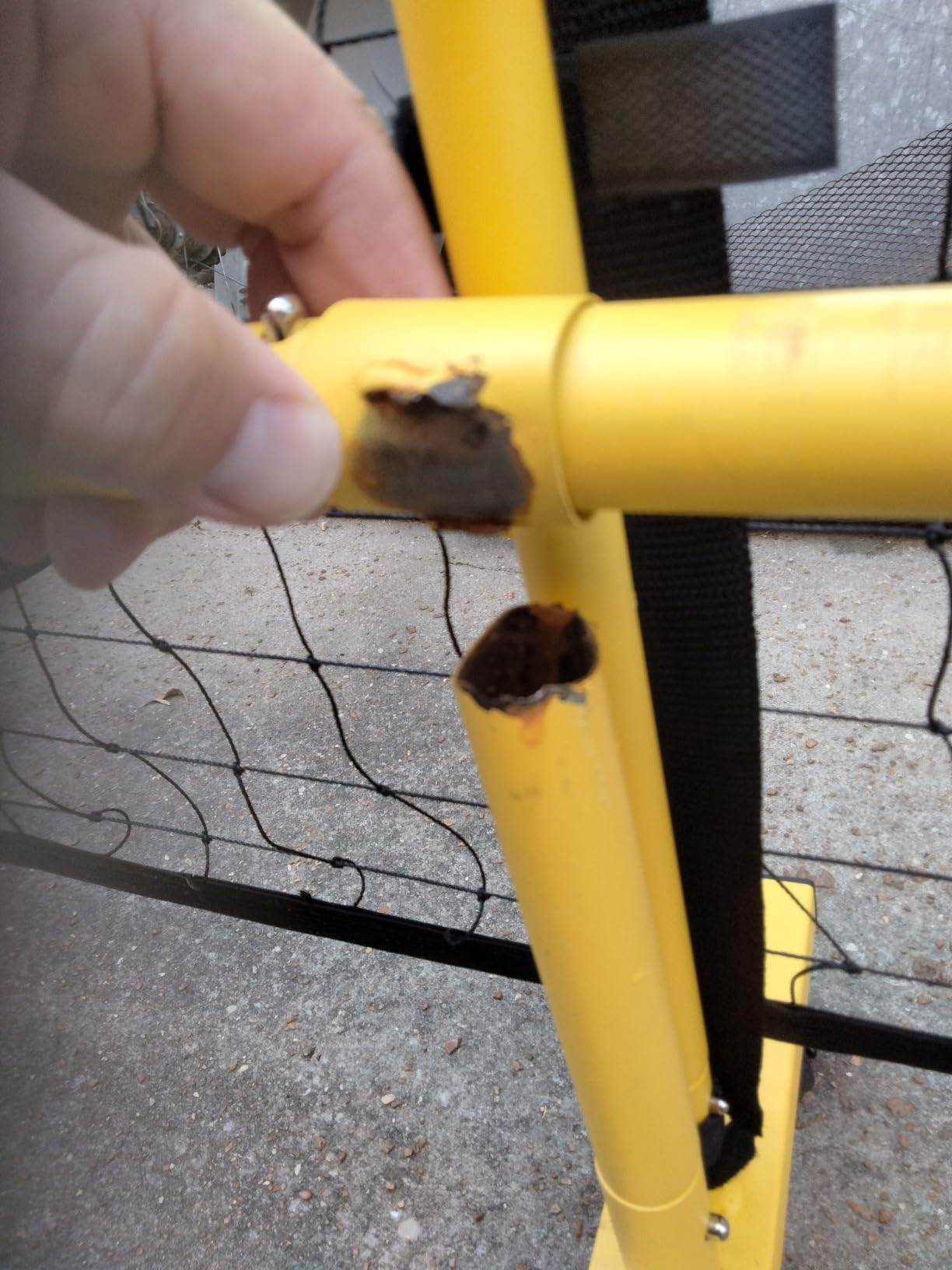
Assembly takes about ten minutes with interlocking poles, which is longer than most kits here but not unreasonable. Everything stores in a 600D carry bag, and the packed dimensions of roughly 38 by 13 by 8 inches keep it manageable in a closet or a shed.
Buyers consistently praise the wheeled portability and the completeness of what arrives. If you want a driveway court that looks organized rather than improvised, the markers are what sell this one.
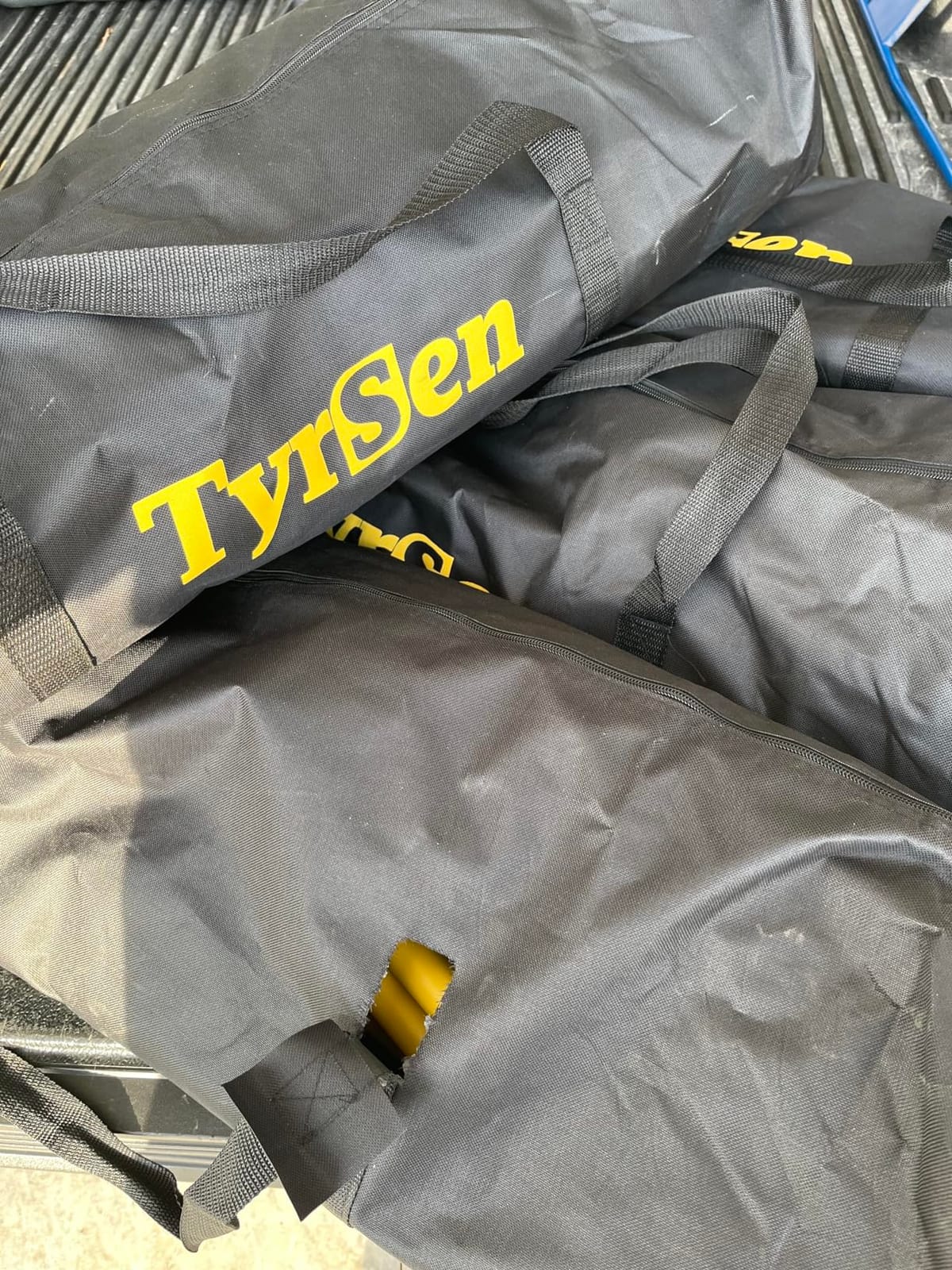
Who benefits most from a full package
Pick this if you are setting up a court for a group rather than a pair. Four paddles, six balls, and 12 markers mean you can put four people on court immediately and have visible boundaries from the first game.
It is also a solid gift for a household with a large driveway and no interest in buying accessories separately. The after-sales service includes a one-year guaranty and accessory replacement, which owners say has been responsive.
The weaknesses to know about
The most repeated complaint is the center post weld. Several owners report light-wall tubing failing at that joint after only a handful of setups, which matters because the center post is the piece that keeps the net arched.
The yellow floor markers also do not stay put on their own, so they need a dab of weight or a pebble in breezy conditions. And as with the other paddle bundles here, the wooden paddles are entry-level only.
11. Fostoy Pro Aluminum Net: Best Aluminum Frame for Rust Prone Climates
Fostoy Pickleball Net, Pro Aluminum Frame with Dual-Side Tensioning System
22 ft USAPA regulation
Powder-coated aluminum
6 locking casters
15-piece frame
Pros
- Aluminum frame resists rust and corrosion
- Dual-side pull cords keep the net taut
- Locking caster wheels aid repositioning
- Tool-free clip-on assembly with a carry bag
Cons
- Bottom crossbar bows in the middle
- Net can walk away from the center mark during play
- Best performance on flat surfaces only
Steel is the material behind almost every budget net, and steel is the reason so many of them show rust at the joints after a few wet seasons. The Fostoy Pro is one of the few here built on a powder-coated aluminum frame, which is the single most effective change you can make if you live somewhere hot, humid, coastal, or simply sunny.
It measures 22 ft with 36 inch side height and 34 inches at the center, and the manufacturer lists it as USAPA compliant. The frame arrives as 15 aluminum pieces with six locking caster wheels, installation tools, a PE net, and a carry bag.
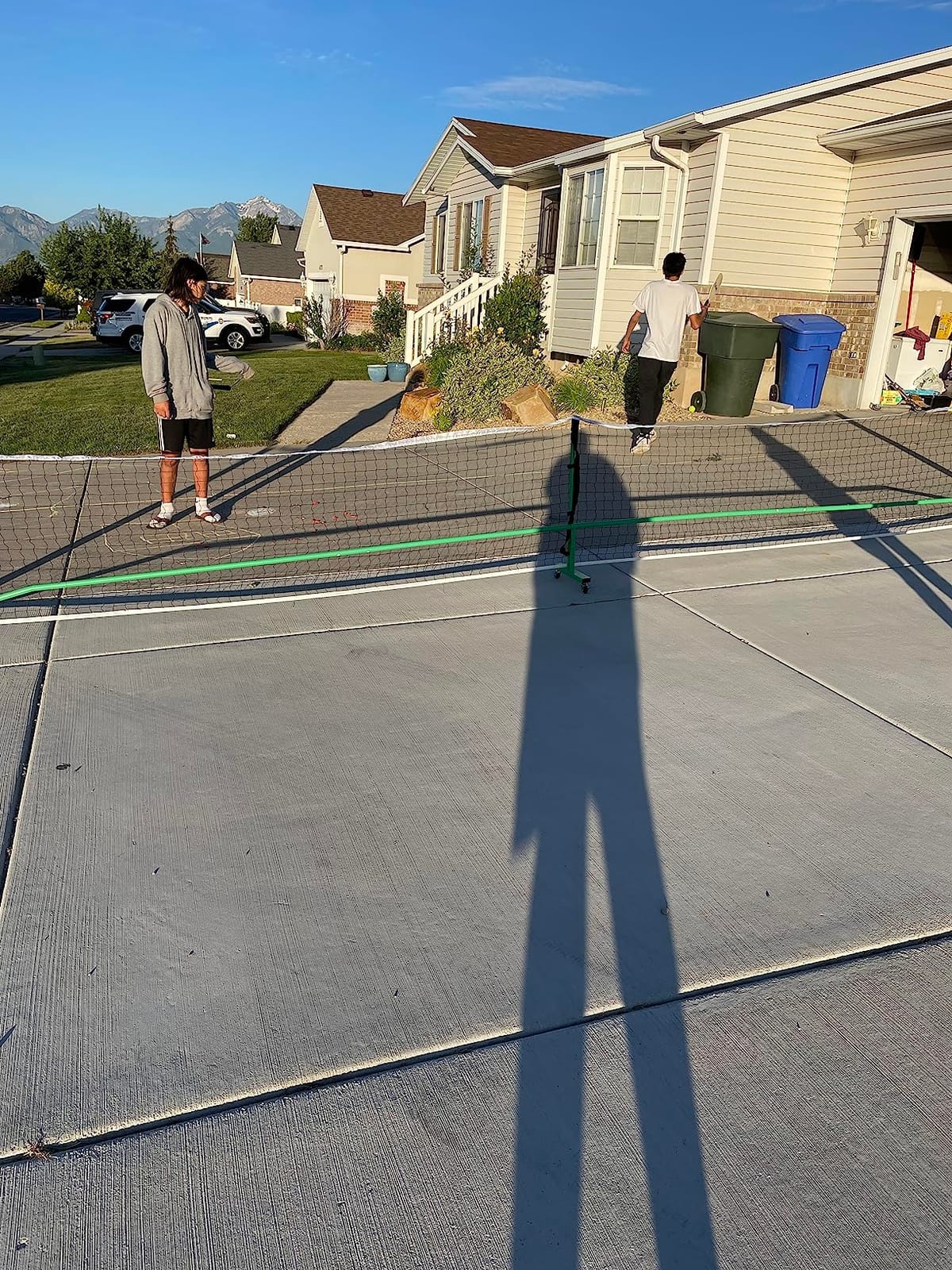
The dual-side tensioning system is the feature we would highlight. Pull cords clip onto each pole and tension the net along both edges, which resists the sagging that plagues hook-and-loop straps and keeps the playing surface even from post to post.
Assembly is a tool-free clip-on design with labeled parts, and owners who bought it for community or club courts value the aluminum frame and the wheeled mobility. The wheeled base also makes it one of the more practical options on a hard surface.
Who should pay extra for aluminum
If your net is going to see morning dew, sea air, or a lot of direct sun, aluminum buys you years. Most of the frames here are coated steel, and coated steel is a timed decision rather than a permanent one.
This is also a reasonable choice for shared courts or community spaces where the net will be moved often and set up outdoors between sessions, because the wheels make repositioning quick and the frame will not corrode while it waits.
What owners still complain about
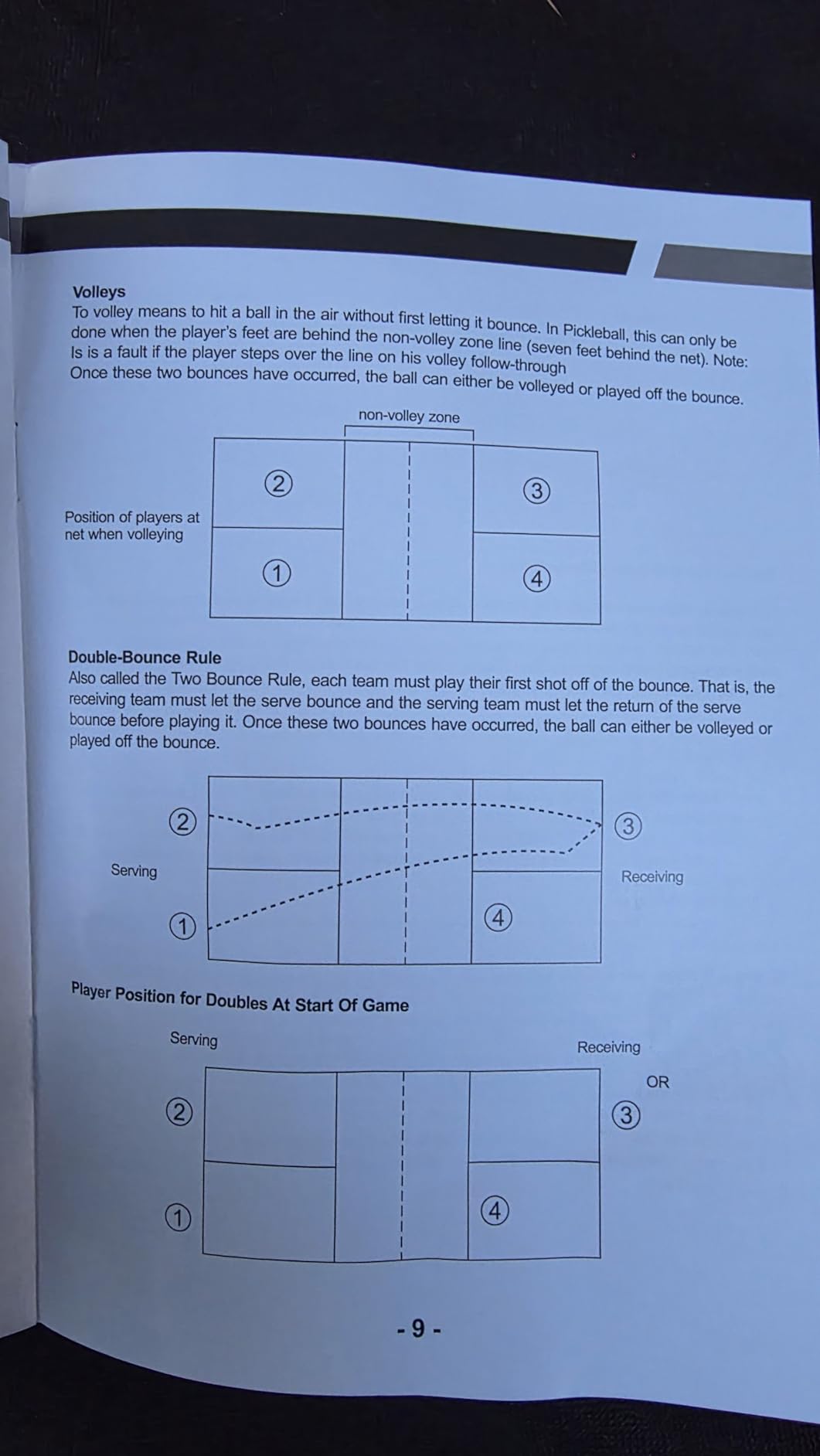
The bottom crossbar bows in the middle on some of these, and a bent stabilizer arm has been reported as well. That is the trade for using lighter aluminum tubing, and it is worth checking the bar for straightness the day it arrives.
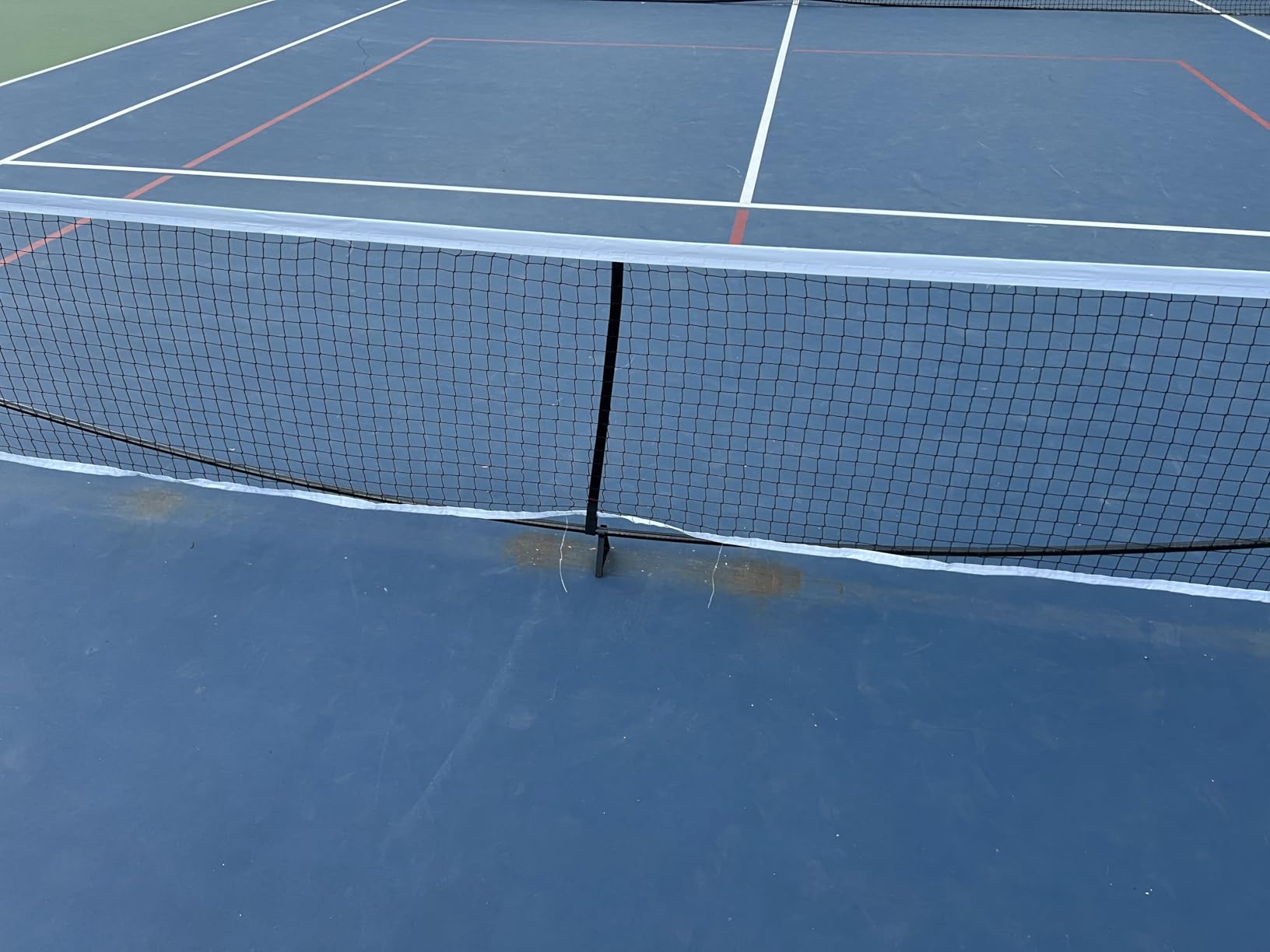
Owners also report the net can walk away from the mid-court mark even with all wheel locks engaged, which is a real issue on a sloped or uneven slab. Reviewers note it performs best on flat surfaces, so check your pad before assembly.
12. Pickle-Ball SwiftNet 2.1: Best Net for Travel and Tournament Feel
Pickle-Ball SwiftNet 2.1 Portable Pickleball Net System
Carbon fiber and aluminum
17 lb
22 ft regulation
No center post
Pros
- No center post for an uninterrupted playing surface
- Two to five minute setup by one person
- Taut top line that plays like a permanent system
- Carbon fiber will not corrode outdoors
Cons
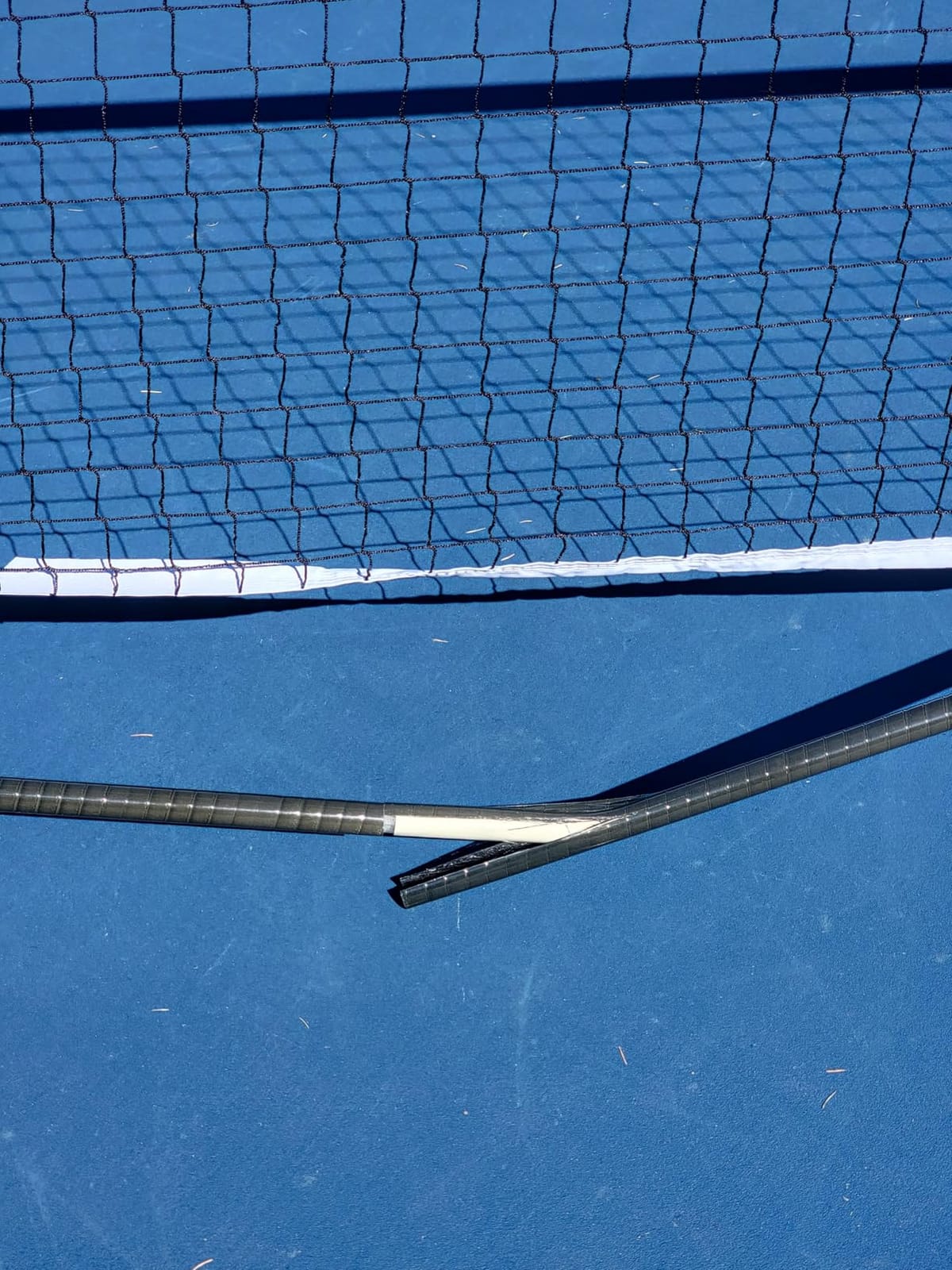
- Elastic shock cords can break after a few setups
- Center height can measure 33 in instead of 34 in
- One tube button is tight to release
The SwiftNet 2.1 does one thing differently from every other net here: it has no center post. Instead of a vertical support pushing the middle of the net up, internal tension holds the arc, so the ball flies through a clean, uninterrupted surface with no rise in the middle. Reviewers describe the resulting play as nearly identical to a permanent court system.
The frame is recycled aerospace-grade carbon fiber combined with aluminum, at 17 pounds, and it folds into a compact case. Owners put setup and takedown at two to five minutes for one person, and the carrying bag is large enough to actually close.
Balls roll under the net easily for fast returns, which is a small quality-of-life improvement that adds up over a long session. The stable base and tensioning system keep the net firm and level, and the whole thing meets official standards for backyard practice or tournaments.
This is also the only net in the group with a carbon fiber frame, which matters if you plan to leave it outside. Carbon fiber and aluminum will not corrode, so sun, rain, and dew are not part of the lifespan equation the way they are with coated steel.
What the missing center post changes
Removing the center post removes the most common failure point in portable nets, along with the vertical bump players have to track. It also means balls never deflect off a post, which matters during fast volleys at the kitchen line.
For a player who is already competitive, that clean surface is the reason to choose this over a heavier steel system. For a beginner, the difference is real but far less noticeable than the cost gap.
The trade-offs you are making
There are three real ones. The internal elastic shock cords are wear items and can arrive broken or fail after a few setups. The center height sometimes measures about 33 inches rather than the 34 inch standard, which is a small compliance gap worth knowing about.
One vertical tube button is also reported as too tight, making takedown finicky, and the most expensive option in this roundup. Owners who buy it tend to be club or multi-net buyers who amortize the cost across many courts.
How Much Yard Space Do You Actually Need?
A regulation court needs a 20 ft by 44 ft playing area, and that is before you account for the run-off behind the baselines. Most people underestimate this because the net itself is only 22 ft wide, which makes the surface area seem small.
Here is how the space breaks down, and it is worth measuring before you buy anything:
Net: 22 ft across, 36 in at the sidelines, 34 in at the center
Playing area: 20 ft by 44 ft measured from the net to the baseline
Run-off: at least 6 ft behind each baseline, and 3 ft on each side of the net
Full footprint: roughly 26 ft by 56 ft of clear space for comfortable play
If you have 26 ft by 56 ft, a full regulation court fits with room to chase errant balls. If you have 20 ft by 44 ft exactly, play is tight and running players will be hitting the fence. Below that, a half-court setup is the honest answer.
Most of the backyards we would target for this guide sit somewhere in the middle. That is why two of the nets here ship with an 11 ft half-court option, and why we consider a 2-in-1 frame a genuinely useful feature rather than a gimmick. If you want our take on getting the most out of a driveway instead, our pickleball net guide for driveways covers the hard-surface details.
Net Types Explained: Portable vs Semi-Permanent vs In-Ground
There are three broad categories, and choosing the wrong one is the most common expensive mistake in this sport. The type you buy determines how often you can play, not just how much you spend.
Portable systems are freestanding frames you assemble, move, and store. They need a 22 ft opening, take five to ten minutes to set up, and can be rolled or carried to a different court. Every net in this roundup is portable, and they are the right answer for most backyards because they double as driveway, park, and travel equipment.
Semi-permanent systems use a heavier frame that raises into a raised playing position and stays assembled. They play more solidly because they are much heavier, and the trade is that you lose the ability to move them or use the space for anything else. The wheeled aluminum net in this group sits closest to this category.
In-ground systems are posts set into concrete or driven into the ground with a permanent net tensioned between them. They are the most stable option and the least flexible, and they only make sense if you have committed space to a court permanently. For a yard you still want to mow and use on weekends, portable is almost always the right call.
The practical rule is simple. If the space is more than 50 percent of your outdoor living area, buy portable. If you have built or poured a dedicated court, a semi-permanent or in-ground system will outlast anything on this list by years.
Leaving Your Net Outside Year-Round: UV, Rain and Wind
This is the number one question on backyard net forums and one that almost no roundup answers. The short version: you can leave a portable net outside, but you are choosing a maintenance routine, and material choice determines how much maintenance.
Three materials show up in these nets and they age very differently. HDPE knotless mesh resists UV and moisture well and is what most of the nets here use. Polyester and nylon mesh is softer and catches more light, so it yellows and stiffens faster under direct sun. Coated steel tubing corrodes at the joints where coating fails first, which is why aluminum and carbon fiber frames outperform steel in sunny or coastal yards.
Our practical routine, based on what owners report surviving:
Retract or fold the net in high wind rather than leaving it tensioned and exposed
Wipe the mesh down and let it dry fully before folding, to avoid mildew at the seams
Check the top strap and buckle tension monthly, since UV degrades elastic fastest
Rinse salt air off the frame every few weeks if you are near a coast
Store the bag indoors, since most carrying bags fail long before the frame does
If you want the shortest path to leaving a net up, choose aluminum or carbon fiber and a knotless PE mesh. The Fostoy Pro aluminum frame and the SwiftNet 2.1 carbon fiber build are the two that will not be affected by rust at all.
Court Surfaces That Work in a Backyard
The net only plays as well as what is under it, and most backyards have grass. Grass is playable but slow, and the ball’s bounce changes as the blades flatten, which makes footwork drills harder to trust.
Concrete is the easiest hard surface and the most common, with the fastest bounce. It is unforgiving on joints, so a padded mat under the kitchen area is worth adding. Asphalt is softer than concrete and slightly slower, which is easier on older knees.
Acrylic-coated court tiles and modular sport tiles give you the best feel and the best drainage, and they are the surface that most closely matches a club court. Grass still works for casual play, but expect less consistent bounce and more ball pickup time.
Whichever surface you choose, level it before assembly. A net on a sloping slab will drift, and no amount of tightening will fix a frame that is fighting a slope. Our beginner paddle guide is a useful companion if you are building a full setup from scratch.
Wind Anchoring and Ballast: Keeping Your Net Upright
Almost none of these kits include enough ballast to survive a real spring day, and that is the most common complaint we saw across all 12 products. The steel and aluminum frames here are stable in a breeze and tip in a real gust.
Five options, in order of how well they work:
Fill the base with sand or gravel, which adds the most weight with the least fuss
Attach sandbags or patio pavers to the base plates with hook-and-loop straps
Drive ground stakes or auger stakes at an angle away from the court
Anchor to a fixed object like a fence post or deck beam where the layout allows
Park a vehicle or heavy planter against the base, which works but looks improvised
Balance matters more than raw weight. Two pavers on one base and none on the other will tip the frame faster than a light setup with even ballast. And remember that wheels make anchoring harder, because a caster rolls out of a weight you placed on it.
If your yard is genuinely exposed, this is the point at which a semi-permanent or in-ground system starts to make more sense than any portable net. If your yard is fenced, a pair of pavers per base solves it for a season.
How to Choose a Pickleball Net for Outdoor Backyard Use
Regulation sizing is the first filter and the one most people get wrong. A proper pickleball net is 22 ft wide, 36 inches high at the sidelines, and 34 inches at the center. Half-court nets sold by general sporting goods stores are often not at that height, and a low net changes every shot you play.
Frame material decides longevity. Coated steel is the standard and works fine for a few seasons indoors or under cover. If your net lives outside through sun, dew, and rain, aluminum or carbon fiber will outlast it, and the corrosion risk drops to zero.
Weight decides whether you will actually use it. Everything under 18 pounds can be moved by one adult solo, which is what portable is supposed to mean. Heavier systems need a second person or a cart, so factor your own strength in before you commit.
Tensioning method is the least obvious but most important quality spec. Buckle systems and dual-side pull cords hold tension for years. Hook-and-loop straps and velcro top straps lose tension, and without a top cable the sag can never be taken out at all.
Finally, think about what else is in the box. Ball collectors, court markers, half-court nets, wheels, and included paddles all change the value of a kit, and the accessories that fail first are almost always the carrying bag and the small mesh pouches. If your budget is tight, our beginner paddle picks and spin-focused paddle guide cover the rest of the kit without overbuying.
Frequently Asked Questions
What is the best pickleball net for playing at home?
For most backyards, the best pickleball net for playing at home is the Pickle-Ball 3.0 Tournament Net, which holds true 22 ft by 36 inch regulation dimensions and uses a buckle tension system that stays tight for years. Best value is the ZENY 22 ft set, and the lightest option we could verify for solo carrying is the Zdgao 15-ply net at 14 pounds.
Who makes the best portable pickleball net?
Pickle-Ball makes the best portable net for most home setups, and its SwiftNet 2.1 stands out for a carbon fiber and aluminum frame with no center post, weighing 17 pounds and setting up in two to five minutes. Among wheeled systems, the Fostoy Pro Aluminum Net offers six locking caster wheels and a rust-resistant frame. For a full starter package, Fostoy also makes a 2-in-1 frame with 22 ft and 11 ft nets.
Which pickleball net is the easiest to set up?
The easiest pickleball nets to set up use interlocking snap-together frames with numbered parts and no tools. The Zdgao 15-ply net and the Zdgao paddle set are the fastest in this group, with owners reporting two to five minutes. The ZENY 22 ft set is close behind, and the Pickle-Ball 3.0 Tournament Net snaps together in about five minutes.
How many inches should a pickleball net be?
A regulation pickleball net is 22 ft wide, 36 inches high at the sidelines, and 34 inches high at the center. The lower center measurement is what creates the arc that lets a legal serve pass under the tape. Nets sold for half-court use at general sporting goods stores are often shorter than 36 inches at the posts, so measure before buying.
Can you leave a portable pickleball net outside?
Yes, but plan for maintenance. Retract the net in high wind, wipe the mesh dry before folding, check top strap and buckle tension monthly, and rinse salt air off the frame in coastal areas. Frame material matters most, since coated steel corrodes at the joints while aluminum and carbon fiber do not corrode at all. Most portable nets are built for use outdoors, not for permanent outdoor storage.
How much space do you need for a pickleball court?
A regulation court needs a 20 ft by 44 ft playing area, which works out to roughly 26 ft by 56 ft of clear space once you add run-off behind both baselines and beside the net. If your yard is smaller, an 11 ft half-court net on a 2-in-1 frame lets you practice drills and serves without a full court footprint.
Should I buy a portable or permanent pickleball net for a backyard?
Buy portable if the court takes up more than half of your usable outdoor space, since portable systems can be moved to a driveway, park, or stored indoors. Choose a semi-permanent or in-ground net only if you have poured a dedicated court or committed space permanently, because those systems play more solidly but cannot be relocated. Most backyard owners are better served by a portable system.
Do pickleball nets blow over in the wind?
Most portable pickleball nets shift or tip in a strong gust unless the bases are ballasted. The most effective fix is filling the base feet with sand or gravel, with patio pavers or sandbags on hook-and-loop straps as the next best option. Balance weight evenly across both bases, because uneven ballast tips a frame faster than a light but even setup.
Which Pickleball Net Is Right for Your Yard?
The Pickle-Ball 3.0 Tournament Net is our pick for the best pickleball nets for backyards in 2026. It pairs true regulation dimensions with a tensioning system that will not wear out, and at 949 ratings it has a long enough track record to trust. If weight is your main constraint, the ZENY set gives you regulation size at 18 pounds with the second largest review base in the group.
Choose the A11N SPORTS system if you want the most battle-tested budget option, the Zdgao 15-ply net if one adult needs to carry it alone, the BAGAIL or Fostoy Pro if you want to roll it across a driveway, and the SwiftNet 2.1 if you want the cleanest playing surface available in a portable frame. Whatever you choose, measure your 26 ft by 56 ft footprint and pick up ballast before the first windy afternoon.