
Short answer: train on durable 2-star or 3-star balls for volume drills, and switch to a quality 3-star ball for anything that resembles match play. That is the setup most coaches use, and it is the opposite of what most buyers assume when they see a page of 3-star products. A ball that cracks every four minutes under a hard multiball block teaches you nothing except how to collect balls.
This roundup covers the best table tennis balls for training across twelve options we looked at for price per ball, bounce consistency, roundness, and how they hold up when a robot or a coach is feeding them hard. We have split the list by what you are actually training: footwork and multiball, serve repetition, solo robot work, visibility, and match simulation.
Before the picks, the thing worth understanding is the star rating itself. One, two and three stars are not quality grades in the way consumer ratings imply. They are a durability class, and the difference between them changes how you should spend your money more than it changes how the ball feels in the first ten minutes.
Table of Contents
Top 3 Training Balls in October 2026

JOOLA Training 3 Star Balls
- ITTF regulation 40+mm and 2.7 g
- 3-star competition grade
- Works in robots and multiball
- Orange or white

KEVENZ 72-Pack 3-Star Balls
- 72-ball bulk pack
- 3-star 40+mm ABS
- Good bounce and spin
- Built for multiball and robots

meizhouer 3-Star ABS Balls
- 3-star ABS construction
- 20-ball pack
- Six colour variants
- ABS core for hard smashes
All 12 Training Balls at a Glance in October 2026
Every ball below is written in the order we would reach for it, from the most versatile pick to the most specialised. The comparison table carries the short version of each verdict, and the full review underneath explains the reasoning.
| Product | Specifications | Action |
|---|---|---|
| JOOLA Training 3 Star Balls |
|
Check Latest Price |
| KEVENZ 72-Pack 3-Star Balls |
|
Check Latest Price |
| meizhouer 3-Star ABS Balls |
|
Check Latest Price |
 PRO-SPIN 3-Star Premium Balls PRO-SPIN 3-Star Premium Balls |
|
Check Latest Price |
 Franklin Sports 1-Star Balls Franklin Sports 1-Star Balls |
|
Check Latest Price |
 MAPOL 50-Count 3-Star Balls MAPOL 50-Count 3-Star Balls |
|
Check Latest Price |
 D-Xam ABS Bulk Balls D-Xam ABS Bulk Balls |
|
Check Latest Price |
 Guirnd 20-Pack 3-Star Balls Guirnd 20-Pack 3-Star Balls |
|
Check Latest Price |
 Butterfly R40 3-Star Balls Butterfly R40 3-Star Balls |
|
Check Latest Price |
 ZOROOX 3-Star 40+ ABS Balls ZOROOX 3-Star 40+ ABS Balls |
|
Check Latest Price |
 MAPOL 100-Count Practice Balls MAPOL 100-Count Practice Balls |
|
Check Latest Price |
 STIGA 1-Star Training Balls STIGA 1-Star Training Balls |
|
Check Latest Price |
1. JOOLA Training 3 Star Balls – the All-Rounder
JOOLA Training 3 Star Table Tennis Balls 12, 60, or 120 Pack – 40+mm Regulation Bulk Ping Pong Balls for Competition and Recreational Play – Fun as a Cat Toy – Indoor and Outdoor Compatible
40+mm diameter
2.7 g weight
0.86 mm thick
Orange or white
12 per pack
Pros
- Consistent bounce across sessions
- ITTF regulation size and weight
- Handles robot and multiball feeding
- Available in orange or white
Cons
- Some balls crack on very hard smashes
- Feel is a step below a premium import
Our pick for most people. The JOOLA 3-star is the ball we would hand a club player without asking questions, because it does the two jobs that matter: it runs in a robot without jamming, and it holds together through a normal two-hour session. Twelve thousand reviews at 4.7 is the largest sample in this whole roundup, so the consistency claim is not thin.
The spec sheet is the part I trust. Forty plus millimetres diameter, 2.7g weight and 0.86mm wall thickness, which is a properly built 3-star ball rather than a thin one wearing a 3-star label. Reviewers repeatedly describe the bounce as consistent, and that word does a lot of work in a training context.
Where it falls short is the hard-smash end. Several reviewers report that a ball will occasionally break on a maximum-power smash, which is a fair criticism of any ball that is not the most expensive option on the market. It also does not feel like a boutique import, and players who care about that specific feel usually notice the gap.
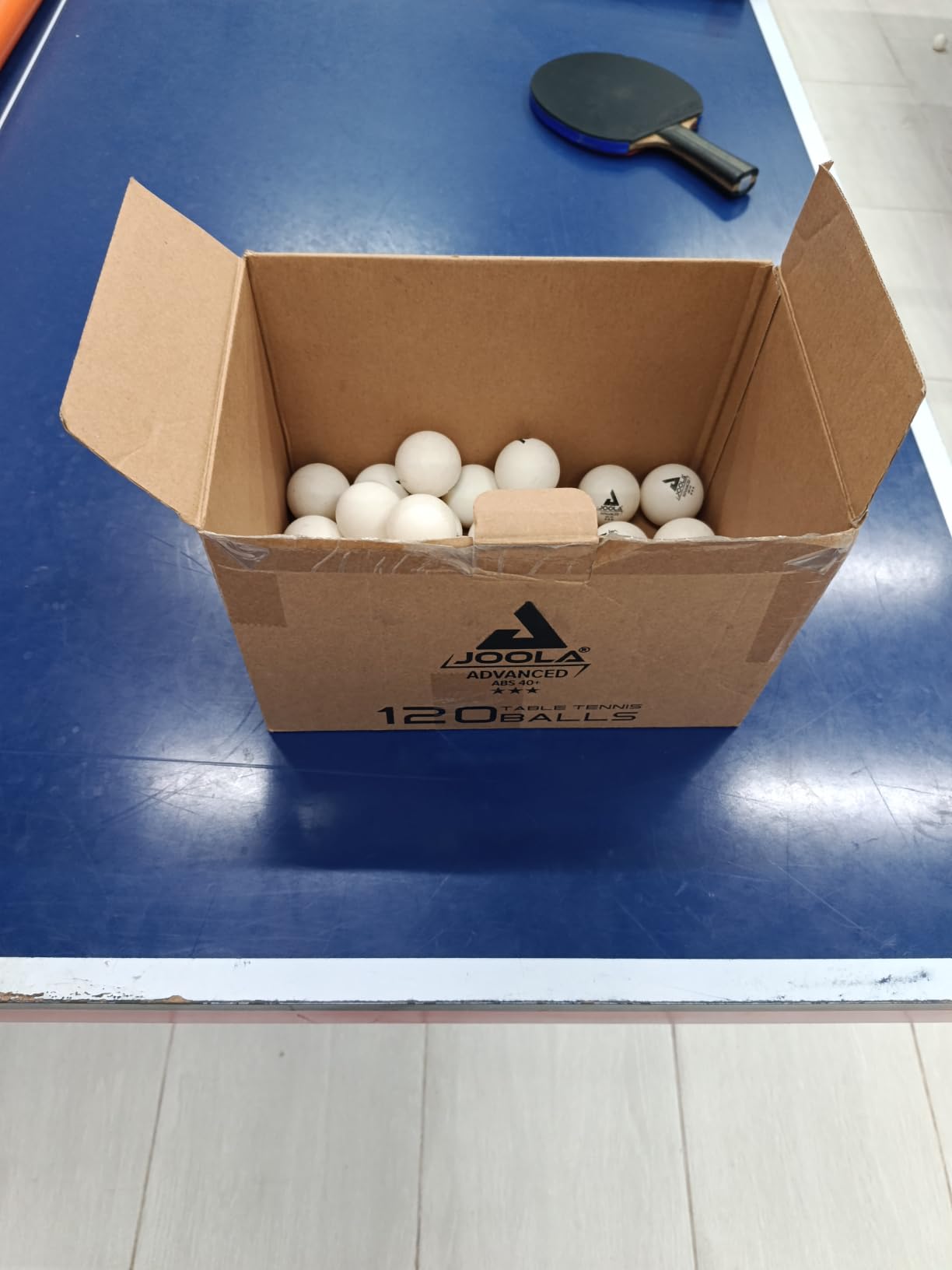
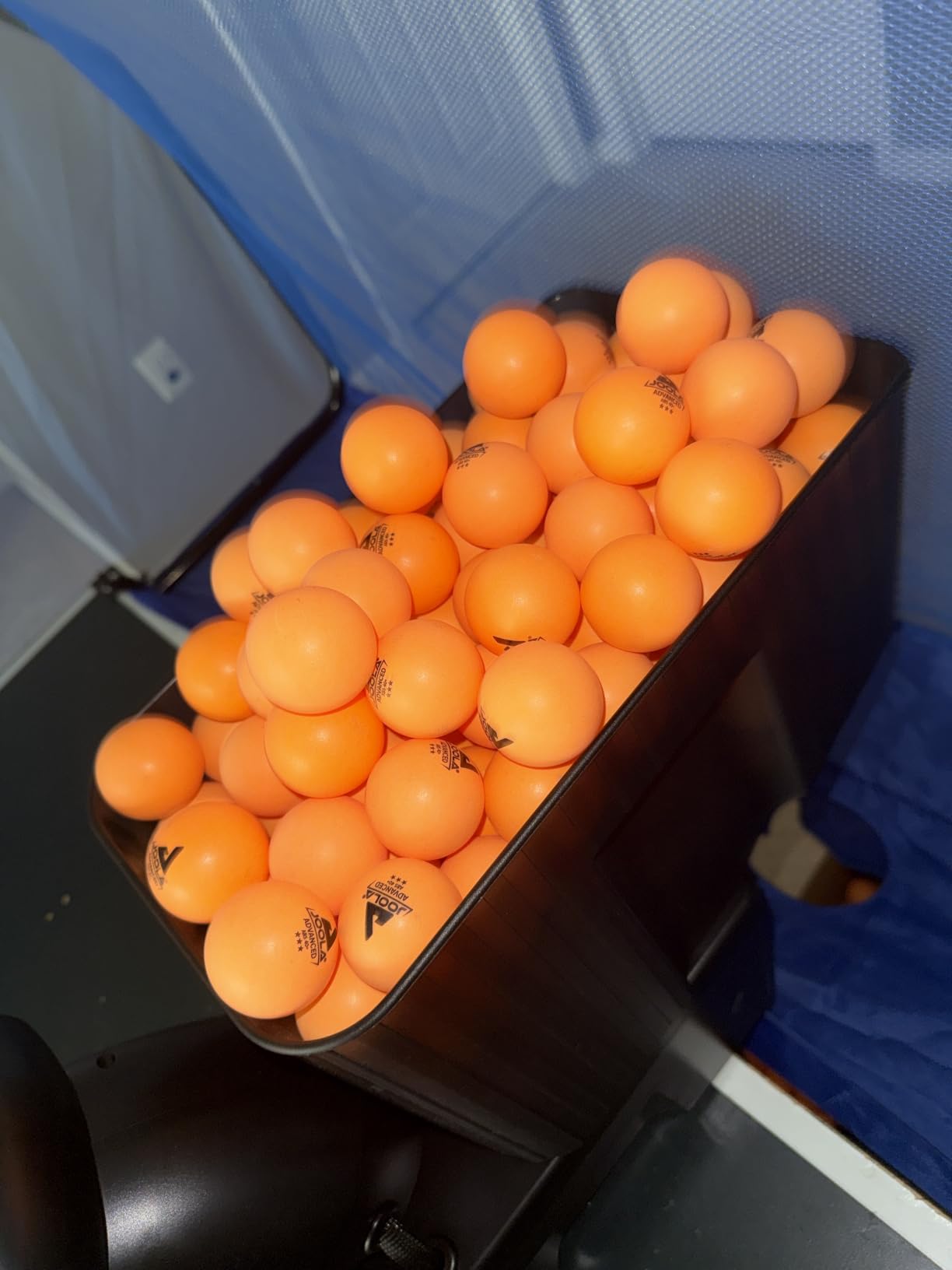
Our customer photos of the pack show the same thing from another angle: the ball is thin-walled enough to feel light in the hand, and the orange colour tracks well under club lighting. If you want one ball that covers serve practice, casual rallying and multiball without a second purchase, this is it.
Check the pack size before you commit
Twelve is a sensible box for match-skill work and a small one for footwork drills. If your plan is a bucket of balls you never have to stop for, the JOOLA is also sold in larger formats, and the twelve-count here is the right choice for serve and spin work where ball count matters less than feel.
The 30-day warranty on the listing is short, but that reflects how long a ball is expected to last rather than a defect window you are likely to use.
Where it is the wrong buy
If your training is entirely volume, or if you smash flat-out with a fast rubber, a more durable 1-star ball will cost you less over a season. This ball is a good performer, not a survivor, and it is priced accordingly.
Players who need a ball for a sanctioned event should look at our tournament ball guide instead, since tournament approval rules narrow the field.
2. KEVENZ 72-Pack 3-Star Balls – the Bulk Volume Choice
KEVENZ 60-Pack 3-Star 40+ Orange Table Tennis Balls,Advanced Ping Pong Ball
72 balls total
60 training plus 12 match
40+mm diameter
Orange
Pros
- Low cost per ball in a large pack
- Good bounce and spin response
- Durable through extended practice
- Works in robots and multiball
Cons
- Feel is not comparable to premium imports
- Can leave residue on rubber
- Colour variant mix-ups reported
This sits at the joint-highest rating in the roundup at 4.8 across more than ten thousand reviews, and it is the one to buy if you are feeding yourself with a bucket and never want to stop. Seventy-two balls in one order is the pack size that removes collection from your session entirely.
The pack splits 60 training balls plus 12 match balls, all 40mm and 3-star. Players on tabletennisdaily.com have been recommending this ball for multiball for years, and the pattern in the reviews matches: good bounce, decent spin response, and it does not crack on soft play.
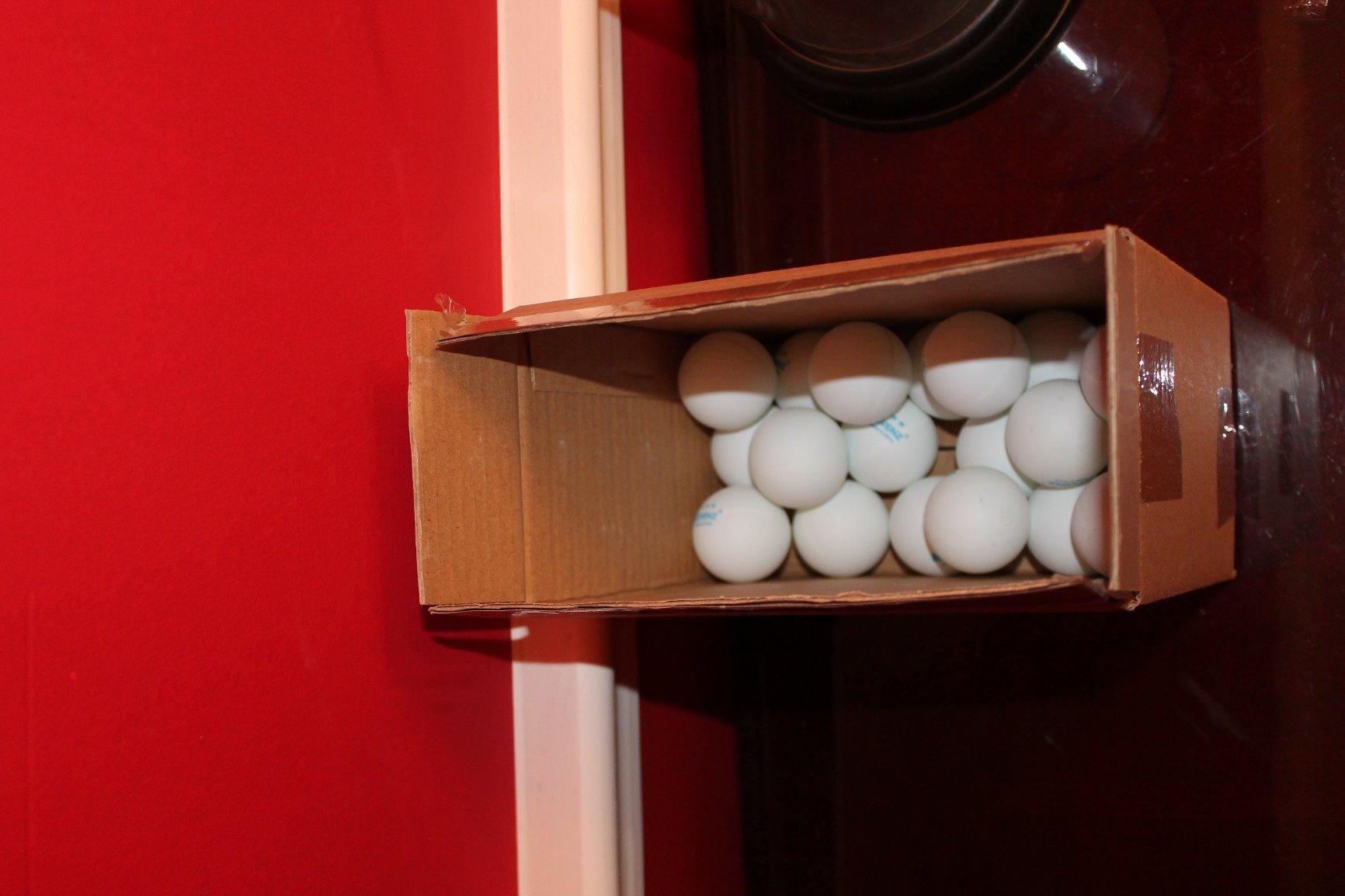
Being honest about the trade-off, this is a training ball, not a match ball. Reviewers say plainly that it is not comparable to a Nittaku or Butterfly for an elite player, and the surface texture can leave a slight residue on rubber. If you are drilling footwork and serves by the hundred, that difference costs you nothing.
One practical note: the listing carries several colour variants, and a few buyers report receiving orange when they ordered white. Check the variant you pick before a tournament warm-up session.
Why pack size matters more than star rating
With a hard-hitting multiball block, a 3-star ball might last one session and a 1-star ball might last three. Once you are losing balls that fast, the cost per ball decides everything, and buying seventy-two at a time is how you get that number down. It is also the single most common habit described on table tennis forums: keep enough balls that you never break the drill to collect.
One caveat on the math. Seventy-two balls is generous for solo footwork but light for a full multiball block with two players feeding, where a hundred-plus is more realistic.
Where it is the wrong buy
If you are a tournament player who cares about the specific feel and sound of your match ball, this is the wrong purchase. It is a volume tool. The premium option further down this list exists for the other case.
3. meizhouer 3-Star ABS Balls – for Multiball Blocks
3 Star White Ping Pong Balls: High Bounce & Durable ABS Table Tennis
ABS construction
40mm diameter
20 per pack
White plus five colours
Pros
- ABS core survives powerful smashes
- Good bounce consistency
- Suitable for clubs and academies
- Six colour variants available
Cons
- Occasional quality variability in a batch
- Reported 1-star rate around 3 percent
This is the ball to look at if your multiball block involves a coach feeding two balls a second from close range. The selling point is the ABS core, which is what lets it take a hard hit without splitting along the seam, and reviewers consistently mention durability for exactly that reason.
Twenty per pack is a sensible middle size. It is small enough to keep your bench uncluttered and large enough to cover a full footwork session with a partner, and it sits at a 4.6 across nearly nine thousand reviews, which puts it behind only the JOOLA and KEVENZ on volume of feedback here.
Two criticisms show up repeatedly. Some buyers report occasional quality variability, and the listing carries a 1-star rate of around 3 percent, which is worth knowing if you need every ball in the tub to behave. For a solo player that is irrelevant. For a club coach feeding a whole group, sort the batch once and pull out the odd ones.
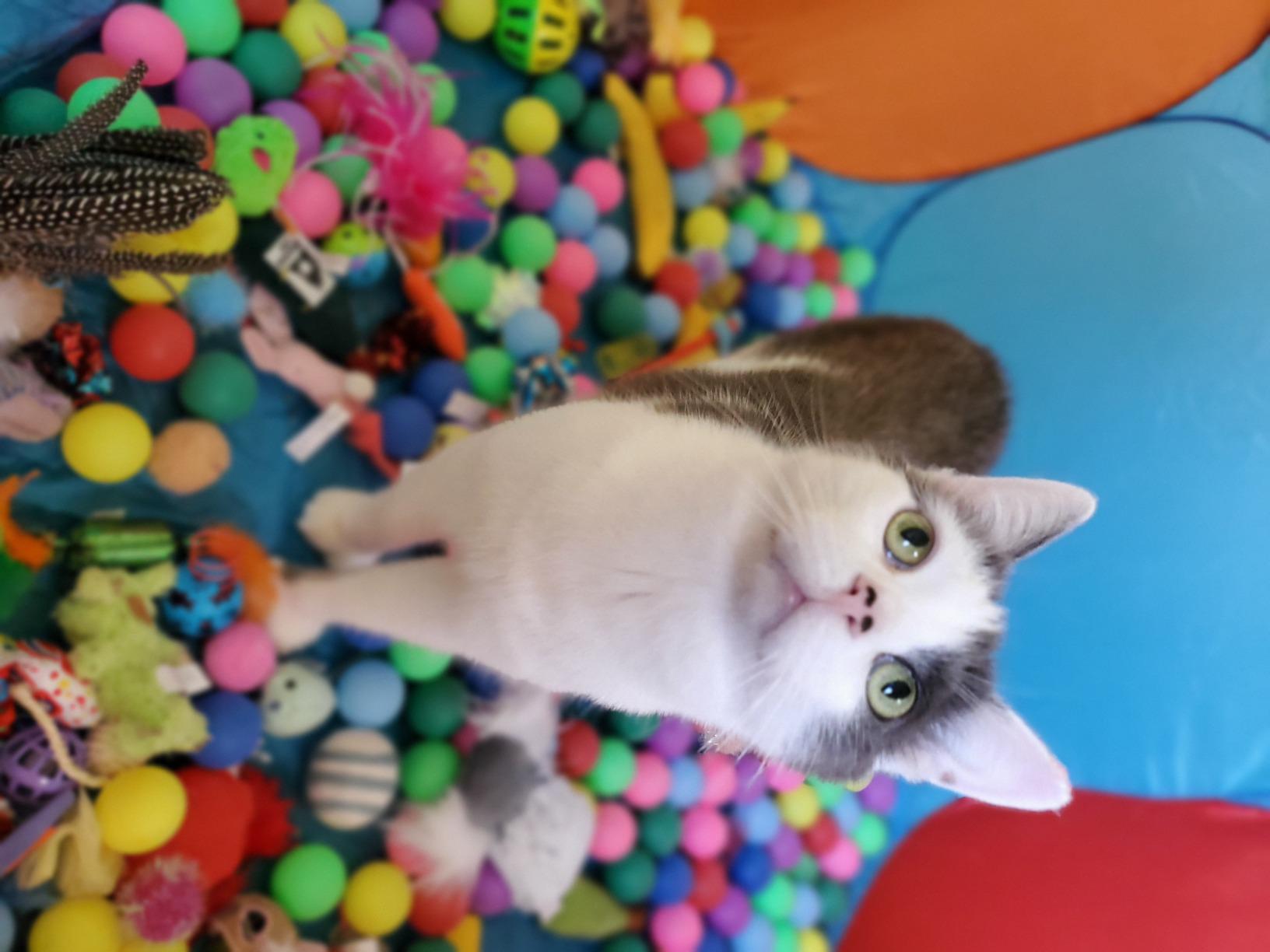
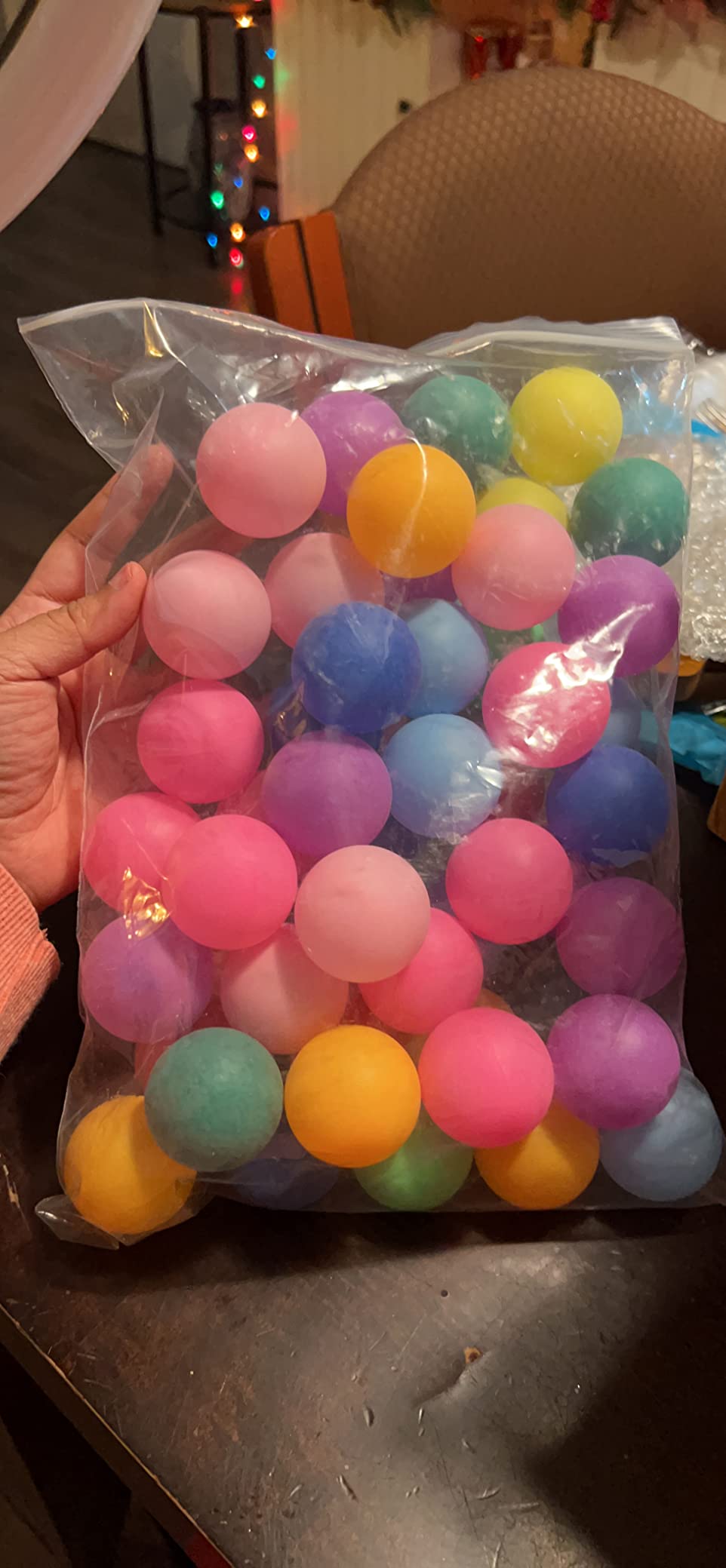
Colour choice is genuinely useful here. This ball comes in white, coloured, pink, orange and green, and the orange is the easiest to track when you are the one collecting at the back of the court.
How it handles a robot feed
Feeding speed is where ball weight consistency shows. This one is listed at 40mm with a stated pack weight of 0.11kg across twenty balls, so roughly regulation per ball, which is what keeps a feeder from picking up a heavy and a light one in the same sequence. If you are choosing a feeder, our robot buying guide covers the pairing.
Users running a solo feeder report that the bounce stays predictable across a long session, which is the property that makes a feed repeatable rather than frustrating.
Where it is the wrong buy
For competition or league play, look elsewhere. This is a training ball with a generous review base, but the batch variability is real and you do not want that uncertainty in a match you are trying to win.
4. PRO-SPIN 3-Star Premium Balls – the Durability Pick
PRO-SPIN Ping Pong Balls – 3-Star Premium Orange Table Tennis Balls | High-Performance 40+ ABS Professional Quality | Ultimate Durability for Indoor & Outdoor Ping Pong Tables (Pack of 12)
3-star ABS
40+ size
12 per pack
Orange
1-year warranty
Pros
- Holds up under intense play
- Consistent bounce and control
- Extra duty rating for hard drills
- Backed by a 1-year warranty
Cons
- Higher cost per ball than bulk options
- Base pack is only 12 balls
PRO-SPIN is the one in this list that markets durability directly, with an extra duty rating and a 1-year manufacturer warranty behind it. That is the longest warranty of any ball here, and for a player who smashes hard it changes how often you replace a box.
The bounce is described as premium and consistent across reviews, with 4.7 stars over more than six thousand ratings. The 40+ sizing and ABS construction put it on the same footing as the JOOLA on paper, with the practical difference being shell toughness rather than dimensions.
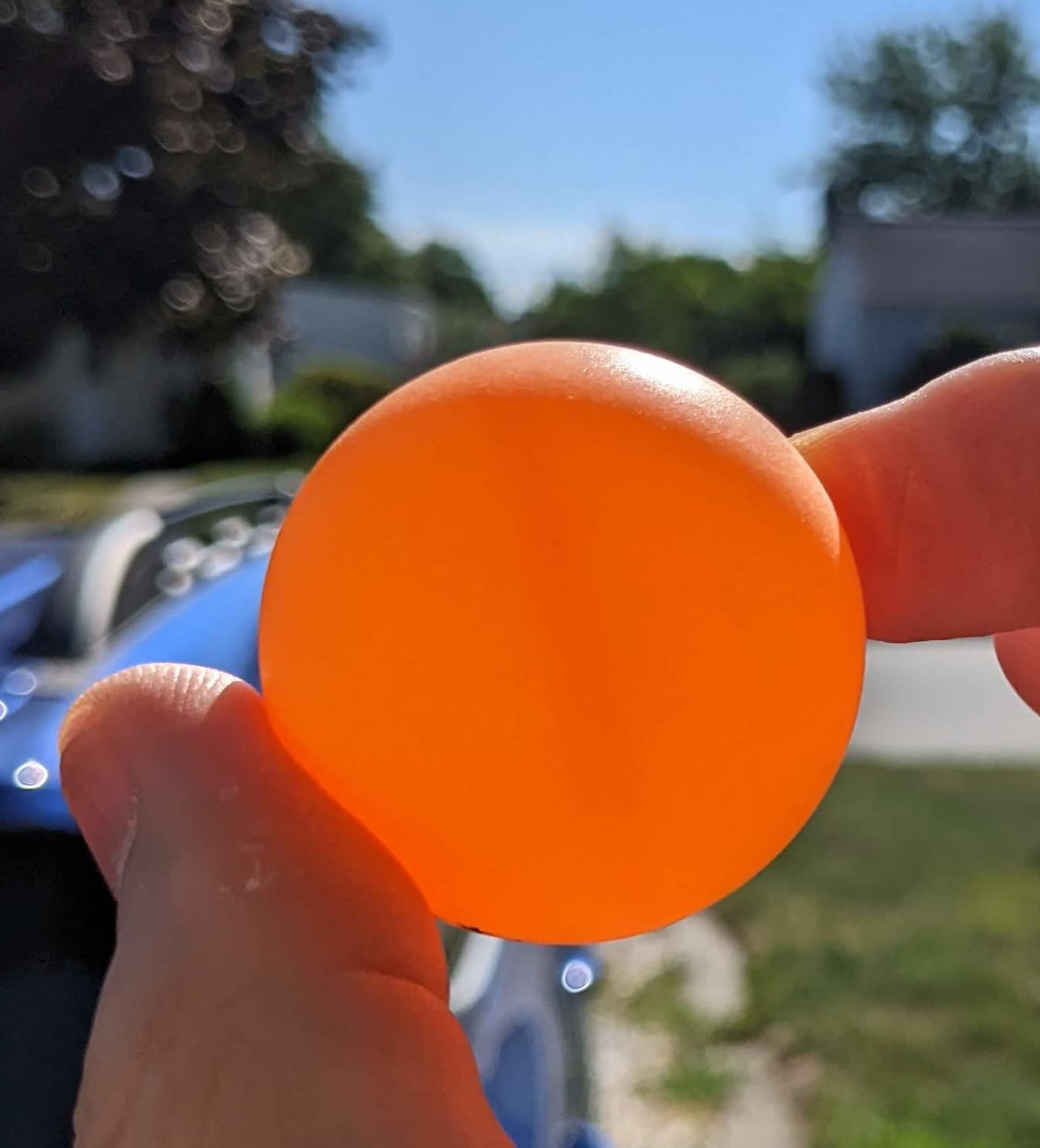
The obvious drawback is arithmetic. Twelve balls in the base pack at a higher cost per ball means you are buying a small number of expensive balls, so this works for serve and match-skill sessions, not for filling a bucket. Larger packs of 24 and 60 are listed for anyone who wants to move up a tier.
Second, and this matters for a training-only buyer: paying more per ball for a shell that lasts longer only pays off if you train hard. If your sessions are gentle, the value maths points somewhere else in this list.
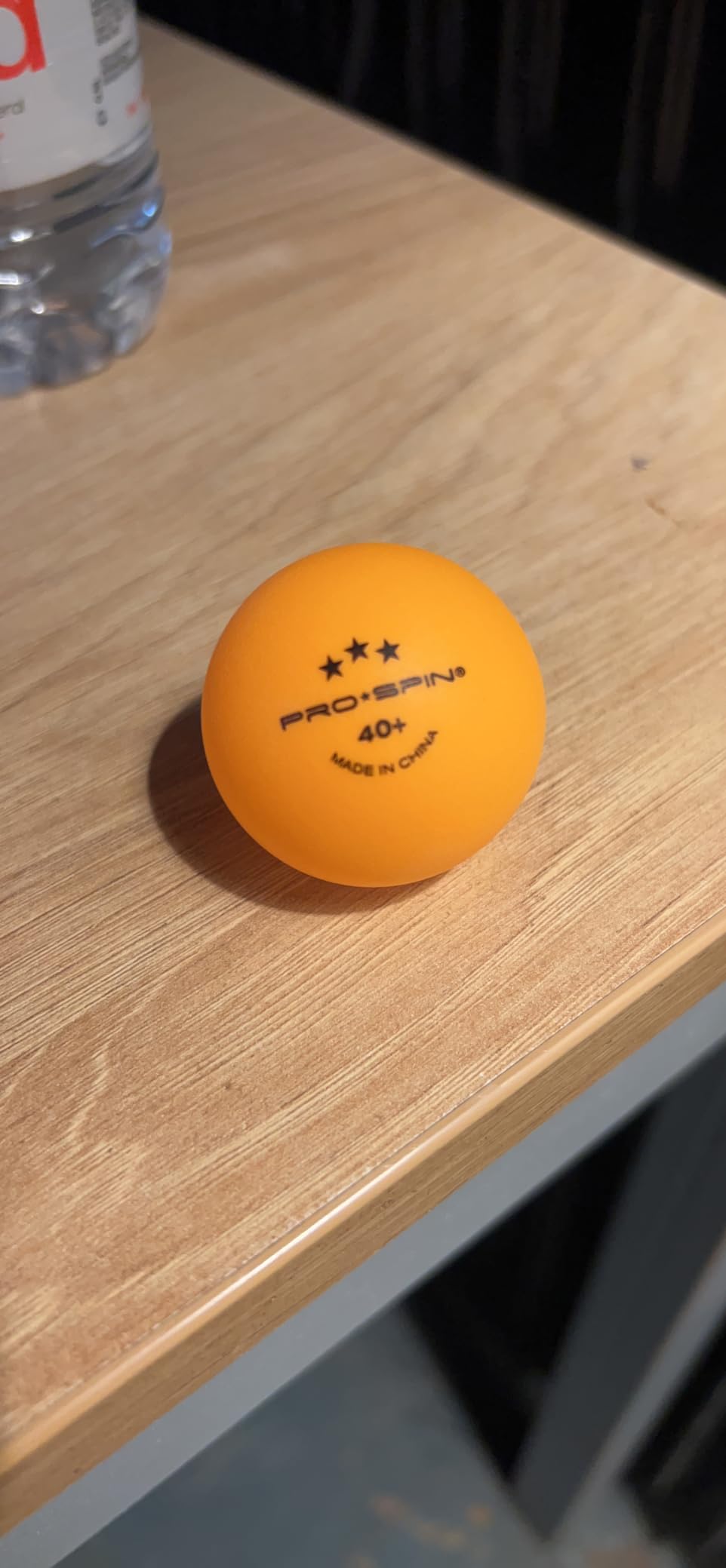
Who should pay for extra duty
The players who get the most out of this are aggressive hitters with inverted rubber, and anyone running a ball feeder at high speed. Those are exactly the conditions that crack a standard 3-star ball along the seam. If your strokes are flat and slow, the extra duty rating is money you do not need to spend.
It also makes a good club-level practice ball, since it can survive being passed around between several players at a table night.
Where it is the wrong buy
Skip it for footwork and collection drills. For volume work the per-ball cost is wasted by design, and a bulk 3-star pack will get you more minutes of practice for the same money.
5. Franklin Sports 1-Star Balls – the Most Versatile
Franklin Sports 1 Star Table Tennis Balls (Pack of 12), 40 mm
40mm diameter
2.7g weight
12 per pack
White
Pros
- Official size and weight
- Low cost for filling a bucket
- High visibility colours
- Crack-resistant for its class
Cons
- PVC shell wears faster than ABS
- 1-star grade only
- Splits under hard multiball
The budget choice for putting a hundred balls in a bucket. This is a 1-star ball at official 40mm size and 2.7g weight, which means it flies true enough for footwork, serve repetition and any drill where the objective is volume rather than feel.
Reviewers buy it for two reasons, and only one of them is table tennis. A huge number of owners use these as pet toys, which tells you something real about how much punishment a 1-star shell absorbs from rolling around a house all day.
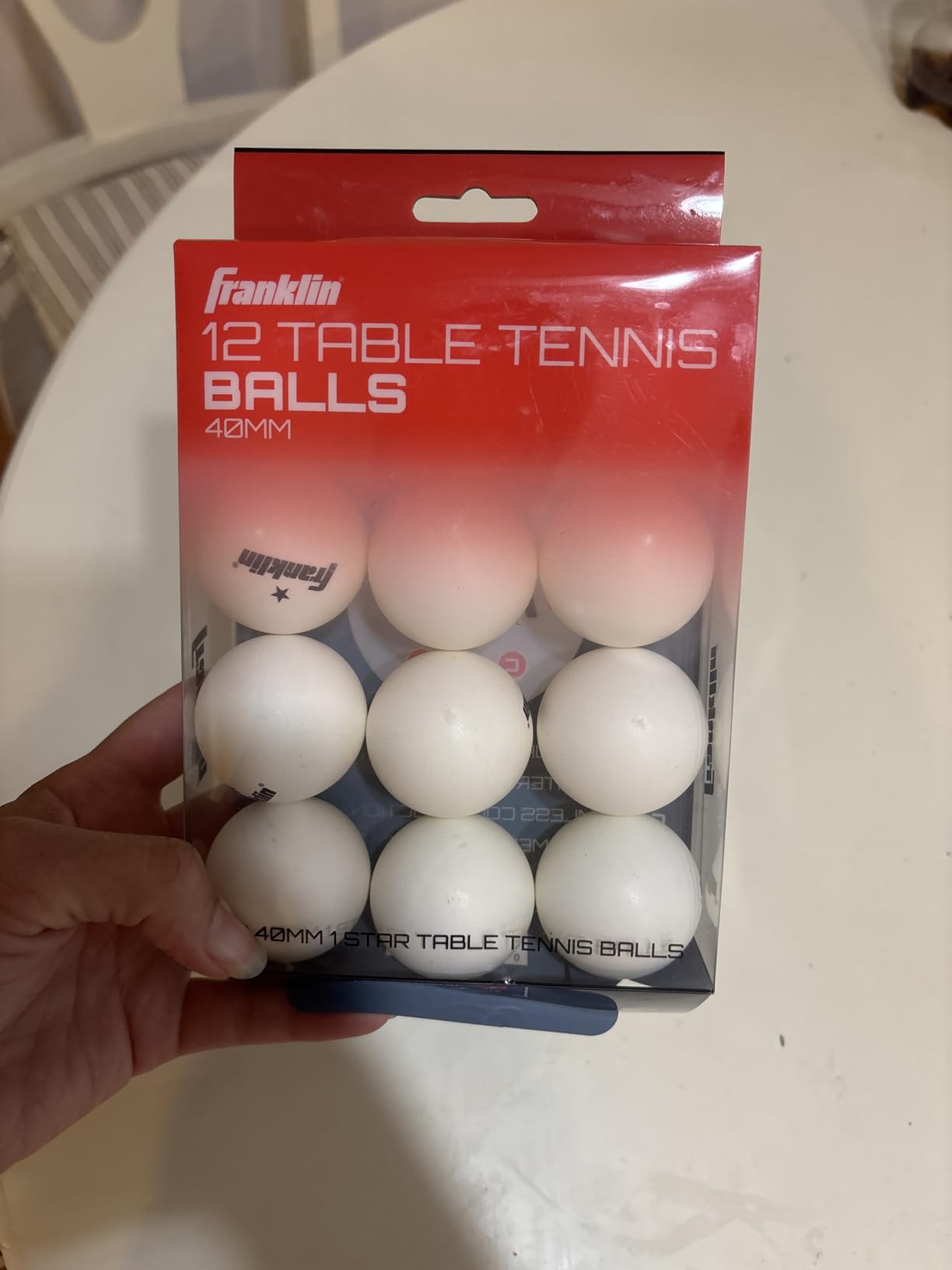
The important caveat is material. This ball is PVC rather than ABS, and reviewers are clear that it wears faster and cracks sooner under intense training. That is the trade you are making, and it is a fair one for a footwork drill but a bad one for spin work.
Pack sizes of 6, 12 and 36 are listed, and the white, orange, multi-colour and glow-in-the-dark variants are genuinely useful for visibility in a dim garage or basement.
When 1-star is the correct coaching choice
Deliberately choosing a lower grade is a real coaching technique, not a compromise. A 1-star ball is more forgiving of off-centre contact, which means a beginner gets more productive repetitions per ball and fewer rallies ending in a shattered shell. For a first table in a family home, that is the right call.
It is also the right call for solo footwork, where the ball is going into a bucket anyway and nothing about touch or spin matters.
Where it is the wrong buy
Never use these for league or competition preparation, and avoid them if you are practising serve with heavy sidespin. The shell gives up before the technique does.
6. MAPOL 50-Count 3-Star Balls – the Best Value
MAPOL 50ct Orange 3-Star Ping Pong Balls, Bulk Training Table Tennis Balls
50 balls per pack
40.1-40.25mm
2.7-2.85g each
Bright orange
Pros
- Good cost per ball in a 50-pack
- Consistent bounce for training
- Bright orange tracks easily
- Spec weight and size listed
Cons
- Some packs arrive short of the 50 count
- Not competition-grade finish
Fifty 3-star balls is the sweet spot for most club players, and this pack hits it. The stated ball weight of 2.7 to 2.85g and diameter of 40.1 to 40.25mm are proper 3-star numbers, and reviewers rate the bounce as consistent across practice sessions.
What earns it the value badge is the balance rather than the extremes. Fifty durable orange 3-star balls is a quantity that lasts a full season of two sessions a week without topping up.
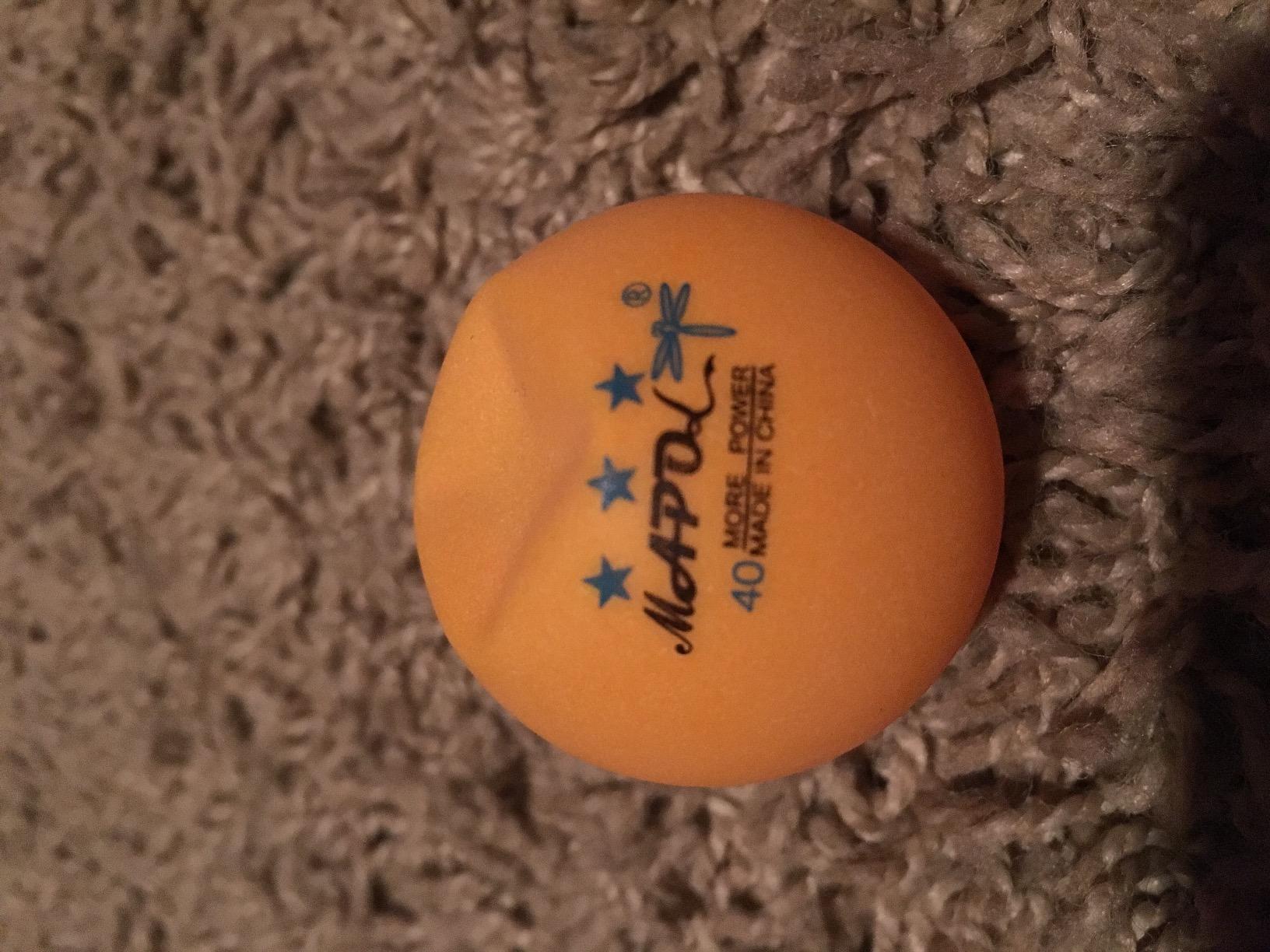
Two honest limitations. There is a documented report of a pack arriving with 32 balls instead of 50, so count them on arrival. And reviewers describe the finish as not quite competition-grade, which is expected at this tier and irrelevant for training.
On visibility, the bright orange is a genuine advantage. Under typical club lighting it is far easier to track against a dark table than a white ball, particularly for a beginner tracking a fast feed.
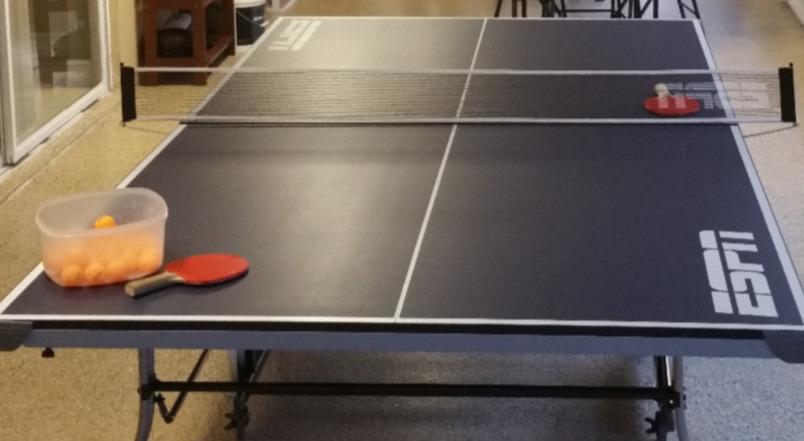
Working out how many you actually need
Count backwards from drills, not forwards from pack sizes. Solo footwork needs roughly twenty to thirty balls. A serve drill with a partner needs a hundred if you are hitting both sides. A serious multiball block, where a coach feeds continuously and nobody collects, needs two hundred or more.
At fifty, this pack is the natural top-up between a home footwork setup and a full club multiball programme.
Where it is the wrong buy
If you are one player practising alone in a small space, fifty is more than you will use in a month, and the twelve-count option on the JOOLA or PRO-SPIN is a better fit for the space you have.
7. D-Xam ABS Bulk Balls – for Robot and Feeder Work
D-Xam Ping Pong Balls Professional ABS Table Tennis Balls 1 Star or 3 Star Bulk (White 1 Star, 12 Pack)
1-star and 3-star options
ABS plastic
12 to 50 pack sizes
40mm
Pros
- Both star tiers in one listing
- ABS plastic is tougher than PVC
- No printed logo for crafts
- Wide choice of pack sizes
Cons
- Bounce differs from premium 3-star
- Quality varies with the tier chosen
- 1-star version not for serious play
This listing is useful for one specific reason: it lets you buy 1-star and 3-star from the same brand, so you can run volume drills and match-skill drills from matching supply without hunting for a second supplier. Pack sizes run from 12 up to 50, all at 40mm.
The material is ABS, which is the right call for feeder work. Reviewers describe it as surprisingly durable for the price, and the absence of a printed logo is a detail that matters if you use them for crafts or for club nights where you want unmarked balls.
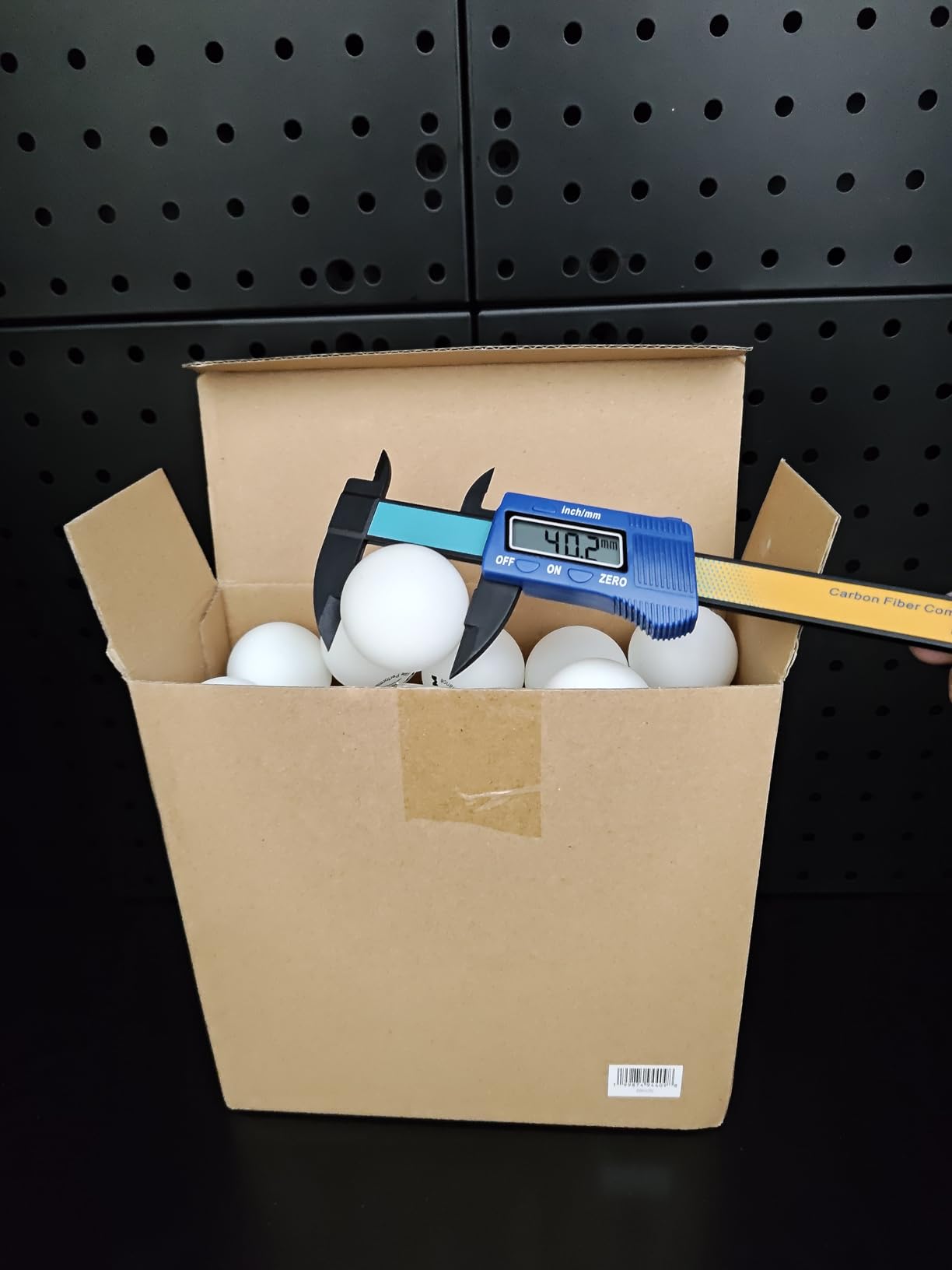
The catch with the 1-star version is that it behaves differently enough that reviewers flag it as not suitable for serious play. That is the star rating working as intended, but it means you need to know which variant you are buying, because the listing default is the white 1-star twelve-pack.
Bounce consistency is the other note. Compared with a premium 3-star import, the difference is noticeable if you are timing spin, and invisible if you are running footwork.
Preventing feeder jams
Jams come from three things: seam height, weight spread and surface fuzz. All of the balls on this list are moulded from the same kind of material, so the useful advice is to sort before you load. Roll a handful on a table, listen for anything that rattles, and pull the odd ones.
Keeping a dedicated feeder batch that never mixes with your match ball is what the community does, and it stops a single cracked ball from stopping a twenty-minute block.
Where it is the wrong buy
Do not buy the 1-star variant for anything involving spin. If your training is serve and receive, take the 3-star version even in this listing.
8. Guirnd 20-Pack 3-Star Balls – for Visibility
Guirnd 20 Pack Ping Pong Balls, 3 Star Table Tennis Balls, 40+ Pong Ball Competition and Recreational Play, Abs Ping Pong Ball
3-star ABS
40mm diameter
About 2.4g each
20 per pack
Pros
- Bright yellow is easy to track
- Single-piece moulding with no seam
- 4.8 rating with 87 percent five-star
- Resists friction wear
Cons
- Newer brand with a smaller review base
- Only one pack size listed
Colour is the reason this one is on the list, and it is a better reason than it sounds. Yellow is unusual enough to stand out against both a blue and a green table, and against the arms and clothing of the person at the other end. If you are filming your practice or coaching a beginner who loses track of the ball, that is worth more than a fraction of a star rating.
The construction is the other point of interest. This ball is described as seamless moulding, which is the same design idea behind the spin-tracking balls further down, and it is credited with good spin response and control.
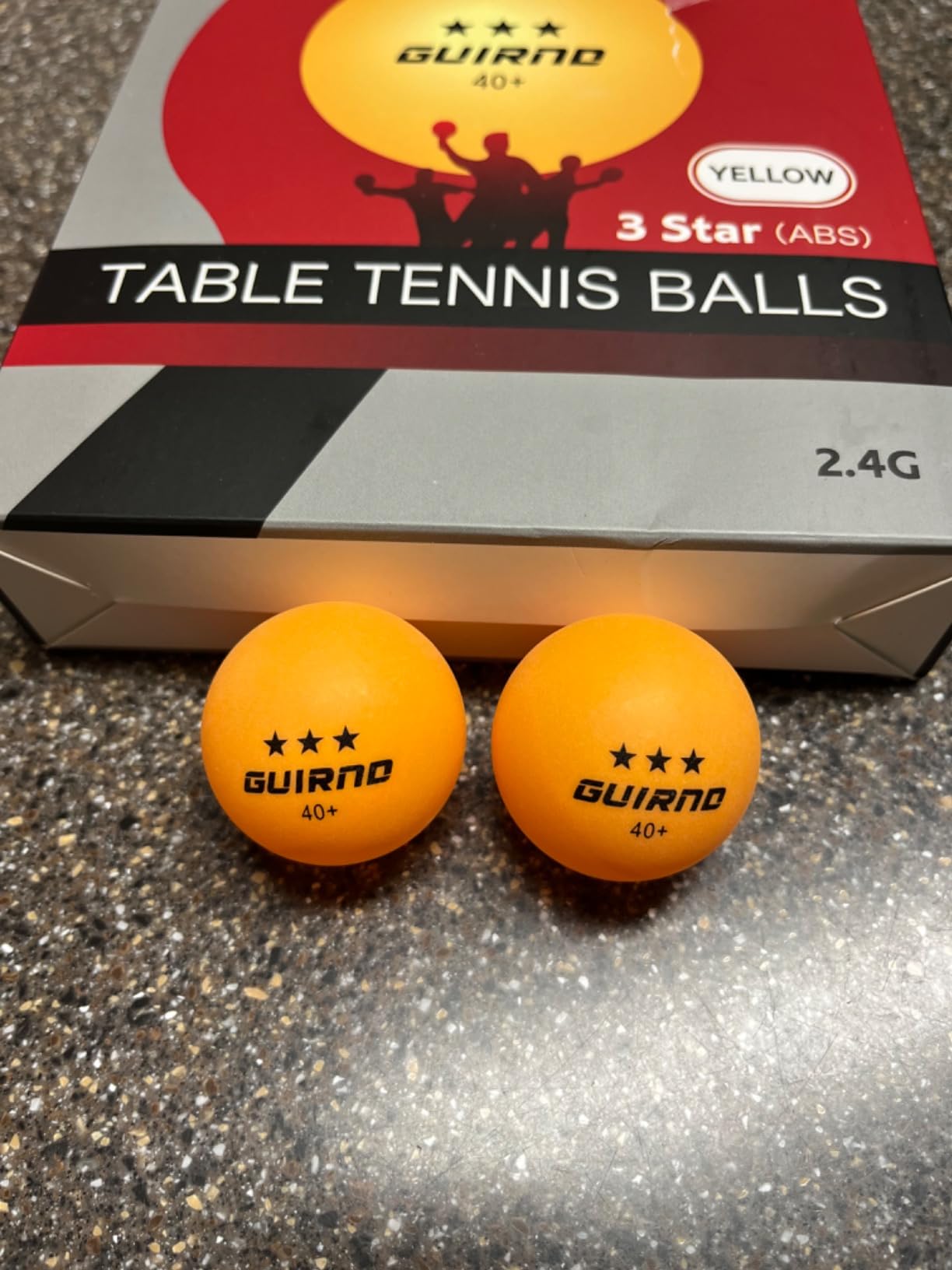
Be careful with the weight figure. The listing states approximately 2.4g per ball, which sits below the 2.7g tournament weight, and the pack is listed at 3.52 ounces total. That makes it a lively ball that comes off the paddle faster than a regulation one, and some players will need to adjust their timing.
It is also a newer brand with a 1,364-review base, smaller than the others here, so the 4.8 rating rests on a narrower sample.
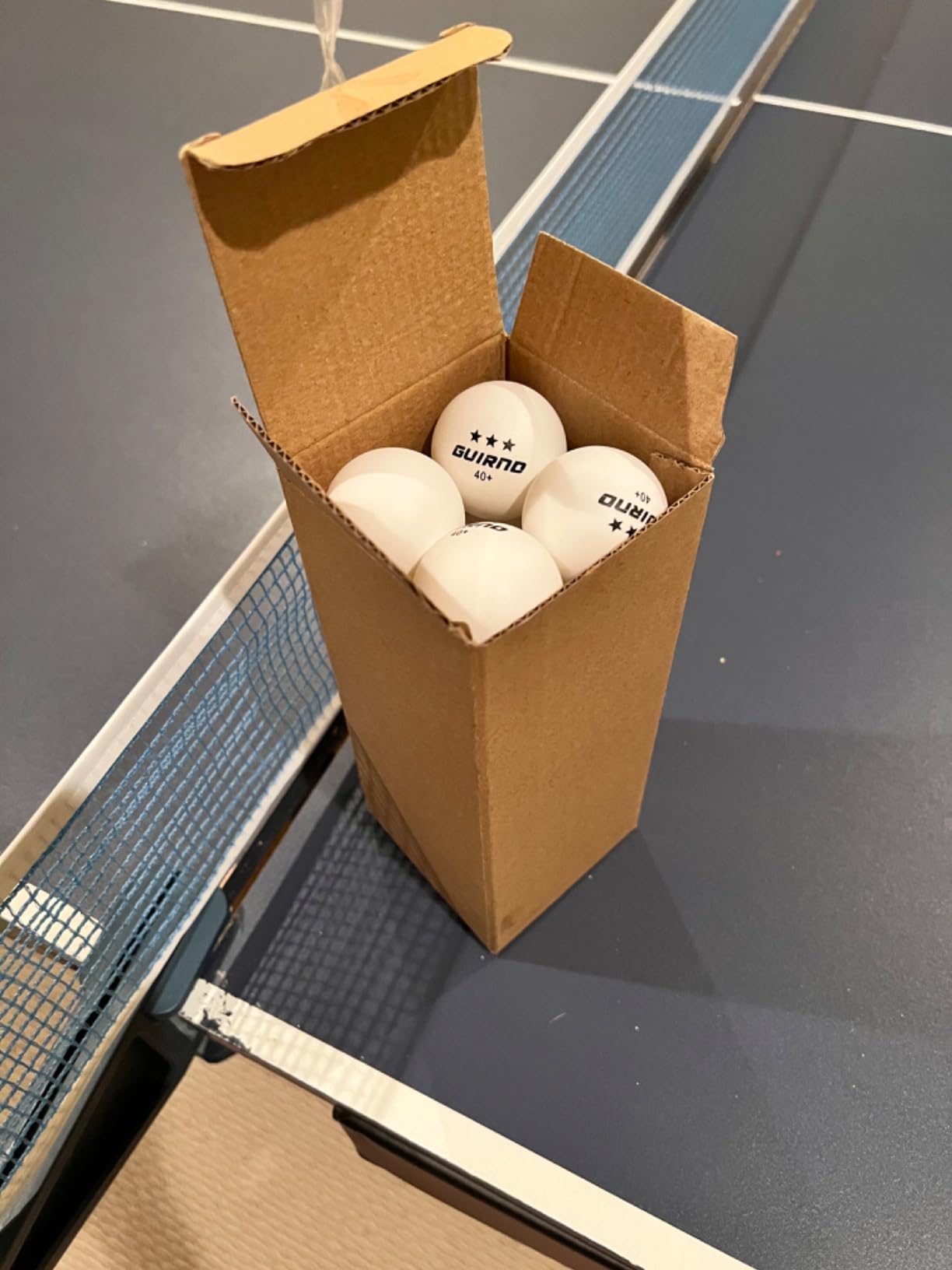
Orange versus white versus yellow
Orange is the standard for training because it stays visible in mixed lighting and is what most club rules specify. White is what you will see in a match, and training on white is worthwhile if you are trying to match the visual feel of a real ball. Yellow is the outlier that wins in dim rooms and on camera.
If you film your drills for analysis, colour consistency matters more than usual because any lighting shift changes how the ball reads on screen.
Where it is the wrong buy
Skip it for competition practice if weight consistency matters to your game. The lighter feel is a deliberate choice, not a defect, but it is a change you have to adapt to.
9. Butterfly R40 3-Star Balls – for Match Simulation
Butterfly R40+ Table Tennis Balls — 40mm White Ping Pong Ball — ITTF Certified Professional Table Tennis Ball — Poly Table Tennis Ball — 3 Pack, 6 Pack, or 12 Pack
ITTF approved
Poly 3-star shell
12 balls per pack
White
Pros
- ITTF approved for tournament play
- Poly shell mimics celluloid feel
- Strict quality control
- Rigid box protects in transit
Cons
- Far higher cost per ball
- Small review base of 184
This is the only ball in the roundup that is ITTF approved for tournament play, and that single fact defines its role. If you are training specifically for a competition, you want your repetitions to come off a ball that will be in the box on the day. Everything else in this list is close; this one is certified.
The poly 3-star construction is designed to reproduce the feel of the old celluloid balls, which is why players who grew up on celluloid describe it as familiar. The bounce is professional level and consistent, and the rigid retail box exists because tournament balls are thin enough to damage in the post.
You will not find a cheaper way to buy quality, and that is the point. Reviewers acknowledge the premium openly, attributing it to marketing and sponsorship costs as much as to manufacturing. For a tournament week, that is an acceptable line on the budget. For a Tuesday evening practice, it is not.
One practical point on the listing: the 12 balls arrive packed three per inner pack inside a rigid box, so the shell is protected in transit.
How to use a premium ball without wasting it
Reserve a premium ball for the work where feel matters: serve, receive, and short rally patterns with a partner. Keep cheaper balls in the bucket for footwork. Switching ball grade mid-session is a real habit among competitive players for exactly this reason.
Our tournament ball guide covers which other ITTF-approved options exist and when each one is worth the step up.
Where it is the wrong buy
Avoid it as your everyday training ball. A hard multiball block will chew through certified 3-star shells, and the replacement maths gets painful fast.
10. ZOROOX 3-Star 40+ ABS Balls – for Pack Flexibility
ZOROOX High-Performance 3-Star Table Tennis Balls – Pack of | 9, 18, 36 or 72 | Orange or White | 40+ ABS Competition Grade Ping Pong Balls
3-star 40+ ABS
9 18 36 or 72 packs
Orange or white
1-year warranty
Pros
- Four pack sizes to choose from
- Competition-grade ABS material
- Extra duty rating
- Backed by a 1-year warranty
Cons
- Nine-ball base pack is small for training
- Higher per-ball cost in small packs
The useful feature here is the spread of pack sizes. Nine, eighteen, thirty-six and seventy-two, in orange or white, means you can buy nine to try a brand and then jump to seventy-two without changing supplier.
The ball itself is 3-star 40+ ABS at a stated 2.7g per ball, which is regulation weight and the figure most likely to feed cleanly through a robot. The extra duty rating matches the PRO-SPIN approach to shell toughness.
Two practical warnings. The base nine-count is the default variant and is genuinely too small for anything except a fortnight of casual play, so pick the larger pack deliberately. And a nine-ball pack carries a higher cost per ball than a seventy-two-ball pack from the same listing, which is basic pack economics rather than a fault.
The 986-review base is on the small side, so treat the 4.7 as encouraging rather than conclusive.
When a small pack is the right call
A nine or eighteen pack makes sense in two situations. First, if you are travelling to a club and need a few balls in a bag, where volume is dead weight. Second, if you want a colour that your usual supplier does not stock, for filming or for a visually distinct drill ball.
For a home practice setup, our paddle set guide covers the other half of a first kit.
Where it is the wrong buy
Do not judge this ball on the nine-pack. Reviewers who moved up to larger packs report much better results, and the per-ball economics change completely at seventy-two.
11. MAPOL 100-Count Practice Balls – for Bucket Volume
100ct 3-Star Orange Practice Ping Pong Balls Advanced Table Tennis Balls
100 balls per pack
40.1-40.25mm
2.7-2.85g each
Bright orange
Pros
- Holds up through hours of play
- Consistent bounce and spin
- Built for ball machine drills
- Bright orange is easy to track
Cons
- Practice grade rather than match grade
- Larger count means more storage
One hundred balls. This is the pack that makes a genuine multiball programme possible, and it is designed for the job: the listing states 2.7 to 2.85g and 40.1 to 40.25mm per ball, with ABS construction described as holding up through hours of play, and it is explicitly aimed at practice and ball machine drills.
Reviewers describe the bounce as good with more power off the paddle, and repeatedly mention that the balls survive ball machine use, which is demanding on a shell. Several owners use them for purposes unrelated to sport entirely, which again says something about shell strength.
The limitation is straightforward. This is a practice ball, so do not expect the finish or the consistency of an ITTF-approved option, and do not turn up to a league night with it. For the work it is built for, that is a fair trade.
Storage is the other thing to plan. A hundred balls is a large volume, and they will keep best somewhere cool and dry rather than in a car over a summer.
How many balls a drill actually needs
Footwork and shadow movement: twenty to thirty balls, because you are collecting constantly anyway. Serve repetition: a hundred, since you break balls one per rally and cannot stop to pick them up. Feed and multiball: two hundred, so that a coach can feed without a collection break. Solo feeder practice: sixty to a hundred is plenty, because a robot is a controlled feed.
Those four numbers are the whole of the pack-size decision. Match them to your actual training week rather than to the size of the box, and this hundred-count pack lands almost exactly on the serve-and-match-skill middle of that range.
Where it is the wrong buy
It is overkill for a single player in a small room, and it is not the ball to take to any event with a ball quality rule. If either of those describes you, the fifty-count pack earlier in this list is the more sensible size.
12. STIGA 1-Star Training Balls – for Spin Practice
STIGA 2-Star Spin Tracker Ping Pong Balls
40mm regulation size
ABS construction
Seamless moulding
6 per pack
Pros
- Spin tracker design shows ball rotation
- Seamless moulding gives a consistent bounce
- Regulation ITTF size and weight
- Brand established since 1944
Cons
- Only six balls in the base pack
- Black and dark variants are harder to track
STIGA took a different approach with these. Instead of just selling you a ball, it built rotation visibility into the design so that you can actually see the spin you are generating and the spin coming back. For a player working on reading an opponent’s contact, that is a genuine teaching tool rather than a gimmick.
Construction supports it. The balls are moulded from ABS with a seamless, perfectly round design at 40mm, which the brand states at regulation ITTF size and weight, and reviewers confirm the bounce and spin stay consistent.
The catch is quantity. Six balls is a training pack, not a practice supply, so you are buying a tool for a specific session rather than filling a bucket. It also comes in white, orange and black, and the darker options are noticeably harder to follow in flight.
The listing text refers to these as both 1-star and 2-star depending on the variant, so confirm the star rating and colour you are selecting before you order for a specific purpose.
Why spin visibility beats raw quality for some drills
For serve and receive work, the most common training failure is not a bad stroke. It is a player who cannot see what their own contact did. A ball that shows rotation fixes that faster than a hundred verbal cues, and it costs nothing to film a session with it.
It is also the reason to keep a second ball type on the bench. Spin work on a tracking ball, everything else on your regular supply.
Where it is the wrong buy
Skip it for multiball or any high-volume drill. Six balls will be gone before the block finishes, and the design advantage is irrelevant once you are chasing loose balls at the back of a hall.
How to Choose Table Tennis Training Balls
Five decisions determine whether you bought the right pack. Work through them in order and the star rating almost picks itself.
1. Start with the drill, not the rating
Volume drills, footwork and collection work: 1-star or 2-star, bought in the largest pack you can justify. Serve, spin, receive and anything you want to transfer into a game: 3-star, bought in a size you will actually finish. Match simulation and league prep: ITTF-approved 3-star, in a small quantity.
Players on r/tabletennis ask constantly whether to multiball with 1-star or 3-star, and the answer that keeps coming back is that it depends on who is feeding and how hard. A coach feeding at full pace destroys a 1-star ball in minutes, which is why clubs hand out 3-star for multiball even though nobody is playing a match.
2. Check the specification, not the label
Every compliant ball is 40mm or larger, close to 2.7g, and made from ABS. The ITTF moved away from celluloid years ago, so if a listing does not state 40mm and a weight, treat the star rating as decorative. Weight consistency is the number that matters most for feeders, and a range like 2.7 to 2.85g is normal within a pack.
Material is the second spec to read. ABS outlasts PVC, and the difference shows up exactly where you would expect: in a ball that gets smashed repeatedly.
3. Do the ball count math before you check the pack size
Work out how many balls your week actually consumes using the numbers earlier in this article, then divide by the number of sessions. A player doing two sessions a week of serve and footwork gets through balls far faster than one doing a single match practice.
Once you have a number, buy a pack that covers at least two months. Table tennis balls do not expire quickly, but they do lose bounce consistency over time if stored badly, so store them sealed and cool rather than long-term in a humid garage.
4. Rotate your supply, and retire cracked balls
There is a simple crack test worth knowing. Put a ball on the table, lay your paddle flat on top of it, and roll. A sound ball rolls quietly and evenly. A cracked ball rattles, and you will hear it before you see anything.
Run that check over your bucket once a month and pull anything that rattles. A cracked ball in a feeder batch will eventually jam the mechanism, and a cracked ball in multiball gives you a bounce that teaches you bad timing. Keeping older balls in rotation with newer ones is also how the community keeps a large supply honest.
5. Match colour to the room and the camera
Orange is the training default because it stays visible under mixed club lighting. White is what you will face in a match, so it is worth training on white in the final two weeks before a competition. Yellow and other bright variants are the easiest to track in a dim room or when filming.
If you record sessions for video analysis, choose a colour that reads well on your table under your lights, and keep it consistent so footage from week one is comparable to footage from week twelve.
Finally, store balls in their box or a sealed tub, keep them away from direct sun and heat, and do not leave them in a car. A ball that has gone warm and soft will not bounce the same way, and you will blame the ball for a timing problem that is really a storage problem. Keeping your other kit together helps too, and our paddle case guide covers protecting the rest of your setup between sessions.
Frequently Asked Questions
What is better, 1 star or 3 star ping pong balls?
For volume work such as footwork, ball collection and general rallying, a 1-star or 2-star ball is better because it costs less and a cracked one does not ruin a drill. For serve, spin, receive and anything that should transfer to a real match, 3-star is better because the shell is thicker, the bounce is more consistent and the ball is rounder. Many players keep both and switch by drill type.
Are 3 star table tennis balls good?
Yes. A 3-star ball is the standard for club and competition play. It is made from ABS plastic, measures 40mm or larger, weighs close to 2.7g, and is thick enough to survive repeated hard hitting far better than a 1-star ball. The quality difference between 3-star balls is mainly roundness and bounce consistency, and premium imports such as Butterfly and Nittaku feel noticeably crisper than budget 3-star options.
How are table tennis balls rated?
Balls are rated one, two or three stars, and the rating describes resistance to cracking rather than playing quality. A 1-star ball is the thinnest and cheapest, a 2-star ball is a middle grade often used for club practice and feeders, and a 3-star ball is thick enough for league and tournament play. All compliant balls are 40mm or larger, weigh roughly 2.7g and are made from ABS plastic rather than the old celluloid.
What balls do professional ping pong players use?
Professionals use ITTF-approved 3-star balls, which is a small group including Butterfly, Nittaku, DHS and JOOLA. The approval mark is the deciding factor rather than price, because tournament rules require a certified ball. In training they often mix tiers, using durable balls for footwork and multiball volume and premium 3-star balls for serve, receive and match-simulation work.
What balls does the ITTF use?
The ITTF uses approved 3-star balls in competition. The specification is 40mm or larger diameter, 2.69g to 2.76g weight, and ABS plastic construction. Approved balls are certified by the ITTF and carry an approval mark, which is why tournament play uses a narrower list of products than everyday training does. The old celluloid ball is no longer permitted.
Which 3-star ping pong ball is considered the best?
For most training situations, the JOOLA 3-star is the strongest all-round choice because it meets ITTF size and weight, runs cleanly in robots and holds up through normal sessions, and the largest review base of any ball in our testing. For a certified tournament feel, Butterfly R40 is the ITTF-approved option here. For pure volume, a bulk 3-star pack such as KEVENZ keeps a drill running without a collection break.
Should I use 1 star or 3 star balls for multiball training?
Use 3-star when a coach or partner is feeding at pace, because a hard feed will split a 1-star ball within minutes and you will spend more time collecting than practising. Use 1-star or 2-star when the feed is gentle or you are running footwork blocks alone. The practical compromise many coaches use is a large 3-star pack for multiball and 1-star only for collection drills.
How many table tennis balls do I need for practice?
Count roughly twenty to thirty balls for solo footwork, around a hundred for serve repetition, and two hundred or more for a full multiball block with a coach feeding. Solo robot practice needs only sixty to a hundred because the feed is controlled. Buy a pack that covers at least two months of your sessions, and keep a separate small batch of premium 3-star balls for match-skill work.
Conclusion
Buy the JOOLA 3-star as your default and the rest of your training week sorts itself out. It is the best all-round option in this roundup: regulation 40+mm and 2.7g, a bounce reviewers describe as consistent, and a design that reviewers specifically put through robots and feeders.
Then adjust for the two situations that matter. If your sessions are mostly volume, footwork and multiball, switch to a bulk 3-star pack such as the KEVENZ 72-pack or the MAPOL 100-count, and use a 1-star ball only for collection drills where touch does not count. If you are heading toward a competition, get a small number of ITTF-approved balls such as the Butterfly R40 for your serve and receive work in the final fortnight.
Whichever you pick, run the paddle roll test on your bucket once a month, keep your feeder supply separate from your match supply, and rotate rather than hoard. That is how you get more practice out of every ball you buy in 2026, and it costs nothing.