
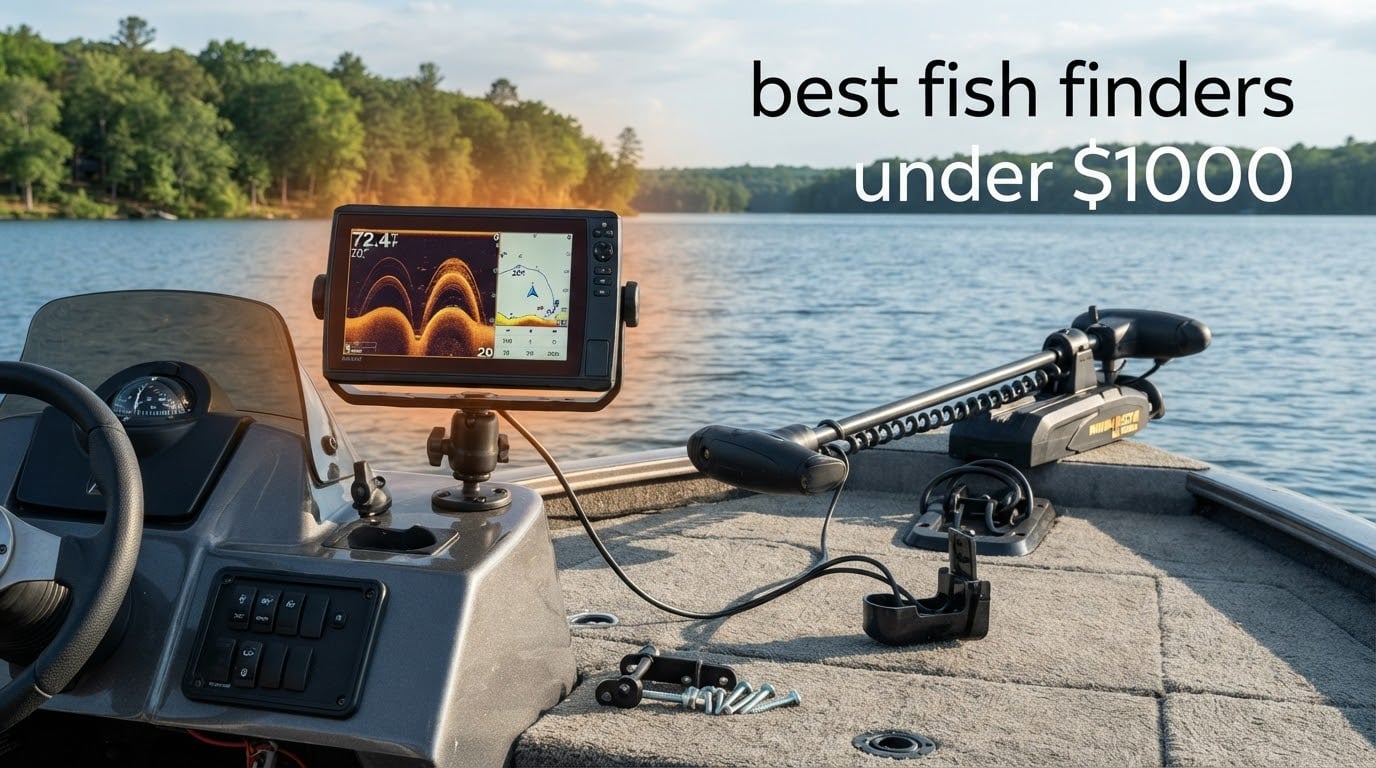
If you have been casting blind for a few seasons, the fix is usually one transducer and one screen. A fish finder turns brush piles, rock ledges and drop-offs into a picture you can navigate by, so you cover water faster and fish the same spot twice. Below is my shortlist of the best fish finders under 1000 dollars, and every one here comes with the transducer and mounts needed to get it on a boat.
The tricky part in this bracket is not the head unit. It is knowing whether the box includes a transducer, whether the sonar type actually fits your water, and what you give up by stopping below one thousand dollars. I read the spec sheets, the owner reviews and the long forum threads, then weighed each unit on sonar capability, mapping, screen legibility and how much of your budget is left for a mount and wiring.
My quick answer: the Garmin STRIKER 4 with transducer is the best fish finder under 1000 dollars for most people, because it pairs CHIRP traditional sonar with ClearVu scanning sonar, adds GPS waypoint mapping, and includes the transducer and both transom and motor mounts in the box. If you want colour and self-made contour maps, step up to the Garmin STRIKER Vivid 4cv. If you want live forward-looking sonar, the Lowrance Eagle Eye 9 is the only unit in this group that does it.
One note on methodology before we start. I did not wet these units, so I am not going to pretend otherwise. My ranking weighs published specifications, the consistency of owner feedback, the number of owners who report a given problem, and how much of a working system you get for the money. Where owners repeatedly complain about something, I say so below rather than repeating the marketing line.
Table of Contents
Top 3 Picks for the Best Fish Finders Under $1000 in October 2026

Garmin STRIKER 4 with Transducer
- CHIRP traditional and ClearVu scanning sonar
- Built-in GPS waypoint map
- Transducer plus transom and motor mounts in the box

Garmin STRIKER Vivid 4cv
- 4-inch colour display with vivid palettes
- CHIRP plus ClearVu scanning sonar
- Built-in Quickdraw Contours mapping

Humminbird PiranhaMAX 4
- Dual Beam sonar for detail and coverage
- Transom-mount transducer included
- Simple tilt and swivel mount
The STRIKER 4 wins the top spot on balance rather than on any single specification. It is the only unit in the group that combines CHIRP, ClearVu scanning sonar and a GPS waypoint map while still shipping with the transducer, the transom mount and the trolling motor mount.
The STRIKER Vivid 4cv carries the highest owner rating of the eight and adds a colour screen with selectable sonar palettes. The PiranhaMAX 4 is the simplest reliable option for a first boat, with dual beam coverage and nothing to configure.
Best Fish Finders Under $1000 in October 2026
The table below lists every unit in this roundup with the sonar, mapping and mounting details that actually decide whether it fits your boat. Scan the transducer column first, because that is where most budget buyers get caught out.
| Product | Specifications | Action |
|---|---|---|
| Garmin STRIKER 4 with Transducer |
|
Check Latest Price |
| Garmin STRIKER Vivid 4cv |
|
Check Latest Price |
| Humminbird PiranhaMAX 4 |
|
Check Latest Price |
 Garmin STRIKER Plus 4cv Garmin STRIKER Plus 4cv |
|
Check Latest Price |
 Lowrance Elite FS 10-inch Lowrance Elite FS 10-inch |
|
Check Latest Price |
 Humminbird HELIX 5 CHIRP GPS G3 Humminbird HELIX 5 CHIRP GPS G3 |
|
Check Latest Price |
 Lowrance Eagle Eye 9 Lowrance Eagle Eye 9 |
|
Check Latest Price |
 Lowrance Eagle 4-inch Lowrance Eagle 4-inch |
|
Check Latest Price |
1. Garmin STRIKER 4 with Transducer: Best Overall Under 1000 Dollars
Garmin 010-01550-00 Striker 4 with Transducer, 3.5″ GPS Fishfinder with Chirp
3.5-inch LCD
CHIRP and ClearVu sonar
1600 ft freshwater depth
GPS waypoint map
Pros
- CHIRP traditional and ClearVu scanning sonar in one unit
- Accurate depth and GPS speed data
- Readable in full sunlight
- Transducer and transom and motor mounts included
- Simple keyed interface with dedicated buttons
Cons
- Thin supplied power wires that may need crimping
- Sonar signal cuts out at higher trolling speeds
- No charting or Quickdraw Contours
This is the unit I keep coming back to for anyone moving up from a handheld depth sounder. The 3.5-inch LCD runs CHIRP traditional sonar for fish arches and target separation, and ClearVu scanning sonar for near-photographic pictures of structure directly below the boat. That combination is the core of what you are buying a fish finder for.
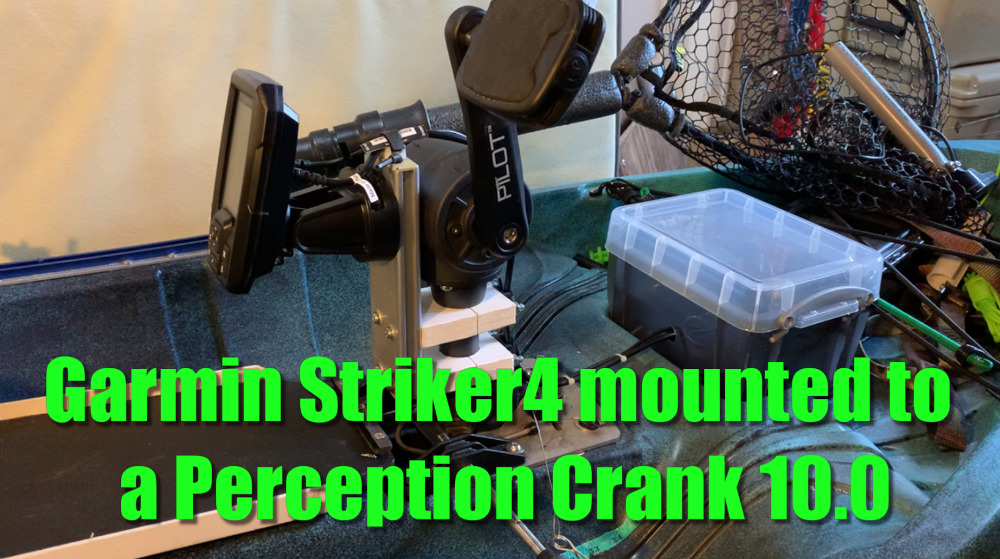
At 8 ounces and 3.6 by 1.6 by 5.9 inches, it disappears on a trolling motor shaft or a kayak console without feeling flimsy. Owners report accurate depth readings, dependable GPS speed data and a screen they can read in direct sun. The keyed buttons also mean you can work it with cold hands or wet gloves, which is where touchscreens lose points.
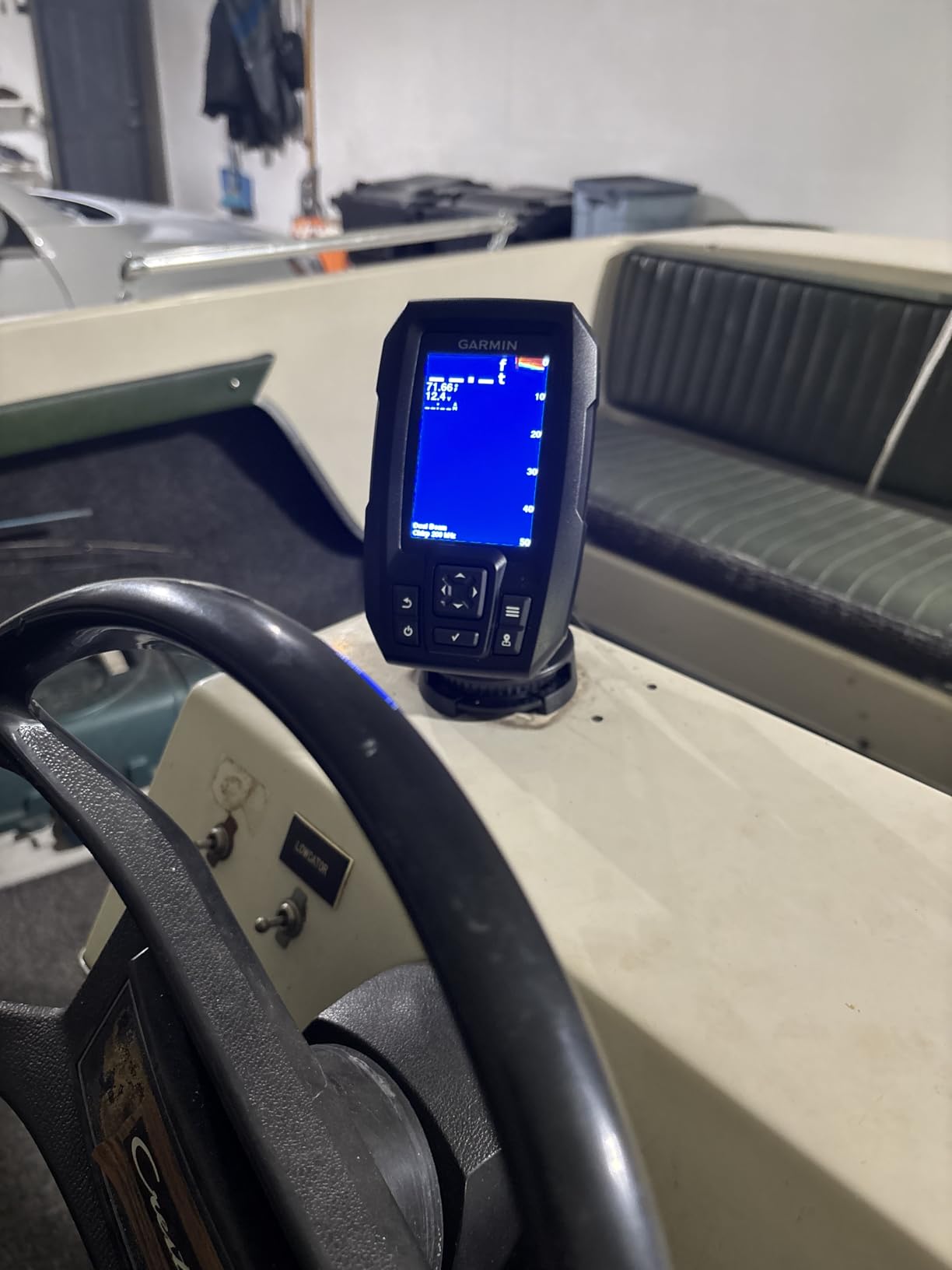
The built-in waypoint map is the feature people underrate. You can mark a brush pile, stump or dock edge and run back to it, which turns a good day into a repeatable spot. Maximum depth is 1600 feet in freshwater and 750 feet in saltwater, and the IPX7 water rating handles rain and spray without worry.
The transducer, transom mount and trolling motor mount all come in the box, along with the power and data cable. There is no separate sonar module to buy, which is exactly why this is the safe first pick.
What it is good for
This suits a first electronics package on a jon boat, a bass boat with a trolling motor, or a kayak angler who wants structure pictures instead of a number. The waypoint map lets you build your own list of productive marks without buying a chart package.
It also works well as a secondary unit on a boat that already has a larger display, because it is easy to mount and route. Its 1600-foot freshwater rating covers lakes most anglers ever fish.
Where it falls short
The most repeated complaint is the power wiring. Owners describe the supplied leads as thin and fragile, and many end up crimping and taping their own connections before the first trip. The documentation on power hookup is also thin.
Beyond that, sonar performance drops off at higher trolling speeds, and there is no Quickdraw Contours or chart support, so all mapping is limited to the internal waypoint grid. The screen is also small enough that you will not read fine bottom detail at speed.
2. Garmin STRIKER Vivid 4cv: Best Rated Colour Unit Under 1000 Dollars
Garmin Striker Vivid 4cv Fishfinder with Transducer – 4-inch LCD Display – Easy-to-Use Scanning Sonar – Color Palettes, 11.2 Ounces (010-02550-00)
4-inch colour LCD
Vivid sonar palettes
CHIRP and ClearVu sonar
Quickdraw Contours built in
Pros
- Colour display with selectable vivid sonar palettes
- CHIRP traditional plus ClearVu scanning sonar
- Built-in Quickdraw Contours mapping
- High-sensitivity GPS for waypoints and speed
- Tilt and swivel bail mount
- Two year limited warranty
Cons
- 4-inch screen is small for close detail work
- Entry-level feature set beside larger chartplotters
This is the highest rated unit I looked at, and the reason is the colour. Vivid scanning sonar palettes let you separate fish from structure and bottom hardness by colour rather than by brightness alone, which is the single biggest help when you are trying to read a deep, stained lake.
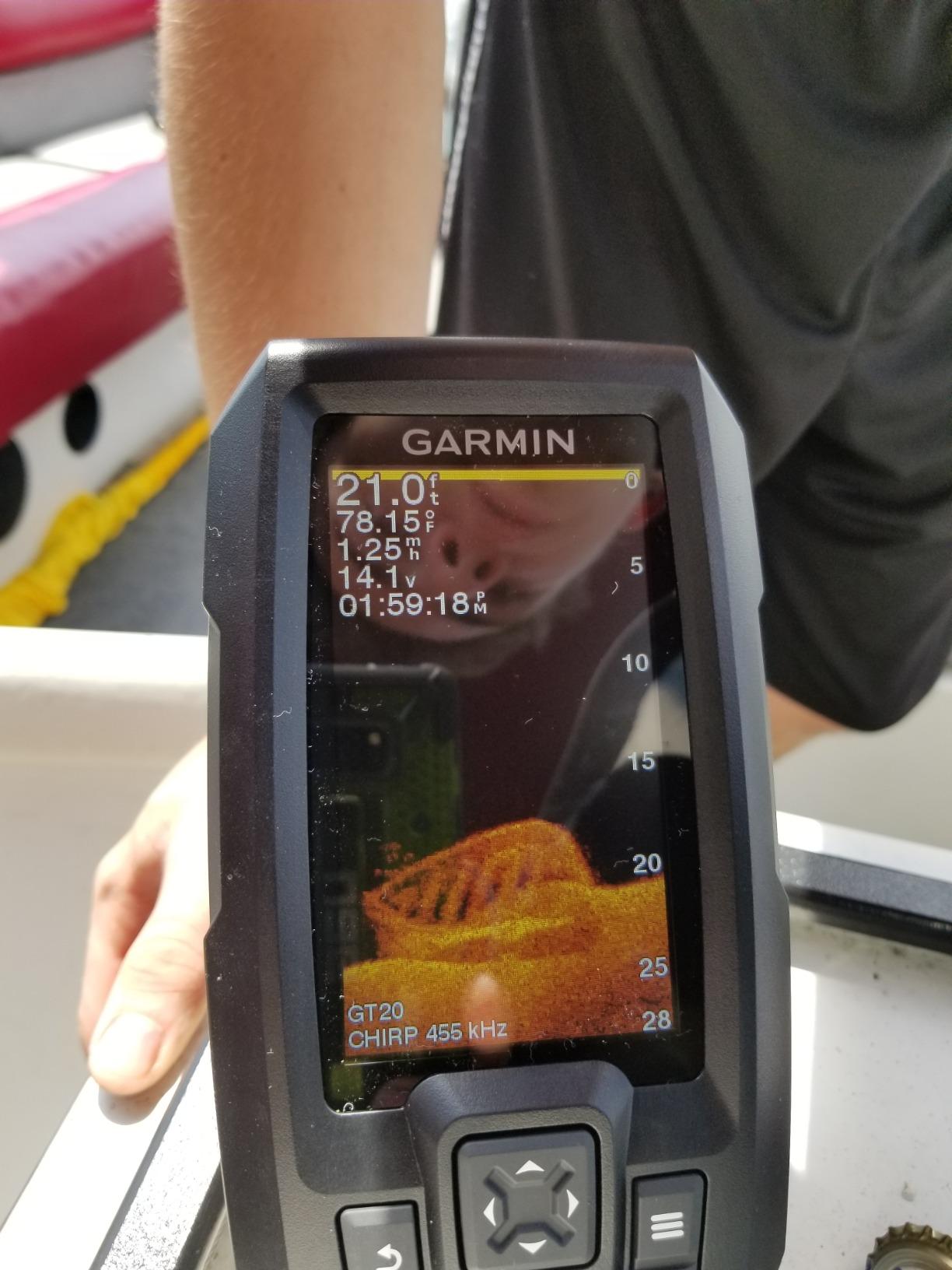
Underneath the screen it runs CHIRP traditional sonar and CHIRP ClearVu scanning sonar from the included GT20 transducer. Quickdraw Contours is built in, so you can record one-foot contours of your local water and store them without a card. The high-sensitivity GPS handles waypoints, routes and boat speed.
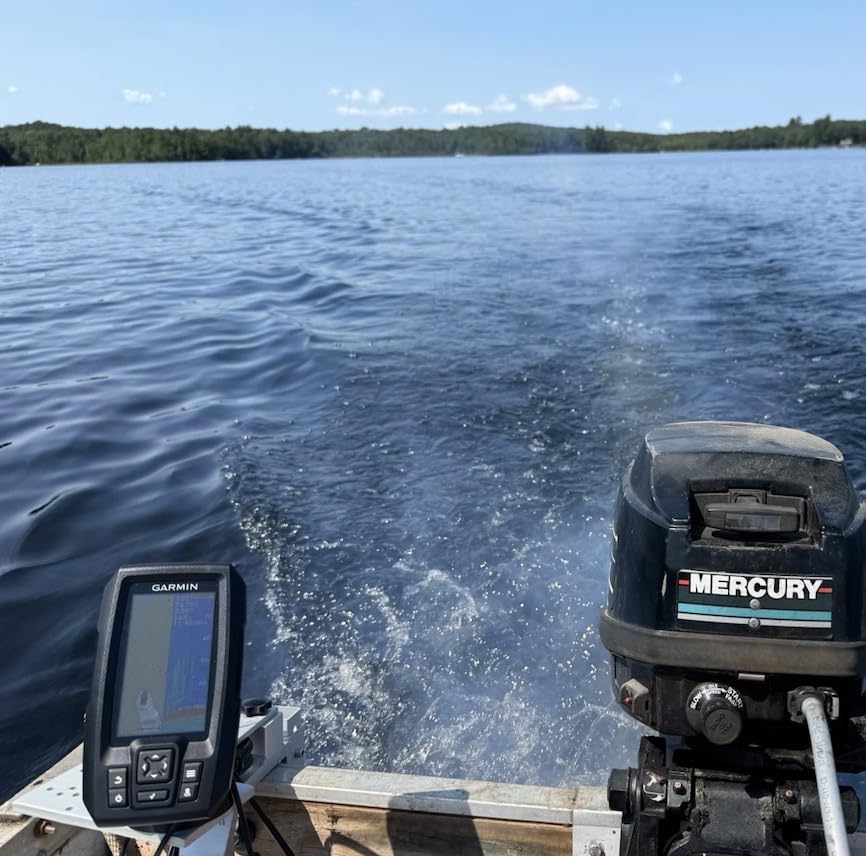
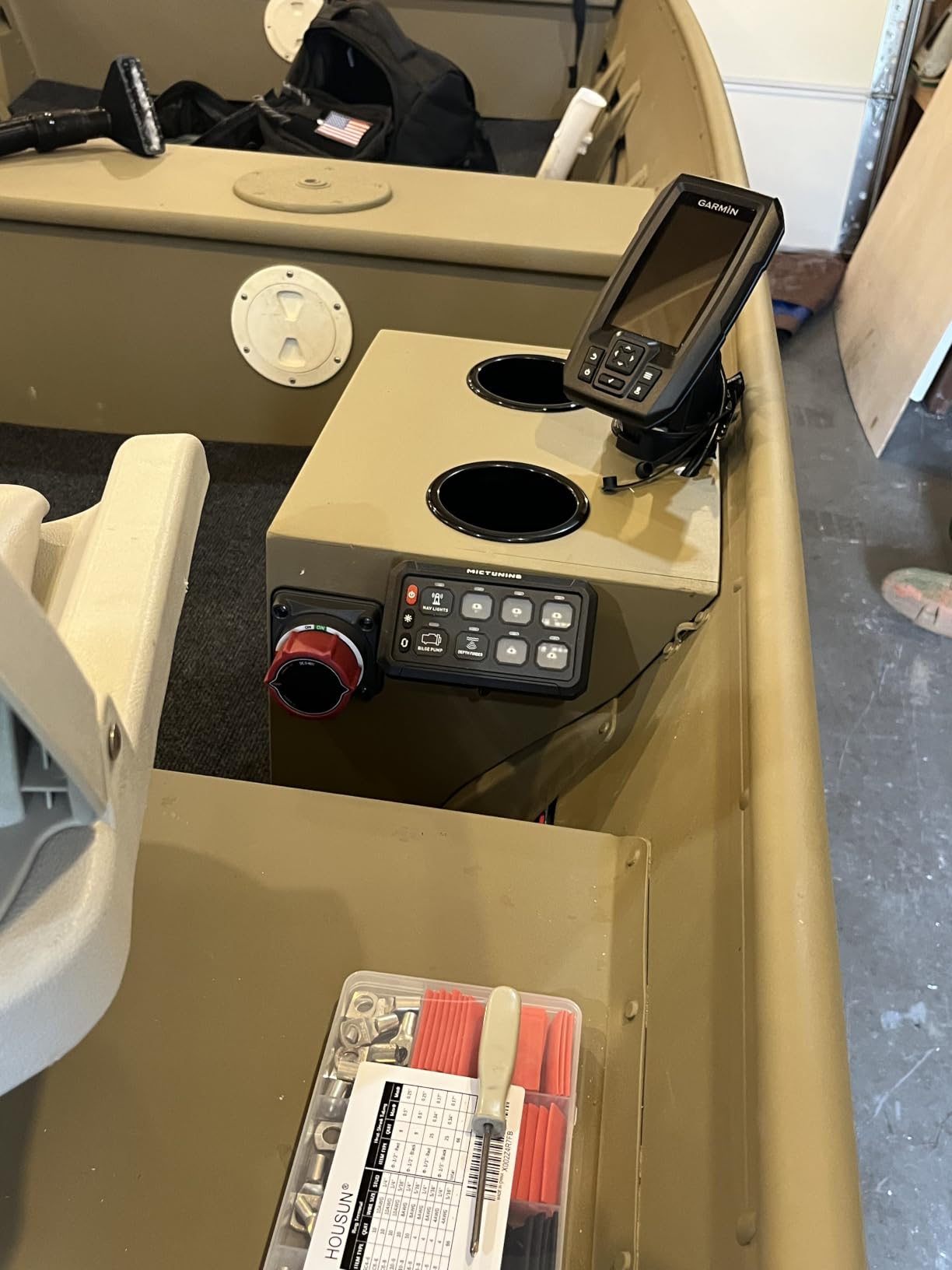
The tilt and swivel bail mount makes angle adjustment quick on the water, which matters when you are moving between a console and a trolling motor. It weighs 11.2 ounces and carries a two year limited warranty, longer than most of the small units in this group.
This is also the unit I would point a first-time angler toward if the budget stretches. Colour, automatic mapping and simple buttons cover almost everything people ask for from a bigger display, without the learning curve.
What it is good for
Pick it if you fish stained or deep water where separating fish from structure by brightness alone is frustrating. It suits anglers who want to build their own contour maps of a lake they fish often but do not want to buy premium chart cards.
It also works as a portable unit. The bail mount and 11.2-ounce weight make it easy to move between a jon boat and a kayak between trips.
Where it falls short
Four inches is genuinely small. Anyone coming from a seven or nine inch chartplotter will find it cramped when splitting the screen between sonar and chart. The feature set also stops short of networked units, with no NMEA or Ethernet expansion.
Because it records contours on the unit itself, shared maps require transferring files to a computer. That is a step owners who fish with friends tend to mention as friction.
3. Humminbird PiranhaMAX 4: Best Value First Fish Finder
Humminbird PiranhaMAX 4 Fish Finder with Transducer, Dual Beam Sonar
4.3-inch LCD
Dual Beam sonar
600 ft max depth
Transom transducer included
Pros
- Dual Beam sonar gives narrow detail and wide coverage
- Transom-mount transducer in the box
- Very simple controls for a first unit
- Tilt and swivel mount for quick angle changes
- Reliable depth and fish arch readings
Cons
- No CHIRP
- side or down imaging
- No charting or GPS waypoints
- 600 ft depth limit is shallow for offshore use
The PiranhaMAX 4 is the buy when you want a fish finder that works and nothing else. Dual Beam sonar gives you a narrow beam for detail and a wide beam for coverage, which on shallow water is often more useful to a beginner than a fancier picture.
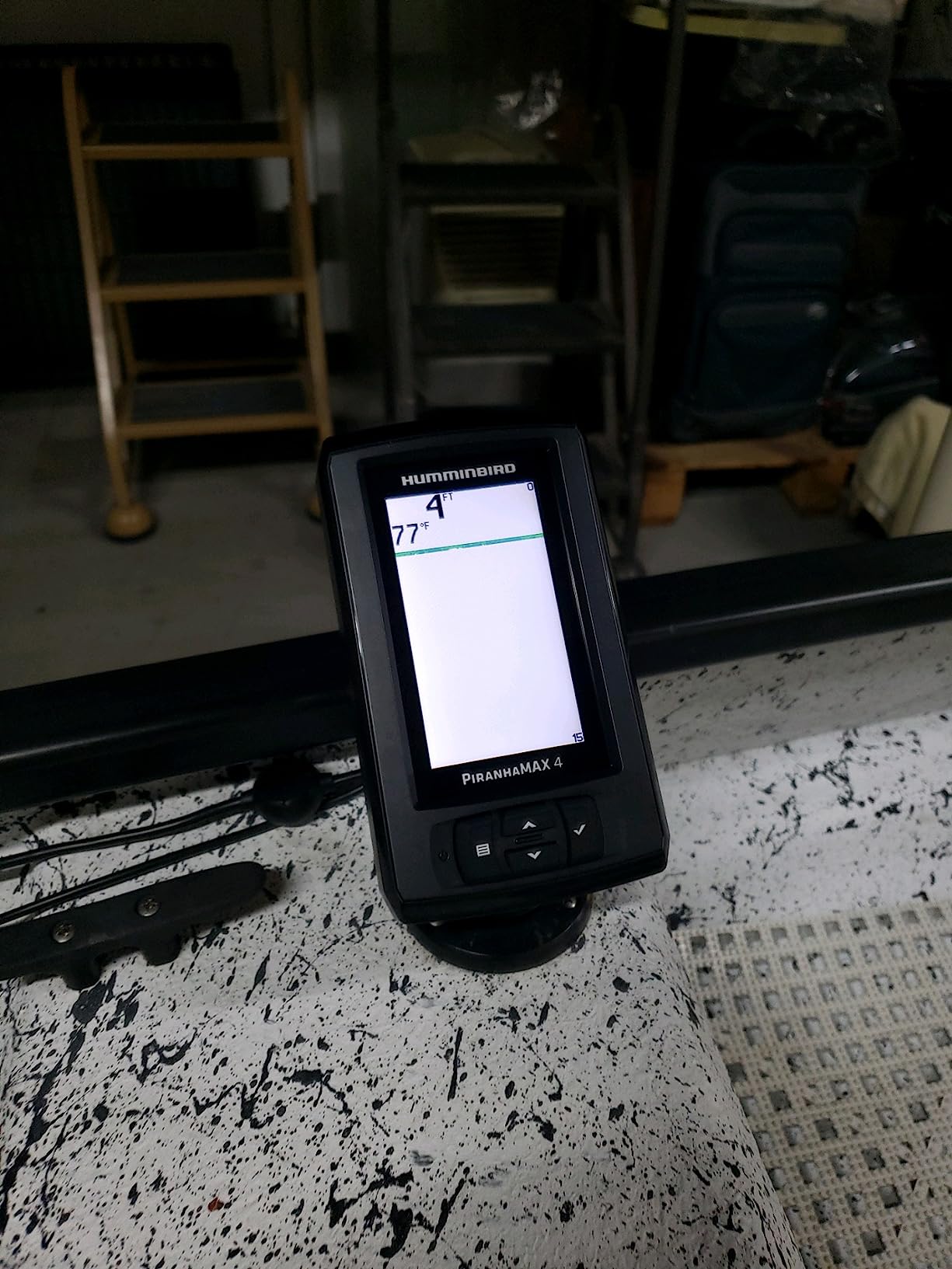
There is no menu system to learn. Owners describe the controls as approachable, the tilt and swivel mount as easy to adjust on the water, and the included XNT 9 28 T transom transducer as one less thing to source. At 4.3 inches it is the largest screen in the small-unit group here.
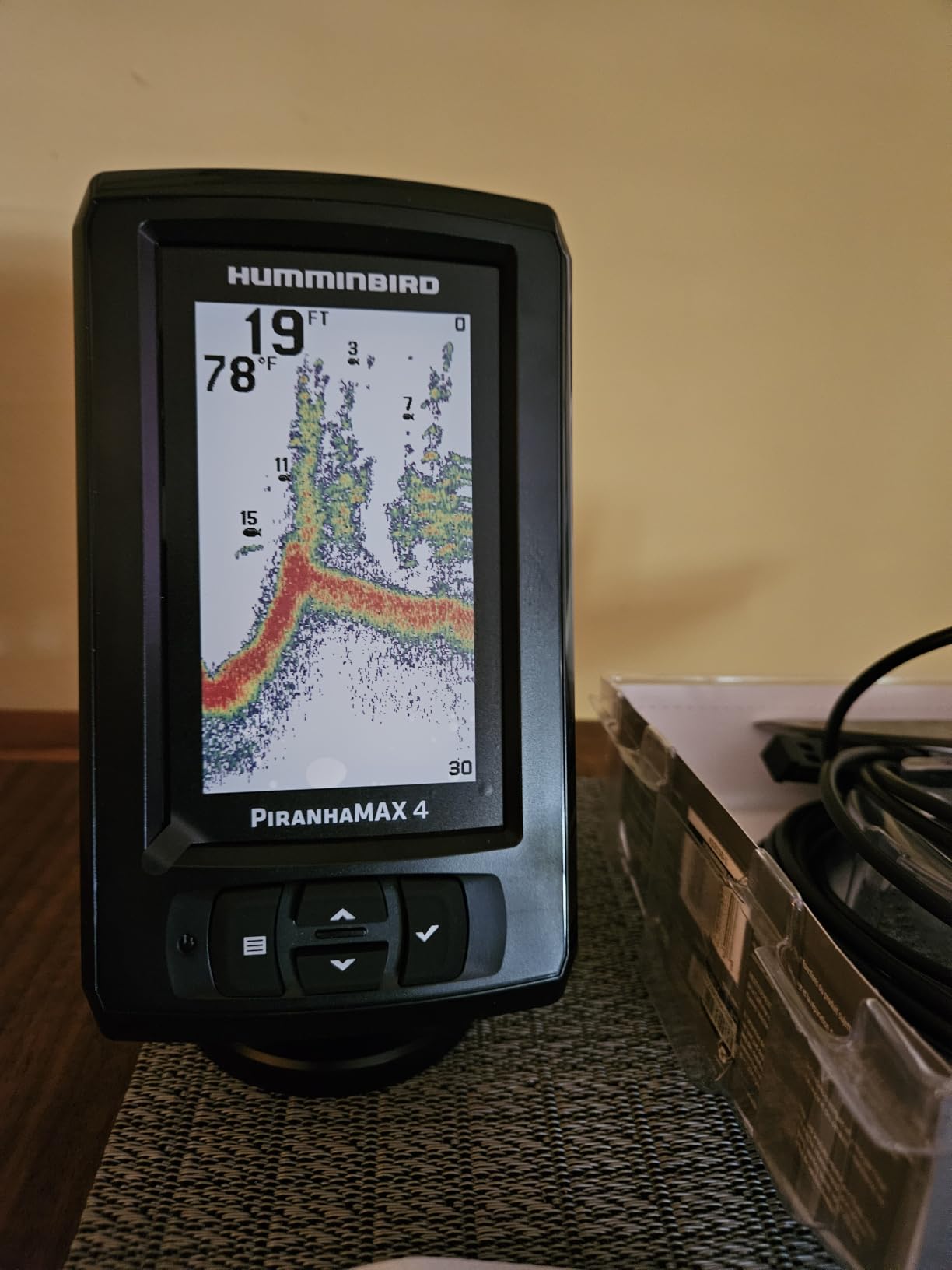
It draws very little power and runs happily off a portable battery, which makes it a common first unit for a jon boat or a small boat without a wiring harness. The one year manufacturer warranty is standard for the category.
Forum owners frequently recommend a simple unit like this for a first boat, precisely because there is no network setup, no card slot to fill and no menu to reset every power cycle.
What it is good for
This fits a first-time angler on a small boat, a pontoon, or anyone who wants structure and depth without a chart. It is also a solid backup unit to keep in the boat as a spare.
The wide beam helps in shallow water where a narrow cone simply misses fish holding off the boat. That is most of bass and panfish work.
Where it falls short
No CHIRP, no side imaging, no down imaging and no GPS charting. You get depth, bottom contour and fish arches, and nothing more. Once you learn to fish structure, this becomes the unit you outgrow first.
The 600-foot maximum depth is also the shallowest limit here, which rules it out for deep offshore work. A one year warranty is shorter than the two years offered on some rivals.
4. Garmin STRIKER Plus 4cv: Best for Self-Made Contour Maps
Garmin Striker 4cv with Transducer, 4″ GPS Fishfinder with CHIRP Traditional and ClearVu Scanning Sonar Transducer and Built In Quickdraw Contours Mapping Software
4.3-inch QSVGA display
Quickdraw Contours
CV20-TM transducer
300 W RMS transmit power
Pros
- Quickdraw Contours records 1-foot contour maps
- CHIRP traditional plus ClearVu in one transducer
- Sunlight-readable 4.3-inch screen with GPS for speed
- Transom and trolling motor mounts included
- 300 W RMS for solid target separation
Cons
- Button menu feels slower beside touchscreens
- Settings sometimes need re-tuning after moves
- No preloaded or premium chart support
Where the STRIKER Vivid is about colour, the STRIKER Plus 4cv is about mapping. Built-in Quickdraw Contours stores one-foot contour maps of up to two million acres on the unit, and with 300 W RMS transmit power you get good target separation on deep structure.
Sonar-wise you are looking at CHIRP traditional plus CHIRP ClearVu from the included CV20-TM transducer. Built-in GPS handles waypoints, routes and boat speed, and the 4.3-inch QSVGA screen is described by owners as sunlight-readable with an intuitive interface.
Both transom and trolling motor mounts are in the box, which is why this is one of the easier units to move between boats later. That matters if you own a jon boat in summer and a kayak in spring.
My take is that this is the pick for someone fishing one lake hard and wanting to build a private map of it. Repeated runs over the same water turn into a contour picture you own, with no recurring chart subscription.
What it is good for
It works for repeat anglers on a single body of water, or for a small fleet where each boat records its own contours. The trolling motor mount makes it a natural fit for a trolling motor setup.
Sunlight readability and button controls make it practical on an open console in summer, where glare is the deciding factor.
Where it falls short
The menu-driven interface feels slower to operate than a touchscreen, and several owners report that settings need re-tuning after moving between water types. It also cannot load premium chart packages, so offshore or coastal navigation stays on the internal map.
Sharing recorded contours means moving files through a computer, which adds a step most anglers never bother with.
5. Lowrance Eagle Eye 9: Best for Live Sonar Under 1000 Dollars
Lowrance Eagle Eye 9 Live Sonar Fish Finder with C-MAP US Inland Charts
9-inch IPS display
Live Forward and Live Down
Preloaded C-MAP charts
500 ft max depth
Pros
- Live Forward and Live Down show fish reacting to the lure
- Single transducer covers live sonar plus CHIRP and DownScan
- Large bright 9-inch IPS display
- Preloaded C-MAP charts cover 17000 plus U.S. lakes
- No separate sonar module needed for the install
Cons
- Live sonar picture still maturing beside dedicated units
- 500 ft maximum depth is shallow for offshore
- Newer platform with a smaller accessory base
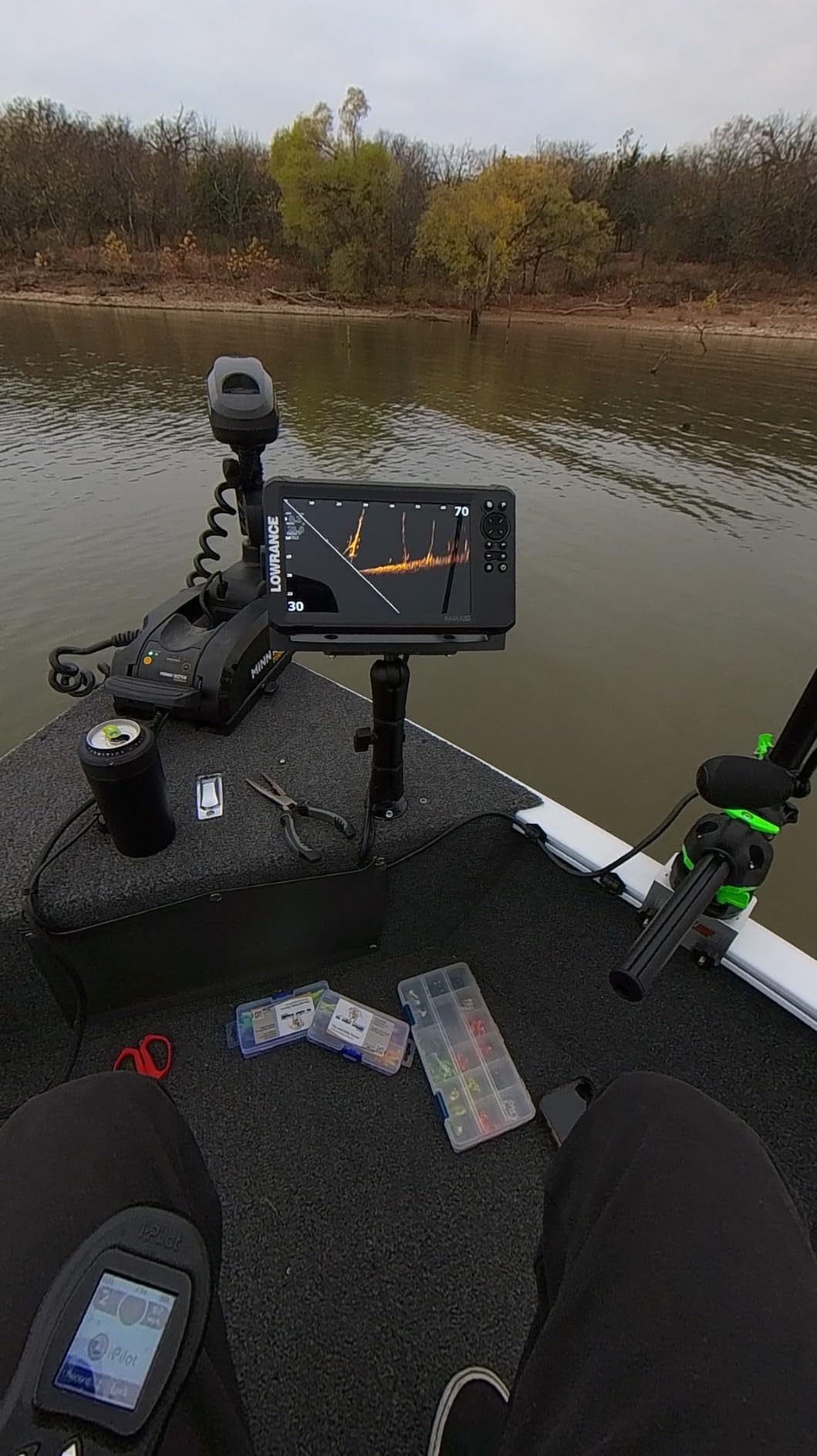
This is the one that changes how you fish. Live Forward shows fish ahead of the boat and how they react to your lure in real time, and Live Down does the same underneath. Very few setups below one thousand dollars give you that.
The included transducer pack handles Live Forward, Live Down, CHIRP sonar and DownScan Imaging with FishReveal, and it plugs straight into the display with no separate sonar module. That single cable is the reason installation is simpler than most networked setups.
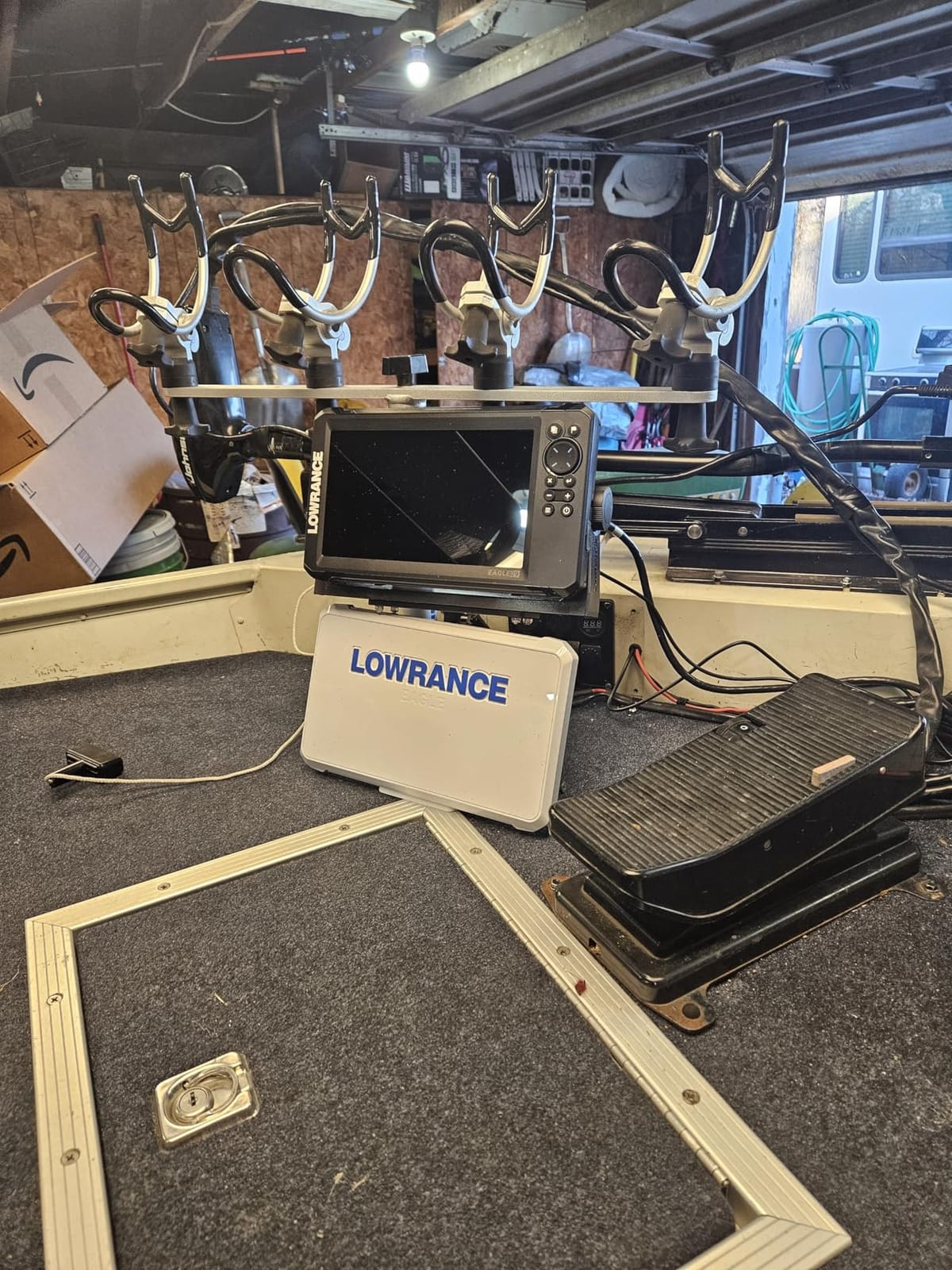
The 9-inch IPS panel is bright and readable, and preloaded C-MAP charts cover more than 17000 U.S. lakes with Genesis Live mapping on top. At 2 pounds it is a fixed console unit rather than a portable one, but it mounts by panel or bracket.
If you fish for bass or walleye and have ever seen forward-looking sonar in action, this is the unit that will make you understand what you are missing on smaller screens.
What it is good for
It suits anglers targeting specific species in open water, where watching a fish track a lure is worth more than a wider historical picture. It also handles inland structure work with DownScan and FishReveal.
The bundled charts mean you can navigate unfamiliar lakes without buying anything else. Genesis Live mapping records your own detail as you go.
Where it falls short
Owners report that the live sonar image is still maturing compared with dedicated forward-looking units, particularly at range and in rough water. The 500-foot maximum depth is the shallowest on the big screens here, so it is not an offshore or deep-water choice.
It is also a newer platform with a smaller base of accessories and community knowledge than the established Garmin and Humminbird lines, which matters if you like to share setups with other anglers.
6. Lowrance Elite FS 10-Inch: Best Large-Screen Chartplotter Under 1000 Dollars
Lowrance Elite FS 7 Fish Finder with Active Imaging 3-in-1 Transducer, Preloaded C-MAP Contour+ Charts
10-inch multi-touchscreen
Active Imaging 3-in-1
C-MAP charts preloaded
1000 ft max depth
Pros
- 10-inch multi-touch display for sonar and chart detail
- Active Imaging 3-in-1 with CHIRP and SideScan and DownScan
- Preloaded C-MAP DISCOVER OnBoard inland and coastal charts
- Wireless plus NMEA 2000 plus Ethernet connectivity
- Live Sonar ready through an ActiveTarget 2 add-on
- Two year warranty
Cons
- Touchscreen needs care in rough conditions
- Steeper learning curve for networked displays
- Needs more dashboard space than portable units
This is the chartplotter end of the bracket. A 10-inch multi-touchscreen, Active Imaging 3-in-1 with CHIRP, SideScan and DownScan plus FishReveal, and preloaded C-MAP DISCOVER OnBoard charts for inland, coastal and Canadian water. It is the most complete system in the group.
Connectivity is the reason to stretch here. Wireless, NMEA 2000 and Ethernet mean you can add radar, autopilot and additional displays later, and the unit is Live Sonar ready through an ActiveTarget 2 or ActiveTarget 2 XL add-on. Maximum measuring depth is 1000 feet.
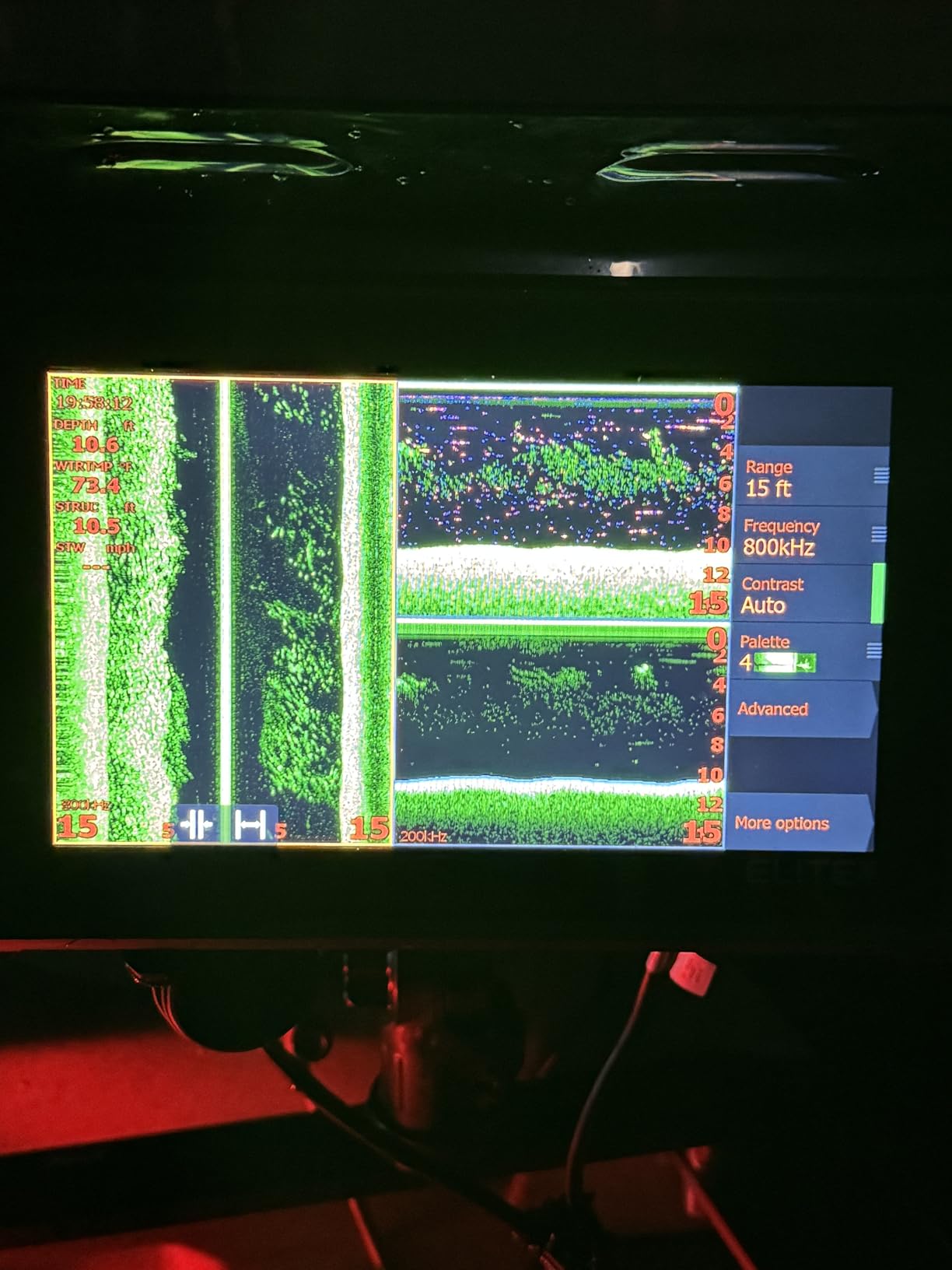
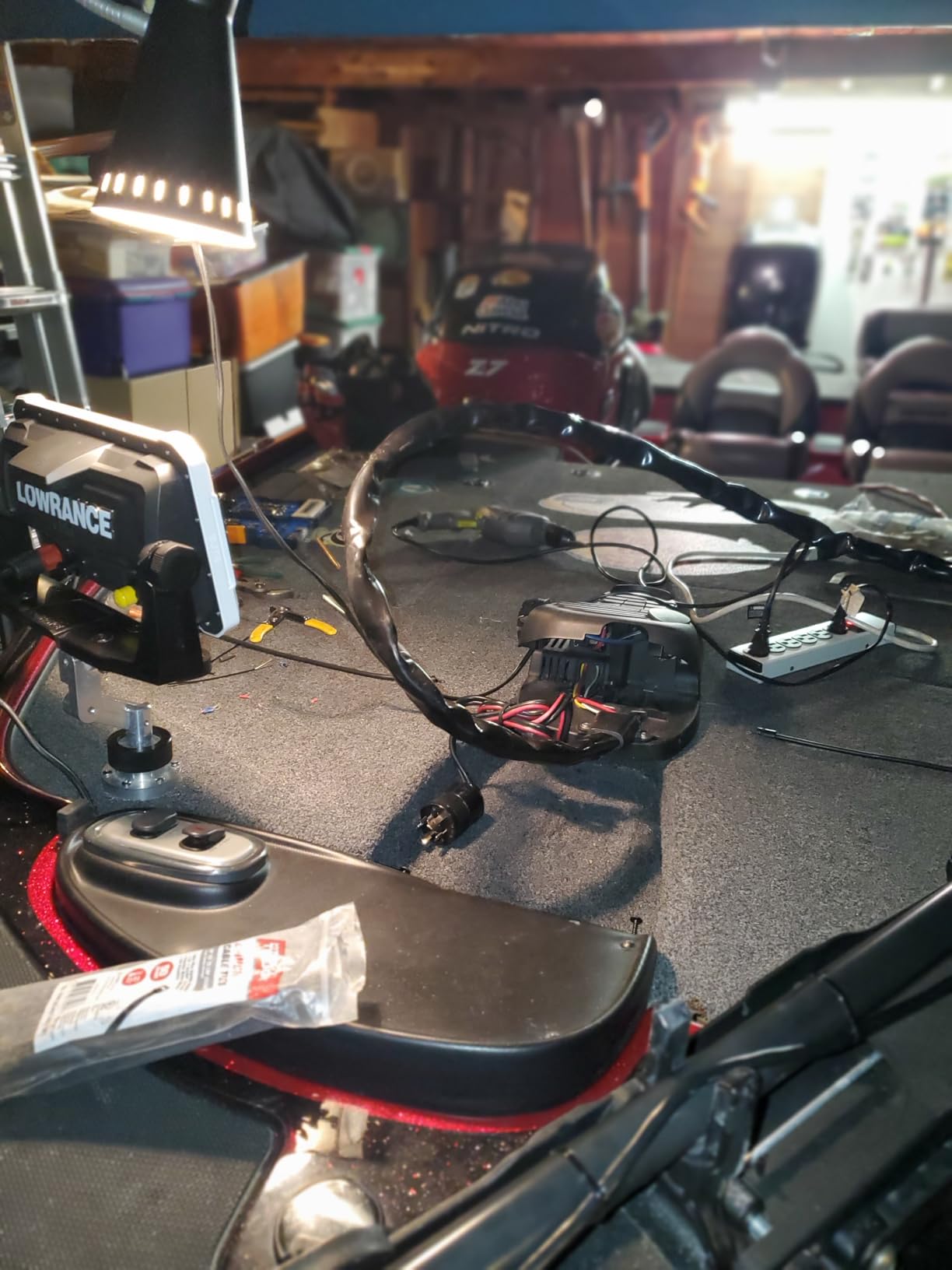
The box includes the display, a 3-in-1 transducer, suncover, fuse and fuse holder, corner clip kit, mounting bracket with knobs and a power cable. That completeness is what separates it from the small units earlier in this list.
At 3.7 pounds and 12.81 by 4.47 by 8.26 inches, this is a console installation. Buyers who came from portable fish finders describe it as a serious upgrade in picture quality and chart detail.
What it is good for
It fits a boat that will grow over the next few years. Networking capability means the display is a starting point rather than a dead end, and the preloaded charts cover a lot of water before you buy anything.
The 10-inch screen also helps in multi-species fishing, where you switch between a chart view, a SideScan view and a chartplotter layout several times an hour.
Where it falls short
Touchscreen controls need more attention in rough conditions than buttons do, and wet or gloved hands make that worse. Owners also warn about the learning curve on a networked multifunction display, particularly the menu depth.
It needs real dashboard space, so it will not suit a small jon boat console. Fish finder, suncover and mounts in the box is also the last point at which adding parts stays simple.
7. Humminbird HELIX 5 CHIRP GPS G3: Best First Unit With a Chart and GPS
Humminbird Helix 5 G3 GPS Fish Finder with Transducer & Dual Spectrum Chirp Sonar
5-inch colour TFT
Dual Spectrum CHIRP
Humminbird Basemap
AutoChart Live mapping
Pros
- Dual Spectrum CHIRP with wide and narrow modes
- Colour TFT screen that stays usable in weather
- Basemap covers 10000 plus lakes and US coastlines
- AutoChart Live builds depth and vegetation maps as you fish
- XNT 9 HW T transom transducer included
Cons
- No touchscreen so navigation takes more presses
- No side or down imaging on this model
- Bundled basemap is less detailed than premium charts
- Menu structure feels dated beside modern displays
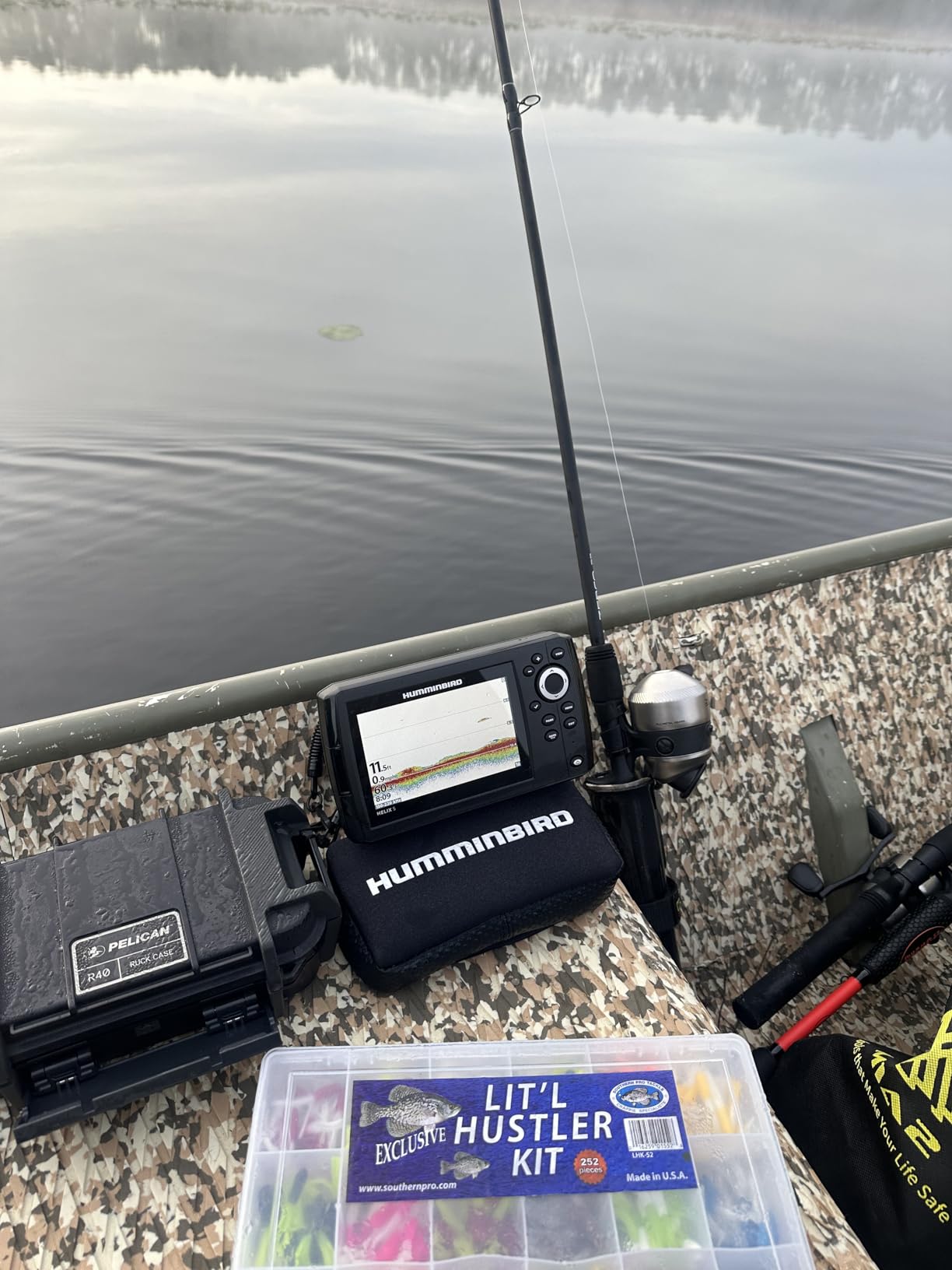
The HELIX 5 CHIRP GPS G3 is the middle rung. You get Dual Spectrum CHIRP sonar with a wide mode for coverage and a narrow mode for detail, on a 5-inch colour TFT screen, plus a built-in GPS with a basemap covering more than 10000 lakes and the continental US coastline.
AutoChart Live is the quiet strength. It records eight hours of sonar on the unit and turns it into depth contour, bottom hardness and vegetation maps as you fish, and it accepts an AutoChart Zero Line SD card for more capacity. If you want mapping without learning a touchscreen, this is the one.
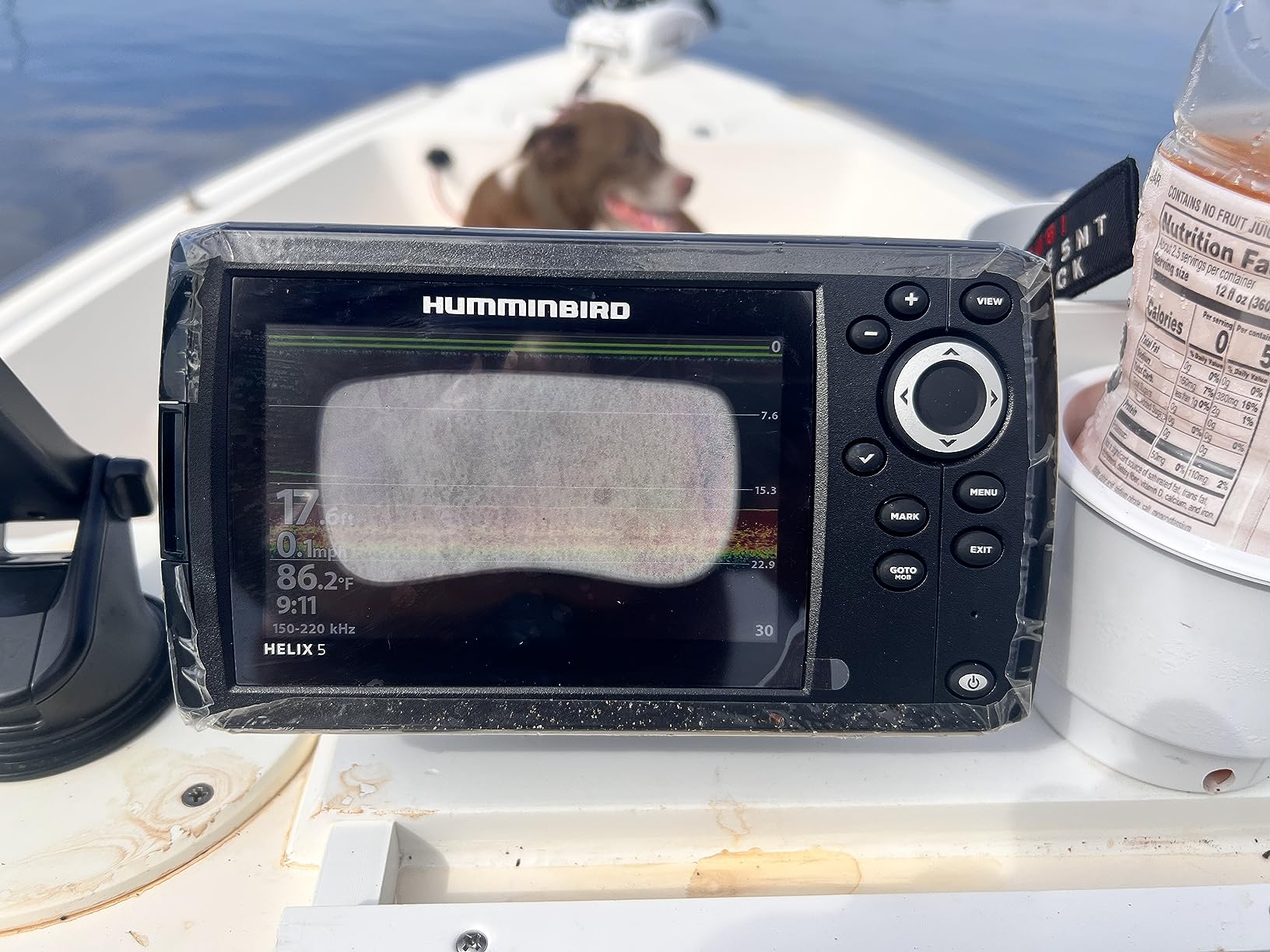
Softkey buttons stay reliable in any weather, which owners consistently appreciate over touchscreens in cold or wet conditions. The XNT 9 HW T transom-mount transducer and gimbal bracket are in the box.
It is also the natural upgrade path to LakeMASTER, CoastMaster or Navionics cards later, so you are not locked out of better charts.
What it is good for
This suits an angler who wants a chart, a GPS and self-recorded maps but does not want to fiddle with a touchscreen. Wide mode covers a lot of water quickly when you are searching for a drop-off.
Five inches is a comfortable size for a jon boat or midsize console where a 7-inch unit will not fit, and it draws power comfortably for a full day.
Where it falls short
No side imaging and no down imaging on this model, which is the main reason to move up rather than sideways. Navigation takes more button presses without touch, and the menu structure reads as dated next to a modern multifunction display.
The bundled basemap is less detailed than a premium chart package, so offshore or coastal work needs an added card. At 4.4 stars it also carries the lowest owner rating in this group, with owners noting the interface rather than the sonar.
8. Lowrance Eagle 4-Inch: Best Budget Pick for Kayaks and Jon Boats
Lowrance Eagle 4X Fish Finder with Bullet Transducer
4-inch IPS portrait display
Auto-Tuning sonar
Bullet Skimmer transducer
500 ft max depth
Pros
- Compact 4-inch IPS portrait display for kayaks and jon boats
- Auto-Tuning sonar removes manual settings work
- 44 degree Bullet Skimmer beam gives broad coverage
- Twist-lock connector makes transducer removal quick
- Screen readable through polarized sunglasses
Cons
- No charting or GPS in the base configuration
- Basic sonar with no CHIRP
- SideScan or DownScan
- 500 ft maximum depth
- Fish size estimates are imprecise
- Occasional reports of poor performance
The Eagle is the smallest and simplest unit here, and it is built around one idea: a screen you can actually see. The 4-inch IPS portrait display has wide viewing angles and stays readable through polarized sunglasses, which solves the glare problem on cheap units in one step.
Auto-Tuning sonar optimises settings for you, and the included 200 kHz Bullet Skimmer transducer has a 44-degree beam for broad coverage under the boat. The twist-lock connector means you can pull the transducer off in seconds when you move from water to a car rack.
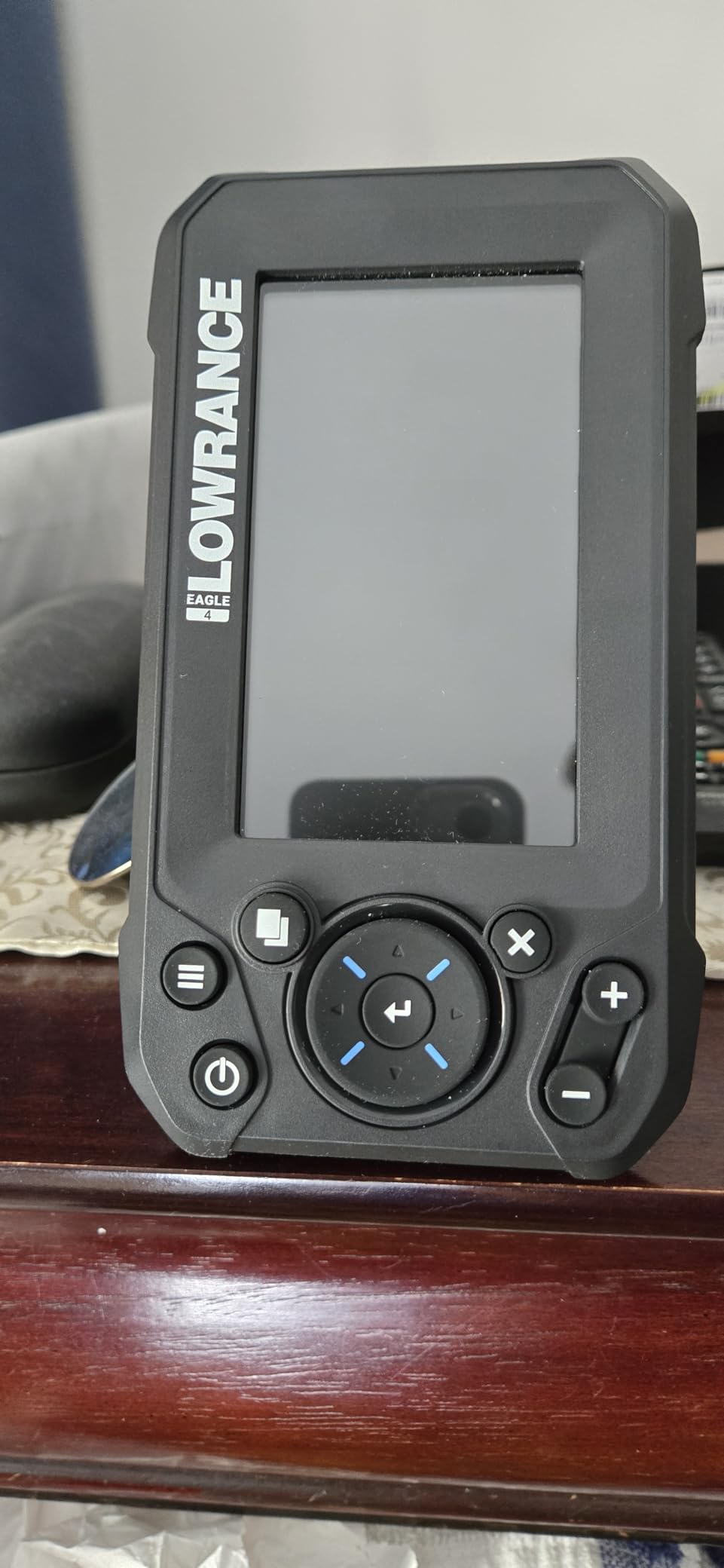
It mounts by surface, panel or flush, and at 7 by 4 by 3.84 inches it fits places a landscape unit never will. Fish icons come with depth and zoom, though there is no audible fish alarm.
If you are moving from a handheld depth sounder, our kayak fish finder picks cover the portability question, and the Eagle is the shape of unit that fits that platform. For the opposite end of the question, see our ice fishing fish finder roundup.
What it is good for
This is a depth and bottom structure finder for a kayak, a jon boat or a small boat with no room for wiring. The portrait shape and wide viewing angles make it usable from a seated position, which a landscape unit is not.
Auto-tuning means there is nothing to adjust before the first trip, so it also works for a first-time angler or a gift setup.
Where it falls short
There is no charting and no GPS in this base configuration, and the sonar is basic, with no CHIRP, SideScan, DownScan or live views. The 500-foot maximum depth is shallow. Fish size estimates are not precise, and some owners report disappointing performance outright, which is reflected in the lowest owner rating in this roundup.
Treat it as a first step that shows you where the bottom changes shape, not as an upgrade you will keep for years.
How to Choose a Fish Finder Under 1,000 Dollars
Start with the sonar type, because it decides what you can see. CHIRP traditional sonar sends a continuous sweep of frequencies and gives cleaner fish arches than older single-frequency sonar. ClearVu, DownScan and Down Imaging look straight down for structure and bottom hardness. Side Imaging and SideScan look to both sides, which is what shows you a ledge or a field of brush piles.
Live sonar, sold as LiveScope or forward-looking imaging, shows fish movement and lure response in real time. Only one unit in this roundup does it without an add-on. Decide whether you need it before you stretch your budget, because live sonar plus a good screen is where the money runs out.
Next, check whether the transducer is included. This is the single biggest buyer trap in this price range. Almost every model here comes with a transducer and mounts in the box, but larger chartplotter packages sold separately can leave you adding one on day one. Ask the seller what is in the box before you order anything.
Screen size is the next decision. A 4 to 4.3-inch unit is portable and easy to mount on a trolling motor or kayak. A 5-inch screen is the compromise for small consoles. A 9 or 10-inch display is a fixed console unit that needs dashboard space but shows far more detail when you split the view between sonar and chart.
Mapping is where budgets quietly grow. Garmin Quickdraw Contours and Lowrance Genesis Live record your own contours on the unit, which is free and covers the water you actually fish. Humminbird AutoChart Live does the same from recorded sonar. Preloaded charts such as the C-MAP DISCOVER OnBoard package or the Humminbird Basemap save you buying anything on day one. Premium card-based chart packages are a separate cost entirely and are the most common surprise for first-time buyers.
Networking decides how long the unit lasts. NMEA 2000 and Ethernet let you add radar, autopilot and a second display later. If you might want live sonar or a second screen in a few years, buying a networked head unit now saves changing the whole system later. Our boat fish finder roundup covers install options if you are mounting on an existing console.
Finally, budget the whole installation, not just the head unit. The unit, transducer, mount, power cable, fuse and any wiring or a trolling motor mount all count. That total is where a mid-range unit can push past the one thousand dollar line, which is a common reason a cheaper head unit is the smarter total-cost buy.
Garmin vs Lowrance vs Humminbird: Which Brand Under 1,000 Dollars
Garmin builds the widest range in this bracket, from the 3.5-inch STRIKER 4 up to networked units. Its strengths are sunlight-readable screens, button-driven interfaces that work with wet hands, and free self-made mapping through Quickdraw Contours. Three of the eight units here are Garmin.
Lowrance owns the two most capable displays, the Elite FS and the Eagle Eye 9, with larger touchscreens, preloaded C-MAP charts and stronger networking. The tradeoff is a steeper learning curve, and touchscreen controls that need more care in rough water. Its budget Eagle units are simple by design.
Humminbird sits in the middle on usability. Softkey controls stay reliable in bad weather, AutoChart Live builds maps from recorded sonar, and the basemap covers more than 10000 lakes out of the box. The HELIX 5 in this roundup is the clearest example of solid, no-nonsense hardware, and its button interface is dated beside a modern multifunction display.
For a portable trolling motor or kayak unit, Garmin is the easier choice. For a fixed console with room to grow, Lowrance gives you more screen and more networking. For a first unit where reliability and simple controls matter most, Humminbird is hard to argue with.
What 1,000 Dollars Actually Buys You in 2026
At the bottom of this bracket you are buying depth, bottom contour, fish arches and a transom-mounted transducer. That covers a whole first season on a jon boat and tells you nothing you cannot get from a handheld sounder, only faster.
In the middle you are buying CHIRP, ClearVu scanning sonar, colour screens, GPS waypoints and free self-recorded contour mapping. That is where most of the eight units here sit, and it is the sweet spot for inland fishing. This is the band our boat electronics roundup favours for good reason.
At the top you are buying a large display, a bundled chart package, live forward-looking sonar or a 3-in-1 imaging sonar bundle. The Eagle Eye 9 gives you live sonar inside the line, and the Elite FS gives you a 10-inch networked chartplotter with SideScan. Those two represent the two different ways to spend the top of the budget: real-time fish behaviour, or permanent screen real estate.
What you still do not get under one thousand dollars is the transducer ecosystem and integration quality of a full premium setup. If you need offshore depth beyond 500 feet, sustained side imaging from a trolling motor at speed, or a system that will accept multiple networked displays for years, you will need to move up a tier.
Who Should Not Buy a Fish Finder in This Price Range
If you fish offshore or in water deeper than 500 feet, skip the Eagle Eye 9 and the Lowrance Eagle, because their depth ceilings stop short. Look for a unit with at least 1000 feet of rating instead.
If your boat already has a chartplotter and you want a side-scan or live-sonar add-on rather than another display, none of these units is the right purchase. You need a sonar module that networks with what you own.
If you fish in heavy rain, cold weather or rough water with wet or gloved hands, be cautious about touchscreens. The Garmin and Humminbird units here use physical buttons for exactly this reason. Our castable fish finder picks make more sense if you are fishing from land.
Finally, if your main goal is one last bracket of money, remember that a complete install adds a mount, a fuse, wiring and sometimes a trolling motor bracket. Some of these units will land you over the line once everything is connected, and a slightly cheaper head unit may be the better total-cost decision.
Frequently Asked Questions
What is the best fish finder on a budget?
The Garmin STRIKER 4 with transducer is the best budget fish finder under 1000 dollars because it includes CHIRP traditional sonar, ClearVu scanning sonar, a GPS waypoint map, the transducer and both transom and trolling motor mounts in the box. If you want a colour screen, the STRIKER Vivid 4cv adds vivid sonar palettes and Quickdraw Contours. For the simplest option with the fewest settings to learn, the Humminbird PiranhaMAX 4 uses dual beam sonar and nothing more.
Is Garmin better than Humminbird?
Garmin wins on small portable units and free self-made mapping. Quickdraw Contours records your own one-foot contour maps at no cost, Garmin screens stay readable in direct sun, and button interfaces work with wet hands. Humminbird wins on simple, dependable controls and on out-of-the-box charting with a basemap covering more than 10000 lakes plus AutoChart Live. For a trolling motor or kayak, Garmin is usually easier. For a first unit where controls matter most, Humminbird is hard to argue with.
Is side scan or LiveScope better?
They answer different questions. Side Imaging gives you a wide, recorded picture of structure on both sides of the boat, which is how you find a ledge or a field of brush piles. Live sonar, sold as LiveScope or Live Forward, shows you fish movement and lure response in real time in front of the boat. For most inland anglers, side imaging delivers more value per dollar. Live sonar wins when you target specific species and want to watch a fish commit. Under 1000 dollars, only the Lowrance Eagle Eye 9 includes live sonar.
Is Lowrance or Humminbird better?
Lowrance gives you more screen and more connectivity at the top of this price range. The Elite FS has a 10-inch multi-touch display with Active Imaging 3-in-1 sonar and preloaded C-MAP charts, and the Eagle Eye 9 brings live forward-looking sonar into the bracket. Humminbird is simpler and more predictable, with softkey buttons that stay reliable in any weather, a basemap covering more than 10000 lakes, and AutoChart Live mapping. Choose Lowrance for a growing console system, Humminbird for straightforward reliability.
What transducer comes with a fish finder under 1000 dollars?
Every model in this roundup comes with a transducer and mounting hardware. The Garmin STRIKER 4 includes a standard CHIRP and ClearVu transducer with transom and motor mounts. The STRIKER Vivid 4cv includes a GT20 for CHIRP traditional and ClearVu. The STRIKER Plus 4cv includes a CV20-TM. The Humminbird PiranhaMAX 4 includes an XNT 9 28 T transom transducer, and the HELIX 5 CHIRP GPS G3 includes an XNT 9 HW T. The Lowrance Elite FS includes a 3-in-1 transducer, the Eagle Eye 9 a live transducer pack, and the Lowrance Eagle a 200 kHz Bullet Skimmer.
Final Verdict
The best fish finders under 1000 dollars in 2026 come down to one clear winner and two specialists. Take the Garmin STRIKER 4 with transducer if you want CHIRP, ClearVu, GPS waypoints and a complete box of hardware without extra parts. Take the STRIKER Vivid 4cv if colour sonar and free contour recording matter to you, and the Humminbird PiranhaMAX 4 if you want the simplest unit that reliably finds fish.
Go bigger only for a reason. The Lowrance Eagle Eye 9 is the pick if live forward-looking sonar changes how you fish, and the Elite FS is the pick if you are building a console system you will grow into. Both include their transducers and charts, which removes the most common day-one surprise.
Check the transducer column before you order, add your mount and wiring to the running total, and you will land on a working setup rather than a head unit that needs a week of parts hunting. Our ice fishing and shore fishing roundups cover the setups that suit angling without a boat console.