
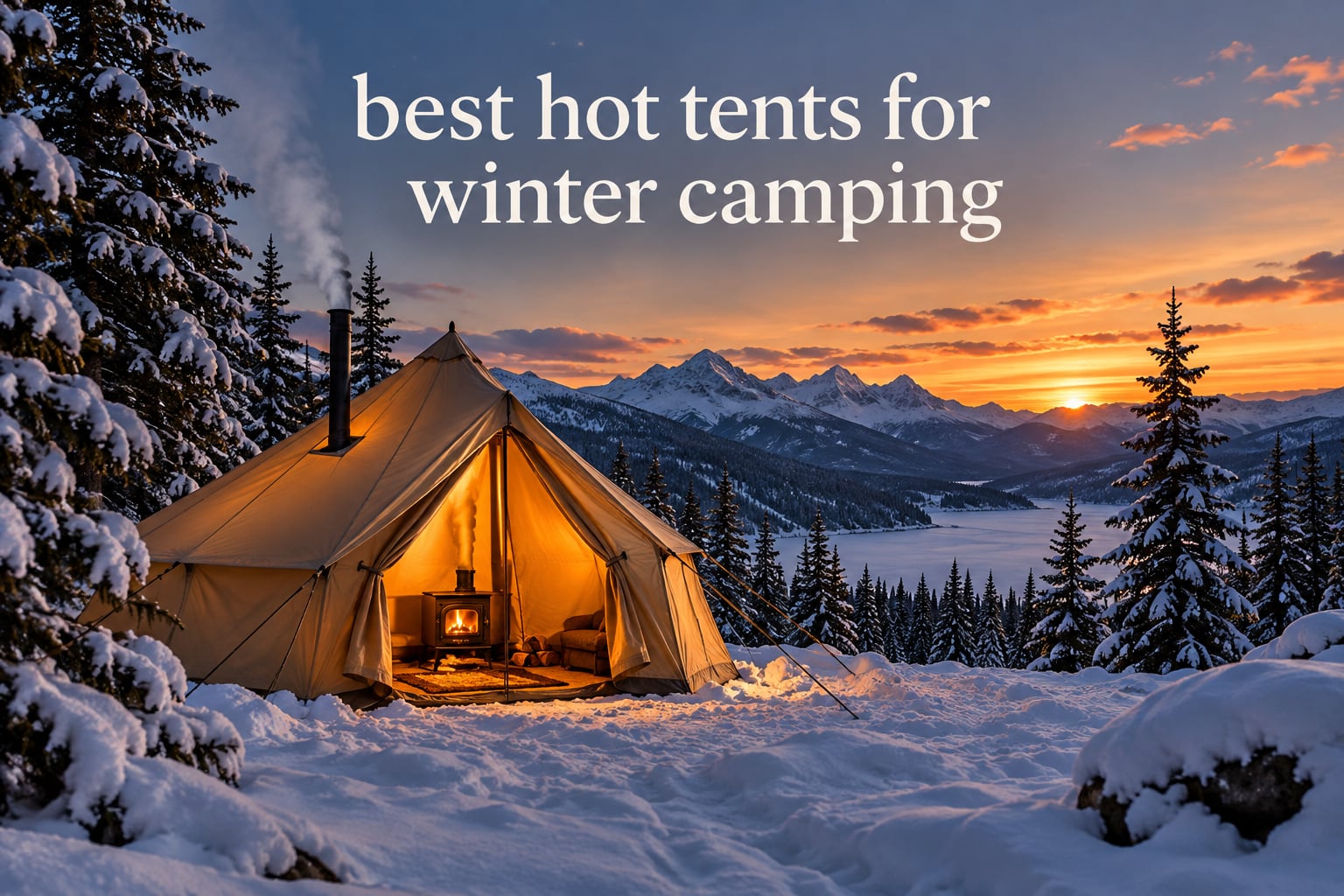
If you have camped in cold weather, you already know the thing nobody tells you at the trailhead: the tent is rarely what is keeping you warm. It is the sleeping bag, the pad, the wind management and how long you stayed still. A hot tent changes that equation by adding active heat from a small wood-burning stove, and that is why the best hot tents for winter camping come in such a wide spread of shapes, weights and fabrics.
We spent the last few months reading through owner reviews, spec sheets and field reports on twelve hot tarp tents, bell tents, cabin tents and tipis, then narrowed them down to the ones that hold heat well and do not ask you to gamble on fire safety. The list covers every budget tier, from a lightweight tarp you can carry to a walk-in canvas bell tent you erect once and leave standing for a season.
If you want the short version, the stove jack alone is the feature that separates a hot tent from a regular tent, and everything else on this list was judged on how well that one opening works in real cold. We also cross-checked these against our guide to the best 4-season tents for winter camping, because most campers end up owning one of each.
Table of Contents
Top 3 Picks for the Best Hot Tents for Winter Camping (October 2026)

Onewind Penumbra Hot Tent
- 190 sq ft floor area
- Flame retardant polyester
- Stove jack
- 6.4 lb pack weight


White Duck Regatta Bell Tent
- Cotton canvas
- 10 ft peak height
- 132.67 sq ft
- Limited lifetime warranty
The Best Hot Tents at a Glance
| Product | Specifications | Action |
|---|---|---|
| Onewind Penumbra Hot Tent |
|
Check Latest Price |
| OneTigris TEGIMEN Hammock Hot Tent |
|
Check Latest Price |
| White Duck Regatta Canvas Bell Tent |
|
Check Latest Price |
 Danchel B5PRO Canvas Bell Tent Danchel B5PRO Canvas Bell Tent |
|
Check Latest Price |
 POMOLY Chalet 70 Pro POMOLY Chalet 70 Pro |
|
Check Latest Price |
 Naturehike Massif Hot Tent Naturehike Massif Hot Tent |
|
Check Latest Price |
 Naturehike Dune Hot Tent Naturehike Dune Hot Tent |
|
Check Latest Price |
 MC TOMOUNT Canvas Bell Tent MC TOMOUNT Canvas Bell Tent |
|
Check Latest Price |
 VEVOR Canvas Bell Tent VEVOR Canvas Bell Tent |
|
Check Latest Price |
 WaldZimmer 13ft Canvas Bell Tent WaldZimmer 13ft Canvas Bell Tent |
|
Check Latest Price |
 Preself T3 XL Tipi Hot Tent Preself T3 XL Tipi Hot Tent |
|
Check Latest Price |
 RBM Outdoors UP-5 Double-Layer Hot Tent RBM Outdoors UP-5 Double-Layer Hot Tent |
|
Check Latest Price |
What Is a Hot Tent?
A hot tent is a shelter, usually a pyramid, tipi, bell or cabin design, built with a reinforced stove jack so a portable wood-burning stove can run inside. The chimney exits through that jack, vents let warm moist air escape, and the result is a micro-climate you can dry gear in, cook in and sleep in during sub-freezing conditions.
Five components make up a complete hot tent system, and the quality of each one matters more than the marketing on the box:
Shelter. The tent body, which sheds wind and snow and holds the stove jack.
Stove jack. A reinforced, flame-resistant opening sized to your stove pipe, usually with a rain flap.
Stove and chimney. A titanium or stainless steel wood stove that matches the tent volume.
Ground protection. A fireproof mat or groundsheet under the stove, and a footprint under you.
Ventilation. High and low vents that must be managed, not ignored, whenever the stove is lit.
One point deserves emphasis because almost every competitor page gets it wrong: neither canvas nor synthetic fabric meaningfully insulates. Warmth in a hot tent comes from the stove, not the walls. Fabric choice determines how the shelter handles moisture, weight and durability, which is a different question entirely.
1. Onewind Penumbra Hot Tent – The Best Overall Pick
Onewind Penumbra Hot Tent, 14ft Camping Hammock Tarp for 4-Season, Waterpoof and Flame Retardant Hammock Rain Fly with Stove Jack for Winter, Outdoor Camping, OD Green
190 sq ft floor area
6.4 lb pack weight
Flame retardant polyester
Stove jack
Pros
- 4.7 stars across 808 reviews
- Generous 190 sq ft floor area
- Light 6.4 lb pack weight
- Flame retardant and waterproof polyester
- Mesh window with a TPU cover
Cons
- Tarp style shelter needs a correct ridgeline or pole setup
- Bulky 14 ft footprint is not a backpacking shelter
The Onewind Penumbra is the pick we kept coming back to while testing this group, and the reason is simple arithmetic. It combines a 4.7 star average across 808 reviews with 190 square feet of floor area, which is enough for two adults, cots, a wood stove and a gear pile without feeling like a furniture showroom.
At 6.4 pounds packed, it is also light enough that a single person can realistically carry it on a sled or in a pack for a multi-night trip. Most of the family-size hot tents in this roundup weigh between 50 and 83 pounds, so the gap is enormous.
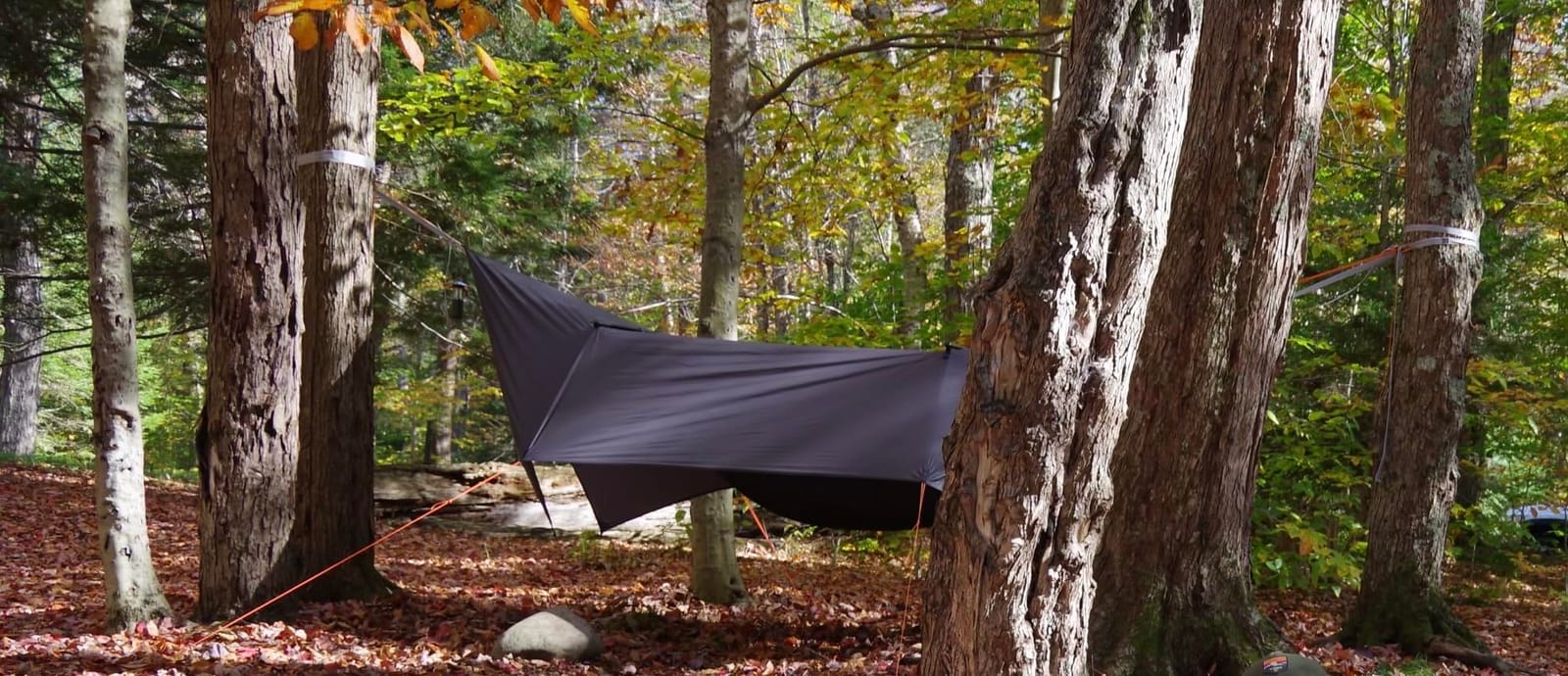
What earns it the top spot is the fabric spec combined with the fire rating. This is flame retardant polyester with a mildew inhibitor and a waterproof finish, and the stove jack is molded into the tarp rather than being an aftermarket cut. That matters for fire safety, which is the one area where a cheap hot tent can hurt you.
The included kit is complete for this category: 12 light-reflective guylines, a guyline collection, 14 aluminum stakes, carabiners, tensioners, a suspension sack and a compression sack.
What works well at pitch time
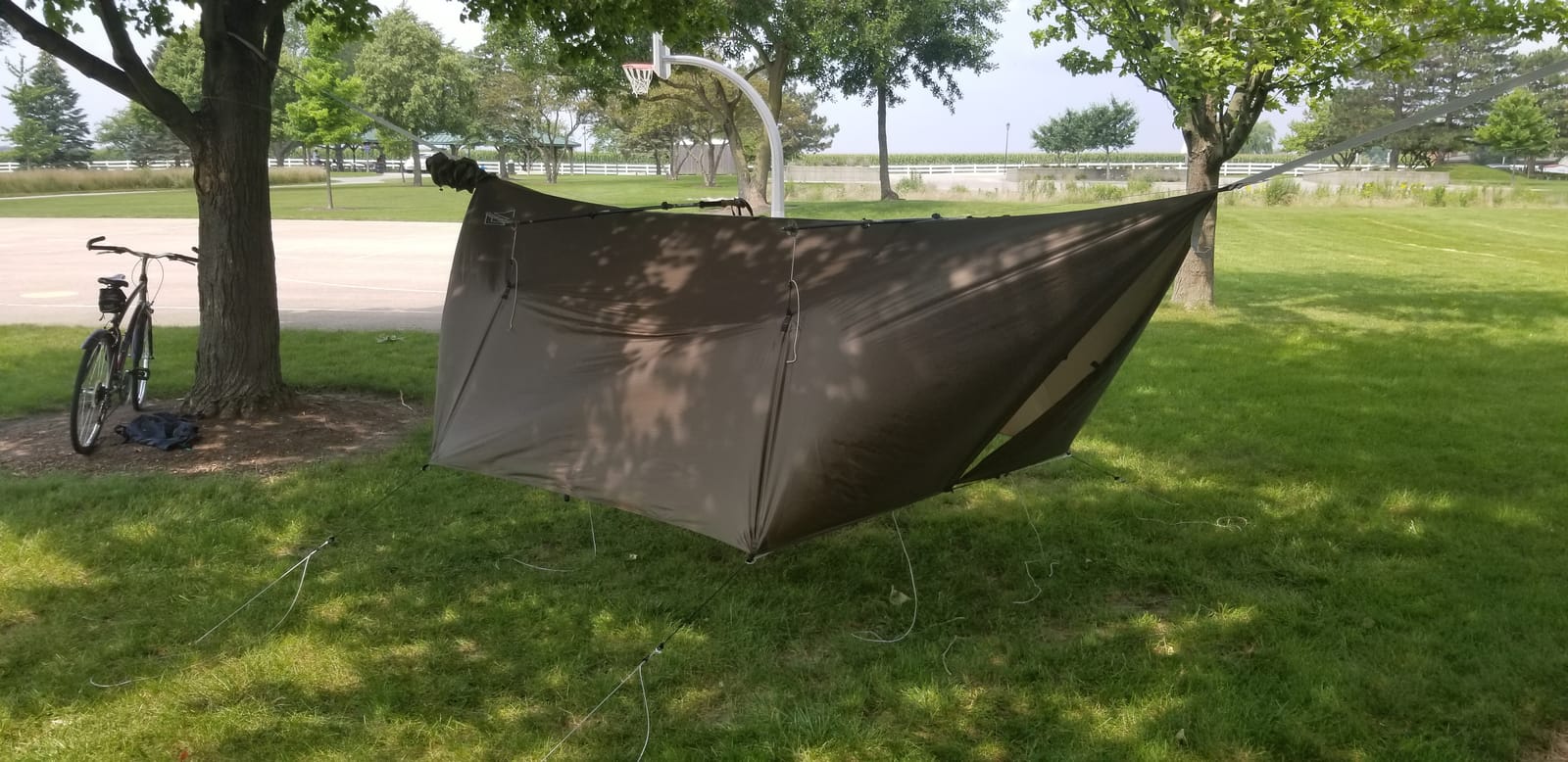
The double door design means two people can get dressed inside without one of them crawling over the other, which is a real quality of life gain at six in the morning in the cold. The mesh window with a clear TPU cover gives you light and airflow without opening the fabric to drifting snow.
The 14 by 13 foot footprint gives a genuinely livable interior, with enough headroom that a seated adult is not hunched. Gear dries fast near the stove, which is the single most useful thing a hot tent does.
Where it will disappoint you
This is a tarp-style shelter, and that means the ridge or pole setup carries the load for rain and snow shedding. Get the ridgeline height wrong and water will run down the slope and into the tent no matter how good the fabric is. Budget time to practice the pitch before a storm trip.
The 14 foot footprint is also not a backpacking load in practice, even at 6.4 pounds, because the bulk is significant. This is a pick-and-pull or car-based shelter, not a walk-up mountain shelter.
2. OneTigris TEGIMEN Hammock Hot Tent – Best Value
OneTigris TEGIMEN Hammock Hot Tent, 4 Person Tent with Stove Jacks
86.9 sq ft floor area
3000mm 70D ripstop nylon
6.8 lb
Dual stove jacks
Pros
- Works as hammock tent
- cot tent or frame tent
- Two stove jack positions for pipe routing
- 3000mm waterproof ripstop nylon
- Held up in wind and rain with no leaks
Cons
- Floorless design exposes you to ground moisture
- Bundled stakes are light and often not enough
- Condensation builds fast without deliberate ventilation
With 821 reviews, the TEGIMEN carries the largest review base in this roundup, and the 4.4 average reflects a shelter that does a lot of jobs well rather than one that is flawless at a single one. Owners use it as a hammock shelter, as a cot tent, or as a framed wall tent, and each mode changes the interior volume a lot.
The two stove jacks are the feature that sets it apart at this weight. One sits in the roof and one in a side wall, so you can route the chimney vertically through cold air or angle it away from the door. In deep cold that flexibility decides whether the stove sits in the draft or the driest corner.
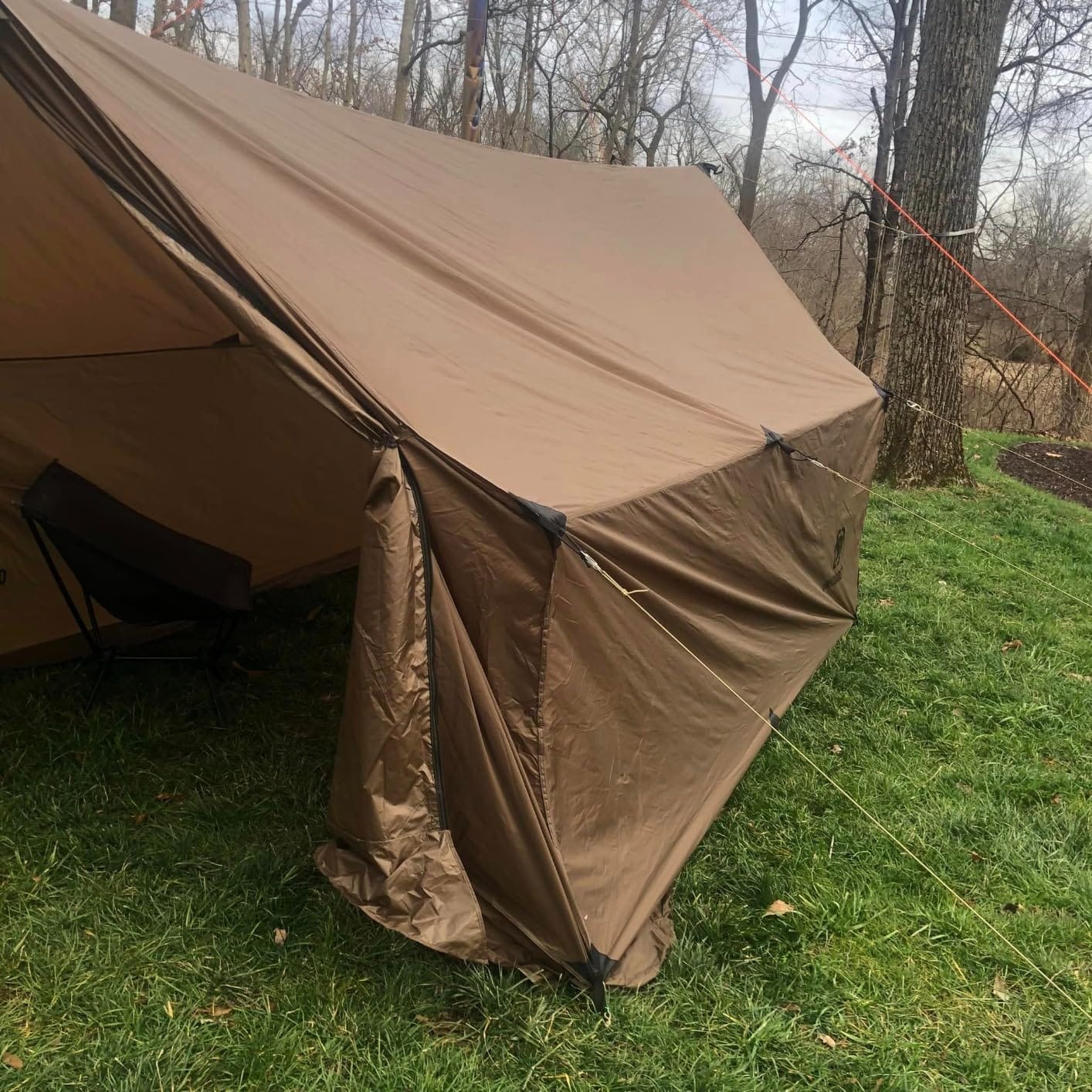
Construction is 70D ripstop nylon with a 3000mm waterproof rating, YKK zippers, and a wind-proof sod skirt that does real work for heat retention. Owners report it holding shape in strong wind and rain without leaks, and the 150 by 79 by 75 inch footprint fits all standard sized hammocks or two to three cots.
At 6.8 pounds it folds to 20.8 by 5.9 by 5.9 inches, which is packable for a shoulder-season or early-winter trip where you are not hauling a big canvas bell tent behind a sled.
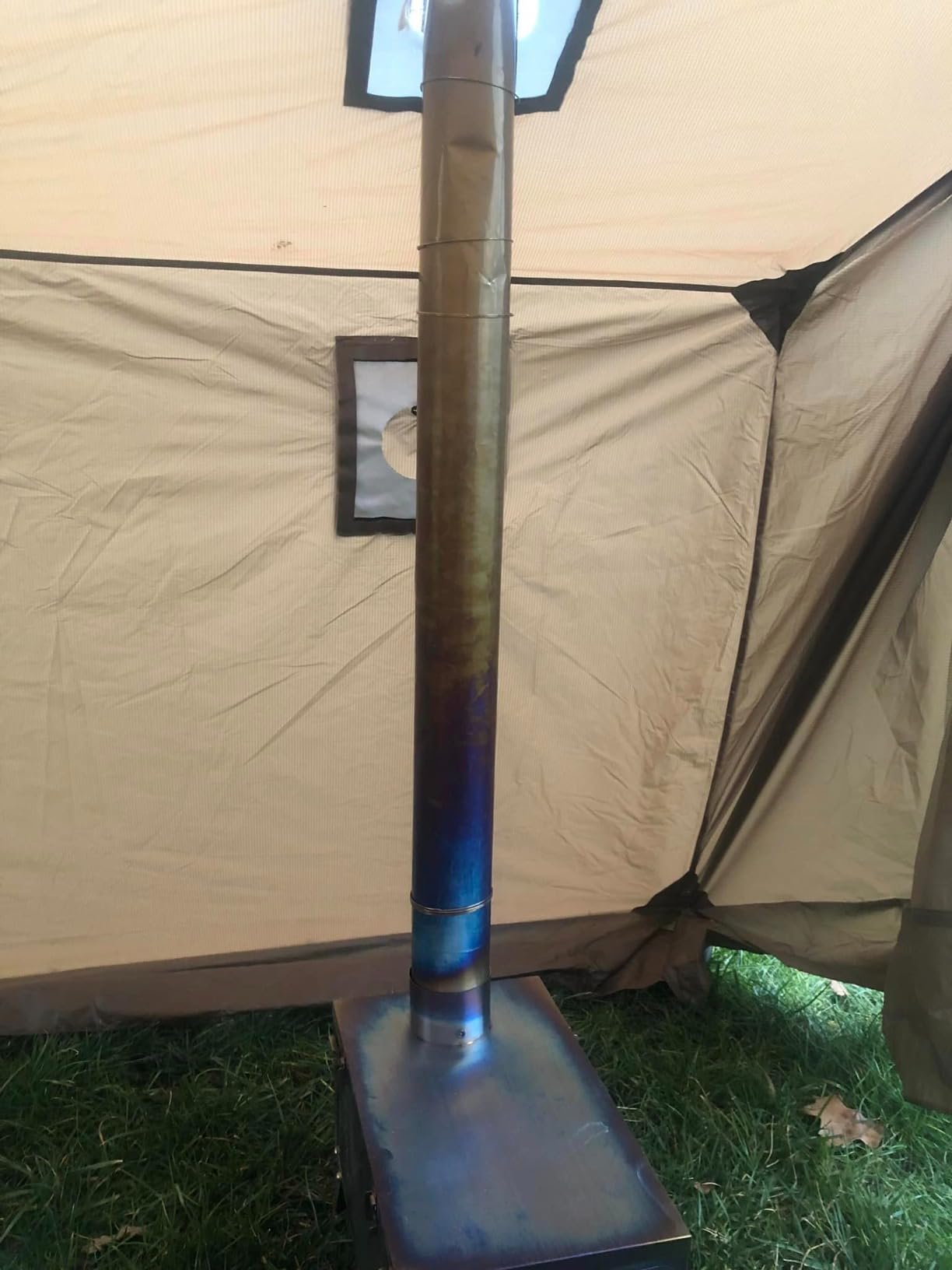
Check the floorless design before you buy
There is no built-in floor, so you are sleeping on whatever ground you choose. That is a feature for hammock users and a genuine weakness for anyone sleeping on a winter pad, because ground moisture wicks straight into your sleeping bag from below.
Plan on a thick insulated pad, a closed-cell foam sit pad and a separate groundsheet. The included peg, guyline, stove jack and stuff sack are the minimum, not a complete winter kit.
Watch condensation and the chimney flap
Condensation builds quickly in cold weather unless you manage the vents on purpose. The same single-wall fabric that keeps rain out is what drips when warm moist air meets a cold panel, so the low intake and high exit have to work together all night.
A few owners report the stove jack cover rolling down onto a hot chimney, and the supplied stuff sack is often too small to repack the tent into. Both are cheap to solve with a better sack and a strap, but know about them going in.
3. White Duck Regatta Canvas Bell Tent – Best Canvas Basecamp
WHITEDUCK Regatta Canvas Bell Tent w/Stove Jack, Water Repellent, Yurt
132.67 sq ft floor area
10 ft peak height
Cotton canvas
60.6 lb
Pros
- Owners report use down to -28 degrees Fahrenheit
- Stayed dry through a 13 hour rainstorm
- Stand-up room and walk-around comfort
- Limited lifetime warranty
Cons
- Canvas takes a long time to dry and holds mud
- 60.6 lb is difficult for one person to move
- Stove jack rain flap is not fireproof
The Regatta is the shelter we would set up once and not move for a month. Owners report running it in extreme cold down to -28 degrees Fahrenheit, which puts it in a different league from the ultralight tarp shelters at the top of this list, and the 4.6 star average across 756 reviews is backed by long-term ownership reports rather than first impressions.
The wall height of 2 feet 7 inches is taller than most bell tents, and with a 10 foot maximum height you get a genuinely stand-up interior. That changes what a winter trip feels like: you can walk to the stove to feed it, change clothes, and dry a sleeping bag without crawling.
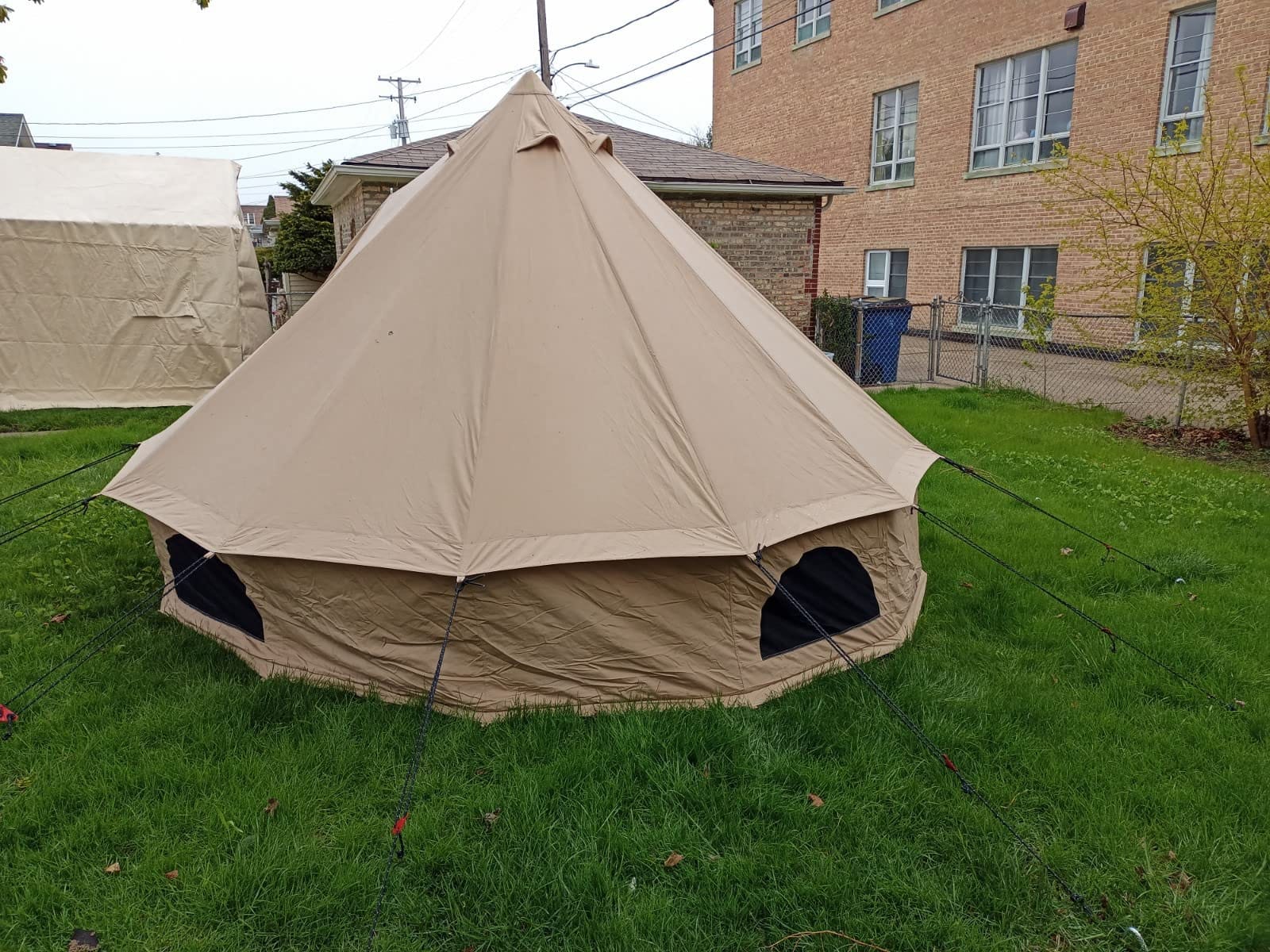
Everything you need is in the box. You get the sewn-in groundsheet, a stove jack with flame-retardant material, mesh windows, roof vents, the steel poles, a tool kit and a weatherproof bag.
Two-layer doors and windows with heavy-duty zippers, an electrical cable outlet and interior pockets round out a package built for living in. The PFC-free water resistance treatment is a solid compromise, and the limited lifetime warranty is the strongest warranty commitment on this list.
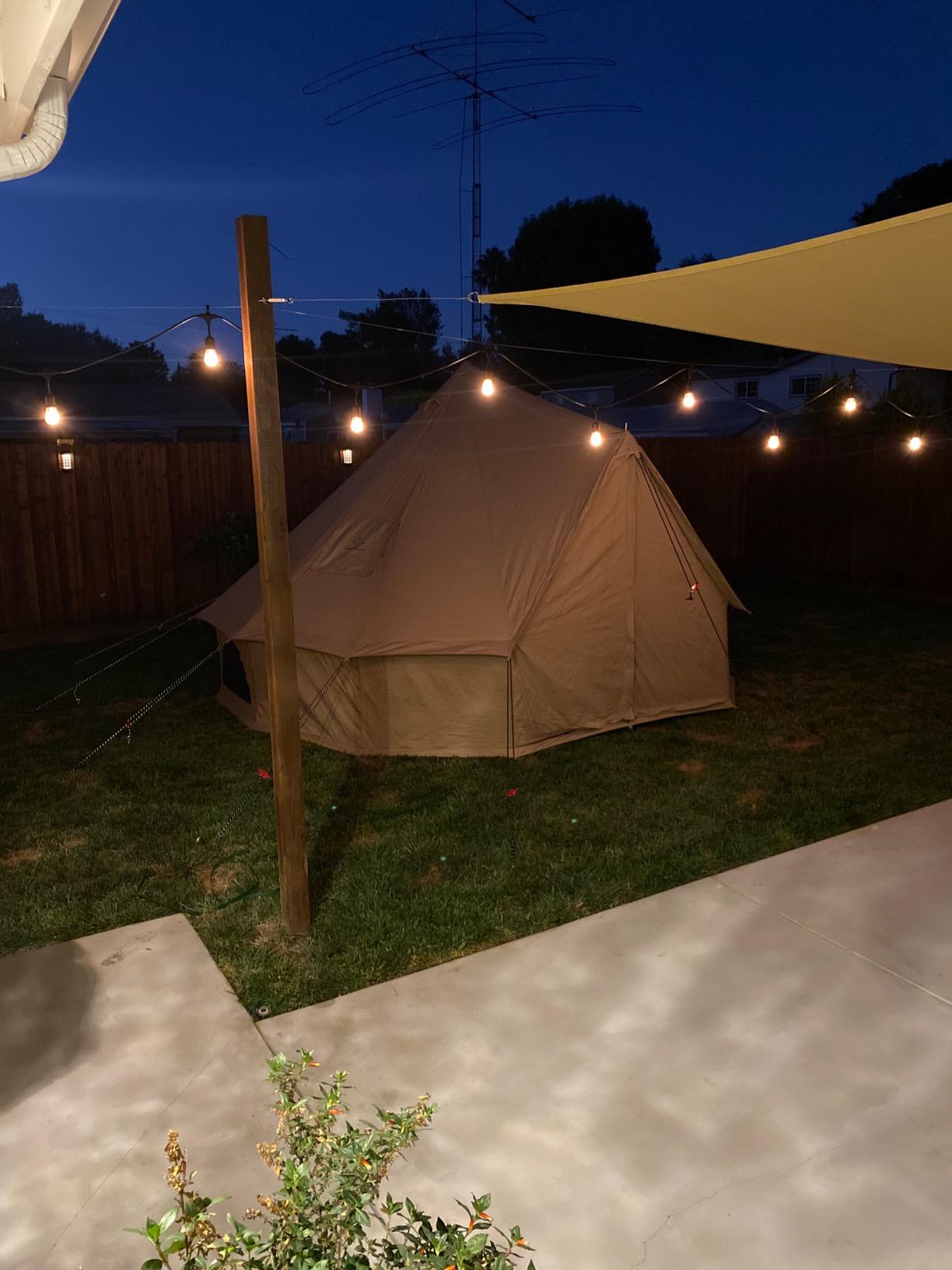
Why the canvas works for a stationary camp
Cotton canvas breathes, and breathing matters more in a heated tent than weight does. Synthetic single-wall fabric traps vapor against the panel and drips it; canvas gives moisture a path out, which is the core reason experienced campers keep coming back to it for basecamp use.
Performance owners report is strong on water too, including one account of staying dry through a 13-hour rainstorm. Two doors and three windows make ventilation easy to control, and roof vents give you somewhere to dump hot air at the top of the tent.
The weight and the drying problem
At 60.6 pounds, this is not a portable shelter. It takes two people or a cart, and it is a car or snowmobile camp rather than a walk-in site.
Canvas that gets wet takes a long time to dry and picks up mud readily, so a wet pack-out means a soaked tent. More importantly, the stove jack rain flap is made from the same fabric as the tent and is not fireproof, so replace it with a flame-resistant panel before you light a stove. Several owners also note the 13 foot size is tight for three adults with a stove running.
4. Danchel B5PRO Canvas Bell Tent – Best for Big Groups
DANCHEL OUTDOOR B5PRO 4 Season Canvas Bell Tent with Stove Jack 16.4ft/5M
300GSM cotton canvas
540GSM PVC floor
16.4 ft diameter
Stove jack
Pros
- One person can pitch it in under 30 minutes
- Held back water in heavy rain and high wind
- Room for beds
- cots and a wood stove
- Roll-up sidewalls add summer flexibility
Cons
- Lowest 4.0 star average in this group
- Roof stove pipe vent flap is highly flammable
- Zippers snag and fail for some owners
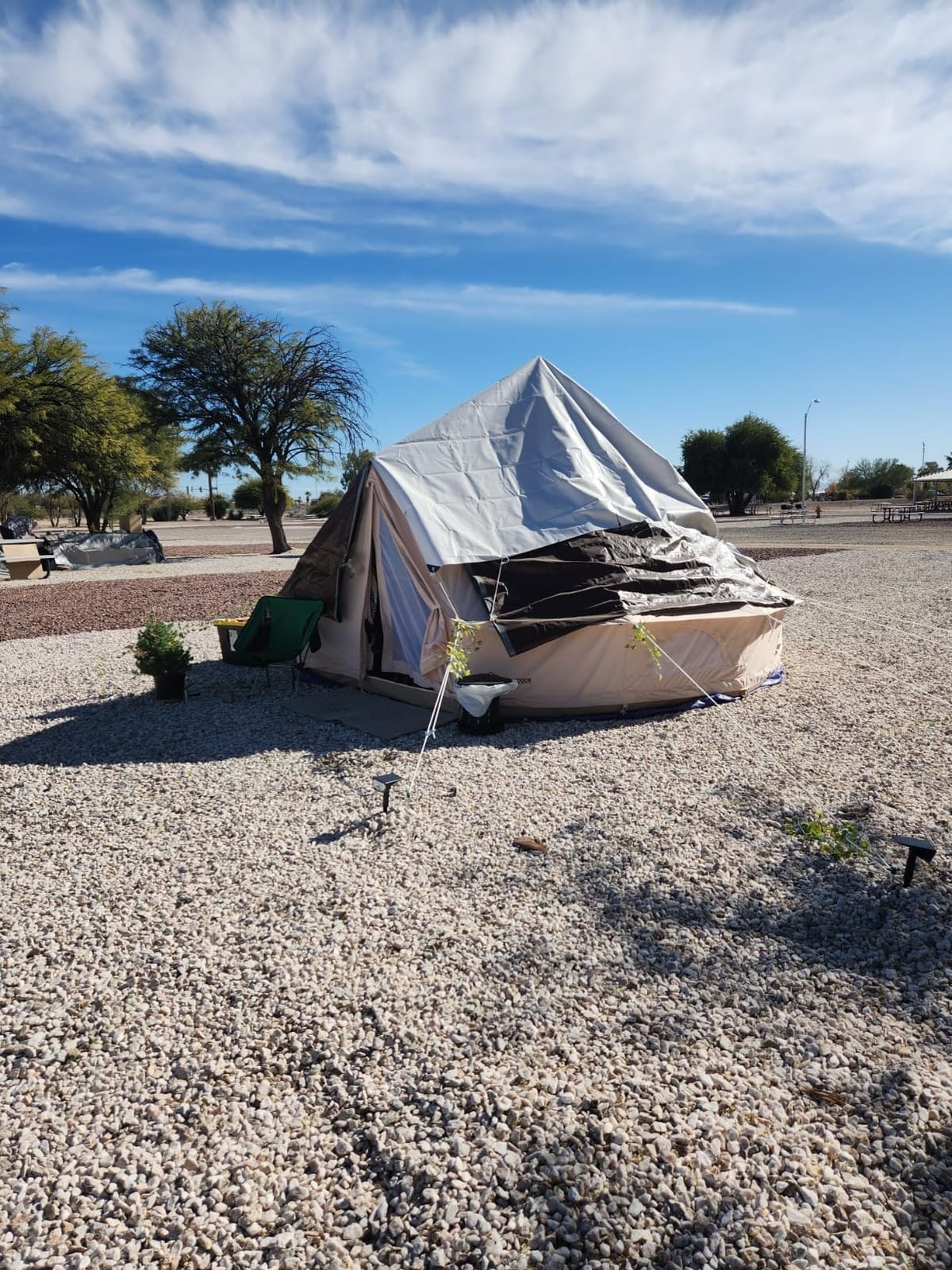
The B5PRO is the pick when the question is how many people fit. At 16.4 feet in diameter it works out to roughly 210 square feet, and owners routinely fit beds, cots and a wood stove inside without rearranging mid-trip. If your winter camp is a group rather than a pair, the extra volume is worth the tradeoffs.
It is also among the fastest large shelters here to set up. Owners report one person pitching it in under 30 minutes, and the galvanized steel frame with reinforced double-stitched seams kept water out in heavy rain and high wind when guyed out tightly.
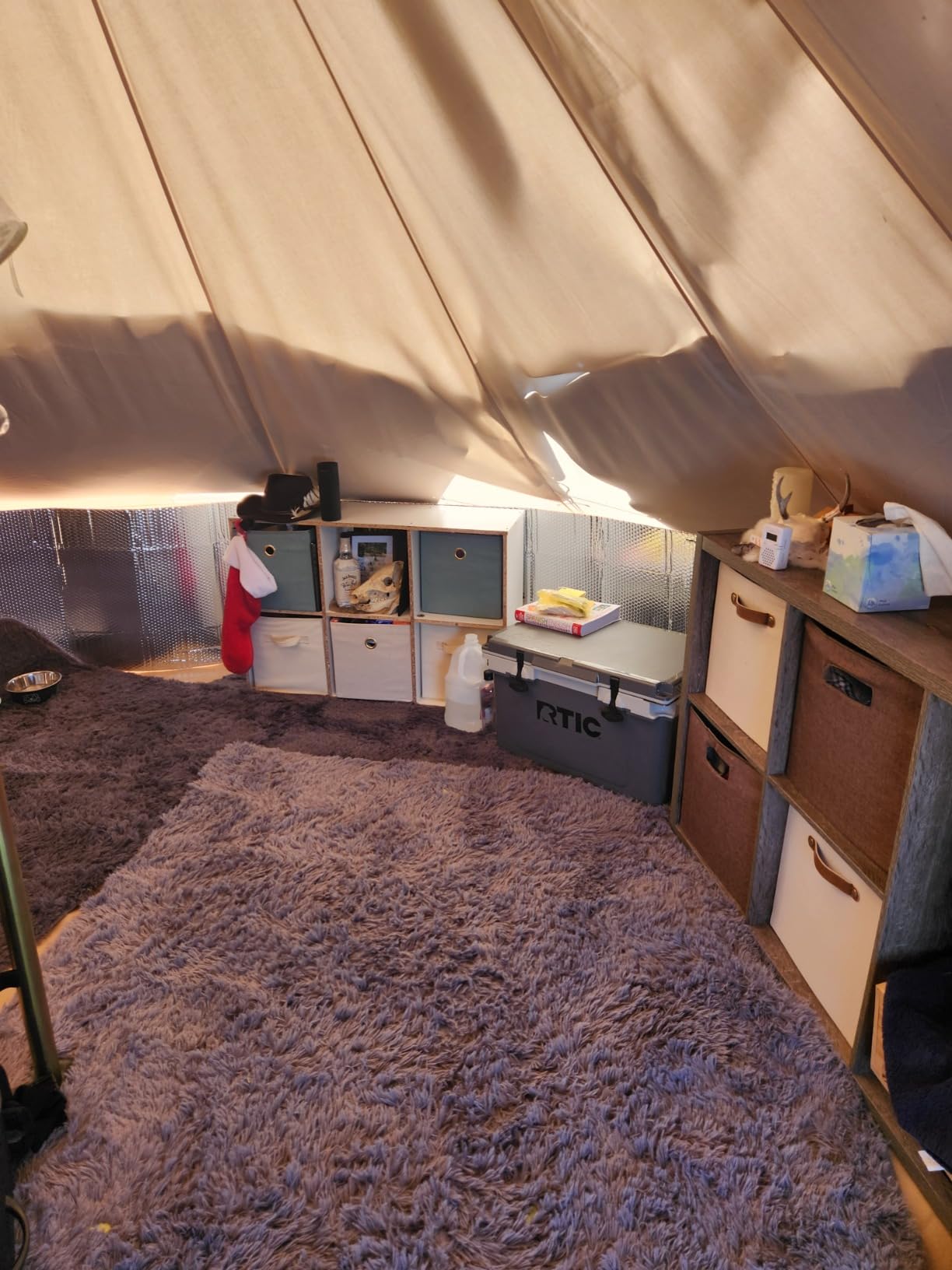
The fabric is 300GSM, or 8.8 ounces per yard, cotton canvas with a 3000mm waterproof PU coating, and the 540GSM bathtub-style PVC floor blocks mud and splash in a way most bell tents cannot. A 5.9 inch pre-cut stove jack with a rain flap, a 6 inch side vent port and a center D-ring for a hanging light complete a well-considered layout.
The roll-up detachable sidewalls are a genuinely useful feature that the other canvas tents here mostly lack. In summer it becomes an open-air canopy, which means one shelter covers a hunting season and a family camping trip.
What earns it a spot on the list
The floor is the standout. A 540GSM bathtub floor in a 16 foot tent is the difference between a dry morning and a wet one, and the wide diameter gives you room to arrange a stove zone away from the sleeping zone.
Owner accounts of holding water out in serious weather when fully guyed suggest the coating is doing real work, and the steel hardware and hardware quality hold up over seasons.
Three problems you should know about
Its 4.0 star average is the lowest in this roundup, with about 10 percent one-star reviews, and the complaints cluster in one place: the stove pipe vent flap. Multiple owners report it will scorch on contact with a hot pipe. Replace it with a flame-resistant panel before the first fire.
Zippers are a recurring failure point, and canvas bottom edges can leak in sustained rain without a separate rain fly. A single center pole also gives limited support in the larger sizes, so guy aggressively.
5. POMOLY Chalet 70 Pro – Best Budget Pick
POMOLY Camping Hot Tent Cabin Tent, Chalet 70 Pro Portable Wall Tents with Stove Jack and Two Poles for 2-3 Person Hiking, Backpacking (M)
54 sq ft floor area
70D plaid ripstop polyester
Two pole cabin setup
4.9 ft peak
Pros
- Fireproof fiberglass floor is a standout feature
- Quick two pole setup with solid seams
- Holds heat well and blocks wind effectively
- Two doors for convenient entry
Cons
- Solid outer door has no zipper so the tent cannot be sealed
- No high air vents so condensation builds fast
- 4.9 ft peak makes entry and exit cramped
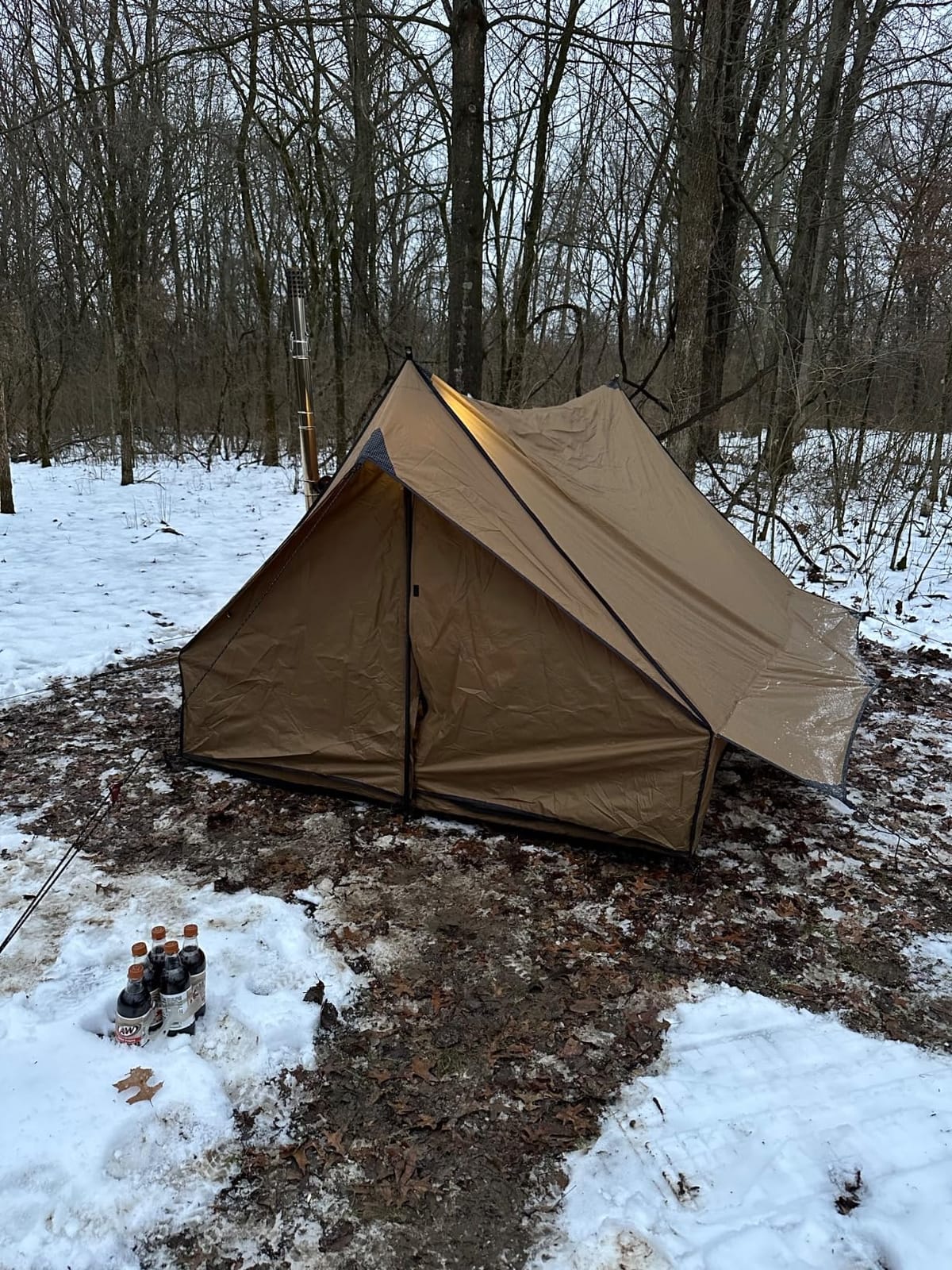
The Chalet 70 Pro is the cheapest way onto this list and the one we would hand to a couple testing whether hot tent camping is for them. The 70D plaid ripstop polyester carries a 2500mm waterproof rating, and two 7001 aluminum alloy poles with eight tie-down points give a cabin shape you can stand in at the door.
At 8.2 by 6.56 by 4.9 feet you get 54 square feet, which fits two people and a small stove with careful layout. It is tight, but tight is workable in cold weather when you are mostly asleep.
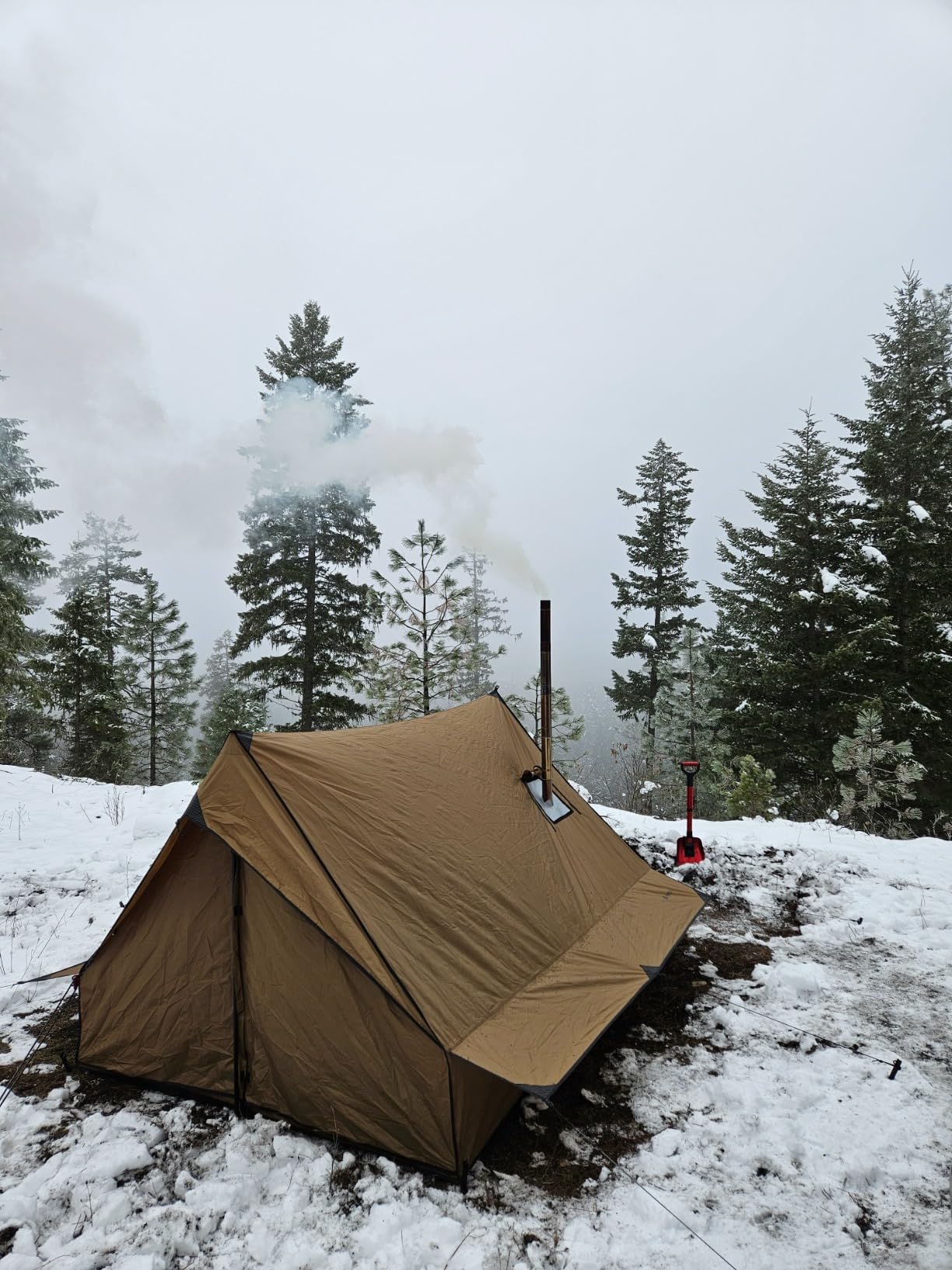
Two features stand out for the money. The integrated fireproof silicone and fiberglass ground sheet is a real safety feature most budget tents omit, and an ember mat is included for stove heat protection. The two doors with side rain curtains make entry and exit simple, and the seams are solid with no pinholes reported.
Reviewers consistently report that it holds heat well and blocks wind. For shoulder-season trips it does the job of a small cabin tent with a stove hole added.
Why it is worth a look at this price
Fire protection is the deciding factor. A budget shelter that ships with a fireproof floor and an ember mat lets you run a stove with fewer improvisation steps, and that is where most of the risk in cheap hot tents actually lives.
The two-pole setup is quick, seams are clean, and the pack is small enough for a first winter overnighter close to the trailhead.
The door problem is real
The solid outer door cover has no zipper, so you cannot seal the tent against wind. In a stove-heated shelter, that means losing heat and drawing in cold air at the one point where it matters most. It also makes ventilation control harder.
There are no high air vents, so condensation builds intensely in cold weather, and the 4.9 foot peak makes getting in and out genuinely cramped. The fabric is thin and lets moisture through, and the included stakes are oversized and heavy. Two people with a full stove setup will feel the squeeze.
6. Naturehike Massif Hot Tent – Best for Backpacking
Naturehike Massif Hot Tent with Stove Jack, Waterproof Windproof 4 Season Tent, 2/4 Person Cold Weather Winter Tents for Camping
3000mm silicone coated fly
10 sq ft vestibule
7.3 lb trail weight
Snow skirt
Pros
- Owners report 45 degrees inside at 11 degrees outside
- Handled 8 hours of rain turning to snow
- Vestibule fits a chair
- table and stove
- Color coded pole guides simplify setup
Cons
- Needs every guy line in high wind
- 70D inner floor lets moisture rise from damp ground
- Bulky pack size for long hikes
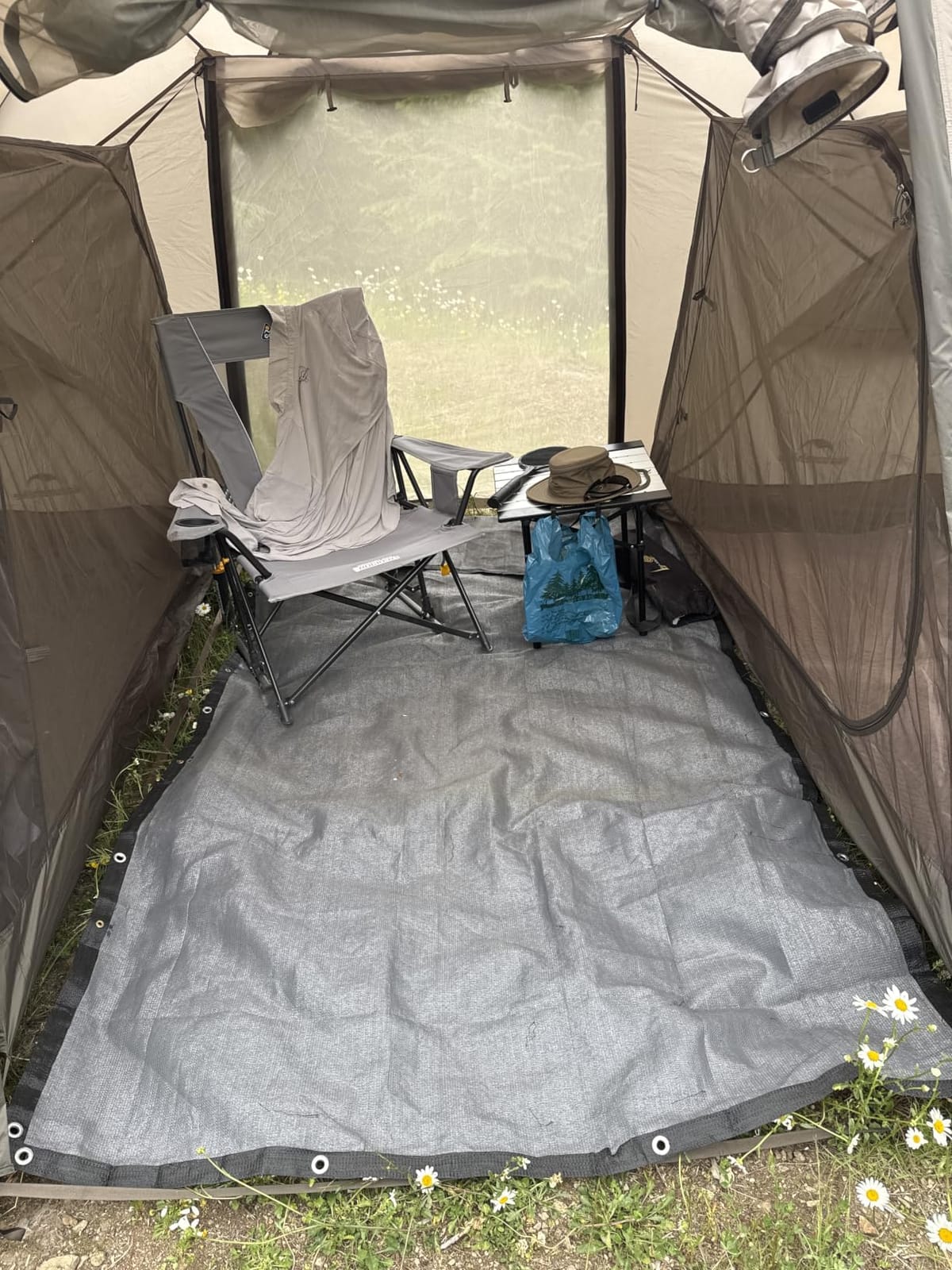
The Massif is the only shelter here with a real claim to carried winter weight. Its minimum trail weight of 7.3 pounds is under half of most hot tents in this roundup, and the 10 square foot vestibule is large enough to hold a chair, a table and the stove outside in the warm air.
That vestibule is the feature experienced winter campers care about most. Cooking and fire tending in the vestibule instead of under the fly keeps moisture out of your sleeping space and reduces the load on the tent walls.
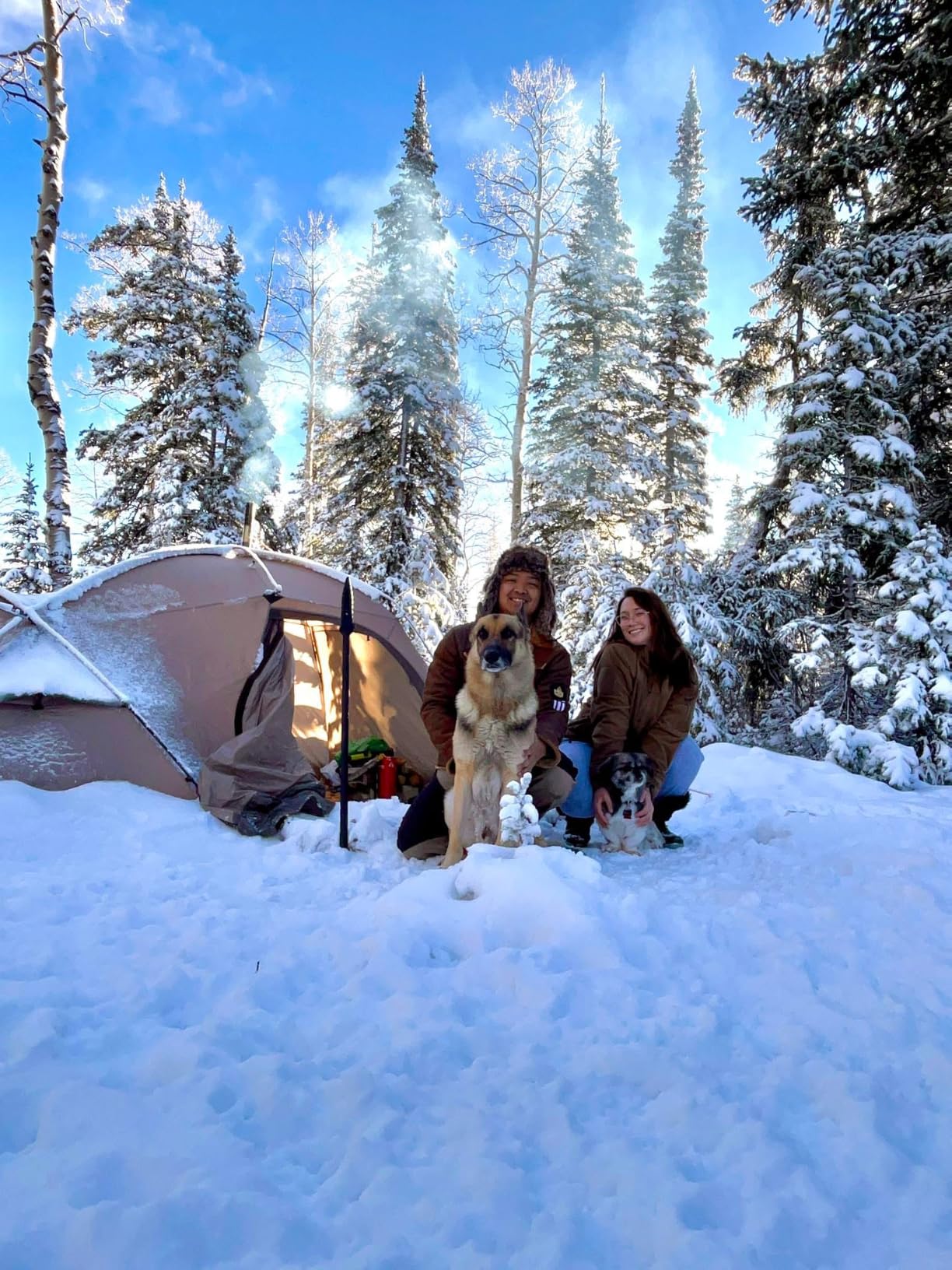
Heat performance is the standout. Owners report roughly 45 degrees inside while it was 11 degrees outside with the stove running, and one account describes eight hours of rain turning into two inches of snow without issue. The 30D silicone-coated fly over a removable 70D mesh inner gives you a genuine air gap, and the inner does not touch the outer walls, which reduces condensation compared with single-wall designs.
Color-coded pole guides make a first pitch straightforward, and seam-taped construction with reinforced stress points holds up. A snow skirt blocks wind-driven snow at the base, which matters on a drifted site.
Where the design earns its spot
The double-wall structure is the reason it holds heat without becoming a dripping mess. The mesh inner doubles as bug protection in warmer seasons, so this is a genuine four-season shelter rather than a winter-only purchase.
Two ventilation windows plus the mesh give you real airflow control, and the 3000mm fly with UPF50+ protection handles strong sun on a snowfield without cooking you.
Limits to plan around
It is not an exposed-site tent. Owners are clear that it needs every guy line deployed, and tie-down points are limited, so pick sheltered ground or bring more stakes and longer cord than you think you need.
The 70D inner floor is not fully waterproof from below and moisture seeps up from damp ground, so add a footprint. Rain and snow can also collect above the sleeping area and drip at night, and the bulky pack size works against long approaches. One owner reported a pole snapping and a zipper failing after two and a half years.
7. Naturehike Dune Hot Tent – Best for Cold Weather
Naturehike Dune Hot Tent with Stove Jack,Double Layer 4 Season Tent,Waterproof 2-4 Person Tents for Camping
4000mm oxford floor
Double layer with inner tent
75D silver coated fly
16.5 lb
Pros
- Reflective lining improves heat retention
- Survived hail
- 50 mph winds and severe storms
- Four doors and four windows for airflow
- Two year warranty
Cons
- Listed 2 person size is tight once a stove is inside
- Inner tent sits close to the stove jack
- 16.5 lb is not a backpacking weight
The Dune is the warmest shelter in this roundup in our reading of owner feedback, and the mechanism is specific. The silver-coated 75D polyester fly reflects radiant heat back into the tent rather than letting it escape, so the stove output goes into the living space instead of the sky.
At 4.6 stars across 220 reviews it sits just behind the Regatta, but the storm record is what stands out. Owners report it surviving hail, 50 mph winds and multiple severe storms without damage, and one account notes zero leaks in steady rain at the seams.
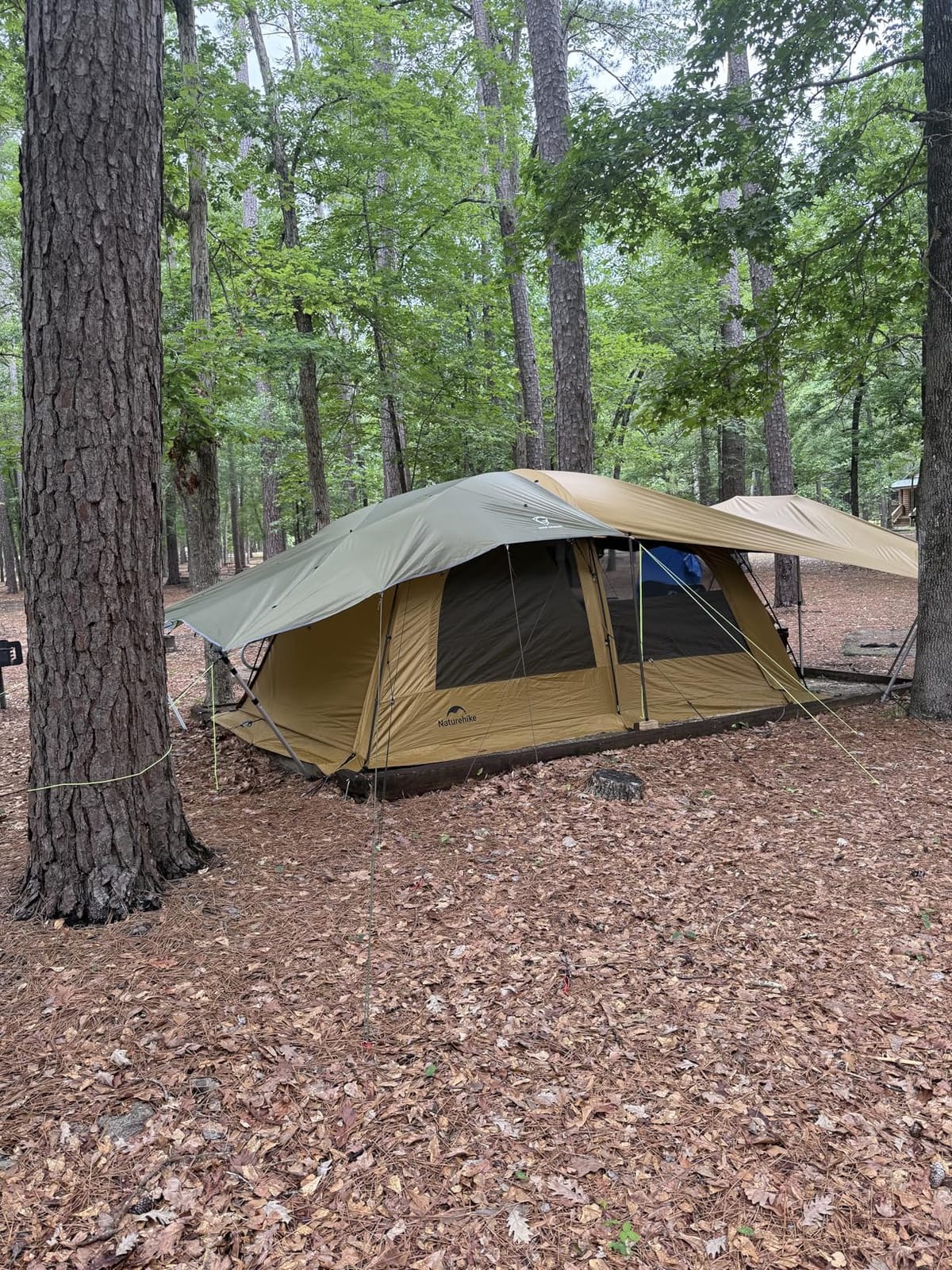
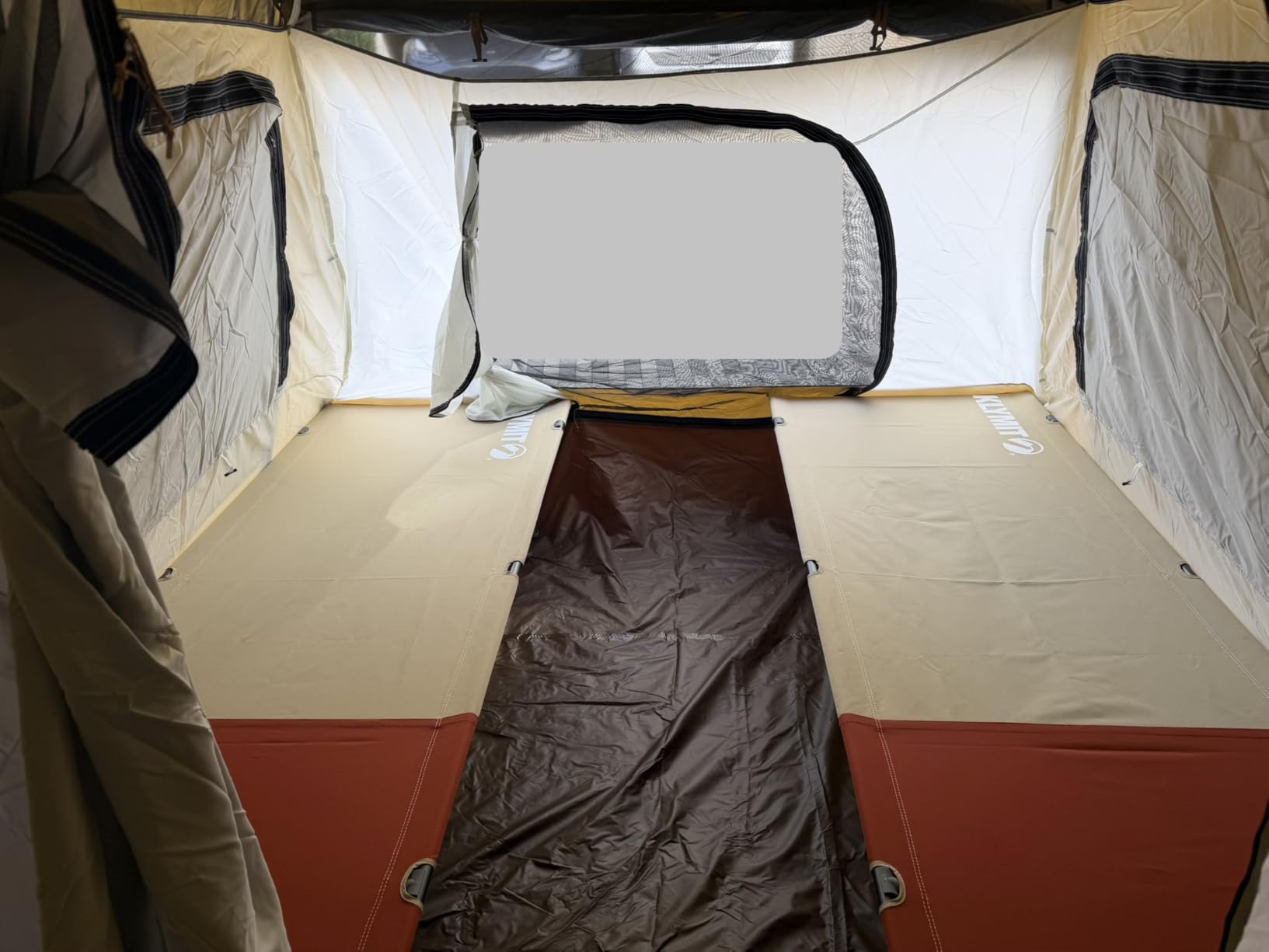
The floor is a 150D oxford cloth rated at 4000mm with taped corners, the highest waterproof figure among the double-wall designs here. The 7001 aluminum alloy poles form an X cross windproof structure, and four double-layered doors with four ventilation windows give you more ways to move air than any other tent in this group.
Height is the other advantage. At 70.8 inches on the outer tent, most adults can move around inside rather than stoop, and the removable inner measures 86.6 by 59 by 63 inches.
Why the reflective fly matters in deep cold
When the stove is the only heat source, radiant loss through the roof is the biggest remaining leak after conduction. A reflective coating directly attacks that, which is why owners consistently describe it as the warmest hot tent they have used.
The four-door layout is also a genuine winter feature. You can enter and exit without unzipping a door over someone sleeping, and you can cross-ventilate by opening a low door and a high window to strip humidity.
Sizing and clearance cautions
The listed 2 person size is tight for two once a cot, table and stove are inside. Treat it as a one and a half person shelter in practice, or step up to the larger size.
The inner tent sits close to the stove jack, so you need a heat shield and careful pipe routing to use both at once. At 16.5 pounds it is a carry-or-sled weight, and the snow skirt does not seal insects and can flap in wind. Canopy and awning poles are sold separately.
8. MC TOMOUNT Canvas Bell Tent – Best for Headroom
MC TOMOUNT Canvas Bell Tent with Stove Jack, 16.4ft*High9.2ft Glamping Tent
268.9 sq ft floor area
55 inch side walls
9.18 ft peak height
55.1 lb
Pros
- 55 inch walls give far more usable space than typical bell tents
- Ran a wood stove comfortably in the low 20s
- Steep roof sheds rain and snow
- Eight doors and windows for airflow
Cons
- No PU coating so overnight rain is not advised
- Weak bundled stakes pull out of sandy soil
- 55.1 lb needs two people to erect
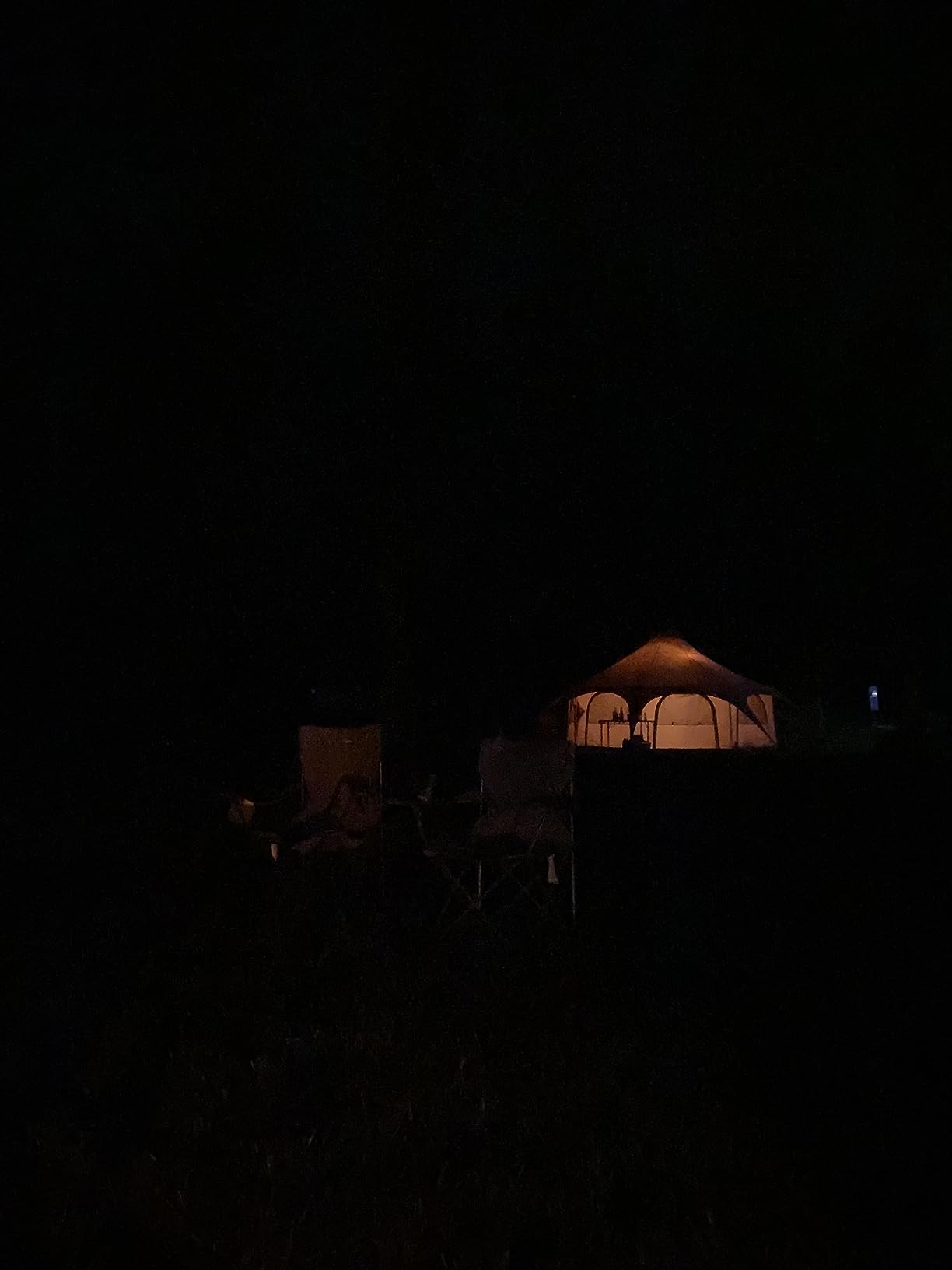
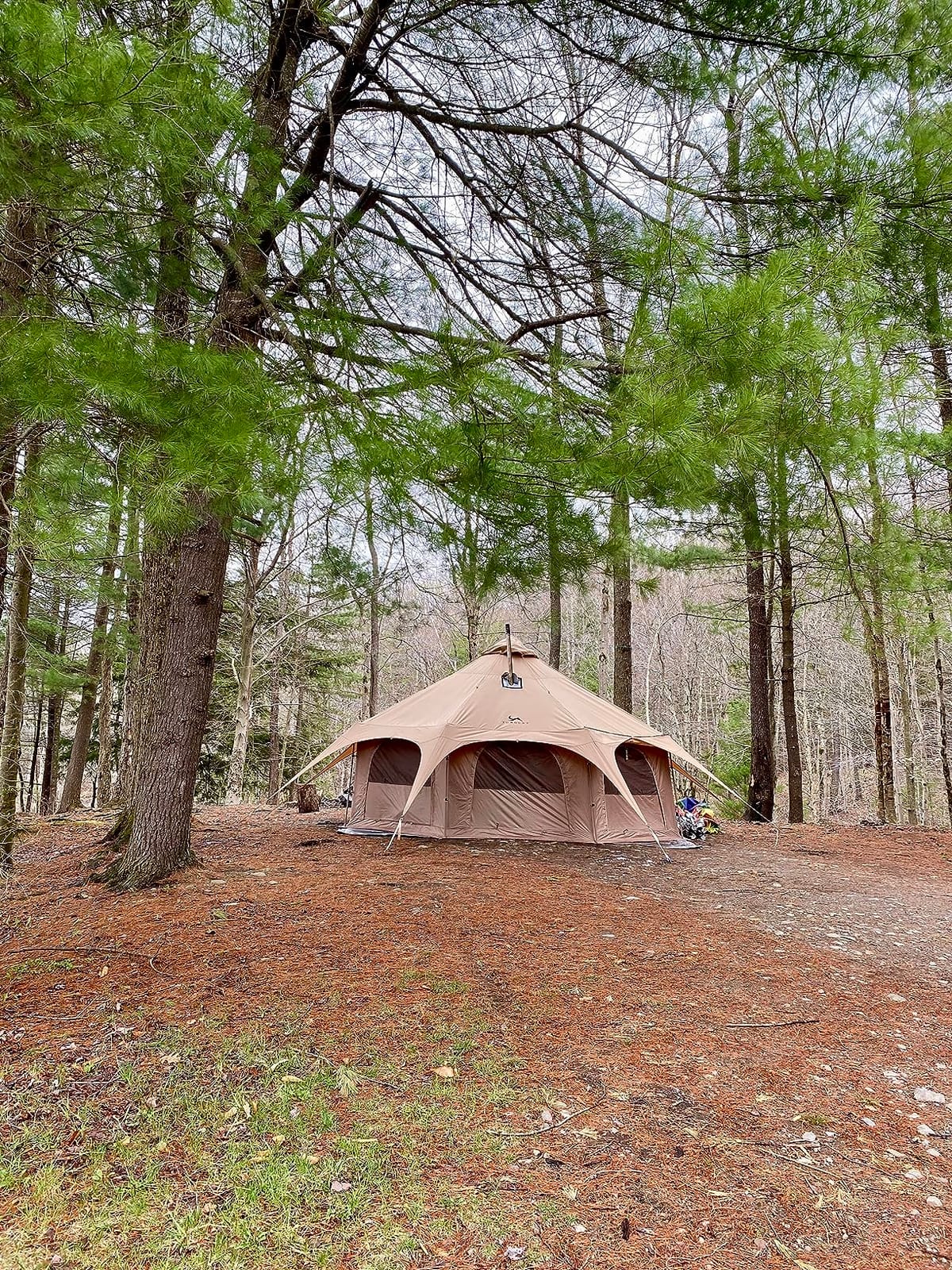
Wall height is the metric most bell tent listings bury, and the MC TOMOUNT leads this group because of it. At 55 inches of side wall before the roof curve begins, you get usable standing space across most of the 16.4 foot diameter rather than the crawling-height interior typical of canvas bells.
That vertical room is what makes a long winter camp bearable. You can stand to dress, reach a high shelf, and move a cot without dragging it over a stove. Owners report running a wood stove comfortably in the low 20s.
Construction is a TC cotton canvas roof, 65 percent polyester and 35 percent cotton, with no PU coating on purpose. Breathability is the reason for that choice, and it cuts interior condensation compared with coated canvas. The walls are 210D oxford and the detachable 600D oxford floor is rated at PU3000mm.
Eight doors and eight mesh windows give exceptional airflow for a tent this size, and the steep roof pitch sheds rain and snow rather than letting it pool. The stove jack has three feet of clearance from the walls, one of the better setbacks here.
What the extra height buys you
Most bell tents become unusable the moment you need to do anything upright. This one does not, and over a two-week basecamp that difference shows up every morning when gear is wet and your back is stiff.
The roll-up sidewalls convert the tent to a canopy, and the double-stitched seams with reinforced corners hold up in a stationary camp. Customer service also replaced a missing pole without argument, which matters more than it sounds when you are 20 miles down a winter road.
Rain limits and heavy handling
The lack of PU coating means this tent is built for light to moderate rain only. It should not sit in sustained overnight rain without a fly above it, and the same breathability that reduces condensation leaves it vulnerable to downpours.
At 55.1 pounds it needs two people to erect, the bundled stakes are weak and pull out of sandy soil in moderate wind, and doors that do not open from the bottom create a trip hazard in the dark. One long-term owner reported fabric degradation after a few seasons.
9. VEVOR Canvas Bell Tent – Best for First-Time Owners
VEVOR Canvas Tent Bell Tent, 4 Seasons 4 m/13.12 ft, for Camping with Stove Jack, Family Camping Outdoor Hunting Party
12.56 sq m floor area
250 cm peak height
TC canvas blend
3 inch flame resistant stove hole
Pros
- Breathable TC canvas reduces interior condensation
- Flame resistant stove hole with rain cap
- Complete kit with tensioners
- hammer and repair kit
- Two year warranty
Cons
- No PU coating so it suits light to moderate rain
- 50 lb is heavy and awkward to transport
- Title and spec sheet disagree on capacity
The VEVOR is the pick for someone setting up a first stationary winter camp and wanting the whole kit on the box. Alongside the tent you get 12 nylon reflective guylines, 12 aluminum tensioners, a rain cap, stakes, a stake hammer, a tent bag and a repair kit.
That matters more than it sounds. Most first-time hot tent owners pitch in the dark and then improvise guylines, and reflective cord with real tensioners removes one of the most common cold-night mistakes.
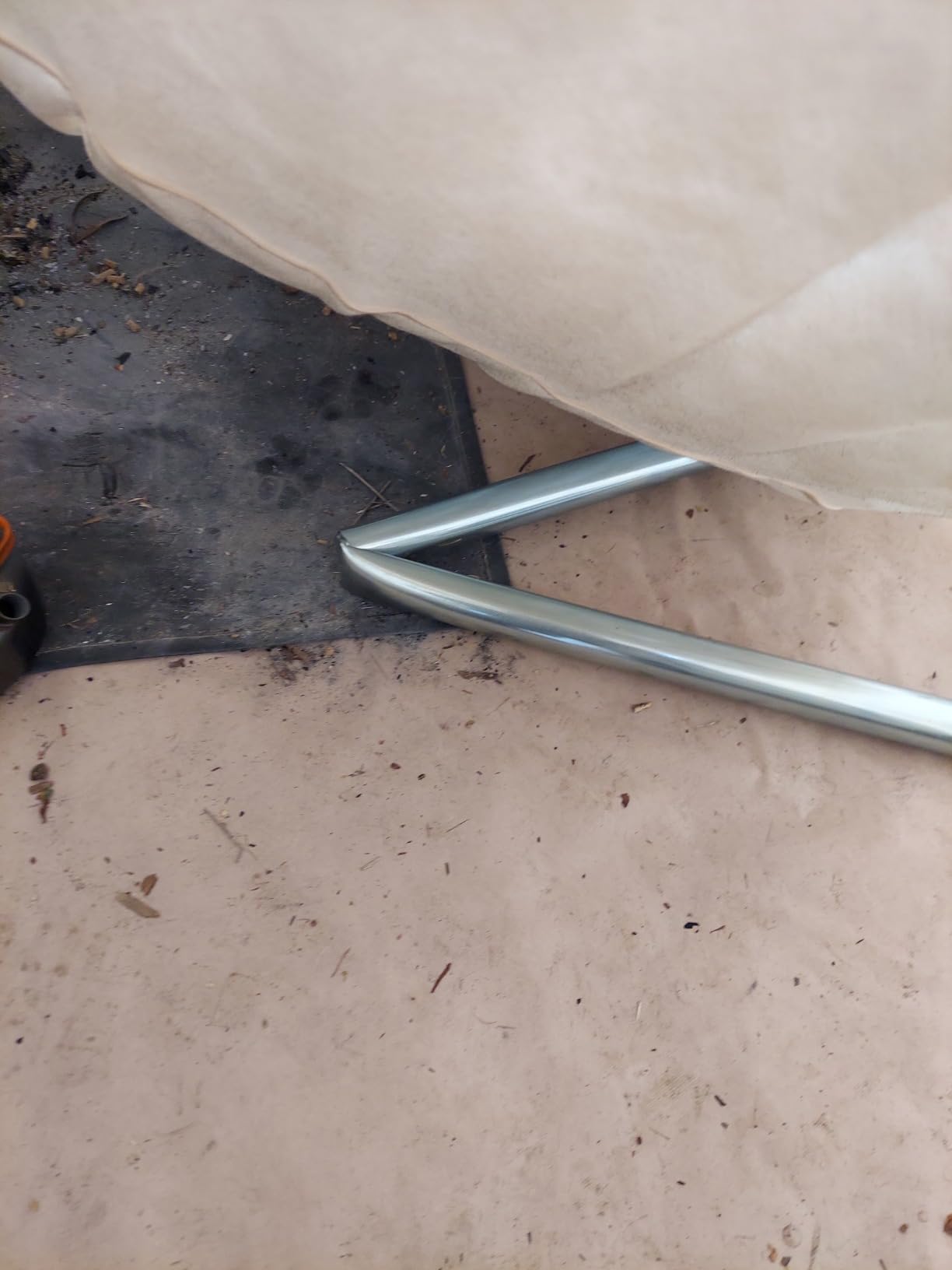
The stove opening is a 3 inch flame-resistant hole with a 43 by 43 cm flap, which is a properly rated heat barrier rather than a cut in the fabric. At 4 meters, or 13.12 feet, in diameter with a 250 cm peak and 12.56 square meters of floor, it is a sensible two-to-four person footprint.
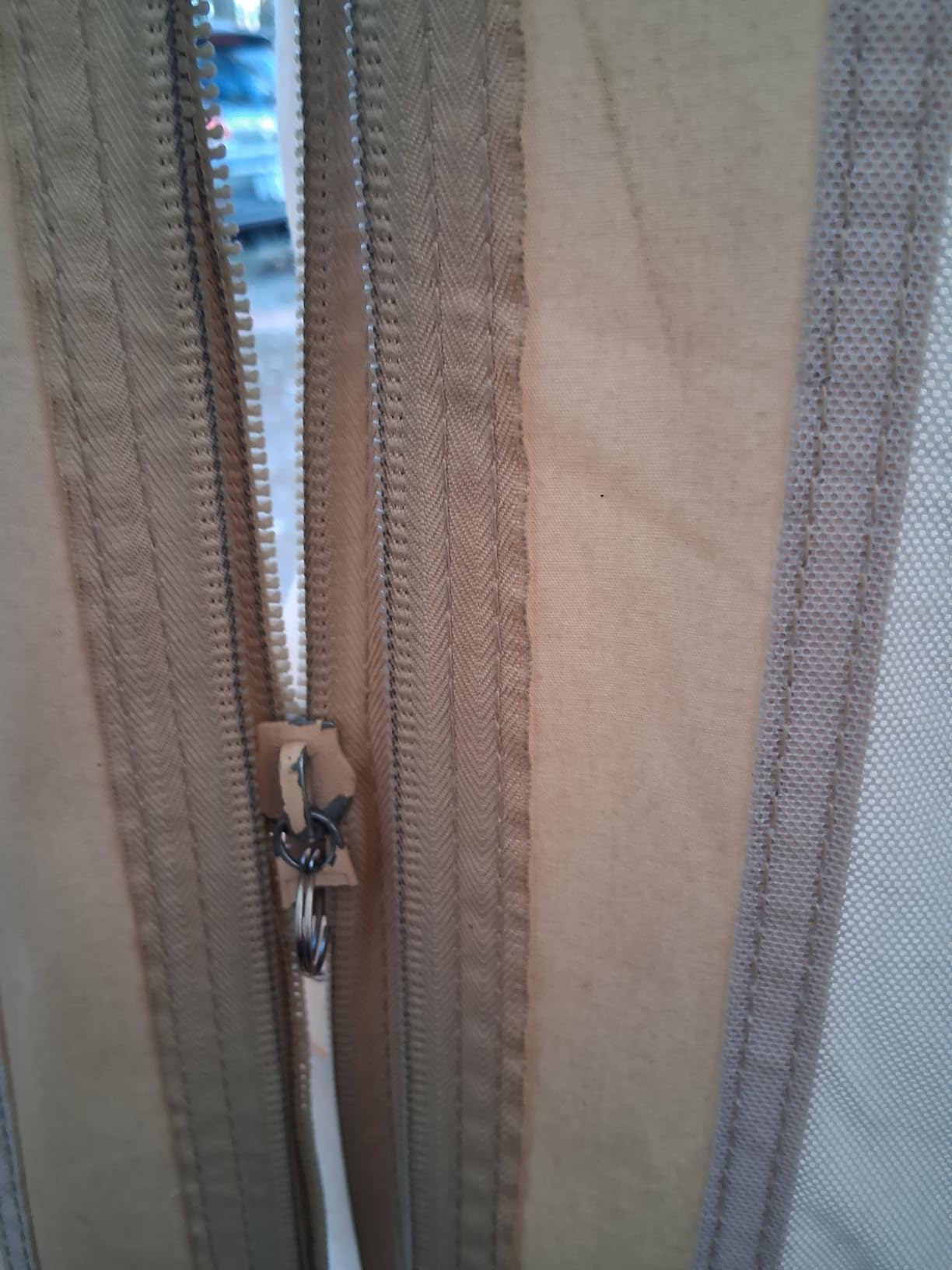
Four mesh-covered windows and TC technical cotton fabric without PU coating keep air moving and condensation down. The galvanized iron center and door poles hold shape better than fiberglass in wind, and the two year warranty is a real commitment from the manufacturer.
What makes it a low-risk first hot tent
Fire safety is where budget hot tents usually cut corners, and the flame-resistant stove hole with a rain cap is the opposite approach. Combined with a breathable fabric that resists interior condensation, it removes two of the most common first-trip failure points.
It also holds up to six occupants by the spec sheet, so it doubles as a family shelter. If you want more layout guidance for that case, our family camping tent picks are worth a look.
Know the limits before winter
There is no PU coating, so this is a light to moderate rain shelter. In a real winter storm you need a fly above it, and the cotton material gives limited passive insulation in extreme cold, meaning the stove has to do all the work.
At 50 pounds it is heavy and awkward to transport. Also note the listing inconsistency: the title says it holds up to four people while the specs state six person capacity, so plan the layout yourself rather than trusting the headline number.
10. WaldZimmer 13ft Canvas Bell Tent – Best for Thick Floors
WaldZimmer 13ft Green Canvas Bell Tent with Stove Jack & Removable Floor
500gsm PVC floor
Polycotton canvas
8.2 ft peak height
12 sq m floor
Pros
- Owners sleep comfortably in the upper 20s with a heater
- No leaks through a severe thunderstorm and snow
- Four step setup solo
- Strong bundled stakes and tensioners
Cons
- Water resistance listed at only 500mm
- Thin polycotton canvas against heavier canvas yurts
- Some seams use single running stitches
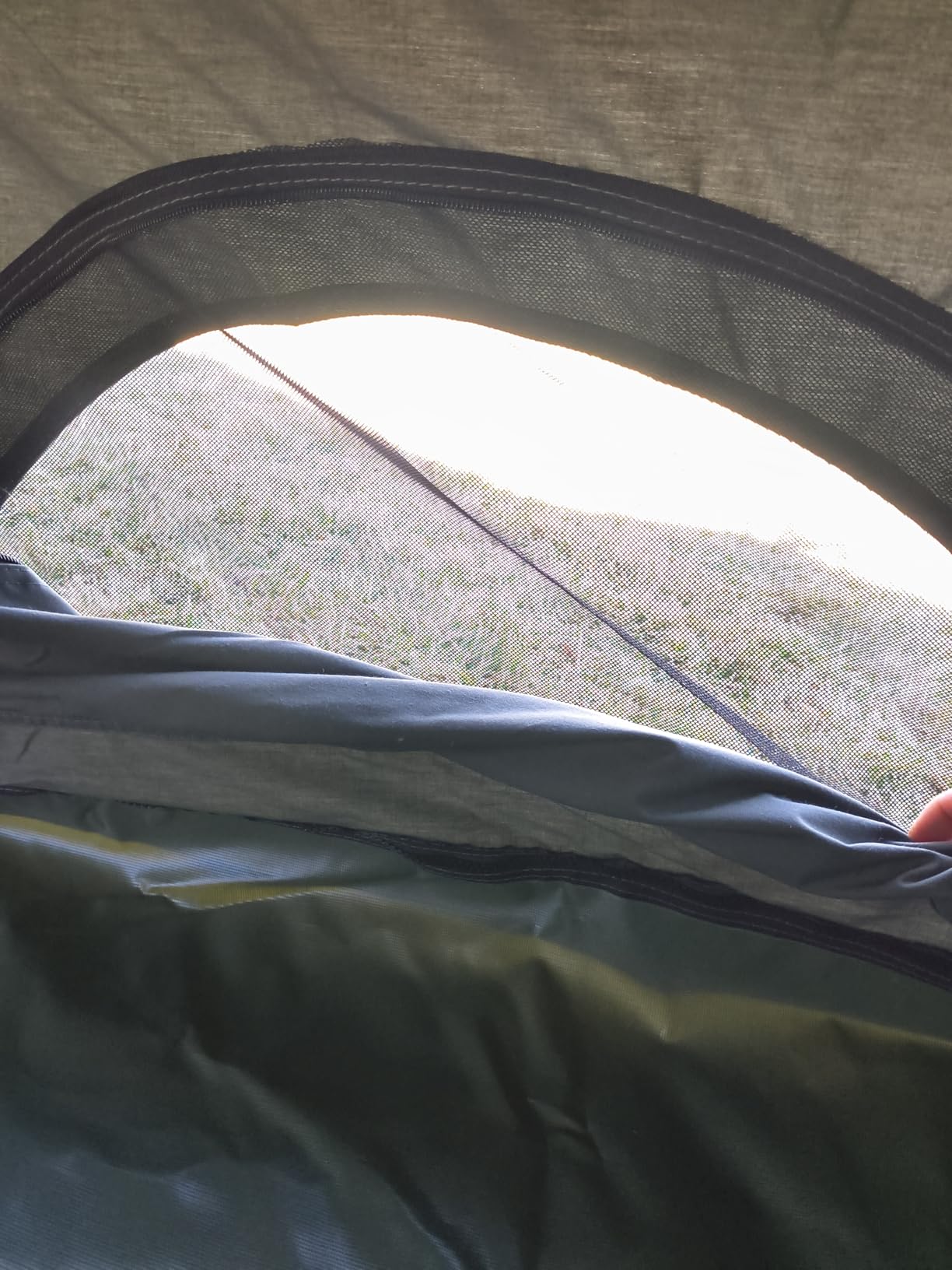
The WaldZimmer’s headline feature is the floor, and it is the thickest on this list at 500gsm waterproof PVC. Owners report it is durable enough to skip a separate ground sheet, which removes a layer and a cold spot from your winter sleep system.
Heat retention is the other reason it earns a place. One owner reported sleeping comfortably in the upper 20s Fahrenheit with a portable heater running, and another describes no leaks at all through a severe thunderstorm followed by later snowfall.
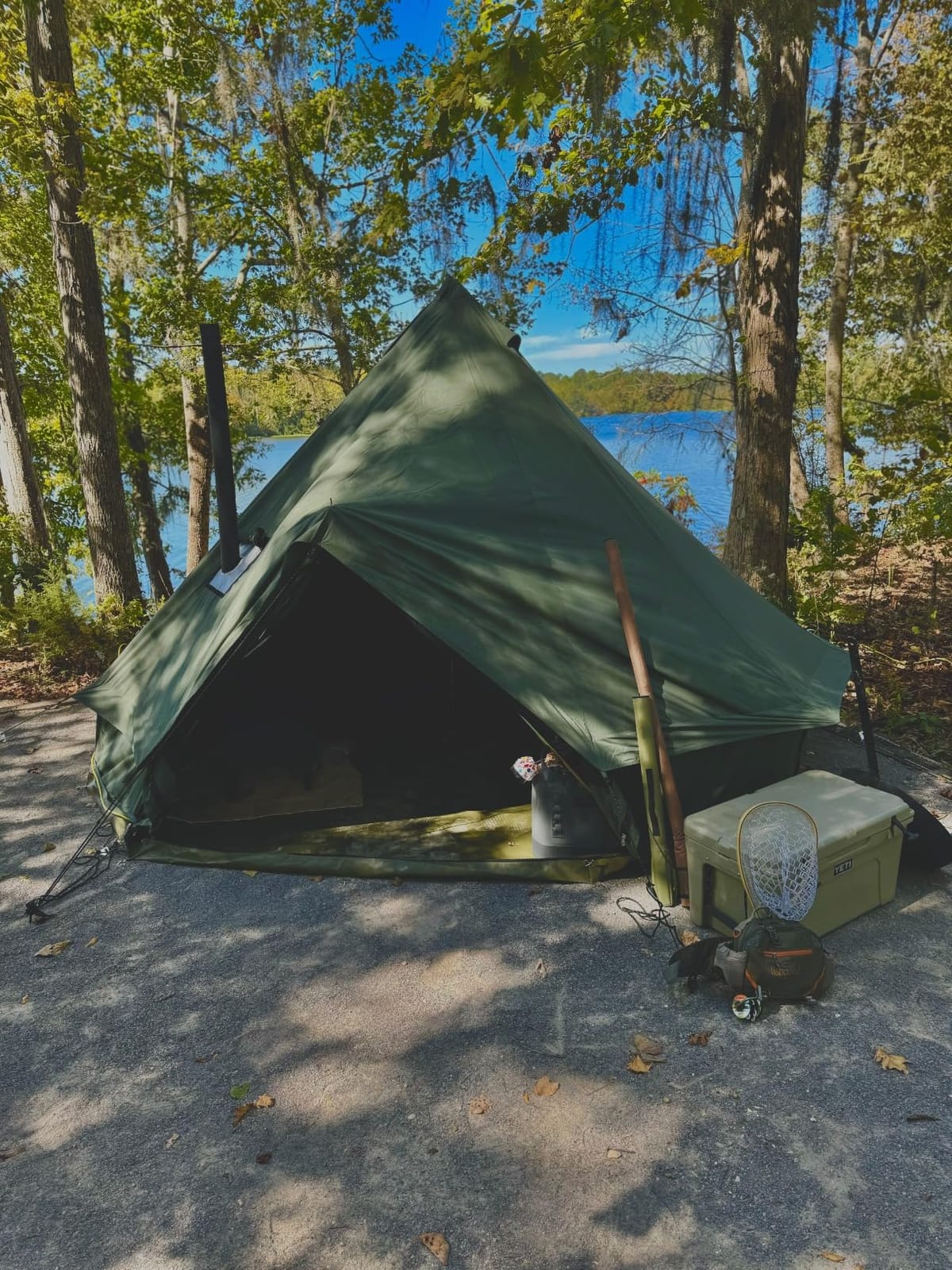
At 13 feet in diameter with an 8.2 foot peak height and 5 foot door, it holds four to five people with stand-up headroom for taller campers. The pre-cut 10 cm stove jack can be trimmed to fit your pipe diameter, and four double-layered roll-up windows plus four roof vents give you serious ventilation control for a canvas tent.
Setup is a four-step process that owners manage solo, and the steel center pole, triangle door pole and adjustable wind rope form a simple, repairable structure with no complex hardware to lose.
Why the floor rating is the story
In a stationary winter camp, ground moisture is the quiet killer. A 500gsm PVC floor means you are not insulating against frozen wet ground, and you can put a thin pad directly on top without immediately feeling the cold come through.
The bundled stakes and tensioners are also notably better quality than the lightweight plastic sets that ship with many canvas tents, which matters on a site where you are staking into snow or frozen soil.
Fabric and seam compromises
The water resistance rating is listed at only 500mm, which is the lowest figure in this roundup, and one owner reports heavy leaking. Treat it as a dry-weather or fly-protected shelter rather than an all-season rain tent.
The polycotton canvas is thin compared with heavier canvas yurts, and some seams use single running stitches, which is the first place canvas tents fail. Owners also report a gap at the outer edges of the zippers that lets insects in until sealed, a thin rain cap over the door pole, and a weight that can run well past the listed 52 pounds once packed.
11. Preself T3 XL Tipi Hot Tent – Best for Hunting
Preself 4~6 Person Tipi Hot Tent T3 XL with Screen Window, Height 8′ 6″ 2.6m, Diameter 15′ 4.6m, for Wood Buring Stove Bushcraft Family Camping Hunting Fishing (Tent)
15 ft diameter
8 ft 6 in peak height
CPAI-84 flame resistant coating
11 lb
Pros
- Single pole pitch is quick enough to do solo
- Large footprint fits a family plus a stove
- No leaks over 10 days of winter use
- Taped seams and a snow skirt
Cons
- Advertised screen window is solid TPU with no mesh
- Central pole splits the usable interior
- Only 4 stakes included
The T3 XL is the hunting shelter in this group, and the reason is the 15 foot diameter with an 8 foot 6 inch peak. A large game room next to a cot is exactly the layout a deer camp needs, and the floorless design means you can put down a cot and a chair wherever the ground cooperates.
Winter performance reports are good. Owners describe no leaks under both rain and snow across ten days of use, which is the kind of durability claim that matters when you cannot easily resupply.
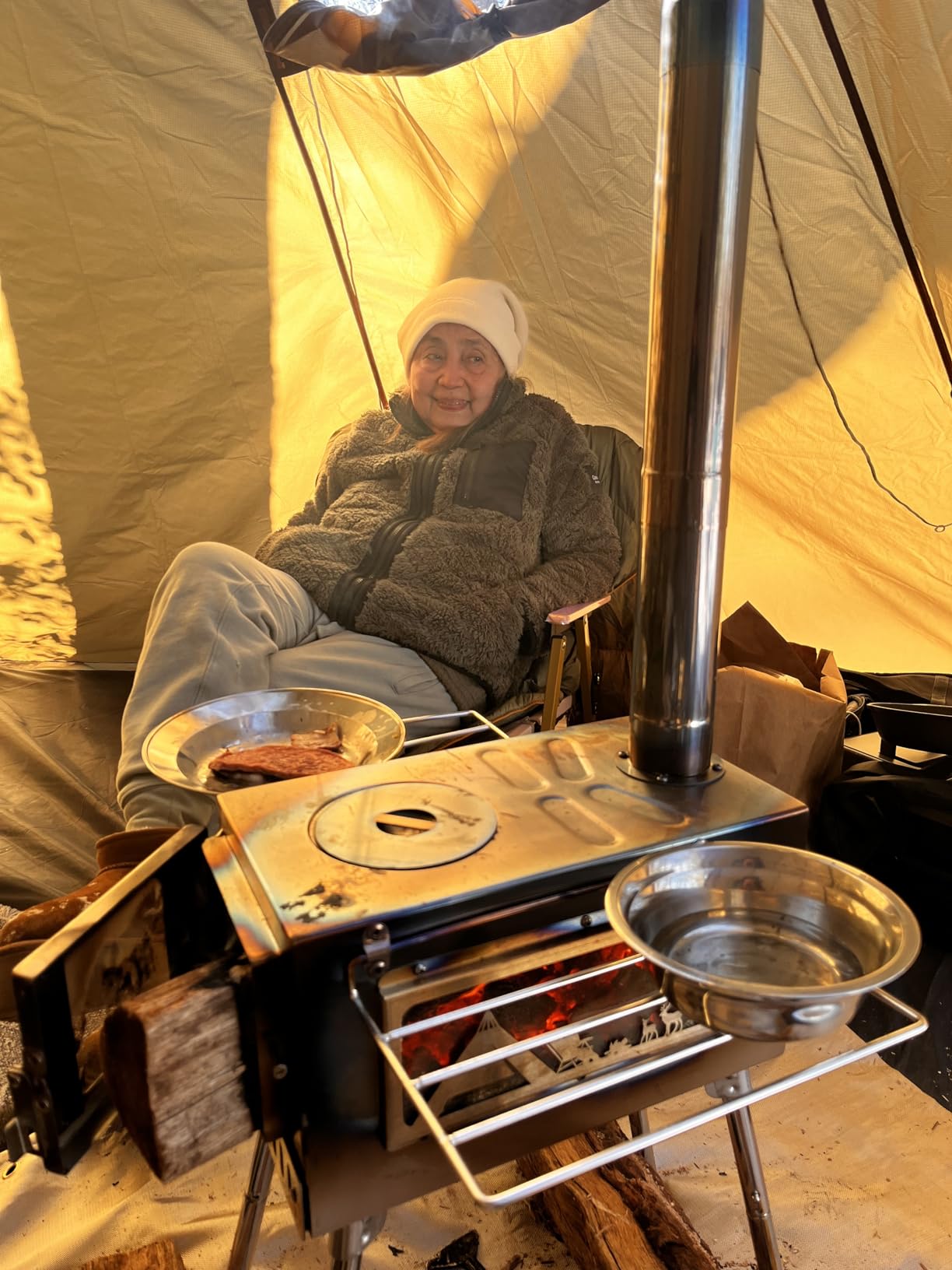
The fabric is anti-tear polyester with a PU 3000mm waterproof rating and a flame-resistant coating that passed the CPAI-84 test. That certification is the relevant one here, and it is a stronger safety signal than an unmarked polyester tarp.
All seams are taped, the single AA7075 aluminum alloy pole pitches in one movement, and the large TPU window brightens an interior that would otherwise be a dark cone all day. Total weight is 11 pounds, with a one year warranty.
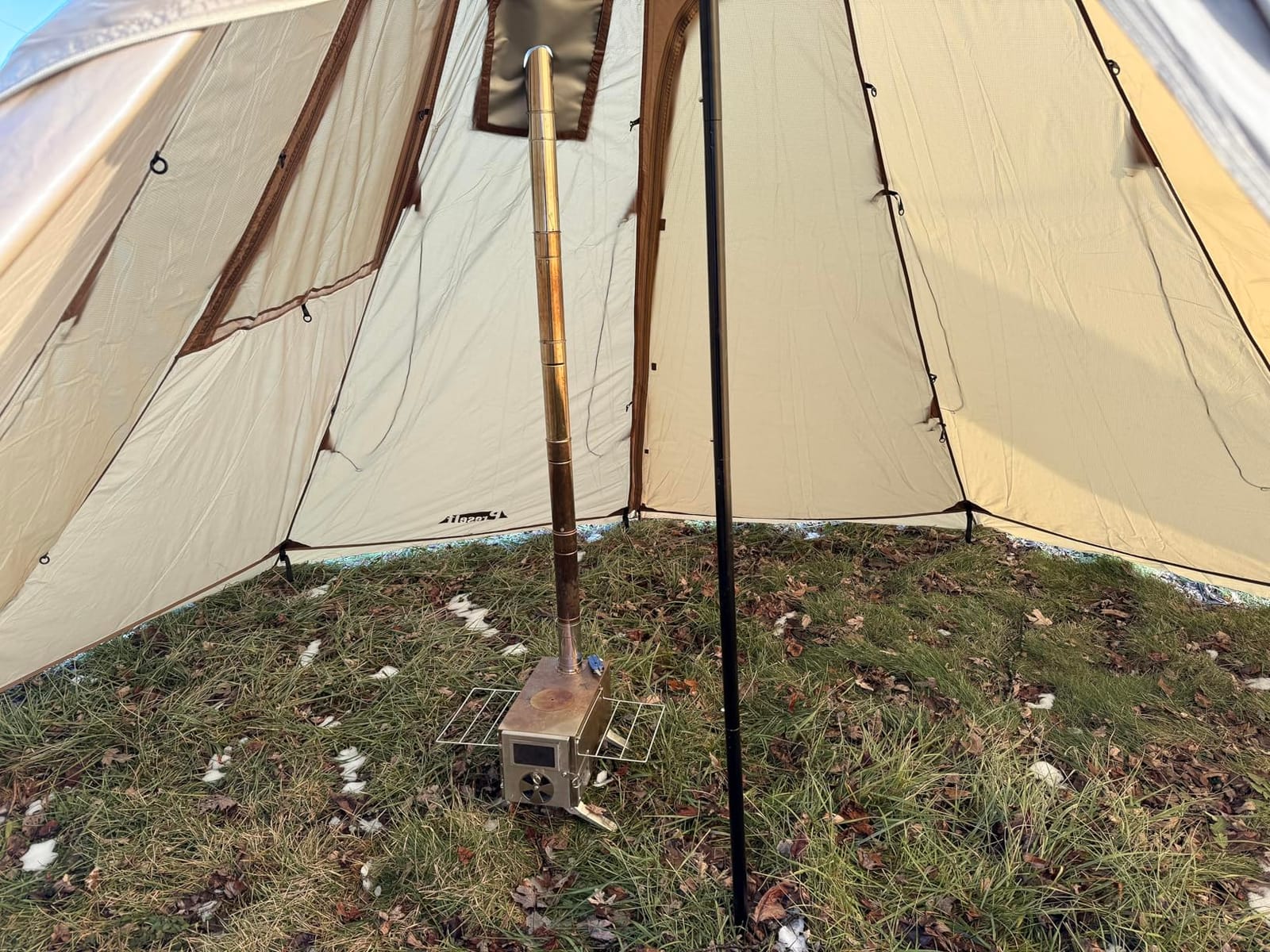
Why a tipi fits a hunting camp
The steep cone sheds snow almost better than any flat or bell shape, and with only one pole there is nothing to tangle when you are pitching by headlamp. The height also gives you dry air at the top of the tent where the stove exhaust goes.
For a solo or two-person hunt it is a strong value, and the CPAI-84 flame-resistant coating plus taped seams make it one of the safer budget options to run a stove in.
Layout and hardware limits
The advertised screen window is actually a solid TPU window with no screen mesh, so it is a light panel rather than a ventilated screen. Expect more condensation management work on a spring trip.
The central pole divides the interior and reduces usable floor space, and only four stakes are included, which is rarely enough in wind or snow. A single wood stove also struggles to hold temperature across this volume overnight, so plan on a second burn in the small hours.
12. RBM Outdoors UP-5 Double-Layer Hot Tent – Best Double Wall
RBM Outdoors UP-5 Hot Tent with Stove Jack, Heavy Duty 4 Season Shelter
13.1 sq m floor area
87 in standing height
Double wall air gap
82.7 lb
Pros
- True tent within a tent double wall with an air gap
- Umbrella frame deploys in about 3 minutes
- Spare parts
- spare stove glass and panels included
- Low level stove vents and a removable heat shield
Cons
- 82.7 lb needs two people to raise the frame
- Instruction manual is not helpful
- Owner advised for use above 32 degrees
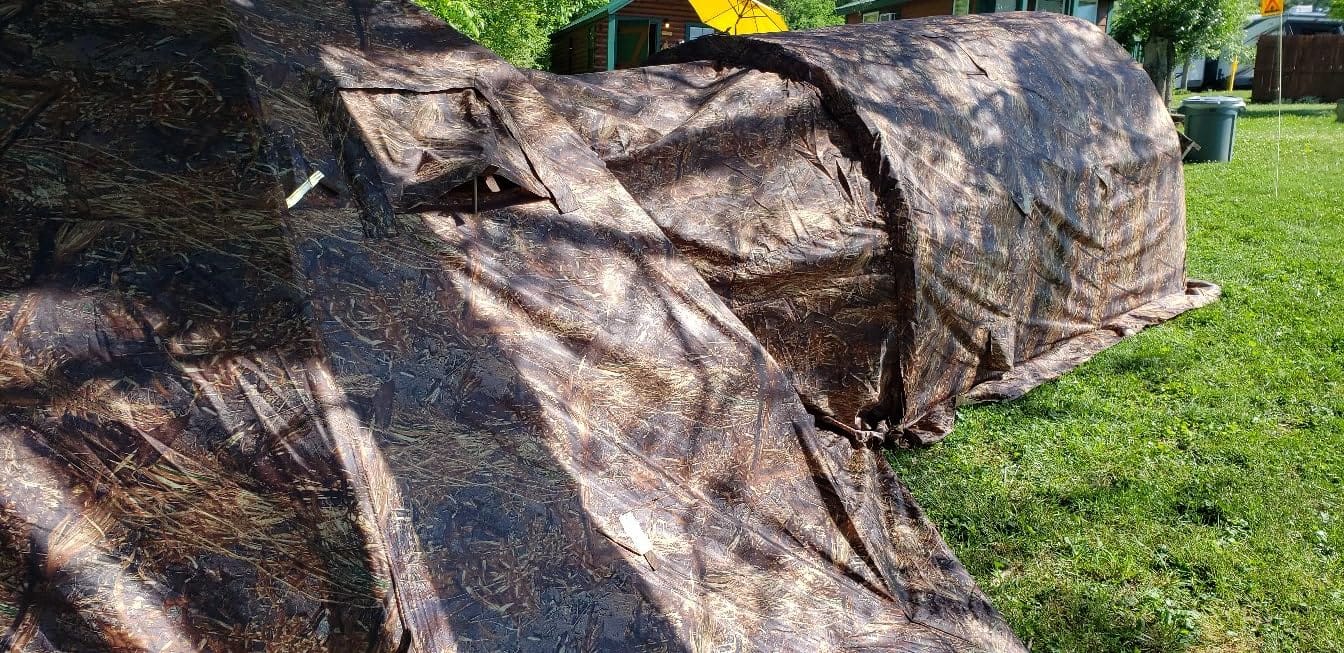
The UP-5 is the most sophisticated shelter here, and the only true tent-within-a-tent design in the group. That double wall with an insulating air gap is the correct answer to the condensation problem that owners complain about most with single-wall hot tents: the inner surface stays closer to air temperature, so it drips far less.
Its 4.7 star rating is tied for the highest in this roundup, though across a much smaller 34-review base, so treat it as a strong signal rather than a proven one. Owners describe spacious, well-built and warm.
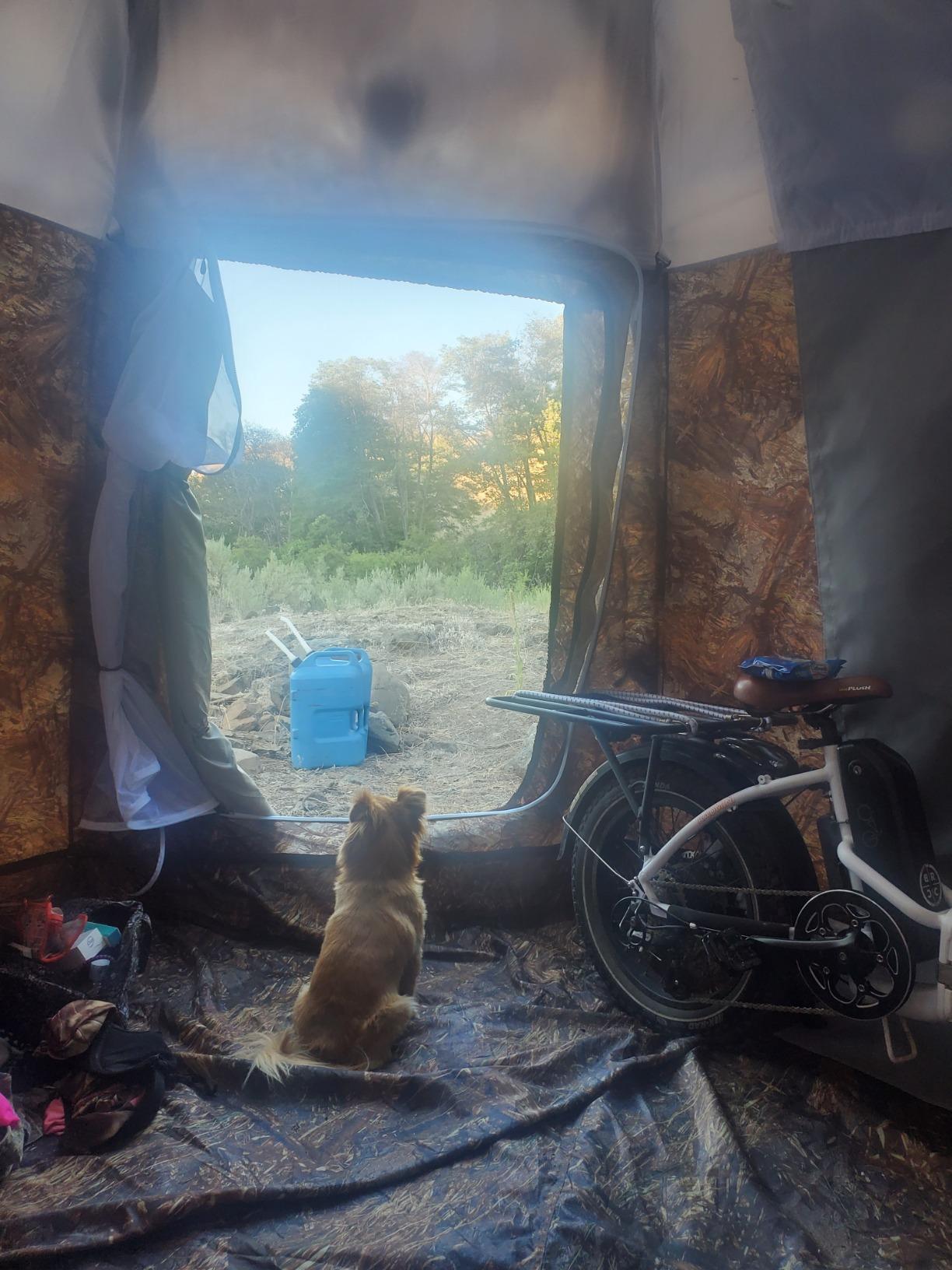
The aviation-grade B95T1 aluminum umbrella frame deploys in roughly three minutes after inflating to 6 to 8 PSI, which is genuinely faster than any pole system on this list. Outer fabric is Oxford 300 with PU 4000 and the inner is Oxford 210 with PU 2000, rated at 4001mm overall.
The stove jack has a steel ring pipe vent protection and a removable inner heat shield, and the stove design channels smoke and sparks to reduce fire risk. Two doors have three layers each plus a swing wing door, and standing height reaches 87 inches across 13.1 square meters.
What the air gap actually solves
Condensation soaking your sleeping insulation is the complaint that comes up most often on hot tent forums. A double wall gives you a still layer of air between the stove heat and the panel your bag touches, which is the closest thing to insulation any of these shelters offers.
The spare parts kit, spare stove glass, heat-resistant wall and replacement panels included in the box are a real differentiator. When a brand is still shipping spares years later, you are buying something that stays usable.
The weight and the documentation
It is the heaviest shelter here and needs two people to raise the umbrella frame. It is a vehicle-side basecamp, not a carried shelter.
Be aware of two reported limits. The spare documentation and instruction manual are reportedly not helpful, so budget time to work out the frame and vent layout yourself. And one owner advised using it only above 32 degrees Fahrenheit, which sits oddly for a five-season product, so ask the manufacturer directly before committing to deep-winter trips.
Hot Tent Safety: Stoves, Ventilation and Carbon Monoxide
This is the question we get asked most, and the answer is that heating a tent can be safe, but only with a specific routine. A wood stove in a sealed fabric enclosure produces carbon monoxide, and carbon monoxide is odorless. Treat the following as non-negotiable rather than advisory.
Match the stove to the tent volume. A stove that is too large for the space produces excess heat faster than the ventilation can clear it, and the temperature ceiling below is the limit that matters.
Keep a low intake and a high exit open. Cold, moist air enters low and warm, moist air leaves high. Sealing the tent to conserve heat is the single most common cause of a dangerous build-up.
Carry a carbon monoxide detector. A working detector with fresh batteries, positioned at breathing height inside the tent, is the cheapest insurance available in this hobby.
Use a fireproof stove mat. Never run a stove directly on tent flooring. The integrated fiberglass floors and included ember mats we flagged on the POMOLY and other picks exist for this reason.
Verify the stove jack and its flap. The stove jack material should be flame resistant, and the rain flap must be flame resistant too. On three of the canvas tents here, the flap is made from tent fabric and will scorch on contact with a hot pipe.
Check chimney clearance at the roof. Route the pipe straight and short where possible, and confirm the tent fabric is not resting against it.
Practice a full night in your own yard first. Learn your tent’s vent behavior and your stove’s burn rate before you depend on it at temperature.
On how hot is too hot: the practical ceiling is the point where the tent panel becomes uncomfortable to touch and the fabric is too close to the flame for comfort. Good practice is to keep the stove at its lower setting and burn less wood more often rather than running it wide open. If you can comfortably hold the wall panel at hand height for several seconds, you are in a workable range. Condensation dripping onto the stove or into your sleeping bag is the other signal to cut the heat and open a vent.
If you want the full gear picture before a trip, our cot tent picks cover the sleeping side of a heated camp.
How to Choose a Hot Tent for Winter
Start with floor area, not the stated capacity
Stated capacity is a marketing number that assumes everyone is lying down with no gear. Add a stove with a safety margin, a gear pile, wet boots and the space you need to reach the stove without crawling over a sleeping person, and the useful number falls by a third.
A useful working rule: one person plus a stove wants at least 40 to 55 square feet, two people plus a stove want 60 to 90, and a family of four with a stove and a drying zone wants 130 square feet or more. The Onewind Penumbra at 190 square feet and the MC TOMOUNT at 268.9 square feet are sized for a real group camp; the POMOLY Chalet at 54 square feet is a snug two-person shelter.
Choose fabric for the trip, not the weather
Canvas breathes and handles a heated interior better, which is why it wins for stationary basecamps. Synthetic fabrics at 3000mm or higher carry far less weight and shed rain better, which is why they win for anything you move. PU-coated canvas is a middle ground that resists weather at the cost of breathability.
Two details matter more than the fabric name. First, check whether the stove jack flap is flame resistant, because that is the component that meets the pipe. Second, look at the waterproof rating honestly: a 500mm shelter like the WaldZimmer and an uncoated TC canvas bell tent are dry-weather shelters, not storm shelters, no matter how large they are.
Match the stove to the volume and plan the wood
Rule of thumb: aim for a stove that can heat the tent’s air volume comfortably rather than one that can roar. Over-sized stoves overshoot the safe temperature range and burn through a wood supply overnight.
Estimate fuel as roughly one to two hours of burn per hour of cold, which in practice means measuring your overnight burn on a practice night in your yard. If you cannot source dead wood near camp, a hot tent is the wrong shelter for that site. Snow, wind and single-wall condensation are all manageable. Running out of fuel at 4 am in deep cold is not.
Budget the whole system, not the tent
This is where first-time buyers get surprised. A tent listed at 6.4 pounds becomes a different proposition once you add the stove, the chimney sections, a fuel load, spare wood, a thicker pad and a warmer sleeping bag.
Two examples from this list illustrate the range. The Naturehike Massif has a 7.3 pound trail weight and a genuinely portable footprint, while the Naturehike Dune at 16.5 pounds and the RBM Outdoors at 82.7 pounds are carry-or-haul designs. A stove, pipe and full wood load can add more than the tent weighs for the light models, so compare systems rather than shelter weights. If you are not moving camp at all, weight stops being the deciding factor and floor area takes over.
Frequently Asked Questions
Which hot tent is best for winter camping?
The Onewind Penumbra is our top overall pick: a 4.7 star average across 808 reviews, 190 square feet of floor area, flame retardant polyester and a 6.4 pound pack weight. If you are staying put for weeks rather than moving camp, the White Duck Regatta canvas bell tent is the stronger basecamp choice, with a 10 foot peak height and a limited lifetime warranty.
What is the best type of hot tent for winter camping?
A double-wall hot tent with a pre-cut stove jack is the best general type. The inner layer creates a still air gap that cuts the condensation that soaks sleeping insulation in single-wall designs. The Naturehike Massif and Dune both use this structure, and the RBM Outdoors UP-5 is a full tent-within-a-tent version. For a stationary camp, a tall canvas bell tent with a stove jack is equally valid.
Is it safe to heat a tent in the winter?
It is safe if you keep a low intake vent and a high exit vent open, run a carbon monoxide detector inside the tent, place the stove on a fireproof mat, and confirm both the stove jack and its rain flap are flame resistant. Never seal a heated tent to conserve heat, because the moist air has to leave somewhere.
How hot is too hot to tent camp?
The practical ceiling is the point where the tent panel becomes uncomfortable to touch and sits too close to the flame. Keep the stove on a lower setting and burn less wood more often instead of running it wide open. Dripping condensation onto the stove or into your sleeping bag is the other signal to cut the heat and open a vent.
What material is best for a hot tent?
For a stationary winter basecamp, breathable cotton canvas is the best material because it moves moisture out instead of trapping it against your sleeping bag. For anything you carry, 70D ripstop nylon rated at 3000mm is the better choice. Neither fabric meaningfully insulates, since warmth in a hot tent comes from the stove rather than the walls.
Do hot tents work in summer?
Yes, and several models are designed for it. The Danchel B5PRO has roll-up detachable sidewalls that convert it to an open-air canopy, and the Naturehike Massif has a removable mesh inner tent that doubles as bug protection. The caveat is ventilation: a tarp-style shelter with a stove jack and no high vents will cook in summer heat.
Final Verdict: Which Hot Tent Should You Buy
For most people reading this, the answer is the Onewind Penumbra, our Editor’s Choice. It pairs the highest review count among the top-rated tents with 190 square feet of floor area, flame retardant fabric and a 6.4 pound pack weight, and it comes with a full suspension kit in the box.
If you are setting up a permanent winter basecamp instead of moving camp, choose the White Duck Regatta for its 10 foot peak height, 132.67 square feet and limited lifetime warranty. If you need a double wall to stop condensation soaking your sleeping bag, the Naturehike Massif carries a genuine 7.3 pound trail weight, and the RBM Outdoors UP-5 goes further with a full insulating air gap.
Whichever of the best hot tents for winter camping you pick, the tent is the smaller half of the decision. Test the stove, the ventilation and the wood supply at home first, then take a practice night in your own yard before you trust the whole system at temperature.