
The best camping mattress for couples is the one that stays wide, quiet and firm through the whole night while the two of you are on it. Most pad problems are not about thickness or price. They come from a surface that sags into a shared cradle in the middle, a width that leaves one person hanging over the edge, and a thin vinyl shell that goes flat somewhere around 3 a.m.
We spent six weeks sorting through double sleeping pads, car-camping mattresses and self-inflating foam beds, weighing published R-values, packed size, listed load capacity and the failure modes owners actually report. This roundup covers all 12 of the strongest options for two people in 2026, from a 2.4 lb inflatable to a 6 inch open-cell foam mattress built for the back of a truck.
Every pad here was judged on the same four things: usable width for two, how well it isolates movement, real-world air retention, and whether the packed size fits in the car you drive. If you are also replacing the rest of your sleep kit, our picks for the best camping air mattresses tested and ranked and the best double sleeping bags for couples pair well with anything on this list.
Table of Contents
Top 3 Picks for the Best Camping Mattresses for Couples (October 2026)


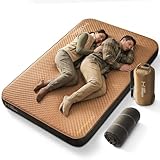
The pad is roomy for a two-person inflatable, with 6 inches of thickness, a 51 inch width and a 4.1 lb weight behind it, and the owner history on this one is deeper than any other pad in the group. The Elegear is the smarter money move if you want a bigger surface and a higher load rating, and the Lost Horizon is the only pad here that genuinely solves cold ground.
Quick Overview: All 12 Picks at a Glance
| Product | Specifications | Action |
|---|---|---|
| TOBTOS Double Sleeping Pad |
|
Check Latest Price |
 HiiPeak Double Sleeping Pad HiiPeak Double Sleeping Pad |
|
Check Latest Price |
| Elegear 5.5 Inch Double Pad |
|
Check Latest Price |
 Hikenture Double Sleeping Pad Hikenture Double Sleeping Pad |
|
Check Latest Price |
 FNARMW Double Sleeping Pad FNARMW Double Sleeping Pad |
|
Check Latest Price |
| Lost Horizon Option3 |
|
Check Latest Price |
 Klymit Insulated Double V Klymit Insulated Double V |
|
Check Latest Price |
 Pretyw Double Sleeping Pad Pretyw Double Sleeping Pad |
|
Check Latest Price |
 TEKIK Double Sleeping Pad TEKIK Double Sleeping Pad |
|
Check Latest Price |
 OGERY Double Sleeping Pad OGERY Double Sleeping Pad |
|
Check Latest Price |
 Exped MegaMat Max Duo Exped MegaMat Max Duo |
|
Check Latest Price |
 KingCamp Premium Double KingCamp Premium Double |
|
Check Latest Price |
How We Picked and Tested
Couples-first filtering changes the ranking. We started with every double pad and mattress we could find, then cut anything narrower than 47 inches or rated below two adults, and anything without a published thickness. What survived became this list.
For each one we logged the inflated dimensions, the thickness at full inflation, the weight, the packed size, the stated R-value where the manufacturer publishes one, and the listed load capacity. We cross-checked those numbers against owner reports about air retention, sag in the middle and noise when one partner moves.
Two rules guided the awards. First, a pad has to be wide enough that neither sleeper is forced onto a seam for the night. Second, a good couples pad should not punish a restless partner. This list was last checked in 2026, and we update it whenever the owner data shifts.
If you want the wider category rather than a couples-specific list, our mattress picks for athletes cover the pressure-relief side of things, and short queen RV mattress options help if your sleeping space is shorter than it is wide.
1. TOBTOS Double Sleeping Pad: Best Overall for Couples
TOBTOS Double Sleeping Pad for Camping, Extra Thick 6″ Camping Mattress 2 Person with Pillow Built-in Foot Pump, Inflatable Sleeping Mat for Camp, Backpacking, Hiking, Traveling
6 inch thick
78.7 x 51 in inflated
4.1 lb
600 lb listed capacity
Pros
- 6 inches of thickness across the whole width
- 51 inch surface fits two adults without shoulder overhang
- Built-in foot pump means no separate pump to pack
- Packs to 13 x 5.7 x 5.7 inches at just over 4 lb
Cons
- Some owners report slow air loss over several nights
- Under-inflating it noticeably reduces support
- Built-in pillow cannot be removed
- Foot-pump inflation is awkward inside a small tent
This is the pad I put in front of couples who ask a single question: which one will both of us actually like. At 78.7 by 51 inches and 6 inches thick, it is one of the roomiest inflated surfaces here without tipping into something too heavy to lift into a car. The uniform thickness matters more than the number. A pad that is 6 inches at your shoulders and 3 inches at your hips will still send a side sleeper reaching for a pillow.
The U-shaped curve through the middle is a quiet but real feature for two people. It resists the shared cradle effect that owners on r/camping and r/backpacking describe constantly, where a flat pad dips in the centre and slowly walks both sleepers toward each other through the night.
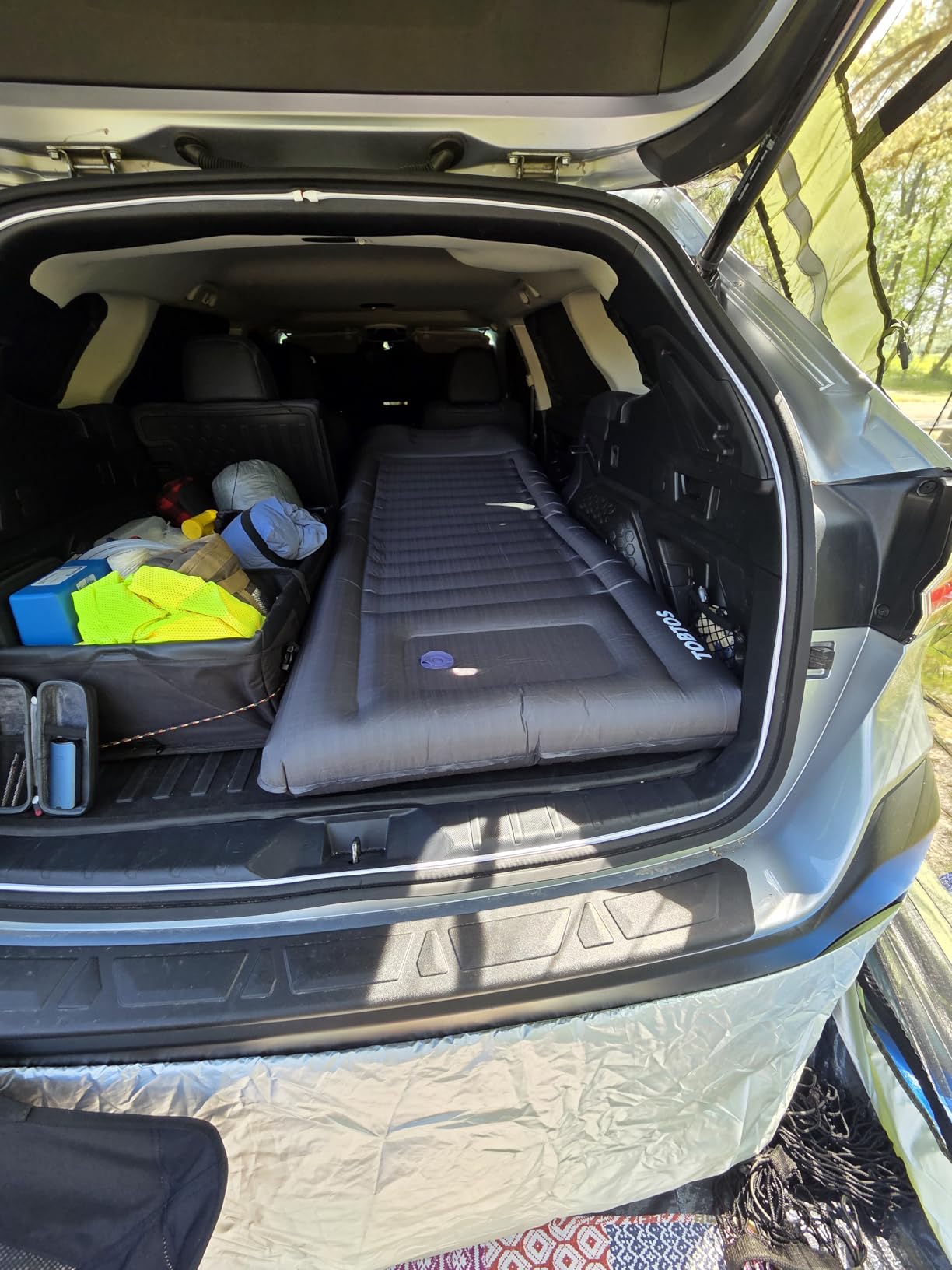
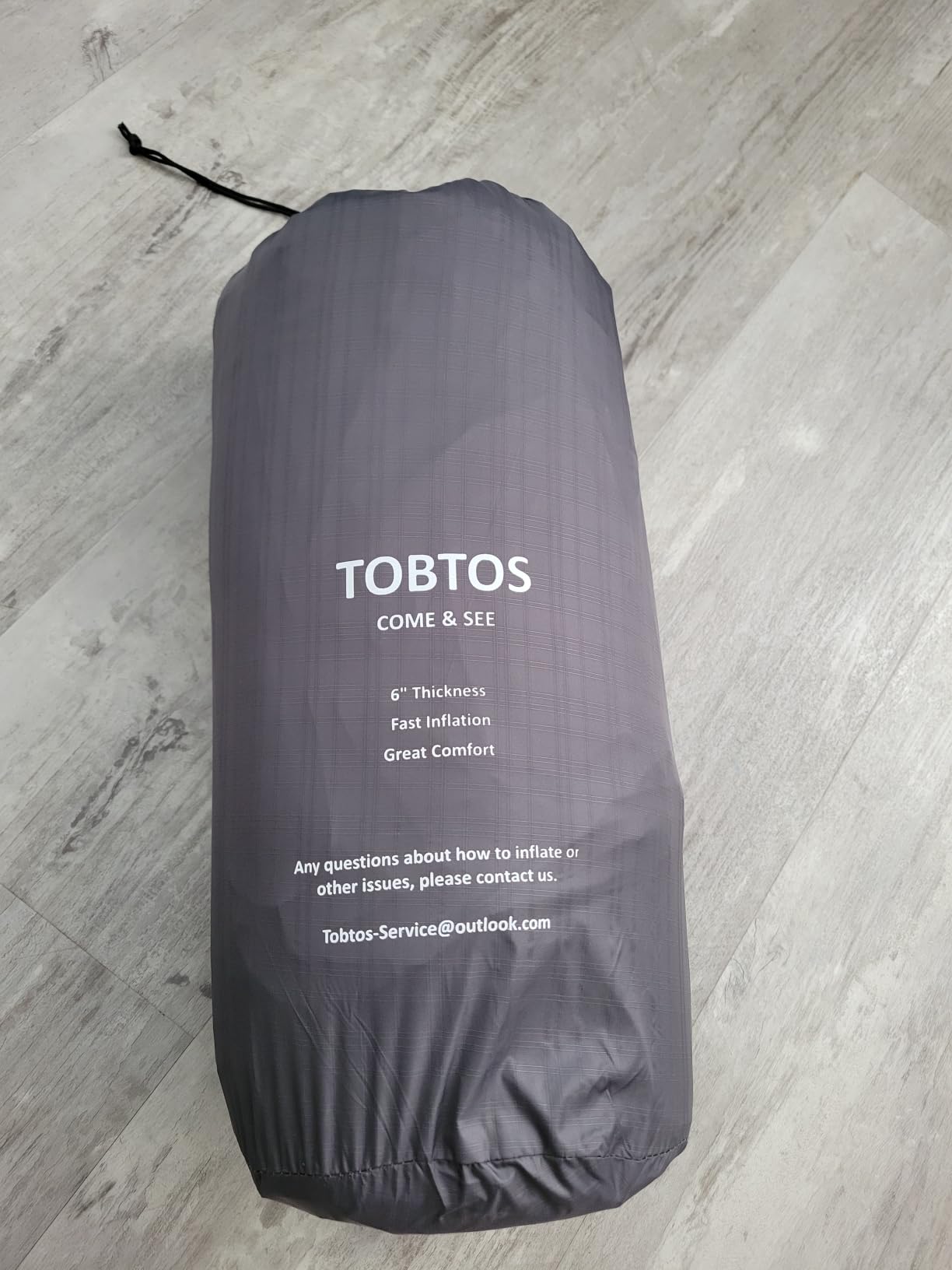
Weighing 4.1 lb and folding to a 13 inch cylinder, it is one of the easier doubles to move between a trunk, a tent and a storage closet. The built-in foot pump removes the single most common packing complaint, which is a separate pump and valve adapter that never matches the pad you own.
The honest weakness is air retention across several nights rather than one. Reviewers report waking on a softer surface and re-pumping in the morning, and the fixed pillow ridge is not removable if you prefer your own pillow. Neither issue stops it being the best all-round pick for two.
How it handles two restless sleepers
Because the internal structure is uniform rather than zoned, a roll from one side does not push the surface around under the other person. Owners describe it as quiet too, which matters when the alternative is a partner waking to crinkling vinyl at 4 a.m. The TPU-coated 40D nylon shell also handled rock and abrasion in the reports we read, and the whole surface wipes clean with a damp cloth.
Who should look elsewhere
If you camp in genuinely cold conditions, this pad has no published R-value and none of the foam structure that holds warmth from the ground. Look at the Lost Horizon or the KingCamp instead. If your combined weight is high, check the load rating carefully, because the listed figure here is 600 lb for two people and that is closer to a real limit than most buyers assume.
2. HiiPeak Double Sleeping Pad: Most Versatile
HiiPeak Double Sleeping Pad – Self Inflating 3″ Extra-Thick for 2 Person with Pillow Built-in Foot Pump Inflatable Sleeping Mat for Backpacking, Hiking, Traveling, Tent, Portable Camping Mat (Green)
76 x 48 in inflated
3 in thick
About 4 lb
12.2 in packed length
Pros
- Light and compact for a double
- About 3 minute foot pump inflation
- Honeycomb cells spread pressure for back side and stomach sleepers
- Owners report multi-day air retention
- 50D pongee with multi-layer TPU is quiet
Cons
- Thinner than most double pads at 3 inches
- Included repair patch is considered inadequate
- Deflating it back into the sack is awkward
- Firm feel for back sleepers
The HiiPeak is the answer when the budget is the deciding factor but a true single-width pad is not. At 76 by 48 inches, it gives two people roughly the shoulder room of a narrow double, and at about 4 lb it still fits in a normal daypack. Very few two-person pads manage both.
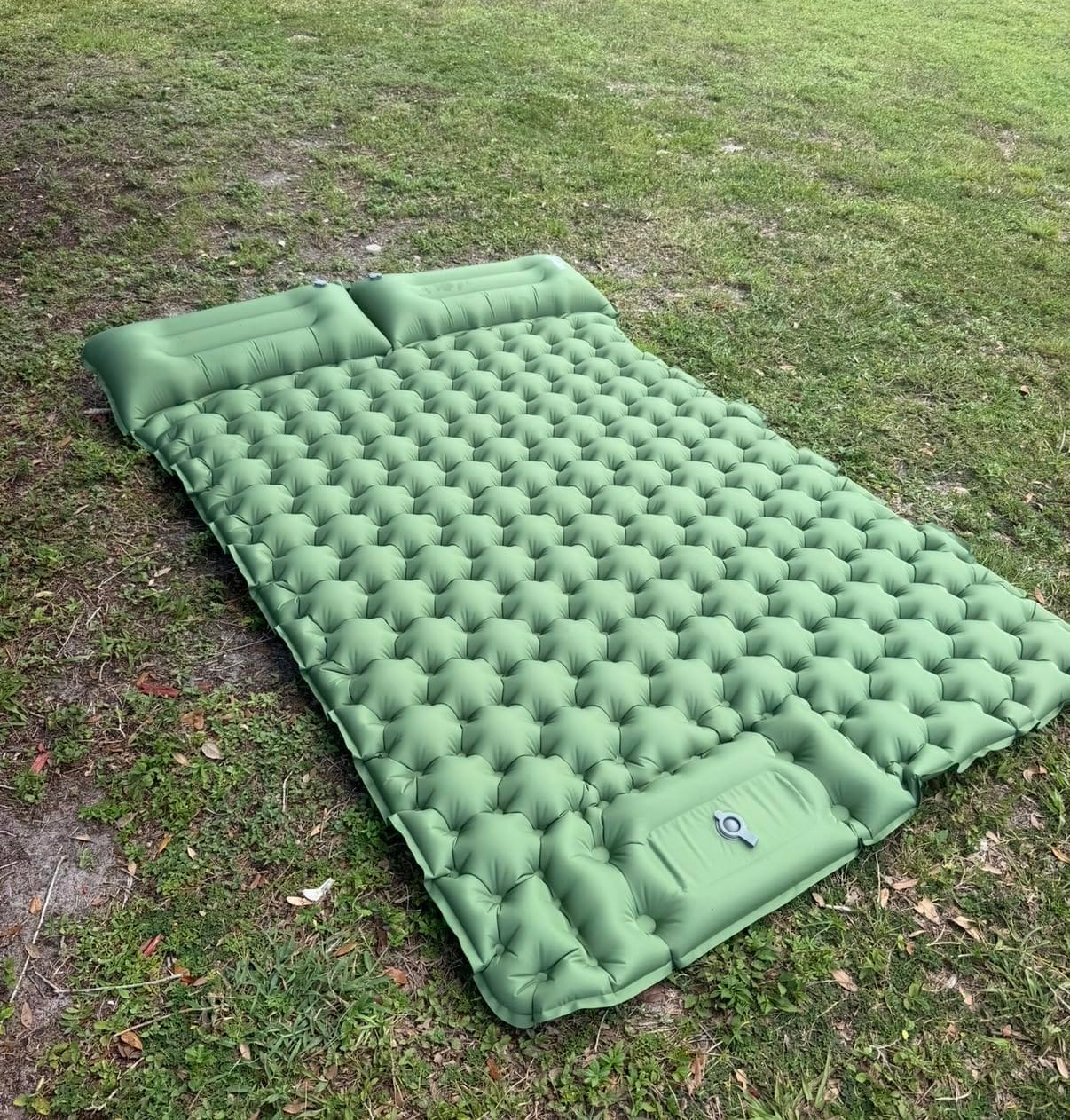
The honeycomb air cell body is the part worth understanding. Instead of one flat chamber, the surface is divided into smaller cells that hold their shape when you press into them, so a hip or shoulder does not punch through to the ground the way it does on a plain rectangular pad.
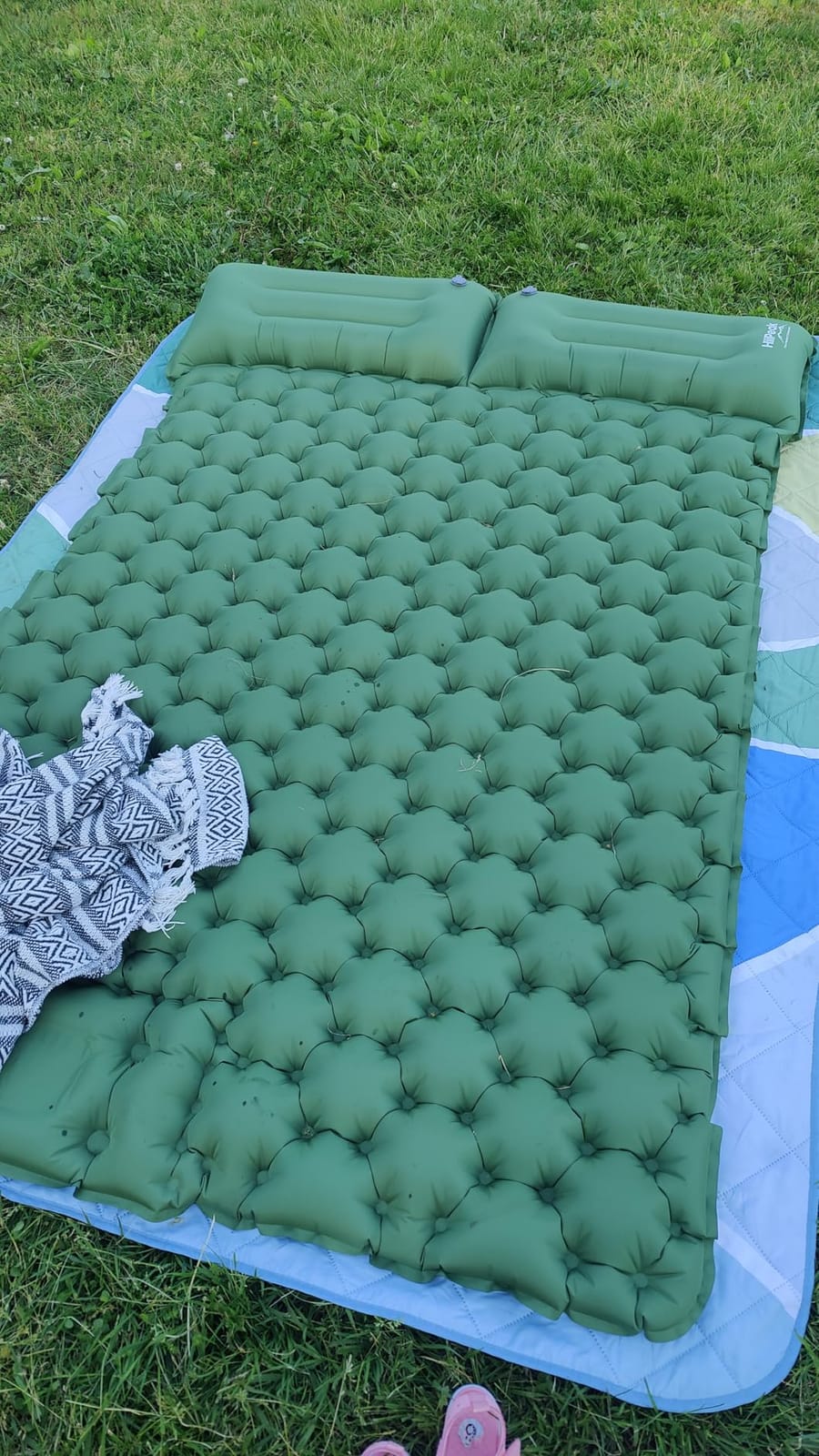
Owners like the dual valves built into the pillow area, which let you top up without fully opening the pad. Several report it staying inflated for days without attention, which is the behaviour you want from a self-inflating style pad that never fully relies on trapped air.
The compromise is thickness. At 3 inches this is the thinnest double in the group, and side sleepers weighing more than about 150 lb will still feel the ground through it. It is a strong pick for a three-season weekend on soft ground, less so for rocky terrain or a heavier sleeper.
Where the 3 inch profile shows up
On firm or uneven ground the difference between 3 inches and 5 inches is obvious, particularly at the shoulder. If one of you sleeps on your side and the other sleeps on your back, this pad suits the back sleeper well and the side sleeper only sometimes. For a matching pair of profiles, the TOBTOS at 6 inches handles both positions.
Who should look elsewhere
Skip it if you are buying for winter, since there is no published R-value and a thin air chamber does little to stop ground heat. Also skip it if you are tall and broad. A 48 inch width is comfortable for two average-sized adults lying still, and tight for two people who move around a lot during sleep.
3. Elegear 5.5 Inch Double Pad: Best Value for Heavy Sleepers
Elegear 5.5” Thick Double Sleeping Pad for Camping, Inflatable, Full
76 x 54 in inflated
5.5 in thick
About 5 lb
800 lb capacity
Pros
- 54 inch width gives both sleepers room to stretch
- 5.5 inches of thickness
- Internal strap structure resists sagging to an 800 lb load
- Foot pump fills in about 3 minutes and deflates in roughly 30 seconds
- Quiet velvety surface compared favourably to beds
Cons
- Several owners reported losing air overnight
- Under-inflated it reads very firm for backs
- Filling by foot is slow enough that some add an electric pump
- Bulky when packed for a small trunk
The Elegear answers the two questions couples ask most often after width: how much weight will it hold, and will it sag. The internal strap support structure is rated to 800 lb, which is the highest published load figure among the inflated pads in this roundup, and it is what stops the middle of the surface dipping under two adults.
At 76 by 54 inches it is wider than most of the group, and 5.5 inches thick is thick enough for a side sleeper to lie across without contacting the ground. For a pair where one or both of you is heavier, that combination of width and thickness is the single most useful thing on the spec sheet.
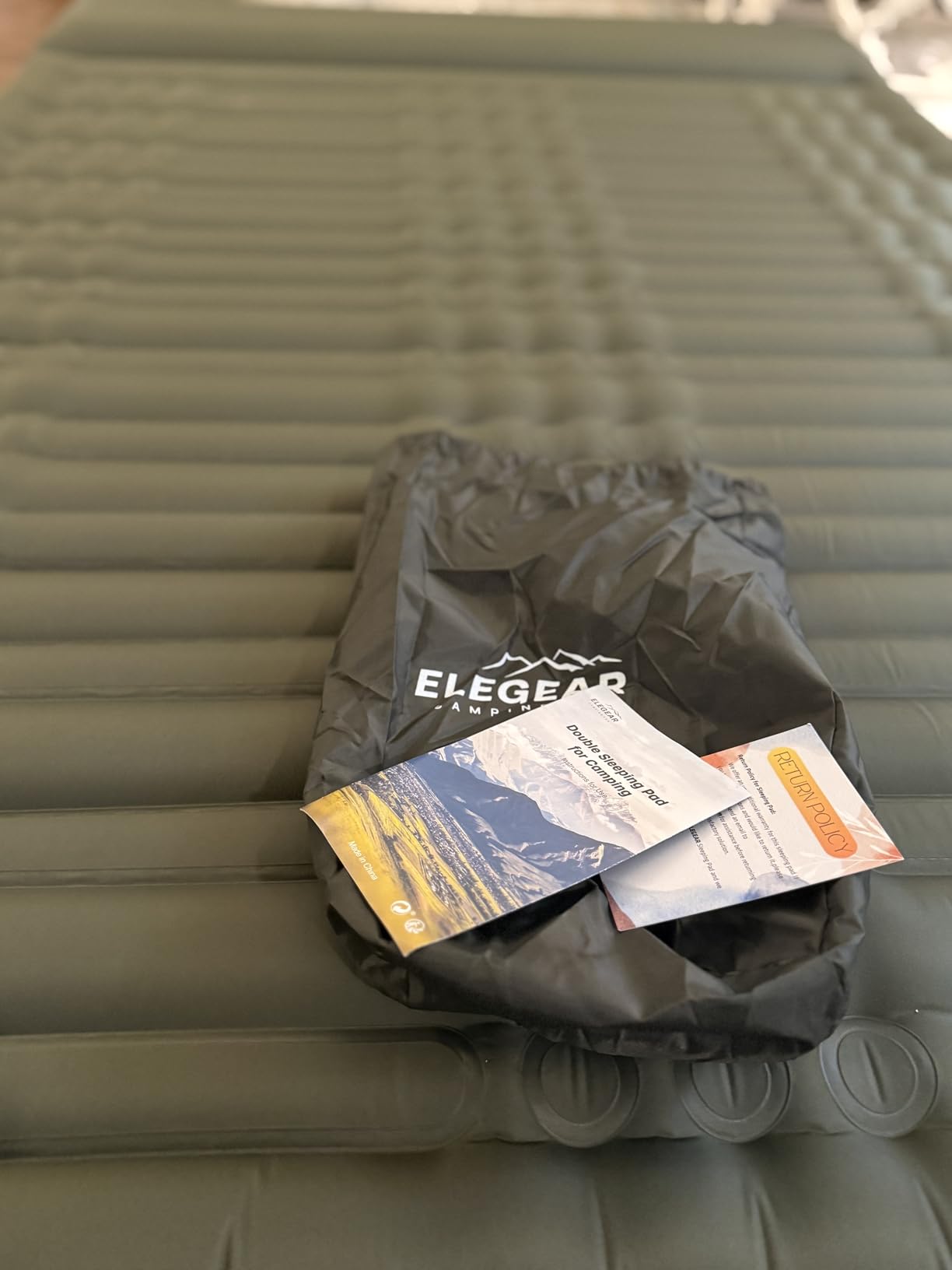
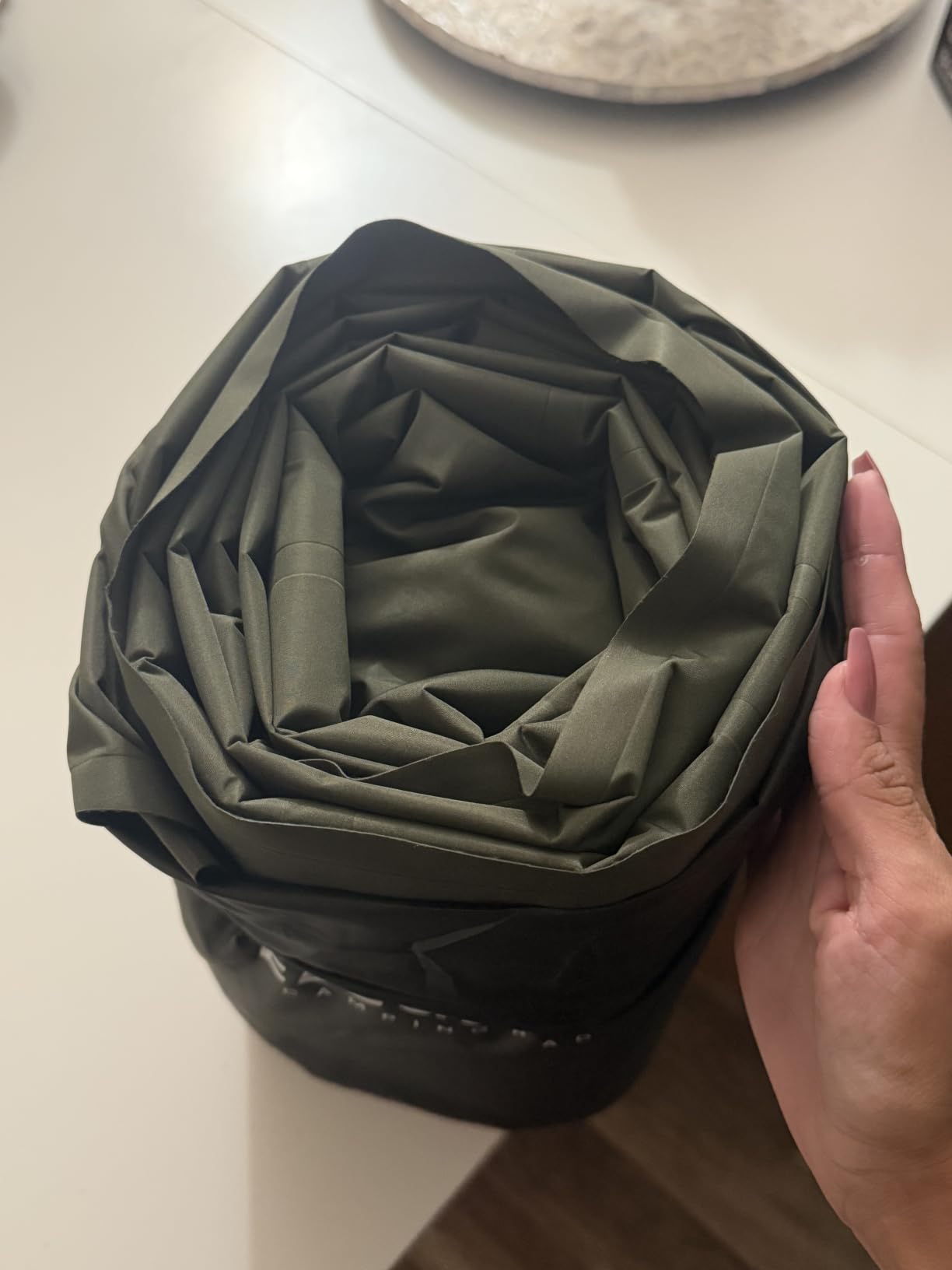
The deflate time is unusually good here. Owners report roughly 30 seconds to pack it down against the usual two-minute struggle with double pads, and the dual-layer valves seal cleanly enough that most complaints are about inflation speed rather than leaks.
Air retention is the recurring negative. Multiple reviewers describe waking up on a partially deflated pad, and a few found the surface uncomfortably firm when it is under-inflated. That combination suggests the right firmness is narrower than you might expect, so add air until the topper presses feel even, then stop.
Load capacity and what 800 lb really means
Most camping mattresses in this class list 600 to 800 lb, and buyers read that as a per-person number. It is not. It is the combined load the manufacturer is willing to stand behind, and inflated pads lose firmness as you approach the top of the range, so a couple close to 800 lb will notice the surface giving before the structure does.
Who should look elsewhere
This is not a backpacking pad. At roughly 5 lb and a wide roll, it eats a serious amount of pack volume, and car or van campers will be far happier with it. If cold ground is part of the trip, there is no published R-value here either, so pair it with an insulated pad underneath in shoulder season.
4. Hikenture Double Sleeping Pad: Best for Backpacking Pairs
Hikenture Double Sleeping Pad, 4-in Thick Camping Mattress (Navy Foot Pump, Double (47.5″×79″))
79 x 47.5 in inflated
4 in thick
3.6 lb
600 lb capacity
Pros
- Lightest strong double in the group at 3.6 lb
- Quiet 4 inch surface that does not transfer movement
- Fits closely inside a 2.5-person tent
- Repair kit and stuff sack included
- Long-term owners report it still holding air after years
Cons
- 47.5 inch width suits two slimmer sleepers
- Occasional leaks reported on first use
- Getting it back into the stuff sack takes real effort
- Translated instructions are awkward
At 3.6 lb the Hikenture is the pick for a couple who still carry their bed on foot. It packs to roughly 13.5 by 6 inches, which is a normal size for a two-person load in a 50 to 60 litre pack, and the 79 inch length means neither of you has to curl up.
What stands out in the owner reports is durability. Long-term buyers describe the pad still holding air after years of use, and plenty mention it surviving rock, roots and pets. That track record matters more for a carried pad than any comfort rating, because you cannot repair a failure three days from a trailhead.
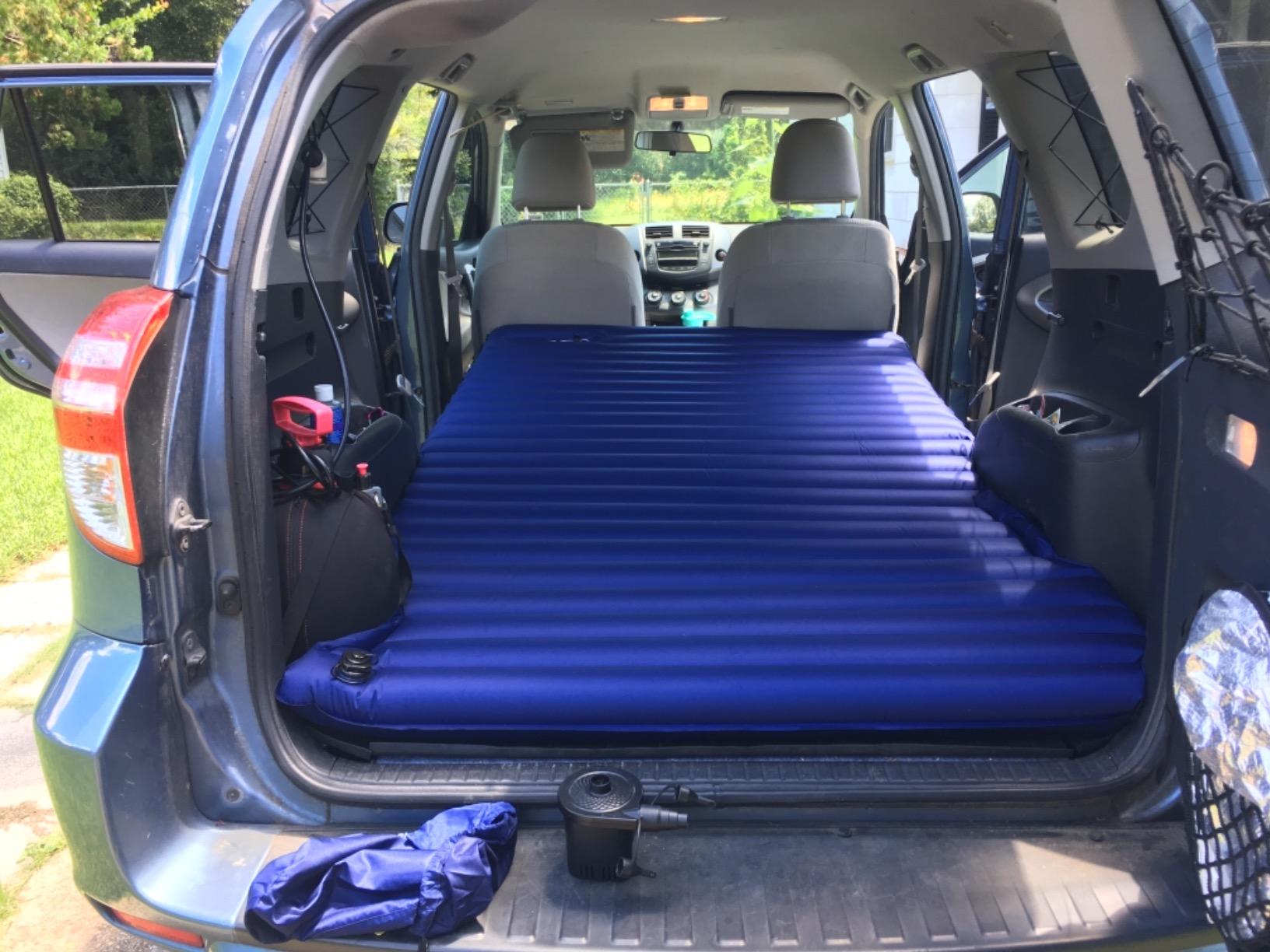
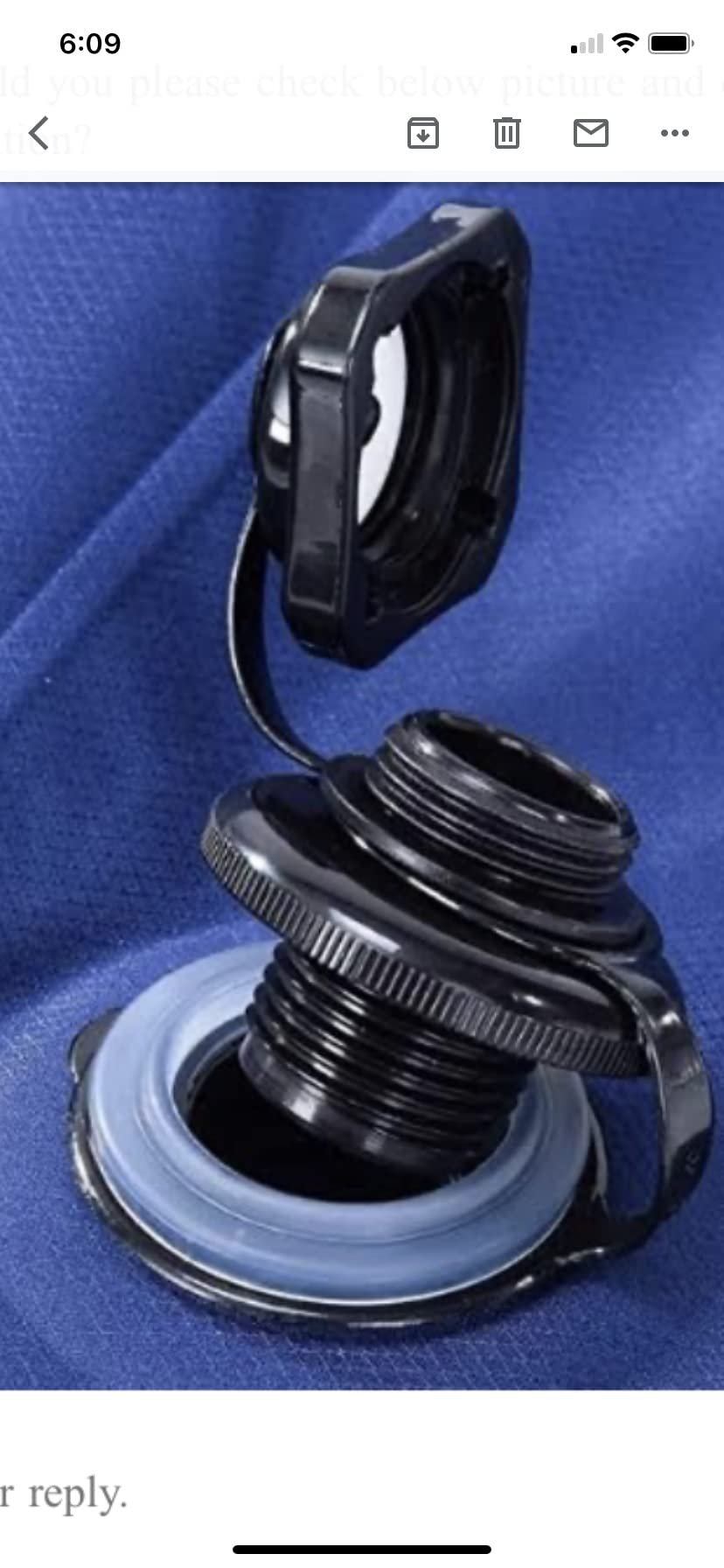
The second valve is a small detail that pays off. Owners can fill the main chamber by foot and use the second valve for a faster top-up or mouth-assisted setup, which cuts the fussy part of inflation down considerably.
The width is the compromise. At 47.5 inches it is narrower than the mid-range pads in this list, and reviewers with two larger adults describe it as tight. It fits a 2.5-person tent closely with almost no wasted floor, which is a genuine advantage on a shared footprint.
Why the 4 inch profile works for carrying
Three and a half pounds and 4 inches of thickness is a reasonable balance, and the TPU-laminated polyester shell resists abrasion better than the single-layer vinyl used on cheaper pads. The trade-off is that a carried pad is always a compromise, and this one leans toward enough cushioning to sleep on without becoming a fridge.
Who should look elsewhere
If either of you is a large sleeper, look at a 54 to 55 inch wide model instead. If you are camping in cold conditions, this pad carries no published R-value. It is a three-season backpacking choice, and a warm-weather car camping choice, rather than a winter one.
5. FNARMW Double Sleeping Pad: Longest Surface for Taller Couples
FNARMW Double Sleeping Pad Camping, Self Inflating 6” Extra-Thick 2 Person Pillow Built-in Foot Pump Waterproof Inflatable Sleeping Mat Backpacking, Tent, Hiking, Portable Camping Pad (Navy Grey)
80 x 55 in inflated
6 in thick
4.4 lb
800 lb capacity
Pros
- 80 in length gives both sleepers full stretch room
- 6 inches thick with 55 inch width
- Drawstring support structure rated to 800 lb
- Owners report three or more days without re-pumping
- One-year manufacturer warranty included
Cons
- Minority of units developed slow leaks after the return window
- 6 inch claim reads optimistic when rolled fully tight
- Unquilted surface lets sheets slide
- Repacking tightly enough to return to the bag is awkward
Length is the sleeper feature most couples forget to check. At 80 inches, the FNARMW lets both of you lie flat without a partner’s feet pushing into your back, and paired with 55 inches of width it is one of the two roomiest inflated surfaces we logged.
The drawstring support structure is the technical detail that matters. Rather than relying on air pressure alone to hold shape, tensioned lines spread the load across the whole surface, and that is why owners rarely describe the middle sagging even at full 6 inch inflation with two adults on it.
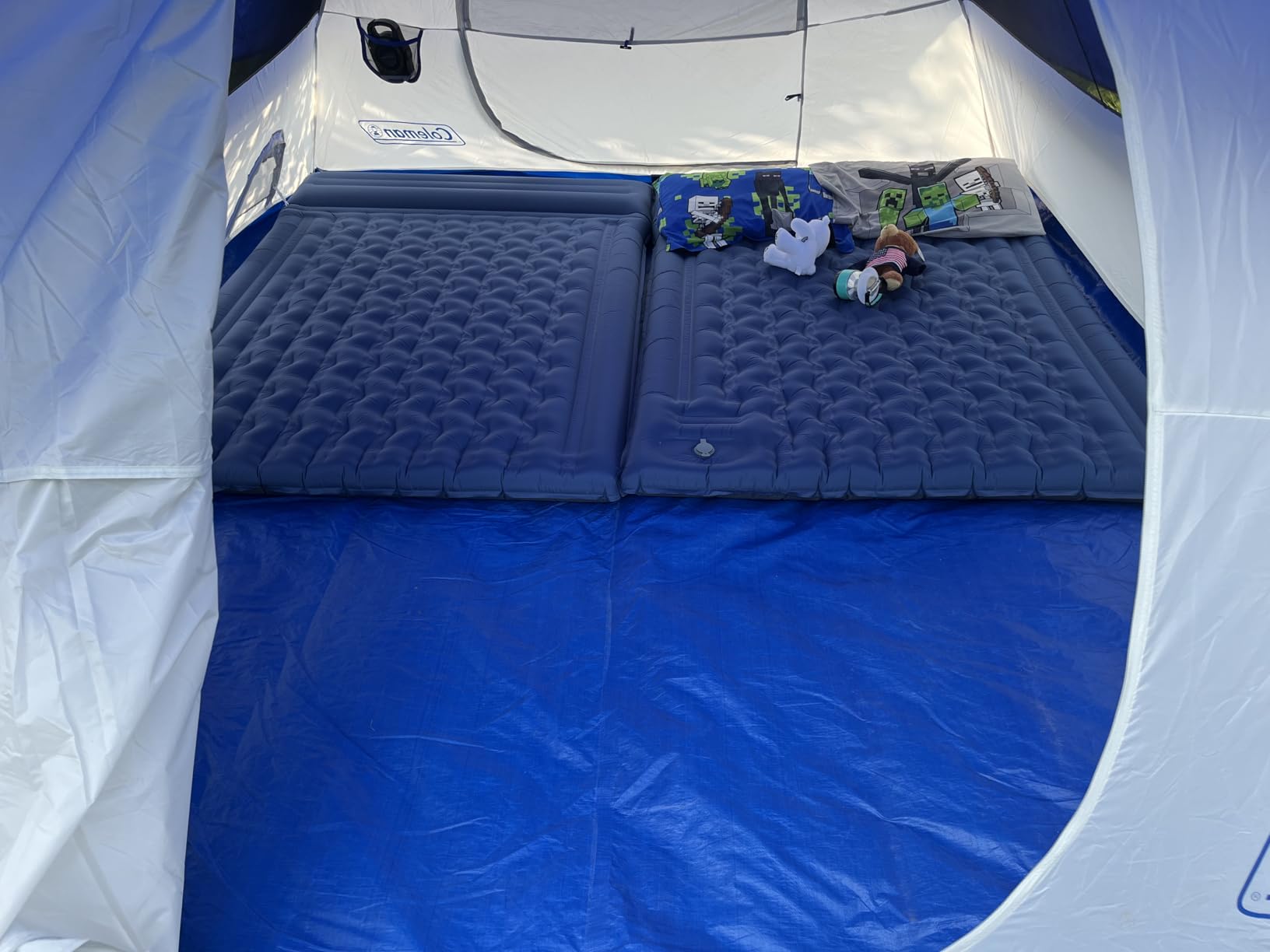
Owners consistently call it the most comfortable double pad they have used, and a lot of them use it as a car camping fixture rather than occasional gear. The 4.4 lb weight is unusual for a pad this size and is mostly the cost of the thicker shell and support lines.
Two practical issues come up repeatedly. The surface is not quilted, so fitted sheets and flat sheets slide across it unless you add a blanket layer on top, and a minority of owners report slow leaks developing after the first few uses rather than immediately.
Packing a 6 inch double into a bag
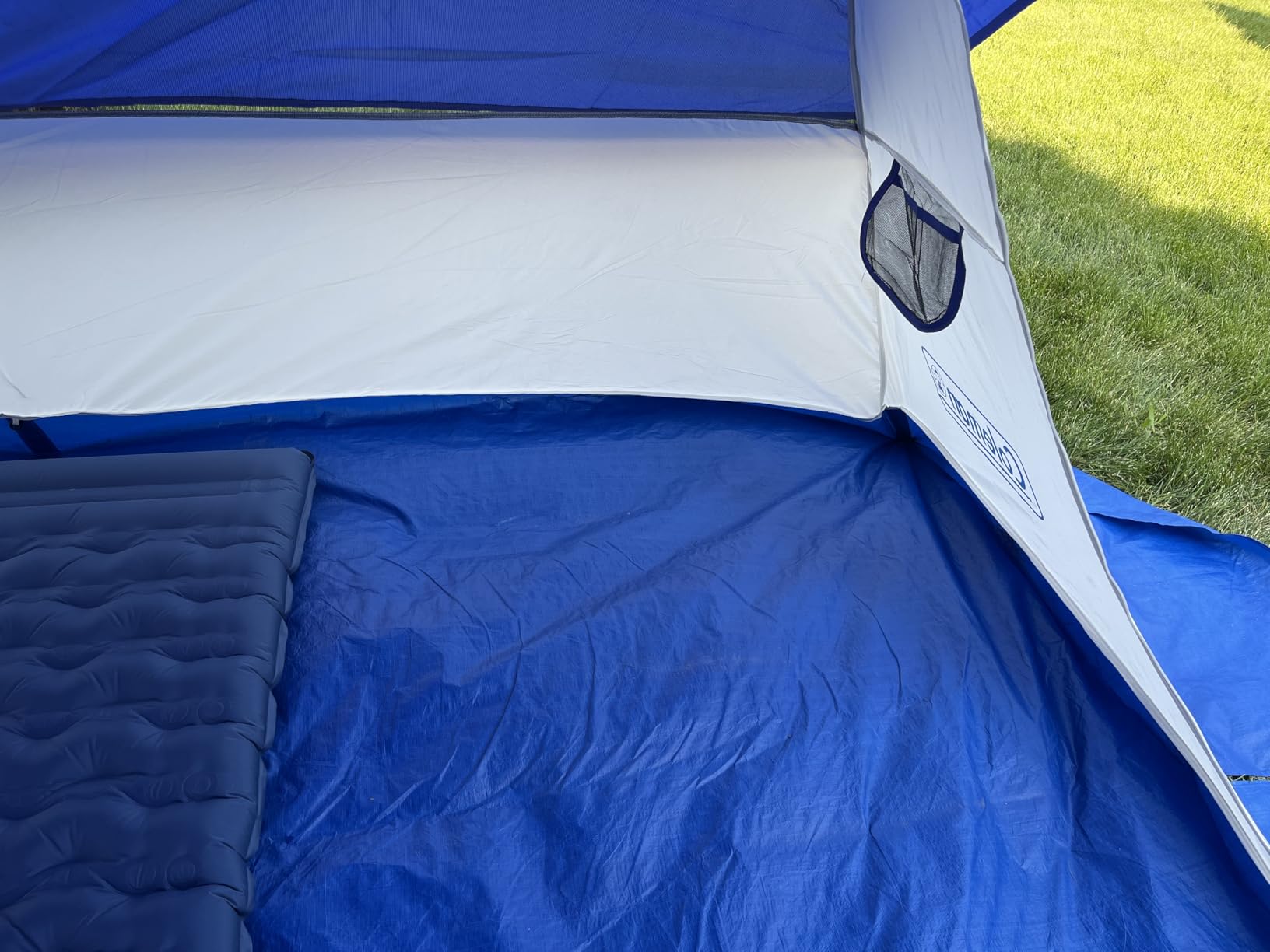
Thicker is not automatically harder to pack, but it is here. The roll is bulky enough that getting it back into the included bag takes two people or a determined floor workout, and reviewers mention the 6 inch figure reading thinner once the pad is rolled tight for a week of car travel.
Who should look elsewhere
If you are backpacking, 4.4 lb across an 80 inch roll is a lot of volume to give up, so the Hikenture is the better trade. If you sleep in a small two-person tent, measure your floor first, because 55 inches of width leaves very little margin against the tent walls.
6. Lost Horizon Option3: Best for Cold and Wet Ground
Lost Horizon Option3 Self-Inflating Foam Camping Mattress, Full, 4.5″
80 x 52 in inflated
4.5 in thick
R-13
Rated to 440 lb
Pros
- Air plus foam hybrid holds its shape for days
- Highest R-value in this roundup at R-13
- Silent and stable with no air shifting between sleepers
- Firmness adjusted by adding or releasing air
- 12 lb foam fill and a roll-top carry bag
Cons
- Deflating the dense foam is hard and often needs an electric pump
- Non-standard valve fitting rules out many standard pumps
- About 16 lb is far too heavy to carry
- One owner reported a fabric failure after three years
This is the only pad in the group where cold ground is a solved problem rather than a variable. At R-13, it carries roughly five times the ground insulation of the lightweight air pads here, which is the difference between being cold at 30 F and being comfortable at it.
The construction explains the numbers. This is a hybrid: an open-cell foam core is wrapped in an air mattress, so the foam holds the shape and does the insulating while the air layer adds the adjustable top surface. That is why it stays firm on night three without a top-up, which is the single most common complaint about pure air doubles.
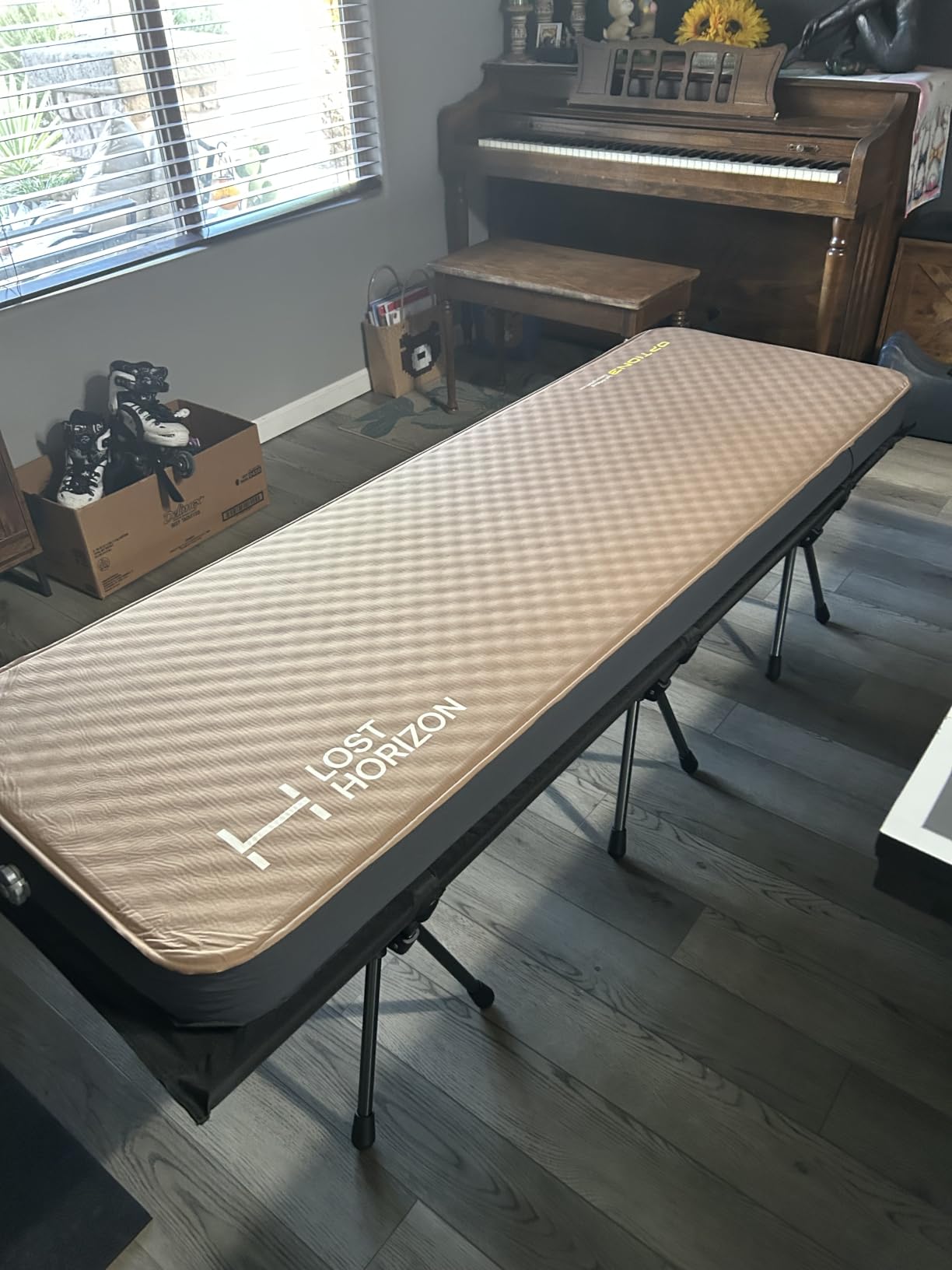
For couples specifically, the foam core means movement does not shift air. There is no shared surface that compresses and rebounds when one partner turns over, so a restless sleeper is not a problem for the other. Owners with back pain describe it as the only pad they can sleep on comfortably.
The trade-off is effort and weight. At about 16 lb and with 12 lb of foam inside, packing it away is genuinely difficult, and the valve is non-standard so many pumps you already own will not fit. Budget for an electric pump if you buy it.
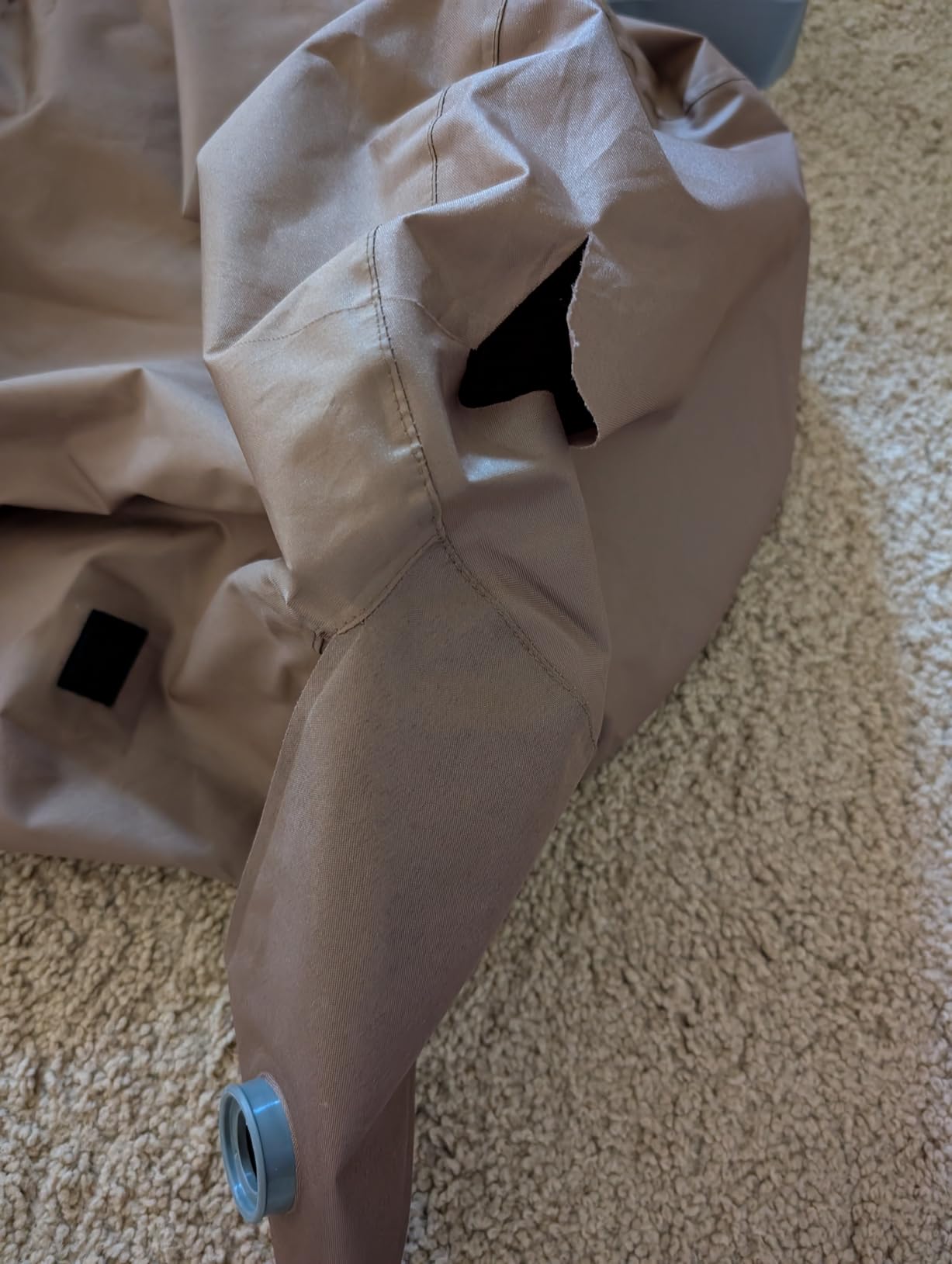
What R-13 changes on a real trip
R-value measures how long the pad delays heat moving from cold ground into you. R-13 is a four-season figure, which in practice means it holds comfortable warmth in near-freezing ground temperatures and does not lose much performance when damp. For a couple sleeping shoulder season in the Rockies or the Dakotas, that is the difference between sleeping and shivering.
Who should look elsewhere
Anyone carrying their pad on foot. At about 16 lb this is a car camping mattress, full stop, and the listed 440 lb load rating is also the lowest of the high-capacity pads here, so larger couples should check that number before committing.
7. Klymit Insulated Double V: Best for Three-Season Hiking
Klymit Insulated Double V Inflatable Sleeping Pad | Double Wide, Thick, Lightweight, Easy to Inflate, Foldable Air Bed for Camping & Backpacking, Orange
74 x 47 in inflated
3 in thick
R-2.4
3.3 lb
Pros
- Body-mapped V chambers support every sleeping position
- Centering side rails stop partners drifting apart
- Stuff sack doubles as an inflator for 30 to 40 breaths
- Lightest and smallest pack size here at 3.3 lb
- Limited lifetime warranty
Cons
- V grooves turn hard when fully inflated
- Some owners reported leaks within a few uses
- Valve must sit completely flush or it bleeds overnight
- Surface can be slippery and crinkly
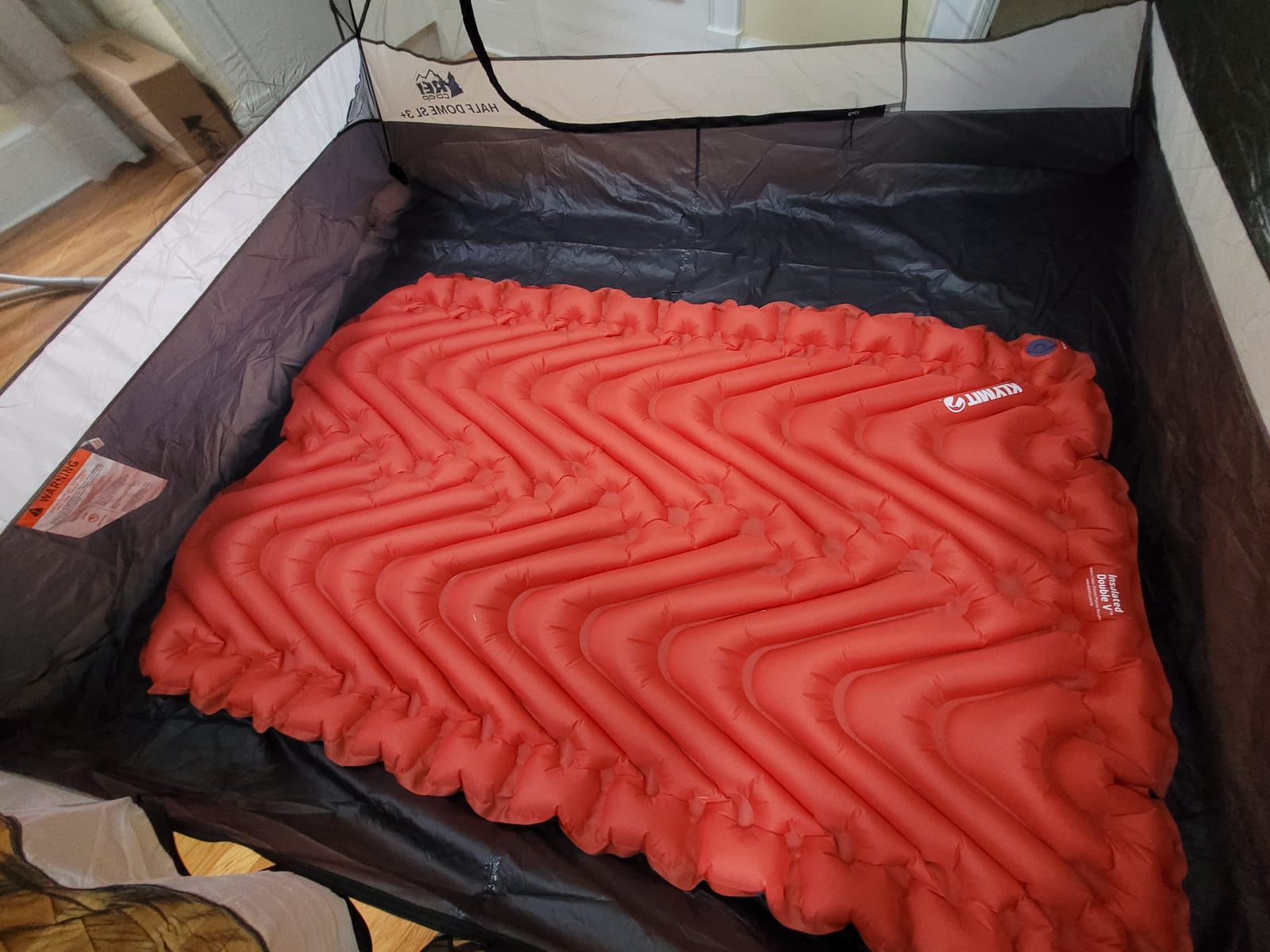
The Klymit does something none of the other pads here do. Its V-shaped chambers are moulded rather than rectangular, so the surface is contoured to a body shape and the raised side rails keep each person in their own channel instead of sliding together.
That is a couples feature before it is a comfort feature. Owners repeatedly single out the side rails as the reason they stopped waking up rolled into the middle of the pad, and the deep weld channels leave space for a sleeping bag to loft underneath rather than being squashed flat.
Packability is the second argument. At 3.3 lb and an 11.5 by 7.5 inch pack size, this is the smallest load in the roundup, and inflating it takes 30 to 40 breaths using the stuff sack as a bag, which needs no pump at all.
There are trade-offs. The V grooves feel hard when the pad is fully inflated, so most owners stop pumping a little short of maximum firmness. The valve must be seated completely flush or the pad slowly loses air overnight, and the surface is slick enough that owners add a blanket on top.
Reading the R-2.4 rating honestly
R-2.4 is a warm-weather figure. It is enough insulation for summer and late spring campground trips, and owners report two people staying comfortable down into the upper 20s F. Below that, you are relying on your sleeping bag and your clothing to make up the difference, which is fine until it is not.
Who should look elsewhere
The 74 by 47 inch footprint is the smallest double here, and a 300 lb combined load rating is the lowest. That rules it out for larger couples, and it is a firm-surface pad, so anyone who needs a plush top layer to sleep on will find the V channels too defined.
8. Pretyw Double Sleeping Pad: Best for Guest Bed Duty
Pretyw Double Camping Sleeping pad with Pillow & Built-in Foot Pump
78 x 54 in inflated
4 in claimed thickness
3 lb
660 lb capacity
Pros
- Only 3 lb with a 10 x 5.9 in packed bag
- Fills in 1 to 3 minutes with the foot pump
- Pressure-relief wave pattern suits all three sleeping positions
- Built-in pillow area removes an extra item from the pack
- Owners report all-night air retention even with children on it
Cons
- Inflates thinner than the advertised 4 inches on some units
- Adults on rough ground feel the difference
- Learning the fold pattern to fit the bag takes practice
- Some users re-pump to find the right firmness
The Pretyw is the pick for couples who want a double surface that disappears into a closet between trips. At 3 lb and a 10 by 5.9 inch carry bag, it is one of the few two-person pads here that packs smaller than a loaf of bread and a half.
It also holds up to being used as an actual spare bed. Owners mention using it for guests and as an occasional apartment bed, and report it keeping its air overnight even with children bouncing on it, which is a tougher test than most camping use.
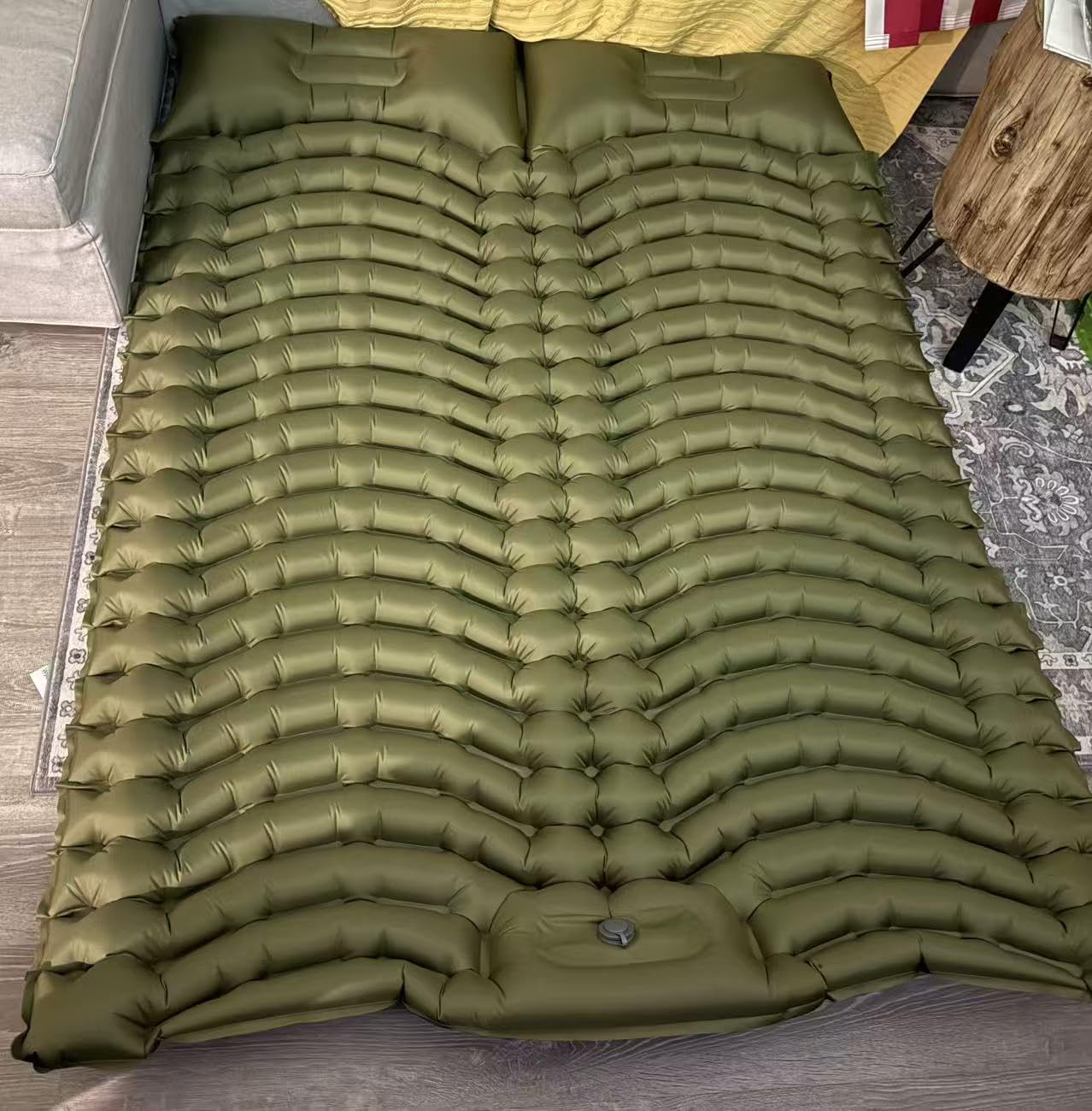
The wave-pattern surface is designed to spread pressure rather than just cushion, so the 4 inch claim is meant to describe a supportive surface rather than a soft one. Dual deflation valves at the pillow make packing down quick once you know the roll.
That 4 inch claim is the caveat. A number of owners report the inflated surface measuring thinner than advertised, and the gap matters more for adults than for kids. On hard or uneven ground, one or both of you will feel what is underneath.
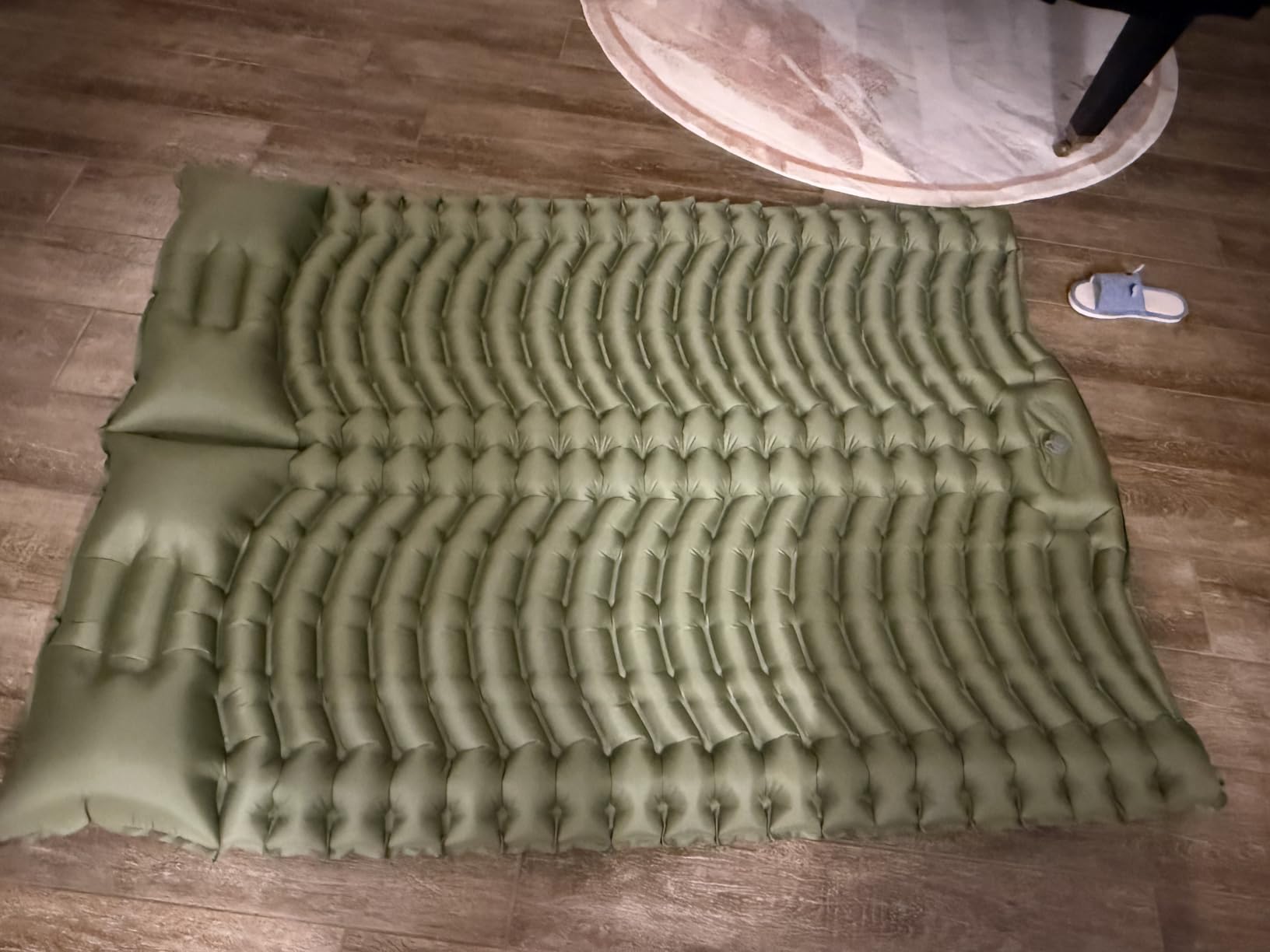
Learning the fold and why it matters
Getting a double pad back into a 10 inch bag requires a specific roll-and-fold pattern, and most owners needed a few tries before it stopped being frustrating. Budget five minutes for the first time you pack it away and two minutes afterwards.
Who should look elsewhere
If either of you sleeps on your side and weighs more than about 140 lb, step up to a 5.5 or 6 inch pad. The 660 lb combined rating also sits below the 800 lb pads in this list, and there is no published R-value, so this is a warm-weather pick.
9. TEKIK Double Sleeping Pad: Firmest Surface Under 4 Pounds
TEKIK Double Sleeping Pad, 4″ Extra-Thick Mat with Pillow for Camping
78 x 50 in inflated
4 in claimed thickness
3.3 lb
800 lb capacity
Pros
- Inflates in about a minute with the foot pump
- Grid surface pattern limits movement transfer between sleepers
- Light enough for carry-on travel
- Owners use it as a daily apartment bed
- Hexagon body mapping supports all sleeping positions
Cons
- Inflated surface closer to 2 to 3 inches than advertised
- Very firm
- so bumps show through early
- Seam leaks reported by a few owners after several nights
- Repacking into the bag takes effort
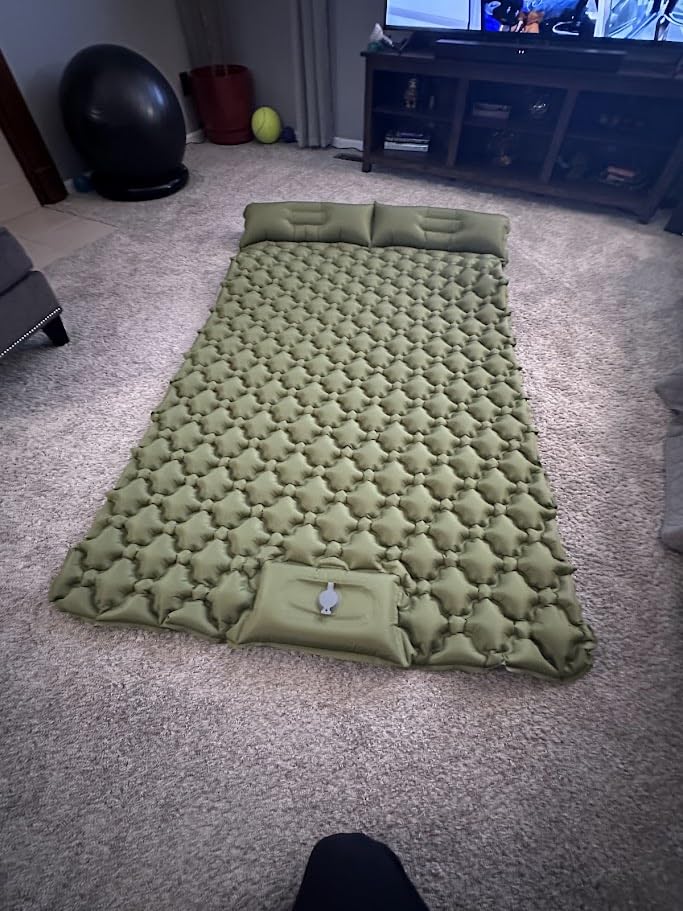
If one of you sleeps flat on your stomach or back and the other is a side sleeper, the TEKIK is a compromise that leans toward the first partner. It is a firm surface with very little give, and owners who like that describe it as supportive rather than hard.
The grid surface pattern is the couples-relevant detail. A grid distributes local pressure differently from a flat sheet, and owners specifically report less movement transfer between the two halves of the bed than they got on smooth-surface pads.

Speed is the other selling point. Inflation takes about a minute with the built-in foot pump, which is the fastest here, and the anti-leakage valve film is designed to cut the most common overnight deflation problem.
Owners are consistent about one drawback: the real inflated thickness lands closer to 2 or 3 inches rather than the advertised 4. The result is a firm, ground-hugging feel. Some owners put a thin topper over it, others sleep on it directly without complaint, but a heavier side sleeper is likely to feel the terrain.
Firm versus plush: which partner wins
A firm surface keeps your spine level, which is why it suits back and stomach sleepers. It also transmits more of what is under you, which is why side sleepers with wider hips tend to end up adding a foam topper. Couples with one of each sleeper type do best with a 5 inch or thicker pad that has a foam layer, not with a thin firm one.
Who should look elsewhere
Skip it if both of you are side sleepers, or if you are camping on rock. There is no published R-value, and while the 800 lb capacity rating is high, a firm thin pad still feels thinner under two heavier people.
10. OGERY Double Sleeping Pad: Lightest 6 Inch Pad
OGERY Double Sleeping Pad for Camping, 6″ Extra-Thick Reinforced
79 x 55 in inflated
6 in thick
2.4 lb
No published load rating
Pros
- Lightest pad in this roundup at 2.4 lb despite 6 inch thickness
- Tubular air belt columns resist sagging
- Soft 50D polyester with TPU coating is quiet
- Fills in 1 to 3 minutes with dual valves
- Owners report no back pain on rocky ground
Cons
- Some units went flat within a night or two
- Dialing in the right pressure takes practice
- Included patch does not fix every puncture
- No published weight capacity
The OGERY solves a problem nobody else here does. It is 6 inches thick, 79 by 55 inches, and weighs 2.4 lb, which makes it the one pad in this list you can genuinely carry for two people without the weight becoming the argument against it.
The tubular air belt structure is the engineering behind the weight saving. Instead of a solid block of material through the thickness, vertical columns carry the load and hollow channels between them do the cushioning, which is where both the low weight and the resistance to bottoming out come from.
Quietness is the sleeper factor here. The 50D polyester with TPU coating is described as minimal crinkle, and for a couple sharing a pad that is worth as much as thickness, because it removes one of the main reasons a restless partner wakes you up.
Two things give us pause. There is no published load rating, which makes it a harder choice for a heavier couple, and some units reported going flat within a night or two. Owners also note that finding the right firmness takes practice, since the columns feel different at full inflation.
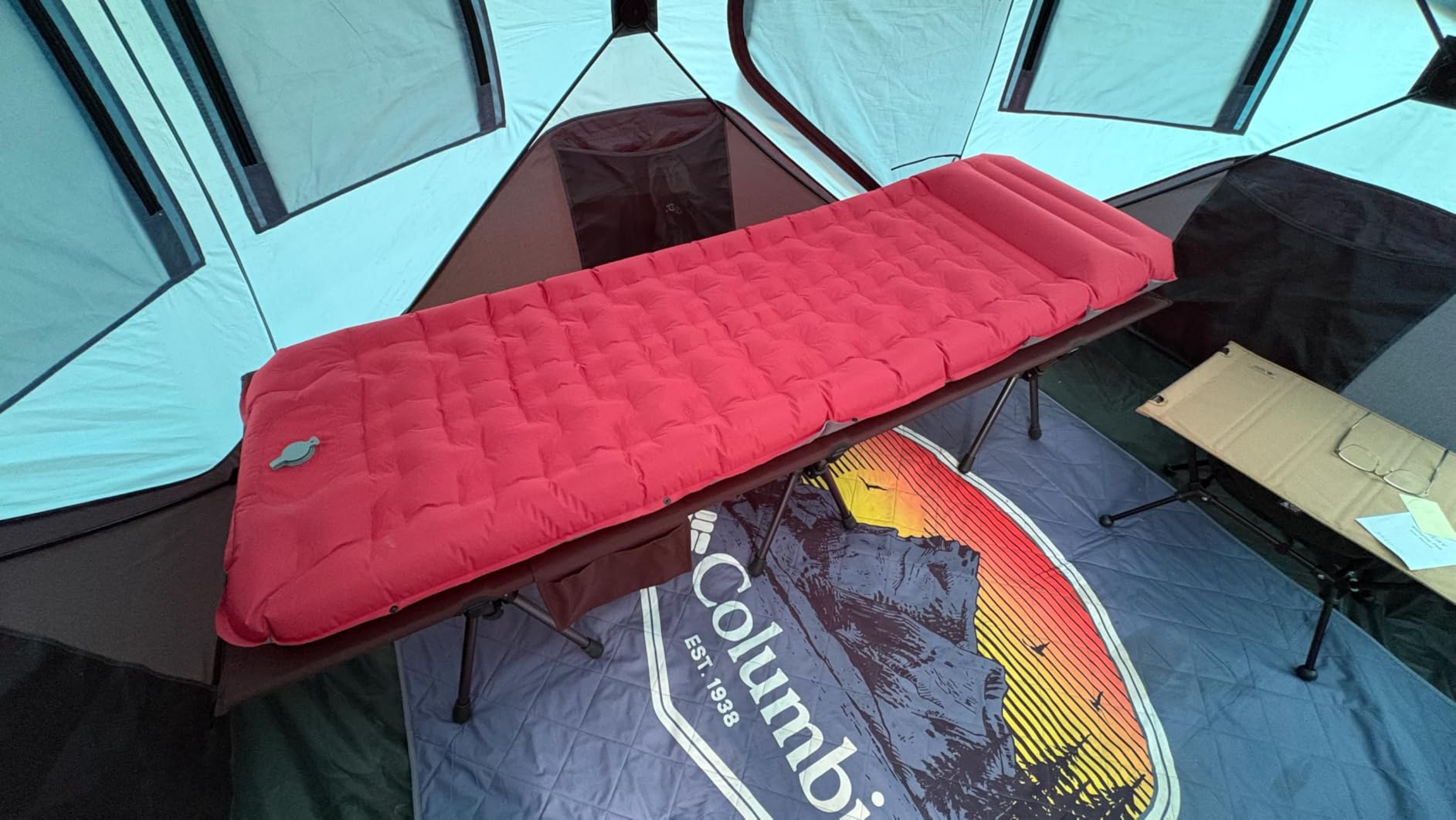
Getting the firmness right the first time
Pump it until the surface feels firm under a seated hand, then lie on it for five minutes and add air if your hips still sink to the floor. Under-inflating a tubular pad leaves you on the columns rather than on the cushion, which is the most common complaint from first-time owners.
Who should look elsewhere
Anyone whose combined weight is high should pick a pad with a published capacity figure, since there is no number to check here. And if you are heading into cold ground, this pad has no published R-value and its hollow channels are not built for insulation.
11. Exped MegaMat Max Duo: Best Edge-to-Edge Support
Exped MegaMat Max Sleeping Pad, Duo Long Wide Plus
77.6 x 52 in inflated
6 in thick
R-10.6
Self-inflating foam
Pros
- 6 inches of open-cell foam
- the thickest core here
- 3D vertical sidewalls eliminate edge tapering
- 30 percent more foam coring for pressure relief
- Self-inflating with a top-up pump included
- Welded side handles make a bulky pad manageable
Cons
- Not water resistant
- so it needs dry weather
- Foam construction is far too bulky to carry on foot
- Premium pricing limits it to car camping setups
The Exped MegaMat Max Duo is the most technically interesting pad here and the most awkward in practice. It is 6 inches of open-cell foam at 77.6 by 52 inches with an R-10.6 rating, and for a car camping couple who never carries their bed anywhere, that combination is very hard to argue with.
The 3D vertical sidewalls are the feature that changes sleep. Most double pads taper at the edge, so the usable surface is narrower than the stated width. This one has straight vertical walls from top to bottom, which means both of you get the full 52 inches all the way across with nothing sloping away.
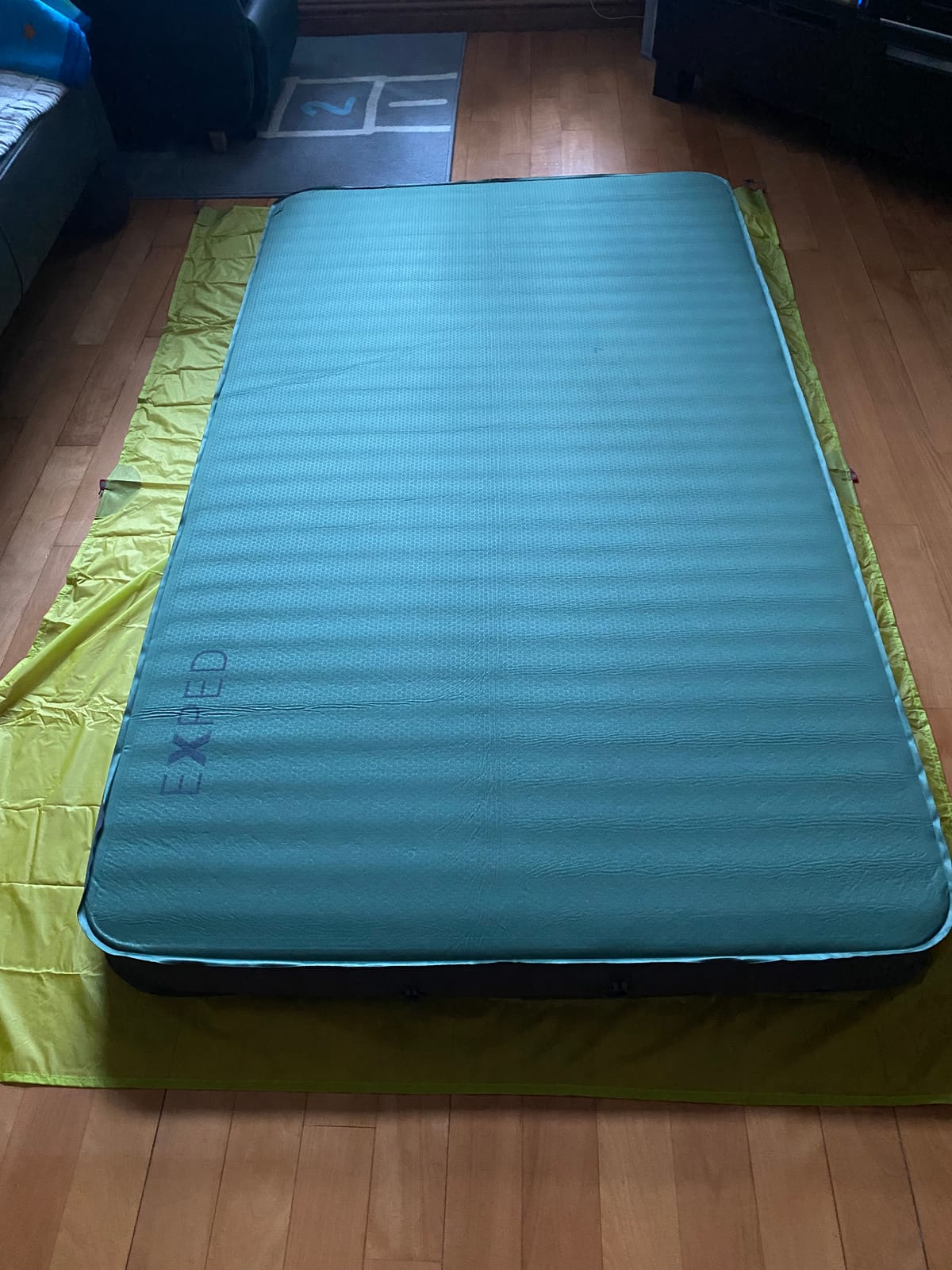
Owners rate the foam coring highly for couples specifically. The 30 percent increase in coring is what supports two adults without the familiar midline dip, and because it is foam rather than air, movement from one partner does not push the surface around under the other.
It self-inflates and includes a top-up pump for setting firmness, and the welded side handles make carrying a bulky foam mattress from the car to the tent a two-person job rather than an impossible one. The fabric is recycled 50D tricot with a TPU laminate and an Oeko-Tex 100 certification.
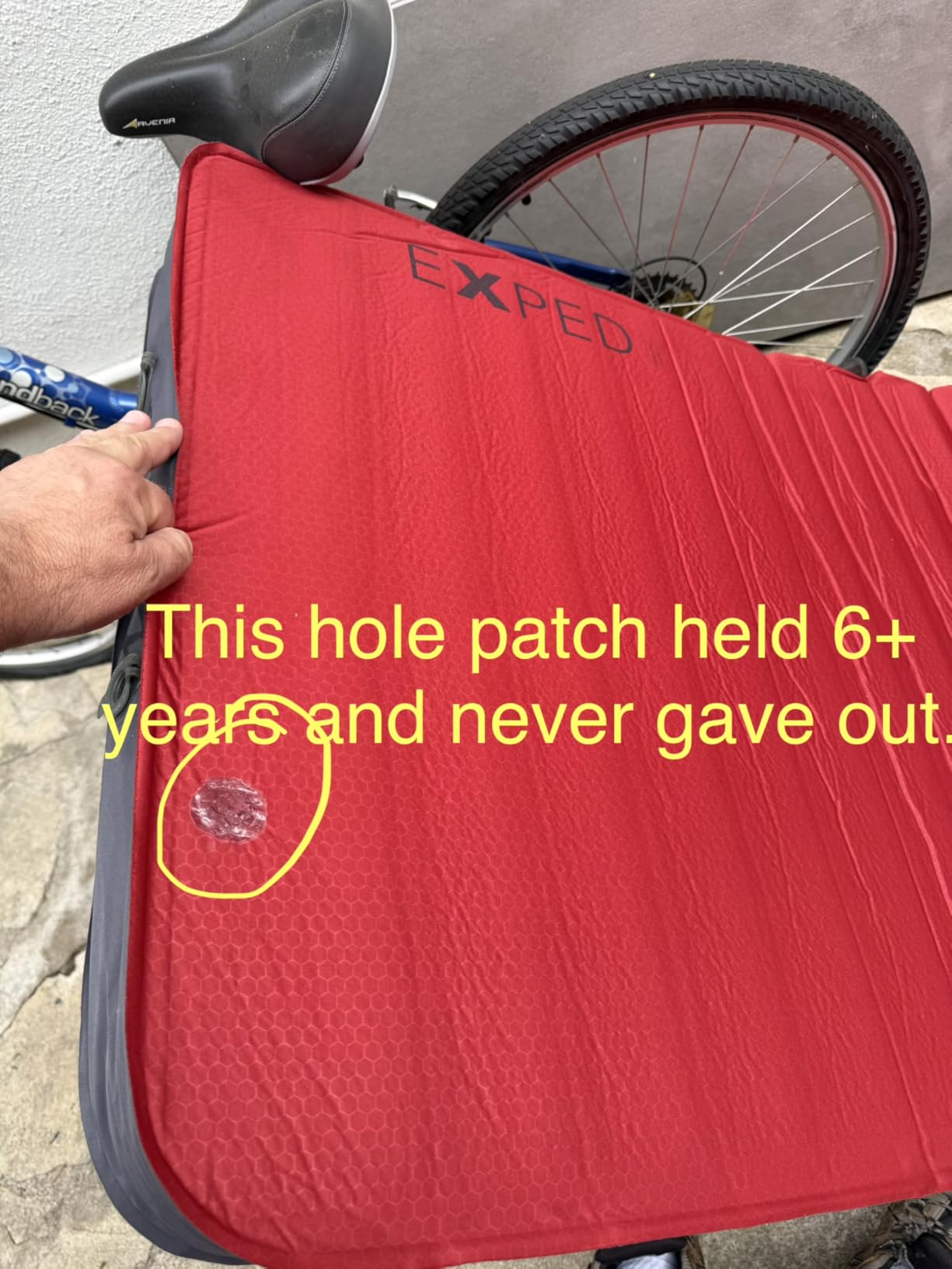
Why edge tapering matters more than width
A pad that measures 52 inches at the top and narrows to 44 inches at the base is really a 44 inch bed. Vertical sidewalls remove that loss entirely, and for a couple where one person sleeps near the edge, it is the difference between sharing the surface and sharing the last 8 inches of it.
Who should look elsewhere
Skip it if you carry your gear, because no foam mattress of this size is a walking pad. It is also not water resistant, so wet grass or a leaking tarp is a real risk in a shoulder season storm. The Lost Horizon is the more forgiving cold-weather option if you need insulation and can handle the weight.
12. KingCamp Premium Double: Quietest PVC-Free Foam Pad
KingCamp Premium Double Camping Mattress, 7.5 R-Value, 2 Person Black
79 x 50 in inflated
3 in thick
R-7.5
8.8 lb
Pros
- 3 inch air and foam hybrid resists bottoming out
- R-7.5 insulation kept two campers warm at 35 F
- Quiet PVC-free stretch fabric with no crinkling
- GRS-certified recycled materials
- Dual-valve system with 360 degree control
- Five-year manufacturer warranty
Cons
- Air leaking through the fabric between the inlets after months of use
- Firm to some sleepers
- Hard to roll back up and return to the bag
- Heaviest pad here at 8.8 lb
The KingCamp is the one to look at if PVC is a concern for you. The stretch fabric carries a TPU lamination rather than a PVC coating, and owners consistently describe it as quiet, with none of the crinkle that wakes a partner on a vinyl pad.
Its R-7.5 rating is the second highest in this roundup, and owners report two people staying warm at 35 F on it, which makes it a genuine three and a half season option. The memory foam comfort layer over high-resilience foam also means it does not bottom out the way a pure air pad does.
We have it at the end of the list because the owner history here is much thinner than the other eleven. It is also the heaviest pad in the group at 8.8 lb, which is fine for a car and impossible for a backpack.
The air leak worth knowing about
A recurring complaint describes slow air loss through the fabric between the two inlets, usually appearing after several months of use rather than immediately. Some owners had it resolved through the manufacturer’s replacement service, and the five-year warranty is worth taking seriously for exactly this reason.
Who should look elsewhere
Anyone carrying their bed on foot, and anyone who wants a soft plush surface, since the memory foam layer over 3 inches reads firm next to the 6 inch inflated pads here. The 400 lb combined load rating also suits average-sized couples better than larger ones.
One Double Pad or Two Single Pads: The Couples Decision
Two single pads give each of you an independent surface. Nothing you do transmits to the other person, and if one of you is considerably larger, two narrower pads often fit better than one wide pad split down the middle. The problem is the gap. Strapped side by side, two pads form a V-shaped trench in the centre that both of you end up falling into, and on uneven ground it gets worse.
One double pad gives you a shared surface with no trench. The cost is that it moves as one piece, so a restless partner can transmit movement, and the usable width has to cover two people rather than one.
Our rule is simple. Choose one double pad if both of you are similar in size and you will be on flat or soft ground. Choose two singles if one of you is much larger, if you are on rock, or if one of you is a genuinely restless sleeper and you value uninterrupted sleep over cuddling space.
The third option, used often on forums, is putting a thin foam topper over a large double pad. It adds a couple of inches of cushioning and softens the surface without adding another seam in the middle.
R-Value and Cold Weather Sleep
R-value measures how long a pad delays heat moving from the ground into your body, and it is the number that decides whether you are comfortable in cold conditions. The higher the figure, the colder the ground you can handle. Only four pads in this roundup publish one, which is itself a useful signal about how seriously the brands take cold weather.
An R-2.4 pad such as the Klymit is a summer and late spring figure. R-7.5 and above, as on the KingCamp, holds real warmth into the mid 30s F. R-10.6 and R-13, on the Exped and the Lost Horizon, are four-season ratings that stay comfortable near freezing.
For most three-season couples, R-5 to R-7.5 is the target. Below R-3 you are relying on your sleeping bag and clothing to make up the difference, and that stops working as soon as the temperature drops toward the low 40s.
Thickness and R-value are separate things, and buyers often conflate them. A 6 inch thick air pad with no insulation is comfortable but cold, because the thickness gives you support while the R-value keeps you warm.
Where Does It Go: Car, Truck Bed or Rooftop Tent
For car camping on flat ground, almost anything in this list works, and the deciding factors are packed size and how much of your trunk you are willing to give up. Double air pads between 3 and 5 lb are the easy ones to live with.
For a truck bed, bulk is not a constraint, so the 6 inch pads and the foam mattresses come into their own. A 6 inch surface also keeps you clear of the ridges in a truck bed, which is the main complaint couples raise about sleeping in one.
For a rooftop tent or a van, measure before you buy. Most two-person rooftop tents and 2.5-person tents have floors of 54 to 60 inches wide, so a 55 inch pad fits but leaves nothing spare, and anything wider will push against the walls every time you turn over.
Three numbers decide it for you: measure the flat floor, check the packed size against the space you have, and add the pad width to the two bodies and decide whether the remainder is a luxury or a problem. For most couples, 4 inches of margin across the total width is the minimum you want.
Frequently Asked Questions
What is the best camping mattress for couples?
The best camping mattress for couples is a double sleeping pad at least 50 inches wide and 4 inches thick with a listed capacity covering both of you. The TOBTOS 6 inch pad is our top pick for most couples, while the Elegear suits heavier sleepers and the Lost Horizon solves cold ground with an R-13 foam core.
What is the best camping mattress for two people?
Look first at width rather than thickness. A pad under 50 inches across forces one partner onto a seam or over the edge, and that is what wakes people at night. Then confirm a load rating that covers your combined weight, and add a second inch of thickness for every side sleeper in the pair.
What is the best camping bed for two people?
For most couples the options are one double air mattress, one foam hybrid mattress, or two single pads. A double air mattress is lightest and packs smallest, a foam hybrid stays firm for days and insulates well, and two single pads stop movement transfer but create a gap in the middle that both sleepers slide into.
Which type of mattress is best for couples?
Foam hybrids are the best all-round type for couples because the foam core holds shape overnight and stops movement moving across the surface. Air mattresses are lighter and cheaper, which matters for carried trips. Closed-cell pads are the most durable and cheapest but the least comfortable, and cots suit car campers with the space to spare.
What is the best double camping mattress for couples in cold weather?
Choose by R-value rather than thickness. Anything at R-7.5 or higher handles mid 30s F, and R-10 or above stays comfortable near freezing. In this roundup the KingCamp is R-7.5, the Exped MegaMat Max Duo is R-10.6, and the Lost Horizon Option3 is R-13, which is the highest we found.
Should couples buy one double pad or two single pads?
Buy one double pad if you are similar in size and sleep on flat or soft ground, since there is no gap to slide into. Buy two single pads if one of you is much larger, if the ground is rocky, or if one partner is a restless sleeper, since separate surfaces stop movement transferring but form a trench when strapped together.
Conclusion: Our Top Camping Mattress Picks for Couples
The best camping mattresses for couples are not the thickest or the most expensive. They are the ones that stay wide, quiet and firm from lights out to dawn, and the TOBTOS 6 inch double pad is the clearest example of that in 2026, with a 51 inch width, uniform thickness and enough owner history to trust it.
Buy the Elegear if your combined weight is higher than average, the Hikenture if you carry your bed on foot, the Lost Horizon or KingCamp if cold ground is on the itinerary, and the OGERY if you want 6 inches of cushion at the lowest weight we found. Whatever you choose, measure the floor you are sleeping on and check the combined load rating before you order.