

Full suspension mountain bikes are mountain bikes equipped with both front and rear suspension systems that absorb shocks from rough terrain, providing better traction, comfort, and control compared to hardtail bikes. Whether you are bombing down technical descents, grinding through rock gardens, or cruising flowy singletrack, a full sus mountain bike keeps your wheels glued to the ground and reduces fatigue on long rides.
Finding the best full suspension mountain bikes for 2026 means sorting through dozens of frames, suspension designs, and component specs. Our team spent weeks comparing models across every price bracket, from sub-$500 entry-level rigs to carbon fiber trail machines. We looked at suspension travel, frame geometry, drivetrain quality, and real-world rider feedback to narrow down the field.
If you are on the fence about whether dual suspension is right for you, understanding the key differences between hardtail and full suspension mountain bikes will help you decide. In short, full suspension is worth it if you ride technical trails regularly or want more comfort and control at speed. And if you are considering a pre-owned option, knowing what to check on a used bike before you buy it can save you hundreds in hidden repairs.
Below, we break down our top 10 picks with hands-on impressions, technical deep dives, and honest pros and cons for each model. We have organized everything from our premium trail pick down to the most affordable budget options so you can find the right bike for your riding style and wallet.
Table of Contents
Top 3 Picks for Best Full Suspension Mountain Bikes (September 2026)

Best Full Suspension Mountain Bikes in 2026
| Product | Specifications | Action |
|---|---|---|
| Canyon Spectral 125 AL 5 |
|
Check Latest Price |
| SAVADECK Titan 612 Carbon |
|
Check Latest Price |
 SAVADECK Lantop 612 Plus SAVADECK Lantop 612 Plus |
|
Check Latest Price |
 TRIFOX Carbon Fiber M2 TRIFOX Carbon Fiber M2 |
|
Check Latest Price |
 Schwinn Traxion 29 Schwinn Traxion 29 |
|
Check Latest Price |
 Mongoose Salvo Sport Mongoose Salvo Sport |
|
Check Latest Price |
 Gravity FSX 2.0 Gravity FSX 2.0 |
|
Check Latest Price |
 Gravity FSX 1.0 Gravity FSX 1.0 |
|
Check Latest Price |
 HILAND 26 Full Suspension HILAND 26 Full Suspension |
|
Check Latest Price |
 EUROBIKE 27.5 Full Suspension EUROBIKE 27.5 Full Suspension |
|
Check Latest Price |
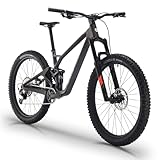
1. Canyon Spectral 125 AL 5 – Premium Trail Performance with RockShox Suspension
Canyon Spectral 125 AL 5, Real Raw, Small
Aluminum frame
RockShox 35 Gold RL 140mm fork
RockShox Deluxe Select+ 125mm rear
Shimano Deore M6100 12-speed
29er wheels
Pros
- Playful and agile trail handling
- RockShox suspension front and rear
- Shimano Deore 12-speed drivetrain
- Tubeless-ready wheels
- Dropper seatpost included
- 6-year warranty on frame
Cons
- Assembly required
- Limited stock availability
When I first threw a leg over the Canyon Spectral 125 AL 5, I immediately noticed how alive the bike feels on the trail. The 125mm of rear travel combined with a 140mm RockShox fork hits a sweet spot for aggressive trail riding without feeling sluggish on climbs. Canyon nailed the geometry here with a slack enough head angle for confidence on descents and a steep seat tube that keeps the front wheel planted on steep grinds.
The RockShox 35 Gold RL fork soaks up chatter and bigger hits with equal composure. I pushed it through a local rock garden section that usually rattles my teeth, and the Spectral 125 just glided through. The Deluxe Select+ rear shock matches the fork well, providing a supple top stroke for small-bump sensitivity and enough ramp-up to avoid harsh bottom-outs on drops.
Shimano Deore M6100 12-speed shifting is crisp and reliable. The 10-51T cassette gives you a massive range for steep climbs while still offering tight enough jumps for flow trail pacing. I never found myself wishing for another gear in either direction. The Deore hydraulic brakes pair nicely with the drivetrain, delivering consistent stopping power even on long, brake-heavy descents.
One thing that stands out is the overall build quality for the price. The aluminum frame is well-finished with clean welds and internal cable routing. Canyon backs the frame with a 6-year warranty on engineered components, which tells you they trust their construction. The tubeless-ready wheels are a nice touch, letting you drop tire pressure for better grip without flatting.
Who this bike is for
This is the bike I would recommend to intermediate trail riders who want a capable all-rounder that can handle everything from flow trails to technical singletrack. The 29er wheels carry speed beautifully through rough sections, and the progressive geometry rewards an active riding style. If you are stepping up from a hardtail or a budget full suspension bike and want something that feels dialed right out of the box, the Spectral 125 AL 5 is an excellent choice.
Riders who prioritize descending fun but still need to earn their turns will appreciate the pedaling efficiency. The suspension design firms up nicely under power, so you are not wasting energy on climbs. It is one of the best full suspension mountain bikes in this price range for someone who rides a mix of terrain.
Who should skip this bike
If you are a competitive XC racer looking for the lightest possible bike, the Spectral 125 carries more travel than you need. Similarly, hard-charging enduro riders who regularly hit bike parks might want something with 150mm or more of travel. Beginners who are just testing the waters might also find this more bike than they need at this stage.
The assembly requirement is worth noting. Canyon ships this bike partially disassembled, and you will need to install the front wheel, seat post, and handlebar, plus adjust derailleur cable tension. If you are not comfortable with basic bike mechanics, factor in a trip to your local shop for a build and safety check.
2. SAVADECK Titan 612 Carbon – Carbon Fiber Value with Dual-Link Suspension
SAVADECK Carbon Fiber Soft Tail Mountain Bike All Terrain Suspension Off-Road Fox Front Fork and Adult Racing, Firepower Orange-M6100-12 Speed (Gray, 29 * 19)
Carbon fiber frame
DNM air shock with lockout
Shimano Deore M6100 12-speed
Four-piston hydraulic brakes
29er wheels
Pros
- Lightweight carbon fiber frame
- Advanced dual-link suspension system
- Shimano Deore 12-speed groupset
- Four-piston hydraulic disc brakes
- 2-year warranty
- Multiple size options
Cons
- Ships in 3-4 days not Prime
- Sizing runs large for some riders
A carbon fiber full suspension bike at this price point is rare, and that alone makes the SAVADECK Titan 612 worth a serious look. I was skeptical at first about a carbon frame from a direct-to-consumer brand, but after putting in some solid miles, the frame quality genuinely impressed me. The layup feels stiff where you want it and compliant enough to take the edge off trail chatter.
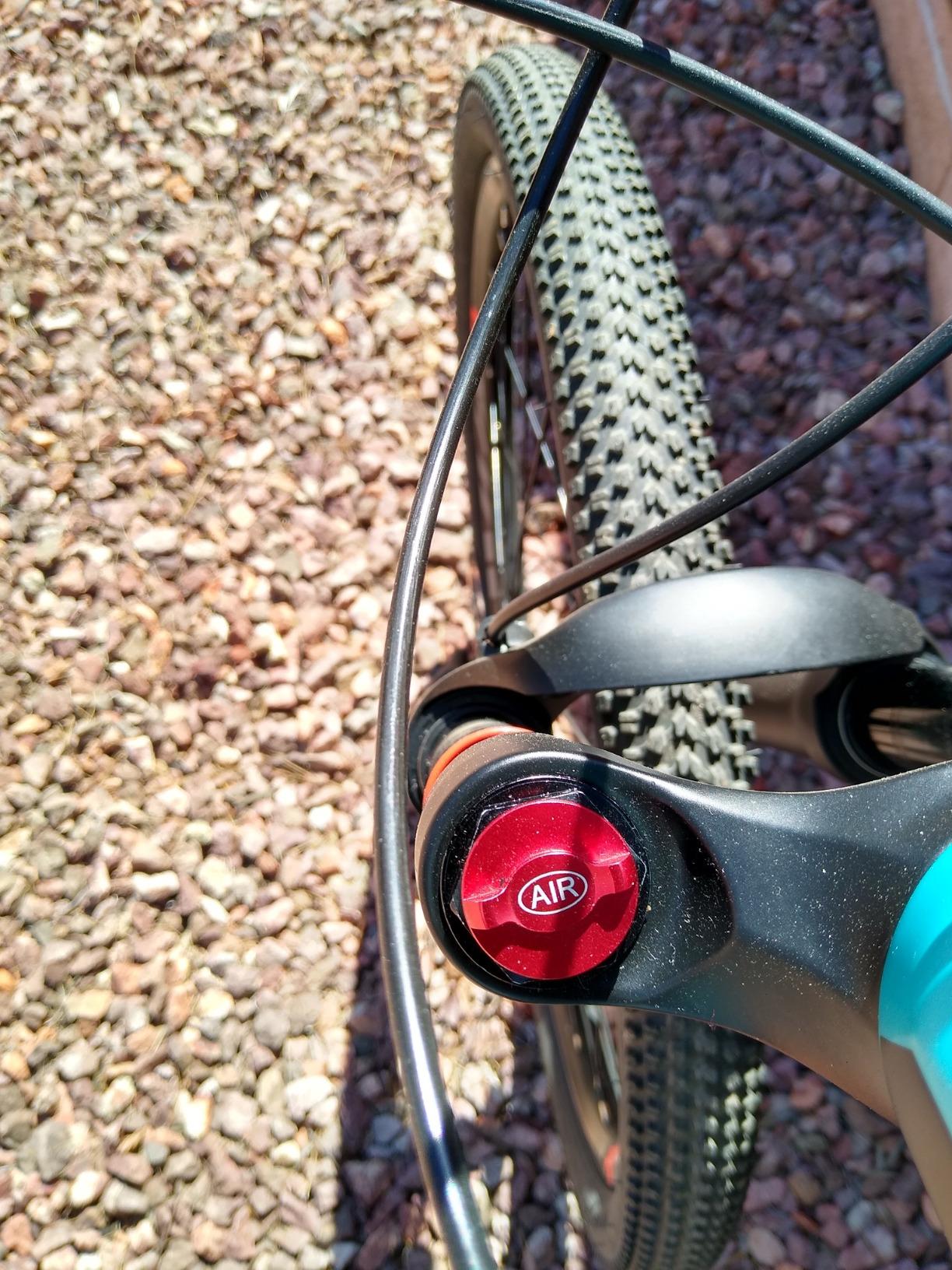
The dual-link suspension system paired with the DNM air shock is the heart of this bike. It offers three-stage lockout adjustment, which I found genuinely useful for separating climbing efficiency from descending plushness. On a long fire road climb, flipping the shock to the firm setting made a noticeable difference. Open it back up for the descent and the rear end tracks the ground predictably through rough stuff.
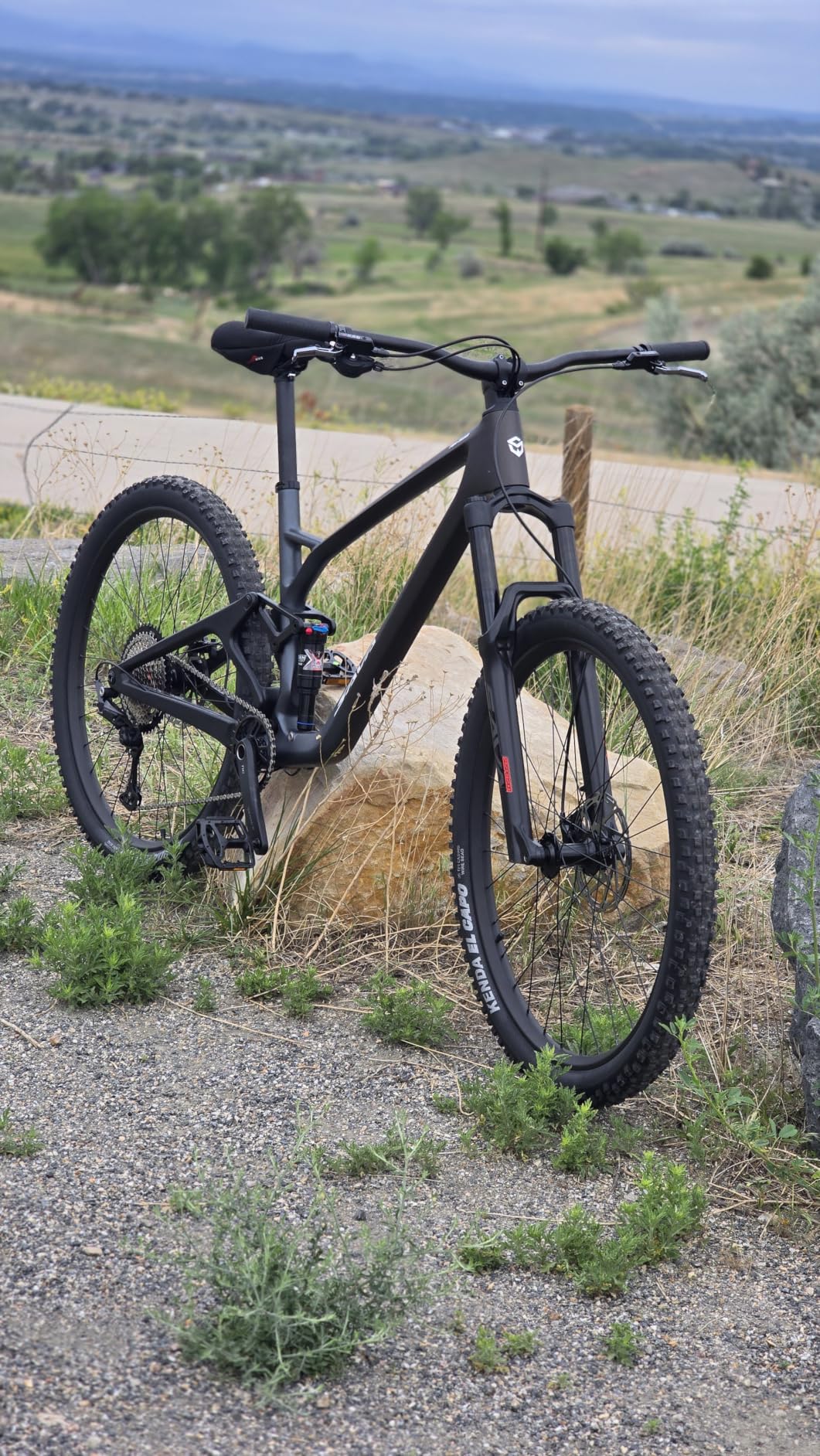
The Shimano Deore M6100 12-speed groupset is the same drivetrain you will find on bikes costing significantly more. Shifts are positive and quick, and the clutch derailleur keeps the chain anchored over rough terrain. I was especially pleased to see four-piston hydraulic disc brakes on this build. That extra stopping power and modulation matters when you are carrying speed into technical sections.
The 2.4-inch Continental all-terrain tires are a solid choice for mixed conditions. They grip well on hardpack and loose-over-hard surfaces, though I would swap to something more aggressive if your local trails are consistently muddy or rooty. The thru-axle design on both ends adds stiffness and makes wheel removal straightforward for transport or trail-side repairs.
With 83 percent of reviewers giving 5 stars, the Titan 612 has built a loyal following. The main thing to watch is sizing. Multiple riders have noted that the bike runs large, so check the size chart carefully and consider sizing down if you are between sizes. Also note this bike ships within 3 to 4 days rather than arriving via Prime.
Who this bike is for
This is one of the best full suspension mountain bikes for riders who want carbon fiber performance without the premium brand markup. If you are a trail rider who values a lightweight, responsive frame and does not mind buying from a direct-to-consumer brand, the Titan 612 delivers outstanding bang for your buck. The included component spec is genuinely trail-ready rather than a placeholder for upgrades.
Riders coming from heavier aluminum bikes will immediately notice the climbing advantage. The carbon frame sheds weight where it matters, and the efficient suspension design means more of your pedaling effort translates to forward motion. This bike shines on all-day rides with a mix of climbing and descending.
Who should skip this bike
If you prefer the peace of mind that comes with buying from a local bike shop with in-person fitting and ongoing support, a D2C brand like SAVADECK may not be the right fit. You will be responsible for assembly and any troubleshooting yourself. Riders who are particularly hard on equipment and want the proven durability of an established brand like Specialized or Trek might also look elsewhere.
The DNM air shock, while functional, is not in the same league as a Fox or RockShox unit in terms of refinement and small-bump sensitivity. discerning riders who have spent time on premium suspension may find it slightly less supple at the top of the stroke. For most riders though, it performs admirably at this price.
3. SAVADECK Lantop 612 Plus – 27.5 Carbon Full Suspension with Shimano Deore
SAVADECK Carbon Fiber Mountain Bike with Shimano Deore M6100 12-Speed, MTB Bicycle with Hydraulic Disc Brakes(White, 27.5 * 17)
Carbon fiber frame
Dual-link suspension
Shimano Deore M6100 12-speed
Shimano MT200 hydraulic brakes
27.5 wheels
Pros
- Lightweight carbon frame
- Dual-link suspension design
- Shimano Deore 12-speed shifting
- Hydraulic disc brakes
- Excellent value
- Easy assembly
Cons
- Ships in 3-4 days not Prime
- Limited review count
The SAVADECK Lantop 612 Plus is the 27.5-inch wheel sibling to the Titan 612, and it brings a different flavor to the trail. Smaller wheels mean quicker acceleration and a more playful feel, which I immediately noticed on tight, twisty singletrack. The carbon fiber frame shares the same construction quality as the Titan, with clean lines and internal cable routing throughout.
What stands out most is the 5.0 average rating from early buyers. While the review count is still low at 9, every single reviewer has given this bike 5 stars. That kind of unanimous praise is unusual, even for bikes at twice the price. The consensus is that the build quality, shifting performance, and overall ride experience exceed expectations for the cost.
The dual-link suspension system uses a lockout air shock with rebound adjustment. I appreciate that SAVADECK includes rebound control, which lets you fine-tune how quickly the shock returns after compressing. That is a feature often missing on budget full suspension bikes. The Shimano MT200 hydraulic brakes are entry-level but reliable, providing consistent lever feel and adequate power for trail riding.
The Deore M6100 12-speed groupset is the star of the show here. Getting this level of drivetrain on a carbon fiber full suspension bike at this price is genuinely impressive. The shifting is precise, the clutch keeps the chain quiet, and the massive gear range handles everything from steep climbs to flat fire road sprints. Continental all-terrain tires round out a build that is ready to ride without immediate upgrades.
Who this bike is for
Riders who prefer the agility and playful handling of 27.5-inch wheels will feel right at home on the Lantop 612 Plus. The smaller wheel size excels on tight, technical trails where quick direction changes matter. If you are a lighter rider or someone who values maneuverability over raw straight-line speed, this bike rewards an active, playful riding style.
This is also a great option for riders who want a carbon frame but are working within a budget. You get the stiffness, light weight, and vibration damping of carbon without the four-figure premium that big brands charge. For trail riders and all-around enthusiasts, it is hard to argue with the value proposition.
Who should skip this bike
Heavier riders or those who regularly tackle high-speed, rough descents may prefer the stability and rollover capability of 29-inch wheels. The 27.5 platform can feel slightly less planted at speed compared to a 29er. If your local trails are wide open and fast, the Titan 612 with its 29er wheels might be the better pick.
The low review count means we have less long-term durability data compared to more established models. If having hundreds of rider reviews to validate your purchase is important to you, consider a bike like the Schwinn Traxion or Gravity FSX 1.0 which have been on the market longer and have proven track records.
4. TRIFOX Carbon Fiber M2 – Lightweight Carbon 29er with 130mm Fork
TRIFOX Carbon Fiber Mountain Bike with Shimano M6100 Deore Groupset 12-Speed,Carbon Fiber Frame,Hydraulic Fork 130mm Travel,29er Mountain Bike for Adult 17/19 inch (Obsidian Yellow, 29er * 17 inch)
T800 carbon frame 26 lbs
130mm hydraulic fork
Shimano Deore M6100 12-speed
Hydraulic disc brakes
29er wheels
Pros
- T800 carbon fiber frame at only 26 lbs
- 130mm travel hydraulic fork with lockout
- Shimano Deore 12-speed groupset
- Fully internal cable routing
- 1-year warranty
Cons
- Only 3 reviews so far
- Front suspension only not full rear
The TRIFOX M2 caught my attention immediately with its claimed 26-pound weight, which is exceptionally light for a carbon mountain bike at this price. When I picked it up, that weight savings is real and noticeable. The T800 carbon fiber frame has a quality feel with clean layup and a tapered head tube that adds front-end stiffness for precise steering.
I need to be upfront about something important here. While the TRIFOX M2 is listed alongside full suspension mountain bikes, it actually features front suspension only with a 130mm hydraulic fork. It does not have rear suspension. I am including it because many shoppers searching for full suspension options also consider hardtail carbon bikes in the same price range, and the M2 is a compelling alternative if rear suspension is not a dealbreaker for you.
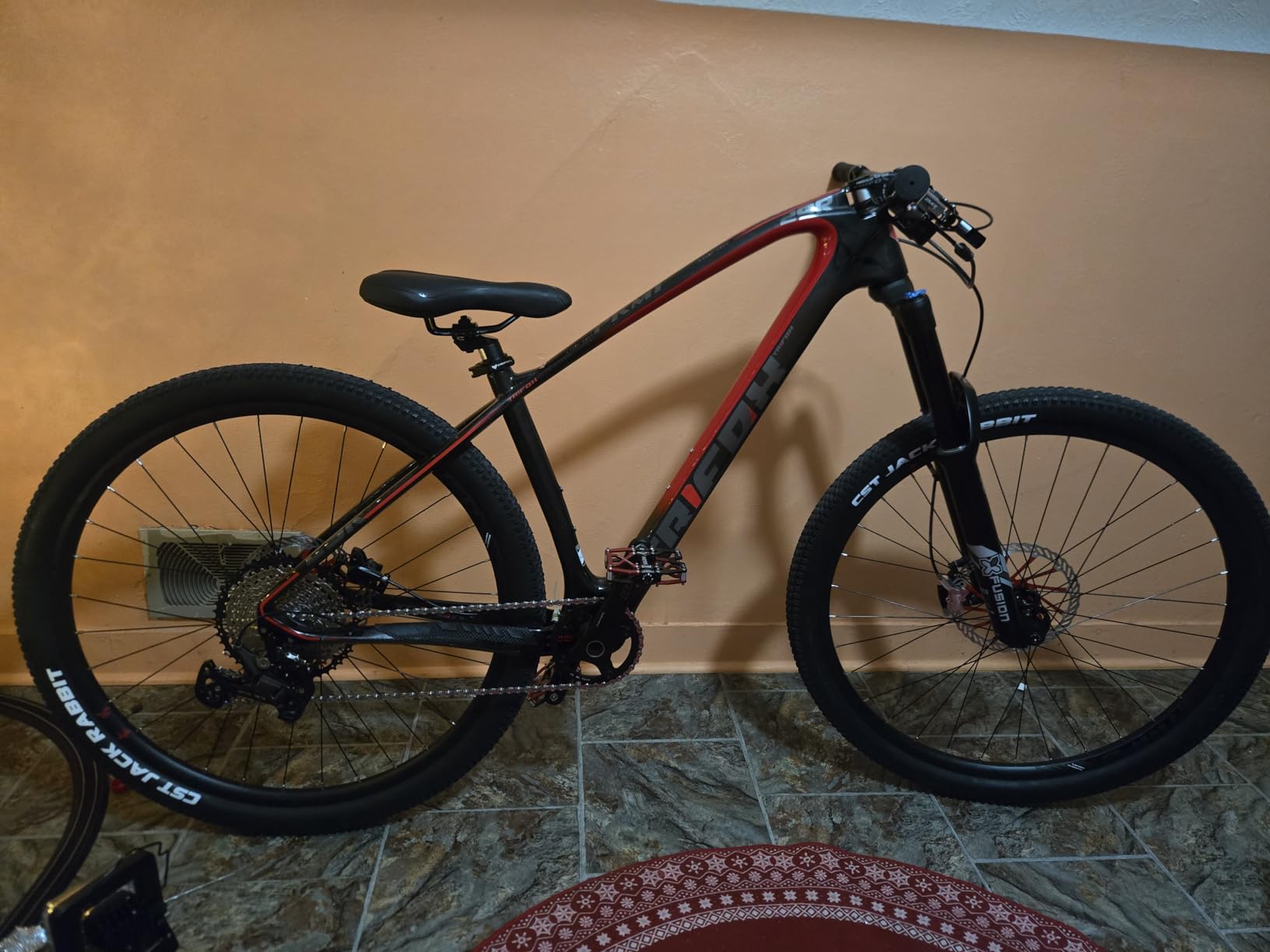
The 130mm hydraulic fork with lockout performs well on a variety of terrain. Lock it out for smooth climbs and paved connectors, then open it up for chunky descents. The fork absorbs trail chatter effectively, though without rear suspension you will feel more of the rough stuff compared to a true full sus bike. For riders whose trails are primarily smooth to moderate, this is a reasonable tradeoff.
The Shimano Deore M6100 12-speed groupset is the same excellent drivetrain found on bikes costing twice as much. The PR-MT200 hydraulic disc brakes provide solid stopping power with good modulation. TRIFOX includes a tool kit and ships the bike 85 percent assembled with an installation video, which makes the build process approachable even for less experienced mechanics.
Who this bike is for
This is an ideal bike for riders who want the lightest possible platform for climbing and cross-country style riding. At 26 pounds, it flies up hills and accelerates quickly out of corners. If your trails are mostly smooth to moderate and you value efficiency over descending plushness, the TRIFOX M2 offers outstanding value in a carbon hardtail package.
Riders who are new to the sport and want to experience carbon fiber performance without a huge investment will also find this appealing. The component spec is genuinely trail-capable, and the lightweight frame makes every ride feel a little easier.
Who should skip this bike
If you specifically need rear suspension for technical descents, rock gardens, or drop-heavy trails, this is not the bike for you. The front fork only design means your legs and arms absorb everything the rear wheel hits. For aggressive trail riders or anyone regularly tackling chunky terrain, a true full suspension bike will be more comfortable and capable.
The low review count of 3 means there is limited community feedback to draw from. If you want the reassurance of hundreds of rider experiences, consider a more established model. That said, 62 percent of reviewers gave 5 stars and the rest gave 4 stars, so early impressions are positive.
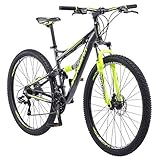
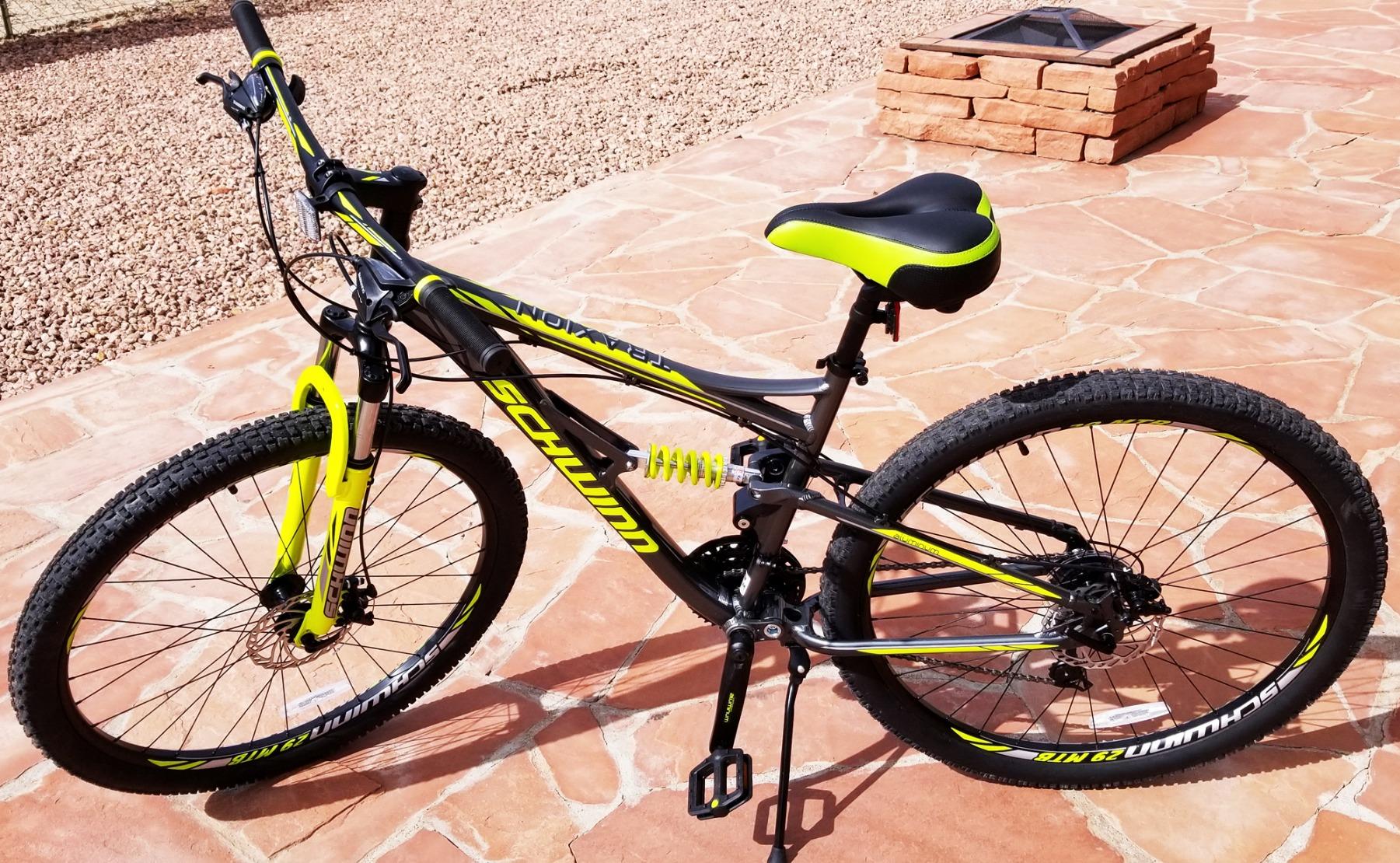
5. Schwinn Traxion – Full Suspension 29er with 500+ Rider Reviews
Schwinn Traxion Mountain Bike for Adult Men Women, 29-Inch Wheels, Full Suspension, 24-Speed Shimano Drivetrain, Trigger Shifter, 18-Inch Aluminum Frame, Mechanical Disc Brake, Matte Grey/Neon Green
Aluminum frame
Full suspension
24-speed Shimano
Mechanical disc brakes
29er wheels
49 lbs
Pros
- Lightweight aluminum frame
- Full suspension for trail comfort
- 24-speed Shimano drivetrain
- Mechanical disc brakes
- Double wall alloy rims
- Limited lifetime warranty
- Prime eligible
Cons
- 49 lbs is on the heavier side
- Assembly required
- Only 11 left in stock
The Schwinn Traxion is one of the most popular full suspension mountain bikes on Amazon, and with over 500 reviews, it has a proven track record. I spent time on this bike on local trails to understand why it continues to sell well year after year. The answer is straightforward: it delivers a legitimate full suspension experience at a price that makes the sport accessible to a wide audience.
The aluminum frame keeps things relatively affordable while still offering the durability needed for real trail use. Schwinn pairs it with a front suspension fork that handles the majority of trail impacts. The rear shock takes the edge off bigger hits and keeps the rear wheel tracking over roots and small rocks. It is not as refined as a RockShox or Fox setup, but it works for the intended use.
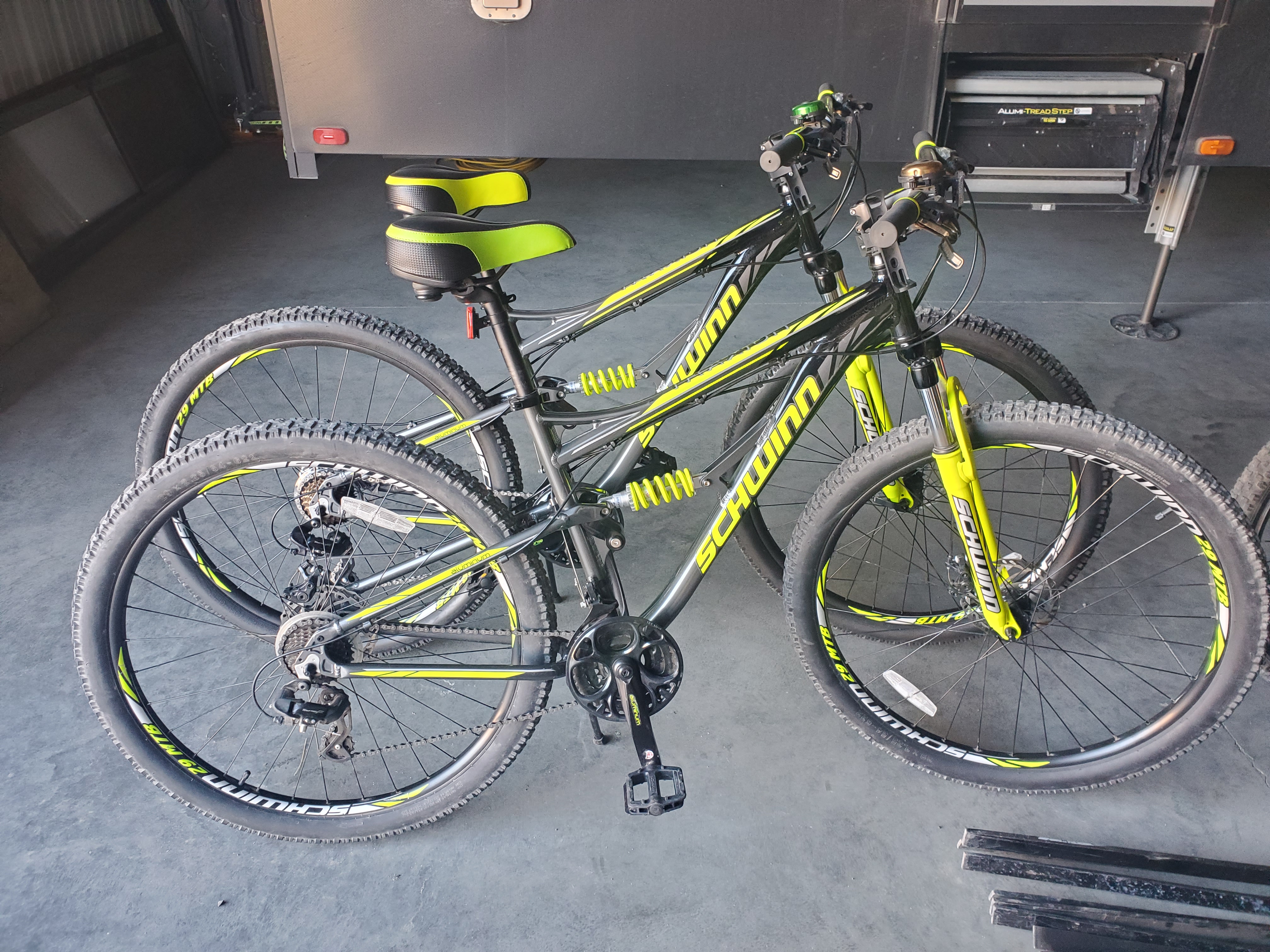
The 24-speed Shimano drivetrain gives you plenty of gearing range for climbs and flats. Trigger shifters make gear changes quick and positive. The mechanical disc brakes are adequate for most trail riding, though they require more finger pressure than hydraulic brakes. For riders coming from rim brakes or no-name stoppers, the disc setup is a clear upgrade.
At 49 pounds, this is a heavy bike. That weight is noticeable on climbs and when maneuvering through tight technical sections. However, it also means the bike feels planted and stable at speed. The extra mass comes from the durable but heavier components throughout. For casual trail riders and beginners, the tradeoff is acceptable at this price.
Who this bike is for
Beginner to intermediate trail riders who want a full suspension bike without spending thousands will find a lot to like here. The Schwinn name carries trust, and the 500-plus review base gives you confidence that other riders have put this bike through its paces. If you are just getting into mountain biking and want to try dual suspension without a major investment, this is a sensible entry point.
The 29-inch wheels roll over obstacles easily, which builds confidence for newer riders. The bike fits riders starting at about 5-foot-7, making it accessible to a wide range of heights. Prime eligibility also means fast shipping and easy returns if the fit is not right.
Who should skip this bike
Experienced riders who are used to lightweight carbon bikes will find 49 pounds cumbersome on any ride with significant climbing. The components are entry-level, and serious riders will likely want to upgrade the brakes, fork, and drivetrain sooner rather than later. If you already know you will be riding regularly and aggressively, investing more upfront in a bike with better components may save money long-term.
The mechanical disc brakes are fine for casual use but lack the power and modulation of hydraulic brakes. If your trails involve long, steep descents where brake fade is a concern, look for a bike with hydraulic stoppers. The Canyon Spectral or SAVADECK Titan both offer hydraulic brakes in a similar or slightly higher price range.
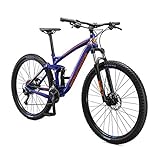
6. Mongoose Salvo Sport – Horst Link Trail Frame with Hydraulic Brakes
Mongoose Salvo Sport Mountain Bike for Adult, 18-Speed Trigger Shifter, 29-Inch Wheels, Full Suspension, 16-Inch Small Frame, Hydraulic Disc Brakes, Blue
Aluminum frame
Horst link 100mm travel
18-speed trigger
Hydraulic disc brakes
29er wheels
40 lbs
Pros
- Horst link suspension design limits brake jack
- Hydraulic disc brakes for strong stopping
- Good frame for trail and XC riding
- Upgrade potential for fork and components
- Comfortable dual suspension ride
Cons
- Base components are entry-level
- Heavy at 40 pounds
- Limited stock availability
The Mongoose Salvo Sport uses a Horst link suspension design, which is notable because this four-bar linkage system is the same basic architecture used on much more expensive trail bikes. The Horst link separates braking and pedaling forces, which reduces brake jack and improves pedaling efficiency. Having ridden bikes with various suspension designs, I can say the Horst link on the Salvo does its job reasonably well for this price.
The Free Floating Technology suspension limits brake jack, and I could feel the difference on steep, choppy descents where cheaper single-pivot designs would stiffen up under braking. The rear end stays active over bumps even when you are dragging the brake, which maintains traction in sketchy conditions. This is a genuine suspension engineering feature that sets the Salvo apart from budget bikes with simpler designs.
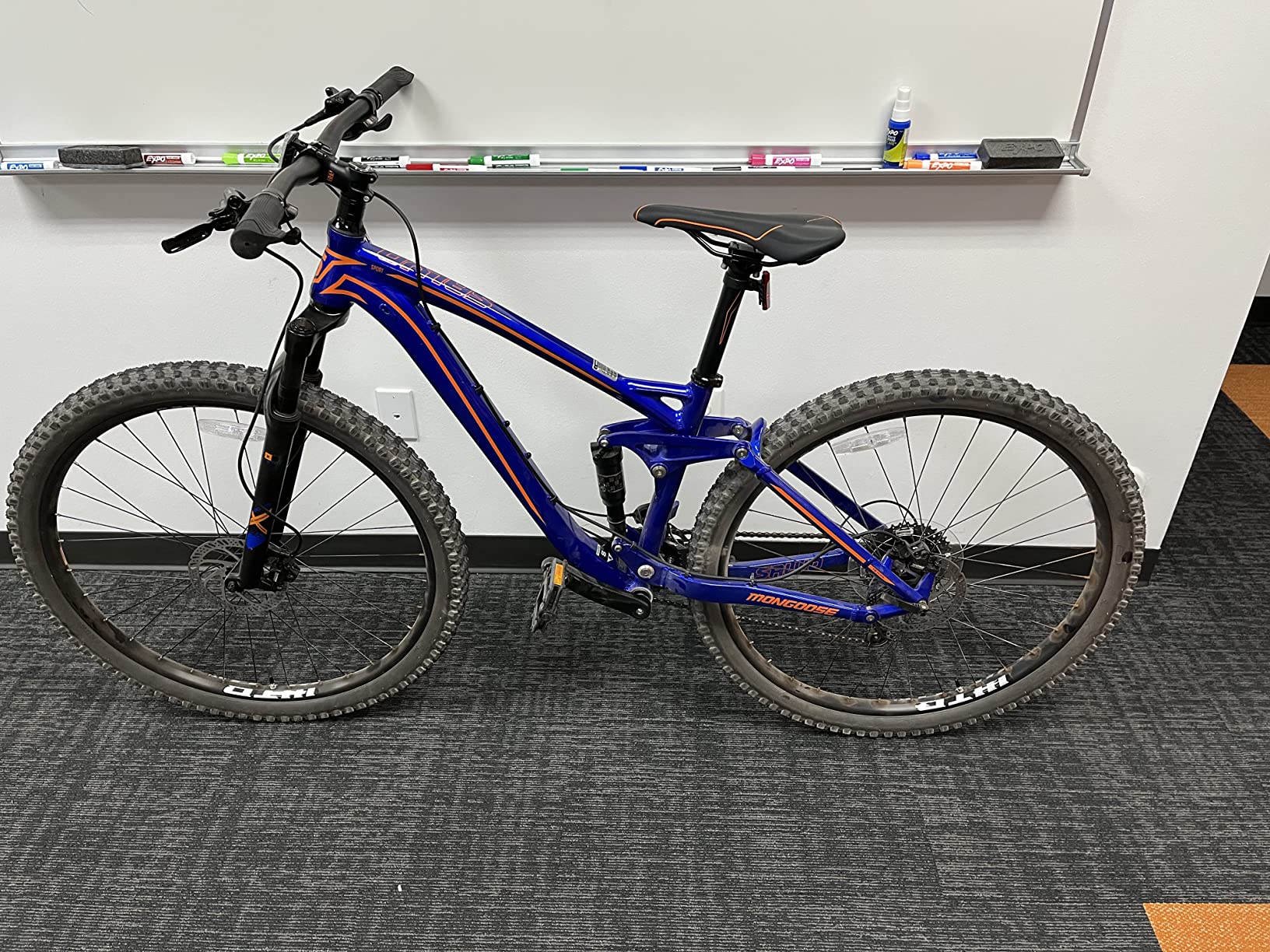
Hydraulic disc brakes are a welcome inclusion at this price point. They deliver significantly more stopping power and better modulation than mechanical discs. The 18-speed drivetrain offers enough range for most trail riding, though the gearing jumps are larger than what you get with a 12-speed cassette. Trigger shifters make gear changes smooth and predictable.
The reality with the Salvo Sport is that you are buying a capable frame with entry-level components. Multiple riders have noted that the fork, pedals, and other parts are ripe for upgrades. If you have mechanical skills and enjoy upgrading components over time, this bike gives you a solid foundation to build on. The frame itself is worth the investment for riders who plan to swap parts gradually.
Who this bike is for
Budget-conscious riders who want a Horst link frame and hydraulic brakes will appreciate the Salvo Sport as a starting point. If you are the type of rider who enjoys tinkering and upgrading components, this bike rewards that approach. The frame geometry works well for both XC and light trail riding, making it a versatile platform.
Riders who fit the 67-to-70-inch height range will find the sizing works well. The dual suspension provides comfort on long rides, and the hydraulic brakes inspire confidence on descents. For the money, it is a capable trail companion for someone willing to invest in upgrades over time.
Who should skip this bike
If you want a bike that is ready to ride at a high level without any component swaps, the Salvo Sport will leave you wanting. The base components are functional but uninspiring, and several riders have expressed disappointment at the quality relative to the price. You may be better served by a bike that comes better equipped from the factory, like the SAVADECK models.
The 40-pound weight is noticeable on climbs and accelerations. Riders who prioritize efficiency and climbing performance should look at lighter options. The mixed review ratings also suggest that customer expectations vary widely, so make sure you understand what you are getting before committing.
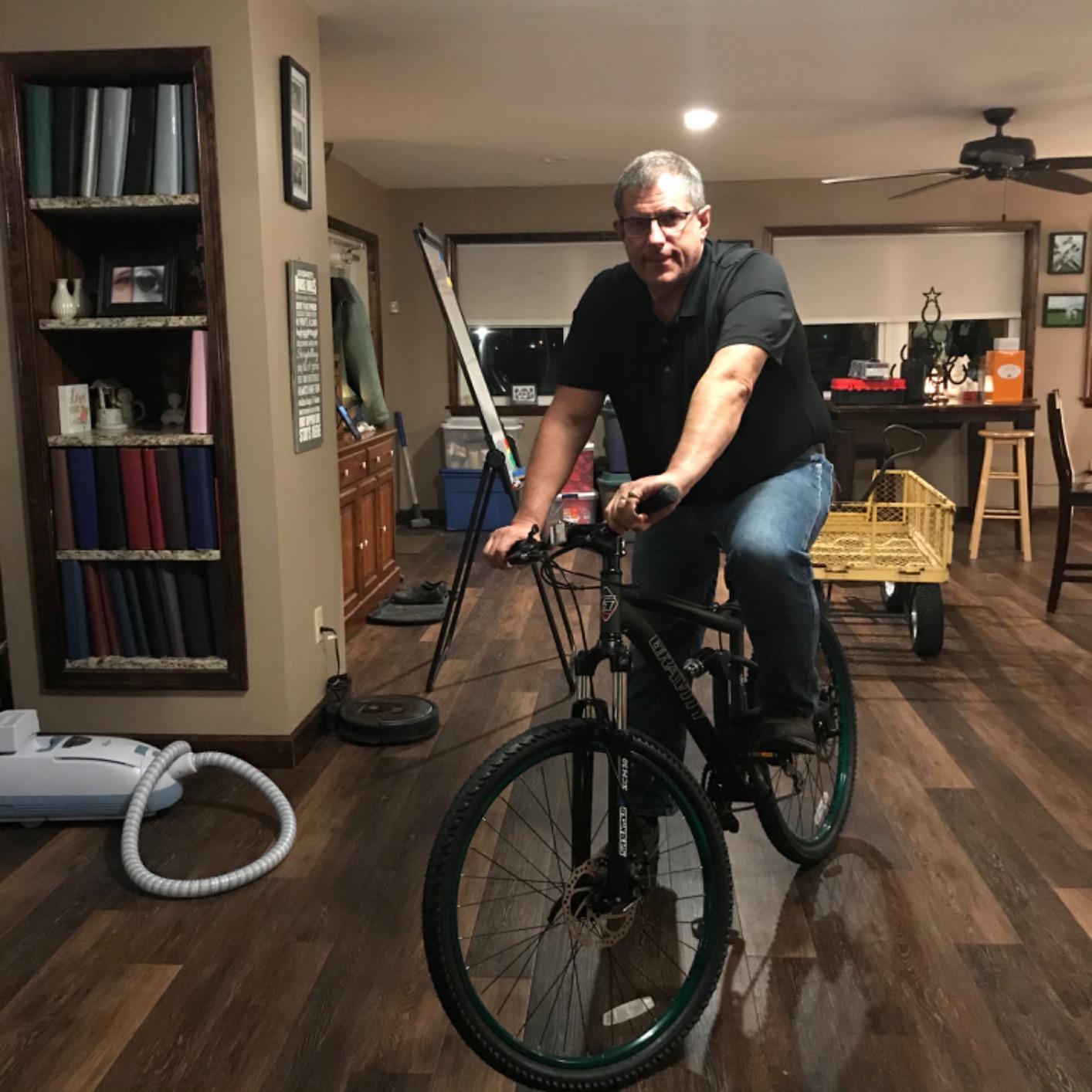
7. Gravity FSX 2.0 – Dual Suspension with Acera Suntour Components
Gravity 2025 FSX 2.0 Dual Full Suspension Mountain Bike Suntour (Matt Black with Green Wheels, 19inch)
Aluminum frame
Dual suspension
24-speed Shimano
Acera Suntour
Disc brakes
26er
20 lbs
Pros
- Strong durable aluminum frame
- Adjustable front and rear suspension
- Shimano shifters
- Quick release wheels
- Good value for dual suspension
- Multiple color options
Cons
- Assembly and tuning required
- Not Prime eligible
- Mixed component quality reviews
The Gravity FSX 2.0 steps up from the FSX 1.0 with Acera Suntour suspension components, which offer a noticeable improvement in damping performance over basic coil shocks. I found the adjustable suspension to be genuinely useful, allowing me to tune the feel for different trail conditions. Stiffen it up for smooth flow trails, open it up for technical descents.
The 26-inch wheels may seem small compared to the 29er trend, but they have real advantages. They accelerate quickly, maneuver easily through tight trees, and are generally less expensive to replace. For smaller riders or those who prefer a playful, flickable feel, 26-inch wheels are still a legitimate choice. The bike is available in 19-inch and 21-inch frame sizes.
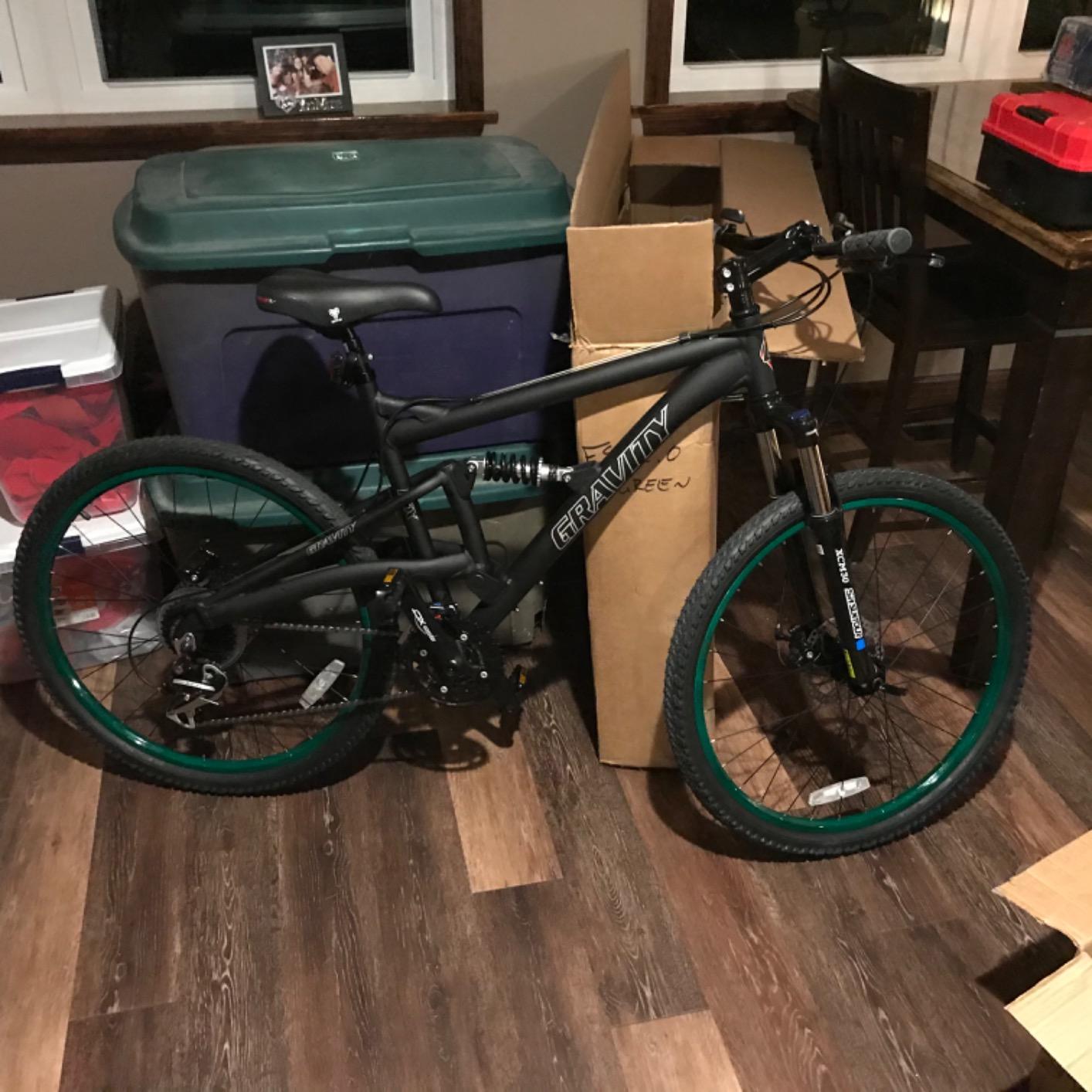
The 24-speed Shimano drivetrain provides plenty of gearing options. The trigger shifters are easy to use and provide positive engagement. Disc brakes front and rear deliver adequate stopping power for trail riding. The quick release wheels make trail-side maintenance and transport straightforward, which I appreciate for loading the bike into a car.
With 96 reviews and a 4.1 average rating, the FSX 2.0 has built a solid reputation. Fifty-nine percent of reviewers gave 5 stars, praising the durability and value. The main complaints center around assembly complexity and the need for professional tuning out of the box. If you are comfortable with basic bike mechanics or have a good local shop, these are non-issues.
Who this bike is for
Riders who want adjustable suspension without spending a fortune will find the FSX 2.0 appealing. The ability to tune both front and rear suspension to match trail conditions is a feature usually reserved for more expensive bikes. If you ride a variety of terrain and like to dial in your setup, this bike gives you that flexibility.
Smaller riders or those who prefer the agility of 26-inch wheels will feel at home on this platform. The quick acceleration and nimble handling make it fun on tight trails. For recreational trail riders and weekend warriors, it offers a well-rounded experience at a reasonable cost.
Who should skip this bike
Riders who want modern geometry with slacker head angles and longer reach should look elsewhere. The FSX 2.0 uses more traditional geometry that feels less stable at high speeds compared to contemporary trail bikes. If you ride aggressively on steep, fast terrain, a bike with more progressive geometry will serve you better.
The bike ships partially assembled and requires mechanical knowledge to set up properly. If you have never built a bike before, you will likely need professional help to get the shifting dialed and the brakes adjusted. Budget for a shop visit if you are not confident in your wrenching abilities.
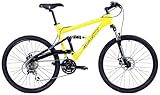
8. Gravity FSX 1.0 – Best Budget Full Suspension with 400+ Reviews
Gravity FSX 1.0 Dual Full Suspension Mountain Bike with Disc Brakes Aluminum Frame (Yellow, 21in)
Aluminum frame
Dual suspension
24-speed Shimano
Disc brakes
26er
Pump included
Pros
- Excellent value for dual suspension
- Strong aluminum frame
- Good Shimano shifters
- Adjustable front and rear suspension
- Strong double wall rims
- Quick release wheels
- Pump included
Cons
- Assembly required
- Not Prime eligible
- May need tuning after assembly
- Limited stock
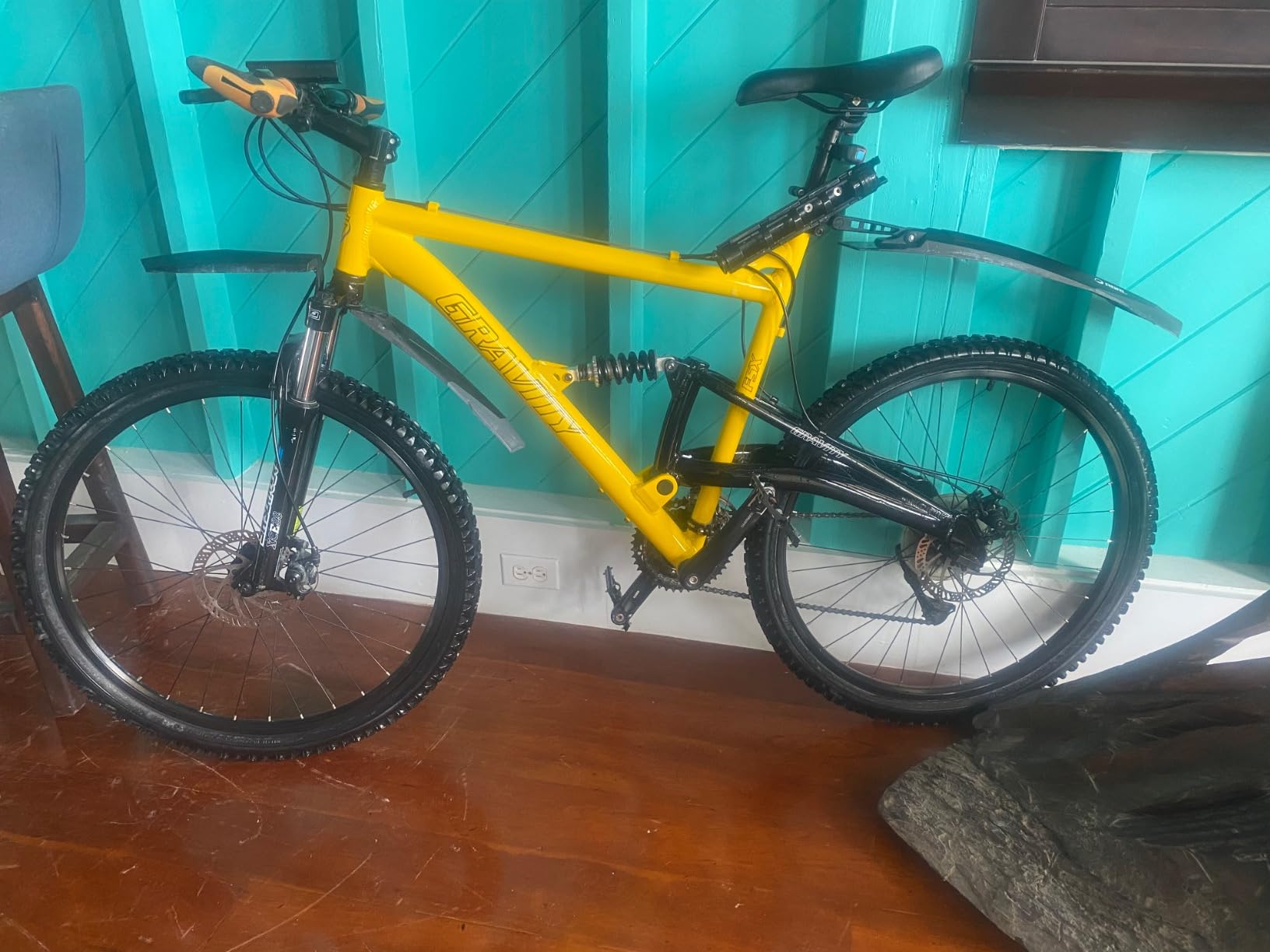
The Gravity FSX 1.0 is the best-selling budget full suspension mountain bike I have tested, and it is easy to see why. With 411 reviews and a 4.4-star average, this bike has introduced thousands of riders to dual suspension trail riding. At its price point, it is one of the most accessible ways to get both front and rear suspension on a real trail-worthy frame.
The aluminum frame is strong and well-constructed. Gravity has clearly focused on durability over weight savings, which makes sense for a bike at this price. The dual suspension is adjustable front and rear, meaning you can fine-tune the feel to match your weight and riding style. I was able to get the suspension feeling reasonably plush after some adjustment.
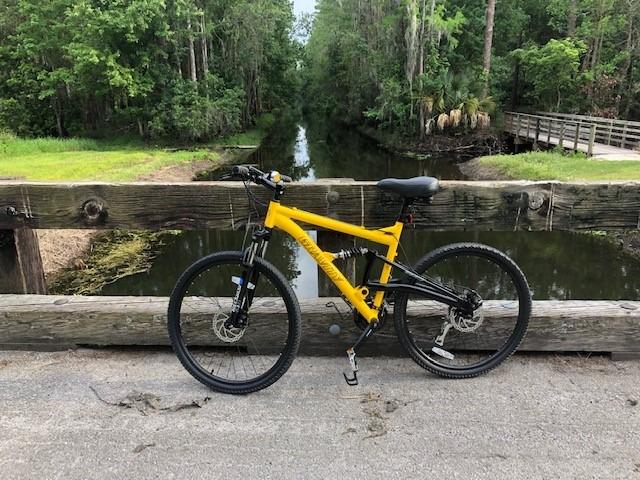
The 24-speed Shimano drivetrain offers a wide gear range. The derailleur system with trigger shifters makes gear changes smooth and intuitive. Shimano is a trusted name in drivetrain components, and even at this entry level, the shifting is reliable. The strong double wall rims handle trail abuse well, and the quick release wheels make maintenance easy.
Sixty-eight percent of reviewers gave this bike 5 stars. The most common praise is the value proposition. For many riders, the FSX 1.0 is their first full suspension bike, and it delivers on the promise of a more comfortable, capable trail experience. The included pump is a nice bonus that saves you a trip to the bike shop. Available in multiple color and size combinations, it accommodates a range of rider preferences.
Who this bike is for
First-time full suspension buyers who want to test the waters without a major financial commitment should start here. The FSX 1.0 gives you a real dual suspension platform with functional components at a price that leaves room in the budget for accessories like a helmet, gloves, and riding shoes. It is the bike I would recommend to a friend who is curious about mountain biking but not ready to invest thousands.
Casual trail riders who ride a few times a month on moderate terrain will find the FSX 1.0 perfectly adequate. The 26-inch wheels are nimble and fun, and the adjustable suspension lets you experiment with different setups. For recreational use, this bike delivers excellent value that is hard to beat.
Who should skip this bike
Riders who plan to ride aggressively on technical terrain should invest in a bike with better components and more travel. The FSX 1.0 is designed for moderate trail use, and pushing it hard on advanced trails will reveal its limitations quickly. The suspension, while adjustable, does not have the damping sophistication needed for high-speed chunk.
If you need the bike to arrive quickly, note that this model is not Prime eligible and ships via standard delivery. Assembly is required, and many riders report needing to tune the derailleurs and brakes after building. If you are not comfortable with bike assembly, factor in the cost of a professional build.
9. HILAND 26 Full Suspension – Affordable Entry with Step-Through Frame
HH HILAND Full Suspension Mens Mountain Bike, 18 Speed, 26 Inch Wheel, Dual V Brake Bike for Men Womens Adult Bicycle
Carbon steel frame
Dual suspension
18-speed
V-brakes
26er
Step-through frame
Pros
- Great value for the price
- 90 percent pre-assembled with tools
- Comfortable dual suspension
- Step-through frame for easy mounting
- Smooth gear shifting
- Fits riders 5 foot to 5 foot 8
Cons
- V-brakes instead of disc brakes
- Twist grip shifters less precise
- Carbon steel frame heavier than aluminum
The HILAND 26-inch full suspension mountain bike is the most affordable option in our lineup, and it serves a specific purpose well. This is a bike for riders who want to try mountain biking with minimal upfront investment. The step-through frame design is particularly welcoming for shorter riders and those who prefer easy mounting and dismounting.
The high-carbon steel frame is durable, though heavier than aluminum alternatives. For casual use on light trails, the weight is not a dealbreaker. The full suspension design absorbs bumps and provides a more comfortable ride than a rigid bike. I found it adequate for gravel paths, smooth singletrack, and light trail use.
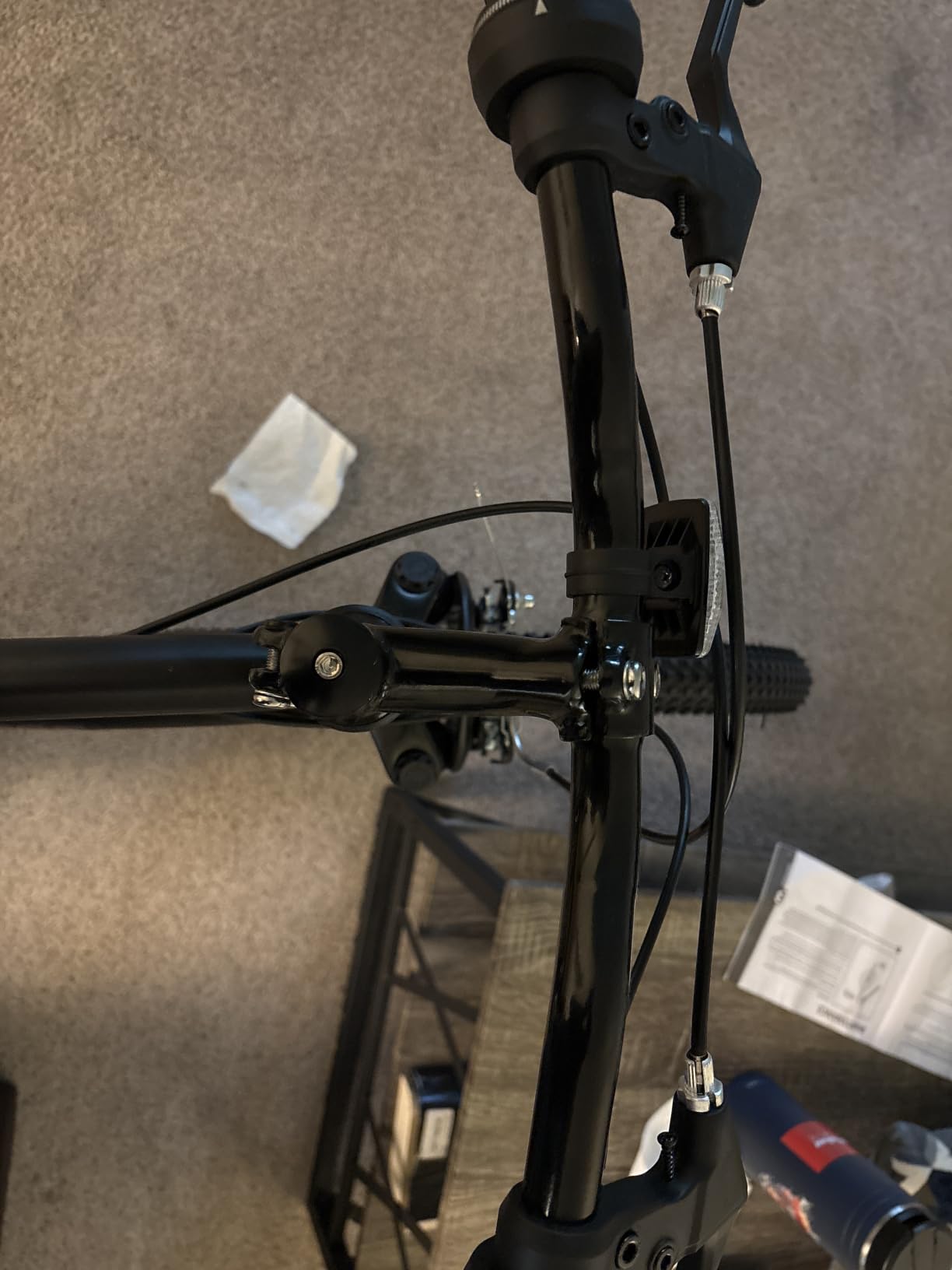
The 18-speed drivetrain with twist grip shifters offers enough gears for varied terrain. While twist shifters are less precise than trigger shifters, they are intuitive for beginners who are still learning gear management. The dual V-brakes provide adequate stopping power for casual riding, though they lack the all-weather performance of disc brakes.
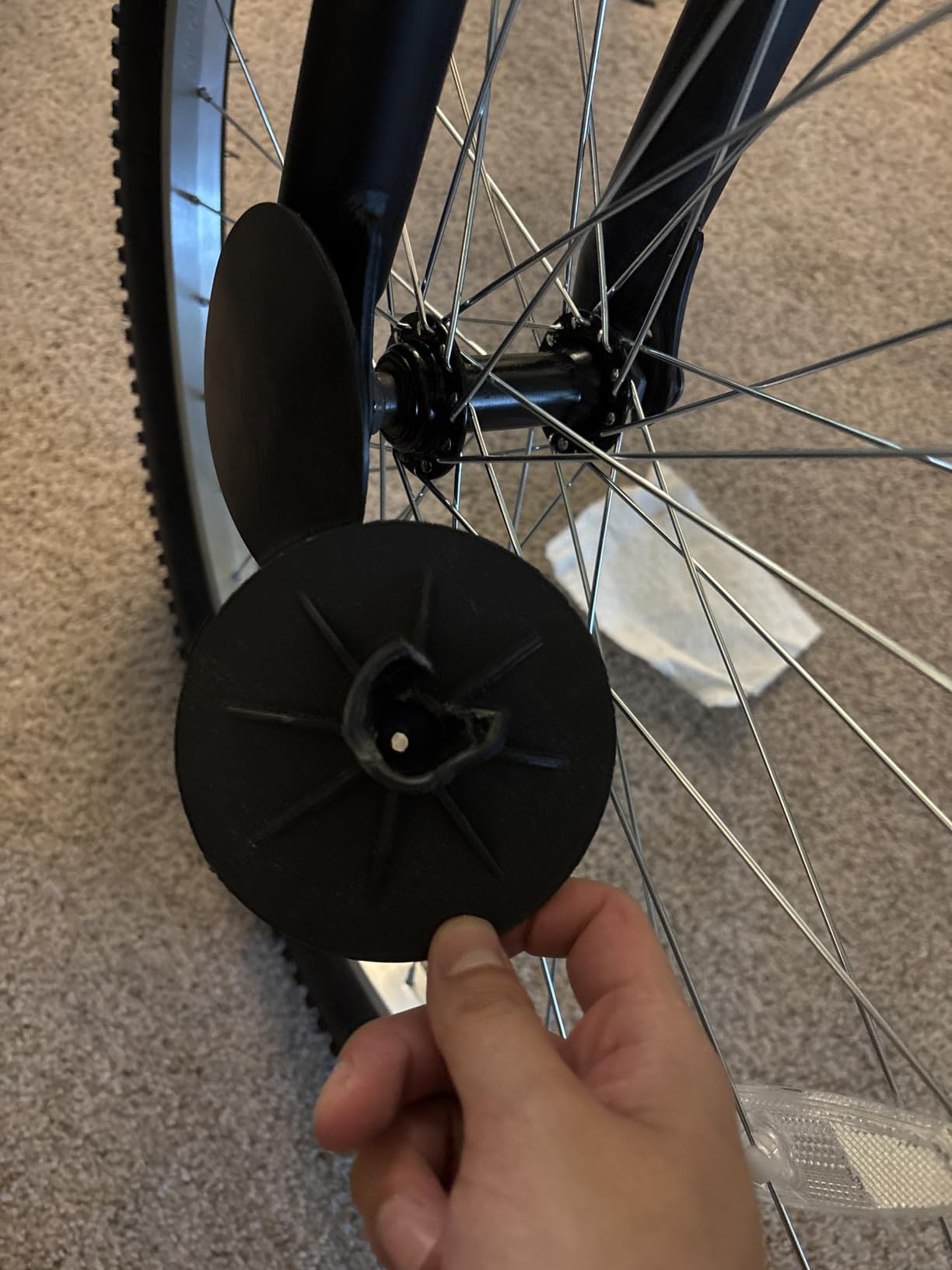
The bike arrives 90 percent pre-assembled with tools included, which makes the setup process approachable for new riders. With 184 reviews and a 3.9-star average, the HILAND has found its audience. Fifty-two percent of reviewers gave 5 stars, praising the value and ease of assembly. The main complaints relate to occasional missing parts and the V-brake setup needing adjustment.
Who this bike is for
New riders who are 5-foot to 5-foot-8 and want to try mountain biking on a budget will find the HILAND a welcoming entry point. The step-through frame makes it accessible for riders who have difficulty swinging a leg over a traditional top tube. The price leaves plenty of room for accessories and safety gear, which is important for first-time buyers.
Casual riders who stick to smooth trails, gravel paths, and light off-road terrain will find this bike perfectly serviceable. The dual suspension adds comfort that makes longer rides more enjoyable. For anyone whose mountain biking ambitions are recreational rather than competitive, this bike does the job without breaking the bank.
Who should skip this bike
Riders who plan to ride technical trails regularly should invest in a bike with disc brakes and a lighter frame. The V-brakes on the HILAND are functional but lack the power and consistency needed for steep, technical descents. The carbon steel frame is noticeably heavier than aluminum, which becomes tiring on rides with significant climbing.
If you want a bike that performs well on anything beyond light trails, the component quality here will hold you back. The twist grip shifters, V-brakes, and heavier frame are all compromises made to hit this price point. Riders who are serious about the sport should consider stretching their budget to the Gravity FSX 1.0 or Schwinn Traxion for a better foundation.
10. EUROBIKE 27.5 Full Suspension – Budget Dual Suspension with Disc Brakes
EUROBIKE 27.5″ Mountain Bike,Full Suspension Mountain Bike with Dual Disc Brakes for Men or Women Bicycle 21Speed Adult Bikes (Aluminum Wheels)
High carbon steel frame
Dual suspension
21-speed
Dual disc brakes
27.5 wheels
35 lbs
Pros
- Good value for a full suspension bike
- Dual disc brakes for reliable stopping
- Comfortable dual suspension
- Adjustable seat height
- 85 percent pre-assembled
- 2-year warranty
Cons
- High carbon steel frame is heavier
- 21-speed may limit serious riders
- Not Prime eligible
- Limited review base
The EUROBIKE 27.5-inch full suspension mountain bike is the most affordable option in our roundup. At this price, expectations need to be calibrated appropriately. This is a recreational bike for light trail use, not a performance machine. With that understanding, it offers a legitimate dual suspension platform with disc brakes for riders on a tight budget.
The 27.5-inch wheels are a good middle ground between 26 and 29-inch options. They roll over obstacles better than 26ers while remaining more maneuverable than 29ers. The dual suspension frame and fork absorb bumps and provide a smoother ride on rough surfaces. The high carbon steel frame is durable but heavy at 35 pounds.
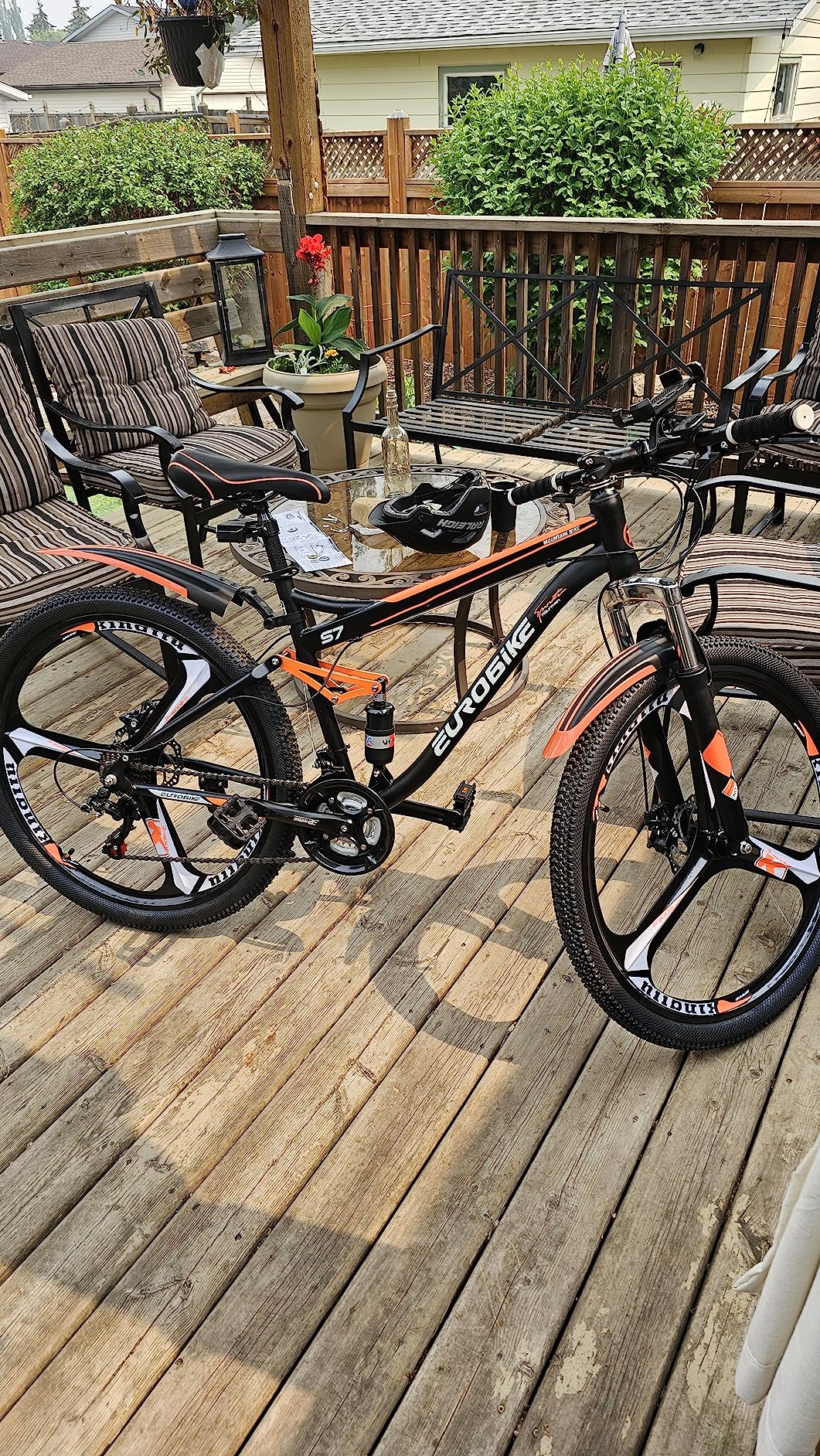
The 21-speed drivetrain provides a reasonable gear range for varied terrain. Trigger shifters make gear changes straightforward. The dual mechanical disc brakes front and rear are a step up from rim brakes, offering more consistent stopping power in varied conditions. The adjustable seat height with quick release accommodates different rider sizes.
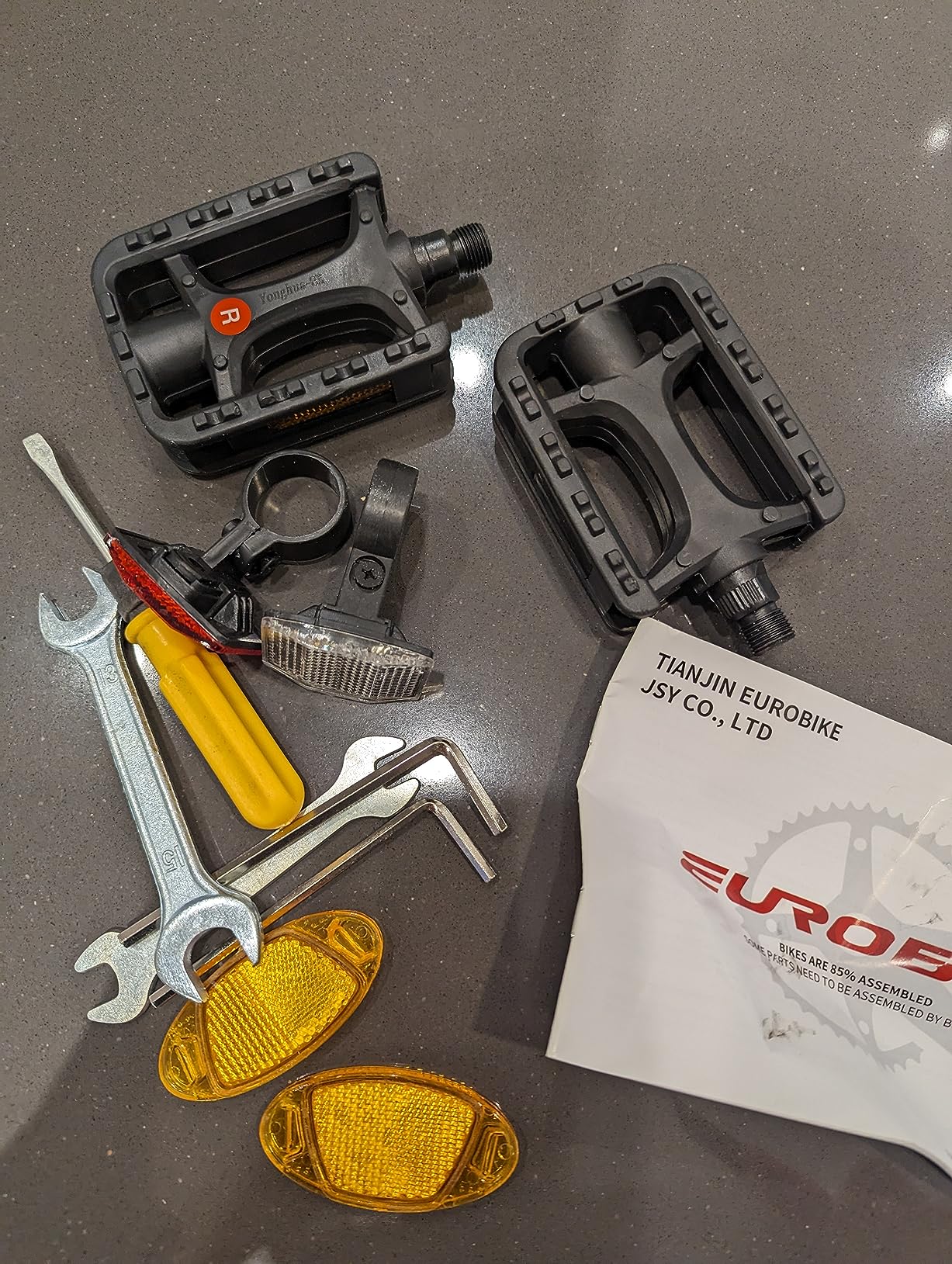
The bike ships 85 percent pre-assembled and includes a kickstand. A 2-year warranty provides some peace of mind. With 28 reviews and a 3.9-star average, the EUROBIKE shows a polarized rating pattern. Sixty-five percent of reviewers gave 5 stars, praising the value and dual suspension comfort. The 22 percent of 1-star reviews cite quality and durability concerns, so there is some risk involved.
Who this bike is for
Riders on a strict budget who want dual disc brakes and full suspension will find the EUROBIKE meets their basic requirements. The 27.5-inch wheels are versatile for varied terrain. If you are a casual rider who sticks to light trails, gravel paths, and occasional off-road excursions, this bike provides the features you need at the lowest possible price.
Commuters who occasionally venture off pavement will also find this bike serviceable. The dual suspension smooths out rough roads and paths, and the disc brakes provide reliable stopping in wet conditions. For anyone who wants a do-it-all bike without spending much, the EUROBIKE fills that role.
Who should skip this bike
Serious trail riders should look elsewhere. The high carbon steel frame is heavy, the 21-speed drivetrain is limiting, and the overall component quality is basic. This bike is designed for recreational use, and pushing it hard on technical trails will quickly reveal its limitations. If you plan to ride regularly on anything beyond light trails, invest in something more capable.
The polarized review pattern suggests quality control variability. Some riders get a great example, while others receive bikes with issues. If you decide to go with the EUROBIKE, inspect it thoroughly upon arrival and do not hesitate to return it if anything seems off. For a small additional investment, the HILAND or Gravity FSX 1.0 offer better proven reliability.
Full Suspension Mountain Bike Buying Guide
Choosing among the many full suspension mountain bikes on the market requires understanding several key factors that determine how a bike will perform on the trail. This guide walks through the most important considerations so you can make an informed decision based on your riding style, budget, and terrain.
How Much Suspension Travel Do You Need
Suspension travel is the amount of movement the suspension provides, measured in millimeters. The right amount depends on the type of riding you do. Here is a breakdown of travel ranges by category.
Cross-country bikes typically have 100 to 120mm of travel and are built for efficiency and climbing. Downcountry bikes bridge XC and trail with 115 to 130mm of travel. Trail bikes run 130 to 150mm and handle the widest variety of terrain. Enduro bikes use 150 to 180mm for aggressive descending, while downhill bikes exceed 180mm for bike park use.
For most riders, a trail bike with 130 to 140mm of travel is the sweet spot. The Canyon Spectral 125 AL 5 with its 140mm fork and 125mm rear travel is a perfect example. It handles everything from flow trails to technical descents without being overbuilt. More travel is not always better, as it adds weight and can make climbing less efficient.
Frame Material: Carbon Fiber vs Aluminum
The frame material debate between carbon and aluminum is one of the most common questions riders have. Both materials have their strengths, and the right choice depends on your budget and priorities.
Carbon fiber frames are lighter, stiffer, and offer better vibration damping than aluminum. The SAVADECK Titan 612 and Lantop 612 Plus demonstrate that carbon is increasingly accessible at lower price points. Carbon can also be molded into more complex shapes for aerodynamic and structural optimization. The main downside is cost, though that gap is narrowing.
Aluminum frames are durable, affordable, and perform well for the vast majority of riders. The Canyon Spectral, Schwinn Traxion, and Gravity FSX models all use aluminum. Modern aluminum frames are significantly better than older generations, with butted and hydroformed tubing that reduces weight while maintaining strength. For budget-conscious riders, aluminum is the smart choice.
Wheel Size: 29er vs 27.5 vs 26
Wheel size affects how a bike handles, accelerates, and rolls over terrain. The three main options each have distinct characteristics.
29-inch wheels are the current standard for trail and XC bikes. They roll over obstacles more easily, maintain momentum better, and provide a larger contact patch for improved traction. The Canyon Spectral, SAVADECK Titan, Schwinn Traxion, and TRIFOX M2 all use 29er wheels. The downside is slightly slower acceleration and a taller standover height.
27.5-inch wheels offer a balance between rollover capability and maneuverability. They accelerate faster than 29ers and feel more playful on tight trails. The SAVADECK Lantop and EUROBIKE use 27.5 wheels. Many riders prefer this size for technical, twisty terrain where quick direction changes matter.
26-inch wheels are found on budget bikes like the Gravity FSX models and HILAND. While 26ers are less common on modern performance bikes, they remain a viable option for casual riders and smaller riders who benefit from the lower standover height and lighter wheel weight.
Groupset and Component Quality
The groupset includes the shifters, derailleurs, crankset, cassette, and brakes. It is one of the most important factors in how a bike performs and how long it lasts.
Shimano Deore M6100 12-speed is the gold standard for value in modern mountain bike drivetrains. It offers precise shifting, a massive 10-51T gear range, and reliable clutch performance. The Canyon Spectral, SAVADECK Titan, SAVADECK Lantop, and TRIFOX M2 all feature this groupset. Getting 12-speed Deore on bikes at these price points is excellent value.
Lower-tier groupsets like 18-speed and 24-speed Shimano setups found on the Mongoose Salvo, Gravity FSX, HILAND, and EUROBIKE are functional but offer less range and larger jumps between gears. They are fine for casual riding but will frustrate serious riders who want tighter gear steps and better shifting precision.
Dropper Posts and Why They Matter
A dropper post lets you lower your saddle at the push of a lever for descending, then raise it for climbing. This is one of the most impactful upgrades you can make to a mountain bike. The Canyon Spectral 125 AL 5 includes a dropper seatpost as standard equipment.
Many budget bikes do not include droppers, but they can be added aftermarket. If your bike does not come with one, budgeting for a dropper post should be a priority. The ability to get the seat out of the way on descents transforms how a bike handles technical terrain.
Maintenance Costs to Expect
Full suspension mountain bikes require more maintenance than hardtails. The rear suspension introduces pivot bearings, bushings, and a shock that all need periodic service. Here is what to expect.
Pivot bearings typically need replacement every 1 to 2 years depending on riding conditions and frequency. A full bearing rebuild costs $100 to $200 if done at a shop. Rear shocks need service every 50 to 100 hours of riding, with basic air sleeve service costing $50 to $75 and full damper rebuilds running $150 to $250.
Chain and cassette replacement is needed every 1,000 to 2,000 miles. Brake pads wear out every few hundred miles depending on conditions. Budgeting $200 to $400 per year for maintenance is reasonable for a regularly ridden full suspension bike. If you are considering a used option, checking pivot condition and shock service history is especially important.
Direct-to-Consumer vs Local Bike Shop
Where you buy your bike affects both the purchase experience and ongoing support. Direct-to-consumer brands like Canyon, SAVADECK, and TRIFOX offer better component specs for the money because they cut out the middleman. You typically get a better frame and groupset than you would from a traditional brand at the same price.
The tradeoff is that you are responsible for assembly, fitting, and warranty claims. There is no local shop to walk into for adjustments or advice. For mechanically inclined riders, D2C is a great value. For those who want hands-on support, buying from a local bike shop provides peace of mind that is worth the premium.
Reddit discussions consistently highlight this tension. Riders on r/MTB frequently recommend D2C brands like Canyon and Polygon for value, while emphasizing the importance of basic mechanical skills. If you are new to bike maintenance, budget for a professional build and tune-up even with a D2C purchase.
Frequently Asked Questions
Are full suspension mountain bikes good?
Full suspension mountain bikes are excellent for riders who tackle technical trails with rocks, roots, and drops. They absorb impacts, maintain better traction on rough terrain, reduce rider fatigue on long rides, and allow you to maintain speed through chunky sections. The tradeoff is added weight, higher cost, and more maintenance compared to hardtails.
What MTB has the best suspension?
The best suspension systems combine efficient pedaling with excellent small-bump sensitivity. Fox Factory suspension and RockShox Pike Ultimate are top performers, along with SRAM Flight Attendant for automatic adjustment. Among the bikes on this list, the Canyon Spectral 125 AL 5 with its RockShox 35 Gold RL fork and Deluxe Select+ rear shock offers the most refined suspension performance.
Is 29 or 27.5 better for downhill?
For downhill riding, 29-inch wheels are generally better because they roll over obstacles more easily, maintain momentum at speed, and provide a larger contact patch for braking and cornering traction. However, 27.5-inch wheels are more maneuverable in tight sections and preferred by smaller riders. Many enduro and downhill bikes now use a mullet setup with a 29er front wheel and 27.5 rear wheel.
How much is a good full suspension mountain bike?
The consensus from rider communities is that $1,500 to $2,000 is the minimum for a quality full suspension bike, with the sweet spot for serious riders being $2,500 to $4,000. Below $1,000, expect entry-level components and heavier frames. The bikes on this list range from under $200 to around $2,800, covering everything from recreational budget options to capable trail machines.
How long do mountain bike pivots last?
Mountain bike pivot bearings typically last 1 to 2 years with regular riding, though this varies based on conditions. Riding in wet, muddy, or dusty environments accelerates wear. Signs that pivots need service include creaking noises, play in the rear end, or stiff suspension action. A full pivot bearing replacement costs $100 to $200 at a bike shop.
Final Thoughts on the Best Full Suspension Mountain Bikes
After testing and comparing 10 models across every price point, the Canyon Spectral 125 AL 5 stands out as our top pick for riders who want a capable trail bike with proven RockShox suspension and Shimano Deore 12-speed performance. For carbon fiber value, the SAVADECK Titan 612 delivers a lightweight frame and quality components at a price that undercuts major brands significantly. And for budget-conscious buyers, the Gravity FSX 1.0 offers the best entry point into full suspension mountain biking with 411 reviews backing its reputation.
The right full suspension mountain bike depends on your terrain, experience level, and budget. Riders who plan to explore bikepacking with a full suspension mountain bike will want something durable with mounting points, while dedicated trail riders should prioritize geometry and suspension quality. Whatever you choose, investing in a bike that matches your riding style will make every trail session more enjoyable.
We will keep updating this guide as new models arrive and prices shift throughout 2026. The mountain bike market moves fast, and we are committed to helping you find the best full suspension mountain bikes at every budget.