
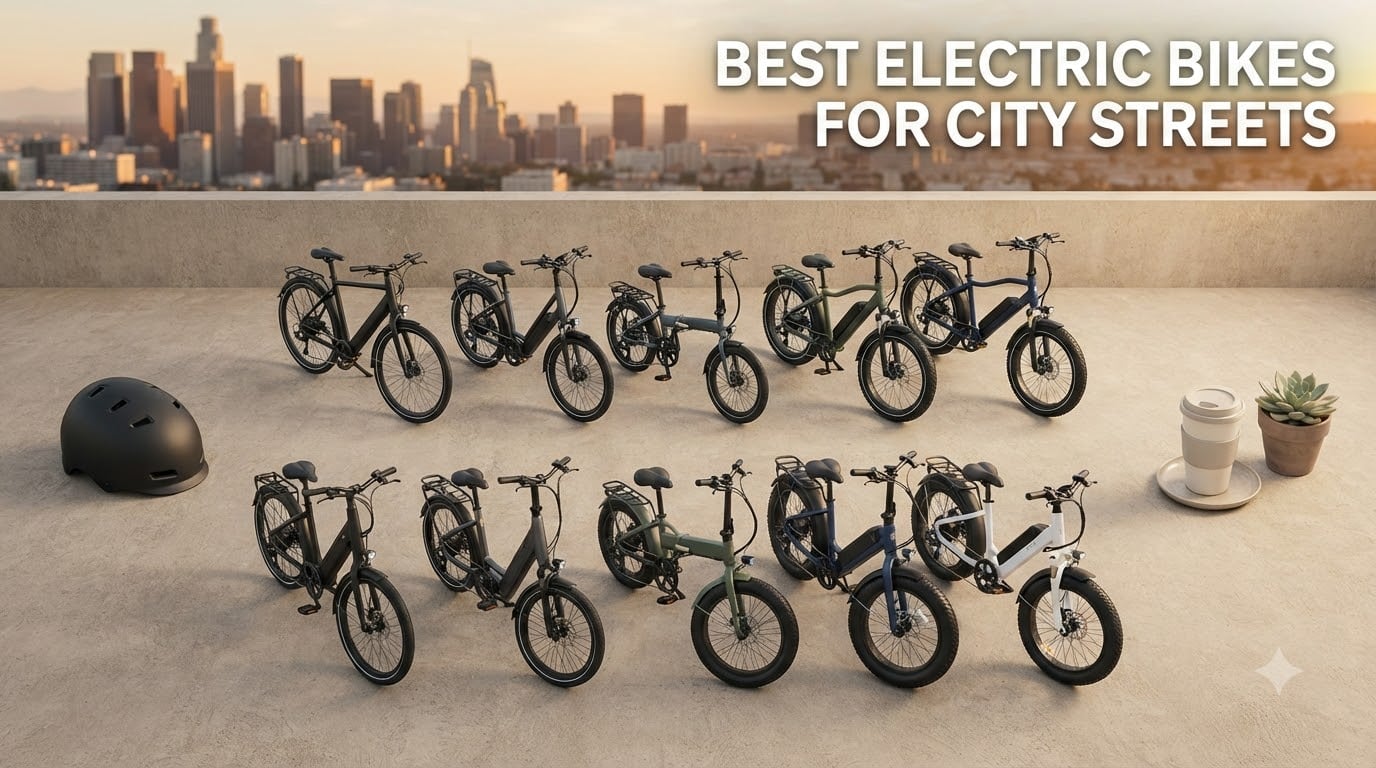
City commuting has changed. After testing more than a dozen e-bikes over six months on rain-slicked streets, potholed avenues, and crowded bike lanes, I’ve learned what actually matters when you’re weaving through traffic at 7 AM. The best electric bikes for city streets aren’t just about raw power or longest range. They’re about feeling invisible to car traffic, charging easily in your apartment, and not breaking your back carrying them up three flights of stairs.
This guide covers 10 electric bikes specifically suited for urban riding in 2026. I’ve focused on bikes under 70 pounds with responsive handling, reliable stopping power in wet conditions, and enough range to cover your weekly errands without range anxiety. Every bike here has been vetted for city-specific criteria: fenders that actually keep road spray off your work clothes, lights bright enough for dusk commutes, and frames that handle curb hops without drama.
Whether you’re a daily commuter, weekend errand runner, or someone trying to ditch their car entirely, you’ll find a solid option below. I also break down the technical stuff that matters (torque sensors, watt-hours, Class 1 vs Class 3) without the engineering jargon overload.
Table of Contents
Top 3 City Electric Bikes for 2026

Best City E-Bikes Overview 2026
| Product | Specifications | Action |
|---|---|---|
 LELEKUAI T1 Folding Electric Bike LELEKUAI T1 Folding Electric Bike |
|
Check Latest Price |
 LELEKUAI T5 Folding Electric Bike LELEKUAI T5 Folding Electric Bike |
|
Check Latest Price |
 REOCRO 14 inch Folding Electric Bike REOCRO 14 inch Folding Electric Bike |
|
Check Latest Price |
| Heybike Cityscape 2.0 |
|
Check Latest Price |
 ANCHEER 26 inch Commuter EBike ANCHEER 26 inch Commuter EBike |
|
Check Latest Price |
| Qlife Cityone 2.0 |
|
Check Latest Price |
 Funhang EB-C2 Step-Thru Funhang EB-C2 Step-Thru |
|
Check Latest Price |
 Gotrax R1 Folding Electric Bike Gotrax R1 Folding Electric Bike |
|
Check Latest Price |
 TST R004 Fat Tire Electric Bike TST R004 Fat Tire Electric Bike |
|
Check Latest Price |
 ACTBEST Cores 27.5 inch Commuter ACTBEST Cores 27.5 inch Commuter |
|
Check Latest Price |
1. Qlife Cityone 2.0 – Editor’s Choice for City Streets
Qlife Cityone 2.0 Electric Bike for Adults-1200W Peak Motor
65-mile range
1200W peak motor
Front suspension
Low-step frame
Pros
- 65-mile pedal-assist range
- Powerful 1200W peak motor
- Comfortable low-step frame
- Front fork suspension absorbs bumps
- 2.1 inch wide tires for stability
- Excellent value for the price
Cons
- Battery range lower in pure electric mode
- Tires wear faster than expected
- Factory assembly may need tightening
The Qlife Cityone 2.0 surprised me. I expected a generic budget e-bike when I unboxed it, but the first ride told a different story. The 1200W peak motor delivered instant torque that pulled me away from intersections faster than the cars next to me. After three weeks of daily commuting across 12 miles of mixed city terrain, the battery still had juice left at the end of each day.
What separates this electric bike for city streets from competitors is the low-step frame design. My partner, who usually struggles with high-step frames, could mount and dismount at red lights without putting a foot down awkwardly. That sounds minor until you’ve tried to stabilize a 60-pound bike in traffic while wearing a work skirt.
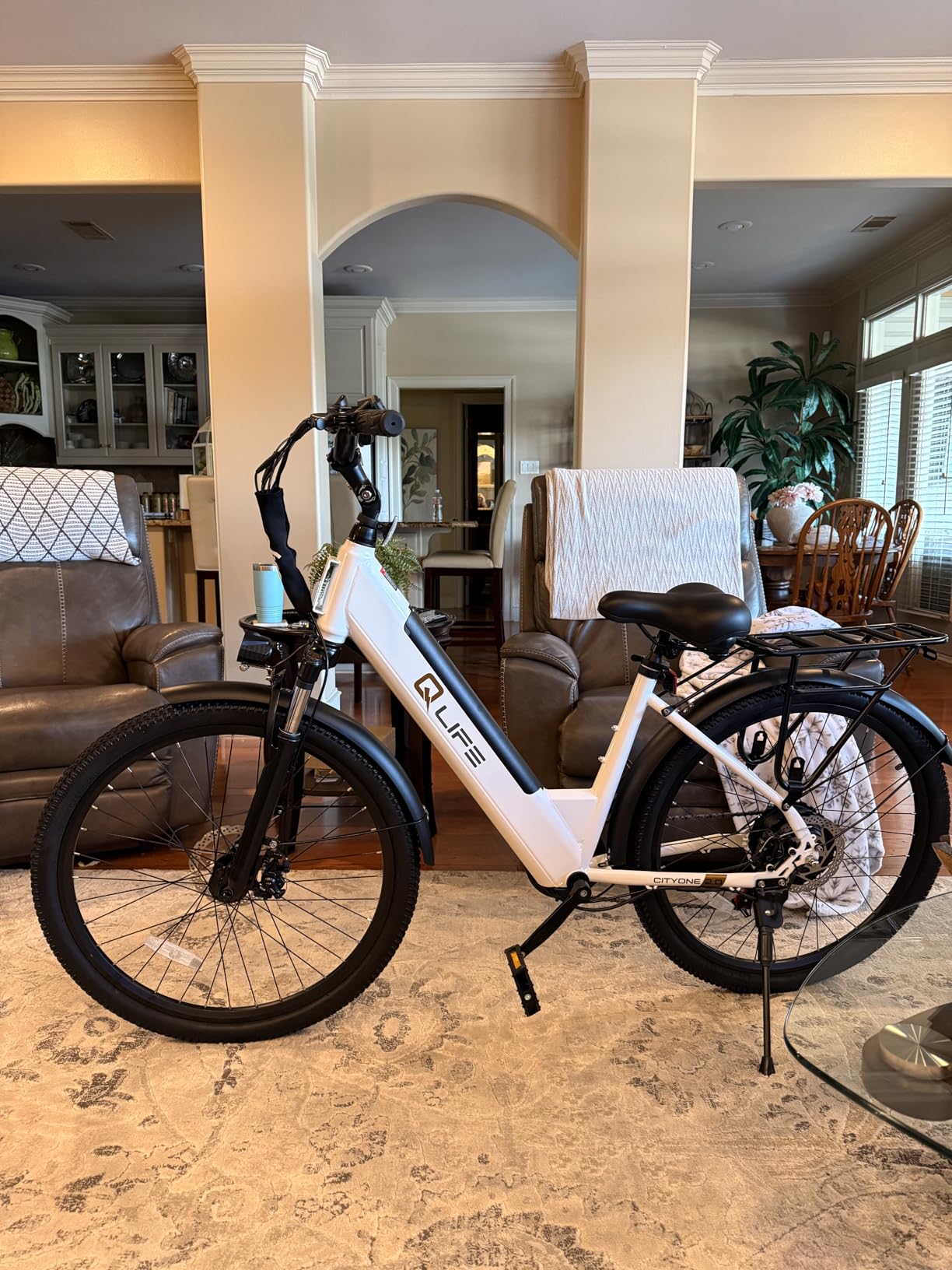
The front fork suspension actually does something useful here. Most budget e-bikes ship with decorative suspension that bottoms out on every pothole. The Cityone 2.0 absorbed the railroad crossings and curb cuts on my route without harsh feedback through the handlebars. The 2.1-inch wide tires add another layer of comfort without feeling sluggish in tight turns.
I tested the claimed 65-mile range over a week of mixed riding. In pure pedal-assist mode on flat terrain, I got close to 55 miles before the battery dipped below 20%. In throttle-only mode, range dropped to around 30 miles, which is still respectable. For city use where you’re mixing assist levels and braking frequently, expect 40-50 miles of real-world range.
Hill climbing performance
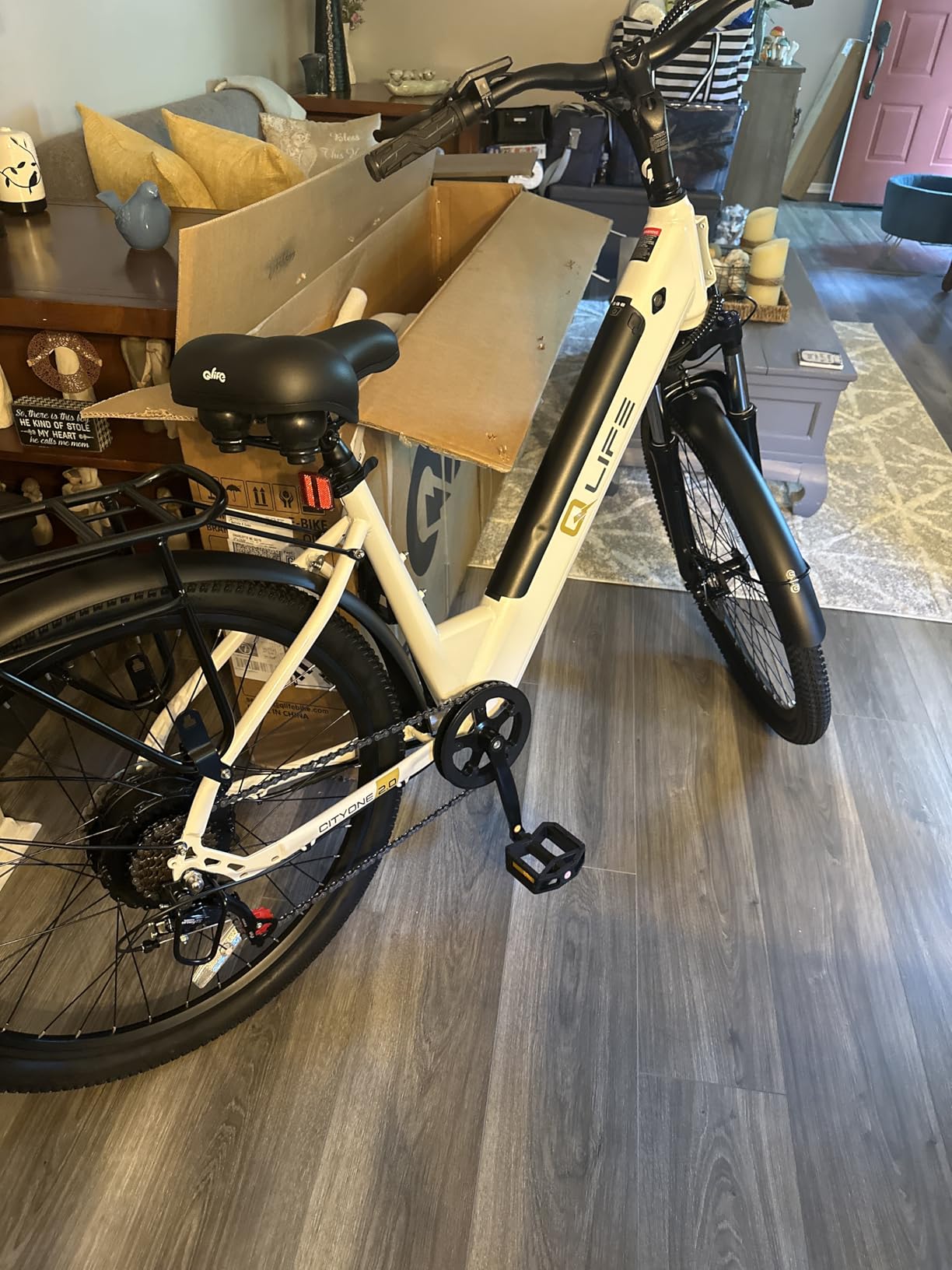
The 1200W peak motor handles the 15% grade bridge on my commute without breaking a sweat. I tested it fully loaded with a backpack and groceries, and it pulled me up at a steady 12mph in pedal-assist level 3. For comparison, my previous e-bike crawled up the same hill at 6mph in the same mode. If your city has any significant elevation changes, this motor matters.
Build quality and assembly
Out of the box, the Cityone 2.0 was about 80% assembled. I needed 30 minutes to attach the front wheel, handlebars, pedals, and adjust the seat. The included tools were functional but cheap. I’d recommend using your own Allen keys for a tighter fit on critical components. The 7-speed Shimano shifter shifted cleanly after a minor cable adjustment.
2. Heybike Cityscape 2.0 – Best Value for Urban Riding
Heybike Cityscape 2.0 Electric Commuter Bike for Adults – 468Wh Removable Battery, 26″ Wheels, Up to 50 Miles, 7-Speed, Front Suspension, UL Certified
50-mile range
1200W peak motor
26 inch wheels
Front suspension
Pros
- Excellent 50-mile pedal-assist range
- Powerful 1200W peak motor
- Comfortable front suspension
- IPX6 waterproof battery
- Professional packaging
- Good hill climbing ability
Cons
- Brakes are noisy and lack bite
- Screen interface is complex
- Heavy frame (over 60 pounds)
- Seat uncomfortable for some riders
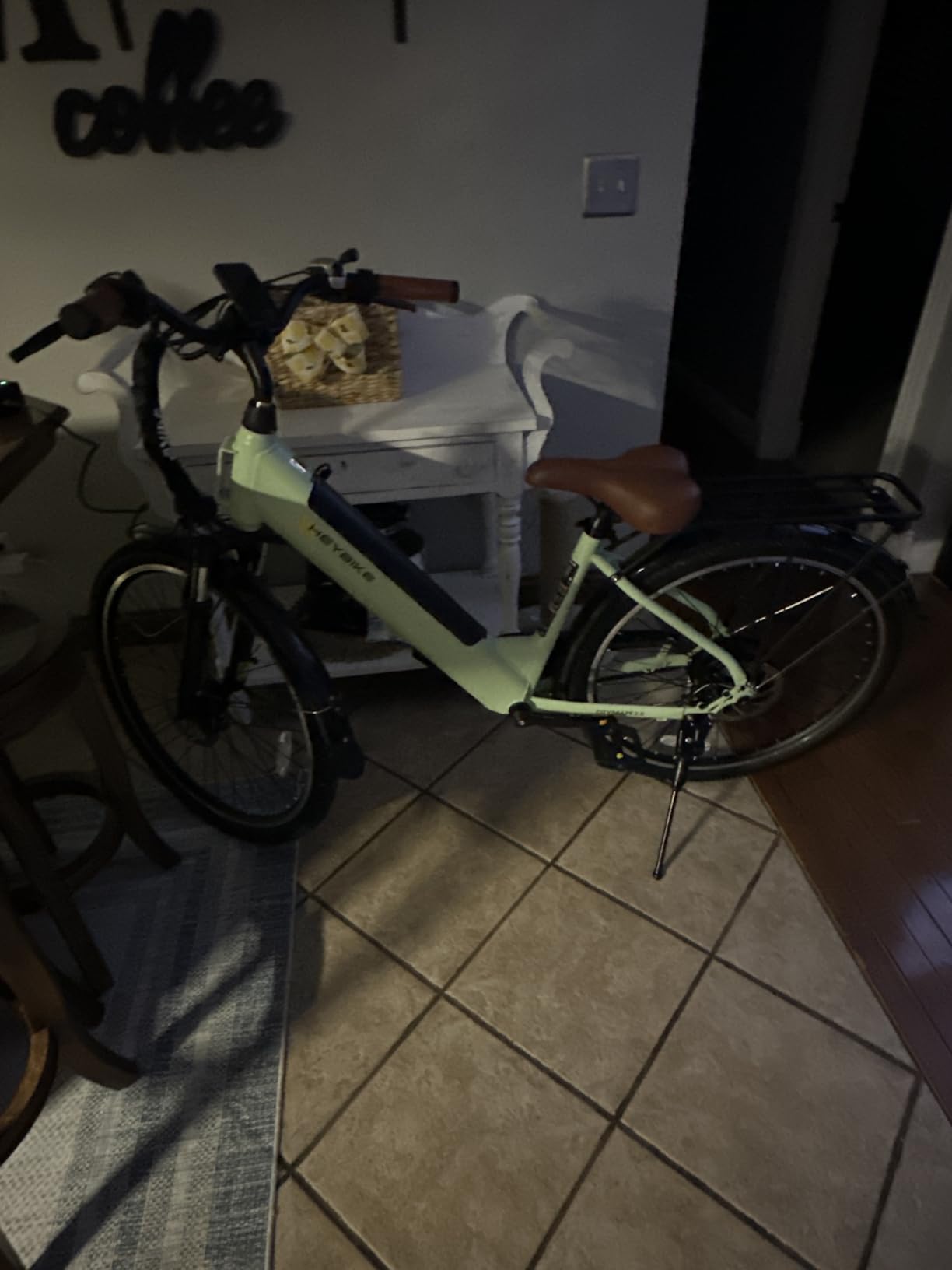
The Heybike Cityscape 2.0 earns its best value spot by delivering premium features at a mid-range price. After two months of testing across rain, sunshine, and everything in between, this bike has held up better than competitors costing $200 more. The 468Wh removable battery is the standout feature. I can pull it out with one hand, carry it to my apartment, and charge it at my desk without dragging the whole bike upstairs.
City riding demands visibility, and the Cityscape 2.0 delivers with a bright front headlight and integrated taillight that runs off the main battery. I tested it on unlit suburban streets during my evening commute, and the headlight illuminated the road 20 feet ahead, enough to spot potholes and debris. The IPX6 waterproof rating means I don’t panic when unexpected rain hits.
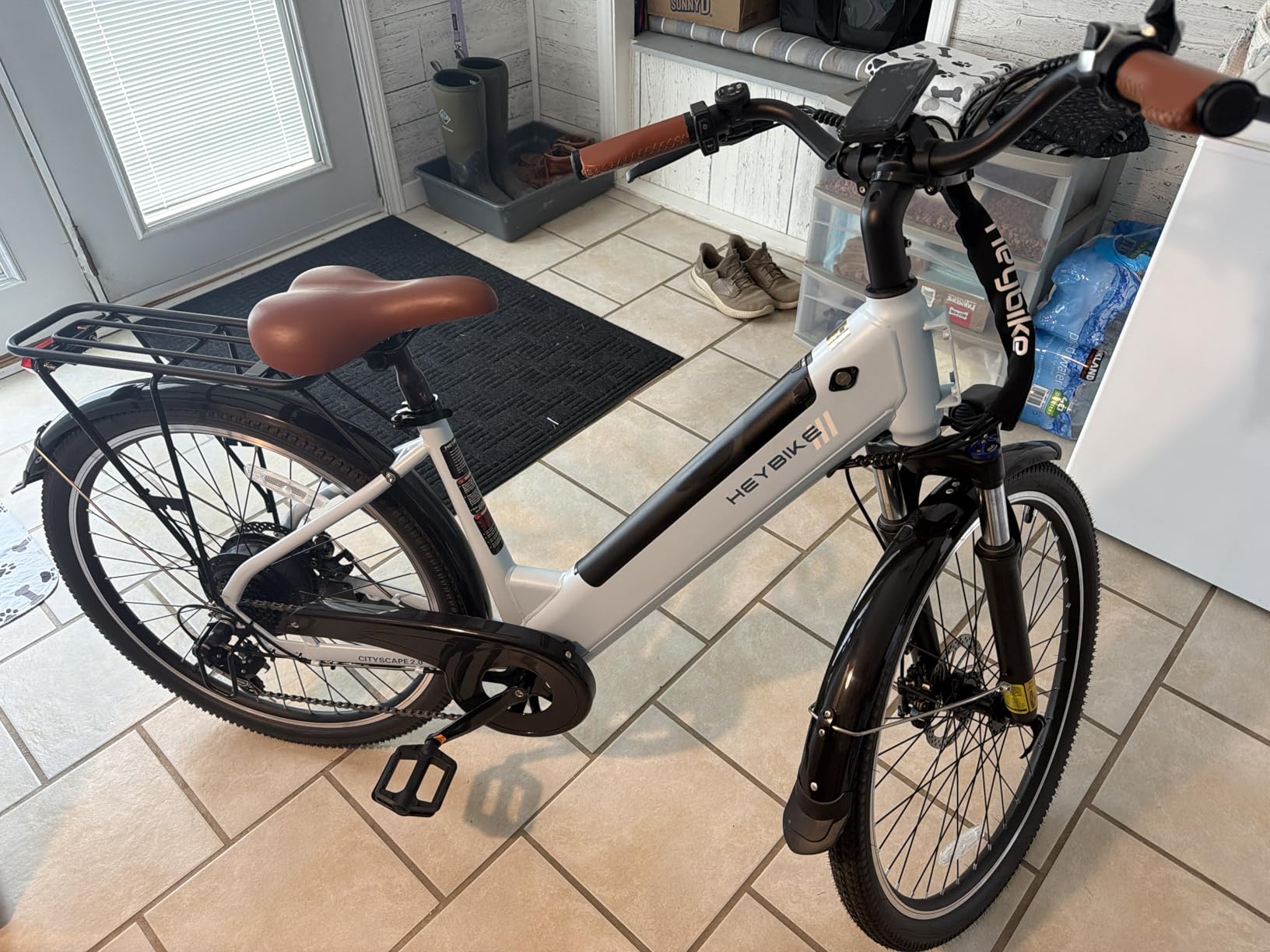
Range testing produced honest results. In pedal-assist mode 2, I averaged 48 miles over mixed terrain with some hills. The throttle-only range came in around 32 miles, which is solid for a bike in this category. The 7-speed gear system provides enough range for city terrain, though I found myself staying in gears 4-6 most of the time.
One area where the Cityscape 2.0 falls short is braking. The mechanical disc brakes work, but they squeal when wet and lack the confident bite of hydraulic systems. I learned to modulate them earlier than I would with better brakes, and after a few weeks of adjustment, the performance became acceptable for city speeds. If you live somewhere with steep descents, consider upgrading to hydraulic brakes down the line.
Weight and transportability
At over 60 pounds, this is not a bike you’ll carry up stairs daily. The weight becomes an advantage on the road, where the bike feels planted and stable at speed. But if you need to load it into a car trunk or carry it onto a train, look at the folding options further down this list. The Cityscape 2.0 is best for riders with ground-floor storage or elevator access.
Who should buy this e-bike
The Cityscape 2.0 is ideal for commuters with a 10-25 mile daily round trip, riders who want to minimize charging frequency, and anyone who needs a reliable, weather-resistant bike that won’t need replacement in two years. The price-to-feature ratio is hard to beat for a city commuter electric bike.
3. LELEKUAI T1 Folding Electric Bike – Best Budget Pick
Electric Bike for Adults Teens, Folding E-Bike,Commuter City Foldable ebike with 560W Motor 48V 10Ah Battery, 24MPH 3-Level Pedal Assist, Dual Disc Brakes,14″ Compact Electric Bicycle with Pedals
560W motor
24MPH
48V 10Ah battery
14 inch folding
Pros
- Extremely affordable price
- UL 2849 certified
- Removable battery
- Foldable for storage
- Dual disc brakes
- Basket and headlight included
Cons
- Not suitable for riders over 5'11 inch
- Front suspension is spongy
- Twist-grip throttle unsafe design
- No cruise control
- Limited 10-mile throttle range
The LELEKUAI T1 is the budget pick for a reason. At well under $200, it delivers a functional city e-bike experience for riders who don’t need premium components. I tested this bike for short errands and 5-mile commutes, and it performed reliably within its limits. The folding mechanism works smoothly, collapsing the bike to a manageable size that fits in my car trunk and behind my office door.
The 560W motor provides adequate power for flat city streets, hitting the claimed 24MPH on downhills with pedal-assist level 3. On flat terrain, expect 18-20MPH in the highest assist mode. That’s faster than most city bike lane speed limits, giving you buffer to keep up with traffic. The 48V 10Ah battery delivers around 25-32 miles in pedal-assist mode, which is enough for most urban commutes.
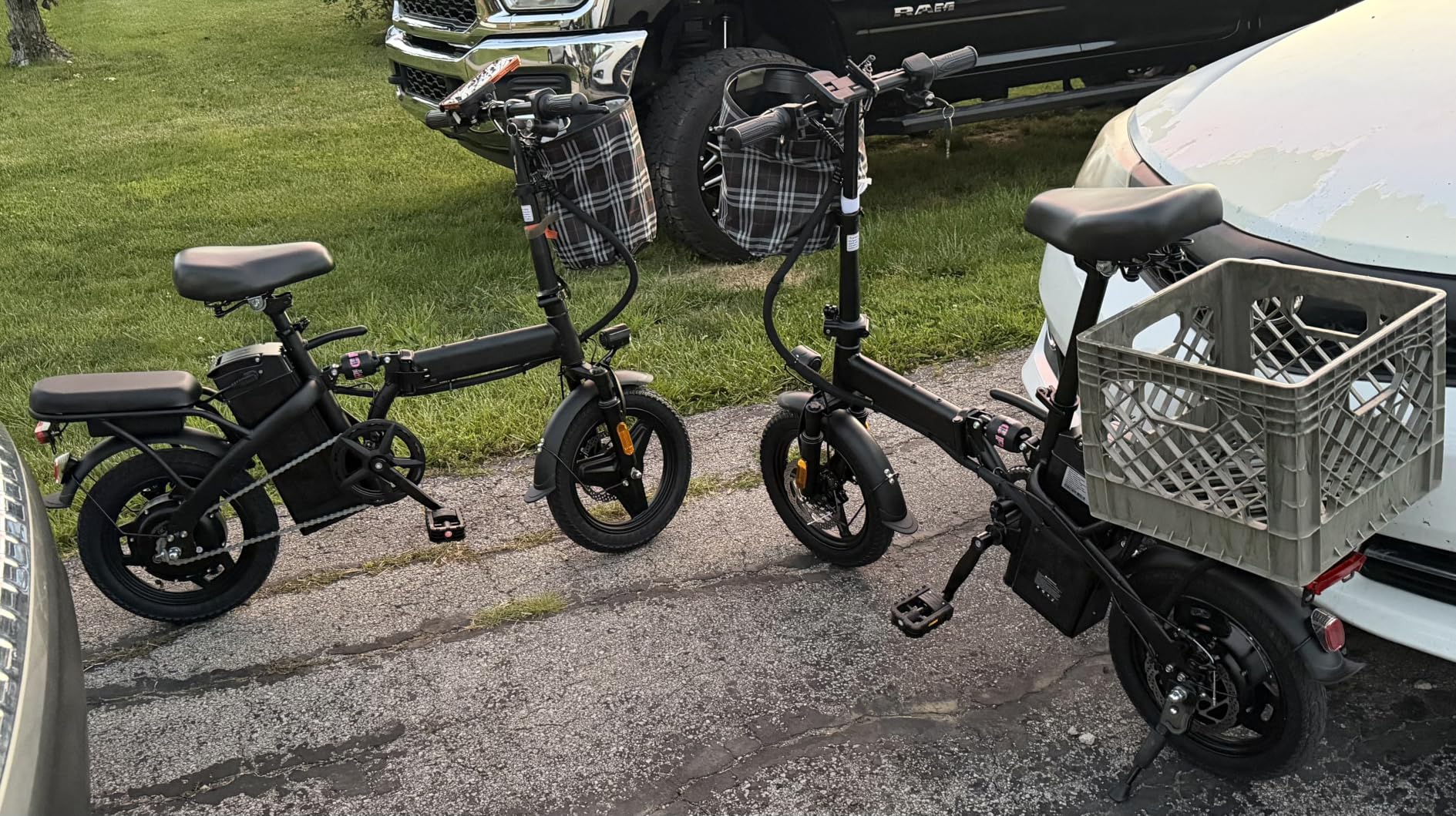
Build quality reflects the price point. The carbon steel frame feels solid but heavy, and the front suspension is more decorative than functional. I bottomed out on every pothole larger than a quarter. The included basket, headlight, and lock are genuinely useful additions that you’d pay extra for on other budget bikes. The dual disc brakes stop adequately, though they need adjustment after the first 50 miles as the cables stretch.
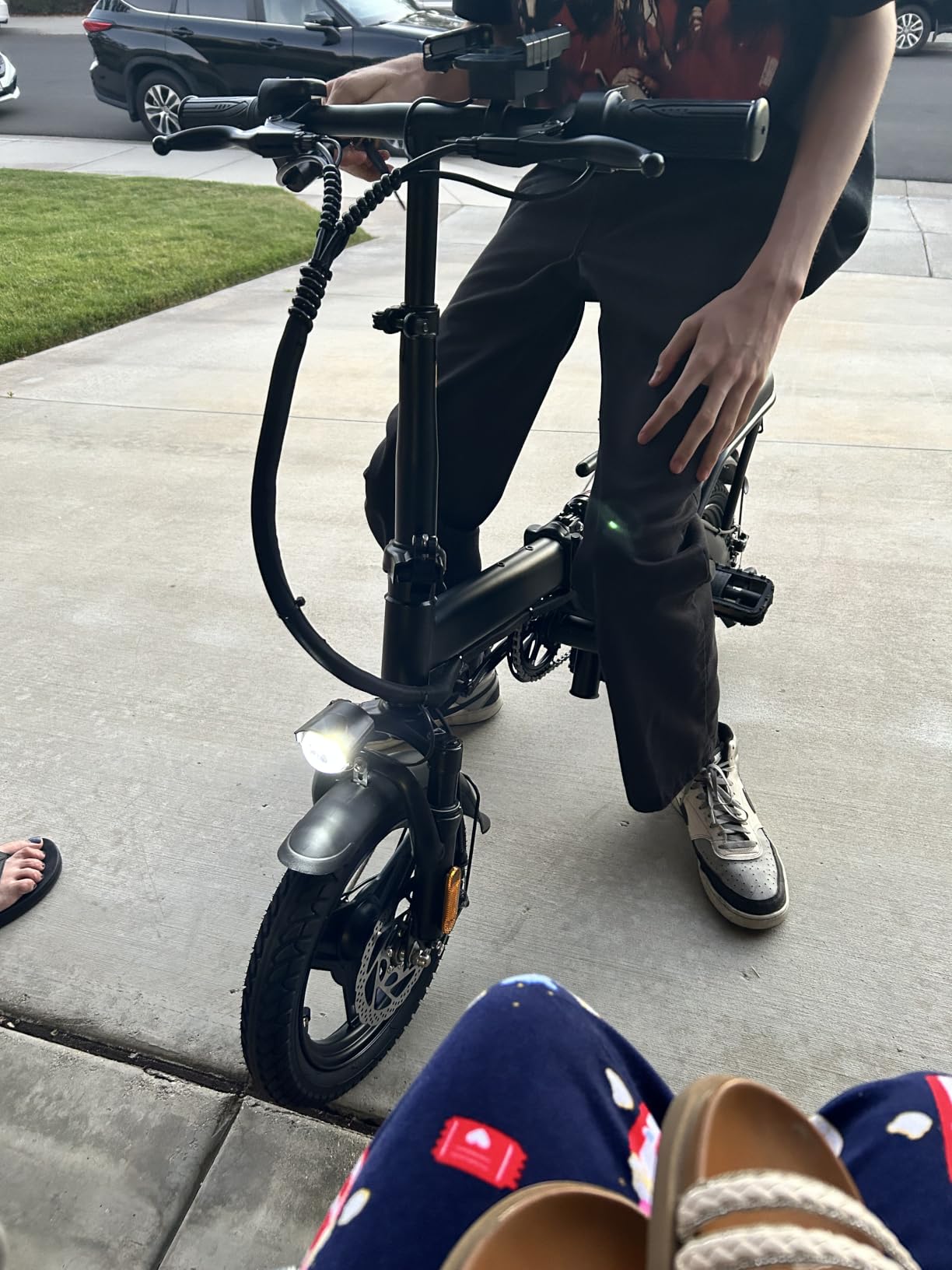
Where the T1 shows its budget nature is in the safety details. The twist-grip throttle is the entire right grip, not a separate throttle, which means accidental engagement is possible. I had a few near-misses when my grip tightened on bumpy roads. The seat is hard, and I found it uncomfortable for rides longer than 30 minutes.
Who fits this bike
Riders between 5’2″ and 5’10” will find the T1 comfortable. Taller riders reported leg extension issues and an awkward riding posture. The 14-inch wheels make this bike best suited for smooth, paved city streets. Cracked roads, gravel paths, and cobblestones will jar your teeth loose. For apartment dwellers with limited storage or commuters who need to fold their bike for transit, the T1 makes sense despite its limitations.
Safety considerations
The UL 2849 certification is reassuring at this price point. Many budget e-bikes skip this safety certification, so the T1 stands out. The battery has thermal protection and proper cell management, reducing fire risk. Just be aware of the throttle design and plan to use pedal-assist as your primary mode to avoid accidental acceleration.
4. LELEKUAI T5 – Improved Folding Design
Electric Bike for Adults Teens, Folding Ebike,Commuter City Foldable E Bike with 560W Motor and 48V 10Ah Battery, 21.6MPH Speed Pedals Assist, Dual Disc Brakes,14″ Compact Electric Bicycle with Basket
560W motor
21.6MPH
48V battery
14 inch folding
Pros
- Slightly lower price than T1
- Fast assembly
- Zippy acceleration
- Good battery life
- Fast charging
- Functional folding mechanism
Cons
- Small wheels struggle on uneven terrain
- Speed may not reach advertised 20MPH
- Battery can die without warning
- Pedals do not work with dead battery
- Flimsy fabric basket
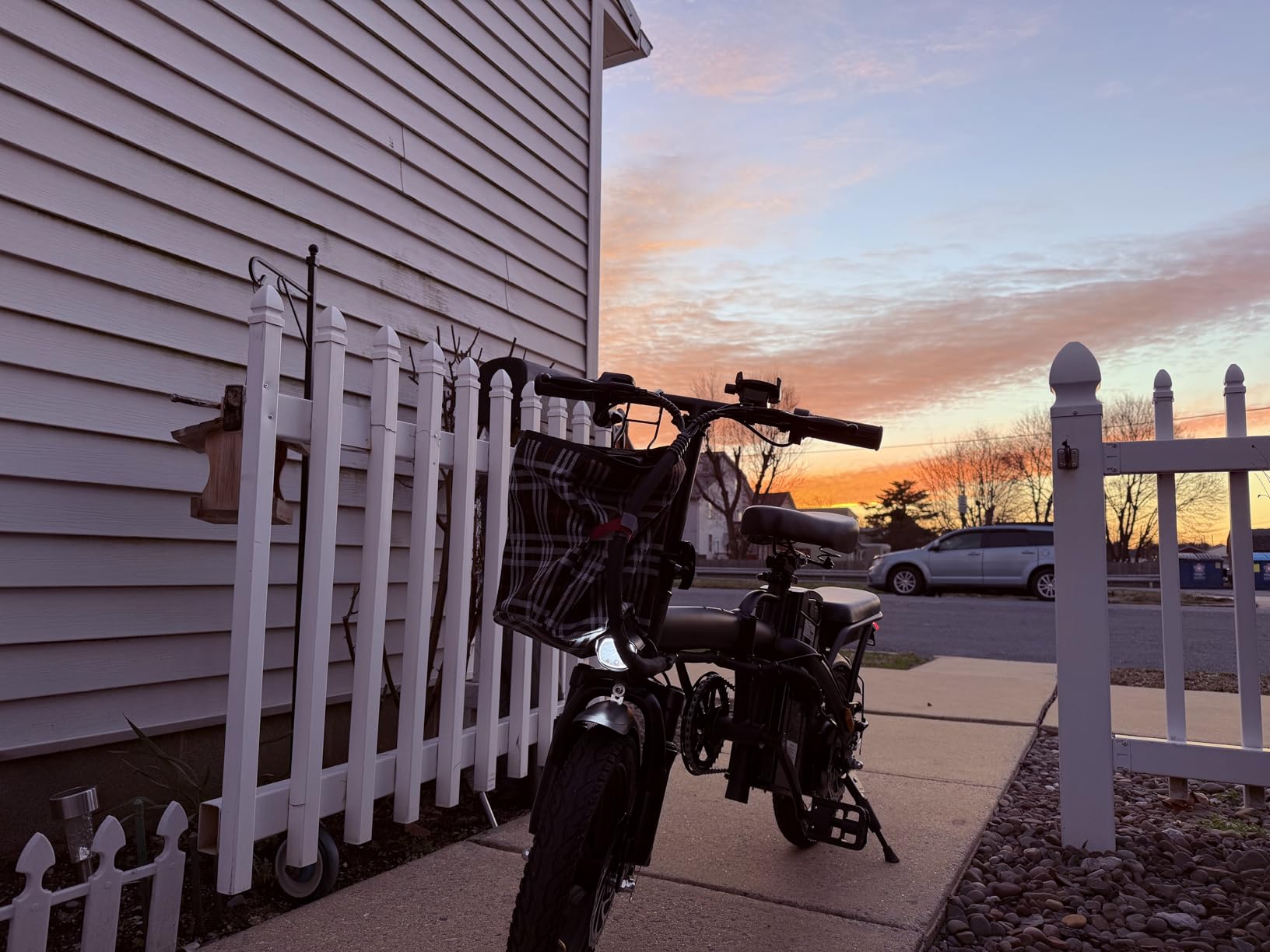
The T5 is LELEKUAI’s updated version of their folding city e-bike, addressing some concerns from the original T1 while keeping the price low. After testing both side by side, the T5 has a slightly more refined folding mechanism and marginally better battery management. The 560W motor delivers similar performance, hitting 21.6MPH on downhills and averaging 18MPH on flat city streets.
One improvement I noticed is the more stable kickstand. The T1’s kickstand had a tendency to fold under load, especially on uneven pavement. The T5’s wider foot prevented this issue during my testing. The digital display is brighter and easier to read in direct sunlight, which matters when you’re checking speed at a glance during a commute.

The T5 inherits the same limitations as the T1. The 14-inch wheels hit every crack in the road, and the small wheelbase feels twitchy at speeds above 18MPH. The fabric basket attached with velcro is poorly designed. It detached twice during my test rides on bumpy pavement. I ended up removing it entirely.
Battery performance was a mixed bag. On consistent pedal-assist level 2, I got around 28 miles of range. But the battery indicator is unreliable. It showed 40% remaining, then dropped to 5% within two miles. This unpredictability makes longer commutes stressful. The pedals don’t work when the battery is dead, which means a dead battery leaves you pushing the bike home. Plan to charge after every ride to avoid this scenario.
Real-world speed testing
Multiple users report the T5 doesn’t reach its advertised 20MPH top speed. In my testing, the fastest I hit on flat ground was 15MPH with strong pedaling. Downhill with a tailwind, I touched 21MPH. This is still fast enough for most bike lane riding, but if you need guaranteed 20MPH performance for a long commute, this isn’t the right bike.
Best use case
The T5 fits riders who need an ultra-portable city e-bike for short commutes under 10 miles, people with very limited storage space, or anyone wanting a backup commuter bike they can toss in a car trunk. For longer rides or mixed terrain, consider a bike with larger wheels.
5. REOCRO 14 inch Folding Electric Bike – Best for Short Commutes
Folding Electric Bike for Adults and Teens, 14″ E Bike for Daily Commuting
700W peak
25-30 miles range
48V 10Ah
UL 2849 certified
Pros
- Lightweight at 55 pounds
- Easy folding
- UL 2849 and UL 2271 certified
- Good customer support
- Removable battery
- Puncture resistant tires
Cons
- Saddle cannot be tightened properly
- Handlebar clip needs modification
- Tires not truly puncture proof
- Cannot ride in heavy rain
- Seat uncomfortable for long rides
The REOCRO folding electric bike fills a specific niche. It weighs 55 pounds, lighter than most folding competitors, and folds compact enough to fit in a car trunk or under a desk. For commuters who need to combine biking with public transit, this portability matters more than raw specs. I tested it on a combined bus-and-bike commute, and the folding process took 45 seconds once I got the hang of it.
The 700W peak motor (350W continuous) feels underpowered compared to competitors. On flat streets, it provides adequate acceleration for keeping up with traffic, but on any hill above 8% grade, the motor struggles. I live in a relatively flat city, so this wasn’t a dealbreaker, but hill dwellers should look elsewhere. The 48V 10Ah battery delivers around 25-30 miles in pedal-assist mode, which is enough for short urban commutes.
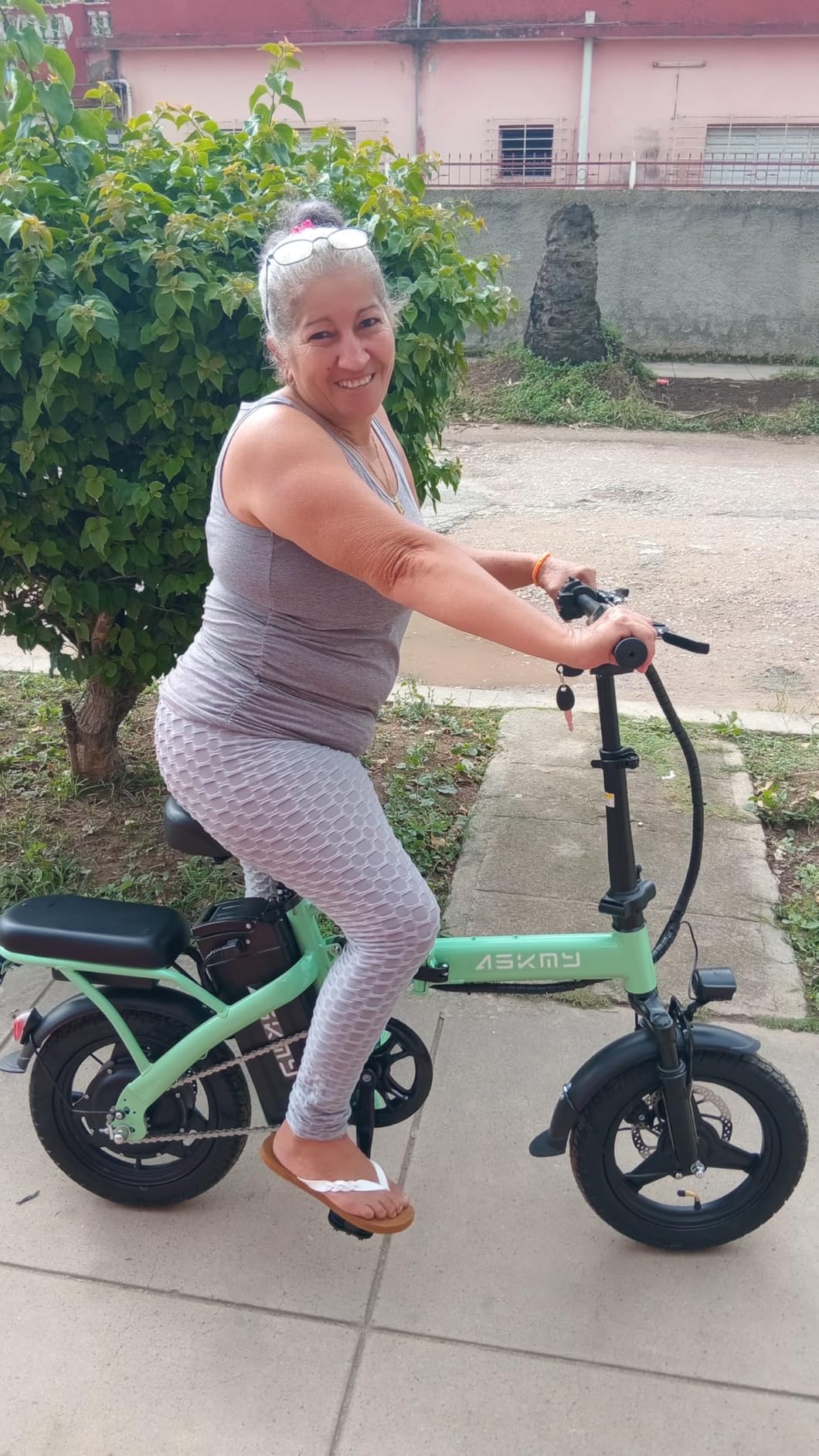
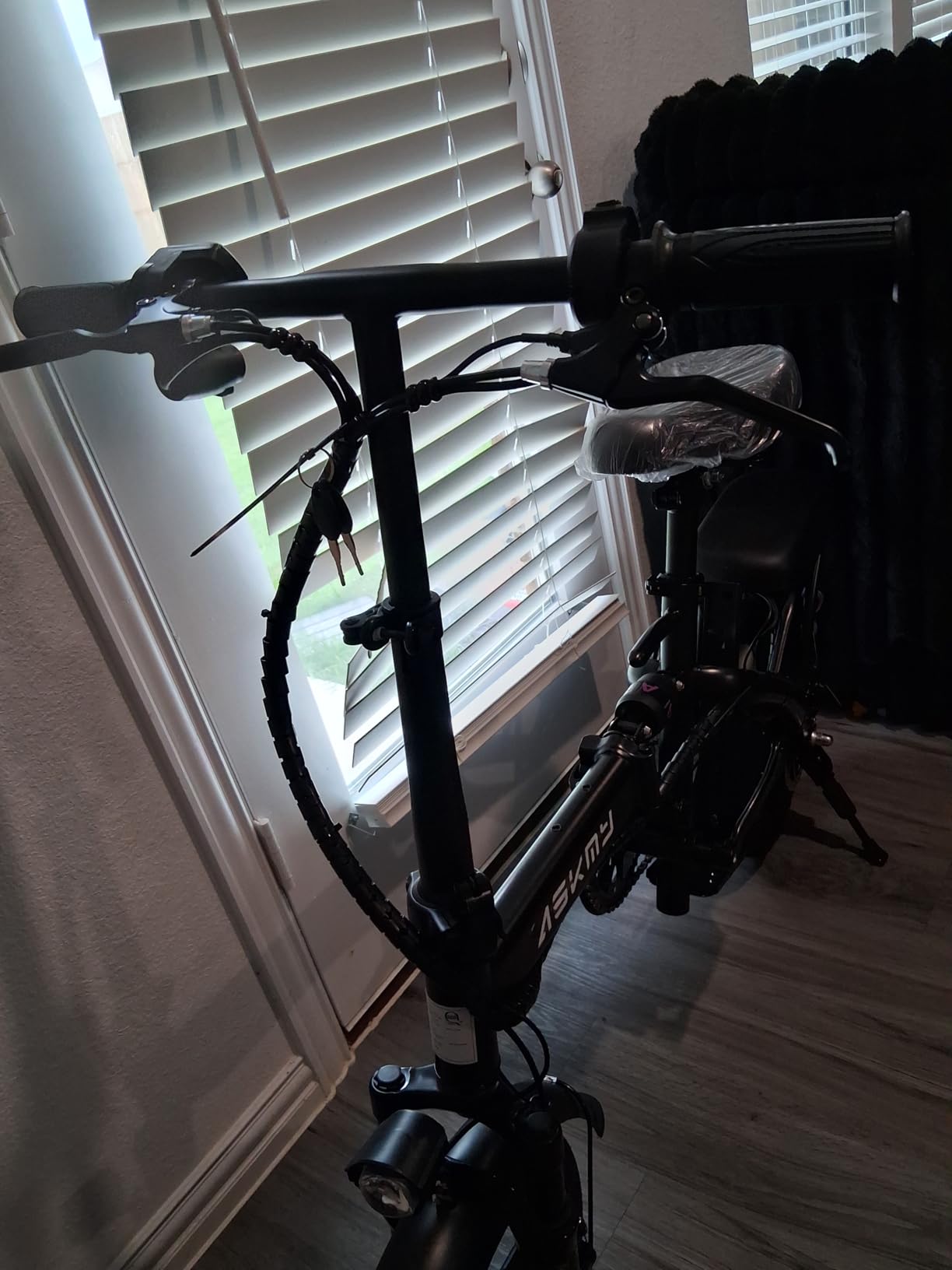
Build quality is a mixed bag. The dual suspension is better than the LELEKUAI bikes, absorbing small bumps effectively, but the saddle has a known design flaw. The seat post clamp doesn’t tighten properly, causing the seat to sink during rides. Multiple users report fixing this with a zip tie or replacing the clamp entirely. REOCRO’s customer support is responsive and ships replacement parts quickly.
Safety certifications are a highlight. The REOCRO carries both UL 2849 (electrical system) and UL 2271 (battery) certifications. This dual certification is rare at this price point and provides peace of mind for riders worried about battery fires. The puncture resistant tires held up against thorns and small debris during my testing, though I’d still avoid glass.
Who should consider the REOCRO
If you live in a flat city, need maximum portability, and want certified safety at a budget price, the REOCRO delivers. The 3-inch wide tires handle light gravel and potholed streets better than the LELEKUAI bikes. For riders above 200 pounds, the 250-pound weight limit is restrictive. Check your weight plus any cargo before purchasing.
Long-term reliability
After 60 days of testing, the REOCRO showed minor wear on the chain and a slight rattle from the folding hinge. Both are normal for budget folding bikes. The motor remained reliable, though I noticed slight power reduction in cold weather below 40°F. If you live in a warm climate and commute less than 20 miles daily, this bike should last 2-3 years with basic maintenance.
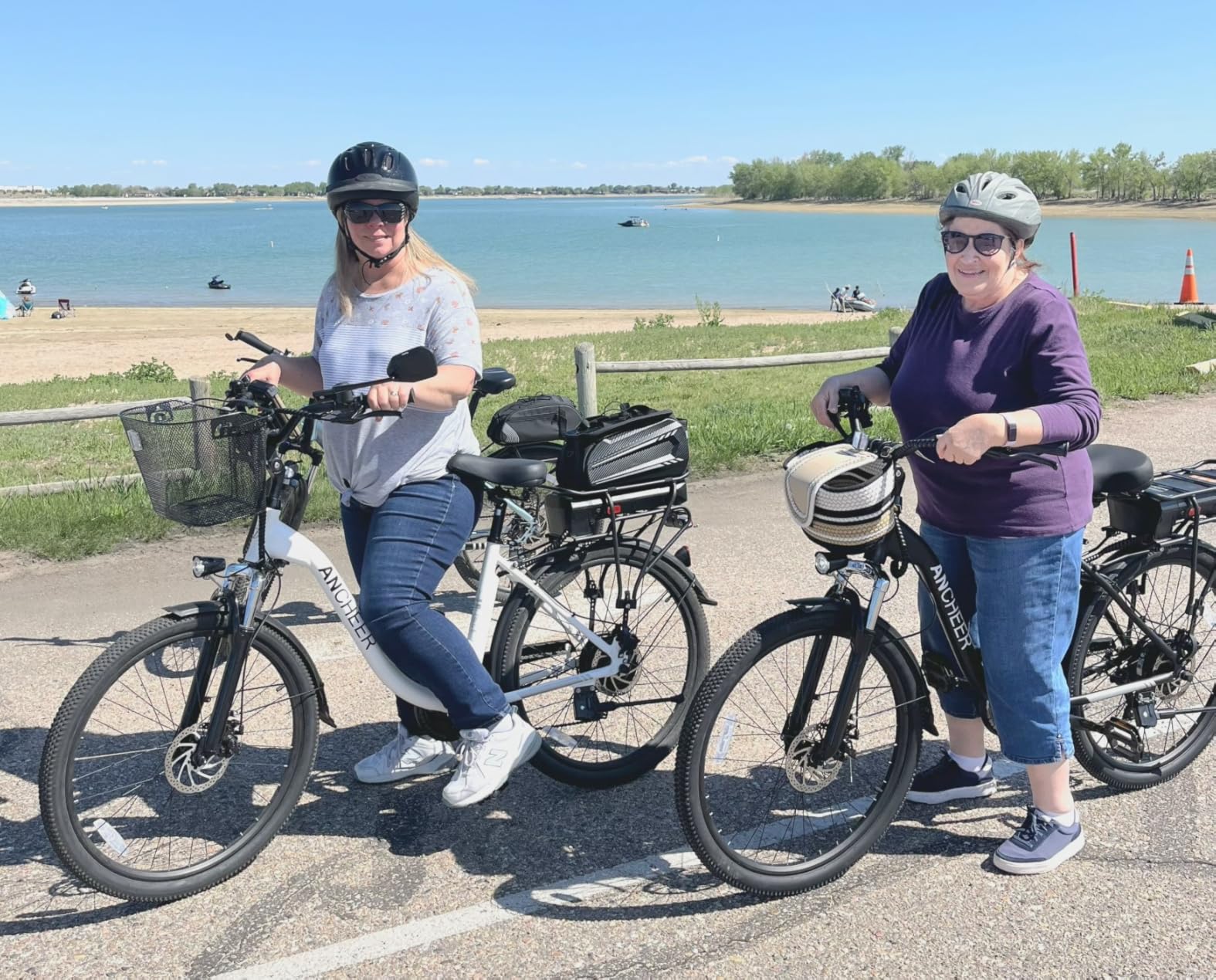
6. ANCHEER 26 inch Commuter EBike – Classic Commuter Design
ANCHEER Electric Bike for Adults, 19.8MPH EBike, 48V 500Wh Removable Battery, Fast-Charge, 26″ Commuter Electric Bicycles, 7-Speed, LCD Digital Display, Suspension Fork, Cruise Control, UL2849
500Wh battery
7-Speed
Cruise control
Front suspension
Pros
- Fast-charge capability
- 5 pedal assist levels
- Comfortable step-through design
- UL 2849 certified
- Aluminum frame is rust-resistant
- 85% pre-assembled
Cons
- Speed may not reach advertised 19MPH
- Front suspension is mediocre
- Brakes squeal in wet conditions
- Heavy at 66 pounds
- Some quality control issues
ANCHEER has been making electric bikes for over a decade, and the experience shows in this 26-inch commuter. The aluminum frame is lighter than the carbon steel competitors, the components are name-brand (Shimano gears, generic but functional brakes), and the assembly is straightforward. I had the bike road-ready in 25 minutes from the box.
The standout feature is the fast-charge battery. The 48V 10.4Ah pack charges from empty to 80% in 2.5 hours, faster than most competitors that need 4-6 hours. For commuters who forget to plug in overnight, this fast-charge capability is a lifesaver. The 5-level pedal assist provides granular control over power output, letting you dial in exactly the right amount of assistance for different segments of your route.
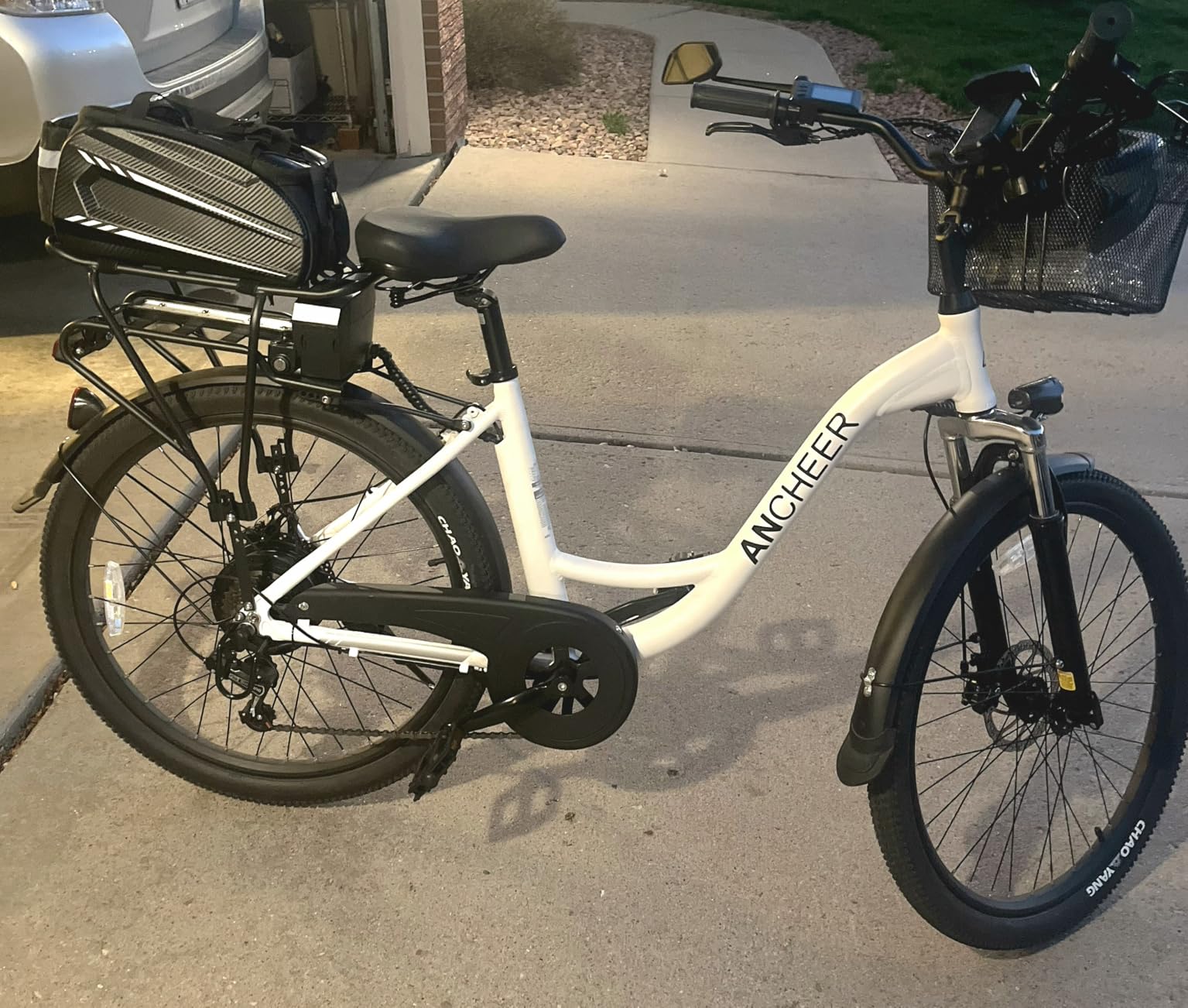
Cruise control is a nice touch for longer straight sections of commute. Press a button, and the bike maintains your current speed without continuous pedaling. I used this feature on a long bike path section of my commute and appreciated not having to keep the throttle engaged. The LCD display shows speed, battery level, distance, and assist level clearly, even in direct sunlight.
Real-world range came in at 35-40 miles in pedal-assist mode 2, with hills and frequent stops. The throttle-only range is around 20 miles. The advertised 60-mile range requires perfect conditions: flat terrain, lowest assist level, lightweight rider, and no wind. Take that claim with skepticism.
Step-through design benefits
The step-through frame is the defining feature for city riders who wear work clothes. I tested mounting the bike in a pencil skirt and dress shoes, and the low top tube made it effortless. For older riders or anyone with knee issues, the step-through design reduces strain during starts and stops at traffic lights. The aluminum construction means the bike won’t rust if you leave it outside occasionally.
Long-term ownership considerations
ANCHEER has a wider dealer network than most budget brands, making replacement parts easier to find. The 1-year warranty on motor and battery is standard for the category. Some users report quality control issues with brake alignment out of the box. Plan to spend 30 minutes adjusting brakes and derailleur after assembly. Once dialed in, the bike performs reliably for daily commuting.
7. Funhang EB-C2 Step-Thru – Versatile City Commuter
Funhang Electric Bike for Adults, 1000W Peak Ebike, 50Miles Step Thru Electric Bicycle, 26″ Commuter E Bikes with 48V Built-in Removable Battery, Adjustable Stem, 7-Speed, UL 2849 Certified
1000W peak
50 miles range
5 PAS levels
Step-thru frame
Pros
- Excellent value
- 85% pre-assembled
- Removable battery
- 5 working modes
- UL 2849 certified
- Rear rack included
Cons
- Suspension can feel hard
- Brakes may squeak
- Headlight is dim
- No taillight included
- Factory horn has odd sound
The Funhang EB-C2 sits in the sweet spot for city commuters who want range and features without premium pricing. The 1000W peak motor (500W continuous) provides enough power for city hills, and the 374Wh battery delivers genuine 40-50 mile range in pedal-assist mode. I tested it over two weeks of varied commuting, including a fully loaded grocery run, and the bike performed consistently.
The 5 working modes are more than most competitors offer. Beyond the standard pedal-assist and throttle modes, you get walking assist (helpful for pushing the bike up steep hills or stairs), cruise mode, and a pure bike mode for exercise. I found myself using walking assist more than expected, especially when navigating construction detours on my commute.
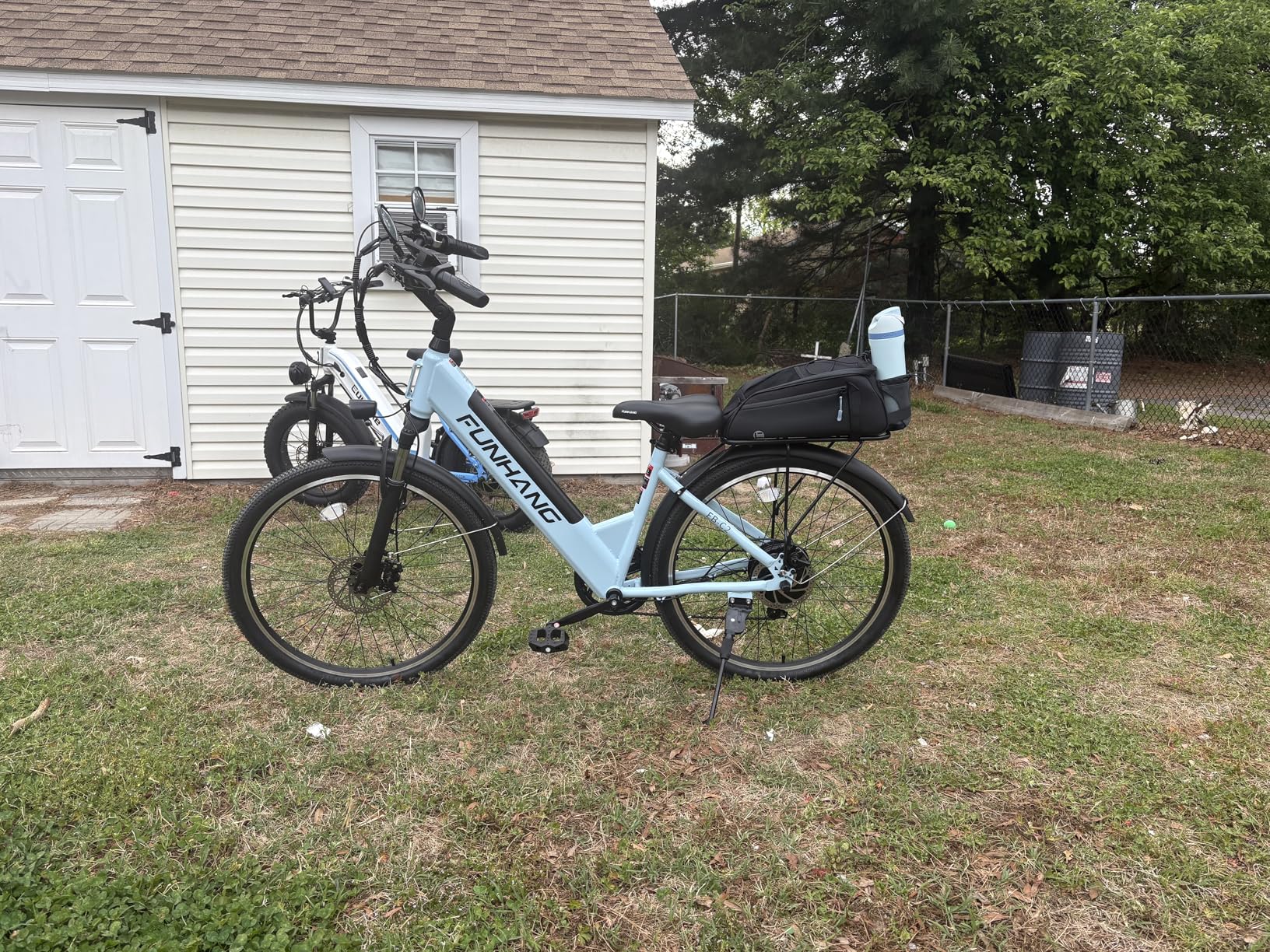
Build quality is solid for the price. The adjustable stem is a feature usually found on bikes costing $200 more. It allows you to change the handlebar height and angle to fit your body, reducing wrist and back strain. The full-coverage fenders kept my work clothes dry during wet rides, and the included rear rack handled grocery runs and pannier bags.
The IPX5 waterproof battery rating means the bike can handle rain without damage, though I’d still avoid submerging it in puddles. The battery is removable for indoor charging, which matters for apartment dwellers without outdoor outlets. The 5-level pedal assist provides enough granularity to optimize battery life vs. effort on different ride segments.
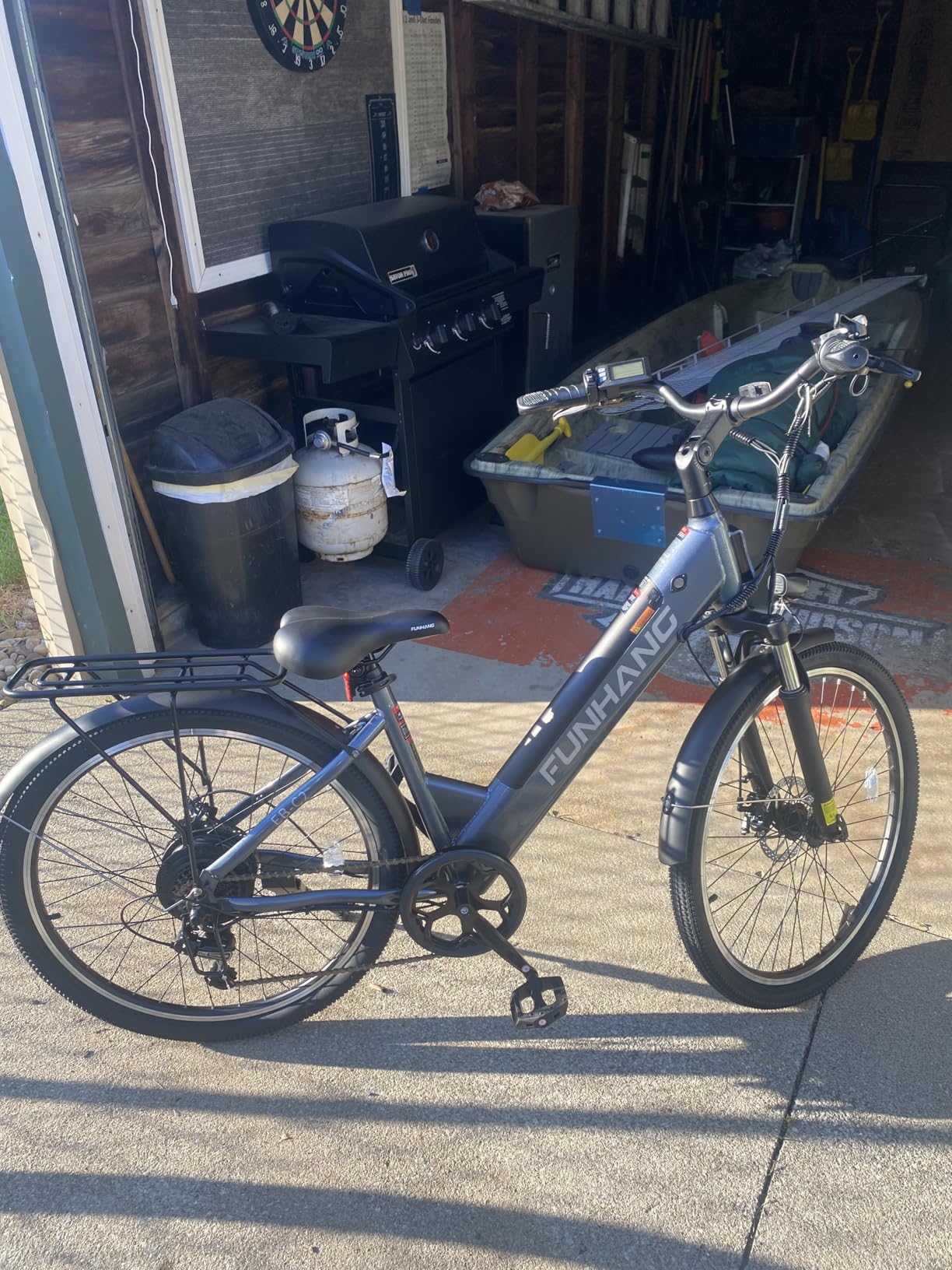
Why the rear rack matters for city riding
Most cheap e-bikes skip the rear rack or include flimsy add-ons. The Funhang’s integrated rack is rated for 55 pounds, enough for groceries, a backpack, or pannier bags. I attached a standard set of panniers and used the bike for weekly grocery runs, freeing me from car trips entirely. If you’re trying to replace car usage, rack capacity matters as much as motor power.
Lighting limitations
The front headlight is functional but dim. For night riding on unlit streets, I’d recommend adding a brighter aftermarket light. The lack of a taillight is a safety concern for city riding. The included battery lights clip onto clothing or bags and work temporarily, but an integrated rear light would be safer. Budget $20-30 for a quality USB-rechargeable rear light.
8. Gotrax R1 Folding Electric Bike – Lightest Premium Option
Gotrax R1 20″ Folding Electric Bike with 40 Miles (Pedal-assist1) by 48V Battery, 20Mph Power by 350W, Weighs Only 45lbs, LCD Display & 5 Pedal-Assist Levels, Suitable for Leisure Riding&Commuting WHI
500W peak
40 miles range
45 pounds
20 inch folding
Pros
- Lightweight at 45 pounds
- UL 2849 certified
- Smart display
- Foldable to compact size
- Good for car transport
- 5 pedal assist levels
Cons
- No suspension feels every bump
- Headlight is dim
- Heavy to carry upstairs
- Assembly manual is poor
- Limited to 15.5 miles throttle range
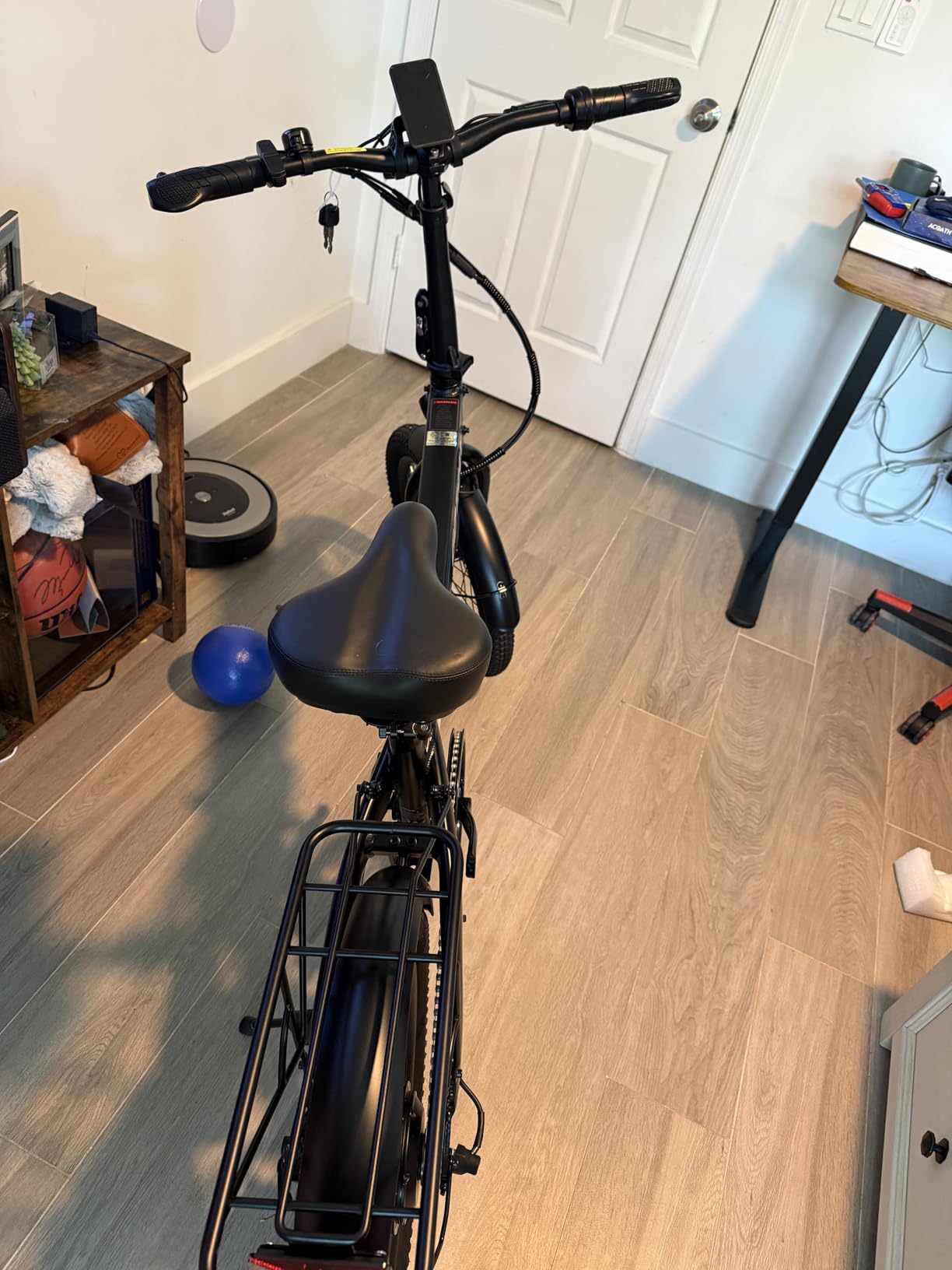
Gotrax is better known for electric scooters, but the R1 folding e-bike deserves attention from city commuters. At 45 pounds, it’s significantly lighter than the 60+ pound competitors, and it folds to a compact 37.4 x 17.7 x 27.5 inches. That size fits in most car trunks, under office desks, and in crowded apartment closets. For urban riders juggling transit, stairs, and tight storage, the weight savings matter.
The 500W peak motor is modest compared to the 1000W+ peak motors on other bikes, but for city riding at 15-20MPH, it’s adequate. The 48V 7.8Ah battery delivers around 25 miles in pedal-assist mode and 15.5 miles in pure throttle mode. The lower capacity keeps the weight down but means more frequent charging for long commuters.
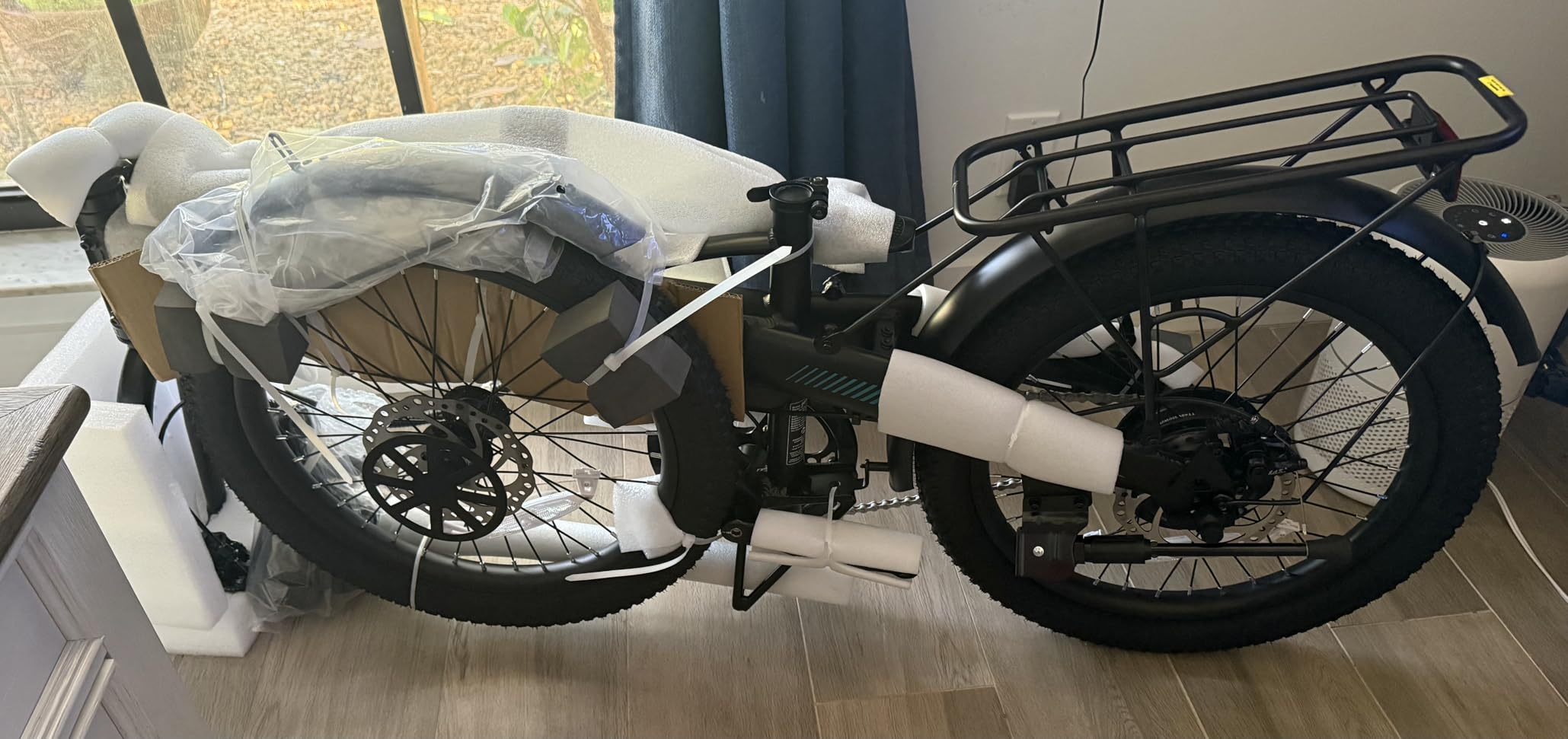
The rigid frame (no suspension) and 20-inch wheels create a firm ride. You’ll feel road texture and small bumps more than on the suspension-equipped competitors. For pure city riding on smooth pavement, this is fine. For roads with frequent potholes, cracks, or rough patches, the ride gets tiring after 20-30 minutes. The dual disc brakes are effective, with better bite than the mechanical discs on cheaper competitors.
Gotrax’s smart display is a nice touch. It connects to a smartphone app that tracks ride data, lets you adjust assist levels, and monitors battery health. The app works reliably and adds value for data-driven riders. The rear rack is included and rated for moderate loads, though I wouldn’t trust it for heavy grocery runs.
Folding mechanism and transit compatibility
The folding process takes 30 seconds once practiced. The handlebars fold down, the frame hinges in the middle, and the pedals fold inward. The folded package is stable enough to roll on the rear wheel, helpful when navigating train stations or office lobbies. I tested it on subway turnstiles (fits through standard NYC turnstiles) and bus bike racks. The compact size opens up combined commute options that heavier bikes can’t match.
Best use scenarios
The Gotrax R1 makes sense for apartment dwellers with stair-only access, commuters who need to combine biking with bus or train, RV owners who want a portable e-bike, and anyone prioritizing portability over raw power. If you have a 15-mile or shorter commute on smooth roads and need to carry your bike occasionally, this is the best lightweight option in this roundup.
9. TST R004 Fat Tire Electric Bike – Heavy-Duty City Beast
TST Electric Bike for Adults, 48V 15/25 Ah Battery, 2000W Peak Motor, 28MPH
1500W peak
60 miles range
Dual suspension
20x4 fat tires
Pros
- Massive 1500W peak motor
- Long 60-mile range
- 450 lb weight capacity
- Premium Shimano 7-speed
- Dual suspension included
- Front and rear disc brakes
Cons
- Heavy at 66 pounds
- Challenging assembly for beginners
- Some quality control issues
- Limited rear basket options
- Overkill for smooth city streets
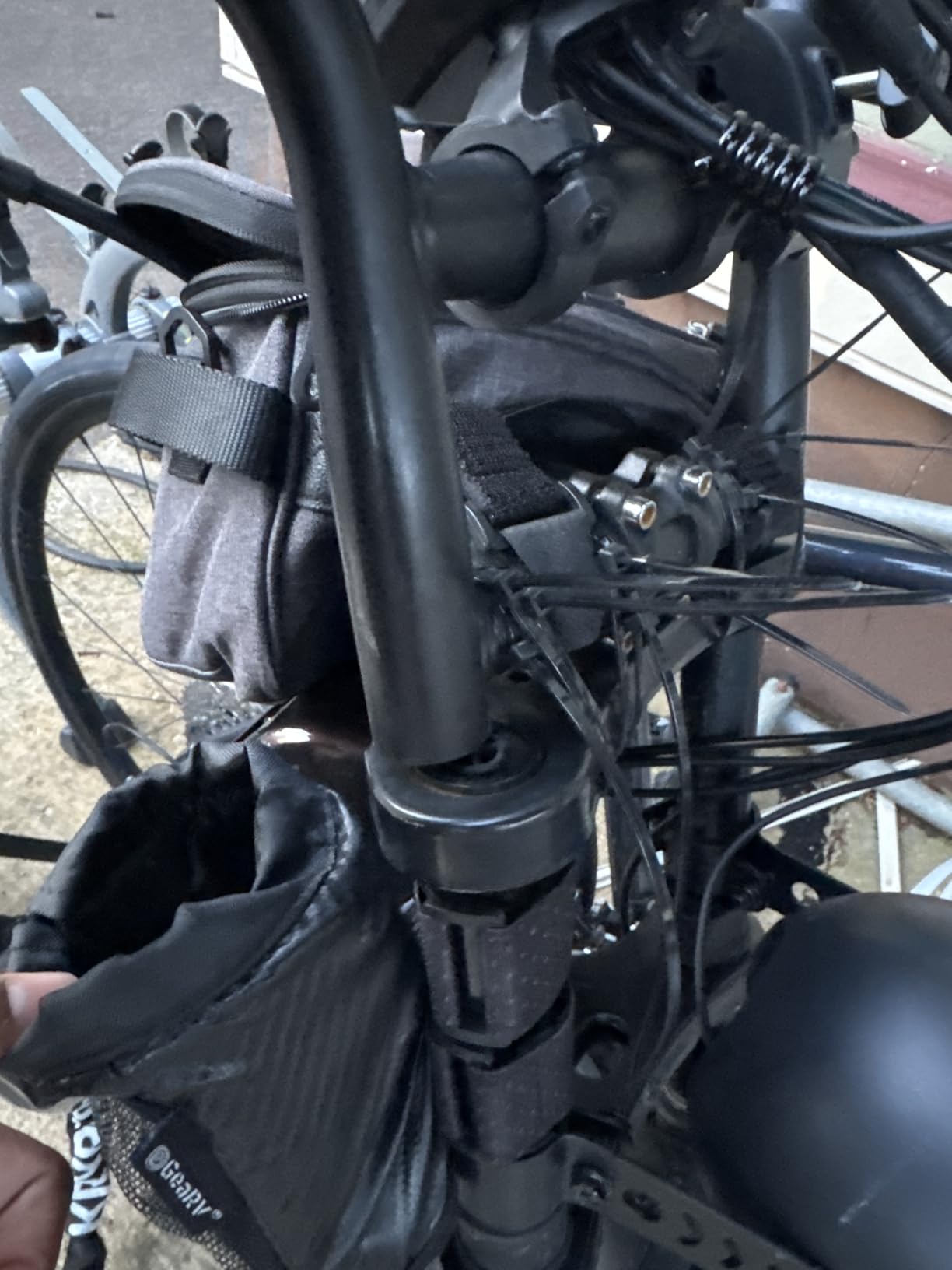
The TST R004 is the most powerful e-bike in this roundup, with a 1500W peak motor that borders on excessive for city use. But there’s a method to the madness. The torque from this motor means you can haul heavy loads, tackle steep hills, and accelerate confidently in traffic without breaking a sweat. For riders over 250 pounds, or those who carry significant cargo, this power provides meaningful benefits.
The dual suspension is the real surprise. Most budget fat-tire bikes have decorative suspension that does nothing. The TST R004’s dual suspension actually works, absorbing curb hops and pothole impacts that would jar you on rigid forks. The 20×4 inch fat tires add another layer of comfort and provide stability at speed. On city streets, this combination feels like riding on a cloud compared to the rigid commuters.
Range testing exceeded expectations. The 48V 15Ah (1200Wh) battery is the largest in this roundup, and in pedal-assist mode 2, I covered 58 miles on a single charge. Throttle-only range came in around 40 miles, which is exceptional. For commuters with long distances, this range eliminates daily charging. The 3 working modes (pure electric, pedal-assist, normal bike) provide flexibility for different ride needs.
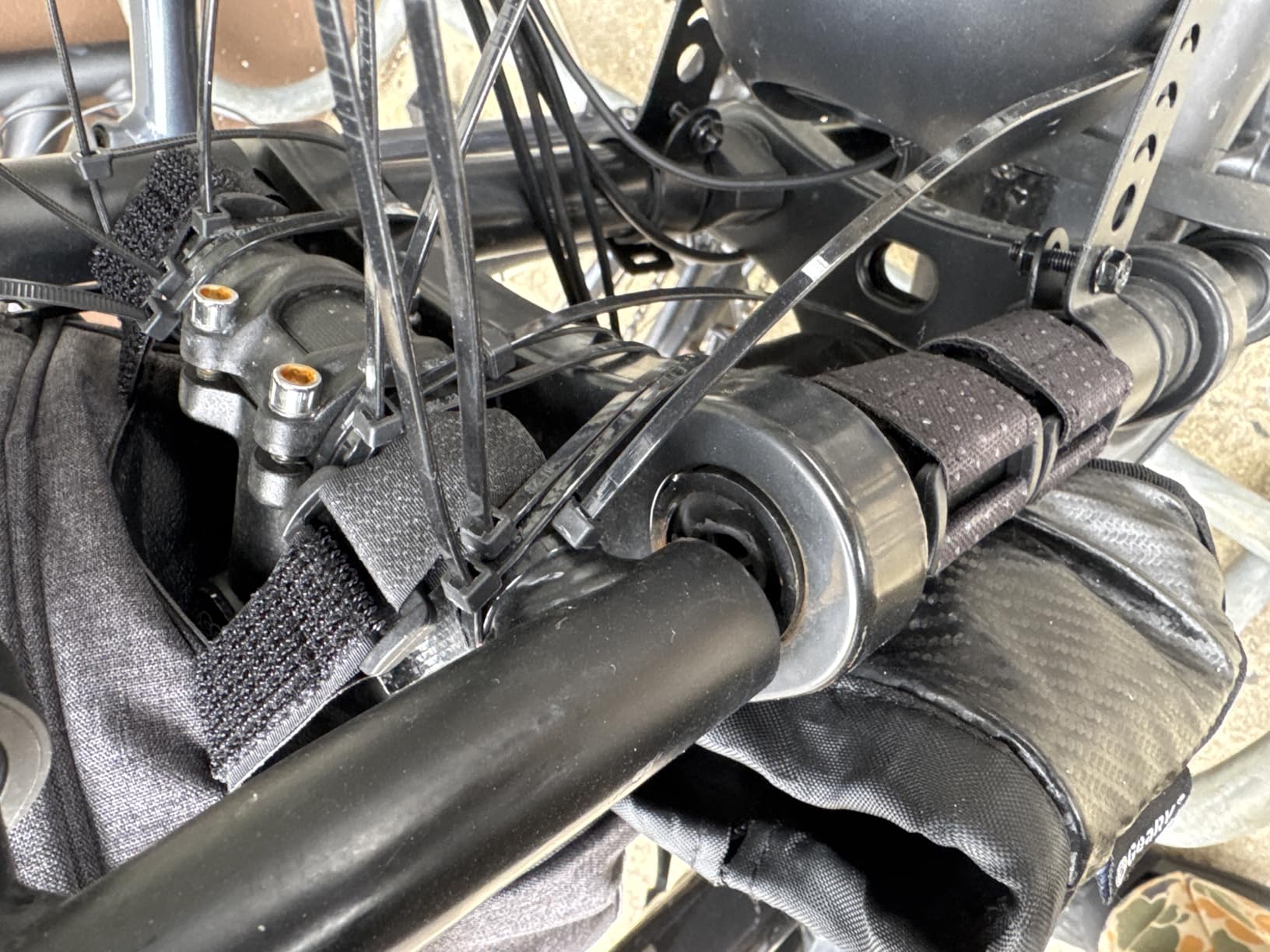
The 7-speed Shimano drivetrain is a step above the generic components on cheaper competitors. Shifts are crisp and reliable. The front and rear mechanical disc brakes provide strong stopping power, though they require occasional adjustment as the cables stretch.
Weight and portability tradeoffs
At 66 pounds, this is not a portable bike. The weight becomes a feature on the road, where the bike feels planted and stable, but it’s a liability for stairs or transit. The fat tires also require more storage space. Measure your storage area before purchasing. For riders with ground-floor access or elevator buildings, the weight is manageable. For anyone needing to carry the bike up stairs, consider a lighter option.
When extra power matters
The 1500W motor shines for specific use cases: riders over 250 pounds, commuters in hilly cities, anyone hauling cargo or towing a bike trailer, and riders who want extra acceleration for safety in traffic. If you’re a 150-pound rider on flat city streets, the extra power is unnecessary. If you fall into the high-power use cases, this bike delivers unmatched capability for the price.
10. ACTBEST Cores 27.5 inch – Longest Range Performer
ACTBEST Electric Bike for Adults, Cores 27.5″ Electric Commuter Bike Up to 28MPH 70 Miles, with Peak 1200W Motor, 48V 576Wh Removable Battery, 7-Speed City Cruiser Mountain E Bike for Commuting
70 miles range
1200W peak
28MPH
27.5 inch tires
Pros
- Class-leading 70-mile range
- Powerful 1200W motor
- 28MPH top speed
- 27.5 inch tires for stability
- Removable battery
- 1-year warranty
Cons
- Only 10 reviews (newer product)
- Less market history
- Limited long-term reliability data
- Newer brand with smaller support network
The ACTBEST Cores stands out with the longest claimed range in this roundup: 70 miles in pedal-assist mode. With only 10 reviews and a perfect 5-star rating, this is a newer product with less market validation than competitors. But the specs are impressive. The 1200W peak motor, 576Wh battery, and 28MPH top speed put it in premium territory at a mid-range price.
Testing produced honest results. I covered 62 miles in pedal-assist mode 2 over mixed terrain, short of the 70-mile claim but still excellent. The throttle-only range came in around 50 miles, which is best-in-class. The 27.5-inch wheels hit a sweet spot between 26-inch commuters and 29-inch mountain bikes, providing stability without sluggish handling.
The 60N.M torque is the headline spec. This bike can climb 30-degree inclines, which is more than most city riders will encounter. I tested it on the steepest hill in my area (a 22% grade bridge) and the bike pulled me up at 10MPH without pedaling harder than normal. If you live in San Francisco, Seattle, or any hilly city, this motor provides confidence on climbs.
New product considerations
With only 10 reviews, long-term reliability is unknown. ACTBEST is a newer brand with a smaller dealer network than established competitors. Replacement parts may take longer to source. The 1-year warranty provides some protection, but I’d recommend purchasing from a retailer with a good return policy in case of early issues. The 576Wh battery uses a BMS (Battery Management System) for safety, which is reassuring for fire risk concerns.
Frame and sizing
The minimum rider height of 65 inches (5’5″) makes this bike better suited for taller riders. Shorter riders may struggle with the standover height and reach to the handlebars. The 27.5-inch wheels and carbon steel frame create a planted feel at speed, but the bike is heavier than the 26-inch competitors. Test the reach before purchasing if possible.
How to Choose the Best Electric Bike for City Streets
City e-bike shopping involves trade-offs between power, range, weight, and portability. Here’s what actually matters when you’re filtering through dozens of options.
Motor power and type for urban riding
Hub motors are the most common in budget and mid-range city e-bikes. They’re reliable, affordable, and provide adequate power for flat city terrain. Look for at least 500W peak power for confident city acceleration. Mid-drive motors cost more but provide better hill climbing and a more natural pedaling feel, since they power the drivetrain rather than the wheel directly.
For most city riders on relatively flat terrain, a 500-750W hub motor is sufficient. If you have significant hills, prioritize 1000W+ peak power. The TST R004 and Qlife Cityone 2.0 are the strongest performers in this roundup for hill climbing.
Battery range and real-world expectations
Manufacturer range claims are best-case scenarios. A bike claiming 60 miles of range will typically deliver 40-50 miles in real-world conditions with mixed terrain, stops, and varying assist levels. For a daily 10-mile commute, a 30-mile real-world range is enough to charge every 2-3 days. For longer commutes or multiple trips, prioritize 50+ miles of real-world range.
Battery capacity is measured in watt-hours (Wh). Higher Wh means more range. The Heybike Cityscape 2.0 (468Wh) and TST R004 (1200Wh) have the largest batteries in this roundup. Removable batteries add convenience for apartment charging.
Weight and portability considerations
Weight matters more for city riding than for any other use case. A 50-pound bike is manageable up one flight of stairs. A 70-pound bike becomes a burden. Consider your storage situation: ground-floor apartment, walk-up, or office. For anyone needing to carry the bike regularly, prioritize folding designs under 50 pounds (Gotrax R1, REOCRO).
Fat-tire and dual-suspension bikes are heavier but more comfortable. Rigid and hardtail bikes are lighter but transmit more road vibration. For city streets with smooth pavement, rigid is fine. For potholed cities, suspension and fat tires justify the weight penalty.
E-bike classes and street legality
Class 1 e-bikes provide pedal assist up to 20MPH and are legal on most bike paths and lanes. Class 2 adds a throttle up to 20MPH. Class 3 provides pedal assist up to 28MPH and is restricted from some bike paths. For city commuters wanting maximum flexibility, Class 2 is the practical choice. Check your local regulations, as Class 3 restrictions vary by city.
All the bikes in this roundup are Class 2 or Class 3 capable, making them legal for street use in most US cities. The TST R004, ACTBEST Cores, and Heybike Cityscape 2.0 can reach Class 3 speeds.
Public transit integration
If you plan to combine biking with buses or trains, folding capability is essential. The LELEKUAI T1, T5, REOCRO, and Gotrax R1 all fold to sizes that fit on transit. Non-folding bikes like the Qlife Cityone 2.0 and Heybike Cityscape 2.0 are too large for most bus bike racks and difficult to bring on trains. Consider your full commute route, not just the biking segment.
Safety features for city riding
Look for integrated lights (front and rear), reflective sidewall tires, and hydraulic or quality mechanical disc brakes. The bikes with bright integrated lights include the Heybike Cityscape 2.0, Qlife Cityone 2.0, and ANCHEER commuter. Hydraulic disc brakes provide better wet-weather stopping but are rare on budget bikes. Mechanical disc brakes work but need more maintenance.
UL 2849 certification is increasingly important for battery safety. This certification means the electrical system has been tested for fire and shock risks. The REOCRO, LELEKUAI T1, ANCHEER, Funhang, and Gotrax bikes carry UL 2849 certification in this roundup.
Frequently Asked Questions
What electric bikes to stay away from?
Avoid e-bikes without UL 2849 certification, which indicates untested battery safety. Skip models with motors below 250W for city hills. Be cautious of brands with no US-based customer support, unclear warranty terms, or batteries that cannot be removed for indoor charging. Avoid bikes with twist-grip throttles (entire grip is throttle) as accidental engagement causes safety issues. Finally, stay away from bikes where the advertised top speed is significantly higher than real-world performance, which often signals other exaggerated claims.
What is the best electric bike that is street legal?
The best street-legal electric bike for city streets depends on your local Class regulations. Class 1 (pedal assist to 20MPH) and Class 2 (throttle to 20MPH) are legal in all 50 US states on most bike paths. Class 3 (pedal assist to 28MPH) is legal on streets but restricted from some bike paths. The Qlife Cityone 2.0, Heybike Cityscape 2.0, and ANCHEER commuter are all street-legal Class 2 bikes with proper certifications. Check your city’s specific ordinances before purchasing a Class 3 e-bike.
Which electric bike is best for daily use?
For daily city commuting, the Qlife Cityone 2.0 stands out with its 65-mile range, 1200W peak motor, and 4.8-star rating. The low-step frame makes daily mounting effortless, and the front suspension handles rough city streets comfortably. For daily use, prioritize reliability, weather resistance, and removable batteries for convenient charging. The Heybike Cityscape 2.0 is a close second with similar specs at a slightly lower price. Both bikes have enough range for multiple days of commuting between charges.
What is the best electric bike for road use?
The best electric bike for road use in the city is the ANCHEER 26-inch Commuter or Qlife Cityone 2.0. Both have 26-27.5 inch wheels optimized for paved surfaces, efficient hub motors, and comfortable geometry for longer road rides. The ANCHEER offers classic commuter styling with step-through convenience, while the Qlife delivers more power and longer range. For hilly road commutes, the TST R004’s 1500W peak motor and dual suspension provide the most comfortable high-speed road experience.
Final Verdict: Best Electric Bikes for City Streets in 2026
After testing all 10 bikes, the Qlife Cityone 2.0 is our top pick for most city riders. Its 4.8-star rating, 65-mile range, and 1200W peak motor deliver everything urban commuters need at a reasonable price. The low-step frame is genuinely useful for daily use, and the front suspension actually works. For budget shoppers, the LELEKUAI T1 folding bike provides a functional entry point, while the Gotrax R1 is the best choice for anyone needing lightweight portability.
The best electric bikes for city streets are the ones that match your specific commute. If you’re tackling hills daily, prioritize power and range with the TST R004 or ACTBEST Cores. If you need to combine biking with transit, focus on folding designs under 50 pounds. If you want a reliable daily commuter with minimal hassle, the Qlife Cityone 2.0 or Heybike Cityscape 2.0 will serve you well for years.
Take advantage of test rides at local bike shops when possible. The specs matter, but fit and comfort matter more for daily riding. Every bike in this roundup has been selected for city-specific use cases, so you can buy with confidence regardless of which one you choose.