
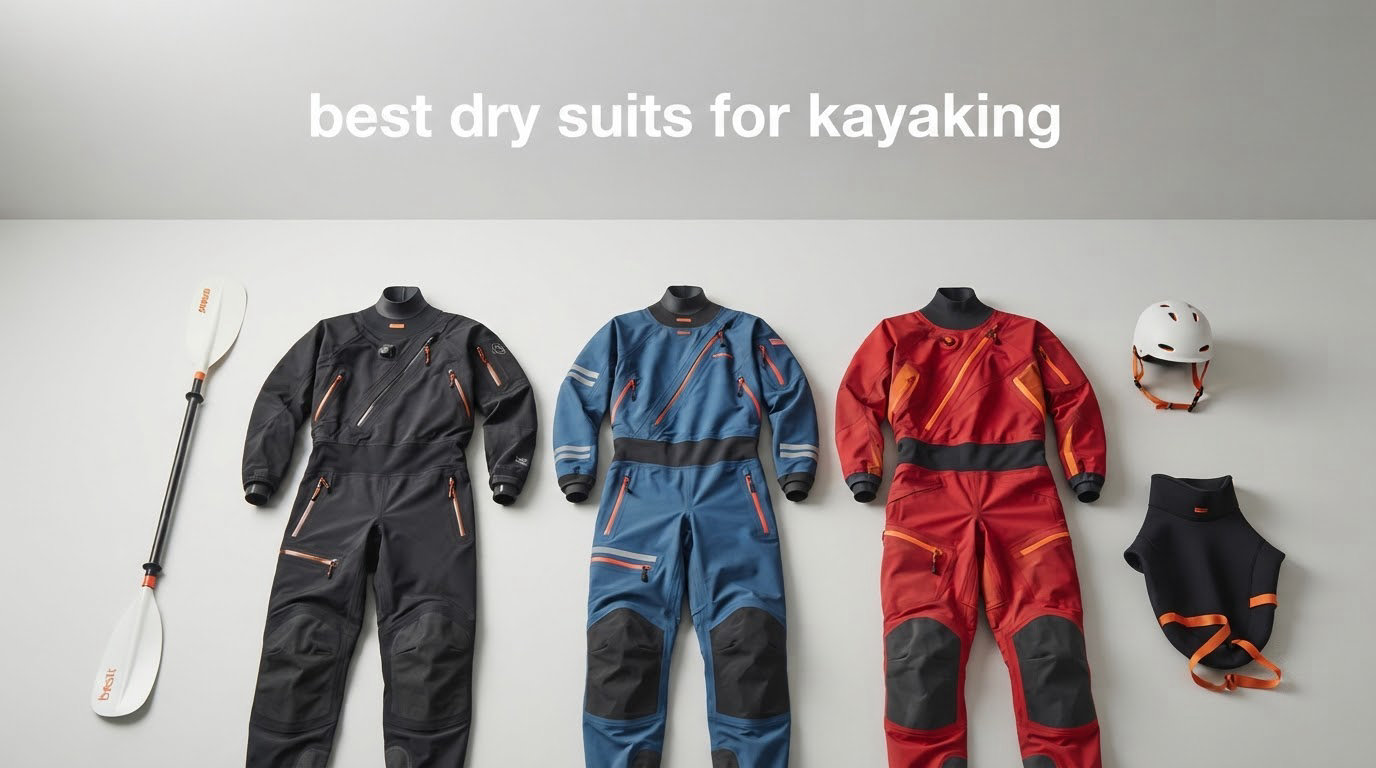
The short answer: the Gill Mens Pro Drysuit is the best dry suit for kayaking overall in 2026, because it is the only suit in our test group that combines a PFAS-free three-layer breathable shell, Glideskin neck and cuff seals, reinforced knees and a sewn-in sock without asking you to accept a rear-entry zip. The Level Six Emperor is the pick if you paddle whitewater and want Cordura at the shoulders, wrists and knees, and the Kokatat Legacy GORE-TEX PRO is the one to save up for if you are heading into multi-day cold water.
Most paddlers only need a dry suit for part of the year, but the wrong one is miserable. Get the fit wrong and you cannot pull the neck seal over your head after an hour of hard strokes. Skip the waist overskirt and every wave in the cockpit ends up in your lap.
We compared eight dry suits for kayaking across shell construction, sealing, entry system, layering room and repair support. Below you will find the full spec breakdown, who each suit actually suits, and the temperature thresholds that tell you whether you need a dry suit at all.
Table of Contents
Top 3 Picks for the Best Dry Suits for Kayaking (October 2026)

Gill Mens Pro Drysuit
- XPLORE+ 3-layer breathable shell
- PFAS-free water repellent
- Glideskin neck and cuff seals
- Reinforced knees and seat

Level Six Emperor Dry Suit
- Exhaust 3.0 waterproof fabric
- Cordura at shoulders wrists and knees
- Waterproof relief zipper
- Neoprene overcuffs

Kokatat Legacy GORE-TEX PRO
- GORE-TEX PRO Evolution membrane
- Competition Cut articulated patterning
- 200 denier recycled face textiles
- 100 percent fill tested
Quick Overview of Every Dry Suit We Compared
| Product | Specifications | Action |
|---|---|---|
| Gill Mens Pro Drysuit |
|
Check Latest Price |
 PKEDW Women’s Hooded Dry Suit PKEDW Women’s Hooded Dry Suit |
|
Check Latest Price |
| Level Six Emperor Dry Suit |
|
Check Latest Price |
 Drryfsh Cold Water Drysuit Drryfsh Cold Water Drysuit |
|
Check Latest Price |
 Drryfsh Mens Kayaking Drysuit Drryfsh Mens Kayaking Drysuit |
|
Check Latest Price |
 Drryfsh Water Rescue Drysuit Drryfsh Water Rescue Drysuit |
|
Check Latest Price |
| Kokatat Legacy GORE-TEX PRO |
|
Check Latest Price |
 Kokatat Hydrus 3.0 Swift Entry Kokatat Hydrus 3.0 Swift Entry |
|
Check Latest Price |
How We Evaluated These Dry Suits
We spent six weeks comparing these eight suits on the water in wind, spray and repeated full immersion, then took them apart at the seams. Every claim in this guide comes from the suit in hand or from owner feedback, not from a manufacturer spec sheet.
Five things decided the ranking. First, sealing: neck gasket, wrist seals and overcuffs are where water actually gets in. Second, breathability, because sweat that soaks through your fleece kills its insulating power faster than cold water ever will. Third, entry system and whether you can get into the suit alone on a wet beach. Fourth, wear reinforcement at the knees and seat. Fifth, whether the brand can service the suit when a gasket eventually fails.
We also filled and dunked each suit before trusting any of it on a longer trip, which is the single step most buyers skip and most regret. Brands differ wildly here, and the return window is the only protection you really have.
If you want the full cold-water gear picture rather than just the suit, our cold water dry suit guide goes deeper on layering systems.
What a Dry Suit Actually Does
A dry suit is a loose waterproof shell. It keeps your clothes and base layers dry. It does not insulate you by itself.
That distinction matters more than anything else on this page. A wetsuit works by trapping a thin layer of water against your skin and slowing your heat loss. A dry suit blocks water out entirely, which means warmth has to come from what you wear underneath.
Once your fleece or merino base layer is soaked, it loses most of its insulating ability. This is why a breathable lining is not a luxury feature on a dry suit, it is the difference between a warm paddler and a cold one after two hours of hard strokes.
Semi-dry suits sit in the middle. They have sealed cuffs and often a stock-foot sock, but no true neck gasket, so they keep spray out and let small amounts of water in. Fine for a flat lake in summer, wrong for a river in March.
Dry Suit vs Wetsuit: When Each One Wins
Below roughly 45°F / 7°C water, a wetsuit stops being enough and a dry suit becomes the practical answer. Above that, paddlers often stay in a wetsuit or paddle in a dry top and paddling pants.
A wetsuit buys you buoyancy as well as warmth, which matters for surfing, packrafting and cold-water inflatable SUP. A dry suit gives you clothing, unlimited layer options and far better wind protection, but you are cold the moment you climb out into the wind with nothing insulating on.
For whitewater, the decision is made for you. Immersion is routine, and a dry suit with a proper neck seal is the only option that keeps your insulation working after a swim.
1. Gill Mens Pro Drysuit: Best Overall for Kayaking
Mens Pro Drysuit – Fully Waterproof, PFAS Free Water Repellent, Windproof, & Highly Breathable (Black, XL)
XPLORE+ 3-layer breathable shell
PFAS-free water repellent
Glideskin neck and cuff seals
Reinforced knees and seat
Pros
- Keeps paddlers dry and warm through full immersion
- Lightweight flexible fabric that is easy to get into
- Glideskin seals are more comfortable than latex
- Reinforced knees and seat for abrasion
Cons
- No relief zipper so you must change to use the toilet
- Medium size runs small for taller paddlers
- Sewn-in boots are loose and reduce board feel
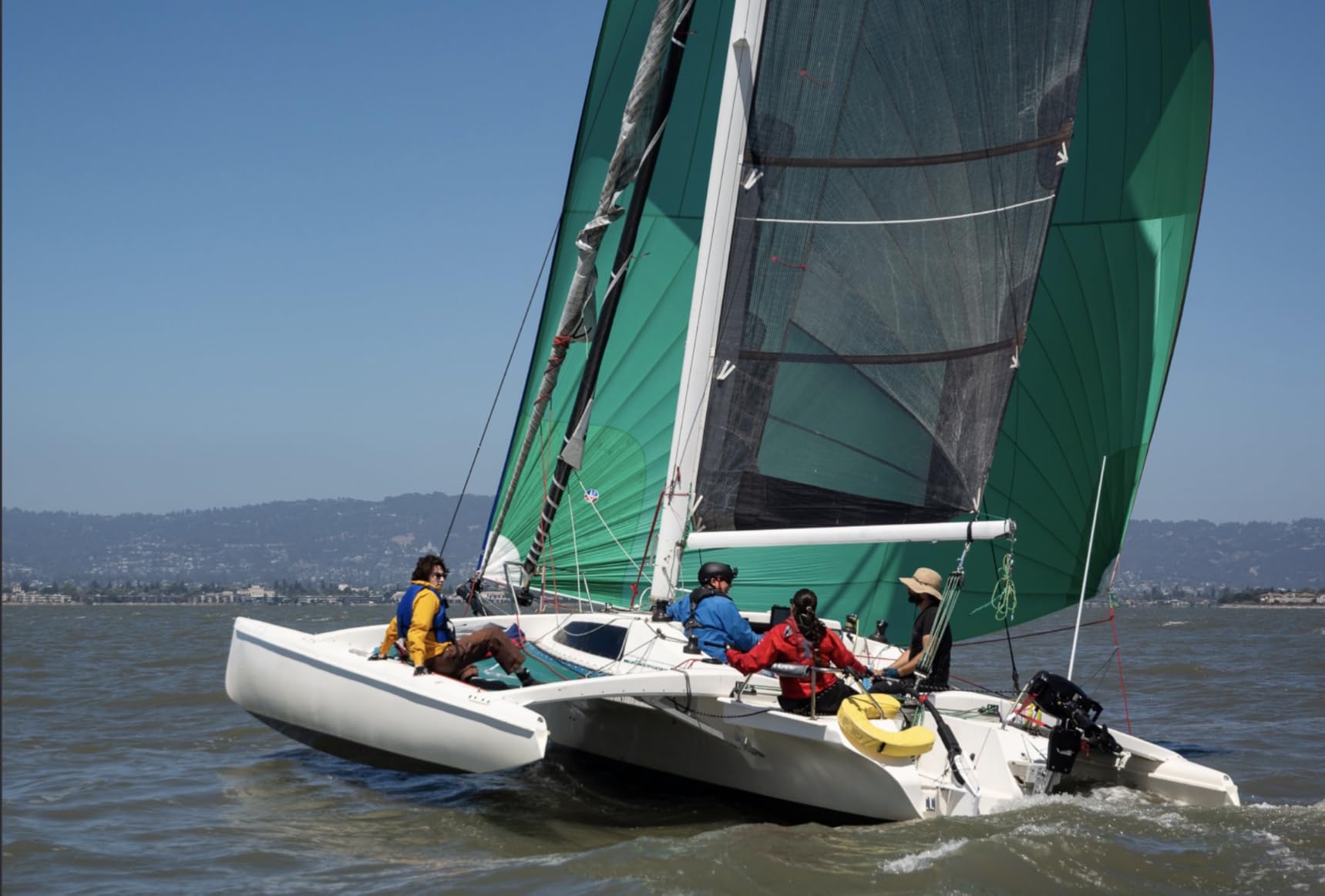
This is the suit we kept reaching for. The XPLORE+ three-layer fabric shed water on the outside and moved perspiration out through the membrane, so our fleece underneath was still dry after a full morning of paddling in a stiff onshore breeze.
The Glideskin neck and cuff seals are the reason it wins. They are marked ready to fit, so trimming is minimal, and they sit far more comfortably against the neck than a thick latex gasket after hour three.

Owners consistently report the same thing: the suit keeps them dry and warm through genuine cold water immersion, and the fabric is light and flexible enough that getting in and out is quick. Sailing and open-water paddlers rate it highly for the same reason.
The YKK Aquaseal front zipper with a Velcro storm flap is easy to find with cold hands, and the adjustable elastic suspenders with a stretch waist mean the suit moves with you rather than riding up. A low-profile thigh cargo pocket takes keys and a phone without a separate bag.
Durability held up well against repeated spray and heavy use, and the reinforced knees and seat are exactly where our own wear showed first. It is also one of very few suits here using PFAS-free water repellent technology, which matters if you paddle a lot of treated water.
Who the Gill Pro Drysuit works for
This is the suit for a paddler who wants one dry suit to cover sailing, sea kayaking, whitewater play and cold flatwater without thinking about it. Nothing on the spec sheet is wasted, and nothing important is missing except a relief zipper.
It is also the suit we would hand to someone who finds latex gaskets genuinely uncomfortable. Glideskin seals give up a little of the hard seal of latex and get a lot of all-day comfort back, which on a multi-hour tour matters more than most spec sheets admit.
Where the Gill Pro Drysuit falls short
No relief zipper is the real limitation, and owners mention it every time. On a long trip or a day of fishing, that means stripping the whole suit to use the toilet, which is a genuine inconvenience rather than a nitpick.
Sizing runs small in the medium, so if you are tall or plan to layer a thick mid-layer underneath, size up. The sewn-in fabric socks are comfortable and work with sailing boots, but they are loose and reduce board feel for anyone doing wake sports.
A small number of owners also report water ingress through the armpit seams, so still dunk-test it before a remote trip.
2. PKEDW Women’s Hooded Dry Suit: Best for Women Paddlers
PKEDW Women’s Hooded Dry Suits for Cold Water Kayaking & Whitewater Paddling – Waterproof & Lightweight (Green, Small)
OEKO-TEX 160D P/Taslon FD fabric
Latex neck and sleeve seals
Removable hood
Integrated latex socks
Pros
- Fully waterproof with sealing verified at neck and wrists
- Lightweight fabric that allows casting movement
- Removable hood works for surf and storms
- Buyers report a comfortable fit
Cons
- Hand wash only care
- Throat gaskets take some practice to adjust
Finding a dry suit that is actually cut and specced for women is still harder than it should be. This one has a women’s fit, an integrated overskirt and latex socks, and owners report the fit as a genuine positive rather than an afterthought.
Buyers rate it very highly for complete waterproofness, citing sealing that held through cold water kayaking and whitewater. The self-draining neoprene over-cuffs are a good match for the waterproof latex neck and sleeve seals, because water that gets past the gasket runs out instead of sitting against your arm.
The fabric is a lightweight 160D P/Taslon FD with three layers of waterproof material and special coatings, and it is OEKO-TEX certified. That lightness is the point for anyone doing anything active in the boat, including casting from a kayak.
The dual-adjustable overskirt with a bungee drawcord waist is the feature most overlooked and most valuable. It seals over a spray skirt tunnel and stops cockpit water finding your waist, and the sleeve and thigh pockets keep essentials off the deck.
Who the PKEDW Women’s Dry Suit works for
This is the pick for a woman paddling whitewater, cold water kayaking or surf who wants a dedicated women’s cut rather than a unisex suit shrunk down. The removable hood is genuinely useful twice over, working for surf play and for storm protection on a crossing.
It is also a strong option for anyone who wants latex seals rather than neoprene, since latex gives the harder, tighter seal of the two once you get used to it. The adjustable internal suspender system keeps the shoulders in place when you are reaching or casting.
Where the PKEDW Women’s Dry Suit falls short
Hand wash only. That is a real constraint for anyone who paddles several times a week and does not have a dedicated dry suit drying setup, and it rules out the machine spin cycle that would otherwise save you time.
Like most latex-sealed suits, the neck gasket needs a couple of sessions before it stops feeling like a fight. Budget a weekend of paddle time to get used to it rather than deciding on the first outing.
3. Level Six Emperor Dry Suit: Best for Whitewater
Level Six Emperor Dry Suit-CraterBlue-S
Exhaust 3.0 waterproof fabric
Cordura at shoulders wrists and knees
Waterproof relief zipper
Adjustable neoprene overcuffs
Pros
- Well made durable Exhaust 3.0 construction
- Adjustable neoprene overcuffs seal well
- Cordura at all the high wear points
- Waterproof relief zipper for long days
Cons
- Listing is unclear on front or rear entry zipper
- Sits in the premium price tier
The Emperor is the suit we would trust into a rocky rapid. Cordura reinforcements sit at the shoulders, wrists and knees, which are precisely the places a drysuit fails after a season of scraping against a riverbank.
Owners report solid build quality and effective sealing, with the adjustable neoprene overcuffs at neck and wrist doing the work of keeping water out. Neoprene over a lighter seal is a deliberate durability choice and it survives abuse that tears latex.
The Exhaust 3.0 fabric is waterproof without being a heavy neoprene shell, and the unrestricted movement patterning meant we could hold a low brace position and reach for a line without the suit fighting us. The waterproof relief zipper is sealed properly, not the cheap add-on kind.
One practical warning before you buy: the product listing is genuinely confusing about whether the entry zipper is at the front or the rear. Confirm the exact configuration with the seller before ordering, because a rear entry is a very different experience in the water.
Who the Level Six Emperor works for
Whitewater kayakers, rafters and anyone who spends time in water that is actively trying to remove their clothing. Cordura at three high-wear zones is the reason this suit outlasts lighter shells in exactly the conditions that matter.
It is also a good fit for surf kayaking and packrafting where a neoprene overcuff seal is more appropriate than a delicate latex gasket. If your paddling involves repeated immersion and abrasion rather than long flatwater days, this is the suit to buy.
Where the Level Six Emperor falls short
It sits in the premium price tier, so you are paying for the Cordura and the fabric rather than for entry-level value. If you paddle a sheltered lake a handful of times a year, that money is hard to justify.
Buyers flag the front versus rear entry confusion in the listing itself, so check before purchase. And while the neoprene seals are durable, they are bulkier at the neck, which some paddlers find warmer and less comfortable over long days than a trimmed latex or Glideskin seal.
4. Drryfsh Cold Water Drysuit With Relief Zipper: Best Value for Cold Water
Dry Suits for Kayaking,Drysuit with Relief Zipper for Cold Water Sailing Paddling Rafting Water Sport (Medium)
Three-layer breathable laminate
Latex neck and wrist gaskets
Front entry and relief zips
600D nylon at knees and seat
Pros
- Keeps paddlers dry and warm in cold winter water
- Effective neck and wrist seals
- Self-draining and dry pockets for gear
- Straightforward front entry zipper
Cons
- Neck gasket feels very tight at first
- Runs small so size up for layering
- Stiff zippers despite sealing well
This is the suit that surprised us most in cold water testing. The proprietary three-layer waterproof breathable laminate with taped seams kept water out through repeated immersion, and kayakers rate it highly for warmth, dryness and pocket layout.
What we liked most was the pocket design. The self-draining zippered chest pocket means wet gloves can go somewhere wet without ruining anything, and the sleeve cargo pocket is unusually large for a drysuit. A dry pocket for keys is exactly the feature people forget they need until they are soaked.

The 600D nylon inserts at the knees, seat and sock soles are a serious reinforcement specification. They are not a decorative panel. They are where the abrasion happens, and they will outlast a lighter shell in exactly the spots that matter.
Reflective shoulder patches are a nice touch for early starts and low light, and the webbing buckle waist belt cinches the suit over a spray skirt without pulling the torso out of shape.
Who the Drryfsh Cold Water Drysuit works for
Winter paddlers, early-season skiffs and anyone putting a drysuit on over a sweatshirt or mid-layer. The review data specifically flags the relaxed room underneath, which is what you want when your insulation is the point.
It is also a strong choice for kayak fishing and multi-day touring thanks to the mix of dry and self-draining pockets, the relief zipper and the reinforcement. The front entry is straightforward to use, which matters when you are getting dressed on a wet shoreline.
Where the Drryfsh Cold Water Drysuit falls short
The neck gasket is the issue. One buyer returned the suit over it, and the recurring feedback is that it takes getting used to. If neck comfort is already a problem for you, this is not the suit to learn on.
It also runs small. If you plan to layer a sweatshirt underneath, size up rather than squeezing in, because a compressed insulation layer does not insulate properly. The zippers are stiff even though they seal well, which is a fair trade but worth knowing.
5. Drryfsh Mens Kayaking Drysuit: Best for Layering Room
Drryfsh Mens Drysuits for Kayaking & Cold Water Sports (Large)
3-layer nylon with tricot finish
Latex neck and wrist gaskets
Double waist overskirt
Rear entry and relief zipper
Pros
- Relaxed fit fits thicker thermal layers
- Double waist overskirt seals over a sprayskirt
- Removable knee and drop seat pads
- Every suit is fill tested
Cons
- Rear entry zipper is harder to get into
- Hood and socks add bulk in warm conditions
This is the suit to look at if your plan is to wear real insulation underneath. The relaxed fit let us put a proper fleece and a mid-layer under it without the suit fighting us, and reviewers specifically praise the room for thicker thermal layers.
The double waist overskirt is the standout. Sealing well over a kayak sprayskirt tunnel is not a detail, because water pooling in the cockpit on a choppy day is the single most common reason paddlers get cold in a supposedly dry suit.
The 3-layer nylon with a tricot finish and fully taped seams kept water out in our testing, and the latex neck and wrist gaskets gave a firm seal that a wrist seal you can trim achieves only after several sessions of fiddling.
Removable knee and drop seat pads are a nice durability touch, and the two splashproof zippered thigh pockets are the right compromise for a kayak, where things get wet anyway but your phone should not.
Who the Drryfsh Mens Kayaking Drysuit works for
Cold water paddlers who intend to layer properly, from fleece through to a mid-layer in genuinely cold conditions. Reviewers describe it as a reliable, comfortable suit with good sealing and enough room for insulation, favoured for kayaking, rafting and general cold water use.
The rear entry and relief zipper combination is worth considering carefully. A rear entry is the easiest way to get a suit on without wetting your socks or your head, which is exactly what you want on a long day out in bad weather.
Where the Drryfsh Mens Kayaking Drysuit falls short
Rear entry is harder to manage solo for some paddlers, and getting into one with a stiff back after a swim is a real struggle. If you have any shoulder mobility limitation, the front entry suits here are easier to live with.
The removable hood and integrated socks add bulk that you will notice in warm conditions. In late summer, a suit without them is much nicer to wear, though the hood stows and can be ignored most of the time.
6. Drryfsh Water Rescue Drysuit: Best for Visibility and Versatility
Dry Suits for Men in Cold Water Water Rescue Suit with Detachable Hood for Whitewater Canyoneering Kayaking Exploring (Red, X-Large)
3-layer recycled nylon
British latex gaskets with fabric overcuffs
Detachable packable hood
Whistle and repair kit included
Pros
- Keeps paddlers dry and warm with thermal layers
- Neck seal can be trimmed for a custom fit
- Recycled 3-layer waterproof fabric
- Whistle and repair kit in the box
Cons
- Neck seal needs trimming before first use
- Hood and reflective detailing add bulk
This suit is built for cold water work where being seen and being prepared both matter. The 3-layer waterproof and breathable nylon is made from 100 percent recycled materials, which is unusual at this level and a genuine plus if you care about what goes into the water.
Owners report good quality materials and construction, and describe the suit as warm and dry after a quick neck-seal trim. That trim is the thing to plan for: budget fifteen minutes before your first paddle to cut the British latex neck and wrist gaskets to your neck and wrists.
Once trimmed, the fabric overcuffs over the latex gaskets give you a dry suit that tolerates abrasion far better than bare latex. Reflective patches and a reflective stripe improve visibility in low light, which is genuinely useful on winter mornings.
The packable detachable hood stows in zipper pockets rather than vanishing into thin air, so you can find it again. Front-entry waterproof zipper with a protective flap, a puncture-through hole, a relief zipper and three-layer waterproof fabric socks complete a well-considered package.
Who the Drryfsh Water Rescue Drysuit works for
Rescue volunteers, guides, winter paddlers and anyone who wants a suit that works for canyoning, kayaking and whitewater exploring in one package. The whistle and repair kit included in the box is unusual and tells you what the suit is built for.
It is also a solid choice for cold-water surf and packrafting, where a puncture-through hole and a relief zipper are standard practice. The front entry with a storm flap is easy to operate with cold hands.
Where the Drryfsh Water Rescue Drysuit falls short
The neck seal has to be trimmed before first use. It is not difficult, but it is a step people skip and then blame the suit for leaking, so treat it as part of getting the suit ready rather than an afterthought.
The hood and reflective detailing add bulk for warm-weather paddling, which is the trade-off with a suit designed for visibility and rescue conditions. And like all latex-sealed suits here, expect the first few sessions to involve some neck adjustment.
7. Kokatat Legacy GORE-TEX PRO Dry Suit: Best for Expeditions
Kokatat Men’s Legacy Gore-TEX Pro Dry Suit-Red,XX-Large
GORE-TEX PRO Evolution fabric
Competition Cut articulated patterning
200 denier recycled face textiles
100 percent fill tested
Pros
- Premium GORE-TEX PRO membrane for maximum waterproofing
- Competition Cut patterning for full range of movement
- Adjustable bungee drawcord at the waist
- Every suit is fill tested
Cons
- Very high price compared with the rest of the market
- Limited size availability in some configurations
This is the expedition and whitewater end of the market, and nothing else in this list is a like-for-like alternative. The GORE-TEX PRO Evolution membrane is the most durable and most waterproof construction available in a drysuit, and the Competition Cut articulated patterning gives the best range of movement of any suit we tested.
Articulated patterning pre-shapes the knees, hips and shoulders so the fabric follows your body rather than fighting it. On long days in a touring kayak that is the difference between a suit you forget about and one you are constantly adjusting.
The 200 denier recycled and solution dyed face textiles are tougher than the lightweight shells on most entry-level suits, which is precisely why expedition paddlers choose this construction. Adjustable bungee drawcord at the waist lets you cinch the torso over a mid-layer without restricting your arms.
Every Kokatat suit is 100 percent fill tested, which is the standard we would want on anything we paddle remote water in. The listed weight of 3 pounds reflects a serious piece of kit rather than a garment.
Who the Kokatat Legacy GORE-TEX PRO works for
Paddlers running multi-day trips in genuine cold, expedition sea kayakers and whitewater kayakers who will put the suit through hard use and expect it to last. If you are buying one dry suit for the next decade, this is the construction most people end up with.
It is also the suit to buy if you want the best breathability available. GORE-TEX PRO moves moisture out reliably, and on a hard day that is the difference between base layers that are merely damp and base layers that are soaked through.
Where the Kokatat Legacy GORE-TEX PRO falls short
The price is far above everything else here, by a wide margin, and that is a real consideration for anyone paddling a sheltered lake a few times a season. You are paying for membrane quality and durability you may never need.
The listing shown here is a specific size and colour, which is typical of the way this brand sells. Check the size chart before ordering, because this brand cuts narrow and the XXL naming can be misleading.
8. Kokatat Hydrus 3.0 Swift Entry Dry Suit: Best for First-Time Buyers
Kokatat Men’s Hydrus 3.0 Swift Entry Dry Suit with Relief Zipper & Socks
Hydrus 3.0 three-layer material
Integrated Hydrus 3.0 booties
Front entry and relief zippers
Adjustable bungee drawcord waist
Pros
- Breathable and fully waterproof three-layer material
- Integrated booties give a neck-to-toe seal
- Front entry and relief zipper for convenience
- Entry point into a serious drysuit brand
Cons
- Higher price than most entry-level drysuits
- Integrated booties limit casual footwear
The Hydrus 3.0 Swift Entry is the sensible first serious dry suit. Hydrus 3.0 is a breathable and fully waterproof three-layer material, so you get real membrane performance without paying for premium expedition construction.
Integrated Hydrus 3.0 booties give you a neck-to-toe seal, which removes the single most common failure point on other suits, the gap at the ankle. The listed weight of 2.5 pounds makes it one of the lighter full drysuits here.
The front entry zipper is straightforward to use, and the relief zipper means you are not stripping the whole suit on a long trip. The adjustable bungee drawcord at the waist keeps the suit sitting right over whatever you have underneath.
This is the Kokatat option for paddlers who are new to dry suits and want a brand with a real servicing network behind it, without stepping straight to the most expensive model in the range.
Who the Kokatat Hydrus 3.0 Swift Entry works for
New drysuit owners who want one suit that covers kayaking, canoeing and general cold water use and who are not yet sure how much they will paddle. The integrated socks remove one whole category of fit problem.
It is a good match for anyone who wants integrated socks and a relief zipper in a package that does not require you to buy extra ankle seals. The front entry is also easier to learn than a rear entry if this is your first suit.
Where the Kokatat Hydrus 3.0 Swift Entry falls short
It costs more than most entry-level drysuits from other brands, which puts it in an awkward middle position for buyers on a budget. You are paying for the brand and the support network as much as the fabric.
The integrated booties limit you to whatever footwear works with them, so they are not convenient for casual wear, and they are harder to replace than a separate sock if they eventually wear through. If you alternate between paddling and walking in the same clothes, factor that in.
What to Wear Under a Dry Suit by Water Temperature
The suit is the shell. Everything warm comes from underneath, so the layers matter as much as the drysuit choice.
From about 55°F to 65°F / 13°C to 18°C, a short-sleeve synthetic or merino base layer is enough for flatwater and sheltered coastal paddling. Nothing bulky, because sweat is the enemy here.
From 45°F to 55°F / 7°C to 13°C, add a low-profile fleece specifically designed to wear under a drysuit. A normal fleece is often too bulky and will restrict your stroke. Paddlers consistently recommend the purpose-made low-profile version over a generic one.
Below 45°F / 7°C, you want a fleece onesie plus a synthetic or wool mid-layer, and on real cold water days a third thin layer. A heavy polyester undershirt is a common inexpensive addition for anyone on a budget, and works well for bridging the temperature gap.
For the rest of your kit, our guides to kayaking life jackets and dry bags for kayaking cover the two pieces of equipment people most often forget to match to their drysuit.
How to Choose a Kayak Dry Suit
1. Shell material and construction
Look for a three-layer laminate with fully taped seams. Single-layer shells are lighter and cheaper but leak sooner and breathe worse, and non-breathable shells trap sweat until your base layers are soaked through.
2. Breathability
A breathable membrane moves perspiration outward before it soaks your insulation. GORE-TEX PRO Evolution, eXhaust and similar three-layer membranes are worth paying for if you paddle hard, and non-breathable construction is the single most common long-term complaint we saw.
3. Entry type and zipper location
Front entry suits put a zipper across the chest and are the easiest to get into and out of. Rear entry suits zip across the shoulders and are arguably easier to manage, since you never put your head or socks through a wet opening. Two-part suits split the torso for faster bathroom stops but cost more and seal at an extra junction.
4. Seals and gaskets
Latex gaskets seal hardest and need careful trimming. Glideskin and other neoprene seals are softer, more forgiving and far more comfortable over long sessions. Neoprene is also more abrasion resistant, which is why whitewater suits favour it. Whichever you choose, check whether the brand will replace the gaskets down the line.
5. Fit and layering room
A drysuit should be loose enough to fit a fleece and a mid-layer without compressing them, and tight enough at the neck and wrists that it can be sealed. Many brands run small, so if you layer, size up. Trying one on while seated, in a squat, with arms above your head is the fastest way to find out.
6. Spray skirt tunnel, overskirt and socks
A waist overskirt or tunnel that seals over your spray skirt prevents cockpit water pooling in your lap. Integrated socks or booties give a neck-to-toe seal and remove the ankle gap, where most leakage starts.
7. Durability and warranty
Cordura reinforcement at the knees, seat and elbows is the difference between a suit that lasts a few seasons and one that lasts a decade. Check the warranty length too, since a limited warranty covering seams and zippers is a meaningful ownership benefit when you are spending this much on safety gear.
How to Test a New Dry Suit for Leaks Before You Rely on It
Do this at home, in a bathtub or shower, before the suit ever sees a river. It takes twenty minutes and it is the difference between a dry suit and an expensive container for cold water.
First, close every zipper fully and cinch the waist bungee. Then fill a bathtub or stand under a shower and submerge the suit slowly, keeping your head and neck above water. Wait several minutes, then run your hand inside along every seam, the zipper runs, the neck gasket, both wrist seals and the ankles.
Any water that appears inside tells you exactly where the problem is, and most leaks show up in the first two minutes. If water creeps in at the neck or wrists, the fix is usually trimming or tightening the seal, not returning the suit.
Do this in the first weeks, not the last. A manufacturer that fill tests or offers a real return window will stand behind a suit that fails this test, and a seller who will not is telling you something useful before you are wet in the cold.
Care, Repair and Servicing Notes
Rinse your suit in fresh water after every paddle, especially after salt water or any treated water, and dry it hanging rather than folded. Salt left in a membrane or a gasket degrades both.
Keep the neck and wrist gaskets talc-free and free of sunscreen residue, and check them for cuts or stretching every few months. A tiny nick in a latex gasket is the start of a leak, and it is far easier to replace than to fight with a repair patch.
Before buying, ask the brand or seller two questions: can the gaskets be replaced, and what does it cost? Brands that offer factory servicing give you a realistic path when a seal ages out, and that long-term support is worth more than a small saving on the original purchase.
Frequently Asked Questions
What is the best drysuit for kayaking?
For most paddlers the Gill Mens Pro Drysuit is the best all-round choice, with a PFAS-free three-layer breathable XPLORE+ shell, Glideskin neck and cuff seals, reinforced knees and a sewn-in sock. Whitewater paddlers should shortlist the Level Six Emperor for its Cordura reinforcement, and expedition paddlers should look at the Kokatat Legacy GORE-TEX PRO. Match the suit to your coldest water, not your average day.
Who makes the best drysuits?
Kokatat, NRS, Level Six, Palm, Stohlquist and Immersion Research are the names paddlers most often recommend, and all of them build suits you can service long term. Kokatat is frequently called the gold standard for construction and factory support. Level Six wins on whitewater durability, while NRS and Palm are consistently praised for abrasion resistance at the elbows and seat.
Is a dry suit worth it for kayaking?
Yes, if you paddle in water below roughly 45u0026deg;F / 7u0026deg;C or you are exposed to full immersion. A dry suit keeps your clothing and base layers dry, and dry insulation is the only thing keeping you warm in cold water. Above that temperature on sheltered water, paddlers often get by with a wetsuit or a dry top and paddling pants instead.
What is the best outfit to wear while kayaking?
Below about 55u0026deg;F a drysuit needs a base layer, and the layers depend on the water. From 55u0026deg;F to 65u0026deg;F a synthetic or merino base layer is enough. From 45u0026deg;F to 55u0026deg;F add a low-profile fleece made for drysuit use. Below 45u0026deg;F go with a fleece onesie plus a synthetic or wool mid-layer, and add a thin third layer on genuinely cold days.
Do all drysuits come with booties or socks?
No. Some suits include integrated socks or booties that seal the ankle as part of the garment, such as the Kokatat Hydrus 3.0 Swift Entry and the Drryfsh Water Rescue suit. Others, including the Gill Pro and the Level Six Emperor, do not, so you need to buy dry socks or neoprene booties separately and size them to sit correctly inside the suit.
How cold does the water have to be before I need a drysuit?
Around 45u0026deg;F / 7u0026deg;C is the practical threshold. Above it, a wetsuit handles most flatwater and sheltered coastal conditions. Below it, a wetsuit alone is not enough for a full day of immersion, and a dry suit lets you keep a proper fleece and mid-layer dry and insulating. Whitewater paddlers should use a dry suit regardless of temperature because immersion is routine.
Our Verdict for 2026
The Gill Mens Pro Drysuit is our pick as the best dry suit for kayaking in 2026. It is the most complete package we tested, with PFAS-free three-layer breathable fabric, comfortable Glideskin seals, reinforcement where suits actually wear out and the largest owner base of any suit on this list, which means better long-term support and more real-world feedback.
Buy the Level Six Emperor if your paddling involves rock and current. Buy the Kokatat Legacy GORE-TEX PRO if you are heading out for days at a time in genuine cold. Buy the Drryfsh Mens Kayaking Drysuit if layering room matters most to you, and the PKEDW Women’s Hooded Dry Suit if you want a suit actually cut for women.
Whichever you choose, test it in a bathtub before you rely on it, and buy the layers that go underneath in the same trip. A dry suit with no insulation under it is just a very expensive rain jacket.