
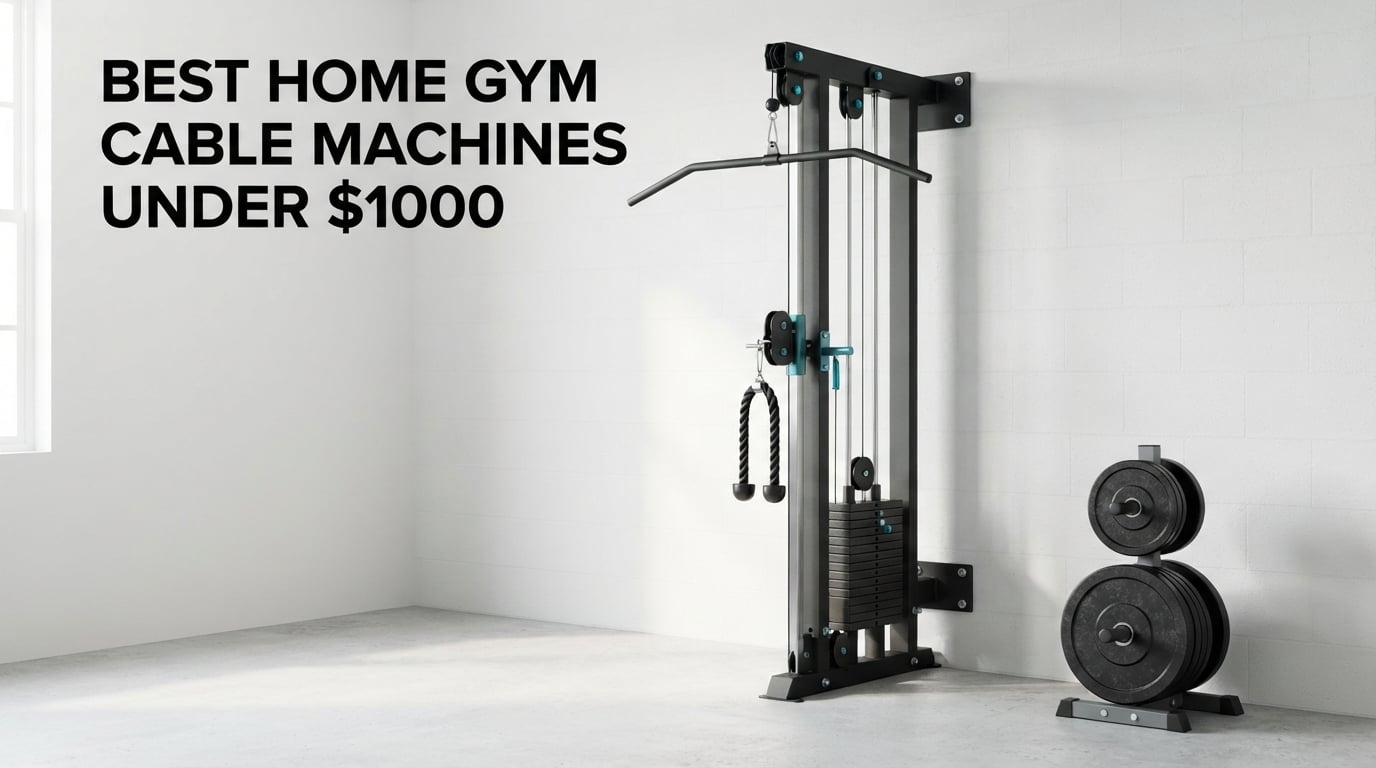
Most cable machine buying guides start above 1,000 dollars and never look back. This one does the opposite: every pick below sits under a 1,000 dollar ceiling, and we compared the eight strongest options so you can find the right one without crossing that line.
A cable machine is the frame with pulleys and steel cable that lets you pull and press with constant tension. That covers lat pulldowns, seated rows, crossovers, flyes and pushdowns, movements a barbell and dumbbells cannot replicate. Under a 1,000 dollar ceiling you will meet three shapes: wall-mounted pulley stations, all-in-one weight-stack machines, and plate-loaded rack or cable crossover units.
Our best overall pick under 1,000 dollars is the Marcy MWM-988, a 150 lb selectorized stack machine with 1,900+ reviews behind it. If your floor space is tight, the Mikolo G3 wall station covers the same pulling movements in under 3 square feet. Our full method, the picks in order, and the honest disqualifiers are all below.
For a broader look at cable work in general, start with our cable machine overview, then come back for the budget-specific verdicts here.
Table of Contents
Top 3 Best Home Gym Cable Machines Under 1,000 Dollars in 2026
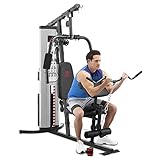
Marcy MWM-988 Home Gym
- 150 lb selectorized stack
- Press and curl stations
- 68 inch wide footprint
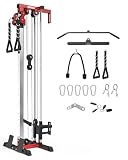
Mikolo G3 Cable Station
- Dual adjustable pulleys
- 19 height positions
- Wall mounted corner unit

Goimu WM1 Cable Station
- Switchable 1:1 and 2:1 ratio
- 17 pulley positions
- 3.12 sq ft footprint
All 8 Home Gym Cable Machines Under 1,000 Dollars Compared in 2026
| Product | Specifications | Action |
|---|---|---|
| Marcy MWM-988 Home Gym |
|
Check Latest Price |
 Body-Solid Best Fitness Trainer Body-Solid Best Fitness Trainer |
|
Check Latest Price |
 Mikolo Pro Station 150 lb Stack Mikolo Pro Station 150 lb Stack |
|
Check Latest Price |
 Mikolo CHEETAH Folding Rack Mikolo CHEETAH Folding Rack |
|
Check Latest Price |
 Major Fitness F22 Power Rack Major Fitness F22 Power Rack |
|
Check Latest Price |
| Mikolo G3 Wall Cable Station |
|
Check Latest Price |
| Goimu WM1 Cable Station |
|
Check Latest Price |
 JELENS H11 Home Gym JELENS H11 Home Gym |
|
Check Latest Price |
1. Marcy MWM-988 – Best All-In-One Cable Machine Under 1,000 Dollars
Marcy Home Gym System with 150 lb Weight Stack Multifunction Machine MWM-988
150 lb selectorized stack
Alloy steel frame
68 inch W x 78 inch H
280.5 lb machine weight
Pros
- 1900+ reviews give the deepest owner record in this group
- Dual action press arms switch from chest press to vertical butterfly
- Removable adjustable preacher curl pad
- Does not wobble during use
Cons
- Assembly takes roughly 3.5 to 4.5 hours
- Stack levels labeled 1 to 15 rather than by pound value
- Sheet metal cover can arrive dented
I put the MWM-988 at the top of this list because it solves the problem most people in this budget range actually have. That is not a beautiful cable station. It is a machine that gives a normal person every pulling and pressing movement they need without a second purchase.
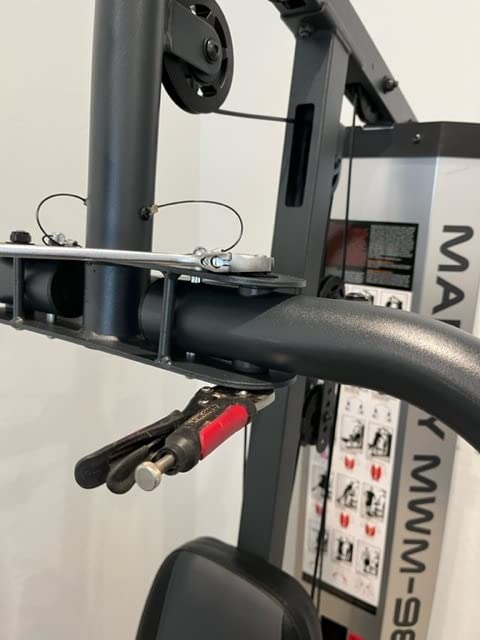
Reviewers consistently describe the frame as solid, with reinforced guard rods keeping the steel tubing in place during heavy pressing and rowing. The 150 lb selectorized stack changes weights with a pin, so you drop the pin and move on instead of hauling plates around the garage.
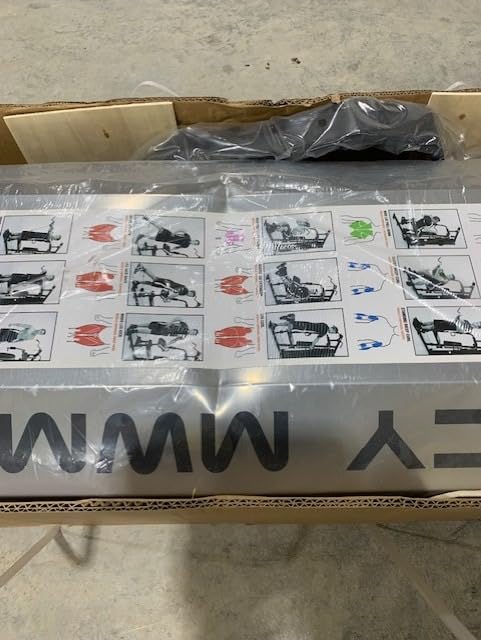
The press arms are the detail I like most. One pin change moves them from chest press to vertical butterfly, and the removable, height-adjustable preacher curl pad adds a curl station without a second piece of equipment. Owners report the pulleys running smoothly and the frame staying planted, which is the part that separates a real machine from a coat rack with cables.
Why it earns the top spot
With 1,932 reviews averaging 4.4 stars, this is the pick with the deepest owner record in the group, and that matters for a category where frames flex and cables fray. The 2 year limited manufacturer warranty is not generous, but reviewers frequently report the brand replacing damaged parts quickly after shipping issues.
At 280.5 pounds and 68 by 78 inches, it is a large footprint. Budget for the space before you budget for the machine.
Who should skip it
Assembly is the real obstacle. Owners put it at 3.5 to 4.5 hours even with printed instructions, and several recommend a supplementary video walkthrough plus a ratchet wrench. If you are not prepared to spend an evening on it, pick something wall-mounted instead.
Two smaller gripes: the stack increments are numbered 1 through 15 rather than labeled by actual pound value, and only two carabiner clips ship in the box, so one of your exercises will need a clip swap. Standing leg pull also lets the unused leg bar tap the frame mid-rep, which is noisy rather than dangerous.
2. Body-Solid Best Fitness Functional Trainer – Best Dedicated Cable Station Under 1,000 Dollars
Body-Solid Powerline Cable Crossover Machine – High and Low Pulleys Gym Equipment for Home, Functional Trainer, Total Body Exercise, Cable Fly and Crossover Workouts
Eight sealed ball bearing pulleys
Patented nylon bushing tech
10 year frame warranty
118 lb machine weight
Pros
- Smoothest pulley travel in this group
- Top and bottom pulleys swivel past 180 degrees
- Very long supported exercise list
- Silicone spray included and makes a real difference
Cons
- Hardware arrives loose in one unlabeled bag
- Carriages are sticky until silicone is applied
- Frame flexes slightly on high horizontal pulls
Where the Marcy is a generalist, this Body-Solid is a specialist. It is a cable station first, built around a dual independent pulley system with a 190 lb stack and a recommended maximum of 133 pounds of tension.
The hardware detail that sets it apart is the pulley design. Patented nylon bushing technology combined with eight sealed ball bearing high-resin pulleys gives owners the smoothest, quietest travel in this entire group. The upper and lower pulleys also swivel more than 180 degrees, which is what makes crossover and fly positions feel frictionless rather than scratchy.
The exercise list is unusually long for a machine at this level. Reviewers run it for pec fly, incline bench, crossover, deltoid raise, reverse fly, glute kickback, calf press, seated row, ab crunch and more. Several owners describe multi-year use without a single breakdown, and the brand has a 10 year frame warranty behind it, which is the longest coverage on this list.
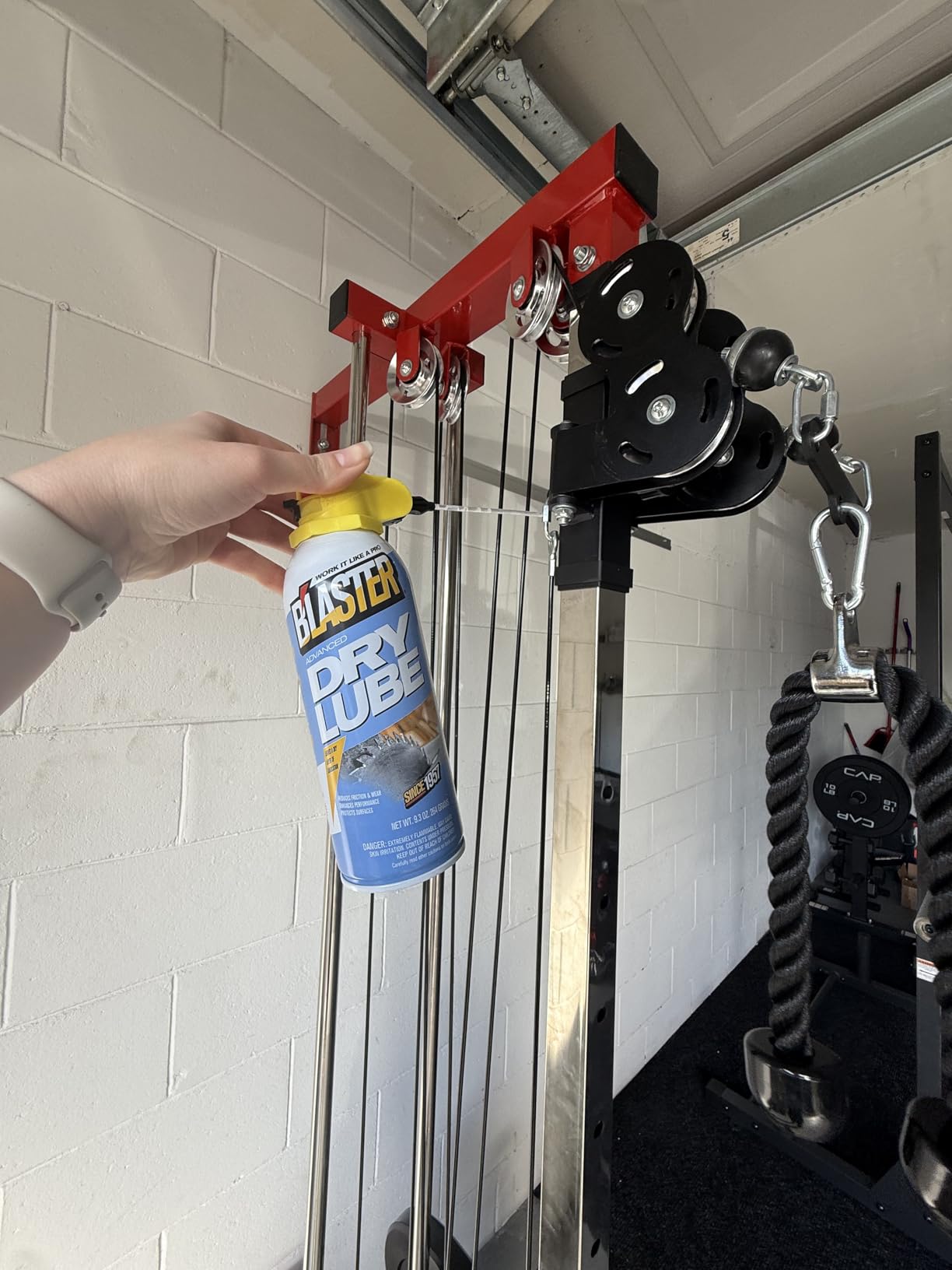
One tip that appears in almost every positive review: apply the silicone spray that ships in the box. It changes the weight carriage glide immediately.
Why it earns premium pick
Owners note that once all the lock nuts are tightened and the bases are set wide, the machine is completely stable. The 112 inch width and 82 inch height fit a normal garage bay, and at 118 pounds it is far easier to reposition than the Marcy or Mikolo stack machines.
If you already own a rack, bar and plates, this is the machine that adds the most to your setup rather than duplicating it.
Who should skip it
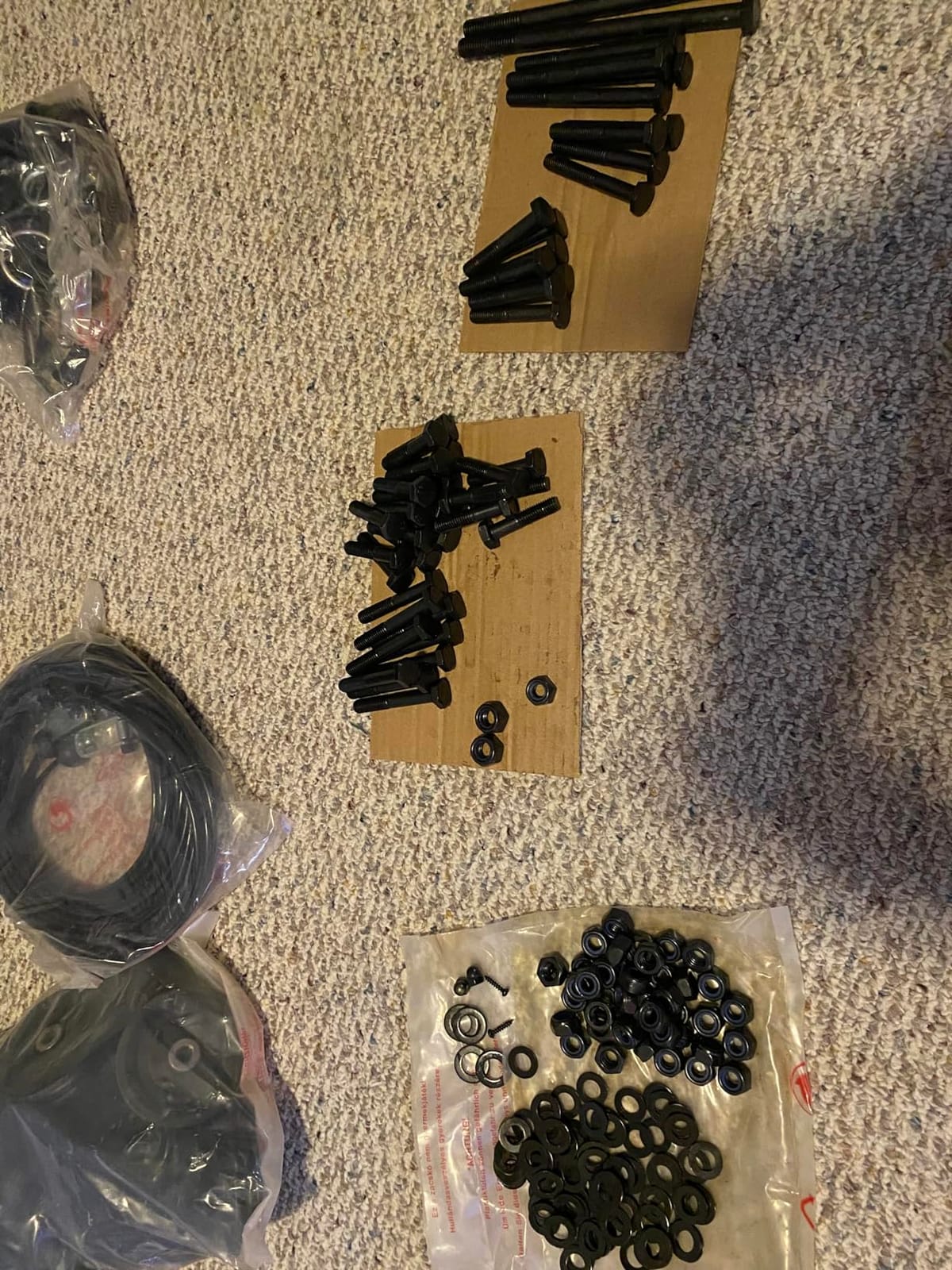
Assembly is not beginner-simple. Hardware arrives loose in a single unlabeled bag, so sorting it takes time, and owners recommend a socket wrench rather than a hand set. Carriages ride on plastic bushings and can be sticky until you spray them.
One reviewer measured roughly 38 to 40 percent mechanical loss through the pulley system, so the felt resistance at the handle is lower than the stack plate suggests. The frame also flexes inward slightly when the lower cable is pulled horizontally from a high angle, and some units shipped with missing hardware or a misaligned selector arm.
3. Mikolo Pro Station – Best Heavy All-In-One Stack Machine Under 1,000 Dollars
Mikolo Home Gym, Workout Station with 152LBS Weight Stack, Multifunctional Home Gym Equipment with Pulley System for Full Body Strength Training
154 lb stack across 12 levels
14-gauge steel frame
75 inch D x 36.3 inch W x 80 inch H
300 lb machine weight
Pros
- Very heavy frame for the money
- All standard attachments ship in the box
- Fast replacement of mismatched parts
- Thick packaging meant all four boxes arrived intact
Cons
- Assembly runs 3 to 5 hours for a solo builder
- Height is tight for taller users
- Cheap-feeling pressboard pads
- Stack levels jump in 12 lb increments
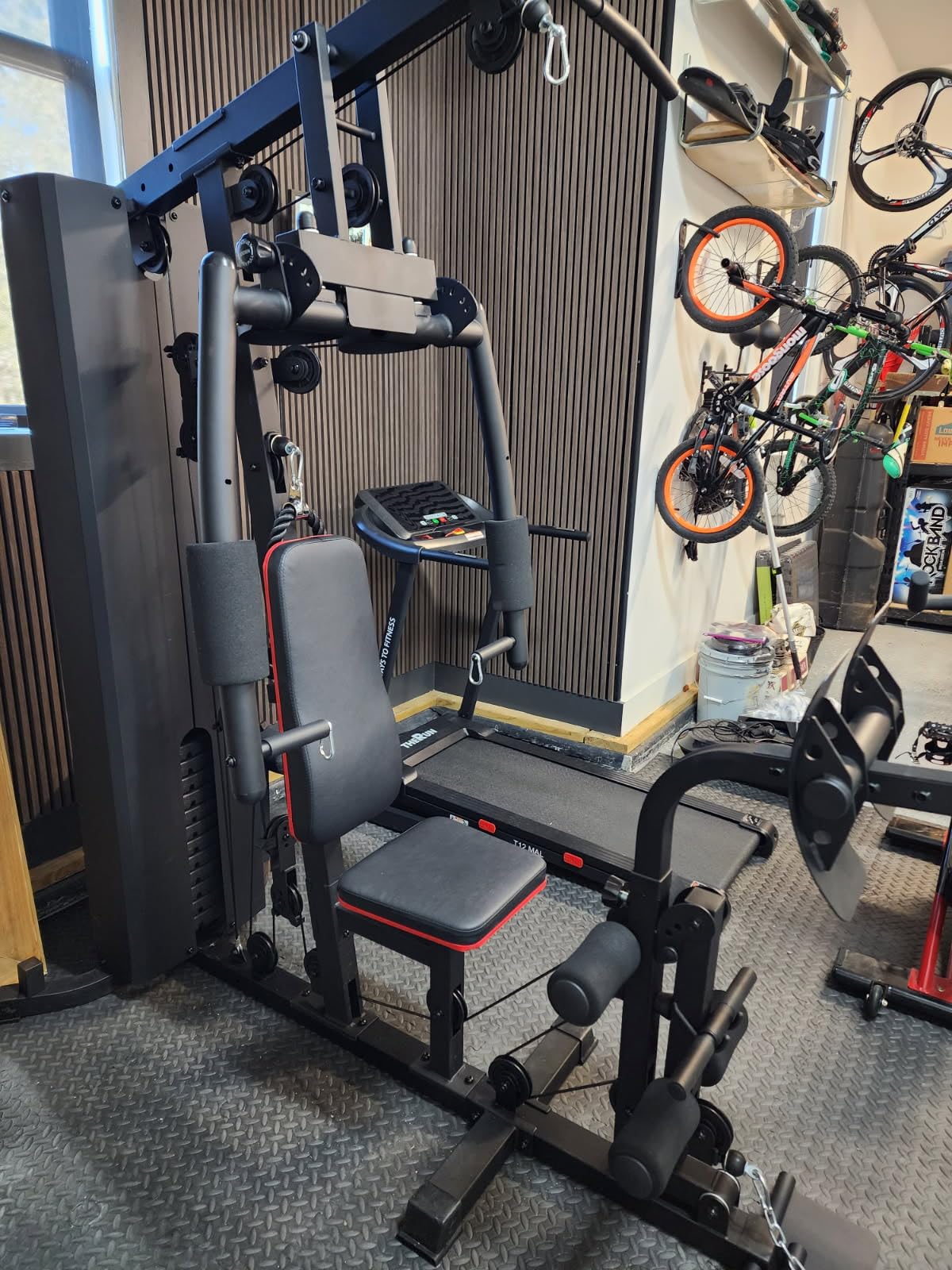
The Mikolo Pro Station is the machine I would pick for high-rep isolation work in this price range. The 154 lb stack runs across 12 levels, and the layout covers high, mid and low pulley positions plus press and fly stations for 90+ exercise variations.
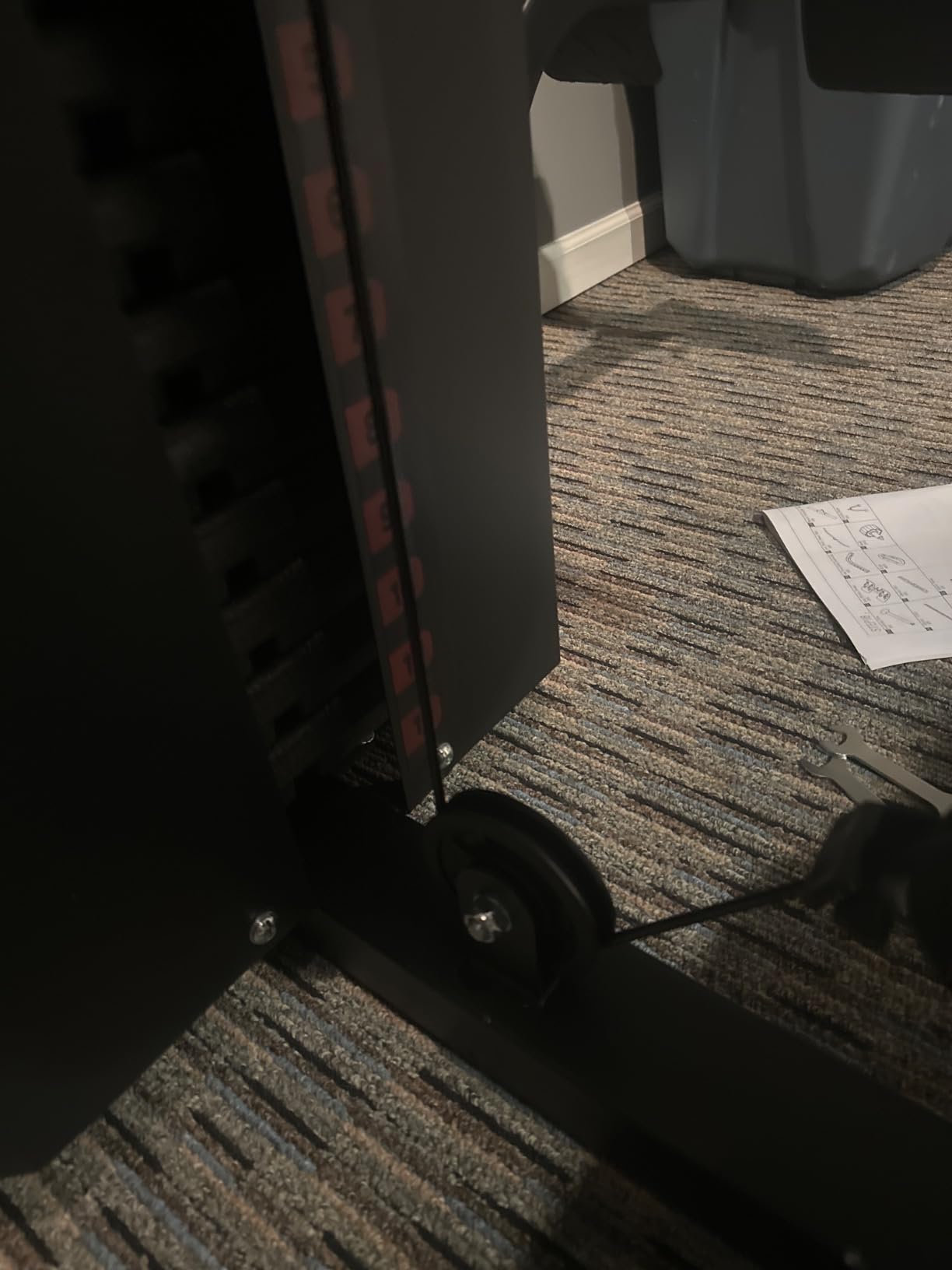
Reviewers repeatedly single out the frame weight. One owner calculated at least 150 pounds of steel supporting a 154 lb stack, and the machine does not wobble. That stability is what lets you drop into a set of lateral raises or a heavy low row without the frame walking across the floor.
Customer support stands out too. Owners report mismatched bushings and a dented weight cover replaced within days. All standard attachments ship in the box as well, including D-handles, a short cable bar, a lat pulldown bar, a tricep rope and a chain, so nothing extra is required to start training.
The 10 to 154 lb range is broad enough for drop sets and supersets, and the removable seat and backrest make the machine easier to clear out of the way when you are not using it.
Why it suits isolation work
Three pulley heights let you hit a cable curl, a seated row and a high pulley press down without re-rigging the whole frame. That range of angles is what separates machine isolation work from free weight isolation work.
Packaging was a quiet strength too, with thick cardboard corners and heavy bubble wrap arriving on all four boxes intact.
Who should skip it
Height is the real limitation. Reviewers at 6 foot 1 inch and 5 foot 9 inches both report the lat pulldown bar sitting tight, so check your clearance before buying. The seat, back pad and preacher curl pad are pressboard with only two bolts each and feel inexpensive under load.
Stack levels jump in 12 lb increments, so fine half-step work needs an aftermarket adder weight. Chest press arms do not lock, the lat bar end grips lack knurling and slip, and assembly realistically takes 3 to 5 hours with diagrams that are not always clear.
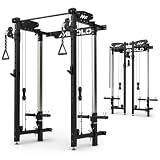
4. Mikolo CHEETAH Folding Rack – Best Cable Machine Under 1,000 Dollars for Small Spaces
Mikolo Folding Squat Rack, Wall Mounted Power Rack with Cable Crossover Machine & LAT Pull Down, Functional Trainer with 5 Adjustable Function Modes, for Home Gym and Space Saving(Black)
Folds from 9.5 to 3 sq ft
Independent 1:1 dual cable
1000 lb rated capacity
68 inch W x 86 inch H
Pros
- Five configurations in one frame
- True 1:1 cable with no weight stack cap
- 2x2 inch 14-gauge steel with screw-in wall mounts
- Over 80 supported movements
Cons
- Wall mounting needs suitable studs and two people
- 150 lb folded weight is awkward to move
- Plate-driven resistance means loading plates
- Only 1 year warranty
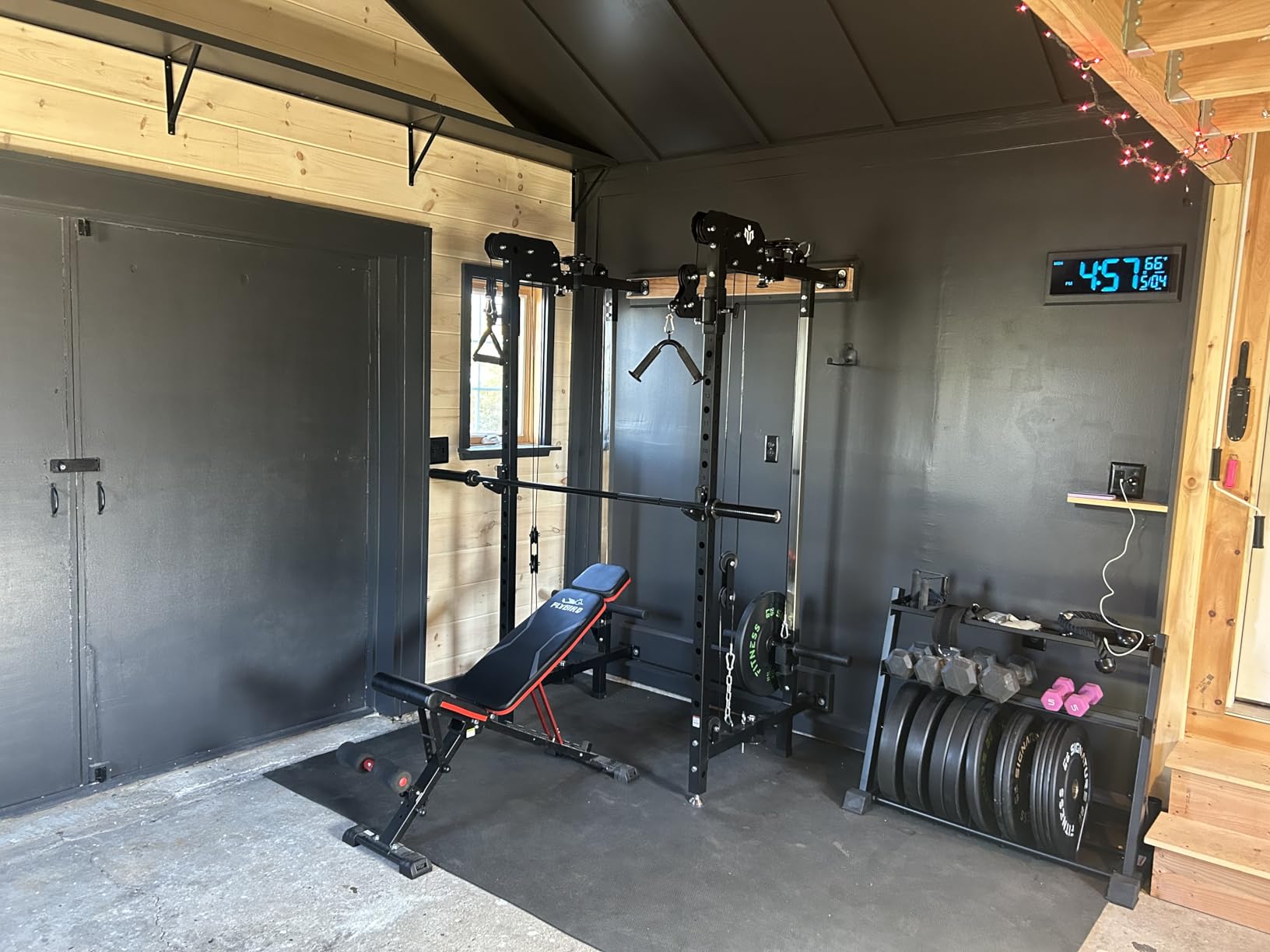
This is the answer for anyone whose gym is a 12 by 12 garage with a car still in it. The CHEETAH expands to 9.5 square feet as an open power rack and folds down to about 3 square feet when you are done, which is rare at any price.
It is not a cable tower with a rack bolted on. The same frame runs as a folded unit, a semi-open rack, a full power rack, a functional trainer and a dual cable crossover across five adjustable function modes.
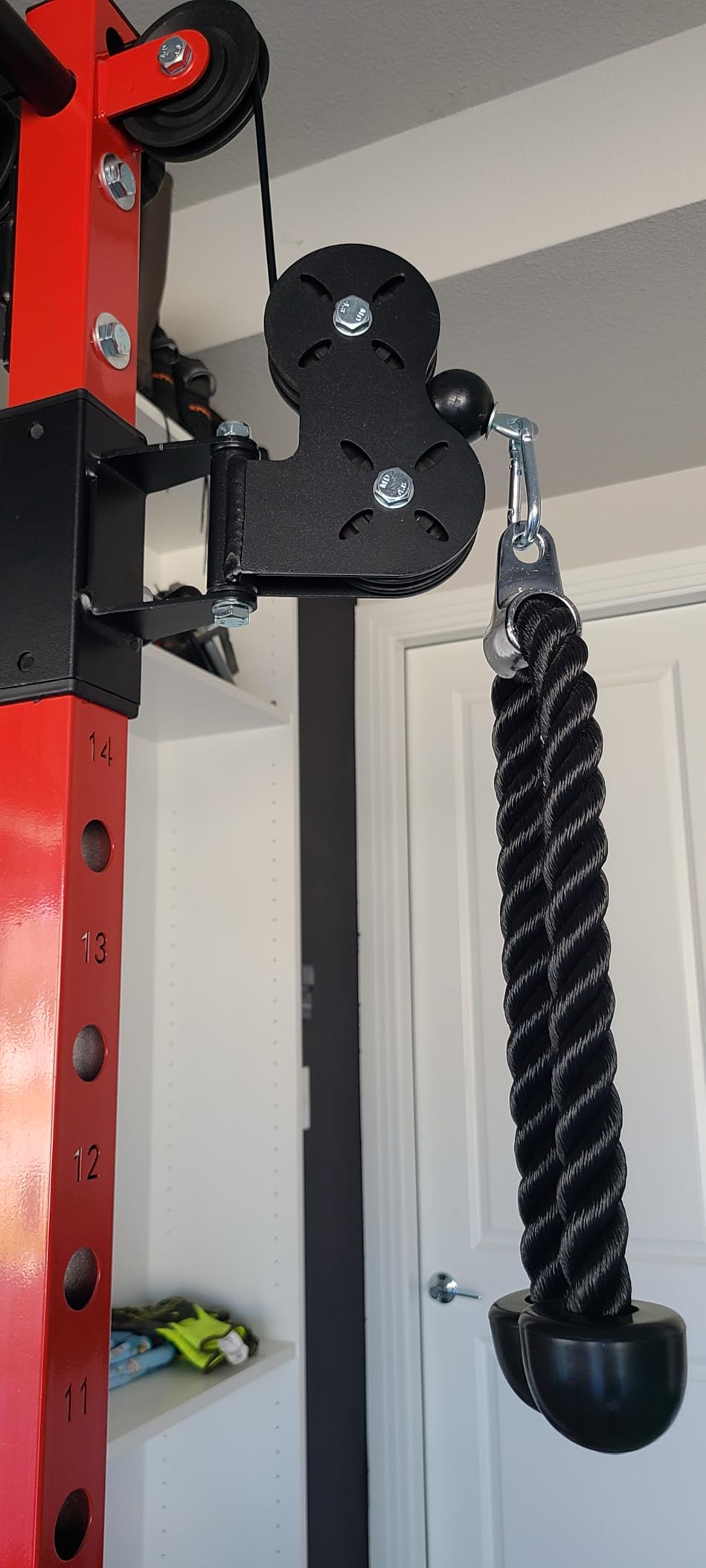
The cable side is genuinely independent, with a 1:1 ratio, 15 pulley height options and no weight stack ceiling. That means resistance comes from whatever plates you load, so a heavy single-arm row and a light lateral raise are both possible from the same machine without a stack cap getting in the way.
Structure is 2 by 2 inch 14-gauge steel with reinforced screw-in wall mounts and four adjustable ground support feet, rated to 1,000 pounds. Detachable pull-up bar, J-hooks and a single-handed pulley adjustment come standard, supporting 80+ movements from squats to kickbacks.
Why it wins on footprint
Most budget multi-function racks occupy a permanent square of floor. This one gives it back in seconds, and the wall-mounted design is what makes that possible. For a basement or a shared garage bay, that flexibility is the whole argument.
One owner with a low ceiling noted the compact footprint was the deciding factor, since the 86 inch height is much easier to clear than a full functional trainer.
Who should skip it
Wall mounting is a commitment. Installation needs suitable studs or proper anchors and a two-person assembly, and the 150 lb folded weight is genuinely awkward to move between rooms on your own.
Because resistance is plate-driven, every weight change means loading or unloading plates, which is a hassle mid-workout. The warranty is also only 1 year, shorter than the 10 year frame coverage on the Body-Solid station in this list.
5. Major Fitness F22 Power Rack – Best Heavy Cable Work Under 1,000 Dollars
MAJOR FITNESS F22 Power Rack, 1600lbs All-in-One Squat Rack with Cable Crossover, Dual Pulley System, Heavy-Duty Steel Frame, Attachments & Storage for Home Gym Strength Training, Khaki
1600 lb static capacity
2:1 dual pulley system
2x3 inch 14-gauge steel
68.9 inch D x 55.5 inch W x 82.5 inch H
Pros
- No wobble even with hundreds of pounds loaded
- Independent pulleys let two people train at once
- Side-mounted trolleys let the rack sit near a wall
- Comprehensive attachment set
Cons
- Plate-based resistance makes mid-set changes a hassle
- Optional stack conversion is costly
- Narrow dip bar handles
- Lat bar is not commercial grade
The F22 is the only power rack in this roundup, and at 206 reviews with a 4.5 average it holds the second-highest rating of the group. Owners who were skeptical about a sub-1,000 dollar rack report it handles heavy compound work and cable work without flex.
The dual independent pulley system runs a 2:1 ratio, which means roughly half the load at the handle with double the cable travel. That is the ratio that makes heavy cable pressdowns and controlled low rows feel like a commercial machine rather than a toy.
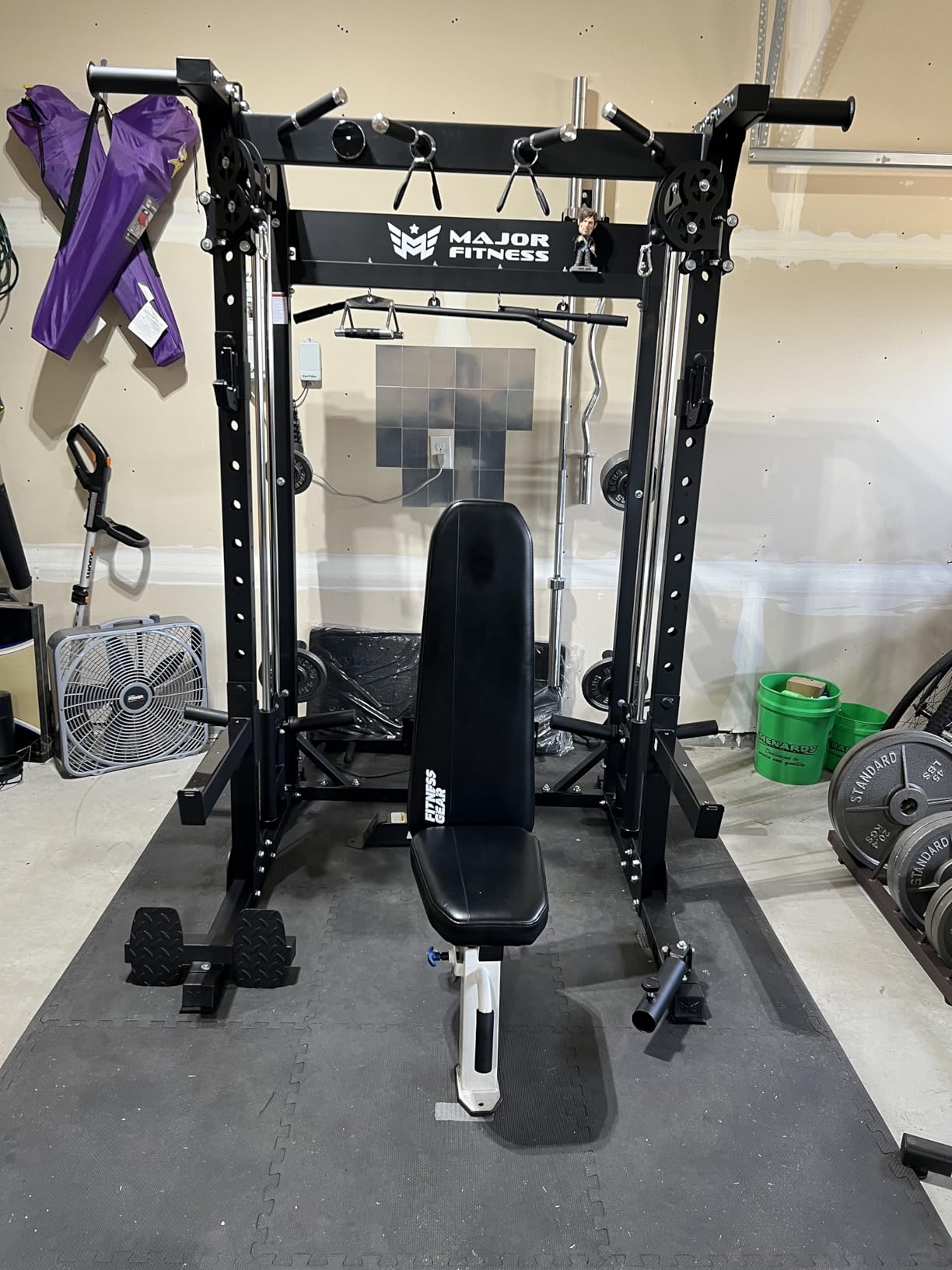
Two details make it practical in a real garage. The dual-triangle base design widens floor contact for anti-sway stability without bolting to the floor, and the side-mounted dual weight trolleys let the rack sit within inches of a wall instead of needing clear space behind it.
The attachment set is long: J-hooks, safety arms, dip bars, a lat pulldown attachment, cable bars, foot pedals, a landmine, a T-bar and band pegs, plus integrated storage hooks.
Why it suits heavy training
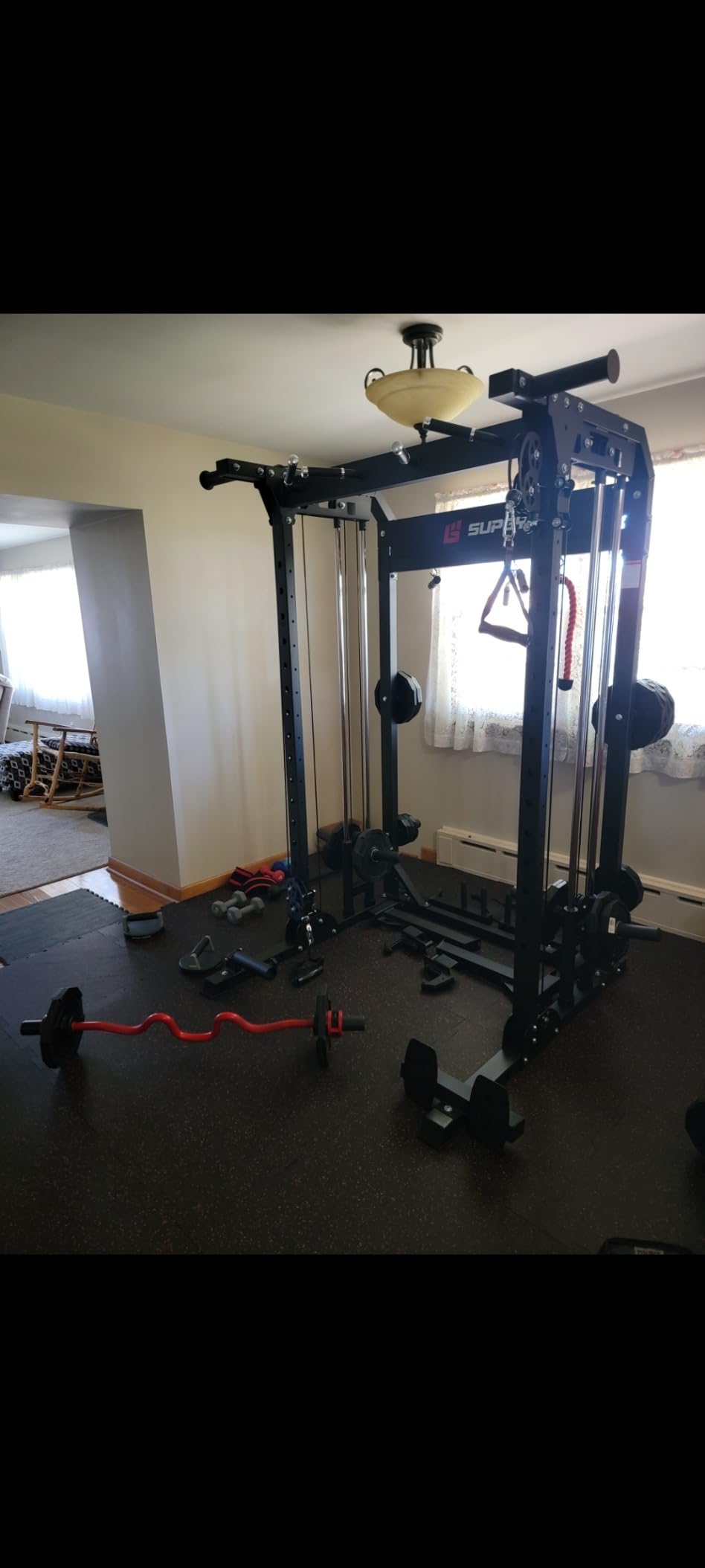
Structure is 2 by 3 inch commercial-grade 14-gauge steel at 0.08 inch thick with a 1,600 lb static capacity. Several owners report loading hundreds of pounds with no deflection, and smooth, quiet pulley travel that they compared favorably to far more expensive racks.
One owner with a 94 inch ceiling reports ample pull-up clearance, and another highlights the independent pulleys as a change for supersets and multi-user training, since two people can work different loads at the same time.
Who should skip it
Resistance is plate-loaded, so every adjustment means changing plates by hand and mid-workout swaps are a hassle. The optional weight-stack conversion attachment is priced close to the cost of the rack itself, which defeats the purpose if you want selectorized changes.
Smaller gripes include dip bar handles around 1.25 inches that some users find uncomfortable, fixed close-grip and wide-grip handles instead of a straight bar, and a lat bar that some buyers find too short or not commercial grade. The rack ships without a bar or bench unless you pick a package.
6. Mikolo G3 Cable Station – Best Value Wall-Mounted Cable Machine Under 1,000 Dollars
Mikolo Wall Mount Cable Station, Cable Crossover Machine with Dual Pulley System and 19 Adjustable Positions for Home Gym Fitness Equipment, Red
400 lb max load
19 pulley height positions
25.6 inch D x 26.9 inch W x 82 inch H
14-gauge powder-coated steel
Pros
- Highest rating in the group at 4.6 stars
- Corner friendly footprint
- Lat bar
- cable bar and tricep rope included
- Assembly often finished in one to two hours solo
Cons
- Stock plastic pulleys create noticeable friction
- Height locking pin reported to break in hand
- D-ring grips have uncomfortable ridges
- Concrete anchors not included
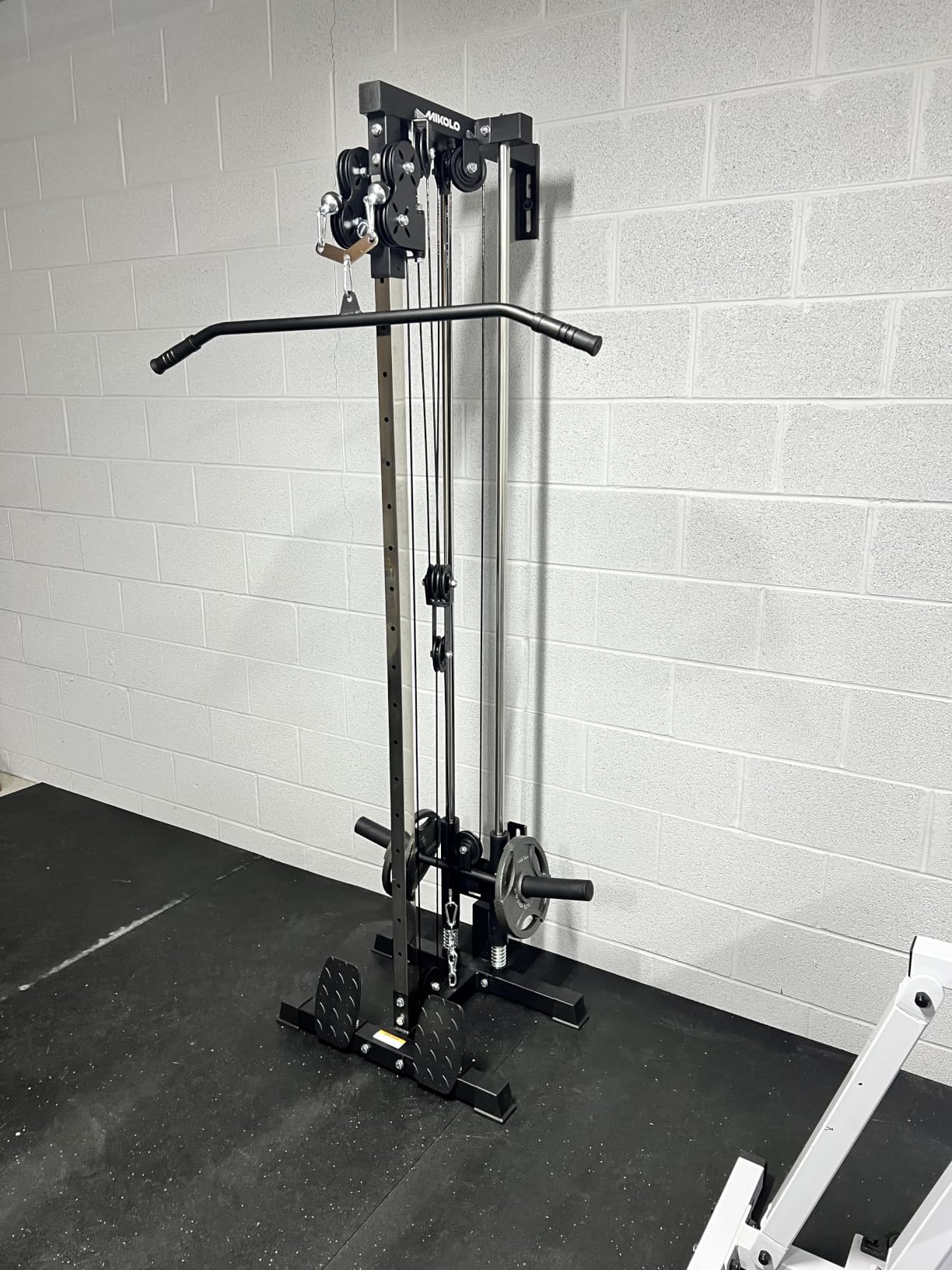
The G3 is the highest-rated machine we reviewed, at 4.6 stars across 151 reviews, and it is the pick for anyone who cannot give a freestanding machine any floor space at all. At 25.6 inches deep by 26.9 inches wide it tucks into a corner and works against a wall.
Dual adjustable pulleys give 19 height positions, which doubles your unilateral and bilateral options, and the rotating pulley bracket plus double-pole track keep travel smooth even on the standard plastic pulleys. The frame is commercial-grade 14-gauge powder-coated steel with nylon-coated aircraft cables rated to 2,200 pounds of tensile strength and a 400 pound maximum load.
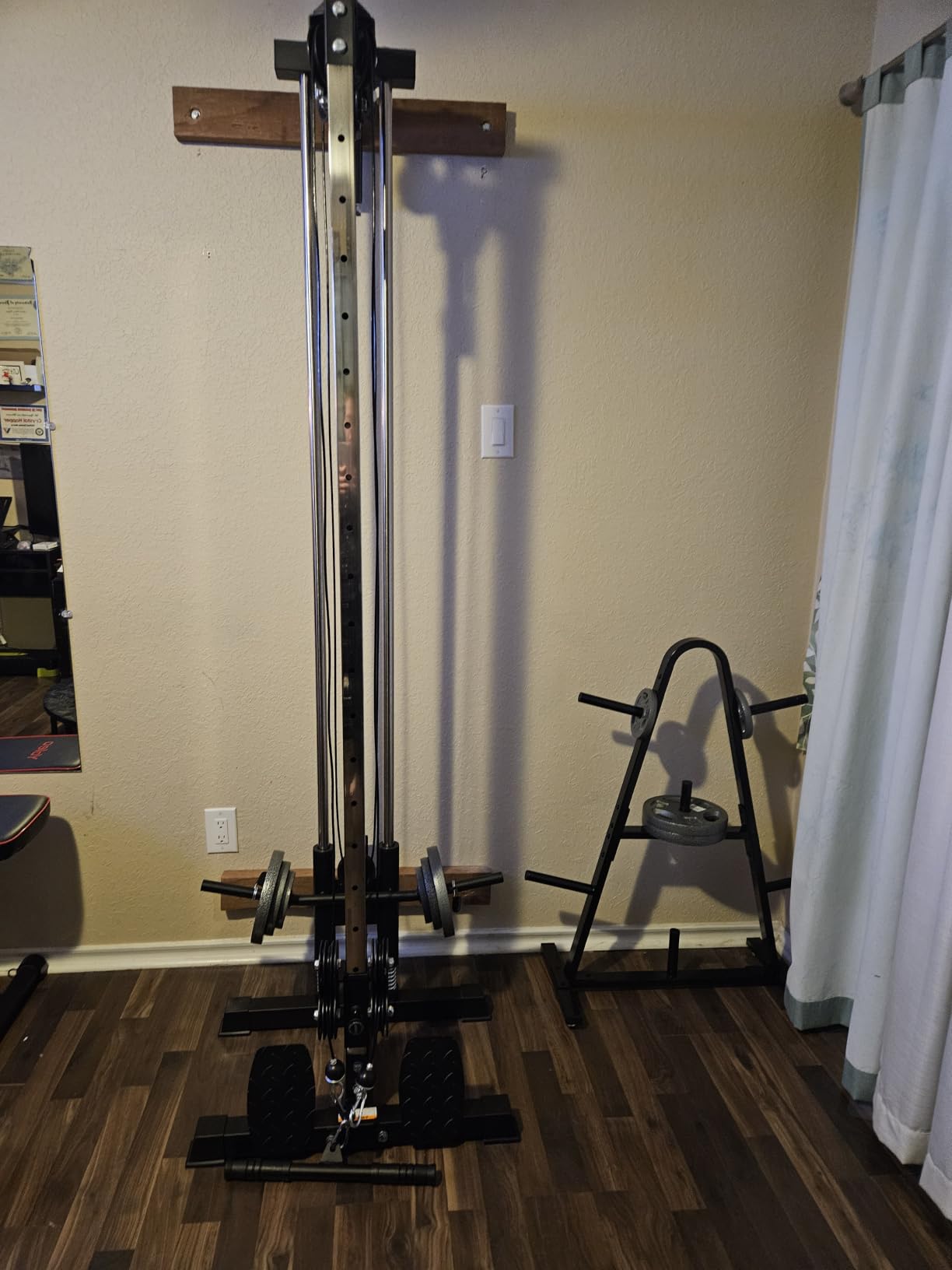
Owners are regularly surprised by the build. Reviewers praise the welds and finish as better than the price suggests, and the unit runs smoothly out of the box with no lubricant applied. Assembly is fast for a wall-mounted design, with many finishing in one to two hours solo.
The box includes a lat bar, cable bar, tricep rope and adjustable strap handles with four buckles, plus a large footboard for seated cable rows, upward-angled weight pegs and detachable 1 inch and 2 inch plate sleeves, so standard plates work and no proprietary ones are needed.
Why it is the best value
You get dual independent pulleys, 19 positions and a 400 pound ceiling in a corner of a room that would otherwise hold nothing. The H-shaped base keeps it planted, and the wall mounting takes the sway out of heavy pulls entirely once it is fixed properly into studs.
Coverage is also worth noting, with an 8-month replacement service for components and a 2 year warranty listed.
Who should skip it
The plastic pulleys are the main weakness, creating noticeable friction under load, which is exactly why upgraded aluminum pulley variants exist in the same range. One reviewer reported the pulley height locking pin disintegrating in their hand during adjustment, so treat that pin carefully.
Included d-ring handle grips have ridges some users plan to replace, accessory quality is mixed with loose post clips reported, and mounting hardware covers wood studs but concrete anchors are not included. Taller users note the 82 inch height leaves limited overhead clearance for the lat bar.
7. Goimu WM1 Cable Station – Best Budget Cable Machine Under 1,000 Dollars
Goimu Wall Mount Cable Station, WM1 Cable Crossover Machine with 17 Positions, High and Low Cable Crossover Machine with Removable Footplate for Garage Home Gym (WM1 Cable Station RD)
Switchable 1:1 and 2:1 ratio
17 pulley height settings
3.12 sq ft footprint
81.4 lb wall mounted frame
Pros
- Smallest footprint in the roundup
- Switchable ratio covers heavy and light work
- Complete attachment set in the box
- Clear step-by-step instructions
Cons
- Cables arrive too long and create slack
- No quick-release carabiner included
- 300 lb capacity is modest
- Minor cosmetic finish scuffs on arrival
The Goimu WM1 is the cheapest way into real cable work in this roundup, and at 4.5 stars across 134 reviews it punches well above what the price would suggest. Owners comparing it to a roughly 400 dollar branded tower report comparable design and satisfaction at about half the cost.
The SmartT dual pulley system is the headline feature. Independent pulleys sit at 17 height settings, and a cable adaptor lets you switch between 1:1 and 2:1 ratios on the same machine. That flexibility is unusual in this tier and covers both heavy single-arm work and light isolation curls.
At 81.4 pounds and 3.12 square feet with an H-shaped anti-sway base, it is the smallest and lightest machine here, and it sits flush against a wall without needing floor anchors, which makes it viable in a rental.
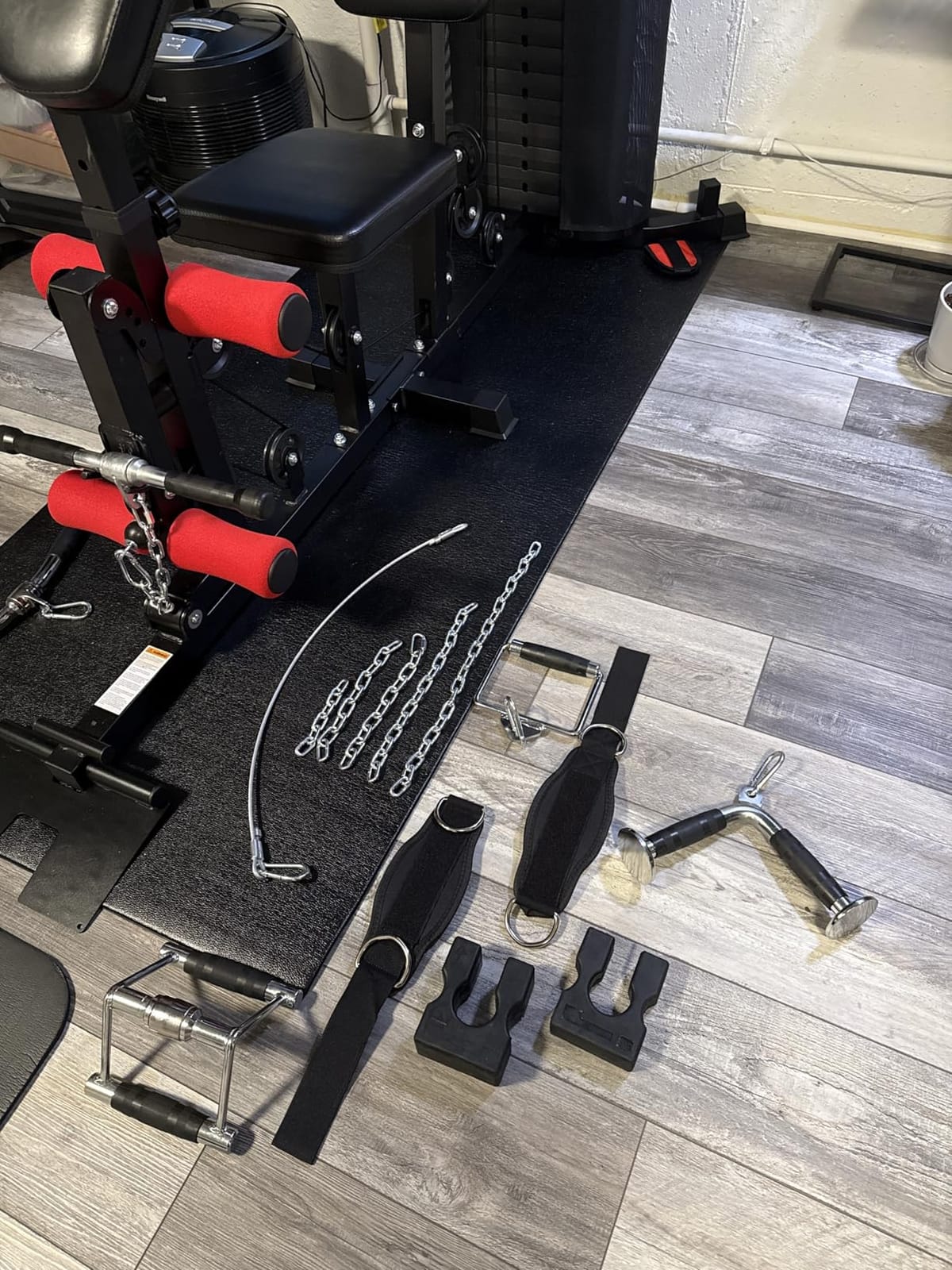
Owners consistently praise weld quality and finish, and the box carries a T-bar, lat pull bar, tricep and bicep curl rope and dual handle grips, covering close to every cable movement without an extra purchase. Hardware is bagged and separated by assembly step, and many report finishing in one to one and a half hours solo.
Why it is the budget pick
For a first cable setup or a second machine for a basement, nothing else here covers this much movement for this little floor space and wall area. The removable footplate makes the seated row position available without dedicating permanent floor space to a base.
Coverage is listed as 300 pounds maximum load on industrial 14-gauge steel, with a 2 year warranty and a lifetime frame warranty claim on the listing.
Who should skip it
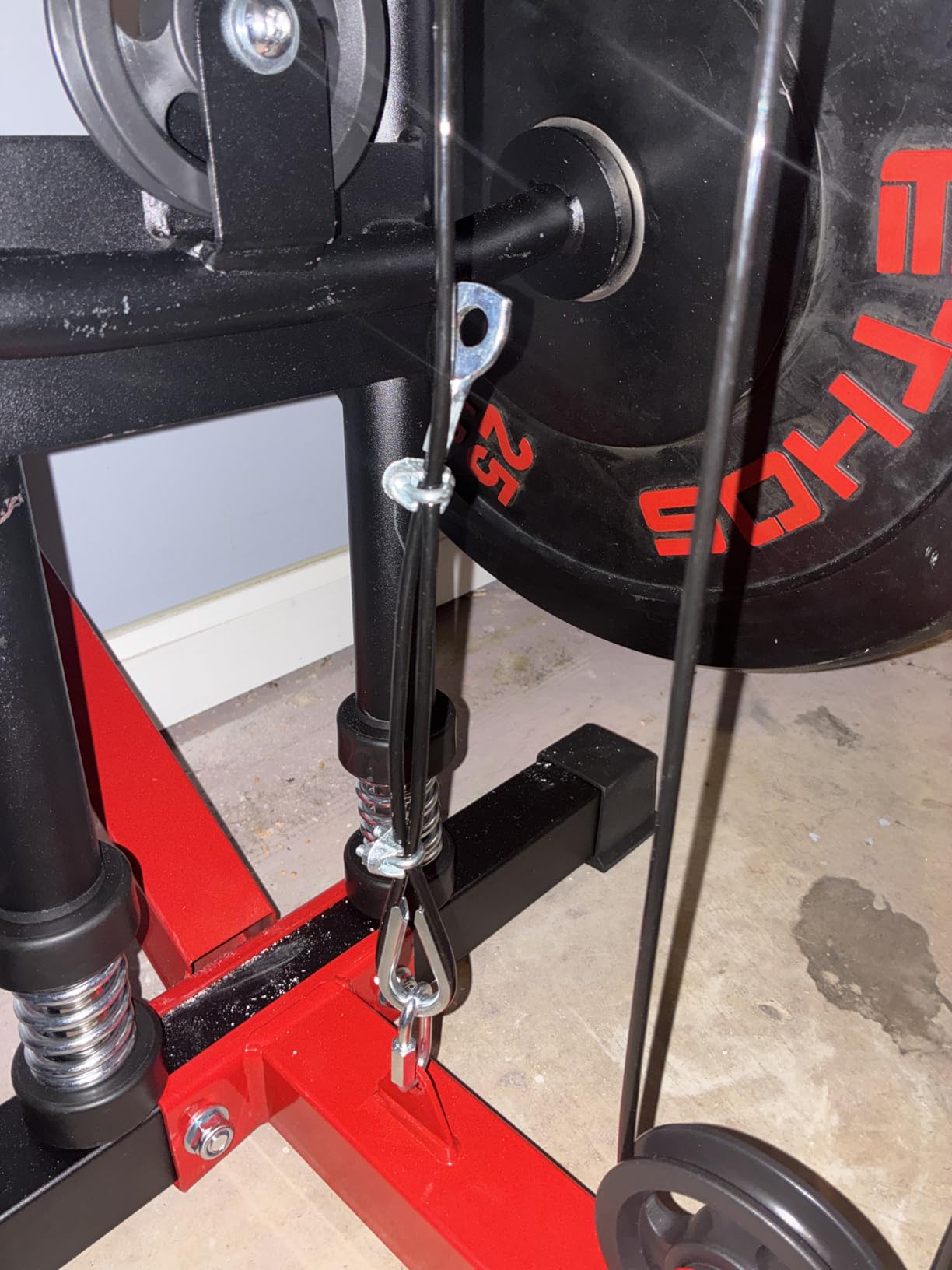
Cables arrive too long out of the box, which leaves slack in the system, and some owners had to correct that with cable clamps. Plan five minutes to trim and tension before your first session.
There is no factory quick-release carabiner, so attachment changes are slower until you buy one. A reviewer reported a weld slightly out of place that affected the swivel of the pulley bracket, cosmetic finish scuffs show up on delivery, and 300 pounds of capacity is lower than the 400 pound figure on the Mikolo G3.
8. JELENS H11 Home Gym – Best Starter Cable Machine for Beginners Under 1,000 Dollars
JELENS Home Gym, Multifunctional H11 Home Gym Equipment, Workout Station with 146LBS Weight Stack, Exercise Equipment with Pulley System for Full Body Training (Black)
146 lb weight stack
High mid and low pulleys
74.8 inch D x 38.5 inch W x 79.9 inch H
Alloy steel frame
Pros
- Three pulley systems cover most training intensities
- Shock absorbing foot pads keep it quiet and stable
- Seat height and butterfly arms adjustable
- Removable leg and curl parts for storage
Cons
- Lowest rated at 4.0 stars with a high one-star share
- 146 lb stack is the smallest here
- Assembly on a four-box shipment takes real time
- No barbell or free weight capability
The H11 is the pick for someone starting out who wants a straightforward machine rather than a specialist. It is rated 4.0 stars across 115 reviews, the lowest score in this group, so understand what that means before you commit.
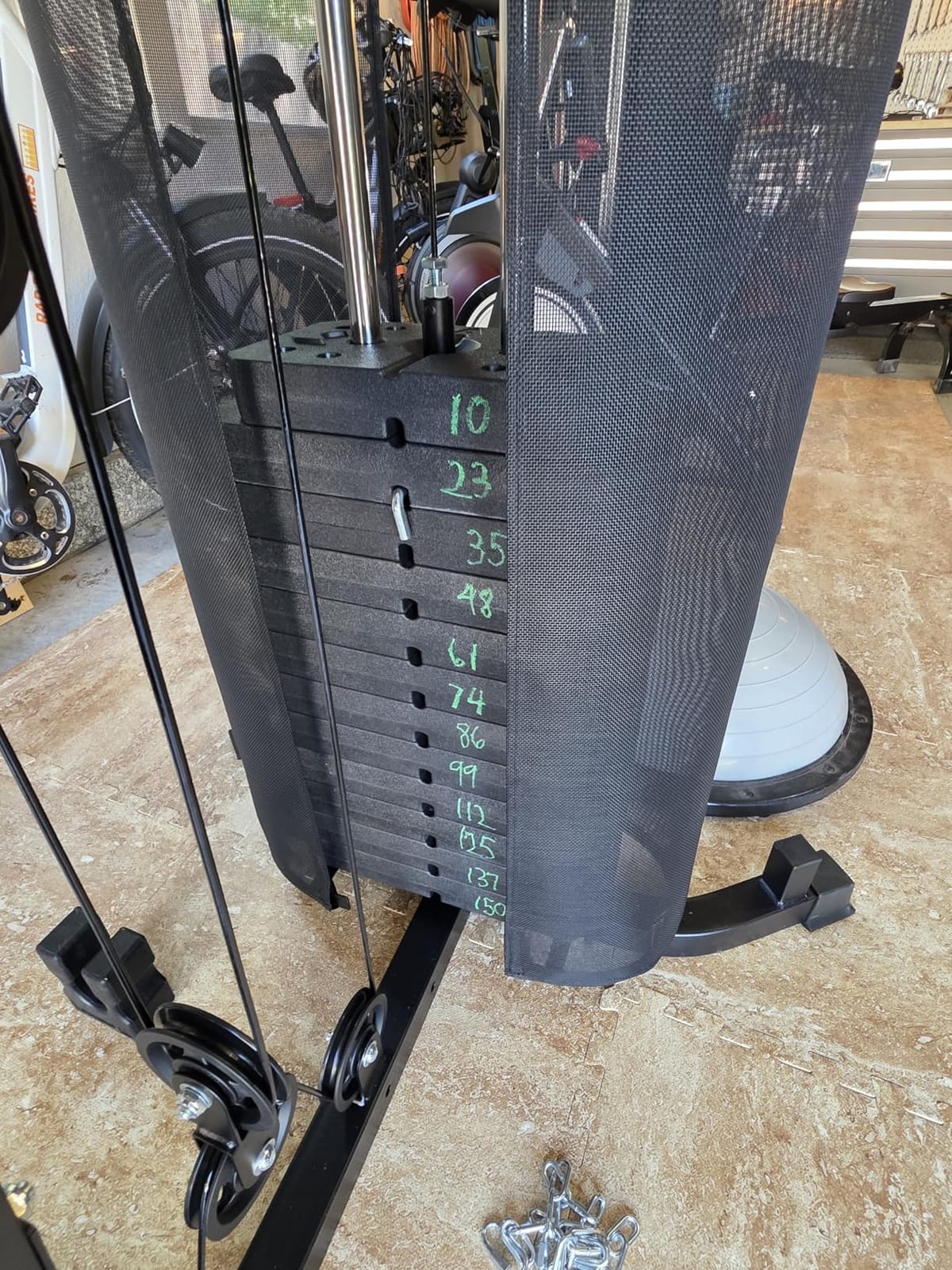
What owners like is the three-pulley layout. High, mid and low positions cover leg stretches, low row, seated row, chest fly, chest press, calf work and back extension, all driven by a 146 lb stack across 11 weight plates. Steel shaft pulleys and polished high-strength wire rope keep the travel smooth and the noise down.
Build details are sensible for a first machine. A U-shaped base with five shock-absorbing foot pads keeps it stable and noticeably quiet on hard floors, and sandblasted, rust-proof painted surfaces help with corrosion over time. Seat height, leg extension pedal position and butterfly arm level all adjust for different users.
Removable leg extension and preacher curl parts plus top and bottom accessory hooks make it easier to store, and it ships in four boxes with a detailed manual.
Why it works for beginners
A 146 lb stack covers general fitness and toning work well, and the adjustable seat, pedal and butterfly settings mean a taller and a shorter person can both use the same machine. The 1 year warranty is the shortest here, so factor that into your expectations on parts.
If your goal is general conditioning and you will train consistently, that is enough resistance for a long time.
Who should skip it
The 4.0 average comes with a notable 10 percent one-star share, and the reasons are consistent: a modest 146 lb stack that limits progression for intermediate lifters, a design with no free weight or barbell capability so squats and bench press are unavailable, and assembly time on a four-box shipment that is substantial.
The backrest and seat use three-layer fabric over padding, which may compress with heavy use over time. If you are already lifting seriously, spend the difference on a heavier stack machine in this list instead.
How to Choose a Cable Machine Under 1,000 Dollars
Price decides less than people expect. The meaningful differences between a 200 dollar wall station and an 800 dollar rack are the ratio, the stack increments, the steel gauge, the pulley bearings and how much floor you give up. Here is what actually changes the experience.
Cable ratio explained: 2:1 versus 1:1
Cable ratio is the single most useful number on a cable machine spec sheet, and it is the one most listings bury. A 2:1 system runs the cable over two pulleys for every one at the handle, so a 200 lb stack delivers roughly 100 lb of felt resistance with about twice the cable travel. A 1:1 system feels more direct and pulls heavier for the same load, with shorter travel.
Rule of thumb: 2:1 for smooth, long-travel work like pressdowns, lateral raises and high-rep isolation. 1:1 for heavy rows, heavy single-arm pulls and anyone training close to failure on a cable. The Goimu WM1 switches between the two with an adaptor, which is why it earns a place on this list.
Selectorized weight stack versus plate-loaded
A selectorized machine uses a pin and guide rods, so changing weight takes two seconds. A plate-loaded machine uses Olympic plates on sleeves, which means no weight ceiling and cheaper incremental loads, but every change means handling plates.
Selectorized wins for home use because nobody wants to change weight mid-set. Its weakness is stack increments: the JELENS and Marcy machines here do not label increments in pounds, and the Mikolo Pro Station steps in 12 lb jumps, all of which make small isolation jumps harder than they need to be. Plate-loaded wins if you are already strong and want heavy cable rows without a stack cap.
Functional trainer, cable crossover or cable tower?
These three names describe the same idea in different packaging. A cable tower is a single column, usually wall or rack mounted, with one high and one low pulley. A cable crossover has two independent towers so two people or two different loads can work at once. A functional trainer is a full frame with a weight stack, press stations and usually a lat station, closer to an all-in-one gym.
If your goal is hypertrophy and isolation work, a dual-stack trainer like the Body-Solid unit is the classic answer. If your goal is general cable pulling in a tight space, a wall station is the answer. If you lift heavy and want one frame for everything, a rack with a built-in pulley system wins. Our beginner cable machine guide goes deeper on the entry-level end of this.
Pulley and guide rod quality
Cheap machines ship nylon sheaves on plastic bushings, and friction shows up immediately as scratchy travel and sticky weight carriages. Better machines use sealed ball bearing pulleys, which is exactly the Body-Solid unit’s headline feature with its eight sealed ball bearing pulleys. Silicone spray on plastic bushings genuinely helps and is included with that machine.
Steel gauge matters too. 2 by 2 inch 14-gauge is the common baseline in this group, while the Major Fitness F22 moves to 2 by 3 inch 14-gauge at 0.08 inch thick for a 1,600 lb static capacity. Look for a stated capacity rather than guessing from tube thickness.
Footprint, ceiling height and anchoring
Measure before you buy, and measure the swing area, not just the frame. A dual adjustable pulley trainer needs roughly 7 to 8 feet of width, 4 to 5 feet of depth and 7 to 8 feet of height for comfortable movement. In a 12 by 12 garage with a car in it, that is not realistic.
That is the whole case for the wall-mounted options here. The Goimu WM1 needs 3.12 square feet, the Mikolo G3 is 25.6 by 26.9 inches, and the Mikolo CHEETAH folds from 9.5 square feet down to about 3. Any of them changes the arithmetic in a small garage.
Anchoring matters for safety. Wall-mounted units need proper studs or appropriate anchors, and concrete anchors are not included with the Mikolo G3. Freestanding plate-loaded units should be anchored or braced, because heavy horizontal pulls can tip a lightly loaded tower forward.
What breaks first and how to maintain it
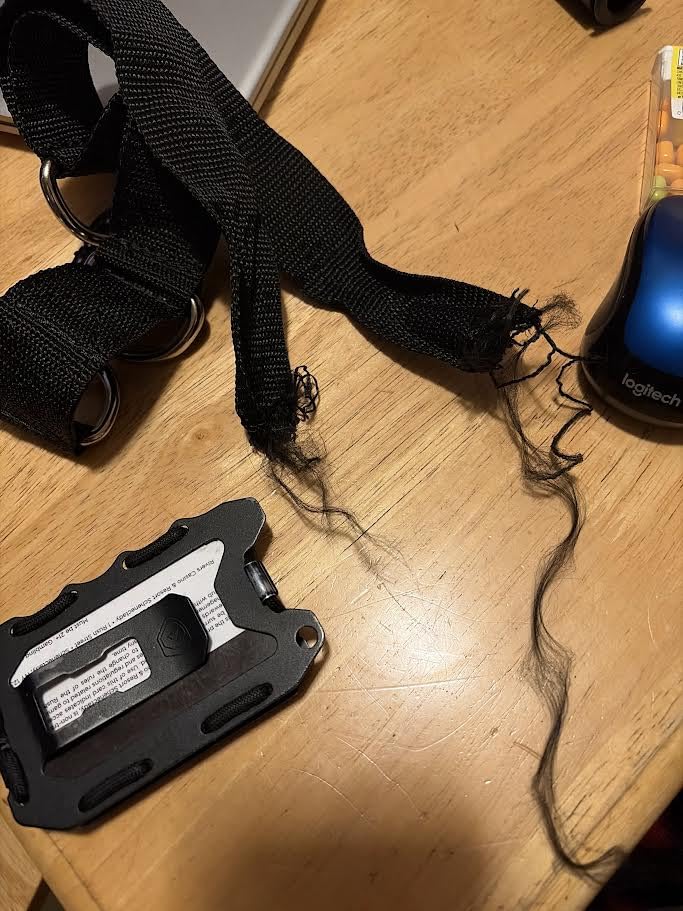
Wear order is predictable: cable first, then pulleys, then guide rods, then the selector pin. Run a cloth over the cable every few months, and treat a single broken strand as a replace-now signal rather than something to watch.
Wipe guide rods and apply a light silicone or dry lubricant so weight carriages keep gliding. Never slam the stack back into place. Check the pulley adjustment pins and locking hardware quarterly, because that is the component reviewers report failing first on budget wall stations.
Serviceability is worth checking before you buy. The Body-Solid machine lists 10 years of spare part availability, and the Mikolo G3 lists an 8-month component replacement service. A brand you can order a cable from in five years is worth something on its own.
Do you need a cable machine at all?
Honest answer: buy it after a rack, bar and plates, not before. Cables add pulling movements and constant tension, but they are an addition to a barbell setup rather than a replacement for one. If your budget has to stretch across both, a rack plus plates plus a wall-mounted station usually delivers more training value than a single all-in-one machine at the same spend.
Our cable machine systems overview breaks down which shapes pair best with which other equipment, and our chest press machine picks cover the pressing side in more depth.
Frequently Asked Questions
What is the best cable gym machine for home use?
For most people buying under a 1,000 dollar ceiling, the Marcy MWM-988 is the best cable gym machine for home use because its 150 lb selectorized stack, press arms and curl pad cover the widest range of movements in one footprint, and 1,900+ reviews back the build quality. If floor space is the constraint, the wall-mounted Mikolo G3 does the same pulling work in a fraction of the space.
What is the best home gym equipment for under 1000 dollars?
Under 1,000 dollars, a sensible core setup is a cable machine plus a rack, bar and plates. Among the cable machines here, the Marcy MWM-988 handles arms and legs, the Body-Solid station handles dedicated cable work, and the Major Fitness F22 combines a 1,600 lb rack with a 2:1 dual pulley. Pair any of them with an adjustable bench and a set of plates.
What is the best all-in-one cable machine for a home gym?
The Marcy MWM-988 is the best all-in-one cable machine for a home gym in this price range. It combines a 150 lb weight stack with press, butterfly, leg and curl stations in a single 68 by 78 inch frame, and reviewers report the steel tubing stays rigid and the machine does not teeter. The Mikolo Pro Station is the heavier, more adjustable alternative.
Which cable machine is considered the best functional trainer?
The Body-Solid Best Fitness unit is the best functional trainer here, thanks to eight sealed ball bearing pulleys with patented nylon bushing technology, pulleys that swivel past 180 degrees, a 190 lb stack and a 10 year frame warranty. It supports a very long exercise list from pec fly and crossover through seated row, reverse fly and glute kickback.
What is the best cable workout system for home use?
It depends on your space and your training. The Marcy MWM-988 is the most complete single system for arms, legs and core. The Body-Solid station is the best dedicated cable system. The Major Fitness F22 is the best system if you also want heavy barbell work, and the Mikolo G3 is the best when floor space is nearly zero.
Are functional trainers worth it for a home gym?
They are worth it once you already own a rack, bar and plates, because they add vertical pulling, rows and flyes under constant tension. They are worth it least as a first purchase, because the same budget split across a rack, bar, plates and a wall-mounted cable station often delivers more usable training.
What does a 2:1 cable ratio mean?
A 2:1 cable ratio means the cable runs over two pulleys for every one at the handle. A 200 lb weight stack delivers roughly 100 lb of felt resistance at the grip, and you get about double the cable travel for smoother, longer movements. A 1:1 ratio feels heavier and more direct with less travel, which suits heavy rows.
Final Verdict on the Best Home Gym Cable Machines Under 1,000 Dollars in 2026
Under 1,000 dollars you are not choosing between bad options, you are choosing between three different philosophies. Pick by philosophy first and the right machine makes itself obvious.
Best overall: the Marcy MWM-988, with the deepest owner record in the group and the widest exercise coverage in one frame. Best dedicated cable station: the Body-Solid Best Fitness unit, with the smoothest pulleys and the longest warranty. Best on a budget: the Goimu WM1, which gives you switchable 1:1 and 2:1 ratios in 3 square feet of wall.
Before you buy, measure the swing area rather than the frame, confirm you can anchor the unit properly, and budget an evening for assembly on the larger machines. Owners who take those three steps report far fewer regrets than those who order first and measure after. Our second cable machine roundup covers the picks above this ceiling if you decide to stretch the budget later.