
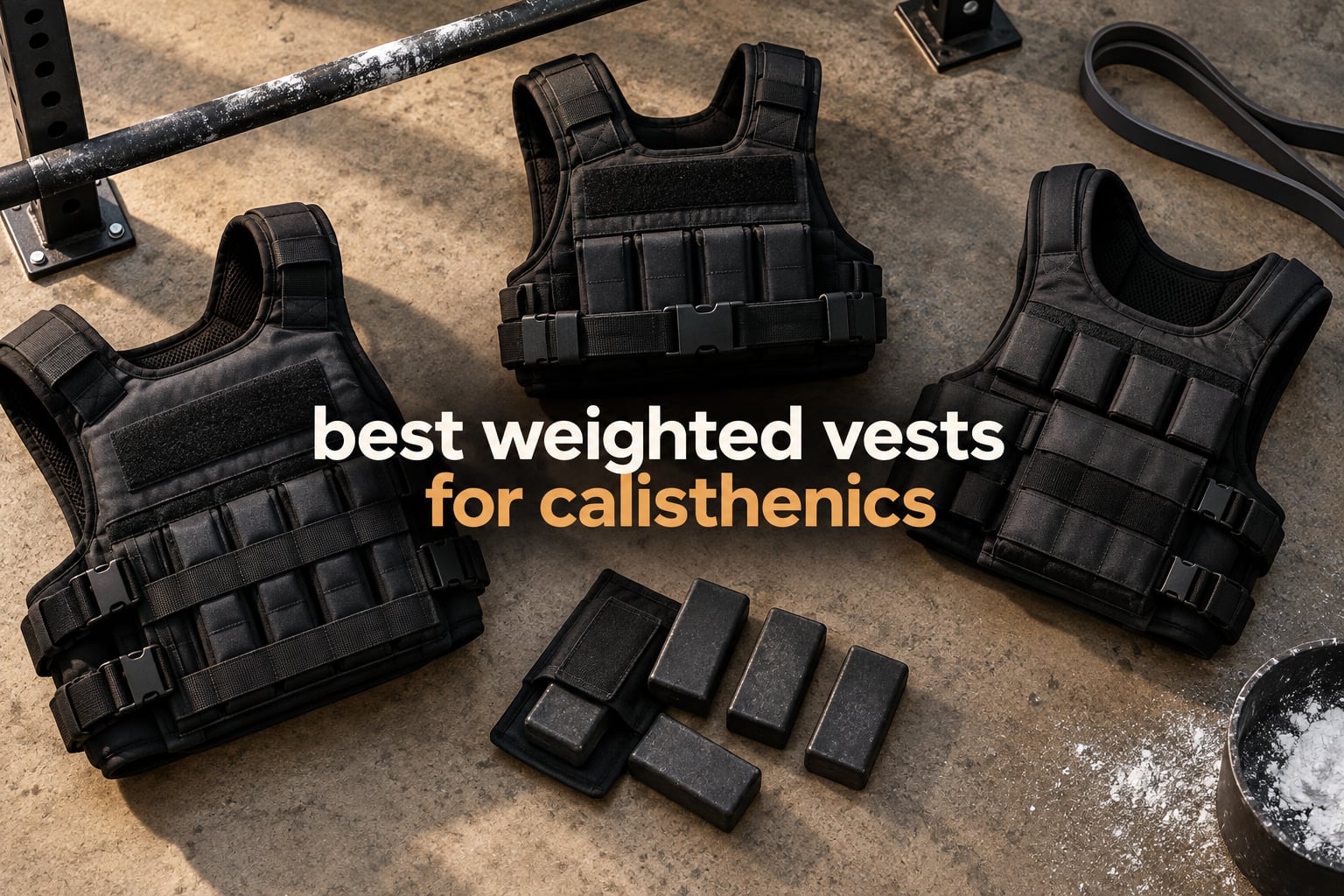
The best weighted vests for calisthenics are the ones that stay flat against your torso, spread the load across your chest and back, and let you add weight in small enough steps to keep chasing strength gains. Pull-ups, dips and push-ups stop giving you anything new once twenty clean reps become easy, and a vest is the least complicated way to put resistance back into the movement without a barbell, a rack or a gym membership.
We spent weeks reading through thousands of owner reviews and specifications on the twelve adjustable vests below, then lined them up against what calisthenics athletes actually need: freedom of range of motion on kipping pull-ups and muscle-ups, a fit that does not ride up mid-set, and weight increments fine enough to add 2 lb rather than 5 lb. Our picks cover the full range, from a light vest for warm-ups and walking to a heavy platform that scales past 100 lb for advanced weighted work.
This guide is updated for 2026. We have also written about the best weighted vests for general training, and if your problem is a place to hang from rather than extra load, our guide to the best power towers for calisthenics covers that side of the setup.
Table of Contents
Top 3 Picks for the Best Weighted Vests for Calisthenics (October 2026)
Our top three cover the three most common training situations. The RUNmax leads the list because it holds a 20 lb to 150 lb range in a body that does not restrict overhead movement. The CAP vest is the pick for sheer volume of owner feedback and the broadest capacity range in the roundup. The miR Air Flow is the one to buy if sweating through long sessions in a non-breathable shell is your main objection.


Quick Comparison: 12 Weighted Vests for Calisthenics in 2026
All twelve below ship with the loading described in their row, with two exceptions worth knowing about before you buy: the Wolf Tactical vest and the higher-capacity versions of some lines arrive as a shell that needs weights added separately. Load capacity, increment size and the loading type are the three numbers that decide whether a vest suits your training.
| Product | Specifications | Action |
|---|---|---|
| RUNmax Adjustable 20-150 lb Vest |
|
Check Latest Price |
 ERIC FLAG 40 lb Adjustable Vest ERIC FLAG 40 lb Adjustable Vest |
|
Check Latest Price |
| CAP Adjustable 20-150 lb Vest |
|
Check Latest Price |
 ZFOsports 30-80 lb Vest ZFOsports 30-80 lb Vest |
|
Check Latest Price |
| miR Air Flow 20-60 lb Vest |
|
Check Latest Price |
 Wolf Tactical Adjustable Vest Wolf Tactical Adjustable Vest |
|
Check Latest Price |
 MVRK 15-100 lb Vest MVRK 15-100 lb Vest |
|
Check Latest Price |
 Hyperwear Hyper Vest PRO Hyperwear Hyper Vest PRO |
|
Check Latest Price |
 HANZO 25-65 lb Vest HANZO 25-65 lb Vest |
|
Check Latest Price |
 BAGAIL 20-40 lb Vest BAGAIL 20-40 lb Vest |
|
Check Latest Price |
 Gymnastics Power Adjustable Vest Gymnastics Power Adjustable Vest |
|
Check Latest Price |
 Sportneer 2-18 lb Vest Sportneer 2-18 lb Vest |
|
Check Latest Price |
Packet Vest vs Plate Carrier: Which One Fits Calisthenics?
A packet vest carries the load in fabric or sand-filled packets distributed across the chest and back. A plate carrier holds rigid plates in front and rear pouches, and it usually arrives empty. That single design difference explains most of what separates the products in this roundup.
For calisthenics, packet wins on range of motion. Soft packets flatten against the ribcage, so your elbows clear, your toes reach the floor on an L-sit, and a hollow body back tuck does not become a competition with a hard plate edge. Plate carriers win on capacity and on how cheaply you can add weight later, since plates from a standard set fit most carriers.
Load placement is the part to think about next. A vest that hangs its weight from the shoulders will chafe and tire your traps long before your lats fail, while a vest that biases weight toward the upper back sits closer to your centre of gravity and keeps burpees from pitching you forward. Several owners in the r/bodyweightfitness discussions we read made exactly that point, describing the best vests as the ones that carry the load high and tight against the upper back.
The practical split: buy a packet vest if your training is pull-ups, muscle-ups, L-sits and handstand work where range of motion decides the rep. Buy a plate carrier if your training is long loaded carries, hill work and conditioning where capacity matters more than a deep overhead stretch.
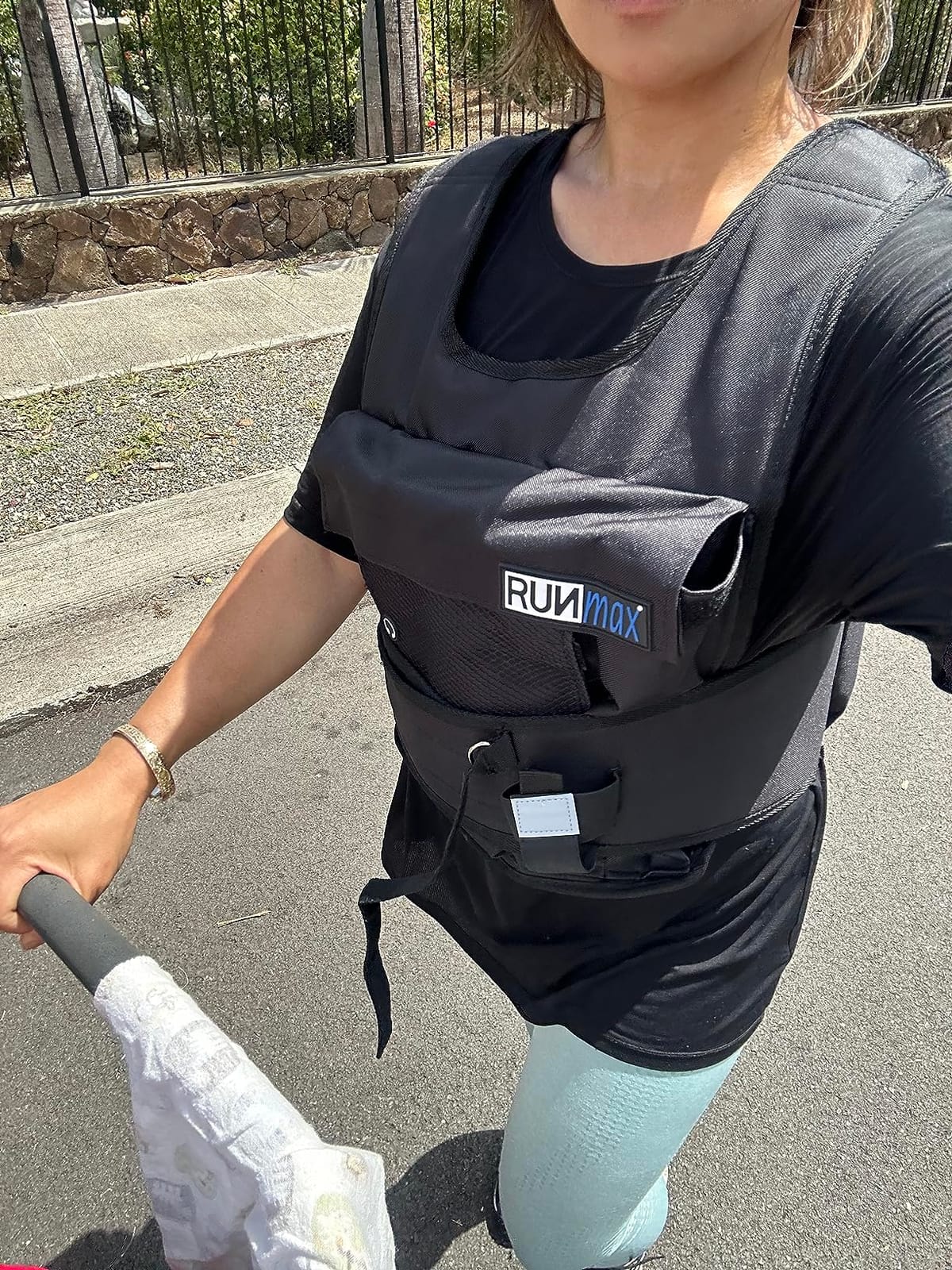
1. RUNmax Adjustable Vest 20-150 lb – Best Overall for Calisthenics
RUNmax 12lb-140lb Weighted Vest (Without Shoulder Pads, 40lb), Black
20-150 lb range
28-48 inch chest
1000D nylon
Lifetime warranty
Pros
- Huge 20-150 lb capacity range
- Bounce-free fit for burpees and sprints
- Breathable mesh panels
- Reflective strips for early sessions
Cons
- Load rides higher without the shoulder pad option
- No MOLLE-style attachment points
- Loads above 100 lb need very gradual progression
We used this vest through a full block of weighted pull-ups, dips and push-up circuits, and the thing that stood out was how rarely it moved. On kipping pull-ups and fast burpees the load stayed centred instead of swinging forward, which is the failure mode that ruins most cheaper vests within a few minutes of hard work.
Capacity is the headline number here. The line runs from 20 lb to 150 lb, and every increment up to that ceiling is removable, so a single vest can carry a beginner through an advanced loading phase without a second purchase. Weights sit in Velcro-closed pockets, and the 1000D nylon shell with reinforced stitching handled everything we threw at it.
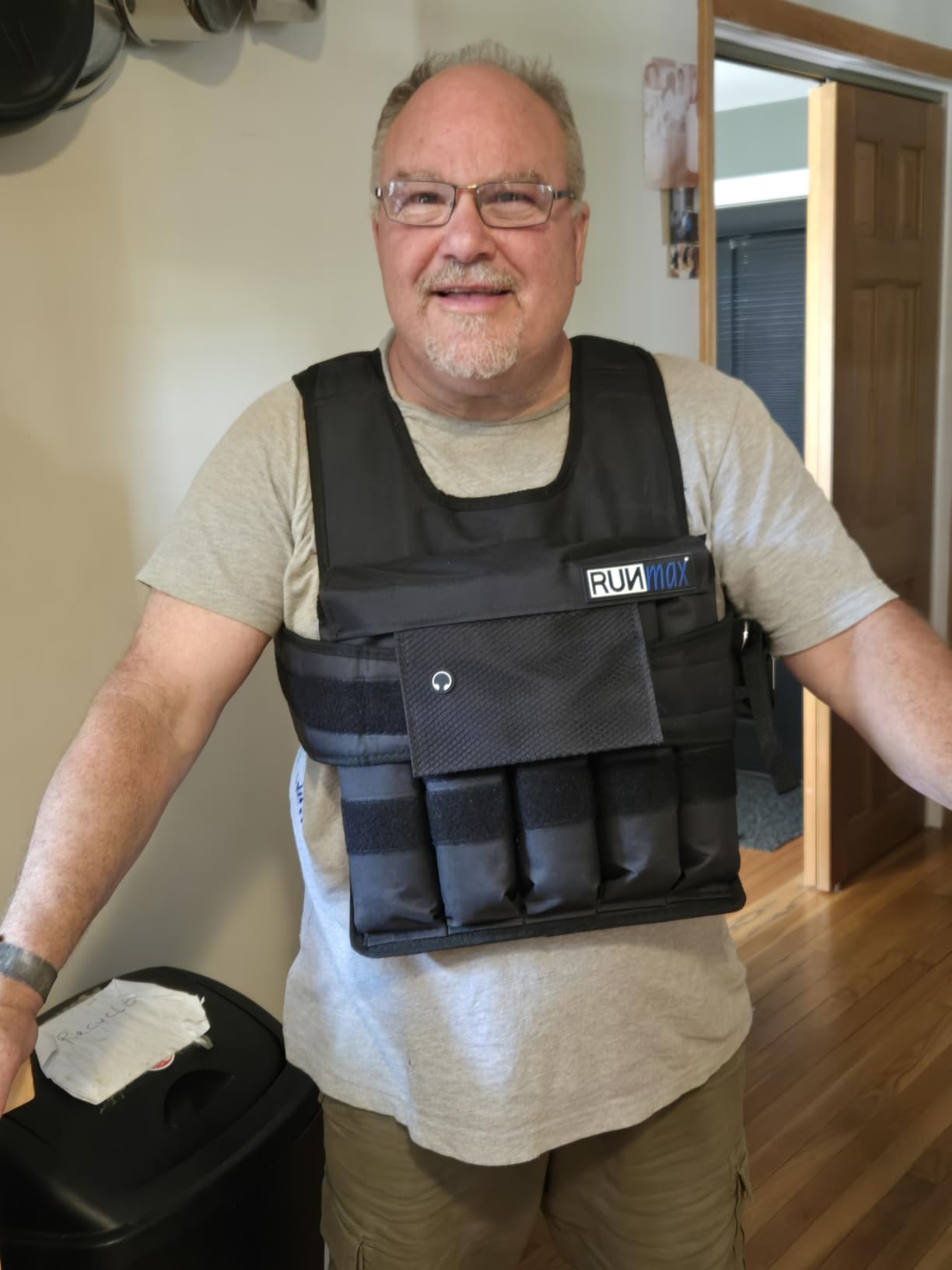
Breathability gets an equal mention in owner feedback, and the mesh panels made a real difference in our sessions. The quick-release buckle straps across a 28-48 inch chest cover an unusually wide span, and the fit stayed tight through sprints without the constant re-adjustment other vests demand.
Reflective strips front and rear make it a sensible pick for outdoor work before sunrise or after dark. The brand also attaches a lifetime warranty, which is a meaningful signal on a vest that lives in a garage or a bag of chalk and grit.
Who it suits and who it does not
This is the right choice for a trainee who wants one vest to grow with, from a 20 lb warm-up load up to serious weighted work, and for anyone training outdoors who needs visibility and ventilation in the same package. The fit holds up under explosive movements rather than just steady loading.
Choose the padded shoulder strap version if you plan long sessions, because reviewers consistently report that the unpadded variant sits higher on the traps as the session runs on. The compact shape also rules it out if you want to bolt pouches or a hydration bladder onto the vest, and it is a lot of vest to get used to if your ceiling is a 30 lb load.
2. ERIC FLAG 40 lb Adjustable Vest – Best for Walking and Loaded Circuits
ERIC FLAG 40 lb Weighted Vest for Men & Women – Adjustable 0-40 lb with 16 Iron Weight, Heavy-Duty for Calisthenics, Running and Walking – Compact 1000D Oxford – Weighted Vest with Removable Weights
16 x 2.4 lb iron weights
40 lb max
1.6 lb empty
1000D Oxford
Pros
- Precise 2.4 lb increments up to 40 lb
- Compact profile that clears the arms
- Durable 1000D Oxford nylon
- Secure adjustable fit across body sizes
Cons
- Shoulder area runs wide and presses near the neck on pull-ups
- Light pressure marks on shoulders at lower loads
- Pockets must be unloaded before removing the vest
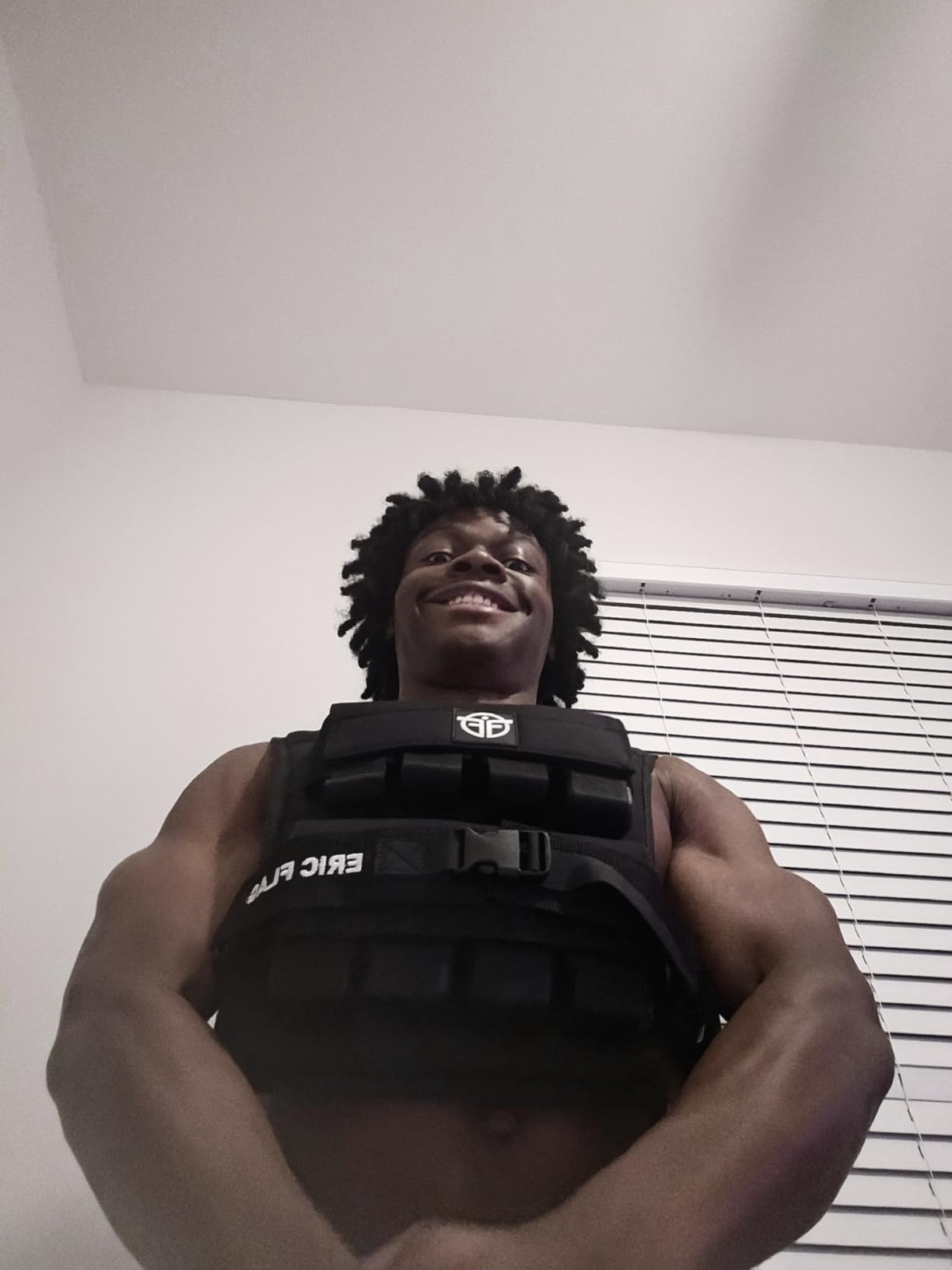
This is the vest we kept reaching for during loaded circuits, and the loading system is why. Sixteen removable 2.4 lb iron weights, eight front and eight back, give you a genuinely fine step size for a 40 lb ceiling, which is rare at this weight class.
Distribution is even front and rear, and the compact shape does something important for calisthenics: it lets your arms swing and your elbows drive without a hard edge catching on your ribs. Push-ups, dips and lunges all feel natural once you are past the first few sets.
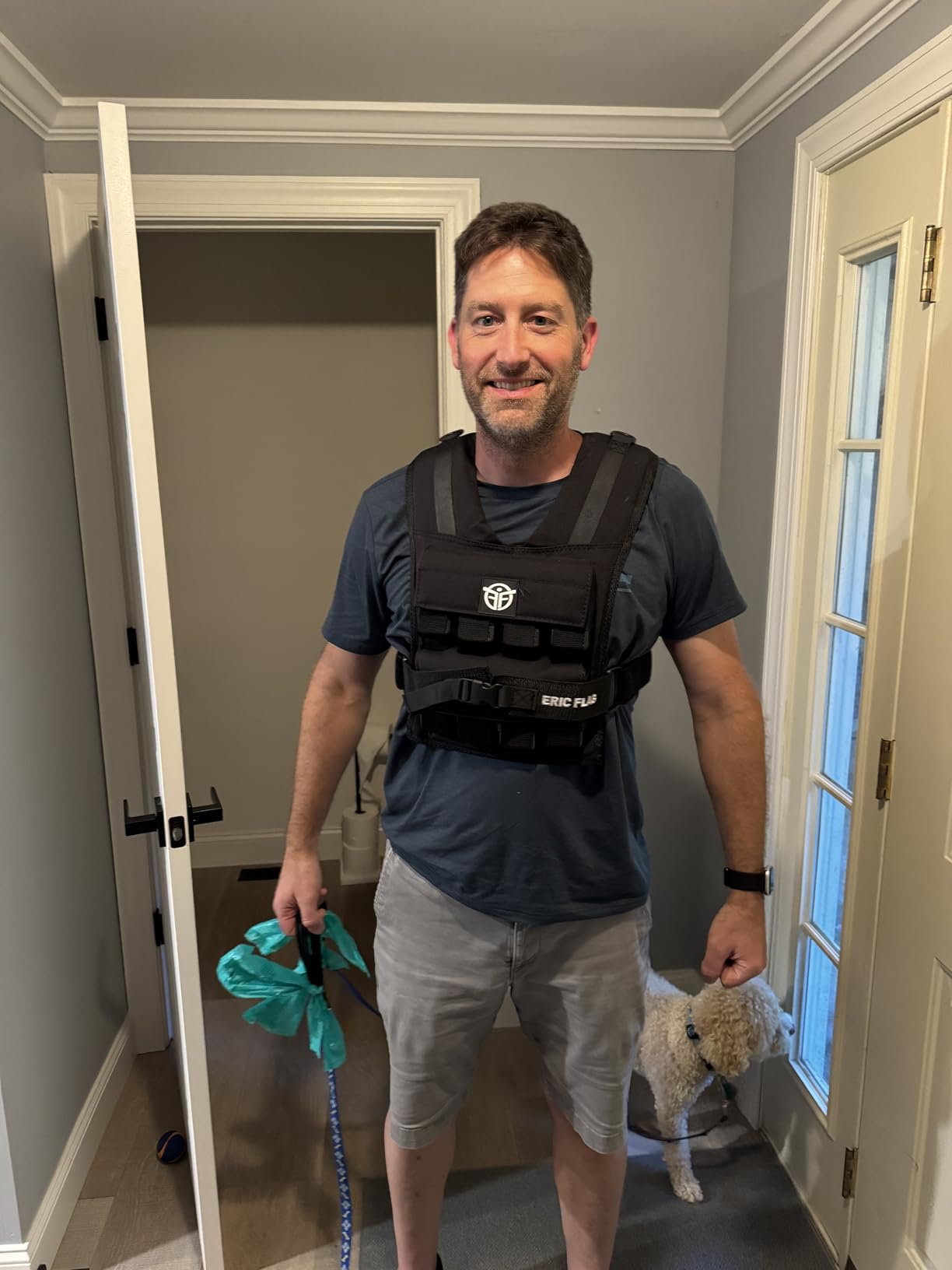
The 1000D Oxford shell is the toughest fabric in this roundup by specification, and owners running walking and loaded sessions report it holding up without abrasion. The vest itself weighs 1.6 lb empty, so most of what you carry is load rather than harness.
One habit worth building early: empty the pockets before you take the vest off. Owners mention this repeatedly, and it is the practical difference between a ten-second doff and a fiddly one at the end of a heavy session.
Who it suits and who it does not
Buy this if your plan is a 40 lb ceiling and you like the control of 2.4 lb steps, particularly for building toward weighted dips and pull-ups in small increments. It is also a strong choice for loaded walking and rucking work where the compact profile keeps you from feeling like you are carrying a brick.
The common complaint is the shoulder area, which reviewers describe as somewhat wide and close to the neck during overhead work, with light pressure marks at lighter loads. If you are taller or you have a broader frame, check that the top edge does not press into your neck on a kipping pull-up.
3. CAP Adjustable Weighted Vest – Best Value Across 20-150 lb
CAP 40lb Adjustable Weighted Vest for Men and Women, Strength Training
2.5-40 lb adjustable
20-150 lb line
Padded shoulder straps
Reflective stripes
Pros
- Widest capacity line in the roundup
- Very stable bounce-free fit
- Long-term owners report durable velcro and materials
- Balanced distribution that avoids forward pull
Cons
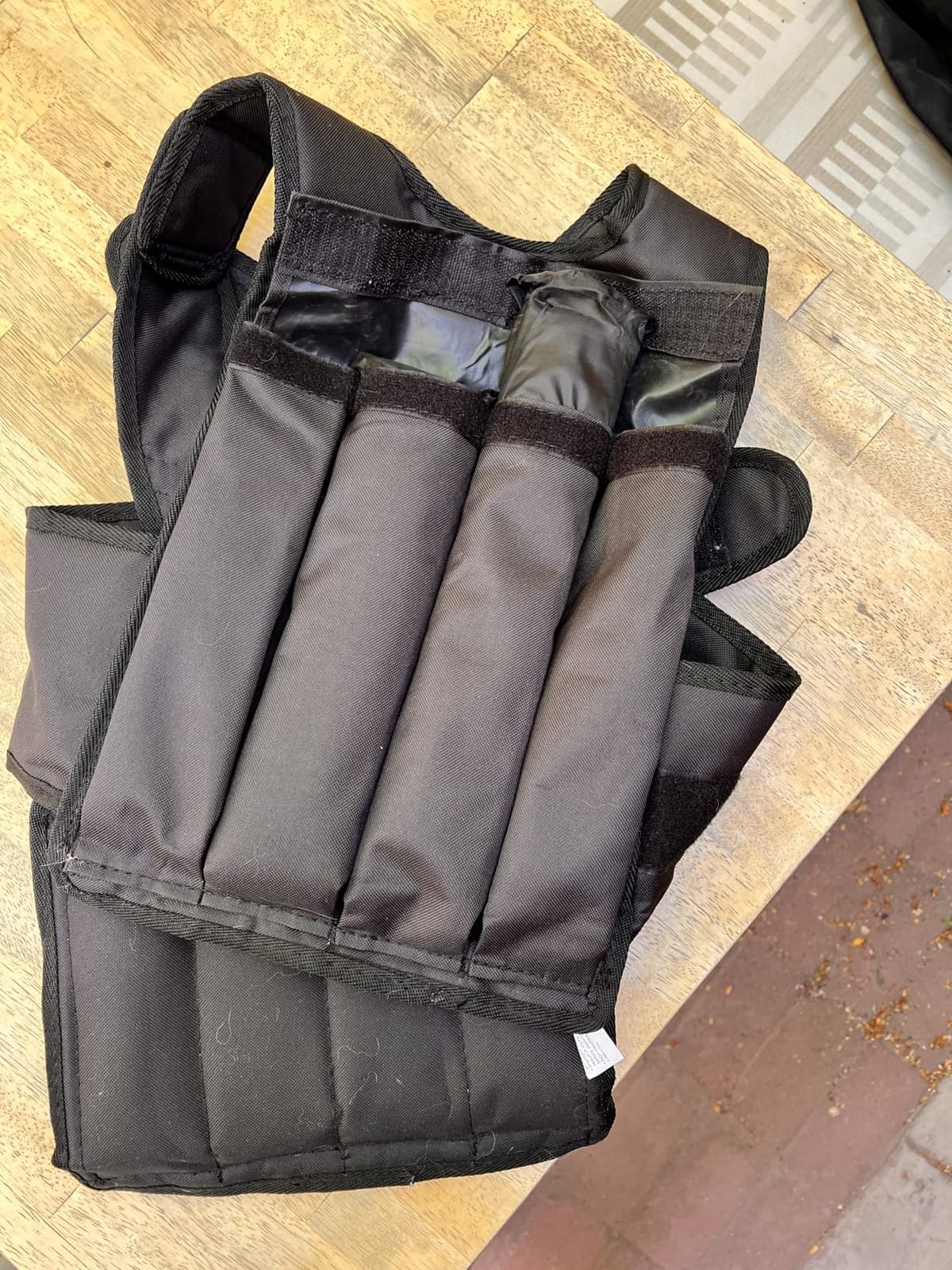
- Lower-capacity packets are tight and awkward to insert
- Bulky relative to load in the 80 lb configuration
- Small front pocket too tight for a thick-cased phone
No other vest in this roundup has as many owner reviews behind it, and that volume turned up a consistent picture: the fit is stable and the build lasts. Across weighted squats, lunges, push-ups and pull-ups, the waist belt and padded shoulder straps kept the load from shifting even when the movement got dynamic.
The capacity line is the real story. Configurations run from 20 lb all the way to 150 lb, so the same product family covers a first heavy calisthenics phase and a serious loaded carry phase. Pockets hold 2.5 lb packets filled with iron ore fines, and reflective stripes add low-light visibility for outdoor sessions.
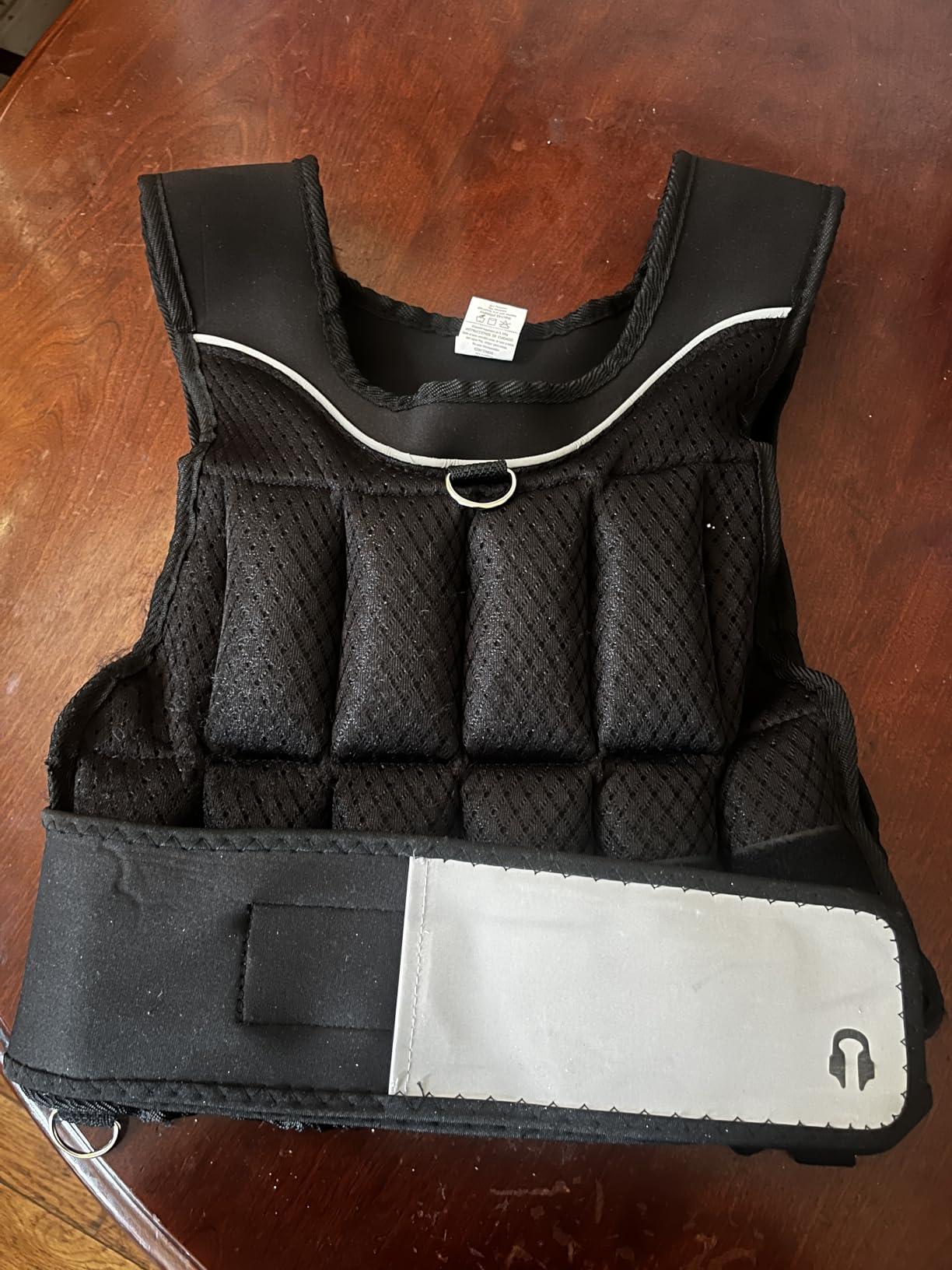
Durability is a strength owners call out with long-term ownership behind it, with the velcro closure and fabric holding up over years rather than months. The distribution is balanced enough that the vest does not pull your torso forward, which matters when you are trying to keep a hollow body position.
The most repeated criticism is the packets themselves. In the lower-capacity models the pockets are tight, and swapping individual packets takes real effort, which in practice means people change load far less often than they intend to. Plan your progression around that before you commit.
Who it suits and who it does not
This is the sensible buy for a home gym where you want one name on the order form and the option to go heavier later. It suits mixed training, from strength circuits to weighted walks, and the reflective striping makes outdoor work easier to plan.
It is bulkier than vests with a similar 40 lb ceiling, particularly in the higher configurations, so if range of motion on kipping work is your priority you may prefer a slimmer shell. The small front pocket is also not practical for a large phone in a protective case.
4. ZFOsports 30-80 lb Vest – Best for Smaller Frames
ZFOsports 40LBs Adjustable Weighted Vest
30, 40 and 80 lb versions
Double abdominal straps
Phone pocket
Sand-style packets
Pros
- Short close-fitting profile that stays flush on smaller frames
- Well-padded shoulder straps and double waist straps
- Strong stitching and a tactical look
- Works for calisthenics and rucking alike
Cons
- Weight carried mainly through the shoulders
- Sand packets are tedious to insert and remove
- Front-heavy balance makes running bouncy
This is the one to look at if most heavier vests have felt like they were designed for a much bigger torso. The profile is short and close, and reviewers with smaller frames consistently single that out as the reason they kept using it while trying other vests.
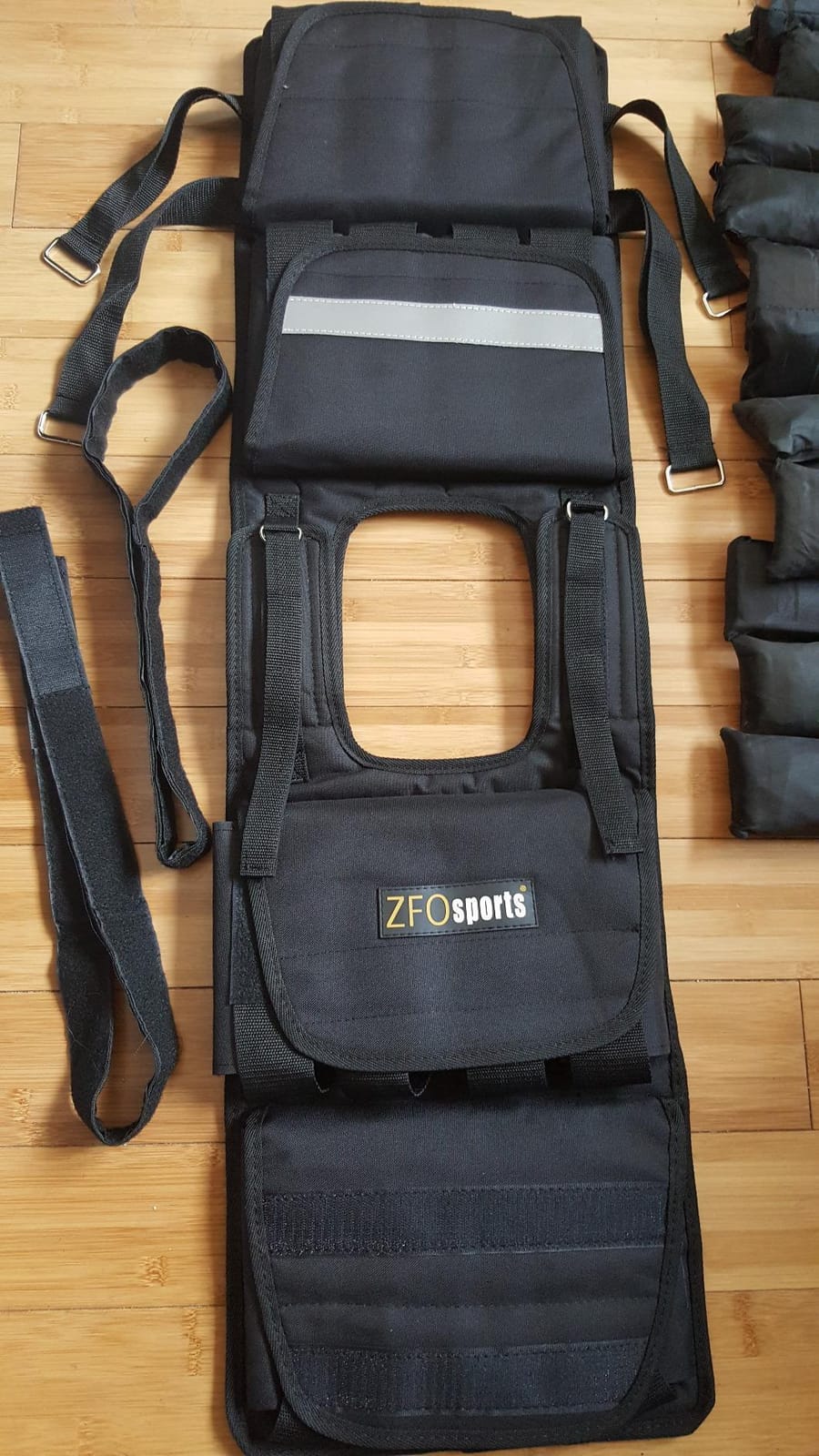
Two wide padded shoulder straps plus double abdominal straps keep things steady, and the integrated phone pocket is a small touch that matters when you are training at a park rather than in a garage. There is also a holder for a bottle of 16 oz or smaller.
Fixed load configurations of 30 lb, 40 lb and 80 lb mean you choose your version rather than adjusting on the fly, and the sand-style packets sit inside sealed outer shells. Stitching quality is a repeated positive, and the tactical styling is popular with street workout athletes.
The trade-offs come with the weight system. Packets are tedious to move in and out, replacement packets are not offered separately by the seller, and most of the load sits on your shoulders, which takes time to get used to. For running, most owners recommend biasing weight toward the back to cut the bounce.
Who it suits and who it does not
Pick this for a shorter, lighter frame that struggles with bulkier vests, or for anyone who wants a fixed load and does not need to fiddle with increments mid-session. It handles calisthenics and loaded walks in the same week without a problem.
Progressive loading is the weakness, because you are picking a fixed configuration rather than dialing a load. If your plan is to climb from 20 lb to 60 lb over a year, one of the removable-weight vests will serve you better than this one.
5. miR Air Flow Weighted Vest – Best Machine-Washable Option
miR Air Flow Weighted Vest with Zipper Option 20lbs – 60lbs (40lbs, Standard)
20-60 lb configurations
3 lb solid iron weights
Hybrid breathable fabric
Zipper option
Pros
- Solid iron weights that stay put instead of shifting
- Machine washable for long-term freshness
- Softer cooler material than cheaper vests
- Simple strap adjustment trims the profile
Cons
- Mesh can retain heat in long sessions
- Coarse 3 lb increments limit fine progression
- Over-the-head entry is fiddly without the zipper version
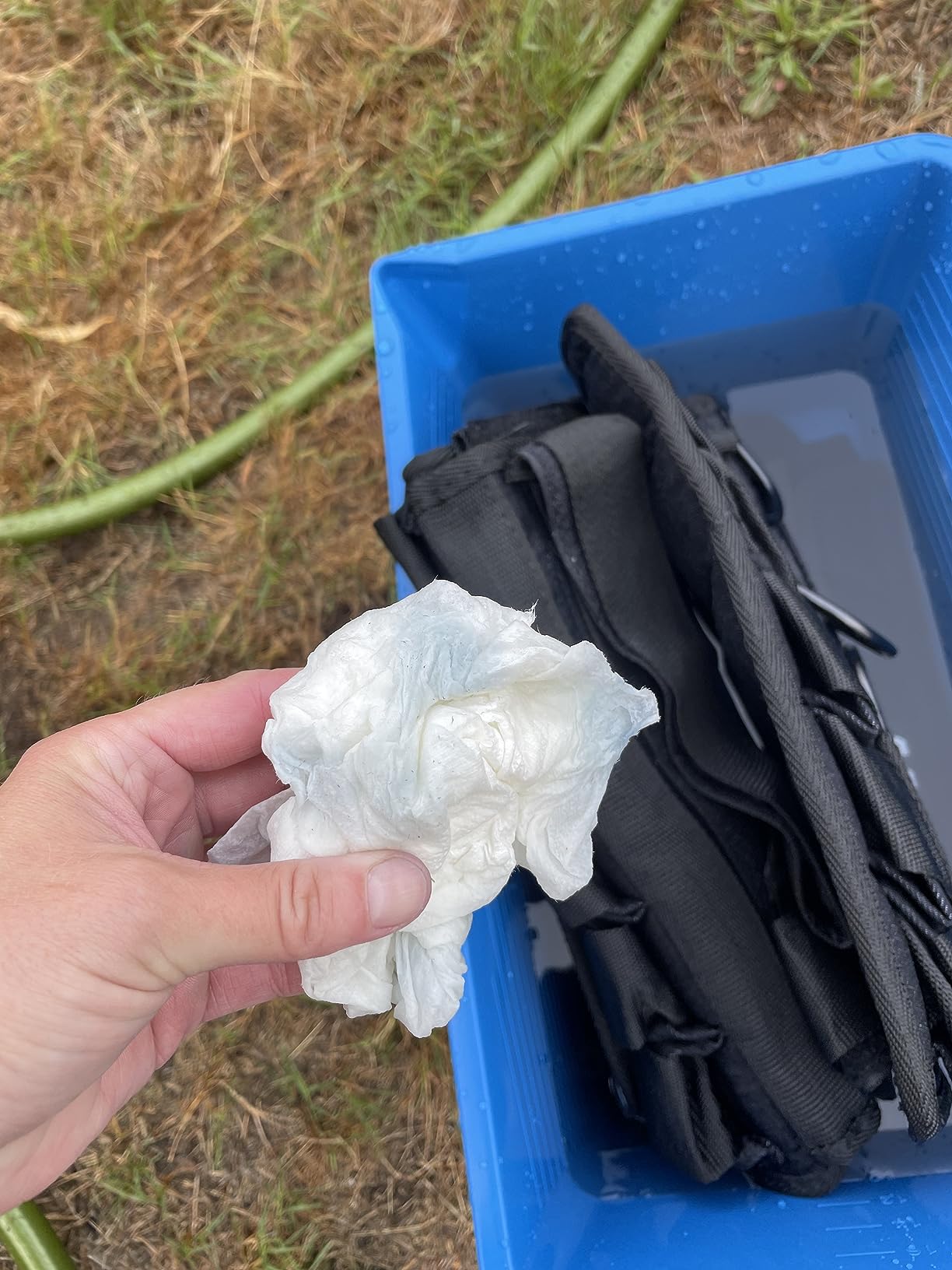
Washability is the feature that separates this one. Removing the weights and dropping the whole vest into a machine is not a small convenience when you train four or five days a week in a vest, and owners mention it as a genuine reason to come back to this model.
The loading is solid iron rather than sand, in 3 lb blocks that add and remove quickly and stay in position instead of creeping to the bottom of the pocket. Configurations run from 20 lb to 60 lb, and the hybrid breathable fabric is described as softer and cooler than typical nylon shells.
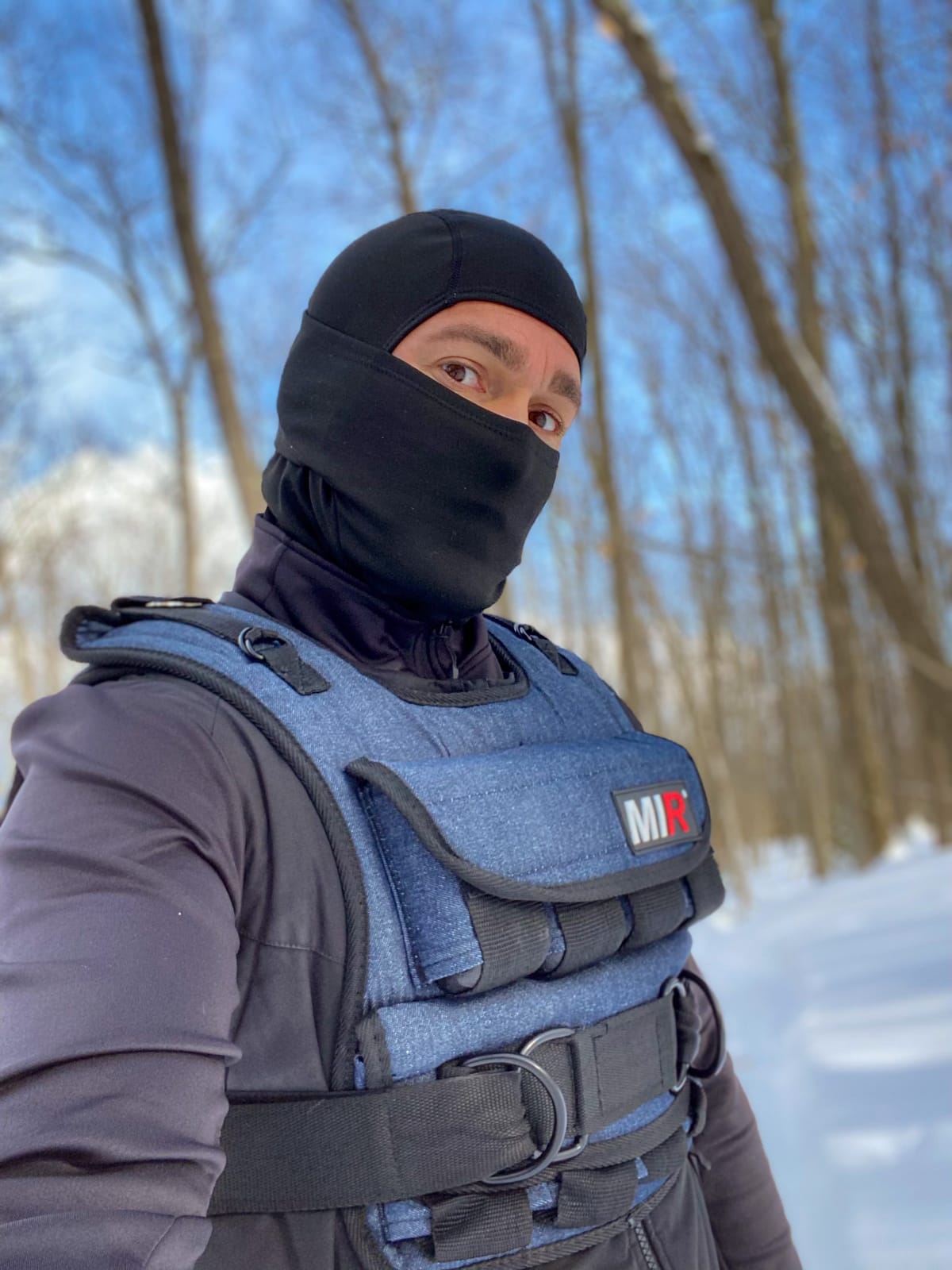
Adjustable bottom straps trim the profile down for a close fit, which is what keeps the load from riding during pull-ups. The brand attaches lifetime coverage against damage from workouts, which is a meaningful guarantee on a training tool rather than a fashion accessory.
The zipper variant is worth paying attention to. Without it you are pulling the vest over your head every session, and reviewers describe that version as fiddly. A smaller complaint is that the mesh can still hold heat during long efforts.
Who it suits and who it does not
This is the right pick for anyone training in a warm space, indoors in summer or outdoors on humid days, and for anyone who would rather wash the vest than tolerate a smell. It is a comfortable all-round choice for pull-ups, dips and running intervals.
Progression granularity is the limit. With 3 lb per block, the smallest jump you can make is a fairly large one for a beginner working toward their first weighted pull-up. If fine increments matter more to you than washability, look at the vests using 2 lb or smaller blocks.
6. Wolf Tactical Adjustable Vest – Best for Rucking and Plate Loading
WOLF TACTICAL Men & Women Weighted Vest – Adjustable Tactical Design
14-42 lb configurable
Weights sold separately
MOLLE panels
600D nylon
Pros
- Rugged build that holds up after years of use
- Padded shoulder yoke spreads load well
- Low-bounce fit through WODs and circuits
- MOLLE panels for attaching gear
Cons
- Steel plates press on the chest and restrict breathing when tight
- Flat plate profile feels harsh on the ribcage over long rucks
- Base vest arrives without weights
- Over-the-head entry is awkward
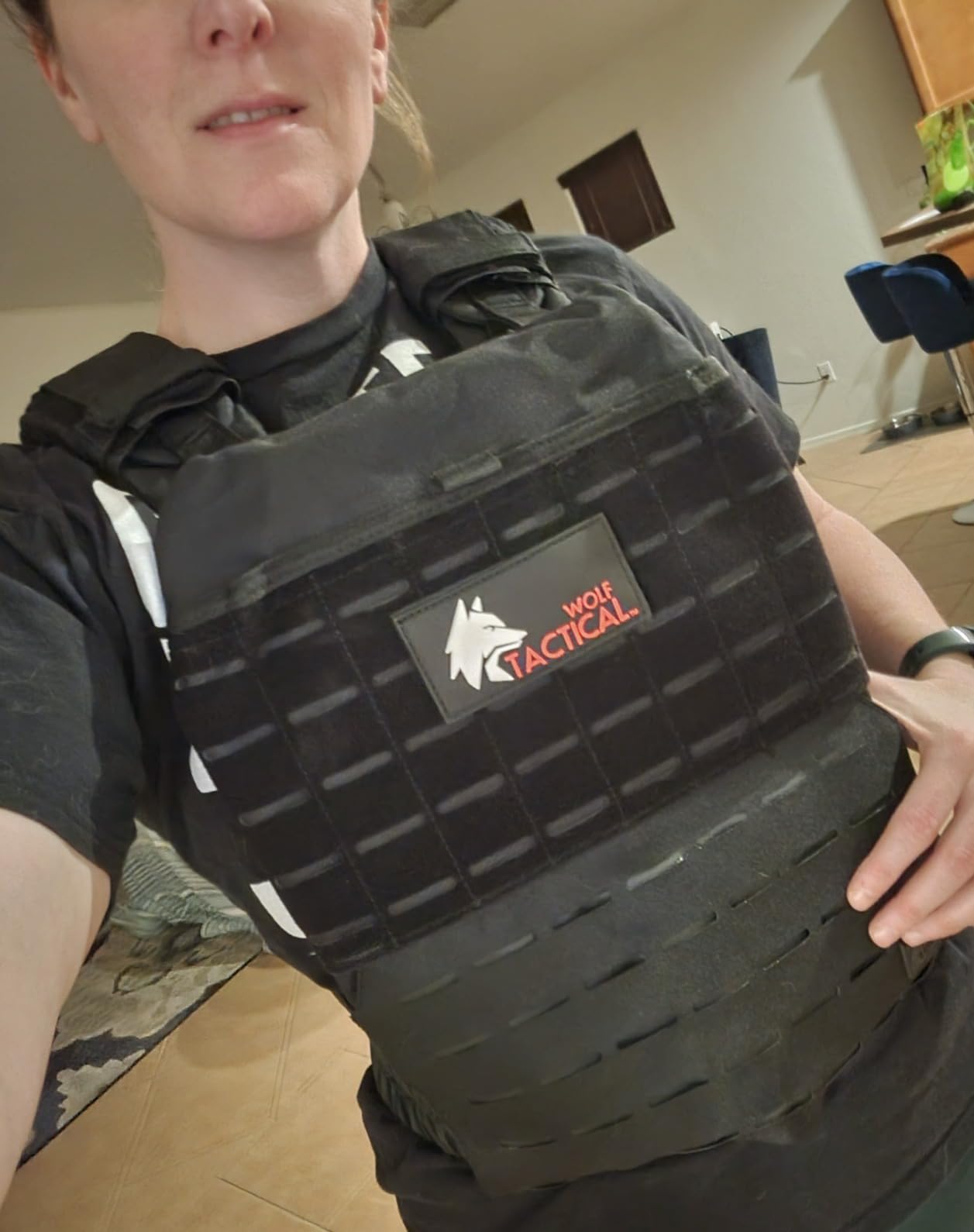
This is the plate carrier of the group, and it is built for load rather than for calisthenics range of motion. Laser-cut MOLLE panels front and rear accept pouches, the 600D nylon shell is genuinely rugged, and the padded shoulder yoke spreads weight across the traps instead of digging into them.
Weight configurations of 14 lb, 20 lb, 31 lb and 42 lb use plates you can swap quickly, and the adjustable waist straps with tension bands produce one of the lowest-bounce fits in the roundup. Owners using it for rucking and CrossFit report it staying secure through circuits and runs.
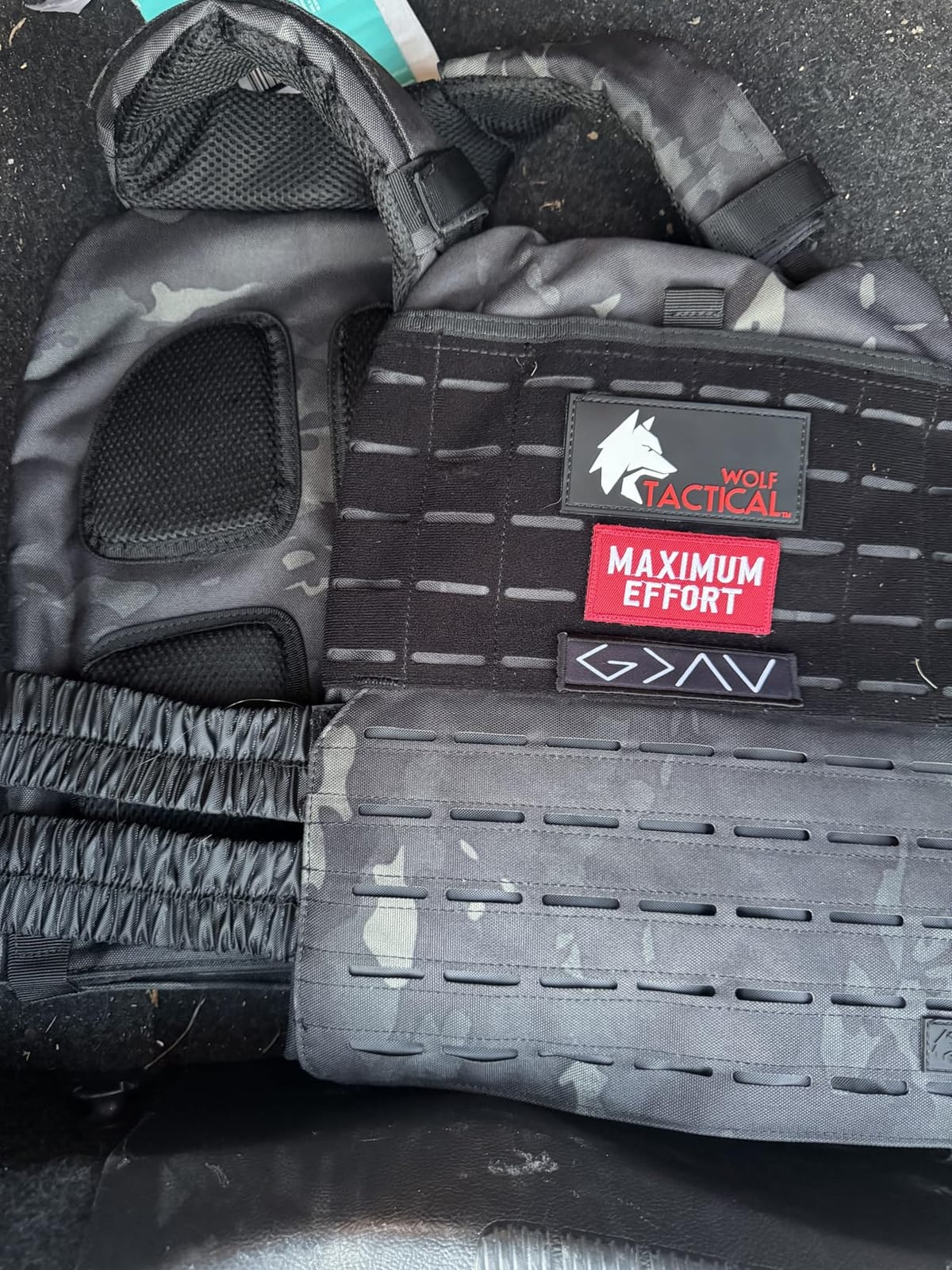
Breathable airflow panels and a one-size fit spanning XS to XL make it a practical option for a mixed group training together. The tactical styling is a bonus for anyone who also uses the vest as a gear platform rather than purely as a resistance tool.
Two things to plan for. The plates are sold separately, so the base vest is a shell until you add loading. And the flat steel plate profile is the recurring comfort complaint, with reviewers describing chest compression and ribcage pressure on long carries.
Who it suits and who it does not
Choose this for rucking, loaded hill work and conditioning where capacity and a low-bounce fit come first, and for anyone who wants MOLLE attachment points. If you already own plates, the total cost of getting into this system drops a long way.
It is the wrong tool for deep overhead work. Hollow body holds, L-sits and muscle-up practice are where a rigid plate profile fights your range of motion, and the chest compression that makes long rucks manageable becomes the thing limiting your breathing on high-rep sets.
7. MVRK 15-100 lb Vest – Best Compact Heavy Load
MVRK Weighted Vest Men 35lbs – Weighted Workout Vest With Removable Iron Weights, Heavy Duty Adjustable 0-35 lb with 16 Iron Weight For Functional Training & Calisthenics – Weight Vest for Men and Women
15-100 lb line
16 x 2.18 lb iron blocks
Front and rear loading
Hand wash
Pros
- Carries a high load with minimal bulk
- Fine-grained blocks for smooth progression
- Reinforced stitching and heavy-duty buckles
- Stable no-bounce front and rear distribution
Cons
- Sizing runs snug and needs real strap adjustment
- No storage pockets for keys or a phone
- Hand wash only with weights removed
The selling point here is the ratio of load to bulk. Owners repeatedly mention that this vest carries a high rated capacity in a compact silhouette, and for calisthenics that matters because a smaller profile is the difference between a full range of motion and a compromised kipping pull-up.
Sixteen removable iron weights of roughly 2.18 lb each are split across eight front and eight back positions, which gives a fine step size for long-term progression from an empty vest upward. The sweat-resistant shell and reinforced stitching at every stress point are built for repeated heavy work.
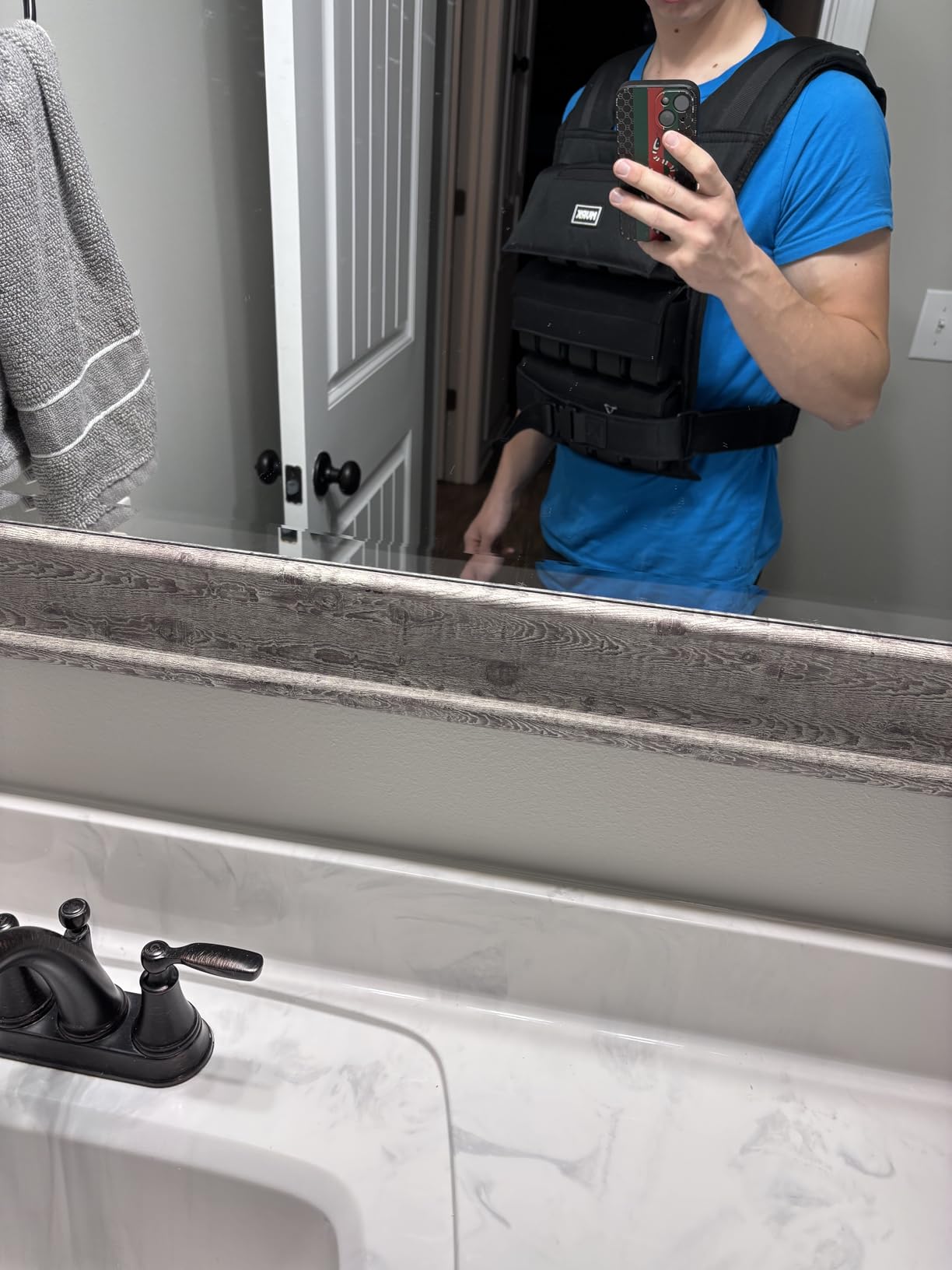
Configurations span 15 lb through 100 lb, so the same platform covers both a moderate load and a serious loaded phase. Even front and rear distribution keeps the load close to your centre of gravity rather than pulling you forward during fast movements.
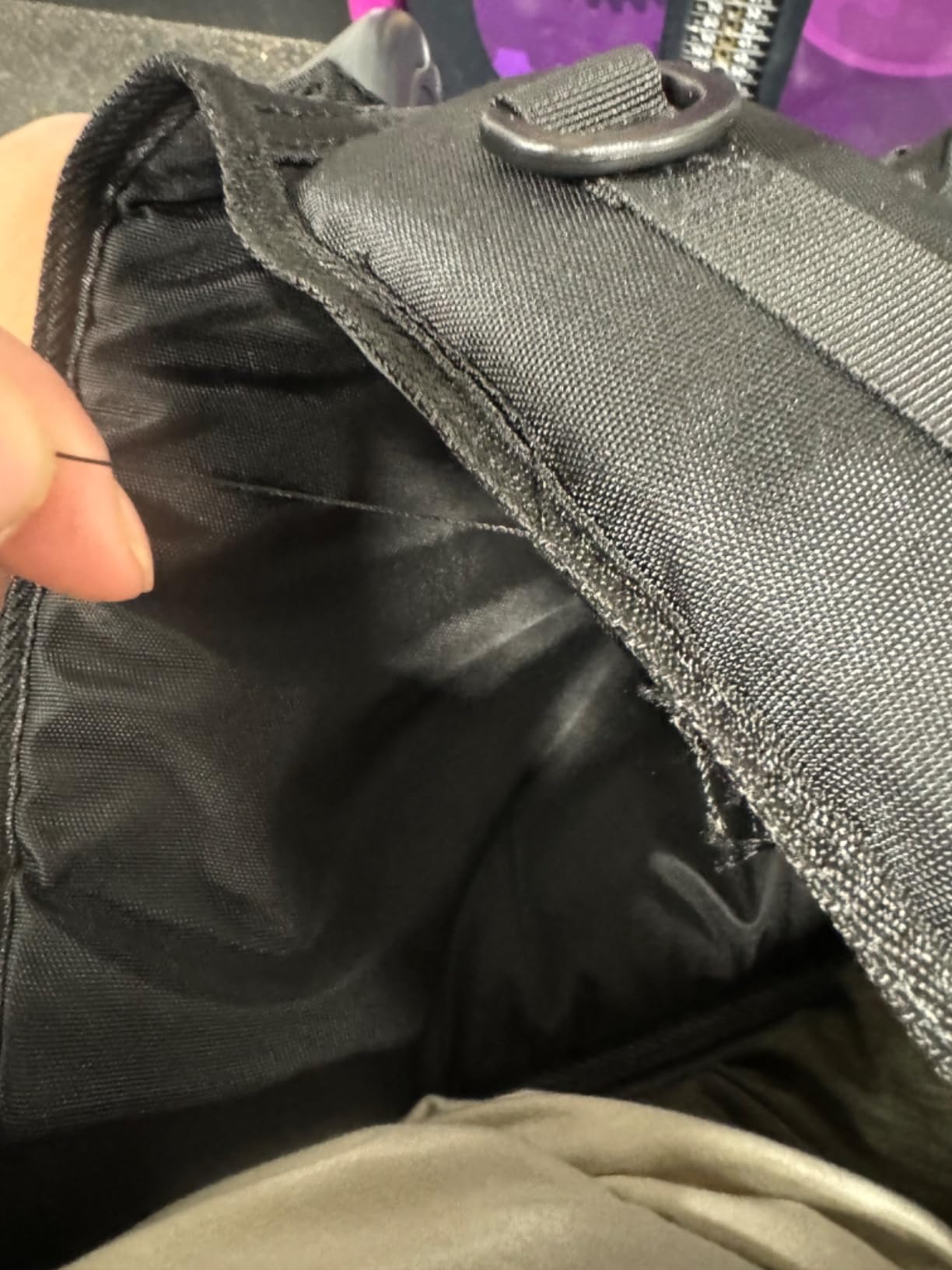
Fit needs work out of the box. Owners report the sizing runs snug and the buckles require real adjustment before the first session, and there are no storage pockets at all, so nothing rides in the vest. Care is hand wash with the weights removed.
Who it suits and who it does not
This suits an intermediate athlete who has already found a bodyweight ceiling and wants to climb further without switching to a different loading tool every few months. The 2.18 lb blocks are fine enough to keep progression smooth all the way up.
It suits you less well if you want a phone pocket, or if you need a machine-washable vest for frequent sessions. Spend time on the strap adjustment before your first weighted set, because a snug vest that you have not tuned will ride.
8. Hyperwear Hyper Vest PRO – Best for Finest Load Increments
Hyperwear Hyper Vest PRO Strength Training Weight Vest for Men, M, 10 lb
2.25 oz steel micro-weights
Sized capacity 20-40 lb
YKK zipper and side lacing
Xyflex compression fabric
Pros
- Extremely slim profile with no vertical shift in sprints or burpees
- Micro-weights allow very fine load changes
- Zipper and side lacing dial in a tailored fit
- Used in published bone density and speed research
Cons
- Additional weight packs cost extra
- Some weight slots are hard to access
- Retains heat and cold from the metal
- Minority report neck stitching wear at heavier loads
This is the slimmest vest here, and the compression fit is the reason. Owners describe it as barely moving during sprints and burpees, with no vertical shift, which is exactly the behaviour you want when a kipping muscle-up has to stay repeatable at the end of a circuit.
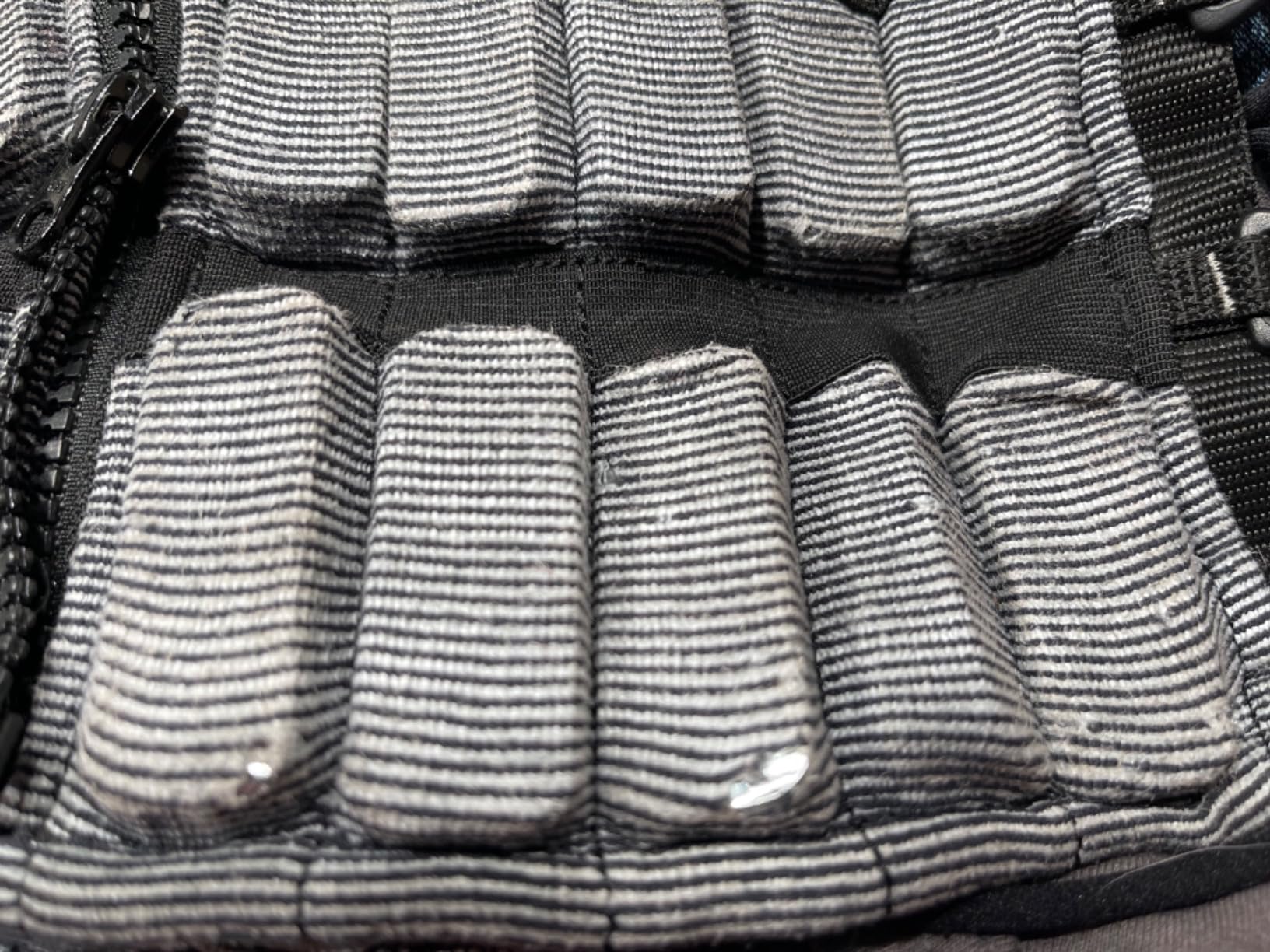
Loading is with 2.25 oz galvanized steel micro-weights, so you can change the load in very small steps. Capacity is set by size: 20 lb for small, 25 lb for medium, 30 lb for large and 40 lb for extra-large. The YKK front zipper plus adjustable side lacing lets you tune the compression precisely.
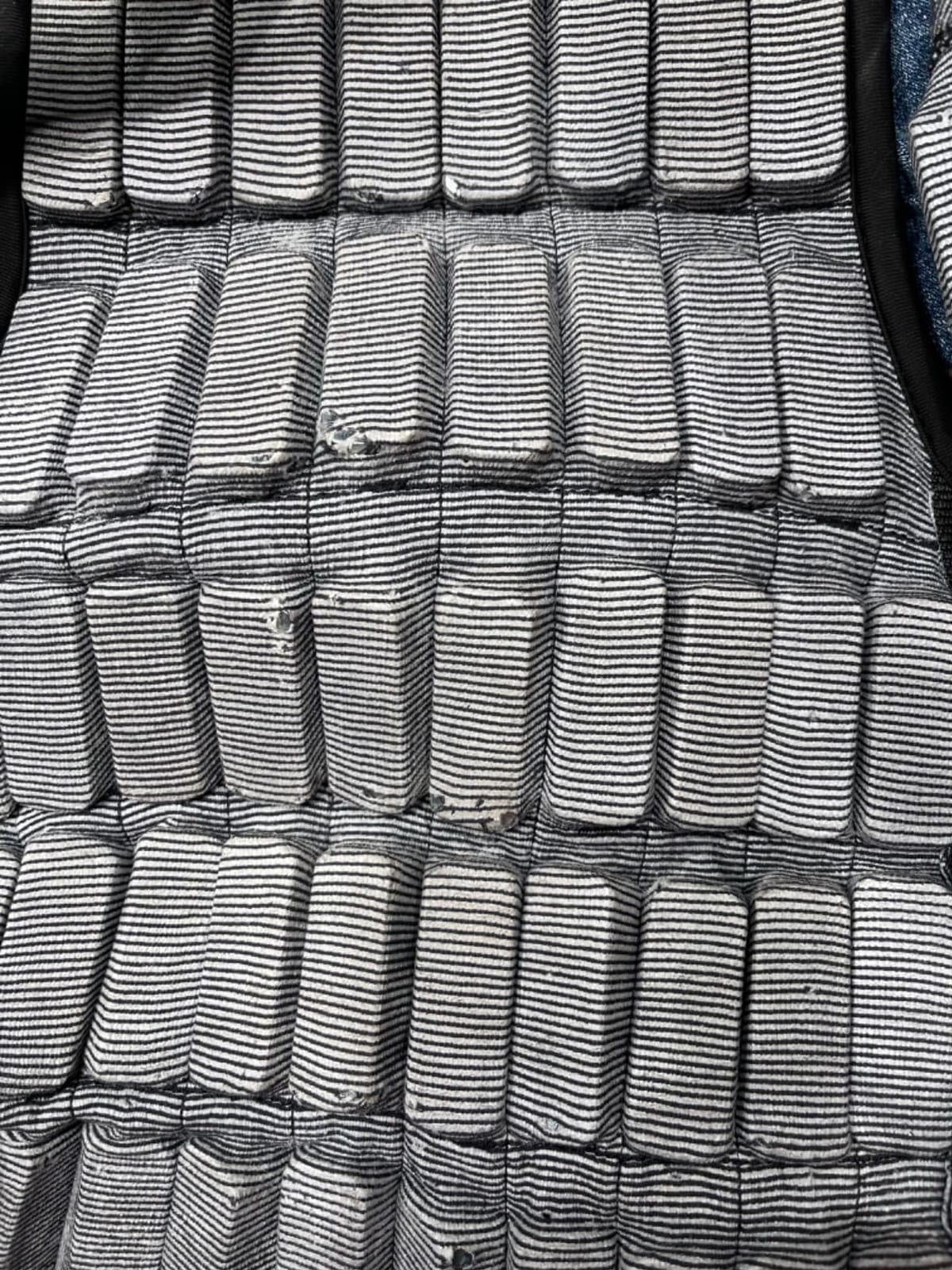
The USA-made Xyflex stretch fabric pulls the whole garment toward the body, which is why the silhouette disappears under clothing. Owners with long histories of wearing it cite comfort and balanced loading, and the vest has been used in published work on bone density, weight loss and speed training.
It is machine washable cold once the weights come out. The complaints are mostly about money and fiddliness: extra weight packs are costly, some slots are difficult to reach even with the included tool, and the metal plates hold heat and cold against your skin.
Who it suits and who it does not
Buy this if your training is explosive and range-of-motion critical, and if you want to add half a pound at a time while chasing a new weighted pull-up or muscle-up. It is also the pick for anyone who needs to train in normal clothing without looking like they are carrying a pack.
Size matters more than usual here because capacity is tied to it, so read the size chart carefully rather than ordering on chest size alone. Expect to buy add-on weight packs to fill out your range, and skip it if heat retention on your skin is a deal-breaker.
9. HANZO 25-65 lb Vest – Best Ready-to-Use Kit
HANZO Weighted Vest for Men – Rucking & Strength Training Vest 25lbs–65lbs, Weight Vest With Removable Iron Weights, Adjustable Heavy Duty Weighted Workout Vest for Calisthenics & Fitness Training, Rucking Vest
Up to 45 lb adjustable
Removable iron bricks
Double-padded shoulders
1000D Oxford nylon
Pros
- Stable snug fit through pull-ups dips and squats
- Double-padded shoulders spread the load
- Full set of iron weights included and ready to use
- Reinforced 1000D Oxford nylon for daily sessions
Cons
- Heavier build runs warm in long sessions
- Iron bricks are less precise than micro-weight systems
- Sizing runs close so buckle straps need careful adjustment
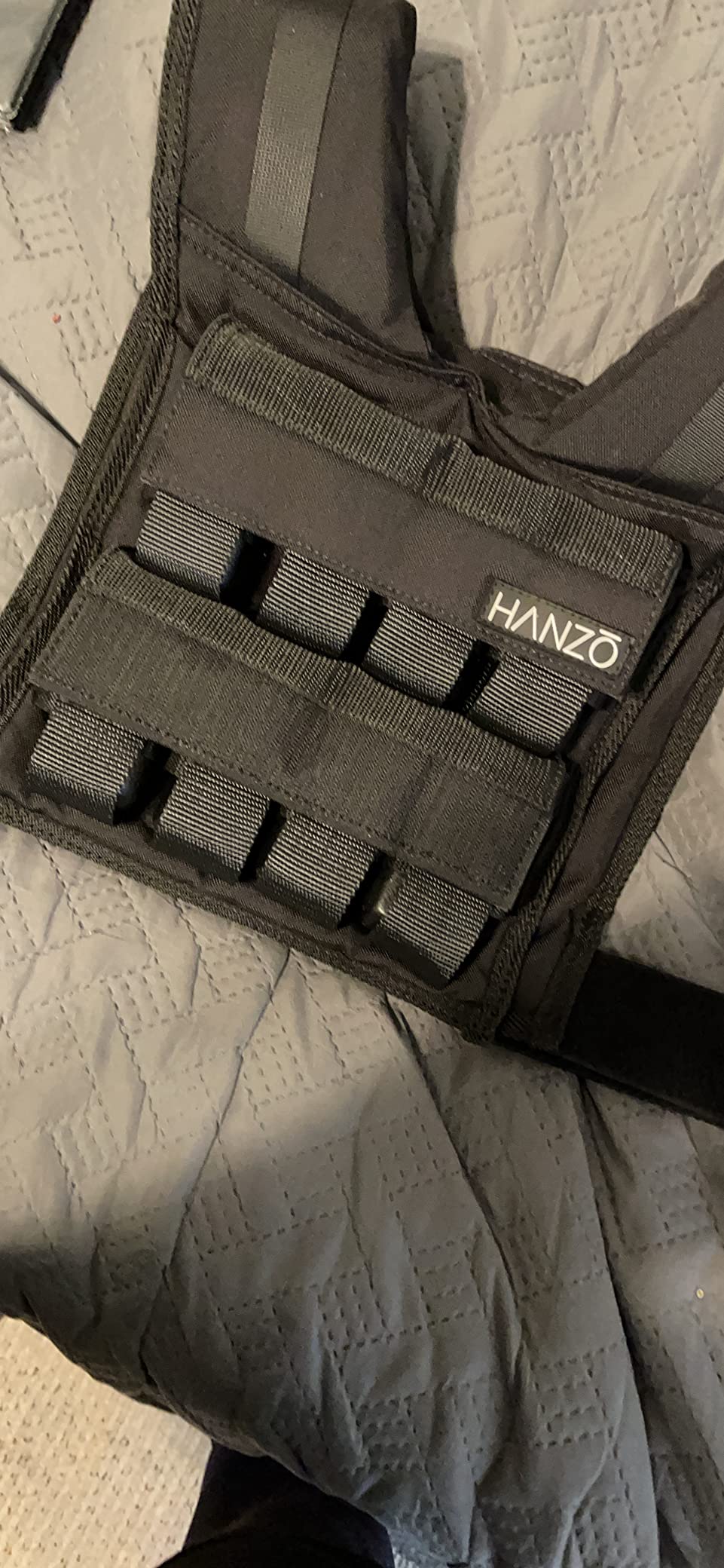
Everything you need arrives in the box, which removes the single most common reason a new vest sits unused for weeks. The full set of iron bricks is included, so you can load the vest and start training rather than ordering plates separately.
Owners describe the fit as stable and snug through pull-ups, push-ups, dips and squats, with no riding up mid-set. Double-padded shoulders spread the load without digging in, and the reinforced 1000D Oxford nylon with heavy-duty stitching is intended for repeated daily work.
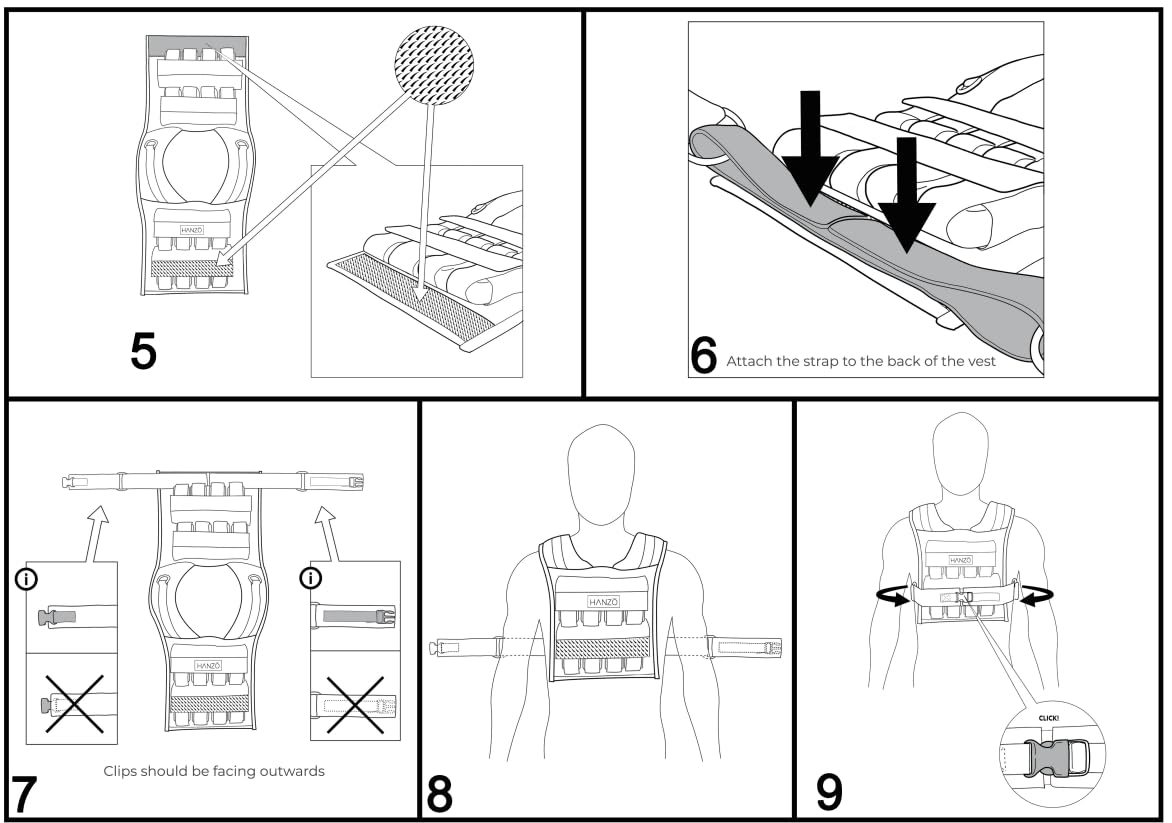
The bricks add or remove in seconds, and the adjustable system runs up to 45 lb in this configuration, with 25 lb, 35 lb, 45 lb and 65 lb versions across the line. That makes it a straightforward one-purchase solution for a home setup.
The main drawback is heat. It is a heavier overall build than the featherweight vests, and reviewers note it feels warm across a long session, particularly in warmer weather. The bricks are also less precise to adjust than micro-weight systems, and the sizing runs close so the buckles need careful setting.
Who it suits and who it does not
This is the low-friction pick for a beginner or returning athlete who wants to start weighted training this week without a second order. It is a solid all-round choice for someone splitting time between calisthenics circuits and general strength work.
It suits you less well if you train in a hot climate or plan very long sessions in the vest, or if you want to make precise 1 lb jumps rather than brick-sized steps. Set the buckles carefully on day one and the snug fit works in your favour afterwards.
10. BAGAIL 20-40 lb Vest – Best for Low-Light Outdoor Training
BAGAIL Weighted Vest Men, 20lbs/30lbs/40lbs Adjustable Weighted Vest for Woman with Removable Iron Weights, Women’s Weight Vest for Walking, Rucking, Running, Strength training – 40lb
20, 30 and 40 lb versions
2.5 lb iron blocks
1200D Oxford nylon
Reflective strips
Pros
- Tough 1200D Oxford shell with reinforced stitching
- Extra-thick shoulder pads and dual waist belt
- Quick clean changes with rust-resistant iron blocks
- Washable breathable fabric that resists odour
Cons
- Iron blocks add noticeable bulk
- Reflective detailing and branding are conspicuous
- Runs snug at the chest until sizing is adjusted
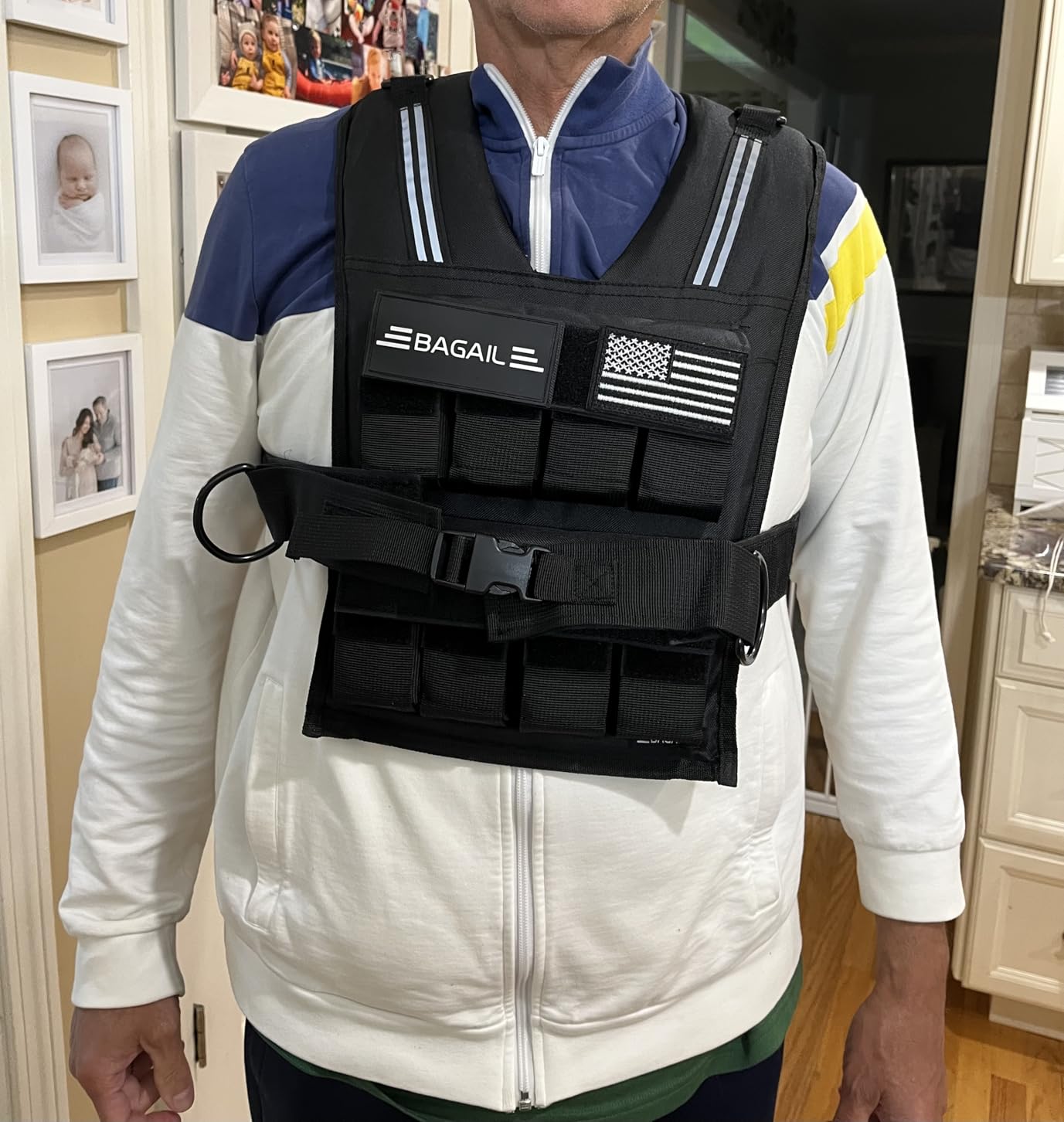
If your calisthenics happens on a road, a track or a trail in poor light, the reflective strips front and rear are the detail that makes this one worth a look. Combined with the extra-thick shoulder pads and a dual waist belt, it is a stable, well-padded setup for loaded running and circuits.
Loading is with rust-resistant 2.5 lb iron blocks in 8, 12 or 16 block counts for the 20 lb, 30 lb and 40 lb versions. Blocks come out cleanly and quickly, and the 1200D Oxford nylon with reinforced stitching is the heaviest-denier shell listed in this roundup.
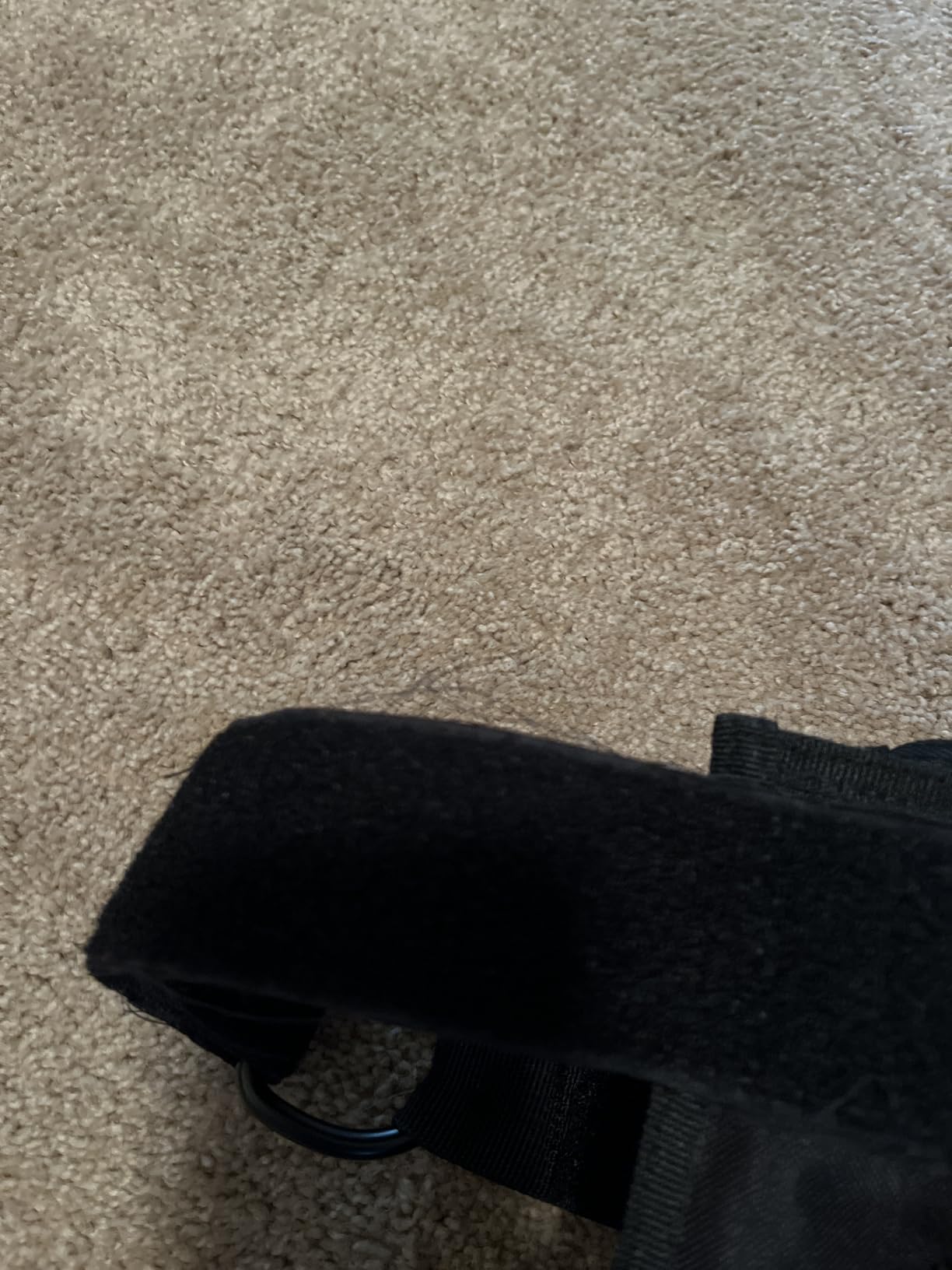
Breathable panels and a washable design mean the vest can be cleaned between sessions without fuss, and owners note that the fabric resists odour and dries well. Safety buckles plus wide Velcro straps give you a firm but flexible fit, and the adjustable chest sizing helps you dial it in.
The trade-off is bulk and visibility. The iron blocks make the profile noticeably heavier, and the reflective detailing and branding are more conspicuous than a discreet low-profile vest. Some body types report it running snug at the chest until the sizing is adjusted.
Who it suits and who it does not
This fits outdoor and park-based athletes who want padding, durability and reflectivity in one package, and anyone moving between loaded running and calisthenics in the same week. The warranty adds eighteen months of cover on top of the build quality.
Choose something slimmer if you care more about disappearing under clothing or keeping your torso profile narrow for kipping work. Check the chest sizing carefully if you are broader through the chest, since that is where the snug fit gets reported.
11. Gymnastics Power Adjustable Vest – Best for Squats and Inverted Work
Weighted Vest Adjustable for Men & Women – Strength Training Weight Vests for Walking, Running, Fitness & Cross Training, Adjustable Weighted Vest for Men’s Workouts, Rucking, 35LB, Black
20-60 lb range
2 lb steel blocks
Cropped minimalist profile
TPE foam shoulder straps
Pros
- Short cropped profile clears the hips for squats and inverted work
- Well-padded TPE foam shoulder straps
- Stitching survives repeated machine washing
- Fits smaller frames while supporting 60 lb
Cons
- Weight pockets open at the bottom so blocks can shift
- Premium cost for a 60 lb capacity
- Solid steel blocks make the vest heavy and warm
The cropped profile is the whole point. Because the vest sits high on the torso and stops short of the hips, it stays out of the way during squats, sit-ups, L-sits and handstand work, where longer vests tend to catch on your legs or limit your hip angle.
Owners rate it highly for compactness, padding and range of movement across calisthenics, CrossFit and long walks. The TPE foam shoulder straps spread load across the traps, and the 1000D nylon shell with reinforced double stitching survives repeated machine washing without fraying.
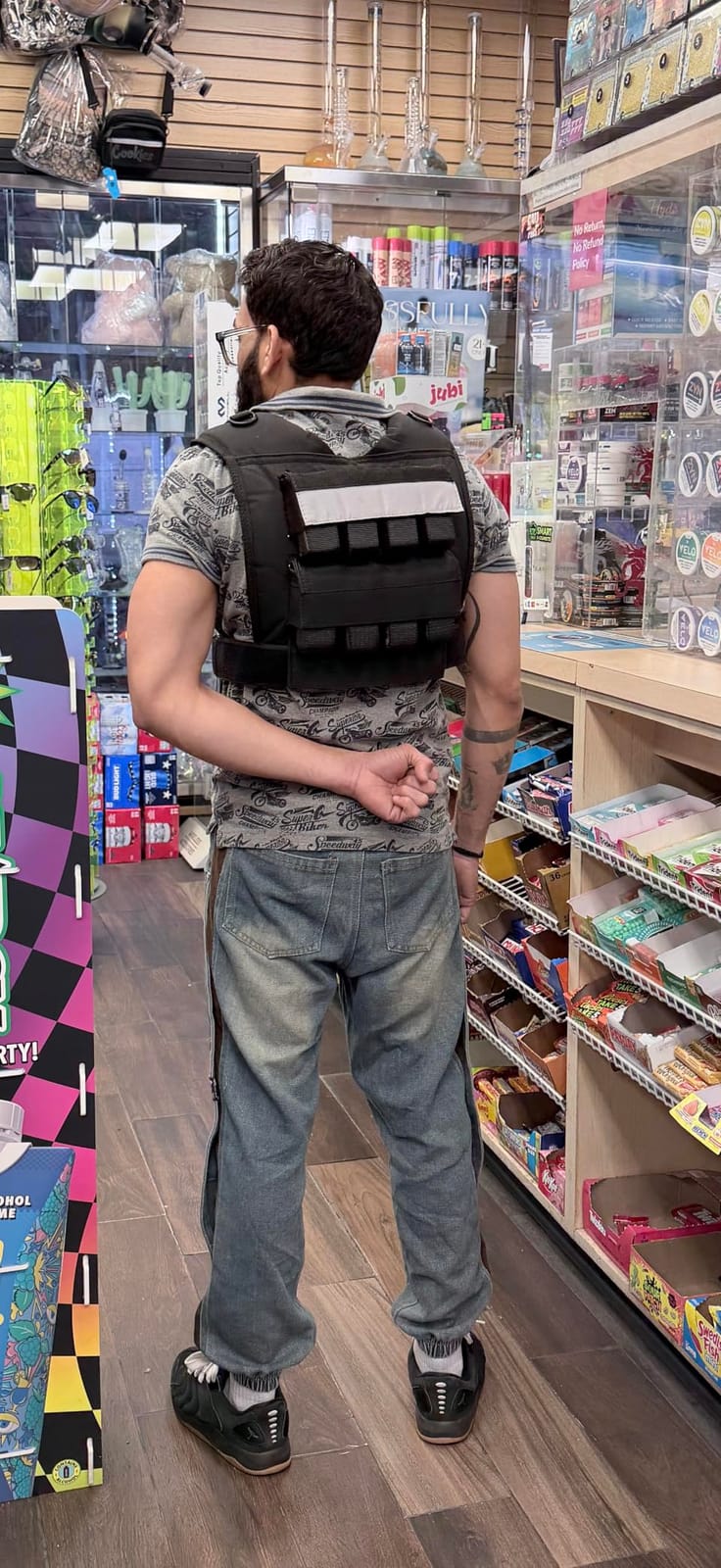
Loading is with removable solid steel blocks of roughly 2 lb each, and capacities run from 20 lb to 60 lb. A front zippered pocket handles small items and a rear reflective strip helps in low light, and the fit suits smaller frames even at the higher capacities.
One safety point is worth repeating from owner feedback: the weight pockets open at the bottom, so blocks can slide out during vigorous movement, and at least one reviewer flags this as a risk during fast hill work. Steel blocks also make the vest noticeably heavy and warm in heat.

Who it suits and who it does not
Pick this for calisthenics athletes whose training includes squats, L-sits, handstands and any inverted position where vest length matters. It also works for smaller frames who want more capacity than a compact light vest can offer.
It suits you less well if you sprint or run hard on uneven ground, because of the open-bottom pockets, or if heat is a constant factor. If the smallest step you can make is too coarse, look for a vest using sub-2 lb increments instead.
12. Sportneer 2-18 lb Adjustable Vest – Best for Light Load and Warm-Ups
Sportneer Adjustable Weighted Vest Weights: 2-18 lbs Washable Weight Vest for Walking 16 In 1 Fast Adjust Rucking Vest for Women and Men Home Gym Running Jogging Strength Training Vests
2-18 lb range
8 x 2 lb plus 1 x 1 lb pack
Zipper entry
Washable neoprene
Pros
- Fast granular adjustment across nine packs
- Zipper entry is far quicker than over-the-head designs
- Light when empty and fully washable
- Close-fitting neoprene spreads weight evenly
Cons
- 18 lb ceiling sits well below the heavier vests
- Double locks need manual adjustment every session
- Sizing needs attention to avoid ordering the wrong fit
Not every session needs 40 lb. This vest covers the light end of the range at 2 lb to 18 lb, which makes it a good tool for warm-ups, walking, technique practice and building tolerance before you buy into something heavier.
The adjustment system is the best part: eight 2 lb packs plus one 1 lb pack give you nine possible steps, spread across four front and five rear positions for even distribution. Full zipper entry makes it the quickest vest here to put on and take off, and everything unzips for washing.
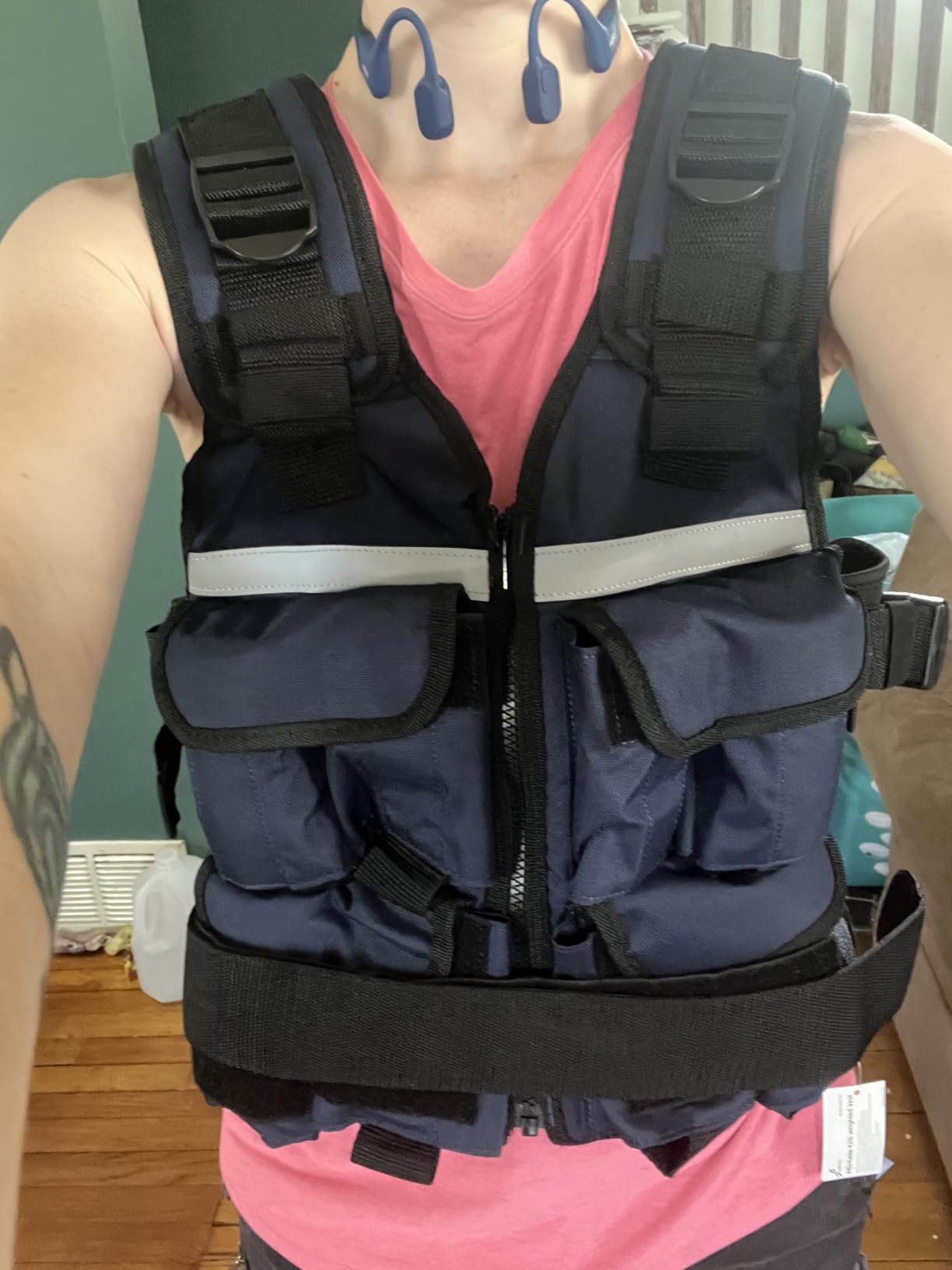
The neoprene construction sits close to the body, is skin-friendly and absorbs sweat, with reflective strips front and rear for visibility. A double-lock waist and shoulder system keeps the fit stable once you have set it, and the vest weighs little when empty.
The ceiling is the honest limitation. 18 lb is well below the heavier vests here, so it will not support advanced weighted calisthenics. The locks also need manual adjusting before each session, and the sizing deserves real attention to avoid ordering a poor fit.
Who it suits and who it does not
This is the right pick for beginners building tolerance, for anyone who wants a vest for travel and park sessions without a heavy shell, and for athletes who train both unweighted and lightly loaded in the same week. The zipper entry alone changes the daily experience.
Do not buy it as your only vest if your goal is weighted muscle-ups or heavy dips. Treat it as a companion piece, or plan to move up to a 40 lb or higher model once you are ready for serious loading.
How to Choose a Weighted Vest for Calisthenics
Range of motion comes first. Anything you do overhead, inverted or kipping will be limited by vest length and profile. The cropped and slim designs here, including the Gymnastics Power and Hyperwear options, clear the hips and the shoulder line far better than a bulkier tactical shell. If your training is dips and weighted pull-ups, test the vest with a full overhead reach before you commit.
Pick a capacity above your current ceiling. Most athletes reach their top working load and plateau again. The 20 lb to 150 lb ranges in this roundup mean one purchase can cover years, while a 40 lb vest is a shorter-term tool unless your bodyweight strength is already high. If you are starting out, anything from 20 lb to 45 lb is plenty for the first year of weighted work.
Weight increments decide how precisely you can progress. The Hyperwear vest uses 2.25 oz micro-weights, MVRK uses roughly 2.18 lb blocks, the ERIC FLAG uses 2.4 lb blocks and the miR uses 3 lb blocks. Fine steps are better for chasing a new weighted pull-up rep, while coarse steps are simpler to manage if you are adding load in phases.
Sizing is where most disappointment comes from. Short torsos and smaller frames repeatedly report better results with short, close-fitting vests such as the ZFOsports design, while longer vests can sit at the hips. For women and anyone with a shorter torso, the ZFOsports, Gymnastics Power and Hyperwear profiles are the ones to try first. Adjust the straps while wearing the load you plan to train in, not while empty.
Load placement beats total weight. A vest that biases weight to the upper back sits closer to your centre of gravity and keeps burpees from pitching forward. Vests that hang everything from the shoulders will chafe, tire your traps and, in reviews of several models here, leave light pressure marks by the end of a session.
Breathability matters more than most spec sheets admit. Look for mesh panels or airflow sections, and check whether the material is neoprene, which is warm, or a breathable hybrid, which is not. The miR and RUNmax both scored well here on ventilation during long sessions, and both are washable, which helps more than the fabric choice in hot weather.
Check the total cost of the system, not the vest. Plate carriers such as the Wolf Tactical design arrive as a shell, and you need to add weights. Removable-block vests come complete, which is why the HANZO and ERIC FLAG options are easier to start with. If you already own standard plates, a carrier becomes much cheaper to fill than a bespoke weight set.
For context on how much load to carry in other disciplines, our picks for the best weighted vests for training overlap heavily with this list, while the best hydration vests for trail running cover the long-distance carrying side. A lightweight shell like the cycling wind vests category makes more sense in cold weather, where breathability matters less than wind.
Weight Progression Guidelines for Calisthenics
Start light and stay there for a while. Most athletes do their best work in the range of 10% to 20% of bodyweight for pull-ups, which for most people lands in the 15 lb to 30 lb band. Add weight only when you can hit a clean set with full range of motion and no swinging.
Change one variable at a time. If you add weight, hold your reps steady for a week or two before raising it again. If you add reps, keep the load fixed. Changing both at once makes it impossible to know which change your body adapted to.
Use the smallest step your vest allows. Progressing by 2 lb rather than 5 lb means you pass through a range where your form stays solid, which is where most of the strength adaptation happens. A vest you can set to the exact load you need beats a heavier one you can only set coarsely.
Expect different ceilings per movement. A 30 lb vest that is manageable on weighted dips can be at the edge of your limit on weighted pull-ups, because the pulling muscles and the shoulder angle demand more. Track the load separately for each movement rather than assuming one number works everywhere.
Deload when form breaks down. If your kipping returns or your hollow body position collapses under load, you have progressed faster than your connective tissue. Step back one increment, rebuild the movement, and add the load again.
Weighted Vest vs Dip Belt vs Backpack
A dip belt loads only the lower body and only on dips, so it is the cheapest way to progress dips specifically. It stays in your gym bag, costs a fraction of a vest and adds nothing to pull-ups, push-ups, squats or running.
A backpack with plates or books in it is the flexible option. It carries high capacity and you can load it with anything, but the load sits further from your centre of gravity, moves independently of your body and interferes with kipping pull-ups and handstands. It is a good rucking tool and a poor calisthenics tool.
A weighted vest is the only one of the three that trains your whole body at once with the same load, and the only one that stays with you from a park to a squat rack. Members of r/bodyweightfitness repeatedly frame the choice this way, treating a vest as the primary loading tool for bodyweight athletes who do not own a barbell.
Frequently Asked Questions
Are weighted vests good for calisthenics?
Yes, for intermediate and advanced athletes who have already mastered bodyweight reps. A vest adds scalable resistance to pull-ups, dips, push-ups, squats and muscle-ups without a barbell, which is what makes it one of the simplest ways past a bodyweight plateau. It also trains your core and stabilisers to hold a position under load.
Is a 20 lb weighted vest too heavy for calisthenics?
For most people it is a sensible first working load, not too heavy. A common starting range is around 10% to 20% of bodyweight, so 20 lb suits a lot of athletes for weighted pull-ups and dips. Start at a load you can handle for 8 to 10 clean reps and add weight only when the form stays solid.
What are the downsides of wearing weighted vests?
The most common complaints are load riding up during dynamic movements, chest compression that makes high-rep breathing harder, chafing on the shoulders and neck, heat build-up in non-breathable fabrics, and tedious packet or block changes. A snug fit, padded shoulders, a breathable shell and fine weight increments all reduce these problems.
Does walking with a 20 lb weighted vest burn more calories?
Walking with added load raises the energy cost of every step, so yes you expend more than walking unloaded. Owners also report that the added work builds leg and core endurance. Keep the load moderate and bias weight toward the back, since front-loaded weight makes running bouncy rather than harder in a useful way.
Weighted vest or dip belt for calisthenics?
A dip belt if dips are the only weighted movement you care about, because it is cheap and stores anywhere. A weighted vest if you want to progress pull-ups, dips, push-ups, squats and running with one tool, since a dip belt adds nothing to those other movements and a backpack interferes with kipping work.
Final Verdict: The Best Weighted Vests for Calisthenics in 2026
The RUNmax earns our Editor’s Choice for the best weighted vests for calisthenics because a 20 lb to 150 lb range, a bounce-free fit and a lifetime warranty cover just about every serious bodyweight athlete in one purchase. The CAP vest is the value pick, the miR Air Flow is the one to buy if you sweat through long sessions, and the Gymnastics Power cropped profile is the answer for anyone whose training includes squats, L-sits and handstand work.
Start with a load you can control, progress in the smallest steps the vest allows, and check the fit while wearing it. That last point decides more sessions than any spec on the label. We will keep updating this roundup as new models land.