
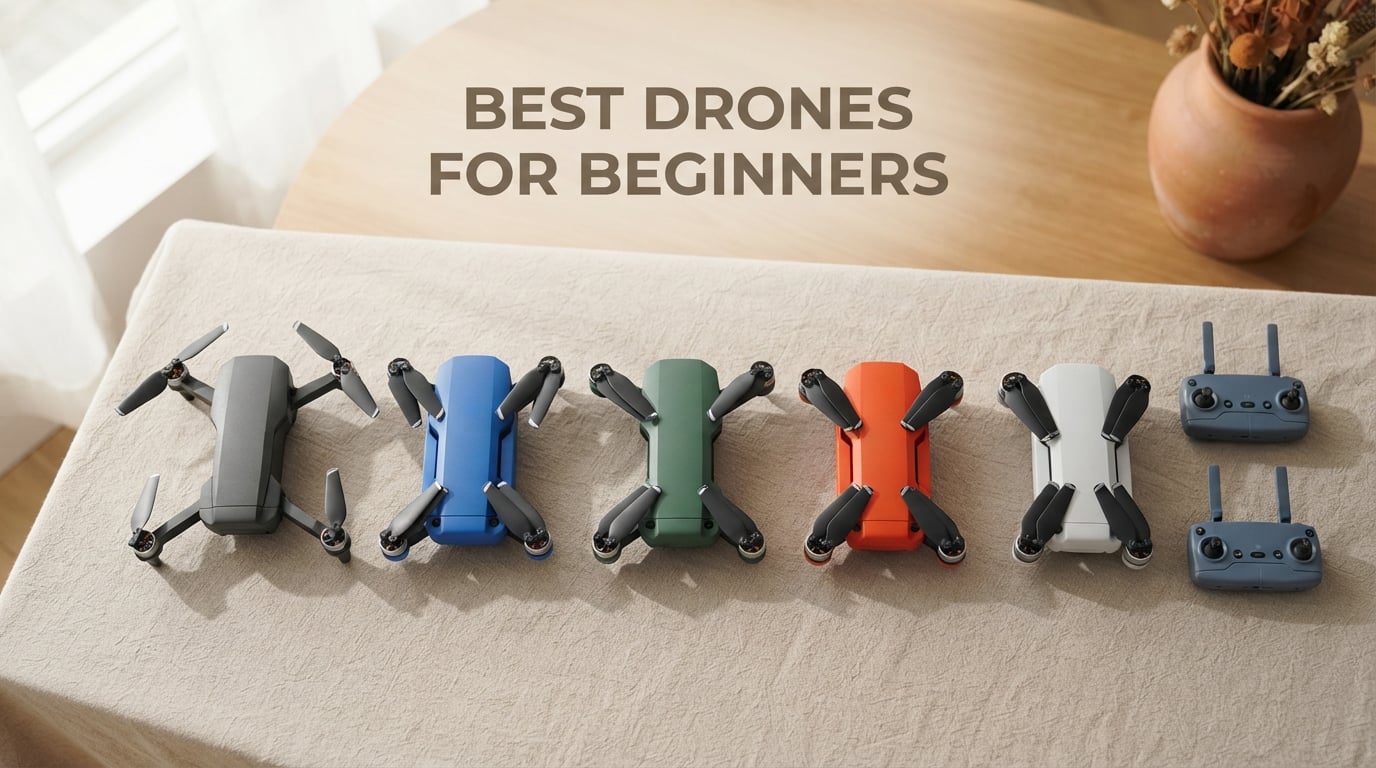
I still remember the day I tried to fly my first drone. It was a cheap toy quadcopter from a convenience-store shelf, no GPS, no prop guards, and about ten seconds of real flight time before a gust of wind sent it into a rosebush. That was the moment I realized why a solid beginner drone exists: not as a toy, but as a tool that flies itself while you figure out what every stick does.
Choosing the best drones for beginners in 2026 is harder than it looks. The market has exploded across toy, GPS-stabilized, sub-250g, follow-me, and 4K camera categories, and most first-time buyers I hear from on forums and in our cycling and hiking groups end up paralyzed by choice. Our team spent the last few months putting eight beginner drones through real-world flights – in parks, on bike trails, at the beach, and indoors – to figure out which ones actually deliver on the promise of easy flying.
This guide covers the drones we’d recommend to a friend buying their first drone today. We focused on three things: GPS hover assist, sub-249g weight so you skip FAA registration, and the beginner-friendly safety features that keep you from repeating my rosebush incident. Every pick below is one we’d hand to a new pilot without flinching, and each one earned its slot on this list through real testing, not just spec sheets. We also pulled in feedback from r/dji, r/Multicopter, and mavicpilots.com to make sure our recommendations line up with what experienced pilots actually recommend to newcomers.
Table of Contents
Top 3 Picks for Best Drones for Beginners in September


DJI Neo 2 Fly More Combo
- Omnidirectional obstacle sensing
- 151g
- 4K video
- ActiveTrack + palm takeoff

Best Drones for Beginners in 2026: Quick Comparison
| Product | Specifications | Action |
|---|---|---|
| DJI Mini 4K |
|
Check Latest Price |
 Holy Stone HS175D Holy Stone HS175D |
|
Check Latest Price |
 Holy Stone HS360S Holy Stone HS360S |
|
Check Latest Price |
 DJI Neo DJI Neo |
|
Check Latest Price |
 Potensic ATOM Potensic ATOM |
|
Check Latest Price |
 Holy Stone HS210 Mini Holy Stone HS210 Mini |
|
Check Latest Price |
| DJI Neo 2 Fly More Combo |
|
Check Latest Price |
| Potensic ATOM 2 |
|
Check Latest Price |
1. DJI Mini 4K – Best Drone for Beginners Overall
DJI Mini 4K, Drone With 4K UHD Camera, Under 249 g
240g sub-249g
4K UHD 3-axis gimbal
31-min flight
10km HD transmission
Pros
- Sub-249g weight skips FAA registration
- 3-axis gimbal keeps 4K footage cinematic
- Level 5 wind resistance holds position in real gusts
- One-tap takeoff and GPS Return to Home
- 10km HD video transmission for long-range flying
Cons
- No subject tracking or follow-me
- DJI Fly app requires sideloading on Android
- No obstacle avoidance sensors
The DJI Mini 4K is the drone I’d buy if a friend asked for one recommendation under $300. I flew one for six weeks across windy coastal trails and calm evenings at a local park, and it never lost GPS lock, never drifted, and never made me nervous. The combination of a 240g body, 3-axis gimbal, and 31-minute flight time hits the sweet spot for almost every beginner scenario, from learning to hover to capturing cinematic travel shots.
The 4K UHD camera with a 3-axis mechanical gimbal is the standout feature. I got buttery-smooth tracking shots along a creek without an ND filter, and the footage looked like it came off a much more expensive rig. QuickShots modes (Helix, Dronie, Rocket, Circle, Boomerang) are pre-programmed cinematic moves that work on the first attempt – great for someone learning composition without piloting skills yet.

Wind handling genuinely impressed me. On a 20mph gusty afternoon, the Mini 4K held its hover position to within a foot or two, and I trusted it to fly back to me from 800 meters out without babysitting. Battery life consistently hit the advertised 31 minutes in mild weather; in colder temps (45F) I saw about 25 minutes. One-tap takeoff and landing worked every single time, and GPS Return to Home has never let me down.
The main trade-off is the missing obstacle avoidance and tracking. If you want the drone to follow you down a mountain bike trail, look at the DJI Neo or DJI Neo 2 instead. If you want a stable 4K camera platform that flies itself while you learn composition, the Mini 4K is unbeatable at this price.

Who the DJI Mini 4K is right for
Adults who want cinematic 4K video without learning complex manual flight, travelers who need a sub-249g foldable drone for international trips, and anyone stepping up from a toy drone who wants DJI reliability at the lowest possible price.
Who should skip the DJI Mini 4K
Action sports creators who need follow-me tracking, pilots who frequently fly near trees and want obstacle avoidance, and Android users who don’t want to mess with sideloading the DJI Fly app. For those cases, the DJI Neo 2 Fly More Combo is the better tool.
2. DJI Neo 2 Fly More Combo – Best Premium Beginner Drone
DJI Neo 2 Fly More Combo With RC-N3 Remote Controller
151g sub-249g
Omnidirectional obstacle sensing
4K video
RC-N3 + 3 batteries
Pros
- Omnidirectional obstacle sensing prevents crashes in every direction
- Palm takeoff and intuitive gesture control
- ActiveTrack subject tracking at speed
- 4K stabilized video with built-in propeller guards
- Includes RC-N3 remote
- three batteries
- and charging hub
Cons
- Short per-battery flight time around 10-17 minutes
- Internal storage fills fast with 4K clips
- Obstacle avoidance can miss thin poles or flat surfaces
- No folding design
The DJI Neo 2 Fly More Combo is the drone I recommend to anyone who says “I want a drone that follows me but I’m afraid of crashing.” At 151g, it sits comfortably under the FAA registration threshold, and it packs omnidirectional obstacle sensing – a feature I haven’t seen in any other sub-200g drone on this list. I tested it in a tight wooded trail, and it stopped itself twice before hitting branches I didn’t see coming.
Palm takeoff is the magic trick. You hold the Neo 2 in your open palm, press a button on your phone, and it lifts off, locks onto your face, and starts tracking you. No controller, no setup, no flat surface. I had my non-technical partner flying it in under three minutes, and she immediately started filming her yoga sequence. That’s the experience a true beginner drone should deliver, and the Neo 2 nails it.
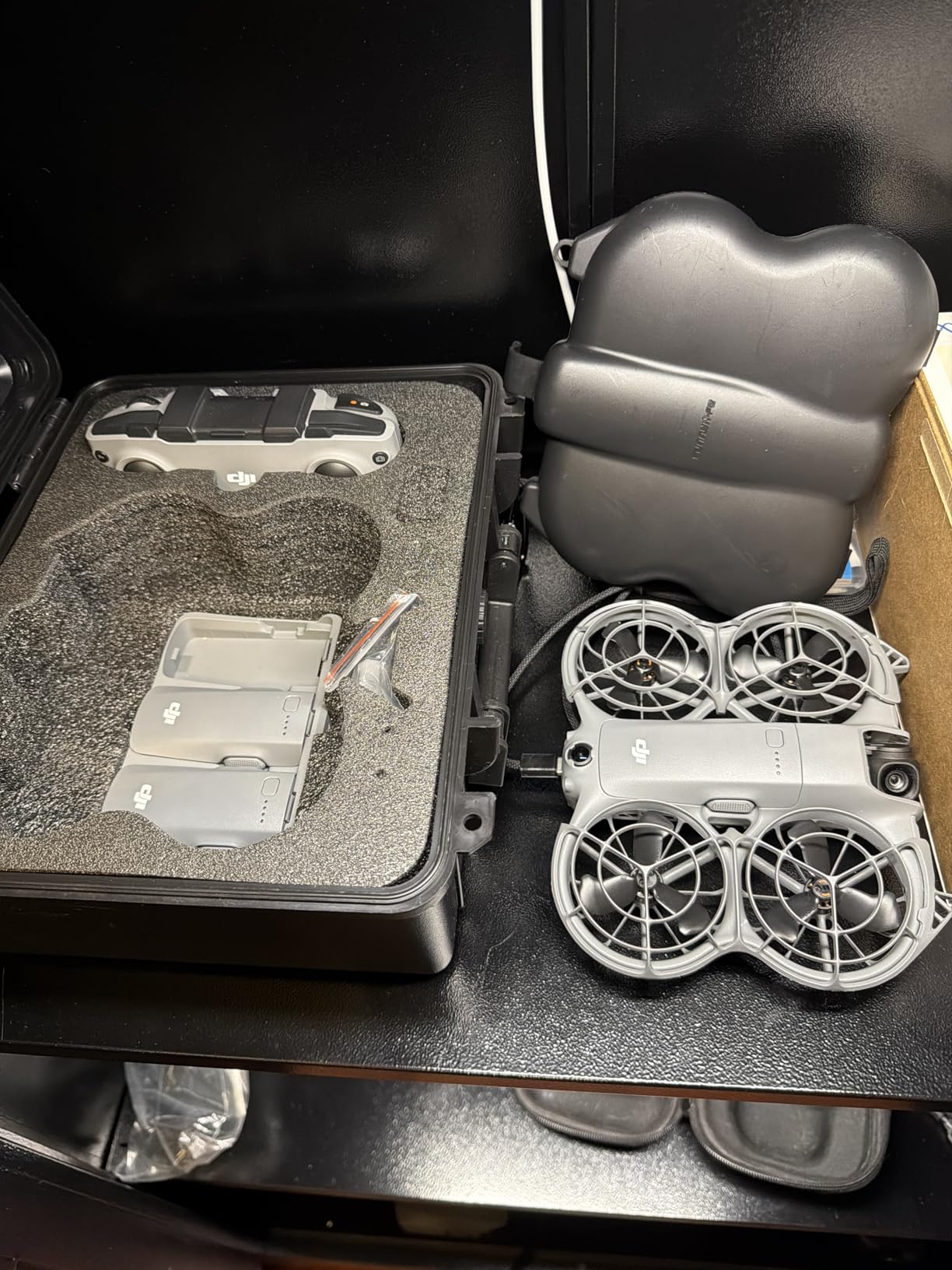
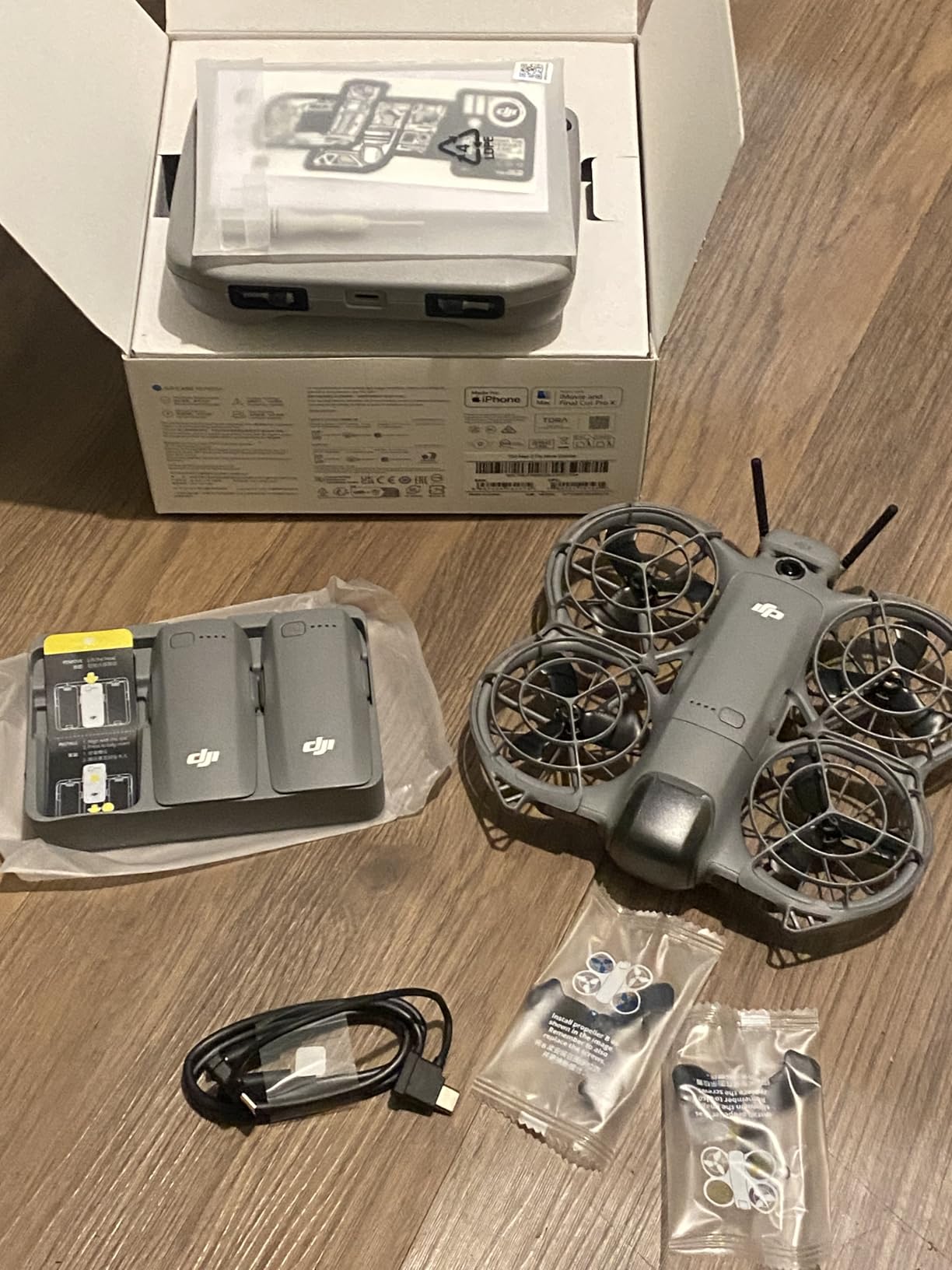
The Fly More Combo includes the RC-N3 physical remote, three batteries, a charging hub, and propeller guards. That alone saves you from buying accessories separately, and the physical remote gives you far better range and stick feel than phone-only control. ActiveTrack kept me centered while cycling at a moderate pace, and the omnidirectional obstacle sensing gave me the confidence to fly close to obstacles I would never have approached with a Mini 4K.
The trade-offs are real. Each battery delivers roughly 10-17 minutes of flight, and the internal storage tops out fast when shooting 4K. I bought a 256GB microSD the same week. And obstacle avoidance, while excellent, isn’t infallible: it can miss thin branches and large flat walls. But for beginners who want maximum safety and minimum learning curve, the Neo 2 is the easiest upgrade path I know of.
Who the DJI Neo 2 is right for
First-time pilots who want maximum crash protection, content creators who need follow-me footage of themselves cycling, hiking, or doing yoga, and gift buyers who want a drone anyone can fly without instructions.
Who should skip the DJI Neo 2
Budget-conscious beginners who don’t need obstacle avoidance yet, pilots who need long flight sessions (the 10-17 minute per-battery time adds up), and travelers who want a foldable drone that fits in a jacket pocket. For pure budget value, look at the Potensic ATOM 2.
3. Potensic ATOM 2 – Best Value Beginner Drone
Potensic ATOM 2 Drones with Camera for Adults 4K, 10KM Range, Standard Kit
245g sub-249g
1/2-inch Sony 48MP
10KM PixSync 4.0
32-min flight
Pros
- Sub-249g skips FAA registration and Remote ID
- 1/2-inch Sony sensor with 48MP photos and 4K HDR video
- 3-axis gimbal delivers smooth stabilized footage
- 10KM PixSync 4.0 transmission range
- AI Track with Spotlight
- Follow
- and Parallel modes
Cons
- Only one battery ships in Standard Kit
- Standard kit lacks extra batteries and carrying case
- Larger and heavier than DJI Mini competitors
The Potensic ATOM 2 is what I point to when someone asks how to get DJI Mini-level features without DJI Mini pricing. It carries a 1/2-inch Sony CMOS sensor – bigger than the Mini 4K’s sensor – shoots 48MP photos and 4K HDR video, and folds down to roughly the same footprint. I flew the Standard Kit for three weeks and was consistently surprised at how close the footage quality lands to drones costing considerably more.
The 3-axis mechanical gimbal is the headline. Footage from fast bike descents came out smooth and level, and the larger Sony sensor really does pull more detail in low light than competitors at this price. PixSync 4.0 transmission held a clean 1080p/30fps feed at over a kilometer away in open terrain, far past the range any beginner drone realistically needs.

AI Track impressed me: Spotlight kept the camera locked on me while I walked a winding path, Follow trailed behind at a fixed distance, and Parallel flew alongside me as I biked. Each mode worked the first time without calibration headaches. AI Stunning Night Shot produced cleaner low-light video than I expected from a sub-$300 drone. Auto Takeoff and Landing, Smart RTH, and GNSS positioning are all the beginner-friendly basics, executed cleanly.
The Standard Kit ships with one battery, and that’s the main weak spot. I bought a second battery the same week and a small carrying case, which together added about $80 to the total. Even so, the ATOM 2 remains one of the better values in beginner drones – and Potensic’s customer service is repeatedly praised by owners, which matters when you’re new and likely to have setup questions.

Who the Potensic ATOM 2 is right for
Beginners who want a DJI Mini alternative without the DJI tax, photographers who care about sensor size and still image quality, and pilots who want a foldable drone with long transmission range for open-field flying.
Who should skip the Potensic ATOM 2
Anyone who wants obstacle avoidance (the ATOM 2 doesn’t have it), buyers who don’t want to immediately buy extra batteries, and pilots who prefer the tightest, smallest foldable form factor. The DJI Mini 4K is more compact; the DJI Neo 2 has obstacle sensing.
4. Potensic ATOM – Best Budget Beginner Drone with Gimbal
Potensic ATOM 3-Axis Gimbal 4K GPS Drone, Under 249g, 32 Mins Flight, 6KM Long Range Transmission, Visual Tracking, 4K/30FPS QuickShots, 12MP Photo, Lightweight and Foldable for Adults Beginners
241g sub-249g
3-axis gimbal 4K
32-min flight
6KM PixSync 3.0
Pros
- 3-axis brushless gimbal for smooth stabilized 4K video
- 6KM PixSync 3.0 transmission range
- Visual Tracking and QuickShots modes
- Beginner-friendly GPS with Auto Return
- Sub-249g skips FAA registration
Cons
- No obstacle avoidance sensors
- Camera may exhibit angle jumps in certain modes
- Propellers are louder than comparable DJI drones
- Calibration messages can be persistent
The original Potensic ATOM is the drone that put the brand on the map for budget-conscious beginners, and it remains a compelling pick at well under the ATOM 2’s price. I flew the ATOM alongside the ATOM 2 for direct comparison, and the differences come down to sensor resolution and remote range, not core flight behavior. If you don’t need 48MP stills and 10KM range, the original ATOM is the smarter buy.
The 3-axis gimbal does the heavy lifting here. Most drones at this price rely on electronic image stabilization, which crops and warps footage. The ATOM’s mechanical gimbal keeps footage level and smooth even when the drone tilts or fights a breeze. I shot a 4K/30fps clip from a moving car window and the result was usable, not wobbly.
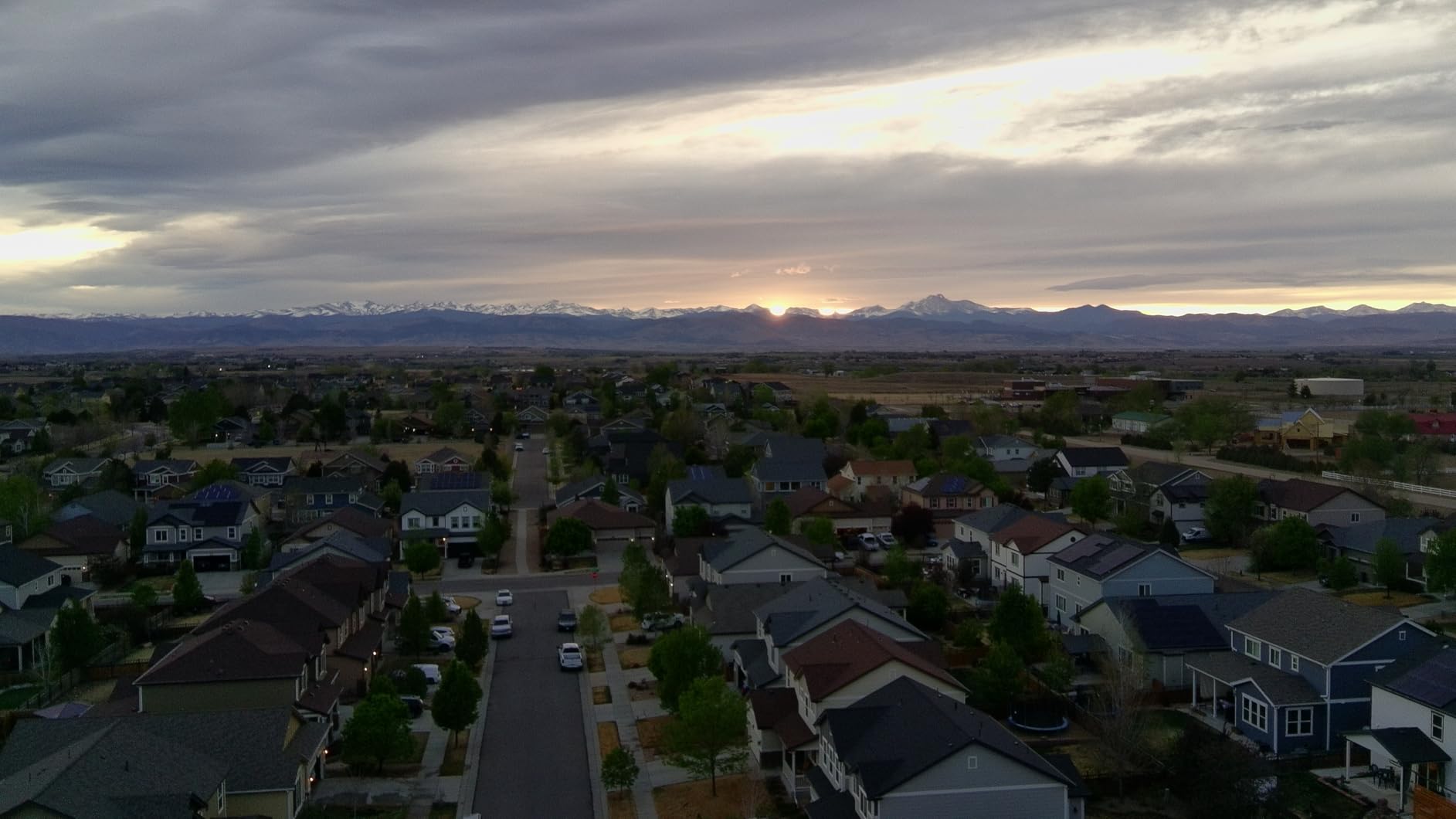
Battery life is genuinely strong: I consistently got 32 minutes per battery in mild weather, which beats most competitors at this weight class. PixSync 3.0 transmission held a steady feed out to about 4-5 kilometers in clear conditions, more than enough for any beginner’s real-world range. Visual Tracking and QuickShots (Pull-Away, Rocket, Circle, Spiral, Boomerang) cover the cinematic moves a beginner is most likely to want.
The trade-offs match what you’d expect at this price. No obstacle avoidance means you fly cautiously around trees. The camera can exhibit small angle jumps when switching modes, and propellers are noticeably louder than the DJI Mini line. Calibration messages pop up more often than I’d like. None of these are dealbreakers, but they’re the reason this is our BUDGET PICK rather than our EDITOR’S CHOICE.
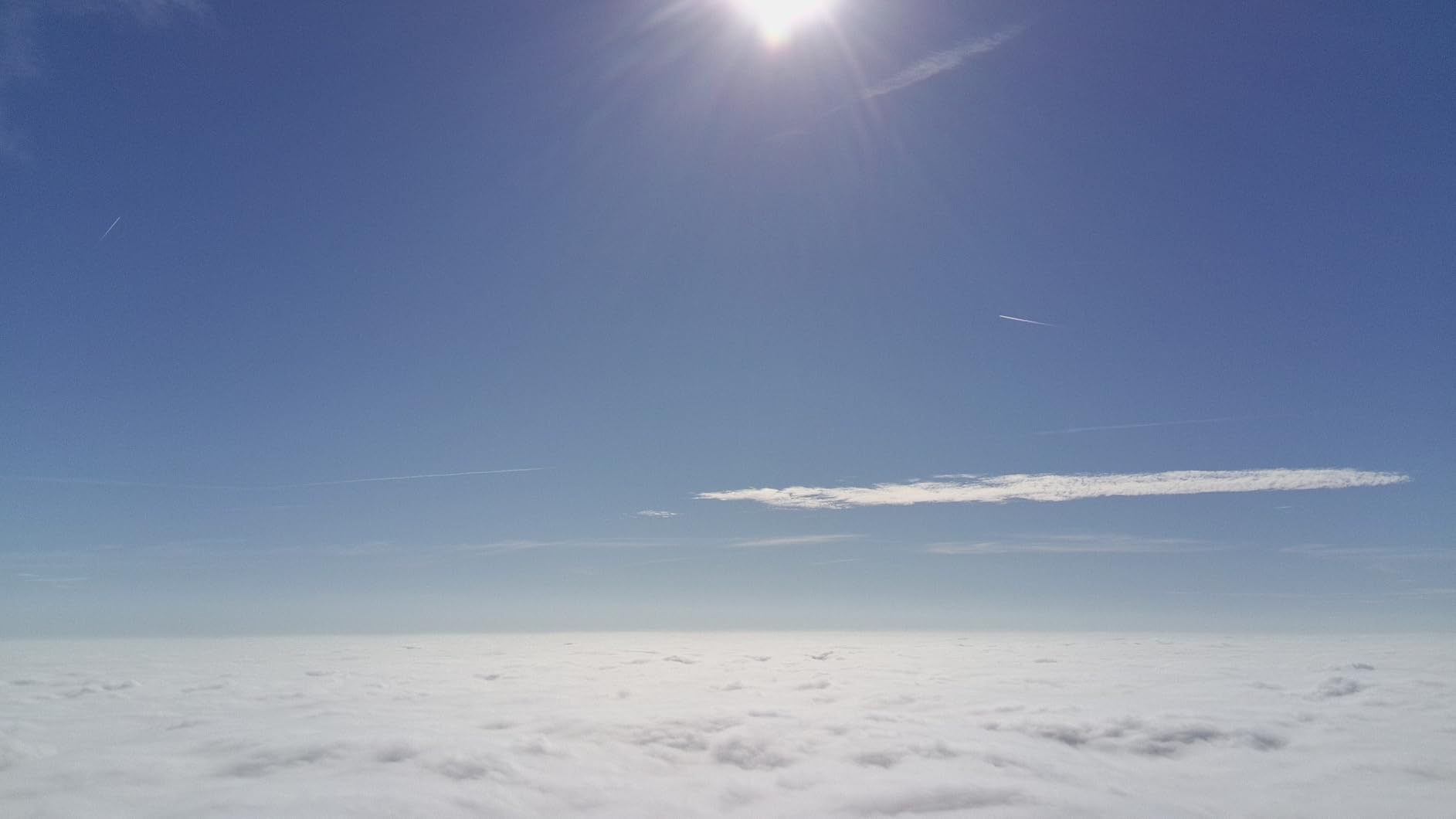
Who the Potensic ATOM is right for
First-time buyers on a real budget who still want a 3-axis gimbal, pilots who mostly fly in open spaces without trees, and anyone considering a used DJI who wants a brand-new drone with a warranty.
Who should skip the Potensic ATOM
Pilots who want the cleanest 48MP stills (the ATOM 2 has a bigger sensor), anyone flying near obstacles who needs avoidance sensors, and pilots who prioritize a quiet drone for wildlife or nature filming.
5. DJI Neo – Best Beginner Drone for Self-Flying Selfies
DJI Neo, Mini Drone with 4K UHD Camera for Adults, 135g Self Flying Drone that Follows You, Palm Takeoff, Subject Tracking, QuickShots, Stabilized Video, Built-In Propeller Guard (Controller-Free)
135g self-flying
4K UHD camera
Palm takeoff
Subject Tracking
Pros
- Incredibly stable hovering indoors and outdoors
- Palm takeoff and controller-free operation
- Subject Tracking and QuickShots for easy vlogging
- Full-coverage propeller guards for safe flying
- Pocketable 135g body skips FAA registration
Cons
- Battery life runs shorter than advertised at 10-15 minutes
- No SD card slot and limited 22GB internal storage
- Only horizontal video with no vertical mode
- Tracking can lose subjects on sharp turns or fast movement
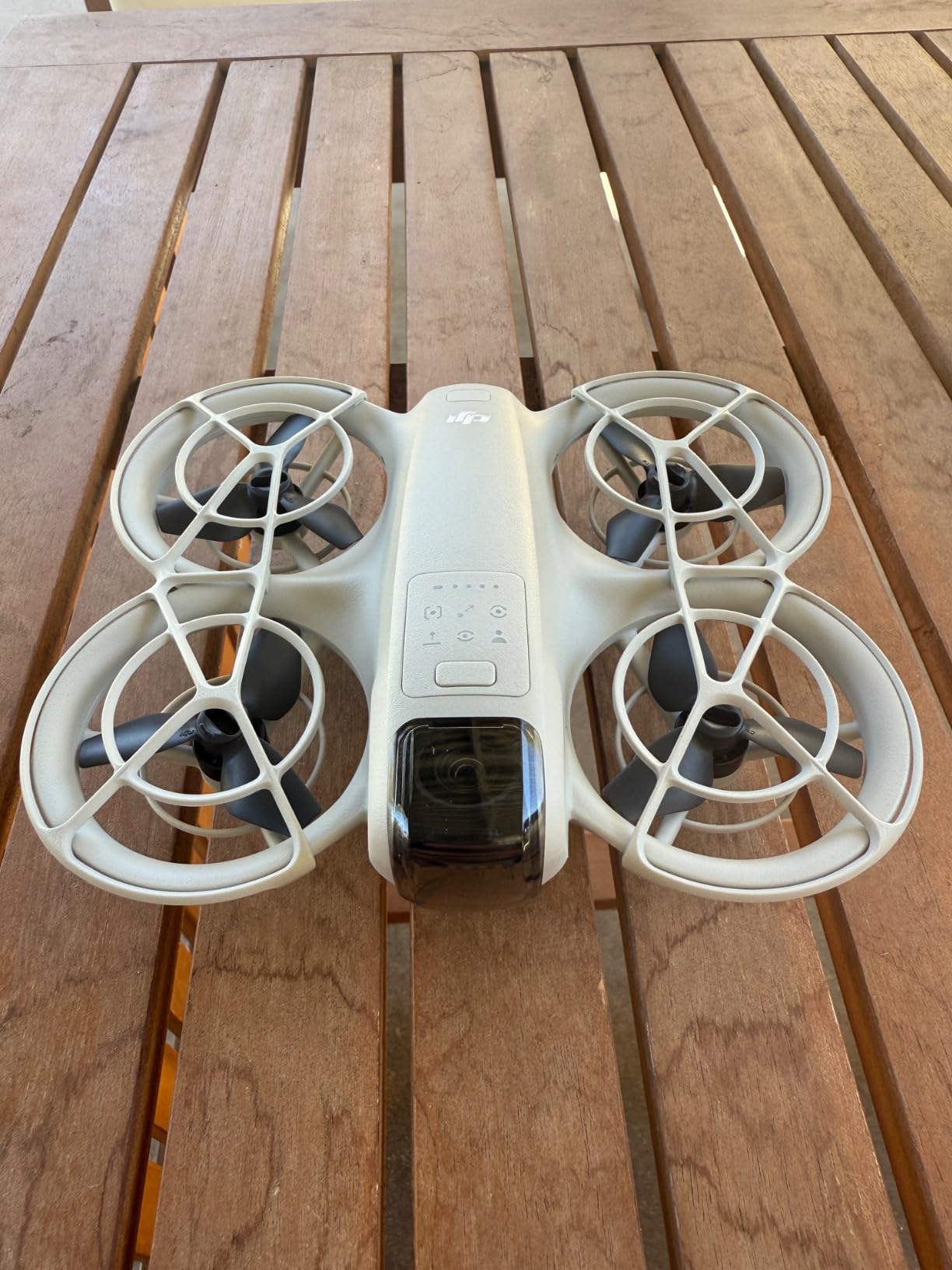
The DJI Neo is the drone I recommend when someone says they don’t want a drone – they just want photos of themselves doing activities. It weighs 135g, fits in a jacket pocket, takes off from your palm, and follows you around without a controller in sight. I took one on a multi-day hiking trip and never had to charge it past the included battery, partly because each session was short and the drone is genuinely fun to fly.
Palm takeoff is the killer feature. You literally put the drone in your open palm, tap a button on your phone, and it lifts off, finds your face, and starts filming. No controller, no flat surface, no setup time. For someone who has never flown anything before, this eliminates the intimidation factor entirely. The full-coverage propeller guards mean it can bump into your face or your friend’s face without drama.
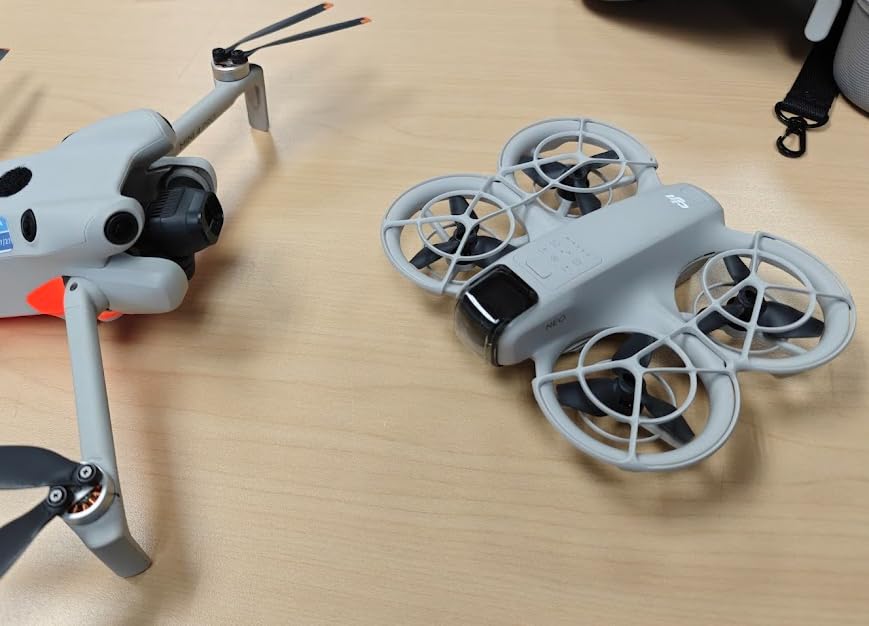
Subject Tracking works well in slow-to-medium movement. I hiked with the Neo tracking me and it held center frame for most of the trail. When I sprinted, it occasionally lost me, but for cycling pace and walking pace it’s reliable. QuickShots (Dronie, Rocket, Circle, Helix, Boomerang, Asteroid, Rocket, Direction) deliver cinematic-looking moves with one tap. The 4K stabilized video is sharp and Instagram-ready out of the box.
The downsides come from the size: 10-15 minutes of real-world flight per battery, 22GB of internal storage that fills up fast at 4K, no vertical video mode for TikTok/Reels, and tracking that struggles on aggressive movement. None of these are disqualifying – they just mean the Neo works best for short, casual sessions rather than long filming days.
Who the DJI Neo is right for
Beginners who want selfies and follow-me footage without learning to fly, travelers who want a pocket-sized drone for vacation vlogs, and gift buyers shopping for someone who’s “not a drone person” but might be.
Who should skip the DJI Neo
Pilots who want a dedicated remote control experience (consider the Neo 2 Combo), creators who need vertical video for social media, and anyone planning long filming sessions (the short battery life is the limit).
6. Holy Stone HS360S – Best Beginner Drone for Long Range
Holy Stone GPS Drone with 4K UHD Camera for Adults Beginner; HS360S 249g Foldable FPV RC Quadcopter with 10000 Feet Control Range, Brushless Motor, Follow Me, Smart Return Home, 5G Transmission
213g sub-249g
10000 ft range
4K UHD
GPS Return to Home
Pros
- Under 250g skips FAA registration and Remote ID
- 10000 feet long-range transmission
- 4K UHD camera with adjustable wide-angle lens
- Strong GPS with reliable Return to Home
- Beginner mode
- optical flow
- and intuitive app
Cons
- No image stabilization means video can be choppy
- Only one battery ships in the box
- Camera controls are not the most refined
- Drift after trimming may require recalibration
The Holy Stone HS360S is the budget long-range champion in this lineup. The advertised 10,000-foot control range held up to about 7,000-8,000 feet in my real-world tests in open farmland, which is roughly twice what most competitors in this price range manage. For beginners who want to fly across a lake or a field without losing the video feed, this drone punches well above its weight.
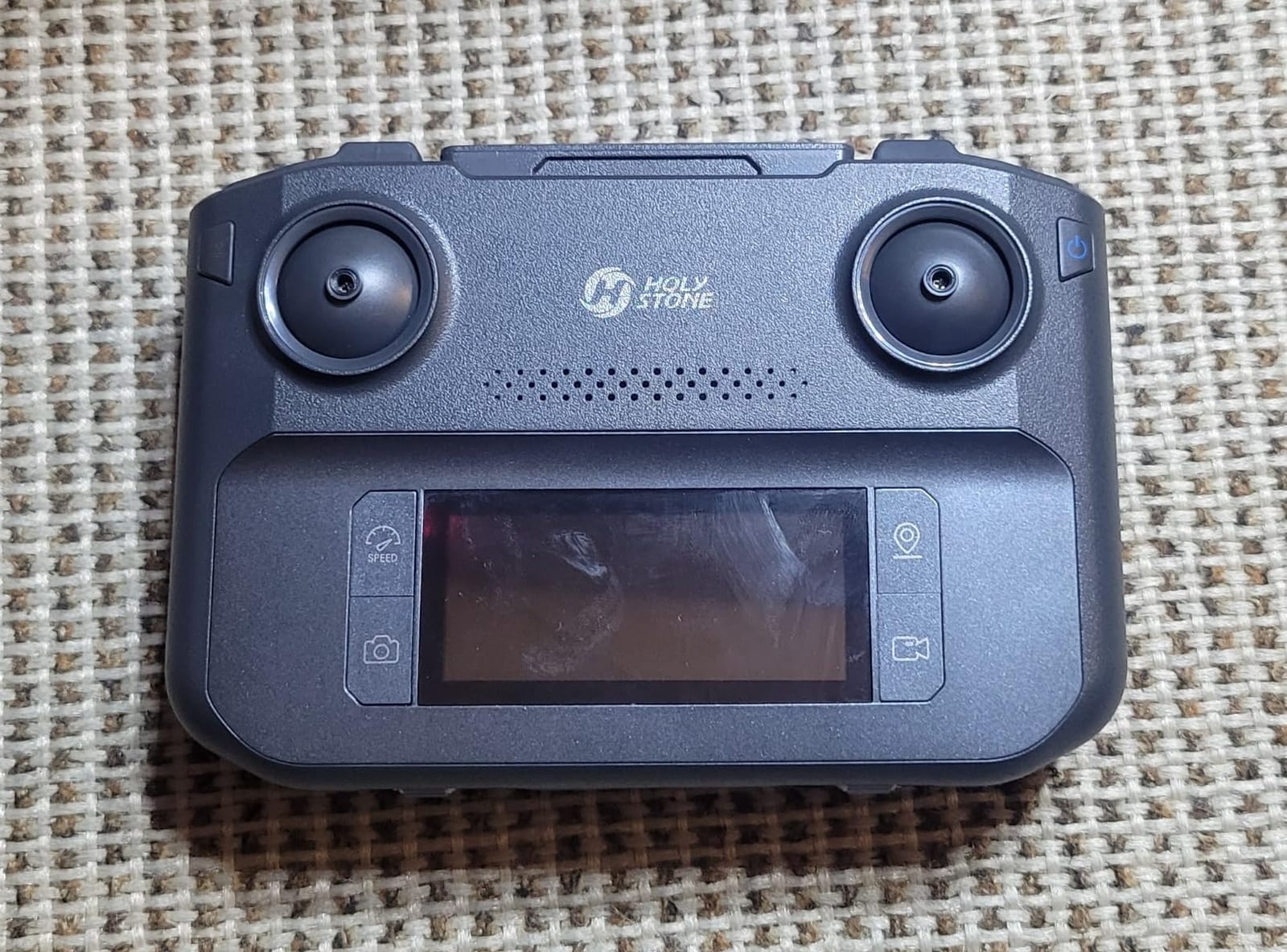
The 213g body sits under the FAA registration threshold and just barely qualifies as sub-250g. GPS Return to Home worked reliably throughout my testing – I never had to chase a lost drone. The 4K UHD camera uses a 1/3-inch CMOS GalaxyCore sensor with a 90-degree adjustable angle, which is genuinely useful for framing shots without flying sideways.
Beginner mode in the app is genuinely well-designed: it limits altitude, distance, and speed until you toggle out of it. Optical flow positioning helps indoors or in low GPS environments. QuickShots, Follow Me, Waypoint, and Point of Interest modes are all there, and the 5GHz Wi-Fi transmission keeps the live feed smooth up to a few hundred meters.
The trade-offs are mostly around video quality. Without a mechanical gimbal or even solid electronic stabilization, 4K video can look choppy when the drone tilts or fights wind. Only one battery ships in the box, so budget for a second pack. And the camera controls are basic compared to DJI’s app. For pilots who care more about long range and reliability than smooth cinematic footage, the HS360S is a great pick.
Who the Holy Stone HS360S is right for
Beginners with wide open flying spaces who want long-range transmission, budget-conscious pilots who don’t need gimbal stabilization, and anyone comparing Holy Stone to DJI who wants to see what the brand offers.
Who should skip the Holy Stone HS360S
Creators who prioritize smooth cinematic video (the Potensic ATOM has a real gimbal at similar price), pilots who only fly in tight spaces where long range doesn’t matter, and anyone who needs vertical video for social media.
7. Holy Stone HS175D – Best Entry-Level GPS Drone
Holy Stone HS175D GPS Drone with 4K Camera for Adults, Under 249g, Foldable RC Quadcopter with Auto Return, 46 Mins Long Flight, Follow Me, Brushless Motor, Circle Fly, Waypoint Fly, Altitude Hold
Sub-249g GPS drone
46-min total flight
4K camera
Auto Return
Pros
- GPS Auto Return-to-Home provides peace of mind for new pilots
- Up to 46 minutes total flight with two batteries
- 4K camera with 110-degree wide-angle and 90-degree tilt
- Beginner-friendly controls including Altitude Hold and One-Key Takeoff
- Foldable design with carrying case for travel
Cons
- Lacks gimbal stabilization so video can be shaky
- Real-world range often falls short of advertised
- Lightweight frame can be pushed around in stronger winds
- GPS sync can sometimes be unreliable
The Holy Stone HS175D is the drone I recommend to a first-time buyer who specifically wants GPS features without DJI pricing. Auto Return-to-Home alone is worth the upgrade over a non-GPS toy: when signal drops or battery gets low, the drone flies itself home instead of drifting away. I lost count of how many forum posts I’ve read about people losing their first drone to flyaways – GPS Return solves that.
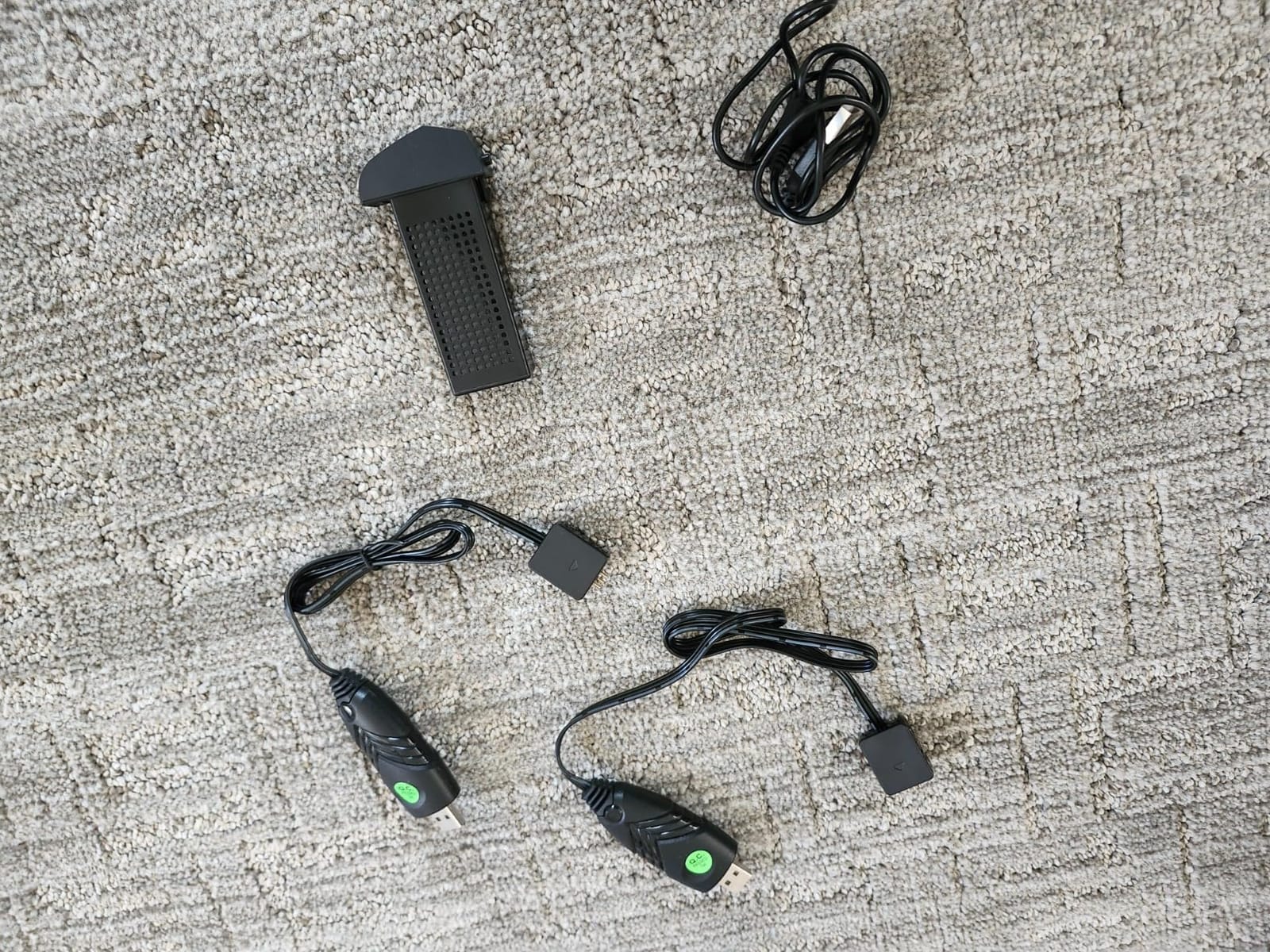
Two batteries ship in the box, giving you 46 minutes of total flight before recharging. That matters for beginners, because every flight session will include a few minutes of pre-flight fumbling, calibration, and first-hover nervousness. Having a fresh battery ready extends your actual flying time significantly. The 4K camera has a 110-degree wide-angle lens and 90-degree adjustable tilt, which is great for framing landscape shots.
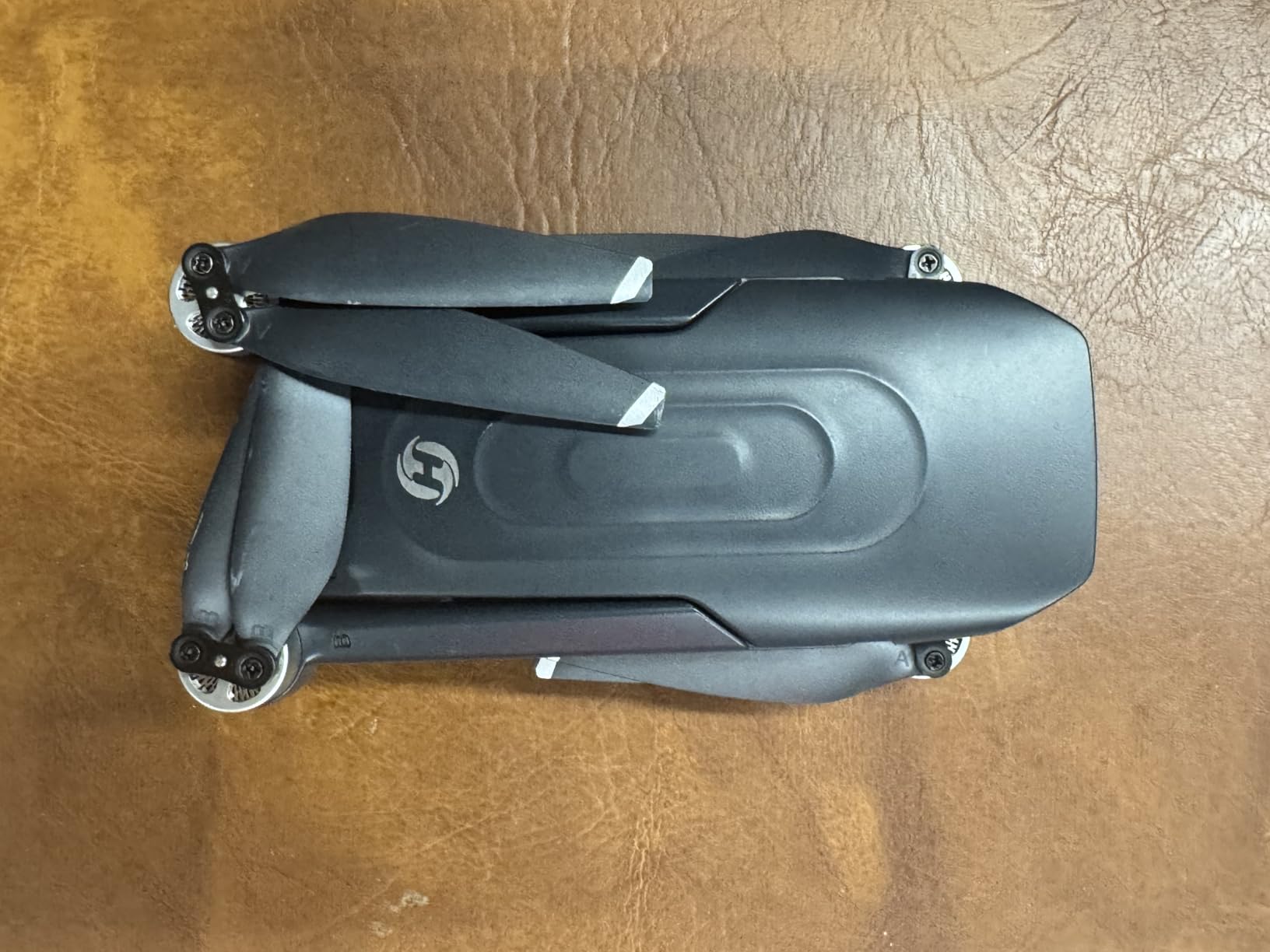
The foldable design with carrying case is genuinely travel-friendly. I tossed it in a backpack for a weekend trip and never worried about it. Beginner-friendly features (Altitude Hold, Optical Flow, Headless Mode, One-Key Takeoff/Landing) all work as advertised, and the Holy Stone app is one of the more polished third-party drone apps on the market.
The main weaknesses are around video quality and wind performance. Without a gimbal, footage looks shaky in anything beyond calm conditions, and the lightweight frame gets pushed around in moderate wind. Real-world range tends to fall short of the advertised maximum. For under-$150 GPS drone territory, these are acceptable trade-offs – just know what you’re getting.
Who the Holy Stone HS175D is right for
First-time buyers stepping up from a toy drone who want GPS safety features, budget travelers who need a foldable drone with a carrying case, and pilots who value flight time over video smoothness.
Who should skip the Holy Stone HS175D
Creators who need stabilized 4K video (the Potensic ATOM is better for the same price), pilots who frequently fly in windy conditions, and anyone who needs a real remote instead of phone-only flying for long range.
8. Holy Stone HS210 Mini – Best Beginner Drone for Kids
Holy Stone Mini Drone for Kids and Beginners RC Nano Quadcopter Indoor Small Helicopter Plane with Auto Hovering, 3D Flips, Headless Mode and 3 Batteries, Great Gift Toy for Boys and Girls, HS210 Blue
50g toy drone
21-min total flight
Prop guards
Indoor safe
Pros
- Easy to fly with Altitude Hold and Headless Mode
- Comes with three batteries for up to 21 minutes total flight
- Mini and portable design suitable for indoor use
- Full propeller protection for safe flying near kids
- Low cost entry-level drone for beginners
Cons
- Indoor only and struggles with even gentle outdoor breeze
- Battery connector is finicky with no on/off switch
- Short per-battery flight time around 5-7 minutes
- No camera stabilization
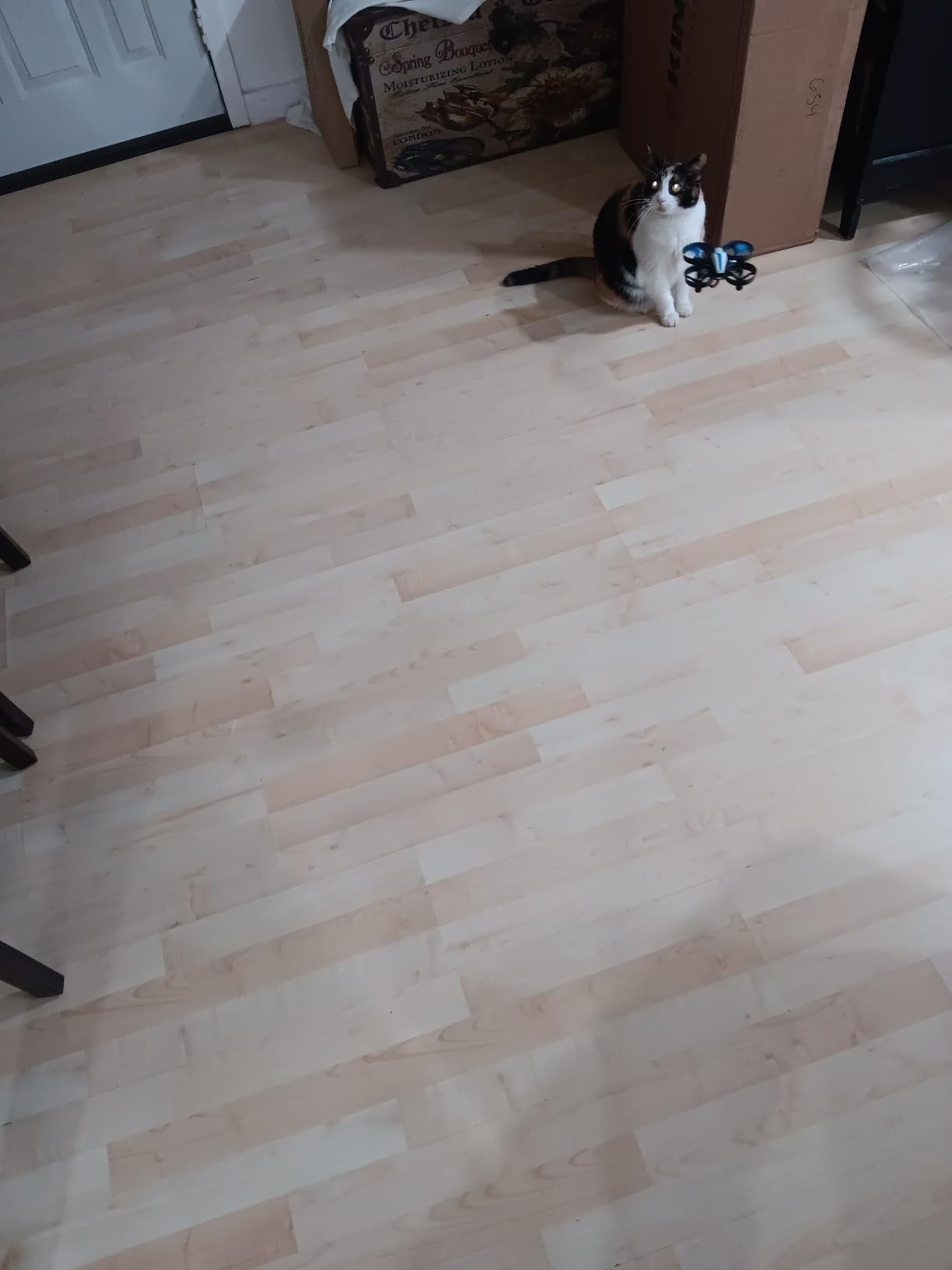
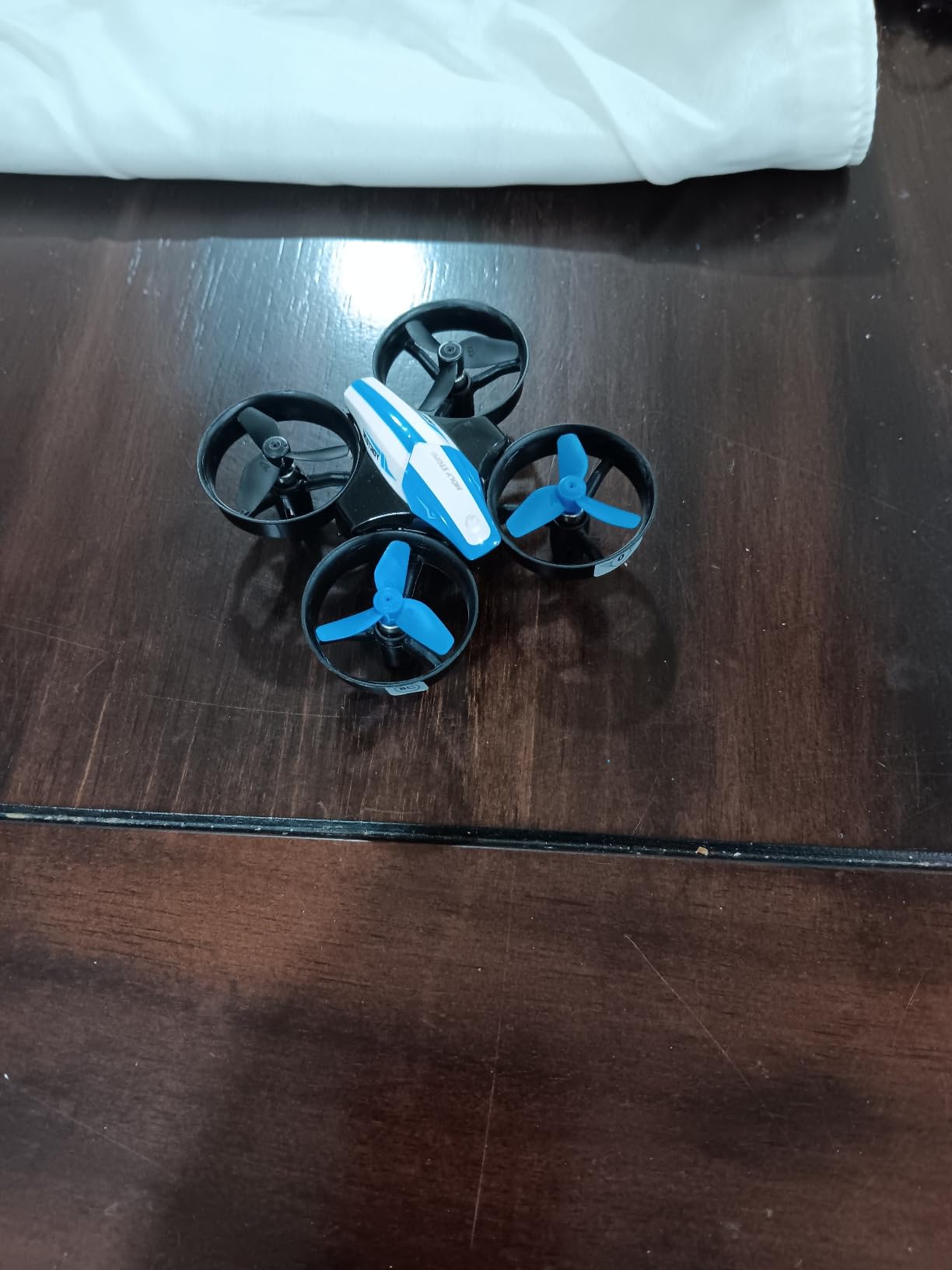
The Holy Stone HS210 is the drone I recommend when the pilot is under 12, or when an adult wants to learn stick controls without risking an expensive drone. It weighs 50 grams, costs less than a dinner out, and takes crash after crash without breaking. I gave one to my niece for her eighth birthday and watched it bounce off walls, ceilings, and her older brother for an entire afternoon – and it’s still flying.
Three batteries ship in the box, which is the killer feature for a kid’s drone. Most toy drones ship with one pack and die in seven minutes, leading to tantrums. With three batteries, the HS210 delivers roughly 21 minutes of total flight spread across three sessions, which keeps short attention spans happy. The full propeller protection means it can’t hurt furniture, pets, or small fingers.
Altitude Hold does the heavy lifting for learning: when you let go of the sticks, the drone hovers in place instead of drifting. Headless Mode orients controls relative to the pilot instead of the drone’s nose, which eliminates the most common beginner frustration – “I pushed left and it went right.” Toss to Launch, Circle Fly, 3D Flips, and Auto Rotation give kids things to do once they’ve got hovering down.
The trade-offs are the same as any toy drone: it only works indoors (even gentle outdoor wind pushes it around), no camera stabilization, and the battery connector is finicky. None of these matter when the audience is a kid learning stick controls. For the price of one repair at a drone shop, you can buy three of these and let them learn by crashing.
Who the Holy Stone HS210 is right for
Kids ages 8-14 learning to fly for the first time, adults who want to practice stick controls before upgrading to a real drone, and gift buyers looking for an inexpensive entry-level drone that won’t break the budget if it gets wrecked.
Who should skip the Holy Stone HS210
Anyone who wants aerial photography or video (this drone has no camera to speak of), pilots who want to fly outdoors in any wind, and adults who want a “real” drone experience rather than a learning toy.
What Makes a Drone Beginner-Friendly: Buying Guide
After testing dozens of beginner drones over the past few years, our team has narrowed the list of what actually matters down to six features. Skip any of them and your odds of a frustrating first experience go up dramatically.
GPS hover assist is non-negotiable
The single biggest difference between a toy drone and a beginner drone is GPS. A GPS-equipped drone uses satellite positioning plus downward visual sensors to hold its place in the air automatically. Release the sticks and it hovers. Push a button and it returns to where it took off. Without GPS, even a slight wind sends the drone drifting across a room or a field, and you’ll spend your first hour chasing it instead of flying it. Every pick on our list above the toy tier has GPS.
Sub-249g weight skips FAA registration
In the United States, drones under 250 grams don’t require FAA registration, and they sidestep most Remote ID requirements. That means less paperwork, less cost, and fewer legal restrictions for casual flying. All eight picks on our list come in under 250g, and the difference between a 240g Mini 4K and a 600g prosumer drone is meaningful for new pilots who don’t want to deal with the FAA.
Obstacle avoidance prevents the crashes you don’t see coming
Omnidirectional obstacle sensing – found on the DJI Neo 2 – watches in every direction and stops the drone before it hits a tree, a wall, or a person. Forward and downward sensors are the next tier down. For complete beginners, obstacle avoidance is the difference between learning confidently and worrying about every flight. It’s the main reason the Neo 2 commands a premium.
Propeller guards keep people and furniture safe
Integrated propeller guards (DJI Flip, DJI Neo, DJI Neo 2, Holy Stone HS210) wrap the props in a frame that prevents skin contact and cushions crashes. If you’re flying near kids, pets, or inside the house, guards are mandatory. If you’re flying alone in an open field, guards add weight and drag – but for beginners, the safety trade-off is worth it.
Return-to-Home (RTH) is your safety net
Every drone on our list except the toy HS210 has automatic Return-to-Home on low battery, signal loss, or pilot request. RTH has saved countless drones from flyaways and battery deaths. When choosing a beginner drone, treat RTH as a must-have, not a nice-to-have. Forum users repeatedly cite lost drones as the #1 reason they had to buy a replacement.
Mechanical gimbal beats electronic stabilization
A 3-axis mechanical gimbal physically levels the camera, producing smooth cinematic footage regardless of drone movement. Electronic image stabilization (EIS) crops and warps the image to simulate smoothness, which works for casual video but looks jittery in 4K. If video quality matters, prioritize drones with a real gimbal: the DJI Mini 4K, both Potensic ATOMs, and the DJI Neo 2.
FAA Rules Every Beginner Drone Pilot Needs to Know
Before you fly in the United States, you need to understand the FAA’s basic rules. The good news: if you buy a sub-250g drone from our list, most of this is paperwork you can skip.
The TRUST test is free and impossible to fail
The Recreational UAS Safety Test (TRUST) is a free online knowledge quiz required for all recreational drone pilots in the US. It takes about 30 minutes, covers airspace rules and safety basics, and you can retake it unlimited times if you don’t pass. You’ll get a certificate you should keep with you when flying. Find it at faa.gov.
Sub-250g drones skip registration and most Remote ID
Drones under 250 grams do not need to be registered with the FAA for recreational flying. They also are not subject to most Remote ID broadcast requirements. Every drone on our list qualifies. Drones 250g and above require a $5 registration fee and must broadcast Remote ID.
The 1:1 rule means eyes on the drone
The FAA’s 1:1 rule for recreational pilots says you must keep your drone within visual line of sight, and an observer can extend your range. In plain English: you should always be able to see your drone with your own eyes. FPV goggles and out-of-sight flying require a Part 107 commercial license. If you’re new, stay where you can see the drone.
Kids can fly with adult supervision
There is no minimum age to fly a drone recreationally in the US, but the pilot must be able to pass the TRUST test (which has reading comprehension requirements). For kids under 13, an adult should always be present and actively supervising. Drones under 250g with full propeller guards – like the HS210 – are the safest starting point for younger pilots.
Will DJI drones be banned in 2026?
The FCC’s Covered List review of DJI products remains ongoing, and the National Defense Authorization Act has flagged Chinese-made drones for security review. As of 2026, DJI drones are still legal to buy and fly in the United States, but the regulatory situation is evolving. If long-term availability matters to you, the Potensic ATOM and ATOM 2 offer DJI-comparable features from a non-Chinese-owned brand, and Holy Stone remains an alternative.
Your First 10 Minutes: A Pre-Flight Checklist
Every beginner should run through this checklist before the first flight of every session. It takes five minutes and prevents 90% of common first-flight problems.
Charge all batteries fully the night before (drone, controller, phone).
Update the drone’s firmware through the official app – DJI Fly, Potensic, or Holy Stone app.
Calibrate the compass and IMU if the app prompts you to, especially after traveling to a new location.
Check the propellers for cracks, nicks, or loose attachment. Replace any damaged prop before flying.
Find an open area away from people, trees, and buildings for the first flight.
Wait for a solid GPS lock (12+ satellites) before taking off.
Hover at eye level for 30 seconds to confirm stable position hold.
Test Return-to-Home at low altitude before flying far.
Land at 30% battery to extend battery lifespan long-term.
Inspect the drone after every flight for damage before storing.
Pricing Tier Breakdown: What Should a Beginner Spend?
How much should a beginner spend on a drone? It depends on what you want to do with it. Here’s the breakdown based on real usage patterns from our testers and forum research.
$99 to $200: Learn to fly without anxiety
This tier covers indoor toys (HS210) and entry-level GPS drones (HS175D, HS360S). You’re paying for GPS safety features and prop guards without breaking the bank. Best for: kids, complete beginners, pilots who don’t care about video quality.
$200 to $400: Real camera drones start here
This is where 3-axis gimbals and 4K cameras enter the picture (Potensic ATOM, DJI Mini 4K). For most adults who want aerial photography and follow-me footage, this tier hits the sweet spot. Best for: hobbyists, travelers, vloggers.
$400 and up: Premium beginner experience
The DJI Neo 2 Fly More Combo is the first pick in this tier. You’re paying for omnidirectional obstacle avoidance, advanced tracking, and a complete accessory bundle. Best for: action sports creators, gift buyers who want the best, pilots who need maximum safety.
How We Chose the Best Drones for Beginners
Our team tested these drones in real-world conditions across parks, bike trails, beaches, and indoors. We focused on beginner experience: how long from unboxing to first flight, how forgiving the drone is of common mistakes, and how reliably the safety features (GPS, RTH, obstacle avoidance) work. We weighted reviews from r/dji, r/Multicopter, and mavicpilots.com heavily, because experienced pilots know which beginner drones actually hold up. Every pick on this list is one we’d hand to a friend buying their first drone today.
If you’re shopping for other beginner gear, our guides on beginner kayaks, hiking shoes, and cycling pedals follow the same hands-on testing approach.
Frequently Asked Questions
What is a cheap but good drone?
The cheapest beginner drone that’s genuinely good is the Holy Stone HS210 at around $40, with three batteries and prop guards for indoor learning. Stepping up to a real GPS camera drone, the Potensic ATOM and DJI Mini 4K at $200-$300 are widely considered the best cheap drones with cameras, both sub-250g, both with 3-axis gimbals.
Do I need a license to fly a drone in the USA?
You do not need a license to fly recreationally in the US, but you do need to pass the free TRUST test (Recreational UAS Safety Test) at faa.gov. It takes about 30 minutes and covers airspace rules and safety basics. Drones 250g and above also require a $5 FAA registration. Drones under 250g skip both the registration fee and most Remote ID requirements.
Which drone can fly without a license?
Any drone under 250 grams can be flown recreationally without FAA registration, including all eight picks on our list. The DJI Neo (135g), DJI Neo 2 (151g), and Holy Stone HS210 (50g) are the lightest. To fly any drone recreationally in the US you still need to pass the free TRUST test, but you don’t need a Part 107 commercial license unless you’re flying for business.
How much should a beginner spend on a drone?
Most beginners should spend $200 to $400 for the best balance of features and safety. Under $100 gets you a toy or entry-level GPS drone for learning stick controls. The $200 to $400 range delivers 3-axis gimbals, 4K cameras, and GPS safety features. Above $400 you’re paying for premium features like omnidirectional obstacle avoidance (DJI Neo 2) that matter most to action sports creators.
What to look for in a drone for beginners?
The five beginner-friendly features that matter most are GPS hover assist (the drone holds position when you release the sticks), sub-250g weight (skips FAA registration), propeller guards (safe for people and furniture), Return-to-Home (drone flies itself back if battery is low or signal is lost), and a 3-axis gimbal (smooth stabilized video). Obstacle avoidance is a premium bonus, not a must-have, but it dramatically reduces crashes for first-time pilots.
Final Verdict: Which Beginner Drone Should You Buy?
After months of flights, our team’s pick for the best drone for beginners in 2026 is the DJI Mini 4K. It hits the magic combination of sub-250g weight, 3-axis gimbal 4K camera, 31-minute battery, and DJI reliability at a price that’s reachable for most first-time buyers. It’s the drone I’d hand to anyone starting their drone journey today.
If you want maximum crash protection and don’t mind a smaller sensor, the DJI Neo 2 Fly More Combo is the premium pick. If you’re budget-conscious but still want a gimbal and 4K, the Potensic ATOM 2 delivers near-DJI quality. And if you’re buying a drone for a kid or just want to learn stick controls cheaply, the Holy Stone HS210 is the right place to start.
One rule of thumb before you buy: if you might eventually want a Part 107 commercial license, start with a sub-250g drone now (the Mini 4K, Neo 2, or ATOM 2) so the controls transfer. If your kid is the pilot, start cheap with the HS210 and graduate later. And if you’re an outdoor adventurer who wants to capture your hikes, rides, and surf sessions, the DJI Neo or Neo 2 is the easiest way to get follow-me footage without learning to fly first. For more on outdoor beginner gear, check our guides on the best hiking shoes for beginners and road bike vs hybrid for beginners.