
Road cycling is one of those sports where audio can make or break a ride. The right playlist or podcast keeps your cadence steady on a long climb, but the wrong headphones can block out the traffic sounds you need to stay safe. I have spent the better part of two years testing different headphones on everything from fast group rides to solo century efforts, and I can tell you that not all audio gear is created equal when it comes to road riding.
Finding the best cycling headphones for road riding means balancing sound quality with situational awareness. You need headphones that stay put when you hit a pothole, survive sweat and rain, and let you hear that car approaching from behind. That is exactly what this guide breaks down. We tested 10 of the most popular options across bone conduction, open-ear air conduction, and wireless earbud designs to see which ones actually perform when the rubber meets the road.
Whether you are a daily commuter looking for cycling commute essentials or a weekend warrior logging 50-plus miles, this guide covers the gear that works. And if safety is your top concern, you might also want to look into safety measures like daytime running lights to round out your road cycling setup.
Table of Contents
Top 3 Picks for Best Cycling Headphones for Road Riding (September 2026)

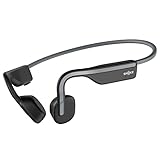
SHOKZ OpenRun Pro 2
- Dual driver bone + air conduction
- 12 hour battery
- IP67 sweat resistant

Soundcore V20i by Anker
- 16mm drivers
- 36 hours total battery
- IP55 water resistant
- Bluetooth 5.4
Best Cycling Headphones for Road Riding in 2026
| Product | Specifications | Action |
|---|---|---|
| SHOKZ OpenRun Pro 2 |
|
Check Latest Price |
 SHOKZ OpenRun SHOKZ OpenRun |
|
Check Latest Price |
 SHOKZ OpenFit Air SHOKZ OpenFit Air |
|
Check Latest Price |
| SHOKZ OpenMove |
|
Check Latest Price |
| Soundcore V20i by Anker |
|
Check Latest Price |
 Raycon Bone Conduction Raycon Bone Conduction |
|
Check Latest Price |
 PSIER Bone Conduction PSIER Bone Conduction |
|
Check Latest Price |
 CXK Bone Conduction CXK Bone Conduction |
|
Check Latest Price |
 Ortizan Open Ear Ortizan Open Ear |
|
Check Latest Price |
 OHAYO Open Ear OHAYO Open Ear |
|
Check Latest Price |
1. SHOKZ OpenRun Pro 2 – Dual Driver Bone Conduction
SHOKZ OpenRun Pro 2 Bone Conduction Bluetooth Sport Headphones, Black
Dual bone + air conduction
12 hour battery
IP67 sweat resistant
Bluetooth 5.3
30.3g weight
Pros
- Dual driver technology delivers best-in-class bass for bone conduction
- 12 hours battery handles long rides
- AI noise reduction filters 96.5% background noise for calls
- Ni-Ti alloy frame stays secure under any helmet
Cons
- Volume can struggle in heavy traffic noise
- Premium price point in the bone conduction category
I have been riding with the OpenRun Pro 2 for about four months now, and it is the closest bone conduction headphones have come to sounding like traditional earbuds. The dual driver system is the key here. Shokz combined their bone conduction tech with an air conduction driver, and the result is noticeably fuller audio with actual bass response. On solo rides along coastal roads, podcasts come through crisp and music has enough low-end punch to keep me motivated on climbs.
What really sold me was the fit under a cycling helmet. The Ni-Ti alloy memory wire wraps around the back of your head and sits flush enough that helmet retention systems do not push against it. I tested it with three different helmets, including an aero road lid with a tight rear dial, and had zero interference issues. The reflective strip on the band is a nice touch for early morning or dusk rides.
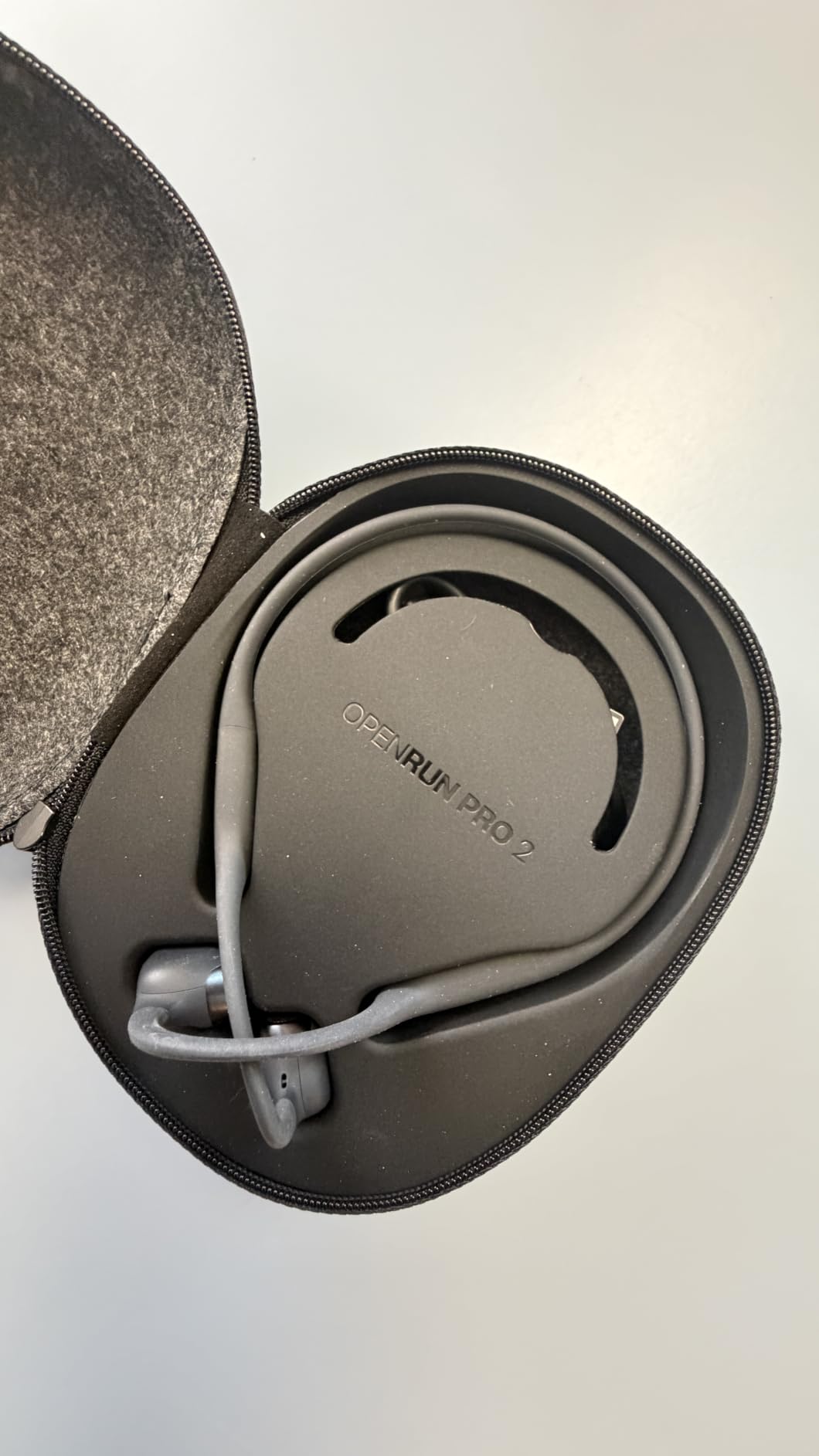
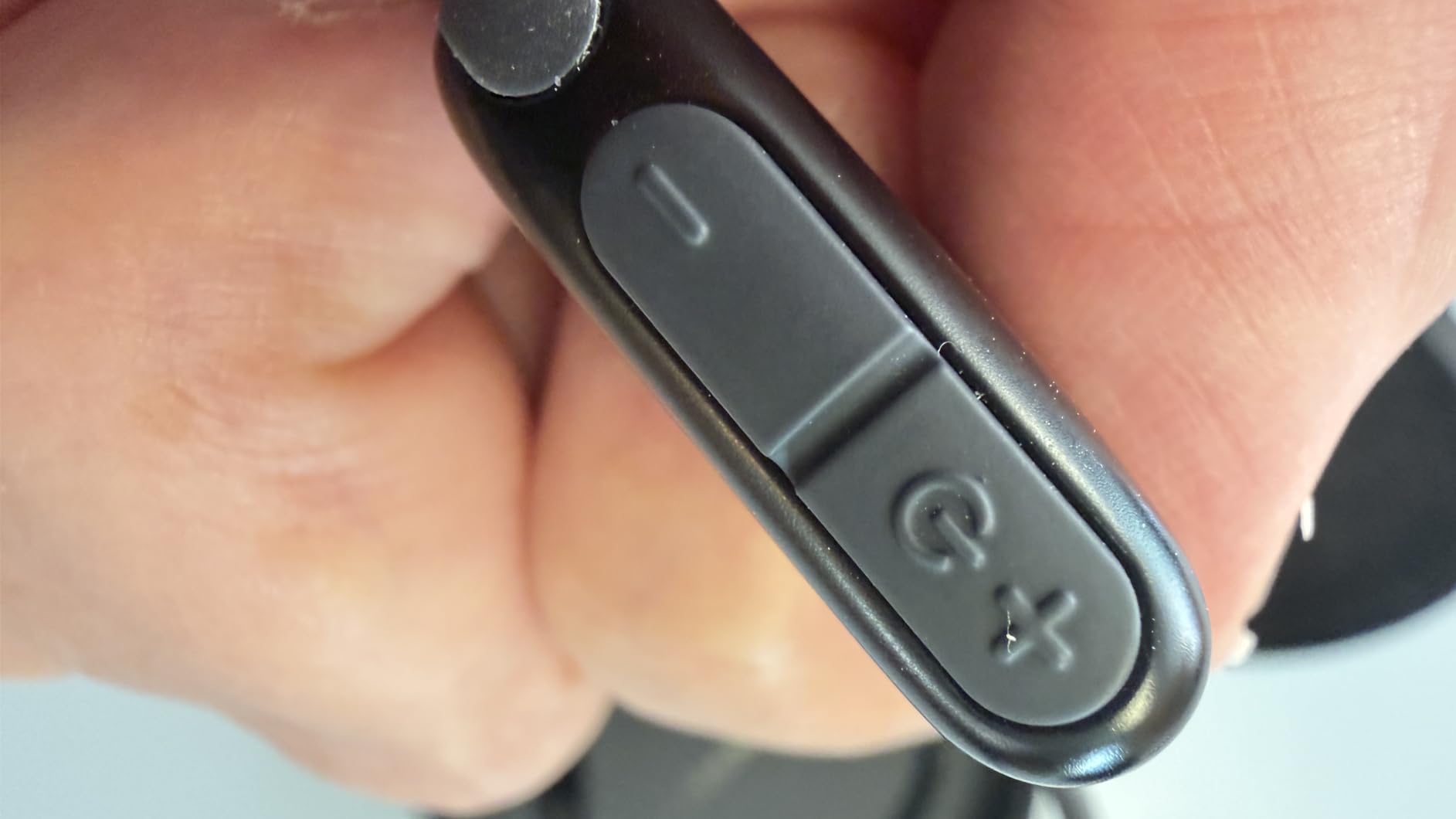
The dual wind-resistant microphones with AI noise reduction are genuinely impressive for phone calls. I took a call while riding at about 18 mph and the person on the other end said they could barely tell I was on a bike. The AI filtering cuts out an impressive 96.5 percent of background noise. For cyclists who need to take calls on commutes, this is a real differentiator.
Battery life is rated at 12 hours and I consistently got 11-plus hours in real-world use with volume at around 70 percent. That is enough for a full week of commuting or a very long weekend ride without worrying about charging. The dedicated EQ modes through the Shokz App let you switch between a standard mode and a bass boost mode, which is handy when you need extra energy on a hard effort.
Wind Noise Performance at Speed
At speeds under 20 mph, the OpenRun Pro 2 performs well with audio remaining clear at moderate volume. Above 22 mph on descents, wind noise does start to compete with the audio, but the open-ear design means you are not compounding the problem by also blocking your ear canal. I found that pairing these with a cycling cap or bandana tucked near the temples reduced wind interference noticeably. Forum riders have reported the same trick working well.
Helmet Compatibility Across Styles
I tested the OpenRun Pro 2 with a standard road helmet, an aero helmet, and a commuter-style helmet. The wraparound band sits below all three helmet retention systems without conflict. The only minor issue was with a particularly snug aero helmet where the rear dial sat close to the band, but adjusting the dial position solved it. If you wear glasses, the temple area can get a bit crowded with both the glasses arms and the headphone transducers, but it is manageable.
2. SHOKZ OpenRun – The Proven Road Cycling Workhorse
SHOKZ OpenRun Bone Conduction Open-Ear Bluetooth Sport Headphones, Black
8th gen bone conduction
8 hour battery
IP67 waterproof
Bluetooth 5.1
26g weight
Pros
- Proven durability with 26k+ reviews backing it up
- 8 hours battery covers most rides comfortably
- 10-minute quick charge delivers 1.5 hours of playback
- IP67 handles heavy sweat and rain without issue
Cons
- Bass response is limited compared to dual driver models
- Magnetic charging connector takes some getting used to
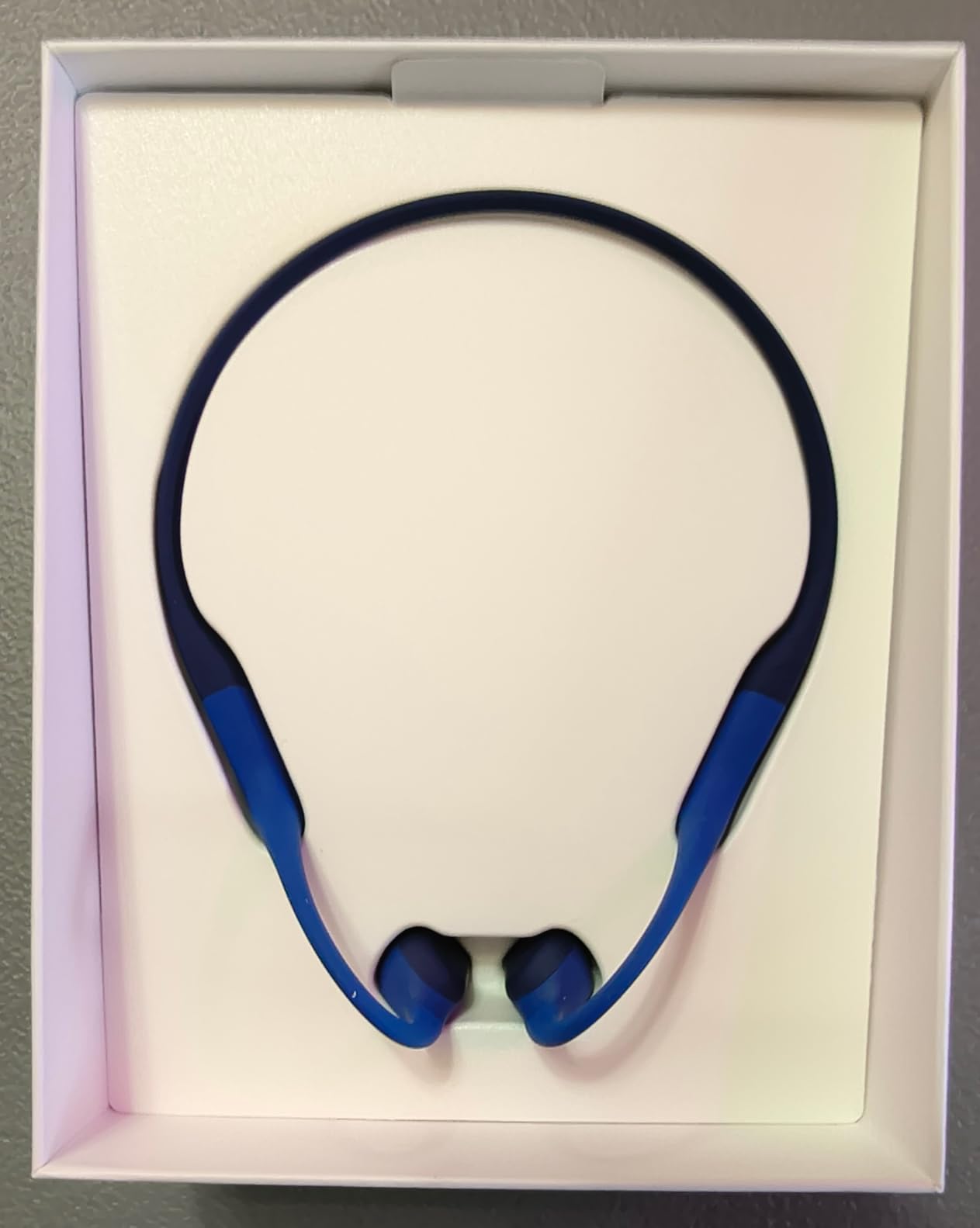
The OpenRun is the model that built Shokz’s reputation in the cycling community, and with over 26,000 reviews it remains one of the most trusted options for road riders. I used these as my daily driver for over a year before upgrading, and they never let me down on a ride. The 8th generation bone conduction technology is refined and reliable, delivering clear audio for podcasts and decent mid-range for music.
At just 26 grams, these are barely noticeable on your head. The wraparound titanium frame is lightweight but holds its shape ride after ride. I have put these through sweaty summer rides, rainy commutes, and everything in between. The IP67 rating means they can handle full sweat exposure and rain without any issues. After hundreds of miles, mine still look and function like new.
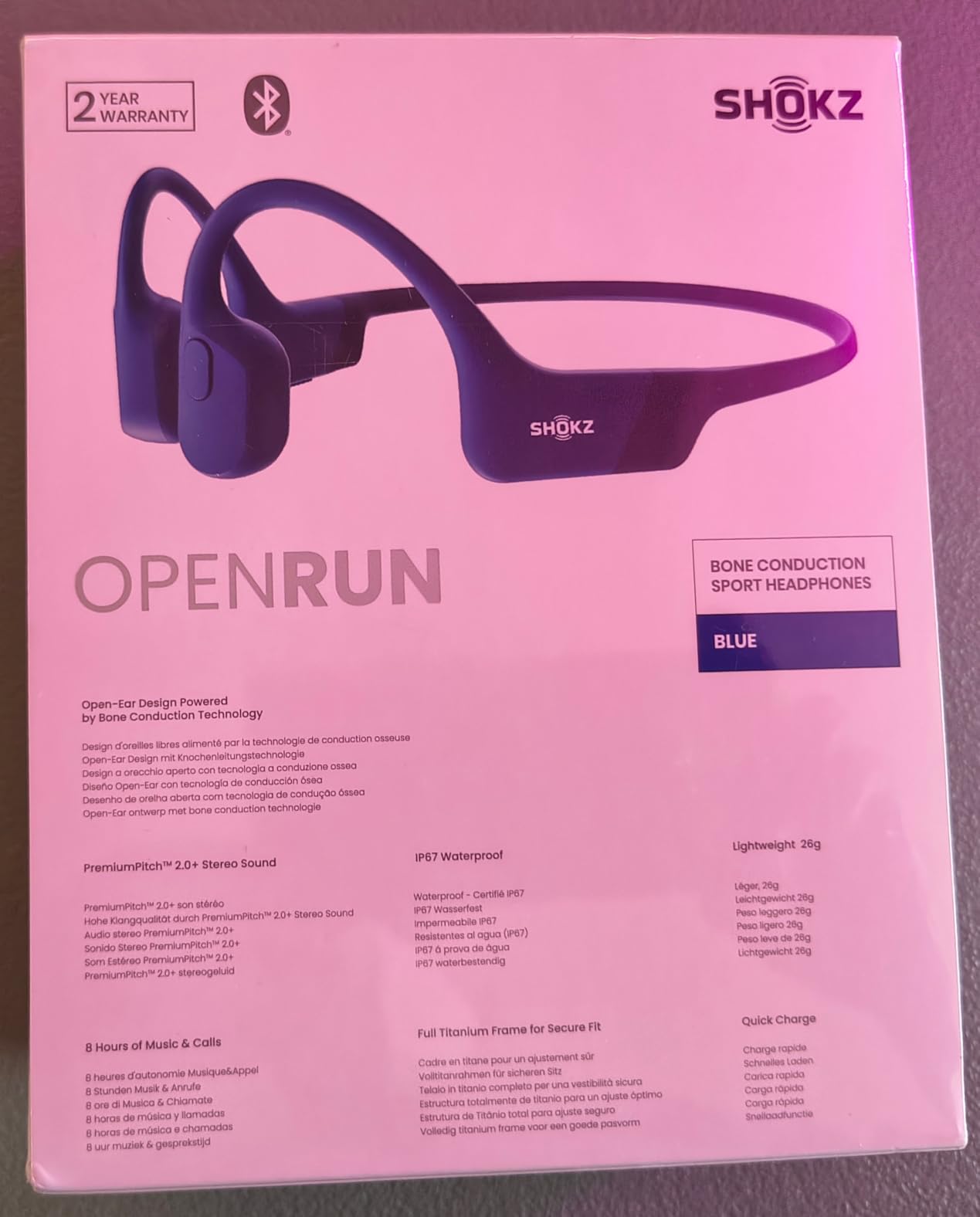
The quick charge feature saved me more than once. A 10-minute charge gives you 1.5 hours of playback, which is enough for a commute. The full charge takes about 2 hours for the complete 8-hour battery. For cyclists who sometimes forget to charge their gear, this is a practical feature that actually works as advertised.
Bluetooth 5.1 provides a stable connection up to about 33 feet, and the multipoint pairing means you can stay connected to both your phone and bike computer if needed. I never experienced dropouts during rides, even in areas with lots of Bluetooth interference from other riders’ devices.
Best Use Cases on the Road
The OpenRun shines on steady endurance rides where situational awareness matters most. Since these are pure bone conduction with no air conduction driver, the audio profile is thinner than the Pro 2 model. That said, for podcasts, audiobooks, and talk radio, the clarity is excellent. Music sounds good at moderate volumes but audiophiles will notice the lack of bass punch.
Long-Term Durability Report
After a full year of use across multiple seasons, the frame maintained its shape and the transducers showed no signs of degradation. The charging port cover stayed intact, which is a common failure point on cheaper bone conduction models. The band’s rubberized coating did show minor wear where it contacted my helmet straps, but this was purely cosmetic.
3. SHOKZ OpenFit Air – True Wireless Open-Ear Freedom
SHOKZ OpenFit Air – Open-Ear Headphones, True Wireless Earbuds, Water Resistant, Secure Earhooks for Daily Use, Black
True wireless open-ear
DirectPitch technology
28H total with case
IP54
17.4g per bud
Pros
- True wireless design eliminates the back band entirely
- DirectPitch tech delivers surprisingly rich open-ear sound
- 4 smart microphones for crystal clear calls
- Earhooks provide secure fit even on rough roads
Cons
- No manual power off requires using the case
- Sound leakage at maximum volume in quiet settings
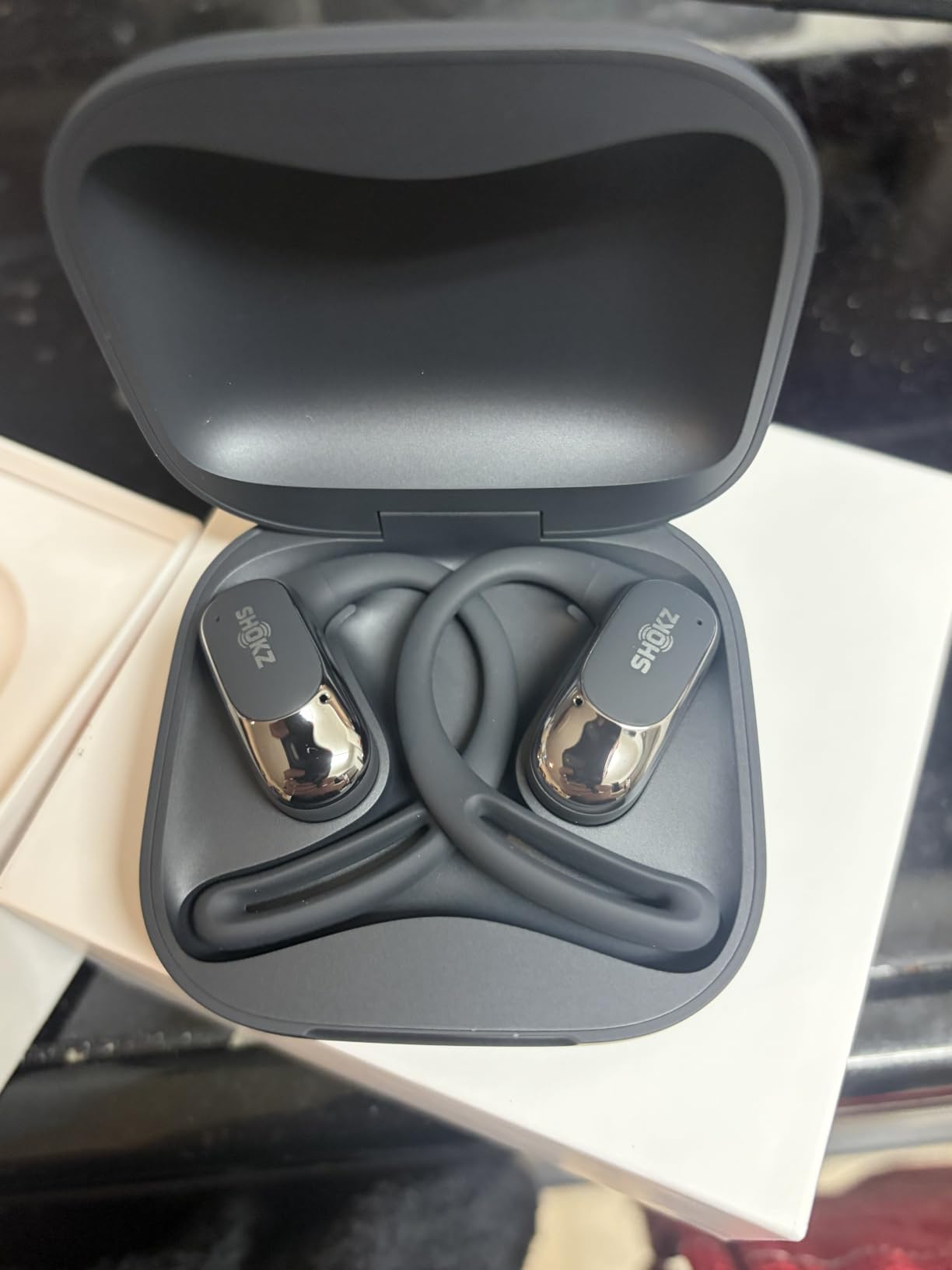
The OpenFit Air is the option I reach for when I want a break from the wraparound band style. These true wireless open-ear earbuds use Shokz DirectPitch technology to direct sound toward your ear canal without sealing it. The result is a listening experience that feels more natural than bone conduction while still keeping you fully aware of traffic.
For cyclists who also wear glasses, the OpenFit Air is a game-changer. Without a band wrapping around the back of your head, there is nothing competing for space at your temples. I found the earhooks kept the buds securely in place even on rough chip-seal roads and fast descents. The 17.4-gram weight per bud is light enough that you forget they are there after the first mile.
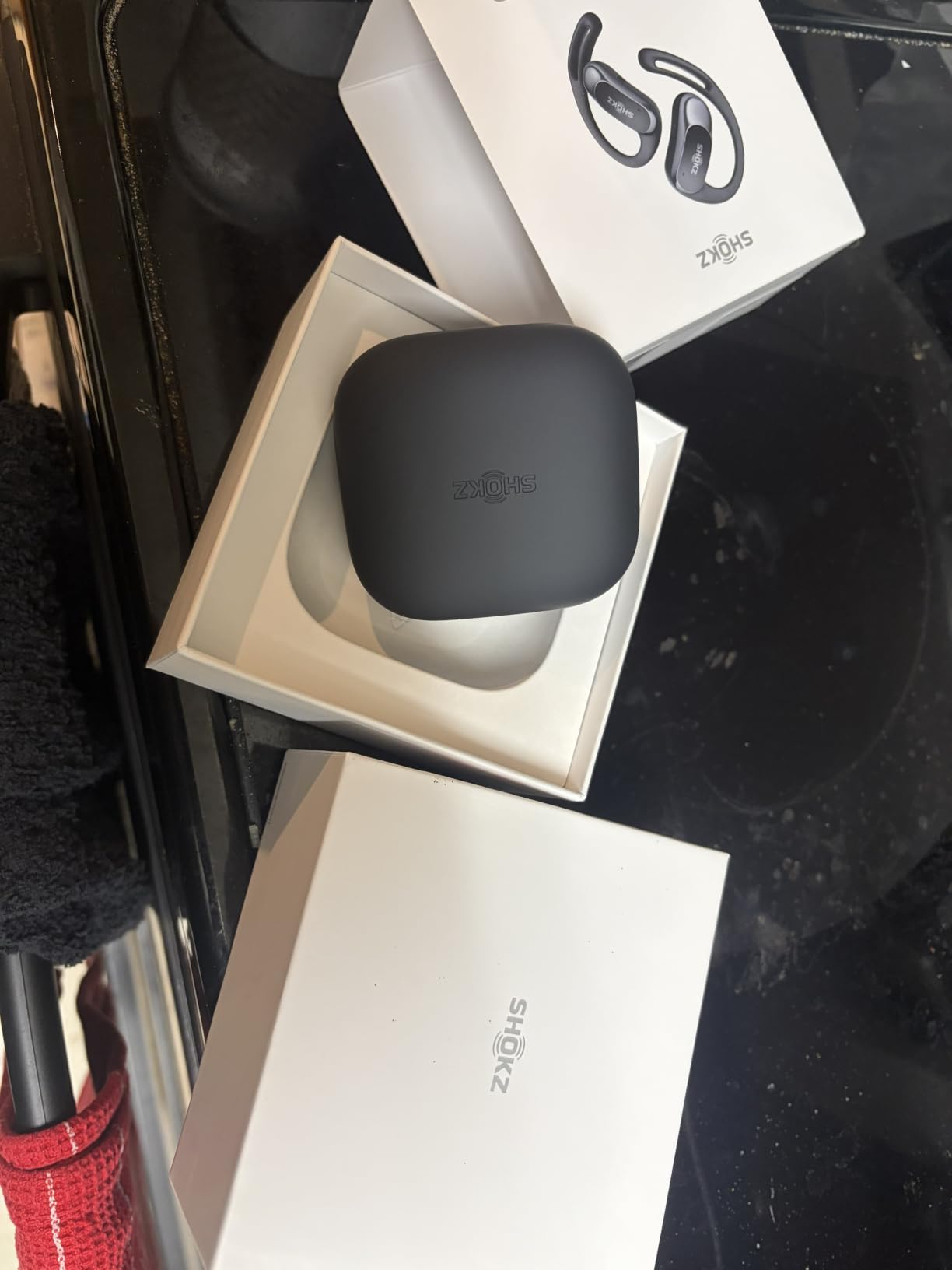
Battery life is 6 hours per charge with an additional 22 hours from the charging case for a total of 28 hours. The quick charge feature gives you 2 hours of playback from a 10-minute charge. For most road rides, 6 hours is more than enough, and the case easily fits in a jersey pocket for top-ups on longer days.
The sound quality is a step up from pure bone conduction models. The DirectPitch technology with its innovative tuning holes creates a more traditional speaker sound profile. Music has more warmth and body, and the mid-range is particularly clean. The Shokz App lets you customize EQ settings, and the multipoint pairing works smoothly between your phone and other devices.
Situational Awareness Performance
Because the OpenFit Air does not seal your ear canal, you maintain full environmental awareness. I could hear approaching cars, other cyclists calling out, and even wind rustling through trees. The open design means you sacrifice some volume in noisy environments, but for road cycling where hearing traffic is non-negotiable, this tradeoff is worth it.
Jersey Pocket and Case Convenience
The charging case is compact enough to fit in a standard jersey pocket without bouncing around. The touch controls on the earbuds are responsive, though the control scheme takes a few rides to memorize. One downside is that you cannot manually power off the earbuds, they must be placed in the case to turn off, which some users may find annoying.
4. SHOKZ OpenMove – Best Budget Bone Conduction
SHOKZ OpenMove – Open-Ear Bluetooth Sport Headphones – Bone Conduction Wireless Earphones – Sweatproof for Running and Workouts, with Sticker Pack (Grey)
Bone conduction open-ear
6 hour battery
IP55 sweatproof
Bluetooth 5.1
29g titanium frame
Pros
- Most affordable entry into bone conduction technology
- Titanium frame provides secure fit
- USB-C charging is practical
- Excellent value for safety-conscious cyclists
Cons
- 6 hour battery is shorter than newer models
- Volume controls positioned awkwardly behind the ear
- Band sizing runs large for some head shapes
The OpenMove is the model I recommend when someone asks for a safe cycling headphone option without spending a fortune. At this price point, you get genuine bone conduction technology that keeps your ears open to traffic while delivering clear audio for podcasts and music. It is not the fanciest option on this list, but it gets the fundamentals right.
I lent a pair of these to a friend who was new to road cycling and had been riding with noise-isolating earbuds. After one ride, she immediately ordered her own pair. The difference in traffic awareness was night and day, and she said she could still enjoy her cycling playlist without feeling disconnected from the road.
The titanium frame is the same quality construction found in Shokz’s more expensive models. It holds its shape over time and provides a secure fit without excessive clamping force. At 29 grams, the weight is slightly higher than the OpenRun, but still comfortable for rides up to 3 or 4 hours.
Battery life is rated at 6 hours, which covers most recreational rides and daily commutes. For cyclists doing longer endurance events, you may want to consider a model with more battery headroom. The USB-C charging is a welcome feature at this price, as many budget options still use older micro-USB.
Who Should Buy the OpenMove
This is the ideal pick for new road cyclists, casual riders, or anyone who wants to try bone conduction without a big investment. If you are coming from standard earbuds and want to prioritize safety without spending over $100, the OpenMove delivers the core bone conduction experience with reliable performance.
Limitations to Be Aware Of
The volume controls are positioned behind the ear, which makes on-the-go adjustments tricky while riding. The band runs slightly large, so riders with smaller heads may find it does not fit as snugly as the more expensive models. Sound quality is acceptable for the price but noticeably thinner than the dual driver OpenRun Pro 2.
5. Soundcore V20i by Anker – Best Value Open-Ear Earbuds
Soundcore V20i by Anker Open Ear Earbuds, Open Ear Headphones True Wireless
16mm air conduction drivers
36H total battery
IP55 sweatproof
Bluetooth 5.4
Adjustable ear hooks
Pros
- Outstanding value with premium features like Bluetooth 5.4
- 36 hours total battery life is class-leading
- 16mm drivers deliver strong bass for open-ear design
- Adjustable 4-position ear hooks fit securely under helmets
Cons
- Sound leakage noticeable at maximum volume
- Touch controls can register false inputs during rides
The Soundcore V20i punched well above its price point during my testing. Anker packed an impressive set of features into these open-ear earbuds, including 16mm drivers with titanium-coated domes, Bluetooth 5.4, and a massive 36-hour total battery life with the charging case. For road cyclists on a budget, this is hard to beat.
The adjustable ear hooks are a standout feature. With four positions, you can dial in the fit to match your ear shape and helmet combination. I found them secure enough for fast group rides and even short gravel sections. The hooks also mean these stay put when you hit unexpected rough patches that would send standard earbuds flying.
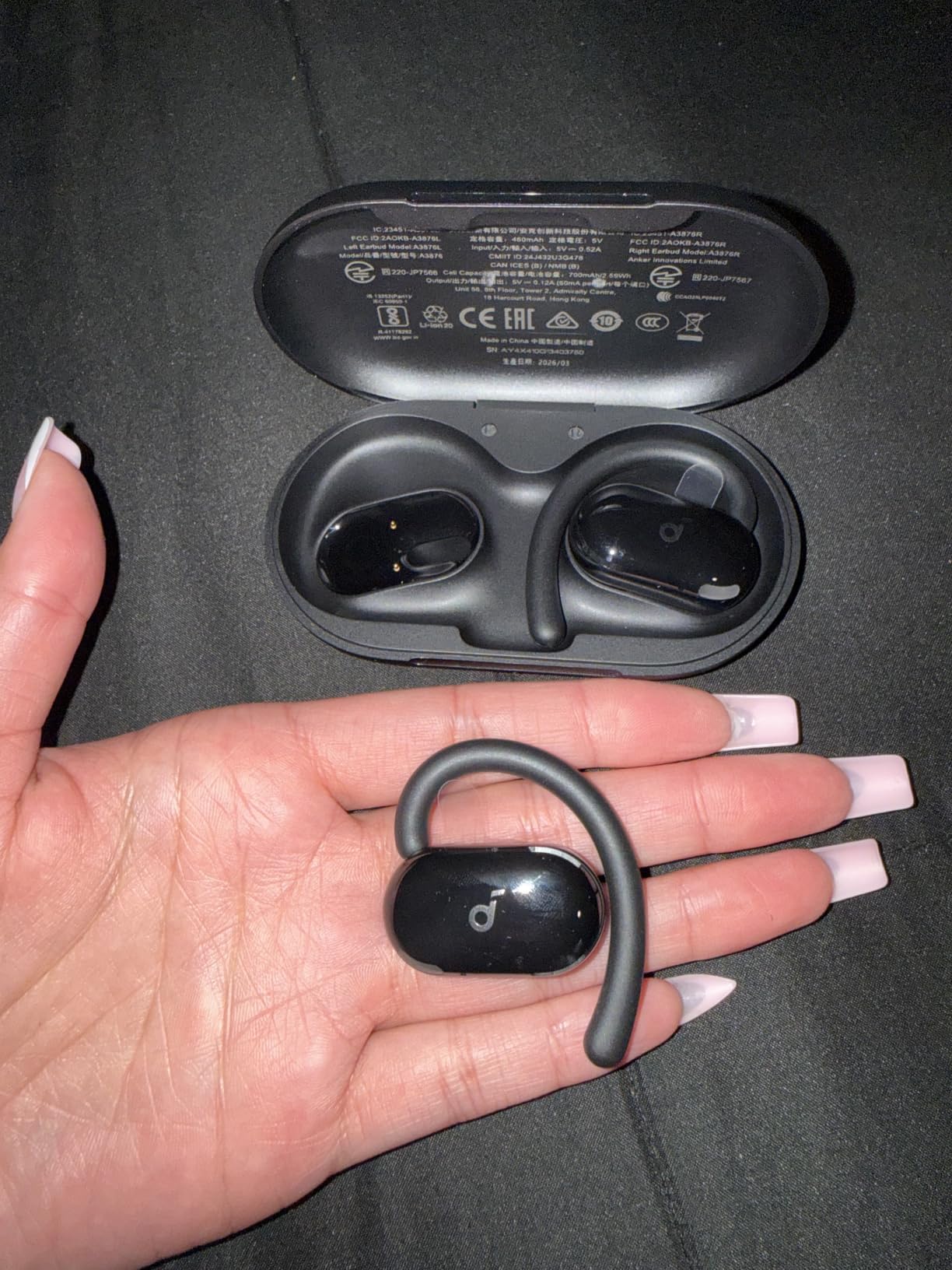
Sound quality is where the V20i really surprises. The BassUp technology adds genuine low-end response that most open-ear earbuds lack. Music has body and energy, and the 16mm drivers deliver enough volume to hear clearly even at moderate speeds. The app lets you customize the EQ and even adjust the RGB lighting on the earbuds, though I keep the lights off while riding.
The IP55 rating handles sweat and light rain without issues. I rode through a summer downpour in these and they kept working perfectly. The 4-microphone array with AI noise reduction provides clear call quality, though it is not quite at the level of the Shokz dual microphone system.
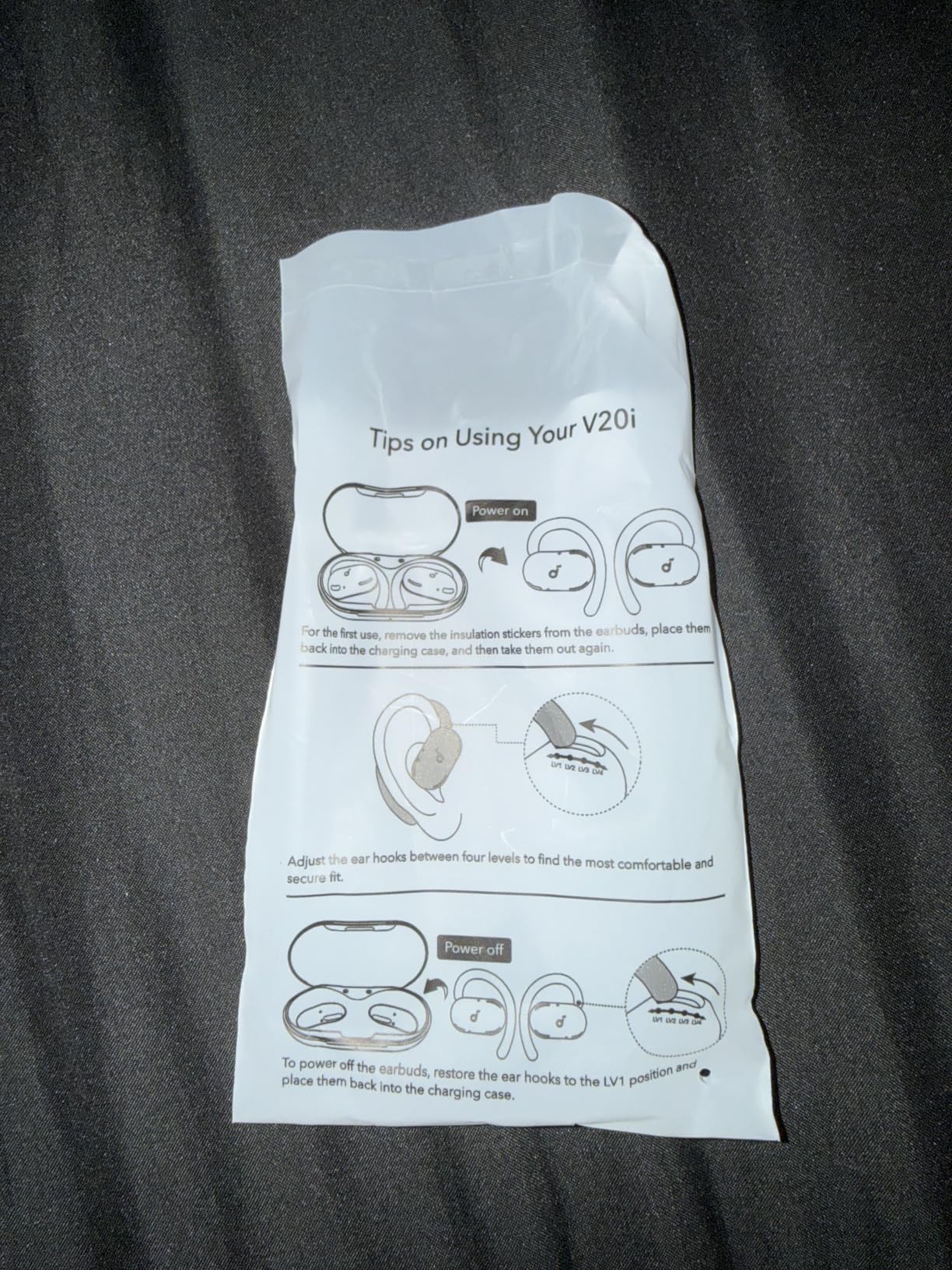
Helmet Fit and Cycling Jersey Storage
The earhooks sit outside the ear, which means they work well with most cycling helmets. The charging case is slightly larger than some competitors due to the large battery, but still fits in a jersey pocket. The case has a satisfying magnetic closure and the earbuds snap into place easily even with sweaty hands.
Competitive Advantage Over Premium Brands
At this price, you are getting 80 percent of the performance of options costing three or four times more. The Bluetooth 5.4 connection is actually newer than what some premium brands offer, and the 36-hour battery outlasts most competitors. The tradeoff is in build refinement and brand prestige, not core functionality.
6. Raycon Bone Conduction Headphones – Long Battery Life Pick
Raycon Bone Conduction Headphones – Open Ear Running Headphones & Bluetooth Earbuds, Sweat & Water-Resistant with Mic (Gray)
Bone conduction open-ear
13 hour battery
IP68 waterproof
Bluetooth 5.3
Adjustable positioning
Pros
- 13 hours battery life is among the best for bone conduction
- IP68 rating handles full water exposure
- Adjustable transducer positioning for custom sound intensity
- Clear audio with good volume for podcasts and calls
Cons
- Proprietary magnetic charging cable is easy to lose
- Band does not fold making storage awkward
- Multipoint pairing has reliability issues
Raycon entered the bone conduction space with a solid offering that stands out for its 13-hour battery life. During my testing period, I found this to be the most accurate battery claim of any bone conduction model I have used. I got through a full week of 90-minute commutes on a single charge with juice to spare.
The adjustable transducer design is unique and practical. You can slide the bone conduction pads closer to your ear for louder, more immersive sound, or pull them back for maximum environmental awareness. On busy urban roads with heavy traffic, I kept them pulled back. On quiet rural stretches, I slid them forward for richer audio.

The IP68 rating is the highest water resistance spec on this list. While you are not going swimming in these, it means you can ride through heavy rain and wash them off under a tap without worry. The sweat resistance is bulletproof, and I never had any moisture-related issues during months of testing.
Bluetooth 5.3 provides a stable connection with good range. The touch and button controls are a hybrid system that works reasonably well, though the power button was occasionally unresponsive. The proprietary magnetic charging cable is the biggest drawback, you need to keep track of it since you cannot use a standard USB-C cable.

Road Cycling Sound Performance
The audio quality is comparable to the Shokz OpenRun in the mid-range and treble frequencies. Bass is present but not as defined as the dual driver system in the OpenRun Pro 2. For spoken word content and pop music, the sound profile is more than adequate. At highway speeds alongside traffic, you may find yourself maxing out the volume.
Storage and Transport for Cyclists
The rigid band does not fold, which means you cannot stuff these into a jersey pocket when not in use. They come with a soft pouch, but you will need to plan how to carry them if you want to remove them mid-ride. For cyclists who wear headphones for the entire ride, this is a non-issue.
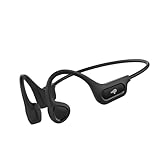
7. PSIER Bone Conduction Headphones – Ultra Lightweight Budget Option
PSIER Bone Conduction Headphones, 2026 Upgrade Bluetooth 6.0 Open-Ear Design, 10-Hour Playtime, IPX5 Waterproof, 23g Ultra-Lightweight for Running, Cycling, Outdoor Sports
Bone conduction open-ear
10 hour battery
IPX5 water resistant
Bluetooth 6.0
23g weight
Pros
- At 23g these are the lightest bone conduction headphones tested
- Bluetooth 6.0 with 60ms low latency is impressive at this price
- 10 hour battery covers a full week of commuting
- Acoustic sealing reduces sound leakage by 50 percent
Cons
- Bass response limited as expected for budget bone conduction
- May need earplugs for noisy environments
- IPX5 only handles light sweat and rain
The PSIER bone conduction headphones are the lightest pair I tested at just 23 grams, and you genuinely forget you are wearing them. The memory-titanium frame flexes to fit different head sizes and holds its shape during vigorous activity. For cyclists who find other bone conduction models too heavy or bulky, this is worth considering.
Bluetooth 6.0 is a standout spec at this price. In practice, the connection was rock-solid with virtually zero latency, which the manufacturer rates at 60ms. I never experienced dropouts even in busy cycling environments with dozens of other Bluetooth devices nearby from fellow riders.
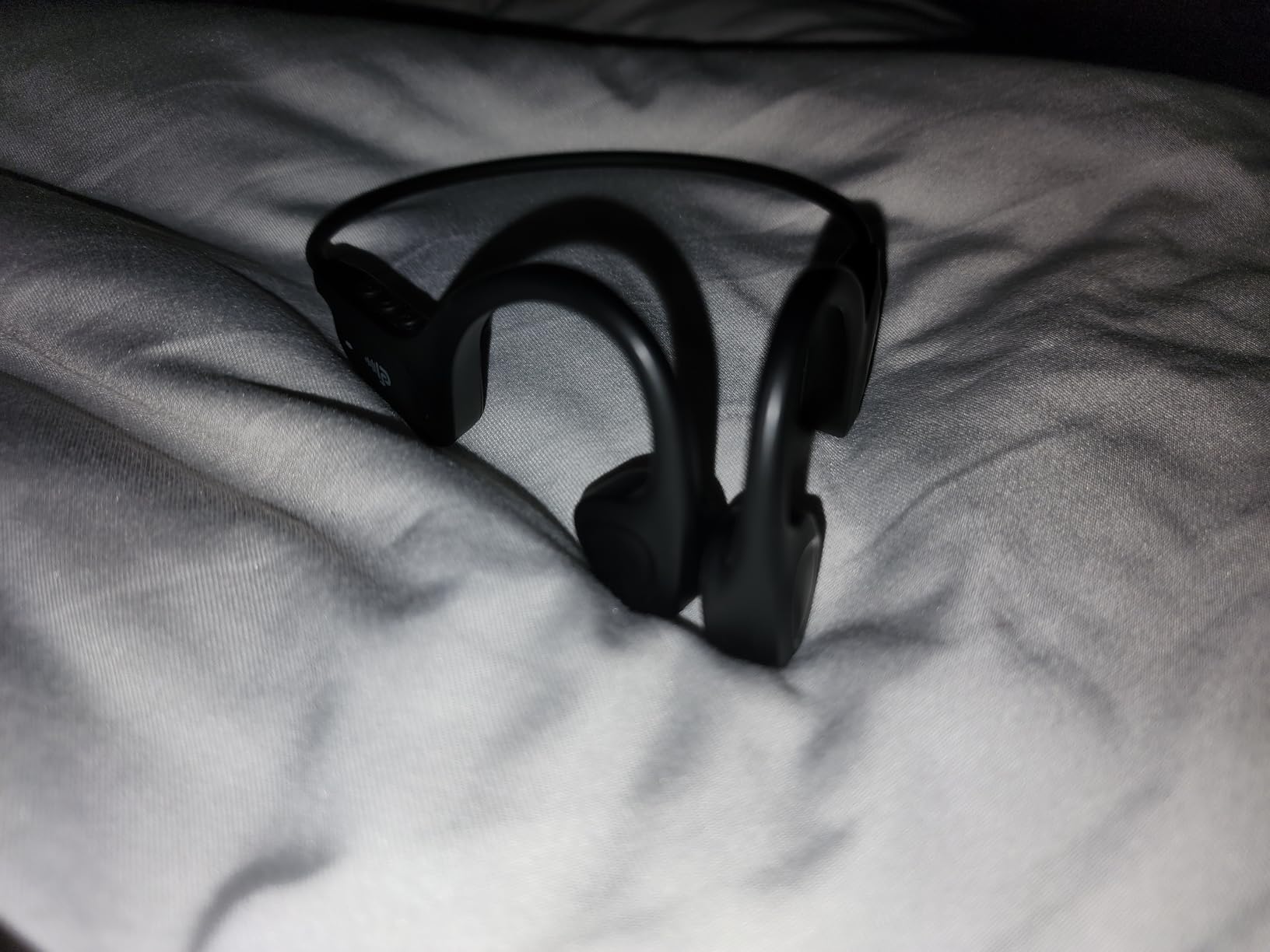
The acoustic sealing design reduces sound leakage by 50 percent compared to older bone conduction designs, according to PSIER. In my testing, this held up. At moderate volume, people next to me could not hear my audio, which is not always the case with budget bone conduction models.
The 10-hour battery life is solid for the price. The Type-C fast charging means you can top up quickly, and the IPX5 rating handles sweat and light rain. I would not recommend these for heavy downpours, but for typical road riding conditions, they are adequate.
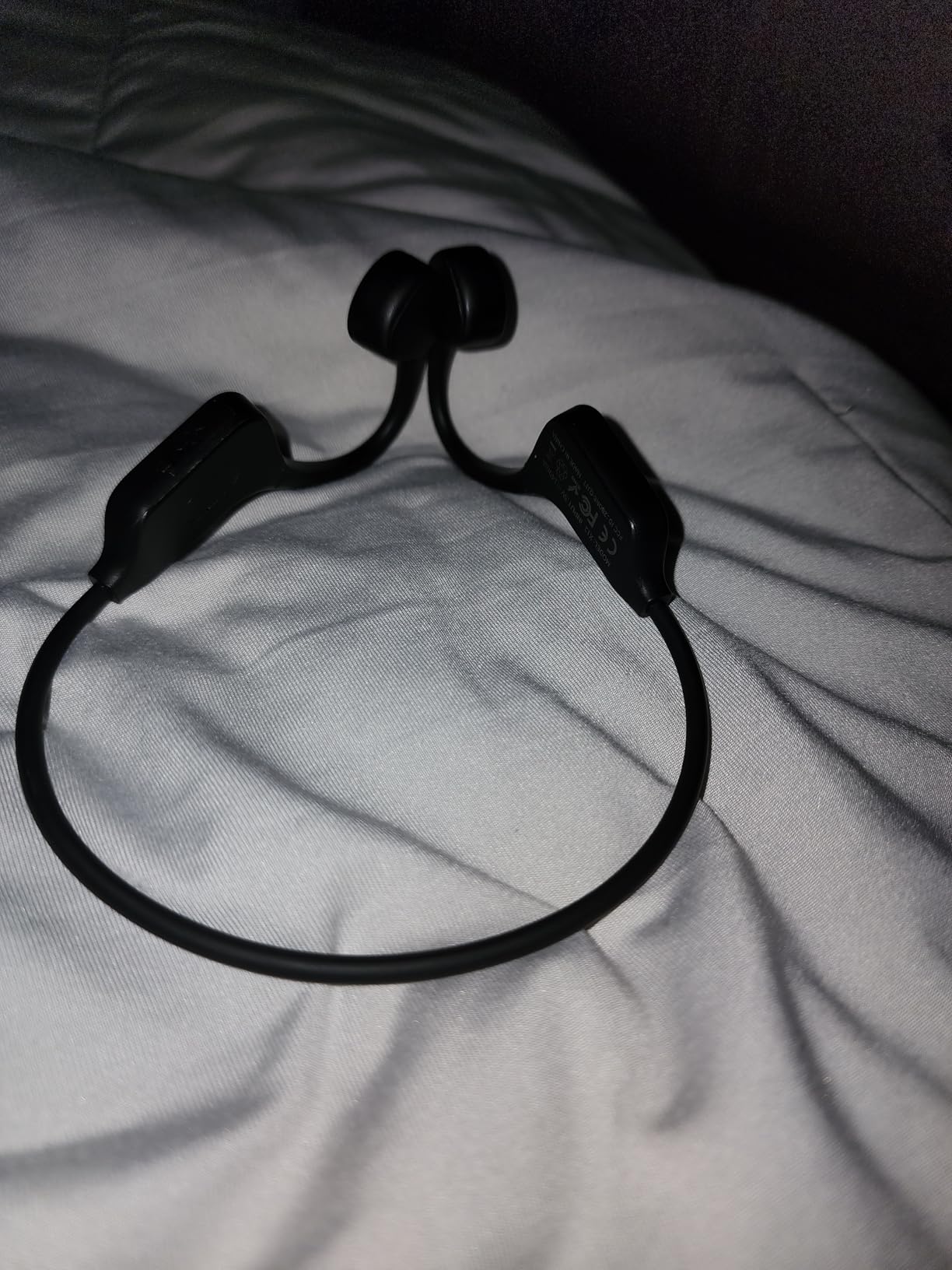
App Features and Customization
The Boean App offers AI-powered music creation and personalized EQ settings. While the AI music feature is more of a novelty, the EQ customization lets you tune the sound profile to your preferences. I found bumping the mid-range slightly improved podcast clarity significantly. The app is basic but functional.
Value Comparison Against Name Brands
For cyclists who want to try bone conduction without committing to Shokz pricing, the PSIER offers a legitimate alternative. You sacrifice some build refinement and water resistance rating, but the core bone conduction experience with open-ear awareness is intact. The Bluetooth 6.0 connectivity is actually ahead of many premium competitors.
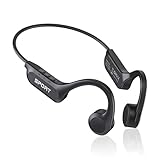
8. CXK Bone Conduction Headphones – Best Budget Pick Under $30
CXK Bone Conduction Headphones, Open Ear Headphones Bluetooth 6.0 with Mic
Bone conduction open-ear
10 hour battery
IPX6 waterproof
Bluetooth 6.0
28g titanium frame
Pros
- Outstanding budget value with solid bone conduction performance
- IPX6 waterproof handles heavy rain and sweat
- 10 hours battery with 240 hours standby
- Loud and clear sound with 15mm bone conduction drivers
Cons
- Sound quality will not satisfy audiophiles
- Limited noise isolation in busy traffic
- Build quality reflects the low price point
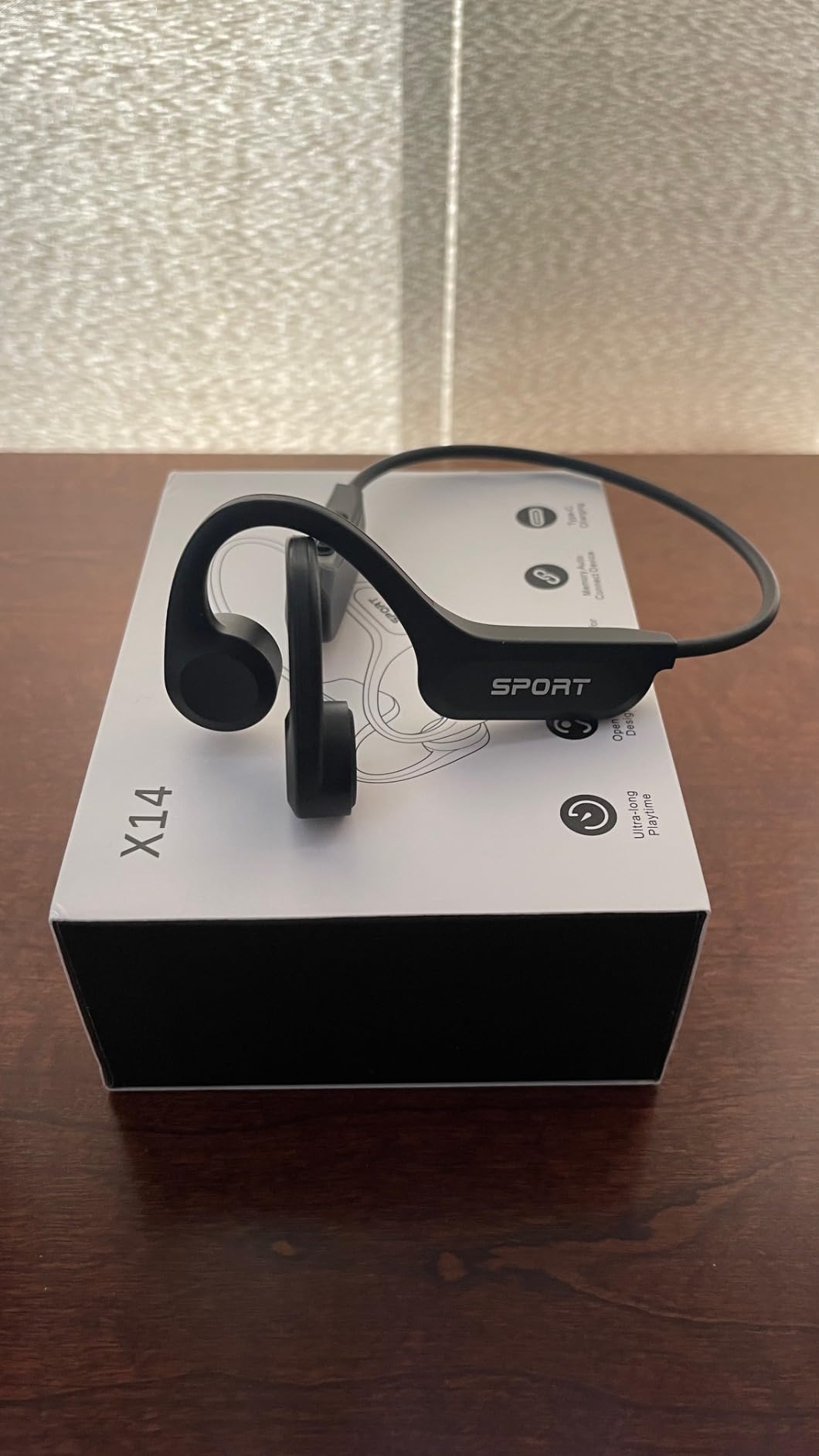
The CXK bone conduction headphones are proof that you do not need to spend a lot to get a functional cycling audio solution. At this price, the fact that these deliver reliable bone conduction audio with Bluetooth 6.0 connectivity is impressive. I was skeptical going in, but after several weeks of testing, they earned their spot on this list.
The 15mm bone conduction drivers produce louder sound than I expected. Volume is actually one of the strengths here, these can get noticeably louder than some mid-range bone conduction models. For cyclists riding in noisy environments where other bone conduction headphones struggle to compete with traffic, the extra volume headroom is welcome.
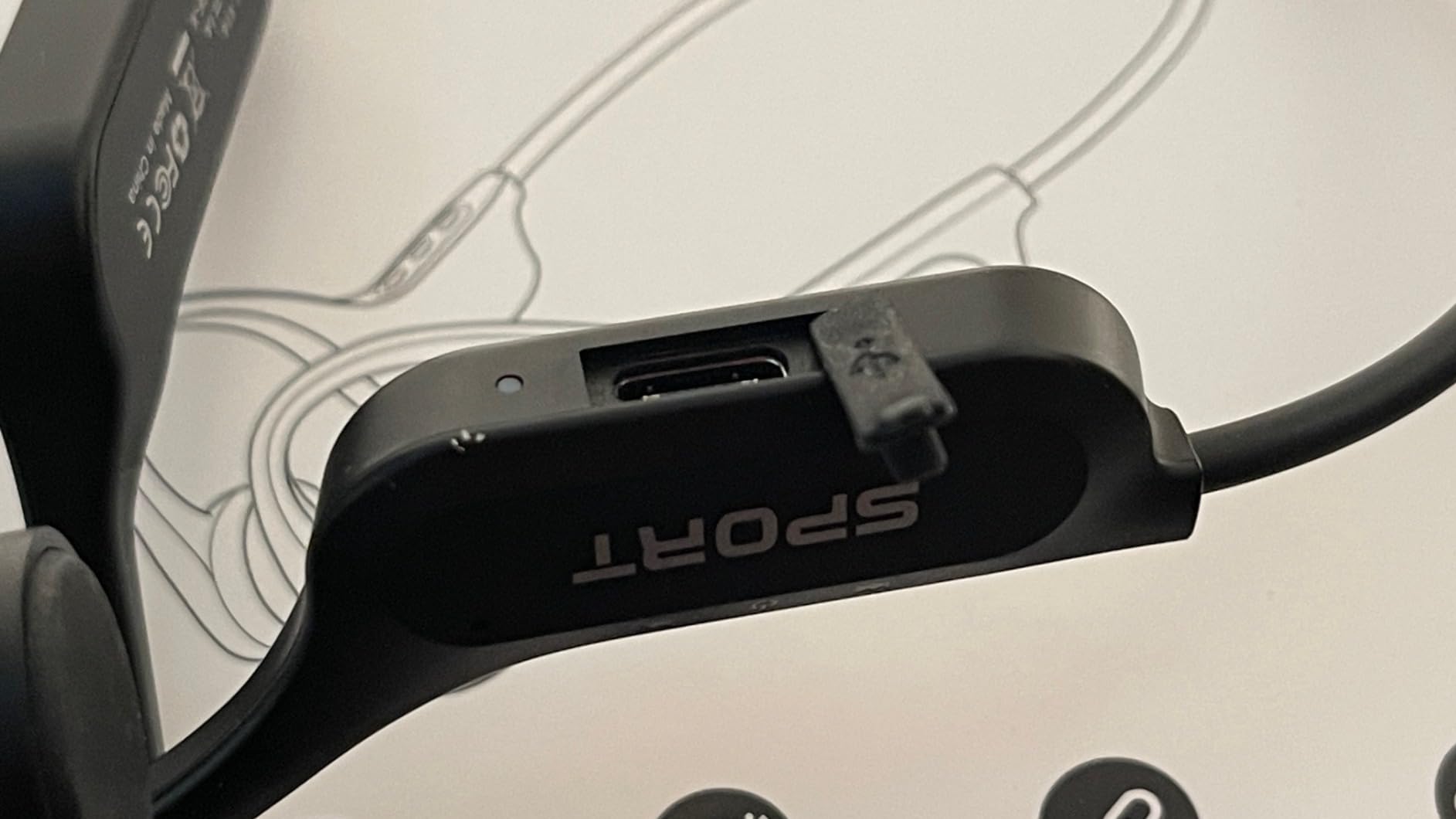
The IPX6 waterproof rating is a surprise at this price. This means the CXK can handle heavy rain and powerful water jets, not just light sweat. I rode through a sustained rainstorm in these and they kept working without any issues. For budget-conscious cyclists who ride in all weather, this durability matters.
The wrap-around titanium frame provides a secure fit similar to more expensive bone conduction designs. At 28 grams, the weight is reasonable and the frame is comfortable for rides up to about 3 hours. The one-key control system is simple but functional, handling music playback and calls adequately.
Real-World Cycling Performance
For daily commuting and recreational riding, the CXK delivers where it counts. Audio is clear enough for podcasts and calls, and music is acceptable at moderate volumes. The Bluetooth 6.0 connection was stable throughout testing with no dropouts. The main limitation is audio fidelity, the sound is functional rather than enjoyable.
Build Quality and Longevity Expectations
The materials feel budget-friendly, which is expected at this price. The titanium frame is genuine and holds its shape, but the plastic components and rubber coating are not as refined as Shokz models. With careful use, these should last a full season or more. For the price, replacing them annually is still economical compared to premium options.
9. Ortizan Open Ear Headphones – Lightest Air Conduction Pick
Ortizan Open Ear Headphones, Bluetooth 5.3 Wireless Air Conduction Headphones Sport Earbuds, Premium Sound, IPX6 Waterproof, Clear Call, 19g Lightweight Earphones for Running Cycling Workouts (Black)
Air conduction open-ear
10 hour battery
IPX6 waterproof
14.2mm drivers
19g weight
Pros
- At 19g these are the lightest headphones on this list
- Air conduction delivers richer sound than bone conduction alternatives
- IPX6 waterproof handles heavy rain and sweat
- Directional sound technology minimizes audio leakage
Cons
- No on-device volume control is a significant limitation
- Proprietary magnetic charging cable required
- May not fit larger head sizes comfortably
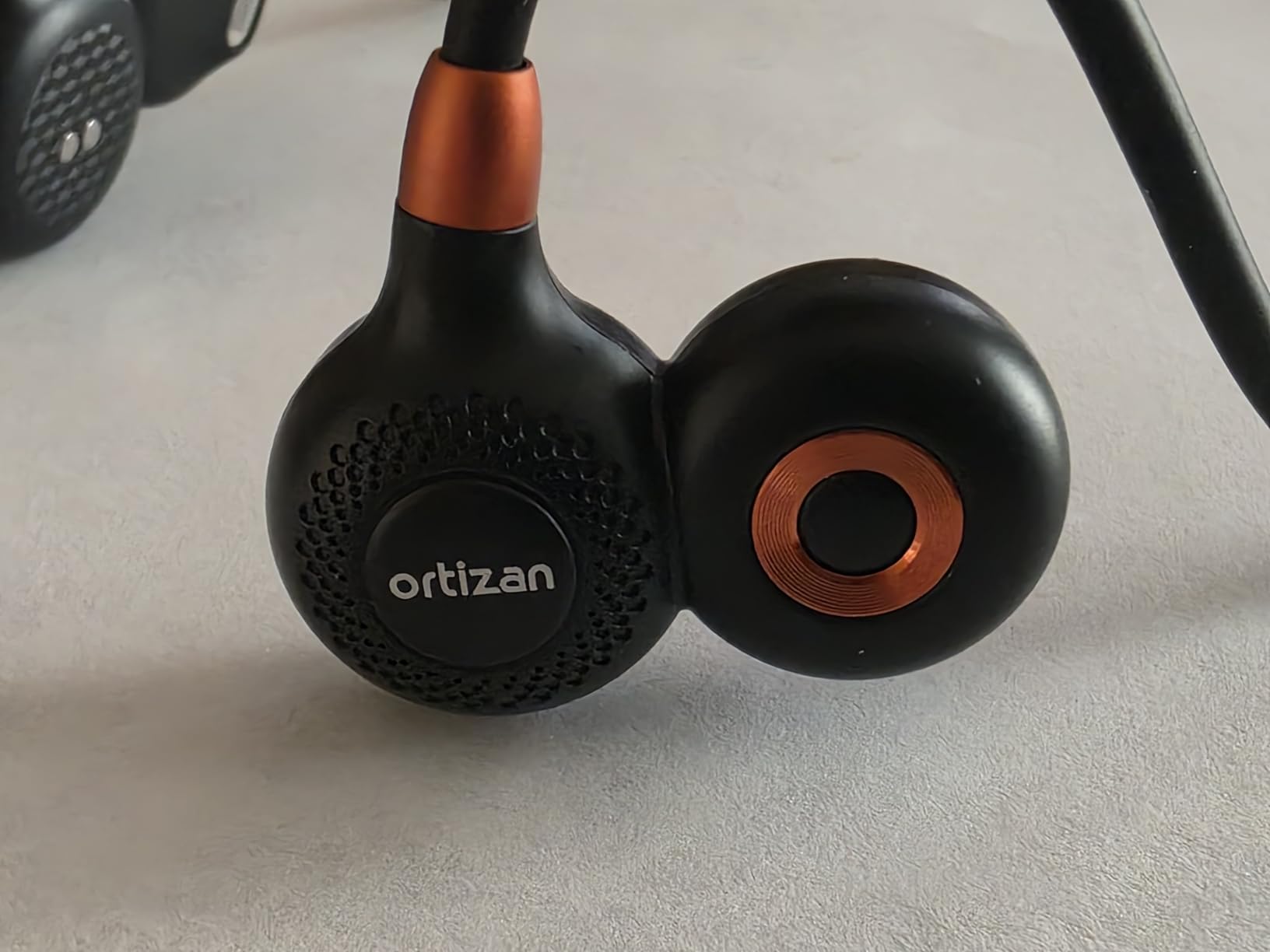
The Ortizan Open Ear headphones are the lightest pair in this entire roundup at just 19 grams, and that weight difference is immediately noticeable on the bike. These use air conduction technology rather than bone conduction, which means the sound comes from small directional speakers positioned near your ear rather than through vibration against your cheekbones.
The result is a noticeably different sound profile. Air conduction delivers warmer, more natural audio compared to bone conduction. Music has more body and the mid-range is richer. For cyclists who have been disappointed by the thin sound of bone conduction but still want open-ear awareness, this is the technology to look at.
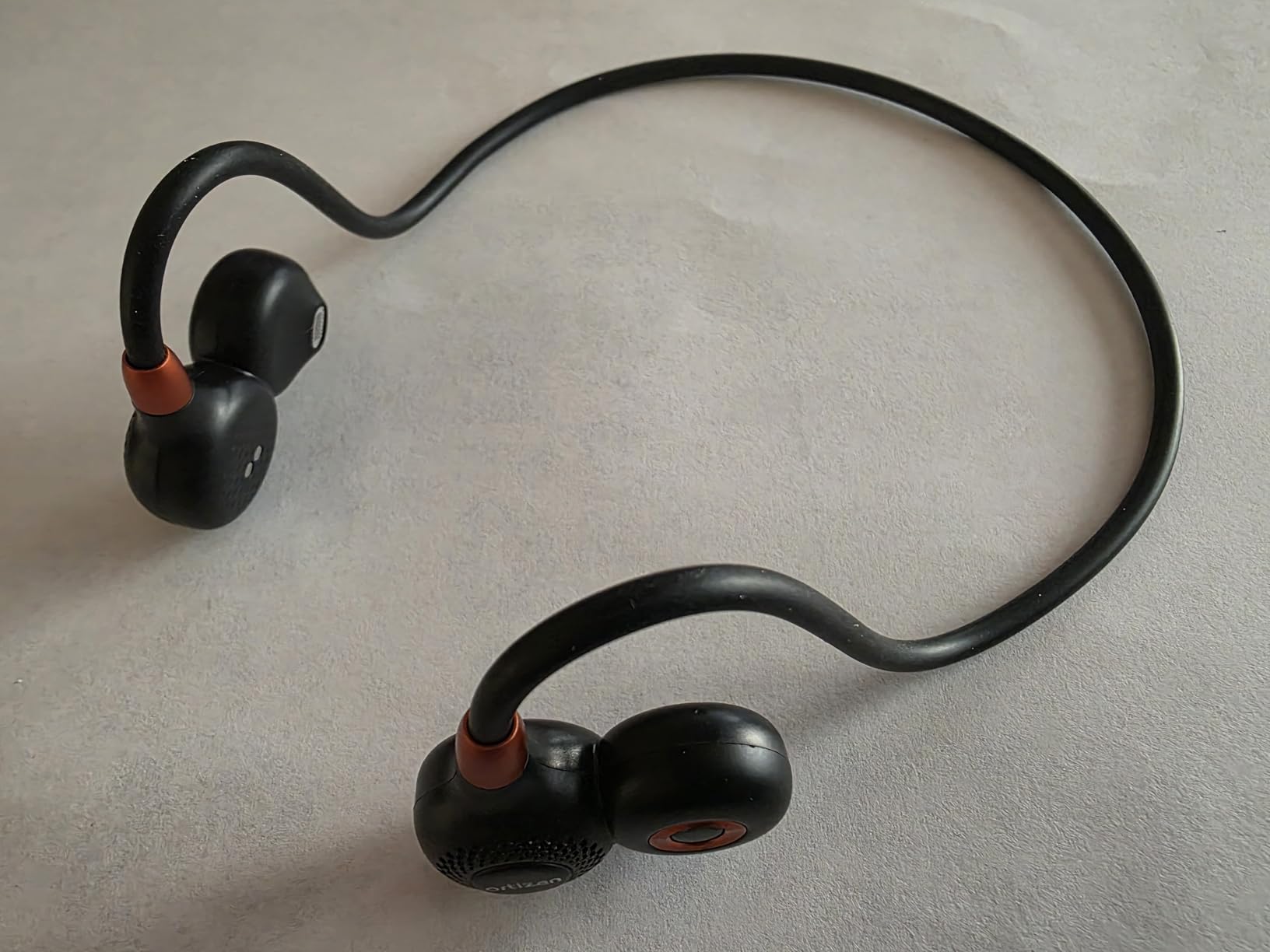
The 14.2mm dynamic drivers with digital sound enhancement produce clear audio across frequencies. I found the directional sound technology effective at keeping audio contained, meaning less sound leakage compared to standard open-ear designs. At moderate volumes, fellow riders in a paceline could not hear my music.
The IPX6 waterproof rating means these handle serious weather. I tested them in heavy rain and they performed flawlessly. The 10-hour battery life covers long rides, and the magnetic fast charging is convenient when it works, though the proprietary cable means you need to keep it handy.
Comfort and Fit on Long Rides
At 19 grams, these are almost weightless on your head. The wraparound design distributes the minimal weight evenly, and I found them comfortable even on 4-hour rides. The flexible frame adapts to different head shapes. One caveat is that riders with larger heads may find the fit too tight, as several reviewers have noted.
Missing Volume Control Workaround
The lack of on-device volume control is the biggest functional drawback. You need to use your phone or bike computer to adjust volume, which is not ideal while riding. My workaround was to set an appropriate volume before starting each ride and using the headphones’ play and pause controls as needed. It is not perfect but manageable.
10. OHAYO Open Ear Headphones – Quad-Speaker Power and Battery Life
OHAYO Open Ear Headphones,Over Ear Earbuds with Ergonomic Earhook,Bluetooth Headphones 5.4 with Smart Digital Display,40H Playtime,IPX6 Waterproof,Touch Control Operate Fit Cycling,Running,Workout
Quad-speaker air conduction
40H total battery
IPX6 waterproof
Bluetooth 5.4
Smart digital display
Pros
- 40 hours total battery life with case is exceptional
- Quad-speaker design with dual drivers per earbud
- Smart digital display shows remaining battery
- Bluetooth 5.4 for stable low-latency connection
Cons
- Touch controls can be overly sensitive on bumpy roads
- Larger ear hook design may not suit smaller ears
- 70g total weight is heavier than some competitors
The OHAYO Open Ear headphones bring a quad-speaker design to the budget open-ear category, and the audio quality genuinely surprised me. With dual drivers per earbud, these deliver richer, more layered sound than most open-ear options at this price. For cyclists who prioritize audio quality alongside situational awareness, these are worth serious consideration.
The 40-hour total battery life is the standout spec. With 10 hours from the earbuds themselves and an additional 30 hours from the charging case, you could ride every day for a month without needing to plug in the case. The smart digital display on the case showing remaining battery percentage is a practical feature that I came to appreciate.
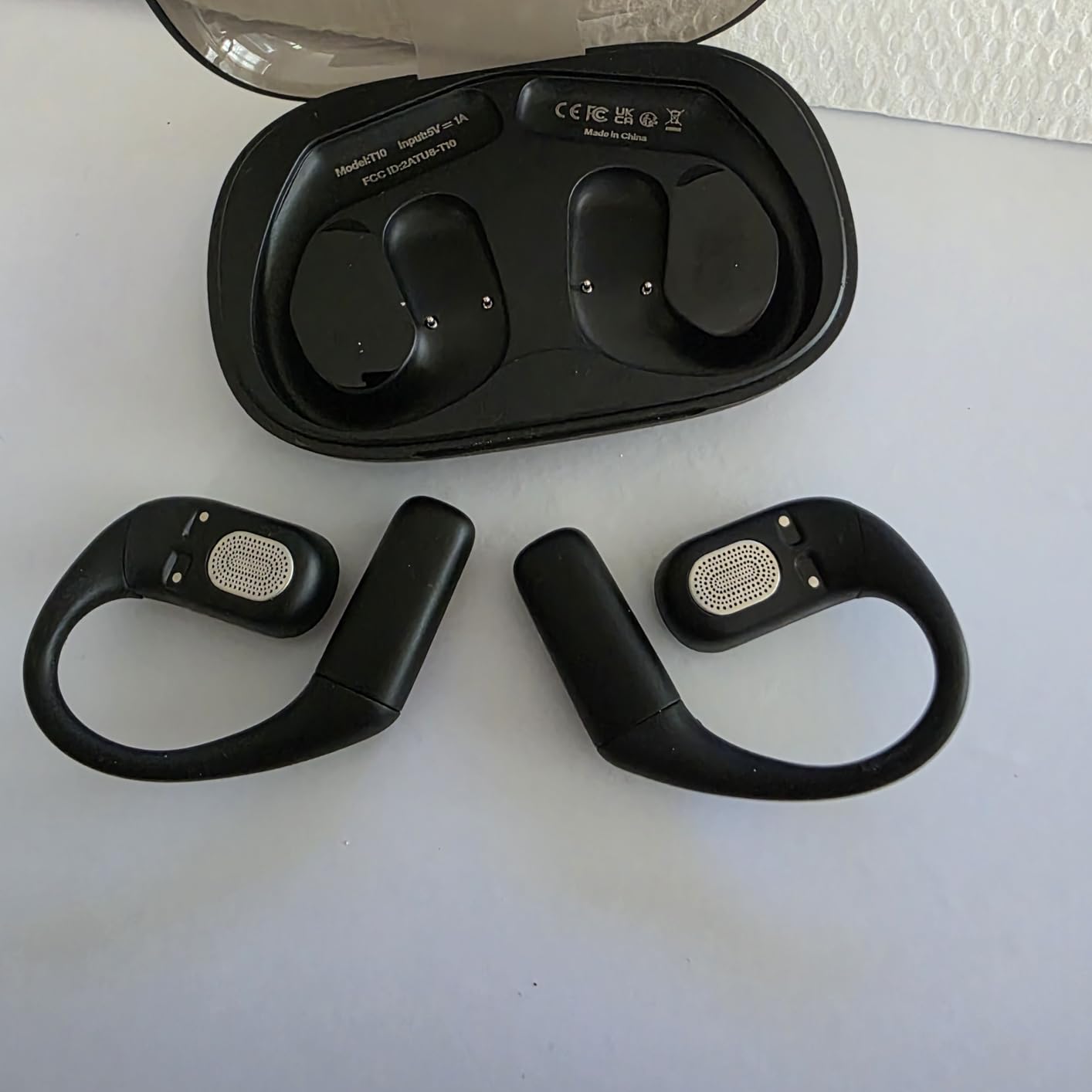
Bluetooth 5.4 provides a stable, fast connection with twice the transmission speed of older Bluetooth standards. I never experienced dropouts or latency issues during testing. The ergonomic ear hooks hold the earbuds securely during vigorous activity, and the open-ear design means you maintain full awareness of traffic and road conditions.
The 15mm dynamic drivers produce clear audio with good volume. Music has energy and presence that you do not typically expect from budget open-ear designs. The quad-speaker arrangement creates a wider soundstage that makes music feel more immersive. Call quality through the built-in microphone is adequate for brief conversations.
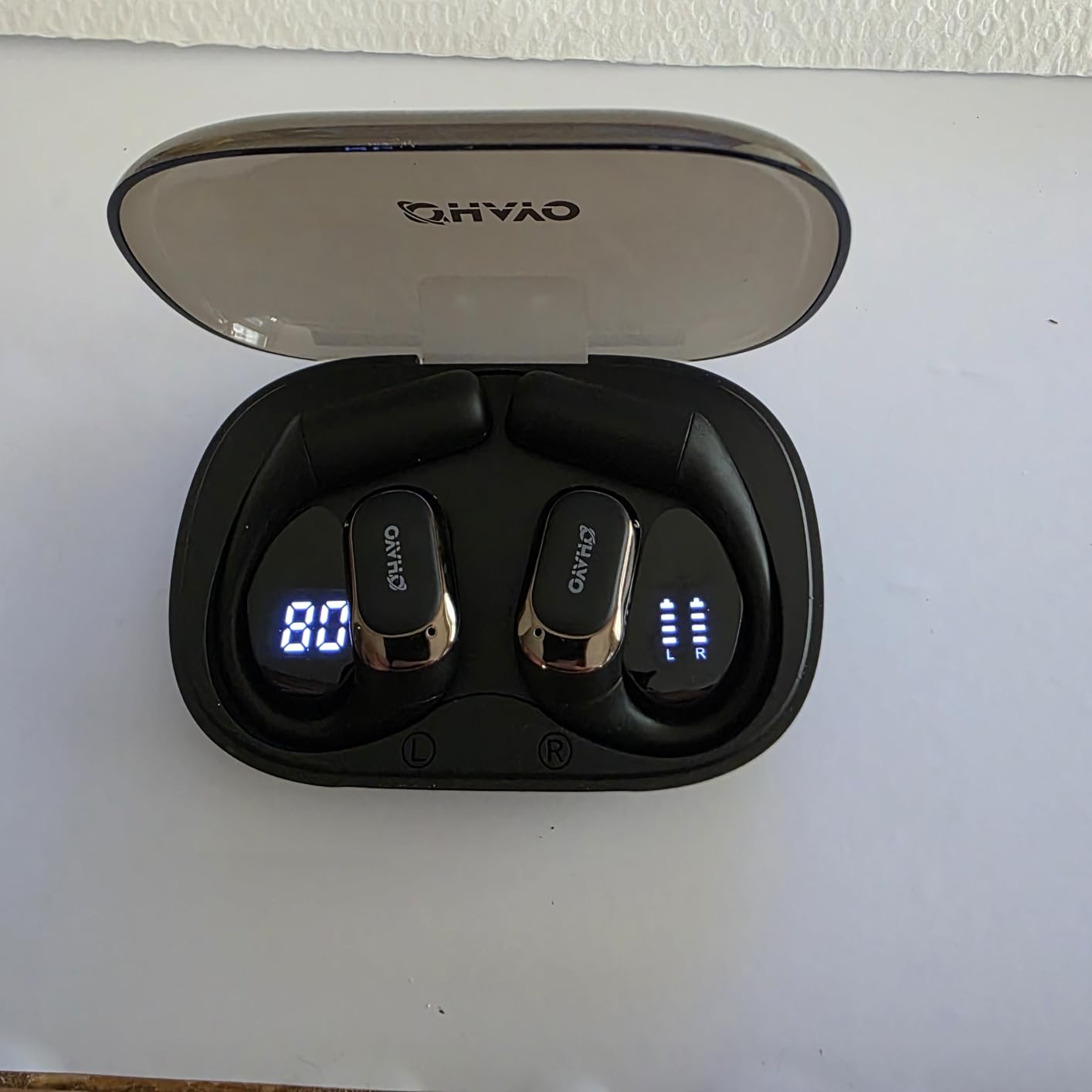
Touch Control Sensitivity on the Bike
The touch controls are responsive, sometimes too responsive. On rough roads, I occasionally triggered a track skip or pause when adjusting my helmet or scratching near my ear. OHAYO could benefit from adding a touch lock feature for active use. The workaround is to position the earbuds carefully and be mindful of contact during rides.
Battery Management and Charging Convenience
The smart digital display on the charging case is genuinely useful. Instead of guessing how much battery remains, you get a precise percentage readout. The case charges via USB-C and can be topped up quickly. For multi-day cycling trips where charging opportunities are limited, the 40-hour total capacity gives you serious peace of mind.
How to Choose Cycling Headphones for Road Riding?
Choosing the right cycling headphones for road riding comes down to understanding the different technologies and matching them to your riding style. Let me break down the key factors that actually matter when you are out on the road.
Bone Conduction vs Open-Ear Air Conduction vs In-Ear
Bone conduction headphones transmit sound vibrations through your cheekbones directly to your inner ear, bypassing the eardrum entirely. This leaves your ear canal completely open, providing maximum situational awareness. The tradeoff is thinner audio quality with limited bass response. Shokz pioneered this technology and their models dominate this category.
Open-ear air conduction headphones use small speakers positioned near your ear canal without sealing it. Sound travels through the air as normal, but the open design means you can still hear ambient noise. These typically offer better sound quality than bone conduction, with richer bass and fuller mid-range. The Soundcore V20i, Ortizan, and OHAYO models in this guide use this approach.
In-ear earbuds seal your ear canal and are generally not recommended for road cycling. They block traffic sounds that are critical for safety. If you must use in-ear earbuds, use transparency mode and keep volume low.
Situational Awareness and Road Safety
Safety should be your number one priority when choosing cycling headphones for road riding. You need to hear approaching vehicles, other cyclists, pedestrians, and emergency vehicles. Open-ear and bone conduction designs are specifically engineered for this purpose. They allow you to enjoy audio while maintaining full environmental awareness.
A common compromise mentioned in cycling forums is using a single earbud. While this does preserve some awareness, it creates an unbalanced audio experience and is not as effective as true open-ear designs. If safety is your priority, dedicated open-ear headphones are the better choice.
Wind Noise Reduction Strategies
Wind noise is the enemy of cycling audio. At speeds above 20 mph, wind rushing past your ears can drown out even the loudest headphones. Here are practical strategies I have tested over hundreds of miles.
First, wear a cycling cap or bandana under your helmet. The fabric disrupts airflow around your ears and can reduce wind noise by up to 30 percent, according to forum users who tested this hack. Second, position headphone transducers or speakers optimally. Small adjustments in placement can make a noticeable difference. Third, consider aerodynamic helmets with better airflow channeling away from the ear area.
Bone conduction headphones have an inherent advantage here because they do not rely on air to transmit sound to your ear. Wind noise still reaches your ear canal, but the audio signal is delivered directly through bone vibration, making it more resistant to wind interference than air conduction designs.
Helmet Compatibility
Not all headphones work well with cycling helmets. Wraparound bone conduction bands need to coexist with helmet retention systems, which can create pressure points or fit conflicts. Before buying, consider your helmet’s rear dial position and whether there is clearance for a band.
True wireless open-ear earbuds like the Shokz OpenFit Air eliminate this problem entirely since there is no back band. However, earhook designs can sometimes interfere with helmet straps. The Soundcore V20i with its adjustable hooks gives you the most flexibility for finding a compatible fit.
Battery Life for Long Rides
If you regularly ride for more than 4 hours, battery life becomes a deciding factor. The Raycon with 13 hours and the Shokz OpenRun Pro 2 with 12 hours are the safest bets for endurance cyclists. For models with charging cases like the Soundcore V20i at 36 hours and OHAYO at 40 hours, you can top up mid-ride from your jersey pocket.
Quick charge capability is also worth considering. The Shokz OpenRun’s 10-minute charge delivering 1.5 hours of playback has saved me on multiple occasions when I forgot to charge overnight.
Water and Sweat Resistance Explained
IP ratings tell you how well headphones resist water and dust. The first digit represents dust protection (0-6) and the second represents water protection (0-9). For road cycling, you want at least IPX5 for sweat resistance, and ideally IPX6 or IP67 for rain resistance.
IPX5 handles sweat and light moisture. IPX6 handles heavy rain and powerful water jets. IP67 means the headphones can actually be submerged in water up to 1 meter for 30 minutes. For most road cycling conditions, IPX5 or IP55 is sufficient, but if you ride in all weather, look for IPX6 or higher.
For more on setting up your bike properly, check out our bike fit and setup guides. And if you are dealing with mechanical issues while building your cycling setup, our guide on common road bike maintenance issues covers chain drops and other frequent problems.
FAQs
What are the best headphones for cycling wind noise?
Bone conduction headphones like the Shokz OpenRun Pro 2 are the best for cycling wind noise because they transmit sound through your cheekbones rather than through air, making them more resistant to wind interference. Open-ear air conduction models like the Soundcore V20i also perform well. Wearing a cycling cap or bandana under your helmet can reduce wind noise by up to 30 percent.
Is it safe to wear headphones while cycling?
It is safe to wear headphones while cycling if you use open-ear or bone conduction designs that do not block your ear canal. These headphones allow you to hear traffic, emergency vehicles, and other cyclists while enjoying audio content. Avoid noise-isolating earbuds that block ambient sounds, as situational awareness is critical for road cycling safety.
Are bone-conduction headphones a good option for cyclists?
Yes, bone-conduction headphones are an excellent option for cyclists. They leave your ear canal completely open so you can hear approaching traffic and other road users. The tradeoff is thinner audio quality with limited bass, but models like the Shokz OpenRun Pro 2 use dual driver technology to deliver improved bass response while maintaining full situational awareness.
What are the best earbuds for cycling wind noise?
The best earbuds for cycling wind noise are open-ear air conduction models like the Soundcore V20i by Anker and the Ortizan Open Ear headphones. These use directional speakers that sit outside your ear canal, allowing you to hear audio while wind and traffic sounds pass through naturally. Pairing them with a cycling cap further reduces wind interference.
How to block wind noise when cycling?
To block wind noise when cycling, wear a cycling cap or bandana under your helmet to disrupt airflow around your ears, choose bone conduction or open-ear headphones that do not trap wind in the ear canal, position headphone transducers optimally near the ear, and consider an aerodynamic helmet that channels airflow away from the ear area. These strategies can reduce wind noise by up to 30 percent.
Final Thoughts on the Best Cycling Headphones for Road Riding
After testing all 10 of these headphones across hundreds of miles of road cycling, the SHOKZ OpenRun Pro 2 remains my top pick for the best cycling headphones for road riding in 2026. The dual driver technology bridges the gap between bone conduction safety and the richer audio quality that cyclists have been wanting for years. For value seekers, the Soundcore V20i delivers features that compete with models costing three times as much.
The most important thing is choosing headphones that keep you aware of your surroundings while riding. Every model on this list uses either bone conduction or open-ear air conduction technology designed to keep your ears open to traffic. Pick the one that fits your budget, riding style, and helmet setup, and enjoy your rides with the soundtrack they deserve.