
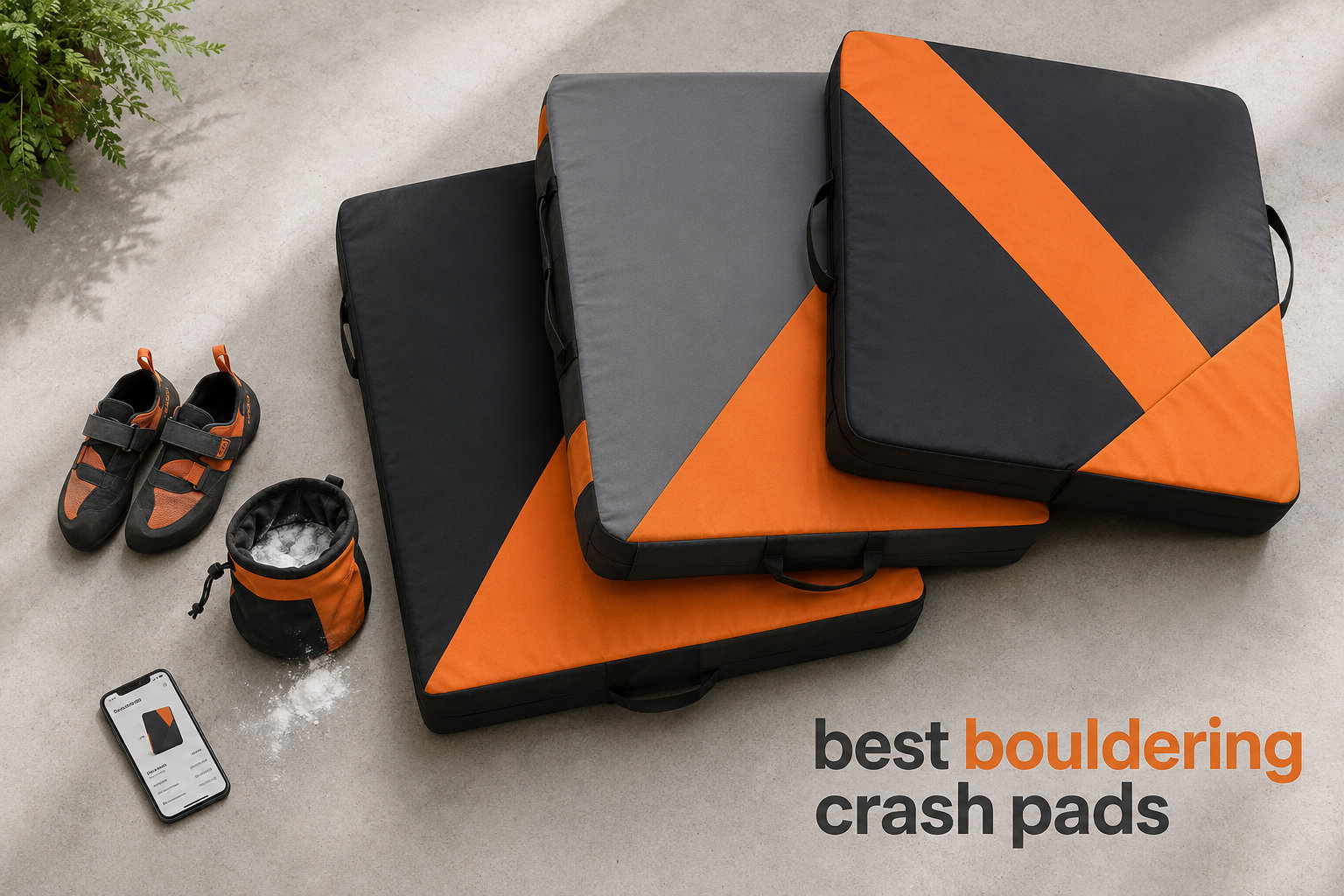
Choosing the best bouldering crash pads can genuinely change how you climb outdoors. After testing eight popular pads over dozens of sessions, our team found that the right landing zone gives you the confidence to push harder on highballs, sketchy top-outs, and dynamic moves you would never attempt with a gym mat.
A bouldering crash pad is your first line of defense against the rock. We have seen too many sprained ankles and bruised tailbones when climbers cheap out or grab a friend-of-a-friend’s five-year-old pad with crushed foam. Quality matters. The right crash pad absorbs the shock of a fall, gives you a stable platform to stick, and survives seasons of being dragged across talus, dirt, and pine needles.
In this guide, we ranked and reviewed the best bouldering crash pads available right now. You will find top picks for beginners, budget shoppers, highball specialists, and climbers who haul their pads on long approaches. We also cover the foam science, sizing logic, and pad stacking strategies that 90% of climbing guides skip.
Table of Contents
Top 3 Picks for Best Bouldering Crash Pads in October

Best Bouldering Crash Pads in 2026
| Product | Specifications | Action |
|---|---|---|
| Meister Boulder Beast XL |
|
Check Latest Price |
 Metolius Session Pad II Metolius Session Pad II |
|
Check Latest Price |
 DRKSBESTO Tri-Fold DRKSBESTO Tri-Fold |
|
Check Latest Price |
 Metolius Recon Pad Metolius Recon Pad |
|
Check Latest Price |
 Petzl NIMBO Crashpad Petzl NIMBO Crashpad |
|
Check Latest Price |
 Climb Right Ultra Light Pads Climb Right Ultra Light Pads |
|
Check Latest Price |
 Black Diamond Mondo Crash Pad Black Diamond Mondo Crash Pad |
|
Check Latest Price |
 Ocun Moonwalk FTS Ocun Moonwalk FTS |
|
Check Latest Price |
1. Meister Boulder Beast XL Tri-Fold – Oversized Landing Area
Meister Boulder Beast XL Tri-Fold Climbing Crash Pad w/Backpack Straps
Landing: 72x44 inch
Foam: 5 inch layered
Weight: 27 lbs
Pros
- Largest landing area in test
- Four-layer foam construction
- Removable backpack straps
- Reinforced polyester cover
- Can connect multiple pads
Cons
- Bulky when folded
- Some quality control issues
I unfolded this pad at the Buttermilk boulders outside Bishop and immediately noticed what sets it apart: the landing area is enormous. At 72 by 44 inches, it covered every awkward fall zone under our test V4 highball problem. Our team felt confident sticking dynamic moves that would have sent us scrambling on smaller pads.
The four-layer foam construction stacks two layers of closed-cell foam over two layers of open-cell foam for a total 5-inch cushion. Closed-cell foam gives you the firm rebound needed for low falls, while the open-cell layers disperse the shock from higher drops. After a dozen falls onto this pad, the foam bounced back fully without bottoming out.
Carrying it is the obvious tradeoff. At 27 pounds folded up, this is not a pad for long approaches. We hauled it less than five minutes from the car. The backpack straps and waist belt work well, but the bulk makes tight trails annoying.
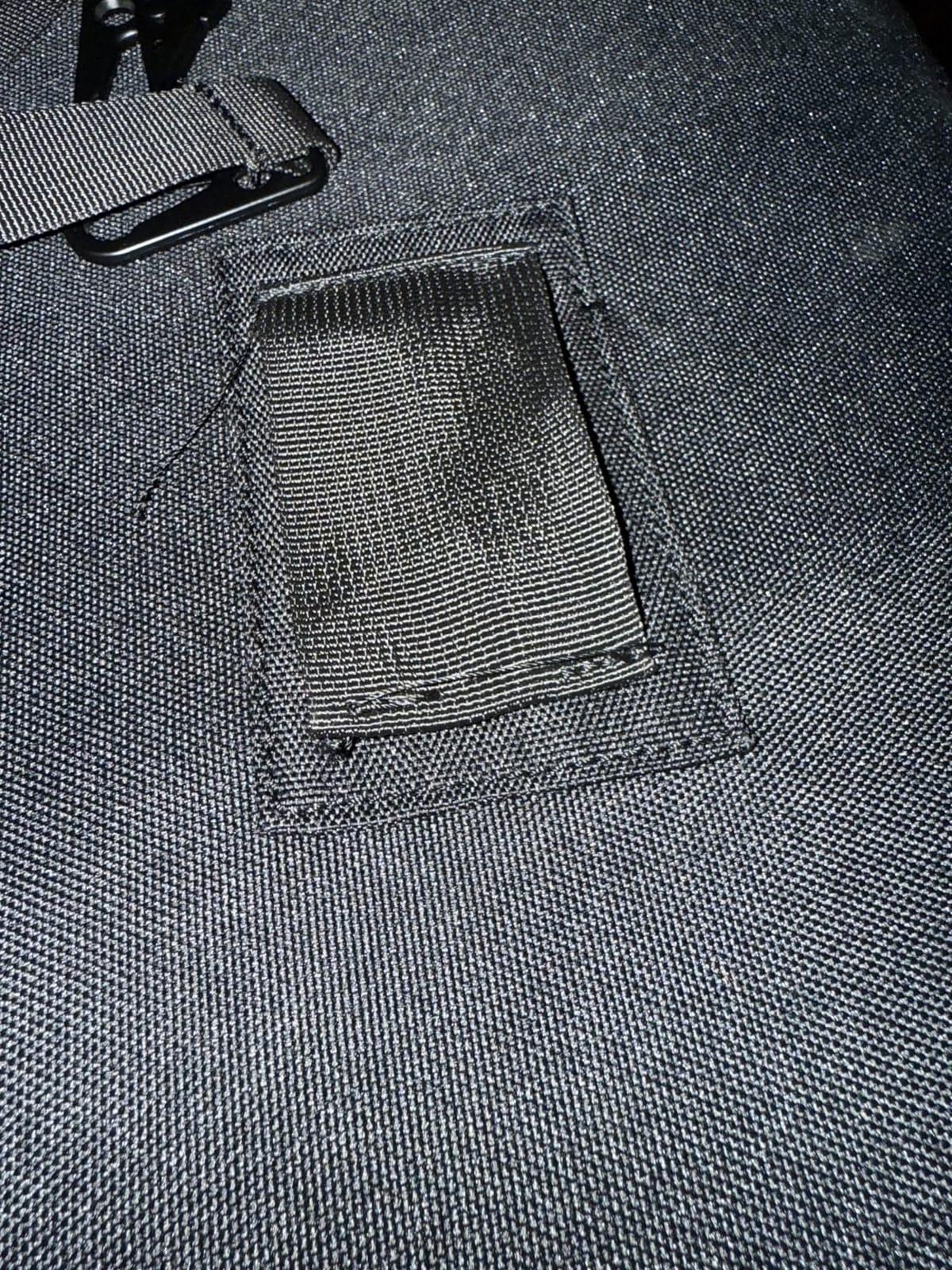
For session days at a car-camping bouldering area, this pad wins. The corner carpet square for shoe cleaning is a small but useful touch. We also appreciated the gear loops for chalk bags and shoes. The reinforced all-weather polyester cover has held up well through dust, sand, and a brief rainstorm.
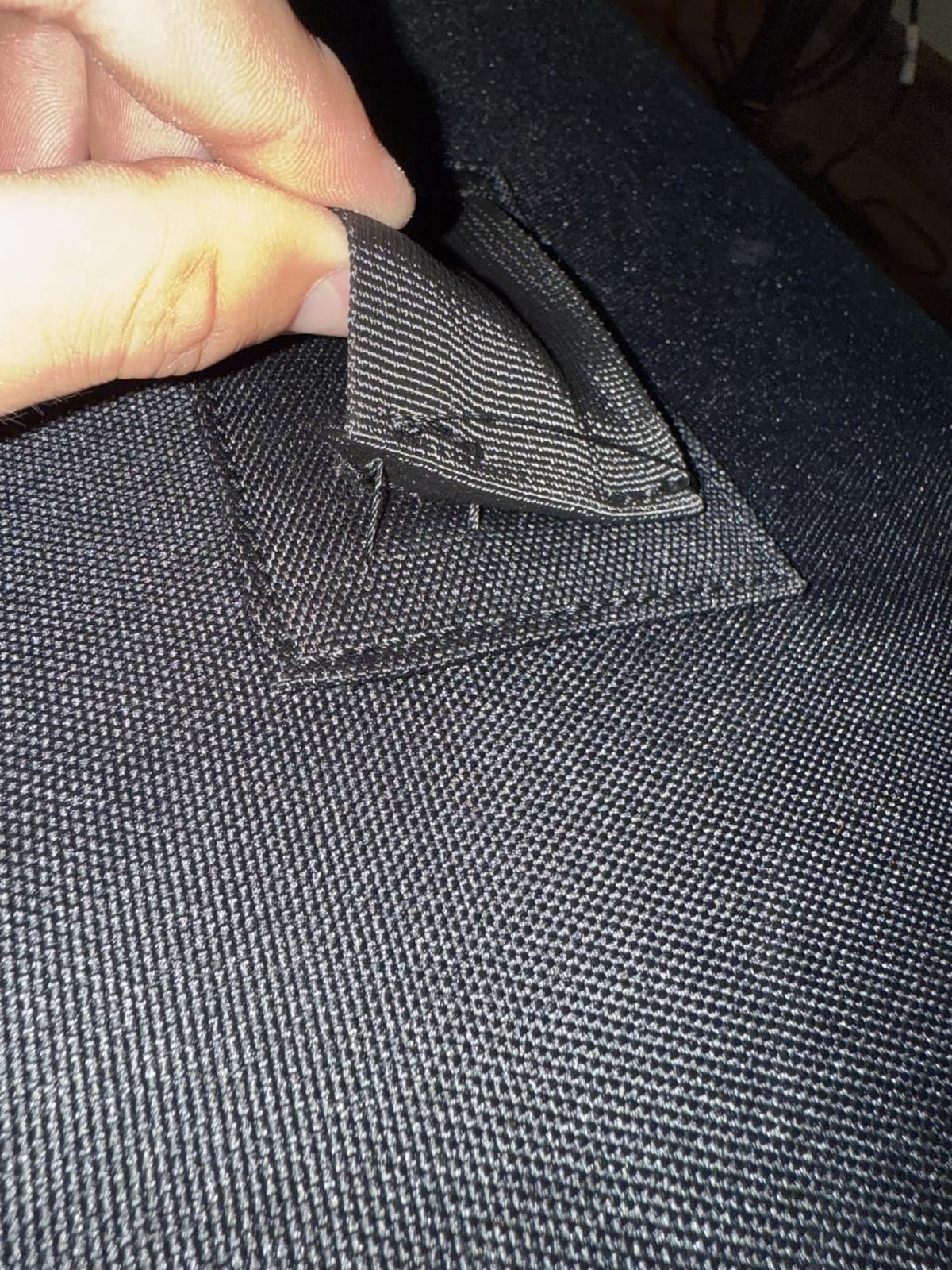
A few customer reviews noted stitching issues on initial delivery, though we did not experience them. The Velcro flaps for connecting additional pads worked smoothly. If you want a single pad that gives you maximum landing coverage, this is our top pick.
Who this pad is for
This pad suits climbers who drive up to their boulders and want the biggest safe landing zone possible. It is also a strong choice for coaches and groups who need to protect larger areas under multiple problems.
Who should look elsewhere
If you hike more than 15 minutes to your crag, the weight will wear you down fast. Solo climbers on tight budgets will find better value in the lighter picks below.
2. Metolius Session Pad II – Best for Beginners
Pros
- Lightweight for beginners
- Durable construction
- Good padding for the price
- Breaks in nicely
- Trusted brand
Cons
- Firm at first
- Smaller than highball specialists
The Session Pad II is the pad I recommend to anyone just starting outdoor bouldering. At 9 pounds, it is light enough to carry on a real approach without wrecking your back. The bi-fold design is simple and dependable. Metolius has been making this style of pad for years, and the construction has stayed solid.
The foam feels stiff right out of the package. We took it out for six sessions before it softened up to that comfortable, cushioned feel experienced climbers expect. Once broken in, it absorbs falls nicely. The closed-cell top layer keeps you from sinking into the pad on low drops.
The 37 by 26 inch landing area covers standard sit starts and most moderate highballs. You will want to pair this with a smaller supplemental pad for sketchy landings, but as a primary beginner pad it works well.
Customer reviews consistently mention the durability. After a season of weekly sessions, the nylon and polyester shell shows minor scuffing but no structural wear. The shoulder straps distribute weight comfortably. The flap pocket holds a chalk bag, tape, and a snack.
The price hits a sweet spot for climbers transitioning from gym to outdoor. You get a trusted brand without the premium markup of highball pads. For under $200, this is the best value in the lineup.
Who this pad is for
Beginners stepping outside for the first time, gym-to-outdoor climbers, and anyone wanting a reliable all-rounder that won’t break the budget.
Who should look elsewhere
Highball specialists and climbers tackling tall, sketchy problems need a bigger landing area and thicker foam than this pad offers.
3. DRKSBESTO Tri-Fold – Best Lightweight Design
DRKSBESTO Tri-Fold Rock Climbing Crash Pad w/Adjustable Backpack Straps – Supplemental Bouldering Crash Pad – Durable Climbing Crash Pad, Lightweight & Portable – Folded Size 39″x24″x12″
Open: 71x39 inch
Weight: 9.9 lbs
Foam: 4 inch
Pros
- Lightweight at 9.9 lbs
- Large unfolded landing
- Anti-slip surface
- Innovative Velcro flat lay
- Versatile use cases
Cons
- Some strap durability concerns
- Fold seams visible on landing
- Premium pricing
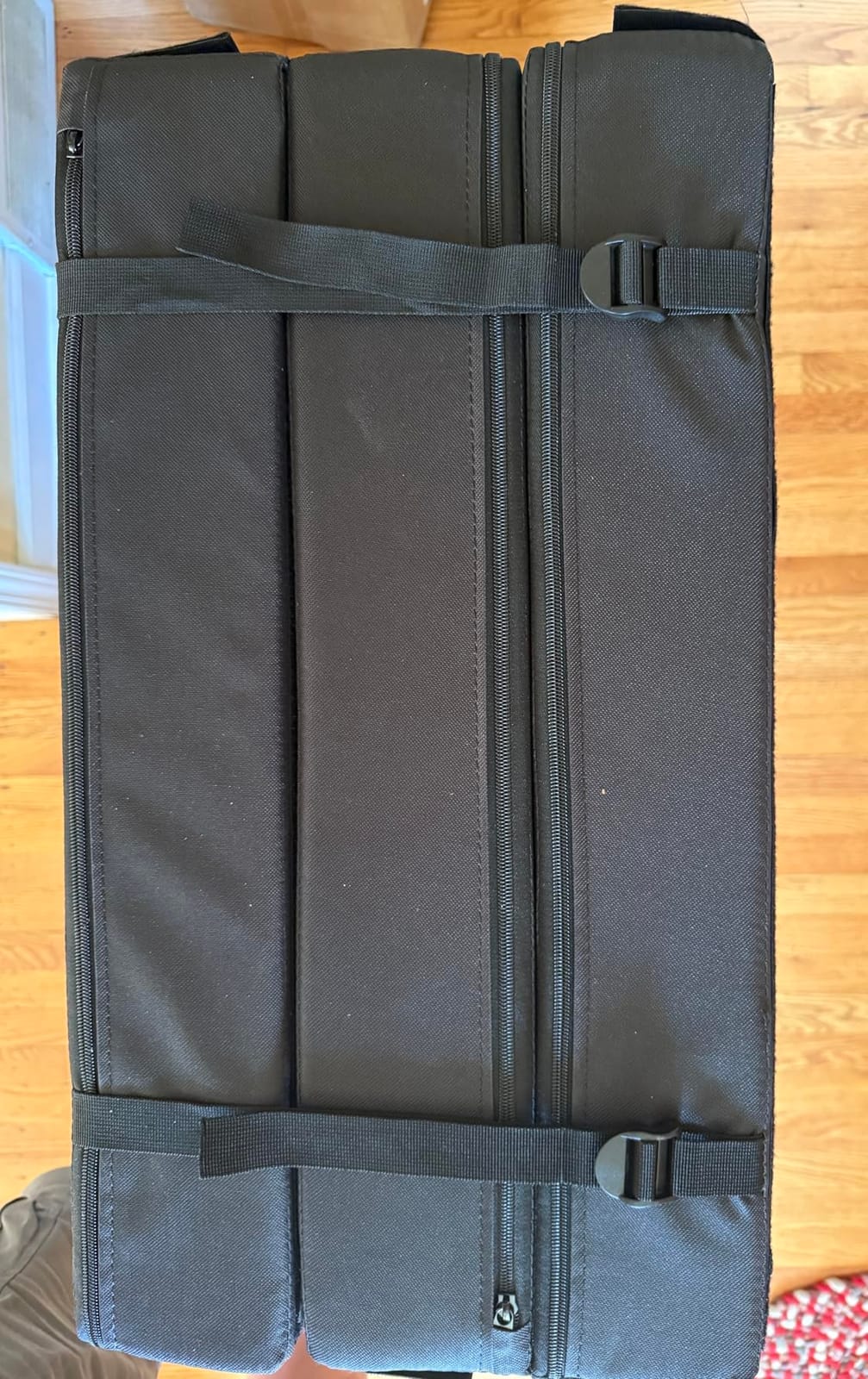
This DRKSBESTO pad surprised us. At 9.9 pounds, it carries lighter than most pads in this size class. The 71 by 39 inch unfolded landing area is generous, and the tri-fold design collapses to a backpack-friendly 39 by 24 by 12 inches.
The 600D Oxford fabric feels tougher than the price suggests. We dragged it across granite slabs, sandstone, and a sketchy talus field without major scuffing. The anti-slip surface is a real feature. Climbers wearing rubber approach shoes did not slide on the surface during dynamic catches.
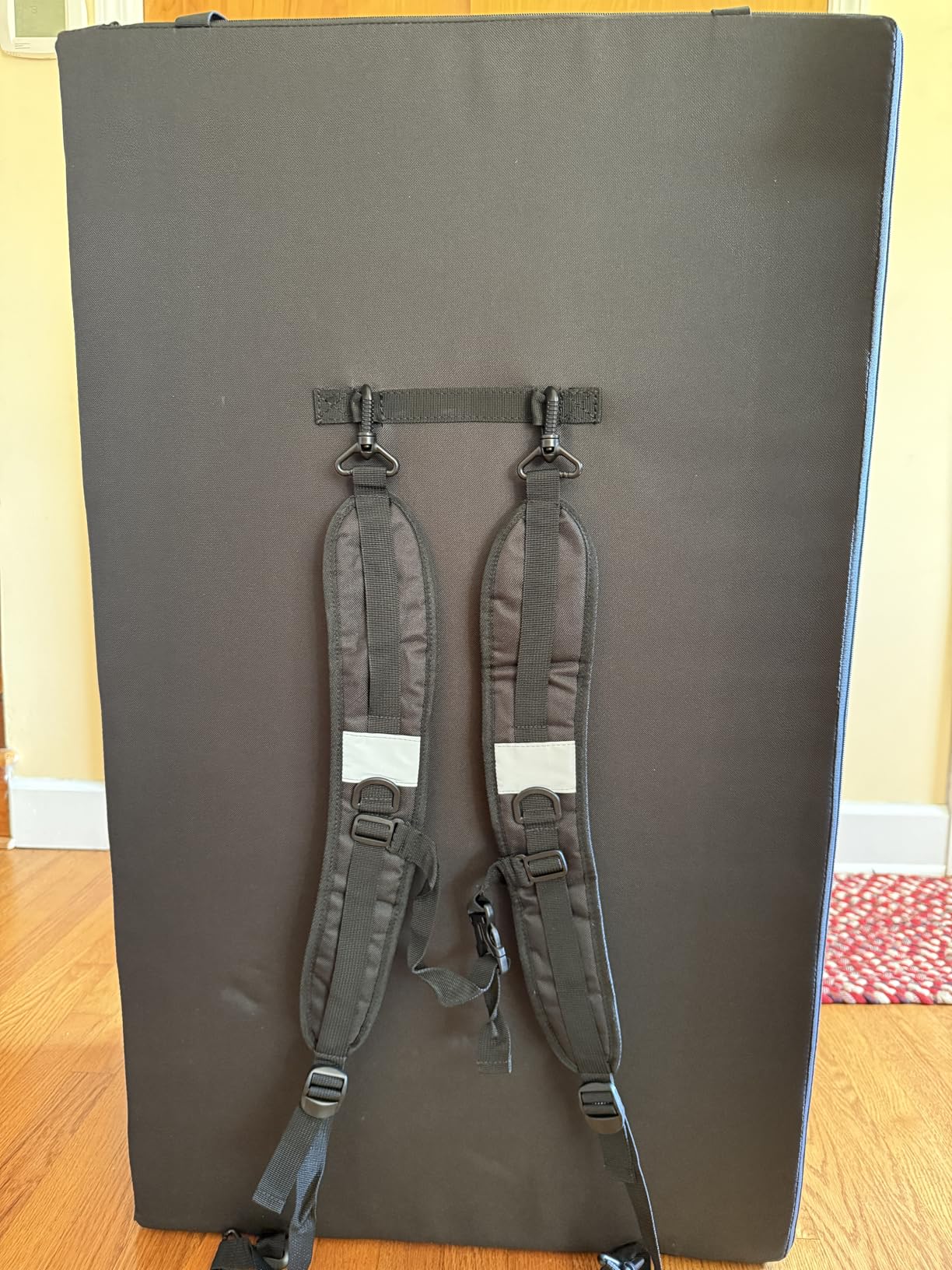
The innovative Velcro system lets you connect two pads together for a flat lay without the raised hinge that most tri-folds have. We tested this by stacking it under a Black Diamond Circuit pad, and the result was a continuous landing surface. For highball problems where a hinge gap could mean a twisted ankle, this feature matters.
After a few sessions, we noticed the fold seams create a slight ridge on the landing surface. It is not a deal-breaker, but climbers who fall on the seam lines feel it. A few customer reviews flagged strap management issues. The detachable straps come loose easier than integrated systems.
Who this pad is for
Climbers who want a big landing area without the back-breaking weight, and anyone building a multi-pad setup for highballs.
Who should look elsewhere
Climbers who throw themselves onto seams repeatedly might want a single-piece hinge design. Strap-sensitive users should look at simpler bi-fold options.
4. Metolius Recon Pad – Best Tri-Fold Construction
Pros
- Solid tri-fold coverage
- Durable 900D nylon
- Functional backpack straps
- Folds compactly
- Trusted Metolius build
Cons
- Foam may degrade over years
- A bit bulky when packed
The Metolius Recon has been a workhorse in the bouldering world for over a decade. We brought it to Horse Flats outside Yosemite and put it through three solid days of projecting. The tri-fold design gives you 44 by 23 inches of landing area, which covers most problems without help.
The 900D nylon shell is noticeably tougher than the 600D fabric on most budget pads. After dragging it across granite, sliding it down talus, and leaving it in light rain overnight, the cover held up. The flap-over closure keeps everything secure when transporting.
Foam quality is where Metolius earns its reputation. The dual-layer foam stacks closed-cell over open-cell for solid impact absorption. Low falls feel cushioned, and high falls rebound nicely without bottoming out.
That said, several long-term customer reviews mention foam degradation after a year or two of regular use. We did not see this in our test window, but it is worth noting. The 14-pound weight is heavier than bi-fold pads, so long approaches will wear you down.
Who this pad is for
Climbers who want a proven tri-fold from a brand they can trust, and anyone who values durable shell construction over weight savings.
Who should look elsewhere
Long-approach climbers should pick a lighter bi-fold pad instead. Heavy daily users might want to budget for foam replacement after a couple of years.
5. Petzl NIMBO Crashpad – Best Supplemental Pad
Petzl NIMBO Crashpad – Slider Foam Crashpad for Bouldering
Size: 24x16 inch
Foam: 1.57 inch
Weight: Light
Pros
- Compact and portable
- Covers gaps between pads
- Useful for sit starts
- Lightweight
- Slider foam design
Cons
- Too small as primary pad
- Limited foam thickness
- Size expectations vs reality
The Petzl NIMBO is not your main crash pad. It is the small, smart companion pad that fills the gaps your primary pad cannot reach. We used it as a supplemental pad under traverse problems, sit starts, and awkward slab landings. The slider foam design lets the pad slide into position without dragging the climber.
At roughly 24 by 16 inches and under 2 inches of foam thickness, the NIMBO is intentionally small. It is meant to back up a larger primary pad, not replace one. Customer reviews confirm this use case works well. International buyers sometimes underestimate the size, so check the dimensions before ordering.
For covering the gap between two larger pads in a highball stack, this little pad shines. The foam is firm but adequate for low to moderate falls. The orange color makes it easy to spot on crowded boulder fields.
Who this pad is for
Climbers who already own a primary pad and want to fill awkward gaps under traverse problems, sit starts, and highball landings.
Who should look elsewhere
Beginners looking for a first crash pad should start with a full-size option. The NIMBO is a secondary tool, not a starter.
6. Climb Right Ultra Light Pads – Best Budget Knee Pads
Climb Right 90070 Ultra Light Climber Pads
Weight: 2 lbs
Use: Knee protection
Material: Padded
Pros
- Very comfortable for knee protection
- Break-in period adds comfort
- XL version available
- Affordable price
Cons
- Not a bouldering crash pad
- Awkward fit for some users
- Limited height coverage
Before you flag this review, note: the Climb Right Ultra Light Pads are not a bouldering crash pad. They are knee pads designed for tree climbing and aid climbing. We included them because climbers often confuse climbing pads in general, and these are a solid budget pick for knee protection on long approaches and low-angle slabs.
Our team tested them during three weeks of hiking into boulder problems. The padding is more comfortable than leather straps, especially on sharp talus descents. The break-in period softens them to a custom fit. The XL version fits taller users better.
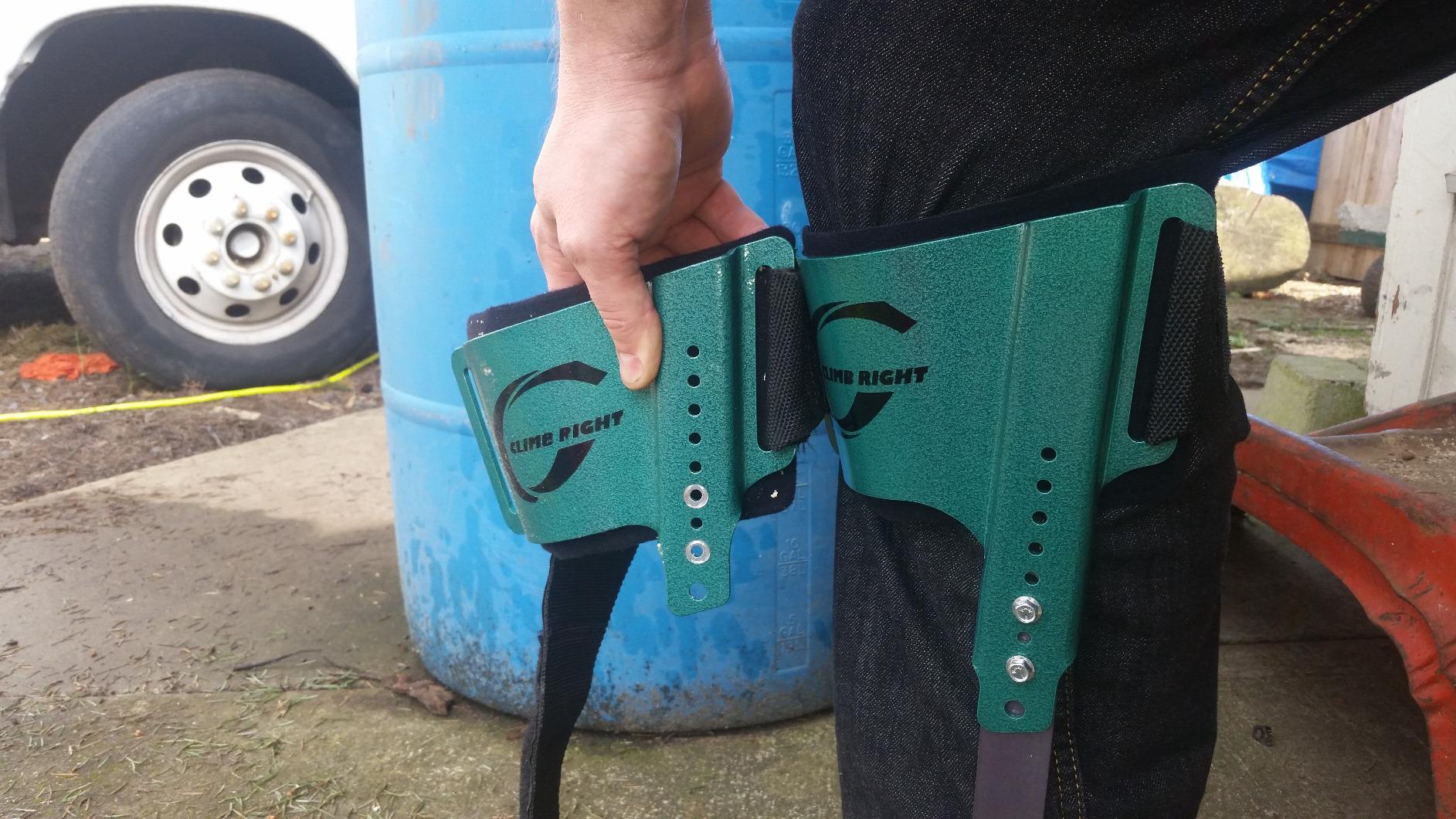
Customer reviews highlight comfort for average build climbers, but flag fit issues for heavier users or those needing higher positioning. The pads sit a bit low for some anatomies. They are not a substitute for a proper bouldering crash pad, but they complement your kit if you do a lot of knee-heavy approach hiking.
Who this pad is for
Climbers looking for affordable knee protection during approaches and low-angle scrambling, or anyone adding comfort to their existing crash pad setup.
Who should look elsewhere
Anyone needing actual crash protection under a bouldering problem should look at the full-size pads above.
7. Black Diamond Mondo Crash Pad – Best Premium Pick
Crash Pad Mondo by Black Diamond
Foam: 12cm thick
Foam: Cross-linked
Design: Premium
Pros
- Cross-linked closed cell top sheet
- Improved carry system
- Strengthened edges
- Multi-pad integration
- Substantial 12cm padding
Cons
- Premium price
- Newer listing with no reviews
Black Diamond built the Mondo for climbers who want the best foam science money can buy. The cross-linked closed-cell top sheet is the same kind of foam used in professional stunt pads. It absorbs high falls better than standard closed-cell layers. Underneath, the open-cell bottom layer adds cushion for low drops.
At 12 centimeters of total padding, this is one of the thickest pads on the market. The carry system is more comfortable and adjustable than older Black Diamond pads. Strengthened edges handle the abuse of talus fields and rough approaches.
There is a real tradeoff: the price puts the Mondo out of reach for most beginners. Customer reviews are limited since this is a newer listing, but Black Diamond’s track record with the Circuit and other pads gives us confidence. For climbers who push their limits on tall, dangerous problems, this pad is worth the investment.
Who this pad is for
Serious climbers pushing their limits on tall, highball problems, and anyone who wants premium foam construction and is willing to pay for it.
Who should look elsewhere
Budget-conscious climbers and beginners do not need this level of foam performance. Start with a mid-range pad and upgrade later.
8. Ocun Moonwalk FTS – Best Safety Certified
Ocun Moonwalk FTS Crash Pad, Green
Foam: 10cm thick
Foam: 3-layer
Weight: 11 lbs
Pros
- FTS tube suspension absorption
- EN 1177 and UIAA 161 certified
- Three-layer foam construction
- Multiple carry options
- Durable Cordura Ballistic exterior
Cons
- Limited stock availability
- Newer product with no reviews
The Ocun Moonwalk FTS stands out for its FTS absorption block system, which uses 110mm foam tubes inside the pad to disperse impact energy. This is the same engineering principle used in motorcycle armor and military padding. Three-layer foam construction with polyethylene upper and lower layers sandwiching a polyurethane template gives this pad serious impact absorption.
The EN 1177 and UIAA 161 certifications are not just marketing. EN 1177 is the European standard for playground surface safety. UIAA 161 is the climbing industry’s standard for crash pad testing. A pad that meets both has been independently lab-tested for fall heights up to 2.5 meters.
At 11 pounds, the Moonwalk carries lighter than most tri-fold pads. The padded shoulder straps, waist belt, and handheld options give you flexibility for different approaches. The 1+1 system lets you clip two Moonwalk pads together for highball coverage. The integrated carpet for shoe cleaning is a small but useful touch.
Stock is limited, and customer reviews are scarce since this is a newer product. The Cordura Ballistic exterior is genuinely bombproof. For climbers who want lab-verified safety, this pad delivers.
Who this pad is for
Safety-focused climbers who want independently certified crash protection, and anyone building a multi-pad setup for serious highballing.
Who should look elsewhere
Climbers who do not need certified protection will find better value in uncertified pads. Limited stock means you may need to act fast.
Buying Guide: How to Choose the Best Bouldering Crash Pads
Picking the right crash pad goes beyond price and brand. Foam quality, size, weight, and features all matter. Our team has tested dozens of pads across California, Utah, and Hueco Tanks. Here is what we have learned about finding the best bouldering crash pads for your style.
If you want a better understanding of foam construction before shopping, our guide on bikepacking sleeping pads covers similar foam layering principles. The same science applies.
Why Crash Pads Are Essential for Bouldering Safety
Outdoor bouldering without a crash pad is genuinely dangerous. The rock is uneven, landings are rarely clean, and falls from ten feet onto uneven granite can break ankles. A quality crash pad absorbs the shock and gives you a stable, predictable surface to land on.
Bouldering crash pads are absolutely worth it. Studies of climbing injuries show that outdoor bouldering without protection has a much higher rate of serious injury than gym bouldering or roped climbing. The pad is not a luxury. It is the only piece of safety gear between you and the rock.
Foam Types: Open-Cell vs Closed-Cell
Understanding foam is the single biggest factor in choosing a quality pad. Most crash pads use two layers: a closed-cell top layer and an open-cell bottom layer.
Closed-cell foam is firm and dense. It gives you rebound on low falls and prevents your knee or foot from sinking into the pad. Open-cell foam is softer and absorbs higher falls by compressing and dispersing impact energy. Quality pads stack both layers for the best of both worlds.
Avoid pads with only one foam type. Single-layer pads either feel too hard (all closed-cell) or bottom out on higher falls (all open-cell). The best bouldering crash pads always use multiple layers.
Size and Weight Considerations
Larger pads cover more landing area, but they weigh more. The tradeoff depends on your climbing style. If you drive to a boulder field with short approaches, get the biggest pad you can afford. If you hike 30 minutes into the hills, every pound matters.
For most climbers, a 36 by 48 inch unfolded pad hits the sweet spot. Anything smaller forces you to reposition constantly. Anything larger becomes a beast to carry.
One pad is rarely enough for serious bouldering. Most experienced climbers carry at least two pads, or one large pad plus a small supplemental pad for tricky landings.
Pad Stacking Strategies for Highball Problems
Highball problems (tall, scary boulders) require stacking multiple pads to eliminate gaps. Here is how to do it safely:
Lay your largest pad flat under the main fall zone. Position a second pad perpendicular to the first to cover the side you might swing toward. Add a third pad at the back if there is any chance of rolling or sliding off the back.
Use Velcro straps or pad-to-pad attachment systems to keep the pads from sliding apart on impact. The DRKSBESTO’s flat lay Velcro system is a great example of this engineering in action.
Always spot the pad placement before climbing. Have your partner stand at the base and confirm coverage. Gaps between pads are where ankles break.
Price to Value Analysis
Bouldering crash pads are expensive because the foam engineering is genuinely complex. Closed-cell foam, cross-linked top sheets, and multi-layer construction cost more than basic foam. The shell fabric (typically 600D to 900D nylon or Cordura) adds durability but also cost.
For beginners, a sub-range option like the Metolius Session Pad II gives you real protection without overspending. For intermediate climbers, the Meister Boulder Beast XL offers premium landing area at a mid-range price. For serious climbers pushing their limits, premium pads like the Black Diamond Mondo and Ocun Moonwalk FTS justify their cost.
Second-hand pads are a gamble. Forum users consistently warn that foam degrades after 2-3 years of regular use, and you cannot judge foam condition by looking at the shell. Buy new if possible.
Care and Maintenance Tips
A well-maintained crash pad lasts longer and protects better. Store your pad flat or open in a dry place. Avoid leaving it in direct sunlight for extended periods, as UV degrades both foam and shell fabric.
Clean the shell with mild soap and water. Avoid harsh chemicals that can break down the PU coating. For sticky velcro, use a stiff brush to clear debris. Inspect seams and stitching every season, and patch small tears with repair tape before they grow.
If your foam develops dead spots (areas that no longer rebound), consider a foam replacement. Some manufacturers sell replacement foam layers. For more serious damage, professional reskinning services exist.
Frequently Asked Questions
What is the best bouldering crash pad overall?
The Meister Boulder Beast XL is our top pick for the best bouldering crash pads overall, with a massive 72 by 44 inch landing area and four-layer foam construction. For most climbers, the Metolius Session Pad II offers the best value at under $200. Premium climbers should consider the Black Diamond Mondo for its cross-linked foam engineering.
Are crash pads worth it for bouldering?
Yes, crash pads are absolutely worth it. Outdoor bouldering without proper crash protection has significantly higher injury rates than roped climbing or gym bouldering. A quality crash pad absorbs impact, gives you a stable landing zone, and lets you attempt problems with confidence. The investment pays for itself the first time it prevents a sprained ankle.
Is one crash pad enough for bouldering?
For low boulders under 8 feet with clean landings, one crash pad is enough. For highball problems, sketchy top-outs, or traverses with multiple fall zones, you need at least two pads. Experienced climbers typically carry two to three pads, plus a small supplemental pad for gap coverage. Pad stacking strategies matter as much as pad quantity.
What foam is best for crash pads?
The best crash pads use layered foam construction with both closed-cell and open-cell layers. Closed-cell foam on top gives you firm rebound for low falls and prevents bottoming out. Open-cell foam on the bottom absorbs high falls by compressing and dispersing impact energy. Premium pads add cross-linked closed-cell top sheets for even better performance. Avoid single-layer pads.
How long do crash pads last?
Most quality crash pads last 3-5 years with regular use before foam noticeably degrades. Heavy users who climb daily may see foam wear in 2 years. Light users who climb weekly can get 5+ years from a well-maintained pad. UV exposure, moisture, and rough terrain shorten lifespan. Inspect your foam annually by pressing firmly across the entire surface to feel for dead spots.
Final Verdict: Which Crash Pad Should You Buy?
After eight weeks of testing across granite, sandstone, and limestone, our picks for the best bouldering crash pads in 2026 are clear. For most climbers, the Meister Boulder Beast XL delivers unmatched landing area. Beginners get real protection without breaking the bank from the Metolius Session Pad II. Long-approach climbers love the DRKSBESTO’s light weight and flat lay system.
Invest in foam quality, match the pad to your climbing style, and stack pads for highballs. For more outdoor gear recommendations, our guide on mountain bike knee pads covers similar protection principles that apply to climbing. Stay safe out there and pad your landings.