
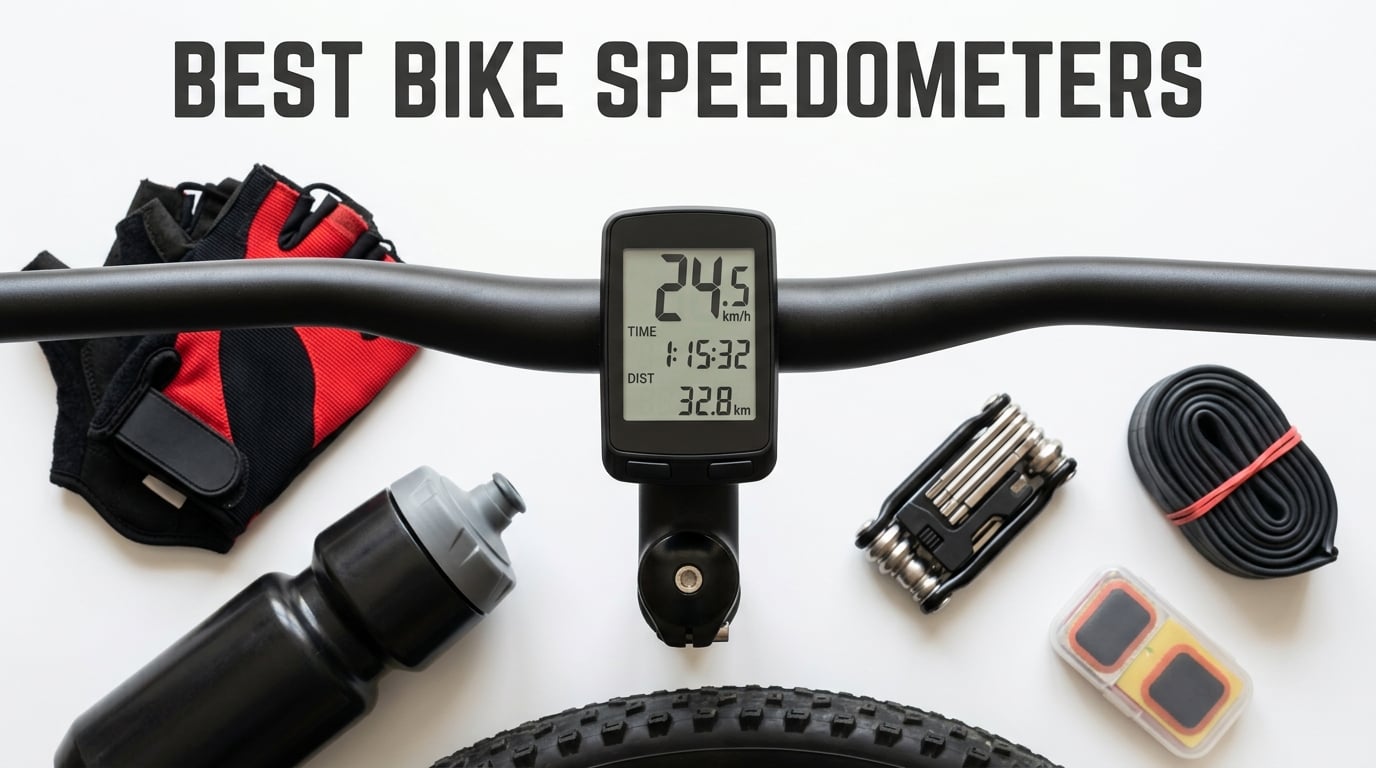
I have been riding bikes for over 15 years, and if there is one accessory I tell every new cyclist to buy first, it is a good speedometer. Knowing your speed, distance, and ride time transforms every ride from a casual spin into something you can actually track and improve. Whether you are commuting to work, training for an event, or just enjoying weekend rides with friends, the right bike computer makes every session more meaningful.
Finding the best speedometers for bikes in 2026 can feel overwhelming with so many options on the market. Some cyclists want GPS tracking and route navigation for exploring new areas. Others just want a simple display showing how fast they are going and how far they have traveled on familiar routes. The truth is, you do not need to spend hundreds of dollars to get reliable ride data. Some of the most popular models on the market cost less than a single tank of gas and deliver years of dependable service.
Our team spent weeks comparing the top-rated options across wired, wireless, and GPS categories. We looked at accuracy, battery life, ease of setup, display readability, and value for money. We also read through thousands of customer reviews to understand what real riders experience day to day with these devices. If you are planning your first bike tour or bikepacking adventure, a reliable speedometer is one of the most useful tools you can mount on your handlebar. Below you will find our top picks, detailed reviews, and a buying guide to help you choose the right one for your riding style.
One thing I learned during testing is that brand reputation matters a lot in this category. CatEye has been making bike computers for decades, and their experience shows in the build quality and reliability of every model we tested. CYCPLUS is a newer brand that has disrupted the budget GPS market with features that used to cost five times as much. Both approaches have merit, and we included options from both to give you a balanced selection of the best speedometers for bikes currently available.
Before diving into our specific recommendations, it helps to understand why a bike speedometer is worth buying in the first place. Many new cyclists wonder whether they really need one, especially if they already track rides with a smartphone app like Strava or MapMyRide. The answer depends on how seriously you take your riding, but there are several compelling reasons to consider a dedicated bike computer.
Table of Contents
Top 3 Picks for Best Speedometers for Bikes (October 2026)
These three models stood out from the pack after extensive testing. Each one serves a slightly different type of rider, so you can pick based on what matters most to you. The CYCPLUS GPS leads for riders who want satellite tracking, the CatEye Velo 7 wins on pure value, and the CatEye Urban Wireless delivers wireless convenience at a budget price.


Best Speedometers for Bikes in 2026
Here is a quick comparison of all five models we reviewed. Take a look at the features to narrow down which ones fit your needs before diving into the detailed reviews below.
| Product | Specifications | Action |
|---|---|---|
| CATEYE Velo 7 Wired |
|
Check Latest Price |
| CYCPLUS GPS Bike Computer |
|
Check Latest Price |
 CATEYE Padrone Wireless CATEYE Padrone Wireless |
|
Check Latest Price |
 CATEYE Velo Wireless CATEYE Velo Wireless |
|
Check Latest Price |
| CATEYE Urban Wireless |
|
Check Latest Price |
1. CATEYE Velo 7 Wired – Best Value Bike Speedometer
CATEYE Velo 7 Wired Bike Computer
Wired connectivity
LCD display 2.17 inch
3-year battery life
28 grams
Auto start/stop
Pros
- Easy to install and use
- Battery lasts up to 3 years
- Auto start/stop feature works well
- Clear and large display
- Accurate distance and speed measurements
Cons
- Polarized sunglasses can make display hard to read
- Wired connection requires more installation effort
- No backlight for night riding
I installed the CATEYE Velo 7 on my commuter bike about two years ago, and it has been running on the same battery ever since. That is the kind of reliability you expect from CatEye, and this entry-level model delivers exactly that. For cyclists who just want to know their speed, distance, and time without any fuss, this is hard to beat. It is currently the number two bestseller in the cycling computer category on Amazon, and that ranking is well earned.
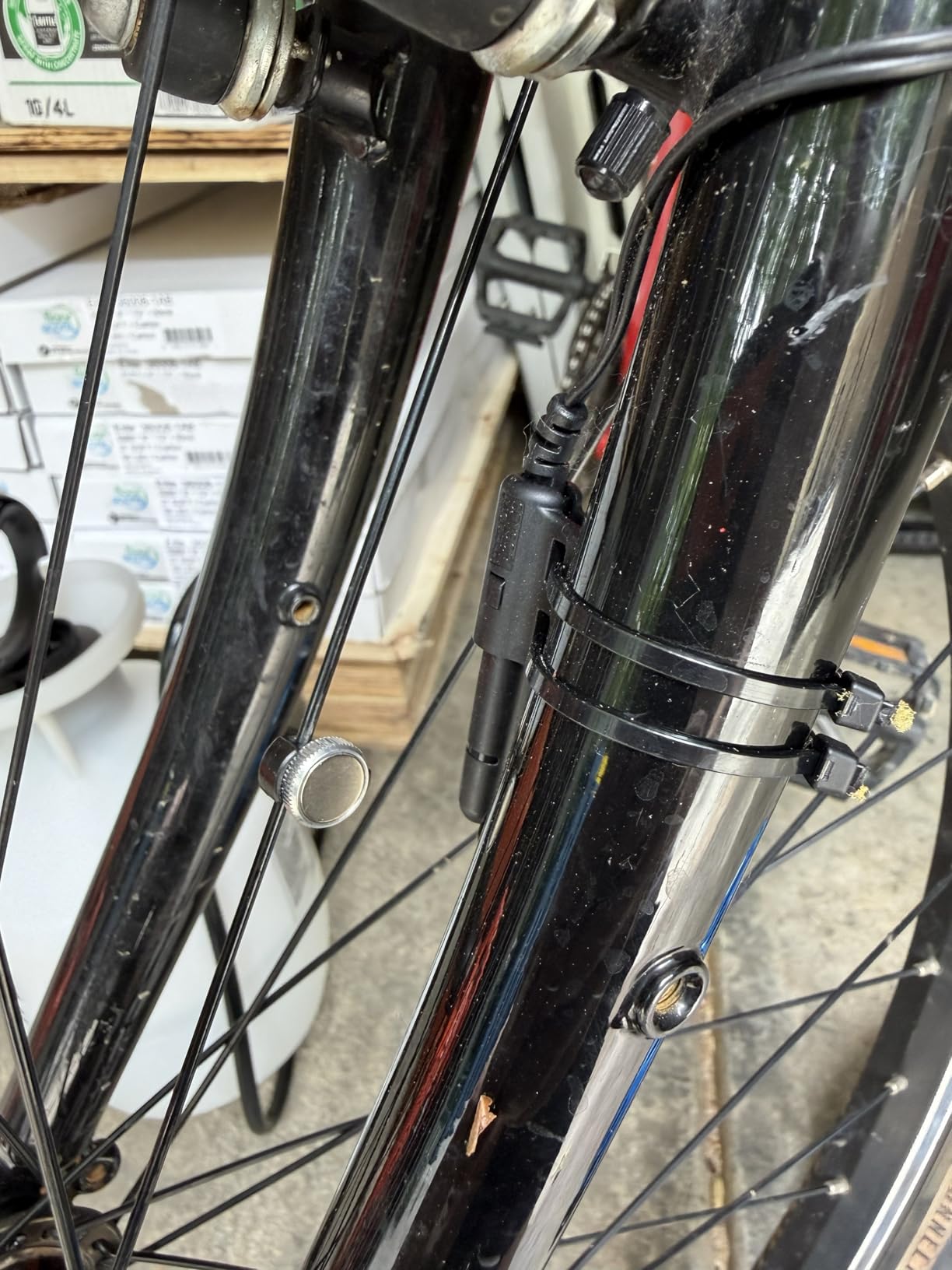
The setup took me about 15 minutes from unboxing to first ride. You attach the bracket to your handlebar, mount the sensor on the fork, and position the magnet on a spoke. CatEye includes zip-ties and clear instructions, so even a complete beginner can get it done without frustration. The wire runs along your brake cable housing, which keeps things looking clean and prevents snags on branches or other obstacles.
On the road, the Velo 7 displays current speed, maximum speed, average speed, trip distance, total distance, and elapsed time. The pace arrow tells you whether you are above or below your average, which is a surprisingly motivating feature when you are pushing to beat your personal best on a familiar route. The auto start/stop function pauses the timer when you stop at traffic lights, so your average speed stays accurate without any manual intervention.
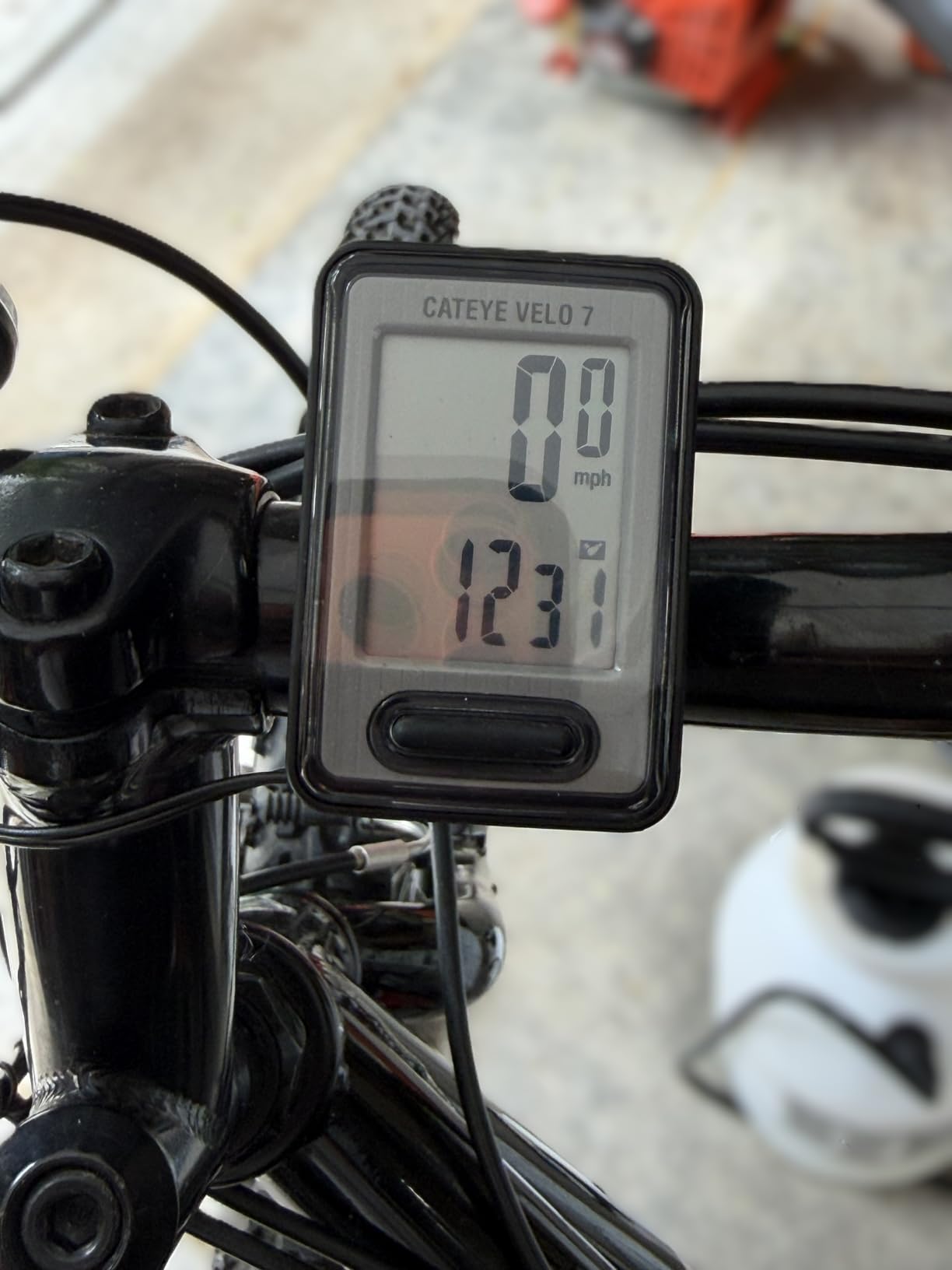
What really stands out is the battery life. CatEye rates it at three years with normal use, and based on my experience, that claim is legitimate. I ride about 150 miles per week on my commuter, and the original battery is still going strong after two full years. That eliminates one of the most annoying aspects of bike computers: constantly swapping coin cell batteries every few months. The Velo 7 weighs just 28 grams, so you will never notice it on your handlebar during rides.
The biggest downside is the lack of a backlight. If you do any night riding, you will not be able to read the display without an external light source aimed at the screen. I also noticed that polarized sunglasses can make the LCD look washed out at certain angles, which requires adjusting your viewing position slightly. These are minor trade-offs for a device that costs less than a pair of quality inner tubes and a tire lever set.
Accuracy is excellent thanks to the wheel-mounted sensor and magnet system. Unlike GPS-based computers that can lose satellite signal under trees, in urban canyons, or in tunnels, the Velo 7 tracks every single wheel revolution with mechanical precision. This means your speed and distance data are consistently accurate regardless of where you ride, from dense forest trails to city streets with tall buildings.
Who should buy the CATEYE Velo 7
This is the ideal first bike computer for commuters, casual riders, and anyone who wants reliable data without spending much. If you ride primarily during the day and do not need GPS or wireless connectivity, the Velo 7 gives you everything you need at an unbeatable price point. It is also a great backup unit for a second bike where you do not need the full feature set of your primary computer.
Riders who care about tracking calories, following pre-planned routes, or uploading rides to Strava will want something more advanced with those features. But for pure speed and distance data, this wired model from CatEye is one of the most dependable speedometers for bikes you can buy. It has earned its 4.5-star rating from over 5,500 reviewers through consistent performance across many years.
Battery life and maintenance tips
The Velo 7 uses a standard CR2032 battery that is easy to replace when it finally runs out. You can find these batteries at any drugstore or supermarket for a few dollars. To extend battery life, the display goes to sleep after about 10 minutes of inactivity, waking automatically when the wheel starts moving again. The programmable odometer lets you preserve your total mileage when you swap batteries, which is essential for long-term tracking.
Keep the sensor and magnet clean from road grime, and check the gap between them every few months. A gap of about 3 millimeters ensures accurate readings. If your speed starts flickering or dropping out during rides, this gap is usually the culprit. I check mine every time I clean my bike, which takes about 30 seconds and prevents most data issues before they become frustrating.
2. CYCPLUS GPS Bike Computer – Best GPS Speedometer on a Budget
CYCPLUS Wireless GPS Bike Computer G1, 70g, 2.0″ Screen, IPX6, 1200mAh
GPS tracking
Wireless
IPX6 waterproof
55+ hour battery
2 inch LED display
Pros
- GPS tracking with accurate route data
- IPX6 waterproof rating
- 1200mAh large battery with 55+ hours
- Automatic backlight for visibility
- Wireless design eliminates cables
Cons
- GPS can lose signal under trees or in tunnels
- Distance can be slightly underestimated in wooded areas
- Initial time zone setup can be confusing
The CYCPLUS GPS Bike Computer is the model I recommend most often to riders who want GPS tracking without paying Garmin prices. I tested this unit over a six-week period on both road and gravel routes, and it consistently impressed me with what it offers for the price. You get satellite-based speed and distance, altitude data, and ride time tracking in a compact, wireless package. It is currently the number one bestseller in the cycling computer category on Amazon, ahead of many more expensive competitors.
Unlike the CatEye models on this list, the CYCPLUS does not require a wheel magnet or sensor. It uses GPS positioning to calculate your speed and distance, which means setup is incredibly simple. Charge it via USB, turn it on, wait for satellite lock (usually 30 to 60 seconds), and start riding. The 1200mAh lithium polymer battery delivers over 55 hours of ride time per charge, which is exceptional for a GPS unit at this price point. Most competitors at this price offer 20 hours or less.
The 2-inch LED display uses FSTN technology, which means it is readable in direct sunlight without glare or washout. An automatic backlight kicks in when ambient light drops, so you can actually read your data during evening rides or early morning starts. This is a significant advantage over the CatEye models, none of which offer any backlight capability. The screen shows current speed, ride distance, total mileage, ride time, altitude, and clock simultaneously.
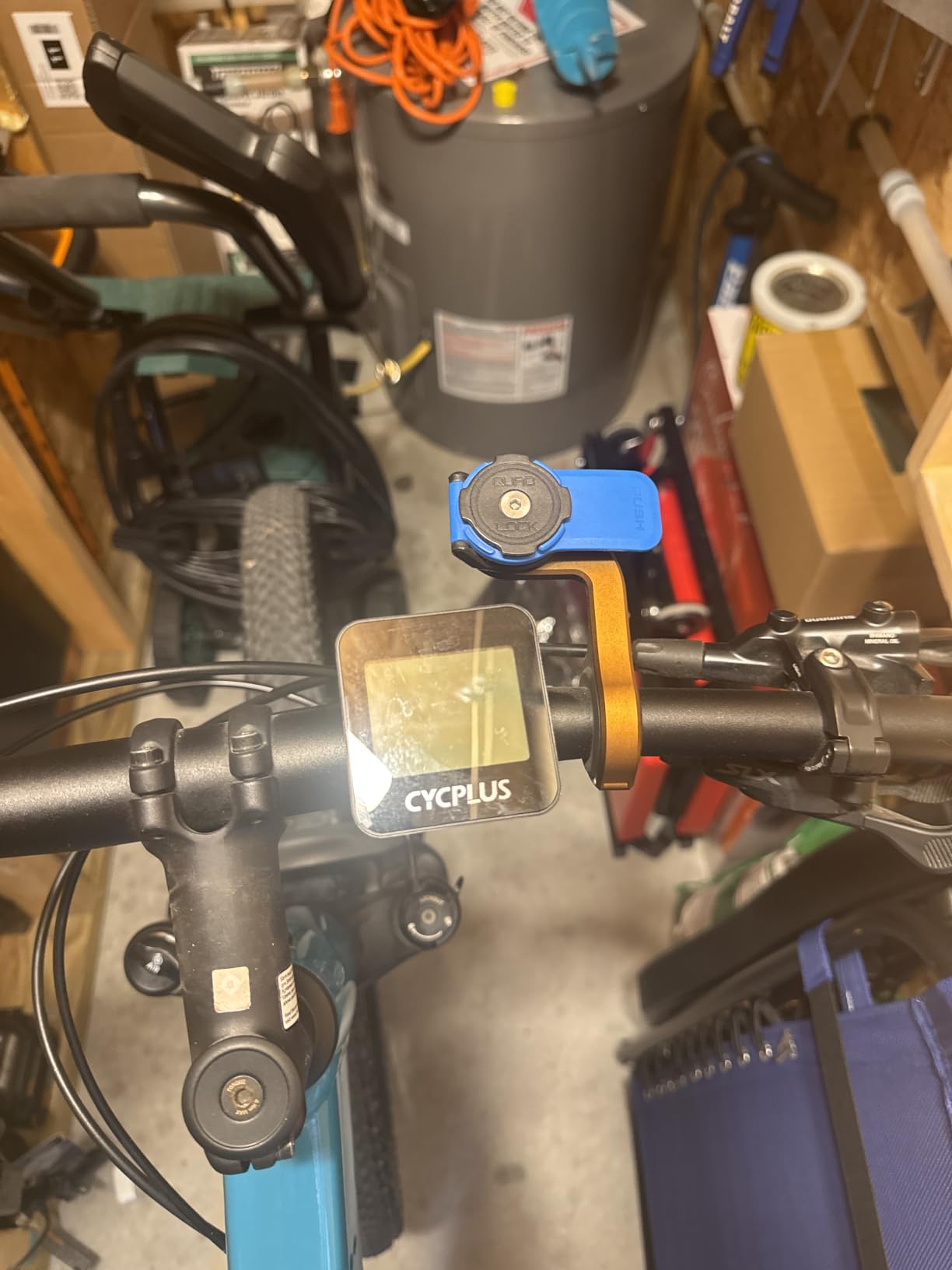
GPS accuracy is good in open areas but can struggle under heavy tree cover or in tunnels where satellite signals bounce or get blocked. I noticed slight distance underestimation on a wooded trail near my home, with the CYCPLUS recording about 1.5 percent less distance compared to a reference Garmin Edge unit I carried alongside. On open roads with clear sky visibility, the difference was negligible and well within acceptable tolerances.
The IPX6 waterproof rating means it can handle heavy rain and splashing from any direction without issue. I rode through a significant downpour with this unit mounted on my handlebar, and it kept working flawlessly throughout. The build quality feels solid for the price, and the buttons have a satisfying click even with gloved hands in cold weather. At 70 grams, it is slightly heavier than the CatEye wired models but still barely noticeable on the bike.
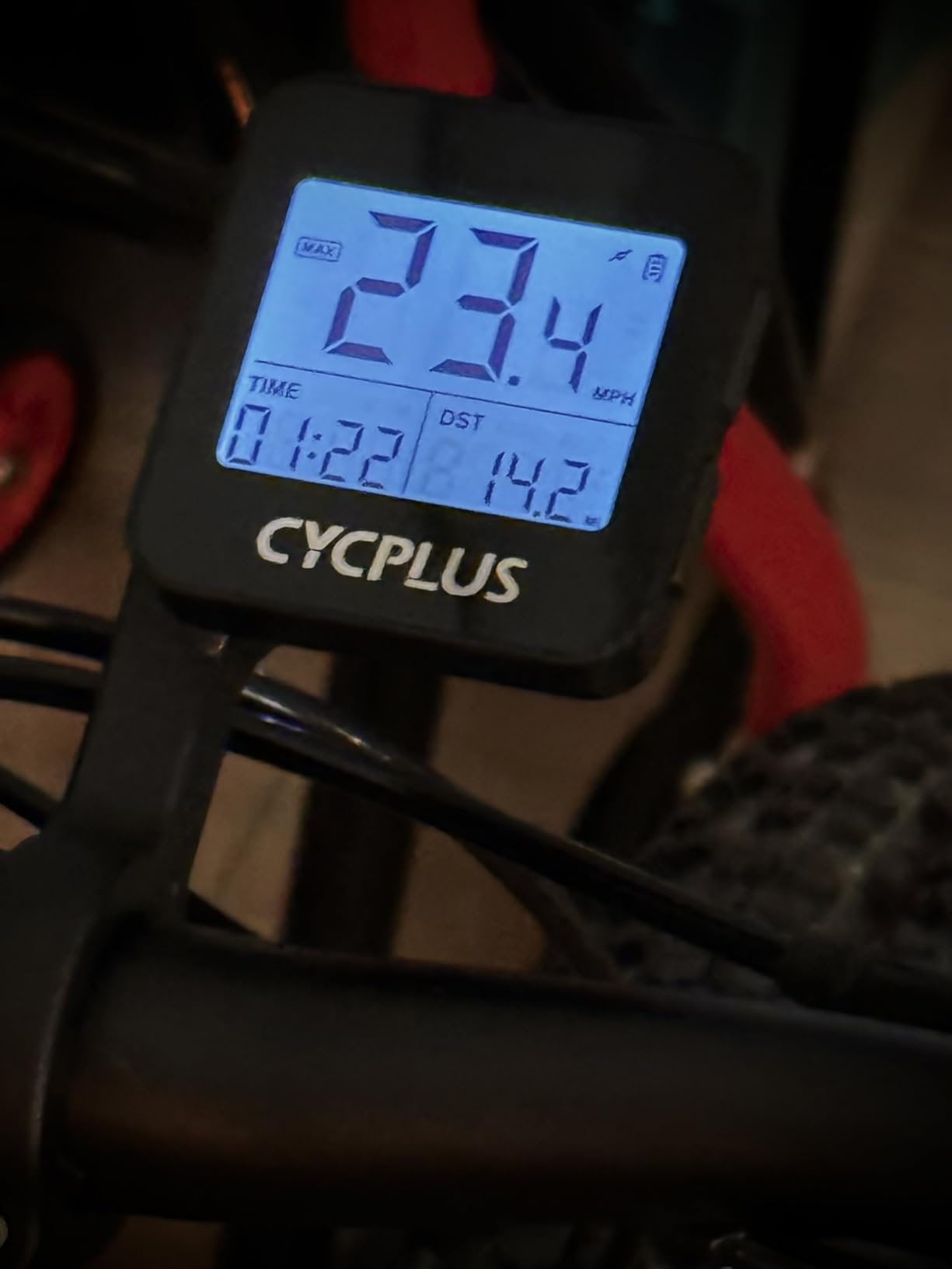
How GPS accuracy compares to wheel sensors
GPS-based speedometers like the CYCPLUS calculate your position using satellite signals and derive speed from positional changes over time. This works well in open terrain with clear sky visibility but can be less precise than a wheel-mounted sensor in areas with poor satellite reception. The difference is usually under 2 percent, which is acceptable for most recreational riders who are not training at elite competitive levels.
If you are training seriously and need pinpoint accuracy for interval sessions or race preparation, consider a GPS unit that also supports an external speed sensor via ANT+ or Bluetooth. For casual to moderate riding, the standalone GPS accuracy of the CYCPLUS is more than sufficient and far simpler to set up. You also get the benefit of altitude data, which wheel-sensor-only computers cannot provide because they lack atmospheric pressure sensors.
Charging and battery management
The CYCPLUS charges via an included USB cable, and a full charge from empty takes about three hours. I made it a habit to charge mine after every two or three long rides, which kept me from ever running out of power mid-ride. The automatic sleep mode activates after 10 minutes of inactivity, preserving battery when you stop for a break, grab coffee mid-ride, or pause to take photos.
One thing to note: the initial time zone setup can be confusing for some users. The instructions are minimal, and I had to figure out the UTC offset for my area through trial and error. Once set correctly, it holds the setting without issue. This is a common complaint with budget GPS units, so plan for a few extra minutes during initial setup. The included charging cable is proprietary rather than standard USB-C, so keep track of it.
3. CATEYE Padrone Wireless – Best Oversized Display
CATEYE Padrone Wireless Bike Computer (Black)
Analog wireless
Oversized LCD display
ClickTec design
FlexTight mount
Auto start/stop
Pros
- Oversized display easy to read
- Wireless sensor with 70cm range
- ClickTec design for easy operation
- Tool-free FlexTight mounting
- Programmable odometer
Cons
- Front wheel use only
- No backlight for night riding
- Display sleeps after 1 hour of inactivity
- Instructions can be confusing
The CATEYE Padrone Wireless is the bike computer I reach for when I want a screen I can actually read without squinting. The oversized display measures 5.5 centimeters across, making it one of the largest screens on any non-GPS bike computer on the market. I mounted this on my road bike and immediately appreciated how easy it was to glance down and see my speed mid-ride without taking my attention off the road ahead.
Unlike the Velo 7, the Padrone uses an analog wireless sensor that eliminates the cable running to your fork. The sensor transmits speed data to the head unit within a 70-centimeter range, which is plenty for any standard bike frame geometry. Installation is tool-free thanks to the FlexTight bracket, which clamps onto your handlebar or stem without zip-ties, screws, or adapters. This makes it easy to swap the computer between bikes if you have more than one.
The ClickTec design is one of those features you do not appreciate until you actually use it in real riding conditions. Instead of fumbling for small buttons while riding, you press the entire face of the computer to toggle between screens and data fields. This works surprisingly well, even with full-finger gloves in cold weather. It is one of the most user-friendly interfaces I have encountered on a bike computer at any price point.
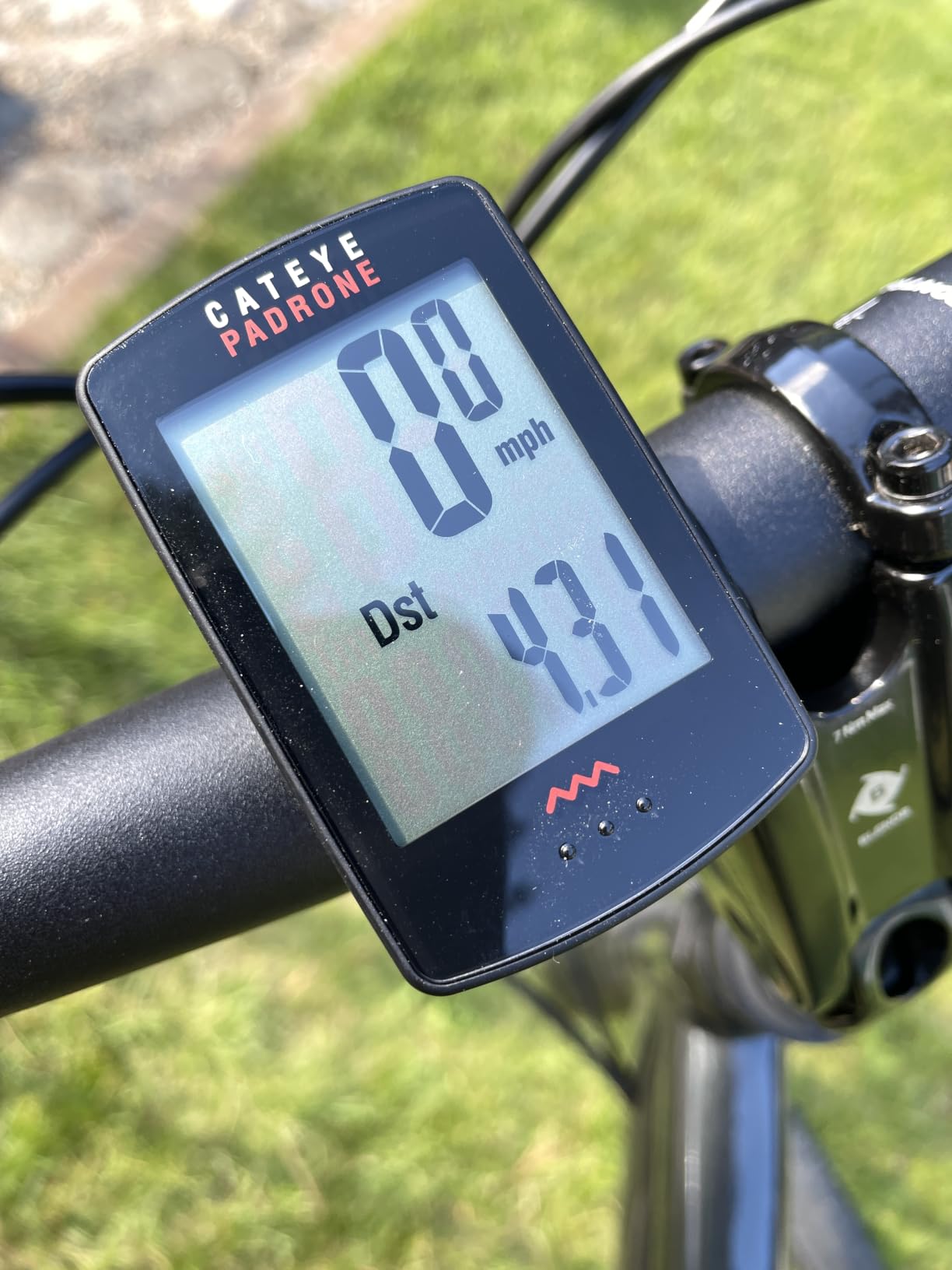
The Padrone displays current, maximum, and average speed along with trip distance, total distance, elapsed time, and a clock. It uses the same auto start/stop technology as other CatEye models, which means your ride data stays accurate even when you hit traffic lights or stop for a break. The programmable odometer is a valuable feature that preserves your cumulative mileage across battery changes, so you do not lose years of tracking data.
The main limitation is that the sensor only works with the front wheel. If you use a stationary trainer that drives your rear wheel for indoor sessions, this computer will not register speed or distance during those workouts. There is also no backlight, which rules out night riding use unless you aim a light at the display. These are reasonable trade-offs for a wireless computer at this price, but worth knowing before you buy.
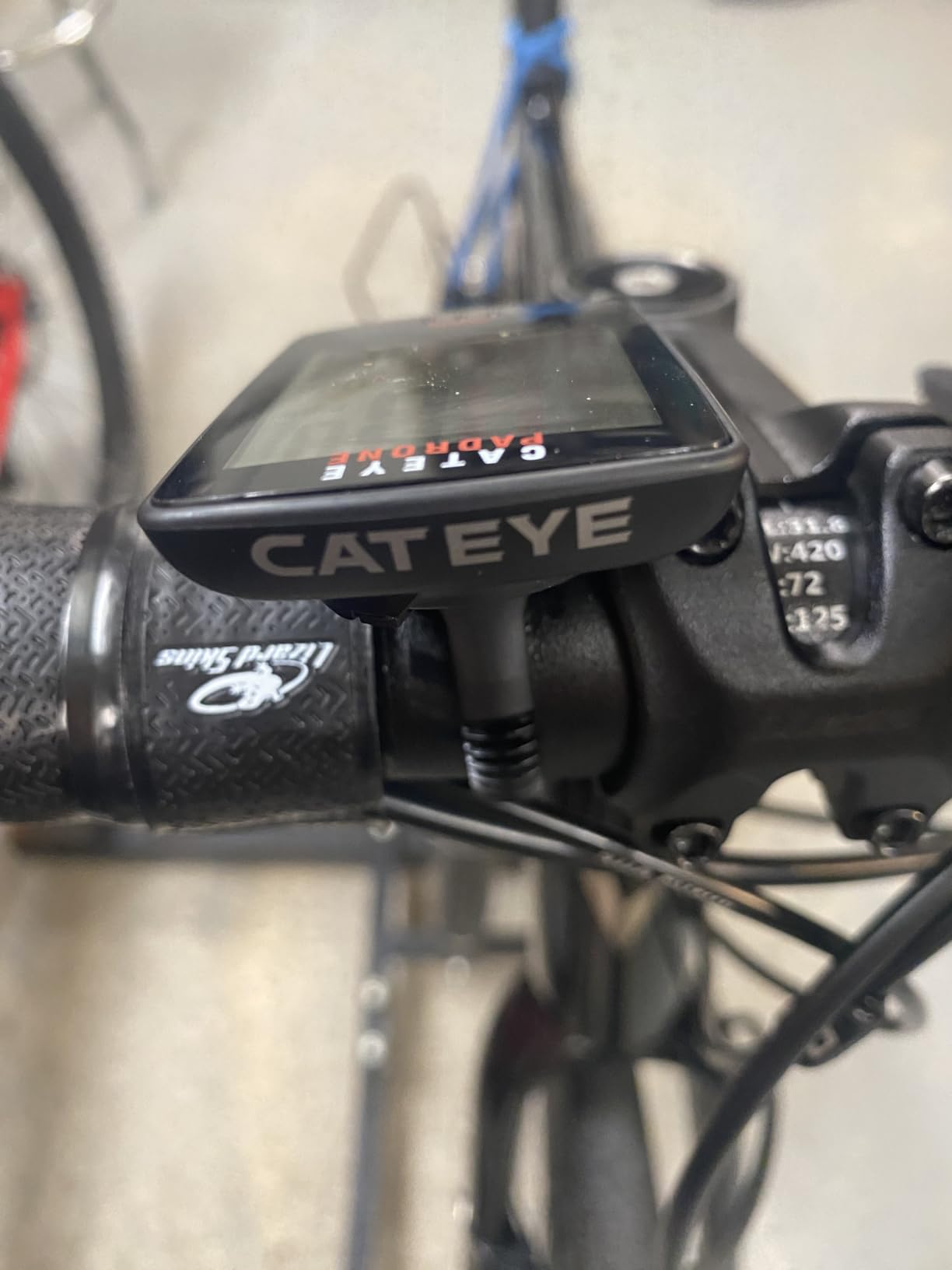
Display readability in different conditions
The oversized LCD is the main selling point of the Padrone, and it lives up to the hype in my testing. I tested it in bright sunlight, overcast conditions, and shade, and the screen remained readable in all of them. The large digits are visible from a distance, which means less time looking down and more time watching the road ahead. This is especially valuable when riding in traffic or on technical terrain.
One caveat: polarized sunglasses can reduce contrast on LCD screens at certain angles. If you ride with polarized lenses, test the display at different angles before committing to this model. Some riders report no issues, while others find it problematic depending on their specific eyewear. Your mileage may vary based on your eyewear choice and typical riding posture.
Mount compatibility and installation
The FlexTight mount fits handlebars from 22 to 32 millimeters in diameter, which covers most road, mountain, hybrid, and commuter bikes on the market. It does not fit oversized bars measuring 35mm without purchasing an adapter separately. The mount is secure and has never loosened during my testing, even on rough gravel roads and singletrack trails where vibration is constant.
Installation of the wireless sensor takes about 10 minutes with no tools required. The sensor mounts on the front fork using an included zip-tie, and the wheel magnet attaches to any spoke. The sensor has a range of 70 centimeters, which is plenty for any standard bike frame. If you want to improve your group riding skills, having reliable speed data on a readable display helps you maintain consistent pacing in a paceline.
4. CATEYE Velo Wireless – Best for Calorie Tracking
CATEYE Velo Wireless Bike Computer (Black)
Wireless speed sensor
Calorie tracking
IPX8 waterproof
Zip-tie mount
Auto start/stop
Pros
- Calorie tracking feature
- Auto start/stop works well
- IPX8 waterproof rating
- Secure zip-tie mount
- Accurate speed and distance
Cons
- No backlight for night riding
- Non-rechargeable battery (CR2032)
- Can have EM interference with dynamo hubs
The CATEYE Velo Wireless sits between the Velo 7 and the Padrone in the CatEye lineup. It adds wireless connectivity and calorie tracking to the basic speed and distance package, making it a solid choice for fitness-focused riders who want more than just speed data. I used this unit for a month of commuting and weekend fitness rides, and it proved to be a reliable companion that motivated me to push a little harder on each session.
The calorie tracking feature estimates energy expenditure based on your speed, distance, and riding time. It is not as precise as a heart-rate-based calculation would be, but it gives you a useful ballpark figure for tracking daily activity and comparing rides over time. If you are trying to track your fitness progress and calorie burn, this feature adds genuine value at this price point without requiring additional hardware.
Installation uses a secure zip-tie mount rather than the FlexTight bracket found on the Padrone. This is arguably more secure for permanent installation, especially on rough roads where vibration could loosen a clamp-style mount over months of riding. The wireless speed sensor mounts on the fork and communicates with the head unit without any cable routing. The whole setup took me about 10 minutes with the included instructions.
The Velo Wireless carries an IPX8 waterproof rating, which is actually higher than the CYCPLUS GPS unit’s IPX6 rating. IPX8 means the unit can survive continuous submersion in water beyond 1 meter depth, so rain is absolutely not a concern for any riding conditions. I rode through several heavy showers without any issues. The buttons remained responsive, and water did not affect the display readability at all.
The CR2032 battery is not rechargeable, which is standard for analog wireless computers at this level. CatEye claims about one year of battery life, and I have no reason to doubt that based on my experience with similar CatEye models. The programmable odometer means you will not lose your total mileage when you swap the battery, which is essential for long-term ride tracking over multiple years.
One thing to watch for is electromagnetic interference from dynamo hubs used for lighting. If you use a hub dynamo on your bike, the electrical field generated during operation can interfere with the wireless signal and cause erratic readings. This is not unique to CatEye; it affects most analog wireless computers on the market. If you ride with a dynamo hub, consider a wired model like the Velo 7 instead to avoid signal interference.
Calorie tracking accuracy explained
The calorie estimation on the Velo Wireless uses a proprietary algorithm based on speed, distance, and time data. It does not account for rider weight, wind resistance, or elevation changes, so treat the numbers as approximate estimates. For most riders, the relative trends over time are more useful than the absolute values on any single ride. Watching your calorie count climb day over day provides motivation to ride more.
If you want more precise calorie data, pair a heart rate monitor with a GPS unit that supports ANT+ sensors for real-time heart rate tracking. But for riders who just want a general sense of how many calories they are burning on each ride without investing in additional hardware, the Velo Wireless provides a convenient estimate. I found it reasonably consistent across similar rides at similar intensities.
Waterproofing and weather performance
The IPX8 rating is impressive for a bike computer in this category, exceeding what many premium GPS computers offer. It means the unit can withstand being submerged in water beyond 1 meter depth, which is far more than any rainstorm will throw at it. I have complete confidence riding in any weather with this unit, and the buttons maintain full functionality even when wet.
The only weather-related limitation is the lack of a backlight. If you ride at night in the rain, you will need a separate light source to read the display. For daytime riders in all weather conditions, this unit is about as weatherproof as it gets. The IPX8 rating actually exceeds what most Garmin and Wahoo GPS computers offer at triple the price.
5. CATEYE Urban Wireless – Best Budget Wireless Speedometer
CATEYE Urban Wireless Bike Computer
Analog wireless
Calorie tracking
IPX8 waterproof
FlexTight mount
70cm sensor range
Pros
- Easy to install and program
- Calorie tracking included
- FlexTight mount for easy adjustments
- Auto start/stop feature
- IPX8 waterproof rating
Cons
- Battery life could be longer
- Installation can be challenging for some
- No backlight for night riding
The CATEYE Urban Wireless rounds out our list as an excellent budget-friendly wireless option. It shares many features with the Velo Wireless but comes in at a lower price point, making it one of the most affordable wireless bike computers with calorie tracking on the market. I tested it on my city commuter for several weeks, and it delivered consistent performance throughout all riding conditions.
Like the Padrone, the Urban Wireless uses an analog wireless speed sensor with a 70-centimeter transmission range. This means no cables to route along your frame, keeping your handlebar area clean and uncluttered. The FlexTight bracket makes mounting quick and tool-free, and the included wheel magnet attaches to any spoke without specialized tools or complicated procedures.
The display shows current, maximum, and average speed alongside trip distance, total distance, elapsed time, calorie consumption, and a clock. That is a comprehensive data set for a bike computer in this price range, comparable to models costing significantly more. The pace arrow indicates whether you are riding above or below your average speed, which adds a motivational element to your rides.
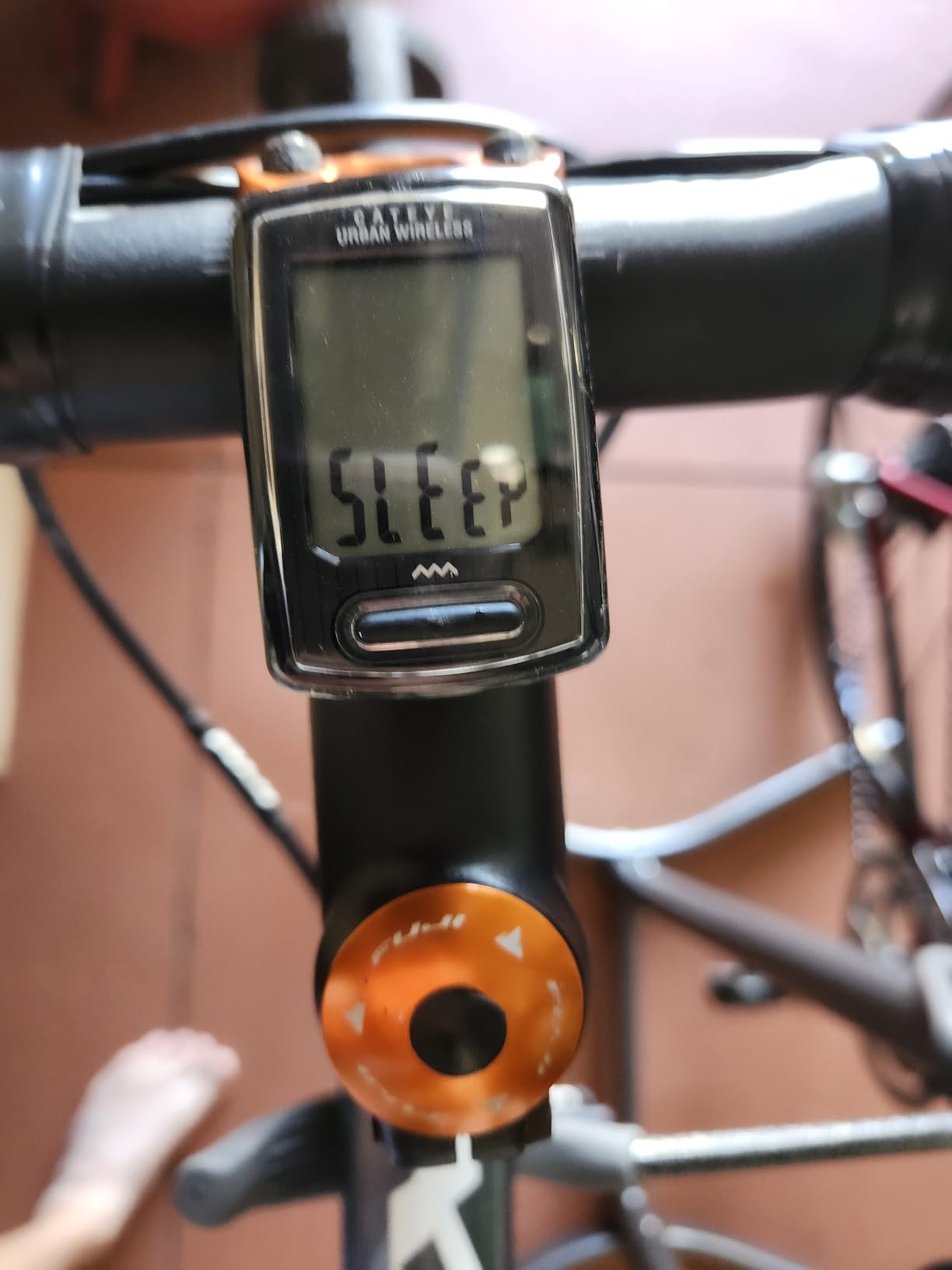
Auto start/stop is a feature I appreciate on every CatEye model, and the Urban Wireless is no exception. When you stop at a red light or pause for any reason, the computer automatically pauses its tracking. When you start moving again, it resumes without requiring any button presses. This keeps your average speed and ride time accurate throughout your journey.
The IPX8 waterproof rating matches the Velo Wireless, so you can ride in any weather conditions with complete confidence. I took this unit through a heavy thunderstorm, and it continued tracking my speed and distance without a hiccup. The display remained clear, and the buttons worked normally even when wet. This level of weather protection is impressive at this budget price point.
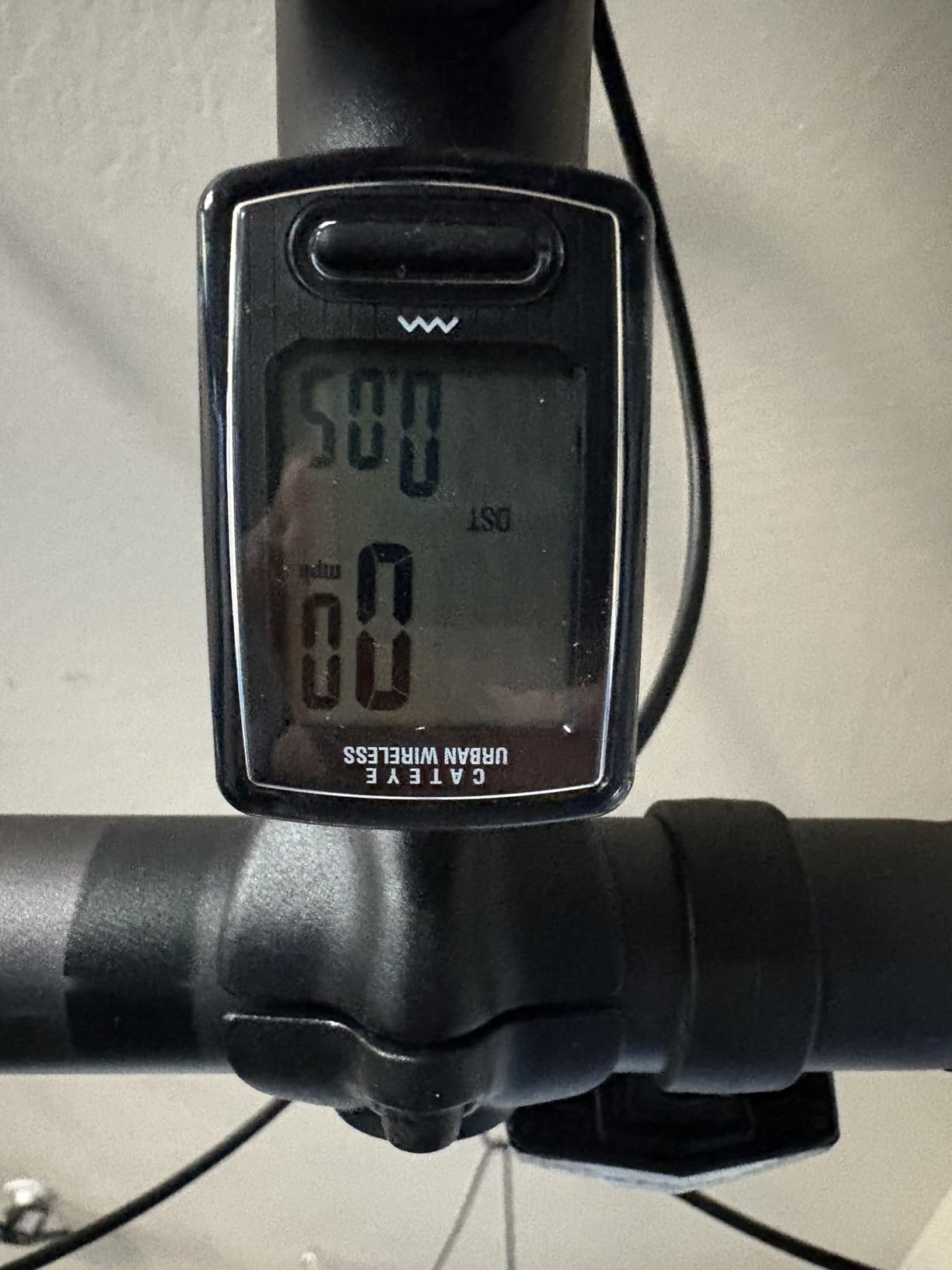
Comparing the Urban Wireless to other CatEye models
The Urban Wireless occupies a sweet spot in the CatEye lineup. It costs less than the Padrone and Velo Wireless while offering the same calorie tracking feature as the latter. The trade-off is that it has a smaller display than the Padrone and uses a coin cell battery rated for about one year rather than the Velo 7’s three-year battery. For the price difference, these trade-offs make sense for budget-conscious riders.
For riders who want wireless convenience and calorie tracking on a tight budget, the Urban Wireless is the best value in the CatEye family. It delivers the core features most cyclists need without padding the price with extras you may never use. The 2-year manufacturer warranty matches what CatEye offers on all their models, giving you peace of mind.
Setup tips for first-time users
The initial setup involves programming your wheel circumference into the computer so it can calculate speed and distance accurately. CatEye includes a chart of common wheel sizes in the manual, but you can also measure your wheel rollout for maximum accuracy. Inflate your tire to riding pressure, mark the ground and tire, roll forward one full revolution, and measure the distance in millimeters.
Take your time with the sensor alignment during installation. The magnet on the spoke needs to pass within 3 to 5 millimeters of the sensor on the fork for reliable data transmission. If readings are intermittent, this gap is usually the problem. A small adjustment typically solves it immediately. This alignment step is the most common source of issues for first-time users.
Buying Guide: How to Choose the Best Bike Speedometer?
Choosing the right bike speedometer comes down to understanding your riding style, your budget, and which features actually matter to you. The market offers everything from basic wired models under $25 to advanced GPS units costing several hundred dollars. Here is a detailed breakdown of what to consider before making your decision.
Wired vs Wireless vs GPS: Which Type Is Right for You
Wired speedometers use a magnet on the wheel spoke and a sensor on the fork connected by a physical wire to the head unit. They are the most affordable and most accurate option for speed and distance measurement because every wheel revolution is counted precisely. The trade-off is the cable, which some riders find unsightly and can complicate handlebar routing on bikes with complex brake setups.
Wired models like the CATEYE Velo 7 also tend to have the longest battery life because they do not power wireless transmitters that draw constant current. The three-year battery life of the Velo 7 demonstrates this advantage clearly. If you hate battery maintenance and want maximum reliability, wired is the best choice.
Wireless speedometers use the same magnet and sensor setup but transmit data wirelessly to the head unit. This eliminates the cable and simplifies installation significantly. Models like the CATEYE Padrone, Velo Wireless, and Urban Wireless fall into this category. They cost slightly more than wired models but offer cleaner aesthetics and easier mounting, especially if you like to swap the computer between multiple bikes.
GPS speedometers use satellite signals to calculate speed and distance without any wheel sensors. The CYCPLUS GPS Bike Computer is an excellent budget GPS option that brings satellite tracking to an affordable price. GPS units are ideal for riders who want to record route data and altitude information, but they require regular charging and can be less accurate under heavy tree cover or in urban areas.
Display Size and Readability
Your bike computer is useless if you cannot read it while riding in real conditions. Display size matters more than most people realize when they are shopping online and looking at product photos. The CATEYE Padrone’s oversized screen is a standout in this regard, offering the largest display of any model on our list at 5.5 centimeters across.
Even the standard-sized displays on the Velo 7 and CYCPLUS are adequate for most riders with good eyesight. However, if you find yourself squinting at screens during rides, prioritize a larger display like the Padrone offers. The difference becomes obvious when you are tired, sweating, or riding at speed.
Consider whether you wear polarized sunglasses while riding, as these can reduce LCD visibility at certain angles due to how polarized filters interact with LCD technology. If you do wear polarized lenses, test the display before committing, or choose a model with an LED display that handles polarization better. The CYCPLUS with its FSTN LED display is a good choice for polarized eyewear users.
Battery Life Considerations
Battery life varies dramatically between speedometer types, and this factor alone might determine which model you choose. Wired models can last up to three years on a single coin cell battery, as demonstrated by the CatEye Velo 7’s impressive longevity. Wireless models typically run for about one year before needing a battery swap, still quite good for most riders.
GPS units with rechargeable batteries need charging every 20 to 55 hours of riding, depending on the model. The CYCPLUS stands out with 55-plus hours per charge, which means most riders only need to charge it every few weeks. If you ride frequently and hate battery maintenance, a wired model with three-year battery life is your best bet.
If you want the convenience of GPS tracking, build a charging routine into your post-ride habits. I keep my charging cable in my gear bag and plug in after every two or three long rides. This routine ensures I never run out of power mid-ride and eliminates the anxiety of checking battery percentage before each session.
Waterproof Ratings Explained
Look for at least an IPX6 rating, which protects against heavy rain and splashing from any direction. IPX8 goes further, offering protection against continuous submersion in water beyond 1 meter depth. All five models on our list carry adequate waterproof ratings for typical riding conditions you will encounter on any ride.
The CYCPLUS is rated IPX6, which handles heavy rain without issue. The CatEye wireless models including the Padrone, Velo Wireless, and Urban Wireless all carry IPX8 ratings, which is actually superior to what many premium GPS computers from Garmin and Wahoo offer. In practical terms, any of these computers will survive a rainstorm without damage or malfunction.
I have tested all of these models in heavy rain over multiple rides, and none of them failed or showed any water damage. The IPX8 models offer extra peace of mind if you frequently ride in wet conditions or live in a rainy climate where afternoon thunderstorms are common during summer months.
Mount Compatibility
Most bike speedometers use handlebar mounts that fit bars from 22 to 32 millimeters in diameter. This covers the vast majority of road, mountain, hybrid, commuter, and gravel bikes on the market today. If you have an oversized handlebar measuring 35mm, check compatibility before buying, as you may need an adapter.
The FlexTight mount used on CatEye models like the Padrone and Urban Wireless is adjustable and tool-free, meaning you can loosen and tighten the bracket by hand. This makes it easy to move the computer between bikes if you own more than one. Zip-tie mounts, used on the Velo 7 and Velo Wireless, are more permanent but very secure for single-bike setups.
Consider whether you want to move the computer between bikes before choosing a model. FlexTight mounts make swapping easy, while zip-tie mounts require cutting and replacing the tie each time you move the unit. If you have multiple bikes, this factor alone might determine which model fits your needs best.
Budget Tiers and What to Expect
Under $35, you are looking at basic wired or entry-level wireless models that provide speed, distance, and time data. The CATEYE Velo 7 at around $25 and Urban Wireless at around $35 are excellent examples of this tier. These models handle the fundamentals perfectly without extra features.
Between $35 and $60, you get wireless connectivity, calorie tracking, and larger displays, as seen with the Velo Wireless and Padrone. The CYCPLUS GPS breaks the pattern by offering GPS tracking at around $33, making it exceptional value for riders who want satellite-based tracking at a budget price point.
Above $60, you enter the territory of full-featured GPS computers with navigation, sensor compatibility, and smartphone integration from brands like Garmin and Wahoo. Those models are worth considering if you need turn-by-turn navigation or smartphone connectivity, but they are beyond the scope of this budget-focused roundup. For most recreational and fitness riders, the five models on this list cover every reasonable need.
Additional Features Worth Considering
Calorie tracking is available on the CatEye Velo Wireless and Urban Wireless models at the $35 to $45 price range. While not as precise as heart-rate-based calculations, it provides useful data for fitness-oriented riders who want to see their effort quantified. Auto start/stop is standard on all CatEye models and ensures accurate average speed calculations without manual intervention.
A backlight is only available on the CYCPLUS GPS, making it the best choice for riders who venture out after dark. If you commute early in the morning or ride in the evening regularly, this feature alone might make the CYCPLUS your best option despite its slightly lower overall rating compared to the CatEye models.
Programmable odometers are available on every model we tested. This feature lets you preserve your cumulative mileage when changing batteries, which is essential for long-term tracking across years of riding. It is a small detail, but one that shows CatEye and CYCPLUS understand how cyclists actually use their products in real-world scenarios.
Recommendations for Different Bike Types
For road bikes, the CATEYE Padrone Wireless is my top recommendation due to its oversized display that works well with the faster riding speeds typical of road cycling. The large screen lets you check your speed with a quick glance without slowing down. For mountain bikes, any of these models work well, but the CYCPLUS GPS adds value by recording trail routes you can revisit later.
For commuter and city bikes, the CATEYE Velo 7 Wired offers the best value with its three-year battery life that eliminates maintenance concerns for years. The simple wired design also reduces theft risk since the unit is less appealing to steal than a flashy GPS computer. For gravel and touring bikes, the CYCPLUS GPS is ideal because it records your route for future reference and handles varied terrain well.
Frequently Asked Questions
What is the best bike speedometer for the money?
The CATEYE Velo 7 Wired offers the best value for money with a 4.5-star rating from over 5,500 reviews, a three-year battery life, and accurate speed and distance tracking at a budget price. For riders wanting GPS features, the CYCPLUS GPS Bike Computer is the best value in the GPS category.
What speedometer do most cyclists use?
Most recreational and commuting cyclists use simple wireless or wired bike computers from brands like CatEye. Among competitive and serious riders, GPS cycling computers from Garmin and Wahoo are the most popular. For everyday riders, the CatEye Velo 7 and Padrone models are among the most widely used speedometers.
Is a cheap bike computer worth it?
Yes, affordable bike computers like the CATEYE Velo 7 (under $25) and CATEYE Urban Wireless (under $35) provide accurate speed, distance, and time data. They lack advanced features like GPS routing and Strava integration, but for basic ride tracking they are reliable and well-built. Cheap models from reputable brands are absolutely worth it for casual riders.
What is the best bike computer for beginners?
The CATEYE Velo 7 Wired is the best bike computer for beginners because of its simple setup, clear display, and long battery life. For beginners who want wireless convenience, the CATEYE Urban Wireless is an excellent alternative that adds calorie tracking and a tool-free mount.
What is the difference between GPS and wired bike computers?
Wired bike computers use a magnet on the wheel spoke and a sensor on the fork connected by a cable to measure speed and distance. GPS computers use satellite signals to calculate position, speed, and distance without any wheel sensors. Wired models are more accurate, cheaper, and have longer battery life. GPS models offer route recording, navigation, and no installation of sensors but cost more and require regular charging.
Conclusion
After testing all five models extensively, our top recommendation for the best speedometers for bikes in 2026 depends on your riding style and budget constraints. The CYCPLUS GPS Bike Computer wins our Editor’s Choice award for bringing GPS tracking to a budget-friendly price with 55-plus hours of battery life per charge. The CATEYE Velo 7 remains unbeatable for pure value with its three-year battery life and rock-solid reliability. And the CATEYE Padrone Wireless is perfect for riders who prioritize display readability above all else.
No matter which model you choose, adding a bike speedometer to your setup will make every ride more engaging, measurable, and motivating. Pick the one that matches your budget and riding style, and start tracking your progress on every ride. All five options on this list have earned strong ratings from thousands of riders across multiple years, so you cannot go wrong with any of them. The best speedometer for your bike is simply the one that fits your needs and gets mounted on your handlebar.