

A flats boat lives or dies on stealth. You are working ankle-deep water over a white sand bottom, the fish are looking straight up at you, and anything that makes noise ends the drift. That is why the right motor is not about horsepower or top speed. It is about moving a loaded hull slowly, quietly and precisely while you hold position over a peanut or work a mangrove edge.
We spent weeks going through the specs, the mounting methods and the owner feedback on ten saltwater trolling motors for flats boats, from transom units for a 16 foot poling skiff to 80 pound bow mounts that will hold a 19 foot bay boat in a tide. The best saltwater trolling motors for flats boats are not the biggest or the priciest ones on the list. The winner here is a compact transom motor with the largest review base we could find, because on shallow water thrust beyond a certain point buys you nothing you can use.
Three picks up front. The Newport NV-Series 55 is the best all-round choice for a small flats skiff, packing serious thrust into a package you can carry solo. The Minn Kota Riptide Terrova 80 is the pick when you want GPS anchoring and Spot-Lock over a specific spot for a full day. The PEXMOR 8 Speed is the budget option if the boat is a jon boat or a small inflatable and the motor is a seasonal tool.
We also covered the whole ecosystem, so you are not stuck guessing between brands: Minn Kota Riptide Terrova, Riptide Ulterra, Riptide Fortrex, Riptide PowerDrive, MotorGuide Xi5, Garmin Force, LOWRANCE GHOST, and the Haswing and AQUOS Cayman families all get compared by thrust, voltage, shaft length and control type below. Where a spec came from the manufacturer listing we say so, and where it came from owner reports we say that too.
Table of Contents
Top 3 Saltwater Trolling Motors for Flats Boats Right Now for October 2026

Newport NV-Series 55 Thrust Saltwater…
- 55 lb thrust
- 12V
- 30 inch shaft
- 8 speeds
- 5-LED battery meter

Minn Kota Riptide Terrova 80 Bow Mount
- 80 lb thrust
- 24V
- 60 inch shaft
- Spot-Lock and Jog
- one-touch deploy

PEXMOR 8 Speed Transom Trolling Motor
- 12V transom mount
- 8 speeds
- telescoping handle
- spare prop blades
Those three cover the most common situations. The Newport is the motor we would put on a Carolina Skiff or a 16 foot poling skiff tomorrow, and the Terrova 80 is what a guide who fishes one spot all day would run. The PEXMOR is the answer when the motor lives in a garage and comes out twice a year.
All 10 Saltwater Motors Side by Side for October 2026
| Product | Specifications | Action |
|---|---|---|
| Newport NV-Series 55 Thrust Saltwater Transom Motor |
|
Check Latest Price |
| PEXMOR 8 Speed Transom Trolling Motor |
|
Check Latest Price |
 Haswing Cayman 55 Bow Mount with Remote Haswing Cayman 55 Bow Mount with Remote |
|
Check Latest Price |
 AQUOS Haswing Cayman Bow Mount 55 AQUOS Haswing Cayman Bow Mount 55 |
|
Check Latest Price |
 AQUOS Haswing 65 Brushless Transom Motor AQUOS Haswing 65 Brushless Transom Motor |
|
Check Latest Price |
| Minn Kota Riptide Terrova 80 Bow Mount |
|
Check Latest Price |
 Minn Kota Riptide PowerDrive 55 Bow Mount Minn Kota Riptide PowerDrive 55 Bow Mount |
|
Check Latest Price |
 Minn Kota Riptide Fortrex 80 Bow Mount Minn Kota Riptide Fortrex 80 Bow Mount |
|
Check Latest Price |
 VEVOR 55 lb Transom Trolling Motor VEVOR 55 lb Transom Trolling Motor |
|
Check Latest Price |
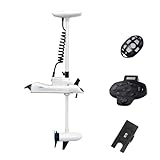 Haswing Cayman 80 Bow Mount 24V Haswing Cayman 80 Bow Mount 24V |
|
Check Latest Price |
A note on the table before you read further. Every motor here is single or dual voltage rather than 36V, which is deliberate. A flats boat sits in shallow water, so you are rarely fighting a long push against open ocean current, and every extra volt is extra battery weight sitting in your boat.
1. Newport NV-Series 55 Thrust Saltwater Transom Motor
Newport NV-Series 55lb Thrust Saltwater Transom Mounted Trolling Electric Trolling Motor w/ LED Battery Indicator & 30″ Shaft (23M1000203)
55 lb thrust
12V single battery
30 inch shaft
23.2 lb unit weight
Top speed about 4 mph
Pros
- 55 lb thrust in a compact transom package
- Quiet and cool enough for all-day trolling
- 8 speeds plus a 3-blade prop for low-end torque
- 5-LED battery meter and 50A breaker included
- Mount angle height and direction lock into place
Cons
- Roughly 4 mph top speed suits small skiffs only
- Needs one 12V deep-cycle battery you supply
- Overcurrent protection must be sized to the bank
This is the motor we keep coming back to. Sixty five pounds of thrust is real push, the 30 inch shaft sits neatly on a small transom, and at 23.2 pounds a single angler can lift it out of the water onto the bracket without wrestling it.
Owners consistently talk about the same two things: the power to size ratio, and how quietly it runs. Seventy eight percent of reviews on this listing are five star, and the theme in the written feedback is that it stays cool and quiet through a full day of drifting at trolling speed.
Eight speeds, five forward and three reverse, with a 3-blade propeller for low-end torque. That combination is what lets you inch along at barely walking pace without the motor bogging, which is the entire point on a grass flat.
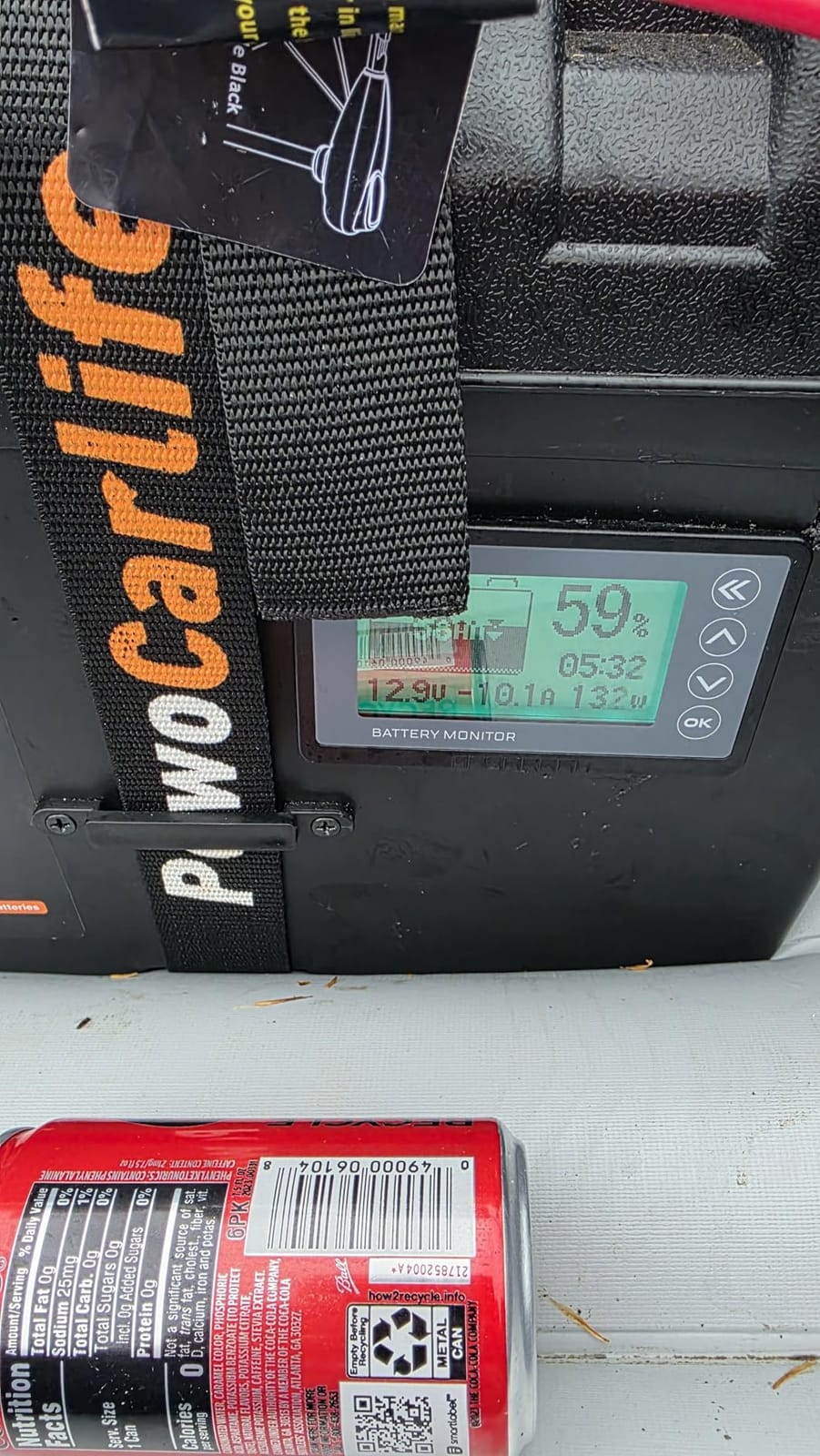
The bracket matters more than most buyers expect. Mount angle, height and steering direction all adjust and then lock, so you can set the unit once for your particular skiff and leave it. The 5-LED battery meter tells you how far into the bank you are before you find out the hard way in a mangrove line.
How it performs in skinny water
On a 16 foot poling skiff or a small jon boat this motor does everything you need. The roughly 4 mph top speed is more than fast enough to cover the distance between spots, and quiet running is a genuine asset when reds and trout are twenty feet below you.
The limitation to plan for is transom space. A single 12V bank plus a 50 amp breaker is tidy, which is exactly why this motor suits small boats. If your boat is heavy for its length, you will want more than 55 pounds of thrust to move it against a tide.
What you have to add before it runs
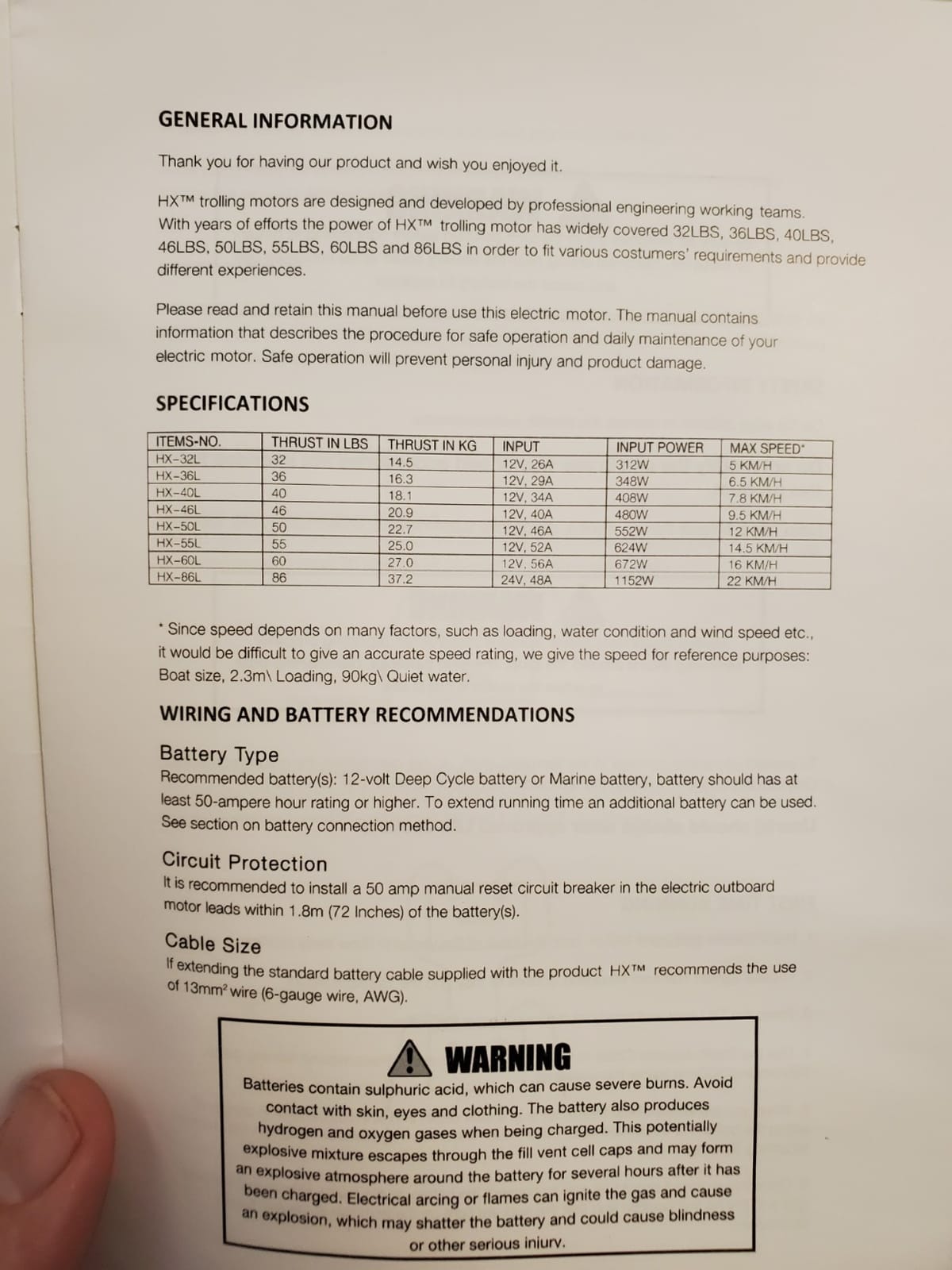
The battery is not included, and that is the single most common surprise for first-time buyers. You need one 12V deep-cycle battery, with 50 amp hours the recommended capacity in the listing.
A 50 amp circuit breaker is included, and the maximum amp draw is quoted at 52 amps. Wiring needs tinned marine cable and correct fusing, so if you have never rigged a boat electric system, budget for a shop or for a careful afternoon with an ABYC ampacity chart open.
2. PEXMOR 8 Speed Transom Trolling Motor
PEXMOR 8 Speed Electric Trolling Motor, Electric Outboard Boat Motor w/Adjustable Handle & LED Indicator, Transom Mounted for Saltwater, Kayak, Fishing Boat (Grey, 55 LBS)
12V transom mount
8 speeds, 5 forward 3 reverse
6 inch telescoping handle
3-blade prop plus spares
1-10 LED indicator
Pros
- Very low cost for usable thrust in a small package
- Smooth easily controlled speed selection
- Runs all day on a single lithium deep-cycle battery
- Extra propeller blades included in the box
- Light enough for kayaks and small inflatables
Cons
- Transom bracket is plastic rather than metal
- Tiller and throttle hardware reported as fragile after heavy use
- No battery terminal clamps included
- Occasional reports of early failure
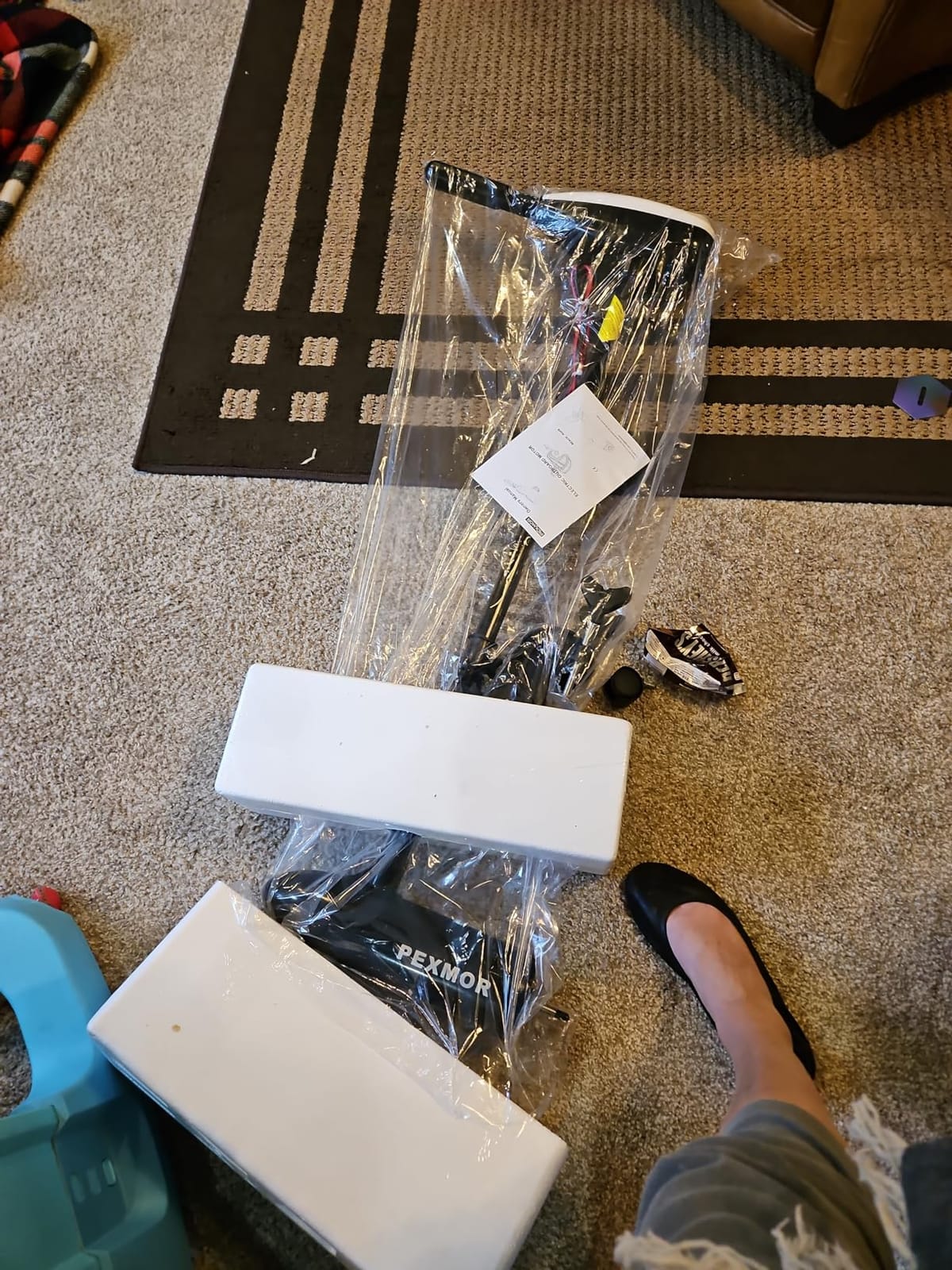
This is the motor for the boat that goes to the lake, the bayou or the campground lake once a season. It mounts on a transom, the handle telescopes, and it does the one job a flats skiff owner actually needs on a budget.
Owner reports describe good low-end power for moving a rowboat, a kayak or a small skiff on a lithium deep-cycle battery. The 3-blade propeller comes with spare blades included, which is a nice touch for anyone working grass and oyster bars.
Speed selection is smooth and predictable with 5 forward and 3 reverse settings, plus a shaft angle button and a separate depth knob. That is more control resolution than many pricier transom motors give you.
The 1-10 segment LED indicator is a genuine upgrade over the basic lights on cheaper models, because you can read remaining capacity without unplugging anything. Note that the battery is not included and no terminal clamps are supplied, so plan on buying a proper deep-cycle battery and the connectors with it.
Where this budget motor fits on a flats boat
If your boat is a 14 to 16 foot jon boat, a personal watercraft tender or a small inflatable, this is enough. Read our guide to the best inflatable boats with motors for how these small craft are usually rigged.
It is also the honest answer for a saltwater skiff that gets used two or three times a year. On a boat you rarely launch, an expensive bow mount spends most of its life in a trailer and the difference is money you do not have to replace every few seasons.
Where the money was saved
The transom boat mount is plastic rather than metal, and that is the first thing to know about. It works, but it is the part most likely to crack if you clamp it onto a rough transom edge.
Reviewers also report the tiller and throttle hardware feeling fragile after heavy use, and a small number of early failures within the first season. With a 4.3 rating across 52 reviews, treat this as a tool motor rather than a long-term saltwater investment.
3. Haswing Cayman 55 Bow Mount with Remote and Foot Control
Black Haswing Cayman 12V 55lbs 48 inch Bow Mount Electric Trolling Motor Lightweight, Variable Speed, with Foot Control/Quick Release Bracket for Bass Fishing Boats Freshwater/Saltwater
55 lb thrust
12V single battery
48 inch aluminum shaft
Boats up to 2750 lbs
164 ft wireless remote
Pros
- Salt rated with a sacrificial anode
- 48 inch shaft suits a wide range of transoms
- 164 ft remote plus foot control for hands-free fishing
- Variable speed extends battery life
- Quick release bracket makes removal easy
Cons
- Cruise control is not Spot-Lock so heading drifts
- Remote needs periodic USB recharging
- Some components reported as thin brittle plastic
This is the first bow mount on our list, and the reason is simple. Once you have steered a flats skiff from a remote, a transom tiller feels like a step backwards, and this is the cheapest way into that experience.
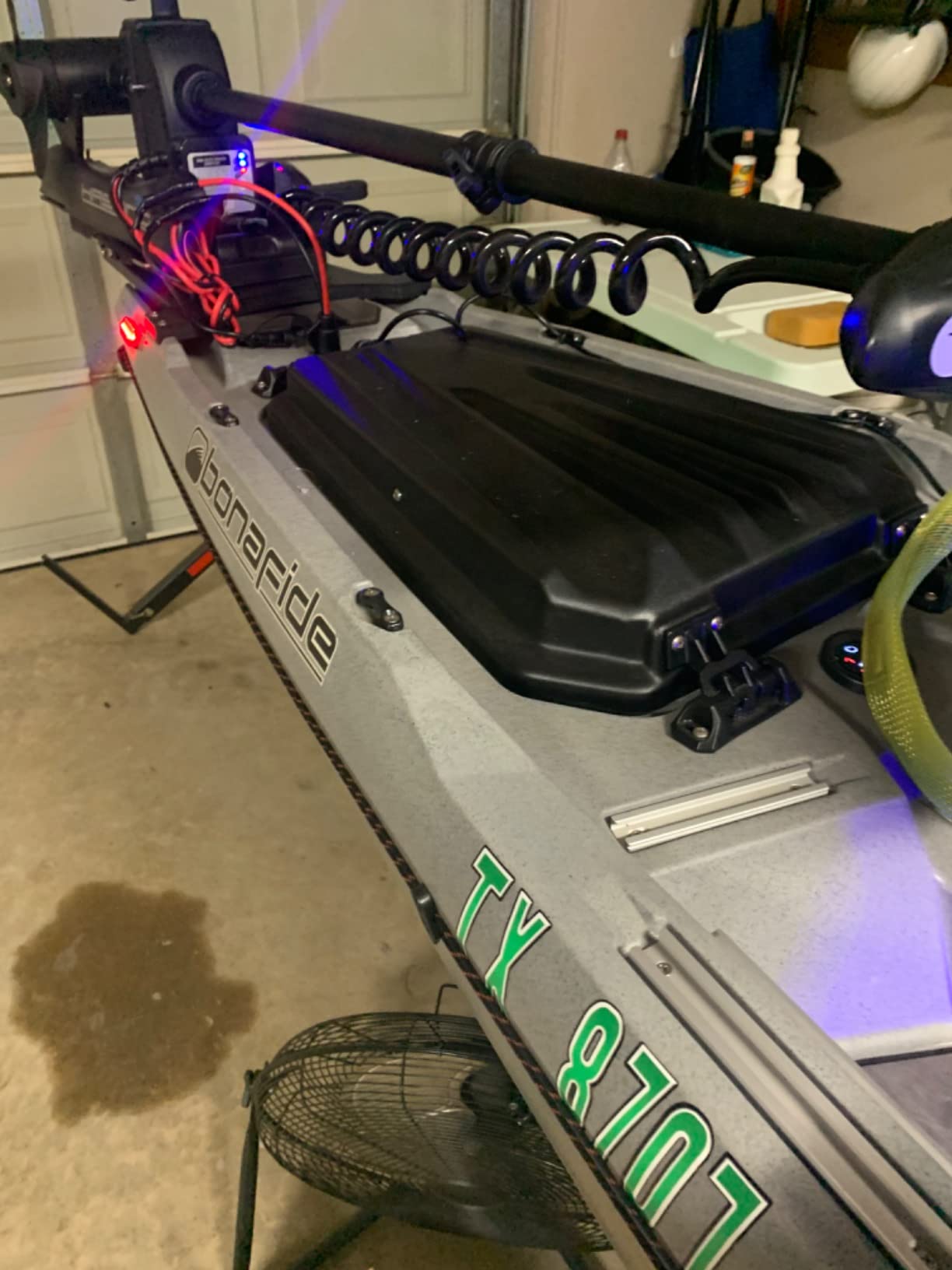
The Cayman 55 puts 55 pounds of thrust on a 48 inch aluminum shaft rated for boats up to 2750 pounds. That covers most 18 and 19 foot flats skiffs and bay boats loaded with batteries and fuel.
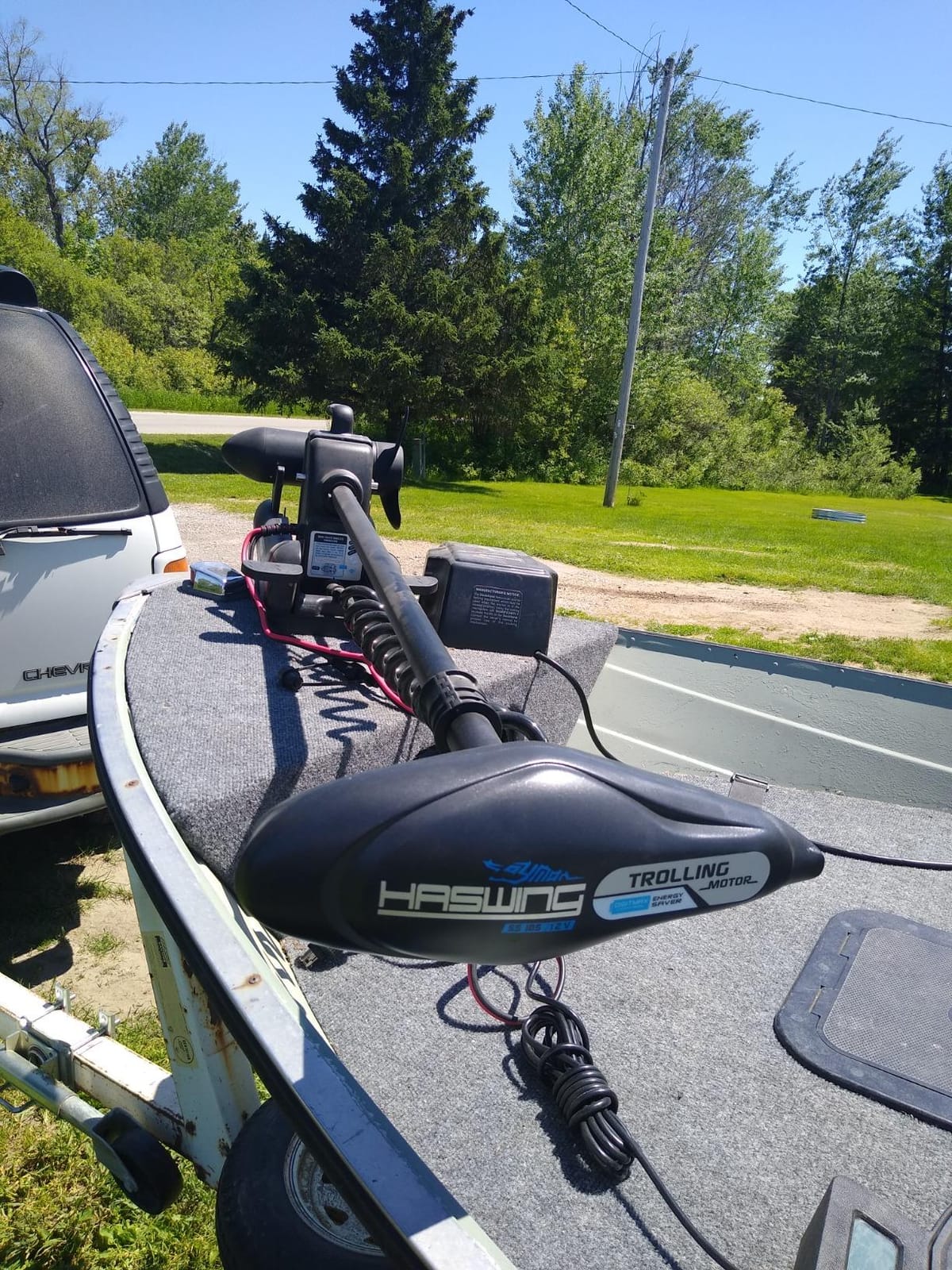
Salt and fresh water capability comes from a sacrificial anode in the lower unit, which is the one piece of hardware you cannot add later for very much money. The quick release bracket and one-hand stow and deploy pedal mean the motor comes out of the water in a few seconds at the end of a drift.
Variable speed control is the underrated feature here. Owners specifically report that it extends battery life, because most of a day on the flats is spent at speed one, not at full throttle.
How the wireless remote changes the day
The 2.4G remote reaches up to 164 feet, and the foot control gives you a second way to steer hands-free while casting or working a bait. For poling-platform anglers who like to keep both hands on the rod, that is the reason to buy this over a tiller unit.
What the remote does not do is hold a position. This is cruise control, which holds speed but still lets your heading drift in wind or current. On a calm day that is fine. On a strong blow you will be correcting it yourself.
What to check before you buy
The remote is USB rechargeable and holds a charge for a limited number of hours, so it is worth charging it before every trip. Owners report that the charge does not last a full day of heavy steering.
Saltwater corrosion also depends on your connectors, not just the motor. Three-prong twist-lock deck plugs are widely reported as a failure point in salt, so seal the plug, keep it above the deck and rinse it after every trip. If you are still building a battery bank, our marine batteries for trolling motors guide covers the AGM and lithium math.
4. AQUOS Haswing Cayman Bow Mount 55
AQUOS Haswing Bow Mount Trolling Motor 12V 55lbs 48in with Wireless Remote
55 lb thrust
12V single battery
48 inch aluminum alloy shaft
Boats up to 2750 lbs and 19 ft
Requires 13.7 x 8 inch mount surface
Pros
- Quiet variable speed with good low-speed control
- Wireless remote steering from anywhere on the boat
- Enough power to hold against current and wind
- Easy to pull up in shallow water once rigged
- Battery draw reported comparable to name-brand motors
Cons
- Cruise control is not Spot-Lock
- Quick removal plate and foot control sold separately
- Remote holds a charge for only a few hours
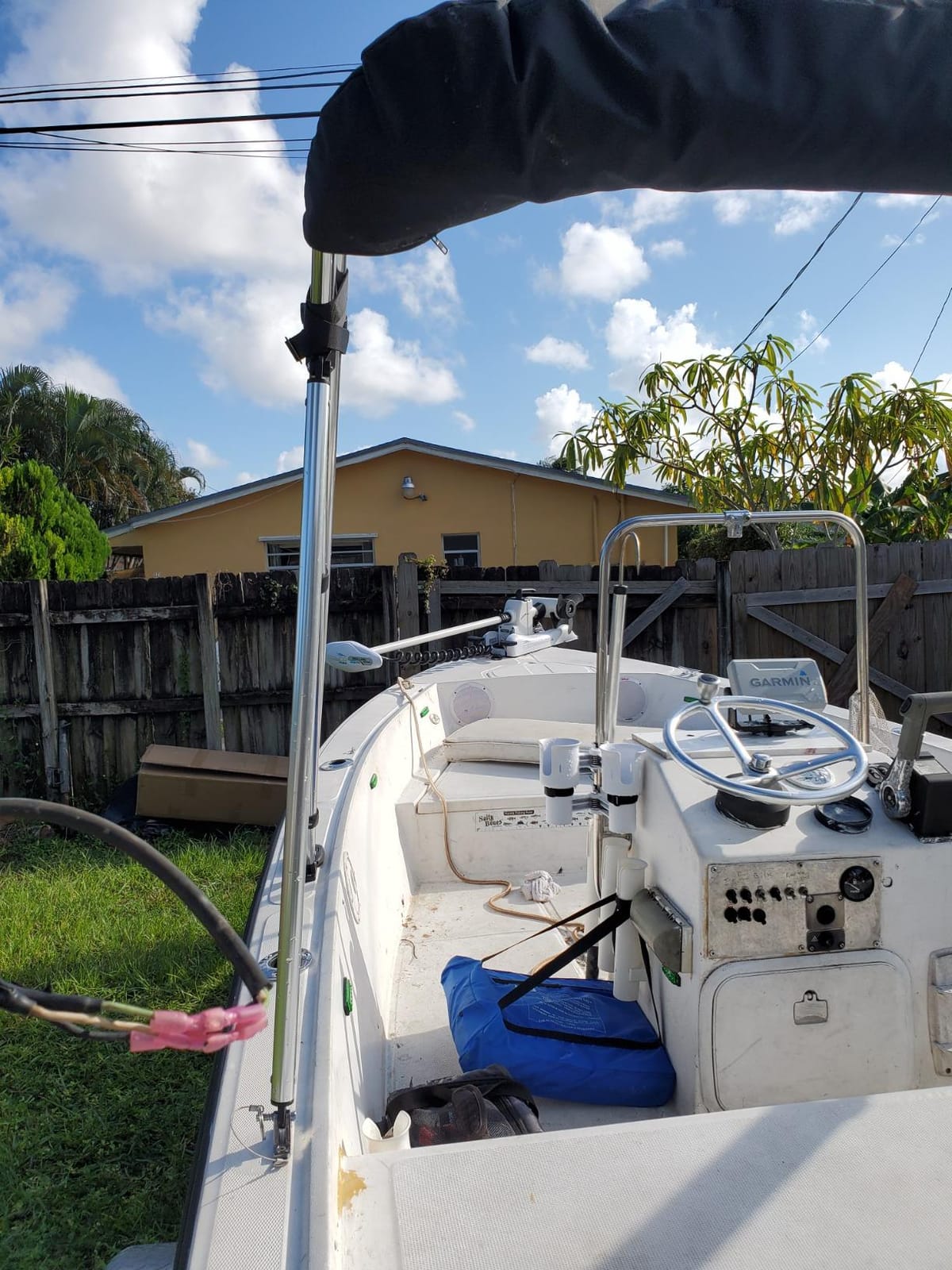
The Cayman 55 is the same thrust class as the previous bow mount but the listing is framed differently, and that framing matters for flats work. The manufacturer calls it fresh and salt water ready, rated for boats up to 2750 pounds and up to 19 feet, with a 164 foot wireless remote on a lanyard.
Owners report enough power to hold against strong current and wind, and several describe using it on a 22 foot pontoon in current. Quiet variable speed running with good low-speed control is the other repeated theme.
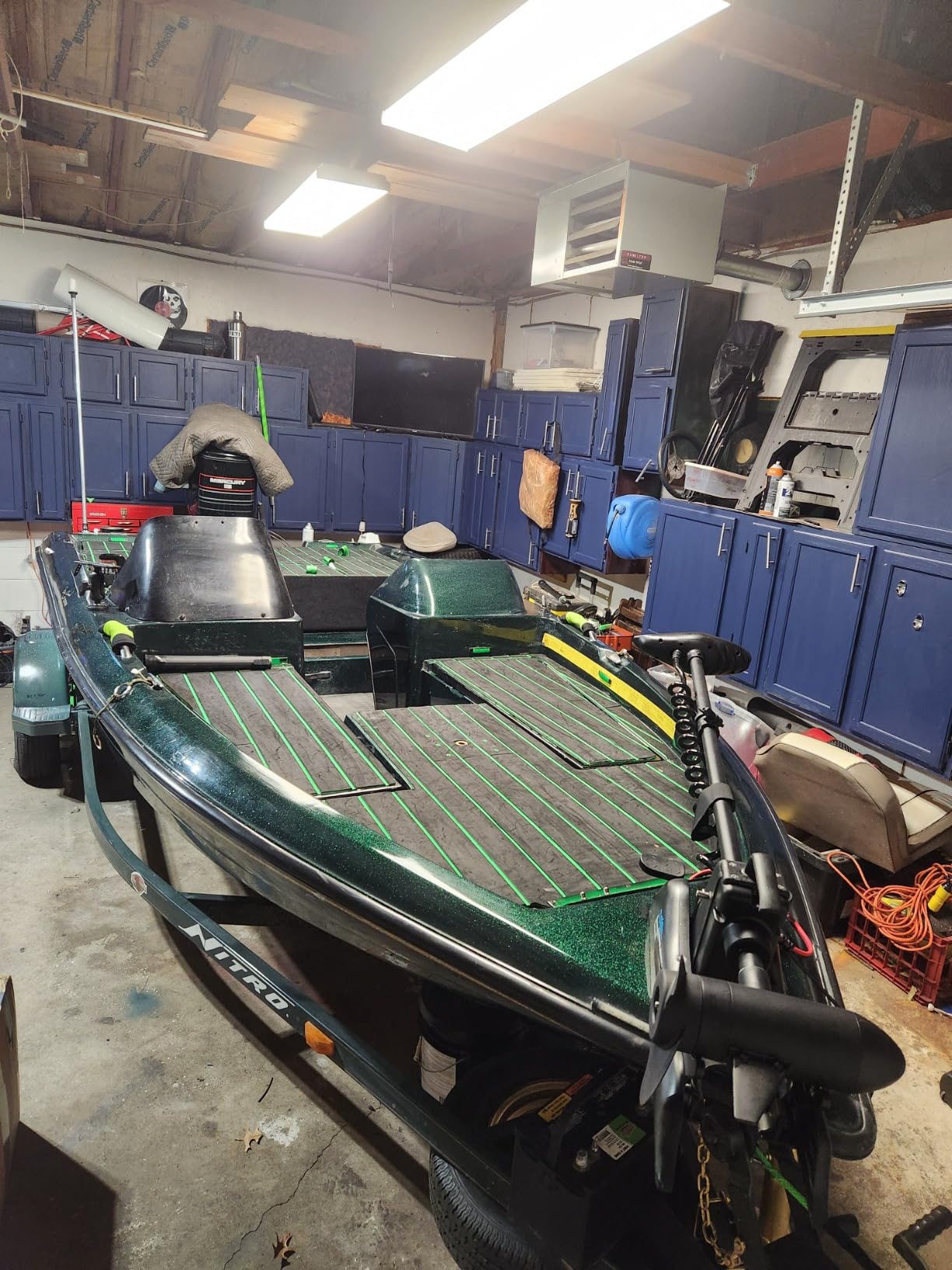
The 48 inch aluminum alloy shaft and one-hand stow and deploy pedal mean you can lift it up into skinny water fast, which is the situation you hit more often than you expect on a falling tide over a shallow flat.
Owners also report battery draw comparable to name-brand motors. That is worth taking seriously on a single 12V bank, because it is the difference between a full day of drifting and a mid-day top-up on the trolling battery.
Deciding between the two Cayman 55s
These two listings are close enough that the choice comes down to what is in the box. The earlier Cayman model includes a remote control, a foot control and a quick release bracket, while this listing sells the quick removal plate and foot control separately.
If you want hands-free steering out of the box, the included-kit version is the safer buy. If you already own a foot control or plan to steer from the console, this one saves money without costing you the remote.
Watch the mounting requirement
This motor needs a 13.7 by 8 inch flat mount surface. On a narrow poling skiff that surface may not exist, and this is the most common install problem buyers report not expecting.
Measure before you order. If your bow deck does not have that flat area, you are looking at a backing plate or a different mount, both of which change the install job on a fiberglass hull.
5. AQUOS Haswing 65 Brushless Transom Motor
AQUOS Haswing 12V 65lbs 35.5in Brushless Transom Trolling Motor
65 lb thrust
12V single battery
35.5 inch shaft
Brushless motor
Stepless forward and reverse
Pros
- Brushless design roughly doubles run time versus older brushed motors
- Very light at about 14.5 lbs for 65 lb of thrust
- Stepless control gives precise slow trolling speeds
- Compact lower unit
- Owner reports of pushing a loaded pontoon at speed
Cons
- Audible vibration and noise at the lowest speed settings
- Documented fish finder interference
- No circuit breaker included
- Tilt handle and head feel less durable
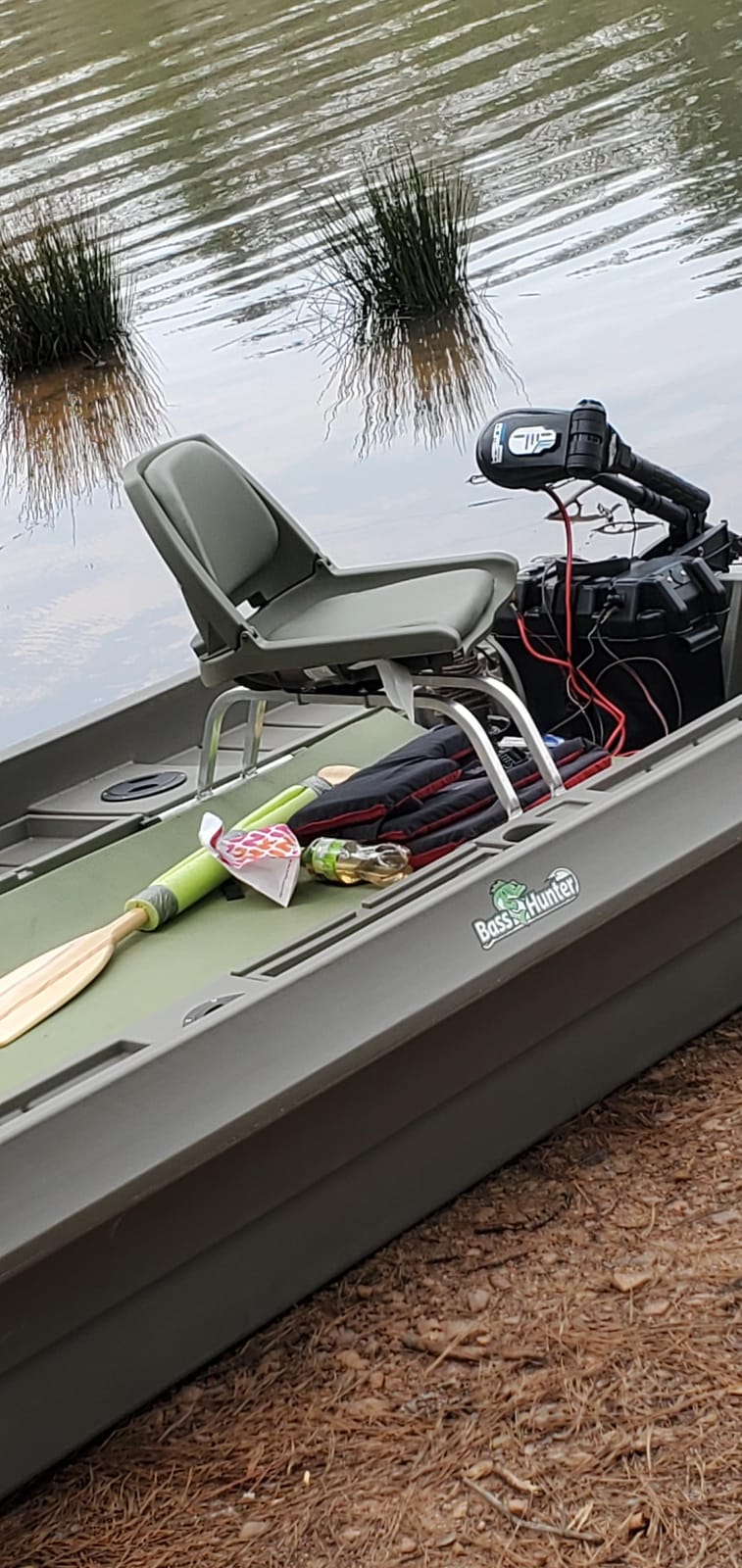
This is the most interesting motor in the set from a technical standpoint. A brushless 65 pound motor on a single 12V battery, at roughly 14.5 pounds of unit weight, is an unusual combination and it is why owners report noticeably better battery efficiency than older brushed 55 pound motors.
Stepless forward and reverse control is the feature that wins over flats anglers. There are no detents, so you can dial the motor to the crawl speed you want and stay there instead of bouncing between a fast setting and a too-slow one.
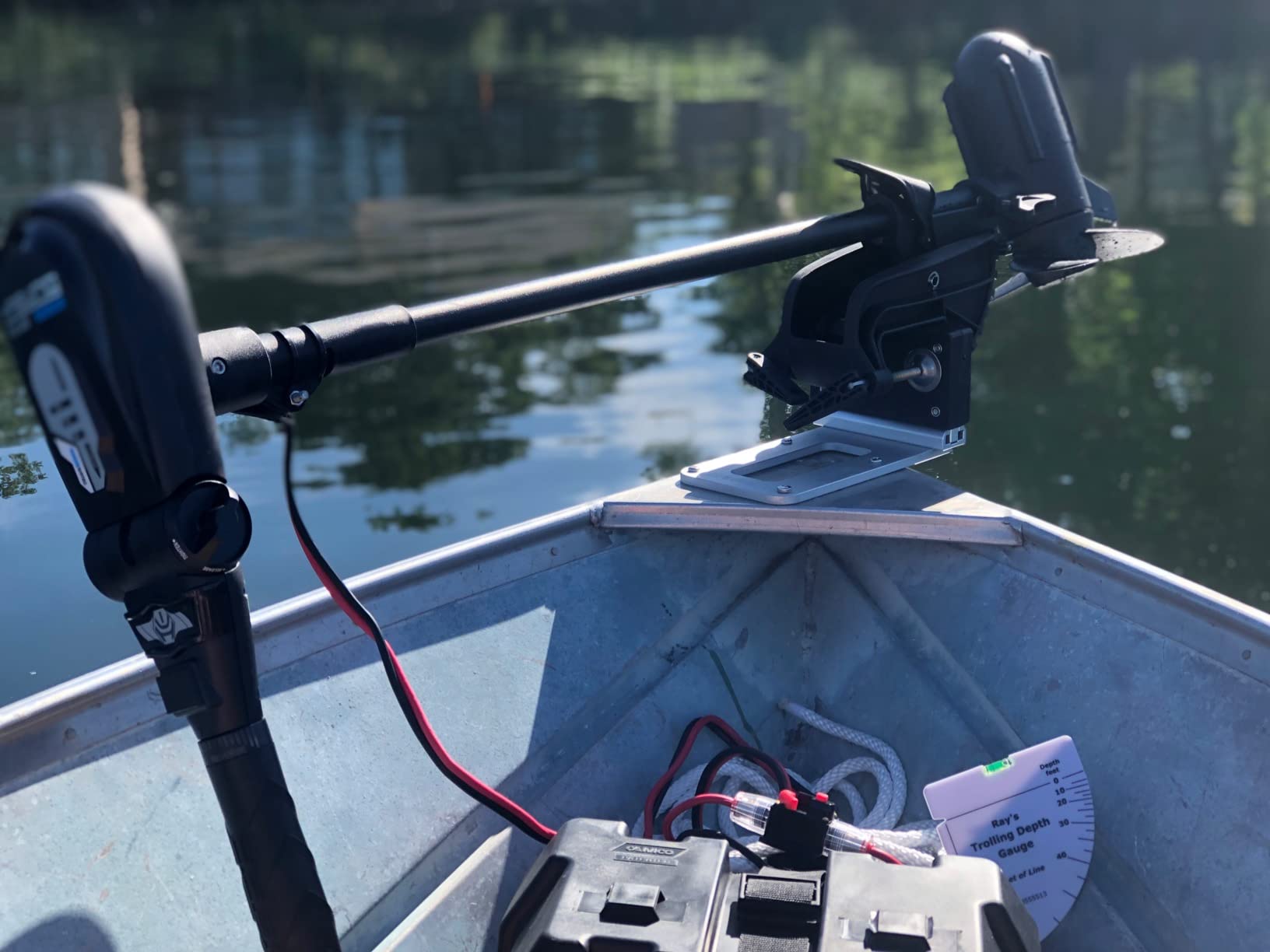
The 35.5 inch shaft and compact lower unit avoid crowding a small transom next to an outboard, and the trim height adjusts with a quick-lock tilt across 10 positions. That range matters when you are moving between a grass flat and a shallow marsh edge in the same trip.
A three-level LED battery indicator gives you a coarse read on state of charge, and the 180 degree fold handle extension puts the tiller where you want it whether you are sitting or standing.
Why brushless matters on a flats boat
On a single battery, efficiency is the whole game. Multiple owners replaced higher priced brushed motors with this one and reported better battery efficiency, smoother throttling and a far lighter unit for the same thrust. That combination directly affects how long you can stay on one peanut.
Owners also report pushing four adults in a pontoon at speed with good efficiency, which tells you the 65 pound rating is not inflated marketing. Whatever the listing claims, real owners found it stronger than the number suggests.
The drawbacks you should plan around
Some owners report audible vibration and noise at the lowest speed settings, which is a real problem in a boat where silence is the entire point. There is also one documented case of interference with a fish finder that persisted with a separate power supply.
No circuit breaker is included, and the tilt handle and head unit are reported as less durable than name-brand hardware. You should also check the manual on standby draw, since a small drain while switched off matters more when your bank is one battery instead of three.
6. Minn Kota Riptide Terrova 80 Bow Mount
Minn Kota Riptide Terrova Bow-Mount Electric Trolling Motor with GPS, Spot-Lock – 80 Lb. Thrust, 60 In. Shaft, Saltwater
80 lb thrust
24V two batteries
60 inch shaft
Precision GPS with Spot-Lock
Three-year warranty with registration
Pros
- Spot-Lock and Jog hold precise position for a full day
- Drift follow and dodge modes add autopilot-style utility
- Marine corrosion protection for saltwater duty
- One-touch deploy and stow lever
- Owners report strong battery economy at 2 knots
Cons
- One owner reported total power loss after several trips
- Heavy 24V package needs two batteries and transom space
- Premium tier pricing in this category
If you fish one spot all day, this is the motor the whole category is built around. The Riptide Terrova 80 runs 80 pounds of thrust on a 60 inch shaft with a 24V system, so it needs two batteries, and it holds a position over a waypoint with its precision GPS.
Owners describe the motor as holding position like an anchor, and specifically call out Spot-Lock and the deploy lever as the two biggest wins. One owner reported trolling at 2 knots on two 100 amp hour banks with strong battery economy, which is the real-world endurance you hope for.
The mode list is long. Precision GPS with Spot-Lock, Spot-Lock Jog, drift mode, follow mode and dodge mode cover everything from holding over a peanut to working a structure repeatedly along a route. Dodge mode in particular is useful in a tide where you want to sit still and let the current move the boat past a drop-off.
Saltwater duty is handled properly. The lower unit housings are grit-blasted, aluminum-coated and powder-coated, which is the corrosion package you want on a boat that lives in salt. The wireless remote has an LCD screen and four programmable One-Boat Network buttons.
Unlike some of the budget units here, the Terrova includes a heading sensor and an MKP-33 propeller in the box, along with the mounting hardware. A three-year warranty applies with registration, which is longer than the two-year terms most listings in this roundup carry.
What 80 pounds of thrust does for you
On a 19 foot bay boat or a 20 foot Carolina Skiff, 80 pounds gives you the authority to hold a spot in a rising tide without fighting the motor. Owners specifically mention moving mid-size boats through tide and wind, which is the situation that ends a drift for most skiff anglers.
The 60 inch shaft also means the prop sits deeper in the water column, which reduces ventilation on chop when you come out of the creek mouth into the open bay. That is a bigger practical benefit than the extra thrust on a normal calm day.
The honest downsides
This is a heavy package. Two batteries plus a 24V system with a 60 inch shaft means it does not belong on a 16 foot poling skiff, and you need real transom space for the bank. Wave action also makes high bow-mounted weight worth thinking about twice on very shallow boats.
One owner reported total power loss after several successful trips, which is a single report in 71 reviews but worth knowing about. The economics are also different from the rest of this list, since the motor is the most expensive item we cover and the batteries are on top of that.
7. Minn Kota Riptide PowerDrive 55 Bow Mount
Minn Kota Riptide PowerDrive Bow-Mount Electric Trolling Motor with Mircro Remote – 55 Lb. Thrust, 54 In. Shaft, Saltwater
55 lb thrust
12V single battery
54 inch shaft
44 lb listed weight
Advanced GPS with Spot-Lock
Pros
- Salt-rated 55 lb thrust sized well for flats skiffs
- Spot-Lock holds position in wind and current
- Deploy-Assist lever reduces the effort of lowering the unit
- Marine corrosion protection
- Micro remote is small and easy to grip
Cons
- 44 lb listed weight means two people for carry and install
- 12V power limits it to lighter skiffs and pontoons
- Small installed base of reviews on this listing
This is the pick that answers the most common forum question from first-time flats boat owners: can you get real GPS anchoring without going to 24V. The PowerDrive 55 delivers advanced GPS with Spot-Lock on a single 12V battery, which means one battery box, one charger and far less weight in the stern.
Review volume on this listing is small at 39 reviews, but the sentiment is strongly positive. Owners highlight Spot-Lock accuracy, smooth deploy through the assist lever and solid corrosion protection for salt water use.
The Deploy-Assist lever is worth calling out. A 55 pound bow mount that weighs 44 pounds as listed is still a two-person carry, and the lever is the difference between lowering it over the side smoothly and swinging it down.
Marine corrosion protection uses the same grit-blasted, aluminum-coated and powder-coated lower unit approach as the Riptide models above, and Digital Maximizer power management comes with a push-to-test battery meter so you can check state of charge from the head unit.
Why single-battery Spot-Lock matters here
A 24V system needs two batteries, a two-bank charger and roughly double the transom space. On a shallow skiff where battery weight changes how the boat sits in the water, one bank is not just simpler. It changes the trim.
If your boat is a 16 to 19 foot skiff under about 2000 pounds loaded, the 55 pound rating with Spot-Lock is the sweet spot. If you are pushing a 22 foot hull or pushing into a hard tide every trip, step up to the 80 pound Terrova instead.
What the light review count means for you
With only 39 reviews, this is a thinner proven record than the Newport at the top of this list. Sentiment is 78 percent five star with only 6 percent one star, but a small sample means less long-term failure data.
We rate that as a fair trade for the feature set. If your priority is holding one spot and keeping the battery count low, Spot-Lock on a single 12V bank is worth the thinner review base. Plan on servicing the unit carefully in salt, because the marine coating only protects hardware that is properly rigged.
8. Minn Kota Riptide Fortrex 80 Bow Mount
Minn Kota Riptide Fortrex Bow-Mount Electric Trolling Motor – 80 Lb. Thrust, 52 In. Shaft, Saltwater
80 lb thrust
24V two batteries
52 inch shaft
61 lb unit weight
Lift-Assist stow and deploy
Pros
- Huge 80 lb thrust that pushes a 17 ft boat through tide and wind
- Owners report about a third of a battery used over a 3 hour trip
- Lift-Assist makes stow and deploy easier than a plain bow mount
- Weedless Wedge 2 prop pushes through vegetation
- Marine corrosion protection
Cons
- Noticeably louder at higher speed settings
- Can hang or resist while being stowed
- Some report it underpowered on large hulls
- 61 lb weight is very heavy to carry solo
The Fortrex is the manual option in the Minn Kota saltwater lineup. No GPS remote, no Spot-Lock, no app. It is a pure thrust machine with a very good stow mechanism, and it exists for people who want simplicity and do not want electronics in salt water.
At 80 pounds of thrust on a 52 inch shaft running 24V, it moves more boat than anything else in the manual category. One owner reported using about a third of a battery over a three hour trip, which is an efficiency figure worth paying attention to.
The patented Lift-Assist uses a nitrogen gas-charged spring with a counter-tension stabilizer, and it makes stowing noticeably easier than a plain bow mount. Owners also praise the Weedless Wedge 2 propeller for pushing through vegetation without heavy battery drain, which matters around grass edges and docks.
The lower unit is grit-blasted, aluminum-coated and powder-coated like the other Riptide models. The one-piece aluminum Mono-Arm with a removable Bowguard 360 bracket is a clean mount design that leaves the deck usable when the motor is up.
Who should choose a manual motor
If you like holding your own heading, working the poling platform or the tiller, and you would rather not pair a remote with your electronics, this is a clean fit. There is nothing to pair, nothing to charge and nothing that can lose its connection in a tide.
It is also the pick for buyers who want maximum thrust per dollar in the premium tier. The 80 pound rating and the Lift-Assist hardware are the strongest mechanical package here, and Digital Maximizer power management with a push-to-test battery meter is a useful addition.
Where owners are split
This listing has the lowest rating of the ten at 3.9, and the complaints are consistent. High-speed noise is the most repeated one, with one owner suspecting a bearing. The rating distribution is flat for a Minn Kota, with 14 percent one star.
Several owners also report the unit hanging or resisting while being stowed after use, and a few report it being underpowered for large hulls such as a 21 foot model. At 61 pounds it is very heavy to carry and deploy solo. If you need manual control and maximum thrust, this is still the right shape of tool. Just expect noise at speed and plan on servicing the stow mechanism.
9. VEVOR 55 lb Transom Trolling Motor
VEVOR Electric Trolling Motor, Transom Mounted Outboard Boat Motors 12V 55lbs Thrust, 8-Speed Electric Boat Engine w/Battery Indicator, for Kayaks, Fishing Boats on Freshwater/Saltwater, 30-In Shaft
55 lb thrust
12V single battery
30 inch shaft
20.3 lb unit weight
8 speeds, 5 forward 3 reverse
Pros
- Very low entry cost for 55 lb of thrust
- Telescoping handle works seated or standing
- 8 speeds plus a 3-blade prop give usable low-end torque
- Sealed aluminum head and shaft for saltwater
- Easy shaft height adjustment
Cons
- Manual tiller only with no remote or foot option
- Aluminum build is heavier than compact brushless units
- Only 12 percent of reviews are five star
The VEVOR is the other budget transom option, and it is the only one that throws the word thrust around without trying to be clever. Fifty five pounds on 12V with a 30 inch shaft and a 3-blade propeller for low-speed torque.
Owners treat it as a value-first transom motor. The telescoping handle adjusts from 6.3 to 10.6 inches, so it works whether you are sitting on the deck or standing at the helm, which matters more than it sounds on a small skiff.
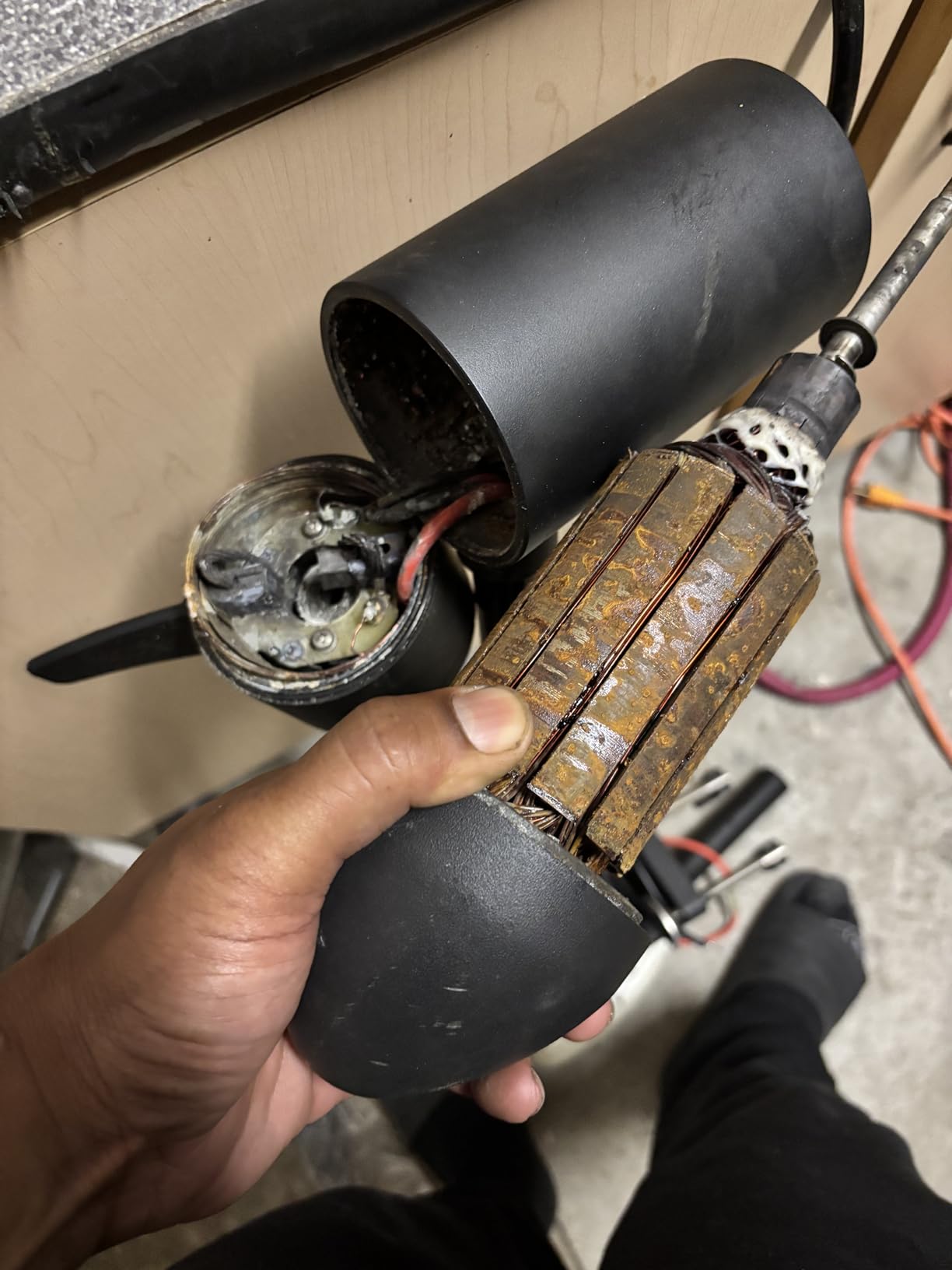
Shaft height and the transom bracket adjust easily for shallow, weedy water, and the sealed aluminum alloy motor head is built with saltwater corrosion resistance in mind. A battery power indicator is included, and 24V versions of this motor exist if you later decide you want more.
That last point is worth noting. Because the design runs a 24V version, you are not locked into a throwaway 12V purchase if your boat grows or your thrust needs change next season.
How it fits a small flats boat
For a 16 foot skiff that is poled and drifted rather than run long distances, a transom motor is the correct tool. Twenty pounds of aluminum is easy to handle solo, and the mounting pattern is nothing more complicated than a bracket on the transom.
If you are still deciding between boat types, our roundup on the best trolling motors for small boats covers the transom and bow mount decision in more detail, including how much thrust a small hull actually needs.
Build quality is the honest weak point
Only 12 percent of reviews on this listing are five star, which is the clearest signal in the whole roundup that build quality is inconsistent between units. One-star reviews concentrate on units that did not meet expectations.
The manual tiller is the only control option on this variant, with no remote or foot control available. And while the aluminum construction is durable, it is heavier than comparable compact brushless units like the AQUOS 65 reviewed earlier in this list. Buy it as a working tool, not as a system you will build around.
10. Haswing Cayman 80 Bow Mount 24V
Haswing Bow Mount Trolling Motor 80lbs 54in – Remote & Foot, Quick Release
80 lb thrust
24V two batteries
54 inch shaft
Boats up to 4000 lbs and 21 ft
Remote plus wireless foot control
Pros
- 80 lb thrust moves 18-22 ft pontoons and deck boats easily
- 54 inch shaft handles a wide range of transoms
- Wireless remote and wireless foot control both included
- Owners report full battery remaining after multi-hour trips
- Salt and fresh water rated with sacrificial anode
Cons
- Cruise control is not Spot-Lock
- Release handles out of sync so one side may not fully deploy
- Reported jamming while lifting the motor
- Controller failure with no replacement sold
This is the biggest boat in the roundup. Eighty pounds of thrust on a 54 inch shaft running 24V, rated for boats up to 4000 pounds and up to 21 feet, which puts it in pontoon and large deck boat territory as much as flats skiff territory.
Having both a wireless remote and a wireless foot control in the box is unusual at this tier. The remote reaches up to 164 and 177 feet, and the foot control gives you a second steering option while your hands are busy.
Owners report the raw thrust and shaft length are worth the money for larger pontoons, and that they came home with battery remaining after multi-hour trips. The sacrificial anode covers salt and fresh water, and a quick release bracket with a one-hand stow and deploy pedal is fitted.
Like the other Cayman models, it needs a 13.7 by 8 inch flat mount surface, and a 44.3 inch shaft version is listed as an alternative for smaller transoms.
When 80 pounds and 24V is the right call
Step up to this class when your boat is 20 feet or longer, when you carry a heavy outboard, or when you fish areas with real current rather than glass-calm water. Two batteries in series give the motor the headroom to push through a tide instead of crawling.
It is also the pick if you fish with two people on board, since passenger weight counts toward loaded boat weight just like gear does. Our kayak trolling motor roundup covers the opposite end of the size range if a smaller boat is what you are after.
Deployment hardware is the weak link
The complaints here cluster around the deployment mechanism rather than the motor. Several owners report release handles that are out of sync so only one side fully deploys the unit, and others report freezing or jamming while lifting the motor out of the water.
One owner had a controller fail within about a year with no replacement sold, which is the kind of support gap that forum buyers worry about most. A few also note that the locking mounting hasp needs a padlock that is not supplied, and that the foot control feels cumbersome. Service the unit with lubricant, and check the release handles before every trip.
How to Choose a Saltwater Trolling Motor for a Flats Boat
Start with loaded boat weight, not hull length. Your loaded weight is the hull plus the outboard, batteries, fuel, gear and crew. Two pounds of thrust per 100 pounds of loaded weight handles sheltered water. In wind, current or open bay, plan on five pounds per 100.
A 16 foot poling skiff that weighs 1200 pounds loaded needs roughly 24 pounds of thrust on a calm day and closer to 60 pounds when the wind is up. A 19 foot bay boat at 2200 pounds wants about 44 pounds calm and 110 pounds pushing into weather, which is why most of the bow mounts on this list are 55 to 80 pounds.
Thrust is a push measurement, not a speed promise
Pounds of thrust, sometimes called bollard pull, is a static measurement taken at zero speed. A motor rated at 80 pounds can push an 80 pound load and then stop. It does not tell you how fast you go.
Speed depends on total moving weight and hull shape. The Newport in this roundup is quoted at roughly 4 mph, which sounds modest until you remember that your trolling speed on a flat is about one to two knots. The only motor here that can move you faster than you need is the one with the extra thrust, and that thrust exists to fight current, not to cover distance.
Bow mount or transom mount
A bow mount pulls the boat from the front, which keeps the stern tracking straight through wind and makes the motor far more effective in a current. It also puts the angler at the bow where you can see the water ahead. Every bow mount in this roundup needs a flat mounting surface of about 13.7 by 8 inches and, in most cases, a backing plate underneath the fiberglass.
A transom mount is cheaper, lighter and takes minutes to install or remove with no drilling at all. It is the right answer for a small skiff, a jon boat or an inflatable, and the wrong answer for anyone who wants to hold a heading in a tide. Pick a bow mount if you will use the motor more than a few times a year.
How to measure shaft length
Measure from the bow deck to the waterline while the boat sits at rest in its normal loaded trim, then add enough to keep the prop submerged but clear of the bottom. For most 16 to 19 foot flats skiffs that lands between 48 and 60 inches, which is why the shaft lengths in this roundup cluster there.
The 60 inch shaft on the Riptide Terrova 80 is the long option for bigger boats, and the 30 inch shafts on the Newport and VEVOR are for small hulls and transom mounts where the shaft is mostly stowed out of the way. Too short and you ventilate the prop in chop, too long and you collect every piece of grass in the estuary.
Tiller, foot control or remote
A tiller means steering with your hands, which is workable on a small boat with one person aboard. Foot control frees your hands and is the sweet spot for many skiff anglers. A wireless remote lets you steer from anywhere on the boat, which is what you want when you are working a bait out of a mangrove edge or holding a rod on a poling platform.
The difference between a remote and a foot control is not just convenience. Remote control is what makes a self-bailing deck realistic on a solo trip. Just remember that several of the budget motors in this roundup sell the foot control or the quick release plate separately, so check what is actually in the box before you budget for accessories.
12V vs 24V: What Flats Anglers Actually Need
The simple rule is that volts determine how many batteries you carry. A 12V motor runs on one battery. A 24V motor runs on two in series. A 36V motor runs on three. Every motor in this roundup is 12V or 24V, and that is not a gap in the list, it is the right call for flats boats.
Thirty six volts exists for offshore hulls pushing through open water with a heavy load, where the extra headroom converts directly into usable speed and holding power. A shallow skiff in a creek is never in that situation, and carrying a third battery costs you about 60 pounds of ballast and a chunk of transom space for a capability you will not use.
Choose 12V if your boat is under about 2000 pounds loaded, you stay in sheltered water, or you want the lightest possible battery configuration. Choose 24V if you are pushing into tide, running a 20 foot or larger hull, or fishing places with genuine current. That is the case for the Riptide Terrova 80, the Riptide Fortrex 80 and the Haswing Cayman 80 in this list.
Battery bank weight is part of the decision
Two 100 amp hour AGM batteries weigh roughly 130 pounds between them. On a shallow draft skiff that weight sits low in the stern and actually helps your trim, but it also raises your freeboard at the back and changes how the boat handles on a plane.
Lithium cuts that weight dramatically and holds capacity better across a long day, which is why budget motors in this roundup pair well with a single lithium pack. It is worth reading our marine batteries for trolling motors guide before you commit, because the battery chemistry decision changes your total system more than the motor choice does.
Whatever you pick, size the bank so the motor bank and the starting bank are separate, run tinned marine cable, and fit overcurrent protection within seven inches of every battery terminal. Those three details prevent more failures than any motor feature on this list.
Saltwater Ratings, Anodes and the Maintenance That Keeps Them Alive
A saltwater rating is not a marketing sticker. It is a set of physical changes: a sacrificial anode bolted to the lower unit, sealed electronics, corrosion-resistant coatings on the aluminum, and hardware that resists pitting. Every motor in this roundup except where noted is rated for salt water use by its manufacturer.
The sacrificial anode is the piece you should understand best. It is a block of metal designed to corrode instead of your lower unit. When it is eaten down to the point where the metal behind it shows, replace it. If you mount a motor without a working anode, salt water will find the aluminum and start eating the housing instead.
A rinse routine that takes five minutes
Rinse the motor with fresh water every single trip, salt water or not. Blow the water out of the head so it does not sit inside the housing, and pay attention to the shaft, the prop and the mounting bolts. Then wipe the corrosion-prone hardware down before it dries.
Inspect the anode at the same time. A healthy anode looks solid. A pitted or chalky one that has lost a noticeable amount of volume has done its job and should be replaced before the next trip.
Your deck plug matters more than the motor
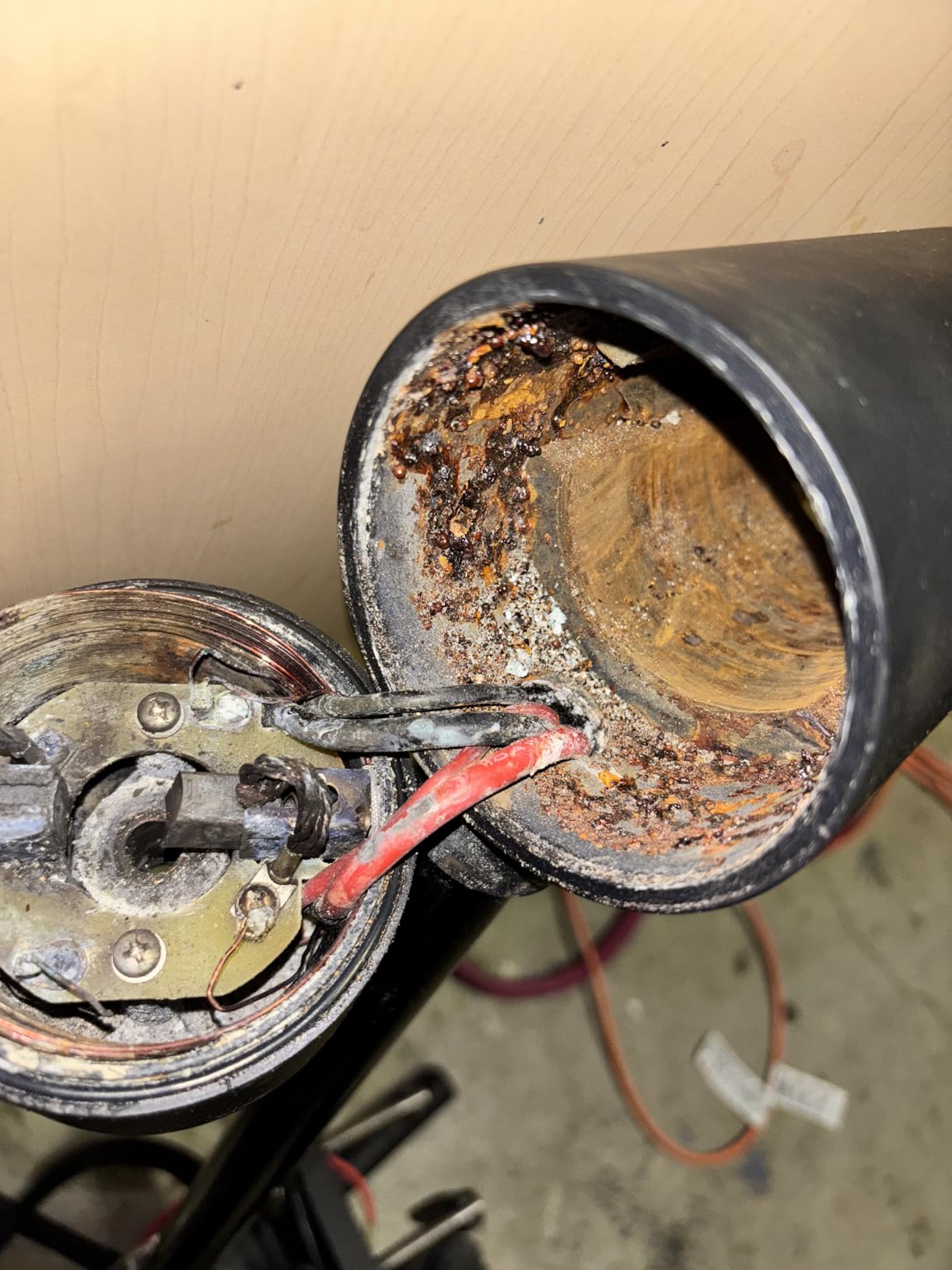
Three-prong twist-lock deck plugs and their connectors are widely reported as the most common saltwater failure point on an otherwise sound trolling motor setup. One writer who maintains boats for a living reports personally repairing failed twist-lock plugs on boats in his care.
Check the plug for green corrosion, make sure the rubber seal is intact, and keep the connection above the deck where spray can drain off it. If you rig a connector yourself, heat-shrink it and use a proper marine-grade fitting rather than twisting bare wire together, which is how most salt-related electrical failures actually start.
Other checks worth adding to the trip end
Re-torque the mounting bolts after the first few trips, because vibration loosens them. Confirm the circuit breaker has not tripped. Check that the shaft collar is tight enough to hold your chosen depth, and keep the prop free of line and grass so the motor is not working against a blockage.
Finally, be honest about electronics. The GPS remote motors in this roundup need their remotes charged and their units kept dry, and the manual motors need no charging at all. If your boat spends weeks in salt and you are not diligent about rinsing, the manual options age more gracefully.
Frequently Asked Questions
What is the best saltwater trolling motor for a flats boat?
For most 16 to 19 foot flats skiffs, the best saltwater trolling motors for flats boats are the Minn Kota Riptide PowerDrive 55 for single-battery GPS anchoring, or the Riptide Terrova 80 if you want more thrust and can carry two batteries. For smaller boats, the Newport NV-Series 55 transom motor is the best overall value.
How long should my trolling motor shaft be?
Measure from the bow deck to the waterline with the boat at its normal loaded trim, then add enough length to keep the prop submerged without letting it drag. Most 16 to 19 foot flats skiffs need between 48 and 60 inches, while small transom-mounted boats run 30 to 36 inch shafts.
What size battery do I need for an 80 lb thrust trolling motor?
An 80 pound thrust motor like the Minn Kota Riptide Terrova 80 runs on 24V and needs two batteries, so a bank of two 100 amp hour AGM deep-cycle batteries is the practical starting point for full-day use. One battery will run the motor but will not carry a full day of trolling.
Do I need 24 volt or 36 volt for a flats boat?
Most flats skiffs need 24V at most, and many need only 12V. A 36V system adds a third battery and about 60 pounds of extra weight for headroom that a shallow-draft boat rarely uses. Step up to 24V when you fish current or run a hull of 20 feet or more.
How much thrust does a 19 foot bay boat need?
A 19 foot bay boat at roughly 2200 pounds loaded wants about 44 pounds of thrust on sheltered water. In wind, current or open bay, plan on five pounds of thrust per 100 pounds of loaded weight, which puts the requirement near 110 pounds and favors an 80 pound motor as a realistic compromise.
Final Verdict on the Best Saltwater Trolling Motors for Flats Boats
After working through all ten, the Newport NV-Series 55 Thrust Saltwater Transom Motor takes the top spot. It has the best rating in the roundup alongside by far the largest review base, it carries 55 pounds of thrust on a single 12V battery, and at 23.2 pounds it is the only strong motor here you can lift into the boat solo.
Buy the Minn Kota Riptide Terrova 80 if you want Spot-Lock, Jog and drift modes and you can accept a two-battery 24V package on a larger hull. Buy the AQUOS Haswing 65 if your priority is battery life and stepless low-speed control on a single battery. Pick a transom budget motor like the PEXMOR or VEVOR only if your boat is small and your trips are short.
Whichever one you choose, size thrust to your loaded weight, keep it to 12V or 24V, check that the shaft length keeps the prop submerged, and rinse the lower unit in fresh water after every single trip. Salt water will find every shortcut you take with maintenance.