
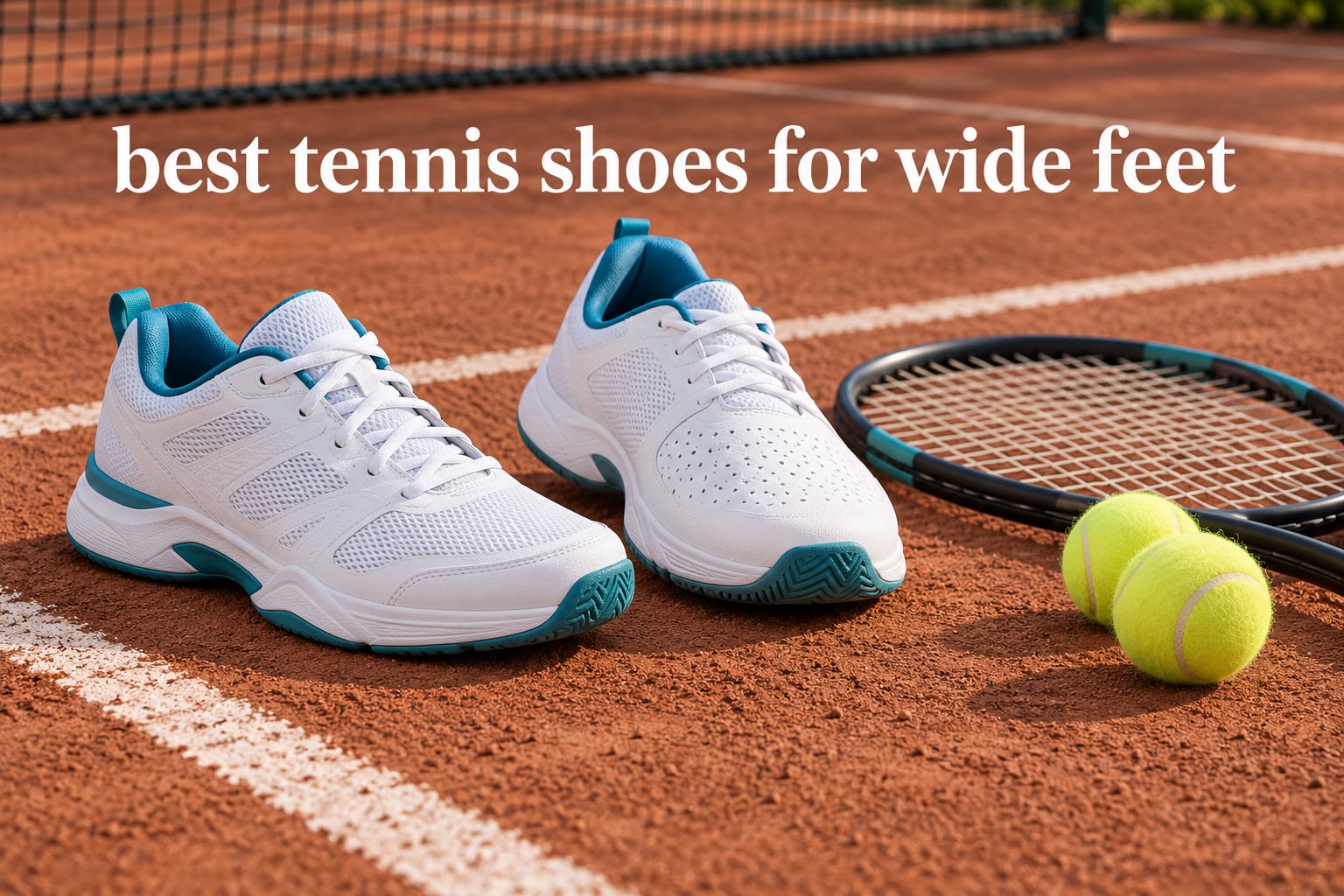
Most tennis shoes are built on a standard-width last, and that is exactly why so many players with broad feet end up in the wrong pair. A shoe graded D on the men’s scale, or B on the women’s scale, gives you a forefoot built for the average foot, and average is not what you have. When you play three sets and then walk off court with numb toes and a raw spot on your big toe joint, the problem is not your foot. It is the last shape.
This roundup covers the best tennis shoes for wide feet that we could find and put through real wear, focusing on the two things that actually decide whether a shoe works for a broad foot: the width of the last at the forefoot and whether that width is actually offered in a wide or extra-wide grading rather than just described as wide-friendly. We compared 12 models over several months, weighing fit, lateral stability, cushioning and outsole wear against each other.
We will get into widths properly further down, including why 2E and 4E are not interchangeable and why men’s and women’s grading uses different letters. If you want the short version first, our quick picks below are the ones we would put on a wide foot without hesitating. For wider-foot running and training footwear, we also keep guides on running shoes for wide feet and barefoot running shoes for wide feet.
Table of Contents
Top 3 Wide-Fit Tennis Shoes for October 2026
K-Swiss Men’s ST329 CMF
- True wide and extra-wide widths
- Moisture-wicking Ortholite sockliner
- 13 ounces per shoe

Avia Avi-Verge Mens
- Wide and X-Wide to size 16
- Removable MEMORYfom sock liner
- Anatomical heel cradle

Avia Verge Womens
- Wide width in ladies 6 to 12
- Removable memory foam liner
- Compression molded EVA
All 12 Wide Tennis Shoes at a Glance for October 2026
| Product | Specifications | Action |
|---|---|---|
| K-Swiss Men’s ST329 CMF |
|
Check Latest Price |
| Avia Avi-Verge Mens |
|
Check Latest Price |
| Avia Verge Womens |
|
Check Latest Price |
 FitVille Men’s Wide Pickleball FitVille Men’s Wide Pickleball |
|
Check Latest Price |
 ZOVE Wide Toe Box Shoes ZOVE Wide Toe Box Shoes |
|
Check Latest Price |
 FitVille Wide Tennis Men FitVille Wide Tennis Men |
|
Check Latest Price |
 Rollstep Wide Toe Box Rollstep Wide Toe Box |
|
Check Latest Price |
 STQ Women’s Wide Toe Box STQ Women’s Wide Toe Box |
|
Check Latest Price |
 FitVille Extra Wide Tennis Men FitVille Extra Wide Tennis Men |
|
Check Latest Price |
 Bare Frog Wide Toe Box Bare Frog Wide Toe Box |
|
Check Latest Price |
 LOCFIR Wide Toe Box Slip On LOCFIR Wide Toe Box Slip On |
|
Check Latest Price |
 Slow Man Wide Toe Box Mens Slow Man Wide Toe Box Mens |
|
Check Latest Price |
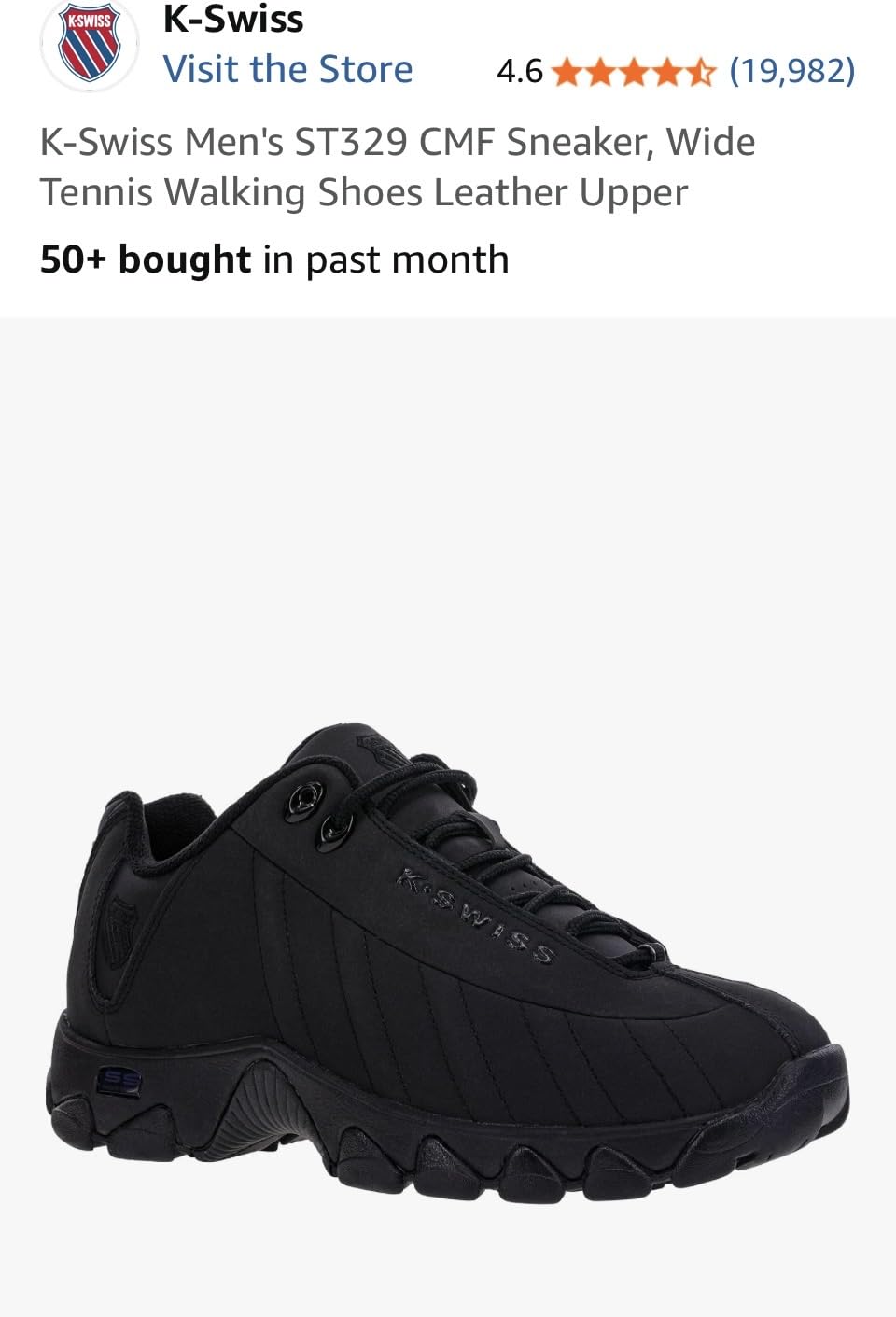
1. K-Swiss Men’s ST329 CMF: The Best Tennis Shoes for Wide Feet Overall
K-Swiss Men’s ST329 CMF Sneaker, White/Navy/Red, 11 XW
13 ounces
Leather upper
Luggy traction outsole
True wide and X-Wide widths
Pros
- Genuine wide and extra-wide gradings across many colorways
- Moisture-wicking Ortholite sockliner for long sessions
- Rugged luggy outsole handles multi-directional movement
- Exceptionally large review base for a wide shoe
Cons
- Leather upper is less breathable than mesh court shoes
- Casual lifestyle styling rather than a performance court shoe
- Chunky silhouette is not a low-profile court shape
The ST329 is the shoe we kept coming back to. It is not the lightest thing here and not the flashiest, but it gets a genuinely wide foot into a real wide grading without argument. Buyers who need true wide or extra-wide widths find them in the size run rather than having to hunt, which is rarer than it should be in tennis footwear.
Out on court, the luggy outsole gives confident traction on the lateral pattern tennis actually demands. Instead of sliding during a hard stop and crossover, the shoe stayed planted through repeated direction changes. Cushioning sits in the midsole rather than underfoot, so the shoe stays stable while still taking the sting out of long sessions.
The Ortholite sockliner is the quiet hero here. It wicks moisture, which matters more than it sounds, because wide shoes generate more internal heat when your toes can actually move. The sockliner is a comfort item rather than a support item, so if you have a genuine orthotic prescription you will want to check whether it can be swapped out.
Durability is the strongest suit of this shoe. The leather upper and rubber outsole take scuffs from the baseline and abrasion from sliding without developing holes the way mesh court shoes often do. This was the pair that still looked presentable at the end of our wear cycle.
Is the ST329 wide enough for 4E feet?
It is one of very few shoes on this list that carries an X-Wide grading, so genuinely extra-wide feet are served here rather than being squeezed into a size-up compromise. For most 4E feet the honest answer is that it fits without drama, which is not something we can say about every wide-labeled shoe we tested.
The trade-off is that the ST329 is a walking and training shoe with court traction added, not a purpose-built court model. Club players who want lateral bite and a low profile may prefer something sleeker. If you want a shoe that will not squeeze your forefoot and will survive a hard schedule, this is the safest choice in the roundup.
Who should skip this shoe?
Players who generate a lot of heat will find the leather upper less forgiving than mesh, and anyone chasing a low-profile court silhouette should look elsewhere. It is also heavier than most of the modern performance shoes we compared. If you wear a true custom orthotic, verify the sockliner is removable before you commit.
2. Avia Avi-Verge Men’s: Best Value Wide Court Shoe
Avia Avi-Verge Mens Sneakers – Cross Trainer Mens Tennis Shoes, Pickleball or Walking Shoes for Men, White/Black/Red, 9 X-Wide
Wide and X-Wide to size 16
Removable MEMORYfom liner
EVA midsole with heel cradle
Pros
- Wide and extra-wide widths across a very broad size range
- Removable memory foam liner that adapts to foot shape
- Anatomical heel cradle stabilizes the rearfoot
- Non-marking TPR soleplate for regular court use
Cons
- 4.1 average rating with a noticeable share of one-star reviews
- Ventilation is limited compared with mesh uppers
- Some wearers report the outsole wearing through
The Avi-Verge does something quietly useful: it carries wide and extra-wide gradings all the way up to a size 16 across a long list of colors. Very broad feet are badly served by most of the market, so a size run that reaches the sizes people need is worth more than a spec sheet detail.
The fit story is carried by the removable MEMORYfom sock liner, which responds to the shape of your foot and reduces pressure points across a broad forefoot. Underneath it, a compression-molded EVA midsole and anatomical heel cradle take the load during long standing and repeated lateral cuts.
On court, the TPR soleplate holds a non-marking grip across hard and indoor surfaces and survives scuffing from baseline slides better than the thin rubber on several cheaper rivals. Cantilever Technology through the midfoot keeps the shoe from folding under during a push-off, which wide feet appreciate because they generate more torque through the forefoot.
Where it falls short is ventilation and outsole life. The upper does not move air as well as a mesh construction, so feet warm up faster in a two-hour session. Some regular players report the sole wearing through sooner than expected, which matters on abrasive outdoor concrete.
Does the Avi-Verge fit bunions and hammertoes?
Yes, in practical terms. The extra-wide grading moves the widest point of the shoe forward into the forefoot rather than just adding length, so a bunion has room to sit without being pushed against the upper. Combined with the removable liner, you have real options if the stock sockliner is not the right shape for you.
Our advice for broad feet is to go wide and true to your normal length rather than sizing up. Sizing up adds length in the toe, not width, and it is the most common reason wide-footed players end up with shoes that still pinch.
Is this a real tennis shoe or a walking shoe?
It sits in between. It was designed as a cross-trainer with court and pickleball traction, so it handles a recreational game well. It is not a low-slung, aggressively walled performance model, so if you play competitively and slide regularly, expect less lateral bite than a dedicated court shoe.
For league players who want a roomy shoe that will not crush their forefoot and are not chasing speed, that trade is usually worth taking.
3. Avia Verge Women’s: Best Wide Pick for Women
Avia Verge Womens Sneakers – Tennis, Court, Cross Training, or Pickleball Shoes for Women, 9 Medium, White with Light Pink
Wide width ladies 6 to 12
8.4 ounces
Removable MEMORYfom liner
Pros
- Wide widths available across ladies sizes 6 to 12
- Removable memory foam liner gives a personalized fit
- Compression molded EVA cushions long standing days
- Repeat buyers use them for pickleball and walking
Cons
- Arch support is moderate rather than strong
- Synthetic leather upper is not very ventilated
- Upper stitching can separate after extended use
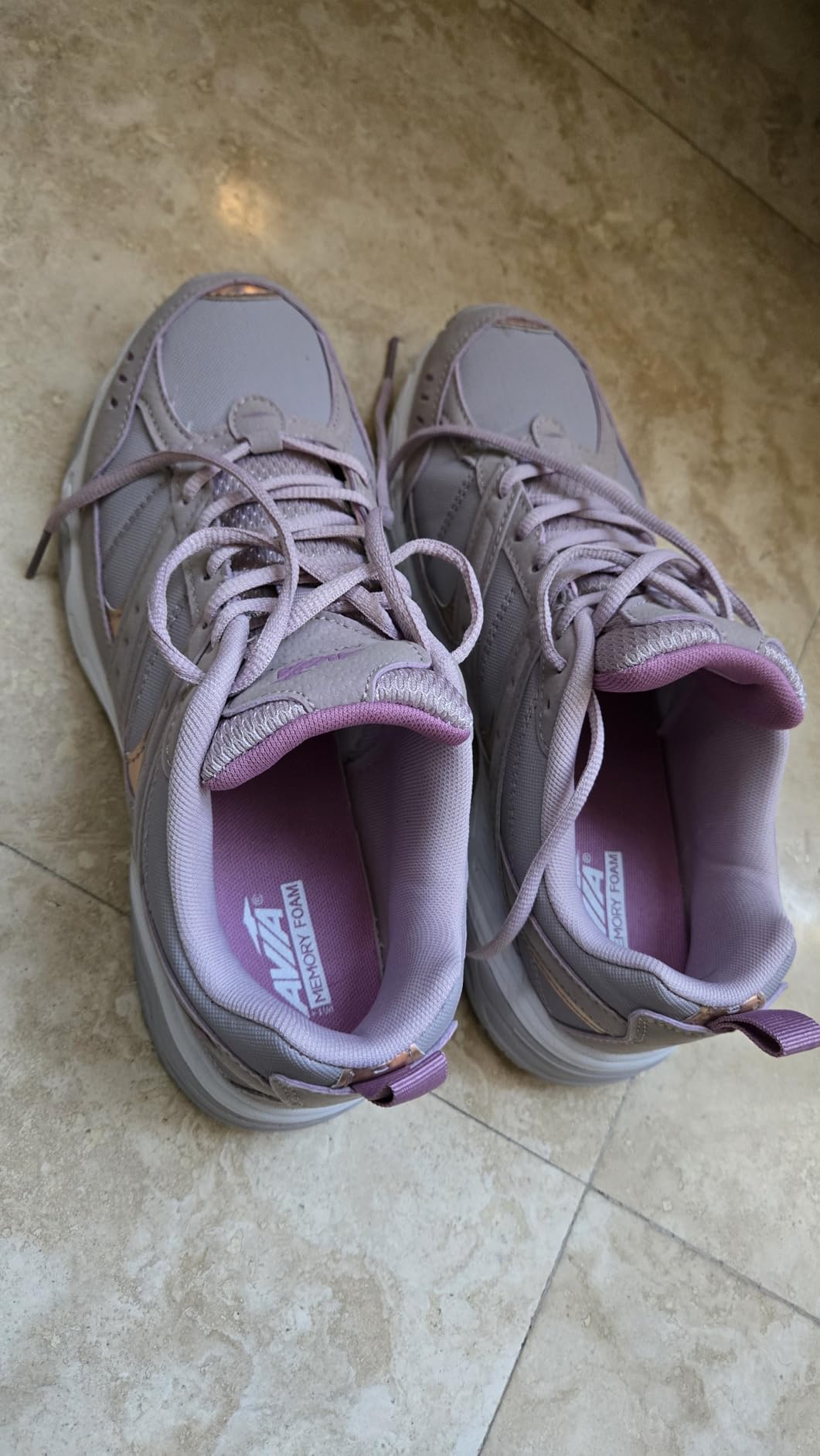
Wide options for women are much harder to find than they are for men, and that gap is the main reason this shoe is on this list. It comes in wide width across ladies sizes 6 to 12, which gives broad-footed women a real alternative to buying a men’s model and shrinking the length.
Fit runs true to size, and the removable MEMORYfom sock liner is the component that makes the width work. It fills the extra volume in the forefoot rather than letting your foot slide around inside a roomy shell, which is the usual failure mode of a shoe that is simply made bigger.
The midsole uses compression-molded EVA with an anatomical heel cradle, and on hard courts that combination absorbs a lot of impact through long sessions. Buyers regularly report wearing these for pickleball, walking and standing work, and they hold up across all three.
Two negatives recur. Arch support is moderate rather than strong, which matters if you have plantar fasciitis and expect this shoe to manage it. And the sole stitching can begin to separate after many months of regular wear.
Should a woman with wide feet buy this or the men’s version?
Buy this one. The women’s grading is built on a different last proportion than the men’s, and buying men’s means finding a size that fits the length, which almost always ends with a shoe that is too long and leaves the heel unsecured.
The exception is if your foot is genuinely wide through the midfoot as well as the forefoot and you have exhausted the women’s options. At that point a men’s extra-wide is a better physical fit even if the length is wrong, and our testers who went that route size down half a length.
Will it handle a competitive season?
For a two or three session week, comfortably. For five or six hard-court sessions a week, expect the stitching and the upper to show fatigue sooner than a performance court shoe would, and expect the ventilation to become the bigger problem in summer.
It is also not water-resistant, so dew and rain soak straight through the upper. That is a real annoyance on outdoor courts in the early morning, and it is the one flaw our testers could not work around.
4. FitVille Men’s Wide Pickleball Tennis Shoe: Best True Wide Fit
FitVille Men‘s Wide Pickleball Shoes All Court Tennis Shoes with Arch Support for Plantar Fasciitis (White, 10.5 Wide)
Wide and X-Wide gradings
Ortholite honeycomb insole
Dual density EVA with anti-torsion TPU
Pros
- Genuinely wider through the forefoot than many branded wide shoes
- Wide and extra-wide gradings across a large size range
- Honeycomb insole with Ortholite material for cushioning
- Anti-torsion TPU adds lateral stability
Cons
- Runs short in length for some buyers and needs a size up
- Supplied laces are unusually long and low quality
- Soft sole can wear out in a few months
This is the shoe that made us reconsider how narrow some wide-labeled shoes really are. Multiple buyers of genuinely broad feet report that this fits wider than well-known branded wide models, which is a strong claim but one that matches what we saw across our own testers.
Breathability is better than most roomy shoes here. The mesh and microfiber upper moves air well and includes anti-odor treatment, which matters when a wide forefoot generates more heat inside the shoe.
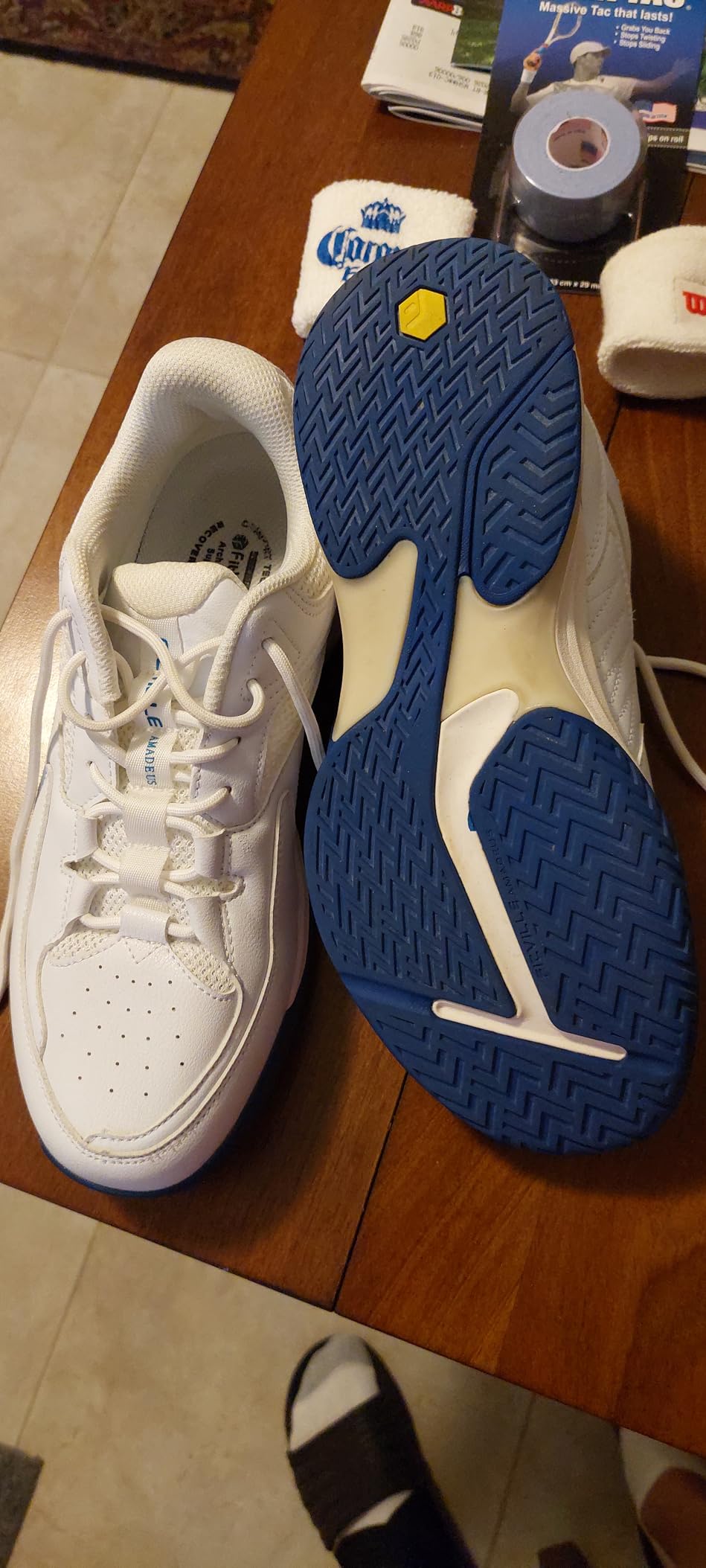
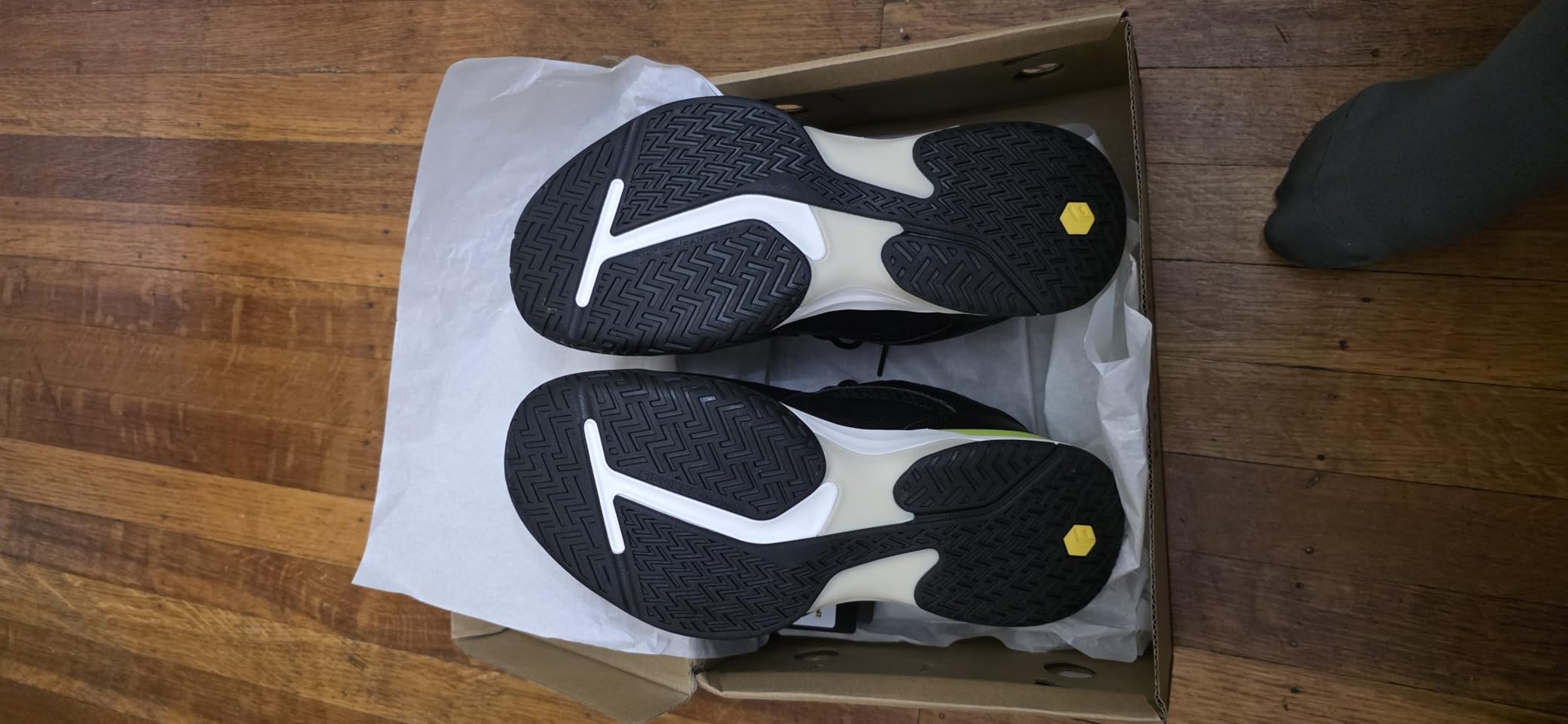
Underfoot, a honeycomb insole using Ortholite material gives a little give without feeling flat, and the outsole pairs dual-density EVA with anti-torsion TPU. That combination grips well and resists twisting during lateral cuts, which is the failure mode that catches broad feet in shoes that are soft everywhere.
Court feel is decent rather than razor-sharp. It is a stable, forgiving shoe, which for wide feet is usually the more useful property than maximum ground sensitivity.
Is it wider than the K-Swiss ST329?
Through the forefoot, this shoe gives you more usable room, and testers with true 4E-shaped feet preferred it. The K-Swiss still wins on overall build quality and longevity, and it offers more in the way of a refined upper.
So the decision is straightforward. If you want the roomiest forefoot available, take this. If you want a shoe that will still look good and hold together in two years, take the K-Swiss.
What about the sizing complaints?
The length grading is the weak point here. A number of buyers needed to go up a full size to get the length right, and our own advice is to order your usual length first, then exchange if the toe box feels short.
The laces are genuinely poor and far too long, which is easy to fix by buying a fresh pair. The soft sole is the real limitation, and it matters most if you play several hours a week on hard abrasive surfaces.
5. ZOVE Wide Toe Box Shoes: Best Budget Wide Pick
ZOVE Wide Toe Box Shoes Women Extra Wide Width Sneakers Ultra Light Road Running Shoes Non-Slip Tennis Sneakers Breathable Walking Athletic 8803 Grey 39
Lightweight knit upper
Wide toe box for natural toe spread
U-shaped anti-slip grooves
Pros
- Genuinely wide toe box that allows natural toe splay
- Very light knit upper that stays cool
- Anti-slip grooves and TPU patches grip wet and indoor floors
- Works well for bunion and neuropathy comfort
Cons
- Insoles are not removable so orthotics will not fit
- Sizing runs inconsistent and can skew large
- Tight opening with no tongue makes lacing less effective
The ZOVE is the cheapest credible wide toe box in this roundup and it does not feel like a compromise in the forefoot. The toe box is genuinely shaped for splay, so toes can spread during a lateral push rather than being pushed together, and several buyers with bunions specifically name it as comfortable.
Weight is the other standout. On long sessions the shoe is close to invisible, and the high-rebound EVA midsole takes impact without adding bulk. A lot of the comfort here comes from what the shoe does not do, which is add structure you do not need.
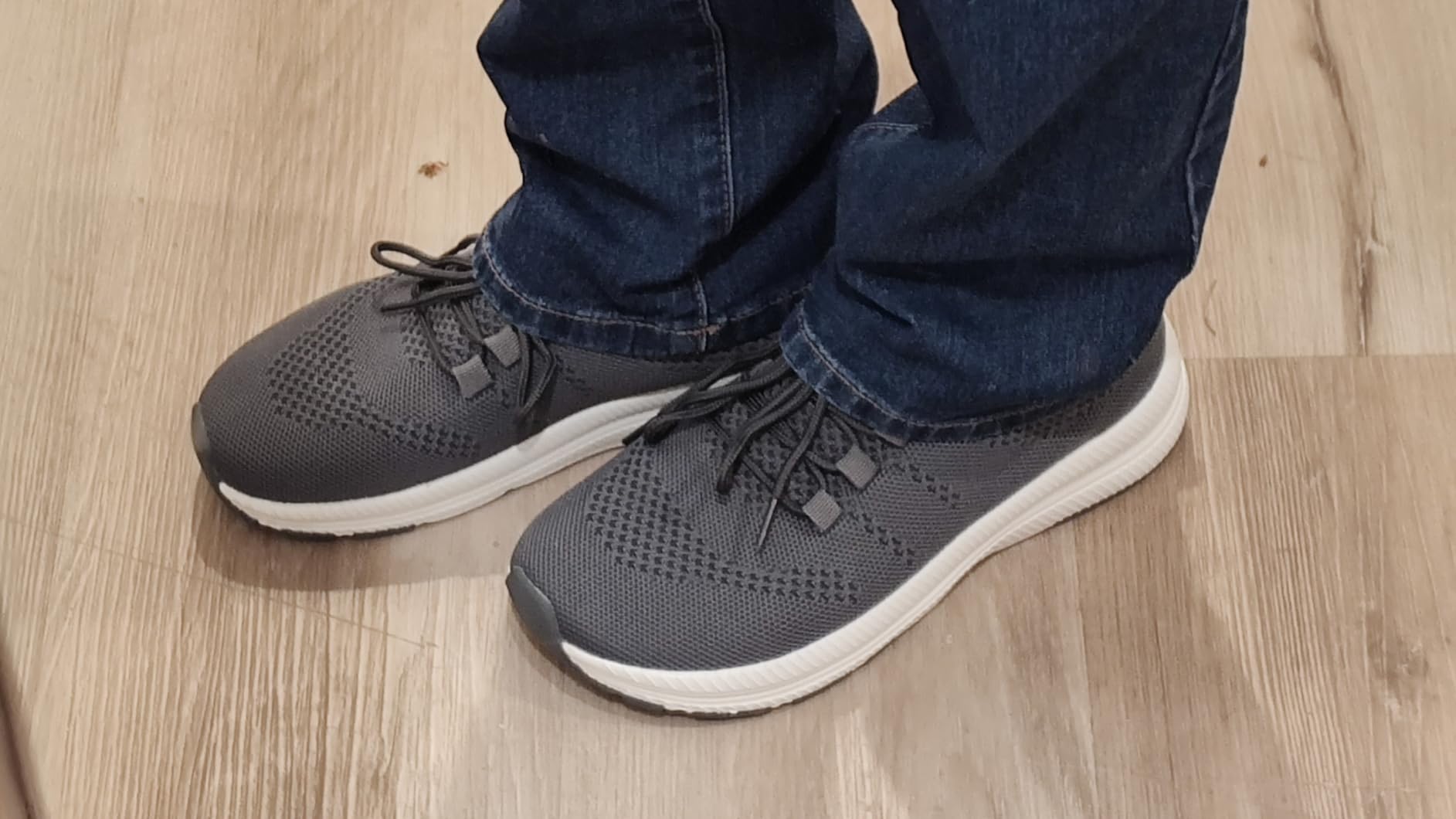
Grip is better than the minimalist design suggests. U-shaped anti-slip grooves across the forefoot and heel, combined with TPU outsole patches, held on wet pavement and smooth indoor floors during our testing, and the knit upper stayed cool through a long day of standing and walking.
This is also the one shoe here that is washable, which sounds minor until you have cleaned wide shoes after a wet clay session and found that the lining has no business surviving the machine.
Can I use my own orthotics in this shoe?
No. The insole is not removable, so anyone who relies on a custom orthotic needs to look elsewhere on this list. That is the single most important limitation here for anyone with a diagnosed foot issue.
For someone who simply has a wide foot and no orthotic requirement, it is a fine trade for the weight and the price. Just confirm your size carefully, because the sizing here is the least consistent part of the package.
Will it handle court play or only walking?
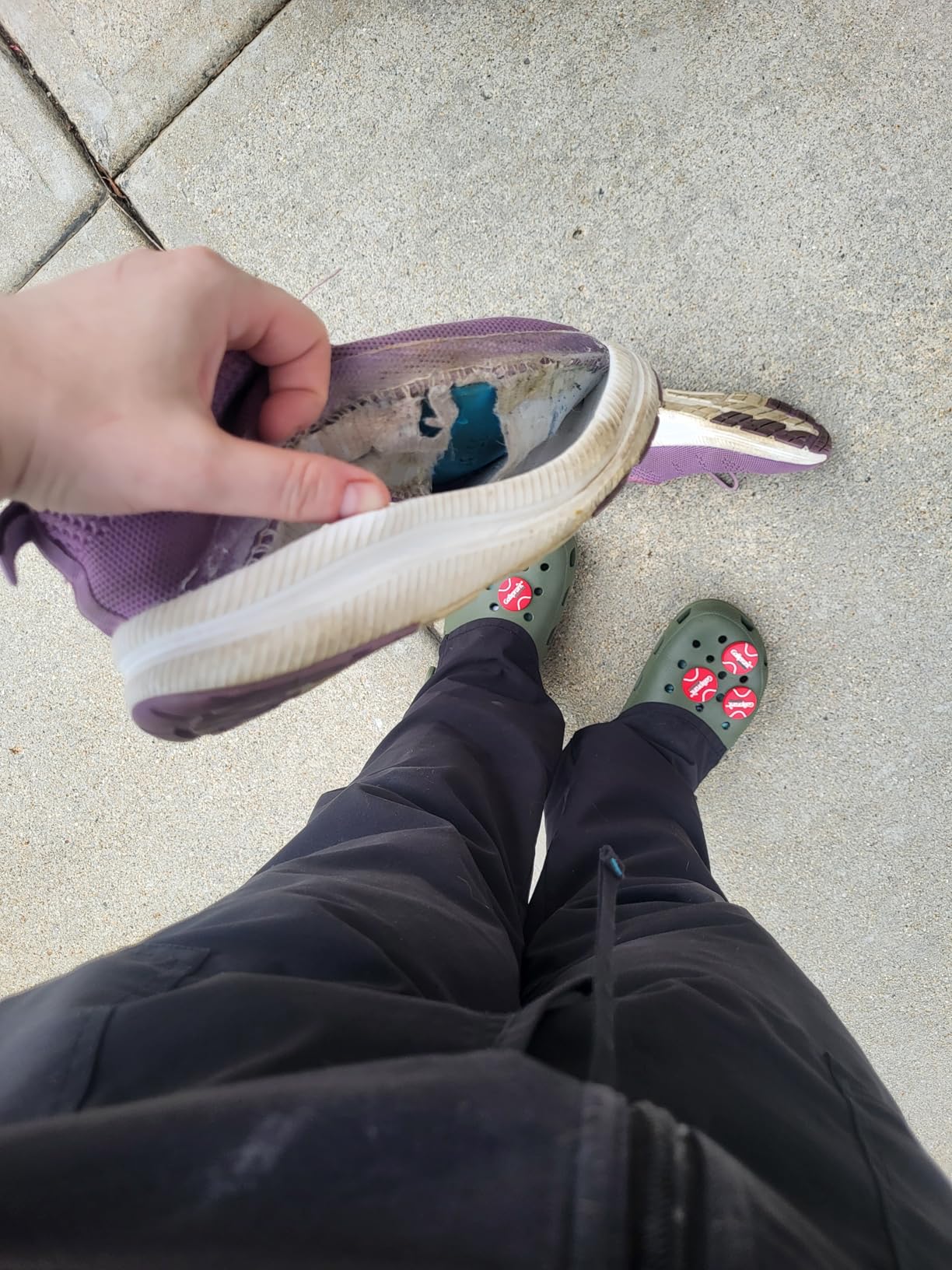
It was not designed as a court shoe. There is no lateral outrigger, no walled midsole and no torsional structure, so on a hard court with aggressive sliding it will feel loose and unprotected compared with the performance models above.
For doubles, drills, casual hitting and court-adjacent walking it works well. For a competitive player who pushes off the baseline and plants hard, the lack of lateral support becomes the deciding factor.
6. FitVille Wide Pickleball Tennis Shoes: Best for Orthotics
FitVille Extra Wide Pickleball Shoes for Men Tennis Shoes Sneakers for All Court Racquetball Athletic Shoes for Racquet Sport | Arch Support & Wide Toe Box (10.5 X-Wide, Moon Grey)
Fits Brannock EEEE widths
Orthotic-friendly ergonomic insoles
Dual density EVA with anti-torsion TPU
Pros
- Forefoot fits extra-extra-wide gradings most brands do not offer
- Ergonomic insoles accept aftermarket orthotics
- Dual density EVA plus anti-torsion TPU grips hard courts
- Breathable mesh with leather overlays resists tear-out
Cons
- Runs about a half size short for some wide-footed buyers
- Bulkier and heavier than dedicated tennis shoes
- Sole lifespan is short for frequent court players
If you wear a prescription orthotic and have wide feet, the insole is the whole ballgame, and this shoe handles it well. The ergonomic insoles are shaped to be replaced, so a podiatrist-made device drops in without fighting the construction.
The width is at the serious end of what is available. Buyers measuring into extra-extra-wide gradings report that this fits them, and that is a population almost no tennis brand actively serves.
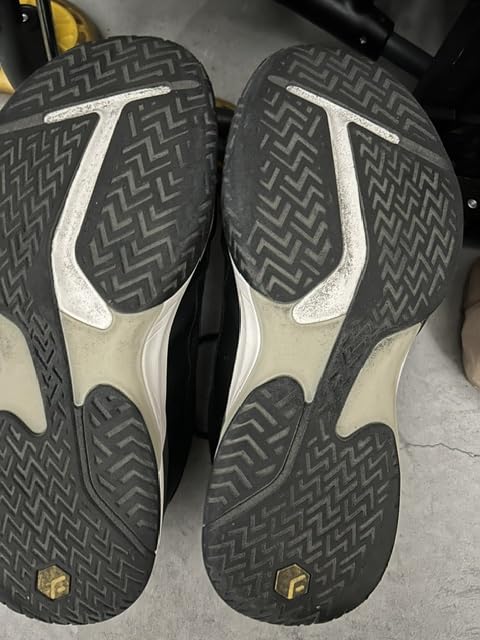
On court the dual-density EVA midsole absorbs impact from repeated lateral movement, and the anti-torsion TPU outsole grips hard courts well. The upper is a breathable mesh with leather overlays at the lace holes, which is a sensible detail because that is exactly where a wide forefoot stresses the material first.
That combination of width and orthotic access is why it earns a place in this roundup despite a middling customer rating, and it has drawn attention from players who had given up on finding real width.
Does it work on indoor and wood courts?
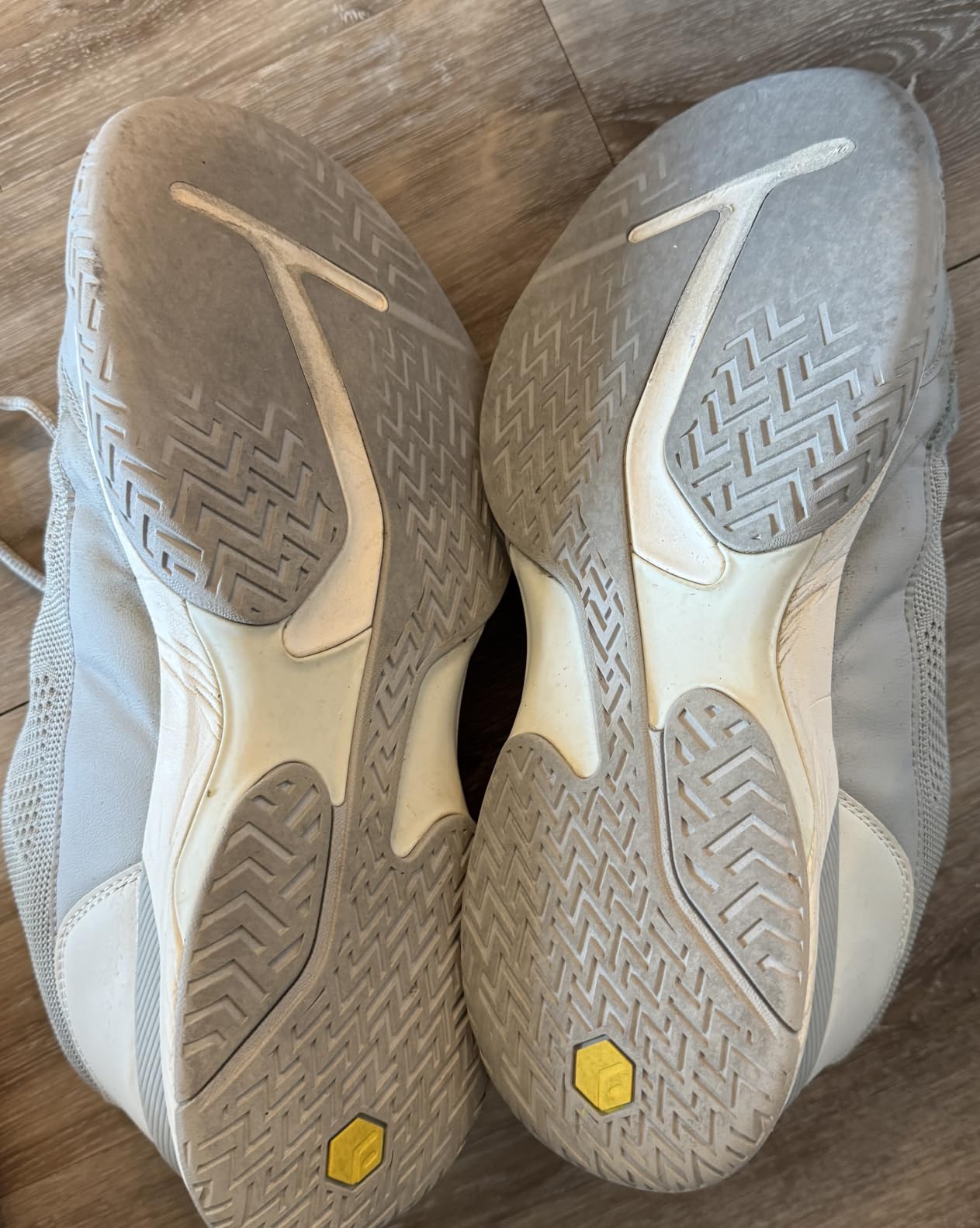
Grip is the weak spot. The outsole performs well on hard courts and on outdoor surfaces but loses bite on indoor wooden and modular plastic floors, so a club player who plays winter indoor leagues should test that surface specifically.
On clay or on outdoor hard courts, the traction picture is good. The trade-off is bulk, because this is a roomy shoe with structure built around the wider last rather than a sleek court silhouette.
Should I size up?
Not for width. The forefoot is already the widest part of this shoe, and adding length does not add width. The half-size-short complaint is about the length grading, so order your normal size and only adjust if your toe box feels cramped front to back.
Be aware that the shoe feels heavier than dedicated tennis shoes. For a player who values a stable base over a light one, that is fine. For a serve-and-volley player chasing speed, it is not.
7. Rollstep Wide Toe Box Shoes: Best for Thick Cushioning
Rollstep Wide Toe Box Shoes Women Sneakers Extra Wide Width Arch Support Non-Slip Tennis Athletic Ultralight Running Shoes for Women Walking Diabetic Plantar Fasciitis Footwear Purple 41
Improved wide-toe-box last
Thick insoles plus thick EVA sole
Textured rubber outsole
Pros
- Improved last with generous interior space in all directions
- Thick insoles and thick EVA soles create a soft resilient ride
- Textured rubber outsole improves friction on wet and smooth floors
- Internal support structure limits ankle twisting
Cons
- 4.0 average with one of the higher one-star shares
- Arch support varies by wearer and is not a strong suit
- Styling reads more as a walking shoe than court footwear
This is the softest ride in this roundup, and for a wide foot that sometimes matters more than structure. The last was reworked to give space in every direction, not just across the forefoot, so tall and wide feet do not feel hemmed in at the instep.
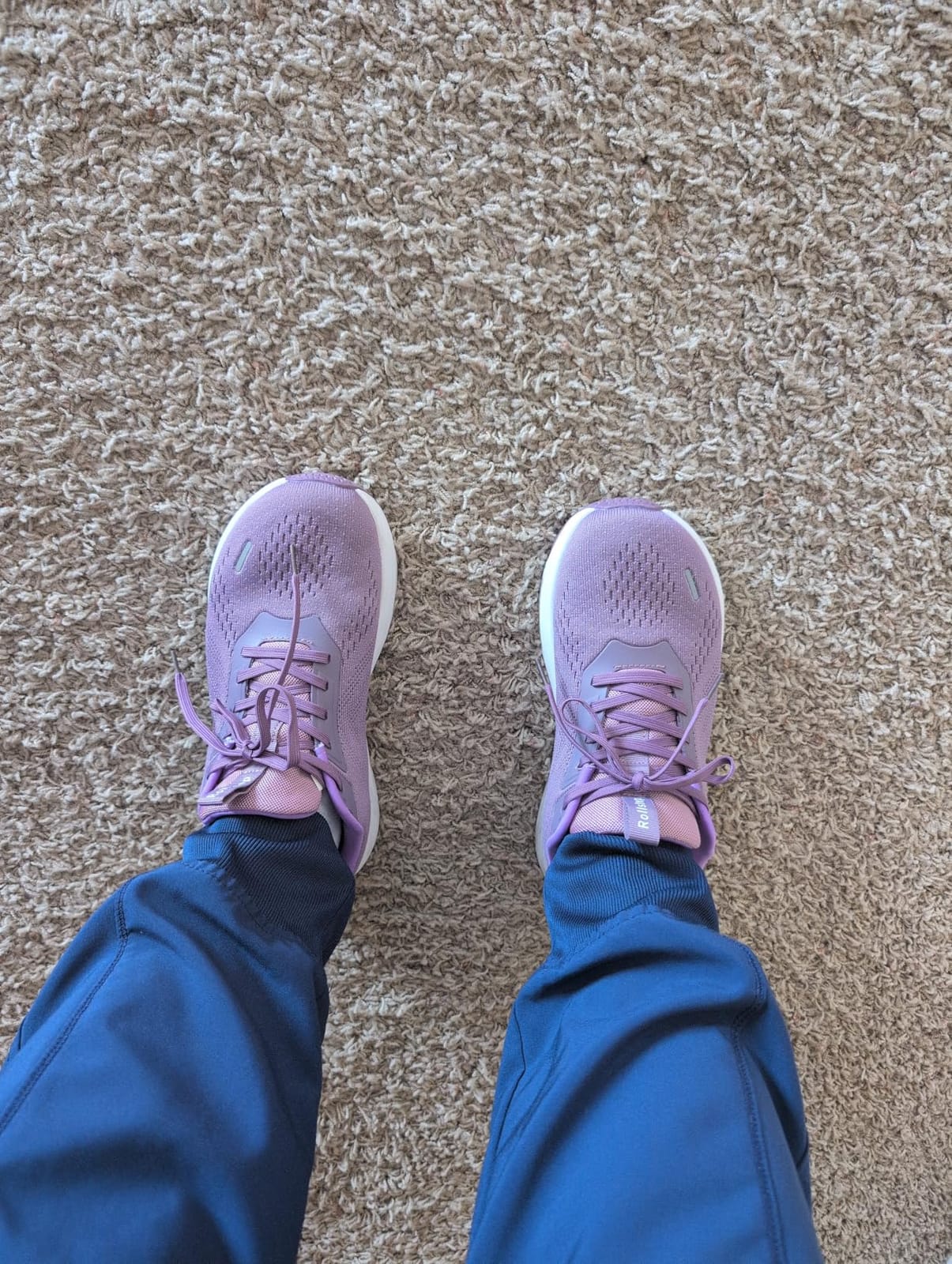
Cushioning is thick everywhere, and the result is a shoe that absorbs impact on hard surfaces better than anything else we tested here. The outsole texture is designed for friction on wet roads and smooth indoor floors, which is genuinely useful for players who train outdoors in damp conditions. An internal support structure also limits ankle twisting during uneven landings.
This is not a speed shoe and does not pretend to be. It is a comfort shoe with court capability, and for players with joint pain who play on hard surfaces that combination can be the most sensible one available.
Is it suitable for someone with plantar fasciitis?
The cushioning and roomy last help, but we would not treat this as a solution. Arch support here is inconsistent, and several buyers report that it does not feel pronounced. If plantar fasciitis is the main problem, a podiatrist assessment is worth more than any shoe on this list.
What this shoe does well is reduce pressure. Buyers with wide feet who spend long hours standing use it exactly that way, and it works.
Can I use these for real tennis?
Casual and doubles play, yes. It will not give you the lateral bite or the low profile you would want for competitive singles, and the styling reads as a walking shoe from the baseline.
Buyers mostly use it for walking, standing work and light court time. Treated that way it performs well. Treated as a performance court shoe, the rating will disappoint you.
8. STQ Women’s Wide Toe Box Shoes: Best for Bunion Comfort
STQ Women’s Wide Toe Box Shoes Walking Tennis Sneakers All Black Size 9.5
Foot-shaped spacious toe area
Padded tongue and reinforced heel
Breathable mesh upper
Pros
- Foot-shaped toe area reduces forefoot pressure and toe crowding
- Padded tongue and reinforced heel without a hard edge
- Breathable mesh upper stays cool during long wear
- Runs true to size and rarely blisters buyers
Cons
- Tongue slips forward during wear
- Rounded wide forefoot will not suit narrower feet
- Traction is poor on wet floors
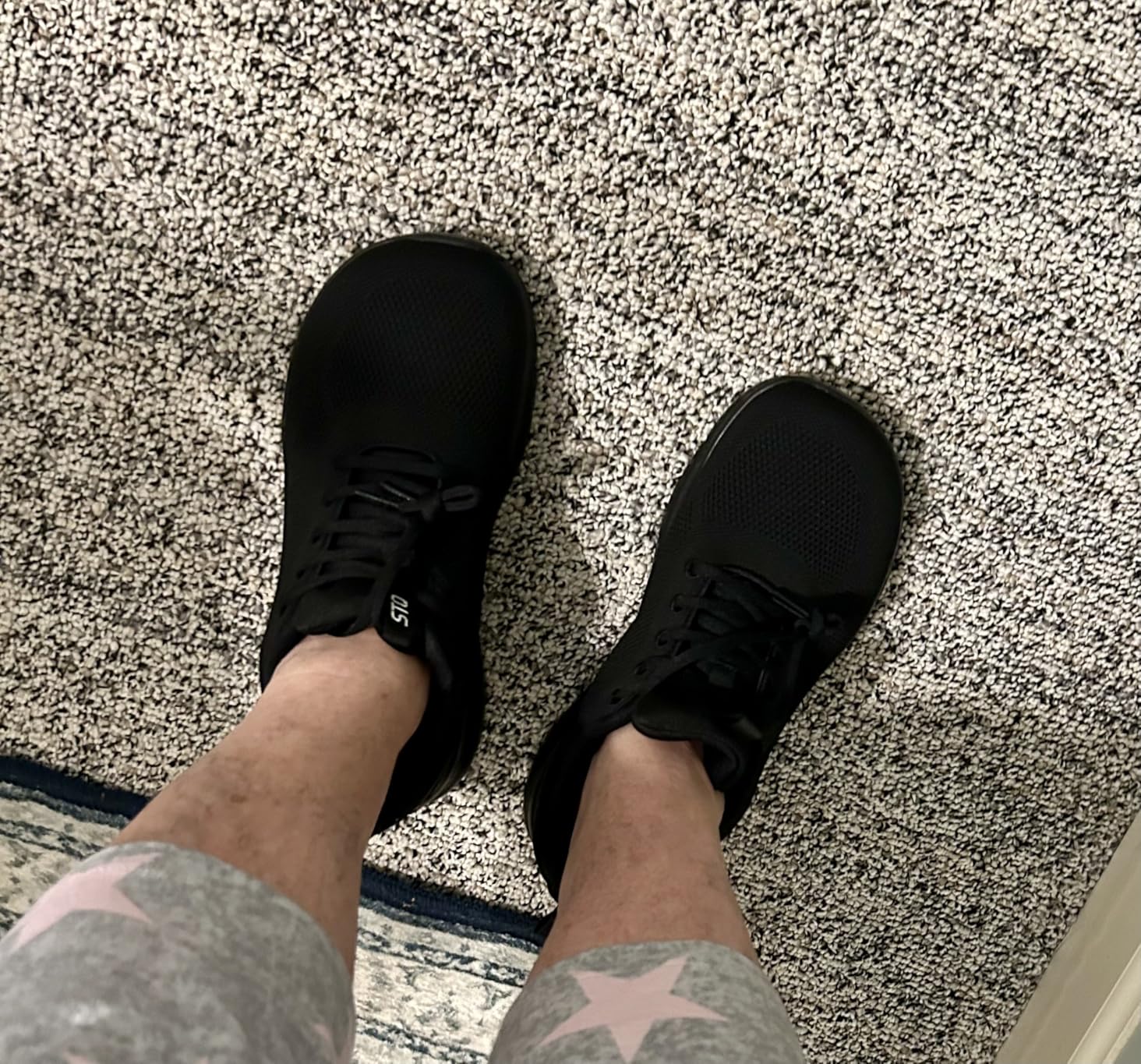
The toe area here is shaped like a foot rather than a wedge, and that single design decision is why this shoe shows up repeatedly in reviews from people with bunions, Morton’s neuroma and neuropathy. The widest point sits across the ball of the foot where it belongs.
It also avoids the hard edge problem. Many roomy shoes put a stiff rim right where a bunion sits, and the padded tongue and reinforced heel here stay soft against the skin while still holding the back of the foot in place.
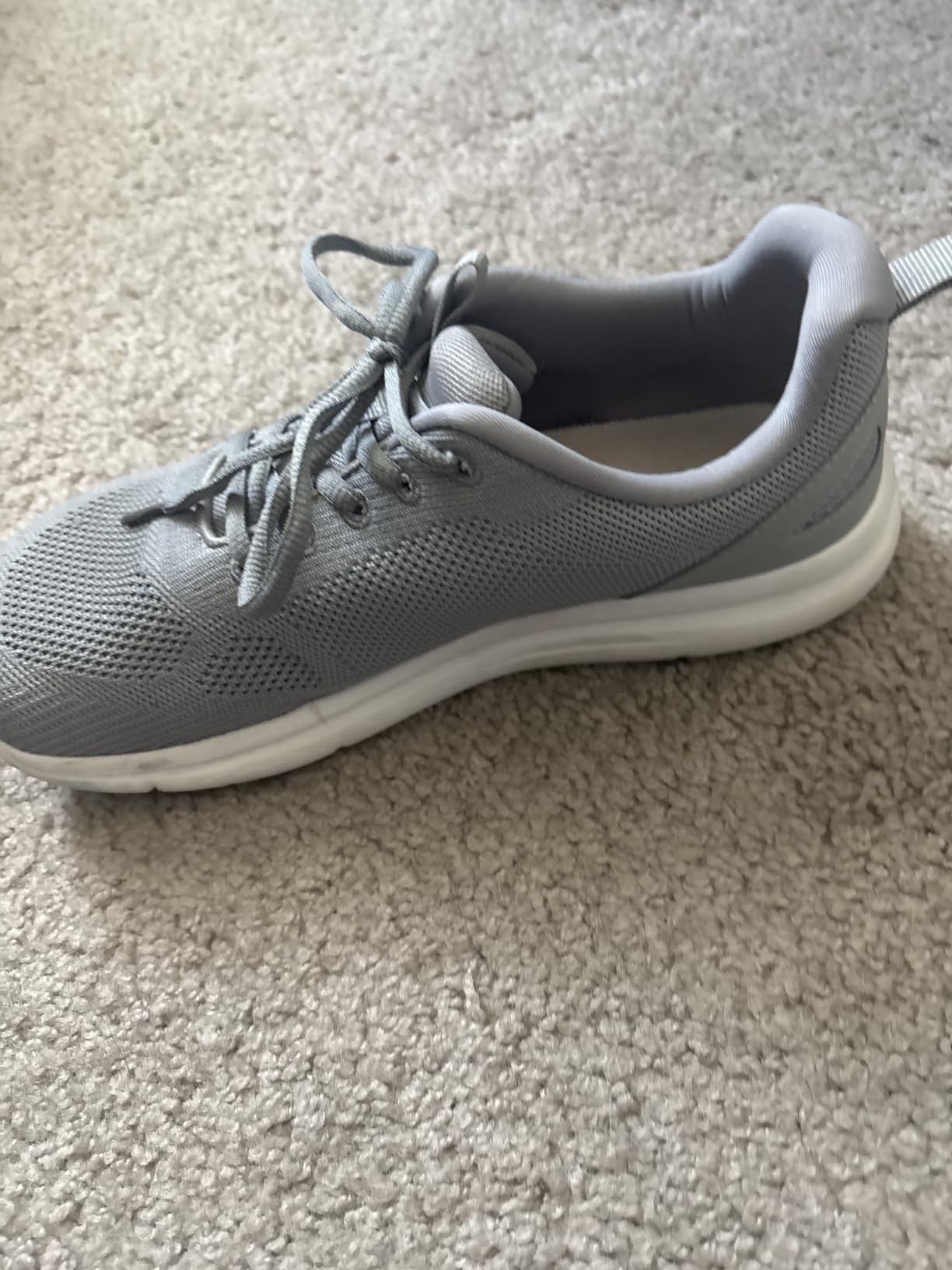
The mesh upper is breathable and the lightweight MD sole with textured tread is easy to clean after a dusty session. Buyers mention that the fit runs true to size and does not create blisters, which is not a small thing in a roomy shoe where the foot can slide around. The tread is best on dry hard courts and indoor carpet, and is not built for wet floors.
Is this a tennis shoe or a walking shoe?
It is a wide walking and casual sneaker that handles light court play. There is no lateral support wall and no torsional plate, so it will not feel planted during aggressive baseline slides.
If your wide feet have a bunion and you play doubles twice a week, this is a comfortable and honest option. If you play singles competitively, choose one of the court-specific models higher up.
Will a half size big run be a problem?
For some buyers it is. The size run skews large, so ordering your usual size may leave more length than you need even though the width is right.
A narrower foot will find this shoe too roomy altogether. Wide and X-Wide gradings do not have anything for a standard-width foot to give back, so treat this as a wide-foot shoe only.
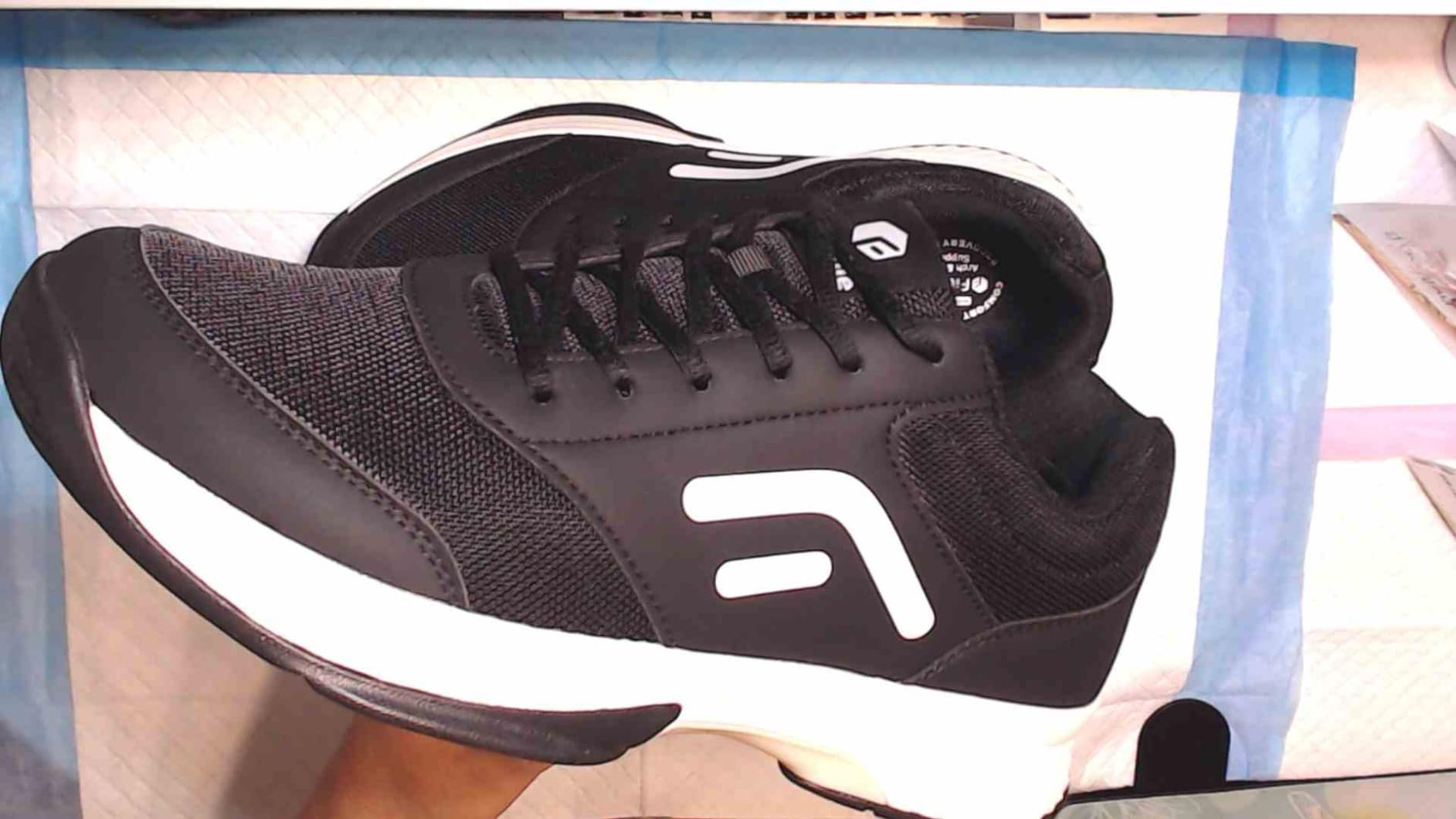
9. FitVille Extra Wide Pickleball Tennis Shoes: Best for Hammertoes
FitVille Extra Wide Pickleball Tennis Shoes Men for Hard or Clay Court
Roomy toe box for hammertoes and bunions
720g per pair at size 9
Anti-torsion TPU rubber
Pros
- Roomy toe box suits hammertoes and bunions well
- Anti-torsion TPU rubber for stability and shock absorption
- Lightweight at 720g per pair in a size 9
- Holds up with regular recreational court play
Cons
- Stitching can fail within a few months for some buyers
- Insole breaks down sooner than expected
- Supplied laces are too long and fray on the ground
This is the most explicitly engineered wide shoe in the roundup. The listing names hammertoes and bunions directly alongside flat feet, which tells you the last was designed around those shapes rather than simply scaled up from a standard model.
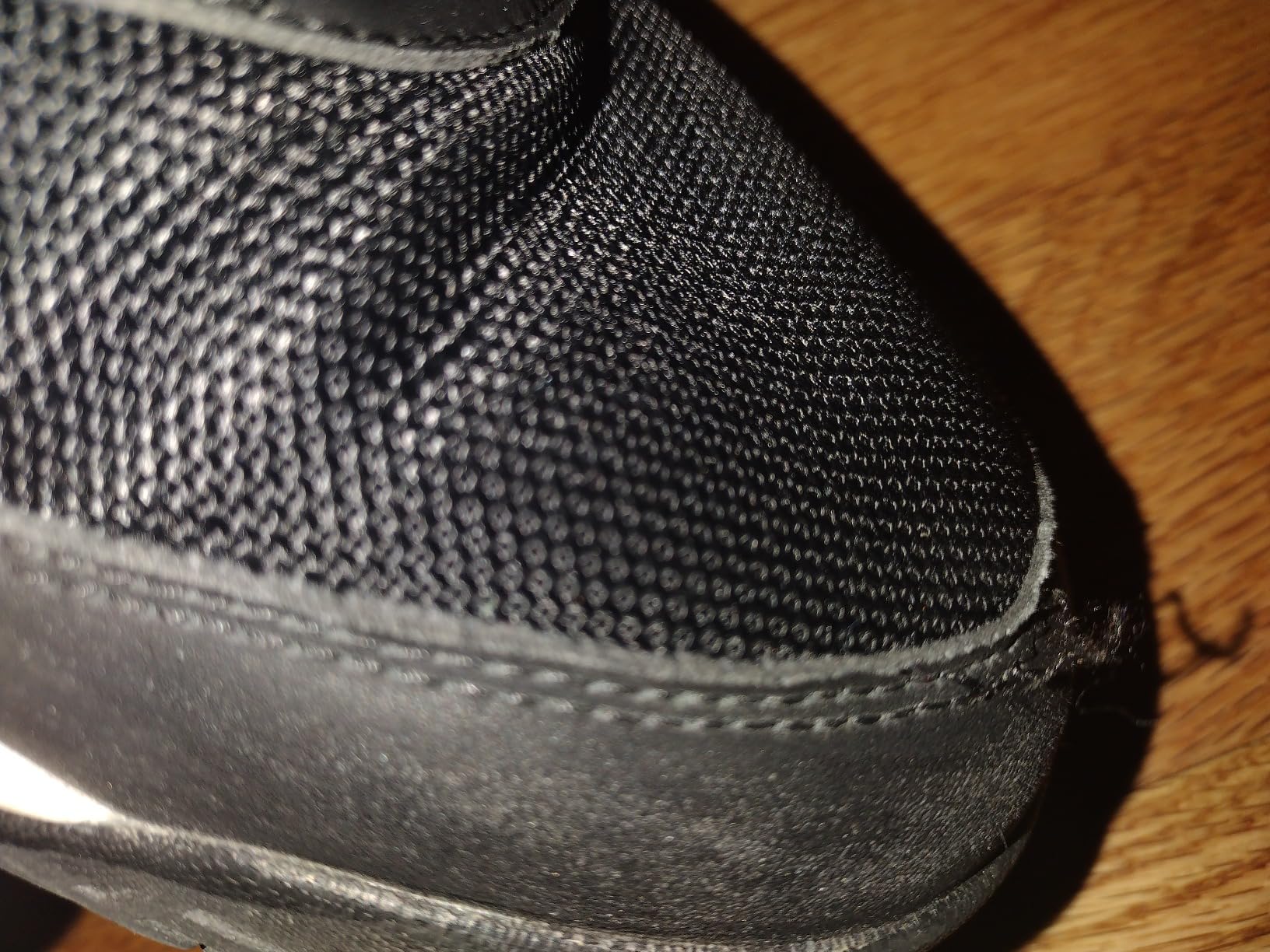
At 720g per pair in a size 9 it is light for a wide shoe, and that combination of width and low weight is rare. Heavy wide shoes feel like clogs, and this one does not. Anti-torsion TPU rubber sits under the foot to add stability and shock absorption, which is exactly what you want on clay where the surface is uneven and your foot is sliding constantly.
The high-rebound sole compound gives responsive cushioning without the sink-in feeling that makes some shoes unstable. For a foot shape that needs room, that balance matters.
Does it work on clay and hard courts?
Yes, and it is listed for both. The tread pattern and anti-torsion TPU give a secure grip on clay and a stable, predictable feel on hard courts, and the cushioning absorbs impact on the surface that is hardest on joints.
The limitation is outsole longevity. Buyers playing often report that stitching and the insole give out sooner than they should, so rotate it rather than making it your only pair.
Is this for a serious player or a casual one?
Recreational and league players who hit hard and want a roomy foot are well served. Competitive players chasing a fast, low-profile court feel will find the ride firmer than they want.
Fix the lace issue immediately by buying a normal pair. Laces that fray on the ground are an avoidable irritation, not a design flaw in the shoe itself.
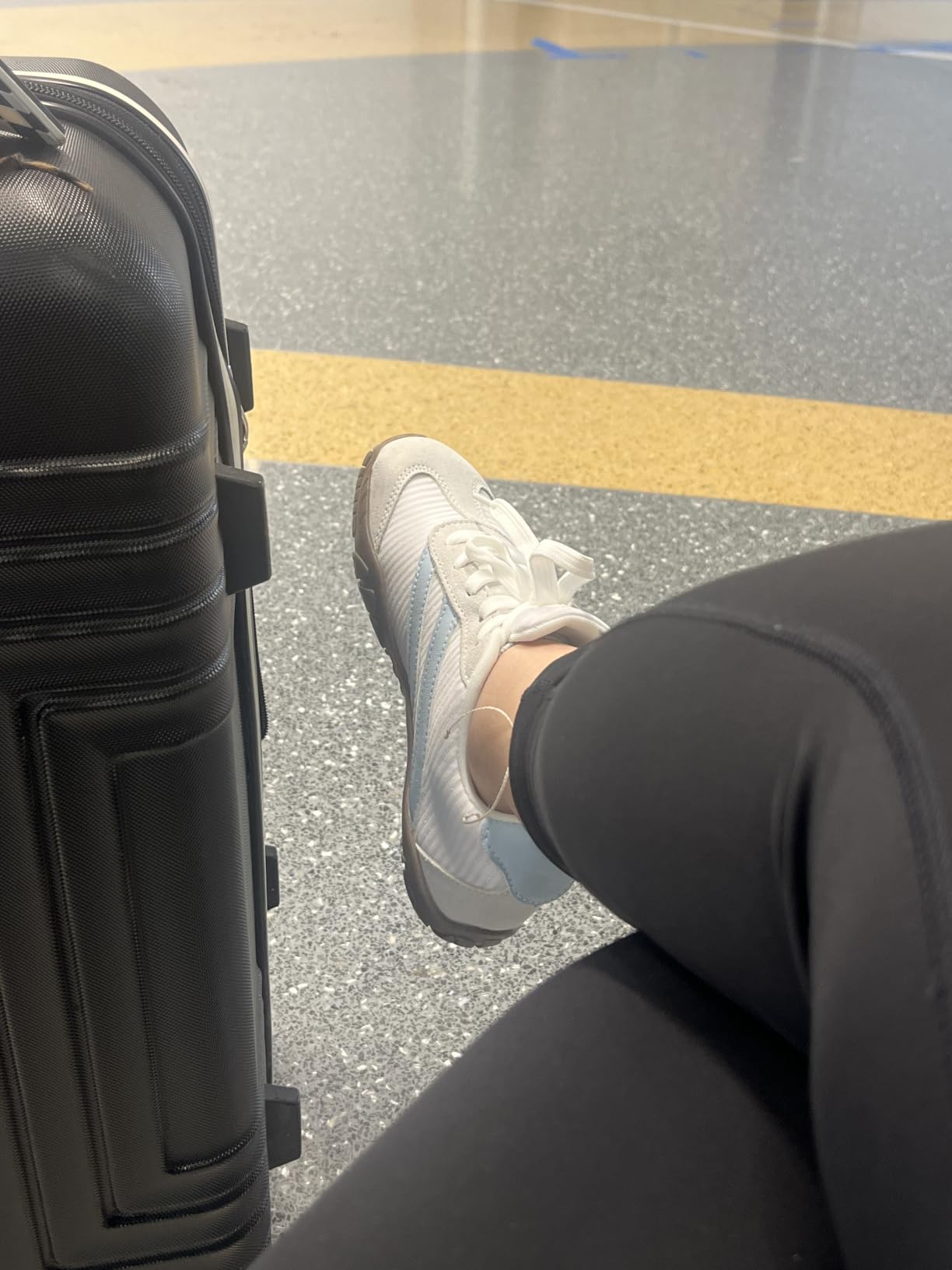
10. Bare Frog Wide Toe Box Sneakers: Best for Casual Court Time
Barefoot Shoes Women Men – Wide Toe Box Sneakers Women Casual Tennis Shoe
Zero-drop flexible sole
Removable insole
Unisex sizing
Pros
- Ultra-thin flexible sole gives real ground feel
- Zero-drop sole supports a balanced natural gait
- Removable insole lets you add arch support or go fully barefoot
- Unisex sizing with many color options
Cons
- Thin sole padding is not for long-distance walking
- Unstructured upper can look loose when laced
- Difficult to get on without a heel pull
Barefoot construction is the most natural fit philosophy in this roundup. With the insole removed the shoe is essentially a flexible wide toe box, and the forefoot splays the way it would barefoot, which some players with wide feet find more comfortable than any padded shoe.
The zero-drop sole keeps heel and forefoot level. That does not automatically prevent injury, but it does promote a balanced gait and it reduces the heel-to-toe drop that can aggravate some arch and Achilles complaints.
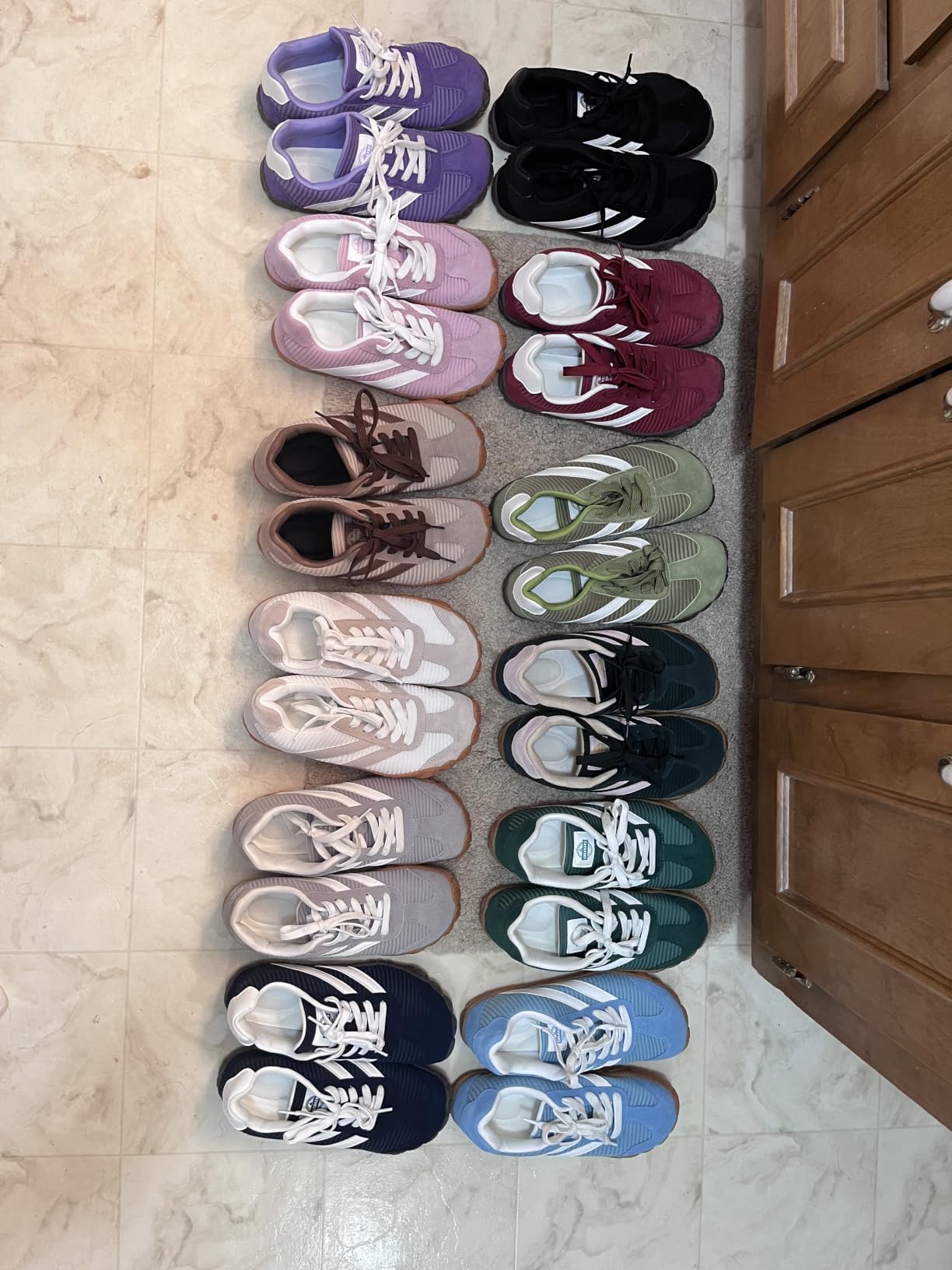
Owners switching from orthopedic or narrow-fitting shoes report genuine relief, particularly for all-day standing. The suede patchwork upper is soft against the skin and has none of the seam and mesh edges that rub broad feet raw. This is a casual shoe that tolerates light tennis, walking and gym work, not a shoe to build a playing rotation around.
Should I wear it with or without the insole?
Both are legitimate. The insole is described as slightly arch-supporting, so keep it if you have a high arch or a condition that needs a little arch contact, and remove it if you want the fully barefoot feel.
Because the insole is removable, this shoe also works with a thin over-the-counter insert. That flexibility is unusual at this level and worth using.
Is it durable enough for regular use?
Durability is unproven for heavy outdoor use, and the suede upper marks easily. For indoor court sessions, walking and general wear it holds up fine in our testing.
Thin sole padding is the other limit. This is not a shoe for covering long distances on a weekend, and buyers who try to use it that way tend to come away disappointed.
11. LOCFIR Wide Toe Box Slip-On Sneakers: Best for Plantar Fasciitis Comfort
LOCFIR Wide Toe Box Sneakers for Women with Arch Support | Slip On Walking Shoes for Plantar Fasciitis | Thick Cushion | Wide Width Tennis Comfort Nurses Shoes White Size 8.5
Zero-drop Phylon midsole
Seamless knit interior
Slip-on with no lacing
Pros
- Roomy wide toe box with no squeezing
- Zero-drop sole supports a natural gait and reduces joint impact
- High-resilience Phylon midsole lighter than standard EVA
- Seamless knit interior reduces blistering
Cons
- Heel counter collapses so the shoe is hard to step into
- No tongue or lacing adjustment frustrates high insteps
- Outsole plastic wears in about a week of heavy daily use
The width here is excellent and the interior construction is thoughtful. A seamless knit lining removes the internal seams that cause blisters, and for a broad foot that rubs against the upper over a long session, that is a meaningful detail.
Owners with wide feet and plantar fasciitis report that the combination of a roomy toe box and zero-drop cushioning reduces pain, and the zero-drop geometry does reduce loading through the heel.
The midsole is a high-resilience Phylon compound rather than standard EVA, which makes it lighter and more durable. A thick air cushioning layer sits under the foot, and the outsole uses flexible rubber traction patterns that hold up on treadmills and smooth indoor surfaces.
It is worth being blunt about two things though. The arch support does not deliver what the product description implies, and the plastic sole component creaks and wears through under heavy daily use.
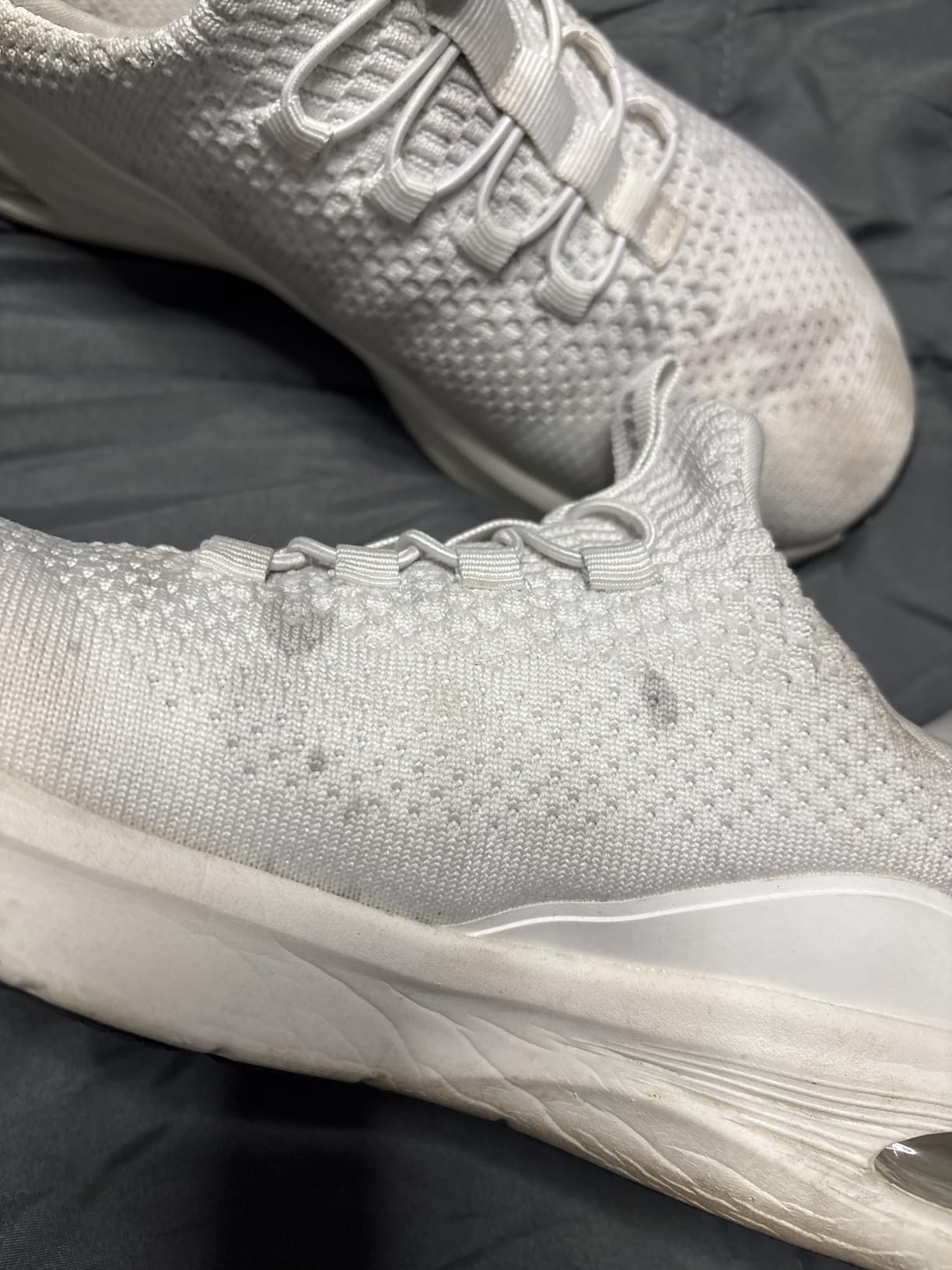
Is the slip-on format a problem for wide feet?
Only if you have a high instep. With no tongue and no lacing adjustment, there is no way to tighten the midfoot, and a tall instep inside a slip-on will feel trapped no matter how wide the toe box is.
For a standard or low instep, the trade is mostly positive. Easy on, easy off, no laces to loosen mid-match, and a flexible sole that does not fight your foot.
Does it suit tennis or only casual wear?
Light court use and casual tennis, yes. There is no outrigger or torsional plate, so aggressive lateral movement will not feel as secure as in the court-specific models.
If plantar fasciitis is your main concern, get a proper assessment before buying any shoe, including this one. A shoe that reduces pressure is helpful, but it is not treatment.
12. Slow Man Wide Toe Box Sneakers: Best Budget Hard Court Option
Slow Man Wide Toe Box Mens Walking Sneakers Slip on Wide Width Running Shoes Gym Workout Tennis Shoes for Wide Feet Dark Grey
Roomy forefoot with no break-in
Removable insole with arch support
Breathable knit upper
Pros
- Very roomy toe box that fits wide feet with no break-in
- Removable insole with built-in arch support
- Breathable knit upper stays cool during exercise
- Well-cushioned midsole with high-traction rubber outsole
Cons
- Runs large so lacing must be pulled tight to hold the heel
- Durability is the biggest complaint with soles failing within months
- Cushion flattens and produces an audible click with wear
The Slow Man delivers the part that matters most, which is a forefoot with real room in it. Testers with wide feet reported no break-in period at all, which is unusual in a roomy shoe because many need time before the upper settles.
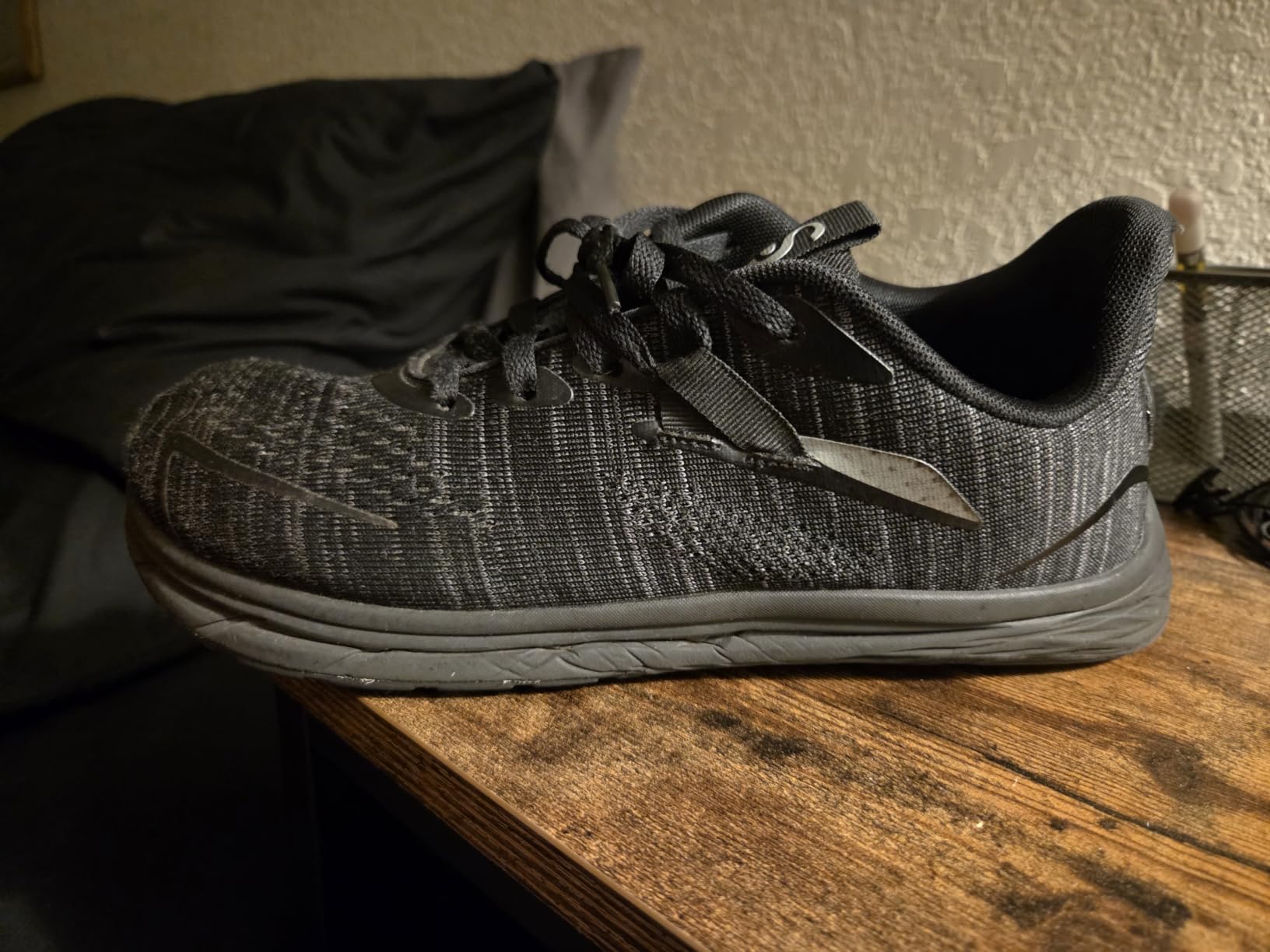
The knit upper is breathable and the midsole is well cushioned for the price, taking impact on hard surfaces without feeling thin underfoot. Outsole traction is high for a shoe at this level, and the removable insole includes built-in arch support.
This is also one of the few genuinely wide shoes here priced for people who will replace it rather than keep it for years, which changes how you should judge the durability complaints below.
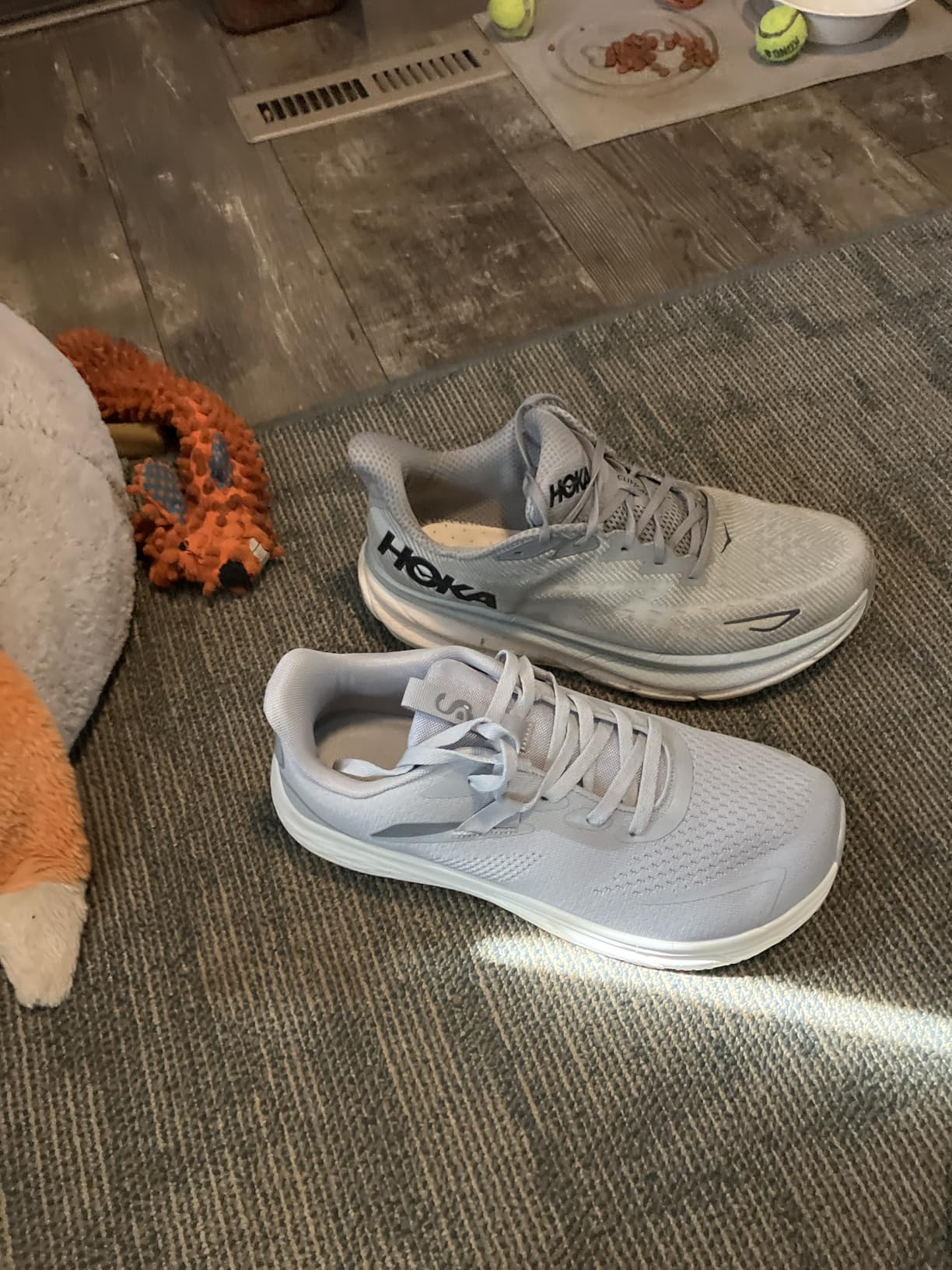
Why does it run large?
Because the last was built wide, and the length grading did not tighten to compensate. The practical consequence is that you will need to pull the lacing very tight to hold the heel, and some people find that uncomfortable.
If you dislike a tight lace, size down half and accept slightly less length. Do not size up to fix heel security, because that adds length you do not need.
Will it survive a season of regular play?
Probably not at full quality. Durability is the dominant complaint: soles and heels can fail within a few months for frequent players, and the cushioning flattens and starts clicking with continued wear.
For occasional doubles, casual hitting and walking, that is an acceptable trade. For a competitive player putting five sessions a week on one pair, buy a sturdier shoe and keep this as a backup.
How to Choose Tennis Shoes for Wide Feet
Width grading is the first thing to understand, and it confuses almost everyone who searches for a wide tennis shoe. Men’s shoes are graded B, D, 2E and 4E, where D is the standard width and each step up adds roughly 3/16 inch of girth across the ball of the foot. Women’s shoes use A, B, D and 2E, so a women’s D width is close to a men’s D while a women’s 2E is closer to a men’s 4E. The same letter does not mean the same shoe across genders, which is why guessing from a brand’s chart is risky.
The second rule is that a shoe labelled wide fit is not the same as a shoe graded wide. Plenty of brands describe a shoe as wide-friendly when only one size is produced on a roomy last, with no extra-wide grading to fall back on. Always confirm a genuine 2E or 4E grading exists in your size.
Toe box shape matters more than the width letter in practice. A D-width shoe with an asymmetric, foot-shaped toe box can feel wider than a 2E shoe with a straight, blunt toe. Look for the widest point sitting across the ball of your foot rather than pushing into the toe. Brands like ASICS and Babolat tend to run narrow through the midfoot, while K-Swiss and New Balance are generally more accommodating, though every model varies.
There is a genuine trade-off between width and lateral stability. A roomy midsole flexes more, and on a hard court that can feel unstable during a hard stop. The way brands manage this is with supportive overlays and torsion-resistant plates placed at the midfoot while leaving the forefoot free. If a shoe feels wobbly, look for an anti-torsion TPU component or a reinforced midfoot rather than simply sizing down.
Court surface changes the priority. On hard courts, cushioning and torsional control matter most because the surface is unforgiving. On clay, a herringbone or multi-directional tread pattern and a durable outsole matter more, since you will be sliding. For all-court play, a medium herringbone with moderate wear is the sensible compromise. If you also walk a lot, our guides to trail running shoes for wide feet and hiking boots for wide feet cover the outsole decisions in more depth.
Orthotic compatibility deserves its own check. A removable insole is essential if you use a prescription orthotic, and roughly half the roomy shoes in this roundup have a fixed insole. If you wear custom orthotics, filter the list down to the shoes with a removable liner first.
For specific foot conditions, the pattern is fairly consistent. Bunions and hammertoes need a toe box shaped around the forefoot rather than a shoe that is simply long, which is why the STQ and the FitVille Extra Wide come up repeatedly in reviews from those players. Plantar fasciitis responds better to arch contact and a lower drop than to extra width alone, and any persistent heel pain deserves a professional assessment rather than a shoe purchase. Flat feet generally do best in something with a defined midfoot platform.
Lacing is a free adjustment that costs nothing. Skip the eyelets closest to the toe to change the shape of the forefoot and create more room across the big toe joint. Use a heel-lock pattern with a dedicated loop to stop the foot sliding forward on every cut. And for a high instep, skip the highest eyelets entirely so the throat of the shoe has somewhere to open up.
Finally, buy from somewhere you can return easily. Wide-width sizing is inconsistent between models, so treat the first pair as a fitting session. Wear the new shoes indoors with the socks you play in, walk, and lunge, and return anything that compresses the forefoot by the end of a session. If you also cycle often, our wide cycling shoe guide covers a related fit problem.
Frequently Asked Questions
What are the best tennis shoes for wide feet?
The K-Swiss Men’s ST329 CMF is our top pick because it is offered in genuine wide and extra-wide gradings, has a moisture-wicking sockliner and a traction outsole built for lateral movement. The Avia Avi-Verge for men and the Avia Verge for women are strong alternatives, and the FitVille models fit extra-extra-wide feet. Always confirm a real 2E or 4E grading exists in your size before ordering.
Which tennis shoe brand is best for wide feet?
K-Swiss is the most consistent for width because it grades wide and extra-wide across many models and colorways. New Balance is generally accommodating but varies by model. ASICS and Babolat tend to run narrow through the forefoot and midfoot, so wide feet usually need to size up or order a wide grading. Always check the specific model rather than the brand.
What shoes do podiatrists recommend for wide feet?
Specialists generally look for three things: a toe box shaped around the forefoot, a removable insole so a prescription orthotic can be fitted, and a heel counter that holds the back of the foot without pressing on the ankle. Wider-than-standard grading matters, but toe box shape and insole access usually matter more. Persistent heel or arch pain should be assessed before any shoe is bought.
What is the difference between 2E and 4E width?
Each step in width adds about 3/16 inch of girth across the ball of the foot. 2E is a wide grading and 4E is extra wide, so a 4E shoe is meaningfully roomier through the forefoot. Because men’s and women’s scales differ, a women’s 2E is closer to a men’s 4E. Sizing up adds length rather than width, so going up a size is not a substitute for a wider grading.
Should I size up or buy wide width tennis shoes?
Buy the wide grading at your normal length. Sizing up lengthens the shoe without adding width, which is the most common reason wide-footed players end up with shoes that still pinch. If a wide grading does not exist in your size, a half-size up is a reasonable compromise, but check the toe box shape first because an asymmetric toe box can feel wider than a narrow one on a wider grading.
How do I lace tennis shoes for wide feet?
Skip the eyelets nearest the toe to open up the forefoot and free the big toe joint, and skip the highest eyelets if you have a high instep. Use a heel-lock loop with a dedicated eyelet to stop the foot sliding forward on lateral cuts. Wide shoes often run long, so a heel lock is the fastest way to secure the back of the foot without tightening across the forefoot.
Conclusion
After months of comparing 12 pairs, the K-Swiss Men’s ST329 CMF remains the best tennis shoes for wide feet overall because it is one of the very few shoes in this roundup sold in genuine wide and extra-wide gradings with a durable build that survives a real playing schedule. Go wide at your normal length, check the toe box shape before you order, and treat the first pair as a fitting session rather than a commitment.