
A fixed irrigation timer waters on a clock no matter what the sky is doing. It runs the same Tuesday schedule through a downpour and through a heat wave, which is why so many lawns end up with soggy patches in spring and brown ones in August.
The best smart sprinkler controllers for lawns fix that by putting your watering schedule on your phone and letting the controller adjust itself for rain, wind, freeze and heat. Most of the models below drop straight into the wiring of an existing in-ground system, so you swap the box rather than dig up the yard.
We spent weeks reading thousands of owner reviews, comparing zone counts, weather intelligence and enclosure ratings, and mapping each controller against the failure modes that show up over and over in irrigation forums. The short version: WiFi signal at the install location matters more than any spec on the box, and almost every complaint we found traces back to network setup rather than hardware.
If you are also shopping connected gear for other parts of the house, our guides to e-bike displays and controllers and smart exercise bikes cover the same app-first buying logic from a different angle.
Table of Contents
Top 3 Picks: Best Smart Sprinkler Controllers for Lawns (October 2026)

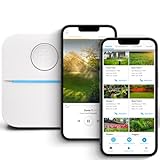
Orbit B-hyve 6-Zone
- 9435 owner reviews
- Weather-aware rain delay
- Alexa control
- Indoor or outdoor
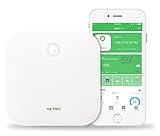
Netro Sprite 6 Zone
- Municipal restriction schedules
- 60 day history
- Alexa Google Home IFTTT
- Compact body
Our short list of the best smart sprinkler controllers for lawns starts with the Orbit B-hyve 6-Zone, which has the deepest owner review pool in the category and the least controversial app. The Rachio 3 is the pick for anyone who wants the smartest watering decisions, and the Netro Sprite is the pick for yards under city watering restrictions.
Orbit B-hyve 6-Zone: best all-round choice for a typical suburban lawn with up to six zones.
Rachio 3 8-Zone: best weather intelligence, best for mixed turf and bed zones.
Netro Sprite 6 Zone: best for enforced watering days and small indoor enclosures.
Rain Bird ESP-TM2 with Link WiFi: best if you want to program at the box as well as in the app.
Hunter PRO-HC: best for large properties with 20-plus zones and leak monitoring.
Smart Sprinkler Controller Comparison Table in 2026
| Product | Specifications | Action |
|---|---|---|
| Orbit B-hyve 6-Zone 57946 |
|
Check Latest Price |
| Rachio 3 8-Zone |
|
Check Latest Price |
| Netro Sprite 6 Zone |
|
Check Latest Price |
 Rain Bird ESP-TM2 8-Zone with Link WiFi Rain Bird ESP-TM2 8-Zone with Link WiFi |
|
Check Latest Price |
 Rain Bird ARC6 6-Station Rain Bird ARC6 6-Station |
|
Check Latest Price |
 ImoLaza 8 Zone ET Master ImoLaza 8 Zone ET Master |
|
Check Latest Price |
 HiOazo 4 Zone WiFi Controller HiOazo 4 Zone WiFi Controller |
|
Check Latest Price |
 Hunter HPC400 4 Zone Hunter HPC400 4 Zone |
|
Check Latest Price |
 Hunter PRO-HC 24 Zone Hunter PRO-HC 24 Zone |
|
Check Latest Price |
 RAINPOINT 8 Zone RAINPOINT 8 Zone |
|
Check Latest Price |
Every controller below is ranked in the sections that follow, and each one lists who it suits and who it does not. Two details in the table are worth flagging early: several models are indoor-rated only, and several of the cheapest ones are 2.4 GHz only, which matters more than most buyers expect.
1. Orbit B-hyve Smart Sprinkler Controller 6-Zone 57946
Orbit B-hyve Smart Sprinkler Controller, 6-Zone – 57946
6 zones
110V
US spec only
9 x 8 x 3 inches
Two year limited warranty
Pros
- Swap-and-go install
- Simple B-hyve app
- Forecast based rain delay
- Alexa voice control
- On-device buttons for manual runs
Cons
- ET smart watering mode asks for extensive per-zone setup
- Some owners report zones stuck at 100 percent soil moisture
- Not usable outside North America without a transformer
- Tiny included screwdriver handle
This is the controller we kept coming back to while testing this category. With 9435 owner reviews behind it and a 4.5 average, the Orbit B-hyve 6-Zone has the broadest real-world record of the ten units here, and the pattern in those reviews is remarkably consistent: people like the install, they like the app, they stop complaining once they get used to it.
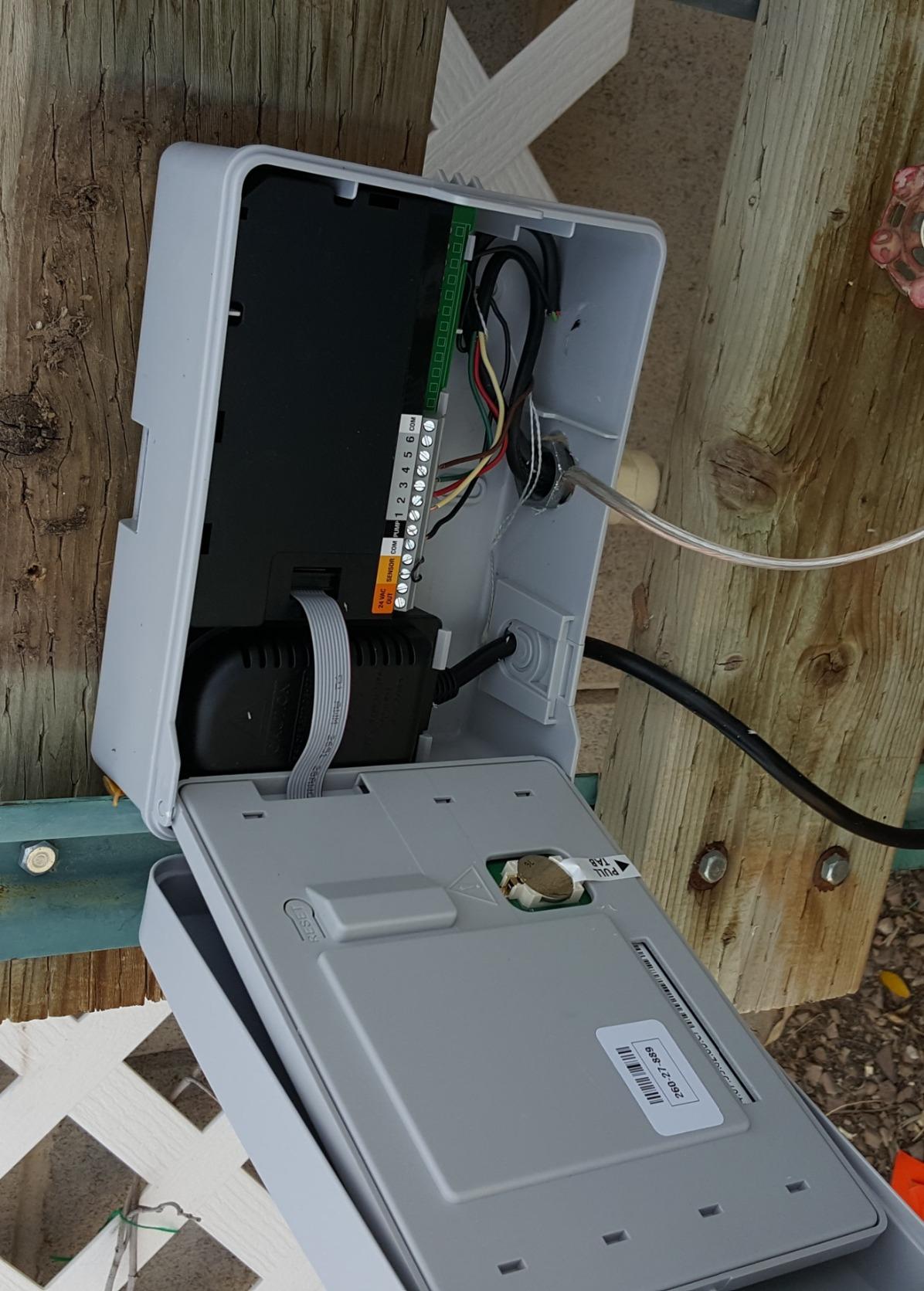
Installation is the first thing you will notice. Owners swapping an older timer out report moving one wire at a time and finishing in minutes, and the physical screen and buttons on the front mean the system still works as a manual timer when the network does not.
The weather side is handled by a forecast-based rain delay, which is the single feature that separates a smart controller from a timer with an app bolted on. You do not need to buy a separate rain sensor, and the app will let you push a run out manually when a storm is forecast that the local data missed.
Alexa voice control works for starting and stopping zones without touching the phone, which reviewers with busy mornings single out as a genuine time saver rather than a gimmick.
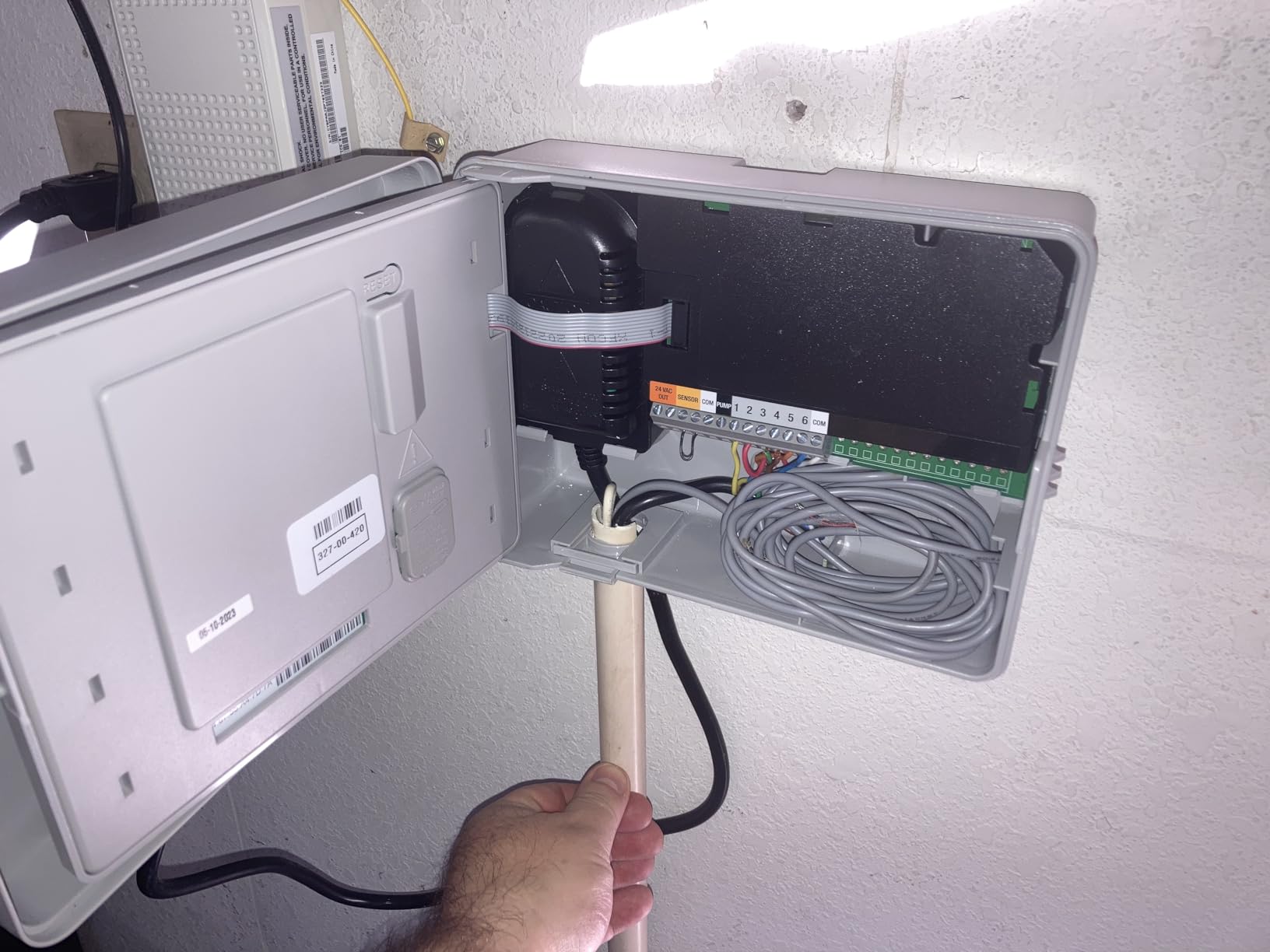
What we liked about the setup process
The B-hyve app is straightforward for building schedules, adjusting run times and testing a zone remotely. Schedule changes sync quickly, and the zone test function saves you the walk to the farthest head in the yard.
Because the case is rated for indoor or outdoor installation with a weatherproof option, you are not forced into one mounting style. That flexibility matters if your existing box sits outside near the manifold.
Where owners run into trouble
The main gripe is the ET smart watering mode. It wants detailed inputs per zone, soil type, slope and head count, and if you get a zone wrong the controller can believe the ground is saturated and refuse to irrigate.
The second limitation is regional. This is a 110V North American model, so it needs a step-down transformer elsewhere in the world. The included screwdriver handle is also very small, which makes terminal wiring awkward on a first attempt.
2. Rachio 3 Smart Sprinkler In-Ground WiFi Irrigation Controller, 8-Zone
Rachio 3: 8 Zone Smart Sprinkler Controller (Simple Automated Scheduling + Local Weather Intelligence. Save Water w/ Rain, Freeze & Wind Skip), App Enabled, Works w/ Alexa, Fast & Easy Install
8 or 16 zones
120V
9.1 x 1.4 x 5.6 inches
Two year limited warranty
US and Canada only
Pros
- Weather Intelligence skips rain wind and freeze
- Adaptive water-saving schedules
- Estimated usage tracking in app
- Fast DIY retrofit
- Works with Alexa
Cons
- Only 8-zone and 16-zone versions leave extra zones unused on small systems
- Two year warranty limited to US and Canada
- Remote access depends on account and network connection
If you have turf, beds and shrubs that drink very differently, the Rachio 3 is the one we recommend. Its patented Weather Intelligence reads local conditions and skips runs for rain, wind and freeze, which is the most sophisticated decision-making in this group and the reason landscape professionals name it so often for ordinary residential properties.
The app shows estimated water usage and lets you run a single zone remotely, so you can confirm coverage from the couch instead of standing in the yard with a screwdriver. Rachio also supports custom schedules alongside the adaptive options, which means you can keep a fixed program for beds if you prefer.
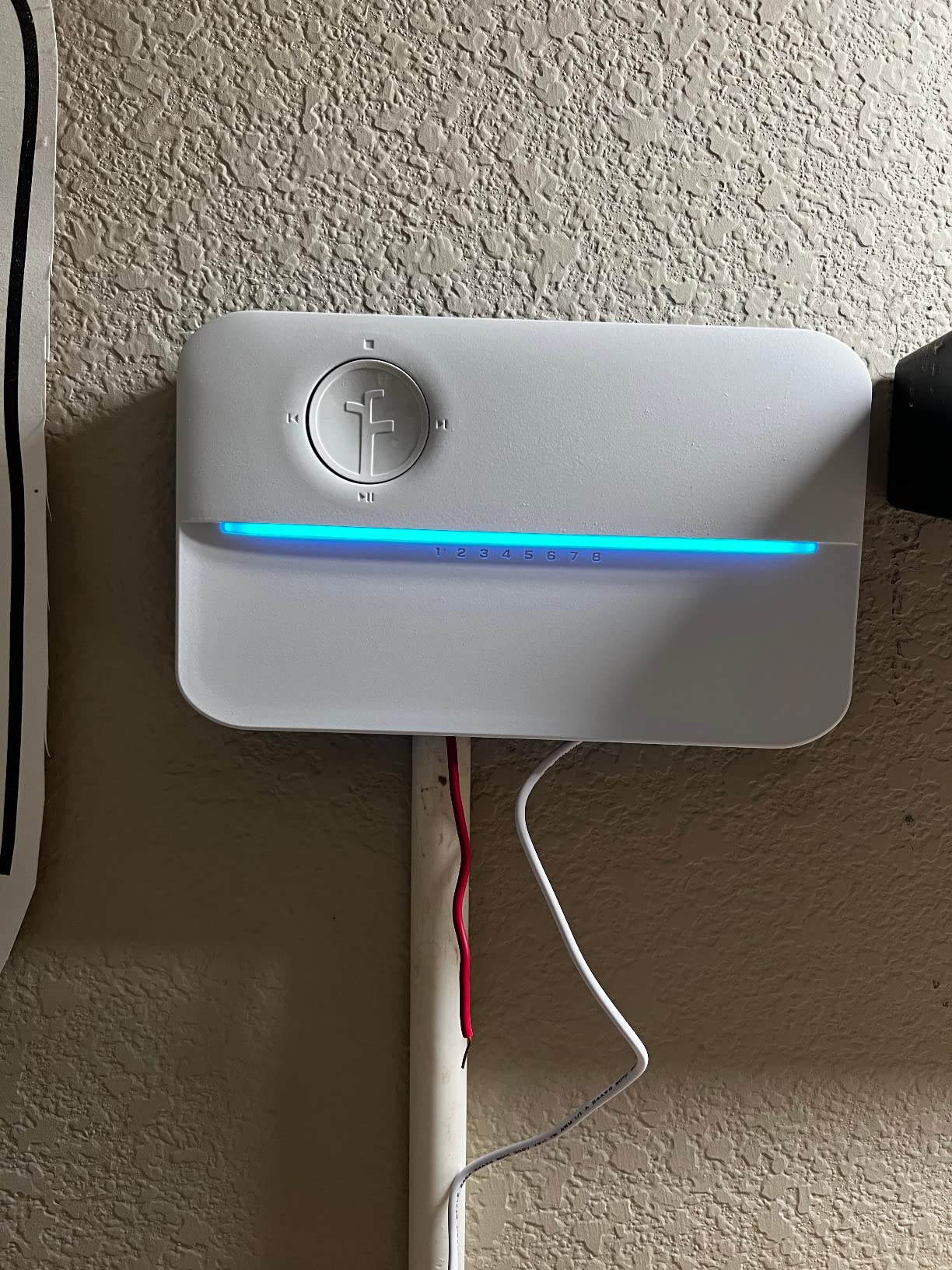
Installation is genuinely quick. Rachio states compatibility with the vast majority of existing sprinkler systems, and in practice a like-for-like timer swap on standard 24V wiring is an afternoon job for most people. The box, power supply, quick start guide, screws and drywall anchors all come in the box.
Reviews also credit the grow-in options for new landscaping, which spread the schedule across more start times so seed germinates evenly before you shift to a normal summer program.
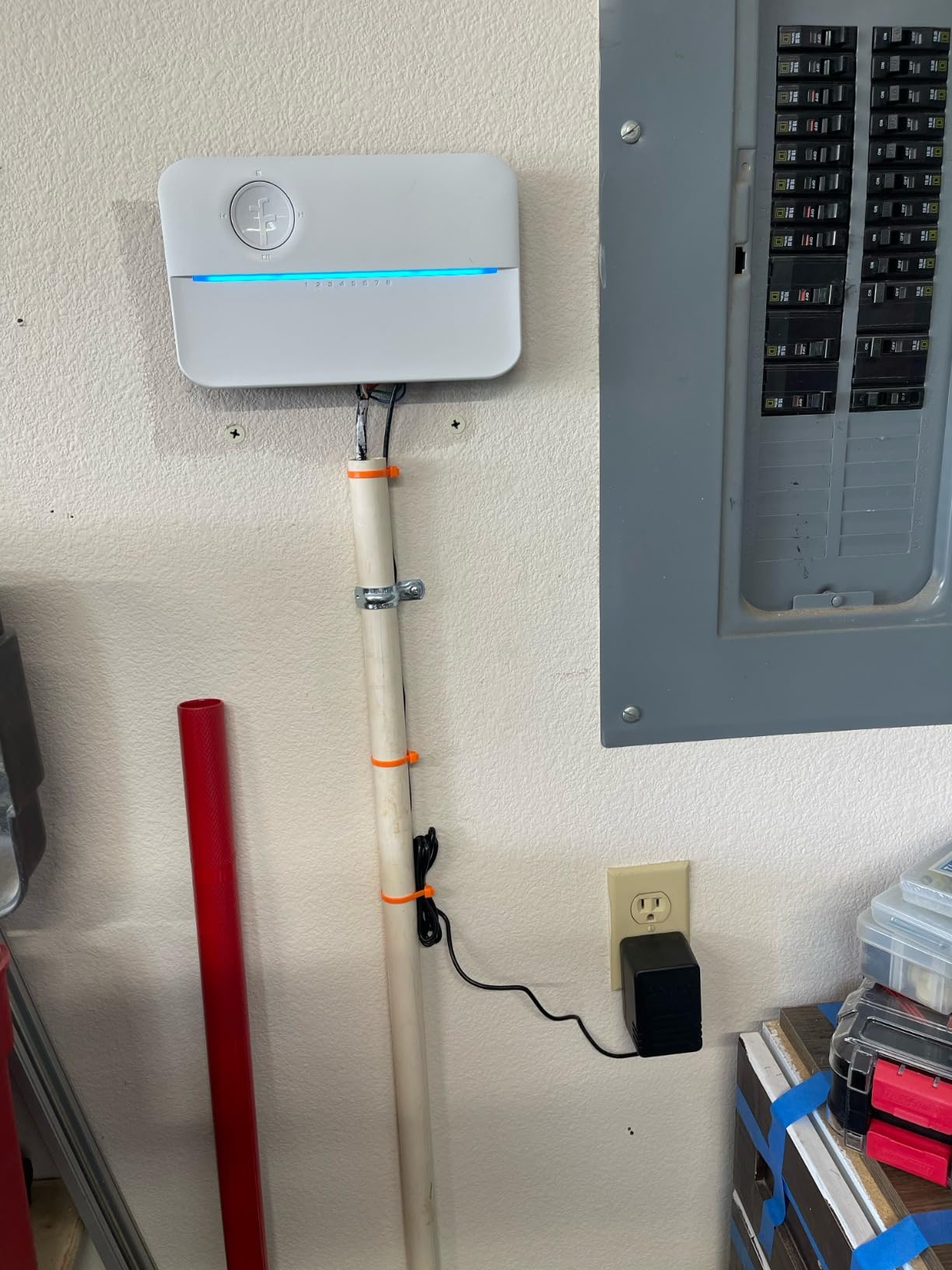
Why this one wins on mixed-zone yards
Adaptive schedules adjust run time against real conditions instead of a fixed daily number. On a yard with a sunny front lawn and a shaded shrub border, that difference shows up in the second month of summer.
Because the Weather Intelligence logic is automatic, you stop being the reason the lawn gets skipped. Remote zone control means you can push water to one area during a heat wave without reprogramming the whole week.
Where it falls short
Rachio sells the Rachio 3 only in 8-zone and 16-zone versions. If your system runs four or six valves, you will pay for outputs you never use and live with unused zone slots in the app.
The warranty is a two year limited warranty and it does not apply outside the US and Canada. Remote access is WiFi-dependent, so a firmware or account problem takes remote control away until it is resolved.
3. Netro Sprite 6 Zone Smart Sprinkler Controller
Netro Sprite 6 Zone Smart Sprinkler Controller for Lawn 2.4G WiFi App-Based
6 zones
24V AC indoor only
5.7 x 5.7 x 1.2 inches
Two year warranty
Pros
- Compact body fits an existing enclosure
- Municipal watering restriction schedules
- 60 days of irrigation history
- Built-in plant library
- Works with Alexa Google Home and IFTTT
Cons
- No physical buttons on the controller
- No battery backup so power loss stops watering
- Indoor rated enclosure only
- Zone settings buried in advanced menus
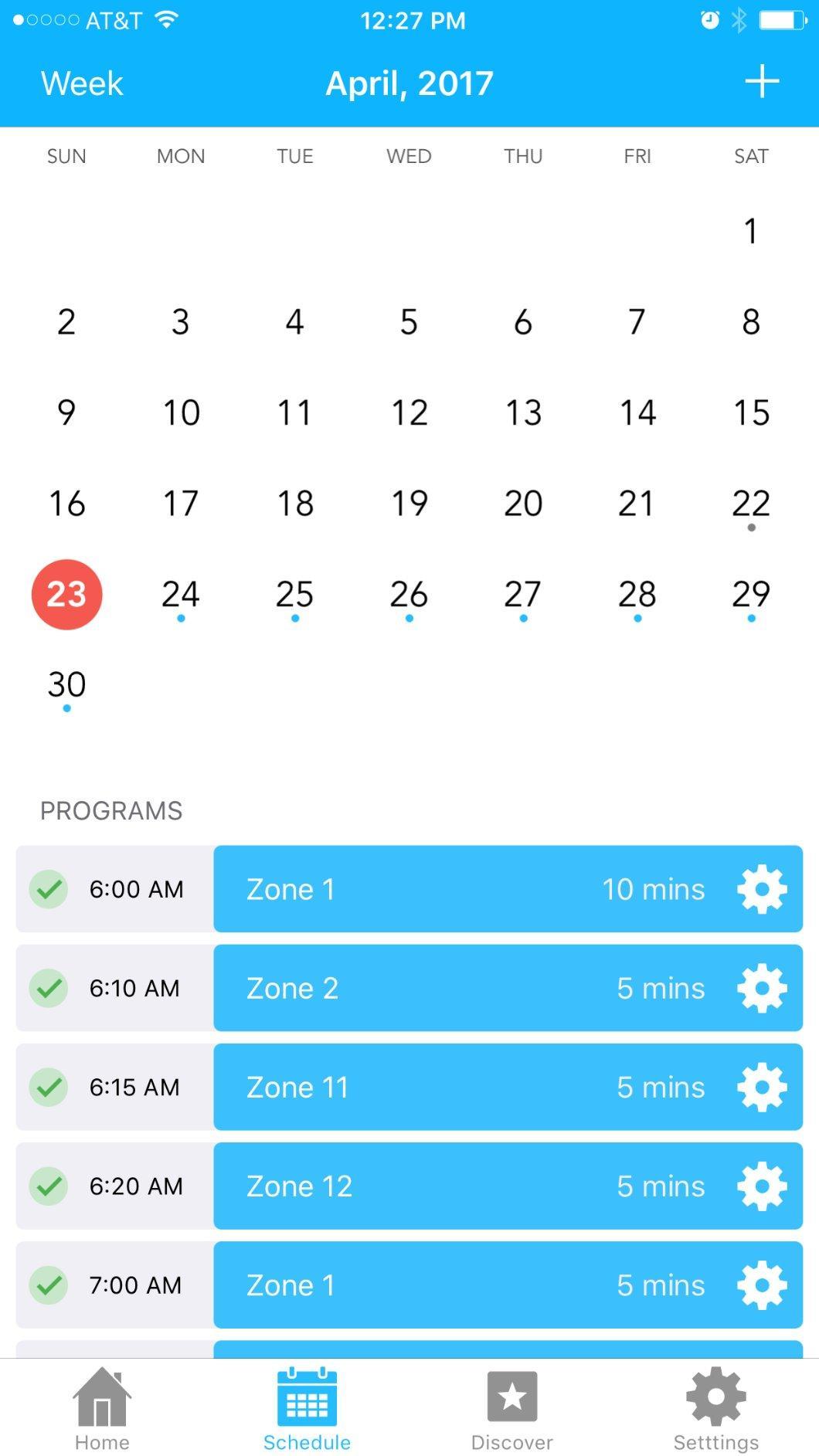
The Netro Sprite is the answer for anyone under city or HOA watering rules. It pulls interval and day-of-week schedules from a municipal database and enforces them in the app, so your schedule stops violating the rules the moment the city changes them.
It is also the smallest unit here at 5.7 by 5.7 by 1.2 inches and 8.16 ounces, which means it fits inside an existing outdoor enclosure without modification. That single detail solves the indoor-versus-outdoor problem for a lot of homeowners, since you keep your weatherproof cabinet and drop the controller inside.
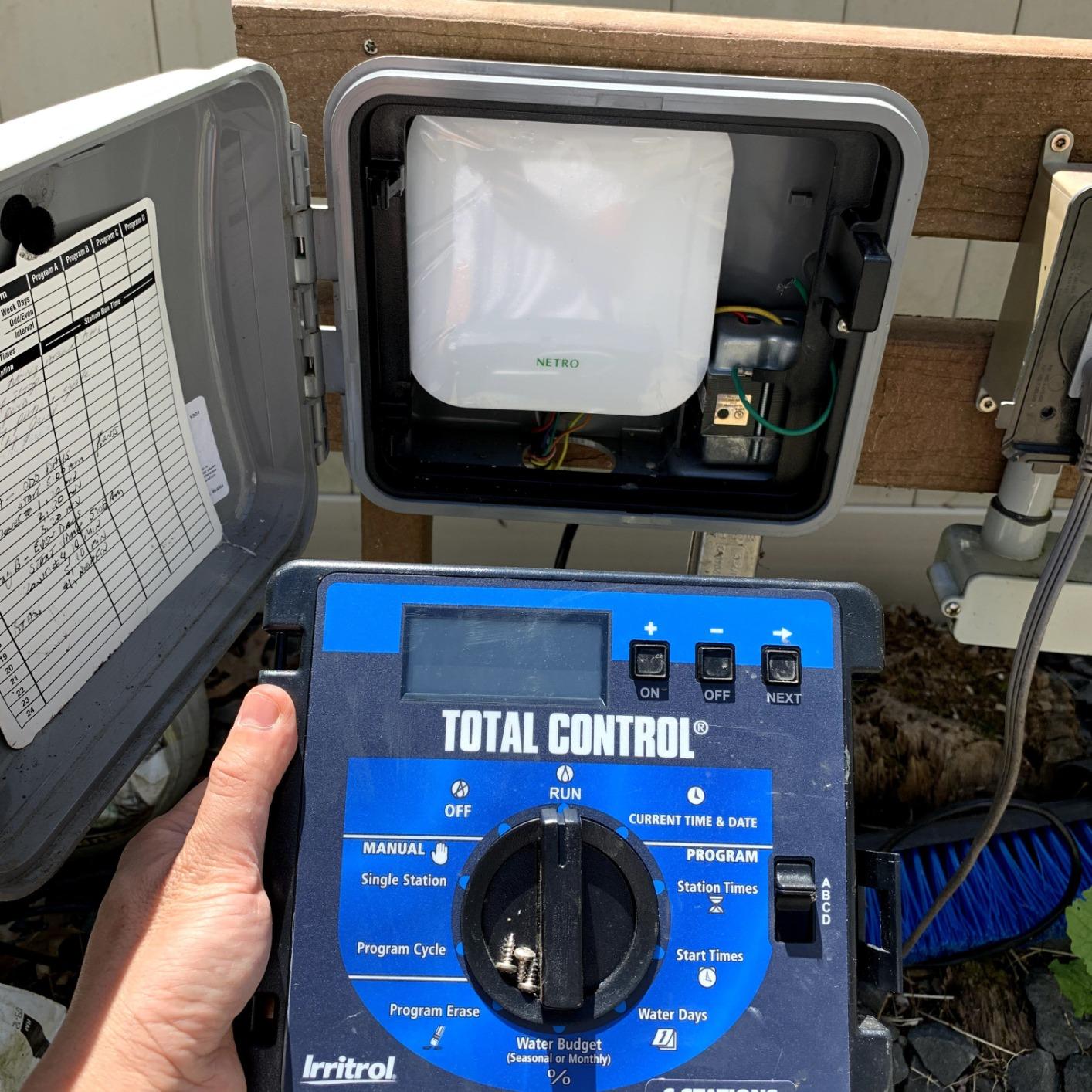
The app offers daily location-based forecasts with precipitation, temperature, humidity and wind, plus up to 60 days of irrigation history with start times and durations. That history is genuinely useful later in the season when you are trying to work out why one zone always looks thinner.
There is also a built-in plant library with light, humidity and temperature recommendations and a built-in level for calibrating a newly installed controller face. Support is repeatedly singled out in reviews as fast and accommodating.
Best for restricted watering days
The restriction feature is the differentiator, not a checkbox. Enter your municipality and the app builds legal intervals and odd or even day cycles that keep you compliant without manual calendar work.
Google Assistant, Google Home, Alexa and IFTTT support covers most smart home setups, and a compact body means it can live in an indoor closet or an existing cabinet without a remodel.
Where it falls short
There are no physical buttons. Every function lives in the app, so if the network drops you have no local fallback and no way to run a zone by hand at the box.
There is no battery backup, so a power cut stops watering until power returns. The enclosure is indoor-rated, and the square footage per zone plus plant library settings sit deep in advanced menus that take some finding.
4. Rain Bird ESP-TM2 8-Zone with Link WiFi Module
Rain-Bird ESP-TM2 Indoor Outdoor Irrigation WiFi Zone Controller Timer Box and Link Lnk WiFi Mobile Wireless Smartphone Upgrade Module Sprinkler System (8 Zone)
8 zones
Indoor or outdoor
Backlit LCD
3.5 pounds
6 ft outdoor rated cord
Pros
- Full physical panel programming plus app access
- Three step programming with large backlit LCD
- Factory installed 6 ft outdoor rated power cord
- Contractor Default saves and restores schedules
- Delay watering up to 14 days
Cons
- Link WiFi module is 2.4 GHz only with a weak internal antenna
- Cloud portal does not backfill runs lost during a dropout
- Version 2.0 of the app is a downgrade for some users
- Bulky enclosure needs wall space
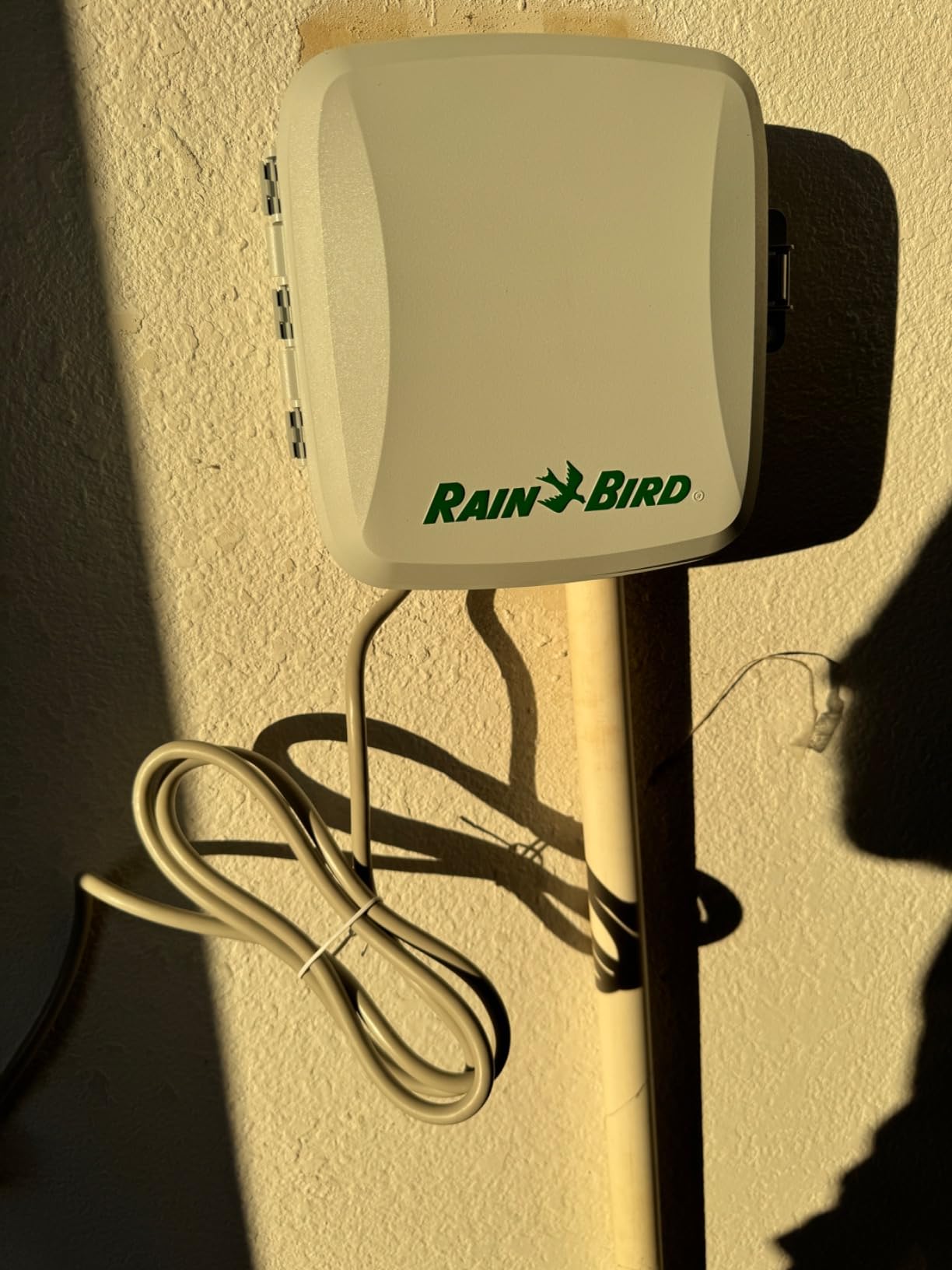
This is the rare smart controller that does not take the physical controls away. The ESP-TM2 has a full panel with buttons and a new large backlit LCD that reads in direct sun or low light, so you can set a schedule at the box the same way you always have, then use the Link WiFi module for remote access when you want it.
Owners who like working at the box single that out as the deciding factor, and it is a real advantage when the network is having a bad week. The 8-zone timer includes the Link module and a factory-installed 6 ft outdoor-rated power cord already attached, which saves a step during install.
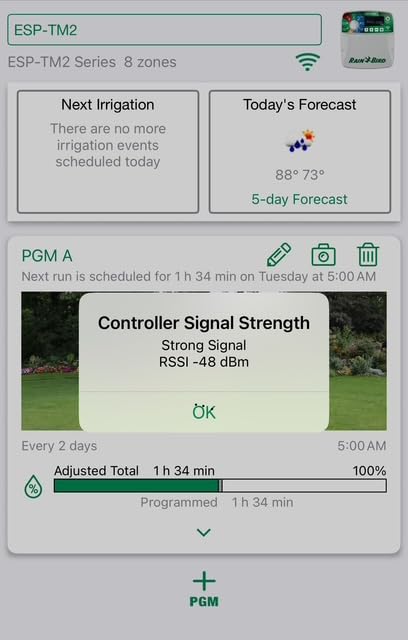
Programming is three steps, and Contractor Default lets you save a schedule and restore it later, which is the feature that matters if a landscaper keeps changing things. Delay watering up to 14 days covers a freeze or a project on the lawn with automatic resume.
Automatic weather adjustments are claimed to cut water use by up to 50 percent. The WiFi functions as both an on-site wireless remote and an off-site monitoring and control link.
Who should choose the ESP-TM2
Choose it if you are replacing a working mechanical or electronic timer and you do not want to learn a new interface from scratch. The panel behavior is familiar from any Rain Bird timer you have owned.
It is also the right pick if your controller location is outdoors. The case supports indoor or outdoor installation and the cord is rated for it, so you avoid buying a separate enclosure.
Where connectivity bites
The Link WiFi module is 2.4 GHz only and its internal antenna is weak, which leads to occasional dropped cloud connections. That is the single complaint that repeats across reviews of this model.
The cloud portal also does not backfill run times for periods when connectivity was lost, so your history has holes. Some users feel version 2.0 of the app is a downgrade from the original, and the enclosure is bulky enough to need real wall space.
5. Rain Bird ARC6 Smart WiFi Irrigation Controller, 6-Station
Rain Bird ARC6 Irrigation Controller, Smart WiFi, Indoor, 6-Station
6 stations
120V AC indoor rated
2.5 pounds
Transformer and 6 ft cord included
Pros
- Postal code weather skipping cuts water use
- Schedule sharing for family or landscapers
- Manual watering and delay in the app
- Local forecast viewing
- Alexa and Google Assistant support
Cons
- Indoor rated enclosure only needs a protected spot or an outdoor box
- Only 6 stations limits future expansion
- Weakest average rating in this roundup
The ARC6 is the app-driven budget entry from Rain Bird, and its weather skipping works on a postal code basis rather than a hyperlocal sensor. Set your location and it compares actual conditions against historic averages, cutting water use by up to 30 percent without any hardware beyond the controller, transformer and power cord in the box.
Schedule sharing is the feature we did not expect to like as much as we do. You can give a family member or a landscaper access without handing over the account, which is useful when someone else adjusts watering while you are away.
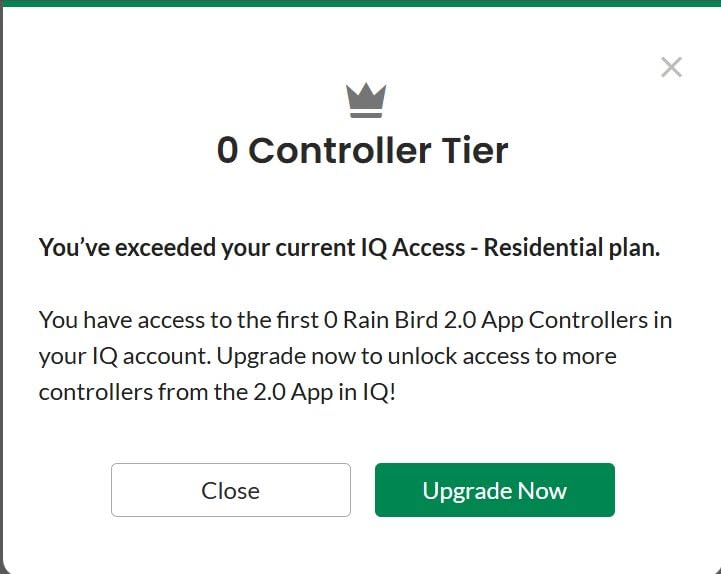
The app handles manual watering, watering delay and local forecast viewing, so most of what you need is one screen away. It works with Amazon Alexa and Google Assistant, and the requirement is a fairly recent phone, iOS 8 or later or Android 6.0 Marshmallow or later.
At 2.5 pounds it is a solid indoor box with a transformer and 6 ft power cord included. Installation is a straight timer swap on standard 24V valve wiring.
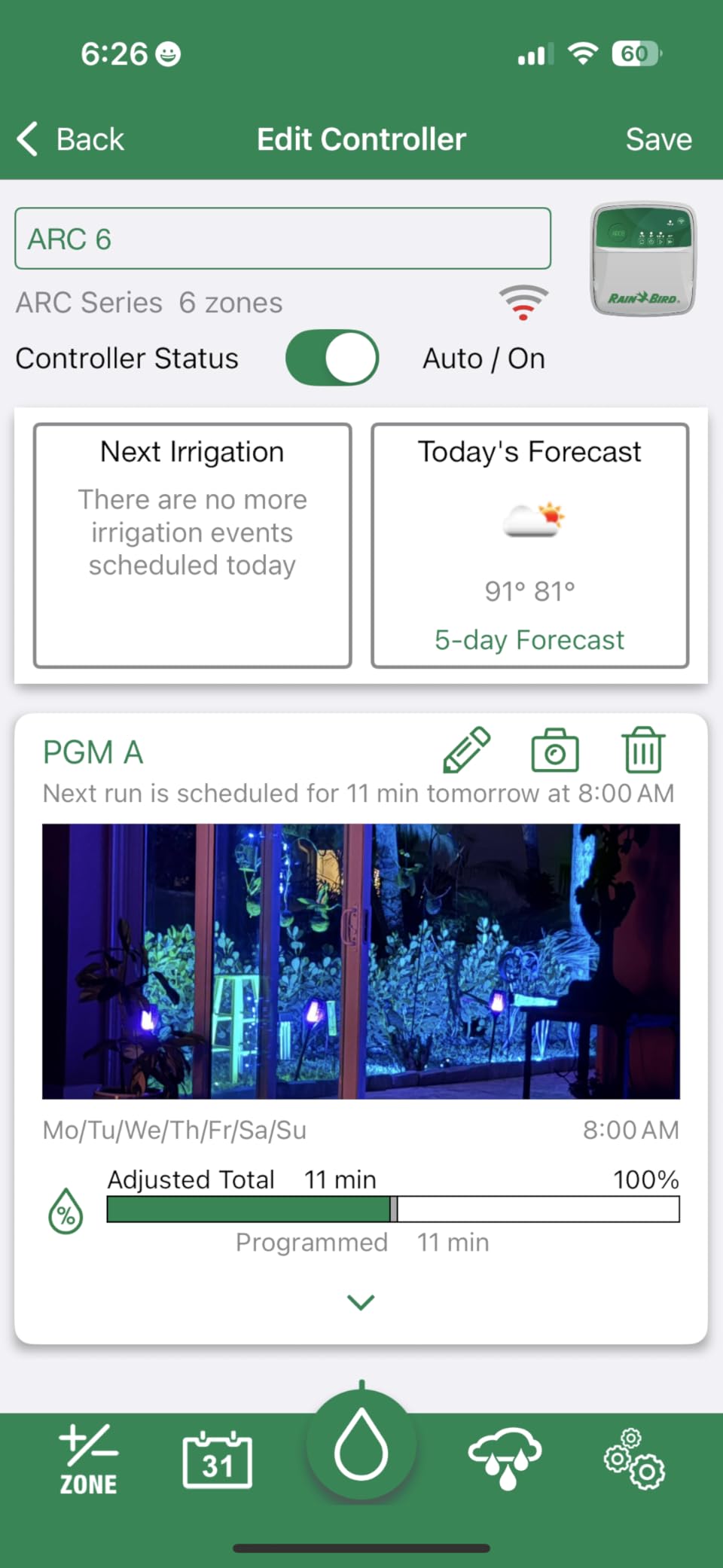
Best for small indoor installations
The ARC6 suits a four to six zone lawn where the existing timer sits indoors in a garage, utility room or closet. Nothing about the enclosure requires a cabinet.
For a small yard under municipal watering rules, the delay and forecast tools cover most needs, and sharing access means a partner can pause a cycle without calling you.
Where it falls short
The enclosure is indoor-rated, so mounting it outside needs a separate weatherproof box, which adds cost and a second thing to seal properly.
Six stations is a hard ceiling for expansion. It also carries the lowest average rating in this roundup at 4.0 with a 16 percent one-star share, and that share tracks with reports of connection trouble rather than dead hardware.
6. ImoLaza 8 Zone WiFi Smart Sprinkler Controller, ET Master
ImoLaza 8 Zone WiFi Smart Sprinkler Controller, ET Master Irrigation Timer
8 zones
120V
6.3 x 6.3 x 1.18 inches
Two year manufacturer warranty
Pros
- Real-time evapotranspiration plus hyperlocal weather
- Smart Cycle and Soak cuts runoff
- New Grass Schedule with up to 24 start times
- No subscription for app or voice control
- Real-time fault leak and offline alerts
Cons
- Firmware issues with mesh routers such as Eero
- Some owners report scheduled runs stopping while manual runs work
- Waterproof case for outdoor mounting sold separately
- Station test from the face capped near three minutes
The ImoLaza 8 Zone is the most feature-dense controller per dollar in this roundup, and it is the only one here with a New Grass Schedule that allows up to 24 start times per day. If you are seeding or overseeding a lawn, that is the feature that justifies the pick on its own.
Watering decisions run on real-time evapotranspiration data combined with hyperlocal weather, so the controller skips runs for rain, wind, freeze or saturated ground. Owners also like that there is no subscription fee for remote app access, Alexa or Google Assistant control.
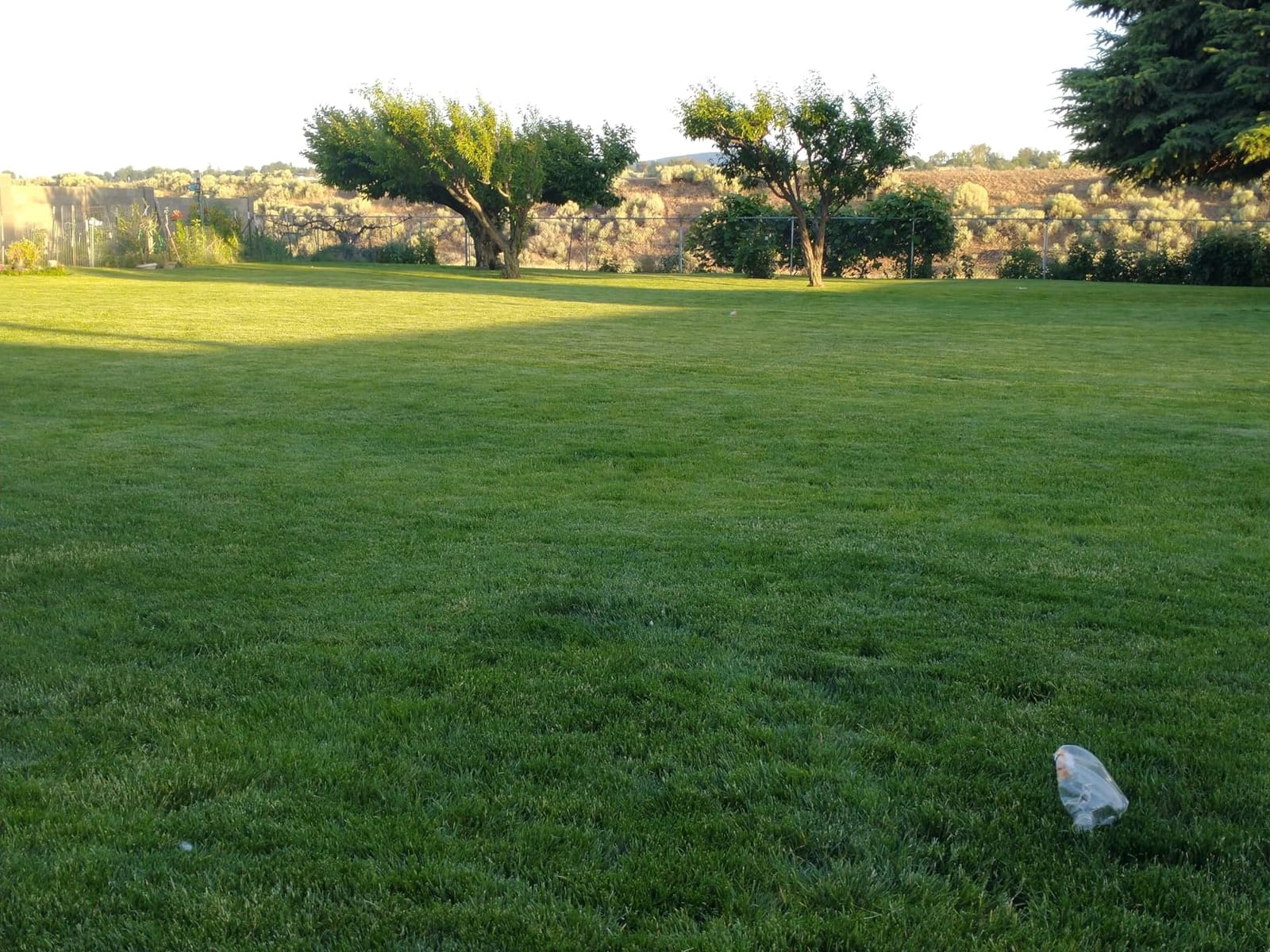
Smart Cycle and Soak splits a long run into smaller cycles with pauses, which promotes infiltration and cuts runoff on sloped or compacted ground. Schedule types include Smart ET, Fixed Cycle and New Grass, so you can match the mode to the job.
Diagnostics are unusually good. The controller watches for open and short circuits, offline status and weather data outages over a 24 hour window, and an optional flow meter adds leak and pipe-burst detection. Over-the-air updates keep improving the algorithms without new hardware.
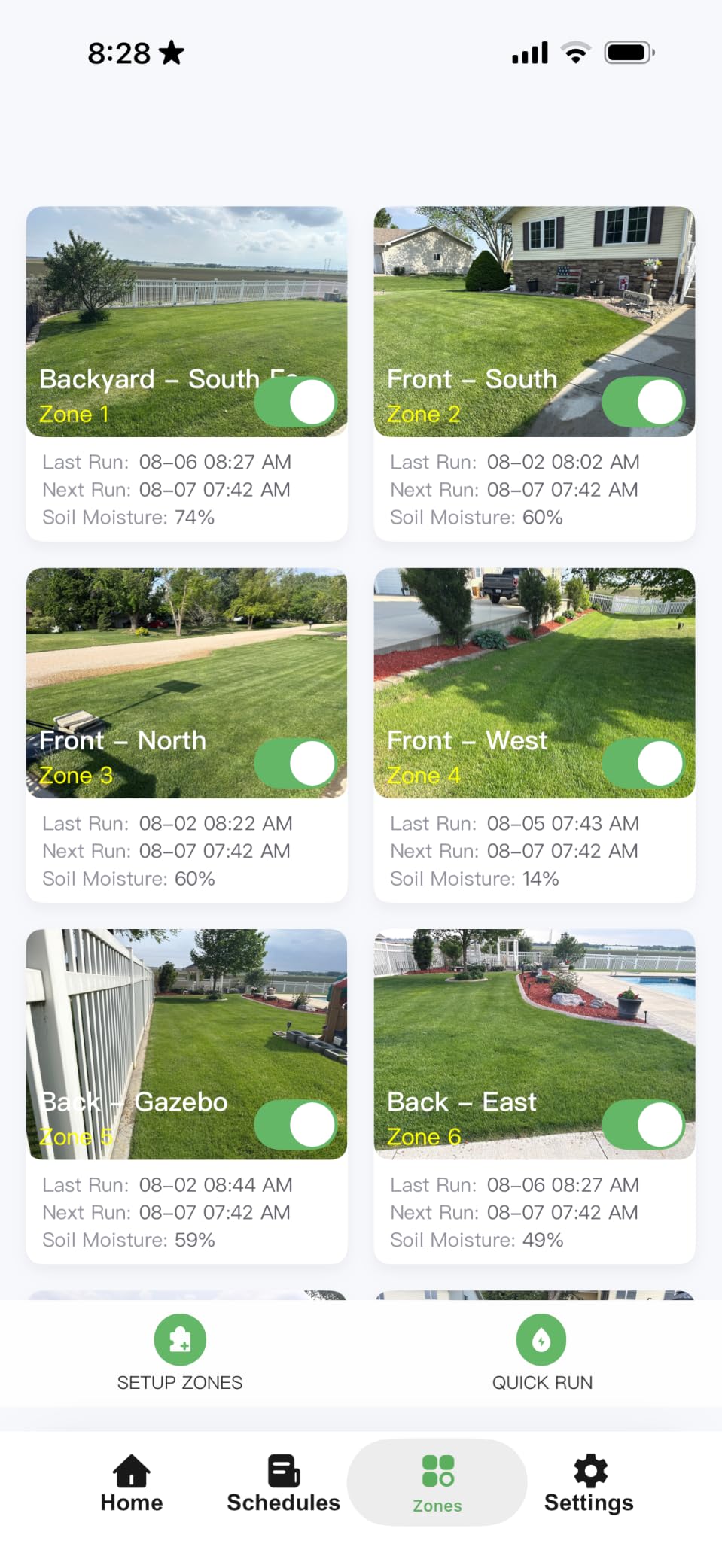
Best for reseeding and sloped lawns
The New Grass Schedule spreads seed germination across many short starts per day, which is the difference between an even lawn and a patchy one in the first month.
Cycle and Soak is worth enabling on clay-heavy or sloped yards where a single long run would sheet off the surface. Support is also praised for replacing controllers quickly and setting up video troubleshooting calls.
Where it falls short
Firmware and mesh WiFi issues have historically blocked connection to mesh routers such as Eero. Firmware updates have improved this, so check the current version before assuming it is still a blocker.
A waterproof case for outdoor wall mounting is sold separately. Some owners report the controller stopping its programmed schedule while still running on demand, and the manual station test from the face is capped at about three minutes per press.
7. HiOazo Smart Sprinkler Controller, 4 Zones with 16 Plans
Smart Sprinklers Controller 2.4GHz WiFi, Irrigation Controller Easy Use App Enabled, 4 Zones + 16 Plans, Save Water Auto Skip Rain, Freeze & Wind, 10 Minutes Install
4 zones
24V AC with 2.4GHz WiFi
ABS housing
Three year care coverage
Pros
- Least expensive way to move to app control
- Install reported at 10 to 15 minutes
- Rain freeze and wind skips with push notifications
- Water usage calculation from flow rate
- Soak Irrigation mode included
Cons
- 2.4 GHz only so 5 GHz must be disabled
- Not EPA WaterSense certified
- App cannot save or overlap schedules by season
- Faint navigation arrows in bright sunlight
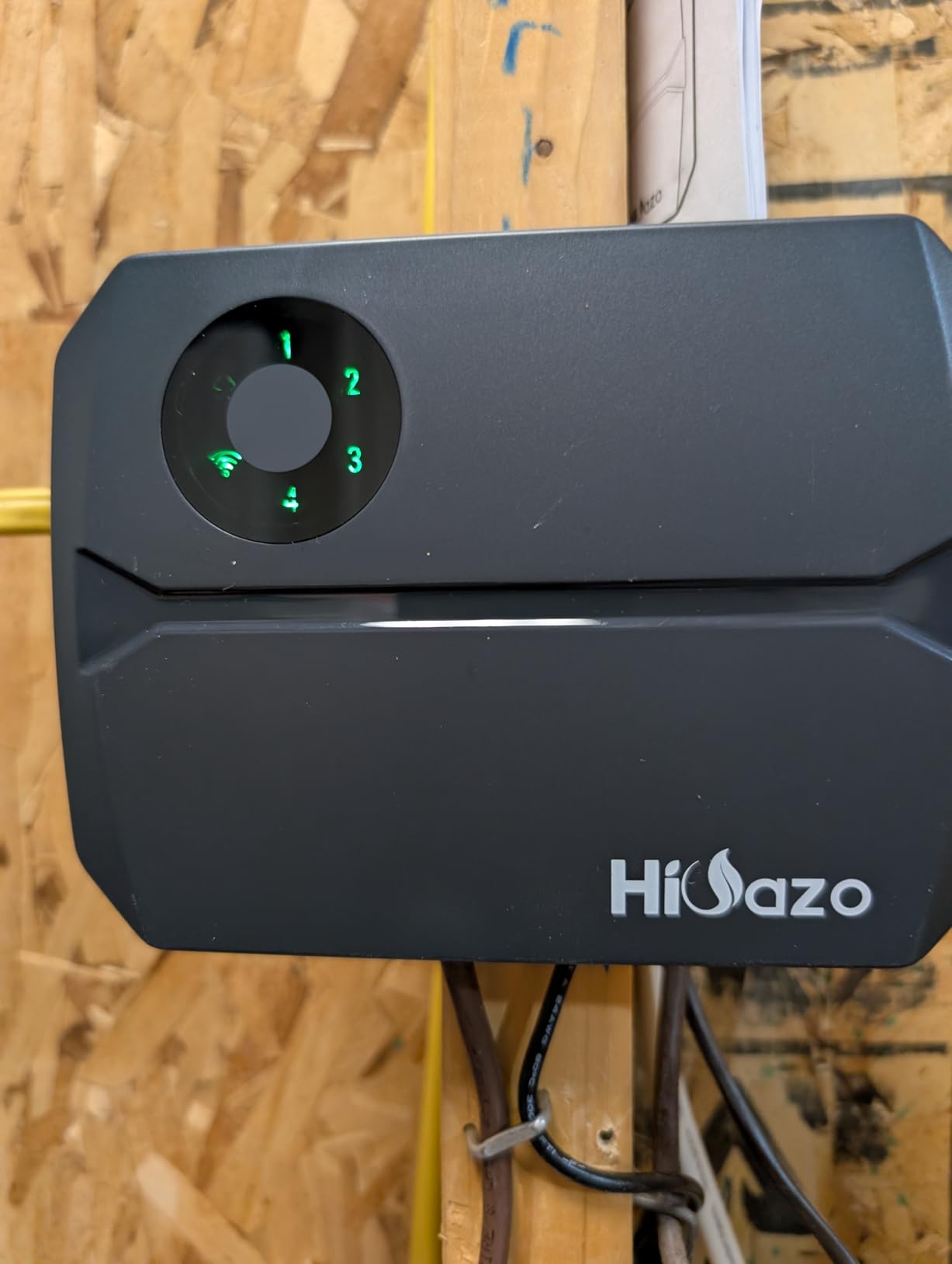
The HiOazo HSC-400W is the cheapest credible way to move an existing system to app control, and owners replacing a Rain Bird or Orbit timer report finishing in 10 to 15 minutes. Three screws, a power adapter, labels and four wire connectors are all included.
It runs up to 4 zones with 16 watering plans, and you can deselect zones you do not have so the app only shows real ones. Standard Irrigation and Soak Irrigation modes give you a runoff option without extra hardware.
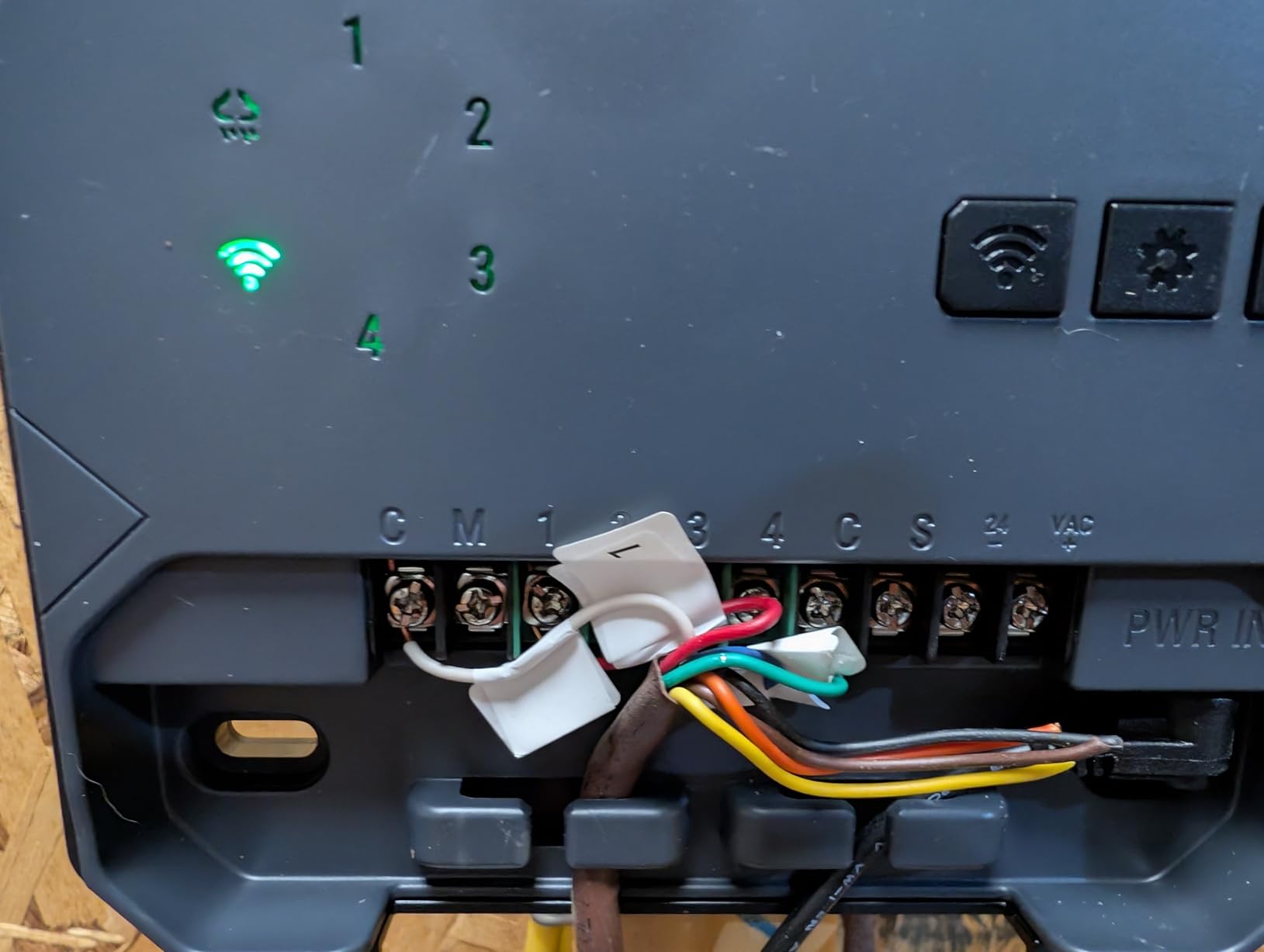
Rain, freeze and wind skips happen automatically, and push notifications tell you when the controller runs. If you enter your flow rate in gallons per minute, the app calculates water usage, which is a rough but useful check on whether your schedule is oversized.
The box is deep grey ABS, the display is app-only, and the manufacturer lists approximately 10 minute installation compatible with most existing controllers.
Best for small yards on a tight budget
A four-zone system is a small lawn, and this controller covers it with weather skipping and remote runs. If your old timer already does the job mechanically and you mainly want phone control, this is the cheapest path.
It is also a sensible second controller for a separate drip zone feeding beds, where a dedicated unit is cheaper than expanding a larger model.
Where it falls short
It is 2.4 GHz only, so you must disable 5 GHz during setup. It is not EPA WaterSense certified, and the app cannot save or overlap schedules by season, which becomes awkward on a four zone system with different turf and bed needs.
The sub-navigation arrows are nearly invisible in bright sunlight and landscape orientation on a phone forces excessive scrolling. One owner reported schedules and zones disappearing from the app after several months until a power cycle, with saves failing afterward.
8. Hunter HPC400 Sprinkler Controller, 4 Zone WiFi
Hunter HPC400 Sprinkler Controller, 4 Zone, WiFi Smart Sprinkler Timer
4 zones expandable to 32
4.5 x 10 x 9 inches
5.7 pounds
Weather-resistant lockable case
Pros
- Weatherproof lockable outdoor enclosure
- Hydrawise app and web portal both work well
- Zone expansion modules snap in quickly
- Remote zone testing saves walking the yard
- Share access with a landscaper
Cons
- Printed instructions cover three controllers in five languages
- COM terminal location unclear in the documentation
- Bulky case needs mounting space
- One owner found the web portal and mobile setup paths both failed
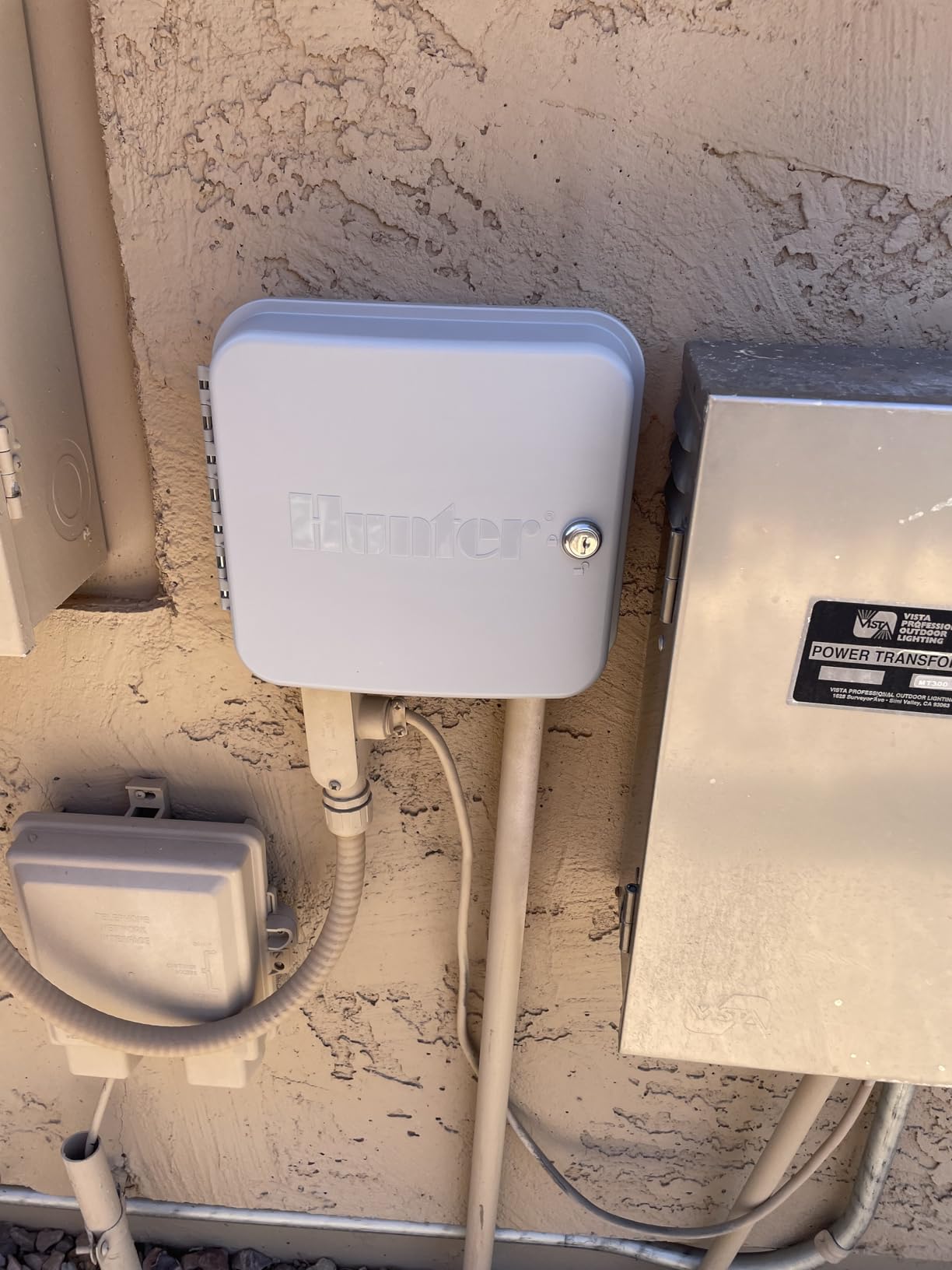
The HPC400 is the pick if your controller lives outdoors next to the valve manifold and you would rather not mount an indoor box in a garage just to get WiFi. The enclosure is weather-resistant, outdoor-rated and lockable, so it handles that location directly.
It ships with 4 zones and expands to 32 with plug-in modules, which means you can start small and grow without replacing the controller. Some owners with an existing Hunter controller can reuse the power module and ribbon cable for a very fast swap.
Setup runs through a touchscreen interface with labeled wiring and step-by-step guidance, and Hunter claims a 30 minute DIY install. Remote zone testing from the Hydrawise app or web portal saves repeatedly walking to each head, and access sharing lets a landscaper adjust on the fly.
Weather-based watering is claimed to save up to 50 percent on water bills. At 5.7 pounds and 4.5 by 10 by 9 inches it is a substantial, well-built box rather than a light plastic shell.
Best for outdoor-mounted systems
If you have no indoor location near the valves, an outdoor-rated cabinet is the clean answer, and this is one of the few affordable controllers that ships with the weatherproof locking case built in.
The expansion path is the other reason. Four zones now and up to 32 later means you are not choosing between paying for unused capacity today and replacing the whole unit in three years.
Where it falls short
Documentation is the recurring complaint. The printed booklet combines three controllers, an add-on module and five languages, which leaves wiring details ambiguous, and the COM terminal position is not obvious from what is written.
One detailed negative review reported that the Hydrawise website was hard to navigate and that both desktop and iPhone setup paths failed. The case is also bulky enough that you need real mounting space on the wall.
9. Hunter PRO-HC WiFi Sprinkler Controller, 24 Zone
Hunter PRO-HC WiFi Sprinkler Controller, 24 Zone Smart Irrigation Timer
24 stations
2 sensor inputs and P/MV output
8.6 x 3.75 x 7 inches
2.75 inch touchscreen
Pros
- Up to 24 zones with 6 programs and 6 start times
- Built-in milliamp wire fault detection
- Optional HC Flow Meter for leak and burst alerts
- Weather-based scheduling adjusts for rain heat and wind
- Touchscreen works as a manual timer if WiFi drops
Cons
- Highest price in this roundup
- Touchscreen menus take time to learn
- Enabling flow or grow-in reporting without a flow meter causes silent failures
- Some owners reported touchscreen failures
- Not compatible with the Hunter ROAM remote
The PRO-HC is the professional-grade choice, and it is the only controller here built for the failure modes that matter on a large property: a broken wire or a burst pipe rather than a slightly dry lawn. Built-in milliamp wire fault detection alerts on opens and shorts before plants suffer, and an optional HC Flow Meter adds real-time leak and pipe-burst alerts.
It handles 24 stations with 6 independent programs and 6 start times per zone. Owners with 20-plus zone properties report it replacing commercial-grade controllers successfully, and the 2.75-inch full-color touchscreen works as a complete manual timer if the WiFi connection drops.
There are two sensor inputs plus a P/MV output for a master valve or pump relay, and it is fully compatible with Hunter Clik sensors. Weather-based scheduling adjusts for rainfall, temperature, humidity and wind rather than following a fixed clock.
The enclosure is rugged, outdoor-rated and has a locking access door. Mobile and web apps are both supported and multiple devices can access one account.
Best for large properties and commercial plots
If you have a master valve, a pump relay or a lot of separate zones, those sensor inputs and that output matter. Wire fault detection alone can save a lawn from a dry stretch nobody notices for two weeks.
The manual-timer fallback on the touchscreen means a network problem does not stop irrigation on a property where a missed cycle has real consequences.
Where it falls short
This is the most expensive controller in the roundup, and it is aimed at large properties and commercial installations. The touchscreen menus also take some getting used to.
Enabling flow or grow-in reporting without a flow meter installed causes silent schedule failures with no clear reset path. Some owners have had touchscreen failures while the internal transformer still tested fine, the Hunter ROAM remote does not work with this model, and one owner needed a static IP instead of DHCP to reach the Hydrawise servers.
10. RAINPOINT Smart Sprinkler Controller, 8 Zone
RAINPOINT Smart Sprinkler Controller, WiFi Sprinkler Controller 8 Zone-Local Weather Intelligence, Programmable Smart Irrigation System with APP Remote Control, Rain Skips, Rain Sensor Compatibility
8 zones
24V AC with included transformer
2.4GHz WiFi only
Wall mount screws included
Pros
- Mount next to the old box and move one wire at a time
- Zones named and given photos in the app
- Batch watering and Quick Run for flushing a line
- Schedule auto-restores after a power or network outage
- Physical on-device valve buttons
Cons
- Does not share the RAINPOINT app with the brand hose controllers
- App is not intuitive for watering a single zone
- 2.4GHz WiFi only
- Verbose instructions leave setup questions unanswered
- Some early versions lacked days-of-interval watering
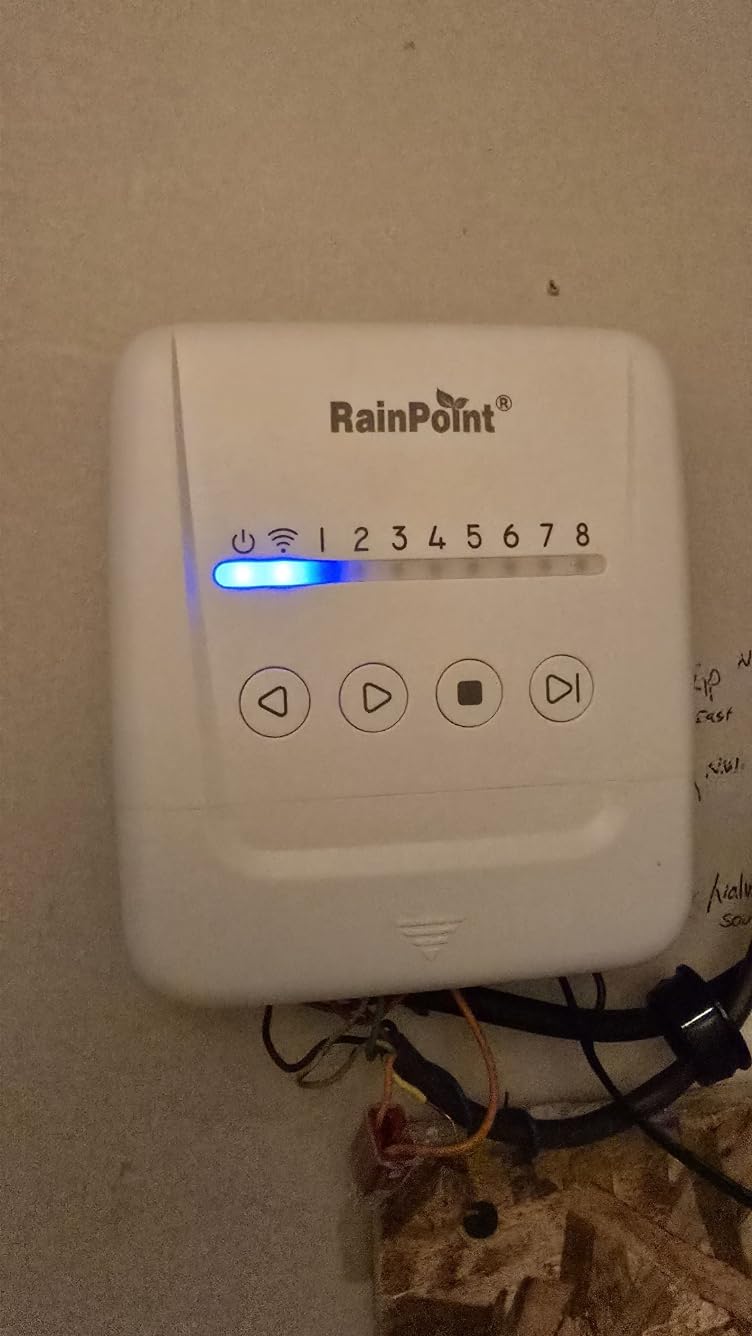
The RAINPOINT 8 Zone is built around the easiest swap in this group. It uses a standard 24VAC design with an included transformer and wall-mount screws, and owners describe mounting it beside the old box and moving one wire at a time until the system is live.
Each of the 8 zones can be given a name and a photo in the app, which sounds minor until you have eight valves and no idea which one feeds the back beds. Batch watering runs a single zone, several zones or all of them at once, and Quick Run flushes one line without altering your saved schedule.
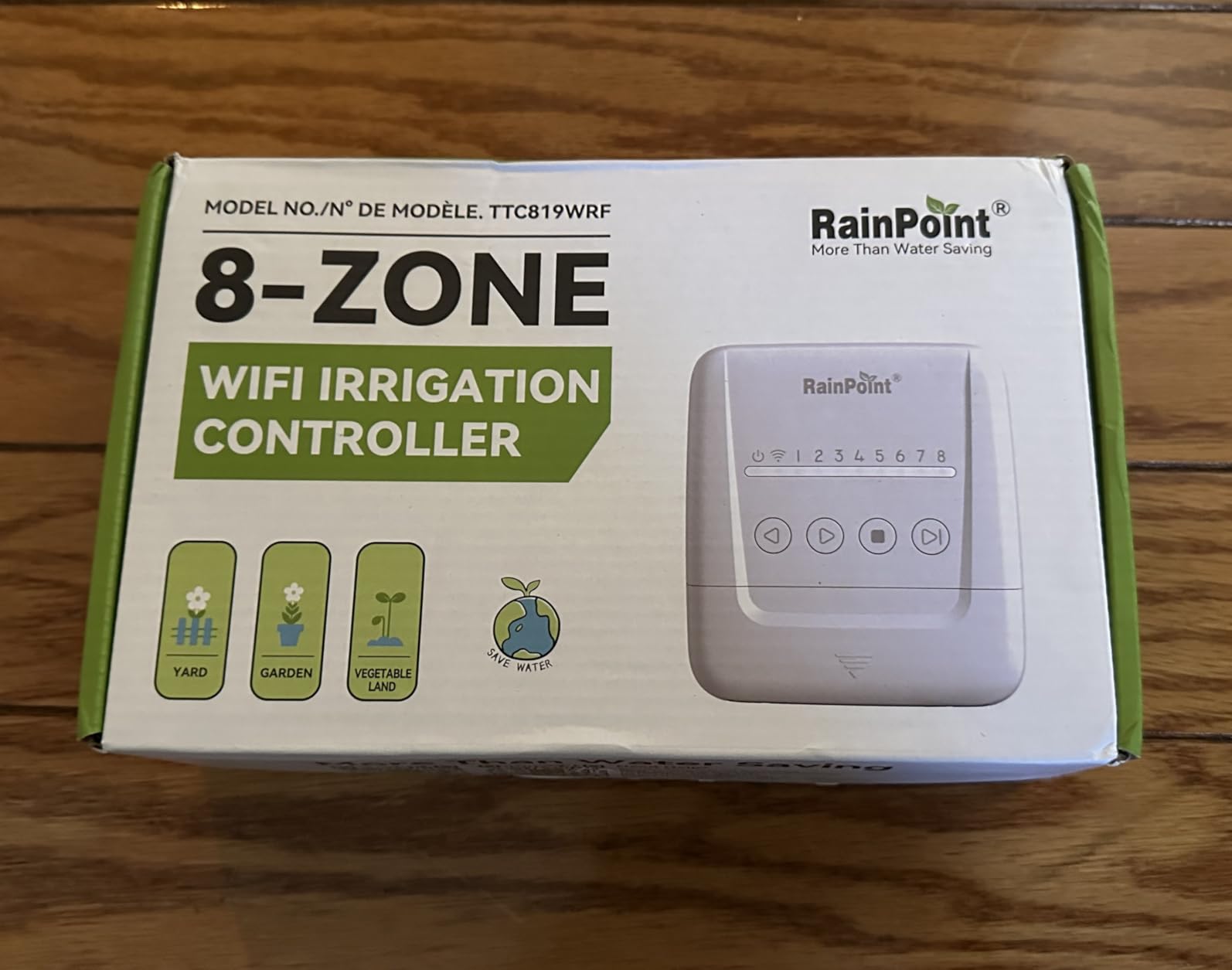
Automatic rain and freeze skip sits alongside a 24, 48 or 72 hour programmable rain delay, and the controller accepts an existing rain sensor plus RAINPOINT micro sprinkler products if you already run them. Physical buttons on the device let you turn valves on and off directly.
Data backup is the standout feature. The controller auto-restores your schedule after a power or network loss, so an outage does not leave you rebuilding a two-week program by hand.
Best for a fast, forgiving retrofit
If you are comfortable with basic wiring and want phone control this weekend, the physical buttons and the one-wire-at-a-time install make this a low-risk first smart controller.
App control covers status, next run and history, and you can share permissions with family members. It is also a good second controller for a drip or micro sprinkler zone.
Where it falls short
It does not share the RAINPOINT app with the brand hose-end controllers, which several buyers specifically expected. The app itself is not intuitive, since watering one zone while an Area is enabled takes a long disable and reselect sequence.
Connectivity is 2.4 GHz only, the instructions are verbose without answering the setup questions, and some first-generation versions lacked days-of-interval watering, which matters if your city waters on odd or even days.
How to Choose a Smart Sprinkler Controller for Your Lawn
Count your zones first, then check signal strength, then decide how much intelligence you want. Get those three right and the rest is preference, and skipping any one of them is how people end up with a controller that does not fit.
Match zone count to your system, then add capacity
Count the valves you actually have today, add any zones you plan to add in the next few years, and then buy one or two spare outputs beyond that. Zone expansion is cheap on some brands and impossible on others, so spare outputs are cheap insurance.
A 4-zone controller suits a small lawn with separate turf and drip zones. Six to eight zones covers most suburban yards with turf, beds and shrubs. Twelve or more means a large property or a commercial landscape, and it is worth moving up a tier rather than buying the biggest unit you can find.
Decide how much weather intelligence you need
At the low end, rain skip uses a forecast to push a run out. In the middle, the controller compares current conditions against historic averages for your postal code. At the top, evapotranspiration data estimates how much water the turf is actually using and adjusts run times from there.
Higher tiers save more water but also cost more to explain and configure. A simple skip feature on a 6-zone system is usually enough; evapotranspiration data earns its keep on larger or mixed plantings.
Choose indoor or outdoor rated based on where the box lives
Indoor-rated controllers such as the Netro Sprite, the Rain Bird ARC6 and the HiOazo unit need a protected, dry location, which means running the wiring somewhere like a garage. Outdoor-rated enclosures such as the Hunter HPC400 or the Orbit B-hyve weatherproof case let you mount near the valve manifold instead.
The compact Netro body is a middle path: it is indoor-rated but small enough to sit inside an existing outdoor cabinet. A separate weatherproof enclosure is a real extra cost, so factor it in if the unit you want is indoor-rated.
Weigh one-time hardware cost against subscription apps
Most of the controllers here charge nothing for the app or for weather features, including the Orbit B-hyve, the Rachio 3 and the ImoLaza, which states plainly that there is no subscription fee for remote app or voice assistant control.
What you can still spend money on is accessories: weatherproof enclosures, transformers, rain sensors and flow meters are frequently sold separately. Treat those as part of the install budget rather than a surprise later.
Do not skip warranty length and service
Two year limited warranties are the category norm, and the HiOazo controller is listed with three year care coverage. Longer coverage matters less than whether a replacement arrives quickly, so check how the brand handles a failed unit inside the window.
Buyers on irrigation forums repeatedly note that a two year warranty feels short for hardware that lives damp and hot in a garage or on an exterior wall for a decade.
Pre-Purchase Compatibility Checklist
Run these five checks before you order anything, because most return shipping and rewiring costs come from skipping one of them.
Count your zones. Open the valve box and count the wires on the existing timer, or count the valves at the manifold. Do not guess from sprinkler head count.
Confirm standard 24V valve wiring. Nearly every controller here is designed as a direct swap for standard 24V low-voltage valve wiring. Pump starters, high-voltage equipment and commercial shared systems need a professional.
Check the power type. Some models run on 120V with a plug-in transformer, others on 24V AC with an included adapter. Confirm the plug type matches your region.
Decide the mounting location first. If the new controller is indoor-rated, you need a dry spot near the valves. If it is outdoor-rated, you need solid wall space and a secure cable route.
Test the 2.4 GHz signal where the controller will sit. Stand in that spot with your phone, connect to the 2.4 GHz network, and check the signal strength. This is the single most common reason a smart controller never settles into a routine.
If all five pass, the install is an afternoon with a screwdriver and the model in your hand will work on your system. Note the same diligence applies to other connected hardware, like our smart soccer ball picks, where the app connection is the product.
Fixing WiFi Connection Problems Before You Buy
Almost every controller in this category joins your network on 2.4 GHz only, and almost every complaint of dropped connections traces back to that one constraint rather than a faulty device.
Modern dual-band and mesh routers often default to 5 GHz or use a split SSID, meaning one network name broadcasts both bands. Fussy IoT devices, and irrigation controllers are among the fussiest, fail on that setup. Separate the 2.4 GHz network into its own name before you start, and set the router security mode to WPA2-Personal, since WPA3-only will block most of these units.
Test the signal at the install location before you buy, not after. Hold your phone where the controller will sit, join the 2.4 GHz network, and note the signal bars. A weak reading in a metal garage or at an exterior wall is the underlying cause behind most complaints owners post about app lockups and unexplained random cycles.
If the reading is weak, the fix is usually a mesh node or a WiFi extender placed halfway between the router and the controller, not a different controller. Forum consensus across irrigation communities is that most reported failures are network setup problems rather than hardware failures.
One further note: Bluetooth pairing during setup can interfere with the WiFi connection on some phones. If setup stalls, move the phone away and retry before assuming the controller is faulty.
What Happens When WiFi or Power Goes Out
The schedule is stored inside the controller, not in the cloud, so irrigation keeps running on its local program when the internet drops. What you lose during an outage is remote access, weather skip updates and cycle history.
Power loss stops watering until power returns. Some controllers auto-resume the saved schedule after an outage, the RAINPOINT 8 Zone explicitly backs up and restores its schedule, and several keep a clock so timing is not lost. Others, including the Netro Sprite, have no battery backup at all and simply resume once power is back.
What does not usually happen is a make-up run. Missed cycles during an outage are skipped rather than backfilled, so if you want to protect a lawn through a multi-day power cut, add a flow or moisture aware model and check the historical data afterwards.
Head-to-Head Brand Matchups
Rachio 3 vs Rain Bird ARC6
Rachio wins on intelligence and app polish, using Weather Intelligence that skips runs for rain, wind and freeze, while the ARC6 relies on postal code comparisons with up to 30 percent savings. Rain Bird wins on price and on-panel familiarity in the ESP-TM2, and Rachio only offers 8 and 16 zone versions while the ARC6 covers 6 stations.
Orbit B-hyve vs Rachio 3
Orbit has far more owner reviews and a simpler app; Rachio makes smarter watering decisions and offers usage estimates. A long-term owner report describes running three B-hyve controllers across about 30 zones for roughly a decade without problems, which is the strongest reliability evidence in the category.
Rain Bird vs Hunter
Hunter leads on professional features, with wire fault detection on the PRO-HC and zone expansion to 32 on the HPC400. Rain Bird leads on price and on the consumer models with straightforward apps and panel programming, at the cost of a weaker Link WiFi module in the ESP-TM2.
Real Owners: What People Report Back
Long-term reports matter more than first impressions here, and the most useful signal is how these controllers behave after several seasons in real weather.
One long-term Orbit B-hyve owner reports running three controllers across roughly 30 zones for about a decade with no problems. Multiple owners on r/Irrigation describe moving off Rain Bird WiFi controllers to Rachio with a clear improvement in perceived reliability and app quality, while another Rain Bird user reports a unit going out and being replaced without further problems since.
Landscape professionals repeatedly name Rachio as the go-to recommendation for someone without a huge property, citing its reliability against competitors. The honest consensus, though, is that most complaints in this category are network setup problems rather than controller hardware failures.
Frequently Asked Questions
Which is better, Rainbird or Hunter controller?
Hunter leads on professional features such as wire fault detection, cycle and soak options and zone expansion up to 32 zones on the HPC400. Rain Bird leads on price and on consumer-friendly models with straightforward apps and panel programming. Choose Hunter for large properties and monitoring, and Rain Bird for a straightforward residential install.
Are smart sprinkler controllers worth it?
Yes, most owners report meaningful water savings because the controller skips runs after rain and adjusts for heat, and they remove manual schedule changes entirely. The two conditions where it pays off fastest are a hot, dry or seasonally unpredictable climate, and a yard with several zones for turf, beds and shrubs. A fixed clock timer waters all of them the same way.
Is rachio better than rainbird?
Rachio is better if watering intelligence matters most, since Weather Intelligence skips runs for rain, wind and freeze and the app shows estimated usage. Rain Bird is better on price and on familiar panel programming, as the ESP-TM2 keeps full physical controls. The most common complaint on Rain Bird WiFi units is flaky cloud connectivity from the Link module rather than failed hardware.
Is orbit or rachio better?
Orbit has the larger body of owner reviews and a simpler app, and it suits a typical suburban lawn up to six zones. Rachio makes smarter watering decisions, offers usage estimates and is a 8-zone or 16-zone unit. A long-term owner report of three Orbit controllers running about 30 zones for roughly a decade supports Orbit for reliability-minded buyers.
How many zones do I need for my lawn?
Count the valves at your manifold or the wires on the existing timer, then add any planned zones and buy one or two spare outputs. Four zones suits a small lawn, six to eight covers most suburban yards, and twelve or more means a large property. Zone expansion is cheap on some brands and impossible on others, so spare outputs are cheap insurance.
Do I need strong WiFi for a smart sprinkler controller?
Yes, and this matters more than most buyers expect. These controllers join 2.4 GHz networks only, so separate the 2.4 GHz band under its own network name and use WPA2-Personal rather than WPA3-only. Test the signal at the planned install location before buying, since weak signal in a garage or at an exterior wall causes most drops and app lockups.
What happens to my watering schedule if WiFi or power goes out?
The schedule is stored inside the controller, so irrigation keeps running on its local program when the internet drops. Power loss stops watering until power returns, and controllers with data backup restore the saved schedule automatically. Missed cycles are usually skipped rather than made up, and models with no battery backup simply resume once power is back.
Can I install a smart sprinkler controller myself?
Yes for a like-for-like timer swap on standard 24V valve wiring, which takes an afternoon for most homeowners with a screwdriver. Hire a professional for new installations, pump starters, high-voltage equipment or any commercial or shared system. Test your 2.4 GHz signal and confirm your zone count before you order the unit.
Conclusion
For most people buying the best smart sprinkler controllers for lawns, the Orbit B-hyve 6-Zone is the safe first pick because its app, install and owner record all hold up. If your yard has several zones with very different water needs, the Rachio 3 8-Zone makes smarter automatic decisions and shows you the water numbers. Under city watering rules, the Netro Sprite 6 Zone pulls legal schedules straight from a municipal database.
Large properties should start at the Hunter PRO-HC for 20-plus zones, outdoor-mounted systems belong on the Hunter HPC400, and anyone who wants to keep programming at the box should pick the Rain Bird ESP-TM2 with Link WiFi. Whatever you choose, test that 2.4 GHz signal before you order, and check the current details and warranty terms on the listing.