
The best ultralight backpacking tent for thru hiking is the lightest shelter you can still trust in month four, not the one with the smallest number on the spec sheet. A thru hiker carries the same tent for five months, thousands of miles, and hundreds of nights of rain, so every ounce you cut has to come out of fabric, structure, or comfort without breaking that trust.
That honesty matters because the shelters we could verify sit in a different weight class from the ones dominating thru-hiker forums. Twelve shelters follow, and the lightest of them has a 2 pound minimum trail weight while the heaviest carries 5.5 pounds. None of them is the sub-one-pound trekking-pole shelter most thru-hikers argue about online, and we would rather say that outright than pretend otherwise.
What we did instead is rank the shelters that real owners carry hundreds of miles, using published weight, waterproof ratings, capacity, pitch speed, and the size of each owner review pool. Every weight below is the manufacturer’s published figure, and we tell you whether it is a full packed weight or a stripped trail weight, because those two numbers are constantly confused.
Before you read further, it helps to know the shape of the rest of the guide. We cover pitch types, fabric choices, condensation over a long season, what comes in the box versus what you must buy, and the campsite problems that only show up once you are three weeks into a trail.
Table of Contents
Top 3 Picks for the Best Ultralight Backpacking Tents (October 2026)

Naturehike Cloud-Up 2P
- 3.6 lb two-person
- Freestanding double wall
- Footprint included
- 14 stakes and poles included

Clostnature 2-Person Tent
- PU 5000mm polyester
- Two doors and two vestibules
- Freestanding dome
- 3 minute pitch

Forceatt 4-Season 2P
- Welded waterproof floor
- 3000mm waterproof index
- Two D-shaped doors
- 4 season rated
Here is the short list in the format hikers actually compare notes in, use case first, then the shelter, then the weight.
Best overall for thru hiking – Naturehike Cloud-Up 2P – 3.6 lb packed, footprint and stakes included
Best value two-person – Clostnature 2-Person Tent – 5.29 lb total, 4.52 lb minimum trail weight
Best for storm seasons – Forceatt 4-Season 2P – 5.5 lb with a welded floor
Best for tall sleepers – camppal 1P A-Frame – 3.75 lb with an 8.2 ft interior
Top rated solo shelter – ALPS Mountaineering Lynx 1 – 4 lb 1 oz total, 3 lb 5 oz minimum
Best trekking-pole setup – MIER LANSHAN 1P – 2.1 lb, trekking poles not included
Best lightweight double wall – KAZOO 1P – 3.3 lb, 20 x 6 in packed size
Best for the fastest pitch – Kelty Grand Mesa 2P – 4 lb 1 oz for two, sets up in 3 to 5 minutes
Budget two-person pick – Night Cat 2-Person Tent – 4.4 lb with 31.24 sq ft of floor
Best for minimum packed volume – Night Cat 2 lb Bivy – 2 lb minimum trail weight
Best for tree-strung pitches – Underwood 2P Pole Tent – 3.2 lb, 3 lb minimum trail weight
Best for large vestibules – Naturehike Mongar 2P – 5.3 lb with 19.04 sq ft of vestibule
If you are still working out the rest of your kit, our guides to the best trekking poles for backpacking and ultralight tents for bikepacking cover the gear that has to work alongside a shelter like these.
All 12 Shelters Side by Side in 2026
Every shelter in the roundup appears once below with the features that separate it from the rest. Weights are published figures from each manufacturer, listed exactly as they publish them.
| Product | Specifications | Action |
|---|---|---|
| Naturehike Cloud-Up 2 Person Tent |
|
Check Latest Price |
| Clostnature 2-Person Tent |
|
Check Latest Price |
| Forceatt 4-Season 2P Tent |
|
Check Latest Price |
 Camppal 1 Person A-Frame Tent Camppal 1 Person A-Frame Tent |
|
Check Latest Price |
 ALPS Mountaineering Lynx 1 ALPS Mountaineering Lynx 1 |
|
Check Latest Price |
 MIER LANSHAN Ultralight Tent MIER LANSHAN Ultralight Tent |
|
Check Latest Price |
 KAZOO 1 Person Waterproof Tent KAZOO 1 Person Waterproof Tent |
|
Check Latest Price |
 Kelty Grand Mesa 2P Tent Kelty Grand Mesa 2P Tent |
|
Check Latest Price |
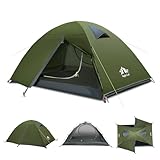 Night Cat 2-Person Backpacking Tent Night Cat 2-Person Backpacking Tent |
|
Check Latest Price |
 Night Cat 2 lb Ultralight Bivy Tent Night Cat 2 lb Ultralight Bivy Tent |
|
Check Latest Price |
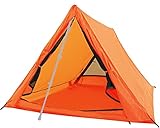 Underwood 2 Person Pole Tent Underwood 2 Person Pole Tent |
|
Check Latest Price |
 Naturehike Mongar 2 Person Tent Naturehike Mongar 2 Person Tent |
|
Check Latest Price |
How We Evaluated These Shelters
Our ranking is built on published specifications and the pattern across owner reviews, not on a multi-month trail test. We want to be straightforward about that, because plenty of tent roundups imply otherwise and the gap in trust is part of why hikers argue so much online.
We weighted five things. Packed weight came first, because it is the number you control. Waterproof rating came second, since a 3000mm fly and a 1500mm fly fail at very different points in a season. Pitch speed mattered third, because a shelter you can raise in a gust is worth more than a lighter one you cannot. Fourth was interior capacity against the occupant rating printed on the box. Fifth was review volume, which is our best proxy for how a shelter behaves after a few hundred nights rather than one weekend.
On the weight basis: several brands publish a total weight that includes stakes, footprint, and stuff sack, and a minimum trail weight that strips those back out. We quote whichever each brand publishes and label it. A tent listed at 5.29 lb total and 4.52 lb minimum trail weight is genuinely two different products depending on what you leave behind, and the difference is roughly a full meal for a week of trail.
One more caveat. We set aside the sub-one-pound shelters that dominate thru-hiker conversations because we could not verify their current construction or owner data to the standard we applied here. Where that leaves a gap, we would rather point at the limitation than fill it with something we did not check.
1. Naturehike Cloud-Up 2P – The Best Overall Pick for Thru Hiking
Naturehike Cloud UP UL 2 Person Backpacking Tent, Double Layer Two Person Tent with Footprint, 15D Nylon Waterproof Ultralight Tents for Camping
3.6 lb packed
15D silicone nylon, 4000mm+
Freestanding double wall
Footprint and 14 stakes included
Pros
- Freestanding double wall with 7001 aluminum poles
- Spacious interior with headroom to sit up
- Footprint included in the kit
- High-density B3 mesh inner with added vent window
Cons
- 3.6 lb is heavy for a thru hiker
- Single door and vestibule for two
- Included footprint and stakes add bulk
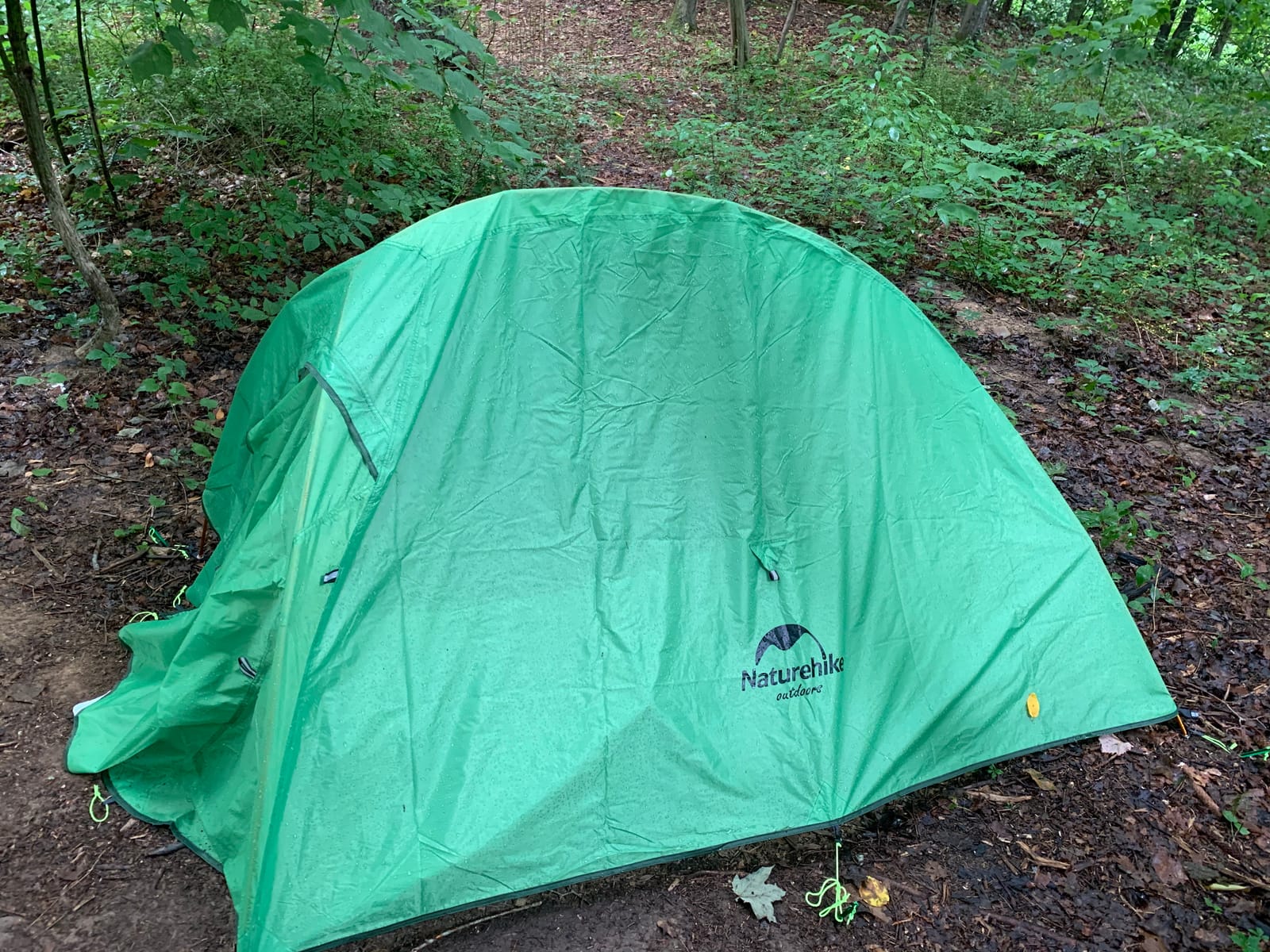
The Cloud-Up is the shelter we keep coming back to, and the reason is not the weight. It is that this is one of the very few two-person tents where the box contains a complete shelter, and a complete shelter is exactly what a thru hiker needs to stop over-buying at resupply.
Owners consistently single out three things. The 82.7 inch interior length is longer than most two-person tents in this class, so a tall sleeper or a 60 liter pack fits without a fight. The freestanding frame means you can pitch it in the rain instead of waiting for better weather. And the 4000mm silicone-coated fly and 20D silicone floor hold up through the kind of multi-day rain where lesser shelters give up first.
The numbers back that up. Floor area is listed at 4229.24 square inches with a 7.29 square foot vestibule, and the packed size is 15.7 by 5.1 by 5.1 inches, which disappears into a side pocket. Total weight is 3.6 pounds, and the kit includes 14 aluminum stakes, five wind ropes, poles, carry bag, and the footprint.
The upgrade version adds a ventilation window above the front door, which matters more than it sounds in the Pacific Northwest when you are pitching into 90 percent humidity. The B3 mesh inner keeps insects on the other side of the fabric and doubles as a reason you can leave the fly partially open in the evening without inviting the whole meadow in.
Who the Cloud-Up suits
This is our pick for a couple or a solo hiker who wants real living space and does not want to learn a trekking-pole pitch in a storm. It suits hikers who value a bathroom, a gear loft, and a tent you can stand in while putting on wet boots, and it is a natural fit for anyone moving the [best ultralight tents for bikepacking](https://betterbike.org/best-ultralight-tents-for-bikepacking/) who wants a shelter that stands up without thinking.
It is also the strongest option for a first thru hike, because the whole kit is in the box and there is no separate stake or footprint purchase to forget. Two people can both sit up and both get wet-weather porch space, which is a rare combination at this weight class.
Where the Cloud-Up falls short
Three and a half pounds is heavy beside a trekking-pole shelter, and on a long route where base weight is the whole game, that difference accumulates fast. The single door also means two people cannot leave at once without squeezing past each other, and the included footprint and 14 stakes add real volume to a pack that is already being trimmed.
The vestibule at 7.29 square feet is useful but modest for a two-person base. If you are splitting the tent with a partner and both carry wet packs, budget for a small separate tarp or accept a wet floor in the mornings.
2. Clostnature 2-Person Tent – Best Value With the Largest Owner Base
Clostnature 2 Person Lightweight Backpacking Tent, Camping Tent
4.52 lb minimum trail weight
PU 5000mm polyester
Two doors, two vestibules
86.6 in interior length
Pros
- Two D-shaped doors and two vestibules
- Clip-attached poles pitch fast
- PU 5000mm fly and bathtub floor
- Roomy interior
- Compact 16.5 in packed size
Cons
- Long packed size protrudes from a daypack
- Thin fabric raises durability questions
- No footprint included
- Mesh walls drive condensation when cold
With 3015 owner reviews, this is the most thoroughly observed shelter in the roundup, and the pattern in those reviews is consistent. People buy it expecting a cheap car-camping tent and find that the two doors and two D-shaped vestibules make it work far better than they expected for a night or two on the trail.
The clip-attached pole design is the sleeper feature. You clip rather than thread, which means no sleeve snagging in the dark and a pitch time the brand puts at about three minutes. For a shelter in this class, that is faster than almost anything else we evaluated.
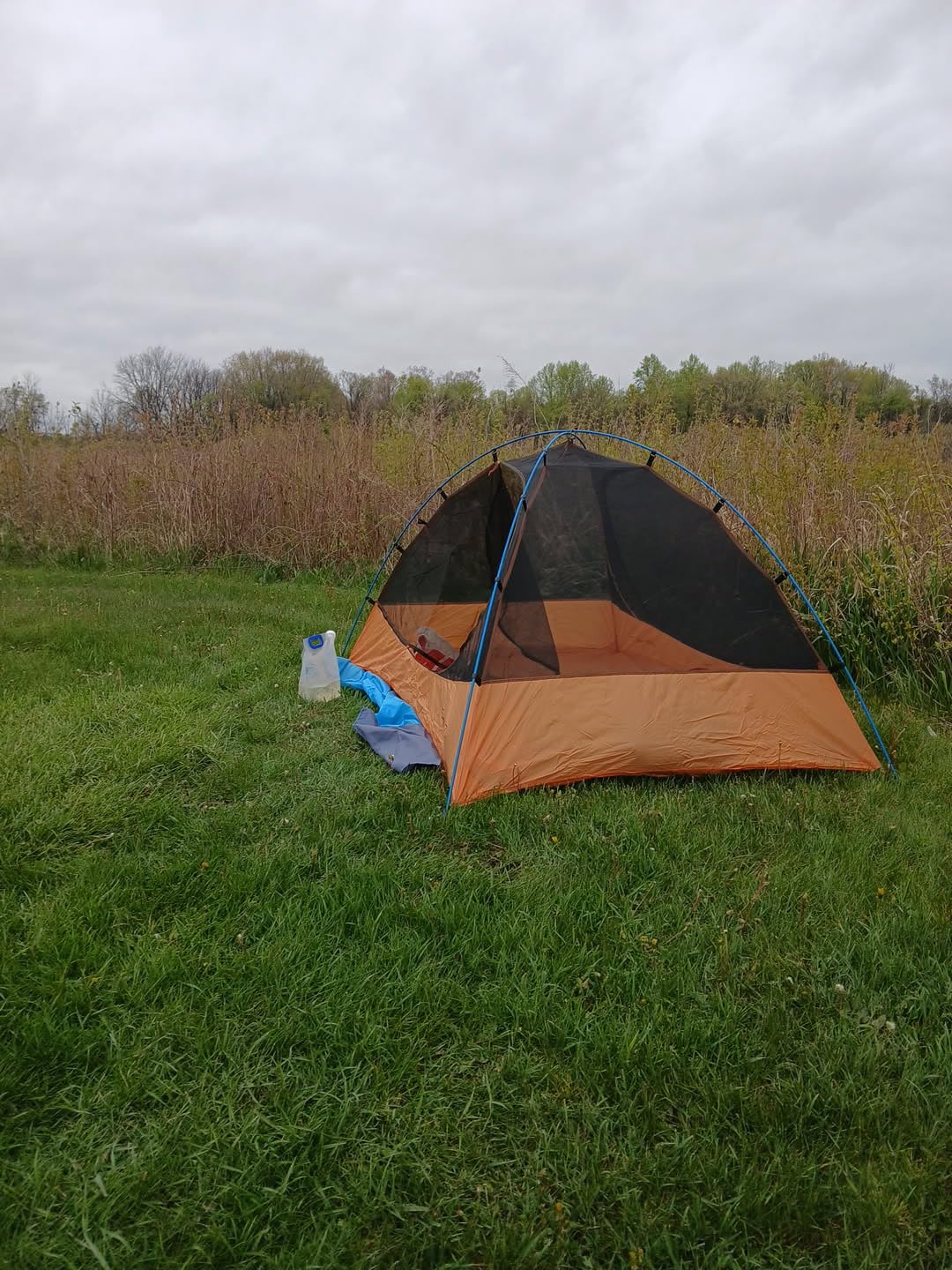
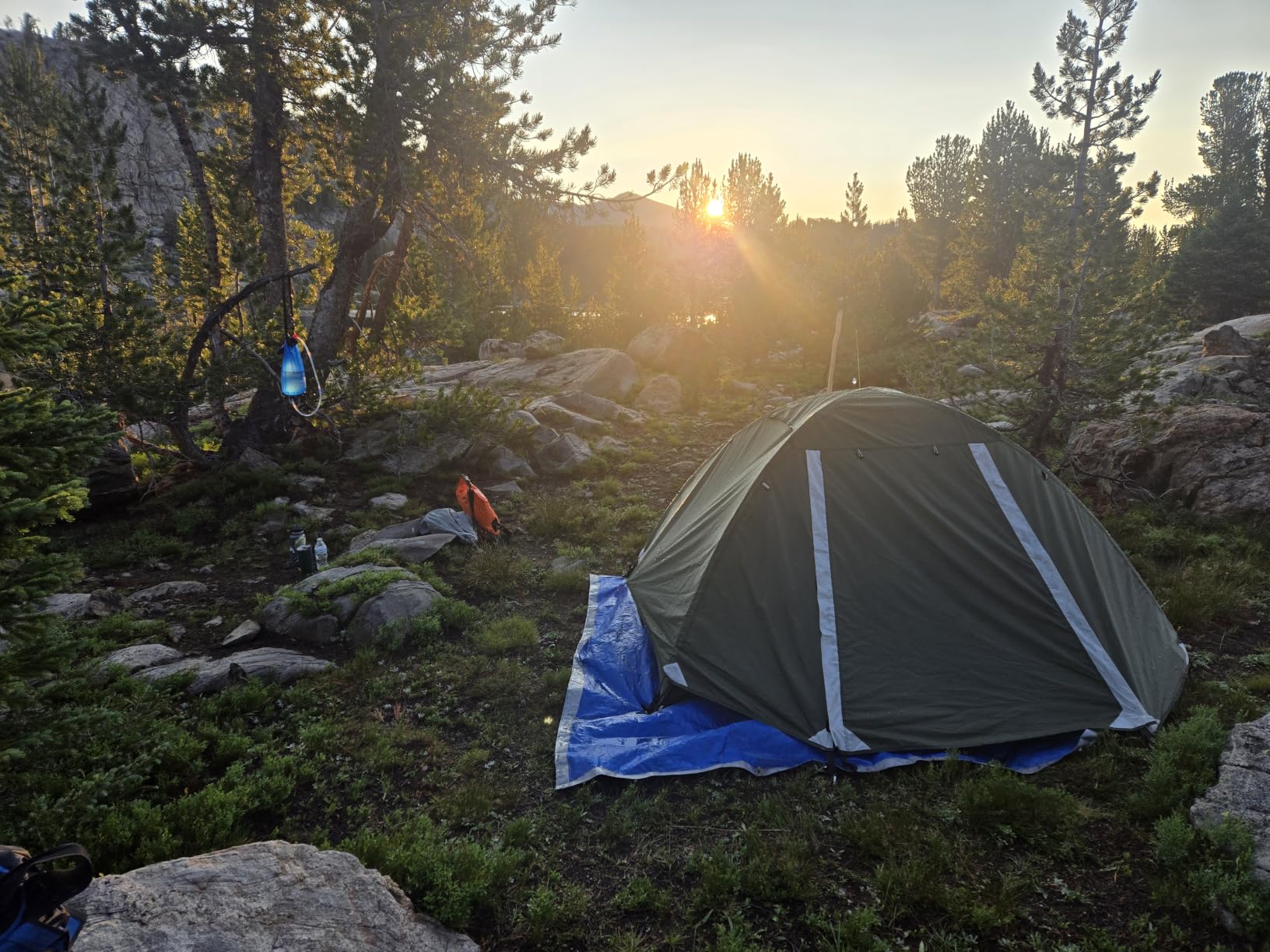
Weather performance is genuinely strong for the construction. The polyester rainfly, groundsheet, and bathtub floor all carry a PU 5000 coating with factory-sealed seams, and reviewers report interiors staying dry through heavy rain. The interior is 86.6 inches long by 59 inches wide with a 45.28 inch peak height, and the floor area is 5133 square inches, the largest interior in this roundup.
Weight is where honesty is required. The total is 5.29 pounds, and even the minimum trail weight with the fly, inner, and poles is 4.52 pounds. That is the honest price of a double wall with full mesh walls in this budget band, and no amount of marketing changes it.
Who the Clostnature suits
This is the right pick for a couple who has never thru hiked, wants a real tent with two entries, and would rather spend time learning trail skills than learning a new pitch method. Our guide to backpacking tents for two people covers the roomier end of the market if you need more space than this.
It also suits anyone whose trips include a mix of backpacking and car camping, because it transitions between the two without feeling out of place. Three-minute pitches matter enormously when you are arriving in the dark because you misjudged the last mile.
Where the Clostnature falls short
The packed length of 16.5 inches is the real problem for a walking hiker. Reviewers note it will not fit inside a standard daypack and protrudes vertically when strapped on, which is a genuine annoyance over 5000 miles. The fabric also feels thin next to premium shelters, and full mesh walls create condensation issues in cold conditions.
No footprint is included, so you are adding bulk and cost if you want one. If your route is cold and long, the mesh walls will work against you every night.
3. Forceatt 4-Season 2P – Best for Shoulder-Season Storms
Forceatt Tent for 2 Person is Waterproof and Windproof, Camping Tent for 3 to 4 Seasons,Lightweight Aluminum Pole Backpacking Tent Can be Set Up Quickly,Great for Hiking…
5.5 lb packed
3000mm waterproof index
Welded floor
Two D-shaped doors
Pros
- Self-explanatory 3 minute setup
- Two D-shaped doors plus two vestibules
- Welded floor stayed dry in thunderstorms
- Ceiling vents and mesh window handle condensation
- 3-4 season rated
Cons
- 5.5 lb is heavy on foot
- Thin floor benefits from a groundsheet
- Shallow vestibules with a gap around the fly
- Not rated for exposed ridgelines
The Forceatt earns its place for one reason: the floor. It is welded rather than taped or seamed, and that single construction detail is the difference between a tent that dries out by morning and one that holds a puddle of grit for the rest of the season.
Owners also like the setup. A single-piece aluminum pole design makes the pitch self-explanatory, and reviewers consistently describe pitching it in about three minutes without reading instructions, which is exactly what you want when the rain starts while you are still standing up.
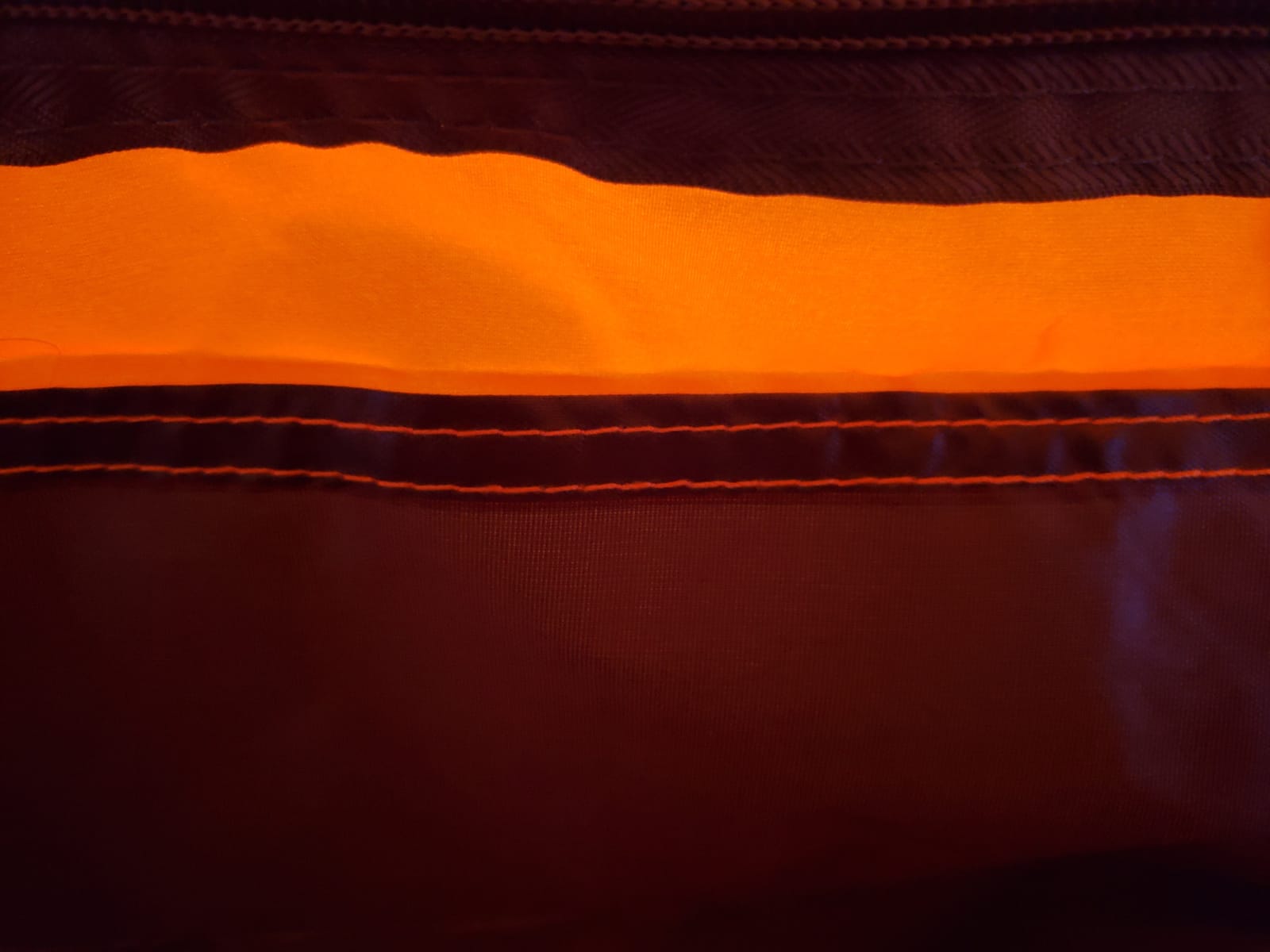
The spec sheet backs up the storm claim. Waterproof index runs up to 3000mm with a welded floor, there are two ceiling vents and a large mesh window for airflow, and the shelter is rated for three to four seasons. Interior floor measures 225 by 135 centimeters, which is 88.6 by 53.1 inches, with a peak height of 43.3 inches. The rainfly alone weighs 12 ounces.
Two D-shaped doors and front and rear vestibules mean two occupants never have to climb over each other, and the reflective guylines on 7001 series poles hold tension where it counts. Reviewers report stable behaviour in moderate wind and dry interiors through sustained thunderstorms.
Who the Forceatt suits
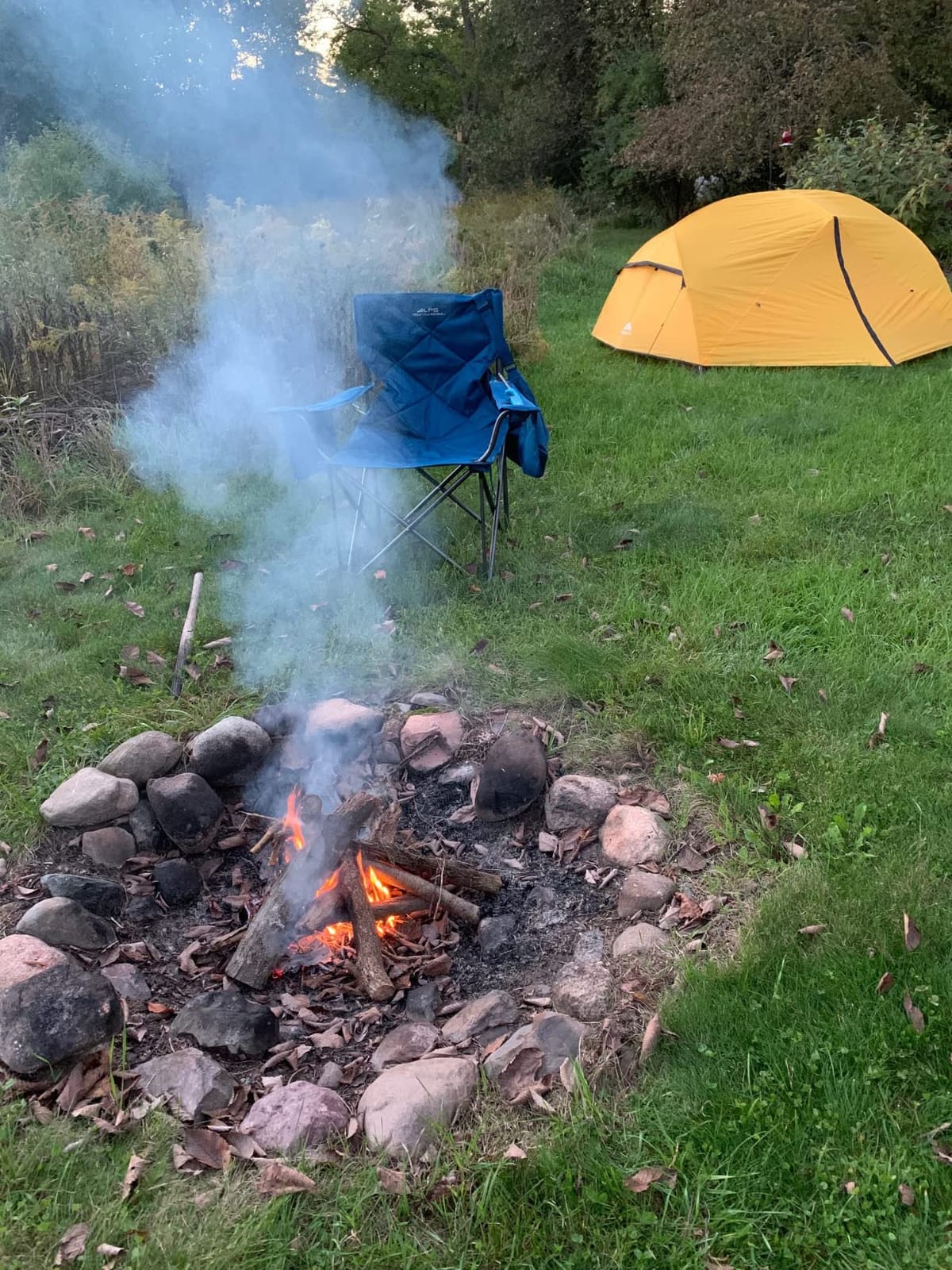
This is the shelter for a hiker who walks in shoulder season, does a few high-elevation overnights, or carries a wet-weather reputation. The welded floor and 3 to 4 season rating make it the safest of the twelve for a hiker who pitches in bad weather on purpose.
It also works well for motorcycle and bike camping, where setup speed and footprint matter more than ounces. If you are moving between bikepacking and foot travel, the two-door layout keeps it comfortable for a partner.
Where the Forceatt falls short
At 5.5 pounds, this is among the heaviest shelters we evaluated, and reviewers say so repeatedly. It is a two-person tent that behaves like one, not a solo shelter, so a solo hiker is carrying weight for a second occupant.
The floor fabric is thin and owners recommend putting a groundsheet or tarp underneath. The vestibules are shallow with a gap around the fly that leaves gear near damp ground exposed, and owners have not tested it on exposed ridgelines, so treat wind claims with care.
4. Camppal 1P A-Frame – Best for Tall Sleepers and Long Interiors
camppal 1 Person Tent for Camping Hiking Mountain Hunting Backpacking Tents 4 Season Resistance to Windproof Rainproof and Waterproof
3.75 lb packed
8.2 ft interior length
3500-4000mm fabric
CPAI-84 fire standard
Pros
- 8.2 ft length suits tall sleepers and gear
- Single-pole pitch in about 3 minutes
- Thick bathtub floor held up in torrential rain
- Aluminum frame and ripstop for wind stability
Cons
- Not freestanding
- runs hot with poor ventilation
- Dew can soak through at the vestibule
- Paper directions reportedly inaccurate
- Some reports of seam holes found after pitching
The Camppal solves a problem most two-person tents create for solo hikers: length. At 8.2 feet, the inner gives tall sleepers room to stretch out and leaves genuine space for a pack and boots inside the tub, which is unusual in a shelter rated for one person.
It is also one of only two shelters here with a four-season rating and a CPAI-84 fire retardant standard, which is a meaningful distinction in the high country where campfire bans and dry lightning storms overlap.
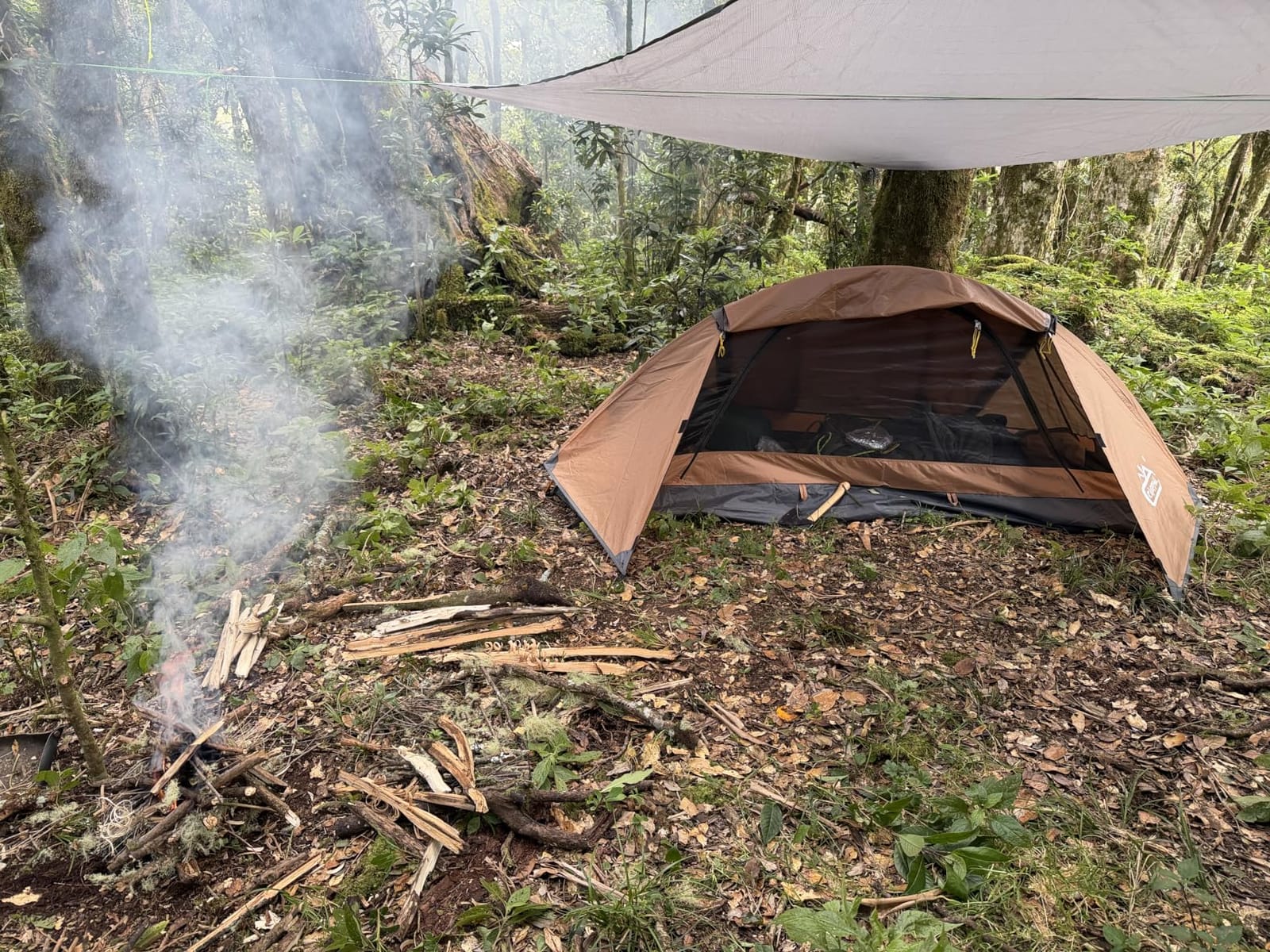
Construction is solid where it counts. The fabric is rated 3500 to 4000mm, seams are taped, and zipper seams and bottom corners are reinforced for heavy rain. Owners report a thick bathtub floor that held up through torrential rain on multi-day trips, with a single aluminum ridge pole and a 3-minute setup.
Floor area is 24.19 square feet with a 1.5 square foot vestibule, and the inner measures 8.2 feet by 2.95 feet with a 3.11 foot outer height. The side entry is a genuine feature, because it lets you pitch the inner and use the fly as a separate awning over a wider area.
Who the Camppal suits
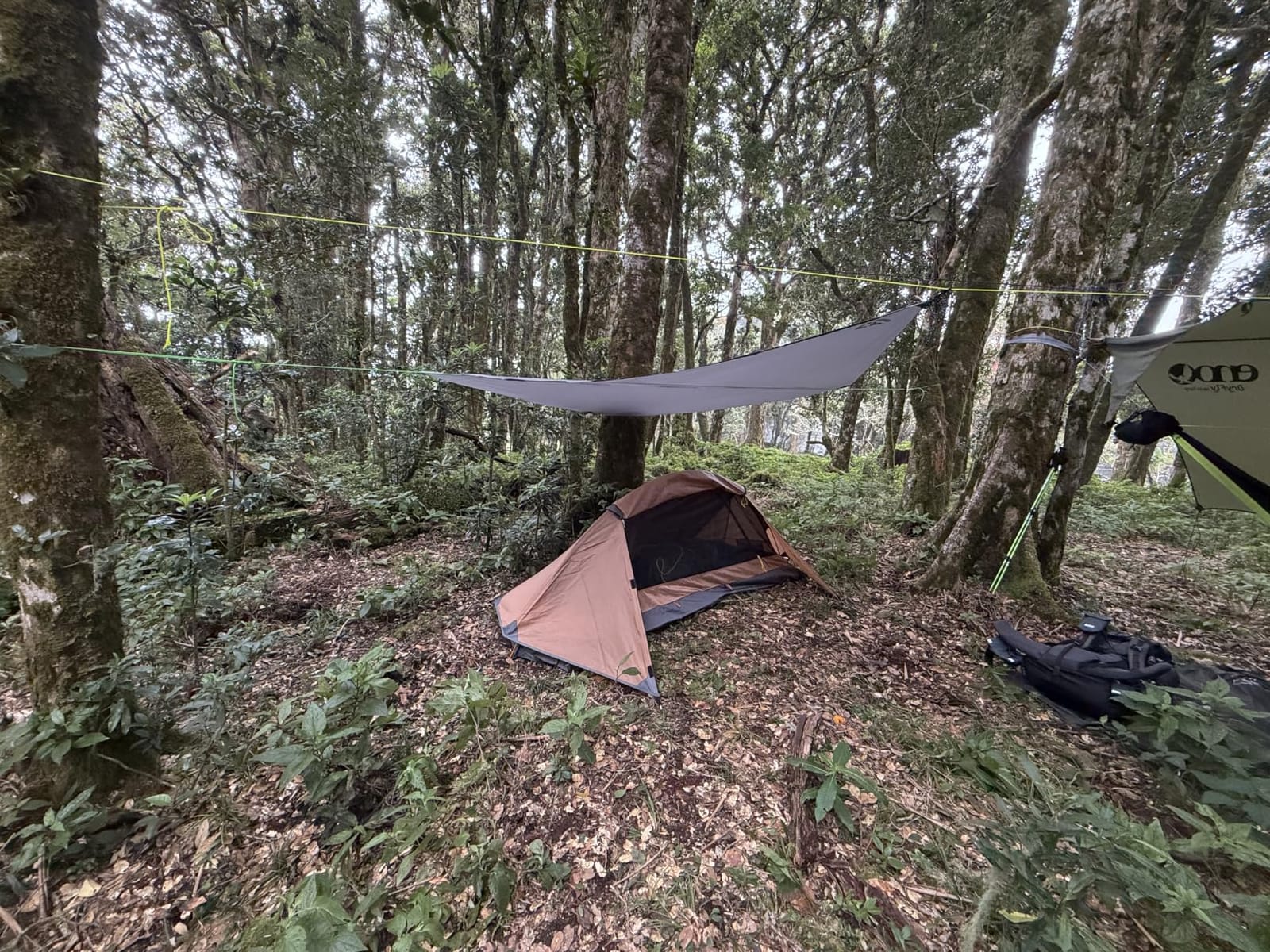
This is our pick for hikers over six feet who have been squeezed out of one-person tents, and for solo thru hikers who refuse to keep their pack in the vestibule. The length solves a problem that shorter bivy-style designs cannot, and at 3.75 pounds it is the lightest option here with real interior volume.
It also suits anyone who wants a four-season-rated single shelter instead of separate summer and shoulder-season tents. The CPAI-84 rating makes it the safest choice near seasonal burn bans.
Where the Camppal falls short
It is not freestanding, so the floor and fly must be staked out before pitching, which rules it out for rocky ground, snow, and slickrock camps. Ventilation is limited, and owners report it running hot with heavy condensation in warm conditions.
Dew and light rain can soak through at the vestibule unless treated, the paper directions are reportedly inaccurate, and some units have arrived with seam holes that only appear after pitching. Inspect the seams before you leave home.
5. ALPS Mountaineering Lynx 1 – Top Rated Solo Shelter With a Lifetime Warranty
ALPS Mountaineering Lynx 1-Person Tent – Lightweight, Easy Setup, Waterproof, Freestanding Backpacking Tent with Durable Aluminum Poles and Ample Ventilation
3 lb 5 oz minimum weight
75D polyester fly, 1500mm
20 sq ft floor area
Limited lifetime warranty
Pros
- Freestanding two-pole design with no learning curve
- Half-mesh walls cut condensation
- Vestibule plus pockets and a gear loft
- Light enough for solo backpacking at 3 lb 5 oz minimum
- Backed by a limited lifetime warranty
Cons
- 1500mm fly rating is modest
- Narrow 2 ft 8 in width suits one sleeper
- Sold without a footprint
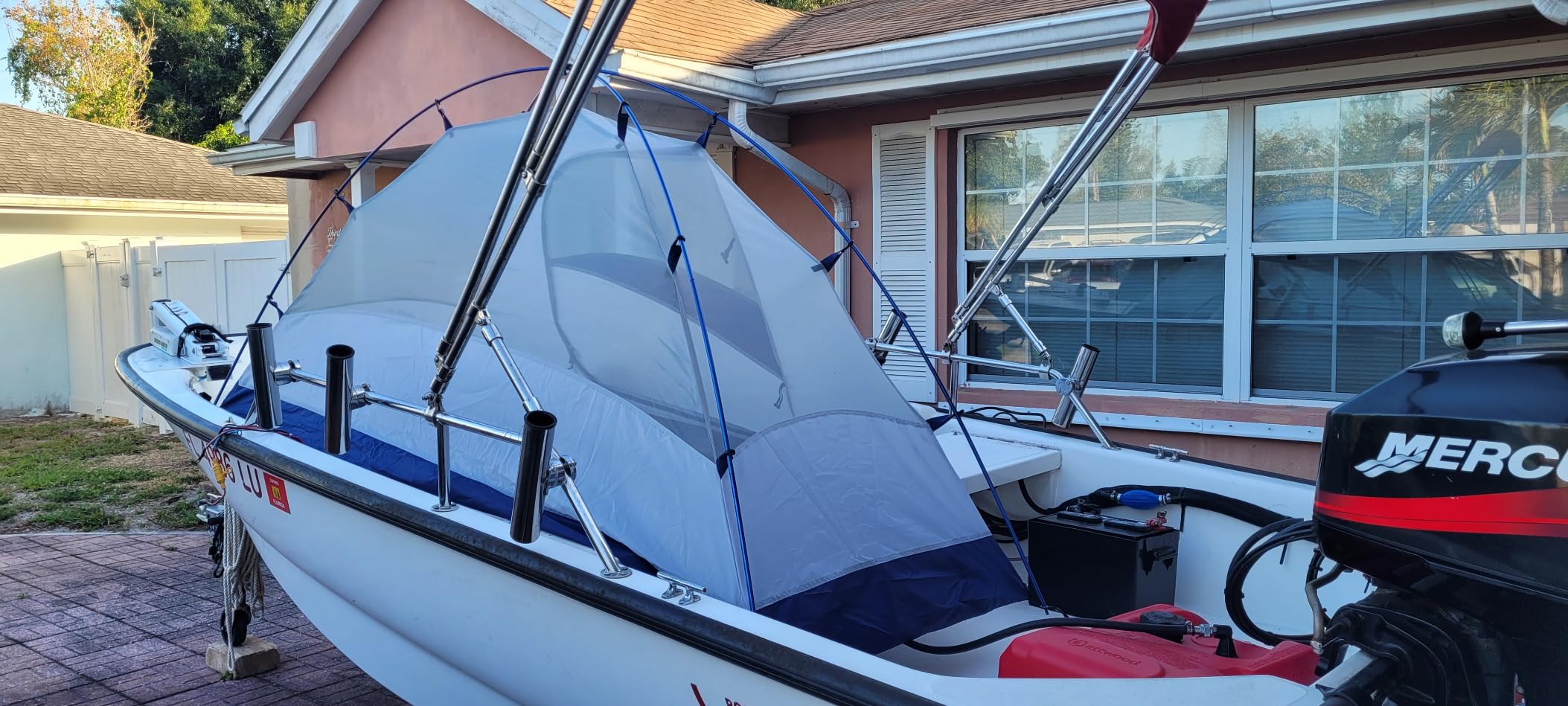
The Lynx carries the highest owner rating in this roundup at 4.7 across 906 reviews, and the reason is consistency rather than any single feature. Owners describe a tent that simply works, pitches fast, and does not develop problems over a season of use.
It is a solo freestanding dome on two aluminum poles with clip attachments, so there is no new technique to learn. That matters more for a first solo trip than any other feature on this list, because the only thing between you and a wet night is getting it standing.
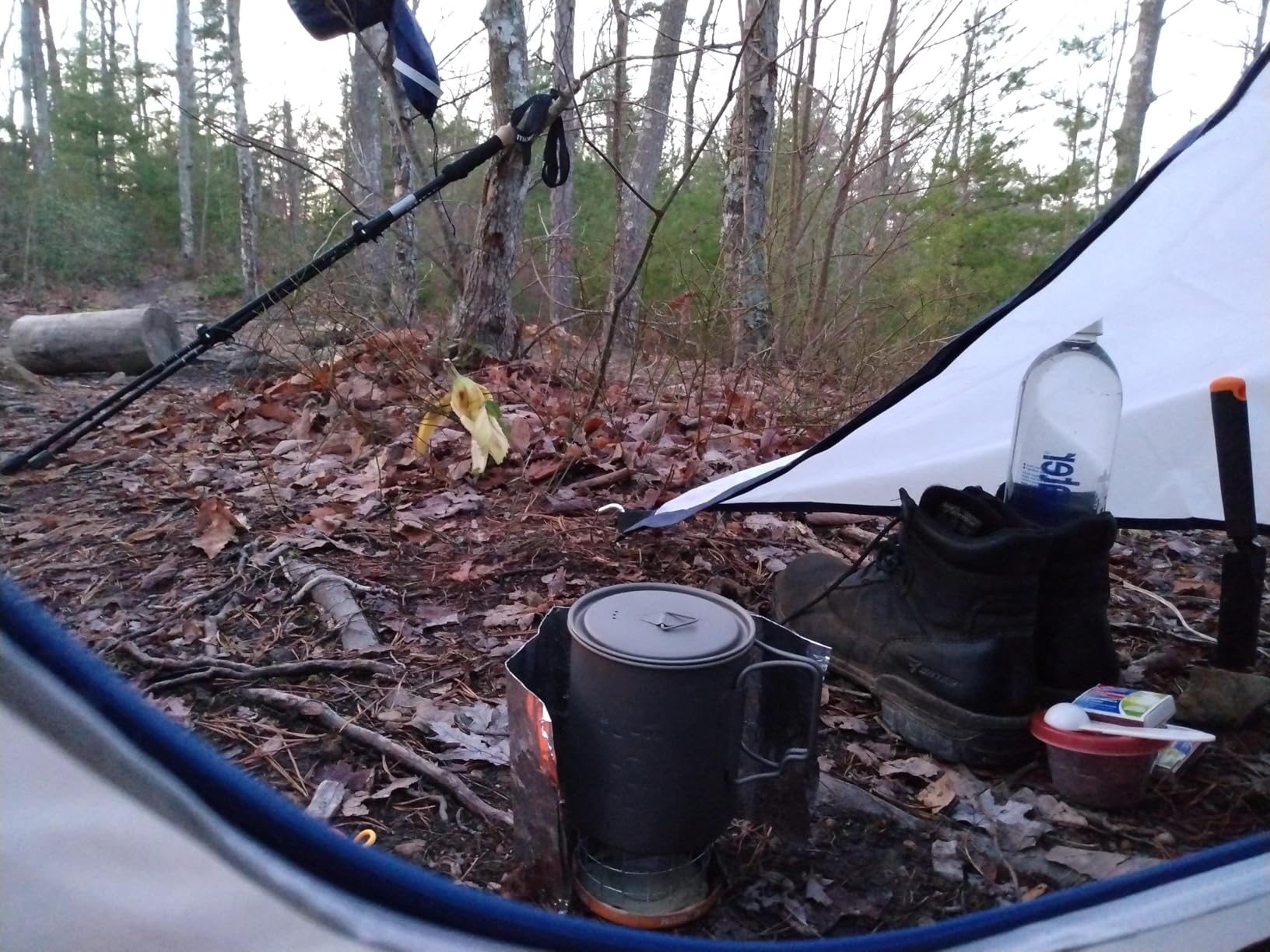
The half-mesh walls are the sleeper feature here. They raise airflow and cut condensation on warm nights, and they are the main reason this tent avoids the stuffy interior that plagues cheaper single-wall designs. Storage runs to a vestibule, two mesh pockets, and a gear loft, which is generous for a 20 square foot floor.
Weight is 4 pounds 1 ounce total and 3 pounds 5 ounces at minimum, packed size is 17 by 5 inches, and the shelter carries a limited lifetime warranty from an established outdoor brand. The fly is 75D 185T polyester with a 1500mm coating and the floor carries 2000mm.
Who the ALPS Lynx suits
This suits solo hikers who want one freestanding tent they can pitch in any weather, and anyone who values a warranty over a lower headline weight. For a beginner, it removes almost every failure point, from stake choice to pitch method.
It also works as a first tent for someone moving from car camping into backpacking, because the familiar dome shape means nothing about the setup is a surprise. Our [hammock tent guide](https://betterbike.org/best-hammock-tents-for-backpacking/) covers the opposite end of the spectrum if you want the lightest possible sleep system.
Where the ALPS Lynx falls short
The 1500mm fly rating is the weakest waterproof figure among the twelve, and on a sustained-wet trail that is a real limitation even with factory-sealed seams. The 2 foot 8 inch width suits a solo sleeper but rules out a dog and limits gear storage inside.
No footprint is included, which many owners add separately, and at 3 pounds 5 ounces minimum you are not saving much against lighter trekking-pole designs if base weight is your primary goal.
6. MIER LANSHAN – Best Lightweight Setup for Trekking-Pole Hikers
LANSHAN Ultralight Tent 3-Season Waterproof Backpacking Tent for 1-Person Camping, Trekking, Climbing, Hiking, 1 Person, Khaki
2.1 lb for the 1 person version
5000mm fly, 6000mm floor
Full mesh double wall
Trekking poles not included
Pros
- Genuinely ultralight at 2.1 lb for one person
- High waterproof ratings through multi-day storms
- True double wall full mesh inner
- Configurable as a tarp tent or mesh tent
- Good headroom for sitting upright
Cons
- Trekking poles are not included
- 2 person version is a roomy solo shelter
- End tie-out points leak unless seam sealed
- Fly edges scoop pooling water
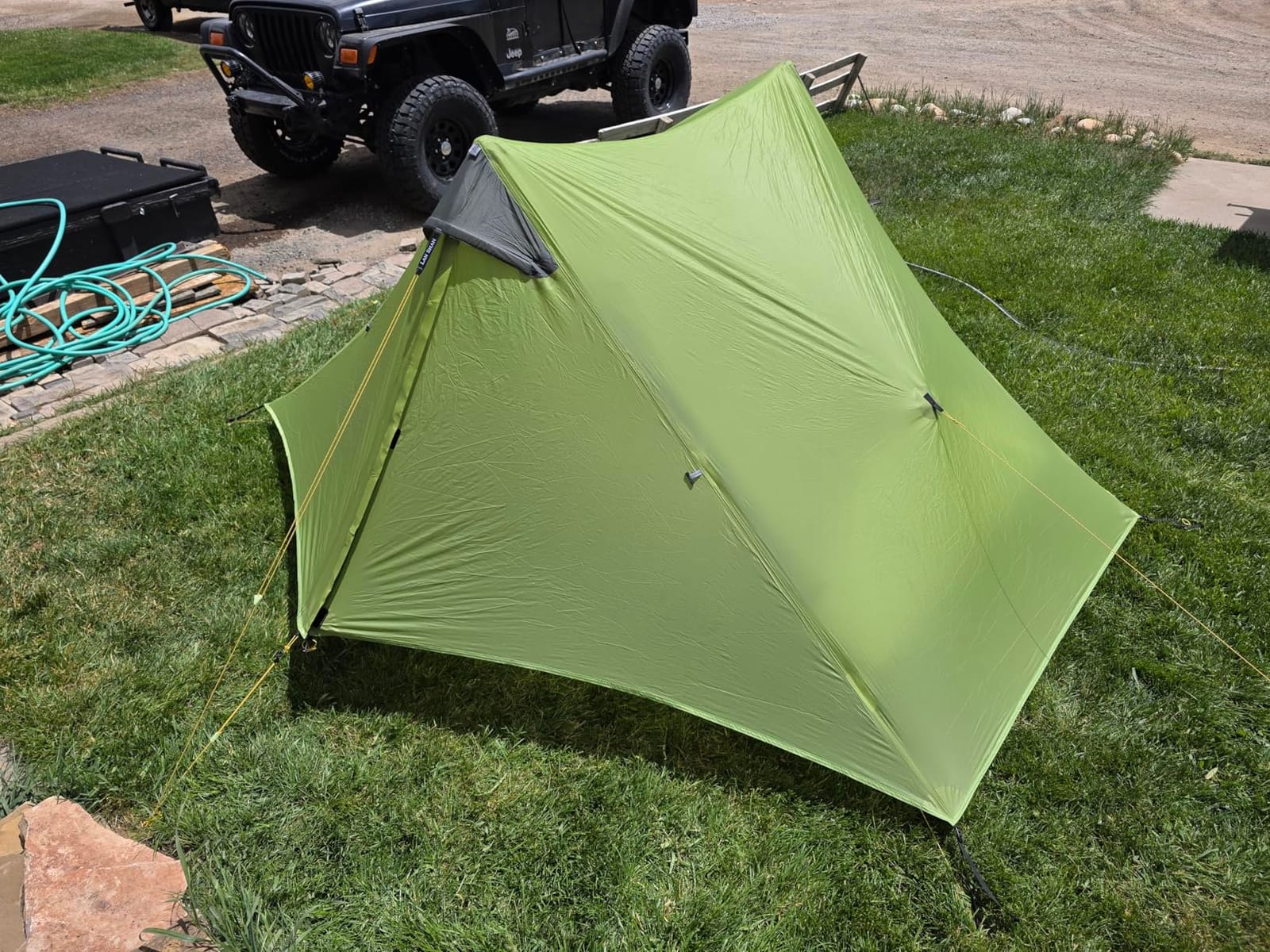
The LANSHAN is the closest thing in this roundup to a true trekking-pole shelter, and at 2.1 pounds for the one-person version it is the second lightest option here. It also keeps a full mesh inner, which almost no shelter this light manages, and that is the feature that sets it apart.
Owners value the waterproof ratings most. The 15D nylon rainfly is rated 5000mm and the bathtub floor 6000mm, and reviewers report both holding up through multi-day storms. A double wall at this weight is genuinely unusual, and it is why this shelter sleeps drier than most of its neighbors.
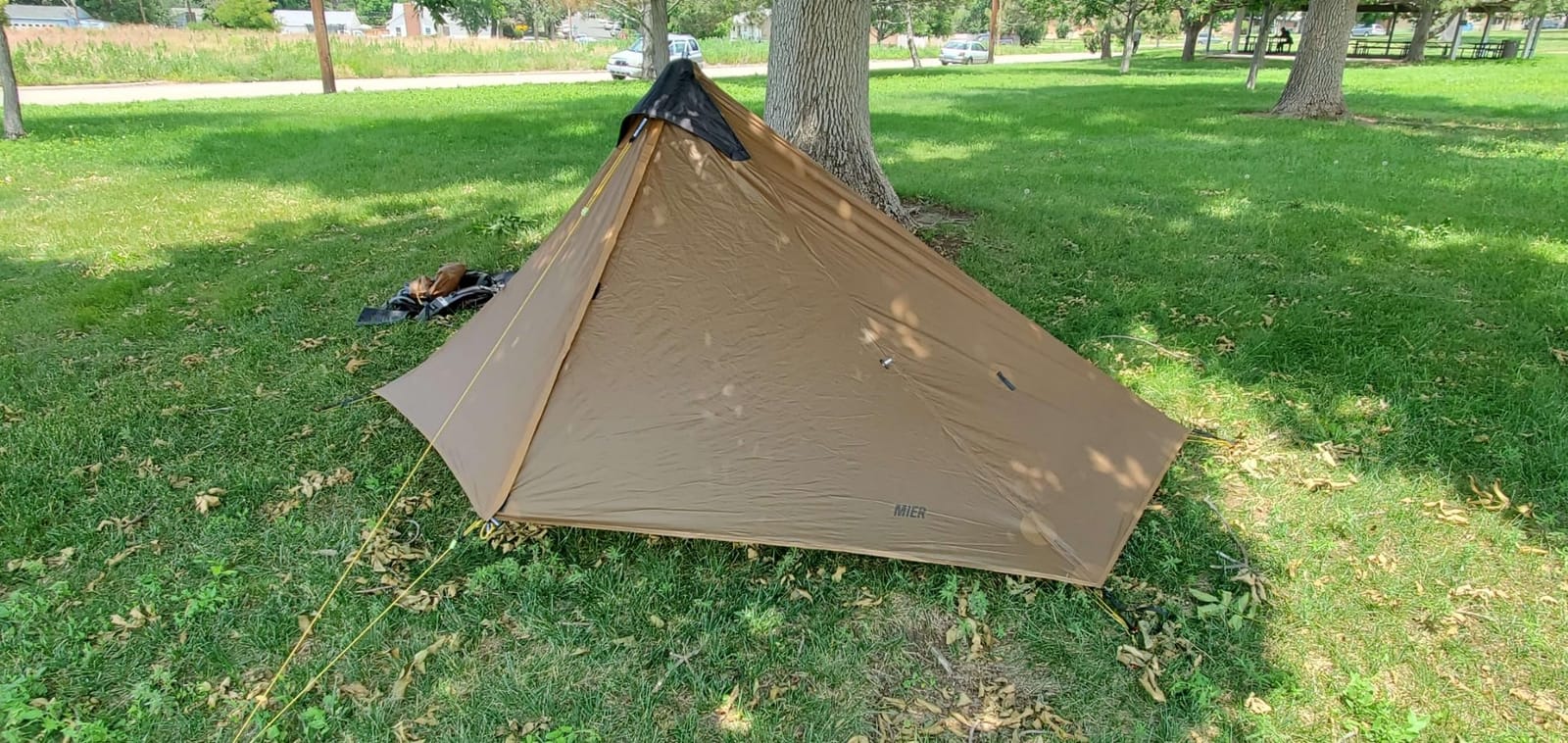
The config options are unusually flexible. You can pitch it as a tarp tent without the floor and mesh, or as a mesh tent without the fly, which lets one shelter cover a bug season and a dry desert stretch. A gear hook for a lamp or fan and a small mesh pocket handle the small stuff.
Interior dimensions are 90.6 by 39.4 inches with a 49.2 inch peak height for one person, and 86.6 by 43.3 inches for two, packed to 12.6 by 4.7 by 5.5 inches. The two-person version weighs 2.6 pounds. Setup takes 5 to 10 minutes using one trekking pole for the 1P or two for the 2P.
Who the LANSHAN suits
This suits hikers who already carry trekking poles and want the lightest double-wall setup in the roundup. It also suits solo hikers who need headroom to sit up, since the 49.2 inch peak height is the tallest interior here, and the full mesh inner handles bug season without turning into a sauna.
It works well as a desert and shoulder-season shelter, and the 2P version works as a spacious solo shelter with room for a pack. If you have never pitched a trekking-pole tent, practice it at home first, as we cover in the buying guide below.
Where the LANSHAN falls short
Trekking poles are not included, so the 2.1 pound figure is not the number on your back. Owners also report that tie-out points at both ends leak unless every stitch is seam sealed, and that the short fly edges scoop water that pools around the tent base.
The two-person version is really a roomy one-person-plus-gear shelter. The slick fabric is also hard to roll and pack, and it can blow around in wind without a footprint.
7. KAZOO 1P – Best Lightweight Double Wall for One Person
KAZOO Waterproof Backpacking Tent Ultralight 1 Person Lightweight Camping Tents 1 People Hiking Tents Aluminum Frame Double Layer (Eco-Friendly Fabric) (Army Green)
3.3 lb packed
20 x 6 in carry bag
Double wall with mesh
3000mm-plus rating
Pros
- Freestanding single pole with clips sets up in under 5 minutes
- 3.3 lb with a compact 20 x 6 in packed size
- Large mesh sections and a D-shaped door ventilate well
- GRS certified recycled fabrics
- Reflective guylines included
Cons
- Interior is tight for taller sleepers
- Vestibule is very small and the zip is hard to close
- No footprint included
- Oversized groundsheet runs water under the tent
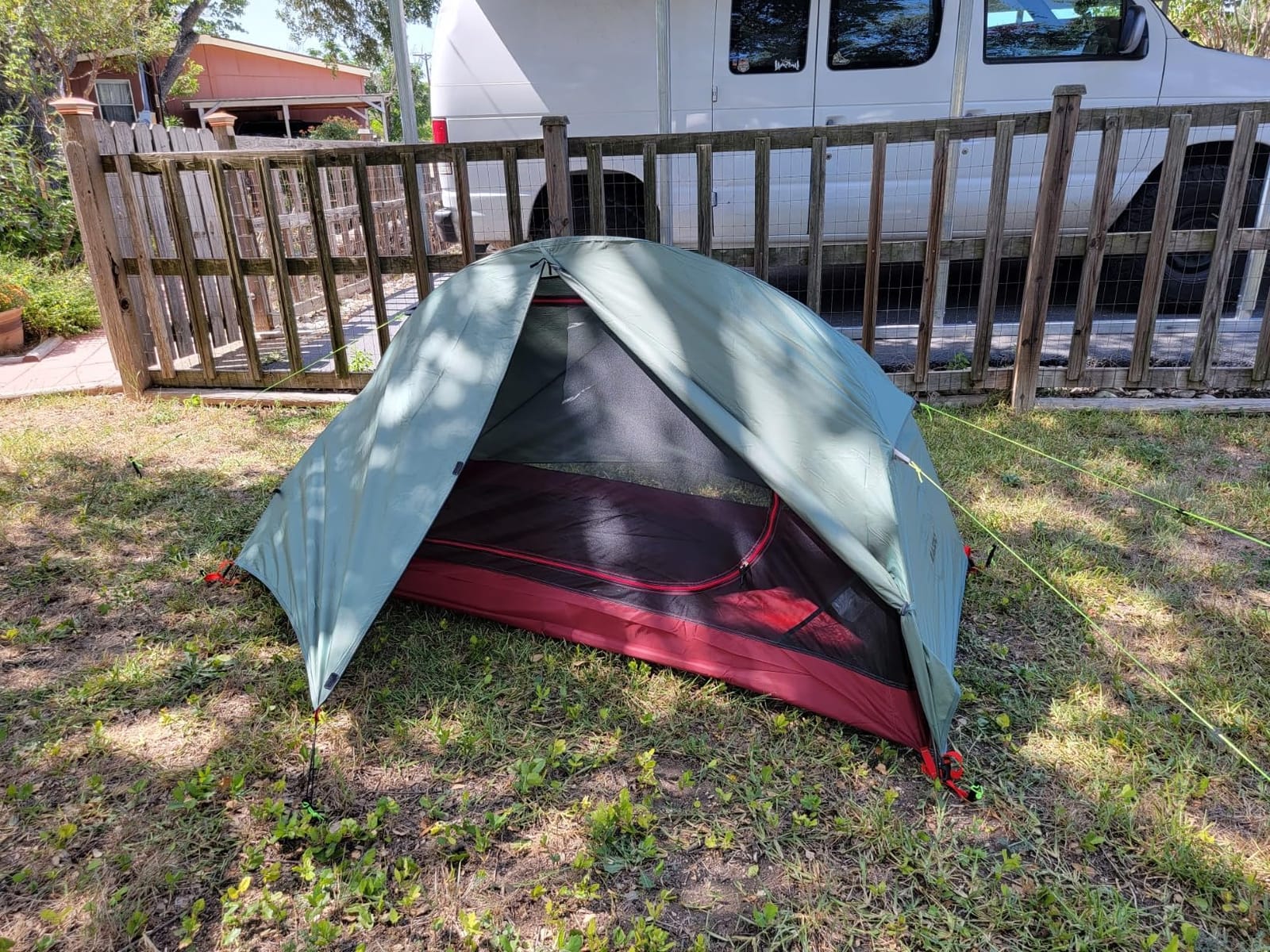
The KAZOO is the compromise shelter for anyone who wants a proper double wall without giving up free-standing simplicity. One integrated aluminum pole with clips sets the whole thing up in under five minutes, and 3.3 pounds with a 20 by 6 inch carry bag is a respectable solo pack footprint.
Owners like the ventilation. Large mesh sections plus a D-shaped door move real air, which keeps a one-person tent from turning into a sauna in warm months, and the tub floor is reported as staying dry on rock campsites where pooled water surrounded the tent.
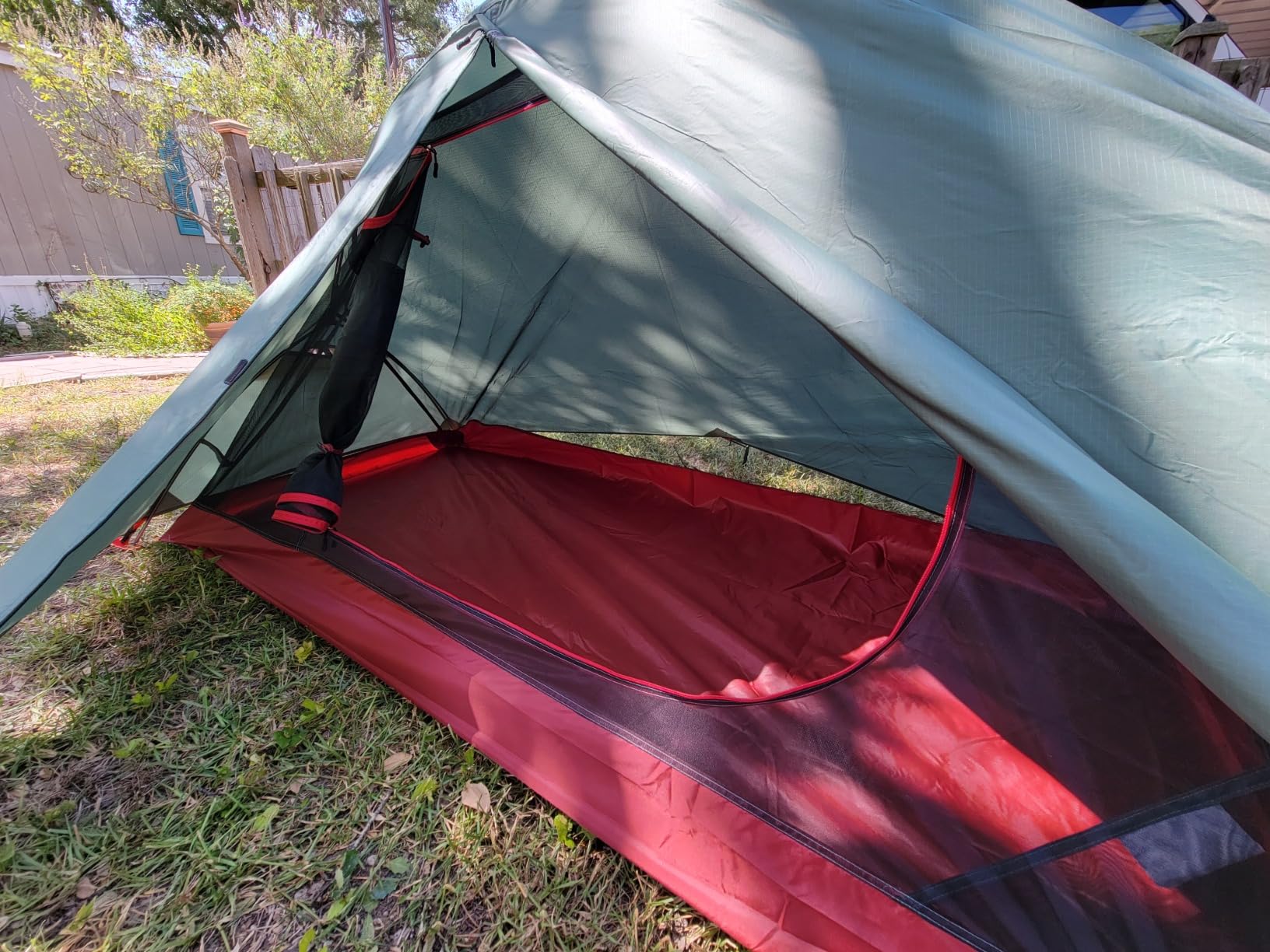
The build is straightforward. A B3 mesh inner pairs with a 190T polyester liner under a 210T ripstop full-coverage fly, and the waterproof test rating runs above 3000mm with coated joints. Interior dimensions are 36 by 83 by 40 inches, with a floor area of 2988 square inches.
One detail worth calling out: the fabrics are GRS certified recycled through the ECO CIRCLE system, which matters if you buy more than one tent over your hiking life and want materials that are traceable. Reflective guylines help when you are pitching in failing light.
Who the KAZOO suits
This suits solo hikers in three-season terrain who want mesh protection and a freestanding pitch without spending a lot. It is a strong fit for bikepacking, bike touring, or motorcycle camping where setup speed and a small packed size matter more than trail weight.
It also works for anyone who has been put off by trekking-pole shelters. The KAZOO is small enough for tight campsites, which solves a real problem on narrow ridgelines and crowded AT platforms.
Where the KAZOO falls short
The interior is the main issue. Owners taller than roughly 5 foot 10 inches to 6 foot 4 inches report the length or headroom feeling restrictive, and the 36 inch width is narrow for gear. The vestibule is very small and its zipper is hard to close.
No footprint is included, and the included groundsheet is larger than the tent footprint, which lets water run underneath rather than away. The two-person version is really a roomy one-person-plus-gear shelter.
8. Kelty Grand Mesa 2P – Best for the Fastest Pitch in the Roundup
Kelty Grand Mesa Backpacking Tent, 2 or 4 Person, Aluminum Poles (2P)
4 lb 1 oz for two
3300HH coated polyester
30 sq ft interior
Quick Corners pitch system
Pros
- Quick Corners and color-coded clips set up in 3 to 5 minutes
- Rainfly buckles on and off easily
- 3300HH 68D polyester with taped seams stayed dry
- Sturdy aluminum press-fit poles and metal stakes
- Vestibule gives a covered porch for boots
Cons
- Heavier than most thru-hiking tents
- Floor is tight for two
- Low vestibule cannot take a large pack
- Footprint sold separately
- Bulky 16 x 7 x 7 in packed size
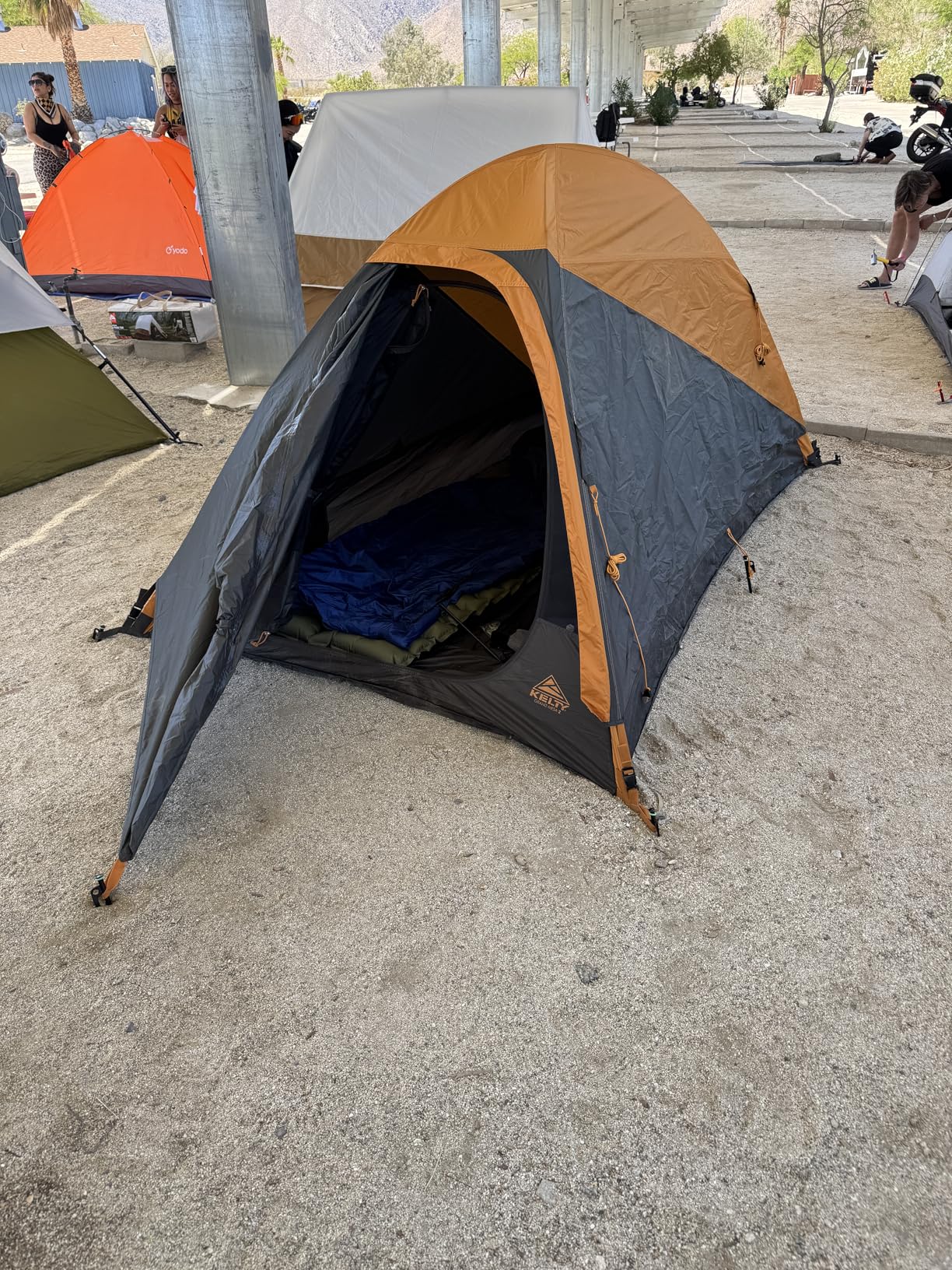
The Grand Mesa is marketed by its manufacturer as a thru-hiking shelter, and it behaves like one in the ways that matter. The Quick Corners system holds the poles in position while you clip the fly on, and the colour-coded clips remove the single most common failure point in a first pitch: putting a pole in the wrong sleeve.
Owners describe setup in three to five minutes solo, with the rainfly buckling on easily and detaching quickly. That speed is why it keeps showing up on recommendation lists for hikers who would rather not fumble with a pitch in the dark.
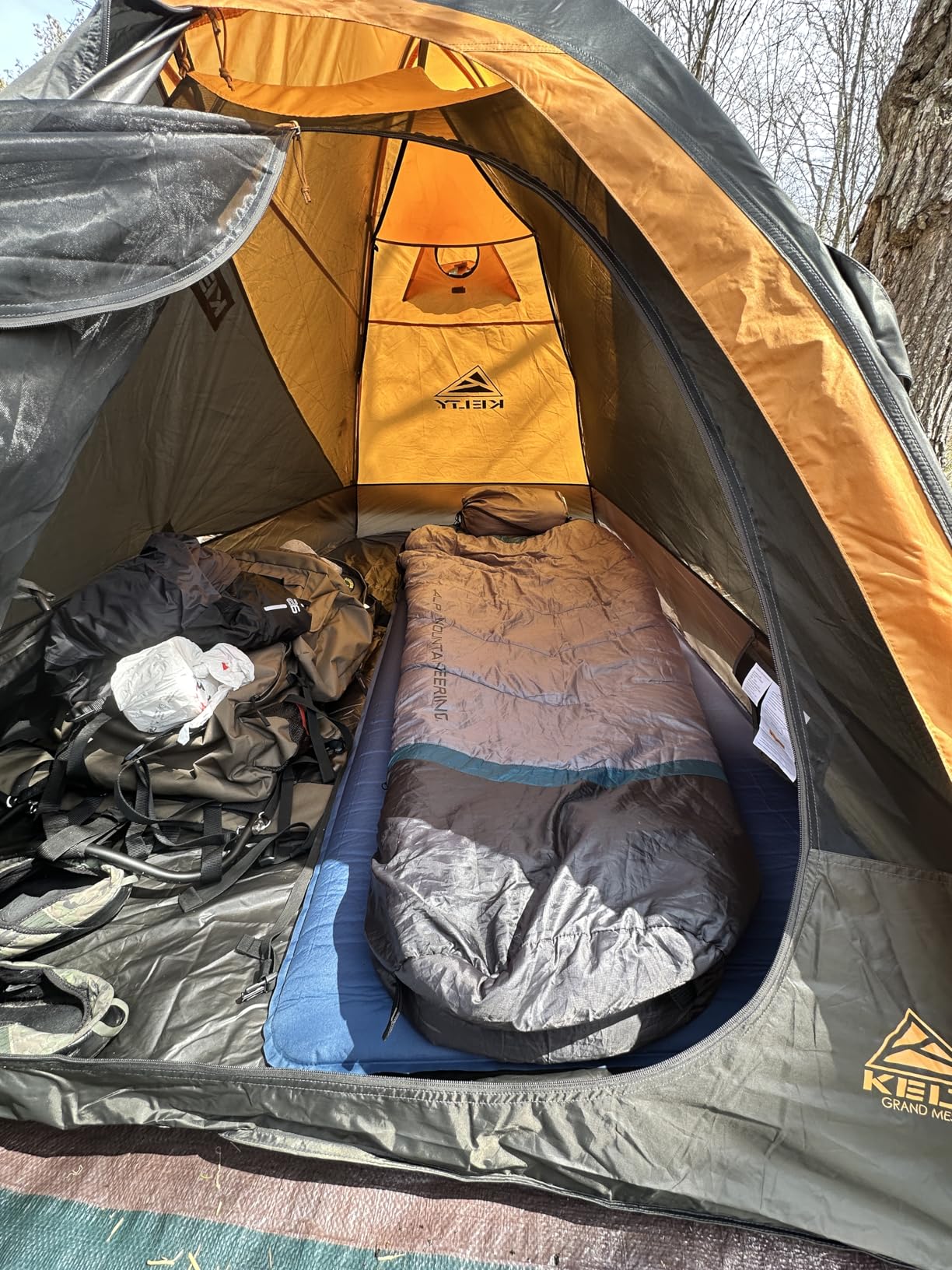
Weather performance is better than the price suggests. The 68D polyester floor and rainfly carry a 3300HH waterproof coating with fully taped seams, and owners report the tent staying bone dry in sideways rain, which is a better test than vertical rain because it finds unsealed seams.
The interior is 85 by 57 inches with a 44 inch peak height and 30 square feet of floor, plus a 3 square foot vestibule with an EZ-Zip door. Packed size is 16 by 7 by 7 inches. Weight is 4 pounds 1 ounce for two, and 4 pounds 7 ounces including stakes.
Who the Kelty Grand Mesa suits
This suits hikers who want a traditional freestanding dome that is tougher than its class. A Kelty Quick Corners frame and metal stakes feel more durable than the price would suggest, and for a hiker who will use one tent for five seasons, build quality is the better investment.
It also suits anyone transitioning from car camping, since the dome shape and press-fit poles are familiar. The colour-coded clips make it a good training shelter for a first backpacking trip.
Where the Kelty Grand Mesa falls short
At 4 pounds 1 ounce, it is heavier than most thru-hiking tents and sits in the wrong weight class for long ultralight routes. The floor is tight for two, and most owners end up using it as a roomy solo tent rather than a genuine two-person shelter.
The vestibule sits three to four inches off the ground and cannot take a large pack, the footprint is sold separately, and the 16 by 7 by 7 inch packed size is bulky to attach to a pack.
9. Night Cat 2-Person Tent – Most Versatile With Real Two-Person Space
Night Cat 2-Persons Backpacking Tent: Waterproof Lightweight Camping Tent for Two People Hiking Outdoor Mountain with Aluminum Poles and Rainfly Army Green
4.4 lb packed
31.24 sq ft floor area
Welded floor, 3000mm rated
Two doors, two vestibules
Pros
- Two D-shaped doors and dual vestibules
- 6.8 x 4.6 x 3.6 ft interior sleeps two adults
- Full coverage fly with welded floor and taped seams
- Full mesh inner and dual ceiling vents
- One person can pitch it in about 3 minutes
Cons
- 4.4 lb is heavy for a two-person shelter
- No footprint included
- Thin fabric benefits from a groundsheet
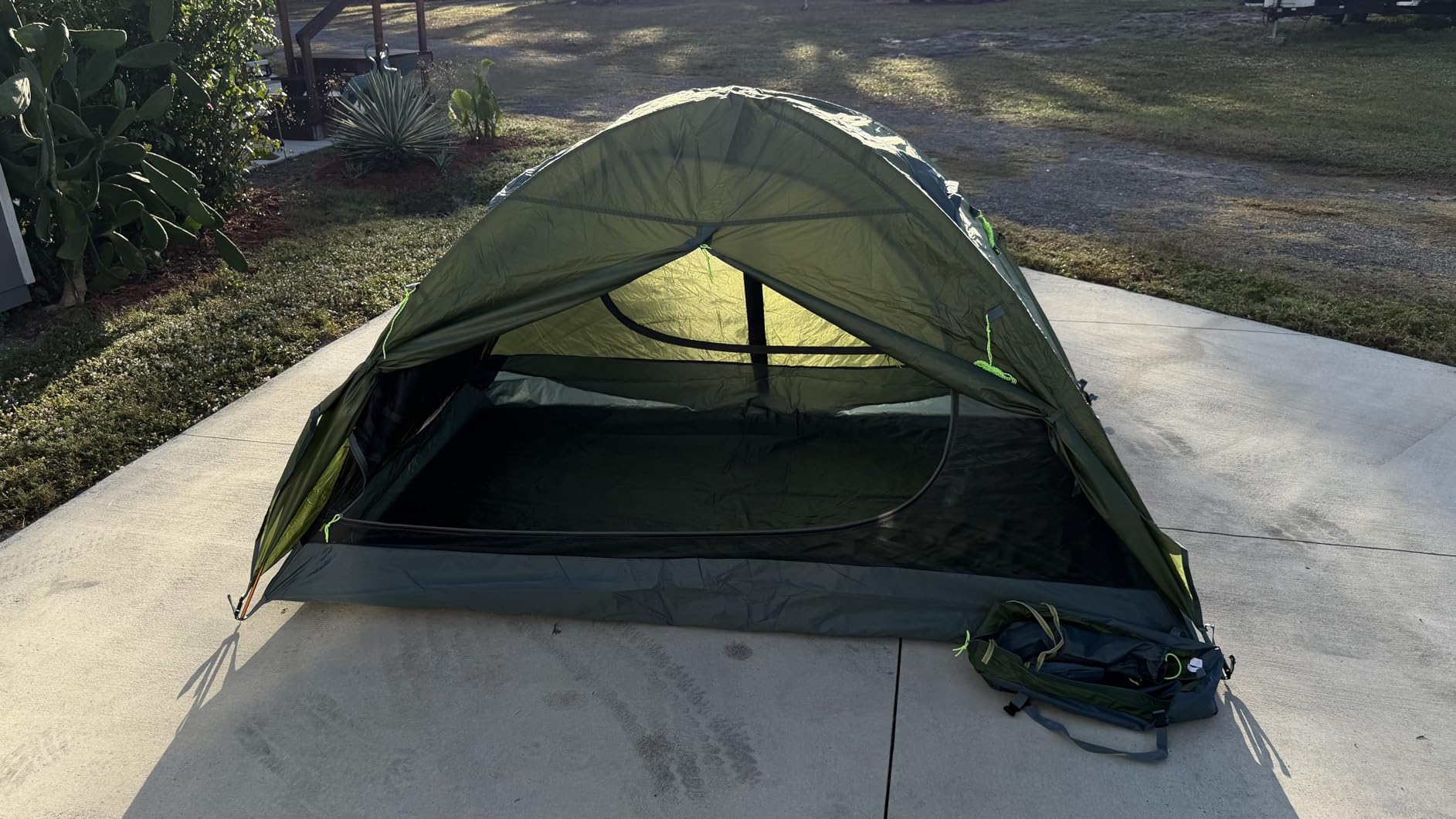
The Night Cat two-person is the one to look at if you are splitting a shelter and want real two-person room without stepping up into a heavier class. The interior measures 6.8 by 4.6 by 3.6 feet, with a floor area of 31.24 square feet, and owners report two adults sleeping in it with room to move.
It also carries a welded floor with seam-taped construction rated to 3000mm, which is the same construction detail we singled out on the Forceatt and for the same reason. At this weight, a welded floor is a genuine quality marker.
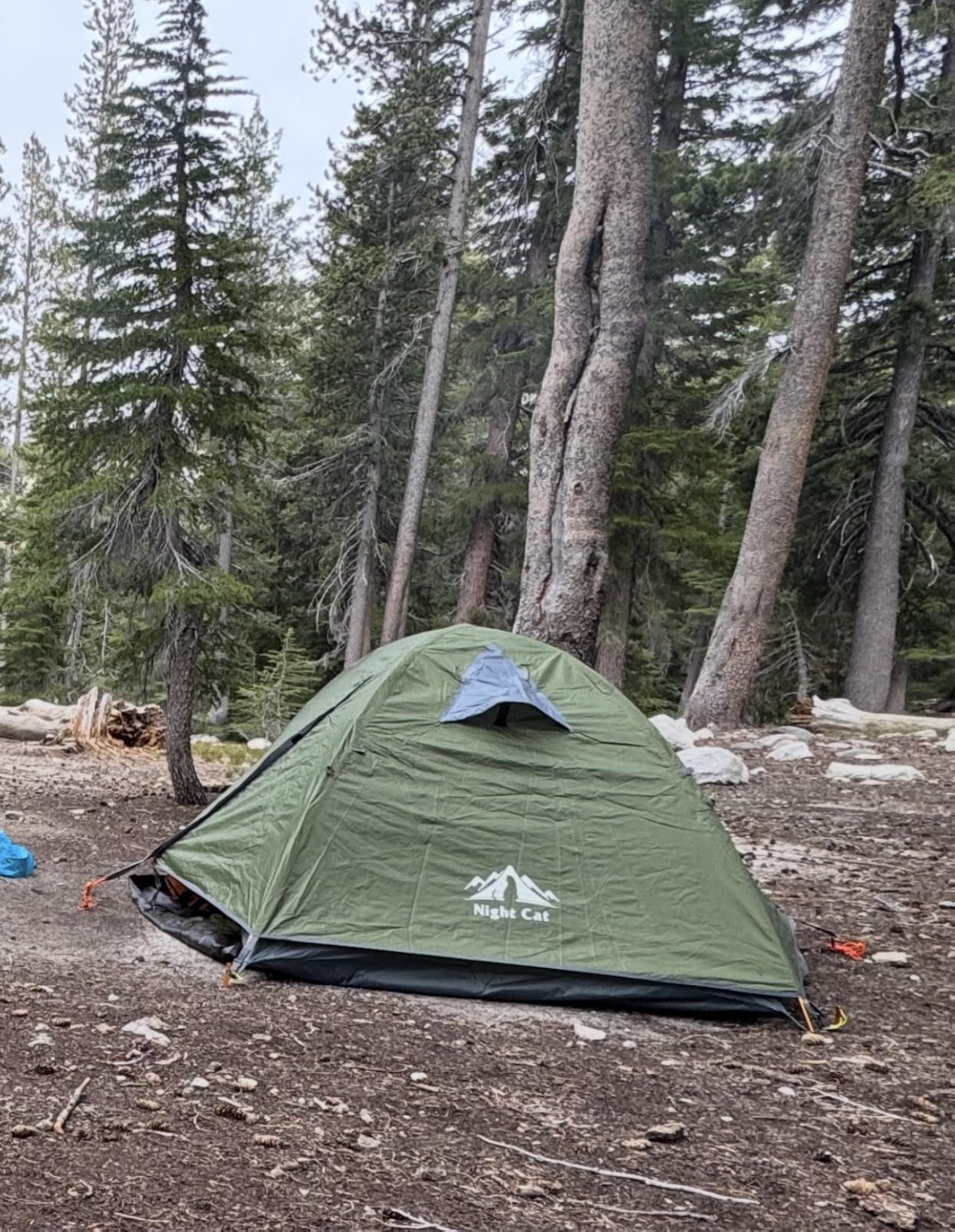
Ventilation is handled by full mesh inner walls and dual ceiling vents, and owners note that this noticeably reduces condensation on warm nights. Two D-shaped doors with smooth zippers let both occupants move independently, and the two vestibules give each person a covered gear area.
Pitch takes about three to five minutes with two lightweight aluminum poles, and the shelter includes poles, guylines, stakes, and the vestibules. Interior peak height is 43.3 inches, with 4.33 square feet of vestibule area. Total weight is 4.4 pounds.
Who the Night Cat 2P suits
This suits a couple on a budget who still want a proper two-door two-vestibule layout. It is a good fit for section hikers and weekend backpackers, and for anyone who wants roomy two-person space without the 5 to 6 pound weight of the larger budget tents in this roundup.
It also works for a solo hiker with a dog or a large kit load, since 31.24 square feet of floor is more space than most one-person shelters here offer at twice the price.
Where the Night Cat 2P falls short
At 4.4 pounds it is at the heavy end for a two-person backpacking shelter, and a solo hiker is paying for a second occupant they do not have. No footprint is included, and the fabric is thin enough that owners recommend a groundsheet underneath.
The listed specification pairs a polyester fly with a nylon base, which is a mixed material build that may wear unevenly over a long season. Check the fabric after a few hundred miles.
10. Night Cat 2 lb Bivy – Best for Minimum Packed Volume
Night Cat Ultralight Tent 1 Person for Professional Backpacker Hiker 2 LBS Only Lanshan Backpacking Bivvy Ground Tent Heavy Rain Waterproof Trekking Pole Not Included
2 lb minimum trail weight
106.3 in interior length
Double-layer bivy design
Vestibule for pack and boots
Pros
- Very light at about 2 lb and compacts small
- Quick setup with included stakes and ropes
- Trekking pole works as the support
- Roomy enough for a pack stored alongside the sleeper
- Vestibule fits a backpack and shoes
Cons
- Stakes do not hold well in hard or soft ground
- Confusing tie-out and closure system
- Fly door does not zip across the bottom
- One owner reported the fabric as cheap and not water resistant
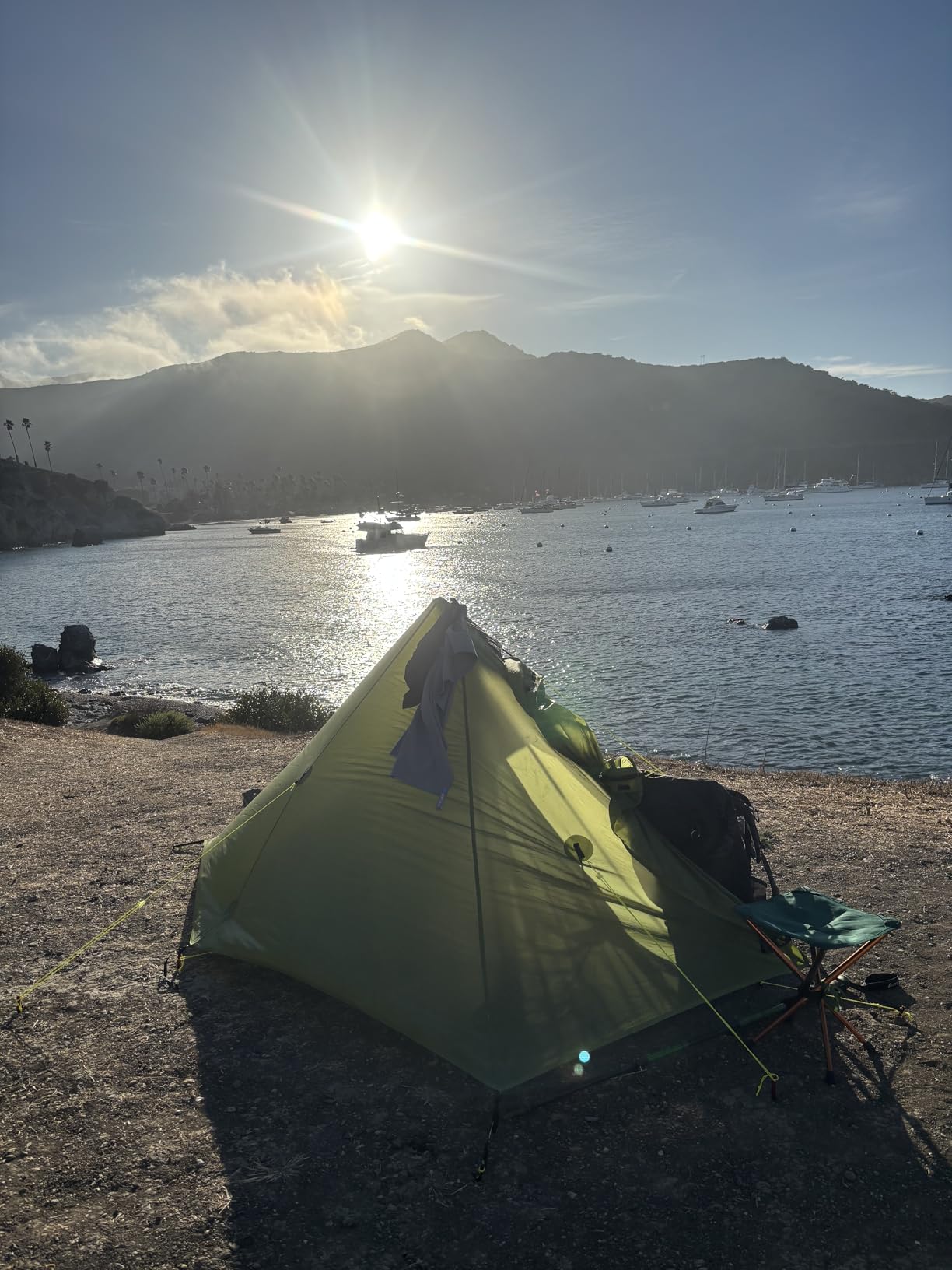
At 2 pounds, the Night Cat bivy is the lightest shelter in this roundup, and it is the closest any of these get to what most thru-hikers call ultralight. It is a hexagonal double-layer bivy sack with an interior of 106.3 by 31.5 inches and a 49.21 inch height.
Owners report it keeping a 5 foot 10 inch, 220 pound user dry through a night of rain that froze overnight at 20 degrees Fahrenheit, and they like that the vestibule takes a pack and boots. A trekking pole works as the support, and stakes and ropes are included.
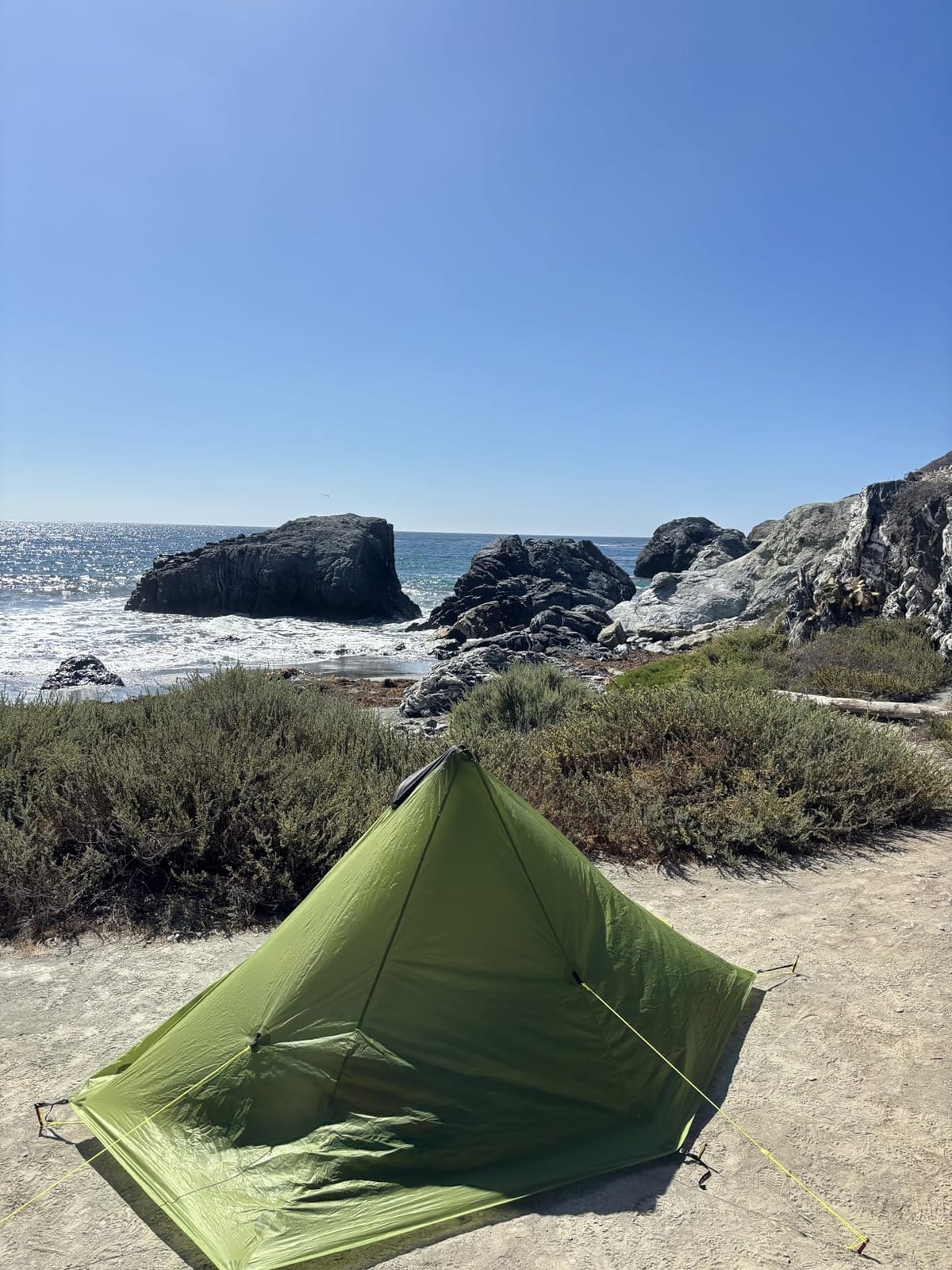
The floor area and vestibule area are both listed at 0.5 square meters, which is roomy for a bivy and is the reason it can hold a pack alongside the sleeper rather than forcing it outside. The minimum trail weight is 2 pounds with a listed total of 1 kilogram.
The honest caveat here is stakes. Reviewers report that the included pegs do not hold well in hard or soft ground, and some resort to rocks or different pegs. The tie-out and closure system is also described as confusing and demanding, with the rainfly front door not zipping across the bottom.
Who the Night Cat bivy suits
This suits a solo hiker who wants the smallest possible volume in the pack and who is confident with ground conditions. It is a natural fit for desert routes, forest trails with soft soil, and anywhere pack volume is the constraint rather than raw weight.
It also suits a hiker who already carries a trekking pole and wants to eliminate the last dedicated shelter item. The 106.3 inch length is generous for a bivy and suits taller sleepers better than most designs in this shape.
Where the Night Cat bivy falls short
Ground conditions decide this tent. The included pegs reportedly do not hold in hard or soft ground, which is a problem on rocky AT sections and slickrock where nothing stakes at all. The tie-out system needs practice, and one owner reported the small plastic fly door tie-out piece breaking on the first night.
Water resistance reports are mixed, with one owner calling the fabric cheap and not water resistant. Owner reports on fabric quality are the weakest of any shelter here, and the 4.2 rating reflects that.
11. Underwood 2P Pole Tent – Best for Tree-Strung and Improvised Pitches
2 Person Trekking Pole Tent, Ultralight Camping Backpacking Tent (NO POLES)
3 lb minimum trail weight
PU 5000mm polyester
14 in packed size
Trekking poles not included
Pros
- Extremely light at 3.2 lb with a 14 in packed size
- About 2-5 minute pitch with trekking poles
- PU 5000 coating and sealed seams held up in steady rain
- Stayed stable in 20 mph winds gusting to 30 mph
- Good stitching and zippers with two doors and two vestibules
Cons
- Sags in the middle so walls touch the sleeper
- Single wall with no side mesh creates heavy condensation
- Noisy in wind
- Tight for two
- Some units arrived missing ropes
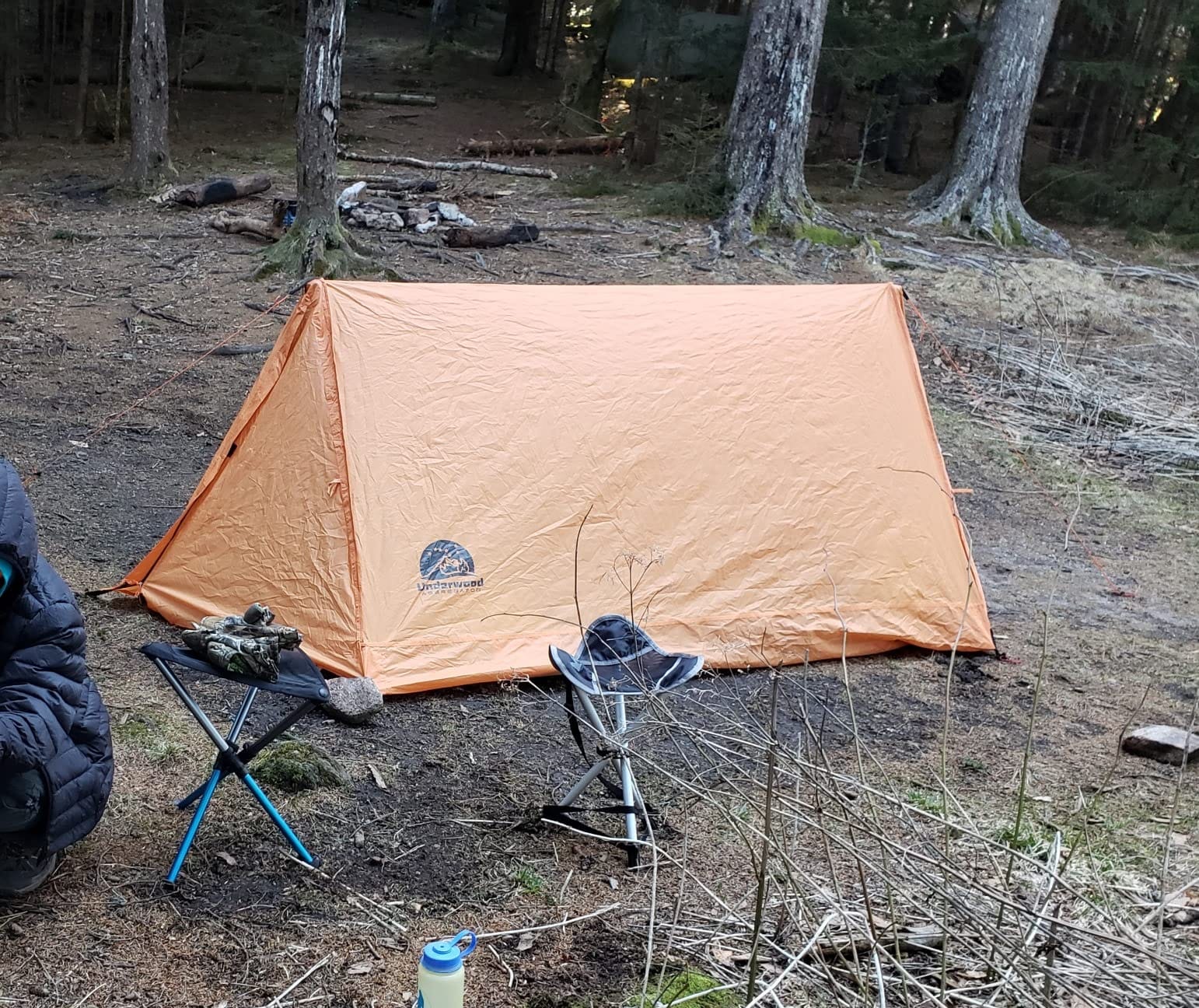
The Underwood is the most flexible pitch in the roundup. It goes up in about two minutes with trekking poles, or with any stick over 46 inches, and it can also be strung between two trees, which is useful in wooded sections where finding a site is easier than finding an anchor.
Owners rate the fabric highly for the weight. The 210T polyester carries a PU 5000 coating with factory-sealed seams and double-layer fabric corners, and reviewers report it holding up under a 30 minute sprinkler test and steady rain with no leakage, plus staying stable in 20 mph wind gusting to 30 mph when properly pegged.
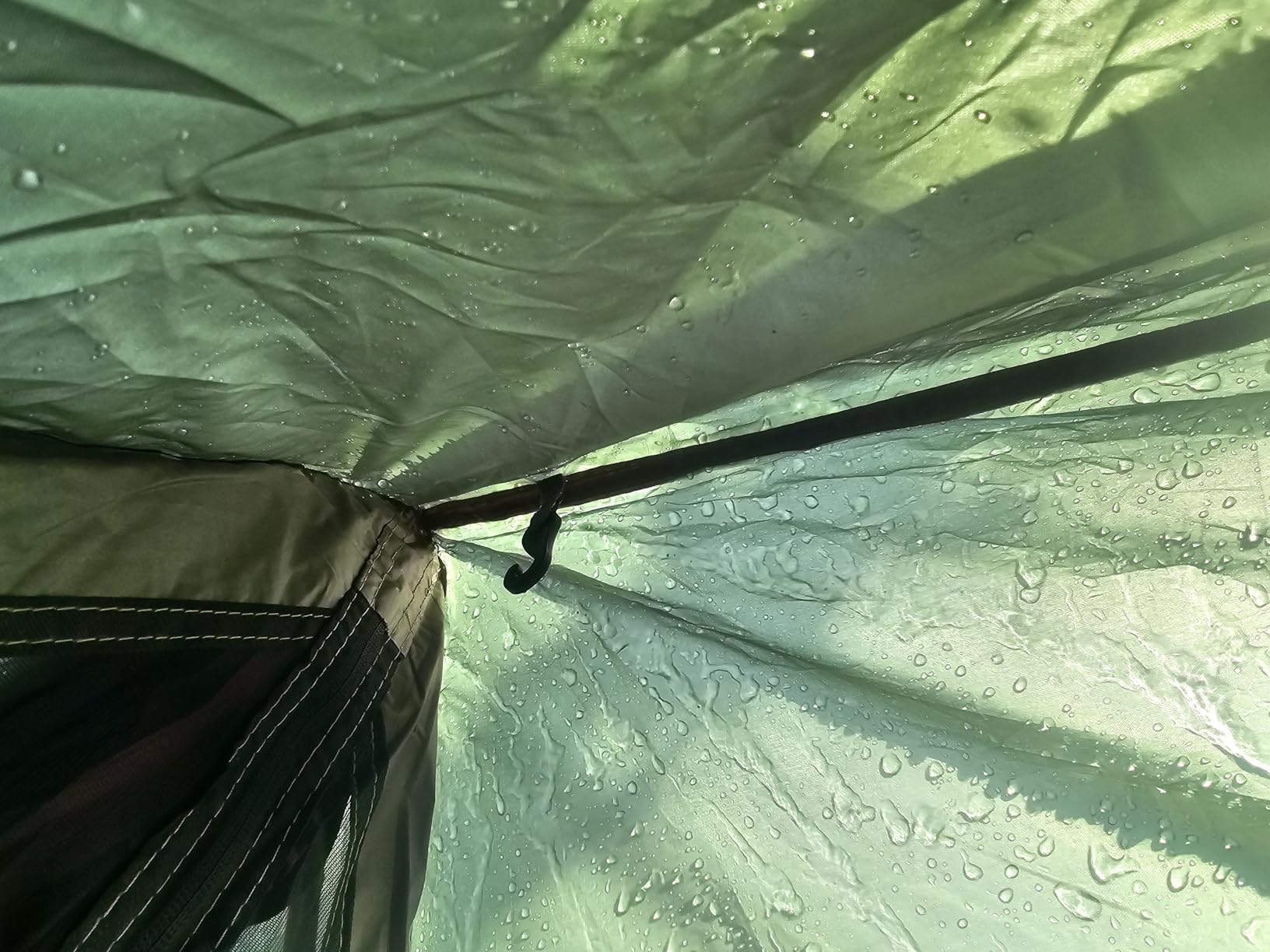
The A-frame interior measures 7 feet 3 inches by 4 feet 11 inches with a 59 inch peak height and 30.3 square feet of floor, and there are two large vestibules for pack and shoe storage. Packed size is 14 by 5.5 by 5.5 inches, total weight 3.2 pounds, minimum trail weight 3 pounds.
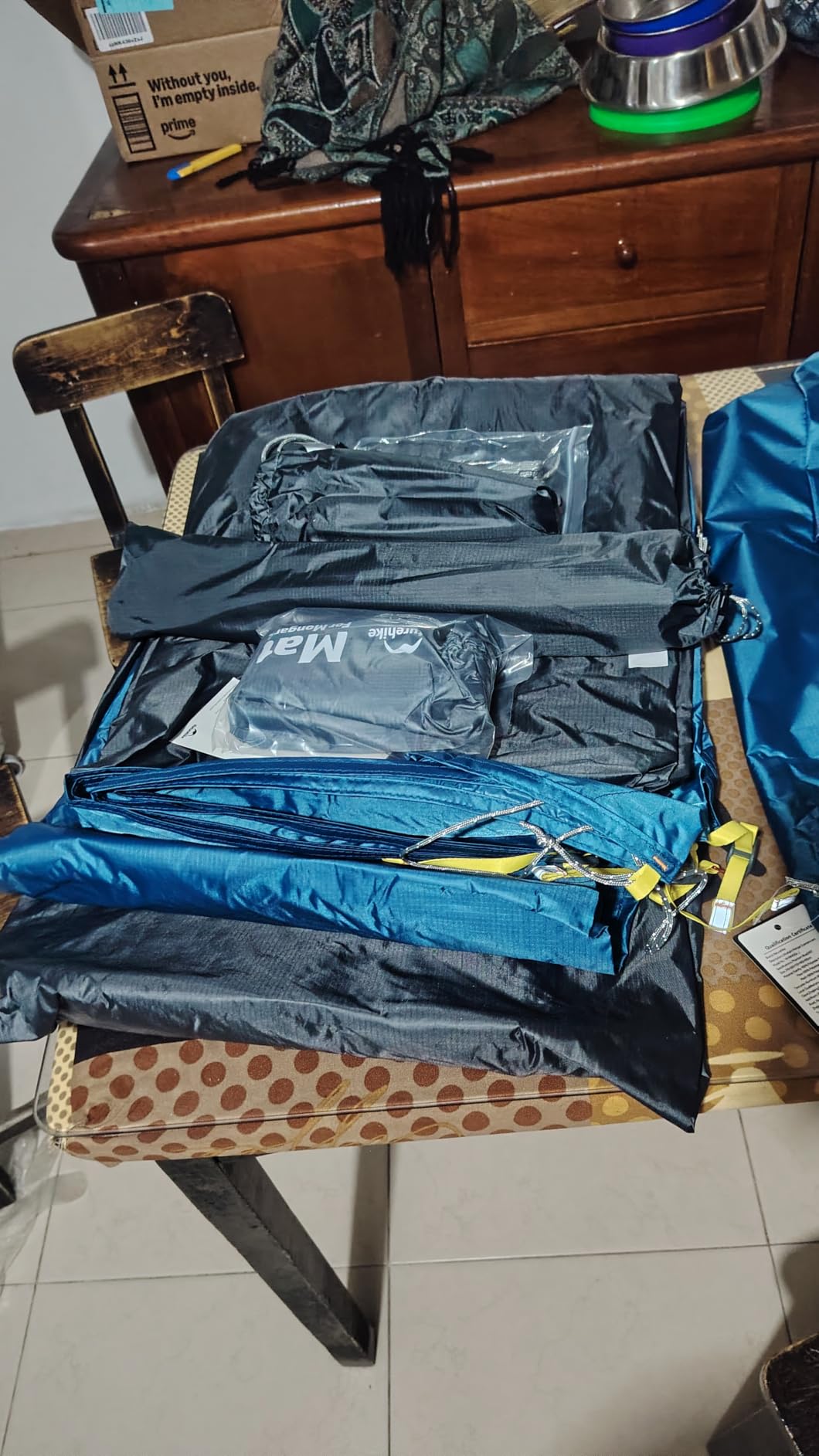
The box includes a storage sack, 8 stakes, 2 ropes, and 2 trekking pole tip protectors. Trekking poles are not included, and some tents arrived missing ropes in some reports of seam tape leaking badly, so inspect the kit before you leave.
Who the Underwood suits
This suits a hiker who wants a genuine two-door, two-vestibule shelter for the weight, and who pitches in forest terrain where trees work as anchors. It is also a good fit for anyone who wants a trekking-pole pitch but does not want to buy into a wall-based design that needs a footprint.
It also suits a hiker who will string it between two trees at established campsites, which is faster than any pole pitch and uses gear you are already carrying.
Where the Underwood falls short
The sag is the headline complaint. Owners report the middle of the canopy drops no matter how the poles are positioned, so the walls touch the sleeper and the interior feels smaller than 30.3 square feet suggests. Being single wall with no side mesh also means heavy condensation and frost in cold conditions.
It is noisy in wind, especially when gear rustles against the vestibules, and the steep A-frame walls make true two-person use cramped. Treat it as a spacious single-person shelter with a big porch.
12. Naturehike Mongar 2P – Best for the Largest Vestibules
Naturehike Mongar 2 Person Backpacking Tent, 3 Season Camping Tent Ultralight Double Layer Free Standing Two Person Tents for Camping Hiking Cycling
5.3 lb with groundsheet
19.04 sq ft vestibule area
3000mm coated polyester
Free groundsheet included
Pros
- Y-frame freestanding design sets up in about 5 minutes
- Free footprint included
- Two doors and two large vestibules
- B3 mesh inner plus two windows managed condensation
- Held up in thunderstorms
- wind
- and freezing nights
Cons
- 5.3 lb is heavy for an ultralight route
- Included Y-pegs bend or snap easily
- Low bathtub rise lets splash reach the inner mesh
- Straps are fiddly to set up
The Mongar exists for people who treat a vestibule as living space, and its 19.04 square feet of vestibule area is the largest in this roundup by a wide margin. Two occupants can keep packs, boots, and wet gear fully covered without anyone crouching in the rain.
Owners treat it as the value alternative to the established lightweight two-person favourites, and the praise is consistent: durability through two seasons of severe thunderstorms, high wind, and below-freezing nights, plus a free footprint that most competitors charge extra for.
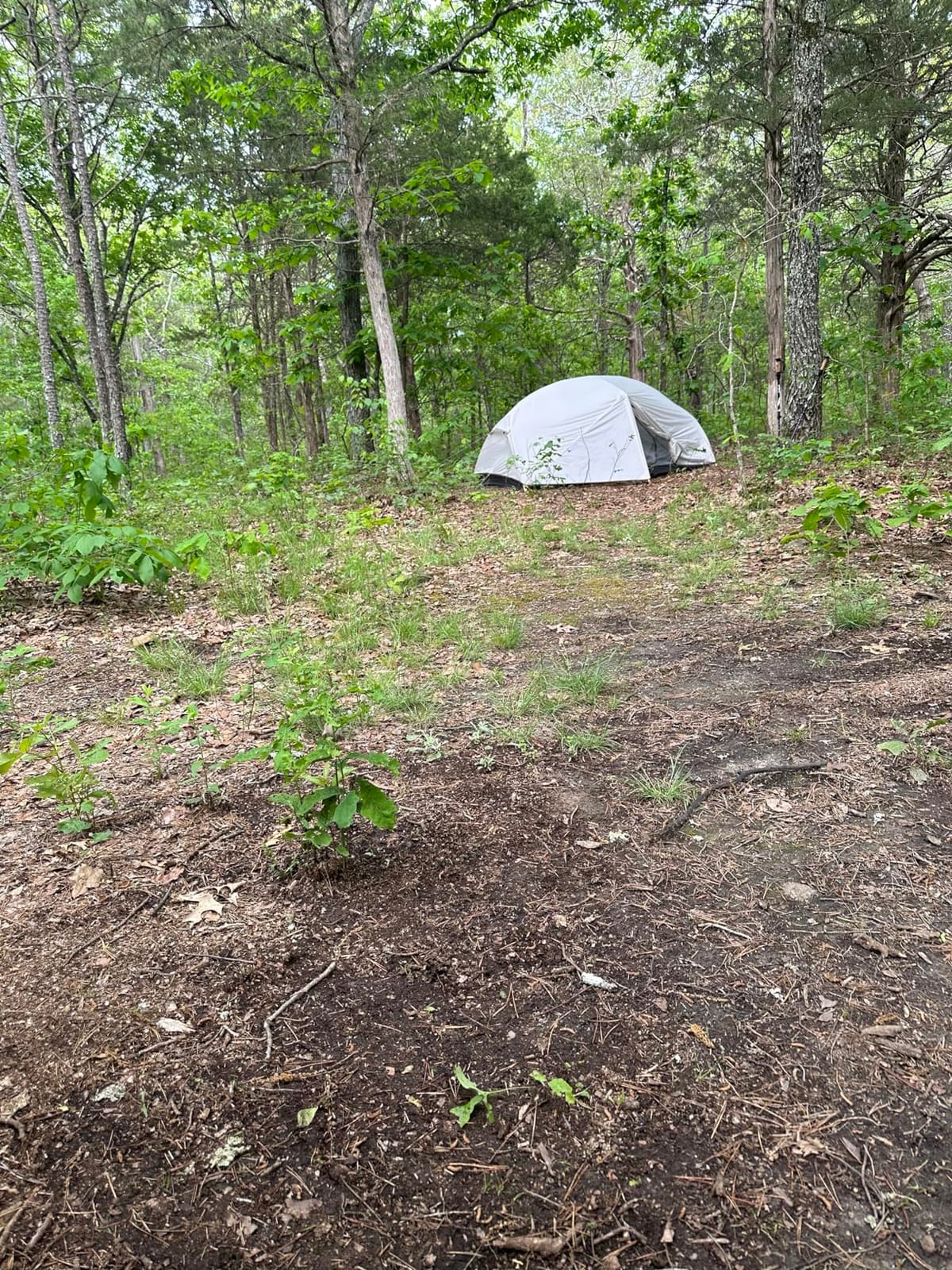
The build is a simple Y-frame freestanding structure that pitches in about five minutes. Fly and floor are 210T polyester with a 3000mm waterproof coating over 7001 aluminum alloy poles, and the B3 mesh inner gives insect protection with airflow. Interior is 82.7 by 53.2 by 41.3 inches, more than 30 square feet.
Weight is 5.3 pounds including the free groundsheet, and owners report roughly 4.5 pounds in lighter builds, so this is a shelter you can trim if you drop the pegs. Packing size is 19.7 inches by 5.9 inches in diameter, which is the largest packed diameter here.
Who the Mongar suits
This suits hikers who keep a full-size pack inside the tent and want it protected from rain rather than stuck out in a vestibule. It works well for two people who are not minimalist, for hikers with a dog, and for anyone who wants a full mesh inner for bug season.
It also suits a hiker who wants a tent they can keep for years rather than a season. Two doors, more than 30 square feet of interior, and a free groundsheet make it a long-term base-camp-plus-trail shelter.
Where the Mongar falls short
At 5.3 pounds it is the second heaviest shelter here, and weight is the whole game on a long ultralight route. The included Y-pegs are the weak link, bending or snapping in hard soil, and many owners replace them.
The rainfly is slightly short and the low bathtub rise lets splashing water travel up the inner mesh. The straps are fiddly, since the crossbar has to go over the top of the centre pole, which costs time in wind-driven rain.
What Thru Hikers Report on the Trail
The threads where thru hikers actually compare shelters share one theme: almost nobody wants the lightest possible tent, and almost everybody wants the lightest tent they can still trust. On r/Ultralight, r/lightweight, and r/AppalachianTrail, the recurring arguments are about pitch method, fit for hikers over six feet, and whether a shelter is worth owning if it only survives one trail.
Fit is the most consistent worry. Hikers ask constantly which one-person shelters are long enough for someone between 6 foot 6 inches and 6 foot 8 inches, and the general answer from experienced trail folk is that a two-person shelter is the safe choice, which is why we included so many two-person shelters here.
The other persistent question is the price-to-seasons trade-off. Hikers repeatedly ask whether a well-made synthetic shelter that lasts five seasons makes more sense than an expensive ultralight fabric shelter that may not survive one continuous trail. Our buying guide addresses that directly, because it is the single most important decision in this roundup.
One thing those threads make clear: the sub-one-pound shelters most thru-hikers discuss are a different category from what we could verify here, and we have deliberately not filled that gap with unverified products. If your trail requires a sub-one-pound base weight, start with our picks and treat them as a baseline to measure against, not a final answer.
Thru-Hike Tent Buying Guide: Pitch, Fabric, and Weight
Trail weight vs packaged weight vs total system weight
Trail weight is the tent without stakes, footprint, or stuff sack. Packaged weight includes everything that comes in the box. Total system weight adds the trekking poles, patch kit, and any groundsheet you buy separately. A shelter can lose 15 to 20 percent between those three numbers, which is a full day of food over a long trail.
Always ask which figure a brand is quoting. The Clostnature publishes both 5.29 pounds total and 4.52 pounds minimum trail weight, while the Naturehike Mongar lists 5.3 pounds including the free groundsheet. Neither is being dishonest, but they are not comparable without knowing the basis.
Freestanding vs trekking pole vs single-pole pitches
Freestanding tents stand on their own, which is the most forgiving option and the heaviest. The ALPS Lynx, KAZOO, and Night Cat 2P all fall here. Single-pole designs like the KAZOO’s integrated hoop and the Camppal’s ridge pole sit between freestanding and trekking pole, needing partial staking but few dedicated poles.
Trekking-pole designs use the poles you are already carrying, which is the cheapest way to save weight and the least forgiving way to pitch them. The MIER LANSHAN and the Underwood both work this way. If you are buying your first trekking-pole shelter, practise it at home in daylight and in the dark before a multi-month trail depends on it.
Single wall vs double wall and condensation over a long season
A single wall uses one layer, so it is lighter, cheaper, and holds condensation directly against you. A double wall adds mesh, so air moves and your gear stays drier. The Underwood is single wall, while the MIER LANSHAN, KAZOO, and Clostnature are double wall.
On a five-month continuous season, condensation management matters more than most buyers expect. Five practical habits help: pitch on the highest ground you can find, open the door and vestibule whenever you can even in light rain, keep the inner dry between nights, change your clothing rather than sleep in damp layers, and dry the fly before packing it down. A shelter that stays dry is a shelter that will still work in month four.
Nylon, polyester, and fabrics that stretch when wet
Silicone-coated nylon and polyester dominate this roundup, with 210T and 75D ripstop on the heavier tents and 15D on the lightest. The main weakness of these fabrics is stretch: wet nylon sags, and a sagging wall means condensation forms on fabric that is no longer separated from you.
Waterproof ratings here range from 1500mm on the ALPS Lynx fly to 6000mm on the LANSHAN floor. Higher is not automatically better, because a lower rating in double-wall construction with taped seams can outperform a higher rating with poor seam sealing. Always read the ratings as a pair with the seam construction.
Doors, vestibules, and campsite footprint fit
One door and one vestibule suits a solo hiker. Two doors and two vestibules is the minimum for a couple, because entering and leaving without crawling over each other is what keeps a shared tent livable. The Mongar, Clostnature, Forceatt, and Night Cat 2P all have two of each.
Vestibule area is a real number to compare. The Mongar offers 19.04 square feet, the Cloud-Up 7.29, and the LANSHAN about 5.3 combined. And consider the physical footprint of the pitched shelter, not just the floor area, because the Mongar’s 19.7 inch packed diameter and the Grand Mesa’s 16 by 7 by 7 inches both compete for pack space.
What comes in the box and what you still have to buy
This is the most common surprise for first-time ultralight hikers, and it is worth checking before you order. The Cloud-Up includes the footprint, 14 stakes, poles, and guylines. The Mongar includes a free groundsheet. The KAZOO, Kelty, Night Cat 2P, and ALPS Lynx all need a footprint bought separately.
Trekking poles are never included in the shelters here that need them, so budget for a pair before your trail. Our guide to the best trekking poles for backpacking covers how to choose a pair that works with a pole-supported shelter, and a lightweight backpacking stove completes the ultralight kit so the tent weight is not hiding extra pack weight elsewhere.
Frequently Asked Questions
What is the best ultralight tent for thru-hiking?
The best ultralight backpacking tent for thru hiking is the lightest shelter you can still trust in month four. For most hikers that means a freestanding double wall between 3 and 4 pounds with a 3000mm-plus fly, a welded or taped bathtub floor, and a full kit included. Our overall pick is the Naturehike Cloud-Up 2P at 3.6 pounds, because it ships with a footprint, poles, and 14 stakes, so the number on the box is the number on your back.
How much does an ultralight tent weigh?
The shelters in this roundup weigh between 2 pounds and 5.5 pounds packed. The lightest is the Night Cat bivy at a 2 pound minimum trail weight, and the heaviest are the Forceatt at 5.5 pounds, the Mongar at 5.3 pounds, and the Clostnature at 5.29 pounds. A true sub-one-pound trekking-pole shelter sits below everything we could verify here. Poles and stakes come in somewhere between a quarter and a pound on top of that.
How durable are ultralight tents?
Durability depends more on fabric weight and seam quality than on the ultralight label. The nylon and polyester shelters here are rated between 1500mm and 6000mm and use factory-sealed or taped seams. The weakest construction we found in owner reports was seam holes found only after pitching. Inspect seams at home, and expect the lightest trekking-pole fabrics to last fewer seasons than a double wall built on 70-denier polyester.
Do ultralight tents come with stakes and poles?
It varies by shelter. The Naturehike Cloud-Up includes a footprint, 14 stakes, poles, and guylines, and the Mongar includes a free groundsheet. The KAZOO, Kelty, ALPS Lynx, and Night Cat 2P do not include a footprint. The MIER LANSHAN and the Underwood need trekking poles and do not include them. Always check the contents list before ordering so you are not buying the same pole twice.
Do I need a footprint with my ultralight tent?
A footprint is optional, not required. It protects the floor from abrasion on rock and from punctures on sharp ground, and it adds insurance on long routes with no resupply. The included groundsheets on the Cloud-Up and Mongar already cover the common case. For the thinner floors on the Forceatt and Night Cat 2P, owners specifically recommend adding a groundsheet underneath.
Can I stop condensation in a single-wall tent?
Yes, with habits rather than gear. Pitch on the highest ground available, keep the door and vestibule open whenever rain allows, dry the fly and inner every morning before packing, and avoid sleeping in damp clothing. The single-wall Underwood does report heavy condensation and frost in cold conditions, so on a cold route a double wall like the MIER LANSHAN or KAZOO is the better choice.
The Verdict for Thru Hiking in 2026
For the best ultralight backpacking tents for thru hiking, the Naturehike Cloud-Up 2P takes the top spot at 3.6 pounds with a footprint, poles, and 14 stakes in the box. The Clostnature 2-Person Tent follows as the value pick with the largest owner base in the roundup, and the Forceatt 4-Season 2P wins for hikers who pitch into weather rather than waiting for it.
Below them, the MIER LANSHAN is the closest to a genuine trekking-pole shelter at 2.1 pounds with a double wall, the ALPS Lynx 1 is the top-rated solo option, and the Night Cat bivy is the lightest of the twelve at 2 pounds. Whatever you pick, verify the weight basis and add poles and stakes to the number before it leaves the house.
Our best ultralight backpacking tents for thru hiking ranking does not reach sub-one-pound, and we would rather tell you that than dress up a heavier option. If your trail demands that weight class, use these shelters as the yardstick you compare against, and check the contents list before you order.