
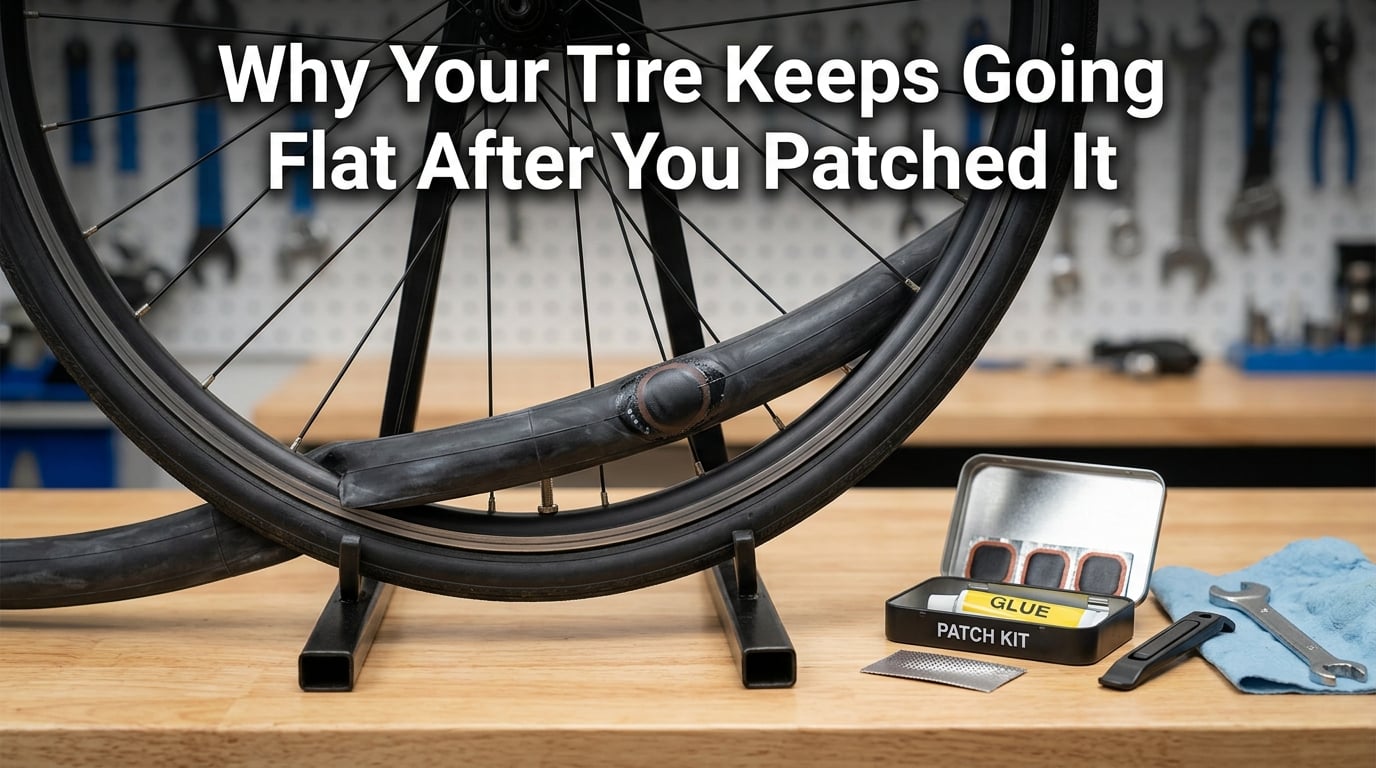
You patched the puncture, reinstalled the tube, and rode off expecting a fix. Then the next morning the tire was flat again. If you are wondering why your tire keeps going flat after you patched it, you are not alone. This is one of the most common complaints on cycling and auto repair forums, and the answer usually comes down to one of six causes that even experienced DIYers miss.
Most repeat flats after patching come from debris still lodged in the tire, a pinch flat during reinstallation, or an overlooked leak at the valve stem. The patch itself often gets blamed when the real culprit sits a few inches away. In this guide, I will walk you through each cause, how to diagnose it, and what to do so your next patch actually holds.
Table of Contents
Common Reasons Your Patched Tire Keeps Going Flat
1. A Pinch Flat Happened During Reinstallation
A pinch flat is the number one reason a patched tire keeps losing air after repair. It happens when the inner tube gets pinched between the rim and the tire bead as you seat the tire back on the rim. The tube gets a fresh slit or snake-bite hole right next to where you patched the original puncture.
On bicycles.stackexchange.com, multiple experienced mechanics point out that riders often blame the patch when the new leak came from squeezing the tube against the rim with tire levers. I have done this myself, and the tell-tale sign is two parallel holes about an inch apart instead of a single puncture.
To avoid this, use smooth plastic tire levers and never use a screwdriver. Make sure the tube sits evenly inside the tire before you snap the last bead section into place.
2. Debris Is Still Embedded in the Tire
If a sharp object caused your original flat, a small piece of it may still be stuck inside the tire casing. Even a tiny glass fragment or wire can puncture a fresh patch within hours. One Reddit user described patching the tube three times before realizing a 2mm thorn was still wedged in the tread.
Always run your finger slowly along the inside of the tire after removing the tube. Wear gloves. If you feel anything sharp, pull it out with pliers. Many bike shops also recommend visually inspecting the outside of the tire and flexing the area where the puncture happened.
3. The Patch Was Applied Incorrectly
A patch needs clean, roughened rubber and vulcanizing compound to bond properly. If you skipped sanding the tube, used expired glue, or applied the patch over dirt, the bond will fail under pressure. The patch may look fine but slowly peels away during inflation.
Professional shops use a buffer wheel to scuff the tube, then apply self-vulcanizing cement and wait for it to get tacky before pressing the patch on. Rushed repairs often skip the wait time, which leads to leaks within days.
For DIY repairs, follow the kit instructions exactly. If your tube has been patched more than twice in the same general area, replacement is safer than another patch.
4. The Bead Seal Is Leaking
The bead is the edge of the tire that seats against the rim. If the bead is not seated evenly, air can escape around it without any actual hole in the tube. This often happens after a hard impact or when installing a tire that does not match the rim size.
You can diagnose a bead leak by spraying soapy water around the rim edges and watching for bubbles. Some riders find the bead never fully seated because they inflated the tube before the tire was properly aligned on the rim.
Deflating the tube, reseating the tire by hand, and re-inflating slowly in stages usually solves this. For tubeless setups, dried-out sealant or a dirty rim surface can also break the seal.
5. The Valve Stem Is the Real Problem
A failing valve stem is frequently misdiagnosed as a bad patch. Schrader and Presta valves can develop slow leaks at the core, around the base, or where the stem meets the rim on tubeless systems. If your patched tire still loses air overnight, the valve deserves a closer look.
Spray soapy water on the valve and watch for bubbles. For Schrader valves, the core can often be tightened or replaced with a small tool. For Presta valves, the locknut at the top may simply need tightening.
6. Temperature Changes Cause Pressure Drops
Tires lose roughly 1 PSI for every 10 degrees Fahrenheit of temperature drop. A tire that seemed fully inflated in a warm garage may appear flat on a cold morning, even when the patch is perfectly intact. This is often mistaken for a slow leak after patching.
If your tire pressure drops by exactly a few PSI overnight and stays consistent for days, check the actual pressure with a gauge rather than relying on visual inspection. Inflating to the proper PSI in cooler weather usually solves this phantom flat.
How to Diagnose Why Your Patched Tire Still Goes Flat
Follow this numbered checklist to find the actual source of the leak rather than guessing.
- Inflate the tire to maximum recommended pressure and listen for hissing near the valve, rim, and tread.
- Spray soapy water across the entire tire surface, including the valve and rim edges, and look for bubble formation.
- Mark each bubble location with chalk so you can find them after deflating.
- Remove the tube and inflate it outside the tire. Submerge sections in a bucket of water if no bubbles appeared on the mounted tire.
- Inspect the inside of the tire casing with a flashlight. Run a gloved finger along the entire interior surface.
- Check the rim tape for tears, especially near spoke holes where the tube presses hardest.
- Reinstall the tube carefully, avoiding tire levers against the tube, and inflate in stages.
If bubbles appear on the valve, the issue is the valve stem. If bubbles appear on the tube but not the tire, you have a patch failure or a new puncture. If the tire itself leaks around the edges, the bead seal is the problem.
Prevention Tips So Your Patch Actually Lasts
The best way to avoid repeat flats is to address the cause, not just the symptom. Here is what has worked for our team across hundreds of repairs.
First, always inspect the tire inside and out before reinstalling the tube. Most repeat flats happen because something sharp is still lodged in the casing.
Second, replace rim tape if it is torn, wrinkled, or older than the rim itself. Cheap rim tape causes more slow leaks than people realize.
Third, use a quality patch kit with fresh vulcanizing compound. Old glue dries out and will not bond properly. If you ride frequently, keep an essential tire repair kit with backup patches in your bag.
Fourth, avoid CO2 cartridges for sealing patches. CO2 inflates faster but can prevent vulcanizing compound from curing properly, leading to slow leaks hours later. Use a floor pump when you can.
Fifth, replace the tube if it has been patched more than three times, or if patches overlap. Multiple patches in the same area weaken the rubber and create new leak points.
Sixth, check tire pressure weekly, especially during seasonal temperature changes. A tire that sits underinflated is more likely to pick up debris and suffer pinch flats on the next ride.
FAQ
How do I fix a tire that keeps going flat?
Start by inflating the tire and spraying soapy water across the tread, valve, and rim to locate the leak. Remove the tube and inspect the inside of the tire for embedded debris. Patch or replace the tube based on what you find, then reseat the tire carefully to avoid pinching the tube.
How long will a tire last with a patch?
A properly applied patch can last the remaining life of the tube, often several years for casual riders. The patch itself is usually stronger than the surrounding rubber. Longevity depends on patch quality, vulcanizing compound freshness, and whether the tube suffers additional damage.
Can you patch a flat tire twice?
Yes, but only if the patches do not overlap and the tube is otherwise in good condition. Most manufacturers recommend no more than two or three patches per tube. After that, replace the tube to avoid sudden failures.
What causes tires to constantly go flat?
Common causes include embedded debris, pinch flats during reinstallation, valve stem leaks, bead seal issues, and temperature-related pressure drops. Identifying the exact cause requires a systematic inspection rather than guessing at the patch.
Final Thoughts on Why Your Tire Keeps Going Flat After You Patched It
If your tire keeps going flat after you patched it, the patch is rarely the only problem. Check the tire casing for debris, verify the bead seal, inspect the valve, and watch for temperature-driven pressure drops. A 10-minute diagnostic routine beats guessing every time. If the tube has been patched more than a couple of times or the sidewall shows damage, replacement is the safer call.