
I remember the first time someone told me to ditch the underwear under my padded cycling shorts. It felt wrong, honestly. Every instinct screamed that going commando in skin-tight Lycra was asking for trouble.
Then I tried it on a 40-mile ride and never looked back. Cycling shorts without underwear feel better because they were engineered that way from the ground up.
The padded chamois inside your shorts is designed to sit directly against bare skin. Add underwear and you introduce seams, trapped sweat, and doubled friction that the designers never intended.
In this guide, I will break down exactly why cycling shorts feel better without underwear, how the chamois works, what happens when you add an extra layer, and how to make the transition if you have been holding back.
Table of Contents
Why Cycling Shorts Feel Better Without Underwear: The Science
Cycling shorts feel better without underwear because the built-in chamois pad creates a seamless, moisture-wicking, friction-reducing layer between your skin and the saddle. Adding underwear introduces seams, traps sweat, and doubles the fabric layers that rub against each other with every pedal stroke.
That is the short answer. The longer version involves understanding how three systems work together inside a pair of padded cycling shorts.
First, the chamois provides cushioning and pressure relief for your sit bones. Second, the technical fabric manages moisture by pulling sweat away from your skin. Third, the snug fit eliminates bunching and friction points. All three depend on direct skin-to-short contact.
When you insert underwear between your body and the chamois, you break every one of those systems. The seams from underwear press into your skin under body weight. Cotton fabric absorbs sweat instead of wicking it. And the extra layer shifts and bunches as you pedal.
Our team has tested this on rides ranging from 20-minute commutes to multi-day bikepacking trips. The difference becomes noticeable after about 45 minutes in the saddle. By mile 30, wearing underwear under padded shorts goes from mildly annoying to genuinely painful.
How the Chamois Pad Works Against Bare Skin
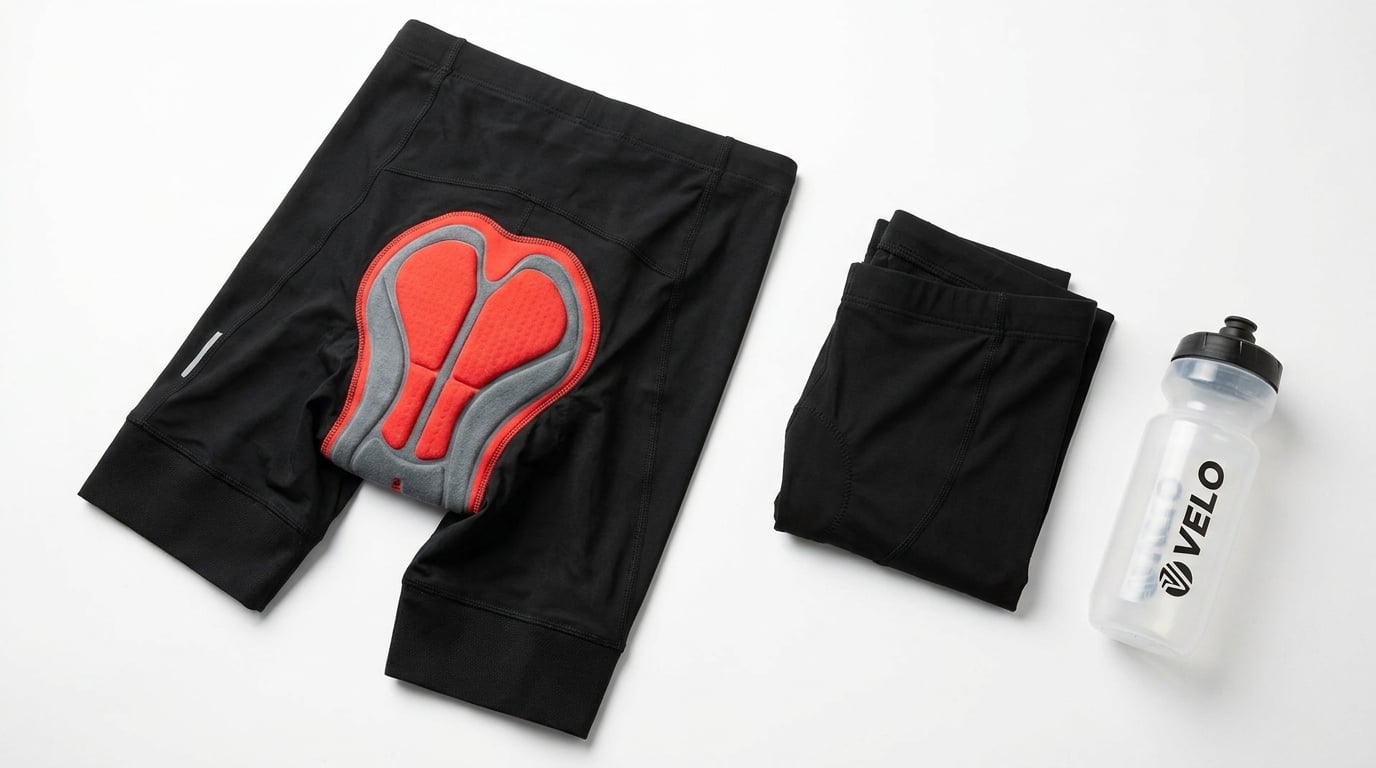
The chamois (pronounced “shammy”) is the padded insert sewn into cycling shorts. Originally made from actual chamois leather, modern versions use multi-density foam, gel inserts, and synthetic microfiber topsheets.
The chamois is the single most important component for cycling comfort, and it only works properly against bare skin.
Multi-Density Foam and Targeted Cushioning
Quality chamois pads use multi-density foam, which means firmer foam under your sit bones and softer foam in areas where you need flexibility. The pad is sculpted to match the anatomy of a cyclist in riding position.
When you sit on the saddle, your ischial tuberosities (sit bones) bear most of your body weight. The firmer foam zones absorb that pressure and distribute it across a wider area. This prevents numbness and pain on long rides.
Underneath that foam, some chamois include gel inserts for additional vibration dampening. Road buzz and rough surfaces transmit through the frame and saddle into your body. The gel layer absorbs those micro-impacts so your muscles and joints do not have to.
Why Underwear Seams Destroy the Chamois Interface
Here is where the problem starts. Underwear has seams, and those seams sit right between the chamois pad and your skin.
Under your full body weight on a narrow saddle, even a thin seam becomes a pressure point. The seam presses into your skin with every pedal stroke. After a few thousand revolutions, that repeated pressure causes raw spots, chafing, and eventually saddle sores.
I have seen riders show up to group rides with underwear under their shorts, and by the halfway stop they are shifting around on the saddle trying to find a position that does not hurt. The culprit is almost always a seam digging into soft tissue.
Skin-to-Short Contact: The Design Intent
Cycling apparel engineers design shorts with the assumption that nothing sits between the chamois and your skin. The top layer of a quality chamois uses a soft, antimicrobial microfiber that glides against skin without irritation.
This skin-to-short contact creates a consistent interface. The pad stays exactly where it should relative to your body. The fabric moves with you rather than against you. And the antibacterial treatment in the chamois top layer can actually do its job of keeping bacteria in check.
Moisture Management: Why Underwear Traps Sweat
Cycling generates serious heat. A moderate-paced rider can produce 0.5 to 1.5 liters of sweat per hour, and a significant portion of that collects in the groin area where airflow is minimal.
Padded cycling shorts use moisture-wicking fabrics specifically engineered to handle this. The Lycra and nylon blends pull sweat away from your skin and spread it across the outer surface where it can evaporate.
Cotton Absorbs, Technical Fabric Wicks
Most underwear is made from cotton. Cotton is incredibly absorbent, which is great for towels but terrible for athletic performance. Cotton underwear soaks up sweat and holds it against your skin like a sponge.
When cotton underwear is trapped between your body and the chamois, it creates a warm, wet microclimate. That trapped moisture softens your skin, making it more vulnerable to chafing and bacterial infection.
Technical cycling fabrics work on a completely different principle. They use capillary action to move moisture from the skin side to the outer surface. The sweat never pools against your body. Instead, it spreads out and evaporates quickly.
The Greenhouse Effect of Doubled Layers
Adding underwear under cycling shorts effectively doubles the fabric between your skin and the air. Even if your underwear is synthetic, two layers of fabric trap far more heat and moisture than one.
This creates what I call the greenhouse effect. Heat builds up between the layers. Sweat cannot evaporate because the outer layer blocks airflow. Temperature regulation, which cycling shorts handle beautifully on their own, stops working.
On a hot summer ride, this can mean the difference between staying cool and developing heat rash. The bare-skin approach lets the chamois and short fabric do their job of regulating temperature through evaporative cooling.
Bacterial Growth in Trapped Moisture
Warm, wet environments breed bacteria. When sweat sits in cotton underwear against your skin for an hour or more, bacteria multiply rapidly. This is what leads to saddle sores becoming infected and the unpleasant smells that ruin a pair of shorts.
Without underwear, the antimicrobial chamois sits directly against your skin. Sweat is wicked away immediately rather than pooling. The environment stays drier, cooler, and significantly less hospitable to bacteria.
Friction and Chafing: The Double-Layer Problem
Friction is the enemy of cycling comfort. Every pedal stroke involves thousands of micro-movements between your body, the shorts, and the saddle. The goal of cycling apparel design is to minimize friction at every interface.
Wearing underwear under cycling shorts introduces a new friction interface that should not exist.
How Two Fabric Layers Create More Friction
Without underwear, there are two friction points: skin against chamois, and short fabric against saddle. Both are designed and tested to work together.
Add underwear and you create four friction points: skin against underwear, underwear against chamois, chamois against short, and short against saddle. Each additional interface is a potential source of chafing.
Even worse, the underwear can shift independently of the chamois. As you pedal, the underwear bunches, rides up, and creates folds of fabric that rub against your skin. Those folds are where chafing starts.
Saddle Sores Versus Chafing: Know the Difference
Chafing is surface-level skin irritation caused by friction. It starts as redness and tenderness, then progresses to raw, broken skin if you keep riding. Chafing heals within a few days with rest and basic care.
Saddle sores are more serious. They are infected hair follicles or blocked pores that develop into painful, swollen bumps. Saddle sores can take weeks to heal and may require antibiotic treatment. They are the reason many experienced cyclists are so adamant about going commando.
Both conditions are dramatically more common when wearing underwear under cycling shorts. The seams, moisture, and extra friction create the perfect conditions for skin breakdown.
Vibration Dampening and Sit Bone Alignment
The chamois pad is positioned to align with your sit bones when you are in riding position. Multi-density foam absorbs road vibration and distributes pressure evenly.
Underwear shifts this alignment. The extra layer can cause the chamois to sit slightly off-center or create uneven pressure distribution. Instead of your sit bones resting on the densest part of the foam, they might rest on a seam or fold.
Vibration from rough roads then travels more directly into your body because the cushioning effect of the chamois is compromised. This leads to faster fatigue and discomfort in your lower back, hips, and hands.
The Feel Factor: Why It Actually Feels Better
None of the competitors I reviewed fully explain the actual sensation of riding without underwear versus with it. Let me fix that.
When you wear cycling shorts correctly, without underwear, the shorts become a second skin. You stop feeling the shorts entirely. The chamois, the fabric, the leg grippers, everything disappears from your awareness. You feel only the bike beneath you.
This happens because of proprioception, your body’s sense of where it is in space. When fabric fits snugly and moves with your body, your nervous system stops registering it as a separate object. It becomes part of you.
Underwear breaks this effect. Your body constantly registers the underwear as a foreign layer shifting against your skin. You cannot tune it out because it moves independently with each pedal stroke. It is like wearing a sock with a wrinkle you can never smooth out.
Freedom of Movement Without Bunching
Cycling involves repetitive hip flexion, 4,000 to 6,000 times per hour depending on your cadence. Every one of those movements tests how well your clothing moves with you.
Without underwear, the shorts stretch and recover as a single layer. There is nothing to bunch up at the hip crease. Nothing to ride up at the leg openings. The fabric behaves as one continuous surface.
The First-Time Rider Transition
I will be honest. The first ride without underwear feels strange. If you have worn underwear your entire life, going commando in tight shorts triggers a “this is wrong” response in your brain.
That sensation usually fades within the first 10 to 15 minutes of riding. By the time you have warmed up and found your rhythm, you stop noticing it at all. By the end of the ride, most new converts say they cannot imagine going back.
The transition is mental, not physical. Your body is actually more comfortable from the first pedal stroke. Your brain just needs time to accept the new normal.
Tips for Going Commando in Cycling Shorts for the First Time
If you have been wearing underwear under your cycling shorts and want to make the switch, here is a step-by-step approach that works.
1. Start with a shorter ride. Do not make your first commando ride a century. Pick a 30 to 45-minute route so you can get used to the sensation without committing to a long day in the saddle.
2. Make sure your shorts fit properly. Loose shorts bunch up and cause the same problems as underwear. Your shorts should be snug enough that the chamois stays in place when you move around on the saddle.
3. Wash your shorts before the first wear. New shorts may have chemical residues from manufacturing. A wash cycle also softens the chamois for a more comfortable first ride.
4. Apply chamois cream if you have sensitive skin. Chamois cream reduces friction and prevents chafing. Apply it directly to your skin in the areas where the chamois makes most contact. You may not need it after your skin toughens up.
5. Stand up periodically. Even without underwear, sitting in one position for an hour gets uncomfortable. Stand on the pedals every 15 to 20 minutes to relieve pressure and restore blood flow.
6. Give it three rides before deciding. The first ride feels weird. The second feels normal. The third feels right. Most riders need about three outings to fully adjust and realize how much better it feels.
7. Address modesty concerns separately. If you feel exposed, the issue is your shorts, not the lack of underwear. Try bib shorts for better coverage, or wear baggy shorts over your padded liners for commuting and casual rides.
When You Might Want an Extra Layer: Exceptions
Going commando in cycling shorts is the standard advice, but there are a few situations where an extra layer makes sense.
Short Casual Rides Without a Chamois
If you are riding a bike in regular clothes for 10 minutes to the coffee shop, you are not wearing padded cycling shorts. In that case, underwear is obviously fine because there is no chamois to worry about.
The rule about skipping underwear only applies to shorts with a built-in chamois pad. Regular athletic shorts, gym shorts, and street clothes follow normal underwear conventions.
Period Considerations
Some cyclists prefer to wear thin, seamless underwear or a menstrual product during their period. This is a personal choice and completely valid. If you go this route, look for seamless, synthetic underwear that will minimize friction and moisture issues.
Many women report that a menstrual cup or tampon works well with commando cycling, but every body is different. Do what keeps you comfortable and confident on the bike.
Commuter Scenarios and Cafe Stops
Commuters who wear padded shorts under work clothes sometimes prefer a thin liner for hygiene reasons during the workday. If you cannot change shorts after your commute, a thin synthetic underwear layer under your padded shorts can extend freshness.
Alternatively, padded underwear liners exist for this exact purpose. These are padded shorts designed to be worn under regular clothes, and they follow the same no-underwear rule as traditional cycling shorts.
Indoor Cycling Classes
Spin class riders sometimes feel more comfortable with an extra layer in a public gym setting. If modesty is a concern, wear baggy shorts over your padded shorts rather than underwear underneath. This solves the exposure problem without compromising the chamois function.
Hygiene and Care Tips for No-Underwear Cycling
The most common objection to going commando is hygiene. Let me address this directly: cycling shorts without underwear are actually more hygienic than cycling shorts with underwear, as long as you follow basic care practices.
Wash After Every Single Ride
This is non-negotiable. Cycling shorts absorb sweat, dead skin cells, and bacteria during every ride. Wearing them twice without washing creates the same bacterial buildup problem that underwear would cause.
Turn your shorts inside out before washing. This ensures the chamois, the dirtiest part, gets the most direct exposure to water and detergent. Use a gentle detergent and avoid fabric softeners, which can degrade the elastic and moisture-wicking properties.
Antibacterial Chamois Treatment
Most quality chamois pads include an antibacterial treatment in the top layer. This treatment inhibits bacterial growth between washes and helps prevent saddle sores.
The treatment is not a substitute for washing, but it does provide a safety margin. It is one of the reasons the chamois works better against bare skin than against underwear, which lacks any antibacterial properties.
Air Dry to Preserve the Pad
Machine drying on high heat can damage the foam in the chamois and reduce its lifespan by half or more. Hang your shorts to air dry, or use the lowest heat setting if you must use a dryer.
A quality pair of cycling shorts should last 200 to 400 riding hours with proper care. Improper washing and drying can cut that to 50 hours or less.
Know When to Replace Your Shorts
Even with perfect care, chamois foam compresses over time. When the pad feels noticeably thinner, or when you start experiencing discomfort that was not there before, it is time for new shorts.
A compressed chamois provides less cushioning and less moisture management. Continuing to ride in worn-out shorts undermines every benefit of going commando.
Common Myths About Cycling Shorts Without Underwear
Myth 1: It Is Unhygienic
This is backwards. Underwear traps moisture and bacteria against your skin. A clean chamois against clean skin, washed after every ride, is the most hygienic option. The myth comes from associating “no underwear” with being dirty, when in cycling the opposite is true.
Myth 2: It Is Only for Pro Cyclists
Every cyclist benefits from the chamois working as designed, whether you ride 5 miles or 500 miles a week. In fact, newer cyclists with less conditioned sit bones may benefit the most from a properly functioning chamois.
Myth 3: It Looks Weird
Nobody can tell whether you are wearing underwear under your cycling shorts. The shorts look exactly the same either way. This concern is purely psychological and fades after the first few rides.
Myth 4: You Need Underwear for Support
Cycling shorts are compression garments. They provide far more support than any underwear could. The snug fit holds everything in place without the need for an additional layer.
FAQ’s
Will I sweat through my biker shorts if I don’t wear underwear?
No. In fact, you will sweat less. Cycling shorts use moisture-wicking technical fabrics that pull sweat away from your skin and allow it to evaporate quickly. Underwear, especially cotton, traps sweat against your body. Without underwear, the shorts can manage moisture as designed, keeping you drier and cooler.
Do you go commando in cycling shorts?
Yes. Going commando is the correct way to wear padded cycling shorts. The chamois pad is designed to sit directly against bare skin for maximum comfort, moisture management, and friction reduction. Most experienced cyclists never wear underwear under their padded shorts.
Do guys wear underwear under cycling shorts?
No, male cyclists do not wear underwear under padded cycling shorts. The same rules apply to both men and women. The chamois provides cushioning, support, and moisture management that underwear would only interfere with. Men’s and women’s chamois are shaped differently to account for anatomy, but both are designed for skin-to-pad contact.
Is it okay to not wear underwear under cycling shorts?
Yes, it is not only okay but recommended. Cycling shorts are engineered to be worn without underwear. The built-in chamois pad replaces the need for underwear by providing cushioning, support, and moisture management. Going without underwear is the standard practice among cyclists at every level.
Conclusion: Give It Three Rides
Understanding why cycling shorts feel better without underwear comes down to three things: the chamois works best against bare skin, moisture management depends on a single fabric layer, and friction doubles with every extra seam.
If you have been riding with underwear and wondering why longer rides hurt, this is likely the reason. Take the advice from forums, pro cyclists, and apparel engineers alike. Ditch the underwear, give it three rides, and you will understand why cycling shorts without underwear feel the way they do.
Your sit bones will thank you.