
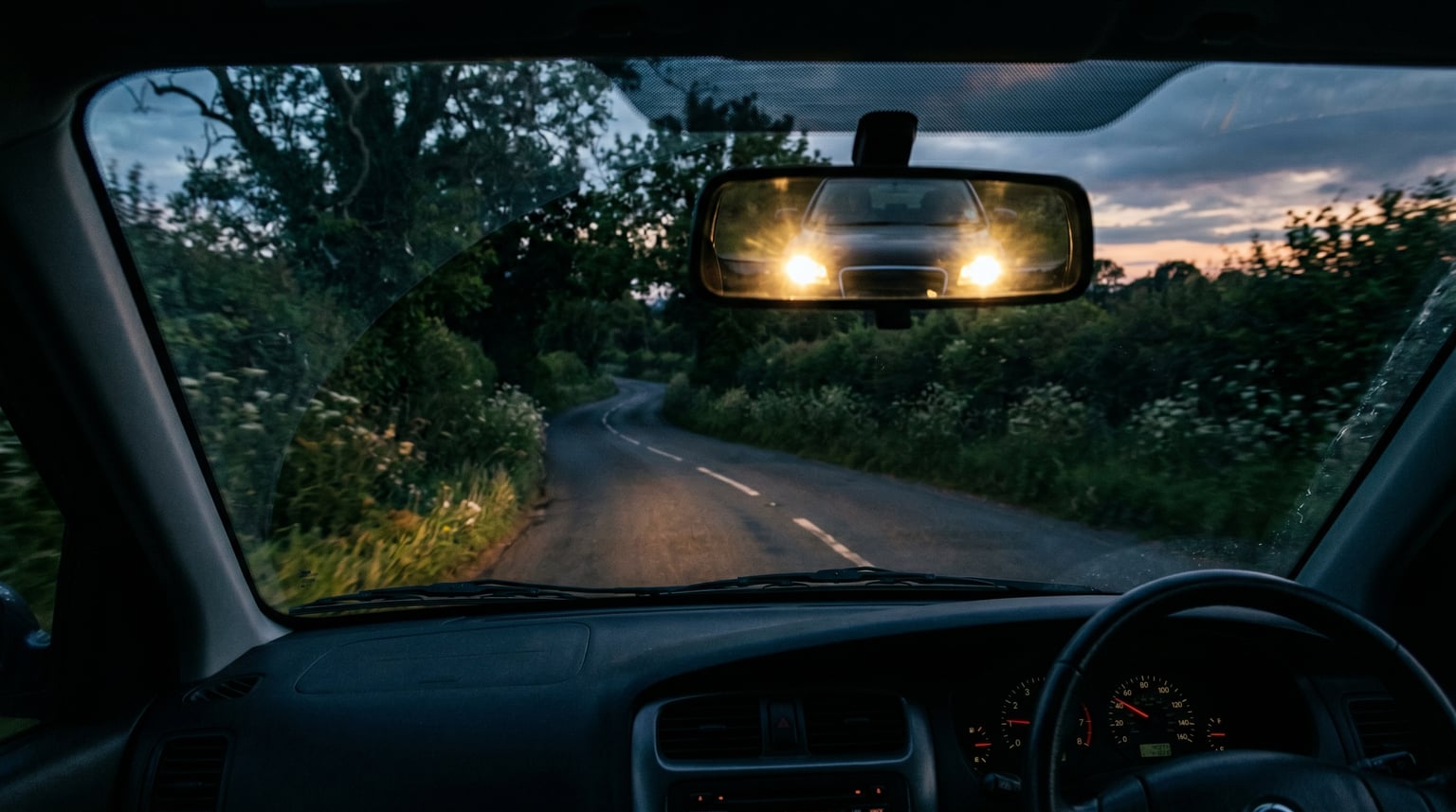
Getting tailgated on a narrow road is one of the most nerve-wracking experiences a driver can face. You cannot just slide into the next lane, the shoulders are often thin or nonexistent, and the pressure from the headlights behind you feels relentless. Knowing exactly what to do when a driver is tailgating you on a narrow road can keep you calm, reduce the chance of a rear-end collision, and get the aggressive driver off your bumper safely.
I have spent years researching defensive driving techniques and pulling together insights from forums like r/driving, AAA safety guidelines, and NHTSA recommendations. This guide breaks the situation down into clear, numbered steps designed for tight single-lane roads where the usual “just change lanes” advice does not apply.
Table of Contents
What Is Tailgating?
Tailgating happens when a driver follows another vehicle too closely, leaving insufficient space to stop safely if the front vehicle brakes suddenly. The National Highway Traffic Safety Administration classifies it as a form of aggressive driving, and it is a leading cause of rear-end collisions across the United States.
The generally accepted standard is the three-second rule: a driver should stay at least three seconds behind the vehicle ahead in normal conditions, and more in rain, snow, or heavy traffic. When someone shrinks that gap to one second or less on a narrow road, they are tailgating, whether they realize it or not.
What to Do When a Driver Is Tailgating You on a Narrow Road: Step-by-Step
Following a clear sequence keeps you in control when a tailgater is pressuring you. Here is the exact order I recommend, built from AAA guidance and real driver experiences shared in forums.
- Stay calm and keep your hands steady on the wheel. Your first job is to not panic. Take a breath and resist the urge to speed up. Accelerating only encourages the tailgater to match your speed and close the gap further.
- Maintain a steady, legal speed. Hold the speed limit or the speed you were already traveling. Sudden changes confuse the driver behind you and raise the odds of a rear-end collision.
- Do not brake check. Slamming your brakes to “teach them a lesson” is dangerous, illegal in many states, and can shift liability onto you. Forum users on r/driving consistently warn that brake checking escalates road rage rather than ending it.
- Signal early and look for a safe pull-off spot. On narrow roads, watch for driveways, widened shoulders, scenic overlooks, or passing pull-outs. Signal well in advance so the tailgater understands your intent.
- Slow down gradually as you approach the pull-off. Use light, steady brake pressure so the driver behind has time to react. Coast into the pull-off area smoothly.
- Let the tailgater pass completely before re-entering. Wait until their vehicle is well clear, check your mirrors, signal, and merge back at the same speed you were traveling before.
If no safe pull-off appears for several miles, keep your speed steady and your hazard lights off unless you are traveling well below the limit. Hazards can confuse following drivers and are illegal to use while moving in some states.
Narrow Road Tactics: When You Can Not Just Change Lanes
The advice most competitors give, “move to the right lane,” simply does not work on a single-lane country road or a tight residential street. This is the gap almost every existing article misses, and it is exactly what makes narrow-road tailgating so stressful.
When there is no lane to move into and no shoulder to use, your best option is controlled deceleration. Ease off the gas gradually to drop 5 to 10 mph below the limit. This does two things: it shortens the distance the tailgater needs to pass you when an opening appears, and it signals that you are aware of them without provoking aggression.
Scan the road ahead for straight, flat sections with good visibility. Those are the safest spots for an impatient driver to pass legally. If you see one coming, maintain your speed through it so the tailgater has a clear window. Slowing down at that moment can actually block their passing opportunity and increase frustration.
At night, the pressure feels worse because headlights fill your mirrors. Flip your rearview mirror to the night setting (the small tab underneath) to dim the glare. This small move alone reduces the anxiety that leads to rushed decisions.
Mistakes to Avoid When Being Tailgated
Several common reactions make the situation worse. Knowing what not to do is just as important as the right steps.
- Speeding up to create distance. This rarely works. The tailgater usually accelerates to match, and now you are both traveling faster on a narrow road.
- Brake checking or tapping brakes. As mentioned, this is one of the most dangerous moves. It can cause a crash, trigger road rage, and even lead to a reckless driving ticket for you.
- Making hand gestures or eye contact. Engaging the other driver emotionally escalates the situation. Keep your focus forward.
- Slamming on brakes for a turn without signaling. Always signal at least 100 feet before a turn on roads under 40 mph, and 200 feet on faster roads. A tailgater has almost no reaction time.
What to Do If a Tailgater Hits You
If the worst happens and the tailgater rear-ends you, the legal picture is generally in your favor. In nearly every U.S. state, the rear driver is presumed at fault in a rear-end collision because they failed to maintain a safe following distance. This consensus shows up consistently across insurance industry guidance and forum discussions with drivers who have been through it.
Take these steps immediately after a collision: move to a safe location if the car is drivable, call police to file a report, take photos of both vehicles and the road, and get contact info from any witnesses. Witness statements carry significant weight when insurance companies determine fault.
Even if you feel fine, get a medical evaluation. Rear-end impacts can cause injuries that show up hours or days later, and having documentation strengthens any insurance claim.
FAQ’s
Can I call the cops on a tailgater?
Yes. If a driver is following dangerously close, weaving, or acting aggressively, you can call non-emergency police or 911 if you feel threatened. Note the license plate, vehicle description, and location. Do not engage the driver directly.
How to fight a tailgating ticket?
If you receive a following-too-closely ticket, you can contest it in traffic court. Bring dashcam footage, witness statements, or photos of road conditions. Showing you maintained a reasonable distance given traffic and weather can lead to dismissal or reduction.
Can I slow down if someone is tailgating me?
Yes, but do it gradually. Easing off the gas to drop 5 to 10 mph below the limit is legal and often the safest move on a narrow road. Never slam your brakes, which is brake checking and can shift fault onto you.
How to get a tailgater to back off?
The most reliable method is to let them pass. Maintain a steady speed, signal early, and pull into a safe area when one appears. Speeding up, brake checking, or gesturing all increase risk rather than ending it.
Conclusion
Handling a tailgater on a narrow road comes down to staying calm, holding a steady speed, and creating a safe opportunity for them to pass. The steps in this guide give you a clear plan for what to do when a driver is tailgating you on a narrow road, covering scenarios the standard advice misses. Practice these techniques before you need them, and consider a road safety research refresher to keep your defensive driving skills sharp. Stay focused, stay steady, and let the aggressive driver move on without you.