
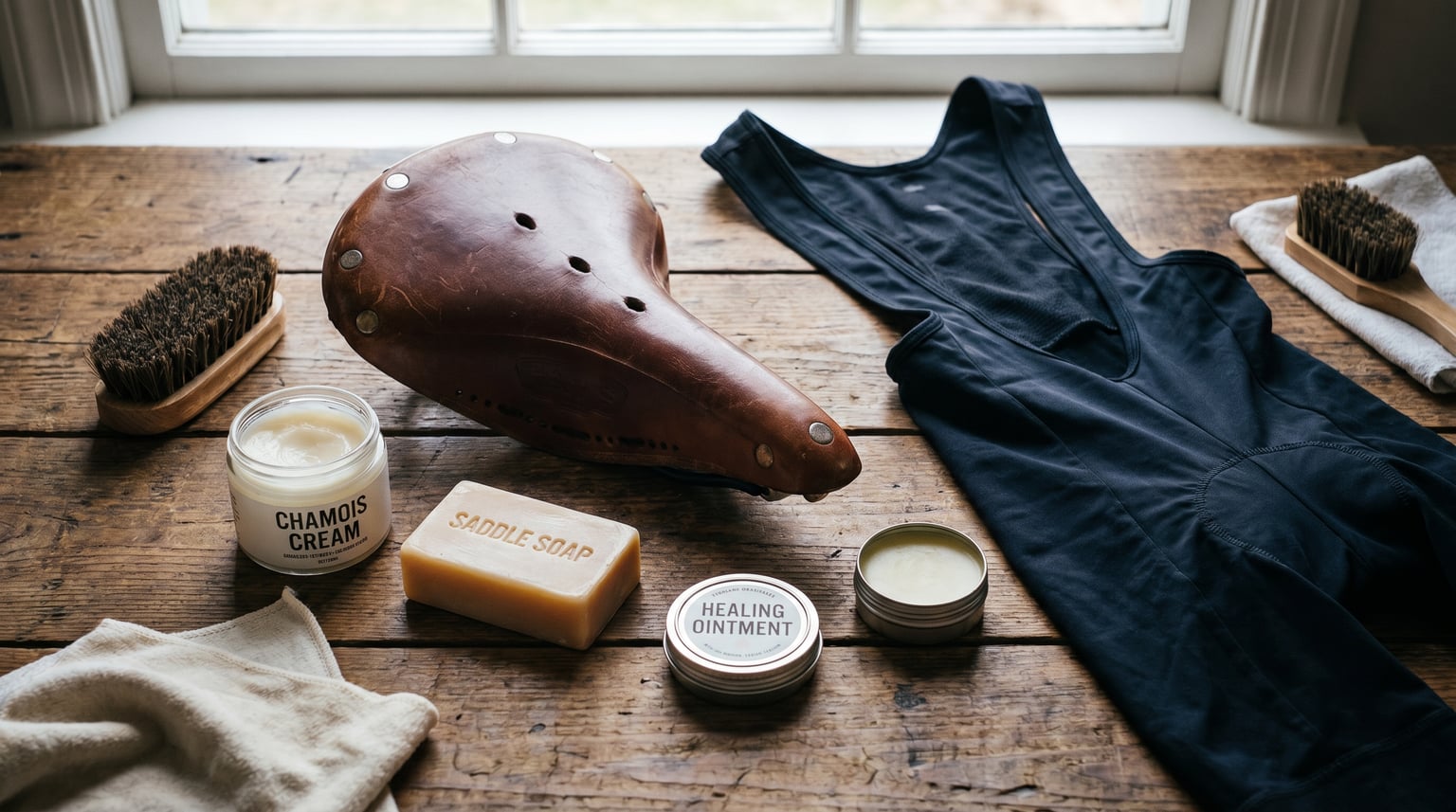
Saddle sores are skin irritations caused by the combination of friction, sustained pressure, and trapped moisture during cycling. You can prevent and treat saddle sores by getting a proper bike fit, wearing quality bib shorts with a clean chamois pad, applying chamois cream to reduce friction, showering immediately after rides, and using antibacterial or zinc-based ointments at the first sign of irritation.
If you have ever finished a long ride and noticed a tender, raised bump where your sit bones meet the saddle, you are in good company. Saddle sores affect nearly every cyclist at some point, from beginners logging their first 20-mile rides to seasoned bikepackers tackling multi-day routes. They are uncomfortable, they can sideline your training, and frankly, they are a topic many riders feel embarrassed to discuss.
There is no reason to suffer in silence. After digging into the scientific literature, cycling forums, and expert advice from sources like British Cycling and a peer-reviewed scoping review published in the Journal of Cycling Science, we have put together a comprehensive guide on how to prevent and treat saddle sores. Whether you are returning to cycling after a break or pushing your endurance limits, this guide walks through everything you need to know.
Here is what we will cover: what saddle sores actually are, the three root causes behind almost every one, a step-by-step prevention system, treatment protocols for every stage, and special advice for bikepacking, female cyclists, and indoor riders. Let us get into it.
Table of Contents
What Are Saddle Sores?
A saddle sore is any skin irritation, inflammation, or lesion that develops on the areas of your body in contact with a bicycle saddle. The term covers a spectrum from mild redness and chafing to painful, infected boils that can take weeks to heal. Most saddle sores appear on the perineum (the area between your sit bones and genitals), the inner thighs, the buttocks, and around hair follicles in the perineal area.
The scientific community has even given this condition formal attention. A 2022 scoping review titled “Getting to the Bottom of Saddle Sores” catalogued the existing research and found that saddle sores are one of the most common medical complaints among cyclists at all levels. The review confirmed that prevention through equipment, hygiene, and technique is far more effective than treatment after the fact.
Not all saddle sores are the same, and understanding which type you have determines how you should treat it. Here is a breakdown of the four main types.
Saddle Sore Types: A Quick Comparison
Identifying your saddle sore type helps you choose the right treatment and predict how long recovery will take. Cyclists commonly experience one of four types.
Chafing: Surface-level skin irritation caused by friction. The skin looks red, feels raw, and may sting when you shower. This is the mildest form and typically heals in 1 to 3 days with rest and basic skin care.
Folliculitis: Inflammation of hair follicles, often caused by bacteria entering damaged follicles. You will see small red bumps or white-headed pimples around hair follicles. With antibacterial treatment, folliculitis usually clears in 3 to 7 days.
Furuncle (Boil): A deeper infection of a hair follicle that forms a painful, swollen lump filled with pus. Boils are warm to the touch and can take 1 to 2 weeks to resolve. They may require antibiotics if they do not improve.
Perineal Nodular Induration (PNI): Also called a “cyclist’s nodule,” this is a firm, fibrous lump deep in the tissue of the perineum. PNI develops from chronic pressure and friction over time. It can persist for weeks or months and may need surgical removal in severe cases.
If you are unsure whether what you have is a saddle sore or something else, the location and timing are strong clues. If it appeared after cycling, is located in the saddle contact area, and is tender to pressure, it is almost certainly a saddle sore.
The Three Root Causes: Friction, Pressure, and Moisture
Almost every saddle sore can be traced back to three interacting factors: friction, pressure, and moisture. Understanding how these three forces work together is the foundation of effective saddle sore prevention.
Friction: The Constant Rub
Every pedal stroke involves thousands of tiny movements between your skin, your chamois pad, and the saddle. Over the course of a two-hour ride, that adds up to tens of thousands of friction cycles. Friction wears down the skin’s protective barrier, causing microscopic tears that allow bacteria to enter.
Friction is worsened by ill-fitting shorts that bunch or wrinkle, seams that rub, and saddles that are too wide or too narrow for your anatomy. It is also the reason chamois cream exists: a lubricating layer between skin and fabric dramatically reduces friction forces.
Pressure: Sustained Weight on Soft Tissue
When you sit on a saddle, your body weight concentrates on a small area, primarily the ischial tuberosities (sit bones) and the perineum. A 2022 scoping review noted that cyclists can experience up to four times their body weight in localized pressure during rough terrain or hard pedaling efforts.
Sustained pressure restricts blood flow to the skin and underlying tissue. Reduced blood flow means less oxygen and fewer infection-fighting cells reach the area. Over time, this pressure damage weakens the skin and makes it vulnerable to breakdown. This is why standing up every 10 to 15 minutes matters so much: it restores blood flow and gives tissue a chance to recover.
Using proper bike handling techniques on rough terrain also distributes pressure more evenly, rather than letting every bump drive your weight into the saddle.
Moisture and Bacteria: The Infection Engine
Cycling generates significant sweat, and that sweat gets trapped between your skin and the chamois pad. Warm, dark, and moist is the perfect environment for bacterial growth. When friction and pressure have already compromised the skin barrier, bacteria rush in and cause the infections that turn mild irritation into folliculitis or boils.
This is why post-ride hygiene is non-negotiable. The longer you sit in sweaty shorts after a ride, the more time bacteria have to multiply and cause problems. Getting out of your kit and showering within 30 minutes of finishing your ride is one of the highest-impact prevention habits you can build.
These three causes do not operate in isolation. Friction damages the skin, pressure reduces the skin’s ability to heal, and moisture delivers the bacteria that exploit the damage. Effective prevention addresses all three.
How to Prevent Saddle Sores
Saddle sore prevention comes down to a system of habits and equipment choices that minimize friction, distribute pressure, and manage moisture. Here is a step-by-step prevention checklist you can start using today.
1. Get a professional bike fit. A saddle that is too high, too far back, or tilted at the wrong angle causes rocking and uneven pressure. Even a 2 to 3 mm saddle height adjustment can change how your sit bones track on the saddle surface.
2. Measure your sit bones and choose a matching saddle. Most bike shops can measure your ischial tuberosity width. Your saddle should be roughly 20 to 30 mm wider than your sit bone measurement to provide adequate support without chafing your inner thighs.
3. Wear quality bib shorts with a chamois pad. Bib shorts stay in place better than waist shorts, eliminating the bunching and friction that cause sores. The chamois pad provides cushioning and wicks moisture away from the skin.
4. Never wear underwear under your cycling shorts. Underwear seams create friction lines and trap moisture against the skin. The chamois pad is designed to be worn directly against your body.
5. Wash your shorts after every single ride. Bacteria multiply in unwashed chamois pads. A 30-degree wash with a technical fabric detergent keeps the pad clean without breaking down the foam.
6. Apply chamois cream before long rides. A thin layer of chamois cream on your perineum and the chamois pad reduces friction and creates an antibacterial barrier. Apply it to clean skin before you dress.
7. Stand up every 10 to 15 minutes. Standing relieves pressure and restores blood flow to the perineal area. On flat roads where you might sit for long stretches, make it a habit to stand and pedal for 20 to 30 seconds regularly.
8. Shower within 30 minutes of finishing your ride. This is the single most effective hygiene habit. Wash the saddle contact area with an antibacterial soap to remove sweat and bacteria before they can cause problems.
9. Build your mileage gradually. New riders and cyclists returning from a layoff are especially vulnerable because their skin has not adapted to saddle pressure. Increase weekly saddle time by no more than 10 to 15 percent.
10. Inspect your skin regularly. Catching a saddle sore in its earliest stage, when it is just mild redness, means you can treat it before it escalates into something that forces you off the bike.
Bike Fit and Saddle Position
Bike fit is the foundation of saddle sore prevention, and it is also the variable most riders overlook. A saddle that is too high causes your hips to rock side to side with each pedal stroke, generating friction across the entire contact area. A saddle that is too low concentrates pressure on a smaller patch of tissue.
Saddle tilt matters too. A nose that tilts up digs into the perineum and restricts blood flow. A nose that tilts down too far pushes you forward, forcing you to constantly push back and creating friction. Start with the saddle level and make small adjustments of 1 to 2 degrees at a time.
Saddle setback, the fore-aft position, also affects pressure distribution. If your saddle is too far forward, more weight shifts onto your hands and the nose of the saddle digs in. Too far back and you may find yourself sliding forward to reach the bars.
Choosing the Right Saddle
Saddle selection is deeply personal. There is no universally comfortable saddle, and what works for one rider may cause another rider pain. That said, some design features consistently help with saddle sore prevention.
A cutout or central channel reduces pressure on the perineum and the pudendal nerve, which runs through the soft tissue between your sit bones. Many riders who struggle with numbness or recurrent sores find relief with a cutout saddle.
Saddle width should match your sit bone measurement. Most manufacturers list saddle width in their product specs. If you cannot get measured at a shop, there are at-home methods using a piece of corrugated cardboard and a flat bench that can give you a reasonable estimate.
Saddle padding is a double-edged sword. More padding seems like it should be more comfortable, but excessive padding can compress and bunch, creating pressure points and friction. Firm saddles with targeted relief channels often work better than heavily padded ones for rides over an hour.
Cycling Shorts and Chamois Pads
Your shorts are the interface between your body and the saddle. Quality bib shorts with a well-designed chamois pad are worth the investment because they directly address all three root causes of saddle sores.
Bib shorts are superior to waist shorts because the suspender system holds the chamois pad firmly in place. When the pad stays put, friction is minimized. When it shifts, you get bunching, wrinkling, and the kind of localized rubbing that causes sores.
The chamois pad itself should be seamless or have flat, minimal seams. Multi-density foam provides cushioning where you need it (under the sit bones) without excessive bulk in the perineal area. Moisture-wicking fabric on the top layer pulls sweat away from your skin.
Replace your bib shorts when the chamois pad starts to compress permanently or develop permanent creases. A worn-out pad loses its cushioning and moisture-wicking properties, becoming a saddle sore factory.
Chamois Cream: When and How to Use It
Chamois cream reduces friction between your skin and the chamois pad. For rides over 90 minutes, especially in hot weather, it can make a noticeable difference in comfort and sore prevention.
Apply a thin layer to clean, dry skin in the perineal area and inner thighs before you put on your shorts. You can also apply a small amount directly to the chamois pad itself. Less is more; too much cream creates a sticky mess that traps moisture.
Some riders find that chamois cream actually causes breakouts or makes saddle sores worse. If you have sensitive skin or are prone to folliculitis, the antibacterial ingredients in some creams may irritate rather than help. Dermatologists and Team GB advisors have noted that some riders are better off skipping cream entirely and relying on a clean chamois pad and good hygiene.
If you want to try chamois cream, start with a small amount on a shorter ride and see how your skin reacts. Water-based creams tend to be gentler than oil-based ones, which can clog pores and follicles.
Post-Ride Hygiene Habits
The habits you practice after your ride are just as important as what you do during it. Moisture and bacteria are the enemies, and the clock starts ticking the moment you stop pedaling.
Get out of your cycling shorts as soon as possible after your ride. Sitting around in a sweaty chamois pad, even for an hour, gives bacteria time to multiply and sweat time to soften and irritate your skin. Strip down immediately and get into the shower.
Wash the saddle contact area with an antibacterial soap. The cycling community on Reddit has collectively landed on Dial antibacterial bar soap as an effective, affordable option. Some riders also swear by iodine prep pads wiped across the perineal area before rides to kill surface bacteria proactively.
After your shower, let the area dry completely before putting on fresh clothes. If you are prone to sores, applying a thin layer of zinc oxide ointment (the active ingredient in diaper rash creams like Desitin) creates a protective barrier that many riders find effective for prevention.
Wash your cycling shorts after every ride without exception. Use a gentle, technical fabric detergent and avoid fabric softener, which can coat the chamois pad and reduce its moisture-wicking ability. Air dry or tumble dry on low heat.
How to Treat Saddle Sores
If a saddle sore does develop, the treatment approach depends on the type and severity. The earlier you catch it, the faster it will heal. Here is a treatment protocol organized by sore type.
Early-Stage Treatment (First 24 to 48 Hours)
At the first sign of tenderness or redness, take action immediately. Reduce your riding time or take a day off entirely. An extra rest day at this stage can prevent a minor irritation from becoming a boil that sidelines you for two weeks.
Clean the area gently with antibacterial soap and warm water. Apply a thin layer of antibacterial ointment such as bacitracin to the affected area two to three times a day. Many riders report good results from zinc oxide ointment applied at night, which soothes inflammation and creates a moisture barrier.
Avoid further friction on the area. If you must ride, apply chamois cream generously to reduce friction, but recognize that riding will slow healing.
Treating Folliculitis and Boils
If the sore progresses to folliculitis (small red bumps or whiteheads around hair follicles), step up the antibacterial treatment. Apply bacitracin or a similar over-the-counter antibacterial ointment three times daily. Warm compresses for 10 to 15 minutes, several times a day, increase blood flow and help the follicle drain naturally.
For a boil (a larger, painful, pus-filled lump), warm compresses are even more important. Apply a clean, warm washcloth for 15 minutes, three to four times a day. This encourages the boil to come to a head and drain on its own. Do not squeeze or lance a boil yourself, as this can spread infection deeper into the tissue.
Hydrocortisone cream (1 percent) can reduce inflammation and itching around the sore, but use it sparingly and only for a few days. Prolonged use of topical steroids thins the skin and makes it more vulnerable to future damage.
If a boil does not improve after 5 to 7 days of home treatment, or if you develop a fever, see a doctor. You may need oral antibiotics.
Creams and Ointments That Work
Cyclists have tested a wide range of topical treatments over the years, and a few consistently rise to the top. Here is what the community and medical literature support.
Antibacterial ointments (bacitracin, mupirocin): First-line treatment for folliculitis and early boils. Apply to clean skin two to three times daily. These kill the bacteria causing the infection.
Zinc oxide ointment (Desitin, Sudocrem): A barrier cream that soothes inflammation and protects compromised skin from further moisture and friction. Popular among bikepackers and long-distance riders for both treatment and prevention.
Hydrocortisone cream (1 percent): Reduces inflammation and itching. Use for short periods (3 to 5 days) on angry, red, itchy sores. Not for long-term use.
Doublebase Gel or Dermol 500: Recommended by British Cycling and dermatologists for cyclists who need a moisturising routine. Regular moisturising helps the skin barrier repair between rides, making it more resistant to future friction damage.
Hydrocolloid dressings: Some riders place a hydrocolloid wound dressing over a sore before riding. These dressings provide a protective cushion and maintain a moist wound environment that promotes healing.
Recovery Timeline: How Long Do Saddle Sores Take to Heal?
One of the most common questions cyclists ask is how long a saddle sore will take to heal. The answer depends on the type and severity.
Chafing is the fastest to heal. With rest and basic skin care, most chafing resolves in 1 to 3 days. You can usually ride with mild chafing if you apply chamois cream and keep the area clean.
Folliculitis takes longer. Expect 3 to 7 days of treatment with antibacterial ointment before the bumps clear completely. Light riding is usually fine, but monitor for worsening.
Boils require patience. Plan on 1 to 2 weeks for a boil to fully resolve, and expect to take at least a few days off the bike. Riding with a boil is painful and can worsen the infection.
Perineal nodular induration (PNI) is the slowest to heal. These deep tissue nodules can persist for weeks or months even with rest. If a PNI does not improve with conservative treatment, consult a dermatologist or sports medicine physician.
Special Scenarios
Bikepacking and Multi-Day Rides
Multi-day rides present a unique saddle sore challenge because you cannot always shower immediately after riding, and you are repeating the friction-pressure-moisture cycle day after day without full recovery time. When preparing for multi-day cycling adventures, saddle care deserves as much planning as your route and nutrition.
Bring antibacterial body wipes for a thorough cleanup each evening, even if you cannot shower. Change into dry, clean underwear or shorts immediately after riding. Apply zinc oxide ointment each night as a preventive barrier. Some bikepackers bring iodine prep pads for a quick antibacterial wipe-down of the perineal area at the end of each day.
Pack at least two pairs of cycling shorts so you can alternate days and let each pair dry fully between uses. A damp chamois pad is a guaranteed saddle sore trigger on day three or four of a trip.
Advice for Female Cyclists
Most saddle sore content is written with male anatomy in mind, and female cyclists report frustration at the lack of specific guidance. Female anatomy creates different pressure points on the saddle, and the soft tissue of the vulva is more vulnerable to friction and pressure damage than the areas male cyclists typically develop sores.
Saddle selection is especially important for women. Many female riders find that saddles designed with wider rear sections and prominent central cutouts relieve pressure on sensitive tissue. Sit bone width measurement is just as important, and women’s sit bones are, on average, slightly wider apart than men’s.
Hormonal changes also play a role. Some female cyclists find that saddle sores are worse during certain phases of their menstrual cycle, and the hormonal shifts of perimenopause and menopause can thin the skin and make it more vulnerable. If you notice a pattern, tracking your symptoms alongside your cycle can help you anticipate flare-ups and take extra preventive measures during vulnerable periods.
Pubic hair removal is a debated topic. Some riders find that removing hair reduces friction, while others find that hair removal causes ingrown hairs and folliculitis that mimic or worsen saddle sores. Dermatologists generally recommend trimming rather than complete removal, as trimmed hair reduces friction without the ingrown risk.
Indoor Cycling and Trainer Sessions
Indoor cycling generates more sweat than outdoor riding because there is no airflow to evaporate moisture. This means the moisture component of the friction-pressure-moisture triad is amplified. If you get saddle sores on the trainer but not outdoors, sweat management is likely your issue.
Use a fan pointed at your lower body to increase evaporation. Keep your rides shorter than you might outdoors, since there is no coasting or standing naturally on an indoor trainer. Set a timer to remind yourself to stand every 10 minutes. Apply chamois cream before trainer sessions and shower immediately after.
When to See a Doctor
Most saddle sores can be treated at home, but some warning signs indicate it is time to seek medical attention. Do not let embarrassment keep you off the exam table; doctors who work with athletes see saddle sores regularly.
See a doctor if a sore does not improve after 7 to 10 days of home treatment. Redness that spreads outward from the sore, increasing pain, warmth in the surrounding skin, or red streaks radiating from the area are signs of spreading infection that may need oral antibiotics.
A fever, chills, or feeling generally unwell alongside a saddle sore means the infection may have spread beyond the skin. Seek medical care promptly. A deeply painful, rapidly growing lump could be an abscess that needs professional draining.
For perineal nodular induration that has not responded to weeks of rest and conservative care, a sports medicine physician or dermatologist can evaluate whether you need more advanced treatment such as local steroid injections or surgical removal.
Common Saddle Sore Mistakes to Avoid
Even experienced cyclists make mistakes that lead to saddle sores. Here are the most common ones, drawn from cycling forums and rider experiences.
Buying a heavily padded saddle. More padding does not mean more comfort. Thick padding compresses and creates pressure points. A firmer saddle that matches your sit bone width is usually better.
Wearing underwear under cycling shorts. This is the number one mistake new riders make. Underwear seams cause friction lines and trap moisture. The chamois pad goes directly against your skin.
Ignoring the early warning signs. That faint tenderness after a ride is your body telling you something. Treating a sore on day one takes hours. Treating a boil on day five takes weeks.
Not washing shorts after every ride. Even a short ride leaves bacteria and sweat in the chamois pad. Reusing unwashed shorts is like applying bacteria directly to compromised skin.
Riding through the pain. Pushing through a developing saddle sore turns a one-day rest into a two-week layoff. Take the rest day early.
Assuming one saddle fits all. Saddles are as individual as shoes. What works for your riding partner may not work for you. Borrow or demo saddles before committing to a purchase.
Frequently Asked Questions
How to stop getting saddle sores?
To stop getting saddle sores, get a professional bike fit to ensure your saddle height and position are correct, wear quality bib shorts with a clean chamois pad (no underwear), apply chamois cream on rides over 90 minutes, shower with antibacterial soap within 30 minutes of finishing every ride, wash your shorts after each use, and stand up out of the saddle every 10 to 15 minutes to restore blood flow.
Will saddle sores go away?
Yes, saddle sores go away with proper care. Mild chafing clears in 1 to 3 days with rest and basic skin care. Folliculitis takes 3 to 7 days with antibacterial ointment. Boils take 1 to 2 weeks and may require antibiotics from a doctor. Deep tissue nodules (PNI) can take weeks or months and may need medical treatment if they do not resolve with rest. Taking time off the bike and keeping the area clean are the most important factors in recovery.
What is the most common cause of saddle sores?
The most common cause of saddle sores is the combination of friction, sustained pressure, and trapped moisture during cycling. Friction from pedaling damages the skin barrier, pressure from sitting on the saddle restricts blood flow and weakens tissue, and trapped sweat creates a warm moist environment where bacteria multiply and infect damaged hair follicles. Poor bike fit, worn-out chamois pads, and inadequate post-ride hygiene are the most common triggers.
What type of cream can help heal saddle sores?
Several creams help heal saddle sores depending on the type. Antibacterial ointments like bacitracin treat folliculitis and early boils by killing bacteria. Zinc oxide ointments (Desitin, Sudocrem) soothe inflammation and protect skin as a moisture barrier. Hydrocortisone cream (1 percent) reduces inflammation and itching for short-term use. Chamois cream prevents saddle sores by reducing friction during rides. Moisturisers like Doublebase Gel help repair the skin barrier between rides, as recommended by British Cycling.
Conclusion
Learning how to prevent and treat saddle sores is a rite of passage for every cyclist, but it does not have to be a recurring nightmare. The system is straightforward: address friction with quality bib shorts and chamois cream, address pressure with a proper bike fit and the right saddle width, and address moisture with immediate post-ride hygiene and clean kit every time.
Treat sores early, rest when your body tells you to, and do not hesitate to see a doctor if things are not improving. Your saddle should be something you forget about during a ride, not something that dominates your thoughts. Build these habits, and you will spend more time enjoying the road and less time dealing with the aftermath.