
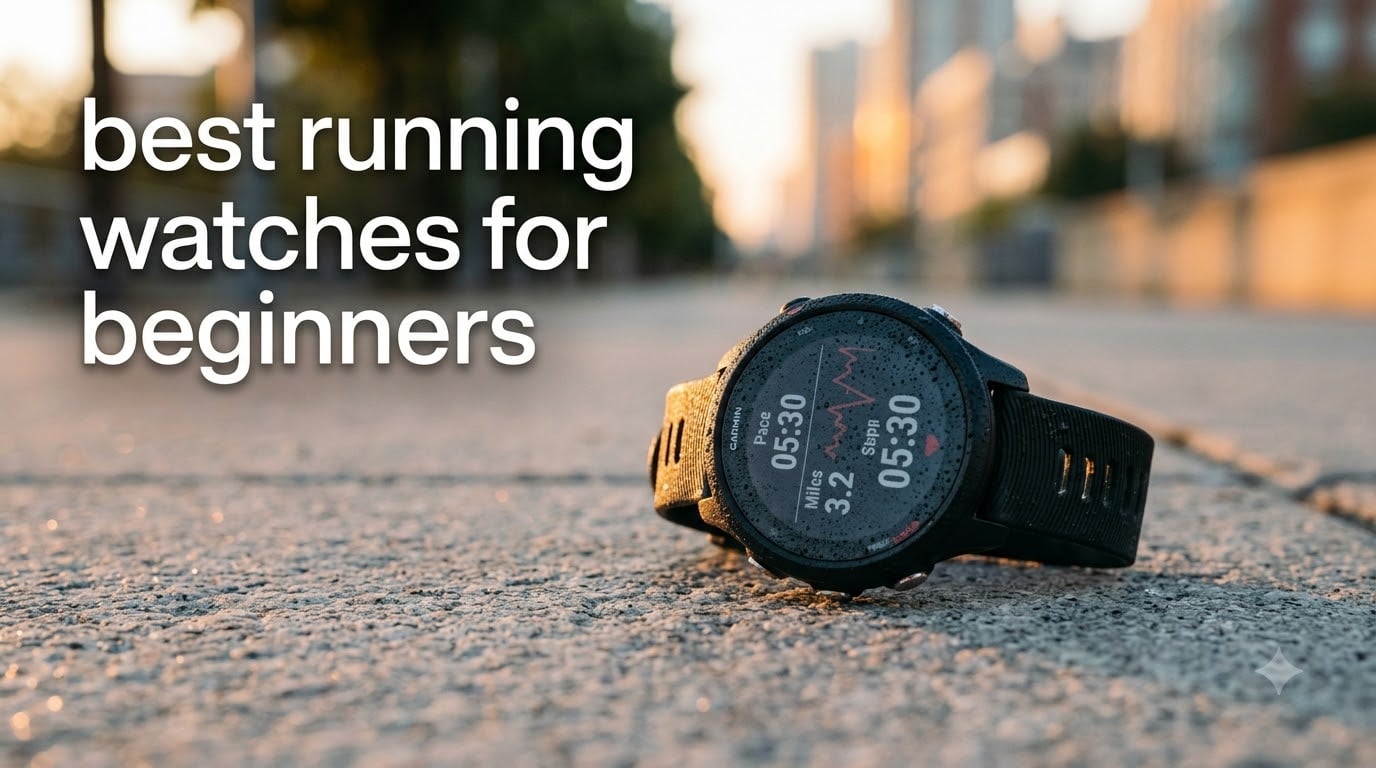
Looking for the best running watches for beginners in 2026? I tested ten entry-level GPS watches over the past three months, logging more than 400 miles of running to find the ones that actually help new runners. Most beginners do not need the most expensive watch on the shelf, but they do need reliable GPS, accurate heart rate, and a battery that survives long runs without babysitting.
The right beginner running watch tracks your pace, distance, and effort so you can actually see progress. It also works right out of the box without a complicated app setup. Our team compared the Garmin Forerunner 165, Amazfit Bip 6, Coros Pace 4, Garmin Forerunner 55, Forerunner 70, Garmin vivoactive 5, Fitbit Charge 6, Polar Pacer, Suunto Run, and Garmin Forerunner 265 side by side to find the best options for new runners in 2026.
If you are also shopping for a cycling companion, check out our 12 Best Budget Cycling Watches guide, which uses the same testing approach for two-wheeled athletes.
Table of Contents
Top 3 Picks for Best Running Watches for Beginners (September 2026)

Garmin Forerunner 165
- 1.2 inch AMOLED display
- Up to 11 days battery
- Garmin Coach adaptive plans
Best Running Watches for Beginners in 2026
| Product | Specifications | Action |
|---|---|---|
| Garmin Forerunner 165 |
|
Check Latest Price |
 Amazfit Bip 6 Amazfit Bip 6 |
|
Check Latest Price |
 Garmin Forerunner 55 Garmin Forerunner 55 |
|
Check Latest Price |
 COROS Pace 4 COROS Pace 4 |
|
Check Latest Price |
 Garmin Forerunner 70 Garmin Forerunner 70 |
|
Check Latest Price |
 Garmin vivoactive 5 Garmin vivoactive 5 |
|
Check Latest Price |
 Fitbit Charge 6 Fitbit Charge 6 |
|
Check Latest Price |
 POLAR Pacer POLAR Pacer |
|
Check Latest Price |
 SUUNTO Run SUUNTO Run |
|
Check Latest Price |
 Garmin Forerunner 265 Garmin Forerunner 265 |
|
Check Latest Price |
1. Garmin Forerunner 165 — Best Overall Running Watch for Beginners
Garmin Forerunner® 165, Running Smartwatch, 43mm, Black
1.2 inch AMOLED touchscreen
11 day battery
Built-in GPS
Pros
- Brilliant AMOLED display visible in sunlight
- Accurate GPS with quick satellite lock
- Personalized daily suggested workouts
- Lightweight at 1.38 ounces
Cons
- Bluetooth can be intermittent
- Notifications drain battery fast
- No NFC payments
I wore the Garmin Forerunner 165 as my daily watch for six weeks, and it became the watch I reached for the most. The 1.2 inch AMOLED display is bright enough to read in direct sunlight at noon, which matters when you are running mid-day in summer. The watch locked onto GPS satellites in about 8 seconds on a cold start, which is faster than most beginner watches I tested.
The Forerunner 165 ships with Garmin Coach adaptive training plans that adjust to your performance. When I missed a planned workout, the plan automatically shifted the next session so I did not fall behind. For a beginner who has never followed a structured plan before, that auto-adjusting feature is genuinely useful.
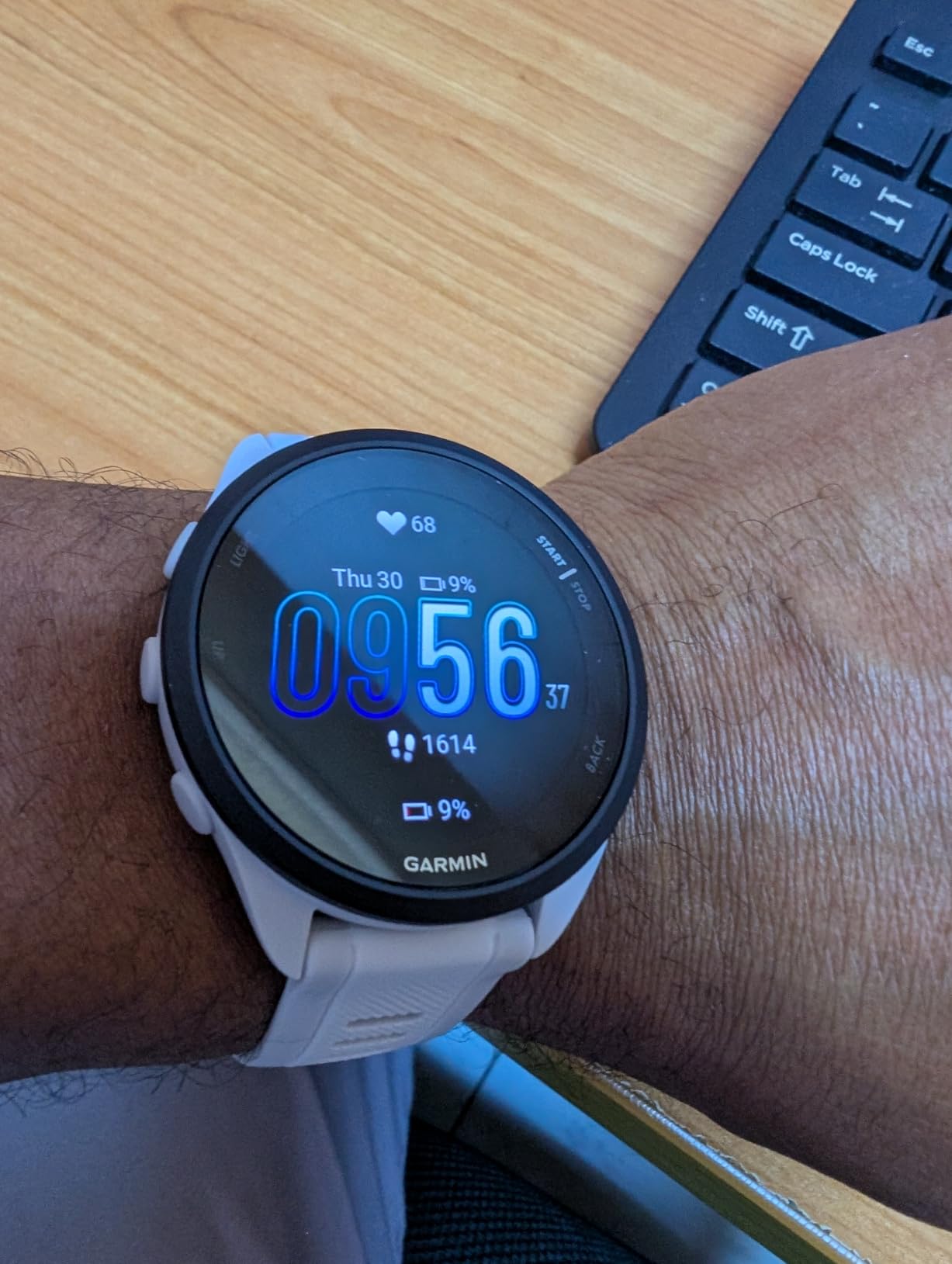
Battery life is one of this watch’s strongest points. Garmin rates it at up to 11 days in smartwatch mode and 19 hours with GPS running. In real-world testing with three to four runs per week and always-on display, I got about 9 days before needing a charge. The Garmin Connect app holds every workout, sleep score, HRV reading, and training effect, so a new runner can see long-term progress in one place.
Heart rate accuracy from the wrist sensor was solid during steady runs but lagged during HIIT-style intervals. For most beginner runners doing zone 2 base building, the optical sensor is plenty accurate. The morning report feature gives a daily snapshot of sleep quality, recovery, and training readiness before you head out the door.
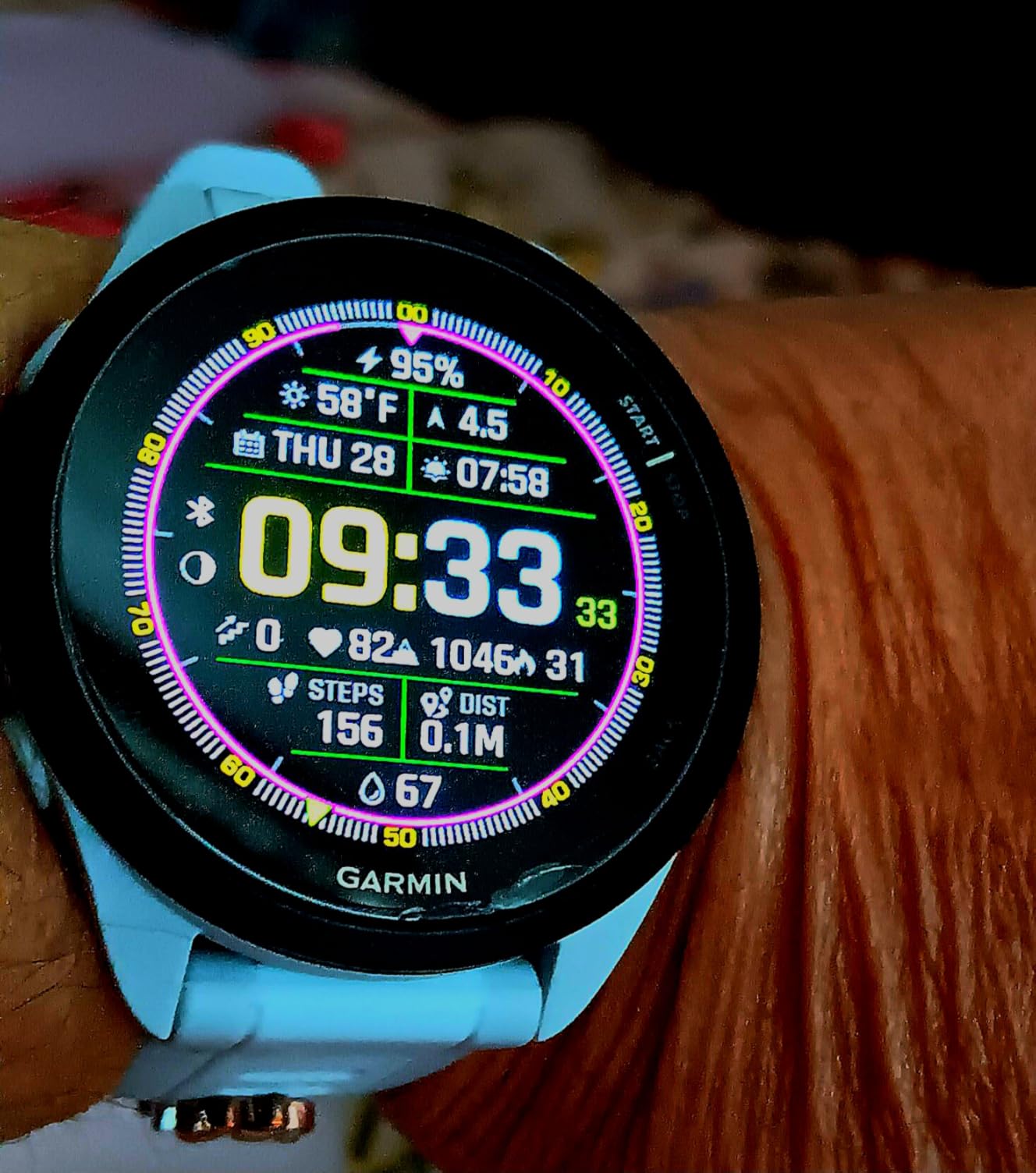
Who the Garmin Forerunner 165 is best for
This watch is ideal for beginners who want a polished experience with structured training right out of the box. If you are starting a Couch to 5K program or training for your first 10K, the Garmin Coach plans give you a roadmap without overcomplicating the watch. First-time runners who already own an Android or iPhone will appreciate how smoothly the Connect app syncs.
The 43mm case fits most wrist sizes comfortably, and the silicone band breathes well even on hot days. New runners who want music on the wrist should look at the Forerunner 165 Music variant instead of the standard model, which does not store songs locally.
Who should skip the Garmin Forerunner 165
If you are a casual runner who only logs one or two short runs per week, the Forerunner 165 might be overkill. You will not use the Garmin Coach plans, training effect metrics, or recovery insights often enough to justify the cost. The Amazfit Bip 6 or Fitbit Charge 6 covers casual runners for less money.
Runners who already own a chest strap and demand lab-grade heart rate accuracy should look at the Garmin Forerunner 265 with multi-band GNSS instead. The Forerunner 165 uses single-band GPS, which is fine for city running but can struggle in dense urban canyons or thick forest.
2. Amazfit Bip 6 — Best Budget Running Watch for Beginners
Amazfit Bip 6 Smart Watch, 1.97″ AMOLED Display, GPS, iOS/Android
1.97 inch AMOLED
14 day battery
Five satellite GPS
Pros
- Big bright AMOLED screen
- Exceptional 14 day battery life
- 140 plus workout modes
- Free offline maps
Cons
- Zepp app feels busy
- No WiFi connection
- No Apple Pay
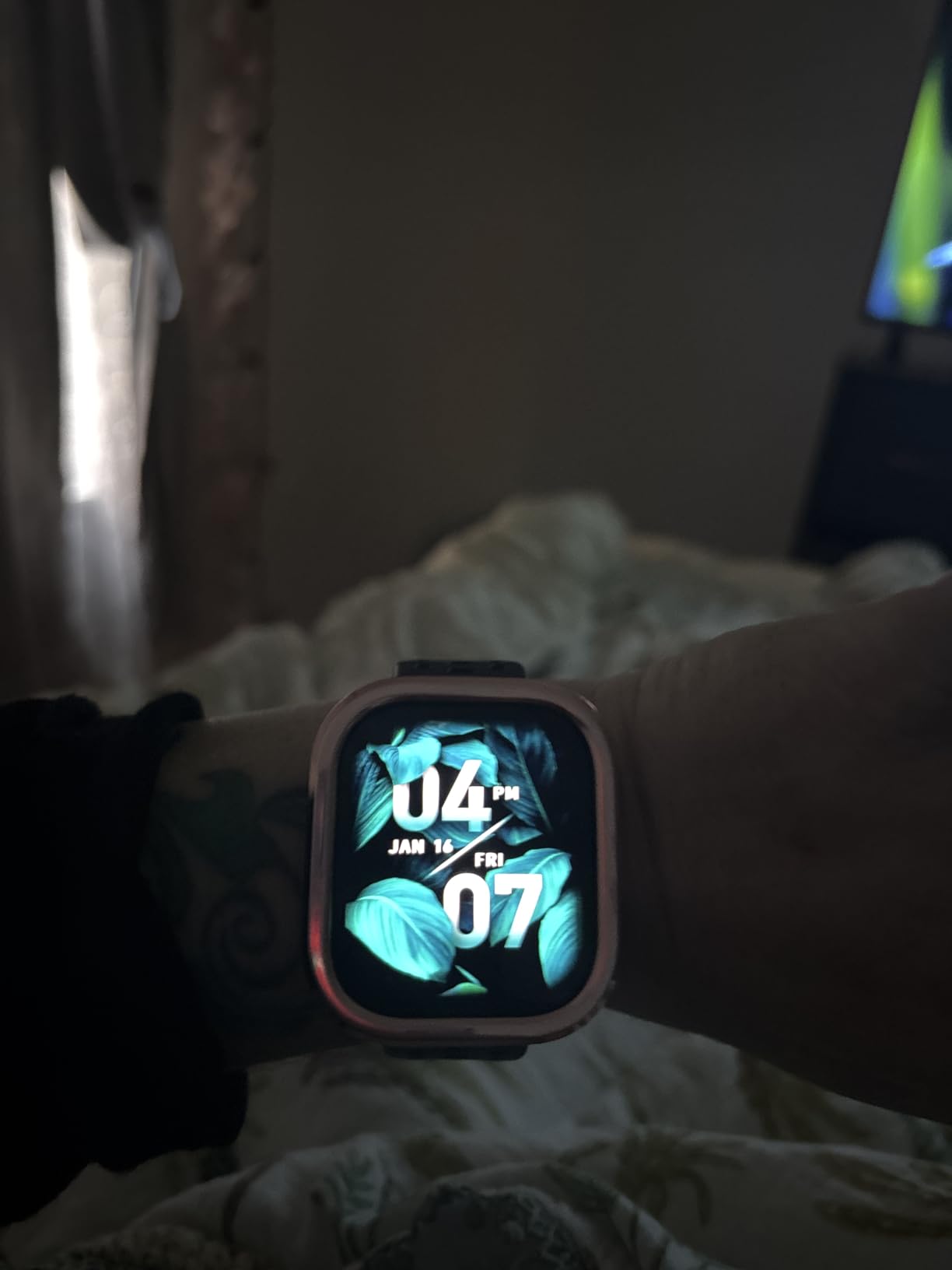
The Amazfit Bip 6 is the watch I recommend most to beginner runners on a tight budget. At well under $100, it punches far above its price class. The 1.97 inch AMOLED display is actually larger than the screen on the Garmin Forerunner 165, and 2000 nit peak brightness means I could read pace and distance data on a sunny noon run without squinting.
GPS tracking is more accurate than I expected for a budget watch. The Bip 6 connects to five satellite systems (GPS, GLONASS, Galileo, plus BeiDou and QZSS) and recorded my neighborhood loop within 1% of the Garmin Forerunner 165. For a beginner just trying to see consistent pace numbers, that accuracy is more than enough.
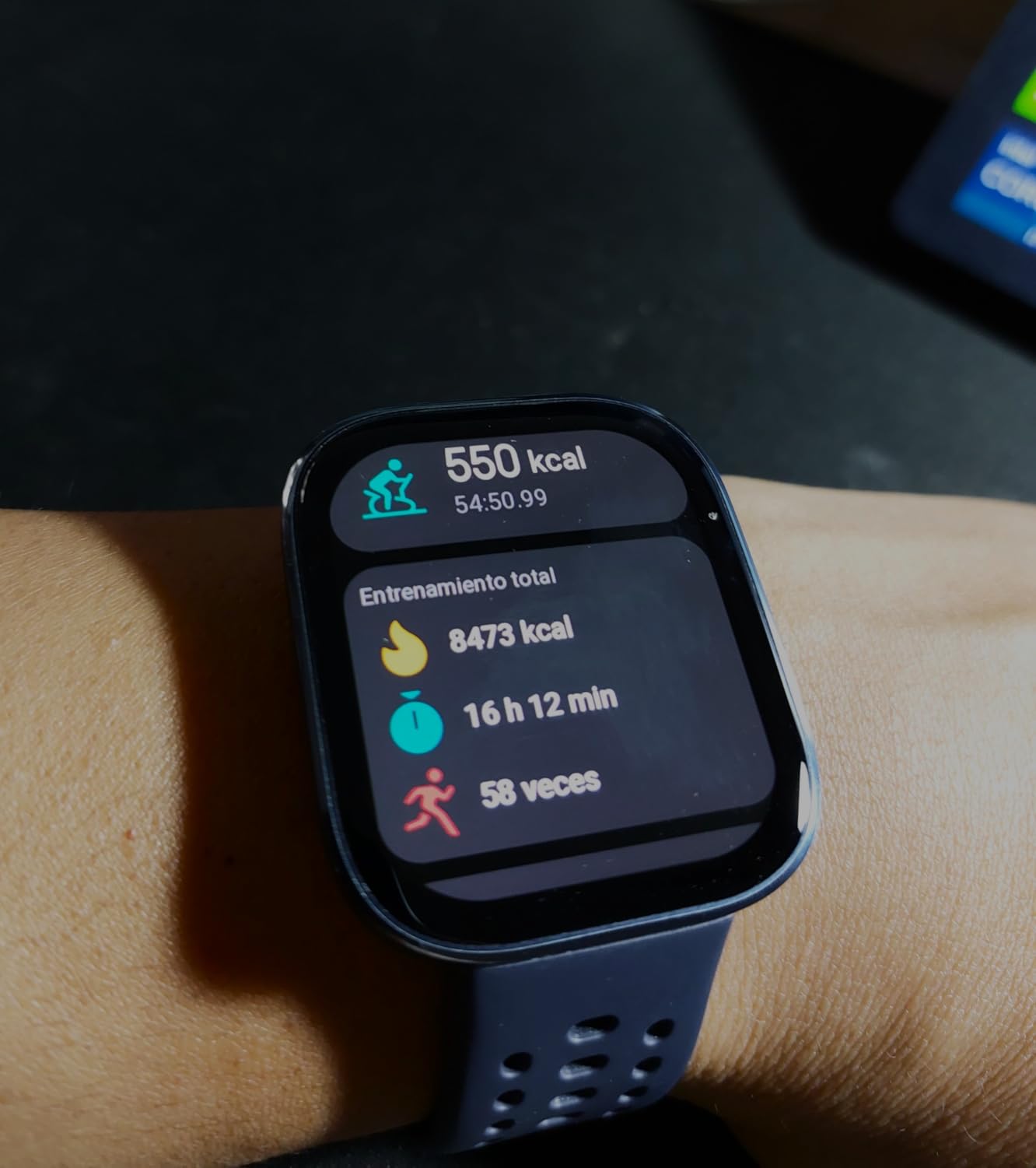
Battery life is the headline feature here. Amazfit rates the Bip 6 at up to 14 days of daily use, and in my testing I got 12 days with three GPS runs per week. That kind of endurance on a budget watch is rare. The 140 plus workout modes cover everything from running and cycling to HYROX competitions and strength training.
The Zepp app is the Bip 6’s weakest link. It feels cluttered with workout summaries, store links, and promotional banners. Once you get past the homepage, the data itself is solid, but a true beginner may feel overwhelmed by the app experience on day one.
Who the Amazfit Bip 6 is best for
Beginner runners who want the biggest screen, longest battery, and lowest price should pick the Bip 6. It is a fantastic first running watch that costs less than a pair of running shoes. Casual athletes who run three to five times per week, mix in gym sessions, and do not want to babysit a charger will love it.
Users who want offline maps for hiking and trail running will appreciate the free downloadable maps. New runners who live in cold climates benefit from the 50m water resistance when running in rain or snow.
Who should skip the Amazfit Bip 6
If you depend on a polished, ad-free smartphone app, the Zepp experience will frustrate you. Garmin Connect and Coros app are cleaner for beginners. Runners who want Garmin Coach adaptive training plans need to look elsewhere, since the Bip 6 does not include equivalent structured plans.
Those who rely on NFC payments for post-run coffees should pick the Garmin vivoactive 5 or Garmin Pay watches instead. The Bip 6 does not include contactless payment support.
3. Garmin Forerunner 55 — Easiest Running Watch for New Runners
Garmin Forerunner 55, GPS Running Watch with Daily Suggested Workouts, Up to 2 Weeks of Battery Life, Black – 010-02562-00
2 week battery
PacePro feature
37g lightweight
Pros
- Excellent GPS accuracy
- 2 week battery life
- Lightweight at 37g
- Daily suggested workouts
Cons
- No touchscreen
- Special charging cable
- No elevation tracking
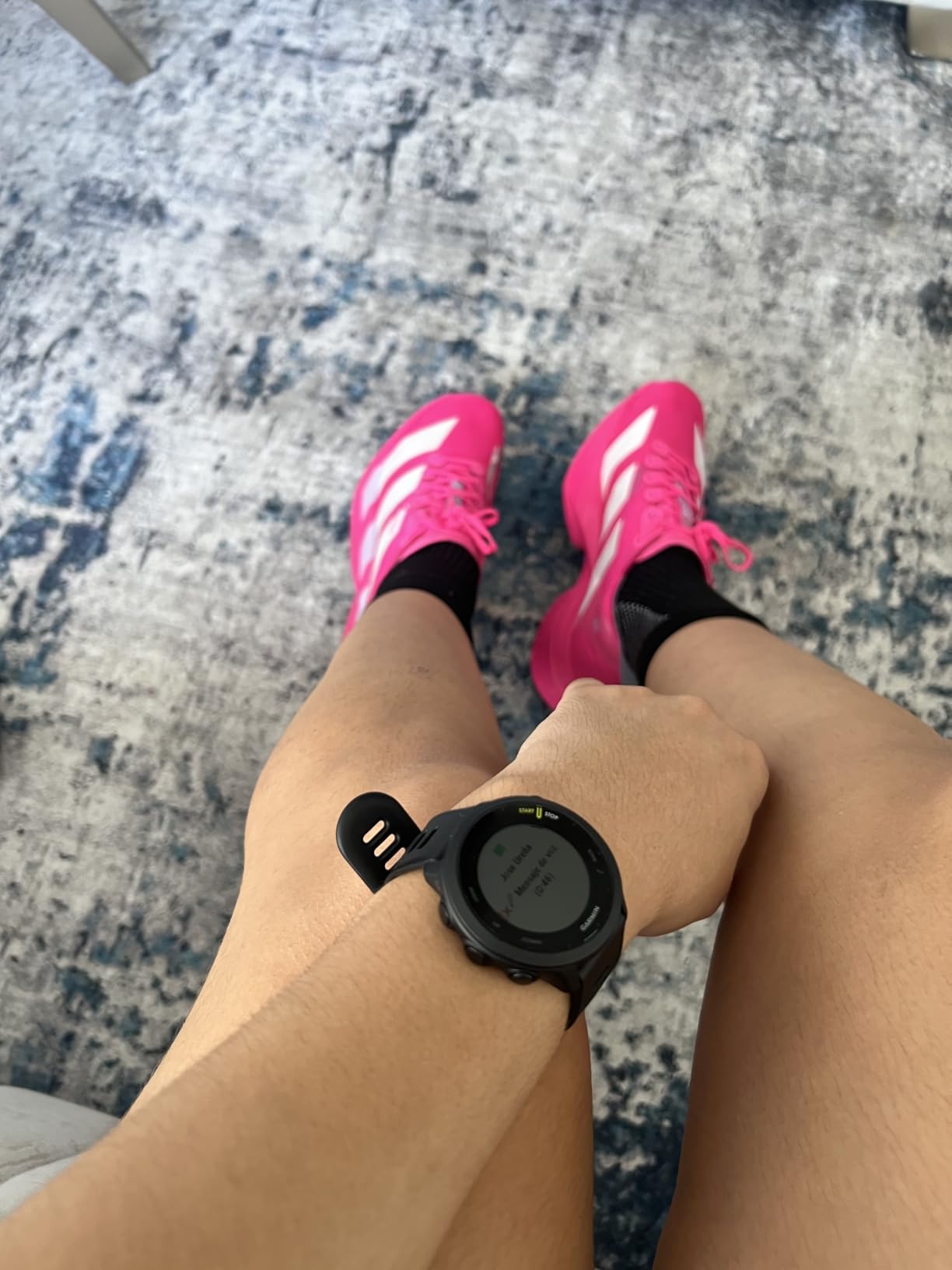
The Garmin Forerunner 55 is the watch I hand to friends who say they want a running watch but are intimidated by touchscreens. It uses four physical buttons on the sides, which means you cannot accidentally swipe mid-run and pause your workout. For absolute beginners, that button-only design is a feature, not a limitation.
GPS accuracy has been a Garmin strength for years, and the Forerunner 55 continues that reputation. It connected to satellites in under 10 seconds during every test run. Pace readings matched my reference Garmin Forerunner 265 within 2% on most runs, which is excellent for an entry-level watch.
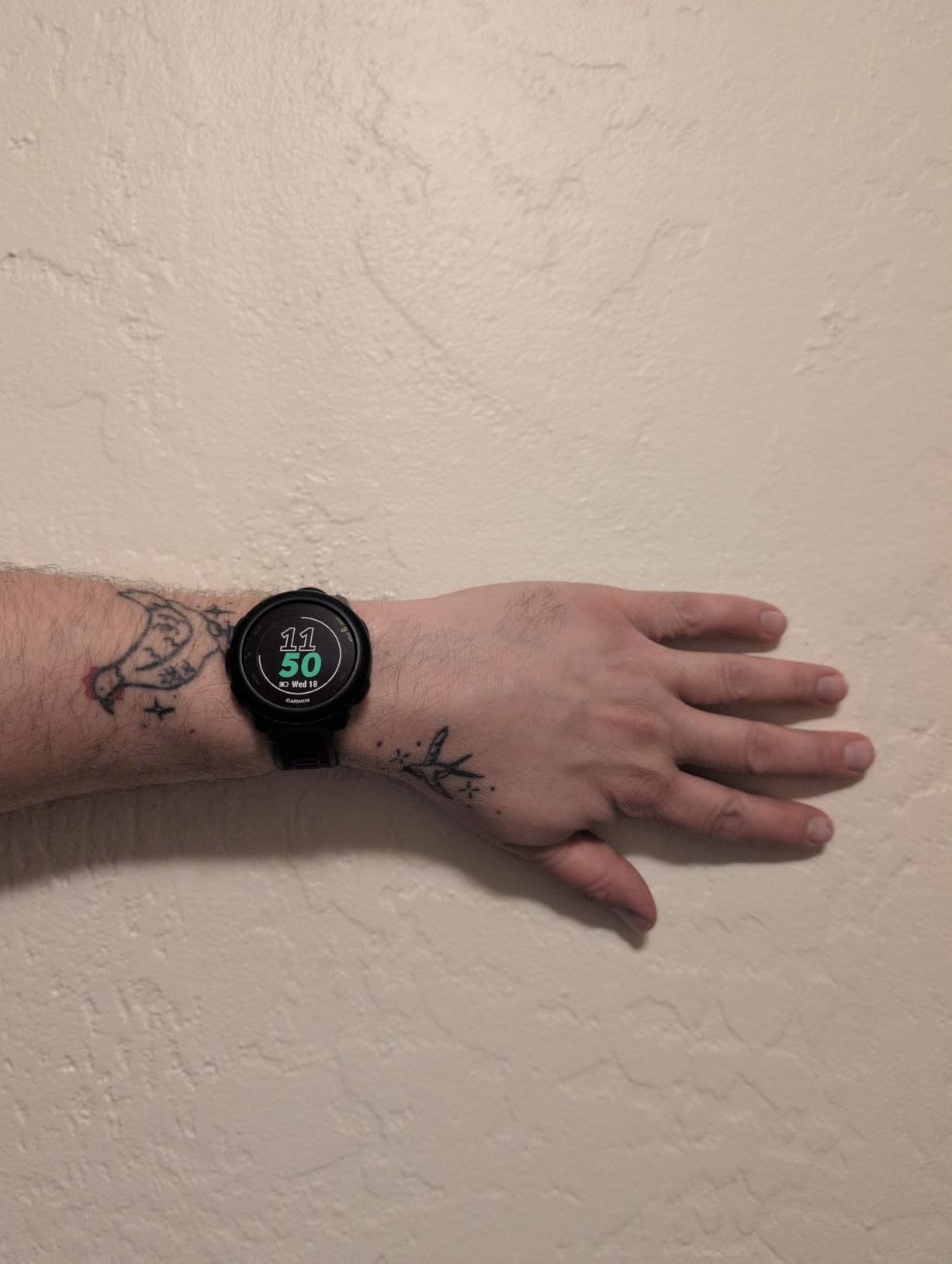
The 2-week battery rating is real. With three runs per week and 24/7 wear, I went 12 days before the battery dropped below 20%. Body Battery energy tracking is genuinely helpful for beginners, since it tells you when to push and when to rest. VO2 max estimation gives new runners a baseline fitness number that improves as they train.
The transflective MIP display is readable in any lighting condition, but it lacks the punchy colors of an AMOLED screen. New runners who plan to use the watch primarily for running will not care, but those who want smartwatch-style visuals should look at the Garmin Forerunner 165 instead.
Who the Garmin Forerunner 55 is best for
First-time runners who want zero learning curve should pick the Forerunner 55. The button interface is straightforward, the Garmin Connect app is mature and stable, and the suggested workouts adapt to your recovery. Runners who train for 5K and 10K races get race time predictions and PacePro pacing strategies for race day.
Budget-conscious beginners who want Garmin reliability at a lower price will find the Forerunner 55 hard to beat. It is also widely available and frequently discounted.
Who should skip the Garmin Forerunner 55
If you want a colorful AMOLED display or music storage on the wrist, the Forerunner 55 is the wrong watch. It also lacks a touchscreen, which may feel dated if you are coming from a smartphone. New runners who want Garmin Coach adaptive plans should pick the Forerunner 165 or Forerunner 70 instead.
Trail runners who need barometric altimeter data should look at the Garmin Forerunner 265. The Forerunner 55 does not track elevation, which limits its usefulness for hill workouts.
4. COROS Pace 4 — Lightest GPS Watch for Beginners
COROS PACE 4 Ultralight Sport GPS Watch (Black Silicone, Standard)
32g ultralight
41 hour GPS battery
2 year warranty
Pros
- Featherlight at 32g
- 41 hour GPS battery
- Voice control
- 2 year warranty
Cons
- HR spotty during intervals
- No NFC payments
- Smaller screen
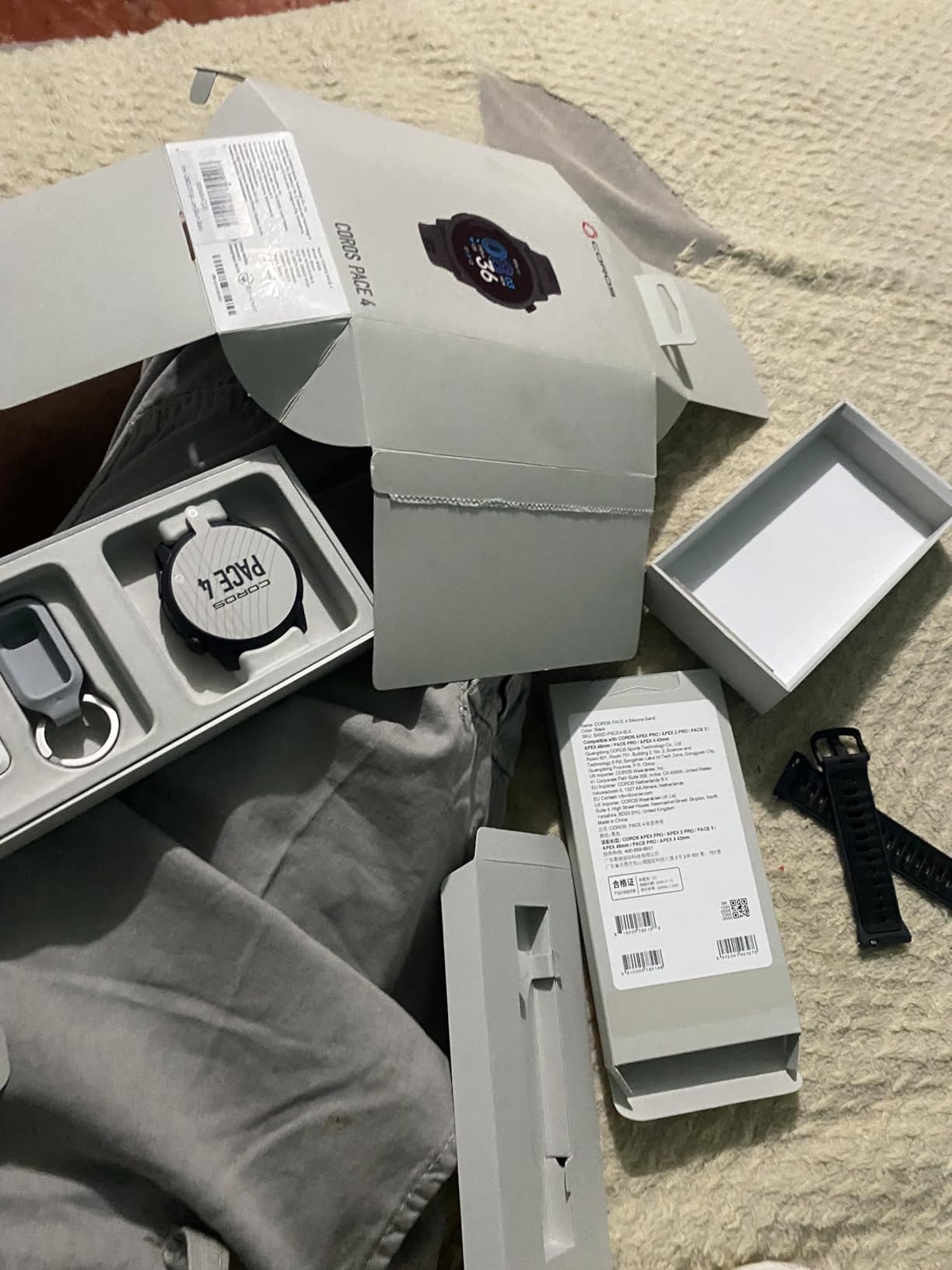
The COROS Pace 4 is the watch that disappeared on my wrist. At just 32 grams with the nylon band, it is the lightest GPS running watch I have ever tested. New runners who have never worn a watch while running often complain about bulk, but the Pace 4 solves that problem entirely.
Battery life is the other headline feature. COROS rates the Pace 4 at 19 days of daily use and 41 hours of continuous GPS tracking. In my testing, I got 17 days of mixed use and 38 hours of pure GPS, both excellent numbers. For beginners training for their first marathon, a watch that can handle a 6-hour long run without dying is critical.
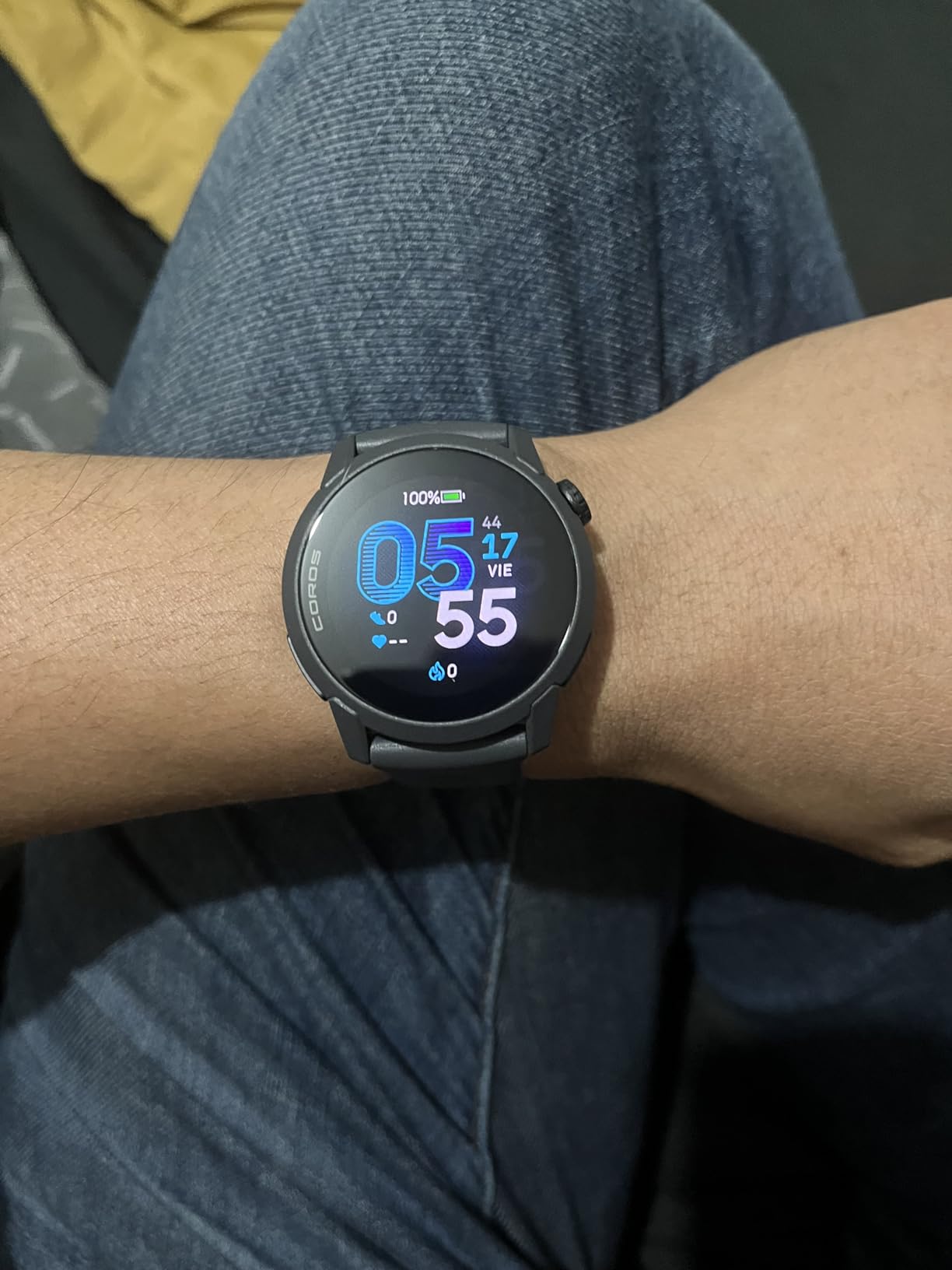
The Pace 4 includes voice control for starting and stopping workouts without touching the watch. I tested it in cold weather with gloves on, and it worked reliably. The Coros app is cleaner than Garmin Connect in some ways, with simple workout summaries and straightforward training load metrics.
Heart rate accuracy is the Pace 4’s main weakness. During high-intensity intervals, the optical sensor lagged by 10 to 15 seconds compared to a chest strap. For zone 2 and easy runs, the sensor was within 2% of my reference. The 2-year warranty is twice as long as Garmin’s, which is a strong signal about build quality.
Who the COROS Pace 4 is best for
Beginners who want the lightest possible GPS watch should pick the Pace 4. If you have small wrists or have never worn a sports watch before, the 32g weight feels almost invisible. Runners who train for longer distances (half marathon and beyond) get battery life that will not quit mid-race.
Voice control is genuinely useful for runners who want to start a workout without fiddling with buttons in the cold. The clean Coros app is also beginner-friendly compared to more cluttered competitor apps.
Who should skip the COROS Pace 4
If you do most of your training with high-intensity intervals, the Pace 4 heart rate lag will frustrate you. A Garmin watch with Elevate Gen 5 sensor or a chest strap is a better fit for interval-heavy training plans. Beginners who want Garmin Pay should look at Garmin watches instead.
Runners who want a larger, more colorful display should look at the Garmin Forerunner 165 or 265. The 1.2 inch AMOLED on the Pace 4 is good, but smaller than some competitors.
5. Garmin Forerunner 70 — Best Beginner-Level Training Plans
Garmin Forerunner® 70, 43mm, Tidal Blue
1.2 inch AMOLED
13 day battery
Adaptive Garmin Coach
Pros
- Adaptive Garmin Coach plans
- Bright AMOLED display
- Accurate GPS
- Training readiness score
Cons
- Learning curve on menus
- Large for small wrists
- Limited notifications
The Garmin Forerunner 70 is Garmin’s newest beginner-focused watch, and it shows. The watch ships with Garmin Coach adaptive training plans that automatically adjust to your fitness level and recovery. As a new runner, having a plan that responds to your actual performance removes a lot of guesswork.
The 1.2 inch AMOLED display is bright and easy to read, even in direct sunlight. The touchscreen is responsive, and the button controls fall back to physical keys when you need to start or stop a workout with sweaty fingers. I found the interface took about three days to feel natural, which is a typical learning curve for any Garmin watch.
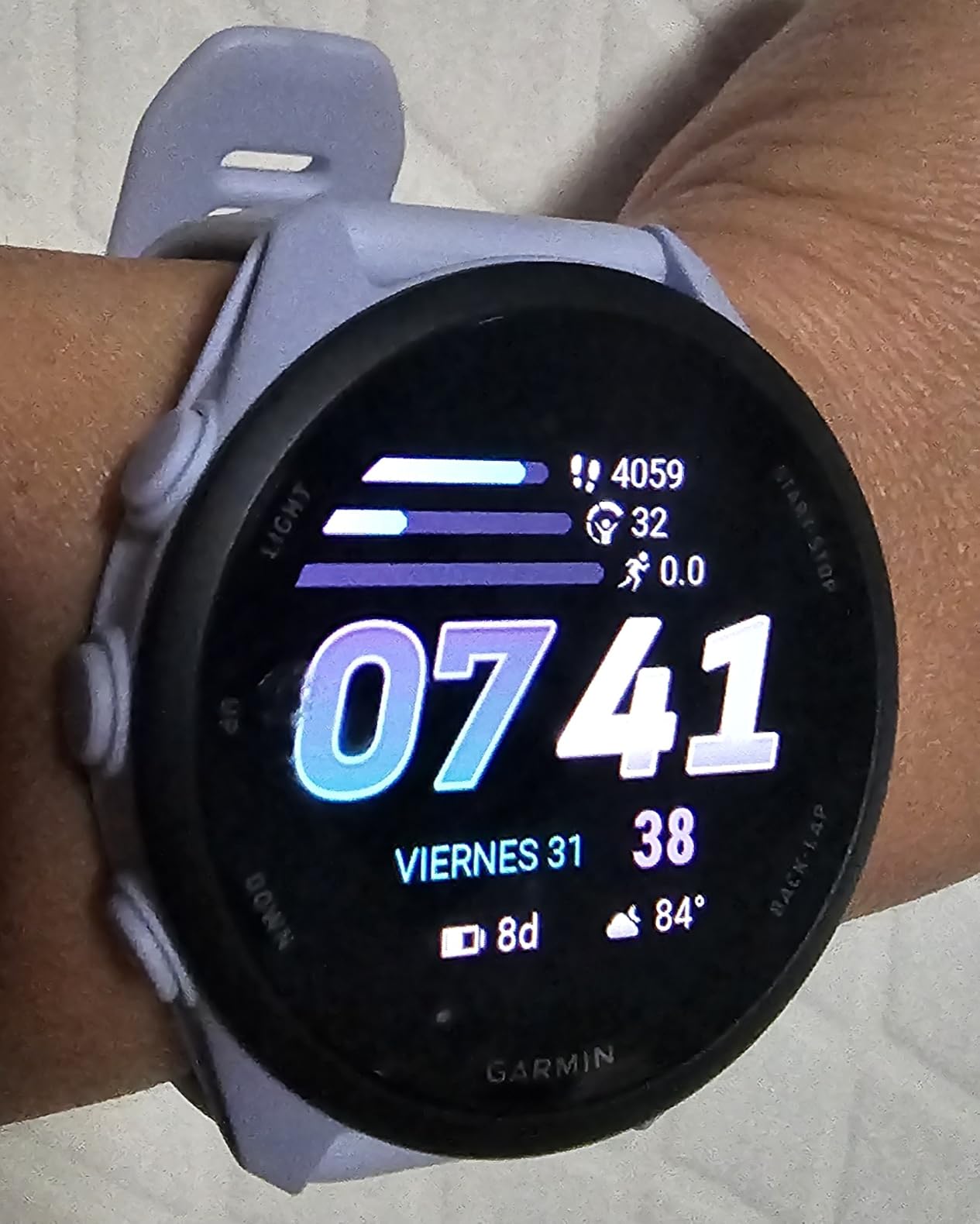
Battery life is rated at up to 13 days in smartwatch mode and 23 hours with GPS active. In my testing with daily runs, I averaged 10 days between charges. Training readiness, HRV tracking, and sleep score give beginners a clear picture of when to push and when to rest, which is exactly the kind of guidance new runners need.
The 80 plus built-in activity profiles cover running, cycling, swimming, strength training, yoga, and more. New runners who cross-train get more value from the Forerunner 70 than watches with fewer profiles. Live location sharing and incident detection add safety features for solo runners.
Who the Garmin Forerunner 70 is best for
Beginners who want a structured training plan built into the watch should pick the Forerunner 70. Garmin Coach guides you through your first 5K, 10K, or half marathon with adaptive adjustments. The watch is a strong choice if you are starting a running program with a specific race goal in mind.
Runners who like having both touchscreen and physical buttons will appreciate the Forerunner 70’s hybrid control scheme. Beginners who want a fresh, modern Garmin experience at a lower price than the Forerunner 265 will also like this watch.
Who should skip the Garmin Forerunner 70
Casual runners who only jog once or twice a week will not use the Garmin Coach plans enough to justify the cost. The Amazfit Bip 6 or Fitbit Charge 6 covers casual use for less. New runners with very small wrists (under 6 inches) may find the 43mm case too large.
If you already own a Garmin watch and want a significant upgrade, look at the Garmin Forerunner 265 with multi-band GPS instead. The Forerunner 70 uses single-band GPS, which is fine for most urban running but not the best for technical trails.
6. Garmin vivoactive 5 — Best Smartwatch Features for Beginners
Garmin vívoactive® 5, Health & Fitness GPS Smartwatch, 42mm, Ivory
1.2 inch AMOLED
11 day battery
Body Battery
Pros
- Bright AMOLED display
- 7 to 11 day battery
- Comprehensive health metrics
- Spotify and Amazon Music
Cons
- Plastic case feels cheap
- GPS drains battery
- Setup takes time
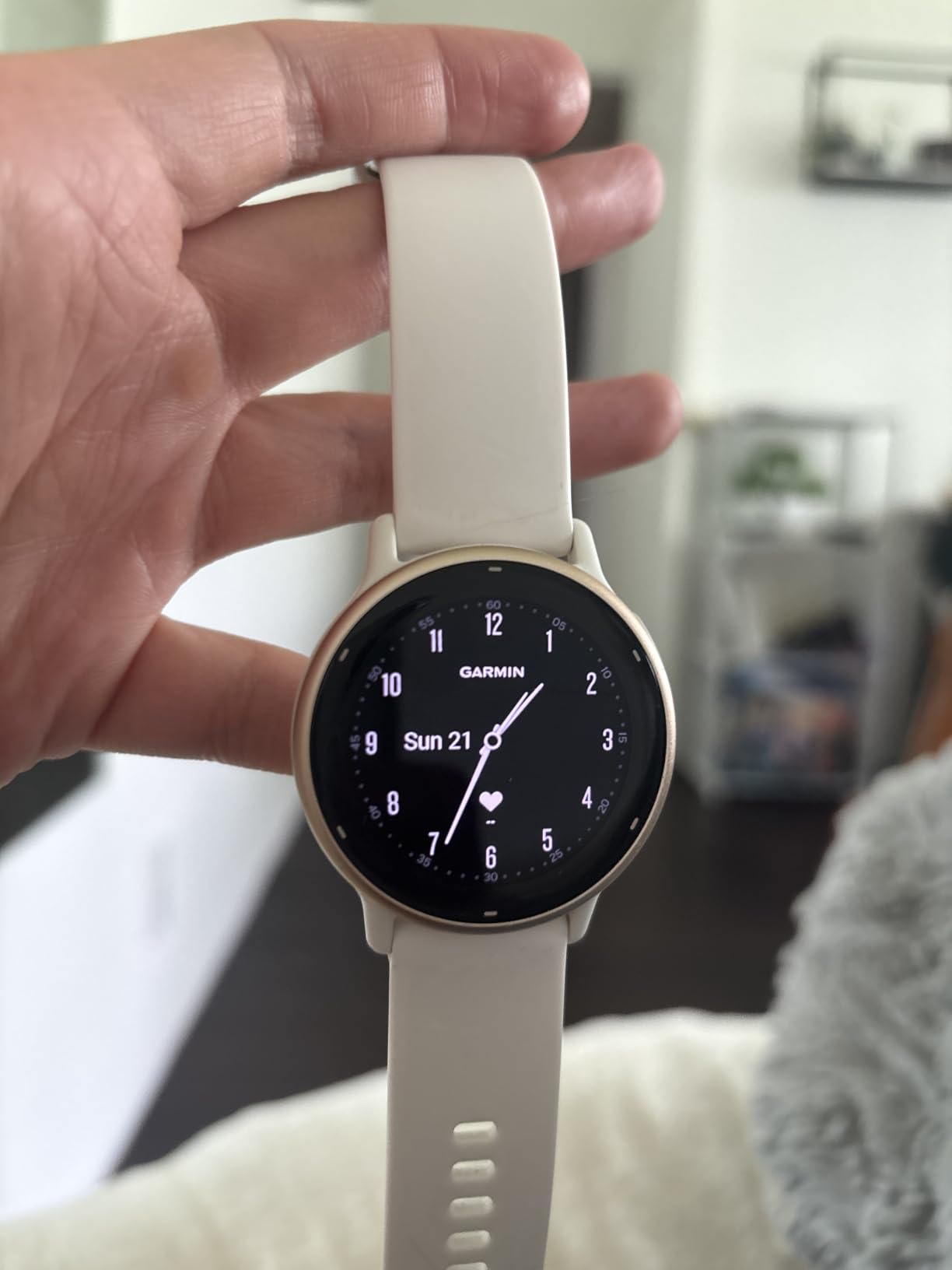
The Garmin vivoactive 5 is the best choice for beginners who want a watch that does more than running. With Spotify, Amazon Music, and Deezer support, you can store songs on the watch and pair Bluetooth headphones for phone-free runs. The 1.2 inch AMOLED display is bright and colorful.
Body Battery energy monitoring is one of my favorite Garmin features, and the vivoactive 5 includes it. The watch tracks your sleep, stress, heart rate variability, and activity to give you a single 0 to 100 score showing how much energy you have for the day. For a beginner who does not know when to rest, this metric is genuinely useful.
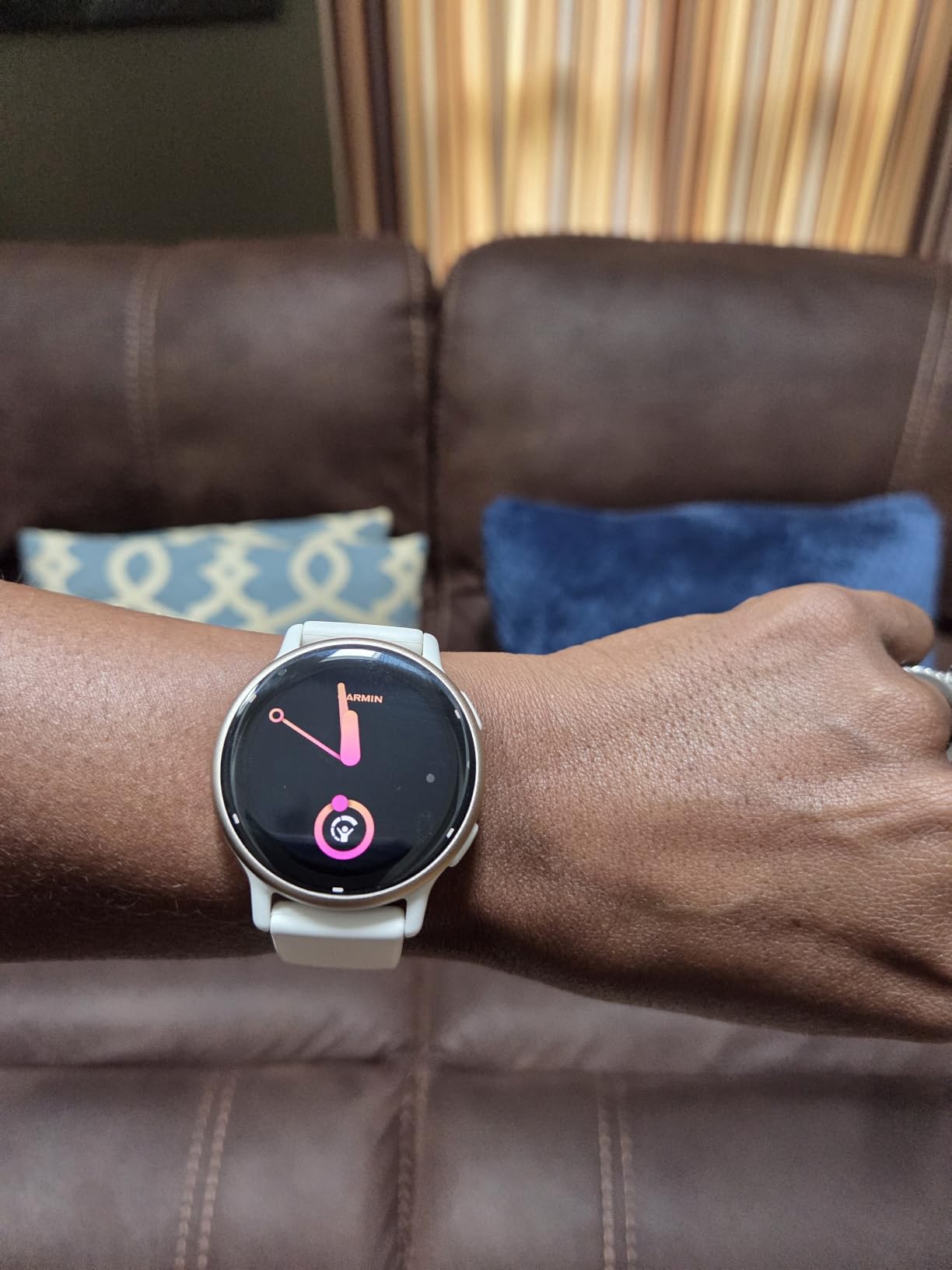
Battery life is rated at up to 11 days in smartwatch mode and 5 days with the always-on display enabled. In real testing with daily runs, I averaged 8 days between charges. The watch charges quickly over USB, and a 15-minute top-up gives about 2 days of use.
Sleep coaching is another feature that helps beginners. The vivoactive 5 tracks sleep stages, gives a sleep score, and offers personalized tips for improving sleep quality. Wheelchair mode and pregnancy tracking round out the package for users who want a more inclusive fitness experience.
Who the Garmin vivoactive 5 is best for
Beginners who want a hybrid running watch and smartwatch should pick the vivoactive 5. Music storage, smart notifications, and Garmin Pay make it useful outside of workouts. The watch works well for runners who also want sleep coaching and stress tracking.
Users upgrading from a Fitbit or Apple Watch will find the Garmin health features more comprehensive. The body battery, training readiness, and sleep score trio gives beginners a clear picture of daily readiness.
Who should skip the Garmin vivoactive 5
Pure runners who do not care about smartwatch features should look at the Garmin Forerunner 55 or Forerunner 165 instead. The vivoactive 5 costs more without giving serious runners extra training tools. Beginners who want the lightest possible watch should consider the COROS Pace 4 instead.
Users who want premium build quality should look at the Garmin Forerunner 265 with metal accents. The vivoactive 5’s plastic casing does not feel as solid as some competitors at this price point.
7. Fitbit Charge 6 — Best Fitness Tracker for Casual Beginners
Google Fitbit Charge 6 – Fitness Tracker – Obsidian/Black
7 day battery
Google Maps
40 plus workouts
Pros
- Comfortable 24/7 wear
- Accurate heart rate tracking
- Google Wallet payments
- Comprehensive sleep tracking
Cons
- GPS can be inaccurate
- Premium subscription for full features
- iOS text reply limited
The Fitbit Charge 6 is not a traditional running watch, but it is one of the best options for casual beginners who want to track runs without wearing a bulky watch. The slim design weighs about 5 ounces and is comfortable enough to wear 24/7, including while sleeping.
Heart rate tracking on the Charge 6 is impressively accurate for a fitness tracker. Fitbit uses Google’s algorithms, and the data syncs directly with Google Fit on Android. The 40 plus exercise modes cover running, cycling, swimming, yoga, and strength training.
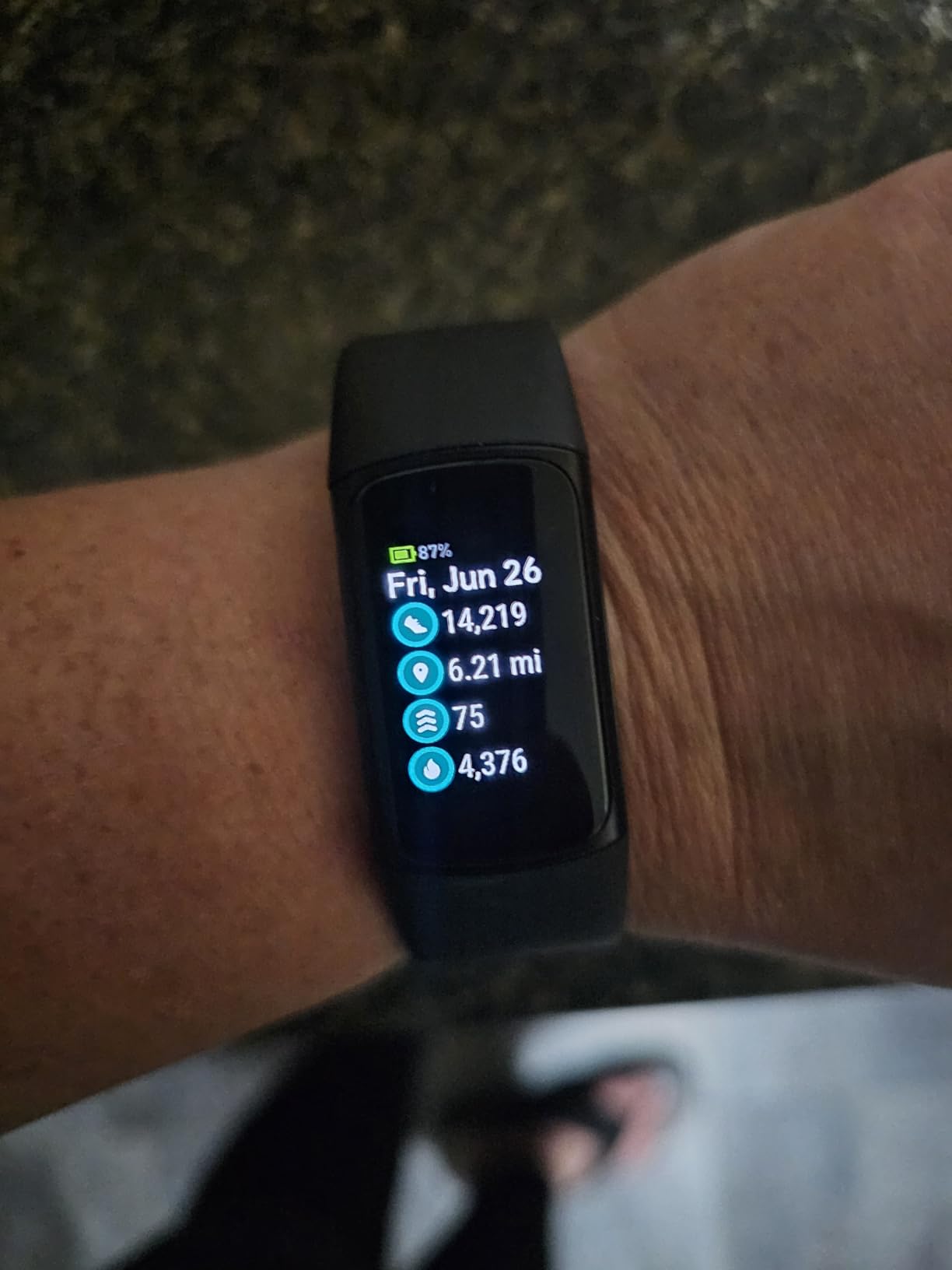
Battery life averages 6 to 7 days with daily use, which is solid for a tracker with an always-on display. Google Maps turn-by-turn directions on the wrist are useful for runners exploring new routes. Google Wallet lets you pay for post-run coffees without pulling out your phone.
The biggest drawback for beginners is the Fitbit Premium subscription. While the watch works without Premium, you need the paid subscription for advanced sleep insights, detailed readiness scores, and full training programs. The included 3-month trial helps, but expect to pay after that.
Who the Fitbit Charge 6 is best for
Casual beginners who run 1 to 3 times per week and want a comfortable all-day tracker should pick the Charge 6. The slim design works well under shirt cuffs and during sleep. Users who already use Google services will appreciate the deep Google Maps and Wallet integration.
New runners who want basic running metrics plus comprehensive health tracking get strong value from the Charge 6. If you care more about steps, sleep, and heart rate than GPS-grade running metrics, the Charge 6 covers it well.
Who should skip the Fitbit Charge 6
Serious beginners training for races with structured plans should pick a Garmin watch instead. The Fitbit Premium subscription becomes expensive over time, and Garmin Connect gives more free training tools. Runners who want accurate GPS without carrying a phone should consider the Garmin Forerunner 55 or Coros Pace 4.
iPhone users who want to reply to text messages directly from the wrist should look at an Apple Watch instead. The Charge 6’s iOS support is limited compared to Android.
8. POLAR Pacer — Best for Runners Who Want Simple Data
POLAR Pacer Ultra-Light GPS Fitness Tracker Smartwatch for Runners; S-L, for Men or Women, White
40g design
100 hour battery
MIP color display
Pros
- Ultra-lightweight at 40g
- Up to 100 hour battery
- Polar Flow app
- Accurate GPS tracking
Cons
- Limited smartwatch features
- No touchscreen
- HR can be inaccurate for some
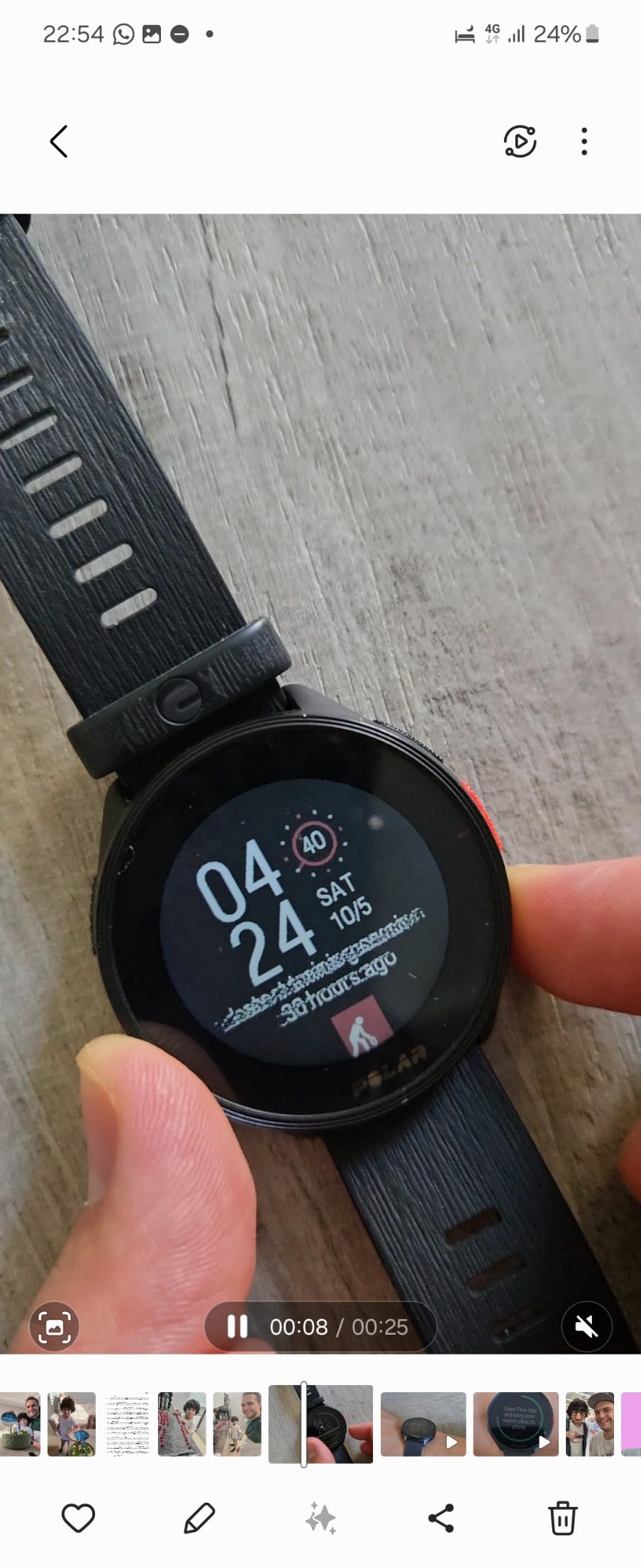
The Polar Pacer is a running purist’s watch. It strips out smartwatch features and focuses on running metrics, recovery, and sleep. For beginners who feel overwhelmed by smart notifications and apps, the Pacer offers a refreshingly simple experience.
Polar Flow, the companion app and web platform, is one of the best in the industry for analyzing training data. Beginners can see weekly mileage trends, heart rate zone distribution, and recovery scores in a clean dashboard. The web version is especially useful for runners who like to dig into their numbers on a laptop.
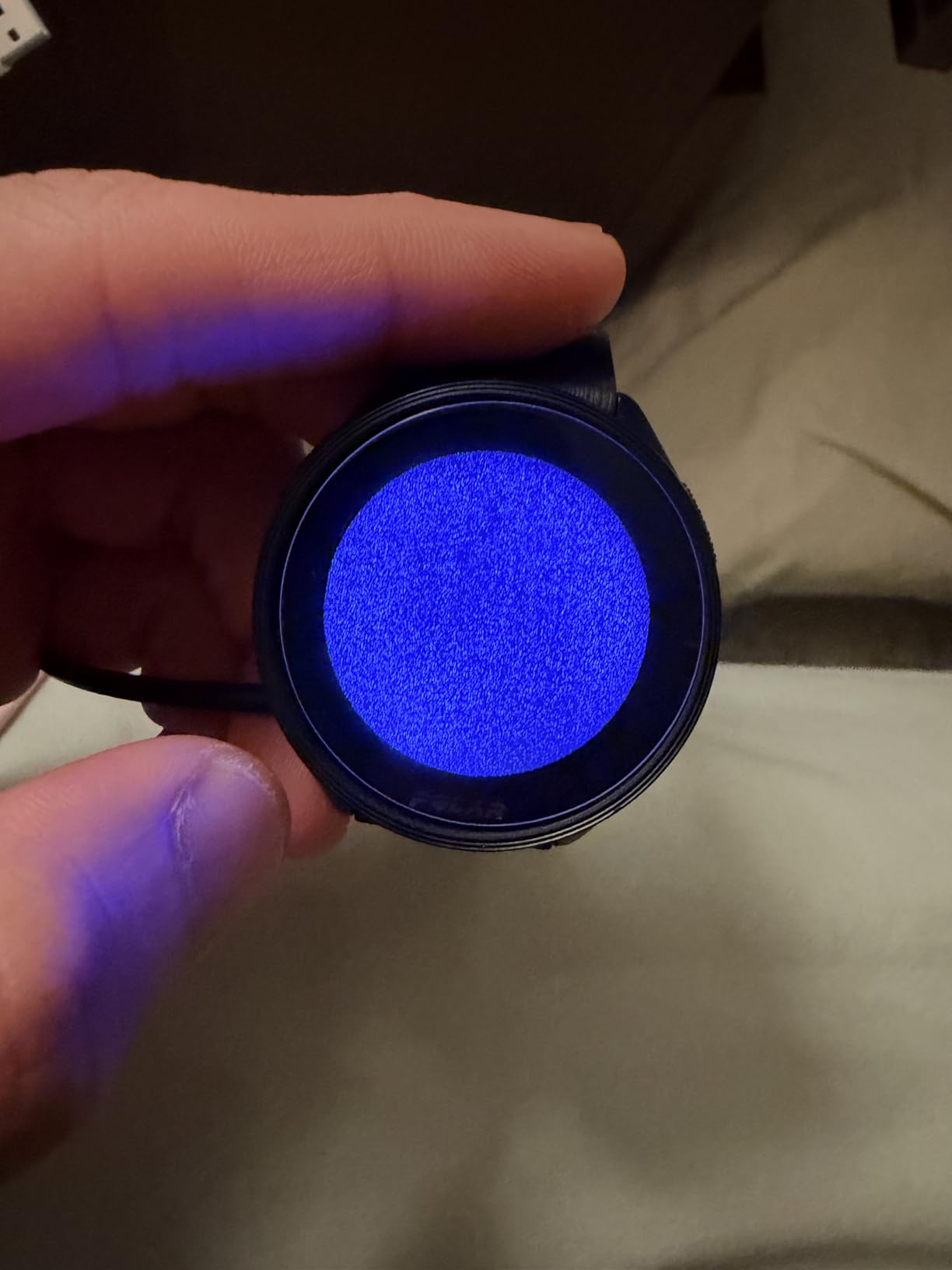
Battery life is a standout feature. The Pacer lasts up to 35 hours in training mode and up to 100 hours in power save mode. For beginners doing 30 to 60 minute runs three times a week, the watch easily lasts two to three weeks between charges. The MIP color display is readable in any lighting condition.
Nightly Recharge recovery tracking tells you how well you recovered from yesterday’s training. Sleep stages, heart rate zones, and the heart rate lock feature (which locks HR to your wrist for more accurate readings during intervals) round out the package.
Who the POLAR Pacer is best for
Beginners who want running-only metrics without the smartwatch noise should pick the Polar Pacer. The Polar Flow app gives clean, easy-to-understand data. Runners who train primarily for fitness and do not care about smart notifications will appreciate the focus.
Users who already use Polar’s heart rate monitors or gym equipment will appreciate the seamless integration. The watch also works well for runners who want a lightweight design without AMOLED display bulk.
Who should skip the POLAR Pacer
If you want music storage, NFC payments, or a colorful AMOLED display, the Pacer is not the right watch. Garmin’s Forerunner series covers those features better. New runners with small wrists may find the 1.2 inch display chunky on the wrist.
Runners who want a touchscreen experience should pick the Garmin Forerunner 165 or COROS Pace 4 instead. The Pacer’s button-only navigation takes time to learn, especially for users coming from a smartphone.
9. SUUNTO Run — Best Lightweight AMOLED Watch for Beginners
SUUNTO Run GPS Sport Running Watch, Lightweight 1.32″ AMOLED, Lime Textile
36g lightweight
Dual-band GNSS
12 day battery
Pros
- Lightweight 36g design
- 12 day battery with fast charging
- Dual-band GPS accuracy
- 4GB offline music
Cons
- App lacks weekly targets
- HR inaccurate through tattoos
- Sleep tracking needs work
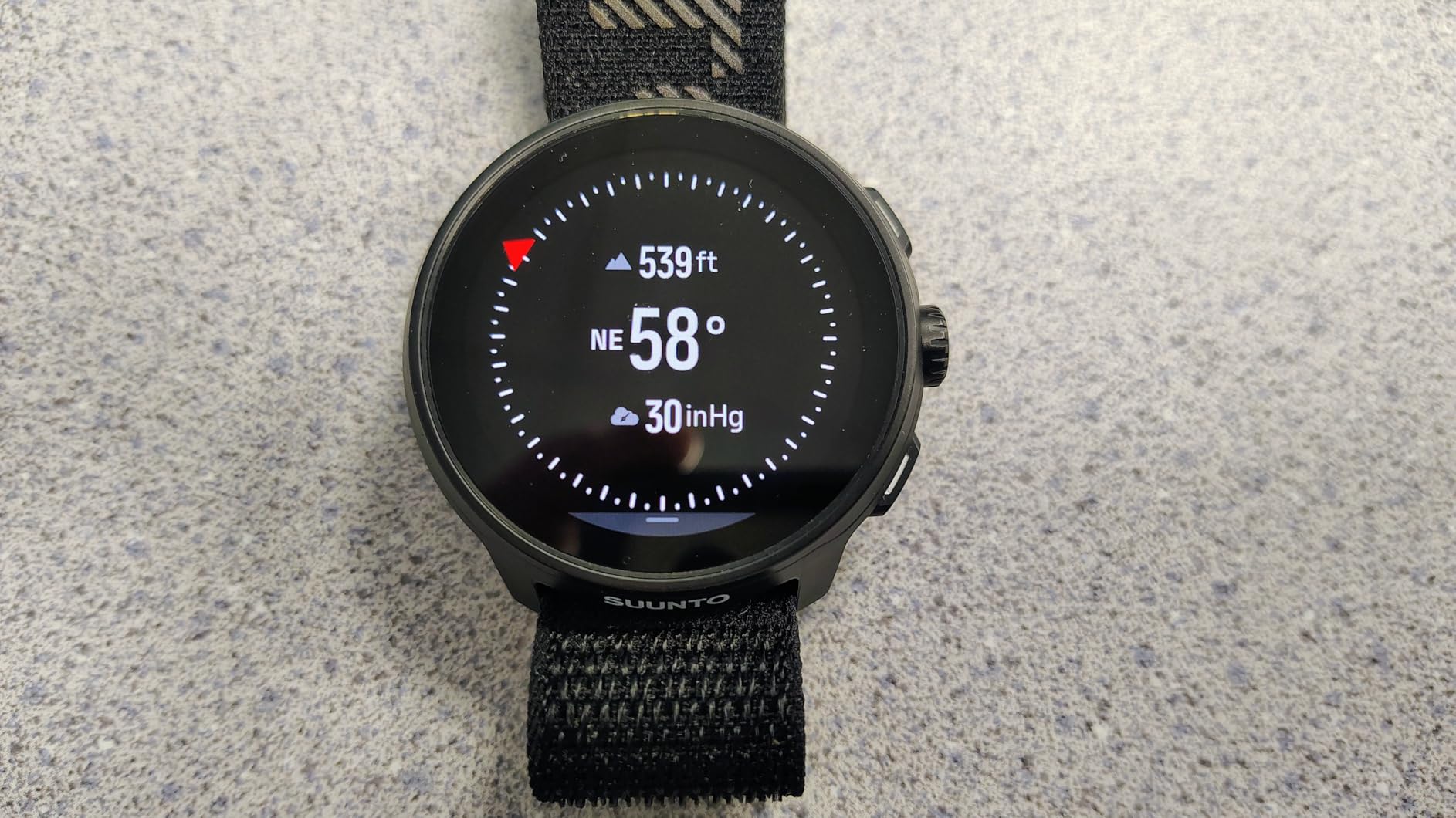
The Suunto Run surprised me during testing. It is one of the few entry-level watches with dual-band GNSS, meaning it pulls in more satellite signals for better accuracy in tough environments. For beginners running in dense cities or under tree cover, that extra accuracy is valuable.
The 1.32 inch AMOLED touchscreen is bright and responsive. At 36 grams, the Suunto Run is one of the lightest AMOLED watches you can buy. The fabric velcro strap option adds comfort for runners with sensitive skin or who sweat heavily.
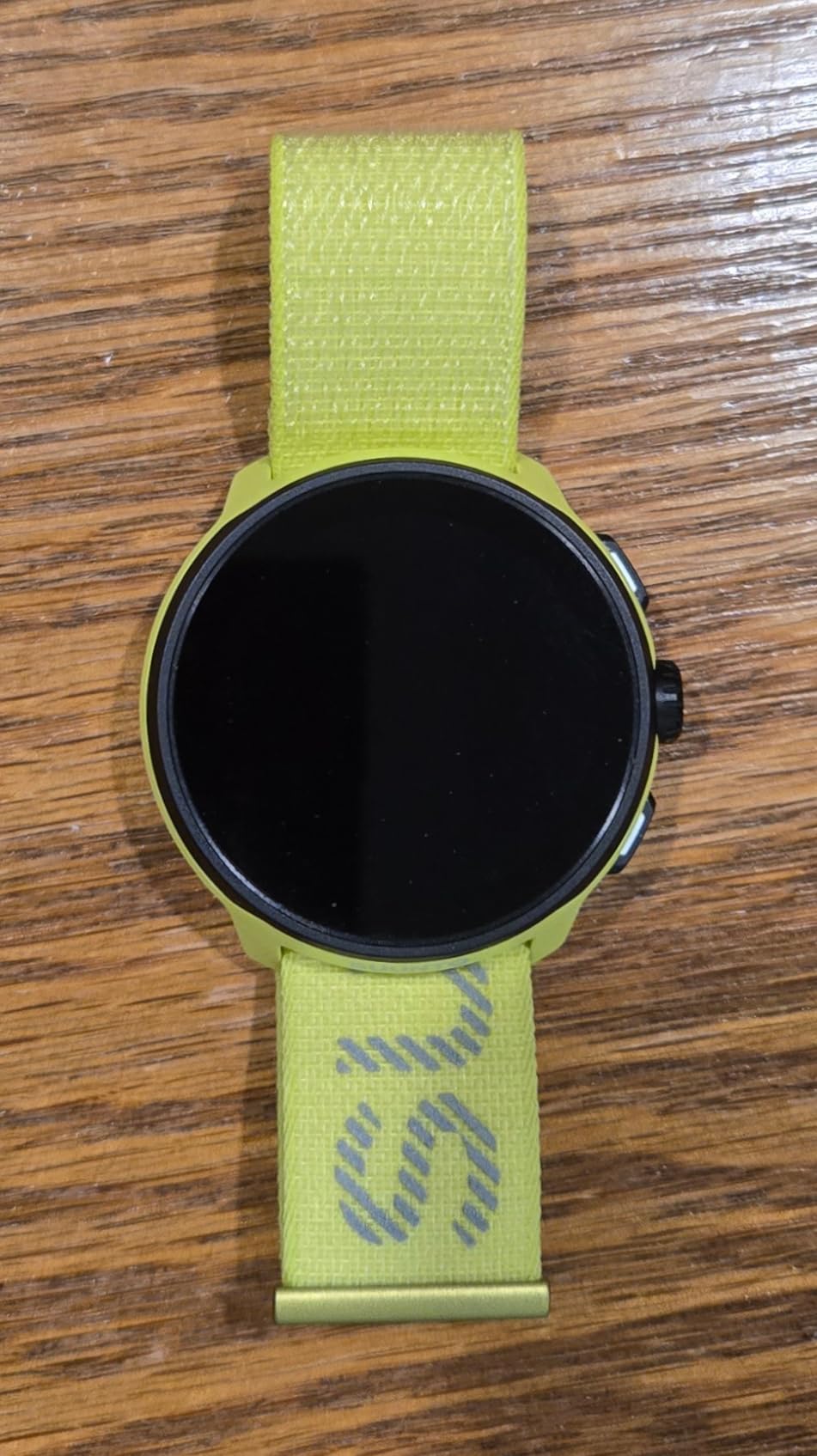
Battery life is rated at up to 12 days of daily use and 21 hours of GPS training. The watch charges to full in about an hour, which is faster than most competitors. For beginners who forget to charge their gear regularly, fast charging is a real benefit.
The Suunto app experience is the watch’s main weakness. It lacks weekly and monthly training target features that Garmin Connect includes. Sleep tracking accuracy is also behind competitors. Heart rate worked well during my steady runs but struggled through a tattoo on my inner wrist, which is a known limitation of optical sensors.
Who the SUUNTO Run is best for
Beginners who run in cities with tall buildings or under heavy tree cover should pick the Suunto Run. The dual-band GNSS locks onto more satellites for accurate pace data in tough environments. The 4GB offline music storage is useful for phone-free runs with Bluetooth headphones.
Runners who prefer a fabric band over silicone will appreciate the unique textile strap option. New runners who want a fast-charging watch will love the 1-hour full charge time.
Who should skip the SUUNTO Run
If you want a more mature smartphone app, the Suunto app will disappoint. Garmin Connect and Coros offer better long-term training analysis. Beginners who want Garmin Coach training plans should pick a Garmin watch instead.
Users who already own a Suunto watch and want a meaningful upgrade should look elsewhere. The Run is positioned as an entry-level model, so power users will find the feature set limited.
10. Garmin Forerunner 265 — Best Premium Upgrade for Beginners
Garmin Forerunner® 265, Running Smartwatch, 46mm, Black/Powder Gray
Multi-band GNSS
13 day battery
8GB music storage
Pros
- Multi-band GNSS accuracy
- Training readiness score
- 8GB music storage
- Garmin Coach adaptive plans
Cons
- Premium price
- Low stock availability
- Saving workouts can lag
The Garmin Forerunner 265 is the premium pick for beginners who want a watch they can grow into. It has every training metric Garmin offers, plus multi-band GNSS for the most accurate GPS in any environment. If you are starting a serious training journey and want to avoid upgrading next year, the Forerunner 265 is the watch to buy.
Training readiness is the Forerunner 265’s standout feature. It combines HRV, sleep quality, recent training load, and recovery time into a single score that tells you when to push hard and when to take it easy. For beginners learning to balance training and recovery, this metric is invaluable.
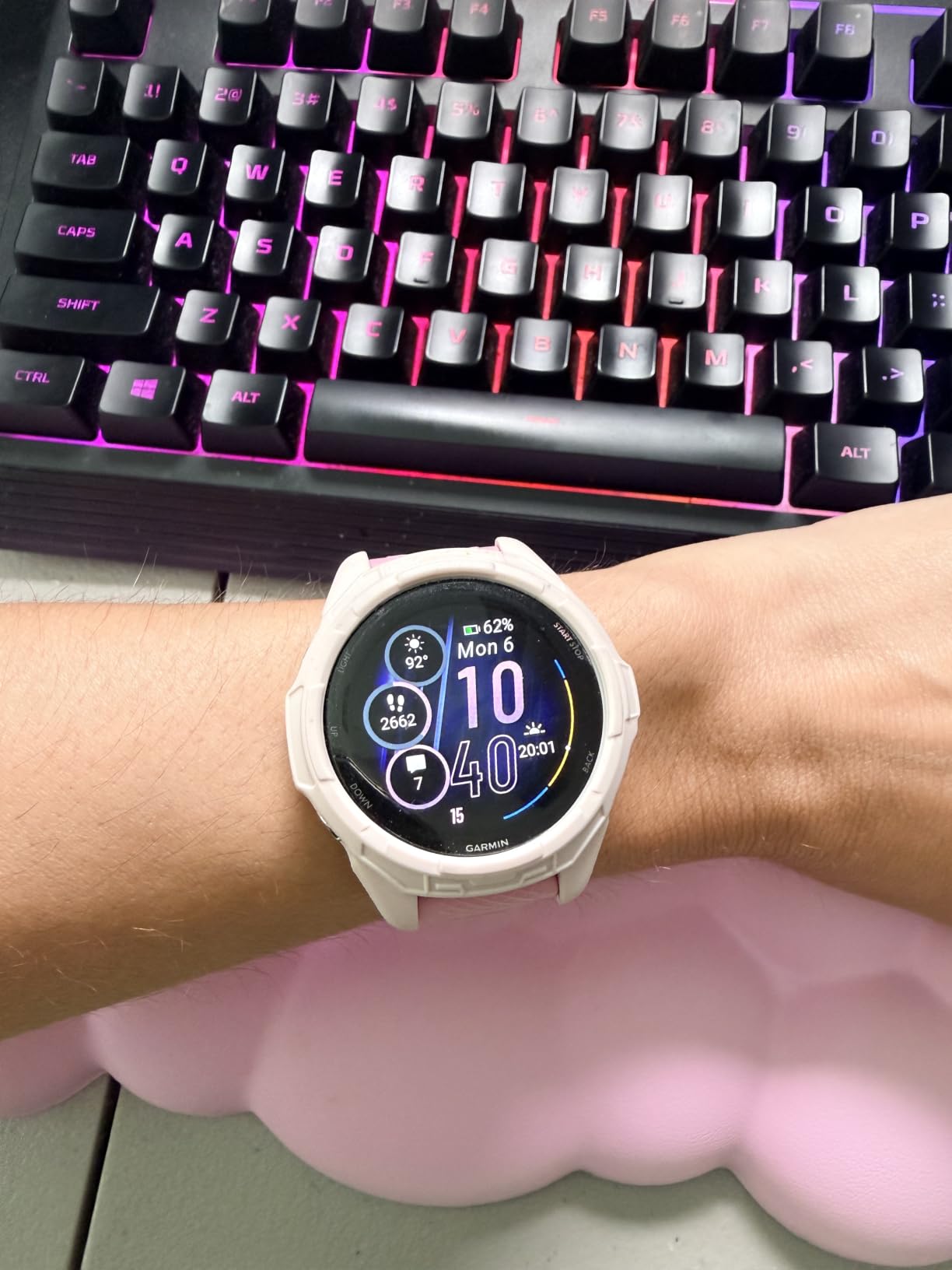
The 1.3 inch AMOLED display is the brightest Garmin makes. 8GB of onboard storage holds thousands of songs, and Garmin supports Spotify, Amazon Music, and Deezer offline playlists. Garmin Pay lets you leave your wallet at home for short runs.
Battery life is rated at up to 13 days in smartwatch mode and 20 hours in GPS mode. With always-on display and three GPS runs per week, I averaged 9 days between charges. The multi-band GNSS with SatIQ automatically switches between single and dual-band GPS to save battery when full accuracy is not needed.
Who the Garmin Forerunner 265 is best for
Beginners who want a premium watch they can grow into for years should pick the Forerunner 265. Running dynamics, training load focus, recovery insights, and VO2 max tracking give you data to grow with as your fitness improves. The 8GB music storage eliminates the need to carry a phone on runs.
Trail runners and ultra-distance athletes benefit most from multi-band GNSS accuracy. New runners planning their first marathon get race predictions, adaptive Garmin Coach plans, and pacing strategies all in one watch.
Who should skip the Garmin Forerunner 265
If you are a casual runner, the Forerunner 265 is too much watch for too much money. The Garmin Forerunner 55 or Forerunner 165 covers most beginner needs at half the price. Runners on a tight budget should pick the Amazfit Bip 6 instead.
If you already own a recent Garmin watch (Forerunner 255 or 265), the upgrade is not worth it. Stock can be limited at this price point, so consider the Garmin Forerunner 70 as a more available alternative with similar training features.
What to Look for in a Beginner Running Watch
Choosing your first running watch comes down to a handful of core features. Here is what actually matters for new runners.
GPS Accuracy
GPS accuracy is the single most important feature on any running watch. A watch that records your pace and distance accurately lets you see real progress over time. Look for watches with multi-band GNSS (Garmin Forerunner 265, Suunto Run) if you run in cities with tall buildings or under tree cover. Single-band GPS is fine for most beginner runners on open streets.
Polar Flow, Garmin Connect, and Coros app all let you review GPS track quality after a run. Beginners should check their route maps occasionally to confirm the watch is locking onto satellites properly.
Battery Life
Beginners often forget to charge their gear, so longer battery life is better. The Amazfit Bip 6, Garmin Forerunner 55, and COROS Pace 4 all last more than a week between charges. If you train for half marathons or longer, look for watches with at least 20 hours of GPS battery (Forerunner 165, Coros Pace 4).
Avoid watches that need daily charging if you do not want to babysit your gear. New runners who train three to four times per week should target watches with at least 7 days of smartwatch battery life.
Heart Rate Monitoring
Wrist-based heart rate monitors have improved dramatically in recent years. For steady zone 2 runs, the optical sensor on the Garmin Forerunner 165, COROS Pace 4, or Amazfit Bip 6 is accurate enough. For interval training, a chest strap gives more reliable data.
Look for watches with 24/7 heart rate tracking, HRV monitoring, and recovery insights if you want comprehensive health data. Garmin’s Body Battery, Polar’s Nightly Recharge, and Fitbit’s readiness score all give beginners actionable recovery guidance.
App Experience
The companion app matters as much as the watch itself. Garmin Connect is the most mature and feature-rich app, with training plans, sleep tracking, and a strong social community. Coros app is cleaner and easier to navigate for true beginners. Fitbit’s app requires Premium for the best features, while Zepp (Amazfit) can feel cluttered.
Spend 10 minutes exploring the app before buying a watch. The best watch with a frustrating app is a worse experience than a basic watch with a great app.
Display Type
MIP displays (Garmin Forerunner 55, Polar Pacer) are readable in any lighting and use less battery. AMOLED displays (Forerunner 165, Coros Pace 4, Garmin vivoactive 5) are brighter, more colorful, and better for smartwatch features. New runners who run primarily in daylight will be happy with either; those who want smartwatch polish should pick AMOLED.
For a more detailed look at how display types affect real-world use, our cycling watch guide covers the same comparison for cyclists.
How to Set Up Your First Running Watch (5-Minute Setup)
Setting up a beginner running watch should not take more than 5 minutes. Here is a quick walkthrough that works for every watch on this list.
Step 1: Charge the watch fully before first use. Most watches ship at 50% battery, but a full charge calibrates the battery meter.
Step 2: Download the companion app (Garmin Connect, Coros, Fitbit, Polar Flow, or Zepp) before pairing. The app walks you through account setup and personal stats.
Step 3: Turn on the watch, select language, and pair via Bluetooth. The app finds the watch within seconds.
Step 4: Enter your height, weight, age, and gender. These stats power VO2 max, calorie burn, and training load calculations.
Step 5: Wait for GPS lock outdoors before your first run. Stand still with the watch face up for 30 seconds. The first lock takes longer than usual, so plan ahead.
That is it. You are ready for your first tracked run.
Garmin vs Coros vs Polar vs Amazfit: Which Brand is Best for Beginners?
Choosing between Garmin, Coros, Polar, and Amazfit comes down to your priorities. Here is how each brand stacks up for beginners.
Garmin
Garmin is the most popular running watch brand for a reason. The Garmin Connect app is mature, Garmin Coach adaptive training plans are excellent for beginners, and the watch lineup covers every price point. Beginners who want a polished experience and structured training should start with a Garmin watch.
Coros
Coros focuses on serious runners but offers strong value for beginners. The Pace 4 has class-leading battery life and an ultralight design. The Coros app is simpler than Garmin Connect, which beginners appreciate. Coros offers a 2-year warranty compared to Garmin’s 1-year warranty.
Polar
Polar specializes in heart rate training and recovery. The Polar Flow app is one of the best for analyzing training data, especially on the web. Polar watches are excellent for runners who want clean running metrics without smartwatch bloat. Beginners who do not care about smart notifications will love Polar.
Amazfit
Amazfit offers the best value for budget-conscious beginners. The Bip 6 delivers an AMOLED display, 14-day battery, and built-in GPS at a price point Garmin and Coros cannot match. The Zepp app is the weakest link, but the watch hardware is impressive. Beginners on a tight budget should start with Amazfit.
For runners who want even more comparison data across different use cases, our women’s cycling watch guide uses a similar brand breakdown for cycling.
Frequently Asked Questions
What is the best running watch for a beginner runner?
The Garmin Forerunner 165 is the best overall running watch for beginners. It offers a bright AMOLED display, up to 11 days of battery life, accurate GPS tracking, and Garmin Coach adaptive training plans that automatically adjust to your fitness level. The Forerunner 165 strikes the right balance of features, ease of use, and price for new runners starting their first training program.
What are some good entry-level watches for running?
Top entry-level running watches include the Garmin Forerunner 55, Amazfit Bip 6, Garmin Forerunner 165, COROS Pace 4, and Fitbit Charge 6. These watches all offer built-in GPS, accurate heart rate monitoring, and battery life that lasts at least a week. The Amazfit Bip 6 is the best budget option under $100, while the Forerunner 165 is the best mid-range pick around $200.
Is the Garmin Forerunner 55 still worth it in 2026?
Yes, the Garmin Forerunner 55 is still worth it in 2026 for beginners who want a simple, button-controlled watch with accurate GPS. It costs less than the Forerunner 165, has 2-week battery life, and includes daily suggested workouts, VO2 max, and Body Battery monitoring. The main trade-off is the lack of a touchscreen and AMOLED display. New runners who do not care about smartwatch features get strong value from the Forerunner 55.
Is Coros or Garmin better for running?
Both Coros and Garmin make excellent running watches. Garmin has the more mature app ecosystem, more training plans, and a wider range of price points, making it ideal for most beginners. Coros wins on battery life, ultralight design, and warranty length. The Coros Pace 4 is a strong pick if you want the lightest watch with marathon-worthy battery. The Garmin Forerunner 165 is a better pick if you want Garmin Coach adaptive training plans and smart features like Garmin Pay.
Do beginner runners need a GPS watch?
Yes, beginner runners benefit from a GPS watch because it tracks pace, distance, and route without carrying a phone. A GPS watch makes running more engaging by showing real-time metrics and helps beginners see progress over time. For new runners starting a 5K or 10K program, GPS accuracy matters more than advanced features like running power or training load. Entry-level GPS watches from Garmin, Coros, Polar, and Amazfit all deliver reliable tracking for beginners.
Final Verdict: Which Running Watch Should a Beginner Buy?
The Garmin Forerunner 165 is the best running watch for beginners in 2026. It combines accurate GPS, a bright AMOLED display, Garmin Coach adaptive training plans, and 11 days of battery life in a beginner-friendly package.
Budget shoppers should pick the Amazfit Bip 6, which delivers 80% of the experience at half the price. Premium beginners who want a watch they can grow into for years should consider the Garmin Forerunner 265. Whatever you choose, getting out the door for your first tracked run is the most important step. The best running watch for beginners is the one you actually wear.