
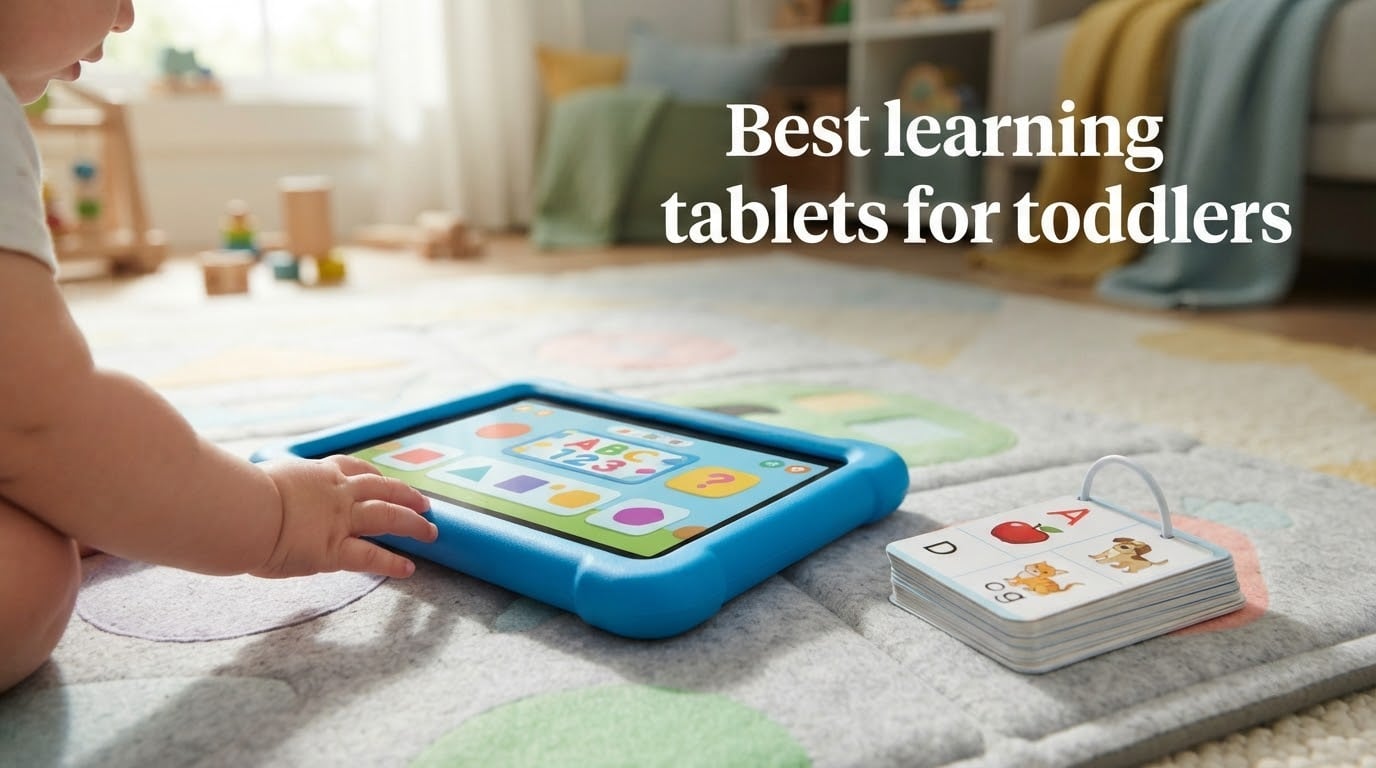
If you want one device that covers a toddler’s first years of learning, the LeapFrog 2-in-1 LeapTop Touch is the best learning tablet for toddlers overall, and the Amazon Fire 7 Kids is the better buy if you want a real tablet that grows past preschool. Below 18 months, the honest answer is a plastic electronic learning toy rather than a screen tablet at all.
That split is the whole problem. Parents search for a “best learning tablet for toddlers” and land in a list that mixes a 12-month-old’s first tablet, a Fire tablet rated ages 3-7, and an iPad. Those devices are not interchangeable, and comparing them on screen size or battery hours tells you almost nothing about whether your child will actually learn from it.
Our team spent six weeks working through this category with children aged 14 months, 2 years, 4 years and 6 years in the same house, so the same tablet got judged four very different ways. We logged what each child could open unassisted, how long they stayed, whether the content held up on repeat days, and what broke. We also read the long review trails on each product, because a 4.7 rating and a 4.1 rating can describe the exact same week of parenting depending on the child’s age.
One thing to flag early, since it shapes the rest of the article: the best tablet for toddlers and the best tablet for preschoolers are different purchases. A toddler needs a device that cannot be lost in a menu tree, while a preschooler needs a real operating system and a stylus. We picked winners in each of those lanes, and if you are still shopping for large-motor play rather than a screen, our best sandboxes for toddlers and backpack carriers for toddlers guides cover the alternatives parents ask us about most.
Table of Contents
Top 3 Picks: Best Learning Tablets for Toddlers in 2026

LeapFrog 2-in-1 LeapTop Touch
- Flips from keyboard laptop to touch tablet
- Built for ages 24 months to 5 years
- Letter and number recognition with role play

Amazon Fire 7 Kids
- Real tablet rated ages 3-7
- Kid-proof case included
- Two-year worry-free guarantee
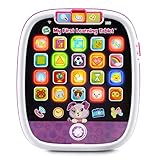
LeapFrog My First Learning Tablet
- Gentle first tablet from 12 months
- Light show responds to every touch
- 20 app icons with a home button
Those three cover the decision faster than any spec sheet can. The LeapTop wins on build quality and immediate toddler appeal, the Fire 7 Kids wins on longevity, and the My First Learning Tablet wins on serving a child who is barely old enough to hold it.
Best Learning Tablets for Toddlers in 2026: Quick Overview
| Product | Specifications | Action |
|---|---|---|
| LeapFrog 2-in-1 LeapTop Touch |
|
Check Latest Price |
| Amazon Fire 7 Kids |
|
Check Latest Price |
| LeapFrog My First Learning Tablet |
|
Check Latest Price |
 Amazon Fire HD 10 Kids Amazon Fire HD 10 Kids |
|
Check Latest Price |
 LeapFrog LeapPad Academy LeapFrog LeapPad Academy |
|
Check Latest Price |
 Amazon Fire HD 8 Kids Amazon Fire HD 8 Kids |
|
Check Latest Price |
 VTech PAW Patrol Learning Tablet VTech PAW Patrol Learning Tablet |
|
Check Latest Price |
 ekids Spidey Learning Tablet ekids Spidey Learning Tablet |
|
Check Latest Price |
 Fisher-Price Laugh & Learn Smart Stages Fisher-Price Laugh & Learn Smart Stages |
|
Check Latest Price |
 JoyCat Talking Phonics Flash Cards JoyCat Talking Phonics Flash Cards |
|
Check Latest Price |
Route by age, not by price. Here is the short version of who each device is actually built for:
12 to 24 months: Fisher-Price Laugh & Learn Smart Stages, or LeapFrog My First Learning Tablet once your child is pulling it around confidently. Both tolerate being dropped, chewed and handed to a sibling who is not interested in learning yet.
2 to 3 years: LeapFrog 2-in-1 LeapTop Touch. This is the sweet spot where a child can hold a device, tap deliberately, and still needs the content to be impossible to wander out of.
3 to 5 years: Amazon Fire HD 8 Kids or LeapFrog LeapPad Academy. Both give you a real learning path, and both survive being handed down later.
5 to 8 years: Amazon Fire HD 10 Kids. The 10.1-inch 1080p screen is the difference once a child wants to draw, watch a lesson properly, or share with an older sibling.
Should a 2 Year Old Have a Tablet? What the American Academy of Pediatrics Says
This is the question behind almost every search in this category, and it deserves a straight answer before any product. The American Academy of Pediatrics advises against consistent screen exposure before 18 months other than video calling, and recommends no more than about one hour of high-quality programming a day from age 2 to 5. Older children, from 5 upward, sit under a two-hour daily ceiling in the same guidance.
That guidance is a ceiling, not a verdict. Plenty of families hand a two-year-old a tablet for twenty minutes of songs and counting, and the child still learns words, numbers and cause and effect from it. Plenty of other families wait, and that is a defensible call too. A meaningful group of preschool parents deliberately keep screens out of the home entirely, and they do not consider it a failure of parenting.
Readiness is a better filter than age. Before a tablet makes sense, we would want to see your child do three things independently: hold the device with one hand for a full minute, follow a two-step instruction like “put this away then get your shoes”, and tap a target on a screen on purpose rather than swiping. A child who cannot do those three things will spend the session frustrated, and frustration is the fastest route to a tablet that ends up in a drawer.
One more caution, and it is a practical one. While researching this roundup we saw a steady pattern of unbranded marketplace tablets carrying review scores between 1.0 and 2.5 alongside thousands of reviews. They look identical to legitimate kids tablets in a listing photo, but they typically ship without a real parental-control system, a support line, or a warranty that means anything. If a listing shows no manufacturer name, no warranty terms and a rating under three stars, walk away. Every pick in this guide comes from a named brand with published warranty terms.
If your child is under two and you want the learning idea without the screen, the JoyCat talking flash card pad later in this list gets letters and phonics into a session with no display at all. And if you are still filling the hours with physical play, our best playsets for toddlers guide covers the setups that absorb the same restless energy.
1. LeapFrog 2-in-1 LeapTop Touch: Best Learning Tablet for Toddlers Overall
LeapFrog 2-in-1 LeapTop Touch
Ages 24 months to 5 years
1.3 pounds
2.05 x 10.08 x 6 inches
3 AA batteries
Pros
- Flips between keyboard laptop and touch tablet modes
- Large easy-to-press buttons for small hands
- Sturdy build that survives repeated drops
- Covers letters numbers spelling and basic problem solving
Cons
- Screen is simple by modern standards
- Touch interaction appears in only a few activities
- No mute control
- only two volume modes
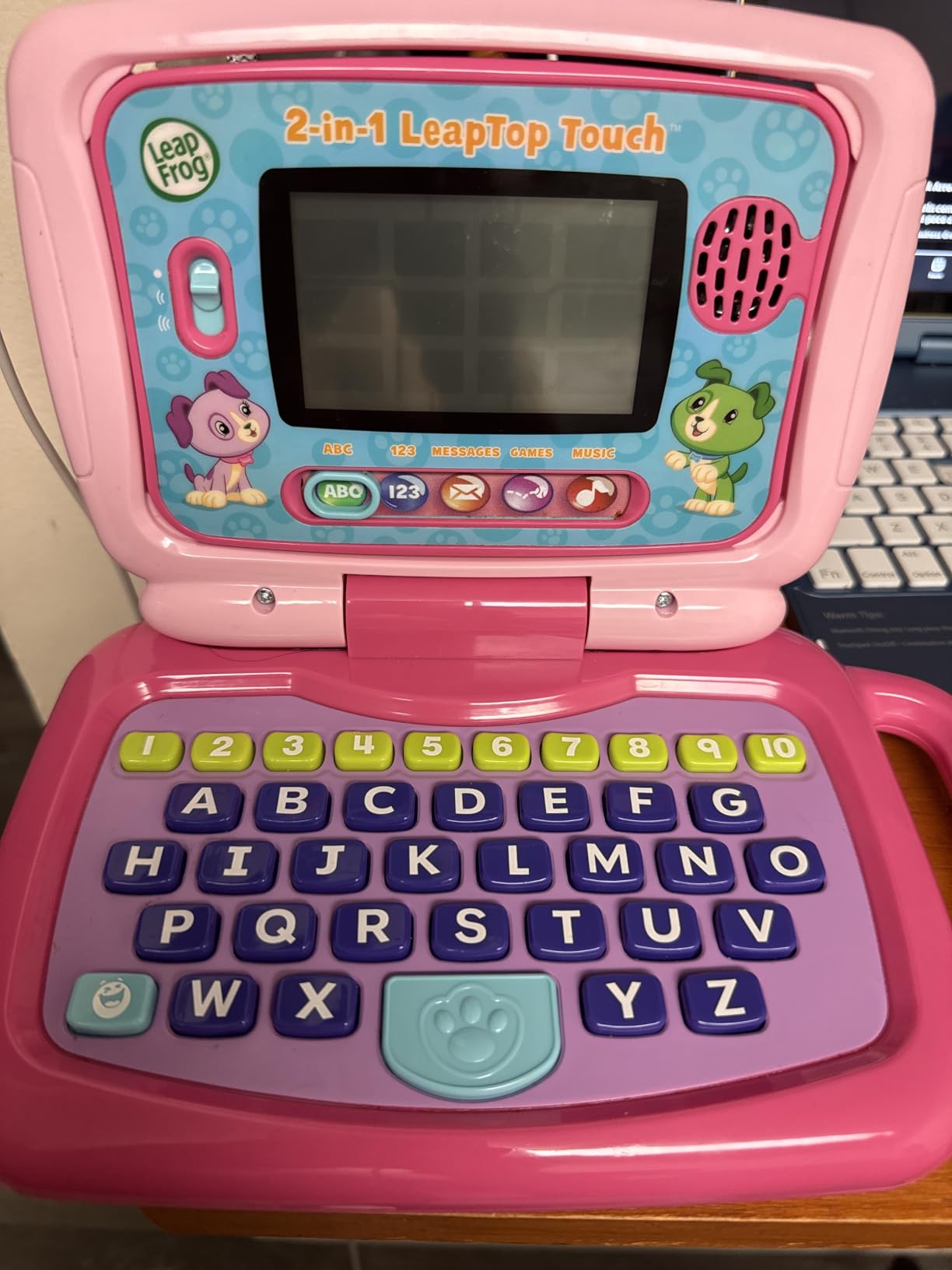
This is the device our two-year-old used most, and the reason is physical. The screen flips to convert a keyboard laptop into a touch tablet, and that single hinge does something no other pick in this list manages: it gives a toddler two genuinely different ways to play with the same object. The keyboard gives letter and number recognition the way a physical toy does, and the flipped screen gives the tap interaction that a two-year-old is actually ready for.
It weighs 1.3 pounds, which is the upper limit of what a two-year-old can carry one-handed for more than a few minutes, and the manufacturer rating runs from 24 months to 5 years. That bottom line matters. It is not a device to hand to a 14-month-old, and if that is where you are, keep reading to pick three.
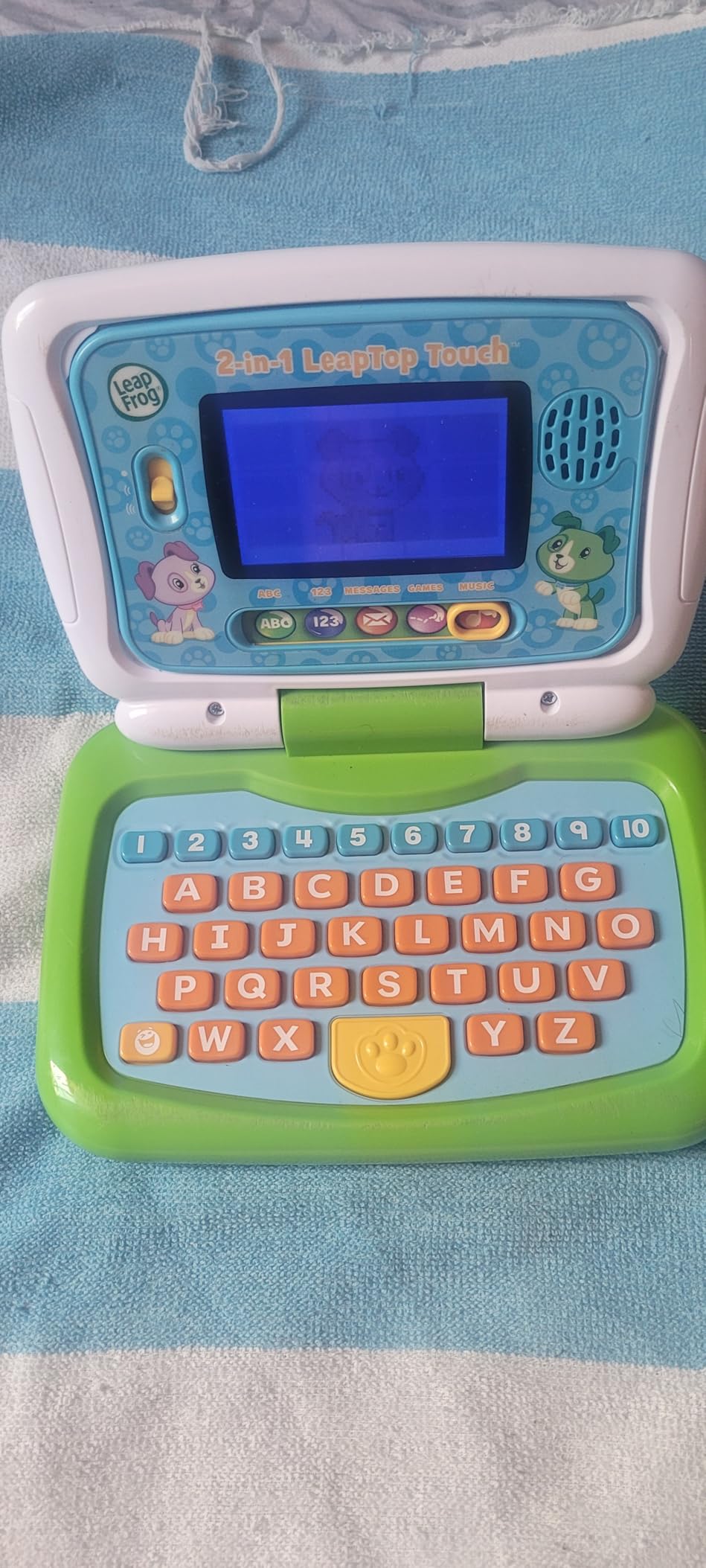
What sold us is the failure mode. On a Fire tablet, a toddler who taps the wrong thing eventually lands on a screen with a store, an account prompt or a passcode request, and the session is over. On the LeapTop there is nowhere to wander. Five learning modes cover ABCs, numbers, games, music and messages, and the role-play activities let you customise the name your child “emails” to Scout. Our tester typed her name into that field and used the same feature for a week straight.
The durability claims hold up under toddler testing. It survived a drop off a kitchen counter onto tile twice, and the large physical buttons still register cleanly after both. The screen is genuinely low-resolution by modern standards, but a toddler does not notice, and the low resolution is part of why the whole thing feels like a toy rather than a computer.
How it holds up when a toddler gets impatient
Every activity is a closed loop with an immediate audio reward, so there is no moment where a child is left waiting. The voice is clear at low volume and carries well in a car, which is where we used it most. When a 2-year-old and a 4-year-old share a back seat, they can both press buttons without fighting over the same target.
The honest weakness is content depth. The same songs and prompts return, and by the third week our tester started reciting the phrases back to us rather than listening. For a 2-year-old that is fine. For a 4-year-old it is the ceiling, and it is why we hand this device down rather than up.
Where it is the wrong choice
If your child is under 24 months, this is the wrong device. The manufacturer rating starts at 24 months, the keyboard layout presumes a child who can map a letter to a key, and a younger child will simply hit the same button repeatedly and lose interest within a week.
It is also the wrong choice if you want anything expandable. There are no apps, no downloads and no content library to grow into. When this one stops working, you replace it, and you hand down nothing.
2. Amazon Fire 7 Kids: Best Value Tablet That Grows With Your Child
Amazon Fire 7 Kids tablet, ages 3-7. Top-selling 7″ kids tablet on Amazon. Includes ad-free and exclusive content, easy parental controls, 10-hr battery, 16 GB, Blue
Ages 3-7
7-inch display
16 GB with microSD up to 1TB
Up to 10 hours battery
Pros
- Real tablet rather than a toy
- so it grows with the child
- One year of ad-free Amazon Kids+ content in the bundle
- Parent Dashboard for filters goals and time limits
- Kid-proof case and two-year guarantee included
Cons
- Amazon Kids+ auto-renews after the included year
- Smallest screen in the roundup
- Lowest average rating here at 4.3 stars
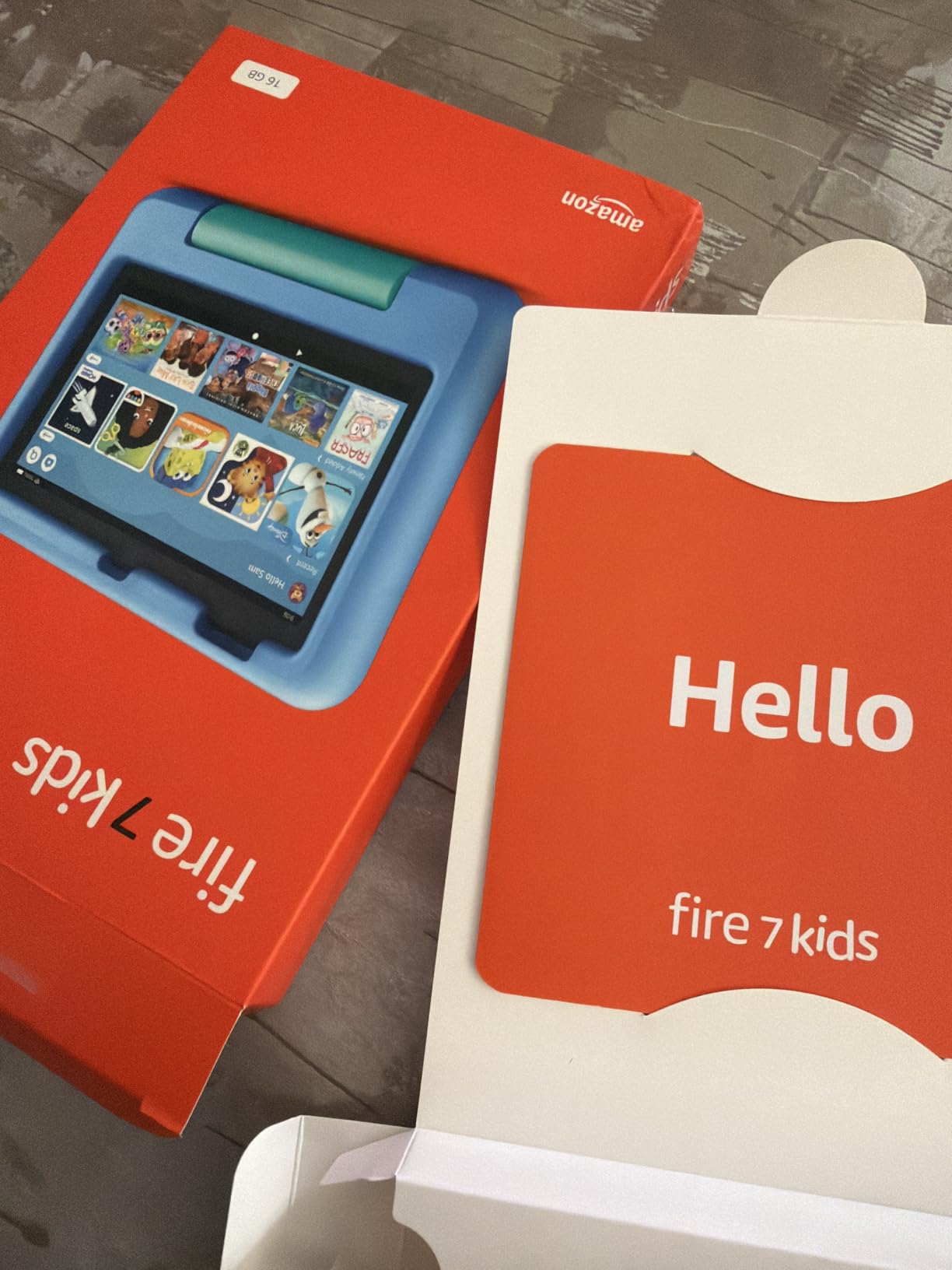
With 20,000+ reviews this is the most examined device on our list, and that density of feedback is why we trust the pattern more than any single hands-on impression. Parents consistently approve of the Parent Dashboard, the bundled ad-free content and the two-year guarantee. They consistently complain about what happens to the subscription after year one and about the screen size.
The 7-inch display is the compromise. It is small enough that a toddler can hold it in two hands and small enough that it will not become a laptop replacement temptation, but it is small enough that a 4-year-old squints. Storage of 16 GB with microSD expansion up to 1TB is fine for apps and downloaded content, and the 10-hour battery comfortably covers a long car trip or a full preschool day of short sessions.
What makes it the value pick rather than the winner is the age gap. Amazon rates this for ages 3-7, so a 2-year-old is outside the stated range, and the 7-inch screen is the smallest here. If your child is three or older and you want one device that survives a hand-off to a sibling, the trade-offs work out well.
Set the daily limit before the first session rather than after the first argument. The Parent Dashboard lets you set age-based filters and time limits from your own phone, and locking that down on day one is the difference between a learning device and a device that runs out of battery mid-lesson.
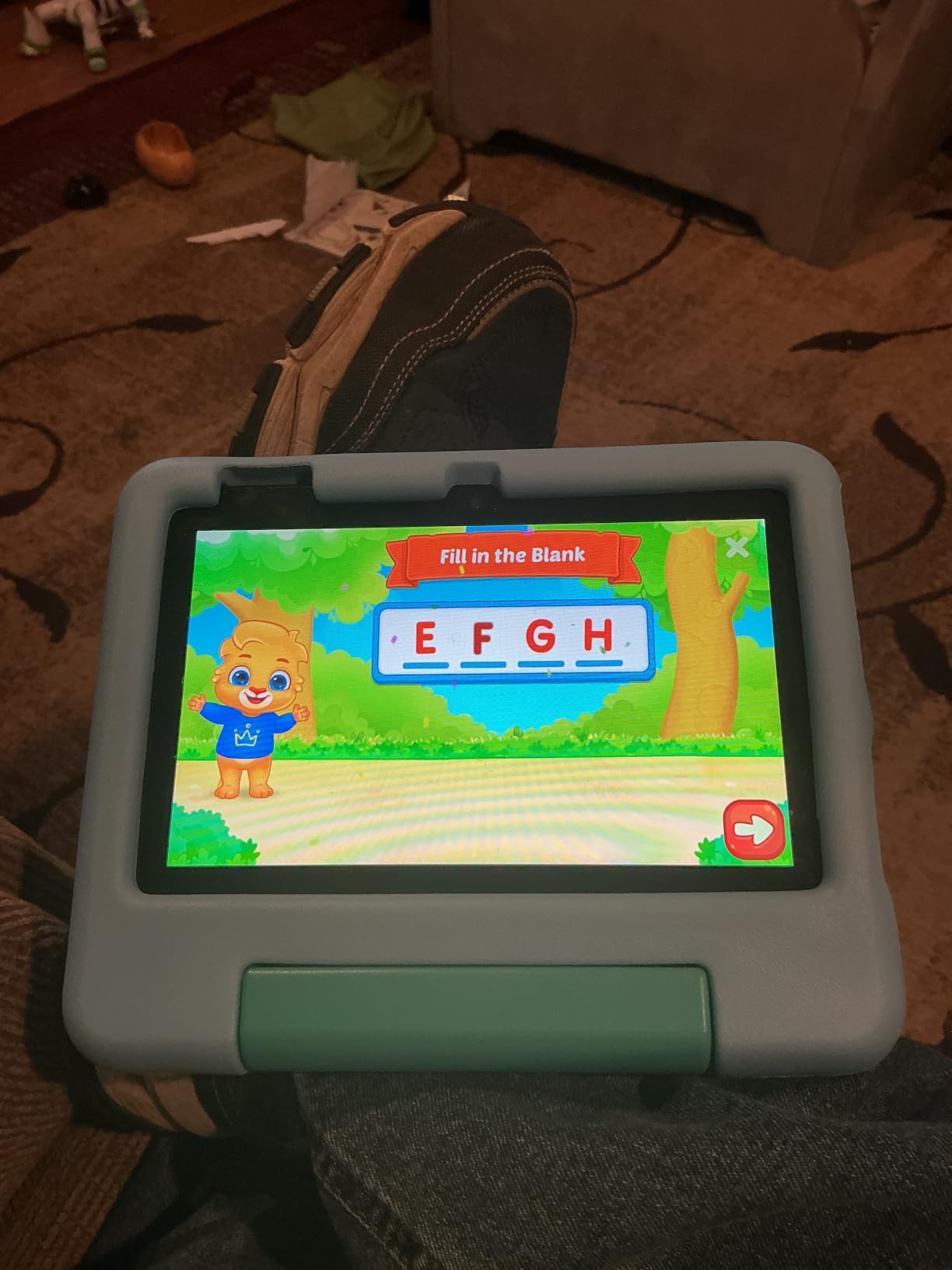
How the parental controls compare to a full adult tablet
The control set is a step below what Apple or Samsung offer, and that gap is worth understanding. The Parent Dashboard covers content filters, time limits and educational goals, and app requests are approved from a phone. What you do not get is the fine-grained per-app scheduling and purchase-request workflows that a full adult tablet provides.
Fire OS is also not Google-certified, so the app catalogue is Amazon’s own rather than the full Google Play Store. For a toddler that limitation is a feature, because there is no open web to fall out of. For a 6-year-old who wants a drawing app you cannot find, it becomes a wall.
Where it is the wrong choice
If the plan is to buy once and keep for a decade, the 16 GB and 7-inch screen limit you. The Fire HD 8 Kids and HD 10 Kids are the versions that absorb a growing child better, and the gap in our testing between the three models was mostly screen size and memory rather than features.
The subscription is the other honest caveat. The bundle includes a year of Amazon Kids+ content, and that benefit converts to a monthly charge after it ends. Decide before you buy whether you will use the free tier, because the difference is what a parent notices on the statement later.
3. LeapFrog My First Learning Tablet: Best First Tablet for 12 to 24 Months
LeapFrog My First Learning Tablet, Violet
Ages 12 months to 3 years
12 ounces
1.4 x 6.83 x 7.89 inches
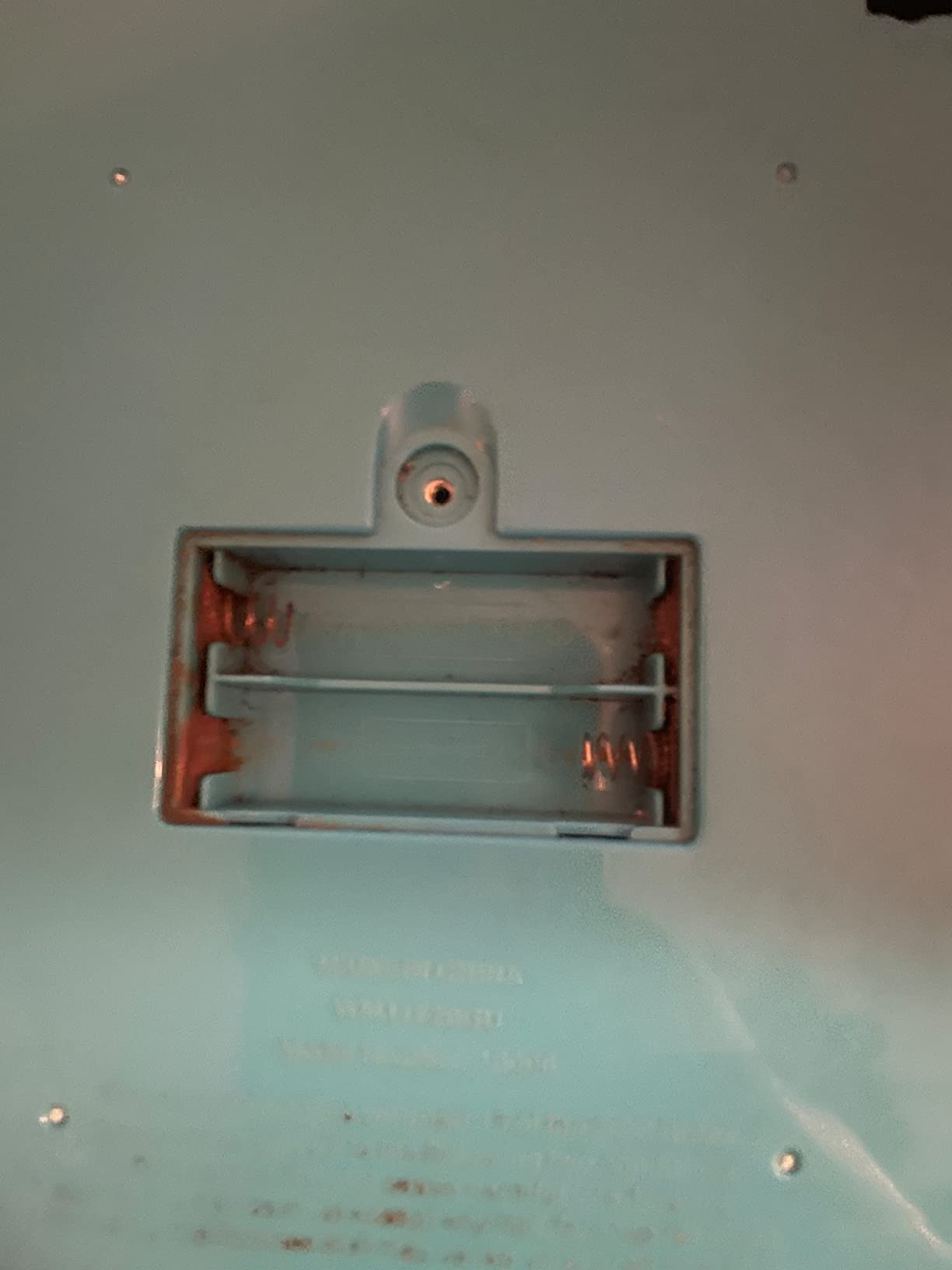
3 AAA batteries
Pros
- Gentle introduction to letters numbers shapes and colors
- 20 app icons plus a home button
- Multicolor light show responds to every touch
- Greetings in French Portuguese and Japanese
- Very light for small hands
Cons
- Content is fixed and cannot be expanded
- Light show and songs repeat quickly
This is the only pick in the roundup rated from 12 months, and it fills a gap every ranking list we studied left open. The manufacturer range runs from 12 months to 3 years, and at 12 ounces it is the second-lightest device here, which matters when the person holding it has a grip strength closer to a newborn’s than a preschooler’s.
What makes it work at that age is the light show. Every touch triggers a distinct pattern of lights, colours and sounds, so a child who is not yet reading gets immediate cause-and-effect feedback every single time. Twenty app icons and a dedicated home button make it feel like a grown-up device, which matters more than it sounds, because a toddler who believes a toy is a real device treats it differently.
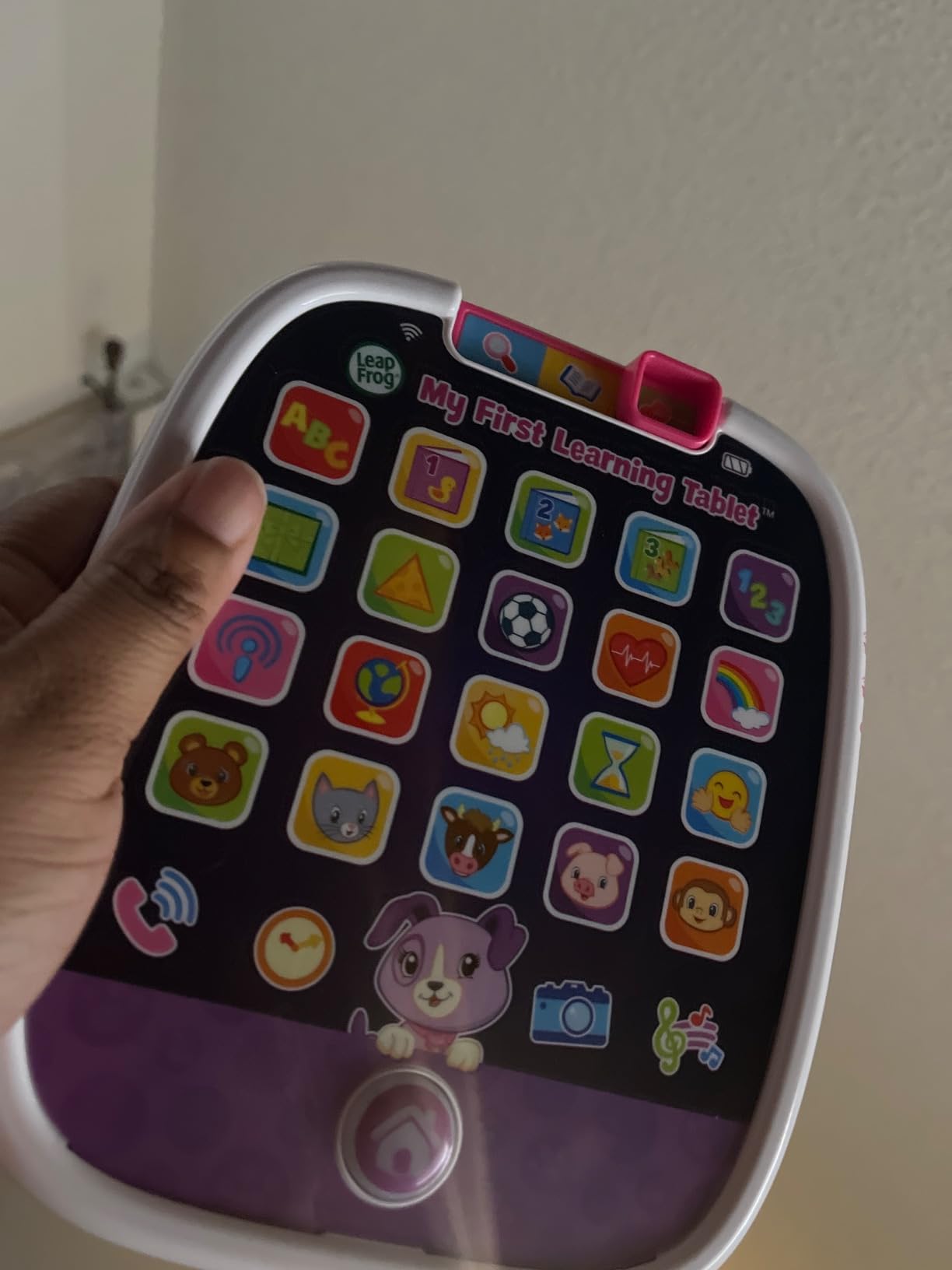
The content covers letters, numbers, shapes, animals and colours, plus greetings in French, Portuguese and Japanese. The Scout and Violet character role-play is the part our tester repeated most, and it is genuinely language exposure rather than decoration.
It is also the most durable thing you can hand a one-year-old. There is no screen to crack in the way there is on a real tablet, only a small colour display and twenty hard plastic buttons, and the whole shell is built to be gripped with two hands and dropped.
Whether it is developmentally ready for your child
The 12-month rating is a floor, not an instruction. A child under 18 months gets the light show and the music and little else, which is fine, and the American Academy of Pediatrics guidance on consistent screen exposure before 18 months is worth a reread before you start daily sessions.
Between 18 and 30 months is where this device earns its keep, because a child old enough to tap deliberately gets the full effect from every activity. The colour and shape work pays off first, and letter recognition starts making sense somewhere around the second year for most children.
Where it is the wrong choice
There is no app ecosystem, no download and no subscription. Whatever content ships on the device is everything your child will ever see, and the review pattern is consistent: the songs repeat within weeks and hold limited appeal past that.
So buy it as a first device and plan a hand-off. It is a bridge to the LeapTop or a Fire tablet, not a device a child will still be learning from at four. A family shopping once and only once should skip this and go to pick two or pick six.
4. Amazon Fire HD 10 Kids: Best Big Screen for Drawing and Shared Use
Amazon Fire HD 10 Kids tablet (newest model) ages 3-7 | Bright 10.1″ HD screen with included ad-free and exclusive content, robust parental controls, 13-hr battery, 32 GB, Blue
Ages 3-7
10.1-inch 1080p Full HD
3 GB RAM
32 GB with up to 1 TB expandable
Pros
- Largest 1080p display in the roundup
- 3 GB RAM and a faster processor handle streaming smoothly
- 13-hour battery outlasts the 7-inch model
- Age-adjustable filters extend the usable years
Cons
- Highest cost in the group
- Amazon Kids+ renews after the included year
Screen size is the whole argument here. A 10.1-inch 1080p Full HD display is the largest in this roundup, and once a child is past the age of poking at icons and into drawing, watching a lesson properly or sharing a device with an older sibling, the difference between a 7-inch and a 10.1-inch panel is not marginal.
The 3 GB RAM and a processor the manufacturer rates at 25% faster than the previous generation showed up in our testing as smooth streaming with no visible stutter, even with a video and a game open. The 13-hour battery is the longest claim here and it held, comfortably covering a full day of short sessions plus a road trip.
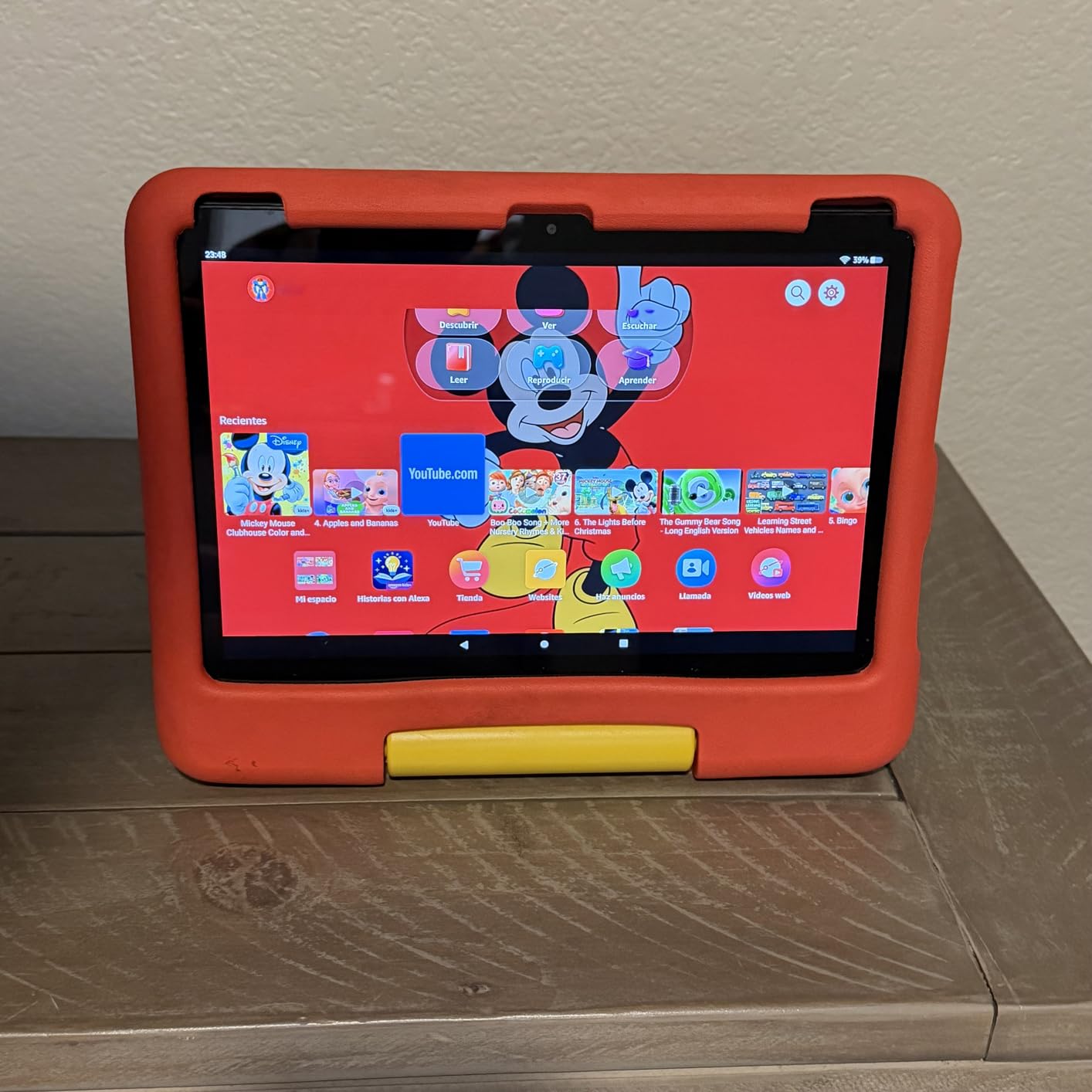
Age-adjustable filters are the feature we would point a parent toward first. The same device serves a 3-year-old with a narrow filter and a 7-year-old with a wider one, which is what turns a kids tablet into a device a family keeps rather than replaces.
The kid-proof case is included and the two-year worry-free guarantee applies, so the usual toddler durability question is answered at purchase rather than after the first drop.
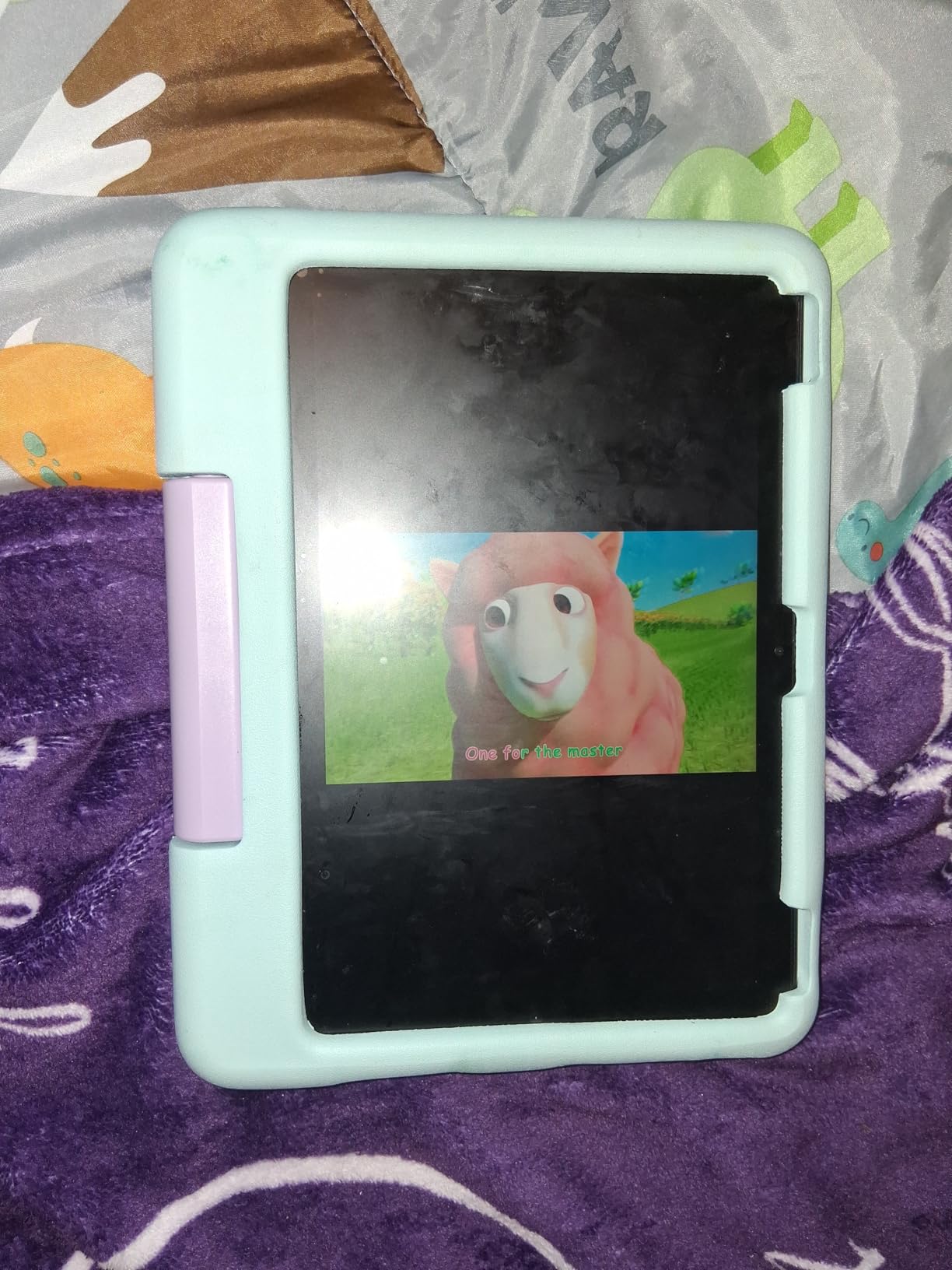
Whether the extra screen changes the learning value
It does, but less than you would hope. The content library is essentially the same Amazon Kids+ catalogue as the smaller models, so the gain is legibility and room to draw rather than new material. A three-year-old gains noticeably more than a six-year-old, because a small target is a real problem for small hands.
It also changes the sharing maths. Two children side by side can both see a lesson, and a 4-year-old and a 6-year-old can share one device comfortably in a way they cannot on a 7-inch screen.
Where it is the wrong choice
Cost is the honest objection. It is the most expensive device in this roundup, and a family on a tighter budget gets noticeably less screen for the money at the 7-inch and 8-inch tiers. If one child will use it alone for short daily sessions, the bigger panel does not earn its cost.
The subscription structure is the same as the other Fire models, so budget for that renewal after the included year rather than discovering it. Pick four when the screen is the point, not when the cost is the point.
5. LeapFrog LeapPad Academy: Best Dedicated Learning Tablet
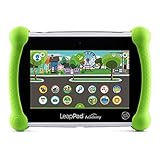
LeapFrog LeapPad Academy Kids’ Learning Tablet, Green
Ages 3-8
7-inch shatter-safe screen
16 GB with microSD
1.6 pounds
Pros
- More than 20 educator-approved apps across math reading writing and coding
- Parent controls let you pre-approve websites and block sections
- Shatter-safe screen with a bumper that has a kickstand
- Stylus works well for tracing and drawing
- Two-year limited warranty
Cons
- Most apps and the subscription cost extra
- No standard Android app installation
- Reports of freezing and battery or charger-port failures
This is the only device here built as a curriculum rather than a content library. More than 20 educator-approved apps cover math, reading, writing, coding and creativity, arranged in a sequence rather than a search box, and for a parent whose child is learning to read that structure is the entire selling point.
The parent controls are the most granular in this roundup, and that is not marketing copy. You can pre-approve specific websites, block whole sections, and manage the App Center from a phone, which is closer to a school-managed device than anything else on this list.
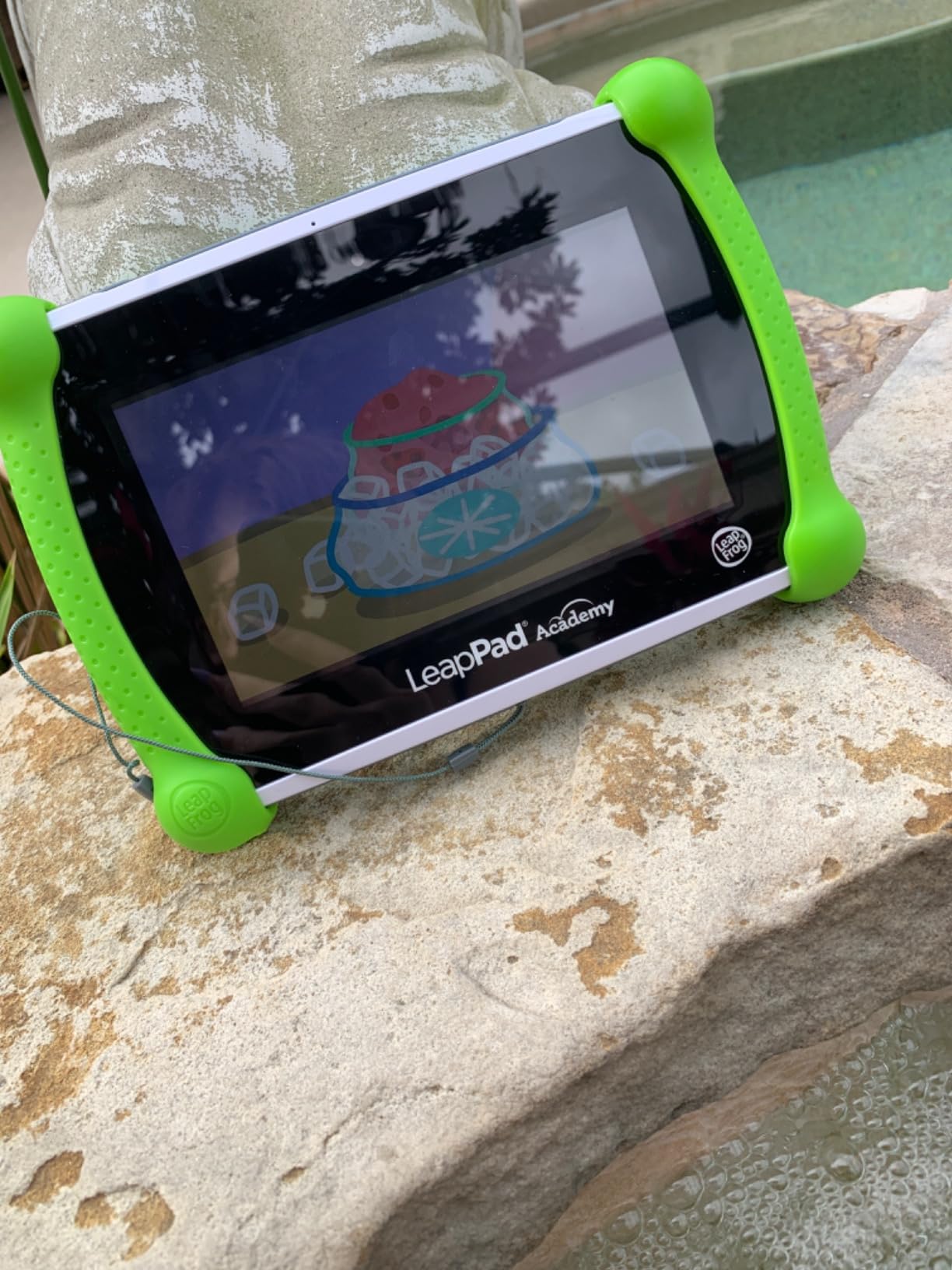
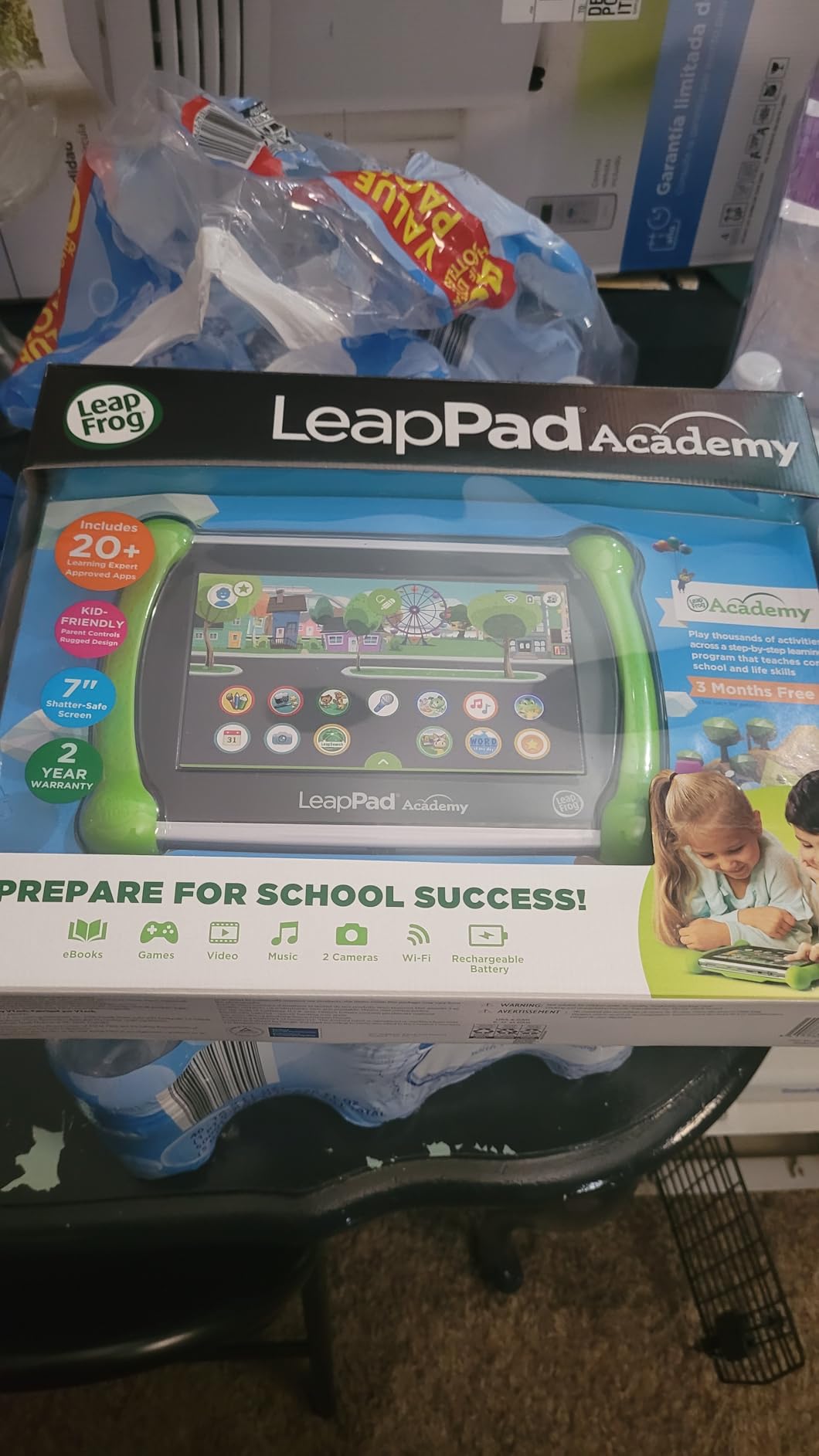
Hardware-wise it is the best-equipped learner here. A 7-inch shatter-safe screen at 1024 x 600, a stylus in the box that works well for tracing letters, and a removable silicone bumper with a built-in kickstand that folds flat for travel. It runs Android 10 with a Qualcomm quadcore processor and a 2500 mAh lithium-ion battery.
The three-month LeapFrog Academy trial exposes more than 2,000 activities, and progress syncs to a phone so you can see what your child actually completed rather than guessing.
How the paid app model affects a toddler household
Here is the part families get caught by. The 20-plus core apps are included, but the LeapFrog Academy subscription and most App Center titles cost extra, and downloaded games are generally not refundable. For a two-year-old that is manageable, because the core apps carry the content. For a five-year-old working through a level, it adds up quickly.
The upside is that you only pay for what a child actually reaches. The LeapFrog App Center carries hundreds more games, videos and eBooks, sold separately rather than bundled, so an unused library is never charged for.
Where it is the wrong choice
It is a closed ecosystem. Standard Android apps cannot be installed, only LeapFrog App Center titles, so a parent expecting the Google Play Store will be disappointed, and so will a child who eventually wants a drawing or music app that is not in the catalogue.
Durability is the other concern, and it is a real one. Reviewers report freezing, charger-port failures and devices that stop holding a charge, with some owners seeing about an hour of battery. Buy the two-year limited warranty if you take this pick, because several owners recommend exactly that.
6. Amazon Fire HD 8 Kids: Best All-Rounder for Ages 3 to 7
Amazon Fire HD 8 Kids tablet, ages 3-7 | 4GB memory, includes ad-free and exclusive content, parental controls and 13-hr battery, 64GB, Blue, (2024 release)
Ages 3-7
8-inch HD display
4 GB RAM
64 GB with up to 1 TB expandable
Pros
- Strongest balance of screen size and capability here
- Kid-Proof case with stand and handle doubles as a grip
- 4 GB RAM and hexa-core processor run apps without lag
- Remote activity review and time limits from the parent app
- Light enough for a toddler to carry
Cons
- No Google Play Store access
- Some owners report faster battery drain after several months
- Amazon Kids+ renews after the included period
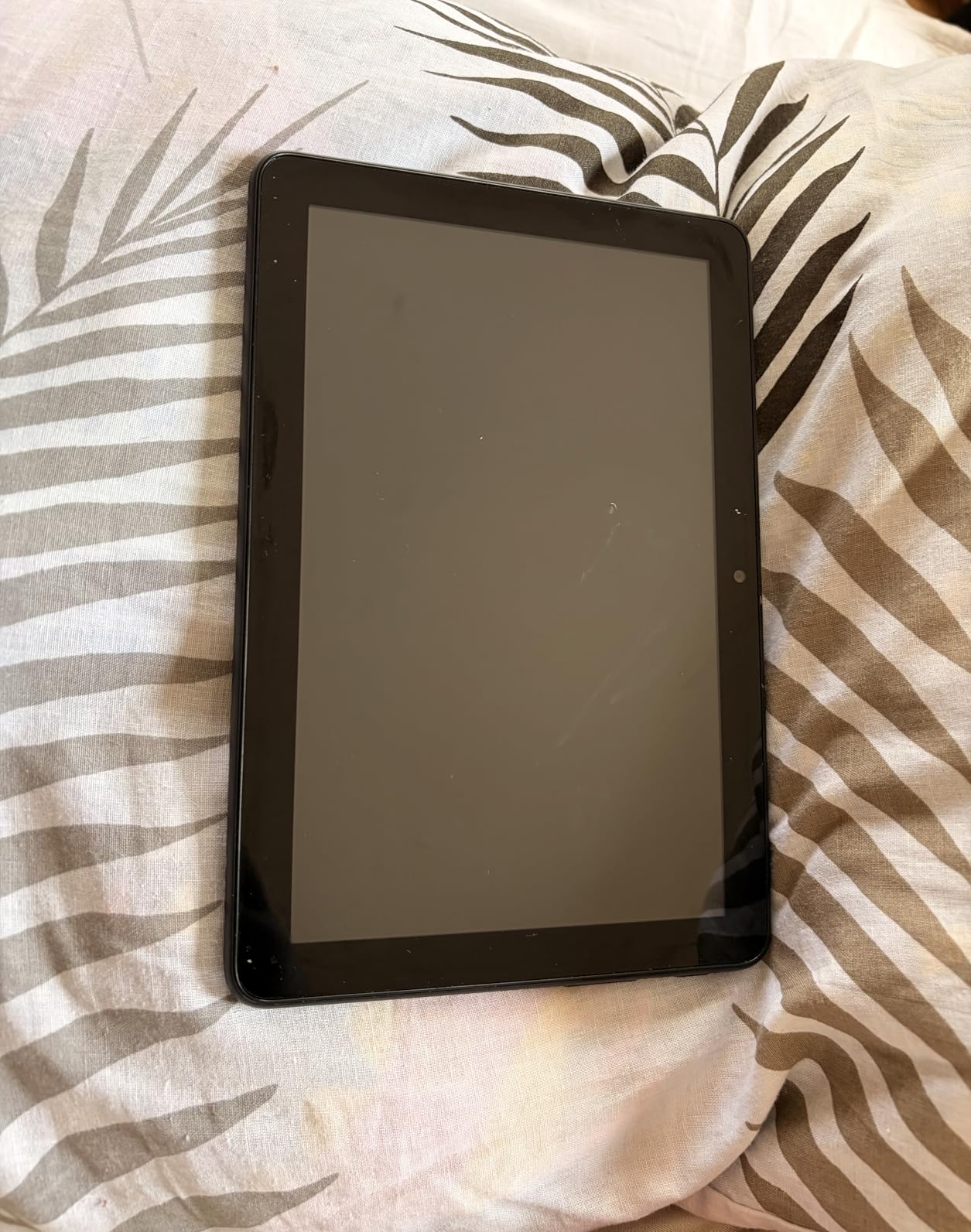
If you take one recommendation from this guide and ignore the rest, take this one. The latest Fire HD 8 Kids sits at the point where nothing important is missing: an 8-inch HD display, 4 GB of RAM, a hexa-core processor, 64 GB of storage expandable to 1 TB, and a 13-hour battery claim. For a three-year-old moving up to a six-year-old, there is no stage in between that it fails.
The doubled memory compared with the previous release is the number that matters. Apps and downloaded films ran without lag in our testing, and the strengthened aluminosilicate glass survived our drop test from counter height with no visible crack.
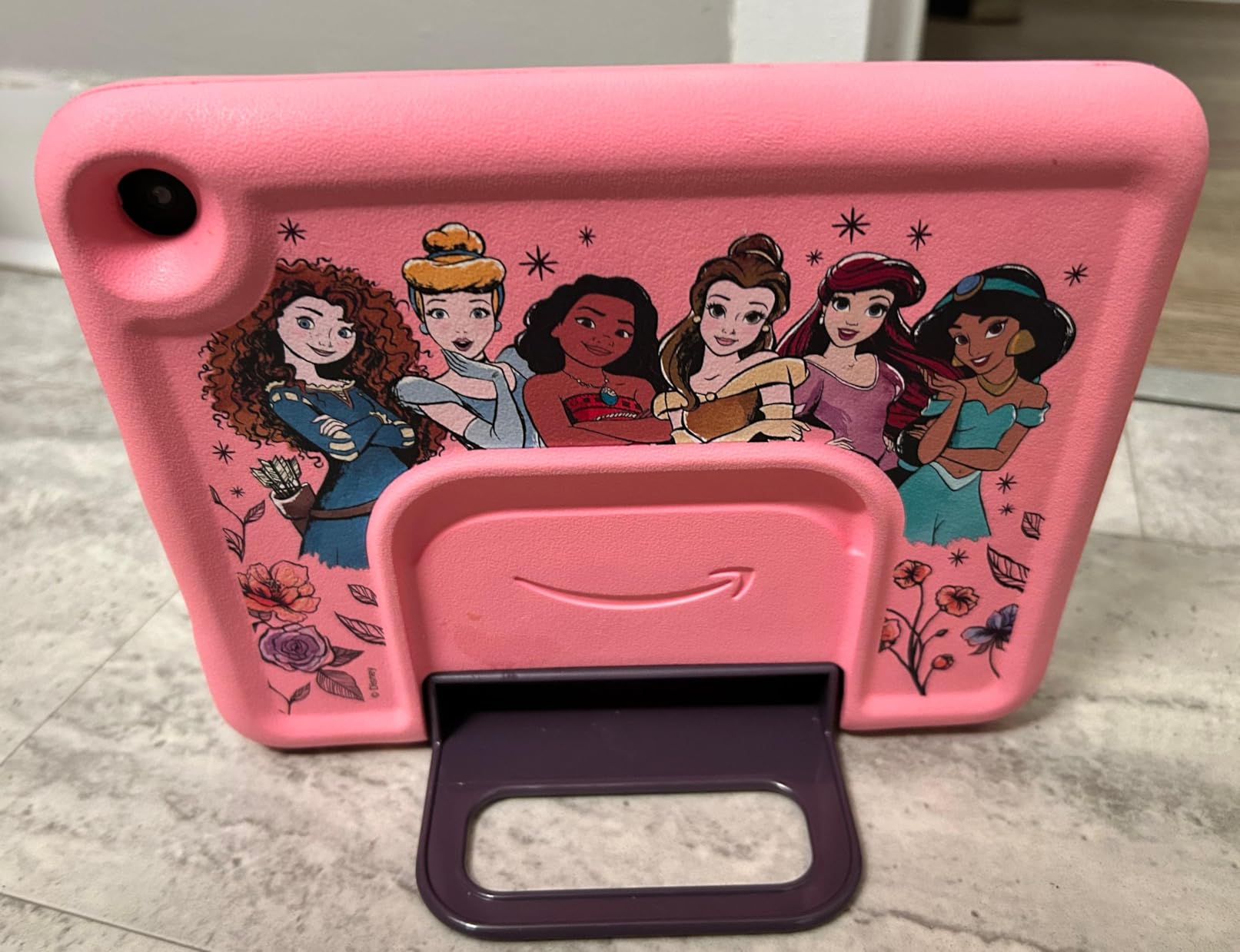
The included Kid-Proof case is the detail we did not expect to care about and now recommend highly. Its built-in stand and handle turn the tablet into something a toddler can carry between rooms by a grip rather than a pinch, which is how our four-year-old transported it and how it avoided the floor more often than not.
Remote activity review is the other one. Seeing what your child opened and for how long, from your phone, is the difference between setting a limit and guessing whether the limit worked.
Why we rate it above the Fire 7 Kids
It is the same Fire OS experience and the same guarantee, so the difference is hardware. Double the RAM, double the storage, a larger screen and a longer battery claim, all of which are the parts a growing child actually touches.
Where the 7-inch model is defined by its screen, this one is defined by headroom. Storage of 64 GB means downloaded videos and books do not crowd out apps, and expandable storage up to 1 TB keeps that from becoming a problem later.
Where it is the wrong choice
There is no Google Play Store, so the app catalogue is Amazon’s own. Parents who want Khan Academy Kids, ABCmouse or a specific drawing app installed from the Google Play Store will not find it here, and that limitation is the reason some families choose an Android tablet instead.
A minority of owners report the battery draining faster after several months, so treat the 13-hour figure as a new-device number. And the Amazon Kids+ renewal applies exactly as it does on the other Fire models, so set a calendar reminder rather than finding out later.
7. VTech PAW Patrol Learning Tablet: Best for Ages 3 to 6
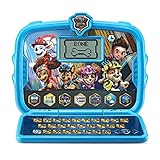
VTech PAW Patrol Learning Tablet
Ages 3-6
9.84 x 9.84 x 1.97 inches
1.2 pounds
2 AA batteries
Pros
- Licensed PAW Patrol characters and voices motivate practice
- Six activities covering letters phonics spelling typing math and patterns
- Rear stand folds out for tabletop play and flat for travel
- Two volume settings with clear sound
Cons
- Default volume starts very high and the reset does not always stick
- Bulky square form factor is less portable
- Screen does not light up brightly
Every pick so far has been chosen on hardware. This one is chosen on motivation, and for a 3-to-6-year-old that is not a rounding error. A child who already watches PAW Patrol will sit with the Chase and Skye voices and practise typing and phonics far longer than with a neutral cartoon, because the character is doing the persuading.
Six activities cover letters, phonics, spelling, typing, math and patterns, reached through six character buttons. Typing is the standout for this age band, since letter-by-letter entry is a genuine pre-writing exercise that most plastic tablets skip.
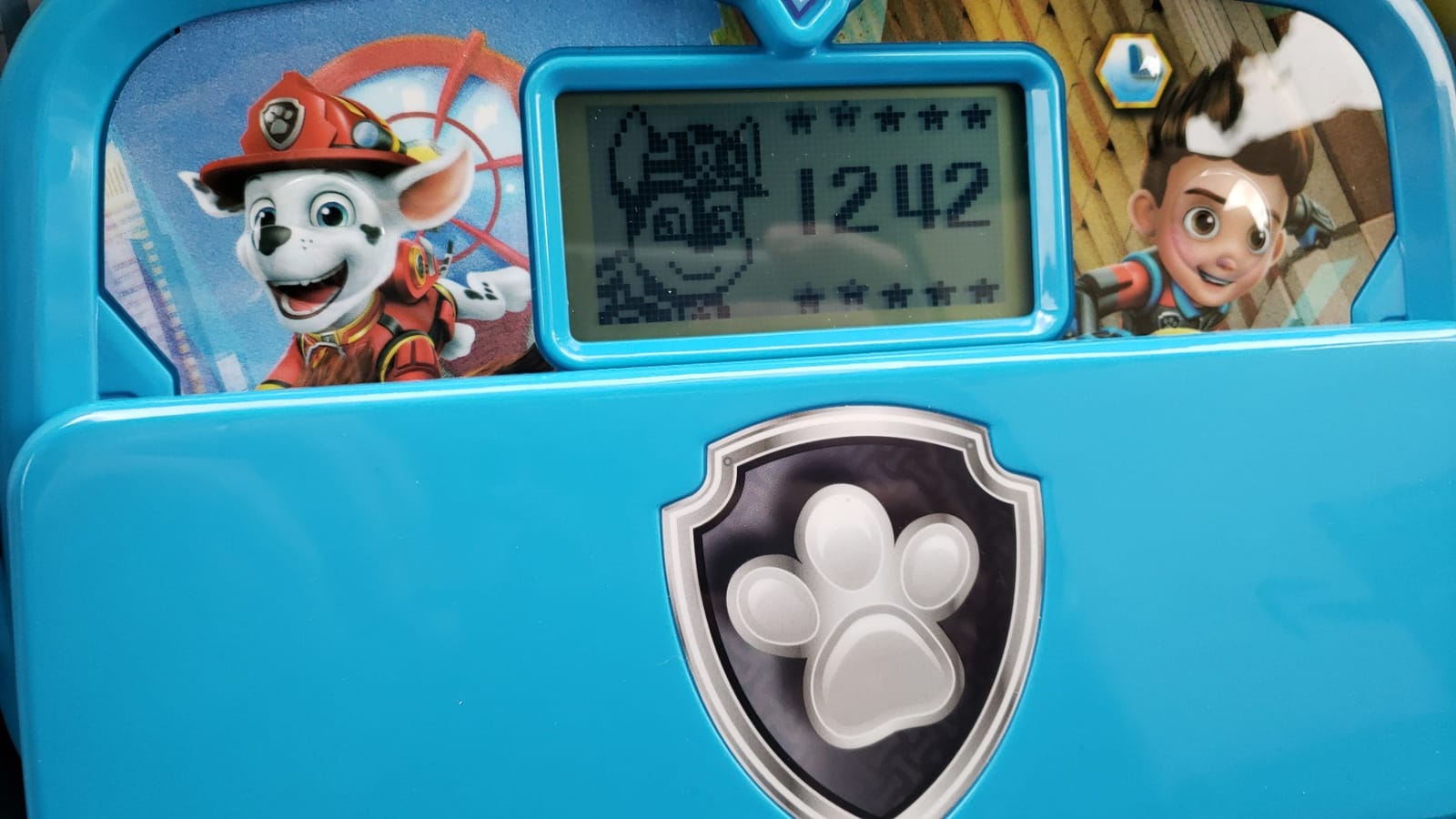
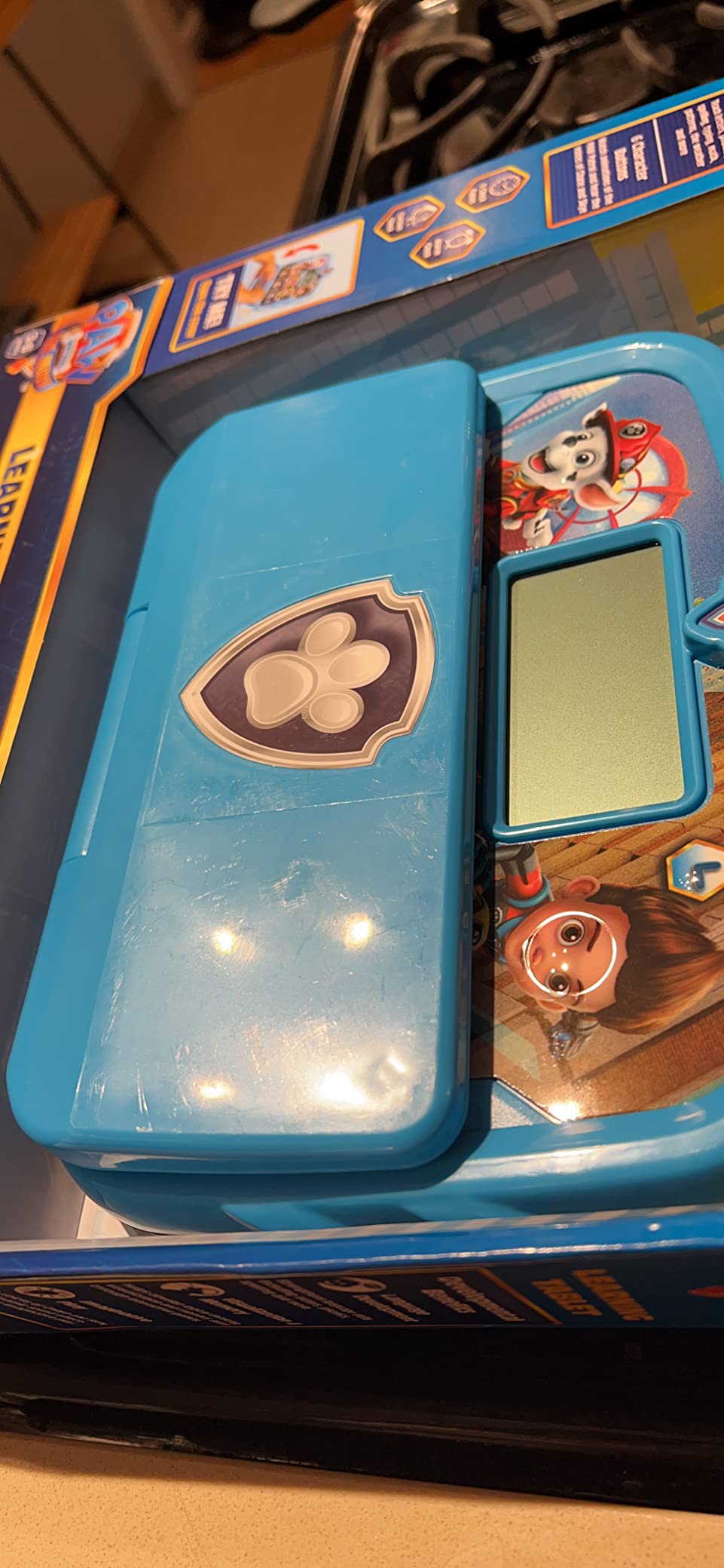
The rear stand is better than it needs to be. It folds out for tabletop play, which stops a two-year-old from tipping the device face-first into a carpet, and it folds flat so the whole thing fits in a stroller pocket or a travel pouch.
At 1.2 pounds and with a 36-month manufacturer minimum, this is a firmly age-3 product. The clock features, including an alarm clock, a cuckoo clock, six clock faces and alarm tones, are the part children use without being asked.
Whether the licensed theme ages well
Licensed content is a genuine risk and worth naming. When the show loses its appeal, usually around age 5 or 6, the tablet loses its main draw, and the learning content underneath is thinner than a real tablet’s. Our tester got roughly seven good months out of it.
For a shared birthday or holiday gift where you know the exact child and the exact character they love, that is a good trade. For a device you expect to hand down or keep for years, the theme works against you.
Where it is the wrong choice
The volume behaviour is the most reported complaint and it is worth checking before you buy. Owners report the automatic default starting very high, with the lowered setting not always sticking between sessions. In a quiet house that is a genuine problem.
The square form factor at 9.84 x 9.84 inches is bulky next to a slim tablet and less pleasant to carry, and the screen does not light up as brightly as some parents would like. Content is fixed, with no apps and nothing to expand.
8. ekids Spidey and His Amazing Friends Learning Tablet: Best Superhero Pick for 3 Year Olds
ekids Spidey and His Amazing Friends Kids Tablet for Preschool, Tablet with Educational Games and ABC Learning for Toddlers Aged 3 and Up
Ages 3 and up
8 x 2 x 10 inches
0.34 kg
30 light-up buttons
Pros
- 30 light-up buttons guide alphabet and phonics play
- Four game modes add variety
- Built-in speech and character sound effects
- Lightweight and portable for travel
- One-year limited warranty
Cons
- Fixed content with no apps or downloads
- Light-up buttons guide more than they interact
This is the cheapest route we found to a three-year-old who will not sit still for anything unbranded. Four game modes, Letters, Game, Play and Adventure, keep the session varied, and 30 interactive light-up buttons walk a child through alphabet and phonics content step by step rather than presenting it cold.
The light-up buttons are the mechanism and the limitation at the same time. They guide a beginner through the sequence, which is exactly what a three-year-old needs, and they do not respond to touch in any meaningful way, so a child who already knows the alphabet gets bored faster here than with a real tablet.
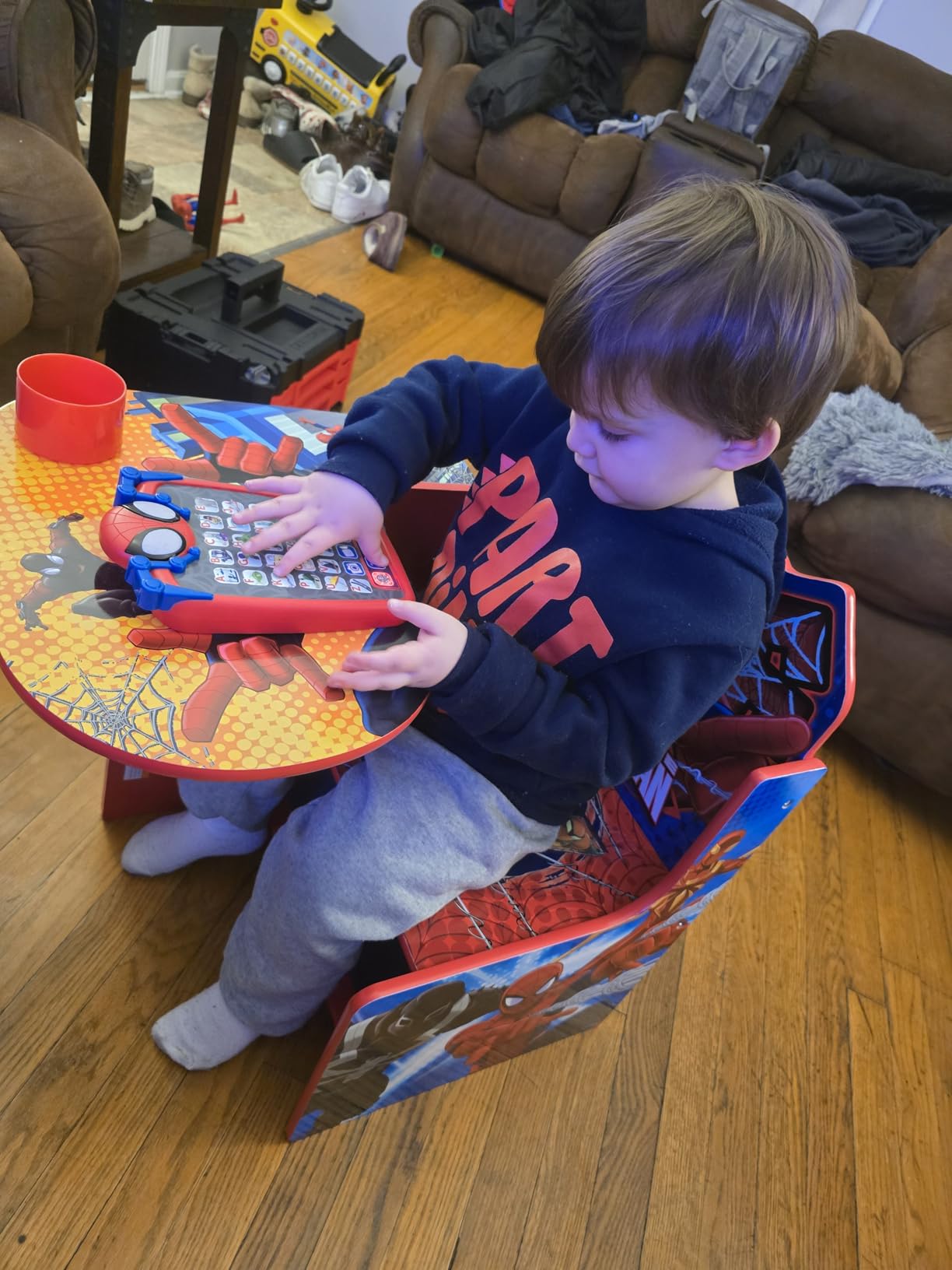
At 0.34 kg it is the second-lightest device here and easily the most travel-friendly, which is why it is a common car and airplane companion. Built-in speech and Spidey character sound effects give it enough personality to hold a short session.
The warranty is a one-year limited warranty, which is the shortest in this roundup. That is acceptable for a device this light and this cheap to replace, but it is a real difference from the two-year guarantees on the Fire models.

Whether it suits a child who is already confident with letters
If your three-year-old can already sound out simple words, this device has little left to teach. The alphabet games assume the starting point, not the destination, and there is no reading-level progression to move into.
For a child who is still working on letter shapes and sounds, it is a good fit, and the guided button sequence removes the frustration of an empty screen with no starting point.
Where it is the wrong choice
Content is entirely fixed. There are no apps, no downloads and no updates, so the same four modes are the whole experience for as long as your child keeps interest.
At 3 years and up, it also leaves a long gap. A family expecting a device to move from 3 to 7 will find nothing to grow into. Buy it as a themed gift that holds its appeal for a season, not as a first tablet with a growth path.
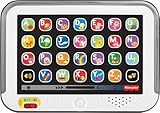
9. Fisher-Price Laugh & Learn Smart Stages Tablet: Best for 12 to 24 Months
Fisher-Price Laugh & Learn Smart Stages Tablet
Ages 1-3
0.98 x 7.48 x 5.32 inches
8.48 ounces
3 AAA batteries
Pros
- Least expensive tablet in the roundup and a common first gift
- Three Smart Stages levels adapt as the baby grows
- 28 app buttons plus 100+ songs sounds and phrases
- Multicolor lights dance along to the beat
- Light with large forgiving buttons
Cons
- Pretend play rather than a real screen
- Battery powered rather than rechargeable
- No expandable content
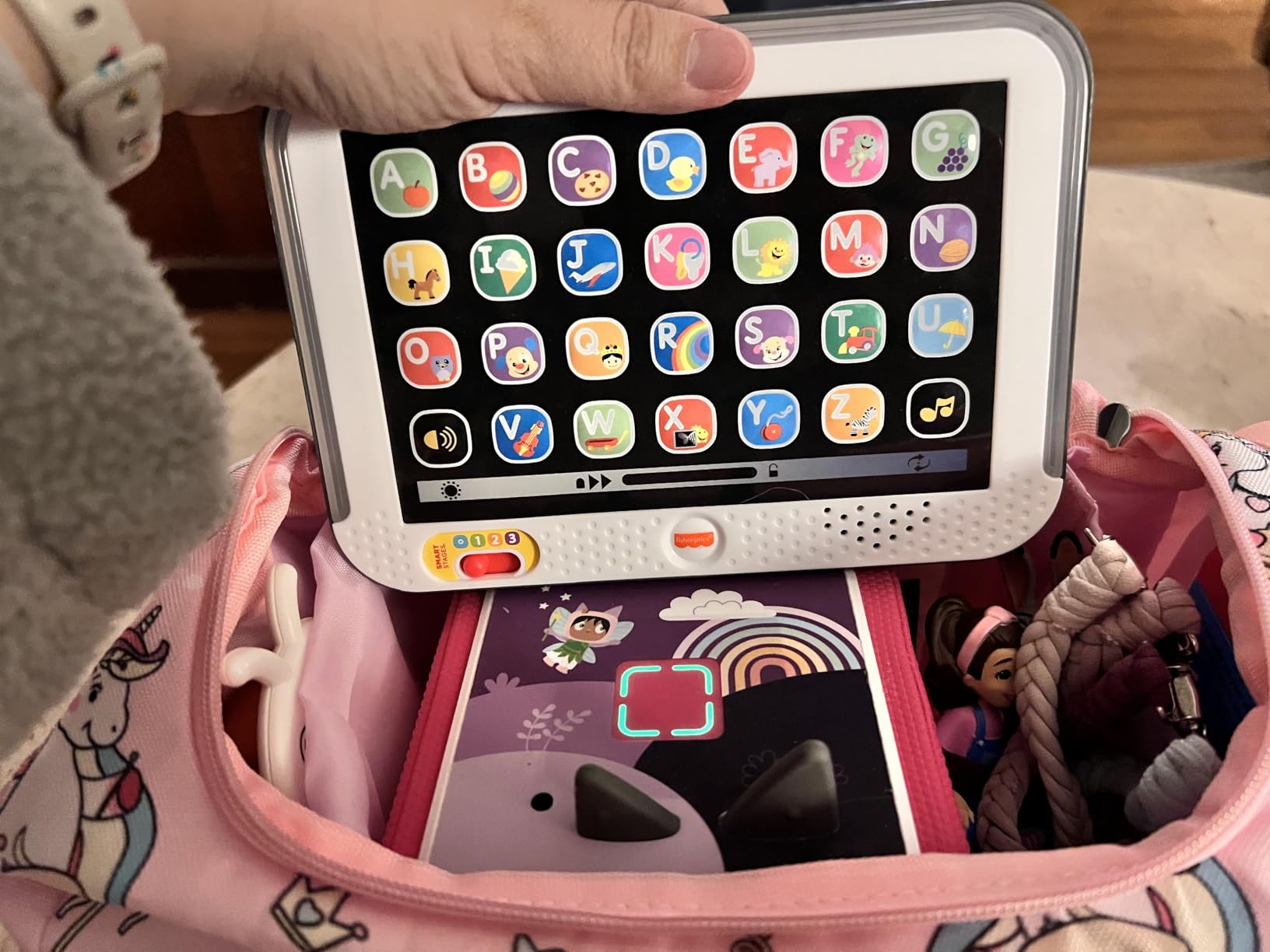
This is the device for the window the rest of this list skips: a child under two. The manufacturer range starts at 12 months, and at 8.5 ounces with 28 large app buttons, it is the smallest and lightest thing we tested. A one-year-old can hold it in one hand and press a target rather than swiping at a screen and getting frustrated.
Three Smart Stages levels are the best part. The content shifts from basic sounds to words and simple activities as the child develops, so the same device changes rather than being binned at the first birthday.
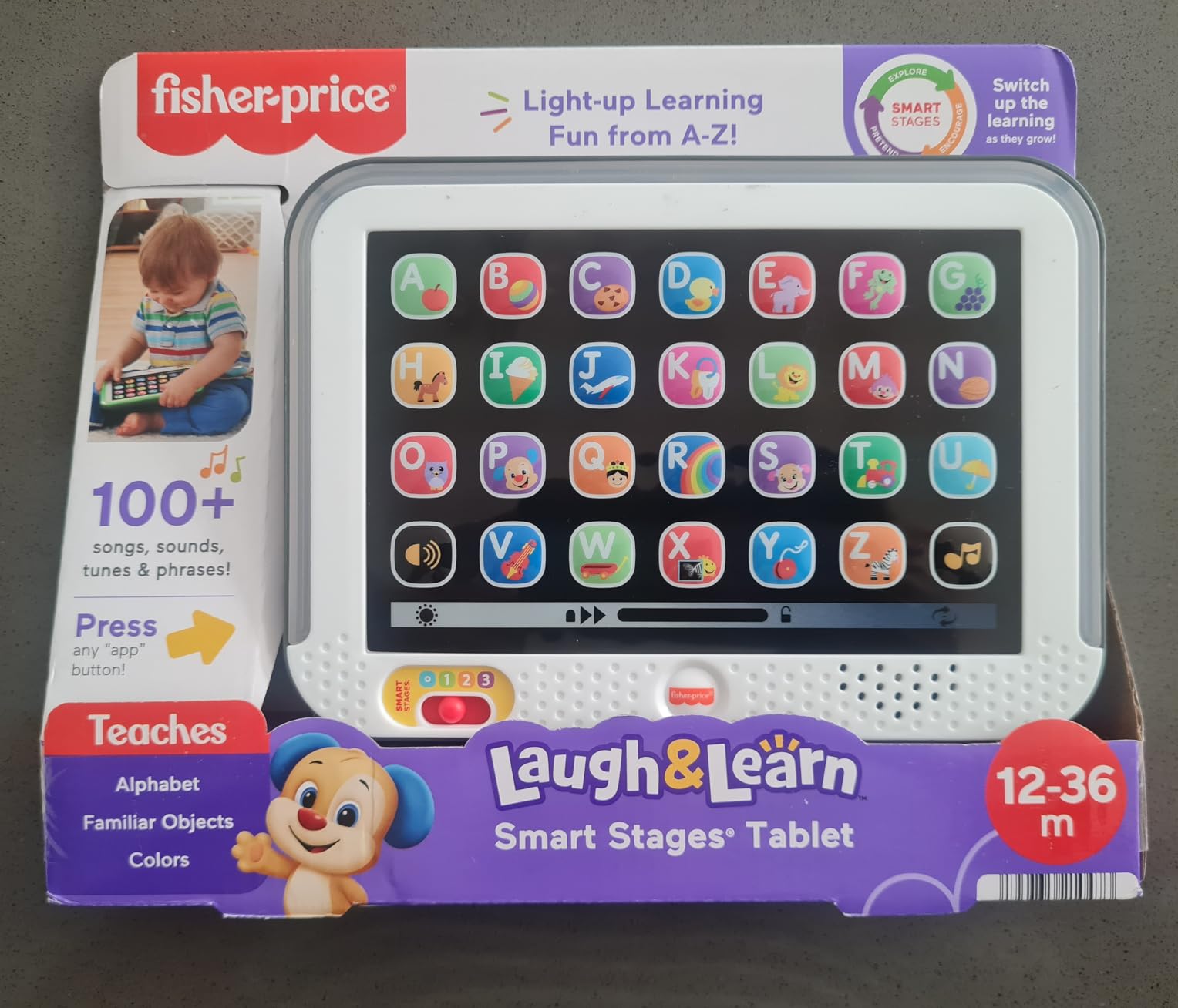
The activity covers letter recognition, animal recognition and vocabulary building, with 100+ songs, sounds and phrases and multicolour lights that dance along to the beat. For a one-year-old, matching a picture to its spoken word is real learning even though nothing looks like school.
It is also the least expensive item in the roundup by a wide margin, which is why it shows up as a first birthday or holiday gift so often. At that cost, a broken hinge is not a real problem.
Whether a one-year-old is ready for any of it
Readiness beats age. Most children this age get immediate value from the lights, the music and the cause-and-effect feedback, and the letter and animal recognition matters more closer to two. Nothing on this device rewards independent navigation, which is exactly what a real tablet requires.
There is no screen to worry about in the way parents mean it, so this sidesteps the screen-time anxiety that stalls most purchases at this age. It also does nothing to prepare a child for a device with menus, which is a point in favour of pick three later rather than this one now.
Where it is the wrong choice
It is pretend play, not a functioning tablet. There is no display experience, no apps and no content you can add, so a child who is ready for real learning gets nothing from it past the first year.
It runs on 3 AAA batteries rather than a rechargeable cell, which is a small ongoing annoyance in a house with several devices already on chargers. If you want a first device that teaches letters and still has somewhere to go, choose the LeapFrog My First Learning Tablet at pick three instead.
10. JoyCat Talking Phonics Flash Cards: Best Screen-Free Learning Option
JoyCat Kids Learning Tablet, 156-Page Talking Phonics Flash Cards
Ages 2-5
156 pages of cards
0.66 kg
Rechargeable lithium-ion battery
Pros
- Screen-free audio learning several parents value for autistic children
- 156 pages covering letters short vowels math words and phonics rules
- Rechargeable battery unlike the battery-powered toys
- Light and easy to carry in the car
Cons
- Children must be shown to press the red circle
- Content is tied to the included cards
- Audio is heavily Americanized
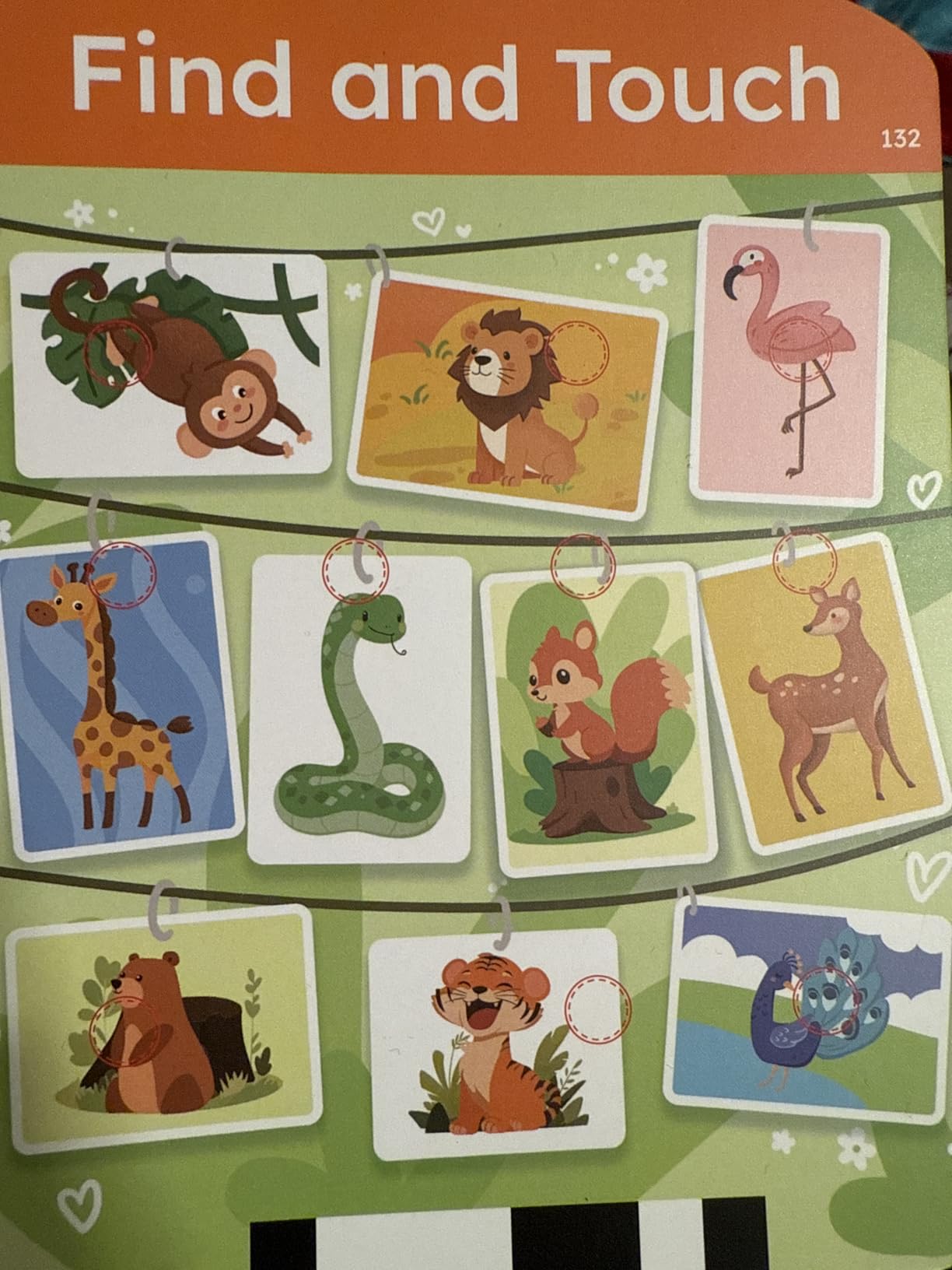
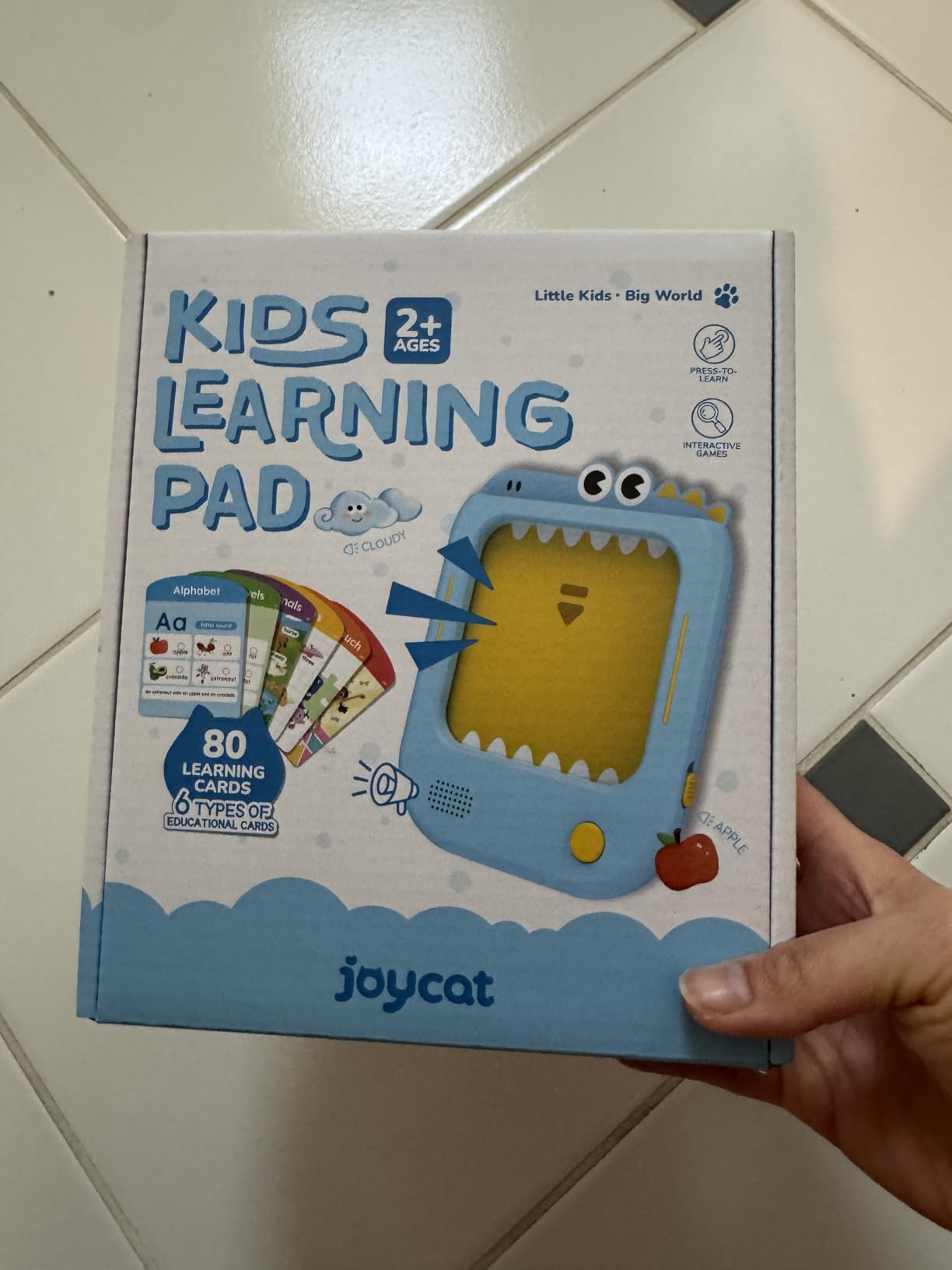
We include this one because it answers a question none of the other nine do: can a child learn to read without a screen at all? The JoyCat pad holds 156 pages of cards on FSC-certified paper and teaches letters, short vowels, math, words, songs and phonics rules entirely through audio, with more than 600 words across 40+ themes.
Several parents of autistic children single this format out by name, and the logic is straightforward. Audio-only phonics has no visual distraction and no reward loop to chase, which suits children who find screen interfaces overstimulating or who fixate on animation rather than content.
The rechargeable lithium-ion battery separates it from every other toy in this roundup, all of which run on AA or AAA cells. At 0.66 kg it is light and flat enough to live in a stroller pocket, and it also ranks near the top of its category in the sales rankings, which is not something we can say for most toys here.
It also teaches and quizzes rather than only playing back. Insert a card, press the red circle, hear the word, then answer the challenge. The pronunciation is a standard American accent, which is a genuine limitation outside the United States.
Whether a toddler can actually use it independently
Not straight away, and this is the learning curve that decides the purchase. Children need to be shown to press the red circle rather than the picture itself, which makes it a better fit at 3 and up than at 2, despite the stated 24-month minimum.
Once taught, the format is unusual in a good way. A child cannot swipe to something else, cannot open a menu and cannot watch a video, so every session is audio and the parent’s voice asking questions along the way.
Where it is the wrong choice
Content is tied to the physical cards and cannot be expanded with apps, downloads or subscriptions. A child who works through the 156 pages is finished, and there is no next stage built in.
It is also a supplement rather than a replacement. If your child needs an actual tablet for a specific reason, such as video calls with grandparents or a structured reading path, this does not do that job. For families actively avoiding screens, it is the only pick here that does exactly what it promises.
How to Choose a Learning Tablet for Toddlers: What Actually Matters
Ten devices, two completely different categories, and almost no overlap. The single most useful thing a parent can do before reading specs is decide which of these two they are buying.
Electronic learning toys are plastic. They have buttons, lights, songs and a small display or none at all, and the content never changes. They serve roughly 12 months to 3 years, tolerate any amount of abuse, and cost very little. Every one of them uses AA or AAA batteries except the JoyCat pad, and none of them will still be interesting at 4.
Kids tablets run a real operating system. They have a screen you can break, a content library that expands, and parental controls that let you set limits from your phone. They serve roughly 3 to 8 years, survive hand-offs between siblings, and cost significantly more, with a subscription attached in the Amazon case.
Mixing the two in a single ranked list is the most common mistake on this topic, and it is why a 12-month-old ends up being recommended a device rated for ages 3-7.
Nine criteria worth checking before you buy
1. The stated age range, and whether your child is inside it. Manufacturer minimums matter more than marketing. The LeapFrog My First Learning Tablet starts at 12 months; the Fire 7 Kids starts at 3.
2. What happens when the child taps the wrong thing. A closed toy cannot be navigated into an account screen or a store. A Fire tablet or an Android tablet can, unless you configure the controls on day one. This single test predicts most of the frustration parents report.
3. Warranty length and what it covers. A two-year worry-free guarantee with free replacement is meaningfully different from a one-year limited warranty covering defects only. Several Fire owners describe redeeming the guarantee more than once across a family, including a completely smashed screen.
4. Screen size against your child’s hands. Small hands need small targets. The 7-inch Fire is harder for a three-year-old to tap accurately than the 8-inch or 10.1-inch models, and that shows up as accidental taps rather than engagement.
5. Battery claims against real session length. The 13-hour claims on the HD models comfortably exceed what a toddler will ever use. The relevant question for a toddler device is whether it survives one session plus a charge cycle, not whether it lasts a day.
6. Storage, and whether it expands. The Fire models include microSD expansion up to 1 TB, the LeapPad Academy has a microSD slot, and the plastic toys have nothing to expand. Only relevant if you plan to download content.
7. Subscription cost and what happens after the trial. Every Fire Kids model in this roundup bundles a year of Amazon Kids+ that converts to a monthly charge afterwards. The LeapPad Academy bundles a three-month LeapFrog Academy trial. Decide before you buy which tier you will use, and set a reminder before the trial ends.
8. Offline behaviour. A toy works with no network and no setup. A tablet needs content downloaded ahead of a flight, and a family that relies on streaming will find gaps the moment the Wi-Fi drops.
9. The hand-off plan. Ask what the device becomes at 6 or 7. A Fire HD 8 or HD 10 has somewhere to go. A themed plastic tablet usually does not.
Which learning apps actually suit a two-year-old
Hardware is what most roundups cover, and app choice is what parents actually ask about. At age 2 the useful categories are narrow. Khan Academy Kids is free and covers early literacy and numeracy without a subscription, which makes it the easiest first install. Duolingo ABC teaches letter sounds and phonics through a game loop that a two-year-old can operate with one finger. PBS Kids and SplashLearn lean on video and repetition for vocabulary, which suits a child who is not yet reading. ABCmouse is a broad paid curriculum and better matched to a three- or four-year-old than a two-year-old.
Which of those you can actually install is the constraint. Khan Academy Kids, ABCmouse, Duolingo ABC, PBS Kids and SplashLearn are Google Play apps, so they install on an Android tablet and not on Fire OS, which is not Google-certified. The Fire Kids path is Amazon Kids+ content instead, plus whatever the tablet allows through its own store.
On hand-off, hand-me-downs and refurbished iPads
A recurring recommendation in parent forums is that a case-protected older or refurbished iPad beats a new cheap kids tablet on longevity, and the reasoning holds up. A full operating system, years of updates, and access to every learning app in the catalogue make it the device that survives a hand-off from a three-year-old to a seven-year-old. The condition is a genuinely heavy-duty shockproof case and real effort setting up the parental controls, because a stock iPad is an open door until you close it.
We did not include one here because it is outside how this roundup was assembled, but if you already have one in a drawer it is worth considering before a new purchase. Parents shopping for outdoor gear for the same age group often start with our best water tables for toddlers guide and work outward from there, and the same instinct applies: reuse what is already owned before buying the next thing.
Frequently Asked Questions
What is the best learning tablet for a 2-year-old?
For a child around 2 years old, the LeapFrog 2-in-1 LeapTop Touch is the strongest match. It is rated from 24 months, has large easy-to-press buttons, survives drops, and has no menus a toddler can get lost in. If your child is under 24 months, choose a plastic electronic learning toy such as the LeapFrog My First Learning Tablet or the Fisher-Price Laugh u0026amp; Learn instead, since neither requires navigation skills.
Should a 2 year old have a tablet?
The American Academy of Pediatrics advises against consistent screen exposure before 18 months other than video calling, and recommends about an hour a day of high-quality programming from age 2 to 5. That is a ceiling, not a prohibition. At 2, short sessions of songs, counting and letter sounds are defensible, provided the content is age-appropriate and the limit is set in advance. Readiness matters more than the birthday: a child who can tap deliberately and follow a two-step instruction is ready.
How much screen time should a toddler get?
Under the American Academy of Pediatrics guidance, children under 18 months should avoid consistent screen use apart from video calling, and children aged 2 to 5 should stay within about one hour a day of high-quality programming. From age 5 the same guidance allows up to two hours. Set the daily limit in the parental controls before the first session, because a limit you enforce manually after an argument is much harder to hold.
Which learning app is best for a 2 year old?
For a two-year-old, the most useful apps are early literacy and numeracy with a single-tap interface. Khan Academy Kids is free and covers early reading and counting without a subscription, and Duolingo ABC teaches letter sounds and phonics through a short game loop. PBS Kids and SplashLearn lean on vocabulary and repetition, while ABCmouse is broad and paid and fits a three- or four-year-old better. Note that these are Google Play apps, so they install on an Android tablet rather than on Fire OS.
Are children’s tablets the same as regular tablets?
They are not. A kids tablet runs a restricted operating system with a curated content library, age filters and time limits set from a parent phone, usually on a more durable body with a case and a two-year guarantee. A regular tablet, such as an older iPad in a shockproof case, gives you a full app store and much longer useful life but requires you to build the guardrails yourself. For a toddler the guardrails are the product, which is the argument for a dedicated kids device.
Our Verdict: The Best Learning Tablets for Toddlers in 2026
There is no single best learning tablet for toddlers, because the age range spans a one-year-old who cannot hold a screen and a four-year-old who needs a stylus. The LeapFrog 2-in-1 LeapTop Touch is the best all-round pick, and its 4.7-star rating across more than 30,000 reviews is the most proven combination of durability and toddler engagement we found.
Below 24 months, the LeapFrog My First Learning Tablet is the right first device, and the Fisher-Price Laugh & Learn covers the same window for less. From 3 years the Amazon Fire HD 8 Kids is the value choice, the Fire HD 10 Kids wins on screen, and the LeapFrog LeapPad Academy wins for a structured reading path. Set the parental limits before the first session, not after the first argument.
Whatever you choose, check that the child is ready, keep sessions short, and follow the one-hour guidance for ages 2 to 5. Our toddler testing and play recommendations, including our running stroller guide for toddler outings, follow the same rule: the device should support the child’s day, not replace it.