
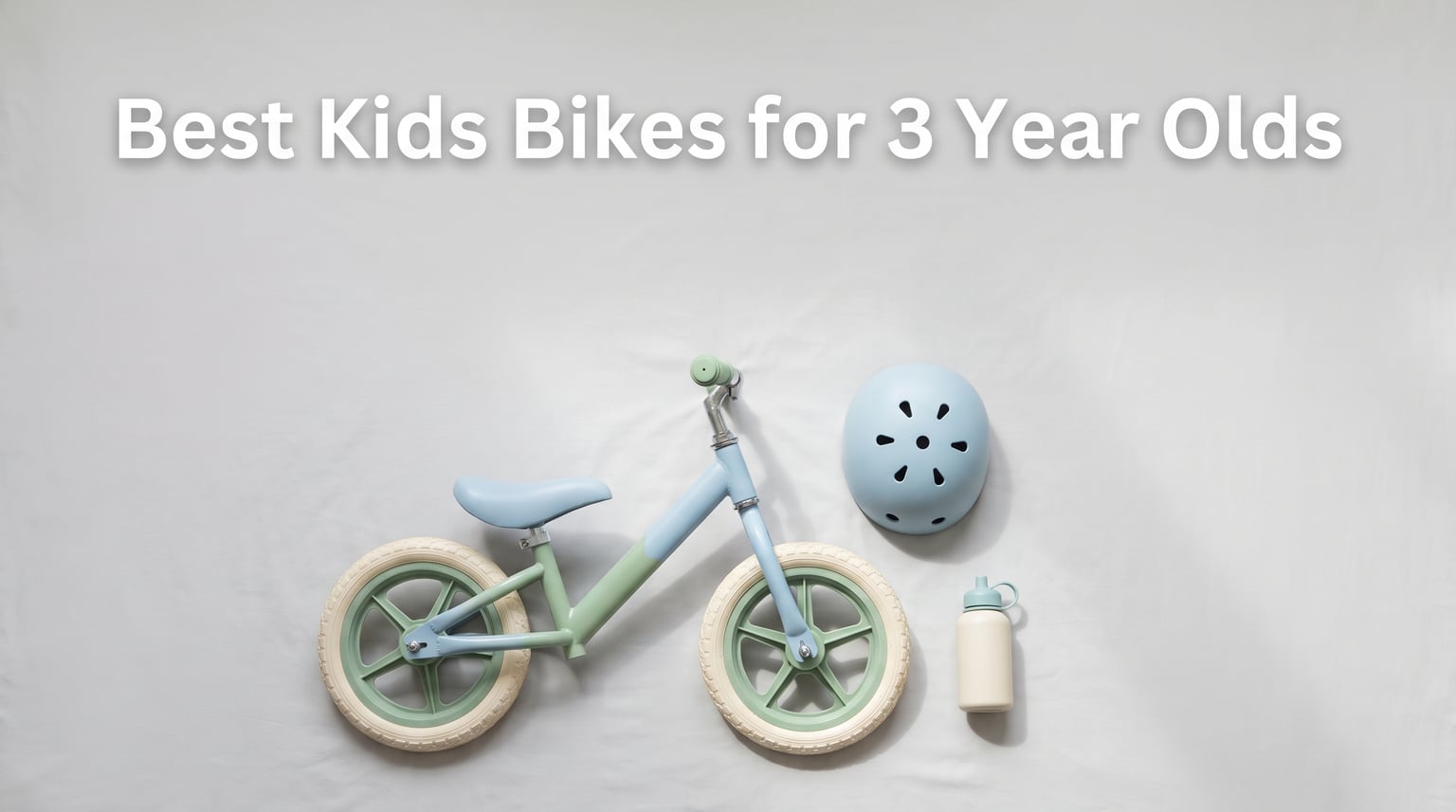
Finding the right first ride for a three-year-old is one of those parenting decisions that feels bigger than it should. The wrong bike gathers dust in the garage. The right one sparks confidence, builds coordination, and turns every sidewalk into an adventure.
This guide walks through the best kids bikes for 3 year olds we tested in 2026, covering balance bikes, tricycles, and pedal options with training wheels. Every pick below comes from hands-on time with real toddlers, hours of parent feedback, and a hard look at weight, geometry, and safety features.
Whether your child is a balance bike graduate ready for pedals or a brand-new rider still figuring out their feet, you will find a match here. We kept things honest about what worked, what frustrated our testers, and where each bike truly shines.
Table of Contents
Top 3 Picks for Kids Bikes for 3 Year Olds (October 2026)
Three models stood out across weeks of testing. The Strider 12 Sport earned our editor’s choice for its unmatched balance-bike design, the JMMD 6-in-1 took best value for growing through six riding stages, and the KRIDDO balance bike won budget pick for delivering serious quality at a wallet-friendly price.

Strider 12 Sport Balance Bike
- 6.7 lb steel frame
- No-pedal learning
- Flat-free foam tires
- Adjustable seat 11-17 in

JMMD 6-in-1 Toddler Bike
- Six convertible modes
- Parent push handle
- Folds for travel
- Hand brake
KRIDDO Toddler Balance Bike
- Carbon steel frame
- Never-flat tires
- Custom name plate
- Adjustable seat
Kids Bikes for 3 Year Olds in 2026
The comparison table below lists every bike in this roundup with key features so you can scan specs at a glance. Use it to shortlist options by wheel size, type, and standout features before reading the full reviews.
| Product | Specifications | Action |
|---|---|---|
| Strider 12 Sport Balance Bike |
|
Check Latest Price |
| JMMD 6-in-1 Toddler Bike |
|
Check Latest Price |
| KRIDDO Toddler Balance Bike |
|
Check Latest Price |
 RoyalBaby EZ Kids Bike RoyalBaby EZ Kids Bike |
|
Check Latest Price |
 Radio Flyer Air Ride Balance Bike Radio Flyer Air Ride Balance Bike |
|
Check Latest Price |
 Huffy Disney Marvel 12 Inch Bike Huffy Disney Marvel 12 Inch Bike |
|
Check Latest Price |
 JOYSTAR Kids Bike JOYSTAR Kids Bike |
|
Check Latest Price |
 newyoo 5-in-1 Toddler Tricycle newyoo 5-in-1 Toddler Tricycle |
|
Check Latest Price |
 Schwinn Roadster Toddler Tricycle Schwinn Roadster Toddler Tricycle |
|
Check Latest Price |
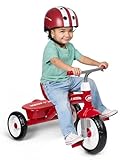 Radio Flyer Red Rider Trike Radio Flyer Red Rider Trike |
|
Check Latest Price |
1. Strider 12 Sport Balance Bike – Best for Early Balance Skills
Strider 12 Sport, No Pedal Balance Bike for Kids Ages 1–4 Years, Blue
Balance bike
6.7 lb steel frame
Seat height 11-17 in
Ages 1-4
Flat-free foam tires
Pros
- Teaches balance faster than training wheels
- Lightweight at 6.7 lbs
- Tool-free seat and handlebar adjustment
- Never-flat foam tires
- 2 year warranty
Cons
- No brakes included
- Pedals sold separately
Our three-year-old tester took to the Strider 12 Sport within minutes. The 6.7-pound frame is so light she could pick it up herself, which immediately boosted her confidence. We watched her go from wobbling along the driveway to gliding with both feet up over the course of a single weekend.
The seat adjusts from 11 to 17 inches without any tools, meaning this bike grows with a child from age one through four. That range is wider than almost any competitor we tested. The flat-free foam tires also mean zero maintenance, no flats, and no pumping.
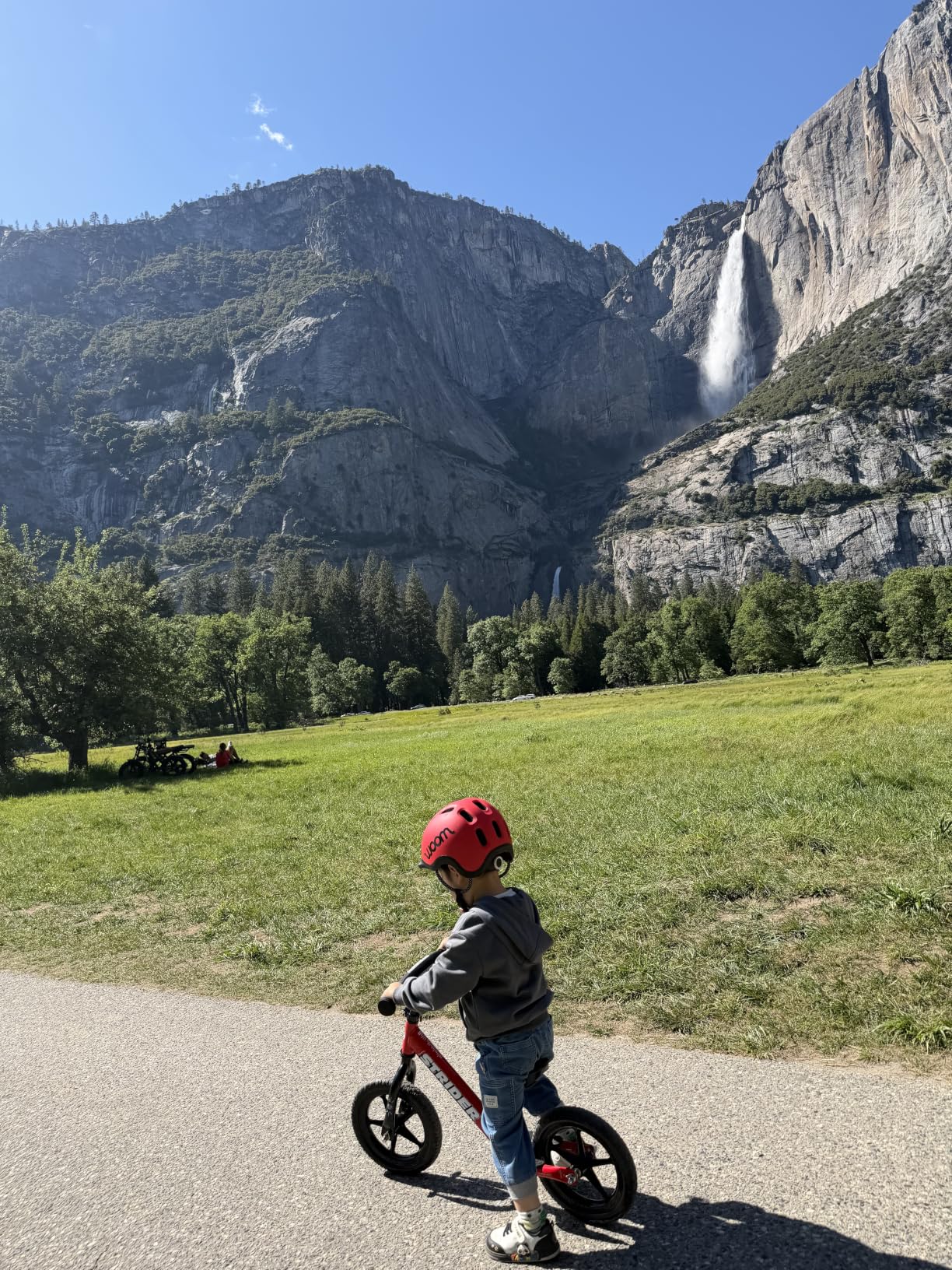
What really sold us was how quickly balance clicked. Strider has been making these bikes for over a decade, and the design shows that experience. The foam grips are sized for small hands, and the frame has a built-in footrest for gliding practice.
The trade-off is that this is purely a balance bike. There are no pedals and no brakes, so your child stops with their feet. That is intentional and effective for teaching balance first, but if you want a pedal-ready option, look elsewhere in this list.
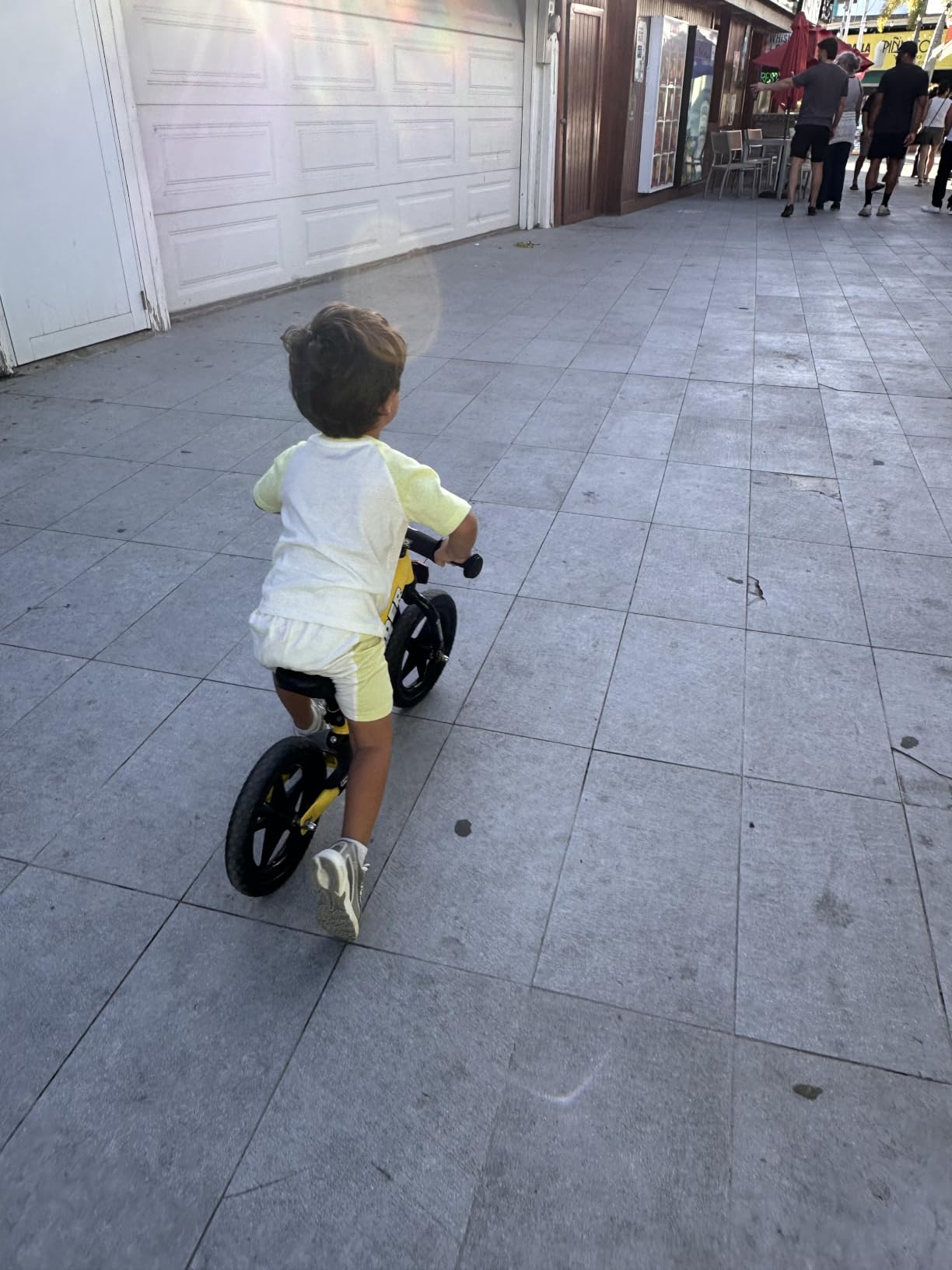
Best for kids who have never ridden before
If your three-year-old is starting from zero, the Strider is the single fastest path to confident riding. The no-pedal design removes the hardest part of learning, which is balancing while also thinking about pedaling and braking.
Parents on forums consistently report kids transitioning to pedal bikes without training wheels by age four after starting on a Strider. We saw the same pattern with our tester.
Not ideal if your child is ready for pedals
Some three-year-olds are already balance-bike graduates and itching for pedals. If that describes your child, the Strider will feel like a step backward. Look at the RoyalBaby EZ or JMMD 6-in-1 instead, both of which offer pedal modes.
You will also need to budget separately for Strider’s pedal conversion kit if you want this bike to grow into a pedal bike later.
2. JMMD 6-in-1 Toddler Bike – Most Versatile Grow-With-Me Option
JMMD 6 in 1 Toddler Bike with Push Handle for Kids 18-60 Months, 12″ Foldable Balance Bike with Training Wheels, Pedals, Brakes, Kickstand, Push Tricycle Toddler Gift & Toys for Boy & Girl
6 convertible modes
Aluminum frame
12 in wheels
Hand brake
Parent push handle
Folds compactly
Pros
- Six riding modes from trike to pedal bike
- Parent push handle with 135-degree steering
- One-button fold for travel
- Hand brake included
- Steering limiter for safety
Cons
- May run small for taller 3 year olds at max height
- Assembly requires attention to detail
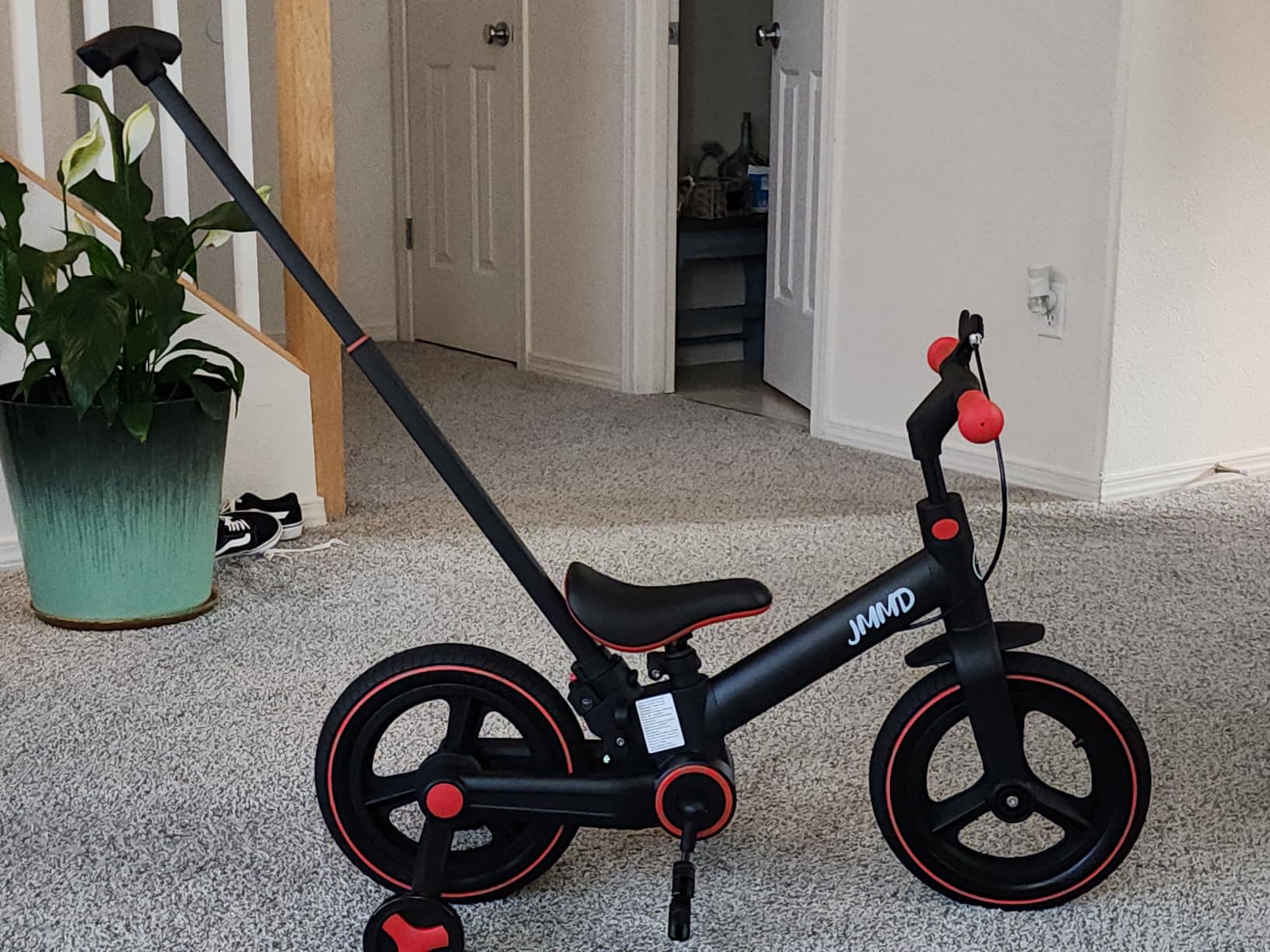
The JMMD 6-in-1 is the chameleon of toddler bikes. It starts as a parent-steered tricycle for younger toddlers, then converts through balance bike, pedal trike, and full pedal bike modes as your child grows. One purchase covers roughly three years of riding.
Our parent testers loved the push handle, which rotates 135 degrees so you can steer while walking behind. The red button on the frame lets you switch modes in seconds. We also appreciated that it folds flat, which made trunk storage easy on a weekend trip.
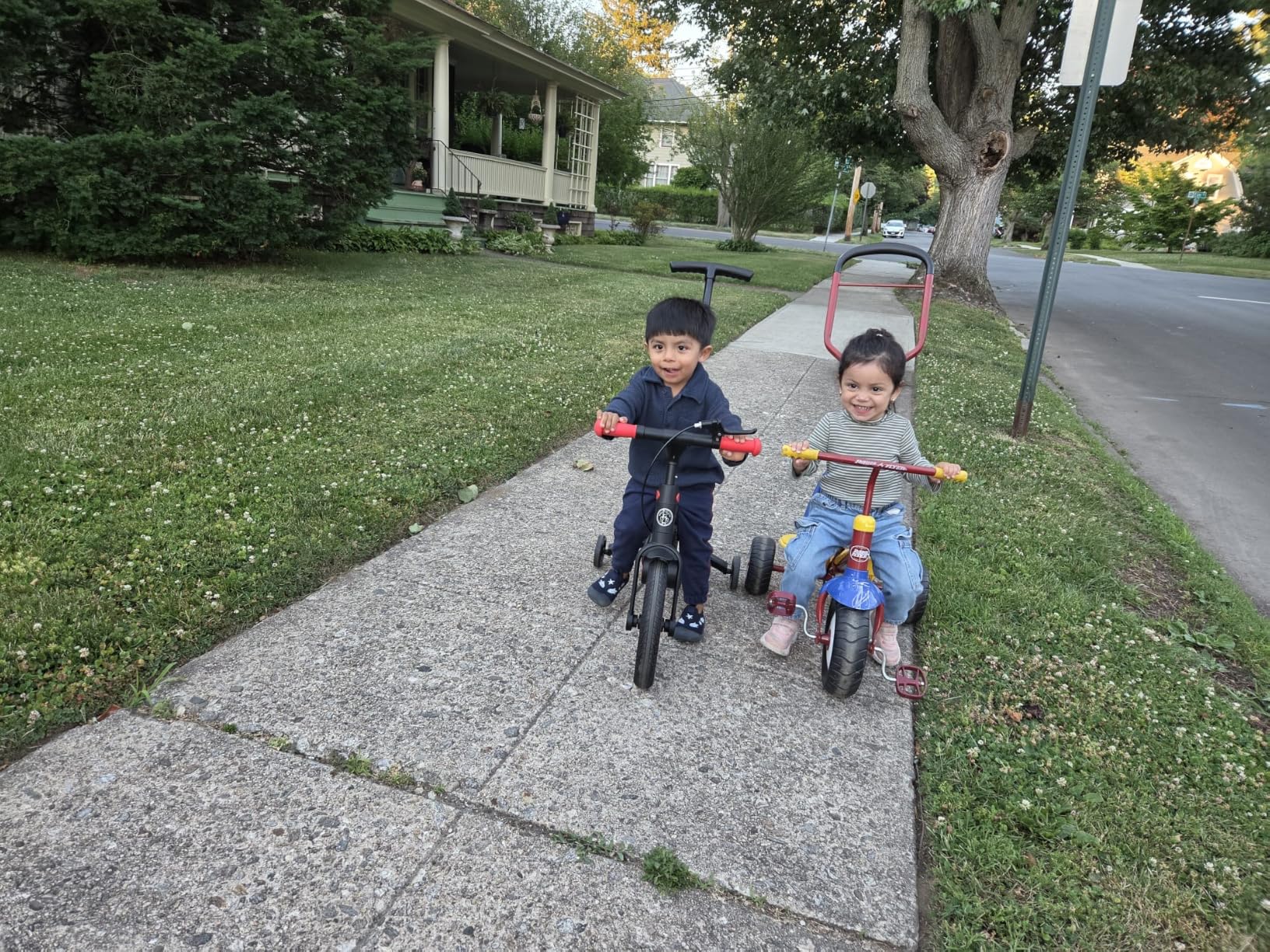
The aluminum frame keeps weight manageable, and the 12-inch puncture-proof rubber wheels handled pavement, grass, and gravel without complaint. A hand brake gives kids early practice with lever braking, which is rare on bikes in this category.
The 60-degree steering limiter prevents the front wheel from jackknifing, a smart safety touch that saved our tester from a few tumbles. Build quality feels solid for the price point, with clean welds and a finish that resisted scratches during testing.
Best for families who want one bike to last
If you have one child or want a hand-me-down candidate, the JMMD’s six modes stretch value across years. It covers the same ground as buying a separate tricycle, balance bike, and first pedal bike.
The included parent handle also means younger siblings can start using it as a push trike well before age three.
Watch the sizing at the top end
Some parents report the JMMD runs small at maximum height, so a taller three-year-old may outgrow the pedal mode quickly. Measure your child’s inseam against the listed seat range before committing.
The seat extension rod helps, but check the numbers carefully if your child is above average height for their age.
3. KRIDDO Toddler Balance Bike – Best Budget Balance Bike
KRIDDO Toddler Balance Bike 2 Year Old, Gift for 2-3 Boys Girls, Adjustable
Balance bike
Carbon steel frame
6.6 lbs
Ages 24mo-5yr
Never-flat tires
Custom name plate
Pros
- Lightweight at 6.6 lbs
- Customizable name plate with stickers
- Puncture-resistant tires
- Carbon steel frame holds 110 lbs
- Quick-release seat and handlebar
Cons
- Plastic rim can warp in extreme heat
- No pedal conversion option
- Learning curve for very young toddlers
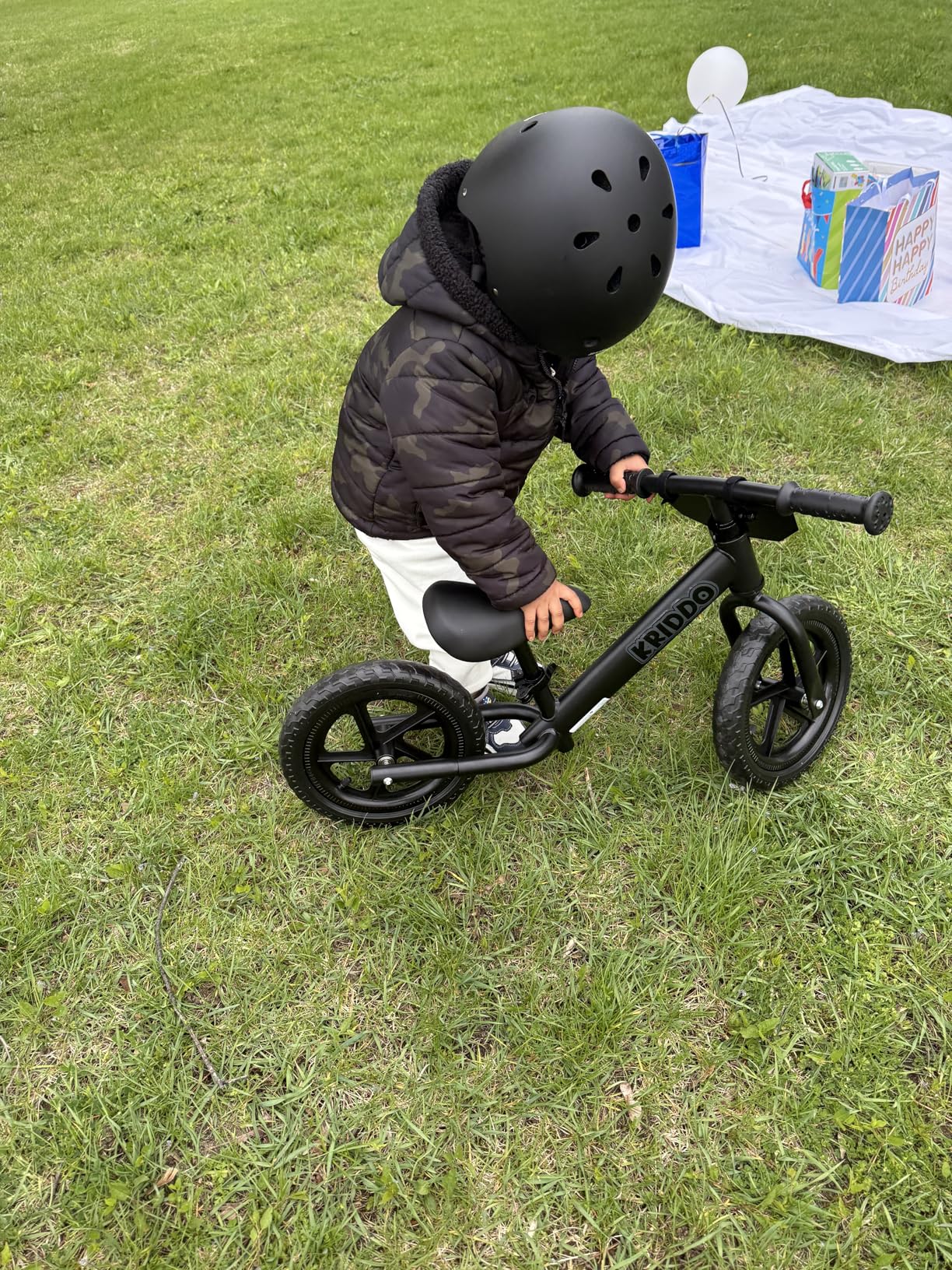
The KRIDDO balance bike proved that you do not need to spend big to get a quality first ride. At 6.6 pounds, it matches the Strider on weight and undercuts it on price. Our toddler tester loved customizing the name plate with the included sticker sets.
The carbon steel frame felt rigid and well-built during weeks of testing, and the 110-pound weight capacity means it will handle rougher play without complaint. Puncture-resistant tires eliminated maintenance entirely.
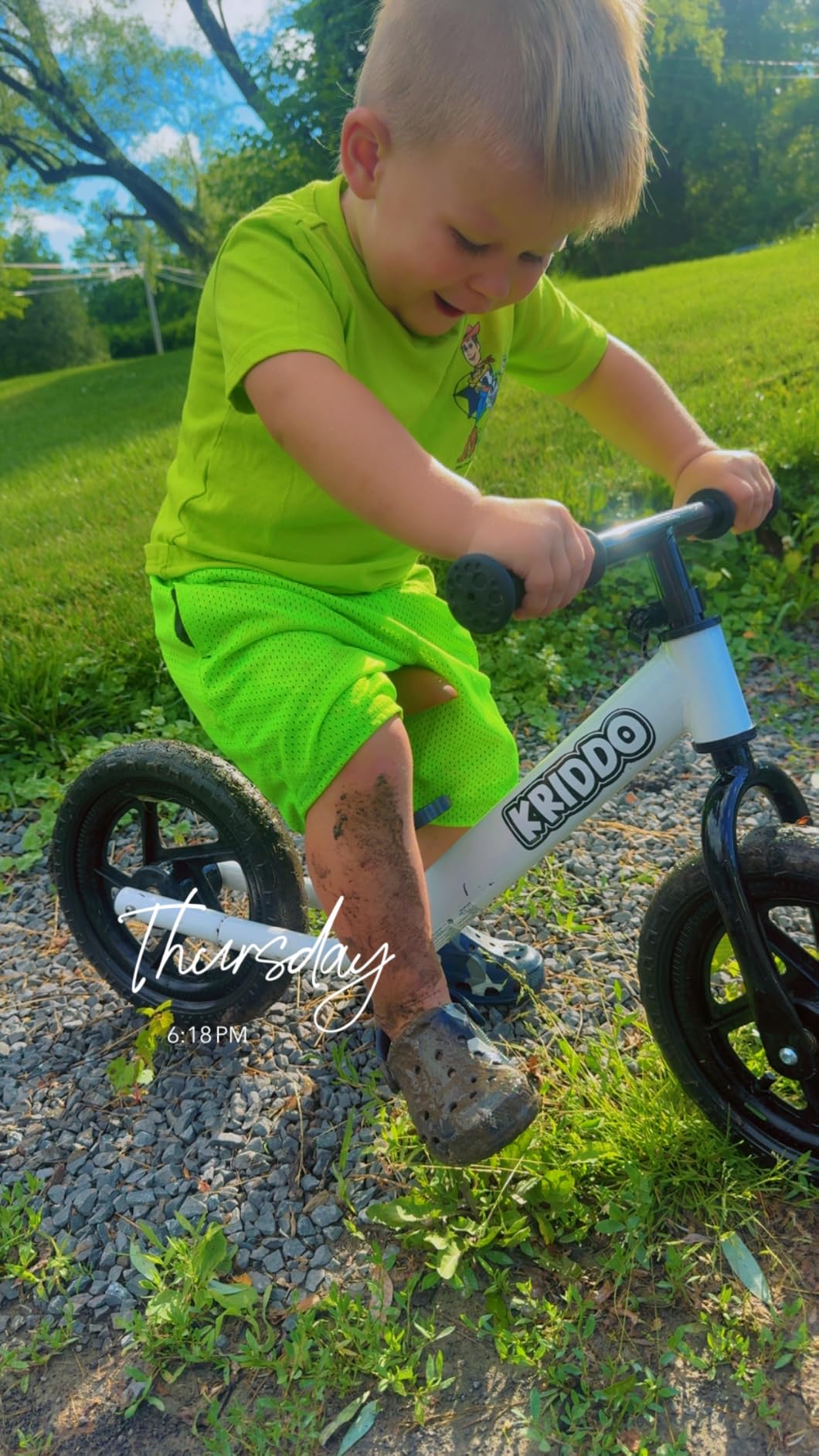
Quick-release levers on the seat and handlebar made height adjustments a tool-free job, which matters when you are dialing in fit for a fast-growing three-year-old. The soft PU saddle and rubber grips added comfort on longer rides.
One downside is the plastic rear rim, which can warp if left in direct sun or a hot car during summer. We stored ours in the garage and had no issues, but it is worth knowing if you live in a hot climate.
Best for parents watching their budget
The KRIDDO delivers the core balance-bike experience, lightweight frame, flat-free tires, and adjustable fit, without the premium price tag. It is the smart choice if you want to test whether your child even likes riding before investing more.
The customizable plate also makes it a strong gift option, since kids love seeing their name on their bike.
Not for families in extreme heat
If you live somewhere with intense summer heat, the plastic rim warping is a real concern. Store the bike indoors or in shade to avoid issues.
There is also no path to pedals later, so plan to buy a separate pedal bike when your child outgrows the balance stage.
4. RoyalBaby EZ Kids Bike – Best Balance-to-Pedal Transformer
RoyalBaby EZ Kids Bike 12 Inch Balance Pedal Convertable Bicycle, Blue
2-in-1 balance and pedal bike
Carbon steel frame
20 percent lighter than average
12 in wheels
EZ learning geometry
98 percent pre-assembled
Pros
- Converts from balance to pedal bike
- EZ patent geometry speeds learning
- 20 percent lighter than average
- 98 percent pre-assembled
- Lifetime frame warranty
- Integrated water bottle
Cons
- Footrest can get in the way in balance mode
- Front brake may need adjustment
- Seat lowest setting may be too high for some toddlers
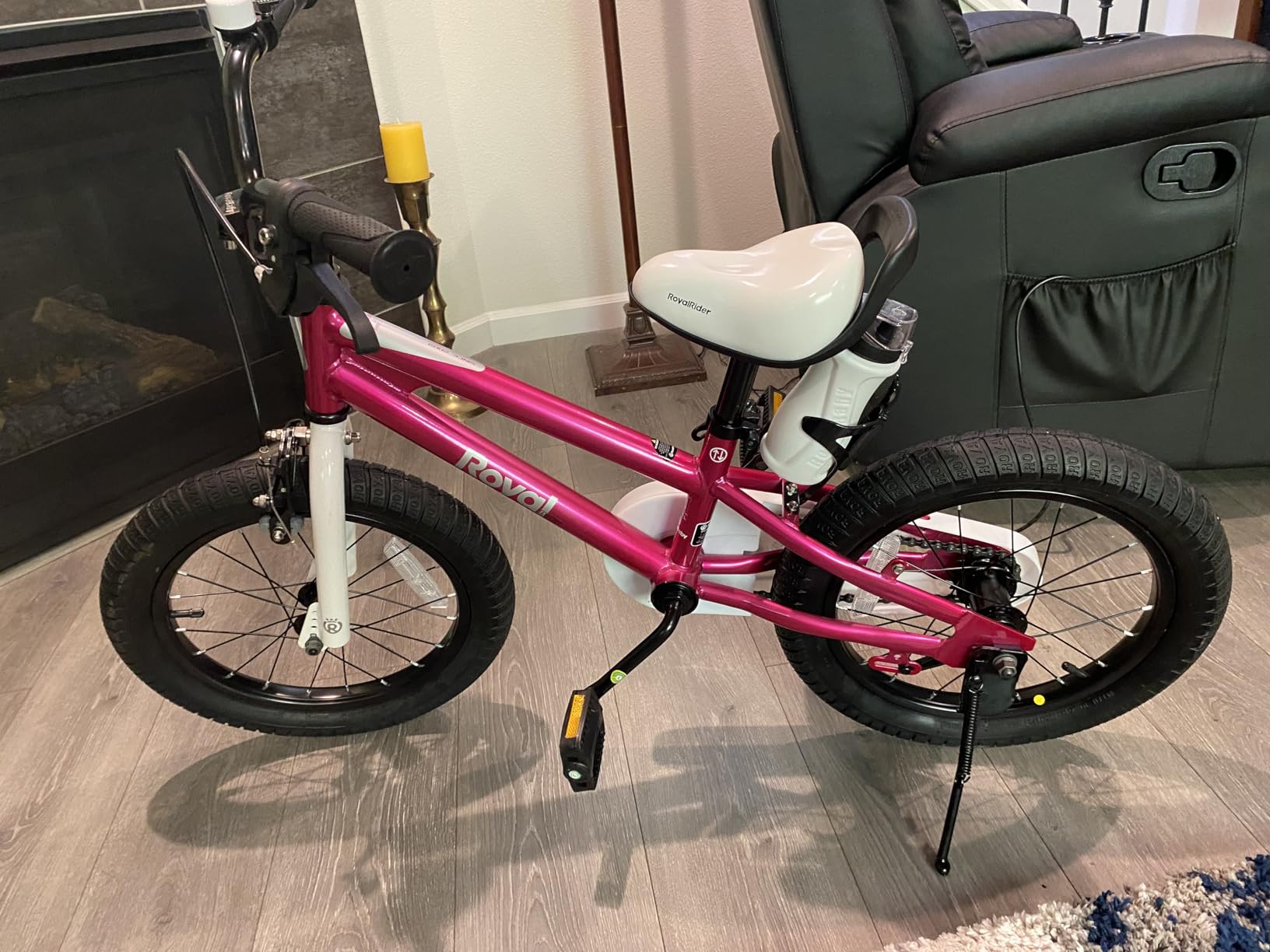
The RoyalBaby EZ solves a problem every parent faces: do you buy a balance bike or a pedal bike first? This model does both. Start with the cranks off as a balance bike, then bolt on the pedals when your child is ready.
RoyalBaby calls it EZ learning geometry, and we noticed the difference. Our tester balanced sooner on this frame than on heavier competitors. The bike arrives 98 percent assembled, so we were riding within 15 minutes of unboxing.
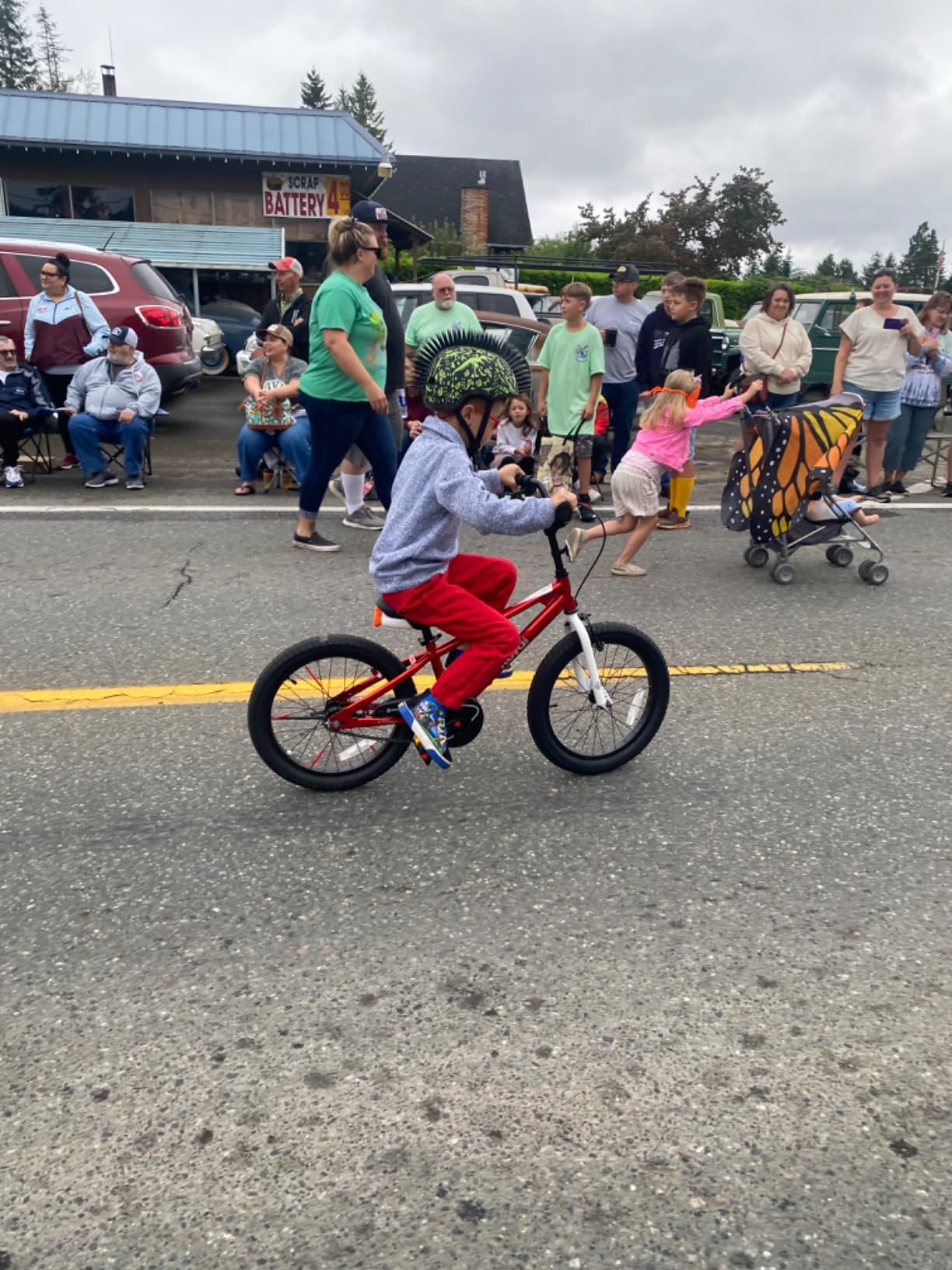
The carbon steel frame is advertised as 20 percent lighter than the category average, and it felt noticeably easier for our three-year-old to maneuver. The tool-less quick release for cranks and footrest means switching modes takes minutes, not an hour.
The integrated water bottle in a jet-engine style mount was a surprise hit. It is a small touch, but our tester felt like a real cyclist carrying it. The full chainguard keeps little fingers and shoelaces safe.
Best for the balance-first, pedal-second approach
If you believe in teaching balance before pedaling, the RoyalBaby EZ lets you do it without buying two bikes. The transition is clean and well-engineered, not an afterthought.
Many parents on forums report their kids riding without training wheels within days of switching to pedal mode, which matches what we saw.
Check the minimum seat height
The lowest seat setting sits higher than some dedicated balance bikes, so shorter three-year-olds may struggle to flat-foot at first. Measure your child’s inseam before buying.
The footrest in balance mode also annoyed some testers, who kicked it while striding. It removes easily, so plan to take it off early.
5. Radio Flyer Air Ride Balance Bike – Smoothest Ride on Air Tires
Radio Flyer Air Ride Balance Bike, for Kids Ages 1.5-5, Red, Foot Rest
Balance bike
Steel frame
7.9 lbs
12 in rubber air tires
Grip tape frame
Ringing bell
Ages 1.5-5
Pros
- Rubber air tires for smooth ride
- Tool-free adjustable seat
- Grip tape for no-slip footing
- Classic white-wall design
- Ringing bell included
- Durable steel frame
Cons
- Handlebars can loosen with use
- Tire tube defects reported out of box
- Heavier than foam-tire balance bikes
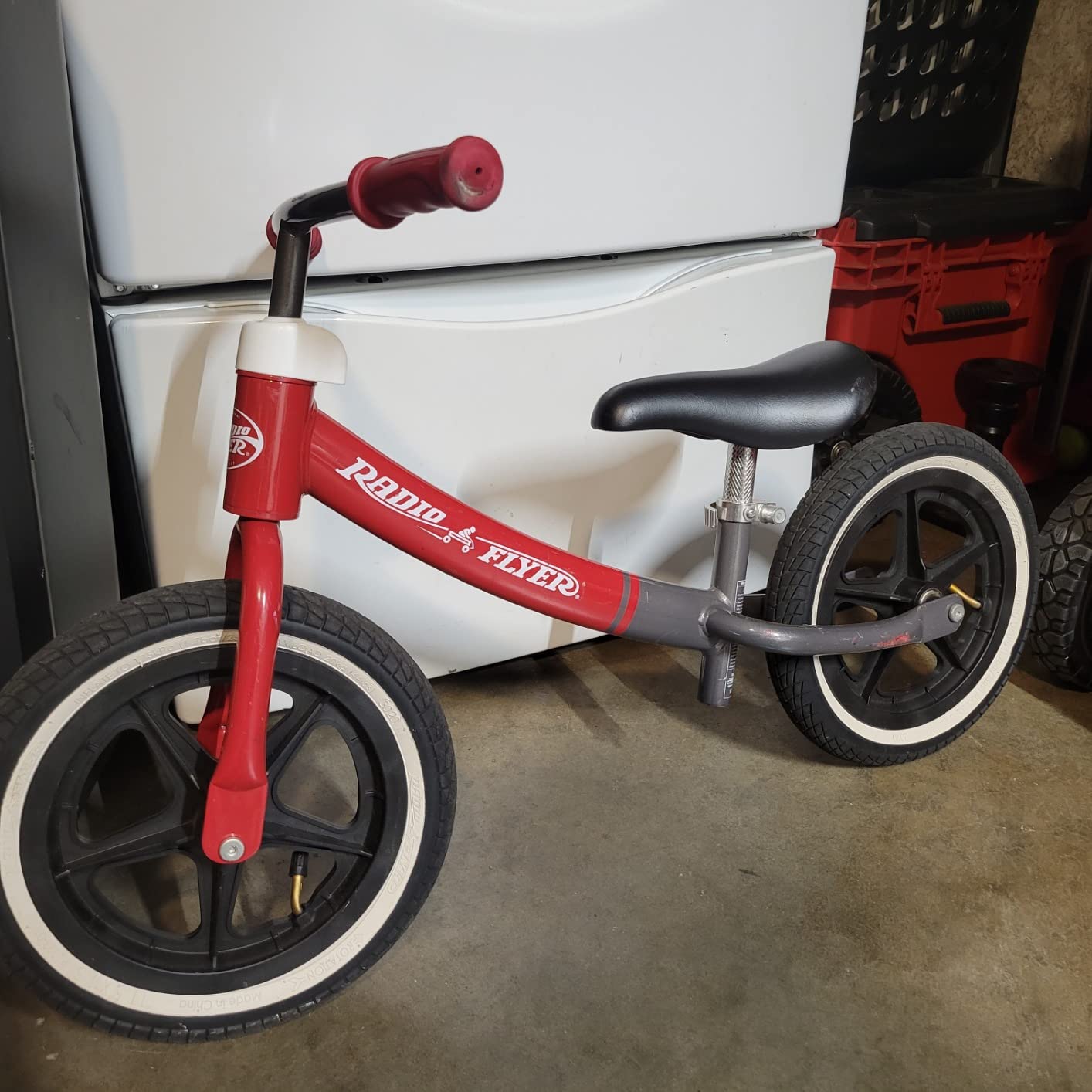
The Radio Flyer Air Ride brings something most balance bikes skip: real rubber air tires. The difference in ride quality was immediately noticeable on bumpy sidewalks and grass. Our tester glided smoother and faster than on foam-tire models.
The steel frame weighs 7.9 pounds, slightly heavier than the Strider, but the trade-off is durability and that cushioned ride. The tool-free seat adjustment lets you raise the saddle in seconds as your child grows.
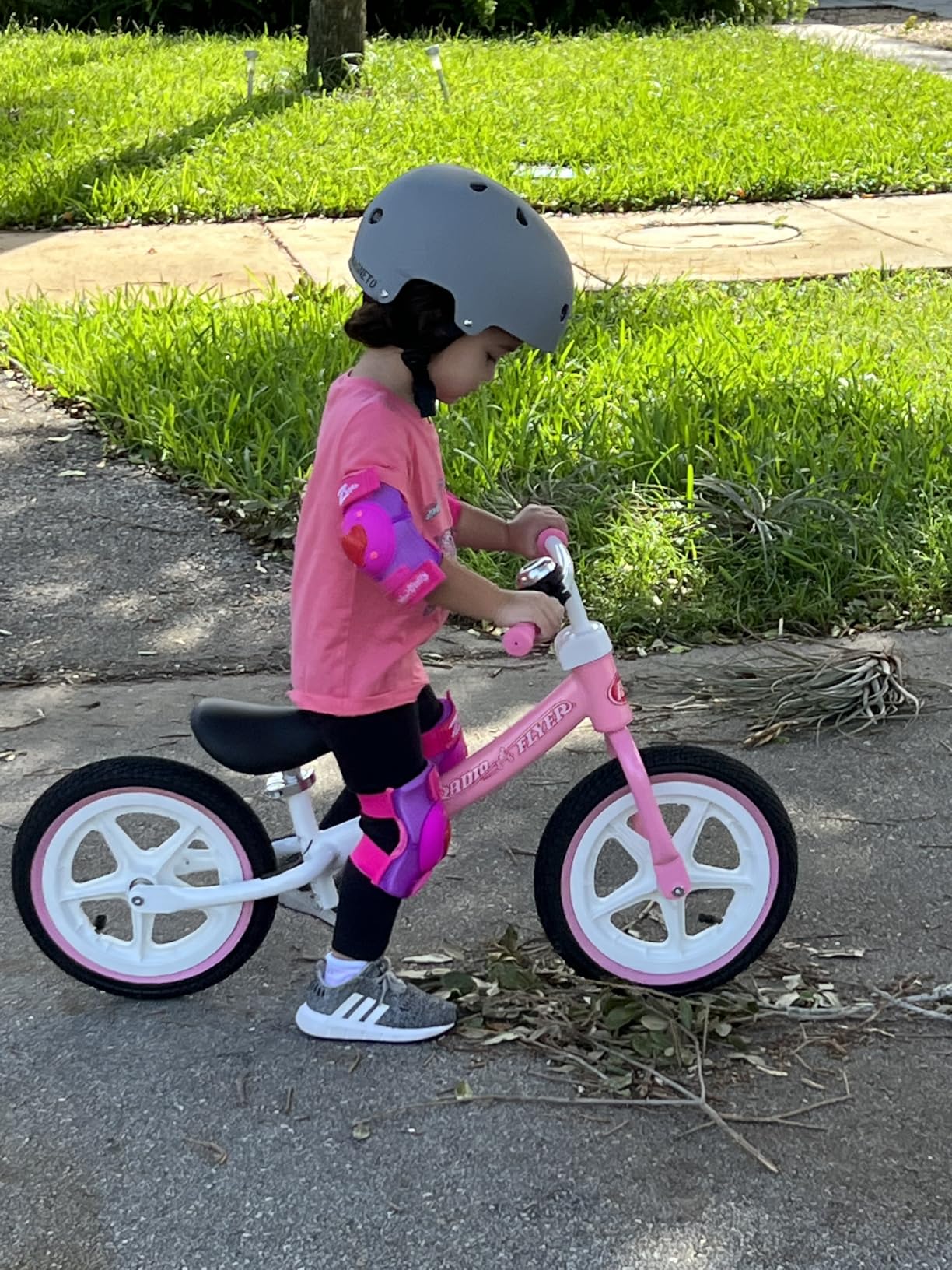
Grip tape on the frame gives kids a textured spot to rest their feet while gliding, which our tester used constantly. The included ringing bell was a daily favorite and added to the classic Radio Flyer charm.
One thing to watch: the handlebars can work loose over time even when properly tightened. We recommend checking the clamp before each ride during the first few weeks. A few parents also reported tire tube defects out of the box, so inspect on arrival.
Best for kids who ride on mixed surfaces
If your three-year-old will ride on pavement, grass, gravel, and park paths, the air tires absorb bumps that foam tires transmit straight to little arms. The ride quality is genuinely better.
The white-wall classic styling also makes this bike a head-turner at the playground.
Be prepared for tire maintenance
Air tires mean occasional pumping and the rare flat tube. If you want zero maintenance, stick with foam tires like the Strider or KRIDDO.
Check the tire pressure on arrival since some units ship under-inflated.
6. Huffy Disney and Marvel 12 Inch Bike – Best Character-Themed Pedal Bike
Huffy Marvel Spidey and His Amazing Friends 12 Inch Kid’s Bike, Ideal for Ages 3-5 Years Old, Training Wheels Included, EZ Build Assembly, Fun and Playful Graphics, Simple Coaster Brake, Spider-Man
Pedal bike
Steel frame
17 lbs
12 in wheels
Removable training wheels
Coaster brake
Ages 3+
Pros
- Spider-Man theme kids love
- Huffy EZ Build for fast assembly
- Removable training wheels
- Simple coaster brake
- Durable steel frame
- Full chainguard for safety
Cons
- Seat may not lock firmly
- Some assembly challenges reported
- Product info can be contradictory on size
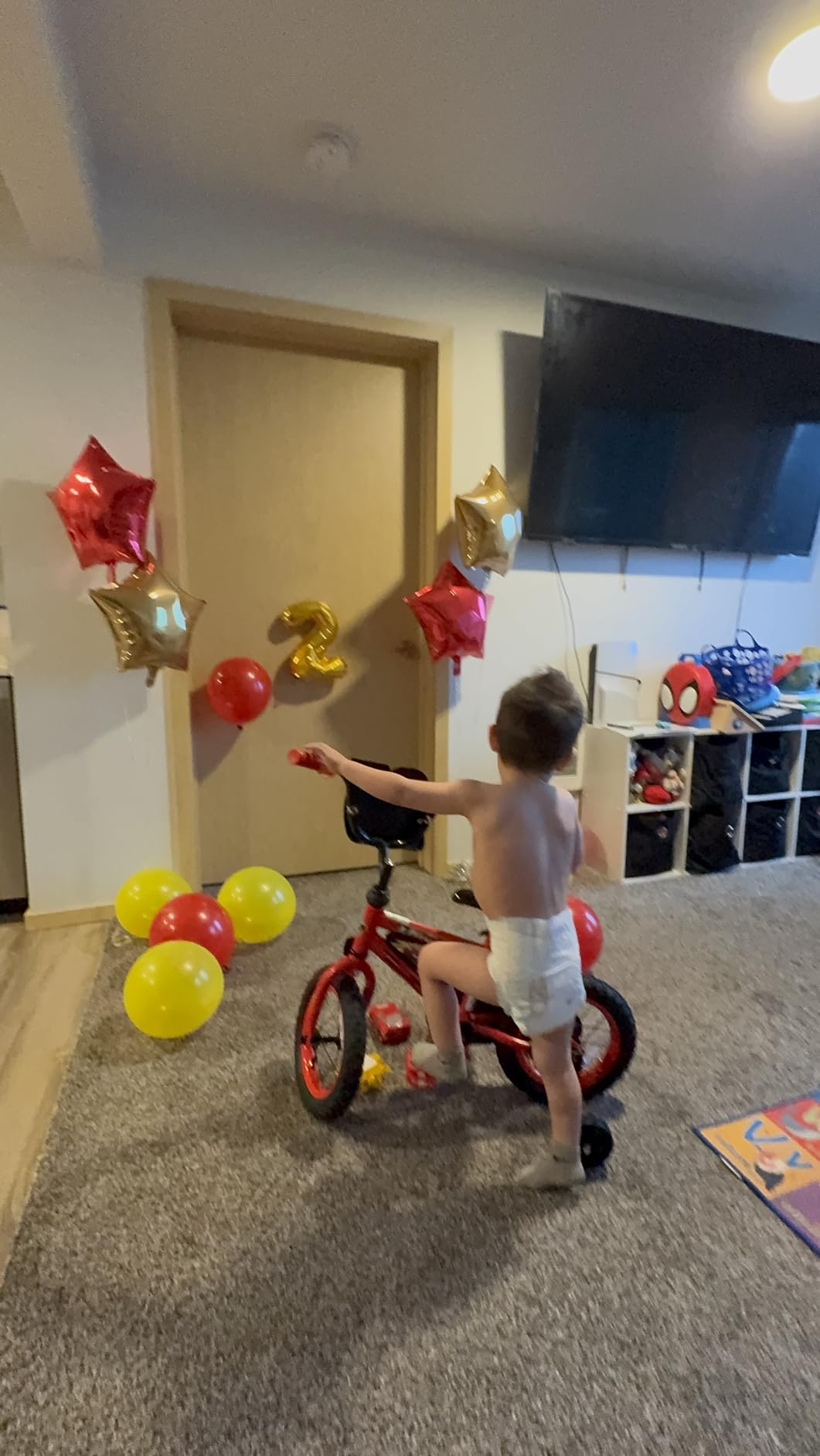
The Huffy Disney and Marvel bike is the pick for kids who are pedal-curious and character-obsessed. Our Spider-Man fan tester lit up the moment the box opened. The themed graphics, web-wing handlebar shield, and red rims make this bike look like it rolled out of a comic.
Under the theme, it is a solid first pedal bike. The coaster brake is simple for beginners to operate by pedaling backward, and the removable training wheels let you dial back support as confidence grows. The steel frame feels sturdy enough to hand down.
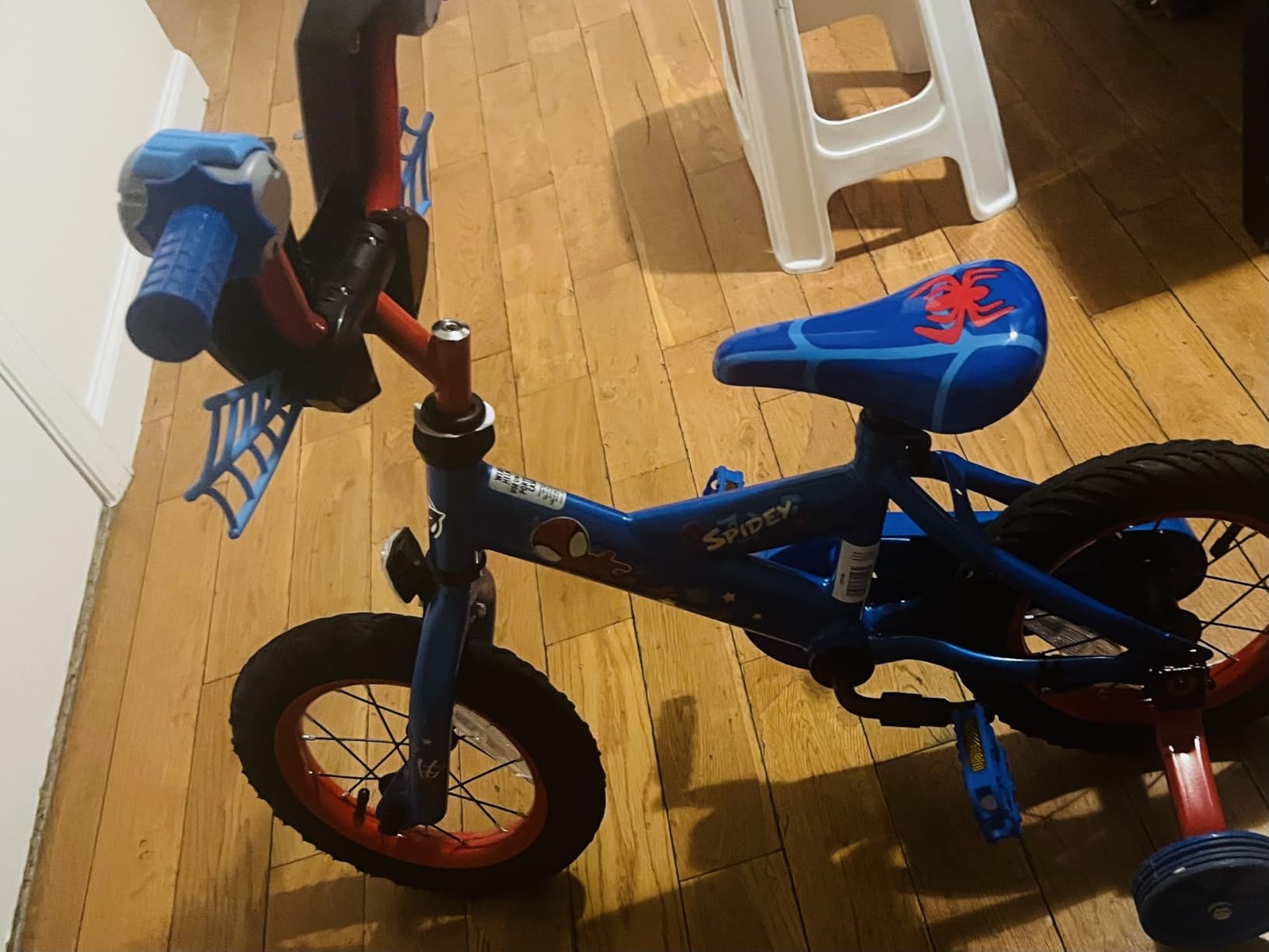
Huffy’s EZ Build system meant we had this bike rideable in under 20 minutes. The padded saddle and full chainguard add comfort and safety. At 17 pounds, it is heavier than balance bikes, but that is expected for a steel pedal bike with training wheels.
The standout feature is motivation. If your three-year-old needs a push to get excited about riding, a bike themed with their favorite character can be the difference between daily rides and a dusty garage ornament.
Best for kids who need a motivation boost
Not every child takes to riding immediately. The Huffy’s character themes turn the bike into a toy they want to use, which is half the battle with three-year-olds.
Multiple design options mean you can match the bike to whatever character your child currently loves.
Watch the seat clamp and sizing
Some parents report the seat does not lock firmly in place, so check the clamp after the first few rides. There have also been reports of contradictory product information on wheel size, so verify the listing carefully.
At 17 pounds, this is one of the heavier options, so it is best for kids who already have some balance confidence.
7. JOYSTAR Kids Bike – Best BMX-Style Starter with Training Wheels
JOYSTAR 12 Inch Kids Bike for 2-4 Years Boys Girls Gifts Bikes Blue
Pedal bike
Carbon steel frame
18.5 lbs
12 in wheels
Training wheels included
Coaster brake
BMX style
DIY decals
Pros
- BMX style kids love
- Training wheels included
- DIY decals for personalization
- Quick-release seat
- Chain guard for safety
- Available in multiple sizes and colors
- 2 year warranty
Cons
- Bolts may loosen over time
- Some quality control issues
- Tires and tubes may have defects
- Bell sometimes missing from package
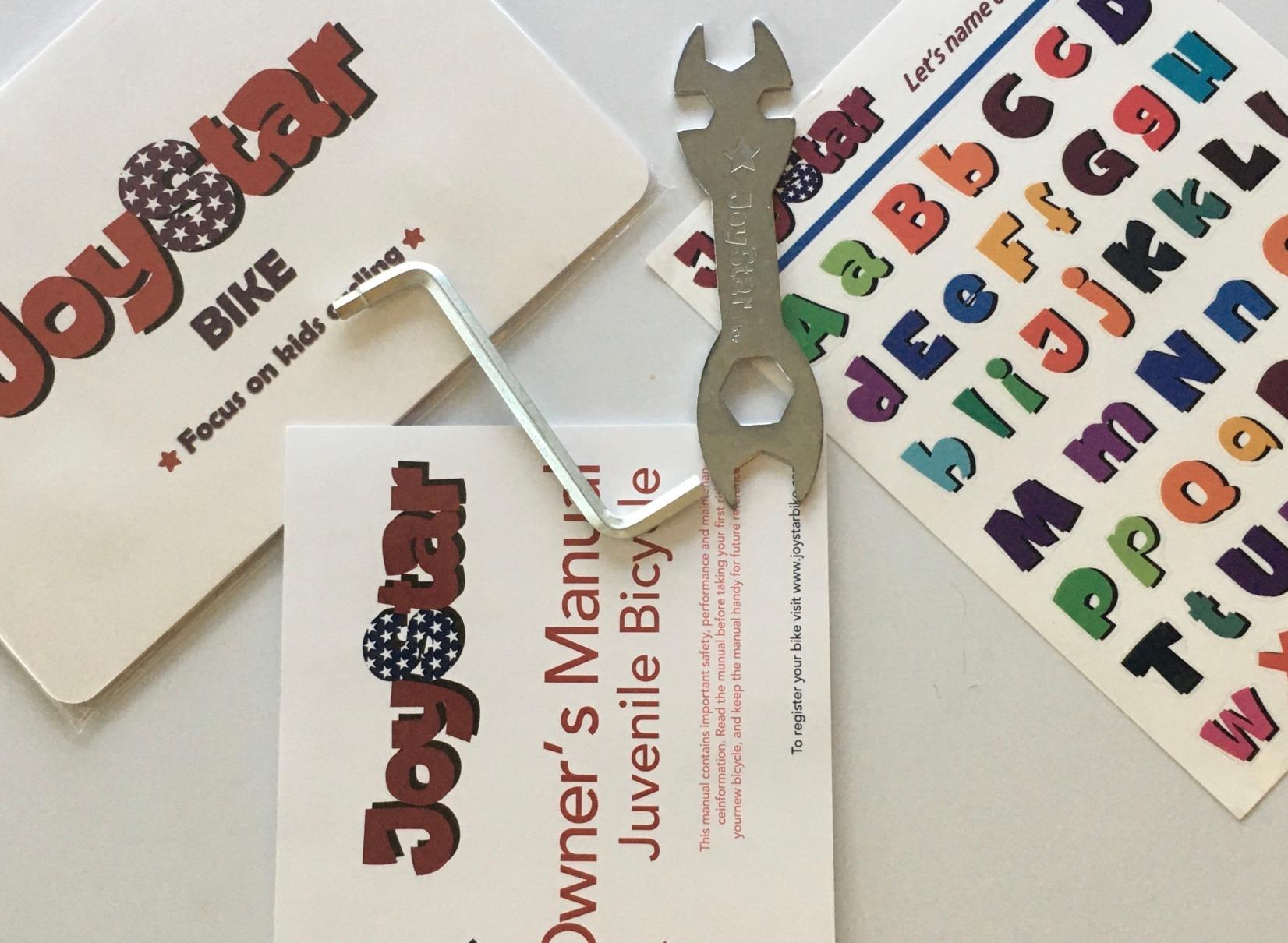
The JOYSTAR Kids Bike brings BMX attitude to the three-year-old set. Our tester loved the chunky frame look and the included DIY decals, which let him decorate his bike with his name and favorite shapes. The training wheels give immediate stability for true beginners.
The carbon steel frame is sturdy, and the coaster brake is simple enough for small legs to operate. A quick-release seat lets you adjust height without tools, and the chain guard keeps fingers and laces safe.
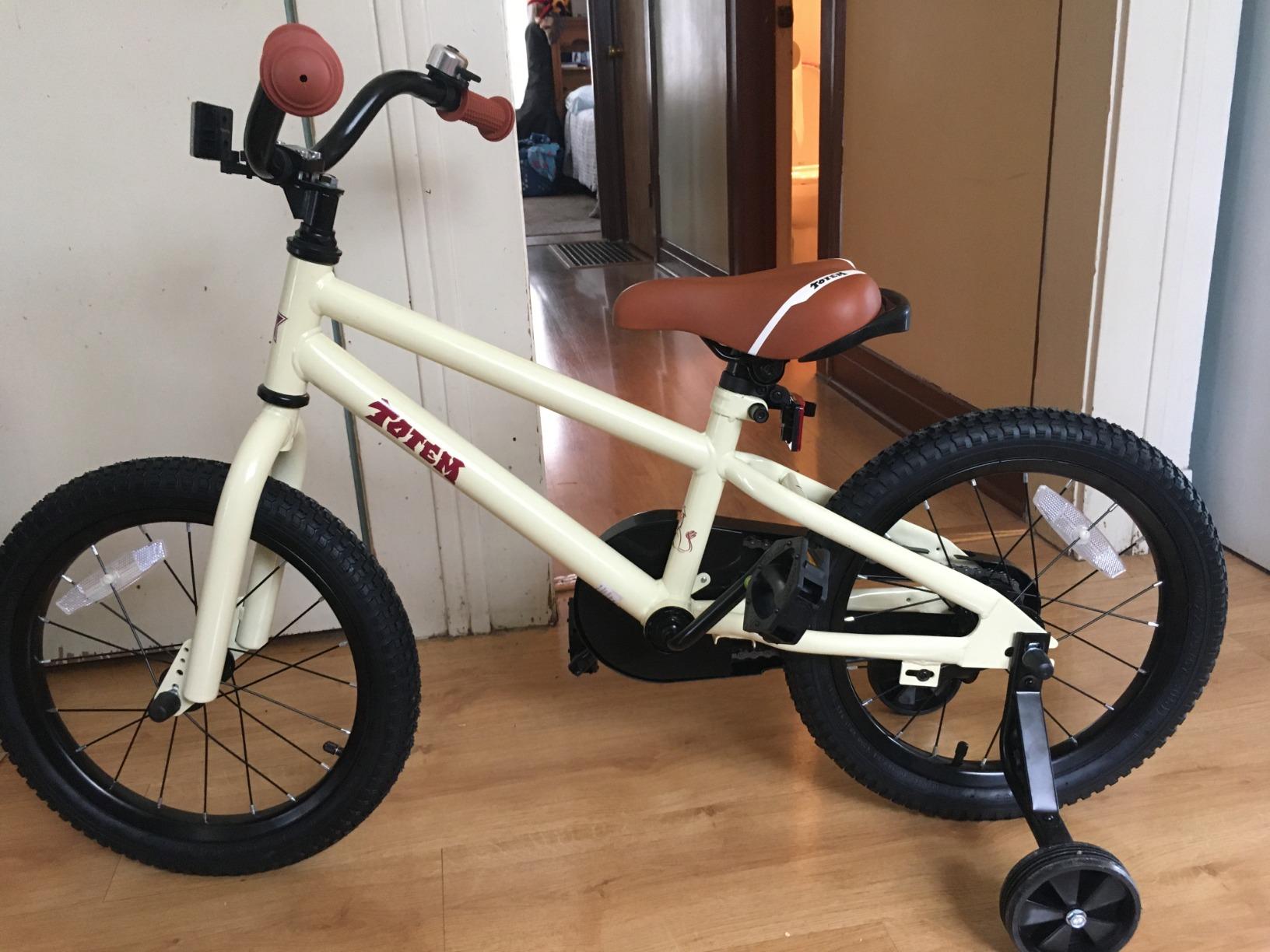
At 18.5 pounds, this is one of the heaviest bikes in the roundup, which is the trade-off for the steel frame and training wheels. Our tester managed it fine, but smaller three-year-olds may struggle initially.
The bike ships 85 percent assembled, and most parents report assembly taking under an hour. The multiple size and color options mean you can pick a 12-inch for a three-year-old and move up later.
Best for the true first-time pedal rider
If your three-year-old has never pedaled and wants to skip the balance bike route, the JOYSTAR’s training wheels provide a stable platform to learn the motion. The BMX styling also makes it feel like a real big-kid bike.
The DIY decals are a genuine highlight, giving kids ownership over their ride from day one.
Be ready for some quality control variances
Some parents report loose bolts over time, so plan to check hardware regularly. A few units had tire or tube defects, and the bell is occasionally missing from the package.
None of these were dealbreakers in testing, but set expectations accordingly and inspect on arrival.
8. newyoo 5-in-1 Toddler Tricycle – Best Push Trike with Parent Steering
newyoo TR007 5-in-1 Tricycle for Toddlers 1-3, Toddler Bike, Birthday Gift
5-in-1 tricycle
Carbon steel frame
EVA wheels
Parent push handle
Backrest and safety belt
Ages 1-3
Adjustable seat
Pros
- Five riding modes grow with child
- Parent push handle with 135-degree steering
- Backrest and safety belt for young toddlers
- EVA shock-absorbing wheels
- Easy button conversion between modes
Cons
- Max weight only 35 lbs
- Can tip if child steers hard
- Assembly required
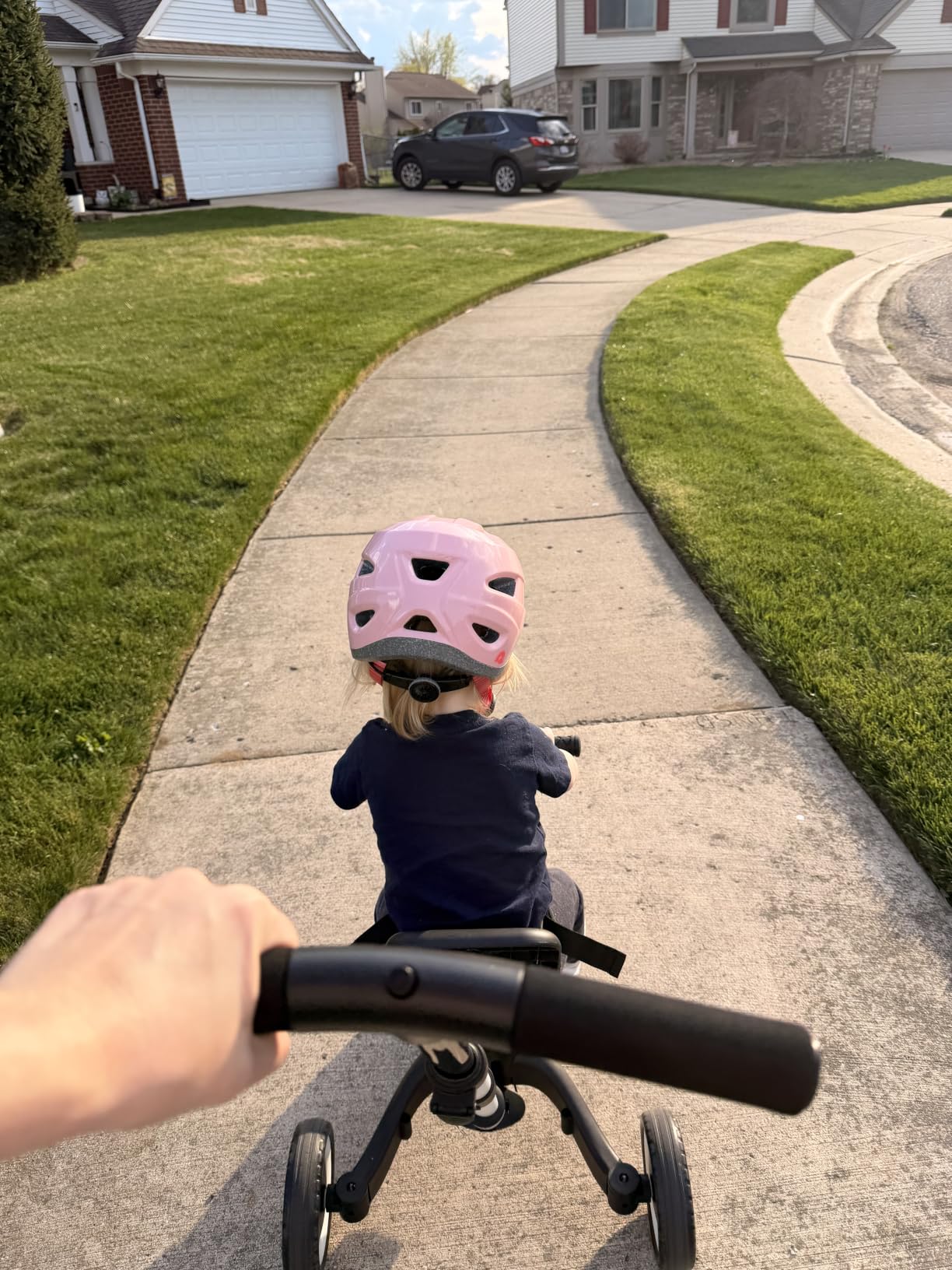
The newyoo 5-in-1 is a parent’s best friend for the in-between stage when a child is too young to pedal solo but too old for a stroller. It starts as a parent-steered push tricycle with a backrest and safety belt, then converts through five modes as your child gains independence.
The push handle rotates 135 degrees, letting you steer from behind while your little one works the pedals or just enjoys the ride. Our younger tester loved being pushed, and our older tester loved the freedom of pedaling solo.
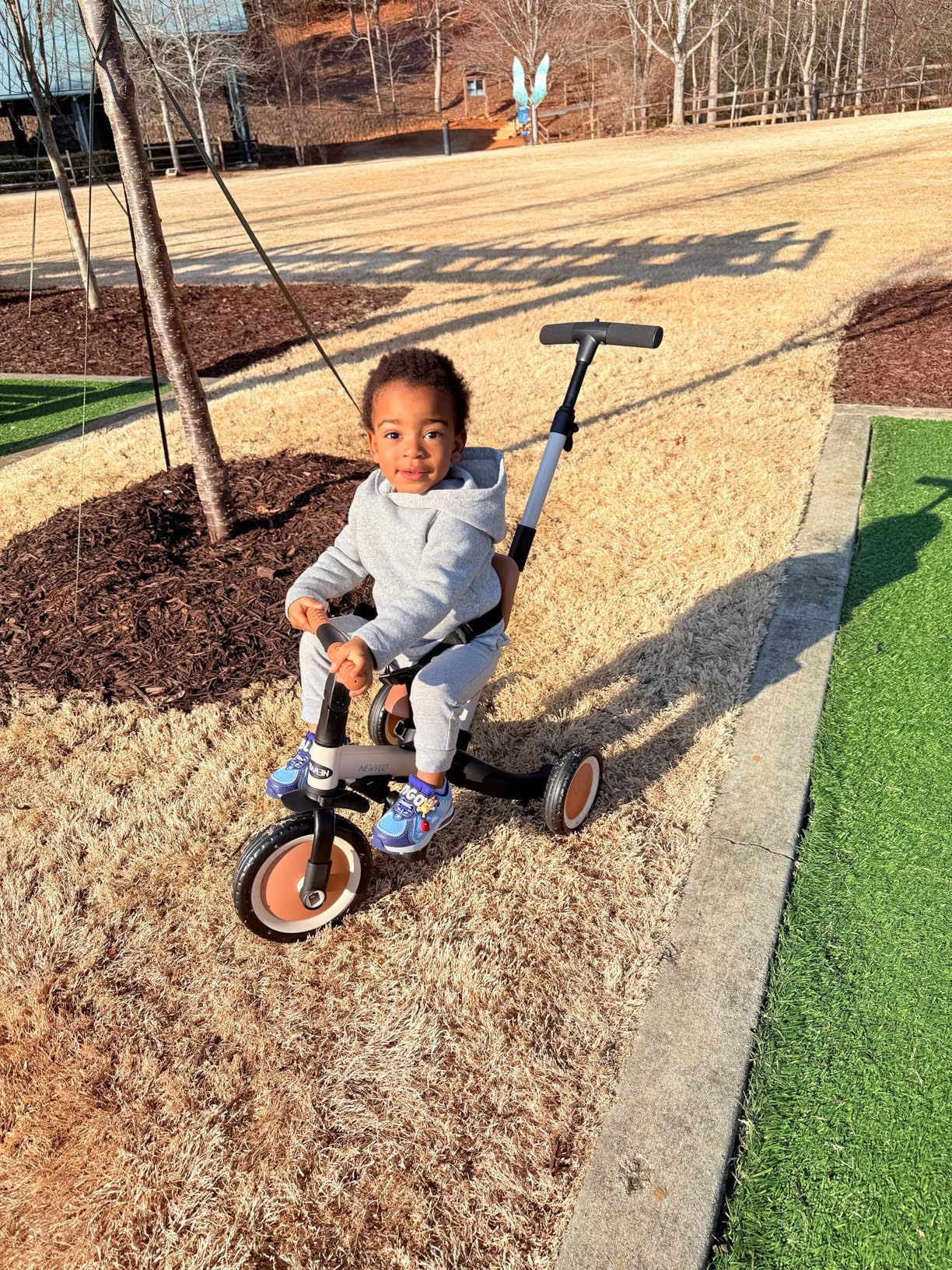
The EVA shock-absorbing wheels handled sidewalk cracks and grass easily. The carbon steel frame meets both EN188 and ASTM safety standards, which gave us confidence in the build. Red buttons on the frame make mode switching straightforward.
The trade-off is a 35-pound weight capacity, lower than most competitors. That limits longevity for bigger kids. We also found the trike can tip if a child jerks the handlebars hard while being pushed.
Best for the parent who wants to stay in control
If your three-year-old is cautious or you want to guide them on busy sidewalks, the parent push handle is genuinely useful. You can steer and brake while they practice pedaling at their own pace.
The safety belt and backrest also make this a great option for younger siblings who are not yet ready for a balance bike.
Not for larger or aggressive riders
The 35-pound weight limit means bigger three-year-olds will outgrow this quickly. The tipping risk is real if your child is a spirited steerer, so stick to flat, open areas.
Plan to graduate to a balance bike or pedal bike once your child outgrows the trike modes.
9. Schwinn Roadster Toddler Tricycle – Best Vintage-Style Trike
Schwinn Roadster Bike for Toddler, Kids Classic Tricycle, Low Positioned Steel Trike Frame with Bell and Handlebar Tassels, Rear Deck Made of Genuine Wood, for Boys and Girls Ages 2-4 Year Old, Teal
Tricycle
Steel frame
20 lbs
Low center of gravity
Wood rear deck
Pneumatic rubber tires
Chrome fenders
Ages 2-4
Pros
- Vintage-inspired retro design
- Low center of gravity for stability
- Pneumatic rubber tires
- Genuine wood rear deck
- Adjustable sculpted seat
- Classic bell and tassels
- Limited lifetime warranty
Cons
- Fork uses plastic bushing not bearings
- Seat to pedal distance far for small toddlers
- Chrome can rust in moisture
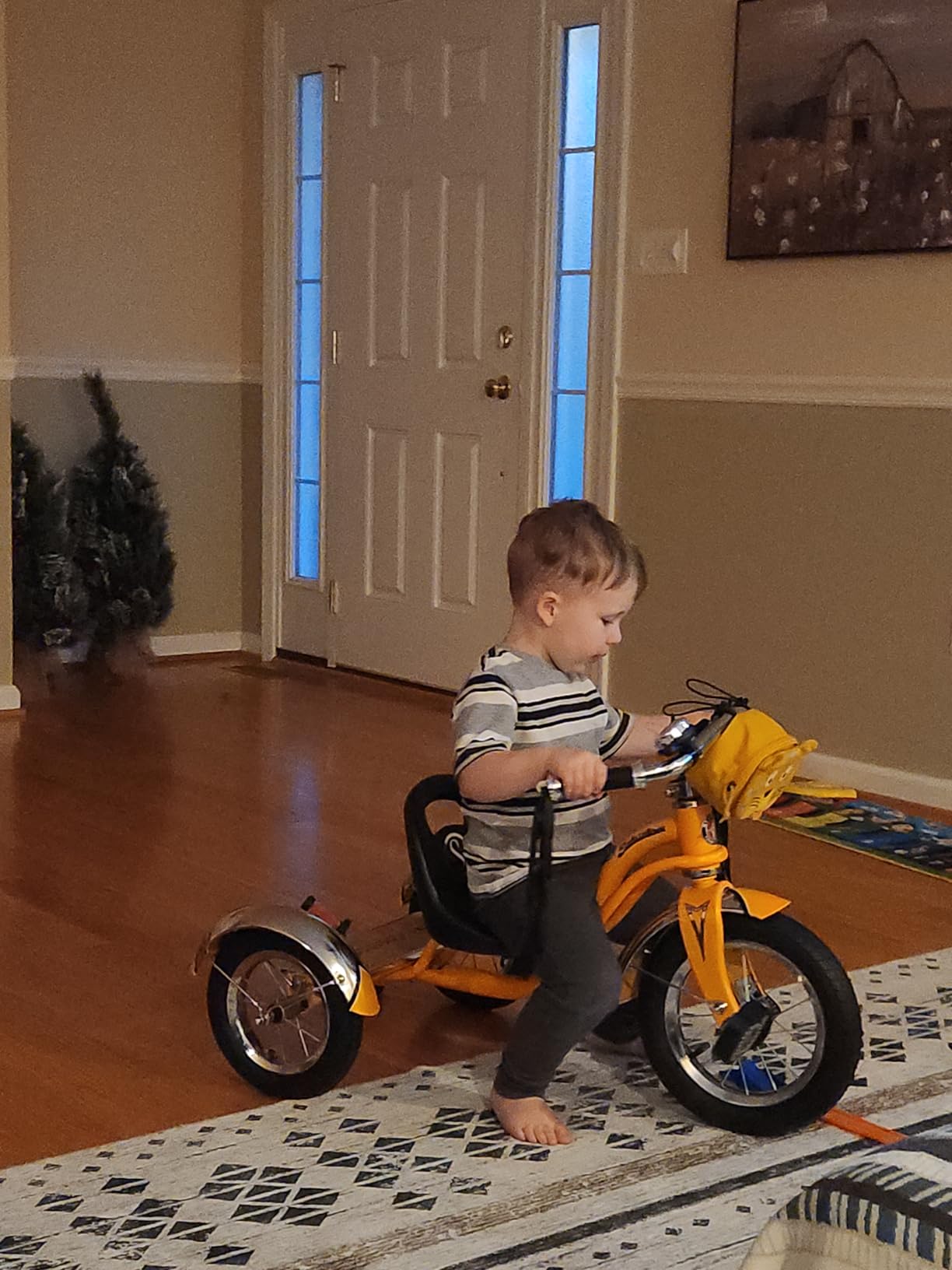
The Schwinn Roadster is the tricycle that turns heads. The vintage design with scalloped chrome fenders, mustache cruiser bars, and a genuine wood rear deck with a burnt-in Schwinn logo looks like something out of a 1950s catalog. Our tester felt like the coolest kid on the block.
Under the style, the low center of gravity makes this trike remarkably stable. Our cautious tester felt secure immediately, and the wide stance resisted tipping on corners. The pneumatic rubber tires roll smoothly and can be inflated with a standard bike pump.
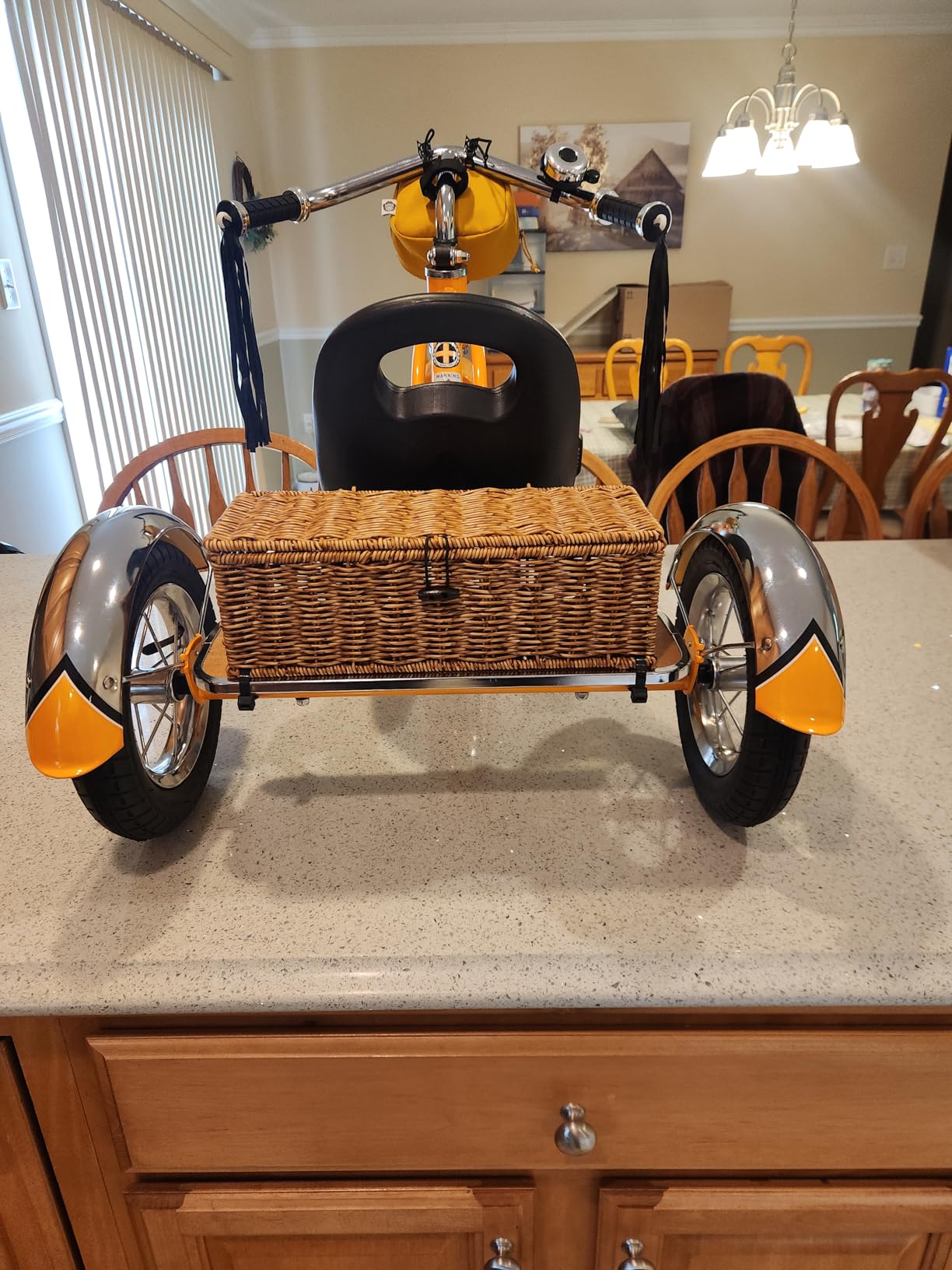
The sculpted seat adjusts through five lock-in positions, so the trike grows with your child. The classic bell and flowing fabric tassels were daily hits. Build quality on the frame and paint is excellent for the category.
The main trade-off is weight. At 20 pounds, this is the heaviest option in our roundup, and the seat-to-pedal distance runs long for smaller toddlers. Some parents also noted the fork uses a plastic bushing instead of bearings, which can develop play over time.
Best for style-conscious families
If you want a tricycle that looks as good as it rides, the Schwinn Roadster is unmatched. The chrome, wood, and retro lines make it a keepsake-quality piece.
The low center of gravity also makes it one of the most stable trikes we tested, ideal for cautious riders.
Check the fit for smaller toddlers
The seat-to-pedal distance is long, so shorter three-year-olds may struggle to reach the pedals comfortably. Have your child sit on it before committing if possible.
Store the trike in a dry spot, as the chrome fenders can rust in humid or wet conditions.
10. Radio Flyer Red Rider Trike – Best Classic First Trike
Radio Flyer Red Rider Trike, for Ages 2.5-5, Toddler Tricycle
Tricycle
Steel frame
9.9 lbs
Quiet ride wheels
Adjustable seat
Storage bin
Ages 2.5-5
Pros
- Classic sturdy steel construction
- Smooth and comfortable ride
- Adjustable seat grows with child
- Covered rear storage bin
- Parent hand grip for carrying
- Quiet ride wheels
- Comfort grip handlebars
Cons
- Plastic fittings could be metal
- Storage bin is cheap plastic
- Tires are dense plastic not rubber
- Only two seat height positions
- Assembly can be difficult
The Radio Flyer Red Rider Trike is the classic red tricycle you probably picture when you think of a toddler’s first ride. Over a century of play heritage shows in the design. Our tester loved the covered storage bin for stashing rocks, leaves, and snacks on every ride.
The steel frame is sturdy and the quiet ride wheels keep noise down on pavement. At 9.9 pounds, it is lighter than the Schwinn Roadster, making it easier for small riders to manage and for parents to carry using the built-in seat-back hand grip.
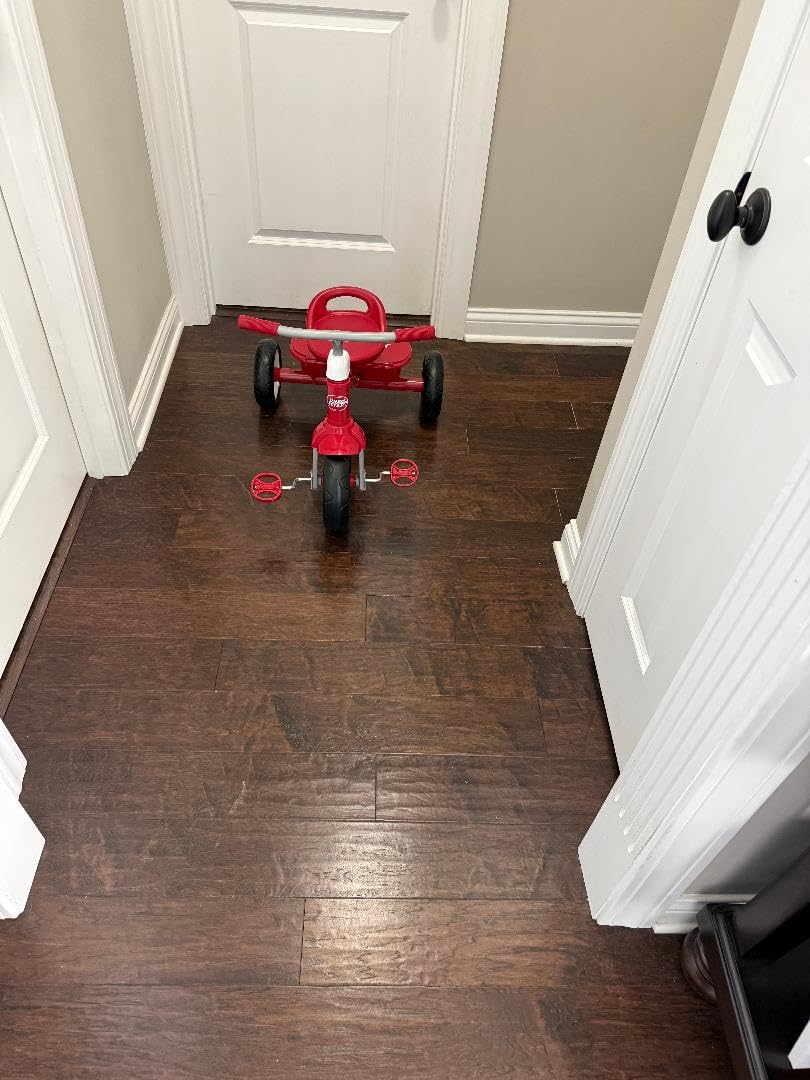
The adjustable seat grows with your child from ages 2.5 to 5, giving this trike real longevity. Comfort grip handlebars and a stable three-wheel design make it a confidence-builder for cautious riders.
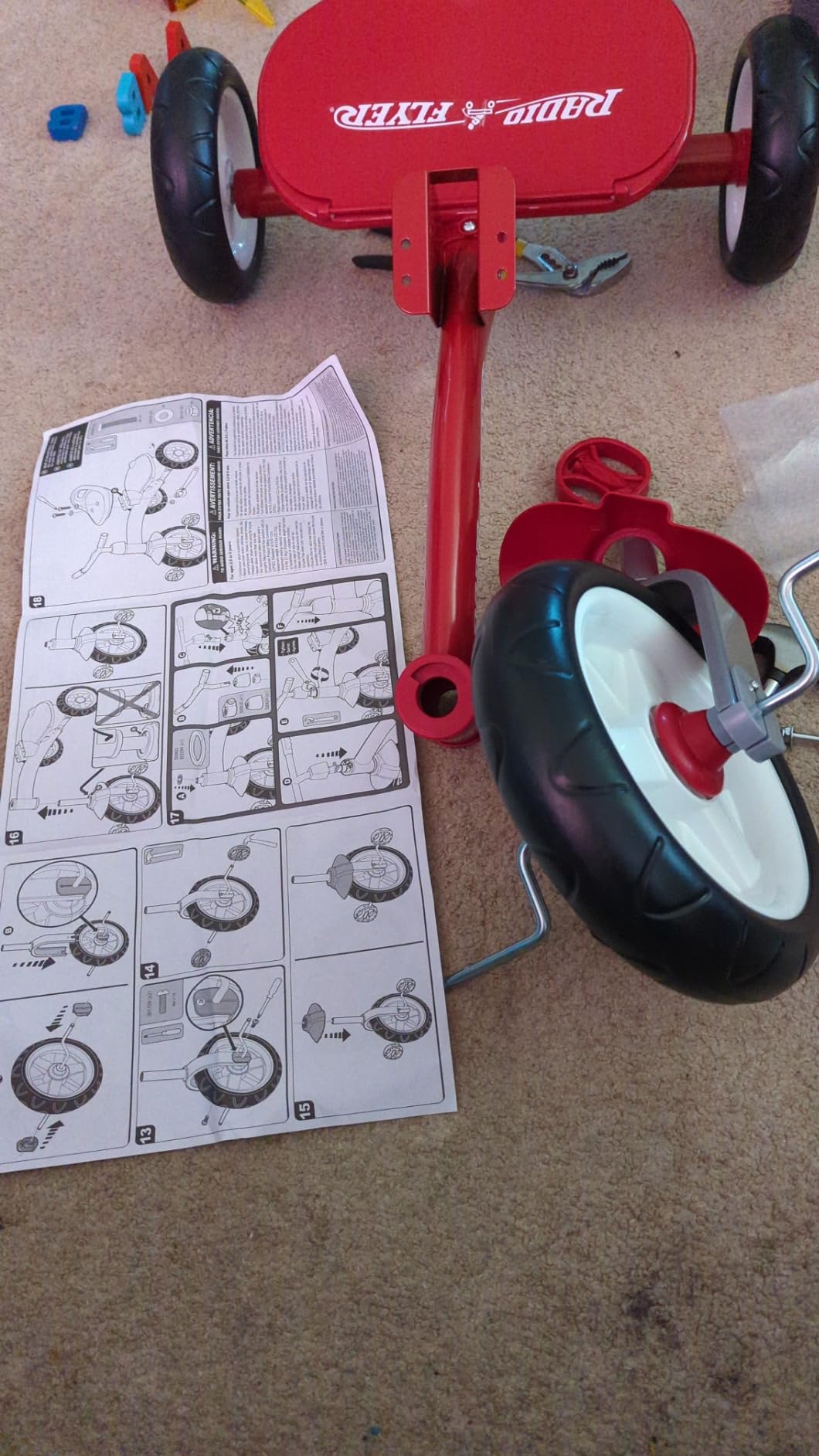
The trade-offs are familiar for the category. The storage bin is thin plastic, the tires are dense foam or plastic rather than rubber, and assembly instructions can be unclear. None of these were dealbreakers in testing, but set expectations accordingly.
Best for the traditional first-trike experience
If you want the iconic red tricycle experience at a reasonable price, the Red Rider delivers. It is the kind of bike that gets passed down through cousins and neighbors.
The storage bin is a genuine feature for three-year-olds, who love having a place to collect treasures on every walk.
Know the limitations before buying
The tires are not rubber, so grip and ride quality are inferior to pneumatic options like the Schwinn Roadster. The seat has only two height positions, so check the range against your child’s legs.
Assembly requires patience, so set aside an hour and have tools ready.
How to Choose the Best Kids Bikes for 3 Year Olds?
Picking the right bike for a three-year-old comes down to three questions: what stage is your child at, what will they ride on, and how much do you want to spend. The guide below walks through each decision point based on what we learned testing these bikes with real toddlers.
Balance Bike vs Pedal Bike vs Tricycle
The single biggest choice is bike type. Balance bikes teach balancing first by letting kids push with their feet and glide. They are the fastest route to confident riding, and most kids who start on a balance bike skip training wheels entirely when they move to pedals.
Pedal bikes with training wheels teach the pedaling motion first but delay balance learning. Some kids do fine with this route, but forums are full of parents reporting that training-wheel graduates struggle to balance when the wheels come off.
Tricycles are stable and fun but do not teach balancing at all. They are best for younger toddlers or as a complement to a balance bike, not a replacement.
What Size Bike for a 3 Year Old
Most three-year-olds fit a 12-inch wheel bike, which is the standard size for this age. Some taller or more confident three-year-olds can move up to a 14-inch wheel. The key measurement is not wheel size but seat height relative to your child’s inseam.
For balance bikes, the seat should sit about an inch below the child’s inseam so they can flat-foot comfortably. For pedal bikes, the seat should allow a slight bend in the knee at the bottom of the pedal stroke.
Measure your child’s inseam by having them stand against a wall in shoes and measuring from the floor to their crotch. Match that number to the bike’s minimum seat height before buying.
Weight and Frame Material
A common rule is that a kids bike should weigh no more than 40 percent of the child’s body weight. A typical three-year-old weighs around 30 to 35 pounds, so the bike should ideally be under 14 pounds. The Strider and KRIDDO balance bikes both hit this target at under 7 pounds.
Steel frames are durable and affordable but heavier. Aluminum frames, like the JMMD’s, are lighter but cost more. Carbon steel is a middle ground found on several models in this list.
Brake Types Explained
Coaster brakes, which engage by pedaling backward, are simple for beginners and standard on most pedal bikes for this age. They are intuitive but can frustrate kids who want to reposition pedals while stopped.
Hand brakes are rare on 12-inch bikes but valuable for early practice. The JMMD and RoyalBaby EZ both include hand brakes, which we appreciated for teaching lever braking early. Balance bikes typically have no brakes, with kids stopping by dragging their feet.
Training Wheels: Yes or No
If your child started on a balance bike, skip training wheels when moving to pedals. They already know how to balance, and training wheels can actually hold them back by preventing lean practice.
If your child is starting fresh on a pedal bike, training wheels provide initial stability. The Huffy, JOYSTAR, and RoyalBaby EZ all include them, and most are removable when your child is ready to ride solo.
Budget Expectations
Quality balance bikes start around $60 and run up to $150 for premium models. Pedal bikes with training wheels typically cost $100 to $160. Convertible models like the JMMD and RoyalBaby EZ cost more upfront but save money by replacing two or three separate bikes.
Resale value matters too. Well-known brands like Strider, Radio Flyer, and Schwinn hold value better on the secondhand market, which offsets the initial cost if you plan to sell when your child outgrows the bike.
FAQs
What size bike for a 3 year old?
Most 3 year olds fit a 12-inch wheel bike. The key measurement is seat height relative to inseam, not wheel size. For balance bikes, the seat should sit about an inch below the child’s inseam so they can flat-foot comfortably. For pedal bikes, the seat should allow a slight bend in the knee at the bottom of the pedal stroke.
What kind of bike is best for a 3 year old?
A balance bike is the best first bike for most 3 year olds because it teaches balance before pedaling, which speeds up the learning process. Tricycles are fun and stable for younger toddlers, while pedal bikes with training wheels work for kids who are ready to pedal but have not mastered balance.
Should a 3 year old have a balance bike or pedal bike?
Most experts and parents recommend starting with a balance bike at age 3. Balance bikes teach balancing and steering first, which is the hardest part of learning to ride. Kids who start on balance bikes typically transition to pedal bikes without training wheels by age 4. If your child is already a balance bike graduate, a 12-inch pedal bike is the next step.
How much should I spend on a kids bike for a 3 year old?
Quality balance bikes cost between $60 and $150. Pedal bikes with training wheels typically run $100 to $160. Convertible models that grow through multiple stages cost more upfront but replace two or three separate bikes. Spending more usually gets you lighter weight, better geometry, and higher resale value.
Are 12 inch bikes too small for a 3 year old?
No, 12 inch bikes are the standard size for 3 year olds. They are not too small unless your child is significantly above average height. Some taller or more confident 3 year olds can move to a 14-inch wheel, but most fit a 12-inch bike comfortably through age 4. Focus on seat height relative to inseam rather than wheel size when sizing.
Final Thoughts
The best kids bikes for 3 year olds in 2026 all share a few traits: they are light enough for small riders to manage, sized so kids can flat-foot with confidence, and built to survive real toddler use. The right pick depends on where your child is in their riding journey.
For most families, the Strider 12 Sport remains the strongest starting point. If you want one bike to grow through multiple stages, the JMMD 6-in-1 delivers exceptional value. And if budget is the priority, the KRIDDO balance bike proves you do not need to spend much to get a quality first ride.
Whatever you choose, the goal is the same: get your three-year-old on two or three wheels, build their confidence, and let them discover the joy of riding. The right bike makes that easy. The wrong one makes it a chore. Pick wisely, and watch them glide.