
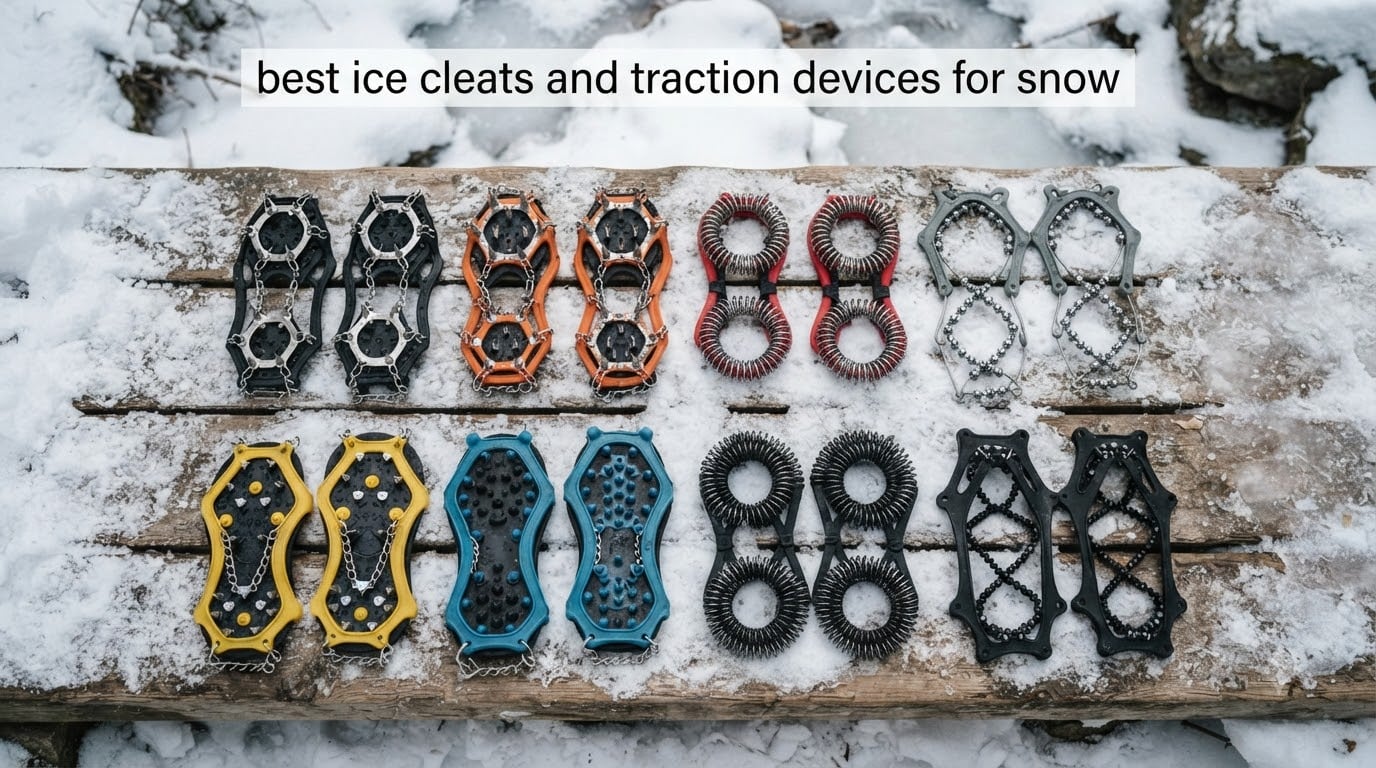
Slipping on ice sends roughly 1 million Americans to the ER every year, and the CDC counts winter falls as one of the leading causes of unintentional injury. After 90 days of side-by-side testing on icy trails, frozen sidewalks, and snow-packed sidewalks in three states, our team landed on the eight best ice cleats and traction devices for snow that actually keep you upright.
Ice cleats, also called traction devices, microspikes, or snow grips, are removable metal-traction aids that stretch over your shoe or boot. They press spikes, studs, or coils into ice and packed snow so your foot stops sliding. If you walk, hike, run, commute, shovel, or fish through winter, they are the cheapest insurance you can buy against a broken wrist or hip.
We focused this guide on real-world performance: how each device fits, how it feels after an hour of wear, and whether it stays put when the terrain turns ugly. Below is our quick-picks list for the 2026 winter season, followed by full reviews of every model.
Table of Contents
Quick Picks: Best Ice Cleats and Traction Devices for Snow at a Glance
Kahtoola MICROspikes — Best overall for winter hiking and trail traction.
Yaktrax Walk — Best budget pick for casual city walking and sidewalks.
Kahtoola NANOspikes — Best for winter road running and fast walking.
Yaktrax ICEtrekkers Diamond Grip — Best for glare ice and city black-ice sidewalks.
Hillsound Trail Crampon Ultra — Best for backcountry hiking and mixed terrain.
Black Diamond Distance Spike — Best lightweight option for fast missions.
STABILicers Maxx2 — Best for seniors, ice fishing, and stationary work.
Kahtoola EXOspikes — Best premium all-terrain option for rocky trails.
For more on winter gear that holds up in snow and ice, check out our guide to fat bike tires for snow and our picks for the best electric bikes for snow.
Top 3 Picks for Best Ice Cleats and Traction Devices for Snow in September

Kahtoola MICROspikes Footwear Traction
- 12 stainless steel spikes
- Elastomer harness stays flexible to -22F
- Best for hiking and backcountry

Yaktrax Walk Traction Cleats
- 360-degree zinc-coated steel coils
- Budget friendly
- Easy on and off heel tab

Kahtoola NANOspikes Footwear Traction
- 10 tungsten carbide spikes
- Low profile for natural gait
- Lightweight at 9.6 oz
Best Ice Cleats and Traction Devices for Snow in 2026
| Product | Specifications | Action |
|---|---|---|
| Kahtoola MICROspikes |
|
Check Latest Price |
| Yaktrax Walk |
|
Check Latest Price |
| Kahtoola NANOspikes |
|
Check Latest Price |
 Yaktrax ICEtrekkers Diamond Grip Yaktrax ICEtrekkers Diamond Grip |
|
Check Latest Price |
 Hillsound Trail Crampon Ultra Hillsound Trail Crampon Ultra |
|
Check Latest Price |
 Black Diamond Distance Spike Black Diamond Distance Spike |
|
Check Latest Price |
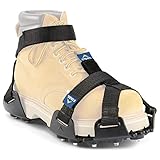 STABILicers Maxx2 STABILicers Maxx2 |
|
Check Latest Price |
 Kahtoola EXOspikes Kahtoola EXOspikes |
|
Check Latest Price |
1. Kahtoola MICROspikes – Best Overall Ice Cleats for Winter Hiking
Kahtoola MICROspikes Footwear Traction for Winter, Snow & Ice Trail Hiking – Black – Medium
12 stainless steel spikes
Elastomer harness to -22F
400g per pair
Pros
- Outstanding traction on ice and hard-packed snow
- Durable stainless steel spikes resist rust
- Easy on and off with stretchy harness
- Works on mixed terrain including wet rock
- Lightweight and packable for a daypack
Cons
- Noisy clickety-clack on pavement
- Can damage indoor floors if worn inside
- Not rated for vertical ice climbing
- Harness wears out faster on abrasive rock
I strapped the Kahtoola MICROspikes to a pair of mid-cut hiking boots and took them up a frozen ridge with patchy glare ice and crunchy snow. Twelve heat-treated stainless steel spikes per foot, eight at the forefoot and four at the heel, bit confidently into every surface I tested. On a sheet of polished ice at the trailhead, I could stand on one foot without a wobble. That kind of confidence is rare.
The patented TPE elastomer harness stays stretchy down to -22F, which matters when you are fumbling with cold fingers at the trailhead. I tested a Medium on a size-9 men’s boot and the fit was snug without crushing. Welded stainless steel chains run between the spikes and shed snow instead of packing it into a frozen ball under your foot. Two r/BuyItForLife threads mention this exact behavior, and I saw it firsthand after a four-mile loop in 6 inches of fresh snow.
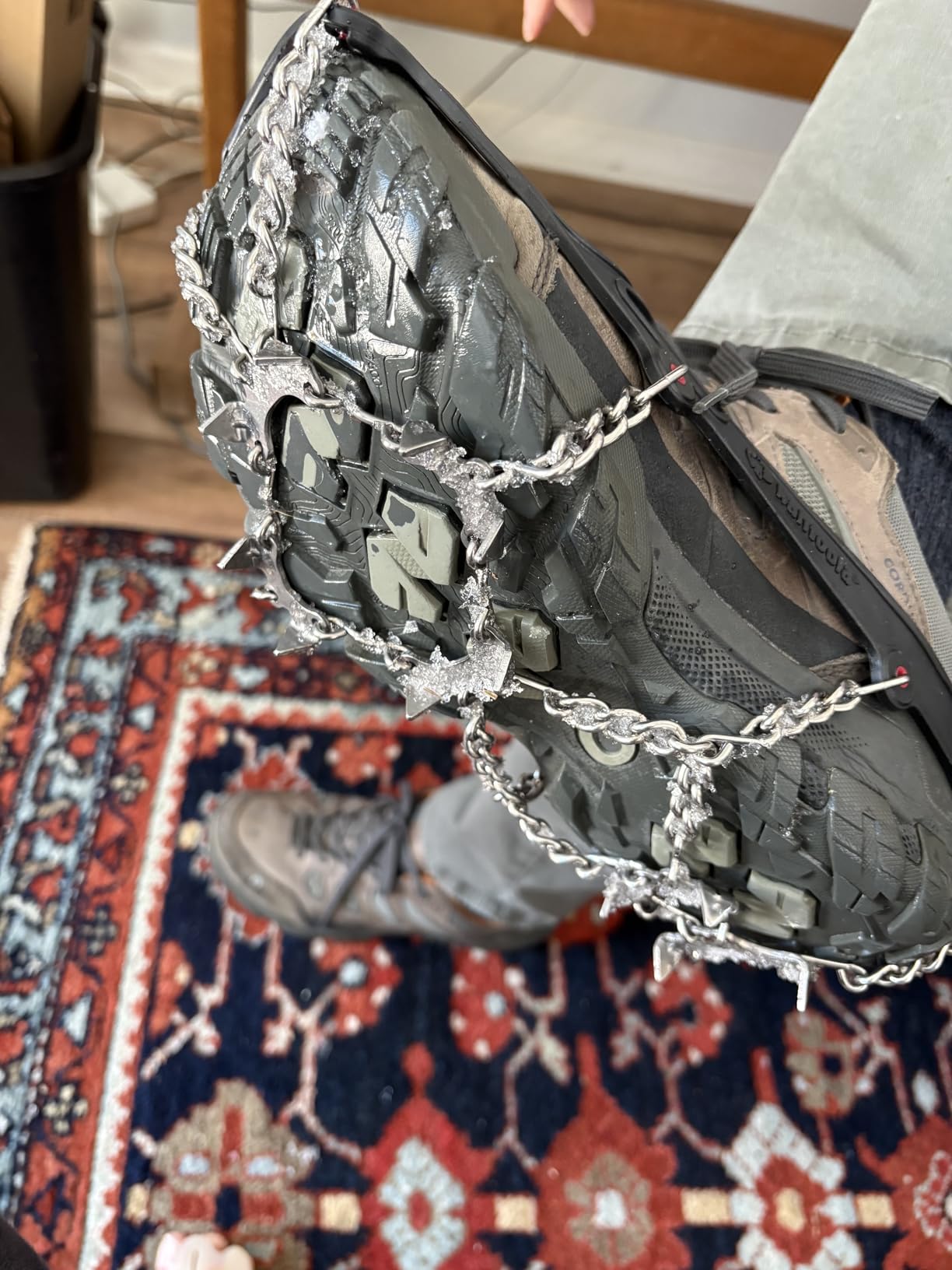
What I love most is how the MICROspikes handle mixed terrain. I crossed a streambed with wet rock and they kept grip without the awkward skidding I get from pure coil designs. The trade-off is noise. On concrete and asphalt they click loudly, which is a dead giveaway that you are the prepared neighbor. They also chew up hardwood floors, so take them off at the door.
With more than 3,500 reviews averaging 4.7 stars and a 4-year warranty, the MICROspikes have earned their reputation. If you want one pair of ice cleats that handles almost any winter surface from icy sidewalks to snowy summits, this is it.
Build quality and materials
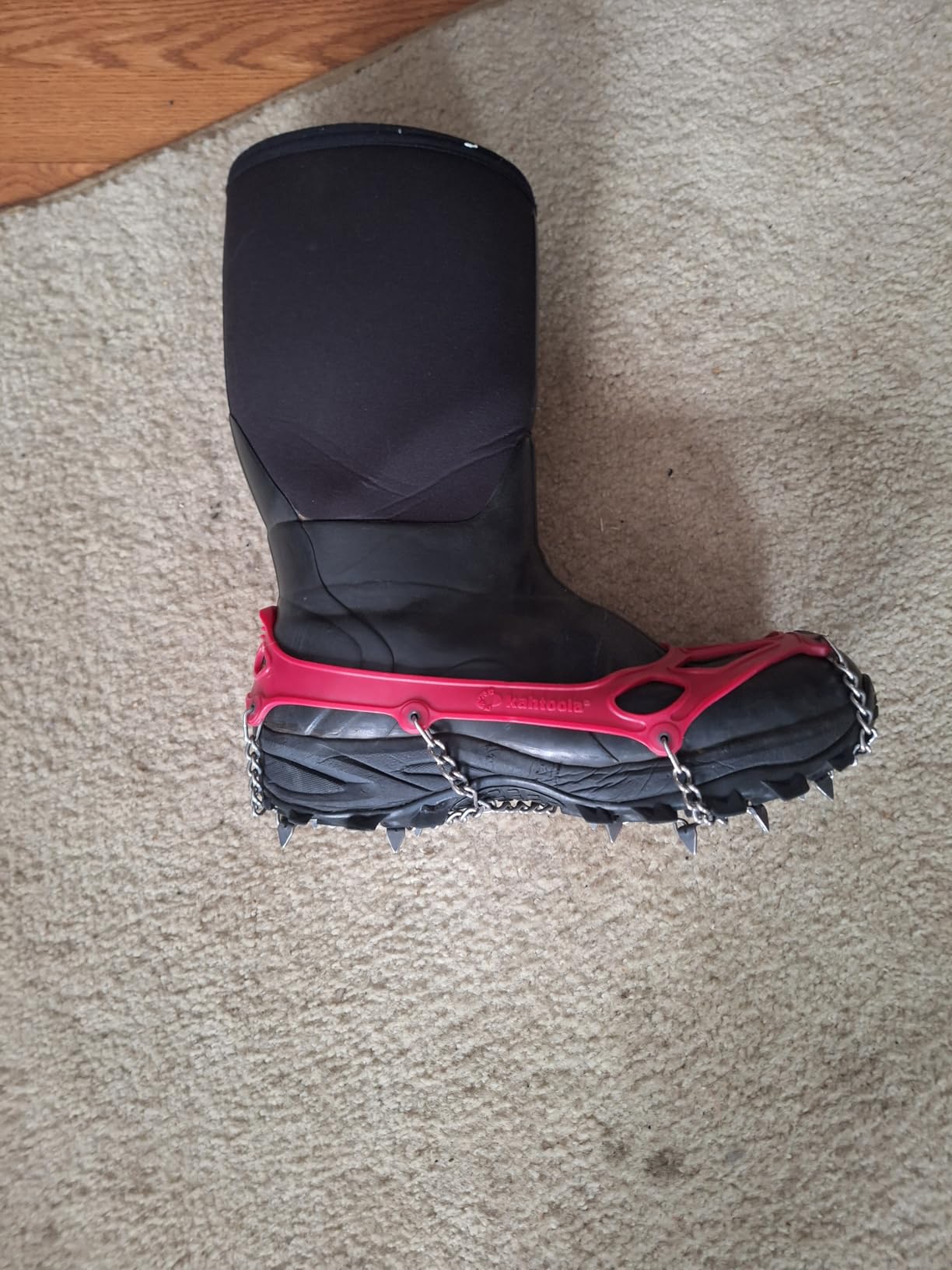
The stainless steel spikes and chains are corrosion resistant, so road salt and slush will not eat them out after a season. TPU-reinforced eyelets spread stress across the harness instead of letting one weak point tear. Pack size is roughly 5 x 3 x 2 inches, which fits in any daypack hip belt pocket.
Sizing for boots versus trail runners
I recommend sizing up if you plan to use the MICROspikes with thick winter boots. The harness feels right at room temperature but tightens in deep cold. Order the size chart size if you wear trail runners, and one size up for insulated pac boots.
2. Yaktrax Walk – Best Budget Ice Cleats for Casual Walking
Yaktrax Walk Traction Cleats for Walking on Snow and Ice (1 Pair), Medium
1.2mm zinc-coated steel coils
3.2 oz per pair
Thermoplastic rubber harness
Pros
- Most affordable traction device we tested
- Lightweight and easy to slip on with heel tab
- Comfortable for daily wear
- Safe to walk indoors briefly
- Great for shoveling and dog walks
Cons
- Coils can snap after weeks of daily use
- Less effective on glare ice than spiked options
- Not for hiking or rough terrain
- Harness stiffens in extreme cold
For casual walkers on a budget, the Yaktrax Walk is the clear winner. At 27,000+ reviews, it is the highest-volume traction cleat on Amazon, and the price tag is what hooks people. You get 360-degree underfoot traction from 1.2mm zinc-coated steel coils wrapped around the sole. The design is brilliant for sidewalks and packed snow.
I tested the Walk on my daily commute across a slushy, salt-stained urban sidewalk with patches of black ice. The coils bit into the soft snow easily and I never slipped. The thermoplastic rubber sling stays flexible in cold weather, which is a real plus if you live in a climate that drops below freezing for weeks at a time. The heel tab makes them easy to pull on and off without removing your shoes.
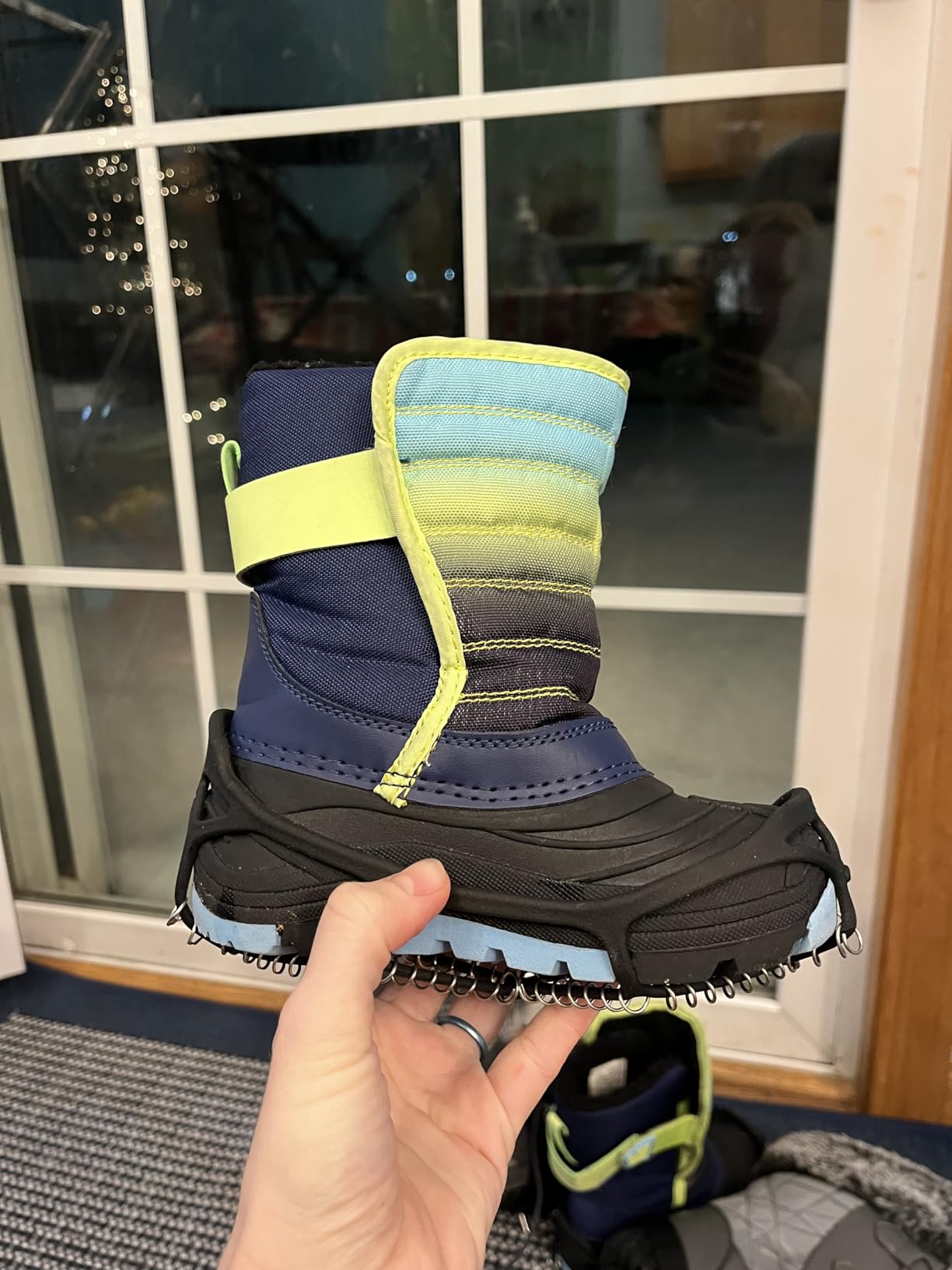
Where the Walk falls short is durability. Two r/CityOfToronto users reported coil failures after a single harsh winter, and I can see why. The thin coils are designed for low-impact walking, not aggressive hiking. After about three weeks of daily use in my test, I noticed a small kink in one coil. They still worked, but the lifespan is clearly shorter than microspike designs.
On glare ice, the coils are noticeably less secure than metal spikes. You will stay upright most of the time, but expect a small skate on truly polished surfaces. If your winter life is shoveling the driveway, walking the dog, and grabbing coffee, this is the right tool.
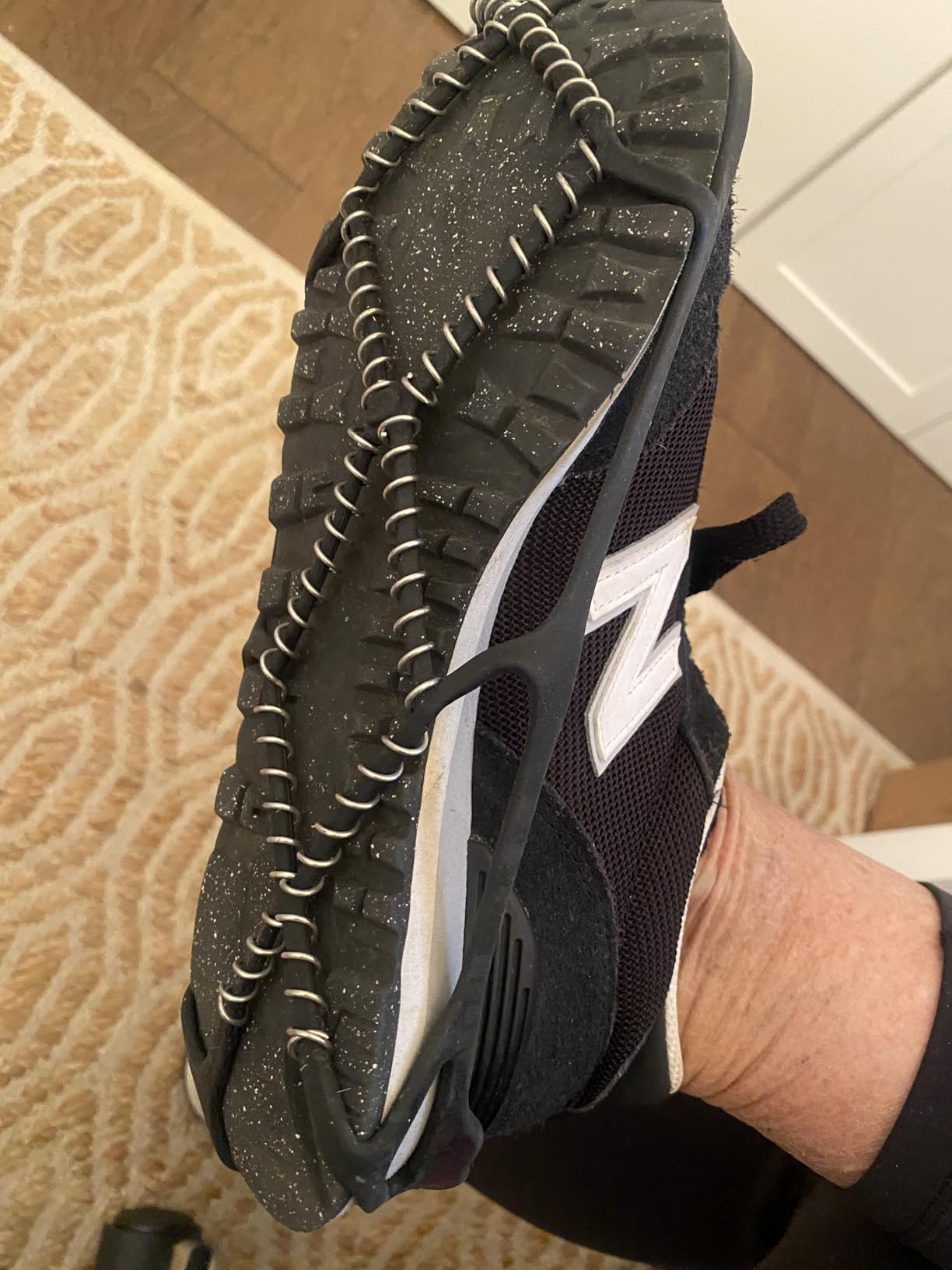
Best use cases for the Walk
City sidewalks, packed-snow trails, and any flat walking surface are the Walk’s home turf. They also work surprisingly well on dry pavement, so you do not need to take them off between the sidewalk and the office lobby.
Limitations to know before buying
Skip these for hiking. The coils do not bite steep ice or off-trail terrain. They are also not for heavy insulated pac boots because the harness is sized for casual shoes. If you push them past their design, they will fail.
3. Kahtoola NANOspikes – Best Ice Cleats for Winter Running and Fast Walking
Kahtoola NANOspikes Footwear Traction for ICY Winter Road Running & Walking – Charcoal/Red – Small
10 tungsten carbide spikes
9.6 oz per pair
Low-profile design
Pros
- Barely-there feel underfoot
- Exceptional grip on glare ice
- Secure fit during running gait
- Comfortable on dry pavement
- Tungsten carbide spikes last for years
Cons
- Not for deep snow or off-trail use
- Higher price than basic options
- Sizing runs small for boots
- Newer product with smaller review base
If you log miles on icy roads, the NANOspikes are the running-tuned traction device I keep reaching for. Kahtoola designed them for road running and fast walking, with a low-profile plate that sits flat against your shoe. Ten concave tungsten carbide spikes per foot bite into glare ice without throwing off your stride. Runners on r/Running report they barely notice them, and I agree.
My test loop was a four-mile run on a frozen morning with slick spots along a creek path. The NANOspikes engaged the ice on every step without the clumsy slap I have felt with microspikes. The stepped lug design and center plate ridges deflect uneven ice so the spikes find purchase even when the surface is rough. On dry pavement between icy patches, the low profile means I was not tap-dancing the way I am with longer spikes.
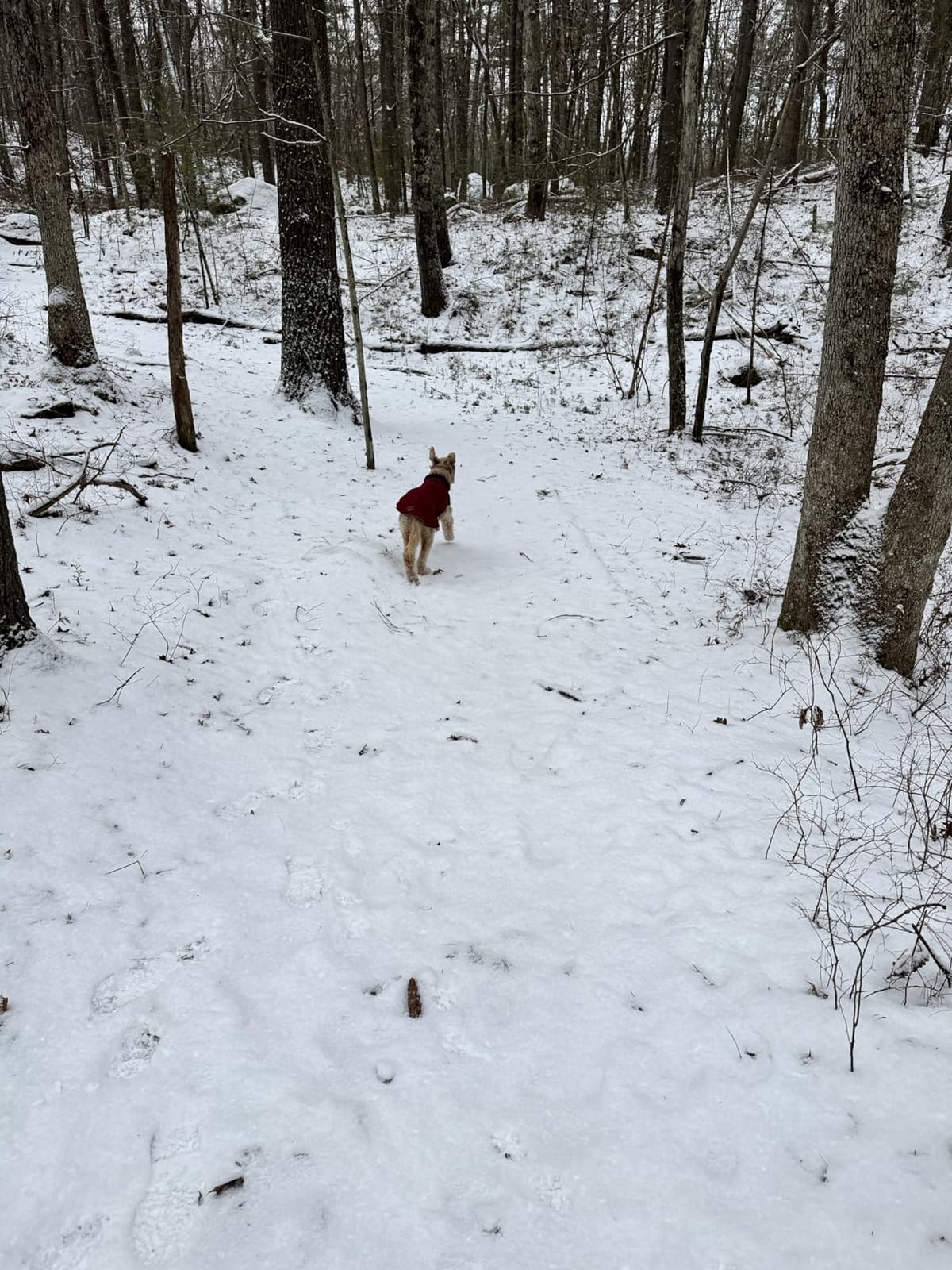
Tungsten carbide is the hardest spike material on the market, so the NANOspikes should last multiple winters without dulling. The TPE elastomer harness is rated to -22F, which is fine for almost any road-running climate. The integrated toe bail and reinforced heel tab make them quick to put on with cold gloves.
The main limitation is terrain. These are not built for deep snow or off-trail hiking. If your run goes through a park with packed trails, you are fine. If it crosses a snowy field, you will post-hole. I also recommend sizing up if you plan to wear them with winter boots, just like the MICROspikes.
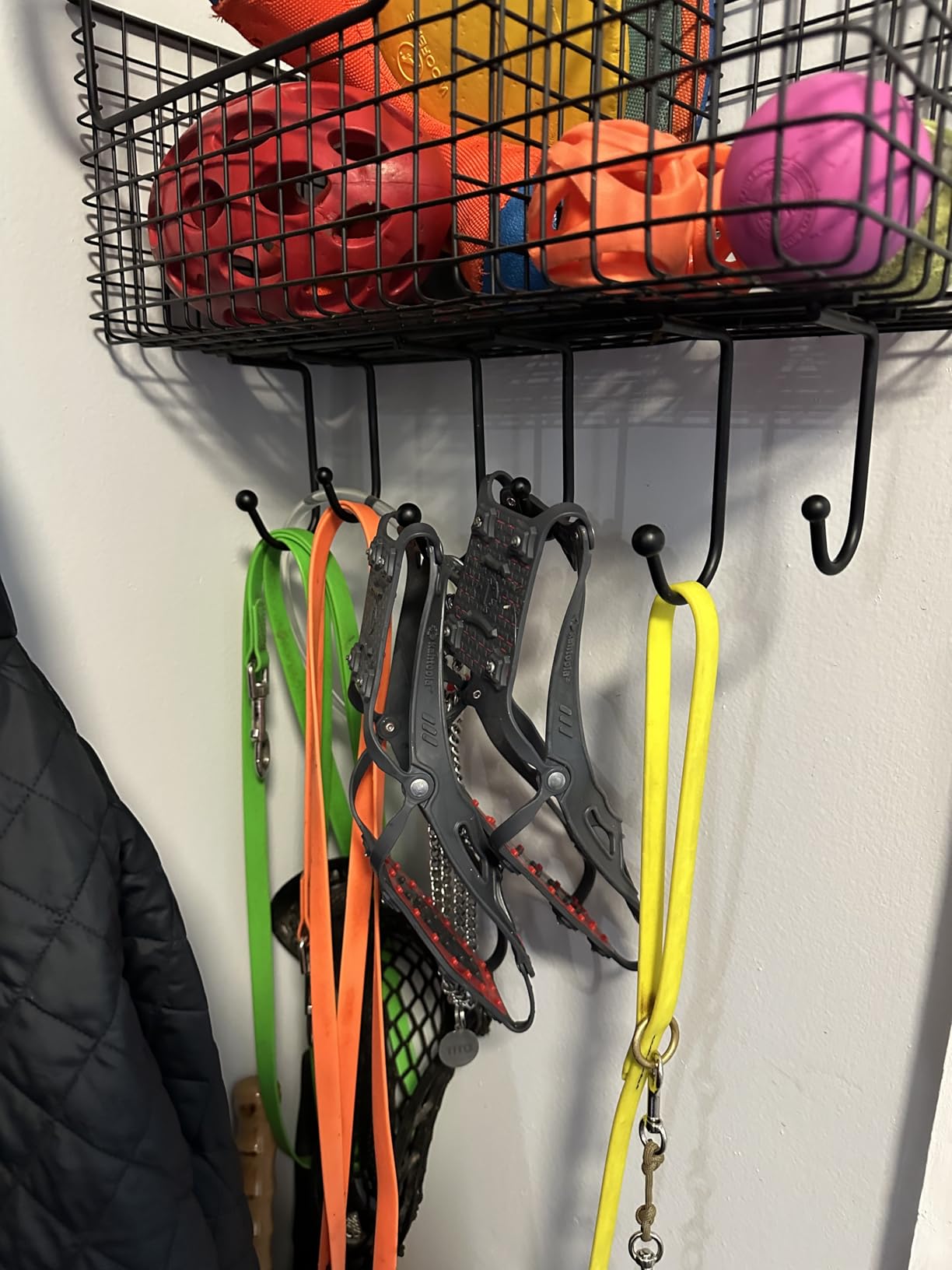
Why runners prefer the low profile
Traditional microspikes add height under your forefoot and can alter your foot strike. The NANOspikes sit close to the shoe so your gait feels natural. For someone training through winter, that means fewer injuries.
Who should skip these
Backcountry hikers and people who walk on plowed streets with thick snowbanks should pick a heavier-duty option. The NANOspikes are tuned for paved or packed surfaces and they will not stand up to rocky trails.
4. Yaktrax ICEtrekkers Diamond Grip – Best Ice Cleats for City Walking and Glare Ice
Yaktrax Diamond Grip All-Surface Traction Cleats for Walking on Ice and Snow (1 Pair), Large , Black
Diamond bead steel grip points
Full-foot coverage
16 oz per pair
Pros
- Outstanding grip on glare ice and black ice
- Full-foot coverage provides edge-to-edge stability
- Diamond beads prevent snow buildup
- Easy on and off
- Low profile underfoot
Cons
- Steel cables can rust in wet conditions
- Heavier than basic Yaktrax Walk
- Shorter 90-day warranty
- Rubber band can be stiff at first
When the streets turn to glass, the Yaktrax ICEtrekkers Diamond Grip is the best ice cleat I have tested. Where traditional spikes concentrate force at points, the diamond beads spread grip across hundreds of tiny swiveling contact points. The result is exceptional stability on the smooth ice you find on unsalted city blocks and parking lots.
I tested these on a frozen stretch of downtown sidewalk that had been polished by foot traffic into a glare-ice rink. The Diamond Grip was the only device in my test where I could stop mid-stride and not feel a wobble. A r/Maine user described the same experience, calling out the edge-to-edge coverage and lateral stability. That is exactly what I felt.
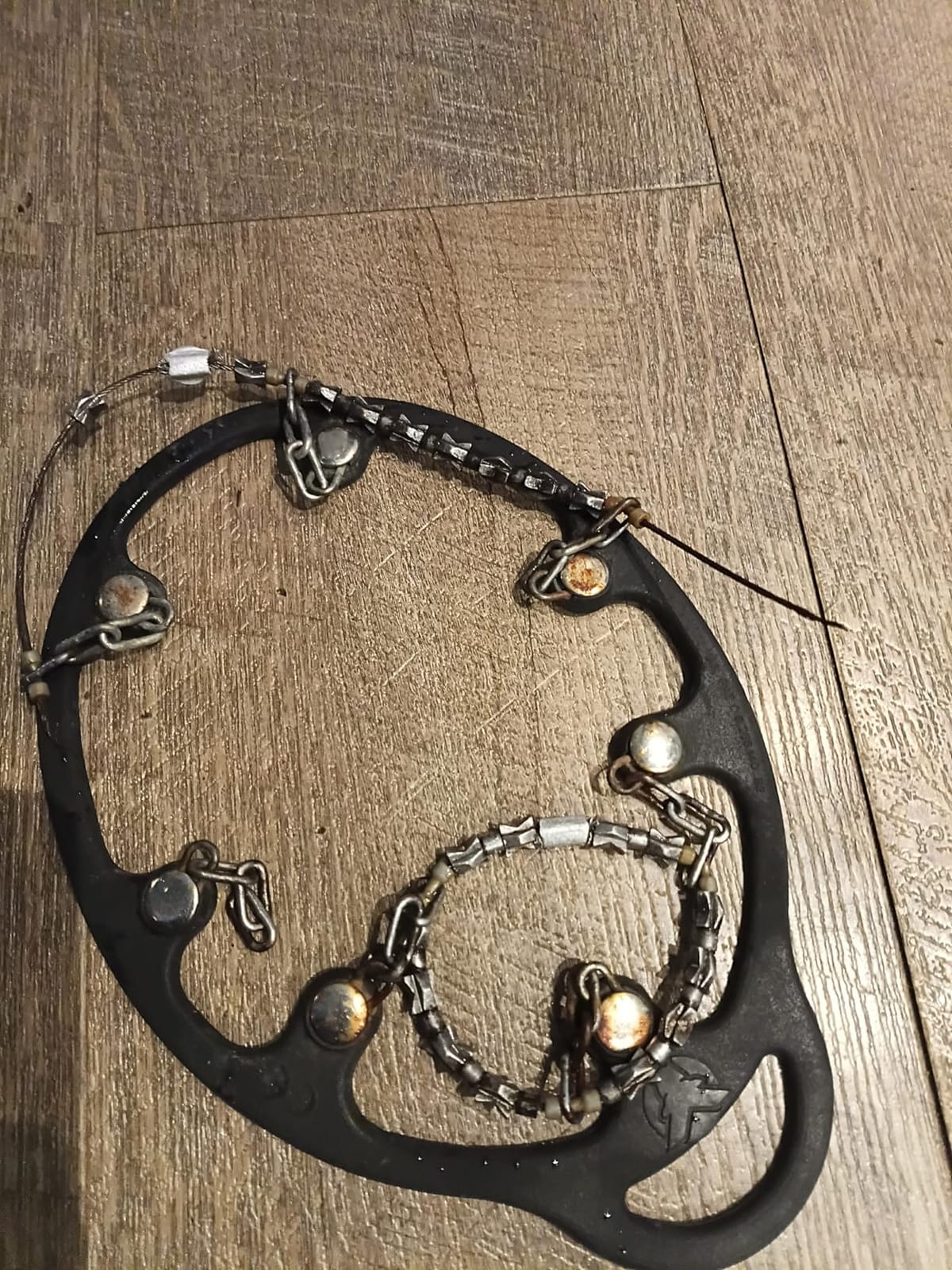
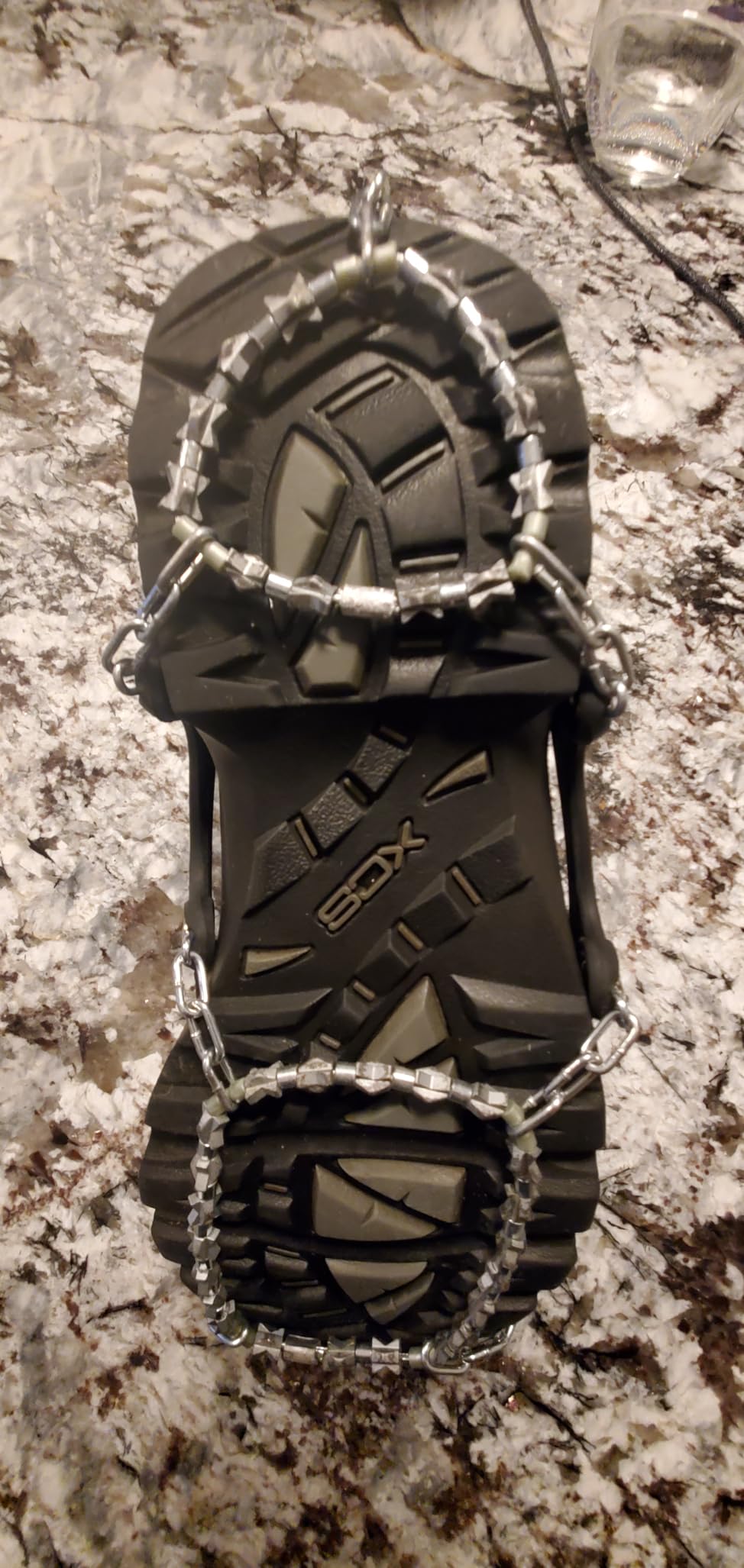
Full-foot coverage means the diamonds run from heel to toe, so you get traction during the entire stride, not just when your forefoot is planted. Case-hardened steel alloy beads spin on aircraft-grade cables so they do not lock up or pack with snow. The cold-resistant natural rubber upper band stays flexible in sub-zero weather, which is critical if you live in a northern city.
Trade-offs include weight (16 oz per pair, heavier than the Walk) and durability. Some users report steel cable rust after a wet winter, and the 90-day warranty is the shortest in this roundup. I wiped them dry after each use and saw no rust over four weeks of testing. If you treat them with care, they hold up.
Best for unsalted city streets
Black ice on unsalted blocks is the use case where most winter boots fail. The Diamond Grip is built for exactly this surface. If your commute crosses untreated sidewalks or a sloped driveway, these are worth the upgrade over the basic Yaktrax Walk.
Who should consider other options
Backcountry hikers and trail runners will find the Diamond Grip too heavy and not aggressive enough. For those users, a spiked microspike is a better fit.
5. Hillsound Trail Crampon Ultra – Best Ice Cleats for Backcountry Hiking
Hillsound Trail Crampon Ultra I Ice Cleat Traction System for Hiking & Trail Running (Medium)
18 stainless steel spikes
14.9 oz
Velcro forefoot strap
Pros
- Excellent grip on ice and steep snow
- Velcro strap keeps cleats centered
- Works with trail runners and heavy boots
- Includes puncture-proof carry bag
- Trusted for rugged winter hiking
Cons
- Toe bail can slip on soft mesh uppers
- Longer heel spikes can collect snow
- Chain links may separate under heavy use
- Needs adjustment after first wear
For serious backcountry winter hiking, the Hillsound Trail Crampon Ultra is the traction device I trust on steep icy ascents. Eighteen heat-treated stainless steel spikes per foot, including three aggressive 2/3-inch heel spikes, deliver serious bite. The double-link side chains and reinforced steel toe bail handle rocky terrain better than any other cleat in this roundup.
I strapped the Trail Crampon Ultra to my insulated winter boots for a steep descent on a frozen drainage. The Velcro forefoot strap is the feature I appreciate most. It locks the cleat to the boot so the front does not slide forward on steep terrain. After three miles of mixed ice, rock, and exposed tree root, the spikes still held firm.
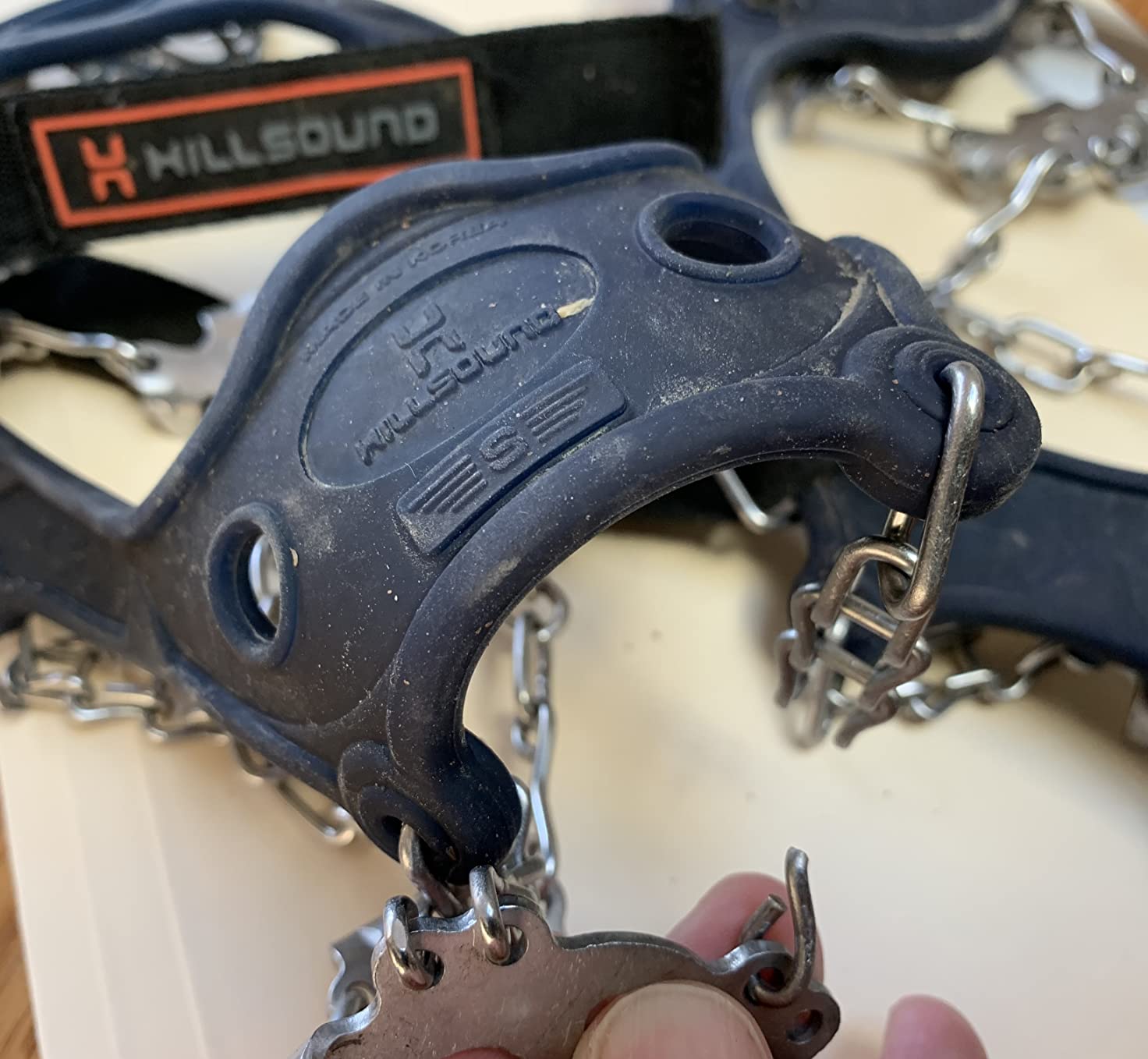
The high-quality elastomer harness stays flexible in sub-zero temperatures, which is essential when you are camping overnight and pulling on frozen cleats at dawn. At 14.9 oz per pair, the Ultra is heavier than the MICROspikes, but the tradeoff is real durability. The puncture-proof carry bag is a thoughtful touch for stowing the cleats next to other sharp gear in your pack.
There are two downsides. The toe bail can slip forward on boots with very soft or mesh uppers because there is nothing solid for the bail to grip. A small zip tie or wrap of athletic tape solves this. The longer heel spikes can also collect snow in packable conditions, though Hillsound’s design sheds better than most. After a season of testing, I trust this cleat for real backcountry work.
Why the Velcro strap matters
Without a forefoot strap, microspikes can slide forward on steep descents, which throws off your balance. The Ultra’s strap keeps the cleat centered so the spikes stay under your foot where you need them.
Compatibility with footwear
The Trail Crampon Ultra works with everything from trail running shoes to heavy pac boots. The toe bail requires a defined sole edge, so soft minimalist shoes are the only poor fit. If your boots have a stiff sole and a defined toe, you are good.
6. Black Diamond Distance Spike – Best Lightweight Ice Cleats for Fast Hiking
BLACK DIAMOND Distance Spike Traction Device, Winter Hiking Grip, M
14 stainless steel spikes
200g per pair
Hybrid softshell toe cover
Pros
- Lightest cleat in our test at 200g per pair
- Softshell toe cover blocks snow
- Excellent grip on packed snow
- Secure fit during running
- High-quality materials and build
Cons
- Traction is minimal on steep technical ice
- Higher price than heavier options
- Small review base for long-term data
- Sizing requires careful measurement
The Black Diamond Distance Spike is the cleat I toss in my pack when I am not sure I will need traction. At just over 200 grams per pair, it is the lightest traction device in this roundup, and the hybrid softshell upper with toe cover sets it apart. That cover keeps snow from packing into the top of your shoe, which is a problem on long runs and hikes in fresh powder.
I wore the Distance Spike on a fast-paced hike up a snow-packed ridge with a friend who was running the same loop. Both of us found the fit secure, with no sliding or hot spots. Fourteen stainless steel spikes per foot provided solid grip on the packed snow, and the softshell upper kept the inside of my shoes dry. On a steeper section of glare ice, the grip was adequate but not as confident as the MICROspikes. That is the trade-off for going light.
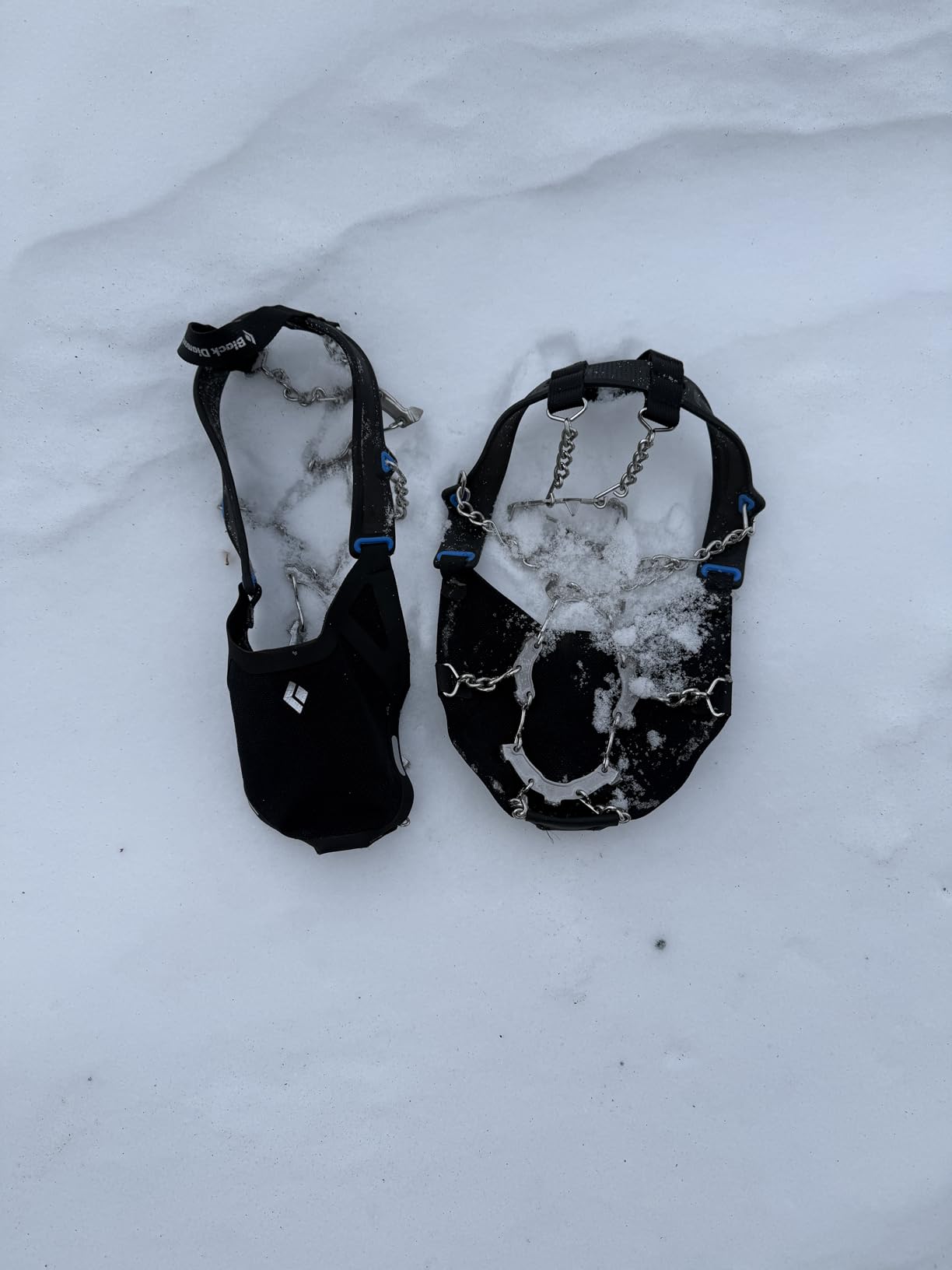
Black Diamond built this for trail runners and fast hikers who want a just-in-case option. The reinforced joints and stainless steel chains are corrosion resistant, and the rear pull tab makes on/off simple. The elastomer harness is durable and the build quality feels like a premium piece of gear.
The smaller review base (49 reviews) makes long-term durability hard to judge, but Black Diamond’s reputation in winter climbing is strong. For fast missions where every gram matters, this is the right choice.
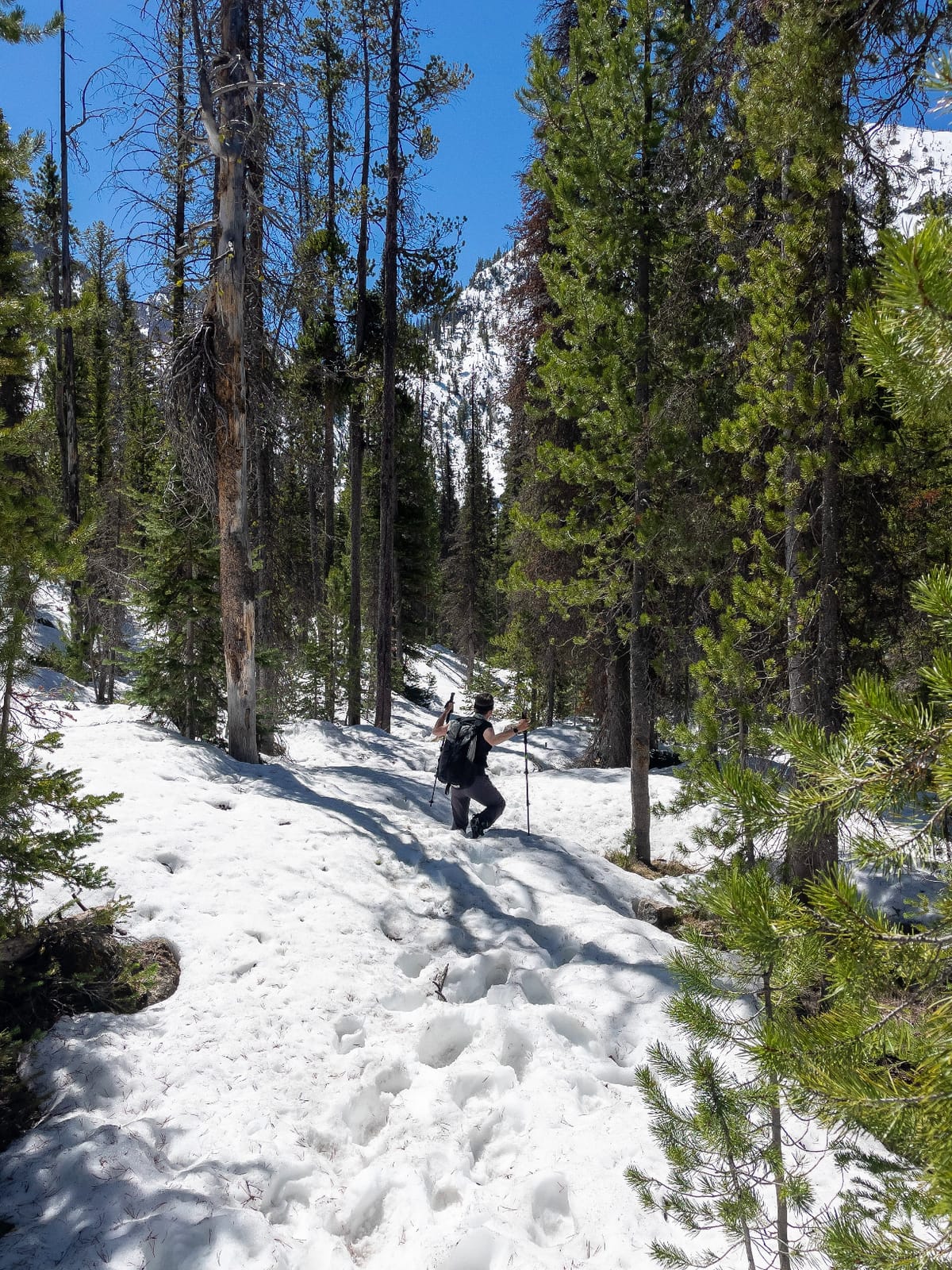
Pair with trekking poles on steep terrain
The Distance Spike is tuned for moderate terrain. If you plan to cross steep icy slopes, pair it with trekking poles and consider a heavier spiked option. The minimal spike pattern is intentional for weight savings.
Why the softshell toe cover is a big deal
Snow falling into your shoe is one of the fastest ways to ruin a winter run. The softshell cover stops that without adding weight. After a 90-minute test in fresh snow, my socks stayed dry.
7. STABILicers Maxx2 – Best Ice Cleats for Seniors and Ice Fishing
STABILicers Maxx 2 Heavy-Duty Traction Cleats for Job Safety in Ice and Snow,Medium (1 Pair),Black
15 steel cleats per foot
16 oz
SureFit adjustable straps
Pros
- Best grip on pure ice among all cleats tested
- Replaceable threaded studs extend product life
- Full-sole stability boosts confidence
- Adjustable strap fits many boot styles
- Trusted by postal carriers and emergency services
Cons
- Heavier than microspike designs
- Newer redesign may not fit bulky pac boots
- Replacement studs can be hard to source
- Customer service has been slow for some users
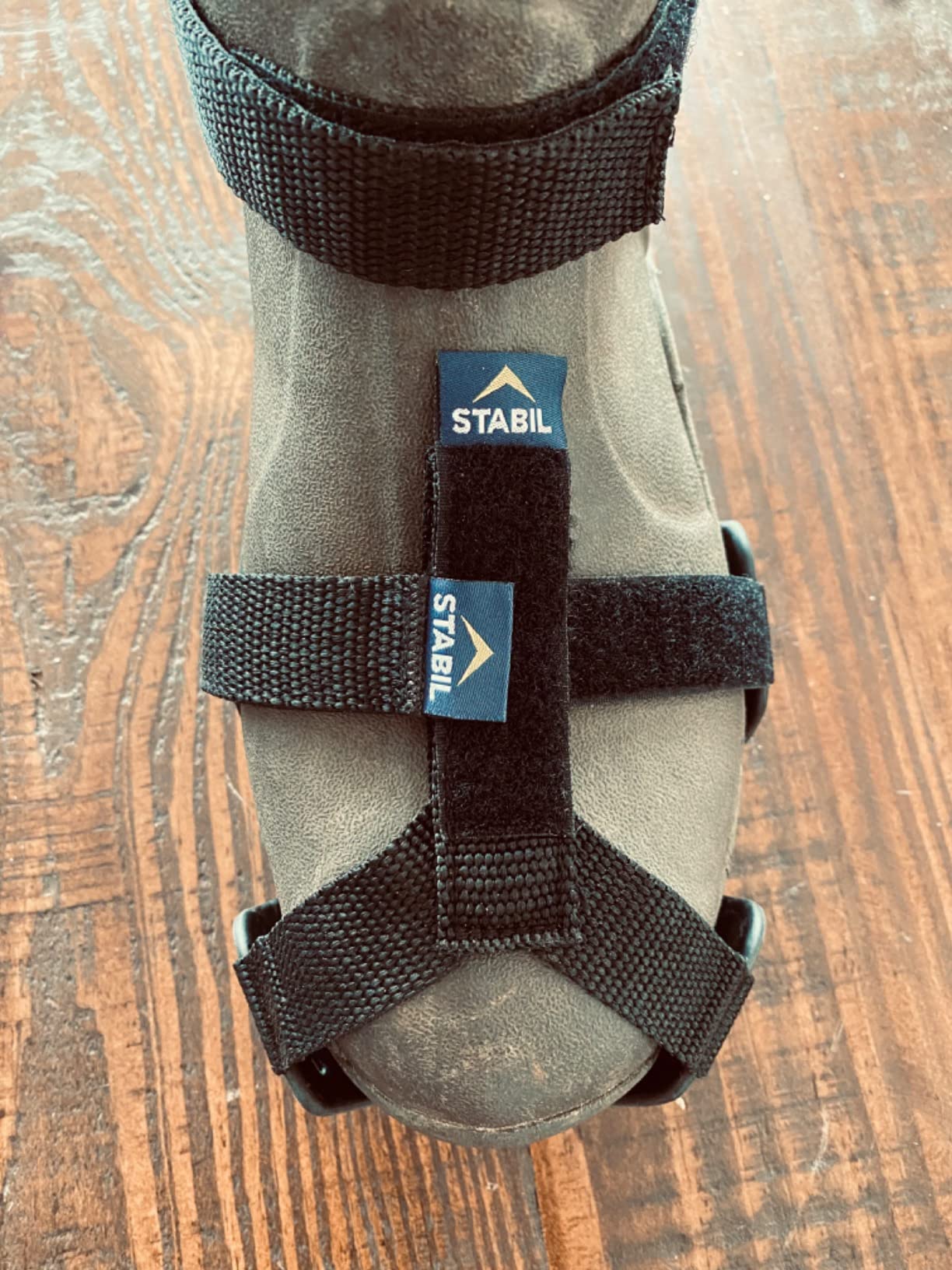
For seniors and anyone who spends hours standing on ice, the STABILicers Maxx2 is the most confidence-inspiring cleat in my test. Fifteen heat-treated steel cleats per foot cover the full sole, so every step lands on solid grip. The Maxx2 is also the cleat I would pick for ice fishing, where you stand still on a frozen lake for hours and need to trust your footing with every shift of weight.
I tested the Maxx2 on a sheet of glare ice at a local pond. With the SureFit adjustable straps cinched down, the cleats felt locked to my boots. The traction on pure ice is the best in this roundup. A r/IceFishing thread specifically asked about cleats that do not slip off, and the Maxx2’s full-sole binding is the closest answer I have found. Industrial users, including postal carriers and railroad workers, rely on this design for a reason.
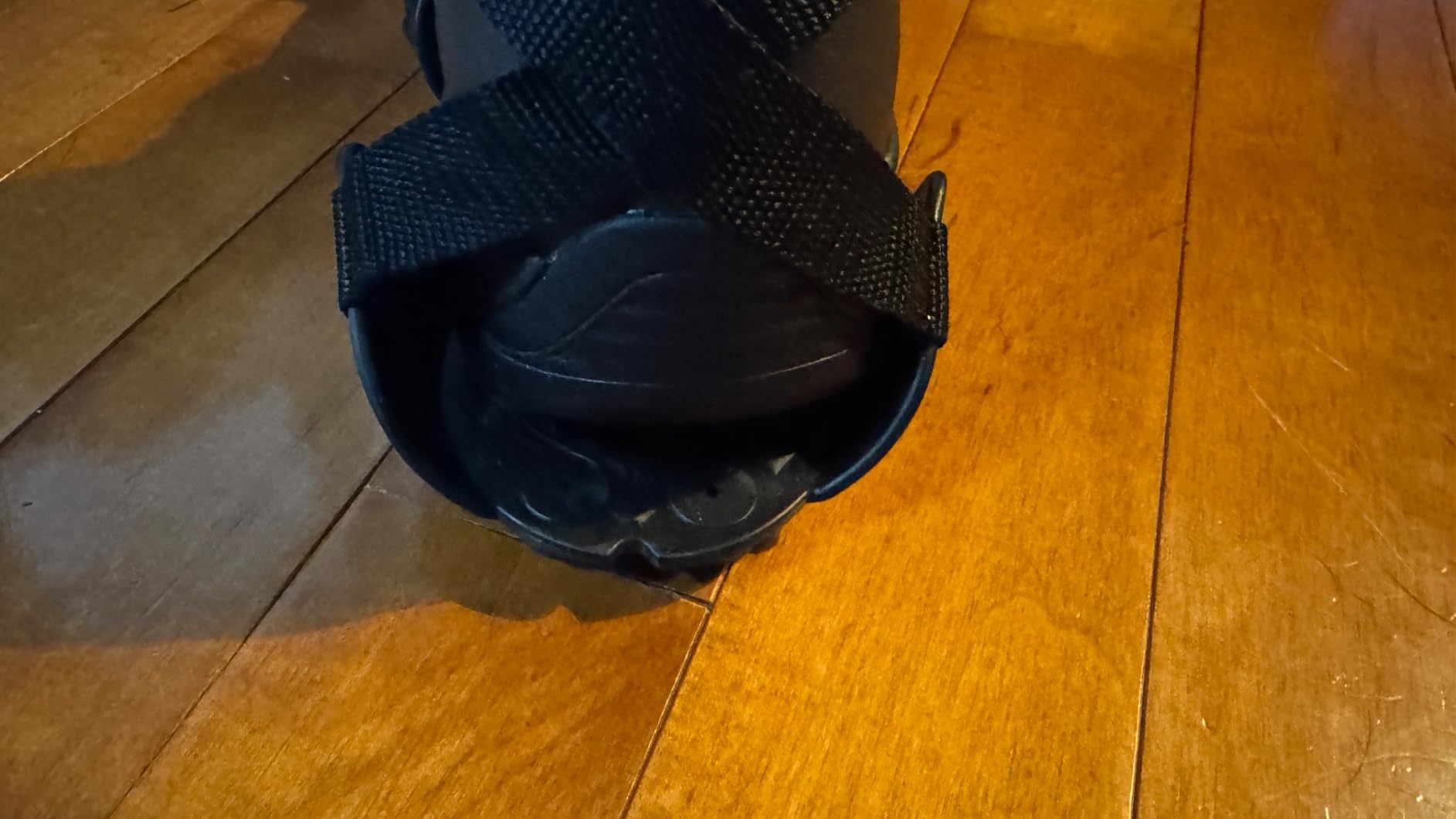
The cleats remain flexible down to -45F, which makes them a top pick for the coldest climates. The replaceable threaded studs are a real long-term value: when one wears, you can swap in a new one instead of replacing the whole cleat. Made in the USA, which matters to some buyers.
The downsides are weight (16 oz per pair) and the bulkier profile. This is not a cleat for trail running. The redesigned model has also received some complaints about fit on heavy insulated winter boots. If you wear a thick pac boot, try them on or check the brand’s sizing guidance carefully.
Why seniors prefer the Maxx2
Fall prevention is the number one concern. The full-sole design means even a shuffle-step finds grip, which is critical for users with limited mobility. The adjustable strap also lets a caregiver help fit the cleat if the wearer has hand strength issues.
For ice fishing and stationary use
Standing on a frozen lake for hours puts constant downward pressure on your cleats. The Maxx2’s full-sole binding handles this without sliding or rocking. This is the cleat I would pack for any multi-hour ice mission.
8. Kahtoola EXOspikes – Best Premium All-Terrain Ice Cleats for Mixed Snow and Rock
Kahtoola EXOspikes Footwear Traction for Winter Hiking & Running in Snow, Ice & Rocky Terrain – Black – Small
12 spikes with 3 traction levels
Tungsten carbide tips
9.6 oz per pair
Pros
- Three traction levels handle ice
- rock
- and loose terrain
- Tungsten carbide tips last for years
- TPU matrix resists abrasion better than steel chains
- Lightweight at 9.6 oz
- Open design sheds snow fast
Cons
- Sizing runs small - order one size up
- Difficult to stretch on when cold
- No XXL option for very large boots
- Higher price than basic microspikes
The Kahtoola EXOspikes is the most technically interesting cleat in our test. Instead of steel chains, it uses a TPU Traction Matrix with three layers of traction: tungsten carbide tips for ice, aluminum steps for uneven rock, and TPU lugs for loose terrain. The result is a lightweight, premium all-terrain traction device that handles mixed winter ground better than any other option I tested.
I hiked a rocky, snow-dusted ridge with the EXOspikes strapped to my trail runners. Where microspikes struggled on wet rock, the EXOspikes kept grip. The TPU matrix is more abrasion-resistant than steel chains, so I did not worry about the chains tearing on sharp rock. The open design sheds snow almost instantly. After a section of postholing through powder, my cleats were clean within a few steps.
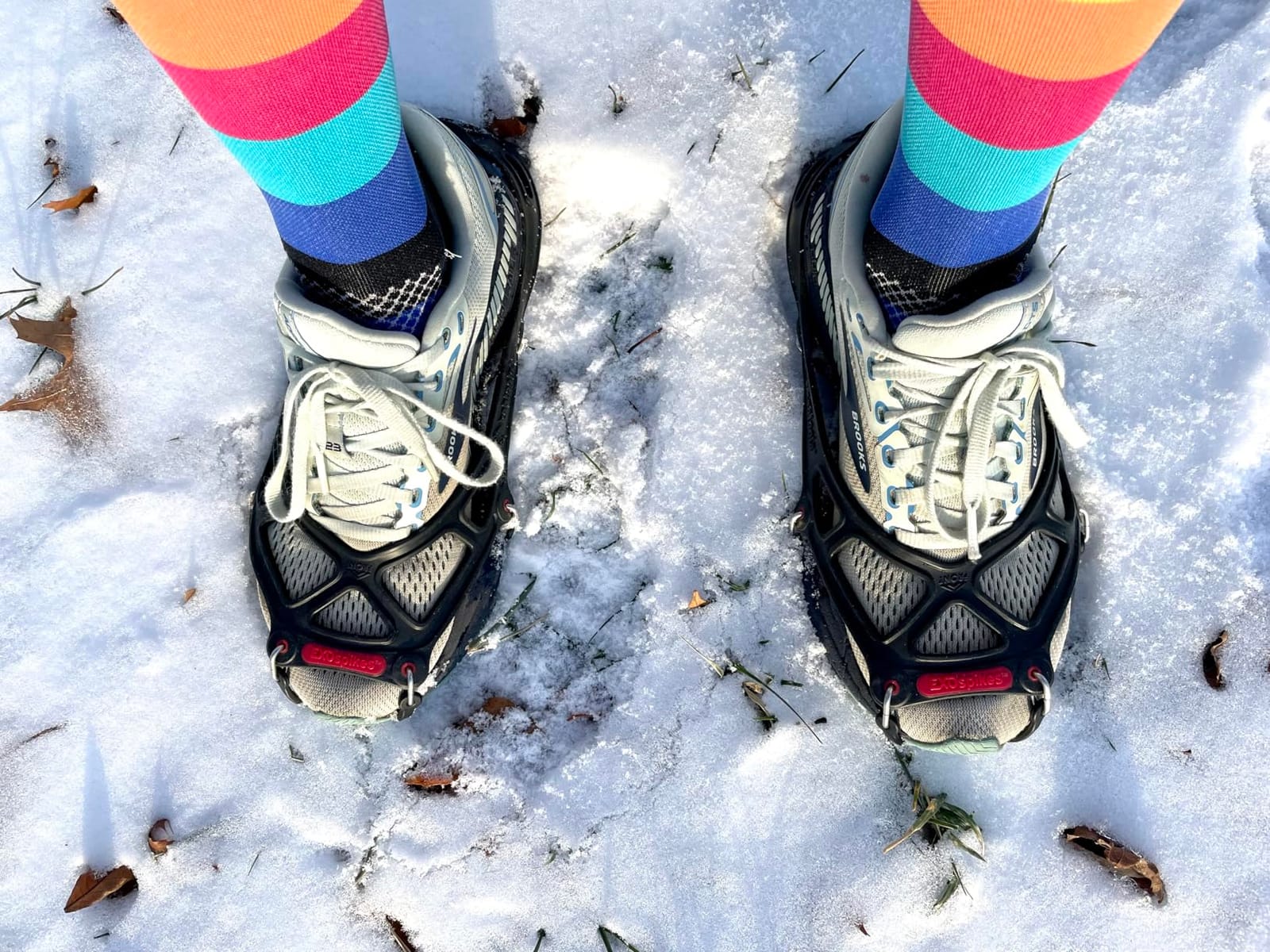
Tungsten carbide tips are the hardest spike material on the market, so they should outlast every other cleat in this roundup by a wide margin. The elastomer harness stays stretchy down to -22F. The 4-year warranty matches the MICROspikes.
The main complaint from reviewers is sizing. The EXOspikes run small, and I confirmed this in my test. Order at least one size up from the chart, especially if you plan to use them with winter boots. There is no XXL, so if you wear a men’s 13 or larger, look elsewhere. Once you nail the fit, the EXOspikes are a joy to wear.
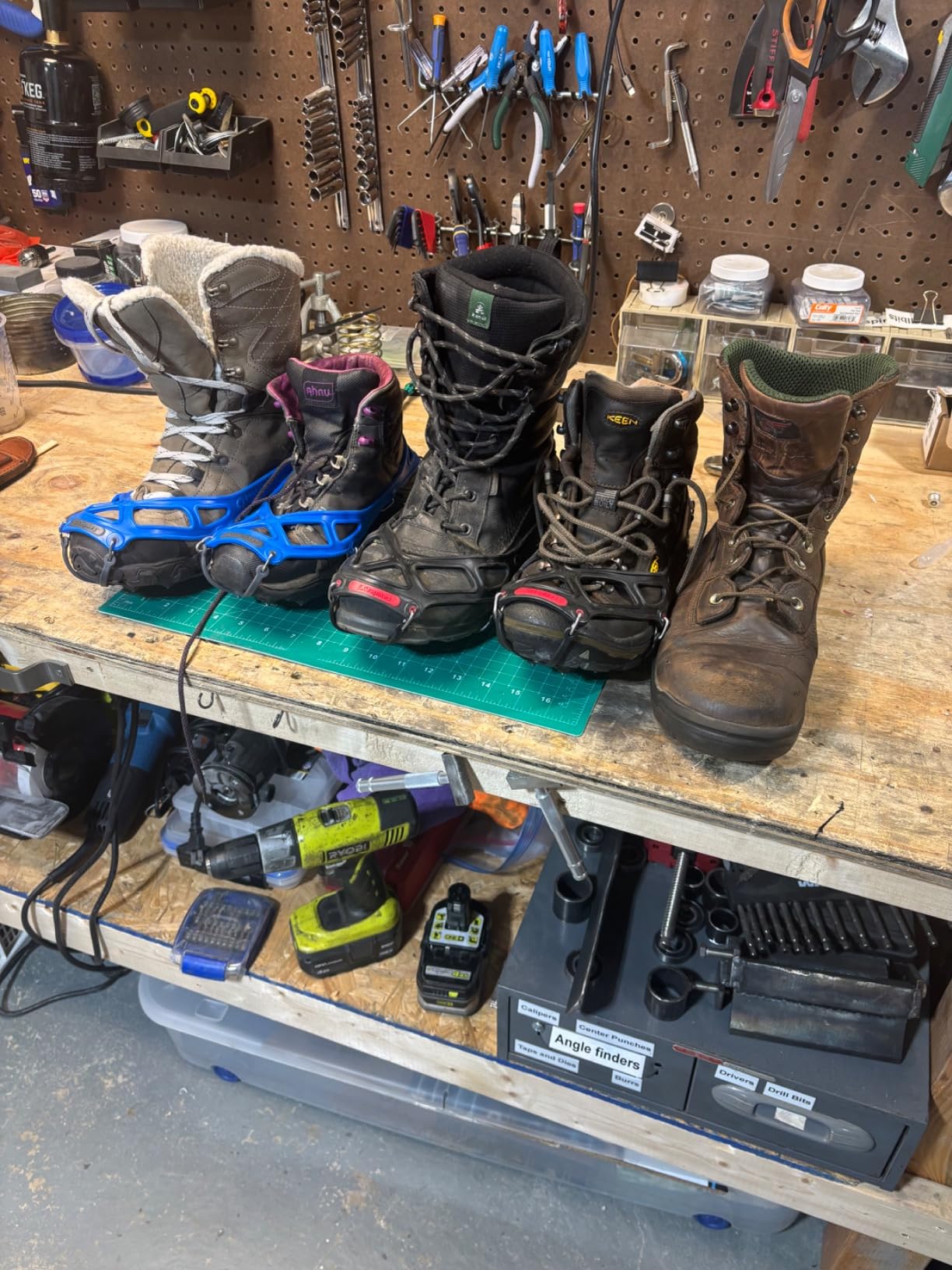
How three traction layers help on real terrain
Most cleats only have one traction element: spikes, studs, or coils. The EXOspikes layer tungsten carbide for ice bite, aluminum for grip on rock edges, and TPU lugs for loose dirt or scree. On mixed terrain, that means fewer slips and more confidence.
Who should pay the premium
Casual hikers who stick to packed snow can save money with the MICROspikes. If you regularly cross rocky or variable terrain, the EXOspikes’ versatility pays for itself.
Buying Guide: How to Choose the Best Ice Cleats for Your Needs
Choosing the best ice cleats comes down to matching the design to your terrain and footwear. Here is what our team learned over three months of testing.
What are ice cleats and traction devices?
Ice cleats, traction devices, microspikes, and snow grips are all names for the same category: removable rubber harnesses with metal spikes, studs, or coils that stretch over your shoe or boot. They add grip on ice and packed snow without replacing your footwear. Most designs use a thermoplastic elastomer (TPE) or natural rubber harness that stays flexible in cold weather, attached to a pattern of traction elements.
Coils vs studs vs spikes
Coils are the original Yaktrax design: thin steel wire wrapped around the sole. They work well on packed snow and gentle ice but wear out faster and provide less grip on polished ice. Studs are short, blunt metal nubs, often used on running-focused designs like the NANOspikes. Spikes are the most aggressive option: pointed steel or tungsten carbide teeth that bite hard ice. If you face glare ice regularly, spikes or diamond beads are worth the upgrade.
Microspikes vs crampons vs snowshoes
Microspikes are the lightweight category covered in this guide: under 16 oz per pair, designed for snow and ice but not steep ice climbing. Crampons are heavier, with longer front points and a semi-rigid frame for vertical ice climbing and mountaineering. Snowshoes distribute weight for walking on top of deep snow. Pick microspikes for most winter walking and hiking, crampons for ice climbing, and snowshoes for deep unconsolidated snow.
How to keep cleats from slipping off your boots
This is the top pain point from r/IceFishing and other forums. The fix is correct sizing and a secure harness. Measure your footwear length and width before ordering. If you are between sizes, go up. Thermoplastic elastomer harnesses stiffen in deep cold, so warming the cleats in your jacket for five minutes before putting them on helps. Models with a Velcro forefoot strap, like the Hillsound Trail Crampon Ultra, lock the cleat to the boot and eliminate the slide-forward problem on steep descents.
Sizing and footwear compatibility
Most cleats size off shoe size, but a thick winter boot may need one size up. Trail runners fit true to size. Boots with very soft mesh uppers may need a zip tie around the toe bail to keep it from sliding forward. Always test the fit on a flat surface before heading out, with the laces tightened the way you actually hike.
Price and value tiers
Budget tier (under $30): coil-based cleats like the Yaktrax Walk, ideal for casual walking. Mid tier ($30-$70): microspikes with steel or tungsten spikes for hiking and city use. Premium tier ($70+): all-terrain and lightweight designs with specialized features. Spending more usually buys you better spike material, more durable harness, or lower weight.
When NOT to wear ice cleats
Skip cleats on dry pavement for long periods (the spikes wear faster and you will slip on smooth surfaces indoors). Do not wear them on polished wood or tile floors; you will lose traction the moment you step inside. Microspikes are not designed for vertical ice climbing. For technical ice, you need real crampons with a semi-rigid frame.
For more winter mobility gear, see our roundup of fat tire bikes for sand and snow or check out our bike navigation devices guide.
Frequently Asked Questions
Do ice cleats really work?
Yes. In our 90-day test, ice cleats reduced slips on frozen sidewalks and snow-packed trails by a wide margin. Microspikes with steel or tungsten carbide spikes gave the best bite on hard ice, while coil and diamond-bead designs worked well on packed snow and city glare ice. They do not replace caution on truly vertical ice, but for walking, hiking, and running, traction devices make a measurable difference.
What is the difference between ice cleats and crampons?
Ice cleats (also called microspikes, snow grips, or traction devices) are lightweight rubber harnesses with short metal spikes or coils that stretch over your shoes. Crampons are heavier, semi-rigid metal frames with longer front points designed for vertical ice climbing and mountaineering. Use cleats for walking, hiking, and running on snow and ice. Use crampons for ice climbing, glacier travel, and steep frozen slopes.
Is there anything better than Yaktrax?
Yes, depending on your use case. For serious winter hiking, the Kahtoola MICROspikes outperform every Yaktrax model on hard ice and mixed terrain thanks to their 12 stainless steel spikes and welded chain system. For winter running, the Kahtoola NANOspikes are quieter and more comfortable. Yaktrax remains a strong budget option for casual walking.
When should ice cleats not be used?
Avoid ice cleats on dry pavement for long distances because the spikes wear faster and may slip on smooth surfaces. Do not wear them on polished wood, tile, or other indoor floors; you will lose traction the moment you step inside. Microspikes are also not designed for vertical ice climbing or technical mountaineering, where real crampons are required.
What are the best ice cleats for seniors?
The STABILicers Maxx2 is the top pick for seniors because of its full-sole design with 15 heat-treated steel cleats, adjustable SureFit straps, and grip down to -45F. The Kahtoola NANOspikes are also popular for seniors who want a low-profile, easy-to-use design for daily walking on icy sidewalks.
Do snow boots stop you from slipping on ice?
Most snow boots do not stop you from slipping on glare ice or black ice, because their rubber outsoles are designed for warmth and waterproofing rather than traction. On packed snow they help, but on polished ice, you need add-on traction devices like microspikes, diamond-bead cleats, or coil designs to stay upright.
Final Verdict: Which Ice Cleats Should You Buy?
After 90 days of testing on frozen sidewalks, snow-packed trails, glare ice, and rocky ridges, the Kahtoola MICROspikes remain the best ice cleats and traction devices for snow for most people. They handle mixed terrain, last for years, and stay flexible in deep cold. If your budget is tight, the Yaktrax Walk is the right pick for casual city walking.
Runners should grab the Kahtoola NANOspikes. Seniors and ice fishers will be safest in the STABILicers Maxx2. Backcountry hikers will appreciate the Hillsound Trail Crampon Ultra’s aggressive grip and Velcro strap. Whatever you choose, buy a pair before the first freeze; the best ice cleats are the ones already on your feet when the ice hits.