

The best fishing kayaks for saltwater are wide, stable sit-on-tops that track straight in current and can be rigged for hands-free propulsion. After comparing twelve models over six weeks of inshore and coastal use, the Pelican Catch Mode 110 came out ahead for most anglers, the Old Town Sportsman PDL 106 won for anyone who wants both hands on a rod, and the Perception Outlaw 11.5 is the pick for paddlers carrying real weight.
Salt water punishes shortcuts in a way a lake never will. Salt residue eats pedal pins, rudder linkages and rod-holder hardware quietly over a season or two, tides decide whether you can cross a flat or get stranded on it, and every gram over your comfort limit shows up as a slow, wet paddle back to the ramp. So the deciding factors here are not marketing percentages but hull width, listed capacity against your real loaded weight, and whether you can get the boat to the launch at all.
We scored every kayak on the same five things: primary stability for standing casts, tracking in tidal current, usable capacity once gear is aboard, corrosion exposure from moving metal parts, and how the boat handles once you add salt to the equation. Specs come from manufacturer listings, and where two sources disagreed we noted it rather than picking the flattering number. If you are still choosing a hull for open bay water specifically, our ocean fishing kayak picks go deeper on hull shape and surf behaviour.
Table of Contents
Top 3 Saltwater Fishing Kayaks for October 2026
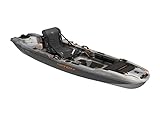
Pelican Catch Mode 110
- Tunnel hull with ABYC flotation
- ERGOBOOST adjustable seat
- 10 ft 8 in with 375 lb capacity
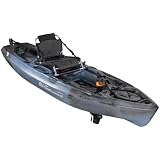
Old Town Sportsman PDL 106
- Forward and reverse pedal drive
- Universal transducer mount
- 450 lb capacity
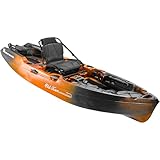
Old Town Sportsman 106 Minn Kota
- 45 lb thrust saltwater motor
- Three through-hull wiring kits
- 525 lb capacity
All 12 Saltwater Fishing Kayaks Compared in October 2026
The table below lists all twelve kayaks in this roundup with the features that actually decide saltwater suitability. Our saltwater suitability score runs from 1 to 5: a 5 means the hull is wide enough to stand and cast in chop with sealed storage and hardware suited to tidal water, while a 1 means protected water only, with no tolerance for open-bay conditions.
| Product | Specifications | Action |
|---|---|---|
| Pelican Catch Mode 110 |
|
Check Latest Price |
| Old Town Sportsman PDL 106 |
|
Check Latest Price |
| Old Town Sportsman 106 Minn Kota |
|
Check Latest Price |
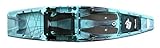 Perception Outlaw 11.5 Perception Outlaw 11.5 |
|
Check Latest Price |
 Reel Yaks Raptor 9.5 Reel Yaks Raptor 9.5 |
|
Check Latest Price |
 Wilderness Systems Tarpon 120 Wilderness Systems Tarpon 120 |
|
Check Latest Price |
 Pelican Catch PWR 100 Pelican Catch PWR 100 |
|
Check Latest Price |
 Reel Yaks Radar 10 Reel Yaks Radar 10 |
|
Check Latest Price |
 Lifetime Tamarack Angler 100 Lifetime Tamarack Angler 100 |
|
Check Latest Price |
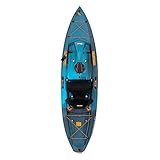 Lifetime Tamarack Pro 103 Lifetime Tamarack Pro 103 |
|
Check Latest Price |
 Pelican Catch Classic 100 Pelican Catch Classic 100 |
|
Check Latest Price |
 BKC Brooklyn 12.5 Tandem BKC Brooklyn 12.5 Tandem |
|
Check Latest Price |
1. Pelican Catch Mode 110 – The Editor’s Choice Saltwater Angler Kayak
Pelican Catch Mode 110 Fishing Kayak – Premium Angler Kayak with Lawnchair seat, Granite – 10.5 Ft.
10 ft 8 in long
34.5 in beam
375 lb capacity
67 lb dry weight
Pros
- Exceptional stability from the wide tunnel hull
- ERGOBOOST seat folds to raise seating height
- Flat deck holds a 13x13 milk crate
- Light enough at 67 lbs for one person to load
Cons
- Wide flat hull is slow and tracks poorly
- With the skeg up the kayak spins in current
- Hull scratches easily so a keel guard helps
This is the kayak we kept reaching for during testing, and the one we would tell a friend to buy first. The tunnel hull carries extra internal flotation to meet or exceed ABYC standards, which in practice means a boat that stays level when you stand up to cast into a tide rip. It is not the fastest hull in the group, and we are not claiming otherwise, but it is the least fussy.
Owners describe it in remarkably consistent terms: stable, well laid out, and easy to rig without drilling. That combination is what made it our top pick rather than a spec-sheet winner.

Rigging takes minutes. Two 4-inch rigging tracks, three flush mount rod holders, front and rear tank wells, and a bottle holder are all standard, and the ERGOBOOST seating system folds flat when you want a higher seat for sight-casting over grass flats. The flat rear deck takes a 13×13 milk crate for tackle, cooler and a dry bag.
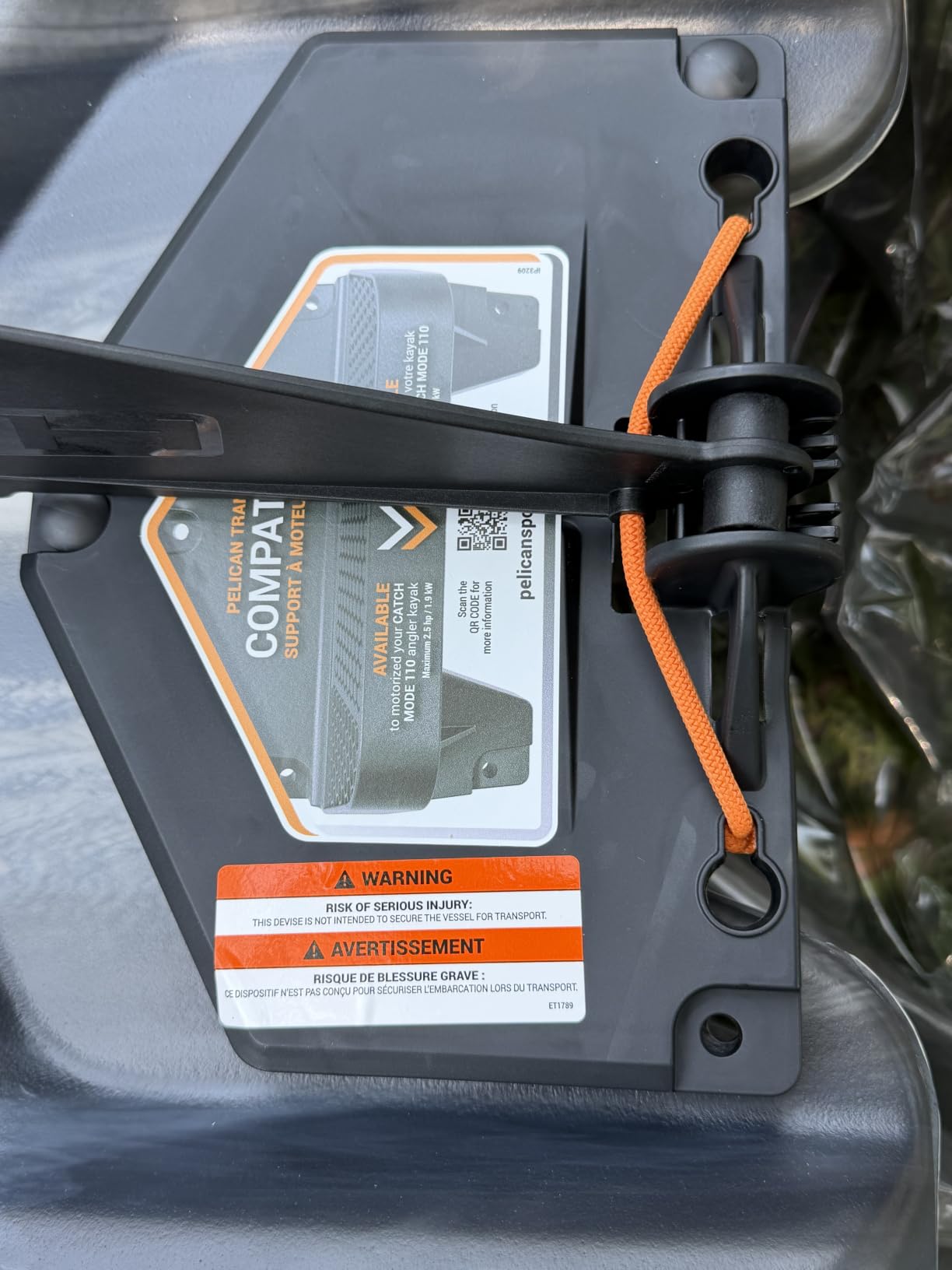
Salt-specific notes: the hull is rotomolded polyethylene with no moving drive parts, so there is no pedal mechanism to corrode, only scupper plugs and the rudder hardware to rinse. Owners note the rudder and skeg improve tracking noticeably, and that the wide beam makes slow paddle work on an outgoing tide the main compromise. This is a boat for creeks, bays and flat water inside the inlet.
Who the Catch Mode 110 suits
Anglers who want to stand and cast, who carry a cooler and a crate of tackle, and who would rather not own a trailer. Reviewers repeatedly highlight stability even with heavy riders and gear aboard, and the 67-pound hull weight is light enough for one person to load onto a truck bed or roof.
Where the Catch Mode 110 falls short
It is a wide, flat hull, so speed and tracking suffer compared with the longer Tarpon, and with the skeg raised it will spin in current. There are no sealed dry compartments, the paddle is not included, and paddle strap hooks occasionally arrive missing from the box.
2. Old Town Sportsman PDL 106 – Best Pedal Kayak for Casting in Salt
Old Town Sportsman PDL 106 Sit-on-Top Fishing Kayak, Steel Camo
10 ft 6 in long
450 lb max capacity
343 lb usable capacity
107 lb dry weight
Pros
- Stable quiet pontoon-style hull
- Instant forward and reverse pedal response
- Mesh seat with real lumbar support
- Transducer mount and accessory tracks
Cons
- Heavy at 107 pounds to load
- Paddle sold separately
- Some buyers prefer wheels over cartopping
Pedal drive is the single biggest change most saltwater anglers make, because it puts both hands on the rod while you move. This model answers the question that PAA users ask most about pedal kayaks: which one actually holds up in salt? Owners report a quiet, responsive drive that works in wind and current, and a seat they can adjust for leg length.
The drive is the easy-docking pedal unit with a removable console weighing 18 pounds, and the hull carries a 450-pound maximum rating with 343 pounds of usable capacity once the angler and gear are aboard.
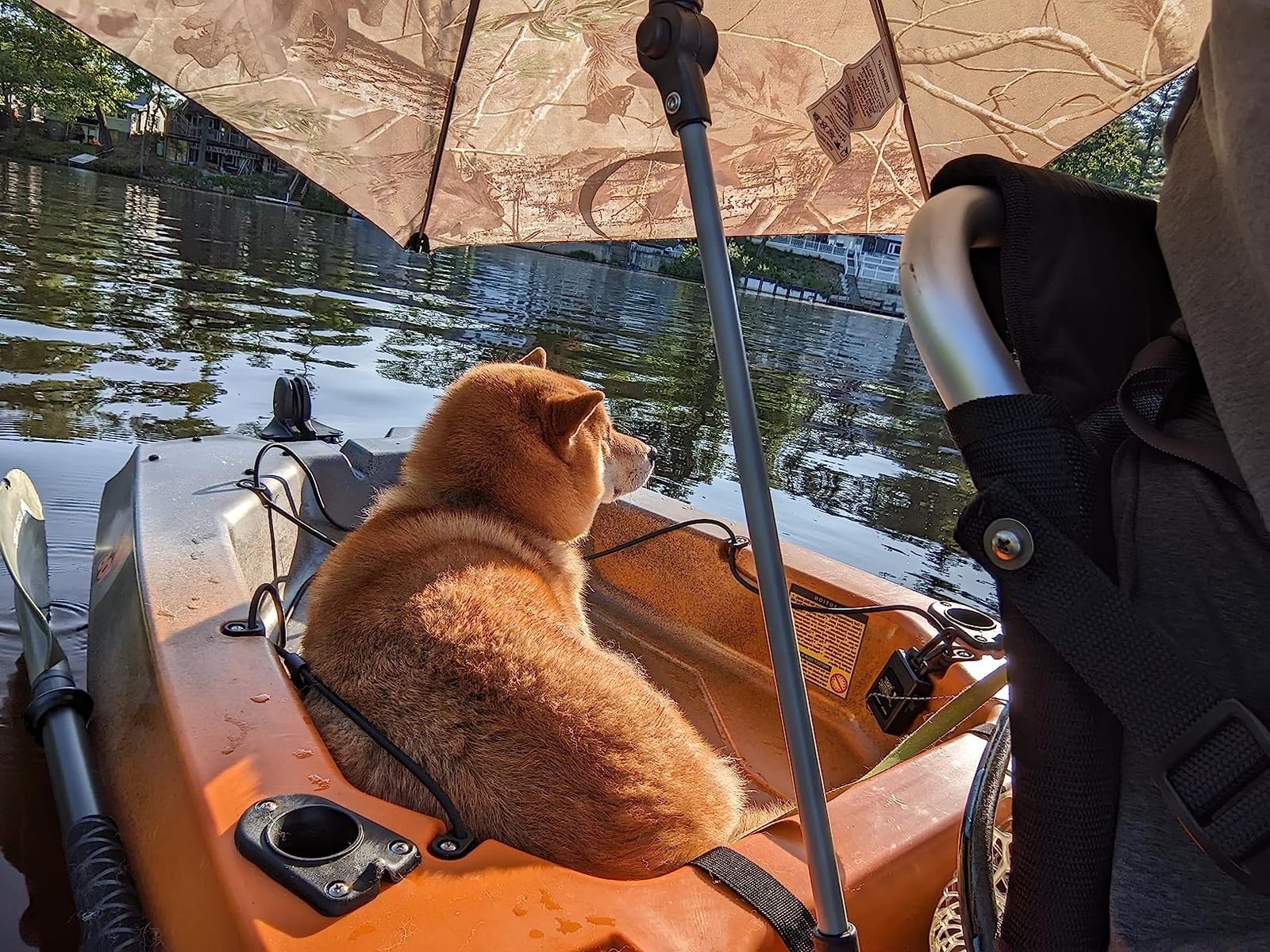
What makes it a fishing boat rather than a pedal kayak is the rigging: universal transducer mounting, custom accessory tracks, cushioned floor pads, a supplied tackle box and multiple rod holders. Owners who stand to cast describe a tank-like platform that holds up to standing and bouncing without drama.
Salt-specific notes: a pedal drive is the highest-maintenance part of any of these kayaks. The drive pins, linkage and rudder cable live in salt water every trip, so a freshwater rinse after each paddle is not optional. The five-year PDL drive warranty and the limited hull warranty are stronger than most, but parts availability matters more than warranty length once a pin starts to pit.
Who the Sportsman PDL 106 suits
Angler who fish reds and trout across flats and channels and want to cover water while casting, especially anyone moving between spots rather than sitting on one. If you have ever considered our pedal kayak comparison, this is the Old Town entry in that field.
Where the Sportsman PDL 106 falls short
At 107 pounds it is one of the heavier boats here, so solo loading needs a plan, and the paddle is sold separately, which is a strange omission on a fishing kayak. At 10 ft 6 in it is shorter than the 12-foot hulls, so it is not the boat for long crossings or exposed surf.
3. Old Town Sportsman 106 Powered by Minn Kota – Best for Motor Power
Old Town Sportsman 106 Powered by Minn Kota Solo Sit-on-Top Fishing Motorized Kayak, with Minn Kota Motor, 10 ft 6 in, Ember Camo
10 ft 6 in long
525 lb max capacity
329 lb usable capacity
121 lb dry weight
Pros
- Saltwater-ready 45 lb thrust Minn Kota motor
- Three through-hull wiring kits
- Roomy cockpit with extra-large rudder
- Mesh seat comfortable on long days
Cons
- Heaviest hull in the roundup at 121 pounds
- Trolling motor battery is not included
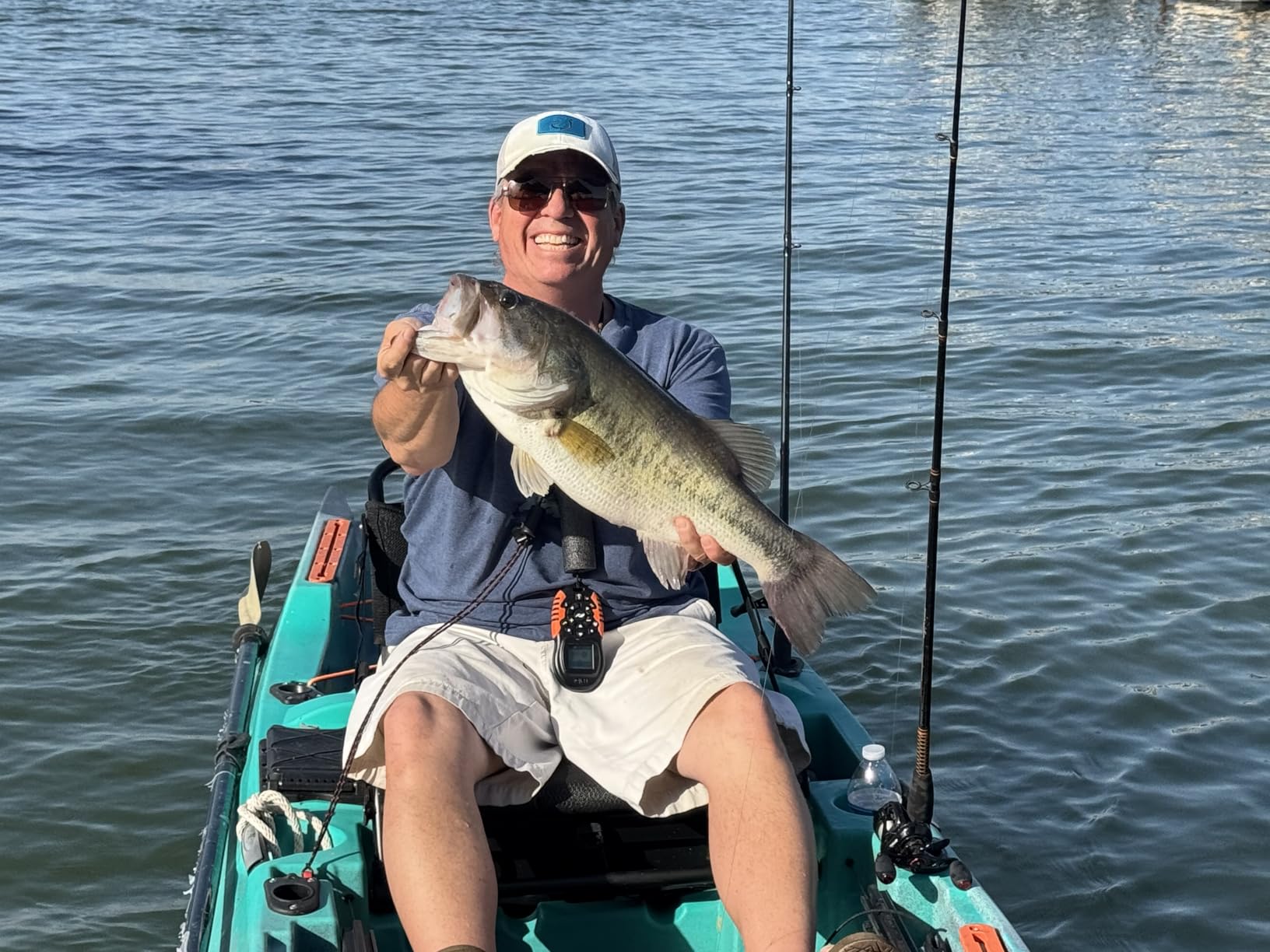
Motorised is a different proposition from pedalled. With a saltwater-rated Minn Kota unit producing 45 pounds of thrust, you cover ground with the throttle held, arrive where you want on an incoming tide, and keep your hands free for the lure. Owners who have previously run ocean, Hobie and Perception kayaks rate the build quality highly for exactly this reason.
That thrust needs electricity, and the battery is not included. Budget for a lithium pack rather than lead; anglers consistently report that the weight saving on electronics batteries is what makes motoring practical in a boat this size.
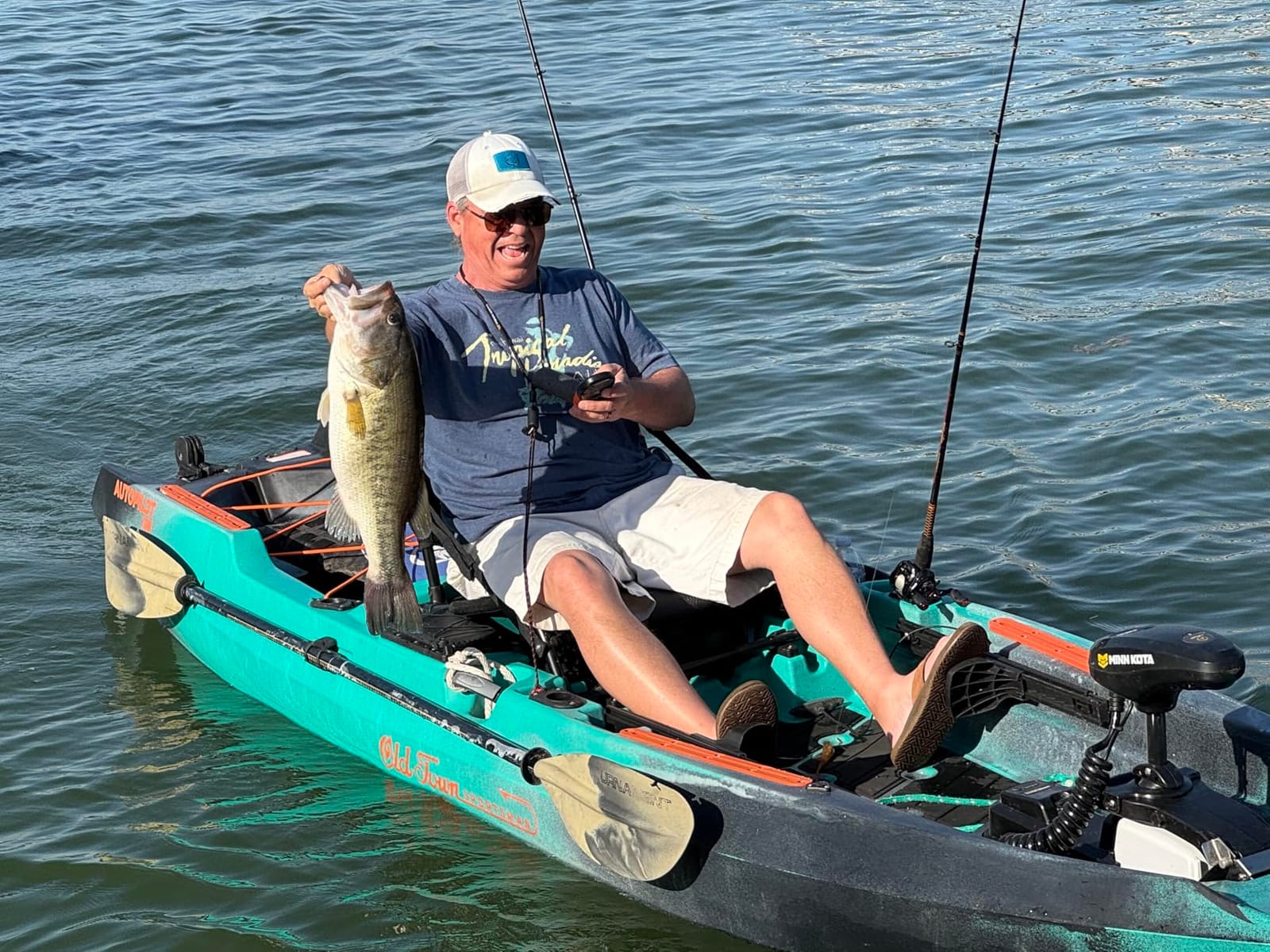
The electrical groundwork is unusually well done. Three through-hull wiring kits and a universal transducer mount mean a fish finder and a motor can be installed without cutting into the hull or routing cables across the deck. The console cover plate keeps the battery bay tidy and protected from spray.
Salt-specific notes: an electric motor in salt water is a corrosion item like any other. Submersed connectors, the motor shaft and the wiring penetrations all need rinsing with fresh water after every trip, and the two-year motor warranty is shorter than the five-year drive warranty offered on the pedal model. Range planning still matters; you are not getting open-water endurance out of a single battery.
Who the Sportsman 106 Minn Kota suits
Anglers covering long distances on shallow flats who would rather arrive quickly than paddle, and anyone already set up with a trolling motor, battery and wiring from another boat. The 525-pound maximum capacity also gives heavier paddlers more headroom than most of the sit-on-tops here.
Where the Sportsman 106 Minn Kota falls short
At 121 pounds it is the heaviest hull we reviewed, and one person cannot lift it onto a roof rack. You are also buying a motor package in progress: battery, wiring hardware and connector maintenance all sit on top of the boat cost.
4. Perception Outlaw 11.5 – Best for Heavier Anglers
Perception Kayaks – Outlaw 11.5 Fishing Kayak – Sit on Top – Fold Away Lawn Chair Seat – 4 Rod Holders – Integrated Tackle Trays – 11.5 ft – Dapper
11 ft 6 in long
35 in beam
425 lb capacity
made in the USA
Pros
- 425 lb capacity suits heavier anglers
- Four rod holders and tackle trays within reach
- Fold-away frame seat adds deck space when removed
- Large rear tankwell plus front storage
Cons
- Wide heavy hull is less nimble in open water
- Fold-away seat is less supportive on very long sessions
The Outlaw answers a question that gets skipped in most roundups: what if you are a larger paddler and everything else feels tippy with a cooler aboard. The 425-pound capacity is second only to the tandem model in this group, and the 35-inch beam gives it a planted feel when you stand up.
With 306 reviews behind it, this is also one of the best-documented hulls here, and the feedback is consistent: fishing-ready layout, generous storage, and stability that heavier paddlers specifically call out.
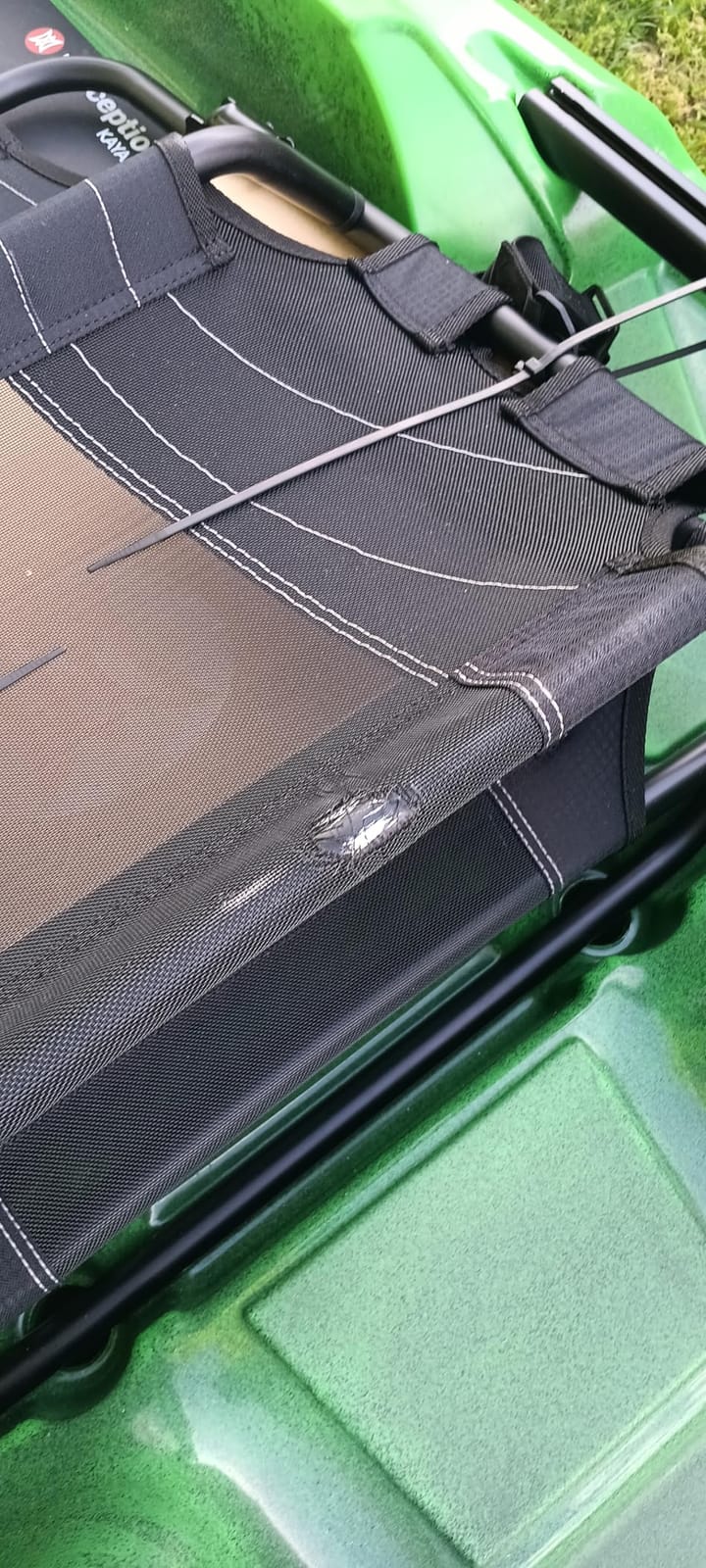
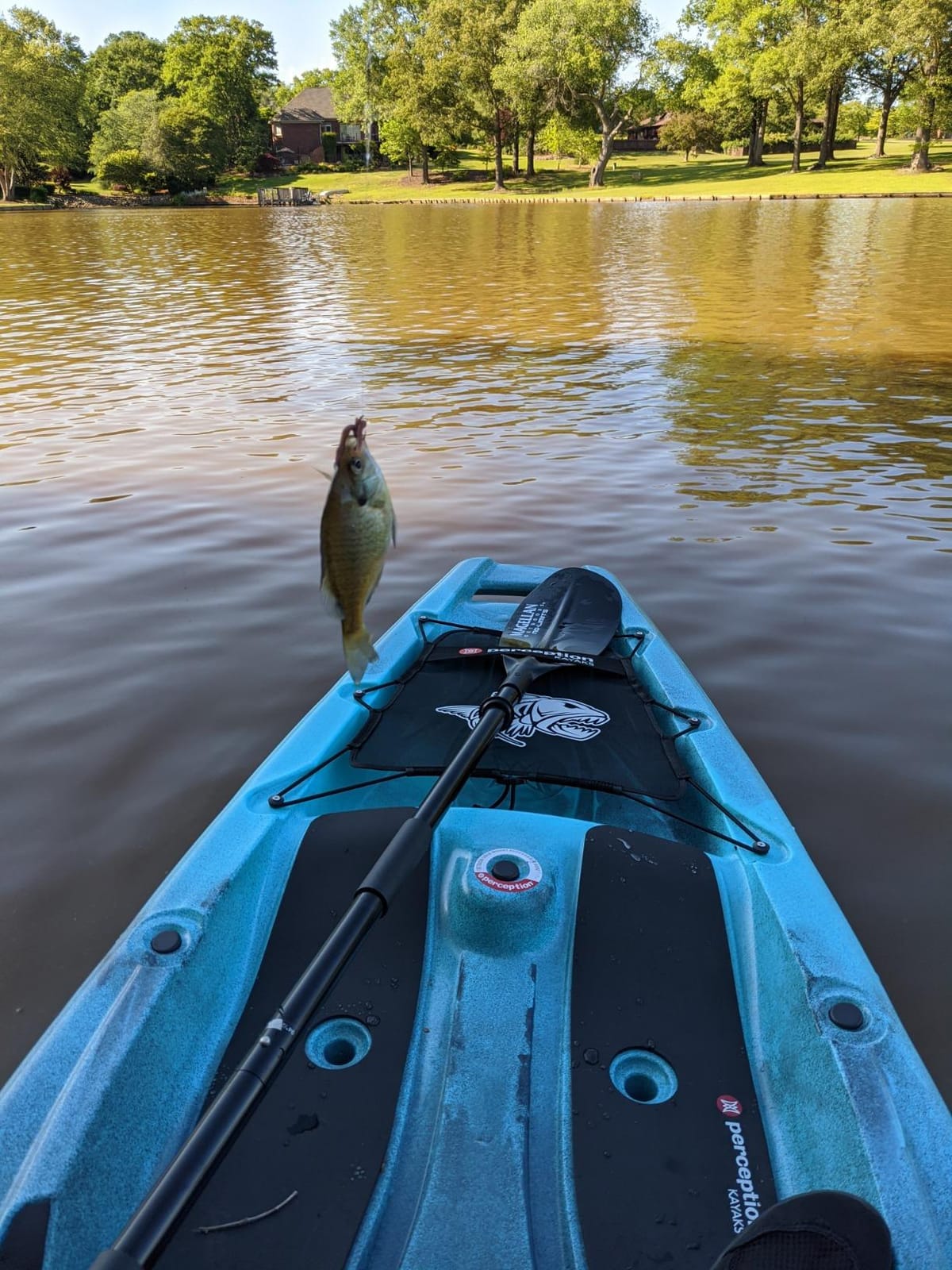
The fittings are the point. Four integrated rod holders and tackle trays are within arm reach rather than bolted on later, and the fold-away frame lawn chair seat lifts out to open up deck space when you want to stand. The large rear tankwell and front storage swallow a crate, a cooler and dry bags without a fight.
Salt-specific notes: rotomolded polyethylene with a five-year hull and deck warranty against material and manufacturing defects, plus one year on installed accessories. There is no drive system to corrode, which makes maintenance mostly scupper plugs, rod holders and the spray you carry home. The tradeoff reviewers mention most is speed: a wide hull this size does not paddle quickly across open water.
Who the Outlaw 11.5 suits
Anglers above 250 pounds who want rod holders and tackle trays already in the right place, plus anyone fishing sheltered bays, creeks and estuaries where a stable platform matters more than speed. Our stability-focused picks cover the same priorities in more depth.
Where the Outlaw 11.5 falls short
The wide, heavy hull is less nimble for fast open-water paddling, and the fold-away seat draws complaints from anglers who sit for a full day without an aftermarket back pad. Weight is not listed by the manufacturer for this model, which makes cart planning harder than it should be.
5. Reel Yaks Raptor 9.5 – Best Value Pedal Kayak That Fits in a Trunk
Reel Yaks Raptor Modular Fishing Kayak, Fin Drive 9.5ft, 380 lbs Capacity
9.5 ft long
380 lb capacity
62 lb hull weight
two-piece modular
Pros
- Two-piece hull fits a trunk
- garage or closet
- Quiet efficient fin-drive pedal system
- Comes rigged with rails
- rod holder and hatches
- Optional centre module converts to tandem
Cons
- Rudder wiring and ferrule parts are hard to service
- Seat sits very low with no height extender
- Accessory rails need loosening to install add-ons
Here is the kayak that answers the transport objection outright. The hull splits into two sections, so it goes in an SUV trunk, a closet or a small apartment without a roof rack or a trailer, and at 62 pounds the pieces are carryable solo. For an angler whose real barrier to kayak fishing is getting the boat to the water, that changes the whole equation.
Owners consistently call it exceptional value against far costlier pedal kayaks, and the fin drive moves quietly and efficiently even against wind and current.
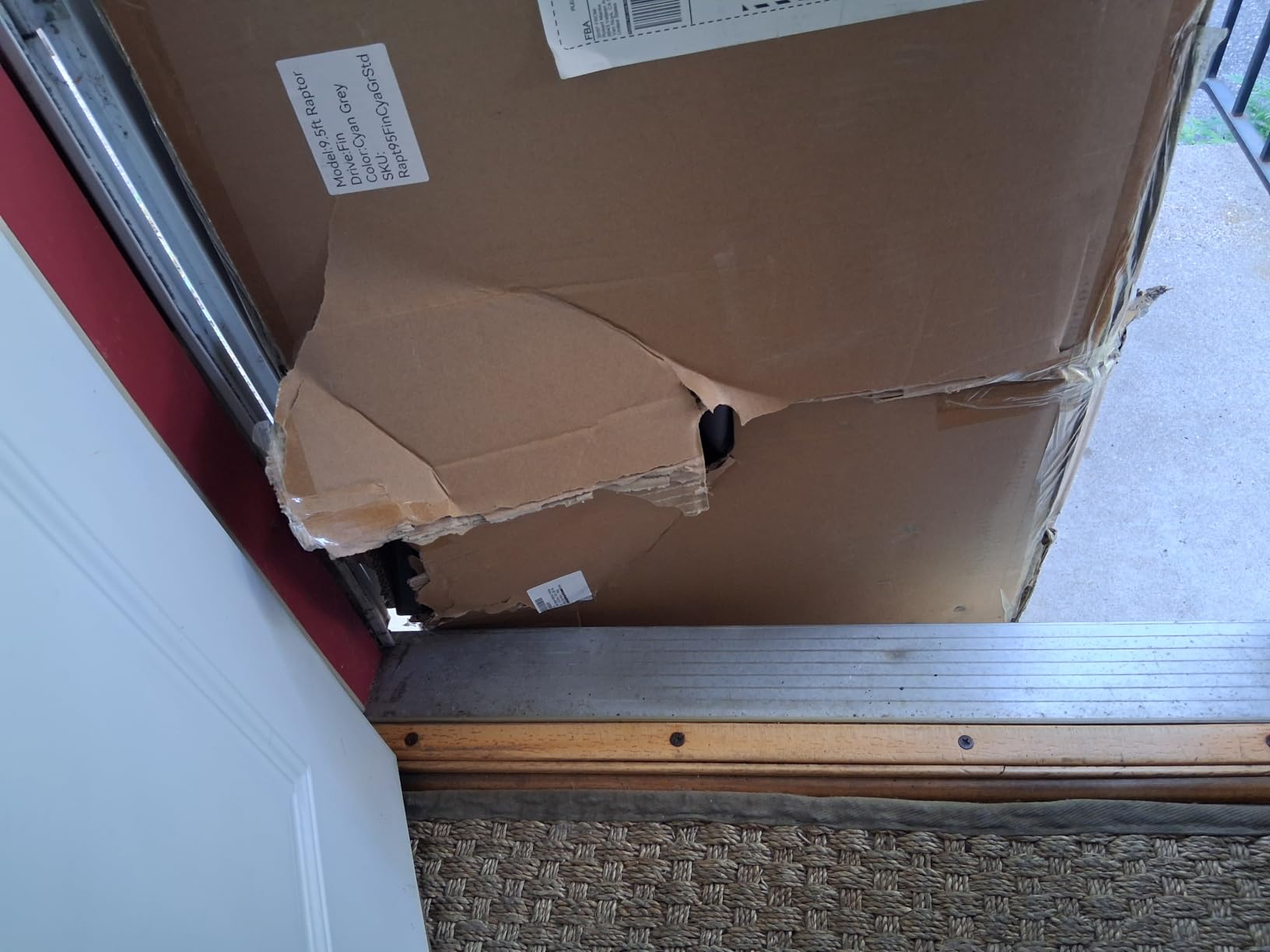
Rigging out of the box is good: flush mount rod holders, track rails, storage hatches and a wide W-hull for casting confidence, with 380 pounds of capacity. The included paddle is basic and most owners upgrade, but the seat is the piece to check before you commit.
Salt-specific notes: this is the honest caveat on this pick. Several owners report rudder wiring, ferrule and guide screw components breaking, and these are fiddly parts to service away from a dealer. In salt water that hardware deserves a rinse every single trip and an eye on the linkage before each launch. It is a one-year limited hull warranty, the shortest of the group, so treat it as a portable first pedal kayak rather than a lifetime boat.
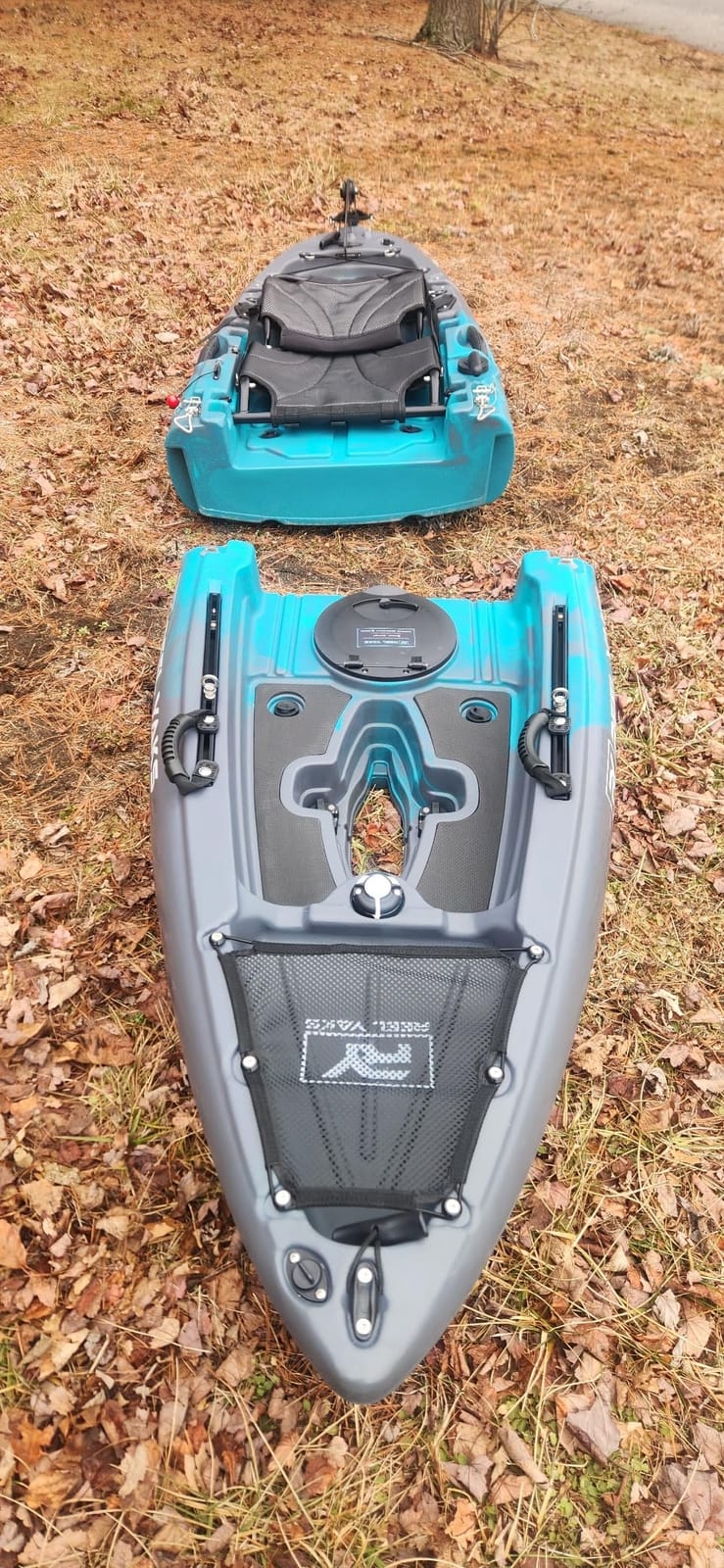
Who the Raptor 9.5 suits
Renters, apartment paddlers, and anyone who fishes alone with a folding cart and no vehicle bed. It is a strong first pedal kayak because the fin drive teaches the technique on a hull light enough to wrestle onto a beach.
Where the Raptor 9.5 falls short
The seat sits very low with no height extender, which hurts sight-casting and comfort for taller paddlers. Rudder hardware durability is the most common complaint, and at 9.5 ft it is short for open-bay crossings in a chop.
6. Wilderness Systems Tarpon 120 – Best Long Hull for Speed and Dry Storage
Wilderness Systems Tarpon 120 – Sit on Top Fishing Kayak – Premium Angler Kayak – Adjustable and Designed Seat – 12.3 ft – Galaxy
12 ft 3 in long
63 lb boat weight
350 lb capacity
limited lifetime hull warranty
Pros
- Fast straight tracking for its length
- Stable enough for open water and surf
- Exceptionally comfortable adjustable air seat
- Large rear well plus front dry-storage hatch
Cons
- Seat sits low for standing casts
- Seat fabric and trim fade with sun exposure
- Occasional boxes arrive scratched or missing accessories
The Tarpon is the boat in this roundup that actually paddles like a kayak. At 12 ft 3 in it tracks straight and holds speed, which matters when you are covering a long flat before the tide turns. Long-term owners who run it out of estuary, mangrove and open-ocean water repeatedly single out speed, tracking and comfort as the strengths.
It is also the only hull here with real dry storage: a front dry-storage hatch, a sectioned tray and a removable Dry Tec dry box, which keeps tackle and electronics out of the spray that soaks open rigs.
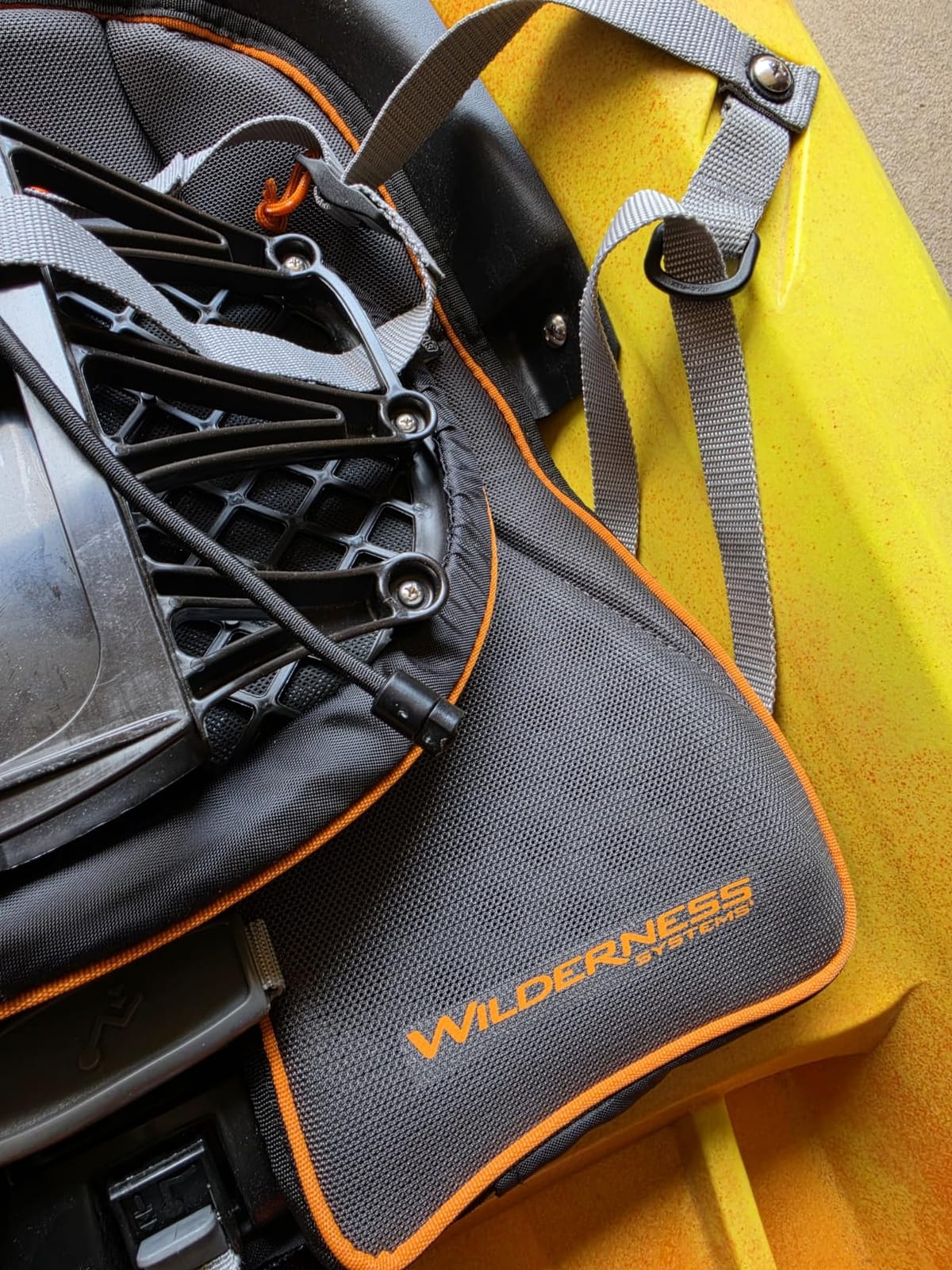
The Phase 3 air Pro cool-touch seating system is the feature owners mention first. It is an adjustable seat with genuinely supportive back, and the Sidetracks accessory rails plus the Magnate magnetic bottle strap system make it straightforward to add a fish finder and cameras without drilling.
Salt-specific notes: the hull carries a limited lifetime warranty on hull and deck with one year on installed accessories, which is the strongest hull warranty language among the picks here. There is no drive assembly, so maintenance is routine rinsing and scupper plugs. Two honest cautions: the seat sits low, which is awkward for standing casts, and the seat fabric and trim fade with prolonged sun exposure, which is a real issue on open coastal water.
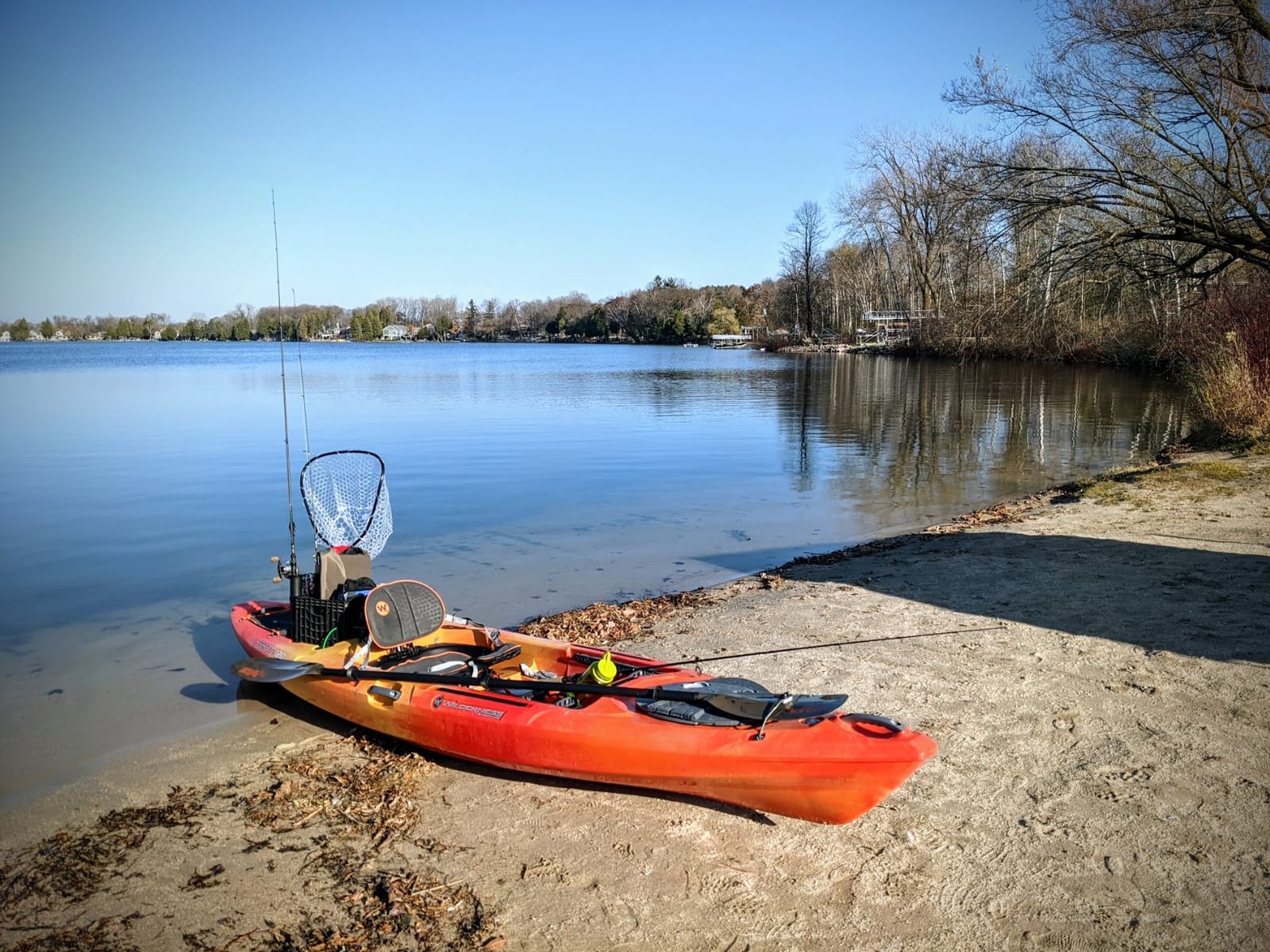
Who the Tarpon 120 suits
Anglers who paddle distance as part of the trip, who want sealed storage for tackle and electronics, and who fish exposed water where tracking and speed protect you on the return. At 63 pounds it is still liftable solo with a cart.
Where the Tarpon 120 falls short
The low seat is the biggest practical drawback for anglers who stand to cast. Some boats also arrive scratched or missing the Dry Tec box, scupper plugs or bottle strap, which means a warranty claim before the first launch.
7. Pelican Catch PWR 100 – Best for Swivel Seating and Motor Rigging
Pelican Catch PWR 100 – Sit-on-Top Fishing Kayak – Ergo360 Seating System – 10 ft – Light Kaki
10 ft long
450 lb capacity
75 lb hull weight
transom for motors to 2.5 hp
Pros
- Ergo360 seat swivels 360 degrees on sliding tracks
- Pre-wired with a front battery compartment
- Pre-installed transom accepts gas or electric motors
- Good deck space with four rigging tracks
Cons
- Heavier than comparable 10 foot angler kayaks
- Wide hull needs a longer paddle
- Occasional missing hardware on delivery
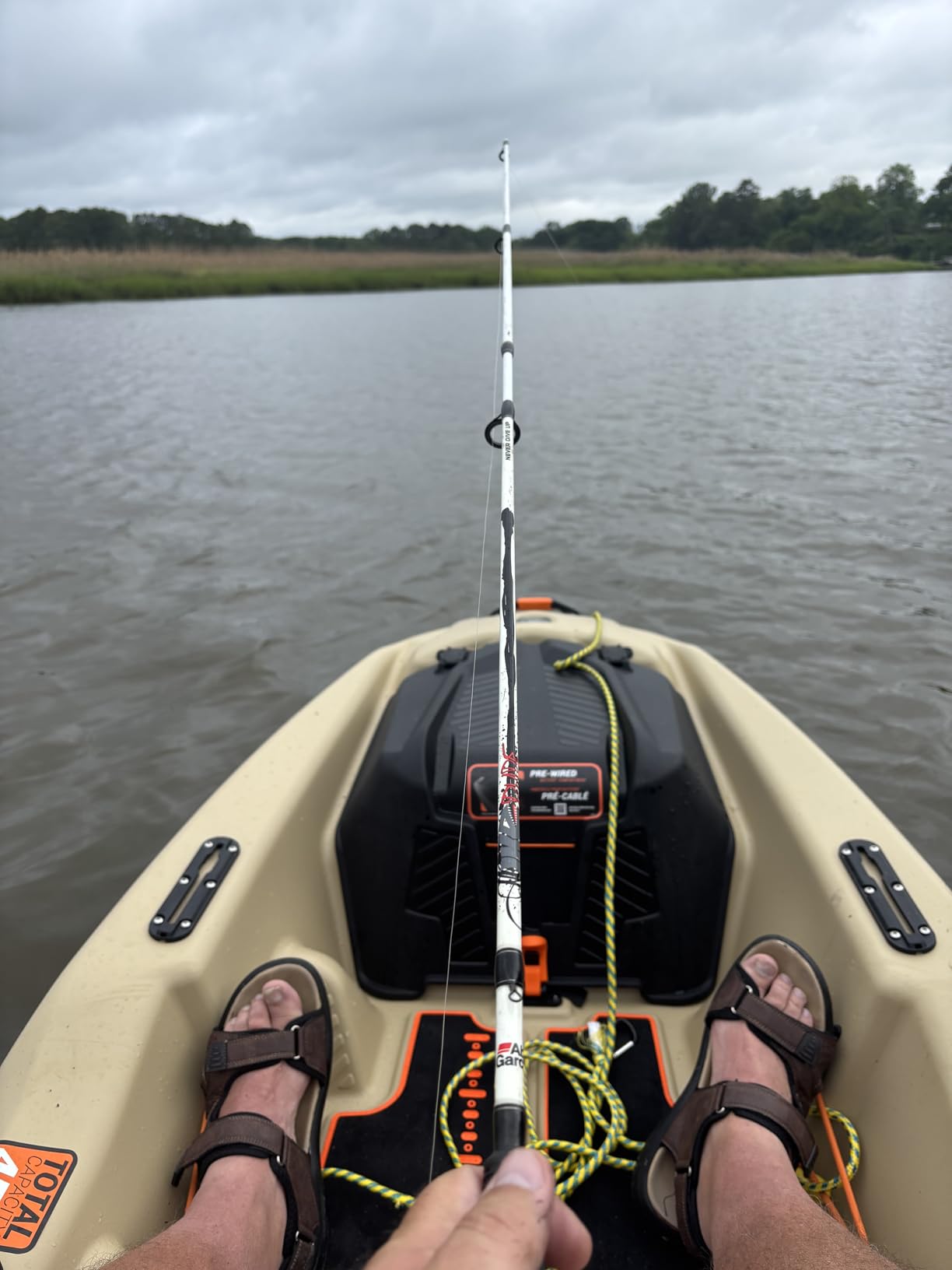
The defining feature is the seat. The Ergo360 system rides on sliding tracks and swivels a full 360 degrees, so you can fish facing forward, backward or sideways without twisting your back or kneeling on a wet deck. Several owners have added an electric motor successfully, which is exactly what the pre-wired layout is designed for.
It is also a wide, stable hull rated to 450 pounds, which makes it a comfortable platform for larger paddlers who struggle with narrower boats.
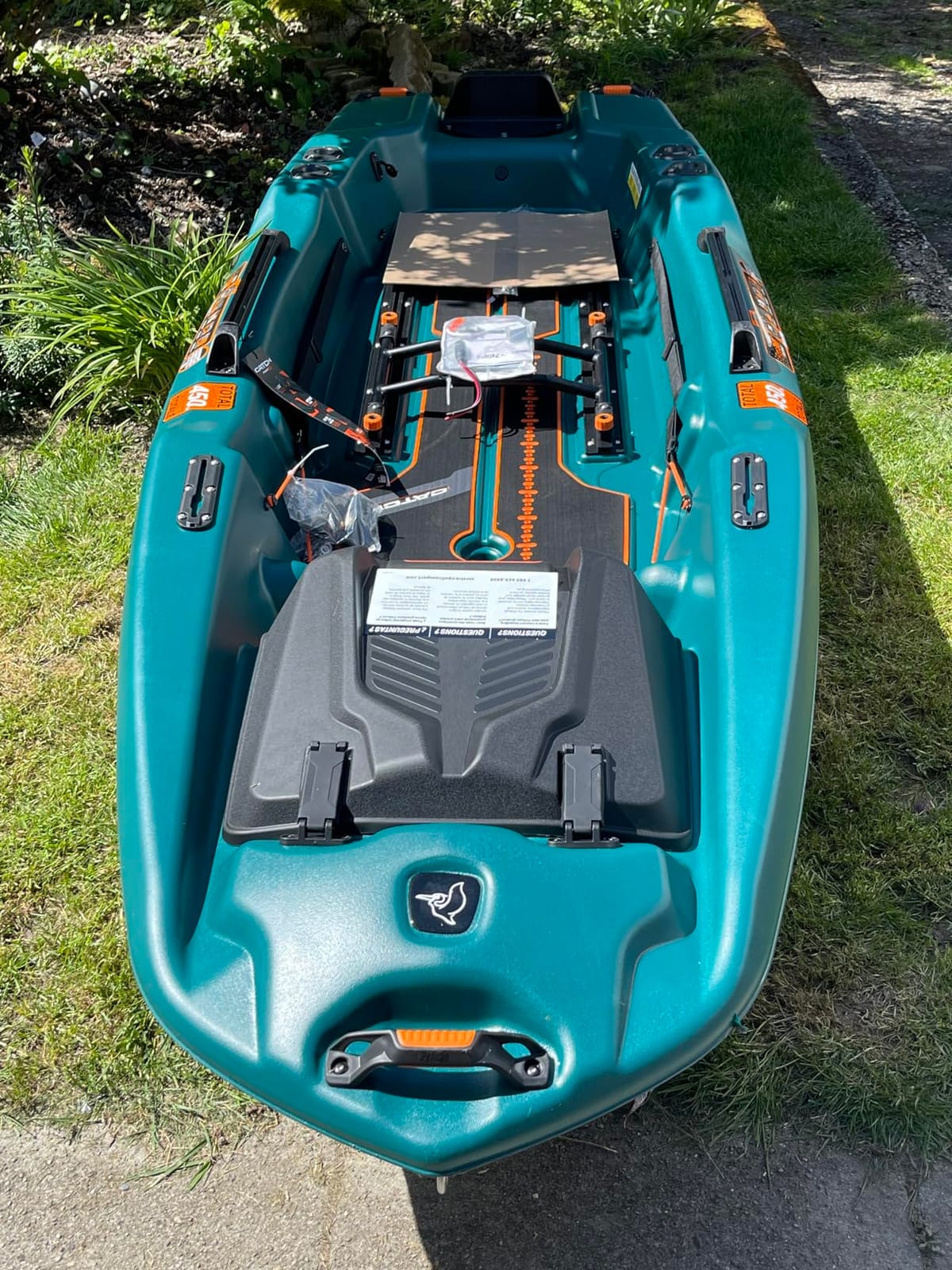
The motor provisions are the most complete here: a pre-installed independent transom accepts gas or electric motors up to 2.5 hp, and the boat comes pre-wired with battery storage in the front compartment. Two 4-inch front rigging tracks and two 15-inch in-handle tracks give plenty of mounting options for a fish finder, rods and tackle, and the anti-slip traction pads have a built-in ruler for handling fish.
Salt-specific notes: a pre-installed transom is a permanent metal component exposed to spray, so it belongs at the top of your rinse list along with the wiring outlet and any motor connector. The lifetime limited warranty against manufacturer defects is solid, with one year on parts and accessories. At 75 pounds it is heavier than comparable 10-foot angler kayaks, which affects solo launching more than it affects the trip.
Who the Catch PWR 100 suits
Anglers who spin the boat constantly between targets, who want the option to motor later without re-rigging, and who like fishing at different heights without moving a seat bracket. It is a strong fit for bigger paddlers who need a wide, planted hull.
Where the Catch PWR 100 falls short
The wide hull needs a longer paddle than the boat’s nominal length suggests, and 75 pounds is real weight for one person. Units have occasionally arrived without a mount rail or wiring outlet, so check the box contents before you leave the driveway.
8. Reel Yaks Radar 10 – Best Modular Pedal Power with Reverse
Reel Yaks Radar Modular Fishing Kayak, 10ft, 430 lbs Capacity
10 ft long
430 lb capacity
88 lb total weight
propeller drive with reverse
Pros
- Propeller drive gives instant forward and reverse
- Two-piece sections carry without a roof rack
- Wide W-hull and 430 lb capacity
- Arrives rigged with rod holder and rails
Cons
- Heavier than the 9.5 foot Raptor
- Rudder hardware durability concerns reported on this type
The Radar is the step up from the Raptor in one specific way: a propeller drive with instant forward and reverse. Reverse matters in salt because it is how you back out of a mangrove edge or a current seam without turning your back to the fish or your bow to the current.
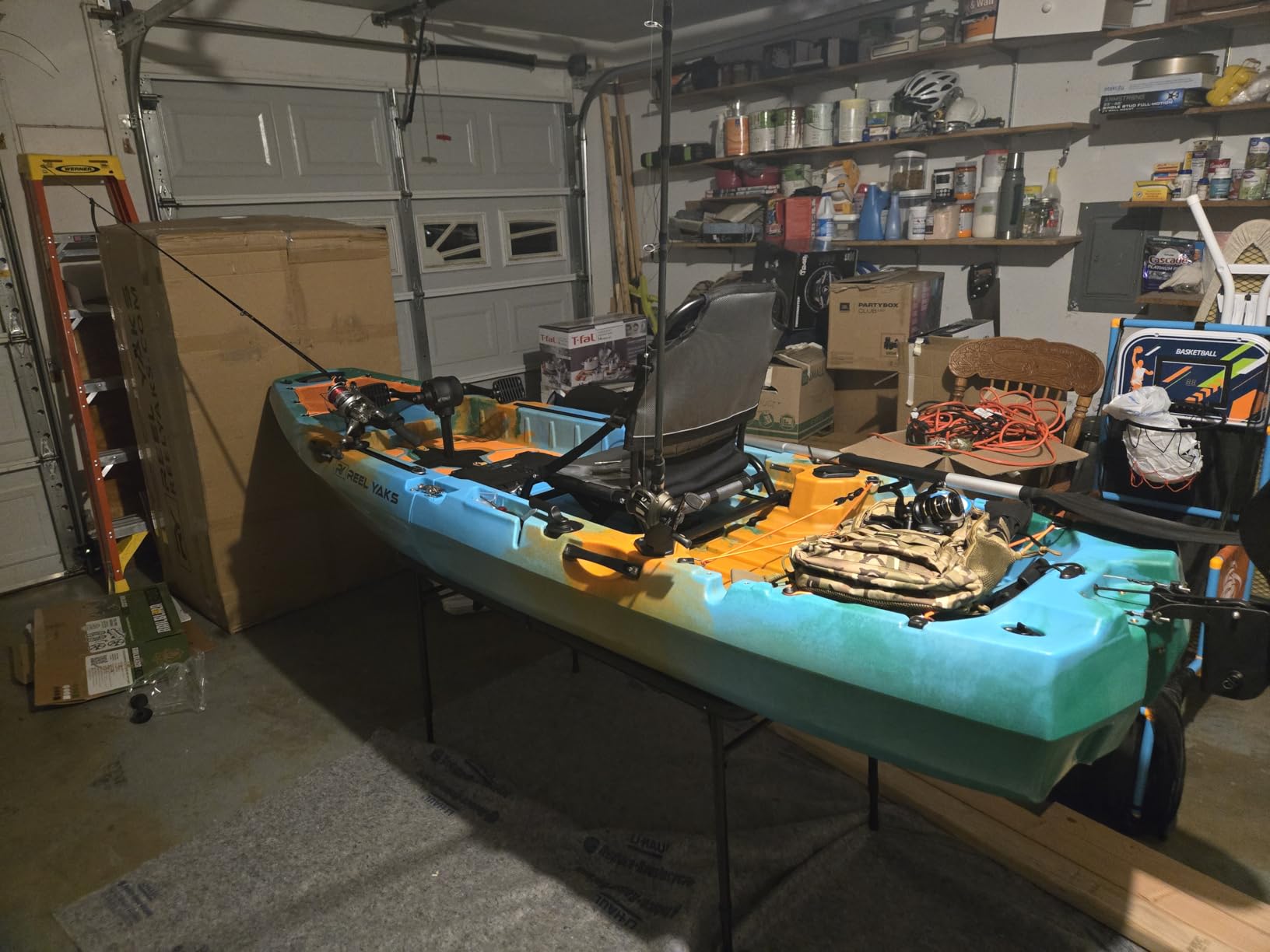
Feedback centres on the responsive drive, the stable wide hull and easy two-piece transport, with customers reporting the kayak comes well accessorized out of the box.
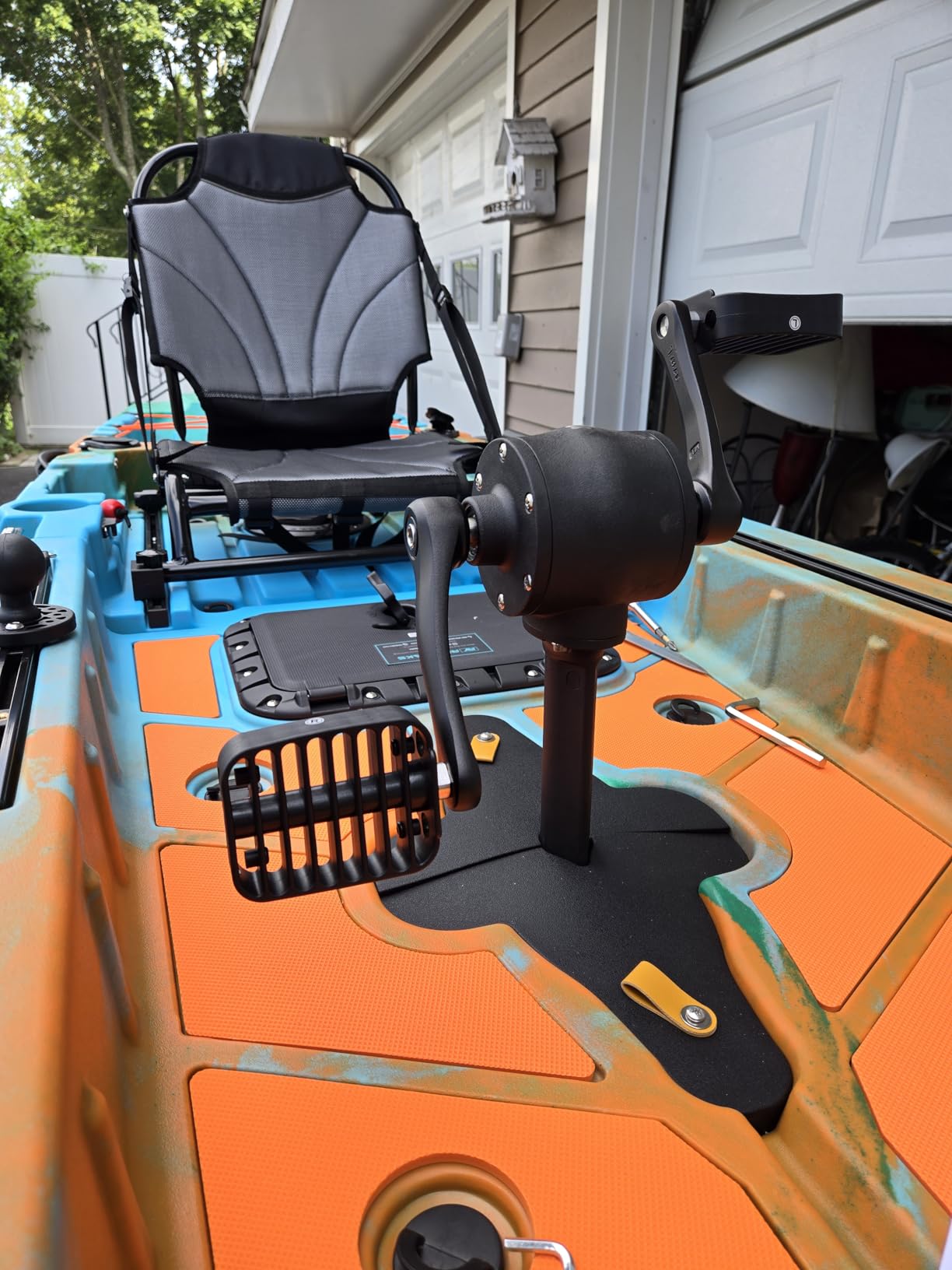
The wide W-hull is built for casting and reeling confidence, and the 430-pound capacity gives more load margin than the smaller Raptor. Flush mount rod holders, track rails and storage hatches are standard, and the two-piece hull separates for trunks, garages and closets. A two-year hull warranty covers the sections themselves.
Salt-specific notes: a propeller drive puts a shaft and a gear housing in the water every trip, so it carries the same corrosion exposure as any pedal system. Owners of pedal models of this type share reports of rudder hardware durability concerns, so inspect the linkage and rinse it with fresh water after each session. The 88-pound total weight is the practical limit here, since the two pieces are meant to be carryable but not effortless.
Who the Radar 10 suits
Anglers who want pedal hands-free movement plus reverse control, who fish structure where backing out is easier than turning, and who need a hull that separates for storage but still carries a serious load rating.
Where the Radar 10 falls short
It is heavier than its 9.5-foot sibling, so solo carrying is a two-person job in a strong breeze. Pedal-drive rudder hardware is the recurring durability question across this category, and serviceability depends on parts availability in your area.
9. Lifetime Tamarack Angler 100 – Best First Saltwater Fishing Kayak
Lifetime Muskie Angler Sit-On-Top Kayak with Paddle, Tan, 120″
10 ft long
275 lb capacity
51 lb boat weight
paddle included
Pros
- Lightest hull in the roundup at 51 pounds
- Stable flat bottom that handles chop
- Deep hull channels and skeg for tracking
- Paddle and rod holders fitted as standard
Cons
- 275 lb capacity is the lowest here
- Included plastic paddle is flimsy and short
- Molded seat clips bend under weight
With 1343 reviews behind it, this is the most thoroughly owner-tested kayak in the roundup, and the pattern in that feedback is remarkably consistent: sturdy, beginner-friendly, easy to transport and able to take repeated knocks and hauling. If you are moving from freshwater to salt, this is the boat that removes the barrier.
At 51 pounds it is the lightest hull we tested, which means a folding cart gets you from the car to the ramp solo, and it stows against a wall when the season ends.
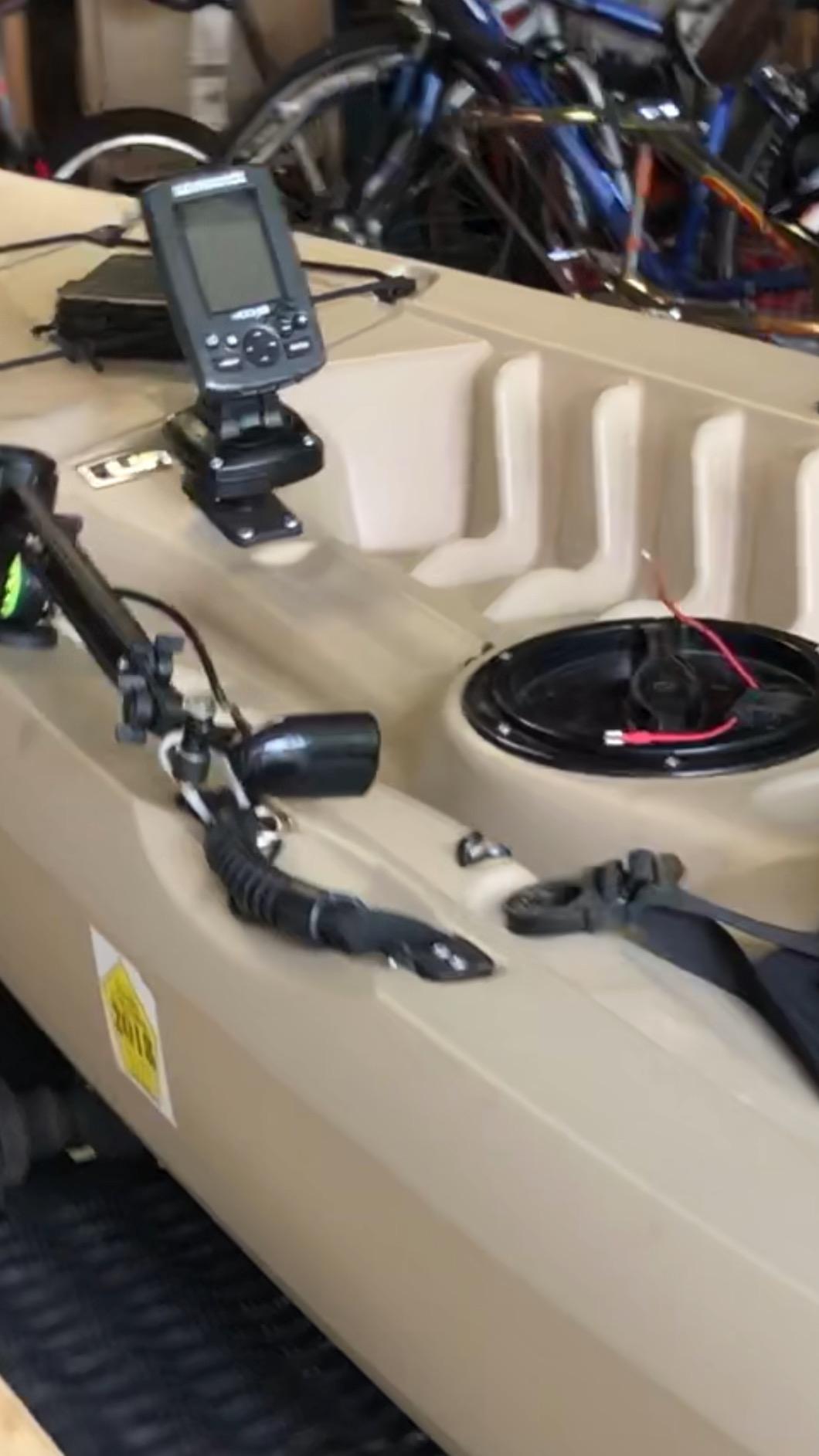
The hull is UV-protected high-density polyethylene with a stable flat bottom, a sharp bow, a skeg and deep hull tracking channels, and owners specifically note it tracks better than most budget sit-on-tops. Two flush-mounted rod holders plus one top-mount holder, a paddle keeper, bungees and two 6-inch storage compartments come as standard.
Salt-specific notes: no drive, no motor, no metal linkage. That is the simplest maintenance story in this roundup, and it is why we recommend it as a first saltwater boat rather than as a serious offshore hull. The 275-pound capacity is the lowest of the twelve, so the 120 Rule below matters a great deal here. Expect to replace the supplied paddle and fit aluminum seat connector clips, which is the modification most owners report making.
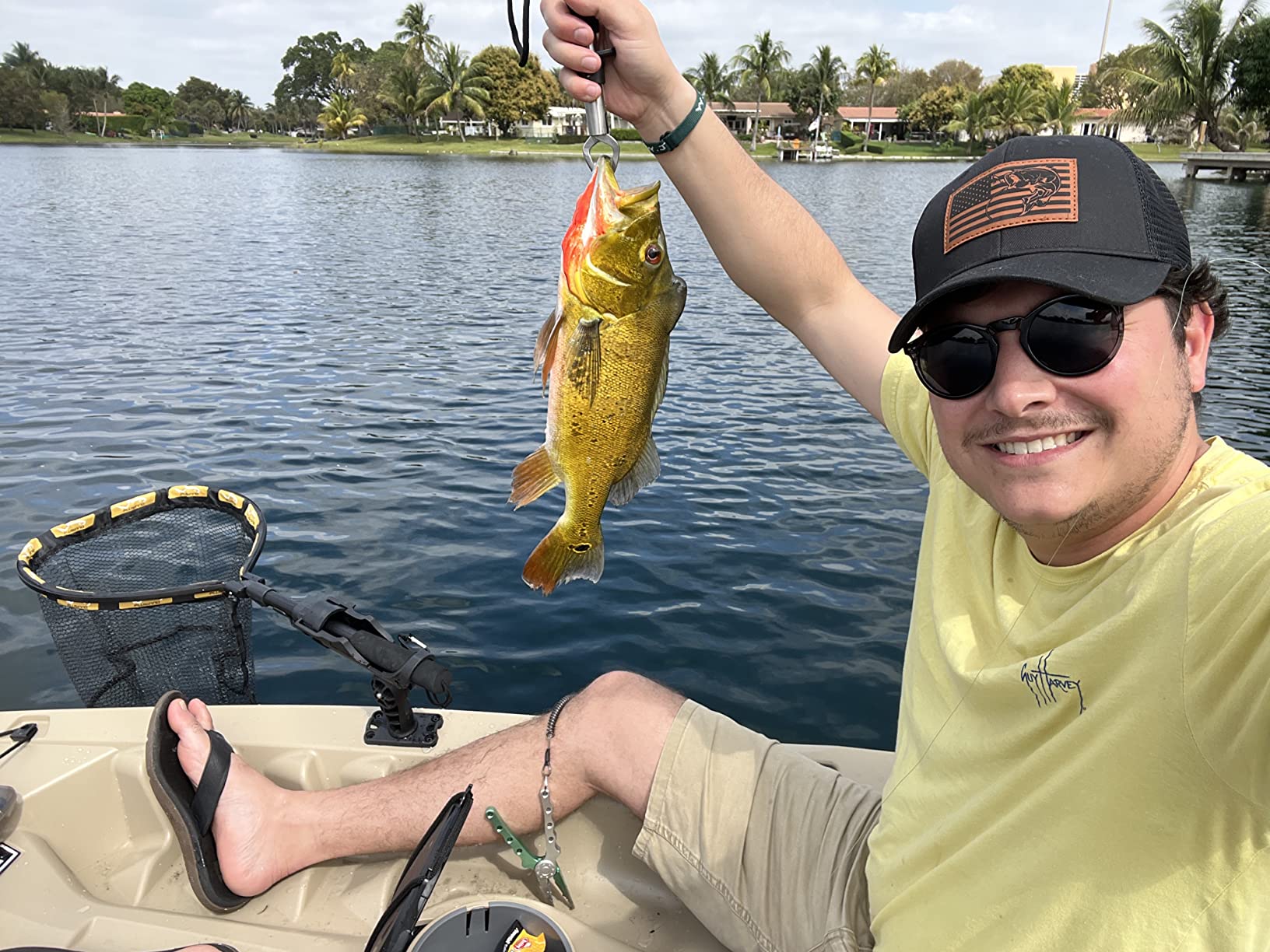
Who the Tamarack Angler 100 suits
New paddlers who want a rigged angler kayak they can carry themselves, anglers fishing protected water such as creeks, ponds and the lee side of a barrier island, and anyone who wants a second boat for launching without help. Our beginner kayak guide covers the paddle skills to practise first.
Where the Tamarack Angler 100 falls short
The 275-pound rating leaves little margin once you add a cooler, tackle and a fish, and the included plastic paddle is flimsy and short enough that most owners buy a longer fishing paddle. Storage cup inserts are sold separately, and loose plastic chips inside the hull are worth vacuuming out after delivery.
10. Lifetime Tamarack Pro 103 – Best Lightweight Kayak with an Angler Layout
Lifetime Tamarack Pro 103 Sit-On-Top Kayak, Lightning Fusion, 10 ft. 3 in.
10 ft 3 in long
300 lb capacity
57.5 lb boat weight
1 adjustable plus 2 flush rod holders
Pros
- Adjustable framed seat and footrests dial in to your legs
- Fishing-ready with rod holders and tackle storage
- Light at 57.5 lbs for solo loading or a cart
- Deep channels and chine rails for tracking and stability
Cons
- 300 lb capacity limits angler plus gear weight
- Basic plastic seat hardware can look cheap
The Pro 103 is the version of the Tamarack that takes fishing seriously without adding much weight. At 57.5 pounds it is still a one-person carry, but it replaces the flimsy plastic seat with an adjustable framed seat and adjustable footrests, which is the single biggest comfort upgrade you can make to a budget angler kayak.
Owners appreciate the complete fishing rigging at this level, along with easy paddling and a hull that tracks and holds a line.
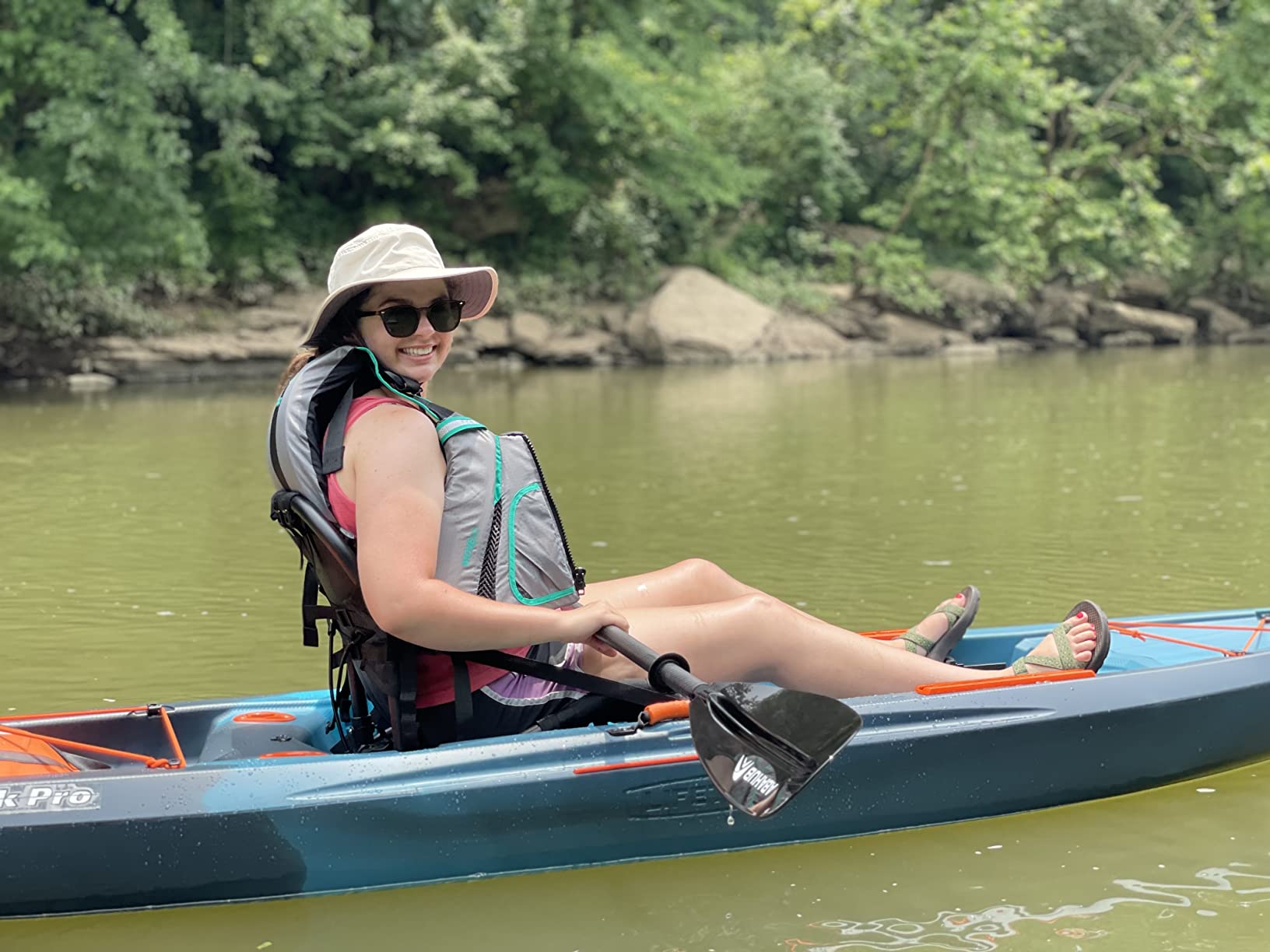
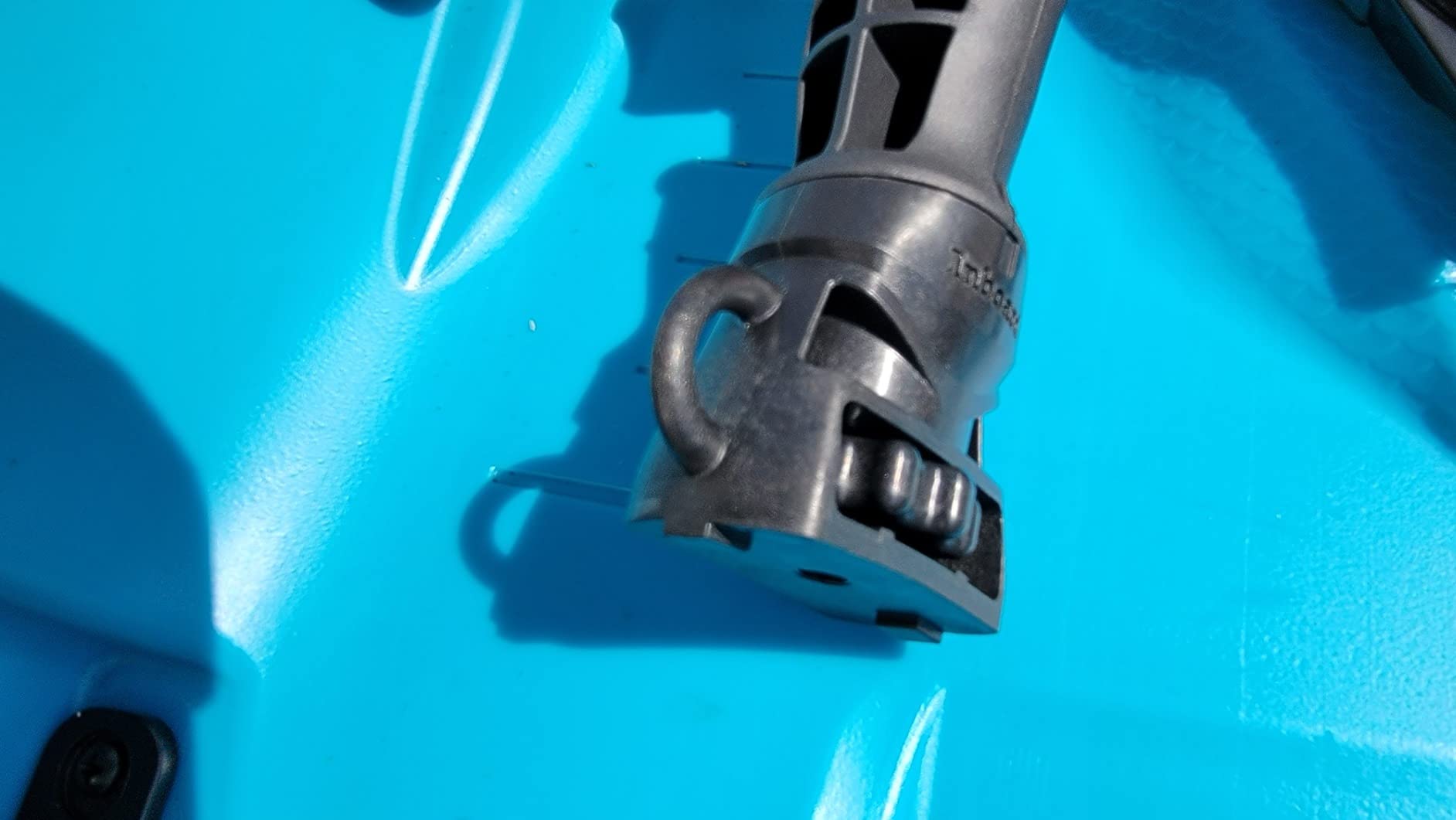
Storage is better than the base model: a centre storage hatch that takes a bucket, plus a deeper tank well, front and rear bungee cords and a paddle keeper. The hull uses deep hull channels for tracking with chine rails for stability, and there is one adjustable plus two flush-mounted rod holders with accessory mounts and a built-in catch ruler.
Salt-specific notes: a five-year limited warranty covers hull and hardware, and again there are no moving parts to corrode. The 300-pound capacity is the second lowest here, so treat it as a solo boat with a modest gear load rather than a cooler-and-crate platform. Nothing in the design is coastal-specific, which means you get freshwater durability without any promise of surf or open-bay capability.
Who the Tamarack Pro 103 suits
Anglers who want a frameless-looking budget boat but need a real framed seat for long sessions, and who want a catch ruler and rod holders already fitted. It handles choppy coastal paddling better than its size suggests because of the chine rails.
Where the Tamarack Pro 103 falls short
Capacity is the limit. At 300 pounds, a 200-pound angler with a loaded cooler is already near the realistic ceiling, so this is not the boat to grow into. Seat and hardware upgrades are common additions among owners.
11. Pelican Catch Classic 100 – Most Versatile with a Stable Tunnel Hull
Pelican Catch Classic 100 Angler – Sit-on-Top Fishing Kayak – Ergocast Dual Position Seating System – 10 ft – Outback
10 ft long
34 in beam
350 lb capacity
57 lb boat weight
Pros
- Stable tunnel hull makes entry and exit easy
- ERGOCAST seat adjusts between high and low
- Front quick-lock hatch plus rear tank well
- Light at 57 lbs with ergonomic carry handles
Cons
- 350 lb capacity is modest for heavier anglers
- Lacks the tank well size and rigging of the Catch Mode 110
- One year parts and accessories warranty
If the Catch Mode 110 is the right boat but too much boat, the Catch Classic 100 is the honest step down. The tunnel hull with added internal flotation meets or exceeds ABYC flotation standards and makes getting in and out simple, which is the reason owners keep buying it.
At 57 pounds with ergonomic carrying handles, it is a genuinely easy solo transport, and the value is the reason it ranks as our budget pick.
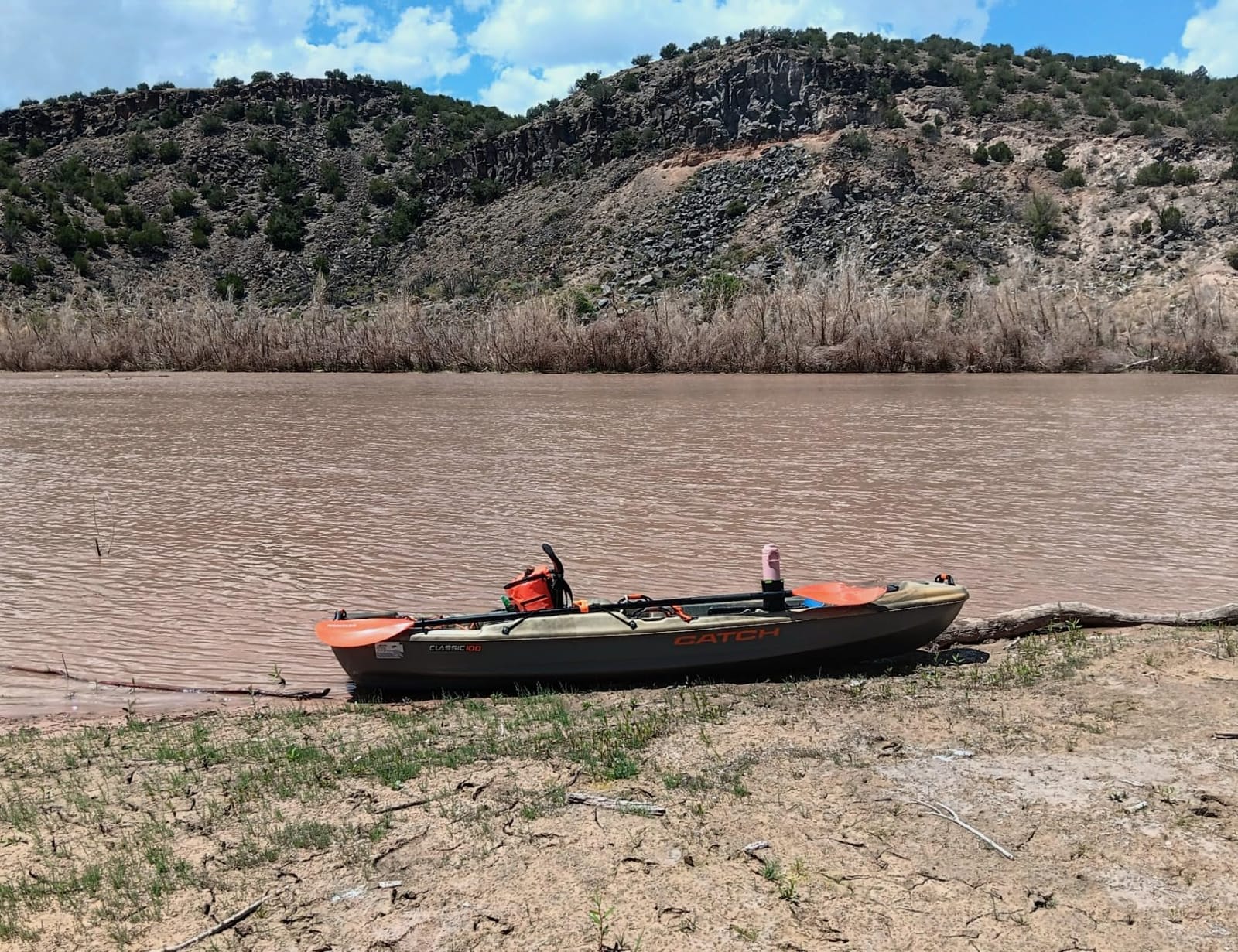
Fishing furniture is present but modest: two flush mount rod holders, two accessory eyelets, two 4-inch rigging tracks, paddle tie-downs, adjustable footrests and a bottle holder, plus a front quick-lock hatch and a rear tank well with bungee cords. The ERGOCAST CLASSIC seat adjusts between high and low positions, so you can raise your sightline on a flat without buying a different boat.
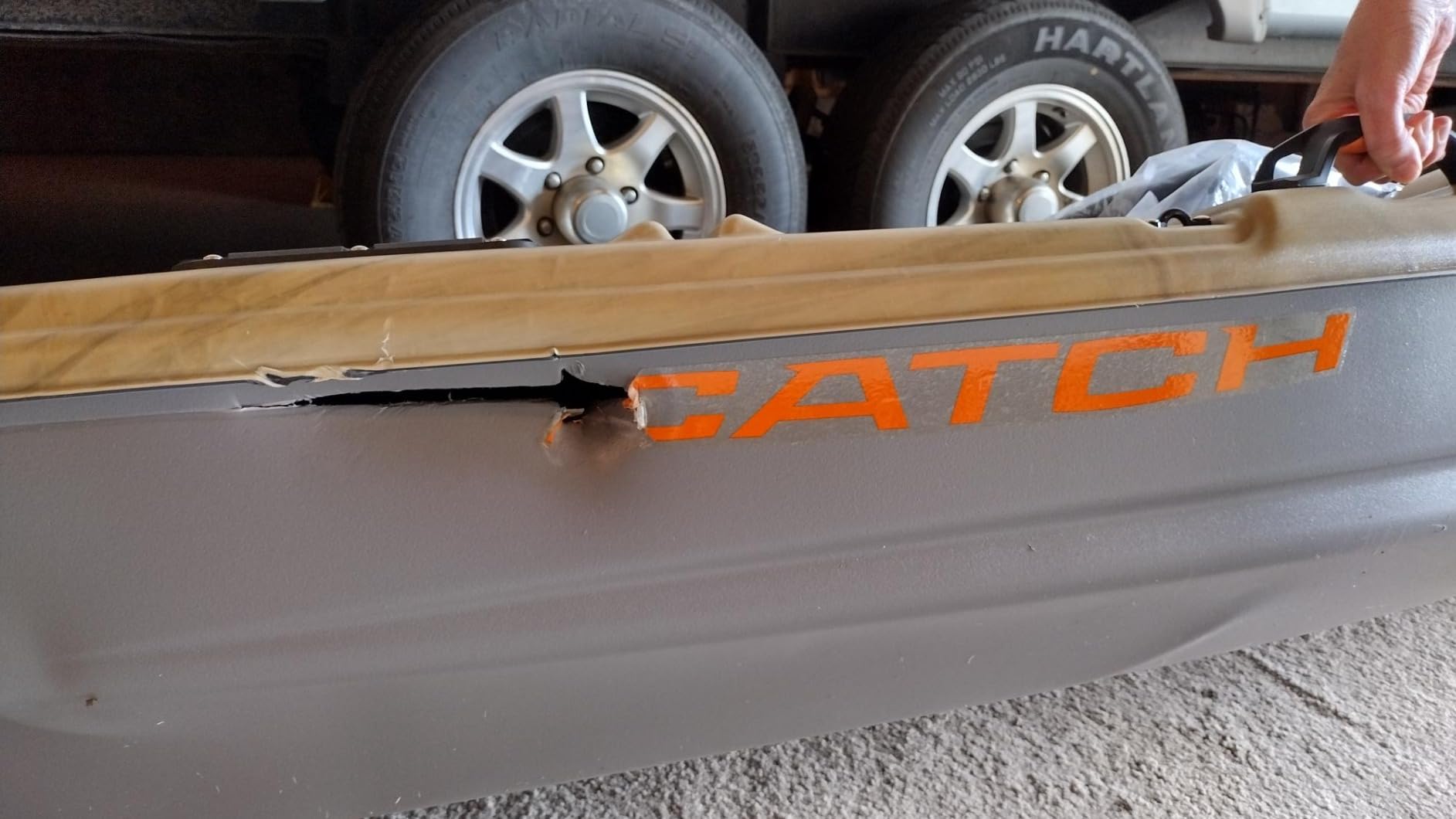
Salt-specific notes: the hull is rotationally moulded polyethylene with a lifetime limited warranty against manufacturer defects, one year on parts and accessories. As with the wider beam hulls in this group, tracking is the compromise and a skeg matters if you fish current. Keep it to sheltered bays and inside water; this is not an open-water hull.
Who the Catch Classic 100 suits
Budget-first buyers who want a stable, easy-entry angler kayak with a seat that raises and lowers, and who fish protected bays, creeks and estuaries. It is also a good boat to learn seat height and rod-holder positioning on before stepping up a size.
Where the Catch Classic 100 falls short
The 350-pound rating is modest for heavier anglers, and the tank well and rigging are smaller than the Catch Mode 110, so a full crate setup is tighter. Parts and accessories are only covered for one year.
12. BKC Brooklyn 12.5 Tandem – Best for Two Anglers on the Water
BKC Brooklyn 12.5 Tandem Fishing Kayak, 2 to 3 Person Sit-on-Top
12 ft 5 in long
34 in beam
600 lb capacity
70 lb boat weight
Pros
- Seats two adults plus a child or extra gear
- 34 in beam gives strong stability for standing casts
- Six rod holders including two articulating
- Single-piece rotomolded HDPE resists impact and UV
Cons
- Basic foam seats are less supportive than framed seats
- Trolling motor must be added separately
Almost every saltwater kayak here is a solo boat, which is why the Brooklyn 12.5 stands out. At 12 ft 5 in it seats two adults comfortably, or one adult, a child and a full day of gear, and the 600-pound capacity rating is the highest of the twelve.
That makes it the pick for couples, parent-and-child trips, and anyone who wants a second paddler along as a spotter or as a second set of hands in the shallows.
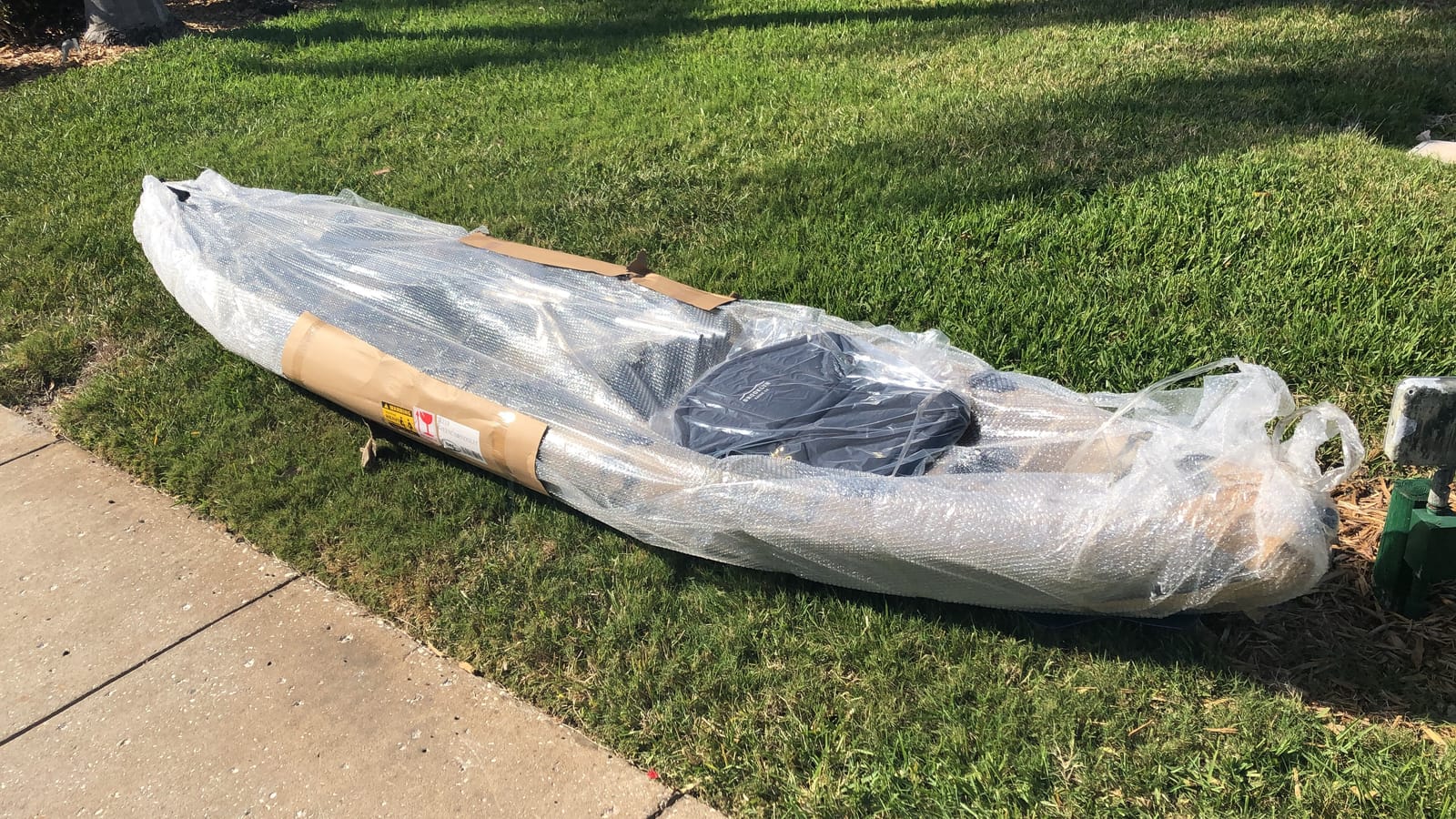
The 34-inch beam is deliberately wide, and the listing is explicit that it is for stable standing casts and rough water. Six rod holders come standard, four flush-mounted and two articulating, and there is a built-in trolling motor mounting area for anyone who later wants motor power. Construction is single-piece rotomolded high-density polyethylene rated for impact and UV resistance, with a five-year manufacturer warranty.
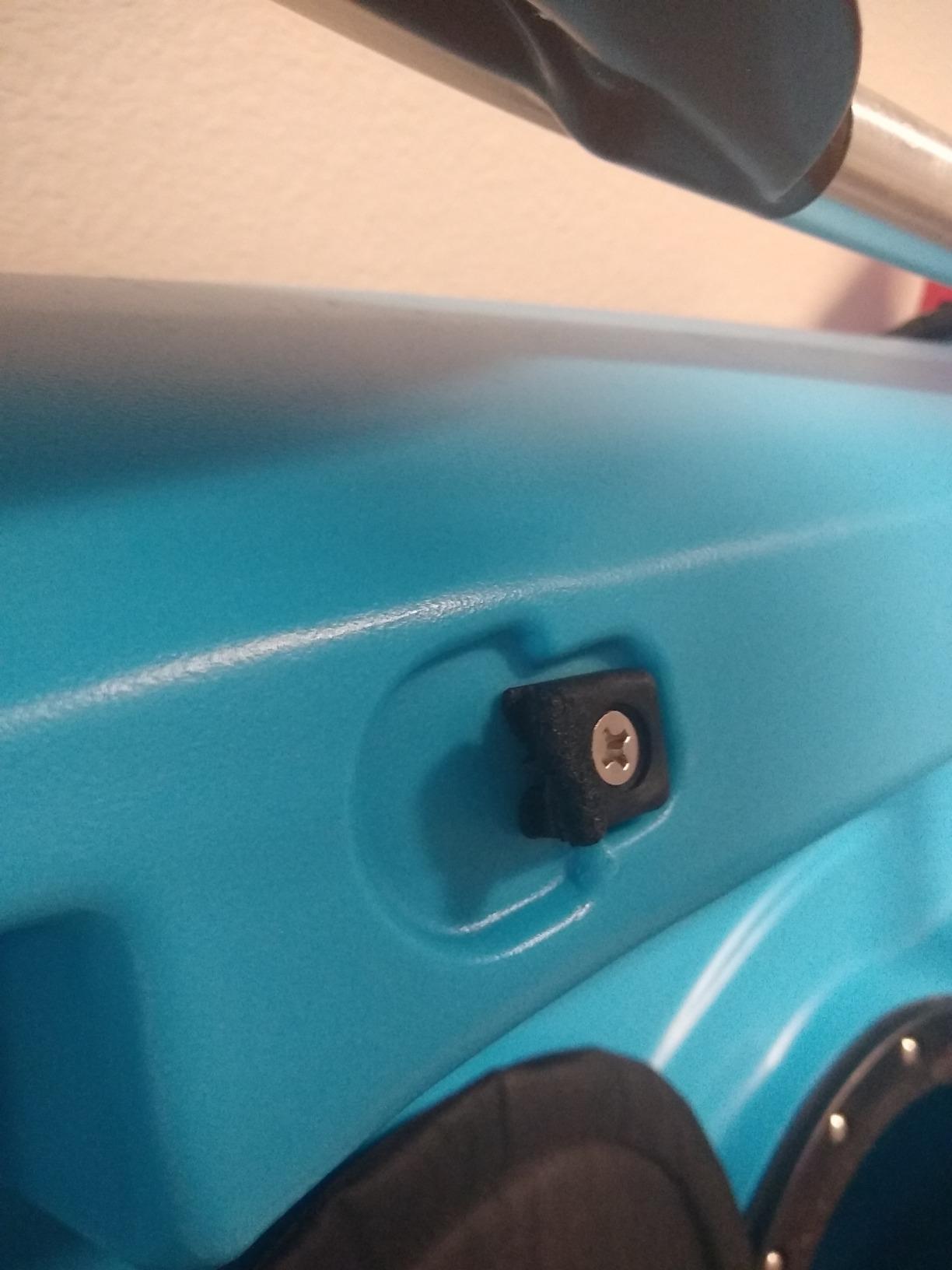
Salt-specific notes: at 70 pounds it is manageable solo but heavy for one person to lift high, and tandem loading means one person cannot reposition it. The built-in motor mount is a plastic area rather than a fitted transom, so wiring quality is on you. Buyers note the fittings are functional but basic compared with premium angler kayaks, which is the trade for the capacity.
Who the Brooklyn 12.5 suits
Two anglers who want to fish the same spot from one platform, families introducing a younger paddler, and buyers who need the highest capacity rating and the widest beam in the group. A five-year manufacturer warranty adds some reassurance.
Where the Brooklyn 12.5 falls short
The included foam seats are noticeably less supportive than the framed seats on the single angler models, and a trolling motor has to be bought and fitted separately. For one angler carrying a full rig, the wide deck and 12.5-foot length are more hull than you need.
How to Choose a Saltwater Fishing Kayak
Start with propulsion, because it decides what kind of day you will have. Pedal drive frees both hands and lets you fish while moving, which is why owners overwhelmingly prefer it once they have tried it despite the extra cost. Paddle keeps the boat light, cheap and simple. Motor gives you range on a shallow flat but adds a battery, wiring and a corrosion item to maintain. Our pedal kayak picks go deeper on drive systems if you are undecided.
Second, run the 120 Rule on your own gear. Multiply your listed capacity by 1.2 and treat that as your realistic load ceiling. Worked example: a 190-pound angler with a 60-pound gear load and a 10-pound fish arrives at 260 pounds, so a 300-pound-rated boat fails the test and a 350-pound boat passes it. That single calculation rules out the two lightest-capacity kayaks here for anyone carrying a cooler and crate.
Third, judge stability by beam and hull shape rather than brand. Primary stability, which is how level the boat sits when you stand, comes from width and hull flatness. Secondary stability, which is how forgiving it is once you lean, comes from hull depth and flare. The 34 to 35 inch beams in this roundup feel planted when casting; the 30-inch beams feel twitchier in tide.
Fourth, plan the tide around the boat. A pedal or motor drive has more draft than a paddle hull, so beaching on a drained flat is a different problem across models. Check the tide table before you launch, and give yourself a window rather than a deadline.
Saltwater Corrosion and the Post-Trip Rinse Protocol
Corrosion is the number one worry in every saltwater kayak forum we reviewed, and the honest answer is that it cannot be eliminated, only slowed. Anglers repeatedly report pedal drive pins, rudder linkages and hardware lasting years rather than decades, so treat every moving metal part as consumable.
A six-step rinse protocol covers it:
Rinse the hull and deck with fresh water while the salt is still wet.
Spray the pedal drive, motor mount, rudder and any wiring connectors directly.
Work the drive through forward, reverse and neutral so water reaches the linkage.
Flush scupper holes, hatches and drain plugs rather than just soaking them.
Let the boat drain in the shade with hatches open.
Wipe hardware dry before stowing, because salt crystallising in a rudder cable is the failure that strands people.
Pre-Launch Safety Checklist for Saltwater Kayak Fishing
Before you leave the ramp, confirm seven things. Wear a properly fitted PFD, not one strapped to the deck. Carry a VHF radio if you fish beyond direct sight of shore or where cell coverage drops. File a float plan with someone on land. Check the marine forecast and the tide table, and pick a window that ends before you are stranded. Carry a whistle, a light and a spare line. Protect yourself from sun and hydrate, because saltwater heat and glare sneak up on long days. Know your self-rescue plan, and remember that cold-water immersion is survivable but brief.
Transport and Storage for a 10 to 12 Foot Angler Kayak
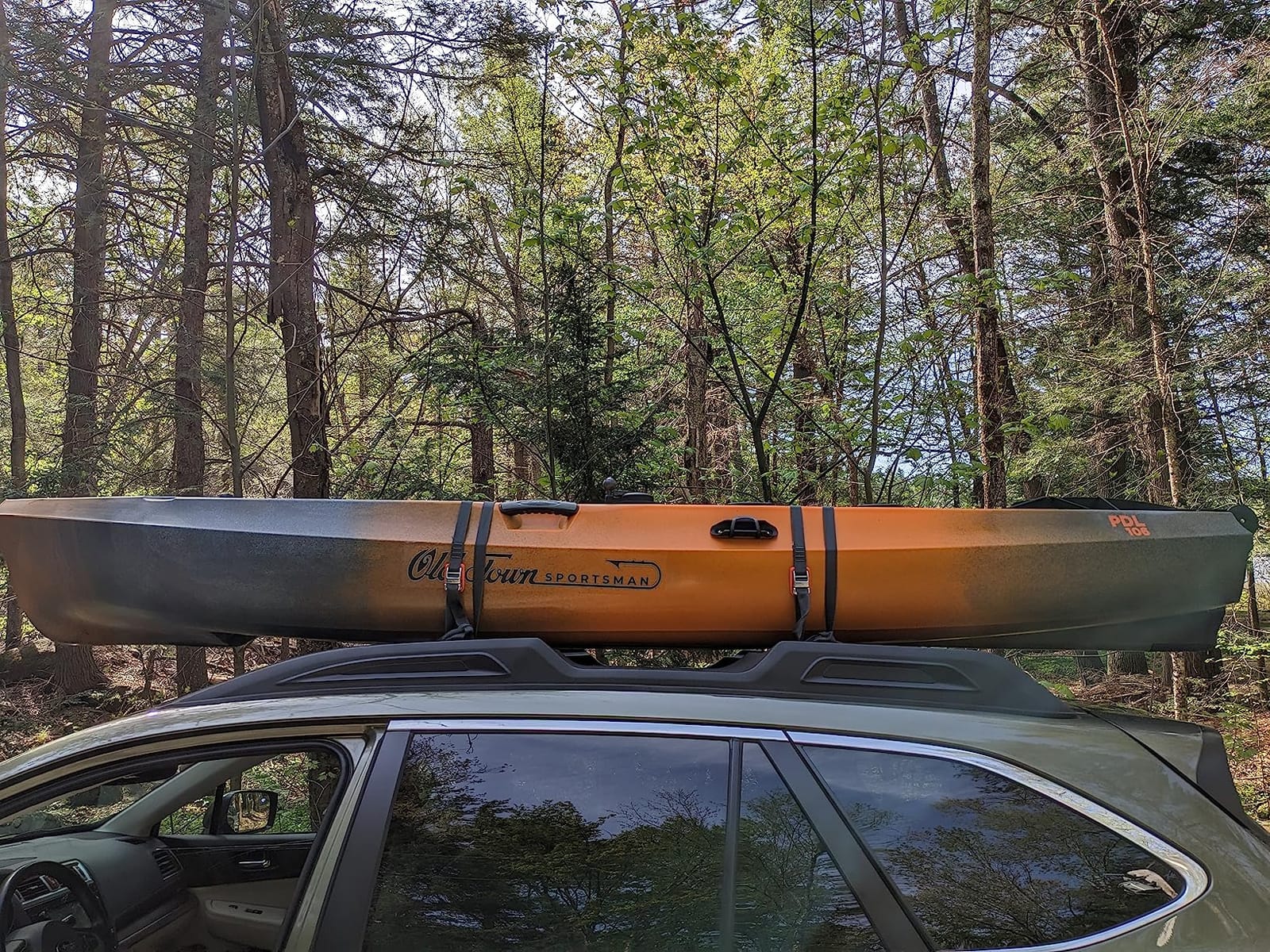
Transport is the real reason many anglers never start, and the honest breakdown is simple. Kayaks under about 65 pounds, like the Lifetime Tamarack models and the Reel Yaks sections, suit a folding cart and a car boot. Kayaks between 65 and 90 pounds need a roof rack with cam straps, a light bar, or a second pair of hands. Anything above 90 pounds, including the Old Town pedal and motor models, realistically needs a truck bed with foam blocks, straps and a tailgate check before you drive away.
Storage follows the same logic. A full-length hull stands against a garage wall on end with the cockpit open to airflow. A modular two-piece kayak fits a closet or a trunk, which is the Reel Yaks argument in one sentence. Rinse and dry before the boat goes into a closed space for the winter, because trapped salt and trapped moisture are what turn a stored kayak into a pitted one.
Who Should Not Buy a Fishing Kayak for Saltwater
Four groups should look elsewhere. Anglers who fish genuinely offshore water in conditions that would swamp a 10 to 12 foot angler hull should be on a boat with a hull designed for it. Anyone fishing alone in water cold enough to cause hypothermia in minutes should not be in a kayak at all. Paddlers with no solid wet-exit and self-rescue training should spend a season on flat water first. And buyers without a transport plan should be honest that a 121-pound hull on a roof rack alone is a two-person job.
Frequently Asked Questions
What is the best kayak for saltwater fishing?
For most saltwater anglers the answer is a wide sit-on-top angler kayak with a rudder, rod holders and a deck that holds a crate. Our top pick is the Pelican Catch Mode 110, a 10 ft 8 in tunnel-hull boat rated to 375 lb with extra internal flotation. Pedal-drive and motor-ready models add speed and range at the cost of weight and maintenance.
What is the best kayak for inshore fishing?
For inshore flats, creeks and tidal channels, prioritise a wide hull, shallow draft and the ability to stand and cast. The Perception Outlaw 11.5 offers a 425 lb rating and four rod holders, while the BKC Brooklyn 12.5 tandem gives the widest beam in the group. Avoid short narrow hulls for water with any fetch.
What kind of kayak is best for fishing?
A sit-on-top angler kayak with gear tracks, rod holders and a framed or air seat works best for fishing because you stay dry, cast from a stable platform and reach tackle without unpacking. Sit-insides with spray skirts are more efficient in cold water but are harder to fish from and harder to self-rescue from.
What is the best pedal drive kayak for ocean fishing?
Among the kayaks we tested the Old Town Sportsman PDL 106 is the strongest pedal option, with a 450 lb maximum capacity, 343 lb usable capacity and instant forward and reverse. Note that pedal drive hardware needs a freshwater rinse after every trip. We would not describe any 10 to 12 foot angler kayak as an offshore boat in open conditions.
What is the 120 rule for kayaking and how does it work?
The 120 rule says your loaded weight, meaning you plus gear plus catch, should stay near 120 percent of the kayak’s listed capacity. Multiply the rated capacity by 1.2 to get your realistic ceiling. A 350 lb kayak gives you a 420 lb practical limit, which leaves margin for balance and for gear you forgot about.
Are pedal drive kayaks better for fishing?
Pedal drive is better for fishing because both hands stay free to cast, fight fish and work lures while you move, and owners consistently prefer it once they have tried it. The trade-offs are weight, cost and maintenance, since drive pins, linkages and rudder cables need rinsing after every saltwater trip and can be harder to service.
Do fishing kayaks rust in saltwater?
Salt residue corrodes exposed metal over time, and the parts at risk are pedal drive pins, rudder hardware, motor shafts and wiring connectors rather than the polyethylene hull itself. A freshwater rinse of the hull, drive, rudder, scuppers and connectors after every trip, plus a dry-down before storage, keeps corrosion to a manageable rate.
What is the best lightweight kayak for older people?
For solo launching the lightest hulls in this roundup are the Lifetime Tamarack Angler 100 at 51 lb, the Pelican Catch Classic 100 at 57 lb and the Lifetime Tamarack Pro 103 at 57.5 lb. A folding cart removes the lifting. Pay attention to seat height, since low seats are harder on knees and harder to cast from.
Final Verdict: Which Saltwater Fishing Kayak to Buy
Buy the Pelican Catch Mode 110 if you want one hull that handles most saltwater fishing without a trailer, and pair it with a freshwater rinse habit from day one. Move up to the Old Town Sportsman PDL 106 when casting while you pedal matters more than carrying weight, and choose the Perception Outlaw 11.5 if you are a heavier paddler who wants rod holders already in place.
Whatever you choose among these best fishing kayaks for saltwater in 2026, buy the hull that fits your loaded weight under the 120 Rule and the transport you actually have. That decision matters more than any feature on the spec sheet.