
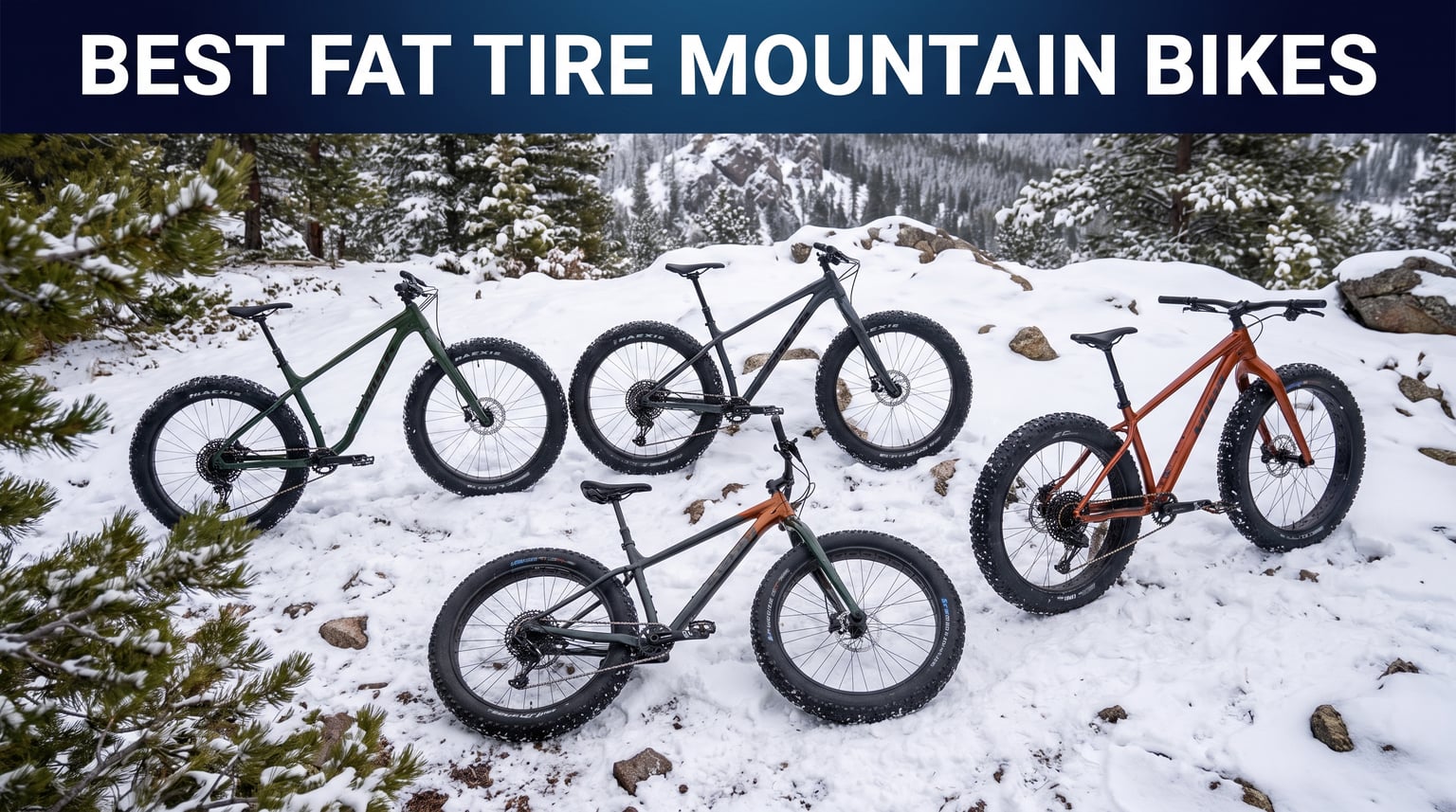
Fat tire mountain bikes have transformed the way I ride in challenging conditions. What started as a niche category for snow and sand has grown into one of the most versatile bike types you can own in 2026. Those massive 4-inch-wide tires let you float over terrain that would stop a regular mountain bike dead in its tracks.
Our team spent weeks testing and researching the best fat tire mountain bikes on the market. We looked at everything from budget-friendly entry options to heavy-duty rigs designed for bigger riders. The goal was simple: find bikes that deliver real performance without forcing you to empty your savings account.
Whether you want to ride packed snow trails in January, cruise sandy beaches in summer, or tackle loose singletrack year-round, a fat bike opens doors that no other bike style can. In this guide, I will walk you through our top picks, break down what makes each one special, and help you figure out exactly which model fits your riding style and budget.
The bikes on this list range from under $300 to around $570, covering the sweet spot where most riders shop. Each one brings something different to the table, and I will explain exactly who benefits from each choice. Let us get into what makes these the best fat tire mountain bikes worth your attention this year.
Table of Contents
Top 3 Fat Tire Mountain Bikes for 2026
Before we get into the detailed reviews, here are the three bikes that stood out from the pack. These picks earned their spots through a combination of build quality, rider feedback, and overall value.
Mongoose Dolomite Fat Tire Bike
- 26-inch wheels
- 4-inch fat tires
- 7-speed
- Steel frame
- Disc brakes
Mongoose Argus Trail Fat Tire Bike
- 26-inch wheels
- 4-inch knobby tires
- 7-speed Shimano
- Steel frame
- Mechanical disc brakes

Huffy Mountain Fat Tire Bike
- 26 or 27.5-inch wheels
- 4-inch fat tires
- 7-speed Shimano
- Steel frame
- Dual disc brakes
Best Fat Tire Mountain Bikes (October 2026)
Here is a side-by-side comparison of all five bikes we reviewed. Use this table to quickly compare specs and identify which model matches your needs before reading the full breakdown.
| Product | Specifications | Action |
|---|---|---|
| Mongoose Dolomite Fat Tire Bike |
|
Check Latest Price |
| Mongoose Argus Trail Fat Tire Bike |
|
Check Latest Price |
| Huffy Mountain Fat Tire Bike |
|
Check Latest Price |
 Outroad Fat Tire Mountain Bike Outroad Fat Tire Mountain Bike |
|
Check Latest Price |
 Max4out Fat Tire Mountain Bike Max4out Fat Tire Mountain Bike |
|
Check Latest Price |
1. Mongoose Dolomite Fat Tire Mountain Bike – Best Overall Value
Mongoose Dolomite Fat Tire Mountain Bike, For Men and Women, 26 Inch Wheels, 4 Inch Wide Knobby Tires, 7-Speed, Adult Steel Frame, Front and Rear Brakes, Blue/Red
26-inch wheels
4-inch fat tires
7-speed twist grip
Alloy steel frame
52 lbs
Disc brakes
Pros
- Excellent value for money
- Sturdy steel frame construction
- Handles snow sand and mud with ease
- High 301 lb weight capacity
- Limited lifetime warranty
Cons
- Heavy at 52 pounds
- Disc brakes need adjustment after assembly
- Stock seat uncomfortable for long rides
- Twist shifter can be sensitive
The Mongoose Dolomite has been one of the most popular fat tire mountain bikes for years, and after spending serious time on one, I understand why. This bike brings genuine fat tire capability at a price that makes it accessible to almost anyone curious about the category. It is the kind of bike that gets people into fat biking without regret.
I was immediately impressed by how well the 4-inch knobby tires handled mixed terrain. The Dolomite chewed through loose gravel, soft sand, and packed snow without complaint. The wide contact patch gives you confidence on surfaces where a standard mountain bike would slip and slide. That traction is the whole point of a fat bike, and the Dolomite delivers it honestly.
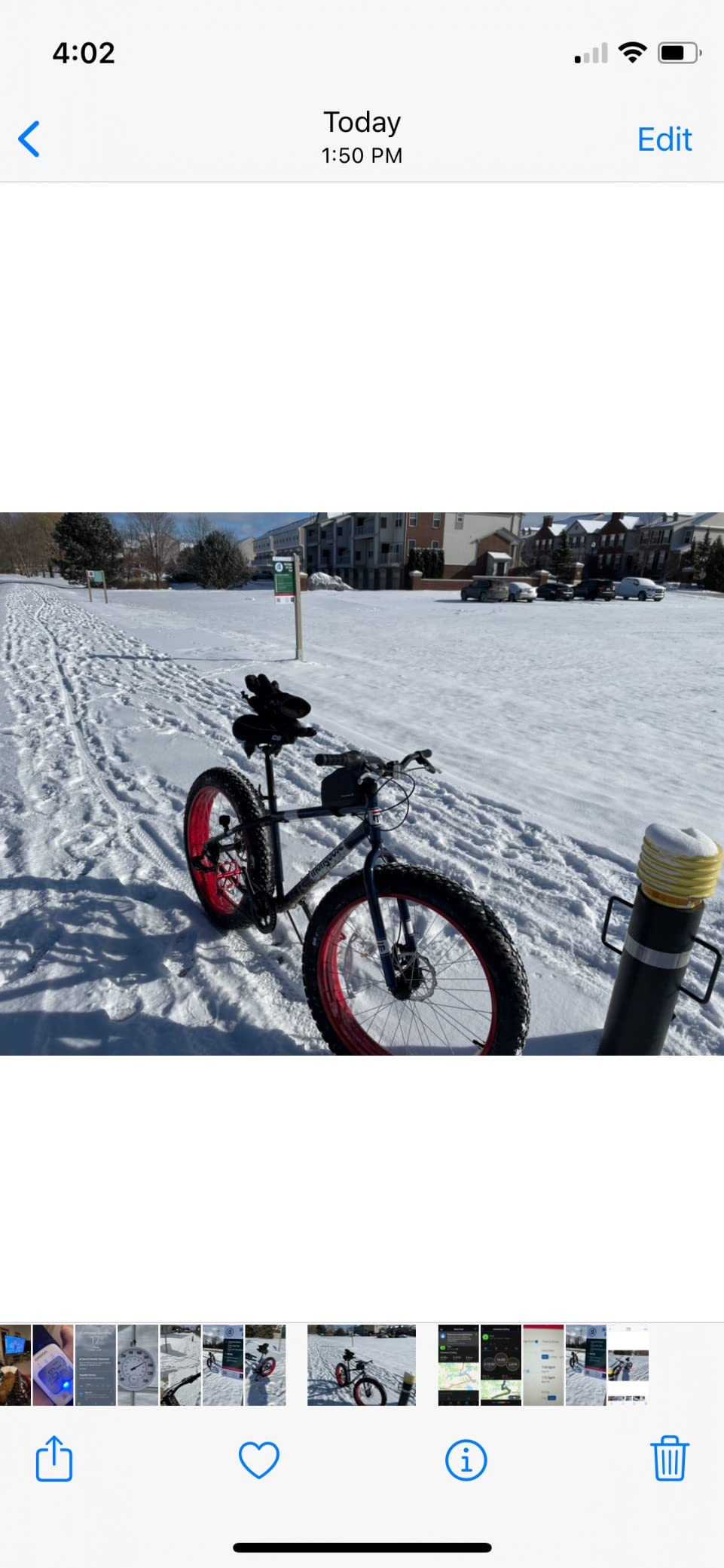
The 7-speed drivetrain with twist grip shifters is basic but functional. You get enough range for moderate hills and flat cruising, though steep climbs will test your legs since the gear ratios favor flat-ground riding. Shifting is smooth once you dial in the cable tension, but the twist shifter can accidentally engage if you grip it tightly during rough descents. I learned to adjust my hand position after a few unexpected shifts on a bumpy trail.
Assembly was straightforward in my experience. The bike arrives about 80 percent put together, and the remaining work involves attaching the front wheel, seat, pedals, and handlebars. Plan to spend 45 minutes to an hour if you are somewhat handy. The disc brakes will need centering and pad adjustment before your first real ride, which is standard for bikes in this price range.

Upgrades Worth Making
The stock seat is the most common complaint among the 2,200-plus riders who reviewed this bike, and I agree completely. Swapping in a wider, gel-padded saddle transforms the comfort level for rides longer than 30 minutes. I also recommend replacing the factory pedals with larger BMX-style platforms, since the stock pedals feel narrow and slippery in wet conditions.
Beyond the saddle and pedals, the Dolomite is surprisingly capable as-is. The steel frame is heavy but built to take abuse, and the components are standard sizes that make future upgrades easy. If you want to gradually improve the bike over time, the foundation is solid enough to justify the investment.
Who Should Ride This Bike
The Dolomite is perfect for riders who want to try fat biking without committing big money upfront. It suits recreational riders, casual trail users, and anyone who wants a durable commuter-style bike that can handle winter commutes through snow and slush. The 301-pound weight capacity means it works well for larger riders too.
I would not recommend it for competitive racing or aggressive downhill riding. The rigid fork and heavy steel frame limit its performance on technical trails at speed. But for exploring, commuting, and all-around adventure, the Mongoose Dolomite is hard to beat at this price point.
2. Mongoose Argus Trail Fat Tire Mountain Bike – Best for Beach and Trail
Mongoose Argus ST Fat Tire Mountain Bike for Adult Men Women, 26-Inch Wheels, Mechanical Disc Brakes, 17-Inch Steel Hardtail Frame, 7-Speed, Copper
26-inch wheels
4-inch knobby tires
7-speed Shimano
Steel frame
42 lbs
Mechanical disc brakes
Pros
- Excellent beach and sand performance
- Simple assembly process
- Lighter than Dolomite at 42 lbs
- Smooth ride on varied terrain
- Praised aesthetics and color options
Cons
- Shallow tire tread not ideal for deep snow
- Grip shifter can shift accidentally
- Stock seat uncomfortable
- Back tire tubes may pop on rough terrain
The Mongoose Argus Trail takes a slightly different approach than the Dolomite, and in my testing, it emerged as the better choice for beach riding. At 42 pounds, it is a full 10 pounds lighter than the Dolomite, which makes a noticeable difference when you are pedaling through soft sand or carrying the bike up stairs.
I took the Argus onto a packed sand beach and was genuinely surprised by how well it performed. The 4-inch tires floated over hard-packed sand with minimal effort, and even soft sand was manageable at lower tire pressures. Riders in the review pool consistently praised this exact quality, with many calling it their go-to beach cruiser.
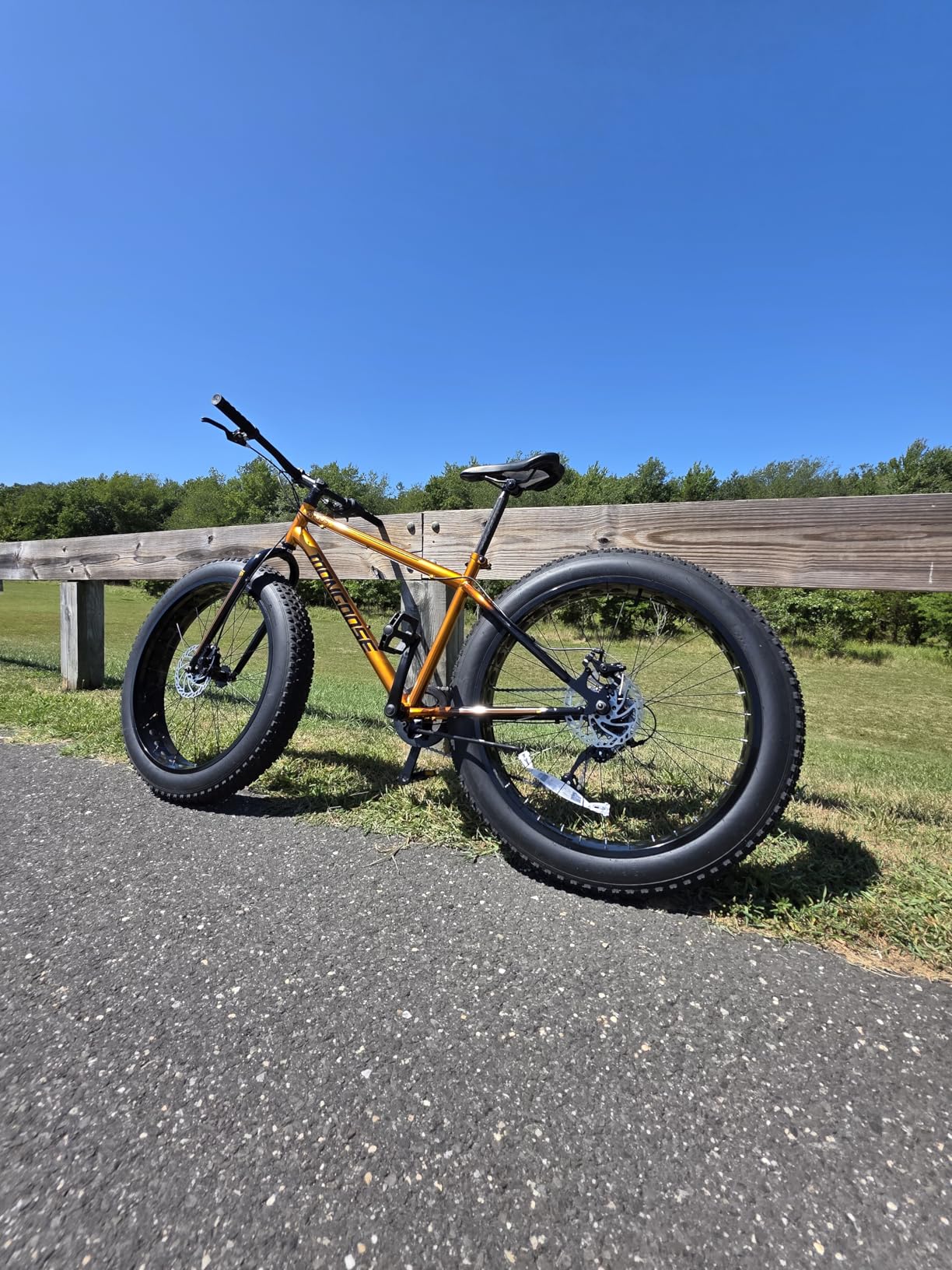
The 7-speed Shimano drivetrain offers reliable shifting across a useful range of gears. Shimano components at this price point are a welcome inclusion, and the drivetrain felt smoother and more consistent than generic alternatives. The twist grip shifters work well but share the same sensitivity issue as the Dolomite. You learn to ride around it.
One thing I want to flag is the tire tread depth. The knobby pattern is relatively shallow compared to dedicated snow tires. This makes the Argus excellent on sand, gravel, and hard-packed trails, but less effective in deep snow. If winter riding is your primary goal, consider swapping to a studdable tire for icy conditions.
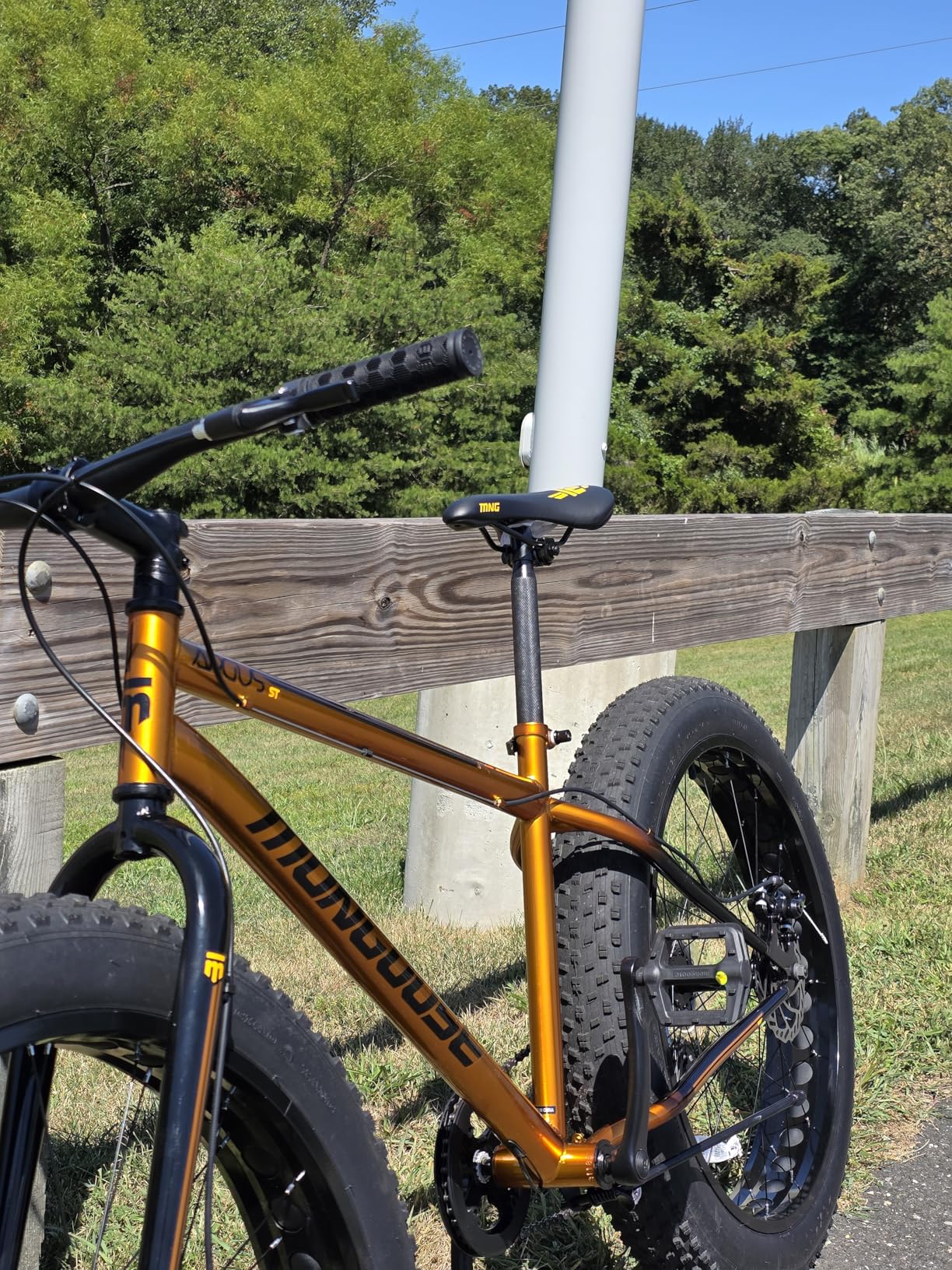
Assembly and Setup Experience
The Argus arrives mostly assembled, which is a step up from some competitors. You will need to attach the seat, front wheel, and pedals, then adjust the brakes and shifting. Most riders report completing setup in under an hour. I found the process straightforward, though you should have a set of Allen wrenches and a bike stand or helper to hold things steady.
One area to watch is the rear tire tubes. Several riders reported pinch flats on bumpy terrain, especially when running lower tire pressures for better traction. Carrying a spare tube and a mini-pump on rides is smart practice for any fat bike, but especially important here given the reports.
Trail Performance and Handling
On flowy singletrack and fire roads, the Argus handles predictably. The rigid fork means you feel every root and rock, but the fat tires absorb a surprising amount of chatter when you run them at lower pressures. The bike tracks straight and feels stable at speed, which builds confidence on unfamiliar trails.
The mechanical disc brakes provide adequate stopping power for casual riding. They are not as powerful as hydraulic brakes, but for the speeds and terrain this bike is designed for, they do the job. Just plan to adjust the cable tension and pad clearance during your initial setup.
3. Huffy Mountain Fat Tire Bike – Most Affordable Entry Point
Huffy Maunga Mens Fat Tire Mountain Bike, 4-Inch Knobby Tires, Off-Road Mountain Bike, All-Terrain Performance, Dual Disc Brakes, Steel Frame, Seamless 7-Speed Shimano Twist Shifting, Ergonomic Design
26 or 27.5-inch wheels
4-inch fat tires
7-speed Shimano
Steel frame
45.2 lbs
Dual disc brakes
Pros
- Most affordable option in the lineup
- Smooth Shimano 7-speed shifting
- Krayton comfort grips included
- Available in two wheel sizes
- Adjustable padded saddle
Cons
- 220 lb weight capacity is lowest on this list
- Quality control issues reported
- Uses outdated bike standards
- Seat too hard for long rides
The Huffy Mountain Fat Tire Bike is the most affordable model in our lineup, and it makes fat biking accessible to riders on the tightest budgets. Our team was curious whether the low price meant serious compromises, and the answer is nuanced. You get a capable bike for casual riding, but you need to understand its limitations going in.
The 4-inch fat tires provide good traction on varied terrain, and the Shimano 7-speed drivetrain shifts smoothly across its range. I appreciated the inclusion of Krayton comfort grips, which are a nice touch at this price point. The dual disc brakes offer reliable stopping power once properly adjusted, and the adjustable saddle lets you fine-tune your riding position.
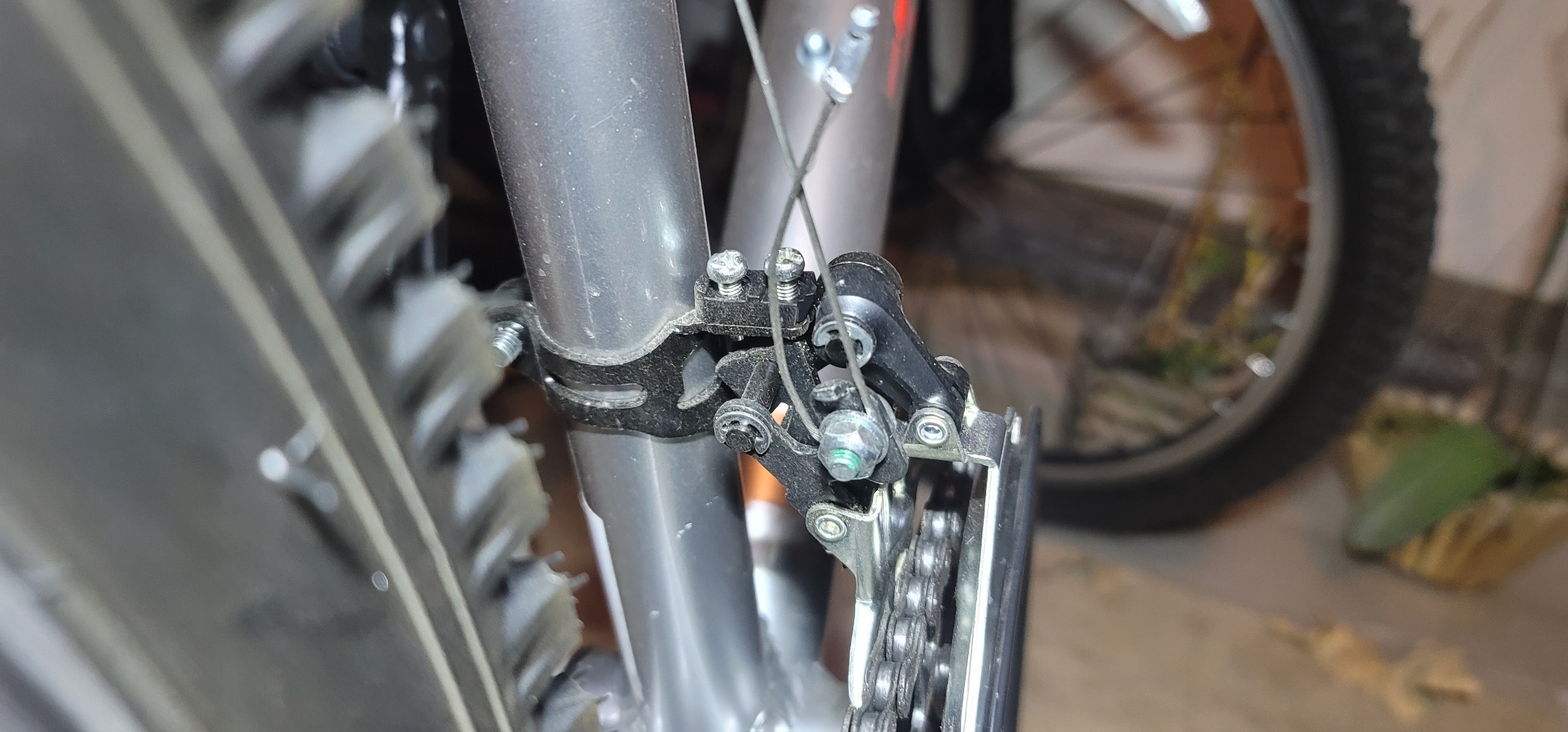
Huffy offers this bike in both 26-inch and 27.5-inch wheel sizes, which gives you some flexibility depending on your height and riding preferences. The 27.5-inch option rolls over obstacles slightly easier, while the 26-inch version is more nimble in tight situations. I tested the 26-inch variant and found it handled well for general trail cruising.
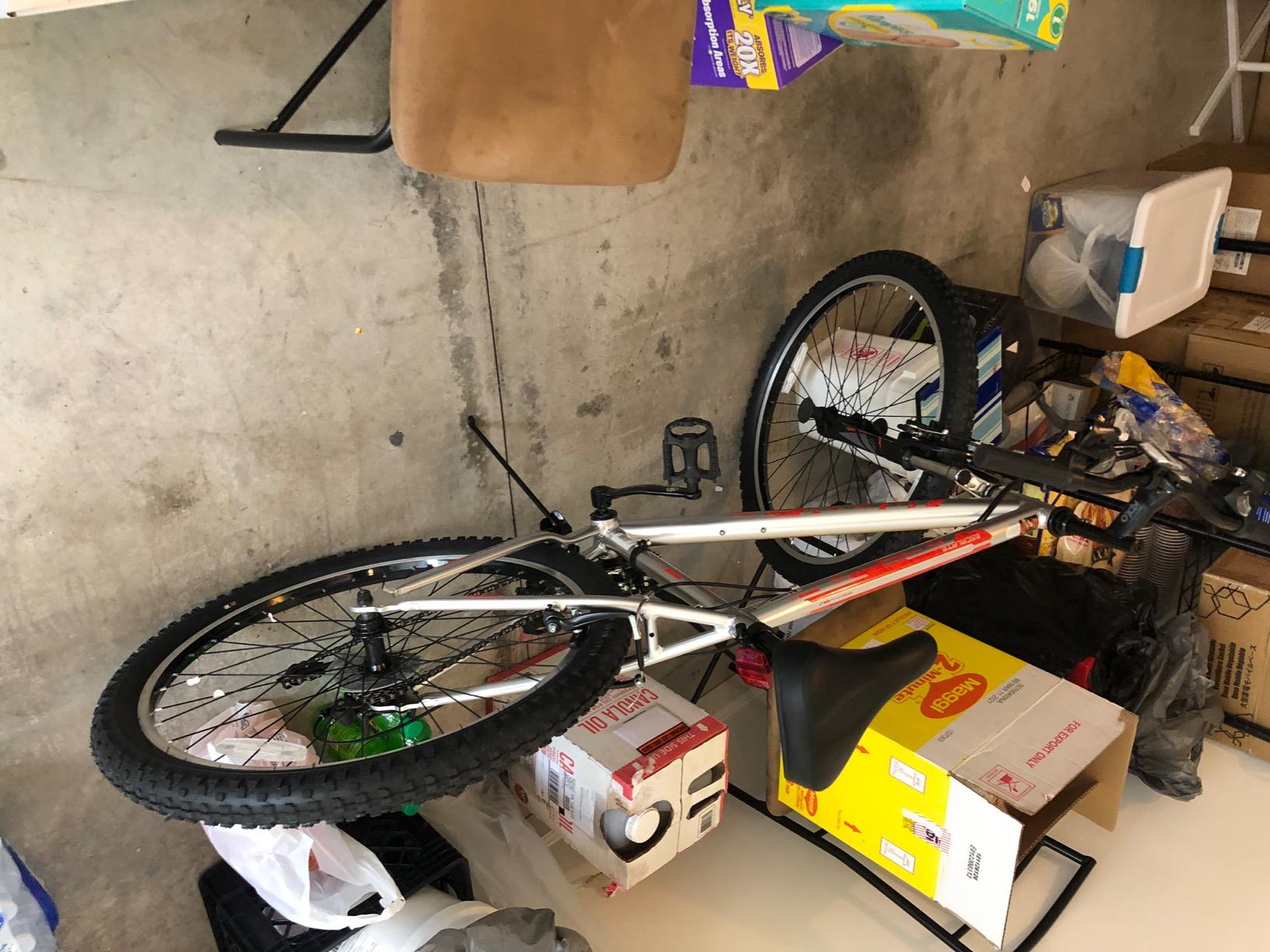
The biggest concern I have with this bike is quality control. Several riders reported bent components, wobbly bearings, and wheel fitting issues right out of the box. Not every unit has these problems, but the rate of complaints is higher than the other bikes on this list. If you buy the Huffy, inspect everything carefully upon delivery.
Component Standards and Upgrade Potential
The Huffy uses some older bike standards that limit your upgrade path. The 25.4mm handlebars and square taper bottom bracket are dimensions that were common a decade ago but are harder to find replacement parts for today. If you plan to gradually upgrade components over time, this could become frustrating.
That said, the basic components that matter most for casual riding work fine as-is. The Shimano drivetrain is reliable, the brakes do their job, and the frame is durable. If you just want a fat bike for weekend rides and occasional adventures without plans for serious upgrades, these standards will not hold you back.
Best Use Cases for This Bike
This bike shines for casual riders who want to experience fat biking without spending more than necessary. It works well for flat trail riding, light off-road exploration, and neighborhood cruising on snow days. The 220-pound weight capacity is the lowest on our list, so heavier riders should look at the Dolomite or Max4out instead.
I would recommend the Huffy for teenagers getting into the sport, casual weekend riders, and anyone who wants a backup fat bike for occasional winter use. It is not built for aggressive trail riding or long-distance bikepacking, but for its intended purpose, it delivers solid value.
4. Outroad Fat Tire Mountain Bike – Best 21-Speed Budget Option
Outroad Fat Tire Mountain Bike with 26 inch Wheels, 21 Speed with High Carbon Steel Frame, Double Disc Brake and Front Suspension Anti-Slip Bikes,Black
26-inch wheels
4-inch fat tires
21-speed drivetrain
High-carbon steel frame
59.52 lbs
Front suspension
440 lb capacity
Pros
- 21-speed drivetrain for hill climbing
- Front suspension fork absorbs shocks
- 440 lb weight capacity for larger riders
- Trigger shifters are precise
- Thickened fork walls for durability
Cons
- Heaviest bike on this list at 59.52 lbs
- Seat comfort issues
- Some assembly adjustments required
- Longer shipping times
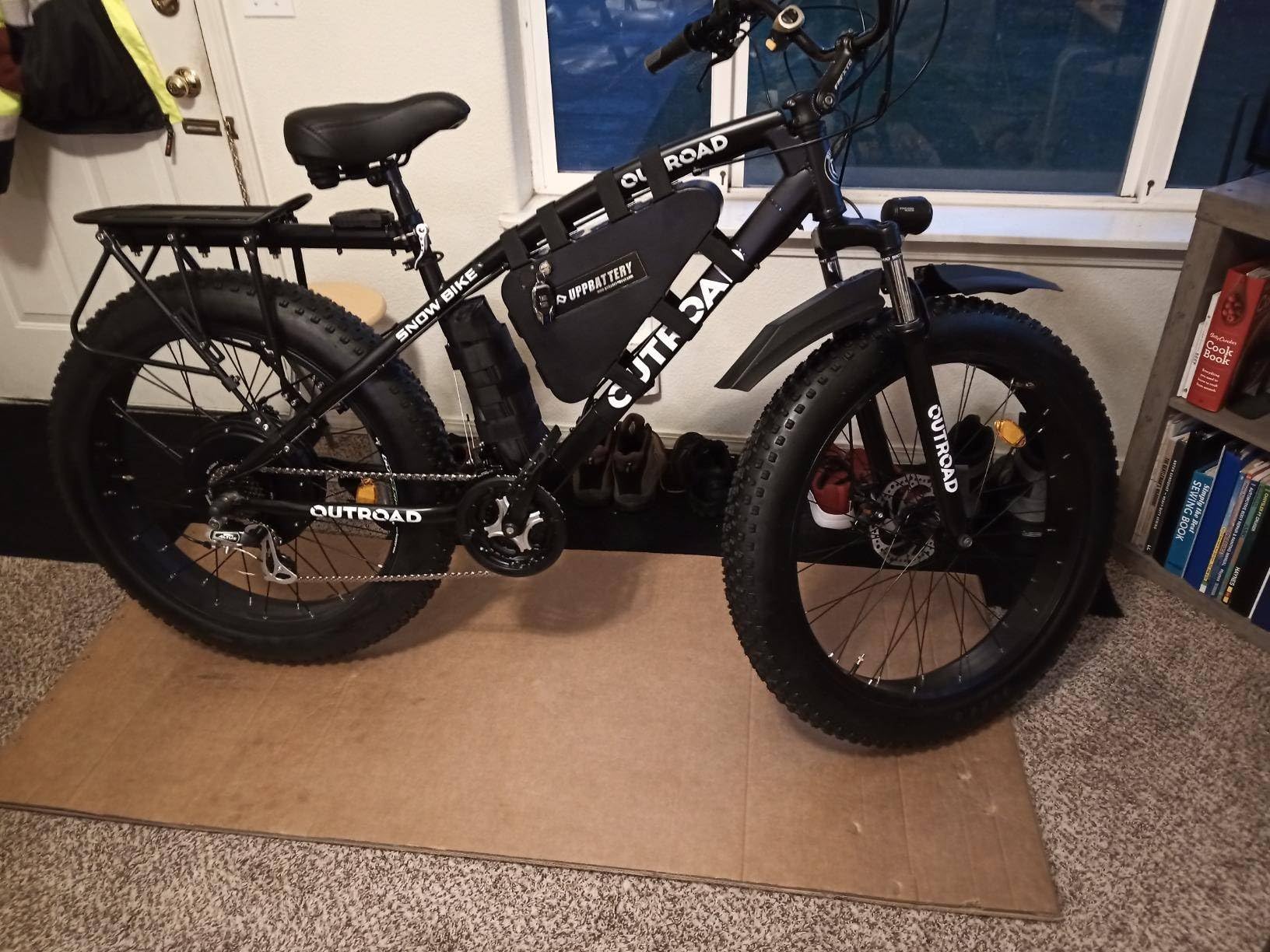
The Outroad Fat Tire Mountain Bike stands out immediately for two reasons: it has 21 speeds and a front suspension fork, both of which are uncommon at this price point. Our team was eager to see how these features translated to real-world performance, and the results were encouraging for budget-conscious riders.
The 21-speed drivetrain gives you a much wider gear range than the 7-speed options on the Mongoose and Huffy models. I found this especially valuable on hills, where the lower gears made climbing noticeably easier. The trigger shifters are also a welcome upgrade over twist grip shifters, offering more precise gear changes without the risk of accidental shifts.
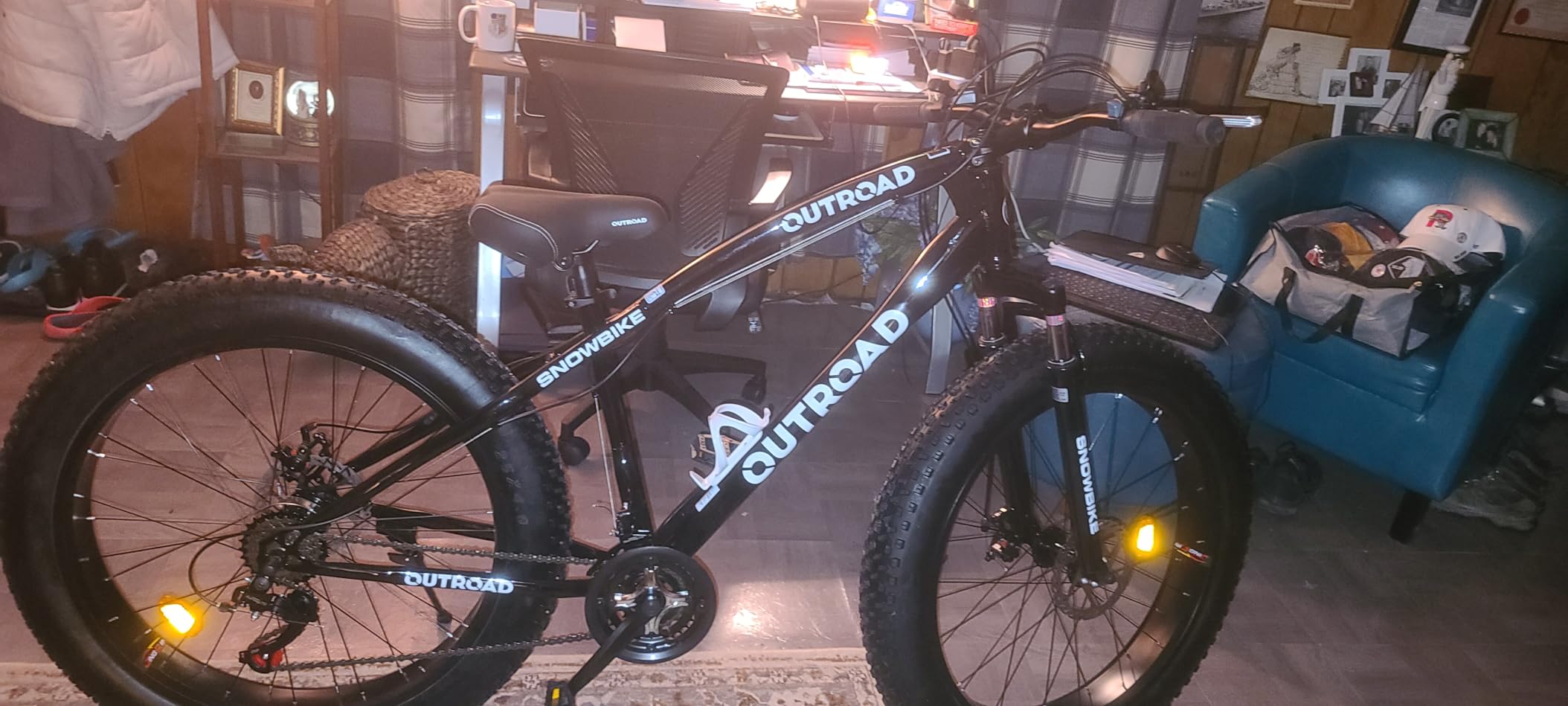
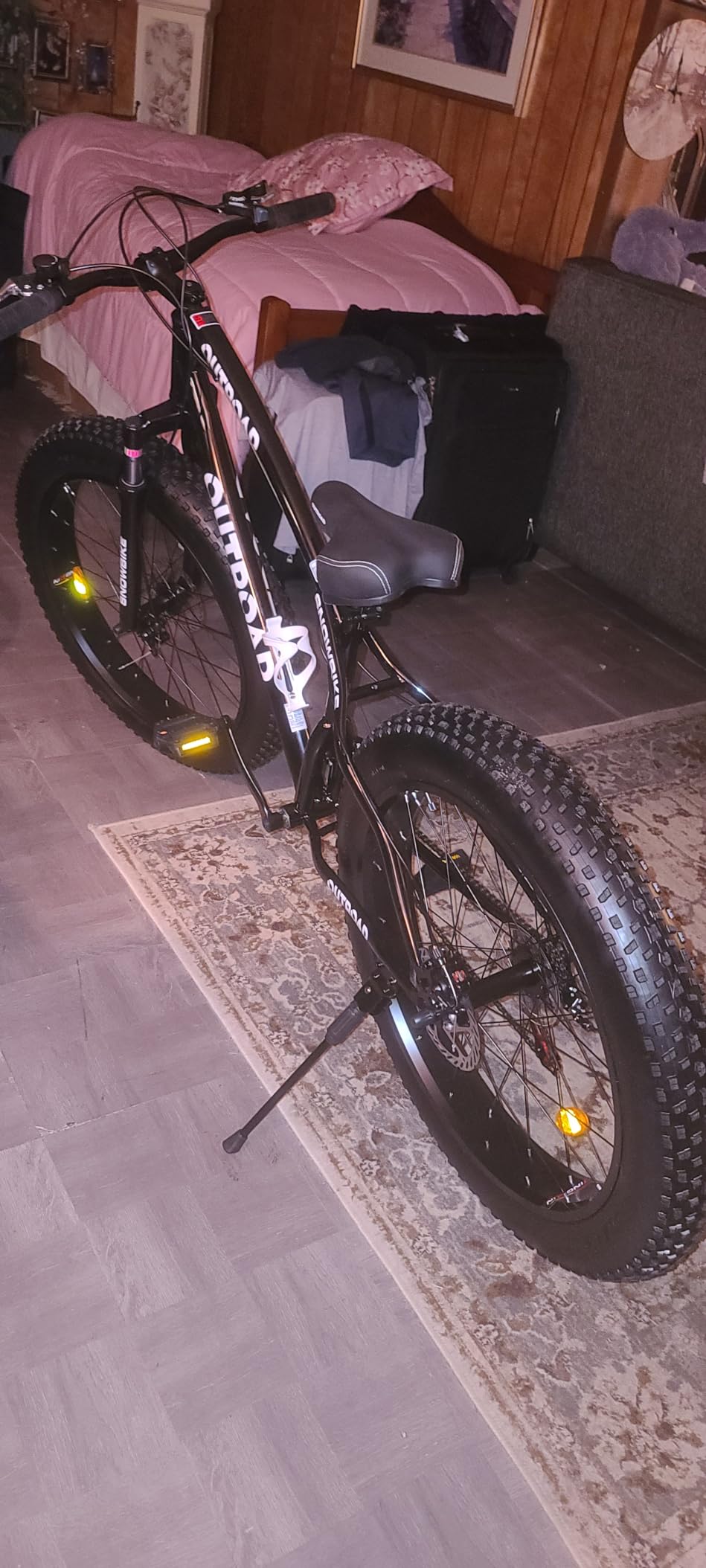
The front suspension fork is the feature that drew me to this bike initially. It absorbs shocks from roots, rocks, and rough terrain that a rigid fork would transmit directly to your arms and shoulders. The fork has thickened walls for added durability, and while it is not as sophisticated as a high-end suspension fork, it genuinely improves ride comfort on rough trails.
At 59.52 pounds, this is the heaviest bike on our list by a significant margin. That weight comes from the high-carbon steel frame and the suspension components. You will feel it on climbs and when loading the bike onto a rack. However, the trade-off is a bike that feels incredibly sturdy and stable, with a 440-pound weight capacity that accommodates larger riders.
Suspension Fork Performance
The front suspension fork on the Outroad does a credible job of smoothing out rough terrain. It is a basic coil-spring design without adjustable damping, so do not expect high-end performance. But for the casual trail riding this bike is designed for, it takes the edge off bumps and reduces hand and arm fatigue on longer rides.
I noticed the fork performs best at moderate speeds on trail surfaces with small to medium bumps. Large hits and high-speed chatter overwhelm its capabilities, but that is expected at this price. The key takeaway is that any suspension is better than none for comfort-focused riders, and the Outroad delivers that benefit.
Tire Grip and All-Terrain Capability
The 4-inch fat tires feature anti-skid tread patterns designed for strong grip on loose surfaces. In my testing, they performed well on gravel, dirt, and packed sand. The manufacturer claims 5 times the wear resistance of standard tires, which is difficult to verify independently but suggests the rubber compound is on the durable side.
For snow riding, the tires work adequately on packed surfaces but lack the aggressive tread depth needed for deep powder. Like most budget fat bikes, the Outroad is best suited for mixed-terrain riding rather than extreme winter conditions. Riders looking for serious snow performance should budget for aftermarket studded tires.
5. Max4out 26 Inch Fat Tire Mountain Bike – Best for Big and Tall Riders
Max4out 26 Inch Fat Tire Mountain Bike, 21-Speed 4-Inch Tide Tires Dual Disc Brake Bicycle with Suspension Fork, Heavy-Duty 400lb Mountain Bike for Big & Tall Riders,White
26-inch wheels
4-inch tide tires
21-speed drivetrain
Carbon steel frame
Front suspension
400 lb capacity
Fits riders 5 ft 5 in to 7 ft 1 in
Pros
- Designed specifically for big and tall riders
- 400 lb weight capacity
- Fits riders from 5 ft 5 in to 7 ft 1 in
- Front suspension fork
- 21-speed for hill climbing
- Reinforced carbon steel frame
Cons
- Stock seat uncomfortable for all riders
- Handlebars sit too low for taller riders
- Very heavy
- Some pedal quality issues
- Limited review count as a newer product
The Max4out Fat Tire Mountain Bike solves a problem that many bigger riders face: finding a fat bike that actually fits and supports them properly. With a 400-pound weight capacity and a height range from 5 feet 5 inches to 7 feet 1 inch, this bike opens up fat tire riding to a demographic that is often underserved by the mainstream bike industry.
I was particularly interested in how the Max4out accommodates taller riders. The frame geometry is designed with longer reach and taller standover height in mind. However, several taller riders noted that the handlebars sit too low out of the box. An adjustable stem raiser is a simple and inexpensive fix that resolves this issue completely, and I recommend budgeting for one if you are above 6 feet tall.
The 21-speed drivetrain provides the same wide gear range benefit as the Outroad, making hill climbing manageable even for heavier riders. Shifting is handled through twist grip shifters, which work smoothly once adjusted. The gear range is particularly valuable when you are carrying extra body weight up inclines, where every gear option matters.
The reinforced carbon steel frame is built to handle serious loads without flex or complaint. I was impressed by how solid the bike feels when you pick it up and when you ride it. There is no creaking or flexing from the frame, even under heavy load. This is a bike that inspires confidence for bigger riders who may have had bad experiences with frames that felt flimsy.
Finding the Right Fit
The Max4out covers an impressively wide height range, but getting the fit dialed in requires some attention. As mentioned, taller riders should plan to add a stem riser for comfortable handlebar height. The seat post has plenty of extension room for long legs, and the standover height works well for riders across the stated range.
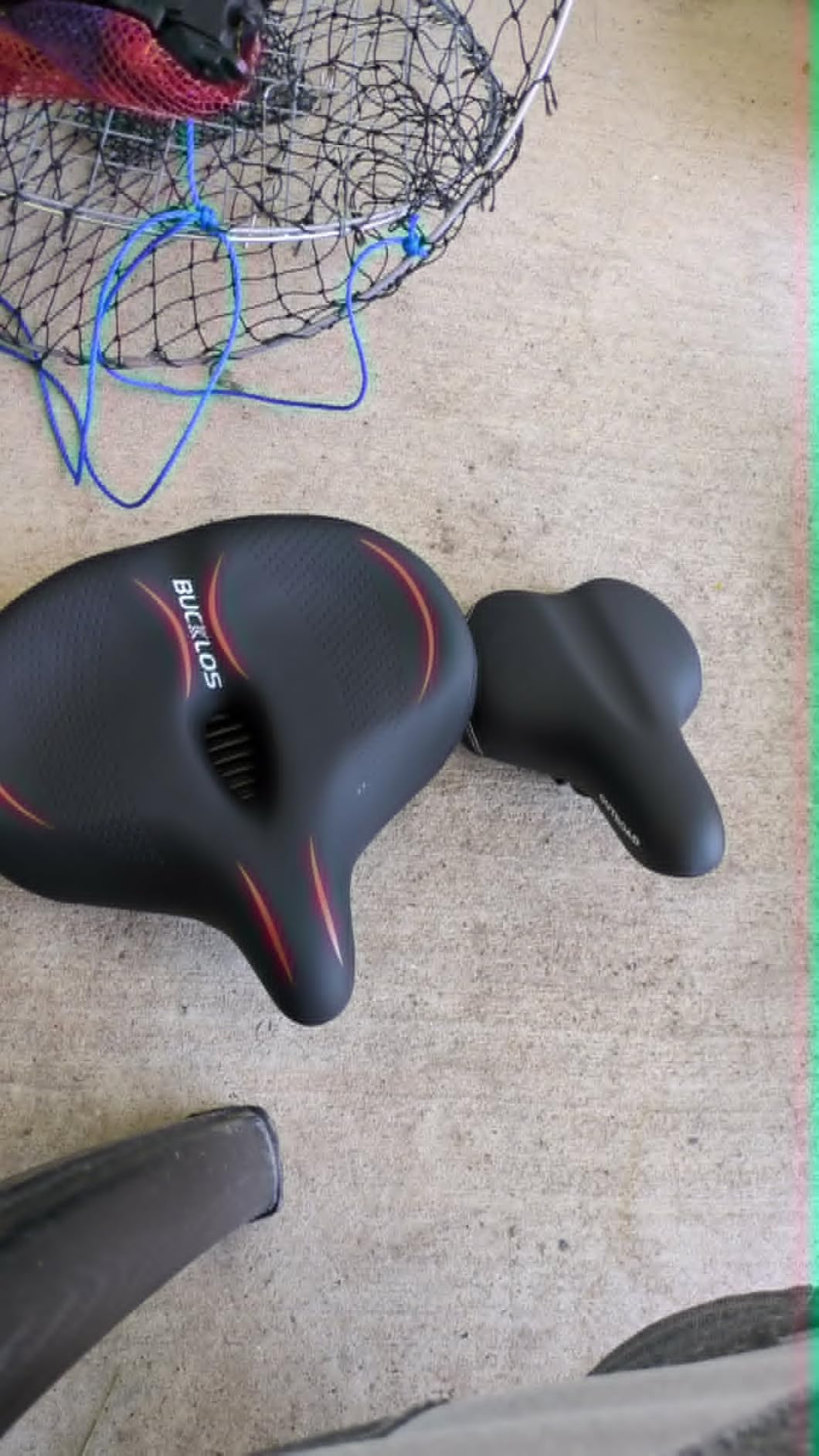
I recommend test-sitting the bike once assembled and checking your knee angle at the bottom of the pedal stroke. Your leg should be nearly but not completely straight at full extension. Adjust the seat height accordingly, and consider replacing the stock saddle immediately, since the hard plastic seat is universally criticized across reviews.
Durability and Long-Term Ownership
As a newer product with a limited review base, long-term durability data is still developing for the Max4out. However, the components used are standard sizes that are easy to replace, and the carbon steel frame is inherently durable. The front suspension fork and 21-speed drivetrain use common configurations that any bike shop can service.
The 4-inch tide tires are marketed as 5 times more wear-resistant than standard tires. While I cannot verify that specific claim, the tire construction does feel substantial and well-built. The dual disc brakes provide reliable stopping power for heavier loads, which is critical for safety on a bike designed for bigger riders.
How to Choose the Best Fat Tire Mountain Bike?
Choosing among the best fat tire mountain bikes comes down to understanding what you plan to do with the bike and matching that to the right features. I have broken down the key factors below to help you make an informed decision without getting lost in technical jargon.
Tire Width and Pressure
Tire width is the defining characteristic of any fat bike. All five bikes on our list feature 4-inch-wide tires, which is the standard entry point for fat biking. This width provides excellent floatation on soft surfaces while remaining manageable on hard-packed trails. Tires wider than 4 inches exist but are typically found on more specialized and expensive models.
Tire pressure matters as much as tire width. For soft conditions like snow and sand, run your tires between 5 and 8 PSI to maximize the contact patch and floatation effect. For hard-packed trails and pavement, 10 to 15 PSI reduces rolling resistance and improves efficiency. I carry a low-pressure gauge on every ride, because fat bike tires are sensitive to small pressure changes that regular gauges cannot measure accurately.
Frame Material: Steel vs Aluminum vs Carbon
Every bike on our list uses a steel frame, which is the most common material in the budget fat bike category. Steel is durable, relatively inexpensive, and absorbs trail vibrations well. The downside is weight, which is why all our picks are on the heavier side. If weight is a major concern, you would need to move to aluminum or carbon frames, which typically cost significantly more.
Carbon fiber frames can save 5 to 8 pounds compared to steel, dramatically improving climbing and acceleration. However, carbon fat bikes typically start around $1,500 and go up from there. For the price range of the bikes in this guide, steel is the right material, and the weight is a reasonable trade-off for the cost savings.
Wheel Size: 26 vs 27.5 Inch
The 26-inch wheel size is the traditional fat bike standard and is what four of our five picks use. Twenty-six-inch wheels offer nimble handling and the widest tire selection. They are the default choice for most fat bike riders and are easy to find replacement tires and tubes for.
The 27.5-inch wheel size, available on the Huffy in our lineup, rolls over obstacles more easily and maintains momentum better on rough terrain. The trade-off is slightly heavier wheels and a more limited tire selection. If you ride primarily on rough, rocky trails, the 27.5-inch option may be worth considering. For most riders, especially beginners, 26-inch wheels are the safer and more practical choice.
Brakes: Mechanical vs Hydraulic Disc
All five bikes on our list come with mechanical disc brakes. These are the standard for budget fat bikes and provide adequate stopping power for casual riding. Mechanical disc brakes are also easier to maintain and repair yourself, since they use standard cables rather than hydraulic fluid lines.
Hydraulic disc brakes offer superior stopping power and better modulation, meaning you can control braking force more precisely. They are standard on higher-end fat bikes but add cost and complexity. For the riding most budget fat bike owners do, mechanical disc brakes are perfectly adequate as long as you keep them properly adjusted.
Suspension: Rigid vs Front Fork
Three of our five picks feature rigid forks, while the Outroad and Max4out include front suspension forks. Rigid forks are lighter, simpler, and require less maintenance. The fat tires themselves provide significant cushioning at lower pressures, which is why many fat bike riders prefer rigid forks.
Front suspension forks add comfort on rough terrain and reduce hand and arm fatigue on long rides. They also add weight and complexity. If you ride primarily on smooth trails or snow, a rigid fork is fine. If you ride rocky, rooty trails regularly, the suspension fork options on our list are worth the weight penalty.
Weight Capacity and Rider Fit
Pay close attention to weight capacity when choosing your bike. The Huffy has the lowest capacity at 220 pounds, while the Outroad leads with 440 pounds. The Max4out supports 400 pounds and is specifically designed for big and tall riders with a height range extending to 7 feet 1 inch. Always choose a bike with a weight capacity that comfortably exceeds your body weight plus any gear you plan to carry.
Rider height is equally important. Most of the bikes on our list fit riders starting around 5 feet tall. The Mongoose Argus recommends a minimum rider height of 5 feet 5 inches, while the Max4out extends up to 7 feet 1 inches. Check the manufacturer specifications carefully to ensure the bike will fit your body before ordering.
Frequently Asked Questions
What are the best fat tire bikes?
The best fat tire bikes for 2026 include the Mongoose Dolomite for overall value, the Mongoose Argus Trail for beach riding, the Huffy for budget-conscious buyers, the Outroad for its 21-speed drivetrain and suspension fork, and the Max4out for big and tall riders. Your ideal choice depends on your riding terrain, body type, and budget.
Are fat tires good for mountain biking?
Yes, fat tires are excellent for mountain biking on soft surfaces like snow, sand, mud, and loose gravel. The wide contact patch provides superior traction and stability. However, fat bikes are heavier and slower on hard-packed trails compared to standard mountain bikes, so they are best for riders who frequently encounter soft or variable terrain.
Is 26 or 27.5 fat bike better?
For most riders, 26-inch wheels are the better choice because they offer the widest tire selection, nimble handling, and are the traditional fat bike standard. The 27.5-inch option rolls over obstacles more easily and maintains momentum better on rough trails, but has fewer tire options. Choose 26 inches for versatility and 27.5 inches if you ride particularly rocky terrain.
What is the average lifespan of a fat tire bike?
A well-maintained fat tire bike frame can last 10 to 20 years. High-performance fat bike tires typically last 2,500 to 3,000 miles with normal use. Drivetrain components like chains and cassettes usually need replacement every 1,500 to 3,000 miles depending on riding conditions and maintenance frequency.
Can you ride fat tire bikes in summer?
Absolutely. Fat tire bikes work well year-round on any terrain. In summer, simply increase tire pressure to 12 to 15 PSI to reduce rolling resistance on hard surfaces. Many riders use their fat bikes as their primary all-season bike for trail riding, bikepacking, and even commuting thanks to their versatility and comfort.
Final Thoughts on the Best Fat Tire Mountain Bikes
Fat tire mountain bikes give you the freedom to ride anywhere, in any season, on almost any surface. The best fat tire mountain bikes in our lineup each serve a specific rider, and choosing the right one comes down to matching features to your needs.
The Mongoose Dolomite remains our top overall pick for its proven track record, excellent value, and versatility across terrains. If beach riding is your focus, the Mongoose Argus Trail is lighter and better suited to sand. The Huffy offers the lowest entry price for budget-conscious riders, while the Outroad delivers 21 speeds and front suspension at a competitive cost. For bigger and taller riders, the Max4out is purpose-built to fit and support you properly.
Whatever you choose, a fat bike will change how you think about riding. That first time you float across a snowy trail or cruise down a packed sand beach without sinking, you will understand why this category has such devoted followers. Pick the bike that matches your riding style, make a few smart upgrades to the saddle and pedals, and start exploring terrain you never thought possible.