
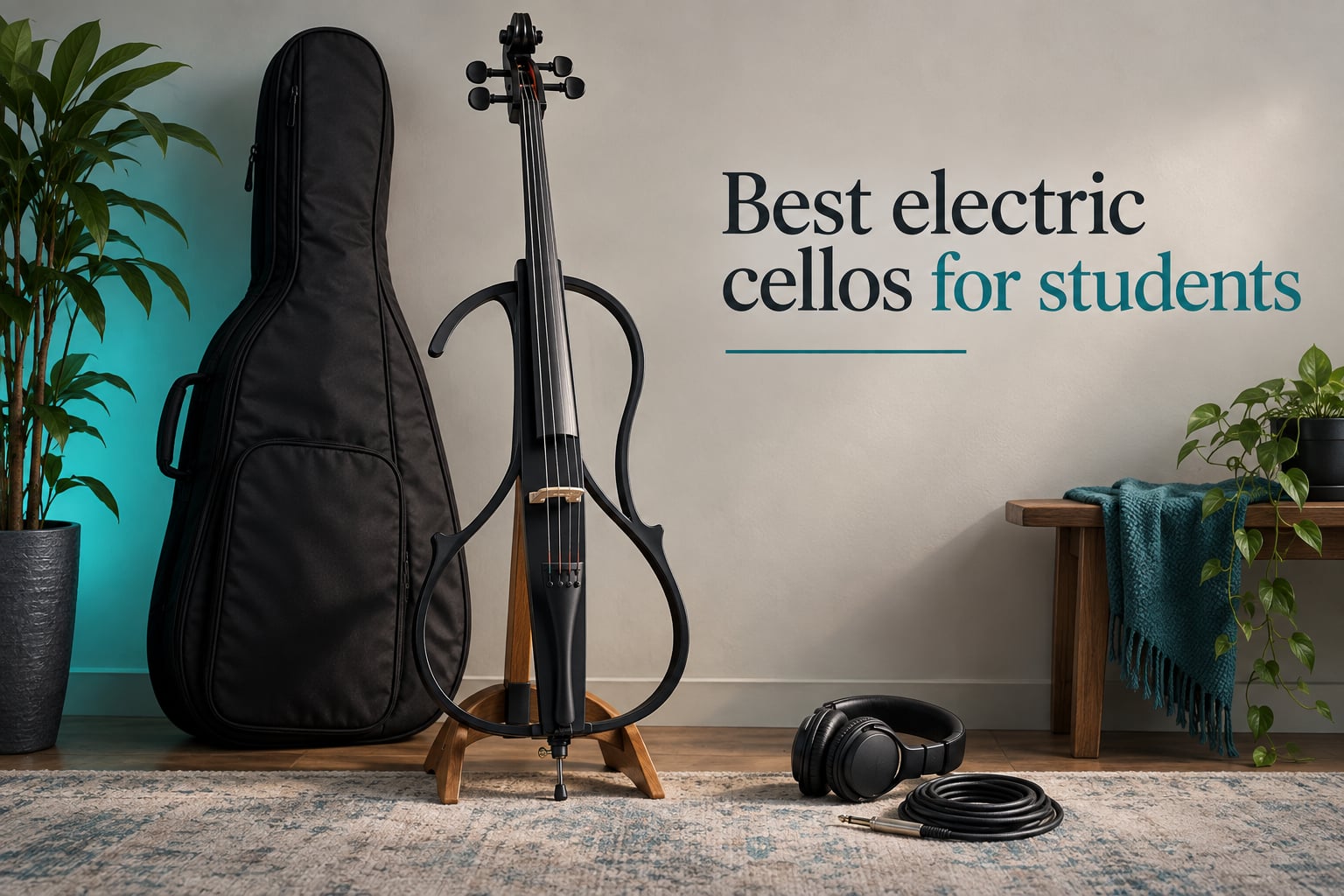
The best electric cellos for students are the Cecilio 4/4 Silent Electric Cello for anyone who wants one complete kit in a box, the Ktaxon 4/4 for the lowest-cost way to test whether electric playing suits you, and the Stagg ECL 4/4 BK if your teacher wants a traditional cello shape with a standard quarter-inch output. Two caveats before the list: an electric cello is not silent, only quiet, and not one of the six models below lists a 9V battery in the box. Budget for both, and the “silent practice” promise quietly becomes real.
That second point trips up more beginners than anything else. A piezo pickup under the bridge routes string vibration into a small active preamp, which sends the signal to a headphone jack, a quarter-inch output, or a recording interface. The wooden body still resonates, so a little bow noise and a faint hum from the strings leak into the room even at zero volume. What you do not hear is the 80-plus decibels of acoustic projection that gets a student told to stop practising at nine at night.
Every model in this roundup is a 4/4 full-size instrument, which shapes who can actually play one. We looked at six, sat them side by side, and rated them on the things a student family cares about: what arrives in the box, whether the strings and bow need replacing on day one, how the pickup handles noise, whether the output jack works with ordinary amp and PA cables, and how long the warranty runs. Pricing was checked in October 2026.
One note on scope. The category is thin right now. Only one instrument here carries a review count deep enough to trust, and three of the six are variants from the same maker. We have written them all up rather than padding the list, and we flag the thin ones clearly. Where a college student is also thinking about commuting gear between practice rooms, our guides to the best electric bikes for college students and the best budget commuter bikes for students cover the practical side of getting to a rehearsal space with an instrument in hand, and our best electric scooters for college students guide covers the last mile on a campus with awkward bike racks.
Table of Contents
Top 3 Picks for Student Electric Cellos in October

Cecilio 4/4 Silent Cello
- Hand-carved solid maple body
- Ebony fingerboard and tailpiece
- Complete kit with case bow rosin headphones
- 9V preamp with volume and tone

Ktaxon 4/4 Electric Cello
- Solid basswood body
- Beginner outfit with bag bow headphones
- Headphone jack for silent practice
- Lightweight and portable
Stagg ECL 4/4 BK Cello
- Solid maple body
- Under-saddle pickup with bass control
- Standard 1/4 inch output jack
- Two-year manufacturer warranty
The Cecilio wins this list on evidence rather than spec sheet. Three hundred and forty reviews at four stars is the only volume in the whole category, and owners consistently describe the same thing: a genuinely cello-like tone through headphones once you have replaced the strings and seated the bridge yourself. The Ktaxon 4/4 is the honest budget answer, a complete outfit that lets a student find out whether they like electric playing before committing real money. The Stagg is the pick when the argument with a teacher is about shape and ergonomics, because it has a real endpin and a traditional bow hold.
Best Electric Cellos for Students in 2026: Quick Overview
| Product | Specifications | Action |
|---|---|---|
| Cecilio 4/4 Silent Electric Cello Black Metallic |
|
Check Latest Price |
| Ktaxon 4/4 Electric Cello for Beginners |
|
Check Latest Price |
 Ktaxon Foldable Electric Cello 4/4 Z Style Ktaxon Foldable Electric Cello 4/4 Z Style |
|
Check Latest Price |
| Stagg ECL 4/4 BK Electric Cello |
|
Check Latest Price |
 Ktaxon 4/4 Professional Silent Electric Cello Kit Ktaxon 4/4 Professional Silent Electric Cello Kit |
|
Check Latest Price |
 Aliyes Professional Handmade Electric Cello 4/4 Aliyes Professional Handmade Electric Cello 4/4 |
|
Check Latest Price |
Should a Student Start on an Electric Cello?
Some students should, and some should rent a used acoustic first. The honest answer depends on where you practise, not on which instrument is fashionable. Long-running advice on cellist forums leans toward starting acoustic, and the reasoning is sound: an acoustic teaches you to control an unamplified sound, and the vibrato and response of a solid-body instrument behave differently enough to be a real adjustment later.
Electric wins outright in three situations. If you are in a flat, dormitory or shared family house where an acoustic at volume is a social problem, headphones change whether you practise at all. If you or your child has back and shoulder trouble, an electric without a heavy endpin load is a genuine quality-of-life gain, and players have documented exactly that benefit. If you want to record at home or play amplified with a band, an acoustic simply will not do the job.
Size is the question nobody in this category answers, so here it is plainly: electric cellos exist in 4/4 full size only. There is no credible 1/4 or 1/2 electric cello on the market. A child who would fit a 1/4 acoustic on a cello size chart is physically too small for any instrument on this page, endpin or no endpin. For children under about eleven, the answer is a rented acoustic at a music school, and no amount of shopping on this page changes that.
Check your teacher and your school before you buy. Orchestras and most method programmes such as Suzuki expect an acoustic for group and ensemble work, and a student who shows up to sectional with an electric will usually be asked to switch. Several students on cellist forums describe buying an electric anyway and using it for solo practice while keeping a school-owned acoustic for anything ensemble. That arrangement works, but it is an extra instrument, not a substitute, and it belongs in the family budget.
If you are still unsure, the cheapest honest test is the Ktaxon 4/4 further down. It is a complete outfit rather than a serious instrument, and that is exactly the right register for a decision you are not sure about yet.
1. Cecilio 4/4 Silent Electric Cello – Best Overall for Students
Cecilio 4/4 Silent Electric Cello with Ebony Fittings, Black Metallic
Hand-carved solid maple body
4 detachable fine tuners
9V preamp with volume and tone
Includes case bow rosin cable and headphones
Pros
- Deepest review base of any instrument in the category
- Maple body with ebony fingerboard pegs and tailpiece
- Complete kit so nothing else is needed to start playing
- Four detachable fine tuners make string changes and tuning easy for beginners
Cons
- Bridge ships uninstalled and needs proper seating
- Stock strings are basic and usually replaced within days
- Preamp knobs and switches feel flimsy in hand
- No auto power-off so the 9V battery drains silently
This is the one I recommend to a student family who want to stop deliberating. It is a hand-carved solid maple body with an ebony fingerboard, pegs and tailpiece carrying mother of pearl inlay, and it weighs in as a full-size 4/4 at 59 by 19 by 14 inches. Owners describe the tone through headphones as rich and closer to an acoustic cello than to a guitar, which is the entire point when a student is learning bow pressure and vibrato.
Four detachable fine tuners are a genuinely student-friendly touch. Pegs on a student cello are the classic frustration point, and having a fine tuner on each string means a twelve-year-old can tune without a teacher bending down every five minutes. The 9V preamp gives you volume and tone controls on the body, which is enough shaping for practice and for a small amp.
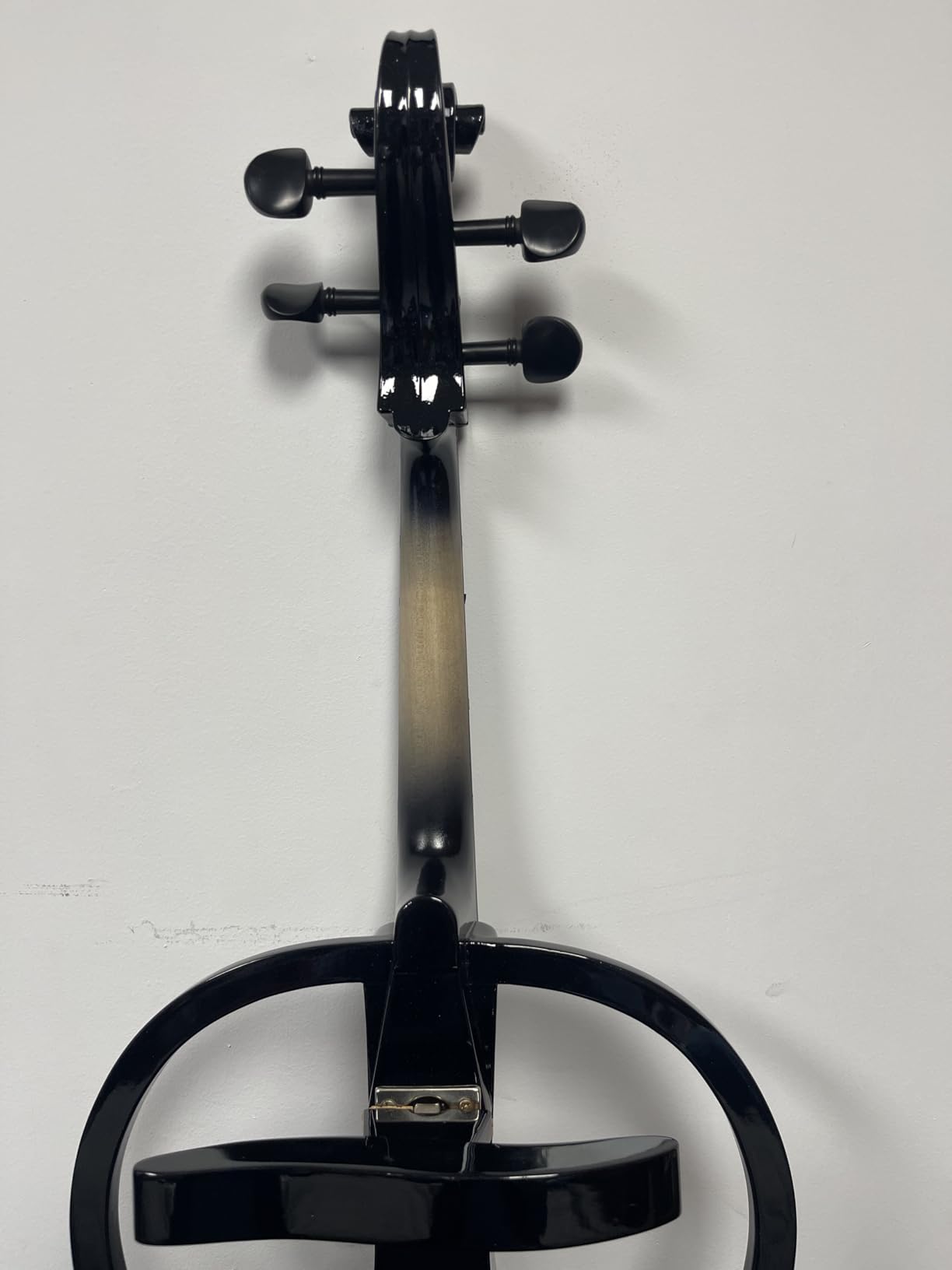
What you should know before you order is that the bridge is not installed. That is not a defect, it is how the instrument is packed, but it does mean the first session involves fitting and seating the bridge properly, and some owners end up paying for a setup visit at a local shop. The included strings are described by reviewers as basic, and the near-universal recommendation is to fit a proper set before judging the tone.
The output is a 1/8 inch jack, not the standard quarter inch. An adapter is included in the box, and it works, but if you plan to plug into a practice amp or a PA you will want a quarter-inch cable rather than relying on the adapter every session. There is no automatic power-off, which is the single most common complaint in the reviews, and it means unplugging or removing the battery when you finish.
What to check when it arrives
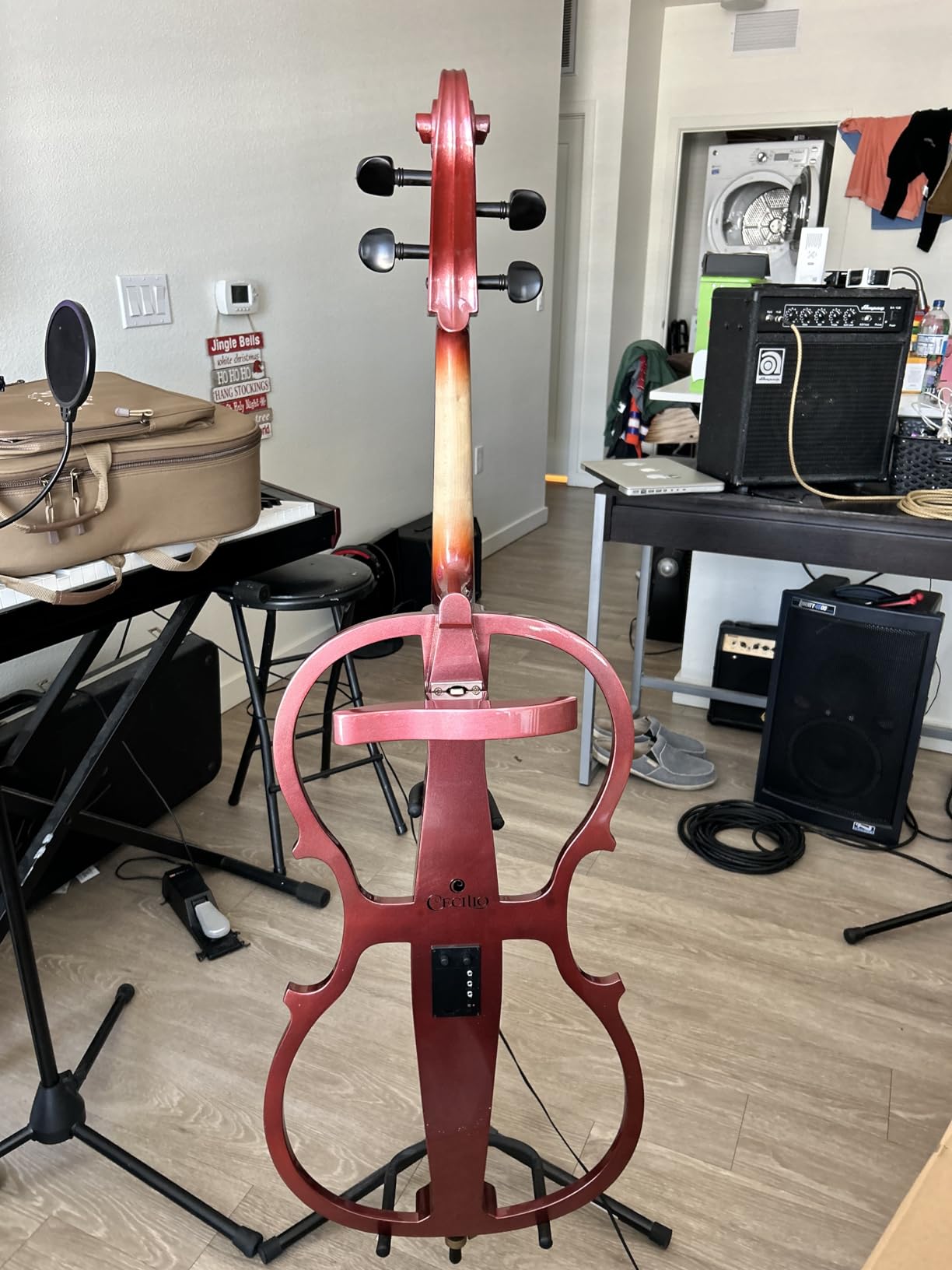
Open the case before the family does. Owners report bridges sitting high, screws loose in the fittings, and soft cases that protect very little. Check that all four fine tuners are present, that the pegs turn smoothly, and that the endpin threads cleanly. Give the bow a firm hair pull at both ends; a warped bow is a common packing fault.
Sit the bridge so it stands perpendicular to the top with the string holes behind the notches, then check string height with a straightedge along the fingerboard edge. If the strings sit well above the fingerboard, take it to a shop rather than lowering the bridge yourself. This one instrument is worth a professional setup, and the cost is far less than the cost of a student quitting because the action felt unplayable.
Who should skip it
Skip it if your child is under about eleven, because there is no smaller electric cello. Skip it if the plan is to be the only cello in the household for a school orchestra, because an acoustic will be required. And skip it if nobody in the house will turn the preamp off, because a dead battery on the morning of a lesson is a bad way to lose momentum.
It is also the wrong pick if you need a quarter-inch output straight out of the box for a PA. The adapter solves it, but if that is a hard requirement rather than a nice-to-have, the Stagg later in this list does it natively.
2. Ktaxon 4/4 Electric Cello – Budget Pick for First-Time Players
Ktaxon 4/4 Electric Cello Full Size Electric Cello for Beginners Adults
Solid basswood body
Complete beginner outfit included
Headphone jack for silent practice
Premium steel strings
Pros
- Complete outfit with bag bow headphones bridge and rosin
- One of the lowest entry points on this page
- Lightweight and easy to carry between practice rooms
- Wood tuning knobs hold tuning better than cheap plastic
- Padded Oxford cloth bag included
Cons
- Basswood is less resonant than maple
- No 9V battery included so add one before the first practice
- Quality control is inconsistent between units
- Bow and strings are basic and may need immediate replacement
This is the sensible way to answer the question “do I even want to play electric” without a large commitment. It is a full-size 4/4 basswood body with a semi-painted lacquer finish and a natural colour gradient on the scroll, and the box contains a lightweight cello bag, a bow, stereo headphones, a bridge and rosin. A student can be playing quietly within an hour of opening it.
The steel strings are specified to reduce finger fatigue on a slim instrument, and the white horse tail bow is described as more elastic than a cheap synthetic hair. Both are sensible choices at this level. The headphone jack is a direct connection, so silent practice works with no amp and no interface at all, which is exactly what a student in a shared house needs.
Be clear-eyed about the twenty-one reviews and the three-and-a-half star average. The review split is genuinely wide, which usually signals inconsistent units rather than a consistently poor product. Basswood is a legitimate tonewood, but it is a softer, less resonant wood than maple, and the difference is audible once you compare directly.
The single most important thing to know: no 9V battery is included. Not one of the three Ktaxon models in this roundup includes one, and the preamp is dead without it. Budget for a fresh alkaline battery with the instrument, and get into the habit of unplugging at the end of a session.
What to check when it arrives
Count the parts against the list: bag, bow, headphones, bridge, rosin. Inspect the tuning knobs for stripped threads and turn each one under string tension. Owners of this model report that a few units need sanding on rough body edges, so run a finger along the neck and the body before a child plays it.
Strings on this model are the most likely first casualty. Buy a proper set rather than stretching the supplied ones, because thin factory strings snap and their poor tension is what makes first-time players think the instrument is faulty. A clip-on tuner will also earn its keep, since these are geared-style wood knobs rather than machine heads.
Who should skip it
Skip it if you want a cello that will survive being played hard by a teenager for years. Basswood, a basic bow and a thin preamp are a short-term answer, and the thin review base means you are trusting your own luck on quality control. Buy a spare battery and a spare set of strings on the same day.
Also skip it if tone quality is the deciding factor for you. If you are choosing between instruments based on how the instrument sounds, the maple-bodied models in this list are the ones with the wood to reward that attention.
3. Ktaxon Foldable Electric Cello 4/4 – Best for Small Spaces and Travel
Ktaxon Foldable Electric Cello 4/4 Full Size Silent Cello(Foldable Z Style)
Collapsible Z-style frame halves packed size
Precision-carved basswood body
Adjustable bridge and multi-panel EQ
Complete outfit included
Pros
- Folds to roughly half its length for storage and transport
- Ideal for dorm rooms lockers and flats with no instrument space
- Adjustable bridge and bass/treble EQ give more tone control than budget rivals
- Full outfit with bag bow headphones cable and rosin
Cons
- Frame joints buzz and rattle when playing
- Bridge is soft and strings dig into it
- Reported rough unfinished wood and missing or stripped screws
- Only ten reviews and strings reported snapping quickly
The reason to buy this one is entirely structural. A collapsible Z-style frame reduces the packed size by about half, which turns “there is nowhere in this flat to put a cello” into a solved problem. For a student in a dormitory, a small bedroom, or a house shared with people who need the space, that is not a minor convenience.
On paper the electronics are the most capable in the Ktaxon range. The adjustable bridge and multi-panel EQ with separate bass and treble adjustment give more tone shaping than the single-tone-control design elsewhere, and the solid wood fingerboard is a better surface under the hand than a flat laminate. The outfit includes a bow, headphones, rosin, a padded Oxford cloth bag and a cable.
Now the reality. Reviewers on this model describe frame joints that buzz during playing, a bridge soft enough that strings dig into it, and units arriving with rough unfinished wood, missing screws or stripped hardware. The practical response is a weekend of small fixes with sandpaper, felt padding and a screwdriver, which is realistic for an adult and not realistic for a twelve-year-old on a Tuesday evening.
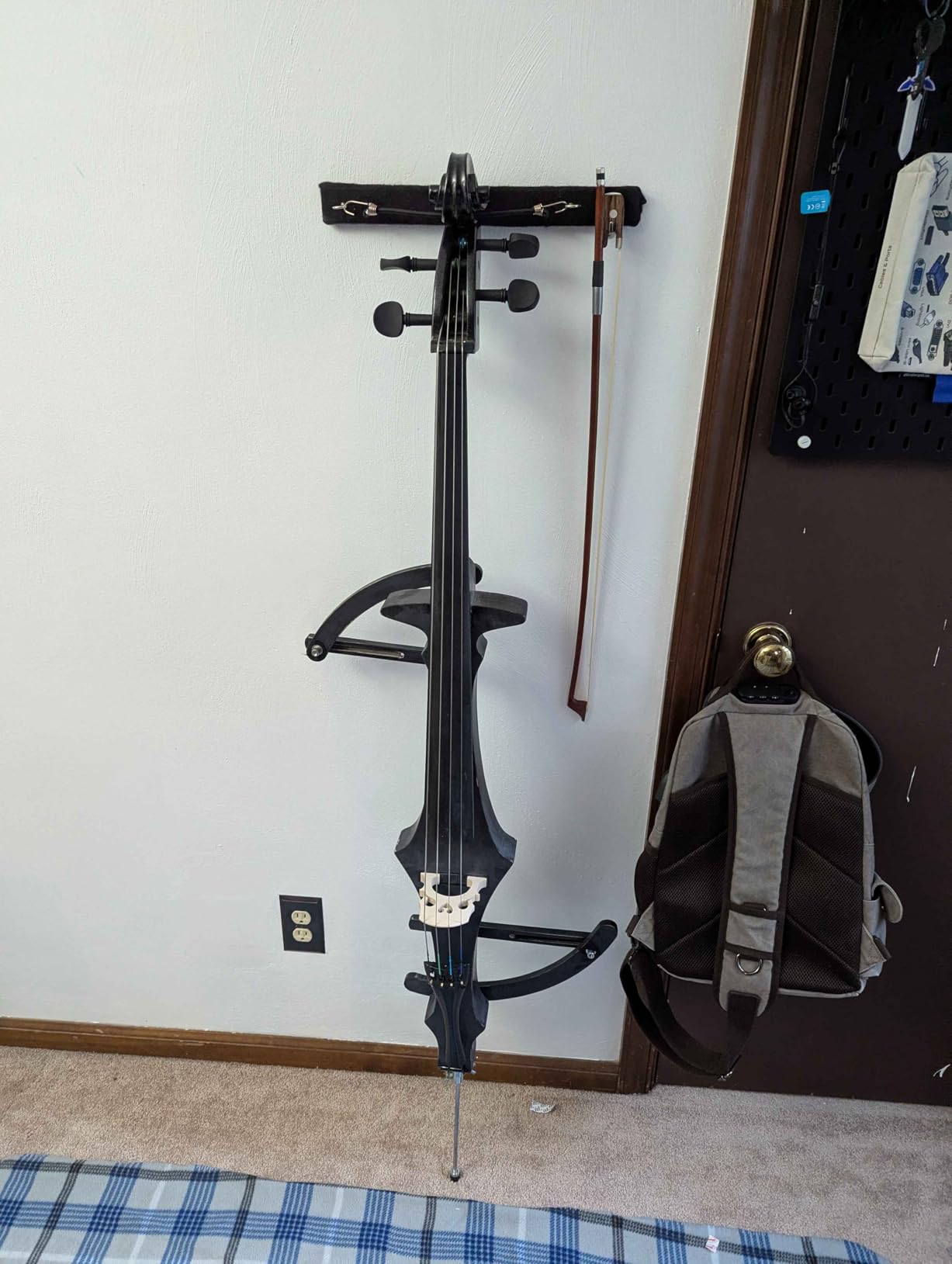
There is one further catch that buyers of folding instruments always hit eventually. Forum reports on folding designs describe the hinge loosening after roughly fifteen fold cycles, at which point the frame needs retightening with the included Allen key. That is a five-minute job, but only if the key is still in the case, so keep it.
The strings are also reported as snapping quickly on this model, which is a bridge-alignment symptom as much as a string-quality one. Get the bridge seated properly before you judge the strings, and replace them with a known set rather than the supplied ones.
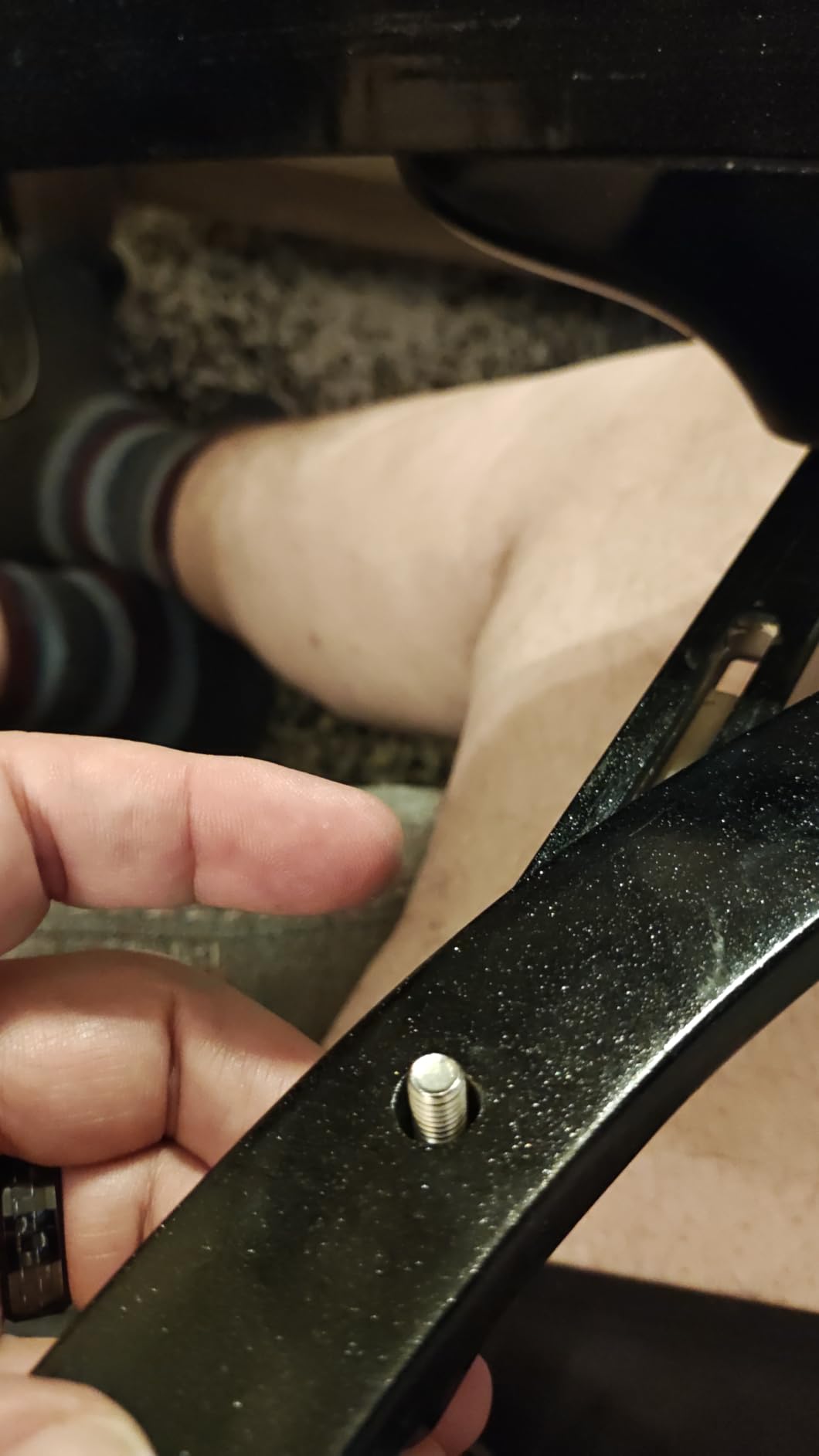
What to check when it arrives
Run the frame through fifteen full fold and unfold cycles on day one while you have the return window open. Listen for rattles at every joint and check that no screw heads are chewed. Feel the whole body for splinters and unfinished patches, particularly along the neck joint and the fold hinge, since those are the two areas owners single out.
Sit the adjustable bridge correctly before fitting strings. A soft bridge with strings cutting into it is fixable at setup and expensive to live with, and the two-minute adjustment now saves replacing strings twice in the first month. Add a 9V battery to the same shopping list, since it is not in the box.
Who should skip it
Skip it if you have a normal-sized room, because the foldability buys you nothing and the build quality problems are real. Skip it if you intend to gig with it, since a buzzing frame is audible through a pickup and a small amplifier will not hide it. And skip it if you are buying for a child who needs the instrument to work reliably on the first attempt without adult intervention.
What it is genuinely good for is a second instrument for a student who already plays and already knows how to do a basic setup, and for anyone whose housing situation makes storage the binding constraint.
4. Stagg ECL 4/4 BK – Best Premium Pick with Standard Output
Stagg ECL 4/4 BK Electric Cello – Black
Solid maple body
Active preamp with under-saddle pickup
Volume and bass controls
6.35mm output and two-year warranty
Pros
- Standard quarter-inch output works with ordinary amp and PA cables
- Proper cello ergonomics with a real endpin and traditional bow hold
- Longest warranty in this roundup at two years
- Under-saddle pickup with volume and bass controls
- Gig bag included
Cons
- Weakest rating in the lineup at 3.2 stars with a quarter of reviews at one star
- Costs noticeably more than the alternatives here
- Quality control reports are mixed
- May not justify the premium over cheaper models
This is the instrument here designed to behave like a cello from the player’s chair rather than like an electric guitar with cello strings. Stagg is an established European brand, and the ECL 4/4 has a proper endpin, a traditional bow hold and a body proportion you would recognise from an acoustic. That matters more than it sounds when a teacher watches you play.
It is also one of only two here with a standard 6.35mm quarter-inch output, which means a normal instrument cable, a normal practice amp and a normal PA. No adapter, no non-standard jack. For a student who will play in a school ensemble, a community band or a small venue, that single specification removes the most common practical complaint in this category.
The active preamp with under-saddle pickup gives volume and bass controls, and the solid maple body is denser and more resonant than the basswood bodies on the Ktaxon models. Item weight is listed at 12 pounds with dimensions of 48 by 14 by 4 inches, and the gig bag is included. The two-year warranty against defects in materials and workmanship is the longest warranty on this page, nearly double what most rivals offer.
Now the difficult part, which I would rather state plainly than bury. At 3.2 stars across 35 reviews with roughly a quarter of those reviews at one star, the rating is the weakest of the six. Mixed quality control is the recurring theme, and value is the recurring complaint, since this instrument costs a substantial step up from the budget options. You are paying for brand, build approach and warranty length, and the review base does not fully support that price.
What to check when it arrives
With a two-year warranty, read the terms before you need them and keep the receipt. Inspect the neck joint and the endpin thread closely, and check that the under-saddle pickup is seated evenly under the saddle rather than sitting high on one side, which produces a thin output that players often blame on the amp.
Set the pickup height with the strings at playing tension, not slack. A quarter-inch cable is the first thing to buy after this instrument, along with a fresh 9V battery, a clip-on tuner and a proper set of strings. Add a stable cello stand as well, since an acoustic-style body on an endpin needs a stand that will not tip.
Who should skip it
Skip it if your budget is tight, because the money is better spent on a decent instrument plus a small amplifier. Skip it if you are buying on rating alone, since 3.2 is not a good read on a student instrument. And skip it if you have a very small room, because at 48 inches long this is a full-size instrument with no folding option.
Buy it if the standard output, the two-year warranty and traditional cello ergonomics are on your must-have list, and you accept a thin review history. That is a reasonable student purchase, just not an obvious one.
5. Ktaxon 4/4 Professional Silent Electric Cello Kit – Complete Set with a Thicker Bag
Ktaxon 4/4 Electric Cello, Professional Silent Electric Cello Kit (Black)
Solid basswood body with lacquer finish
Thickened padded cello bag
Stereo headphones cable and rosin included
White horse tail bow
Pros
- Complete kit including bag headphones cable rosin and bow
- Thickened bag gives better protection than the basic Ktaxon outfit
- Lowest commitment of any full kit on this page
- Wood tuning knobs rather than cheap plastic
Cons
- Lowest rated instrument here at 3.0 stars across just eight reviews
- Thirty-seven percent of reviews are one star
- Basswood body with basic components and no 9V battery included
This is the same basic instrument as the Ktaxon 4/4 earlier in this list, packaged as a distinct kit with a thickened padded cello bag. The body is solid basswood with a lacquer finish and wood tuning knobs, and the box includes the bag, stereo headphones, a cable, rosin and a white horse tail bow.
It is worth being direct about the numbers. Eight reviews and a 3.0 average is the thinnest data in the roundup, and roughly thirty-seven percent of those reviews sit at one star. With that little data you cannot separate a mediocre instrument from a bad batch, and the honest reading is that you would be buying a first experiment rather than a dependable student cello.
What you get for that risk is a complete, playable, quiet instrument at the bottom of this price range. If a parent wants to put an electric cello under a child’s feet for a term to see whether the interest is real, this is the cheapest way to answer that question with a real instrument rather than a video.
Set the expectations properly. Basswood, a basic preamp, a simple headphone jack and a stock bow make this a practice instrument, not a performance instrument. If after a term the student is still playing, the sensible move is to move up to the maple-bodied options rather than to invest in strings and setup for this one.
What to check when it arrives
Given the one-star share, check everything immediately. Confirm the bag, headphones, cable, rosin and bow are all present, turn every tuning knob under tension, and run a finger along the neck for rough edges. Inspect the lacquer for chips, which are the most likely transit damage on a semi-painted body.
Buy a 9V battery with the instrument, because it is not included. Replace the strings immediately rather than stretching them, and use a clip-on tuner since the tuning knobs are geared wood rather than machine heads. A fresh set of strings and a battery cost very little compared with the disappointment of a dead preamp on practice day.
Who should skip it
Skip it if the instrument is a gift, because a thin review base makes it a risky present. Skip it if the student has already decided to commit for years, since at that point you should buy a maple body and better hardware. And skip it if there is no realistic chance of a setup visit or a patient adult in the house, because it will need attention.
Choose it over the Ktaxon 4/4 only if the thicker bag matters to you, because the instrument itself is at the same level. Otherwise, take the version with more reviews and save the difference for strings and a battery.
6. Aliyes Professional Handmade Electric Cello 4/4 – Best Pickup for Low-Noise Practice
Aliyes Professional Handmade Solid Wood Electric Cello 4/4 Full Size Silent Electric Cello With bow, Case,Bridge Strings-1807
German-made pickup with noise reduction
Ebony fingerboard and aluminium tailpiece
Line out mic and phone sockets
9V alkaline powered
Pros
- Most advanced pickup in this roundup with multi-level noise suppression
- Line out mic and phone sockets give real recording options
- Ebony fingerboard maple neck and aluminium alloy tailpiece
- Outfit includes bag bow 4m cable and a spare set of strings
Cons
- Only two reviews so the 5.0 rating is not meaningful
- Body is plywood despite solid wood in the listing title
- Included case is a lightweight soft bag rather than a hard shell
- Little brand recognition or service history
On electronics alone, this is the most capable instrument here. The pickup is described as professionally made in Germany with high sensitivity and low noise, and the preamp adds white noise suppression and array-based multi-level dynamic noise reduction, plus separate volume and tone tuners. For a student recording practice takes into a laptop or mixing backing tracks, those extra sockets are the reason to look here.
It has three output types, line out, mic and phone, each with an on and off switch, which is more connection flexibility than anything else on this page. The hardware is good too: ebony fingerboard and fittings, a maple neck, an aluminium alloy tailpiece, and a stainless steel and ebony endpin. Item weight is 12 pounds and dimensions are 55 by 10 by 8 inches.
Now the warning I would put on any recommendation page. Two reviews, both five star, is not a rating, it is a sample. The five-star average on this listing carries no useful information about long-term reliability, and I would not let it influence a purchase decision on its own.
There is also a contradiction worth knowing: the title describes a handmade solid wood cello, while the specification lists a plywood body with a 2.4 inch depth and a patented pigment bonding finish. Plywood is not a dealbreaker for a solid-body electric, but a marketing claim that does not match the spec is a reason to slow down and read the fine print before buying.
What to check when it arrives
Test the noise suppression before anything else, because that is the reason to buy it. Plug in headphones at a low volume, turn the tone control across its range and listen for hiss or hum. A quiet preamp should stay quiet at every setting; if it gets noisy at high gain, the suppression circuit is not doing its job and you should return it.
Check the finish closely for chips, since the patented pigment bonding process is the part most likely to show transit damage, and confirm the aluminium tailpiece sits square to the bridge line. The outfit includes an extra set of strings and a 4 metre aux cable, which is long enough to reach an interface across a desk, plus a 9V alkaline battery is required but not listed as included. Verify that in the box.
Who should skip it
Skip it if reliable long-term support matters to you, because a two-review brand gives you nothing to fall back on. Skip it if you want a body made from solid tonewood, given the plywood specification. And skip it as a first instrument for a child, where the noise circuitry is a bonus rather than a necessity.
It makes sense for one specific student: the one who already records at home, has an interface, and values a low-noise signal chain more than brand recognition. For everyone else, the maple-bodied instruments in this roundup are the more measured buys.
How to Choose an Electric Cello as a Student
Body wood and resonance
Maple is the densest and most resonant wood in this roundup, and it appears in the Cecilio and the Stagg. Basswood, used across the Ktaxon models, is a softer and lighter wood that gives a thinner but perfectly usable tone. For a student who will eventually put a pickup through a small amplifier, the difference is worth noticing, but for headphone practice on a beginner model it is not a deciding factor.
Pickup and preamp
Every instrument here uses a piezo-style pickup feeding an active preamp, which is the norm for cellos. The two things to compare are noise floor and control layout. The Aliyes has the most sophisticated noise suppression in the group; the Stagg gives volume and bass; the Ktaxon foldable model adds a multi-panel EQ; the Cecilio gives volume and tone. A student plugging into a laptop interface cares far more about noise floor than about having a treble control.
Output jacks, amps and headphones
Three of the six instruments in this roundup use a 1/8 inch jack, and only the Stagg and the Aliyes have a standard 6.35mm quarter-inch output. Adapters are included with the Cecilio, but the lesson for a student is simple: for headphone practice, any jack works, and for an amp or a PA, a quarter-inch output saves adapters and cable-swapping every session. Do you need an amplifier? For headphones, no. For playing over a backing track, through a music school system, or in a band rehearsal, yes.
Headphones matter more than most buyers expect. Closed-back headphones are essential, because open-back designs leak enough sound to defeat the entire reason for owning an electric. The headphones included in these kits are serviceable for checking your tuning and nothing more, so plan on a proper pair as a first-year purchase. If you are choosing a pair, look for closed-back wired models with a detachable cable and replaceable ear pads.
What actually ships in the box
Read the contents list before you order, because the accessories are the hidden cost. The Cecilio and the three Ktaxon models all include a bag, bow, rosin, headphones and a cable, which means nothing else is needed to start. The 9V battery is the accessory students forget most often, and all three Ktaxon outfits state that it is not included. Also missing from most of these boxes: a stand, a tuner, a quarter-inch instrument cable, and a proper set of strings.
Strings, endpin and setup on arrival
Budget for a string upgrade in year one on every model here, because reviewers repeatedly describe stock strings that snap or sound thin. The bigger job is setup: fit and seat the bridge, set the string height relative to the fingerboard, adjust the endpin, and set the pickup height under string tension. Plan roughly twenty minutes for a first-timer with a teacher present, or a shop visit. A cello that feels unplayable in week one is the fastest way to lose a student, and setup is the cheapest insurance available.
Electric vs Acoustic Cello for Students: The Real Cost
The electric case is made of practicality: quiet practice, no heavy endpin load, and the ability to record. The acoustic case is made of technique: learning to produce a controlled unamplified sound, which is the skill teachers and conservatories actually assess. Long-standing advice on cellist forums is that beginners should start acoustic, and that advice has survived years of forum discussion because it is correct about the technical gap.
The two are complements more often than substitutes. A common student pattern is a school-owned or rented acoustic for orchestra and lessons, plus an electric at home for daily practice. That is a legitimate and popular setup, but it is a second instrument rather than a cheaper one, and the total cost of ownership is higher than either instrument alone.
On raw numbers, an acoustic cello is usually the cheaper first purchase and the electric is usually the more useful one. The electric’s cost hides in the extras: a 9V battery, a set of strings, a closed-back headphone pair, a stable stand, and a small amplifier if you want to play with a backing track. Budget for all of those before deciding the electric is the cheaper option, because many families do not.
If a child is under about eleven, has never played, and lives somewhere an acoustic is tolerated, start acoustic and rent if you can. Everything on this page makes more sense after a student has a real sense of what a cello sounds like and how hard the instrument asks them to work.
Frequently Asked Questions
What is the best affordable electric cello?
The Cecilio 4/4 Silent Electric Cello is the best affordable electric cello for students, because it is the only instrument in this category with a deep review base and it includes a case, bow, rosin, cable and headphones in the box. Expect to replace the strings and add a 9V battery.
Are electric cellos any good?
Yes, for silent practice, home recording and players who cannot manage the weight or volume of an acoustic. They are not truly silent: the body still resonates, and a piezo preamp adds a faint hiss. They also do not teach unamplified tone control, which is why teachers usually keep acoustics for ensemble work.
Are Cecilio cellos any good?
For students, yes. The Cecilio 4/4 Silent Electric Cello holds a four-star average across hundreds of reviews, and owners consistently describe a rich cello tone through headphones. The two recurring complaints are that the bridge arrives uninstalled and that the preamp has no auto power-off, so the battery drains if you forget to unplug.
What kind of cello should a beginner buy?
Most beginners should start on an acoustic, ideally rented, because it teaches control of an unamplified sound. Choose an electric cello instead when quiet practice is not possible, when back or shoulder pain makes an acoustic endpin hard, or when you want to record and play amplified.
Do I need an amplifier for an electric cello?
No, not for silent practice. All six models here have a headphone jack, so you can practise with no amplifier at all. You do need one for playing over a backing track, using a music school system, or rehearsing in a band, and three of the six models use a 1/8 inch jack that needs an adapter for standard amp cables.
What size electric cello does a child need?
Electric cellos come in 4/4 full size only. There is no 1/4 or 1/2 electric cello on the market, so any child who fits a smaller acoustic cello is too small for one of these instruments. Rent a smaller acoustic at a music school instead until the student is old enough for full size.
Conclusion: The Best Electric Cellos for Students in 2026
For most student families, the Cecilio 4/4 Silent Electric Cello is the pick, and its kit-plus-review-base combination is the reason. If the budget is the binding constraint, the Ktaxon 4/4 gives you a complete, quiet, playable instrument to find out whether electric cello suits you. The Stagg ECL 4/4 BK is the one to buy when standard quarter-inch output, a two-year warranty and traditional cello ergonomics matter more than star ratings. The Ktaxon foldable model solves storage, and the Aliyes solves signal noise, for the two students with those exact problems.
Add a 9V battery if the box does not include one, a proper set of strings and a pair of closed-back headphones to whatever you choose, and give the first setup session twenty minutes with a teacher. Pricing was checked in October 2026, and the best electric cellos for students are worth a look whenever the practice-hours argument settles itself.