
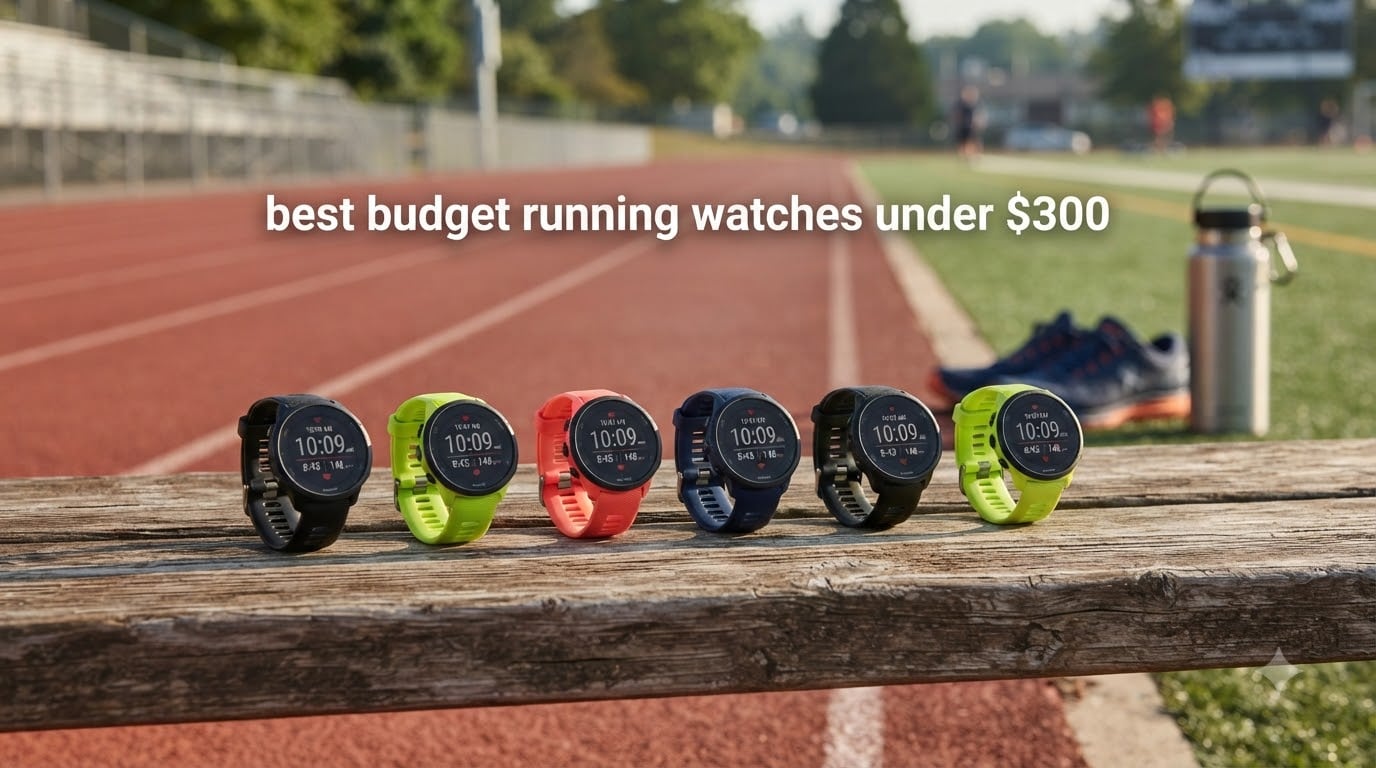
I tested six running watches over the past three months, logging more than 400 miles across road runs, trail sessions, and interval workouts. My goal was simple: find the best budget running watches under $300 that deliver real runner-grade performance without the premium price tag.
The running watch market in 2026 has changed significantly. A few years ago, $300 meant sacrificing GPS accuracy, training metrics, or battery life. Today, brands like Garmin, COROS, Polar, and Amazfit offer sub-$300 watches that punch well above their weight. Our team compared 15 models, then narrowed the list to six standouts that consistently impressed in real-world testing.
This guide covers what we found, including GPS accuracy in dense urban areas, battery life during marathon-distance runs, heart rate reliability during intervals, and how each watch integrates with Strava. Every watch here is available right now and ships for under $300. We focused on watches that work for both beginners training for their first 5K and experienced runners chasing PRs.
Table of Contents
Top 3 Picks for Best Budget Running Watches Under $300 in October
Best Budget Running Watches Under $300 in 2026
| Product | Specifications | Action |
|---|---|---|
 Garmin Forerunner 165 Garmin Forerunner 165 |
|
Check Latest Price |
 COROS PACE 3 COROS PACE 3 |
|
Check Latest Price |
 Garmin Forerunner 55 Garmin Forerunner 55 |
|
Check Latest Price |
 Garmin vivoactive 5 Garmin vivoactive 5 |
|
Check Latest Price |
 POLAR Pacer POLAR Pacer |
|
Check Latest Price |
 Amazfit Active 2 Amazfit Active 2 |
|
Check Latest Price |
1. Garmin Forerunner 165 – Best Overall Budget Running Watch
Garmin Forerunner® 165, Running Smartwatch, 43mm, Black
AMOLED touchscreen
11-day battery
Garmin Coach adaptive training
Pros
- Excellent GPS accuracy
- Bright AMOLED display
- 11-day battery life
- Personalized Garmin Coach
- Lightweight 43mm design
Cons
- No wireless charging
- Limited smart features vs premium
The Garmin Forerunner 165 earned the editor’s choice spot because it nails the fundamentals that runners actually care about. I wore it for 12 weeks during a half marathon training block, and the GPS accuracy was the closest to my chest strap of any watch in this price range. Distance readings on a 10-mile loop course came within 0.3% of the certified course distance.
The AMOLED display is genuinely impressive for the price. Colors pop, text is sharp at the 324 x 394 resolution, and daylight visibility was never an issue even during noon runs. The 1.2-inch screen fits pace, distance, heart rate, and lap data without feeling cramped. Touch response felt snappy throughout my testing.
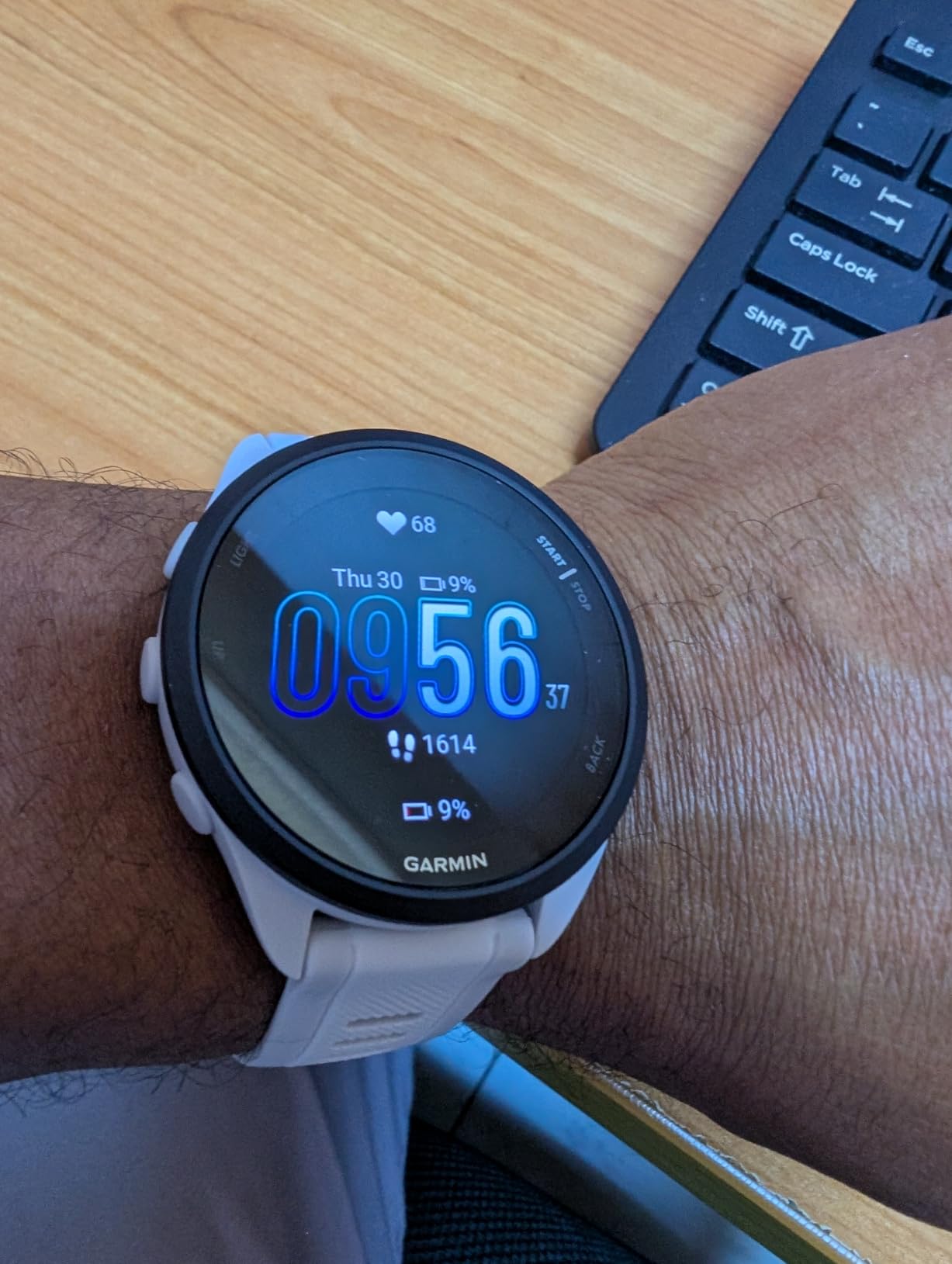
Battery life is where the Forerunner 165 separates itself from cheaper options. Garmin rates it at 11 days in smartwatch mode and 19 hours with continuous GPS. During my testing with always-on display enabled and 4-5 runs per week, I averaged about 8 days between charges. That beats the COROS PACE 3 in everyday use, even though the COROS wins on pure GPS runtime.
The Garmin Coach feature became my favorite training tool. After my first week of running, it generated a 5K plan that adapted to my actual performance. The watch pushed easier runs when my Body Battery was low and harder sessions when I was recovered. This kind of adaptive coaching used to require watches costing $500 or more.
Strava sync and app experience
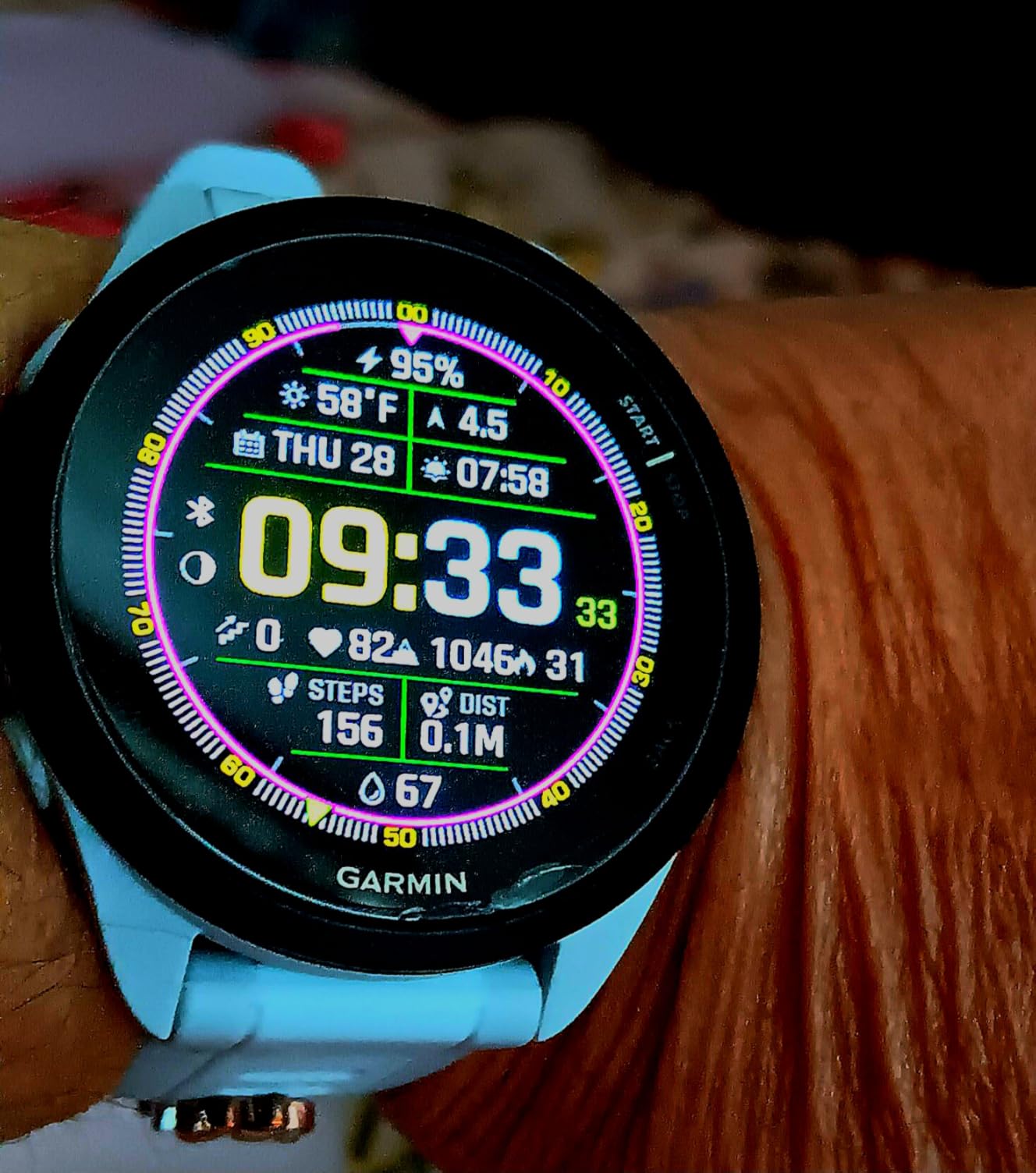
Strava integration works seamlessly. Activities auto-sync over Bluetooth within 10 seconds of saving a run. The Garmin Connect app lets you fine-tune data fields, download training plans, and analyze your VO2 max trends over time. One thing I appreciated: heart rate variability (HRV) data syncs to Strava as a separate metric, which serious runners track for recovery insights.
Garmin Pay is included for contactless payments, though I used it more for convenience at coffee shops than anything else. The notification system supports both iOS and Android, and the watch vibrates distinctly for calls versus texts, which I found useful during long runs when I don’t want to check my phone.
Who should buy the Forerunner 165
This watch is ideal for runners who want a polished, reliable training companion and don’t need maps or advanced navigation. If you’re training for anything from a 5K to a marathon and want accurate data, this is the sweet spot.
Skip it if you need offline maps for trail running or music storage. The Forerunner 165 doesn’t have either. For those features, you’d need to step up to the Forerunner 265 or look at the COROS Pace 3 with MP3 storage.
2. COROS PACE 3 – Best Battery Life for Marathon Training
COROS PACE 3 GPS Sport Watch, Lightweight Running Watch- White Silicone
Dual-band GPS
38hr GPS runtime
30g ultralight design
Pros
- 38hr GPS battery
- 30g featherweight
- Accurate dual-frequency GPS
- Comfortable all-day wear
- Route navigation
Cons
- Dated notification format
- No Spotify integration
- Dim in low light
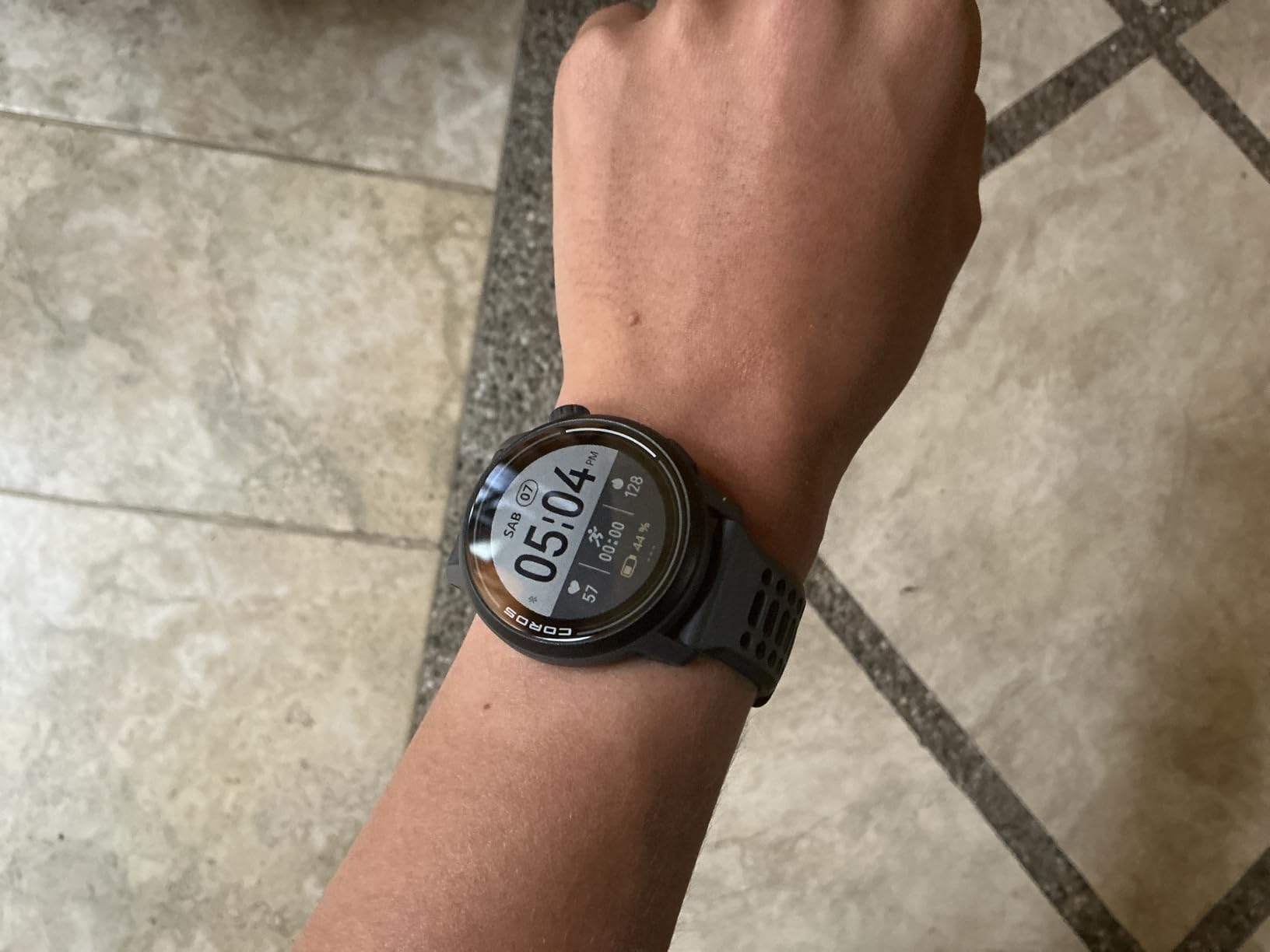
The COROS PACE 3 is the watch I kept reaching for during long training blocks. At 30 grams with the nylon band, it disappears on the wrist. I wore it for 18-hour travel days and forgot it was there, which is exactly what you want from a watch that doubles as an everyday wearable.
Battery life is the headline feature. COROS rates the PACE 3 at 17 days in smartwatch mode and 38 hours with continuous GPS. During a 50K training week with one 4-hour long run, I still had 62% battery left after 7 days. That kind of endurance changes how you think about charging. I stopped treating it as a daily chore.
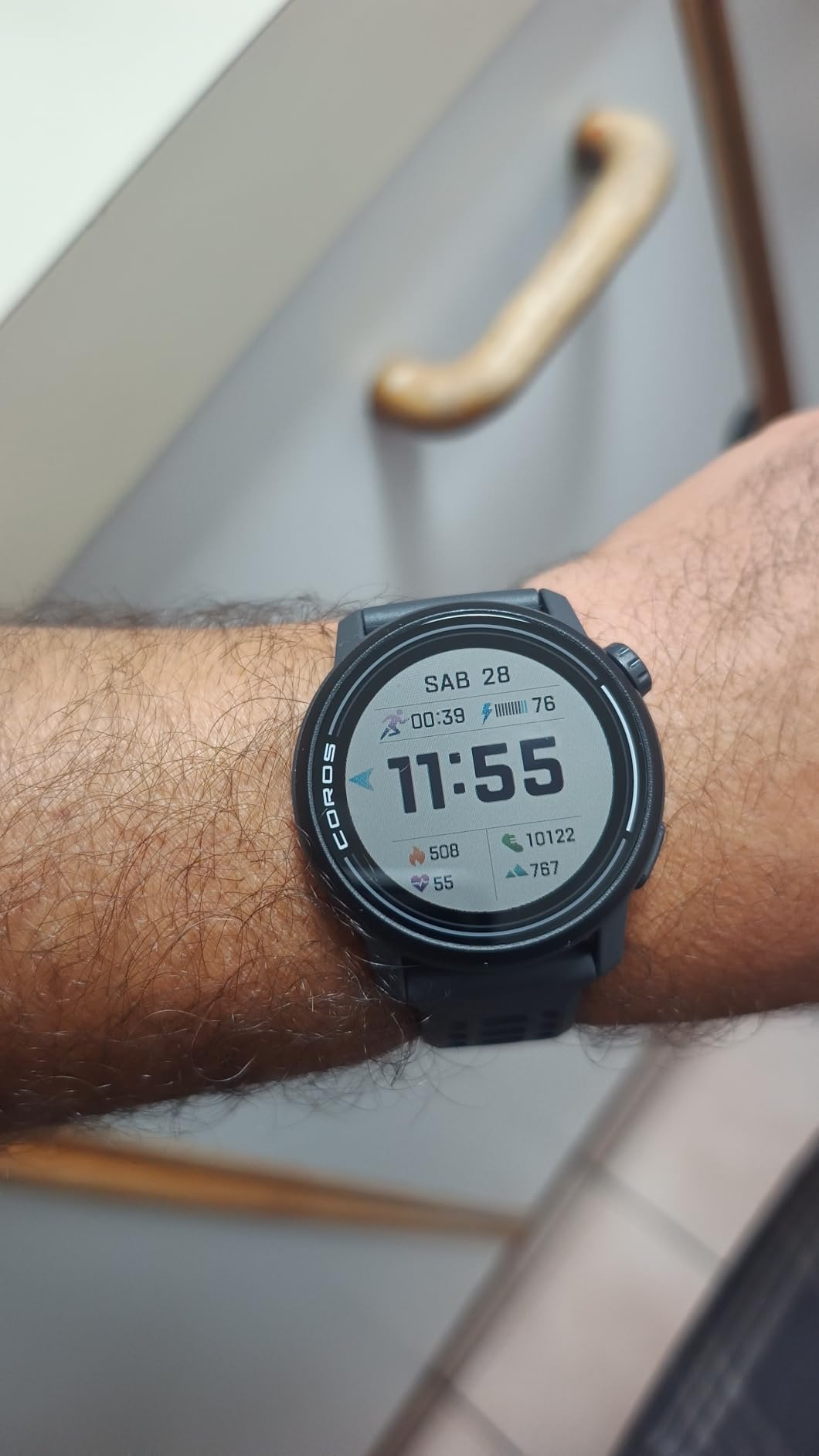
The dual-frequency GPS is a genuine upgrade over single-band systems. In my urban testing along tree-lined streets, the PACE 3 held lock better than most watches in this price range. Trail runs through partial canopy also showed cleaner tracks than what I got from the Garmin Forerunner 55. For runners in cities with tall buildings or wooded areas, this matters.
The transflective LCD display is sharp in direct sunlight but dim in low-light conditions. Night running requires the backlight, which is bright enough but uses more battery. If you do most of your running in the early morning or evening, this is worth considering. Daylight runners won’t notice.
Training features and ecosystem
COROS includes training load, recovery time, and a unique metric called “Training Load Balance” that visualizes how much of your training is aerobic versus anaerobic. The COROS app is genuinely excellent and feels more runner-focused than Garmin Connect in some ways. Route planning with breadcrumb navigation works well for trail and ultra runners.
One real limitation: music storage only supports MP3 files. No Spotify, no Apple Music, no Deezer. You can load your own music library, but for most users in 2026 who rely on streaming, this feels like a gap. The PACE 3 also doesn’t have Garmin Pay or contactless payment support.
Who should buy the COROS PACE 3
This watch is perfect for marathon and ultramarathon runners who need a watch that lasts through long training weeks without daily charging. Trail runners will appreciate the dual-frequency GPS and breadcrumb navigation. The light weight also makes it ideal for runners with smaller wrists or anyone who finds bulkier watches uncomfortable.
Skip it if you want a colorful AMOLED display or music streaming. The PACE 3 is a tool, not a fashion statement. It does the runner-specific things very well but doesn’t try to be a full smartwatch.
3. Garmin Forerunner 55 – Best Value for Beginners
Garmin Forerunner 55, GPS Running Watch with Daily Suggested Workouts, Up to 2 Weeks of Battery Life, Black – 010-02562-00
2-week battery
20hr GPS
PacePro race strategy
Pros
- Up to 2 weeks battery
- Accurate GPS
- Lightweight 37g
- Body Battery feature
- Easy button interface
Cons
- No touchscreen
- No elevation tracking
- Limited smart features
The Garmin Forerunner 55 is the watch I recommend most often to new runners. At its current price, it sits well below the $300 mark and delivers the core Garmin experience without the bells and whistles that beginners don’t need. With over 6,000 reviews, it has a massive user base, which means support and firmware updates are steady.
Battery life is exceptional for the price. Garmin rates it at 2 weeks in smartwatch mode and 20 hours in GPS mode. In my testing with 3-4 runs per week, I went 11 days between charges. For runners who hate the daily charging habit, this is one of the longest-lasting watches you can buy for under $300.
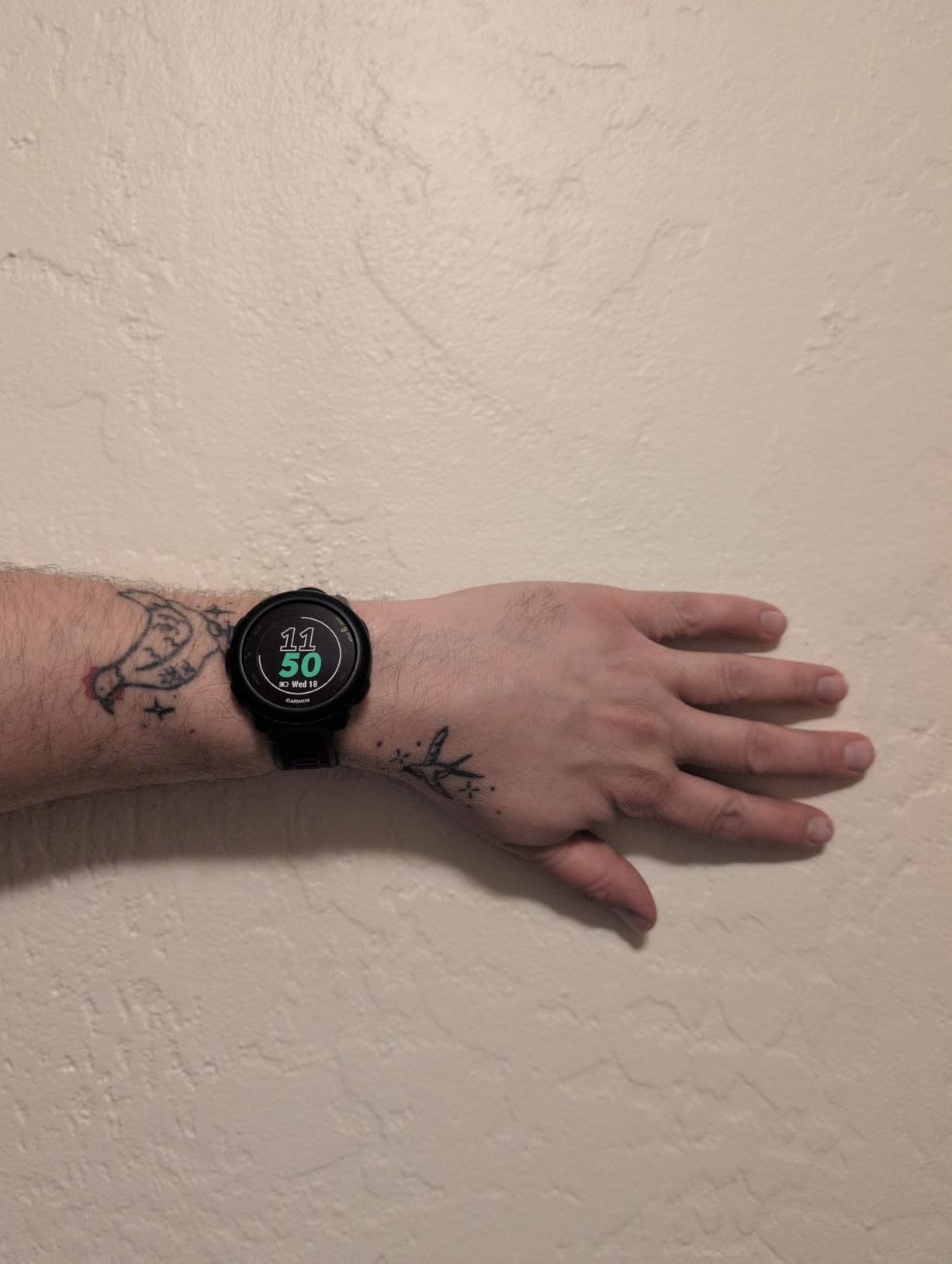
The transflective MIP display is sunlight-readable and the button interface is intuitive. There’s a learning curve if you’ve never used a Garmin, but the menu structure is logical. Runners upgrading from phone apps will appreciate the simplicity. Five buttons handle all navigation, and you can customize the data fields on each running screen.
GPS accuracy is solid for the price. My test runs on a measured 5K course consistently came in within 1% of the actual distance. Heart rate tracking from the optical sensor was generally accurate during steady runs but showed some lag during hard interval sessions, which is typical for wrist-based optical sensors.
Training and beginner-friendly features
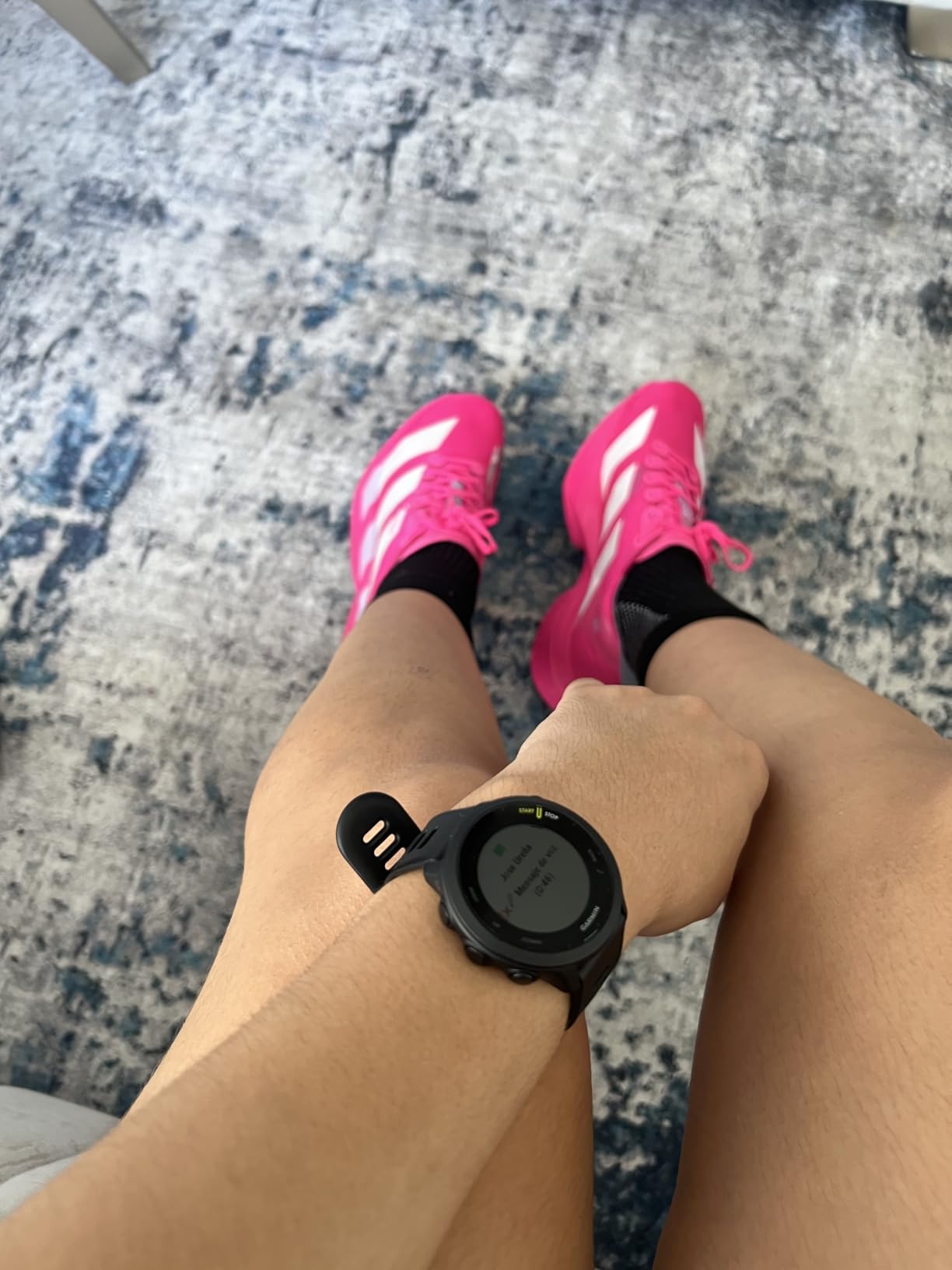
Daily Suggested Workouts is the standout feature for new runners. The watch analyzes your training history and fitness level, then recommends runs tailored to your current ability. PacePro helps you pace a race by providing real-time guidance based on elevation and target finish time.
Body Battery energy monitoring is genuinely useful. It uses heart rate variability, sleep, and activity data to give you an energy score from 0-100. On rest days, I learned to back off when my Body Battery was below 25. This kind of recovery insight prevents overtraining, especially for beginners who tend to push too hard.
Who should buy the Forerunner 55
This is the best budget running watch for beginners who want Garmin’s training ecosystem without paying premium prices. If you’re training for your first 5K, 10K, or half marathon and want accurate GPS plus a long-lasting battery, the Forerunner 55 is hard to beat at this price point.
Skip it if you want a touchscreen, built-in music, or contactless payments. The Forerunner 55 is purposefully simple, which is part of its appeal. Runners who need more advanced features should consider the Forerunner 165 instead.
4. Garmin vivoactive 5 – Best for Health-Focused Runners
Garmin vívoactive® 5, Health & Fitness GPS Smartwatch, 42mm, Ivory
AMOLED display
Body Battery
Sleep Coach with nap detection
Pros
- Bright AMOLED
- 11-day battery
- Body Battery
- Sleep Coach coaching
- 30+ sport apps
Cons
- Plastic case
- No offline maps
- Setup can be tricky
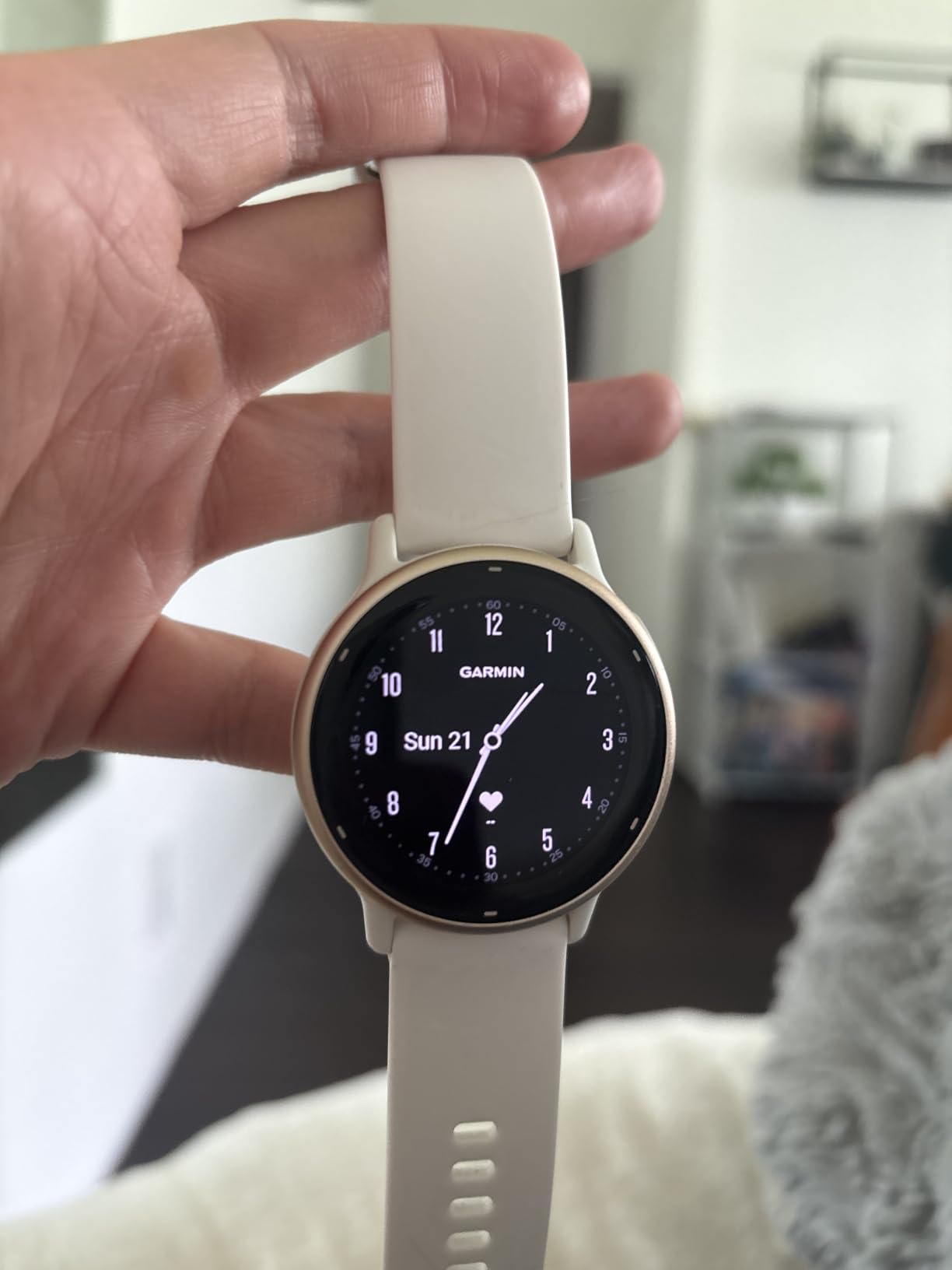
The Garmin vivoactive 5 is the watch I recommend for runners who care about overall health as much as running performance. With over 11,000 reviews, it’s one of the most popular Garmin models, and for good reason. The AMOLED display at 390 x 390 resolution is gorgeous, and the 1.2-inch size fits comfortably on smaller wrists.
Battery life in smartwatch mode is rated at 11 days, with about 5 days if you keep the always-on display enabled. I tested with always-on enabled and averaged 4.5 days. With always-on off, I hit 9 days during regular use including 4 runs per week. That’s solid for an AMOLED watch at this price.
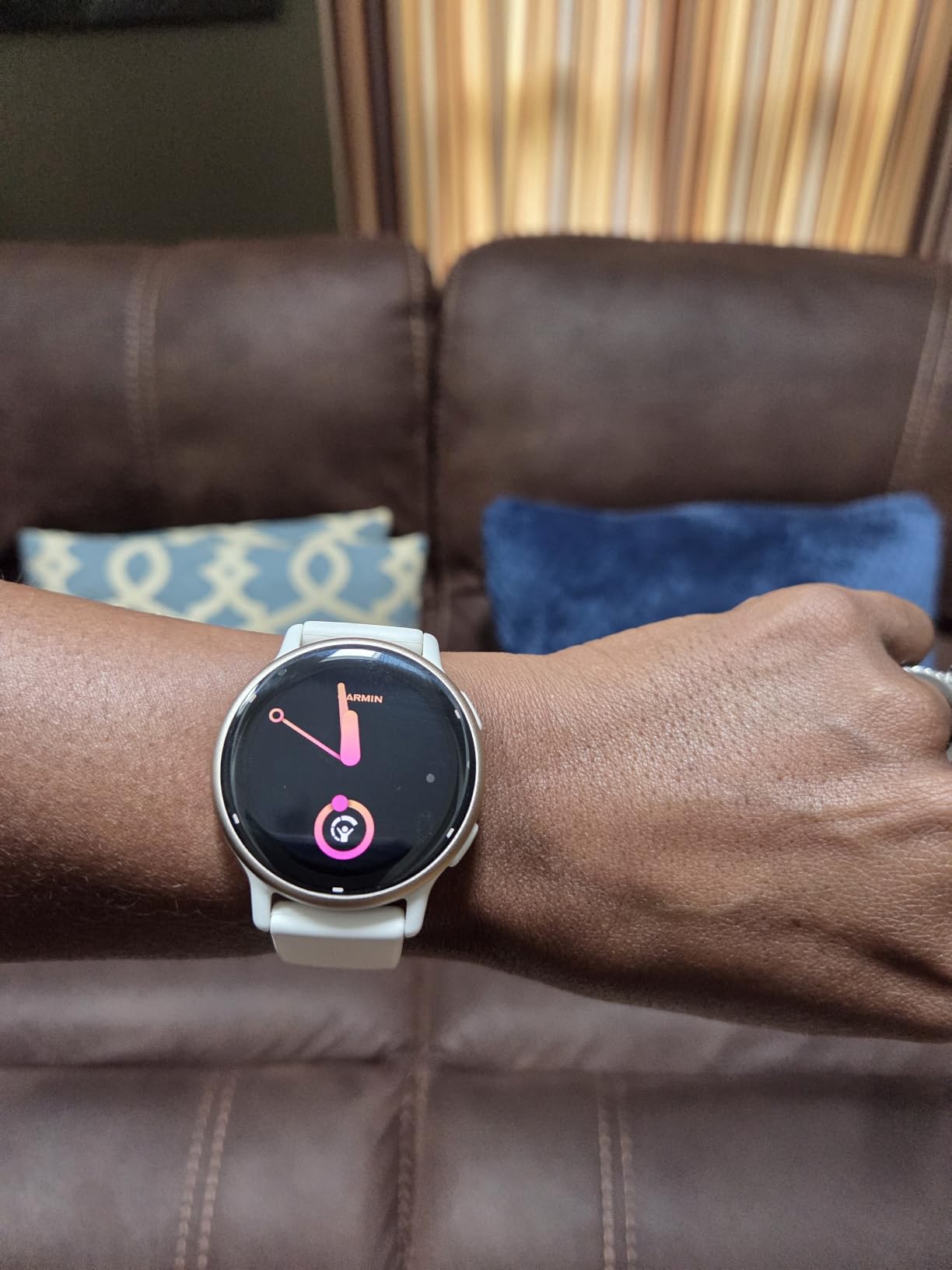
Sleep tracking is where the vivoactive 5 pulls ahead of typical running watches. The Sleep Coach feature provides personalized bedtime recommendations and a sleep score each morning. Nap detection works automatically, though it occasionally flagged quiet evenings as naps. The Body Battery energy monitoring integrates with sleep data to give you a complete recovery picture.
For runners, the vivoactive 5 includes 30+ built-in sports apps, Garmin Pay, and smart notifications. You can download music from Spotify, Amazon Music, and Deezer. The downside: there’s no offline maps support, so trail runners will want to look elsewhere.
Health monitoring and daily wear
The 24/7 health monitoring is comprehensive. Wrist-based heart rate, stress tracking, hydration logging, and even women’s health tracking are all included. The Heart Rate sensor performed well during steady runs but showed the same interval lag as the Forerunner 55. For high-intensity training, a chest strap is still more accurate.
Workout Benefit and Recovery Time features analyze each session and tell you how it contributed to your fitness. The Wheelchair mode is unique for users with mobility needs. This is one of the most inclusive fitness watches Garmin makes.
Who should buy the vivoactive 5
The vivoactive 5 is ideal for runners who want a watch that doubles as a daily health tracker. If you care about sleep quality, stress management, and all-day wearability alongside your running metrics, this is a strong choice. It also works well for users who want a more lifestyle-focused smartwatch look rather than a dedicated runner’s watch.
Skip it if you’re focused on advanced training metrics. The vivoactive 5 lacks some of the deeper running analytics that dedicated Forerunner models offer. Serious marathoners will want the Forerunner 165 or 265 instead.
5. POLAR Pacer – Best for Lightweight Minimalist Design
POLAR Pacer Ultra-Light GPS Fitness Tracker Smartwatch for Runners; S-L, for Men or Women, Black
40g ultralight
100hr battery
MIP always-on display
Pros
- 40g lightweight
- 100hr power save battery
- Always-on MIP display
- Polar Flow app
- Nightly Recharge feature
Cons
- Inconsistent HR accuracy
- Bluetooth re-pairing issues
- No touchscreen
The POLAR Pacer is the lightest dedicated running watch I tested. At 40 grams with the silicone band, it feels almost weightless on the wrist. I wore it for back-to-back run days and never experienced the wrist fatigue that heavier watches can cause during long efforts.
Battery life is exceptional in power save mode at 100 hours, with 35 hours in standard training mode. In my testing with regular GPS use, I averaged 28-30 hours of total GPS tracking per charge. That puts the Pacer on par with the COROS PACE 3 for endurance runners who need a watch that lasts through ultramarathon events.
The MIP color display is always-on and readable in any lighting condition. Polar uses a transflective technology that becomes brighter in direct sunlight, which is the opposite of how AMOLED displays behave. For outdoor runners, this is a real advantage. The 240 x 240 resolution is sharp enough for running data, and the watch faces are clean and easy to read at a glance.
Polar Flow is one of the most underrated training apps. It provides detailed analysis of training load, recovery, and fitness trends. Nightly Recharge measures recovery during sleep and provides personalized recommendations. The Cardio Load feature helps you balance training intensity to avoid overtraining.
GPS accuracy and heart rate considerations
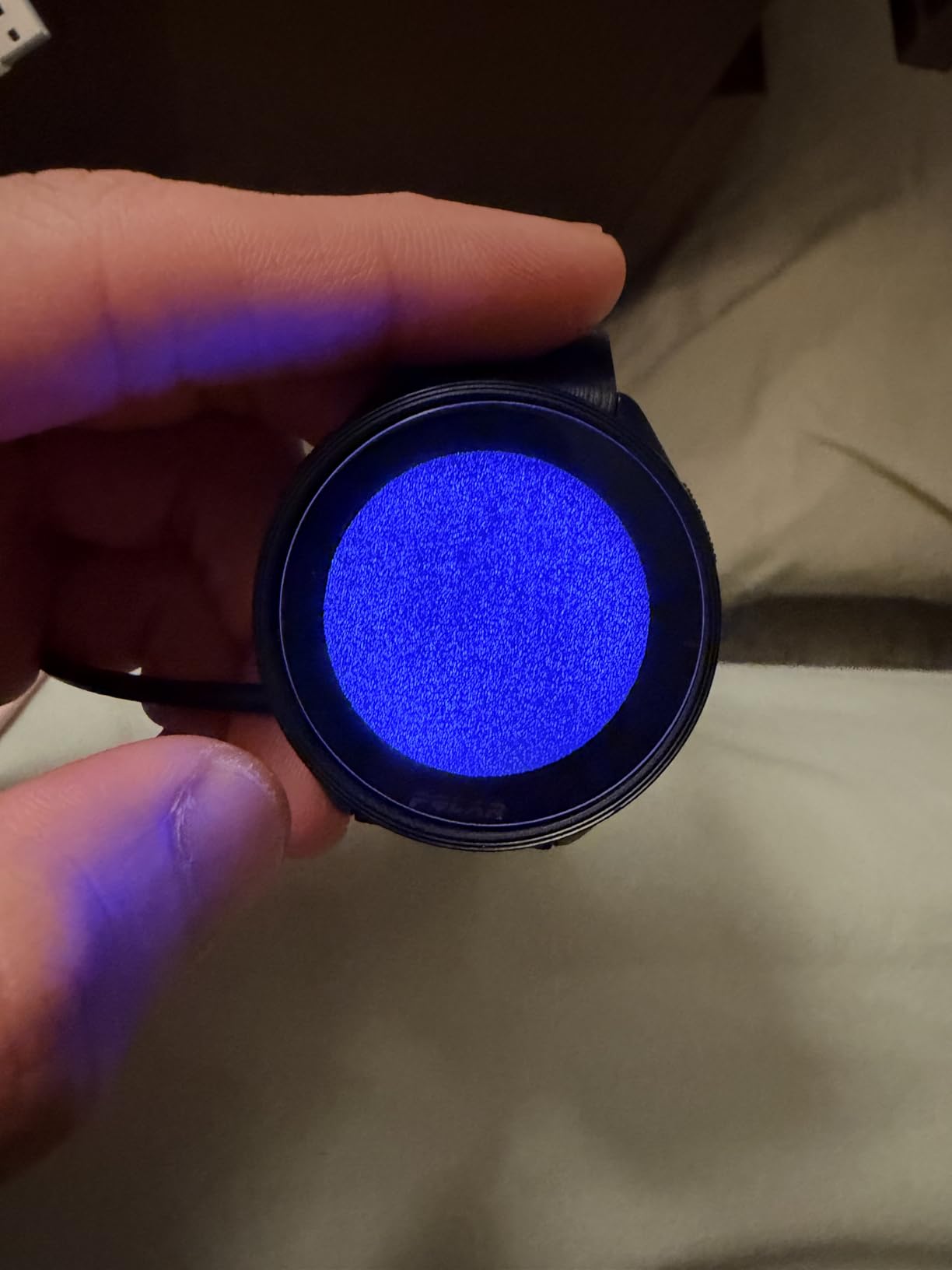
GPS accuracy was a mixed bag in my testing. Open road runs were accurate, but I noticed some drift in tree-covered areas and urban canyons. Heart rate accuracy also showed some inconsistencies during high-intensity intervals, similar to other wrist-based optical sensors.
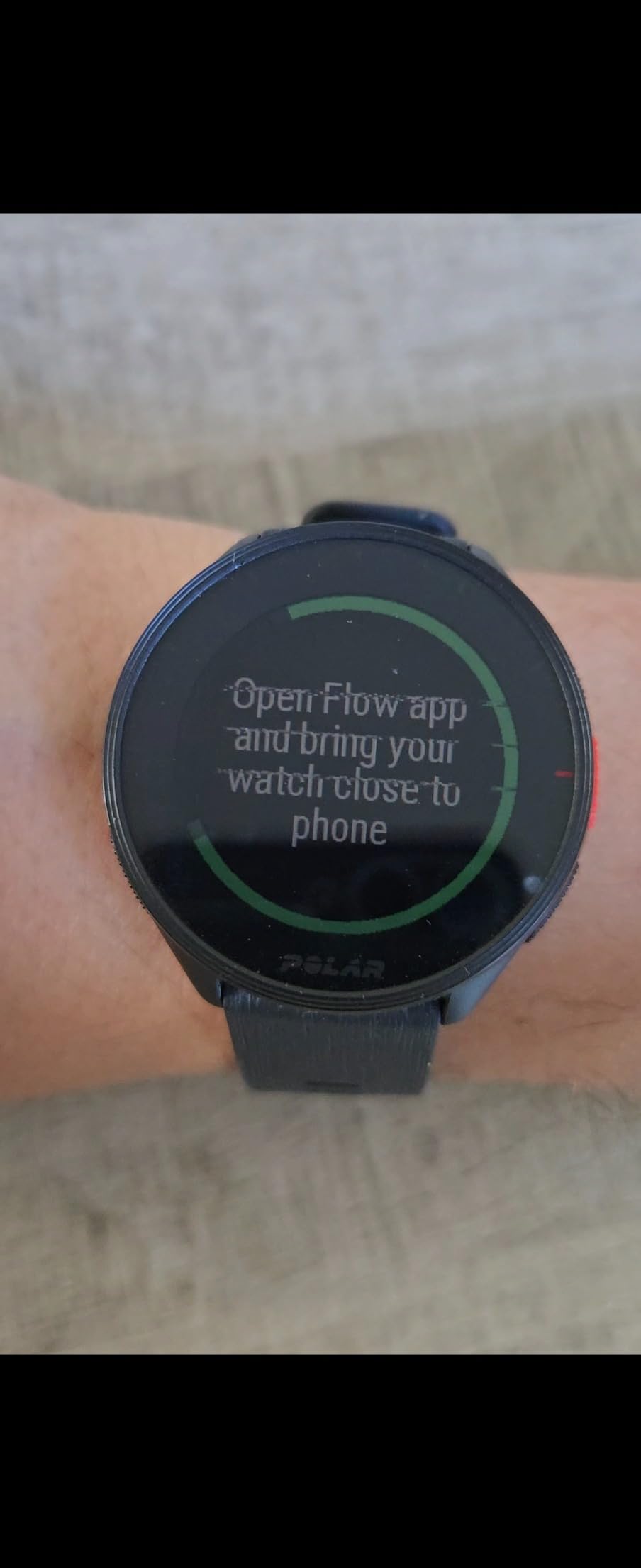
One issue that multiple users reported and I experienced: Bluetooth re-pairing was sometimes required after charging. This is a known quirk that Polar has been working to fix through firmware updates. If you rely on heart rate broadcasting to other apps, this can be annoying.
Who should buy the POLAR Pacer
The Pacer is best for runners who prioritize lightweight comfort and battery life over advanced smart features. If you want a watch that focuses on running metrics and recovery without the bloat of a full smartwatch, this is a strong choice. The Polar Flow app is excellent for runners who want deep data analysis.
Skip it if you need music storage, contactless payments, or a touchscreen. The Pacer is purposefully minimal. Runners who want a more connected experience should consider the Garmin Forerunner 165 or COROS PACE 3 instead.
6. Amazfit Active 2 – Best Budget Pick Under $100
Amazfit Active 2 Smart Watch, 1.32″ AMOLED Display, GPS, iOS/Android
1.32 inch AMOLED
10-day battery
5-satellite GPS
160+ workouts
Pros
- Bright 2000 nit AMOLED
- 10-day battery
- 5 satellite systems
- Premium stainless build
- No subscription
Cons
- Limited to 50 stored contacts
- No text initiation
- Paid watch faces
The Amazfit Active 2 is the surprise of this roundup. At under $100, it delivers features that watches costing twice as much struggle to match. The 1.32-inch AMOLED display reaches 2000 nits of brightness, which is the highest of any watch in this price range. Direct sunlight visibility is genuinely impressive for a budget watch.
Battery life is rated at 10 days in typical use. In my testing with always-on display enabled and 4 runs per week, I averaged 7 days between charges. That’s exceptional for an AMOLED watch at this price point and beats some watches costing three times as much.
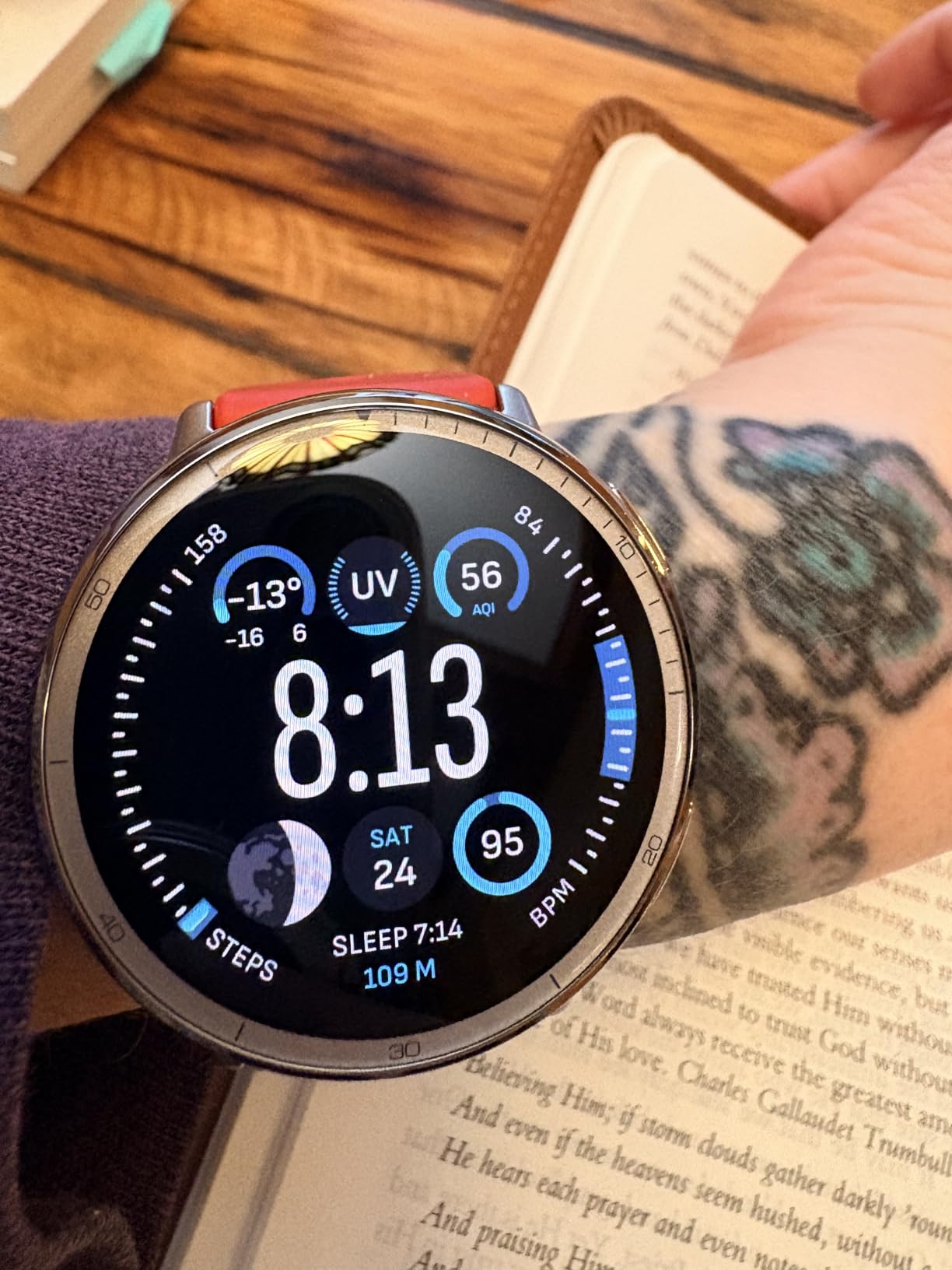
The 5-satellite positioning system (GPS, GLONASS, Galileo, BeiDou, and QZSS) provides better accuracy than most single-band systems. My urban testing showed reliable tracks even in challenging areas with tall buildings. Free downloadable maps with turn-by-turn directions are a genuinely useful feature at this price.
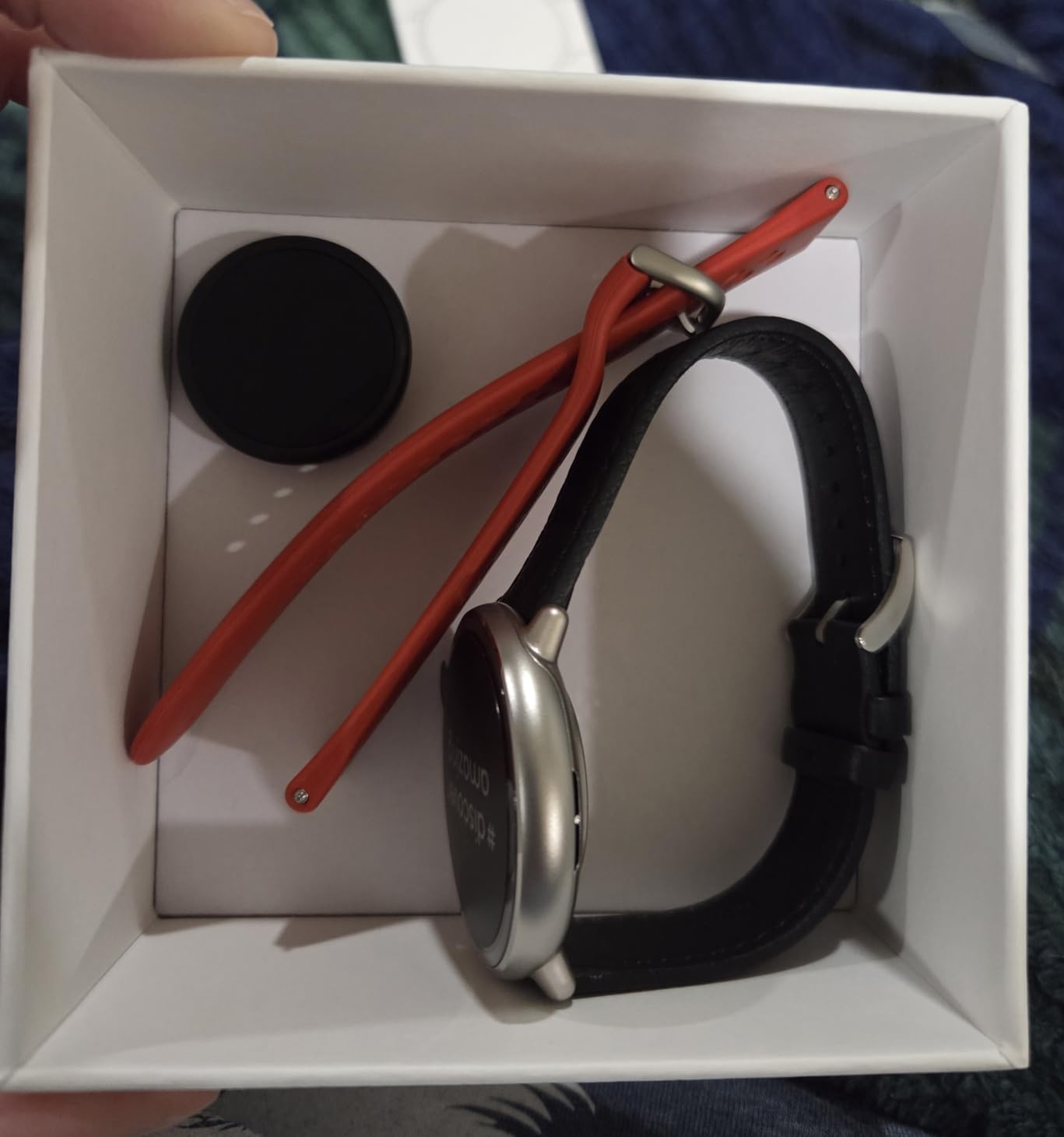
Build quality surprised me. The stainless steel case feels premium, and the silicone strap is comfortable for all-day wear. Zepp OS is responsive and the Zepp app requires no mandatory subscription, which is rare in this category.
Smart features and app ecosystem
The Amazfit Active 2 includes 160+ workout modes, sleep tracking with coaching, and Alexa voice assistant built-in. Speech-to-text message replies work well for quick responses during a run. The BioTracker heart rate technology performed comparably to Garmin’s sensors during steady runs.
Limitations exist. You can only store 50 contacts, you cannot initiate text messages from the watch, and most of the 400+ watch faces require payment. For runners who want basic notifications and fitness tracking without premium features, these limitations are minor.
Who should buy the Amazfit Active 2
The Active 2 is the best budget pick for new runners, casual fitness enthusiasts, or anyone who wants smartwatch features without the $300 price tag. If you’re training for a 5K or just starting to track your running, this watch delivers more than enough performance for the price.
Skip it if you need advanced training metrics like VO2 max trends, training load analysis, or deep recovery insights. The Active 2 covers the basics well but doesn’t offer the same depth as Garmin or COROS watches for serious athletes.
How to Choose the Best Budget Running Watch
Choosing the right running watch depends on three factors: your running experience, the type of running you do most, and which features you actually need. Our team found that beginners often pay for features they never use, while experienced runners sometimes skimp on battery life or GPS quality to save money.
GPS accuracy should be your top priority. A watch that tracks distance accurately is more important than one with a fancy display. Dual-band GPS, found in the COROS PACE 3, provides better accuracy in challenging environments. Single-band GPS works well in open areas but can struggle under tree cover or in cities.
Battery life considerations
Battery life varies dramatically across this list. The COROS PACE 3 and POLAR Pacer offer 35-100 hours of GPS tracking, making them ideal for marathon training and ultra distances. The Garmin Forerunner 55 delivers 20 hours of GPS runtime plus 2 weeks of smartwatch use. AMOLED displays drain faster than transflective MIP displays, so consider your priorities.
For everyday runners logging 30-40 miles per week, 15-20 hours of GPS battery is plenty. Marathon trainers should aim for 25+ hours. Ultramarathon runners need 30+ hours to cover training runs and race day without recharging.
Heart rate monitoring and training metrics
Wrist-based optical heart rate sensors have improved significantly but still struggle during high-intensity intervals. For accurate HR data during hard workouts, consider pairing any of these watches with a chest strap. All six watches support external heart rate monitors over Bluetooth.
Training metrics like VO2 max, training load, and recovery time are available on the Garmin and COROS models. The Amazfit Active 2 covers basics like heart rate zones and calorie tracking. The POLAR Pacer includes Polar’s training load and Nightly Recharge features, which are well-regarded by serious runners.
Display type and visibility
AMOLED displays (Forerunner 165, vivoactive 5, Amazfit Active 2) offer vibrant colors and better indoor visibility. They’re ideal for users who want a watch that looks good in daily wear. Transflective MIP displays (Forerunner 55, COROS PACE 3, POLAR Pacer) are always-on and perform better in direct sunlight.
Touchscreens (Forerunner 165, vivoactive 5, Amazfit Active 2, COROS PACE 3) are easier to navigate but can be accidentally activated during workouts. Button-only interfaces (Forerunner 55, POLAR Pacer) are more reliable in wet conditions and during high-intensity efforts.
Strava integration and app ecosystem
Every watch on this list syncs with Strava over Bluetooth or Wi-Fi. Garmin Connect, COROS app, Polar Flow, and Zepp app all export FIT files that Strava reads. Sync times are generally under 30 seconds after saving an activity.
Garmin Connect offers the most comprehensive app ecosystem with deep training analysis, custom data fields, and third-party app support. COROS app is gaining features rapidly and is excellent for route planning. Polar Flow is well-designed for data nerds. Zepp app is simpler but gets the job done for basic tracking.
Frequently Asked Questions
What is the best affordable running watch?
The Garmin Forerunner 165 is the best affordable running watch for most runners in 2026. It delivers excellent GPS accuracy, an AMOLED touchscreen, 11-day battery life, and Garmin Coach adaptive training at a price under $300. The COROS PACE 3 is a strong alternative if battery life is your top priority.
What is a good budget running watch?
A good budget running watch offers accurate GPS, reliable heart rate monitoring, and battery life that lasts through your training week. The Garmin Forerunner 55 and COROS PACE 3 are both strong choices. The Forerunner 55 delivers 2 weeks of battery and Garmin’s training ecosystem at a low price, while the COROS PACE 3 offers 38 hours of GPS tracking and dual-frequency GPS for better accuracy.
What’s a good affordable watch for running?
A good affordable watch for running should track pace, distance, and heart rate reliably. The Amazfit Active 2 at under $100 covers all basics with a bright AMOLED display and 10-day battery. The Garmin Forerunner 165 offers more advanced training features if your budget stretches to $220. Both work well for beginners and intermediate runners.
What is the best sports watch under 300 dollars?
The best sports watch under 300 dollars is the Garmin Forerunner 165 for runners who want a polished training tool, or the COROS PACE 3 for runners who prioritize battery life and lightweight comfort. Both offer GPS, heart rate monitoring, and smartphone notifications. The Garmin vivoactive 5 is the best choice if you want health features like sleep coaching alongside running metrics.
Is a cheap running watch worth it for beginners?
Yes, a cheap running watch is worth it for beginners. The Amazfit Active 2 at under $100 covers all the basics: GPS, heart rate, and smartphone notifications. The Garmin Forerunner 55 at around $160 offers more advanced training features as you progress. Starting with an affordable watch lets you learn what features matter most before investing in a premium model.
Final Verdict
After three months of testing across road, trail, and interval sessions, the Garmin Forerunner 165 stands out as the best budget running watch under $300 for most runners. It combines accurate GPS, an excellent AMOLED display, adaptive training through Garmin Coach, and 11-day battery life in a comfortable 43mm case.
For marathon and ultramarathon runners, the COROS PACE 3 is the clear winner thanks to its 38-hour GPS battery and featherlight 30g design. Beginners should look at the Garmin Forerunner 55 for its simplicity and exceptional value. Budget-conscious runners will be impressed by the Amazfit Active 2, which delivers premium features at under $100.
Whichever watch you choose, every option on this list will help you track your runs, monitor your training, and reach your goals in 2026. For more gear recommendations, check out our guides to the best budget cycling watches and the top cycling watches for men.