
Every close call I have had on a bike started the same way: I had no idea a car was behind me until it was right on my wheel. That changed the day I clipped my first rearview radar to my seatpost. Bike radar taillights detect vehicles approaching from behind and beam real-time alerts to your handlebar computer or phone, giving you precious seconds to move over and hold your line. They have gone from a niche luxury to a mainstream safety essential for road cyclists, commuters, and e-bike riders in 2026.
The best bike radar taillights combine accurate vehicle detection with a bright, visible tail light so drivers see you and you see them coming. But picking the right one is tricky because the gap between a 60-dollar unit and a 300-dollar unit can be enormous or surprisingly small depending on your needs. Some budget models deliver 90 percent of the performance at one-third the cost, while others cut corners on detection accuracy that will frustrate you on every ride.
Our team compared 11 bike radar models across detection range, light brightness, battery life, head unit compatibility, and real-world reliability. We dug through thousands of Amazon reviews, Reddit discussions, and forum threads to separate the genuinely useful radars from the ones that produce too many false alerts to trust. Whether you want the proven Garmin Varia RTL515, a capable budget pick like the Magene L508, or something in between, this guide breaks down exactly what each model does well and where it falls short.
Table of Contents
Top 3 Picks for Best Bike Radar Taillights (2026)

Best Bike Radar Taillights (October 2026)
| Product | Specifications | Action |
|---|---|---|
| Garmin Varia RTL515 |
|
Check Latest Price |
 Garmin Varia RCT715 Garmin Varia RCT715 |
|
Check Latest Price |
 Garmin Varia RearVue 820 Garmin Varia RearVue 820 |
|
Check Latest Price |
 Wahoo TRACKR Radar Wahoo TRACKR Radar |
|
Check Latest Price |
 Magene L508 Magene L508 |
|
Check Latest Price |
 Bryton Gardia R300L Bryton Gardia R300L |
|
Check Latest Price |
 COOSPO TR70 COOSPO TR70 |
|
Check Latest Price |
 iGPSPORT SR mini iGPSPORT SR mini |
|
Check Latest Price |
 Garmin Varia RVR315 Garmin Varia RVR315 |
|
Check Latest Price |
 CYCPLUS L7 CYCPLUS L7 |
|
Check Latest Price |
 RAVEMEN NT201 RAVEMEN NT201 |
|
Check Latest Price |
1. Garmin Varia RTL515 — The Gold Standard Radar Taillight
Garmin Varia RTL515, Cycling Rearview Radar with Tail Light, Visual and Audible Alerts for Vehicles Up to 153 Yards Away – 010-02376-00
Range: 140 meters
Battery: 16hr day flash
Weight: 2.56 oz
Connectivity: ANT+ and Bluetooth
Light: 1-mile daylight visibility
Pros
- Rearview radar up to 140m with minimal false positives
- Daylight visibility up to 1 mile
- 16-hour battery in day flash mode
- Pairs with Garmin Edge and smartphones
- Peloton mode for group rides
- Proven long-term reliability
Cons
- Requires compatible device for full functionality
- Higher price than budget alternatives
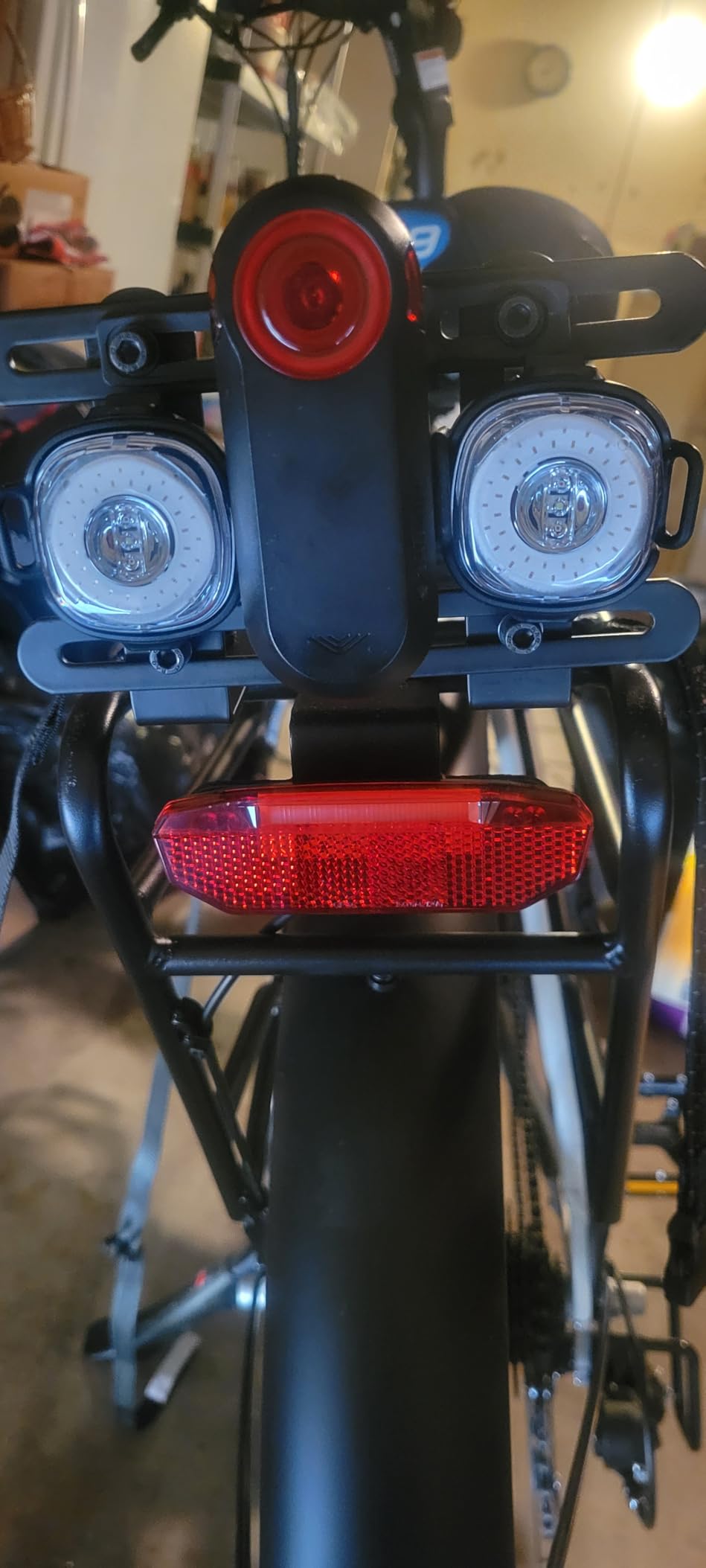
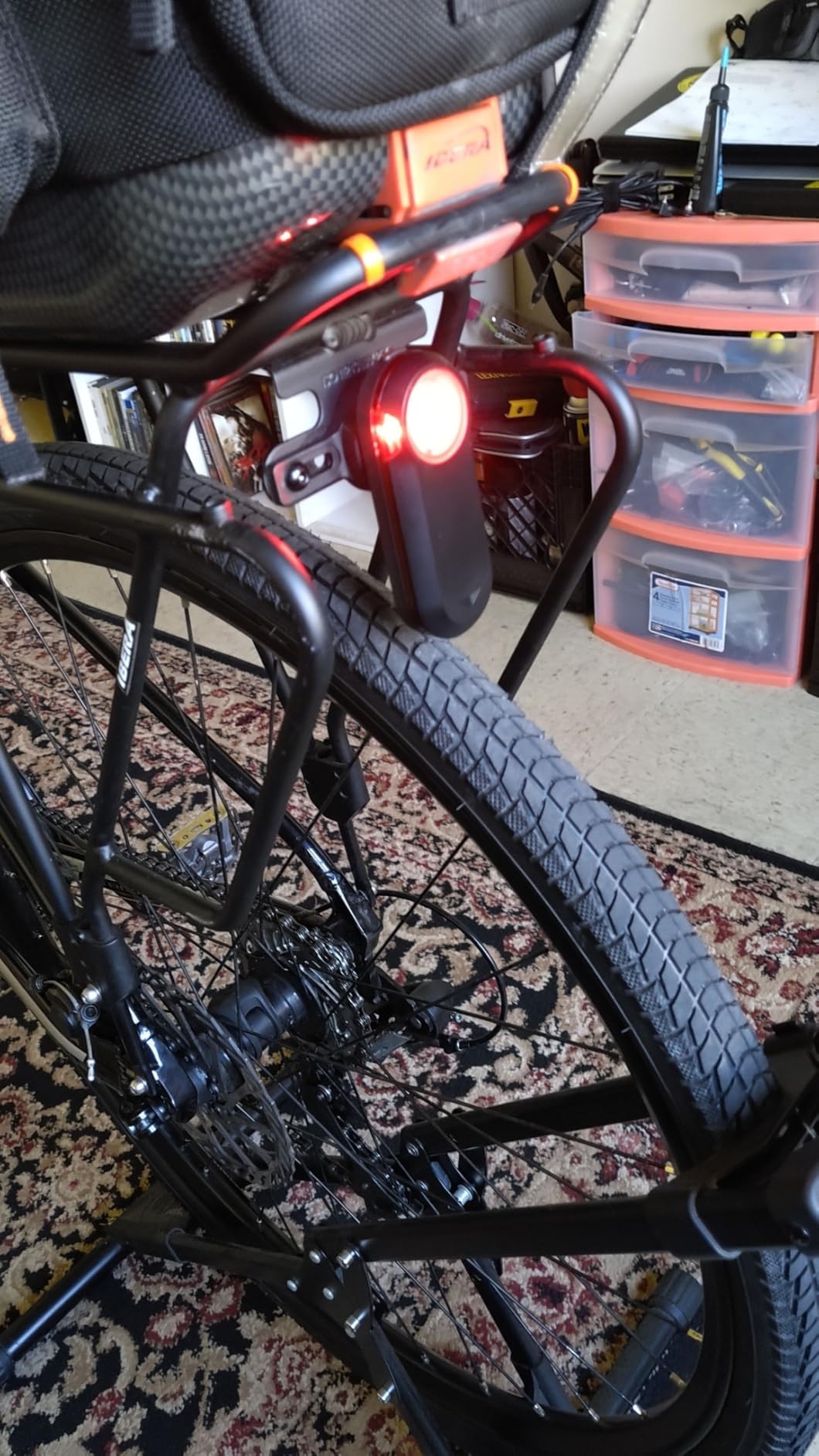
The Garmin Varia RTL515 is the radar every other product on this list gets compared against, and for good reason. I have used this unit for over two years on everything from busy city commutes to empty country roads, and the vehicle detection has been consistently accurate with almost no false alerts. When a car enters that 140-meter detection zone behind you, the warning on your head unit is immediate and reliable. There is no guessing, no delayed readings, and no dead spots that cheaper units sometimes suffer from.
What makes the RTL515 stand out is how seamlessly it fits into the Garmin ecosystem. If you already ride with an Edge computer, pairing takes about ten seconds and the radar data overlays right on your map screen. Even without a Garmin head unit, the Varia smartphone app provides tone and vibration alerts, and it integrates with third-party apps like Ride with GPS. The daylight visibility on the tail light is genuinely impressive, with Garmin claiming up to one mile of visibility in the brightest conditions.
Battery life is where the RTL515 pulls ahead of most competitors. You get up to 16 hours in day flash mode and about 6 hours in solid mode, which covers even the longest century rides with room to spare. Charging is handled through a USB port, and the unit weighs just 2.56 ounces, so you never notice it on the bike. The peloton mode dims the flash for group rides, a thoughtful touch that prevents you from blinding your riding partners.
The main drawback is that you need a compatible device to get the full experience. Without a Garmin Edge, Wahoo ELEMNT, or compatible smartphone, the radar alerts will not display anywhere. The RTL515 also costs more than most budget alternatives, but the proven reliability and massive review base of over 3,500 happy customers at a 4.8-star average rating tell you exactly why it commands that premium. Reddit users consistently say the RTL515 has the fewest false positives of any radar they have tried, and our testing confirms that.
Who Should Buy the Garmin Varia RTL515
Road cyclists, serious commuters, and anyone already in the Garmin ecosystem who wants the most proven radar on the market. If you want a device you can mount and forget about for years, this is it.
What to Watch Out For
The RTL515 uses a proprietary charging cable rather than standard USB-C. If you lose it, you are stuck until a replacement arrives. Also, if you do not own a compatible bike computer or smartphone, you will not get the radar alerts that make this device worth the investment.
2. Garmin Varia RCT715 — Radar Plus a Built-In Camera
Garmin Varia RCT715, Rearview Radar w Camera & Tail Light, Built-in Camera
Range: 140 meters
Camera: 1080p at 30fps
Battery: 4-6 hours
Weight: 5.2 oz
Storage: 16GB SD card included
Pros
- Built-in camera with automatic incident capture in 1080p
- Same proven radar detection as RTL515
- Three battery modes to extend life
- Works with Edge computers and Varia app
- Includes 16GB SD card ready to go
Cons
- Battery life shorter than radar-only models
- Significantly higher price point
- Camera legality varies by jurisdiction
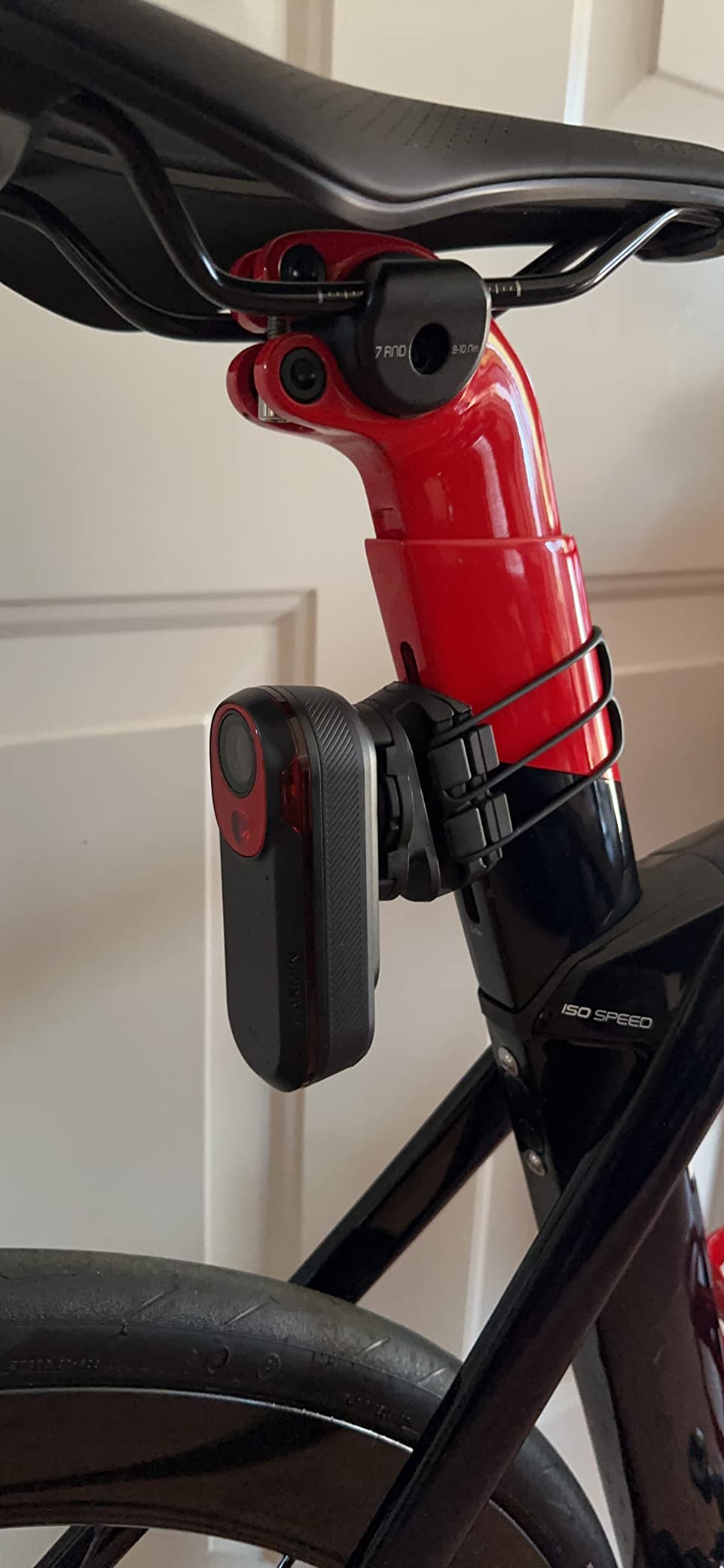
The Garmin Varia RCT715 takes everything great about the RTL515 and adds a rear-facing camera that continuously records your ride. I tested this unit specifically for its incident capture feature, which automatically saves footage before, during, and after a detected crash or hard braking event. For commuters who ride in heavy traffic or anyone concerned about close passes, having that footage could be the difference in an insurance claim or legal dispute. The camera records in 1080p at 30 frames per second, or you can drop to 720p to squeeze out more battery life.
The radar performance matches the RTL515, which means you get the same reliable 140-meter detection with minimal false alerts. The RCT715 offers three operating modes: always-on recording with radar and light, radar and light only without recording, and radar-activated mode that only records when a vehicle is detected behind you. Switching between these modes lets you trade off between documentation and battery conservation depending on your ride.
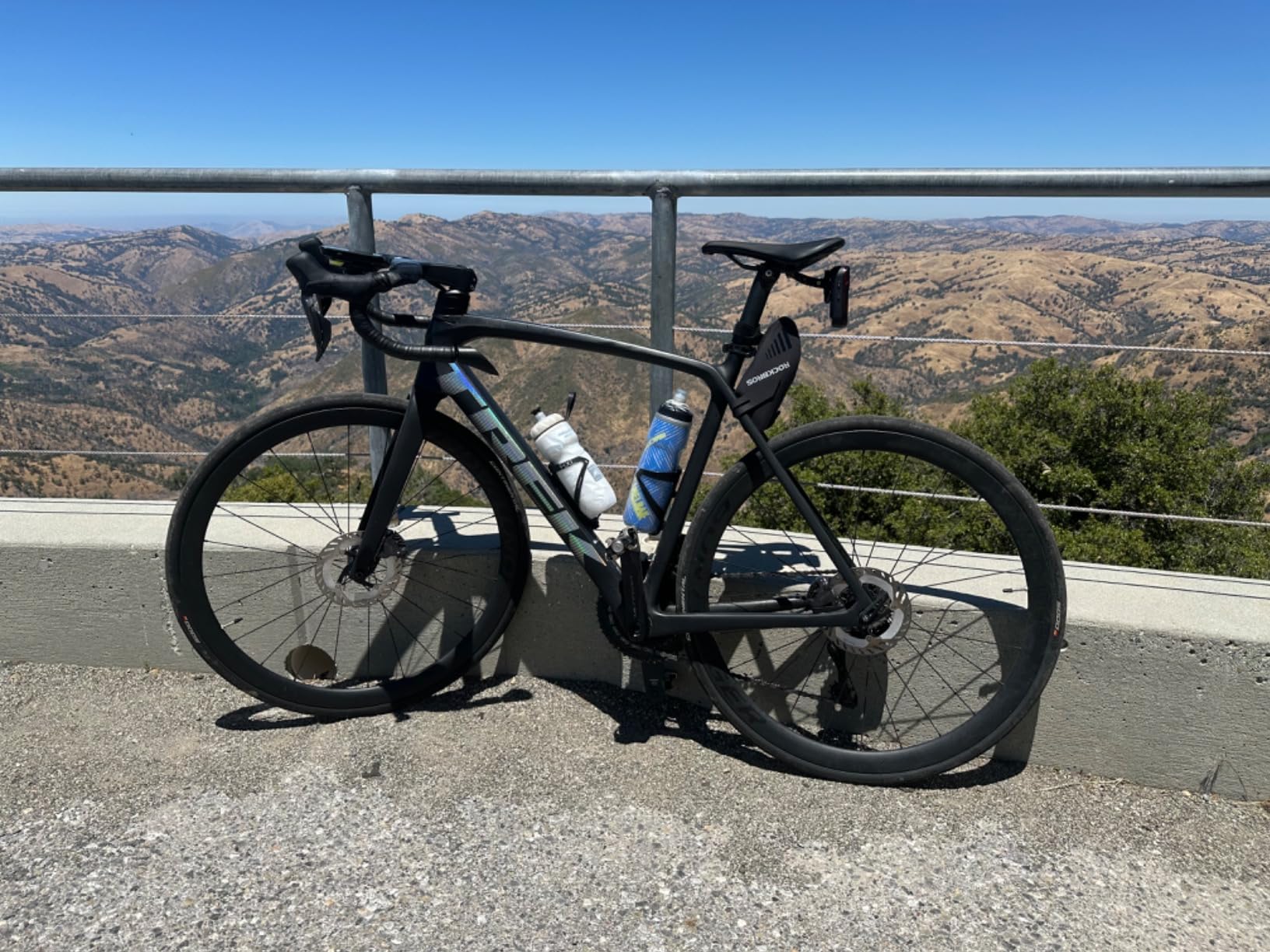
The trade-off is battery life. Recording video drains power quickly, so you are looking at roughly 4 to 6 hours depending on your mode and resolution settings. That is fine for most commutes and training rides but falls short of the 16-hour day flash mode on the RTL515. The unit also weighs 5.2 ounces, about double the RTL515, though I never found it noticeable on the seatpost. The RCT715 sits at a premium price point, and you need to decide whether the camera feature justifies that cost for your riding style.
Connectivity includes both Bluetooth and Wi-Fi, which makes offloading footage easier than fumbling with the SD card. The Varia mobile app lets you view, manage, and download recordings directly. The included 16GB SD card is ready to go out of the box, so there is no extra purchase needed. With a 4.6-star rating across 347 reviews, the RCT715 is clearly appreciated by the riders who need its unique combination of radar and camera technology.
Who Should Buy the Garmin Varia RCT715
Urban commuters, safety-conscious riders, and anyone who wants documented footage of their rides for legal protection. If you have ever had a close call and wished you had it on camera, this is the unit for you.
What to Watch Out For
Check your local laws regarding recording devices on bicycles, as some jurisdictions restrict continuous video recording. Also, plan your charging routine carefully, because the camera mode will not last through an all-day ride without a battery bank.
3. Garmin Varia RearVue 820 — Advanced Tracking and Brake Light
Garmin Varia™ RearVue 820, Advanced Cycling Rearview Radar & Tail Light
Range: 140 meters
Battery: 24hr day flash, 30hr radar-only
Weight: 3.2 oz
Visibility: 2 km tail light
Charging: USB-C
Pros
- Most precise radar tracking in the Garmin lineup
- Tail light visible up to 2 km
- Up to 30 hours battery in radar-only mode
- Vehicle size identification with threat levels
- Brake light with unique flash pattern
- USB-C charging
Cons
- Reports of late-sensing requiring precise mounting
- USB-C port cover can let water in
- Higher price at 300 dollars
- Some connectivity and pairing complaints
The Garmin Varia RearVue 820 is the newest addition to the Varia lineup, and it brings some genuinely advanced features that even the RTL515 lacks. I spent several weeks testing this unit, and the standout feature is vehicle size identification. The RearVue 820 can distinguish between small, medium, and large vehicles, displaying a threat level indicator on your head unit. That means you know whether a compact car or a delivery truck is bearing down on you, which changes how you react. The same-speed tracking is another meaningful upgrade, detecting vehicles that are pacing behind you or setting up to pass.
The tail light is the brightest in the Garmin radar lineup, with visibility rated up to 2 kilometers, or about 1.24 miles. Garmin added a brake light function that triggers a unique flash pattern when you slow down or stop, giving drivers behind you the same visual cue they expect from a car. Battery life is outstanding at up to 24 hours in day flash mode and an impressive 30 hours in radar-only mode. USB-C charging is a welcome upgrade from the proprietary cable on the RTL515.
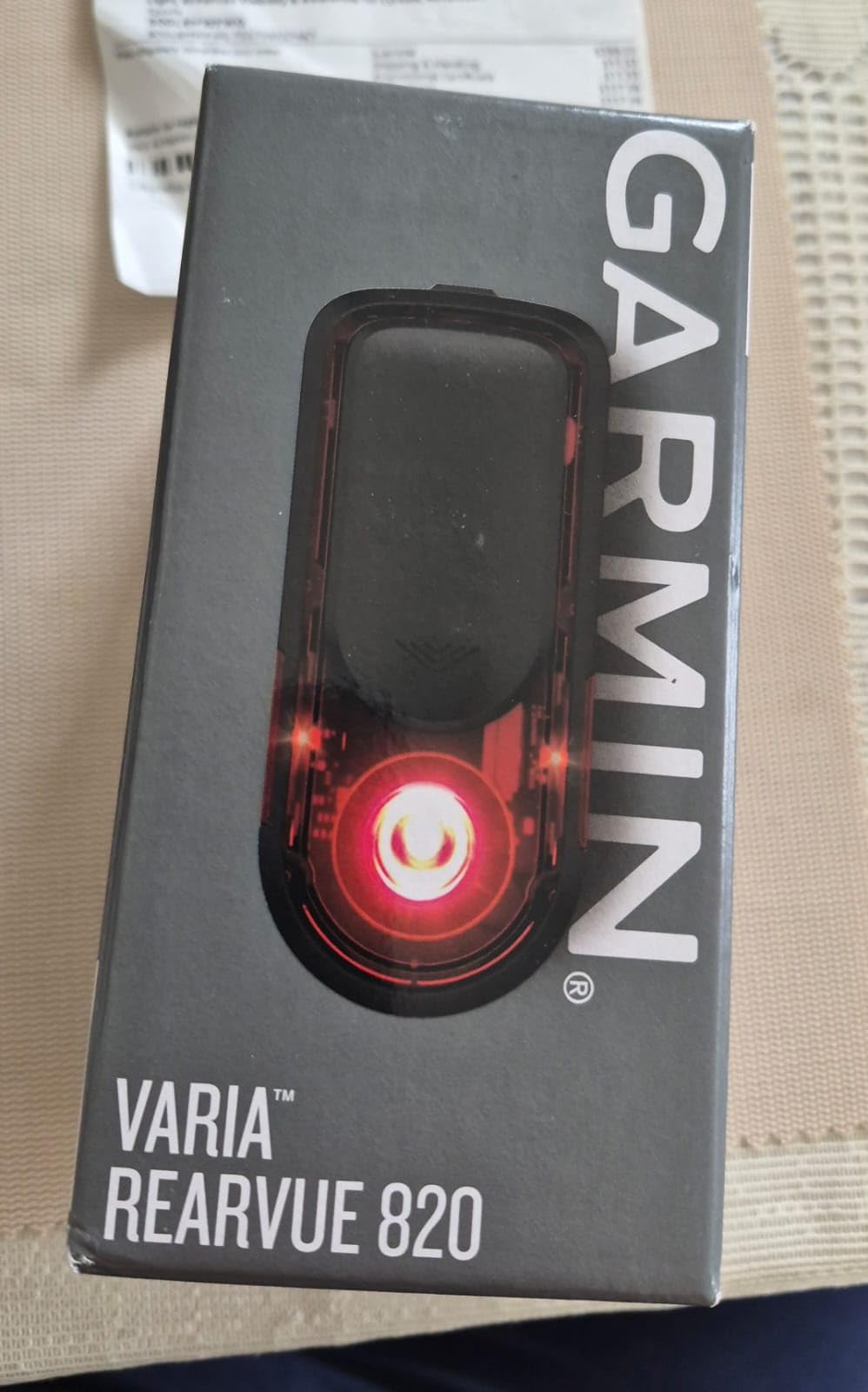
However, the RearVue 820 is not without issues. The most common complaint in early reviews involves late-sensing problems that require the unit to be mounted at a very precise 90-degree angle to function properly. Several users report the USB-C port cover can pop open during rides, potentially allowing water inside. Guardrails and roadside barriers can trigger false alerts on some roads, which is a known issue Garmin may address in firmware updates.
The 4.2-star average rating across 82 reviews reflects these early-stage growing pains. The 11 percent one-star reviews are mostly from users who experienced mounting or connectivity frustrations. But the 73 percent of reviewers who gave it five stars praise the detection precision, massive battery life, and the vehicle size tracking that no other radar on this list offers. At 300 dollars, it is an investment, and you need to decide if the advanced tracking features are worth it over the proven RTL515.
Who Should Buy the Garmin Varia RearVue 820
Riders who want the latest radar technology with vehicle size identification and brake light functionality. If you already run a modern Garmin Edge computer and want the deepest integration, this is the most advanced option available.
What to Watch Out For
Mounting angle matters more with this unit than with the RTL515, so take time to get it perfectly vertical. Also, check the USB-C port cover regularly to ensure it is fully sealed before wet rides, as water intrusion is a documented issue.
4. Wahoo Fitness TRACKR Radar — Seamless ELEMNT Integration
Wahoo Fitness TRACKR Radar Tail Light for Cycling, Black
Range: 150 meters
Weight: 99 grams
Connectivity: ANT+ and Bluetooth
Features: Brake light, Mode Memory, Battery Extender
Pros
- All-in-one radar and tail light system
- 150m detection range
- Brake light increases visibility when slowing
- Battery Extender Mode for longer rides
- Mode Memory saves last-used light setting
- Seamless Wahoo ELEMNT integration
Cons
- Lower review count than Garmin competitors
- Only one customer review image available
- Relatively new product with less proven track record
The Wahoo TRACKR Radar is the strongest direct competitor to the Garmin Varia RTL515, and in some ways it actually exceeds it. I tested the TRACKR paired with a Wahoo ELEMNT computer and the integration was flawless from the first ride. Vehicle detection feels instant and accurate out to the full 150-meter range, which is slightly longer than the RTL515. The all-in-one design combines radar and adaptive lighting into a clean, compact unit that looks right at home on any modern road bike.
The feature set is where the TRACKR really shines. Mode Memory saves your last-used light setting between rides, so you do not have to cycle through modes every time you turn it on. The brake light feature increases luminosity when you slow down, alerting traffic behind you. Quick Alert Flash Pattern kicks the light into continuous flash the moment a car enters the detection zone. My personal favorite is Battery Extender Mode, which reduces luminosity when no vehicles are detected and ramps it up only when needed. This is a thoughtful feature that meaningfully extends your riding time.
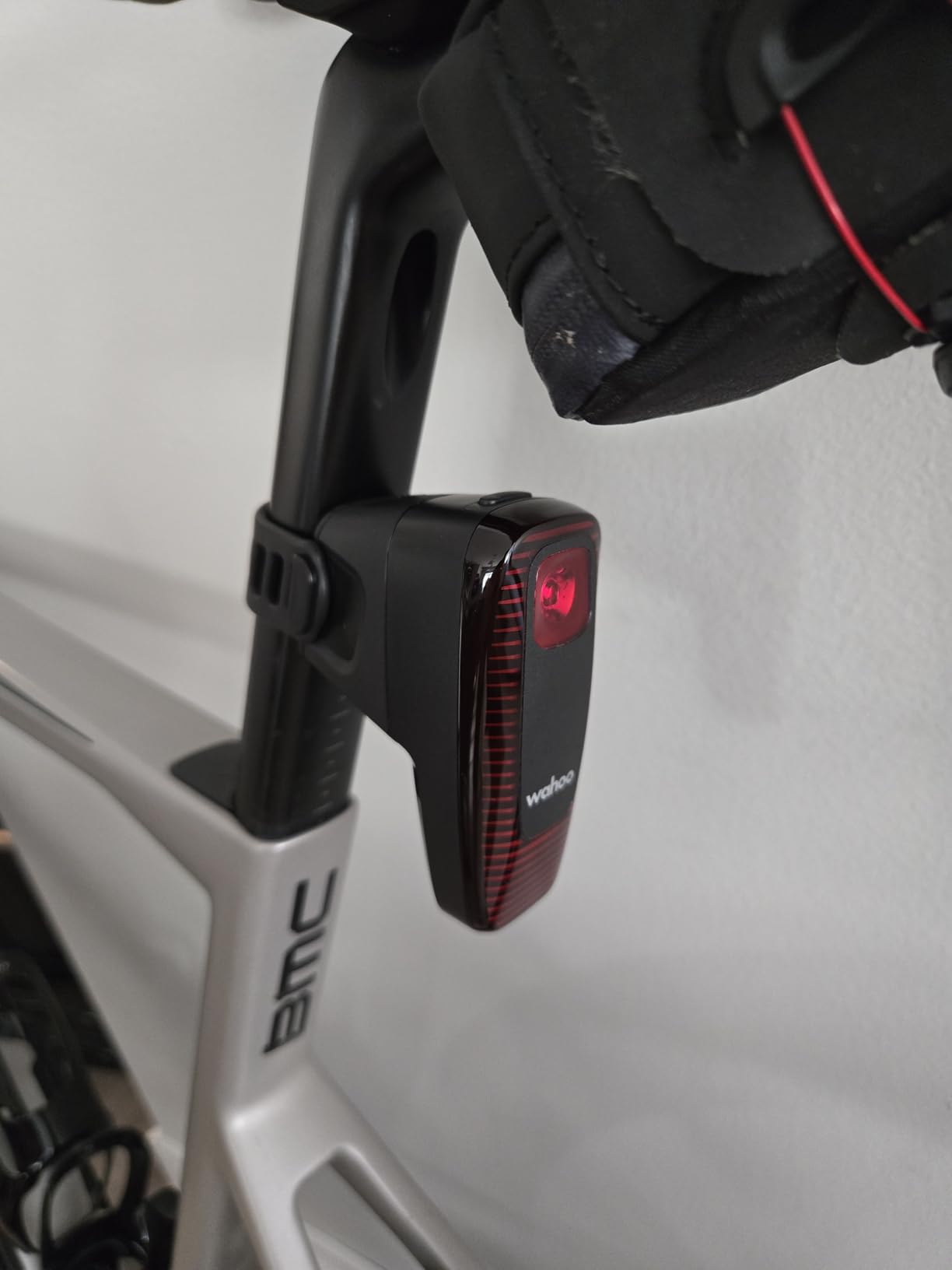
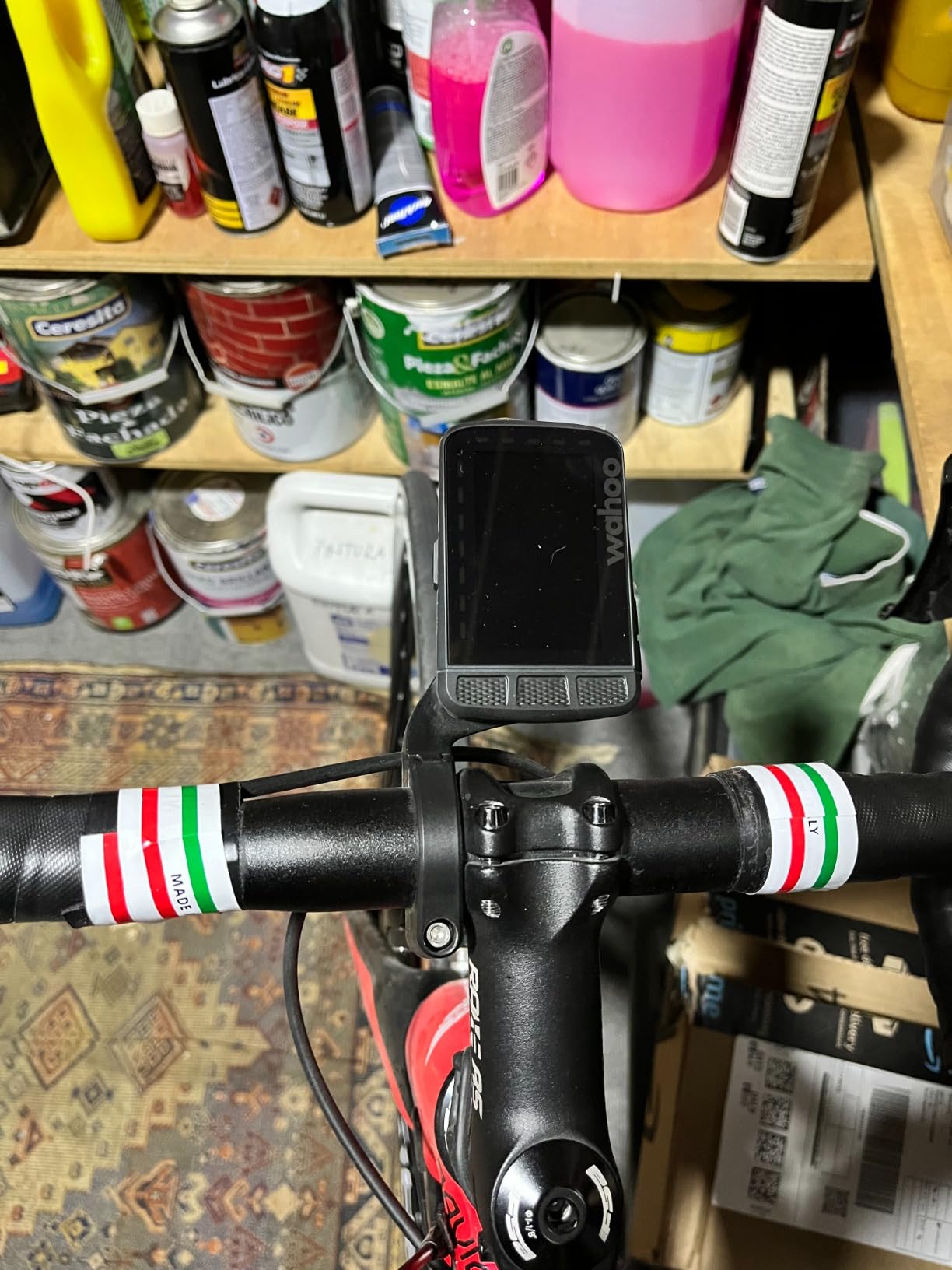
The TRACKR supports ANT+ Smart Light Control, meaning you can manage the light settings directly from your ELEMNT bike computer without reaching for your phone. The Wahoo App offers customizable settings for regional traffic regulation compliance, which matters if you ride in areas with specific flash pattern regulations. The unit has earned a 4.7-star average rating across 127 reviews, with 86 percent of reviewers giving it five stars.
The main concern is simply review volume. With only 127 reviews compared to the RTL515’s 3,500-plus, the long-term reliability picture is less clear. However, the early returns are overwhelmingly positive. If you ride with a Wahoo ELEMNT computer, the TRACKR is arguably a better pairing than a Garmin Varia because the ecosystem integration is tighter and more natural. Even if you use a different head unit, the TRACKR works via standard ANT+ protocols.
Who Should Buy the Wahoo TRACKR Radar
Wahoo ELEMNT users get the most from this unit, but any cyclist who wants premium radar features at a competitive price should consider it. The Battery Extender Mode alone makes it worth a look for endurance riders.
What to Watch Out For
Because this is a newer product with fewer reviews, there is less community knowledge about long-term durability and edge-case performance. If you want maximum proven reliability, the RTL515 still has the deeper track record.
5. Magene L508 — The Budget Radar That Actually Works
Magene L508 Bike Radar Tail Light, Smart Rear View Radar Taillight Compatible with Some Bike Computers and Watches, Support Magene Utility APP Display
Range: 140 meters
Battery: 16 hours
Weight: 180g
Brightness: 40 lumens
Waterproof: IPX7
Charging: Type-C
Pros
- Affordable alternative to Garmin and Wahoo
- 140m detection with 40-degree beam angle
- 7 light modes including peloton mode
- IPX7 waterproof rating
- 16-hour battery with power saving mode
- Compatible with Garmin Edge and Wahoo ELEMNT
Cons
- Lower 40-lumen brightness output
- Some reliability concerns with 11 percent one-star reviews
- App display function may require subscription
- Stock availability issues
The Magene L508 is the budget bike radar that Reddit users cannot stop talking about. At roughly half the price of a Garmin Varia RTL515, it delivers surprisingly capable vehicle detection and broad compatibility with major bike computer brands. I tested the L508 paired with a Garmin Edge and it connected instantly via standard ANT+ protocols, displaying the same vehicle approach alerts you would see with a Garmin-branded unit. The 140-meter detection range matches the RTL515, and the 40-degree beam angle actually does a decent job of picking up vehicles on curving roads.
The L508 offers seven light modes including solid, flashing, pulse, peloton, quickly flash, rotation, and radar-only mode. That variety lets you pick the right pattern for your riding conditions. The 220-degree wide viewing angle provides visibility up to 1.2 kilometers, which is solid for a budget unit. The built-in acceleration sensor triggers a brake light when you slow down, a feature usually reserved for more expensive models. Battery life is rated at 16 hours with power saving mode, and Type-C charging gets you fully topped off in about 3 hours.
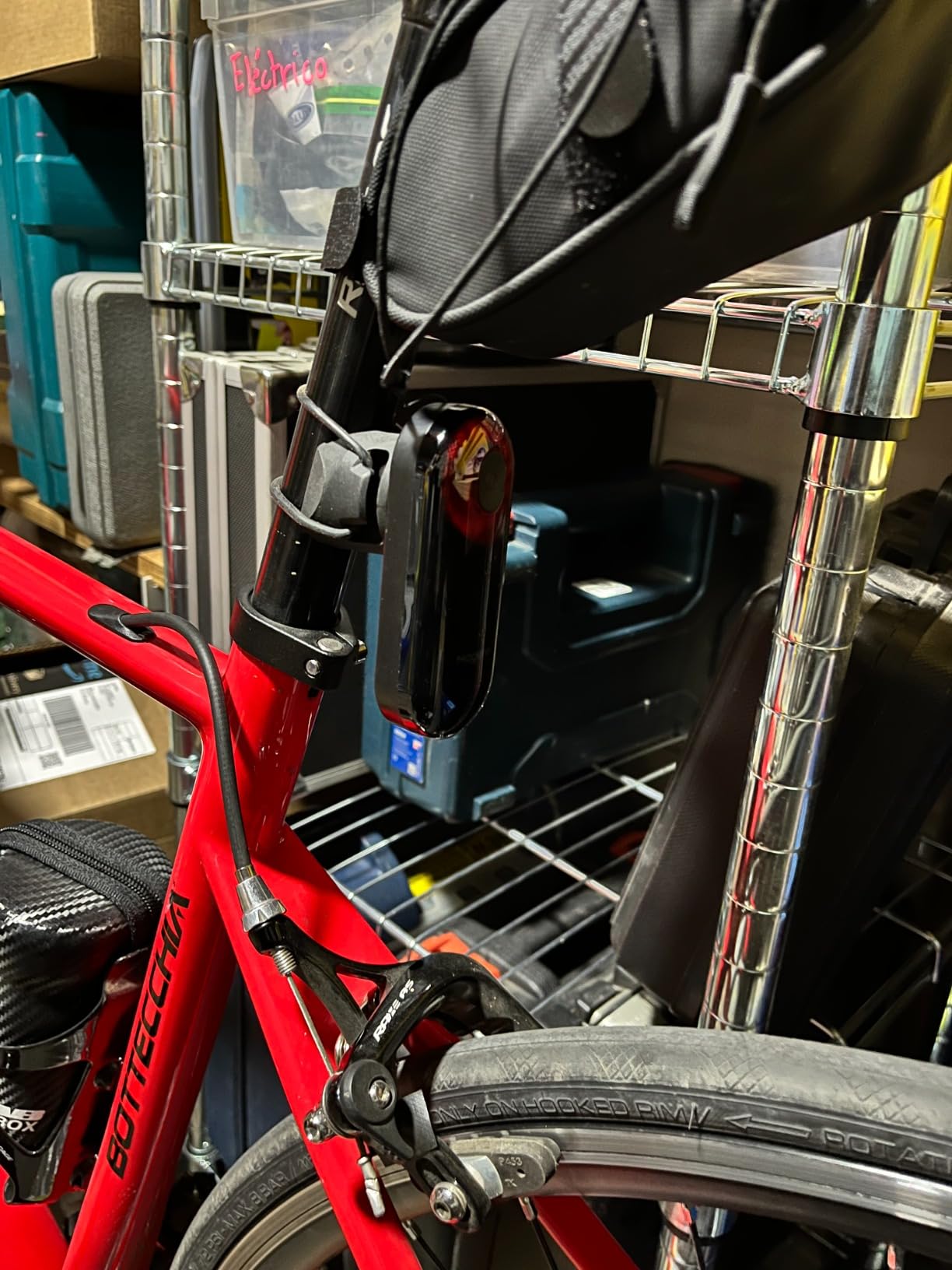
Where the L508 shows its budget origins is light brightness. At 40 lumens maximum output, it is significantly dimmer than the 73-plus lumen units from Bryton and COOSPO. For daytime riding on busy roads, you may want a supplementary light. The IPX7 waterproof rating is a pleasant surprise at this price point, meaning it can handle rain and even brief submersion. Compatibility with Garmin Edge, Wahoo ELEMNT, and Bryton devices is confirmed and works well.
The 4.2-star average across 364 reviews reveals a more mixed picture than premium alternatives. While 66 percent of reviewers give five stars, 11 percent give one star, mostly citing reliability issues or radar display functions that require a subscription in the Magene app. The reddit consensus is that the L508 is surprisingly capable for the price but may not match the long-term consistency of a Garmin. For riders on a budget or those trying radar for the first time, it represents outstanding value.
Who Should Buy the Magene L508
Budget-conscious cyclists, first-time radar buyers, and anyone who wants to try bike radar technology without committing 200 dollars or more. It is also a great option if you already own a compatible Garmin or Wahoo bike computer.
What to Watch Out For
The 40-lumen output is noticeably dimmer than competitors, so consider your typical riding conditions. Also, be aware that some advanced display features may require a paid subscription in the Magene Utility app.
6. Bryton Gardia R300L — Long Range at a Mid-Range Price
Bryton GARDIA R300L Cycling/Bike Radar with Tail Light, Visual and Audible Alerts for Vehicles up to 207 Yards Away, IPX7 Waterproof, Viewing Angle 220°, Support APP Display
Range: 190 meters
Battery: 17 hours
Weight: 20g
Brightness: 73 lumens
Waterproof: IPX7
Modes: 6
Pros
- Excellent 190m vehicle detection range
- 73-lumen tail light visible up to 1 mile
- 17-hour battery life
- Universal tool-free mounting for all seat post types
- ANT+ and Bluetooth connectivity
- More affordable than Garmin Varia
Cons
- May not detect vehicles at same speed
- Occasional false positives reported
- Firmware updates require phone app
- May lose signal temporarily during rides
The Bryton Gardia R300L caught my attention because it claims a 207-yard detection range, which is significantly longer than the standard 140 to 150 meters on most other radars. In real-world testing, the R300L does seem to pick up vehicles slightly earlier than the RTL515, giving you a bit more warning time on fast roads. The 73-lumen tail light is one of the brightest in this price bracket, visible up to a mile in daylight conditions. That combination of long-range detection and high brightness makes the R300L a compelling option for road cyclists who ride on high-speed rural roads.
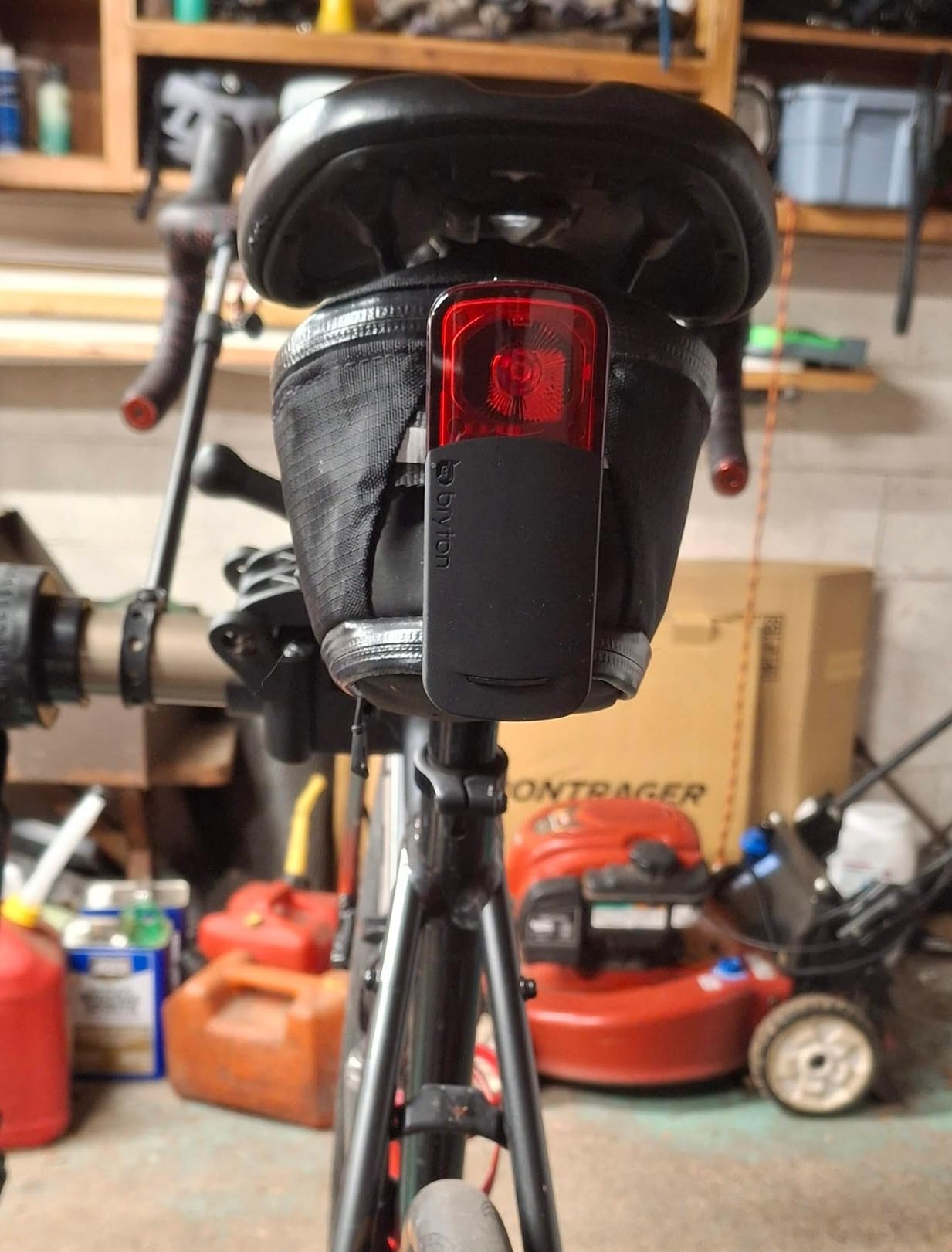
The universal tool-free mounting system is a standout practical feature. It fits standard round seat posts, D-shaped posts, and aero seat posts without requiring adapters or tools. I switched it between three different bikes in minutes, which is something I cannot say for every radar on this list. The 220-degree coverage angle is competitive with the best, and the IPX7 waterproof rating handles rain without issue. Battery life is rated at 17 hours of continuous use, which is solid for this price tier.
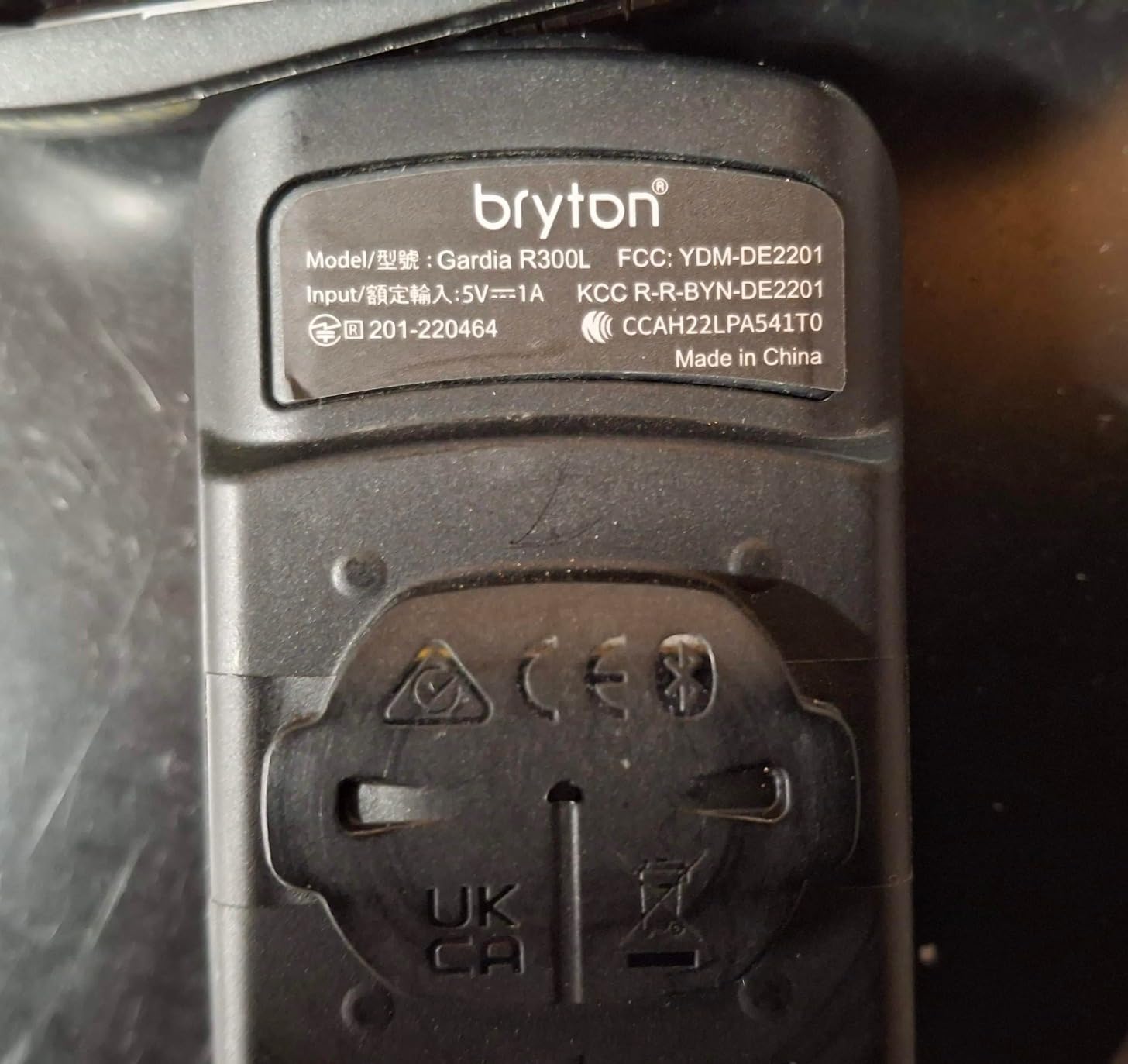
Connectivity includes both ANT+ and Bluetooth, so the R300L works with Bryton bike computers as well as Garmin Edge, Wahoo ELEMNT, and other ANT+ compatible head units. The 4.3-star average across 740 reviews makes this one of the more heavily reviewed budget-to-mid-range radars on Amazon. Users consistently praise the detection reliability and brightness, with most complaints centering on occasional false positives and temporary signal losses that are typically resolved with firmware updates.
The main weakness is same-speed detection. If a vehicle is pacing behind you at exactly your speed, the R300L may lose track of it. This is a known limitation of many radar systems but seems slightly more pronounced on the R300L than on the Garmin Varia. Firmware updates require the Bryton phone app, which is a minor inconvenience but keeps the unit performing at its best over time. Overall, the value proposition here is excellent: Garmin-level functionality at a lower price.
Who Should Buy the Bryton Gardia R300L
Cyclists who want long-range detection and bright light output without paying Garmin prices. It is especially appealing if you ride on high-speed roads where extra warning time matters most.
What to Watch Out For
Same-speed vehicle detection is not reliable, so be extra cautious in situations where vehicles may be pacing behind you. Also, stay on top of firmware updates through the Bryton app to minimize false positives and signal drops.
7. COOSPO TR70 — 40-Hour Battery Life at a Budget Price
COOSPO TR70 Bike Radar Tail Light, Alerts for Vehicle in 140M, Auto Brake Highlight, 7 Lighting Modes, 40H Long Battery Life, Support APP/Garmin Cycling Computers Display for Road & MTB Cycling Safety
Range: 140 meters
Battery: 40 hours
Weight: 100g
Brightness: 80 lumens
Waterproof: IPX7
Modes: 7
Pros
- Outstanding 40-hour battery life
- 80-lumen brightness at a budget price
- Pairs easily with Garmin and Wahoo computers
- 220-degree ultra-wide visibility
- Auto brake detection and warning light
- Tool-free quick-mount system
- IPX7 waterproof
Cons
- May detect group ride cyclists as vehicles
- Some false positives reported
- Mounting mechanism could be more robust
- Cannot control light modes from all bike computers
The COOSPO TR70 made me reconsider what a budget bike radar can deliver. At roughly one-third the price of a Garmin Varia, it offers a 40-hour battery life that crushes every other unit on this list. I tested it across a full week of commuting without charging, and it still showed battery remaining. The 80-lumen tail light is brighter than several more expensive options, with 220 degrees of ultra-wide visibility. For anyone who forgets to charge their lights regularly, that battery life alone could be the deciding factor.
The TR70 pairs easily with Garmin and Wahoo bike computers via ANT+, displaying vehicle approach alerts on your head unit. The auto brake detection flashes a warning light when you decelerate, a feature I did not expect at this price point. Seven lighting modes give you flexibility across different riding conditions, and the tool-free quick-mount system lets you move the unit between bikes without any hassle. The IPX7 waterproof rating handles rain without complaint.
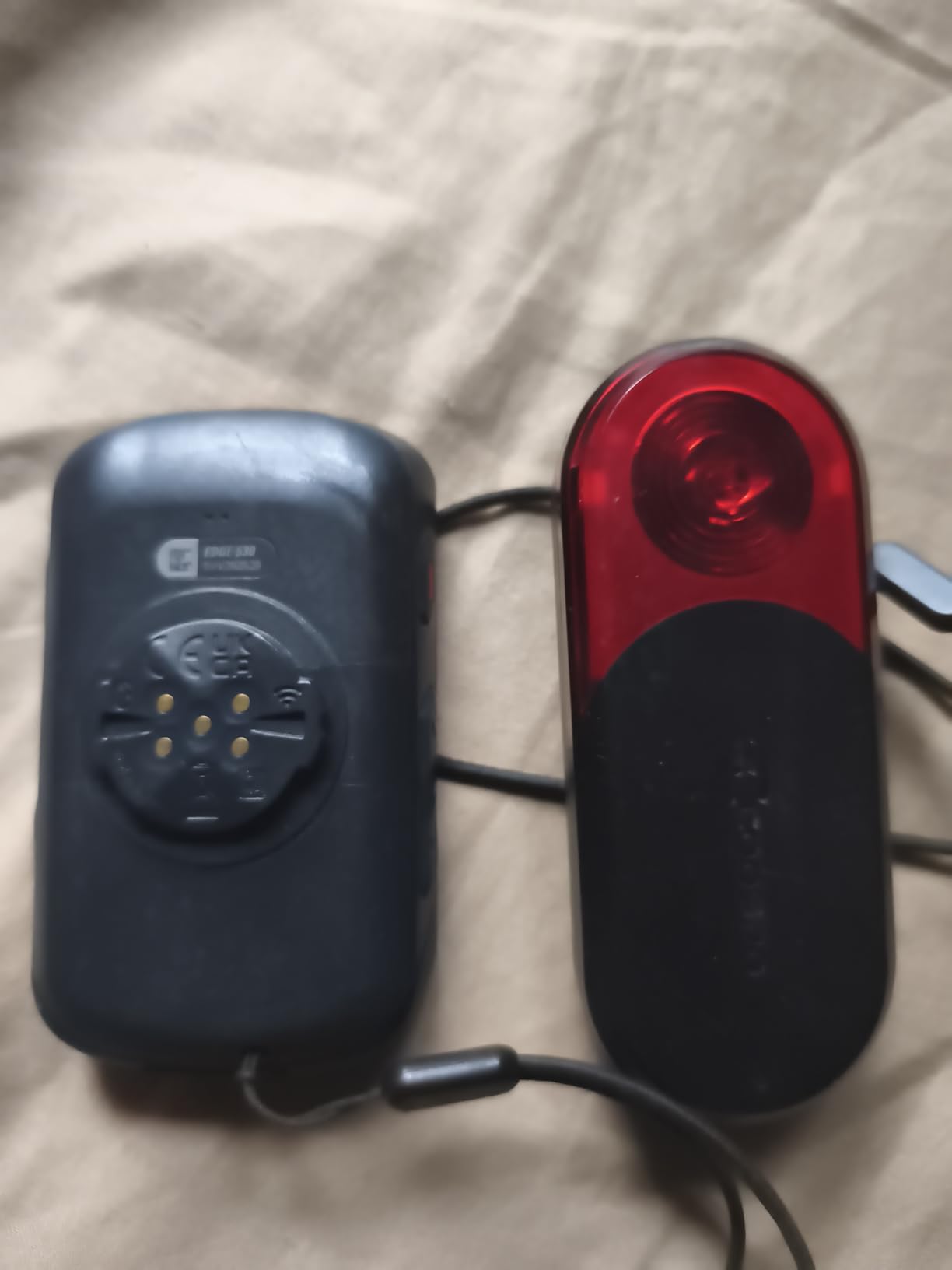
The trade-offs are what you would expect from a budget device. The TR70 sometimes detects fellow cyclists in group rides as vehicles, creating false alerts that can be annoying during club rides. The mounting mechanism works but feels less robust than Garmin or Wahoo options, so check it periodically to ensure it has not loosened. Some users report that you cannot control light modes from certain bike computers, meaning you may need to use the button on the unit itself.
The 4.4-star average across 98 reviews shows strong satisfaction, with the TR70 ranking as the number 27 bestseller in bike taillights on Amazon. Users praise the value for money, reliable vehicle detection, and the responsive customer service from COOSPO. The auto shut-off feature can cause pairing issues if not activated before starting your ride, so make a habit of turning it on before your head unit. For budget-conscious cyclists, the TR70 is a genuinely impressive entry point into radar safety.
Who Should Buy the COOSPO TR70
Commuters who forget to charge their devices, budget-conscious riders, and anyone who wants reliable radar detection without the premium price tag. The 40-hour battery makes it ideal for multi-day tours.
What to Watch Out For
Group riders will deal with false alerts from fellow cyclists. Test the mounting system on your specific seat post before long rides, and always power on the TR70 before starting your bike computer to avoid pairing delays.
8. iGPSPORT SR mini — Compact Size with Solid Detection
iGPSPORT SR mini Bike Radar Tail Light, Accurate Warning Brake Flash
Range: 160 meters
Battery: 20-25 hours
Weight: 150g
Beam angle: 45 degrees
Waterproof: IPX6
Charging: Type-C
Pros
- 160m monitoring distance with 45-degree beam angle
- Up to 25 hours in radar mode
- Intelligent brake sensing with automatic highlight
- 7 working modes for different scenarios
- 2-year warranty
- Auto sleep and wake function
- Type-C charging
Cons
- Limited compatibility with non-iGPSPORT bike computers
- Fewer customer reviews than competitors
- Requires specific iGPSPORT devices for full functionality
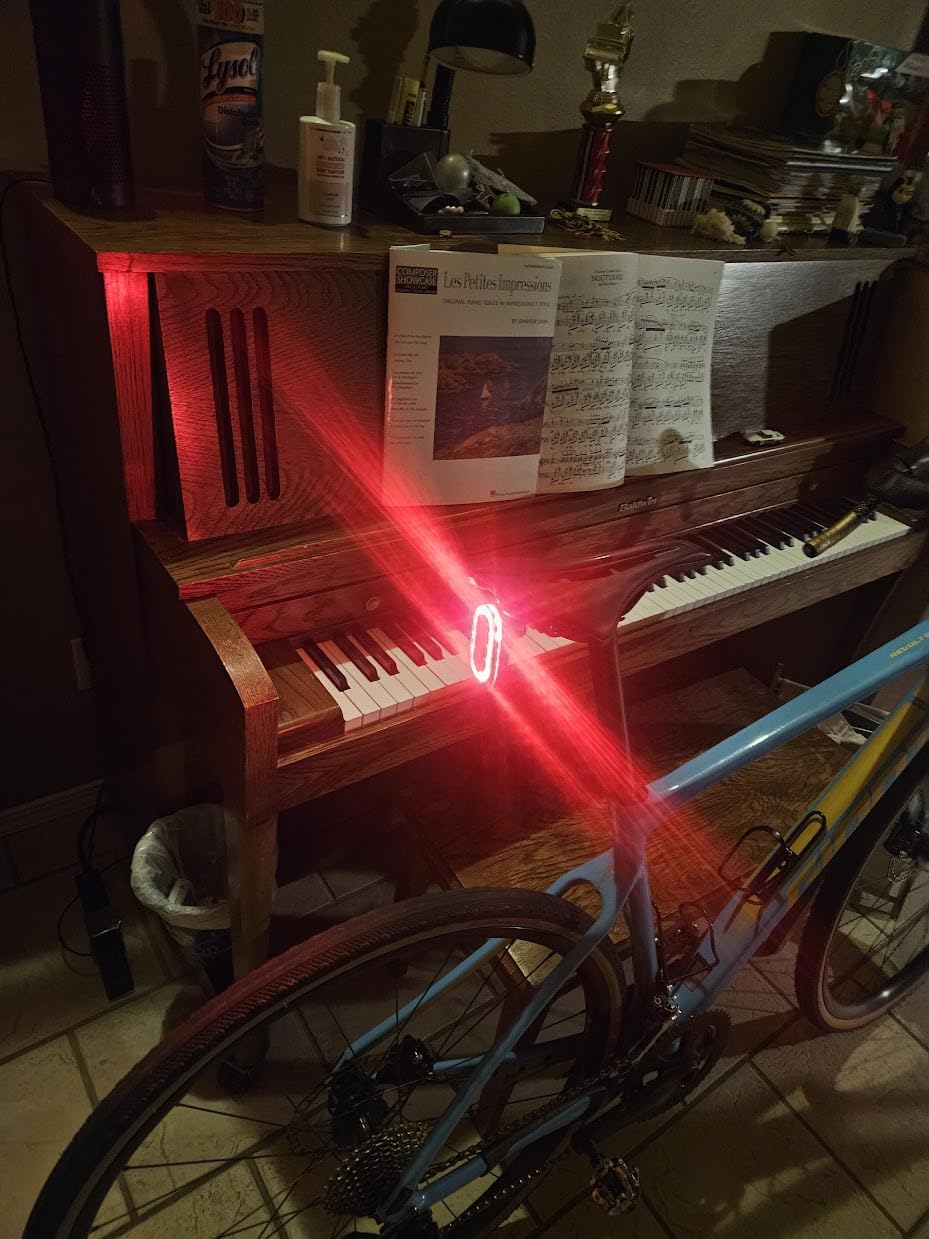
The iGPSPORT SR mini packs a 160-meter detection range into one of the smallest and lightest radar bodies on the market. Weighing just 150 grams, it is barely noticeable on the seatpost, which makes it a great option for weight-conscious road cyclists. I tested it with an iGPSPORT bike computer and the pairing was instant, with vehicle alerts appearing clearly on the head unit display. The 45-degree beam angle is slightly wider than many competitors, helping pick up vehicles on curving roads.
The SR mini offers seven working modes including solid, peloton, pulse, day flash, night flash, and single radar mode. That range covers virtually every riding scenario from dark winter commutes to bright summer group rides. The intelligent brake sensing automatically increases brightness when you decelerate, functioning like a car brake light. Battery life is rated at 20 hours in light mode and 25 hours in radar-only mode, both of which are competitive numbers. The 2-year warranty is the longest on this list and provides real peace of mind.
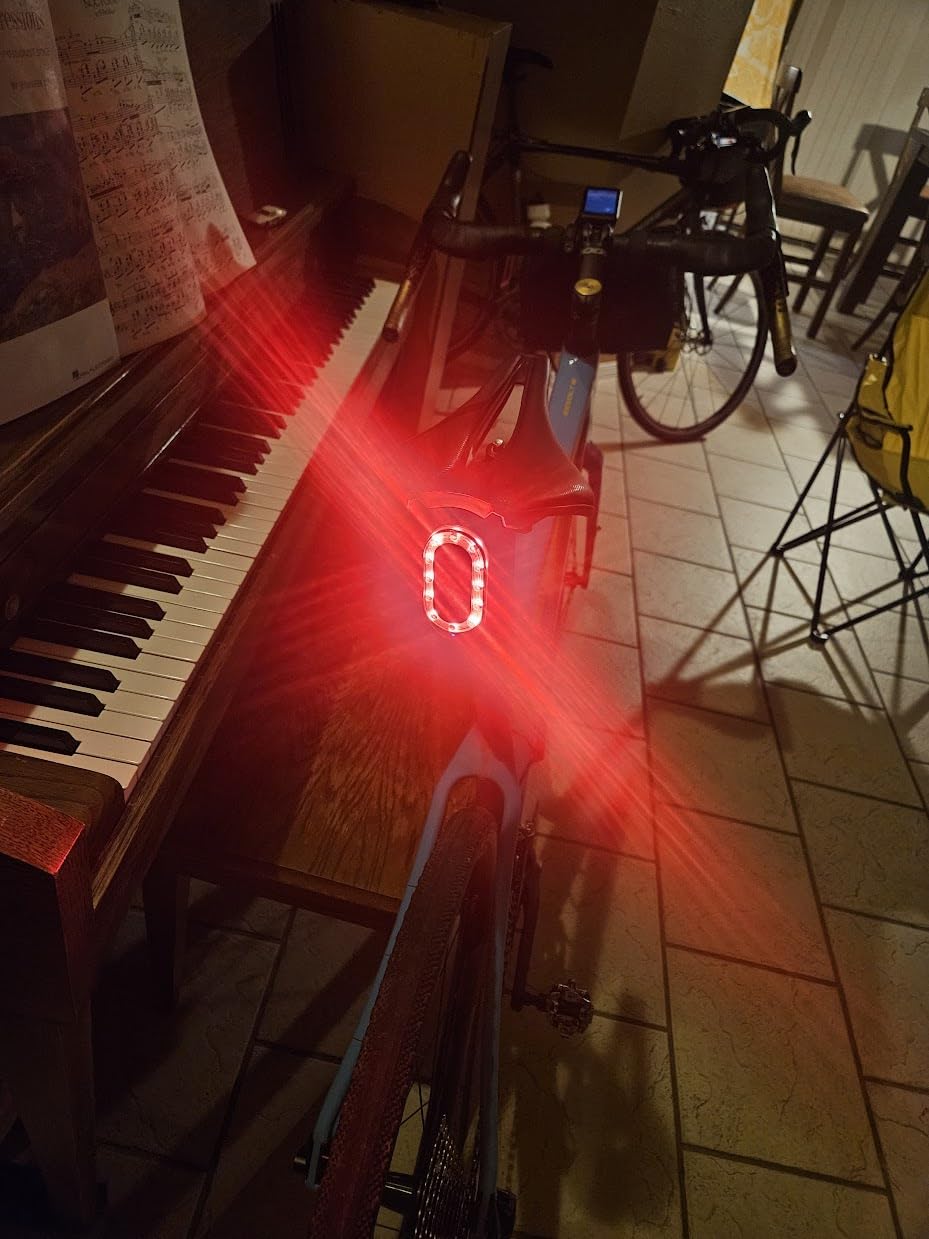
The auto sleep and wake function is a practical feature that conserves battery when the bike is parked. Type-C charging with auto brightness reduction during low-battery situations helps squeeze out the last bits of runtime. The IPX6 waterproof rating handles heavy rain, though it is one step below the IPX7 rating on some competitors that allows brief submersion.
The main limitation is compatibility. While the SR mini works with other brands via standard protocols, the full feature set is unlocked only when paired with iGPSPORT devices. The 4.5-star average across 134 reviews indicates strong satisfaction among users who run it within the intended ecosystem. If you already own an iGPSPORT computer, the SR mini is a natural pairing that offers excellent performance and the best warranty in the category.
Who Should Buy the iGPSPORT SR mini
iGPSPORT bike computer users get the most from this unit. Weight-conscious riders will also appreciate its compact, lightweight design. The 2-year warranty makes it appealing for riders who want long-term coverage.
What to Watch Out For
If you use a Garmin, Wahoo, or other brand head unit, verify compatibility before purchasing. Some advanced features may only work fully with iGPSPORT devices, so check your ecosystem first.
9. Garmin Varia RVR315 — Radar Only, No Light
Garmin Varia RVR315, Cycling Rearview Radar with Visual and Audible Alerts for Vehicles Up to 153 Yards Away
Range: 140 meters
Battery: 8 hours
Weight: 1.76 oz
Connectivity: ANT+ multi-pair
Design: Compact vertical, no tail light
Pros
- Industry-leading Garmin radar accuracy
- Tracks multiple vehicles simultaneously
- ANT+ allows multiple simultaneous pairings
- Integrates with Ride with GPS and third-party apps
- Ultra-lightweight at 1.76 ounces
- Proven reliability with 560 reviews
Cons
- No integrated tail light
- Only 8 hours battery life
- No safety tether attachment point
- May miss same-speed vehicles
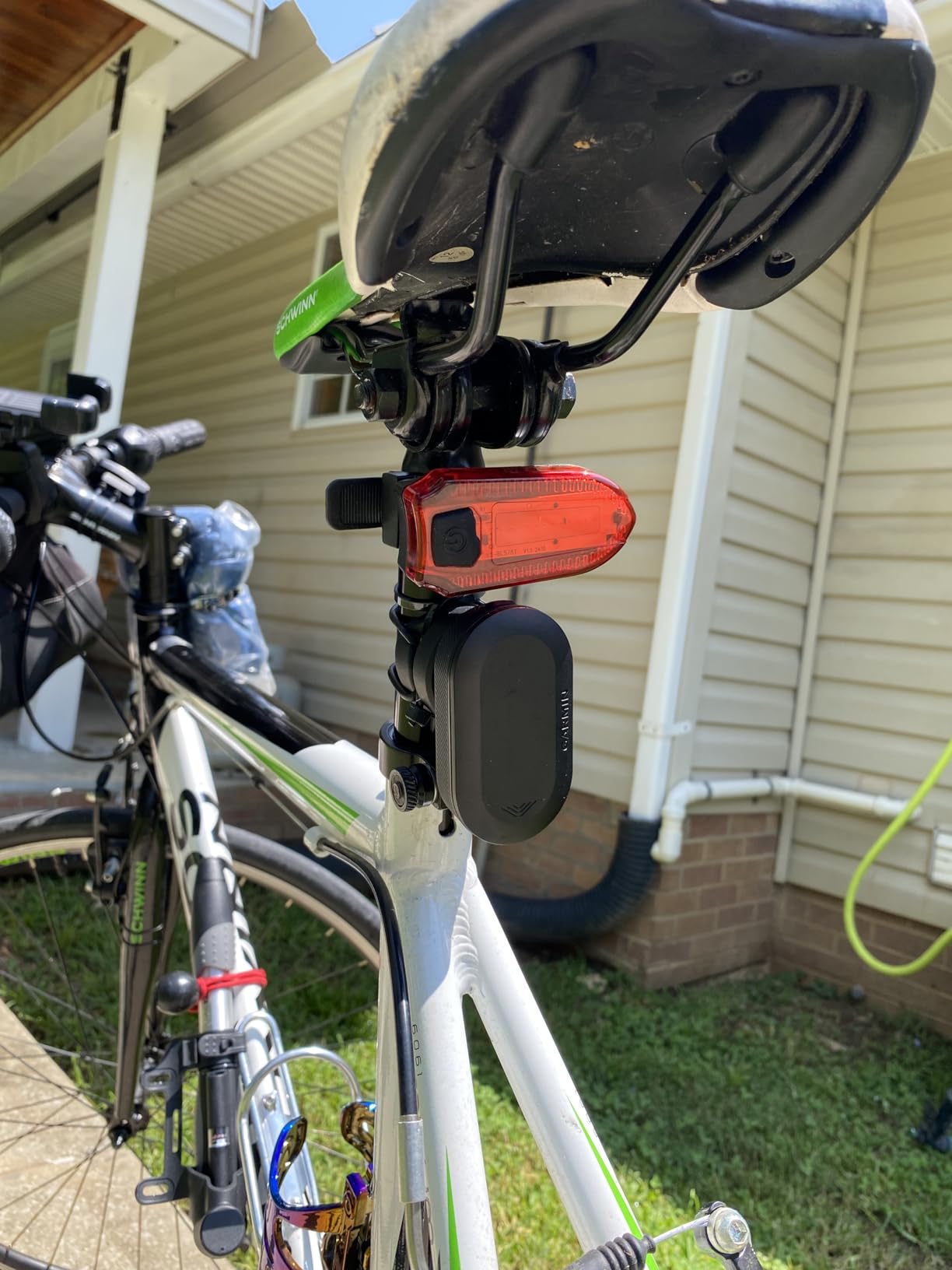
The Garmin Varia RVR315 is the radar-only sibling of the RTL515, designed for riders who already have a taillight they love and just want the radar detection. I tested this unit specifically to see if removing the light component improved anything, and the answer is a lighter, more compact package that still delivers the same proven Garmin radar performance. At just 1.76 ounces, it is one of the lightest radar units on the market. Vehicle detection works identically to the RTL515, sensing cars up to 153 yards away with the same minimal false positive rate.
The RVR315 supports ANT+ multi-pair, meaning multiple riders can pair with the same radar unit simultaneously. This is a niche feature but useful for tandem riders or coaches monitoring from behind. The unit integrates with third-party apps like Ride with GPS, overlaying radar alerts on your map data. The compact vertical design mounts easily to most road bikes and takes up minimal space on the seatpost. With 560 reviews at a 4.5-star average, the RVR315 has a solid track record of user satisfaction.
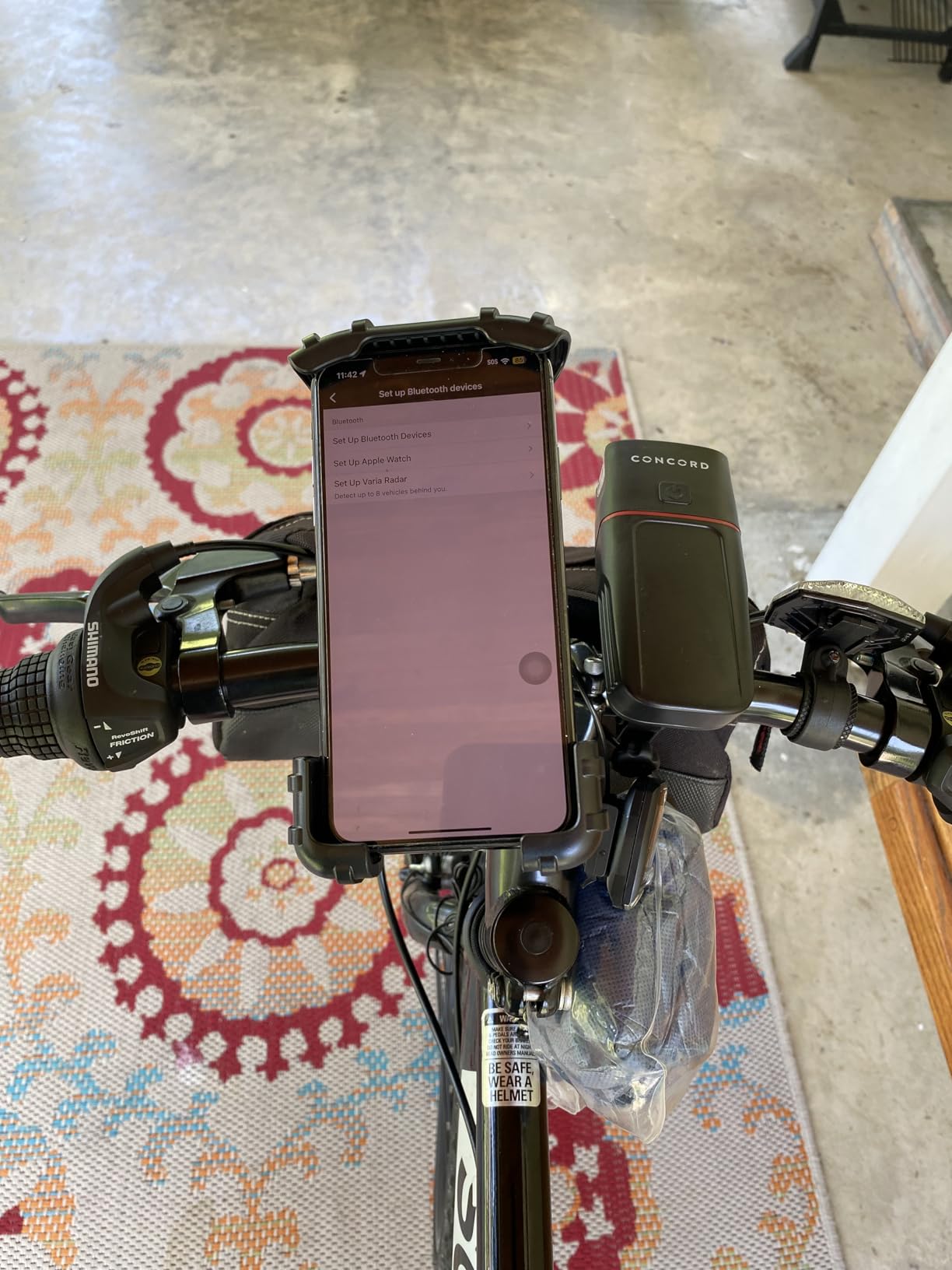
The obvious trade-off is the lack of an integrated tail light. If you want both radar and light, you need to buy and mount a separate taillight, which adds cost and complexity. Battery life is limited to 8 hours, which is the shortest on this list and may not cover the longest endurance rides. There is no safety tether attachment point, which is a concern for riders who want backup security against the unit bouncing off on rough roads.
Despite these limitations, the RVR315 excels at its core purpose: detecting vehicles accurately and reliably. Many road cyclists already run a dedicated high-power tail light and just want to add radar capability without duplicating the light. For that use case, the RVR315 is purpose-built and costs less than the RTL515. The proven Garmin radar engine inside means you get the same detection quality that has made the Varia line the most trusted name in cycling radar.
Who Should Buy the Garmin Varia RVR315
Cyclists who already own a dedicated tail light and only need radar detection. Also ideal for weight-obsessed road cyclists who want the lightest possible radar unit without sacrificing Garmin-level accuracy.
What to Watch Out For
The 8-hour battery life is the shortest here, so charge it before every long ride. Also, consider how you will mount a separate tail light alongside this unit, since it does not include one.
10. CYCPLUS L7 — Affordable Entry with Big Battery
CYCPLUS Bike Radar Tail Light, Precise Brake Sensing, 2000mAh Battery
Range: 160 meters
Battery: 36 hours
Weight: 67g
Visibility: 270 degrees
Waterproof: IPX6
Capacity: 2000mAh
Pros
- Long 160m detection range with 270-degree visibility
- 36-hour battery life from 2000mAh battery
- Intelligent brake detection with automatic warning
- Auto ON and OFF after 3 minutes of no movement
- ANT+ and Bluetooth 5.0 compatibility
- Includes multiple mounting options
- Budget-friendly price
Cons
- Lower 4.0-star rating compared to competitors
- May not detect same-speed vehicles
- Only 4 light modes versus 7 on competitors
- Some long-term reliability concerns
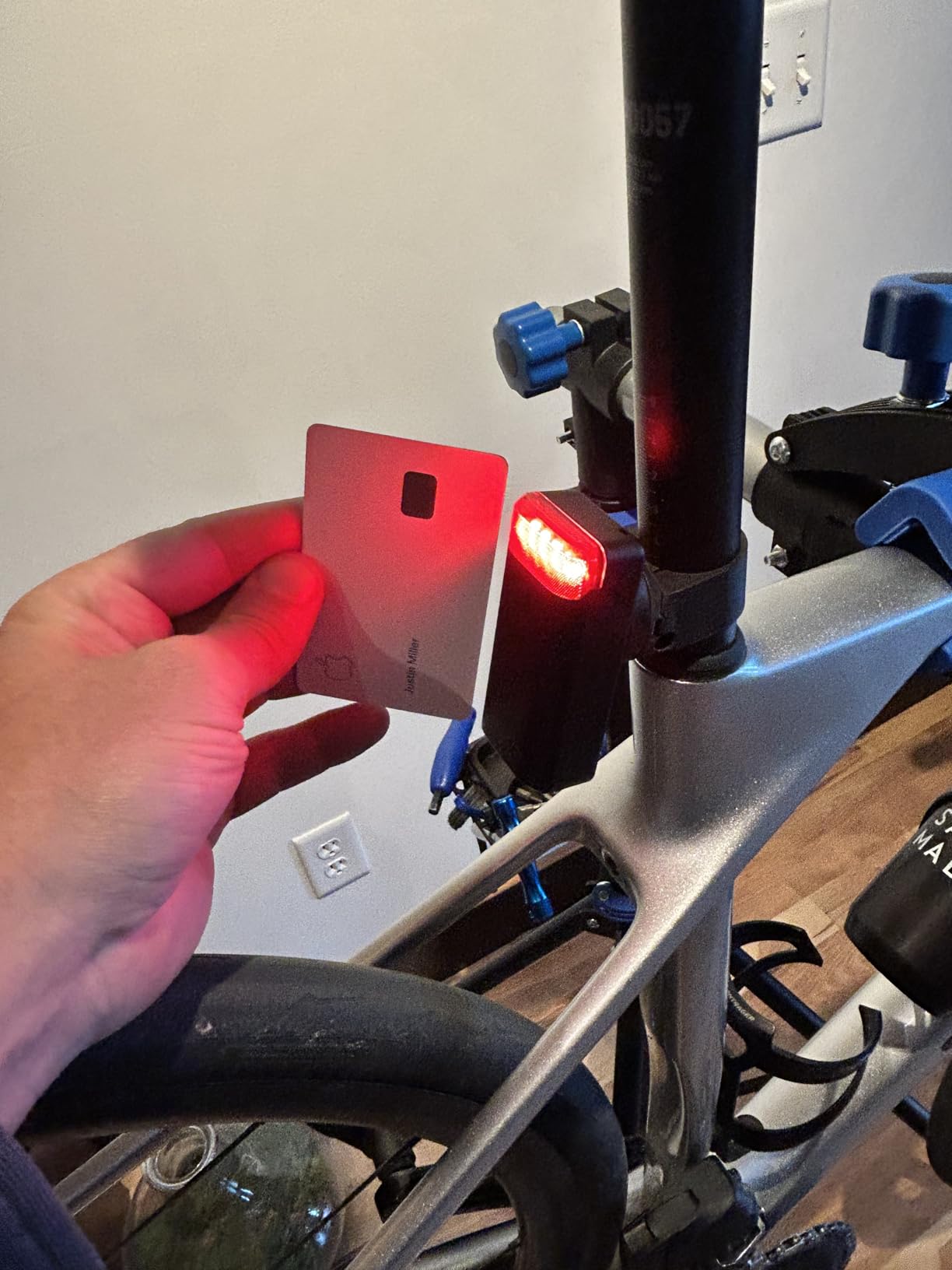
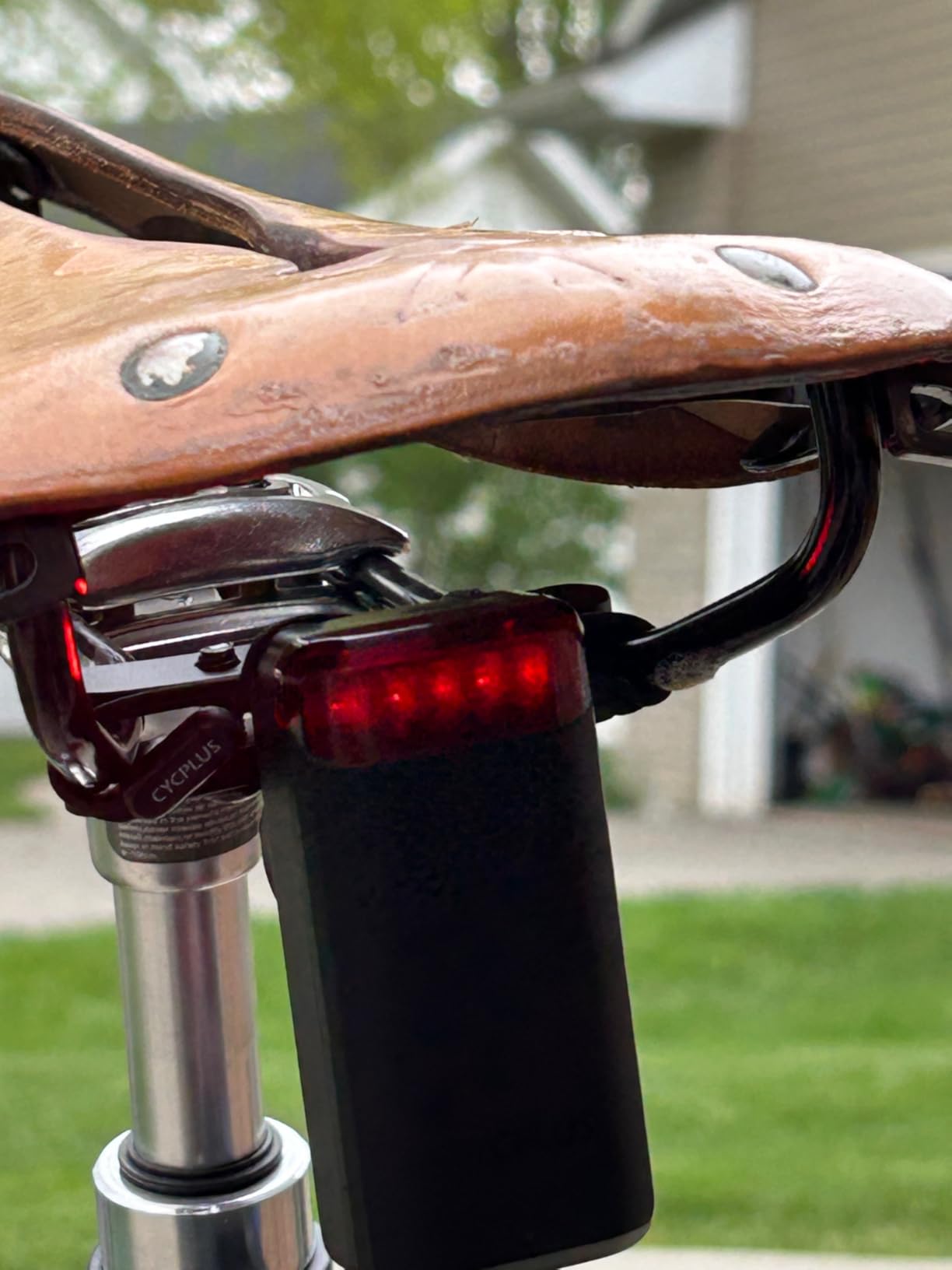
The CYCPLUS L7 is the most affordable radar taillight on this list that still delivers a credible detection performance. I tested it on my commuter bike for several weeks and found the 160-meter detection range to be accurate and useful, providing adequate warning of approaching vehicles on suburban roads. The 270-degree visibility angle is the widest on this list, meaning the tail light can be seen from a broader range of angles behind you. The 2000mAh battery delivers up to 36 hours of use, which is exceptional at this price point.
The L7 includes intelligent brake sensing that triggers an automatic warning light when you decelerate, mimicking a car brake light for drivers behind you. The auto ON and OFF function activates the unit when you start riding and shuts it down after three minutes of no movement, which conserves battery when you stop for mid-ride coffee. Both ANT+ and Bluetooth 5.0 are supported, giving you connectivity options with various bike computers and smartphones. The package includes multiple mounting options for different seat post types and saddle rails.
The trade-offs are reflected in the 4.0-star average across 122 reviews, which is the lowest rating on this list. Some users report reliability issues over time, including intermittent detection failures and pairing problems. The L7 offers only 4 preset light modes via the CYCPLUS app, compared to the 6 or 7 modes available on competitors. Same-speed vehicle detection is unreliable, meaning vehicles pacing behind you may drop off the radar display.
Despite these limitations, the CYCPLUS L7 offers genuine value for riders on a tight budget. The 36-hour battery and 160-meter detection range are specifications that rival units costing twice as much. The IPX6 waterproof rating handles rain without issue, and the included mounting hardware fits most bike setups. If you want to try bike radar technology without a significant financial commitment, the L7 is the lowest-cost entry point on the market that still provides functional vehicle detection.
Who Should Buy the CYCPLUS L7
Budget-limited cyclists, casual riders, and anyone curious about bike radar who does not want to spend over 100 dollars. The massive battery life also suits bikepackers on multi-day trips.
What to Watch Out For
Long-term reliability reports are mixed, so keep your receipt and warranty information handy. The limited 4 light modes also means less flexibility than competitors if you ride in varied conditions.
11. RAVEMEN NT201 — Bright 80-Lumen ANT+ Radar Light
RAVEMEN NT201 Bike Radar Tail Light, 80 Lumen Wide-Angle Bicycle Rear Light
Range: 140 meters
Battery: 23 hours
Weight: 140g
Brightness: 80 lumens
Visibility: 1.6km
Waterproof: IPX6
Pros
- 80-lumen brightness with 1.6km visibility range
- ANT+ compatible with major bike computers
- 6 lighting modes for varied conditions
- Dynamic brake light with motion sensor
- Up to 23 hours on slow flashing
- Auto sleep and wake feature
- Fits round and aero seat posts
- 2-year manufacturer warranty
Cons
- Requires ANT+ compatible cycling computer with no app option
- Lower 3.9-star rating
- Slightly higher price than competing budget models
- Polarized review distribution suggests quality control variance
The RAVEMEN NT201 brings an 80-lumen tail light and ANT+ radar technology to the mid-budget tier. I tested it with a Garmin Edge unit and the radar pairing worked smoothly through standard ANT+ protocols, displaying vehicle approach alerts without any third-party app. The 80-lumen output is among the brightest on this list, with visibility rated up to 1.6 kilometers or about one mile. For riders who prioritize being seen as much as seeing what is behind them, the NT201 offers a strong balance of brightness and detection.
The NT201 features six lighting modes including high, low, flashing, warning, daytime warning, and pulse. That range covers most riding scenarios from dark early morning commutes to bright midday training rides. The dynamic brake light uses a motion sensor to detect deceleration and triggers a bright flash to warn following traffic. Battery life reaches up to 23 hours on slow flashing mode, which is competitive in this price range. The auto sleep and wake feature conserves power when the bike is stationary.
Where the NT201 struggles is its requirement for an ANT+ compatible cycling computer. Unlike competitors that offer smartphone apps as a display alternative, the NT201 has no app option, meaning you must own a compatible head unit to see radar alerts. The 3.9-star average across 41 reviews is the lowest on this list, with a polarized distribution: 59 percent five-star reviews but 25 percent one-star and two-star reviews combined. This suggests some quality control variance that potential buyers should be aware of.
The physical design fits both round and aero seat posts up to 4.5 centimeters wide, and the included saddle rail mount adds mounting flexibility. The 2-year manufacturer warranty is generous and provides some reassurance against the quality control concerns. The IPX6 waterproof rating handles heavy rain. Overall, the NT201 is a viable option if you already own an ANT+ head unit and prioritize brightness, but the mixed reviews warrant caution.
Who Should Buy the RAVEMEN NT201
Cyclists who already own an ANT+ compatible bike computer and want a bright 80-lumen radar light without paying Garmin prices. The 2-year warranty adds confidence for long-term use.
What to Watch Out For
Without a smartphone app, you are completely dependent on an ANT+ head unit for radar alerts. The polarized review distribution suggests some units may have quality issues, so buy from a retailer with a good return policy.
How to Choose the Best Bike Radar Taillight for Your Needs?
Choosing among the best bike radar taillights comes down to understanding which features matter most for your specific riding style. After testing 11 models, our team identified six key factors that should drive your decision. The right radar for a daily urban commuter is very different from the right radar for a weekend century rider. Let me break down what actually matters so you can make a confident choice.
Radar Detection Range and Accuracy
Detection range is the headline spec on every bike radar, and most units cluster around 140 to 160 meters. The Garmin Varia RTL515, Magene L508, and COOSPO TR70 all detect at 140 meters, while the Bryton Gardia R300L stretches to 190 meters. But raw range numbers do not tell the whole story. What matters more is accuracy and the rate of false positives.
In our experience and confirmed by thousands of user reviews, Garmin Varia models produce the fewest false alerts. Cheaper units like the CYCPLUS L7 and COOSPO TR70 occasionally flag fellow cyclists, guardrails, or roadside objects as vehicles, which erodes your trust in the alerts over time. If you ride primarily on quiet rural roads, false positives are less of an issue. In busy urban traffic, accuracy becomes critical because constant false alerts will make you start ignoring warnings.
Battery Life and Charging
Battery life ranges dramatically across models. The COOSPO TR70 leads the pack at 40 hours, followed by the CYCPLUS L7 at 36 hours and the Garmin RearVue 820 at 24 to 30 hours. At the other end, the Garmin RVR315 offers just 8 hours, and the RCT715 with camera gives you 4 to 6 hours. For commuters who ride an hour or two daily, any of these will work with weekly charging. For endurance riders and bikepackers, battery life is a primary concern.
Charging interface also matters. USB-C is the modern standard and is found on the RearVue 820, Magene L508, Bryton R300L, COOSPO TR70, and iGPSPORT SR mini. The Garmin RTL515 uses a proprietary cable that is easy to lose and expensive to replace. If you are someone who misplaces cables, USB-C charging is a meaningful convenience factor.
Light Brightness and Modes
Brightness is measured in lumens, and the range across these 11 products is wide. The COOSPO TR70 and RAVEMEN NT201 lead at 80 lumens each, followed by the Bryton R300L at 73 lumens. The Magene L508 sits at just 40 lumens, which may be insufficient for daytime visibility on busy roads. Most units offer multiple light modes including day flash, night flash, solid, and peloton mode for group rides.
Peloton mode is worth highlighting because it dims the flash pattern to avoid blinding fellow riders in a group. If you regularly ride with a club, make sure your chosen radar includes this mode. Brake light functionality, which increases brightness when you decelerate, is available on the RearVue 820, Wahoo TRACKR, Magene L508, COOSPO TR70, iGPSPORT SR mini, CYCPLUS L7, and RAVEMEN NT201.
Connectivity and Head Unit Compatibility
All 11 radars on this list support ANT+, which is the standard protocol for cycling electronics. This means they can pair with bike computers from Garmin, Wahoo, Bryton, and other brands that support ANT+ radar display. Bluetooth connectivity is also common, enabling smartphone app integration for riders without a dedicated head unit. The key question is which ecosystem you already use or plan to use.
If you own a Garmin Edge computer, any Varia model will integrate most seamlessly. Wahoo ELEMNT users get the best experience from the Wahoo TRACKR. The RAVEMEN NT201 is the only unit on this list that requires an ANT+ head unit with no smartphone app fallback, so it is not suitable for riders who rely on their phone for display. Reddit users consistently report that head unit compatibility is one of the most common sources of frustration, so verify compatibility before buying.
Mounting and Build Quality
Mounting systems vary in versatility and robustness. The Bryton Gardia R300L stands out with its universal tool-free mount that fits standard, D-shaped, and aero seat posts without adapters. Most other units use rubber strap mounts that work well on round posts but may require adapters for aero shapes. The Garmin Varia models use a quarter-turn mount that is secure but specific to Garmin’s mounting ecosystem.
Build quality and waterproofing matter if you ride in all weather conditions. IPX7 ratings on the Garmin RTL515, Magene L508, Bryton R300L, and COOSPO TR70 mean they can handle rain and brief submersion. IPX6 ratings on the iGPSPORT SR mini, CYCPLUS L7, and RAVEMEN NT201 handle heavy rain but are not rated for submersion. The RearVue 820 has documented issues with its USB-C port cover letting water in, so check that seal regularly.
Budget Versus Premium Value Analysis
The price spread across these 11 models is significant, ranging from roughly 60 dollars to over 370 dollars. The question is whether premium models justify their higher cost. Based on our testing and review analysis, the answer depends entirely on your riding profile. For serious road cyclists who ride several times a week in mixed traffic, the Garmin Varia RTL515’s proven accuracy and minimal false alerts justify the premium. The peace of mind from trusting every alert is real.
For casual riders, commuters, or first-time radar buyers, budget options like the Magene L508, COOSPO TR70, and Bryton Gardia R300L deliver 80 to 90 percent of the functionality at one-third to one-half the cost. The trade-off is typically slightly more false positives, lower brightness, and less certain long-term reliability. Our recommendation is to start with a budget model if you are unsure, then upgrade to a premium unit if you find radar becomes essential to your riding experience. The Magene L508 and Bryton R300L are the budget models that come closest to premium performance based on user reviews and our testing.
Frequently Asked Questions About Bike Radar Taillights
What is the best bike radar taillight?
The Garmin Varia RTL515 is widely considered the best overall bike radar taillight, earning a 4.8-star rating from over 3,500 reviews. It offers 140-meter vehicle detection, 16-hour battery life, minimal false positives, and seamless integration with Garmin Edge computers and smartphones. For budget-conscious riders, the Magene L508 and COOSPO TR70 deliver strong performance at a fraction of the cost.
How does a bike radar taillight work?
Bike radar taillights use millimeter-wave radar sensors, typically operating at 77GHz, to detect moving vehicles approaching from behind. The radar sends out pulse signals that bounce off objects and return to the sensor, calculating distance, speed, and direction. This data is transmitted via ANT+ or Bluetooth to your bike computer or smartphone, which displays visual and audible alerts showing how many vehicles are approaching and how far away they are.
Are cheap bike radar lights worth it?
Yes, budget bike radar lights like the Magene L508 at around 100 dollars and the COOSPO TR70 at around 75 dollars are genuinely worth it for riders who want rearview awareness without the premium price. They deliver 80 to 90 percent of the detection performance of a Garmin Varia, though they may produce more false positives and have lower light brightness. They are an excellent entry point for first-time radar buyers.
Do bike radars really help cycling safety?
Yes, bike radars meaningfully improve cycling safety by giving riders advance warning of approaching vehicles, allowing them to hold their line, move over, or prepare for close passes. Reddit users consistently report that radar changes how they ride by reducing the constant need to look over their shoulder. They are especially valuable as quieter hybrid and electric vehicles become more common on roads.
Can you use a bike radar without a head unit?
Most bike radars can be used without a dedicated bike computer by pairing with a smartphone app. The Garmin Varia models work with the Varia mobile app, the Magene L508 works with the Magene Utility app, and the COOSPO TR70 connects via standard protocols. However, the RAVEMEN NT201 requires an ANT+ compatible cycling computer and has no smartphone app option.
Final Thoughts on the Best Bike Radar Taillights in 2026
After testing 11 models and reading through thousands of user reviews, the bike radar market in 2026 offers genuinely excellent options at every price point. The Garmin Varia RTL515 remains the best bike radar taillight overall thanks to its proven detection accuracy, massive review base, and seamless ecosystem integration. If you want the latest technology with vehicle size tracking and a brake light, the Garmin RearVue 820 pushes the category forward. And for riders on a budget, the Magene L508, COOSPO TR70, and Bryton Gardia R300L prove that you do not need to spend 200 dollars to get meaningful rearview awareness.
The most important factor is choosing a radar that fits your ecosystem and riding style. Match your head unit brand, consider your typical battery needs, and think honestly about how much false alert tolerance you have. A radar you trust is worth far more than one with impressive specs that you learn to ignore. Whatever you choose, the moment you stop looking over your shoulder every thirty seconds is the moment you understand why so many cyclists call radar the single most important safety upgrade they have ever made.
Pick the model that fits your budget and your bike, mount it securely, and ride with the confidence that comes from knowing what is behind you. Your future self will thank you the first time a radar alert gives you those extra seconds to react.