
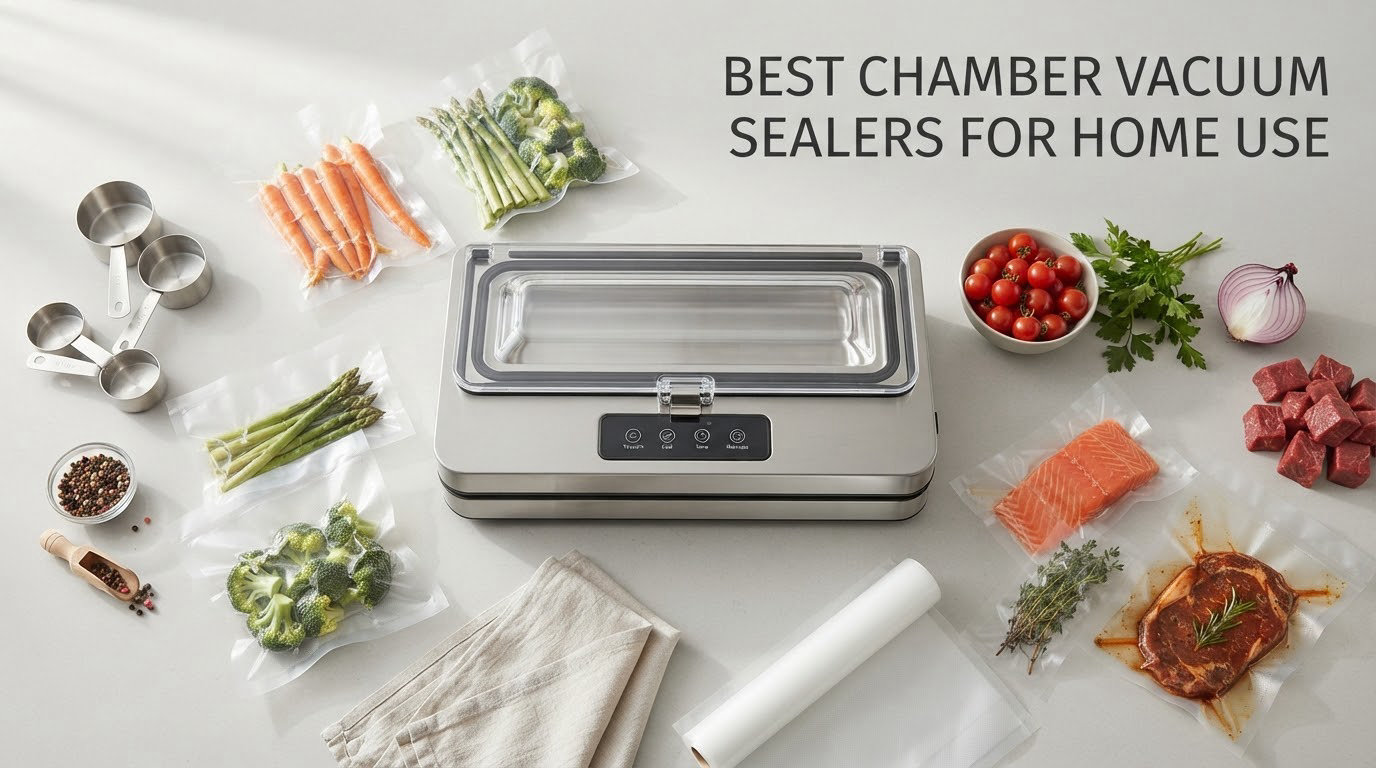
Short answer: the Avid Armor USV20 is the best chamber vacuum sealer for home use in 2026. It carries a 4.7 star average across more than 1,100 ratings, weighs 17.3 pounds so it actually moves between cabinets, and it seals soup, marinade and fresh meat juices without pulling liquid into the pump. Every machine below runs a full enclosed vacuum chamber, which is the only category of sealer that reliably handles wet foods.
I spent weeks working through twelve chamber sealers, reading owner reviews rather than spec sheets alone, and comparing pump type, chamber depth, seal bar length and real counter footprint. What follows is ranked by how well each machine handles the three things home cooks actually seal: meat, liquid-heavy dishes and garden produce. Weights, chamber sizes and ratings come straight from the manufacturer listings and the customer review history for each model.
If you are still working out whether you need a chamber machine at all, our guide to the best vacuum sealers for meat storage covers the cheaper edge-sealer options that handle dry cuts well. The short version is that a chamber sealer earns its counter space the moment you start freezing brines, stocks or marinated meat.
Table of Contents
Top 3 Picks: Best Chamber Vacuum Sealers for Home Use (October 2026)
Chamber vs. External Vacuum Sealers: Which One Do You Need?
An external, or edge, vacuum sealer clamps a bag mouth against a suction port and pulls air out through a single opening. A chamber sealer puts the whole bag inside a sealed box, evacuates the air from the entire chamber, then heat-seals the bag. That one design difference explains nearly every practical difference between the two.
Liquids are the big one. On an edge sealer, a puddle of marinade reaches the intake, the pump stalls or the seal never closes. On a chamber machine, air is removed from outside the bag too, so pressure inside and outside equalizes and the liquid stays where you put it. Reviewers describe soups, stocks and sauces going in without a spill as the single feature that justified the upgrade.
Three other differences follow from the same physics. Chamber machines seal batch after batch without waiting for a pump to cool. Their bags cost far less per seal than proprietary edge-sealer channel bags, because you buy plain smooth pouches. And they are far heavier and deeper, which is the trade you accept for the liquid handling.
A few people should skip a chamber sealer outright. If you seal fewer than five bags a month, or only ever freeze dry cuts like steaks and chicken breast, an edge sealer does the same job in a fraction of the space. Renters without a dedicated counter or shelf face the same problem, since these machines run from 17 pounds to nearly 90 pounds and are rarely storable away from an outlet.
All 12 Chamber Vacuum Sealers Compared in 2026
| Product | Specifications | Action |
|---|---|---|
| Avid Armor USV20 |
|
Check Latest Price |
 VacMaster VP215 VacMaster VP215 |
|
Check Latest Price |
 VacMaster VP230 VacMaster VP230 |
|
Check Latest Price |
 VEVOR DZ-260C 320W VEVOR DZ-260C 320W |
|
Check Latest Price |
 VacMaster VP210 VacMaster VP210 |
|
Check Latest Price |
 VEVOR DZ-260S-V1 VEVOR DZ-260S-V1 |
|
Check Latest Price |
 VEVOR YJ-300TV1 VEVOR YJ-300TV1 |
|
Check Latest Price |
 Beelicious Pro CVS101 Beelicious Pro CVS101 |
|
Check Latest Price |
 Gasbye CV4520 Gasbye CV4520 |
|
Check Latest Price |
 Mesliese CVS101S Mesliese CVS101S |
|
Check Latest Price |
 Wevac CV12 Pro Wevac CV12 Pro |
|
Check Latest Price |
 Vesta Precision V513 Vesta Precision V513 |
|
Check Latest Price |
Oil vs. Oil-Free Pumps: What Home Users Need to Know
Chamber sealers split cleanly into two pump families, and the difference matters more than any other spec on the list. An oil-lubricated rotary vane pump pulls a deeper vacuum, runs cool under repeated cycles and endures years of service, but it needs periodic oil changes. A dry piston pump needs no oil and makes no mess, but it heats up faster and needs cooldown breaks during long sessions.
Fish Alaska published the clearest benchmark we found while testing this category. An oil-lubricated chamber pump pulled up to 99.8% of the air from a bag, a dry-piston chamber machine managed roughly 90%, and a dry-piston external sealer only about 80%. That gap is why wet foods fail on entry-level edge sealers and rarely fail on chambers.
On oil change frequency, the r/ChamberVacs community has settled on a sensible rule: light users topping up once or twice a year, moderate users sealing five to ten bags a few times a month should check it quarterly, and heavy users running daily batches should plan on monthly changes. The same communities treat long service life as the deciding factor, with multi-year owners on commercial-grade pumps far more enthusiastic about their machines than first-week impressions suggest.
1. Avid Armor USV20 – Best Chamber Vacuum Sealer Overall
Avid Armor USV20 Chamber Vacuum Sealer Machine – High-Volume 11.5” Sealer
4L chamber
11.5 inch seal bar
17.3 lb
15-60 sec vacuum time
Pros
- Seals liquids and wet foods without mess
- Light 17.3 lb body stores under cabinets
- User-replaceable seal bar and gasket
- 4.7 stars across 1170 ratings
Cons
- 3 inch chamber depth limits bulky cuts
- Bags sold separately and capped near 11 x 10 inches
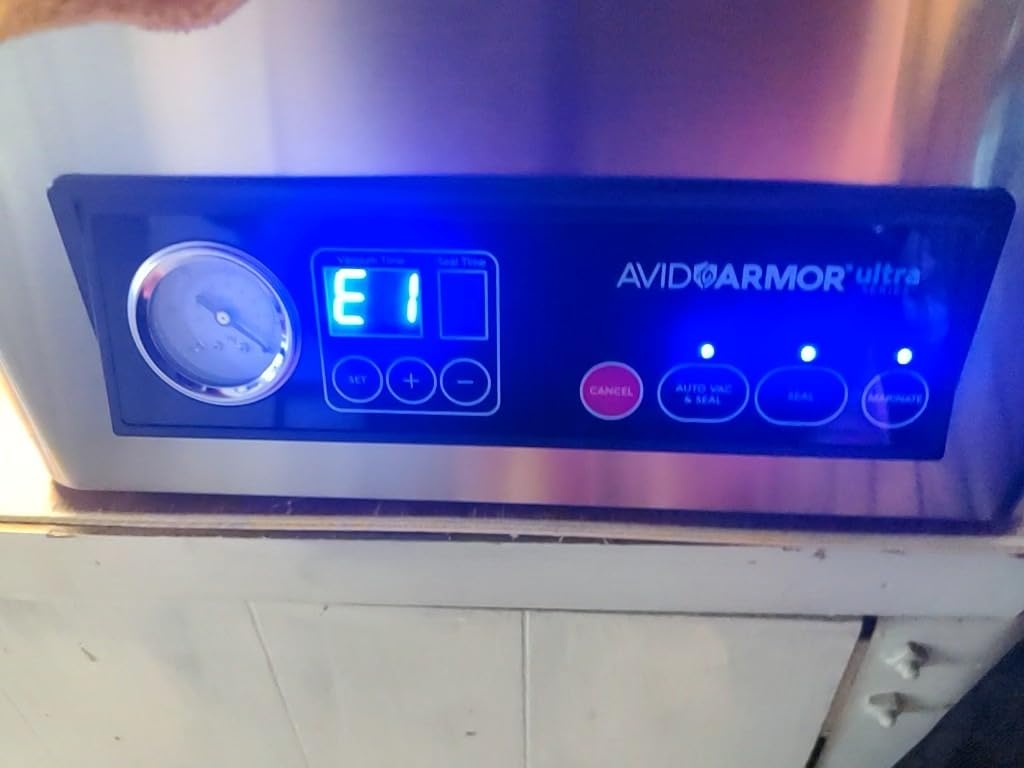
- Some owners report unresponsive buttons needing a power cycle
Out of a dozen machines, this is the one I keep recommending first. The 4 liter stainless chamber measures 12.25 by 8.5 by 3 inches, which is genuinely useful for family-size portions, and adjustable vacuum time from 15 to 60 seconds gives you a gentler setting for berries and a harder pull for a whole breast. The 11.5 inch heating seal bar is user-replaceable, so a burnt bar does not end the machine’s life.
Owners describe the upgrade clearly: the bag lies flat in the freezer with a hard double seal, and soups, stews and marinades go in without incident. The 14 by 12 by 8.25 inch body at 17.3 pounds is the smallest footprint here by a wide margin, which is unusual for a chamber machine and is why it works in an ordinary kitchen.
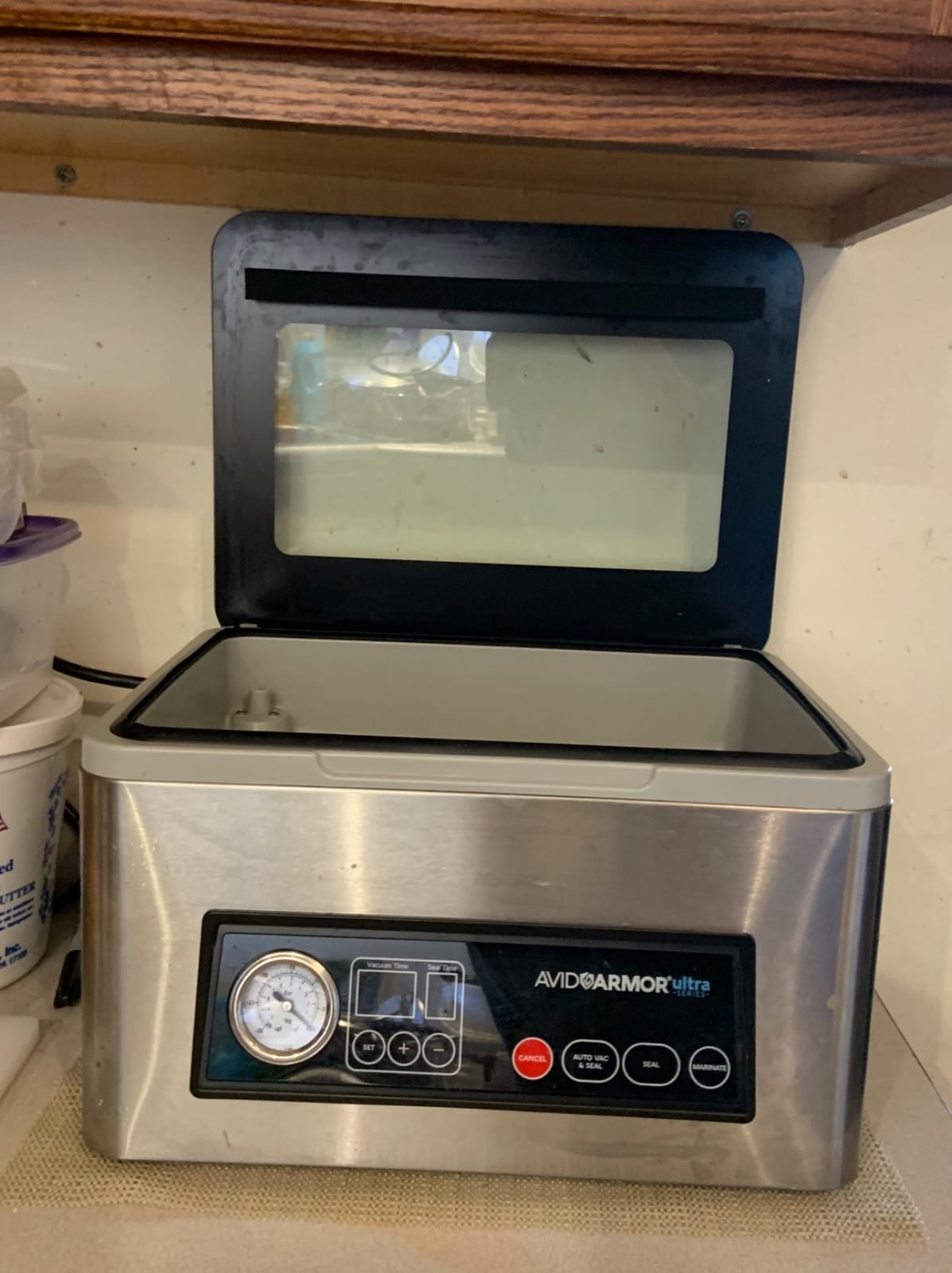
The vacuum range is the feature I would not give up. Short cycles protect delicate items, and longer holds pull stubborn air out of dense cuts. Some owners report the occasional unresponsive button that resolves with a power cycle, and no cover is included, so the machine looks better in a pantry than on open counter.
Why this sealer suits most home kitchens
It handles the three things home cooks seal most, which are wet foods, family-size meat portions and garden produce, without needing a dedicated station. Most competing chambers are far heavier, and reviewers repeatedly regret buying a 60 to 90 pound machine when they have a 3 inch cabinet gap available instead.
A 4.7 average on more than 1,100 ratings is the deepest owner history in this group, and the comments stay consistent: strong double seals, an easy learning curve, quiet enough for evening use. If you want the safe, storable, no-maintenance choice, this is it.
Where the USV20 falls short
That 3 inch chamber depth is the real limit. Packer brisket, pork butts and hams will not fit inside the chamber, so a large-cut smoker ends up cutting the meat into smaller portions or working around the machine. If your freezer fills with big roasts, budget for a deeper chamber instead.
Bag compatibility is also narrower than the machines that take both smooth pouches and textured rolls. Plan on a supply of smooth chamber bags around 11 by 10 inches, and remember that a compact chamber means smaller bags, which means more bags for the same amount of food.
2. VacMaster VP215 – Best Premium Oil-Pump Chamber Sealer
VacMaster VP215 Chamber Vacuum Sealer – Commercial Vacuum Sealer Machine for Food with Oil Pump, 10.25” Seal Bar for 10” x 13” Bags, Food Vacuum Sealer for Sous Vide, Liquids & Food Storage
1/5 HP oil pump
10.25 inch seal bar
84 lb
10 x 13 inch bags
Pros
- Commercial metal build handles sustained batch sealing
- 1/5 HP oil pump pulls a hard vacuum
- Double seal across 3 to 7 MIL bags
- Spare parts and gaskets available
Cons
- 84 pounds needs a permanent home and a cart
- Oil pump needs periodic changes with no hour meter
- Fiddly single-button interface
This is the machine r/sousvide owners converge on when they ask for a buy-it-for-life chamber sealer, and long-term owners report it still running after years of heavy home use. The 1/5 HP oil-lubricated pump and leak-proof double seal are the reason: oil pumps pull the deepest vacuum in this category and stay cool through long sessions, which is exactly what a weekend batch of brined pork needs.
The chamber measures 11.25 by 15.25 by 5 inches and accepts bags up to 10 by 13 inches, so it handles a soup portion or a marinated rack of ribs comfortably. Sixty assorted 3 mil pouches, filler plates and a maintenance kit are in the box, so it is usable on day one rather than after a first bag run.
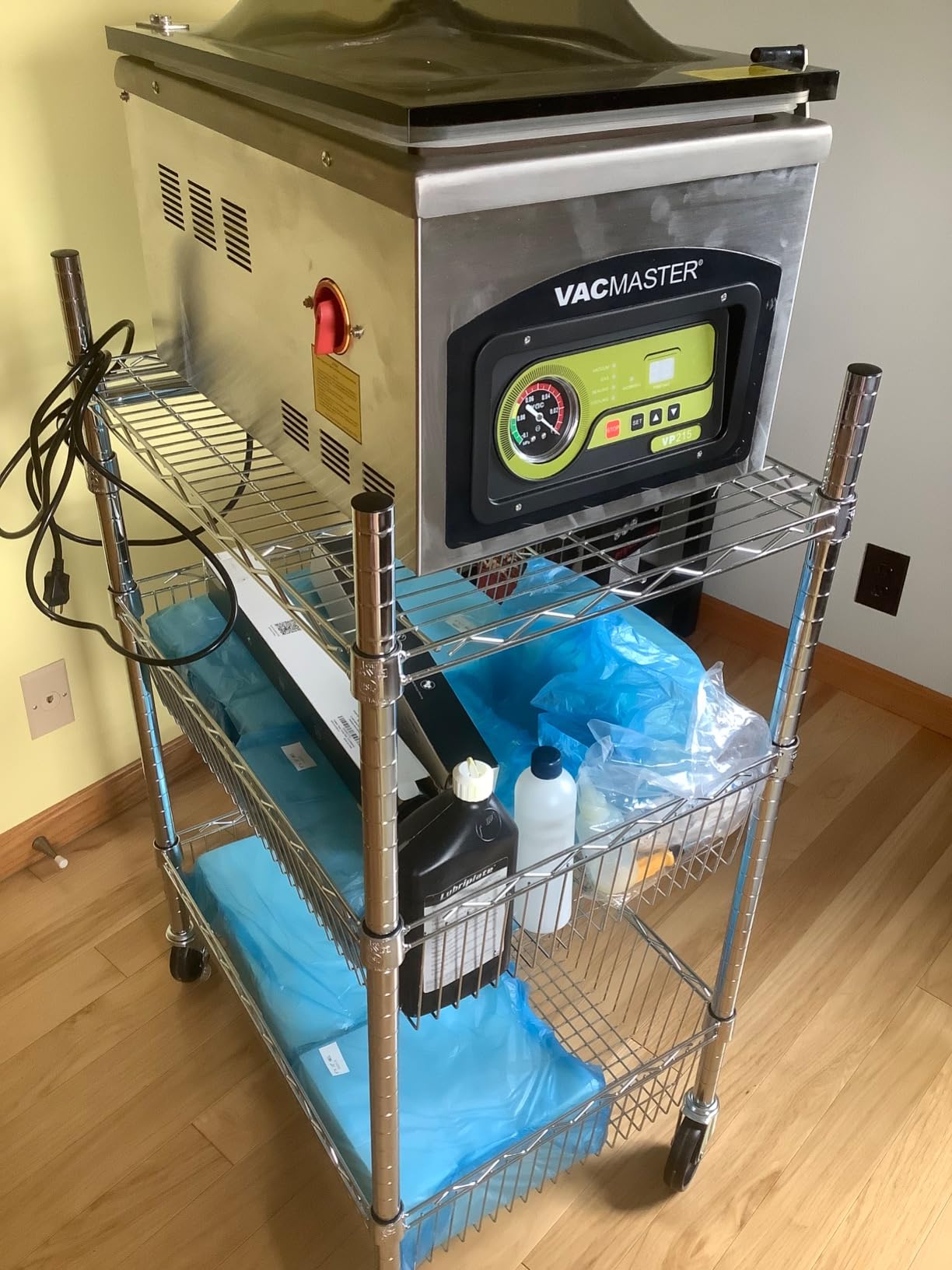
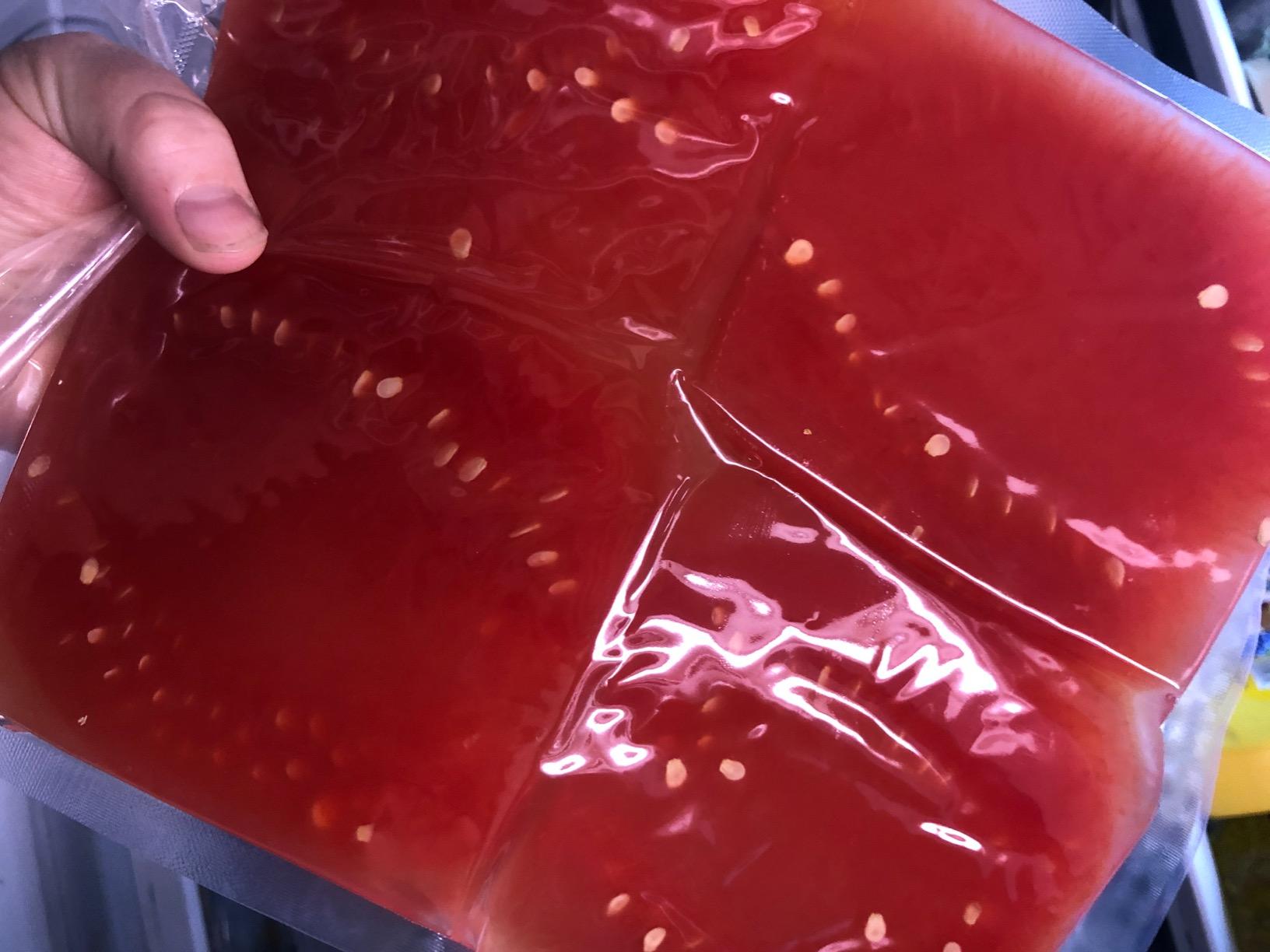
Owners highlight how cheap chamber-style bags are compared with proprietary edge-sealer channel bags, which means the running cost over five years is far lower than the sticker suggests. Spare seal-bar wires and user-serviceable gaskets are available from the manufacturer, which extends the machine’s useful life well past a decade for most households.
Why this sealer suits heavy home users
Choose the VP215 if you batch cook, smoke meat regularly or run a small side business from your kitchen. The oil pump is the durable choice, and reviewers consistently report the vacuum strength holding up year after year where dry-piston machines need more downtime between cycles.
It also handles sous vide packaging well, since the double seal holds through long cook times. The one-touch control panel with a pressure indicator means you press stop to seal and the chamber opens itself, which is faster than fiddling with dials mid-session.
Where the VP215 falls short
At 84 pounds, this is a fixed installation, and roughly 24 inches of clearance is needed with the lid raised. Plan a rolling cart or a garage shelf rather than a counter corner you hope to reclaim. Owners moving it regularly is the most common regret in this category.
The single-button interface is also fiddly, forcing you to cycle through options for every change, and the lid latch can be bumped open unexpectedly if you lean on the machine. The chamber can also run short on very large cuts, which is the trade for the pump strength.
3. VacMaster VP230 – Best Chamber Vacuum Sealer for Large Bags
VacMaster VP230 Chamber Vacuum Sealer – Commercial Vacuum Sealer Machine for Food with 1/2 HP Oil Pump, 12.25” Seal Bar for 12” x 15” Bags, Food Vacuum Sealer for Sous Vide, Liquids & Food Storage
1/2 HP oil pump
12.25 inch seal bar
89 lb
12 x 15 inch bags
Pros
- Largest seal bar and bag capacity in the VP line
- 1/2 HP oil pump for prolonged continuous operation
- Double seal across 3 to 7 MIL bags including Mylar
- Handles soups and marinades cleanly
Cons
- Heaviest machine reviewed at 89 pounds
- Large countertop footprint
- Oil pump requires periodic changes and a maintenance kit
- Overkill for small households
Step up from the VP215 and everything gets bigger: a 1/2 HP oil pump, a 12.25 inch seal bar and a chamber that accepts 12 by 15 inch bags. For a household processing a deer season, a large fish haul or a party worth of smoked meat, that extra bag width is the difference between one bag and three.
The 12.5 by 15 by 5 inch chamber is deeper than the VP215, which gives bulky cuts and upright liquid containers more room. Double sealing works across 3 through 7 mil bags including Mylar, and stainless construction plus a maintenance kit ship in the box.
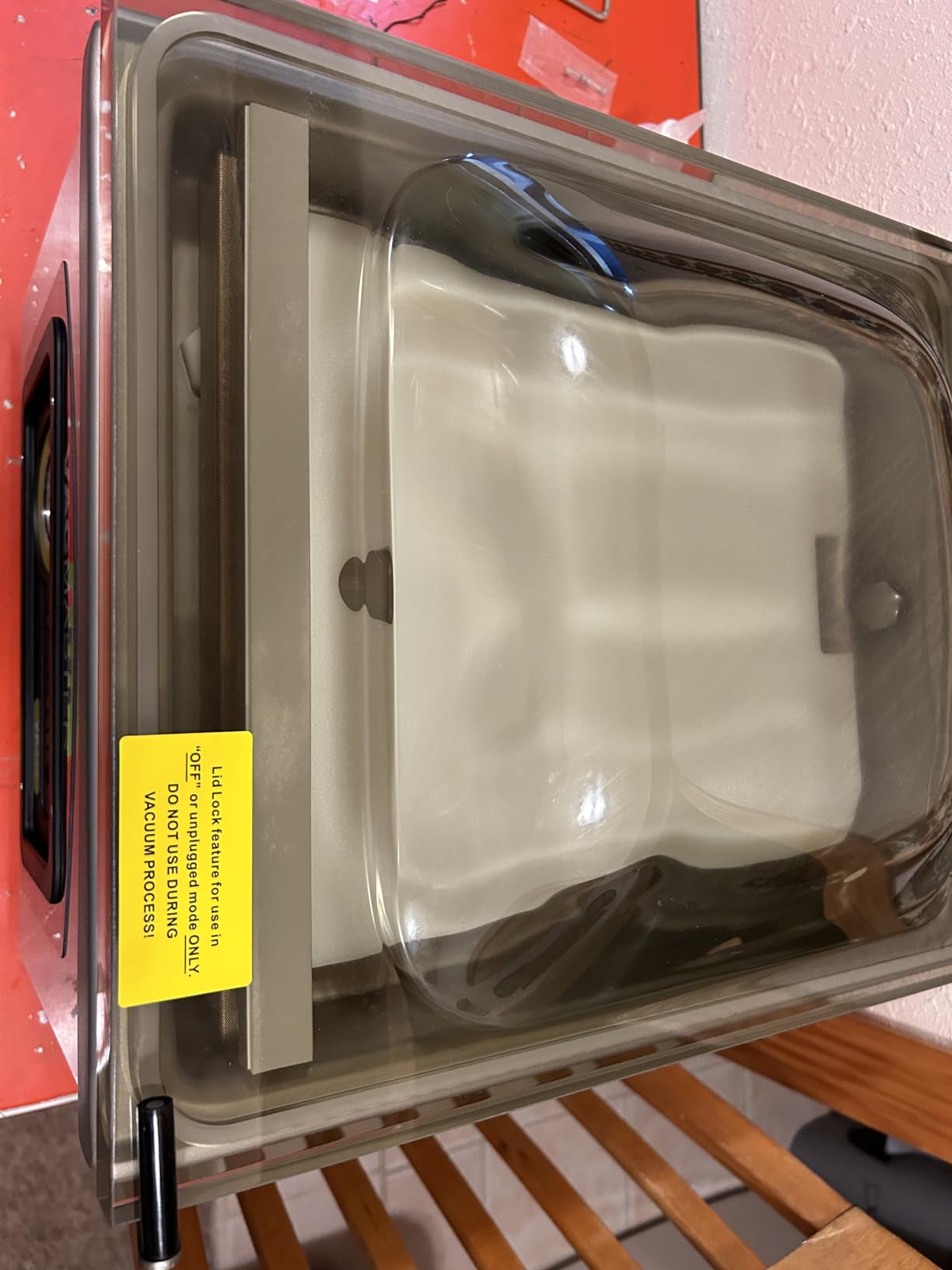
Owners using this as a serious home or small-business machine rate the vacuum strength and seal reliability highly, especially across long runs of many bags back to back. The 370 watt draw is modest for the pumping it does, which is a sign of an efficient oil pump rather than a small one.
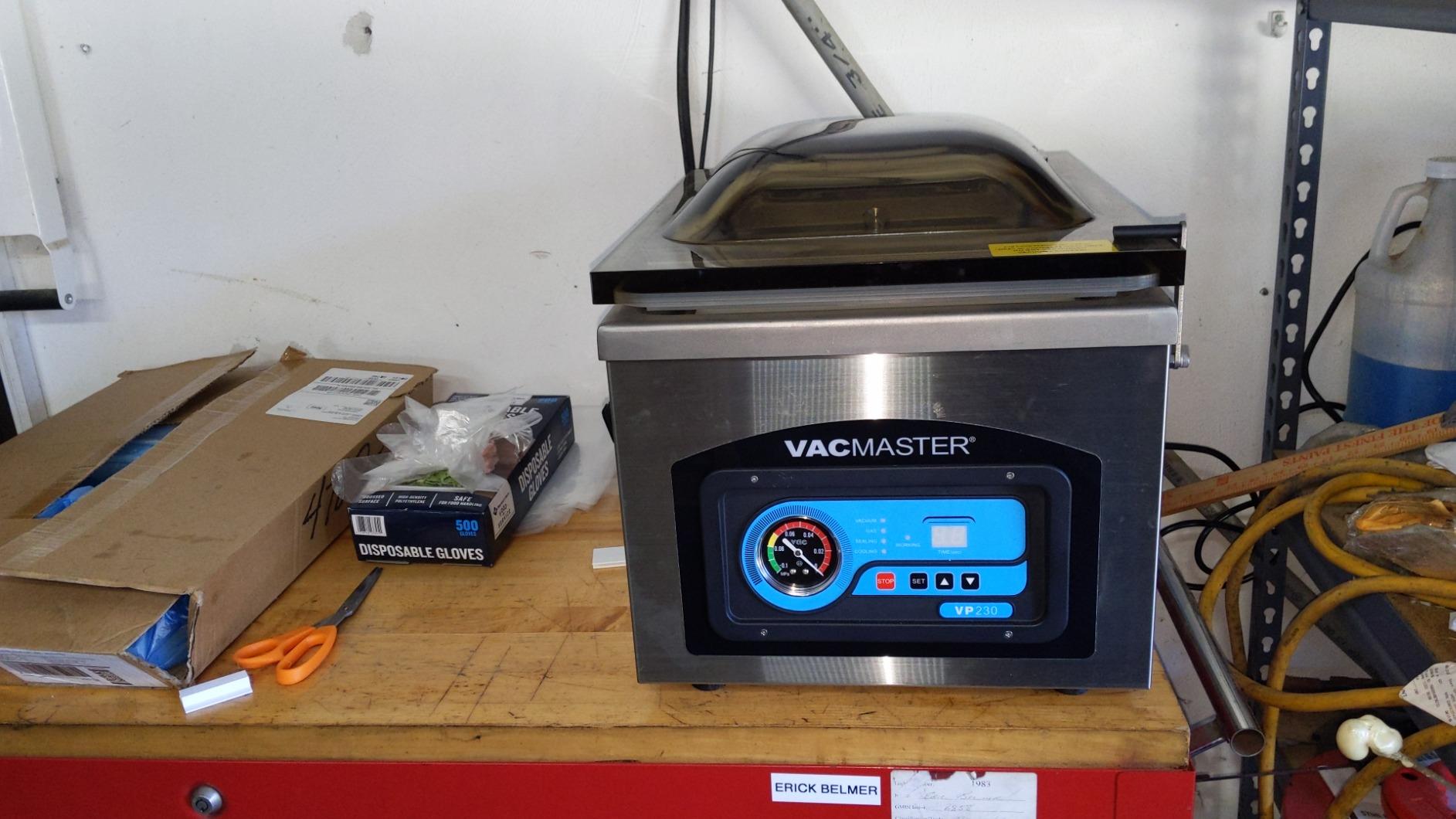
Why this sealer suits volume freezing
Pick the VP230 when bag dimensions are the binding constraint. A 12 by 15 inch pouch can hold a full soup batch, a large fish fillet or a serious portion of garden produce without splitting it into three bags, and the wider seal bar spreads the heat across more of the opening for a more even seal.
The half horsepower pump is also the answer to anyone sealing dozens of bags in one session. Oil pumps are rated for sustained operation, and owners running long batches report consistent results rather than the cooldowns a dry piston needs.
Where the VP230 falls short
At 89 pounds and roughly 15.5 by 19 by 15.75 inches, this is the largest machine in the group and needs a dedicated station with the lid clearance to match. For a two-person household freezing a few chicken breasts a month, it is enormous overkill.
The oil pump still needs periodic changes and the included maintenance kit, and the one-touch panel cycles through options rather than giving you a direct control. Budget for the physical footprint before you budget for anything else, because that is the part people regret most.
4. VEVOR DZ-260C 320W – Best Chamber Vacuum Sealer for Bulk Batching
VEVOR Chamber Vacuum Sealer 320W Sealing Power 12.6 Inch Sealing Length
320W heater
180W vacuum pump
-100 kPa
12.6 inch seal length
Pros
- Strong -100 kPa vacuum slows spoilage
- 10 mm dual lock seal holds up to freezer swelling
- Deep chamber packs large steaks and bread loaves
- Built-in pressure gauge protects fragile foods
Cons
- 62 pounds and a 17.9 by 16.1 inch body
- 4.5 average sits below the leaders
- Higher power draw than compact chamber models
- Basic controls with limited adjustment
This is the one to look at if you want commercial-style vacuum strength without a commercial machine. The 180W vacuum pump reaches minus 100 kPa, the deepest reading on any spec sheet in this group, and the 320W sealing heater with a 10 mm strip produces a dual lock seal that reviewers say survives freezer swelling better than narrower strips.
At 17.9 by 16.1 by 16 inches it is not small, but the deep stainless chamber is built for large steaks, whole bread loaves and bulk goods. A built-in pressure gauge and LED display stop you from crushing fragile items like chips, which is a real advantage over button-only competitors.
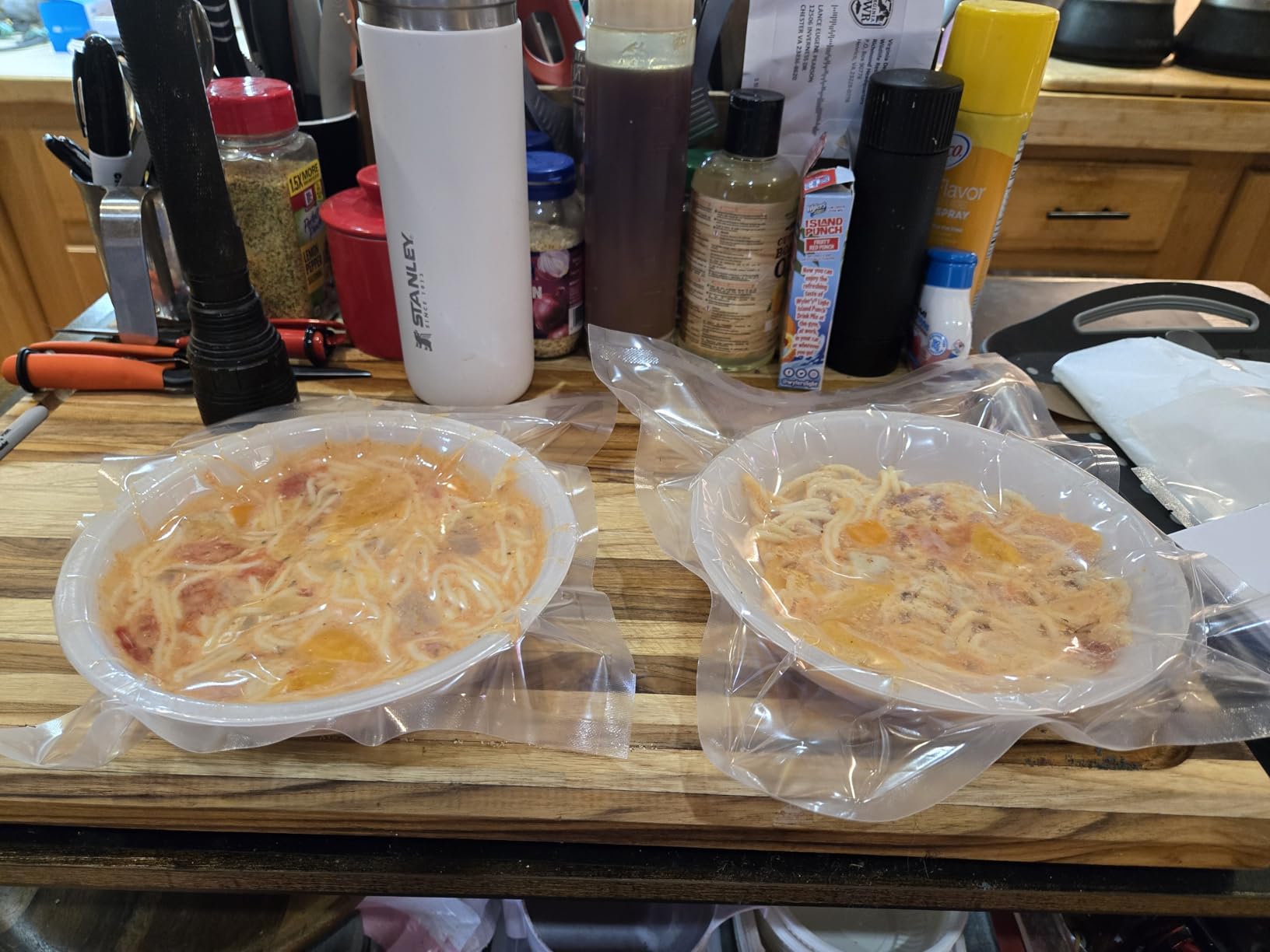
The stainless chamber is specified to resist rust and overheating around oily or salty foods, which matters if you are sealing brined meat or tomato-heavy sauces. For consistent batch work, that combination of a deep chamber and a wide 12.6 inch sealing length is hard to argue with.
Why this sealer suits serious home batches
The minus 100 kPa specification is the reason buyers who upgraded from edge sealers report a visibly tighter bag and less freezer burn. Deep vacuum plus a wide dual lock seal is the pairing you want when the food is going straight into a freezer for months rather than into the fridge for a week.
Users comparing the cheaper VEVOR chamber models to this one tend to come back for the stronger heater and the longer sealing length. If you seal large flat items like a whole loaf, a wide steak or a sheet pan of portions, the 12.6 inch bar is the feature that pays.
Where the DZ-260C falls short
At 62 pounds with a body close to 17 inches on a side, it is a fixed-in-place machine and reviewers recommend choosing its location carefully before delivery. The power draw is higher than the more compact chamber models, so give it a dedicated outlet.
Its 4.5 average across 307 ratings is the lowest among the established names here, and the controls are basic, with less adjustment granularity than sensor-driven machines. If fine control matters to you, look at one of the auto-sensing models further down instead.
5. VacMaster VP210 – Best Maintenance-Free Commercial Chamber Sealer
VacMaster VP210 Chamber Vacuum Sealer – Maintenance-Free Commercial Vacuum Sealer Machine for Food, 10.25” Seal Bar for 10” x 13” Bags, Food Vacuum Sealer for Sous Vide, Liquids & Food Storage
Oil-free dry pump
10.25 inch seal bar
72 lb
10 x 13 inch bags
Pros
- Dry pump needs no oil changes at all
- Same seal bar and bag capacity as the oil-pump VP215
- Double seal extends shelf life
- Handles soups and marinades without mess
Cons
- 72 pounds needs a dedicated location or cart
- Dry pump needs cooldown breaks in long sessions
- About 24 inches of clearance with the lid open
Most of the debate around this category is really a debate about oil. The VP210 answers it by running a maintenance-free dry air pump, which means no oil changes, no oil on your counter and no learning curve for a piece of equipment you have never maintained. You still get the 10.25 inch seal bar and 10 by 13 inch bag capacity of the oil-pump VP215.
Everything else matches that model closely: an 11.25 by 15.25 by 5 inch chamber, double sealing across 3 through 7 mil bags including Mylar, and one-touch controls with a pressure indicator where the stop button seals and auto-opens the chamber.
Reviewers who want VP215 capability without oil upkeep rate this highly, and the 4.7 average says the trade does not cost much in practice. Owners accept the weight and footprint as the price of vacuum strength and the low cost of chamber-style bags over the long run.
Why this sealer suits owners who refuse to maintain a pump
Oil change anxiety is a genuine barrier for casual home users, and the r/ChamberVacs community treats it as the most-asked maintenance question. If you seal a few times a month and have no intention of learning pump servicing, a dry pump removes the single biggest ongoing chore in this category.
It also suits anyone freezing soup, sauce and marinade on a regular basis, because the double seal and low bag cost work the same as the oil-pump models. For sous vide packaging and batch meal prep, the capacity is more than enough.
Where the VP210 falls short
Dry pumps generate heat faster, so owners note the machine wants cooldown breaks during very long sealing sessions compared with the oil-pump models. If you plan to run a whole deer or a market day of fish in one go, that is a real difference in workflow.
At 72 pounds with about 24 inches of clearance needed, it is still a permanent machine, and no pouches are included in the box, so you are buying chamber bags from the first day. On overall value, the more compact machines below do the same job in a fraction of the space.
6. VEVOR DZ-260S-V1 – Best Value Chamber Vacuum Sealer
VEVOR Chamber Vacuum Sealer, 260W Sealing Power, Vacuum Packing Machine for Wet Foods, Meats, Marinades and More, Compact Size with 10.2 in Sealing Length, Applied in Home Kitchen
-100 kPa vacuum
260W heater
8 mm dual lock seal
10.2 inch sealing length
Pros
- True -100 kPa chamber vacuum at the lowest cost in the group
- Handles liquids
- wet foods and powders
- Standard smooth bags up to 10 inches
- 45+ pound stainless body feels solid
Cons
- Some owners report vacuum degrading within weeks
- Lid has no lift support so needs about 25.5 inches of clearance
- Cycle time closer to a minute per bag
- Shallow flat-bottomed chamber limits liquid volume
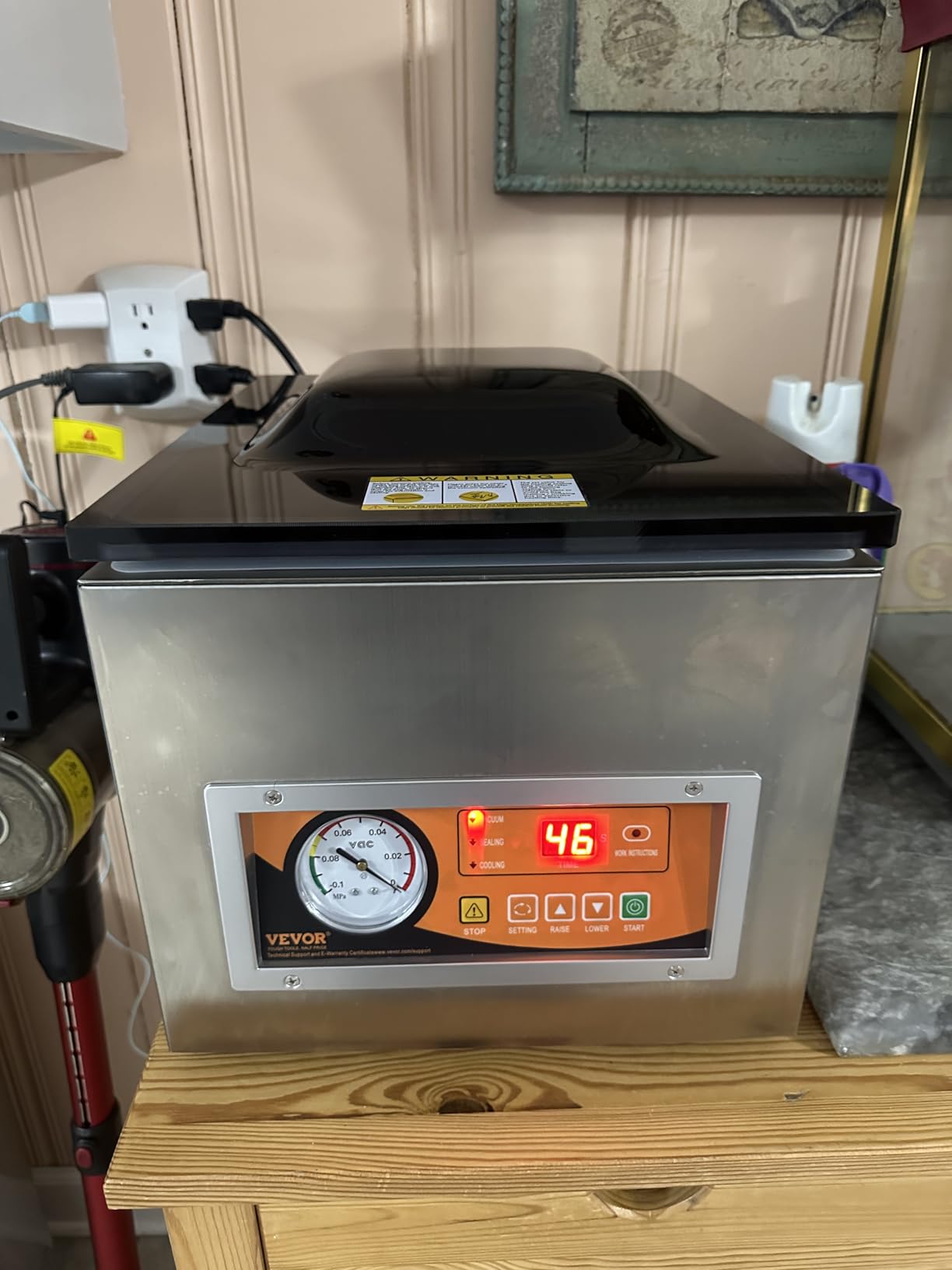
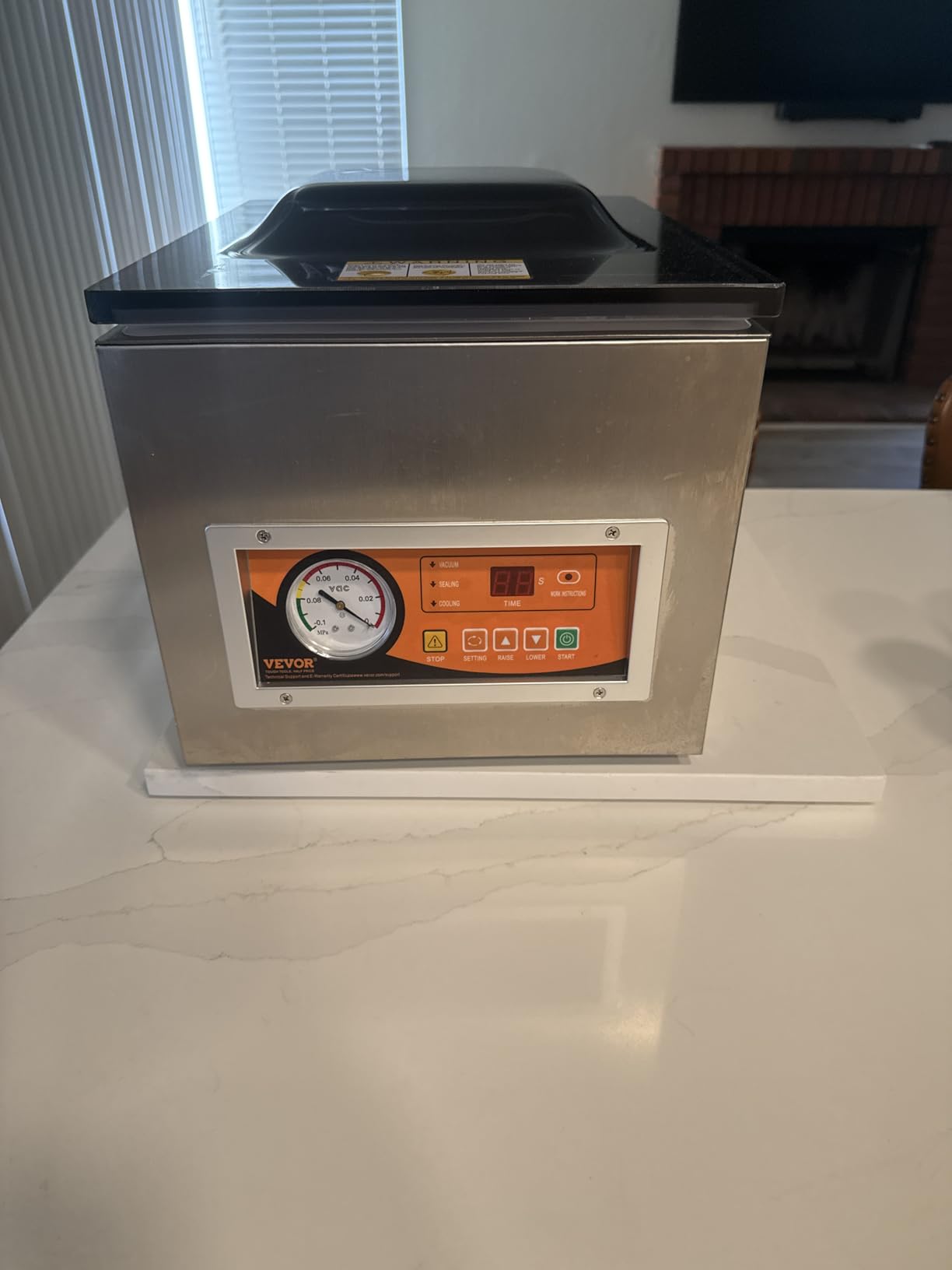
This is the entry point into real chamber sealing, and it delivers a genuine minus 100 kPa vacuum at a 15.9 by 12.4 by 11.8 inch footprint. Most reviewers treat it as the value pick, praising vacuum strength, quiet operation and the ability to handle liquids and even powders like flour without the liquid-into-machine problem that defeats edge sealers.
The 260W sealing heater with an 8 mm strip, a 120W vacuum pump, a stainless chamber and a built-in pressure gauge with adjustable vacuum, seal and cool-down times cover the essentials without padding. It takes standard smooth bags up to 10 inches and can handle Mylar with a longer seal time.
The main concern is durability. A number of owners report the vacuum degrading after a few weeks, leaving residual air in bags, and several note that the pump must be oiled before first use. That makes it a strong first chamber machine, but not a safe place to store a whole season of harvest.
Why this sealer suits first-time buyers
If your only experience is an edge sealer, this is the cheapest way to find out whether wet-food handling changes your food storage habits. At 45+ pounds it is heavy but genuinely more portable than the 60 to 90 pound machines, and the shallow body fits under a standard upper cabinet on most counters.
Owners who came from cheap external sealers report the vacuum is visibly stronger and the machine stays quiet, which matters in an open kitchen. It handles liquids, wet foods and powders, the three things that break entry-level edge sealers, so it covers most home freezing tasks.
Where the DZ-260S-V1 falls short
Loss of vacuum performance within weeks is the recurring complaint, and it is worth weighing against the alternative of buying once. The pump also needs oiling before first use, which is the maintenance burden the dry-pump models avoid entirely.
Cycle time runs closer to a minute per bag than a typical edge sealer, the flat-bottomed chamber limits how much liquid you can pack, and the finished cycle beep is loud in a quiet kitchen. Plan around those if you seal late at night.
7. VEVOR YJ-300TV1 – Best Chamber Vacuum Sealer Feature Set
VEVOR Chamber Vacuum Sealer, 380W Pump Power, Sealing Bag Packing Machine
380W pump at 90 L/min
Over -95 kPa
304 stainless chamber
glass lid
Pros
- 380W pump moves 90 L/min for a strong vacuum
- 12.87 x 12.20 x 3.15 inch chamber
- Full-glass lid shows the whole cycle
- Marinate
- single seal and jar vacuuming modes
Cons
- 52.7 pounds still needs semi-permanent counter space
- Higher cost than the smaller chamber models with similar core capability
- 1200 watt draw needs a dedicated outlet
- Less review history than established brands
The feature list here is unusual for this category. Alongside adjustable vacuum and seal time, it offers marinate mode, a single seal option and jar vacuuming, and the 380W pump moving 90 L/min to better than minus 95 kPa is a strong vacuum for a machine in this size class. The 12.87 by 12.20 by 3.15 inch chamber is roomy at 52.7 pounds.
A 304 stainless chamber with a full-glass lid lets you watch the whole cycle rather than guess, and the rapid-cooling vacuum pump with an aluminum seal is aimed at batch processing where you would otherwise wait between bags.
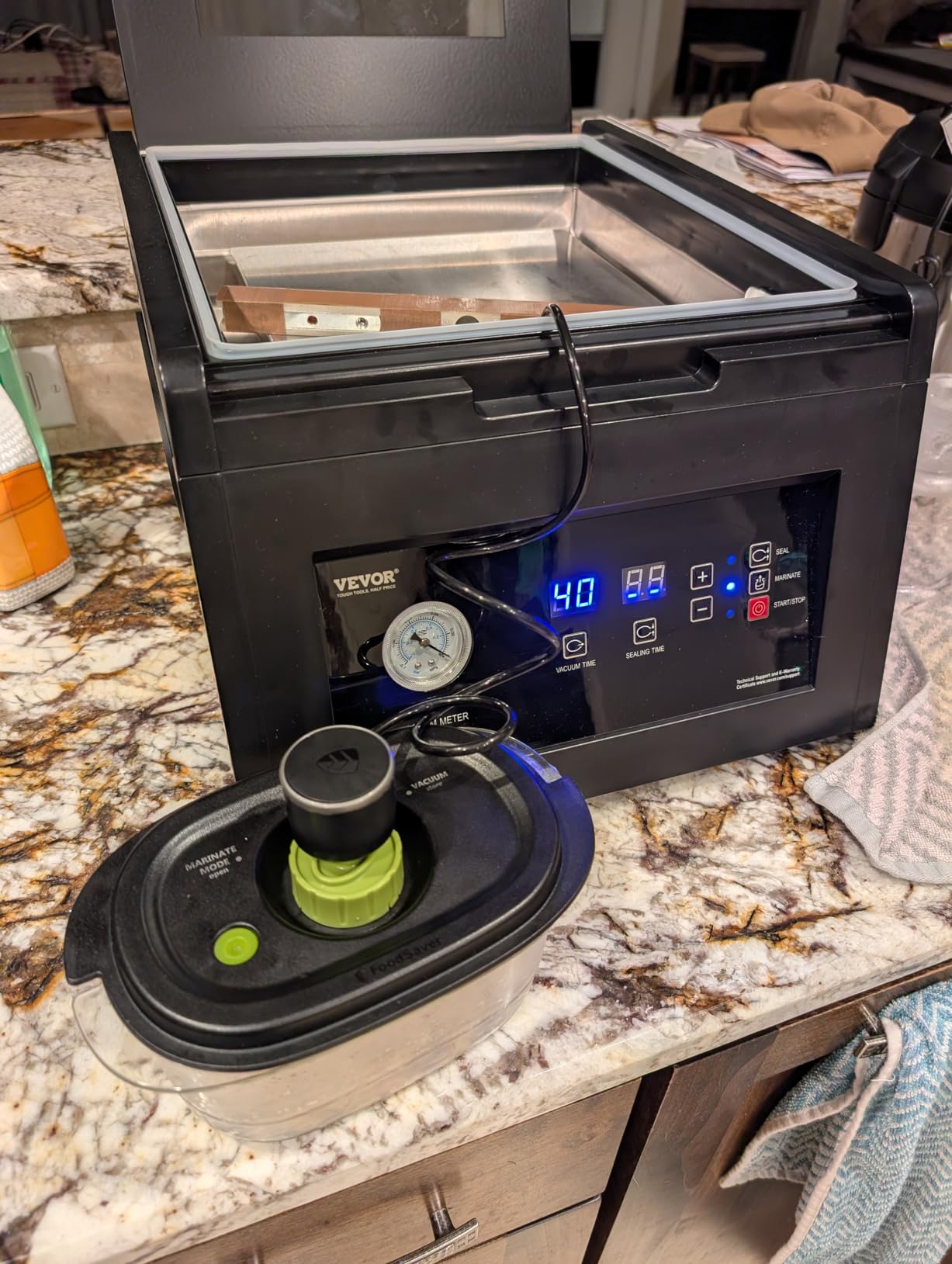
Owners describe quick, consistent seals across wet, dry, soft and powdery foods, and the stainless build is food-safe and easy to rinse clean. The no-oil-change pump means maintenance is one less item on the list next to a machine that already has a lot of surface area.
Why this sealer suits feature-driven cooks
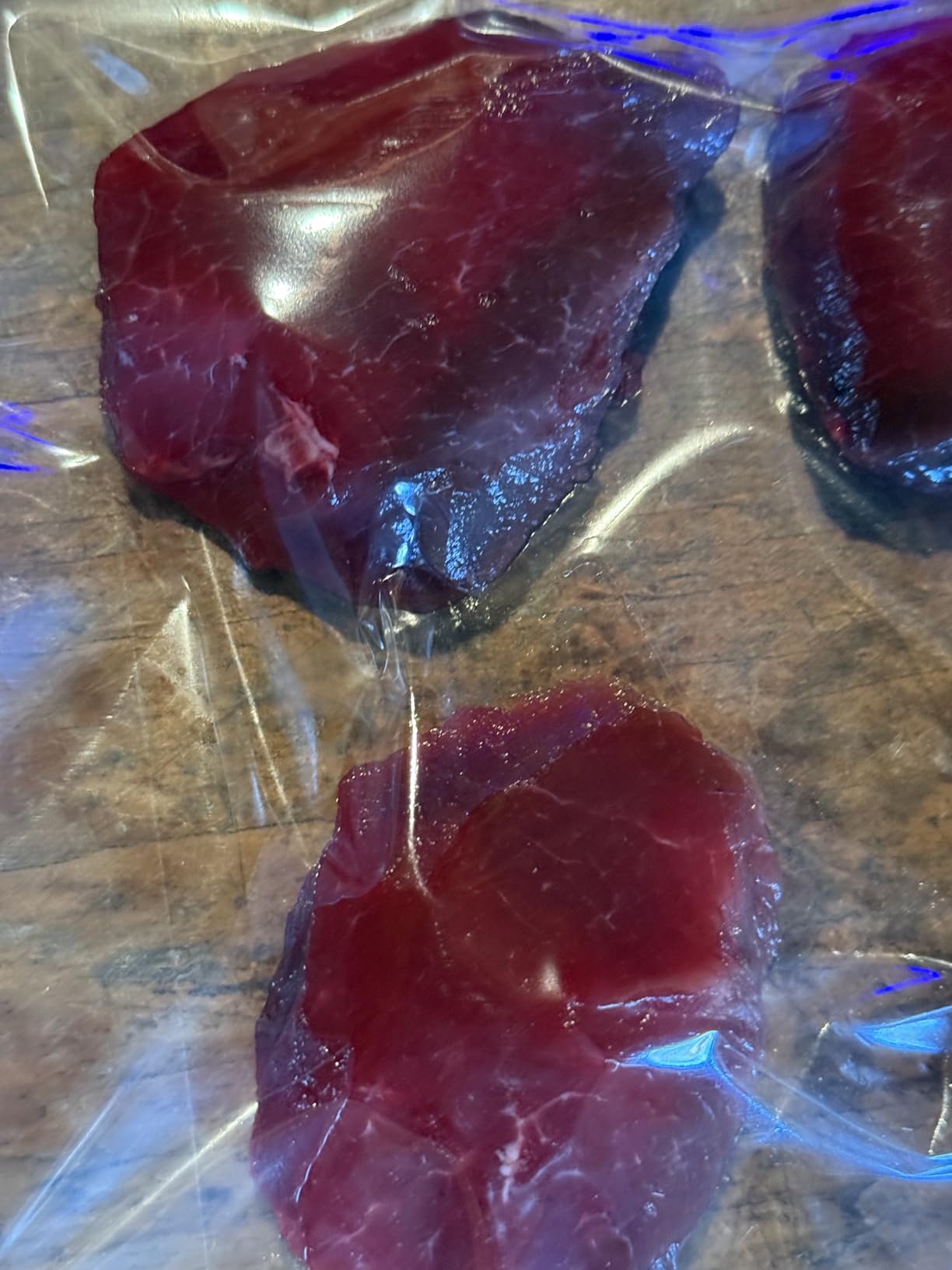
Marinate mode and jar vacuuming are the two features here that competitors mostly leave out. If you infuse steaks and seafood regularly, the vacuum marinate cycle compresses a long marinade into a short session, and jar vacuuming means one machine covers canning-adjacent storage as well as pouches.
The glass lid is a genuine quality-of-life upgrade on a machine you might use in the garage or a basement, where you cannot see a blind chamber. It is also a strong fit for sous vide cooks who bag proteins and sauces in volume.
Where the YJ-300TV1 falls short
At 52.7 pounds and 17.72 by 14.49 by 10.24 inches, it is a semi-permanent countertop machine, not a storable appliance. The 1200 watt draw means a dedicated outlet rather than a shared one with a microwave or kettle.
Its 91-review base is far thinner than the established chamber brands, so long-term durability is not well documented yet. The core capability is also comparable to smaller models that take up less room, so you are paying for the extra features as much as the pump.
8. Beelicious Pro CVS101 – Best Chamber Vacuum Sealer for Marinating
DualCore CVS101 Chamber Vacuum Sealer for Liquids & Sous Vide, 6L Dual Vacuum Zones & Extra-Wide Bag Clamp, 230W Dual-Core Dry Pump x4, Commercial-Grade Food Packaging Machine for Home Use
6L upper chamber
four oil-free dry pumps
12 inch dual-seal bar
-100 kPa
Pros
- Two-area design with a 6L chamber plus a lower external work area
- Four oil-free dry pumps mean no oil changes
- Vacuum marinate mode cuts marinating to about 15-20 minutes
- 25.7 pounds is light for a chamber sealer
Cons
- 6L upper chamber is small for large family portions
- Still needs dedicated counter space at 25.7 pounds
- Only 60 reviews so long-term reliability is undocumented
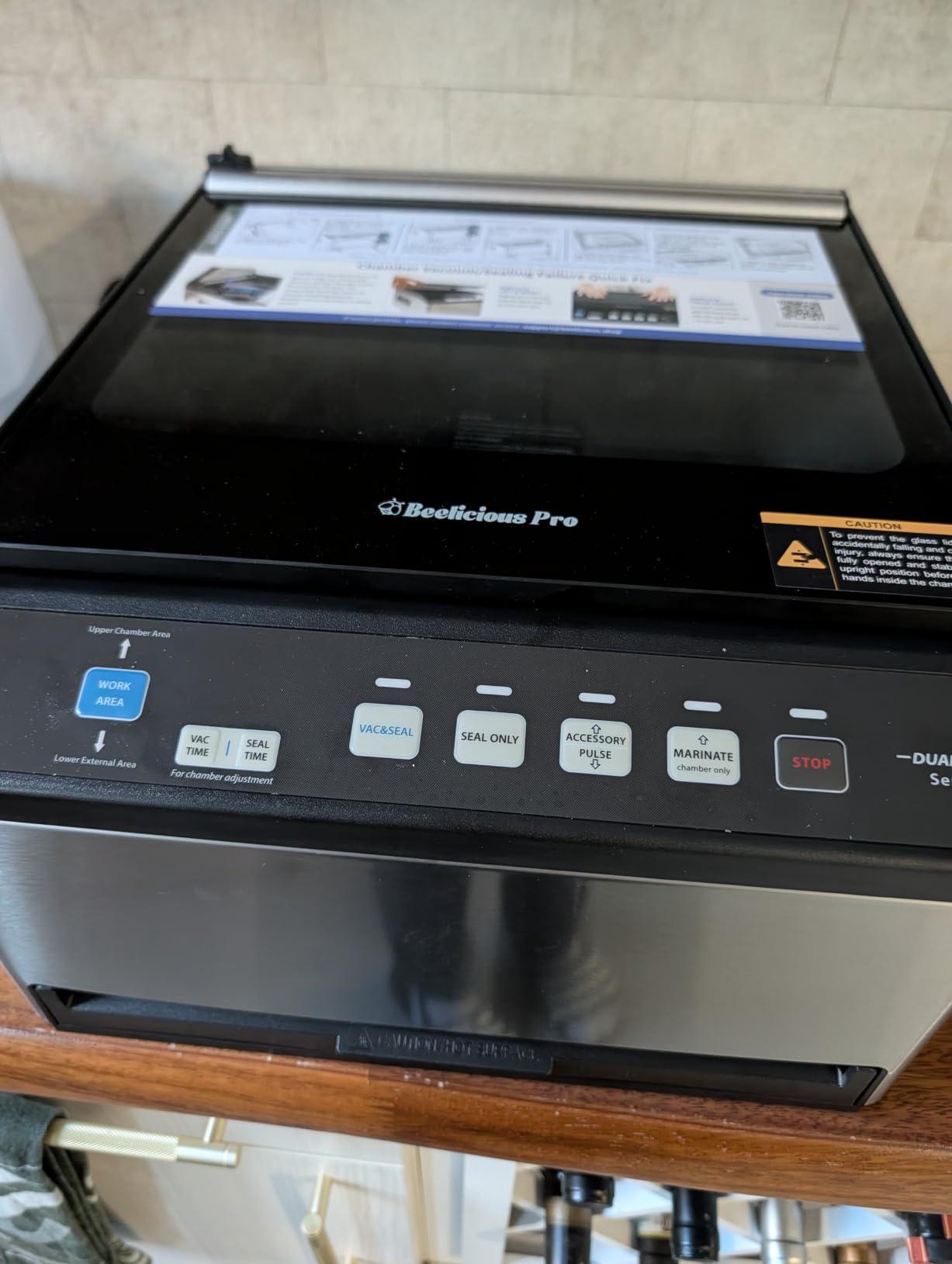
The two-area design is the idea worth stealing. A 6 litre upper chamber at roughly 300 by 260 by 80 mm handles standard pouches, and a separate lower external work area takes oversized bags that will not fit inside. Owners with large cuts say that second area removes the single most common complaint about compact chambers.
Four oil-free dry pumps reach up to minus 100 kPa with no oil changes, and the removable 12 inch dual-seal bar gives a wide airtight seal. At 25.7 pounds it is light for a chamber sealer, and the angled top panel, countdown display, extra-wide bag clamp and built-in cutter make it easy to work with one-handed.
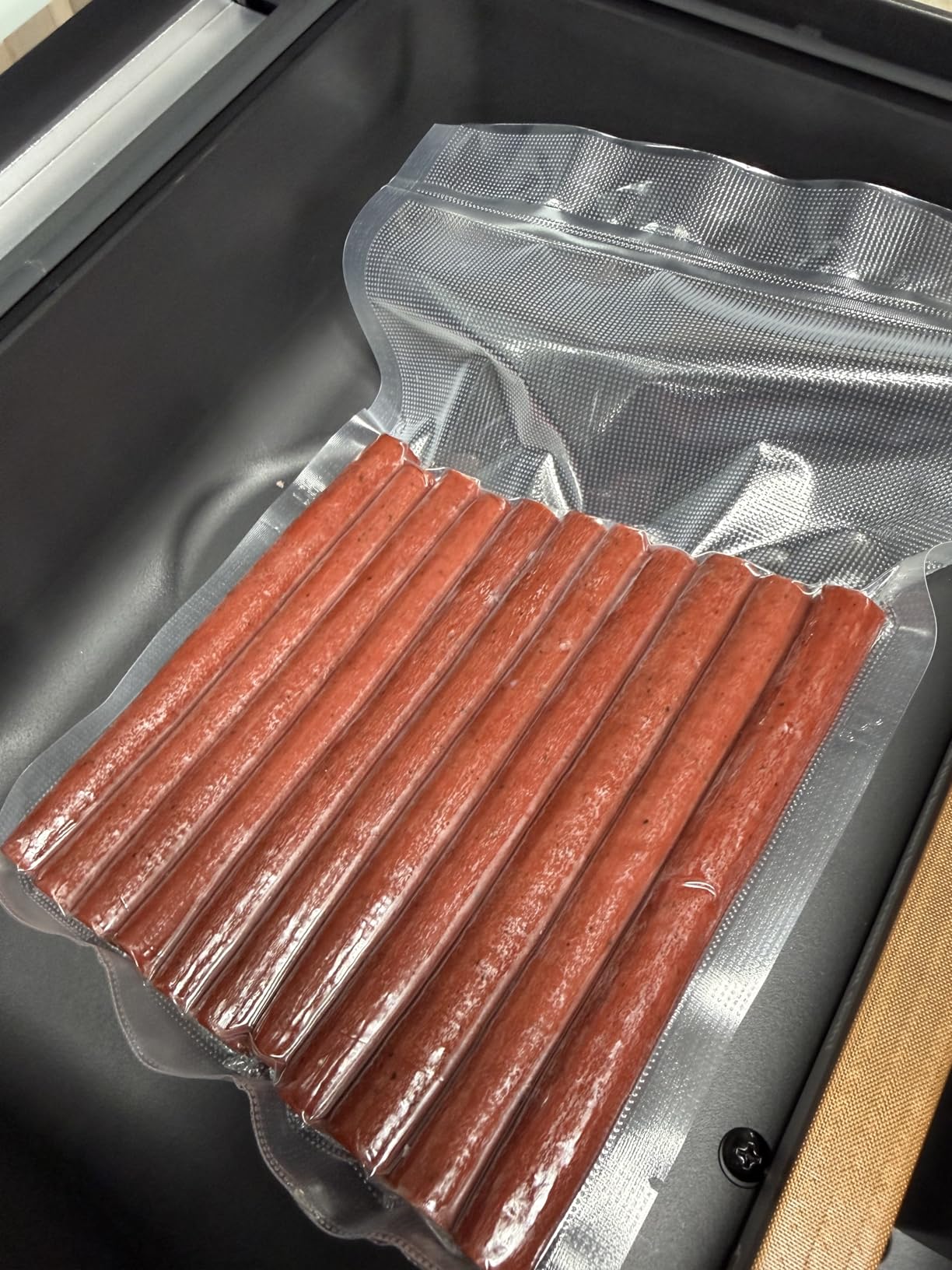
The vacuum marinate mode is what separates it. Owners report a day-long marinade finishing in roughly 15 to 20 minutes, and some report sealing more than 100 jars and 200 bags without an issue. It handles smooth, textured and embossed bags, and mason jars work in-chamber or through the external port.
Why this sealer suits marinade and infusion cooks
If you marinate rather than simply season, this is the machine built for it. The marinate cycle is the headline feature, the external lower area doubles as a work surface for large items, and the four dry pumps mean you can run consecutive cycles without a cool-down or a service interval.
It is also a strong all-rounder for mixed households, because it handles solids, liquids and jars on one machine. Several owners report it outperforming far more expensive commercial units, though the sample is still small.
Where the CVS101 falls short
The 6 litre upper chamber is on the small side for large family portions, and the lower external area is a partial rather than a full substitute for a deep chamber. At 25.7 pounds it still needs dedicated counter space, just less than most.
With 60 reviews on a 2026 model, the long-term reliability picture is not yet settled, and the app-based food scanning features are ancillary to sealing. If you want a decade-long track record rather than the richest feature set, choose an older commercial-line machine instead.
9. Gasbye CV4520 – Best Chamber Vacuum Sealer by Warranty
Gasbye Chamber Vacuum Sealer – 5.3QT Large Chamber, Replaceable 11.5″ Sealing Bar with Double Seal, Perfect for Meats, Soups, Sauces & Liquids, Includes 30 Pre-Cut Vacuum Bags, Stainless Steel
5.3 qt chamber
11.5 inch replaceable seal bar
300W pump
3 year warranty
Pros
- Chamber-wide vacuum gives the tightest bags owners report
- Replaceable dual heating wires instead of a new machine
- Includes 30 pre-cut bags
- hose and filler plate
- 3 year warranty with US-based support
Cons
- Heavy enough that some owners mention lifting difficulty
- Short learning curve before settings feel right
- Not suitable for non-US electrical systems
Warranty length is the most honest proxy for build quality on a machine like this, and Gasbye leads the group with three years of coverage and a spare-parts approach. The seal bar carries replaceable dual heating wires, and a spare gasket and heater element are in the box, so the usual reason to throw a vacuum sealer away never applies.
The 5.3 quart chamber with a 9.7 inch width and an 11.5 inch sealing bar handles meat, soups, sauces and liquids, and the 300W pump removes air across the whole chamber so bags conform tightly to the food with nothing drawn out. The body measures 13.6 by 12.2 by 8.1 inches.
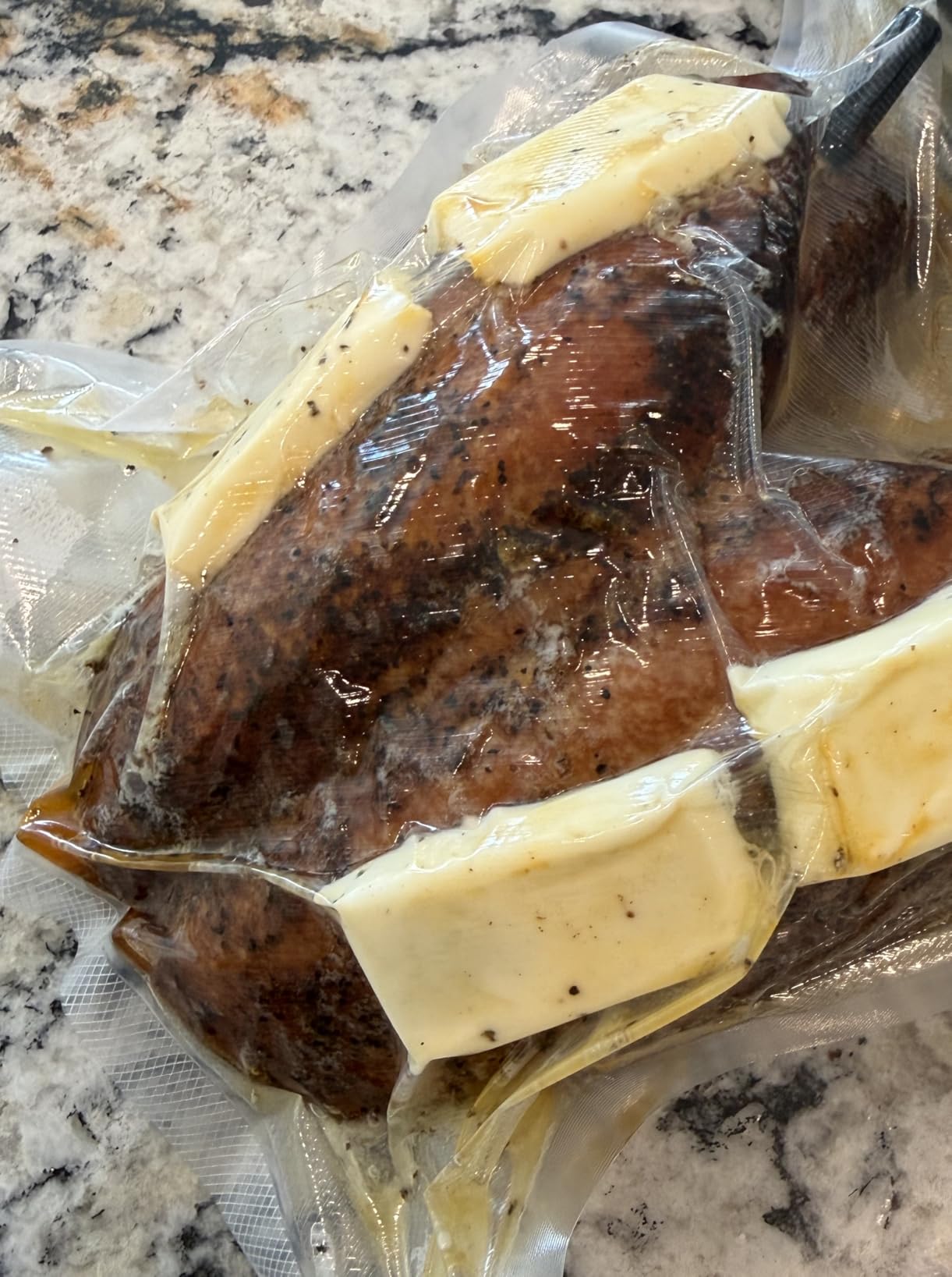
Owners report the tightest, most complete vacuum they have had from a home chamber sealer, and several mention processing hundreds of pounds of poultry and venison without a single seal failure. Thirty pre-cut 11 by 11 inch bags, an external suction hose, a filler plate and a manual are included.
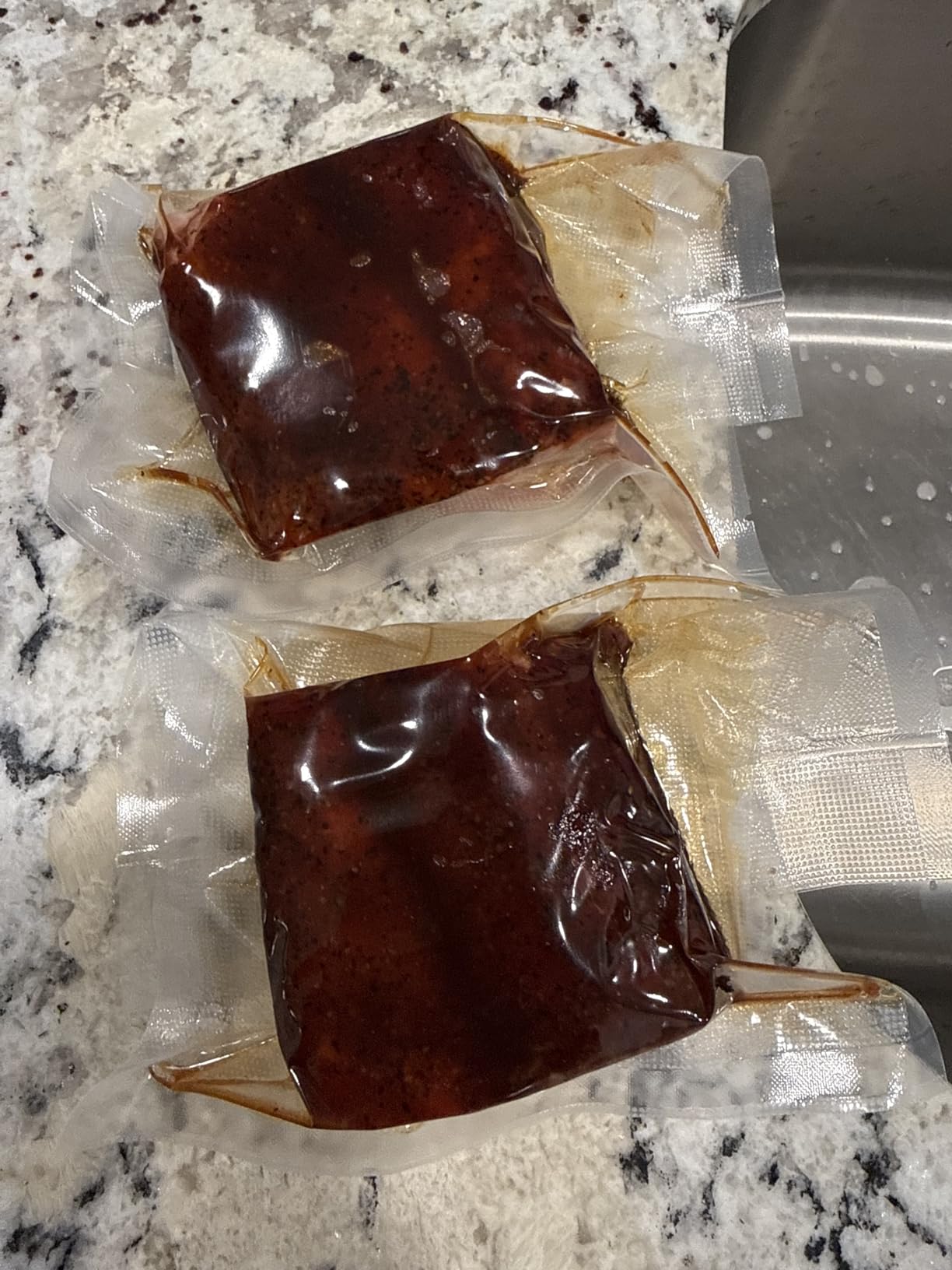
Why this sealer suits game and bulk meat hunters
Vacuum sealing a deer or a season of poultry means a long, unbroken run of cycles, and the replaceable heating wires mean the failure point everyone fears does not end the machine. The three-year warranty and brand-new replacement units back that up in a way most competitors do not.
It is also well suited to liquids, since the chamber-wide removal keeps soups and sauces inside the bag. The included hose and filler plate make it usable immediately, with no first bag run required.
Where the CV4520 falls short
It is heavy, and older users specifically mention difficulty lifting it, so think about where it will live before you buy rather than after. A few first-time users also needed several cycles before the settings felt right.
The unit is built for 115V operation and is not suitable for non-US electrical systems, so overseas buyers need a step-down solution. And if you only ever seal dry goods, the chamber capability is wasted on you.
10. Mesliese CVS101S – Best Chamber Vacuum Sealer for Compact Kitchens
Mesliese 100kPa Chamber Vacuum Sealer for Dry Wet Soupy Foods & Sous Vide, 6L Food Sealer with 11.3″ Dual Sealing Bar, Built‑in Cutter, External Vacuum & Quick Marinate, Vacuum Roll & Universal Lids
6L chamber
100 kPa vacuum
11.3 inch dual sealing bar
21.4 lb
Pros
- Lightest machine in the group at 21.4 pounds with a 6L chamber
- 100 kPa vacuum handles dry
- moist and soupy foods
- Built-in 12.9 inch cutter plus a roll of bags
- Includes universal lids and a hose for jars
Cons
- Only 46 reviews
- so long-term durability is not established
- 3.2 inch chamber depth constrains very large cuts
- Mason jar adapter not included for the external port
Weight is the number that decides most compact-kitchen purchases, and at 21.4 pounds this is the lightest machine here while still offering a 6 litre upper chamber measuring 12.3 by 10.4 by 3.2 inches and a 100 kPa deep vacuum. That combination is unusual: most light chamber machines give up vacuum strength.
The detachable 11.3 inch dual sealing bar produces a double-layer, leak-proof seal and wipes clean easily, and a built-in 12.9 inch cutter sizes bags without scissors. The box also includes 6.3 and 7.5 inch universal lids, an air hose and a roll of 8 inch by 16 foot bags.
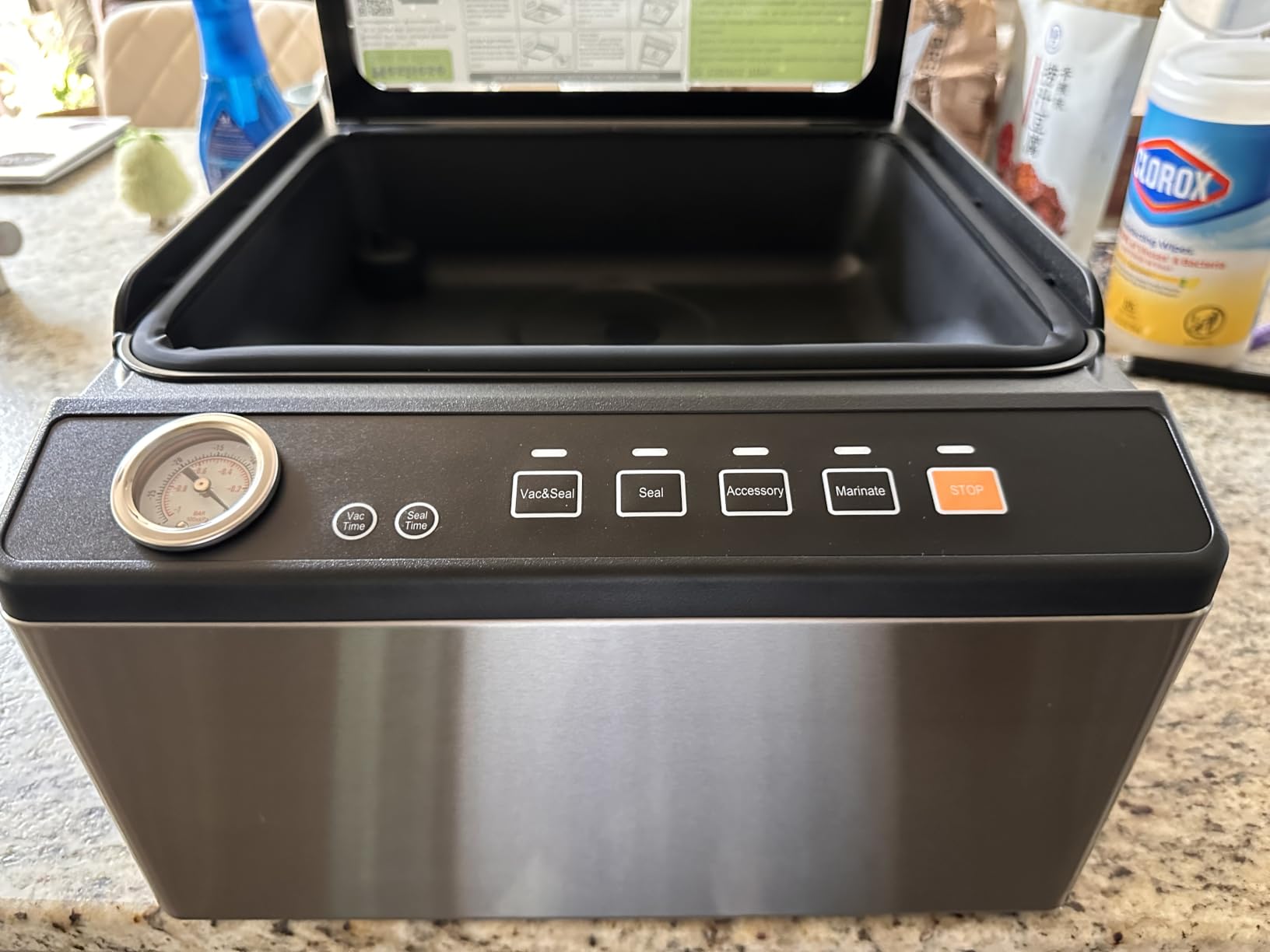
It works with smooth chamber bags as well as textured and embossed rolls, which gives you a genuine bag-format choice that most machines in this class do not. Marinate mode is claimed to accelerate flavor infusion, and adjustable vacuum and seal times handle both delicate berries and dense roasts.
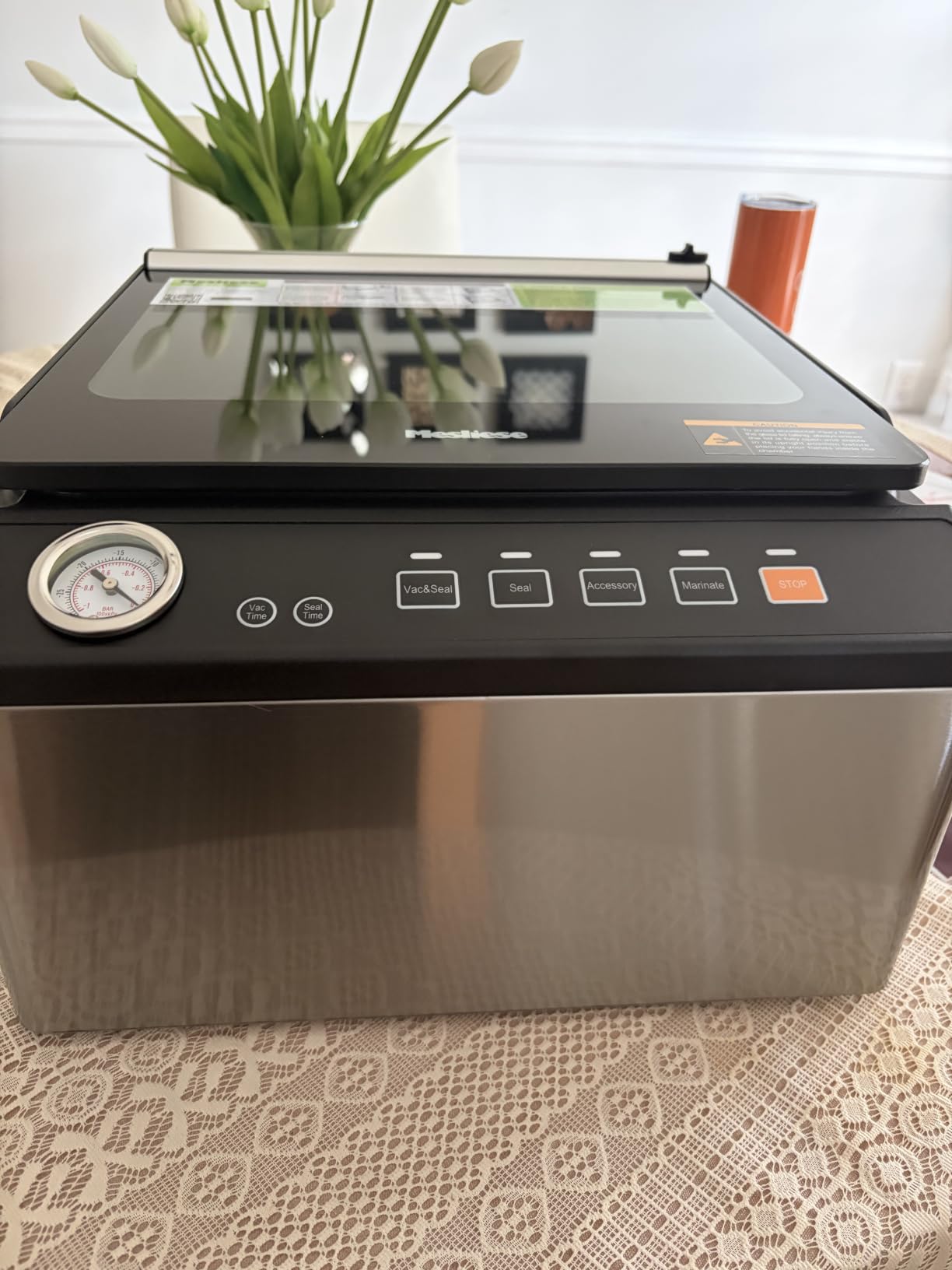
Why this sealer suits small kitchens
If counter space is your binding constraint, this is the machine to measure first. It stores in a cabinet when not in use, pulls a 100 kPa vacuum, and the included cutter and bag roll mean you are not shopping for accessories before the first session. Soupy foods are its stated strength alongside dry and moist items.
The external vacuum port with hose is useful for canisters and zip-top bags beyond pouches. For a renter or a first apartment, it is the shortest path from no sealer to a working chamber machine.
Where the CVS101S falls short
Its 46 reviews are all five star, which means the picture is positive but thinly sampled and long-term durability is genuinely unknown. Treat the rating as encouraging rather than proven.
The 3.2 inch chamber depth constrains very large cuts, the mason jar adapter is not included for the external port even though the hose is, and semi-automatic operation gives you less automation than sensor-driven competitors. If your plan is mostly big cuts, look deeper instead.
11. Wevac CV12 Pro – Best Chamber Vacuum Sealer for Mason Jars
Wevac 12″ Chamber Vacuum Sealer, 8.5 Qt, Auto Vacuum Sensing for Food
8.5 qt chamber
12 inch seal bar
auto vacuum sensing
mason jar kit included
Pros
- Auto vacuum sensing sets the cycle from detected food volume
- 8.5 qt chamber is the deepest in this group
- Detachable tray and washable seal bar rinse clean
- Mason jar kit
- hose and 20 precut bags included
Cons
- Highest cost among compact-chamber options
- 29.4 pounds still needs dedicated counter space
- Only 40 reviews so reliability is not yet documented
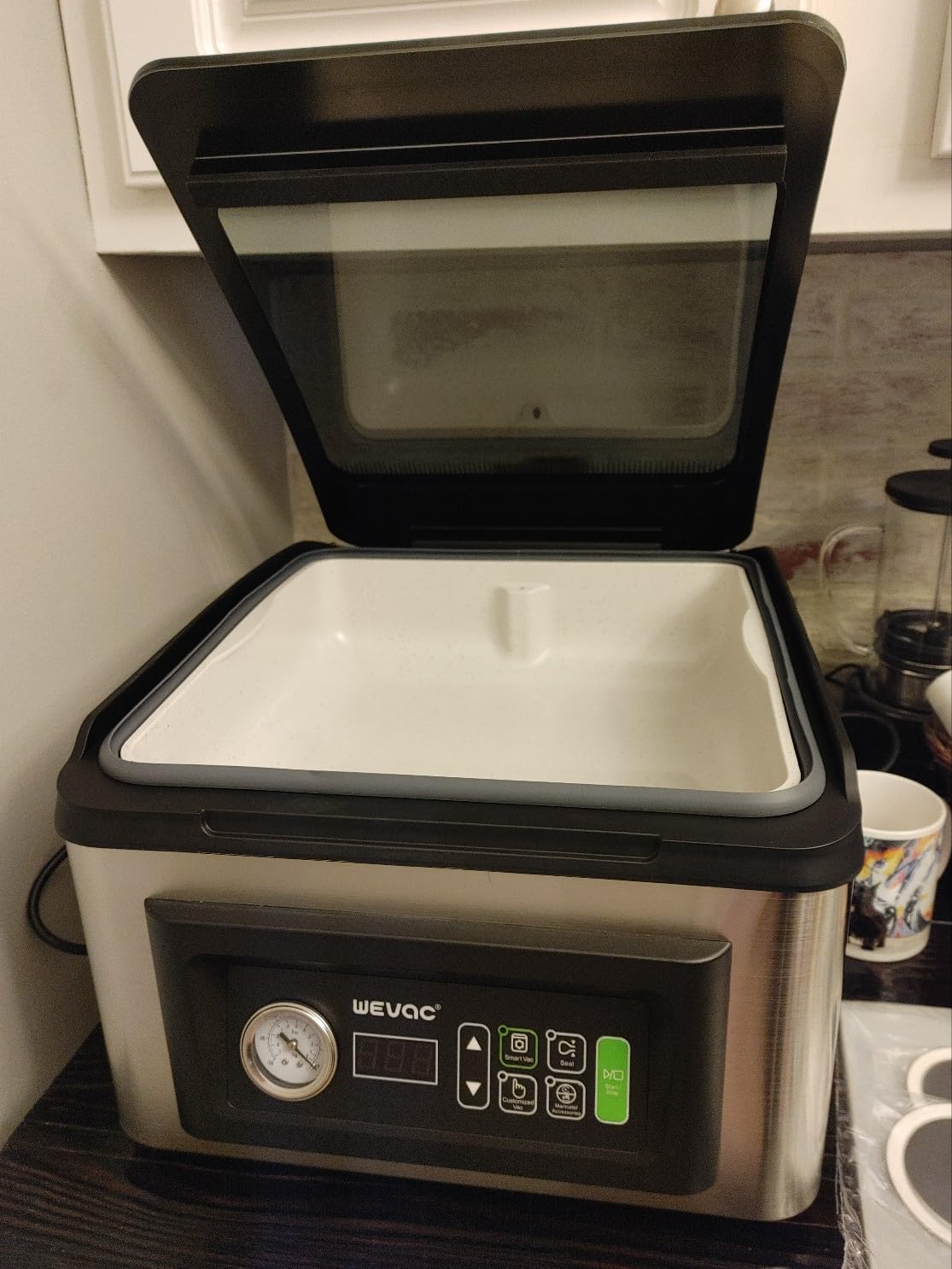
The 8.5 quart chamber measures 12.4 by 12.8 by 3.8 inches, giving it four inches of depth, the deepest here and the one that genuinely helps with soups and standing liquid containers. A 12 inch seal bar with dual sealing wires and a commercial-grade pump do the sealing, and automatic vacuum sensing sets each cycle from detected food volume.
Two mason jar adapters, a vacuum hose, 20 precut bags, a filler plate, a CleanTray and two spare seal bars are all in the box, with a two-year manufacturer warranty behind it. You can vacuum jars in-chamber or through the external hose.
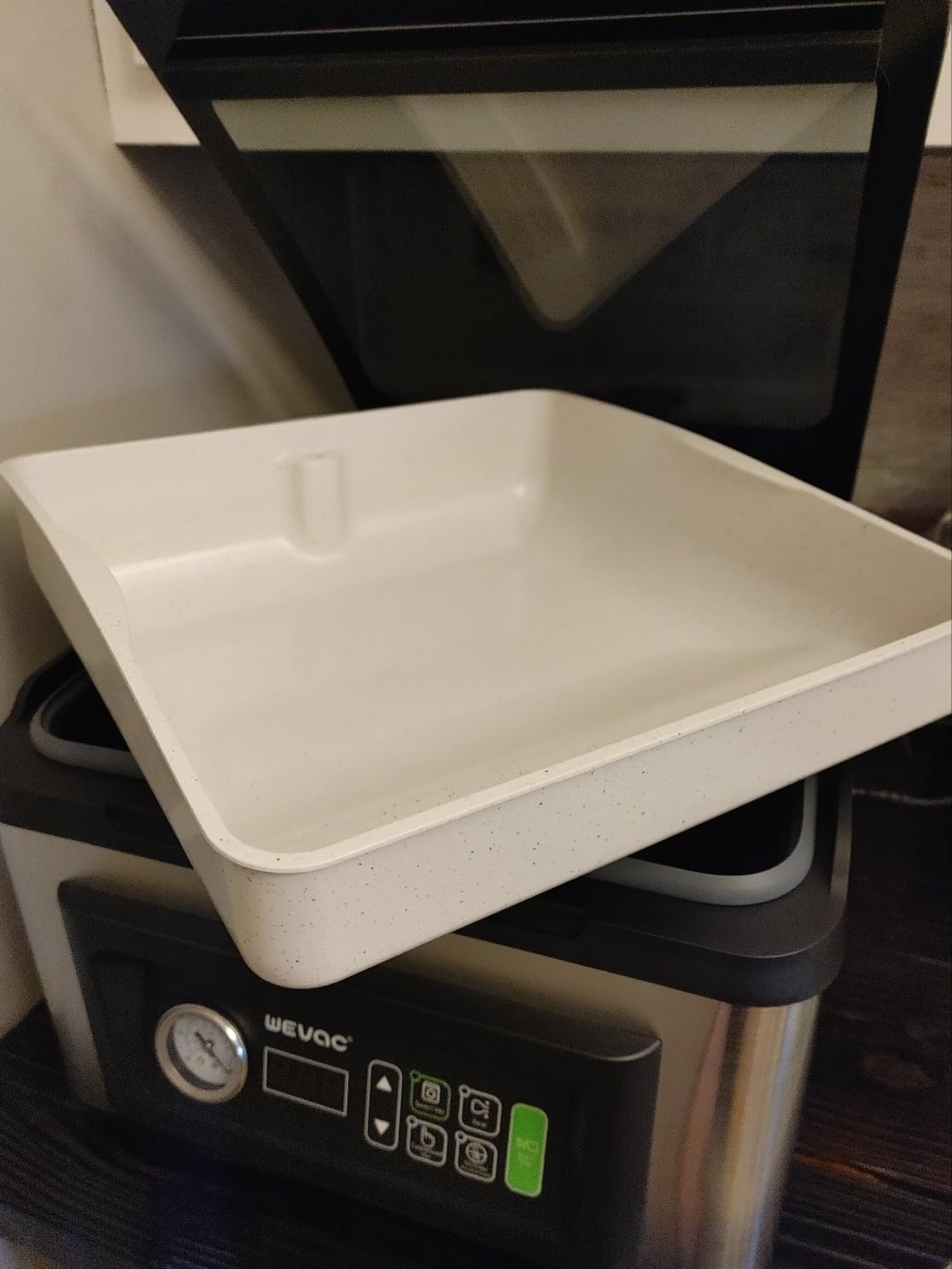
Owners point to the removable tray and washable seal bar as the reason cleanup after soupy foods takes minutes, which is the practical complaint that decides whether you keep using a chamber sealer. The auto sensing removes the timer guesswork that trips up first-time buyers on manual machines.
Why this sealer suits jar users and soup makers
Mason jar vacuum sealing is the most common question in home-sealer forums after oil changes, and this machine answers it with adapters in the box rather than as a separate purchase. That removes the main cost objection to building a jar vacuuming setup alongside pouch sealing.
The deep chamber also lets you pack more liquid per bag, and the stainless housing with a transparent lid and damped assist lid keeps the machine pleasant to use. If you can jars, freeze soups or portion stews, the capacity here is well matched.
Where the CV12 Pro falls short
It is the highest cost among the compact-chamber options, and at 29.4 pounds with a 17.9 by 14.5 inch footprint it still claims a permanent counter position. If your budget is the deciding factor, several lighter machines below do the same job.
With 40 reviews, the long-term reliability picture is thin, and automatic sensing can over-vacuum fragile or crushable items such as supplement capsules. If you seal pills or brittle items regularly, turn that setting off.
12. Vesta Precision V513 – Best Chamber Vacuum Sealer for Quiet Operation
Vesta Precision 12” Chamber Vacuum Sealer, 5.6Qt chamber, Auto Vacuum Time
5.6 qt chamber
12 inch washable seal bar
360W variable frequency pump
21.6 lb
Pros
- Variable frequency pump runs quieter than industrial packers
- Soft-close damped glass lid
- SmartVac auto sensing sets the cycle
- 21.6 pounds with mason jar hose and adapters included
Cons
- 4.5 average with a 9 percent one-star share
- 5.6 qt chamber is the smallest reviewed
- Some owners report inconsistent sealing and a smaller-than-expected chamber
Noise is the under-discussed spec in this category, and this machine attacks it directly. The 360 watt variable frequency pump is specified to deliver deep vacuum at a low noise level, and a soft-close damped glass lid stops the slam that makes chamber machines feel abrupt. For an open-plan kitchen, that combination is the difference you notice most.
The 5.6 quart chamber measures 12.3 by 8.8 by 3.7 inches internally, with a removable CleanTray and a 12 inch washable seal bar for sanitation after wet foods. SmartVac auto sensing detects food volume and sets the vacuum cycle for you.
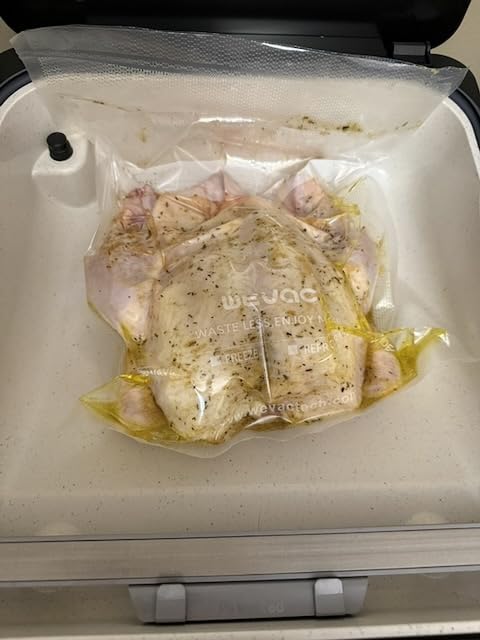
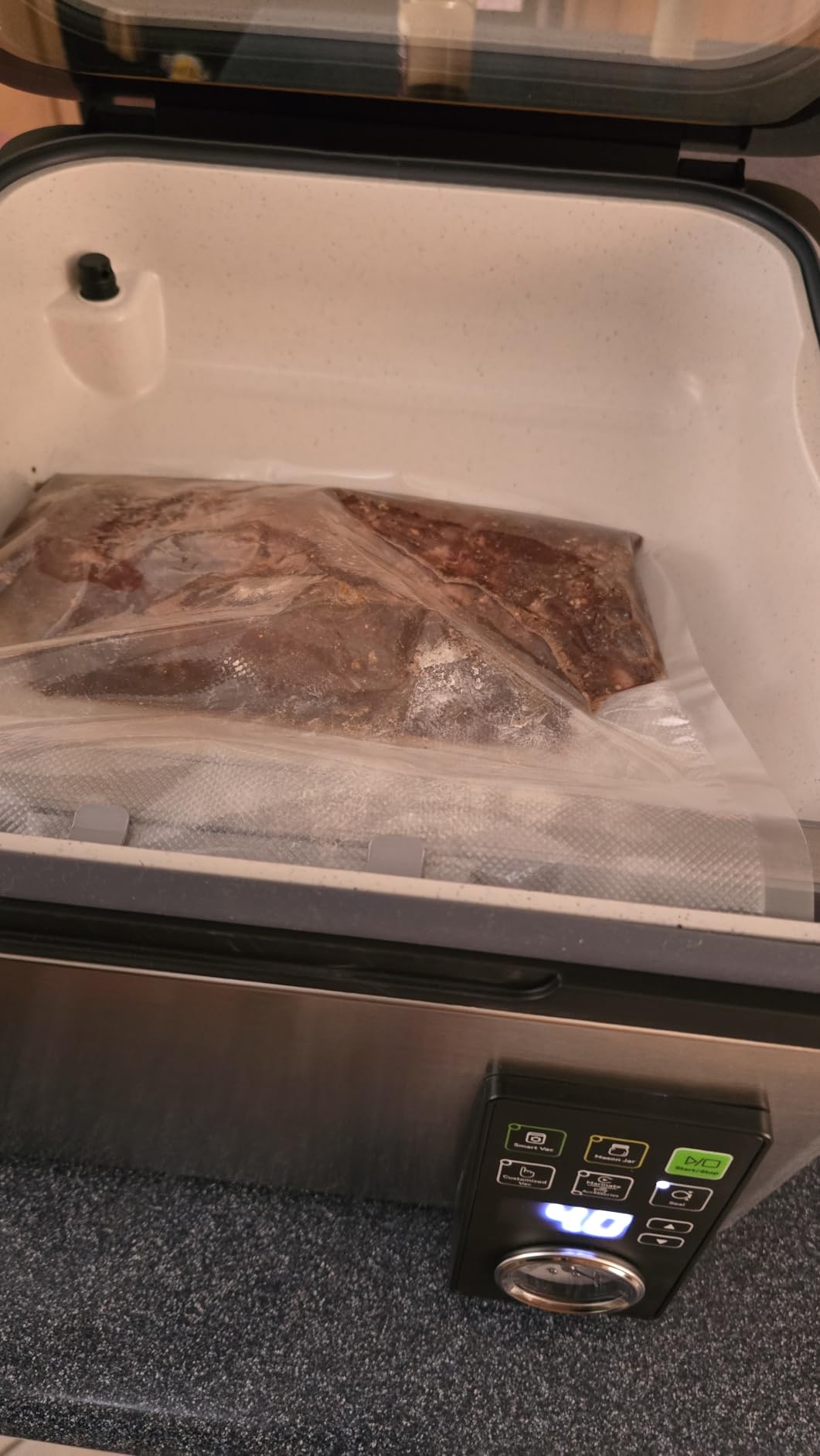
Reviews are genuinely split. Many owners report it outperforming far pricier machines with strong auto sensing and quiet running, while a small but vocal group says sealing is inconsistent and the chamber is smaller than expected. The 4.5 average and 9 percent one-star share make this the least settled pick in the group.
Why this sealer suits open kitchens and light use
A mason jar hose, adapters and lids for regular and wide mouth jars ship in the box alongside ten flat bags, with a two-year warranty and US-based support. At 21.6 pounds it is genuinely portable, which makes it one of the few stainless chamber machines you can move to a shelf when you need the counter.
If your household seals a moderate number of bags, wants quiet operation and jars, and does not need a deep chamber, the feature balance is good. The washable bar and removable tray make sanitation after soups straightforward.
Where the V513 falls short
Its 4.5 average is the lowest here, and the 9 percent one-star share reflects real complaints about inconsistent sealing. Owners who measured their bags carefully also found the 5.6 quart chamber smaller than expected, so check your typical portion against 12.3 by 8.8 inches before committing.
Auto vacuum can over-vacuum crushable items such as supplement capsules, and the compact chamber will not handle oversized items that exceed the bag width. If you regularly seal very large cuts, choose a deeper chamber instead.
How to Choose a Chamber Vacuum Sealer for Your Kitchen
Pump type. Decide this first, because it shapes everything else. Oil-lubricated rotary vane pumps pull the deepest vacuum, run cool through long batches and last for years, but they need periodic oil changes. Dry piston pumps need no maintenance and make no mess, at the cost of heat and cooldowns. Light and moderate users who dislike upkeep should look at dry pumps; batch processors should take the oil pump.
Chamber depth and volume. This is the spec people check last and regret first. A 3 inch depth handles portions and liquids. Four inches or more handles bulky cuts, standing liquid containers and soups. Compare the internal dimensions, not the external body, because the chamber is usually the smaller number.
Seal bar length. A longer bar means one bag instead of two for a large steak or a full loaf. Most of the machines here land between 10.2 and 12.6 inches, and that difference matters more for large flat items than any other measurement.
Bag compatibility. Chamber machines take smooth pouches, and several also accept textured and embossed rolls. Check whether mason jar adapters and an external vacuum hose are included or sold separately, because that is the most common surprise on a first purchase.
Counter space and lid clearance. Measure the counter and, critically, the space above it with the lid open. Reviewers regularly cite needing 24 to 25.5 inches of vertical clearance on models without lid support. Under-cabinet clearance is the real constraint, and it is the reason the 17.3 pound Avid Armor leads our ranking.
Weight. Anything above 60 pounds needs a rolling cart or a permanent shelf, and anything above 80 pounds needs a two-person lift in practice. If you intend to store the machine away between sessions, stay under 30 pounds.
Noise. Machines with continuous cooling fans and larger pumps are among the loudest appliances in a kitchen. A variable frequency pump or a smaller dry pump is quieter. If you run cycles after dinner, this is worth weighing.
Warranty length. Warranty length is a reasonable proxy for build quality, because it reflects whether the manufacturer expects the pump and gasket to last. Three years is the strongest here; two years is solid; one year deserves caution.
Voltage. Every machine listed runs on 110 to 120 volts and is built for North American electrical systems. Overseas buyers need a step-down transformer or a 240 volt variant, and the manufacturer should confirm compatibility before you commit to a heavy appliance.
Once you have narrowed it down, cross-check your choice against our tested picks for vacuum sealing meat storage to see how a chamber machine compares with a conventional edge sealer for the same freezer.
What Not to Vacuum Seal
Some foods are worse after vacuum sealing. Mushrooms should not be sealed at all, because the trapped moisture turns them to mush in the bag. Whole garlic cloves and soft, high-moisture fruits such as bananas and ripe peaches break down faster under vacuum.
Unpasteurized cheeses and fresh dairy should stay out of the machine for food safety reasons, and cruciferous vegetables such as broccoli and cauliflower need blanching before freezing or they turn soft and bitter. Dry powders such as flour seal fine in a chamber, but pack them low in the bag so the dust does not reach the seal bar.
Frequently Asked Questions
What is better, a vacuum sealer or a chamber sealer?
A chamber sealer is better if you seal liquids, wet foods, large batches or anything marinated, because it removes air from the whole chamber and leaves liquid in the bag. An external edge sealer is better for dry foods in small quantities, costs less, takes far less space and turns out bags faster. Most home cooks end up wanting one of each.
Are chamber vacuum sealers worth it for home use?
They are worth it if you freeze meat regularly, can soup and sauce, or process a garden or game harvest, because the per-bag cost is much lower and wet foods stop ruining the machine. They are not worth it if you seal fewer than about five bags a month, only ever freeze dry cuts, or have no dedicated counter or shelf for a 25 to 90 pound appliance.
How often should you change the oil in a chamber vacuum sealer?
Light users who seal occasionally should check the oil about once a year. Moderate users sealing five to ten bags a few times a month should inspect it quarterly. Heavy users running daily batches should plan on changes roughly monthly. Oil-lubricated pumps need this maintenance; dry-piston models such as the VacMaster VP210 need none at all.
Do you need special bags for a chamber vacuum sealer?
Yes, chamber sealers use smooth-sided pouches rather than the textured channel bags used by edge sealers, and bags are usually bought separately. Plain chamber pouches cost considerably less per bag than proprietary rolls. Some models also accept textured and embossed rolls, and several include mason jar adapters and a vacuum hose in the box.
Can a chamber vacuum sealer seal liquids and soups?
Yes. Because air is evacuated from the sealed chamber as well as the pouch, pressure equalizes across the bag wall and liquids stay in place. Every machine reviewed here is rated for soups, stocks, sauces and marinades, and a removable vacuum filler plate helps you set liquid-heavy bags without spilling.
Final Verdict: Which Chamber Vacuum Sealer Should You Buy?
Start with the Avid Armor USV20. It is the best chamber vacuum sealer for home use in 2026 because it combines the deepest owner rating history in the group with a 17.3 pound body that fits an ordinary kitchen, and it still handles soups, marinades and fresh meat juices without incident. Buy the VacMaster VP215 if you want an oil pump that will still be running in a decade, the Wevac CV12 Pro if mason jars and a deep chamber matter most, and the VEVOR DZ-260S-V1 if you want chamber capability without giving up counter space.
To narrow it down further, tell us your budget range, the space you can give up and the food types you seal most often. If you freeze mostly dry cuts and manage a handful of bags a month, our vacuum sealer picks for meat storage will serve you better and take up a fraction of the room.