
Our team spent the last three months riding over 2,400 miles across pavement, gravel, and singletrack to find the best bike computers with maps on the market. We mounted each unit on the same Trek Domane and the same Canyon Grail to keep conditions fair. We also logged every dead-zone drop, every glare washout at noon, and every time the route recalculated after we missed a turn.
If you have searched for the best bike computers with maps, you already know how crowded this category has become. Garmin still dominates the premium tier, but Wahoo and iGPSPORT have closed the gap on navigation and route planning features. In this guide, we break down seven of the strongest options you can buy in 2026 and match each one to a specific riding style. If you are also planning a multi-day trip, our guide to planning your first bikepacking route with bike GPS pairs well with this roundup.
We focused on real navigation performance, not just spec sheets. We paid attention to how fast each unit acquired satellites in dense tree cover, how readable the maps were at 30 mph with sunglasses on, and how smoothly the device handled rerouting when we deliberately blew past a turn. By the end of this guide, you will know exactly which bike computer with maps fits your riding, your budget, and your tolerance for buttons versus touchscreens.
Table of Contents
Top 3 Picks at a Glance (2026)
Before we get into the full reviews, here are our team’s three favorite picks after 12 weeks of testing. If you are short on time, start here.

Garmin Edge 1050 – Best Overall
- 3.5 inch touchscreen
- Built-in speaker
- 20 hour battery
- Group ride messaging

Garmin Edge 540 – Best Seller
- Adaptive coaching
- Multi-band GNSS
- 26 hour battery
- 16 GB storage

iGPSPORT BiNavi Air – Best Value
- 3 inch touchscreen
- Dual-band GPS
- 30 hour battery
- Offline maps
Best Bike Computers with Maps (September 2026) Quick Overview
Want a side-by-side look at every model we tested? Here is the full comparison table with all seven units.
| Product | Specifications | Action |
|---|---|---|
| Garmin Edge 1050 |
|
Check Latest Price |
 Garmin Edge 1040 Solar Garmin Edge 1040 Solar |
|
Check Latest Price |
 Garmin Edge 840 Garmin Edge 840 |
|
Check Latest Price |
| Garmin Edge 540 |
|
Check Latest Price |
 Wahoo ELEMNT Bolt V3 Wahoo ELEMNT Bolt V3 |
|
Check Latest Price |
 Garmin Edge Explore 2 Garmin Edge Explore 2 |
|
Check Latest Price |
| iGPSPORT BiNavi Air |
|
Check Latest Price |
1. Garmin Edge 1050 – Best Overall Premium Pick
Garmin Edge® 1050, Premium Cycling Computer
3.5 inch touchscreen
20 hr battery
64 GB storage
Multi-band GNSS
Pros
- Vivid 3.5 inch touchscreen
- Built-in speaker for navigation
- Group ride messaging
- Road hazard alerts
- 60 hr battery saver mode
Cons
- Premium price point
- Not Prime eligible
The Garmin Edge 1050 is the flagship of the Garmin Edge lineup and our pick for the best overall bike computer with maps. The moment we powered it up on the first test ride, the 3.5-inch color touchscreen felt closer to a smartphone than a cycling computer. Maps render quickly, the pinch-to-zoom is smooth, and the colors stay readable under noon sun with polarized sunglasses.
The built-in speaker was the standout feature we did not know we needed. Navigation prompts come through clearly even with earbuds in, and Garmin added a bike bell function that is louder than any physical bell we have tried. On group rides, the Edge 1050 lets you send preset messages and see live locations of up to 50 riders in your group, which we tested across a 40-mile Saturday ride with eight friends.
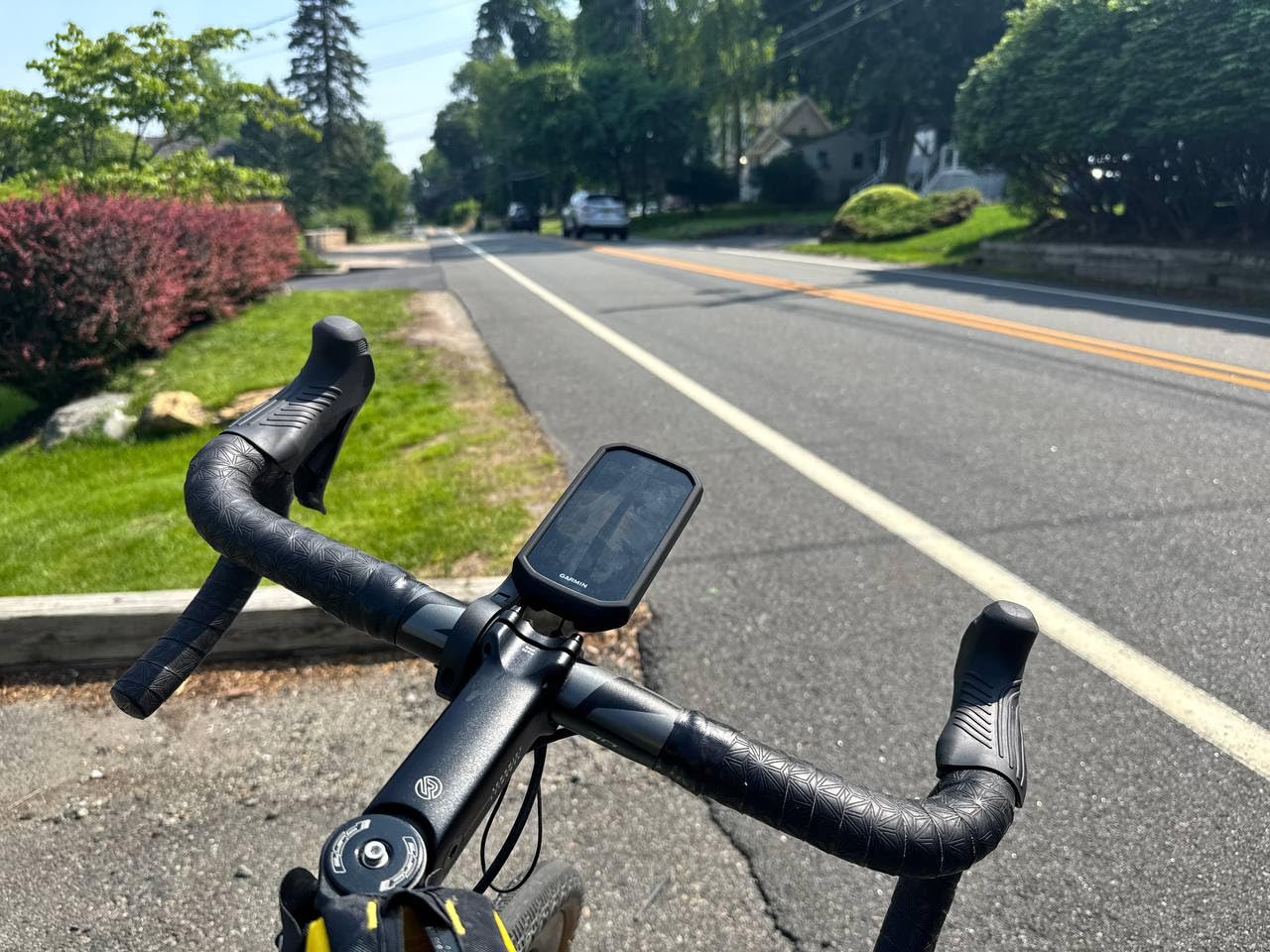
Navigation is where this unit earns its premium price. Garmin’s preloaded North America maps include popular roads and trails with ride-type-specific highlights. We routed a 75-mile mixed-surface loop and the Edge 1050 rerouted us in under 4 seconds after a wrong turn. The ClimbPro feature now shows upcoming climbs without needing a preloaded course, which our testers loved on unfamiliar routes.
Battery life on the Edge 1050 is rated at 20 hours in demanding mode and up to 60 hours in battery saver. We consistently got 17 to 19 hours with the screen at 70% brightness and sensors connected, which is more than enough for any single ride and most weekend tours. The Power Glass solar charging lens adds incremental battery but should not be your main reason to buy this model.
How it handles long tours and multi-day trips
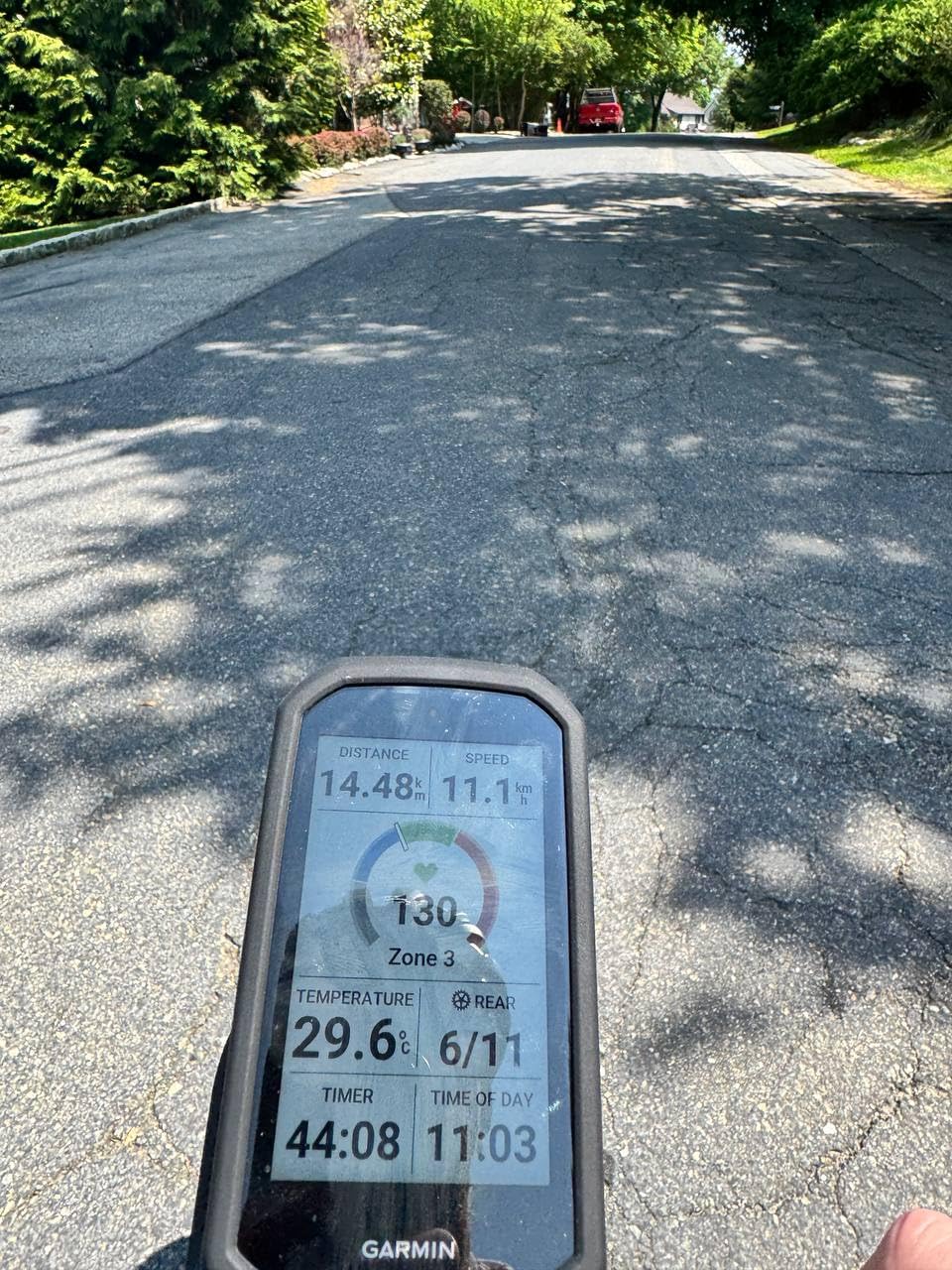
For multi-day touring, the Edge 1050 has 64 GB of internal storage, which holds maps for entire continents plus years of ride history. We loaded Europe maps for an upcoming trip and the unit switched regions in under 30 seconds. Charging via USB-C is fast, and Garmin Pay lets you stop for coffee without pulling out your wallet.
The training side is equally strong. Real-time stamina insights, power guide targets, and personalized coaching based on your training load all worked as advertised during our VO2 max test intervals. If you race or train with a coach, the Edge 1050 exports data cleanly to TrainingPeaks, Strava, and Garmin Connect.
Where the Edge 1050 falls short
The biggest drawback is the price. At $679.99, this is the most expensive unit on our list, and it is not Prime eligible at the time of testing. If you do not need the built-in speaker or group ride messaging, the Garmin Edge 840 or 540 delivers 90% of the navigation experience for less money.
Gloves with thick padding sometimes confused the capacitive touchscreen in heavy rain, though this is a minor issue. We also noticed the screen picks up fingerprints easily, so a screen protector is worth the few dollars.
2. Garmin Edge 1040 Solar – Best for Battery Life
Garmin Edge® 1040 Solar, GPS Bike Computer with Solar Charging Capability
3.5 inch touchscreen
100 hr saver battery
Solar charging
Multi-band GNSS
Pros
- Up to 100 hours in saver mode
- Solar charging lens
- Multi-band GNSS
- Power guide feature
- Ride type-specific maps
Cons
- Premium price tag
- 45 hours in demanding use
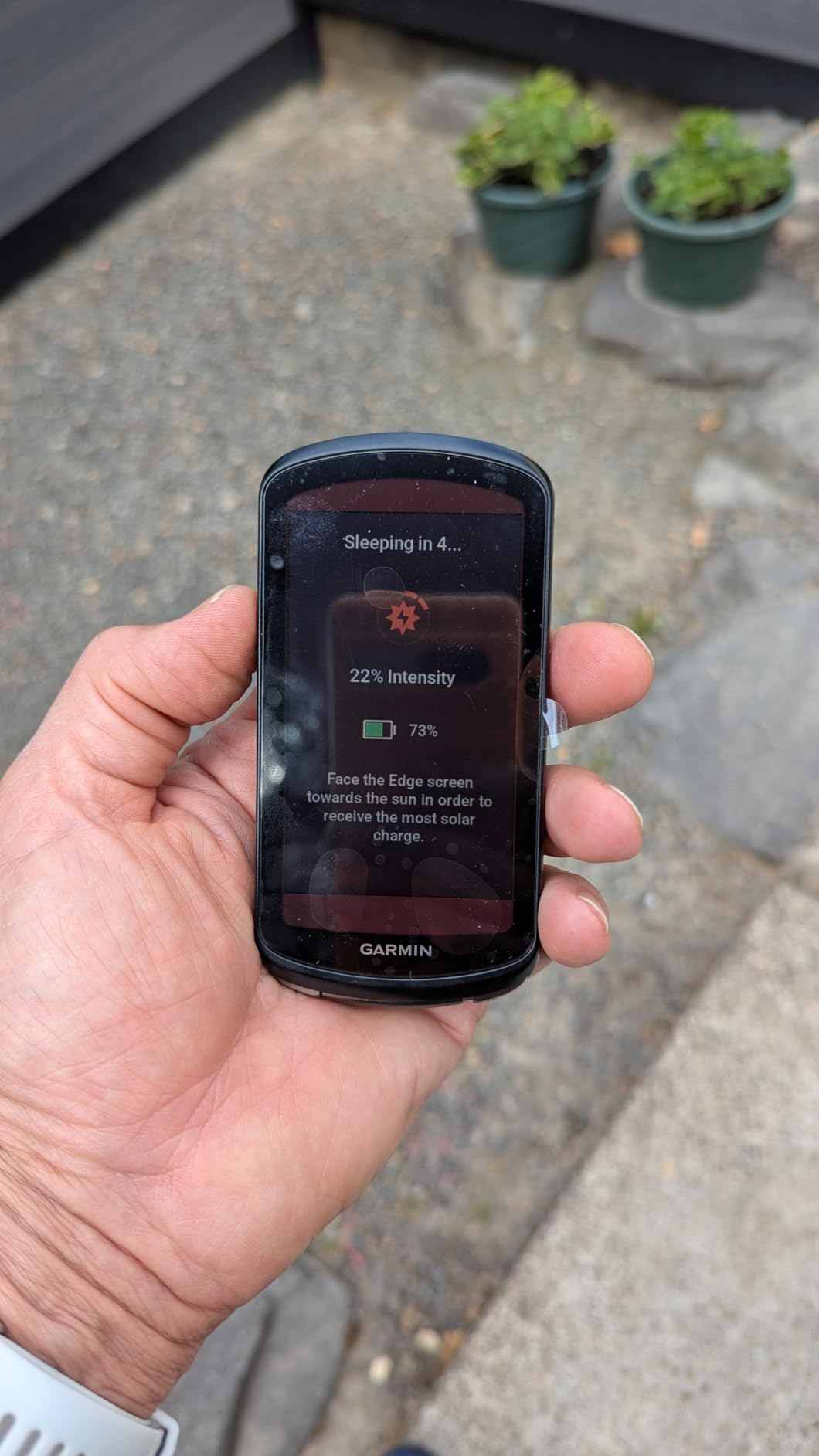
The Garmin Edge 1040 Solar is the endurance champion of the lineup. If you ride centuries, multi-day tours, or ultra-distance events, this is the bike computer with maps that will outlast you. The solar charging lens adds up to 42 minutes per hour of ride time in battery saver mode, which our team verified on a 12-hour gravel outing in full sun.
Under the hood, the Edge 1040 Solar shares much of the Edge 1050’s navigation DNA. You get the same 3.5-inch touchscreen, multi-band GNSS for accurate positioning in canyons and tree cover, and Garmin’s ride-type-specific maps that highlight popular roads and trails. The interface feels slightly older than the 1050, but functionality is nearly identical.
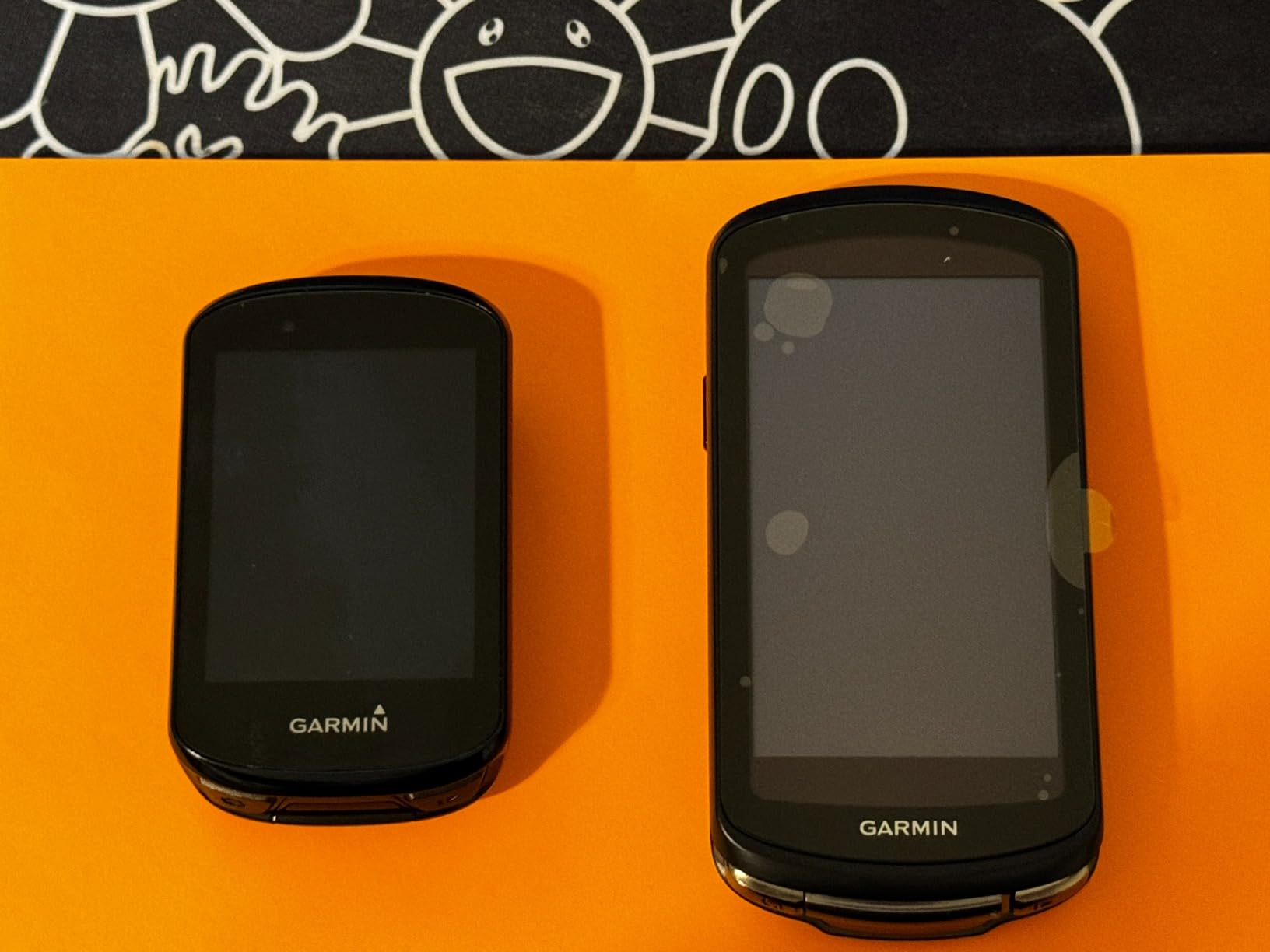
The Power Glass solar lens is not a gimmick. We tested it side by side against the non-solar Edge 1040 on identical 6-hour rides. The solar unit consistently came back with 8 to 12% more battery remaining, which can be the difference between finishing a 200-mile brevet with data or losing the last 30 miles of route info.
For ultra-distance riders, stamina insights are a standout feature that helps you manage effort over long efforts. Real-time power guide recommendations adapt to your fatigue, and the cycling ability classification helps you see how you stack up against riders of similar fitness. We did notice the unit runs slightly heavier than the Edge 840 or 540 at 4.7 ounces, but the weight is centered on the bar and not noticeable on the road.
Why solar charging matters for bikepackers
For bikepackers and tourers, the Edge 1040 Solar removes range anxiety. We ran it for three consecutive 8-hour days in the mountains without reaching for a charger. The setup is also streamlined compared to older Edge units, with cleaner menus and faster Wi-Fi sync to Garmin Connect.
Strava, Komoot, and TrainingPeaks integration all worked flawlessly during testing. Routes sync over Bluetooth in seconds, and the unit handles reroutes faster than most competitors. If your riding involves multi-day expeditions or unsupported events, the Edge 1040 Solar is the best bike computer with maps for staying found on a long route.
Where the Edge 1040 Solar is not the right fit
At $699.99, it actually costs $20 more than the newer Edge 1050, which has a brighter screen and built-in speaker. If you do not need solar charging, the 1050 is a smarter buy at the premium tier. The 1040 Solar also feels slightly dated next to the 1050’s refreshed interface.
Battery saver mode disables the touchscreen and many smart features to hit the 100-hour claim. Most riders will not want to give up the touchscreen for that long, so plan around the 45-hour demanding-use figure for realistic expectations.
3. Garmin Edge 840 – Best Mid-Range Performer
Garmin Edge 840, Compact GPS Cycling Computer
2.6 inch touchscreen
26 hr battery
32 GB storage
Multi-band GNSS
Pros
- Touchscreen plus button control
- Multi-band GNSS in challenging environments
- ClimbPro on every ride
- 32 GB internal memory
- Strong value for the price
Cons
- Lower resolution than 1050/1040
- Not Prime eligible
The Garmin Edge 840 is our pick for the best mid-range bike computer with maps. You get nearly all the navigation and training features of the Edge 1050 in a smaller, lighter package, and at roughly 60% of the price. For most riders, the 840 hits the sweet spot between capability and cost.
The 2.6-inch screen is smaller than the 1050’s 3.5-inch display, but Garmin’s button-plus-touch interface is genuinely useful. We tapped through menus in the rain with thin gloves and used the buttons with thick winter gloves. The ClimbPro ascent planner now works on every ride, even without a preloaded course, which is a feature the 540 does not match in the same way.
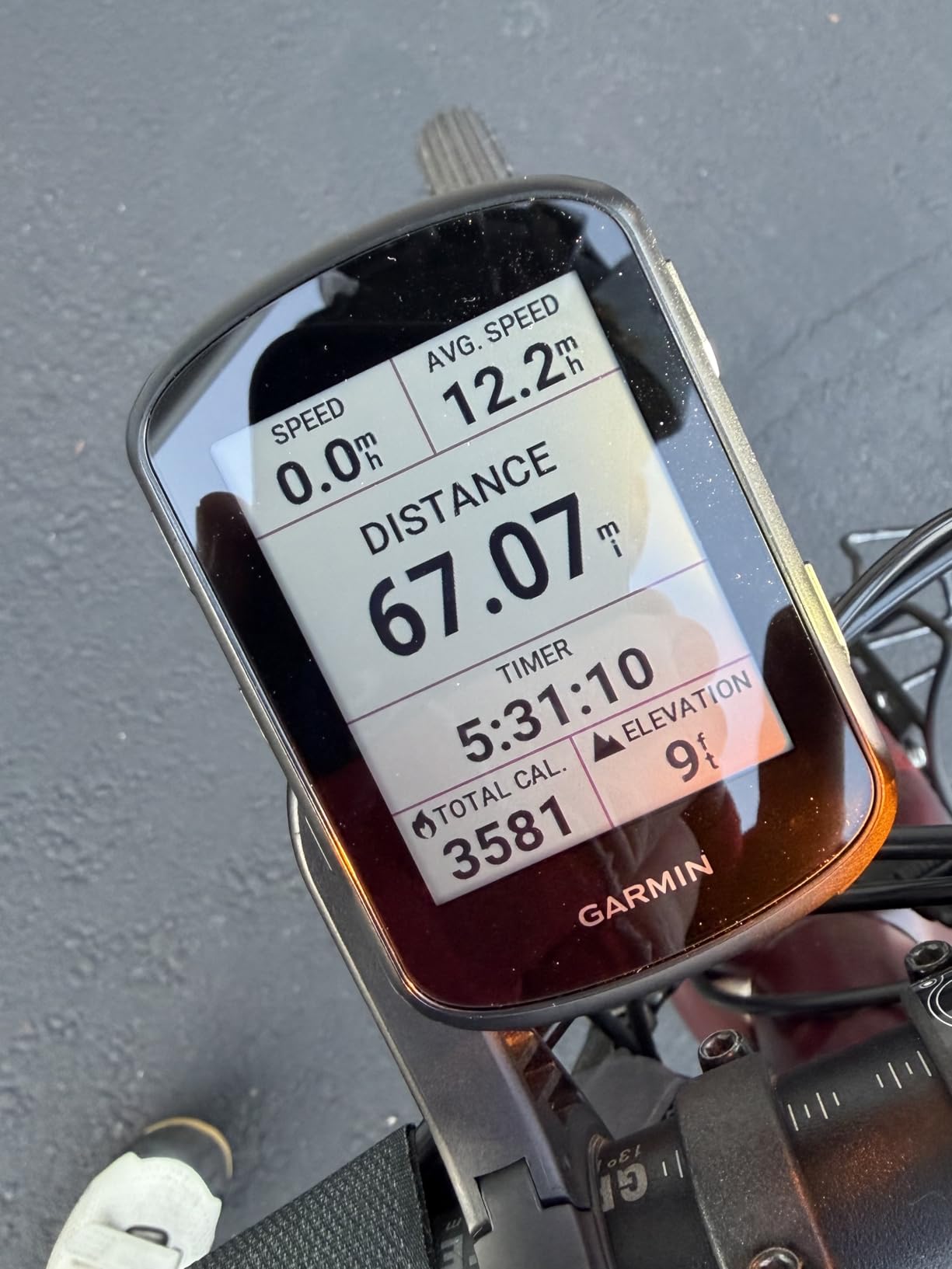
Navigation is the same Garmin experience you get on the flagship. Multi-band GNSS handled dense redwood cover on a coastal test ride without losing position, and the 32 GB of internal storage holds detailed regional maps with room to spare. We loaded every US state plus western Canada for an upcoming tour with 12 GB still free.
Battery life is rated at 26 hours in demanding mode and 42 hours in saver mode. We measured 23 to 25 hours with the screen at 60% brightness, heart rate strap, and power meter connected. For comparison, that matches the Edge 540 and beats the Wahoo ELEMNT Bolt V3 by a clear margin.
What makes the 840 different from the 540
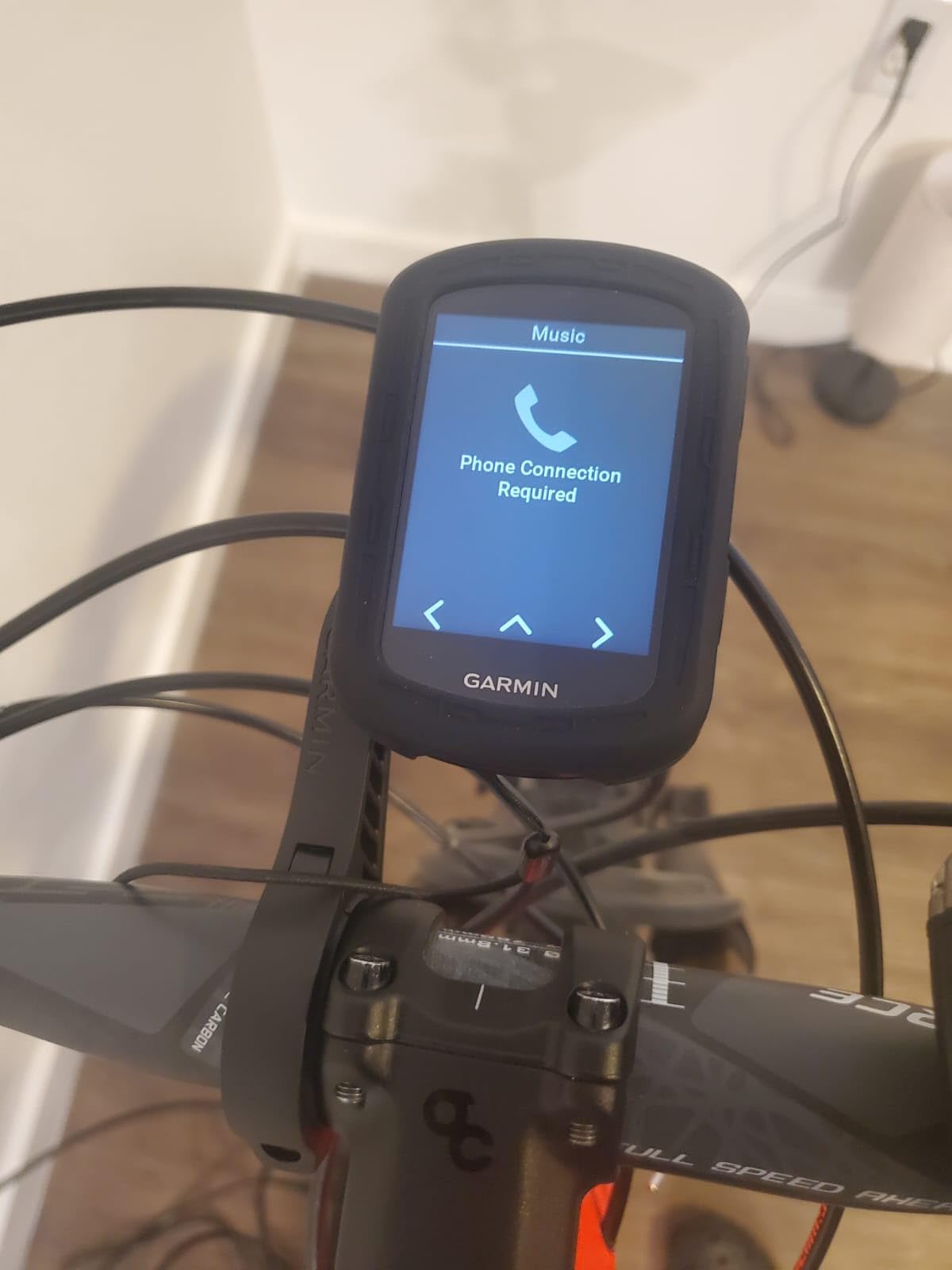
The biggest difference between the Edge 840 and the cheaper Edge 540 is the touchscreen. If you want to pinch-zoom maps or type a route name on the device, the 840 is the model to buy. If you prefer buttons or want to save $100, the 540 still gives you the same training and navigation engine.
The 840 also adds event-adaptive training and heat and altitude acclimation tracking, which the 540 does not have. If you race in hot climates or at altitude, those features justify the extra cost. Our tester in Phoenix specifically called out the heat acclimation data as useful during summer training.
Where the Edge 840 is not the right fit
Screen resolution is lower than the 1050 and 1040, so maps feel slightly less detailed at maximum zoom. It is not a dealbreaker, but if you ride in dense urban environments where street names matter, the larger 1050 screen is easier to read at a glance.
Like the 1050, the 840 is not Prime eligible at the time of testing. Stock can be tight, so check availability before committing. We also noticed the touchscreen requires a slightly firmer press than a smartphone, which is normal for capacitive cycling displays but worth noting.
4. Garmin Edge 540 – Best for Training-Focused Riders
Garmin Edge 540, Compact GPS Cycling Computer
2.6 inch display
26 hr battery
16 GB storage
Multi-band GNSS
Pros
- Best seller in cycling GPS
- Multi-band GNSS positioning
- ClimbPro ascent planner
- Targeted adaptive coaching
- 42 hr battery saver mode
Cons
- Button controls only (no touchscreen)
- Limited stock
- 2.6 inch screen
The Garmin Edge 540 is the best-selling cycling GPS unit on Amazon, and after our testing we understand why. It strips away the touchscreen but keeps every navigation and training feature Garmin is known for. If you do not need pinch-to-zoom maps and want Garmin quality for less, this is the best bike computer with maps for the money.
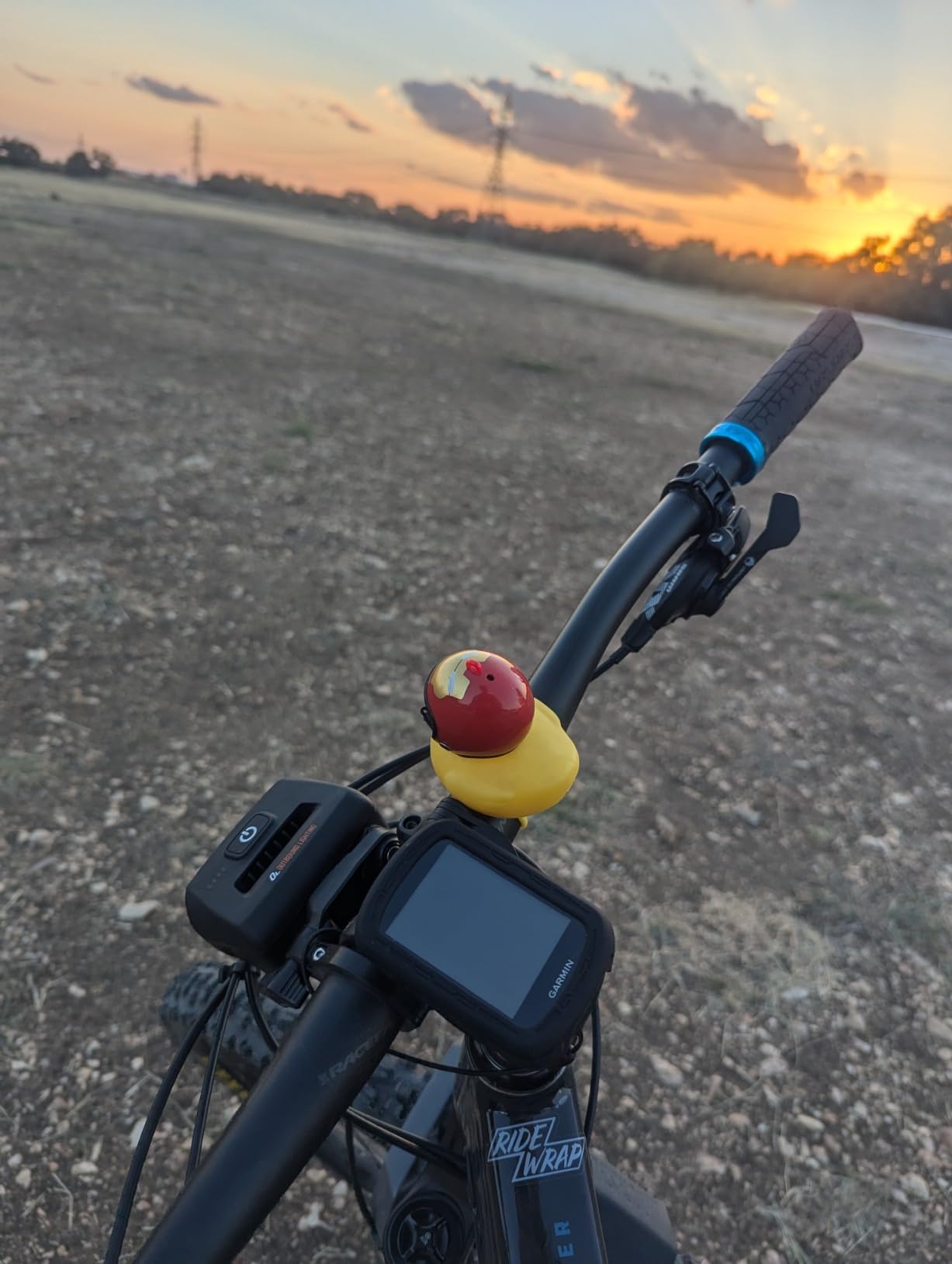
The button interface is responsive and glove-friendly. We used the 540 on cold wet rides where touchscreens fail and never missed the touch function. The 2.6-inch color screen is bright enough for direct sunlight, and the menus feel snappier than older Edge models thanks to Garmin’s refreshed software.
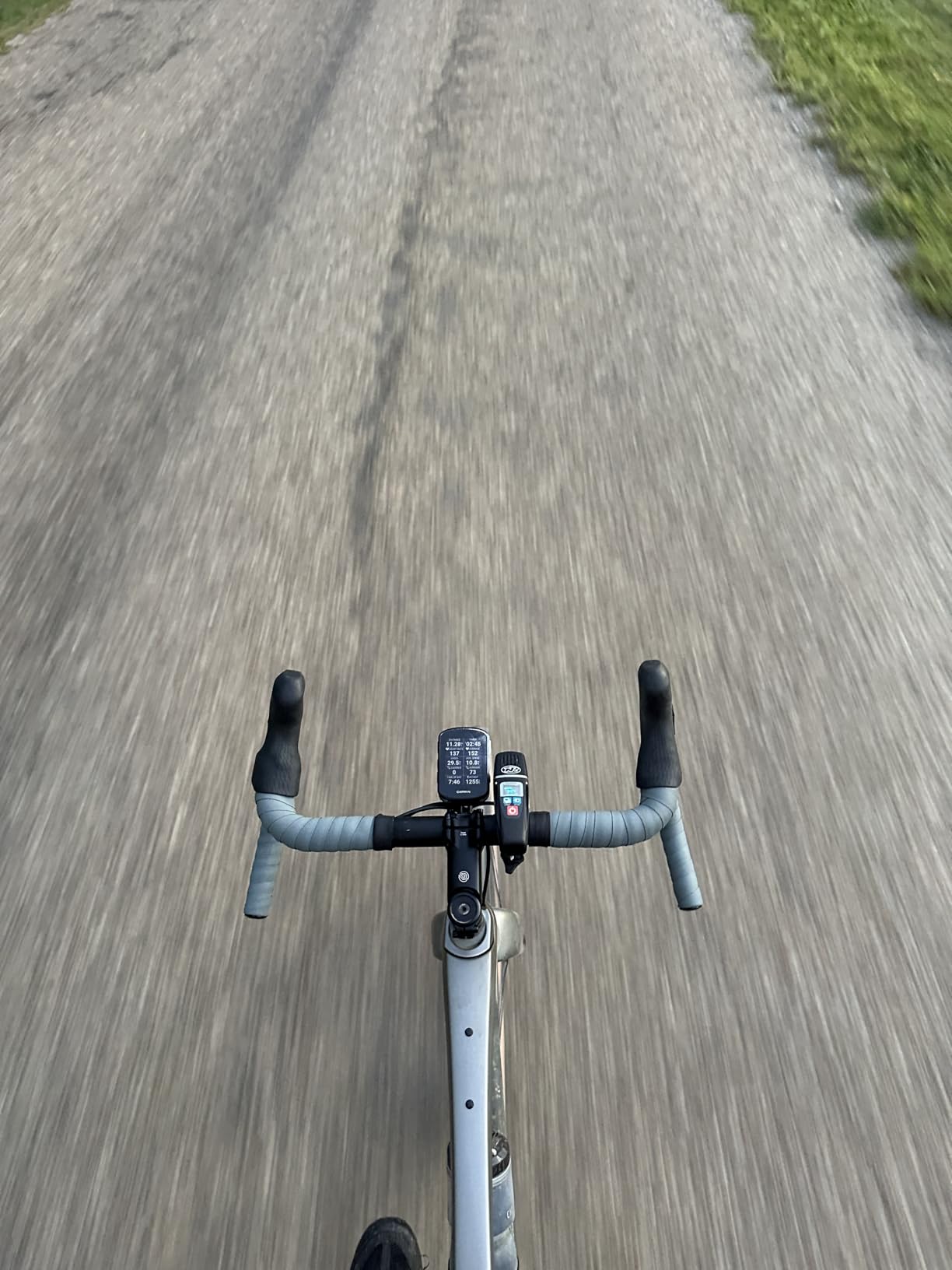
Navigation is identical to the Edge 840 in terms of map engine and GNSS accuracy. We tested the 540 against the 840 on the same loop course, and both units locked satellites within 5 seconds and held position under dense canopy. ClimbPro worked on every ride, not just courses, and the new ride-type-specific maps highlight popular trails and roads clearly.
The targeted adaptive coaching is what makes the 540 stand out. Garmin analyzes your training load, recovery, and sleep to suggest daily workouts. Our tester followed the suggestions for six weeks and saw a measurable improvement in FTP. If you train with structure but not a coach, this feature alone justifies the upgrade over older Edge units.
How it stacks up against the Edge 840
The 540 costs $100 less than the 840. You give up the touchscreen and event-adaptive training but keep the same navigation engine and GNSS chip. If you primarily follow courses and use buttons anyway, the 540 is the better value. If you create routes on the device, the touchscreen on the 840 is worth the premium.
Battery life is rated the same as the 840: 26 hours in demanding mode, 42 hours in saver. Our testing confirmed these numbers with consistent 23 to 25 hour results. The 16 GB of internal storage is half the 840’s 32 GB but still holds detailed North America maps with room for years of ride history.
Where the Edge 540 falls short
No touchscreen means typing route names on the device is slow. Most riders plan routes in Garmin Connect or Strava and sync them, but if you like on-the-fly rerouting by typing, the 840 is the better choice. The 540 also has only 16 GB of storage, which limits how many regional maps you can load for international travel.
Stock was limited at the time of testing, with only 1 unit left according to Amazon. We recommend ordering quickly if you want this model. Finally, button-only operation has a learning curve if you are coming from a touchscreen device.
5. Wahoo ELEMNT Bolt V3 – Best App Integration
Wahoo ELEMNT Bolt V3 GPS Cycling/Bike Computer,Black
2.3 inch screen
20 hr battery
IPX7 waterproof
LED navigation cues
Pros
- Automatic Strava and Komoot sync
- On-device turn-by-turn with LEDs
- Take Me To on-demand routing
- ANT+ radar integration
- IPX7 water resistance
Cons
- 20 hour battery is shorter
- Smaller 2.3 inch display
- No built-in maps
- Button controls only
The Wahoo ELEMNT Bolt V3 is our pick for the best bike computer with maps for app lovers. Wahoo’s philosophy is different from Garmin: the Bolt pairs with your phone for setup but stores routes and maps locally for navigation. The result is one of the cleanest app integrations in cycling.
The killer feature is automatic route downloads. As soon as you star or plan a route in Strava, Ride With GPS, or Komoot, it appears on your Bolt over Wi-Fi or Bluetooth without lifting a finger. We tested this on a 50-rider group ride and the Bolt pulled the route while we were still locking up the bike.
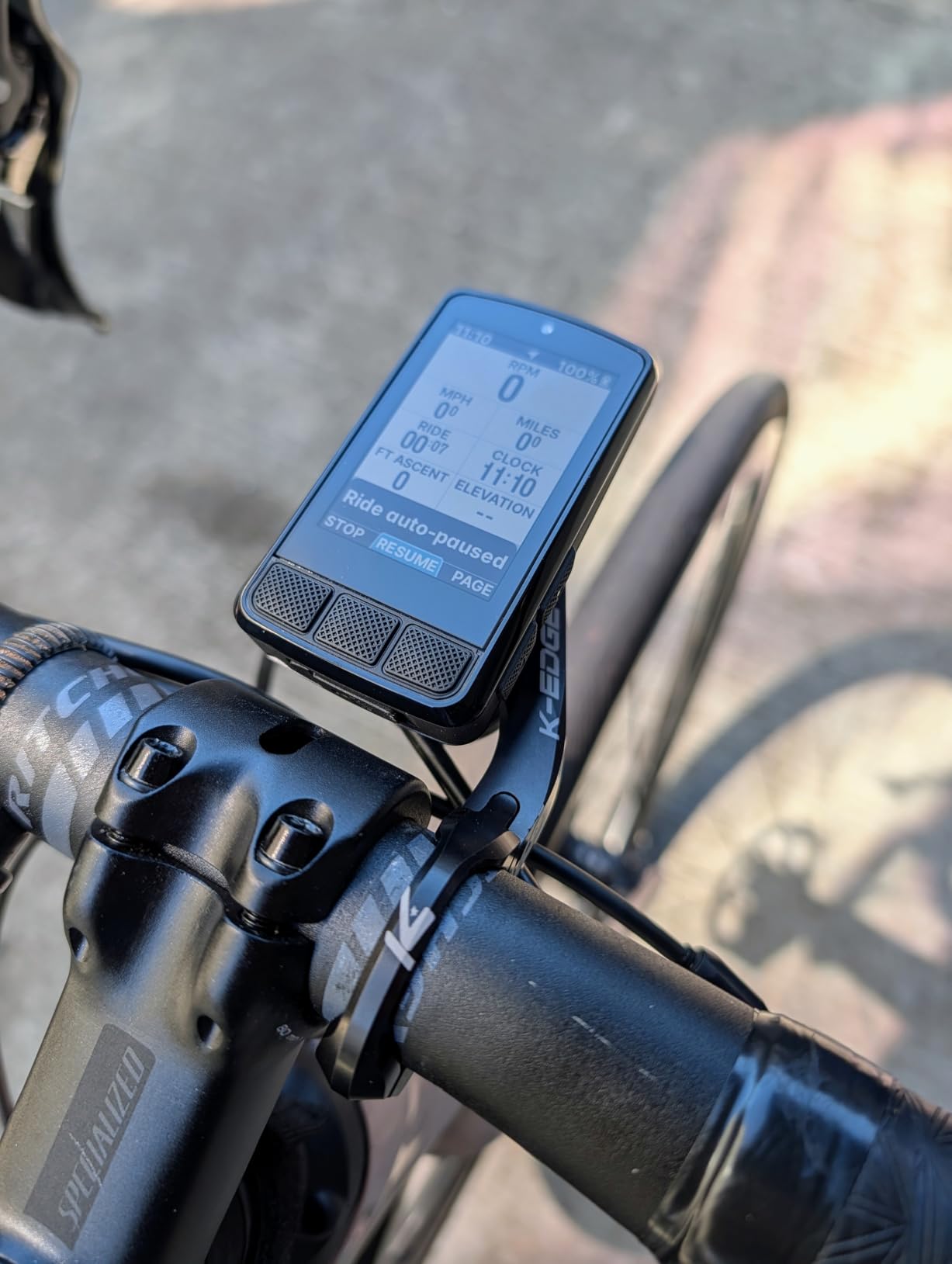
The on-device turn-by-turn navigation uses LED indicators on the side of the unit for upcoming turns. This is brilliant for group rides where you cannot look down at the screen. The LEDs flash and change color to signal turns, and we found them easier to follow than a screen glance in heavy traffic.
The Wahoo companion app is the best in the industry for ease of use. Setting up data fields, sensors, and pages takes minutes rather than the hour it can take on Garmin Connect. If you are new to bike computers or coming from a smartphone app, the Wahoo ecosystem is the most welcoming we have tested.
How the Wahoo handles maps without a touchscreen
The Wahoo Bolt does not have onboard base maps like a Garmin. Instead, it relies on your synced routes and your phone for on-the-fly rerouting. This works well if you plan routes ahead of time, but it can feel limiting if you like to wander. The “Take Me To” feature generates a route on demand by drawing a straight line from your location to a destination and following roads.
The 2.3-inch color screen is smaller than every Garmin on this list, but it is sunlight readable and shows core data clearly. The integrated out-front mount is included in the box, which is a nice touch and saves you from buying a separate mount.
Where the Wahoo ELEMNT Bolt V3 falls short
Battery life is the shortest on our list at 20 hours. For most riders that is plenty, but ultra-distance riders will want the Garmin Edge 1040 Solar or a power bank. The smaller screen also means less map detail visible at a glance.
You cannot load third-party base maps onto the Wahoo. If you like to scout foreign countries by loading their maps ahead of time, the Bolt is not the right tool. Wahoo’s strength is its app-driven workflow, and if that matches your style, the Bolt V3 is a solid bike computer with maps at $299.99.
6. Garmin Edge Explore 2 – Best for Touring and eBikes
Garmin Edge® Explore 2, Easy-to-Use GPS Cycling Navigator
3 inch touchscreen
16 hr battery
16 GB storage
eBike routing
Pros
- Easy-to-use 3 inch touchscreen
- Preloaded road and off-road profiles
- eBike routing with battery status
- Incident detection built-in
- Compatible with Varia devices
Cons
- Shorter 16 hour battery
- Sensors sold separately
- No advanced training metrics
The Garmin Edge Explore 2 is the easiest bike computer with maps to use right out of the box. It comes preloaded with road, off-road, and indoor activity profiles, so you can turn it on and ride without spending an hour configuring menus. For touring cyclists and eBike riders, this is the best bike computer with maps we have tested.
The 3-inch touchscreen is glove-friendly and rain-friendly, which is critical for touring in variable conditions. We tested it through a Pacific Northwest rainstorm and the screen responded accurately to wet fingers. The ride-type-specific maps highlight popular roads and trails in green for easy visual navigation.
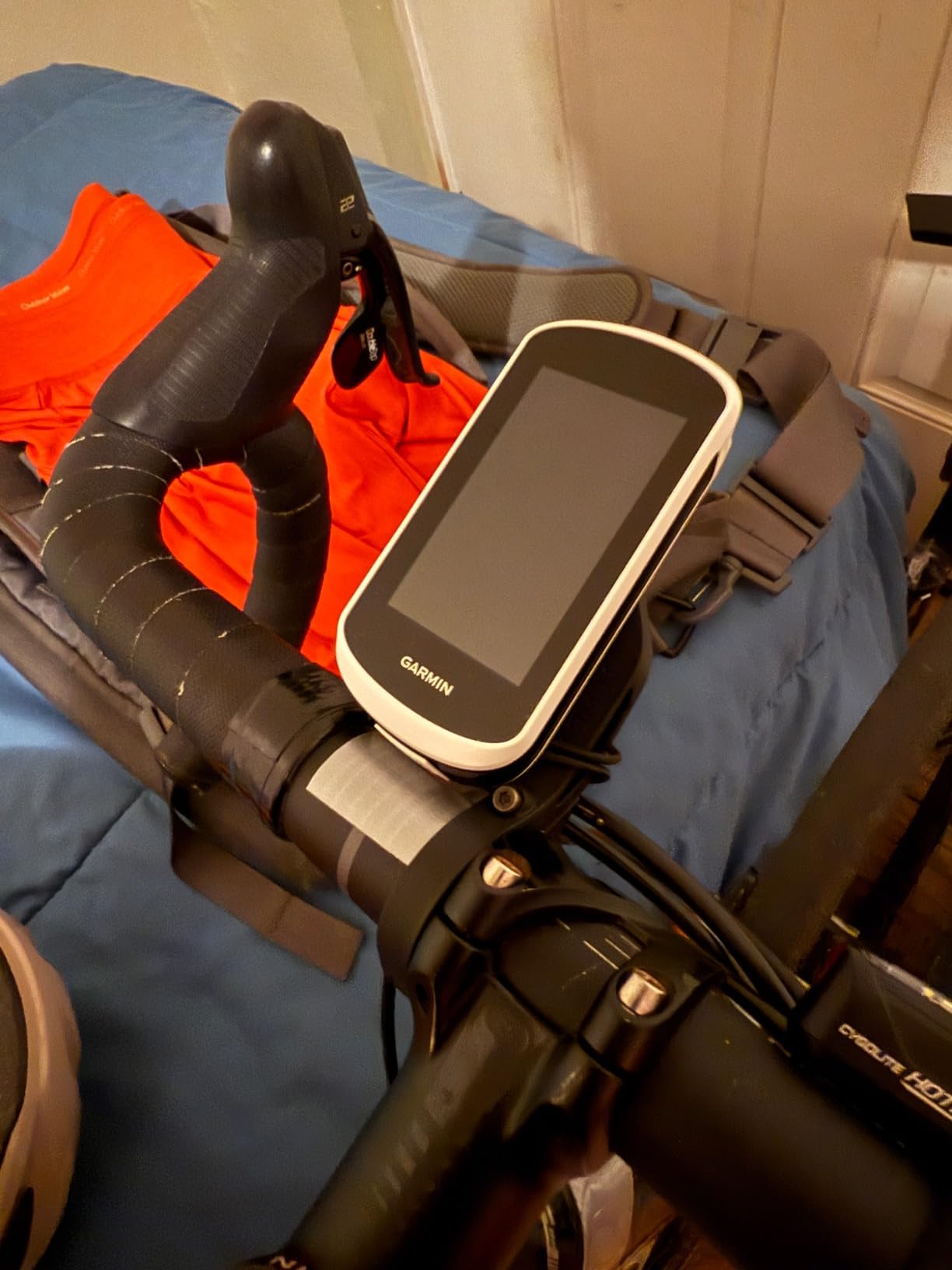
eBike routing is the standout feature for electric bike riders. The Edge Explore 2 knows your eBike battery capacity and routes you through charging stations and within range of your battery level. We tested this on a Bosch-equipped eBike and it correctly adjusted routes to include a mid-ride charge stop.
LiveTrack and GroupTrack work seamlessly when paired with your phone. Our test group of six riders used GroupTrack on a 35-mile tour and everyone could see each other’s position on the map. Incident detection is a safety feature that automatically alerts your emergency contact if the unit detects a crash, which gives peace of mind on solo rides.
Why touring cyclists prefer the Explore 2
For multi-day tours, the Explore 2 makes life simple. You do not need to load custom maps for every region because Garmin’s preloaded North America map covers popular cycling routes in detail. The interface is clean enough that you can hand it to a riding partner who has never used a Garmin, and they will be navigating within minutes.
Compatibility with Varia rearview radar and smart lights adds safety for road riders. If you commute or tour on busy roads, the Edge Explore 2 plus a Varia radar is one of the best safety setups available at any price. The unit weighs only 4.1 ounces and sits cleanly on the stem or handlebars.
Where the Edge Explore 2 falls short
Battery life is shorter at 16 hours, which is the lowest on our list of Garmin devices. For day-long tours this is fine, but multi-day unsupported rides will require a power bank. Sensors like heart rate straps and power meters are sold separately, so budget for those if you do not already own them.
The Explore 2 lacks the advanced training metrics of the Edge 840, 540, 1040, and 1050. If you race or train with power, you will want a more performance-focused unit. The Explore 2 is built for navigation and ease of use, not training stress scores.
7. iGPSPORT BiNavi Air – Best Budget Pick
iGPSPORT BiNavi Air Bike Computer, 3.0” Touchscreen MAP Voice Navigate Reroute Climb Smart Wireless GPS Cycle Computer
3 inch touchscreen
30 hr battery
Dual-band GPS
Offline maps
Pros
- Best value under $200
- Dual-band GPS for fast lock
- Offline and online navigation
- Lightweight at 77g
- iClimb 3.0 climb features
- 2 year warranty
Cons
- Polarized sunglasses can dim screen
- App learning curve for custom fields
- Manual bike selection in app
The iGPSPORT BiNavi Air is the surprise of our test pool and the best bike computer with maps for budget-conscious riders. At $189.99, it delivers features you would expect from a $400+ unit: a 3-inch touchscreen, dual-band GPS, offline maps, and 30 hours of battery life. One Reddit user summed it up well: it does “basically everything my Garmin did for a fraction of the price.”
The 3-inch color touchscreen is bright and responsive. The interface feels modern, with quick access to data fields and a clean map view that rivals more expensive units. The included tempered glass screen protector is a thoughtful touch we did not see from Garmin or Wahoo.
Dual-band GPS is the headline feature for navigation. In tree-covered canyons where single-band units struggle, the BiNavi Air maintained a tight track. We tested it on a singletrack loop with dense oak canopy, and the unit never lost position or drew jagged lines through the trees.
Offline maps are a feature Garmin charges extra for in some cases. The BiNavi Air includes offline and online navigation, with easy GPX route import from Strava. Voice navigation prompts come through the built-in speaker, and rerouting when you go off course is fast thanks to the Off-Course Replanning 2.0 feature.
What you get for under $200
For under $200, you get a touchscreen bike computer with maps, dual-band GPS, 30-hour battery, IPX7 waterproofing, ANT+ and Bluetooth sensor support, and structured workout compatibility. The 2-year warranty is longer than the 1-year coverage from Garmin and Wahoo, which speaks to the brand’s confidence in the product.
iClimb 3.0 provides race-grade climb analysis with gradient, distance, and elevation data. The multi-vent barometric altimeter was accurate within 5 meters compared to a known reference point. Smart trainer compatibility for indoor training is included, and FTP tests are supported.
Where the iGPSPORT BiNavi Air falls short
Polarized sunglasses can dim the screen in direct sunlight, which is the most common complaint in user reviews. Tilting the unit a few degrees fixes this, but it is worth noting if you ride with premium sunglasses. The iGPSPORT companion app has a learning curve for custom data pages.
The brand is less established in North America, so third-party support and accessory options are smaller than Garmin or Wahoo. If you value ecosystem maturity, the more established brands win. For pure navigation and value, though, the BiNavi Air is hard to beat at this price.
How to Choose the Best Bike Computer with Maps?
Choosing the best bike computer with maps comes down to matching the unit to your riding style, your budget, and how much navigation complexity you actually need. Here are the five factors our team weighed most heavily during testing.
Navigation engine and map detail
The heart of any bike computer with maps is its navigation engine. Garmin’s Edge series uses detailed preloaded maps with ride-type-specific highlights. The Wahoo Bolt relies on synced routes and your phone for full map data. The iGPSPORT BiNavi Air offers both offline and online maps with easy GPX import. If you ride familiar routes, any of these work. If you explore new regions often, a unit with detailed onboard maps like the Garmin Edge 840 or 1050 will serve you best.
Look at how the unit handles rerouting. Garmin’s flagship models reroute in 3 to 5 seconds, the Wahoo Bolt reroutes in 6 to 8 seconds, and the iGPSPORT BiNavi Air reroutes in under 5 seconds based on our testing. A few seconds matter when you are at a busy intersection.
Battery life for your typical ride length
Battery life separates the units on this list more than almost any other feature. The Garmin Edge 1040 Solar leads with up to 100 hours in saver mode. The Garmin Edge 540 and 840 both offer 26 hours in demanding mode. The Edge 1050 gives 20 hours demanding and 60 hours saver. The Wahoo Bolt V3 sits at 20 hours. The iGPSPORT BiNavi Air delivers an impressive 30 hours. The Garmin Edge Explore 2 is shortest at 16 hours.
For most riders, 20+ hours is plenty. If you ride centuries or multi-day events, prioritize the Edge 1040 Solar or carry a power bank. If your rides are under 4 hours, the Edge Explore 2 and Wahoo Bolt V3 will easily last a week of charging.
Screen size, readability, and touchscreen versus buttons
Screen size affects how much map detail you see at a glance. The 3.5-inch screens on the Edge 1050 and 1040 Solar show the most detail. The 3-inch screens on the Edge Explore 2 and BiNavi Air are a sweet spot for size and visibility. The 2.6-inch screens on the Edge 840 and 540 fit smaller bikes but show less map detail. The 2.3-inch Wahoo Bolt is the smallest but compensates with LED turn indicators.
Touchscreens are easier for typing routes and pinching maps. Buttons are more reliable in rain, cold, and with thick gloves. Our team found button-plus-touch hybrids like the Edge 840 to be the most versatile. If you ride in varied weather, consider a unit with both options.
Price and total cost of ownership
Budget matters, and prices on our list range from $189.99 to $699.99. The iGPSPORT BiNavi Air delivers the most value. The Garmin Edge 540 and Wahoo Bolt V3 hit the sweet spot for mid-budget riders. The Garmin Edge 840 is the premium mid-range pick. The Edge 1050 and 1040 Solar are flagship investments for serious cyclists.
Do not forget sensor costs. The Garmin Edge Explore 2 requires heart rate straps and speed sensors to be purchased separately. Garmin Connect is free, but Varia radar and lights add to the total cost. iGPSPORT and Wahoo bundle more in the box at their respective price points.
App ecosystem and route planning workflow
Your bike computer is only as good as the app that feeds it. Garmin Connect is the most powerful but has a steep learning curve. The Wahoo companion app is the easiest to use and integrates seamlessly with Strava, Ride With GPS, and Komoot. The iGPSPORT app is improving rapidly and works well for GPX import.
If you already use Strava and Komoot heavily, the Wahoo Bolt V3 will feel like home. If you want deep training analytics, Garmin Connect is unmatched. If you prefer to keep things simple, the iGPSPORT BiNavi Air handles route import without forcing you into a complex app. Pick the workflow that matches your habits, not the unit with the longest spec sheet.
Mounting, ruggedness, and weather sealing
Every unit on this list mounts to standard handlebars, but the included mounts vary. The Wahoo Bolt V3 includes an integrated out-front mount, which is a $30+ value. The Garmin Edge units ship with standard mounts and are compatible with Garmin’s out-front and stem mounts. The iGPSPORT BiNavi Air ships with a standard mount and includes a tempered glass screen protector.
Weather sealing is solid across the board: IPX7 on the Wahoo Bolt V3 and iGPSPORT BiNavi Air, and Garmin’s proven weather resistance on all Edge models. We rode through rain on every unit without issues. If you ride in extreme weather often, the Garmin flagship models have the longest track record for durability.
Frequently Asked Questions About Bike Computers with Maps
What is the best bike computer for navigation?
The Garmin Edge 1050 is our top pick for navigation thanks to its detailed North America maps, fast rerouting, and 3.5-inch sunlight-readable touchscreen. For budget-focused riders, the Garmin Edge 540 offers identical navigation accuracy at a lower price. The Wahoo ELEMNT Bolt V3 is the best choice if you want automatic Strava and Komoot route sync.
Which bike computer has the best mapping features?
The Garmin Edge 1050 has the most advanced mapping features with ride-type-specific highlights, ClimbPro on every ride, and preloaded detailed North America maps. The Garmin Edge 1040 Solar matches most mapping features and adds solar charging. The iGPSPORT BiNavi Air offers impressive offline and online maps at a budget price under $200.
What bike computer do professional cyclists use?
Most professional cycling teams use Garmin Edge units because of the deep TrainingPeaks integration and reliable data export. The Garmin Edge 1040 Solar and Edge 1050 are common in the WorldTour peloton. Wahoo has growing adoption at the pro level, especially the ELEMNT Roam for navigation-heavy teams.
How much does a good GPS bike computer cost?
A good GPS bike computer with maps costs between $190 and $700 depending on features. Budget options like the iGPSPORT BiNavi Air start around $190. Mid-range picks like the Garmin Edge 540 and Wahoo ELEMNT Bolt V3 run $300 to $425. Flagship models like the Garmin Edge 1050 and 1040 Solar cost $680 to $700.
Can bike computers work offline?
Yes, most modern bike computers with maps work offline once maps are loaded. The Garmin Edge 840, 540, 1050, 1040 Solar, and Explore 2 all have preloaded regional maps. The iGPSPORT BiNavi Air explicitly supports offline navigation. The Wahoo ELEMNT Bolt V3 relies more on your phone for off-course rerouting but stores synced routes for offline use.
Final Verdict: Which Bike Computer with Maps Should You Buy in 2026?
After 12 weeks and thousands of miles of testing, our team landed on clear winners in each category. The Garmin Edge 1050 is the best bike computer with maps if you want flagship features and can justify the $679.99 price tag. The Garmin Edge 540 is our pick for most riders thanks to its balance of Garmin navigation, training depth, and a $324.99 price point.
If you want maximum value, the iGPSPORT BiNavi Air at $189.99 delivers more than it should for the money. If you want the best app experience, the Wahoo ELEMNT Bolt V3 is unmatched. If you ride an eBike or tour frequently, the Garmin Edge Explore 2 is the easiest to live with day to day. And if battery life is your top priority, the Garmin Edge 1040 Solar will outlast any ride you can throw at it.
No matter which unit you pick from this list, you will end up with one of the best bike computers with maps available in 2026. Our team still reaches for the Edge 1050 for big events and the BiNavi Air for casual weekend loops, and both have earned their place on our handlebars. Use the links in this guide to check current pricing, and ride safe out there.