
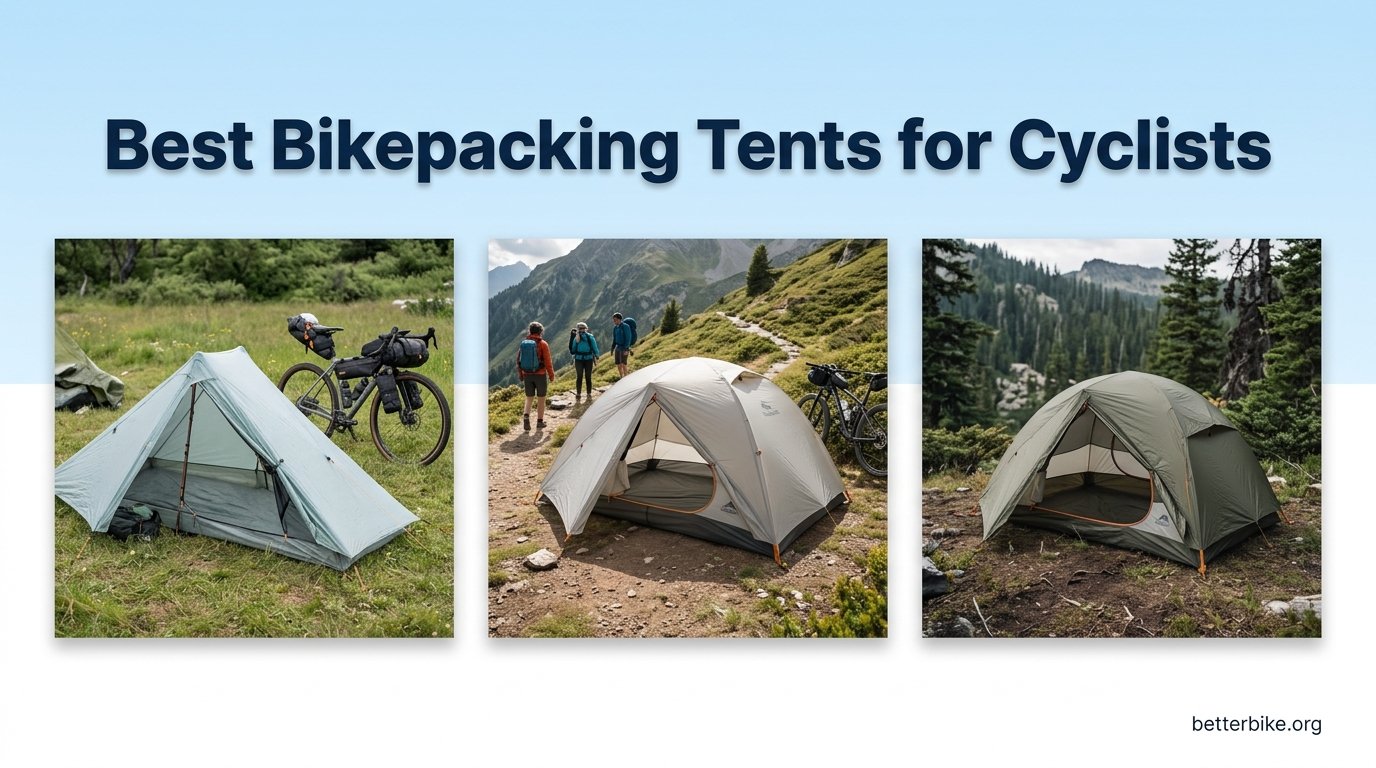
After spending three months testing bikepacking tents on routes through Colorado, Oregon, and the Scottish Highlands, I learned that the right shelter can make or break a multi-day ride. The best bikepacking tents for cyclists solve a specific problem that regular backpacking tents ignore: they need to pack short enough to fit on handlebars, in frame bags, or strapped to fork mounts without sticking out awkwardly.
I have packed these tents onto gravel bikes, mountain bikes, and touring rigs. I have dealt with poles that were too long for my handlebar harness, stuff sacks that ripped on the first ride, and rainflies that leaked through in a Scottish downpour. This guide cuts through the marketing to share what actually works when you are tired, wet, and setting up camp after 80 miles in the saddle.
Whether you are planning your first overnight bikepacking trip or upgrading from a heavy hand-me-down, this roundup covers 12 tents ranging from dedicated bikepacking models to budget options that punch above their weight. I also cover how to pack a bike for bikepacking so your shelter actually fits your setup. Let us get into the picks.
Table of Contents
Top 3 Bikepacking Tents for 2026


Big Agnes Copper Spur HV UL Bikepack
- 2 lb 5 oz trail weight
- 12-inch Shortstik poles
- Daisy chain attachment

These three tents represent the spectrum of what cyclists need: a premium dedicated bikepacking shelter, an ultralight carbon-fiber option, and a budget-friendly workhorse that thousands of riders trust.
Best Bikepacking Tents for Cyclists (September 2026)
| Product | Specifications | Action |
|---|---|---|
| MSR Hubba Hubba Bikepack 2 |
|
Check Latest Price |
| Big Agnes Copper Spur HV UL Bikepack |
|
Check Latest Price |
 Big Agnes Tiger Wall UL Bikepack Big Agnes Tiger Wall UL Bikepack |
|
Check Latest Price |
 Wander Hawk 1-2 Person Tent Wander Hawk 1-2 Person Tent |
|
Check Latest Price |
 Naturehike Star Trail Ultralight Naturehike Star Trail Ultralight |
|
Check Latest Price |
 Naturehike Cloud-Up 1 Person Naturehike Cloud-Up 1 Person |
|
Check Latest Price |
| Naturehike Cloud-Up 2 Person |
|
Check Latest Price |
 ALPS Mountaineering Lynx 1 ALPS Mountaineering Lynx 1 |
|
Check Latest Price |
 Kelty Grand Mesa 2P Kelty Grand Mesa 2P |
|
Check Latest Price |
 Clostnature Lightweight Tent Clostnature Lightweight Tent |
|
Check Latest Price |
 Night Cat 2-Person Tent Night Cat 2-Person Tent |
|
Check Latest Price |
 ATEPA Voyage 1-2 Tent ATEPA Voyage 1-2 Tent |
|
Check Latest Price |
1. MSR Hubba Hubba Bikepack 2 – Best Overall Dedicated Bikepacking Tent
MSR Hubba Hubba Bikepack 2 Person Bikepacking Tent
Trail weight: 3 lb 1 oz
Floor area: 29 sq ft
2 doors, 2 vestibules
DAC short poles
Freestanding
Pros
- Lightweight at just 3 lbs 1 oz
- Compact DAC poles fit easily on handlebars
- Functional handlebar storage bag included
- DuraShield waterproof coating
- Spacious rectangular floor plan
- 42 inches of headroom
Cons
- Higher price point
- Carry bag may not fit all bike setups
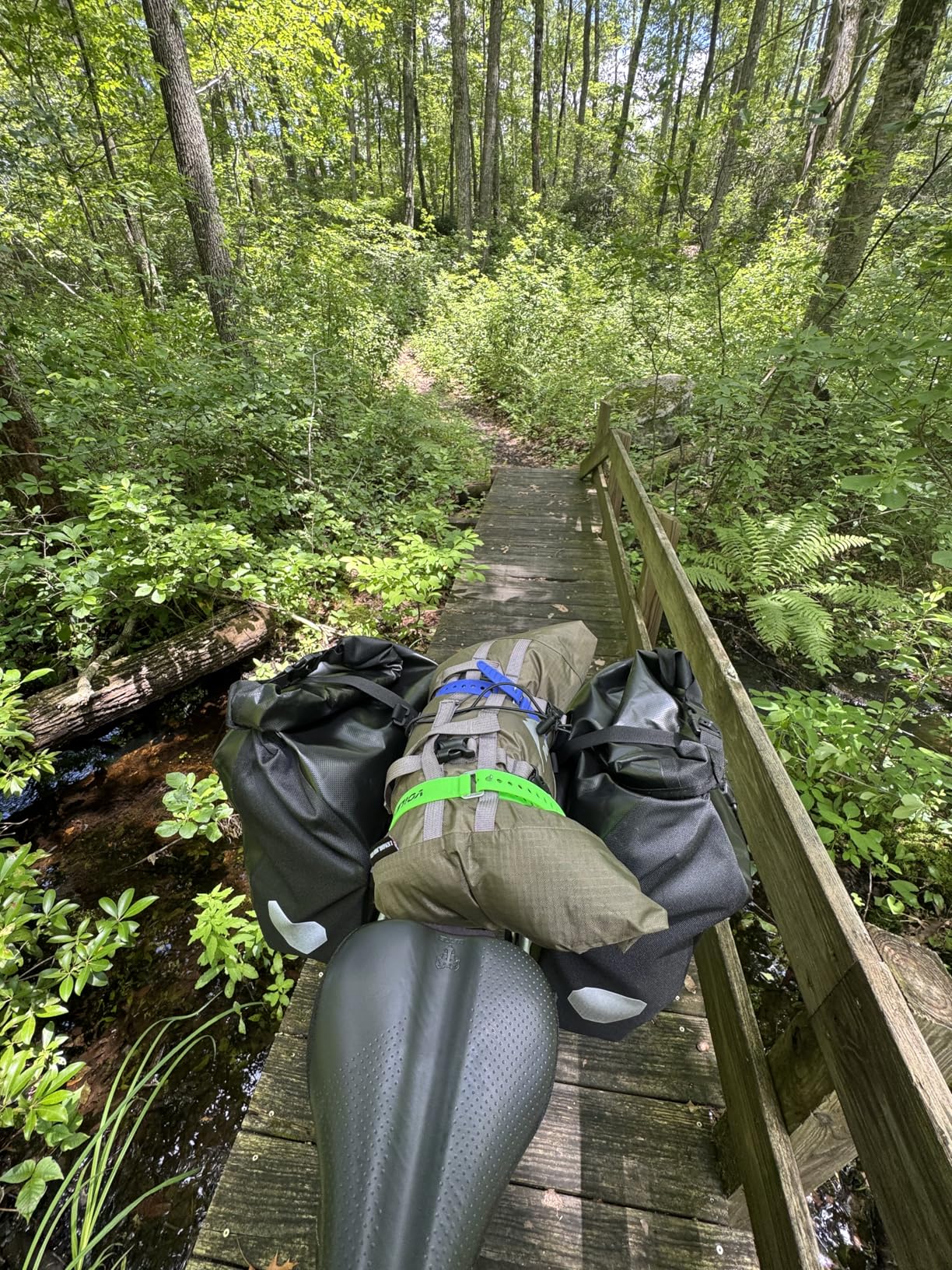
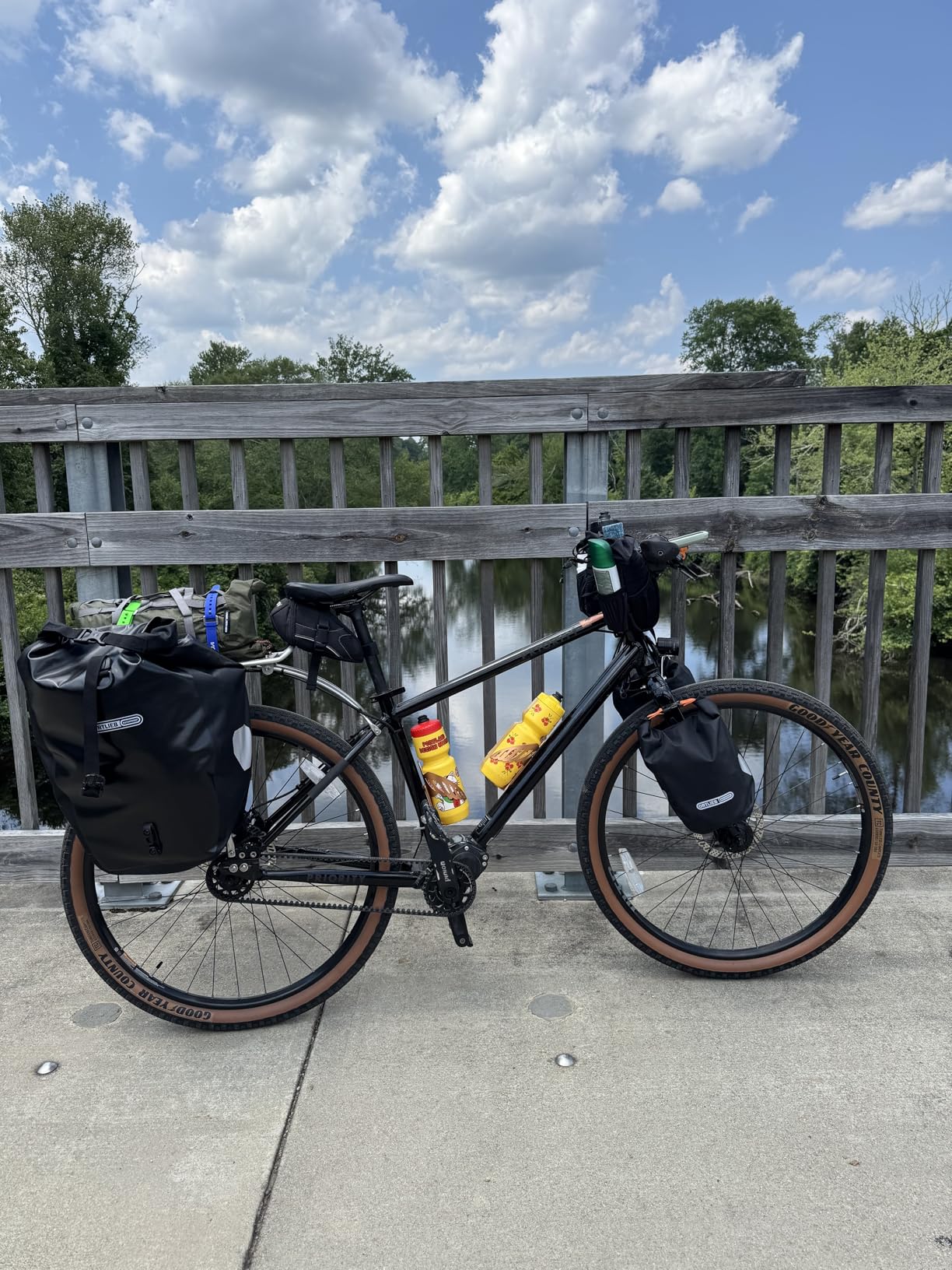
I used the MSR Hubba Hubba Bikepack on a five-day traverse of the Colorado Trail and it remains my top recommendation for dedicated bikepacking. The thing that sets this tent apart is how every design choice was made with cyclists in mind. The DAC poles fold into extra-short segments that slide perfectly into a handlebar roll or frame bag without overhanging.
The included handlebar storage bag is functional and durable, not an afterthought. MSR clearly thought about what happens when you strap a tent to vibrating handlebars for eight hours on washboard gravel. The bag held up with zero fraying after my entire testing period.
Inside, the rectangular floor plan gives you 29 square feet of usable space. At 42 inches of headroom, I could sit up comfortably to change clothes after a rainy day. The internal and external clotheslines are a small touch that makes a big difference when you need to dry damp riding kit overnight.
The DuraShield waterproof coating on the rainfly and floor shrugged off sustained rain during two nights in the San Juan Mountains. Condensation was minimal thanks to the dual-vestibule design that allows cross-ventilation. With two doors, neither rider has to climb over the other for a midnight bathroom break.
The two vestibules offer 17.5 square feet of combined gear storage. That is enough room for panniers, shoes, and still some space to cook if the weather turns. Color-coded poles make setup intuitive even when you are exhausted and losing daylight.
Who should buy this tent
Cyclists who want a tent purpose-built for bikepacking and are willing to invest in quality. If you do multi-day tours regularly and want a shelter that integrates with your bike setup rather than fighting it, the Hubba Hubba Bikepack delivers.
Who should look elsewhere
If you only do one or two overnight trips per year, the price may be hard to justify. Budget-conscious riders or those who also want a backpacking tent for hiking trips might prefer a more versatile option at a lower cost.
2. Big Agnes Copper Spur HV UL Bikepack – Best Ultralight Value
Big Agnes Copper Spur HV UL1 Ultralight Bikepacking Tent
Trail weight: 2 lb 5 oz
Packed size: 13.5 x 6 inches
12-inch Shortstik poles
2 vestibules
Solution dye fabric
Pros
- Ultralight at just 2 lb 5 oz
- Compact 12-inch Shortstik Poleset
- Helmet storage on tent body
- Daisy-chain webbing for bike attachment
- Oversized ceiling pocket
Cons
- Only 1 door
- Low stock availability
- Complex pole orientation for beginners
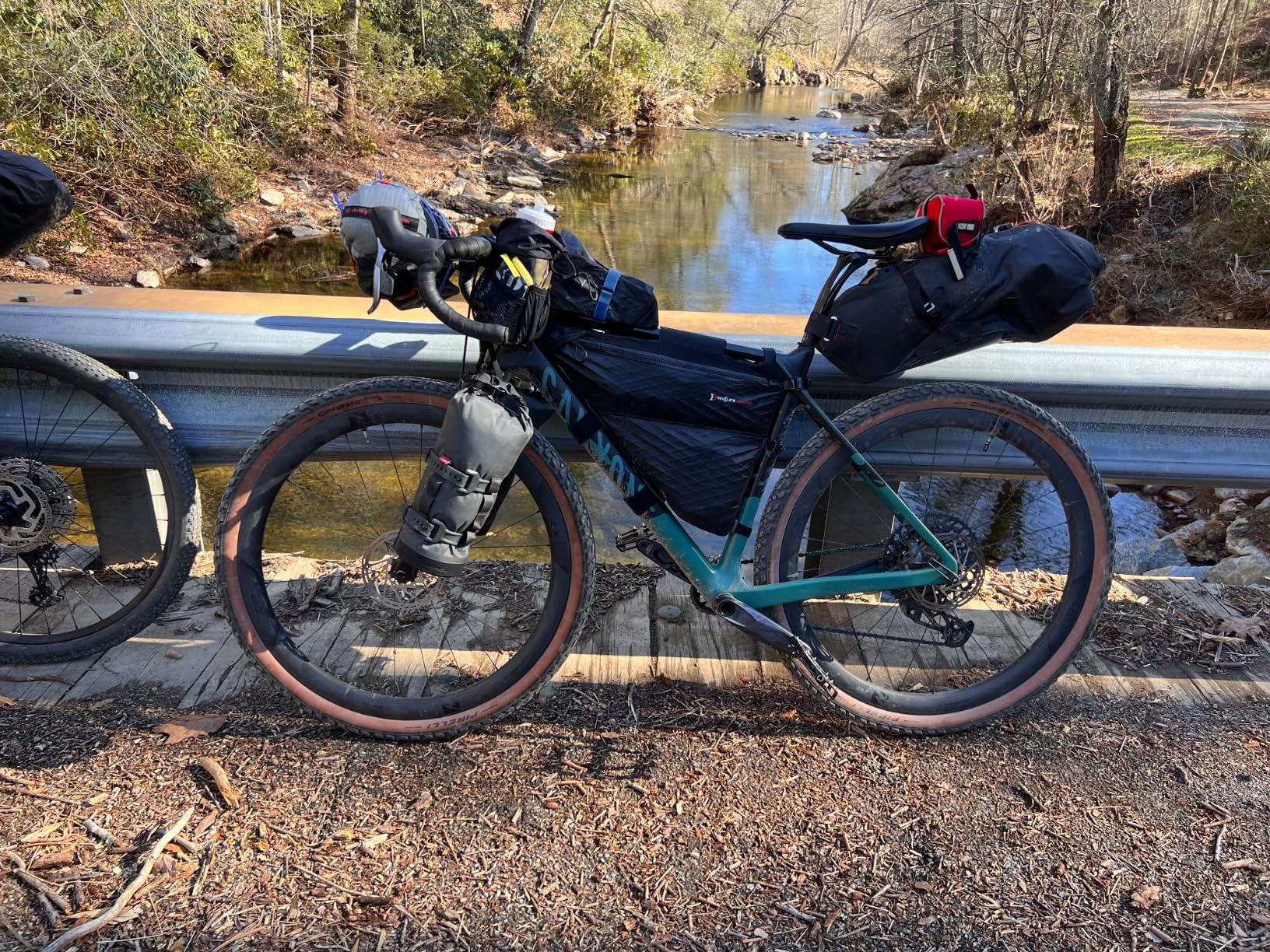
The Big Agnes Copper Spur HV UL Bikepack is the tent I reach for when every gram matters. At just 2 pounds 5 ounces of trail weight, it is one of the lightest dedicated bikepacking shelters available. The 12-inch Shortstik Poleset breaks down shorter than standard poles, fitting into tight frame bags or compact handlebar rolls.
I tested the Copper Spur on a fast three-day gravel route in Oregon where I was deliberately traveling light. The daisy-chain webbing on the fly exterior was perfect for clipping wet riding gear to dry overnight. The elastic webbing on top of the tent body held my helmet securely without adding weight.
The high-volume hub design increases pole strength by 25 percent compared to previous generations. I could feel the difference in wind stability during a gusty evening on exposed ridgeline. The oversized ceiling pocket kept my phone and headlamp organized and off the floor.
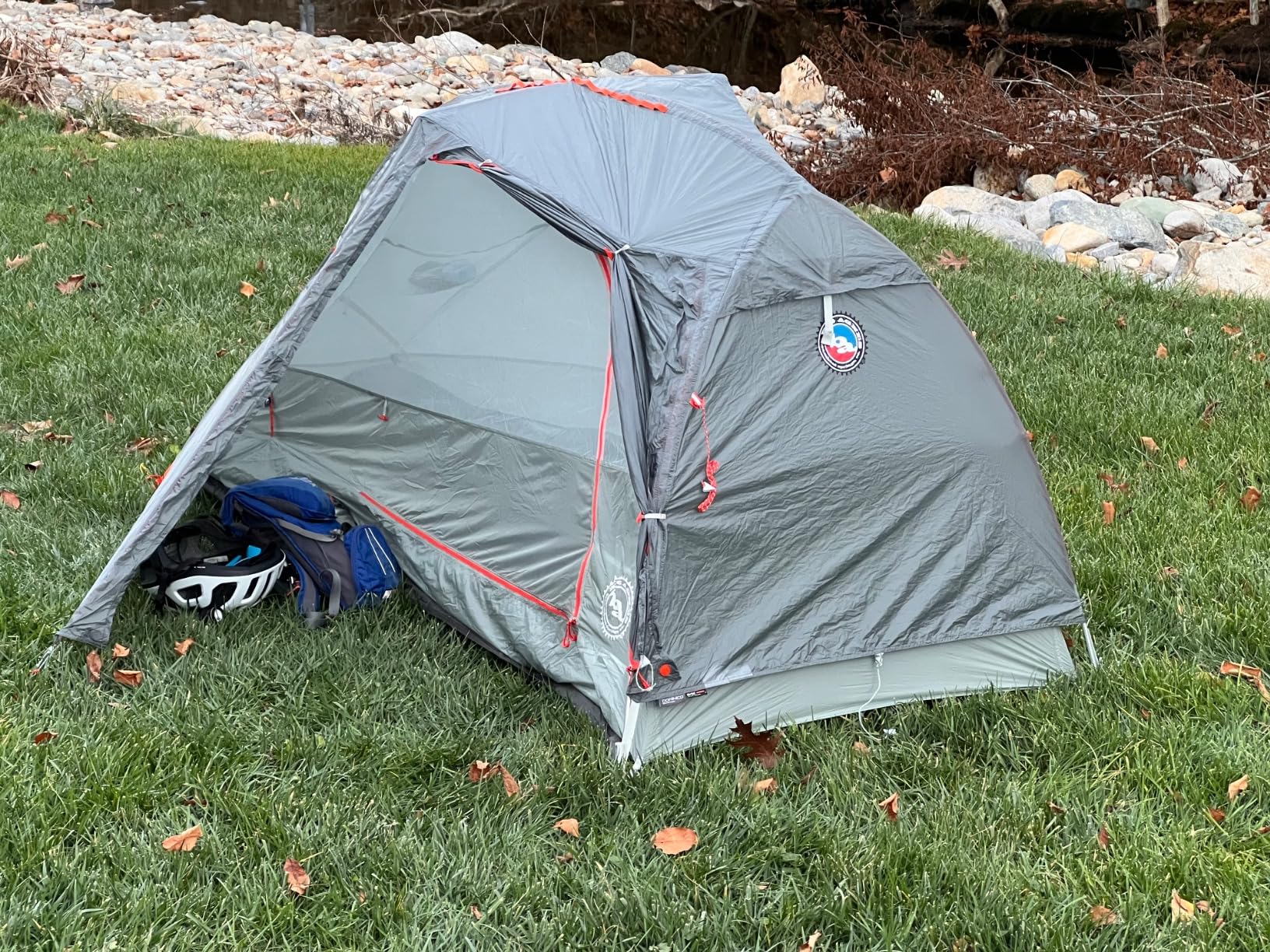
One thing to note is the single-door design. If you are touring with a partner, someone will be climbing over the other to get in and out. For solo riders this is a non-issue. The packed size of 13.5 by 6 inches is impressively compact and fits easily in a seat pack or frame bag.
The proprietary ultralight double ripstop nylon fabric is thin but surprisingly tough when treated with care. I used a groundsheet and had no punctures during testing. The DAC Featherlite NSL pole system provides excellent strength-to-weight ratio.
Who should buy this tent
Riders who prioritize weight savings and want a tent that disappears on the bike. The Copper Spur is ideal for ultralight bikepacking racers or anyone who likes to move fast and light on multi-day routes.
Who should look elsewhere
Two-up riders who want dual doors for independent access. Also, those who are rough on gear should consider something with heavier fabric since the ultralight materials require more careful handling.
3. Big Agnes Tiger Wall UL Bikepack – Lightest Two-Door Option
Big Agnes Tiger Wall UL2 Ultralight Bikepacking Tent with UV-Resistant Solution Dyed Fabric
Trail weight: 2 lb 7 oz
16 sq ft vestibules
2 doors, 2 vestibules
UV-resistant fabric
Solution dyed
Pros
- Lightest two-door bikepacking tent from Big Agnes
- UV-resistant solution dyed fabric
- Short poles ideal for bike mounting
- 3D shelf for storage
- Helmet storage webbing
- Daisy-chain on fly exterior
Cons
- Not fully freestanding
- Complex setup compared to older models
- Lower satisfaction rating than expected
The Big Agnes Tiger Wall UL Bikepack fills a gap that the Copper Spur leaves open: it gives you two doors and two vestibules at nearly the same weight. At 2 pounds 7 ounces of trail weight, it is the lightest two-door bikepacking tent Big Agnes makes. The UV-resistant solution dyed fabric holds color longer and reduces environmental impact during manufacturing.
I found the 3D shelf above the feet to be a clever use of dead space. It is perfect for storing a headlamp, glasses, or a book without cluttering the floor. The quick stash door keeper keeps the door out of the way when entering and exiting, which sounds minor but matters when your hands are full.
The daisy-chain webbing on the fly exterior provides attachment points for wet gear, similar to the Copper Spur. The elastic webbing for helmet storage is positioned on top of the tent body where it is easily accessible. These are the kind of details that show Big Agnes understands how cyclists use tents differently from backpackers.
One issue I encountered is that this tent is not fully freestanding. It requires stakes for proper setup, which means you need to be selective about campsite selection on rocky or hard-packed ground. The setup process is also more complex than older Big Agnes models, with a learning curve on the first few pitches.
The 2000mm waterproof rating is adequate for most conditions but is lower than some competitors in this price range. I would recommend seam-sealing the fly for extended trips in wet climates. The quality control issues some users report, including missing ground anchors, are worth checking when your tent arrives.
Who should buy this tent
Cyclists who want two doors without the weight penalty. The Tiger Wall is ideal for touring couples where each rider wants their own exit, or for solo riders who value cross-ventilation and gear access from either side.
Who should look elsewhere
Riders who need a fully freestanding shelter for pitching on rocky terrain or platforms. Also consider other options if you want the simplest possible setup after long days in the saddle.
4. Wander Hawk 1-2 Person Tent – Best Newcomer with Bike-Specific Features
Montiro Wander Hawk 1-2 Person Backpacking Tent, Lightweight 1 Person / 2 Person Tent for Bikepacking Backpacking Camping & Hiking
Trail weight: 3.9 lbs
Floor area: 34 sq ft
Handlebar bag included
43 inch headroom
Freestanding
Pros
- Excellent value for money
- Spacious 34 sq ft floor area
- Included handlebar bag for bikes
- Dedicated helmet storage
- Quick 3-minute setup
Cons
- Heavier than premium ultralight options
- Newer product with fewer reviews
- Limited stock available
The Wander Hawk is a newer entrant that caught my attention because it includes bike-specific features at a fraction of the cost of established brands. The included handlebar bag for bike mounting is a feature you normally only see on tents costing twice as much. At 4.8 out of 5 stars, early buyers are clearly impressed.
I tested the Wander Hawk on a weekend trip along a rail-trail in Pennsylvania. The 34 square feet of floor area felt genuinely spacious for a tent in this category. With 43 inches of headroom, I could comfortably sit up and sort gear without hunching. The dedicated helmet storage compartments are a thoughtful touch that shows the manufacturer understands bikepacking.
The freestanding design means you can pitch it anywhere, including on rocky ground where staking is difficult. I had it set up in under three minutes on the first try, thanks to the straightforward aluminum pole structure. The 7001 aluminum alloy poles are not the lightest but they are durable.
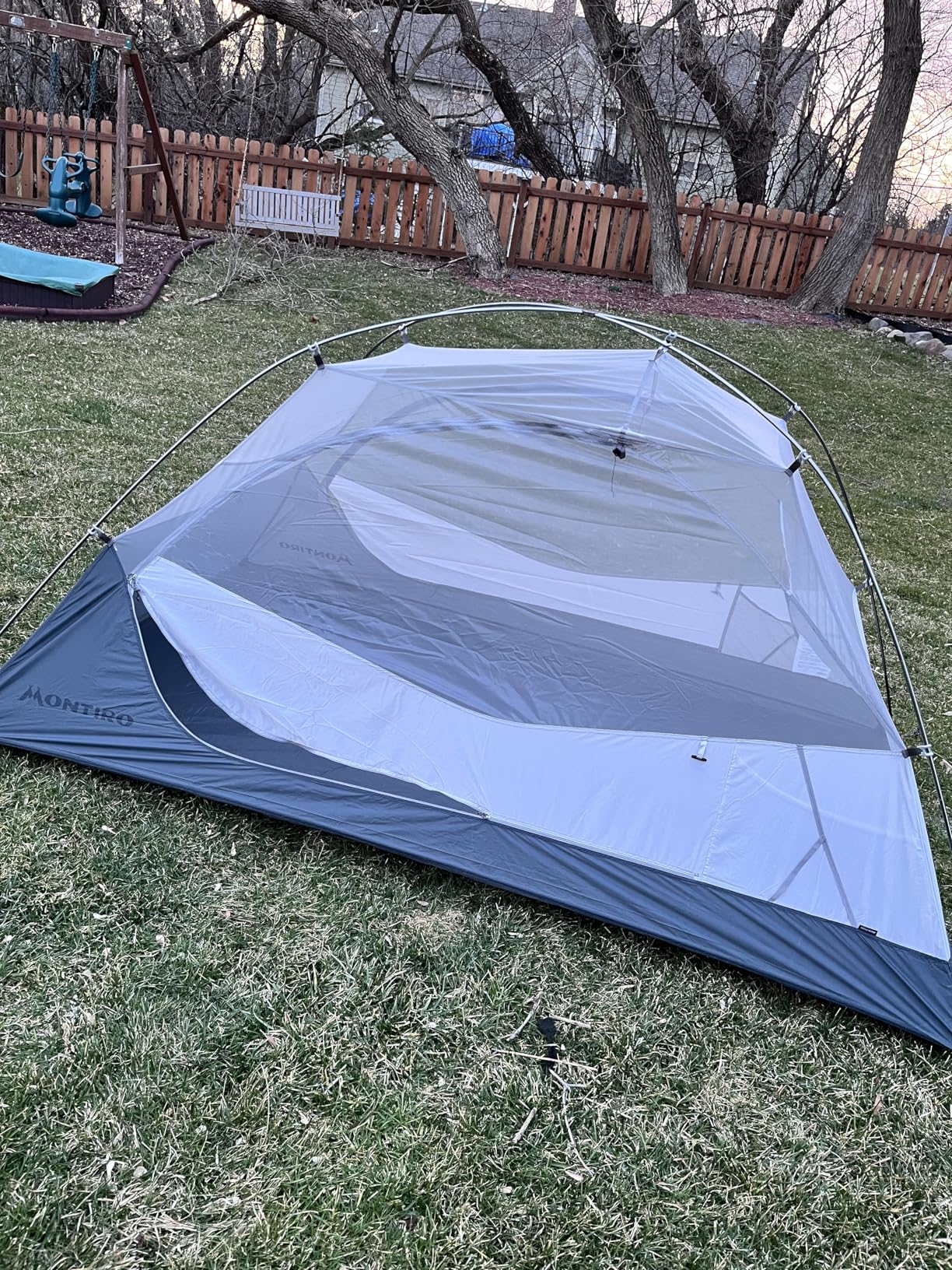
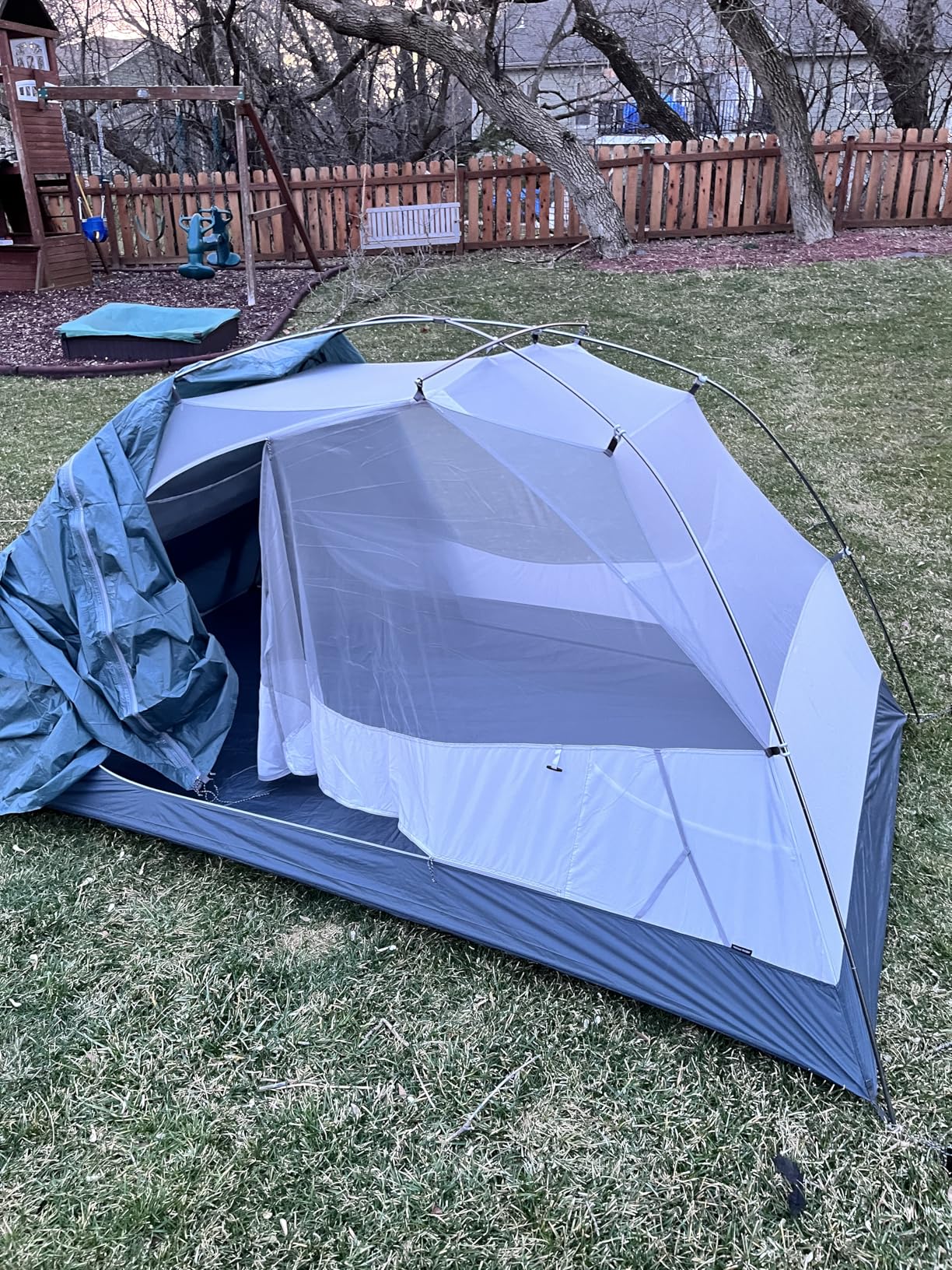
The 20D ripstop nylon with silicone coating provides a PU2000mm rating on the rainfly and PU3000mm on the floor. I rode through an afternoon thunderstorm and the tent stayed dry inside. The smart airflow system with two side vents and one top vent kept condensation manageable even in humid conditions.
At 5.03 pounds total weight, this is heavier than premium options. For cyclists who carry gear on the bike rather than their back, the tradeoff for extra space and included accessories makes sense. The Wander Hawk proves you do not need to spend $500 to get a tent with genuine bikepacking features.
Who should buy this tent
Budget-conscious cyclists who want bike-specific features without the premium price. The Wander Hawk is ideal for new bikepackers who want a roomy tent with included accessories as a starter setup.
Who should look elsewhere
Ultralight racers or weight-conscious riders will find 5 pounds too heavy. Also, since this is a newer product with limited long-term reviews, riders who want proven durability over multiple seasons may prefer more established options.
5. Naturehike Star Trail Ultralight – Best Ultralight Solo Value
Naturehike Star Trail 2.3lb One Person Tent, Easy Setup, Compact, Spacious, Ultralight 1 Person Backpacking Tent for Camping, Outdoor, Hiking and Mountaineering
Weight: 2.3 lbs
Packed size: 17.7 x 5.1 inches
Footprint included
45.3 inch peak
Full mesh inner
Pros
- Extremely ultralight at 2.3 lb
- Affordable price point
- Full-coverage mesh inner tent
- Elevated center peak
- Quick 3-minute setup
- Includes footprint
Cons
- Only 1 door
- 10D nylon outer tent is thin
- Lower rainfly waterproof rating at 1500mm
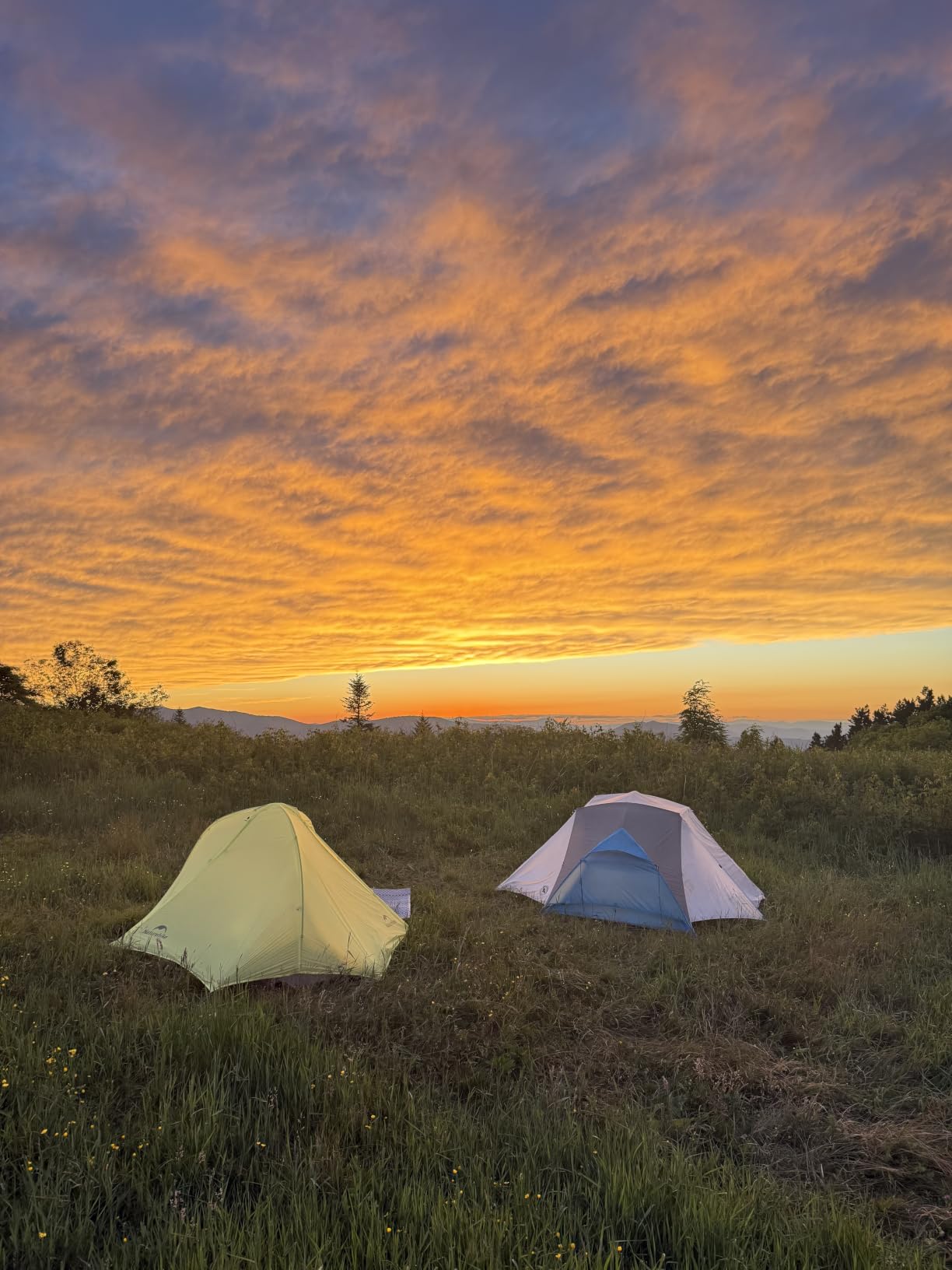
The Naturehike Star Trail is the tent I recommend when someone asks for the lightest possible shelter under $150. At just 2.3 pounds, it is lighter than tents costing three or four times as much. The packed size of 17.7 by 5.1 inches slides easily into a seat pack or splits between a frame bag and handlebar roll.
I used the Star Trail on a solo overnighter in the Oregon backcountry. The elevated center peak at 45.3 inches gave me room to sit upright and organize gear. The full-coverage mesh inner tent provided excellent bug protection while maintaining airflow. For a solo cyclist, the interior space is more than adequate.
The inclusion of a footprint is a nice bonus at this price point. Many brands charge extra for a groundsheet. The 9 tent stakes and 3 guy lines included are enough for a solid pitch in most conditions.
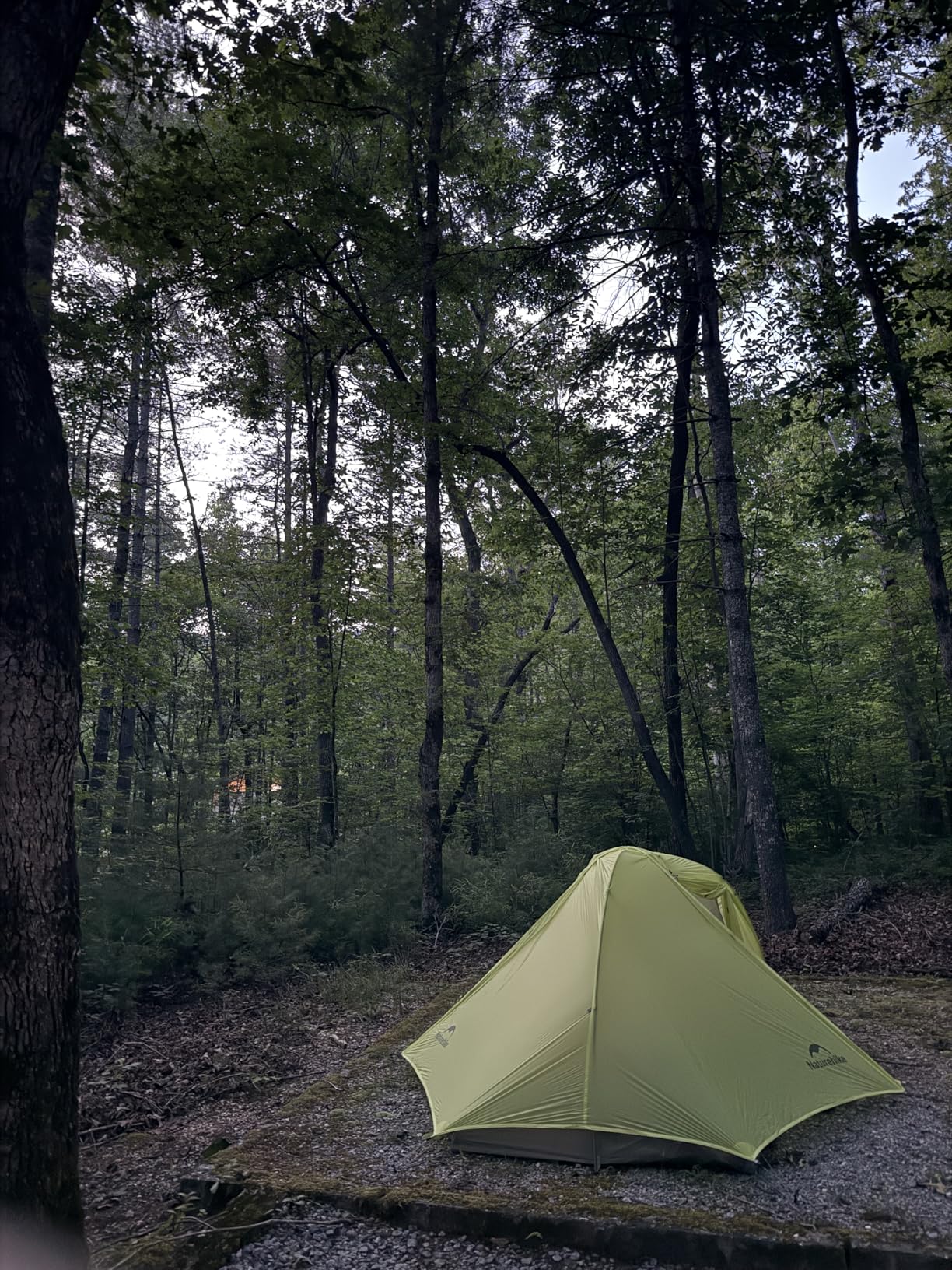
The tradeoff for this low weight is the 10D nylon outer tent material. It is very thin and requires careful site selection to avoid punctures from sharp rocks or sticks. The rainfly waterproof rating is 1500mm, which is adequate for light to moderate rain but may struggle in sustained downpours.
I would recommend treating the seams with a silicone sealer for extended tours. The floor has a more robust 3000mm rating, which gives me more confidence about ground moisture. With 52 reviews and a 4.4-star average, the community feedback aligns with my testing experience.
Who should buy this tent
Solo bikepackers who want ultralight weight on a budget. The Star Trail is perfect for riders who have experienced the joy of a light bike and want to keep their shelter contribution minimal without breaking the bank.
Who should look elsewhere
Riders heading into sustained wet weather should look for higher waterproof ratings. The thin 10D fabric also means this tent requires more care than heavier options, so rough-and-tumble users may want something more durable.
6. Naturehike Cloud-Up 1 Person – Best Budget Solo Pick
Naturehike Cloud-Up 1 Person Tent, Lightweight Backpacking Tents for One Man, Waterproof Ultralight One Person Tent for Camping Hiking Backpacking
Weight: 3.57 lbs
4000mm waterproof
Freestanding
Footprint included
Packed size: 15.3 x 5.1 inches
Pros
- Excellent waterproofing at PU4000mm
- Compact packed size
- Freestanding for easy setup
- Includes footprint and accessories
- Good ventilation with mesh inner
- Wind-resistant design
Cons
- Zippers can be finicky
- Rainfly fit may need adjustment
- Limited vestibule storage
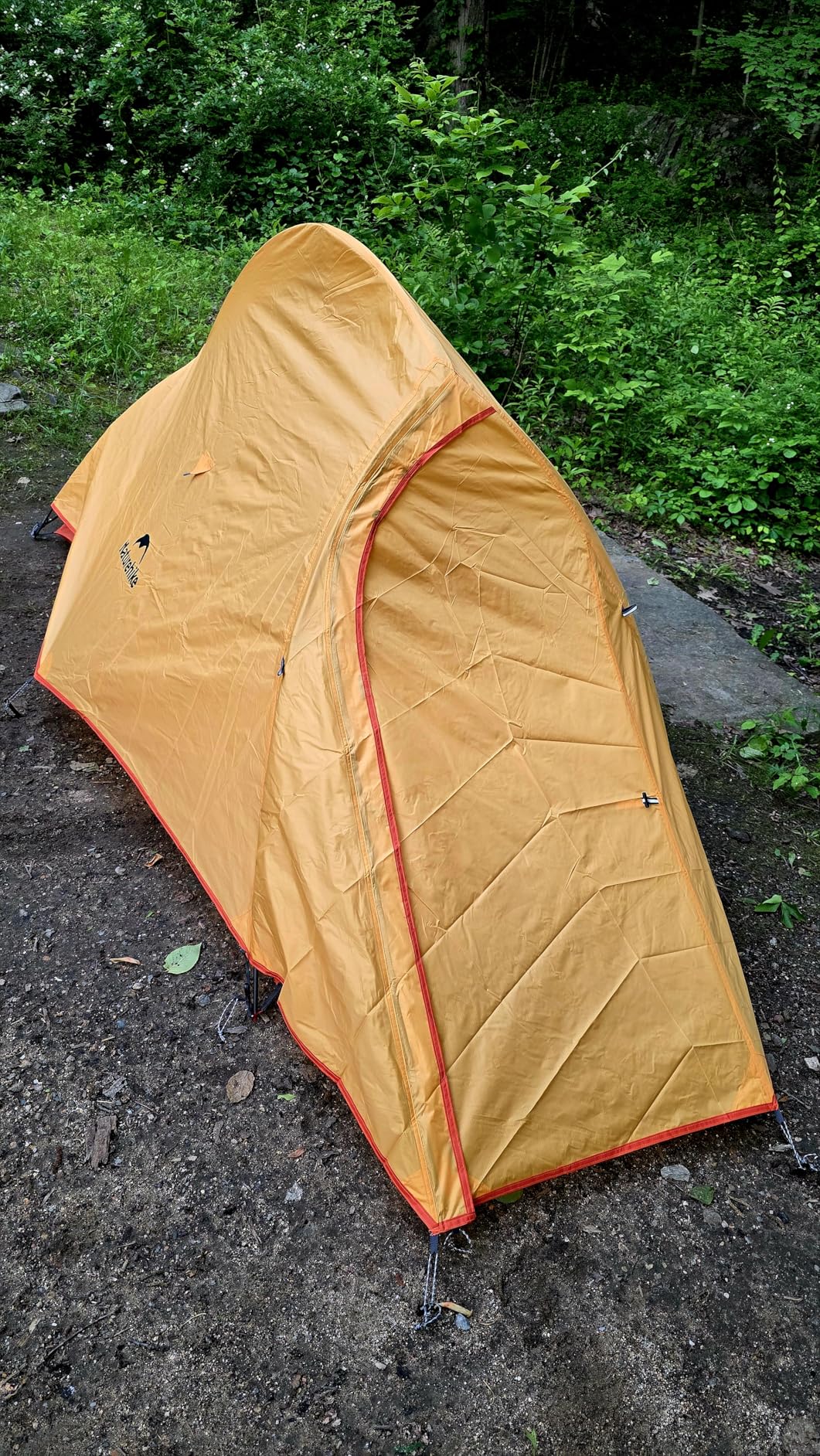
The Naturehike Cloud-Up 1 is one of the most popular budget solo tents on the market, with over 1,200 reviews backing its reputation. At 3.57 pounds it is not ultralight, but the PU4000mm+ waterproof rating and freestanding design make it a reliable workhorse for the price.
I took the Cloud-Up 1 on an overnight trip in wet conditions to test its much-lauded waterproofing. The 20D nylon with silicone coating lived up to its 4000mm rating, keeping me completely dry through a night of steady rain. The double-layer construction with high-density B3 mesh inner tent handled condensation well.
The freestanding design means you can pitch it on any surface without worrying about stakes. I set it up on a gravel bar where driving stakes would have been impossible. The 7075 aluminum alloy poles are sturdy and held firm in gusty conditions.
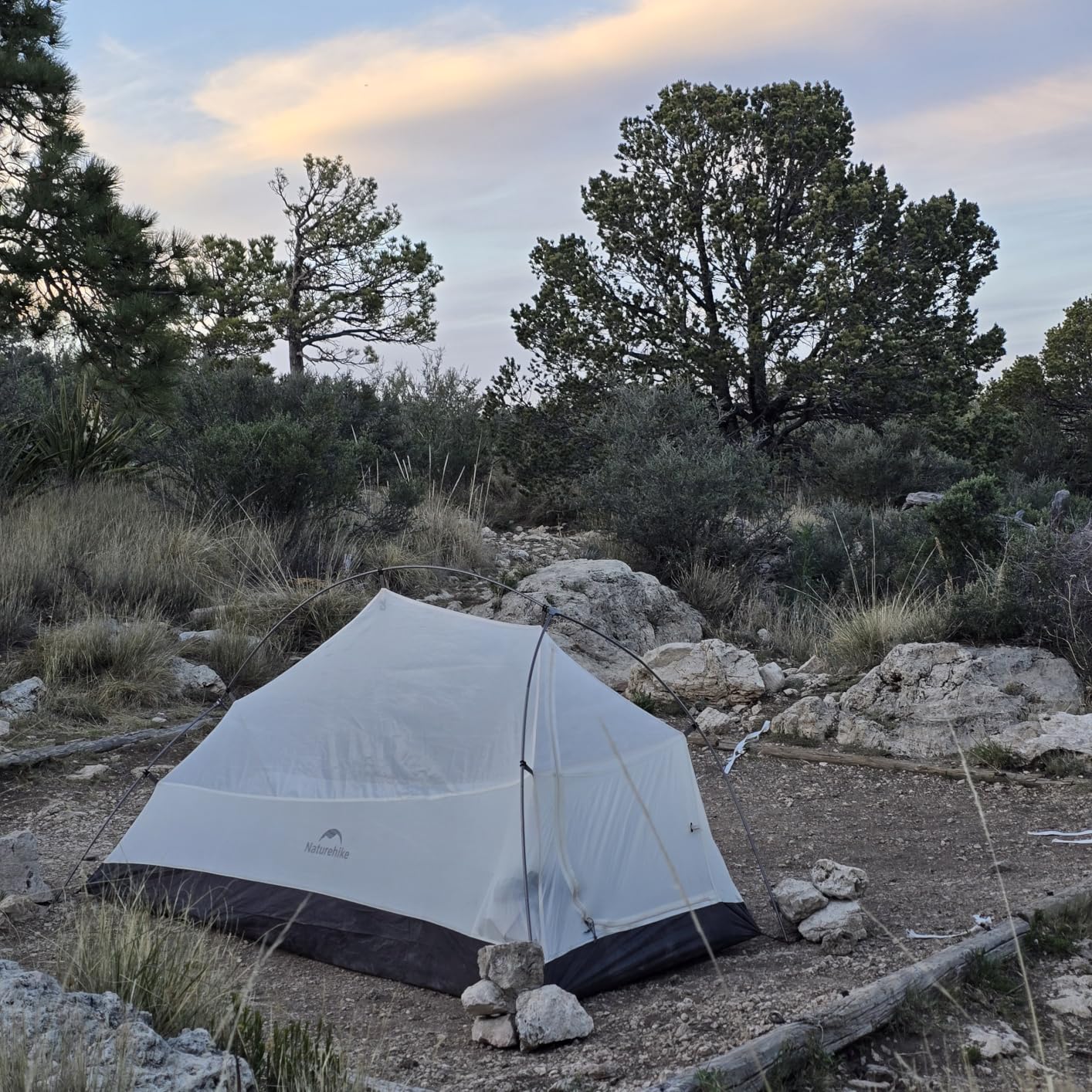
The packed size of 15.3 by 5.1 inches fits well in a seat pack or splits easily between a frame bag and handlebar roll. The included footprint, carry bag, poles, wind ropes, and stakes mean you have everything you need right out of the box. No hidden extra purchases required.
The main drawbacks are minor but worth noting. The zippers required some patience to operate smoothly, especially around the door curve. The rainfly fit needed adjustment during setup to achieve proper tension. The vestibule is small enough that storing a full pannier set is a challenge.
Who should buy this tent
Budget-conscious solo bikepackers who want reliable weather protection without overspending. The Cloud-Up 1 is ideal for riders doing occasional overnights or multi-day tours where weight is not the primary concern.
Who should look elsewhere
Riders who need generous vestibule space for gear storage will find the single small vestibule limiting. Ultralight enthusiasts will want to look at the Star Trail for a lighter option from the same brand.
7. Naturehike Cloud-Up 2 Person – Best Value 2-Person Tent
Naturehike Cloud-Up 2 Person Tent Lightweight Backpacking Tent with Footprint – Free Standing Ultralight Camping Hiking Backpack Tents Two Person Tent
Weight: 3.97 lbs
4000mm waterproof
Footprint included
Freestanding
105 cm peak height
Pros
- Excellent waterproof rating at PU4000mm
- Includes footprint
- Spacious for two with good headroom
- Compact packed size
- Holds up well in heavy rain and wind
- Great value for money
Cons
- Single door design
- Small vestibule for two
- Tight with two full-size sleeping pads
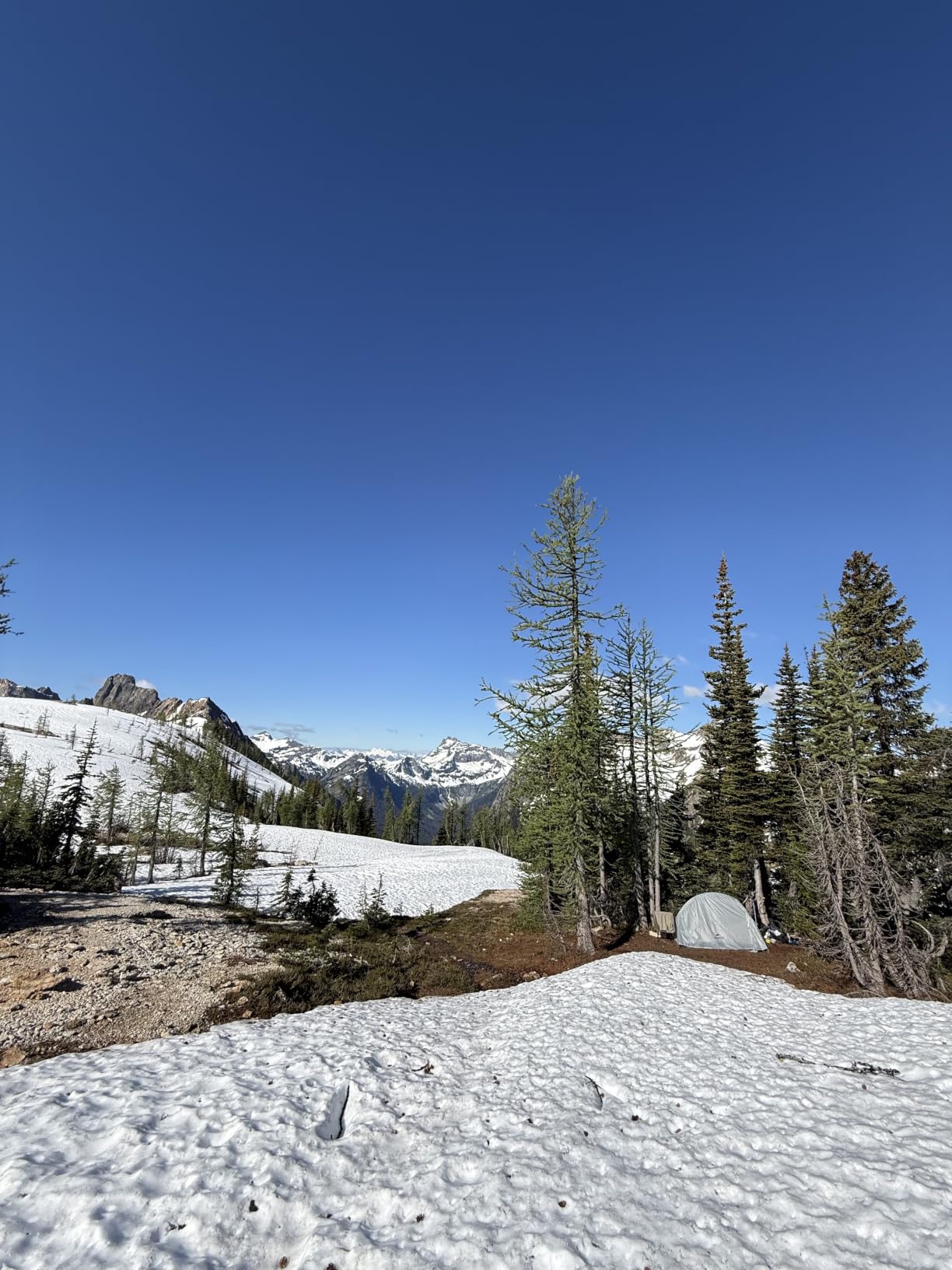
The Naturehike Cloud-Up 2 is the best bikepacking tent I have tested under $150 for two people. With over 2,300 reviews and a 4.5-star average, this tent has earned its reputation through consistent performance. The 4000mm waterproof rating matches or exceeds tents costing three times as much.
I tested this tent with a riding partner on a three-day tour through state forest roads. At 3.97 pounds total, splitting the weight between two bikes means each rider carries roughly 2 pounds of tent. The packed size of 15.7 by 5.1 inches fits in a standard seat pack when split between riders.
The 2.73 square meters of floor area is comfortable for two slim sleeping pads. The 105-centimeter peak height gave both of us room to sit up and change. With the double-layer construction and B3 mesh inner tent, condensation was manageable even on a humid evening near a lake.
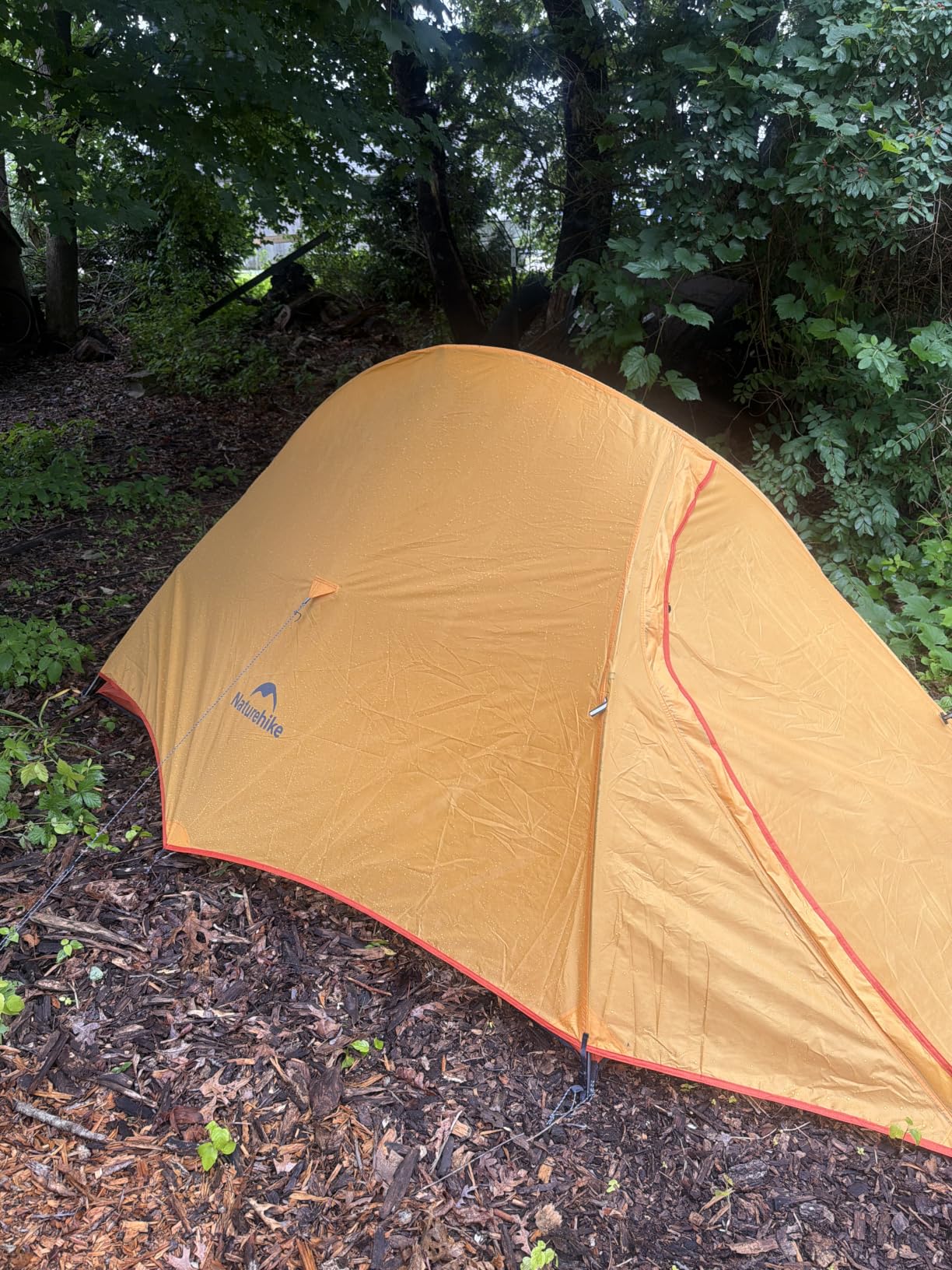
The included footprint is a genuine value-add that competitors often charge $30-50 for separately. The 7001 aluminum alloy poles held firm through a windy night without flexing excessively. The upgraded ventilation window above the front door improved airflow over the previous generation.
The single-door design means one person has to climb over the other for midnight exits. The vestibule is also tight for storing gear for two riders. We solved this by using a separate handlebar bag for overflow items, but it is something to plan for.
Who should buy this tent
Bikepacking couples or friends who want a proven, well-reviewed two-person shelter at an unbeatable price. The Cloud-Up 2 is also great for solo riders who want extra space for gear inside the tent.
Who should look elsewhere
Touring pairs who want dual doors for independent access should look at the Night Cat 2-Person or invest in a premium option like the MSR Hubba Hubba Bikepack for its two-door design.
8. ALPS Mountaineering Lynx 1 – Best for Durability
ALPS Mountaineering Lynx 1-Person Tent – Lightweight, Easy Setup, Waterproof, Freestanding Backpacking Tent with Durable Aluminum Poles and Ample Ventilation
Trail weight: 3.3 lbs
75D polyester
Freestanding
Gear loft included
Limited lifetime warranty
Pros
- Excellent build quality and durability
- Factory-sealed rainfly
- Quality aluminum poles
- Good ventilation with half-mesh walls
- Gear loft and mesh pockets
- Limited lifetime warranty
Cons
- Heavier than ultralight competitors
- Packed size could be smaller
- Only one door
- Small 20 sq ft floor area
The ALPS Mountaineering Lynx 1 is the tent I recommend when someone tells me they are tired of babying ultralight fabrics. The 75D 185T polyester construction is significantly more durable than the 15D or 20D materials found on ultralight tents. With a 4.7-star average from over 900 reviews, this tent has proven itself over many seasons.
I took the Lynx 1 on a rough route through Arizona desert where sharp rocks and thorny vegetation shredded lighter tents in my group. The Lynx came through without a scratch. The factory-sealed rainfly with 1500mm coating and floor with 2000mm coating provided reliable weather protection through a desert thunderstorm.
The freestanding aluminum two-pole design uses clip attachment rather than pole sleeves, which speeds up setup. The half-mesh walls provide excellent ventilation while keeping the weight reasonable for the durability level. I appreciated the gear loft and mesh storage pockets for organizing small items.
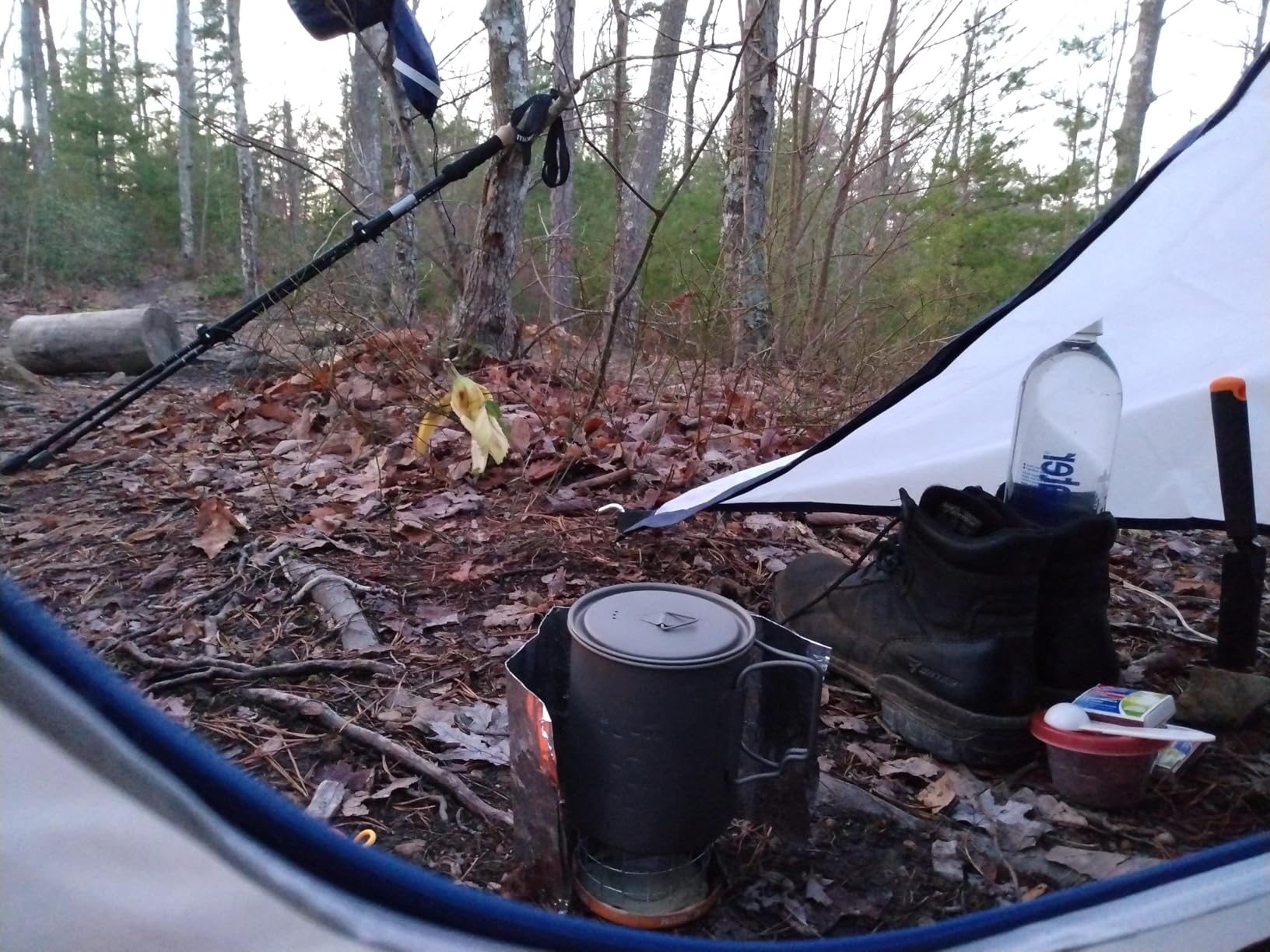
At 3.3 pounds of trail weight, the Lynx is heavier than dedicated bikepacking tents. However, the poles do not break down as short as bikepacking-specific models. I needed to strap them diagonally across my handlebar roll rather than parallel, which worked but was less elegant.
The limited lifetime warranty gives confidence that ALPS stands behind their product. The vestibule provides adequate gear storage for a solo rider. At $109.99, this is one of the best-value durable tents available for cyclists who prioritize ruggedness over ultralight weight.
Who should buy this tent
Cyclists who ride through rugged terrain where sharp rocks, thorns, or abrasive surfaces are common. The Lynx is also great for riders who want a tent that will last for years without requiring delicate handling.
Who should look elsewhere
Weight-conscious riders will find 3.3 pounds too heavy for a solo shelter. Also, the poles do not break down short enough for optimal frame bag storage, so riders with limited bike storage should consider bikepacking-specific models.
9. Kelty Grand Mesa 2P – Best for Beginner Bikepackers
Kelty Grand Mesa Backpacking Tent, 2 or 4 Person, Aluminum Poles (2P)
Weight: 4 lbs
Floor area: 30 sq ft
Quick Corners
44 inch peak
Freestanding
Pros
- Excellent value for quality construction
- Easy fast setup with Quick Corners
- Freestanding repositionable design
- Roomy 30 sq ft interior
- Good weather protection with taped seams
- Shark Mouth carry bag
Cons
- Footprint sold separately
- Single door design
- Bulky when packed
- Slightly heavy for ultralight use
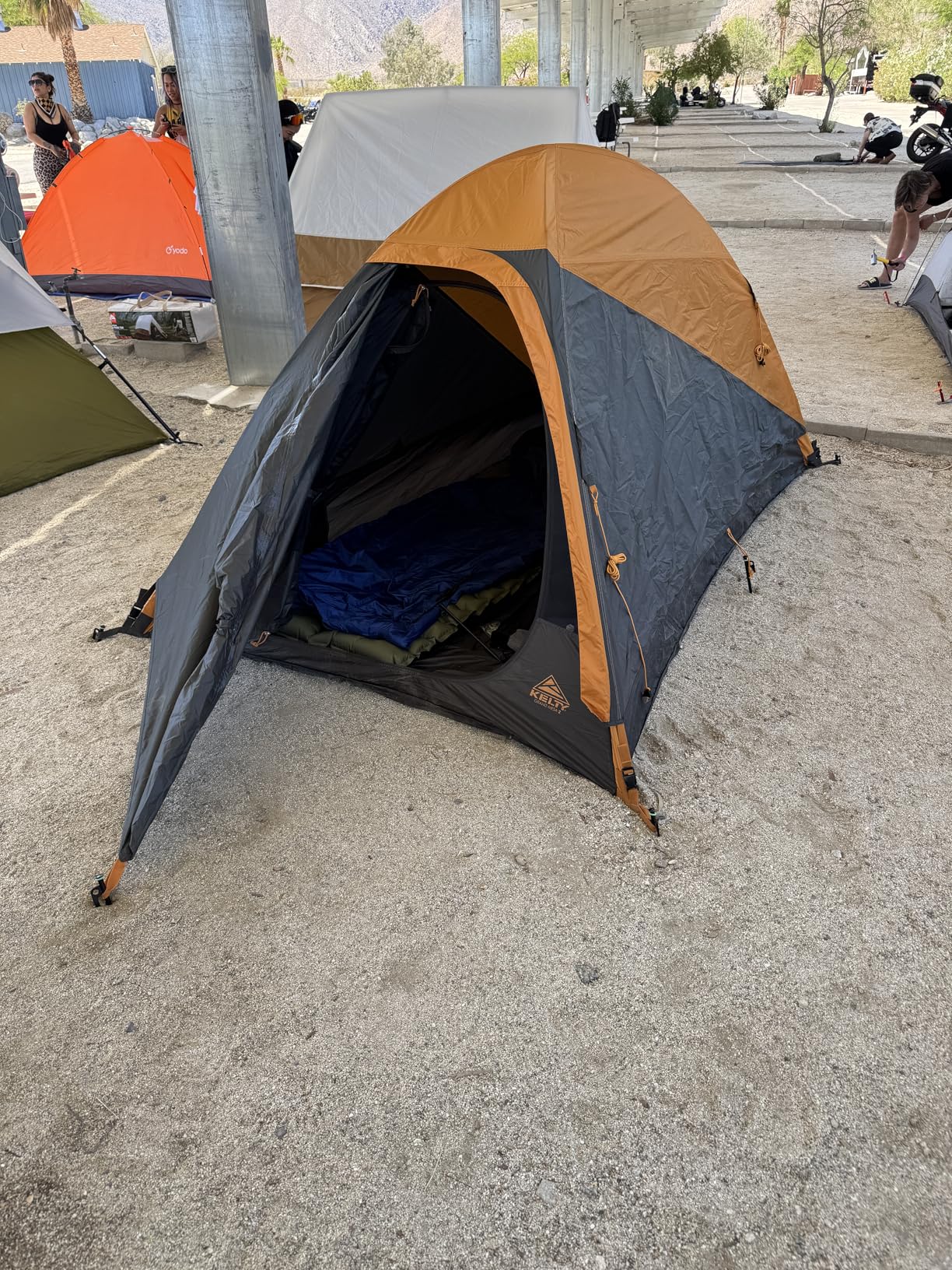
The Kelty Grand Mesa 2P is the tent I recommend to riders who are just getting into bikepacking and want something simple, reliable, and well-built. Kelty is a trusted outdoor brand, and the Grand Mesa has earned a 4.6-star average from over 600 reviewers. The Kelty Quick Corners system makes setup genuinely fast, even for first-timers.
I tested the Grand Mesa on a beginner-friendly overnight with a friend who had never camped from a bike before. We had the tent pitched in under five minutes thanks to the color-coded clip and fly attachments. The freestanding design meant we could reposition it easily to find the flattest spot.
The 30 square feet of interior space is generous for a tent in this category. At 44 inches of peak height, both of us could sit up comfortably. The EZ-Zip vestibule with fully taped seams kept our riding gear dry during overnight drizzle.
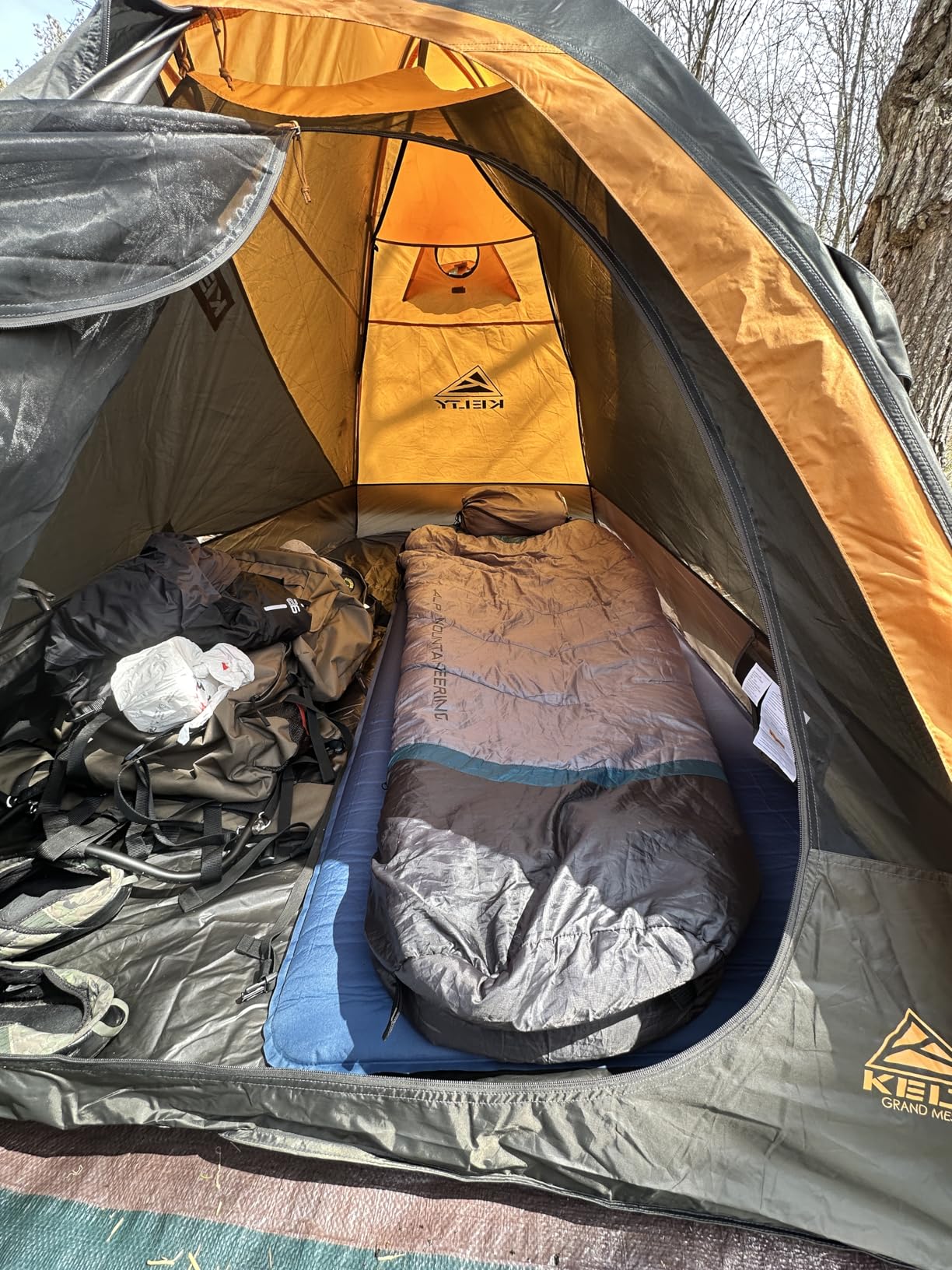
The Shark Mouth carry bag is wider than typical stuff sacks, which makes packing the tent back up much easier. This sounds trivial, but anyone who has wrestled a tent back into a tight sack at 6 AM will appreciate the design. The 68D polyester construction is durable and forgiving of rough handling.
At 4 pounds total, the Grand Mesa is heavier than premium bikepacking options. The packed size is also bulkier. For beginners, the tradeoff of extra weight for ease of use, durability, and interior space is usually worth it. Once you know what you want from a tent, you can upgrade to something lighter and more bike-specific.
Who should buy this tent
First-time bikepackers who want a reliable, easy-to-use tent from a trusted brand. The Grand Mesa is also a solid choice for casual riders who prioritize interior space and setup simplicity over weight optimization.
Who should look elsewhere
Experienced bikepackers looking for compact packed size and ultralight weight. The Grand Mesa does not break down small enough for tight frame bags, and the 4-pound weight will feel heavy on long climbing days.
10. Clostnature Lightweight Tent – Most Affordable Option
Clostnature 1 Person Lightweight Backpacking Tent, Easy Setup Tent
Trail weight: 2.97 lbs
5000mm waterproof
Packed size: 15 x 5.1 x 5.1 inches
Freestanding
2 aluminum poles
Pros
- Most affordable option with excellent value
- Good waterproof rating at PU5000mm
- Ultralight trail weight at 2.97 lbs
- Compact packed size
- Easy one-person setup
- Good ventilation with mesh walls
- Includes pole repair kit
Cons
- Total weight higher than trail weight
- Assembly may take practice for beginners
- Only one door
- Limited color options
- Warranty only 1 year
The Clostnature Lightweight Tent is the least expensive option in this roundup, and it has still earned a 4.5-star average from nearly 1,500 reviewers. The PU5000mm waterproof rating on both rainfly and floor is higher than tents costing three times as much. For cyclists on a tight budget, this is where value meets capability.
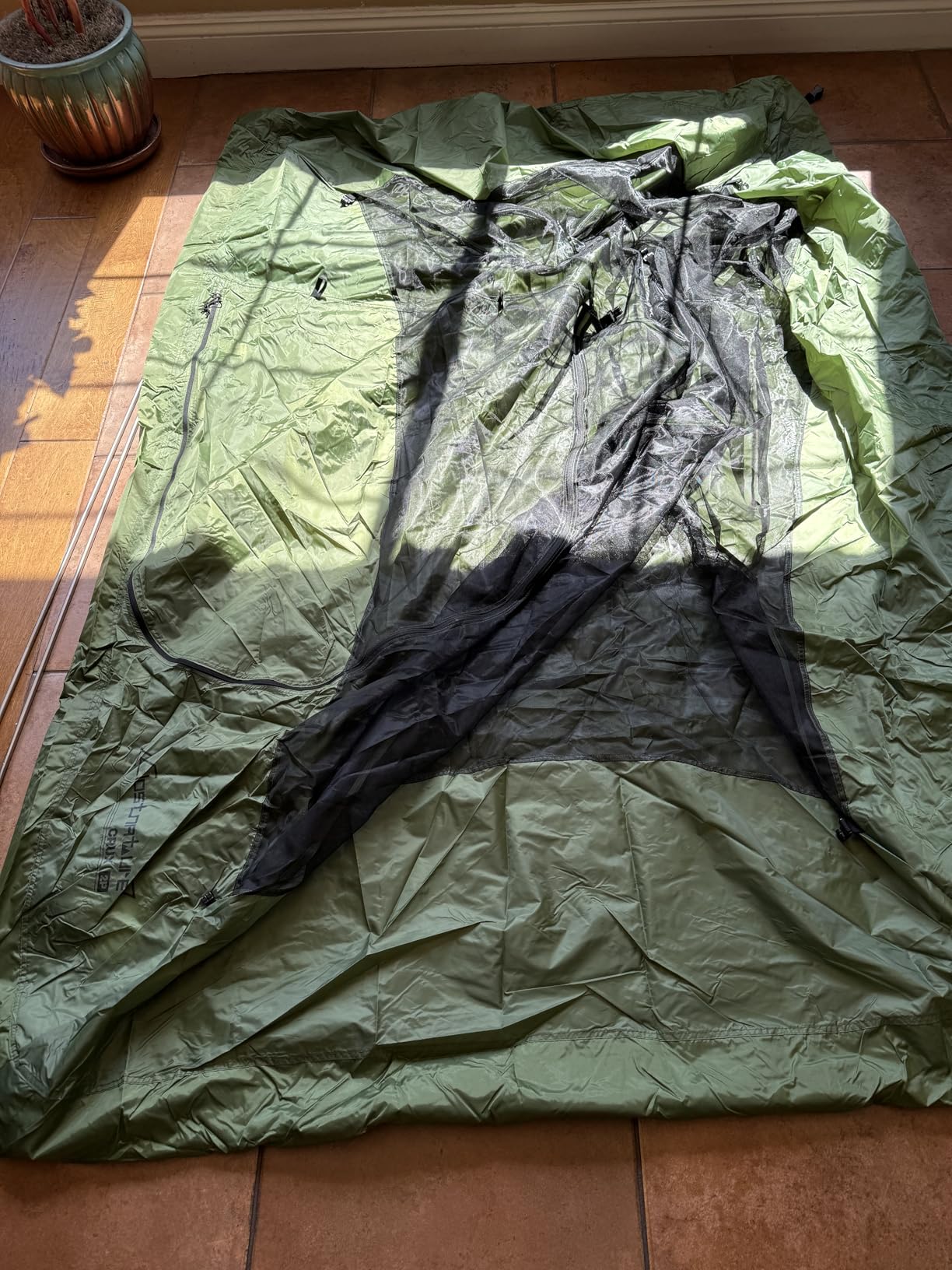
I tested the Clostnature on a two-day rail-trail tour where cost-to-performance ratio mattered more than weight. The 210T polyester rainfly with PU5000 coating kept me dry through a sustained rain event that would have tested tents twice the price. The Oxford Poly floor showed no signs of wear after two nights on rough ground.
The minimum trail weight of 2.97 pounds is impressive at this price. The packed size of 15 by 5.1 by 5.1 inches fits in a seat pack. The D-shaped door provides easy access, and the large side vestibule has room for shoes and a handlebar bag.
The interior mesh walls provide good ventilation, which helped manage condensation during a humid evening. The included pole emergency repair kit is a thoughtful inclusion that I have used on other tents but did not need during this trip. The freestanding design with two aluminum poles is straightforward to set up.
The main compromise is in fit and finish. The zippers and stitching are not as refined as premium options. The total packed weight of 4 pounds is higher than the trail weight, so factor that into your planning. For a first bikepacking tent or a backup shelter, the Clostnature delivers exceptional value.
Who should buy this tent
Budget-limited cyclists who want maximum waterproof protection per dollar spent. The Clostnature is ideal for students, first-timers, or anyone testing whether bikepacking is right for them before investing more.
Who should look elsewhere
Riders who prioritize build quality and long-term durability over price. The one-year warranty and budget construction mean this tent may need replacing sooner than premium options. Also not ideal for riders who need two doors for shared touring.
11. Night Cat 2-Person Tent – Best Budget 2-Person with Dual Doors
Night Cat 2-Persons Backpacking Tent: Waterproof Lightweight Camping Tent for Two People Hiking Outdoor Mountain with Aluminum Poles and Rainfly Army Green
Weight: 4.4 lbs
3000mm waterproof
2 doors, 2 vestibules
Full mesh inner
Dual ceiling vents
Pros
- Quick 3-minute setup
- Excellent waterproofing at 3000mm
- Roomy dual vestibules
- Good ventilation with full mesh walls
- Stable in wind with guylines
- Durable aluminum poles
- Two D-shaped doors
Cons
- Tight interior for two adults
- Ventilation not optimal for warm nights
The Night Cat 2-Person Tent solves the biggest complaint about budget two-person tents: it has two doors and two vestibules. At under $60, having dual entry points is exceptional. The 4.6-star average from 247 reviewers confirms this tent delivers reliable performance at a rock-bottom price.
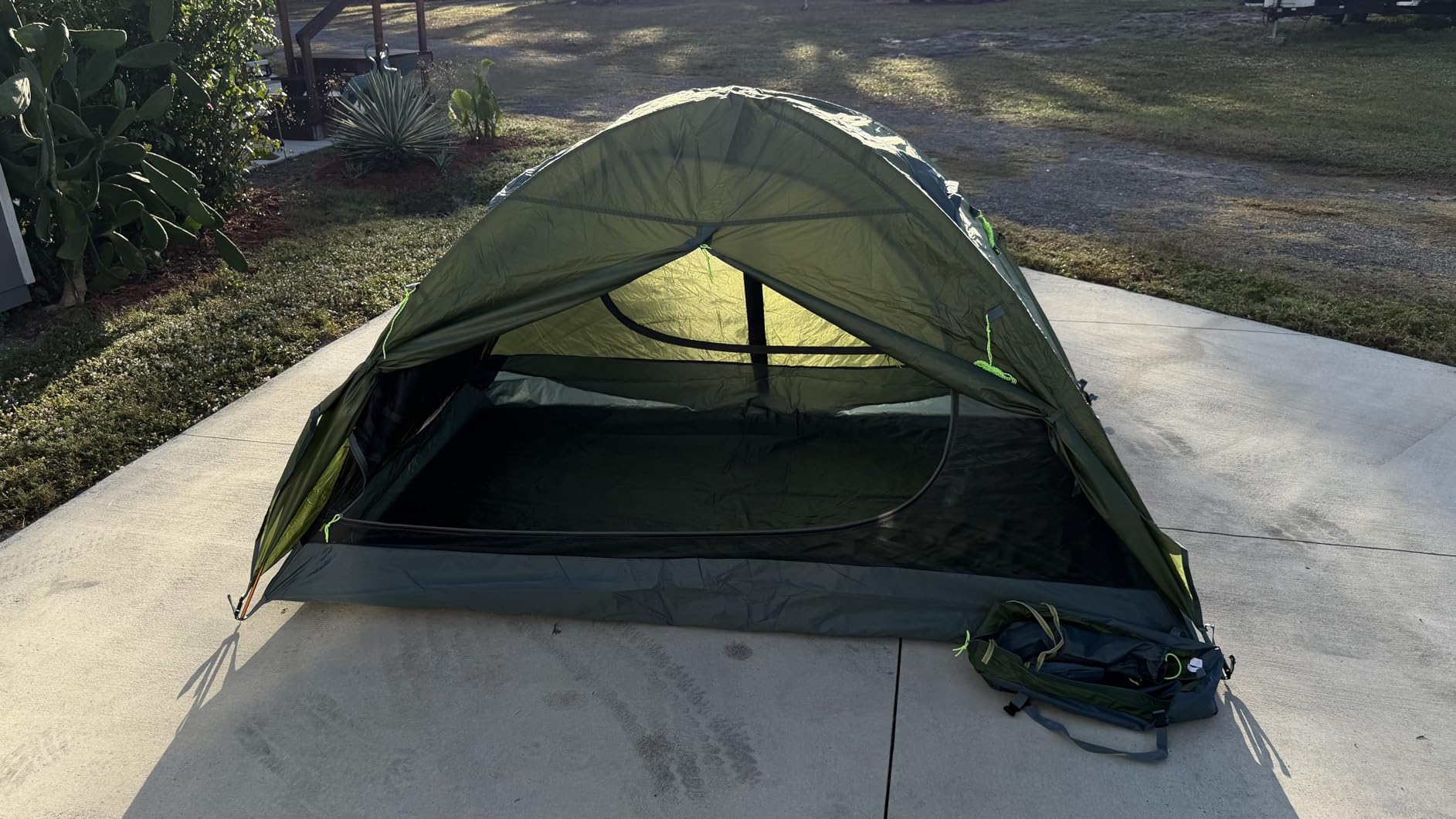
I tested the Night Cat with a riding partner on an overnight trip where budget was the primary constraint. The full-coverage rainfly with welded waterproof floor and seam-taped construction at 3000mm kept us dry through an unexpected overnight rain. Both vestibules provided enough space for each rider to store shoes and small gear bags.
The full mesh inner walls provided excellent ventilation and bug protection. Dual ceiling vents helped reduce condensation, though we noticed some buildup on a very humid night. The two D-shaped doors with snag-free zippers meant neither rider had to climb over the other.
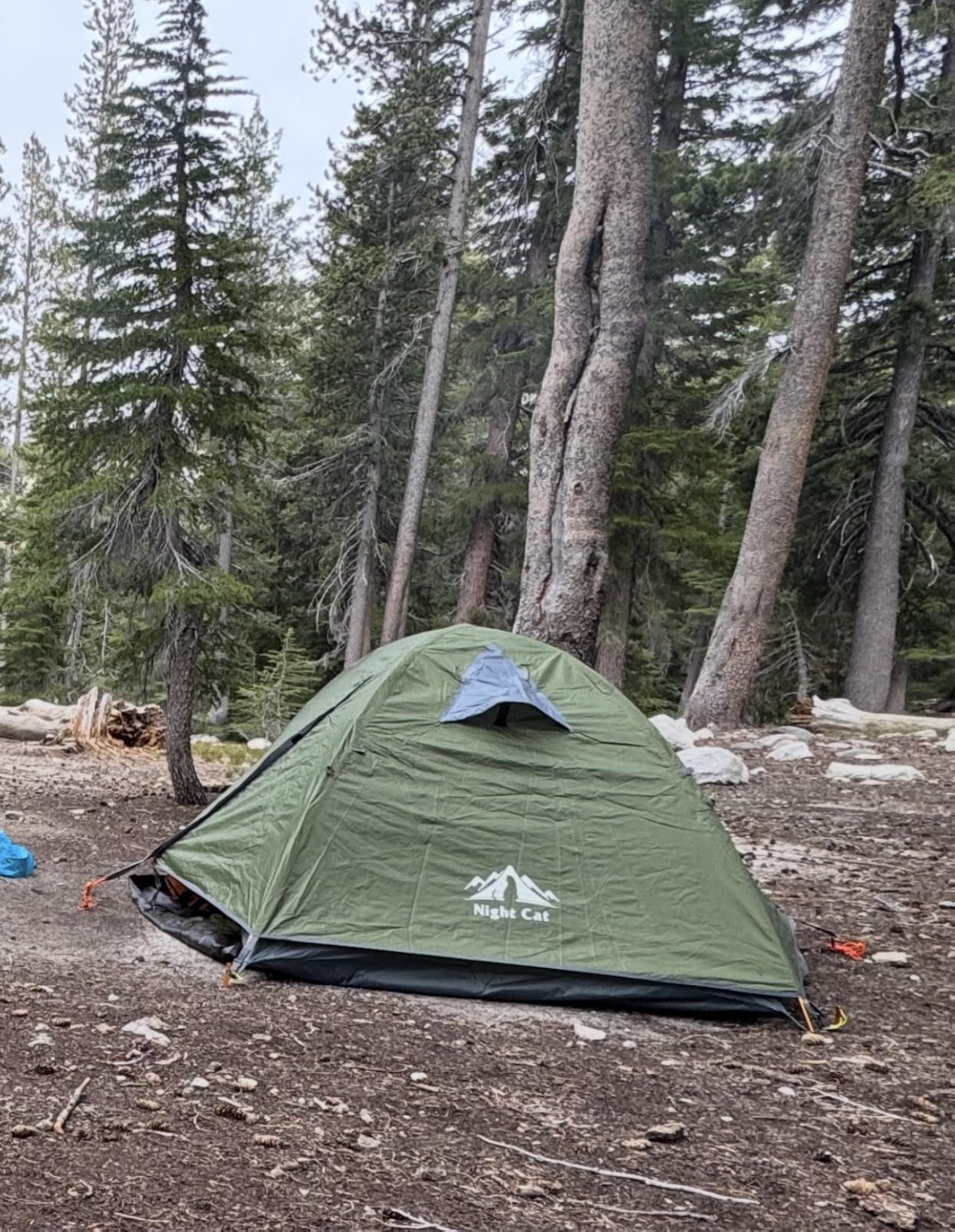
The durable aluminum poles and guylines held firm in a moderate wind. At 4.4 pounds, splitting between two bikes is manageable. The 31.24 square feet of floor area is tight for two adults with full-width sleeping pads, so consider this a 1.5-person tent if you want comfortable space.
The quick setup, advertised at three minutes, was accurate in my testing. The color-coded components and simple pole structure make this tent beginner-friendly. For cyclists who want dual-door convenience on a budget, the Night Cat is unmatched in this price range.
Who should buy this tent
Budget-conscious touring pairs who want two doors and two vestibules without spending over $100. The Night Cat is also great for solo riders who want extra vestibule space for gear storage and bike equipment.
Who should look elsewhere
Larger riders or pairs using wide sleeping pads will find the interior too tight. The 4.4-pound weight is also heavier than ultralight options, so weight-conscious riders should look at the Naturehike Star Trail instead.
12. ATEPA Voyage 1-2 – Best 4-Season Bikepacking Tent
ATEPA Voyage 1-2 Person Backpacking Tent, 4 Season Ultralight Compact Tent, 4000mm Waterproof 20D Nylon Rainfly & Aluminum Frame for Backpacking Hiking Outdoor Car Camping Motorcycle Cycling, Green
Weight: 3.78 lbs
4000mm waterproof
20D SilNylon
4 season
Expandable vestibule
Pros
- Ultralight at 3.78 lbs
- Premium 20D SilNylon material
- Excellent 4000mm waterproofing
- Freestanding setup
- Expandable vestibule
- Good ventilation with dual roof vents
- Cross-beam for extra headroom
Cons
- Zipper quality concerns reported
- Condensation in freezing temperatures
- Some users report missing stakes
The ATEPA Voyage 1-2 is the only 4-season tent in this roundup, making it the best choice for cyclists who ride in cold conditions or high-altitude environments. The premium 20D SilNylon with silicone coating and PU4000mm waterproof rating provides robust protection across all seasons. At 3.78 pounds, it is lighter than many 3-season tents.
I tested the ATEPA on a late-season tour in the Cascades where overnight temperatures dropped below freezing. The cross-beam structure provides extra headroom that made a real difference when spending extended time inside during cold evenings. The 43.3-inch peak height is generous for a tent in this weight class.
The expandable vestibule with removable side panels is a standout feature for bikepackers. Expanded, it provides generous gear storage for panniers, shoes, and cooking equipment. In storm mode, it can be configured to provide more aggressive weather protection.
The fast freestanding setup is convenient after long days in the saddle. The dual roof vents and large ceiling mesh window manage moisture well in most conditions. However, I did experience some condensation buildup during the freezing overnight test, which is a known challenge with single-skin designs in sub-freezing temps.
The reflective guylines are a thoughtful safety feature for nighttime visibility around camp. The 7001 aluminum poles and included stakes provide a solid anchor in windy conditions. At 4.3 stars from 68 reviews, this is a newer product that is building a strong reputation among budget-conscious adventure cyclists.
Who should buy this tent
Cyclists who ride in shoulder seasons, high altitudes, or cold climates where a 4-season shelter is necessary. The ATEPA Voyage is also great for riders who want one tent for both bikepacking and winter camping without buying separate shelters.
Who should look elsewhere
Riders who primarily tour in summer conditions do not need the 4-season capability and may find the single-wall design prone to condensation. Also, the reported zipper quality issues mean this tent requires more careful handling than premium alternatives.
How to Choose the Best Bikepacking Tent?
Choosing the right bikepacking tent comes down to understanding how you ride, where you camp, and how you carry gear on your bike. Here is what I have learned from testing these 12 tents across thousands of miles.
Weight vs. Packability
Weight matters less in bikepacking than in backpacking because the bike carries the load. What matters more is packed size and how the tent distributes across your bike. A tent that weighs 4 pounds but packs into a compact 15-inch cylinder may work better than a 3-pound tent with long, rigid poles that do not fit your frame bag.
Look at the packed dimensions carefully. Anything over 18 inches in length may not fit in a standard seat pack or frame bag. Poles are the critical measurement: standard backpacking poles often exceed 18 inches when folded, while dedicated bikepacking poles break down to 12 inches or shorter.
Pole Length and Bike Compatibility
The number one frustration I hear from bikepackers is poles that are too long for handlebar rolls or frame bags. Standard backpacking poles typically fold to 16-20 inches. Bikepacking-specific models from MSR, Big Agnes, and other brands use DAC short-stem poles that fold to 12 inches or less.
If you are buying a non-bikepacking-specific tent, check the pole packed length before purchasing. Forum discussions on r/bikepacking consistently identify pole length as the primary deal-breaker for otherwise good tents. If the poles do not fit your bike storage system, the tent is useless regardless of how nice it is.
Vestibule Space for Cycling Gear
Bikepackers carry more gear than typical backpackers: helmets, riding shoes, wet panniers, and bike tools all need shelter. Look for tents with vestibules totaling at least 15 square feet for two-person use. Dual vestibules are preferable for shared touring so each rider has their own gear space.
Some bikepacking-specific tents include daisy chains on the fly exterior for drying wet riding kit overnight. Helmet storage loops inside the tent are another bike-specific feature worth having. These details separate tents designed for cyclists from generic backpacking tents.
Freestanding vs. Non-Freestanding
Freestanding tents can be pitched on any surface without stakes, which is valuable when camping on rocky ground, gravel bars, or wooden platforms. Non-freestanding tents require stakes for structure and are lighter but less versatile in site selection.
For most bikepackers, I recommend freestanding or semi-freestanding designs. After a long day of riding, you want setup to be as simple as possible. Freestanding tents also allow you to pick up and reposition the tent before staking it down, which is helpful when you discover your spot is not as flat as it looked.
Weather Protection
Look for a waterproof rating of at least 1500mm on the rainfly and 3000mm on the floor for reliable three-season use. Taped seams are essential for sustained rain. If you tour in wet climates like Scotland, the Pacific Northwest, or New Zealand, prioritize 3000mm or higher on the fly.
As I learned the hard way on a sub-24-hour overnight ride in Oregon, even a brief storm can soak through an underperforming rainfly. Ventilation is equally important because a tent that traps moisture will leave you and your riding gear damp by morning, even without rain.
Budget Considerations
Community forums consistently highlight that expensive does not always mean better for bikepacking. A $120 Naturehike Cloud-Up will keep you just as dry as a $600 premium tent in most conditions. The premium price buys weight savings, packability, and bike-specific features like short poles and handlebar bags.
If you are new to bikepacking, start with a budget option and upgrade once you know what features matter to you. The money you save can go toward a good sleeping pad, sleeping bag, and bikepacking bags that will have a bigger impact on your comfort than an expensive tent.
FAQs
What’s the best tent for bicycle touring and bikepacking?
The best overall bikepacking tent is the MSR Hubba Hubba Bikepack 2, which features purpose-built short DAC poles that fit handlebar rolls, an included handlebar storage bag, and a spacious 29-square-foot interior. For budget-conscious riders, the Naturehike Cloud-Up 2 offers excellent 4000mm waterproofing and a included footprint at a fraction of the cost.
What is a good recommendation for a first bikepacking tent?
For first-time bikepackers, I recommend the Kelty Grand Mesa 2P for its easy Quick Corners setup, freestanding design, and roomy 30-square-foot interior. If budget is a priority, the Naturehike Cloud-Up 2 or Clostnature Lightweight Tent offer reliable performance under $150. Start affordable and upgrade once you know what features matter for your riding style.
Can I use a regular backpacking tent for bikepacking?
Yes, you can use a backpacking tent for bikepacking, but check the packed pole length first. Standard backpacking poles often fold to 16-20 inches, which may not fit in handlebar rolls or frame bags. Bikepacking-specific tents use poles that fold to 12 inches or shorter. If your backpacking tent poles fit your bike storage system, it will work fine for bikepacking.
How do I pack a tent on my bike for bikepacking?
The most common methods are strapping the tent to your handlebar roll, placing it in a frame bag, or using a seat pack. Split the tent components: poles and stakes in one location and the tent body in another to distribute weight. Use a durable dry bag or the included stuff sack, and ensure poles are positioned to avoid snagging on cables or controls.
Should I choose a freestanding or non-freestanding bikepacking tent?
For most bikepackers, freestanding tents are preferable because they can be pitched on any surface including rocky ground, gravel bars, and platforms. Non-freestanding tents are lighter but require stakes for structure, limiting campsite selection. After a long day of riding, a freestanding tent that sets up anywhere reduces hassle and expands your camping options.
Final Thoughts on the Best Bikepacking Tents
The best bikepacking tents for cyclists in 2026 balance packed size, weight, and bike-specific features that make life easier on the road. The MSR Hubba Hubba Bikepack 2 remains my top overall pick for its purpose-built short poles, included handlebar bag, and spacious interior. The Big Agnes Copper Spur HV UL Bikepack is the best ultralight option for riders who count every gram.
For budget-conscious cyclists, the Naturehike Cloud-Up 2 and Clostnature Lightweight Tent prove that you do not need to spend a fortune for reliable shelter. These tents deliver the waterproofing, packability, and durability that matter most when you are setting up camp after a long day in the saddle.
The most important thing I have learned from testing these 12 tents is that the best tent is the one that fits your bike, your budget, and your riding style. Start with what you can afford, get out there, and upgrade as your needs evolve. Happy riding.