
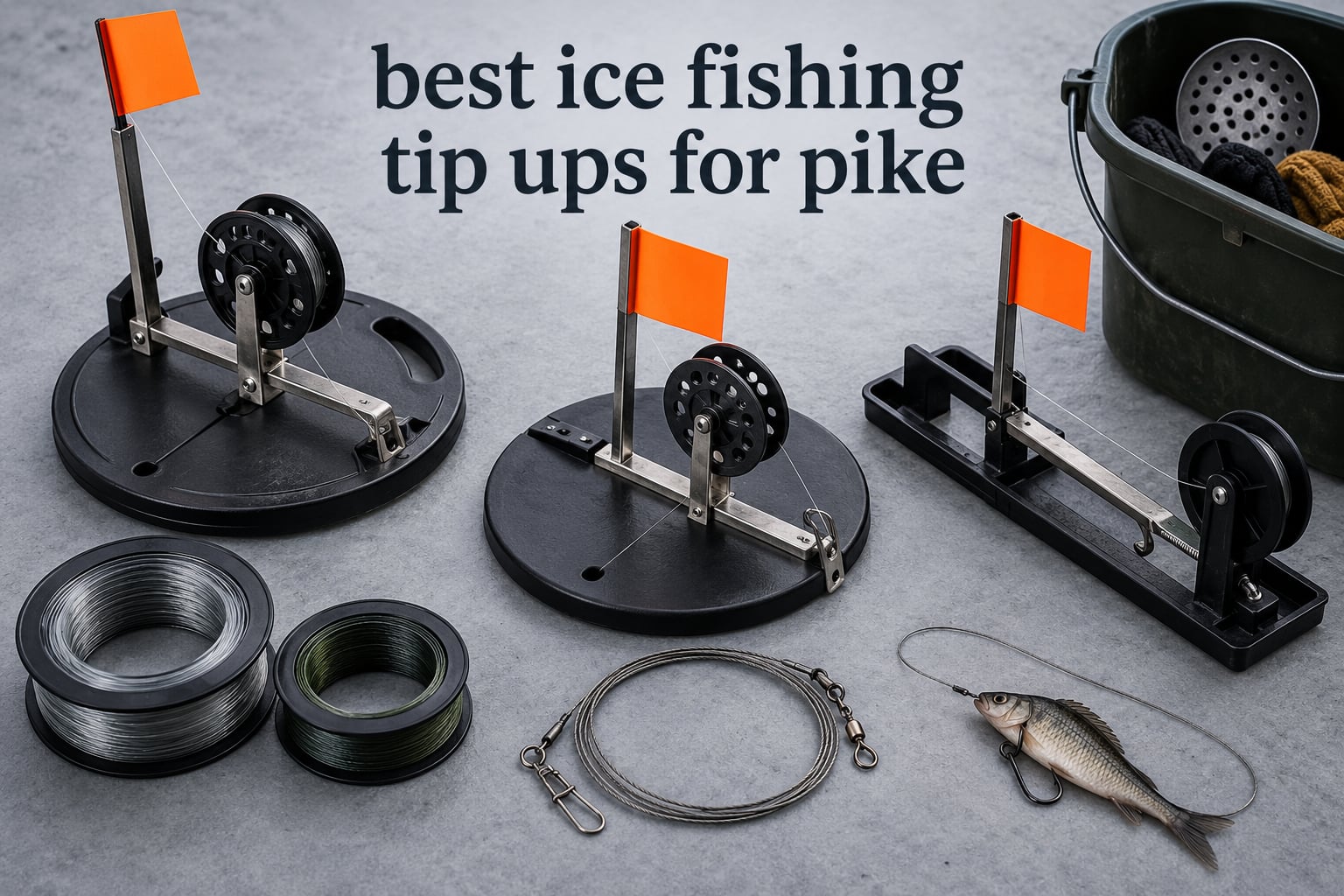
Pike do not nibble politely. A northern pike sees a bait drifting past the edge of a weed bed, commits, and takes off with it, which is exactly the behaviour an ice fishing tip-up is built around. You set the bait, the device holds the line below the ice, and you walk away until a flag snaps upright. That single design idea lets you run a legal spread of lines across a lake instead of staring at one hole.
Below is our guide to the best ice fishing tip ups for pike. We picked ten devices, from insulated spool tip-ups to rod-holder frames and one electronic alarm, and we ranked them on the things that actually matter for this species: how much line the spool carries, whether the hole survives a cold snap, whether the flag is visible across a wide spread, and whether the trip mechanism will release when a pike picks up a bait.
The short answer on bait, since it comes up more than anything else: dead smelt, cisco or sucker rigged on a quick strike rig, hung about half-way down the water column. We get into the details further down, along with the leader problem that costs more pike than any other single mistake.
Table of Contents
Top 3 Picks for Pike on the Ice for October 2026

Frabill 1660 Pro Thermal Tip-Up
- Insulated 10 inch hole cover
- Sub-Zero pre-lubed re-greaseable shaft
- Dual light and heavy trip settings

Beaver Dam The Original Tip-Up
- 23 inch pine base
- Aluminum tube bearings
- Freeze-proof lubricant
Our top pick has the deepest review history in the category and the fewest complaints that matter for pike anglers. The Beaver Dam is the mechanical option if you want a device that never needs re-lubricating between holes, and the Celsius pack is the honest way to start a spread without buying six individually.
Best Ice Fishing Tip Ups for Pike in October 2026
| Product | Specifications | Action |
|---|---|---|
| Frabill 1660 Pro Thermal Tip-Up |
|
Check Latest Price |
| Celsius Multi 3 Pack Tip-Up |
|
Check Latest Price |
| Beaver Dam The Original Tip-Up |
|
Check Latest Price |
 Deep Freeze BlueTipz Tip-Up Alarm Deep Freeze BlueTipz Tip-Up Alarm |
|
Check Latest Price |
 Bullnose Original Blue Tip Down Bullnose Original Blue Tip Down |
|
Check Latest Price |
 Ifish Pro Tip-Up with Rod Holder Ifish Pro Tip-Up with Rod Holder |
|
Check Latest Price |
 Bullnose Big Red Tip Down Bullnose Big Red Tip Down |
|
Check Latest Price |
 HT Polar Tip-Up 200 Yard Spool HT Polar Tip-Up 200 Yard Spool |
|
Check Latest Price |
 Finicky Fooler Ice Fishing Tip Up Finicky Fooler Ice Fishing Tip Up |
|
Check Latest Price |
 Adnee Freeze-Proof Tip-Up 10 inch Hole Adnee Freeze-Proof Tip-Up 10 inch Hole |
|
Check Latest Price |
Two things stand out in that table. The insulated units are the ones worth paying up for if you fish through a cold snap, and the tip-down frames are the ones worth paying up for if you want a real rod under the fish.
1. Frabill 1660 Pro Thermal Tip-Up: Best Overall Tip-Up for Pike
Frabill Pro Thermal Original Tip-Up, Multi, One Size (1660)
Insulated cover for a 10 inch hole
Pre-lubed shaft-in-shaft, re-greaseable
Dual light and heavy trip settings
Pros
- Hole insulation holds off freeze-up in hard cold
- Sensitive flag trips on soft pike takes without wind false positives
- Fits a 10 inch auger hole and packs into a 5 to 6 gallon bucket
- Shaft-in-shaft design can be re-greased for many seasons
- Removable spool shaft for easier line changes
Cons
- Plastic flag arm can crack in extreme cold on first use
- Flag sits low and can be hard to see through deep snow
- Ice builds on the pivot after repeated dunking
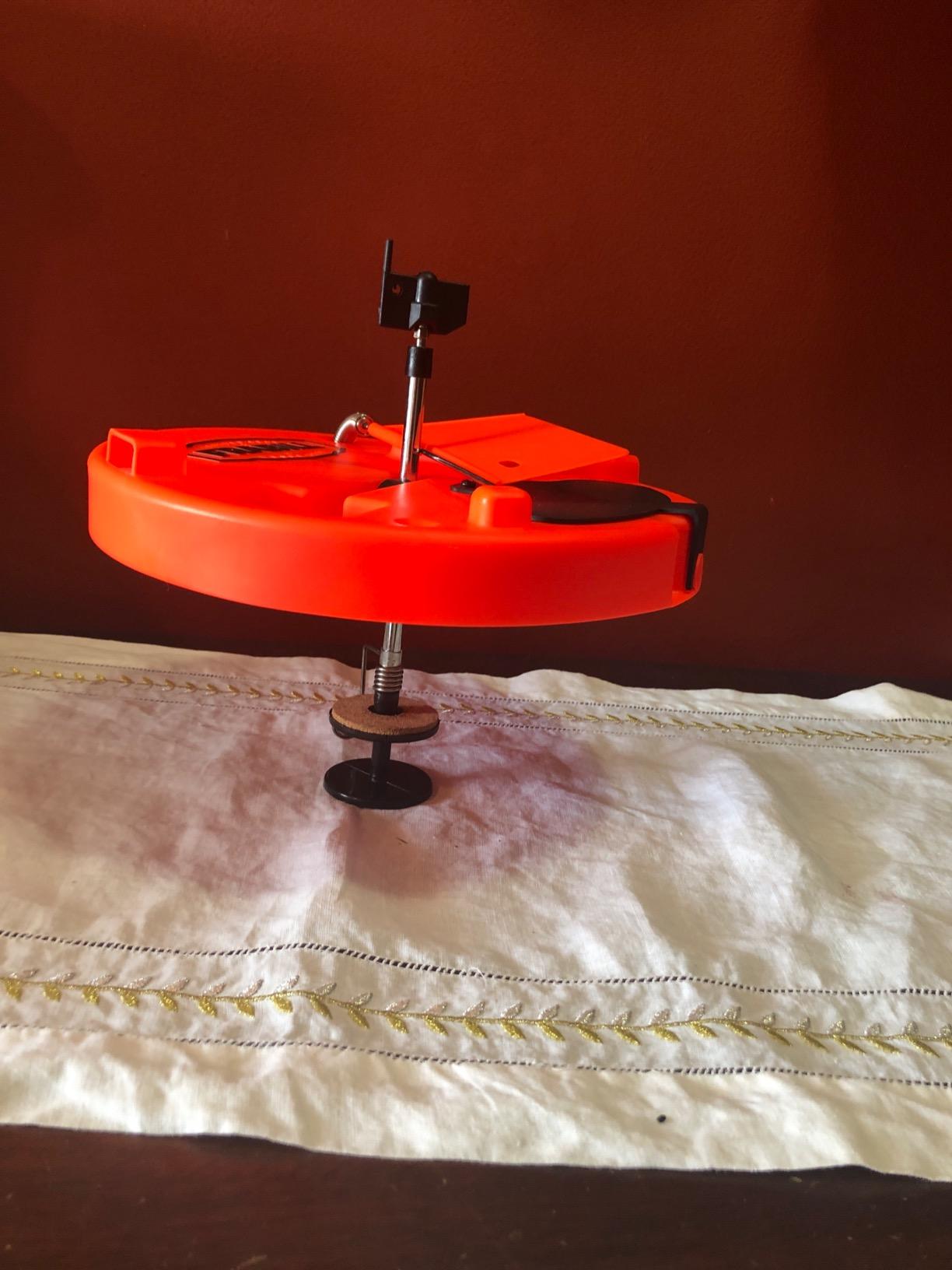
This is the tip-up I recommend to someone buying their first serious pike spread. It has more owner reviews than anything else on this list, and the pattern in them is consistent: the insulated dome keeps the hole open overnight in temperatures where bare wooden models ice over, and the flag triggers on the soft lift a pike gives before it runs.
The dual light and heavy trip settings matter more for pike than for most species. Heavy setting for a flag that sits over deep water or for anglers who move around a lot between holes. Light setting when you are watching structure where pike are picking up a bait delicately and you would rather deal with a false trip than a missed fish.
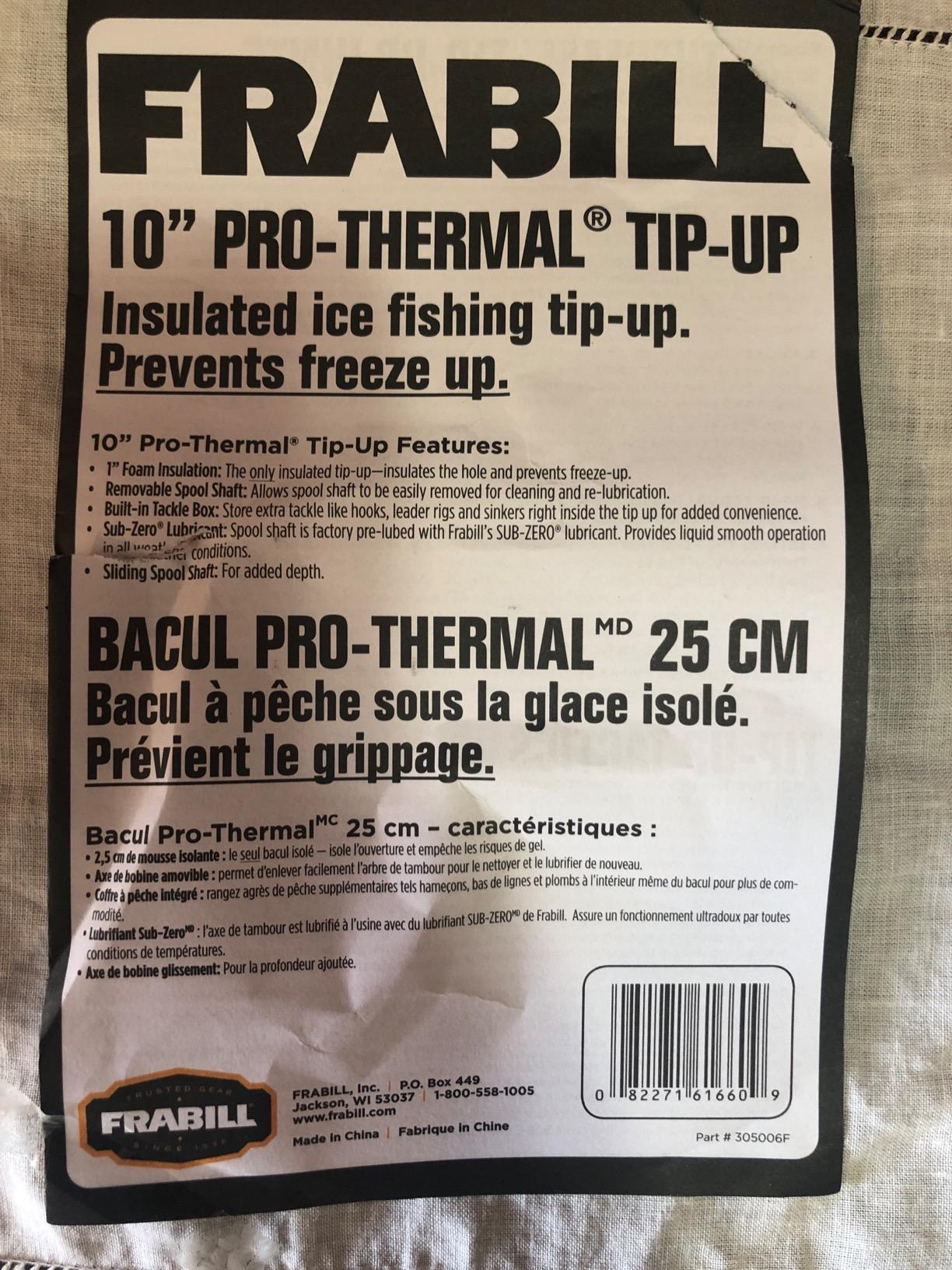
Construction is the reason it ages well. The shaft-in-shaft design came pre-lubed with a low-temperature lubricant, and when that eventually gives out you re-grease it yourself rather than replacing the unit. The removable spool shaft is a small thing that saves real annoyance when you are swapping from heavy wire leader line to something lighter for panfish.
Two weaknesses to plan around. The plastic flag arm is the part most likely to crack if you drop the tip-up on hard ice in a cold snap, so treat the base gently. And the flag is short, which means a snowstorm can bury your visual sweep, something our flashers for anglers help you solve by throwing a reflective marker on each flagged hole.
What it handles well on a pike spread
Multiple holes on one trip. The unit packs flat enough for a bucket, so six of them move to a lake in one trip through a gear sled without any trouble. Spool capacity is more than adequate for weed-bed depth and mid-lake structure.
Overnight cold. The insulated cover is the entire point. If you set a spread before a freeze-up and walk away, a bare metal spool can seize, and you lose the fish without ever hearing it.
Where it falls short
Freeze-up on the pivot is the recurring annoyance. Owners who dunk the tip-up repeatedly while moving between holes get ice building in the mechanism, which makes it awkward to collapse for the trip home.
Deep snow visibility. On a lake that got 40 inches of snow, a low flag needs a spotter rotation or a flasher to find it quickly.
2. Celsius Multi 3 Pack Tip-Up: Best Value Pack for a First Spread
Celsius Multi 3 Pack Tip-Up with Tackle, One Size
Three tip-ups per pack
Tackle included for immediate use
Nylon outer construction
Pros
- Three units cover several holes on one trip
- Tackle is bundled so you can fish the same day
- Compact body packs easily into a gear bucket
- Sensible choice for spreading out on unknown structure
Cons
- Trip sensitivity is less refined than insulated models
- 4.0 average reflects mixed durability reports
- Nylon outer body can stiffen in deep cold
Most anglers do not legally run one line. The practical reason so many people own three tip-ups at once is that a spread of three covers more structure than a spread of one, and this pack is the fastest way to get there without shopping six separate units.
The bundle also includes tackle, which saves a trip to the tackle box on a cold morning. We still replace it. Generic bundled hooks are light for pike, and the fix is a quick strike rig with a single treble or a #2 treble on a heavy leader rather than whatever fits the hook from the pack.
Where this pack earns its place
Early-season reconnaissance. When you are finding where pike are holding and have not settled on a lake, three cheap tip-ups let you test three spots in one afternoon.
Freshwater species chasing. Fishing a shallow lake where pike are incidental and panfish are the point, the simple mechanism and the compact size are a fair trade for precision tuning.
Where it falls short
The nylon outer body stiffens in deep cold. If you are fishing through a serious cold snap, this is the wrong pack. Insulation is not optional when the air temperature is the thing freezing your hole.
Trip sensitivity is not adjustable in the way the better units are. It also carries the lowest average in this roundup, which means a heavier share of durability complaints than the insulated models above it.
3. Beaver Dam The Original Tip-Up: Best Mechanical Build
Beaver Dam BDTP-RD Rail Tip- Ups Red Ruler Rail Tip- Ups,Red/Red
23 inch pine base for stability
Aluminum tube bearings, smooth quiet trip
Freeze-proof lubricant
Pros
- Pine base is stable even over wide or rough holes
- Aluminum tube bearings give smooth and quiet trip action
- Freeze-proof lubricant works without re-greasing between trips
- Built in the USA with a multi-season durability reputation
- Integrated ruler helps with depth setting
Cons
- Larger footprint than bucket-packing insulated models
- Heavier and bulkier to carry on long walks
The Beaver Dam is the answer to the question forum anglers ask most often, which is what to buy once. It is a mechanical tip-up with a wooden base and aluminum bearings, and the bearings are why it feels different from a plastic spool unit the moment a fish pulls.
Smoothness matters more than it sounds. A jerky spool drags on the line, the drag cuts into your leader, and the trip arm releases at an unpredictable moment. The aluminum tube bearings give the spool a consistent pull, which makes the trip feel repeatable and the flag tell you what the fish is doing.
The 23 inch pine base is not just decoration. It is long enough to bridge a hole that has slumped or refrozen unevenly, so the tip-up sits flat instead of rocking. On rough lake-bottom ice near structure, that stability is the difference between a set you can trust and one that needs adjusting every hour.
What it does better than anything else here
Multi-season use. The freeze-proof lubricant and sealed bearings mean you do not service it between trips. Serious anglers who fish 50 days a season want exactly this.
Big fish under load. A pike running with 30 lb of line and a wire leader puts real tension on a spool. A quality bearing and a rigid base hold up better than thin plastic frames.
Where it falls short
Carry weight and bulk. The pine base will not fit inside a five-gallon bucket alongside the rest of your gear, so you plan a larger sled or a separate bag.
Footprint on the ice. A longer base needs a wider stance of holes. On a lake where you are working a tight drop-off, that footprint can push you off the structure you paid to reach.
4. Deep Freeze BlueTipz Tip-Up Alarm: Best Night-Fishing Add-On
Deep Freeze BlueTipz Tip-Up Ice Fishing Alarm – Bluetooth Transmitter (2 Pack) – Bite Alarm – Ice Fishing Tip-Up Light – Ice Fishing Gear & Accessories – Free Bluetooth iOS & Android Application
Bluetooth alert to phone or receiver
Color-changeable bright LED
Clips to most standard tip-ups
Pros
- Phone alert arrives the moment a tip-up is struck
- Colour-changeable LED shows which flag went up
- Works as a plain beeper with the separate receiver
- Clips to tip-ups and tip-downs without an adapter
Cons
- Effective range drops to around 50 yards in some conditions
- AAA battery can drain while switched off
- Two-pack ships transmitters only
- Receiver sold separately
This is not a tip-up, it is the sensor you clip onto one, and it changes how you fish overnight. A flag going up twenty yards behind your shelter at two in the morning is information you will not act on until dawn. A phone alert gets you out of the tent while the pike is still moving.
The app lets you name each transmitter, so the alert tells you which hole fired before you are even out the door. The colour-changeable LED is the part owners rate most highly in practice, because it tells you from the shelter door which one of your six tips tripped.
It attaches to tip-ups, tip-downs and automatic hook setters. Most standard units need no adapter, which matters if your spread mixes styles the way ours does.
What it changes about how you fish
Overnight and first-light sessions. Owners consistently describe this as the difference between catching the fish that bite at 2am and finding out about them at 6am.
Spreads wider than you can walk. If your legal line limit lets you set more holes than you would realistically patrol, the alert lets you spread without babysitting.
Where it falls short
Range is the honest limitation. The listed range is far greater than what owners report in open terrain, where effective distance drops to roughly 50 yards. Under a shelter with walls, it does better.
The base pack is transmitters only. If you want the receiver beeper as a backup you buy it separately, and one two-pack will not cover a typical multi-hole spread.
5. Bullnose Original Blue Tip Down-Tip Up: Best Tip-Down for Spinning Tackle
Bullnose Products Original Blue Ice Fishing Tip Down-Tip Up- Sensitive to The Slightest Fish Bites- Fits Most Spinning Reels and Some Smaller Straight-Line Reels.
Rocking tip-down sensitivity
Steel frame 9 in long by 8 in high
Fits standard 3/4 inch rod handle
Pros
- Rocking motion catches the lightest takes on the spool
- Frees you from hand-holding a rod all day
- Steel frame holds heavier line for bigger fish
- Frame collapses for moving between holes
Cons
- Sized for most spinning reels and only smaller straight-line reels
- Shorter frame is less suited to very heavy spooled tackle
- Requires a rod and reel at each hole
A tip-down works differently from a tip-up. You clip your rod into the frame and the rod butt balances on it, so the rod tip reacts to a take with the sensitivity of fishing it by hand. For pike that are working a bait softly, that sensitivity is the whole argument.
This is the smaller of the two Bullnose frames. It measures 9 inches long by 4.5 inches wide by 8 inches high, and the plastic clip fits a standard 3/4 inch rod handle. If you are spinning for pike, that sizing is correct.
The steel frame is heavier than a plastic tip-up base, and that weight is the point. It resists the rocking motion rather than absorbing it, so light pressure registers at the rod tip instead of disappearing into the frame.
Who should use it
Anglers fishing spinner rigs for pike in shallow structure. The tip-down lets you set a rod on a spinnerbait across a bay and cover six presentations instead of hand-holding one.
Anyone who already owns a spinning setup and wants a second rod on the ice without buying a tip-up and re-rigging line.
Who should skip it
If your pike fishing means 30 lb wire and a heavy spool of line, this frame is too short. Owners and the manufacturer guidance both point heavy pike anglers to the taller version.
It also needs a rod and reel on every hole, which means a full rod-and-reel spread is part of the transport plan.
6. Ifish Pro Ice Fishing Tip-Up: Best Rod-Holder Tip-Up
Ifish Pro Ice Fishing Tip-Up
12 inch base
14 inch tall three-dimensional flag
Light, medium and heavy trigger settings
Pros
- Rod holder means you fish a real rod rather than spool only
- Three trigger settings tune the trip to fish and line
- 14 inch flag is easy to read across a wide spread
- Folding rod holder locks for transport
Cons
- Rod-holding arm reported as flimsy for its size
- A minority of users report the flag not tripping on real movement
- Balancing the rod takes practice
This is the one to buy if the idea of hand-holding line for a pike is what stops you from setting a spread. The rod holder folds up and locks, you drop your rod into it, and the trigger mechanism takes over the job of reacting to the bite.
Users in northern Minnesota credit it with better hook-up rates than spool-only tip-ups, and the reason is straightforward. With a rod in your hand, you can set the hook into a moving fish rather than waiting for the spool to stop and hoping.
Three trigger settings, light through heavy, let you match the trip to the presentation. The flag stands 14 inches tall with a three-dimensional face, and that height is genuinely useful when you are reading a spread through blowing snow or low light.
Where it wins
Big fish hook-ups. If you are confident a hole holds pike and want a rod ready to fight, the rod holder is worth more than spool capacity.
Wide spreads. A 14 inch flag is readable from further away than most flags on this list, which cuts your walk between holes.
Where it disappoints
The rod arm itself is reported as flimsy relative to the rest of the build. That is the part most likely to disappoint on a trophy fish.
A minority of owners report the flag not tripping even when they could see line movement on a fish finder. At least one reviewer attributes that to setup rather than to the device, which is worth knowing before you troubleshoot the wrong thing.
7. Bullnose Big Red Tip Down-Tip Up: Best Tip-Down for Big Pike
Bullnose Products Big RED Ice Fishing Tip Down-Tip Up- Sensitive to The Slightest Fish Bites- Used for Both Larger Reels and Heavier Line as Well as Smaller Reels and Lighter Line.
Open frame 12 in long by 10.5 in high
Alloy steel and plastic construction
Clip fits standard 3/4 inch rod handle
Pros
- Taller frame sized for larger reels and heavier line
- Rocking motion registers subtle takes not just hard pulls
- Durable steel holds up on rough ice
- Works with a real rod to improve hook-up odds
- Frame collapses flat for transport
Cons
- Taller frame takes more bucket space than the smaller model
- Requires a compatible rod and reel per hole
- Balancing the rod on the frame takes practice
Of the two Bullnose frames, this is the one built for pike. The open frame measures 12 inches long by 4.5 inches wide by 10.5 inches high, and that extra height exists so a larger reel and a heavier spool of line can sit on it without the balance point going wrong.
That matters because pike fishing with a wire leader changes the load on the spool. A frame sized for a light spinning setup will feel vague under that kind of tension. The taller frame keeps the rod loaded enough that a take registers at the tip.
It carries the strongest five-star share of the two Bullnose models, and the collapsing frame means it moves between holes without becoming a problem in a full sled.
Where it wins
Heavy leaders. If you are running wire because of pike teeth, this is the frame that carries it properly. Anglers on the Great Lakes forums describe 50 lb mono and 30 lb wire on exactly this kind of setup.
Big fish with a real rod. Fighting a large northern pike on ice is a rod job, and this puts you on a rod without holding it.
Where it falls short
Space. The taller frame takes more room in a bucket, so a full six-unit spread needs a bigger carry system than the smaller model.
Practice. Getting the rod balanced on the frame correctly is not intuitive the first time. Budget a few minutes on the first hole.
8. HT Polar Tip-Up with 200 Yard Spool: Best for Sub-Zero Cold
HT Enterprise Polar Tip-Up with 200 Yard Spool
200 yard spool with 200 pound breaking strength
Wind-free trip wire
Sub-zero rated trip shaft
Pros
- Guaranteed not to freeze up in sub-zero conditions
- Wind-free trip wire reduces false flags
- 200 yard spool with 200 pound breaking strength suits pike
- Spool handle and integrated ruler aid control and depth
- Multi-design trip shaft gives consistent triggering
Cons
- Flag runs short and can be hard to spot in deep snow
- Wire trip setup departs from standard spooled tip-ups
This is a different machine from the insulated plastic tip-ups above, and the difference is line capacity. The spool carries 200 yards at 12 lb breaking strength in a wire trip setup, which gives you far more depth range and far more room for a pike to run before it reaches the spool.
The owner review we trust most in this set describes the best catch on this tip-up as a 21 lb northern pike. That is the most direct evidence in the roundup that this unit handles fish far bigger than a bucket of baitfish.
The wind-free trip wire is a nice piece of thinking for pike anglers. Flags that trip on nothing send you across the ice for nothing, and a trip design that ignores wind movement saves you from a long walk back.
Where it wins
Deep water and steep drop-offs. Two hundred yards of line means a bait set well below the ice contour and a fish that runs before it ever comes back up.
Hard cold. The freeze guarantee is the headline, and it is the reason this unit exists.
Where it falls short
The flag is short, which hurts in deep snow. Pair it with a flasher on each hole if a storm is forecast during your trip.
The wire trip setup is unfamiliar. If you have only used spooled tip-ups, spend five minutes rigging one before you commit a whole day to it.
9. Finicky Fooler Ice Fishing Tip Up: Best General-Purpose Tip-Up
Finicky Fooler Ice Fishing Tip Up
Medium rod power with moderate line weight
Cork handle
Listed for trout, walleye and perch
Pros
- Cork handle gives a traditional comfortable grip
- Medium power and moderate line weight suit general setups
- Compact single-piece design is simple to set repeatedly
- Listed target species cover common pike lake bycatch
Cons
- Listed target species do not include pike
- Moderate line weight is light for heavy wire leaders
- Fewer reviews than other picks on this list
Being straight with you about this one: the listed target species are trout, walleye and perch. Pike are not on that list, and the moderate line weight is not what you would choose for a wire leader. This is an all-rounder, and it is a good one.
What makes it worth a place on this list is that most lakes where you will find pike also hold walleye and perch, and pike are frequently bycatch rather than the target. A medium-power setup with a cork handle is a comfortable, honest general tool for a lake where you are not chasing a specific fish.
The 4.6 rating is strong, but the review base is the smallest in this roundup at 43. That means less long-term feedback than the classics above it, which is the real trade-off here. You are buying a well-liked general device rather than a proven pike specialist.
Where it works
Lake transitions. In a lake where pike are incidental and you are moving between species, the medium power is the right all-round answer.
Bait variety. When you are using a light leader and a smaller bait, a moderate line weight setup keeps the presentation natural.
Where it fails pike anglers
Heavy wire. Do not run a wire leader on moderate line weight. If pike teeth are a concern, move up in power or move to one of the heavier units on this list.
Thin long-term data. Forty-three reviews tells you what the current owners think, not how it holds up over a decade.
10. Adnee Freeze-Proof Tip-Up for a 10 Inch Hole: Best for Night Visibility
Ice Fishing Tip-Up, Freeze-Proof Ice Fishing Accessories Covers 10″ Hole
Antifreeze nylon with 304 stainless steel shaft
Flag stands 9.3 inches when released
Collapses flat for a 5 or 6 gallon bucket
Pros
- Highest five-star share in the roundup at 83 percent
- Antifreeze nylon and 304 stainless steel shaft for sub-zero use
- Blocks blowing snow and light while keeping the hole open
- Fluorescent design is easy to spot on the ice at night
- Collapses flat and the lid holds small gear
Cons
- Newer listing with only 38 reviews
- Metal flag arm and spring are exposed to cold-weather fatigue
- Lighter plastic construction than wood or pine models
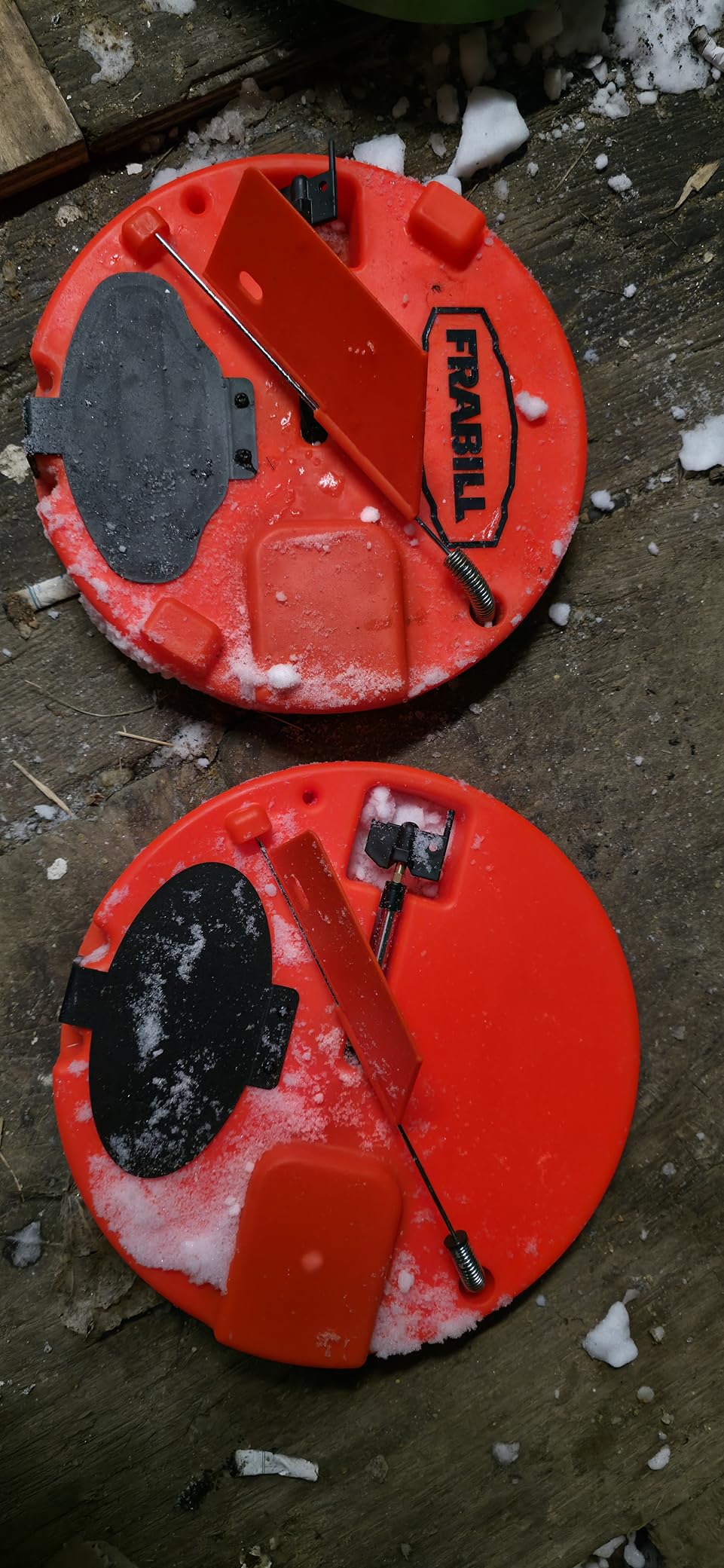
The fluorescent body is the reason to look at this one. On a dark lake with a headlamp, a glowing orange tip-up is visible at a distance where every other flag on this list is a shape you have to find. If you are doing a night spread without an electronic alarm, this is the unit you notice first.
The build is modern and sensible. The middle tube and inner shaft are 304 stainless steel, the disk is engineering plastic, and the antifreeze nylon is rated for sub-zero conditions. The flag stands 9.3 inches when the spring releases, and the unfolded unit is roughly 10.5 inches long.
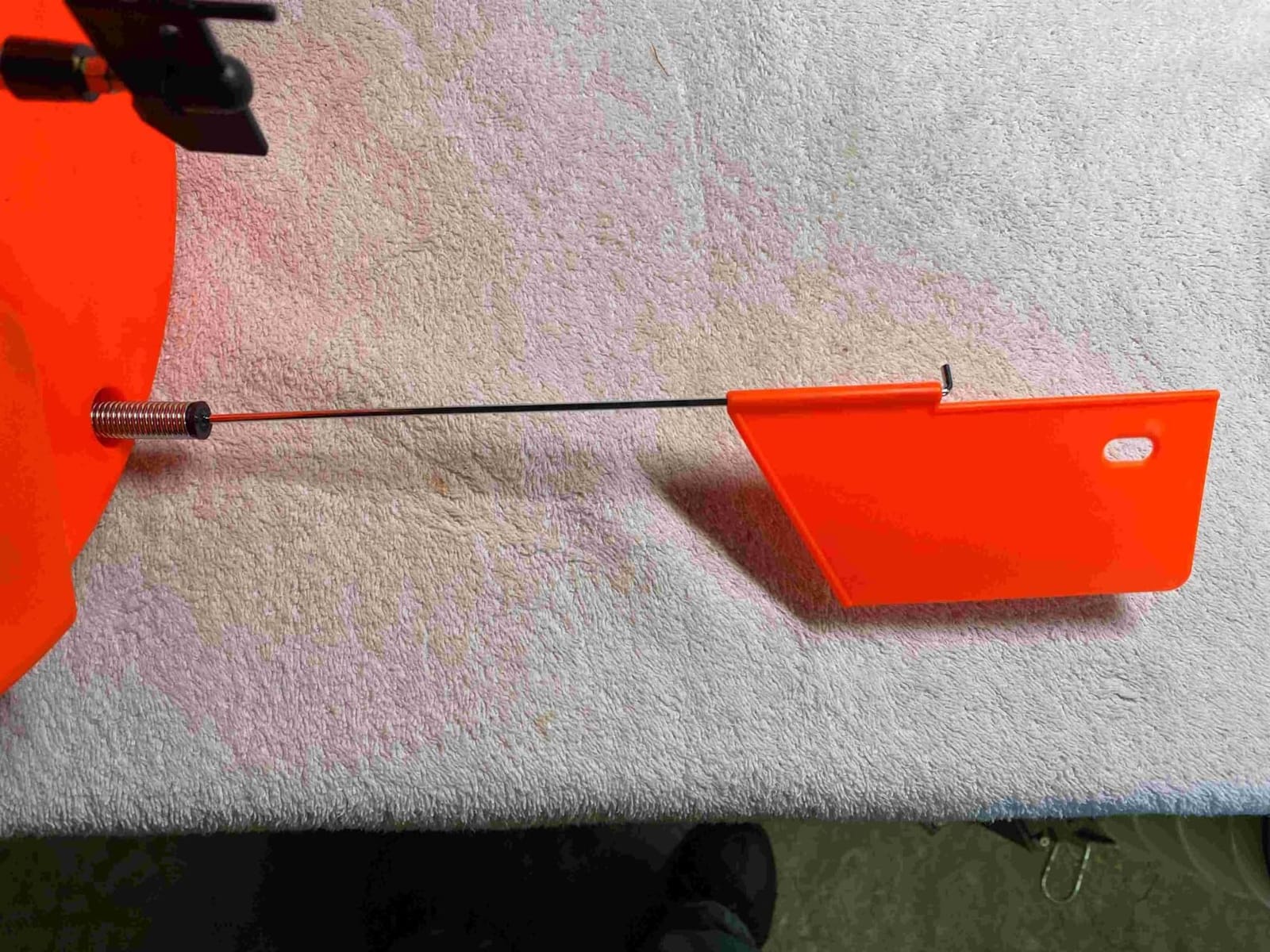
It also covers a 10 inch hole, which is the same hole size the Frabill and most insulated units use. That consistency means your auger choice does not change between the two.
Packing is unusually good. It collapses flat, stacks in a five or six gallon bucket, and the lid opens to hold small items such as the included whistle. For a six-hole spread on a lake far from the truck, that is worth more than it sounds.
Where it works
Night fishing without electronics. Fluorescence plus a 9.3 inch flag is a strong visual sweep on its own.
Cold, windy lakes. Covering the hole blocks blowing snow and light as well as freeze-up, which cuts the number of trips you make with a skimmer.
Where it falls short
Only 38 reviews on a 2023 listing. That is the smallest feedback base here, and it tells you what current owners think rather than how the design holds up over years.
The metal flag arm and spring are the parts exposed to cold-weather fatigue, and the plastic disk is lighter than wood or pine bases, so it needs solid ice under it.
How to Rig a Tip-Up So Pike Teeth Cannot Cut You Off
Pike teeth cutting leader material is the most repeated complaint in every ice fishing forum we read, and it is the single most avoidable loss on this whole topic. A pike does not have to be huge to end your tip-up rig, it just has to chew through the last six inches before the hole.
Use a leader you trust. The consensus across forums is heavier than most anglers expect: heavy mono, 50 lb mono, or 30 lb wire on a quick strike rig. One angler rigs a full 10 feet of 15 lb fluorocarbon between the main line and the hook, which is a reasonable middle ground where wire is too much for the presentation.
Keep the main line strong and low-stretch. Braid or coated dacron gives you sensitivity with freeze-up resistance, and sensitivity is what tells you the fish is still moving when the flag pops. The main line is not where teeth reach, so spend your weight budget on the leader.
Hook up, not down. A single treble or a #2 treble on a quick strike rig is the reported standard for pike. Two trebles on a short snelled leader catch more fish and lose more fish, because the fish tears the second hook out of the bait.
Best Bait for Pike on Tip-Ups
Dead bait beats live bait for pike on tip-ups, and the reason is efficiency. A frozen smelt set up over a spread of holes produces more flags per hour of fishing than a live minnow, because live bait takes up attention you do not have while you are walking a spread.
In ranked order: cisco and tullibee sit at the top because of size and oil content, then smelt, then sucker, then shad, then live minnow last. Forum anglers describe the preference as big bait means bigger fish, and the bait that ends up producing trophies is usually the biggest thing you can legally put through the hole.
Rig size to the fish you expect. A six-inch smelt covers general pike fishing. For fish moving in the shallows, a larger bait rigged on a quick strike rig is what gets the flag up. Smelt are commonly frozen in an old cooler with an aerator to keep them straight and fresh for the season.
Set the bait about half-way down the water column rather than on the bottom. Pike patrol above structure, and a bait at mid-column intercepts fish that are passing rather than waiting. Keep the bait above the weed line where pike are holding tight to the bottom, not buried inside it.
Trip Sensitivity and Spread Placement for Pike
Set the trip lighter for pike than you would for walleye. Pike often pick a bait up, hold it, and drift before they commit. A heavy trip setting misses that inspection period, and the fish spits the bait before it ever moves.
Space lines at least 30 yards apart. Pike are aggressive scavengers and can be found in numbers, but the fish you want are often the ones holding on an edge that nobody else is working. On a ledge, set one above the drop and one below it. Weed edges, humps and contour changes beat open flats.
Give each hole its own depth reading. Fishfinder marks on a pike lake change fast. Our fish finder picks cover the units that make that depth reading quick, and the rule of thumb is simple: put the bait on the structure, not on the depth where you last caught walleye.
Check the state rules before you set. Line limits vary by state and sometimes by lake, and in a number of jurisdictions you cannot leave tip-ups unattended. That last rule determines whether the electronic alarm on this list is a convenience or a necessity.
Thermal, Wooden or Rod-Holder Tip-Up: Which Style for Which Ice
Insulated thermal tip-ups are the right answer for hard cold. If the air temperature is cold enough to freeze the top of the water column overnight, a covered hole is not a nicety. The Frabill and the Adnee cover the two ends of that category, one with the deepest review history and one with the newest design.
Classic mechanical and wooden tip-ups are the right answer when you want a device that never needs servicing. The Beaver Dam sits here, and the forum consensus is that it is a buy-it-once tool that works in any temperature. The trade-off is carry weight.
Rod-holder and tip-down designs are the right answer when the fish are being picked up delicately and you want a rod in the fight. The Ifish Pro, the Bullnose Original Blue and the Bullnose Big Red all put a real rod on the ice for you. They also require transporting a rod and reel to every hole.
Most mixed spreads use two of the three. Insulated units on the holes you plan to check late, rod-holder frames on the holes where a pike is likely.
Buying Guide: How to Choose a Tip-Up for Pike
Start with the coldest temperature you will actually fish at, not the coldest you might. If your coldest day is above freezing and your holes stay open, insulation is optional. If you set a spread and come back the next morning, buy the covered version.
Check the spool capacity against your deepest water. Pike fishing in a basin means setting a bait well below the ice contour and giving a running fish room. The 200 yard spool on the HT Polar exists for exactly this reason, and a small spool limits where you can fish rather than how you fish it.
Look at flag height, not flag colour. A tall flag is the difference between spotting your spread and walking it. Most flags here are short; the Ifish Pro at 14 inches and the Adnee at 9.3 inches with a fluorescent body are the two that read well at distance or at night.
Check whether the trip setting is adjustable. Light, medium and heavy trip settings, or a dual light and heavy design, let one unit serve both pike and whatever else you catch.
Read the listing carefully before you click. The same tip-up is frequently listed more than once by different sellers at very different prices, and bundled multi-packs often ship with generic tackle you will replace anyway. If a listing starts with a number and a colon, like Product 1, you are probably looking at a bundle rather than a single unit. Compare the model number in the specifications against the model number of the listing you are considering.
Finally, buy fewer and maintain them better. Every tip-up on this list except the deepest cold-rated models benefits from a drop of low-temperature lubricant on the trip mechanism before first use of the season, and from being dried after dunking rather than thrown in a wet bag overnight.
Frequently Asked Questions
What is the best bait for ice fishing for pike?
Dead smelt, cisco or sucker rigged on a quick strike rig is the most reliable pike bait on a tip-up, hung about half-way down the water column rather than on the bottom. Freeze the bait straight, match the size to the fish you expect, and expect bigger bait to draw bigger pike.
What bait do pike like the most?
Ranked by how often pike commit to them on tip-ups: cisco and tullibee first, then smelt, then sucker, then shad, with live minnows last. Dead bait beats live because it lets you work a full spread of holes without managing moving bait, and the biggest legal bait you can fit through the hole is the one most likely to produce a flag.
What are the best tip-ups for ice fishing?
For general use, the Frabill Pro Thermal leads because of its insulated hole cover and dual trip settings. For mechanical durability and no maintenance between trips, the Beaver Dam Original. For pike on a real rod, the Bullnose Big Red or the Ifish Pro. For sub-zero cold, the HT Polar with its 200 yard wire spool.
How do I rig a tip up for pike?
Use a strong low-stretch main line such as braid or coated dacron, then a leader heavier than you expect: 30 lb wire, 50 lb mono, or a long length of heavy fluorocarbon. Finish with a single treble or a #2 treble on a quick strike rig, and hang the bait about half-way down the column.
How rare is a 40 inch pike?
Rare enough that most lifetime anglers never see one. Northern pike reach trophy sizes well past the roughly 20 to 27 inch minimum that many states use for a state record, but a 40 inch fish is an outlier event rather than a goal. Plan for trophy handling: a rod in your hand, a leader that survives teeth, and a fish that gets measured quickly.
Final Verdict: The Best Ice Fishing Tip Ups for Pike
If you buy one thing, buy the Frabill 1660 Pro Thermal. The insulated hole cover handles cold, the dual trip settings handle pike, and the review history tells you it works after several seasons. Add a pack of three cheaper units if your spread needs more coverage than one hole gives you.
Then adjust the rig, not the device. Heavier leader, bigger bait, lighter trip setting, and wait for the spool to stop before you set the hook. Those four things decide more pike catches than any tip-up on this list. Get to the best ice fishing tip ups for pike, pick your hole, and give the flag time to tell you what is happening underneath.