
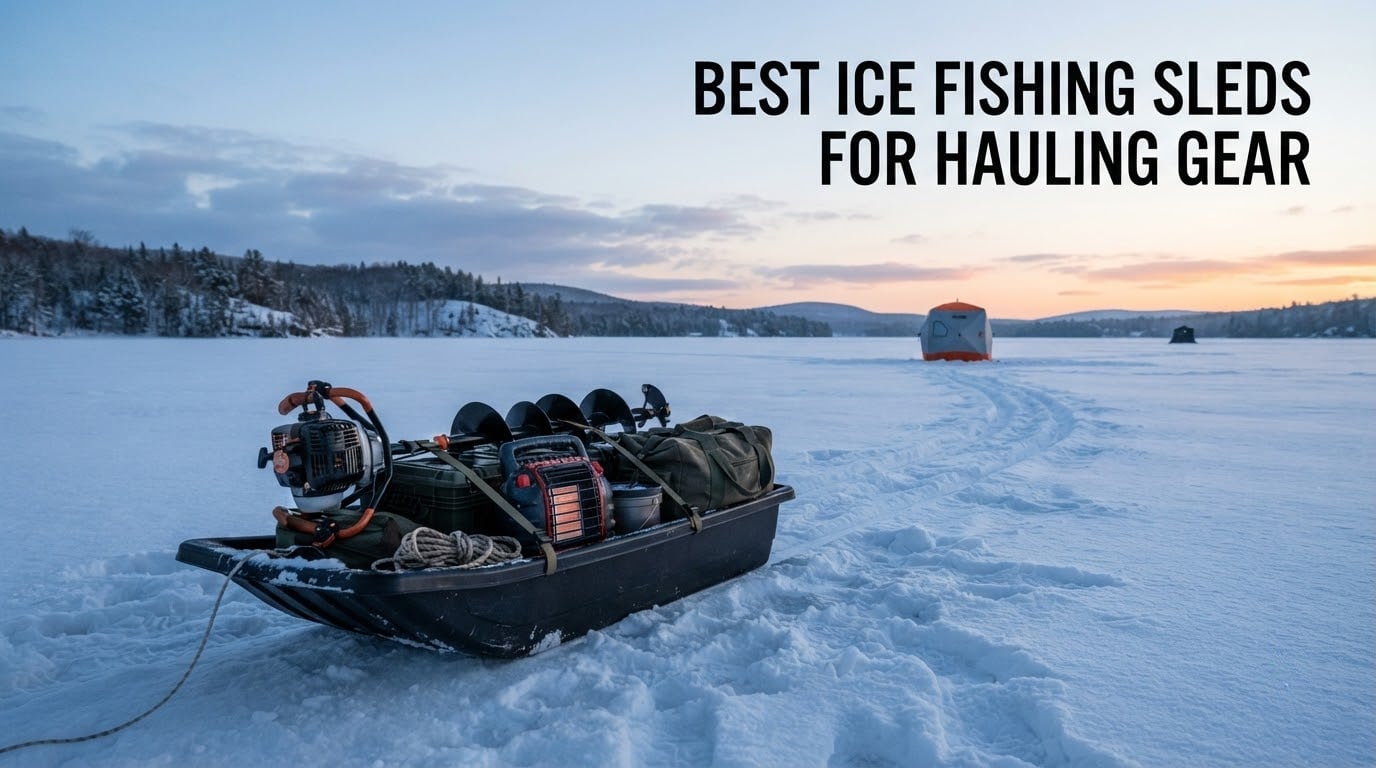
Most ice fishing trips are decided before the first hole is drilled. A gas auger, a propane heater, a rod box, a shelter and a bucket will not fit on one person’s back, and carrying them in three arms-full means three walks across the same exposed ice.
An ice fishing sled is a low-profile plastic cargo sled with a flat deck and molded runners that you drag behind you while walking. It replaces three trips with one, keeps slush and wet snow off your electronics, and takes the load off your back and shoulders so you still have energy left when you arrive at the spot. If you are shopping for ice fishing sleds for hauling gear this season, the difference between a good one and a cheap one shows up on the second long walk of the day.
We pulled eight of them, weighed what they could realistically carry, and paid attention to the details that only matter once the temperature drops. The short version: the 2026 field has split into two families. Molded plastic utility sleds with high sidewalls win for general hauling, and flat drag mats win when you care about weight and pack-in size far more than containment.
If you are still deciding how much gear you are hauling, our [guide to ice fishing shelters](https://betterbike.org/best-ice-fishing-shelters-for-winter/) covers the other half of the walk. Anglers who move gear over sand or trail instead of ice may prefer a [beach cart](https://betterbike.org/best-beach-carts-for-hauling-gear/), and anyone hauling firewood or supplies around a yard can compare a [folding wagon](https://betterbike.org/best-folding-wagons-for-hauling-gear/) against a sled.
Table of Contents
Top 3 Picks for Hauling Ice Fishing Gear for October 2026

Pelican Trek 45 Utility Sled
- 71L volume and 130 lb capacity
- RAM-X plastic with molded HDPE runners
- Only 6 lb empty

Beavertail Sport Sled
- Roomy 64 in. deck with 11 in. sidewalls
- Tow rope included
- Proven for large shelter loads

NLDD Game Glide Drag Sled
- Rated to 500 lb of load
- Packs flat and light
- Glides over mud and ice
Quick Overview: 8 Ice Fishing Sleds for Hauling Gear in October 2026
| Product | Specifications | Action |
|---|---|---|
| Pelican Trek 45 Utility Sled |
|
Check Latest Price |
| Beavertail Sport Sled |
|
Check Latest Price |
| NLDD Game Glide Drag Sled |
|
Check Latest Price |
 Pelican Trek Sport 82 Sled Pelican Trek Sport 82 Sled |
|
Check Latest Price |
 Bayattoo Heavy Duty Drag Sled 2-Pack Bayattoo Heavy Duty Drag Sled 2-Pack |
|
Check Latest Price |
 Pelican Trek 60 Utility Sled Pelican Trek 60 Utility Sled |
|
Check Latest Price |
 ZFbuhuo 73 in. HDPE Drag Sled ZFbuhuo 73 in. HDPE Drag Sled |
|
Check Latest Price |
 FIREGOWIN 2-Pack 600D PVC Drag Mats FIREGOWIN 2-Pack 600D PVC Drag Mats |
|
Check Latest Price |
Four of these are purpose-built cargo sleds with sidewalls, two of them with molded runners and one with a metal tow hitch. The other four are drag mats originally built for dragging game, firewood and yard waste, which works well on ice because ice is exactly the smooth surface those mats were designed for.
1. Pelican Trek 45 Utility Sled – Best Overall Ice Fishing Sled for Most Anglers
Pelican – Trek 45 Utility Sled – Black – Pull Rope – 4 Season Sled – Carry Up to 130lb – Heavy Duty RAM-X Construction – Use 2 Trek 45 to Enclose Gear – LDT45PA06-00
71L volume, 130 lb capacity
45.5 in. L x 20 in. W x 8 in. H
6 lb empty, RAM-X plastic with molded runners
Pros
- Light enough to carry in one hand at 6 lb
- 71L volume fits a full ice-fishing load including a small tent
- High sidewalls keep gear contained in deep snow
- Pre-molded HDPE runners track well and outlast a bare hull
- Indentations hold bungee cords in place
Cons
- Wide raised lip eats into usable cargo width
- No tow bar hook-up point for vehicle towing
- No travel cover included
This is the sled we keep coming back to, and the one that has earned the highest total review volume in the group at 584 reviews with a 4.5 average. The 71 liters of volume and 130-pound rating cover a realistic solo load: a gas auger, a propane bottle and heater, a rod case and a bucket of tackle, all in one pull.
What sets it apart is the pre-molded HDPE runners baked into the hull rather than glued on as an accessory. They track straighter on glare ice and, more importantly, they mean the base wears slowly instead of cutting through in a single season. The RAM-X plastic is a high-density formulation that keeps its flexibility in cold weather instead of going brittle.
At six pounds empty, it is the lightest thing in this lineup with real sidewalls. That matters more than the spec sheet suggests. A sled you can lift one-handed gets pulled, loaded and repositioned without a fight, and it means you can carry it to a second spot after cutting a few holes rather than committing to one spot for the day.
The honest weakness is width. The outer lip is wide and pronounced, so the usable cargo area is narrower than the 20-inch figure suggests, and a couple of owners note it can tip if you pull it across sloped ice. There is also no tow bar fitting, so this is a hand-pull sled only. If your route is a straight walk, that is fine. If you plan to tow it behind an ATV, look further down the list.
Does it hold enough for a long walk to a remote spot?
For a 70-pound load, yes. The weight rating leaves headroom above what most solo anglers will actually pull, and the 8-inch sidewalls are tall enough to keep a rod case from sliding out when you cross a drift. Users report hauling full loads through 30-plus inch snowfalls without structural failure.
The limitation shows up when you try to carry a full hub shelter or a large tip-up rig. The deck is 45.5 inches long, which is a snug fit for a small pop-up tent and nothing larger. For shelter transport, the Beavertail below is the better shape.
When is it the wrong choice?
It is the wrong choice if you plan to tow behind a vehicle, because there is no hitch point and a rope connection to a machine is what forum users complain about most. It is also the wrong choice if slush and wet snow are a constant problem, since no cover is included and open gear gets soaked.
It is equally wrong if you want to drag bulky firewood or logs in the same trip as your fishing gear. This sled is shaped and sized for a fishing load, not a yard-hauling mat.
2. Beavertail Sport Sled – Best for Hauling a Full Shelter Load
Beavertail Decoy Sport Sled – Large
64 in. L x 29 in. W x 11 in. H
Large polyethylene deck, tow rope included
Low-to-mid teens empty weight
Pros
- Roomy deck fits a pop-up shanty plus tip-ups in one trip
- Proven polyethylene construction with multi-year durability reports
- Tow rope included and pairs well with a chest harness
- Easy to pull even when fully loaded
- Handles being dragged behind a four-wheeler
Cons
- Rope attachment holes are small and can wear
- Heaviest hand-pull sled here in the low-to-mid teens
- Can run away downhill when loaded and pulled from the front
This is the one to buy if your load is a shelter rather than a rod box. The 64-by-29-inch deck with 11-inch sidewalls is the largest platform among the hand-pull sleds here, and owners specifically call out hauling ice fishing shanties and tip-ups in one trip as a top use.
The 4.6 average across 321 reviews sits near the top of the group, and durability is the dominant theme in the written feedback. Multiple owners report nine-year service lives, which is a different category of proof than a season or two of testing.
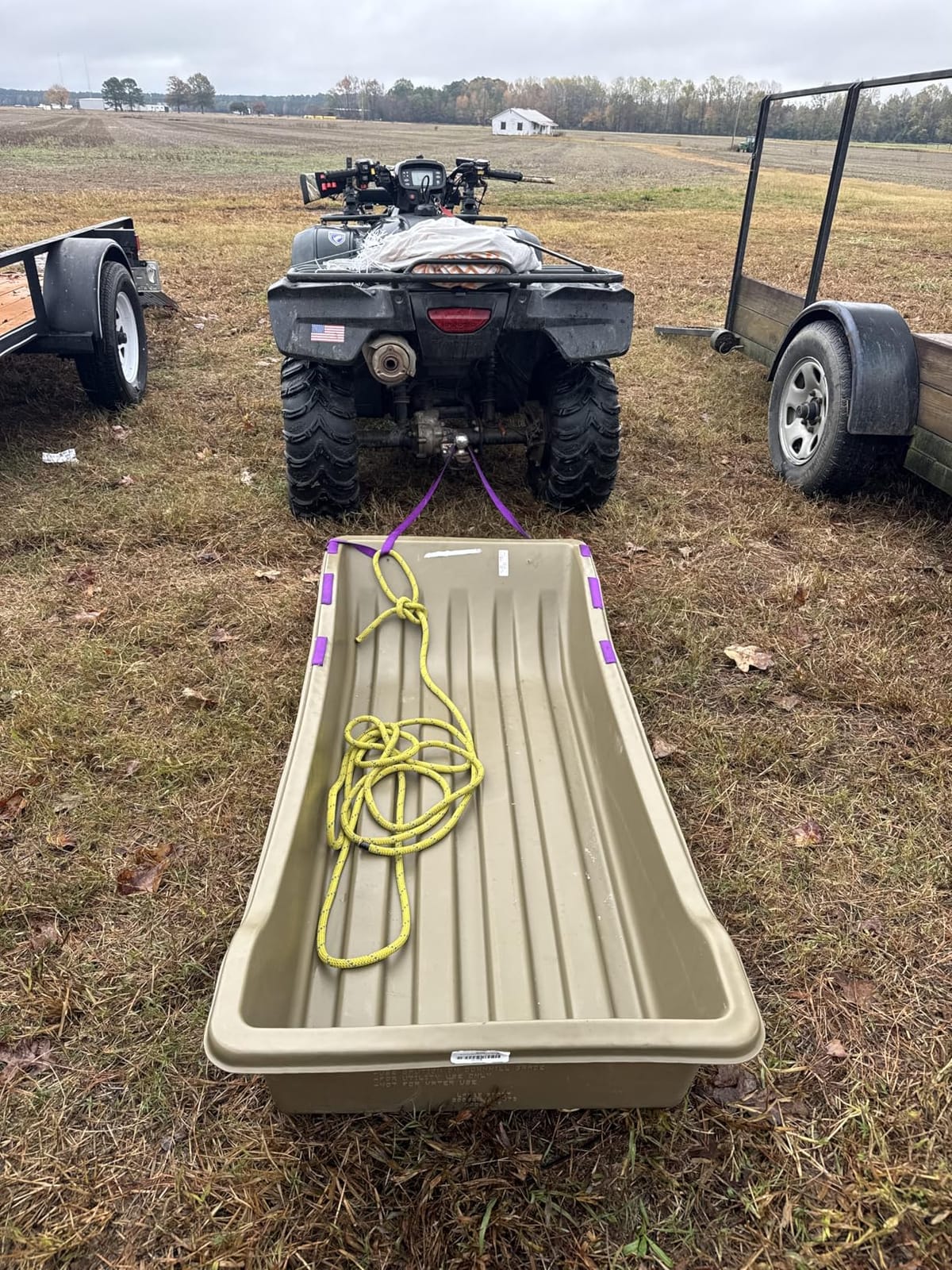
It is noticeably heavier than the Trek 45. Listings differ on the exact figure, from the low teens to around 17 pounds, so check the number before you commit. In exchange you get a deck that will hold a whole shelter, and the sidewalls are tall enough that nothing shifts when you pull across rough ice.
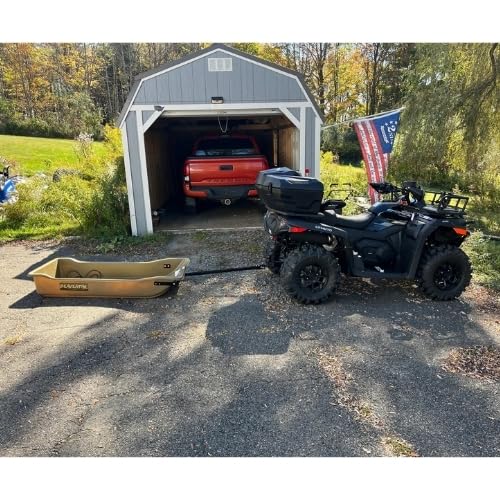
The recurring complaint is the tow rope fitting. The holes are small and the knot or fixing point can wear through after repeated cold use. If you tow behind a machine, reinforce that connection before you go, or pick a sled with a proper metal hitch. A loaded sled pulled downhill from the front will also accelerate, which matters on slope-heavy lake walks.
Will it handle a full shelter in one trip?
Yes. A small pop-up ice shanty plus tip-ups fit inside the sidewalls, which is the single biggest practical difference over the compact sleds. That means you arrive once instead of twice, and your second trip is free time for drilling or scouting.
Pair the included rope with a chest harness when the load is heavy. Users who do this report the sled tracking better on glare ice because the pull angle stays lower and the runners stay engaged instead of lifting.
Who should skip it?
Skip it if your vehicle cargo space is tight, which is a complaint forum users raise often with larger sleds. A 64-inch footprint does not always fit once the rest of the gear is loaded in the truck or SUV, and re-packing at the tailgate in the cold is its own kind of misery.
Skip it if your route is short and the load is light. You would be hauling extra empty weight for capacity you never use.
3. NLDD Game Glide Drag Sled – Best Budget Pick for Solo Pack-In Hauling
Deer Drag Sled Game Glide – Deer Cart Game Hauler Thickened Tear-Resistant Hunting Accessories and Gear for Hauling Hunter’s Trophy – Perfect Hunting Gift for Men
Rated to 500 lb of load
30 sq. ft. load area, 60.5 cu. ft. volume
Lightweight polyethylene with nylon ropes
Pros
- Glides over mud
- brush
- roots and ice with less effort than a wheeled cart
- Light enough to backpack into the woods
- Nylon ropes hold up under heavy loads
- Water-repellent surface rinses clean after a drag
- Two-person friendly for group trips
Cons
- Thin polyethylene wears through on rocky logging roads
- Not rated for gravel or sharp rock terrain
- Occasional reports of missing rigging hardware
If the deciding factor is what you can carry in from the truck, this is the one. Buyers describe it as lightweight enough to backpack into the woods, which means you can walk in from a snowmobile trail or a plowed access point without a second trip for the sled itself.
The 500-pound rating and 60.5 cubic feet of volume are well beyond a fishing load, so capacity is not the issue. It handles a shelter, a full camp of gear or anything else you want to move across flat ice in one drag.
What separates this from the other mats in the group is how it behaves off-ice. Multiple reviews confirm it makes long drags over mud and brush noticeably easier than a wheeled cart, because there are no wheels to jam and no axle to fight. That versatility is the same reason it works on ice: nothing catches.
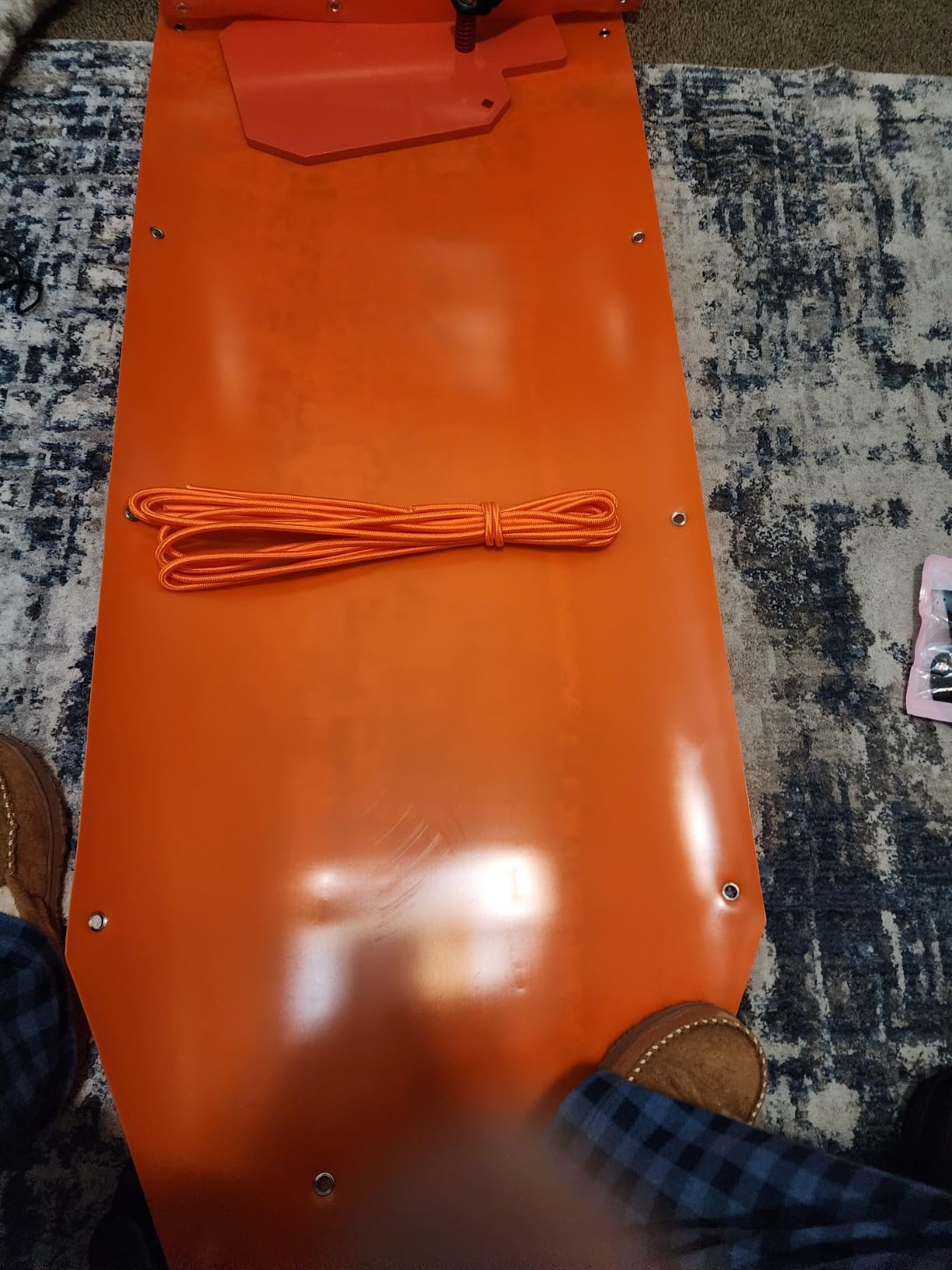
The weakness is material gauge, and it is the reason the rating sits at 4.1 with a one-star tail around 10 percent. Thin polyethylene tears on rocky logging roads and fire roads, and the listing is not rated for gravel or sharp rock. Keep it on snow and ice, which is its best surface anyway. A few buyers also reported arriving with missing hardware, so check the ropes and eyelets on arrival.
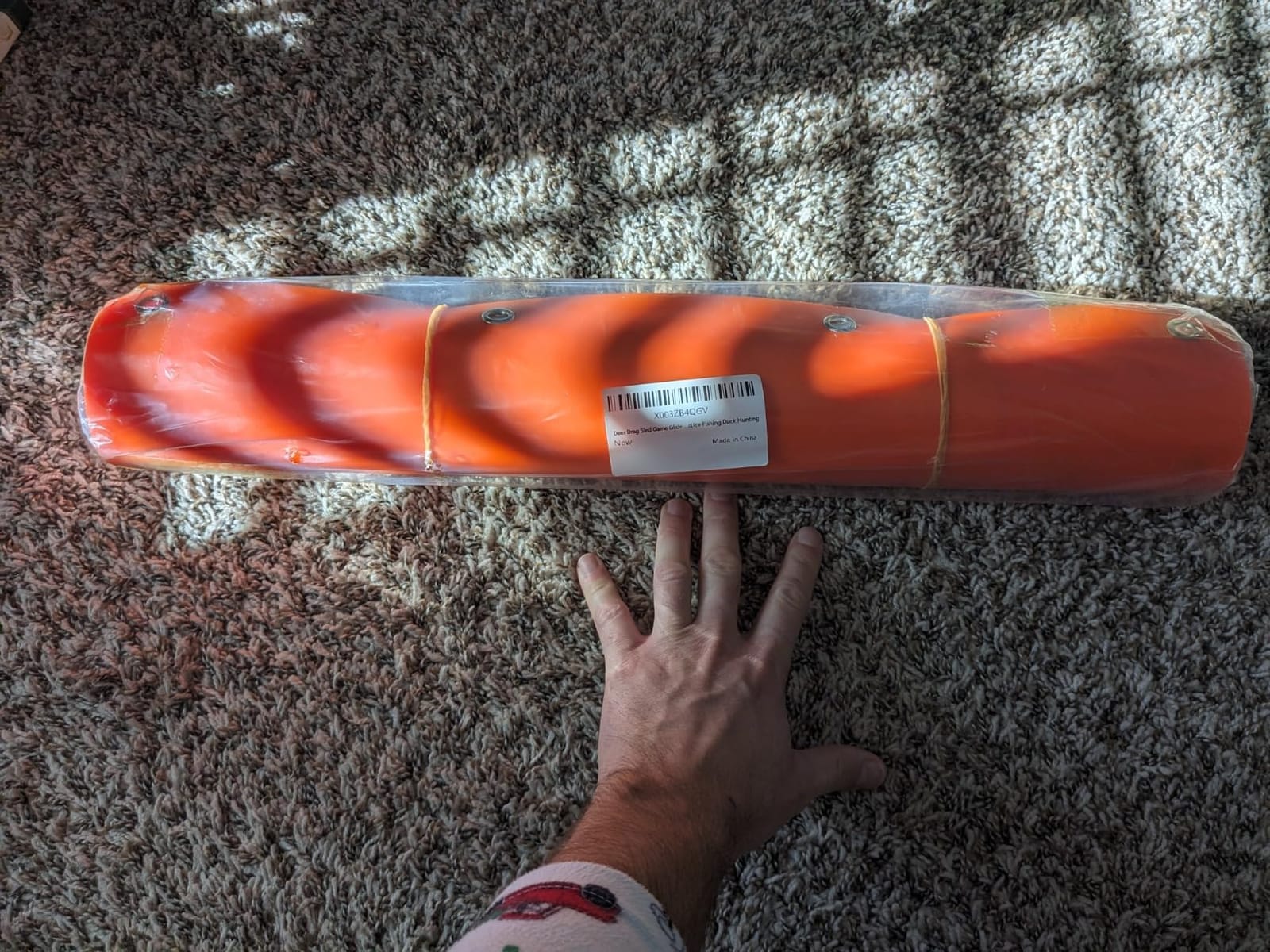
Is it strong enough for an auger and heater?
Yes, comfortably. A gas auger, a heater and a couple of rod cases will not come close to the 500-pound rating, and the flat deck keeps gear stable in a single layer. Two people can pull it comfortably, which makes it a good pick for a group trip where you would rather buy one strong mat than three weak ones.
The surface is water-repellent and rinses clean, so slush and snow melt off quickly after you get home. There is no cover included, so gear left inside overnight on the ice is still exposed.
When does it fall short?
It falls short on rough ground. Any rock, gravel or abrasive surface will find the weak points in a thin mat, and the wear pattern shows up on the underside rather than the deck. If your route crosses a plowed road or a wooded approach, plan on a different sled.
It also has no sidewalls, so loose gear shifts on sloped ice. Secure everything with straps and do not pack it so full that the load sits above the edges.
4. Pelican Trek Sport 82 Sled – Best for ATV and Snowmobile Towing
Pelican – Trek Sport 82 Utility sled Comes with Set of Runners, Tow Hitch & a Travel Cover, RED/Black, Large
430L volume, 700 lb capacity
82.5 in. L x 36.5 in. W x 17 in. H
45 lb empty, folding metal tow hitch
Pros
- Highest capacity here at 700 lb and 430L of usable volume
- Shock-absorbing fold-down metal tow hitch for vehicle towing
- Includes runners and a travel cover
- Rear reflectors add visibility
- Dividers can be made from the provided template
Cons
- 45 lb empty weight makes solo carrying difficult
- Large footprint is hard to maneuver in narrow spaces
- Runner warranty is 15 days from purchase
This is the only sled here designed to be pulled behind a machine, and it is the right answer for anyone who drags gear from a cabin, a staging point or a snowmobile parking area. The fold-down metal tow hitch is shock-absorbing, which is exactly what a rope connection cannot do.
At 4.7 across 171 reviews it has the highest average rating in the group, and 84 percent of those reviews are five-star. Buyers consistently point to the 700-pound capacity and 430 liters of volume as the reason to buy, with a clear preference for a vehicle-towed sled that arrives with a hitch, cover and runners already fitted.
The travel cover matters more than it sounds. It is the only sled here that ships with one, and it means you can leave a loaded sled at a trailhead or in a truck bed overnight in a snowstorm without your gear getting soaked through.
The tradeoff buyers accept without hesitation is bulk and weight. Owners put the empty weight at around 45 pounds, and an 82.5-inch footprint is difficult to maneuver between trees or in a narrow shelter area. This is a sled you load at the vehicle and unload at the spot, not one you carry any distance.
Why the metal hitch fixes the rope problem?
Because a rope only resists tension. When you brake hard, the sled keeps moving and closes the gap to the machine, which is the complaint forum users raise most often about towing sleds behind ATVs and snowmobiles. A rigid or shock-absorbing bar transmits braking force directly, so the sled stays put instead of becoming a projectile.
Rear reflectors on this model also matter at the speeds you travel on a lake. Towing after dark with an unlit load behind you is a genuine visibility problem, and reflective gear costs nothing to include.
When is it the wrong choice?
It is the wrong choice for a solo angler hand-pulling from a trailhead. The weight and footprint make that genuinely hard, and you would be carrying gear you never use in the empty space.
It is also the wrong choice if your vehicle has tight cargo space. Measure before you buy, because a sled this size does not shrink, and forum users repeatedly flag packing a large loaded sled into a vehicle as a real problem.
5. Bayattoo Heavy Duty Drag Sled 2-Pack – Best for Two-Person Group Hauling
Bayattoo Deer Drag Sleds – Heavy-Duty, Tear-Resistant Game Hauler for Hunting with Ropes and Handles, Portable and Durable Outdoor Gear (2-Set)
Two 73 in. sleds per pack
Rated to 800 lb across mud, snow and sand
1.2mm thickened orange sled with 12ft ropes
Pros
- Two sleds in one pack with ropes
- handles and carry bag
- Roughly 4 lb for the pair so it is easy to pack
- Works well as a beach wagon hauler and for group gear runs
- Non-slip 12ft ropes grip mud
- snow and sand
- Responsive customer service on a failed eyelet
Cons
- The black sled is thinner gauge than the orange one
- One report of a sled tearing on a first short drag
- Drawstring bag is bulky to pack
- Eyelets can pull out under load
The two-pack layout is the idea here. You get an orange and a black sled in one purchase, which means two people can each pull a load, or you can split heavy gear across two trips while one sled stays packed. For a group trip or a tournament day, that is a better use of the money than one bigger sled.
The pair weighs about four pounds, so carrying them from the vehicle is a non-issue. Included are 12-foot non-slip ropes, tow handles, straps and a drawstring bag, which means you are not sourcing hardware after you get to the lake.
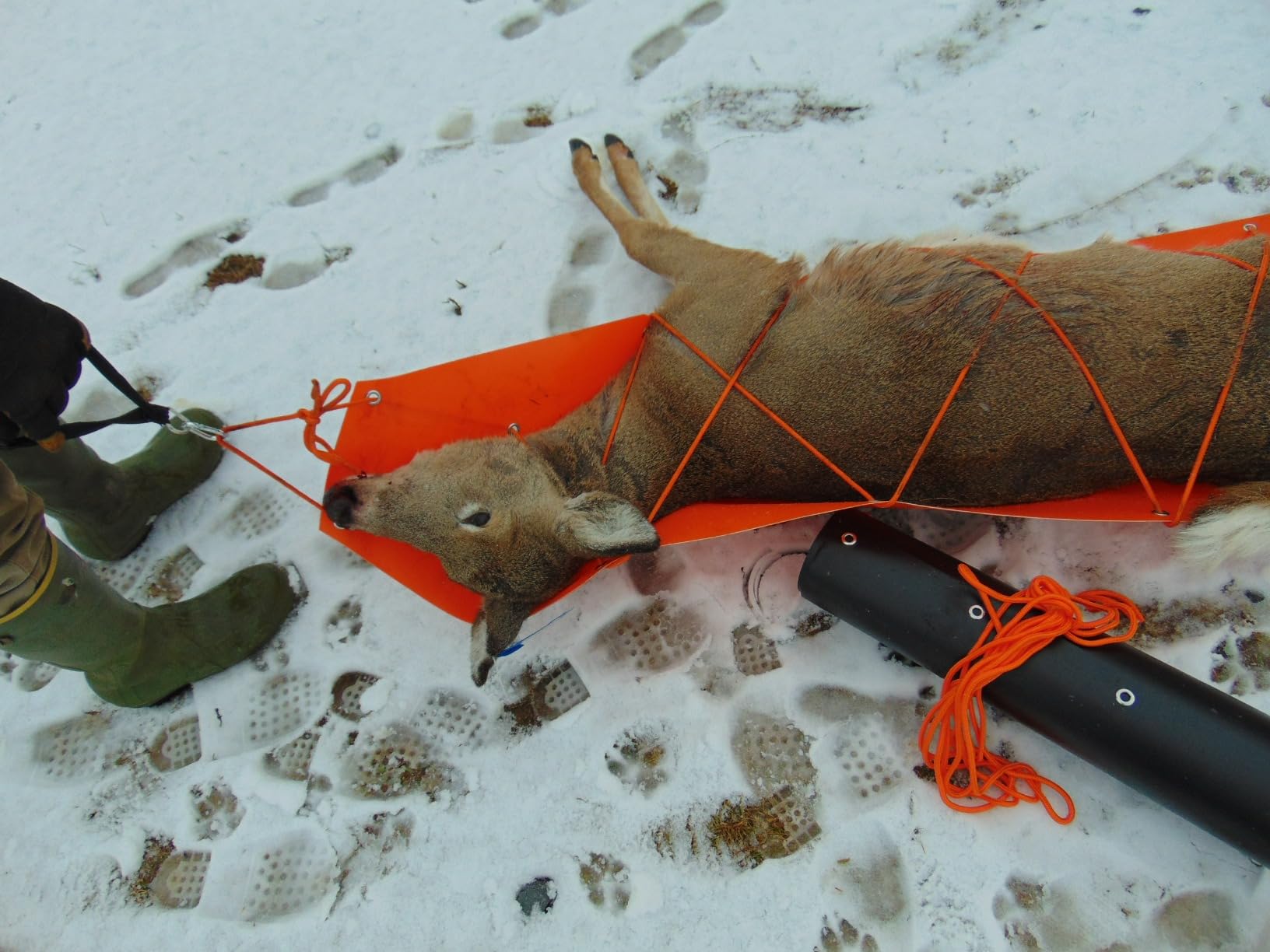
The orange sled is the one to use. It is the thickened 1.2mm model with a dual-surface glide and grip design, and it is the only one of the two rated for serious load work. Buyers use these for firewood, feed, logs and beach hauling as much as hunting, so the ice-fishing use fits comfortably.
The problem is consistency. The black sled is noticeably thinner, and at least one report describes a sled tearing apart on a first drag of under 200 yards. Reviewers also flag eyelets pulling out under heavy load. We would treat the thin sled as the spare and put your auger and heater on the orange one. Five-star reviews sit around 63 percent with a 7 percent one-star tail, which reflects that split honestly.
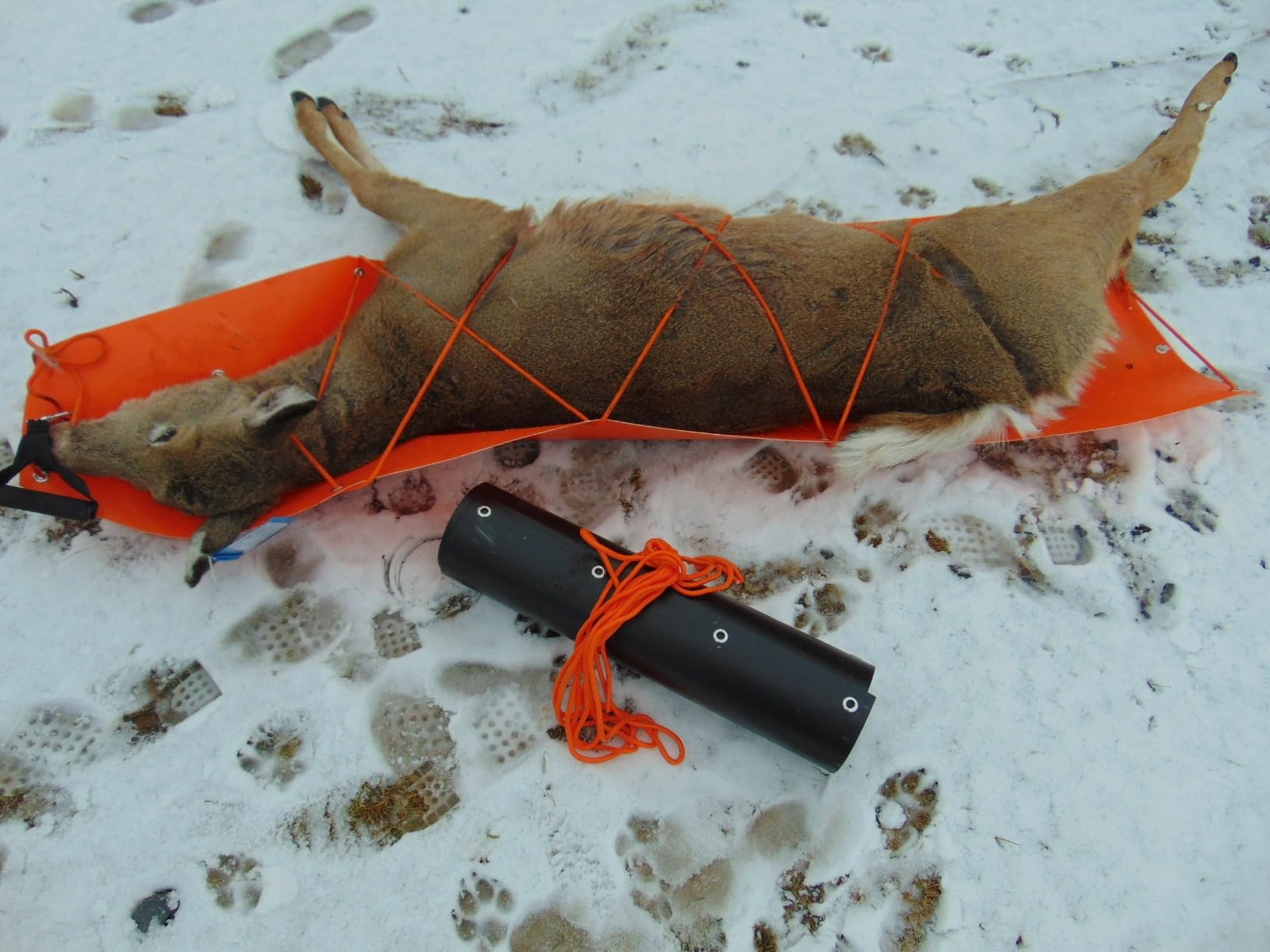
Is the 800-pound rating realistic on ice?
For a fishing load, easily. Realistic loads are a fraction of that, and the 73-by-22.8-inch deck is long enough for a rod case laid flat with gear bagged around it. On smooth ice and packed snow, the dual-surface design grips when you stop and glides when you pull.
The rating matters more as a statement about material than about your gear. It tells you the sled is built for repeated heavy loads rather than one afternoon of firewood.
What about the thin second sled?
It is fine for firewood, bags of feed and yard debris, which is what most buyers use it for. It is not fine for a gas auger dropped on a rock edge, and it is the sled we would not trust for a two-kilometre walk with a full load in cold weather.
Plan the load split deliberately. Heavy, concentrated items go on the orange sled; bulky light items go on the black one. That arrangement keeps the strain off the weaker material.
6. Pelican Trek 60 Utility Sled – Best Mid-Size Step Up for Full Gear Loads
Pelican – Multi-Purpose Utility Sled – Use it for Ice Fishing, Hunting (Trek 60), Black, comes with runners
60 in. L x 25 in. W x 12.5 in. H
152L volume, 260 lb capacity
12.5 lb empty, RAM-X polyethylene
Pros
- Pre-installed HDPE runners improve tracking and extend sled life
- 260 lb capacity with 152L for full camping or fishing loads
- Built-in indentations hold bungee cords in place
- RAM-X runners show a red wear layer when replacement is due
- Made in Canada for harsh conditions
Cons
- Does not include a travel cover
- Runner warranty is only 15 days from purchase
- Heavier and costlier than mat-style drag sleds
The Trek 60 sits exactly between the compact sled and the shelter-hauling sleds, and for many anglers that middle size is the correct answer rather than a compromise. 152 liters and a 260-pound rating covers a full day of gear for one or two anglers without the empty weight of a large sled.
The pre-installed HDPE runners are the detail we like most. They come fitted rather than as an add-on, and the RAM-X runner has a red layer underneath the white one that shows through as it wears. When you see red, it is time to replace the runner instead of guessing.
With 72 percent five-star ratings and only about 2 percent one-star, the feedback is unusually consistent. Owners describe it as a durable step up from the smaller sleds, and mention the runners and the wear indicator as the design touches that made the difference after a season or two.
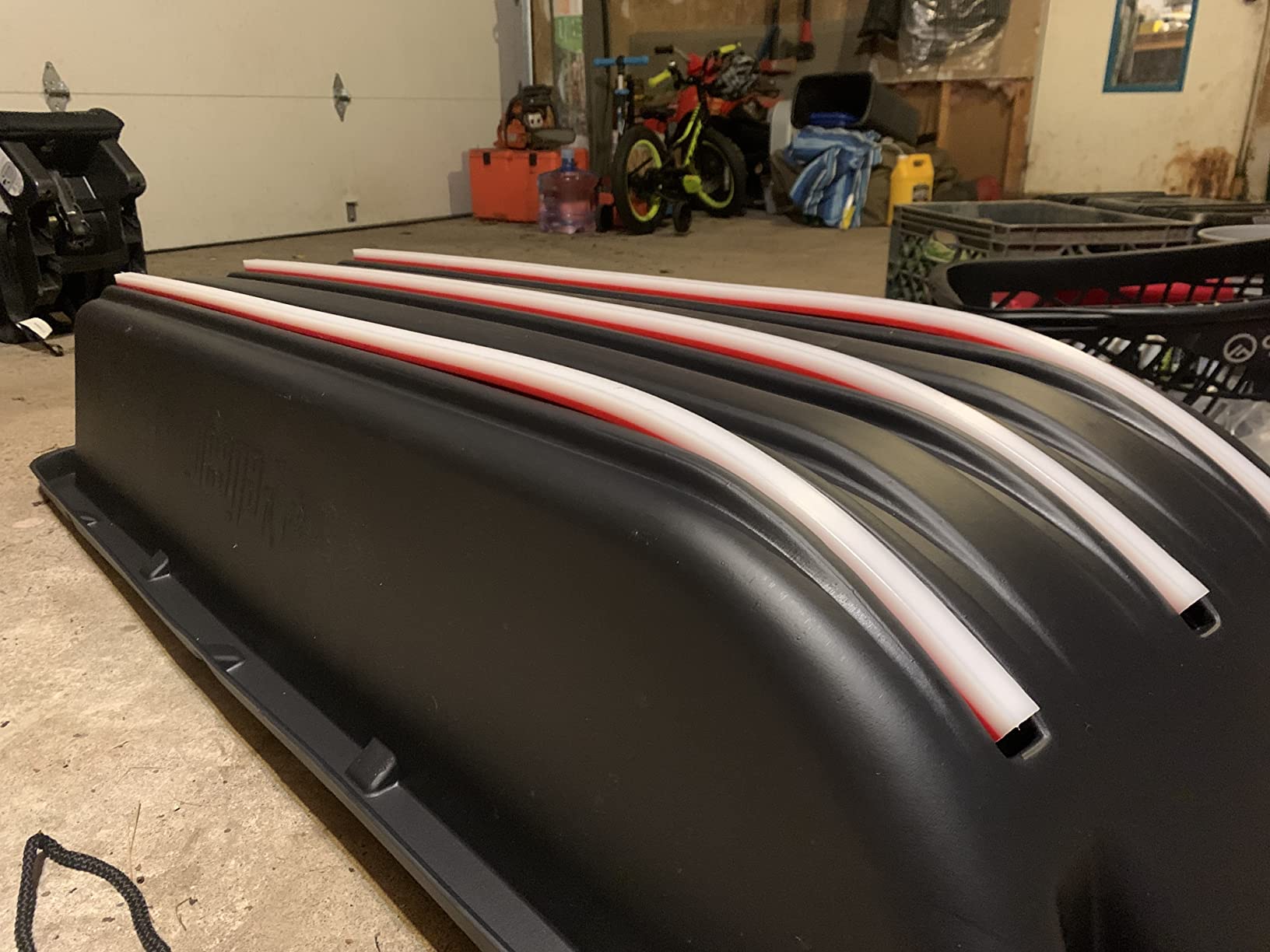
At 12.5 pounds empty it is heavier than the Trek 45, so it rewards a load that fills it. The 12.5-inch sidewalls are the tallest on a hand-pull sled here, which is what keeps a rod case from walking off the edge on drift. The gap in the box is the missing travel cover; if you park a loaded sled overnight, budget for a separate cover.
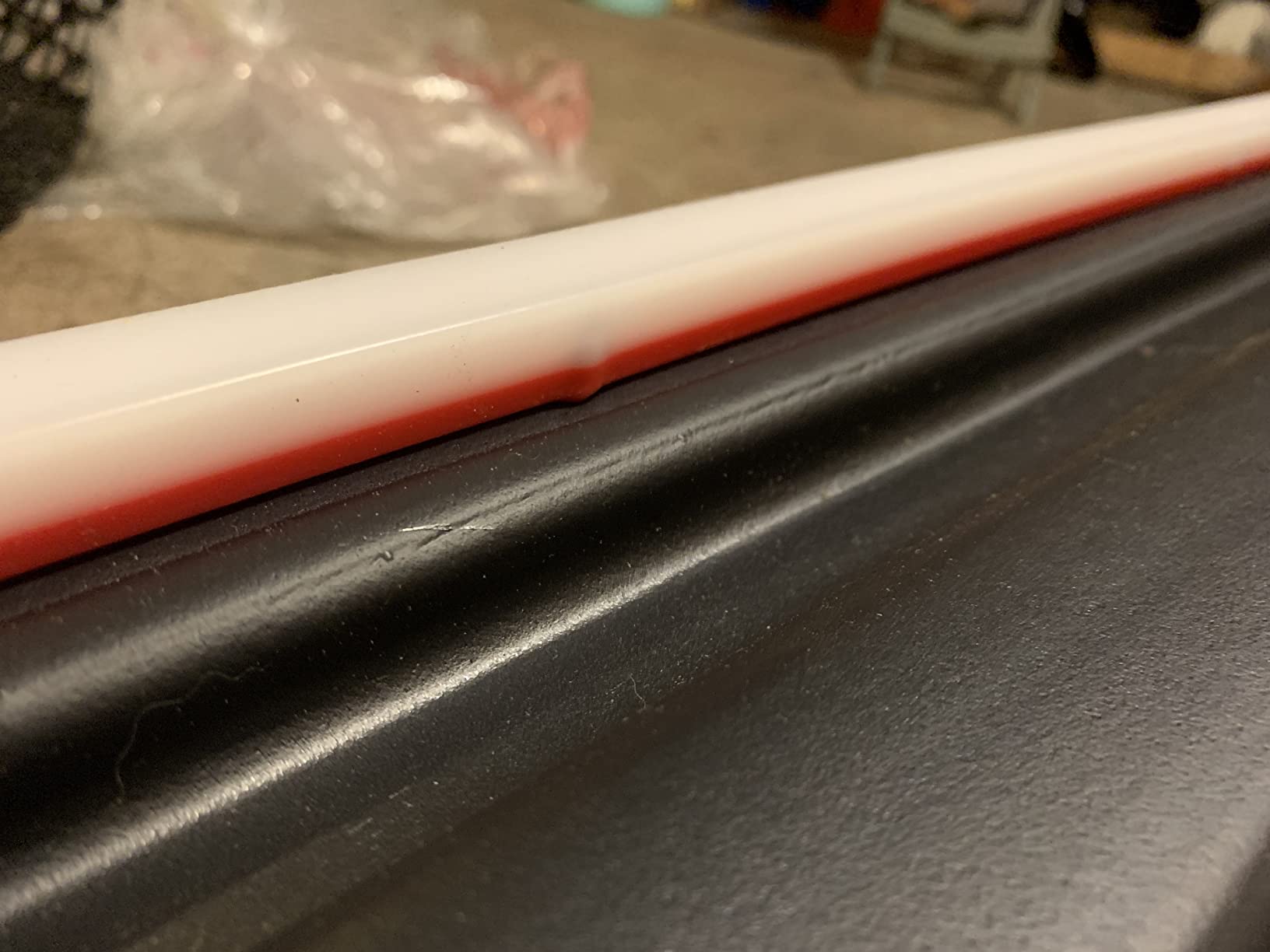
Is the wear indicator worth paying for?
Yes, because runners are the part that actually wears. A bare plastic hull on glare ice scuffs through in a season or two, and runners are consumables by design. Seeing the wear before you lose tracking on a long walk is worth more than the cost of the sled itself over its life.
The 15-day runner warranty is effectively a trial window, since coverage ends once the runners are used. Inspect them on arrival and again after your first outing.
Trek 45 or Trek 60?
Choose the 60 if you regularly move a shelter, a second person’s gear, or a full camp of equipment. Choose the 45 if you are solo with a light load and value the ability to lift the sled with one arm.
The 60 also gives you more usable width because its sidewall profile eats less of the deck relative to its overall size. If width is your binding constraint, this is the model we would pick.
7. ZFbuhuo 73 in. HDPE Drag Sled – Best Lightweight Mat for Walking Distance
73″ x 23″ Deer Drag Sled -Thickened Tear-Resistant HDPE with Pull Cables, Game Hauler Utility Snow Sled Deer Hunting Sled for Effortless Hauling of Ice Fishing Supplies, Firewood, Fishing Equipment
73 in. x 23 in. deck, 2.65 lb empty
0.05 in. HDPE construction
Rated to 330 lb of load
Pros
- Very light at 2.65 lb so it is easy to carry or pack
- Glides over branches
- rocks and rough terrain without visible wear
- Water-repellent surface rinses clean in seconds
- Large 73 by 23 in. deck for firewood and fishing supplies
- Doubles as a general yard drag sled
Cons
- Washers and bolts can pull out of the mold under load
- Tie-down points are cut slots rather than rivets
- Performs poorly on gravel and hard surfaces when heavily loaded
At 2.65 pounds this is the lightest sled here, and on a long walk that difference compounds. When your route crosses a wooded approach or a plowed shoulder before it reaches the lake, carrying a mat instead of carrying the gear is the difference between one trip and two.
The 73-by-23-inch deck is long enough to lay a rod case flat with a gear bag beside it, and the 0.05-inch HDPE construction is thicker than the typical ultra-light mat. Users report logs, rocks, mulch and firewood as the usual loads, with the surface rinsing clean after a drag.
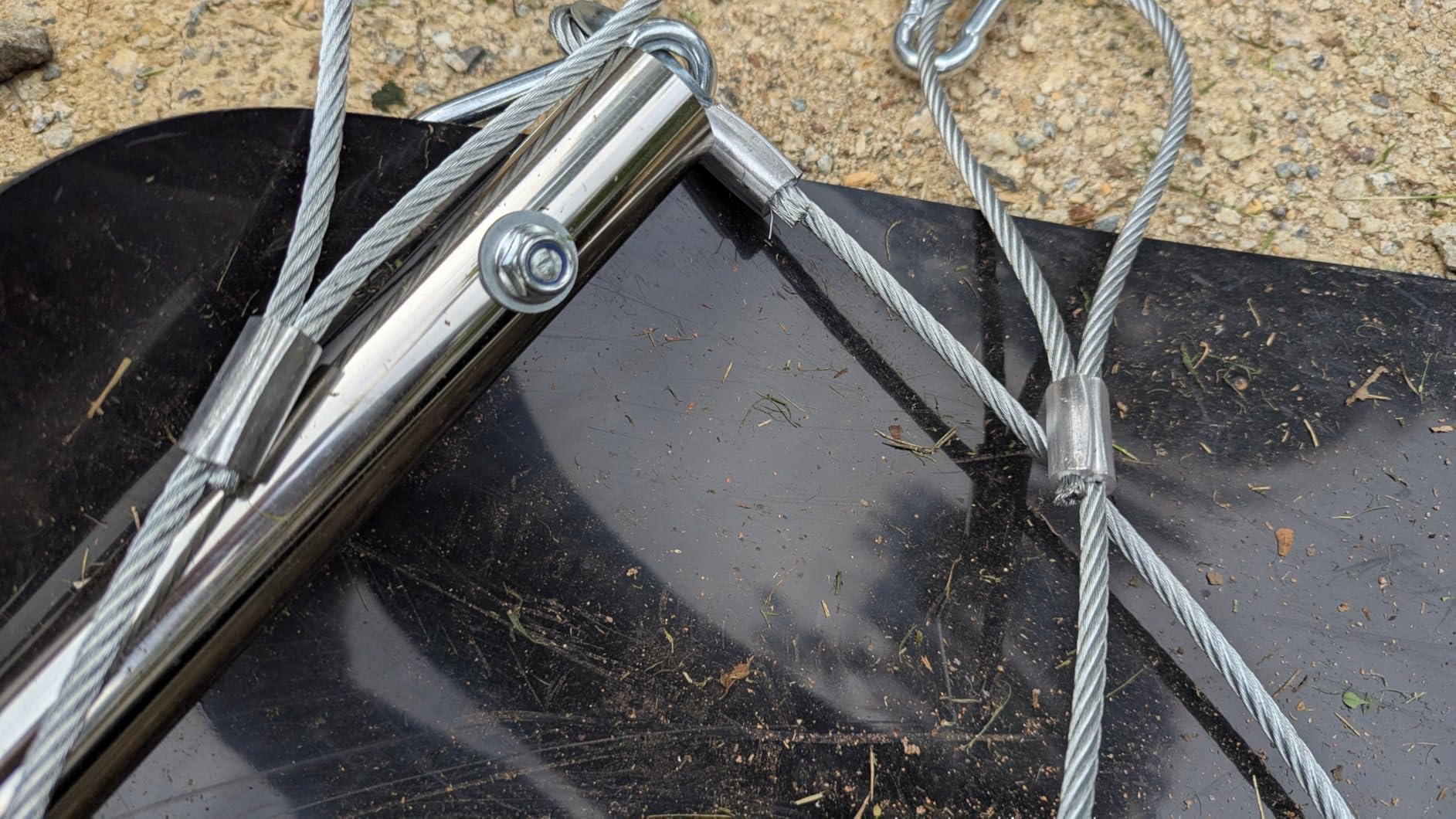
Durability reports split sharply here, and that is why the average sits at 4.1. Several owners say it shows no measurable wear after dragging across rough terrain, while others report hardware pulling out of the mold or perforation on hard surfaces under load. Five-star reviews run around 62 percent against a 10 percent one-star tail.
The distinction is surface. On ice and soft snow, which is where this sled lives, it performs well. On gravel and driveways with a heavy concentrated load, it does not. Tie-down points are cut slots rather than rivets, so plan on straps through the reinforced tow points rather than relying on the slots alone.
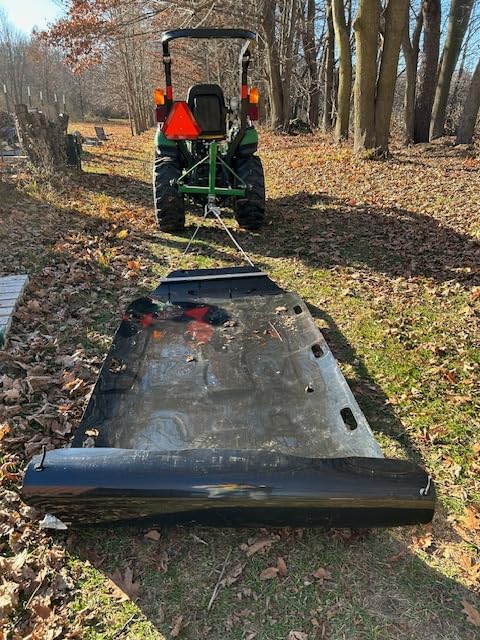
Will 2.65 pounds feel substantial under a full load?
Yes, because the weight of the sled is what you feel on the walk back, and at 2.65 pounds you are hauling the gear and almost nothing else. On a two-kilometre approach this is the difference that decides whether you take a break halfway.
The 330-pound rating gives room for a full ice-fishing load without being the number you are relying on. Nothing you would realistically drag for fishing gets near it.
Where it fails
It fails on hard, abrasive surfaces under concentrated loads, and the failure mode is hardware, not the deck. Washers and bolts pulling out of the mold leave you dragging an unanchored sled, which is a bad day on ice with a full load.
It also has no sidewalls and no cover, so it contains nothing. Treat it as a surface you drag gear across, not a box you pack gear into.
8. FIREGOWIN 2-Pack 600D PVC Drag Mats – Best for Pack-In Storage and Backup
Firegowin 2-Pack Deer Drag Sled – Heavy-Duty 600D PVC Tear-Resistant Hunting Mats, Portable 73″ x 22.8″ Game Hauler with Ropes, Waterproof for Deer, Elk, Fishing
Two 73 in. x 22.8 in. mats, 600D PVC
Unfolds to 73 in., rolls to 5.5 in.
Each mat rated to 500 lb
Pros
- Two mats for the price of one
- useful for shared or backup use
- Rolls down to a 5.5 inch tube that fits in a backpack
- Waterproof surface rinses clean of mud and snow in seconds
- Reinforced handles and sturdy ropes for solo or team pulls
- Doubles as a ground cover or firewood and gear hauler
Cons
- Flat mat has no sidewalls so gear can slide off on sloped ice
- No rigid runners so it wears faster on rock and gravel
- Only 30 reviews so long-term durability is unverified
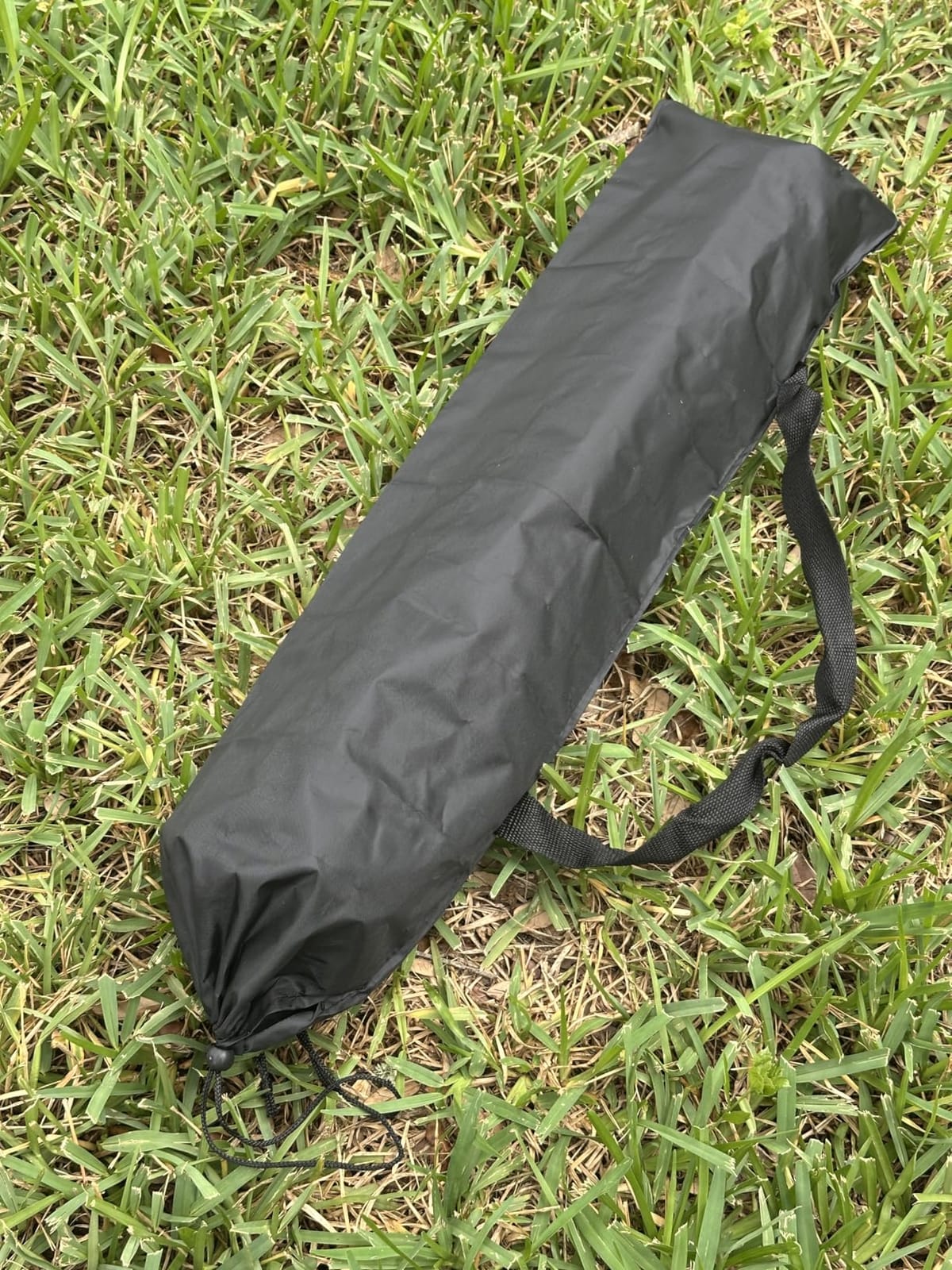
The storage behavior is the reason to buy this one. Each 73-by-22.8-inch mat rolls down to a 5.5-inch tube, which fits in a backpack or stands upright in a vehicle corner. If you carry your gear in or walk in from a staging point, that roll-up is a bigger practical advantage than it first appears.
The material is 600D PVC rather than polyethylene, and reviewers emphasize the waterproof surface that rinses clean of mud and snow in seconds. Reinforced handles and sturdy ropes are included, so solo and team pulls both work out of the pack.
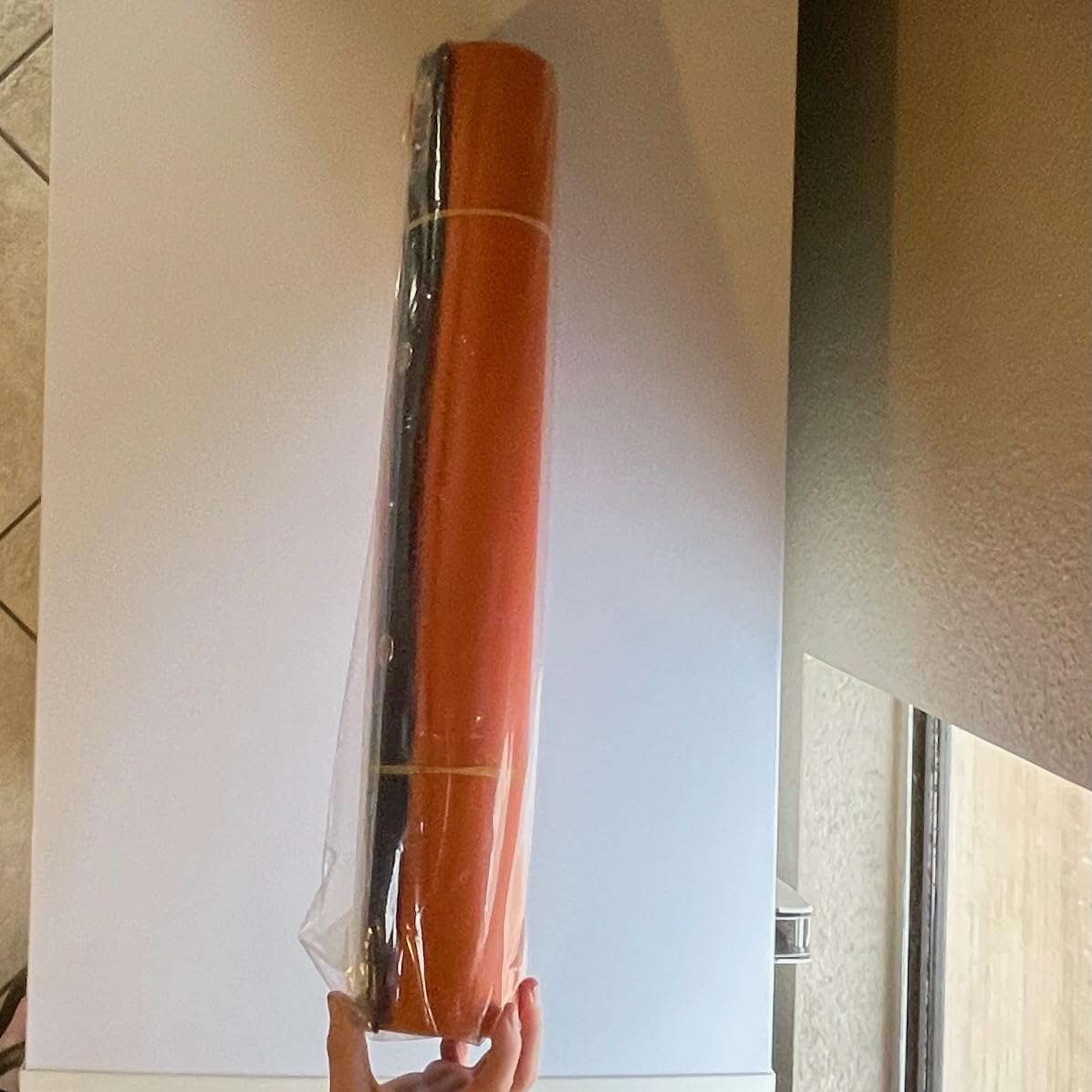
With 81 percent five-star reviews the satisfaction rate is high, but the base is only 30 reviews. We flag that plainly: the durability story here is thin compared with the rest of this lineup, and you are buying on design rather than on a long public service record.
Two mats means two people, or one mat plus a backup. Reviewers use them for firewood, fishing gear and as a ground cover, which is a fair description of a flat drag surface. There are no sidewalls and no rigid runners, so it drags rather than contains, and it wears faster on rock and gravel than a molded sled does.
Is PVC the right material for ice fishing?
On snow and ice, yes. A flexible waterproof mat is unaffected by the cold-cracking problem that affects cheaper polyethylene products, and it will not stiffen into a brittle panel after a season of freeze-thaw cycles.
On rock and gravel it is the wrong tool. Without rigid runners, the entire underside abrades against the surface, and PVC shows that wear quickly.
Is two mats better than one big sled?
For two anglers or two loads, yes. Splitting the weight across two mats is easier on you and lets you leave half the gear at the vehicle between drifts.
For one person on a long walk, one mat is simpler to manage. Two mats means two things to roll, carry and remember in the dark, and the reviews do not yet tell us how they hold up after five seasons. Our own fishing electronics and low-light strategy is covered in our [ice fishing flasher guide](https://betterbike.org/best-ice-fishing-flashers-for-anglers/), which is worth reading if you fish at first and last light.
How to Choose an Ice Fishing Sled That Fits Your Route
The right sled depends less on which brand is best and more on the distance you walk, the surface you cross and whether a machine or a person does the pulling. These are the specifications that actually change the outcome of your day.
Material: HDPE, RAM-X and why cheap plastic cracks
Rotomolded high-density polyethylene is the standard for a reason. It is dense, it holds impact loads without cracking, and it keeps its flexibility in extreme cold rather than turning brittle the way cheaper polyethylene does. Users rank durability at minus 20 and below as their number one validation criterion, and that is exactly where thin plastic fails first.
RAM-X is a high-density formulation used in the Pelican sleds, and the practical difference is shock resistance and cold flexibility rather than a headline specification you can feel on day one. Flexibles like 600D PVC do not crack in the cold at all, which is a real advantage if you store a loaded sled in a truck all night.
The failure pattern is consistent in the reviews: thin mats tear at the eyelets and edges after contact with rock, and cheap plastic gets stiff and cracks after a few seasons. If your route crosses anything harder than packed snow, buy the heavier material.
Size and capacity for the way you fish
Sizing to the load is more useful than sizing to the biggest number available. A solo angler moving an auger, a heater and a rod box needs somewhere in the 70 to 150 liter range. Two anglers, or one angler with a shelter, need 150 liters and up.
Check width before length. A wide outer lip reduces usable deck width, and two narrow sleds with a wider usable deck beat one long sled with a raised rim. Also check whether the sled fits in your vehicle once the rest of the gear is loaded, because repacking a large loaded sled in the cold is a complaint that comes up constantly.
Molded runners versus flat drag mats
Molded or pre-installed HDPE runners give you tracking, extended hull life and a predictable ride on glare ice. They also add weight and cost, and runners are consumables with a wear limit.
Flat drag mats have no runners. They are lighter, cheaper and roll up, and on smooth ice they glide perfectly well. They wear faster on abrasive surfaces and they do not protect the hull from rocks. If you are on lakes and packed trails, a mat is a legitimate choice. If you cross rock or gravel with the sled, runners or a heavier sled are worth the extra weight.
Tow bar or tow rope, and why it matters
A rope only resists tension, so when you brake, the sled keeps moving and closes the gap to your ATV or snowmobile. That slam-back is the single most repeated towing complaint in forum discussions. A rigid or shock-absorbing tow bar transmits braking force directly and keeps the sled in place.
If you tow behind a machine, buy the bar. If you hand-pull, the rope is fine. Either way, use a rope rated well above your load and inspect it each season, because cold use frays ropes faster than normal wear suggests. Adding rear reflectors or a light is the cheapest safety improvement available.
Hand-pull budget: sled weight versus your own weight
A useful rule is that your empty sled weight should stay under roughly a tenth of your body weight if you are hand-pulling more than a kilometre. That keeps the sled at a small fraction of the total load and leaves your shoulders and lower back carrying gear rather than dead weight.
Under that rule, the 6-pound sleds pass comfortably, the 12.5-pound model is workable, and anything in the mid teens is a two-person job for a long walk. Forum users regularly report hauling 70-plus pounds across flat lakes on a ski-frame sled, so a well-built sled does not need to be light to work. It needs to fit the walker.
Deep snow versus glare ice, and the Smitty sled question
These are two different problems, and the sled that solves one is wrong for the other. On glare ice, molded runners track straight and a flat mat glides with almost no resistance. In deep snow, a low plastic hull plows and builds a wall in front of the sled, which is the most common complaint in every winter forum we read.
The ski-frame answer, known in ice fishing circles as a Smitty sled, raises the load onto cross-country skis so it floats above the snow instead of pushing through it. Anglers on r/IceFishing say it changes everything on deep-snow lakes and that the frame needs to be high enough that you are not plowing. Users on flat lakes report hauling 70-plus pounds easily and waxing the skis every fall as seasonal maintenance.
The tradeoff is that a ski-frame sled has no tub, so nothing contains your gear, and it is not really a purchase so much as a build. Cross-country skis work well as runners; water skis do not, because their curvature and flex suit water, not snow. If your lake runs deep snow, budget either a taller, higher-clearance sled or the build. If your lake is mostly glare ice with a few inches of snow, any of the sleds above will handle it.
Frequently Asked Questions
What is the best sled for ice fishing?
The Pelican Trek 45 is the best all-round choice for most anglers. Its 71L volume and 130 lb rating cover a typical solo load of auger, heater, rods and bucket, and at 6 lb empty you can lift it with one arm. Choose a larger deep-sided sled if you are moving a shelter, or a low-weight drag mat if walking distance matters more than containment.
Do I need a sled for ice fishing?
If you are walking more than a short distance with an auger, heater or shelter, yes. A sled turns three arms-full into one pull, keeps slush and wet snow off your electronics, and saves the back and shoulders you will need once you start fishing. For a short walk from a truck with a rod bag, you can get by without one.
Which sled is best for towing behind an ATV or snowmobile?
The Pelican Trek Sport 82 is the only sled here built for towing, with a fold-down shock-absorbing metal hitch, 700 lb capacity and rear reflectors. A rope connection only resists tension, so the sled keeps moving on hard stops and closes in on your machine. A tow bar transmits braking force directly and prevents that slam-back.
Are plastic sleds better than metal for ice fishing?
Yes for ice fishing. Molded HDPE or RAM-X polyethylene is lighter, will not rust, does not freeze to the ice as readily, absorbs impacts without cracking and keeps its flexibility in extreme cold. Metal runners added to a plastic hull are a common upgrade, but a full metal tub is heavy and unnecessary on ice.
How much weight can a plastic ice fishing sled hold?
The sleds here range from a 130 lb rating on the compact Pelican Trek 45 up to 700 lb on the Pelican Trek Sport 82, with drag mats rated between 330 and 500 lb each. Your realistic load is usually well under these numbers. The limiting factor is almost always how much you can pull, not what the sled is rated for.
How do I stop my sled freezing to the ice?
Keep the runners clear of packed slush and lift the sled rather than dragging it when you reposition on a long session. Insulating pipe foam around runner contact points reduces both drag and freeze bonding, and it makes the sled easier to pull on glare ice. Storing a loaded sled overnight under a cover keeps water out of the hull.
Final Verdict
The Pelican Trek 45 is our pick for the best ice fishing sled of 2026, and the reason is not a spec sheet. It is the only sled here that combines a real load capacity, molded runners, deep enough sidewalls and a six-pound empty weight, and 584 reviews at a 4.5 average is the strongest evidence we found for any claim on this list.
Move up to the Beavertail Sport Sled when you are hauling a shelter, and to the Trek 60 when you want more capacity in a mid-size package. Pick a flat drag mat when walking distance matters more than containment, and pick the Trek Sport 82 only when a machine does the pulling.
Whichever you choose, load it once, strap it down, and enjoy the walk back.