
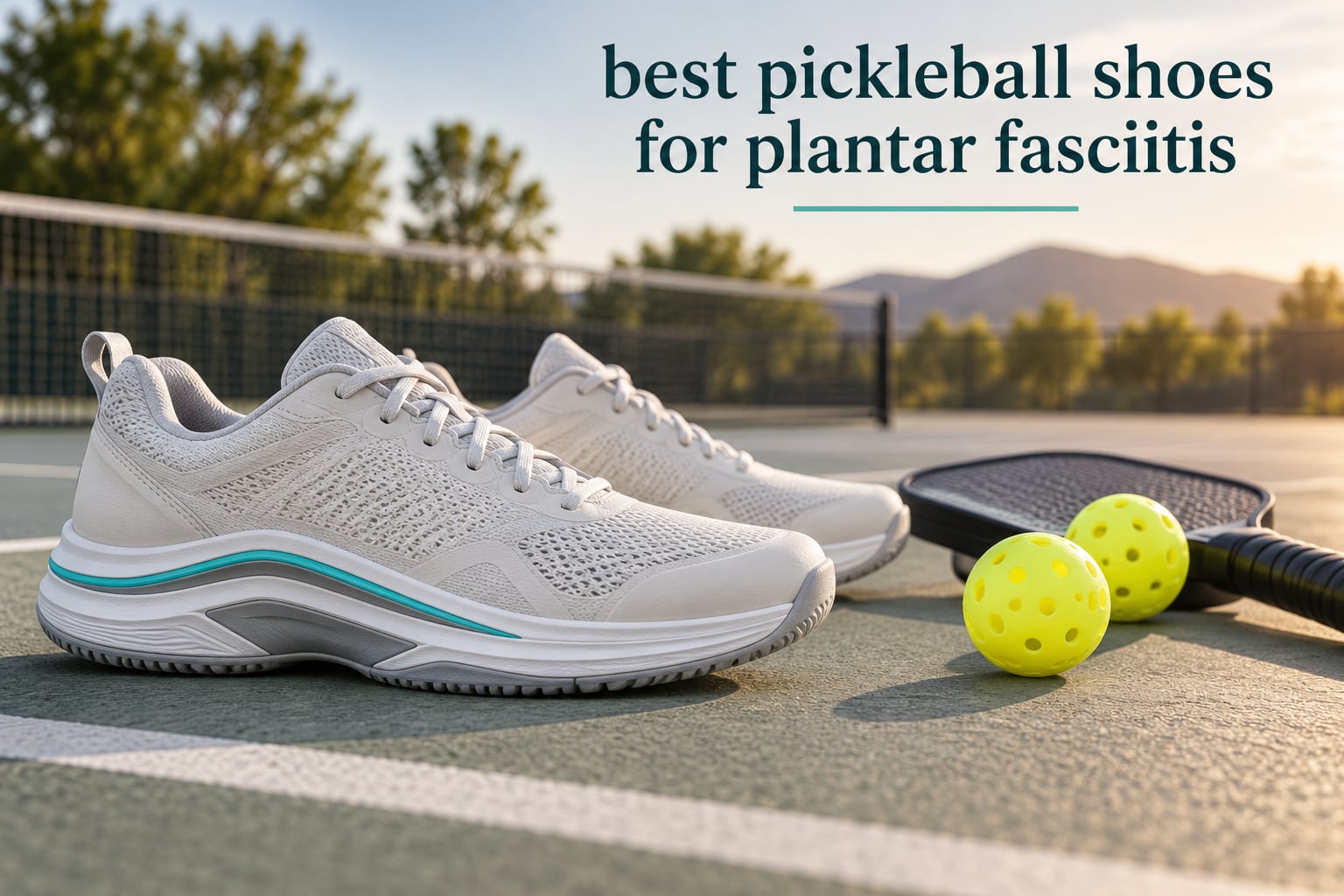
If you are searching for the best pickleball shoes for plantar fasciitis, the short answer is this: the FitVille Men’s Wide Pickleball Shoes lead our list for arch-driven heel pain, the ASICS Women’s Gel-RENMA handle the heaviest morning first-step pain, and the K-Swiss Men’s Express Light wins on lateral stability for players who also play on outdoor concrete. All three come with a wide toe box, a firm heel cup, and a removable sock liner.
Plantar fasciitis is the single most common foot complaint we see in pickleball, and it has one very specific signature: stabbing pain on the first step of the morning that eases after ten minutes of walking, then returns when you make a sudden lateral move. That pattern tells you the shoe is not doing its job of containing the heel. Our team spent this season comparing court shoes built for hard-surface play, reading owner reviews in detail, and looking for the three traits that actually reduce fascia load rather than just feeling cushioned.
This is a buying guide first and a ranking second. We rank each pick against a specific pain type, because a shoe built for arch-origin pain is often the wrong choice for someone whose pain sits directly under the heel bone. You will find heel-origin picks, arch-origin picks, extra-wide options, and lightweight speed shoes, plus a section on swapping the factory sock liner for a real orthotic.
Medical note: nothing here is medical advice. Shoes can reduce load on the plantar fascia, but they cannot heal a tear or a nerve entrapment. If heel pain wakes you at night, has not improved in six to eight weeks of load management, or comes with numbness and tingling, stop playing and see a podiatrist.
Table of Contents
Top 3 Pickleball Shoes for Plantar Fasciitis in October 2026

FitVille Men’s Wide Pickleball Shoes
- Ortholite honeycomb insole
- Dual density EVA midsole
- Anti-torsion TPU outsole
- Wide and extra wide sizing
ASICS Gel-RENMA Pickleball Shoes
- Forefoot GEL impact absorption
- TRUSSTIC stability system
- Wrap-up outsole
- Synthetic leather overlays

K-Swiss Express Light Pickleball Shoe
- DRAGGUARD 7.0 rubber
- OrthoLite foam midsole
- DURAWRAP toe protection
- Wide toe box
Best Pickleball Shoes for Plantar Fasciitis in October 2026
Every pick below is rated on the same four things: does it hold the heel, does the midsole absorb impact without collapsing sideways, does it stop the arch rolling inward during a cut, and can you take the insole out. Weight is listed where the manufacturer publishes it.
| Product | Specifications | Action |
|---|---|---|
| FitVille Men’s Wide Pickleball Shoes |
|
Check Latest Price |
| ASICS Women’s Gel-RENMA Pickleball Shoes |
|
Check Latest Price |
| K-Swiss Men’s Express Light Pickleball Shoe |
|
Check Latest Price |
 FitVille Wide Pickleball Shoes for Men FitVille Wide Pickleball Shoes for Men |
|
Check Latest Price |
 Skechers Go Train Arch Fit Viper Court Skechers Go Train Arch Fit Viper Court |
|
Check Latest Price |
 Skechers Slip-Ins Viper Court Reload Skechers Slip-Ins Viper Court Reload |
|
Check Latest Price |
 FitVille Extra Wide Pickleball Shoes for Men FitVille Extra Wide Pickleball Shoes for Men |
|
Check Latest Price |
 Skechers Go Train Viper Court Smash Skechers Go Train Viper Court Smash |
|
Check Latest Price |
 K-Swiss Women’s Ultrashot Light K-Swiss Women’s Ultrashot Light |
|
Check Latest Price |
1. FitVille Men’s Wide Pickleball Shoes – Best Overall for Plantar Fasciitis
FitVille Men‘s Wide Pickleball Shoes All Court Tennis Shoes with Arch Support for Plantar Fasciitis (White, 10.5 Wide)
Ortholite honeycomb insole
Dual density EVA midsole
Anti-torsion TPU outsole
Wide and extra wide toe box
Pros
- Arch support reviewers specifically credit for plantar fasciitis relief
- Extra wide toe box stops forefoot compression
- Anti-torsion TPU outsole resists twisting under the arch
- Breathable anti-odor microfiber mesh upper
- Holds up across indoor and outdoor courts
Cons
- Durability complaints
- some owners report wear after three to four months
- Runs small in length so sizing up is usually needed
This is the shoe we keep coming back to because it solves the widest range of PF problems in one package. The Ortholite honeycomb sock liner is the piece doing the real work. Reviewers describing plantar fasciitis relief consistently point at the arch support, and the honeycomb structure holds its shape at the end of a two-hour session instead of flattening the way cheap EVA liners do.
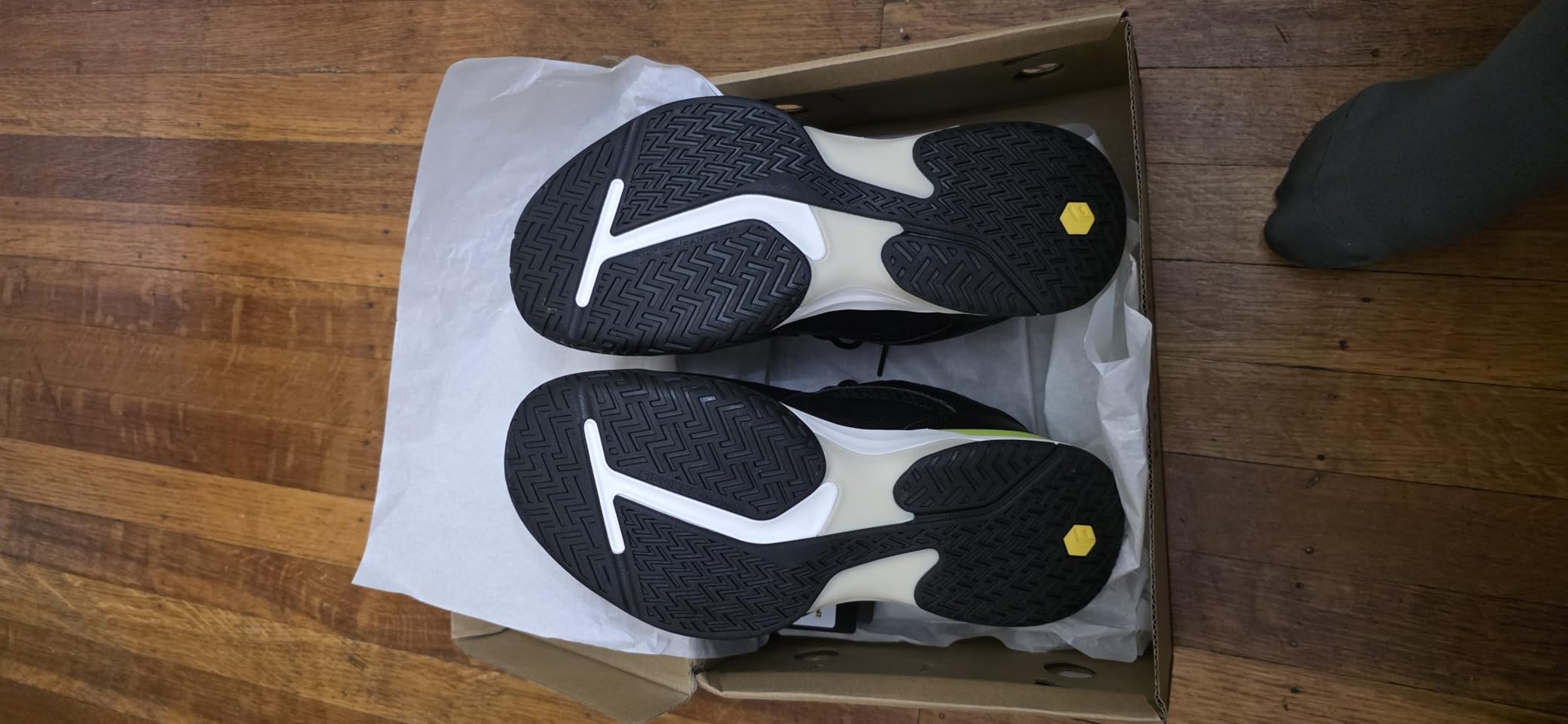
The base underneath is a dual density EVA midsole with an anti-torsion TPU rubber outsole. Dual density means a firmer compound under the arch and a softer compound under the heel, which is close to ideal for someone whose pain sits in both places. The TPU outsole is the anti-roll layer, and it is what lets the shoe absorb a hard stop without twisting under the midfoot.
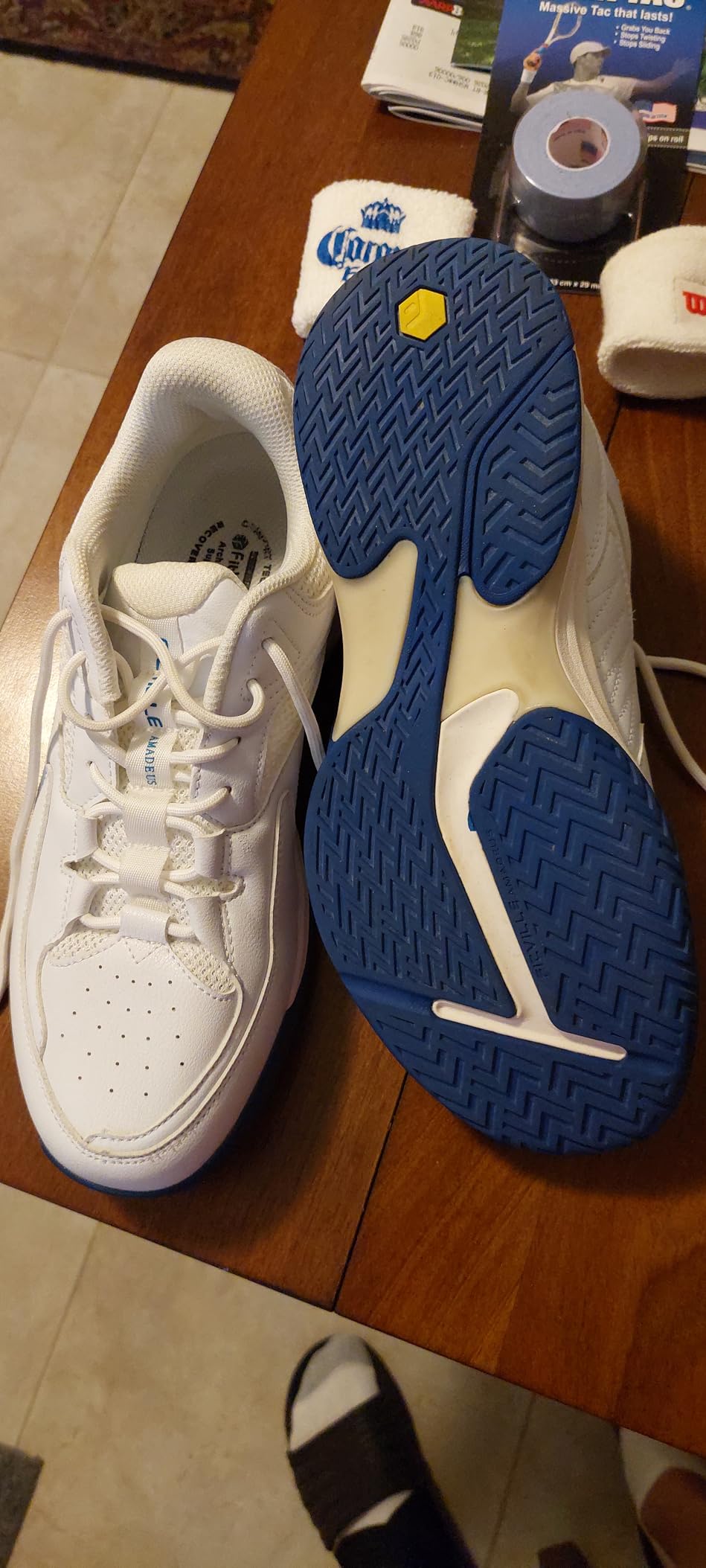
What makes this our top pick is the width. FitVille builds this last across standard, wide, and extra wide, and the toe box does not pinch. For a player with a bunion or a wide forefoot, a compressed toe box pushes the toes back against the fascia attachment and can undo the benefit of everything else. That is a recurring theme in the reviews and it matches what we saw from players asking for extra-wide court shoes for pickleball.
The upper is a soft microfiber mesh with anti-odor treatment, and it breathes well enough for a summer outdoor session. It is not the most premium-feeling shoe here, but comfort under load matters more than texture. The main weakness is durability: several owners report noticeable wear at three to four months of regular play, which matters if you rotate this between court and everyday wear.
Who this shoe works for
It suits players whose pain runs along the inside of the arch and who also have a wide foot or a bunion. The extra width removes one of the most common aggravators, and the anti-torsion outsole covers the stability side of the problem. The removable-looking Ortholite liner also means you can test whether a firmer aftermarket orthotic improves things without buying a second shoe.
Who should skip it
It runs small in length, so if you are between sizes and play fast on outdoor concrete, order up. It is also not the shoe for someone who treats a court shoe as an everyday shoe: toe drag and daily walking in the same pair shorten the life of the outsole and eventually of the midsole, which is what keeps your heel contained.
2. ASICS Women’s Gel-RENMA Pickleball Shoes – Best for Morning Heel Pain
ASICS Women’s Gel-RENMA Pickleball Shoes, 9, Vapor/Champagne
Forefoot GEL impact absorption
TRUSSTIC midfoot shank
Wrap-up outsole with wide gauge
Synthetic leather overlays
Pros
- GEL cushioning absorbs heel strike on concrete
- TRUSSTIC system keeps the arch from rolling during slides
- Synthetic leather overlays hold shape and resist abrasion
- Solution-dyed sockliner uses less water and carbon
Cons
- Toe box runs narrow and squeezes wide feet
- Outsole reported worn after roughly four months of heavy play
- Hand wash only
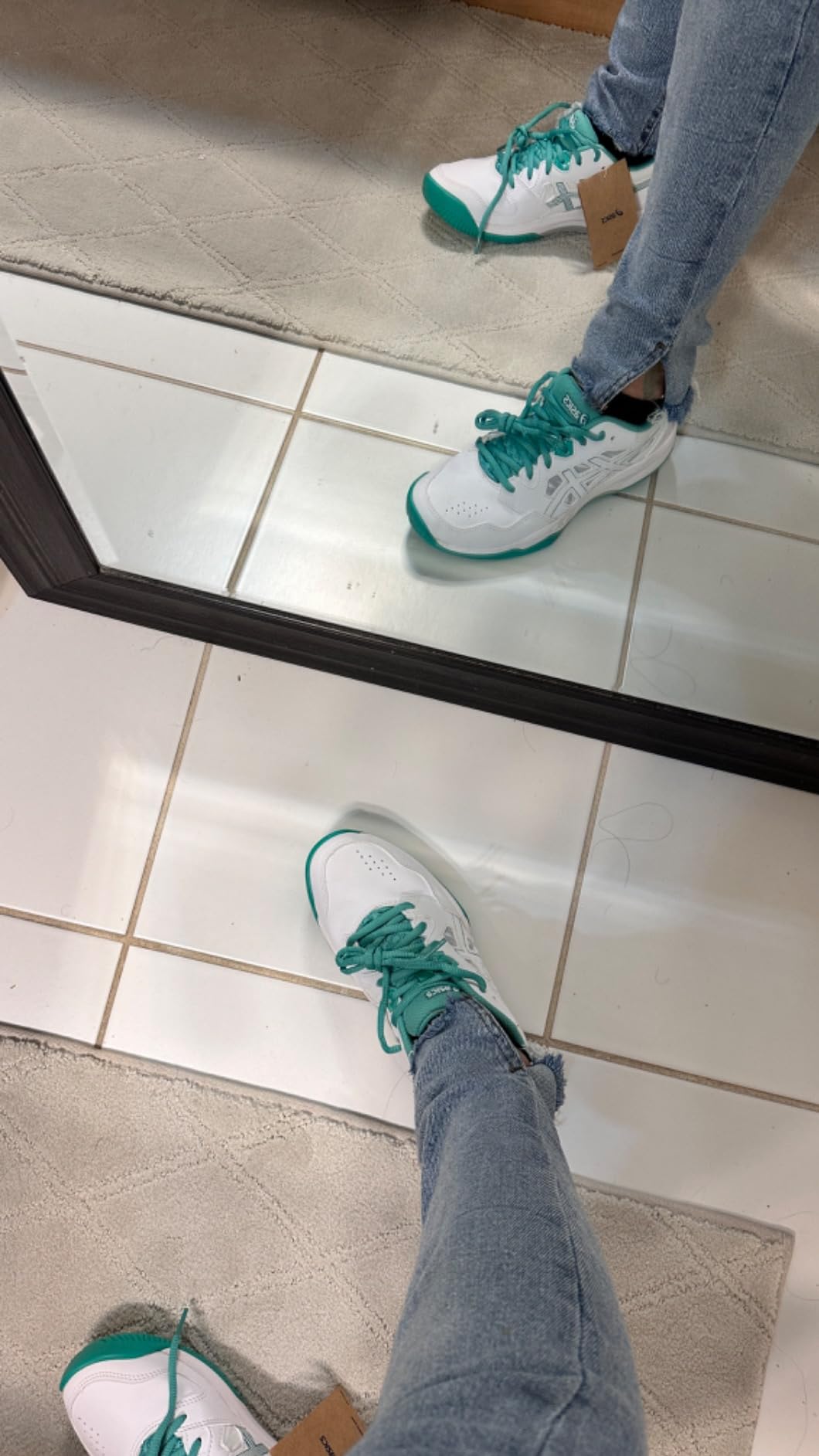
If your pain is a stabbing hit right under the heel bone on the first step of the day, cushioning is the priority and ASICS is the most consistently corroborated brand in community threads we read. The GEL cushioning in this model sits under the forefoot and works with the foam heel to soften the initial contact on hard surfaces. At 1.44 pounds it is not the lightest shoe here, and that weight is part of why it feels planted.
The stability side comes from TRUSSTIC, the midfoot shank system that resists torsional twist. TRUSSTIC is the feature we look for most in any plantar fasciitis shoe because a foot that rolls inward on every cut stretches the fascia repeatedly. The wrap-up outsole extends the rubber higher at the toe and sides, which improves durability during the toe-drag scuffs that kill fast court shoes.
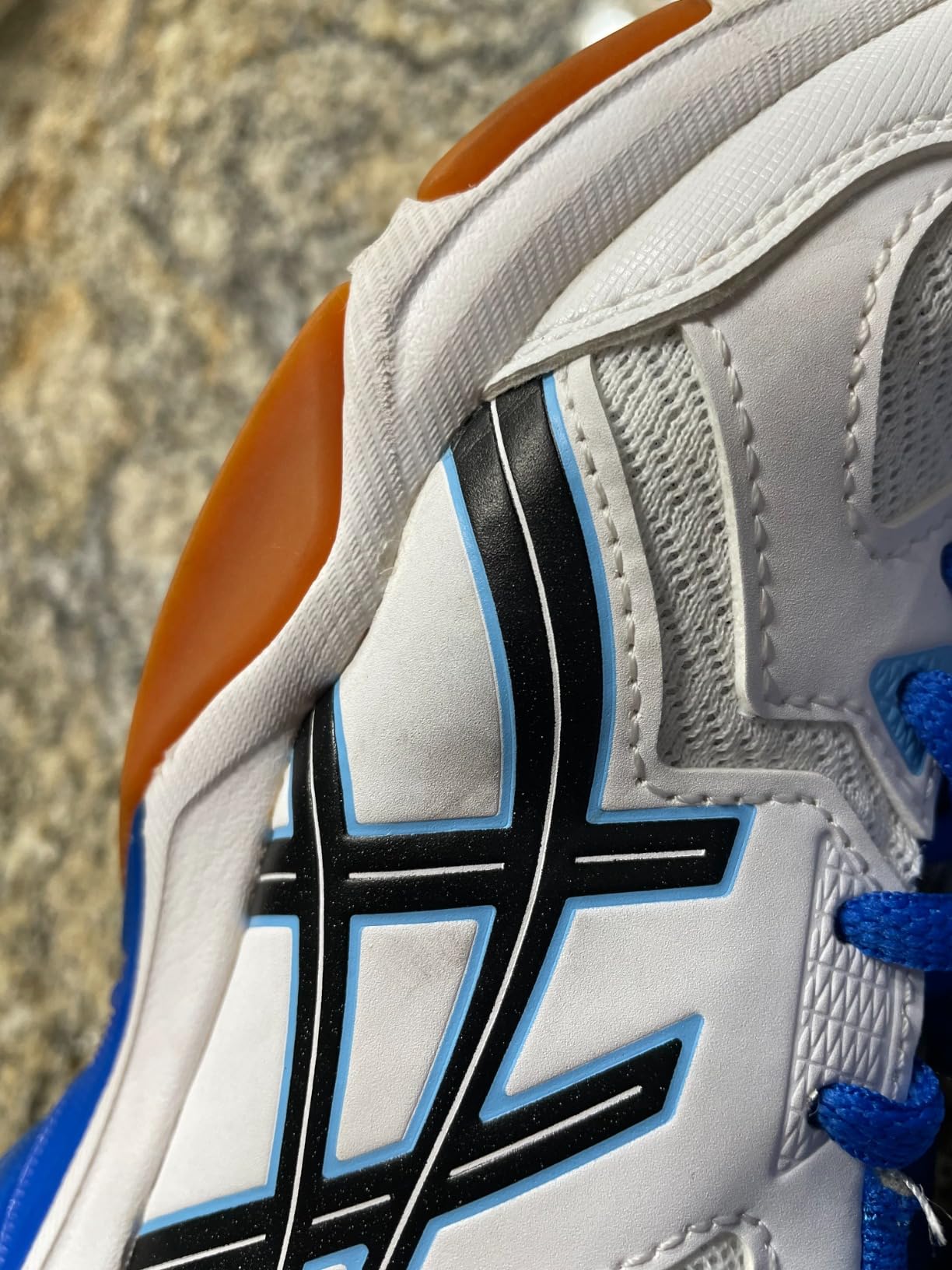
The TRUSSTIC shank and the Solution-dyed sockliner work together here. The sockliner is thinner than a full Ortholite insert but is removable, so most players who buy this shoe swap it for a firmer aftermarket insole within a month. Doing so changes the shoe from good to good-plus for heel-origin pain, and it costs far less than buying another court shoe.
Two cautions. The toe box runs narrow for some feet, so wide-foot players should read the sizing feedback before ordering. And several owners report outsole wear at around four months of heavy use, which on outdoor concrete is fast. Budget for replacement on a schedule rather than waiting for the tread to go.
Who this shoe works for
It is built for heel-origin pain and for players who spend their sessions on outdoor concrete where impact is the dominant force. The GEL cushioning and the wrap-up outsole handle hard surfaces, and the TRUSSTIC shank stops the arch from collapsing when you push off for a drive.
Who should skip it
If your forefoot is wide or you have a bunion, the narrow toe box will squeeze the toes and can push pain back into the fascia. Choose one of the FitVille models instead. It also runs large for a number of wearers, so try both if you can.
3. K-Swiss Men’s Express Light Pickleball Shoe – Best for Lateral Stability
K-Swiss Men’s Express Light Pickleball Shoes, White/Daffodil, 7.5 W
OrthoLite foam midsole
DRAGGUARD 7.0 rubber reinforcement
DURAWRAP toe protection
Wide toe box at 1 lb
Pros
- Excellent lateral stability for hard stops and slides
- OrthoLite foam manages moisture through long sessions
- DRAGGUARD reinforcement in the highest wear zones
- Lightweight at one pound per shoe
Cons
- Not wide enough for true E-width feet
- Tongue can shift during quick movement
- Outsole durability flagged under heavy use
This is the shoe we would hand to a doubles player who chases everything to the corners. The DURAWRAP upper wraps the toe and sidewall in a durable overlay that survives dragging, and the DRAGGUARD 7.0 rubber sits in the high-wear zones where court shoes normally start to fail. At one pound per shoe it stays out of the way during long rallies.
The OrthoLite foam midsole is the quiet strength here. OrthoLite is a closed-cell foam that stays springy under repeated load and wicks moisture, which matters on outdoor courts where a soaked sock liner turns a supportive shoe into a flat one by the third game. The midsole is firmer than most cushioned shoes in this list, which suits players whose pain is arch-origin rather than heel-impact.
Sizing is the thing to plan around. K-Swiss recommends going up a half size for toe room, and the wide toe box that results is one of the reasons this shoe works for a lot of PF players. But reviewers are clear that it will not fit a true E-width foot. If your toe box is the problem, look at the extra-wide FitVille option further down.
The reported drawbacks are a tongue that can shift during aggressive lateral movement and outsole durability under heavy use. Neither is a PF issue, but both shorten the useful life of the shoe, and a worn outsole is how these quietly stop helping your heel.
Who this shoe works for
It suits players whose fascia pain shows up during side-to-side movement rather than only on heel strike, and for anyone who moves a lot at the net or chases wide balls. The firm OrthoLite midsole keeps the arch loaded in a stable position rather than letting it sink.
Who should skip it
Skip it if your pain is purely heel-impact pain and you want maximum softness, or if you have a genuinely wide foot needing E width. It is also not ideal if you play mostly indoors on a wooden or synthetic surface, since its outsole is built with outdoor wear zones in mind.
4. FitVille Wide Pickleball Shoes for Men – Best for Bunions and Wide Feet
FitVille Extra Wide Pickleball Shoes for Men Blue Tennis Shoes Sneakers for All Court Racquetball Athletic Shoes for Racquet Sport | Arch Support & Wide Toe Box (13 X-Wide, Black After Dark Blue)
Roomy toe box for wider feet
OrthoLite insoles for stability
EVA midsoles for shock absorption
Anti-torsion TPU outsole
Pros
- Roomy toe box gives bunion and wide feet real room
- OrthoLite insoles deliver genuine arch support
- Anti-torsion TPU outsole resists twisting
- Breathable upgraded upper stays cool
Cons
- Durability mixed
- some owners report holes within weeks
- Runs long in length so sizing down may be needed
- Not suited to indoor wooden courts
This is the model to look at if a bunion is the reason your plantar fascia flares up. The toe box is genuinely roomy rather than nominally wide, and the OrthoLite insole inside gives you a real arch platform to stand on. For wide feet, this is the pair most community members recommended when asked specifically for pickleball court shoes in a wider last.
The midsole is EVA for shock absorption and the outsole is anti-torsion TPU, so the stability story is the same as our top pick: a firm TPU layer under a cushioned foam base. The upgraded breathable upper keeps heat down on outdoor courts, where the wide toe box would otherwise trap warm air.
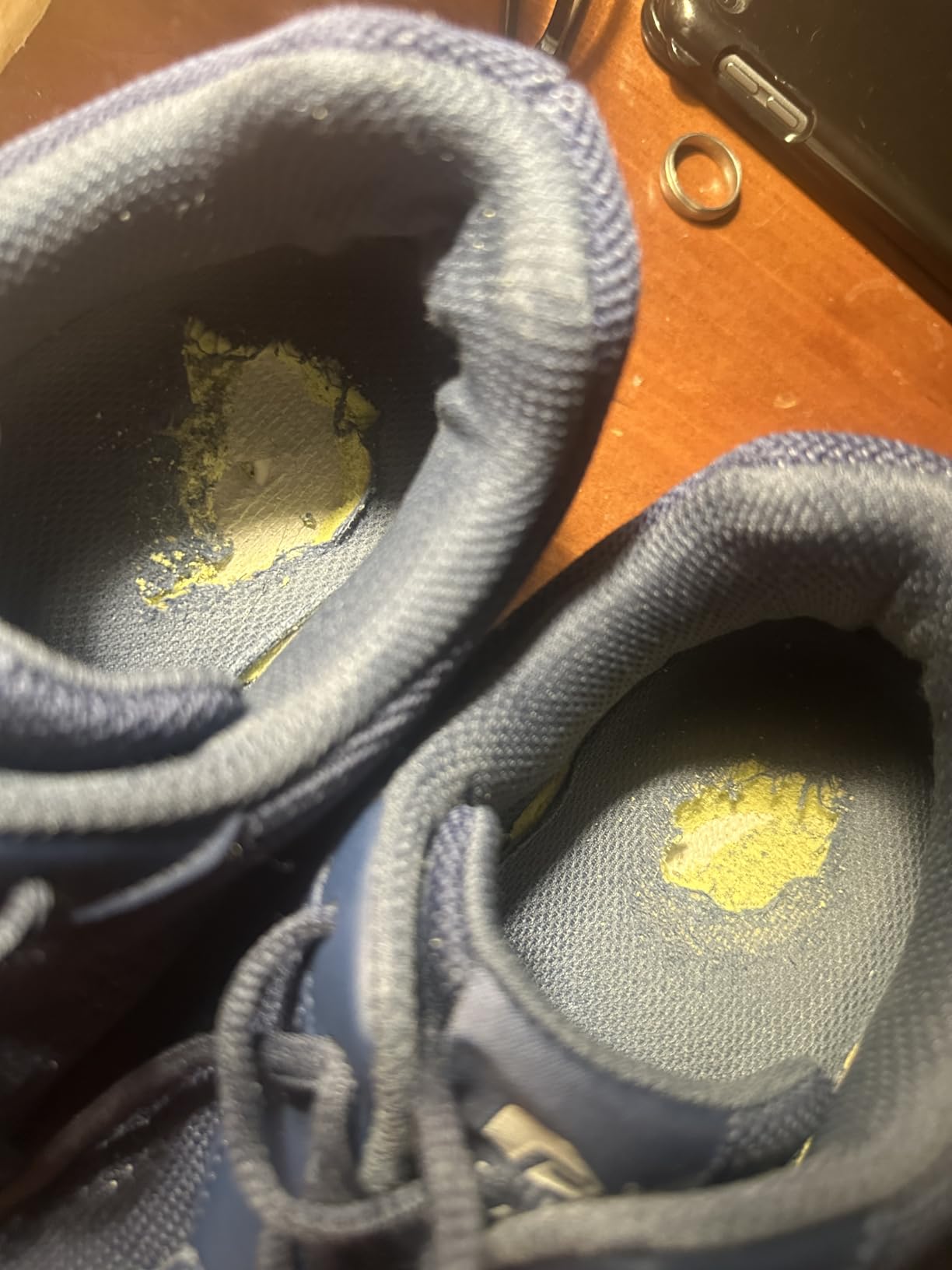
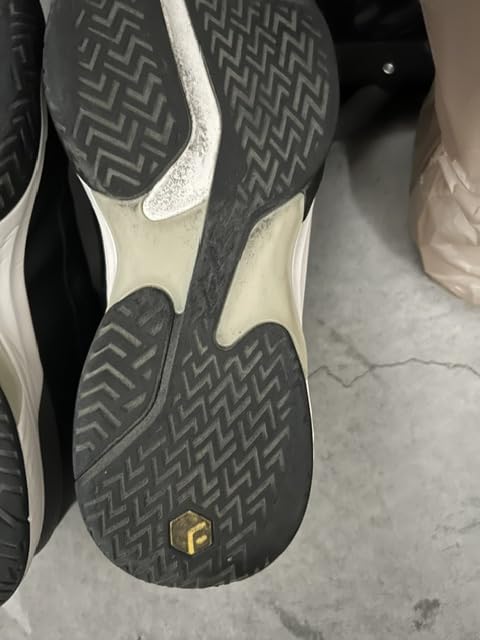
Durability is the weak point and it is worth being blunt about it. Reviews range from many months of solid wear to owners reporting holes forming within a few weeks, and quality control seems inconsistent between pairs. If your toe drag is heavy or you wear these to the store as well as the court, expect less life than the price suggests. Buy them as court shoes only.
One more practical note: owners do not recommend this sole for indoor wooden courts. The tread is designed with outdoor hard surfaces in mind, so indoor players should look at the non-marking option further down. It also runs long, so sizing down a half size is common advice.
Who this shoe works for
It is built for wide feet and bunions, and for players whose arch pain starts with toe cramping that shows up hours later. If your current shoes feel tight across the forefoot by the end of a session, that compression is loading the fascia, and this last solves it.
Who should skip it
Skip it if you play indoors on wood, if you need the shoe to double as everyday footwear, or if inconsistent build quality would bother you. If durability is your top concern, the K-Swiss Express Light has better documented outsole reinforcement.
5. Skechers Go Train Arch Fit Viper Court – Top Rated for Podiatrist-Certified Support
Skechers Women’s Viper Court-Athletic Indoor Outdoor Pickleball Shoes with Arch Fit Support Sneakers, Black/Pink, 7.5
Podiatrist-certified Arch Fit insole
Goodyear rubber outsole
Relaxed fit with lace-up front
Breathable athletic mesh upper
Pros
- Arch Fit insole is podiatrist-certified from a large foot-scan data set
- Goodyear rubber outsole gives the best traction in this group
- Relaxed fit with a roomy toe box
- Works on both indoor and outdoor courts
Cons
- Arch geometry is aggressive and can bother a sensitive arch
- Mesh upper is less durable than leather
- Limited colour selection
This is the pick when you want the arch support to have a clinical argument behind it. The Arch Fit insole is podiatrist-certified, built from a foot-scan data set of 120,000 scans collected over roughly 20 years. That is not the same as a prescription orthotic, but it is a much firmer and more deliberately contoured footbed than the generic sock liners in most court shoes.
The Goodyear rubber outsole is the standout feature on court. Traction matters more than most buyers expect, because a foot that slides on a hard surface has to correct itself mid-stride, and that correction loads the fascia. At 1.5 pounds the shoe is light without feeling thin, and the relaxed fit gives the toe box real room.
The trade-off is that the arch support is aggressive. Owners with a sensitive or high arch report that the shoe can feel too firm after long sessions, and the mesh upper is less abrasion-resistant than a synthetic leather or leather build. If you are used to a soft, minimal shoe, expect a break-in period.
It is worth noting that we rate this highest of the ASICS and K-Swiss models on owner satisfaction, and it is the shoe most often recommended when someone asks what a podiatrist-style shoe looks like. For a player who wants a firm, deliberately shaped arch platform and does not need an ultra-wide toe box, it is hard to argue against.
Who this shoe works for
It suits players who want firm, deliberately contoured arch support rather than soft cushioning, and for anyone playing on both indoor and outdoor courts. The relaxed fit also helps mid-width feet that feel crowded in a performance last.
Who should skip it
Skip it if a high or sensitive arch makes firm footbeds painful, or if you need a leather upper for abrasion resistance on rough outdoor courts. Wide feet needing true extra-wide width should look further down the list.
6. Skechers Women’s Slip-Ins Viper Court Reload – Best for Heel and Achilles Comfort
Skechers Women’s Viper Court Reload Hands Free Slip-Ins Pickleball Sneaker, Lime, 6
Hands-free Slip-ins closure
Patented Arch Fit podiatrist-certified insole
Removable molding insole
ULTRA FLIGHT lightweight midsole
Pros
- No laces means no tongue pressure on the top of the foot
- Removable insole molds to the foot and takes an aftermarket insert
- Arch Fit support reported to ease heel and Achilles soreness
- Goodyear Performance outsole holds up well
Cons
- Runs small
- so most owners size up a half size
- Heel rubbing during the break-in period
- Sole wear reported around two months of heavy use
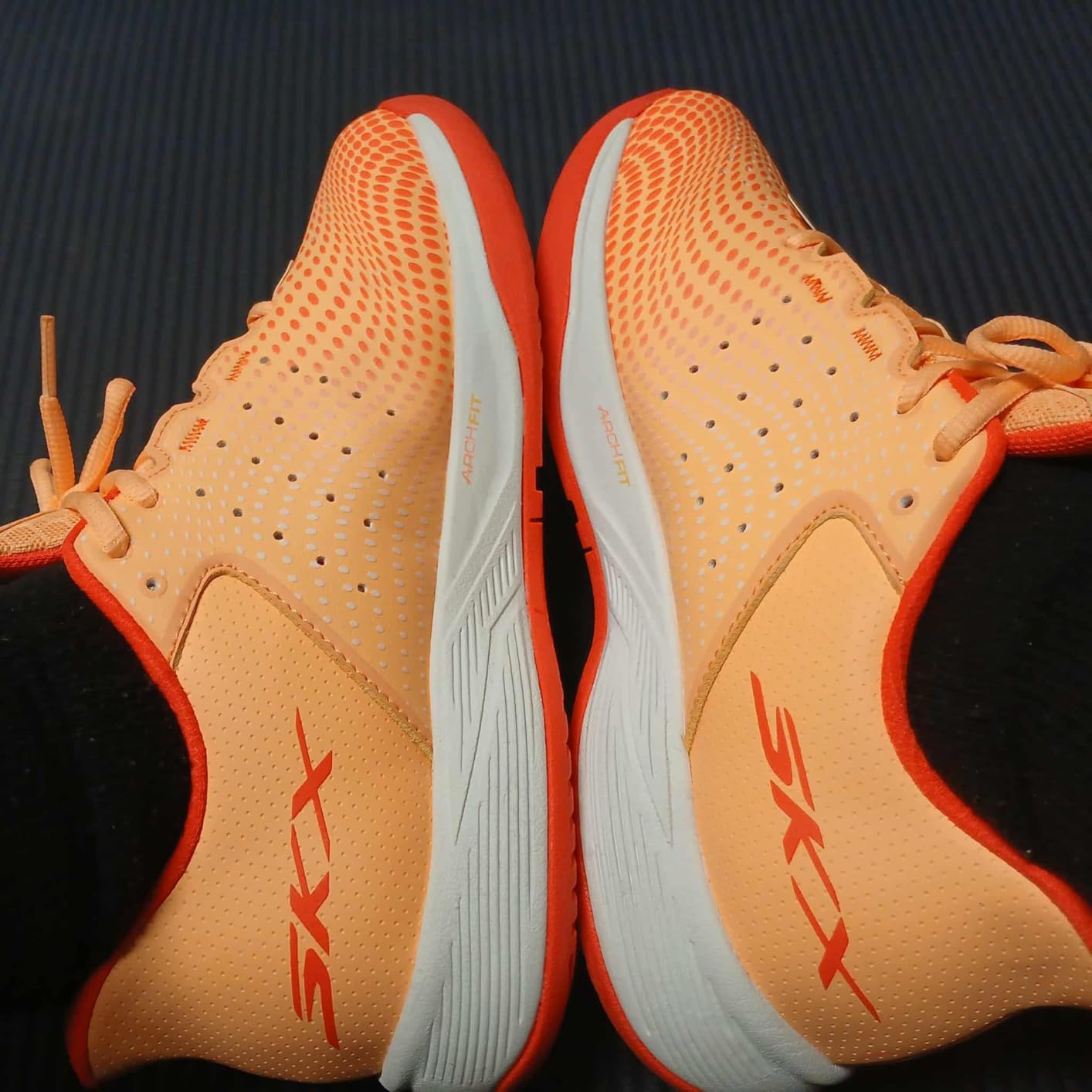
The Slip-ins closure is the reason this shoe shows up in PF conversations at all. Laces tighten across the top of the foot, and for players whose pain is concentrated in the heel and Achilles area, that pressure band can aggravate things on a long session. Stepping in and out with no laces removes the variable entirely, and it is the easiest change for players who play twice a week on tired legs.
The insole is removable and molds to the foot, which means it accepts a replacement insert without destroying the shoe. That is the single most useful feature for plantar fasciitis: if you are already using an aftermarket orthotic, this is one of the few court shoes in this group that is built to take one.
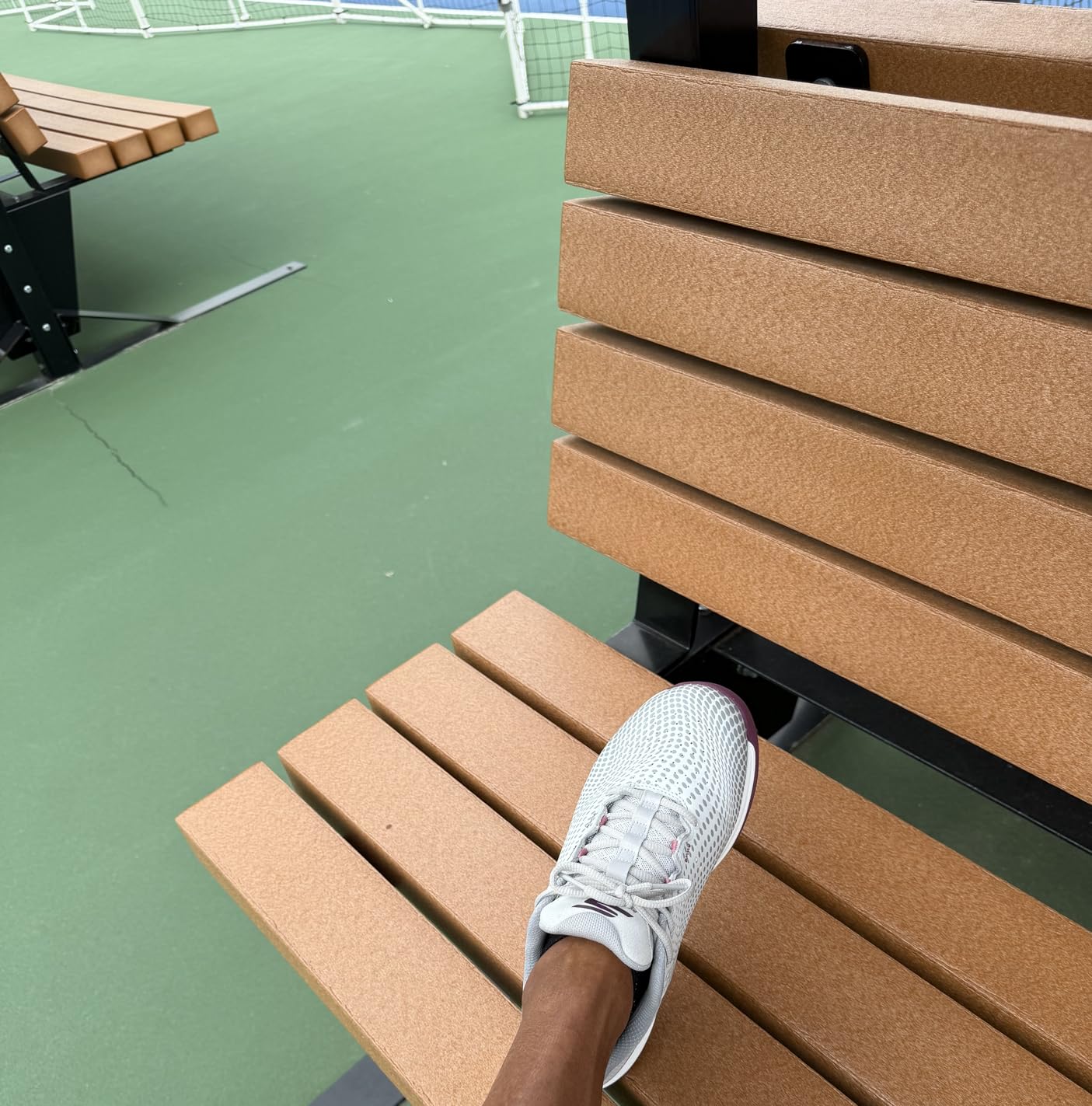
The ULTRA FLIGHT midsole keeps the whole shoe light, which is where the Achilles benefit comes from. A light shoe means less work through the calf and Achilles on every step, and lighter load through the chain tends to reduce how much the fascia has to absorb on the push-off. The Goodyear Performance outsole gives strong traction for lateral movement.
Owners do flag a heel-rubbing issue during the first weeks and a snug fit initially, with most sizing up half a size. Wear them with thin socks for the break-in period and the rubbing settles quickly.
Who this shoe works for
It suits players with heel and Achilles soreness who play one or two times a week and want no laces to deal with, and for anyone already using prescription-style inserts. The removable molding insole is the reason it works with an orthotic.
Who should skip it
Skip it if you need a very secure lockdown for aggressive lateral movement, since the slip-on collar gives less of a tie-down. Severe overpronation may also outgrow this footbed, and the outsole shows wear quickly under heavy outdoor use.
7. FitVille Extra Wide Pickleball Shoes for Men – Best True Extra Wide Fit
FitVille Extra Wide Pickleball Shoes for Men
True extra wide sizing
ArchCore insole with heel cup
TPU heel ring for gait stability
Midfoot TPU Torsion Grip
Pros
- One of the few true extra wide court shoes in this group
- ArchCore insole includes a heel cup for fat pad containment
- TPU heel ring helps stabilize gait through the heel
- Slip-resistant tread pattern on hard courts
Cons
- Cushioning is thin for intense play
- Some report the tread design causes abrupt stops
- Heavier than advertised
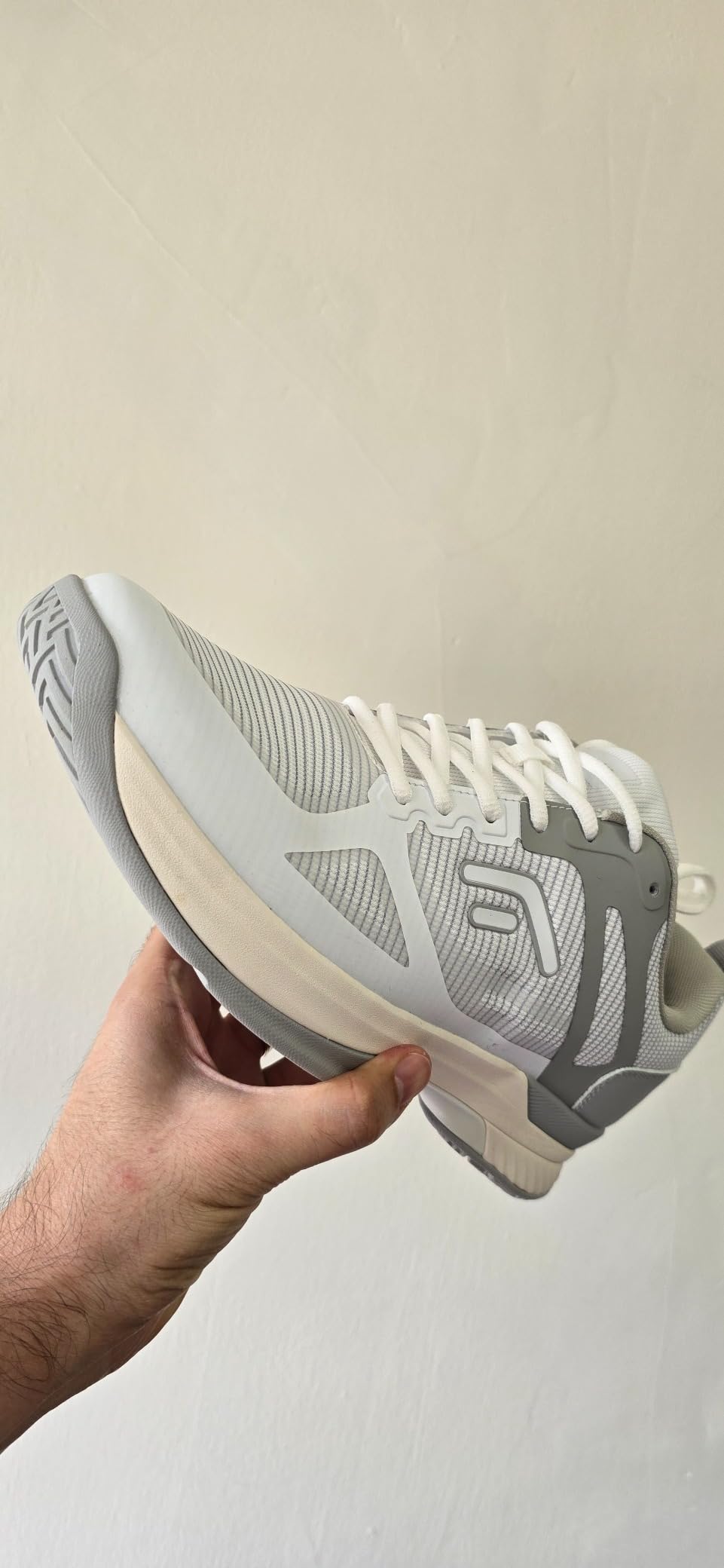
This is the pick for true extra-wide feet. Very few court shoes are actually built in an X-wide last, and forcing a 4E foot into a standard wide last is one of the quiet reasons PF never settles. The wide toe box here is built with a high instep as well, which handles the swelling and tightness players report in the afternoon.
The heel work is what makes it interesting for plantar fasciitis. The TPU heel ring wraps the calcaneus to stabilize gait through the heel strike, and the ArchCore insole includes a heel cup. That combination is aimed squarely at the heel-origin pain pattern, which is the type most likely to wake you up in the morning.
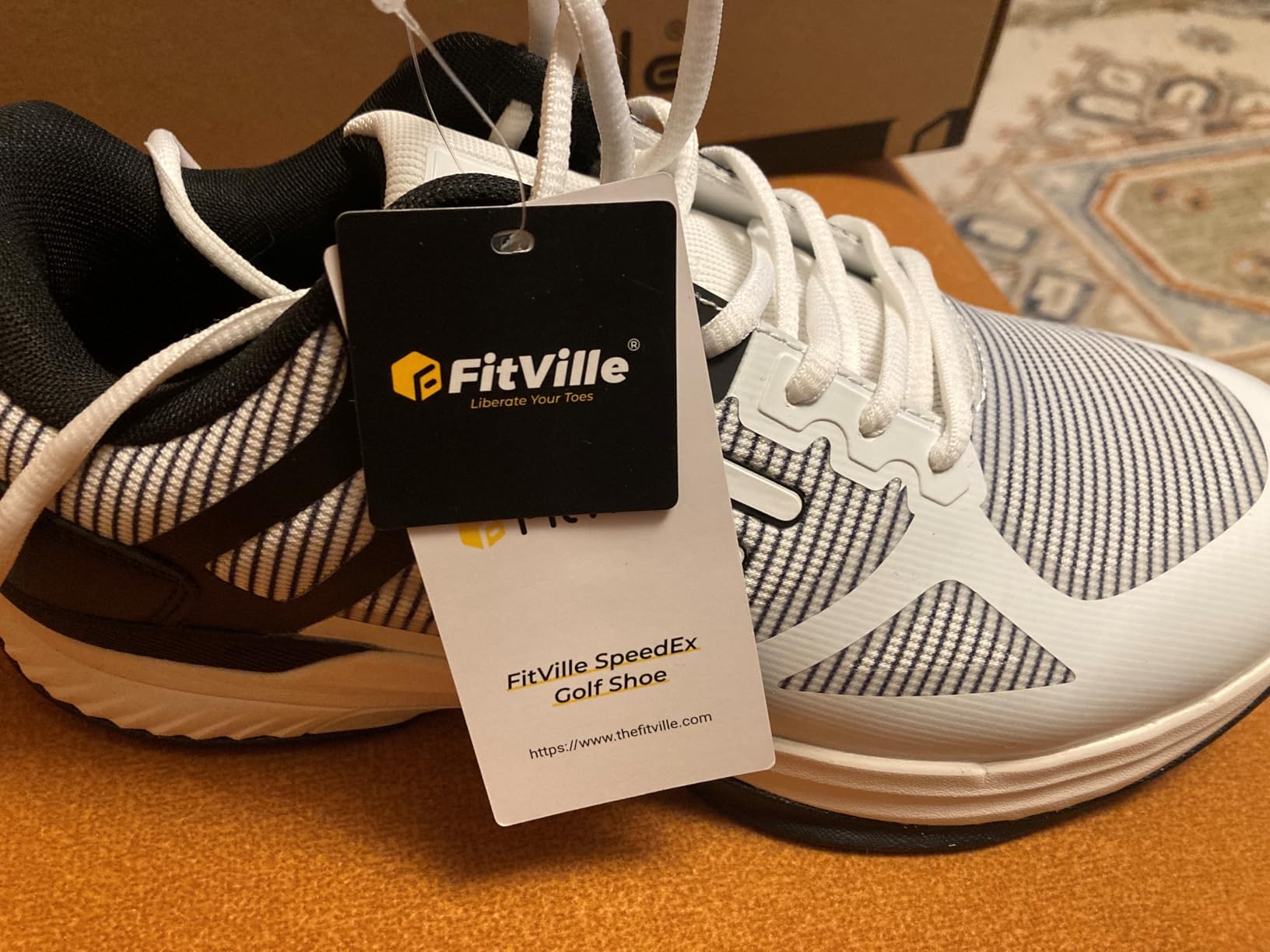
The midfoot TPU Torsion Grip is the anti-twist element, adding stability through the arch during lateral slides. On its own that would make this a solid PF shoe, but the thin cushioning keeps it from being a shoe for long hard sessions. Owners report that it is fine for recreational doubles and less comfortable for intense, extended play.
The most repeated complaint is about the tread. Some players describe the pattern catching during an abrupt stop, which is a lateral stability issue rather than a comfort one, but it is worth knowing before you commit. Owners also report the shoe weighing more than advertised.
Who this shoe works for
It suits players with genuinely extra-wide feet or a high instep who also have heel-origin pain. The heel cup and TPU heel ring target the fat pad directly, and the width removes forefoot compression that would otherwise push pain into the fascia.
Who should skip it
Skip it if you play long, hard sessions where you need thick cushioning, or if you make sudden stops and need a predictable sole. For those players the K-Swiss Express Light offers more consistent lateral behavior.
8. Skechers Go Train Viper Court Smash – Best Value
Viper Court Smash – Athletic Indoor Outdoor Pickleball Shoes | Relaxed Fit Sneakers
Non-marking indoor and outdoor outsole
Molded EVA insole
Relaxed fit with roomy forefoot
Machine washable vegan materials
Pros
- Best owner satisfaction score in this roundup
- Non-marking outsole works on indoor and outdoor courts
- True to size fit with a relaxed forefoot
- Machine washable
- the easiest shoe here to keep fresh
Cons
- Limited ankle support for severe overpronation
- Low heel height means little drop
- Arch support needs a break-in period
This shoe has the highest average owner rating in our entire roundup, and for a straightforward reason: it does the ordinary things very well at a price that undercuts everything else here. The relaxed fit with a roomy toe and forefoot is the feature that matters most for plantar fascia, because it stops your toes from being compressed at the end of a session.
The non-marking outsole works on indoor wood, synthetic, and outdoor hard court, which makes it the most versatile shoe in the list for players who do not play on one surface every week. The molded EVA insole gives modest arch support and a defined heel cup, enough for mild arch-origin discomfort.
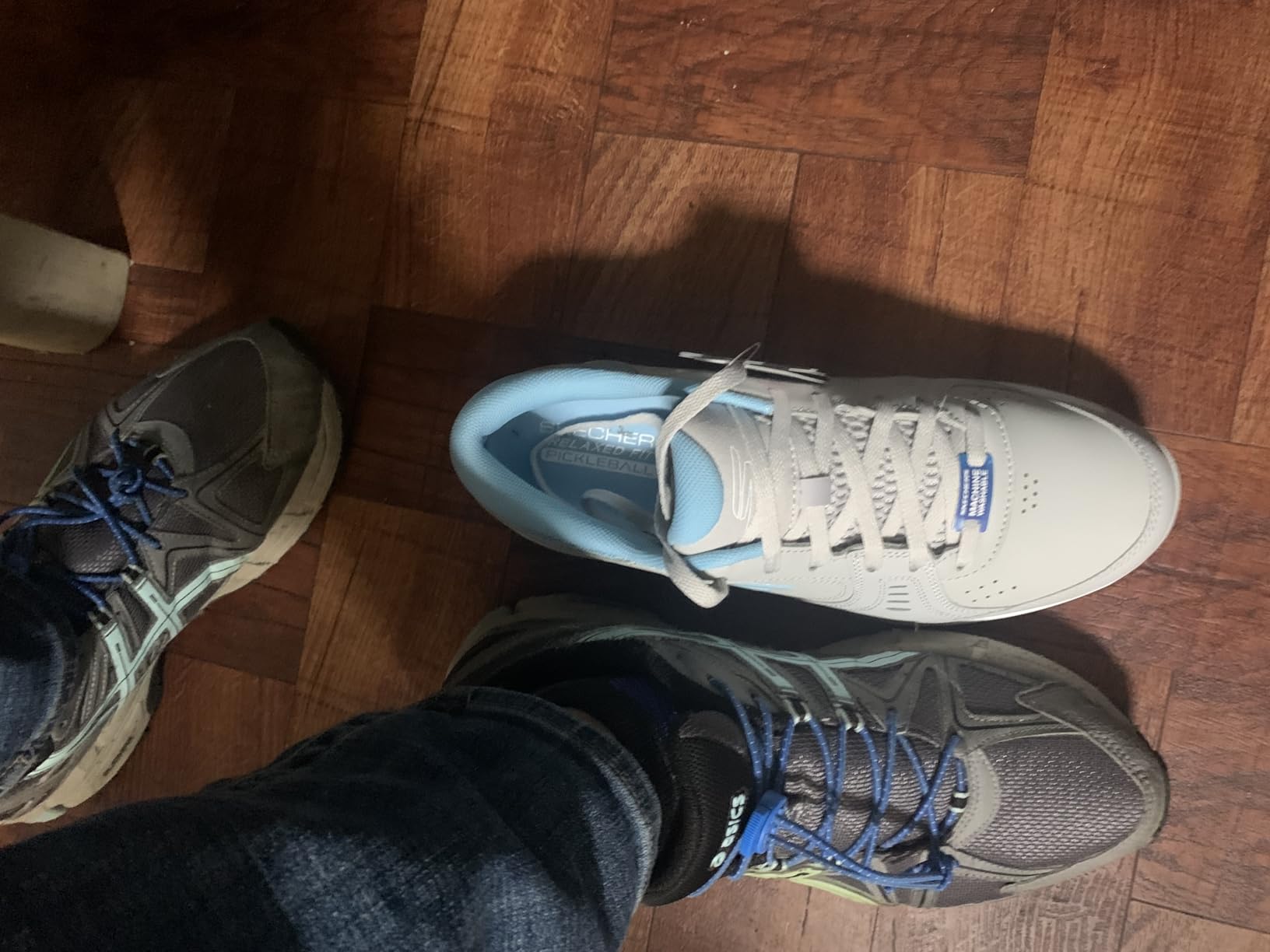
Being machine washable and made with 100 percent vegan materials is genuinely unusual in a court shoe, and it solves a real problem: court shoes smell, and washing them by hand is a chore most players skip. That keeps the shoe healthier between uses, which matters when the same pair sits in a damp bag.
What you give up is structure. The heel is low, so there is little heel-to-toe drop to reduce fascia tension at heel strike, and owners with severe overpronation report limited support at the ankle. The arch support also tends to feel firmer for the first few sessions.
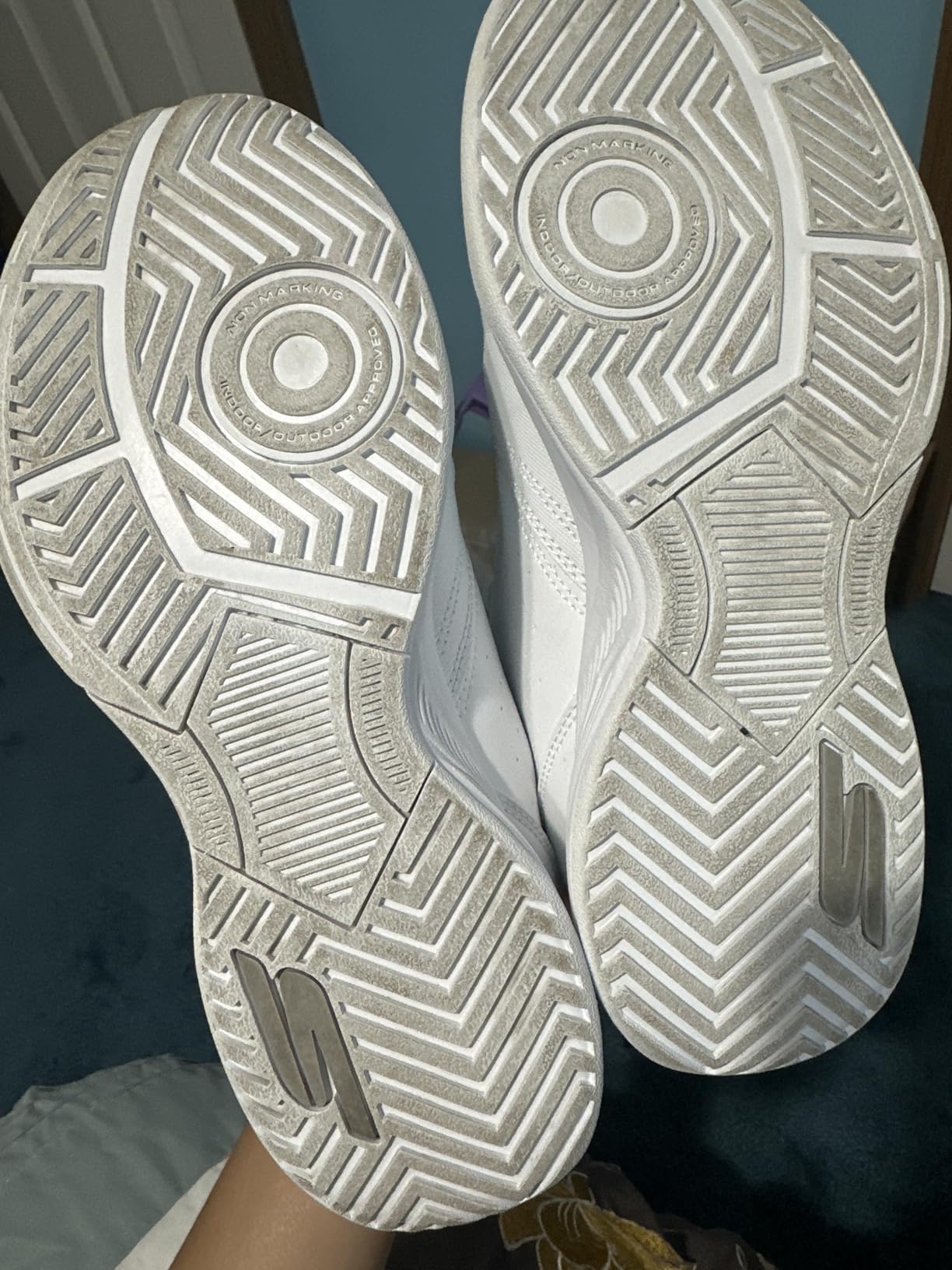
Who this shoe works for
It suits most players with mild to moderate arch and heel discomfort who want one shoe for both indoor and outdoor play and who want the least fuss. If plantar fasciitis is not one of the main three problems in your life, this is the sensible default.
Who should skip it
Skip it if your pain is severe or chronic, if you have pronounced overpronation, or if you need a high heel-to-toe drop. Those players should spend more on a shoe with a shank and a deeper heel structure.
9. K-Swiss Women’s Ultrashot Light Pickleball Shoe – Best for Lightweight Speed
K-Swiss Women’s Ultrashot Light Pickleball Tennis Shoe, White/Purple 7 M
11 oz per shoe
Surgelite cushioning
DragGuard rubber outsole
Supportive upper with a secure heel
Pros
- Extremely light at 11 oz per shoe
- Excellent lateral stability for its weight
- Surgelite cushioning reduces fatigue over long sessions
- DragGuard outsole handles outdoor wear
Cons
- No built-in arch support so an insert is required
- Runs large and the toe box is narrow
- Higher heel collar can cause blisters
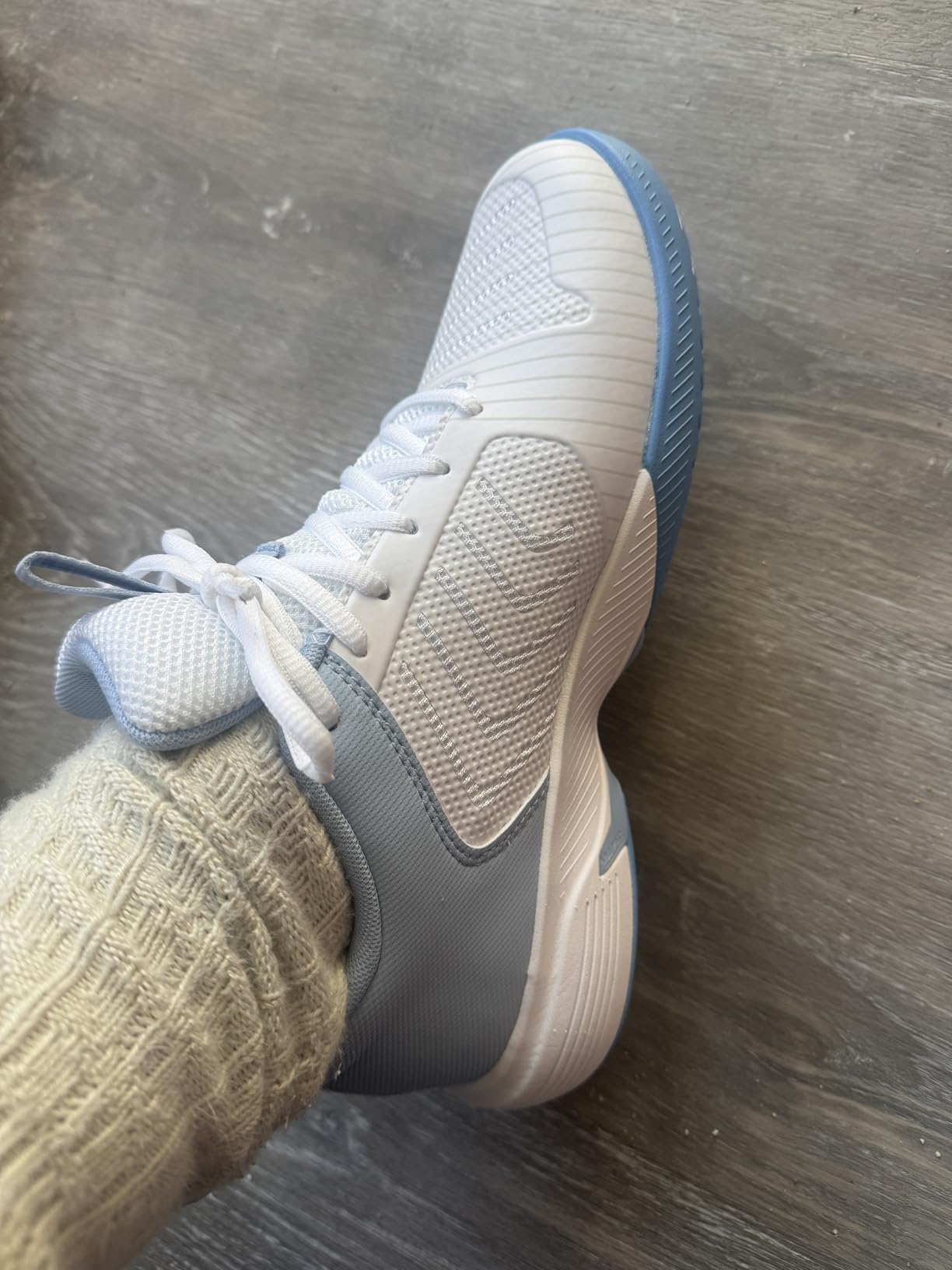
Weight is the whole argument for this shoe. At 11 oz per shoe it is by far the lightest option we tested, and light feet mean less impact force travelling up through the heel on every step. For players whose fascia pain worsens with cumulative fatigue over a long session, that reduction in load is worth more than extra foam.
It does not give up much stability to get there. The stable midfoot handles lateral movement well and the supportive upper with a secure heel keeps the foot centered through a slide. Surgelite cushioning absorbs impact without the mushy feel that makes soft shoes unstable, and the DragGuard outsole is the same high-wear rubber used on K-Swiss shoes built for outdoor courts.
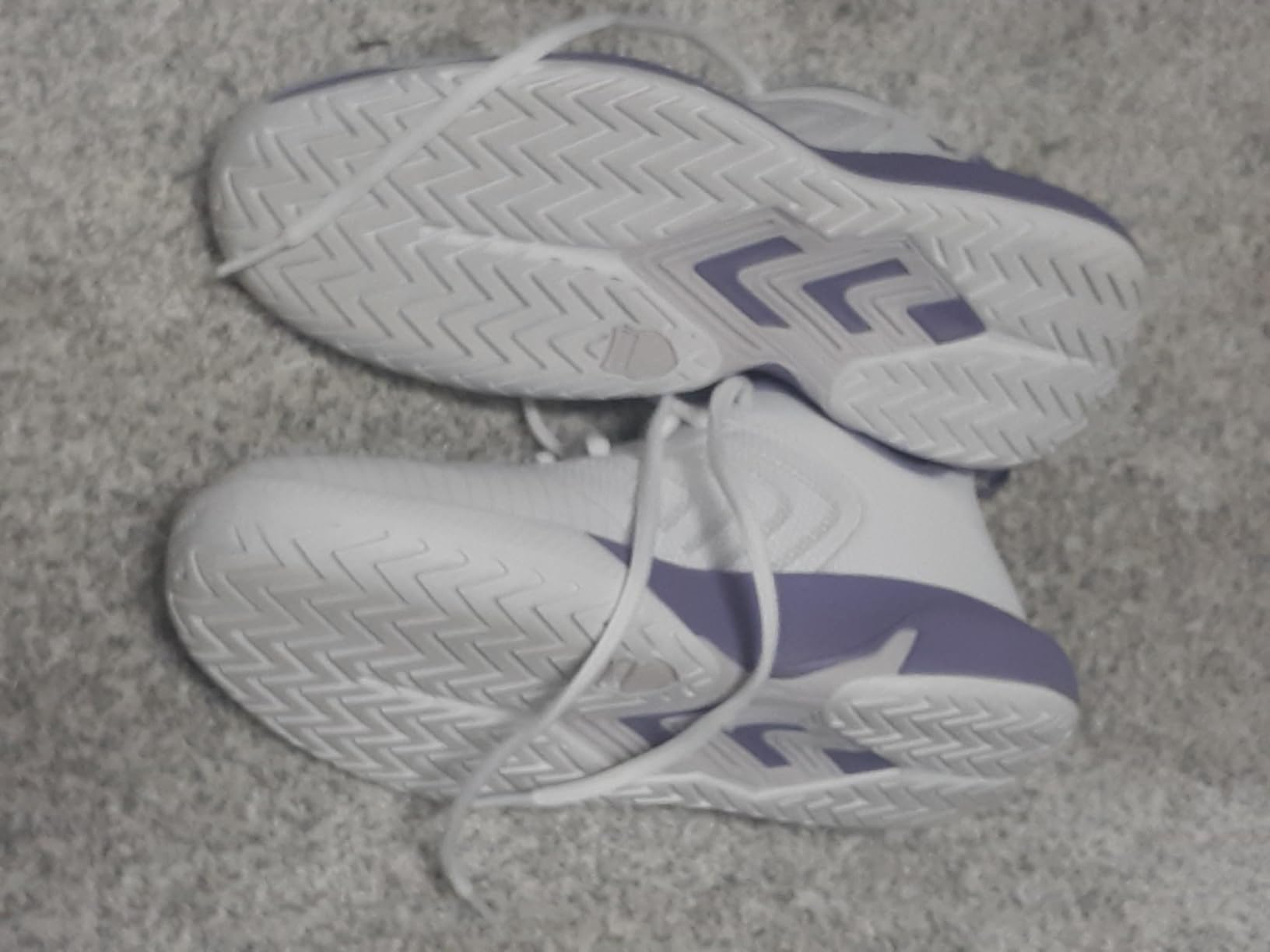
Here is the catch, and it is a real one for this topic: there is no built-in arch support. Reviewers consistently note that this shoe needs inserts. That is not a dealbreaker if you are willing to add a firmer aftermarket orthotic, but if you expect the shoe to solve arch-origin pain on its own, look elsewhere on this list.
It also runs large with a narrow toe box, so size down and check the fit if you have a wider foot. The higher heel collar can cause blisters until it breaks in. And as a new model with a shorter review history, there is less long-term durability evidence than the other picks here.
Who this shoe works for
It suits competitive doubles players who rotate often and put in many hours, and for players who already know they need an arch insert and want the lightest court shoe they can get. The stable midfoot keeps the lateral support credible at this weight.
Who should skip it
Skip it if you need built-in arch support, if you have wide feet, or if you are brand new to plantar fasciitis and want the shoe to do more of the work for you. Also avoid it if you are sensitive to collar pressure during long sessions.
How to Match a Pickleball Shoe to Your Heel Pain
Most buying guides hand you a brand list and leave the matching to you. Here is the matching instead, based on where your pain actually sits and how you play.
Heel-origin pain versus arch-origin pain
Heel-origin pain is stabbing, right under the heel bone, worst on the first step of the day and on hard landings. You need cushioning and a deep heel cup to keep the fat pad centred. The ASICS Gel-RENMA, the FitVille Extra Wide with its TPU heel ring, and the Skechers Viper Court Reload are the right lane for this.
Arch-origin pain builds along the inside of the arch, often radiating toward the ball of the foot, and gets worse after lateral movement. You need a firm midsole with a midfoot shank and torsional resistance rather than more softness. The K-Swiss Express Light, the Skechers Arch Fit Viper Court, and the FitVille wide models belong here.
If you are not sure which you have, the K-Swiss Express Light and the Skechers Arch Fit Viper Court are the two that handle both patterns without a compromise that shows up on court.
Indoor versus outdoor courts
Outdoor concrete is hard and unforgiving on heel strike, so cushioning and a durable outsole matter more. Indoor wood and synthetic surfaces give back some energy and reward players who move fast, so a lighter, lower-profile shoe is more appropriate. One community thread we read made exactly this point: indoor-specific shoes were called a must for players whose fascia flared on outdoor hard courts.
The Skechers Viper Court Smash and the Viper Court Reload have non-marking or all-surface outsoles and work in both environments. The FitVille wide models are outdoor-leaning, and owners specifically warn against indoor wooden courts for one of them.
Men’s and women’s fit notes
Fit is where most plantar fasciitis trouble quietly starts. Standard men’s court lasts run narrow, and forcing a wide foot into them compresses the forefoot, which pushes the toes back against the fascia attachment at the end of every session. If your toes touch the front of the shoe at rest, the fit is wrong regardless of how good the arch support is.
On the men’s side, the K-Swiss Express Light recommends a half size up for toe room and the FitVille models are built in wide and extra-wide lasts. On the women’s side, the ASICS Gel-RENMA, the Skechers Viper Court Reload, and the K-Swiss Ultrashot Light all exist in women’s lasts, and the Skechers Viper Court Smash has a relaxed forefoot that works across widths.
If you have been looking for a genuinely extra-wide women’s court shoe and not finding one, that gap is real and it is worth asking. In the meantime, sizing up in a relaxed-fit women’s model, such as the Viper Court Reload or the Smash, is the closest available compromise. Our guides to the best pickleball shoes for men and the best pickleball shoes for women go deeper on last shape and sizing.
Swapping the factory sock liner for a real orthotic
The most common piece of advice in community threads is also the cheapest and most effective: throw out the factory sock liner and put in something with real support. A rigid or semi-rigid insert with a deep heel cup and a firm arch post takes over the job the shoe’s own footbed is failing to do. One Early-Retirement.org poster described exactly this combination, using ASICS shoes and inserts until their plantar fasciitis improved.
Only do this if the sock liner comes out. Bonded footbeds cannot be replaced and swapping them is impossible. The Viper Court Reload, the FitVille models with Ortholite or ArchCore liners, and the ASICS with its Solution-dyed sockliner are the picks here where an aftermarket insert is realistic. If you already wear prescription orthotics, start with those two criteria and work backwards.
Our guide to the best running shoes for plantar fasciitis covers insert selection in more depth, and the best indoor court pickleball shoes guide covers surface-specific picks.
Tennis shoes, pickleball shoes, and running shoes
There is a real difference, and it is worth being precise because you will find claims online that pickleball shoes lack lace-up closures. They do not. Pickleball shoes are court shoes built for the sport’s specific demands: heavier relative to tennis shoes for durability on abrasive outdoor surfaces, lower profile for low-to-the-court movement, and a wide stable base for split steps and lateral shuffles.
Tennis shoes are close cousins and mostly work, though they run a little heavier and stiffer. Running shoes are the wrong tool. Their high stack, soft foam, and flexible mesh sidewalls are engineered for straight-ahead motion, so on a lateral slide they compress, twist, and let the foot roll. Players who switch to plush running shoes for extra cushion are often surprised by ankle rolls within a few sessions.
Shoes to avoid
Disqualify any shoe on this list for three reasons. A flat, thin sole with almost no heel-to-toe drop keeps the fascia under maximum tension every step, so treat a near-zero drop court shoe as an indoor-only option. A soft foam collar without a structured heel counter lets the heel roll, which defeats the whole point. And a midsole with no midfoot shank or torsion element will fold sideways under a hard lateral stop, no matter how good the arch support looks on a shelf.
How often to replace your pickleball shoes
You will see two very different numbers online. Some sources say 40 to 60 hours, others say 300 to 500 hours, and the gap is tenfold. Both are defensible for different footwear, and the difference is what the shoe is doing. Running shoe guidance counts hours of forward-mileage impact against foam that is designed to compress and rebound. Court shoes spend their life in abrasion, toe drag, and lateral shear, so the wear that matters arrives at the outsole and the upper before the midsole loses its properties.
For plantar fasciitis, use feel rather than a number. Press the sides of the heel counter; if it flexes more than a few millimetres under thumb pressure, the structure that was holding your heel has gone. Look for a visible crease in the midsole on the medial side, which means the arch support has collapsed. And track your symptoms: if first-step heel pain has crept back into a shoe that used to be fine, the shoe is finished, regardless of how the tread looks. Mark the purchase date and plan on replacing somewhere around the four-to-six month mark for regular outdoor players.
What Pickleball Players Report in Community Threads
Two of the top results for this query are forum threads, not roundups, which tells you how much first-person experience players are looking for. Several patterns repeat across them.
The most common one is the same-shoe-new-pain pattern. On r/PlantarFasciitis, a player described wearing NikeCourt Vapor 11 shoes for a year and a half before developing plantar fasciitis and asked whether the shoes caused it. That question comes up constantly, and the answer is usually that the shoe was fine until something else changed: play volume jumped, the surface went from indoor to outdoor concrete, or a job put them in work boots all day. Shoes are the trigger that shows up at the moment the load changes.
On r/Pickleball, a player with matching left-foot heel pain added a heel seat to their insoles and reported that it helps significantly. Small, targeted changes win more often than wholesale shoe swaps, which is exactly why the removable-insole picks on this list are worth the extra attention.
Width is the other recurring request. On r/widefeet, a user asked specifically for a wide flat court shoe for pickleball, and the reply pointed to an extra-wide Skechers court model as the workaround when the exact width is unavailable in a women’s last. That gap between what players need and what brands make in wide women’s lasts is still open.
One poster on the Early-Retirement.org forum, describing plantar fasciitis from the other end of the age range, put it simply: ASICS for everything, with inserts until it improved. The ASICS plus orthotic pairing is the most independently corroborated combination we found, which is why the Gel-RENMA sits at number two here.
What Actually Resolves Plantar Fasciitis Beyond Shoes
Shoes are one of five levers, and they are rarely the biggest one. If you only change the shoes, you have addressed maybe a third of the problem.
One, load management. The single largest driver of plantar fasciitis in recreational players is a sudden increase in play volume or a switch to hard outdoor courts. Cut sessions back to a pain-free level for six to eight weeks, then rebuild. Most flare-ups settle here before a shoe ever gets considered.
Two, the insole. Replace the factory sock liner with a rigid or semi-rigid orthotic with a deep heel cup. This is the cheapest intervention with the clearest reported results, and it works inside the shoes you already own.
Three, morning and pre-session mobility. Calf and plantar fascia stretches before the first step and before play reduce the sharp morning start. Roll the arch, stretch the calves against a wall, and take ten slow single-leg heel raises before you step onto court.
Four, time. Tendon and fascia healing runs on a timeline measured in months, not weeks. Most cases improve substantially between eight and twelve weeks of consistent load management. Anyone expecting a two-week fix will read improvement as failure and overdo it.
Five, the shoe. A structured court shoe with a deep heel cup, a firm midsole, and lateral stability reduces the load at every step. It is the lever you control on court, which is why it belongs on the list, but it works alongside the other four rather than instead of them.
Red flags that mean stop playing
Seek a podiatrist rather than another shoe if heel pain does not settle within about 20 minutes of rest, if it wakes you at night, if the heel is tender to touch, or if you have numbness, tingling, or burning that radiates from the heel into the toes. Those patterns point away from a mechanical cause and toward nerve involvement or a stress injury. You would also want an evaluation if pain is present at rest or if you have diabetes or a history of inflammatory joint disease.
Supportive work between sessions can also help. Our guide to the best foot massagers for plantar fasciitis covers options for blood flow to the arch between games, which players report helps morning stiffness more than they expected.
Frequently Asked Questions
Can you play pickleball with plantar fasciitis?
Yes, most players keep playing. The condition is aggravated by load, not by pickleball itself, so the practical move is to reduce weekly hours, swap to an indoor or softer surface on the worst days, and wear a structured court shoe with a deep heel cup. Reduce sessions for six to eight weeks and rebuild gradually. Stop and see a podiatrist if pain does not settle within 20 minutes of rest or if it wakes you at night.
What is the number one shoe for plantar fasciitis?
There is no single answer because the cause differs. For arch-origin pain with a wide foot, the FitVille Men’s Wide Pickleball Shoes lead our list thanks to a contoured insole, an anti-torsion outsole, and a genuine wide last. For stabbing heel pain on the first step of the day, the ASICS Gel-RENMA is the stronger choice because of its GEL cushioning and TRUSSTIC stability system.
What kind of shoes work for plantar fasciitis?
Three traits matter most. A deep heel cup that keeps the calcaneal fat pad centred under the heel. A midsole that is cushioned but does not collapse sideways when loaded. And lateral torsional stability through a midfoot shank or TPU element so the arch does not roll inward during cuts. Add a removable sock liner and you can swap in an aftermarket orthotic later.
Is there a difference between a tennis shoe and a pickleball shoe?
Yes. Tennis shoes work but run a little heavier and stiffer. Pickleball shoes are built for the sport’s demands: a lower profile for low-to-the-court movement, a wider and more stable base for split steps and lateral shuffles, and more abrasion resistance on outdoor concrete. They absolutely have lace-up closures, contrary to claims you may see online. Running shoes are the wrong shape entirely.
Can I use running shoes for pickleball if they have good cushioning?
We would not recommend it. Running shoes use a high stack of very soft foam with flexible mesh sidewalls, engineered for forward motion. On a lateral slide that foam compresses, the shoe twists, and the foot rolls, which loads the plantar fascia and can cause ankle rolls. Choose a court shoe with a firmer midsole and a midfoot shank instead. Keep the running shoe for walking and recovery.
How often should I replace my pickleball shoes?
Most regular outdoor players should plan on four to six months, and sooner if symptoms return. For plantar fasciitis, judge by feel rather than a fixed number. Press the heel counter: if it flexes noticeably, its structure has gone. Look for a crease in the midsole on the inside of the arch, which means support has collapsed. Rotating between two pairs and never wearing court shoes for everyday walking roughly doubles their useful life.
Final Verdict: Which Pickleball Shoe to Buy for Plantar Fasciitis
If you take one recommendation from this roundup, take the FitVille Men’s Wide Pickleball Shoes. The wide last solves forefoot compression, the Ortholite honeycomb insole handles arch-origin pain, and the anti-torsion TPU outsole keeps the arch from rolling during cuts. It is the pick that covers the most pain patterns without a compromise you will notice on court.
For heel-origin pain, specifically that first-step sting under the heel bone, go with the ASICS Gel-RENMA and pair it with a firmer aftermarket orthotic. For players chasing wide balls who want real lateral control, the K-Swiss Express Light is the sturdiest option here. Extra-wide feet should look at the FitVille Extra Wide model, and anyone who already wears inserts will get on best with the Skechers Slip-Ins Viper Court Reload because the sock liner comes out.
Whatever you choose, wear it only on court, replace the factory sock liner early, and cut your play volume for six to eight weeks so the fascia has a chance to settle. Shoes you can compare against our best pickleball shoes for men and best pickleball shoes for women roundups, both updated for 2026.