
If you have been staring at fish finder ads for an hour, you are not alone. The problem is not the choice, it is that every listing throws around words like CHIRP, ClearVu, target separation and cone angle before telling you the one thing that matters: whether the unit will actually help you catch fish from the boat or kayak you own right now.
That is why the best fish finders for beginners fall into two very different groups. Some are fixed-mount units with a wired transducer, a color screen and built-in GPS. Others are castable sonars that pair with your phone and cost a fraction of the price. Both are legitimate first purchases, and the wrong one for your situation is money you will not get back.
We spent weeks comparing ten of the most popular entry-level fish finders, focusing on what a first-time angler actually needs: simple controls, readable screens, accurate depth numbers and a transducer that fits the boat you have. Below you will find the ten best fish finders for beginners, plus a plain-English buying guide that explains what CHIRP, imaging sonar and GPS mapping actually do before you spend anything. If you are still narrowing the field, start with the Garmin Striker 4 and work outward from there.
Table of Contents
Top 3 Picks for the Best Fish Finders for Beginners for October 2026

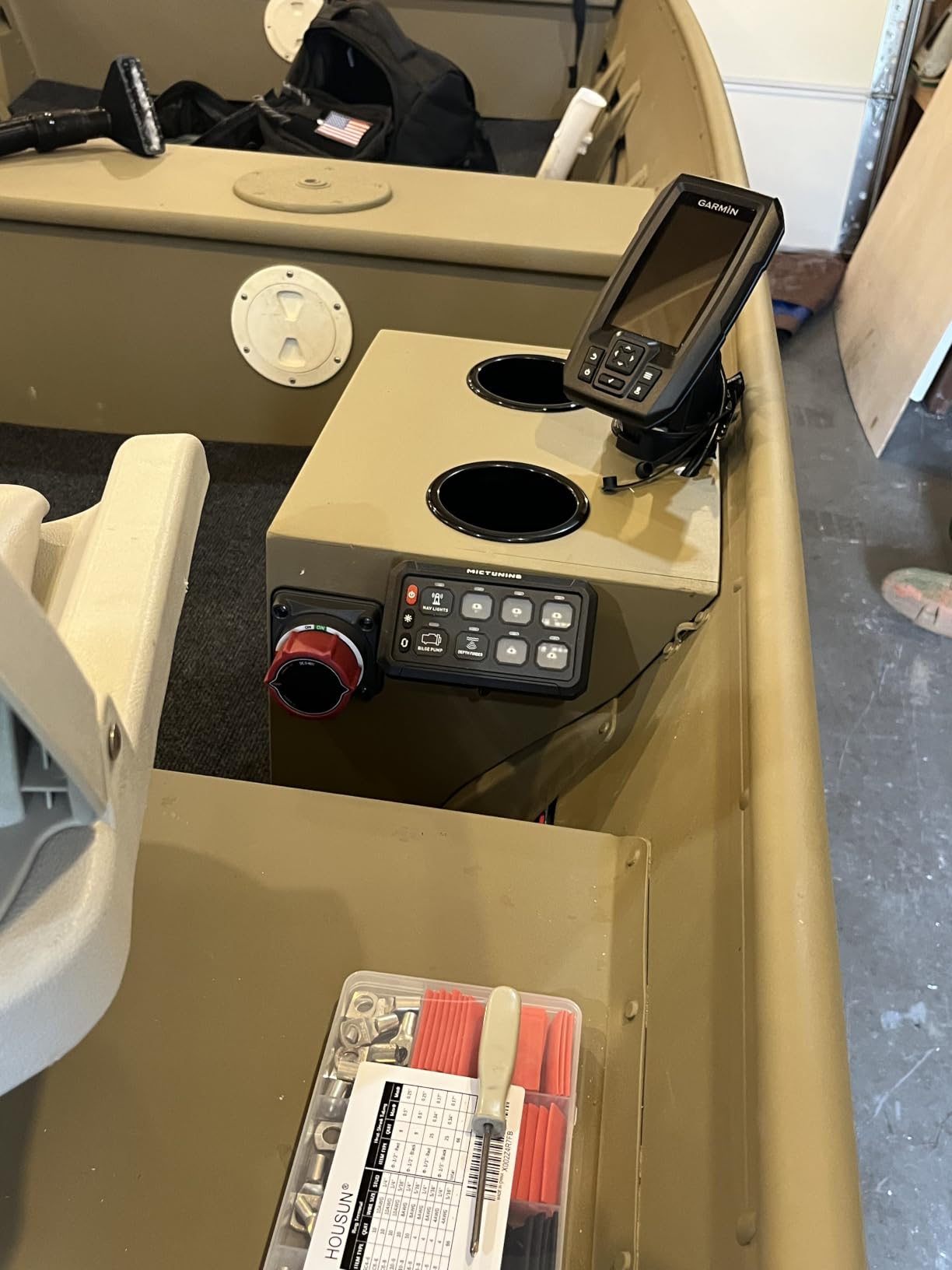
Garmin Striker 4
- 3.5-inch sunlight-readable LCD
- CHIRP plus ClearVu scanning sonar
- Built-in GPS with waypoint marking
- IPX7 water rating

Garmin Striker Vivid 4cv
- 4-inch color LCD with vivid palettes
- GT20 CHIRP and ClearVu transducer
- Quickdraw Contours mapping
- 2-year warranty
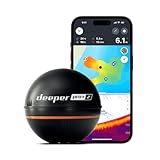
Deeper PRO+ 2
- Wide
- mid and narrow beam modes
- 330 ft casting and depth range
- 0.4 inch target separation in narrow beam
- Built-in GPS bathymetric mapping
All 10 Fish Finders for Beginners in October 2026
The table below lists every unit we reviewed with its headline capability. Use it to rule out the ones that clearly do not fit your boat or your budget before reading the detailed write-ups.
| Product | Specifications | Action |
|---|---|---|
| Garmin Striker 4 |
|
Check Latest Price |
 ReelSonar iBobber ReelSonar iBobber |
|
Check Latest Price |
 LUCKY FFC1108 Handheld LUCKY FFC1108 Handheld |
|
Check Latest Price |
 Deeper START Deeper START |
|
Check Latest Price |
| Garmin Striker Vivid 4cv |
|
Check Latest Price |
 Humminbird PiranhaMAX 4 Humminbird PiranhaMAX 4 |
|
Check Latest Price |
 Venterior VT-FF005 Venterior VT-FF005 |
|
Check Latest Price |
| Deeper PRO+ 2 |
|
Check Latest Price |
 Humminbird Helix 5 Chirp GPS G3 Humminbird Helix 5 Chirp GPS G3 |
|
Check Latest Price |
 Garmin Striker 4cv Garmin Striker 4cv |
|
Check Latest Price |
1. Garmin Striker 4 – The Best Fish Finder for Beginners Overall
Garmin 010-01550-00 Striker 4 with Transducer, 3.5″ GPS Fishfinder with Chirp
3.5-inch LCD
CHIRP and ClearVu sonar
Built-in GPS and waypoints
1600 ft max depth
IPX7
Pros
- Simple keyed buttons you can learn without a manual
- Accurate depth temperature and speed readings
- Screen readable in direct sunlight
- Transom and trolling motor mounts included
- Runs all day on a marine battery
Cons
- Signal cuts out at higher trolling speeds
- Thin supplied power leads need securing
- No pre-loaded charts
The Striker 4 is the unit we keep handing to friends who tell us they have never used a fish finder before. Everything about the physical design is deliberately plain: a small color screen, a rocker keypad, and a menu that fits on one page. There is no touchscreen to learn, no layers of settings and nothing that locks you out of a feature behind a subscription.
Under the hood you still get CHIRP traditional sonar and Garmin ClearVu scanning sonar from the included transducer. That combination is the reason this fish finder shows fish arches and bottom detail that cheaper monochrome units miss, and the 1600 ft depth rating covers almost any freshwater lake you will ever fish. Reviewers consistently report accurate depth, water temperature and speed numbers, which sounds boring until you realize how much of a beginner’s trust is built on the readout being right the first time.
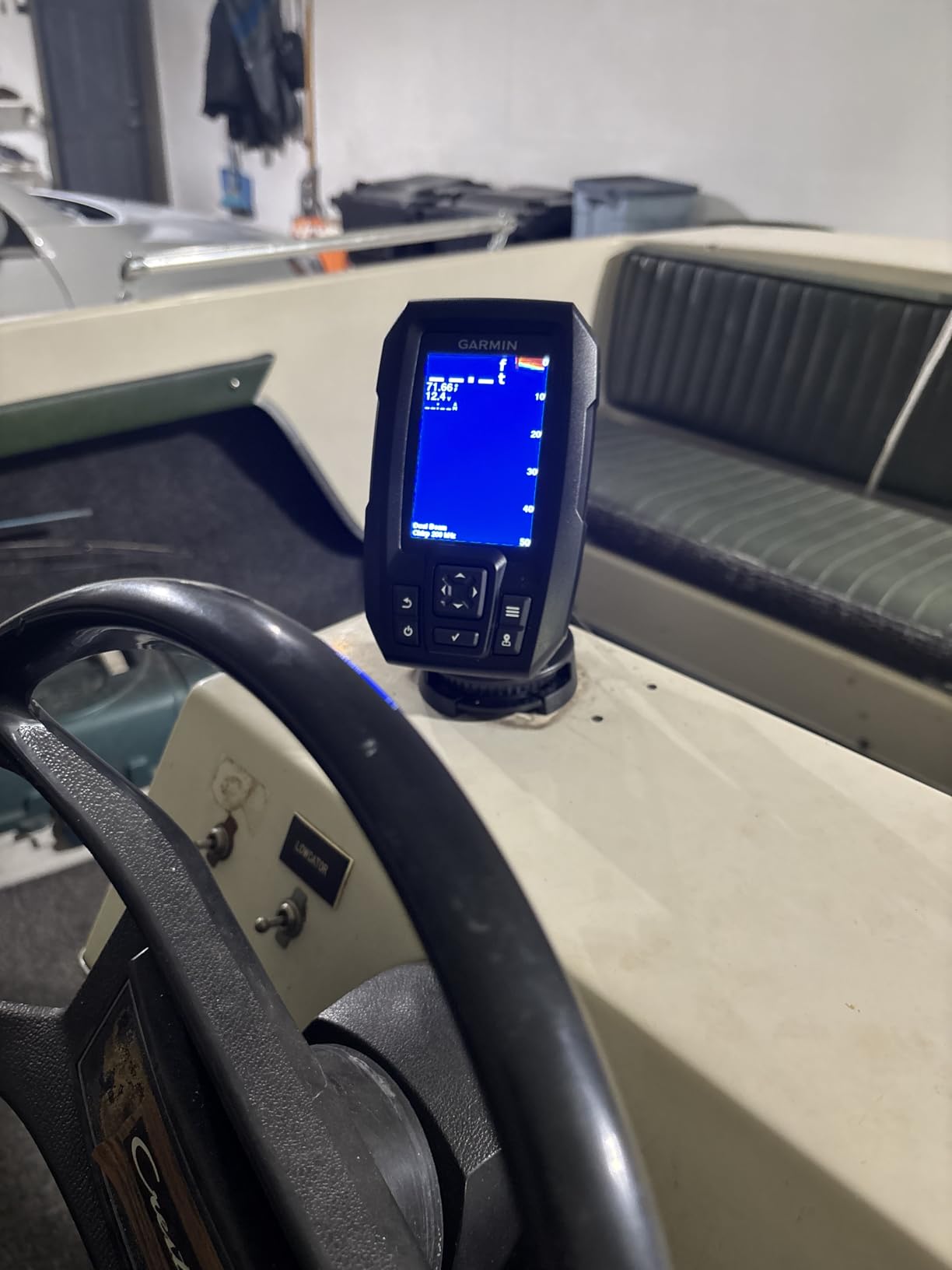
Mounting took us under fifteen minutes on a small jon boat. The transom and trolling motor brackets and the tilt/swivel head all come in the box, and the keyed buttons work fine with wet hands or gloves. Current draw is listed at 0.23 amp at 12V, so it will run through a long day of trolling on a deep-cycle battery without draining it.
There are two limits worth knowing before you buy. First, the signal starts to fall apart at higher trolling speeds, so if your plan is to run a shallow high-speed pass and read the screen, this is the wrong tool. Second, there are no pre-loaded charts. You get a waypoint map, which is enough to mark a brush pile and come back to it, but you are drawing your own contours from scratch. There is also a built-in flasher mode for ice fishing, which is one of those small features that quietly makes this a four-season unit. If you want bigger screens or bundled mapping, our [kayak fish finder picks](https://betterbike.org/best-fish-finders-for-kayaks/) cover the alternatives.
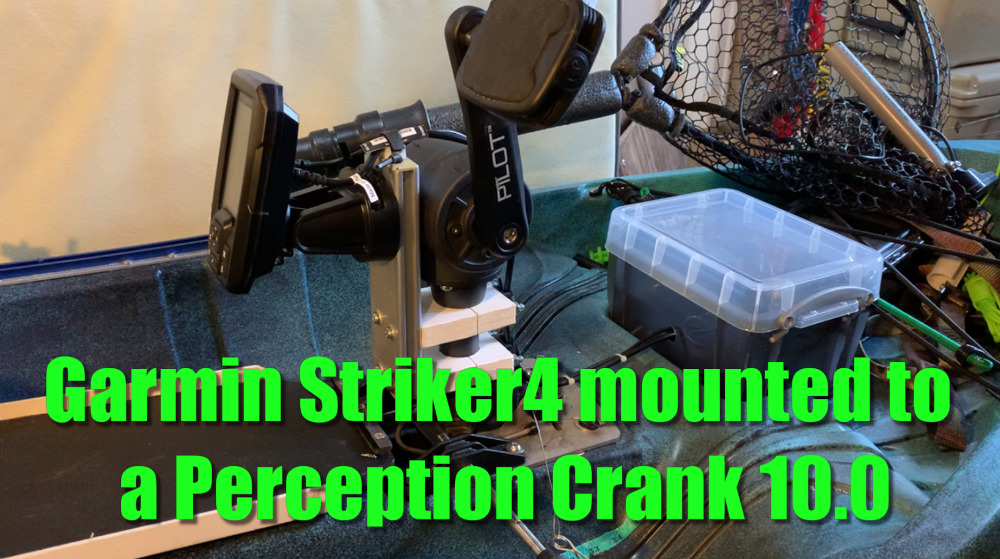
Will the Striker 4 work on a kayak or small jon boat?
Yes, and it is the most common setup we saw in owner photos. The included tilt/swivel bracket is small enough to strap to a kayak console and the unit weighs just 8 ounces. Many owners run it off a sealed lead acid battery in a dry bag tucked behind the seat.
The one real limit on a kayak is that ClearVu needs a fair amount of water below the transducer to produce a clean picture. In very shallow water or in heavy current you will get less detail than the screen size suggests, though depth and traditional sonar readings hold up fine.
What do you give up compared with a 4-inch or 5-inch unit?
Screen real estate, mostly. A 3.5-inch panel cannot split the view and show traditional and ClearVu side by side at a comfortable size, so beginners often find themselves switching pages instead. It also lacks the color sonar palettes that make fish stand out against structure on bigger screens.
If you fish mostly from a fixed position, an anchored small boat or a kayak, those are minor trade-offs. If you are constantly moving and scanning wide, spend the extra and move up a size. Our [boat fish finder guide](https://betterbike.org/best-fish-finders-for-boats/) breaks down the mounted options in more detail.
2. ReelSonar iBobber – Best for Shore and Bank Fishing
Reelsonar Portable Fish Finder Accurate Fish Depth Finder with Depth Range of 135 feet 10+ Hours Battery Life with iOS & Android App Wireless
Castable Bluetooth float
135 ft depth range
10+ hour battery
Phone and watch app
Pros
- Tiny and light enough to cast and pocket
- Long battery covers a full day
- Free iOS and Android app with demo mode
- Depth temperature and bottom terrain readout
- Glowing LED ring for night fishing
Cons
- Bluetooth range roughly 40 to 50 feet
- Readings unreliable under 5 ft of water
- Strike alarm triggers too easily
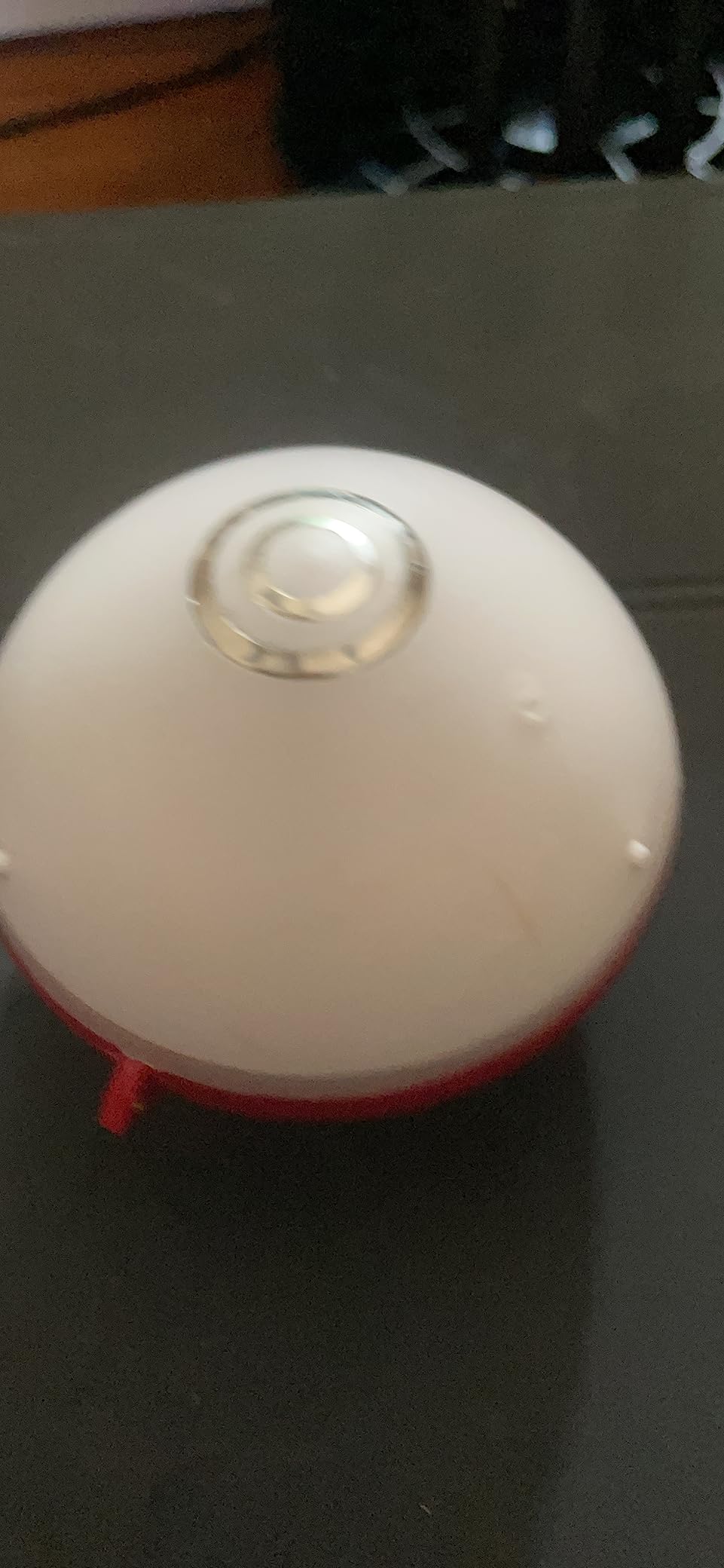
Most portable sonars are castable. The iBobber is something rarer: a floating unit that works while you fish from the bank, a dock or a pier, and it also works from a boat or kayak. You clip it to a line, it draws its own chart on the free app, and the rechargeable battery runs 9 to 10 hours before you need the charging cradle.
For a beginner the app is the selling point. It opens with a demo mode and clear tutorials, the fish icons are color-coded by size, and it reads depth, water temperature and bottom terrain. Turn it on and it powers itself down when it leaves the water, which is a small detail that means you stop thinking about the device entirely. The LED ring on the float also glows at night, which saves you from reeling in to find it.
Where it falls short is physics. Bluetooth runs out to roughly 40 or 50 feet from your phone, and the connection can drop intermittently, especially from an aluminum boat where the hull eats the signal. Readings also become unreliable in water shallower than about 5 feet, which rules out most shoreline fishing in the shallows. Owners also mention the app draining a smartphone battery quickly, so plan on charging your phone at lunch.
The strike and fish alarm is another honest negative: it fires so easily that most people turn it off after the first session. That is fine, because the visual data is the part that teaches you something. If you want a shore setup with better range, our [castable fish finder picks](https://betterbike.org/best-castable-fish-finders-for-shore-fishing/) cover the alternatives.
Is a phone-based fish finder worth it for a beginner?
For shore, dock and kayak anglers, absolutely. You are not learning a new device with a menu system, you are using an app you may already have installed, and the whole package fits in a coat pocket. The trade is that you are dependent on your phone and on a wireless link that will not reach across a wide lake.
How accurate is a float sonar like this one?
Depth and bottom contour readings are dependable in most conditions, which is what you use them for. Fish size icons are a rough grading rather than a measurement, so treat them as a hint that something is down there rather than a fish counter. Below about 5 feet, or in moving water, expect the picture to get noisy.
3. LUCKY FFC1108 – Budget Pick for a Handheld Depth Finder
LUCKY Kayak Portable Fish Depth Finder Water Handheld Fish Finder Sonar Castable Kayak Boat Fishfinder Transducer Fishing LCD Display FFC1108
2-inch backlit LCD
Wired transducer
3 to 328 ft depth range
Fish alarm
Pros
- Lowest cost of any unit we reviewed
- Works right out of the box
- One hand size with neck strap
- Five sensitivity levels for turbid water
- Backlight readable day and night
Cons
- Transducer must stay in the water
- Through-hull mounting unreliable on fiberglass
- No fish size grading
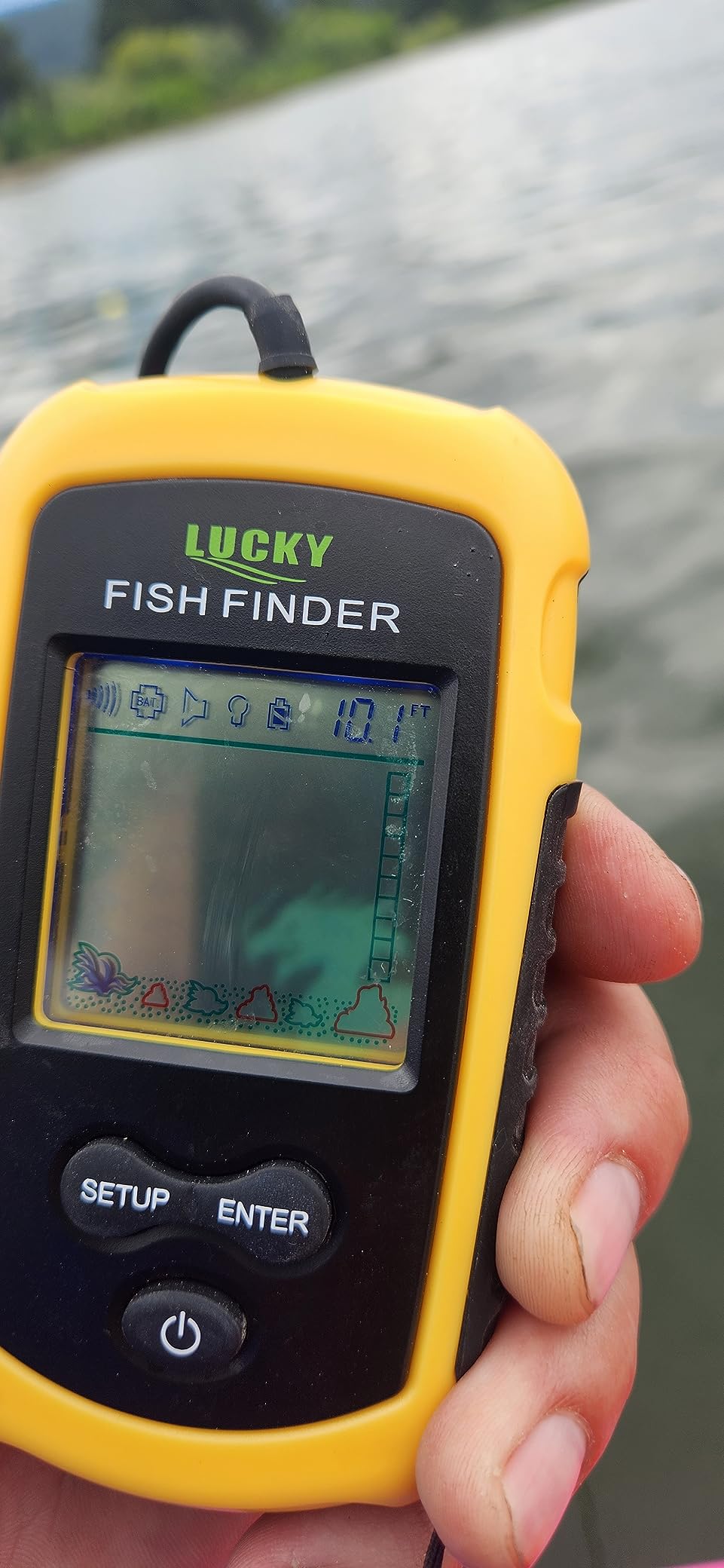
This is the cheapest functional fish finder in the group, and for some beginners it is genuinely the right purchase. You get depth from 3 to 328 feet, a backlit 2-inch LCD that works in bright sun and in the dark, five levels of sensitivity for murky water, and a fish and school alarm. It measures 4.8 inches tall and includes a neck strap so it hangs on your chest while both hands are busy.
The display distinguishes short weeds and tall weeds from sand and rock, which sounds like a minor detail until you realize it is the difference between reading structure and just reading a number. Depth units switch between feet and meters, so it works for anyone fishing in Canada or Europe. Battery life is about 4 to 5 hours of continuous use on a set of AAA batteries, longer in battery save mode.
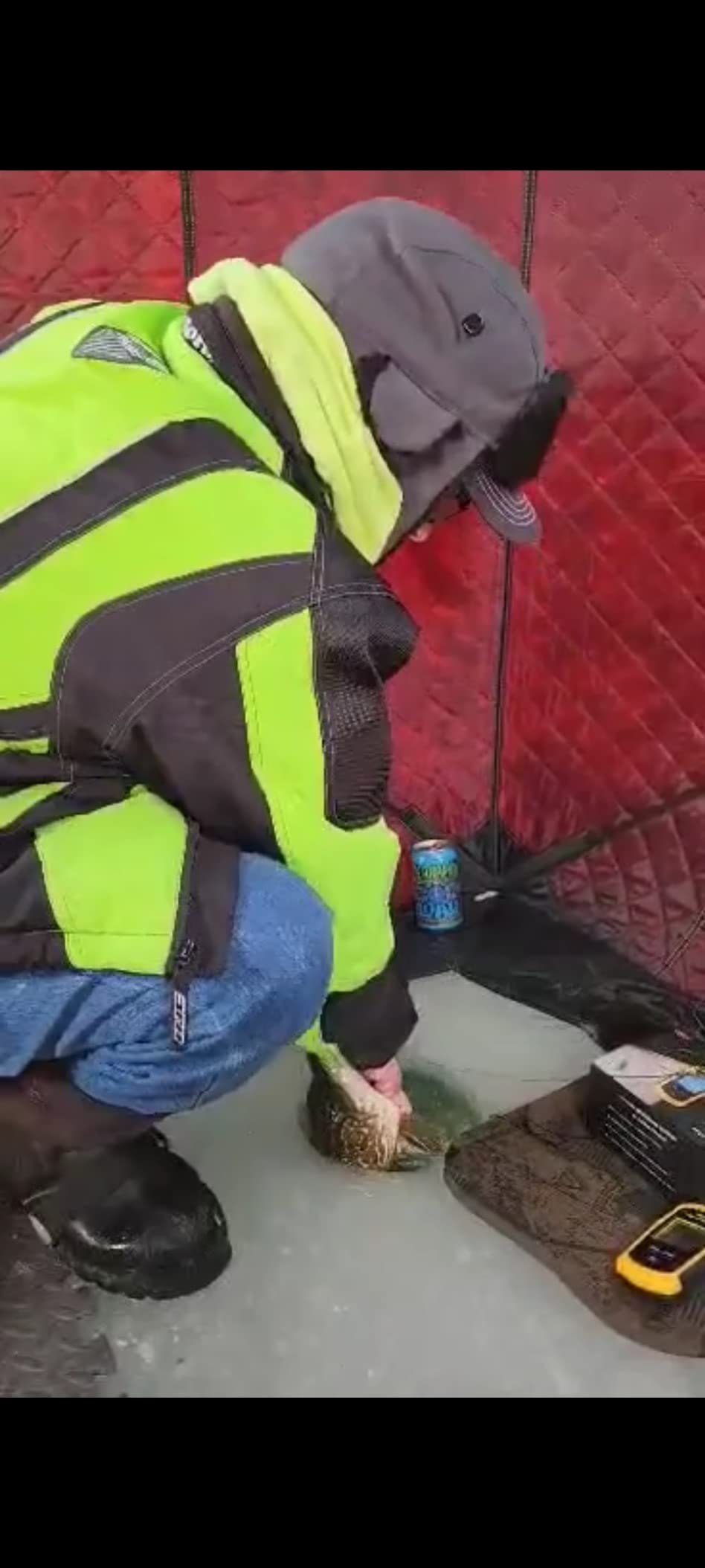
Be clear about what this is not. It is not a shore device. The wired transducer has to be in the water, so this is a kayak or small boat tool, not a bank fishing tool. Through-hull mounting does not read reliably through fiberglass hulls, so if your boat is fiberglass, you need a different mounting approach. There is no fish size grading either, which means a school of small baitfish can look identical to a wall of largemouth.
Owners do report a small number of units that stopped powering on after brief use, so keep the return window in mind. But at this price, being able to learn depth reading, structure reading and fish arches on a cheap unit before you upgrade is a defensible strategy. Many beginners tell us they started simple and moved up later, and this is the cheapest way to do that.
Do I need to spend more than this on my first fish finder?
Only if you need GPS, waypoints, color sonar or portability. If you are fishing from a kayak or a small boat and your real goal is learning to read depth and structure, this unit gives you the core skill. Save the bigger spend for your second season, once you know what sonar type you actually want.
Will it work through a fiberglass hull?
Not reliably. Through-hull readings degrade badly on fiberglass because the hull layers scatter the return. Mount it on the transom or on the outside of the hull where the transducer stays in clean water, and expect better results. Check your hull material before buying any wired unit, mounted or handheld.
4. Deeper START – A Clean First Castable Sonar With No Cables
Deeper Start Fish Finder – Portable and Depth Finder for Recreational Fishing from Dock, Shore, Bank or Kayak | Castable Deeper Smart Sonar with Free User Friendly App
Castable smart sonar
165 ft range and depth
Own Wi-Fi connection
Free Fish Deeper app
Pros
- Pairs with your phone in minutes
- Generates its own Wi-Fi so it uses no mobile data
- Scans save with time and location for revisits
- No wires or external battery
- Night fishing mode included
Cons
- Narrow beam covers less water
- 165 ft ceiling misses deep lakes
- Depends on your phone and the free app
- Hard to read in direct sun
The Deeper START is the most frictionless way to find out whether sonar is something you will actually use. There is no wiring, no battery pack, no transducer mount. You screw on the attachment bolts, pair it with the free Fish Deeper app, cast it, and start reading. Owners repeatedly describe setup as taking minutes with no calibration step at all.
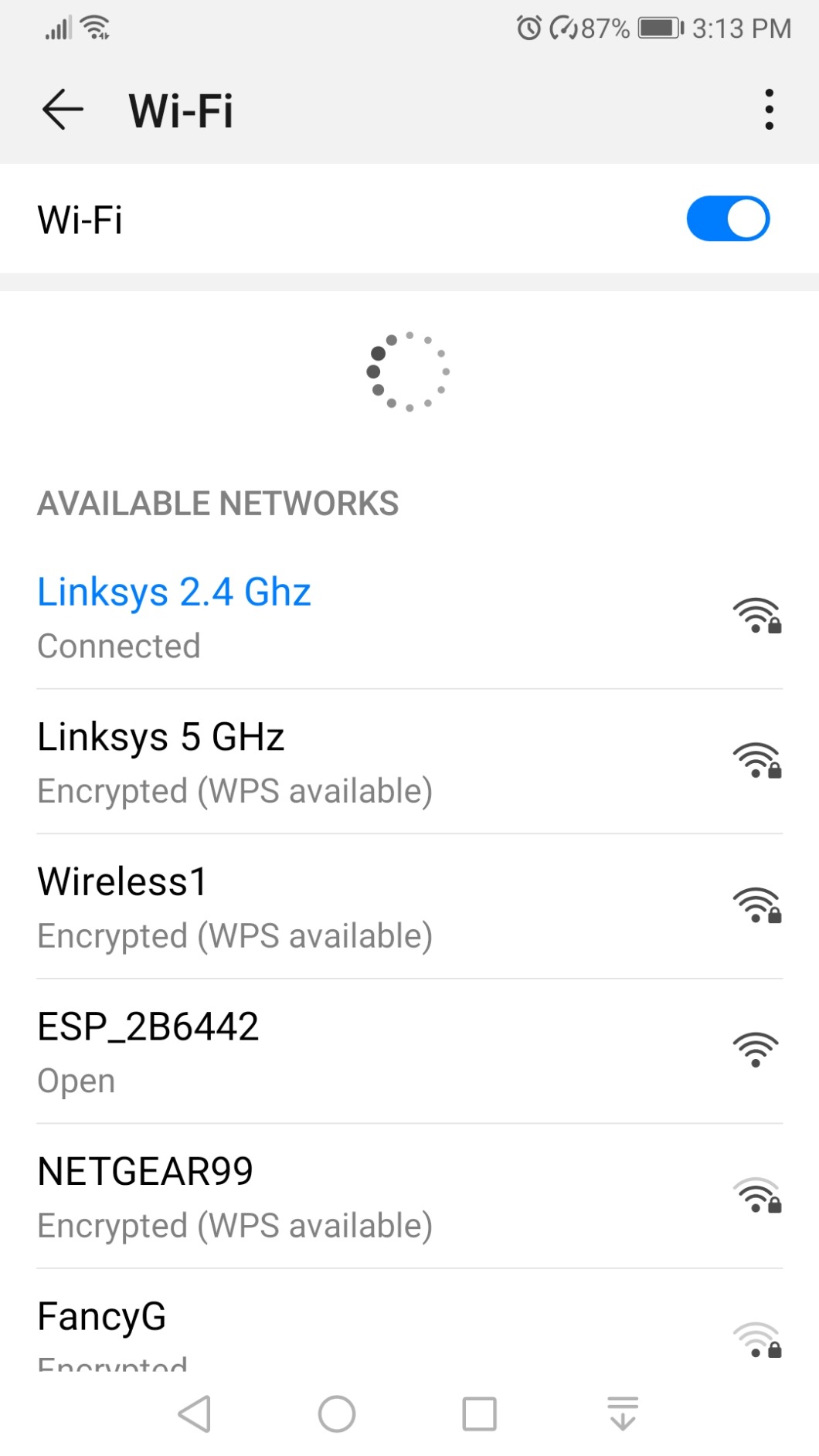
The technical choice that matters here is that it creates its own Wi-Fi network instead of running through your phone’s mobile data or Bluetooth. That removes an entire category of connectivity complaints and means it works in places with no cell signal. Every scan is saved automatically with a time stamp and location, so when you find a drop-off you can paddle back to it on your next trip without writing anything down.
The limits are coverage and depth. Maximum range and depth are both 165 feet, so deeper lakes are simply out of reach. The sonar beam is narrow, which gives you precise detail on what is directly below the float but leaves the areas in between unexplored. And every reading happens on a phone screen, which is hard to see in glare unless you cup your hand around it.
Battery life is about 6 hours after a 2.5 hour charge, which covers most single sessions comfortably. The app shows fish location and size, depth, bottom contour and vegetation, plus a night mode for low light. Overall this is a good first purchase for someone who fishes from a dock, a bank, a kayak or a small boat and wants zero installation.
Should a beginner start with a castable unit or a mounted one?
Start castable if you fish from shore, a dock or a kayak, or if you rent boats and do not want to install anything. Start mounted if you own a boat you fish regularly and want to read structure continuously at speed. The castable route is cheaper to try and easier to walk away from, which is why it suits a first purchase.
Can the Deeper START replace a fish finder on a small boat?
Not fully. It reads depth and structure well below the float, but it cannot display a full chart of the lake, does not track your route, and stops working well once the boat is moving at speed. For slow, spot-by-spot fishing it is sufficient. For a full day of trolling, a wired transducer on the transom is a different experience.
5. Garmin STRIKER Vivid 4cv – Top Rated Color Unit With CHIRP and ClearVu
Garmin Striker Vivid 4cv Fishfinder with Transducer – 4-inch LCD Display – Easy-to-Use Scanning Sonar – Color Palettes, 11.2 Ounces (010-02550-00)
4-inch color LCD
Vivid sonar palettes
GT20 CHIRP and ClearVu
Quickdraw Contours
GPS included
Pros
- Highest average rating in this roundup
- Color palettes separate fish from structure clearly
- Simple button interface that new users learn fast
- GT20 transducer with CHIRP and ClearVu
- Quickdraw Contours mapping at no extra cost
Cons
- Costs more than monochrome units
- 4-inch screen is small for distant schools
- No pre-loaded charts
- No side scan or down imaging
The STRIKER Vivid 4cv carries the highest average rating of anything we tested, and the reason is the color. Vivid scanning sonar palettes give you a range of color schemes, and switching palettes on the same scene is genuinely useful: a setting that makes a weed line obvious in one lake may make the drop-off pop in another.
It ships with the GT20 transducer, which delivers CHIRP traditional sonar and CHIRP ClearVu scanning sonar, plus high-sensitivity GPS for waypoints, routes and boat speed. Quickdraw Contours mapping is built in, so you can record depth contours as you move and see your own map take shape over a season. The included tilt/swivel bailmount bracket handles both transom and console mounting, and the warranty runs two years.
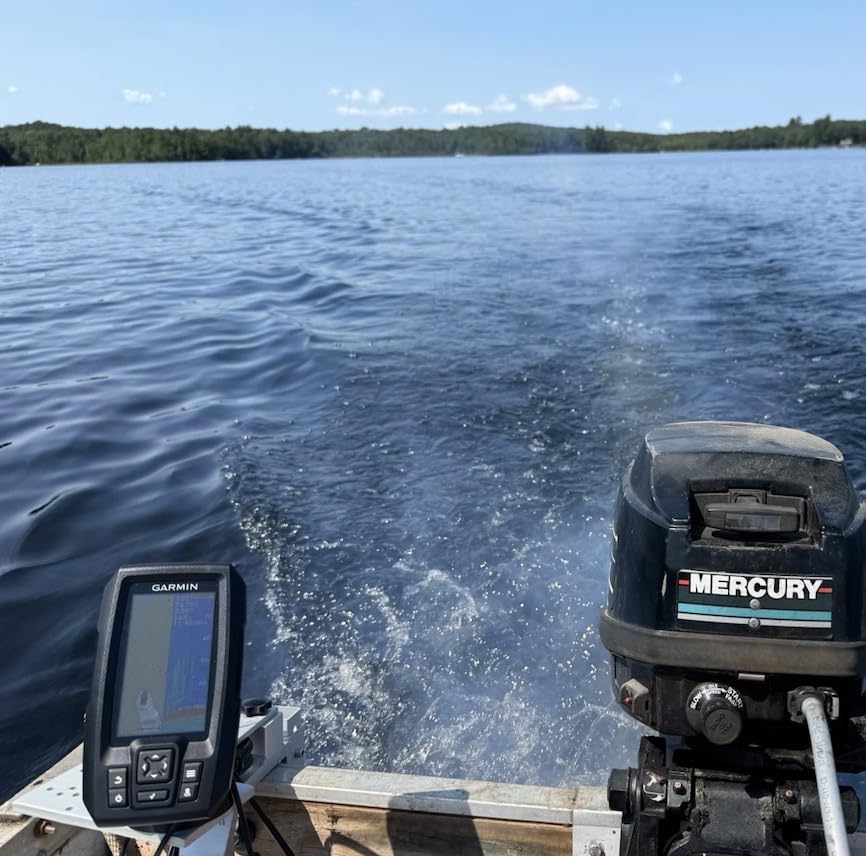
The 4-inch color panel is noticeably easier to read than the 3.5-inch monochrome screen on the Striker 4, but it is still a small screen. We would not pair this with side-scan sonar if you plan to run split-screen, because the picture gets cramped fast. As it ships, there is no side scan and no down imaging beyond ClearVu, which is the main reason this is a step up rather than a top-end unit.
There are no pre-loaded charts, so mapping depends entirely on Quickdraw Contours drawing contours by hand as you fish. That is a slower process than loading LakeMaster or Navionics charts, but it is free, and for a beginner learning to read a map it teaches more than a pre-drawn chart would. Owners commonly describe the button interface as the easiest part of the whole package.
Is a 4-inch color screen enough for side scan?
For this particular unit, side scan is not included, so the question becomes whether you should step up to a larger screen instead. Kayak anglers we spoke with regularly said 5 to 7 inches is the practical floor for side scan because a split view on a 4-inch panel is genuinely hard to read. If you plan to add side imaging soon, budget for a bigger screen now.
How much do the vivid color palettes really help?
More than we expected. Color separates a fish arch from a stump at a distance, which is exactly the discrimination a beginner needs, and you can cycle palettes without adjusting any other setting. On a monochrome screen, both a rock and a fish look like a small mark until you get close enough to tell them apart.
6. Humminbird PiranhaMAX 4 – Straightforward Dual Beam for Fixed Mounts
Humminbird PiranhaMAX 4 Fish Finder with Transducer, Dual Beam Sonar
4.3-inch LCD
Dual beam sonar
600 ft max depth
Tilt and swivel mount
Pros
- Large 4.3-inch screen for a fixed-mount unit
- Dual beam trades coverage for detail
- Transducer and mount included in the box
- Controls are quick to learn
- Solid 4.6-star rating across a large review base
Cons
- No CHIRP frequency sweep
- No GPS or mapping
- Wired transom mount means no portability
- No side scan or down imaging
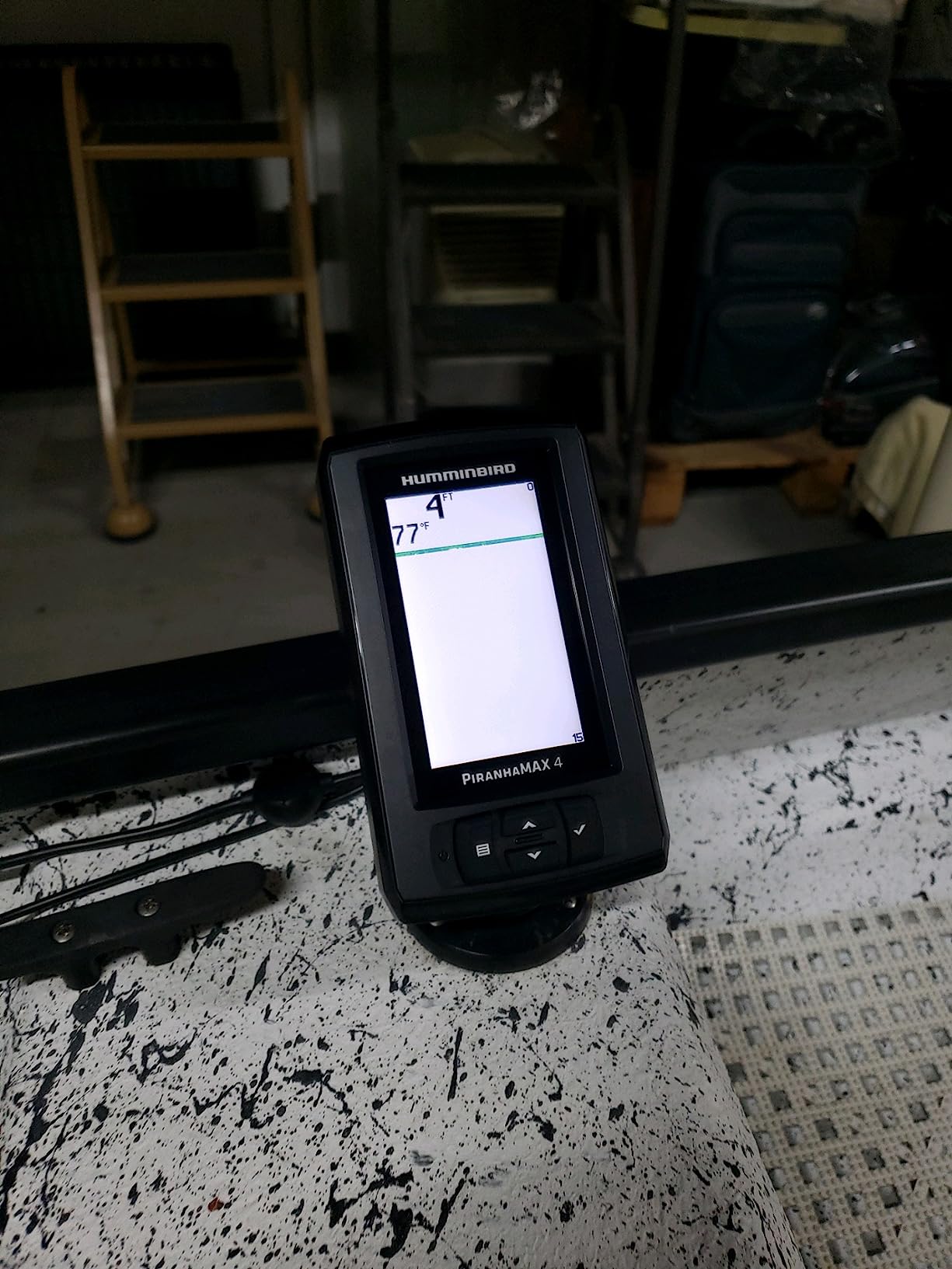
The PiranhaMAX 4 does one job: it reads depth and shows you what is on the bottom. Its 4.3-inch screen is the largest on a true entry-level unit in this list, and dual beam sonar lets you choose between a wide beam for generous coverage and a narrow beam for finer detail on a specific target. That switch is the feature that keeps this unit interesting after the first month.
Everything you need is in the box, including the XNT 9 28 T transom-mount transducer and the tilt and swivel bracket. Maximum depth is 600 feet, which covers typical lake and river fishing. Owners point out that the controls are about as simple as marine electronics gets, with no network features, no mapping and no upgrade path to complicate things.
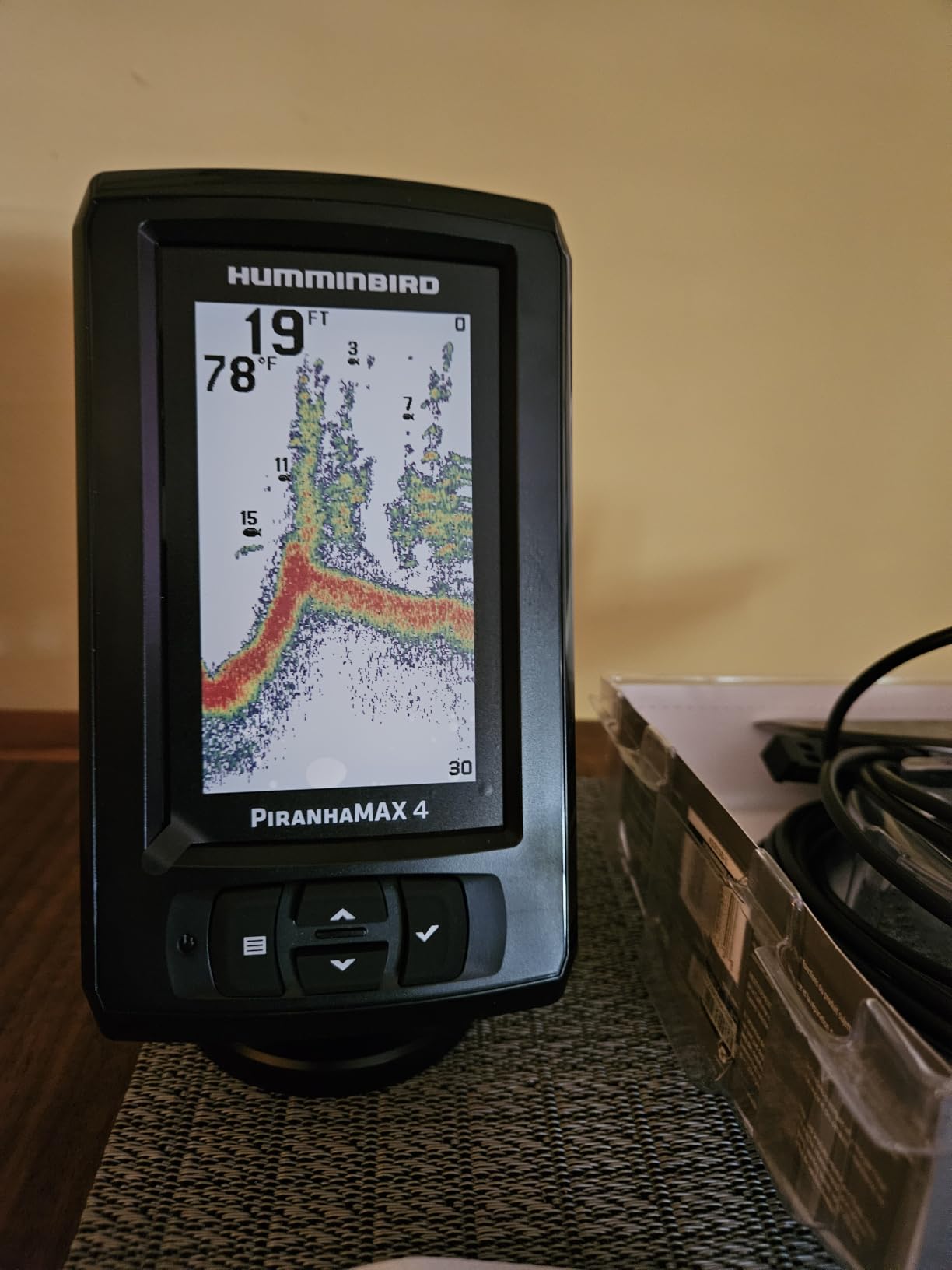
Be honest about the omissions. There is no CHIRP, which means less crisp fish arches than the Garmin units. There is no GPS, and this is the mistake forum users warn about most often, so you cannot mark a brush pile or a channel edge and find it again next trip. And the wired transom transducer means this lives on a boat permanently. It weighs about 2 pounds, which is fine in a console and noticeable on a kayak deck.
That said, plenty of beginners start here and never feel limited. If you fish the same small lake every weekend, learn the water by sight and by depth, and just want a reliable number and a bottom picture, this is a defensible purchase. Consider our [ice fishing fish finder picks](https://betterbike.org/best-fish-finders-for-ice-fishing/) if that is your main season.
Can I mark spots and return to them later on this unit?
No. There is no GPS and no internal map, so any spot you find cannot be stored. You would have to write down coordinates yourself with a separate handheld GPS. Several beginners regret exactly this, and it is the single strongest argument for choosing a Garmin unit instead if you plan to fish new water repeatedly.
Is traditional dual beam sonar good enough to learn on?
For depth and bottom structure, yes, and the wide beam in particular gives you a clear view of ledges and channels. The tradeoff is fish arches that are less defined than CHIRP produces, so you will need to be closer to a school to pick targets apart. As a learning tool on familiar water, that is fine.
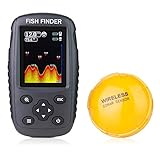
7. Venterior VT-FF005 – Castable Sonar With Its Own Color Screen
Venterior Portable Rechargeable Fish Finder Wireless Sonar Sensor Fishfinder Depth Locator with Fish Size, Temperature, Bottom Contour, Color Display
2.6-inch color TFT
Wireless sensor, 262 ft range
105 degree beam
2 to 164 ft depth
Pros
- Works straight from the box with no calibration
- Wireless sensor means no drilling or mounting
- Color screen readable in sunlight with white background
- Shows depth temperature contour and fish size
- Two-year warranty included
Cons
- Wide beam bounces off ice hole walls
- Unreliable behind a moving boat
- Fish size bands are subjective
- Depth readings degrade past 120 ft
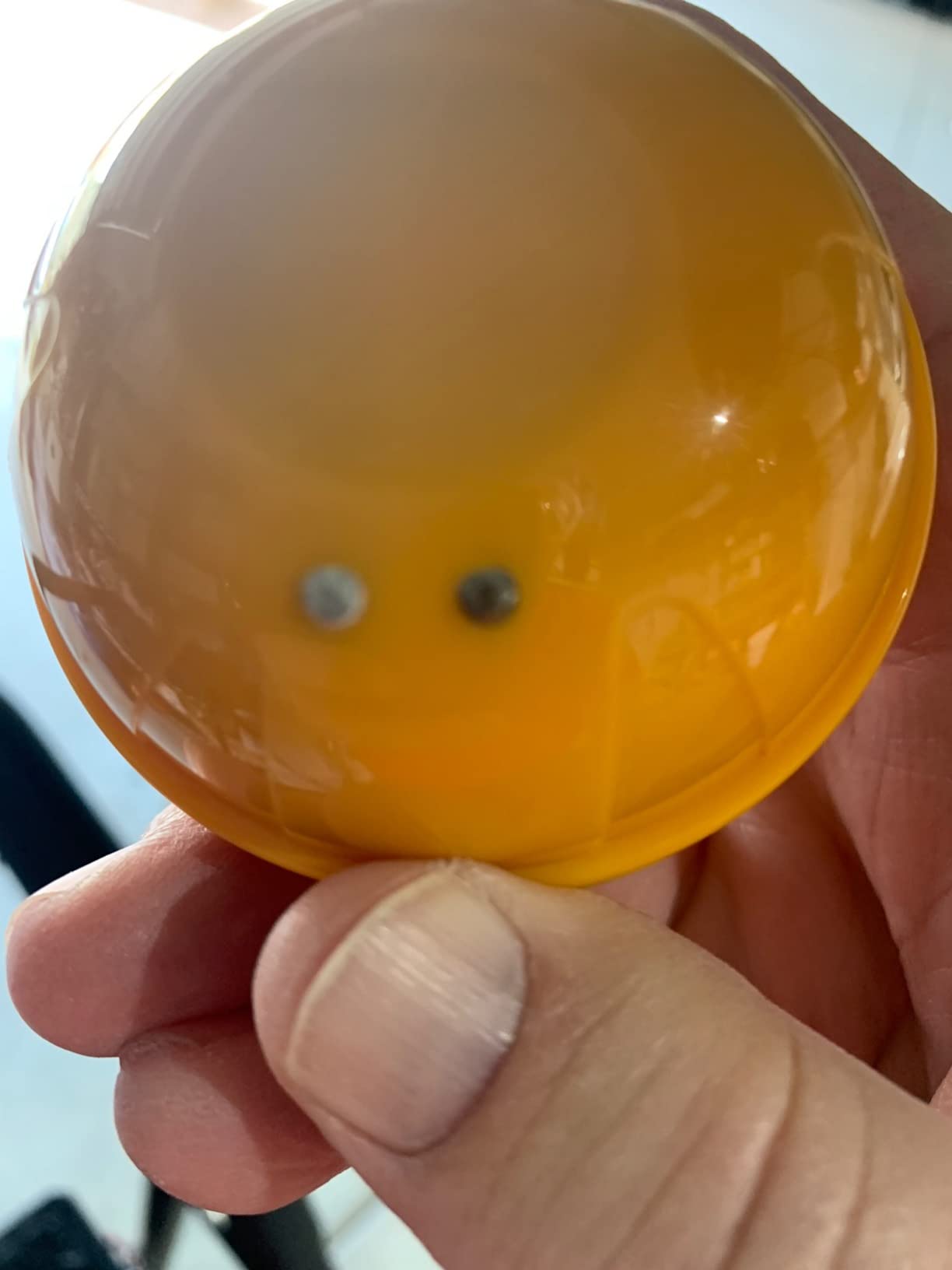
This one solves the biggest complaint about phone-based sonars: you get your own screen. The VT-FF005 pairs a handheld 2.6-inch color TFT unit with a wireless sensor that you tether to your line and cast. Receiver range is about 262 feet, well beyond what Bluetooth portable units manage, and the whole thing works immediately with no calibration.
The readout covers depth, water temperature, fish depth, fish size bands and bottom contour, and the sonar beam is a wide 105 degrees, so you cover more water per cast than a narrow-beam float. The white background mode makes the screen readable in direct sun, which is the difference between a usable device and a useless one on a bright shoreline. There is also a simulation mode for practicing before you get on the water.
Owners and reviewers both flag the same weaknesses. That 105 degree beam, which is a benefit on open water, is a problem through an ice hole because the signal bounces off the hole walls and the readings become unreliable. It also is not a good tool when towed behind a moving boat at trolling speed. Depth accuracy degrades past about 120 feet even though the spec sheet claims a 164 foot ceiling.
Receiver battery life gives roughly 3 to 4 hours of use, and owners find it drains faster than expected, so intermittent use works better than an all-day session. Weights of 15 ounces means it is not truly pocket-sized like the iBobber. If you need all-day runtime and unlimited casting range, look at the Deeper units instead.
Is a dedicated screen better than using my phone?
For readability and for avoiding connection dropouts, yes. The screen keeps working even when your phone is dead, which has saved more than one angler on a long trip. The cost is a smaller viewing area than a modern phone and a receiver battery you have to remember to charge.
Can I use this on ice?
Only with caution. Ice anglers usually point to flasher mode, which scrolls a vertical column rather than a horizontal sweep so you can read a fish directly beneath the hole. This unit does not offer that, and its wide beam picks up the hole walls. For ice as a primary activity, a unit built for it is the better route.
8. Deeper PRO+ 2 – Portable Sonar With Built-In GPS Mapping
Deeper PRO+ 2 Sonar Fish Finder – Portable Fish Finder and Depth Finder For Kayaks, Boats and Ice Fishing with GPS Enabled | Castable Deeper Fish Finder with FREE User Friendly App
Wide mid and narrow beams
330 ft range and depth
0.4 inch target separation
Built-in GPS maps
Pros
- Three beam modes for scanning wide or drilling in
- 0.4 inch target separation picks out individual fish
- Built-in GPS saves bathymetric maps for later
- 330 ft range covers bigger lakes and deeper water
- Lightweight 3.2 oz body with carry pouch
Cons
- Costs more than the Deeper START
- Needs a phone and app for full function
- Narrow beam detail covers less water
- Not a replacement for a mounted unit
The PRO+ 2 is the portable unit to buy if you want to build a map of water you do not own a boat on. Built-in GPS records your position and depth readings and saves them as bathymetric maps in the Fish Deeper app, so a productive drop-off you find from shore becomes a mark you can return to next season.
The bigger technical story is the three beam modes. Wide beam covers the most water quickly, mid beam balances coverage and detail, and narrow beam gives you 0.4 inch target separation, fine enough to pick out an individual fish or a small lure rather than a smudge. Range and depth both reach 330 feet, which opens up water the Deeper START cannot read at all. It generates its own Wi-Fi for a stable connection and comes with a neoprene pouch.
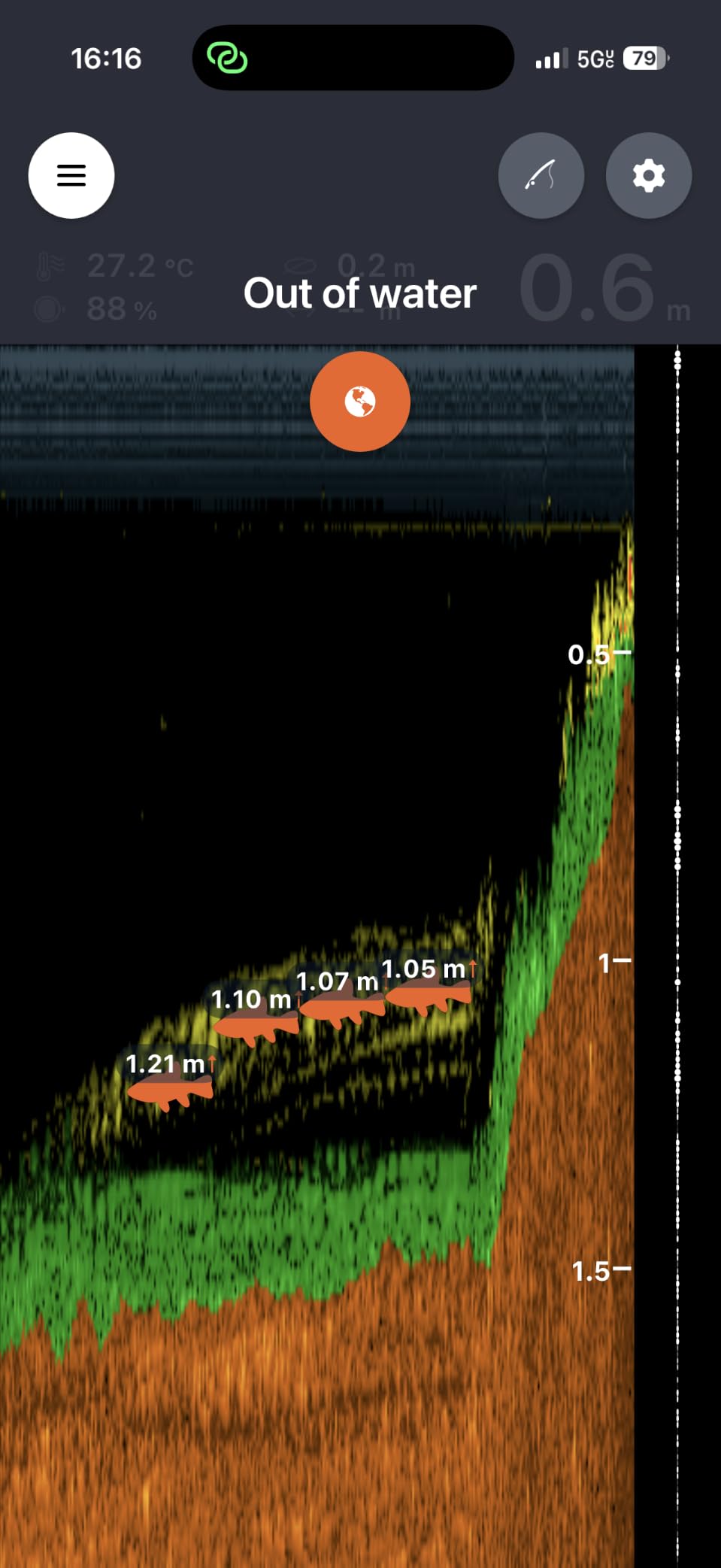
The catch is that all of this detail depends on switching to the narrow beam, and narrow beam covers far less water per cast. Working the three modes properly takes practice, which is exactly the skill you want to build. It also needs your phone and the app, so a dead battery ends the session, and it costs meaningfully more than the entry-level Deeper.
What it is not is a mounted alternative. There is no waypoint list, no route screen and no display of a full chart, so it does not replace a transom unit on a boat you fish hard. It also carries a 2-year limited manufacturer warranty, which is longer than most of the portable competition. We still think it is the most capable castable in this group.
Do I need target separation as a beginner?
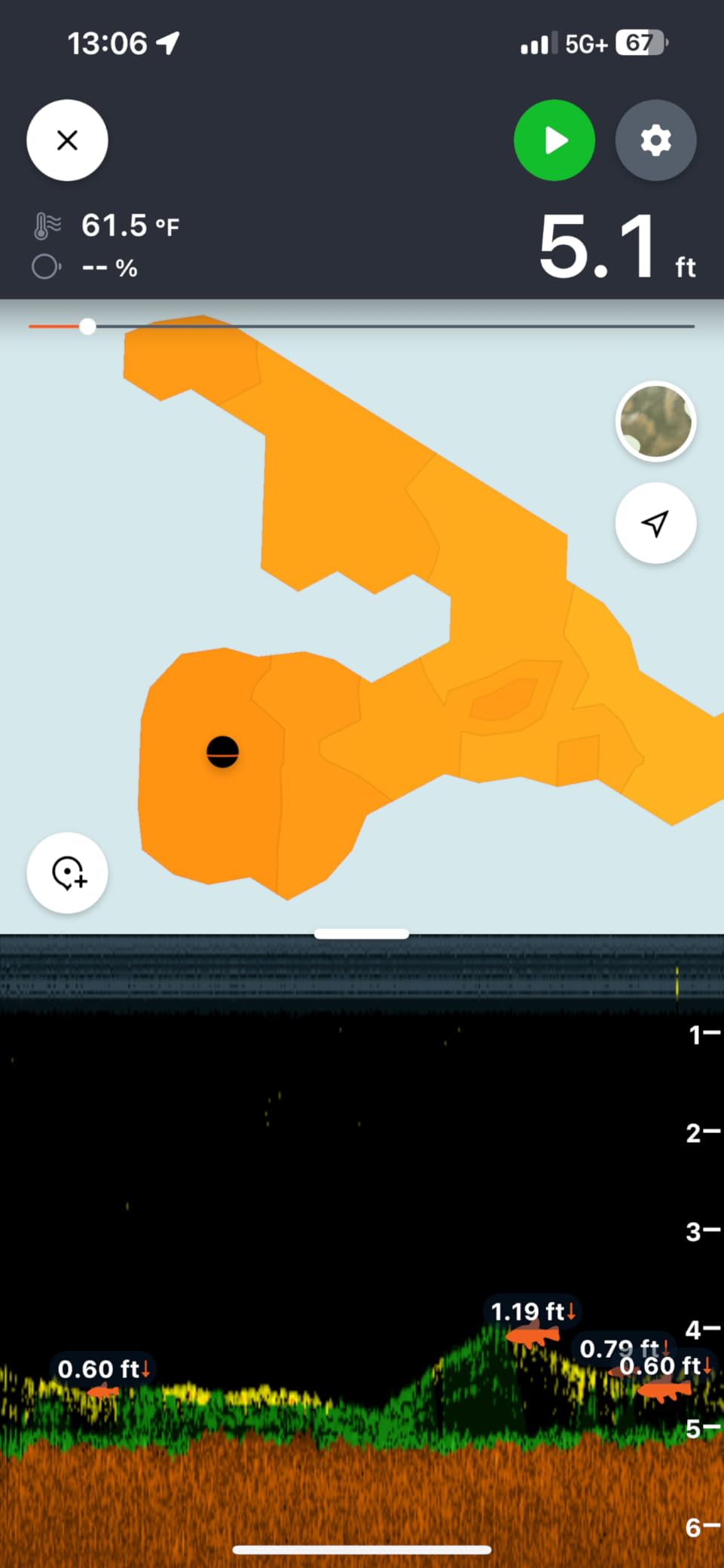
Not to get started, but it is what makes a portable sonar feel professional later. Target separation is how close two objects must be before the unit shows them as two marks instead of one blob. At 0.4 inch you can see individual fish and see a lure drop, which is how you confirm a bite before you feel it.
Is the built-in GPS worth the extra cost?
For shore, bank and kayak anglers, yes. Most buyers regret not having GPS when they first buy a unit without it, and this one records your own depth map as a by-product of fishing. You see where you fished, how deep it was, and what came back, then repeat it on a later trip.
9. Humminbird Helix 5 Chirp GPS G3 – The Charting Step Up
Humminbird Helix 5 G3 GPS Fish Finder with Transducer & Dual Spectrum Chirp Sonar
5-inch color TFT
Dual Spectrum CHIRP
Basemap on 10000+ lakes
AutoChart Live
Pros
- Comfortable 5-inch screen for reading structure
- Dual Spectrum CHIRP gives cleaner arches
- Basemap covers 10000+ lakes with no extra purchase
- AutoChart Live builds maps as you fish
- Upgradable with Navionics LakeMaster and CoastMaster charts
Cons
- Highest price in this roundup
- Steeper menu learning curve
- Needs a 12V wiring connection
- Advanced mapping needs extra SD storage
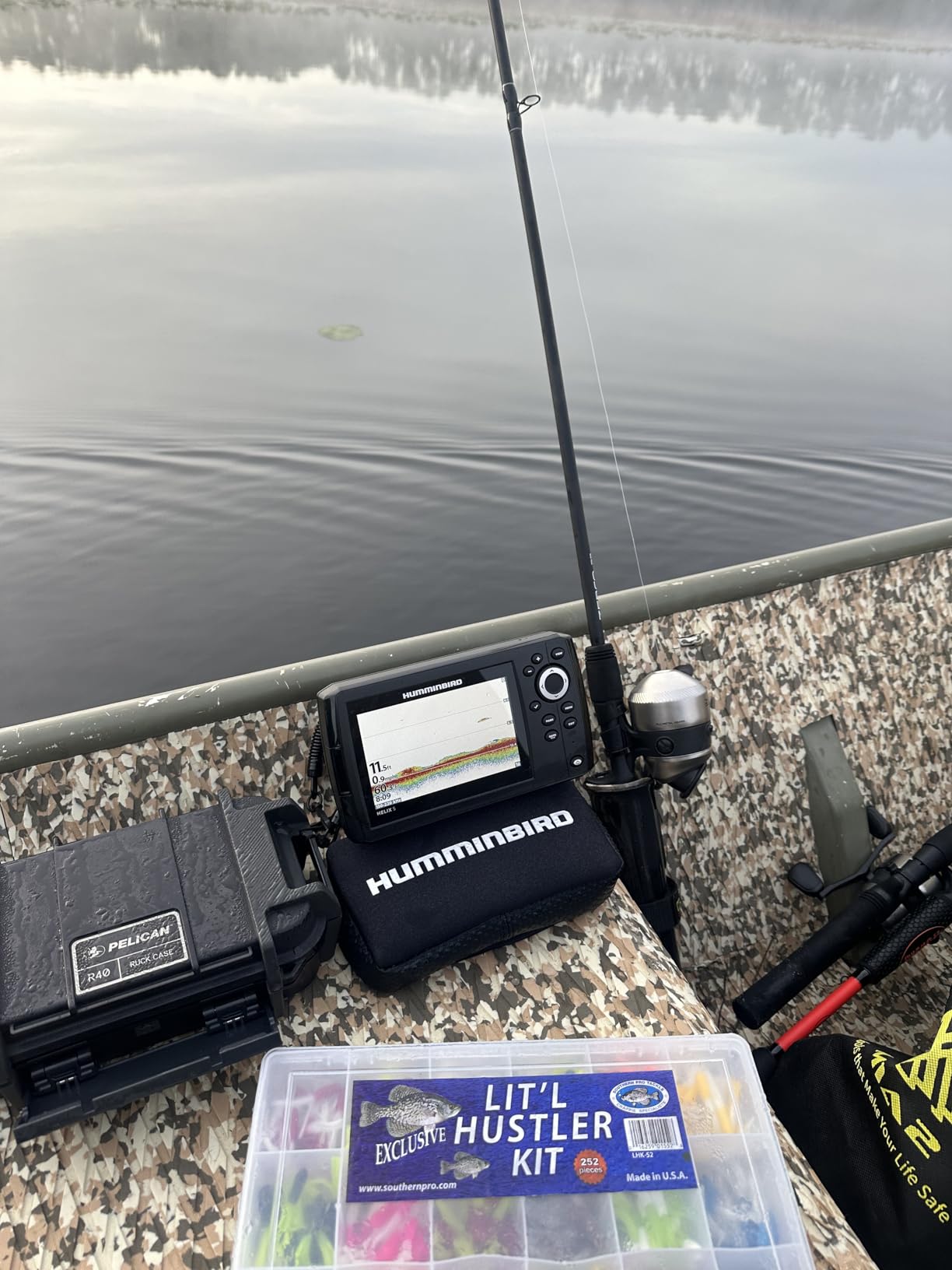
This is the most capable unit we reviewed and the one that asks the most of a beginner. The 5-inch color TFT screen is comfortable for reading fish arches and structure, Dual Spectrum CHIRP runs in wide or narrow mode for either coverage or detail, and the included Low-Q transom-mount transducer delivers precise 2D target separation.
What separates it from every other unit here is mapping. The built-in Humminbird Basemap covers more than 10,000 lakes plus continental US coastlines, so you have a chart the moment you plug it in. AutoChart Live builds depth, hardness and vegetation maps as you fish with eight hours of recording built in, and you can expand further with AutoChart Zero Line SD cards or upgrade to premium Navionics, LakeMaster and CoastMaster charts. The softkey menu system stays operable in rough conditions.
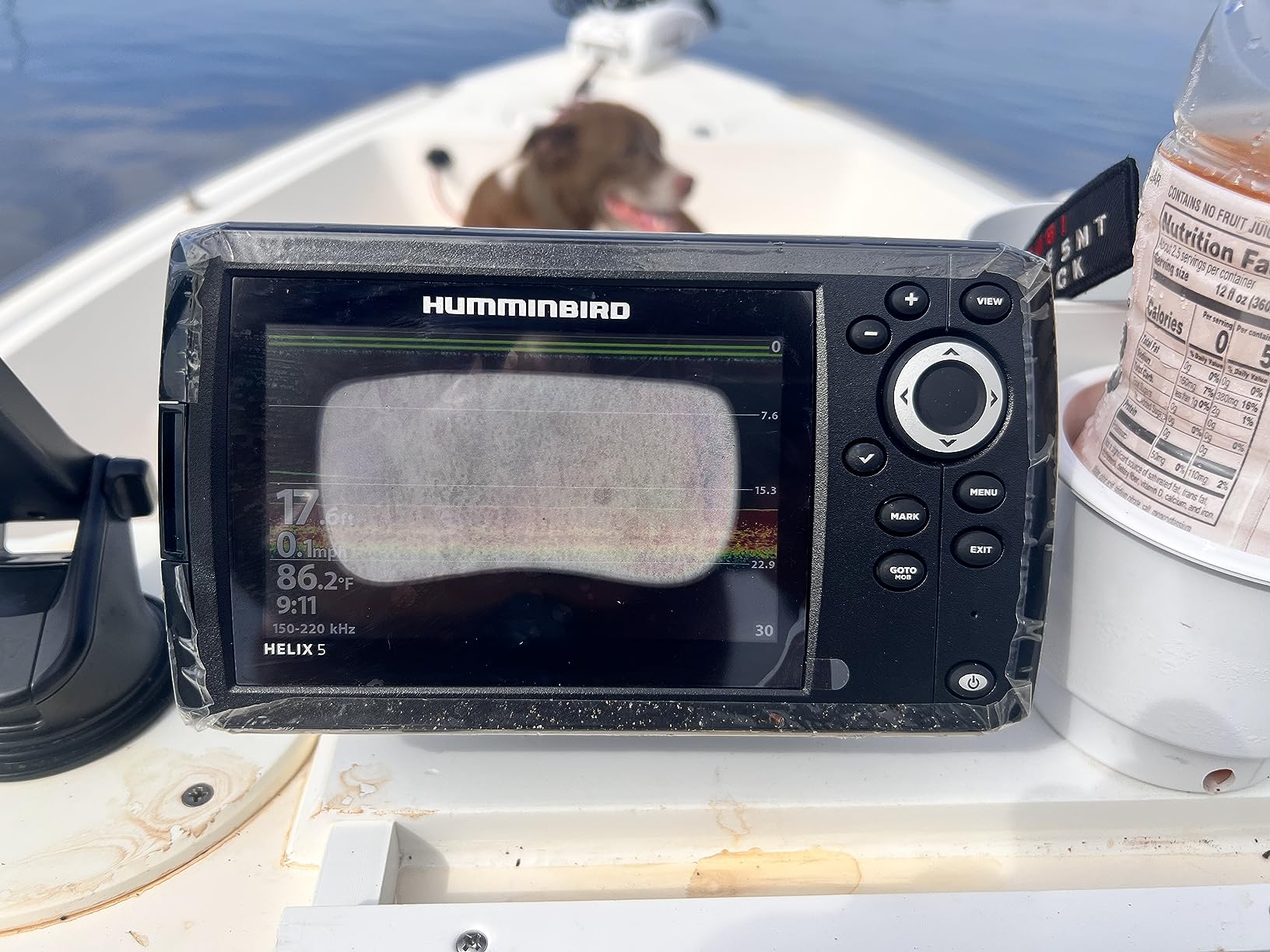
The caveats are real. This is the priciest unit in the group and sits above a typical first fish finder budget. The menu system has more layers than the simple units, and forum beginners regularly describe feeling overwhelmed by machines like this one. It needs a 12V wiring connection, so it is a permanent boat fixture and not portable. And advanced mapping runs past the built-in eight hours without an SD card.
Our advice is to buy this one only if you already know you will fish new water repeatedly and want a chart. For a first season on familiar water, the same money buys a simpler unit you will actually learn to use, plus the option to add a chart later. See how it compares in our [boat fish finder picks](https://betterbike.org/best-fish-finders-for-boats/).
Is a pre-loaded basemap enough, or do I need premium charts?
The built-in basemap gets you started with nothing else to buy, and it covers more than 10,000 lakes plus the US coastline. Premium charts such as Navionics, LakeMaster or CoastMaster add detail on specific water. For a beginner, the basemap plus AutoChart Live recording of your own local data is a sensible combination.
Will this overwhelm me as a first fish finder?
It can, if you try to use everything at once. Set aside a few sessions to learn one screen at a time, starting with sonar and depth, then waypoints, then mapping. Beginners who describe feeling lost on advanced units usually say the same thing: they tried to configure everything before they had caught a fish with it.
10. Garmin Striker 4cv – Bigger Screen With Built-In Quickdraw Contours
Garmin Striker 4cv with Transducer, 4″ GPS Fishfinder with CHIRP Traditional and ClearVu Scanning Sonar Transducer and Built In Quickdraw Contours Mapping Software
4.3-inch QSVGA display
CHIRP and ClearVu
CV20-TM transducer
300 W RMS power
Pros
- Larger screen than the 3.5-inch Striker 4
- Quickdraw Contours mapping built in at no cost
- Built-in GPS for waypoints routes and speed
- Transom trolling motor and tilt mounts included
- 300 W RMS transmit power for deeper reads
Cons
- Costs more than non-cv Striker models with the same core sonar
- No pre-loaded charts
- Wired 12V install
- Mounting needs care on smaller boats
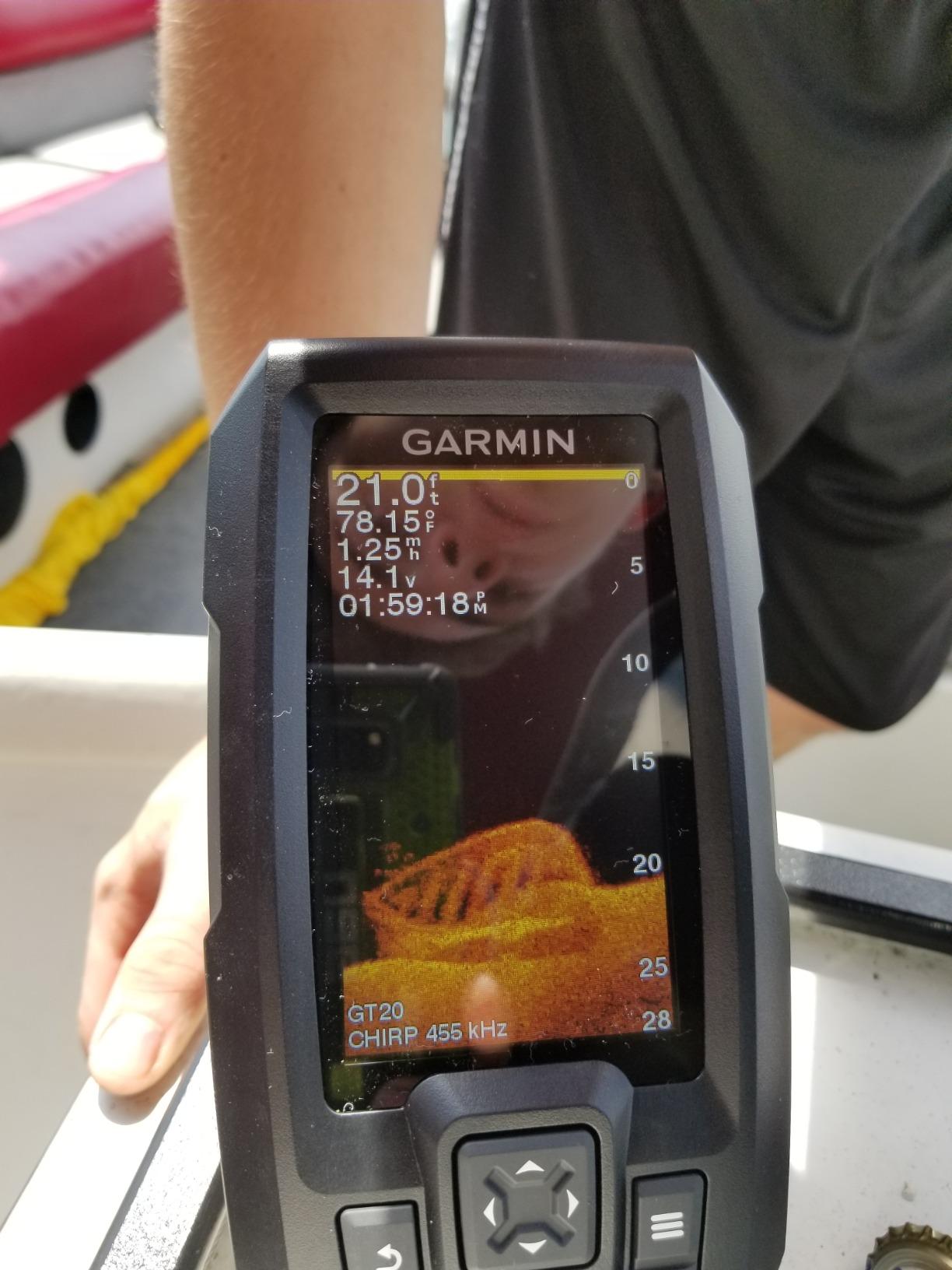
The Striker 4cv is the middle Garmin, and its argument is Quickdraw Contours. That software is built in at no additional cost and records 1 foot depth contours live as you move, storing them for up to 2 million acres. Over a season of fishing the same lake, you end up with your own map without buying a chart card.
The screen is a 4.3 inch sunlight-readable QSVGA panel, noticeably better than the 3.5 inch unit on the same platform. The CV20-TM transducer delivers CHIRP traditional sonar plus CHIRP ClearVu scanning sonar, transmit power is 300 W RMS, and built-in GPS handles waypoints, routes and boat speed. The box includes transom mounts, a trolling motor mount and the tilt/swivel bracket, so the install is complete.
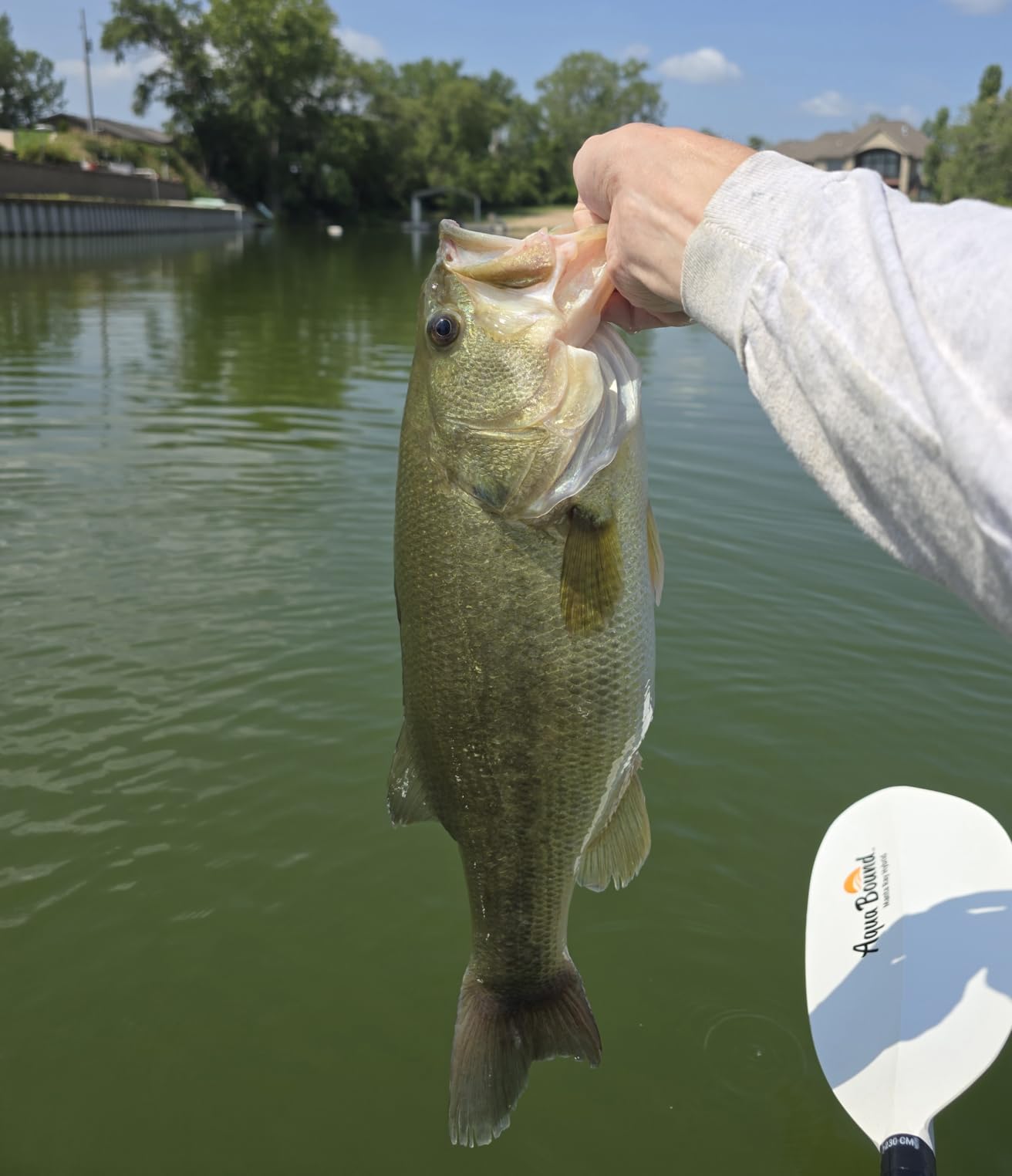
The honest criticism from owners is price against capability. You are paying more than the non-cv Striker models for the same core sonar, and the mapping payoff arrives only after you have recorded enough lines to make a contour map useful. There are no pre-loaded charts either, so contours are drawn by hand. It is also a wired 12V unit, and on a small boat the cable run from transom to console needs planning so it does not snag.
Against that, the same 4.6-star rating as the cheaper Striker 4 tells you the core machine is proven. If you fish one lake hard and want to understand its structure in detail, this is the version that gets you there. If you want to try sonar first, the Striker 4 remains the sensible entry point.
Is Quickdraw Contours better than buying a premium chart?
They solve different problems. Quickdraw Contours records the depths of water you have personally fished, so on a local lake it can be more accurate than a general chart. Premium charts cover water you have never visited in far more detail. For a beginner fishing one area, Quickdraw is a strong starting point because it costs nothing extra.
Will this fit on a small boat without drilling?
Yes, with transom mounting and the included tilt/swivel bracket, no drilling is required. Plan the cable route before you start and secure it away from the trolling motor and any shifting gear. Owners on smaller boats flag that the wiring is the fiddly part, not the mounting itself.
How to Choose a Fish Finder for Beginners
Most first purchases go wrong for one of three reasons: buying a unit that cannot legally or physically fit your boat, buying one with no GPS when you wanted to mark spots, or buying a feature set you will never learn to use. Work through these five questions in order and the decision mostly makes itself.
What sonar type do you actually need?
CHIRP sends a continuous sweep of frequencies rather than one fixed frequency, which produces crisper fish arches and better target separation at the same power. Traditional sonar sends a single frequency and is simpler, cheaper and entirely adequate for reading depth and the bottom. If a unit offers CHIRP at no extra cost, take it. If CHIRP costs significantly more, ask whether you are ready to interpret the difference.
Down imaging, sold as ClearVu on Garmin, DownScan on Lowrance, DownVü on Humminbird and down imaging generally, paints a photographic-looking picture of structure directly beneath the boat. Side imaging, sold as SideScan or MEGA Side Imaging, sweeps left and right to show you a structure map of the water beside you. Side imaging is powerful but needs a screen of at least 5 inches to be readable in split-screen, which is why it is usually a second-unit purchase rather than a first one.
Do you need GPS and mapping?
If you fish the same water regularly and want to return to a productive brush pile or channel edge, GPS is not optional, it is the feature that makes your unit worth owning. Built-in GPS lets you mark waypoints, save routes, see boat speed and record your own depth contours. Units with no GPS, like the Humminbird PiranhaMAX 4, are fine depth readers but you will have no record of where you found anything.
Understand the difference between a basemap and premium charts. A basemap is included and gives you a usable chart of lakes and coastlines out of the box. Quickdraw Contours on Garmin and AutoChart Live on Humminbird let you record your own depth data as you go, which on familiar water can be more useful than a general chart. Premium cards such as LakeMaster, CoastMaster and Navionics cover unfamiliar water in more detail. For a beginner, an included basemap plus your own recorded contours covers most cases.
What size screen can you actually read?
A 2 to 3.5 inch screen is for depth and basic sonar. A 4 inch screen is the sweet spot for CHIRP plus ClearVu split-screen. A 5 inch or larger screen is where side imaging and multi-panel layouts become usable. The most common complaint we heard from kayak anglers is that a 3.5 inch panel is too small once you split the view, and the most common complaint from boat owners is that a cheap screen is unreadable in direct sun. Budget for brightness and size together.
Which transducer and mounting style fits your hull?
A transom-mounted transducer hangs off the back of the boat and is the easiest to install on aluminum and fiberglass hulls. It is fine at low speeds but can lose the bottom reading at higher trolling speeds. A trolling motor mount works on small boats where transom space is tight. Thru-hull and in-hull mounting look cleaner and read better at speed but require drilling, and they are unreliable through fiberglass hulls because the layers scatter the return. Portable and castable units sidestep all of it, which is why they suit kayaks, rentals and shore anglers.
Two more practical checks. Make sure the transducer cable is long enough to reach from the transducer to the display, since a cable that is too short is a common return reason. And confirm your battery can carry the unit for a full day; portable units that ship without a battery or a carry case are a frequent complaint.
What do beginners most often get wrong?
From forum threads and owner reviews, the same mistakes repeat. Buying without GPS and then wishing they could mark spots. Getting a transducer cable that is too short for the run from transom to console. Pairing side imaging with a 5 inch or smaller screen and finding it unreadable. Buying a portable kit that does not include a battery. Buying used older models that lack CHIRP and modern imaging. And spending money on advanced menus before learning to read basic depth and structure. The cheapest fix for most of these is to start one tier below what you think you need and upgrade in a second season.
Frequently Asked Questions
What is a good budget fish finder?
For most beginners the Garmin Striker 4 is the strongest all-round budget choice, with CHIRP, ClearVu scanning sonar, built-in GPS and a flasher mode for ice. If you fish only from shore or a kayak, a castable sonar such as the Deeper START or ReelSonar iBobber costs less and needs no installation. If you just want depth readings to learn on, the LUCKY handheld is the cheapest option that still works.
Is CHIRP better than traditional sonar?
Yes, for most anglers. CHIRP sends a continuous sweep of frequencies rather than a single fixed frequency, which returns cleaner fish arches and better target separation without needing more power. Traditional sonar is simpler and cheaper and is perfectly fine for reading depth and bottom structure. If a unit offers CHIRP at no extra cost, as the Garmin Striker 4 and Striker Vivid 4cv do, take it.
Which fish finder is better, Humminbird or Garmin?
Garmin is generally easier to learn and more affordable at the entry level, with simpler menus and Quickdraw Contours mapping included free. Humminbird pushes harder on charting, with a pre-loaded basemap covering more than 10,000 lakes, AutoChart Live recording and broad upgrade support for Navionics, LakeMaster and CoastMaster cards. Choose Garmin for simplicity and choose Humminbird if charting and future premium maps matter most to you.
What is the best fish finder for kayaking?
For a kayak, portability and screen readability matter more than anything else. A castable unit such as the Deeper PRO+ 2 or the Garmin Striker 4 with a tilt/swivel bracket covers most anglers. Avoid side imaging on a screen smaller than 5 inches, because a split view at that size is unreadable. Secure the transducer cable away from pedals and paddle clearance, and expect the clearest readings in deeper water.
Do I need side imaging as a beginner?
Usually not for a first unit. Side imaging shows structure to the left and right of the boat, which is powerful, but it needs a 5 inch or larger screen to be readable and it does nothing for the vertical picture you get from CHIRP and down imaging. Learn depth, structure and fish arches on a simpler unit first, then add side imaging in your second season.
Can you test a transducer out of the water?
Not reliably. The transducer needs to be fully immersed to send and receive a usable return, so any reading taken in the air or in a bucket tells you little about whether it will work on the lake. You can check that it powers up and pairs or connects, but the only real test is a few minutes in water deep enough to cover the element.
Conclusion: The Best Fish Finders for Beginners
After comparing all ten units, the Garmin Striker 4 remains our pick for the best fish finders for beginners because it does three things well: simple controls, real CHIRP and ClearVu sonar, and built-in GPS in one package with the mounts included. If color helps you see structure better, the STRIKER Vivid 4cv is the step up. If you fish from shore or a kayak and want to test the waters without an install, the ReelSonar iBobber and Deeper START cost less and need no wiring.
The mistake we would avoid is buying more than you need in 2026. Learn depth, structure and fish arches on a simple unit this season, then decide in the spring whether you want side imaging, premium charts or live sonar. Our [kayak picks](https://betterbike.org/best-fish-finders-for-kayaks/), [shore and castable picks](https://betterbike.org/best-castable-fish-finders-for-shore-fishing/) and [ice fishing picks](https://betterbike.org/best-fish-finders-for-ice-fishing/) break the same lineup down by use case if you want to narrow it further.