
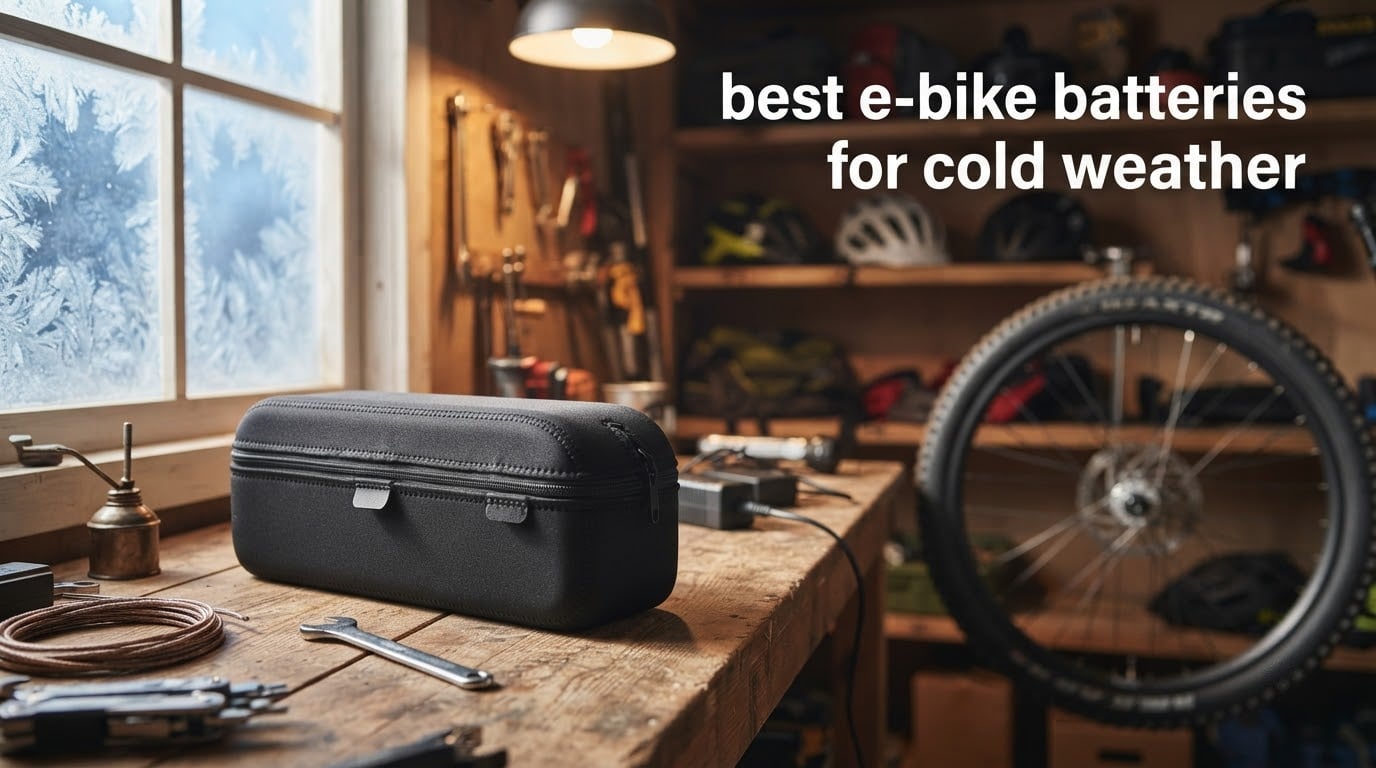
Cold does one specific thing to a lithium-ion e-bike battery: it makes the electrons and ions inside the cells move slower, so the same pack delivers noticeably less usable capacity on a cold morning than on a warm afternoon. Riders regularly report losing 10 to 20 percent of capacity at around 40F, and one rider on the Electric Bike Review forums burned roughly twice the usual watt-hours on a 22-mile ride at 42F. The charge is not gone, it is simply locked up until the pack warms back up. We spent 2026 going through the full pack lineup below, capacity, cell chemistry, BMS behavior, and removal ergonomics, to find the best e-bike batteries for cold weather.
What matters in winter is not just raw watt-hours. It is whether the pack is easy to carry indoors, whether the battery management system refuses to charge a frozen pack, and how much internal heat the cells generate on their own. We explain the physics in detail below. If you are still working out why your ride is shorter, start with why your e-bike loses range in cold weather and how to get it back, then come back here for the batteries.
One warning before we get into the list. No battery on the market is immune to cold. What you can choose is a pack with enough capacity that a 30 percent derate still leaves you a usable ride, a chemistry that tolerates sub-zero discharge best, and a low-temp cutoff that protects the cells from the charging mistake that actually kills packs.
Table of Contents
Top 3 Picks for the Best E-Bike Batteries for Cold Weather (October 2026)
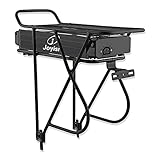
J JOYISI 48V 15Ah Pack
- 48V 15Ah for 100W-1000W motors
- UL 2271 certified cells
- 30A protection board
- Keyed rack mount included

Unit Pack Power 48V 20Ah
- LG5000mAh cells at 4.19 kg
- 40A max constant discharge
- Works with BBSHD and BBS02

Cymoye 48V 20Ah LiFePO4
- LiFePO4 chemistry
- 40A BMS with balancing
- 16S1P configuration
- 3A charger included
Best E-Bike Batteries for Cold Weather in 2026
All twelve packs below are real, currently sold packs that riders use on winter commutes and snow-season bike builds. The table is ordered by how well each pack holds up when the temperature drops, not by capacity alone.
| Product | Specifications | Action |
|---|---|---|
| J JOYISI 48V 15Ah Pack |
|
Check Latest Price |
| Unit Pack Power 48V 20Ah |
|
Check Latest Price |
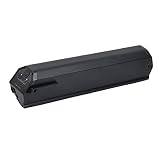 SDTYYP Dorado Plus 48V 17.5Ah SDTYYP Dorado Plus 48V 17.5Ah |
|
Check Latest Price |
 Varstrom 48V 20Ah Varstrom 48V 20Ah |
|
Check Latest Price |
| Cymoye 48V 20Ah LiFePO4 |
|
Check Latest Price |
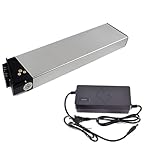 SDTYYP 48V 10.4Ah Lectric XP SDTYYP 48V 10.4Ah Lectric XP |
|
Check Latest Price |
 ShunTongDa 48V 14Ah RadExpand ShunTongDa 48V 14Ah RadExpand |
|
Check Latest Price |
 PLXNYLB 48V 22.4Ah PLXNYLB 48V 22.4Ah |
|
Check Latest Price |
 YOSE POWER 36V 13Ah YOSE POWER 36V 13Ah |
|
Check Latest Price |
 YOSE POWER 48V 14Ah YOSE POWER 48V 14Ah |
|
Check Latest Price |
 VODIPOWER 48V 20Ah VODIPOWER 48V 20Ah |
|
Check Latest Price |
 BAFANG 48V/52V Samsung Cell Pack BAFANG 48V/52V Samsung Cell Pack |
|
Check Latest Price |
Why Cold Cuts Your Range and What It Does to the Cells
Cold slows the electrochemical reaction inside each cell. Lithium ions migrate more slowly through the electrolyte, internal resistance climbs, and voltage sags under load, so a pack that reads full on the display delivers fewer usable watt-hours before it drops below its cutoff threshold. Nothing has leaked. The energy is there, just harder to get out.
Two numbers frame the whole problem. Riders consistently see 10 to 20 percent capacity loss at around 40F on a moderate continuous ride, and testers reporting on freezing weather see 20 to 35 percent range reduction with no permanent damage. The more you ride, the less cold matters, because battery use generates heat. A rider on the Electric Bike Review forums put it plainly: the harder you ride, the less effect cold has, because harder use means more heat and more output.
Pack configuration matters in a way most riders never consider. A low parallel cell count, such as a 14S2P layout, concentrates the same current through fewer cells, so those cells get warm faster and shed less heat to the air. A Minnesota rider on those forums reported a 14S2P pack that was trashed in a matter of months while a 14S6P pack built from the same cells shed very little heat. More parallel cells means a bigger thermal mass, and a bigger thermal mass means the pack warms itself more evenly.
There is one more winter failure mode that never shows up in spec sheets. Moving a cold pack into a warm room, and a warm pack back into the cold, drives moisture into displays, controllers, and motors. Condensation inside those enclosures is a documented way to kill an otherwise healthy e-bike.
How Cold Is Too Cold to Charge an E-Bike Battery
Charging a lithium-ion pack below 32F (0C) is the one thing you should never do. The charge pushes lithium ions back into cells whose diffusion is already slowed, and plating on the anode during a sub-zero charge is what permanently destroys capacity. Charging at or below freezing is a repair bill, not a performance issue.
Discharging is the opposite case. Using a cold battery is safe, it just costs you range. So the rule is simple. Bring the pack indoors, let it sit at room temperature for an hour or two, confirm the charger engages, then plug in. If your charger has a light that refuses to start in a cold garage, that light is a protection feature doing its job, not a fault.
Our pre-charge warm-up sequence, based on what long-term cold riders actually do: take the pack off the bike, bring it inside, set it on a folded towel away from a direct heater, let it reach room temperature naturally, then charge. One rider we found keeps his batteries on a heat pad indoors from the first freeze until late April. Others simply store them in a non-freezing room. Either works, and both beat a cold garage.
1. J JOYISI 48V 15Ah Pack – Our Pick for Winter Commuting
Joyisi 48V 15AH Ebike Battery, Electric Bike Battery and BMS Protection Board for 1000W 750W 500W 350W Bafang and Other Ebike Motor
48V 15Ah lithium ion
100W-1000W motors
UL 2271 certified
6 kg with rack
Pros
- Consistent power for 1000W motors with 40-50 mile reported range
- Keyed rack mount deters theft
- Responsive US-based support shipping replacement parts
- 30A BMS guards overcharge and short circuit
Cons
- Rack install instructions are largely useless
- One report of factory mis-wired charging leads
- Docking plate lock is not a rigid fit
This is the pack we recommend to most winter commuters. It carries the most review history in the group at 144 reviews and a 4.4 average, which is the deepest evidence base we had to work with. Owners running 500W to 1000W conversions report steady power and 40 to 50 mile range in fair conditions.
For cold riding the important detail is mass. At roughly 6 kg for the pack, this is one of the more manageable batteries to lift off a rack and carry into a heated room, which is the daily ritual that keeps winter charging safe.
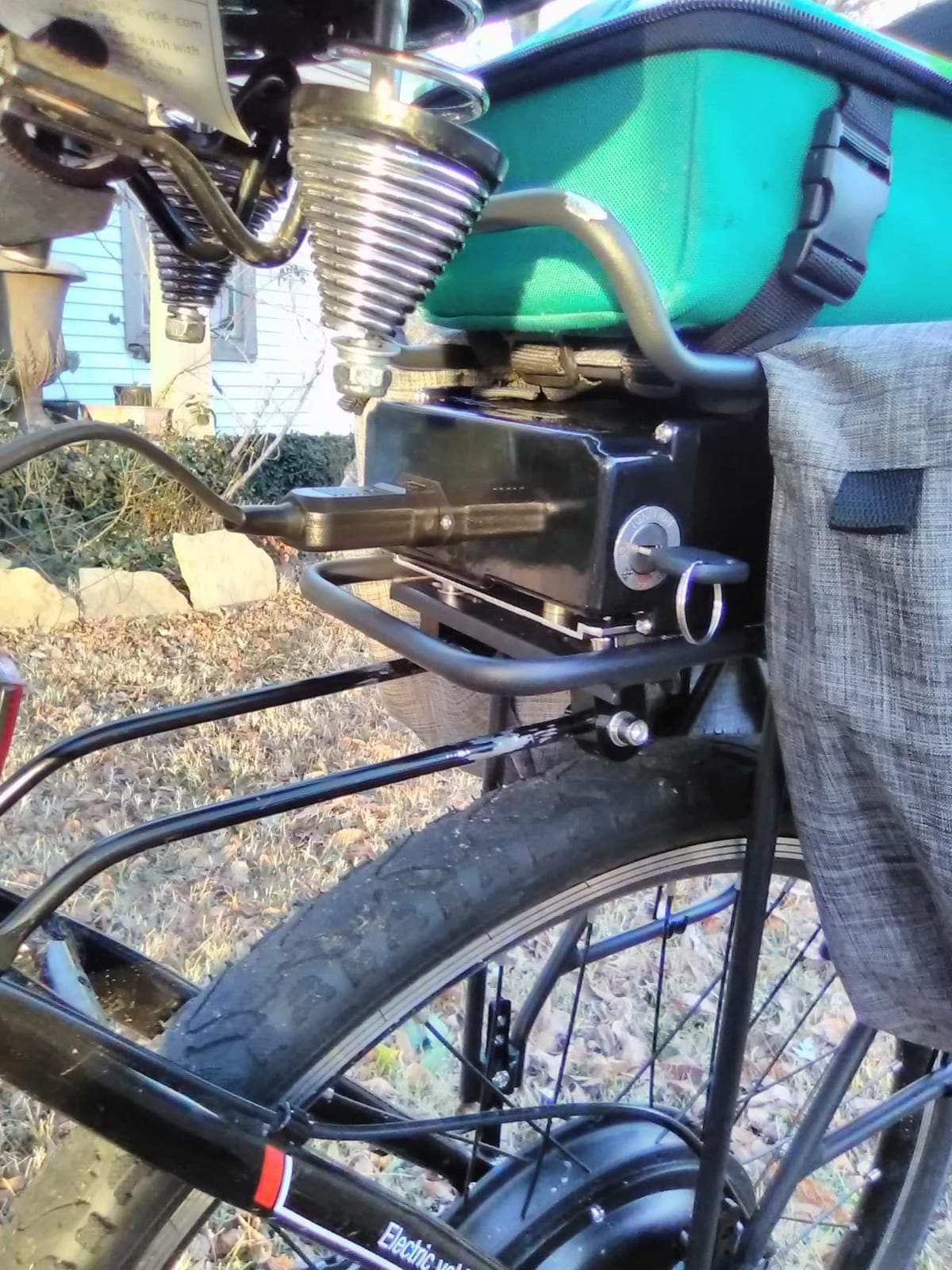
The rack mount is the part we like most for winter. Locking the pack to the frame means it is not sitting on a cold porch or garage floor overnight soaking up chill, and a pack that starts the morning closer to room temperature gives back more of its capacity on the first miles.
The weak point is documentation. Multiple buyers describe the rack install instructions as largely useless, and one reviewer reported factory mis-wired charging leads that damaged a charger. The docking plate lock is also described as a loose fit that can rattle over rough winter roads.
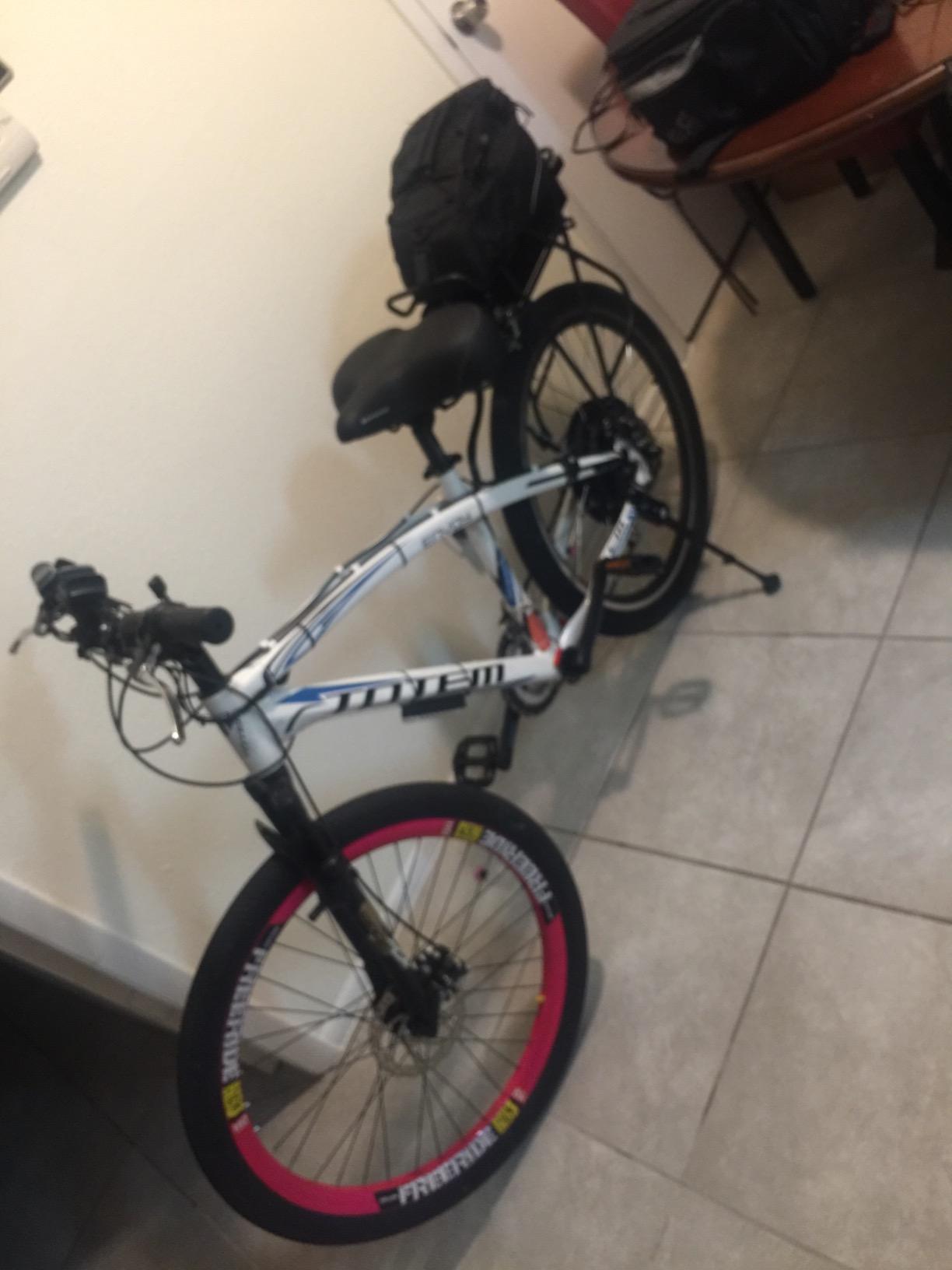
What to check before you order
Measure your rack space against the 14 x 5.7 x 2.5 inch footprint, and expect to improvise on the mounting hardware. The included 54.6V 2A charger needs at least 8 hours for a full charge, so plan overnight charging on the schedule, not in the morning.
Where it falls short in winter
The key sticks out from the side of the pack and has reportedly snapped off for some owners, which is a real concern on a rack-mounted pack left in a shared garage. And the 2A charger is slow, so warming and refilling a cold pack takes a longer window than most people plan for.
2. Unit Pack Power 48V 20Ah – Best Value Cold Pack
Unit Pack Power 48V 20 Ah Electirc Bike Battery – Lithiu-m Ion Ebike Battery 1000W 750W 500W 1500W 1200W for BBSHD BBS02 – LG4800 Cell Ebike Battery
48V 20Ah with LG cells
4.19 kg
40A max discharge
365 x 90 x 110mm
Pros
- Genuine LG cell capacity at low weight for a 20Ah pack
- 40A continuous discharge suits high-output hubs
- Reported to hold charge for days between winter rides
- Keyed mount and LED state-of-charge indicator
Cons
- One report of a connector pin shorting and melting solder
- Some buyers had to modify the power cable
- Long charge times relative to capacity
At 4.19 kg for a genuine 20Ah pack built with LG5000mAh cells, this is the one we would buy first for anyone who has to carry a battery indoors every morning. Light weight matters more in winter than people expect, because the pack has to come off the bike and go inside before it can be charged.
The 40A maximum constant discharge rating also gives you margin. When a pack is cold, internal resistance rises, and a pack that can push 40A into a struggling motor has more headroom than a 20A pack doing the same job.
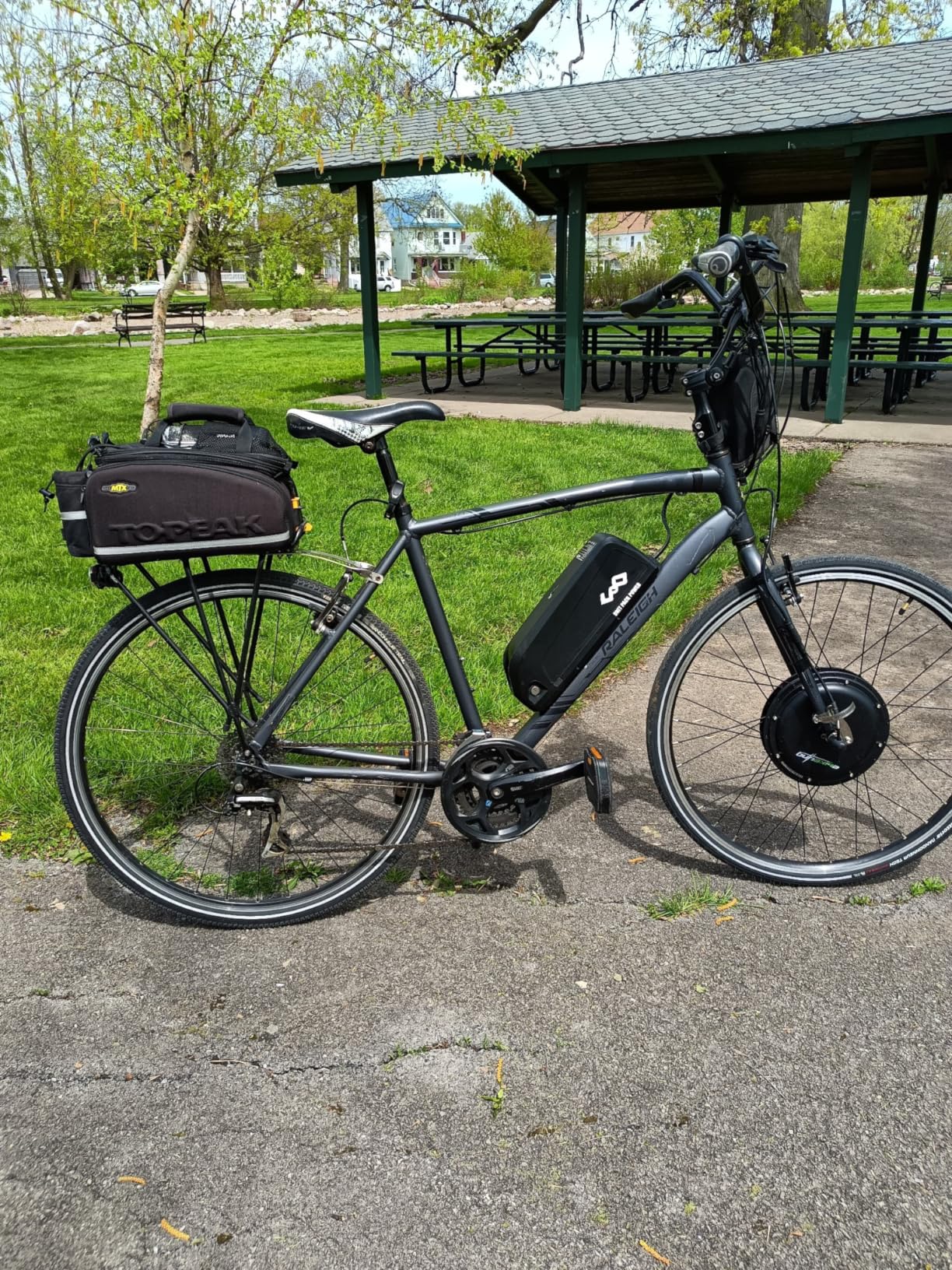
Two specs matter here for longevity. The pack is rated for 80 percent capacity retention after 800 cycles, which matters if you plan to keep it past a few winters, and each unit is full charge and discharge tested before it leaves the factory.
The XT60 discharge connector is the weak link. One detailed report describes a pin shorting and melting the solder joint, and some buyers needed to cut and re-terminate the power cable for their build. That is a solvable problem with a good XT60 plug, but budget for it.
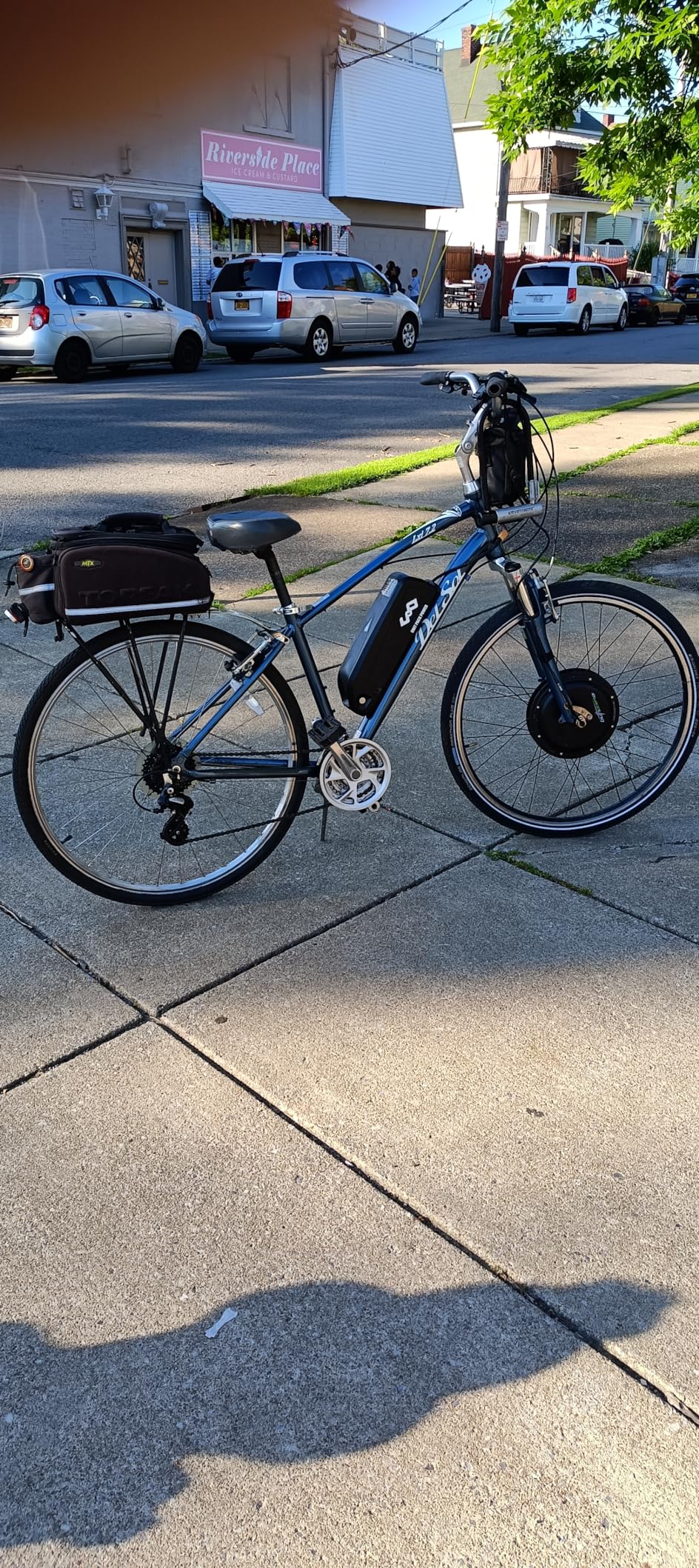
What to check before you order
Confirm your controller and motor can live with a 40A pack, and measure the 365 x 90 x 110mm case against your frame cavity. The included 54.6V 2A charger means a long wait in a warm room before the pack is ready for another cold morning.
Where it falls short in winter
Capacity is high but charge rate is low, and those two facts fight each other in a five-day week. Riders who need the bike early in the morning will be charging overnight on a schedule, not opportunistically in a warm hallway.
3. SDTYYP Dorado Plus 48V 17.5Ah – Most Compact for Cold Climates
SDTYYP (2-5 Days delivery) 48V 17.5Ah Reention Dorado Plus 460mm e-Bike Battery Pack for e-Bike Removable Lithium Battery Power 840W with 30A BMS and Charger
48V 13Ah or 17.5Ah
624Wh and 840Wh
30A BMS
5.5 kg
Pros
- Direct OEM replacement for Ride1Up and other discontinued 17.5Ah packs
- Reports more charge than the original pack it replaced
- On and off power button cuts parasitic drain
- Keyed aluminum housing with carry handle
Cons
- Two sizes exist and the listing is not clear on choosing
- Power button behavior is not in the manual
- One buyer cancelled over warranty terms
This pack holds a 4.5 rating across 45 reviews, and the dominant use case is replacing a discontinued OEM pack on a Ride1Up Core 5, 500-series, or Aurochs XT10. Owners report a plug-and-play fit and more range than the battery they pulled out.
That 840Wh ceiling matters in winter. When you apply a 30 percent cold derate, a large pack still leaves a meaningful ride, where a small pack at the same derate leaves you walking home.
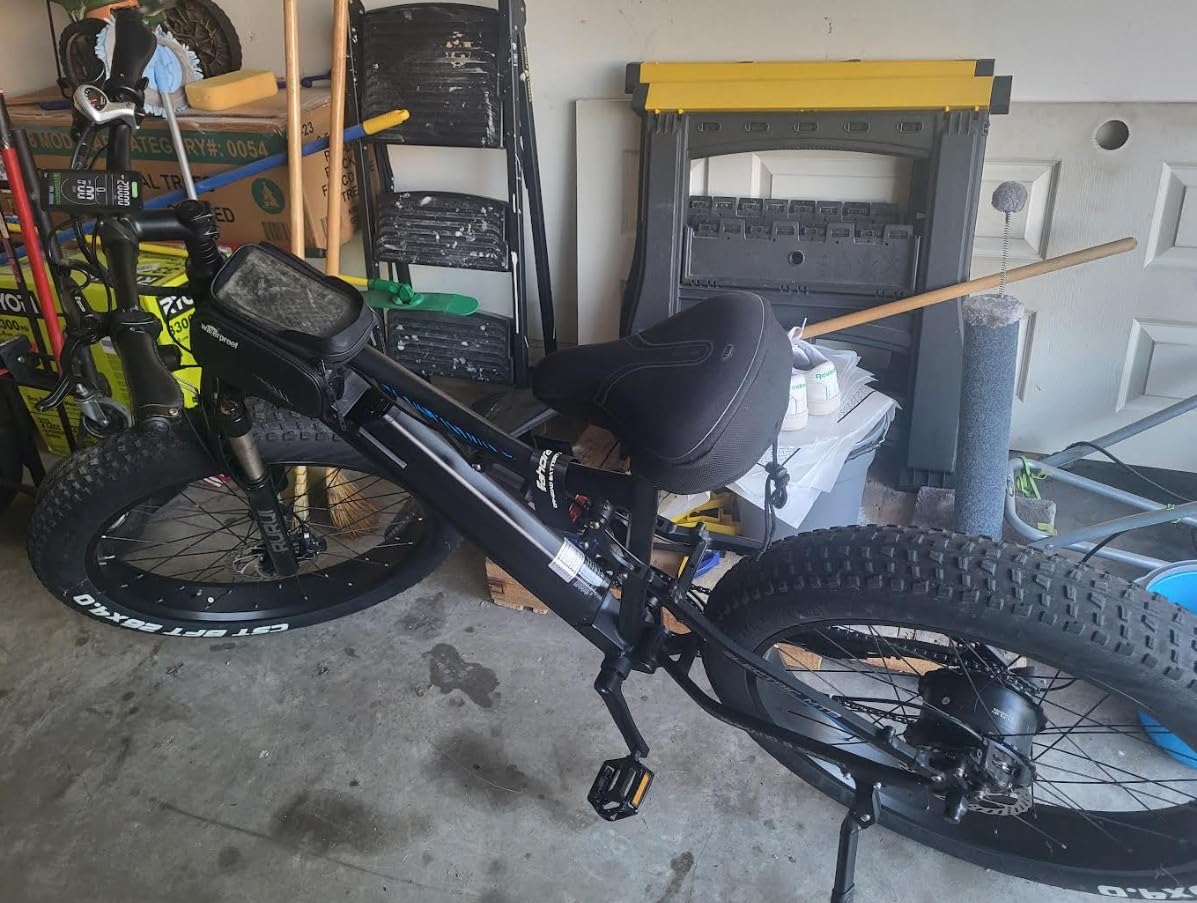
The on and off switch is a genuinely good cold-weather feature. A pack parked in an unheated space draws parasitic drain slowly, and cutting that off means the pack sits closer to full for longer across a multi-week cold stretch.
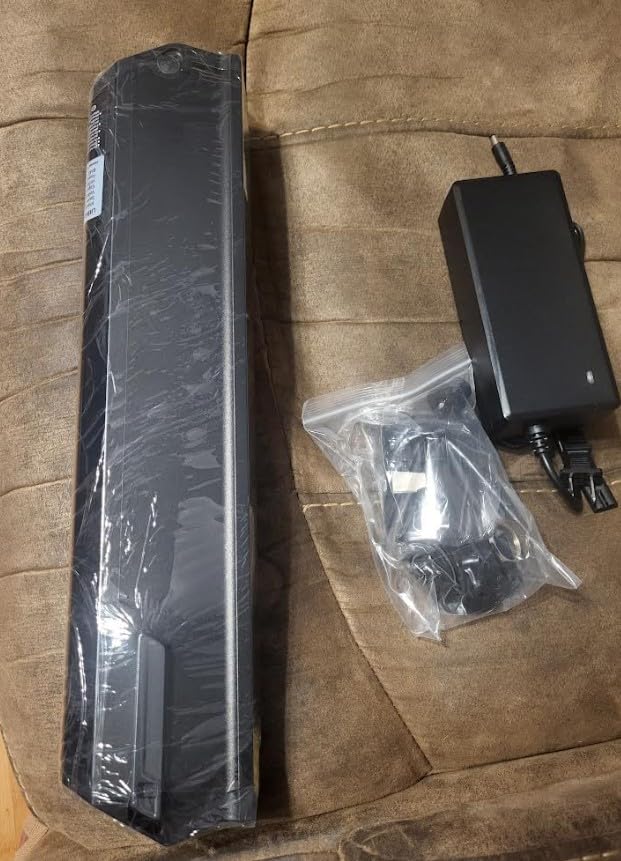
Automotive A+ grade cells and a 30A BMS with full protection cover the electrical side. The aluminum alloy shell with a security lock, a four-light level indicator, a USB charging port, and a spring handle round out a pack that is easy to grab with gloves on.
What to check before you order
Decide between the 13Ah and 17.5Ah versions before you order, because the listing does not make the choice obvious. Confirm your frame uses the same rail and connector as the pack you are replacing.
Where it falls short in winter
At 5.5 kg it is not a light pack, and the spring handle and keyed lock make it a two-hand lift on a cold morning. One reviewer cancelled the order because the warranty coverage did not meet their expectations.
4. Varstrom 48V 20Ah – Best for High-Power Winter Builds
Varstrom 48V 20Ah Ebike Battery L*/G Cell Lithium Ebike Replacement Battery
48V 20Ah 960Wh
11 lb
40A continuous output
0-1500W motors
Pros
- Owners measured genuine 40A continuous output under hard off-road loads
- Reported to outlast cheap OEM packs
- Waterproof case and anti-vibration pads
- Anti-theft lock and LED indicator
Cons
- Heavy at 11 lb and needs extra mounting hardware
- Some variants did not reach full charge voltage
- Multiple capacities and connector types must be verified
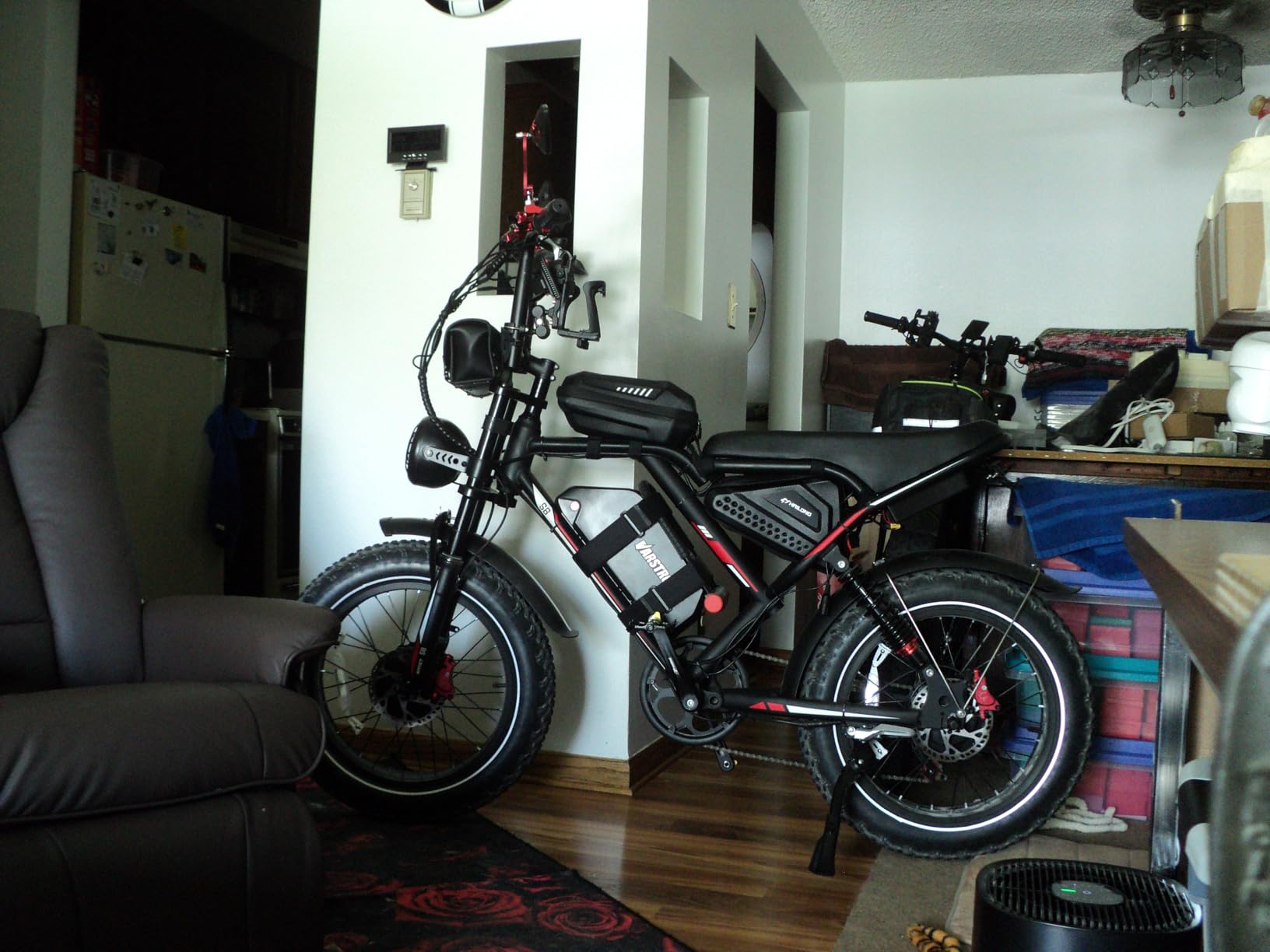
Varstrom is the pick when your winter bike is a high-power machine. The 960Wh pack with L*/G cells and verified 40A continuous output is built for riders running 1500W Bafang hubs or mid-drives through snow, and owners who measured it under throttle-only hill riding confirm the current is real.
Cell count is the second reason we like it for cold work. More parallel cells mean more internal thermal mass, which is the factor that decides whether a pack keeps its own temperature up on a long freezing climb.
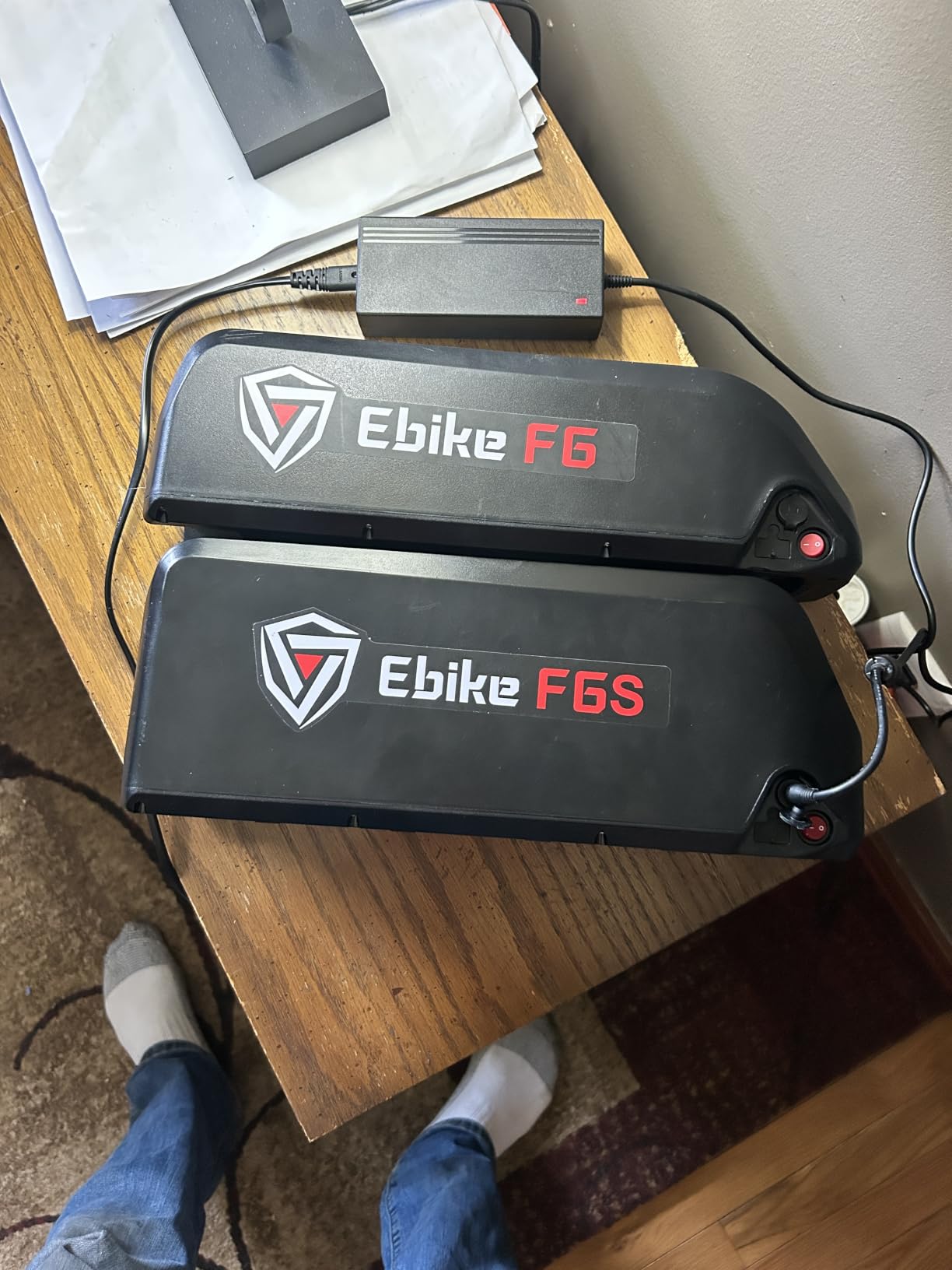
The enclosure is waterproof with anti-vibration pads inside, and the smart BMS covers short circuit, overcurrent, overcharge, and deep discharge protection. One seller behavior we appreciated in the reviews: they proactively warn buyers when a pack is UART rather than CAN bus before it ships.
Claimed cycle life is 1000+ charges, and multiple owners report a month of climbing rides per charge. For a battery that lives on a bike year round and works hardest in the cold months, that durability is the point.
What to check before you order
Confirm whether your controller speaks UART or CAN bus, and verify the connector type before you commit. Multiple capacities and connector variants exist on this product line, and picking wrong costs you a return trip in winter weather.
Where it falls short in winter
Eleven pounds is heavy to lift off a rack with gloves on, and owners recommend adding a bottle boss and hose clamps for mounting. Some variants also stopped short of full charge voltage, which reads as a BMS cutoff rather than a cell fault.
5. Cymoye 48V 20Ah LiFePO4 – Best for Sub-Zero Riding
48V 20Ah LiFePO4 Lithium B attery Pack Built-in 40A BMS for 0-1500W Motor,DIY Projects and Outdoor Equipment
48V 20Ah LiFePO4
16S1P configuration
40A smart BMS
11.7 lb
Pros
- LiFePO4 is the most cold-tolerant chemistry in the group
- Rated 4.7 with zero 1-star reviews
- Reports 20+ miles of assisted riding per charge
- Much lighter than the lead-acid banks it replaces
Cons
- Rated for 250W-1000W motors despite broader marketing claims
- Case size must be checked against your compartment
- One buyer wanted a stronger charger
If you ride below freezing, chemistry is the lever that matters, and this is the only lithium-iron-phosphate pack in the group. LiFePO4 tolerates low temperature better than the NMC-based packs every other entry uses, and forum riders comparing the two chemistries in sub-zero conditions consistently point to LFP as the steadier performer.
It also carries the highest rating in the roundup at 4.7 with 32 reviews and no 1-star ratings at all. Buyers use it in e-bikes and to replace 48V lead-acid banks in work carts and solar projects, reporting strong continuous output and long charge retention.
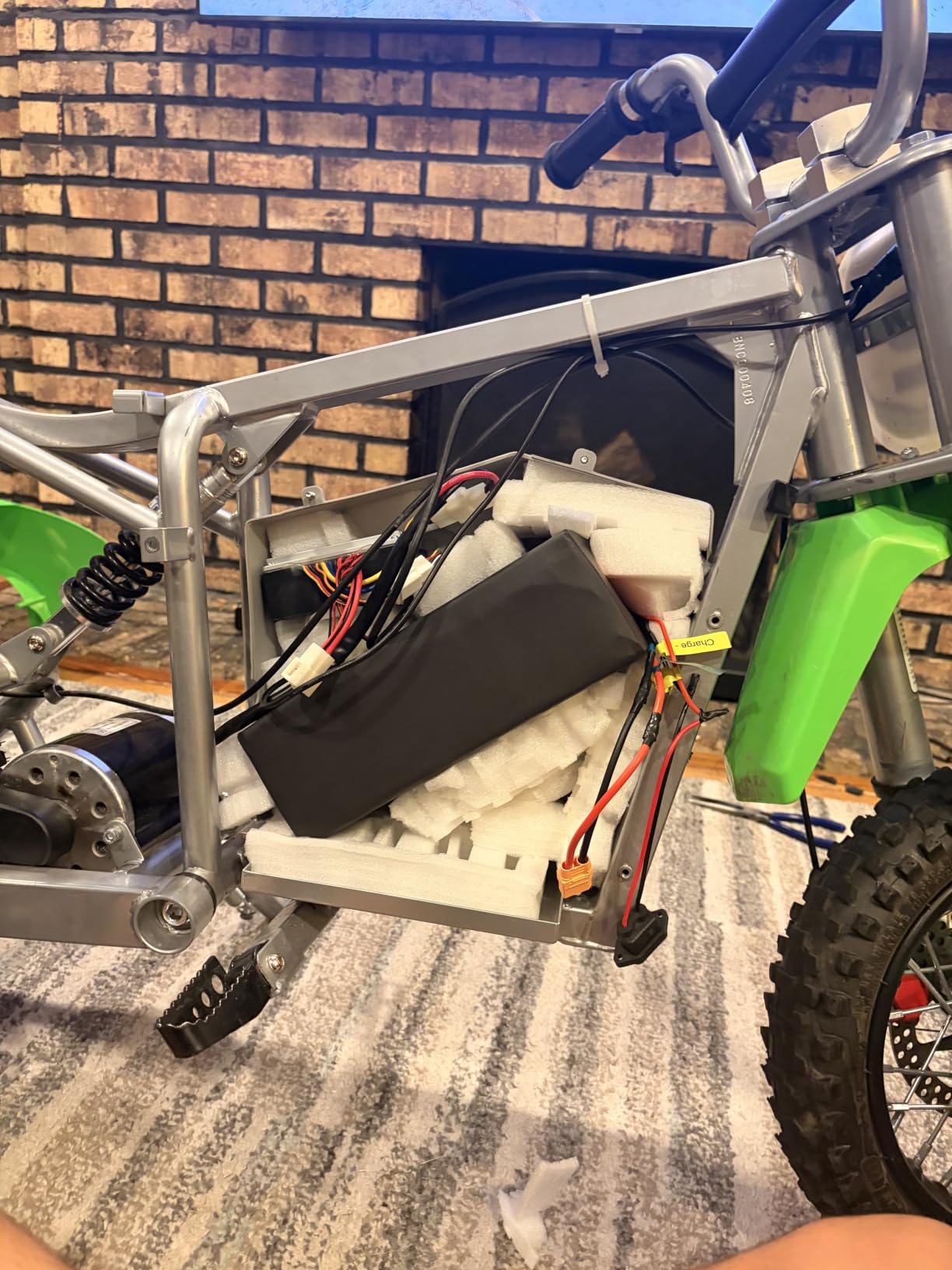
The 40A smart BMS includes cell balancing, and the pack rests at 3.35V or above per cell after charging, which is a good sign for long-term storage. Top up to roughly 70 to 80 percent before it goes into a cold month, and the chemistry tolerates that storage window well.
Owners report 20+ miles of assisted riding per charge, and the included 3A charger fills it in about 6.5 hours. The 10.4 x 5.3 x 3.5 inch envelope is compact for a 20Ah pack, which helps if you are mounting it inside a frame tube.
What to check before you order
Check the case against your battery compartment, and note that it is rated for 250W to 1000W motors even though wider compatibility appears in the marketing. Some controllers also need the LFP charge profile to be set correctly.
Where it falls short in winter
It will not drive a 1500W setup, which rules it out for the biggest hub and mid-drive winter builds. At 11.7 lb it is also not a light pack, and the 3A charger is slower than riders with a spare pack would like.
6. SDTYYP Ebike Battery 48V 10.4Ah for Lectric XP – Best for Compact Frames
SDTYYP Ebike Battery 48V 10.4Ah for Lectric XP 1.0 2.0 3.0 Step-Over
48V 10.4Ah
430 x 100 x 43mm
30A BMS
5-6 hour charge
Pros
- Smallest and lightest pack here for Lectric XP style frames
- Fully sealed case with sand and water protection
- Seller verified dimensions from photos before sending
- Quick 5-6 hour charge for a compact pack
Cons
- Lowest capacity so cold range loss bites hardest
- Multiple buyers report it does not fit their bike
- One buyer reports the bike cutting out under assist
Compact folding-bike frames leave very little room, and this 10.4Ah pack at 430 x 100 x 43mm is the smallest thing on the list. The fully sealed housing carries sand and water protection, which is reassuring for a bike parked outside through a wet snow season.
Our honest position is that a 10.4Ah pack is the wrong starting point for serious sub-zero work. Cold derating is a percentage hit, and it hits the smallest pack the hardest in absolute miles.
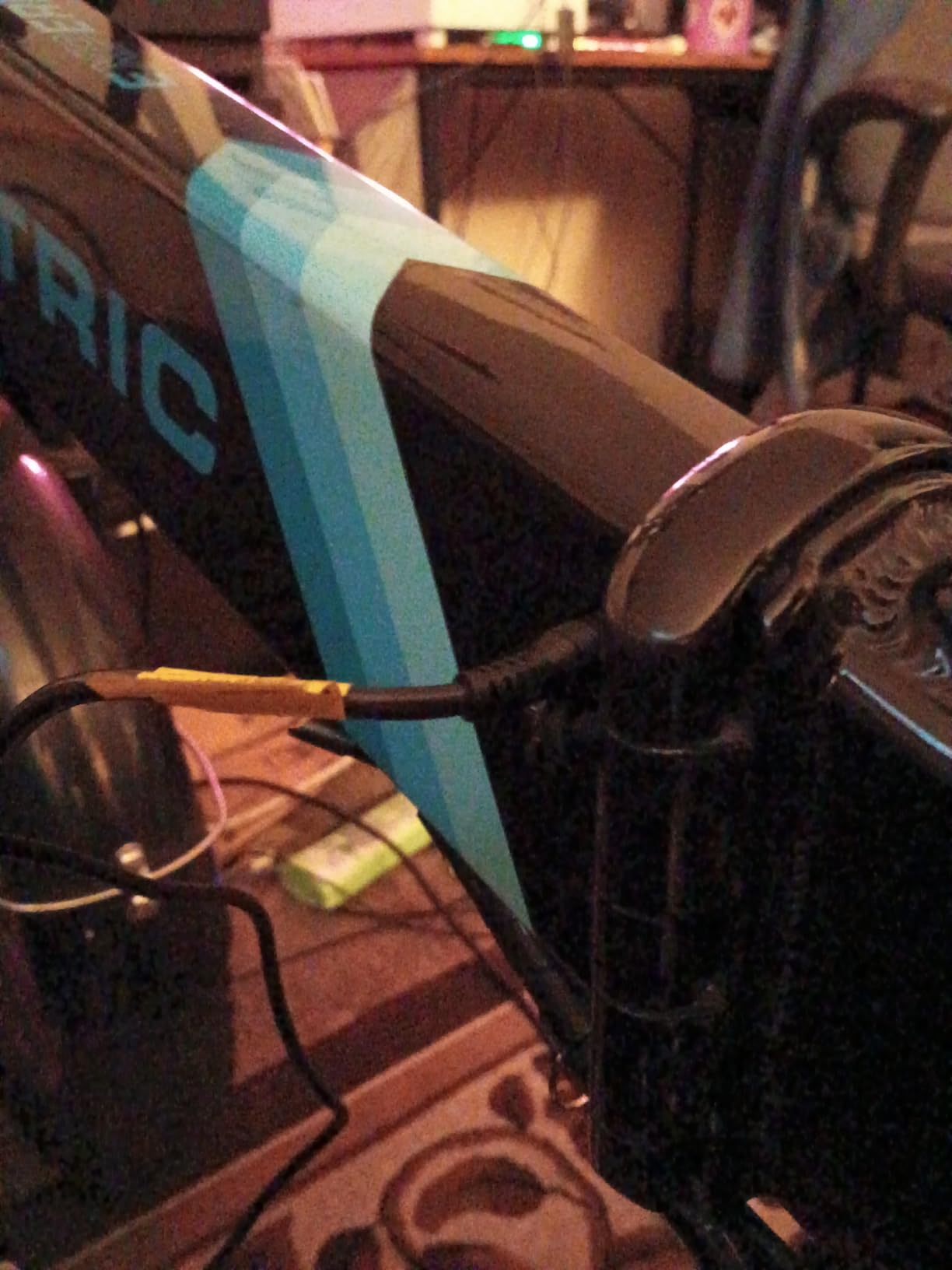
The seller verifies battery dimensions from customer photos before sending, and that process is the whole story here. Buyers who got a correct fit are happy, and the cluster of complaints is almost entirely about fitment rather than the pack itself.
Charge time of 5 to 6 hours is quick for the capacity, and the anti-theft device plus 30A protection board cover the basics. Rated range is 40 to 60 km in ideal conditions, which is a fair-weather number.
What to check before you order
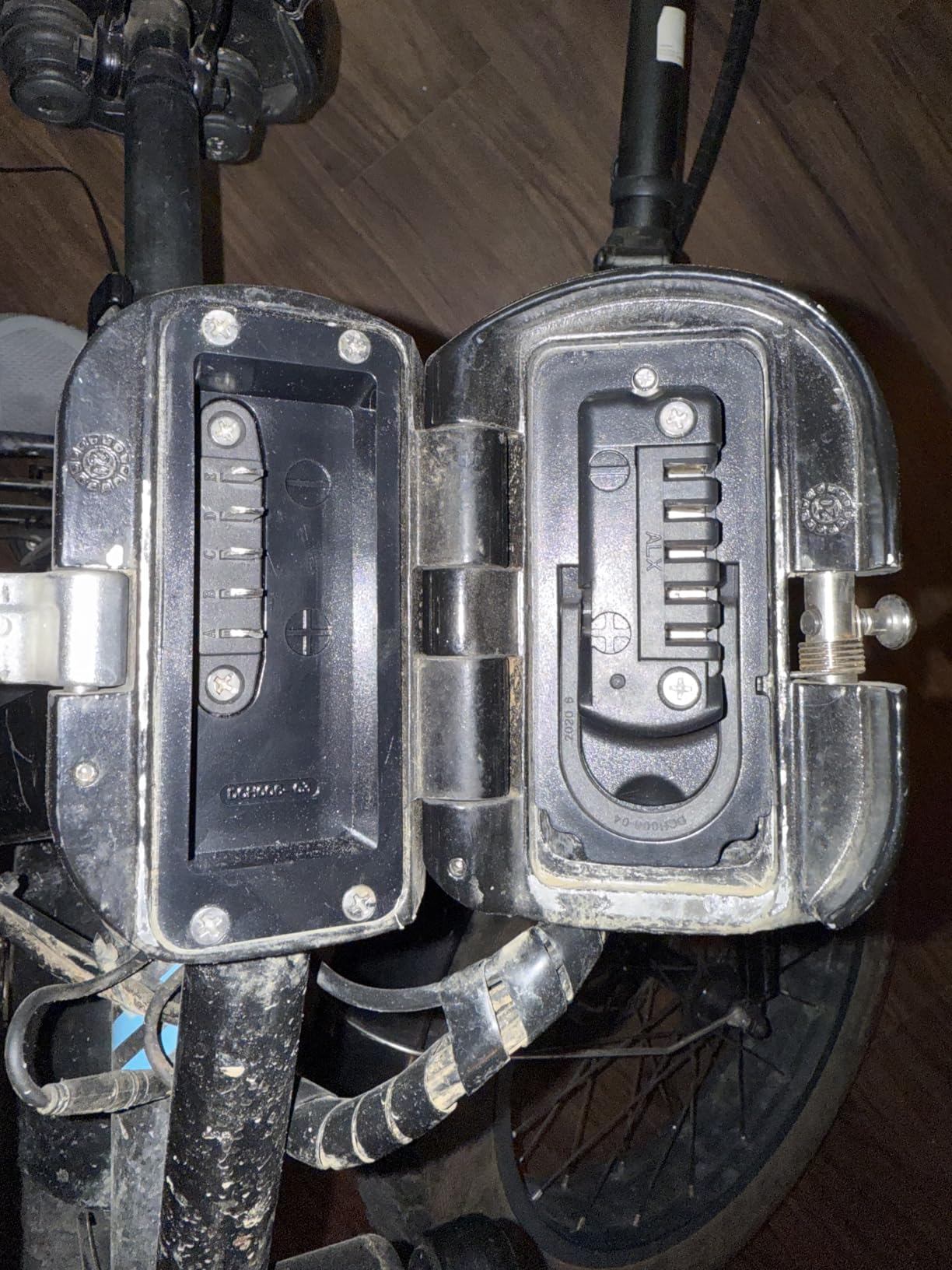
Send the seller a photo of your compartment and your existing connector, and get a written confirmation before you order. Also note that the listing quotes a 30A BMS on a 10.4Ah pack, which is worth a clarifying question.
Where it falls short in winter
At 10.4Ah this is the pack where a 30 percent cold derate removes the most usable range. Reviewers also report the widest rating spread in the roundup, with 19 percent one-star reviews driven by fitment problems.
7. ShunTongDa 48V 14Ah – Best for Rad Power Owners
Ebike Battery 48V 14Ah for RadExpand Bikes No Suport Upgrade APP v1.4.0
48V 14Ah 672Wh
3.5 kg
30A BMS
380 x 89 x 95mm
Pros
- Only 3.5 kg
- the lightest high-capacity pack in the roundup
- Slides into the existing Rad Power frame base on XT60
- Waterproof case with anti-theft lock and LED indicator
- 12-month cell warranty plus 30-day returns
Cons
- Does not work with Rad controller firmware v1.4.0 and above
- A 7-hour charge is slow for 14Ah
- No customer review photos to verify fit
Weight is the deciding number for winter here. At 3.5 kg this is the lightest high-capacity pack we reviewed, and carrying a pack indoors for safe charging stops being a chore you dread.
It drops into the existing Rad Power frame base with pre-installed XT60 connectors, rated for 55 to 200 km per charge. The 30A BMS includes overcharge, short circuit, and temperature protection, and the case is waterproof.
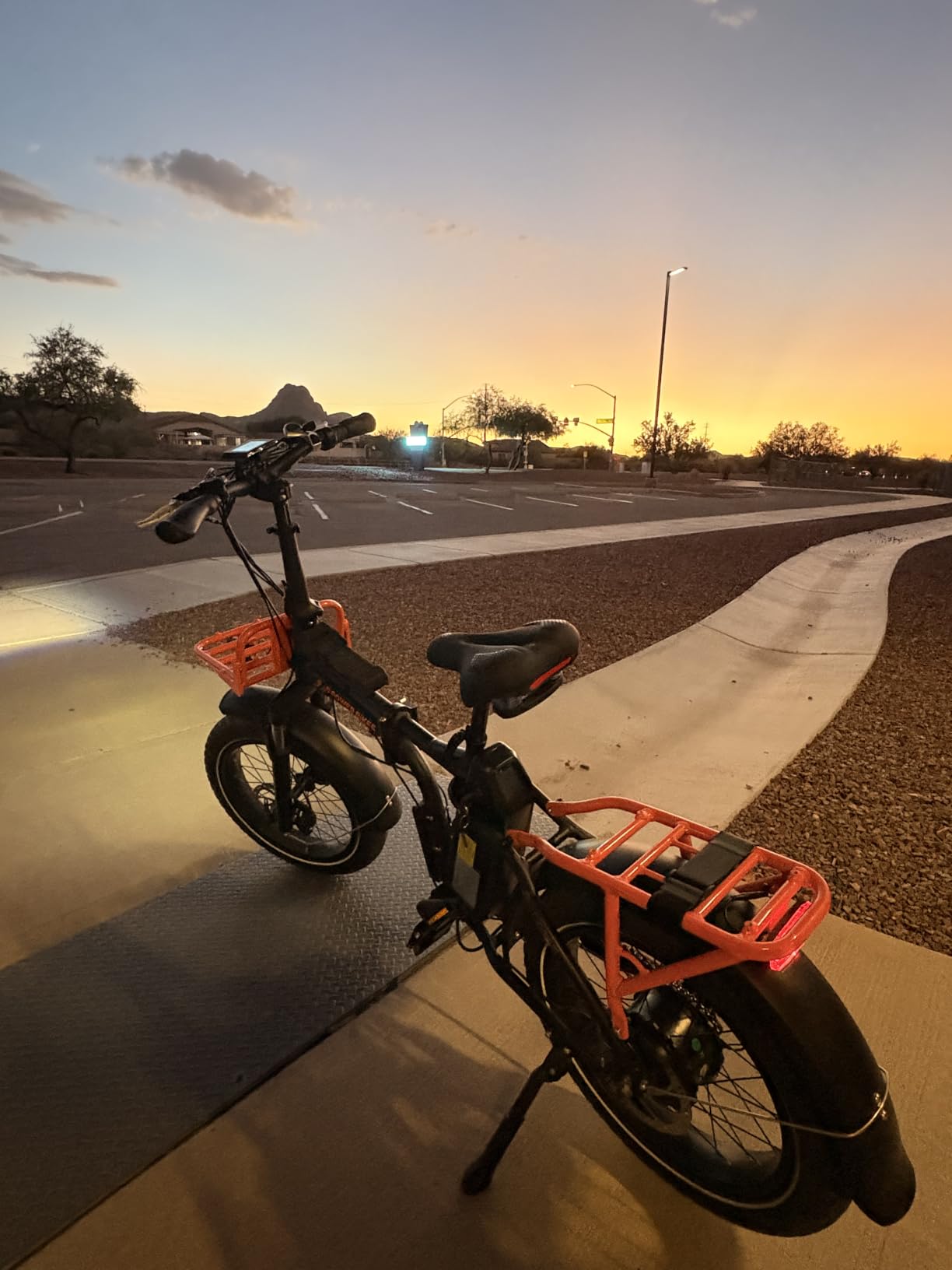
Long-term durability is the strong suit. The listing claims 80 percent or better capacity retention after 800 cycles using automotive grade A cells, and the 12-month cell warranty plus 30-day returns give you a real window to test it through a full cold season.
Before anything else, check your controller firmware. This pack does not work with Rad e-bike controller firmware v1.4.0 and above, and that single incompatibility is the deciding factor for many owners.
What to check before you order
Confirm your Rad Expand, RadWagon, or RadRunner 2 is running controller firmware below v1.4.0. Then measure against the 380 x 89 x 95mm frame base to confirm the slide-in fit.
Where it falls short in winter
There are no customer review photos on this listing, so fit is unverified by other buyers. The 7-hour charge time is also slow, which makes the indoor warm-up and charge routine a nightly commitment rather than an occasional one.
8. PLXNYLB 48V 22.4Ah Removable Ebike Battery – Best for Maximum Winter Range
PLXNYLB 22.4AH Electric Bike Lithium Battery, Removable Ebike Battery with 3A Charger 48V Electric Bicycle Battery Pack with Waterproof Holder for 250W-2000W Motors
48V 22.4Ah
8.95 lb
50A BMS
250W-2000W motors
Pros
- Largest capacity here for a genuine winter range upgrade
- Fits standard carrier mounts on multiple brands
- 50A BMS supports controllers up to 2000W
- Owners report higher top assist speed after upgrading
Cons
- One unit arrived dead and would not hold charge
- One reviewer reports reduced cycle life after a few dozen cycles
- Fitment is not guaranteed on some frames
When the question is how many miles you can ride after a 35 percent cold derate, the answer is as much capacity as you can physically carry. At 22.4Ah, this is the largest pack in the group, and the 50A BMS with a voltage equalization chip handles controllers up to 2000W.
Owners converting 13Ah bikes report a real improvement in both range and top assist speed, and the pack fits standard carrier mounts on multiple brands without modification.
The waterproof holder, 5-pin mounting plate, two security keys, and a 3A charger are all in the box. Claimed service life is 1500+ cycles, or 3 to 5 years, which would cover a lot of winters if it holds.
It is also the lowest rated pack we reviewed, at 4 stars across 32 reviews with 20 percent one-star feedback. The complaints cluster around units arriving dead, packs that did not fit, and reduced peak power after a few dozen full cycles.
What to check before you order
Verify your carrier mount pattern and connector before ordering, since fitment is not guaranteed. Budget for the heavy return postage if the pack turns out to be wrong, because return shipping on a lithium pack of this size is not cheap.
Where it falls short in winter
At 8.95 lb it is a two-hand lift, and the absence of a USB port means you lose the phone charging convenience several competitors include. The dead-on-arrival and early cycle-life reports are the reasons we did not rank it higher.
9. YOSE POWER 36V 13Ah – Best for Jasion EB5 Riders
Ebike Battery 36V 13Ah Fit for Jasion EB5 E bike Battery Replacement
36V 13Ah 481Wh
7.7 lb
20A BMS
14.4 x 3.7 x 3.5 inch
Pros
- 92 percent of reviews are 5-star
- the strongest satisfaction rate here
- Clicks straight into the existing Jasion EB5 cradle
- Arrives with a factory charge
- Spare fuses and manual included in the box
Cons
- Fits the Jasion EB5 specifically and missed one buyer's EB5 Max
- 20A BMS is lower than most packs in the roundup
- A few buyers needed an internal fuse replaced
This is the tightest, most satisfied pack in the group. Ninety-two percent of its 31 reviews are 5-star, and the one-star feedback is almost entirely fitment rather than product quality. If you own a Jasion EB5, this clicks into the existing cradle for instant swapping.
It arrives with a factory charge, which on a cold purchase day saves you the first warm-up cycle. The 36V 13Ah pack delivers 481Wh with a stated range of 47 to 156 km depending on conditions.
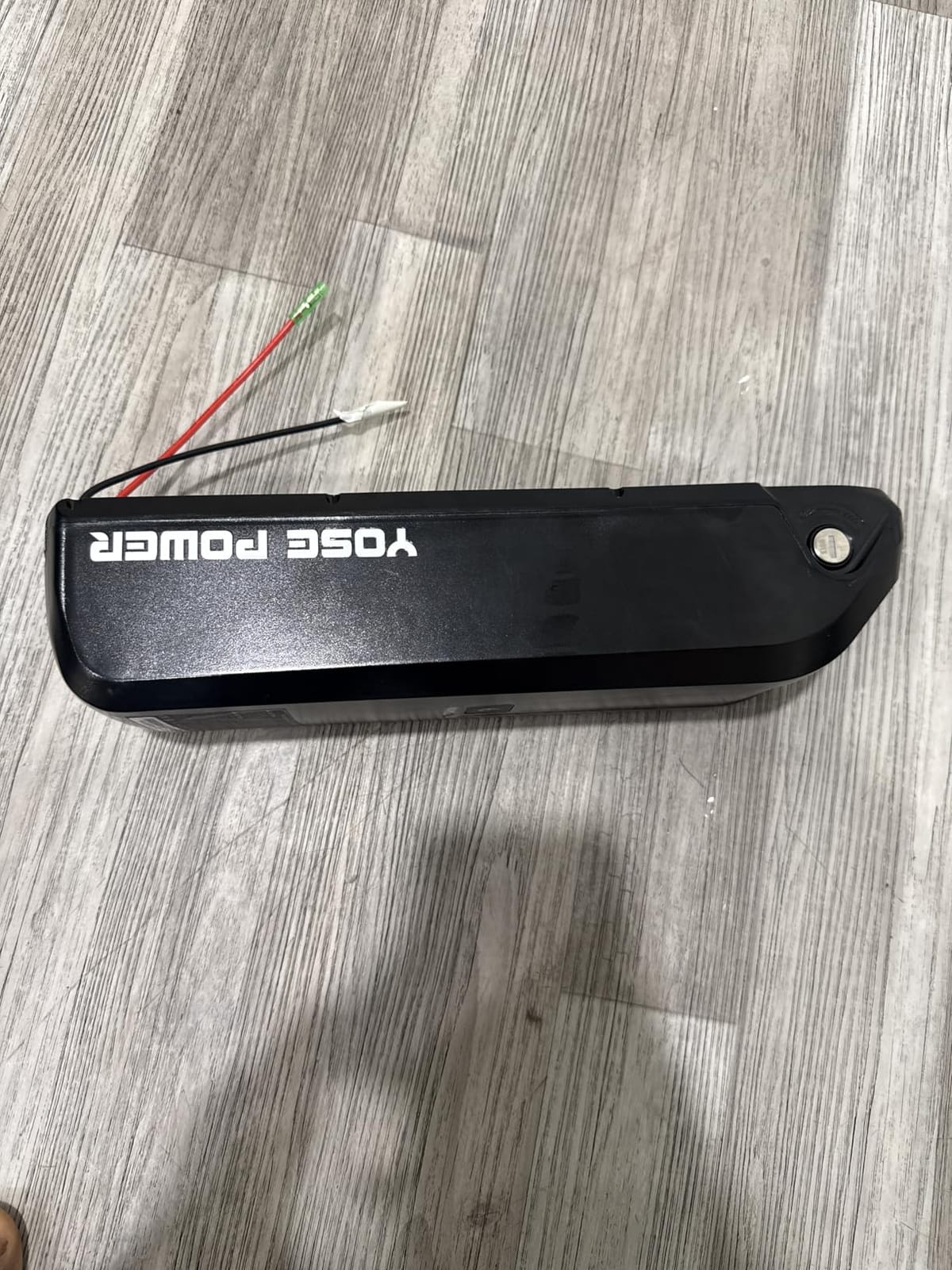
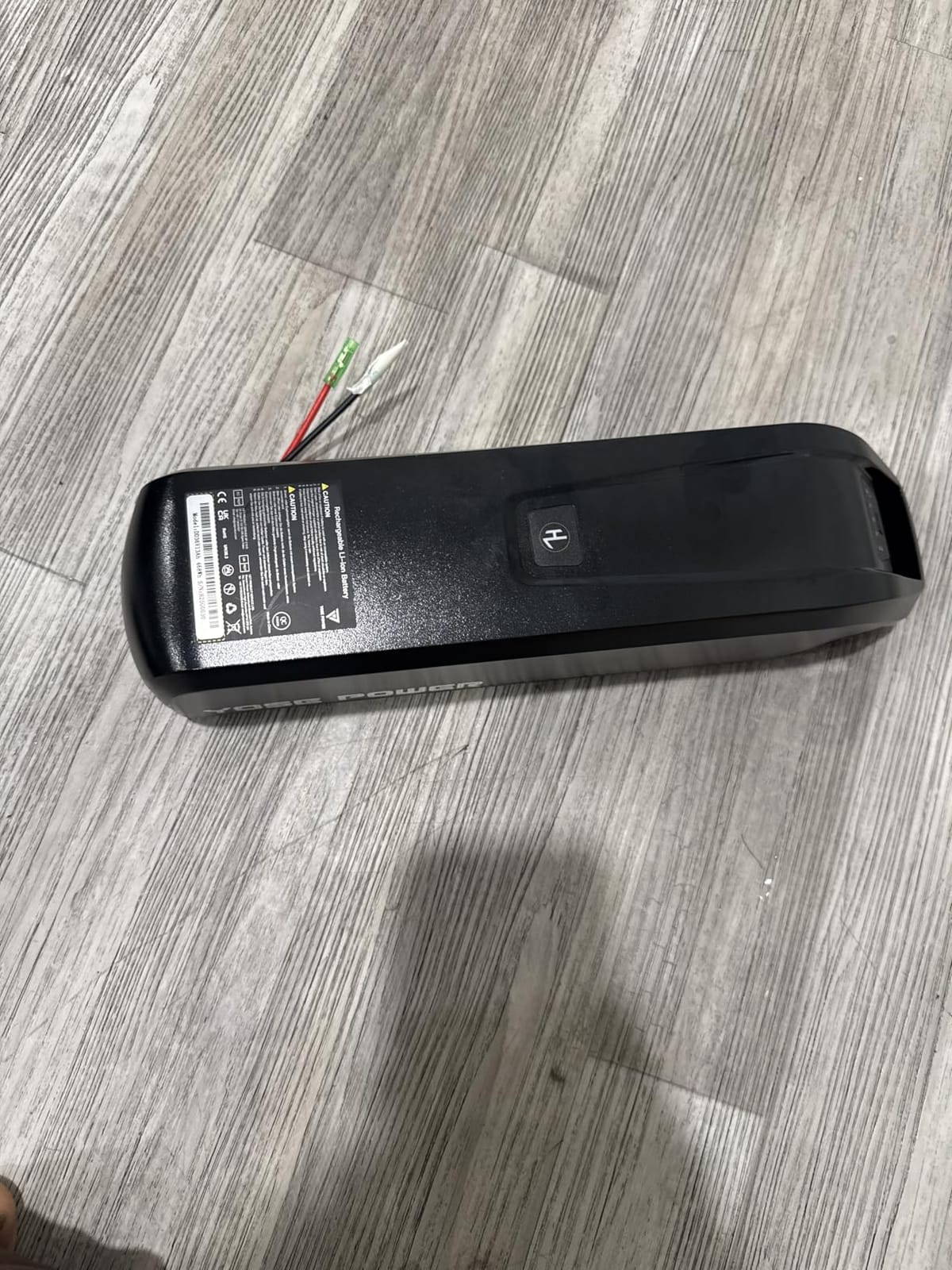
The 20A BMS includes short circuit, overcharge, overdischarge, and temperature protection, with a 10A standard discharge, 20A maximum, 10A charging fuse, and 30A discharge fuse. Spare internal fuses are in the packaging, which is a small thing that saves a cold roadside evening.
The 18-month warranty is the longest in the roundup. Owners report noticeably more range than the original pack, and a full charge takes about 7 hours.
What to check before you order
Confirm the exact model. The pack fits the Jasion EB5 and did not fit one buyer’s EB5 Max, and 36V is a different platform from the 48V packs most bikes in this class use.
Where it falls short in winter
At 481Wh it is a small pack, so cold derating removes a real slice of your ride. A few buyers also needed an internal fuse replaced, which is easy to fix if you kept the spares.
10. YOSE POWER 48V 14Ah – Best for 2018 and Newer Rad Power Bikes
48V14AH Ebike Battery Compatible with Rad Power Electric Bike
48V 14Ah pack
8.7 lb
18-month warranty
1000+ cycles claimed
Pros
- Pre-installed holder base drops straight into the frame
- Keyed lock secures the pack to the bike
- 1000+ claimed charge cycles
- 18-month warranty
Cons
- No charger included on a pack this large
- Only 28 reviews
- the thinnest evidence base here
- Excluded from several newer Rad Power models
For 2018 and newer Rad Power e-bikes this is a clean direct fit. The holder base is pre-installed before dispatch, so the pack drops into the frame and the keyed lock secures it, and the LED battery level light tells you where you stand before a cold start.
The BMS covers over-current, over-discharge, over-charge, and short circuit protection, and the listing claims 1000+ charge cycles with an 18-month warranty behind it.
What to check before you order
Check your model against the exclusion list. This pack is not compatible with the RadRover 6 Plus, RadCity 5 Plus, RadRunner 3 Plus, or RadMission, and getting that wrong in winter is a long wait for a replacement.
Where it falls short in winter
No charger is included, which is a real added cost on a pack this size and a genuine problem if your cold-weather plan depends on a full pack each morning. At 28 reviews it also has the thinnest evidence base in the roundup, and the 4.0 average reflects a 16 percent one-star share.
11. VODIPOWER 48V 20Ah – Most Versatile for Winter Conversions
VODIPOWER 48V 20AH E-Bike Battery, 13Ah/16Ah/20Ah Lithium Battery Pack with 40A BMS for Electric Bicycles,E-Motorcycles (100W-1800W) Motor, XT60 Connector, USB Port and Base (48V20AH)
48V 20Ah
8.9 lb
40A BMS
100W-1800W motors
Pros
- Low capacity cost for a 20Ah pack
- 3.54 inch wide base fits tight frame compartments
- 3A charger fills the pack in about seven hours
- Owners confirm voltage and wattage match for conversions
Cons
- One unit would not charge and the seller declined a return
- Only a 3-month manufacturer warranty
- Some buyers had to modify the mount
Capacity per dollar is the argument here. A 20Ah pack at this price point leaves room in a winter build budget for a thermal cover and a better charger, and both of those do more for your cold mornings than a slightly larger pack would.
The 40A BMS, XT60 discharge connector, LED indicator, USB port, power switch, and waterproof housing give you the full feature list most riders expect. Motors from 100W to 1800W are supported.
What to check before you order
Inspect the package on arrival. One buyer received a shipment missing its mounting gaskets and screws with the pack at 20 percent charge, and another received a unit that would not charge at all with no return accepted.
Where it falls short in winter
The 3-month manufacturer warranty is the shortest support commitment in the roundup, and a pack that will not accept a charge in a cold garage is a serious problem. At 4.1 stars across 26 reviews, the one-star share sits around 15 percent.
12. BAFANG 48V/52V Samsung Cell Pack – Best for Bafang Conversions
BAFANG Electric Bike Battery 48V 52V 13Ah 17.5Ah 20Ah Ebike Lithium Ion Battery with Charger and Key 500W 750W 1000W 1500W Motor AW and Other Motors
48V and 52V options
13Ah 17.5Ah and 20Ah
11 lb
Samsung cells
Pros
- Samsung cells
- a brand riders can verify rather than an anonymous pack
- Owners report 65 mile rides with 40 percent remaining
- Holds up on a hunting e-bike that gets thrown around
- Charger and safety lock included in the box
Cons
- One buyer's version would not charge from a solar panel
- Cell count and true cell brand are not disclosed
- Only 19 reviews so long-term durability is unproven
Naming a cell brand is worth something in a category full of anonymous packs, and this one specifies Samsung cells across 13Ah, 17.5Ah, and 20Ah versions at 48V or 52V. The BMS covers overheat, undervoltage, overcharge, overdischarge, overload, and short circuit.
The range claims from owners are the standout. Multiple riders report 65 miles on a single charge with 40 percent remaining, and one reports 70 miles. On a winter derate, a pack with that much headroom still gets you home.
What to check before you order
Match the pack to your motor: 48V suits 500W to 1000W systems, and 52V suits 1000W. Measure the 14.49 x 3.54 x 4.84 inch case against your compartment before ordering, since the four-light charge indicator is on the bottom bracket mount.
Where it falls short in winter
At 19 reviews the long-term durability record is unproven, and the listing does not disclose the cell count, which is the single number that would tell you the parallel configuration. One buyer’s pack would not charge from a solar panel, wall charging only.
How to Choose a Cold-Weather Battery
Start with capacity, then derate it. Work out your winter requirement in watt-hours using volts times amp-hours, then add 30 to 50 percent to cover cold losses. A rider who needs 400Wh in July for a 20-mile commute is looking for roughly 520 to 600Wh in January. The larger pack is not more cold-resistant, it simply holds more charge, which is still the thing you want.
Next, look at chemistry. NMC-based lithium-ion, which is nearly everything on this list, performs well and packs light. LiFePO4 tolerates low temperature better and stores happily in a cold room, at the cost of being heavier. For riders below freezing most of the winter, the Cymoye LFP pack is the one we would pick on chemistry alone.
Third, and most overlooked, the BMS and its temperature protection. A BMS with a genuine low-temperature charge cutoff is the difference between a cold mistake and a destroyed pack. Several packs here list temperature protection explicitly, and that is the feature to look for above all else. The same BMS controls how much current the pack can push, and more current means more self-generated heat, which is why a high-discharge pack is easier to keep alive on a freezing morning.
Fourth, removal ergonomics. The single best thing you can do for a winter battery is store it indoors above freezing, and that only happens if you can actually get the pack off the bike. Weight, key placement, and whether the mount needs tools all matter more in January than in July. If you can carry it with one hand, you will do it. Our more detailed sizing math is in the guide on how to get your range back in cold weather.
Finally, check OEM lock-in before you buy. Bosch PowerTube-style packs are proprietary and will not mix with aftermarket packs, which frustrates anyone who wants a cold-weather spare. Generic 48V packs with XT60 or Anderson connectors give you the freedom to carry two, swap a warm one in at midday, and keep both charging indoors. If you ride a bike in serious cold, our cold weather down jacket picks matter just as much as the pack choice.
Winter Battery Care and Storage Checklist
Store at 70 to 80 percent charge, not full. A pack held at 100 percent through a cold season ages faster, and 70 to 80 percent leaves headroom for the self-discharge that happens in a cold room. Store somewhere between 60F and 75F, away from direct sun and away from a heater vent.
Top up every six months. If your storage is a heated garage, bring the pack out and check the state of charge twice a winter. If the room drops below freezing, bring the pack indoors to check it instead.
Never charge a cold pack. This is the rule we would put on a sticker across the charger. Warm the pack to room temperature naturally, then charge. Resist the urge to solve a cold-soaked pack with a heat gun or a pan of hot water, which is how one rider destroyed a Specialized commuter and faced a long warranty replacement.
Keep the pack on the bike, or off it but close. Consensus among cold riders is to protect the battery from getting cold and never leave it sitting outside when not in use. A neoprene thermal cover is the cheapest useful mitigation there is, and it works because it slows the rate at which the pack loses heat rather than adding any.
Watch for condensation. Repeated thermal cycling drives moisture into displays, controllers, and motors. Let a cold bike warm up indoors before you power it on, and dry the ports before reconnecting anything. And dress for the ride, because a rider who is warm pedaling hard generates the heat that keeps the pack alive. If you ride in on snowy forest roads as well, our cold weather hunting boot picks cover the other half of the problem.
Frequently Asked Questions
How cold is too cold for an e-bike battery?
There are two different answers. For charging, 32F (0C) is the hard floor. Charging a lithium-ion e-bike battery at or below freezing causes lithium plating inside the cells and permanently reduces capacity, so the pack must be warmed to above 32F before you plug in the charger. For discharging, most packs are safe well below freezing and simply deliver less range. Budget on losing 10 to 20 percent of capacity around 40F and 20 to 35 percent at freezing temperatures.
How cold is too cold for a lithium battery?
Too cold to charge is the practical answer for any lithium battery, including an e-bike pack. Below 32F (0C), ions move too slowly to accept a charge safely and metallic lithium deposits on the anode, which is permanent damage. Discharging below freezing is a different matter and generally safe, though capacity falls off sharply. Some cold climates see losses of 20 to 40 percent of rated range. LiFePO4 chemistry tolerates low temperatures better than the NMC cells used in most e-bike packs.
Which batteries are the best for extreme cold weather?
For the coldest climates, the Cymoye 48V 20Ah LiFePO4 is the chemistry-first choice, because lithium-iron-phosphate handles sub-zero temperatures better than NMC cells. For riders who want the deepest proven track record, the J JOYISI 48V 15Ah has the most reviews at 144 and a 4.4 rating. The Jasion EB5 replacement from YOSE POWER has the highest satisfaction rate at 92 percent five-star. Whichever you pick, store it indoors above freezing and never charge it cold.
How do I keep my e-bike battery warm in the winter?
Keep the pack indoors at 60F to 75F and take it out only for the ride. A neoprene thermal cover slows heat loss and is the cheapest useful step you can take. If you have two packs, keep the spare warm indoors and swap it in at midday. Riding hard also helps, because battery use generates internal heat, which is why a rider working hard on a freezing day loses far less range than one cruising. Start from a warm pack rather than a cold one whenever you can.
Can I charge my e-bike battery in the cold?
Not below 32F (0C). This is the clearest rule in cold-weather battery care, and it is the one mistake that actually destroys packs rather than merely reducing range. Bring the pack inside, let it warm to room temperature, then charge. If your charger indicator will not start in a cold garage, treat that as the BMS temperature protection doing its job. Some riders keep packs on a heat pad indoors from the first freeze until late April for exactly this reason.
Does cold weather damage e-bike batteries permanently?
Cold itself does not. Discharging a lithium-ion pack below freezing is safe, and the capacity comes back once the pack warms up. Charging below freezing is what causes permanent damage. A second risk is condensation, as moving a cold pack into a warm room drives moisture into displays, controllers, and motors, which is a documented way to destroy an otherwise healthy bike. Store at 70 to 80 percent charge in a room between 60F and 75F, and top the charge up every six months.
Final Verdict for Cold-Weather Riders
After going through all twelve packs, the best e-bike batteries for cold weather come down to three decisions. How cold you actually ride, how heavy a pack you can lift indoors, and whether your bike accepts a generic 48V pack or locks you into a proprietary OEM one.
Our top pick stands at the top of this list. The J JOYISI 48V 15Ah combines the deepest review history available, UL 2271 certified cells, and a rack mount that keeps the pack with the bike rather than in a cold garage. If your climate is genuinely sub-zero, the Cymoye LiFePO4 pack is the smarter chemistry choice. If you need a second warm pack for a long winter commute, the Unit Pack Power 20Ah is light enough to actually carry.
Whichever you choose in 2026, keep it indoors above freezing between rides, charge it only once it is warm, and buy a neoprene cover before you buy anything else. Those three habits will protect the battery far longer than any spec sheet on this page.