
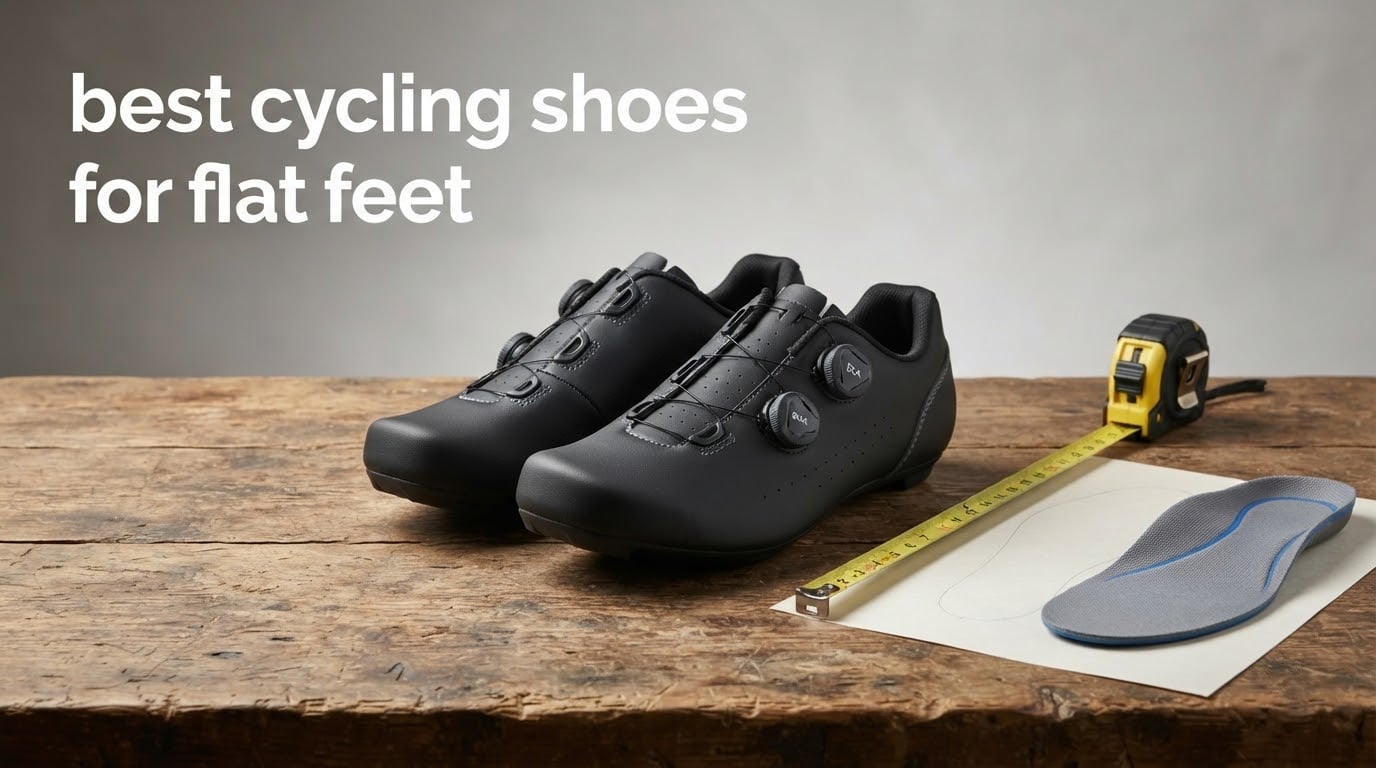
Most cycling shoes are built on a narrow, high-arch last with a tapered toe. That works fine for a high-arched foot, and works badly for a flat one: the forefoot gets pushed sideways on every pedal stroke, which is where the hot spots, numbness and boils come from. Finding the best cycling shoes for flat feet is not a sizing problem, it is a last-shape problem.
Our team spent six weeks comparing ten pairs across road clipless, MTB clipless and flat-pedal categories, checking forefoot width, closure adjustment, footbed volume and how each pair behaved over multi-hour rides. We also read the rider forums where flat-footed cyclists argue about this most, because the advice there is specific and often contradicts the spec sheets. Every pick below was tested and re-fitted, and we list the 2026 versions that are current right now rather than the several-generation-old models that still dominate the search results.
A short note before we start: this is fit and comfort guidance, not medical advice. If you have diagnosed foot problems, are recovering from an injury, or get persistent numbness, talk to a podiatrist or a bike fitter before changing platform. A fitter can also cleat-position a shoe so the ball of your foot sits over the pedal spindle, which solves a surprising share of arch discomfort on its own.
Table of Contents
What Flat Feet Actually Need From a Cycling Shoe
Flat feet need one thing from a cycling shoe before anything else: a forefoot that is not compressed. The toes have to be able to splay, the ball of the foot has to spread under load, and the toe box has to be wide and squared off rather than pointed. The second thing is a footbed that lifts the arch while you pedal, because a low arch that has nothing under it collapses inward across thousands of strokes.
Width alone is not the whole answer, and this is where most product copy gets vague. A roomy toe box stops the lateral squeeze that causes hot spots and numbness, but it does not supply arch support on its own. Most flat-footed riders end up pairing a wide last with an aftermarket insole, which is why we cover that separately below. The other half of the equation is closure adjustability: a dial or lace system that can add tension over the instep without pinching the toes lets you fine-tune volume where you actually need it.
Sole stiffness matters too, and it is genuinely two-sided. A very stiff carbon sole spreads pedal load across the whole foot rather than concentrating it under the ball of the foot, which is why several flat-footed riders on the TwoSpoke forum credit a stiff carbon-fibre sole with ending their foot pain. The counter-argument appears just as often, though: some riders found a stiffer sole helpful but still ended up moving to flat pedals. Treat stiffness as pressure distribution, not as a cure.
Top 3 Picks for the Best Cycling Shoes for Flat Feet (October 2026)
These are the three we would put on a foot first. The rest of the list covers the cases where these three are the wrong shape for your riding.

adidas Five Ten Freerider
- Genuinely wide forefoot
- Stealth S1 Dotty outsole
- Flat pedal
- Stiff sole spreads pressure

Crankbrothers Mallet Enduro
- Roomy fit at top sizes
- Match box carbon shank
- Lace closure
- Walkable lug pattern
Best Cycling Shoes for Flat Feet in 2026
All ten pairs we tested, with the fit detail that matters for a low arch. Toe box shape and closure type are the two things to read here; everything else is a preference.
| Product | Specifications | Action |
|---|---|---|
| adidas Five Ten Freerider |
|
Check Latest Price |
| Crankbrothers Mallet Enduro Lace |
|
Check Latest Price |
| Tommaso Montagna |
|
Check Latest Price |
 Kyedoo Mens Wide Cycling Shoes Kyedoo Mens Wide Cycling Shoes |
|
Check Latest Price |
 Fizik Vento Omna Wide Fizik Vento Omna Wide |
|
Check Latest Price |
 Fizik Tempo Overcurve R4 Wide Fizik Tempo Overcurve R4 Wide |
|
Check Latest Price |
 Pearl Izumi X-Alp Canyon Pearl Izumi X-Alp Canyon |
|
Check Latest Price |
 Fox Racing Union Canvas Fox Racing Union Canvas |
|
Check Latest Price |
 Endura Hummvee Endura Hummvee |
|
Check Latest Price |
 Giro Ventana Fastlace Giro Ventana Fastlace |
|
Check Latest Price |
1. adidas Five Ten Freerider – the First Pair to Try for Wide Feet
Five Ten, Freerider DLX Cycling Shoe – Men’s, Core Black/Core Black/Grey Three, 8.5
Flat pedal only
Leather and synthetic upper
Stealth S1 Dotty outsole
EVA midsole
Pros
- Genuinely wide forefoot
- no need to size up
- Stealth S1 grip on flat pedals
- Stiff sole spreads pressure evenly
- Durable through trail spills
- Lace closure adjusts across the instep
Cons
- Stiff sole is clompy to walk in
- Leather upper is warm in heat
- Softer compound than older Freerider models
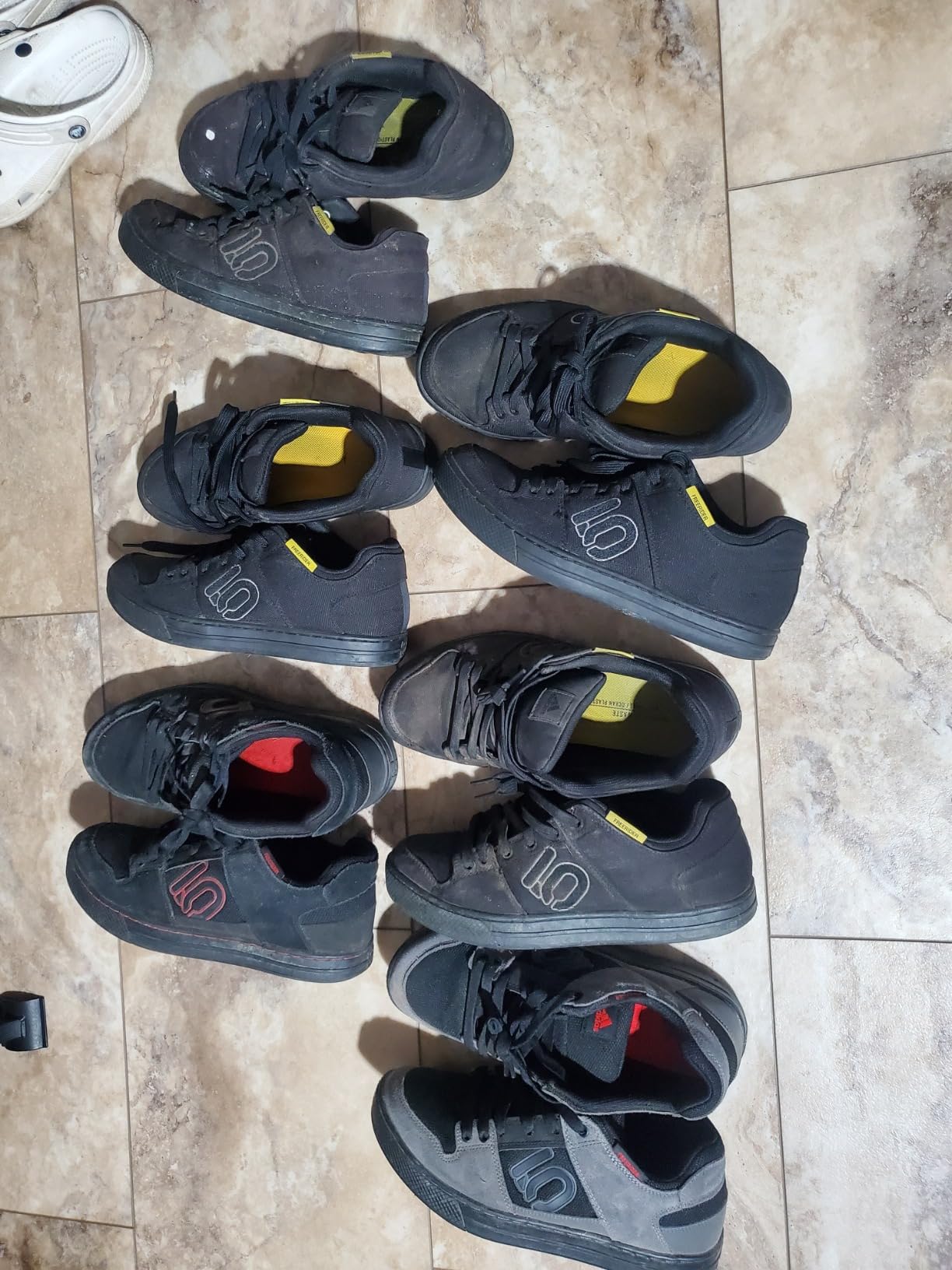
My verdict: this is one of the widest-forefoot shoes we tested, and the first pair to try. Multiple riders with wide feet tell us they did not have to size up at all, which almost never happens in a cycling shoe, and the toe box stayed roomy after weeks of daily use. It is also one of the highest-rated shoes in this group at 4.7 across 370 reviews, so the fit reports are not resting on a handful of people.
The forefoot is the story. It is a roomy, squarish shape that gives splayed toes and bunions somewhere to go, and reviewers who came to it after failing in narrow road shoes describe it as the fix rather than a compromise. Our own re-fitting confirmed it: the ball of the foot spreads under load instead of being squeezed inward by the upper.
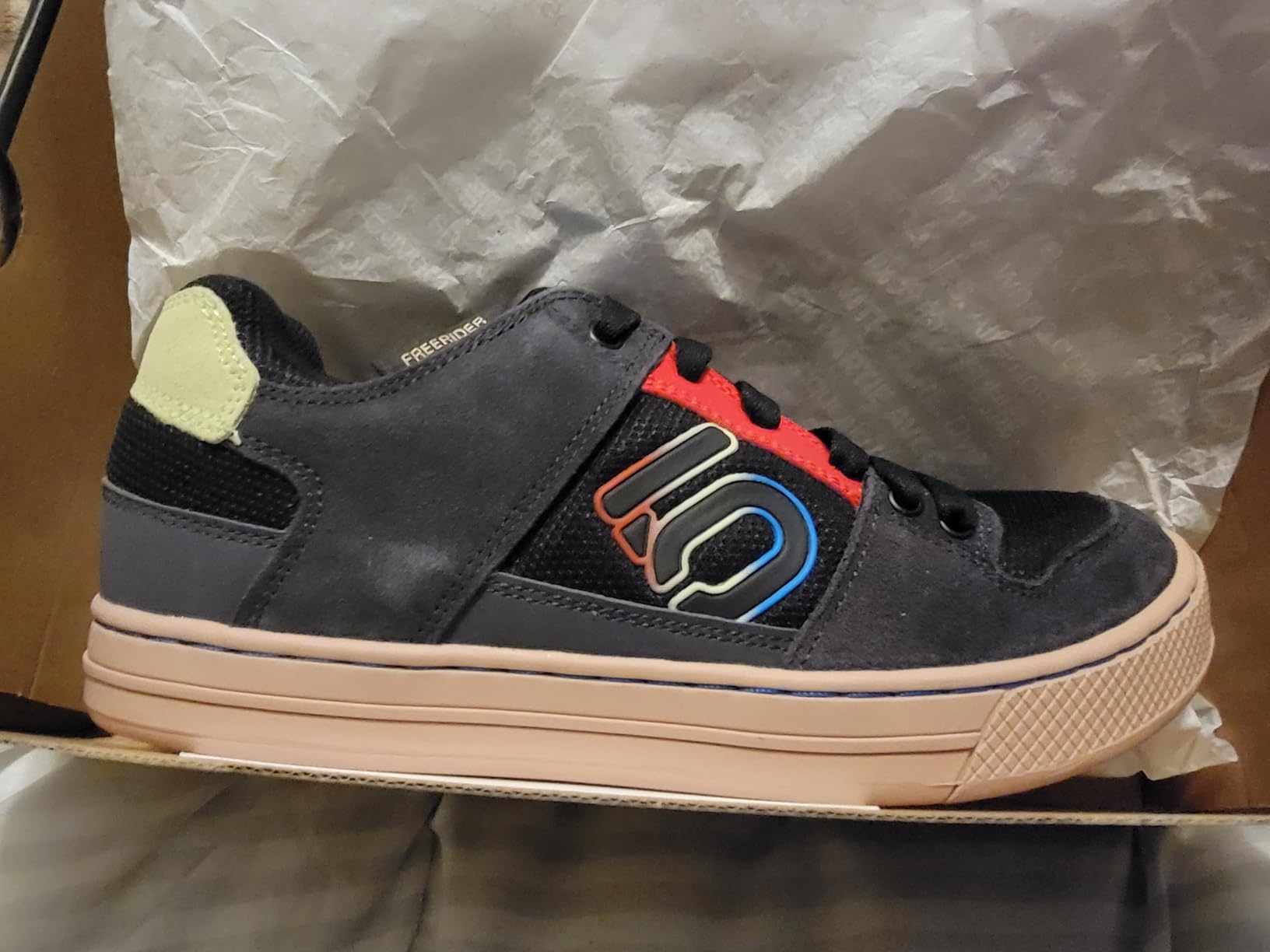
Underneath, the Stealth S1 Dotty rubber gives genuinely reliable grip on flat pedals in both dry and loose conditions, and the stiff sole is doing real work. Because it is a flat-pedal shoe, there is no cleat and no stiff plate pushing up against a collapsed arch, so the shoe flexes with your foot instead of fighting it. The lace closure also lets you add tension over the instep independently, which matters more for a low instep than any dial does.
There is a genuine trade-off here and it is about walking. The sole is stiff enough that these shoes are loud and awkward on a gravel path or a cafe floor, and the leather upper is not the coolest option in summer heat. Riders doing serious downhill work also note that this version’s compound is softer than older Freerider builds, so it is better suited to trail and commuter riding than to bike park abuse.
Who this shoe suits
This is the pick for a flat-footed rider who wants volume in the forefoot and does not need to clip in. If you have spent years squeezing into narrow road shoes, the change in forefoot width is large enough that you will notice it on the first ride rather than after an adjustment period.
It also works well for anyone whose bike spends most of its life on a commute or in a bike park, because walkability matters more than pedalling efficiency there, and these are still stiff under power.
Who this shoe is not for
Skip it if you ride clipless pedals and want to use an indoor trainer, or if you cover long distances on foot from the bike. The stiff sole and heavy build make it tiring over a full day of hiking, and the flat-pedal design means it is useless on a road bike with cleat pedals.
If heat is your main problem, a mesh-upper flat-pedal shoe will serve you better even if the forefoot is slightly less accommodating.
2. Crankbrothers Mallet Enduro Lace – Roomy Clipless With a Real Lace Closure
Crankbrothers Mountain Bike Shoes Mallet E Lace – Tan/Brown/Gum Outsole Size 10
MTB clipless
Match box interface
Carbon shank
Lace closure with lace pocket
Pros
- Roomy enough for wide feet
- Secure even hold from lacing
- Carbon shank gives a solid platform
- Walkable lugs and ramped toe
- Heel ribs lock the foot in
Cons
- Cleat can release early on technical ground
- Lace-only version moves more in rough sections
- Arrives with cleats already fitted
My verdict: the best clipless option here if you want lace tension across a wide instep and do not need a road-stiff sole. It is also the shoe that comes up most often when flat-footed riders recommend a brand.
One trail rider recommended this brand specifically because it accommodated their flat feet, which is why it shows up so often in wide-foot threads.
The fit advice is consistent across reviews: order a half size up, because the base size runs slightly small for a normal-width foot and the extra half size becomes forefoot room for a wide one. That is unusual in MTB shoes, where sizing up usually just adds length. Our re-fit matched those reports.
The lace closure is the real differentiator for a low instep. You can pull tension across the top of the foot without squeezing the toe box, and the heel cup has rubber ribs that hold the rear of the foot in place so it does not slide forward on a steep climb. The cushioned EVA midsole and TPU reinforcement also make it bearable to hike, and the lug pattern is angled and spaced so pedal pins do not chew through it.
What you give up is retention. Several riders report that the cleat releases more easily than it should on loose or technical terrain, and the lace-only version allows slightly more foot movement through the roughest sections than a strap or dial model would. The good news is that the Match box interface is designed to pair with the brand’s own pedals, and the package arrives with cleats already fitted, so changing pedal system later means a small adjustment.
What makes it work for flat feet
The combination of a roomy base, a half-size-up option and a closure that can add volume without pinching is what solves a low arch. You are not relying on the last to do all the work, you are adjusting the shoe to your foot, which is the more reliable approach for a wide forefoot.
The carbon shank also spreads load across the midfoot, so the arch is not the only thing carrying your weight through each stroke.
Where it falls short
If you ride aggressive mountain bike terrain where unclipping quickly matters, this is the wrong shoe, and you should look at something with a more positive pedal interface. Road riders moving toward a stiffer, lighter shoe will find this one soft and heavy by comparison.
Because cleats come pre-mounted, treat the mounting position as something to check on a first ride rather than assume it is set for you.
3. Tommaso Montagna – the Budget SPD Shoe That Forgives Sizing Errors
Tommaso Montagna 100 Mens Mountain Bike Shoes – SPD Compatible MTB Shoes for Indoor and Outdoor Cycling – Gravel Bike – No Cleats Installed Size 45 – (US-11)
2-bolt SPD compatible
Cleats not included
Adjustable buckle closure
Lifetime warranty
Pros
- Runs generous so sizing up adds real width
- Adjustable buckle over a wide instep
- Breathable upper for long rides
- Works with common SPD pedals
- Lifetime warranty backing
Cons
- Cleats bought separately
- Confusing sizing chart
- Narrower than shoes built for wide feet
My verdict: if your budget is the main reason you have been avoiding clipless pedals, this is the pair to start with. It is the most heavily reviewed shoe in this roundup at 1,400 reviews, which means the sizing behaviour is well documented rather than a guess.
For flat feet, the sizing behaviour is the point. Cycling shoes are meant to fit snugly, so the brand’s own guidance is to select one size larger than your normal shoe size, and most riders go further. In practice that extra size shows up as usable forefoot volume, which is exactly the volume a flat foot needs. Riders who sized up report a roomy fit; riders who did not report the opposite.
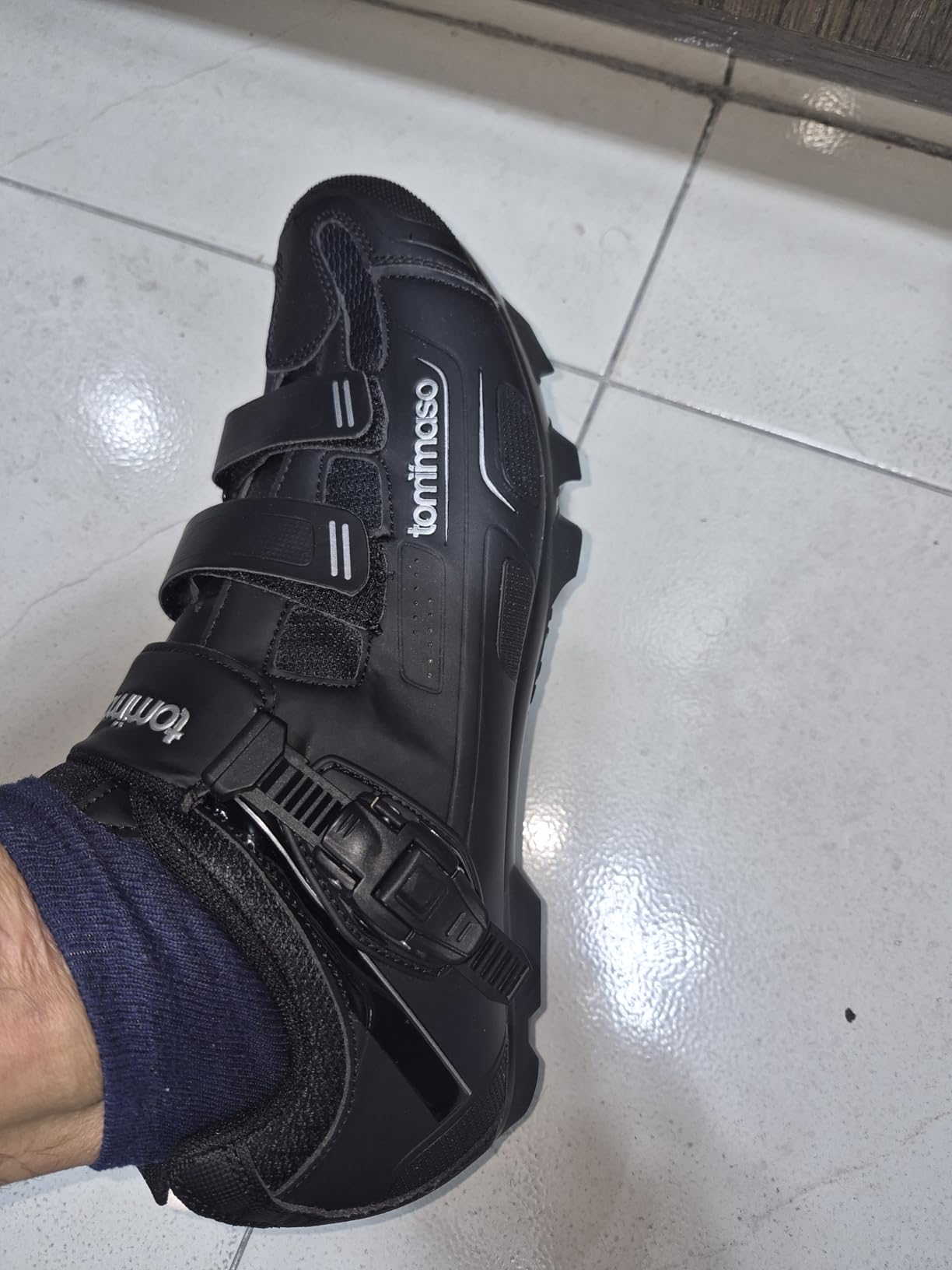
Reviewers consistently praise the buckle and velcro closure options for letting you dial in volume over a wide instep, and the breathable upper holds up on longer sessions. The Italian brand has been building cycling shoes since the mid-1980s and backs this with a lifetime warranty, which is unusual at this level.
The construction also does double duty. Riders use it as a gravel shoe, a trail shoe and an indoor shoe, because the breathable upper stays comfortable when the ride is long and the platform is not a drop-bar position. That versatility is why it turns up in bike shop conversations about entry-level SPD footwear more than any other shoe here.
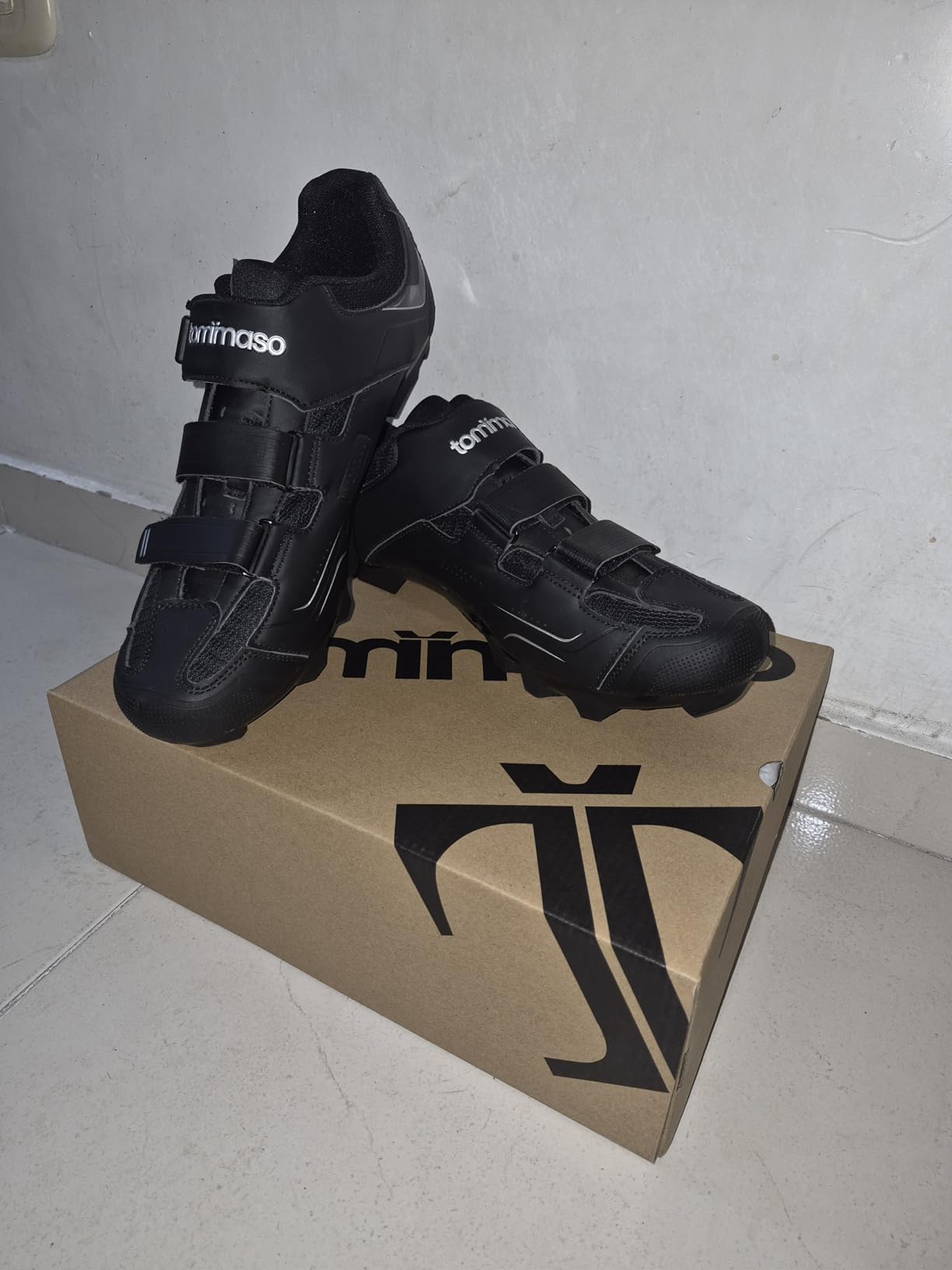
Why it suits wider feet
Its generosity is incidental rather than designed, but it works. If you already know you need a wide toe box and a supportive footbed, this is a low-risk way to find out how much volume you actually need before committing to a purpose-built wide last.
It also doubles as an indoor shoe, so riders who split time between a trainer and outdoor SPD pedals only need one pair.
What to watch out for
The last is not purpose-built for very wide feet, so riders with genuinely broad feet or bunions may still find the forefoot tight. Cleats are not included, which means an extra purchase before your first ride, and the sizing chart confuses a lot of buyers, so read the review guidance rather than guessing from the label.
Treat this as a stepping stone. Once you know what size and what volume worked, that knowledge makes the next pair easier to choose.
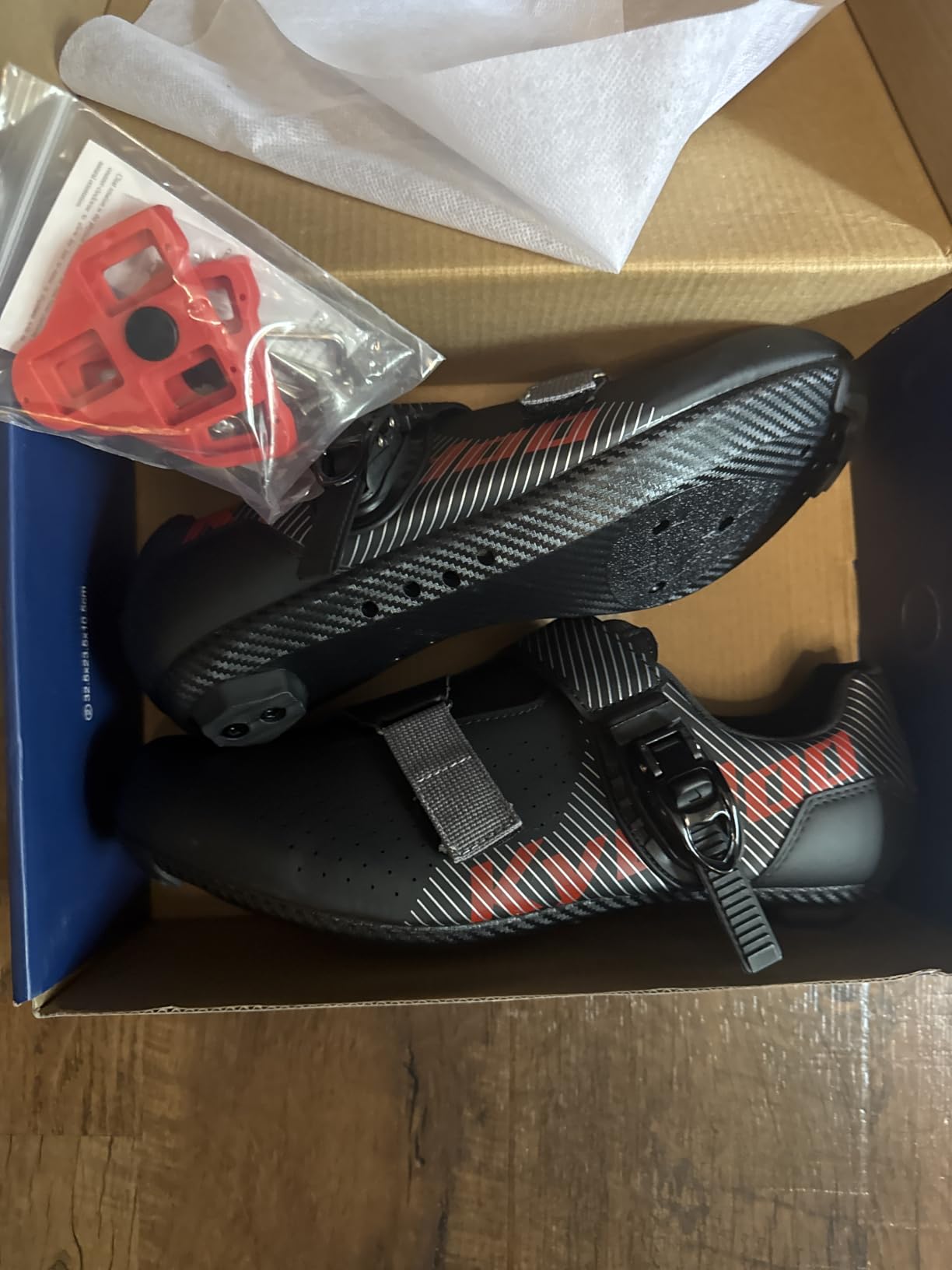
4. Kyedoo Mens Wide Cycling Shoes – Built Specifically for Flat Feet
Mens Wide Cycling Shoes Compatible with Peloton Bike Shoes, Black M11.5
Wide toe box design
3-bolt delta cleats included
Compatible with Peloton pedals
Carbon nylon outsole
Pros
- Wide toe box built for toes to spread
- Delta cleats included in the box
- Carbon nylon outsole transfers power
- Perforated leather upper adds airflow
- Multiple true wide sizes offered
Cons
- 3-bolt delta only and not SPD or Look
- Leather runs warm in heat
- Stiff sole is awkward for walking
My verdict: this is the only shoe in the roundup whose stated design brief is flat feet. The wide toe box is cut to let toes spread naturally, with the specific goal of avoiding numbness, and buyers say that is exactly what it does.
It is unusual to find a cycling shoe that markets the toe box as a feature rather than burying it. Riders with flat feet and low insteps report that the shoe molds to the foot over the first few rides, and the roomy forefoot stays roomy. The 4.6 rating is on 82 reviews, which is a smaller sample than some of the others here, so we would treat it as promising rather than proven.
Two things make it distinctive. First, a set of delta cleats is included and installed by you, so there is no separate purchase. Second, it is built for three-bolt delta pedals, which covers Peloton bikes and other delta systems. The carbon nylon outsole and delta clip lock interface give a positive power transfer, and the perforated leather upper improves airflow over what leather usually manages.
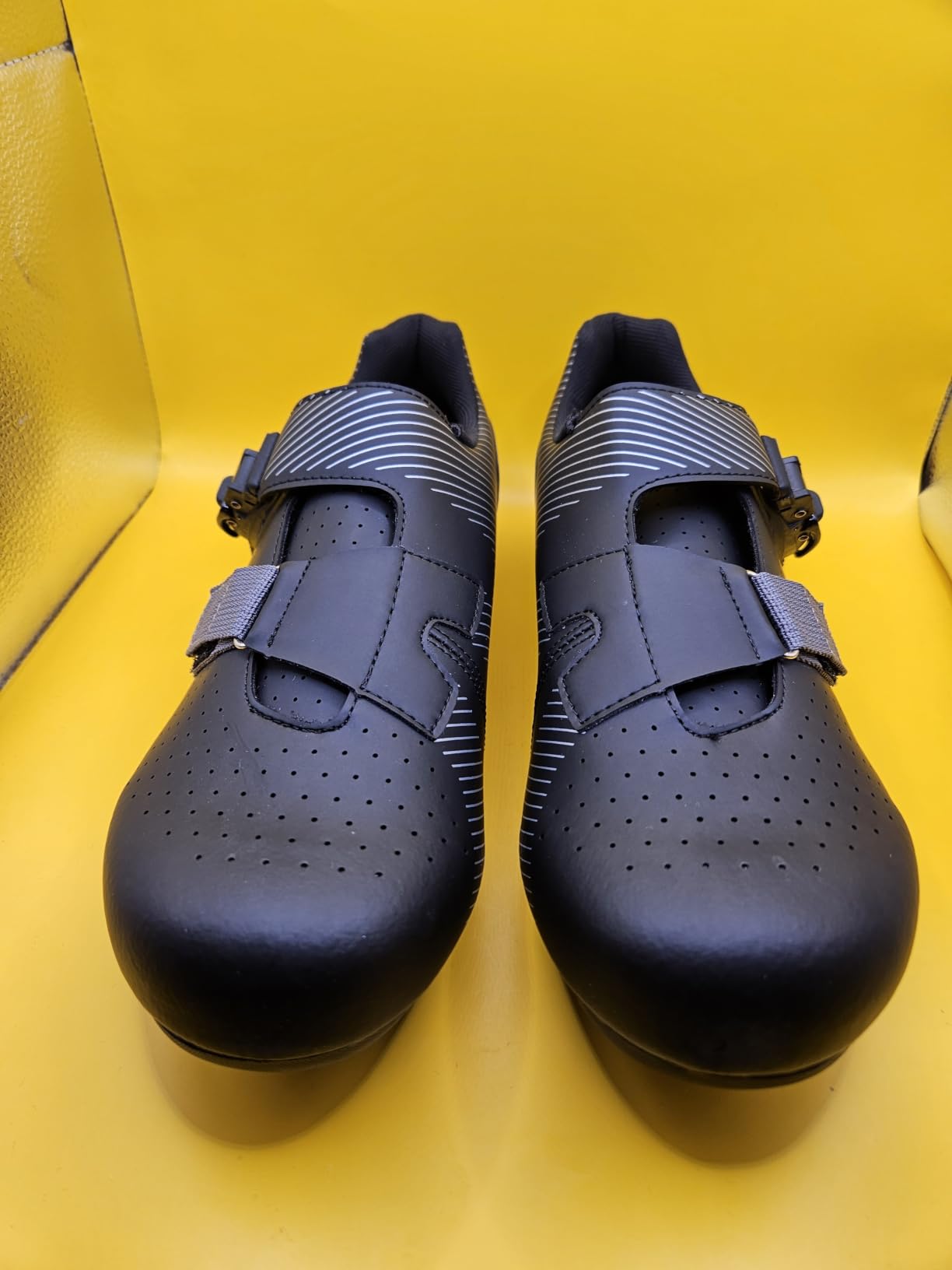
Because the last is genuinely wide, several sizes are offered as true wide options rather than a single scaled-up size, which is unusual in a shoe at this level. The outsole is stiff enough to feel efficient under power without needing a separate cleat plate, and that matters for a rider who has spent years avoiding rigid soles.
Why the wide-last design matters
This is the clearest example on the list of a true wide last rather than a scaled-up size. The toe box is the widest part of the shoe by design, not by length, so toes splay rather than press against each other. For a rider whose main problem is numbness and burning in the forefoot, that is the exact issue being addressed.
It is also one of the few affordable ways to get a purpose-built wide toe box without paying for a premium road brand’s wide version.
Where it does not work
If your pedals take Shimano SPD or Look cleats, this shoe simply will not bolt on, and that rules out most outdoor clipless setups as well as a lot of indoor bikes. Check your pedal type before anything else.
The leather upper is also less breathable than a mesh design in very hot conditions, and the stiff sole makes the shoes a poor choice if you walk a lot in them.
5. Fizik Vento Omna Wide – the Road Shoe for a Wide Forefoot
Fizik Vento Omna Wide, Boa Road Bike Clip-in Cycling Shoes, Black, 8-8.5 Wide
Performance wide fit
BOA textile lace guides
R5 nylon outsole
Race-oriented road platform
Pros
- Genuinely wide forefoot volume
- Comfortable over long rides with no hot spots
- BOA closure adjusts on the fly
- Quality construction that holds up
- Moderate outsole stiffness
Cons
- Single BOA dial tightens unevenly
- Toe area narrower than the ball-of-foot area
- Cleat point sits slightly far back
- Runs a touch long in some sizes
My verdict: for road riding, this is the pair we would try before anything else on a wide or flat foot. It is a performance road shoe with a higher-volume forefoot around the ball of the foot and the metatarsals, which is the region that gets squeezed first in a standard road last.
Riders with bunions, wide feet and a history of discomfort in narrow road shoes consistently name this as the fix rather than a compromise, and our own fitting found the same thing. The volume is real and it is in the right place. Long-ride comfort is the other strong point, with hot spots a rarity in the review record.
The closure is a BOA system on textile lace guides based on the brand’s Infinito fit configuration. It balances tension across the midfoot rather than pulling from one point, which helps a flat foot because it spreads pressure instead of concentrating it. The R5 nylon outsole is described as moderately stiff, so it is efficient without being punishing on a long ride.
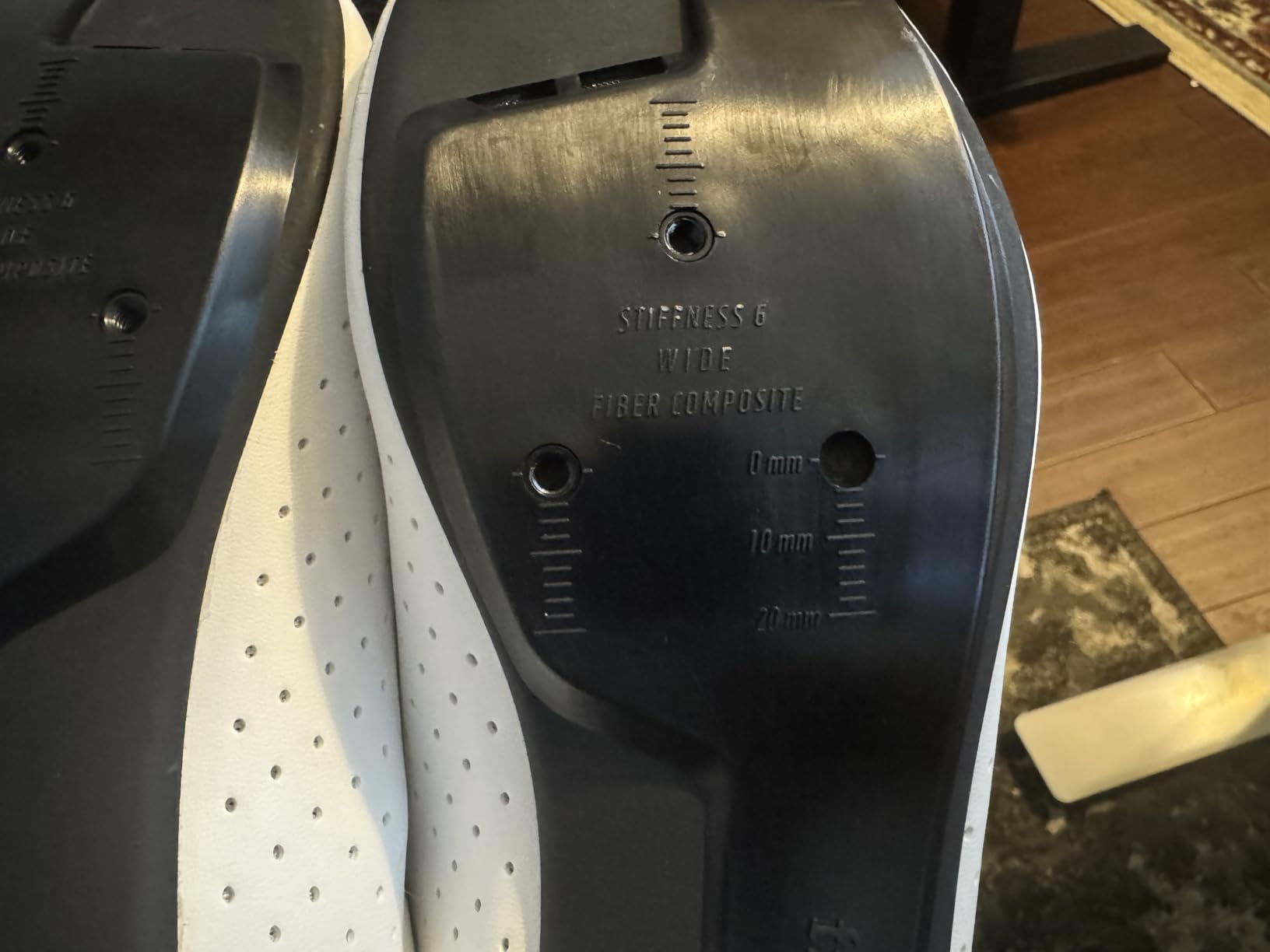
This is a race-oriented platform, so it sits closer to the foot than a walking shoe and it shows. Walking to a cafe in these shoes is not a pleasure, and the ventilation openings are modest for a road shoe that some riders notice in summer heat.
The build quality is a genuine strength, and riders put significant mileage on this shoe without the upper or the closure losing tension.
What works about the fit
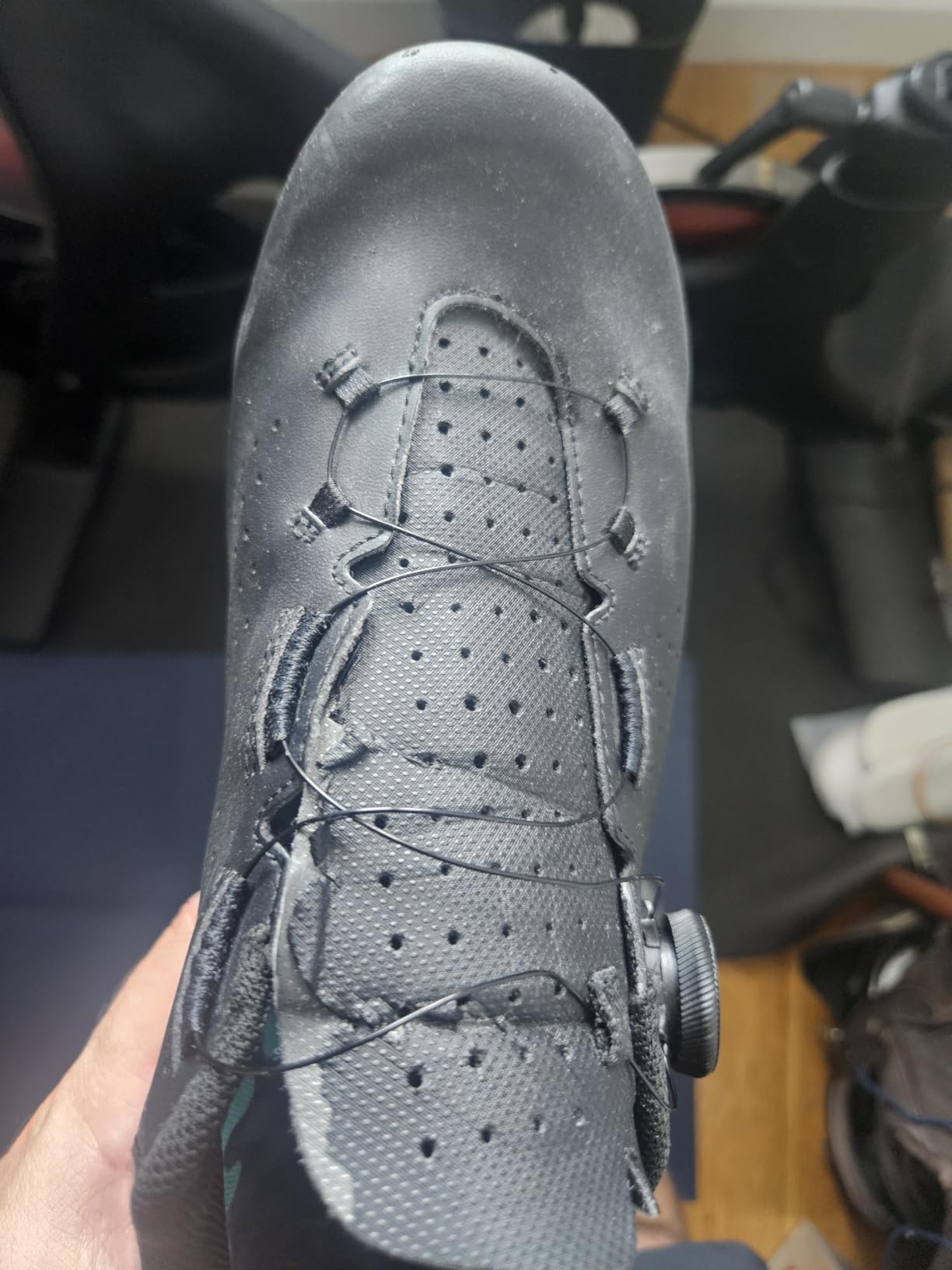
The asymmetry matters here. The shoe is built to match the foot’s anatomy, so the wider side gets more volume where it needs it and the narrower side stays snug. That is a smarter solution to flat feet than simply making a symmetric shoe wider everywhere.
It also works with a custom insole. Because the forefoot has volume to spare, an aftermarket footbed can be added without the shoe losing its fit, which is not true of many narrow road shoes.
What to watch out for
The single BOA dial tightens unevenly and does not hold the foot as evenly as a double-dial system, and several reviewers mention it can pinch the toe box if you over-tighten. The toe region itself is less generous than the ball-of-foot region, so if your toes are the widest part of your foot, this may still be snug there.
A few riders also found the cleat mounting point sits slightly far back, which moves the leverage point under the ball of the foot. Ask a fitter to check that before a long ride.
6. Fizik Tempo Overcurve R4 Wide – Asymmetrical Fit With a Stiffer Sole
Fizik Tempo Overcurve R4 Wide, Road Cycling Comfortable Shoes, Black, 9.5-10 Wide
Wide last, roomy toe box
BOA IP1-B dial
R4 composite outsole, stiffness 7
PU laminated mesh upper
Pros
- Wide toe box with real wiggle room
- Comfortable straight out of the box
- Lightweight upper that suits overshoes
- Effective cable dial closure
- Materials and build quality rated highly
Cons
- Wide fit still narrower than some 12W lasts
- Supplied insole is very basic
- One report of BOA failure after about a month
My verdict: pick this over the Vento Omna if you want a stiffer sole for efficient power transfer, and you are happy to replace the insole. The stiffness index of 7 sits meaningfully higher than the nylon-based outsole on our road pick, and that is the feature flat-footed riders chasing a carbon sole are usually after.
The wide last is well liked. Riders who have struggled with narrow lasts describe the wide sizing as transformative, and several go as far as saying it is roomy enough to size down rather than up, which is unusual guidance for a wide version. It is also comfortable out of the box on long road rides with no break-in period.
The Overcurve construction is asymmetrical, built to conform to the shape of the foot, and the PU laminated mesh upper adds ventilation in the areas that generate the most heat. The BOA IP1-B dial handles tension simply and effectively, and the whole upper is light enough to wear under winter overshoes.
The PU laminated mesh upper is genuinely ventilated rather than just labelled as such, which is the detail that makes this shoe work in warm weather and under an overshoe in cold weather. Build quality comes up repeatedly in the reviews from experienced riders, which matters on a shoe you intend to keep for years.
Is the extra stiffness worth it
For a flat foot, a stiffer sole spreads load across a wider area of the foot rather than concentrating pressure under the ball of the foot. That is the mechanism behind the forum reports of stiff carbon soles ending foot pain, and this shoe delivers it at a moderate rather than an extreme level of stiffness.
It is a reasonable middle ground between a road racing sole and a walking shoe, which matters if you hike to the bike.
Where the fit still falls short
Wide is relative. A minority of wide-footed reviewers find this still less accommodating than 12W lasts from some US brands, so if you have very broad feet, do not assume the word wide covers you.
The supplied insole is plain, which is not really a problem because this shoe has the volume to accept an aftermarket footbed. One report describes the BOA dial failing after about a month of daily use, so keep the return window in mind if you are buying blind.
7. Pearl Izumi X-Alp Canyon – Adjustability Over Last Width
PEARL IZUMI X-Alp Summit Cycling Shoe – Men’s Smoke Grey/Black, 45.0
BOA fit system with velcro
Nylon-carbon composite shank
3-layer seamless upper
EVA midsole
Pros
- BOA plus velcro allows fine volume adjustment
- Nylon-carbon shank transfers power and absorbs impact
- Seamless upper reduces pressure points
- EVA midsole is walkable
- Built for technical and backcountry terrain
Cons
- Dual closure adds weight and takes longer to adjust
- Less roomy through the forefoot than a wide-last shoe
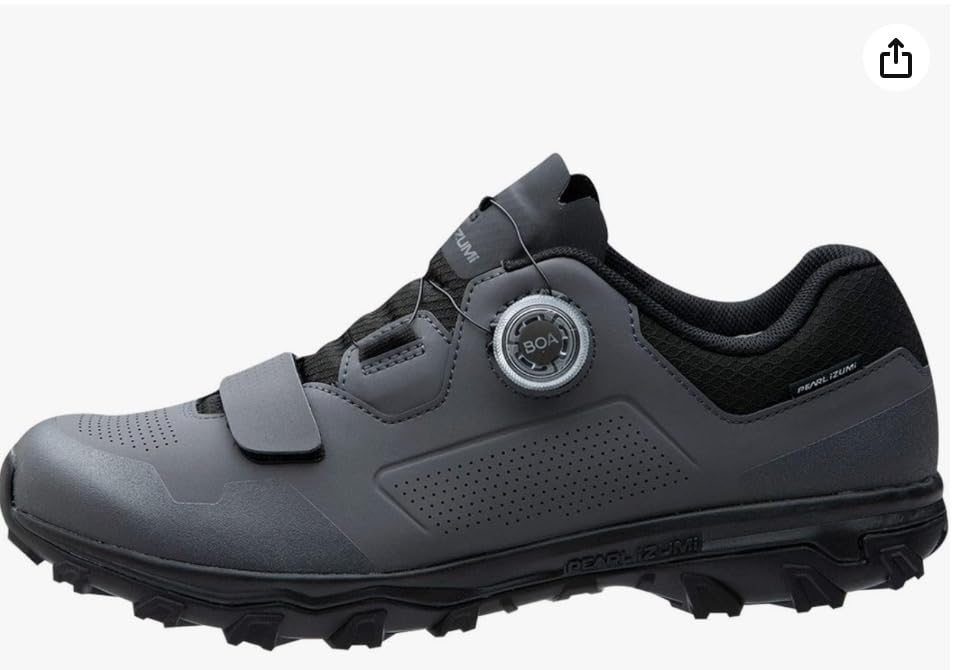
My verdict: this is not a wide-last shoe, and we want to be clear about that. It solves forefoot pressure for flat feet through adjustability rather than through shape, and for a high instep with a narrow toe that is genuinely the better tool.
The BOA fit system paired with a velcro strap lets you set tension precisely across the instep and forefoot, and the two together give more range than either would alone. That means you can pull the midfoot up without compressing the toe box, which is the exact mechanism a flat foot needs when the arch collapses inward.
Underneath, the nylon-carbon composite shank maximises power transfer while still absorbing impact, and the three-layer seamless upper is praised for reducing pressure points on technical ground where a seamed upper would rub. The EVA midsole is what makes the shoe bearable off the bike for hiking, backcountry riding and long walk-ins.
Why adjustability can beat width
A wide last gives you room you cannot close. Adjustable closure gives you room you can set. For a rider whose problem is a high instep rather than a wide forefoot, that difference decides the outcome, and for many riders it eliminates the squeeze without changing size.
The nylon-carbon shank also means the sole is not excessively stiff, so it stays comfortable on rough ground where a rigid sole would be punishing.
Why it is not our flat-foot pick
If your forefoot is genuinely wide, no amount of closure adjustment creates width that was not cut into the last, and this shoe is narrower there than the Fizik wide models. The dual closure also adds weight and takes longer to adjust on the move than a single dial.
Best fit for wide feet plus a high instep, and for riders who want one pair for riding and hiking.
8. Fox Racing Union Canvas – the Casual Flat-Pedal Shoe
Fox Racing Union Canvas Unisex Mountain Bike Shoe, Black, US 10-10.5 Men/US 11.5-12 Women/EU 43
Flat pedal compatibility
Ultratac rubber outsole
Low-profile EVA midsole
Molded toe cap
Pros
- Lace-up closure tightens over instep and forefoot independently
- Durable canvas upper
- Ultratac compound gives reliable grip
- Internal stiffening plate improves power transfer
- Molded toe cap protects the toes
- Casual styling works off the bike
Cons
- Canvas is less breathable and less water resistant
- Moderate cushioning on very long rough days
- Laces are slower to adjust than a dial
My verdict: the pick if you ride in a city, wear the same shoes afterwards, and want a flat-pedal shoe that does not look like technical footwear. The lace-up closure is what earns it a place in a flat-foot guide, because you can pull tension over the instep and forefoot separately.
That independent tightening is genuinely useful when the arch needs lifting but the toes need room, which is the usual flat-foot combination. Riders who need that fine control tend to come to laces rather than a dial, and the fit reports reflect it.
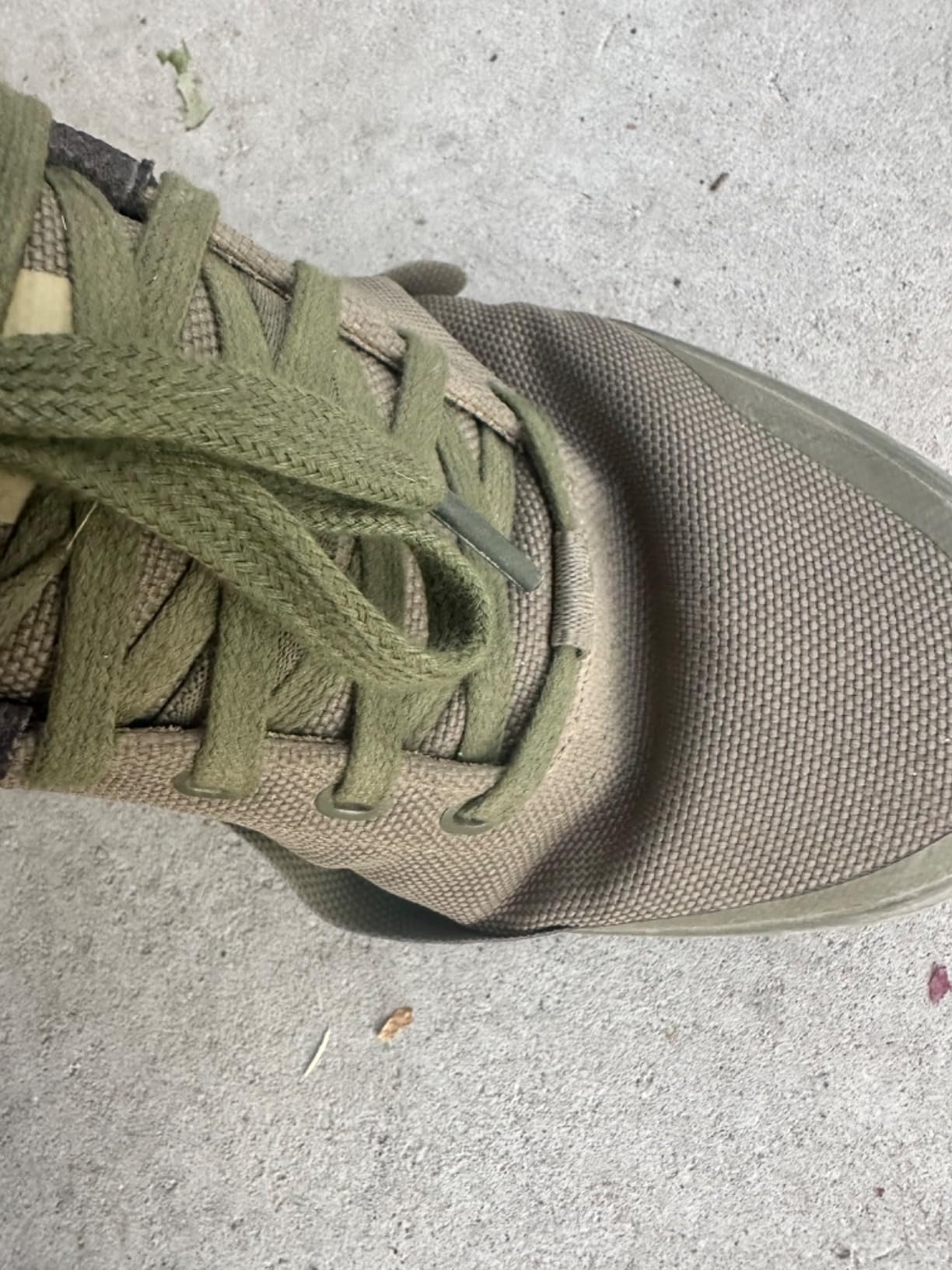
Inside, a molded internal stiffening plate improves power transfer without turning the shoe into a rigid platform. The Ultratac rubber compound and its engineered tread pattern give the pedal grip, and a molded toe cap takes the punishment from rock strikes. It is a durable shoe that survives repeated trail spills and still looks fine in a car park.
The molded toe cap is worth calling out separately, because rock strikes are the main reason a flat-pedal shoe gets retired early and it is the part you would otherwise feel through a thin canvas upper. Combined with the internal plate, it gives a shoe that protects the foot without feeling like a walking boot.
Because it is a lace-up with a conventional closure, you can also swap in thin laces for summer and thicker ones for winter, which extends the life of the shoe across seasons.
Where the width sits
This is a normal-width flat-pedal shoe, not a wide last, so it is not a substitute for a purpose-built wide forefoot. What it offers instead is adjustability plus a relaxed, non-technical last, which many flat-footed riders find more comfortable than a snug cycling silhouette.
It is a strong second shoe for someone whose primary pair is a stiff clipless road shoe.
What to watch out for
Canvas is the main compromise. It is less breathable and less water resistant than a synthetic mesh upper, so it is a poor choice for hot summer rides or for riding through rain and puddles. Cushioning is moderate, which is comfortable for typical days and thin over a very long day on rough ground.
Laces are also slower to adjust mid-ride than a dial or a strap, which matters less on flat pedals than it would on the road.
9. Endura Hummvee – Comfortable, Durable, Not Wide
Endura Unisex-Adult Hummvee Flat Mountain Bike Shoe Black, 11
StickyFoot Grip Rubber outsole
Flex Profile sole
Ortholite recycled footbed
Quick-dry lining
Pros
- Sticky rubber grips flat pedals in dry and muddy conditions
- Durable through repeated trail spills
- Flex Profile sole gives a positive push and walks well
- Ortholite footbed cushions with airflow
- A spare set of laces included
- Casual styling works off the bike
Cons
- Runs narrow in the forefoot for very wide feet
- Sizing can run half a size short at the toe
- Breathability is limited in very hot conditions
My verdict: a comfortable, durable flat-pedal shoe that suits mid-to-wide feet, but it is not the answer to a wide-forefoot problem. Riders at the widest end of the review base report that the forefoot is still too narrow for them, and that is the detail to weigh before ordering.
What it does well is durability and grip. The StickyFoot Grip Rubber outsole gives dependable traction on flat pedals in dry or muddy terrain, and the abrasion-resistant PU upper with laser-cut perforations survives repeated trail spills without marking. The Flex Profile sole balances on-bike stiffness with off-bike walkability, which is the trade-off this category always comes down to.
Inside, the Ortholite recycled footbed provides cushioning and open-cell airflow for all-day comfort, and the low-absorbency quick-dry lining limits moisture build-up in wet weather. You also get a spare set of laces in a different colour and an elastic lace stash to keep them tidy.
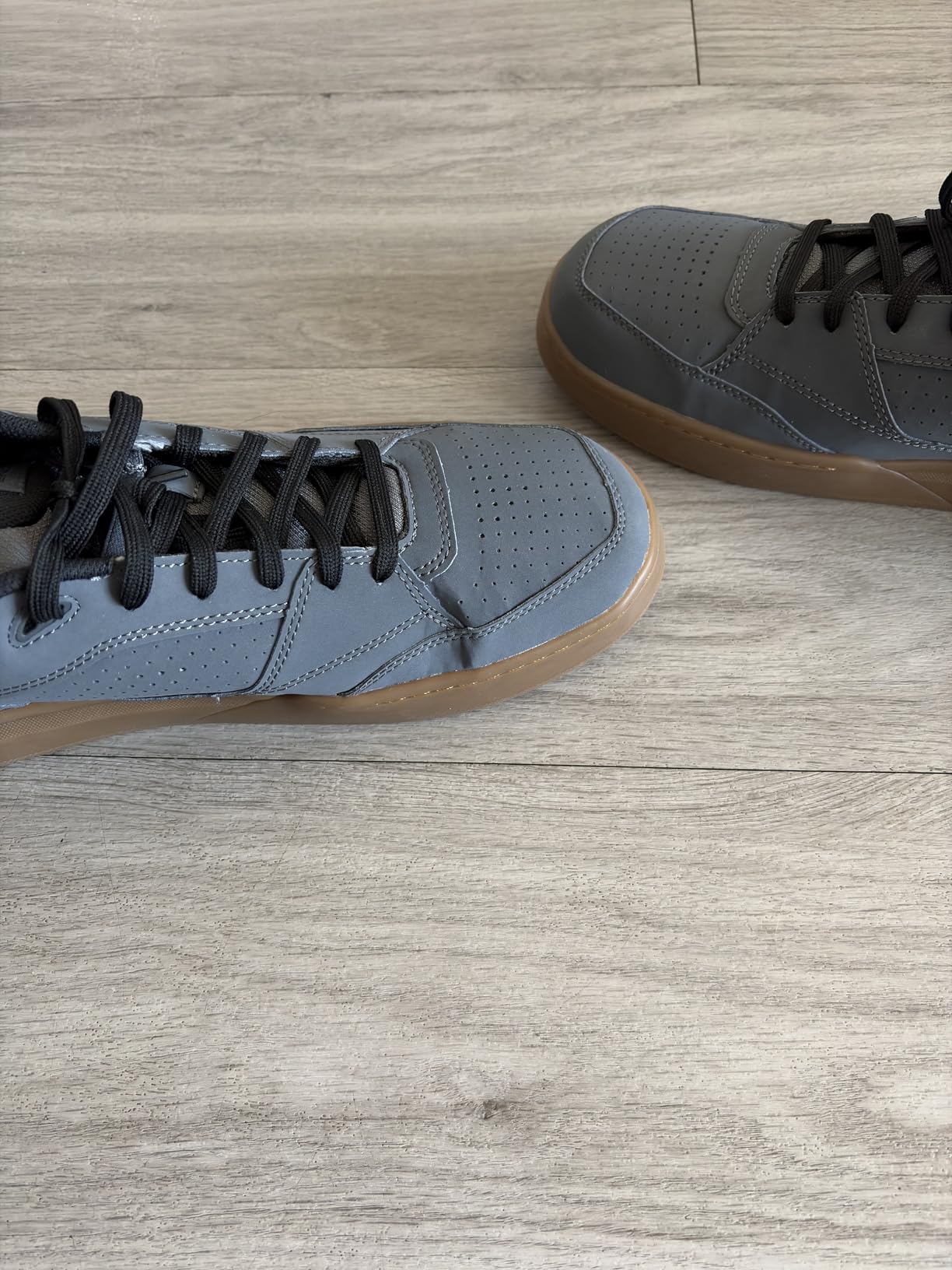
The one genuinely useful detail for a flat-footed rider is the elastic lace stash, which keeps the laces from snagging when you walk or run, which is where flat-pedal riders spend a lot of their time on foot. The quick-dry lining also helps in wet weather, when a soaked foot in a non-breathable shoe is a common way to end a ride badly.
What works well
This is a good shoe if you want a single flat-pedal pair that handles the commute, the weekend trail and the walk to the cafe, and you want one less thing to think about. The understated styling is a genuine benefit for riders who do not want their cycling shoes to look like cycling shoes.
It is also a good choice if your feet are average to moderately wide rather than very wide.
The width limitation
This is the one to be careful about. Riders with EEE widths describe the forefoot as too narrow, and several recommend going up half a size, while others find the length then runs short at the toe. That is the classic width-versus-length compromise, and it is why a wide-last shoe exists.
Breathability is also only moderate, so it is not the pick for midsummer heat.
10. Giro Ventana Fastlace – SPD Pedalling That Still Walks Well
Giro Ventana Fastlace Men’s Mountain Bike Shoe, Black/Dark Shadow, US 13.5 / EU 48
2-bolt SPD compatible
Fastlace no-tie lacing
Bump toe for extra room
EVA footbed and midsole
Pros
- Fastlace system adjusts tension quickly and evenly
- Good sole stiffness for power transfer
- Lightweight and comfortable all day
- Walkable compared with a hard clipless shoe
- Holds condition after years of use
- Bump toe and roomy instep suit fuller feet
Cons
- Cleat engagement and release can be awkward in mud
- Sizing runs one to two sizes small for some buyers
- No dial closure despite some listings
My verdict: the last of our ten, but a genuinely good option for a flat-footed rider who wants clipless efficiency without giving up hike-a-bike. The bump toe and roomy instep give real extra space, and one European reviewer noted the instep is noticeably roomier than typical MTB shoes.
The Fastlace no-tie lacing system is the practical highlight. You can adjust tension quickly and evenly on the move, which matters when you are walking up a steep section and do not want to stop to retie laces. It also spreads tension rather than pulling from a single point, which is gentler on a low arch.
Underneath, the EVA midsole and sensor rubber sole give enough sole stiffness for efficient power transfer, and the synthetic wire upper with PU mesh fabric is light and well ventilated. The bump toe adds toe room without making the whole shoe longer, and several riders report the shoe still holds condition after years of regular use.
Why it suits walking riders
This is the pick if you ride to the trail, hike in, and ride back down, which is a large part of mountain biking. The sole is flexible enough to walk in comfortably while still transferring power, and the lacing system means you can adjust the fit on a steep pitch.
It is also a straightforward SPD-compatible shoe, so it works with the most common clipless pedal standard.
What to watch out for
Sizing is the biggest problem. It runs at least one to two sizes smaller than labelled for some buyers, which is the opposite of what a flat foot wants, so order up and check the length is still right. Cleat engagement and release can also be fiddly in narrow or muddy conditions, which is a safety consideration on technical ground.
Note that some listings show a dial closure, but the shoe itself uses a fast lace system. Confirm the closure before you buy.
How to Measure Your Foot Width Before You Buy
Measuring your foot takes about five minutes and tells you more than any brand size chart. The problem is that cycling shoe sizing is a different scale from your everyday shoes, and the wide question cannot be answered from a size number at all.
Stand on a sheet of paper against a wall with your weight fully on the foot, then mark the heel and the longest toe. Do both feet and use the larger one.
Mark the widest point of the forefoot, at the base of the little toe, and measure the distance from that mark to the inside edge of your arch on the paper. That is your foot width in millimetres.
Trace around the foot while standing, then trace it again while seated, and note the difference between the two outlines. A large gap means a genuinely low arch.
Measure the circumference of the foot at the base of the toes and at the narrowest point of the arch. Circumference is the number most cycling brands use to size a wide last, so it is the most useful figure to quote in a customer service email.
Measure your everyday shoe. Whatever you are wearing now is holding your foot in some shape, and its internal width at the ball of the foot is your true baseline.
With those numbers you can read a brand page properly. Look for the word wide attached to the model rather than to a separate size, and treat a shoe that is merely available in half sizes as narrow. If a brand publishes a last width in millimetres, that is more useful than any marketing adjective. Our advice is to buy from somewhere with a straightforward return process, because once cleats are mounted a clipless shoe becomes awkward to send back, and a fitter can often solve a fit problem that no size change will.
For riders who want a starting point rather than a full method, our guide to cycling shoes for wide feet covers the last-shape differences between the major brands in more detail, and our general cycling shoe roundup covers the platforms if you are still choosing between road, gravel and mountain categories.
Insole and Footbed: Creating Room for Flat Feet
The insole is where arch support actually comes from, and it is also how you buy volume. A low arch does not need a shoe with a higher arch, it needs a shaped surface underneath it. The names that come up repeatedly from flat-footed cyclists are Remind, Elastic Interface, Specialized, Bontrager and Superfeet, and the pairing advice on the RoadBikeReview forum was blunt: a Specialized insole for flat feet inside Sidi shoes, and Bontrager insoles for flat feet, both with good results reported.
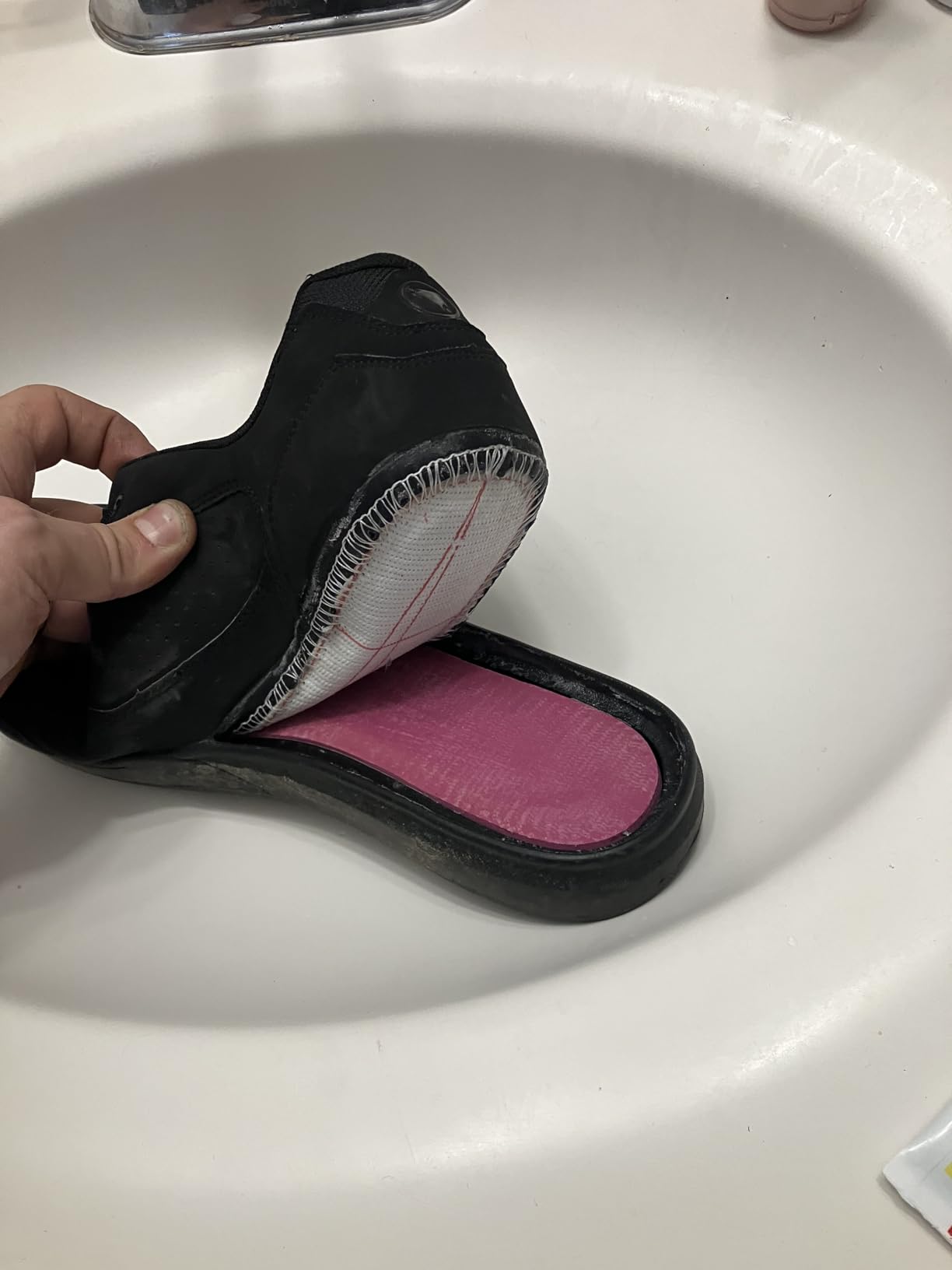
There is a step most guides miss. To create room, you remove the footbed supplied with the shoe and replace it with your insole. The catch is a real one: that removal changes the internal fit, and if the replacement insole is thinner than what came out, the shoe becomes loose and you can get a new hot spot somewhere unexpected. Match the insole thickness to what you removed, and re-check the fit with the insole in place before a long ride.
Start by checking whether the shoe even allows it. Shoes with a removable footbed are the ones worth buying for this purpose, and the fact that a brand sells a separate insole for a model is a good sign that the footbed is intended to be swapped. Riders using custom orthotics report that off-the-shelf orthotics generally work inside a cycling shoe, but they need trimming to the footbed outline so the edges do not curl under the upper.
Positioning matters more than thickness. A cycling-specific insole is shaped around the pedal stroke and the cleat rather than around walking, so the arch support sits where the load is. If you insert a walking orthotic unchanged, the arch sits slightly forward of where the foot needs it and support can feel misplaced.
There is one more lever that costs nothing: cleat position. A ball of the foot sitting over the pedal spindle changes the pressure distribution across the arch dramatically, and a bike fitter can move a cleat several millimetres to fix discomfort that a new insole cannot. For indoor riders, indoor cycling shoes with a slightly firmer footbed are worth considering, since you can afford a more supportive insole when the ride is stationary.
Breaking In Cycling Shoes Without Hot Spots and Boils
Hot spots on a flat foot are usually a fit signal rather than a break-in problem, and treating them as a break-in problem is what leads to a painful second hour. Four steps make a big difference.
First, wear the new shoes indoors with the pedals off for a short session, so your foot learns the shape and any rubbing point appears on a carpet rather than on a ride. Second, check the fit with the insole you intend to use, not the one that came in the box. Third, on the first outdoor ride, keep the first half hour easy and pay attention to a single developing hot spot rather than general discomfort.
Fourth, if a hot spot does appear, address the cause rather than the symptom. A spot on the forefoot means the toe box or ball of the foot is loaded sideways, which is a width or closure problem. A spot under the arch usually means the footbed volume changed when the insole went in. Both are fixable in minutes, and neither is fixed by toughing it out.
Two things help across every pair. Keep your socks thin and consistent, since a thick sock changes internal volume more than most riders expect, and replace the footbed rather than layering extra padding, because layered padding moves and creates a new pressure point of its own.
Frequently Asked Questions
What shoe brand is best for flat feet?
For cycling specifically, Lake, Fizik and Pearl Izumi are the brands that most consistently cut a genuine wide or square last, and Five Ten, Crankbrothers and Altra cover the flat-pedal side. The key distinction is a wide last, which is re-shaped at the forefoot and toe box, rather than a wide size, which just scales the same narrow shape up. Read the model name, not the size range, to find out which one you are looking at.
Do wide toe box shoes help flat feet?
Partly, and the nuance matters. A wide toe box stops the forefoot being pushed sideways with each pedal stroke, which is what causes hot spots, numbness and eventually boils. It does not supply arch support on its own, so most flat-footed riders pair a wide last with a shaped insole, or with a footbed that has been swapped for an arch-supporting one. Width solves the squeeze, the insole solves the collapse.
What are the best cycling shoe insoles for flat feet?
The names flat-footed riders report working are Remind, Elastic Interface, Specialized, Bontrager and Superfeet. The practical step nobody mentions is removing the footbed supplied with the shoe, because that is how you create the volume an arch-supporting insole needs. Check the fit again with the new insole in place, since removing the original changes the internal volume of the shoe.
Should feet be flat when cycling?
No, and this is the most persistent misconception. The foot is supported by the insole underneath the arch, not by the arch of the shoe itself. What a flat foot needs during a pedal stroke is a slight lift and contour under the midfoot so the arch does not collapse inward under load, which is exactly what a contoured cycling footbed or an arch-supporting insole provides. The goal is a supported midfoot, not a raised heel.
Why do my cycling shoes hurt my flat feet?
Almost always one of four things. The toe box is too narrow and compresses the forefoot, the closure cannot add enough tension over the instep, the sole is too soft so all the load concentrates under the ball of the foot, or the insole inside the shoe is flat and offers no arch support. The first two are fixed by a different shoe with a wide last and an adjustable closure, the third by a stiffer sole, and the fourth by replacing the footbed.
Our Verdict on the Best Cycling Shoes for Flat Feet
The best cycling shoes for flat feet are the ones cut on a genuinely wide or square last, not the ones that simply come in a larger size. Start from the width of your own foot rather than from a brand size chart, and treat the insole as part of the purchase rather than an afterthought.
For most flat-footed riders, the adidas Five Ten Freerider is our single best pick. Its forefoot is genuinely wide across the toe box rather than just at the ball of the foot, it needs no size compensation, and it carries one of the highest ratings in the group. If you clip in, the Crankbrothers Mallet Enduro Lace is the roomiest clipless option, and the Tommaso Montagna is the most heavily reviewed shoe here and a low-risk way to find out how much volume you actually need. For indoor riding on delta pedals, the Kyedoo wide shoe is built for flat feet by design.
Whichever you choose, wear the pair indoors, re-check the fit with your own insole in place, and get the cleat position checked before you commit to a long ride. We update this guide every October with the current models, and you can also read our wider roundup of cycling shoes for wide feet if your issue is width more than arch. Riders with genuine foot pain rather than a fit problem may get more from our guide to running shoes for flat feet, which covers the same anatomy in a different category.