
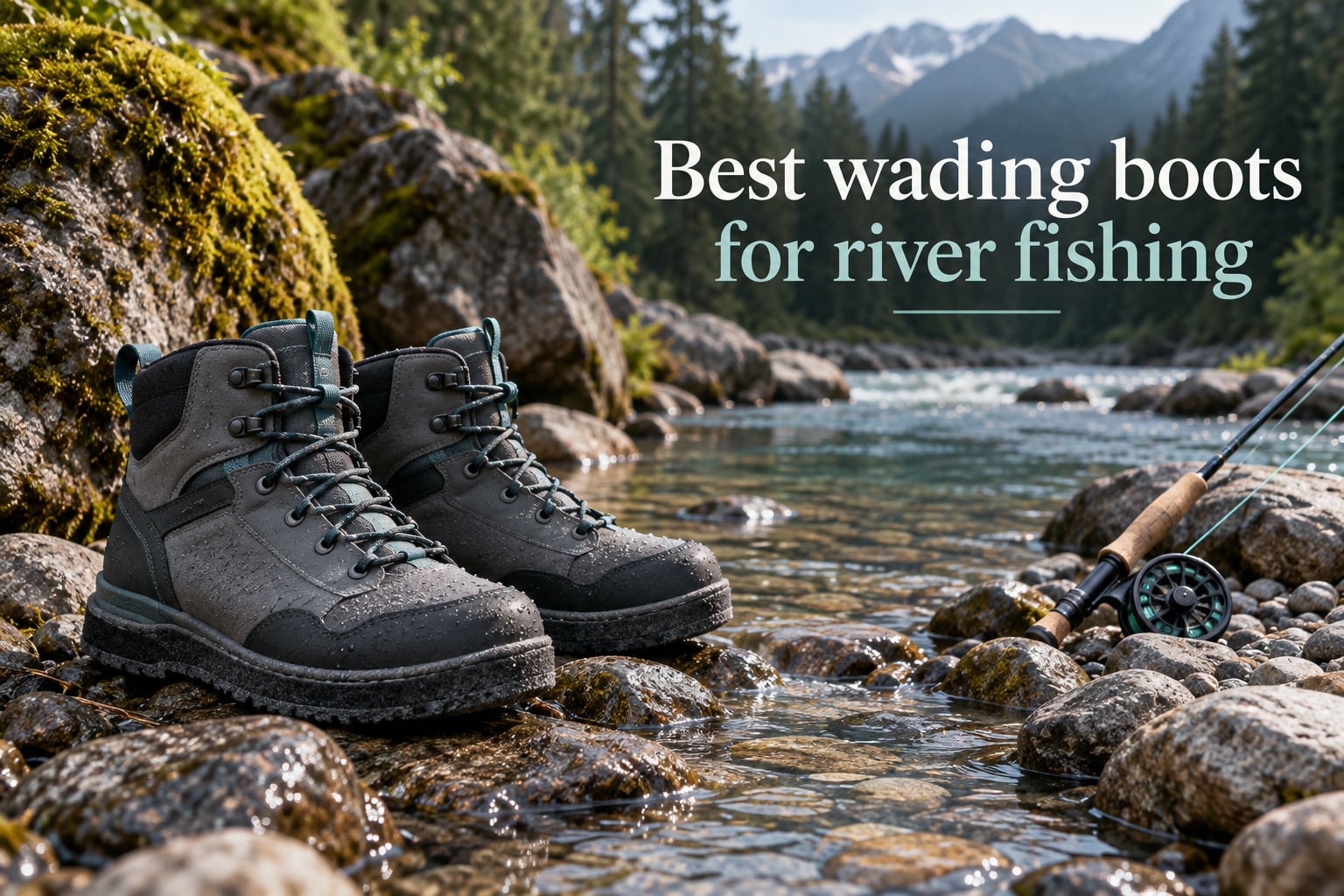
Most anglers learn to buy good wading boots the hard way. A regular on a Pacific Northwest forum described playing a dark chinook in nasty pocket water, slipping and banging his elbow hard on a boulder. On another forum a user wrote that his twenty year old Korkers were about shot and asked what to replace them with, then added he was seriously contemplating the same brand again. That is the honest pattern of this category: people do not shop for wading boots until a pair fails them, and then they shop carefully.
This roundup covers twelve pairs of the best wading boots for river fishing on the market right now, from a proven cleated all-rounder to a stiff felt boot that will grip algae-slick granite and nothing else. The field was sorted by the only two things that matter on a river bottom, which are how the outsole behaves on wet rock and whether your foot stays locked in place when the current moves.
The reason this article is organised differently from most boot roundups is that the felt versus rubber argument is not a question with one right answer. It is a terrain question, and it is also partly a legal question. Some waters restrict felt entirely, so we cover where those rules sit in a dedicated section below. Everything here is aimed at one question: which pair will keep you upright on the river you actually fish.
Table of Contents
Top 3Picks: Best River Wading Boot Picks for 2026
Before the full list, here is the short version. The FROGG TOGGS Hellbender is the most proven pair in this group and the one I would hand to an angler who fishes everything from gravel bars to mud flats. The Korkers Greenback is the smarter buy if you rotate between rivers, because the sole system lets you change traction without buying new boots. The Korkers Darkhorse is the highest rated boot here and the best built, but it is the one to buy once rather than twice.


Korkers Greenback
- Interchangeable felt and Kling-On soles
- Hydrophobic materials
- Internal drainage channels

Korkers Darkhorse
- Interchangeable felt and Kling-On soles
- BOA M2 lacing
- 3PFS Achilles stabilization
Best Wading Boots for River Fishing in 2026
Twelve boots, one row each, with the details that decide a purchase. Read the outsole type first, because that choice constrains everything else about the boot.
| Product | Specifications | Action |
|---|---|---|
| FROGG TOGGS Hellbender |
|
Check Latest Price |
 Foxelli Lightweight Wading Boots Foxelli Lightweight Wading Boots |
|
Check Latest Price |
| Korkers Greenback |
|
Check Latest Price |
 Paramount Outdoors Stonefly Paramount Outdoors Stonefly |
|
Check Latest Price |
 FROGG TOGGS Rana Elite FROGG TOGGS Rana Elite |
|
Check Latest Price |
| Korkers Darkhorse |
|
Check Latest Price |
 Lurewilder Pro Felt Boot Lurewilder Pro Felt Boot |
|
Check Latest Price |
 Duck and Fish Felt Sole Wading Shoe Duck and Fish Felt Sole Wading Shoe |
|
Check Latest Price |
 FROGG TOGGS Deep Current FROGG TOGGS Deep Current |
|
Check Latest Price |
 Simms Freestone Rubber Simms Freestone Rubber |
|
Check Latest Price |
 Paramount Outdoors Deep Eddy Paramount Outdoors Deep Eddy |
|
Check Latest Price |
 Kylebooker Wading Boots Kylebooker Wading Boots |
|
Check Latest Price |
What Makes a Wading Boot Safe on River Rock
A river-safe wading boot does four things: it grips wet rock, it holds your ankle steady on an uneven bed, it drains water instead of holding it, and it shields your foot and your wader bootie from abrasion. Take away any one of those and the boot is just a shoe that will get wet.
Traction comes from the outsole compound, not from the pattern. Felt has historically offered the best grip on smooth polished rock, which is why it dominates trout stream talk. Modern sticky rubber is close behind on rock and considerably better on mud, gravel and trails. Studs add mechanical bite on algae and moss.
Ankle support matters more than most guides admit. A soft boot lets your foot roll on a submerged rock, and a rolled ankle in moving water is how people get hurt. Look for a firm midsole and a reinforced heel counter.
One correction before you go further: wading boots do not keep your feet dry. They drain. Your stockingfoot waders are what keep water out. Boots that advertise themselves as waterproof are describing the upper material, not the fact that you will stay dry if you go under.
Felt vs Rubber vs Studded Soles: Which Outsole for Which River
Rubber wins for mud, gravel, long walks and multi-river travel, and it is the only practical answer where felt is restricted. Felt wins for grip on smooth, polished, algae-covered rock, but it dies on mud, wears out faster, and is restricted in many waters. Studded rubber is the best all-round compromise on slick rock, at the cost of noise on hard surfaces and extra cost if studs are sold separately.
The honest version, from anglers who argue about this constantly: on HuntingPA.com a regular wrote that the rubber is better in mud and the felt is better on rocks, and that felt is undoubtedly better in the stream. A flyfishing.co.uk regular put the counter-case plainly, saying studded rubber gives much better all-round grip while studded felt still does not grip wet rock properly. Neither is wrong, because they are describing different rivers.
So ask three questions in order. Is the rock smooth and polished, with low sediment? If yes, felt or studs. Is there mud, gravel, roots or a long walk to the trailhead? If yes, rubber. Is felt legal in this water? If no, the decision is made for you and you are choosing between plain rubber and studded rubber.
Interchangeable sole systems exist because of this exact tension. As one pnwflyfishing.com forum admin put it, he was pretty anti-Korkers at one time because of their early products, but became a believer, adding that some of their non-felt soles are pretty amazing. The same angler keeps both and wears the non-studded Kling-On tread unless studs are absolutely necessary.
FROGG TOGGS Hellbender – The Most Proven All-Rounder
FROGG TOGGS Men’s Hellbender Waterproof Fishing Wading Boot for Fishing in Felt or Cleated, Cleated, 11
Cleated rubber outsole
Mesh and PVC upper
1.5 lb
PU midsole and wide wading last
Pros
- Cleated outsole bites on mud and mossy rock
- Reinforced toe and heel caps
- Lightweight at 1.5 lb
- Wide last fits stockingfoot booties
- Over 2000 reviews at a 4.5 average
Cons
- Water resistance is limited above the sole line
- Mesh upper holds water and dries slowly
The Hellbender is the pair I would hand to an angler who wants one boot that handles almost any river they are likely to walk into. It carries a 4.5-star average across more than 2,200 reviews, which makes it the most widely tested boot in this group by a wide margin.
What makes it work is the cleated rubber outsole combined with a polyurethane midsole and a wide wading last. The stud pattern bites on gravel and mud where felt has nothing to grab, and the wide last means it accepts stockingfoot booties without the usual argument about sizing up.
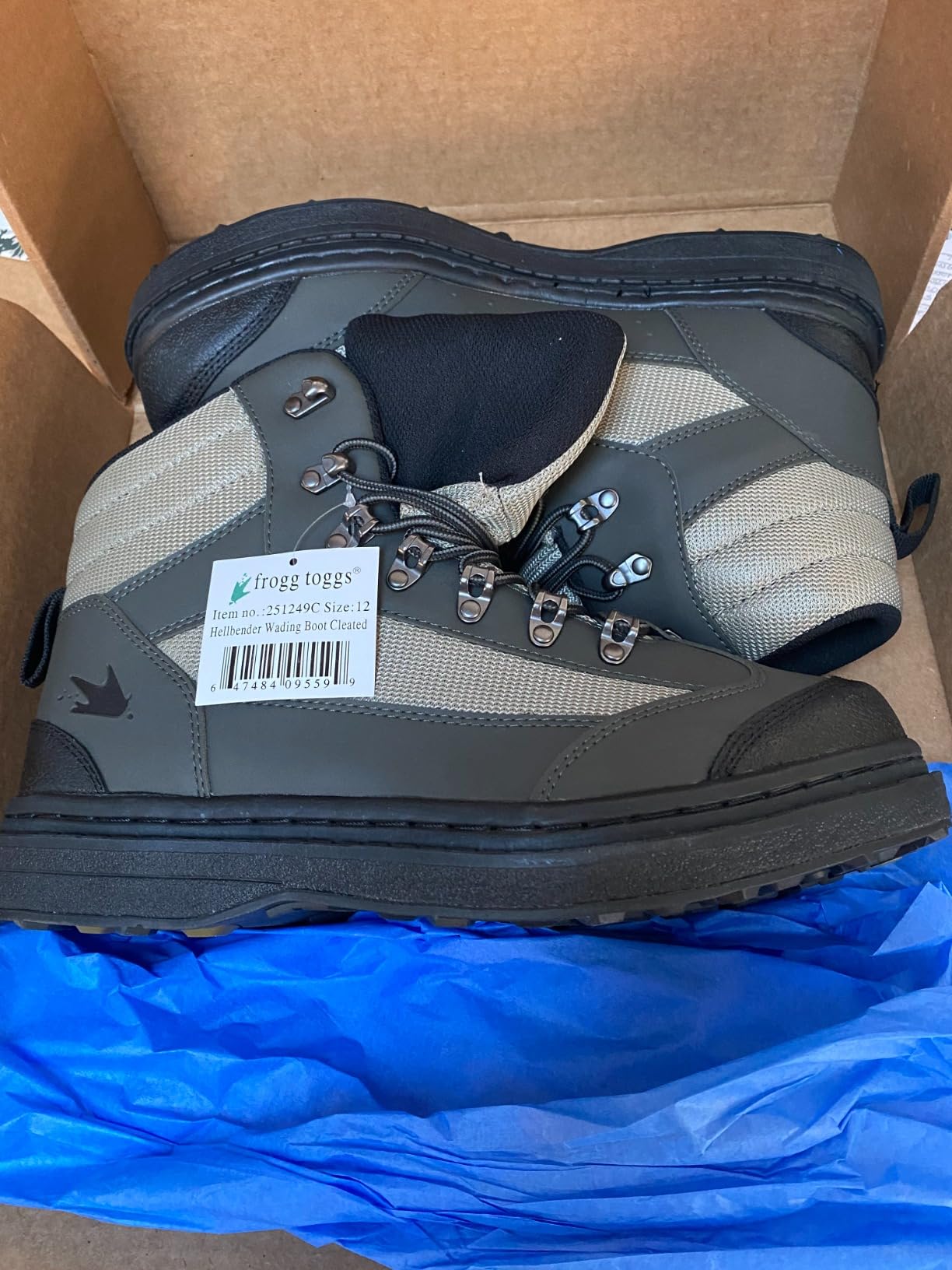
Owners consistently point to cushioning and a light feel for a boot that looks substantial. The mesh and PVC upper drains fast enough for warm water, and the reinforced toe and heel caps have survived more than a few seasons of gravel bar walking.
Two things to know. Water resistance is listed as minimal above the sole line, so in deeper water your foot gets wet regardless, and the mesh upper takes longer to dry than leather or synthetic construction. If you fish in cold water, pair it with neoprene booties and accept that drying happens on the drive home.
Why it stays on the list year after year
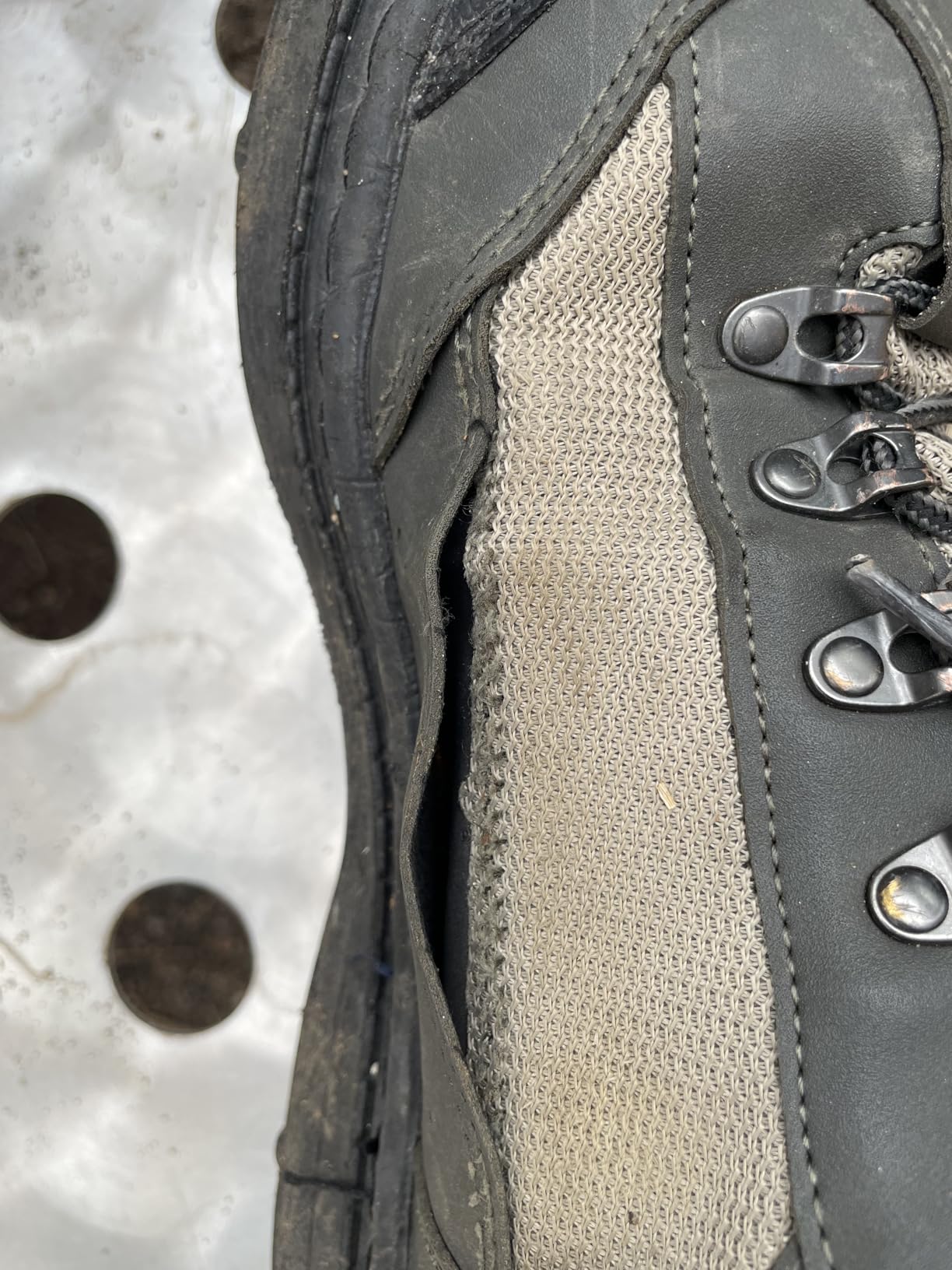
Very few products in any category accumulate this many reviews without a structural weakness showing up in the pattern. Here the complaints cluster around drying time and water resistance, which are trade-offs of the design rather than failures of it. Construction and fit complaints are rare, which tells you the wide last is doing its job.
When to pick something else
Skip it if your water is glassy, hard-bottomed granite and felt is legal where you fish, because a rubber cleat gives up a lot of grip to felt on that surface. Skip it if you wade cold water without booties and expect warmth, since the mesh upper does not insulate. Everything else, this is the safe default.
Foxelli Lightweight Wading Boots – Best for Long Bank Walks
Foxelli Wading Boots – Lightweight Fly Fishing Boots for Men, Rubber Sole Wading Shoes
Rubber outsole with water channels
1.3 lb per boot
OrthoLite insoles
EVA midsole
Pros
- Very light at 1.3 lb per boot
- Removable OrthoLite insoles cut joint fatigue
- Hiking-boot style outsole walks well
- Reinforced rubber toe and heel rand
- Quick-draining mesh ports
Cons
- Runs snug at the forefoot
- slow drying after wading
- Rubber can slip on heavy moss
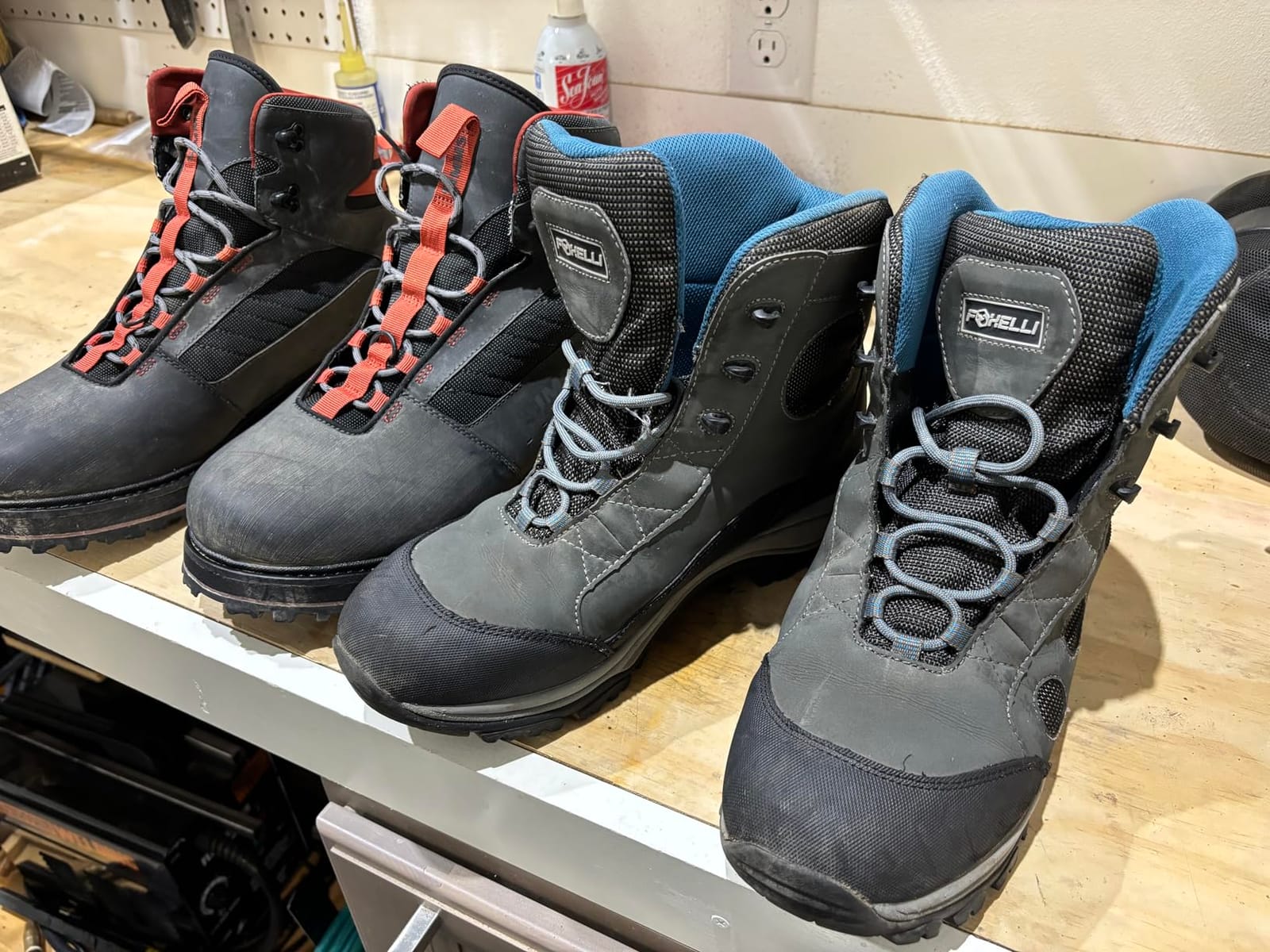
These are the boots I put on when the walk to the river is longer than the session. At 1.3 lb per boot they are among the lightest pairs here, and owners regularly compare the feel to wearing tennis shoes rather than wading gear.
The construction is microfiber with a breathable plaid nylon upper, a shock-absorbing EVA midsole and removable OrthoLite insoles. The outsole is slip-resistant rubber with a tread that channels water and debris away rather than holding it, and there are mesh drain ports at the upper.
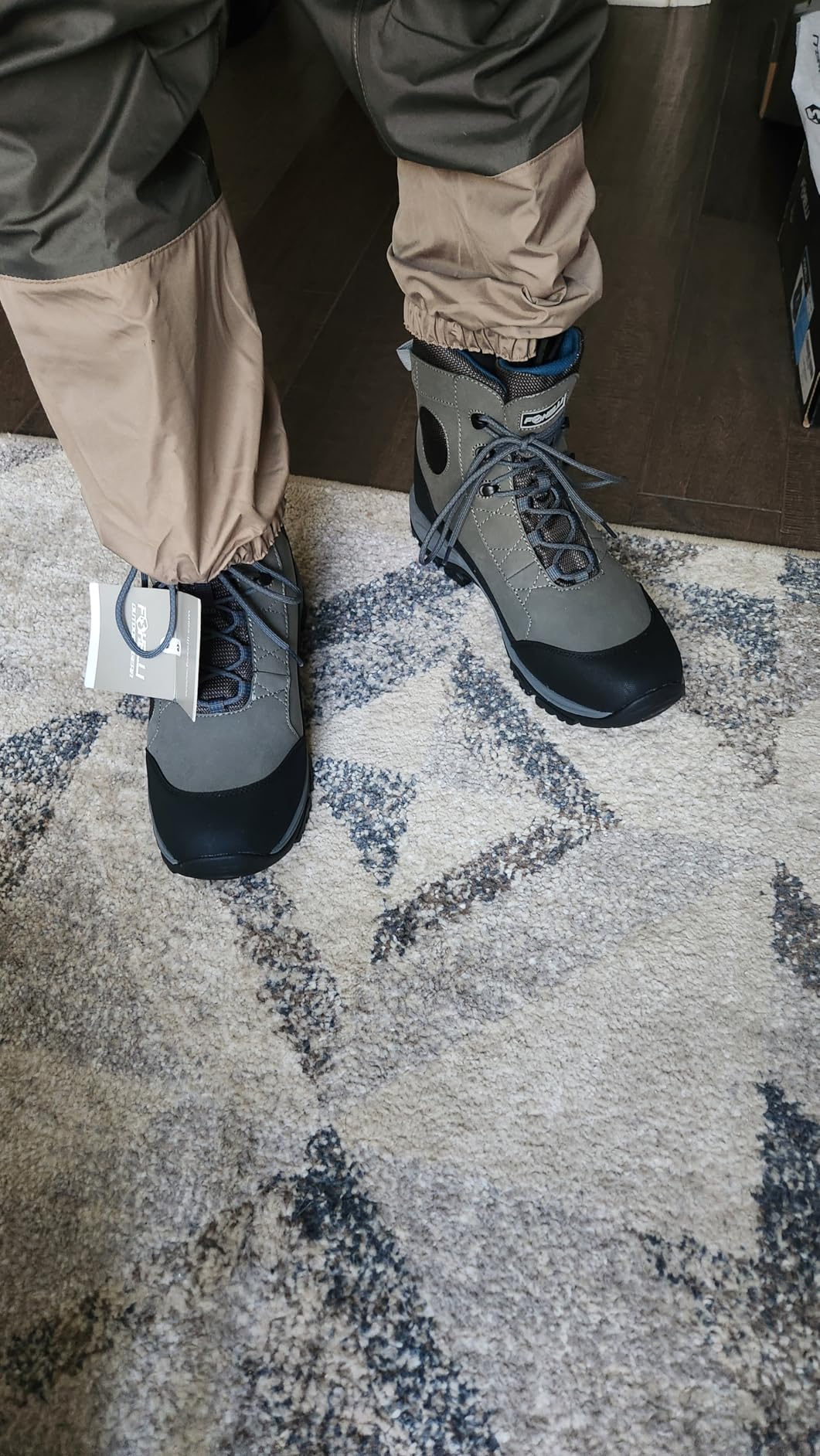
Long-term owners report five-plus years of use with soles showing little wear, and reviewers repeatedly place the build against far more expensive boots without regretting the trade. For anglers replacing a twenty-year-old pair on a budget, that track record matters.
The sizing story is the loudest theme in the reviews. Most people order one size up over their street shoe to fit neoprene booties, and a fair number report the forefoot feeling snug with sock-foot waders. Dry-down is the other recurring negative, with the sides staying wet long after you are home, and rubber can slip on thick moss without added traction.
Where the low weight actually pays off
Weight compounds over distance. On a long gravel-bar approach, or when you are walking in to reach water a road cannot reach, every gram underfoot is one the bank does not take out of you. Several owners note the hiking-boot style outsole performs far better than felt wading shoes on the walk in, which is exactly what this pair is for.
Where the compromises bite
The three compromises are real. A fixed rubber outsole means no felt, no studs, and no upgrade path later. Slow drying is a genuine nuisance for anyone fishing consecutive days. And the snug forefoot is a fit problem, not a break-in problem, so get the size right the first time.
Korkers Greenback – Best Value Interchangeable-Sole Boot
Korkers Greenback Wading Boots – Packed with The Essentials – Includes Interchangeable Felt and Kling-On Soles – Size 10
OmniTrax interchangeable felt and Kling-On soles
16 oz
Hydrophobic upper
Quick Cinch laces
Pros
- Switch sole type without buying new boots
- Hydrophobic materials dry fast
- Internal channels and midsole ports shed water
- Light at 16 ounces
- Owners report close to a decade of service
Cons
- Peripheral snap soles are fiddly to refit
- Some heel lift remains after tightening
- Sole sizing occasionally arrives wrong
The Greenback is the pair that makes the felt versus rubber argument stop mattering. It comes with the OmniTrax interchangeable sole system, so felt and Kling-On rubber soles swap on and off depending on the water you are about to fish.
That single feature changes the cost of ownership. Instead of keeping two pairs of boots, and finding somewhere to store two pairs of boots, you keep one upper and buy soles. Anglers who fish a home river plus a coastal float season cite exactly this when they explain why they stayed with the brand.
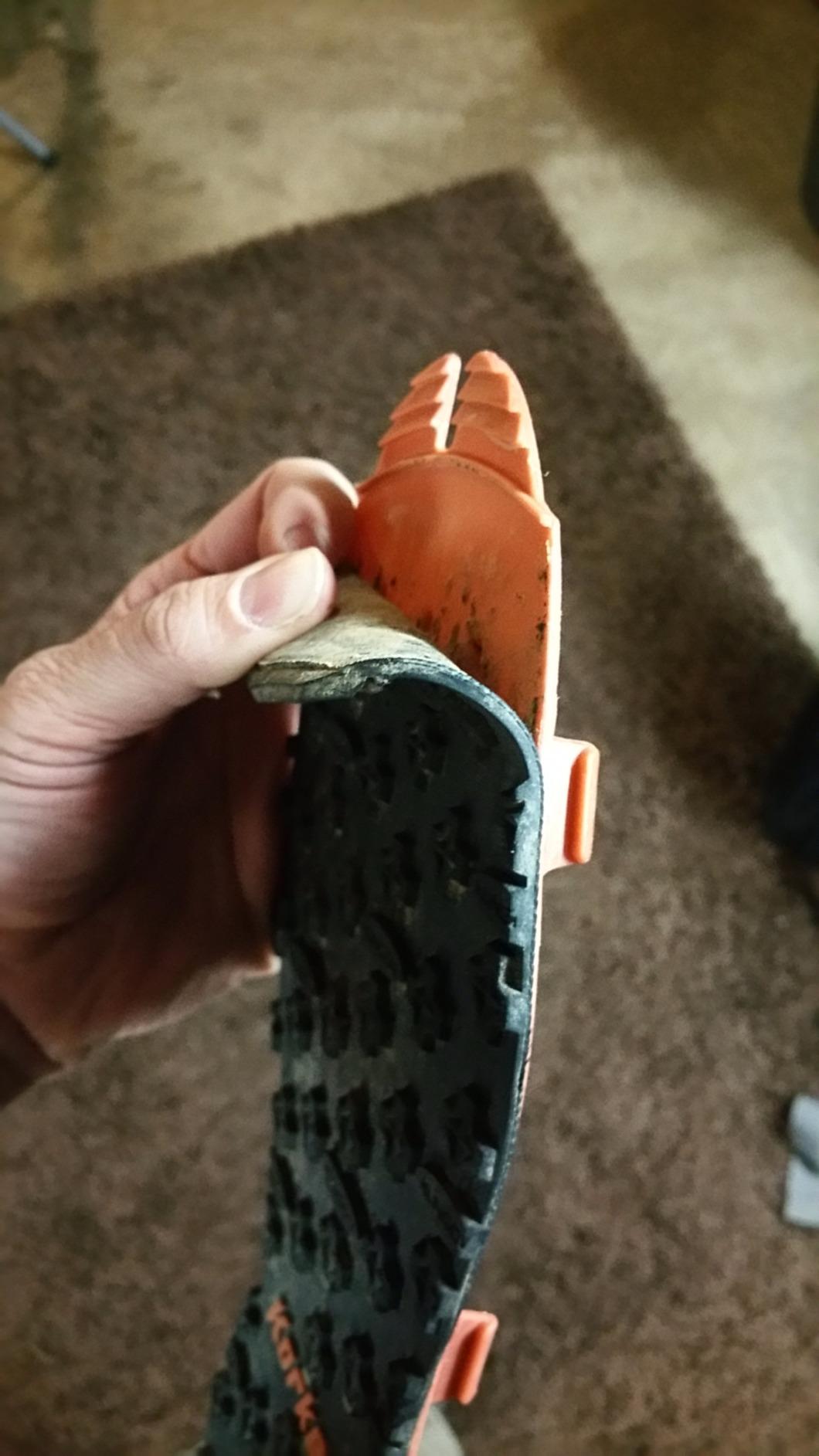
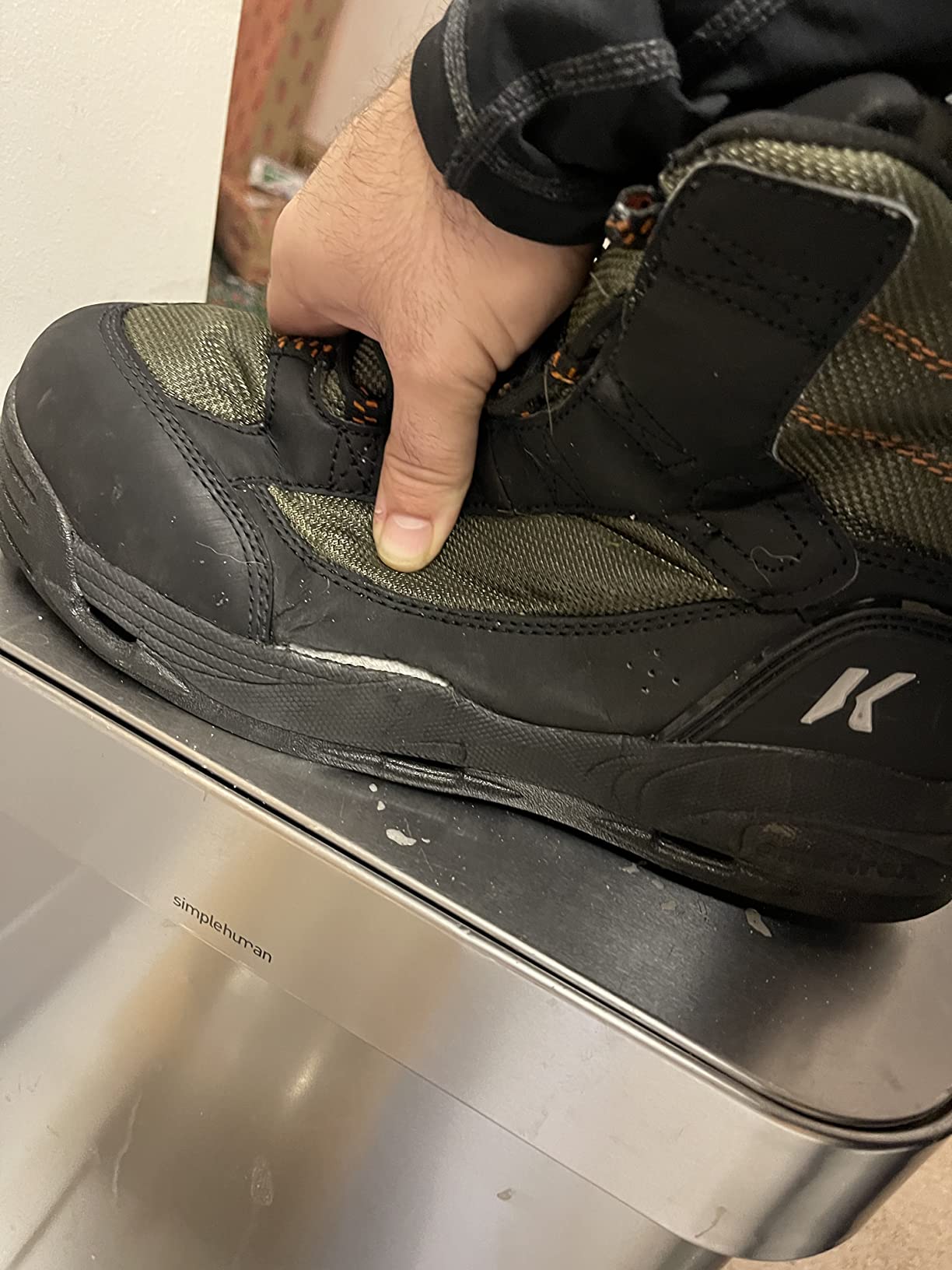
At 16 ounces the Greenback is light for a boot this structured, and several owners report close to ten years of service. The upper is synthetic with hydrophobic materials, and water drains through internal channels and out of midsole ports rather than sitting in the boot.
The honest gripps: refitting the soles takes practice because the peripheral snaps are fiddly to click into place, some people feel heel lift that tightening alone does not solve, and there are occasional reports of the rubber soles arriving in the wrong size. Sizing is straightforward if you size up one for neoprene booties.
What the interchangeable system really buys you
Consider a three-river year: a slick freestone trout stream, a muddy coastal slough, and a gravel-bar salmon river. With one upper and two sole types, that is one boot purchase instead of two, and the soles cost a fraction of a new pair. That maths is the reason Korkers comes up so often in long-term angler loyalty.
When the system is a downside
If you only ever fish one kind of river, you are paying for flexibility you will not use, and the snaps are one more thing that can fail. There is also a practical point many buyers miss: check the sizing of replacement soles, because the rubber sole and the felt sole are not always matched in the same run. Buy both together and check before you leave the house.
Paramount Outdoors Stonefly – Most Versatile with Steel Studs
Paramount Outdoors Stonefly Cleated Sole Wading Boot, Rubber Bottom Wading Shoe (13)
Cleated rubber with recessed stud insert
Steel studs included
Rock Jam toe cap
Gravel guard D-ring
Pros
- Steel wading studs included in the box
- Stud inserts remove and install easily
- Reinforced toe cap takes boulder strikes
- Drains and slips off quickly over booties
Cons
- Toe box runs large
- so most size down
- Stiff outsole that does not flex
- Lace hooks can bend under heavy use
The Stonefly does something almost nothing else in this list does: steel wading studs come in the box. For an angler moving from hiking boots to purpose-built wading gear, that removes the most common first purchase, which is a separate pack of studs.
Traction is the standout across reviews. Owners report it grips well on felt-like surfaces even with the studs out, and the improvement when studs are installed is dramatic on mossy rock and algae. The cleated rubber outsole has a recessed insert point, so the studs sit low and the boot still feels flat on gravel.
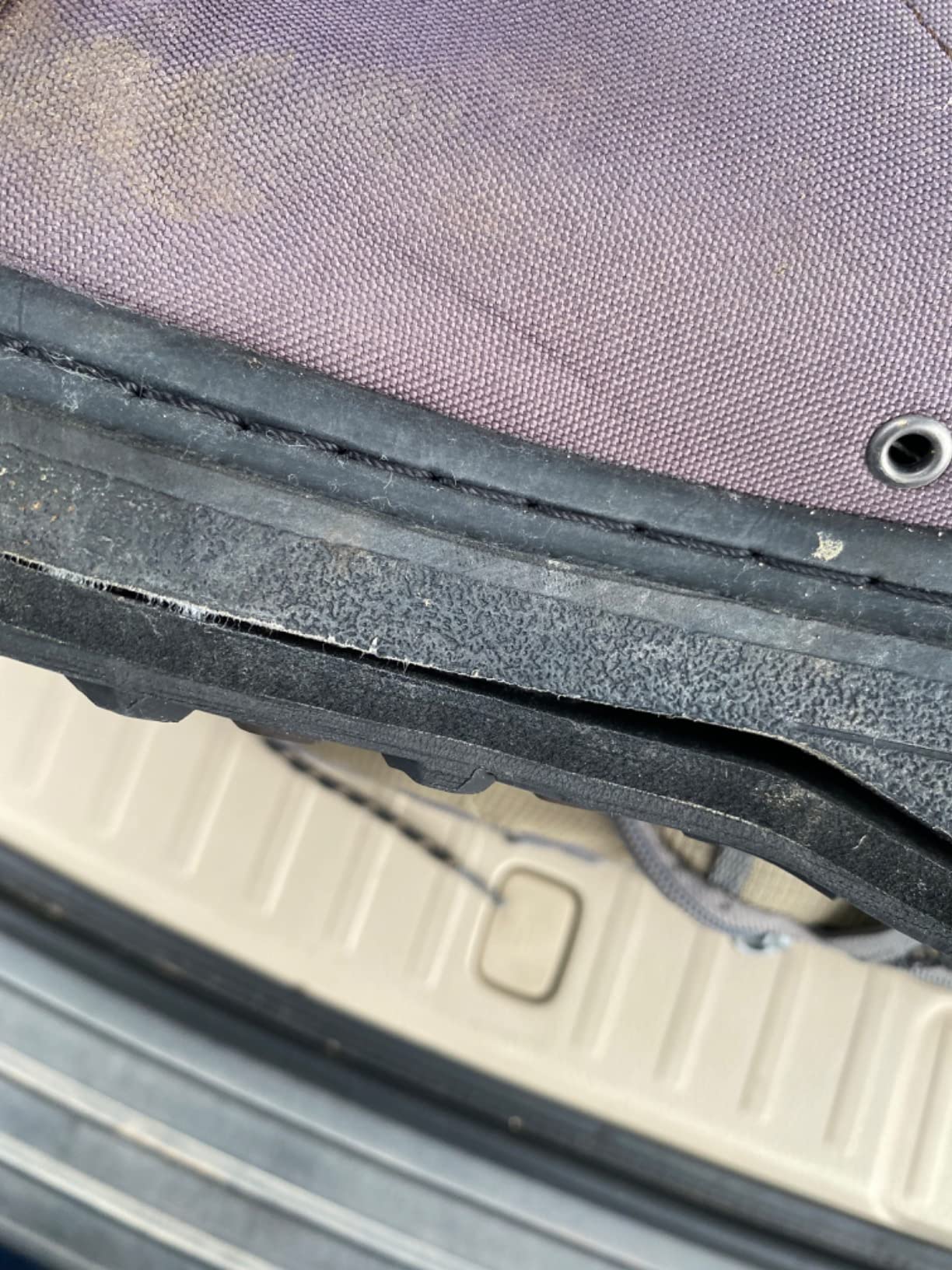
Construction is honest for the money: a reinforced Rock Jam toe cap, a stiff reinforced midsole, a reinforced heel pull, a padded ankle collar and a gravel guard D-ring attachment point. Sizes run 8 to 14 in both the felt and cleated versions, and the brand states it is designed to be worn over stockingfoot booties with no need to size up.
That claim is the exception, not the rule, and reviewers strongly recommend ordering one size smaller than the standard size guide because the toe box runs long and wide. The outsoles are also stiff out of the box, which some read as uncomfortable and others read as stable, and the lace hooks can bend with heavy use.
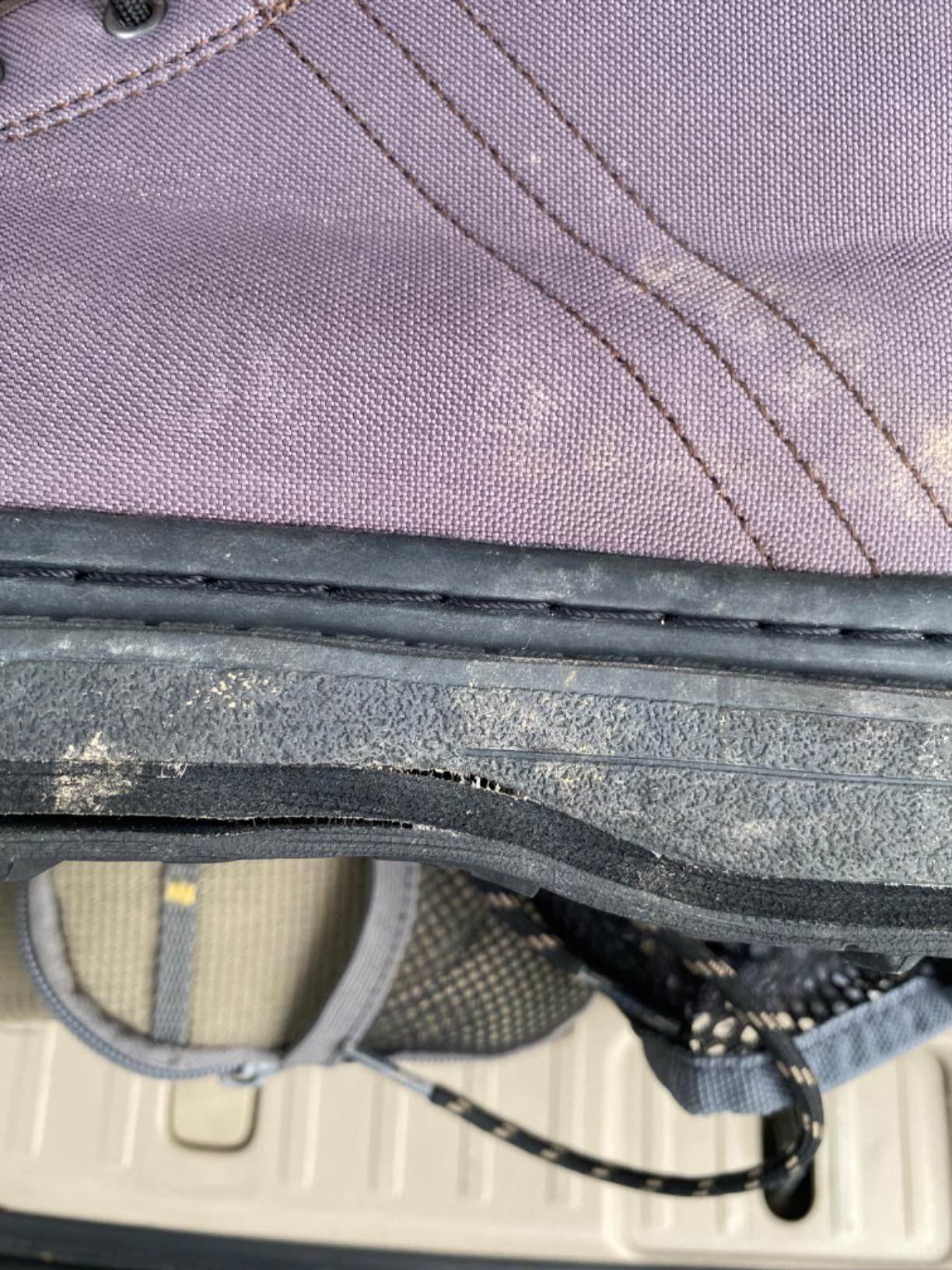
Why studs in the box changes the maths
Stud add-ons are the hidden second cost of most stud-capable boots. The Simms Freestone accepts Hardbite and Alumibite cleats, and the Deep Eddy includes its own studs, but several capable outersoles come with no cleats at all. When a pair includes studs, the total outlay to get full mechanical bite on slick rock is one purchase, and the cleats are removable for the walk to the water.
Where the budget shows
Stiffness and hardware are where it shows. The outsole does not flex, so long approaches feel flat-footed after a while, and the lace hooks are the first thing to deform. Neither is a slip risk, but both are things you feel at the end of a long day. Size down and you will be fine.
FROGG TOGGS Rana Elite – Best for Salt Flats and Shallows
FROGG TOGGS Men’s Rana Elite Waterproof Wading Boots for Fishing in Felt or Lugged Waders
Felt or lugged outsole
1000-denier nylon upper
EVA midsole
One-piece outsole
Pros
- Felt or lugged versions for different water
- Fits true to size over neoprene booties
- Lightweight and tough on shell and rock bottoms
- Padded collar and EVA midsole
- Brass speed hooks for quick fit
Cons
- Brass hardware corrodes in saltwater and cuts laces
- Runs very wide
- so the fit can feel loose
- Lugged grip is decent rather than excellent
The Rana Elite is the one I point people toward who fish shallow, clear water over sand, shell and rock rather than deep river structure, and it is a sensible first pair for anyone moving up from trail shoes.
It comes in felt and lugged outsole versions, and the one-piece outsole with an EVA midsole is simple and durable. The upper is 1000-denier nylon with an internal toe cap, so it will not crush but it is not delicate either.
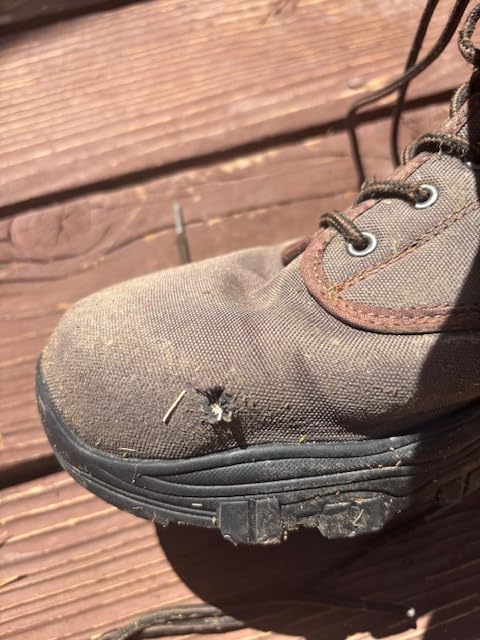
Fit is the surprise. It fits true to size with room for neoprene stockingfoot booties, and the lugged sole actually beats felt on gravel approaches and mud trails, which is the opposite of the usual wading-boot rule.
Two real caveats for anyone on salt water. The brass speed hooks corrode in saltwater and the corrosion will cut through the supplied laces, which is a fast, cheap fix with a replacement pair of laces. And the last runs very wide, so people who like a snug fit describe it as loose rather than roomy. Grip on the lugged version is decent rather than exceptional, so add carbide studs if you want more.
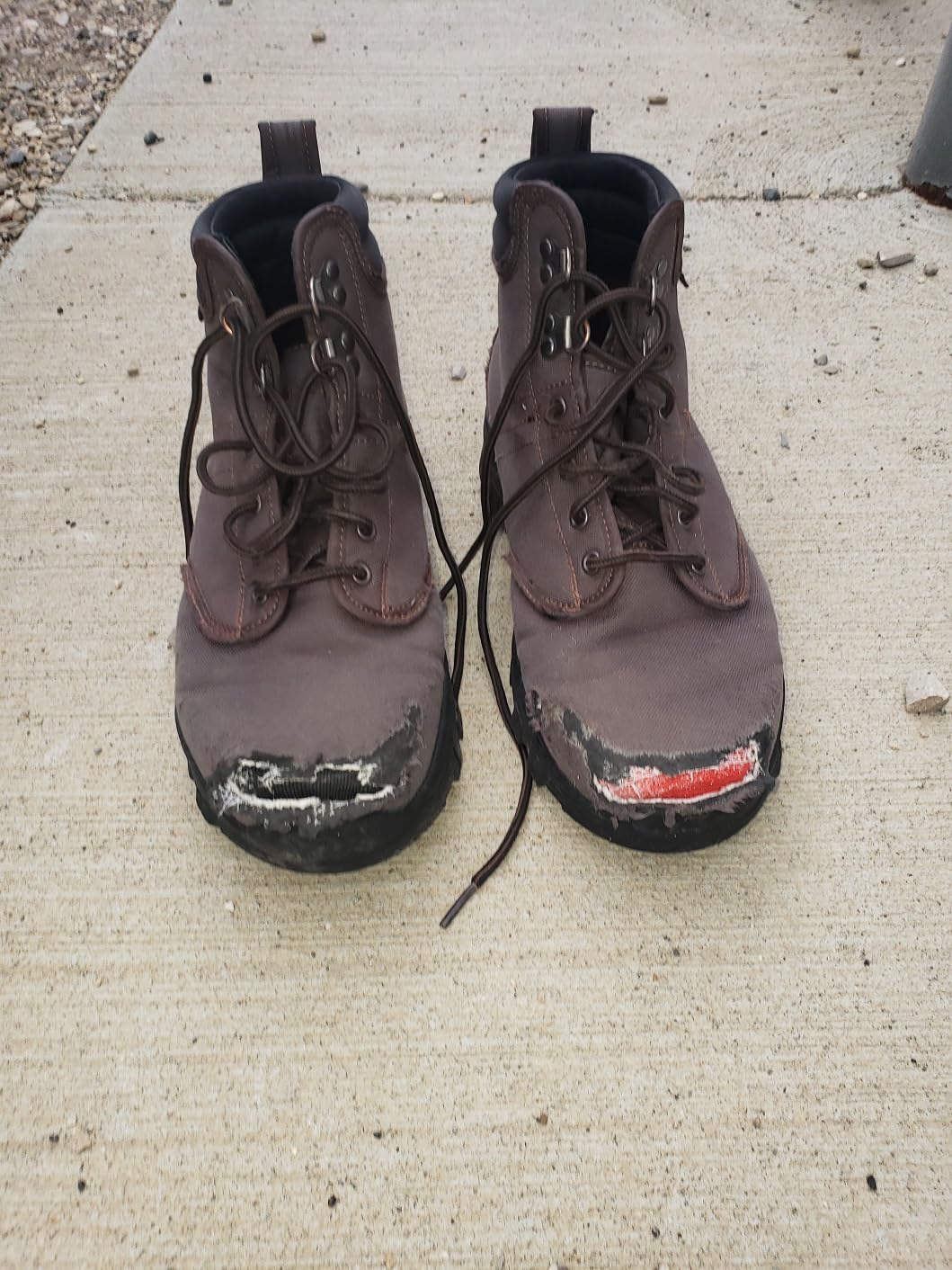
Best call: saltwater, estuaries and flats
For an angler wading an estuary or a shallow bay with fly line on a poled skiff, this is the pick. The felt version grips hard bottoms cleanly, the lugged version handles the walk across shell and gravel, and the nylon upper shrugs off salt spray. Just carry spare laces.
Best call to skip: cold, deep or technical rivers
It is not a support boot. There is no ankle stabilisation system and no stiff heel counter, so it will not help anyone who already rolls an ankle. And the 1000-denier upper is not insulated, so cold water is out of the question without booties and neoprene socks underneath.
Korkers Darkhorse – Top Rated with BOA Lacing
KORKERS Darkhorse w/Felt & Kling-On Soles, Color: Black/Gunmetal, Size: 11 (FB4710-11)
OmniTrax felt and Kling-On soles
BOA M2 lacing
3PFS Achilles stabilization
4 lb listed weight
Pros
- Highest rated boot in the roundup at 4.8 stars
- Interchangeable sole system adapts to any condition
- BOA dial for one-motion on and off
- 3PFS Achilles stabilises the rear foot
- Internal channels drain through midsole ports
Cons
- Listed at 4 pounds
- the heaviest figure in the set
- Water resistant rather than waterproof
The Darkhorse is the best-rated boot in this roundup, sitting at 4.8 stars with 87 percent five-star ratings. When a review distribution is that concentrated, it usually means the product does the simple things very well and almost nobody is unhappy.
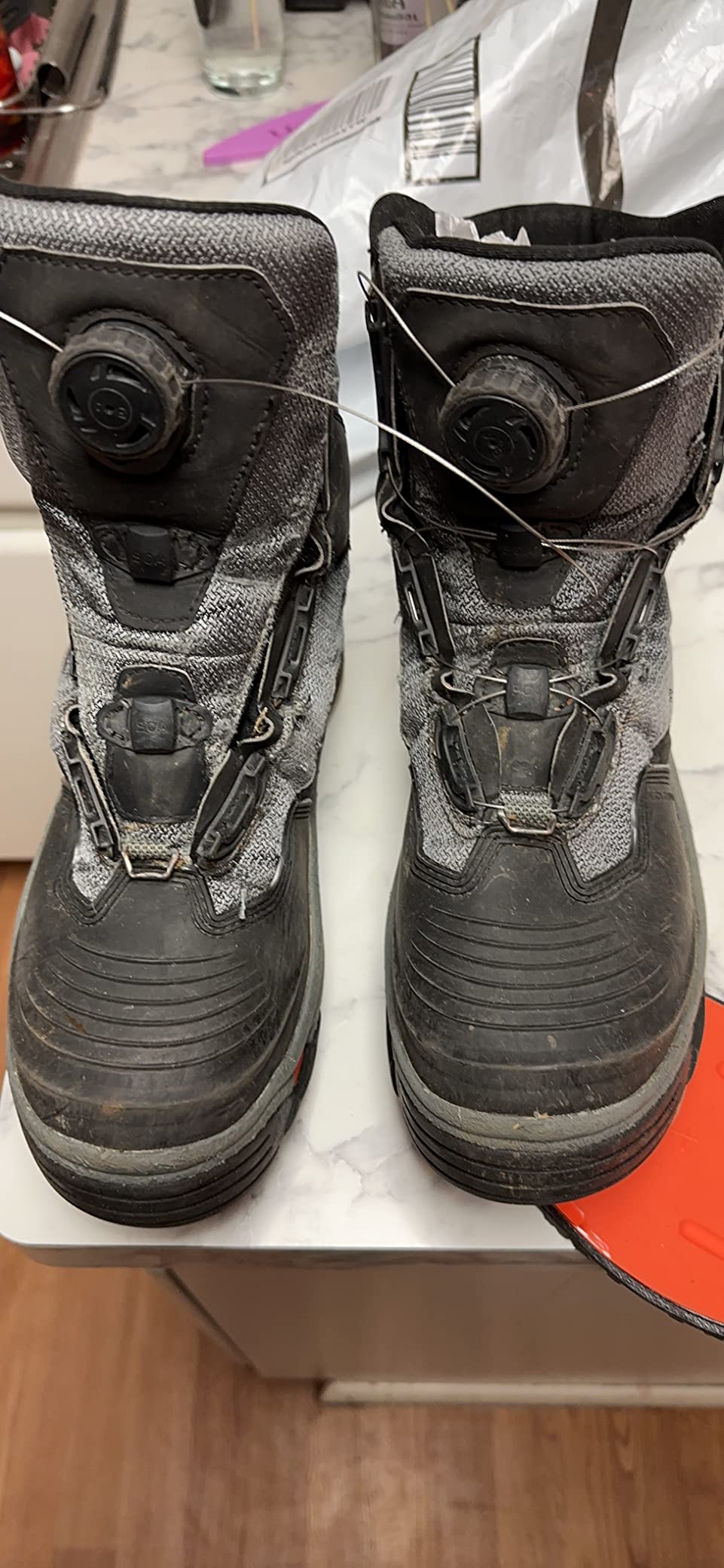
The BOA M2 lacing system is a dial you twist with one hand, and that matters more than it sounds on a cold riverbank with numb fingers. It holds a custom fit once set and comes off in seconds, which is the difference between a good day and a cold one when you are making ten wade changes a trip.
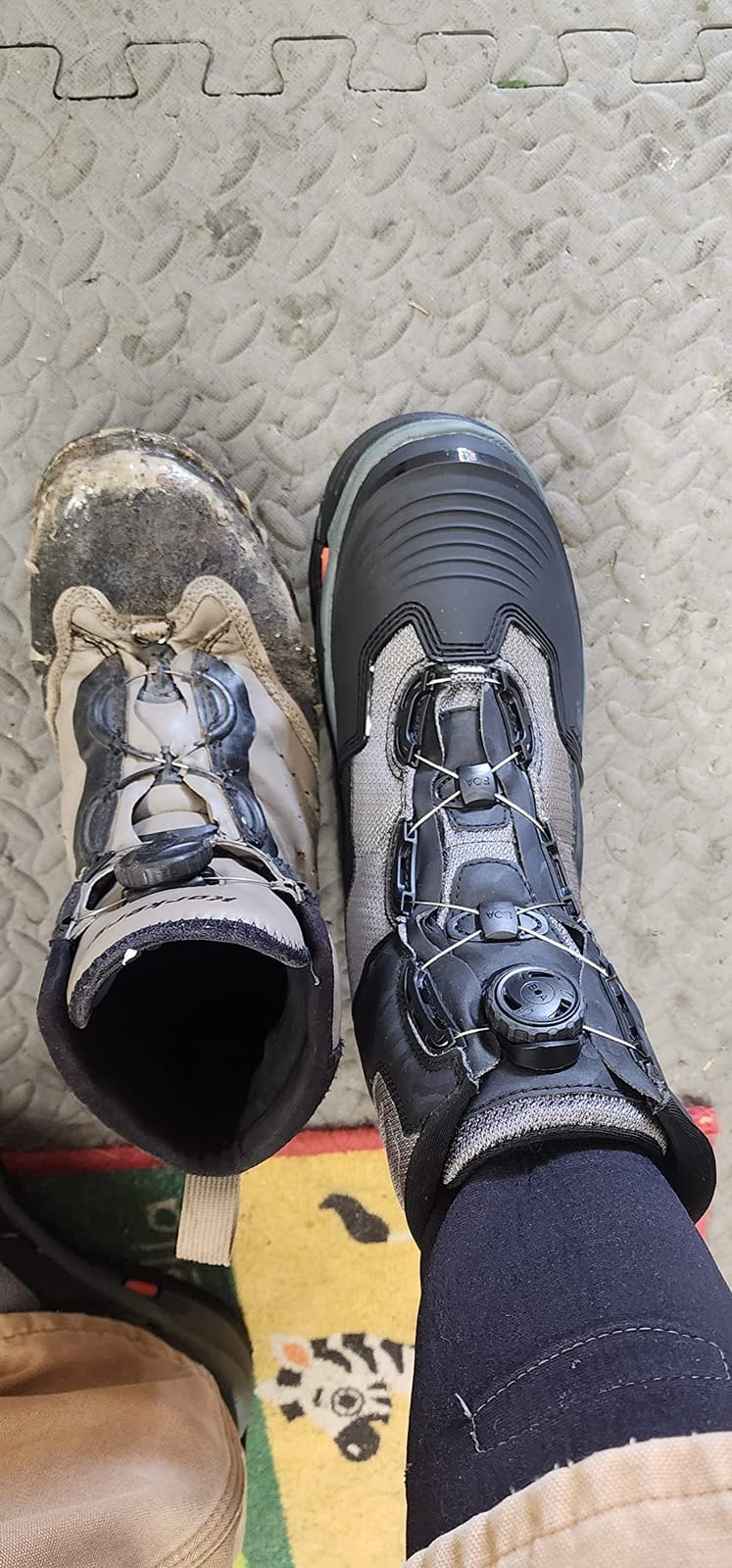
The 3PFS Achilles stabilisation is the sleeper feature. It grips the back of your heel so the foot does not slide forward inside the boot on a submerged rock, which is the mechanism behind most of the ankle rolls anglers describe. Combine that with the interchangeable OmniTrax felt and Kling-On soles and this is among the most adaptable boots here.
Water flows through internal channels and out of midsole ports, shedding both water and weight. The upper is hydrophobic with ultra abrasion resistance in a tonal camo pattern, which is as close to a premium wading boot as this category gets. The trade is weight at 4 pounds and a price that puts it out of reach as a first boot.
What you get for the extra money
Three things the cheaper boots cannot fake: real heel retention, a lacing system that works with frozen hands, and build weight. If you are on rock a hundred days a year, the arithmetic works. If you fish ten days and mostly stand in a pool, the Greenback gives you the interchangeable sole system at a fraction of the outlay and you will not notice the difference in the water.
Who should buy something cheaper
First-season anglers, anyone fishing soft bottomed or vegetated water where support is wasted, and anyone who mostly fishes from a boat. This boot is built for a specific failure case, which is a foot rolling inside a boot on hard rock, and if you have never had that problem you are paying for insurance you do not need yet.
Lurewilder Pro Felt Boot – Thick Felt at the Entry Tier
lurewilder Pro Fishing Wading Boots for Men with Felt Bottom Wader Boots for Fly Fishing Strong Grips Rustfree Eyelets Size 13
High-density felt outsole
Neoprene lining
Stainless steel eyelets
Metal-meshed drain hole
Pros
- Thick high-density felt for slick river rock
- Stainless eyelets resist rust
- Neoprene lining adds insulation and shortens break-in
- D-ring for gravel guard attachment
- Reduced tongue sponge dries faster
Cons
- Felt only
- with no rubber or stud option
- Lower rated than most picks in the set
This is the pure felt answer in this roundup, and if your river is smooth, hard-bottomed rock and felt is legal there, this is where felt grip pays off most. The felt here is high-density and thick, not a thin bonded sheet.
The build details punch above the boot’s price bracket. Stainless steel eyelets resist rust, which matters more than it sounds on a wet river bank, and the neoprene lining replaces the mesh used in older versions, which helps both break-in and cold water comfort.
There is a gravel guard D-ring, and the drainage hole is covered with metal mesh so water leaves but sand and grit stay out. The tongue was redesigned with less sponge so the boot dries faster than earlier versions.
What felt buys you and what it costs
On polished granite, on a smooth cobble bed, and on moss-covered ledge where the water is clear and low, felt grips in a way rubber still does not match. That is the whole case for it, and it is why felt boots still sell well in regions where they remain legal.
What it costs is versatility. There is no rubber or studded version, so a muddy bank, a gravel-bar walk and a mossy boulder all have to be handled by the same sole. Felts also wear faster than rubber, and the felt restrictions mean you may be carrying a boot you cannot use on half your waters.
Who should skip it
Skip it if you fish more than one kind of river, if you walk any real distance over gravel, or if any of your regular water restricts felt. This boot carries a 4.3 average, so inspect the felt-to-upper bond the day it arrives.
Duck and Fish Felt Sole Wading Shoe – Best for Occasional Use
Duck and Fish Men’s Felt Sole Wading Shoe (10 US) Olive
One-piece felt outsole
1200D nylon upper
Extra wide last
Neoprene collar
Pros
- Felt outsole grips slippery rock reliably
- 1200D nylon with PVC toe cap and back counter
- Extra wide last fits stockingfoot waders at normal size
- Lightweight and inexpensive
- Durable laces that resist fraying
Cons
- Felt only
- so nothing for mud or gravel
- Reported felt delamination by the fourth to sixth outing
- Less supportive for long days
For someone who fishes six weekends a year and wants felt grip without a serious outlay, this shoe does the job. It is a low ankle wading shoe rather than a boot, with a one-piece felt outsole, a 1200D nylon upper, a reinforced PVC toe cap and back counter, and a triple-padded neoprene collar.
The triple-padded neoprene collar is the part that does more than it looks like it should. It sits above the wader cuff line without bunching and gives a surprising amount of lateral support for something this light, which matters when you are stepping off a boulder onto a slick ledge.
The extra wide last and midsole is the useful part. The design intent is that you order your normal shoe size and it fits over stockingfoot booties, which removes the single most common source of returns in this category. There is a pull top for easy on and off, which matters more than it sounds when your hands are wet and cold.
At 4.2 stars it sits at the bottom of this group, but the complaints are almost entirely about the bonded felt sole rather than the upper, which tells you the sizing and comfort package is doing its job.
The failure mode to know about
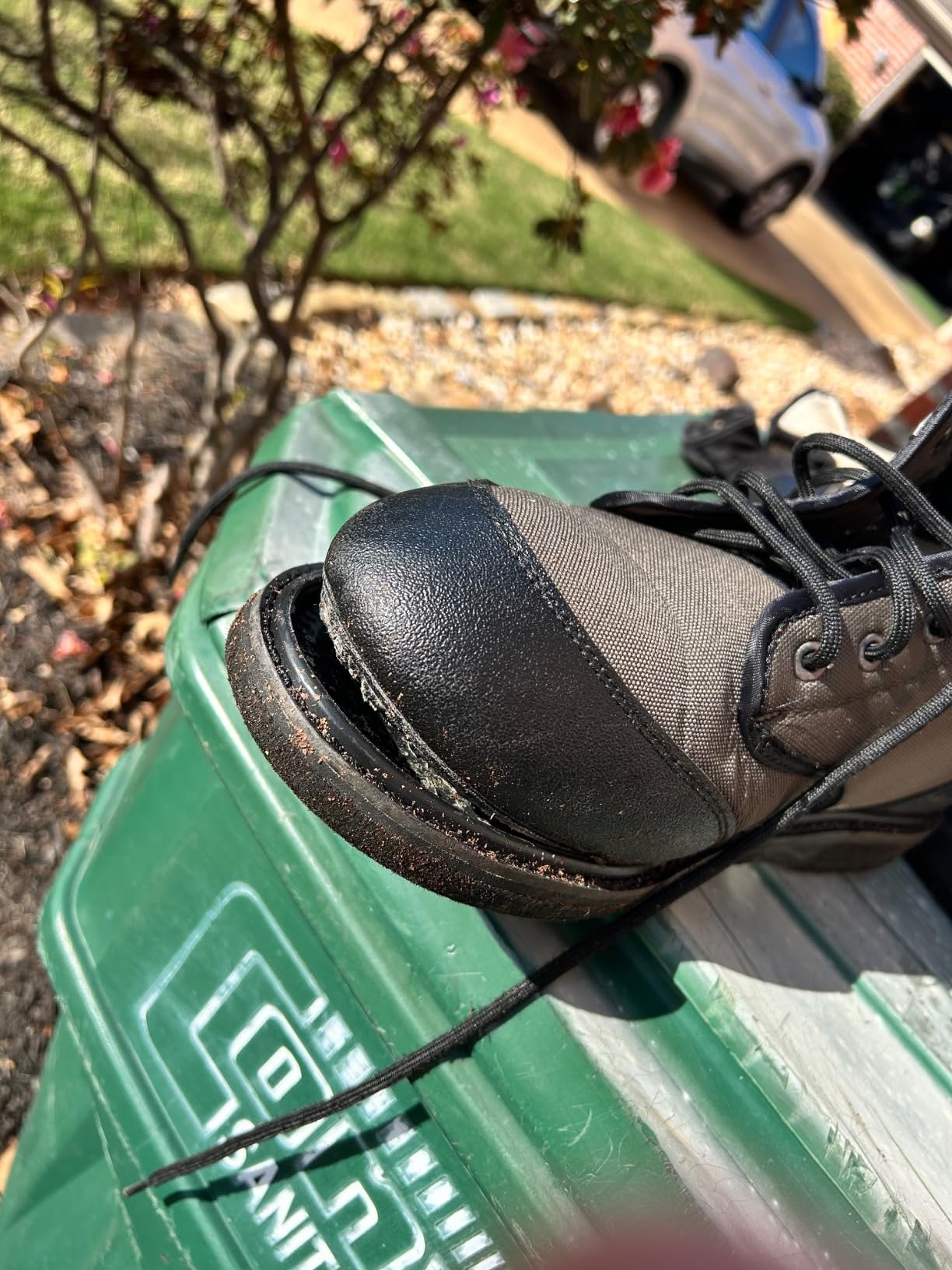
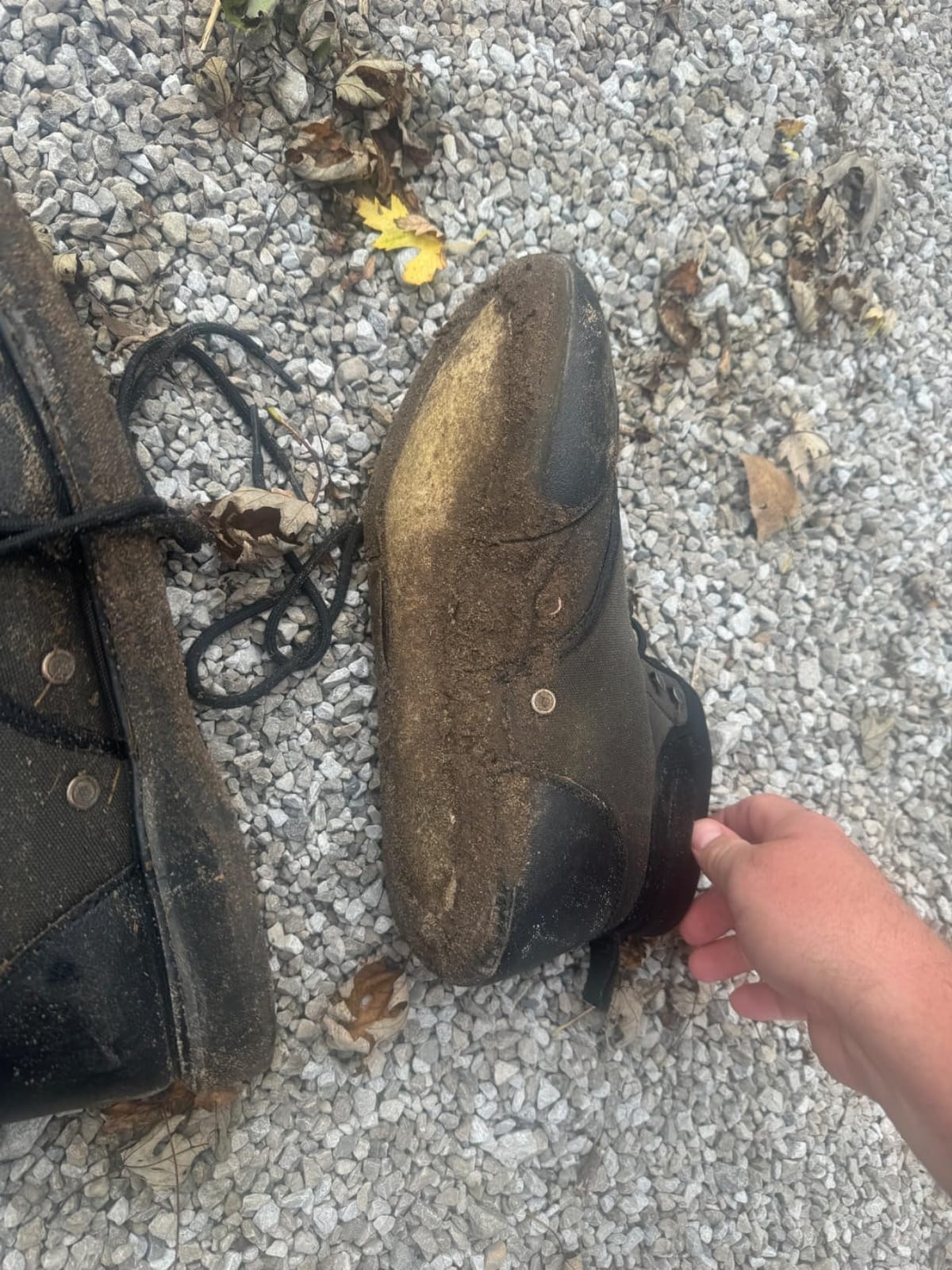
Multiple reviews report the felt sole separating from the upper after between four and six outings, and that adhesive repairs do not hold. That is the honest weakness of a bonded felt sole and it is worth checking the bond the first few times you wear them. If it starts to peel, stop fishing in it rather than trusting a glued fix.
When this is the right call
It is right for a weekend angler on legal felt water, a backup pair that lives in the truck, and anyone who wants a felt option without a serious outlay. It is wrong for anyone fishing weekly, for cold water, and for any river with mud, because felt on mud is a liability rather than an advantage.
FROGG TOGGS Deep Current – Best Ankle Support for Deep Water
FROGG TOGGS Men’s Deep Current Fishing Wading Boot in Cleated or Felt
Felt or cleated outsole
Micro screen drain ports
Broad platform
Toe and heel protection
Pros
- Broad platform and superior ankle support
- Fits true to size over stockingfoot waders
- Quick drying for 3-5 mile walks each way
- Lace hooks catch gravel guard hooks
- Felt grips slick rock without studs
Cons
- Runs big
- so size down for a snug fit
- Cleated outsole is weak alone without studs
- Tongue needs more padding
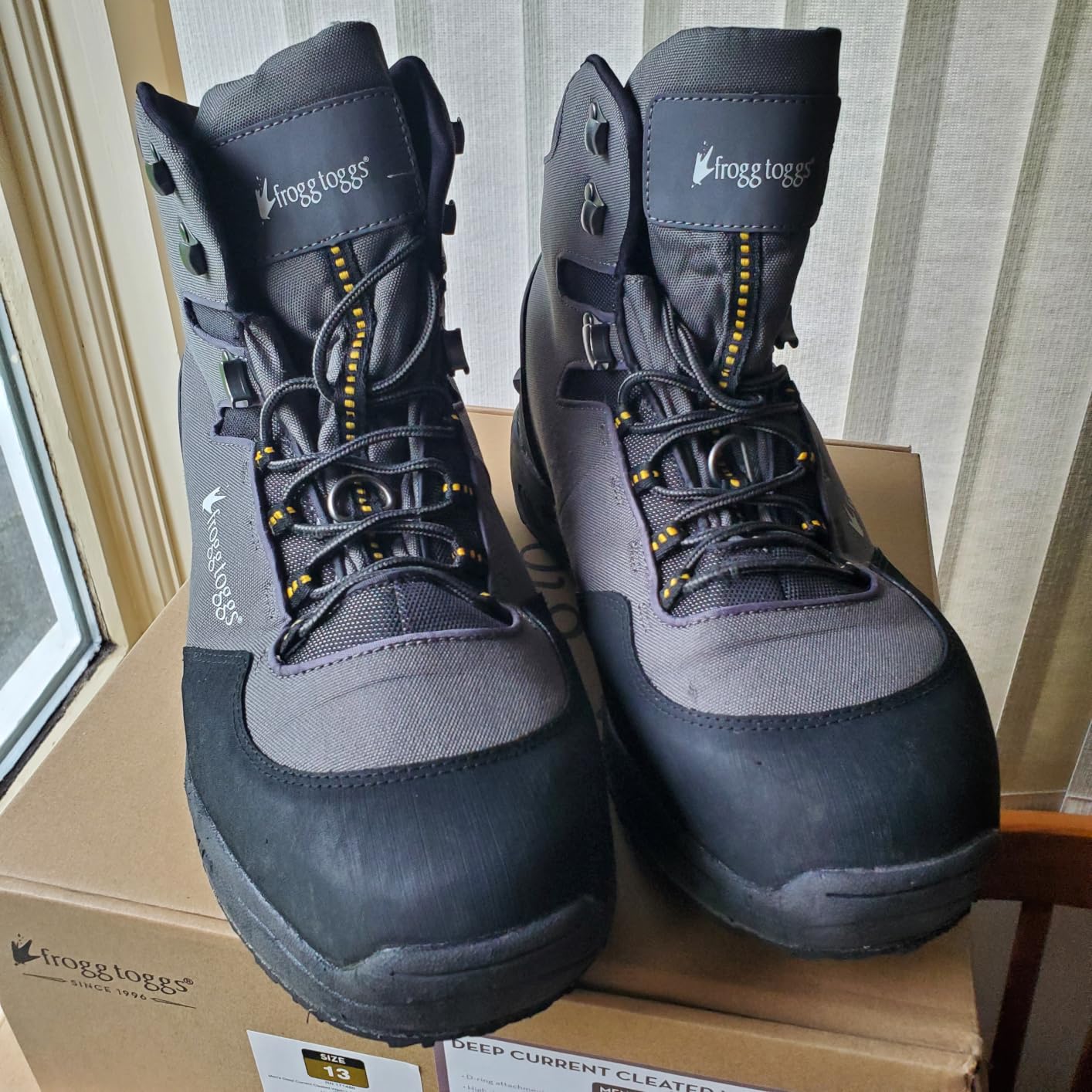
The Deep Current is built around one thing, and it is the thing most wading boots do badly: a broad, stable platform under the foot with genuine ankle support on top of it. Owners with a history of ankle trouble single it out, and that is not a faint compliment in this category.
It comes in felt and heavy-duty rubber cleated versions, and the micro screen ports at the upper let water out fast while keeping sand and grit out. Toe and heel protection covers the two places that take the punishment on rocky shores and in shifting gravel.
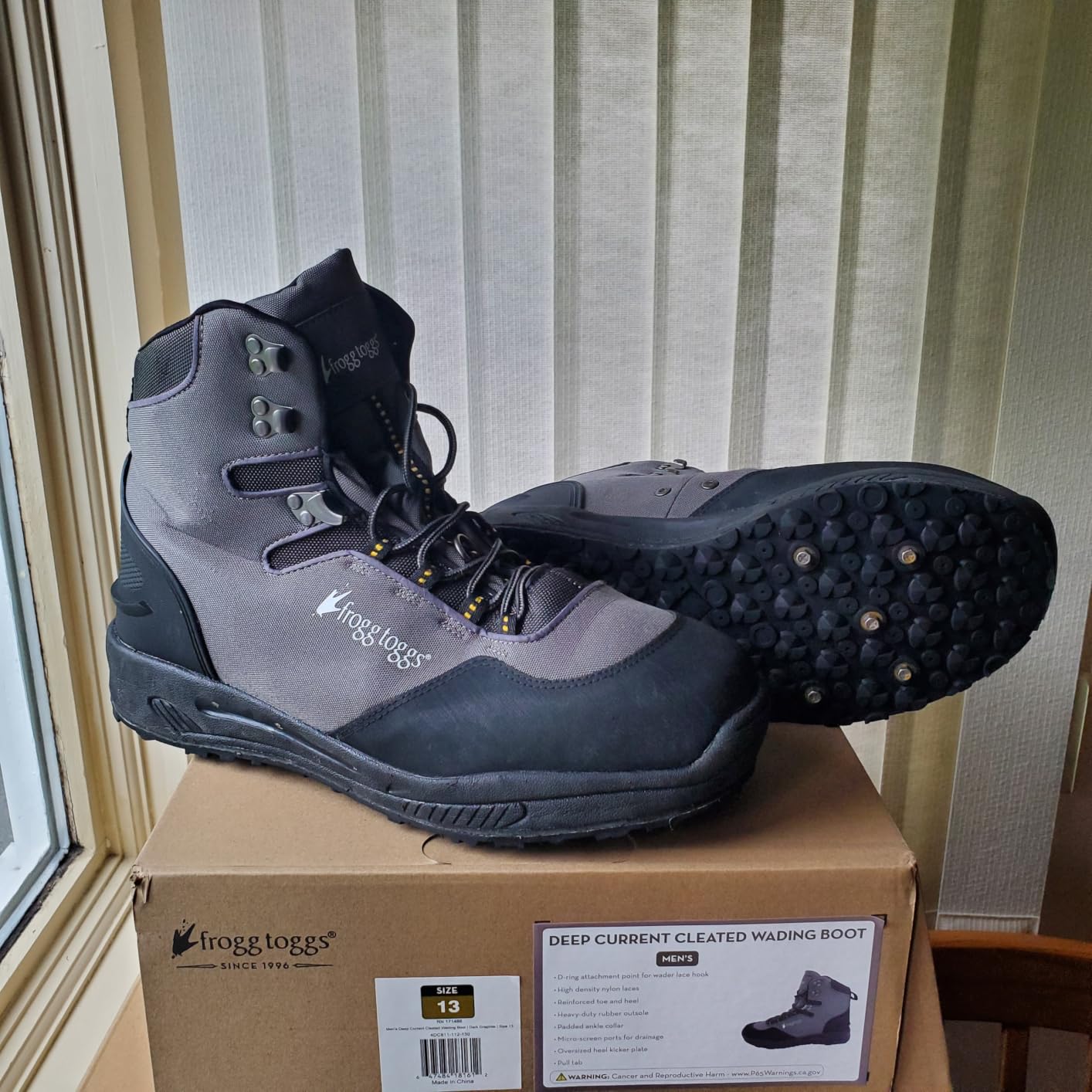
Two details I like. The lace hooks on the metal hangers will physically catch the hooks on your gravel guard, so the waders stay attached during long days, and several owners mention walking three to five miles each way without the boot becoming the reason to turn back.
Fit runs big, so anyone wanting a snug feel should size down. The cleated version is not strong on its own without added studs, which is worth knowing before you rely on it in current. The tongue could use more padding, and one pair had loose stitching at the sole.
When ankle support is the deciding factor
If you have rolled an ankle before, if you fish deep offshore drops, or if you are on rocky ground where the footing changes under every step, the platform and stiff upper here do more for you than any outsole upgrade. A boot that keeps the joint above the foot from moving sideways is solving a different problem than a boot that improves friction, and the two are not substitutes.
Where it falls short
It is a well-built mid-weight boot without interchangeable soles, so it cannot follow you from a slick stream to a mud flat. Add studs if you take the cleated version, and size down if you already have wide feet. Otherwise this is a stable, honest boot that will outlast most first pairs.
Simms Freestone Rubber Boot – Best Support for Big Rivers
Simms Men’s Freestone Boot – Rubber Gunmetal 11
Waterproof scratch leather upper
Dual density EVA midsole
Accepts Hardbite and Alumibite studs
Crafted without PFAs
Pros
- Exceptional ankle support for weak ankles
- Waterproof scratch leather upper
- Well-finished seams and stitching
- Dual density EVA midsole underfoot
- Outsole accepts Simms Hardbite and Alumibite studs
Cons
- Toe box runs narrow for some
- Rubber outsole drains slowly
- Studs and cleats are a separate purchase
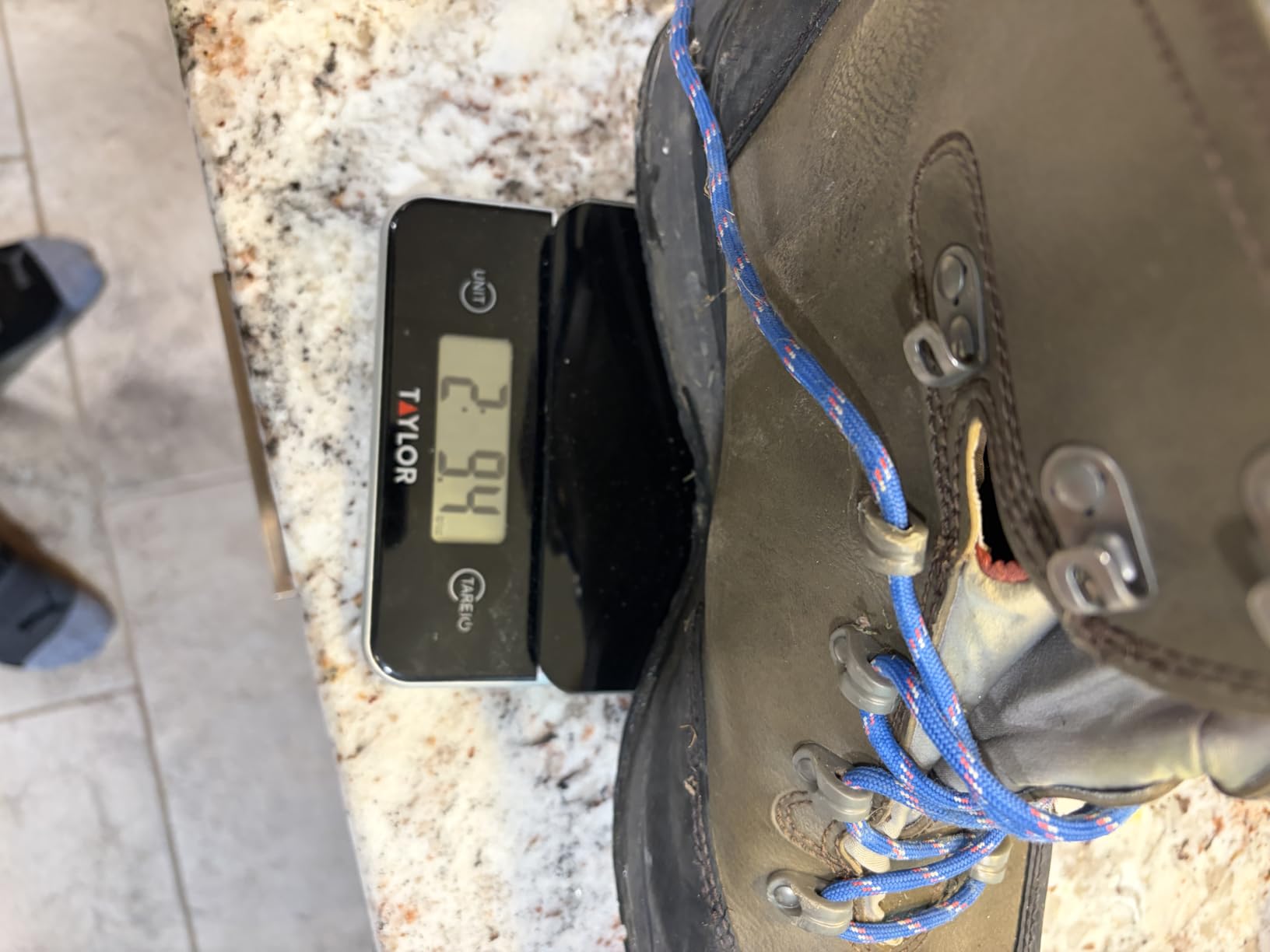
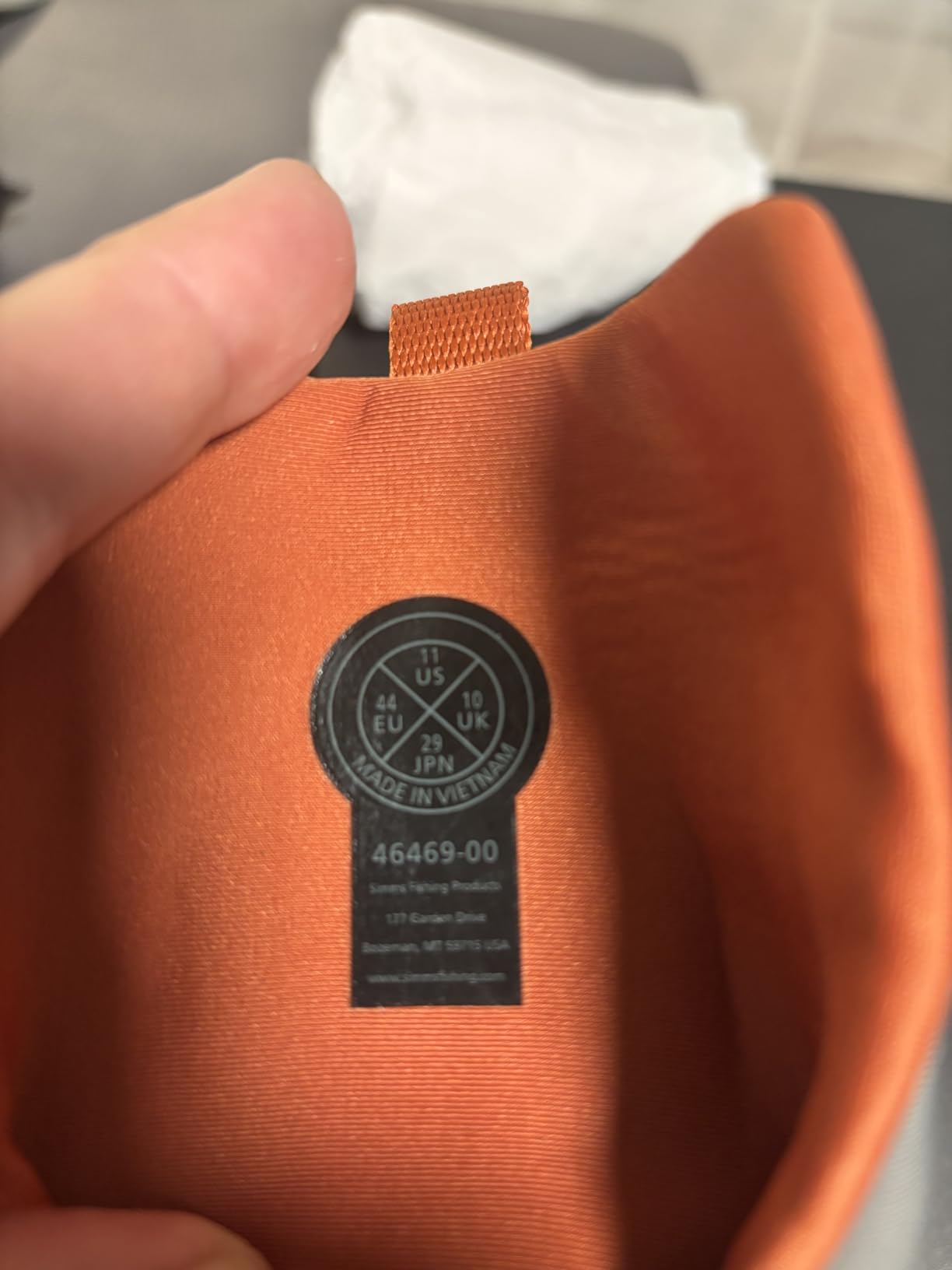
The Freestone is the boot for anyone who has been in cold water long enough to know exactly what a bad ankle roll feels like and wants to stop thinking about it. Reviewers with weak ankles describe it as the most stable boot they have waded in, and the 4.6 average sits alongside an 80 percent five-star share across 95 reviews.
The upper is waterproof synthetic scratch leather with toe and heel reinforcement, over a partial neoprene lining that makes it easy to get on and off with cold hands. The dual density EVA midsole puts a softer layer under the foot and a firmer layer under the arch, which is why it stays comfortable on a long day.
The outsole package is designed to take Simms Hardbite Star Cleats, Hardbite Studs and Alumibite Star Cleats, so you can dial in mechanical bite for algae and moss. It is also crafted without PFAs, which matters more each year as waters with PFAS restrictions multiply.
The trade-offs are specific. The toe box runs narrow, so size up if you wear thick socks. The rubber drains slowly, and one reviewer notes a thin lining. And the studs are not included, so budget for them if that is your plan.
Why PFAS-free construction matters on a river
More states are restricting PFAS in outdoor gear, and anglers moving between regulated waters want gear that does not complicate the question. A boot built without PFAs removes one variable from the compliance side, which is a genuine long-term benefit for anyone chasing steelhead across several drainages.
Who should look elsewhere
If you need fast drainage above the boot, the Freestone is not it, and a mesh boot will dry in a fraction of the time. If your budget is tight, the Paramount Stonefly includes studs at a much lower outlay for similar ankle stability. Buy the Freestone when support and weather protection matter more than drying speed.
Paramount Outdoors Deep Eddy – Felt With Removable Studs
Paramount Outdoors Deep Eddy Felt Bottom Wading Boots, Felt Wader Boots (12)
Felt sole with recessed stud housings
Removable studs included
Reinforced toe cap
Sizes 8-13
Pros
- Felt plus removable studs in one package
- More ankle support than the Stonefly
- Built-in drain holes empty fast
- Heavy stitching at stress points
- True to normal shoe size with booties
Cons
- Stiff on long hikes
- Less rugged than a premium boot
- Included studs use a wide thread
The Deep Eddy is a felt boot that solves felt’s biggest weakness, which is that felt alone gives you the best grip on smooth rock and almost nothing on moss or algae. It has recessed stud housings in the felt and removable studs in the box, so you can run pure felt on clean rock and add bite when the bottom turns green.
Owners moving up from the Stonefly report noticeably more ankle support, which is what you would expect from the deeper build. Stitches are heavy at the stress points and along the sole, and several people note their pair still looks new after a full season.
The felt and stud decision in one boot
On a freestone river where you cross smooth channels in the morning and mossy ledges by afternoon, swapping the studs is a thirty-second job at the bank. That flexibility is the argument for this boot, and it is why felt plus studs keeps coming up in forums even as regulations tighten around plain felt.
What to watch for
Stiffness on long approaches is the common complaint, and it is a real one. Also note the included studs use a wide thread that leaves a large hole, so if you lose them you must match that diameter rather than dropping in a standard set. Budget for a replacement set from a known brand if you fish rough ground. Sizing is otherwise true to normal over booties.
Kylebooker Wading Boots – Best for Warm Weather Wading
Kylebooker Men’s Fishing Wading Boots Lightweight Anti-Slip Rubber Soles Waders Shoes for Fly Fishing Green (Rubber Sole, 11)
Non-slip rubber outsole
Mesh upper with reinforced toe and heel
Padded ankle collar
Wide collar
Pros
- Lightweight and quick draining for long days
- Non-slip rubber grips moss
- logs and mud
- Reinforced toe and heel
- Wide collar pairs well with waders
- Bright mesh dries fast
Cons
- Rubber only
- so less grip on polished rock
- No interchangeable sole or stud option
- Fixed rubber outsole with no upgrade path
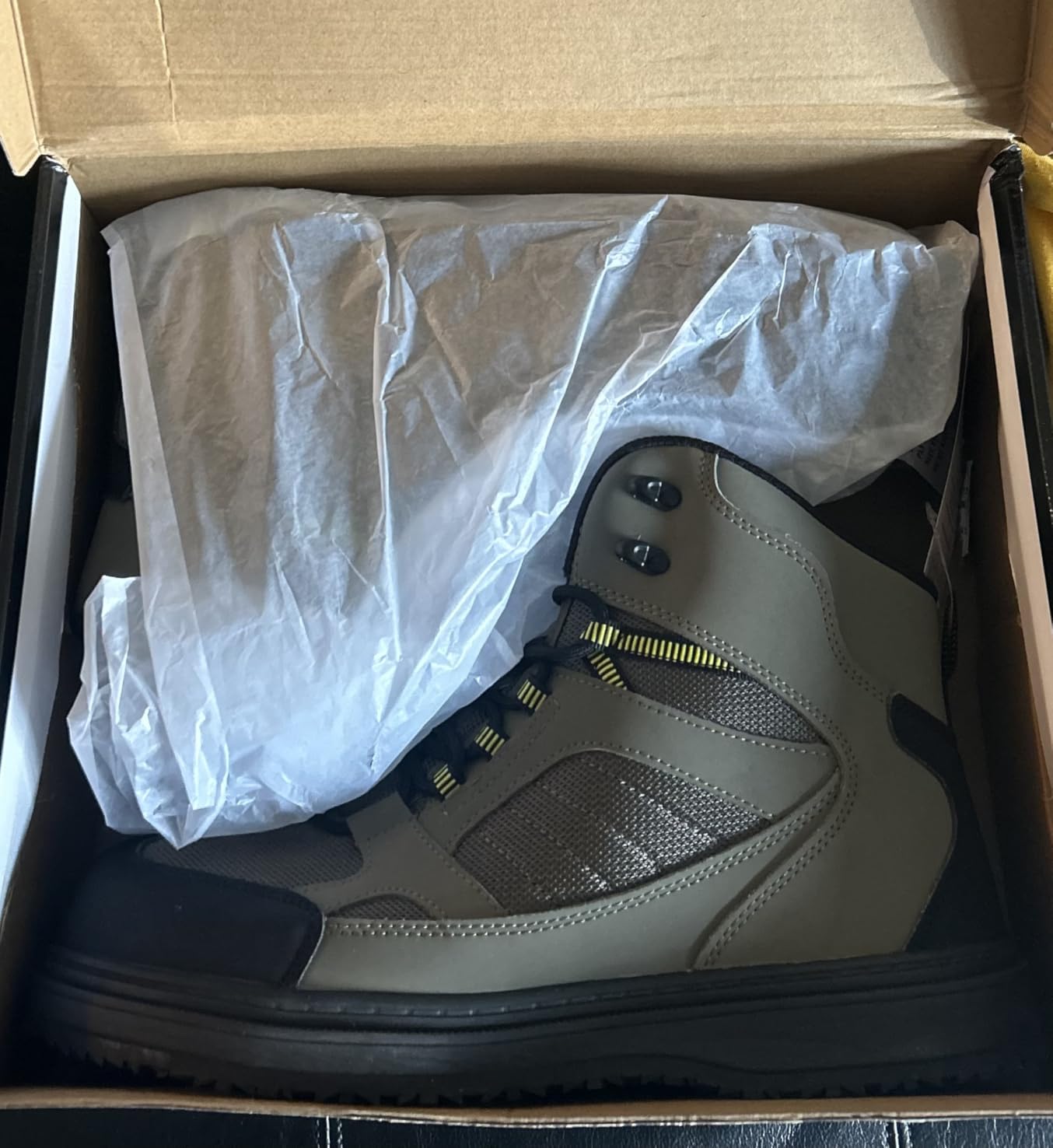
For summer fishing on a river with a gravel and cobble bottom, a warm bottom and a soft bank, the Kylebooker is a comfortable, no-fuss choice. The construction is light, breathable and quick draining, with a mesh upper, reinforced toe and heel, and a non-slip rubber outsole for grip on mossy rock, downed wood and mud.
The wide collar is designed to sit under wader cuffs without bunching, and the padded ankle collar gives enough support for shallow wading without the stiffness that heavy boots bring. It comes in sizes 8 to 14.
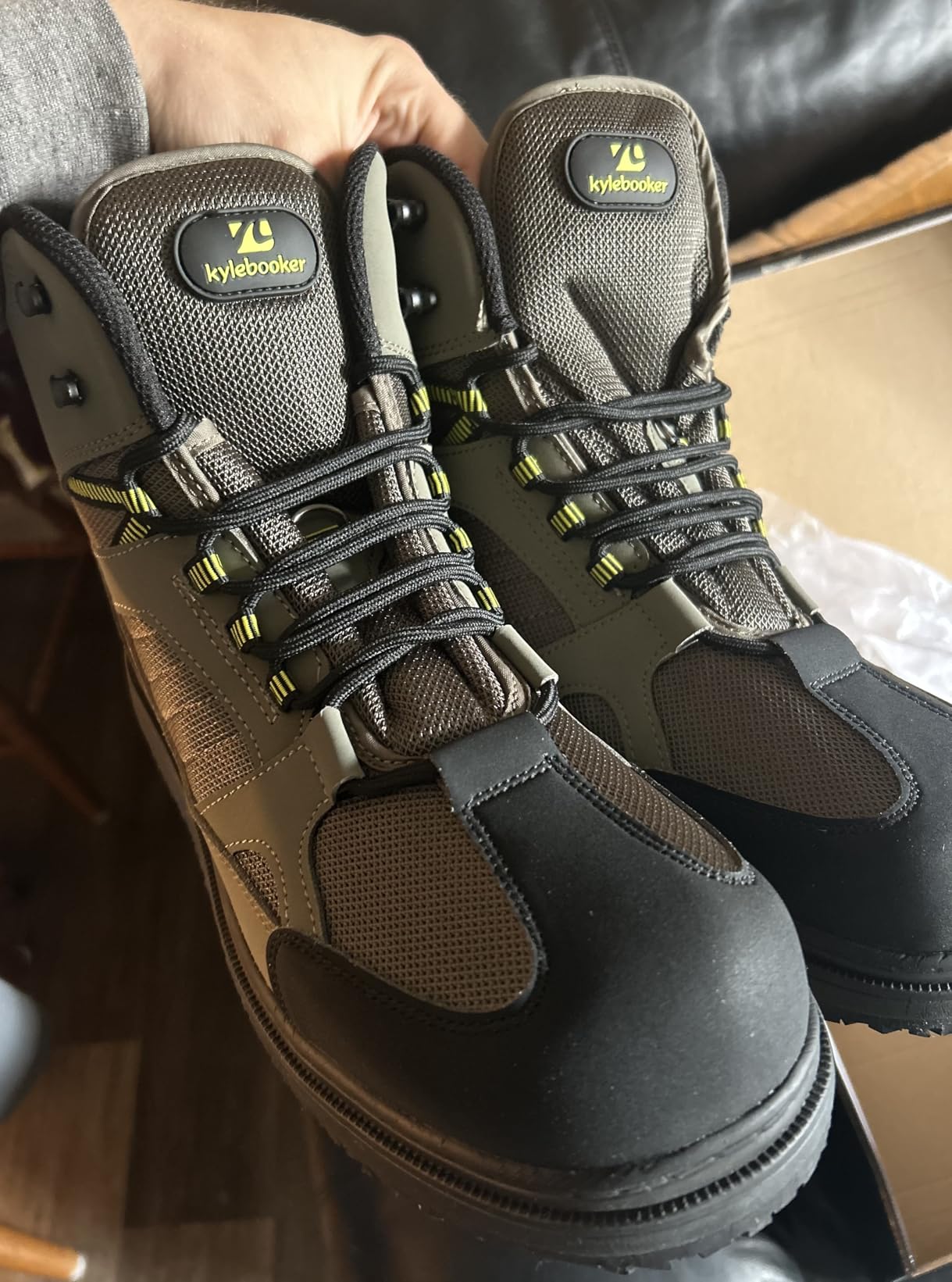
The honest limit is the outsole. Fixed rubber with no felt and no stud insert point means it will not serve a polished granite river, and on slick rock the gap against felt or studded soles is real, not marginal. There is no upgrade path later, which makes this a summer boot rather than an all-season one.
Owners like the light weight, the quick drainage and how the reinforced toe and heel hold up on gravel, and it ranks well among the top fishing boot listings for build at the price. The recurring negatives are durability complaints, which show up in a 9 percent one-star share, and a fixed outsole with no upgrade path.
Pair it with a seasonal mindset
Think of this as a three-season pair: warm rivers, moderate water, gravel and mud bottoms. It breathes, it drains in minutes, and it disappears on your feet over a long walk, which is exactly the behaviour you want when the water is not cold enough to need neoprene.
When to step up instead
If the water drops into the 50s, move to something with a neoprene lining and a stiffer upper, because mesh has nothing to give you. If the rock turns slick, add studs if your boot accepts them, or accept that you need a different boot. Both of those are reasons to own two pairs, which is where the interchangeable systems start making sense.
Where Felt Soles Are Restricted in the United States
Felt is restricted because it can carry invasive organisms and disease spores between waterways, including New Zealand mudsnails and the microorganisms behind whirling disease. Restrictions have tightened steadily, and the pattern is consistent: felt is banned on designated waters rather than banned everywhere.
Check your regulations before you fish, every time. Rules change, waters get added, and the specific water you plan to fish matters more than the state you drive through. The list below covers the states with felt restrictions anglers most often encounter, and it is a starting point, not a substitute for checking the current regulation for your water.
Alaska restricts felt on many designated waters, which is the single most commonly asked felt question in angler forums. Montana, Idaho, Oregon, Washington, Wyoming and Colorado all apply felt restrictions on designated waters, with the strictest application generally on cold-water trout and native fish habitat.
New York, Pennsylvania and much of the Northeast restrict felt on waters with native trout and on the more sensitive fisheries. California, Nevada and Oregon restrict felt on designated waters tied to specific species and habitat protections, and the rest of the country is a patchwork of water-by-water rules rather than a blanket ban.
The practical takeaway is that if you expect to fish across state lines, a sticky rubber or studded rubber boot is the only pair that will never put you in conflict with a regulation. Many anglers who converted to rubber report that they stopped tracking regulations entirely, which is worth something on its own.
How to Size Wading Boots Over Booties
Sizing is the loudest complaint in every wading boot forum we looked at, and it is also the most common reason boots get returned. The rule is simple but brands handle it differently, so the brand chart always wins over general advice.
Start with your wader booties on. A stockingfoot wader boot has neoprene of varying thickness, and the size you wear in street shoes is not the size you wear over them.
Add your wading socks. A thick neoprene sock in cold water can add real volume, and this is the most commonly missed variable in the sizing conversation.
Check the brand chart and expect a range. Most brands fit true to size or slightly generous, and several run narrow at the forefoot while others run long and wide. The Foxelli runs snug and most owners size up one. The Paramount Stonefly runs long and most owners size down one. Both are stated repeatedly in reviews.
Test the heel lock. With the laces or dial tightened as you would fish, your heel should not lift when you lift your foot. Heel lift is a fit problem, not a break-in problem, and no amount of lacing will fix a boot that is the wrong length.
Layer for cold water when in doubt. If you will be in cold water with neoprene socks and booties, fit for all of it at once. Trying to put a thicker sock on later in the season, in the cold, at the river, is how boots get abandoned in a truck.
How to Choose River Wading Boots in 5 Steps
Choose the outsole first. Felt or studs for polished rock where felt is legal, sticky rubber for mud, gravel and mixed ground, and studded rubber if you want one answer for both.
Choose the ankle height honestly. Low ankle for wading, mid for uneven banks and gravel, and knee-high only if you have a specific reason, because bulk underfoot is real fatigue and some shorter anglers find knee-highs restrictive.
Match the boot to your wader type. Boots sized for stockingfoot booties do not automatically fit bootfoot waders, and the bootfoot shell is built around a boot rather than a bootie. If you wade in stockingfoot waders, that is what all of these boots are designed for.
Look at the construction, not the marketing. A firm midsole, a reinforced heel counter, a reinforced toe and drainage ports are what keep a boot safe. Interchangeable soles are a convenience and cost-of-ownership feature, not a safety feature.
Map the boot to your actual terrain. Rocky trout stream, gravel-bar salmon river, muddy slough, cold northern river and estuary are five different answers, and one boot rarely wins all five. Our best wading boots for fly fishing guide covers the fly-specific angle if your rivers are smaller and your rocks are slicker.
Durability: What Breaks First and What to Inspect
Boots fail in predictable places, and knowing them tells you what to look at before you buy. Outsole delamination is the big one. A premium-boot owner on pnwflyfishing.com reported both of their Foot Tractors delaminating at the same time after about five years, requiring a cobbler repair and eventually a replacement.
Toe cap blowout is second. Gravel bars chew the front of a boot, and a boot with a reinforced toe cap and heavy stitching at the stress point survives years longer than one without. The Paramount Stonefly and Deep Eddy both use a reinforced toe cap, and owners of both report still-looks-new condition after a season.
Hardware corrosion is third and the most avoidable. A saltwater angler on the Rana Elite saw the brass speed hooks corrode and cut through the laces. Rinse hardware in fresh water, and if you fish salt, carry a spare set of laces.
Loose stitching and eyelet failure are worth watching for in any boot. If you see thread loosening around the flex point, that is the boot telling you its life is nearly up. In a bonded felt boot, check the felt-to-upper bond early, because a delaminating felt sole is the documented failure in budget felt shoes.
Weight also degrades usefulness. Boots that start heavy and stay heavy end up abandoned in the truck. If your boots are only comfortable for three hours, the answer is not more laces, it is a lighter pair.
Wading Boots vs Hiking Boots vs Wet Wading Shoes
Wading boots are for cold water and stockingfoot waders. They drain rather than waterproof, they have a traction outsole for wet rock, and they accept booties and wading socks. That is the correct default for most river fishing from fall through spring.
Wet wading shoes are the warm-weather category. Light, quick-drying and low, they are for summer streams and shallow rivers where you are not wearing waders. The question about the best shoes for wading in rivers usually gets answered with boots, but the honest answer depends entirely on the water temperature.
Hiking boots are the wrong tool, and it is not close. A hiking boot is built to shed water, so it holds whatever it takes, and its outsole pattern is for dirt and rock, not for the friction you need on a wet surface. Several anglers have tried it and moved on quickly.
One more category worth naming: if you spend real time on the bank before you wade, boot weight and pack weight matter more than outsole chemistry. Our FIT KING compression boot comparison and leg compression boot reviews cover the recovery side of long days on your feet.
Studded Boots: When the Noise Is Worth It
Studs are worth it when the bottom is algae, moss, slime or wet clay, because friction alone gives you very little there. A flyfishing.co.uk regular prefers studded rubber for exactly this reason, saying it gives much better all-round grip, and that studded felt still does not grip wet rock properly for them.
Studs are not worth it when you walk a lot on hard ground. They are loud on pavement, boat decks, car racks and gravel, they wear out, and they are a separate purchase on many boots. The Korkers Greenback and Darkhorse and the Paramount Stonefly and Deep Eddy all include or accept studs, which is where the maths improves.
A pnwflyfishing.com admin keeps both studded and non-studded Kling-On treads and writes that the non-studded ones are quite good, and that he wears them unless it is absolutely necessary to need studs. That is a reasonable default. Start non-studded, add studs for the trips that need them.
If your existing boots are fine and you just need more bite, anglers report that dirt bike ice screws fit Simms boots well and grab hard, which is a legitimate cheap upgrade for anyone who fishes a handful of trips. It is not a substitute for studs on serious slime, but it is better than nothing for very little money.
Frequently Asked Questions
Which is better for wading boots, felt or rubber soles?
Felt gives the best grip on smooth, polished, algae-covered rock, while sticky rubber is better on mud, gravel, long walks and mixed ground, and it is the only safe answer where felt is restricted. Choose felt or studs for slick hard-bottom rivers and rubber everywhere else. If you fish more than one kind of river, an interchangeable sole system like OmniTrax lets you carry both on one boot.
What are the best shoes for wading in rivers?
Purpose-built wading boots are the right choice for most river fishing, especially in cold water and with stockingfoot waders. In warm summer water without waders, lightweight wet wading shoes dry faster and are more comfortable. Hiking boots are not a substitute, because they are designed to shed water rather than drain it, so they stay heavy and slippery when submerged.
Which states ban felt sole wading boots?
Felt is restricted rather than universally banned, and the rules are water-by-water. Alaska, Montana, Idaho, Oregon, Washington, Wyoming, Colorado, New York, Pennsylvania and California all apply felt restrictions on designated waters, generally to protect native fish and prevent invasive species spread. Always check the current regulation for the specific water before you fish, because rules change and new waters are added.
When should you use felt bottom wading boots?
Use felt bottoms on smooth, polished, hard rock with low sediment, especially on slick ledges covered with algae, and only where felt is legal for that water. Avoid felt on mud, gravel bars, long walks and soft bottoms, because it grips poorly there and wears out faster than rubber. If you need felt grip across mixed terrain, look for a felt sole with removable studs included.
What size wading boots should I buy?
Most wading boots fit true to size, but sizing differs sharply by brand. Wear your stockingfoot wader booties and wading socks, then check the brand chart, because several boots run narrow at the forefoot and need a size up while others run long and need a size down. With the laces tightened as you would fish, your heel should not lift. Add thickness for neoprene socks if you will fish cold water.
Do wading boots keep your feet dry?
No. Wading boots are built to drain water through internal channels and midsole ports rather than to hold it, because a boot that holds water becomes heavy and cold in a river. Your stockingfoot waders are what keep water out of your legs. Waterproof upper materials describe the material itself, not the fact that you will stay dry after going under.
Are BOA wading boots better than traditional laces?
A BOA dial is a convenience win on a cold riverbank because you can tighten a boot with one hand and get it off in seconds without fumbling wet laces. Traditional laces remain perfectly fine, cost less to replace, and can be adjusted in finer increments. If you already own a good pair of lace-up boots, the lacing system is not a reason to replace them on its own.
Are wading boots necessary if I have stockingfoot waders?
Stockingfoot waders still need a boot underneath, and they need a purpose-built one. Waders keep water out of your legs, but the boot is what grips wet rock, protects the neoprene bootie from gravel, supports your ankle and drains. Trail runners and hiking shoes are not designed for slick submerged rock and will not replace a wading boot on a river bottom.
Final Recommendation
Buy the FROGG TOGGS Hellbender if you want one pair that handles most rivers and you would rather not think about outsole chemistry. It is the most proven boot here, with the largest review base in this roundup, and its cleated rubber works on mud, gravel, moss and rock.
Buy the Korkers Greenback if you rotate rivers. The interchangeable felt and Kling-On soles mean one upper covers both the slick rock debate and the mud problem, and long-term owners report close to a decade of service. Buy the Korkers Darkhorse instead if you fish hard rock a hundred days a year and want the best ankle retention on the market.
Buy the Paramount Outdoors Stonefly if studs included matter more than refinement, and the Simms Freestone if ankle support and a waterproof upper matter most. Deviate from all of them and go rubber-only if you fish across state lines, because felt restrictions keep tightening and a rubber boot never puts you in conflict with a regulation.
Whatever you choose, get the size right with your booties on, check the outsole-to-upper bond before the first trip, and treat a new pair as safety gear rather than footwear. Our inflatable raft guide covers getting to the rivers that have no road access, and our underwater drone reviews cover seeing the structure you are wading toward.