
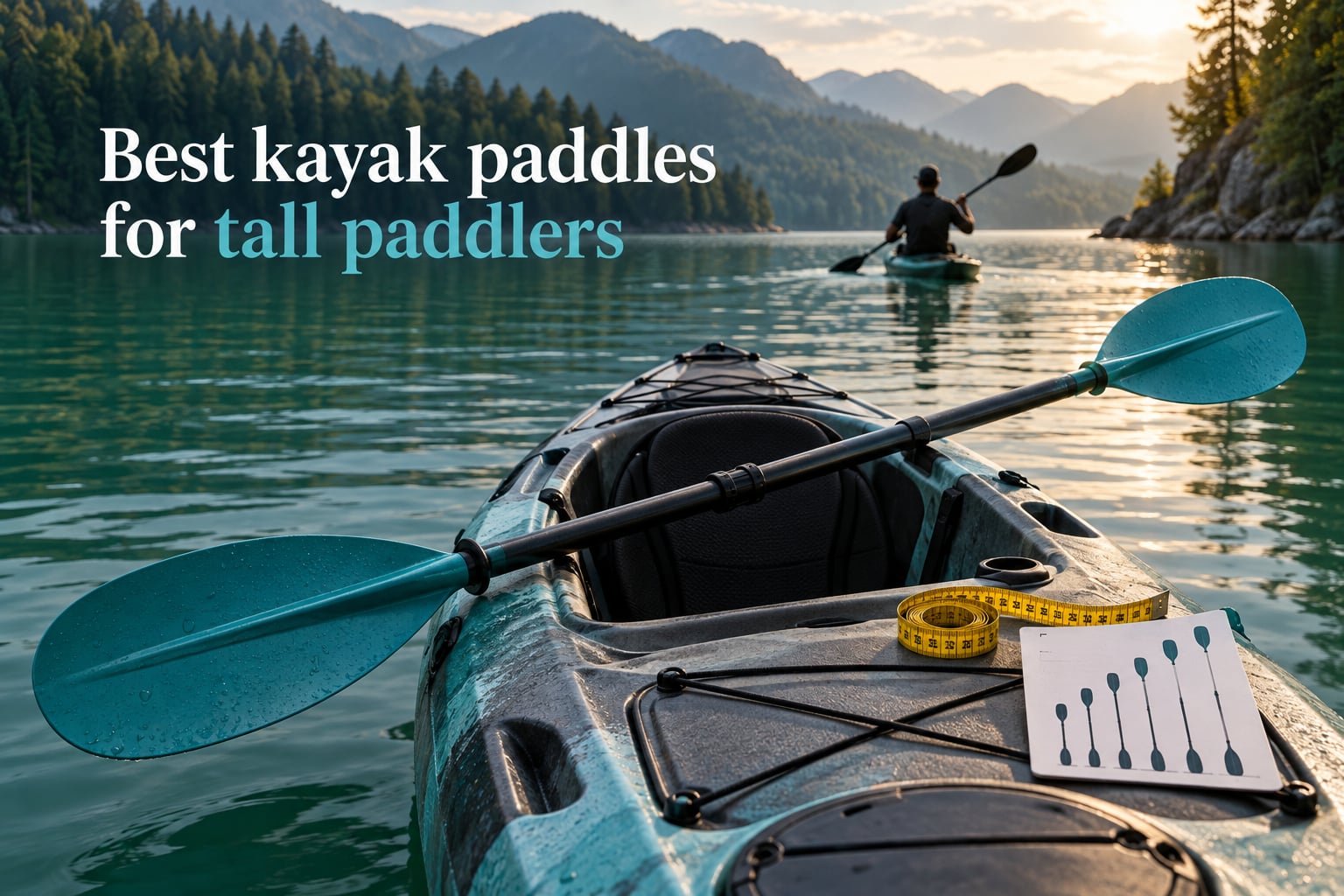
If you are around 6 feet tall or over, the answer is short: you need a long kayak paddle, not a standard one. The 210-215cm paddles that fill most retail shelves are made for paddlers in the 5’6″-5’10” range, and everything past 230cm sits on a short, awkward shelf further back. For a paddler at 6’0″ to 6’6″, the useful range is 230cm to 260cm, and the exact number is set by two variables rather than one: your height and the width of your boat.
That second variable is where most sizing advice goes wrong. A r/Kayaking thread asking for recommendations returns a near-unanimous line about how most paddles on the market are simply too short, with one paddler noting that a 215cm paddle is already short for somebody at 5’10”. The same forum carries the strongest counter-argument in the same breath: that paddle length is mostly about boat width and stroke style, not paddler height. Both are right, and the only way to settle it is to look at them together.
We compared ten paddles that ship in lengths a tall paddler can actually use, from 218cm budget aluminum to a 280cm carbon shaft. This guide covers the sizing math first, the product picks second, and the trade-offs last. If you are still choosing your first paddle at all, our beginner kayak paddle guide covers the basics before length comes into play.
Table of Contents
Top 3 Picks: Best Kayak Paddles for Tall Paddlers in 2026

OCEANBROAD 230cm Alloy Paddle
- 218cm
- 230cm and 241cm lengths
- Aluminum alloy shaft
- 1.02kg total weight
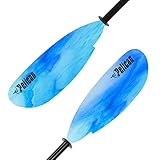
Pelican Poseidon 240cm
- 230cm and 240cm lengths
- 16oz aluminum shaft
- 65 degree blade angle option

SeaSense Xtreme 2 96in
- 96in / 244cm overall length
- Fiberglass filled nylon blades
- Asymmetrical feathered blades
Quick Overview: Long Paddles Compared in 2026
| Product | Specifications | Action |
|---|---|---|
| OCEANBROAD 230cm Alloy Kayak Paddle |
|
Check Latest Price |
 Overmont 218/230/241cm Aluminum Paddle Overmont 218/230/241cm Aluminum Paddle |
|
Check Latest Price |
| Pelican Poseidon 230cm/240cm |
|
Check Latest Price |
 Abahub 220-240cm Kayak Paddle Abahub 220-240cm Kayak Paddle |
|
Check Latest Price |
| SeaSense Xtreme 2 96in |
|
Check Latest Price |
 Best Marine Carbon Fiber 220-260cm Best Marine Carbon Fiber 220-260cm |
|
Check Latest Price |
 Pelican Symbiosa Telescoping 240-250cm Pelican Symbiosa Telescoping 240-250cm |
|
Check Latest Price |
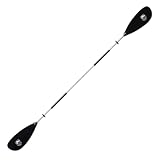 Bending Branches Whisper 220/230/240cm Bending Branches Whisper 220/230/240cm |
|
Check Latest Price |
 Pelican The Catch 250cm/260cm Pelican The Catch 250cm/260cm |
|
Check Latest Price |
 Bending Branches Angler Ace 240-280cm Bending Branches Angler Ace 240-280cm |
|
Check Latest Price |
Why a 215cm Paddle Fails Tall Paddlers
Short paddles fail in three specific, measurable ways, and all three show up in the first hour on the water. Understanding them matters because two of the three get misdiagnosed as a fitness problem.
The first is hull contact. On a boat over 30 inches wide, a 215cm shaft forces your hands to sit close together and low, so the blade enters the water at a steep angle and the inner edge clips the hull on every forward stroke. The r/Kayaking crowd describes the result as paddling a brick, with spray coming into the lap. On a wide sit-on-top that becomes a constant slap rather than an occasional one.
The second is shoulder fatigue from stroke angle. A longer shaft lowers the angle of the entry, so the blade plants flat instead of chopping. Over a full day, the difference between a steep and a shallow entry shows up in the shoulders and the lower back, and tall paddlers feel it sooner because they are levering a longer lever through a smaller effective range.
The third is hand spacing. A paddle sized for a 5’8″ paddler puts the hands at a width that forces a narrow, cramped grip for someone at 6’3″. That is what makes an otherwise fine paddle feel wrong in the hands rather than in the shoulders, and it is why sizing by torso alone fails. Our explanation of the 120 rule below shows why torso measurement cannot answer the length question for you.
Kayak Paddle Length Chart for Tall Paddlers
Add your height to your kayak’s beam width, then use the result to pick a shaft. The steps below are built for paddlers at 6’0″ and above, and the numbers reflect the stock lengths most brands actually offer rather than idealised custom lengths.
Step 1: start from your height. Under 5’6″ sits at roughly 210-220cm. From 5’6″ to 5’10”, 220-230cm works. From 5’10” to 6’2″, 230-240cm. From 6’2″ to 6’6″, 240-250cm. Above 6’6″, 250-260cm and you should plan a custom conversation rather than a shelf purchase.
Step 2: add width, not inches of boat length. Boat length barely moves the answer; beam does. A kayak under 26 inches wide needs no adjustment. From 26 to 30 inches, add 5cm. From 30 to 34 inches, add 10cm. Over 34 inches, add 15cm or more.
Step 3: add 10cm for a high seat. The widely used rule for high-seat fishing kayaks and elevated sit-on-top platforms is to add 10cm on top of everything else, because the seat lifts your paddler’s box above the waterline and effectively shortens your usable reach.
Worked example. A 6’2″ paddler in a 31 inch wide fishing kayak lands at 235-240cm before the seat adjustment, so 245-250cm is the realistic target. That is why the 250cm variant of our top fishing pick exists, and why 230cm would leave the same paddler chopping exactly as before.
Metric to imperial conversion. US paddlers shop in inches, so here is the same range in both. 215cm is 84.6 inches. 220cm is 86.6 inches. 230cm is 90.6 inches. 240cm is 94.5 inches. 250cm is 98.4 inches. 260cm is 102.4 inches. The 96 inch paddle in this roundup sits at roughly 244cm, which is why it lands so neatly for 6’2″-6’4″ paddlers.
One caution on the top end. A r/Kayaking commenter who runs a 40 inch wide sit-on-top notes that 230cm can eventually be too long once they move to a slimmer boat, and that logic scales upward. Boat width is the ceiling that paddle length cannot cross, so treat 260cm as a wide-boat length, not a universal tall-paddler length.
1. OCEANBROAD 230cm/241cm Alloy Kayak Paddle – Best All-Round Long Paddle
OCEANBROAD Kayak Paddle 90.5in/230cm Alloy Shaft Kayaking Boating Canoeing Oar with Paddle Leash 1 Paddle, Blue
218cm/230cm/241cm options
Alloy shaft, 1.1mm walls
Fiberglass reinforced PP blades
1.02kg, two-piece
Pros
- Three lengths including 230cm and 241cm
- 7800+ reviews from long-term owners
- Shrink-wrap PE grip stays comfortable when wet
- Drip rings at both ends keep water off the paddler
- Two-piece design breaks down for transport
Cons
- Heavier than composite paddles on long days
- Some owners report rough finish and slight join looseness
- Thin grip sleeve that some paddlers find too soft
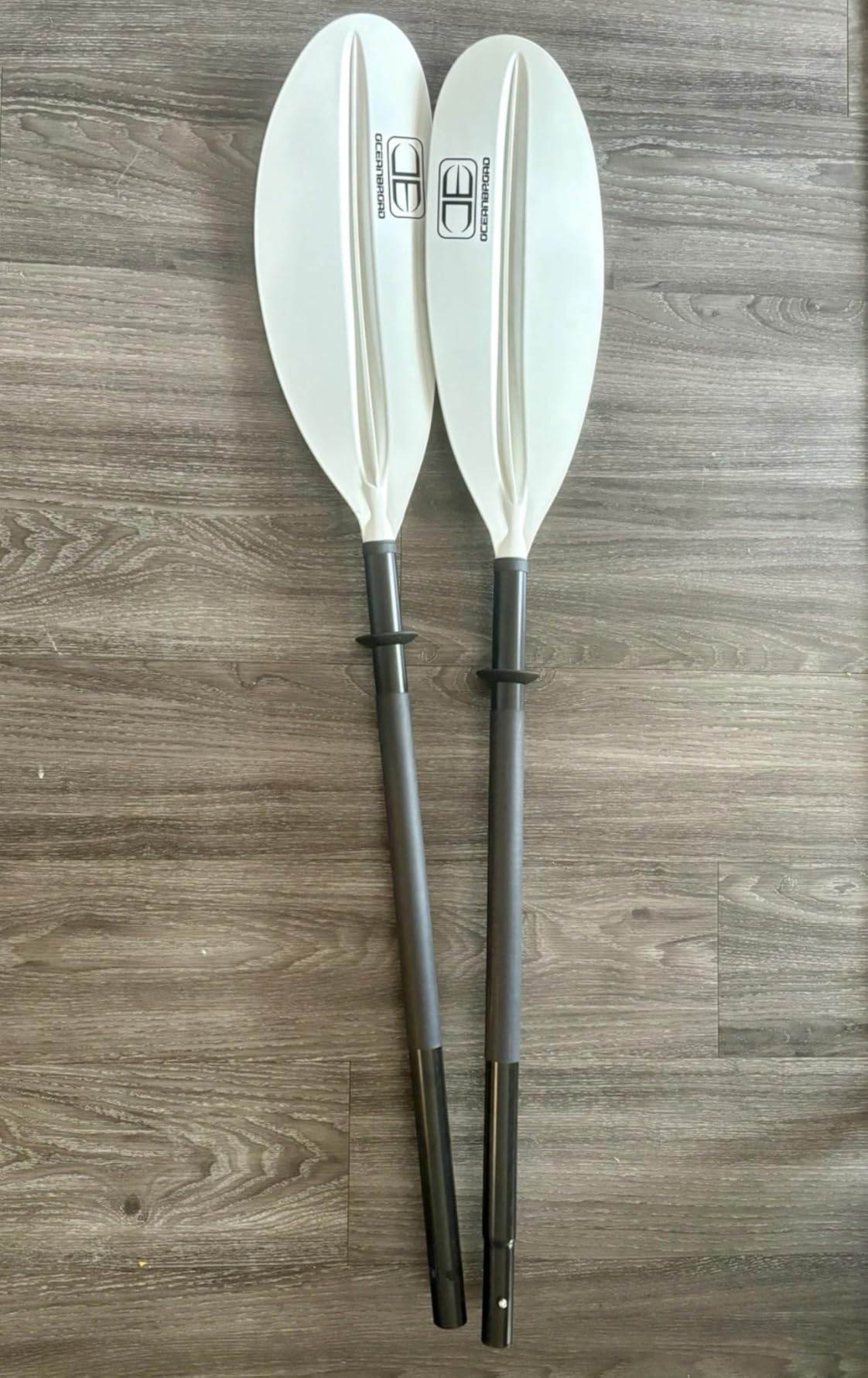
This is the paddle we keep coming back to because it solves the sourcing problem rather than the styling problem. Most brands sell one or two lengths; this one is built in 218cm, 230cm and 241cm, which means a 6’2″ paddler can step up from a 215cm shelf default without changing brand or buying two paddles.
The 1.1mm aluminum alloy shaft is thin enough to keep the whole paddle at 1.02kg even in the 241cm version, which is a genuine achievement at this construction level. Reviewers consistently report three-hour sessions without fatigue, and the shrink-wrap PE sleeve over the shaft handles cold water better than bare aluminum.
Blades are fiberglass reinforced polypropylene with smooth edges and drip rings at both ends, and the two-section build uses three locking blade angle positions. That gives you flat or feathered setup without tools, and the bungee leash is included rather than sold separately.
The honest limitation is weight class. At 1.02kg this is not a touring paddle, and a small number of owners report a rough finish with slight looseness at the joins. For a tall paddler on a lake, a river or a wide fishing kayak, though, it is a lot of usable length for very little mass.
Who this length suits
Pick the 230cm version for a 6’0″ paddler in a boat under 30 inches wide. Go to 241cm for the same paddler in a 30-34 inch fishing kayak, or for anyone at 6’2″ in a narrow touring boat. The 218cm length is the fallback if a shorter partner shares the boat.
Where it falls short
It is too heavy for a multi-day tour where you care about total pack weight, and the 241cm is close to the practical limit of what this shaft construction can carry. If your plan is 250cm and beyond, look at the carbon and fiberglass options further down rather than stretching this one.
2. Overmont 218/230/241cm Aluminum Paddle – The Cheapest Path to a Long Shaft
Overmont Kayak Paddle 230cm/90.5in Heavy Duty Aluminum Alloy Lightweight Boating Oar for Inflatable Kayaks with Paddle Leash
218cm, 230cm and 241cm lengths
Hollow aluminum shaft that floats
Two-piece, 920g
Pros
- Three length choices covering 218cm to 241cm
- Floating hollow shaft is easy to spot if it goes overboard
- Feathered blades give smooth pull on long strokes
- Angle adjustment and drip rings in one build
- Breaks down to fit a car trunk
Cons
- Heaviest feel in its class at 920g
- Bare aluminum gets cold quickly in winter
- Fine for flatwater rather than moving water
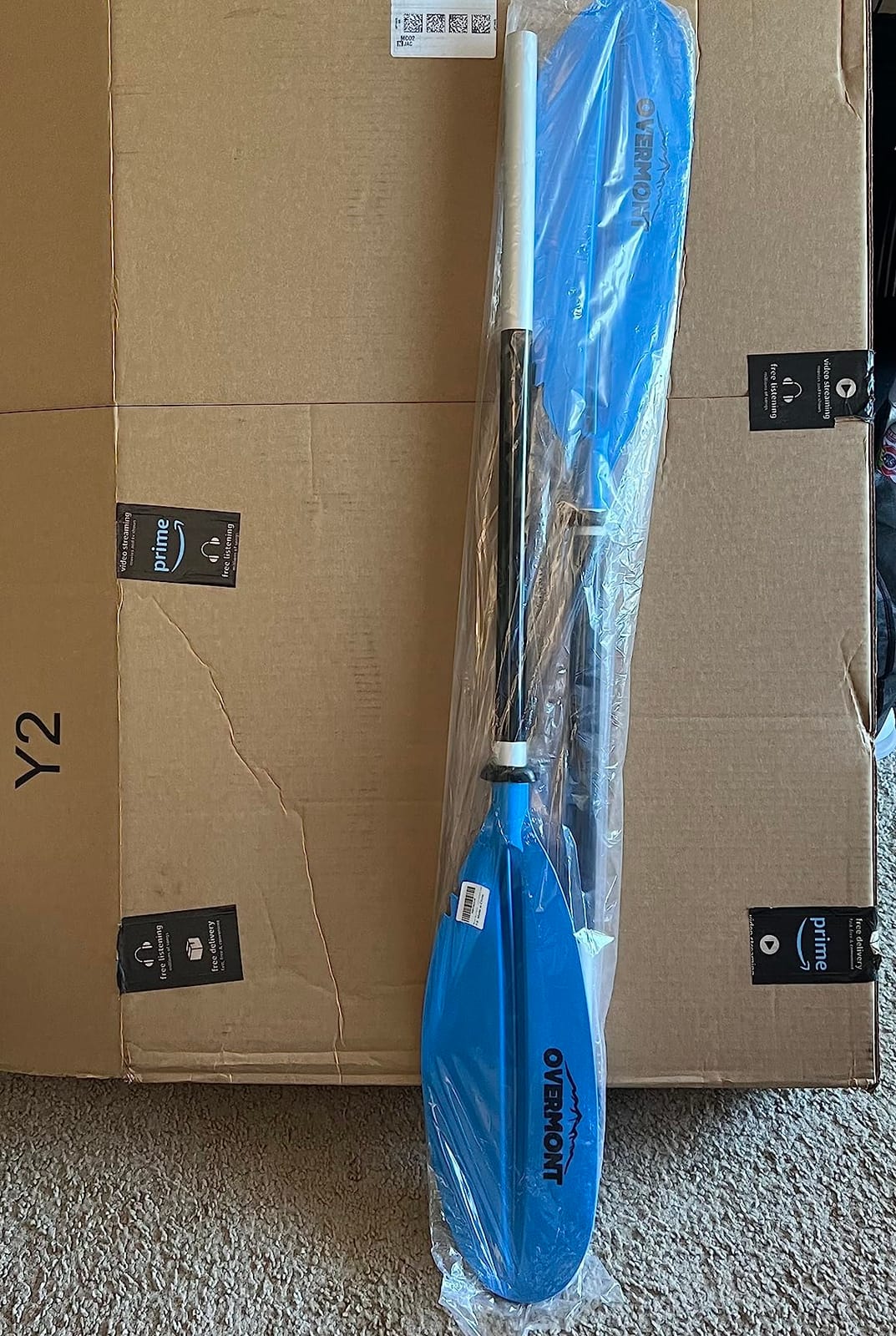
Overmont and the OCEANBROAD above are near-identical propositions, which is exactly why both are here. The Overmont is the cheaper of the two and adds one detail that matters on open water: a hollow shaft that floats if you drop it.
That float is not a gimmick on a wide sit-on-top, where a dropped paddle is genuinely hard to find. Combined with the included leash, it removes the most common stress point for new paddlers on bigger boats.

At 920g across the range, the construction is light for a budget aluminum paddle, and owners report it holds up for casual and fitness paddling. Feather-shaped blades, three locking angle positions and built-in drip rings give a clean, dry stroke at a fraction of the cost of a composite.
Reviewers do flag the obvious limits: budget aluminum feels cold in winter water, and the weight is noticeable on a full day compared with a fiberglass or carbon build. For a paddler whose real problem is that every paddle they own is too short, that trade is easy to accept.
Who this length suits
The 241cm covers a 6’0″ paddler on a wide boat and a 6’2″ paddler on a standard-width one. The 230cm is the sweet spot for a 6’0″-6’2″ paddler in a narrow recreational kayak, and the 218cm is a genuinely usable length for a shorter partner sharing the hull.
Where it falls short
This is a flatwater and calm-water paddle. It lacks the shaft stiffness and blade area for whitewater or heavily loaded touring, and the cold shaft is a real complaint from northern paddlers. It is also the one in this group most likely to feel heavy on a ten-hour day.
3. Pelican Poseidon 230cm/240cm – Best Value Long Paddle
Pelican Poseidon Paddle 89 in – Aluminum Shaft with Reinforced Fiberglass Blades – Lightweight, Adjustable Kayaks Paddles – Perfect for Kayaking Boating & Kayak Fishing (Blue, 2020 Model)
230cm and 240cm versions
16oz aluminum shaft
Fiberglass reinforced PP blades
0 or 65 degree angle
Pros
- Lightest paddle in this roundup at 16oz
- Two lengths including 240cm for tall paddlers
- Ovalized shaft gives a clear hand-placement reference
- Blade drip notch redirects water away from the cockpit
- Two-piece build has fewer failure points
Cons
- Blades flex slightly under hard strokes
- Heavier than composite options over long tours
- Straight shaft with no ergonomic spine
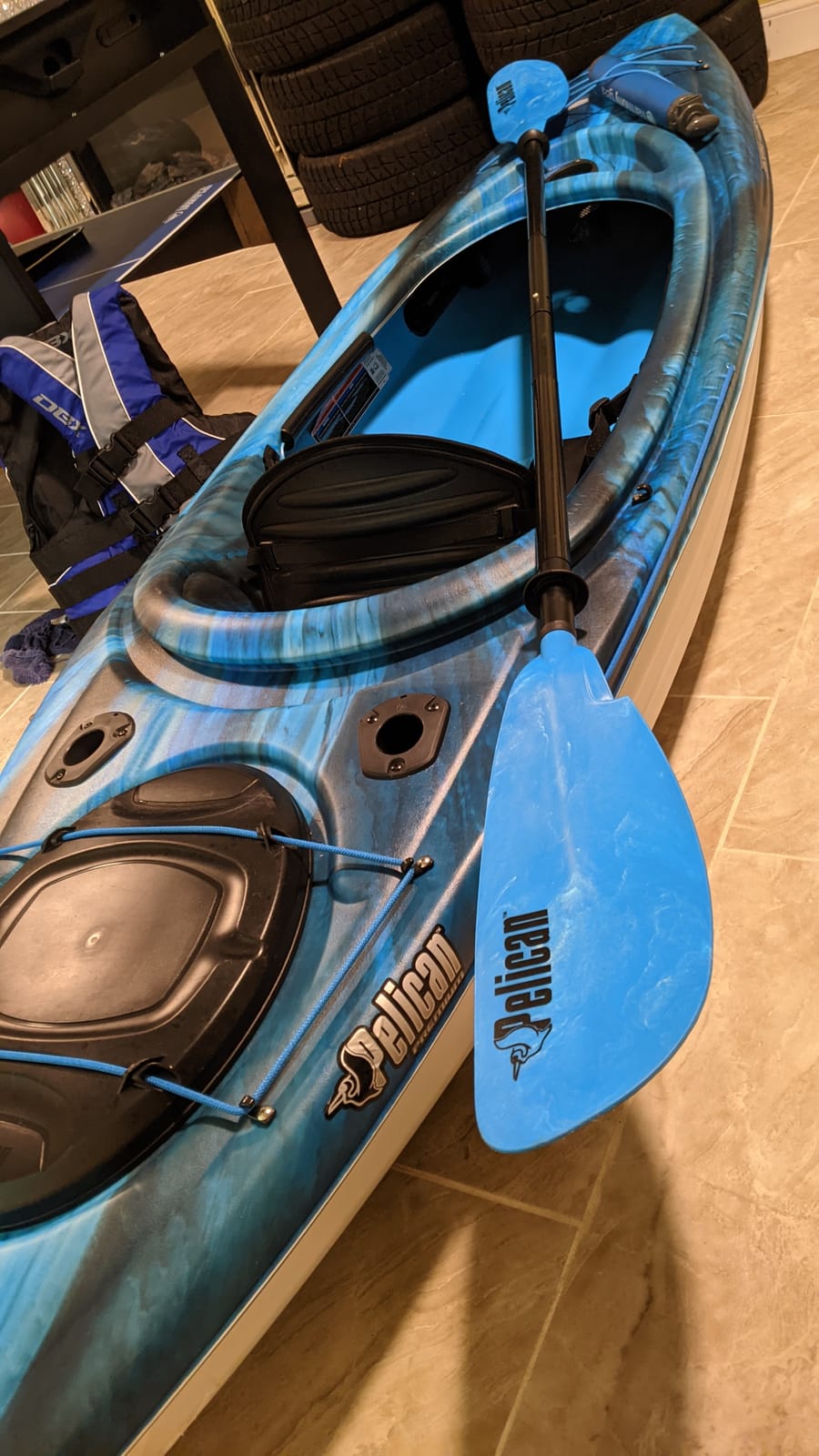
The Poseidon is the surprise of the group, because 16oz is a number you normally see on composite paddles several times the cost. It is a two-piece aluminum build with fiberglass reinforced polypropylene feathered blades, and reviewers repeatedly call it the best value in the aluminium class.
For a tall paddler the important detail is the 240cm version, which sits just above the 230cm and lands squarely in the 6’2″-6’4″ range. The push-button connection adjusts to 0 or 65 degrees, so you can run a flat setup for power or a feathered one for touring.
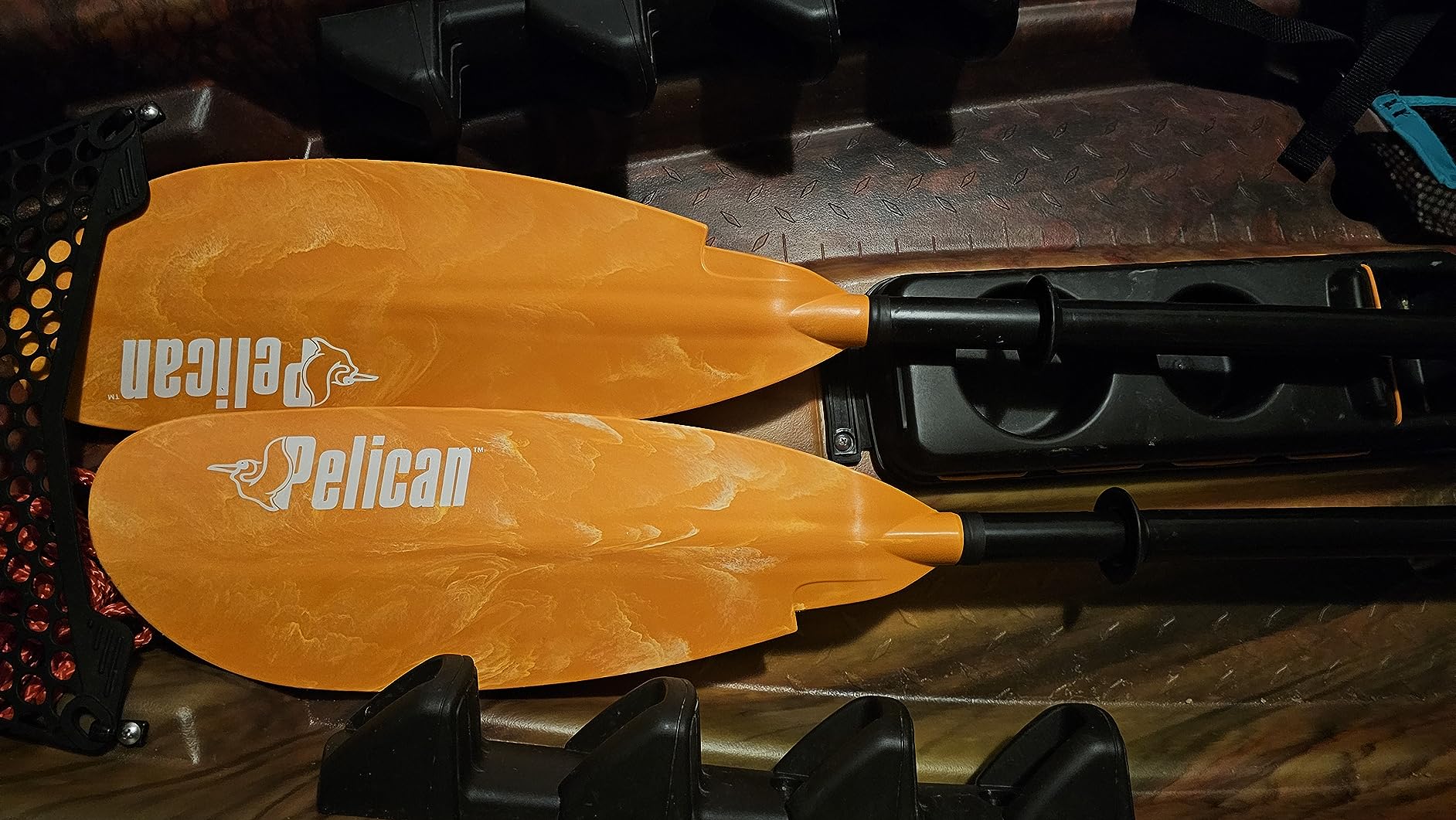
The ovalized shaft is a small touch that matters more than it sounds: the flattened section gives you a physical reference for hand placement, which is helpful when your hand spacing is wider than the paddle was designed around. Adjustable drip rings and a blade drip notch keep the cockpit dry on long sessions.
The straight shaft has no ergonomic spine, and advanced paddlers do not like that. Blades flex slightly under genuinely hard strokes, and it is still heavier than carbon once you pass the two-hour mark. But as a first genuinely long paddle, it is hard to argue with.
Who this length suits
The 230cm version fits a 6’0″-6’2″ paddler in a boat under 30 inches wide. The 240cm version is the one to look at if you are 6’2″ or over, or if you sit high in a fishing kayak. Add another 10cm of boat-width allowance for a platform above 34 inches.
Where it falls short
It is not a touring paddle. The lack of a spine and the flex in the blades show up on multi-day trips, and the straight shaft offers no wrist support on very long days. Serious sea kayakers will want carbon; weekend paddlers will not notice.
4. Abahub 220-240cm Kayak Paddle – Best for Wide Boats
Abahub Kayak Paddle with Free Leash 230cm Kayaking Oars Black
220cm to 240cm options
29mm aluminum shaft
18in asymmetric feathered blades
38oz
Pros
- Length range fills the gap between 220cm and 240cm
- A 6ft 2in reviewer in a 31in kayak calls the fit perfect
- Hollow spine in the blades adds stiffness
- Floats well and assembles in seconds
- 0.5mm rubber cover resists blisters
Cons
- Heavier than the price point implies for most buyers
- Length is wrong for small children
- Not intended for technical paddling
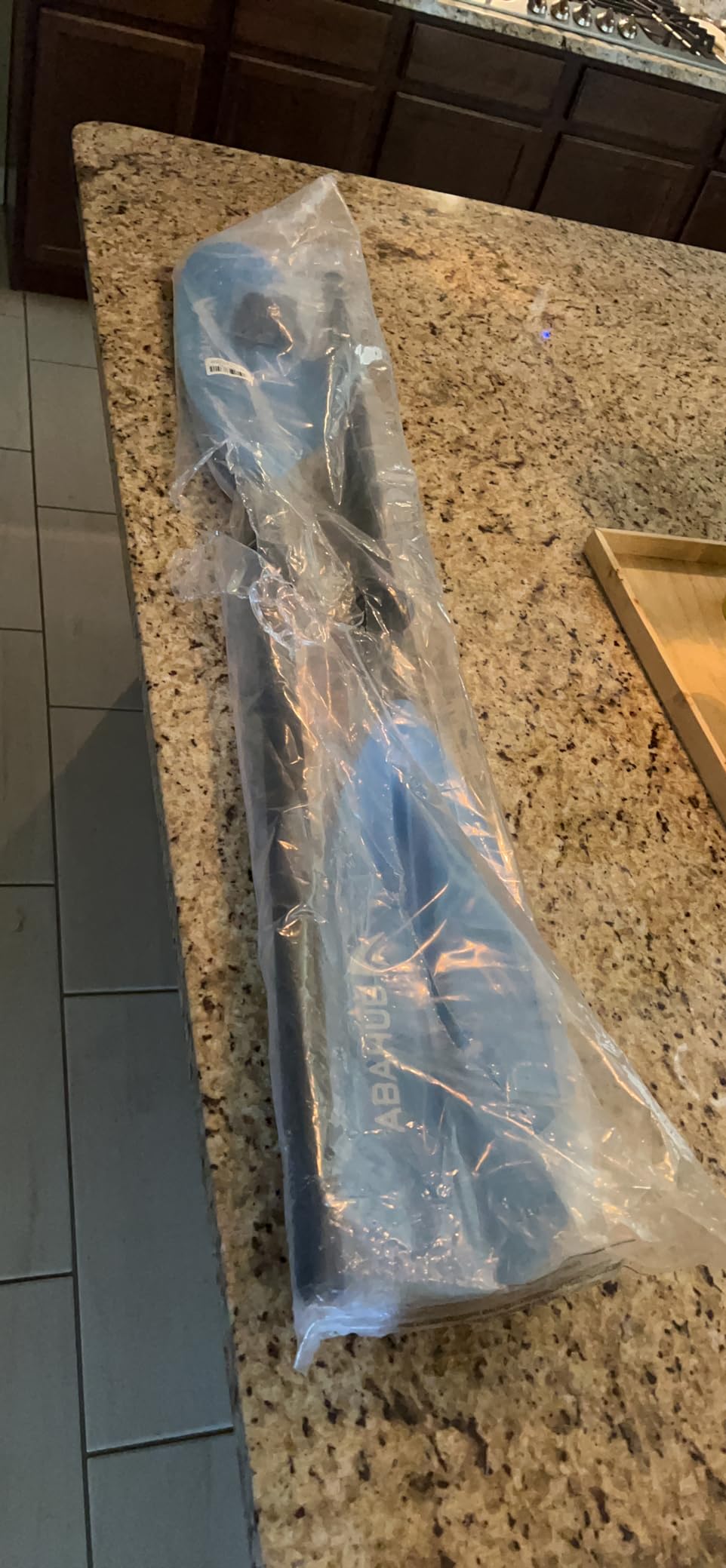
Abahub covers the 220-240cm band that most brands leave as a gap, and it is the paddle that turns up most often in tall-paddler conversations we read. One 6’2″ reviewer paddling a 31 inch wide kayak calls the fit perfect, which is close to the exact boat-and-body combination this roundup is built for.
The shaft is a thick 1.15mm wall at 29mm diameter, which is stiffer than the budget paddles above it. The blades are 18 by 6.5 inches with a hollow spine, an asymmetrical feathered shape that gives a strong bite without the choppy entry of a high-angle blade.
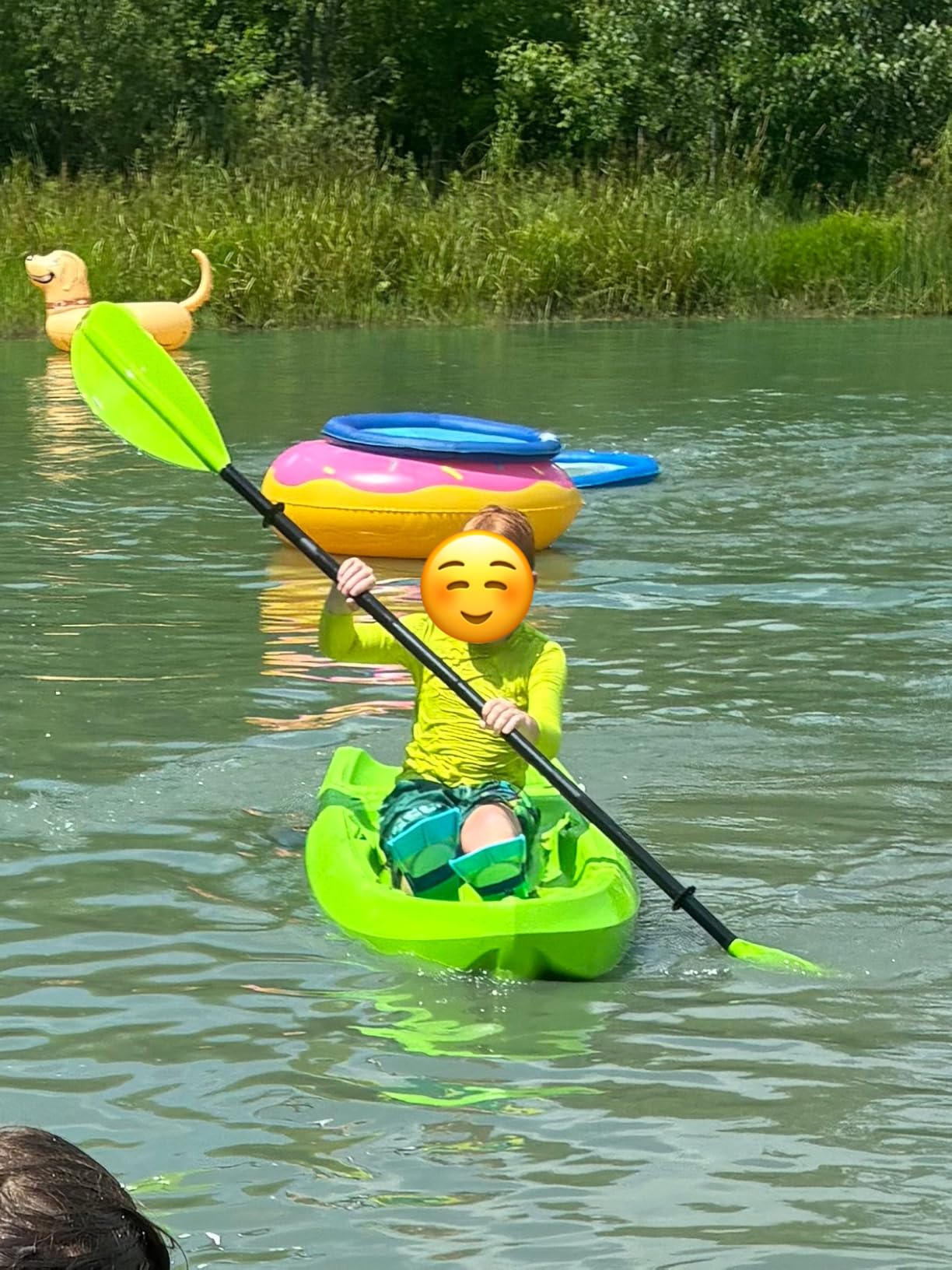
Two-section construction with three locking blade offset positions, upgraded drip rings at both blade joints and a 0.5mm rubber shaft cover round out a well-considered package. The bungee leash is free, which is one of the reasons this model has built such a large review base.
The recurring complaint is weight. At 38oz the paddle is heavier than buyers expect at this price, and it shows on a long outing. Second on the list is fit: the length range suits adults well and small children not at all, which is a sizing warning worth stating plainly.
Who this length suits
Adults over 5’5″ in a kayak under 30 inches wide, and 6’0″-6’2″ paddlers in the 30-34 inch range. The 240cm end handles a tall paddler on a wider fishing boat without pushing you to a heavier carbon build you may not need yet.
Where it falls short
The weight is the deal-breaker for long tours, and the rubber cover is thin enough that some paddlers with larger hands find the grip narrow. Nothing here suits whitewater or aggressive surf work, where blade area and shaft recovery matter more than reach.
5. SeaSense Xtreme 2 96in Paddle – Best for Big Boats and 6’4″ Paddlers
SeaSense XTreme 2 Kayak Paddle, Black, 96” – Fiberglass Reinforced Nylon Blades, 2-Piece Construction – Great for Sport, Sea, Whitewater, Recreational & Fishing Kayaking
96in overall length
Fiberglass filled nylon blades
Three blade locking positions
Foam grips
Pros
- 96in length gives real reach on wide kayaks
- Asymmetrical feathered blades cut drag on every stroke
- Support ridge in the blade adds power
- Comfortable foam grips over long sessions
- Two-piece build stores easily
Cons
- Heavier than modern composite paddles
- No feathering adjustment beyond three fixed positions
- Blades are nylon rather than carbon
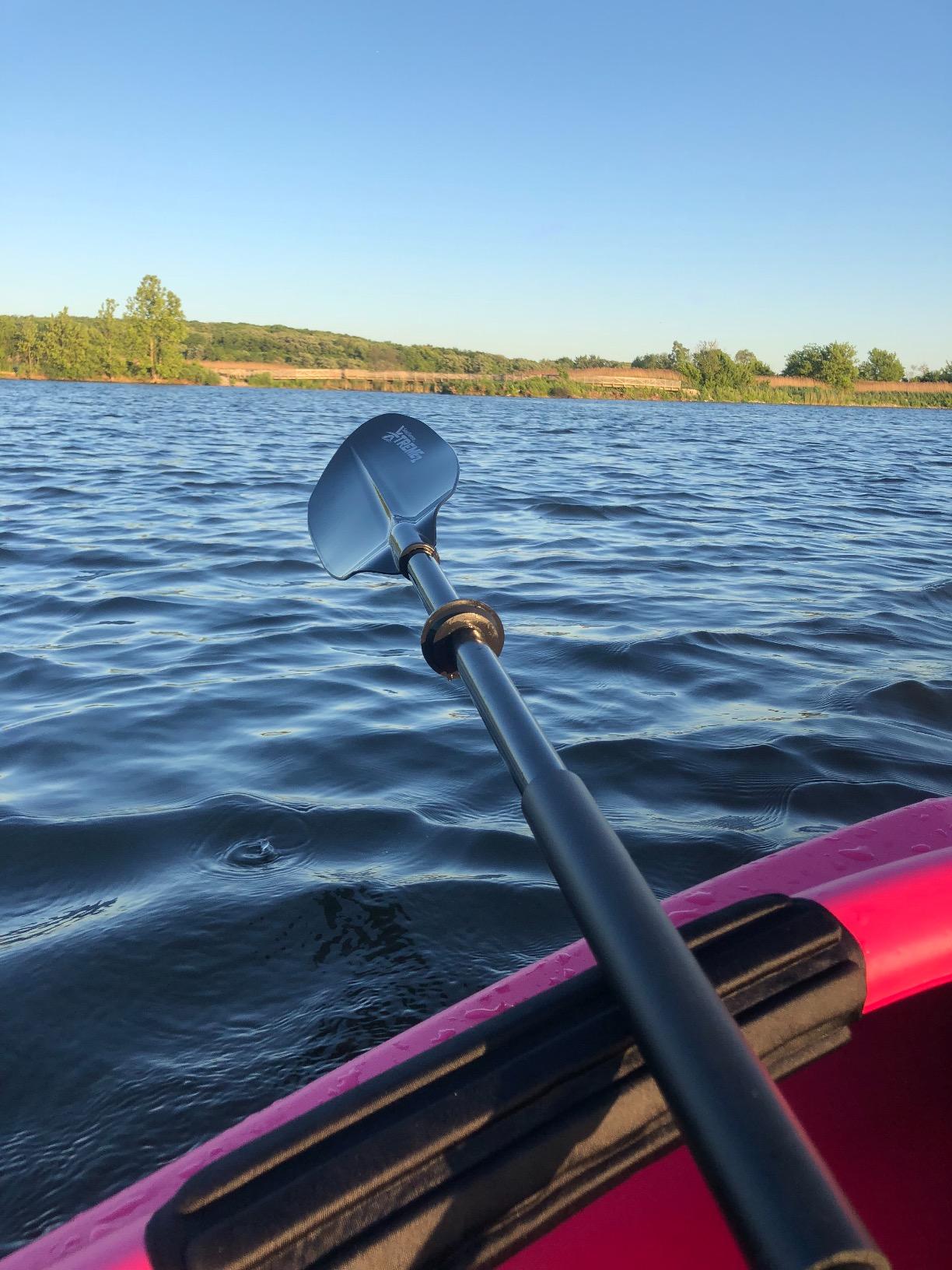
The Xtreme 2 is the long paddle in this group that was built long on purpose, rather than offering one long option. At 96 inches it is around 244cm, which is a size almost no other budget brand offers, and reviewers consistently identify taller paddlers as the people who buy it.
That makes it a natural match for a 6’4″ paddler in a wide recreational or fishing kayak, a combination where a 230cm paddle would leave you chopping and a custom shaft would be the only alternative.
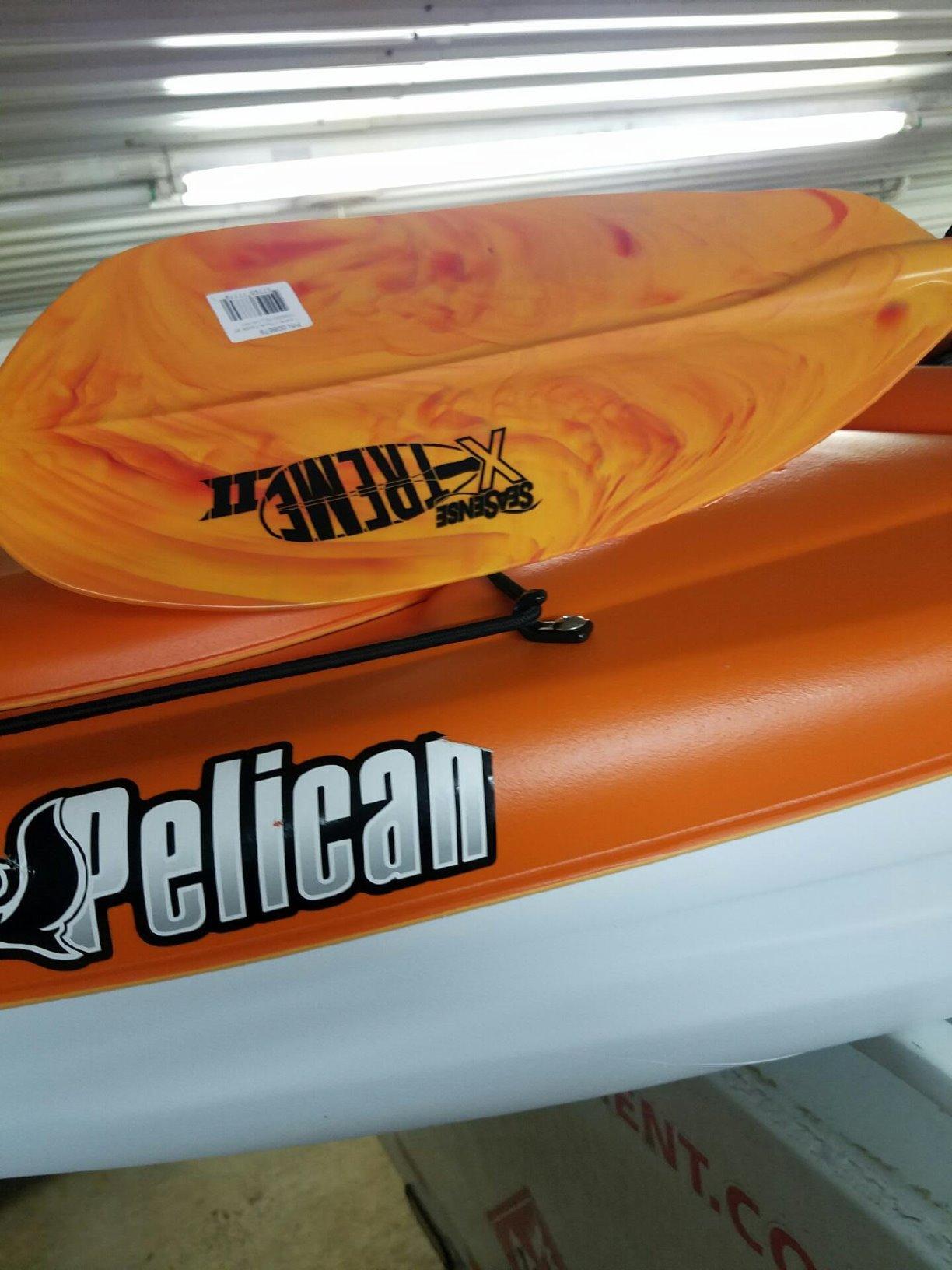
The blades are fiberglass filled nylon with a support ridge down the centre for power, an asymmetrical feathered outline and three locking positions. Adjustable drip rings and ergonomic foam hand grips make it a comfortable paddle for hours, not minutes.
Two-piece construction keeps it simple to transport, and the part is listed for sport, sea, recreational and fishing kayaking, so one paddle can cover several boats. The trade is mass: at 2.2 pounds it is among the heaviest here, and the fixed blade positions rule out fine feathering adjustments.
Who this length suits
Paddlers around 6’2″-6’6″ in boats from 30 inches wide upward, and anyone whose ideal length falls in the awkward 244cm gap between standard 240cm and 250cm options. It is also a strong first paddle for a high-seat fishing kayak.
Where it falls short
Weight is the main issue, and it is the reason we did not make this the top pick despite its length advantage. It is also a fixed-feathering design, so paddlers who want fine angle control for touring or who share a boat with someone using a different setup will find that limiting.
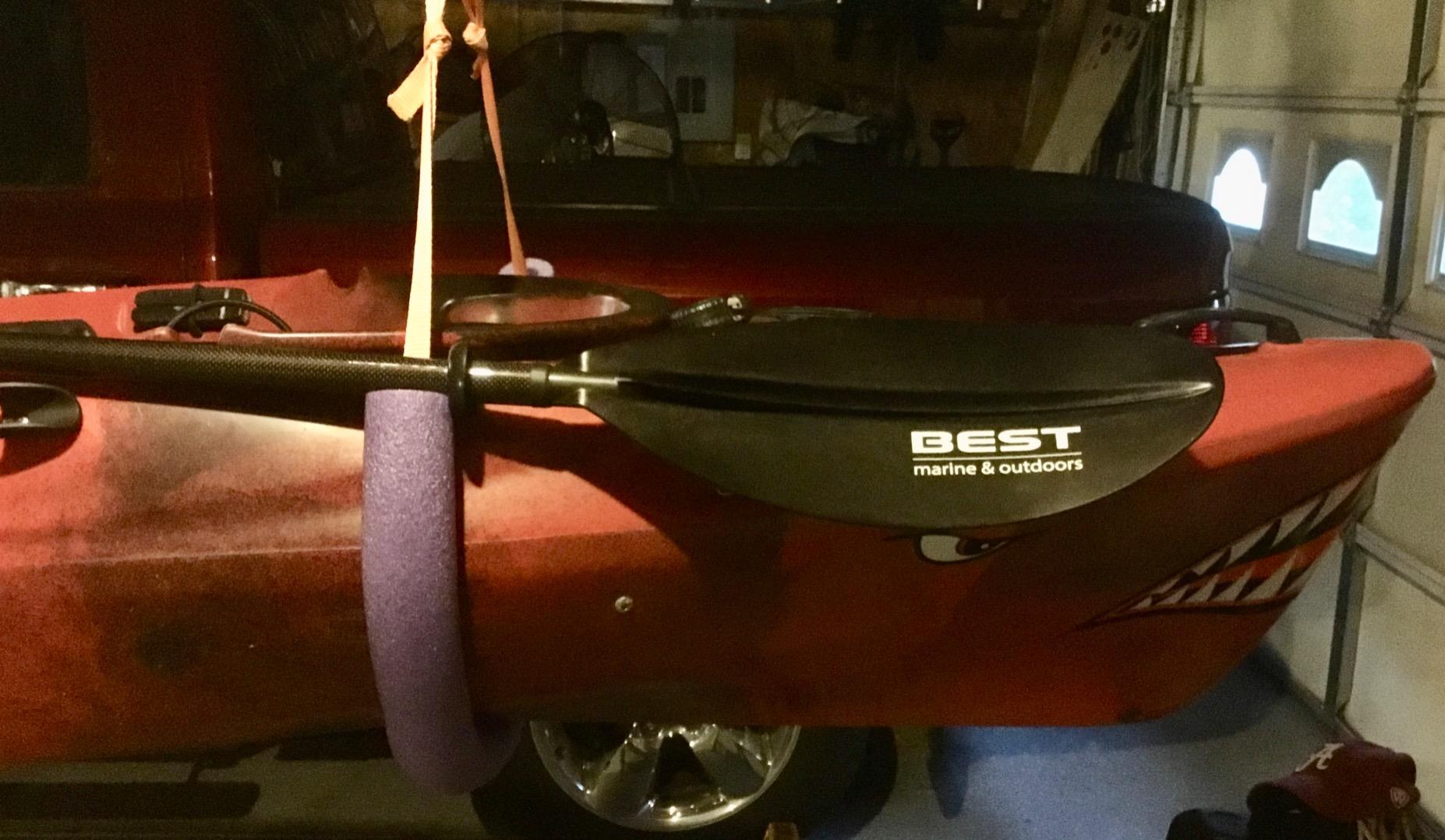
6. Best Marine Carbon Fiber 220-260cm Paddle – Best Lightweight Carbon
Best Marine and Outdoors Kayak Paddle, Carbon Fiber Shaft & Fiberglass Reinforced Polypropylene Blades, 220cm, 234cm, 250cm, Lightweight Kayak Paddles for Adults (Black, 234)
220cm, 234cm, 250cm and 260cm
Carbon fiber shaft, 920g
Blades 18in x 6.75in
Two-piece
Pros
- Genuine carbon fiber keeps shoulder fatigue down on long days
- Four length options including 250cm and 260cm
- 60 degree blade angle increments support either hand
- Locked joint has minimal wobble
- Blades are double-sided so both faces match
Cons
- Published length chart may not match every paddler and boat
- Some twist flex in the blades
- One report of a blade not fully seated
Here is the honest problem with long paddles, stated plainly: the fix for too short is usually heavier. A 260cm aluminum shaft will wear you out well before the day ends. This carbon build is the answer to that, and it does it at a weight of roughly 920g with blades at 18 by 6.75 inches.
Owners compare it favourably to carbon paddles costing two or three times as much, reporting that it is noticeably lighter and more rigid in the water than aluminium. The locked two-piece joint holds without meaningful wobble once set.
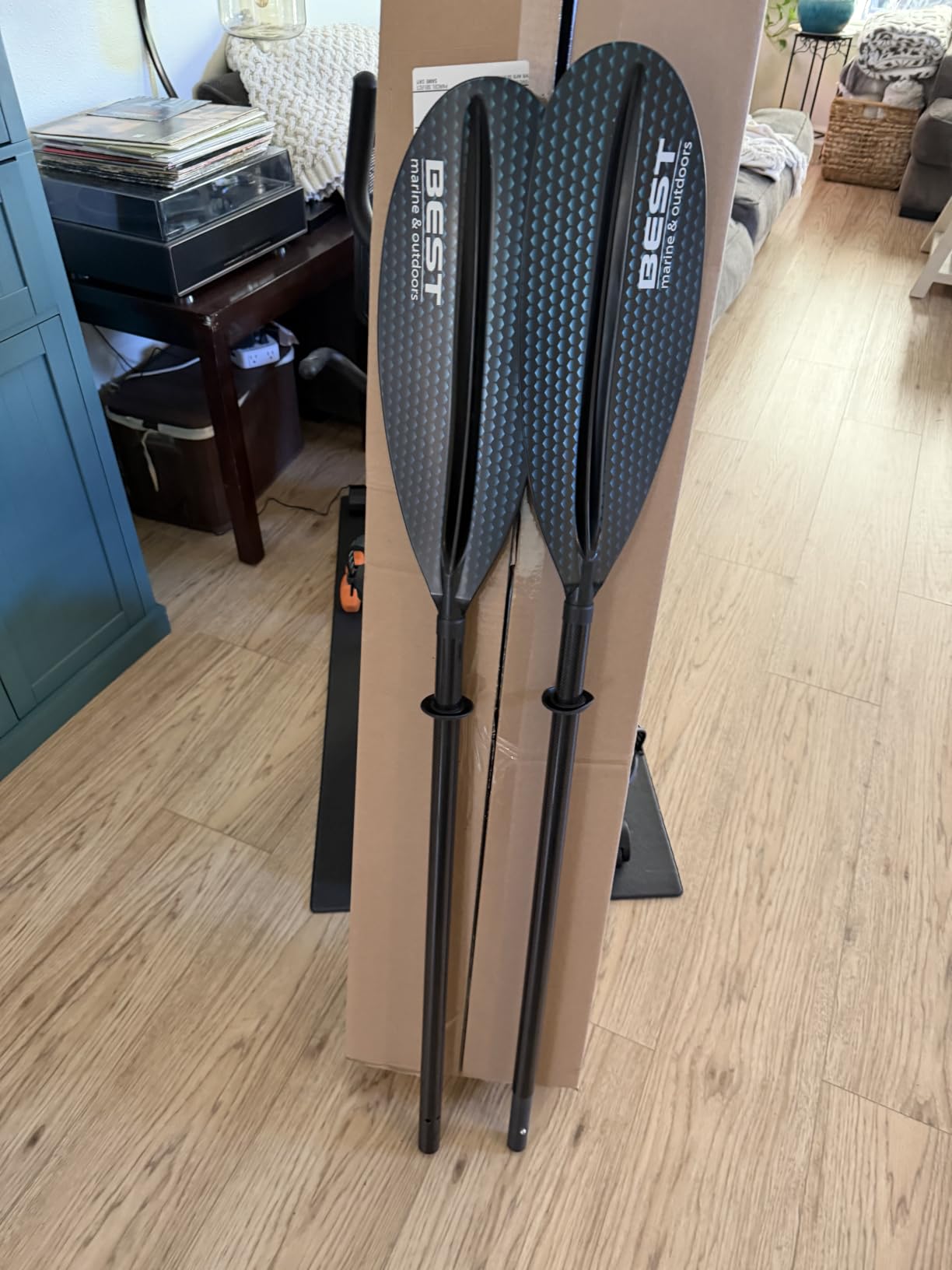
Blade position adjusts in 60 degree increments, so the paddle works for either hand and for either a matched or feathered setup. The double-sided blades are a small quality-of-life touch, letting the visible face match your kayak rather than looking like the back of the paddle.
One caveat appears often enough to pass along: the published length chart does not fit everyone, and at least one owner reported a blade that was not fully seated on the shaft. Check the joint before you head out, and treat the chart as a starting point rather than a verdict.
Who this length suits
220cm and 234cm for 6’0″-6’2″ paddlers on standard-width boats. The 250cm suits a 6’2″-6’6″ paddler on a wider kayak, and the 260cm is for the tallest paddlers on genuinely wide hulls, where the extra reach finally pays off in blade area.
Where it falls short
Some twist in the blades under load, and there is no dihedral shaping to smooth the catch the way there is on the Bending Branches below. The joint also needs a check after the first few trips. None of this is disqualifying, but it is not a premium-finish paddle.
7. Pelican Symbiosa Telescoping 240-250cm – Best Adjustable Length
Pelican Symbiosa Kayak Paddle – Adjustable Fiberglass Shaft with Nylon Blades – Lightweight, Perfect for Kayaking – 90.5 to 94.5 in – Blue
Telescoping 240cm to 250cm
Fiberglass shaft, 970g
Fiberglass reinforced nylon blades
Low-angle blade
Pros
- Telescoping ferrule covers 10cm of adjustment
- Light at 970g for a paddle this long
- 6'1" and 6'4" reviewers report shoulder fatigue improved
- Fiberglass shaft does not feel as cold as aluminum
- Stiff joint with no wobble
Cons
- Ferrule needs a screwdriver tightening after assembly
- Blades show moderate flex versus carbon
- Not intended for aggressive whitewater
The Symbiosa answers a question the rest of this roundup cannot: what if your length needs are still changing, or you share a boat? A telescoping ferrule adjusts the shaft from 240cm to 250cm, which is the entire range most tall paddlers are choosing between.
That makes it the safest long-paddle buy for someone who does not yet own a 250cm-capable boat, or who paddles a narrower hull in winter and a wider one in summer. You are not committing to a single number.
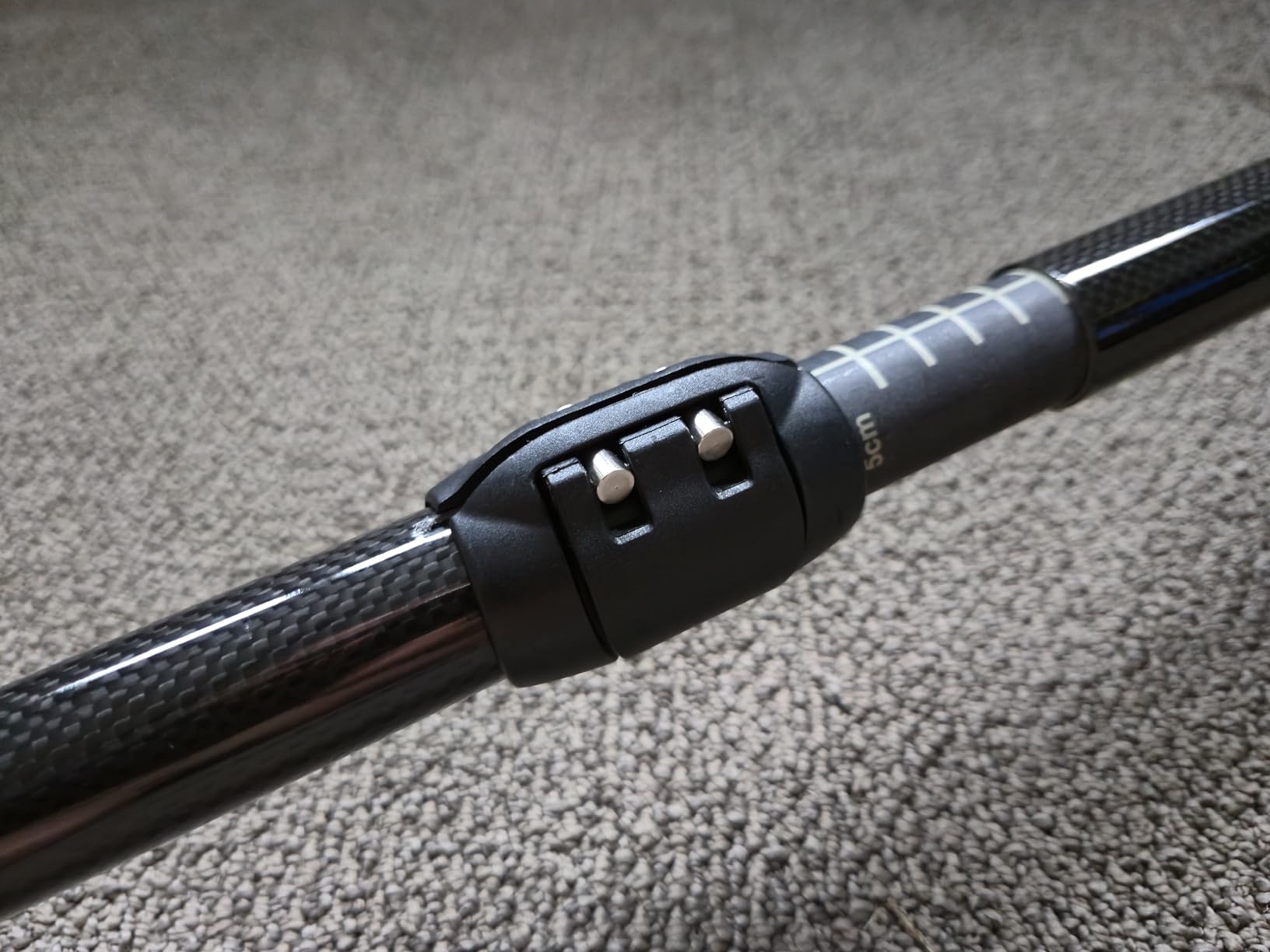
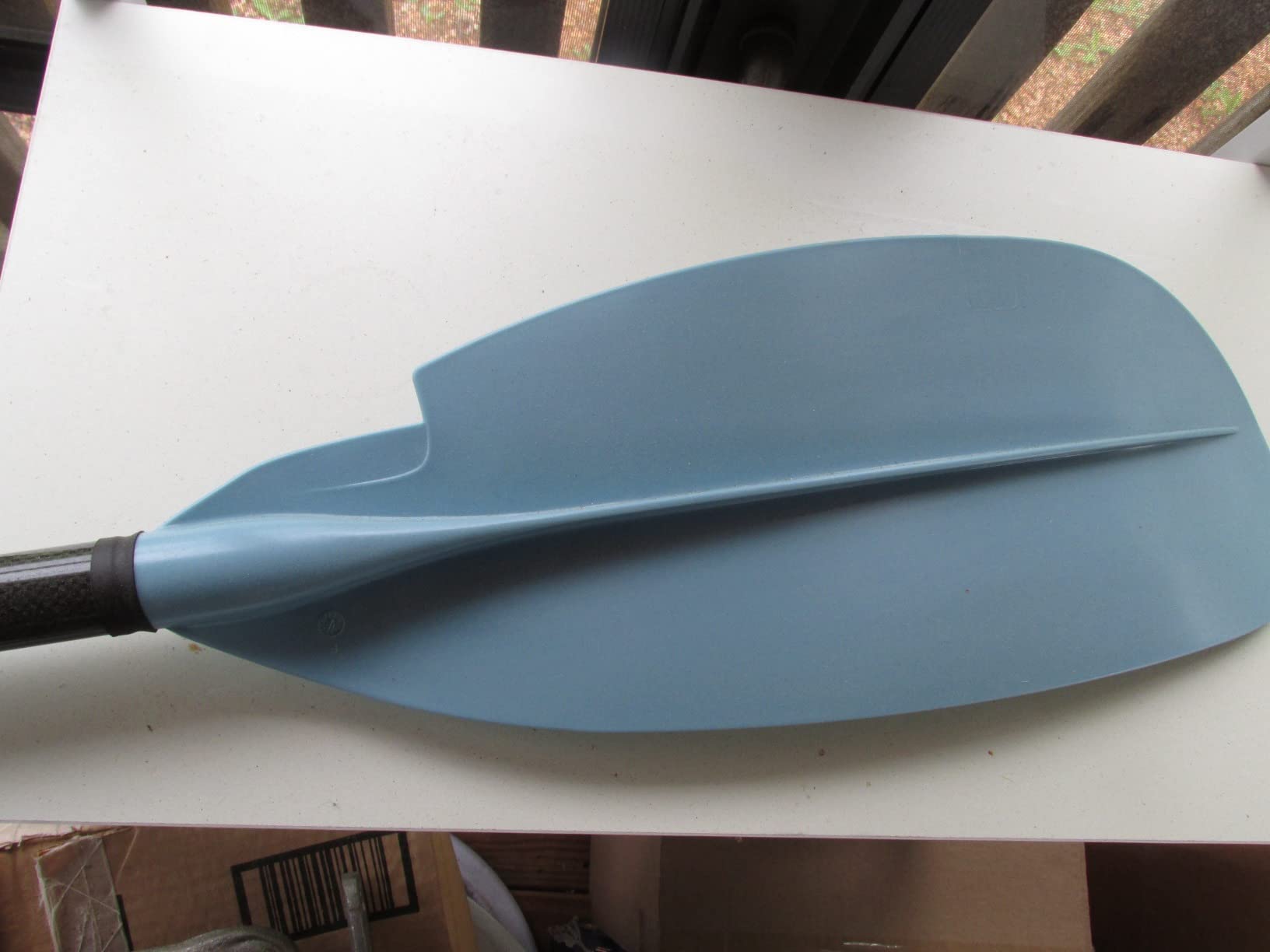
The build is a two-piece fiberglass shaft with fiberglass reinforced nylon blades, weighing 970g. Tall paddlers rate it highly for a specific reason: reviewers at 6’1″ and 6’4″ report that the longer adjustable length fixed shoulder fatigue they had lived with on shorter paddles.
Fiberglass also runs warmer than aluminum in cold water, which matters for shoulder and hand comfort on a long autumn paddle. The low-angle blade shape is touring-oriented, giving a flatter catch and a cleaner pull than a recreational high-angle design.
Two assembly notes: the ferrule needs a light screwdriver tightening when you first put it together, and the ovalized right-hand indexing is not perfectly consistent between units. Check both before your first trip out.
Who this length suits
Anyone over 5’5″ paddling a kayak wider than 30 inches, which in practice means most paddlers from 6’0″ upward. The 250cm end is built for 6’2″-6’4″ bodies in a wide hull, and the 240cm end covers the same paddler in a narrower boat.
Where it falls short
The telescoping joint is the weak point, both in assembly and in long-term feel, and the blades flex more than a full carbon build. It is also the least portable in this list because the shaft does not break down as short as a two-piece does.
8. Bending Branches Whisper 220/230/240cm – Best USA-Made Long Paddle
BENDING BRANCHES Whisper Kayak Paddle – 2‑Piece Aluminum Shaft, Polypropylene Blades, Adjustable 0°/60° Feathering, Black Comfort Grips, Dihedral Blade Design for Recreational Paddling
220cm, 230cm and 240cm
Two-piece aluminum shaft
Dihedral PP blades
Ovalized grip zone
Pros
- Made in Osceola Wisconsin and popular with rental fleets
- Dihedral blades bite well for less effort per stroke
- Feathering adjustable to 0 or 60 degrees
- Ovalized grip zone reduces hand fatigue
- Two-piece join has no noticeable play
Cons
- Grips feel plasticky and leave black residue
- Feathering is limited to two fixed positions
- Heaviest of the aluminum options here at 2.4 pounds
The Whisper is the oldest design in this roundup and still the one most rental fleets run, which tells you something about durability. The 240cm version is the size to look at if you are 6’2″ or over and want a made-in-USA paddle.
Its defining feature is the dihedral blade, curved along its length rather than flat or spooned. That shape centres the water you are moving and gives a strong bite with less effort per stroke, which is why dihedral blades remain the default recommendation for beginners learning a clean catch.
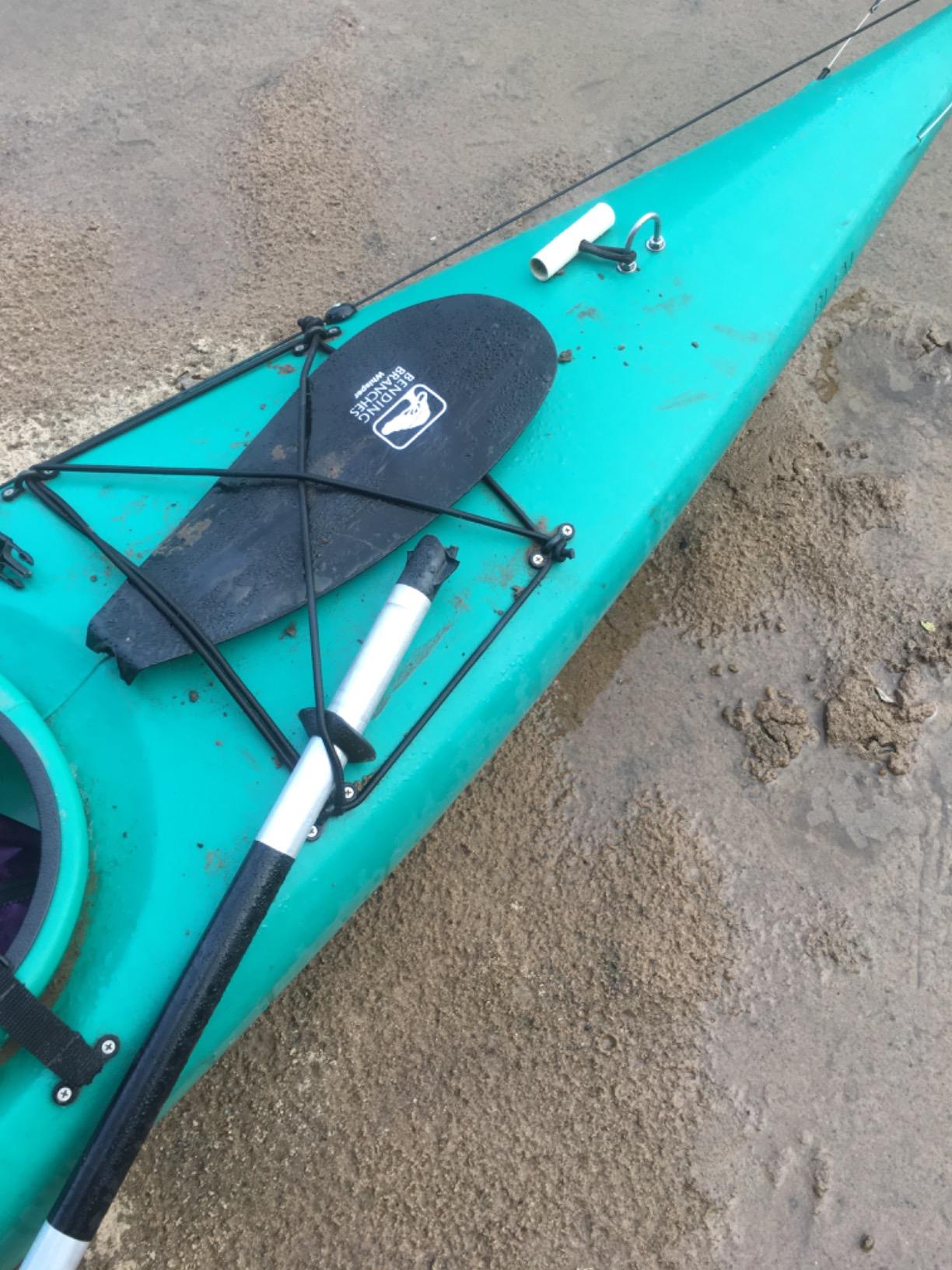
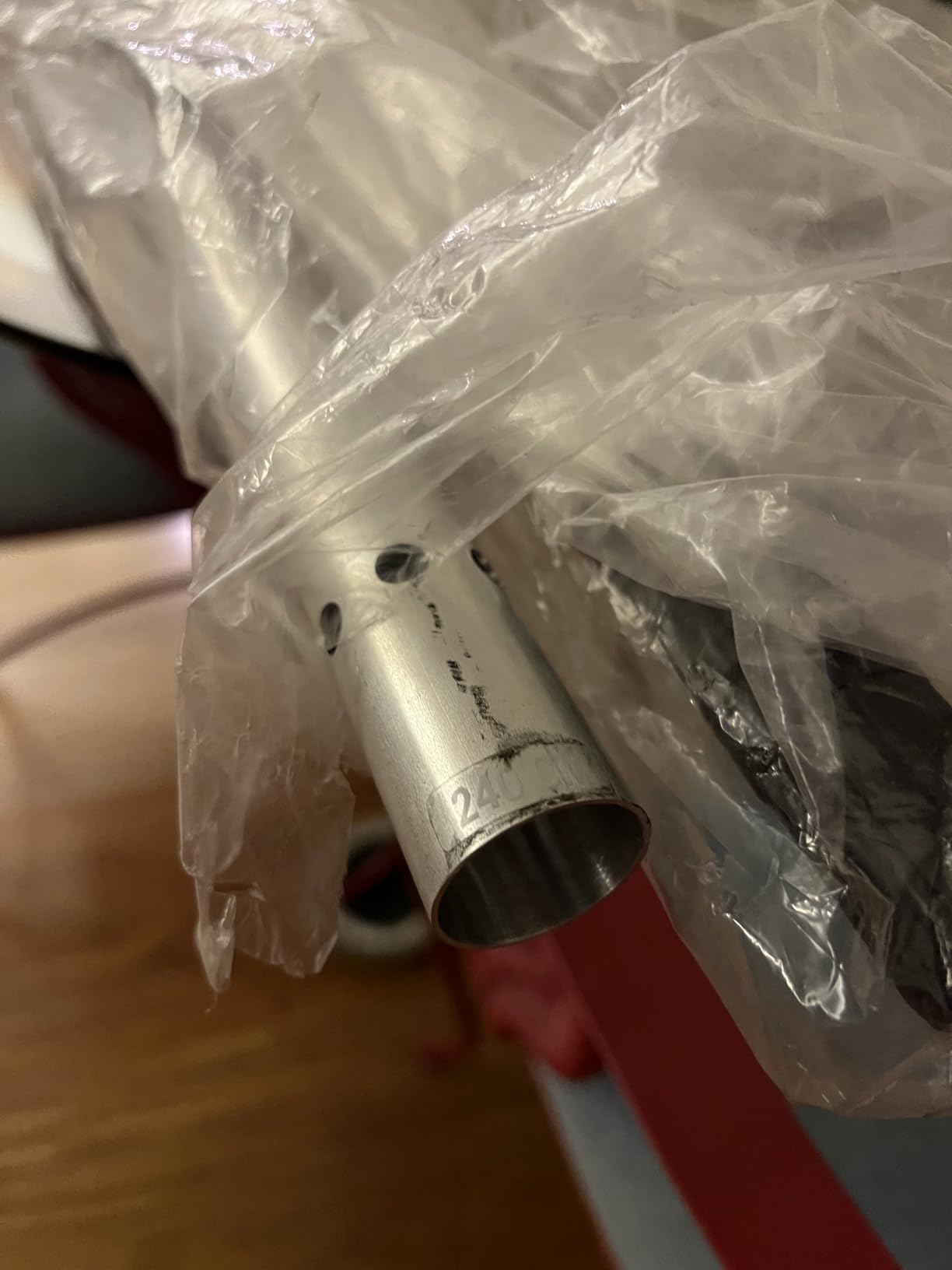
The two-piece snap-button shaft uses a three-hole ferrule, and feathering adjusts to 0 or 60 degrees. The ovalized grip zone is a genuine comfort feature on a long day, reducing the hot spots that straight shafts create, and reviewers praise the solid join with no play.
The criticisms are consistent across owners: the comfort grips feel plasticky and can leave a little black residue on wet hands, and feathering is limited to those two fixed positions rather than a continuous range. At 2.4 pounds it is also the heaviest aluminium option in this group.
Who this length suits
The 240cm is right for a 6’2″-6’4″ paddler in a boat up to about 30 inches wide, and the 230cm covers a 6’0″-6’2″ paddler. Anyone sitting high in a fishing kayak should add 10cm and accept that this paddle tops out at 240cm.
Where it falls short
240cm is the ceiling, and 280cm-style reach is simply not available here, so the tallest paddlers in very wide boats are excluded. The plastic grip feel and the two-position feathering also limit it for anyone who wants fine angle control on long tours.
9. Pelican The Catch 250cm/260cm – Best for High-Seat Fishing Kayaks
Pelican The Catch Kayak Paddle – Adjustable Fiberglass Shaft with Nylon Blades – Lightweight and Adjustable Perfect for Kayak Fishing – 102.4 in – Olive Camo
250cm and 260cm versions
Adjustable fiberglass shaft
Nylon blades
0 to 65 degree angle
Pros
- Long 250cm and 260cm options built for tall paddlers in wide boats
- Built-in hook retrieval system for landing fish
- Measuring tape along the shaft
- Adjustable 0 to 65 degree blade angle
- Recommended for anglers over 6ft in kayaks over 34in wide
Cons
- Fishing hardware adds bulk for recreational paddling
- 2.1 pounds is heavy against dedicated carbon touring paddles
- Adjustable shaft is the least rigid design here
The Catch is built for exactly the boat this roundup keeps circling back to: a high-seat fishing kayak wider than 34 inches with an angler over 6 feet tall sitting in it. The manufacturer recommends this paddle for precisely that combination, and the 250cm and 260cm variants exist because that is the required length.
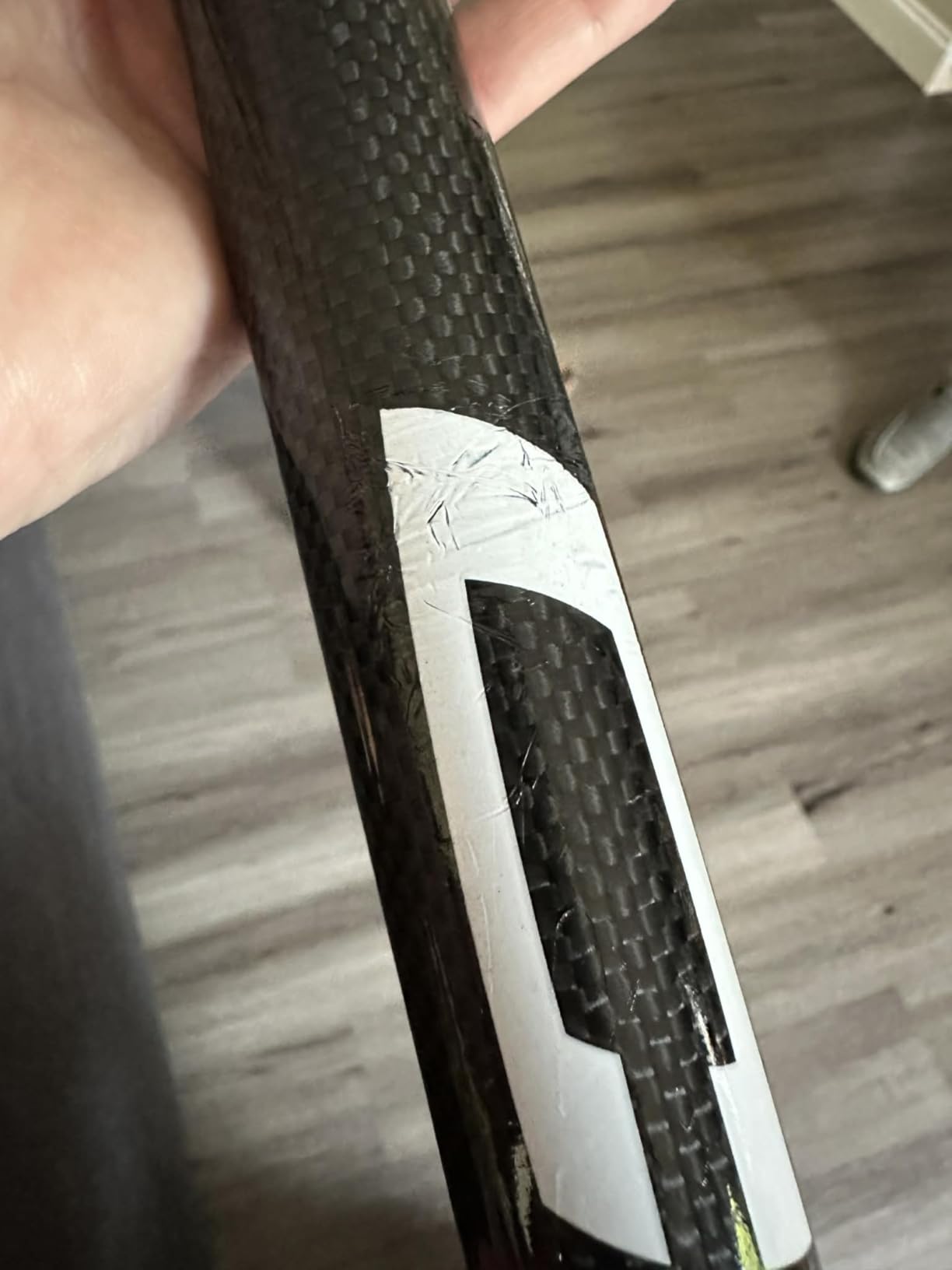
For those paddlers the fishing hardware is the point, not an accessory. A built-in hook retrieval system lets you land a fish without lifting the paddle out of the water, and a measuring tape along the shaft removes one more job from a day already spent holding a rod.
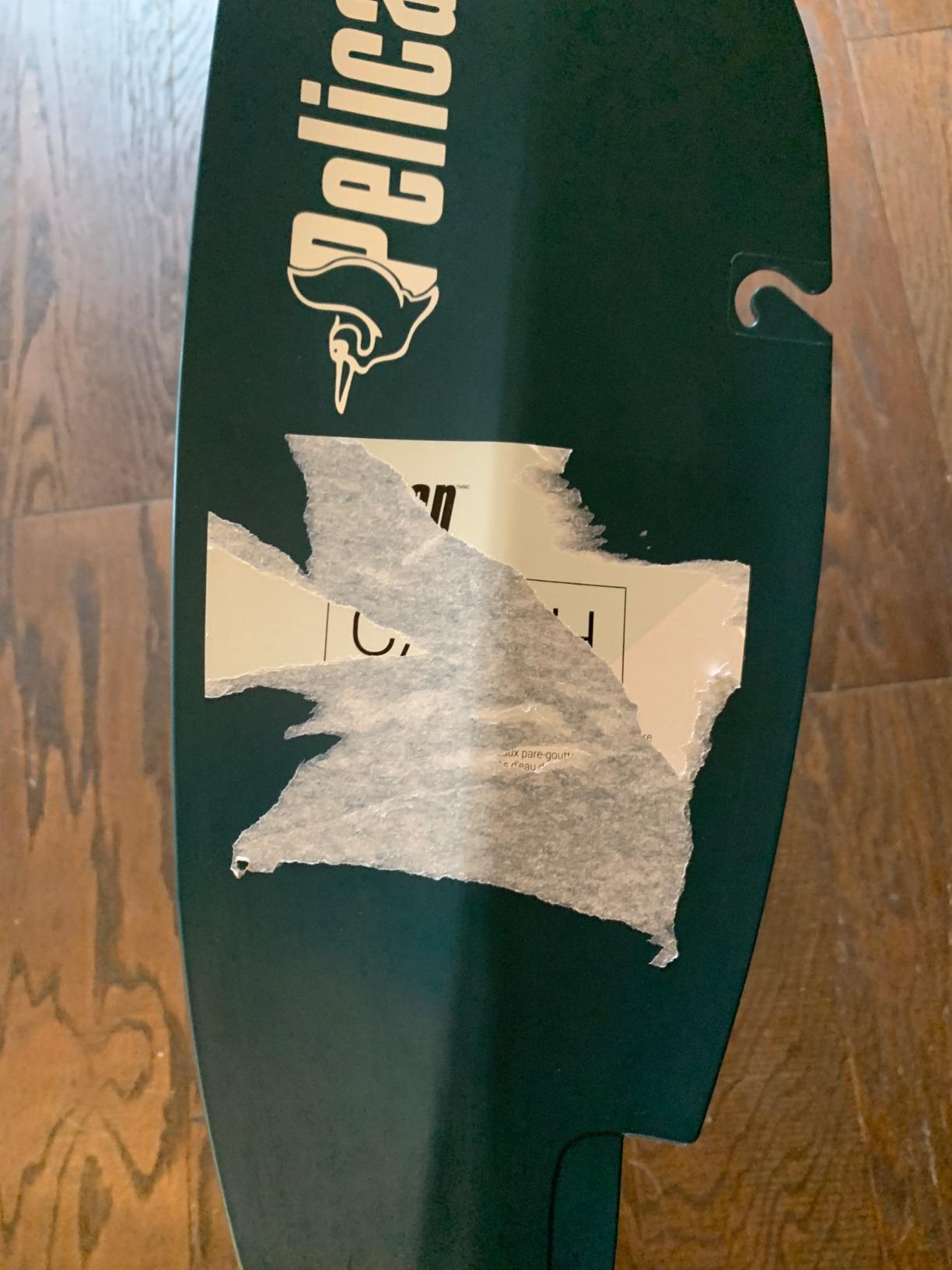
The shaft is adjustable fiberglass with fiberglass reinforced nylon blades, with blade angle from 0 to 65 degrees, adjustable drip rings and ovalization for hand reference. That angle range covers everything from a flat power stroke to a fully feathered touring setup.
Buyer sentiment centres almost entirely on the hardware and the length, which tells you the audience already knows what it wants. The trade-off is honest: at 2.1 pounds with a retrieval hook and a tape measure built in, this is not the paddle for someone who only wants to paddle recreationally.
Who this length suits
Anglers over 6 feet in kayaks over 34 inches wide, particularly on elevated seats where the 10cm high-seat rule pushes you past what most paddles offer. The 250cm version handles a 6’0″-6’4″ paddler; the 260cm is for the tallest paddlers in the widest hulls.
Where it falls short
The adjustable shaft is less rigid than a fixed two-piece join, and the blades flex. A paddler with no interest in fishing is carrying weight and bulk for hardware they will never touch, and the low-angle shape is not meant for whitewater.
10. Bending Branches Angler Ace 240-280cm – Longest Reach Available
BENDING BRANCHES Angler Ace Snap-Button Kayak Fishing Paddle – Lightweight Carbon Shaft, Carbon-Reinforced Nylon Blades, 2-Piece Design, Durable Performance for Fishing & Touring Kayaks
240cm to 280cm range
Lightweight carbon shaft
Carbon-reinforced nylon blades
Snap-button two-piece
Pros
- Longest length range in this roundup at 240cm to 280cm
- Carbon shaft keeps weight down on long fishing days
- Carbon-reinforced blades give a strong
- efficient bite
- Ovalized grip reduces hot spots over long sessions
- Holds up in a gear-loaded fishing kayak
Cons
- Premium price point against aluminium and fiberglass builds
- Nylon blades are heavier and louder than full carbon
- Smallest review base in the group
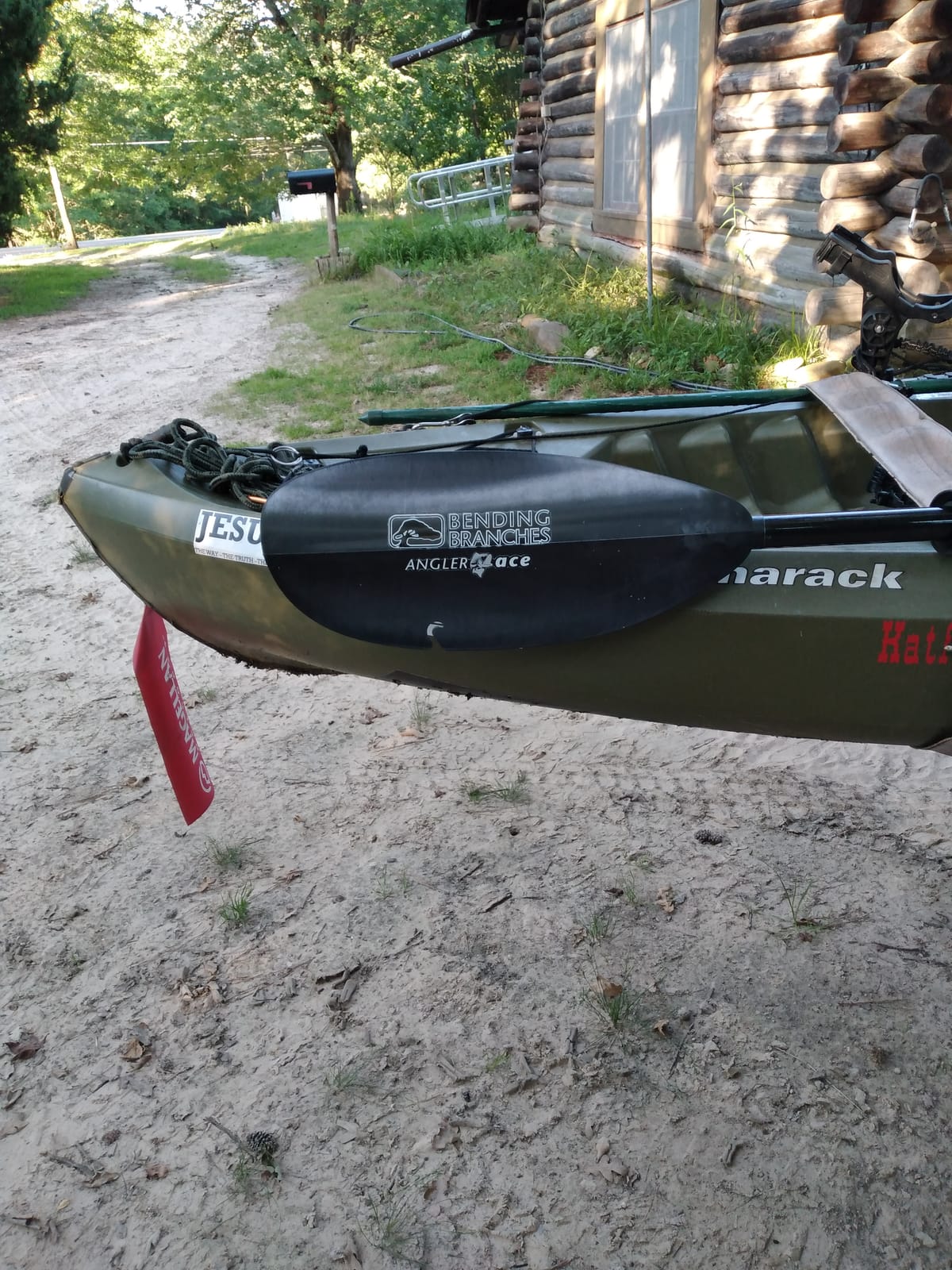
The Angler Ace is the answer for a paddler who has run out of long paddles. At 240cm, 250cm, 260cm, 270cm and 280cm it is the only model here that reaches past 260cm, which makes it the choice for a 6’6″ paddler in a very wide hull or an angler in a tandem-width fishing kayak.
The carbon shaft is the reason this works at those lengths. Carbon is stiff and light, so the paddle does not feel like a lever as you reach for the ends of the stroke, and owners who pay the premium price point cite the low weight first among the benefits.
Blades are carbon-reinforced nylon rather than full carbon, which is the acknowledged compromise: durable and good for a gear-loaded fishing kayak, but not as light or as quiet under the hull. The snap-button two-piece ferrule is the proven Bending Branches joint, with an ovalized ergonomic grip profile.
Where the shaft is carbon, the blades are nylon. That is the trade for durability in a boat full of tackle boxes, and it is why the review base is the smallest in this roundup. Nobody regrets it; plenty of paddlers simply want full carbon blades instead.
Who this length suits
Paddlers at 6’4″ and above in boats 34 inches wide or more, and tall anglers who will be sitting or kneeling high all day. The 240cm and 250cm versions serve the same shorter end of the tall range if you want carbon without an extreme length.
Where it falls short
It is the least reviewed paddle here, which means less long-term owner evidence to lean on. It also costs the most, and if you never exceed 250cm you are paying for reach you will not use. The nylon blades are the other half of that trade.
How to Choose a Kayak Paddle If You’re Tall
Start with the chart above, then work through these five decisions in order. Most paddlers get the length right and then lose their budget to a shaft material that does not suit the length they just chose.
1. Confirm your length by measurement, not by chart. Hold the paddle horizontally across the cockpit, blades level with the waterline, and check that the blade tips clear the hull at full reach. If the inner blade edge touches the boat, you are too short. For a straight-shaft guide, our beginner paddle walkthrough covers the grip basics first.
2. Weight becomes the deciding factor past 240cm. The penalty for a long paddle is mass, and it is cumulative. If you are looking at 240cm and above, move up a material class: aluminium to fiberglass, or fiberglass to carbon. This is why fishing forum consensus keeps landing on carbon for long paddles: it is light and it does not wear you out. Our canoe paddle guide covers the other boat type where the same weight logic applies.
3. Choose the blade shape to match your stroke. A dihedral blade, curved along its length, centres the water and gives a clean catch with less effort. An asymmetrical blade is long and narrow, suited to touring and to wide boats where a large blade would catch wind. A high-angle blade with a bent shaft puts more power per stroke but loads the wrist, so tall paddlers with any shoulder or wrist history should stay with low-angle and straight shafts.
4. Treat feathering as a preference, not a requirement. Feathered blades are offset by 60 degrees so that one blade enters while the other exits, cutting drag. It suits experienced paddlers and touring. For beginners, and for anyone new to long paddles, a 0 or 65 degree adjustable setting lets you move up without buying a second paddle.
5. If your length keeps changing, buy telescopic. An adjustable-length paddle covers roughly 10cm of range in a single product, which is exactly the spread a tall paddler moves through as they change hulls or share a boat. The trade is joint stiffness and portability, and it is worth paying for only if you know the range matters to you.
One last piece of forum wisdom that is correct and often repeated: match the paddle to the boat, not the boat’s brand. A 6’2″ paddler in a generic 32 inch hull needs the same length as anyone else in that hull, regardless of what badge is on the deck. Once you are sizing by height plus beam, brand stops mattering.
Frequently Asked Questions
What size kayak paddle should I use for my height?
For paddlers around 6 feet tall and above, aim for 230-260cm rather than the 210-215cm most retail shelves carry. Start at 230cm for a 6’0u0026quot; paddler in a kayak under 30 inches wide, then add 5cm for a boat 26-30 inches wide, 10cm for 30-34 inches and 15cm for anything wider. Add another 10cm if you sit in a high-seat fishing kayak.
What is the 120 rule in kayaking?
The 120 rule is a torso-fitting rule, not a paddler-height rule. Measure your torso from the seat to the top of your head, add about 6 inches, and that is your torso measurement, which sets kayak fit and spray skirt sizing. It does not set paddle length. Paddle length comes from paddler height plus kayak beam width.
Do I need a longer paddle if I am tall?
Usually yes, if you are around 6 feet or over. A longer shaft lowers the angle of your stroke so the blade enters the water cleanly instead of chopping, which reduces hull contact on wide boats and cuts shoulder and lower-back fatigue over a long day. The exception is a very narrow hull, where boat width caps how long you can go before the paddle stops paying for itself.
How do I know what size paddle to get?
Hold the paddle horizontally across the cockpit with the blades level with the waterline, then reach out and check the inner blade edge clears the hull. If it touches, go longer. Then confirm the length you want actually exists for that model, because most brands publish only two or three sizes and the 250cm-plus end is where availability runs out.
What length kayak paddle for a 6 foot 2 paddler?
A 6’2u0026quot; paddler lands at 230-240cm in a kayak under 30 inches wide. In a 30-34 inch boat, add 10cm for 240-250cm. In a high-seat fishing kayak, add another 10cm, which puts a comfortable 250cm model in range. Below 6’2u0026quot;, step down to 220-230cm and adjust for hull width.
What is the leading cause of death for kayakers?
Drowning is the leading cause of death among kayakers, and it is almost always preceded by a capsize, a cold-water shock response, or exhaustion in the water. That is also the argument for correct paddle fit: a paddle that is too short tires your shoulders and back, and a tired paddler is a paddler who does not recover cleanly from a wet exit. If you are new to the water, our u003ca href=u0022https://betterbike.org/best-kayak-launches-for-docks/u0022u003ekayak launch guideu003c/au003e covers the getting-in part.
The Best Kayak Paddles for Tall Paddlers in 2026: Final Word
The best kayak paddles for tall paddlers are simply longer than the ones on the shelf. The OCEANBROAD at 230cm or 241cm is our top pick because it offers real length choices, stays light at 1.02kg, and has the largest body of long-term owner feedback behind it.
If you need more than 241cm, step up a material class rather than just a size: carbon at 250cm for touring, or the 250cm and 260cm variants built for high-seat fishing boats. Check your chart row, buy for the width of the boat you actually own, and stop paddling with a shaft that was never long enough.