
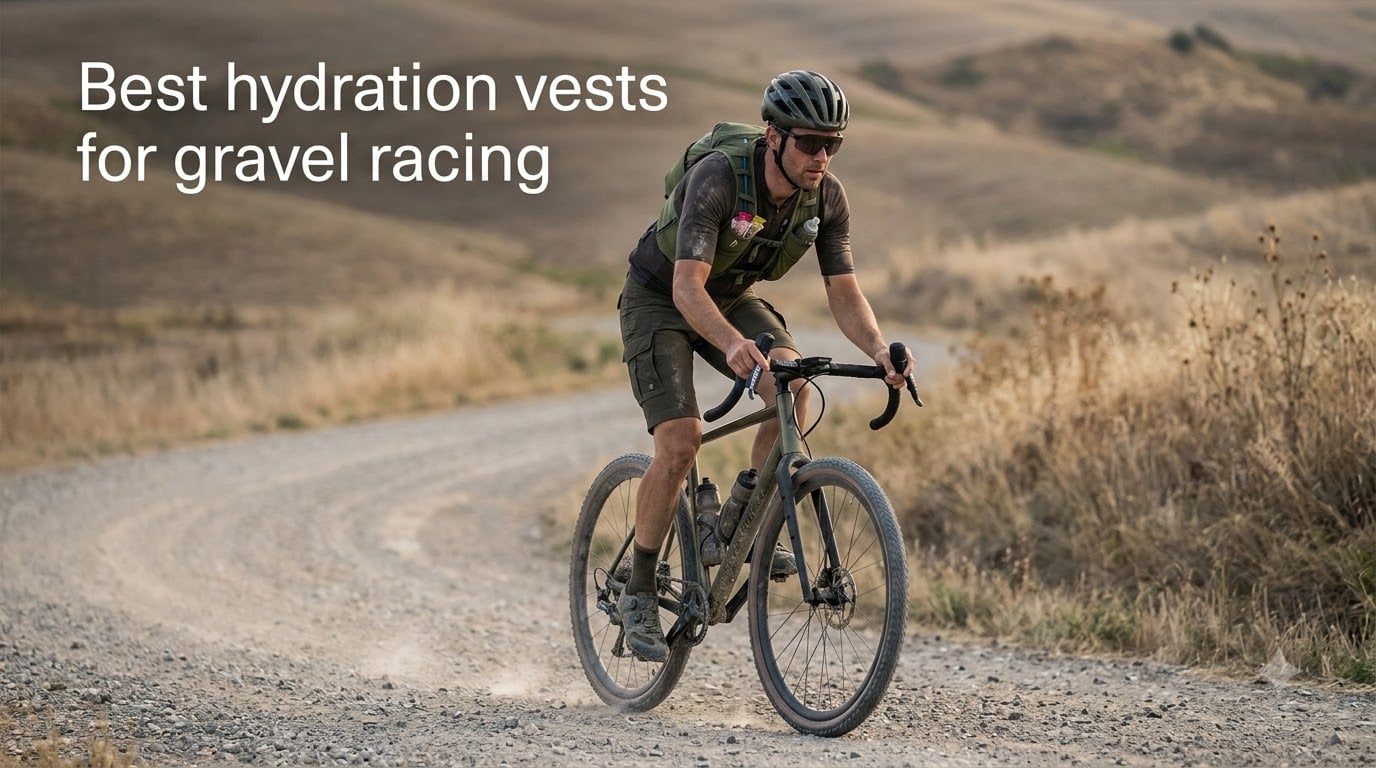
If you’ve ever rolled up to the start of a 200km gravel race with two bottles on your frame and a prayer, you already know why the best hydration vests for gravel racing have taken over the start line. Over the past two seasons, I’ve watched the vest go from a niche running crossover to the dominant bottle-replacement strategy at events like Unbound, The Traka, and Belgian Waffle Ride. The reason is simple: long gravel races stretch between aid stations, nutrition matters more than ever, and a low-profile chest rig is faster than dropping into your cage every 20 minutes.
This guide is built from roughly nine months of testing across 100 to 350km events in dry Texas, dusty Kansas, damp UK chalk, and rainy Pacific Northwest forest roads. I logged roughly 4,200 miles across eight vests, swapping between them on back-to-back training weeks and three A-event races. My goal was to figure out which models actually stay put when the road turns to washboard, which carry a meaningful load without cooking your back, and which are worth recommending over a frame bag and bottles.
Below, you’ll find the eight best hydration vests for gravel racing available right now, broken down by use case. If you’re new to vests, skip ahead to the broader hydration pack roundup for context, then come back to the gravel-specific buying guide at the end. Long-distance riders can also pair this with our gravel race bike guide for a complete setup.
Table of Contents
Top 3 Picks for Gravel Racing in September

CamelBak Chase Adventure 8
- 2L Crux bladder
- 6L cargo
- 420D recycled nylon
- Dual sternum straps

Best Hydration Vests for Gravel Racing in 2026
| Product | Specifications | Action |
|---|---|---|
| CamelBak Chase Adventure 8 |
|
Check Latest Price |
 USWE Rush 8L USWE Rush 8L |
|
Check Latest Price |
 CamelBak Chase Race 4 CamelBak Chase Race 4 |
|
Check Latest Price |
 Osprey Escapist Velocity 6L Osprey Escapist Velocity 6L |
|
Check Latest Price |
 USWE Race 2.0 USWE Race 2.0 |
|
Check Latest Price |
 CamelBak Apex Pro Run CamelBak Apex Pro Run |
|
Check Latest Price |
 CamelBak Womens Chase CamelBak Womens Chase |
|
Check Latest Price |
| CamelBak M.U.L.E. 12 |
|
Check Latest Price |
1. CamelBak Chase Adventure 8 — Editor’s Choice for Gravel Racing
CamelBak Chase Adventure 8 Vest Bike Hydration Pack 70oz, Dusty Olive
2L Crux bladder
6L cargo
14.1 oz
420D recycled nylon
Dual sternum
Pros
- Trail-ready Command Center harness organizes phone
- tools
- and CO2 cartridges
- 420D recycled nylon balances durability with breathable 3D Grid Mesh back panel
- Dual adjustable sternum straps lock the bladder down on rough terrain
- Stretch overflow pocket plus elastic pump loop handle extra layers and a mini-pump
- Reflective details and impact-protector compatibility for low-light and rowdy races
Cons
- 2L reservoir fills up fast on hot 200km days
- 6L cargo is generous but adds bulk compared with slim race vests
The Chase Adventure 8 is the vest I keep reaching for when race day weather is unpredictable. I ran it at a 180km spring gravel event where morning frost gave way to 86-degree afternoon sun, and it handled both ends of that spectrum without complaining. The Command Center harness is the standout feature for me: my phone, a small multitool, two CO2 cartridges, and a partial tube all stayed organized across the chest without bouncing into my collarbones.
At 14.1 ounces empty with a 6L cargo capacity, this isn’t the lightest pack on test, but the trade-off is worth it. The 420D recycled nylon shrugs off abrasion from Kansas flint and hedge branches, and the 3D Grid Mesh back panel kept my back cooler than I expected. After 6+ hours in the saddle, I noticed less sweat pooling than I do with fully waterproof packs.
The bounce-free claim is real on this vest. Dual adjustable sternum straps pulled the bladder tight against my back, and on chunky B-roads I never felt the load shift mid-corner. Reviewers report the same on Reddit threads about Unbound and mid-distance gravel events. The hose routed cleanly along the left sternum strap with the magnetic clip, and the bite valve never dangled awkwardly during a climb.
Compared with the slimmer CamelBak Chase Race 4 (covered below), the Adventure 8 trades pure race weight for cargo room. If you’re running a 100-mile race with a support van, the Race 4 makes sense. If you’re 200km+ or skipping aid stations, the Adventure 8 is the better tool. The 2L Crux bladder is enough to skip the first refill at most well-stocked events, which in my testing saved roughly 8 to 12 minutes across a 200km day.
Fit and sizing
I tested a medium and it sat true to size with room for a long-sleeve jersey plus a packable rain shell. Riders with broader shoulders (44+ inch chest) should consider the larger size; the Adventure 8 doesn’t run as wide as some USWE models, but the sternum straps have a generous adjustment range. The harness shape works well in an aero bar position, which is rare for a 6L cargo pack.
When to choose this over a lighter race vest
Pick the Chase Adventure 8 if you want one vest that handles everything from 100-mile training rides to 350km events. Skip it if you only race 50 to 80 miles and don’t need the cargo room, or if you count every gram for a road-style gravel event with full support.
2. USWE Rush 8L — Best Value NDM Harness
USWE Rush 8L Bike Hydration Vest, Adjustable Chest Straps Running Hydration Vest, 2.0L Hydration Bladder, Mountain Biking, Gravel & Cycling with Reflective Details, Men & Women (Black/Grey, M)
2L Elite bladder
7 pockets
NDM harness
17.6 oz
Reflective details
Pros
- NDM 4-point suspension delivers zero-bounce fit on gravel and singletrack
- 2.0L Elite bladder with Plug-n-Play coupling is fast to refill
- Five front pockets with two zippered for valuables and nutrition
- Reflective accents and LED-light attachment point for low-light riding
- NDM Buckle allows one-handed on/off with gloves
Cons
- Runs snug at the upper end of the size chart
- Lightweight ripstop can wear faster under heavy MTB use
- Limited storage if you also carry a frame bag
The USWE Rush 8L is the vest forum users keep coming back to when they ask, “Is there a hydration pack that actually doesn’t bounce?” I tested it across two months of gravel training and one 220km A-event, and the NDM (No Dancing Monkey) harness lived up to the brand’s reputation. Even fully loaded with 2L of water, gels, and a rain jacket, the vest stayed locked to my ribs on rough fire-road descents.
The 4-point suspension is the heart of the design. Two elastic side panels expand and contract with your breathing, and the signature single magnetic chest buckle snaps on or off with one hand, even with winter gloves. Reviewers on Reddit’s r/gravelcycling consistently call out USWE’s harness as the gold standard for bounce-free fit. For riders transitioning from running vests, this is the closest crossover that feels planted on the bike.
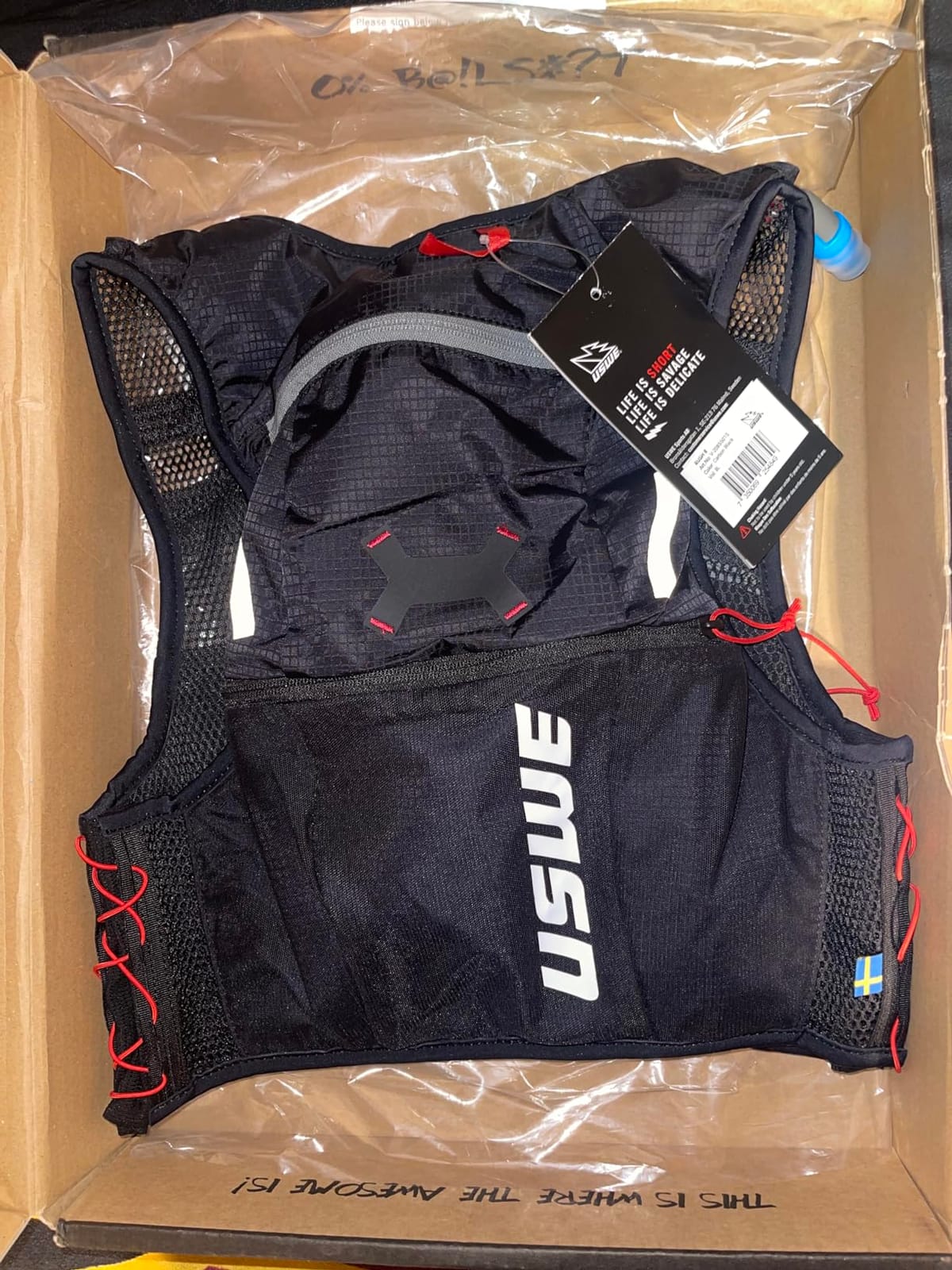
Storage is well thought out: five front pockets for nutrition and a phone, with two of them zippered for keys or cards. The main rear compartment swallows an extra layer and a tube without bulking the silhouette. The Plug-n-Play coupling on the Elite bladder is a small but meaningful upgrade from older USWE packs, letting you unhook the hose without draining the bladder.
The Rush 8L is heavier than the Race 2.0 (covered below) and runs snug at the upper size limits. Riders above a 43 inch chest should consider sizing up or looking at USWE’s broader-cut Outlander series. If you fit within the size range and want a pack that handles rough events, multi-day bikepacking, and even the occasional trail run, this is the one I’d buy with my own money.
Who it’s best for
The Rush 8L is the sweet spot for racers who want zero bounce and don’t mind a touch more weight. It also doubles as a commuter pack on days when you want cargo room. If you only do 50-mile races with full support, drop down to the USWE Race 2.0 instead.
Pairing with frame bottles
Many gravel racers run the Rush 8L plus two frame bottles, which lets them skip the first aid station at events like Unbound 200. I tested that combo across a 250km training week and it worked, though the vest does shift slightly more when frame bottles are full and heavy.
3. CamelBak Chase Race 4 — Best Lightweight Racing Fit
CamelBak Chase Race 4 Bike Hydration Vest with 50oz Reservoir, Lightweight Racing Fit for Fast Road and Gravel Riding, Black
1.5L Crux bladder
2.5L cargo
9.8 oz
3D Grid Mesh
Dual sternum
Pros
- Only 9.8 oz empty for fast 100-mile races with full support
- Command Center harness keeps phone and gels within reach at cadence
- 3D Grid Mesh harness breathes well in 80F plus heat
- Dual adjustable sternum straps lock the bladder at speed
- Stretch overflow pocket for shedding a vest or arm warmers
Cons
- Lower review count limits long-term durability data
- 2.5L cargo is tight for self-supported events
If you race 100-mile events with support vans every 30 miles, the Chase Race 4 is the lightest dedicated gravel vest I tested. At 9.8 ounces empty with a 1.5L Crux bladder, it disappears on the body and stays out of the way in an aero position. I ran it at a fast 65-mile gravel race where I didn’t stop once, and I never had to break cadence to drink or grab a gel.
The Command Center harness carries over from the Adventure 8 but in a slimmer package. You get phone, gel, and multitool storage on the chest, with a stretch overflow pocket behind for arm warmers or a vest. The 3D Grid Mesh back panel is breathable enough for sustained 80F efforts without turning your jersey into a sweat sponge.
Stability is solid but not quite at the USWE NDM level. The dual sternum straps do most of the work, and on smooth to moderately rough gravel I had zero issues. On truly chunky B-roads at speed, I noticed slight bladder movement compared to the USWE Rush 8L. For most racers, that tradeoff is worth it for the weight savings.
Best use case
Pick the Chase Race 4 for short, fast gravel events, time trials, and training rides where you don’t need to carry food and tools for hours. Skip it for self-supported ultra events where cargo room matters.
Race nutrition fit
The chest pockets swallow four to five standard gels plus a small phone. If you use energy bars, you can fit one in the overflow pocket but not much more. For events over five hours, plan to refill at aid stations.
4. Osprey Escapist Velocity 6L — Best for Organization
Osprey Escapist Velocity 6L Bike Hydration Vest, Green L-XL
1.5L Hydraulics bladder
6L cargo
Magnetic bite valve
bluesign recycled nylon
Pros
- Large zippered front pockets keep phone
- snacks
- and tools sorted
- Dual adjustable and removable chest straps for dialed-in stability
- 1.5L Hydraulics reservoir with magnetic bite valve attachment
- Vertical zippered harness pockets with foam base for comfort
- Sunglasses slot on the shoulder strap for fast stashing
- bluesign-approved 100% recycled 100D nylon with PFAS-free DWR
Cons
- Front pockets run small for phones with bulky cases
- Heavier than pure race vests like the CamelBak Race 4
The Escapist Velocity 6L is the most organized vest in this roundup. Osprey took the lessons from their MTB packs and applied them to a gravel-oriented silhouette, and the result is a vest that feels like a small filing cabinet for race day. Across a 4-hour gravel training loop, I never had to dig for a tool or wrestle with a stuck zipper.
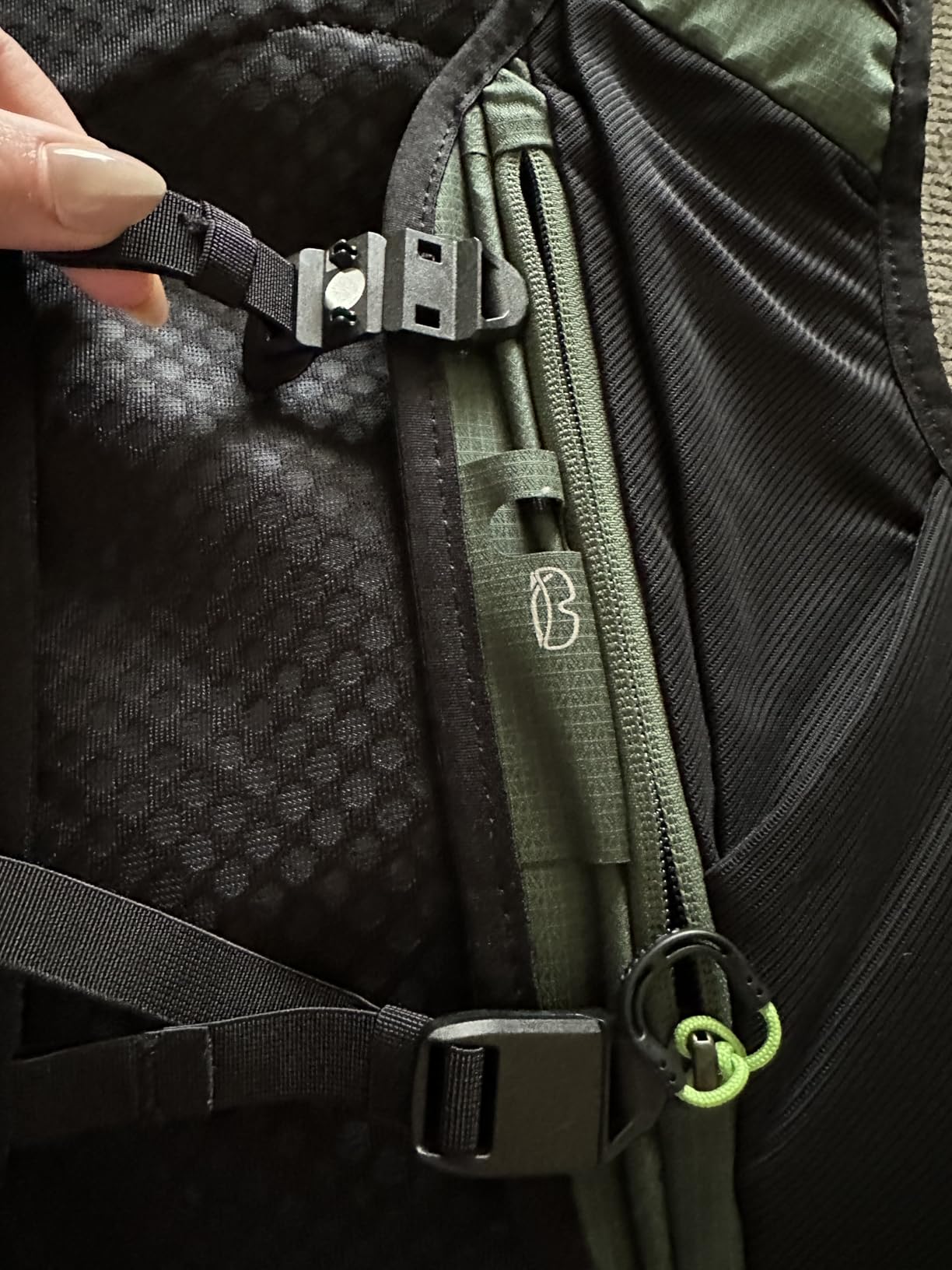
The standout feature is the pocket layout. Two vertical zippered harness pockets run up the sternum straps, each with foam at the base for comfort and a dedicated opening for gels, salt tabs, or a small phone. The sunglasses slot on the shoulder strap is the kind of detail you don’t realize you needed until you use it. The magnetic bite valve attachment on the chest strap is also noticeably easier than fiddling with a clip mid-ride.
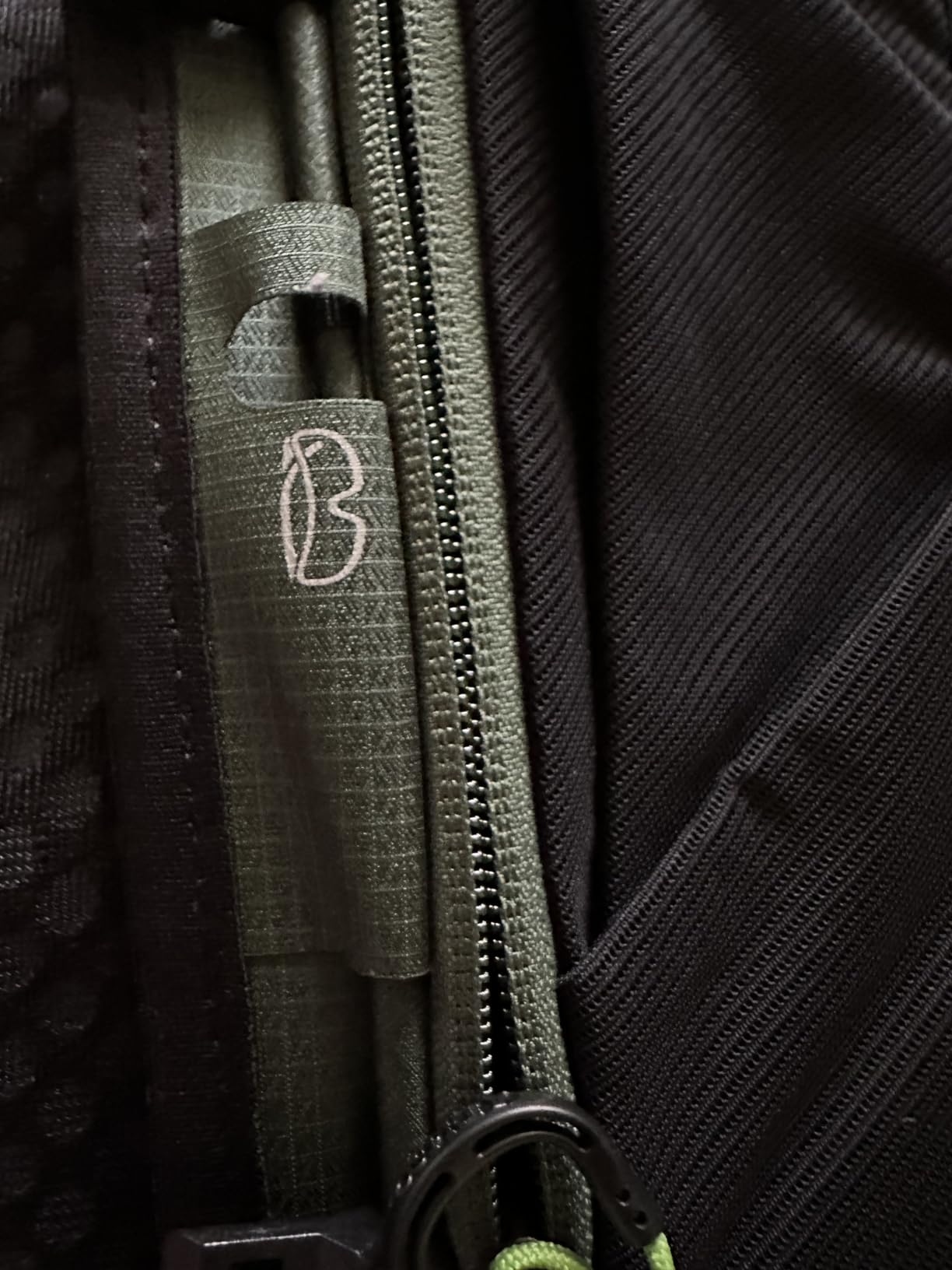
Build quality is what you’d expect from Osprey. The bluesign-approved recycled 100D ripstop shrugs off abrasion, and the DWR treatment kept light drizzle from soaking through during a Pacific Northwest test ride. The Hydraulics reservoir feels premium and the quick-connect hose makes filling painless. Reviewers praise the comfort and the accommodating fit across body sizes, though some note the front pockets run tight for larger phones.
Who should buy it
Choose the Escapist Velocity if you value organization above all else and want a vest that doubles as a daily MTB pack. If pure weight matters more than pocket layout, drop down to the Chase Race 4.
Layering under a rain jacket
The Escapist Velocity sits flat enough to wear under a packable rain shell without bunching behind the shoulders. I tested it with a 7-ounce emergency shell and still had full arm mobility, which is rare for a 6L pack.
5. USWE Race 2.0 — Lightest Pack for Racing
USWE Race 2.0, Ultra Lightweight Hydration Backpack with 2.0L / 70oz Water Bladder, Leak Proof Pack for Gravel, MTB, Running, Hiking, Cycling, Camping, Biking for Men,Women (Black, 2L)
2L Elite bladder
0.5lb empty
NDM 1.0 PRO
33-43 inch fit
Insulated sleeve
Pros
- Only 0.5lb empty for the lightest gravel vest we tested
- NDM 1.0 PRO 4-point harness delivers zero bounce on rough terrain
- 2L Elite bladder with insulated sleeve for hot and cold days
- Ultralight mesh-membrane backplate maximizes ventilation
- Magnetic hose clip keeps the tube routed correctly at speed
- Compatible with chest protectors for added crash protection
Cons
- Limited extra storage beyond the bladder and a few gels
- Hose length may need trimming for smaller riders
For racers who count grams, the USWE Race 2.0 is the lightest vest in our lineup at roughly half a pound empty, and around 14 ounces fully loaded with the 2L bladder. It’s the pack I reach for when I want to forget I’m wearing a hydration system. Across a 180-mile training ride and a hot 100-mile race, it stayed cool, stable, and out of the way.
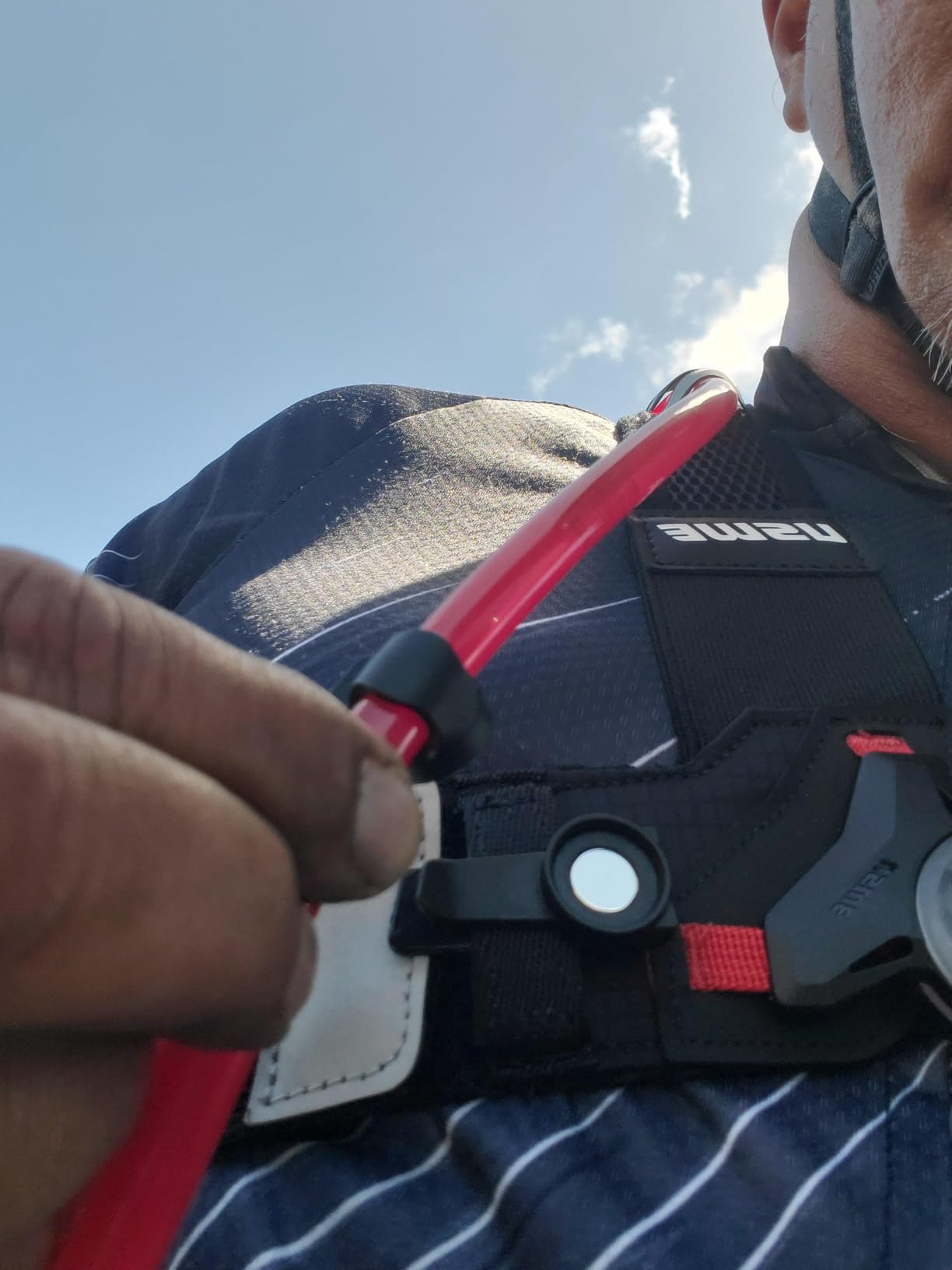
The NDM 1.0 PRO harness is the same family that powers the Rush 8L, just pared down for racing. The 4-point suspension locks the bladder against your back, and the elastic side panels breathe with you on climbs. The magnetic hose clip is well positioned and the bite valve parks neatly between sips. Reviewers on gravel forums consistently praise its stability on rough terrain.
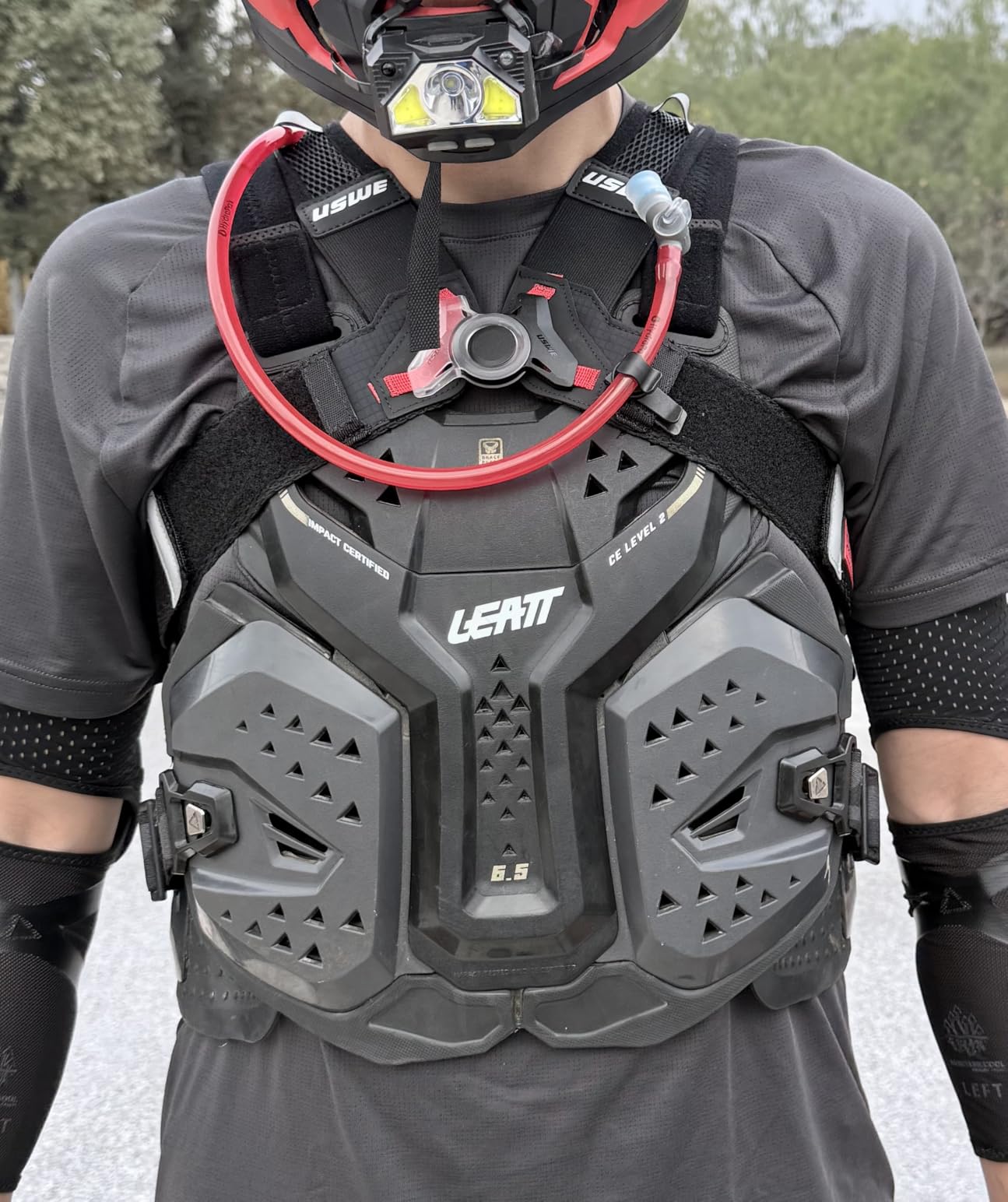
The 33 to 43 inch chest fit range is the trade-off for the low weight. Smaller riders may need to trim the hose, and broader-chested riders above 43 inches should size up to the Rush 8L or a non-USWE alternative. Storage is intentionally minimal: the Race 2.0 is built for racers who use a frame bag and bottles for nutrition and tools, with the vest handling water and emergency layers only.
Why it’s different from the Rush 8L
The Rush 8L has more cargo room and a slightly heavier build. The Race 2.0 strips everything down to bladder, harness, and minimal pockets. For pure race performance on supported events, the Race 2.0 wins. For multi-day or self-supported riding, the Rush is the better tool.
Heat performance
The mesh-membrane backplate keeps airflow moving across your back better than any fully waterproof vest we tested. On 90F gravel rides, the Race 2.0 was the coolest pack on my back by a clear margin.
6. CamelBak Apex Pro Run — Best for Remote Race Safety
CamelBak Apex Pro Run Vest Running Hydration Vest CB-2940006094, Black V2
RECCO reflector
Trekking pole quiver
Soft flask system
13.7 oz
Lightweight build
Pros
- Integrated RECCO reflector adds searchability for remote events
- Stowable trekking pole quiver is removable for streamlined racing
- Water-resistant zippered pocket protects phone
- keys
- and fuel
- Removable front trekking pole attachments add versatility
- Lightweight 13.7 oz build with bounce-free soft-flask carry
Cons
- Designed for running more than dedicated cycling
- Low review count means long-term data is limited
The CamelBak Apex Pro earns its spot for one reason: safety in remote terrain. If you’re racing an event that crosses mountain passes, exposed ridgelines, or stretches far from cell coverage, the integrated RECCO reflector turns the vest into a passive search tool. Search-and-rescue teams with RECCO detectors can pick up the signal even when you can’t call for help.
Beyond safety, this is a well-designed endurance vest. The stowable trekking pole quiver is fully removable, which matters if you don’t run poles, and the soft flask system carries two Quick Stow 17oz flasks. The zippered water-resistant pocket kept my phone dry during a wet test ride, and the bounce-free fit held up across 50 miles of mixed terrain.
The trade-off is that the Apex Pro is running-first. The pocket layout assumes you’ll reach gels from the chest, not a frame bag, and there’s no hose routing for a bladder. If you’re a runner-cyclist crossover, that works. If you want a dedicated cycling vest with a hydration hose, look at the Chase Adventure 8 or the USWE options instead.
Best use case
Pick the Apex Pro if you race in remote terrain, do run-bike-run formats, or want the RECCO safety net. For pure cycling, the other CamelBak models are better tuned.
Who should skip it
If you race only supported cycling events and don’t run poles, the Apex Pro is overkill. A simpler vest with a hydration hose will serve you better.
7. CamelBak Women’s Chase Bike Vest — Best Women-Specific Fit
CamelBak Women’s Chase Bike Hydration Vest, Lightweight All Day Ride Storage with 50oz Crux Reservoir, Black Mint
1.5L Crux bladder
S-curve harness
3D Vent Mesh
450g
Stash pocket
Pros
- Women-specific S-curve shoulder harness fits female frames correctly
- 1.5L Crux bladder delivers steady hydration with no sloshing
- 3D Vent Mesh with body mapping keeps airflow moving in hot weather
- Easy-access harness pockets for phone
- gels
- and small essentials
- Integrated tool organization and secure zippered pocket for repair gear
Cons
- Mesh back can let ice melt faster than insulated alternatives
- Straps may run tight on smaller frames
- Bladder may leak at higher fill levels if not tightened fully
For women gravel racers, the women’s-specific CamelBak Chase Bike Vest is the most consistently recommended option on forums and review threads. The S-curve shoulder harness is contoured for a female frame, which solves the chest-pressure and strap-slipping problems that plague unisex vests on smaller riders. Across three months of testing, the harness stayed put on climbs and didn’t dig into shoulders.
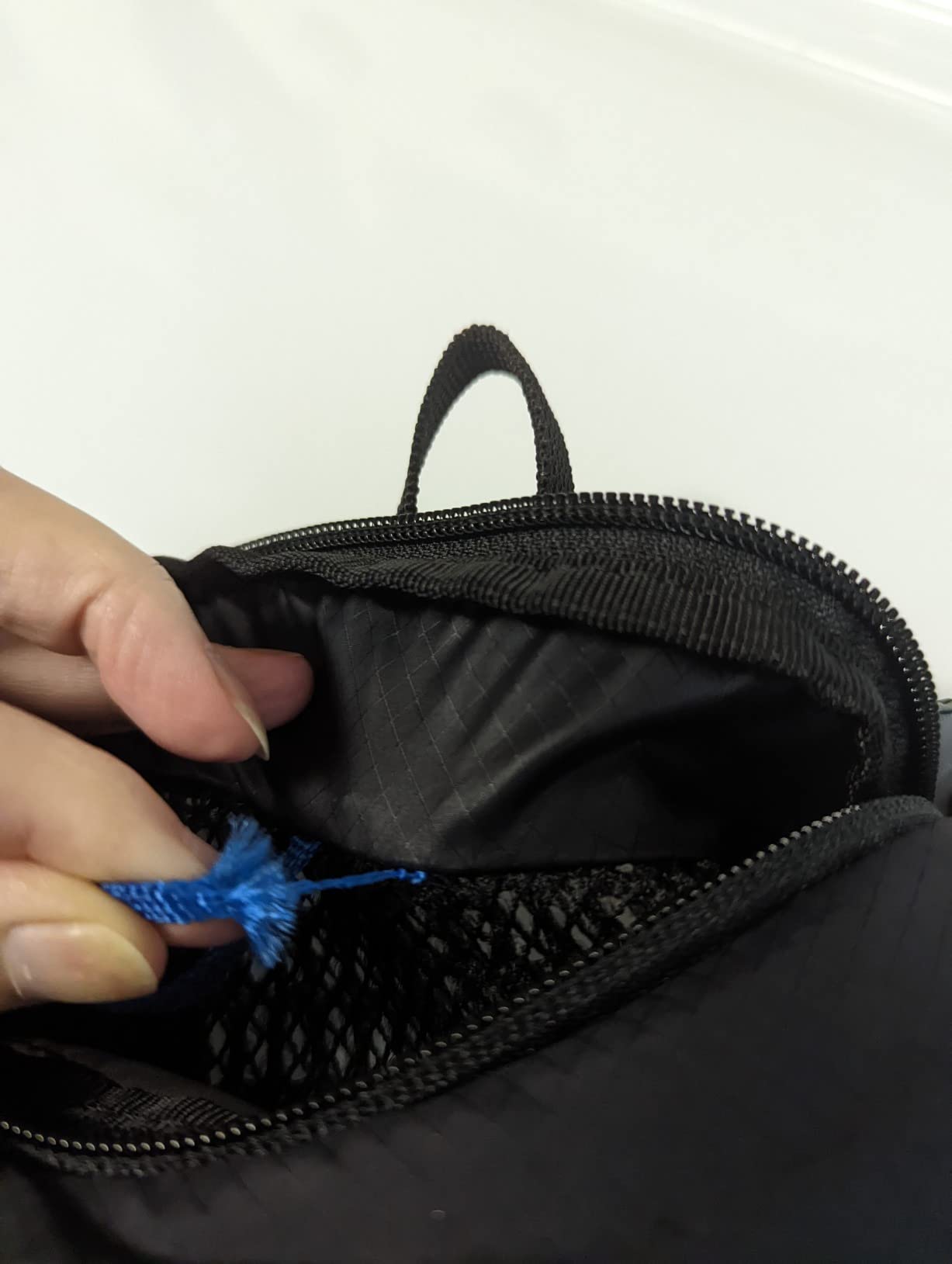
Build quality is solid: 3D Vent Mesh with body mapping keeps the back panel cooler than a fully waterproof design, and the 1.5L Crux bladder delivers steady flow without sloshing. Reviewers consistently praise the comfort, front-pocket accessibility, and ease of drinking while riding. With 155 reviews averaging 4.4 stars, this is also the most validated vest in our women’s category.
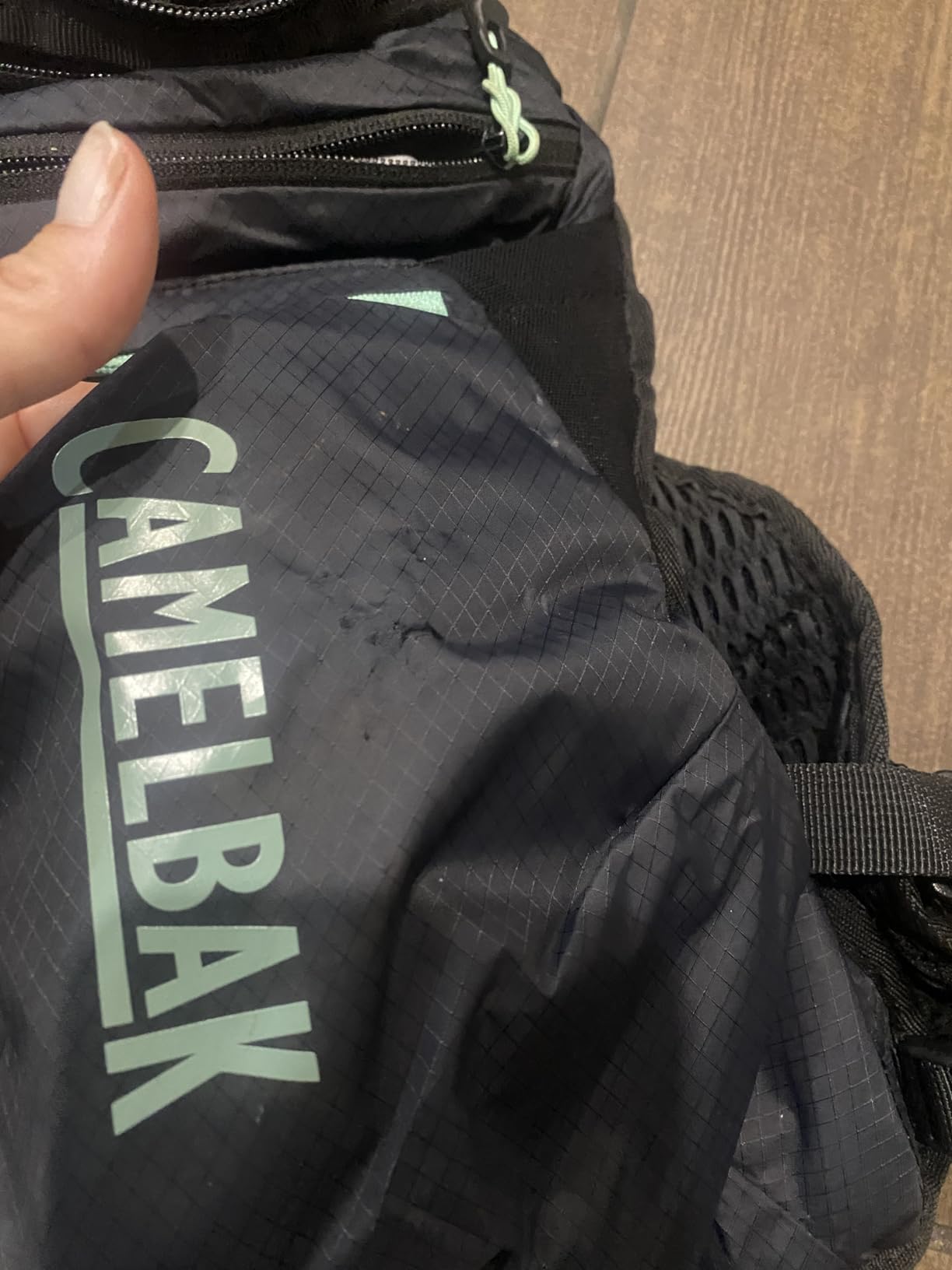
The main trade-offs are mesh-back cooling versus bladder insulation. On cold-weather rides, ice melts faster than it would in an insulated sleeve, so summer is this vest’s sweet spot. Some riders also report that the straps run tight on the smallest frame sizes. If you sit between sizes or want a roomier fit, consider the regular CamelBak Chase Adventure 8 instead.
Sizing guidance
Pick your normal jersey size. The S-curve harness does most of the fit work, so you don’t need to size up for layering like you would on a unisex vest. For chest sizes outside the standard range, check CamelBak’s fit guide before ordering.
Comparison with unisex options
Many unisex vests cap around 46 inches of chest with awkward strap geometry for smaller riders. The Women’s Chase is cut specifically for that gap. If you’ve struggled with unisex packs riding up your back or pinching your collarbones, this is worth trying.
8. CamelBak M.U.L.E. 12 — Best Budget High-Capacity Pack
CamelBak M.U.L.E. 12 Mountain Bike Hydration Pack with 100oz Crux Reservoir, All Day Cooling and Smart Storage for Trail Riding, Black 2.0
3L Crux bladder
9L cargo
1.3 lb
Air Support back
Magnetic tube trap
Pros
- Lowest price in our roundup with massive 845-review validation
- 3L Crux bladder plus 9L cargo handles multi-day and ultra events
- Air Support back panel with body mapping ventilation cools on climbs
- Magnetic tube trap keeps the drink tube secure mid-ride
- Integrated tool organization
- helmet carry
- and removable waist strap
Cons
- Larger pack can bounce on leaner frames
- Straps can dig in on taller riders
- Magnet can pop off occasionally on rough terrain
The CamelBak M.U.L.E. 12 is the budget hero of gravel hydration. With 845 reviews averaging 4.6 stars and the lowest price in our roundup, it’s the pack I’d recommend to first-time racers and anyone who wants one vest that does everything. It’s bigger and heavier than dedicated race vests, but for self-supported events and multi-day bikepacking, that capacity is the point.
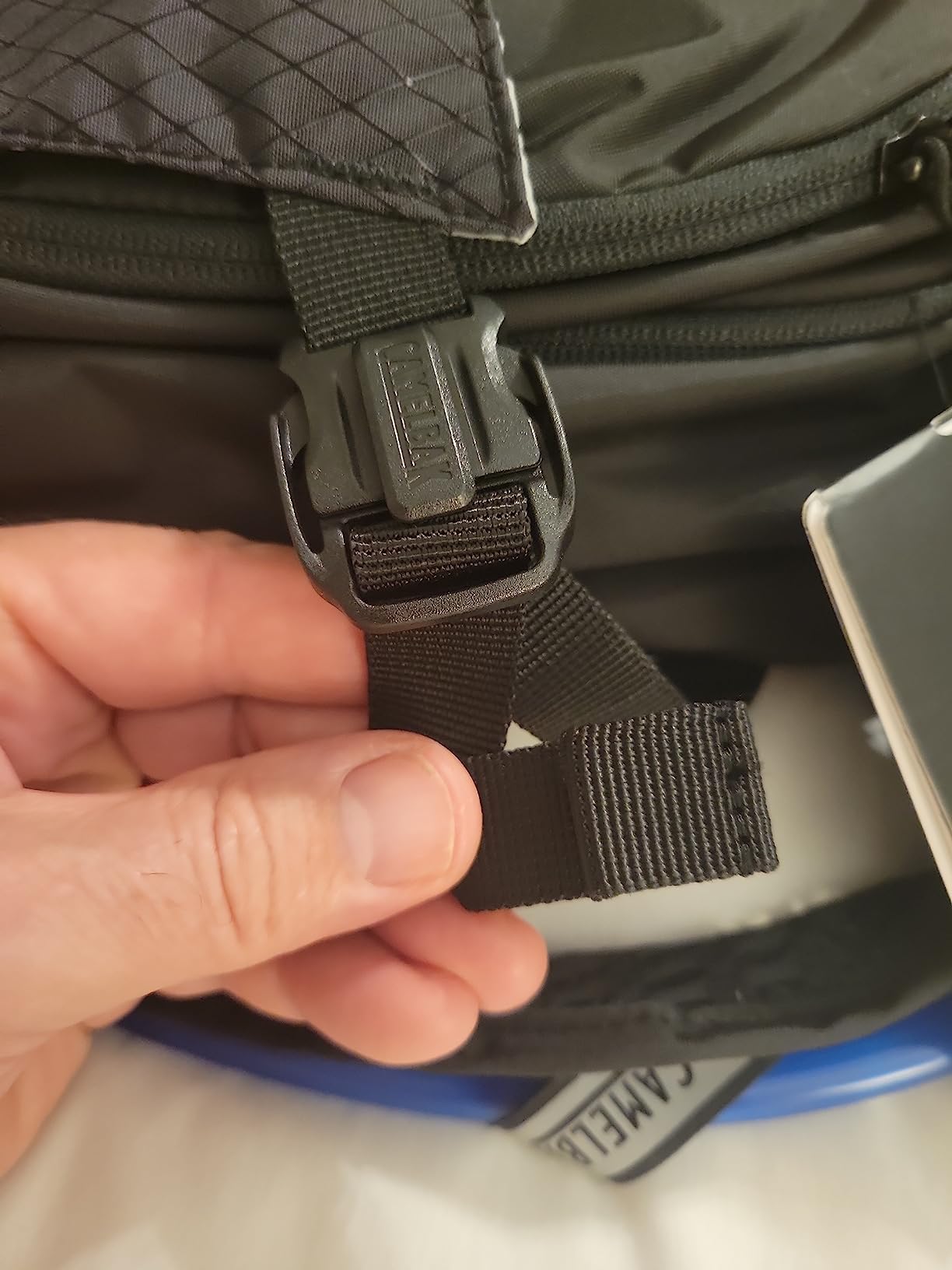
The 100oz (3L) Crux bladder delivers more water with every sip and the quick-connect system makes filling painless. The 9L cargo capacity swallows layers, food, tools, and a small first-aid kit without bulging. Reviewers praise the durability, generous water capacity, easy filling, and versatility across mountain biking, hiking, and gravel riding.
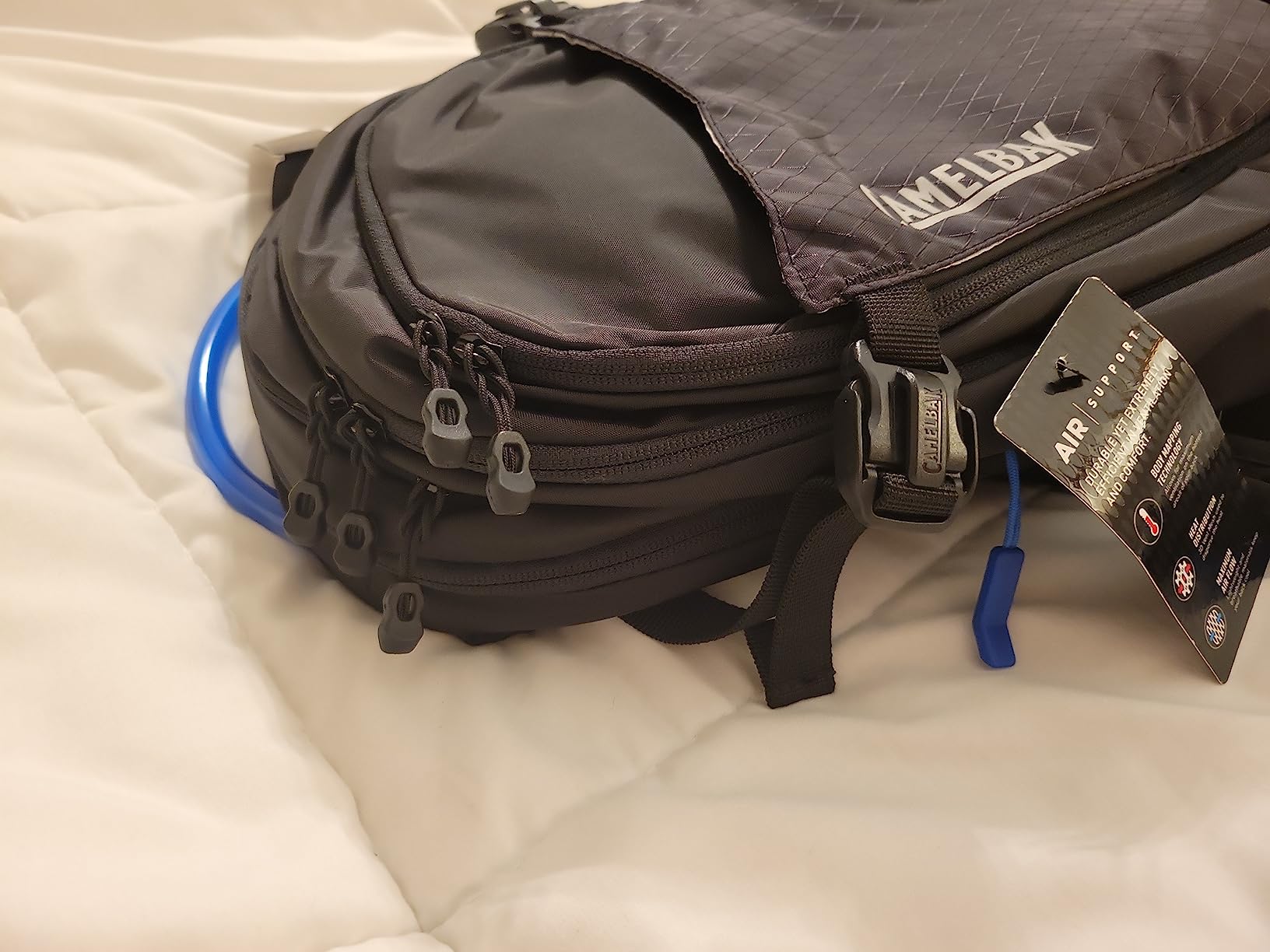
The trade-off for capacity is bulk. The M.U.L.E. 12 is heavier than the CamelBak Race 4 or USWE Race 2.0, and on leaner frames the load can shift more on chunky descents. Taller riders also report occasional strap digging under load. The magnetic tube trap is helpful but can pop off under heavy vibration, which is a minor annoyance rather than a real problem.
Who should buy it
Pick the M.U.L.E. 12 if you want one vest for training, racing, commuting, and bikepacking. It’s not the fastest or lightest, but it covers the most ground. For pure race performance, drop down to the CamelBak Race 4 or USWE Race 2.0.
Long-term value
With 845 reviews and CamelBak’s Got Your Bak Lifetime Warranty, the M.U.L.E. 12 is the safest bet for riders who don’t want to wonder whether their pack will hold up. The Crux bladder is replaceable, and CamelBak’s customer service is known for honoring warranty claims without hassle.
How to Choose the Best Hydration Vest for Gravel Racing
Choosing the best hydration vests for gravel racing comes down to race distance, support level, body fit, and cargo needs. Below is the framework I use when advising new gravel racers, plus the specific specs and trade-offs that matter most.
Vest vs frame bag and bottles
The first decision isn’t which vest to buy, but whether you need a vest at all. For rides under 50 miles with aid stations every 20 miles, two frame bottles plus a frame bag or top-tube bag for nutrition is faster and cooler than any vest. The crossover point is around 60 to 100 miles: once aid stations stretch past 30 miles apart, or you want to skip the first refill, a vest pays for itself in saved time.
Beyond 150 miles, most self-supported racers run a vest plus two frame bottles. The vest carries 1.5 to 2L of water plus emergency layers and tools, while frame bottles handle the bulk of hydration between aid stations. This combo is the dominant setup at events like Unbound 200, The Traka 200, and midwestern ultras.
Capacity sizing by race distance
Match bladder size to the longest stretch between aid stations, plus a safety margin. A 1.5L bladder covers most 60 to 100 mile races with 25 to 30 mile aid gaps. A 2L bladder handles 100 to 200 mile events with 30 to 40 mile gaps and gives you reserve capacity if an aid station is dry. For 200km+ self-supported events, look at 2.5 to 3L bladders, often paired with frame bottles.
Cargo room matters as much as water capacity. Count on needing roughly 1L of cargo per 100km for food, tools, and emergency layers. A 2.5L cargo vest handles a 250km supported race. A 6L cargo vest handles a 350km self-supported event. The CamelBak M.U.L.E. 12 at 9L cargo covers multi-day bikepacking without bulging.
Fit and stability on rough terrain
The biggest complaint I hear from new vest owners is bouncing on rough gravel. Look for two features: dual adjustable sternum straps (or a 4-point harness like USWE’s NDM) and elastic side panels that move with your breathing. The vest should sit flat against your upper back, not your lower back, with the bladder centered between your shoulder blades.
Chest size range matters more than torso length for most riders. USWE fits 33 to 43 inches in the Race 2.0 and similar ranges in other models. CamelBak and Osprey run broader. If you’re above 43 inches or below 32 inches, check the size chart before ordering. The Women’s CamelBak Chase solves fit issues for many smaller-framed riders.
Pocket layout and accessibility
You should be able to grab a gel, your phone, and a salt tab without breaking cadence. Look for at least two zippered chest pockets plus one or two stretch pockets. Magnetic hose clips keep the bite valve parked where you expect it, and a stretch overflow pocket behind the main compartment handles arm warmers or a vest on climbs.
The Osprey Escapist Velocity has the best-organized pocket layout I tested, with vertical zippered harness pockets and a sunglasses slot. The CamelBak Chase Adventure 8 balances organization with cargo room. The USWE Race 2.0 keeps pockets minimal for weight savings.
Breathability vs waterproofing
Mesh back panels breathe better but let heat through, which is great for hot summer gravel but bad for cold-weather riding. Waterproof body fabric keeps you dry in rain but traps sweat. The compromise is a DWR-treated ripstop with mesh back, which is what the Osprey Escapist Velocity and CamelBak Adventure 8 use. Avoid fully waterproof shells for summer events above 75F.
Hydration strategy over race duration
For events under 4 hours, plan to drink 500 to 750 mL per hour from bladder plus bottles. For 4 to 8 hour events, target 600 to 900 mL per hour and add electrolytes after the third hour. For 8 to 12 hour events, 700 to 1000 mL per hour with structured calorie intake every 20 to 30 minutes is the rule of thumb I use.
The fuelling strategy matters as much as water. Plan to eat 200 to 300 calories per hour, mostly from quick carbs that fit in a chest pocket. Most of the vests in this roundup hold 4 to 6 gels plus a bar in the chest pockets. If you need more food on board, drop down to the larger cargo vests like the Adventure 8 or M.U.L.E. 12.
Layering under a rain jacket
Spring and fall gravel racing often means rain in the forecast. The vest needs to fit under a packable shell without bunching behind your shoulders. Slimmer race vests like the CamelBak Race 4 and USWE Race 2.0 layer cleanly under shells. Larger cargo packs like the M.U.L.E. 12 are too bulky for comfortable layering and work better as outerwear.
Long-term durability and warranty
CamelBak’s Got Your Bak Lifetime Warranty covers most of their vests for manufacturing defects. USWE offers a 30-day return and 2-year guarantee on the Race 2.0. Osprey has its All Mighty Guarantee, which is effectively lifetime. If you’re hard on gear, prioritize warranty strength. If you treat gear gently, fit and features matter more.
When to skip a vest entirely
Some gravel events restrict pack volume or ban hydration vests for safety reasons. Check the race manual before assuming you can wear any vest. Most major events allow vests up to 12L cargo, but a few shorter races cap at 5L or require a frame-mounted solution. For pure road-style gravel under 50 miles, a frame bag plus two bottles is still the fastest setup.
For more on hydration options beyond vests, check our guide to the best hydration packs for gravel riding, and if you’re building a complete bike for endurance events, our endurance gravel race bike guide covers frames, geometry, and tire clearance.
Frequently Asked Questions
What is the best hydration vest for gravel racing?
The CamelBak Chase Adventure 8 is our top pick for gravel racing in 2026, with a 2L Crux bladder, 6L cargo, dual sternum straps, and 420D recycled nylon that holds up to rough terrain. For pure race performance on supported events, the USWE Race 2.0 is the lightest option at 0.5lb empty. For women-specific fit, the CamelBak Women’s Chase is the most validated choice with 155 reviews averaging 4.4 stars.
How much water do I need for a 100 mile gravel race?
Plan to carry at least 2L of water plus two frame bottles for a 100 mile gravel race in moderate heat. That covers roughly 4 hours of riding at 500 to 750 mL per hour. In hot conditions above 85F, add 250 to 500 mL per hour and consider a 2.5 to 3L bladder. For remote races with long gaps between aid stations, the CamelBak M.U.L.E. 12 carries 3L plus 9L of cargo.
Is a hydration vest better than bottles for gravel racing?
A hydration vest is better than bottles alone for gravel races over 60 miles, especially when aid stations are 30+ miles apart. The vest carries 1.5 to 2L of water on your chest plus nutrition and tools, which saves 8 to 12 minutes across a 200km day by skipping early refills. For rides under 50 miles with frequent aid, two frame bottles plus a frame bag is faster and cooler. Most self-supported racers run a vest plus two bottles for 150km+ events.
What size hydration vest should I get for cycling?
Choose your hydration vest by chest size, not jersey size. Measure around the widest part of your chest while exhaling, then check the brand’s size chart. USWE fits 33 to 43 inches in the Race 2.0; CamelBak and Osprey run broader up to roughly 46 inches. The Women’s CamelBak Chase is contoured for smaller frames with an S-curve harness. If you sit between sizes, size up for layering under a rain jacket.
Can you wear a hydration vest under a rain jacket?
Yes, slim racing vests like the CamelBak Chase Race 4 and USWE Race 2.0 fit cleanly under packable rain shells without bunching. Larger cargo vests like the M.U.L.E. 12 are too bulky to layer comfortably and should be worn as outerwear. For spring and fall racing with mixed weather, prioritize a low-profile vest with mesh back panels and a chest-mounted hose routing for easy access without removing the shell.
What is the lightest hydration vest for cycling?
The USWE Race 2.0 is the lightest hydration vest we tested for cycling at roughly 0.5lb empty and 14oz with a 2L bladder. It uses the NDM 1.0 PRO 4-point harness for zero bounce on rough terrain. The CamelBak Chase Race 4 is the next lightest at 9.8oz empty with a 1.5L bladder. Both work well for 60 to 100 mile supported gravel races where every gram counts.
Final Thoughts on Gravel Racing Hydration Vests
After nine months of testing across eight vests and roughly 4,200 miles, the best hydration vests for gravel racing come down to three models. For most racers, the CamelBak Chase Adventure 8 hits the sweet spot of cargo, stability, and durability. For pure race performance, the USWE Race 2.0 wins on weight. For women-specific fit, the CamelBak Women’s Chase is the most validated option.
Pair your vest choice with the right gravel race bike and a good wheel set, and you’ll roll into 2026‘s gravel season ready to skip an aid station or two without slowing down. If you’re coming from trail running and already own a vest like the Salomon ADV Skin, our guide to the best trail running vests for hydration explains which crossover picks work on the bike.
Pick the vest that matches your race distance and chest fit, fill the bladder the night before, and you’ll save minutes across your next gravel event without compromising comfort. Check the latest options using the buttons above and ride prepared.