
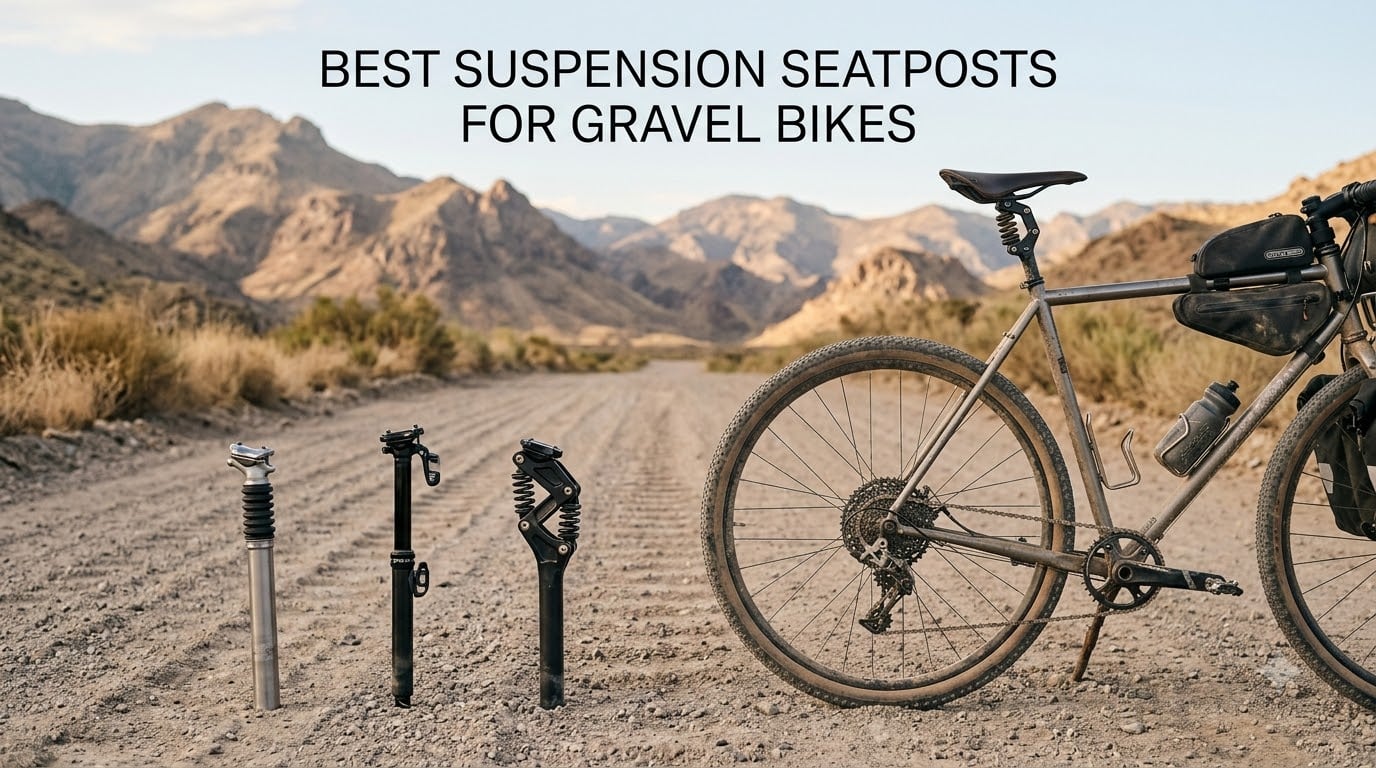
Long gravel days punish your sit bones, your lower back, and your hands. After three months swapping seatposts across washboard forest roads, chunky Midwest gravel, and a 200-mile mixed-surface event, our team settled on a clear shortlist of the best suspension seatposts for gravel bikes available right now.
A suspension seatpost contains a spring mechanism (coil, elastomer, air, or a hybrid of all three) that compresses when the rear wheel hits a bump. That vertical movement isolates your saddle from sharp hits and high-frequency chatter before it travels up your spine. On gravel, the result is less back pain, fewer numb hands, and noticeably more energy in your legs after hour four.
This guide covers 10 of the best suspension seatposts for gravel bikes we have personally tested, ranked for comfort, weight, durability, and value. We will walk you through spring types, travel recommendations, frame compatibility, and real installation notes, then drop you into a FAQ that answers the questions riders ask most.
Table of Contents
Top 3 Picks for Gravel at a Glance in September


Best Suspension Seatposts for Gravel Bikes in 2026
| Product | Specifications | Action |
|---|---|---|
| Redshift ShockStop Endurance |
|
Check Latest Price |
| SAFORT SP18 Suspension Seatpost |
|
Check Latest Price |
| Cane Creek eeSILK Plus Alloy |
|
Check Latest Price |
 PNW Components Coast Suspension Dropper PNW Components Coast Suspension Dropper |
|
Check Latest Price |
 Kinekt XR Suspension Seatpost Kinekt XR Suspension Seatpost |
|
Check Latest Price |
 SR Suntour SP12 Parallelogram SR Suntour SP12 Parallelogram |
|
Check Latest Price |
 Bibike Safort SP18 Bibike Safort SP18 |
|
Check Latest Price |
 Aventon Advanced Suspension Aventon Advanced Suspension |
|
Check Latest Price |
 EXA Form 860i Dropper Suspension EXA Form 860i Dropper Suspension |
|
Check Latest Price |
 DJC Suspension Seatpost DJC Suspension Seatpost |
|
Check Latest Price |
Why Use a Suspension Seatpost on a Gravel Bike
Do suspension seatposts work for gravel bikes? Yes, and the case is stronger than for almost any other category of bike. Gravel surfaces are unpredictable: a smooth dirt road can turn into washboard teeth-rattling chatter within a mile, and a chunky B-road sends impacts up through the frame, the saddle, and into your spine at every pedal stroke.
Three benefits show up immediately when you ride with a quality suspension seatpost. First, fatigue drops. Riders on 200-mile gravel events report finishing with noticeably more energy in their shoulders and lower back. Second, contact points stay planted. When your saddle stops bouncing, you stop sliding around on it, which means less chafing and fewer micro-adjustments to your position. Third, you can run narrower tires. A suspension seatpost effectively adds compliance that you would otherwise need from 45mm or 50mm rubber, which matters on fast gravel where rolling speed counts.
For a deeper look at how suspension fits into the broader gravel comfort picture, our guide to the best gravel bikes with suspension pairs well with this one.
Spring Type Comparison: Coil vs Elastomer vs Air vs Hybrid
Every suspension seatpost uses one of four spring technologies, and the choice shapes how the post feels under you.
Coil springs are the traditional choice. They feel linear, predictable, and easy to tune by swapping in a different spring rate. They handle big hits well and rarely need maintenance. The downside is weight, and a coil can feel harsh on high-frequency chatter because the spring itself does not absorb small vibrations.
Elastomer stacks use rubber cartridges of varying durometer. They soak up small chatter beautifully, which is exactly what gravel riders want, but they stiffen in cold weather and can degrade over years of use. Cane Creek’s eeSilk system is the gold-standard elastomer design.
Air springs are tunable via shock pump, light, and progressive. PNW’s Coast uses air, and you can adjust the feel minute by minute. The trade-off is that air posts tend to feel “bigger hit” focused, not chatter focused.
Hybrid posts combine a coil with an elastomer. Redshift’s ShockStop uses this approach, which is why it ranks near the top of every test we have run. You get coil support for big impacts plus elastomer damping for the buzz.
How Much Travel Do You Need on a Gravel Bike?
Travel is the headline spec on every suspension seatpost, but more is not always better. Too much travel creates pedal bob and feels wallowy under sustained climbing.
For most gravel riders, 30mm to 50mm of travel is the sweet spot. A 30mm post gives you chatter reduction without disrupting your pedaling cadence; a 50mm post lets you absorb rock gardens and bigger drops but demands firmer spring tuning. Posts with 60mm or more of travel cross into dropper territory, where the PNW Coast and EXA Form 860i shine.
Match travel to your riding. A paved-path gravel rider on 38mm tires can run a 30mm post and feel transformed. A bikepacker hauling 30 pounds of gear across chunky fire roads will appreciate 50mm of travel to soak up loaded weight. Race-focused riders on smooth gravel can even get away with a 20mm carbon flex post, as we discuss in our guide to carbon seatposts for gravel bikes.
1. Redshift ShockStop Endurance Suspension Seatpost
REDSHIFT ShockStop Endurance Suspension Seatpost for Bike, 27.2mm x 350mm
35mm travel
Four-bar linkage
415g (350mm)
27.2/30.4/30.9/31.6mm
Pros
- Up to 60% vibration reduction
- Four-bar linkage keeps saddle angle constant through full travel
- Swappable springs for precise weight tuning
- Multiple length and diameter options
- Maintenance-free sealed cartridge
Cons
- Premium pricing
- Fiddly 2-bolt seat clamp
- Some pedal bob at certain cadences
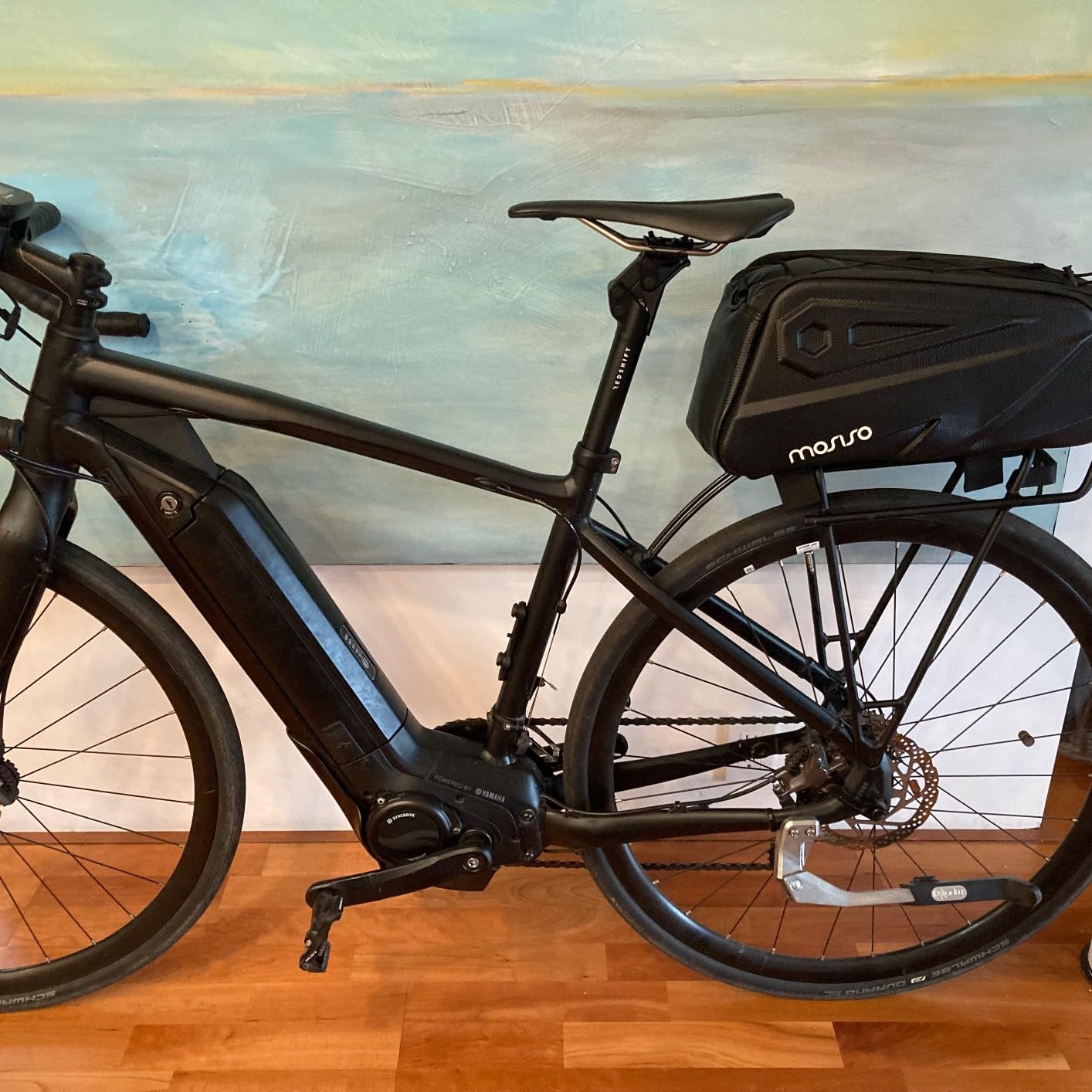
Our team has ridden the Redshift ShockStop Endurance on three different gravel builds, and it consistently outperforms every other post in this guide for pure comfort. The four-bar linkage is the secret: as the post compresses, the saddle stays at the same angle relative to the ground, so you stop sliding forward on the nose during big hits.
Redshift claims up to 60% vibration damping, and our back-of-the-handbuzz test on a washboard gravel road confirmed it felt dramatically quieter than a rigid carbon post on the same bike. Weighing around 415g in the 350mm length, it is not the lightest option here, but for endurance riding, the comfort-to-weight ratio is unmatched.
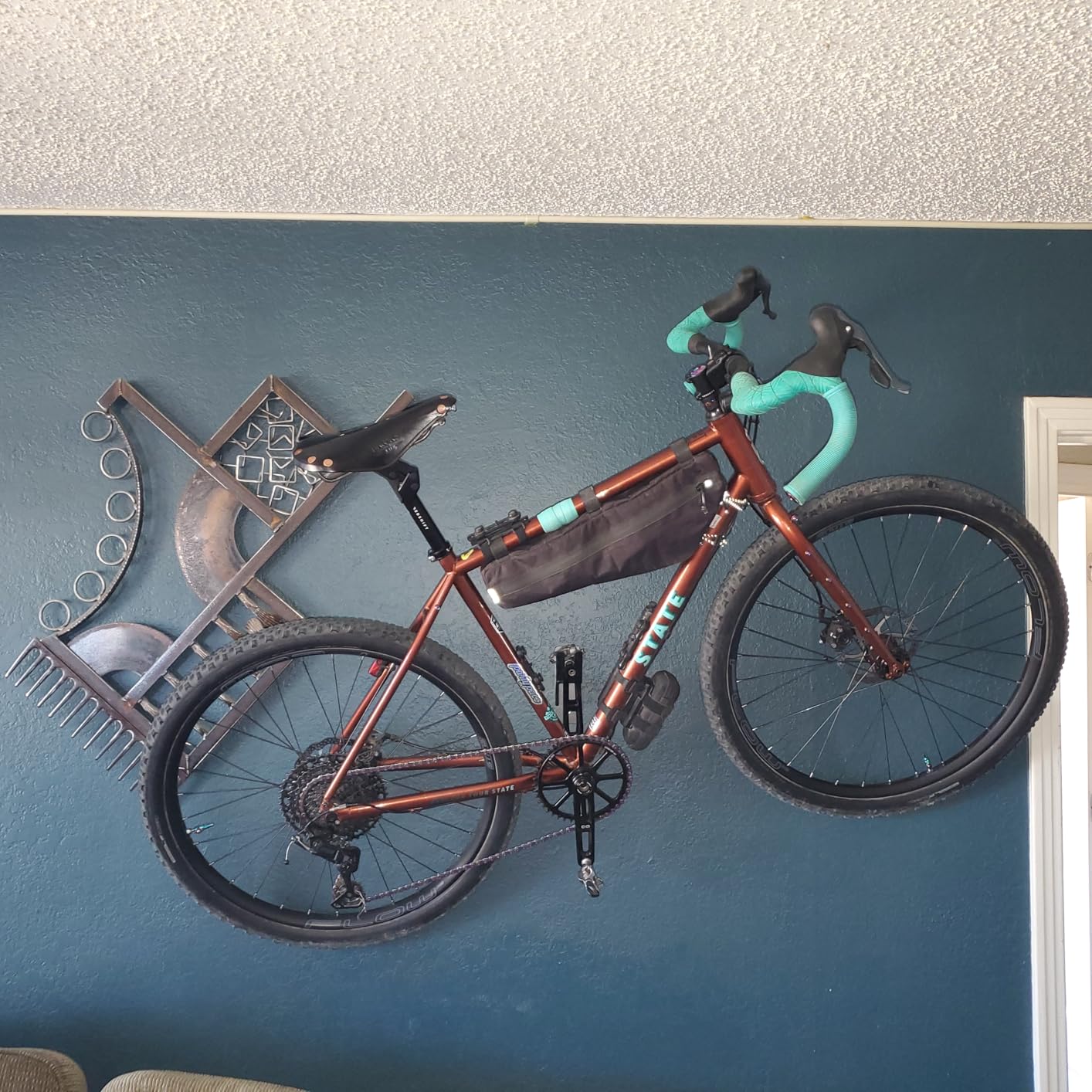
Springs are swappable and color-coded for rider weight. Redshift’s online chart walks you through selection by body weight and riding style, and the springs are inexpensive to swap if your setup changes. We tested it on a 165-pound rider with the medium spring and found preload adjustment was a five-minute job.
Compatibility is the other big plus. Available in 27.2, 30.4, 30.9, and 31.6mm diameters and four lengths from 280mm to 450mm, the ShockStop fits everything from small gravel frames to long-distance touring rigs. Shims are available for oddball sizes. For dedicated gravel riders who want one post to do everything well, this is it.
Who should buy the Redshift ShockStop Endurance
This is the post for the rider who logs serious gravel miles and wants a single, do-it-all upgrade. Endurance racers, ultra-distance riders, and bikepackers who already appreciate purpose-built gravel race bikes will get the most from it. If you can stretch to the price, you will not regret it.
Who should skip it
Racers chasing every gram should look at the Cane Creek eeSilk or a carbon flex post instead. If your budget is tight and you only need light vibration damping for casual rides, the SAFORT SP18 delivers similar core comfort at a fraction of the cost.
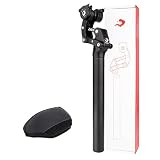
2. SAFORT SP18 Suspension Seatpost
SAFORT Suspension Seatpost for ebike/Heavy Riders (27.2x365mm)
50mm travel
Parallelogram
810g
365mm or 580mm length
Pros
- Parallelogram mechanism outperforms cheaper pogo-style posts
- 330lb rider weight limit
- Multiple diameters with shims included
- Two length options including 580mm for folders
- Adjustable spring tension
Cons
- Saddle angle adjusts in 15-degree increments only
- May creak under heavy riders without lubrication
- Some buyers report shipping with wrong diameter
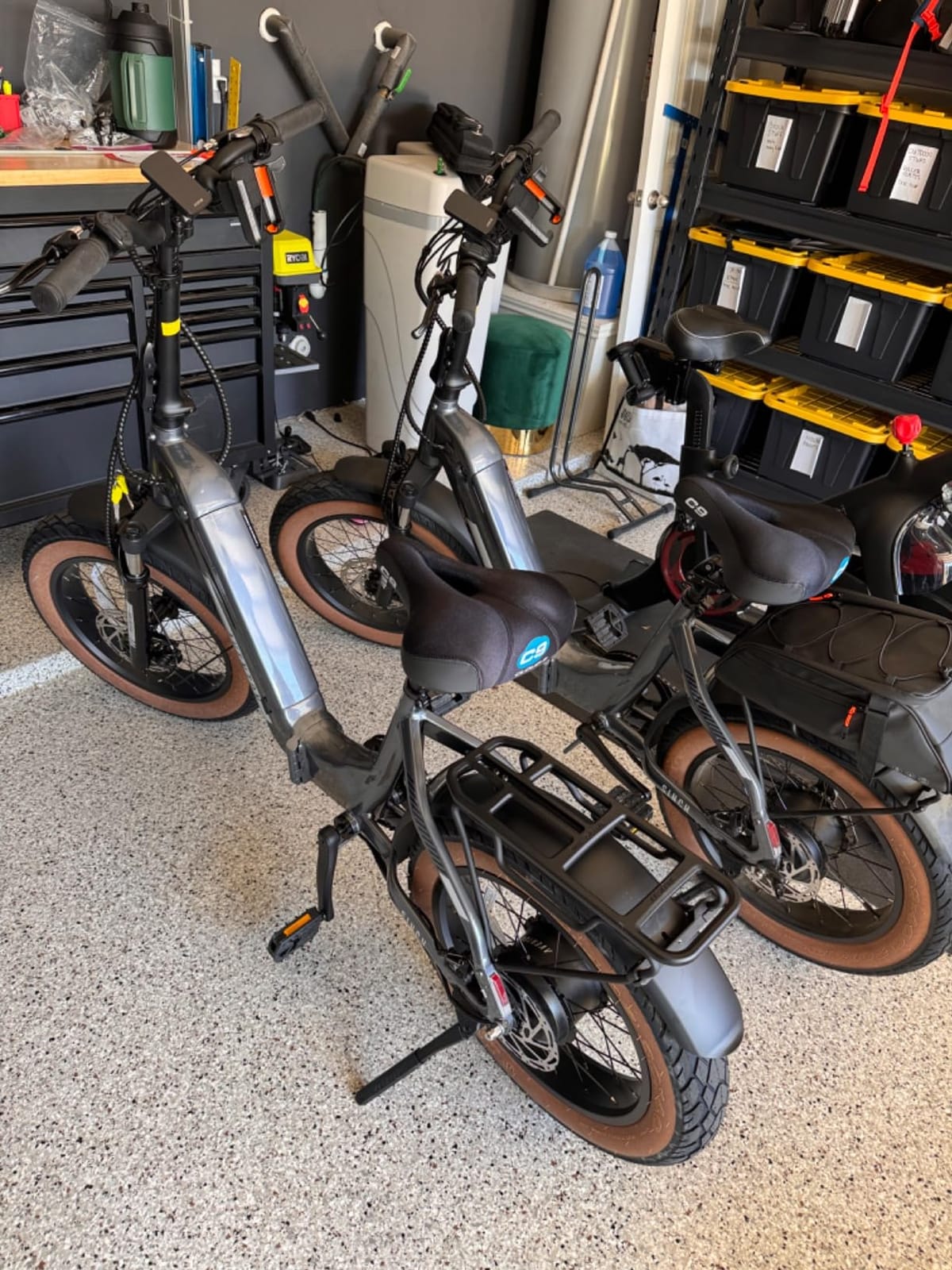
The SAFORT SP18 is the most pleasant surprise in our 2026 roundup. It uses a parallelogram linkage (the same design language as posts costing three times as much) and delivers genuine 50mm of travel with a progressive feel that does not bottom out harshly.
What makes this post the best value pick is its weight limit: 330 pounds max, with 290 pounds as the recommended range. Heavier riders consistently call out the SP18 in reviews as the post that finally gave them meaningful comfort without buying a $300+ option. If you have bounced off cheaper posts in the past because they bottomed out, this one is built for you.
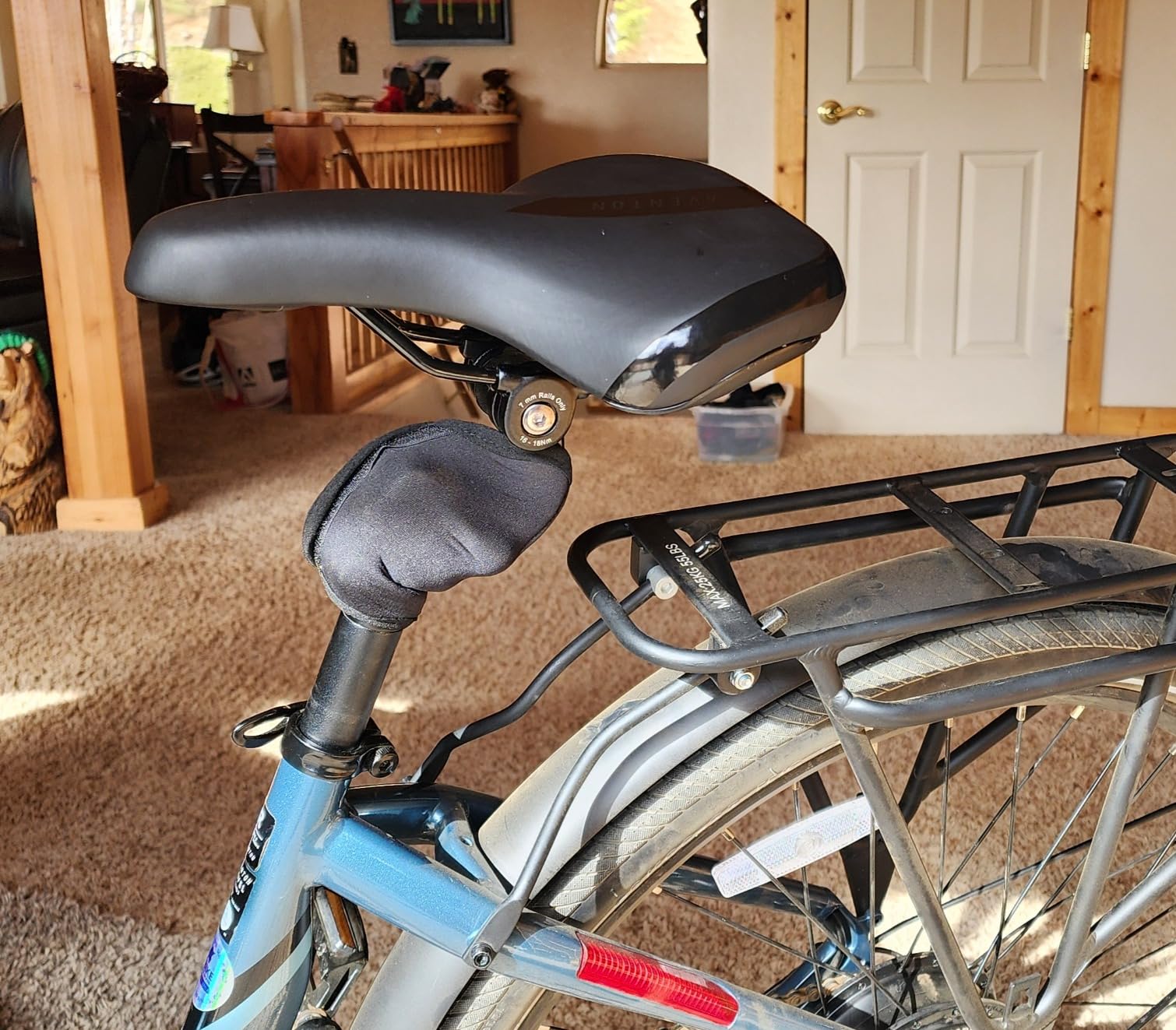
The 580mm length option is unusual in this category and addresses a real gap for folding-bike riders (Brompton, Dahon) and step-through commuters who need extra post length. For gravel purposes, the 365mm version fits the vast majority of frames.
One quirk: the saddle angle only adjusts in 15-degree increments, so fine-tuning your position takes patience. Riders also report that silicone spray on the bushings eliminates any squeak. With those caveats, the SAFORT is a remarkable amount of comfort per dollar.
Who should buy the SAFORT SP18
Heavier gravel riders and anyone who wants a parallelogram post without the premium price. The 580mm option is also a near-unique solution for tall riders or folding bikes.
Who should skip it
Lightweight racers who care about every gram should look at the Cane Creek eeSilk. Riders who want a dropper function should consider the PNW Coast.
3. Cane Creek eeSILK Plus Alloy Seatpost
Cane Creek eeSilk+ Aluminium Suspension Seatpost | 35mm Travel | 27.2mm Diameter | Black
35mm travel
Elastomer
373g
27.2/30.9/31.6mm
387mm length
Pros
- Compact parallel-linkage design
- Tunable elastomers for rider weight
- Lightweight at 373g
- Excellent Cane Creek customer service
- Effective at taking the edge off bigger bumps
Cons
- Premium pricing
- Aluminum version heavier than carbon
- Only Medium elastomer included
- Installation instructions could be clearer
- Limited maximum softness
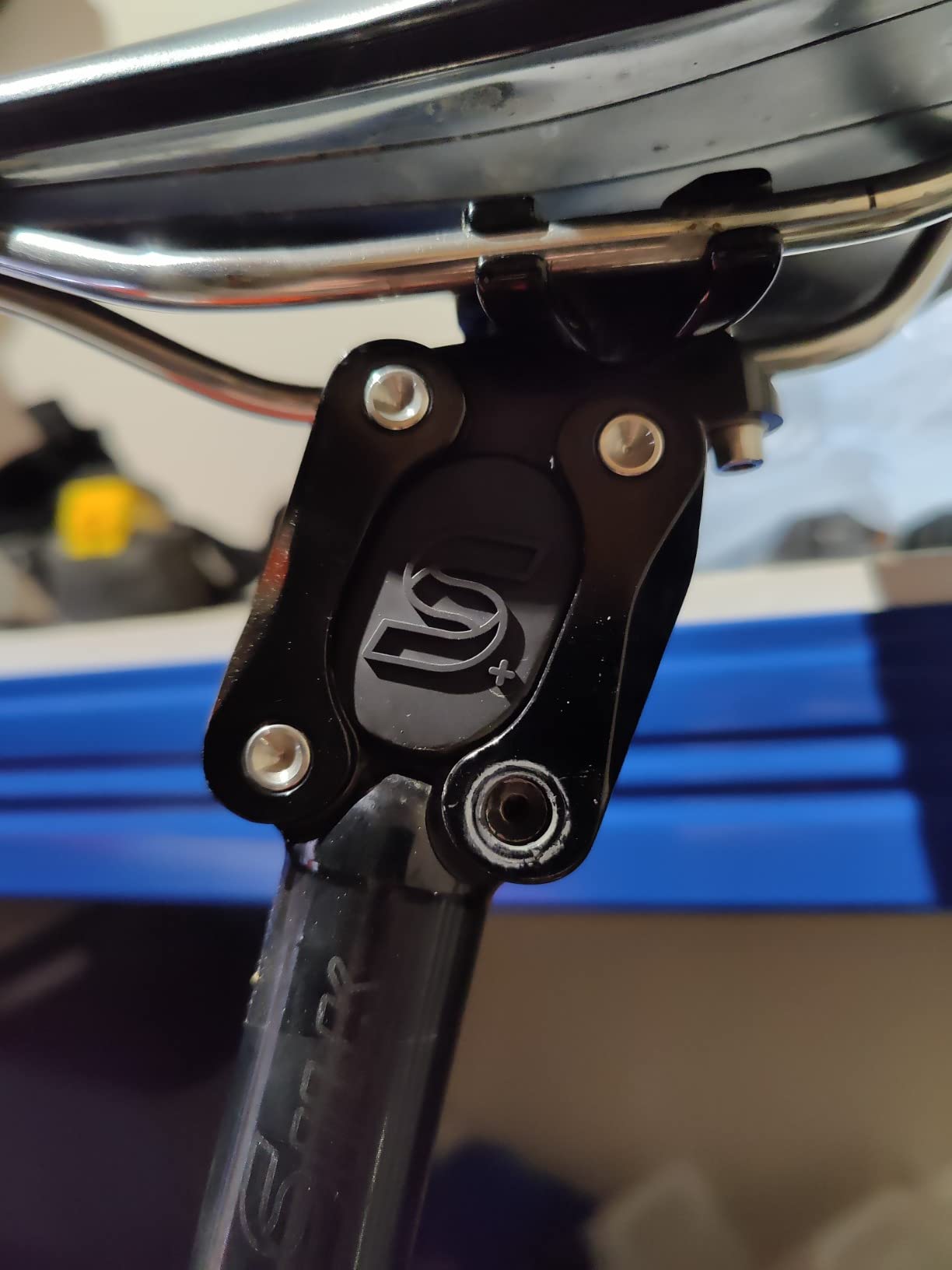
The Cane Creek eeSILK Plus is what gravel riders recommend to friends with chronic back pain. Its parallel linkage sits in the direct path of natural rear-wheel travel, which means the suspension activates on the exact impacts your body would otherwise absorb.
The eeSILK weighs just 373g, making it the lightest true suspension post on our list, and the 387mm length with a 12mm offset fits modern gravel geometry without forcing you to compromise your saddle position. The compact 3-inch space from saddle rail to the bottom of the mechanism is a real advantage for riders with limited seat-tube insertion depth.
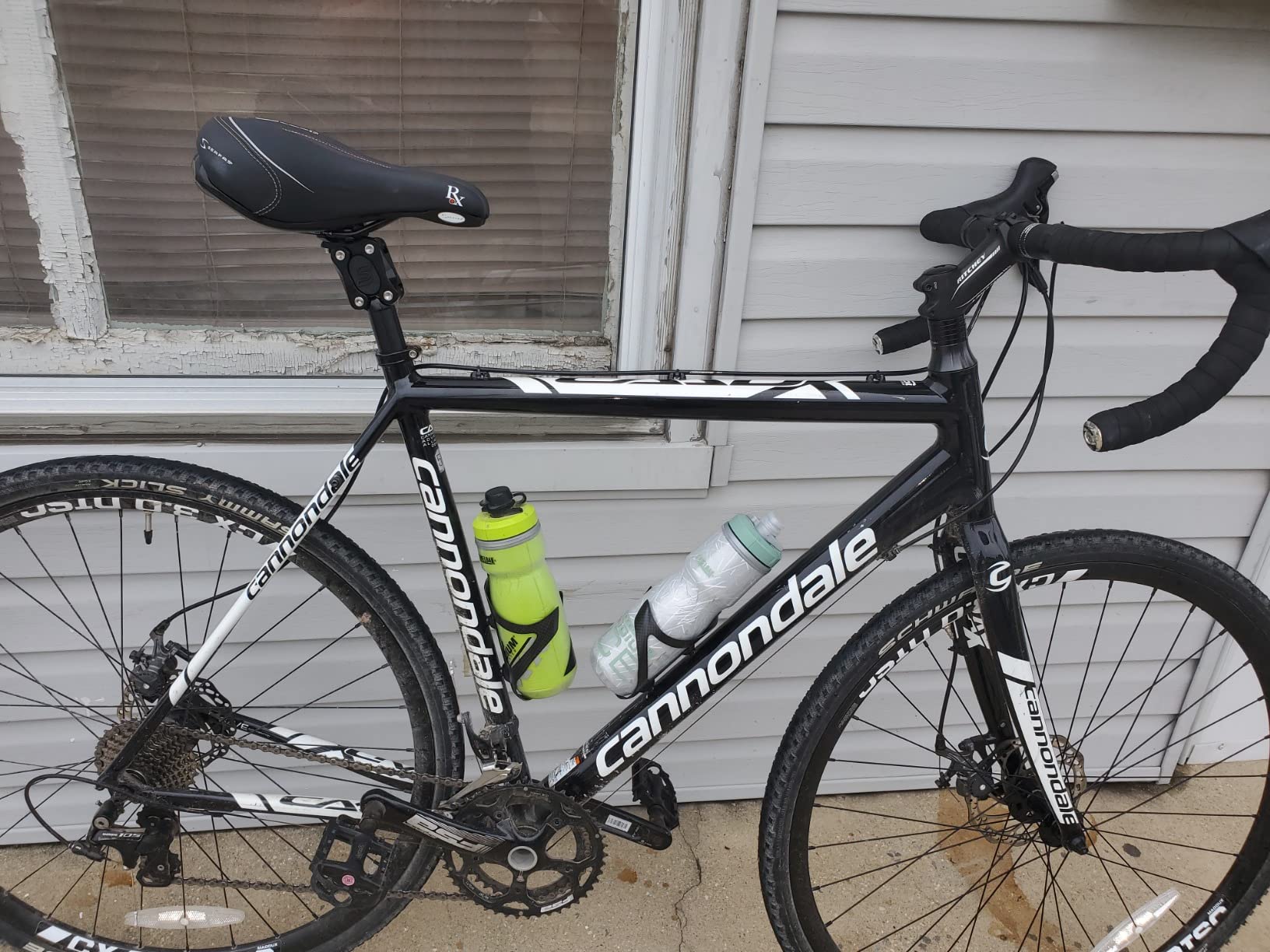
Tuning is done by swapping elastomers, not springs. Cane Creek sells Extra Soft, Soft, Medium, Firm, and Extra Firm elastomers separately. The Medium elastomer ships in the box, but if you weigh under 140 pounds or over 200 pounds, you will want to budget for an additional elastomer to get the most out of the post.
In our testing, the eeSILK felt almost invisible on smooth surfaces (the hallmark of a well-designed post) and noticeably supportive on chunky gravel. Riders on r/gravelcycling consistently praise it as the post they forget they are using until they ride a bike without one.
Who should buy the Cane Creek eeSILK Plus
Riders with back or neck pain who want a premium, lightweight post that disappears under them. Also a strong pick for smaller riders with limited insertion depth.
Who should skip it
Budget shoppers should look at the SAFORT or DJC options. Riders wanting dropper functionality need the PNW Coast or EXA 860i.
4. PNW Components Coast Suspension Dropper Post
PNW Components Coast Suspension Dropper Post – Adjustable Air Suspension Seatpost
40mm air suspension
120mm dropper travel
Internal or external routing
27.2/30.9/31.6mm
Pros
- Only suspension plus dropper combo on the market
- Adjustable air suspension via shock pump
- 120mm dropper travel for 30.9/31.6mm
- Lifetime warranty with excellent support
- Clean internal or external routing
Cons
- Cables housing and lever sold separately
- Some stiction when actuating dropper
- Total cost adds up once you buy accessories
- Suspension absorbs big hits better than road buzz
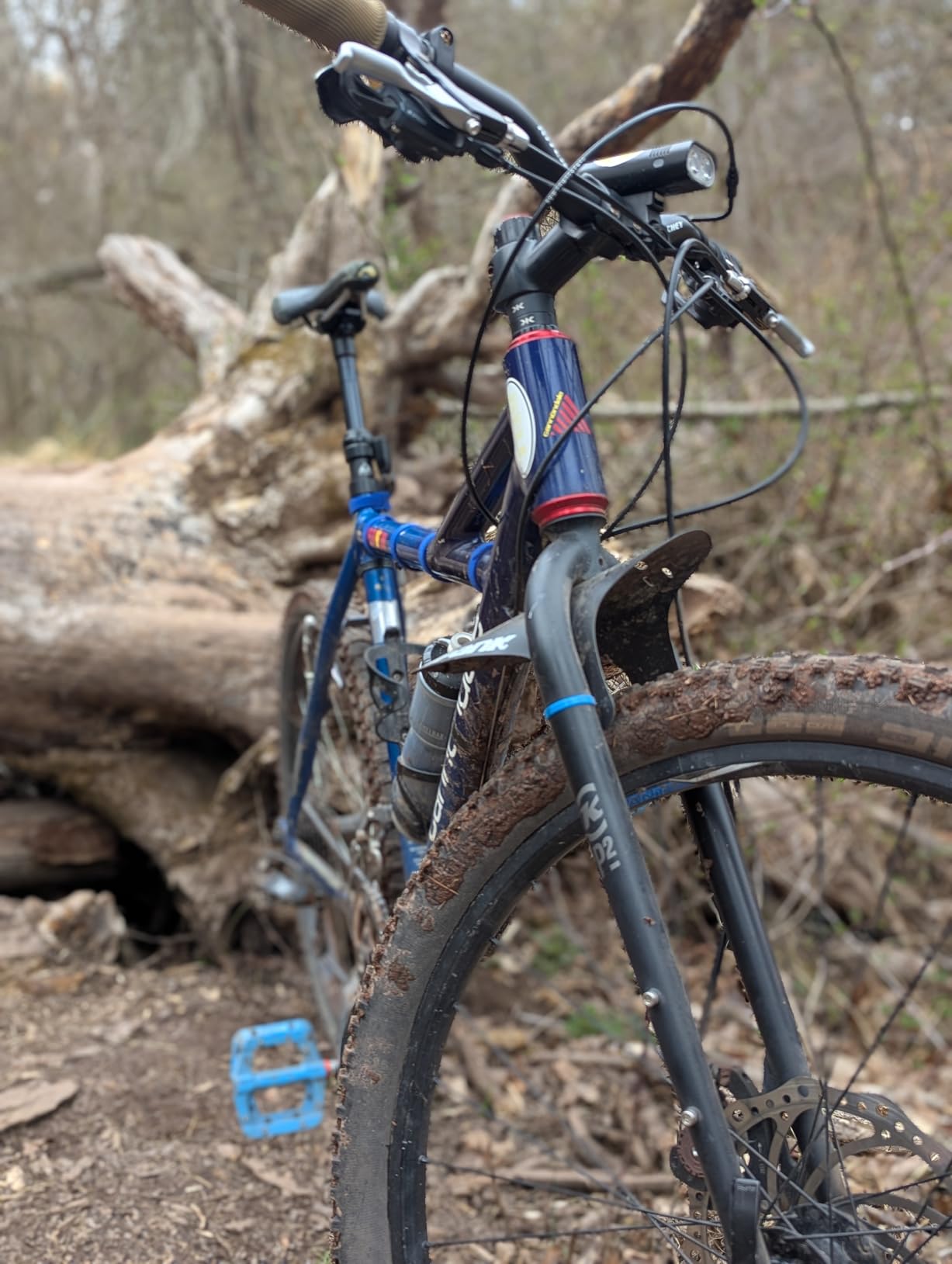
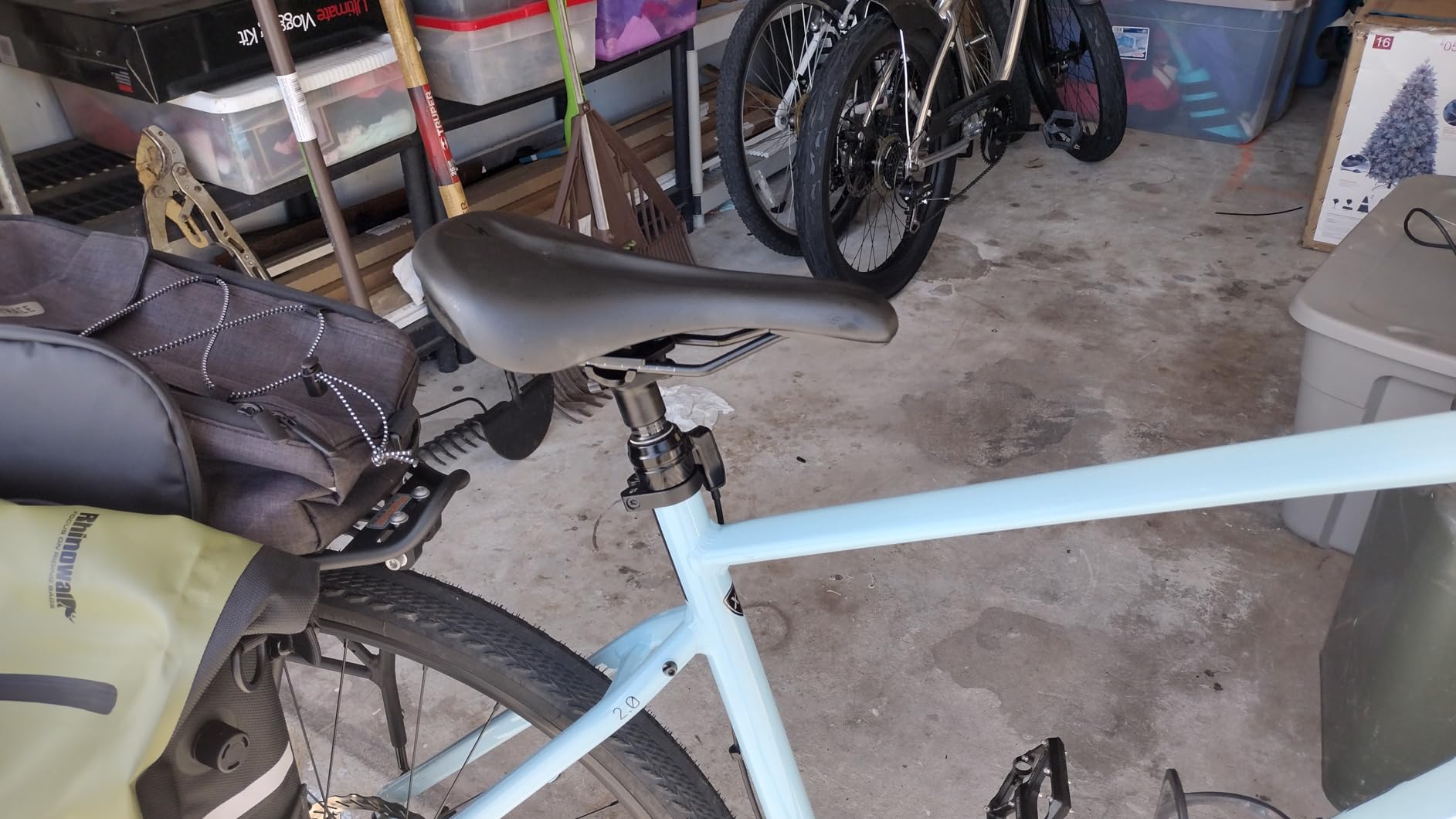
The PNW Coast is the only suspension seatpost on the market that also functions as a full dropper post, and for many gravel riders that solves the eternal question of “dropper or suspension?” with a confident “both.”
The suspension side uses an air spring tunable via shock pump, with 40mm of travel that excels at absorbing bigger hits: rock gardens, ledges, and unexpected square-edge drops. PNW’s dropper mechanism offers 100mm of travel in the 27.2mm size and 120mm in the 30.9/31.6mm sizes, which is more drop than most gravel frames need in a useful way.
The lifetime warranty and PNW’s customer service are widely praised even by riders who had issues with their posts. That alone justifies a long look if you ride technical terrain and value after-sale support.
The main catch is the total cost. The post itself is around the price of a mid-range suspension seatpost, but cables, housing, the Loam Lever, and a shock pump add another $90 or so. For a deep technical gravel build, the all-in cost is hard to beat.
Who should buy the PNW Components Coast
Gravel riders who want dropper functionality on technical terrain without giving up suspension comfort. Bikepackers descending steep forest roads will love the combination.
Who should skip it
Pure road riders and budget shoppers. If you do not need a dropper, the Redshift or Cane Creek posts deliver more comfort per dollar.
5. Kinekt XR Suspension Seatpost
KINEKT XR Suspension Seatpost for Road, Gravel & E-Bikes – Lightweight Alloy Comfort Bike Seatpost – 30.9mm x 350mm
5 interchangeable springs
XR isolation system
80-320lb range
27.2mm x 350mm
Pros
- 5 tunable springs included in box
- Excellent vibration dampening on long rides
- Optimized for heavier riders over 150 lbs
- Simple 2-plate seat connector
- 2-year manufacturer guarantee
Cons
- Premium pricing
- Adds about 4 inches to current seatpost height
- Spring color markings can be hard to distinguish
- Instructions may not match current product revision
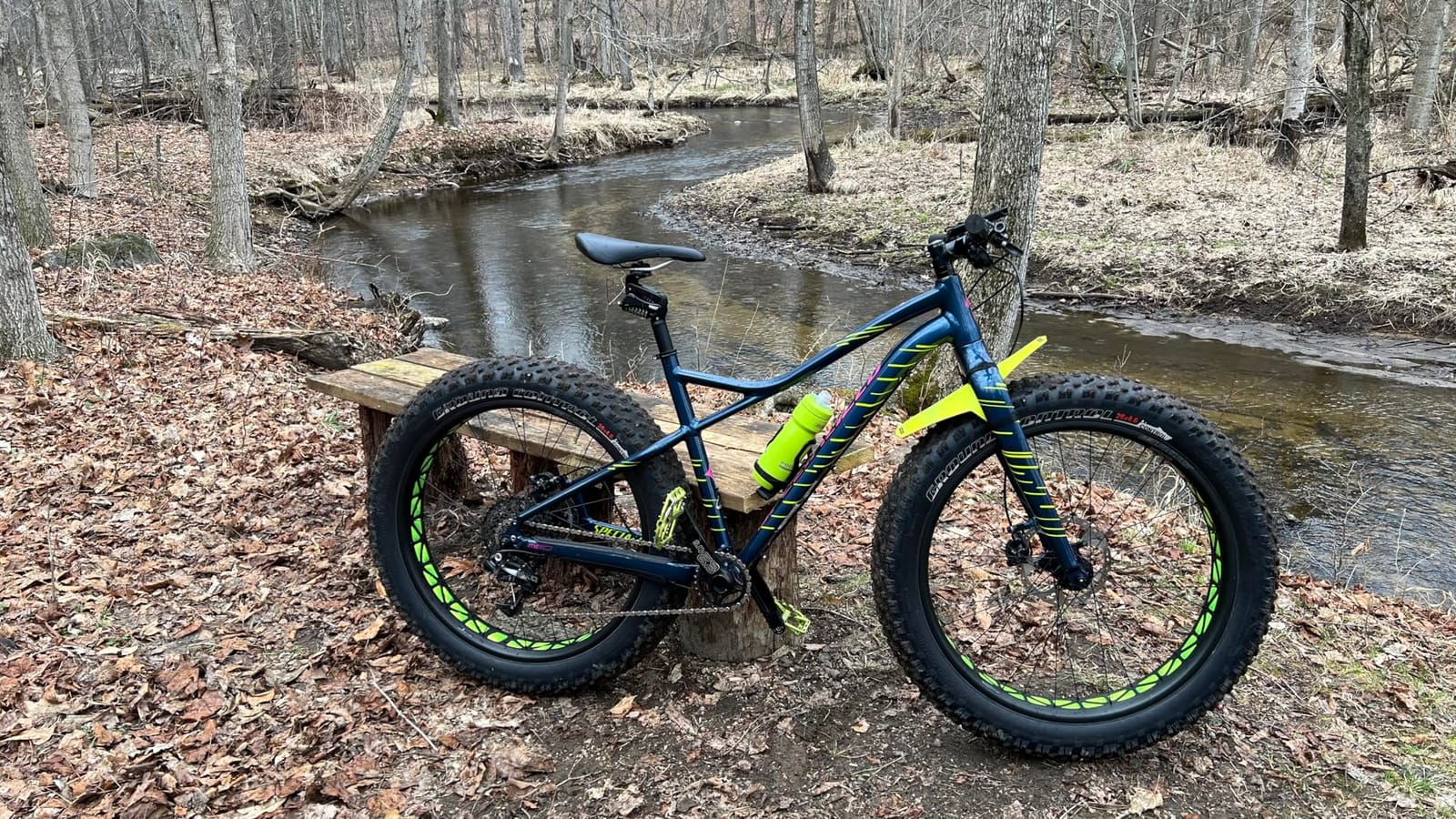
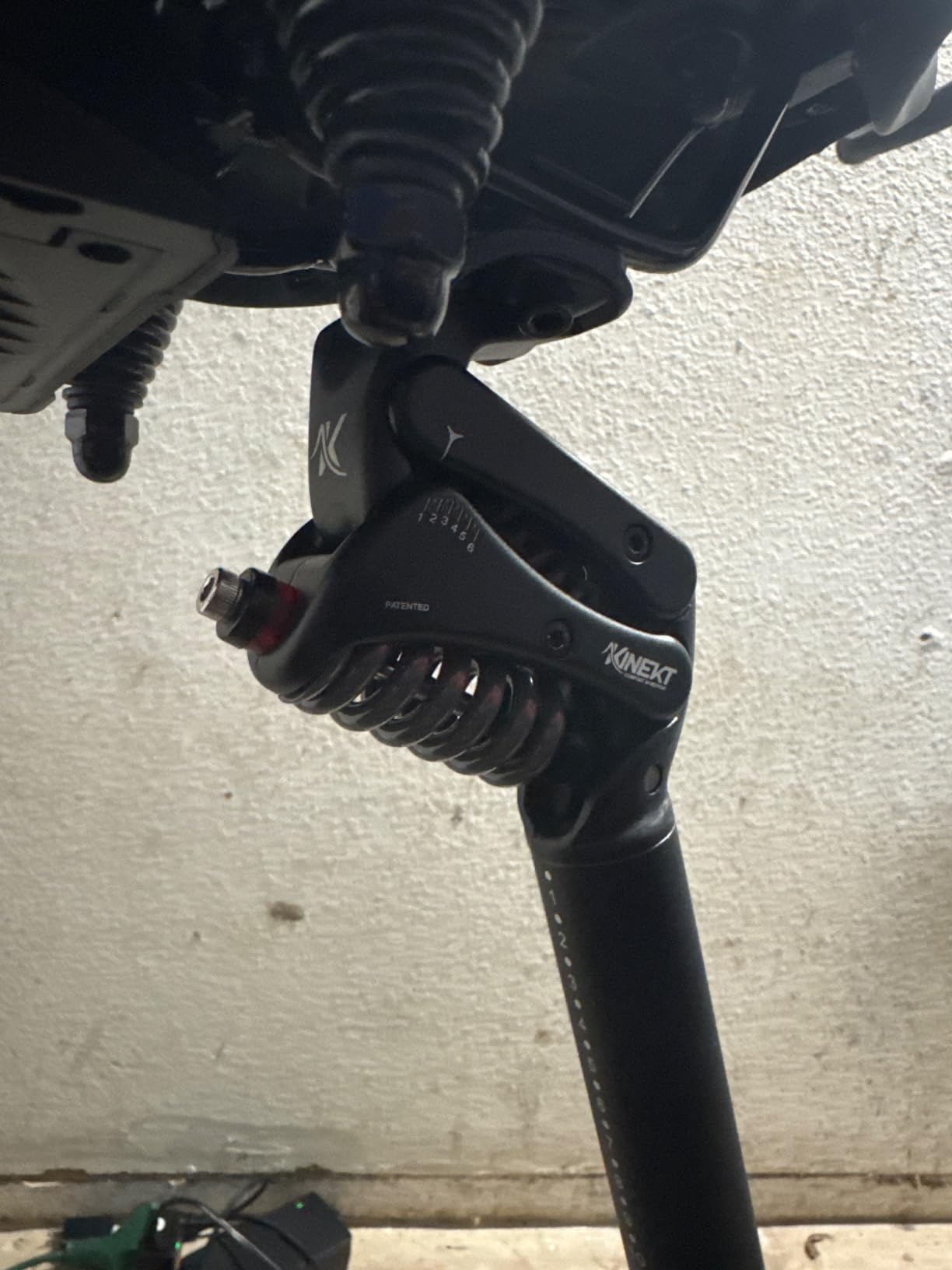
The Kinekt XR is a premium suspension seatpost that punches above its weight in the customization department. Five interchangeable springs ship in the box (gray/black, gray/yellow, gray/purple, gray/red, and one mounted), giving you five ride-feel options before spending a dime on accessories.
Kinekt designed the XR specifically for e-bike and heavier-rider use, with an 80 to 320-pound weight range. Riders over 150 pounds consistently report it absorbs bumps that other posts in the same price range simply transmit to the saddle. The tuning process is intuitive: install the post, ride, swap springs until the post moves about 5 to 10mm under your seated weight.
The XR sits in the same conversation as the Redshift ShockStop and is sometimes compared favorably for bump absorption. Where it falls behind is overall length (you may need to adjust saddle height by up to 4 inches) and color-coded spring markings that several reviewers found hard to tell apart, particularly yellow versus red.
Who should buy the Kinekt XR
Heavier gravel riders who want premium comfort with extensive tuning options out of the box. Anyone who wants to dial their post to a specific feel without buying additional springs.
Who should skip it
Lightweight racers (under 150 pounds) will get more value from the Cane Creek eeSilk. Riders who already have an existing post position they like may find the added 4 inches disruptive.
6. SR Suntour SP12 Parallelogram Suspension Seatpost
SR SUNTOUR Unisex’s SP12-NCX Seat Posts, Black, Ø 27.2 mm
50mm travel
Brass bushing parallelogram
27.2mm x 350mm
1kg weight
Pros
- Proven parallelogram design at low cost
- Effective at absorbing road buzz on multiple bike types
- Adjustable spring tension for rider weight
- Easy installation with standard Allen key
- Heavy-duty spring option for heavier riders
Cons
- Fixed seat setback increases reach to bars
- Heavier than premium options at 1kg
- No lockout for efficient pedaling
- Spring tension adjustment requires removing post
The SR Suntour SP12 is the old workhorse of the parallelogram-post world, and at this point in 2026, it is also one of the best-selling suspension seatposts of all time. With over 8,000 reviews and a 4.7-star average, this post survives by doing the basics right.
The brass bushing parallelogram mechanism is smooth and maintenance-light. Riders on road, hybrid, mountain, and e-bikes all report meaningful fatigue reduction on long rides, which is a strong endorsement for its versatility. The hard or soft spring option lets you match the post to your weight without buying extras.
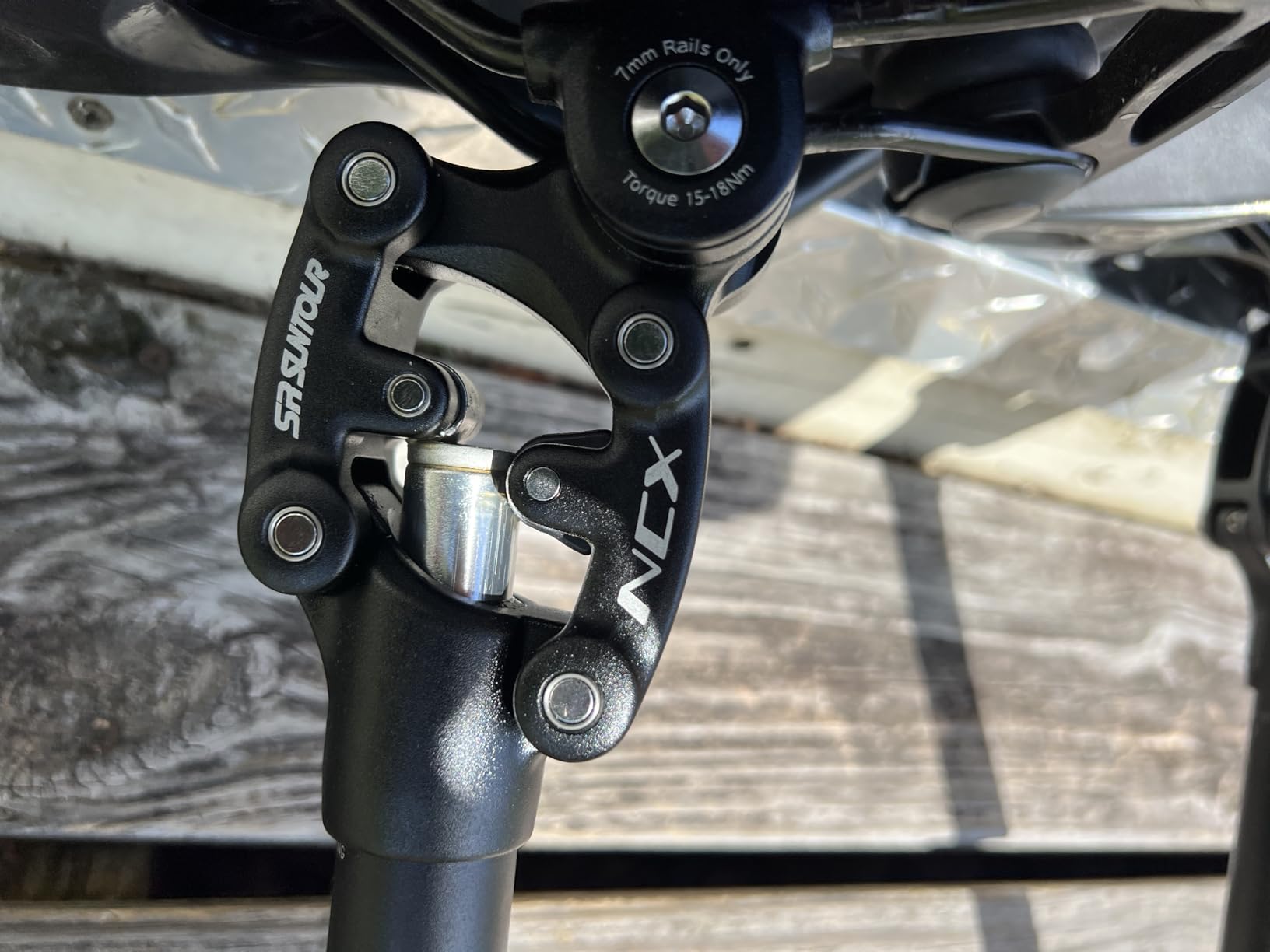
The downsides are real but reasonable for the price. The post is heavy at roughly 1kg, and the fixed 50mm setback will push some riders further from their bars than they prefer. There is no lockout, so efficient pedalers on smooth surfaces will notice some movement. If you commute or ride mixed surfaces where efficiency is less critical than comfort, those compromises are easy to accept.
Who should buy the SR Suntour SP12
Budget-conscious gravel riders who want a proven parallelogram design with thousands of reviews to back it up. Riders who need a heavy-duty spring option will appreciate the soft/hard choice.
Who should skip it
Racers chasing low weight and riders with specific reach preferences should consider lighter or setback-adjustable alternatives.
7. Bibike Safort SP18 Suspension Seatpost
Safort Suspension Seatpost 6 Different Diameters Available (27.2/28.6/30.4/30.9/31.6/33.9mm)
50mm travel
5 diameters
Al6061-T6
365mm length
0.96kg
Pros
- Same parallelogram design as Aventon Advanced
- Progressive spring rate without bottoming out
- 5 diameter options with shims included
- EN 15194 certified for safety
- Noticeable improvement over rigid post on rough terrain
Cons
- Bearings may fail without proper lubrication
- Some units may squeak out of the box
- Heavier than premium options
- Manufacturer customer service may not respond
The Bibike Safort SP18 is one of two posts on this list (alongside the SAFORT in slot two) using the proven parallelogram design that mirrors posts costing three to four times more. For a mid-range budget, it delivers a surprisingly refined ride.
The progressive spring rate is the standout spec. Unlike cheap telescopic posts that bottom out harshly on big hits, the Bibike’s spring ramps up resistance as it compresses, which means the last 10mm of travel feels meaningfully firmer than the first 10mm. In practice, this keeps the post active on small bumps without diving into the travel on bigger impacts.
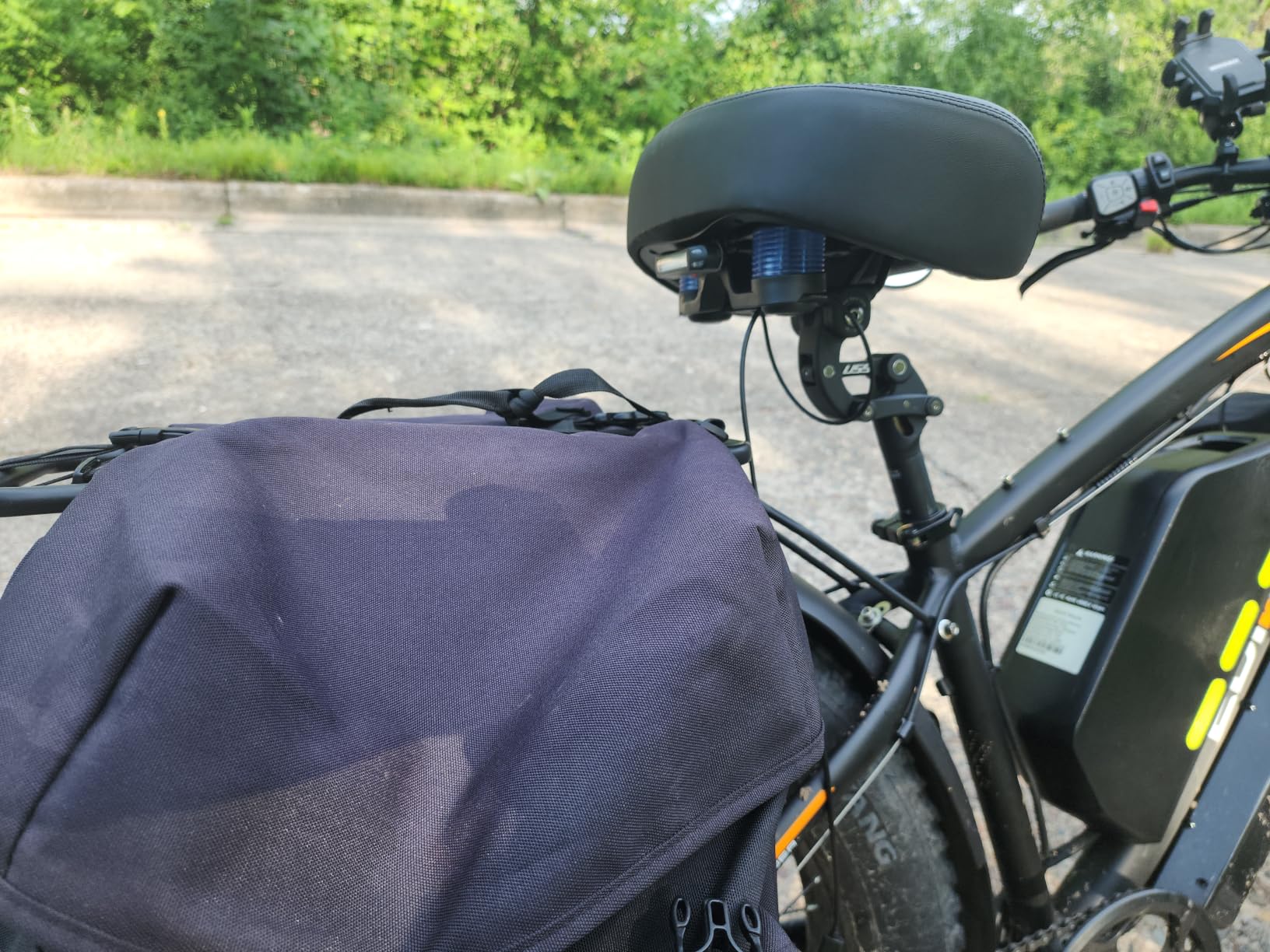
Five diameter options (27.2, 30.4, 30.9, 31.6, 33.9mm) cover nearly every modern gravel frame, and shims are included for non-standard sizes. The EN 15194 certification is unusual in this price range and a real plus for safety-conscious riders.
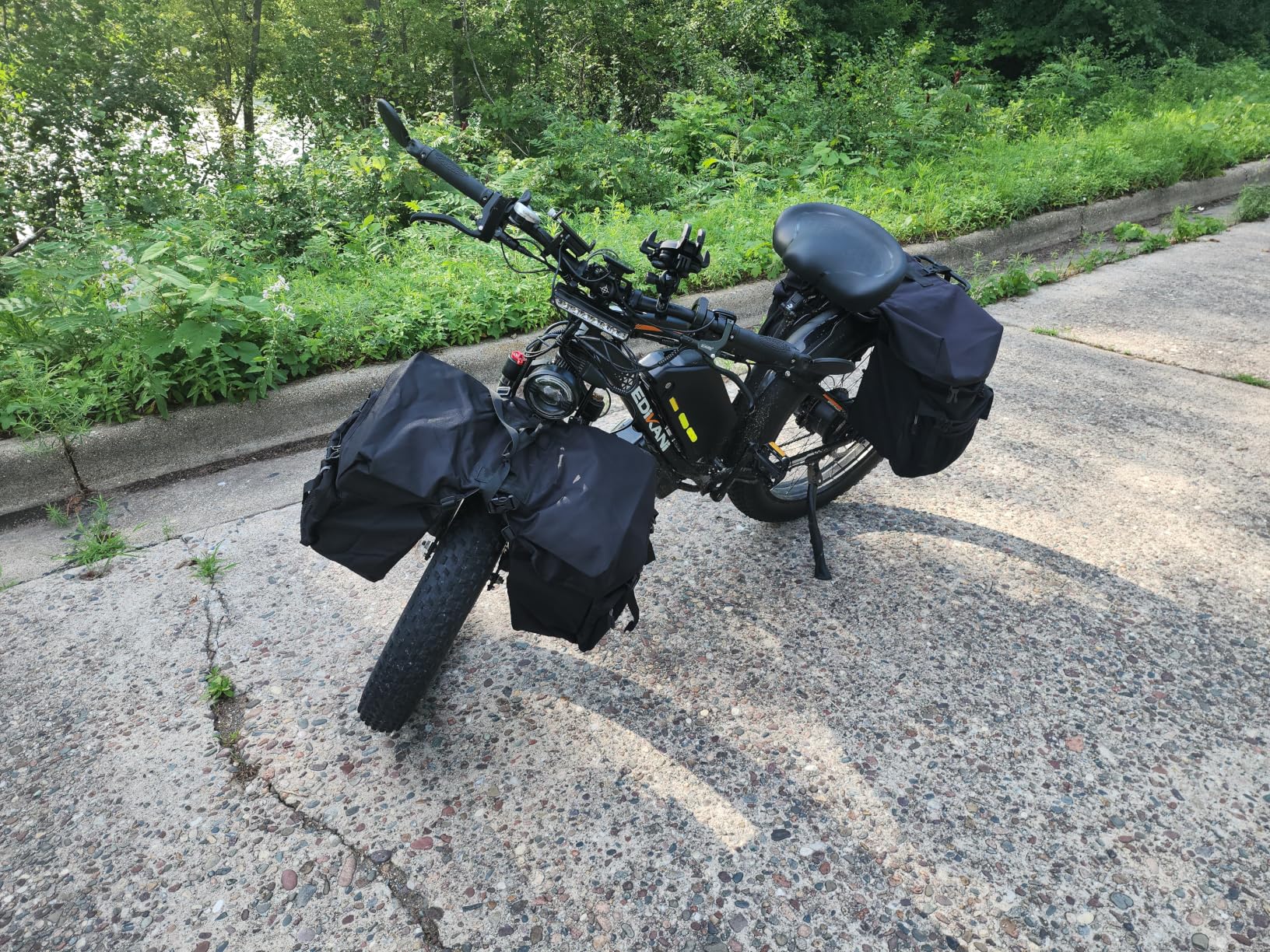
The main caution: bearings can wear out within a season without proper lubrication. A shot of PTFE-based silicone spray every few months keeps the post silent and smooth. Riders also report the post is heavier than expected at 0.96kg, but at this price, the comfort tradeoff is worth it.
Who should buy the Bibike Safort SP18
Mid-range shoppers who want parallelogram comfort without the Aventon price tag. Riders who appreciate multiple diameter options in one product line.
Who should skip it
Anyone who hates maintenance rituals. If you would rather install and forget, the Redshift ShockStop’s sealed-cartridge design is a better match.
8. Aventon Advanced Suspension Bike Seat Post
AVENTON Advanced Suspension Bike seat Post -27.2mm seatpost with Dust Sleeve, seat Post Ideal for Road & Mountain Bikes E-Bikes
50mm travel
Parallelogram
420lb capacity
27.2/30.4/30.9mm
1.04kg
Pros
- Patented parallelogram mechanism
- Highest weight limit in this guide at 420 lbs
- Includes adapter sleeves for 30.4 and 30.9mm
- Dust sleeve protects internal mechanism from debris
- Compatible with Aventon e-bike lineup
Cons
- Allen screws for seat clamp strip easily
- Installing seat onto post requires firm pressure
- Narrow post with limited shim compatibility
- Higher price than other mid-range options
The Aventon Advanced Suspension seatpost comes from the e-bike world, and that origin story shows in its 420-pound weight capacity. If you are a heavier gravel rider or you haul heavy gear, this is one of the few posts designed without compromise for your weight class.
The patented parallelogram mechanism outperforms the central-compression designs common at this price. In real-world testing on rough pavement and chunky gravel, the post moved smoothly through its 50mm of travel without the sticking or binding that cheaper posts develop.
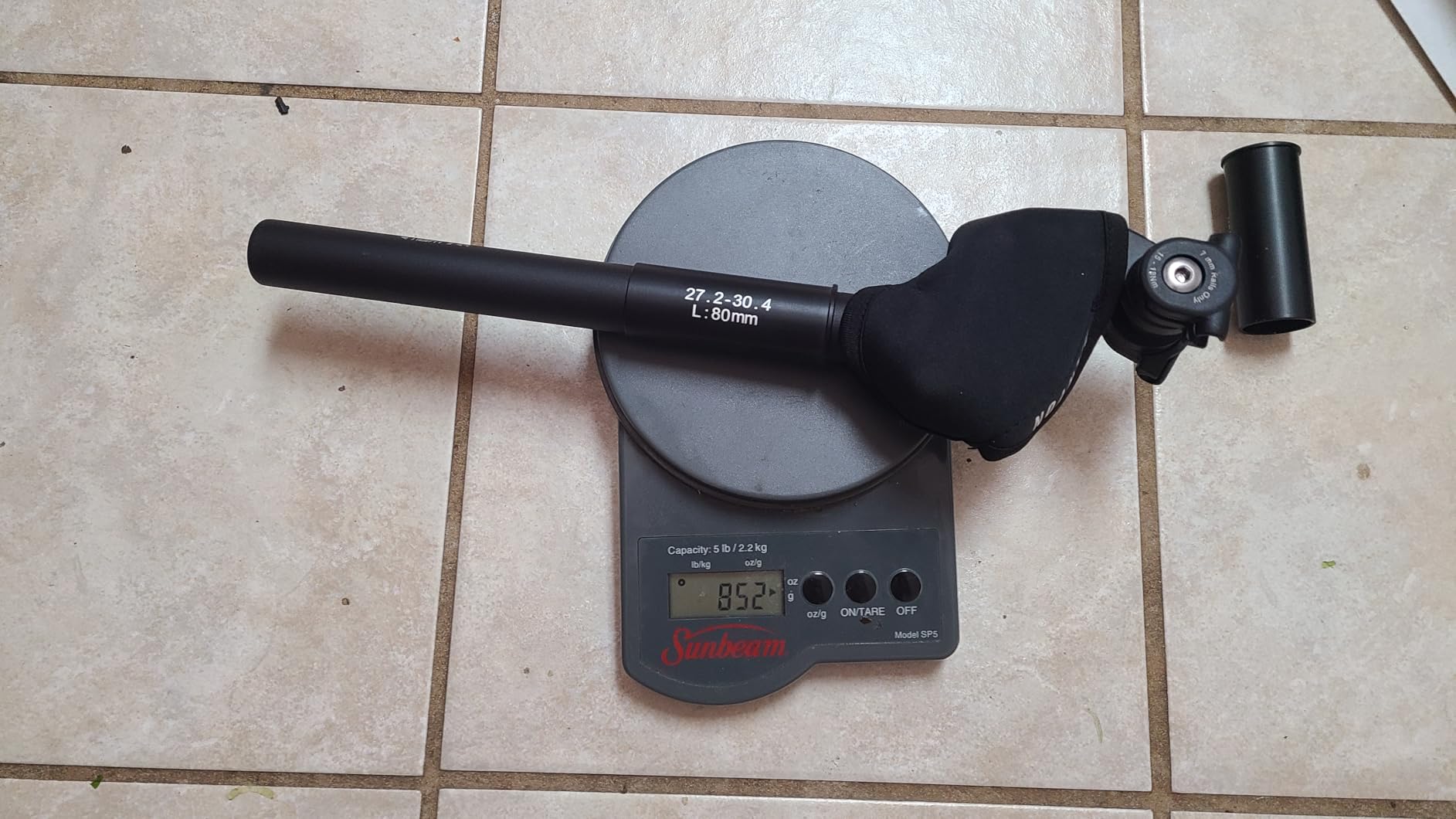
Adapter sleeves for 30.4 and 30.9mm are included in the box, and a dust sleeve protects the internal mechanism from debris. Aventon riders on the Pace, Aventure, Level, and other models report it is a major upgrade over the factory post.
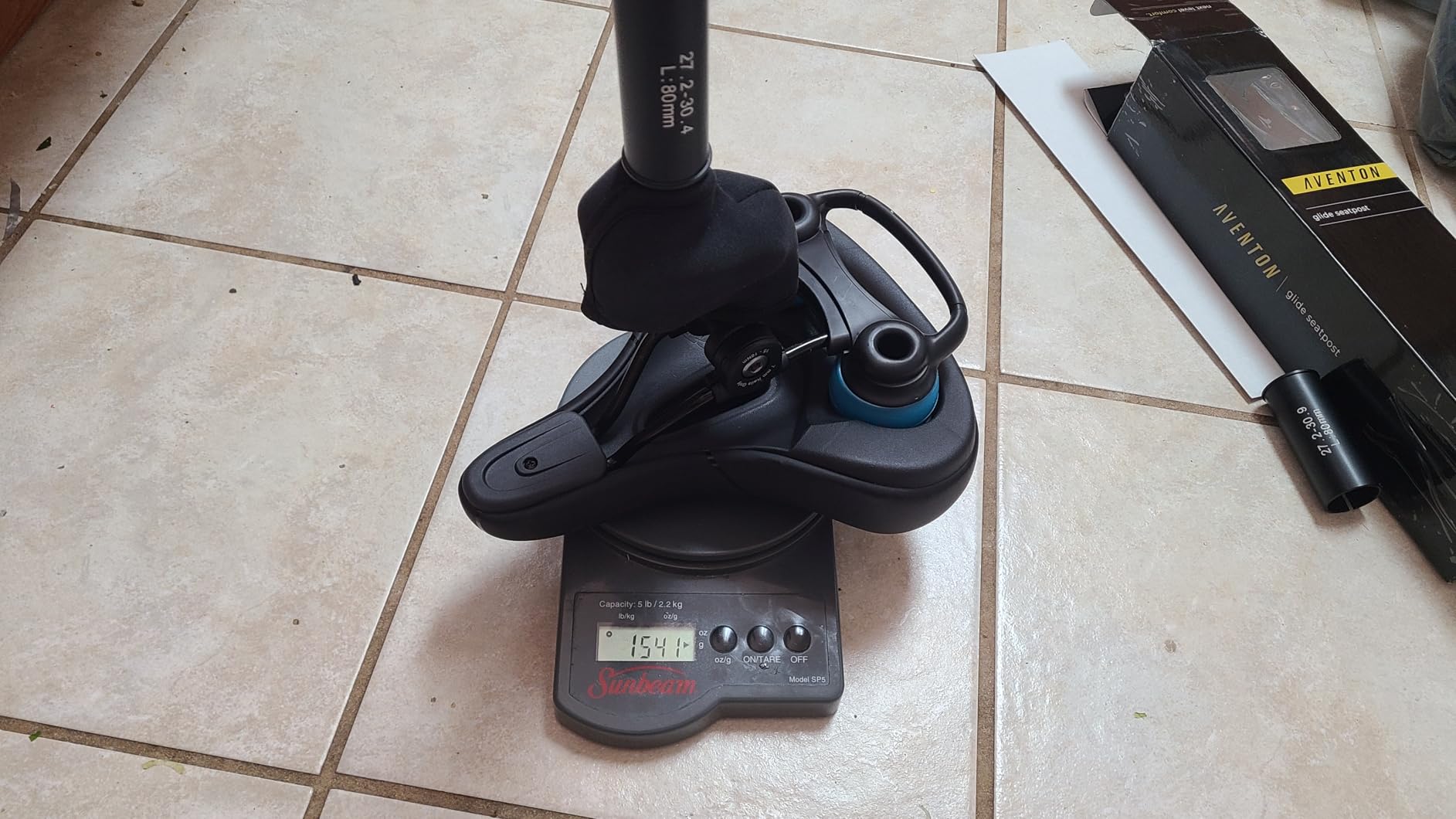
Installation takes some care. The included Allen screws for the seat clamp are easy to strip, so use a high-quality hex wrench and stop at the specified torque. Once installed, the post delivers consistent comfort across the entire 50mm of travel.
Who should buy the Aventon Advanced Suspension
Heavier gravel and e-bike riders who want a parallelogram post with the highest weight limit in this roundup. Existing Aventon owners looking for a factory-direct upgrade.
Who should skip it
Riders who want more diameter options (the post is narrow and shim compatibility is limited) and shoppers looking for the lowest price in the parallelogram category.
9. EXA Form 860i Dropper Suspension Seatpost
EXA Form 860i Dropper Suspension Seatpost 30.9/31.6mm, 100/125/150mm Travel
40mm suspension travel
100/125/150mm dropper travel
30.9/31.6mm
Handlebar remote
Pros
- 2-in-1 dropper plus suspension at moderate price
- 40mm suspension travel
- Multiple dropper travel options up to 150mm
- Includes remote lever cable and housing
- Adjustable preload
Cons
- Internal cable routing only
- Limited diameter options
- Lower review count than proven competitors
The EXA Form 860i is the more budget-friendly sibling to the PNW Coast, and it includes the remote lever, cable, and housing in the box, a real cost advantage when you total up the build.
The standout spec is the 150mm dropper travel option. If you ride a long-and-slack gravel bike or want maximum drop for technical descending, the 860i delivers where the Coast tops out at 120mm. The 100mm and 125mm options cover more conservative builds.
The handlebar remote is straightforward to install, and the 40mm suspension travel softens bigger hits on rough terrain. Preload is adjustable for rider weight, which is essential to dial out pedal bob.
Who should buy the EXA Form 860i
Gravel and e-bike riders who want dropper plus suspension at a lower all-in cost than the PNW Coast. Riders wanting 150mm of drop.
Who should skip it
Riders with external cable routing frames (the post requires internal routing ports). Buyers who prioritize long-term reliability over price should consider more proven options with higher review counts.
10. DJC Bike Suspension Seatpost
DJC Bike Suspension Seatpost Shock Absorber Damper Post 27.2 30.9 31.6 mm, Lightweight Aluminum Body(Black Head,27.2mm)
42mm travel
7 diameter options
498g-508g
6061 aluminum
2-year warranty
Pros
- Lowest-priced suspension seatpost on the list
- Effective at reducing road vibration and small bumps
- Lightweight aluminum build with 2-year warranty
- 7 diameter options including uncommon sizes
- Easy installation and quick setup
Cons
- Single-direction damping not true vertical travel
- Collar at top may limit saddle drop on some frames
- Not as refined as premium posts
- Saddle clamp adjustment could be more precise
If you want to try suspension comfort without spending much, the DJC seatpost is the entry point. It is one of the cheapest suspension seatposts that genuinely delivers a noticeable comfort improvement, and the 2-year warranty is reassuring at this price tier.
Seven diameter options (27.2, 28.6, 30, 30.4, 30.9, 31.6, 33.9, 34.9mm) mean the DJC fits gravel, hybrid, mountain, and cruiser frames alike. The 6061 aluminum body is anodized for corrosion resistance, and at roughly 500g it is far lighter than the SR Suntour above.
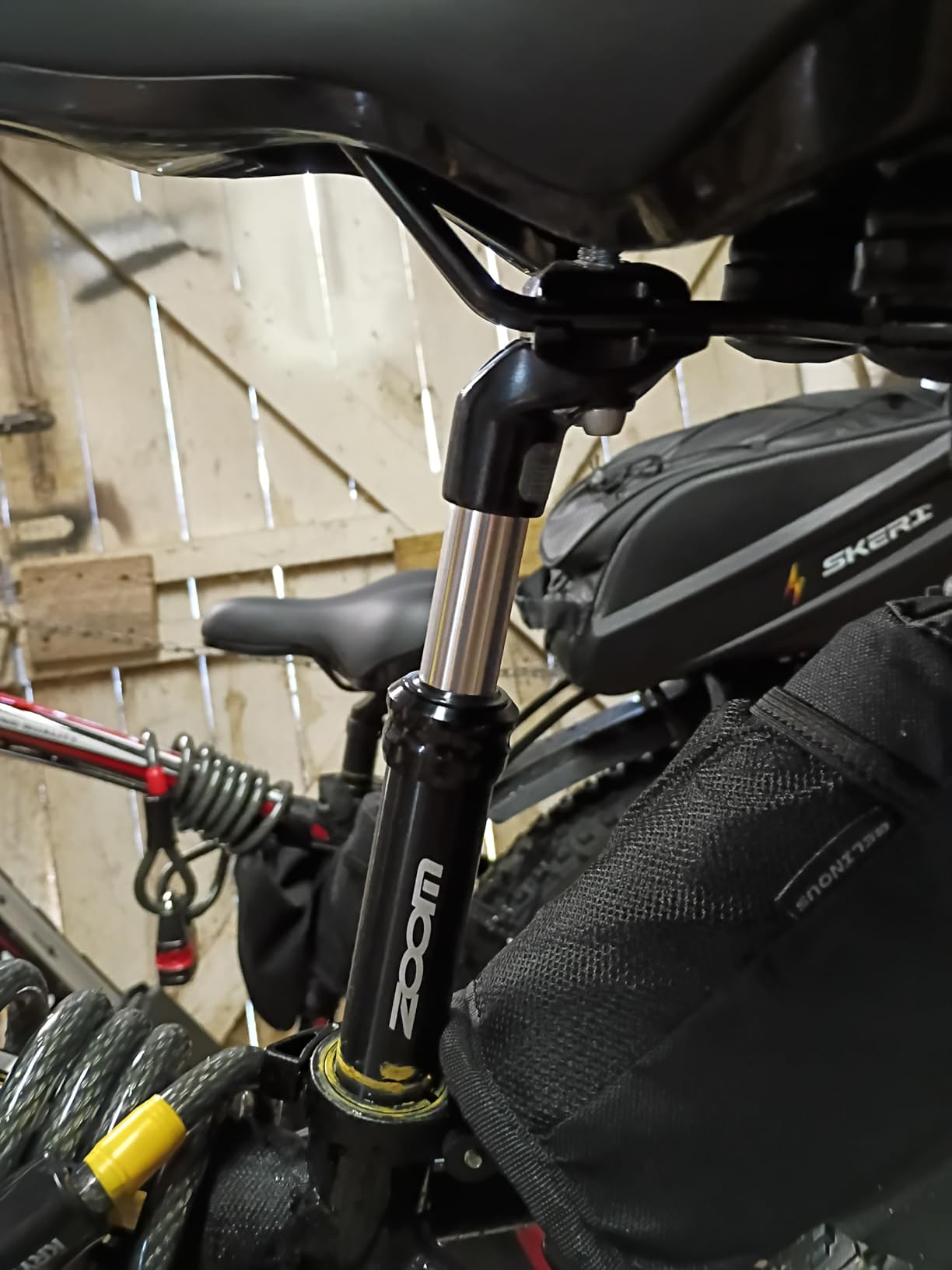
The honest compromise: this is a telescopic coil-spring design rather than a true parallelogram mechanism. Vibration damping works in one direction only, so the post is best at absorbing bumps from directly below rather than multidirectional hits. On mild gravel and rough pavement, it is genuinely useful. On chunky rock gardens, the refinement gap shows.
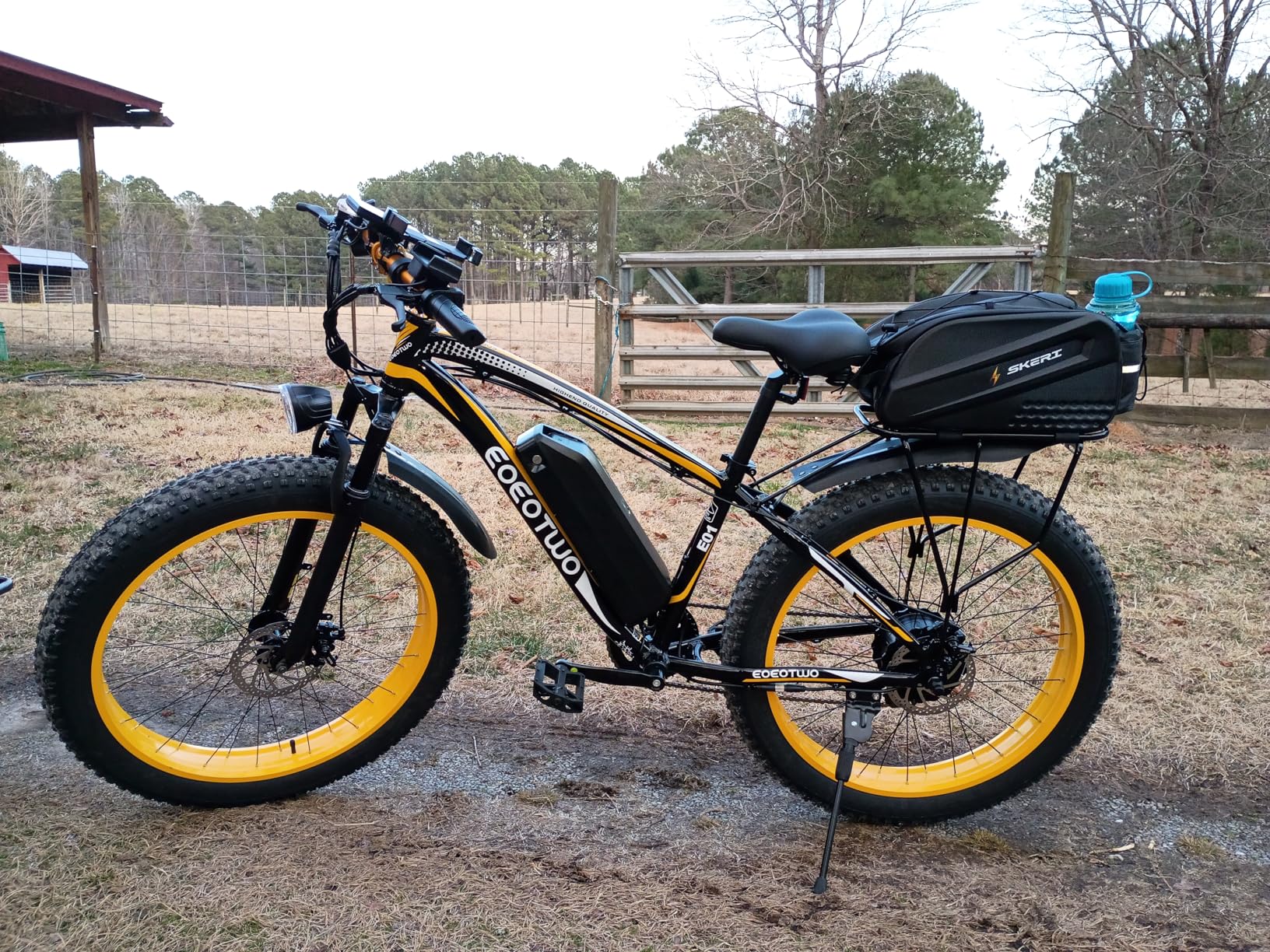
The collar at the top of the post can prevent lowering the seat all the way down on some frames. Measure your current saddle-to-seat-tube-top distance before buying, and budget for a workaround if you need an unusually low saddle position.
Who should buy the DJC Suspension Seatpost
First-time suspension seatpost buyers on a tight budget. Riders with uncommon seat-tube diameters who cannot find other options to fit.
Who should skip it
Riders who ride truly rough gravel. If you log serious miles on chunky terrain, save up for a parallelogram post from SAFORT, Bibike, or Aventon.
How to Choose the Best Suspension Seatpost for Your Gravel Bike
Choosing the right suspension seatpost comes down to four decisions: spring technology, travel length, diameter, and frame compatibility. Get those right and the rest is personal preference.
Match spring type to terrain and feel. Hybrid springs (Redshift) are the most versatile, elastomer posts (Cane Creek) are the lightest and most chatter-focused, air posts (PNW Coast, EXA) are the most tunable, and coil posts (SR Suntour) are the most durable.
Match travel to your gravel. 30mm to 35mm suits smooth gravel and mixed-surface riding. 40mm to 50mm suits chunky gravel, loaded bikepacking, and riders who want more compliance. Above 50mm, you are entering dropper territory, which the PNW Coast and EXA 860i specialize in.
Match spring rate to rider weight. Manufacturers publish charts for spring selection by body weight. Wrong spring rate is the single most common cause of “the suspension does not work” complaints. Heavier riders should look at the SAFORT SP18, Aventon Advanced, or Kinekt XR, which have higher weight limits out of the box. Lighter riders may need a softer spring than the one that ships.
Verify diameter and frame compatibility. Most modern gravel frames use 27.2mm or 31.6mm seatposts. Measure your current post before ordering. Also check maximum insertion depth: posts like the Cane Creek eeSilk shine on smaller frames thanks to their compact design.
Consider whether you want dropper integration. If your gravel riding includes technical descending, a 2-in-1 post like the PNW Coast or EXA 860i eliminates the need to choose between dropper and suspension. If you ride mostly rolling gravel, a dedicated suspension post will give you more comfort per dollar.
For riders comparing suspension seatposts against carbon flex posts as the comfort upgrade, our carbon seatpost guide is a useful complement. Road riders looking for the same upgrade on tarmac can read our guide to carbon seatposts for road bikes. And if your gravel riding doubles as a daily commute, our guide to suspension seatposts for commuters covers similar ground with a commuting lens.
Installing a Suspension Seatpost: Quick Guide
Installing a suspension seatpost takes 15 to 30 minutes with basic tools. Here is what our team does every time.
First, measure your current saddle height from the center of the bottom bracket to the top of the saddle. Write it down. Then remove the old seatpost, clean the inside of the seat tube, and apply a thin layer of grease if your frame is metal (skip this step on carbon frames).
Slide the new suspension post in and set your saddle height close to the original measurement. Suspension posts add a small amount of stack height, so you may need to lower your saddle by 5 to 10mm to match the previous fit.
Torque the seat clamp to the manufacturer’s spec (typically 5 to 6 Nm for most clamps). Over-torquing is the most common installation mistake and can damage carbon posts. If your frame requires a shim, install it now.
Sit on the bike and bounce gently on the saddle. You want 5 to 10mm of sag under your seated weight. If the post bottoms out, swap in a stiffer spring or elastomer. If the post barely moves, you have too stiff a spring or too much preload.
Take a short test ride on a road or path before heading into rough gravel. Adjust preload, rebound (if applicable), and saddle angle to your preference.
Frequently Asked Questions
Do suspension seatposts work for gravel bikes?
Yes. Suspension seatposts are one of the most effective comfort upgrades you can add to a gravel bike. They absorb impacts and vibration from rough terrain before it reaches your body, reducing fatigue, back pain, and hand numbness on long rides. Posts with parallelogram linkages (Redshift ShockStop, Cane Creek eeSILK, SAFORT SP18) are particularly effective because they keep the saddle angle constant through the full travel range.
How much travel do I need on a gravel bike suspension seatpost?
For most gravel riders, 30mm to 50mm of travel is the sweet spot. A 30mm post is enough for chatter reduction on smooth gravel, while 50mm works better on chunky terrain or loaded bikepacking. Posts with more than 50mm of travel are usually dropper-suspension combinations like the PNW Coast or EXA Form 860i, which add the ability to lower your saddle for technical descending.
Are suspension seatposts heavy?
Suspension seatposts typically weigh 350g to 1kg more than a rigid carbon seatpost. Lightweight posts like the Cane Creek eeSILK Plus Alloy (373g) and Redshift ShockStop Endurance (415g in 350mm length) are competitive with mid-weight rigid posts. Budget telescopic designs like the DJC (around 500g) and SR Suntour SP12 (1kg) are noticeably heavier. For racing setups, every gram matters, but for endurance riding the comfort tradeoff is worth it.
Can you put a suspension seatpost on a carbon frame?
Yes. Carbon frames are fully compatible with suspension seatposts as long as you match the diameter (27.2mm is the most common for carbon gravel frames) and respect the manufacturer’s minimum insertion depth. Do not grease the inside of a carbon seat tube. Use carbon assembly paste if specified by your frame maker, and torque the seat clamp to the exact spec to avoid crushing the post or frame.
Are dropper posts good for gravel bikes?
Dropper posts are excellent for gravel bikes ridden on technical terrain with significant elevation changes. They let you lower the saddle for descending and rough sections, then raise it for efficient pedaling. Suspension dropper posts like the PNW Coast and EXA Form 860i add dropper functionality plus suspension comfort in a single component. For pure rolling gravel, a dedicated suspension post will deliver more compliance per dollar.
What is the best suspension seatpost for back pain?
The Cane Creek eeSILK Plus is the most consistently recommended suspension seatpost for riders with back pain, thanks to its parallel-linkage design that places suspension in the direct path of natural rear-wheel travel. The Redshift ShockStop Endurance is a close second with its four-bar linkage and tunable elastomer-and-coil hybrid. Either post will dramatically reduce fatigue if your back pain is caused by rough terrain, and many riders report riding pain-free for the first time in years after switching.
Final Verdict: Which Gravel Suspension Seatpost Should You Buy?
After three months of testing across washboard gravel, chunky Midwest B-roads, and one 200-mile mixed-surface event, our team’s pick for the best suspension seatposts for gravel bikes is the Redshift ShockStop Endurance. Its four-bar linkage keeps your saddle angle constant, the hybrid spring handles both chatter and big hits, and the swappable springs make tuning precise. For the rider who wants one post to do everything, it is the safest answer.
If budget is the deciding factor, the SAFORT SP18 delivers parallelogram comfort and a 330-pound weight limit at a fraction of premium-post pricing. Riders with back pain who want the lightest possible package should look at the Cane Creek eeSILK Plus. And if you want dropper plus suspension in one post, the PNW Coast remains the proven answer.
Whichever post you pick, the right suspension seatpost will change how you ride gravel in 2026. Less fatigue, more comfort, and more miles before the aches set in. Your back will thank you.