
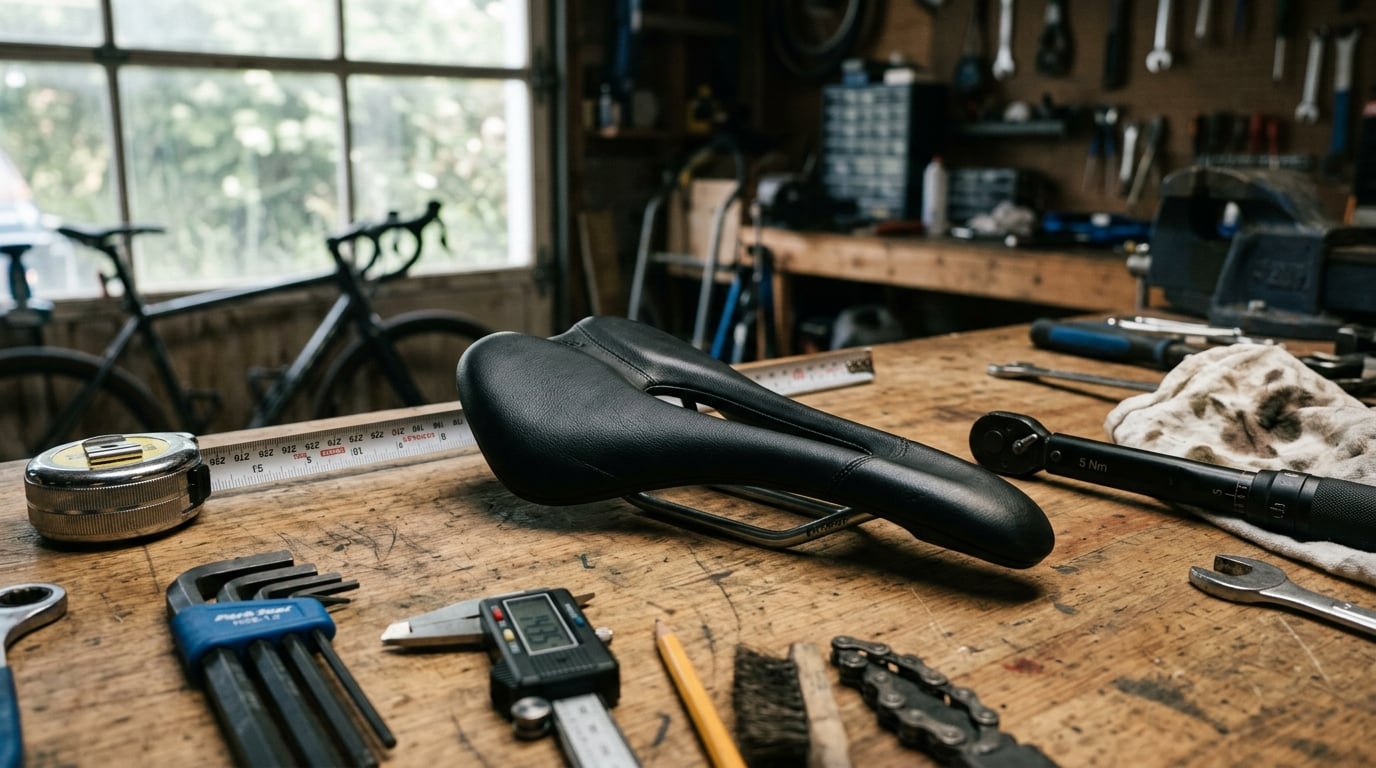
You bought a saddle with a cutout because everyone said it would solve your numbness problem. But you still feel that telltale tingle after 30 minutes on the bike. Or maybe the numbness shifted to a different spot, or got worse on longer rides. If you are wondering why a cutout saddle doesn’t always fix numbness, you are not alone, and the answer is more complicated than just the shape of the hole.
A cutout saddle reduces pressure on the perineal area, but it only addresses one part of a multi-factor problem. Saddle width, bike fit, riding position, saddle tilt, and even the type of riding you do all play roles that a cutout alone cannot fix. Studies have shown that cycling can reduce blood flow to the perineal region by up to 80%, and while a cutout helps, it does not eliminate all the pressure points and nerve pathways involved.
I have spent years talking to cyclists who tried three, four, even five cutout saddles without relief. Their frustration is real. The good news is that once you understand the full picture of why cutout saddle numbness persists, you can identify what is actually going wrong and fix it. This is especially important if you are building up to long-distance rides where saddle comfort becomes critical.
In this guide, we will break down the anatomy of cycling numbness, the specific reasons your cutout saddle might not be working, a diagnostic framework to figure out your root cause, and proven solutions beyond just buying another saddle.
Table of Contents
Why Cutout Saddles Seem Like the Obvious Fix
A cutout saddle is a bike saddle with a hole or relief channel running through the middle, designed to reduce pressure on the perineal area. The logic is sound: if pressure on soft tissue causes numbness, removing the material under that area should eliminate the problem. This is why cutout saddles, relief channels, and perineal pressure relief designs have become incredibly popular over the past decade.
The idea gained traction through pressure mapping studies showing that traditional saddles concentrate weight on the soft tissue between the sit bones. This compresses the pudendal nerve and restricts blood flow through the pudendal artery. A cutout shifts that weight to the sit bones, which are designed to bear load. On paper, it is a clean solution.
And for many riders, it does work. Plenty of cyclists switch to a cutout saddle and never feel numbness again. But a significant percentage find that the numbness persists, changes location, or only partially improves. That is because the cutout addresses one pressure zone while leaving several other contributing factors untouched.
Think of a cutout as one tool in a larger toolkit. It helps with perineal pressure relief, but it cannot compensate for a saddle that is the wrong width, a bike fit that puts too much weight on your hands and saddle, or a riding position that compresses nerves from a different angle.
The Anatomy of Cycling Numbness
To understand why a cutout saddle does not always fix numbness, you need to understand what is actually happening in your body. Cycling numbness is not a single problem with a single cause.
The key player is the pudendal nerve. This nerve runs through your pelvic region and supplies sensation to the perineum and genital area. When you sit on a bike saddle, your body weight presses down on this nerve and the surrounding blood vessels. Sustained pressure compresses the nerve fibers and restricts blood flow through the pudendal artery.
Research has shown that cycling can reduce blood flow to the perineal region by up to 80% depending on saddle design, riding position, and duration. When blood flow drops, nerves stop firing correctly, and you feel numbness or tingling. The longer the compression lasts, the longer the numbness lingers after you get off the bike.
But here is the critical point: the pudendal nerve is not the only nerve involved. Pressure on the pelvic floor, compression from saddle edges against soft tissue, and even lower back issues can all contribute to what you feel as saddle numbness. A cutout relieves pressure on the nerve directly beneath it, but numbness can originate from other areas entirely.
This is why numbness is considered a warning sign in cycling. It tells you that something is compressing nerves or restricting blood flow. Ignoring it, or assuming a new saddle will automatically fix it, can lead to longer-term issues.
5 Reasons a Cutout Saddle Doesn’t Always Fix Numbness
If you have a cutout saddle and still experience numbness, one or more of these factors is likely at play. Let us break down each one.
1. Your Saddle Width Does Not Match Your Sit Bones
This is the most common reason a cutout saddle fails. Every rider has a unique sit bone width, technically called the ischiatic tuberosity distance. If your saddle is narrower than your sit bones, your weight falls onto the soft tissue on either side of the cutout instead of on bone. The cutout provides zero relief in this scenario because the pressure is not going through the hole. It is going around it.
SQlab, one of the leading ergonomic saddle manufacturers, identifies saddle width as the single most important factor in preventing numbness. Yet many cyclists buy saddles based on brand reputation or aesthetics rather than measuring their sit bone distance.
You can measure your sit bone width at home using a piece of corrugated cardboard. Sit on it, find the two deepest impressions, and measure the distance between their centers. Add roughly 20mm for a road position or 30mm for a more upright position to get your ideal saddle width.
2. Saddle Tilt Angle Interferes with the Cutout
This is a factor almost no one talks about, and it is something I have seen trip up riders repeatedly. If your saddle is tilted too far down at the nose, your body slides forward. Instead of sitting on the wide back portion where the cutout is effective, you end up perched on the narrow nose. That nose has no cutout benefit and concentrates pressure on a tiny area.
If your saddle is tilted too far up, it creates a ramp that presses the nose into your perineal area. The cutout cannot help when the solid edges of the saddle nose are pushing into soft tissue from below.
The ideal starting point is a perfectly level saddle. Use a spirit level or a phone with a level app placed lengthwise on the saddle. From there, you can experiment with a very slight downward tilt, no more than 1 to 2 degrees. Anything beyond that and you start defeating the cutout’s design.
3. Your Riding Position Shifts Weight Forward
How you sit on the bike matters as much as what you sit on. An aggressive, low racing position rotates your pelvis forward, putting more weight on the perineal area and less on your sit bones. In this position, even a well-designed cutout saddle may not provide enough relief because the angle of contact changes.
Triathletes and time trial riders face this constantly. That is why many end up on noseless saddles like the ISM PR 2.0, which completely removes the nose and forces weight onto the sit bones regardless of position.
For road cyclists, the fix might be as simple as raising your handlebars slightly or using a shorter stem. Even a 10mm change in reach can shift enough weight back onto your sit bones to make the cutout effective.
4. Bike Fit Issues Beyond the Saddle
Your saddle might be perfect, but your overall bike fit could be causing the numbness. If your saddle is too far forward, it steepens your effective seat tube angle and rotates you onto the nose of the saddle. If your saddle is too high, you rock side to side with each pedal stroke, creating friction and pressure that a cutout cannot address.
Cleat position also plays a role. If your feet are misaligned, your pelvis compensates, and you may end up sitting asymmetrically. This shifts weight to one side of the saddle, potentially bypassing the cutout entirely on one side.
If you have not had a professional bike fit and you are experiencing persistent numbness, that should be your first investment. Many riders report that a proper fit fixed numbness issues that no saddle change could solve. This is especially true if you are returning to cycling after a long layoff and your body is not yet adapted to the position.
5. Indoor Trainers Create Different Pressure Profiles
Here is something many cyclists discover the hard way: the same saddle that feels fine on the road can cause numbness on a stationary trainer. When you ride outdoors, you constantly shift position. You stand for climbs, lean through corners, adjust your weight for road conditions. On a trainer, you sit in the exact same spot for the entire session.
This static position means sustained, unchanging pressure on the same nerves and blood vessels. Even with a cutout saddle, the lack of micro-movements reduces blood flow recovery. Riders on TrainerRoad and Zwift forums frequently report numbness issues that only appear during indoor sessions.
If you experience this, try standing every 5 to 10 minutes during trainer sessions, even briefly. Adjusting your saddle tilt by a degree for indoor rides can also help. Some riders keep a different saddle on their trainer bike specifically for this reason.
How to Diagnose What Is Really Causing Your Numbness
Instead of buying another saddle, use this diagnostic framework to figure out what is actually happening. The key is using time-to-numbness as a diagnostic signal, something most guides overlook.
If numbness appears within the first 10 minutes: This suggests a saddle width or shape problem. Your sit bones are not being supported, and no amount of break-in time will fix it. Measure your sit bone width and compare it to your saddle’s stated width.
If numbness appears after 30 to 45 minutes: This points more toward cumulative blood flow restriction and pressure build-up. Your saddle fit might be close but not dialed in. Check saddle tilt, height, and fore-aft position.
If numbness appears after 1 to 2 hours: This is often position-related. Your body fatigues, your form breaks down, and you settle deeper into the saddle. Strengthening your core and adjusting handlebar height can help you maintain a better position longer.
If numbness only appears on climbs: When you climb, you sit further back on the saddle and push harder. This shifts weight and can expose edges of the saddle that are normally fine. Your saddle might be the right width for flat riding but too narrow for how you sit when climbing.
If numbness only appears on the trainer: Refer to the indoor riding section above. Static positioning is the culprit, not necessarily the saddle itself.
One forum rider summed it up perfectly: “Bike fit done, padded shorts, saddle tilted down, still numbness.” When all the standard fixes fail, the issue is usually that multiple small misalignments are stacking up. Each one is minor on its own, but together they create enough nerve compression to cause numbness.
Beyond the Cutout: What Actually Works for Saddle Numbness
Once you have diagnosed your likely cause, here are the solutions that actually move the needle.
Get a proper sit bone measurement. This is non-negotiable. Many bike shops offer this service for free or a small fee. Once you know your sit bone width, you can filter saddle options by width rather than guessing.
Consider a short-nose saddle. Saddles like the Specialized Power and Bontrager Montrose shortened the nose to reduce perineal contact area entirely. This works differently from a cutout, and many riders who failed with cutouts find relief with short-nose designs.
Try a noseless saddle if nothing else works. ISM saddles remove the nose completely, eliminating forward pressure on the perineum. Some riders find them unstable at first, but those who adapt often report complete numbness elimination. These are especially popular among triathletes.
Fine-tune your saddle tilt in small increments. Start level, then make 1-degree adjustments. Ride for at least a week at each setting before changing again. Tilt is the cheapest fix you can make, yet most riders never experiment with it.
Do not fall for the padding myth. More padding does not equal more comfort for numbness prevention. Gel and thick foam compress under your body weight, creating a mold that actually increases contact area and puts pressure on soft tissue. A firm saddle that supports your sit bones is almost always better for long-term comfort than a soft one.
Address your riding position. If your handlebars are too low or too far away, you will roll forward onto the saddle nose no matter what saddle you use. A professional bike fit can identify these issues in a single session.
Real-world experience backs this up. Riders on cycling forums who finally solved their numbness almost always report a combination of changes rather than a single silver bullet. A wider saddle plus a tilt adjustment. A shorter stem plus a short-nose saddle. A proper bike fit plus core strengthening. The cutout is one ingredient, not the whole recipe.
When Numbness Means You Should See a Doctor
Most cycling-related saddle numbness is temporary and resolves within minutes to hours after riding. But there are warning signs that warrant medical attention.
If numbness lasts more than 24 hours after a ride, see a doctor. If you experience numbness accompanied by lower back pain, weakness in your legs, or changes in bathroom habits, seek medical attention immediately. These could indicate cauda equina syndrome or other serious conditions that go beyond saddle fit.
Recurring numbness that gets progressively worse over multiple rides is also a red flag. Nerves can recover from occasional compression, but chronic, repeated compression can cause longer-lasting damage. Listen to your body. Numbness is a warning sign for a reason.
FAQ’s
How to get rid of saddle numbness?
To get rid of saddle numbness, start by measuring your sit bone width and ensuring your saddle matches it. Then check saddle tilt (start level), adjust bike fit, and address riding position. A cutout saddle helps but works best when combined with proper saddle width, correct tilt, and good overall bike fit. Standing periodically during rides also helps restore blood flow.
Do cut out saddles work?
Yes, cutout saddles work for many riders by reducing perineal pressure on the pudendal nerve and blood vessels. However, they only address one part of the problem. If your saddle width, tilt, riding position, or bike fit are off, the cutout alone may not fully eliminate numbness. About 60 to 70 percent of riders find significant relief with a cutout saddle when other factors are also correct.
Can saddle numbness come and go?
Yes, saddle numbness can absolutely come and go. This typically happens when the root cause is position-related rather than saddle-related. For example, numbness may appear after an hour when your core fatigues and you settle deeper into the saddle, then disappear when you stand and reposition. Intermittent numbness is still a warning sign that should be addressed through bike fit and saddle adjustments.
Why does my saddle feel numb when cycling?
Your saddle feels numb during cycling because sustained body weight compresses the pudendal nerve and restricts blood flow through the pudendal artery in the perineal area. Cycling can reduce perineal blood flow by up to 80 percent. The numbness is your body signaling that nerves and blood vessels are being compressed and need pressure relief.
Are cut-out saddles better?
Cutout saddles are better for riders who experience perineal pressure and soft tissue numbness, but they are not universally better for everyone. Riders with proper sit bone support on a closed saddle may not need a cutout. Cutouts trade support surface area for pressure relief, which means less saddle to sit on. For riders with persistent numbness, cutouts are worth trying alongside width and fit adjustments.
Conclusion
A cutout saddle is a smart piece of design that genuinely helps reduce perineal pressure. But cutout saddle numbness persists for many riders because the cutout only addresses one of several contributing factors. Saddle width, tilt angle, riding position, overall bike fit, and whether you ride indoors or outdoors all matter just as much.
If your cutout saddle has not fixed your numbness, do not throw money at another saddle just yet. Measure your sit bones. Check your saddle tilt. Evaluate your bike fit. Use the time-to-numbness diagnostic framework to narrow down the cause. Most riders who finally solve their numbness do so through a combination of adjustments, not a single purchase.
The cutout is one tool. Now you have the rest of the toolkit.