
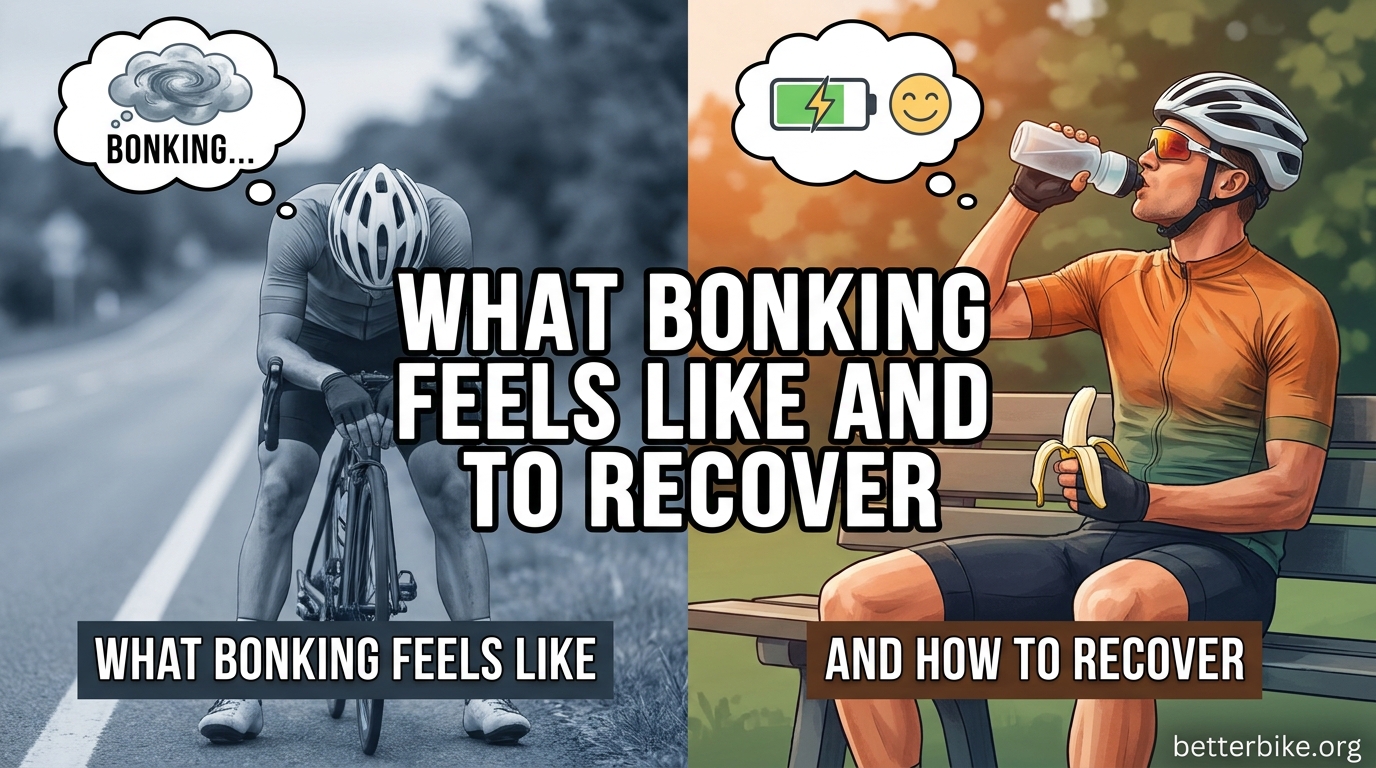
I still remember the first time I bonked. I was 45 miles into a planned 70-mile ride, halfway up a long false flat, when it felt like someone had quietly reached inside my chest and pulled the plug. One minute I was cruising at 17 mph; the next my legs were wading through wet concrete, my hands started shaking on the hoods, and a cold sweat crept down my temples. I almost veered into the kerb because I could not remember which line I was holding. That is what bonking feels like. And once you have been there, you never want to go back.
Bonking is the cyclist’s word for hitting the wall: a sudden, severe loss of energy, power, and mental clarity caused by your body running out of its primary fuel. If you have ever finished a ride and thought, “I will never make that mistake again,” this guide is for you. I will walk you through exactly what bonking feels like, what is happening inside your body, how to recover mid-ride, and how to make sure it never happens to you again.
Table of Contents
What does bonking feel like on a bike?
Bonking feels like a sudden switch being flipped: legs turn to jelly, hands shake, brain fog sets in, cold sweats appear, and your power drops within minutes. It is exercise-induced hypoglycemia, where your muscles and brain run out of glycogen. The crash usually hits between 60 and 180 minutes into a ride when fueling has been too low.
What Is Bonking in Cycling?
Bonking in cycling is what happens when your body runs out of stored carbohydrate – glycogen – faster than you can replace it through food and drink. Glycogen is the form of glucose your muscles and brain stash away between meals. During exercise, your body pulls from those stores to keep your legs turning and your brain sharp.
When those stores bottom out, your body has to rely almost entirely on fat for fuel, which is far slower and produces much less power. The result is exercise-induced hypoglycemia: low blood sugar at the exact moment your body is demanding the most energy it has ever needed. Coaches and physiologists often call this “hitting the wall” or “glycogen depletion.” Cyclists shortened it to “bonking” because it feels like everything in you just broke.
For most riders, a bonk can happen anywhere between 60 and 240 minutes into a ride if they have not fueled properly. The exact timing depends on your starting glycogen levels, your intensity, the temperature, and how well-trained your fat-burning engine is. But the bottom line is simple: bonking is a fuel problem, not a fitness problem. Even elite riders bonk if they under-fuel.
Why “Bonking” Became the Cycling Term
The word showed up in British cycling culture in the early 1980s and quickly spread through amateur racing and touring circles. Runners call the same experience “hitting the wall,” usually around mile 20 of a marathon. Triathletes borrowed the cycling term. Today, bonking is the universal shorthand across endurance sports for that unmistakable moment when the body gives up its last reserves.
What Bonking Feels Like: The Physical and Mental Symptoms
The clearest answer to “what does bonking feel like” comes from riders who have lived through it. One Reddit user famously wrote that during a bonk, “you’d kill your own grandmother for a Snickers bar.” Another described it as feeling “drunk, or about to fall asleep on the bike.” Those are not exaggerations. Bonking is a full-body and full-brain event, and the symptoms come on fast.
Physical Symptoms of Bonking
Your legs go first. They stop obeying you in a way that feels mechanical, like someone swapped your legs for someone else’s. Riders describe it as:
- Jelly legs or “legs like concrete” – heavy, weak, and unable to push hard
- A sudden, dramatic loss of power, even on flat roads or slight inclines
- Shaking hands and trembling muscles
- Cold sweats and clammy skin, even on a cool day
- Dizziness or lightheadedness, especially when standing to climb
- Nausea or hollow hunger that does not go away no matter how much you eat
- Tunnel vision or blurred vision during hard efforts
- A racing heart that feels out of proportion to your effort
Mental and Emotional Symptoms of Bonking
Your brain runs on glucose too, and when that runs out, your mind goes with it. This is the part of bonking that surprises new riders the most.
- Brain fog – you cannot think clearly or make simple decisions
- Sudden irritability, mood swings, or unexpected emotional outbursts
- Uncontrollable laughter or tearfulness – one Strava athlete described laughing hysterically at a gas station while trying to buy a Snickers
- Poor judgment, including risky decisions like skipping a turn or bombing a descent
- A strange sense of detachment or “going somewhere else” while riding
I have personally experienced the laughing part. During my worst bonk, I sat down on a guardrail and laughed until I cried for no clear reason. My riding partner thought I had injured myself. That is the kind of irrational behaviour bonking produces.
What’s Happening Inside Your Body When You Bonk
The science behind bonking is well understood, even if the experience feels anything but clinical. Here is the chain of events in plain English.
Glycogen Stores Run Dry
Your body can only store about 400 to 500 grams of glycogen – roughly 1,600 to 2,000 calories worth – in your muscles and liver combined. When you ride at endurance pace, you burn through that store at a rate of 60 to 90 grams per hour if you are not eating. Most moderately trained riders deplete those stores within 90 to 120 minutes of steady riding. The harder you ride, the faster the clock runs out.
Blood Sugar Drops
As glycogen runs low, your liver tries to keep blood glucose stable by releasing stored glucose into your bloodstream. But your muscles are pulling hard, and the liver cannot keep up. Your blood sugar drops below the level your brain needs to function normally. That is exercise-induced hypoglycemia, and it is the same chemistry behind the shaky, foggy, irritable feeling you get.
Stress Hormones Flood In
Your body does not give up quietly. As blood sugar crashes, your adrenal glands dump cortisol and adrenaline to squeeze the last glucose out of your liver and keep you upright. This fight-or-flight response is why your heart races, your hands shake, and you feel simultaneously exhausted and wired. It is also why bonking can feel like a panic attack on a bike.
Your Body Switches to Fat-Burning
Once carbohydrates are gone, your body tries to switch to fat oxidation. Fat is an abundant fuel source, but it burns slowly and cannot deliver the power carbohydrates can. Your sustainable power output drops by 30 to 50 percent. That is why a flat road that felt easy 30 minutes ago now feels like a climb.
Bonking vs Fatigue vs Dehydration: How to Tell the Difference
One of the most common questions new cyclists ask is, “Am I bonking, or am I just tired?” It is a fair question, and the answer matters because the fix is different. Here is a simple comparison.
Fatigue builds gradually as a long ride or hard effort takes its toll. You slow down, your legs feel heavy, but you can keep going at a reduced pace. Hydration, food, and a brief rest usually bring you back within minutes.
Dehydration shows up as dry mouth, dark urine, headache, dizziness, and a steady decline in performance. It is usually related to fluid loss, not carbohydrate loss, and it gets worse in heat, wind, or on long climbs.
Bonking hits like a switch. Your power drops sharply, your brain fogs over, you get cold sweats and shaking hands, and you cannot push hard no matter how much you want to. It is sudden, severe, and tied to running out of carbohydrate fuel.
If your symptoms came on gradually over hours, you are probably fatigued or dehydrated. If they crashed in within minutes and your hands are shaking, you have likely bonked.
The Three Phases of a Bonk: Warning Signs You Shouldn’t Ignore
Bonking rarely arrives completely without warning. There are almost always signals in the 30 to 60 minutes before the crash, and riders who learn to read them can avoid the worst of it.
Phase 1: The Warning Wave
About 30 to 60 minutes before a full bonk, you may notice subtle shifts. Your pace starts to slide without an obvious cause. You feel unusually hungry. Your mood sours. Your heart rate creeps up at the same power output. These are early signs that glycogen is running low.
Phase 2: The False Energy Burst
This is the phase that tricks experienced riders. As your body dumps cortisol and adrenaline to fight the crash, you may feel a sudden burst of energy, like a second wind. You might even start dancing on the pedals and passing people. It feels great, and it is dangerous – the crash is coming, and it will be worse because of the extra effort you just spent.
Phase 3: The Wall
Within 10 to 30 minutes of the false energy, the wall arrives. Power collapses, legs go jelly-soft, hands shake, vision narrows, and your brain essentially shuts down non-essential functions. At this point you cannot ride hard even if you want to. The only option is to stop, eat, and wait.
Learning to recognise Phase 1 is the single most valuable skill in avoiding a full bonk. If you catch it early, a gel and 10 minutes of easy spinning can pull you back from the edge.
Emergency Recovery: How to Recover From a Bonk Mid-Ride
Once a full bonk has set in, your body needs three things: simple carbohydrates, a brief rest, and time. Here is the protocol I have used myself and walked riding partners through dozens of times.
Step 1: Stop or Slow Down Immediately
If you are in traffic, signal and pull off the road as soon as it is safe. If you are on a quiet road or trail, soft-pedal in an easy gear. Continuing to push hard through a bonk can push your blood sugar even lower and risk losing control of the bike.
Step 2: Eat 20 to 40 Grams of Fast-Acting Carbs Right Away
This is the single most important step. Reach for the fastest sugar you have: an energy gel, chews, jelly sweets, a few squares of a sugary bar, or a sports drink with maltodextrin. Aim for 20 to 40 grams of glucose within the first five minutes. Avoid high-fibre or high-fat foods at this point – your stomach will not appreciate them.
Step 3: Sip an Electrolyte Drink, Not Just Water
Plain water helps, but an electrolyte drink with sodium and a little sugar gets absorbed faster and replaces what you have sweated out. If you only have water, take small sips rather than large gulps, which can trigger nausea. For more on staying hydrated on the bike, check out our guide to cycling hydration.
Step 4: Rest 15 to 30 Minutes
Sugar does not turn into energy instantly. Your gut needs 10 to 15 minutes to move glucose into your bloodstream, and your muscles need another 10 to recover enough to push a reasonable wattage. Sit down if you can, get off the bike, and stay out of the wind. This is the hardest part for impatient riders.
Step 5: Re-Fuel Slowly and Ride Easy Back
After 20 to 30 minutes, most riders can spin at an easy pace. Keep eating small amounts every 20 minutes – one gel, a few chews, half a banana – to keep your blood sugar stable. Avoid the temptation to “test” your legs with a hard surge. That is a guaranteed recipe for a second bonk, sometimes called a double bonk.
Full glycogen restoration takes 24 hours or longer. Even if you feel better within an hour, your body is still depleted. Plan an easy day tomorrow, eat a carbohydrate-rich meal within two hours of finishing the ride, and do not be surprised if you feel flat for 48 hours.
How to Avoid Bonking: A Practical Fueling Plan
Recovery is great, but prevention is better. Bonking is one of the most preventable problems in cycling, and a simple fueling plan keeps it at bay almost indefinitely. A solid cycling nutrition guide can help you build a fueling strategy that works for your training and race schedule.
Before the Ride: Top Off Your Glycogen
Eat a carbohydrate-rich meal two to three hours before you roll out. Oatmeal with banana, rice with chicken, a bagel with honey – anything that sits well and gives you 80 to 120 grams of carbohydrate. Skipping breakfast before a long ride is the single most common reason riders bonk early.
During the Ride: 30 to 90 Grams of Carbs Per Hour
This is the core of the prevention plan. Start eating within the first 30 minutes of riding and continue every 20 to 30 minutes after that. Most recreational riders do well on 30 to 60 grams per hour. Trained riders can push to 90 grams per hour using a mix of glucose and fructose, which uses two different absorption pathways.
Pick whatever carbohydrate source you can stomach on the bike: gels, chews, bananas, jam sandwiches, sports drinks, or a mix. The best fuel is the one you will actually eat. Practice your fueling on training rides before race day.
Hydration and Electrolytes
Carbohydrate absorption slows dramatically when you are dehydrated. Drink consistently – small amounts every 15 minutes rather than a bottle every hour. In hot weather or on rides over two hours, add an electrolyte tablet or mix to replace the sodium you lose in sweat. A rough guide is 500 to 1,000 mg of sodium per hour for heavy sweaters.
Listen to the Warning Signs
Bonking is not random. If your pace is sliding and you are unusually hungry, eat immediately – do not wait until the next scheduled feed. Treat the early warning signs as a yellow light, not a green one.
Bonking on the Road: A Safety Issue Most Riders Underestimate
Most articles about bonking focus on performance. Few talk about the safety angle, which is a major oversight. A bonked rider is an impaired rider, and impairment on a public road is genuinely dangerous. For essential safety advice before your next ride, review our road safety for cyclists guide.
When your brain is foggy and your judgment is shot, simple decisions like merging, checking a junction, or holding a clean line through a corner become much harder. Reaction time slows. Peripheral vision narrows. One study on fatigued cyclists found that braking performance after three hours of steady riding dropped by nearly 25 percent – the equivalent of a mild blood alcohol level.
Here is what I do, and what I tell newer riders in my group.
- If you feel bonking coming on, leave the front of the group immediately. The safest place to bonk is at the back.
- Use clear hand signals and call out every move. Other riders cannot read your mind when your brain is running on fumes.
- If you are alone, pull off the road entirely. Do not try to soft-pedal home “just a few more miles.”
- Carry an emergency gel in your jersey pocket at all times on rides over 90 minutes. The one time you forget it is the one time you will need it.
The Emotional Side of Bonking
Bonking is not just physical. There is a real psychological toll that does not get talked about enough. Many riders report feelings of failure, shame, or frustration after a bad bonk, especially if it happens in front of a group or during an event they trained for.
I have been there. After my worst bonk, I avoided group rides for a month because I did not want anyone to see me fail like that again. Looking back, the bonk was not a character flaw – it was a fueling mistake. Almost every bonk is preventable with the right plan.
If you have recently bonked and it knocked your confidence, give yourself a break. Talk to other riders about it. Nearly every cyclist you respect has bonked at least once. The trick is to learn from it, plan around it, and get back on the bike.
Can Training Through a Bonk Make You Stronger?
This is a debate that shows up constantly on cycling forums, and the short answer is no – riding through a full bonk does not make you a better cyclist. In fact, research suggests that severe glycogen depletion suppresses your immune system for up to 72 hours, breaks down muscle tissue, and disrupts training adaptations for days afterward.
There is a separate, more nuanced conversation about “fasted riding” or “train low, compete high” – the idea that doing some training sessions with low glycogen can train your body to burn fat more efficiently. That is a legitimate, advanced coaching technique, and it is very different from accidentally bonking. Fasted intervals are short, planned, and followed by recovery nutrition. A real bonk is none of those things.
If you are curious about fat-adaptation training, work with a coach who can structure it safely. If you find yourself bonking unintentionally, the answer is always more fuel, not more suffering.
How Long Does It Take to Fully Recover From a Bonk?
Immediate symptoms – shaking, dizziness, brain fog – usually resolve within 10 to 30 minutes once you eat fast-acting carbs and rest. That is the good news.
Full glycogen restoration takes about 24 hours with proper post-ride nutrition. If the bonk was severe, you may feel underpowered, irritable, and run-down for 24 to 72 hours. Immune function takes a hit during this window, so try to avoid stress, get good sleep, and eat well.
A practical recovery plan looks like this:
- Within 30 minutes of finishing the ride: 20 to 40 grams of fast carbs plus 15 to 20 grams of protein
- Within 2 hours: a real meal rich in carbohydrates, moderate protein, and some healthy fats
- For the next 48 hours: prioritise sleep, easy movement, and carbohydrate-rich meals
- Avoid hard training for at least 24 hours, longer if the bonk was severe
Helping a Riding Partner Who Has Bonked
If you are riding with someone who has bonked, the most important thing you can do is stay calm and slow the group down. A panicking rider makes worse decisions than a calm, slow rider. Pull off the road together, share your food, and keep them company while the sugar kicks in.
Avoid the temptation to push them to “ride through it.” That advice is outdated and dangerous. Sit with them for 15 to 20 minutes, get them warm if they are shivering, and offer small sips of electrolyte drink. Most bonked riders recover quickly once they stop fighting it.
Final Thoughts on Bonking
Bonking is one of cycling’s most painful lessons, but it is also one of the most preventable. Once you understand that it is a fuel problem, not a fitness problem, it becomes much easier to manage. Fuel early, fuel often, and listen to the warning signs your body gives you before the wall.
Carry an extra gel on every ride. Eat breakfast before long efforts. Practice your fueling plan on training rides until it feels automatic. And if you do bonk, do not be hard on yourself – just stop, eat, rest, and remember that every cyclist you respect has been exactly where you are.
How to recover from a cycling bonk?
Stop or slow down, eat 20 to 40 grams of fast-acting carbs (gel, chews, sports drink), sip an electrolyte drink, rest 15 to 30 minutes, then re-fuel with small amounts every 20 minutes. Immediate symptoms fade within 30 minutes; full glycogen restoration takes 24 hours or longer.
How long does it take to recover from bonking?
Immediate symptoms like shaking, dizziness, and brain fog resolve within 10 to 30 minutes of eating fast carbs and resting. Full glycogen restoration takes about 24 hours with good post-ride nutrition. A severe bonk can leave you feeling underpowered for 24 to 72 hours and may suppress immune function during that window.
Is bonking dangerous?
Bonking is dangerous on the road because it impairs judgment, slows reaction time, and narrows vision – similar to riding with a mild blood alcohol level. Physiologically, severe bonking breaks down muscle, suppresses immune function for up to 72 hours, and disrupts training adaptations. Always pull off the road and refuel rather than trying to ride through it.
How do I know if I am bonking or just unfit?
Fatigue from being unfit builds gradually and improves with rest and recovery. Bonking hits suddenly – usually between 60 and 180 minutes into a ride – with shaking hands, brain fog, cold sweats, and a sharp power drop. If your symptoms crashed in within minutes and your hands are trembling, you are bonking, not just tired. If you are new to longer rides, review these beginner cycling tips to build confidence and avoid common pitfalls.