
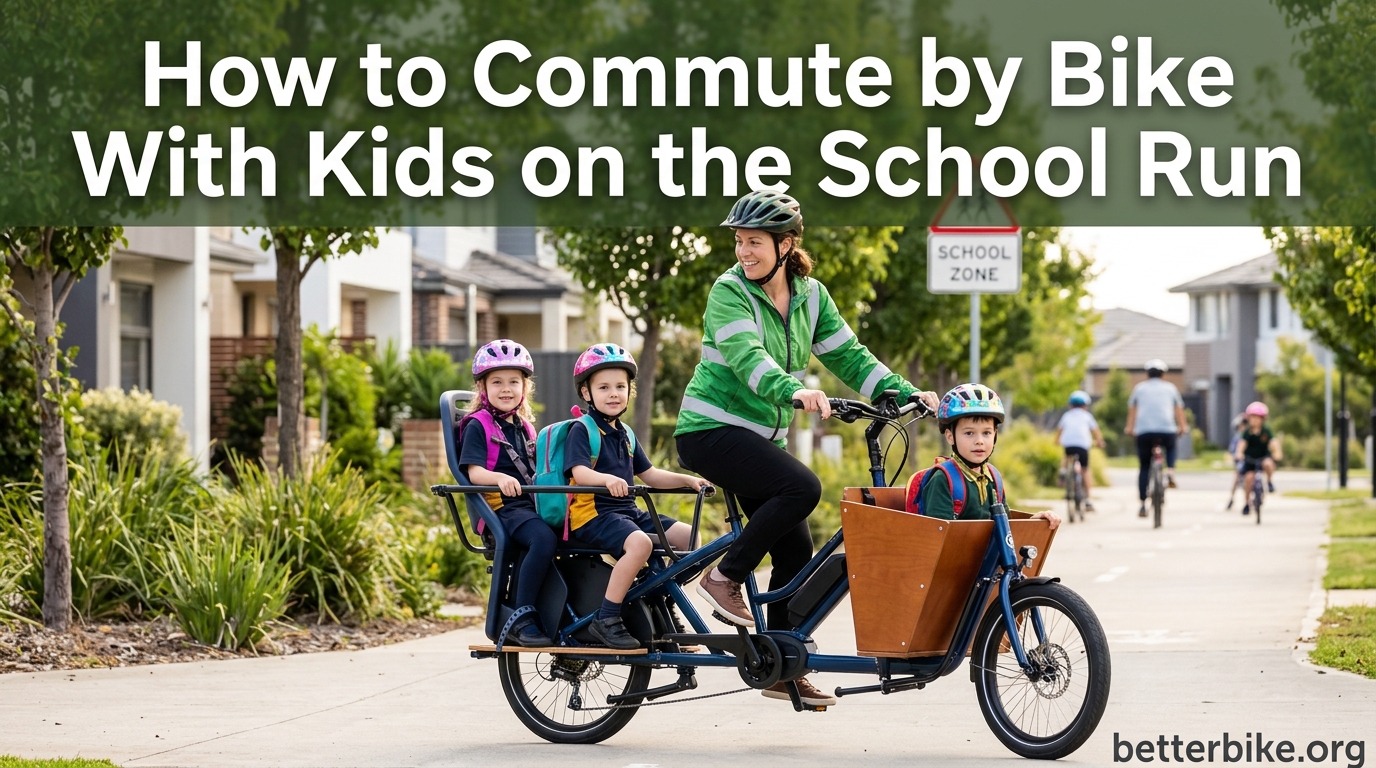
I still remember the first morning my daughter and I biked to school together. We were five minutes late, her hair was a mess, and I was drenched in sweat from pulling a heavy trailer up our street’s hill.
But she was grinning the entire way home. That was three years and roughly 600 school runs ago.
If you’re wondering how to commute by bike with kids on the school run, this guide is for you. I’ll walk through equipment choices, safety basics, route planning, and the small mindset shifts that turn the morning dash from a stressful race into the best part of your day.
Table of Contents
Why Bike the School Run With Your Kids?
Bike commuting with kids isn’t just a way to skip traffic. It changes the whole shape of your morning.
Parents I talk to consistently report three big wins. First, they save time. Studies from cities like Portland and Copenhagen show that bike trips under two miles are often faster than driving once you count parking and drop-off lines.
Second, kids get genuine exercise and fresh air before sitting at a desk for six hours. Third, you get connected time. No screens, no radio drama, just conversation while you move.
There’s an environmental win, too. According to research on cycling safety in dense urban areas, swapping even one car trip per day for cycling makes a measurable difference in local air quality and childhood asthma rates.
The honest downside is that the first few weeks feel slow. You’re learning new routines, your child may resist, and weather will test your commitment. Stick with it for three weeks. After that, it becomes your default.
Equipment Options for Cycling With Kids
Your equipment choice depends on your child’s age, your route, and how much you want to spend. Here’s what actually works in real life.
Child Bike Seats
Rear-mounted child bike seats are the cheapest entry point. They work for kids from about 12 months up to 40 pounds (roughly age 4).
I used one for both my kids. The trade-off is balance. A loaded rear seat changes how your bike handles, especially when you stop. Practice mounting and dismounting in your driveway before hitting traffic.
Front-mounted seats exist too. They let you talk to your child easily, but they limit your handlebar space and can make steering twitchy on rough roads.
Bike Trailers
Trailers are my top pick for kids aged 1 to 5. They’re stable, weatherproof, and can carry a second child or groceries.
The downside is width. Trailers add about 30 inches to your bike, which matters on shared paths and tight lanes. They also feel weird at first. Towing a child behind you requires a different braking instinct.
Get a trailer with a five-point harness and a bright flag. The flag is not optional. Drivers genuinely do not see low-profile trailers otherwise.
Tag-Along Bikes
A tag-along (or trail-a-bike) is a half-bike that hitches to your seat post. Your child pedals, steers a little, but you control the brakes and balance.
These are perfect for kids 4 to 8 who want to feel like they’re really cycling. They work best on flat routes. Hills are awkward because the tag-along’s small wheel can’t keep up with your gearing.
Cargo Bikes
Cargo bikes are the family cycling endgame. Front-loading boxes can carry two or three kids plus groceries.
Electric cargo bikes take the sweat out of hills. They’re expensive upfront, but surveys of car-lite families found that a mid-range e-cargo bike pays for itself in roughly 18 months when you factor in car payments, insurance, and gas.
If you have multiple children of different ages, a cargo bike removes the puzzle of matching equipment to kids.
Tandems
Parent-child tandems let younger riders share the experience without needing to balance. They require both of you to commit to the cadence, which is a real conversation starter.
Tandems are niche. They’re great for one child who can handle a longer ride but isn’t ready for solo road riding.
Signs Your Child Is Ready to Ride to School
Not every 7-year-old is ready to bike to school, and not every 5-year-old is not. Readiness depends on three things: physical skill, attention span, and traffic awareness.
Your child can likely handle the school run if they can do the following.
- Start, stop, and turn smoothly without wobbling for at least 15 minutes
- Follow multi-step instructions (like “stop at the corner, look both ways, then go”)
- Stay focused on a task for the duration of the ride
- Communicate clearly if something feels wrong
Most kids hit this combo between ages 6 and 9. Some hit it earlier. Trust your read of your specific child, not the neighbor’s kid.
If they’re not ready, you can still bike together with them as a passenger in a seat, trailer, or cargo box. That counts as a school commute, and it builds their cycling comfort for when they do ride solo.
Step-by-Step: How to Teach Kids to Bike Commute
Skip the urge to launch straight into street riding. Build skills in layers. Here’s the progression that works for most families.
Step 1: Learn to Ride a Bike
Balance bikes first. They teach steering and balance without the complication of pedaling.
Most kids can balance a pedal bike within a few weeks of balance bike practice. Studies from the Netherlands found that balance bike graduates needed 60 percent fewer training-wheel sessions than kids who started on stabilized bikes.
Step 2: Practice in Safe Spaces
Empty parking lots, driveways, and quiet cul-de-sacs are your training ground. Work on starting from a stop, signaling turns, and stopping smoothly.
Practice for at least a week before moving on. Skipping this step is the most common reason kids panic on real streets.
Step 3: Walk the Route Before Riding
Walk or scoot the full school route on a weekend. Point out driveways, blind corners, and intersections you’ll need to take seriously.
Talk through what you’ll do at each tricky spot. “At the big road, we stop and wait for the walk signal.” Kids who know the plan don’t freeze up when they get there.
Step 4: First Street Rides With a Parent
Your first few street rides should be on a weekend morning when traffic is light. Ride together, not ahead.
Talk out loud about what you’re doing. “I’m slowing down because I see a car pulling out.” This narration teaches your child to read the road.
Step 5: Building Independence
After a few weeks of supervised riding, consider letting older kids ride with a buddy or an older sibling. Some families do a “follow-me” pattern where the parent rides behind instead of in front.
Know your route. If it has a tricky intersection without protection, your child may not be ready for solo riding until they’re a confident teen.
Route Planning for Safe Cycling to School
A good route beats a fast route. Always.
The shortest distance is often the most dangerous. Drivers take the direct line too, and they’re rushing. Side streets, bike paths, and cut-through alleys are usually safer even if they add five minutes.
A reasonable distance for most families to commute by bike is 1 to 3 miles each way. Beyond that, the time cost starts to outweigh the benefits, especially with younger kids.
If your school is further, consider multi-modal transport. Many transit systems let you bring bikes on board, especially off-peak. You can ride to the bus stop, take the bus for the long stretch, and ride the last mile to school.
When you find a good route, ride it multiple times until it becomes muscle memory. Predictability matters more than novelty for kids.
Safety Tips and Helmet Best Practices
Helmets are non-negotiable. Fit matters more than brand. The helmet should sit level on your child’s head, one finger’s width above the eyebrows, with the side straps forming a Y under each ear.
If the helmet rocks forward or backward, tighten the rear dial or swap for a different size. A poorly fitted helmet is barely better than no helmet at all.
Hi-vis clothing helps in low light. Reflective ankle bands are surprisingly effective because they move, catching drivers’ eyes more reliably than static vests.
Here’s a cycling safety concept worth teaching your kids: the 80 percent rule. Look 80 percent of the time at the road conditions ahead, and 20 percent of the time at your mirrors and surroundings. New riders tend to fixate on the front wheel. Practice looking up and scanning.
Communicate clearly. Hand signals for turns and stops, plus a verbal “passing on your left” when overtaking other cyclists or pedestrians, prevents most close calls.
Weather and Gear: Riding in All Conditions
The weather will test you. Plan for it.
For rain, you need a good rain jacket, fenders on your bike, and waterproof shoe covers. There’s a saying in bike commuting: there’s no such thing as bad weather, just bad clothing. Parent panels consistently agree that rain gear was the single best investment.
In summer, hydration matters more than people think. A rear-mounted water bottle cage lets kids grab their own drink without asking.
For cold mornings, layer up. A thin base layer under a fleece or puffy vest keeps the core warm without overheating the arms. Avoid cotton. It holds sweat and chills kids fast.
Get lights even for daytime use. Daytime running lights are now standard in several European countries because they cut collision rates by roughly 20 percent.
Making the Commute Fun: Games and Motivation
The commute is only as good as your child’s attitude toward it. A bored kid will lobby hard for the car.
Games work. Try these with younger riders.
- I-spy for sharp eyes and vocabulary
- Counting dogs, bikes, or red cars along the route
- License plate letter games
- Pokemon Go or similar mobile games for older kids
Set small goals. A weekly “ice cream stop” at the halfway point gives kids something to look forward to. So does a streak chart on the fridge. Twenty rides in a row earns a family reward.
One emerging idea worth knowing about is the Bike Bus. Parents take turns leading a group of kids to school along a set route, picking up riders at scheduled stops. It’s like a school bus, but with bikes. Several US cities now run weekly Bike Bus routes, and they have a side benefit: more riders on the road mean drivers expect to see them.
Real Parent Tips for Bike Commuting With Kids
These tips come from parents in cycling forums and local bike groups. They’re the advice that actually shows up in day-to-day commutes.
Leave ten minutes earlier than you think you need. The first month has surprises. A flat tire, a forgotten library book, a child who needs the bathroom. Extra time keeps it from becoming a crisis.
Don’t stress about being late. Parents on the r/bikecommuting subreddit consistently say the slow mornings improved their relationship with their kids. The journey itself is the point.
Carry a small repair kit. A spare tube, a mini pump, and a multi-tool will get you out of 90 percent of mechanical issues. If you don’t know how to fix a flat, learn before you need to. YouTube has good tutorials for every kind of bike.
When kids get tired mid-ride, having a tag-along or trailer as backup helps. Some families bring the tag-along even when the child is expected to ride solo, just in case.
For hills, an e-bike or e-cargo bike is a force equalizer. Even a small amount of electric assist makes a hilly commute manageable on bad days.
What to Consider When Choosing Family Cycling Gear
Before you buy, think about storage, growth, and resale value.
Storage matters. A cargo bike needs a secure place to live. Ground-floor apartments, garages, and bike sheds work. Fourth-floor walkups do not. Measure first.
Kids grow. Buy gear that adjusts. Helmets with dial-fit systems last 2 to 3 years. Seats and trailers with weight ranges give you room to grow.
Resale value is real. Family cycling gear holds value well because there’s always another parent looking for a used trailer or balance bike. Local cycling groups and parent forums are great for resale.
Try before you buy if possible. Many bike shops have demo days for cargo bikes. Some libraries and bike co-ops rent family trailers for weekend trials.
Finally, don’t overspend on day one. A $60 used trailer and a $30 used balance bike will get you started. Upgrade once you know what you actually need.
FAQ’s
How do you commute with kids on a bike?
You can commute with kids on a bike by using a child seat, trailer, tag-along, or cargo bike matched to your child’s age and size. Plan a safe route ahead of time, do a practice run on a weekend, and start with short rides during low-traffic hours. The right equipment plus a consistent routine is what makes daily bike commuting with kids work in the long run.
What is the 80% rule in cycling?
The 80% rule in cycling is a safety habit that says you should spend 80 percent of your visual attention on the road ahead and 20 percent on mirrors, traffic, and your surroundings. New riders tend to fixate on the front wheel or pedals, which makes them miss hazards. Teaching kids to scan the road, not just stare straight down, is one of the most useful bike safety skills you can build.
What is a reasonable distance to commute by bike?
A reasonable distance for most families to commute by bike is 1 to 3 miles each way. That range is usually faster than driving once you include parking, and it’s short enough that elementary-age kids can handle the ride. Longer commutes work too, especially with e-bikes or multi-modal options like combining a bike ride with a bus or train.
How to transport kids on a bike?
To transport kids on a bike, choose equipment based on age: rear or front child seats for ages 1 to 4, bike trailers for ages 1 to 5, tag-along bikes for ages 4 to 8, and cargo bikes for any age including multiple kids. Always use a properly fitted helmet, secure the child with the harness or seatbelt provided, and add a safety flag if you’re using a low-profile trailer.
Final Thoughts on Biking the School Run
Learning how to commute by bike with kids on the school run is less about perfect equipment and more about showing up consistently. Start with one ride. Then another. The routine builds itself once the first two weeks are past.
You’ll get exercise, your kids will get independence, and your mornings will feel different in a good way. If your local roads aren’t quite ready for it, advocate for safer infrastructure. More parents riding is what pushes cities to build protected lanes and school zone improvements.
Pick a route, choose equipment that fits your child’s age, and try one ride this week. That’s the whole secret.