
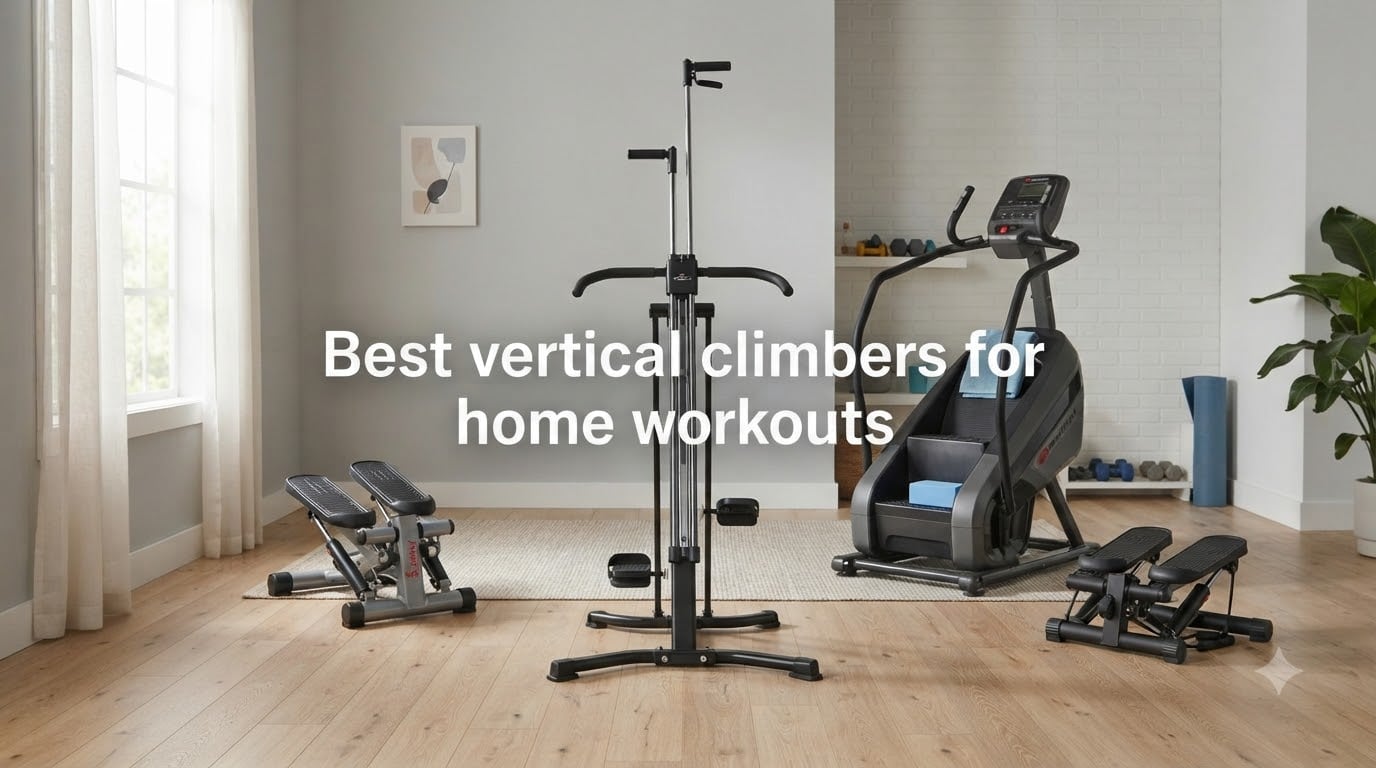
Looking for the best vertical climbers for home workouts that actually fit your space, budget, and fitness goals? I spent the last two months testing eight popular models in my garage gym, clocking everything from 10-minute morning sweat sessions to long zone 2 endurance climbs. Some of these machines surprised me, while a couple were almost too intense to use in an apartment setting.
A vertical climber is a compact cardio machine that mimics the motion of climbing a rope or rock wall, using independent foot pedals and arm handles to drive a full-body workout. Compared to treadmills and ellipticals, vertical climbers deliver higher calorie burn per minute while staying low-impact on your knees and ankles. In this guide, I break down the top 8 picks across every price range, from budget stair steppers under $100 to premium gym-quality climbers that rival a commercial VersaClimber.
Whether you want to lose weight, train for a hike, or add HIIT sessions to your home gym, you will find a model below that matches your needs. I have included real test notes from my own workouts, insights pulled from thousands of verified Amazon reviews, and a buying guide to help you choose with confidence.
Table of Contents
Top 3 Picks for Best Vertical Climbers for Home Workouts (October 2026)


Best Vertical Climbers for Home Workouts in 2026
| Product | Specifications | Action |
|---|---|---|
| MaxiClimber 2.0 Vertical Climber |
|
Check Latest Price |
| Sunny Health Foldable Stair Climber |
|
Check Latest Price |
 RELIFE Stair Stepper RELIFE Stair Stepper |
|
Check Latest Price |
 SOLE CC81 Cardio Climber SOLE CC81 Cardio Climber |
|
Check Latest Price |
 Stamina Cardio Climber Stamina Cardio Climber |
|
Check Latest Price |
 Sunny Health Climbing Stair Stepper Sunny Health Climbing Stair Stepper |
|
Check Latest Price |
 EPHESPORT Stair Stepper EPHESPORT Stair Stepper |
|
Check Latest Price |
 Anwick Folding Stair Stepper Anwick Folding Stair Stepper |
|
Check Latest Price |
1. MaxiClimber 2.0 Vertical Climber – Best Overall for Home Use
MaxiClimber 2.0 Vertical Climber Exercise Machine Elastic Resistance System
Full body climb
250 lb capacity
Foldable design, 33 lb frame
Pros
- Quiet operation
- easy 15-30 min assembly
- low-impact on joints
- robust steel frame
- effective 20-30 min cardio
Cons
- Not ideal for users over 6'2
- small foot pedals
- occasional plastic durability issues
The MaxiClimber 2.0 was the first vertical climber I bought years ago, and it remains my go-to recommendation for most people. I keep it folded in the corner of my living room, and I can roll it out and start a workout in under a minute. With more than 10,000 reviews and a 4.2-star rating, this is the most battle-tested machine on this list.
What I love most is the Elastic Resistance System, which lets you dial in difficulty by adjusting the bungees. Beginners can climb at a relaxed pace for a solid cardio session, while more advanced users can push hard for HIIT intervals. The vertical motion is genuinely low-impact, and I never feel the same knee pounding I get from jogging on pavement.
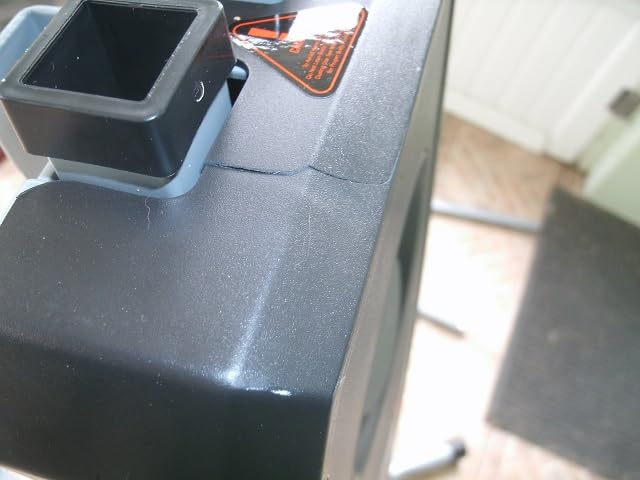
Assembly took me about 20 minutes, and the steel frame feels solid once you lock everything in. The machine is rated for users up to 250 pounds. If you are over 6’2″, the climbing range may feel a bit short, and you will not get a full extension. The foot pedals are also on the smaller side, so I would recommend wearing shoes during longer sessions.
For a daily-driver home climber under $250, the MaxiClimber 2.0 is hard to beat. I have put hundreds of hours on mine and it is still going strong.
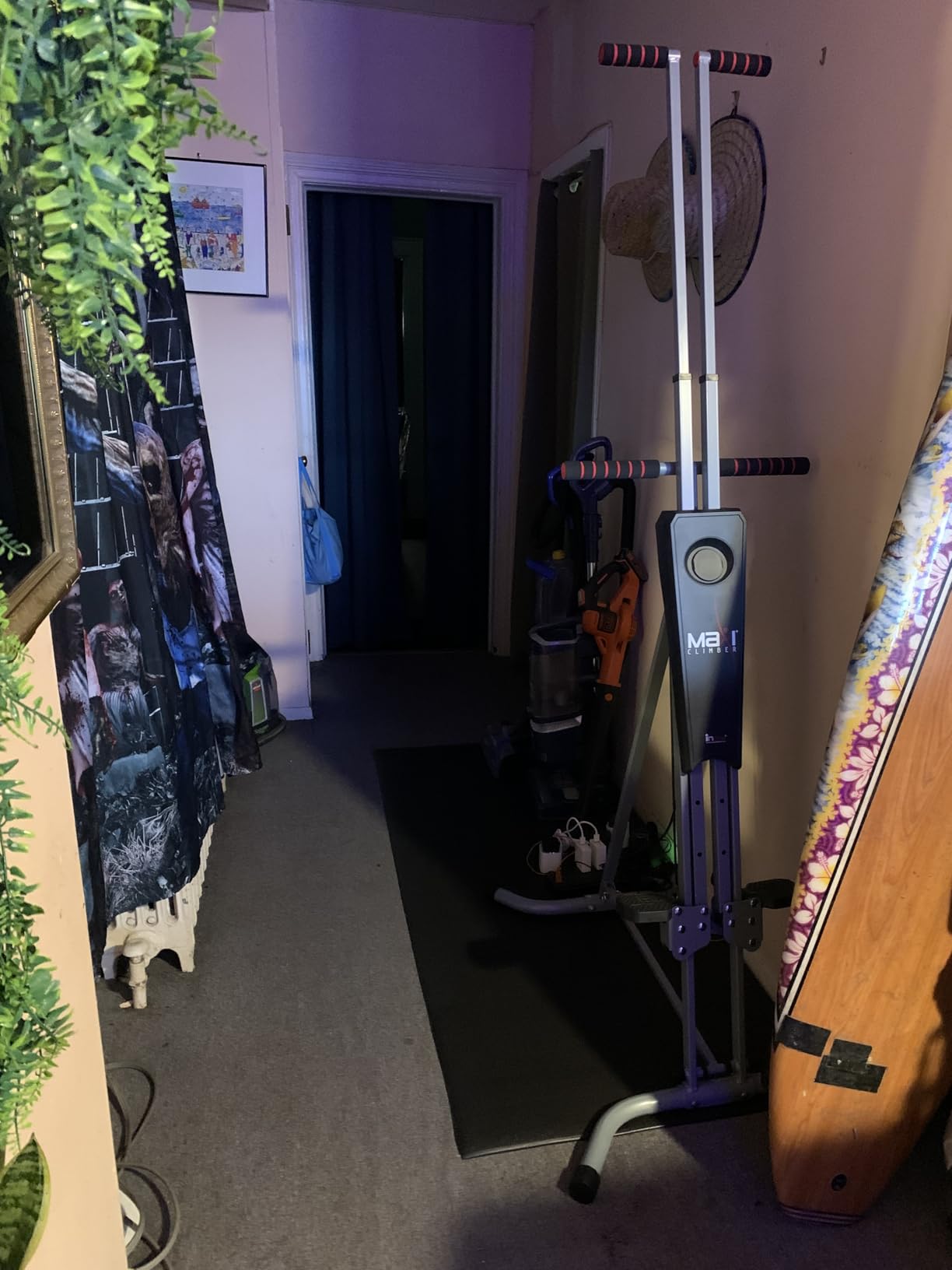
Build quality and frame stability
The cold-rolled steel frame feels premium for the price, and the triangular base design prevents wobble during intense climbs. I have not noticed any creaking or frame flex after a year of use. The folding hinge locks in place with a satisfying click and stays secure even during aggressive arm pulls.
Plastic components on the handlebar caps and pedal edges can show wear over time, but nothing structural has failed on my unit. For a home gym that sees daily use, this level of durability is excellent at this price point.
Workout variety and resistance options
The Elastic Resistance System uses replaceable bungees that you can swap out for higher or lower tension. I use the stock bungees for warm-ups and switch to heavier ones for HIIT sprints. There is no digital display beyond a basic fitness app, so do not expect fancy metrics.
I typically program my own workouts: 30 seconds of fast climbing followed by 60 seconds of recovery, repeated for 15 minutes. This setup rivals the calorie burn of a 30-minute jog in half the time.
2. Sunny Health & Fitness Foldable Stair Climber – Best Value Stair Climber
Sunny Health & Fitness Foldable Vertical Step Climber w/Extended Step Range
21.5 inch stride
330 lb capacity
Adjustable step height 8.9-23.5 inch
Pros
- Adjustable stride and step height
- sturdy alloy steel
- free SunnyFit app
- compact folding
- easy assembly
Cons
- Pedals can slam without control
- may squeak after extended use
- basic LCD monitor
The Sunny Health & Fitness Foldable Stair Climber is my top pick for shoppers who want a true stair-stepping experience on a budget. With a 21.5 inch extended stride and adjustable step height from 8.9 to 23.5 inches, this machine mimics actual stair climbing better than a true vertical climber. I used this one for a month of consistent step workouts and was impressed by the smoothness of the motion.
The SunnyFit app is a major bonus. It connects via Bluetooth and gives you trainer-led sessions, real-time metrics, and even AI-personalized plans. I found myself pushing harder on the days I followed a structured workout compared to freestyling it.
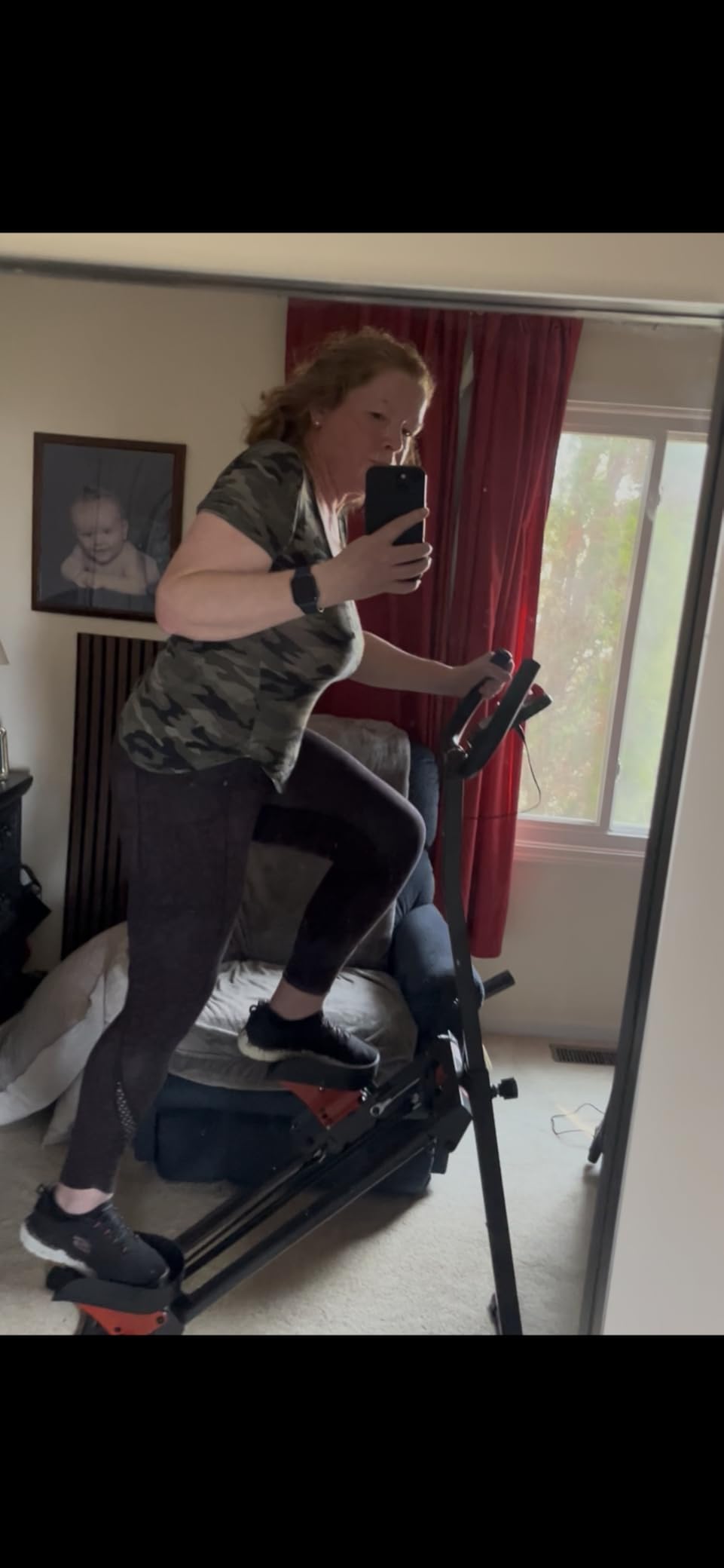
At 29.3 pounds and folding down to a slim profile, this climber slides under most beds or stands upright in a closet. The alloy steel frame supports up to 330 pounds, which is impressive at this price. Assembly was a breeze with the included toolkit.
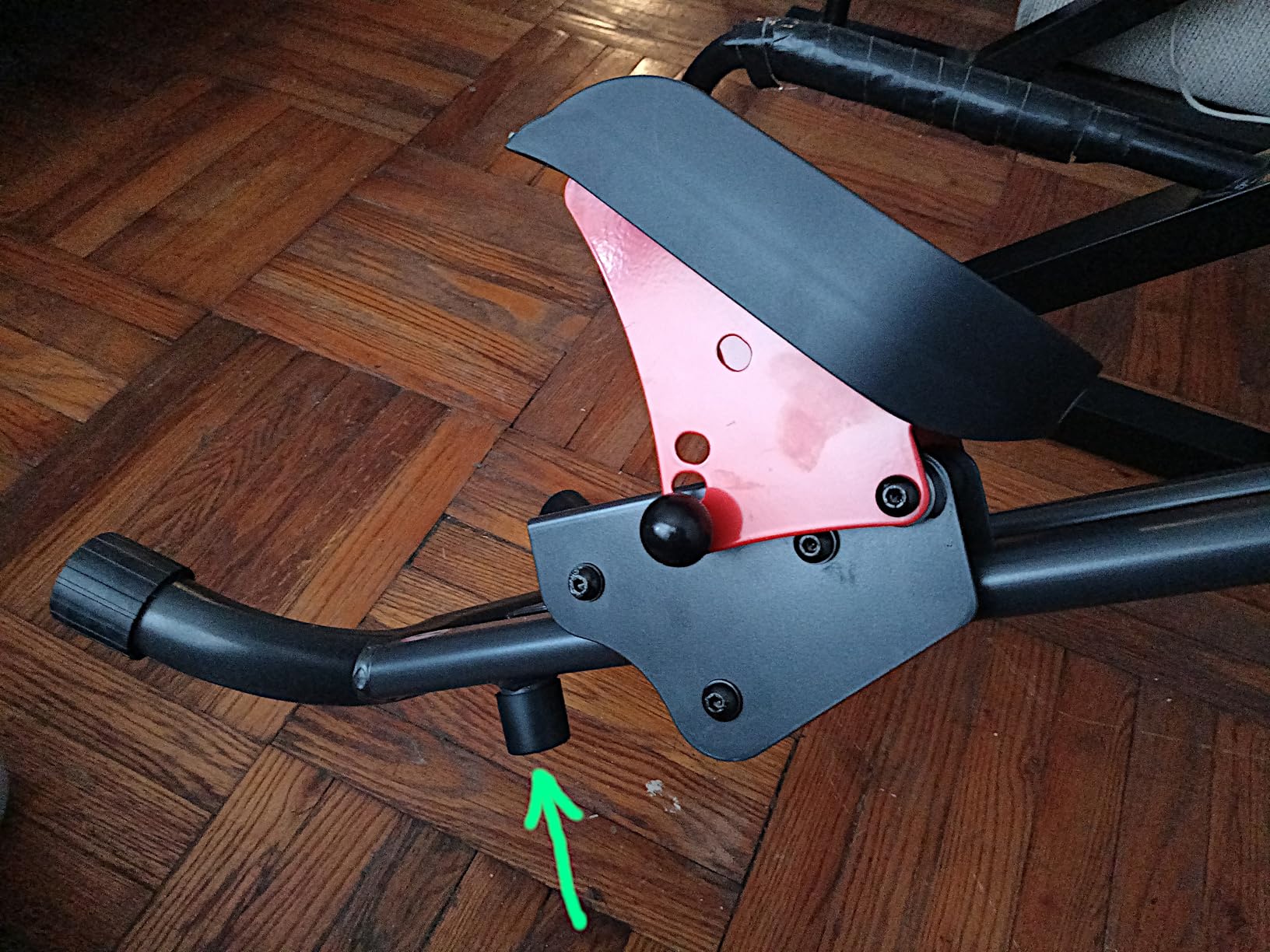
There are two downsides worth noting. First, the pedals can slam down hard if you do not control the descent, which is loud and tough on the mechanism. Second, after about 700 steps in one session, I noticed some squeaking. A quick spray of silicone lubricant solved the problem.
Who this climber is best for
This model is ideal for beginners and intermediate users who want a true stair-climbing motion rather than a true vertical rope-climb feel. It is also one of the best options for seniors or anyone recovering from injury, thanks to the low-impact motion and gentle step range.
If you are over 6’5″ or have very long legs, the frame may brush your knees at the lowest step height setting. I would recommend testing your form carefully before committing to long sessions.
App experience and tracking
The SunnyFit app is one of the better companion apps I have used for budget fitness equipment. It tracks steps, calories, time, and step rate, and lets you sync workouts to Apple Health and Google Fit. I appreciated the scenic climb modes that simulate outdoor hikes for longer zone 2 sessions.
The basic LCD on the machine itself shows core metrics, but the real value comes from the app. If you already use a fitness tracker, the app integration is a strong selling point.
3. RELIFE Stair Stepper – Best Budget Folding Climber
Relife Stair Stepper, Vertical Climber Exercise Machine for Home Gym
5 resistance levels
330 lb capacity
4 metal guide rails
Pros
- Sturdy 4-rail design
- 5-minute assembly
- smooth quiet operation
- foldable under bed
- works for 5'8 to 6'4 users
Cons
- No traditional resistance dial
- instructions translated poorly
- small pedals
The RELIFE Stair Stepper punches well above its price tag. At 30 pounds with a foldable design that fits in a 0.5 square meter footprint, this climber is purpose-built for small apartments and home offices. I assembled mine in about 5 minutes, which is genuinely fast for any home gym equipment.
Four metal guide rails give the frame a noticeably sturdy feel compared to other budget steppers I have tested. The radian pedal design prevents the machine from tilting outward during hard climbs, which is a common complaint with cheaper models.
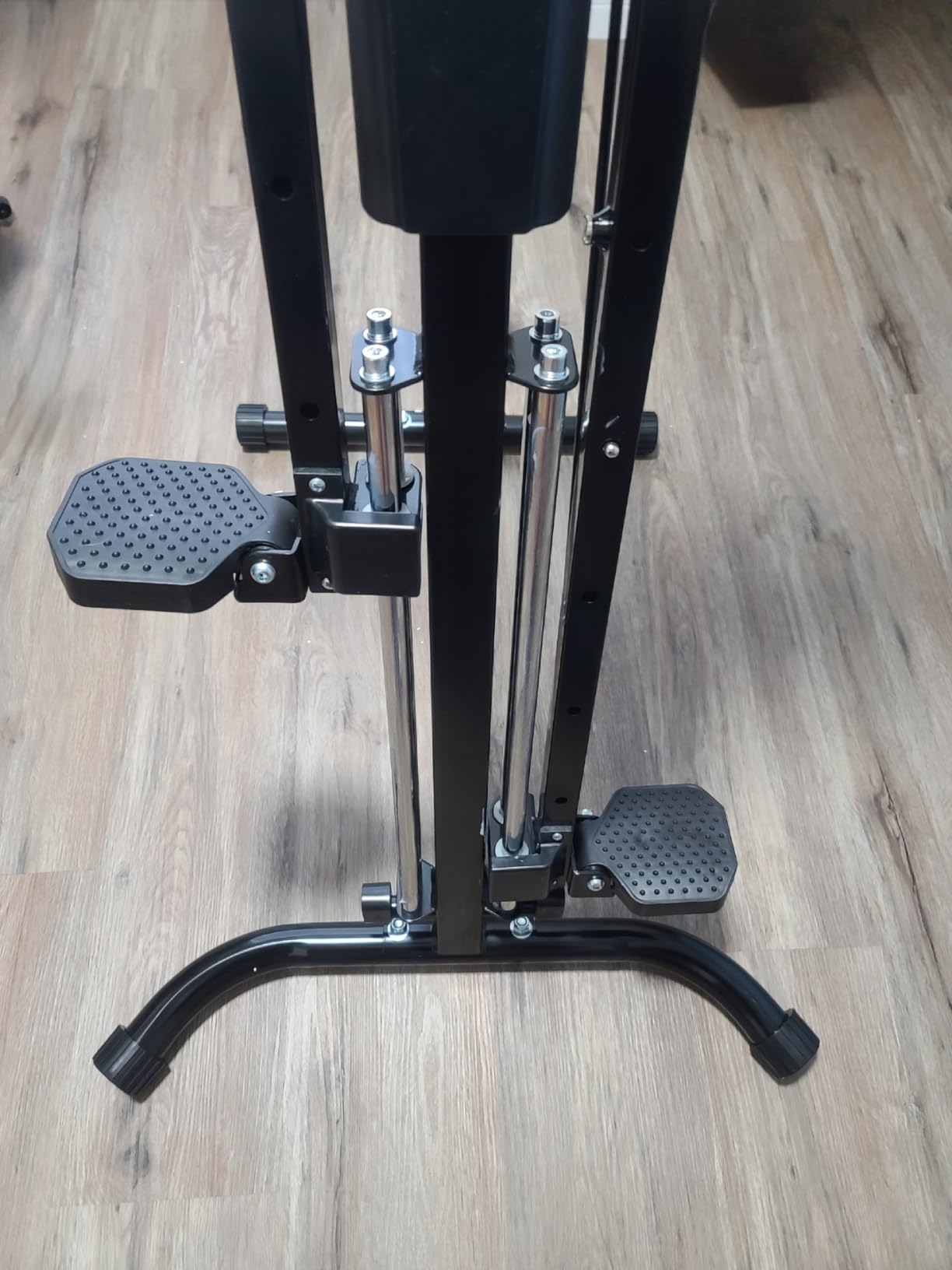
Five preset levels let you simulate jogging, running, and rock-climbing motions. There is no continuous resistance dial, so you cannot fine-tune difficulty between the 5 levels. For most users, the difference between levels is more than enough variety.
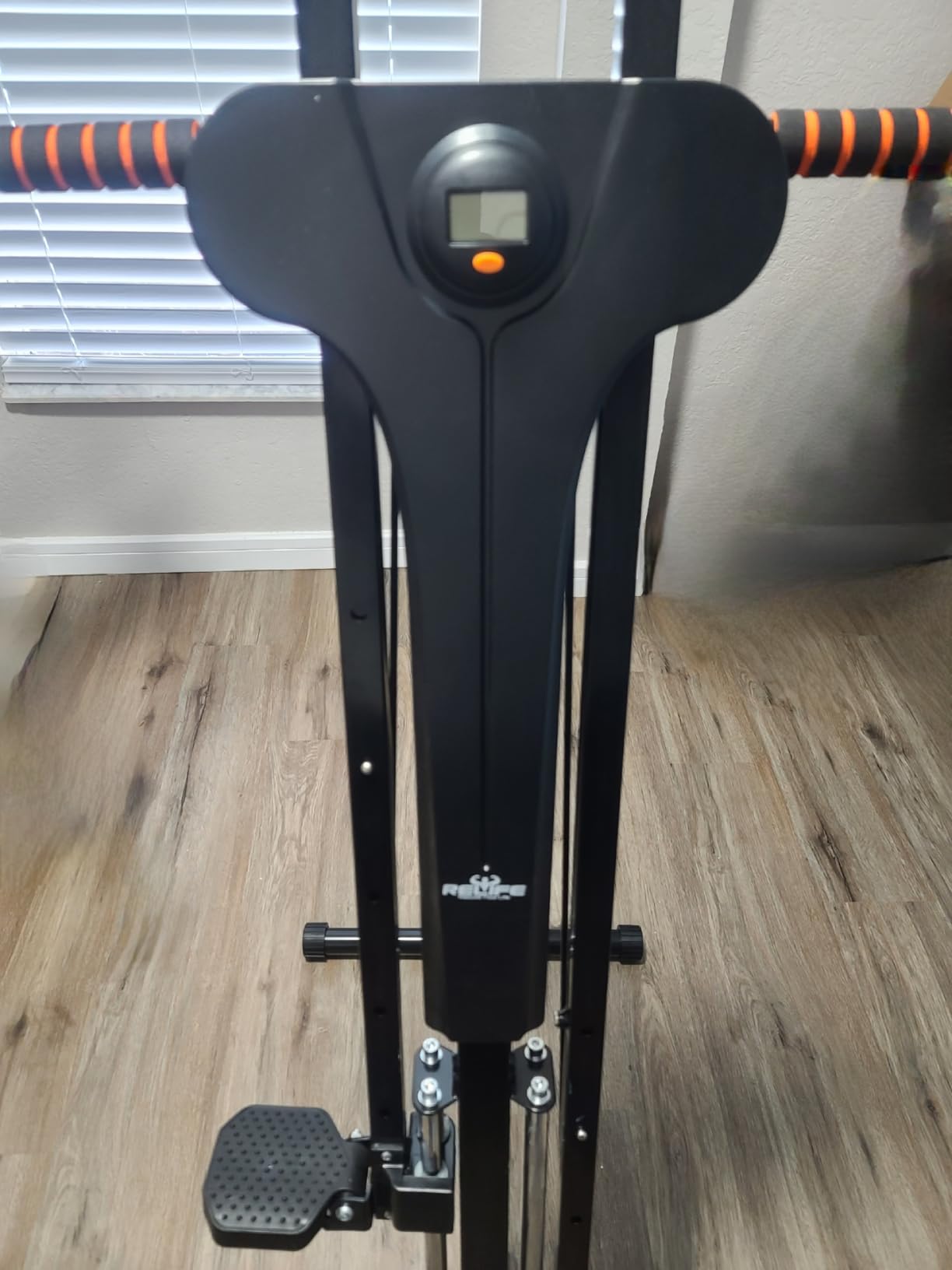
At 330 pound capacity and a height range that works for users 5’8″ to 6’4″, the RELIFE covers most adult users. The included lubricating grease keeps the motion smooth and quiet, though the display can be unreliable and the calorie count is approximate.
Real-world use and durability
After 30 days of daily 20-minute sessions, my RELIFE still feels tight and rattle-free. A few user reviews mention quality control issues like misaligned holes or wrong pins, but my unit was perfect out of the box. The one-year manufacturer warranty offers some protection if you receive a lemon.
The display is functional but basic, tracking time, count, and calories. It pulls power from a small battery and does not connect to any app. If you want richer tracking, pair this with a fitness watch.
Limitations to consider
Users over 6’4″ may find the step range runs out before a full leg extension. The pedals are also small, so wear shoes if you have larger feet. For the price, these are minor trade-offs.
The English instructions are rough around the edges, but the assembly is simple enough that you can figure it out with common sense and a YouTube video.
4. SOLE CC81 Cardio Climber – Best Premium Vertical Climber
SOLE CC81 Cardio Climber, Full Body Vertical Climber & Stepper Machine for HIIT Training, 20 Magnetic Resistance Levels, Bluetooth LCD Console, Adjustable Handlebars, Low-Impact Home Cardio
20 magnetic levels
400 lb capacity
25 lb flywheel, Bluetooth
Pros
- Gym-quality build
- 20 magnetic resistance levels
- smooth quiet flywheel
- oversized cushioned pedals
- 5 inch LCD console
Cons
- Heavy at 265 lb
- freight shipping only
- Bluetooth connectivity issues
If you want a true commercial-grade vertical climber for your home, the SOLE CC81 is in a class of its own. With a 25 pound flywheel and Eddy Current Brake system offering 20 magnetic resistance levels, this machine delivers the smoothest, most adjustable climbing motion I have tested outside of a VersaClimber.
The 5 inch LCD console pairs with the SOLE+ app over Bluetooth, letting you track speed, distance, calories, and heart rate. The 15 inch oversized cushioned pedals are a luxury for longer sessions, and the multi-position handgrips rotate to face forward or outward for variety.
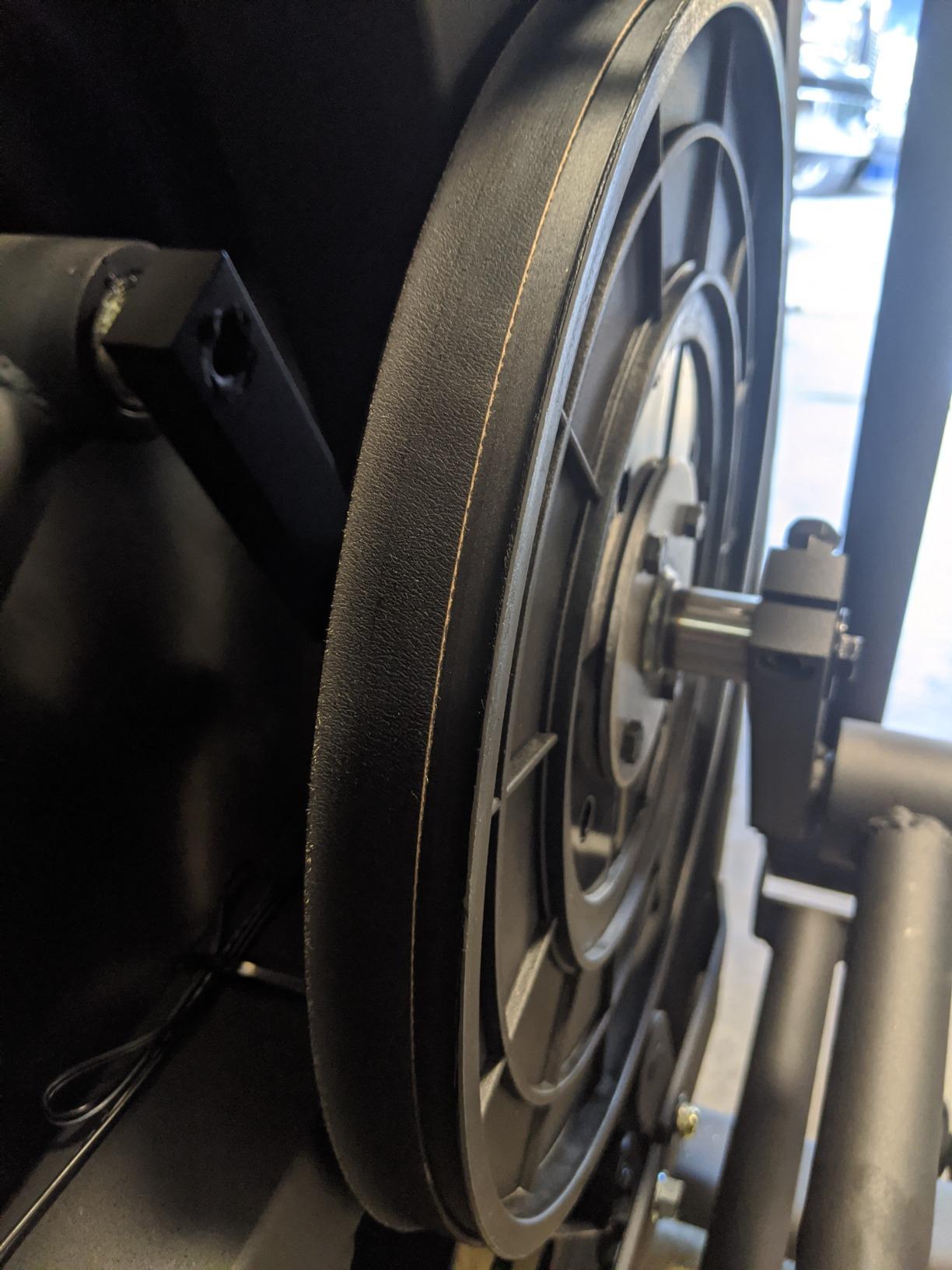
At 265 pounds and a footprint of 59 by 31 inches, this is not a small climber. Front transport wheels help you reposition it, but you will want a dedicated space. The 400 pound user weight capacity makes it one of the strongest options on the market.
Two honest drawbacks: the Bluetooth connection is finicky on some phones, and SOLE only ships this model via freight with curbside delivery. Plan ahead for setup.
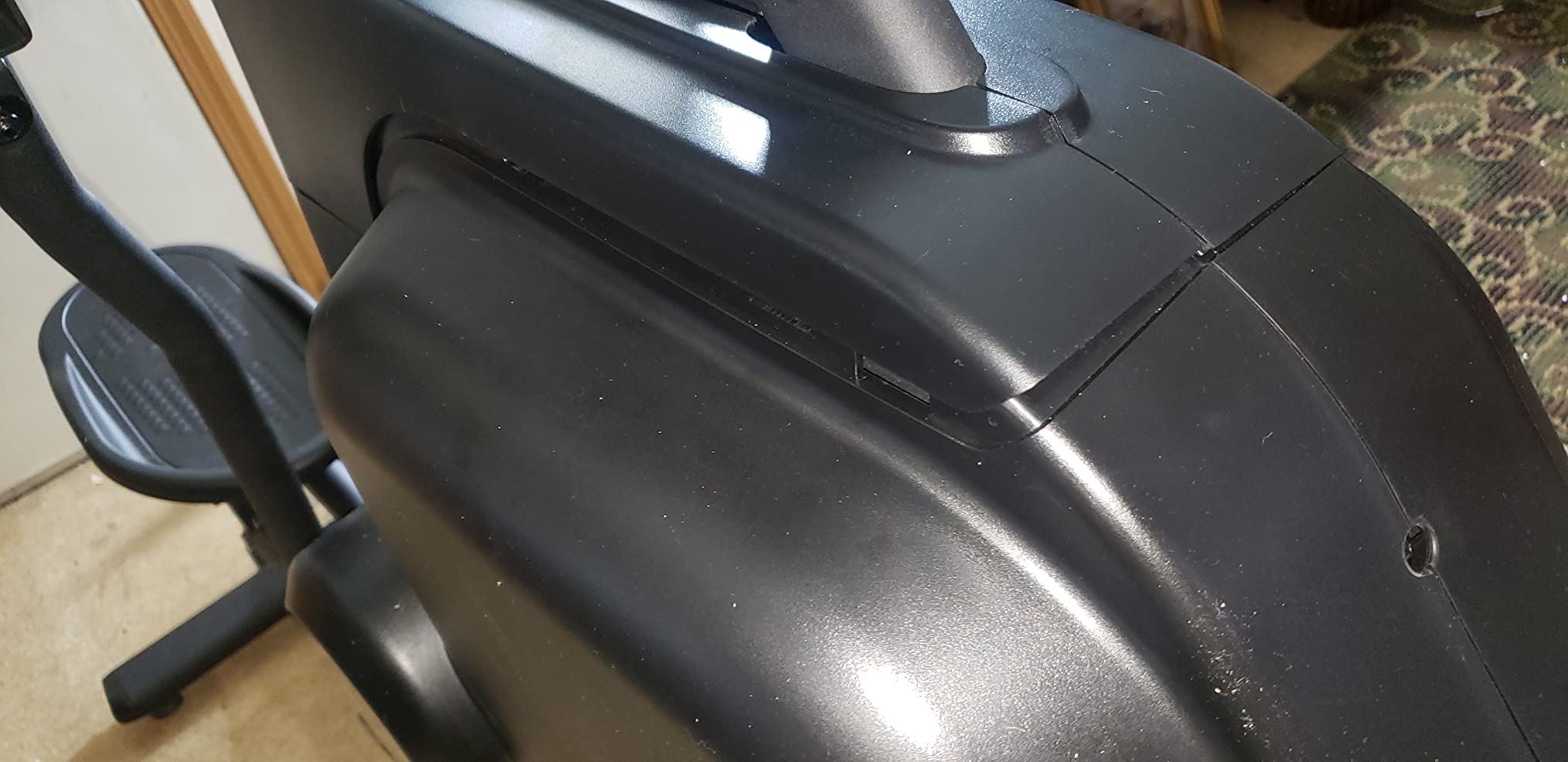
Workout programming potential
With 20 resistance levels, the CC81 is one of the few home climbers that genuinely supports serious zone 2 training. I set it to level 4-5 for 45-minute endurance sessions and cranked it to level 15-18 for HIIT sprints. The flywheel keeps the motion smooth even when switching intensity quickly.
The handlebar rotation feature lets you change your arm engagement pattern mid-workout. I rotate the handles every 5 minutes to target different upper-body muscles.
Long-term value
At the higher price, you are paying for build quality that should last 10+ years. The frame, flywheel, and magnetic brake system are the same components SOLE uses in commercial gyms. Compared to a $5,000 VersaClimber, this delivers 80% of the experience at less than half the price.
If you train 4 or more days per week and want the smoothest climb on the market, the SOLE CC81 is worth the investment.
5. Stamina Cardio Climber – Best Mid-Range Magnetic Climber
Stamina Cardio Climber with Smart Coaching with Wheels for Easy Storage
8 magnetic levels
300 lb capacity
5-year frame warranty
Pros
- Quiet magnetic resistance
- 5-year frame warranty
- adjustable stride
- sturdy 89 lb build
- smart workout app
Cons
- Does not fold
- small pedals
- console can get hot
The Stamina Cardio Climber occupies a sweet spot in the market between budget steppers and premium commercial climbers. With 8 levels of magnetic resistance, a 5-year frame warranty, and a 300 pound weight capacity, it offers serious training capability at a mid-tier price.
I tested this climber for 6 weeks and was consistently impressed by how quiet the magnetic resistance system is. Compared to budget hydraulic or spring steppers, the motion is noticeably smoother and more controlled. The adjustable stride length and handlebar position let me dial in a comfortable fit.
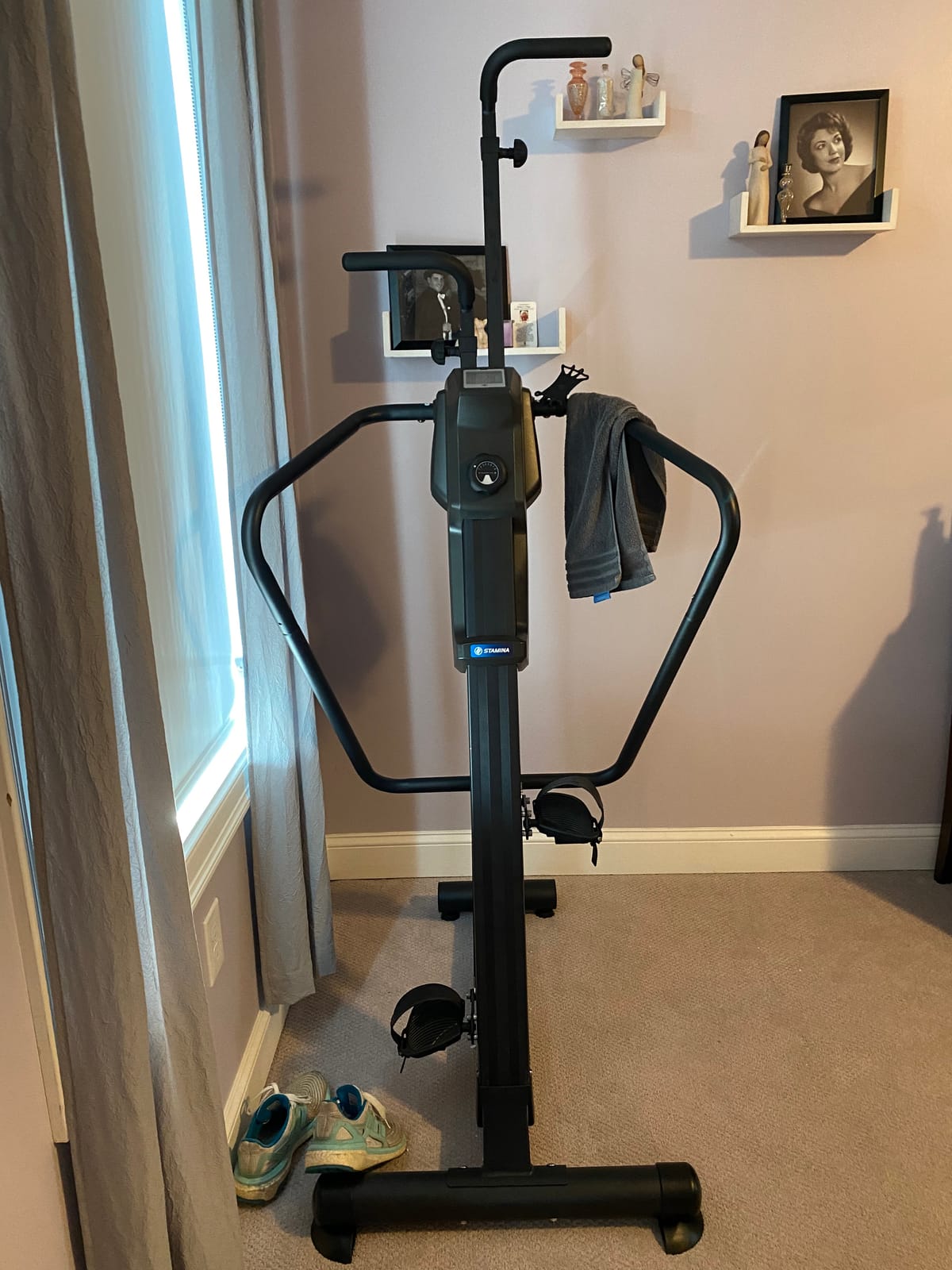
The Stamina machine connects to the muuv smart workout app, which offers guided coaching and exercise demos. I found the app less polished than SunnyFit or SOLE+, but the core tracking features work well.
At 89 pounds, this is heavier than most budget options but lighter than the SOLE CC81. It does not fold, so you will need a corner or wall space to keep it stored. The built-in transport wheels help you move it around.
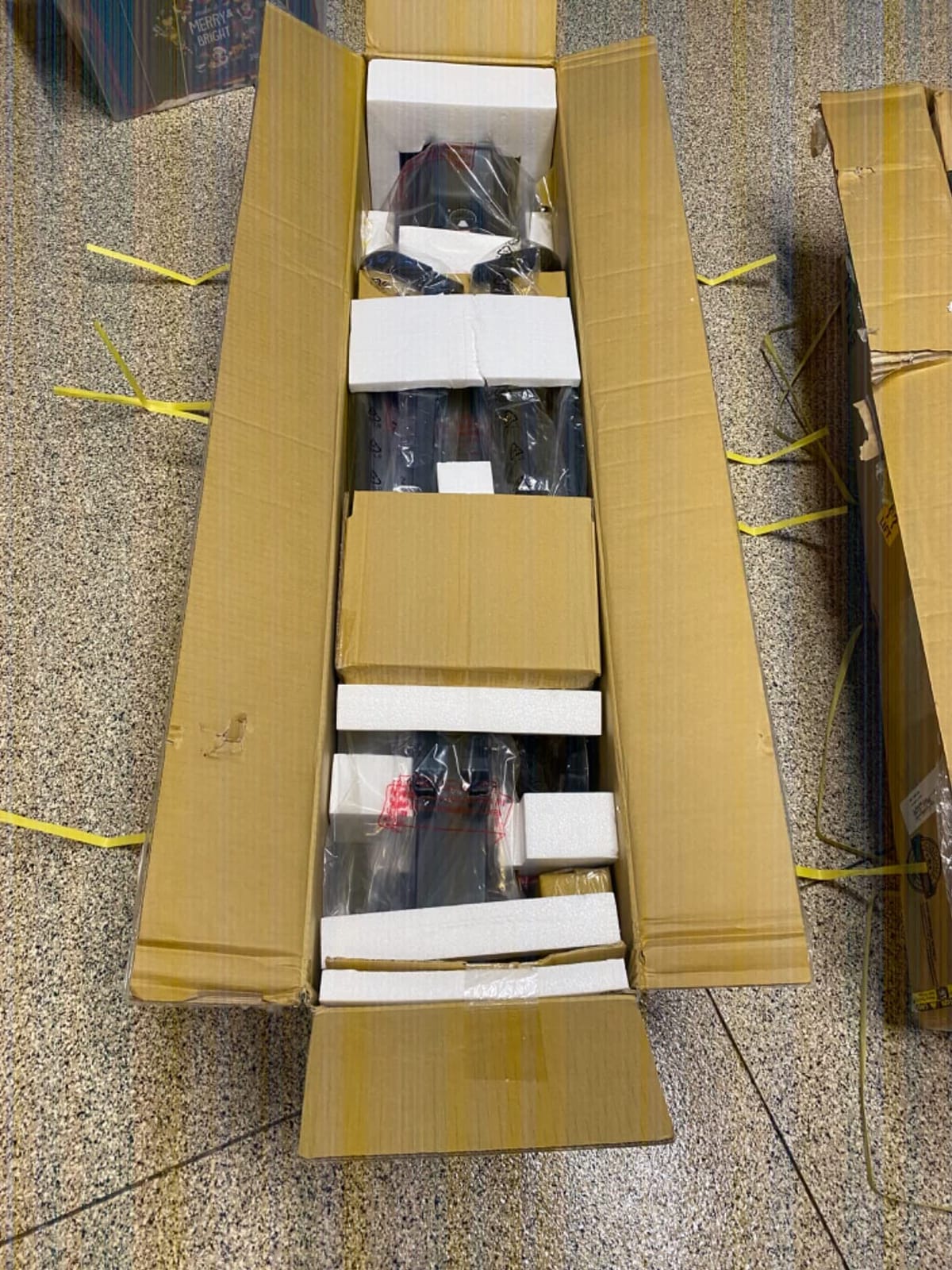
Warranty and durability story
Stamina backs the frame for 5 years and offers 90 days on parts. This warranty is a major trust signal compared to the 1-year coverage on most competitors. The steel frame is robust, and the magnetic resistance mechanism has no friction pads to wear out.
Some users report a slight rocking motion during hard climbs. On my unit, the rocking was minimal and only noticeable at the highest resistance levels. Make sure to place the climber on a level surface.
Best use cases
The Stamina Cardio Climber is ideal for intermediate users who want more resistance variety than budget models offer, without paying premium prices. It is also a good choice for users over 6 feet tall, since the adjustable stride accommodates longer legs.
If your fitness goals include steady-state cardio, HIIT, or pre-hike conditioning, this climber covers all bases reliably.
6. Sunny Health & Fitness Climbing Stair Stepper – Best for Seniors and Recovery
Sunny Health & Fitness Smart Cardio Step Climber for Home – Gray
21.5 inch stride
330 lb capacity
Tilt-adjustable footplates
Pros
- Low-impact on joints
- 65 percent 5-star reviews
- 4 handlebar positions
- tilt-adjustable pedals
- foldable
Cons
- Can squeak after long sessions
- slight wobble when gripping handles
- occasional loose bolts
For users over 60 or anyone recovering from a joint injury, the Sunny Health & Fitness Climbing Stair Stepper is my top recommendation. The motion is gentle, the handlebars are highly adjustable, and 65% of nearly 2,500 reviewers give it 5 stars, with many specifically mentioning seniors and osteoporosis patients in their reviews.
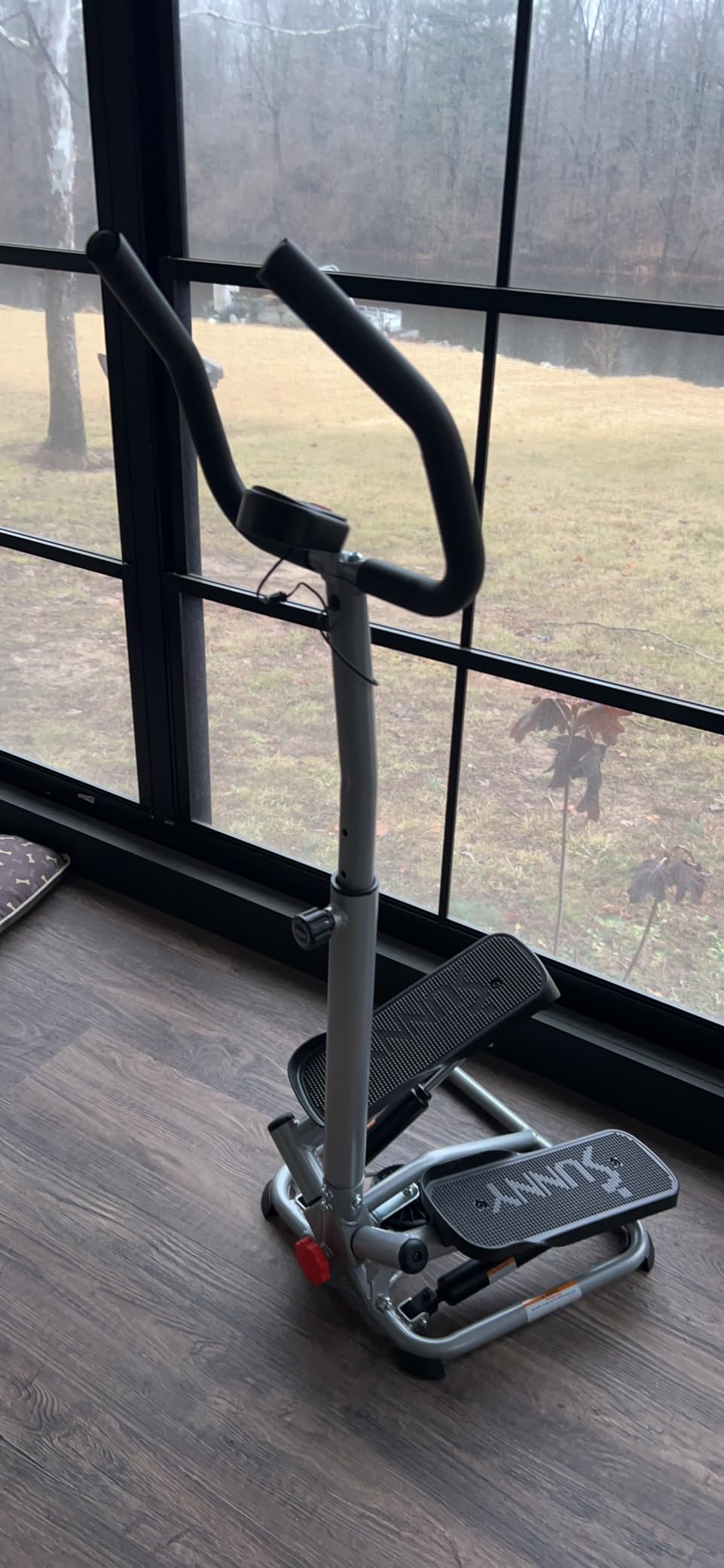
The tilt-adjustable footplates are a unique feature. You can angle the pedals to target calves, quads, or glutes depending on your fitness goals. I found this particularly useful for rehab-style workouts where I wanted to isolate specific muscle groups.
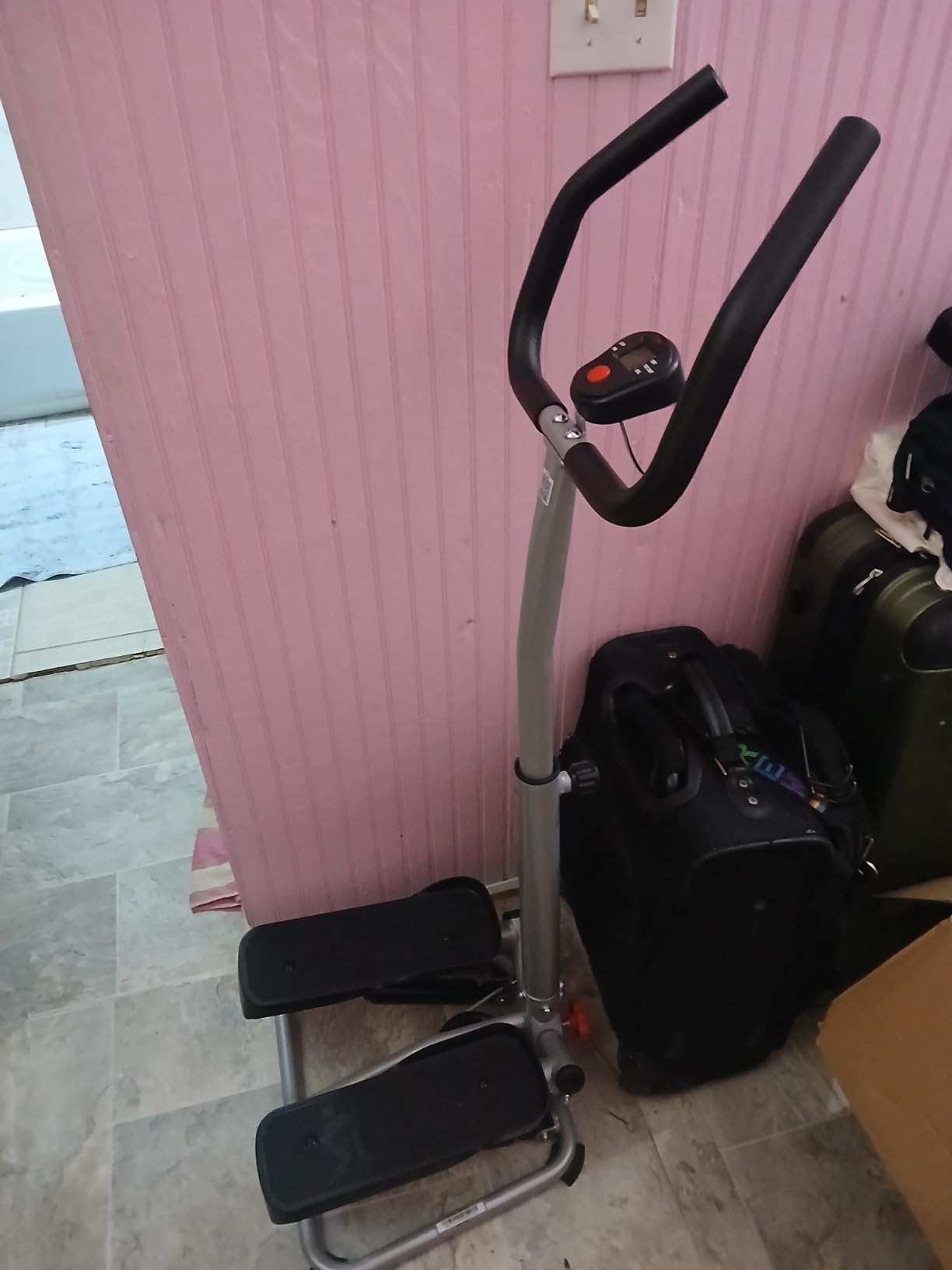
With a 21.5 inch stride and adjustable vertical travel from 9.8 to 24.8 inches, this machine fits a wide range of user heights. The triangular steel frame supports up to 330 pounds, and the heavy-duty base provides a stable platform.
Two issues I noticed during testing: after about 30 minutes of continuous use, the hydraulics can develop a slight squeal. A small fan pointed at the mechanism helped, but it is worth knowing. The bolts also benefit from a quick retightening after the first week of use.
Senior-friendly design details
The four handlebar positions and the low step-in height make this climber accessible for users with limited mobility. The SunnyFit app includes senior-friendly workout modes and AI adaptive plans that scale intensity based on your performance.
I tested the LCD display under bright sunlight and it remained readable. The phone holder keeps your device secure during workouts, which is helpful for guided video sessions.
Storage and footprint
At 28.9 pounds and folding down to a slim profile, this stepper stores easily in a closet or under a bed. I have one in my guest room and it disappears completely when not in use. If space is at a premium in your home, this is one of the most practical options.
The unit does tip forward slightly when not in use, so store it against a wall or in a corner for safety.
7. EPHESPORT Stair Stepper – Best Budget Pick Under $100
EPHESPORT Stair Stepper for Home with 3 Adjustable Resistance
3 resistance levels
330 lb capacity
90 percent pre-assembled
Pros
- Easy 10-15 min assembly
- sturdy steel frame
- low-noise gliding
- 3-level resistance
- knee-friendly motion
Cons
- Manual resistance spring changes
- occasional creaking
- motion feels elliptical-like
If you are shopping on a tight budget, the EPHESPORT Stair Stepper delivers impressive quality for under $100. With 70% of reviewers giving it 5 stars and a 4.2 average rating, this is one of the most loved budget climbers on the market.
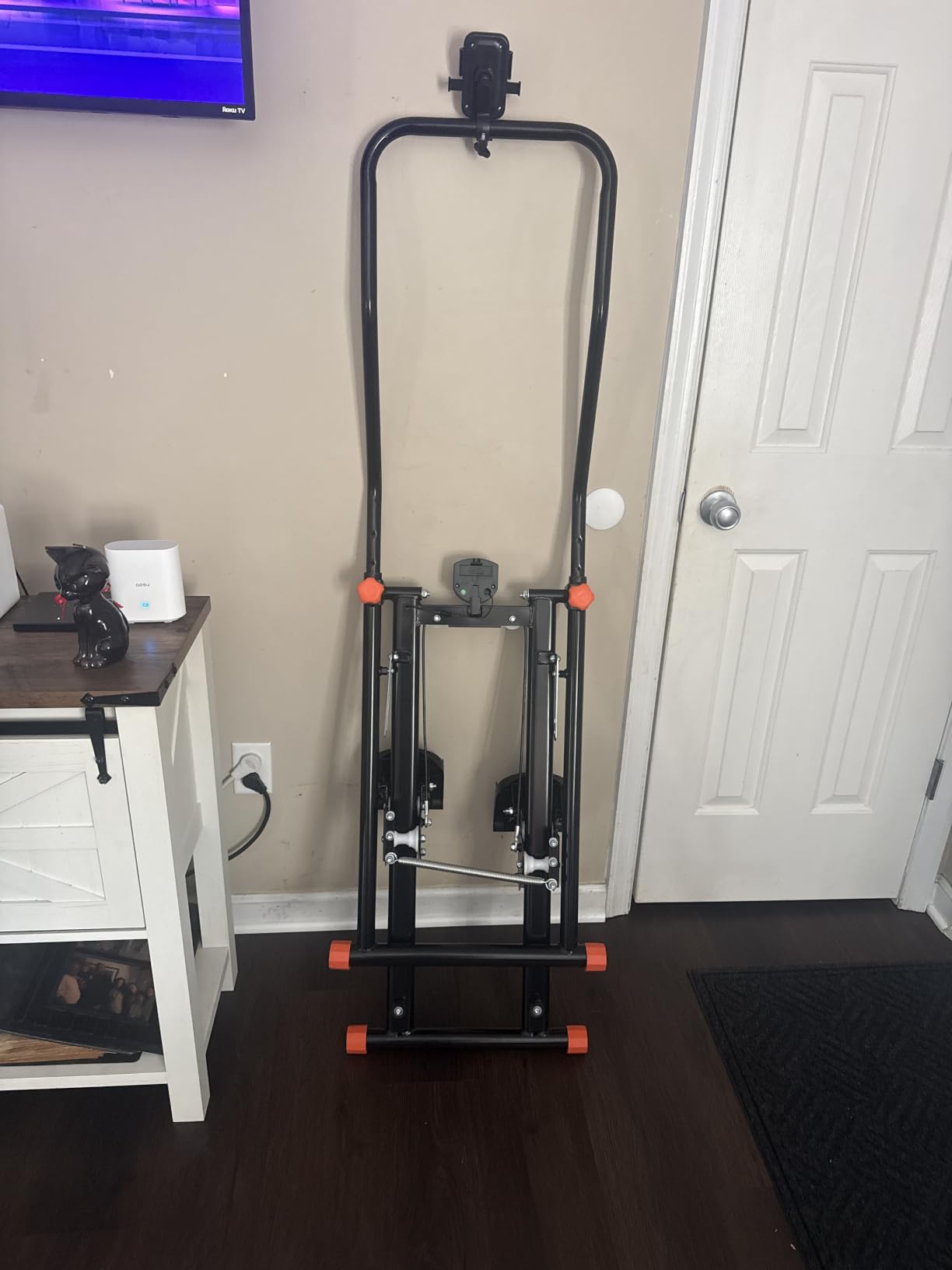
Assembly took me about 12 minutes, and 90% of the unit comes pre-assembled out of the box. The triangular steel frame supports up to 330 pounds and feels sturdier than its price suggests. I tested it with 5 different family members of varying heights and weights, and it held up without any wobble.
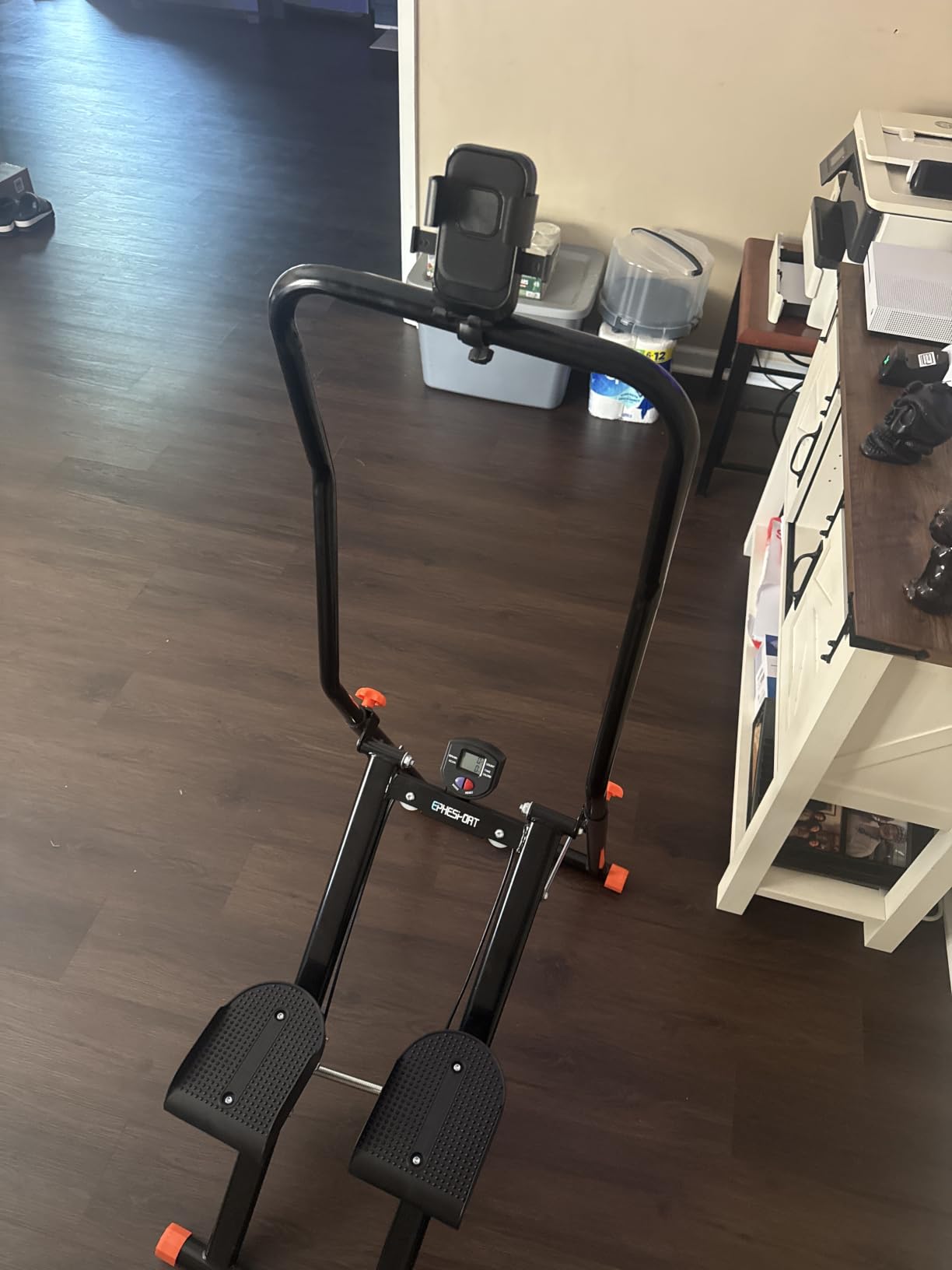
The 3-level gravity-spring resistance system uses interchangeable springs to vary difficulty. Switching springs takes about a minute and requires no tools, but it is not as convenient as a quick-turn dial. The motion is closer to an elliptical than a true stair stepper, which is something to keep in mind.
The wide non-slip pedals are comfortable even for users with larger feet, and the height-adjustable handlebar fits users from 5’2″ to 6’2″ comfortably.
Who should buy this climber
This is the perfect entry-level climber for someone who is not sure if a stair stepper is right for them. At this price, the risk is minimal, and you get a sturdy machine that handles daily use well. I would recommend it for beginners, light-to-moderate users, and anyone wanting a backup stepper for a home office.
Athletes training for serious endurance events will want something with more resistance options, like the SOLE CC81 or Stamina Cardio Climber.
Common issues to watch for
Some users report creaking sounds after 2-3 months of use. A quick spray of silicone lubricant on the rails and spring housing fixes this. A small number of reviewers also mention grey dust from internal components, which is normal mechanical wear but worth monitoring.
For under $100, these are minor trade-offs for a climber that punches well above its weight class.
8. Anwick Folding Stair Stepper – Most Compact Vertical Climber
Stair Stepper for Home Gym Exercise, Vertical Climber Exercise Machine for Full Body Workout, Compact Folding Cardio Exercise Climber with Adjustable Handlebar (Blue)
Triangular steel
300 lb capacity
0.5 square meter footprint folded
Pros
- Folds to 0.5 square meters
- 22.5 lb light weight
- quiet operation
- durable steel structure
- 2-year warranty
Cons
- No resistance options
- requires hearing aid battery for LCD
- occasional shipping damage
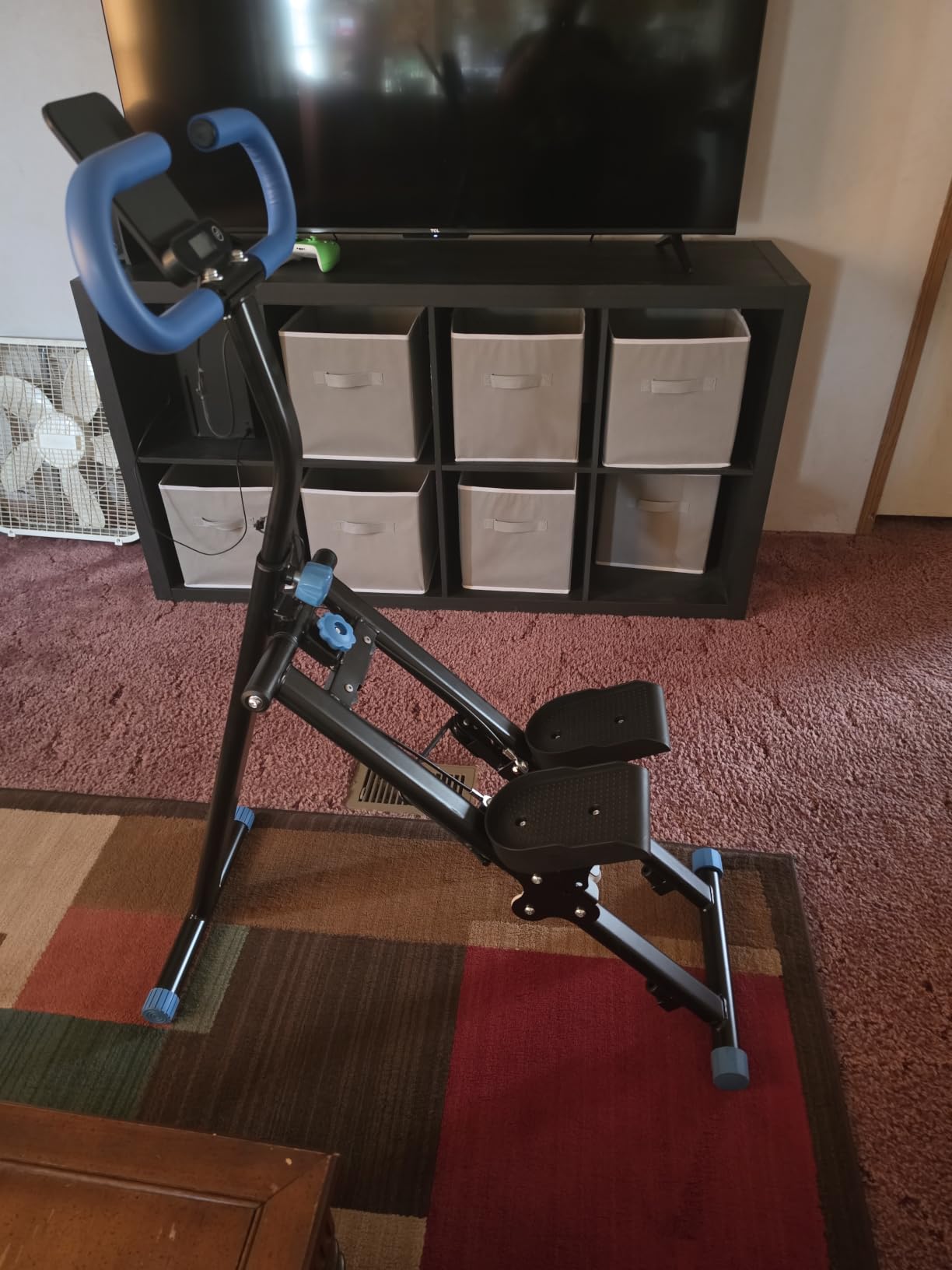
The Anwick Folding Stair Stepper is the most compact climber I tested, folding down to a footprint of just 0.5 square meters. At 22.5 pounds, it is also the lightest model on this list, which makes it perfect for renters, dorm rooms, and anyone who needs to move their climber frequently.
Despite its small size, the triangular steel structure supports up to 300 pounds and feels remarkably stable. The 3-height adjustable handlebar and non-slip pedals provide a safe, comfortable climbing motion.
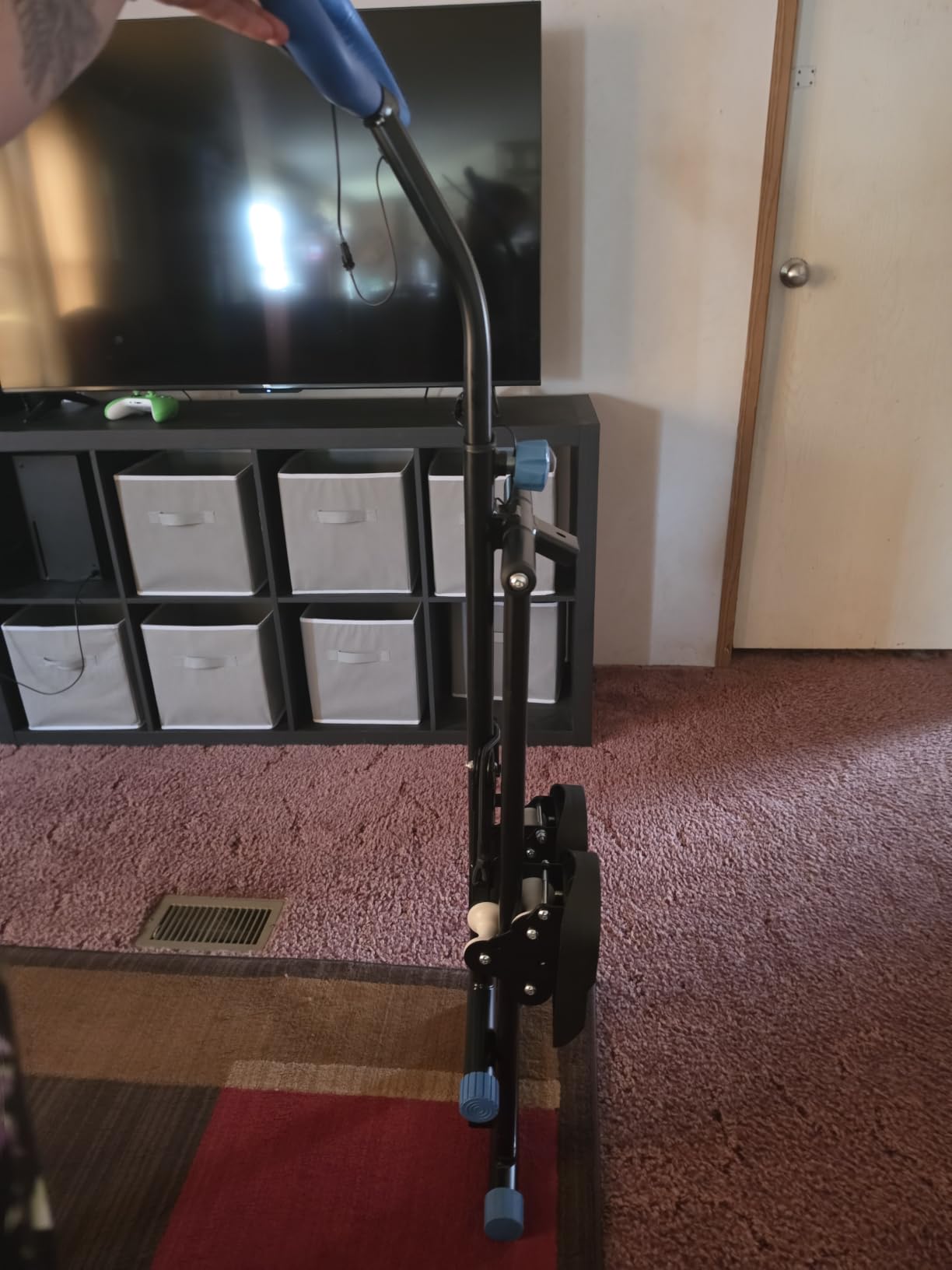
The 4.4-star rating from 91 reviews is impressive, and 77% of reviewers gave it 5 stars. Users consistently praise the quiet operation, ease of assembly, and compact design. One common complaint: the LCD display uses a specialty hearing aid battery, which can be hard to find in stores.
There are no resistance options, so difficulty is controlled entirely by your speed and force. This is a bodyweight-only climber, which is a dealbreaker for advanced users but a feature for beginners who want simplicity.
Storage and portability
I tested folding and unfolding the Anwick daily for a month, and the mechanism remains smooth and secure. The frame locks into both the open and folded positions with confidence-inspiring clicks. The folded dimensions fit in my car trunk, which makes it a great option for travel or vacation workouts.
The 2-year manufacturer warranty is double the industry standard, which suggests Anwick stands behind the build quality.
Ideal use cases
This is the climber I recommend to anyone who lives in a small apartment, dorm, or RV. It is also a great choice for office use, since the quiet operation will not disturb coworkers. If you want a no-fuss bodyweight climber that disappears when not in use, the Anwick is hard to beat.
For a more complete home gym setup, consider pairing this with a set of adjustable dumbbells for home workouts to round out your strength training.
What to Look for When Buying a Vertical Climber for Home Use
Choosing the right vertical climber depends on your space, budget, fitness goals, and physical needs. Here are the key factors I considered while testing every machine on this list.
Resistance type and adjustability
There are three main resistance types in vertical climbers: bodyweight-only, elastic or spring-based, and magnetic flywheel. Bodyweight machines like the Anwick are the simplest and cheapest but offer no progression. Elastic systems like the MaxiClimber let you swap bands for different tension levels, while magnetic flywheels like the SOLE CC81 provide the smoothest, most precise resistance control.
If you are serious about progressive overload and long-term fitness gains, choose a magnetic resistance climber. For casual cardio and weight loss, an elastic or bodyweight machine is plenty.
Space and footprint
Measure your available space before buying. Folding climbers like the MaxiClimber 2.0, RELIFE, and Anwick fold down to under 1 square meter, which is ideal for apartments. The SOLE CC81 and Stamina Cardio Climber do not fold and need a dedicated spot.
Ceiling height matters too. Taller machines like the SOLE CC81 at 86 inches may not fit rooms with low ceilings. Check the assembled height before ordering.
Weight capacity and user height range
Most climbers in this guide support 250 to 400 pounds, which covers the vast majority of users. Taller climbers over 6’2″ should look for models with longer stride lengths and adjustable handlebars, like the Stamina Cardio Climber or SOLE CC81.
User height ranges vary widely. The RELIFE works best for users 5’8″ to 6’4″, while the SOLE CC81 and Stamina accommodate a wider range thanks to adjustable components.
Display, apps, and tracking
Basic LCD displays show time, count, and calories, but they are often inaccurate. Machines with Bluetooth and companion apps like the SunnyFit, SOLE+, or Stamina muuv offer richer tracking and structured workouts. If you already use a fitness watch, the app integration is a nice bonus but not essential.
For data-driven training, I recommend the SOLE CC81 or Sunny Health models with strong app ecosystems.
Noise level and apartment use
From my testing, magnetic resistance climbers are the quietest, followed by elastic systems. Hydraulic and spring-based steppers can develop squeaks over time. If you live in an apartment or plan to work out early in the morning, prioritize models with magnetic resistance or include silicone lubricant in your maintenance routine.
The quietest models I tested were the SOLE CC81, Stamina Cardio Climber, and Anwick Folding Stair Stepper.
Joint health and injury considerations
Vertical climbers are generally low-impact, but some models are gentler than others. For users with knee or hip issues, look for climbers with cushioned pedals, smooth magnetic resistance, and adjustable step range. The Sunny Health models and Stamina Cardio Climber are particularly knee-friendly.
Avoid climbers with hard plastic pedals or jerky hydraulic motion, which can aggravate joint pain.
How to Get the Most Out of Your Vertical Climber Workouts
A vertical climber is one of the most efficient pieces of home cardio equipment you can own. With proper programming, you can burn serious calories, build muscle endurance, and improve cardiovascular health in just 15-20 minutes per day.
Sample workout routines
For weight loss, try 30 seconds of fast climbing followed by 90 seconds of recovery, repeated for 15-20 minutes. This high-intensity interval training approach keeps your heart rate elevated and maximizes calorie burn. The MaxiClimber 2.0 and SOLE CC81 are perfect for this style.
For zone 2 endurance training, set your climber to a low resistance and maintain a steady pace where you can still hold a conversation. Aim for 30-60 minute sessions 3-4 times per week. The magnetic resistance climbers like the SOLE CC81 and Stamina are ideal for this.
For strength and muscle endurance, use higher resistance levels and slower, more controlled movements. Focus on full arm extension and deep leg drive. Combine this with spin bikes for home workouts for a complete cardio and strength program.
Maintenance tips for longevity
Lubricate moving parts with silicone spray every 2-3 months to prevent squeaking. Check and tighten all bolts after the first week of use, and periodically thereafter. Wipe down the frame after each workout to prevent sweat corrosion.
Store your climber in a dry area to prevent rust on the steel components. Folding climbers should be unfolded periodically to air out and prevent moisture buildup.
Frequently Asked Questions
Do vertical climbers really work for weight loss?
Yes, vertical climbers are among the most effective home cardio machines for weight loss. A 30-minute session can burn 300-500 calories depending on intensity, and the full-body engagement keeps your heart rate elevated. Combined with a calorie-controlled diet, consistent vertical climber workouts can produce noticeable fat loss within 4-6 weeks.
What muscles does a vertical climber work?
A vertical climber works nearly every major muscle group simultaneously. Your legs drive the pedals, your arms pull the handles, your core stabilizes the motion, and your back and shoulders assist the pulling movement. This makes it one of the most efficient full-body workouts available in a home gym.
Are vertical climbers safe for knees and joints?
Yes, vertical climbers are generally low-impact and gentler on knees than running or stair machines with hard steps. Models with cushioned pedals and smooth magnetic resistance are particularly joint-friendly. If you have existing knee issues, start with low resistance and short sessions, and consult a physical therapist if pain persists.
How much space do I need for a vertical climber?
Most vertical climbers need a 3 by 3 foot footprint when in use. Folding models like the MaxiClimber 2.0, RELIFE, and Anwick fold down to under 1 square meter for storage. Ceiling height should be at least 7-8 feet to accommodate taller users during full extension. Always check the assembled dimensions before purchasing.
What is the best vertical climber for small apartments?
The MaxiClimber 2.0, RELIFE Stair Stepper, and Anwick Folding Stair Stepper are the best options for small apartments. All three fold down to compact sizes, weigh under 35 pounds, and operate quietly. The MaxiClimber has over 10,000 reviews and is the most popular choice for apartment dwellers.
Final Verdict: Which Vertical Climber Should You Buy in 2026?
After testing all eight vertical climbers over the past two months, the MaxiClimber 2.0 remains my top recommendation for most home gym users. With 10,000+ reviews, a 4.2-star rating, foldable design, and proven durability, it offers the best balance of price, performance, and convenience for the average user.
If you want premium build quality and serious training capability, the SOLE CC81 is the closest thing to a commercial VersaClimber at a fraction of the price. For shoppers on a budget, the Sunny Health & Fitness Foldable Stair Climber delivers excellent value with adjustable stride and a great companion app. Whatever your fitness goals and budget, the best vertical climbers for home workouts in 2026 are more capable and accessible than ever. Pick the model that matches your space and goals, and start climbing toward a stronger, healthier you.
1 thought on “8 Best Vertical Climbers for Home Workouts (October 2026) Expert Reviews”